

MO_BSC
749 Publications

MO_BSC
Signaler
Bloquer l’utilisateur
content creator BUIDL binance FAM

Binance Square Angels
Ouvert au trading

Détenteur pour BNB
Trade occasionnellement
3.6 an(s)
71 Suivis
1.8K+ Abonnés
2.3K+ J’aime
1 Badges
Publications
Portefeuille
Tous
Citations
Vidéos
·
--
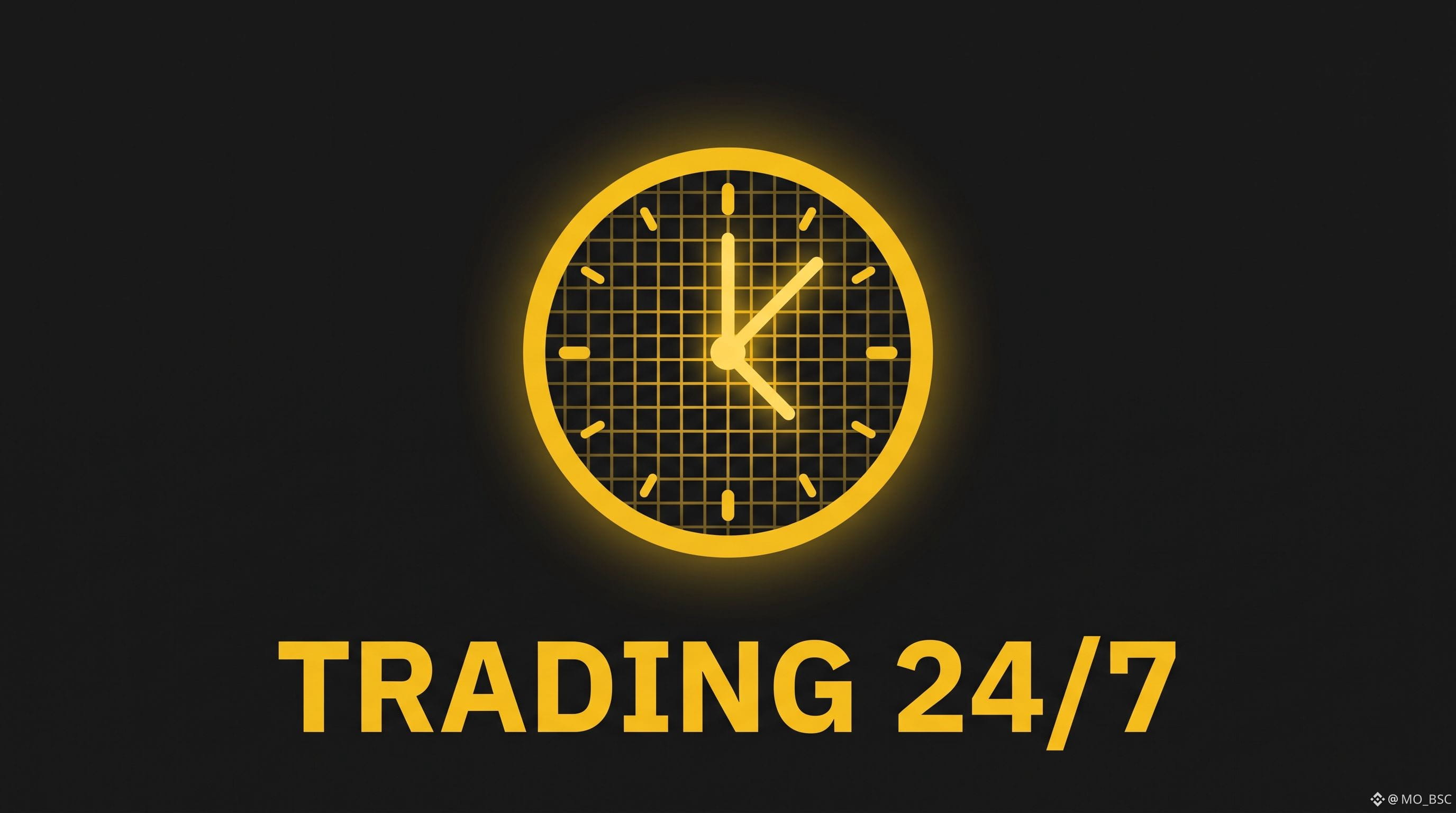
04 - 24/7 Trading: What Does It Actually Mean?
Traditional stock markets operate within defined trading sessions.
bStocks work differently.
Because they are blockchain-based tokenized securities, they can be traded on Binance's Spot market 24/7, including weekends.
That means you don't have to wait for the traditional market to reopen just to trade your position.
The important distinction:
24/7 trading does not mean the underlying stock market is open 24/7.
It means the bStock itself can be traded continuously on Binance, subject to applicable product and market conditions.
So the experience changes from:
Traditional market hours
↓
Market closes
↓
Wait for the next session
To:
On-chain market access
↓
24/7 trading
Different infrastructure.
Different trading experience.
Learn more about bStocks on Binance Academy:
[Binance Academy](https://academy.binance.com/en/articles/what-are-bstocks-a-guide-to-tokenized-stocks-on-binance)
Risk Disclaimer: Crypto assets carry risks. This is not financial advice. bStocks assets are not stocks and do not represent direct ownership of the underlying company.
#BStocks
04 - 24/7 Trading: What Does It Actually Mean?
Traditional stock markets operate within defined trading sessions.
bStocks work differently.
Because they are blockchain-based tokenized securities, they can be traded on Binance's Spot market 24/7, including weekends.
That means you don't have to wait for the traditional market to reopen just to trade your position.
The important distinction:
24/7 trading does not mean the underlying stock market is open 24/7.
It means the bStock itself can be traded continuously on Binance, subject to applicable product and market conditions.
So the experience changes from:
Traditional market hours
↓
Market closes
↓
Wait for the next session
To:
On-chain market access
↓
24/7 trading
Different infrastructure.
Different trading experience.
Learn more about bStocks on Binance Academy:
Binance Academy
Risk Disclaimer: Crypto assets carry risks. This is not financial advice. bStocks assets are not stocks and do not represent direct ownership of the underlying company.
#BStocks
Traditional stock markets operate within defined trading sessions.
bStocks work differently.
Because they are blockchain-based tokenized securities, they can be traded on Binance's Spot market 24/7, including weekends.
That means you don't have to wait for the traditional market to reopen just to trade your position.
The important distinction:
24/7 trading does not mean the underlying stock market is open 24/7.
It means the bStock itself can be traded continuously on Binance, subject to applicable product and market conditions.
So the experience changes from:
Traditional market hours
↓
Market closes
↓
Wait for the next session
To:
On-chain market access
↓
24/7 trading
Different infrastructure.
Different trading experience.
Learn more about bStocks on Binance Academy:
Binance Academy
Risk Disclaimer: Crypto assets carry risks. This is not financial advice. bStocks assets are not stocks and do not represent direct ownership of the underlying company.
#BStocks
2
56
·
--
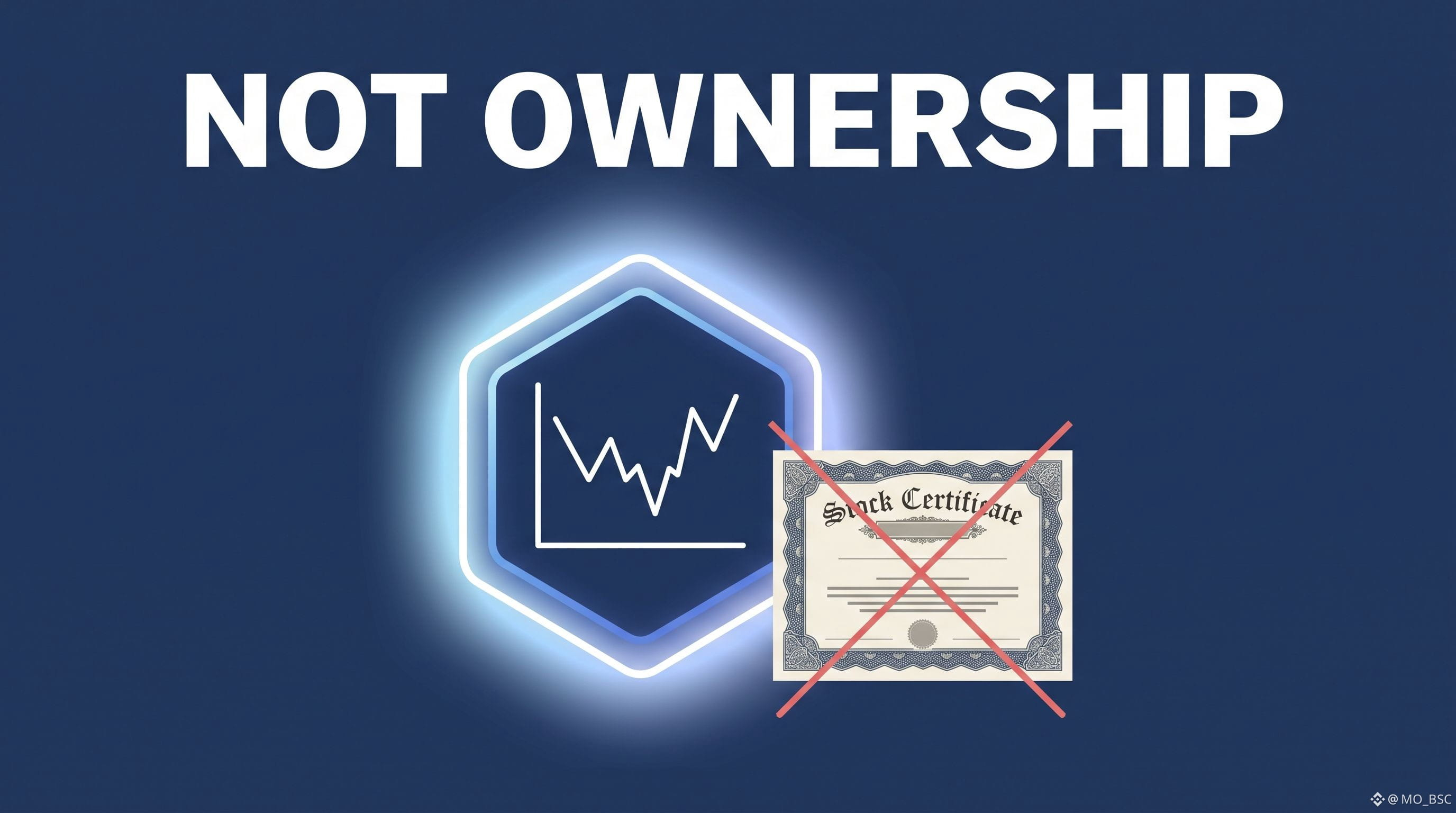
03 - bStocks ≠ Owning the Stock
Here’s the distinction you should remember:
bStocks are not direct stock ownership.
A traditional share can represent direct ownership in a company through the relevant market and custody structure.
bStocks are different.
They are classified as tokenized securities and provide economic exposure to the underlying security through a blockchain-based structure.
So owning a bStock does not mean:
❌ You directly own a share in the company
❌ You receive shareholder voting rights
❌ The bStock itself becomes the company’s stock
Instead, bStocks are designed to bring traditional securities into an on-chain format.
Same underlying economic reference.
Different legal and technical structure.
That’s why the word “tokenized security” matters.
Explore the full explanation on Binance Academy:
[Binance Academy](https://academy.binance.com/en/articles/what-are-bstocks-a-guide-to-tokenized-stocks-on-binance)
Risk Disclaimer: Crypto assets carry risks. This is not financial advice. bStocks assets are not stocks and do not represent direct ownership of the underlying company.
#BStocks
03 - bStocks ≠ Owning the Stock
Here’s the distinction you should remember:
bStocks are not direct stock ownership.
A traditional share can represent direct ownership in a company through the relevant market and custody structure.
bStocks are different.
They are classified as tokenized securities and provide economic exposure to the underlying security through a blockchain-based structure.
So owning a bStock does not mean:
❌ You directly own a share in the company
❌ You receive shareholder voting rights
❌ The bStock itself becomes the company’s stock
Instead, bStocks are designed to bring traditional securities into an on-chain format.
Same underlying economic reference.
Different legal and technical structure.
That’s why the word “tokenized security” matters.
Explore the full explanation on Binance Academy:
Binance Academy
Risk Disclaimer: Crypto assets carry risks. This is not financial advice. bStocks assets are not stocks and do not represent direct ownership of the underlying company.
#BStocks
Here’s the distinction you should remember:
bStocks are not direct stock ownership.
A traditional share can represent direct ownership in a company through the relevant market and custody structure.
bStocks are different.
They are classified as tokenized securities and provide economic exposure to the underlying security through a blockchain-based structure.
So owning a bStock does not mean:
❌ You directly own a share in the company
❌ You receive shareholder voting rights
❌ The bStock itself becomes the company’s stock
Instead, bStocks are designed to bring traditional securities into an on-chain format.
Same underlying economic reference.
Different legal and technical structure.
That’s why the word “tokenized security” matters.
Explore the full explanation on Binance Academy:
Binance Academy
Risk Disclaimer: Crypto assets carry risks. This is not financial advice. bStocks assets are not stocks and do not represent direct ownership of the underlying company.
#BStocks
2
72
·
--
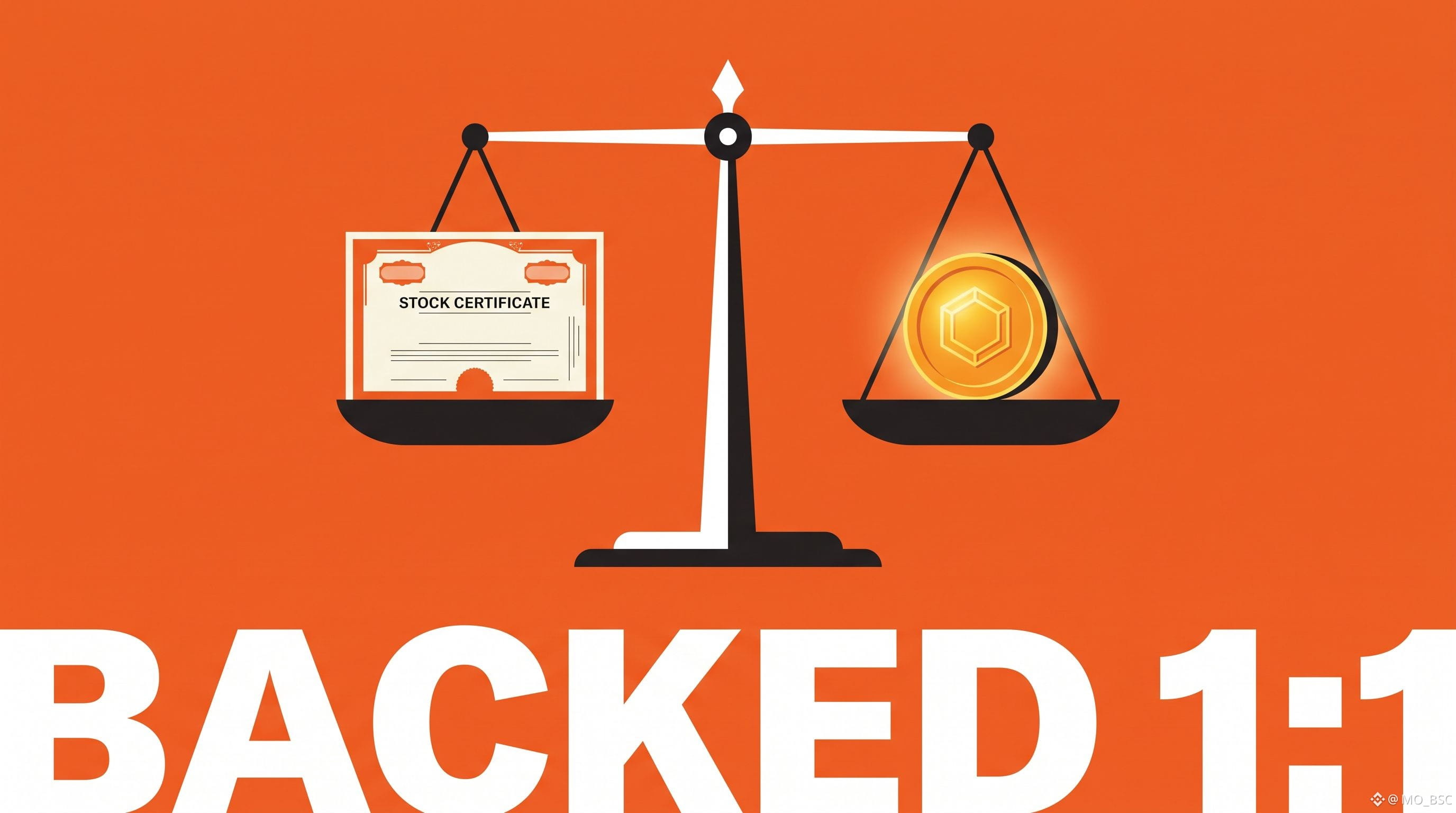
02 - 1:1 Backing, Explained Simply
You’ll often see this phrase when talking about bStocks:
“Backed 1:1.”
But what does that actually mean?
For each bStock token issued, there is a corresponding real U.S. share held in custody.
So the structure is designed around:
1 bStock → 1 corresponding underlying share
The important part is the backing.
The underlying shares are held with a regulated custodian, while Binance also provides a Proof of Collateral page where the backing can be checked.
This is different from simply creating a token that follows a stock price.
The blockchain token has an underlying share supporting it.
That’s one of the core ideas behind bStocks.
Want the technical details?
Learn more on Binance Academy:
[Binance Academy](https://academy.binance.com/en/articles/what-are-bstocks-a-guide-to-tokenized-stocks-on-binance)
Risk Disclaimer: Crypto assets carry risks. This is not financial advice. bStocks assets are not stocks and do not represent direct ownership of the underlying company.
#bStocks
02 - 1:1 Backing, Explained Simply
You’ll often see this phrase when talking about bStocks:
“Backed 1:1.”
But what does that actually mean?
For each bStock token issued, there is a corresponding real U.S. share held in custody.
So the structure is designed around:
1 bStock → 1 corresponding underlying share
The important part is the backing.
The underlying shares are held with a regulated custodian, while Binance also provides a Proof of Collateral page where the backing can be checked.
This is different from simply creating a token that follows a stock price.
The blockchain token has an underlying share supporting it.
That’s one of the core ideas behind bStocks.
Want the technical details?
Learn more on Binance Academy:
Binance Academy
Risk Disclaimer: Crypto assets carry risks. This is not financial advice. bStocks assets are not stocks and do not represent direct ownership of the underlying company.
#bStocks
You’ll often see this phrase when talking about bStocks:
“Backed 1:1.”
But what does that actually mean?
For each bStock token issued, there is a corresponding real U.S. share held in custody.
So the structure is designed around:
1 bStock → 1 corresponding underlying share
The important part is the backing.
The underlying shares are held with a regulated custodian, while Binance also provides a Proof of Collateral page where the backing can be checked.
This is different from simply creating a token that follows a stock price.
The blockchain token has an underlying share supporting it.
That’s one of the core ideas behind bStocks.
Want the technical details?
Learn more on Binance Academy:
Binance Academy
Risk Disclaimer: Crypto assets carry risks. This is not financial advice. bStocks assets are not stocks and do not represent direct ownership of the underlying company.
#bStocks
2
53
·
--
Vérifié
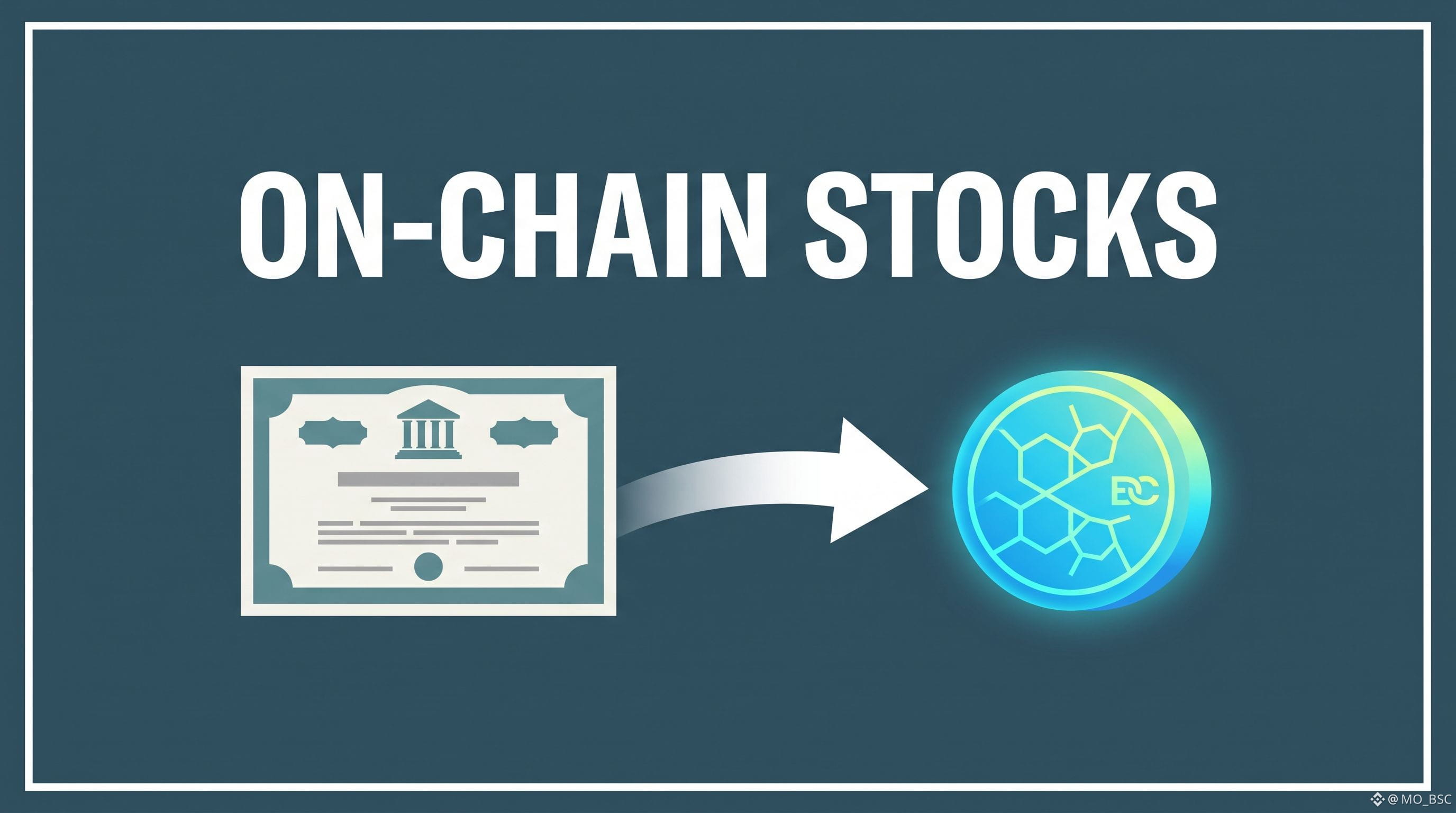
01 - What Exactly Are bStocks?
What if traditional stock exposure could exist on-chain?
That’s the basic idea behind Binance bStocks.
bStocks are tokenized securities available on Binance.
Each bStock is backed 1:1 by a corresponding real U.S. share held with a regulated custodian.
But there’s an important distinction:
bStocks are not stocks.
They do not give holders direct ownership of shares in the underlying company.
Instead, they provide economic exposure through a blockchain-based structure.
So think of it as:
Traditional security
↓
Tokenization
↓
Blockchain-based bStock
Same underlying economic reference.
Different structure.
And that distinction matters.
Learn more about how bStocks work on Binance Academy:
[Binance Academy](https://academy.binance.com/en/articles/what-are-bstocks-a-guide-to-tokenized-stocks-on-binance)
Risk Disclaimer: Crypto assets carry risks. This is not financial advice. bStocks assets are not stocks and do not represent direct ownership of the underlying company.
#bStocks #RWA
01 - What Exactly Are bStocks?
What if traditional stock exposure could exist on-chain?
That’s the basic idea behind Binance bStocks.
bStocks are tokenized securities available on Binance.
Each bStock is backed 1:1 by a corresponding real U.S. share held with a regulated custodian.
But there’s an important distinction:
bStocks are not stocks.
They do not give holders direct ownership of shares in the underlying company.
Instead, they provide economic exposure through a blockchain-based structure.
So think of it as:
Traditional security
↓
Tokenization
↓
Blockchain-based bStock
Same underlying economic reference.
Different structure.
And that distinction matters.
Learn more about how bStocks work on Binance Academy:
Binance Academy
Risk Disclaimer: Crypto assets carry risks. This is not financial advice. bStocks assets are not stocks and do not represent direct ownership of the underlying company.
#bStocks #RWA
What if traditional stock exposure could exist on-chain?
That’s the basic idea behind Binance bStocks.
bStocks are tokenized securities available on Binance.
Each bStock is backed 1:1 by a corresponding real U.S. share held with a regulated custodian.
But there’s an important distinction:
bStocks are not stocks.
They do not give holders direct ownership of shares in the underlying company.
Instead, they provide economic exposure through a blockchain-based structure.
So think of it as:
Traditional security
↓
Tokenization
↓
Blockchain-based bStock
Same underlying economic reference.
Different structure.
And that distinction matters.
Learn more about how bStocks work on Binance Academy:
Binance Academy
Risk Disclaimer: Crypto assets carry risks. This is not financial advice. bStocks assets are not stocks and do not represent direct ownership of the underlying company.
#bStocks #RWA
2
102
·
--
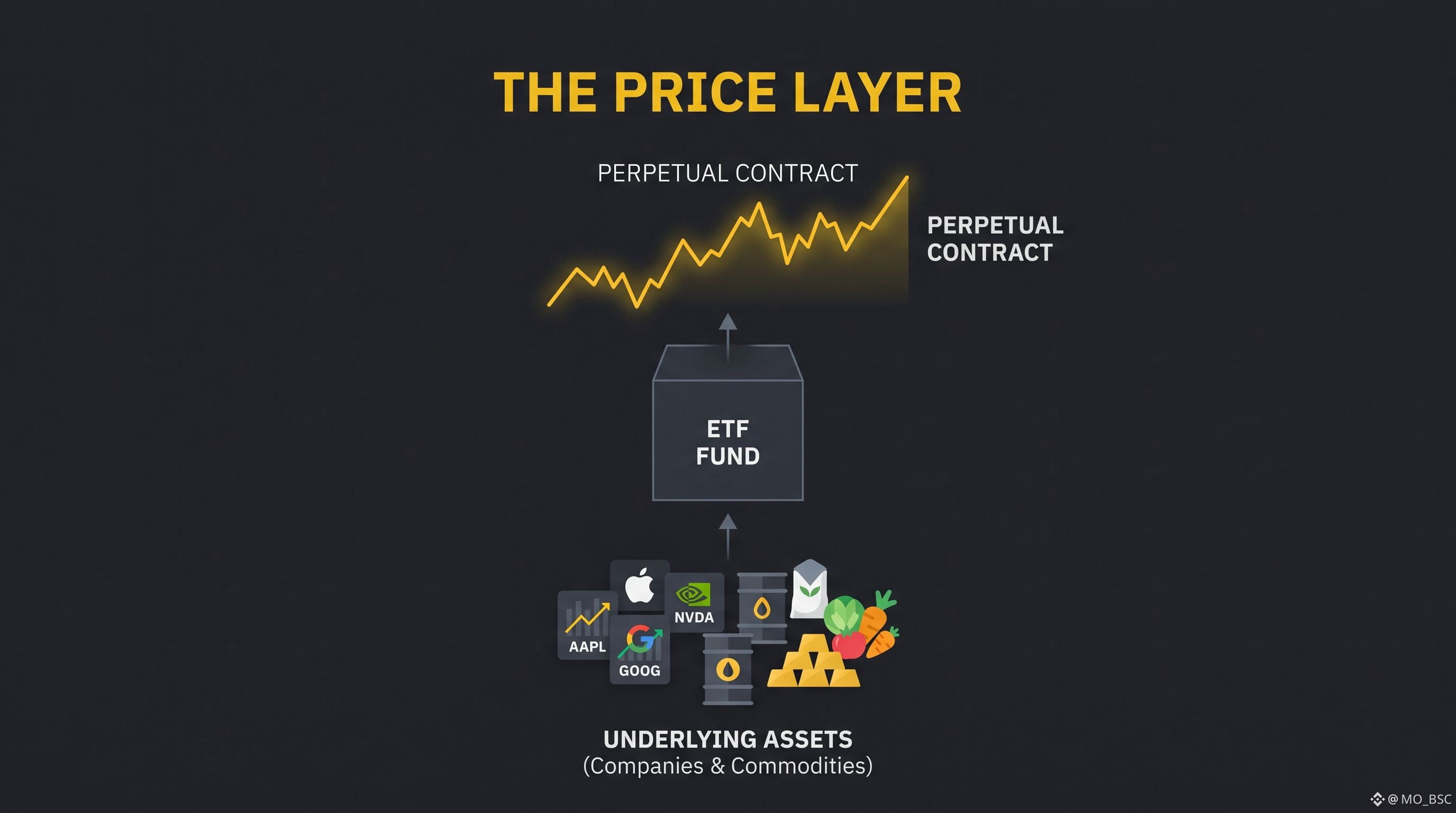
Here's where TradFi gets interesting.
An ETF can already contain a basket of assets.
For example, an index ETF can give exposure to multiple companies through one fund.
Now add another layer:
ETF-linked perpetuals.
You're no longer buying the ETF itself.
You're trading a perpetual contract linked to the ETF's price.
So the structure looks like this:
Companies / assets
↓
ETF
↓
ETF-linked perpetual
↓
Your trading position
That means there are two things to understand:
1. What the ETF represents.
2. What the perpetual contract represents.
The perpetual gives you price exposure to the ETF.
It does not mean you directly own the ETF.
Binance's ETF-linked perpetual contracts are USDT-settled and available 24/7, subject to product availability and applicable restrictions.
Binance Academy
One underlying market.
Multiple layers.
Understanding those layers is financial literacy.
Source:
[Binance Academy](https://www.binance.com/en/academy/articles/etf-contracts-you-can-trade-on-binance-futures)
Here's where TradFi gets interesting.
An ETF can already contain a basket of assets.
For example, an index ETF can give exposure to multiple companies through one fund.
Now add another layer:
ETF-linked perpetuals.
You're no longer buying the ETF itself.
You're trading a perpetual contract linked to the ETF's price.
So the structure looks like this:
Companies / assets
↓
ETF
↓
ETF-linked perpetual
↓
Your trading position
That means there are two things to understand:
1. What the ETF represents.
2. What the perpetual contract represents.
The perpetual gives you price exposure to the ETF.
It does not mean you directly own the ETF.
Binance's ETF-linked perpetual contracts are USDT-settled and available 24/7, subject to product availability and applicable restrictions.
Binance Academy
One underlying market.
Multiple layers.
Understanding those layers is financial literacy.
Source:
Binance Academy
An ETF can already contain a basket of assets.
For example, an index ETF can give exposure to multiple companies through one fund.
Now add another layer:
ETF-linked perpetuals.
You're no longer buying the ETF itself.
You're trading a perpetual contract linked to the ETF's price.
So the structure looks like this:
Companies / assets
↓
ETF
↓
ETF-linked perpetual
↓
Your trading position
That means there are two things to understand:
1. What the ETF represents.
2. What the perpetual contract represents.
The perpetual gives you price exposure to the ETF.
It does not mean you directly own the ETF.
Binance's ETF-linked perpetual contracts are USDT-settled and available 24/7, subject to product availability and applicable restrictions.
Binance Academy
One underlying market.
Multiple layers.
Understanding those layers is financial literacy.
Source:
Binance Academy
1
181
·
--
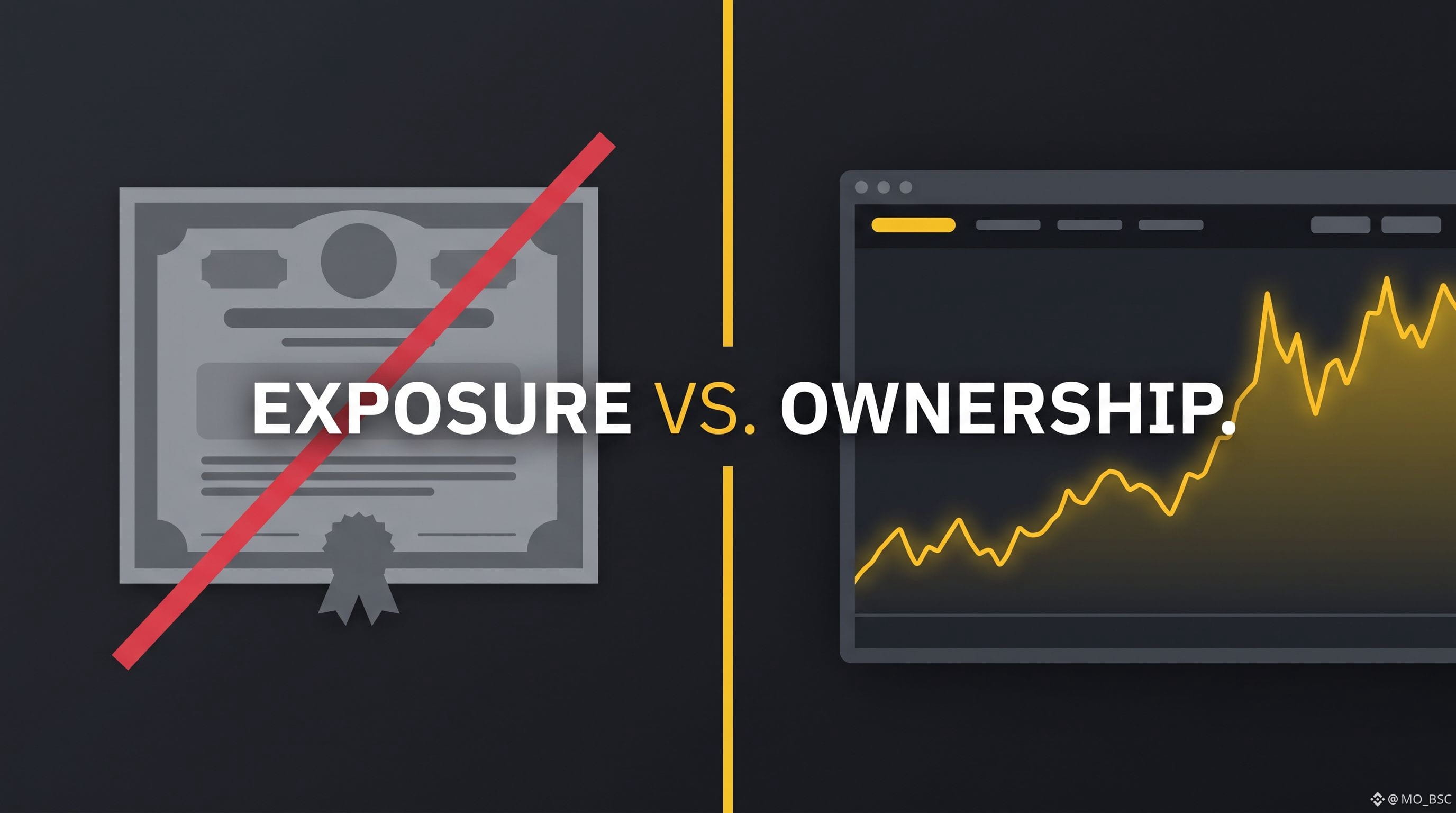
Here's a distinction every TradFi trader should understand:
Price exposure is not the same as ownership.
If you buy a company's stock through the relevant brokerage structure, you're acquiring shares in that company.
A stock perpetual is different.
You're trading a derivative designed to track the stock's price.
That means:
• No direct ownership of the underlying shares.
• No shareholder rights from owning those shares.
• No need to hold the stock through a traditional brokerage account.
Instead, you're taking a position on the price movement of the underlying stock.
And because it's a perpetual contract, leverage and liquidation can become part of the equation.
So when you see:
"Tesla perpetual"
Don't automatically read it as:
"Tesla stock."
The name tells you the underlying asset.
The contract tells you what you're actually trading.
Source:
[Binance Academy](https://www.binance.com/en/academy/articles/how-to-trade-stock-perpetual-contracts-on-binance)
Here's a distinction every TradFi trader should understand:
Price exposure is not the same as ownership.
If you buy a company's stock through the relevant brokerage structure, you're acquiring shares in that company.
A stock perpetual is different.
You're trading a derivative designed to track the stock's price.
That means:
• No direct ownership of the underlying shares.
• No shareholder rights from owning those shares.
• No need to hold the stock through a traditional brokerage account.
Instead, you're taking a position on the price movement of the underlying stock.
And because it's a perpetual contract, leverage and liquidation can become part of the equation.
So when you see:
"Tesla perpetual"
Don't automatically read it as:
"Tesla stock."
The name tells you the underlying asset.
The contract tells you what you're actually trading.
Source:
Binance Academy
Price exposure is not the same as ownership.
If you buy a company's stock through the relevant brokerage structure, you're acquiring shares in that company.
A stock perpetual is different.
You're trading a derivative designed to track the stock's price.
That means:
• No direct ownership of the underlying shares.
• No shareholder rights from owning those shares.
• No need to hold the stock through a traditional brokerage account.
Instead, you're taking a position on the price movement of the underlying stock.
And because it's a perpetual contract, leverage and liquidation can become part of the equation.
So when you see:
"Tesla perpetual"
Don't automatically read it as:
"Tesla stock."
The name tells you the underlying asset.
The contract tells you what you're actually trading.
Source:
Binance Academy
2
144
·
--
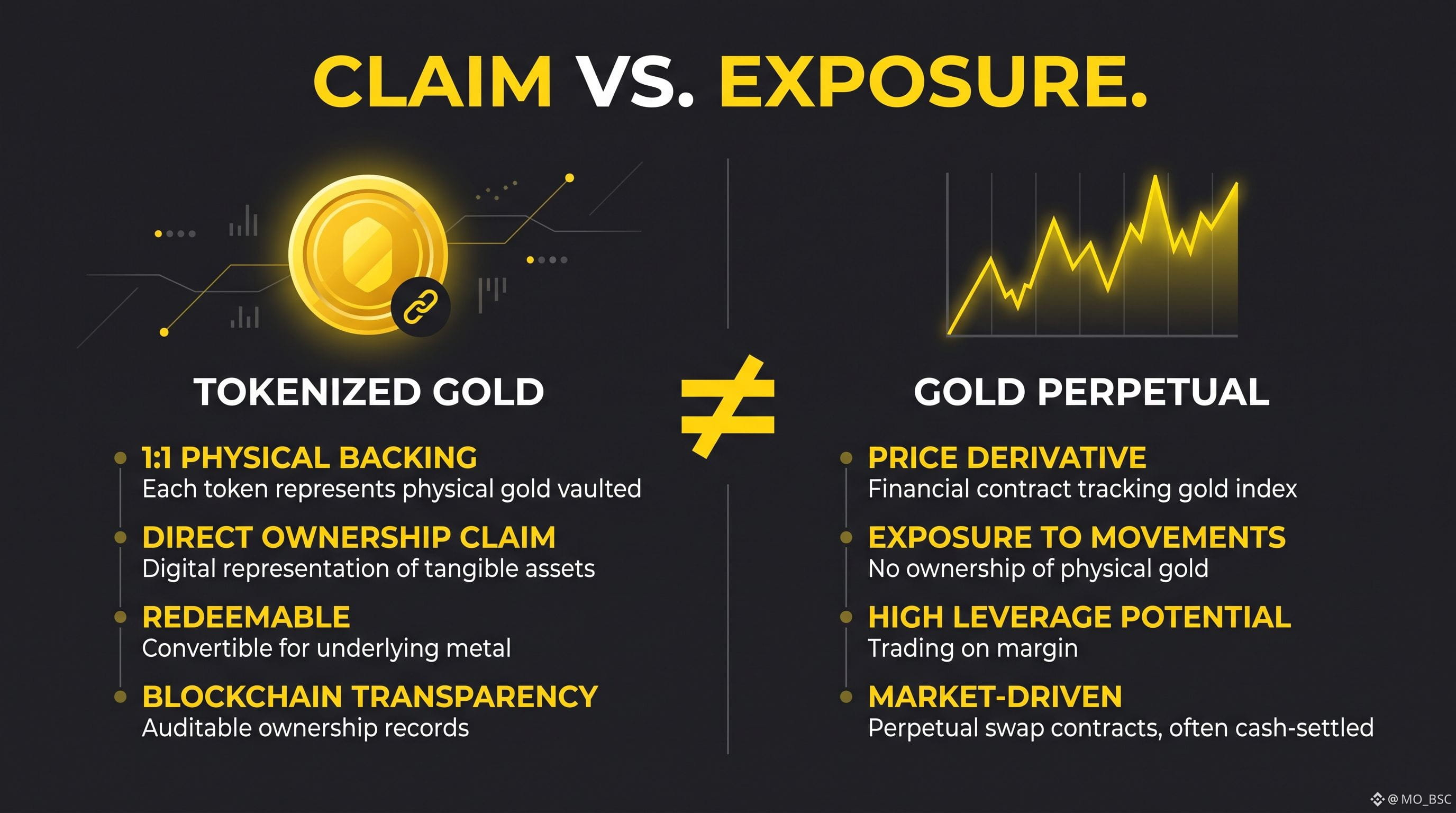
Two products can both give you exposure to gold...
But they can represent completely different things.
Tokenized gold:
A digital token represents ownership of, or a claim connected to, physical gold held by a custodian.
Depending on the product, redemption for physical gold may be available.
Gold perpetual:
A derivative contract tracks the price of gold.
You don't hold the physical metal.
You don't store the gold.
You don't receive a gold bar.
You're trading price exposure through a perpetual contract.
So:
Tokenized gold ≠ Gold perpetual.
One represents a digital claim connected to physical gold.
The other is a derivative designed to track gold's price.
Same underlying commodity.
Different financial instruments.
And that difference matters.
Always understand what the product actually represents before using it.
Source:
[Binance Academy](https://www.binance.com/en/academy/articles/what-is-tokenized-gold)
Two products can both give you exposure to gold...
But they can represent completely different things.
Tokenized gold:
A digital token represents ownership of, or a claim connected to, physical gold held by a custodian.
Depending on the product, redemption for physical gold may be available.
Gold perpetual:
A derivative contract tracks the price of gold.
You don't hold the physical metal.
You don't store the gold.
You don't receive a gold bar.
You're trading price exposure through a perpetual contract.
So:
Tokenized gold ≠ Gold perpetual.
One represents a digital claim connected to physical gold.
The other is a derivative designed to track gold's price.
Same underlying commodity.
Different financial instruments.
And that difference matters.
Always understand what the product actually represents before using it.
Source:
Binance Academy
But they can represent completely different things.
Tokenized gold:
A digital token represents ownership of, or a claim connected to, physical gold held by a custodian.
Depending on the product, redemption for physical gold may be available.
Gold perpetual:
A derivative contract tracks the price of gold.
You don't hold the physical metal.
You don't store the gold.
You don't receive a gold bar.
You're trading price exposure through a perpetual contract.
So:
Tokenized gold ≠ Gold perpetual.
One represents a digital claim connected to physical gold.
The other is a derivative designed to track gold's price.
Same underlying commodity.
Different financial instruments.
And that difference matters.
Always understand what the product actually represents before using it.
Source:
Binance Academy
2
318
·
--
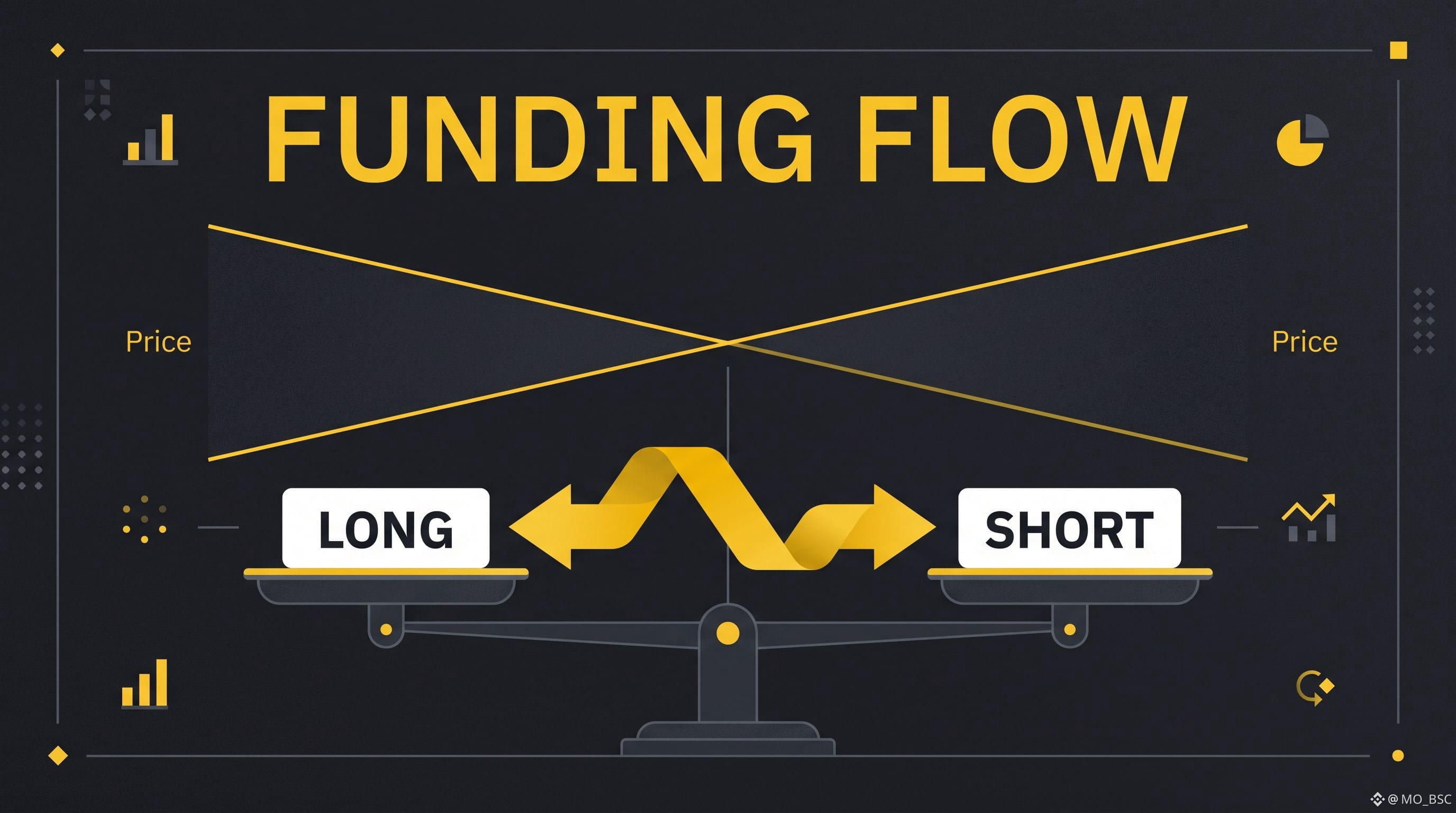
Why does a perpetual contract need a funding rate?
Because it doesn't have an expiration date.
A traditional futures contract eventually expires and settles.
A perpetual doesn't.
So it needs another mechanism to help keep its price aligned with the underlying asset.
That's where funding comes in.
When the funding rate is positive:
Long positions pay short positions.
When the funding rate is negative:
Short positions pay long positions.
The payment happens between traders — it's not simply a trading fee charged by Binance.
Think of funding as a balancing mechanism.
If the perpetual trades above the underlying price, funding can encourage the market to move back toward it.
If it trades below, the mechanism works in the opposite direction.
So when you open a perpetual position, don't look only at:
"Will the price go up or down?"
Also understand:
"What is the funding mechanism doing to my position?"
Source:
[Binance Academy](https://www.binance.com/en/academy/articles/what-are-funding-rates-in-crypto-markets)
Why does a perpetual contract need a funding rate?
Because it doesn't have an expiration date.
A traditional futures contract eventually expires and settles.
A perpetual doesn't.
So it needs another mechanism to help keep its price aligned with the underlying asset.
That's where funding comes in.
When the funding rate is positive:
Long positions pay short positions.
When the funding rate is negative:
Short positions pay long positions.
The payment happens between traders — it's not simply a trading fee charged by Binance.
Think of funding as a balancing mechanism.
If the perpetual trades above the underlying price, funding can encourage the market to move back toward it.
If it trades below, the mechanism works in the opposite direction.
So when you open a perpetual position, don't look only at:
"Will the price go up or down?"
Also understand:
"What is the funding mechanism doing to my position?"
Source:
Binance Academy
Because it doesn't have an expiration date.
A traditional futures contract eventually expires and settles.
A perpetual doesn't.
So it needs another mechanism to help keep its price aligned with the underlying asset.
That's where funding comes in.
When the funding rate is positive:
Long positions pay short positions.
When the funding rate is negative:
Short positions pay long positions.
The payment happens between traders — it's not simply a trading fee charged by Binance.
Think of funding as a balancing mechanism.
If the perpetual trades above the underlying price, funding can encourage the market to move back toward it.
If it trades below, the mechanism works in the opposite direction.
So when you open a perpetual position, don't look only at:
"Will the price go up or down?"
Also understand:
"What is the funding mechanism doing to my position?"
Source:
Binance Academy
2
42
·
--
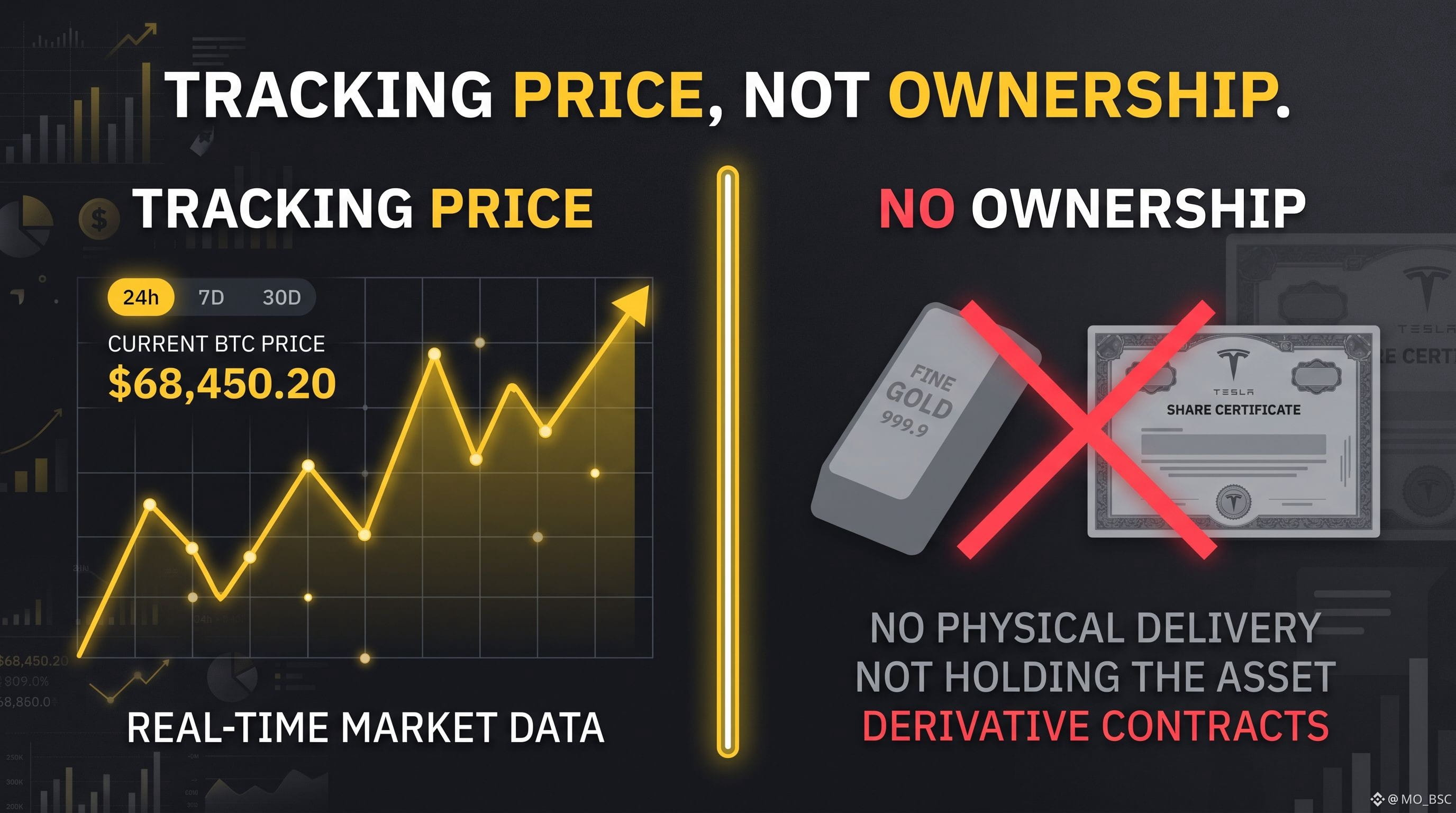
A TradFi perpetual sounds complicated.
But the core idea is simple:
You are trading a contract that tracks the price of a traditional financial asset.
That asset could be:
Gold.
Silver.
A stock.
An ETF.
An index.
The important part?
You are not buying the underlying asset itself.
A TradFi perpetual is a derivative.
So if you trade a stock perpetual, you're trading exposure to the stock's price movement — not buying the company's shares.
And because it's a perpetual contract, it doesn't have a traditional expiration date.
That also means you need to understand things like:
• Leverage
• Funding
• Liquidation
• Mark price
• Settlement
The asset name tells you what the contract tracks.
The product structure tells you what you're actually trading.
Understand the difference before you trade.
Source:
[Binance Academy](https://www.binance.com/en/academy/articles/tradfi-assets-you-can-trade-on-binance-futures)
A TradFi perpetual sounds complicated.
But the core idea is simple:
You are trading a contract that tracks the price of a traditional financial asset.
That asset could be:
Gold.
Silver.
A stock.
An ETF.
An index.
The important part?
You are not buying the underlying asset itself.
A TradFi perpetual is a derivative.
So if you trade a stock perpetual, you're trading exposure to the stock's price movement — not buying the company's shares.
And because it's a perpetual contract, it doesn't have a traditional expiration date.
That also means you need to understand things like:
• Leverage
• Funding
• Liquidation
• Mark price
• Settlement
The asset name tells you what the contract tracks.
The product structure tells you what you're actually trading.
Understand the difference before you trade.
Source:
Binance Academy
But the core idea is simple:
You are trading a contract that tracks the price of a traditional financial asset.
That asset could be:
Gold.
Silver.
A stock.
An ETF.
An index.
The important part?
You are not buying the underlying asset itself.
A TradFi perpetual is a derivative.
So if you trade a stock perpetual, you're trading exposure to the stock's price movement — not buying the company's shares.
And because it's a perpetual contract, it doesn't have a traditional expiration date.
That also means you need to understand things like:
• Leverage
• Funding
• Liquidation
• Mark price
• Settlement
The asset name tells you what the contract tracks.
The product structure tells you what you're actually trading.
Understand the difference before you trade.
Source:
Binance Academy
3
120
·
--
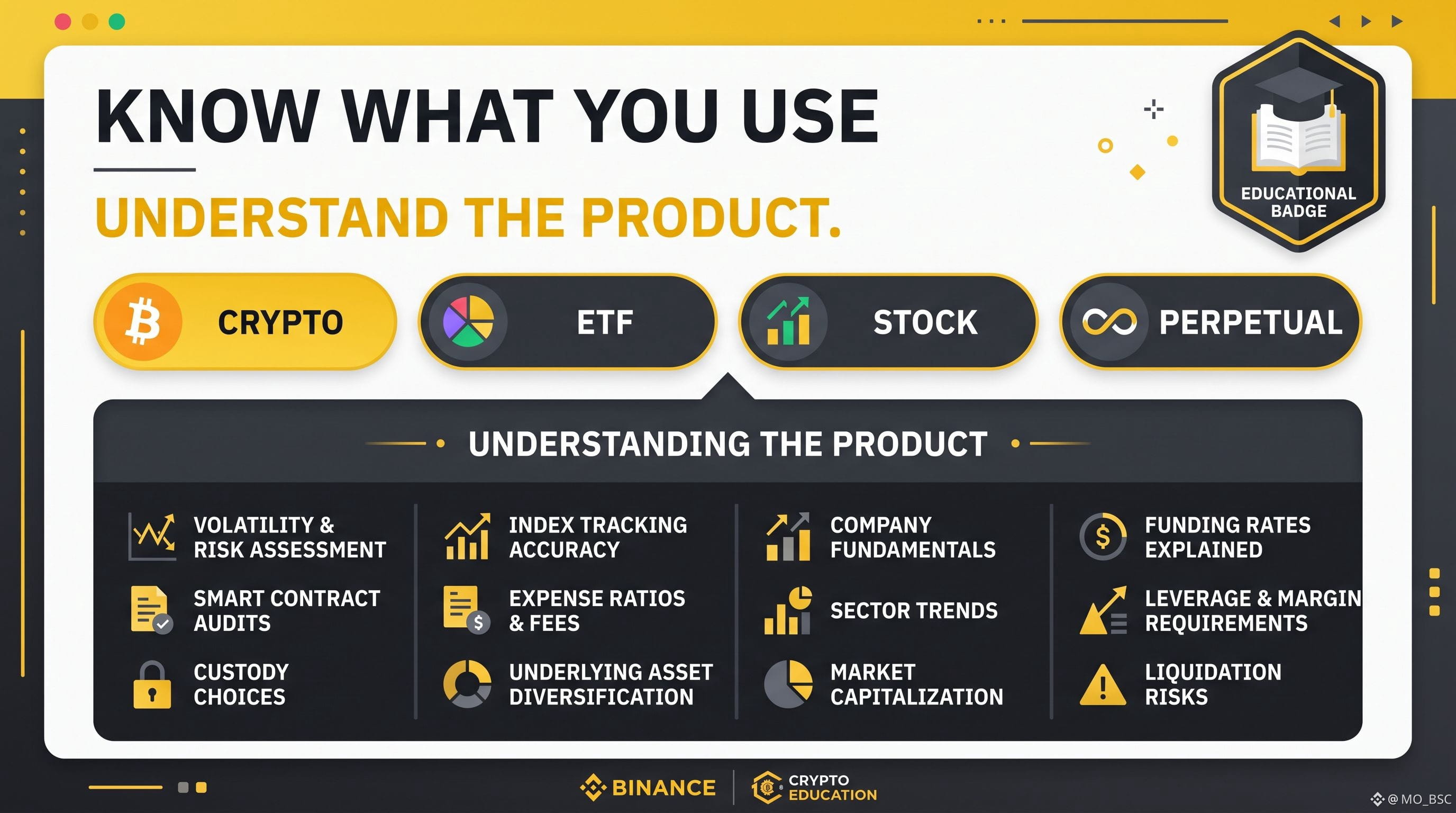
Financial products are becoming easier to access.
That makes one skill even more important:
Knowing what you're actually using.
Crypto asset?
Stock?
ETF?
Tokenized security?
Perpetual contract?
DeFi protocol?
The interface may look simple.
The underlying mechanics aren't always simple.
Binance is bringing more financial tools into one ecosystem, but education remains the foundation for using them responsibly.
Don't trade the name.
Understand the product.
DYOR.
Learn more through Binance Academy.
@Binance_Academy
Educational content only. Not financial advice.
#BinanceAcademy
Financial products are becoming easier to access.
That makes one skill even more important:
Knowing what you're actually using.
Crypto asset?
Stock?
ETF?
Tokenized security?
Perpetual contract?
DeFi protocol?
The interface may look simple.
The underlying mechanics aren't always simple.
Binance is bringing more financial tools into one ecosystem, but education remains the foundation for using them responsibly.
Don't trade the name.
Understand the product.
DYOR.
Learn more through Binance Academy.
@Binance Academy
Educational content only. Not financial advice.
#BinanceAcademy
That makes one skill even more important:
Knowing what you're actually using.
Crypto asset?
Stock?
ETF?
Tokenized security?
Perpetual contract?
DeFi protocol?
The interface may look simple.
The underlying mechanics aren't always simple.
Binance is bringing more financial tools into one ecosystem, but education remains the foundation for using them responsibly.
Don't trade the name.
Understand the product.
DYOR.
Learn more through Binance Academy.
@Binance Academy
Educational content only. Not financial advice.
#BinanceAcademy
3
56
·
--
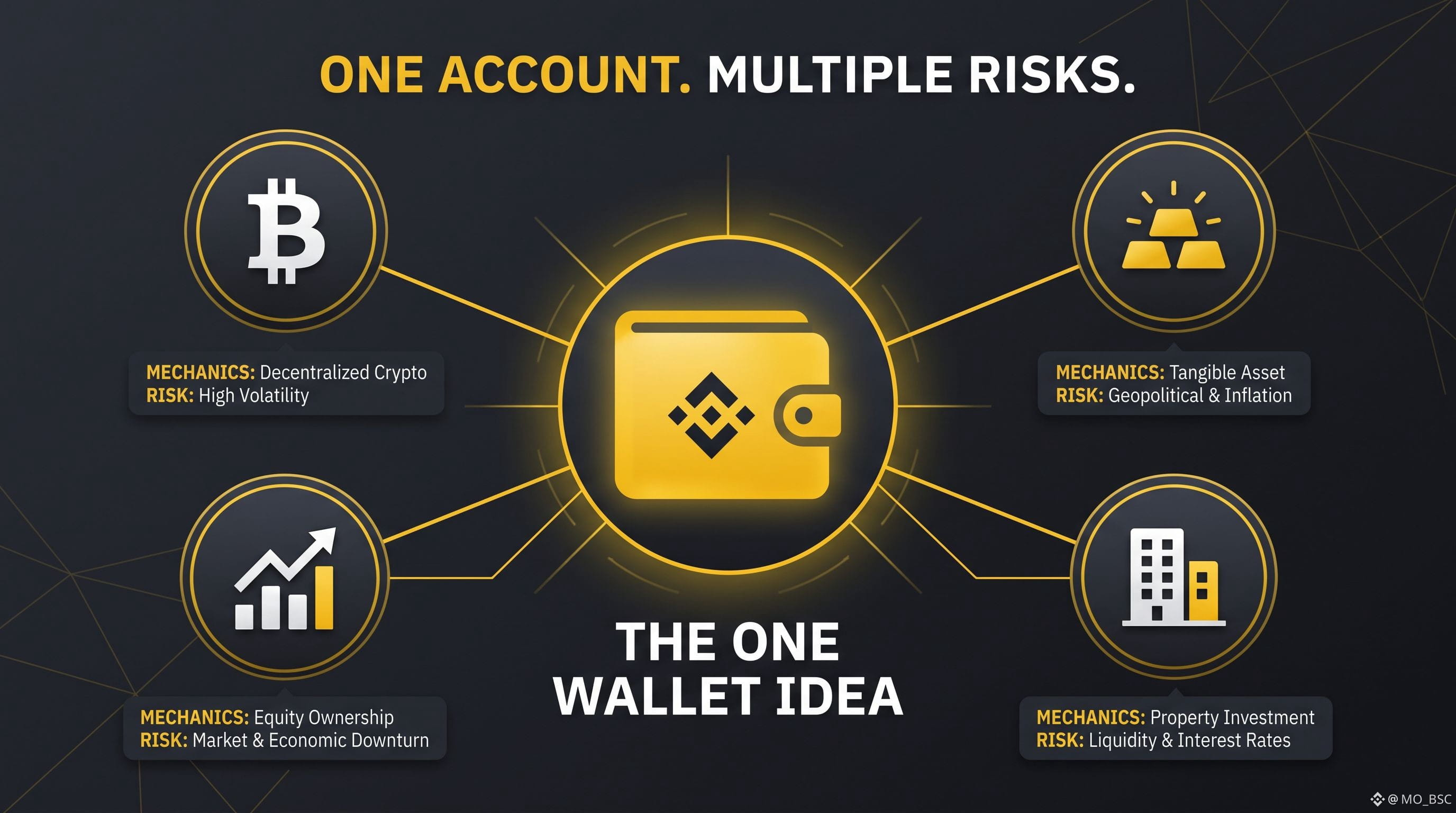
One account can be convenient.
But convenience shouldn't replace understanding.
The idea of managing crypto alongside other financial products from one Binance ecosystem is becoming increasingly real.
You can have different markets and instruments in the same environment.
But each one still has its own:
Risk profile.
Trading mechanics.
Eligibility.
Regulatory framework.
One login doesn't mean one risk.
One ecosystem doesn't mean one product.
Learn the difference.
@Binance_Academy
#Binance #Crypto
One account can be convenient.
But convenience shouldn't replace understanding.
The idea of managing crypto alongside other financial products from one Binance ecosystem is becoming increasingly real.
You can have different markets and instruments in the same environment.
But each one still has its own:
Risk profile.
Trading mechanics.
Eligibility.
Regulatory framework.
One login doesn't mean one risk.
One ecosystem doesn't mean one product.
Learn the difference.
@Binance Academy
#Binance #Crypto
But convenience shouldn't replace understanding.
The idea of managing crypto alongside other financial products from one Binance ecosystem is becoming increasingly real.
You can have different markets and instruments in the same environment.
But each one still has its own:
Risk profile.
Trading mechanics.
Eligibility.
Regulatory framework.
One login doesn't mean one risk.
One ecosystem doesn't mean one product.
Learn the difference.
@Binance Academy
#Binance #Crypto
2
29
·
--
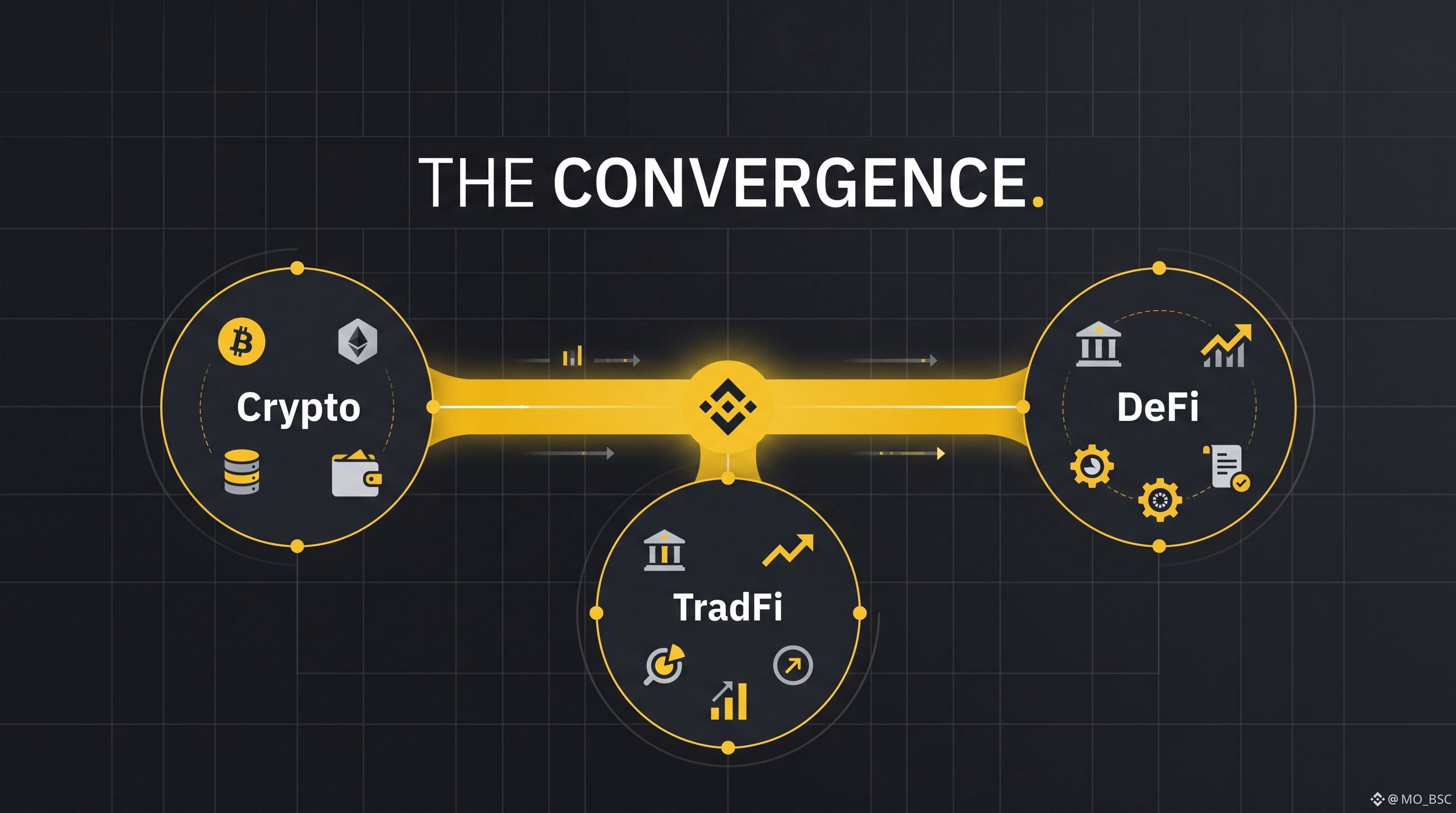
The bigger story isn't simply "Binance added more products." !!
It's the convergence of financial markets.
Crypto brings blockchain-native assets.
TradFi brings traditional financial instruments.
DeFi brings programmable, on-chain financial applications.
The idea of a broader financial ecosystem is about connecting these worlds instead of forcing users to think of them as completely isolated systems.
But every connection introduces new products to understand.
More access requires more knowledge.
That's why education matters.
@Binance_Academy
#Binance #TriFi
The bigger story isn't simply "Binance added more products." !!
It's the convergence of financial markets.
Crypto brings blockchain-native assets.
TradFi brings traditional financial instruments.
DeFi brings programmable, on-chain financial applications.
The idea of a broader financial ecosystem is about connecting these worlds instead of forcing users to think of them as completely isolated systems.
But every connection introduces new products to understand.
More access requires more knowledge.
That's why education matters.
@Binance Academy
#Binance #TriFi
It's the convergence of financial markets.
Crypto brings blockchain-native assets.
TradFi brings traditional financial instruments.
DeFi brings programmable, on-chain financial applications.
The idea of a broader financial ecosystem is about connecting these worlds instead of forcing users to think of them as completely isolated systems.
But every connection introduces new products to understand.
More access requires more knowledge.
That's why education matters.
@Binance Academy
#Binance #TriFi
3
27
·
--
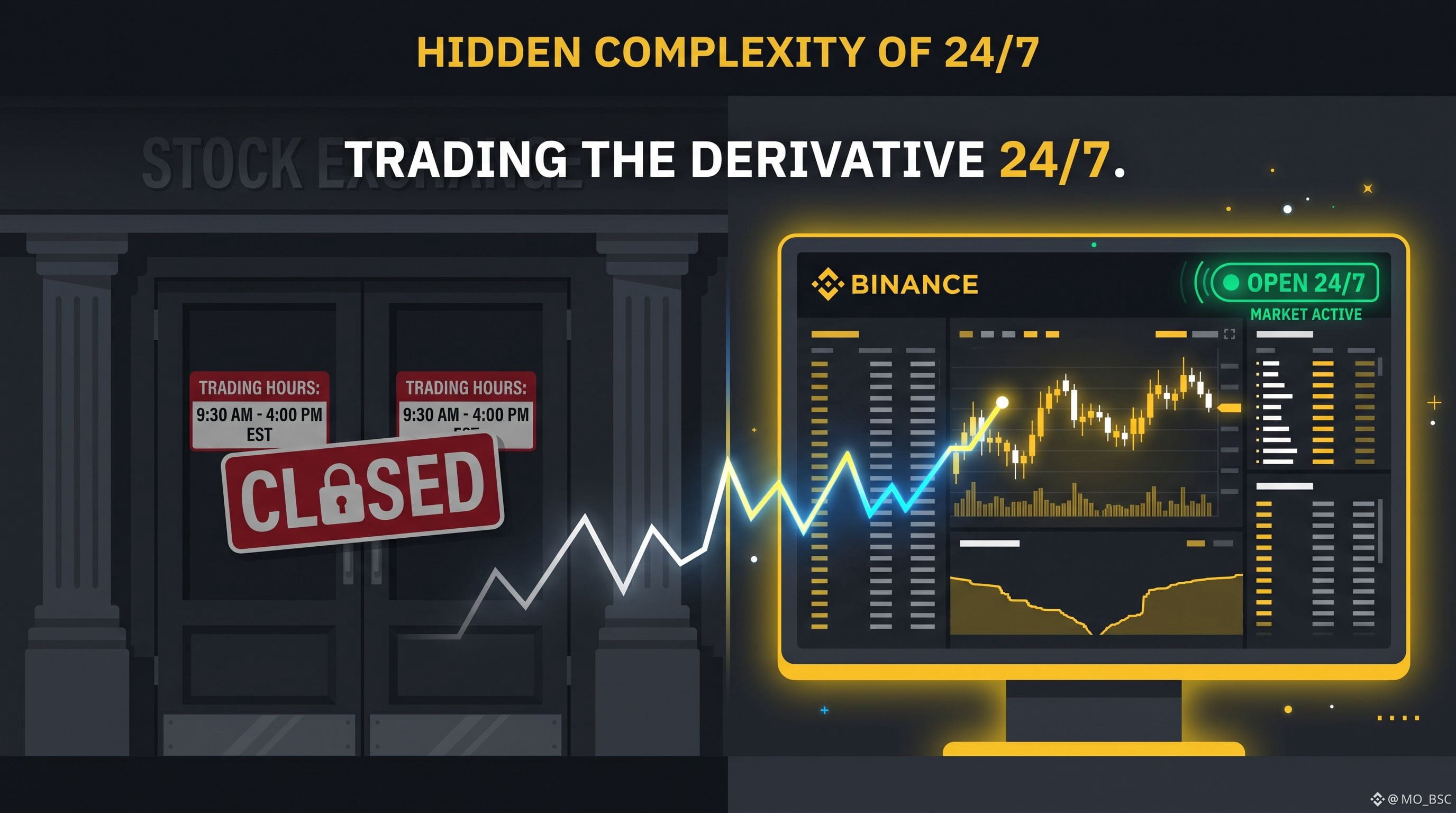
"24/7 trading" sounds simple.
But there's an important question behind it:
What happens when the underlying traditional market is closed?
Binance TradFi perpetuals use pricing mechanisms designed to maintain a reference price outside the underlying market's normal hours.
So 24/7 availability doesn't mean traditional exchanges are open all weekend.
It means the derivative market can continue operating according to its own mechanism.
Always understand how pricing works outside regular market hours.
@Binance_Academy
#BinanceFutures
"24/7 trading" sounds simple.
But there's an important question behind it:
What happens when the underlying traditional market is closed?
Binance TradFi perpetuals use pricing mechanisms designed to maintain a reference price outside the underlying market's normal hours.
So 24/7 availability doesn't mean traditional exchanges are open all weekend.
It means the derivative market can continue operating according to its own mechanism.
Always understand how pricing works outside regular market hours.
@Binance Academy
#BinanceFutures
But there's an important question behind it:
What happens when the underlying traditional market is closed?
Binance TradFi perpetuals use pricing mechanisms designed to maintain a reference price outside the underlying market's normal hours.
So 24/7 availability doesn't mean traditional exchanges are open all weekend.
It means the derivative market can continue operating according to its own mechanism.
Always understand how pricing works outside regular market hours.
@Binance Academy
#BinanceFutures
3
19
·
--
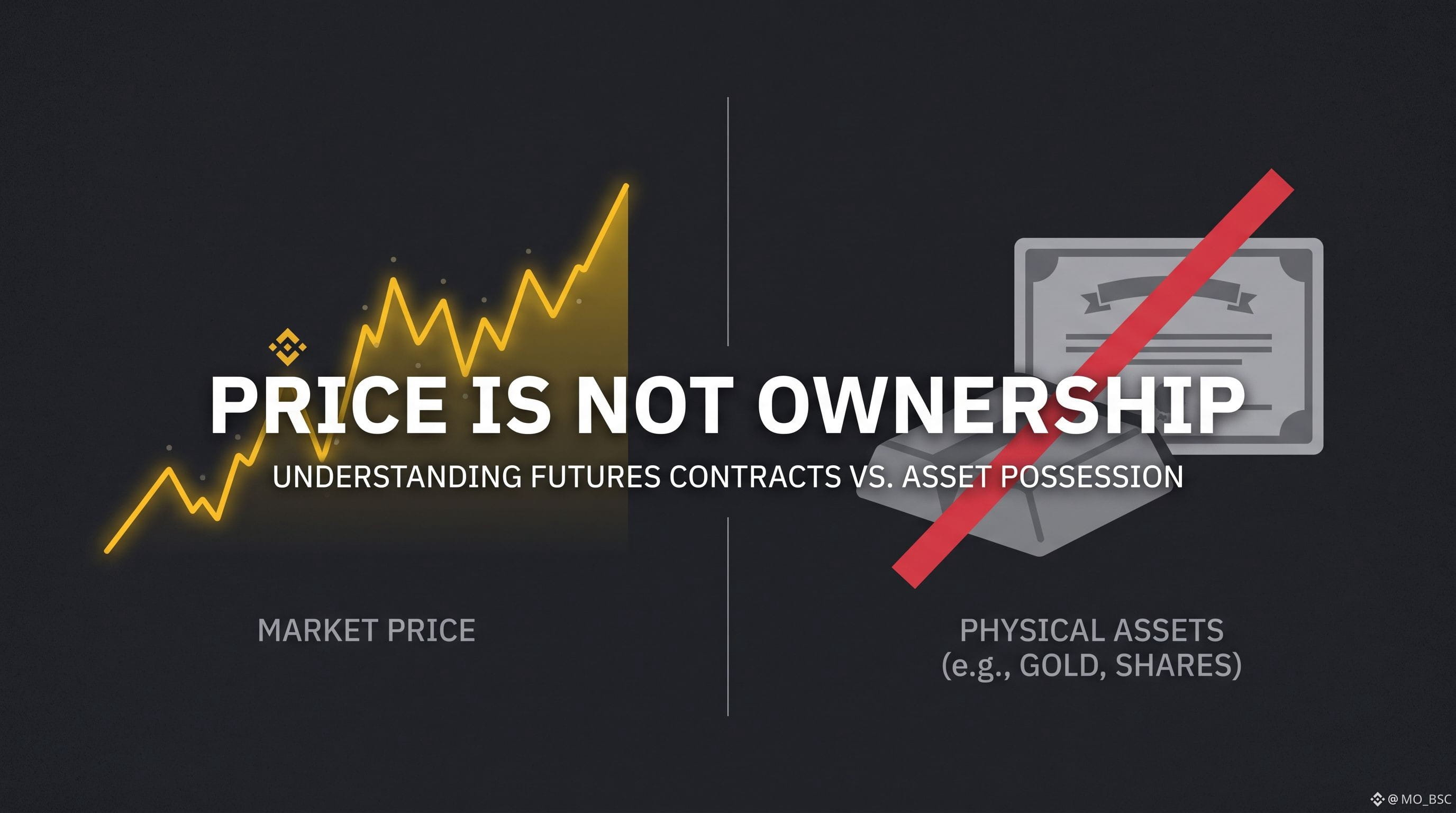
Quick reminder:
A futures position isn't the same thing as owning the underlying asset.
If you trade a TradFi perpetual linked to gold:
You don't own the gold.
If you trade a perpetual linked to a stock:
You don't own the stock.
The contract is designed to track price movements.
This distinction affects everything from shareholder rights to dividends and settlement.
Before trading derivatives, understand the instrument—not just the asset name.
@Binance_Academy
#BinanceFutures
Quick reminder:
A futures position isn't the same thing as owning the underlying asset.
If you trade a TradFi perpetual linked to gold:
You don't own the gold.
If you trade a perpetual linked to a stock:
You don't own the stock.
The contract is designed to track price movements.
This distinction affects everything from shareholder rights to dividends and settlement.
Before trading derivatives, understand the instrument—not just the asset name.
@Binance Academy
#BinanceFutures
A futures position isn't the same thing as owning the underlying asset.
If you trade a TradFi perpetual linked to gold:
You don't own the gold.
If you trade a perpetual linked to a stock:
You don't own the stock.
The contract is designed to track price movements.
This distinction affects everything from shareholder rights to dividends and settlement.
Before trading derivatives, understand the instrument—not just the asset name.
@Binance Academy
#BinanceFutures
3
49
·
--
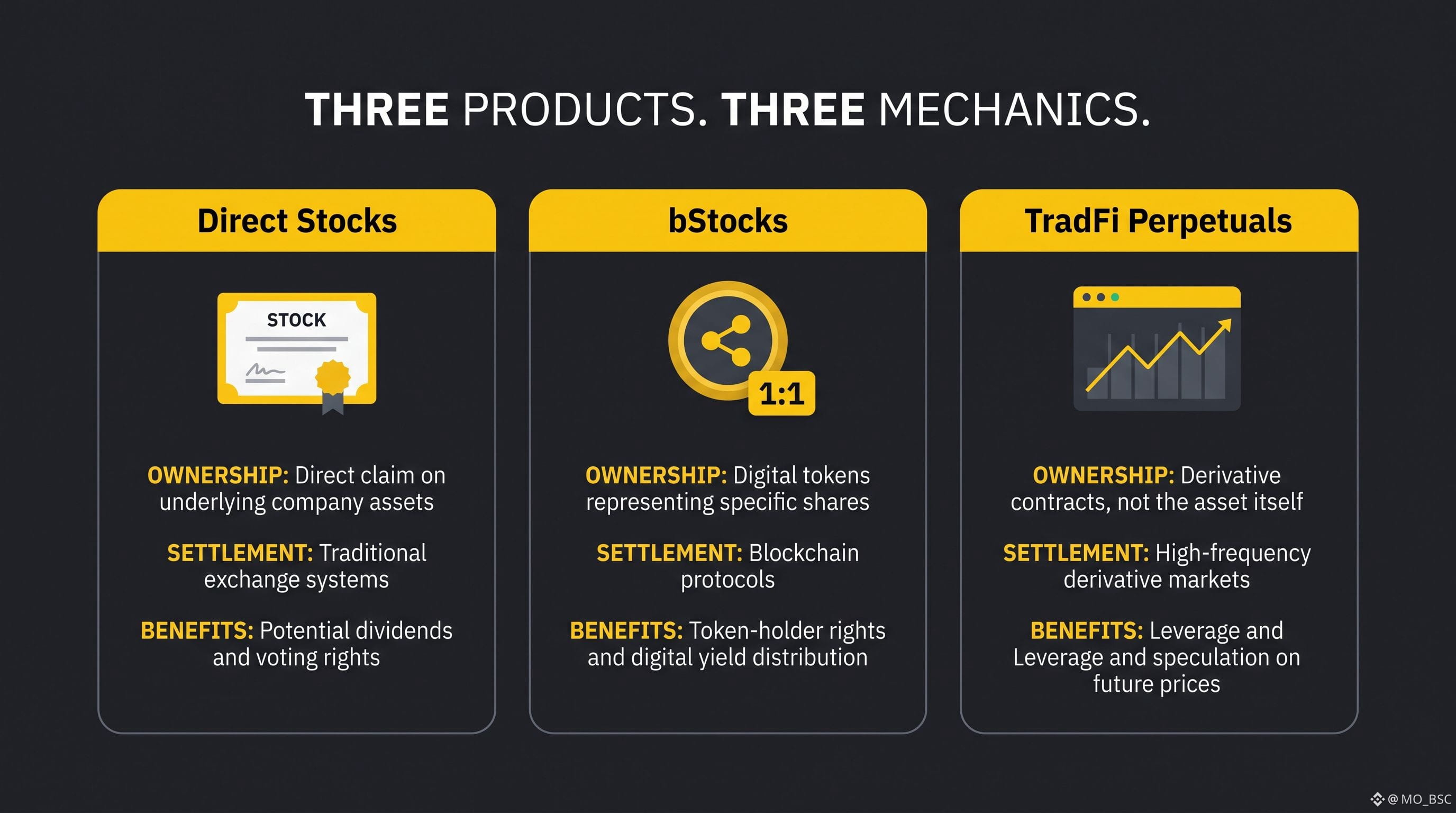
Three terms that shouldn't be mixed together:
Direct Stocks.
bStocks.
TradFi Perpetuals.
Direct stock trading can provide ownership of the underlying shares through the relevant structure.
bStocks are tokenized securities representing an interest in underlying securities, with each bStock backed 1:1 by a corresponding share.
TradFi perpetuals are derivatives that track the price of traditional assets without giving you direct ownership.
Three products.
Three structures.
Three different things to understand.
The label matters.
The mechanics matter more.
@Binance_Academy
#Binance #bStocks
Three terms that shouldn't be mixed together:
Direct Stocks.
bStocks.
TradFi Perpetuals.
Direct stock trading can provide ownership of the underlying shares through the relevant structure.
bStocks are tokenized securities representing an interest in underlying securities, with each bStock backed 1:1 by a corresponding share.
TradFi perpetuals are derivatives that track the price of traditional assets without giving you direct ownership.
Three products.
Three structures.
Three different things to understand.
The label matters.
The mechanics matter more.
@Binance Academy
#Binance #bStocks
Direct Stocks.
bStocks.
TradFi Perpetuals.
Direct stock trading can provide ownership of the underlying shares through the relevant structure.
bStocks are tokenized securities representing an interest in underlying securities, with each bStock backed 1:1 by a corresponding share.
TradFi perpetuals are derivatives that track the price of traditional assets without giving you direct ownership.
Three products.
Three structures.
Three different things to understand.
The label matters.
The mechanics matter more.
@Binance Academy
#Binance #bStocks
4
21
·
--
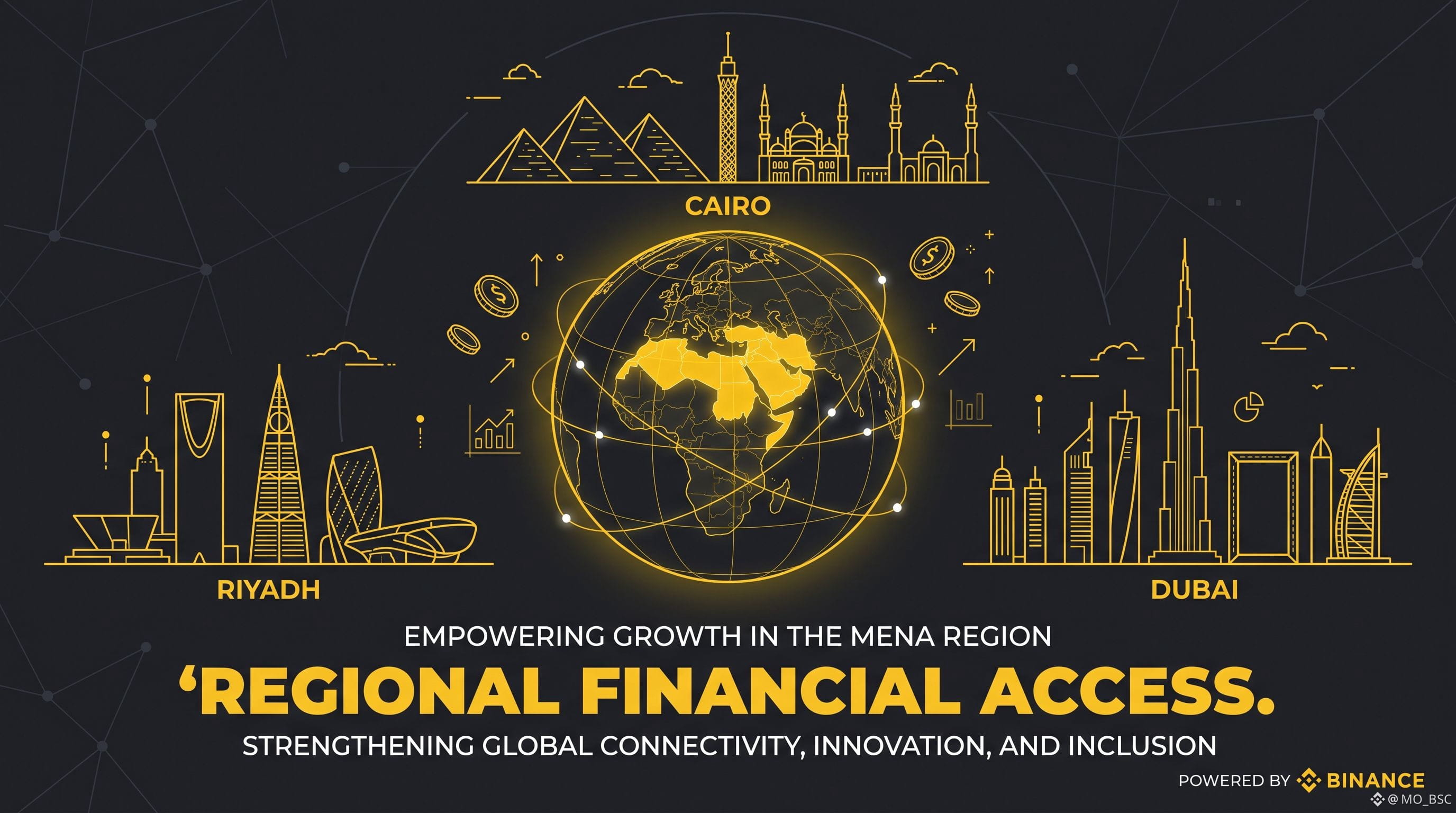
Imagine you're in Cairo, Riyadh or Dubai.
You see a financial product available in a U.S. market.
The obvious question is:
"Can I access it?"
The real answer isn't simply yes or no.
It depends on your country, eligibility, regulatory framework and the specific Binance product.
That's why regional availability is part of the story.
The future of financial access isn't only about adding more products.
It's also about making access compliant and understandable for different markets.
Always verify availability where you live.
@Binance_Academy
#Binance #MENA
Imagine you're in Cairo, Riyadh or Dubai.
You see a financial product available in a U.S. market.
The obvious question is:
"Can I access it?"
The real answer isn't simply yes or no.
It depends on your country, eligibility, regulatory framework and the specific Binance product.
That's why regional availability is part of the story.
The future of financial access isn't only about adding more products.
It's also about making access compliant and understandable for different markets.
Always verify availability where you live.
@Binance Academy
#Binance #MENA
You see a financial product available in a U.S. market.
The obvious question is:
"Can I access it?"
The real answer isn't simply yes or no.
It depends on your country, eligibility, regulatory framework and the specific Binance product.
That's why regional availability is part of the story.
The future of financial access isn't only about adding more products.
It's also about making access compliant and understandable for different markets.
Always verify availability where you live.
@Binance Academy
#Binance #MENA
2
20
·
--
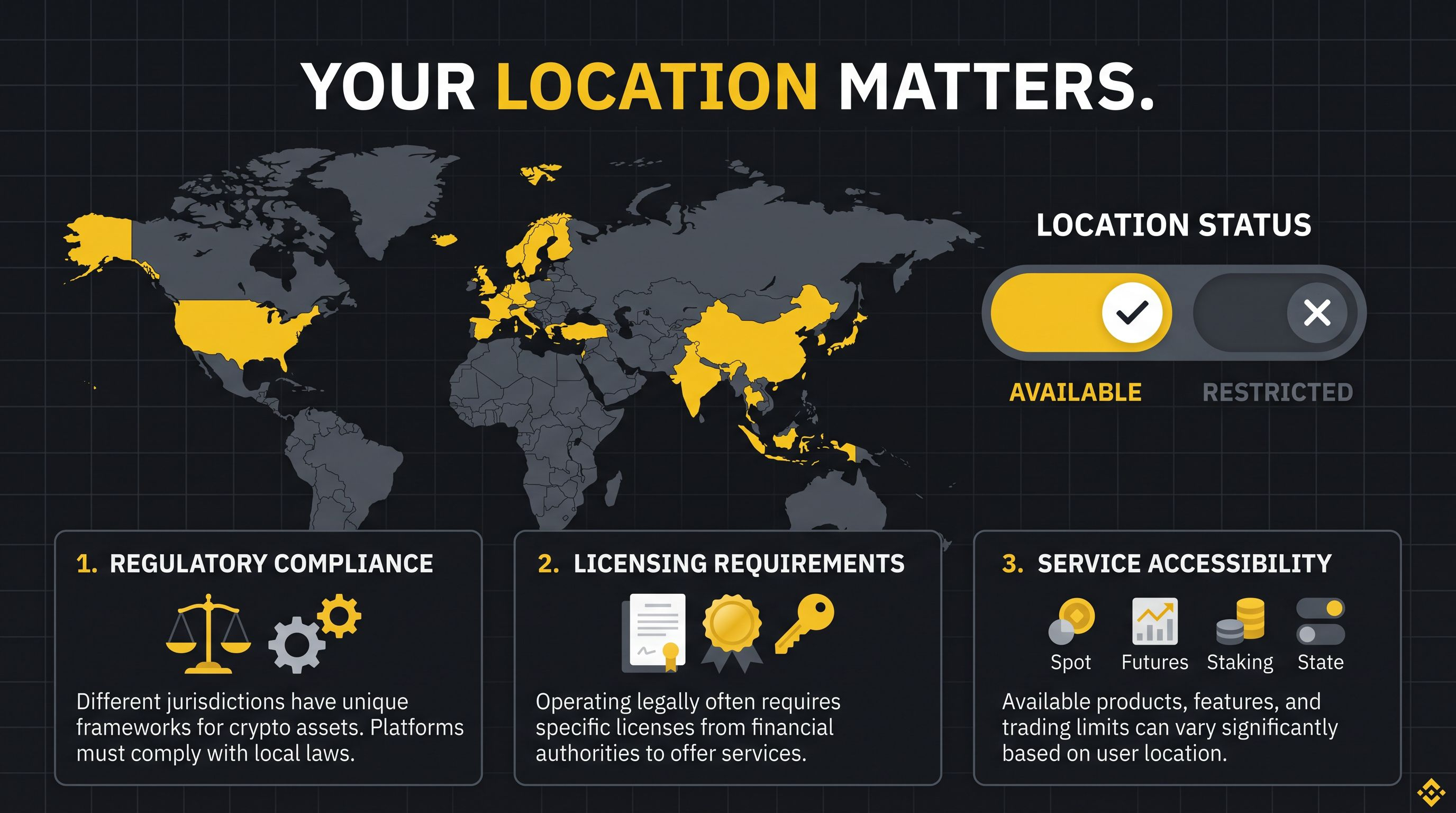
A financial product can exist globally without being available globally.
That's especially important when talking about TradFi products.
Availability can depend on:
• Country of residence
• Regulatory requirements
• Eligibility checks
• The specific Binance entity serving your region
• The individual product
So a product you see someone using online may not be available to you.
Always check the official Binance product page for your jurisdiction before assuming access.
Your location matters 💛
@Binance_Academy
#Crypto
A financial product can exist globally without being available globally.
That's especially important when talking about TradFi products.
Availability can depend on:
• Country of residence
• Regulatory requirements
• Eligibility checks
• The specific Binance entity serving your region
• The individual product
So a product you see someone using online may not be available to you.
Always check the official Binance product page for your jurisdiction before assuming access.
Your location matters 💛
@Binance Academy
#Crypto
That's especially important when talking about TradFi products.
Availability can depend on:
• Country of residence
• Regulatory requirements
• Eligibility checks
• The specific Binance entity serving your region
• The individual product
So a product you see someone using online may not be available to you.
Always check the official Binance product page for your jurisdiction before assuming access.
Your location matters 💛
@Binance Academy
#Crypto
3
42
·
--
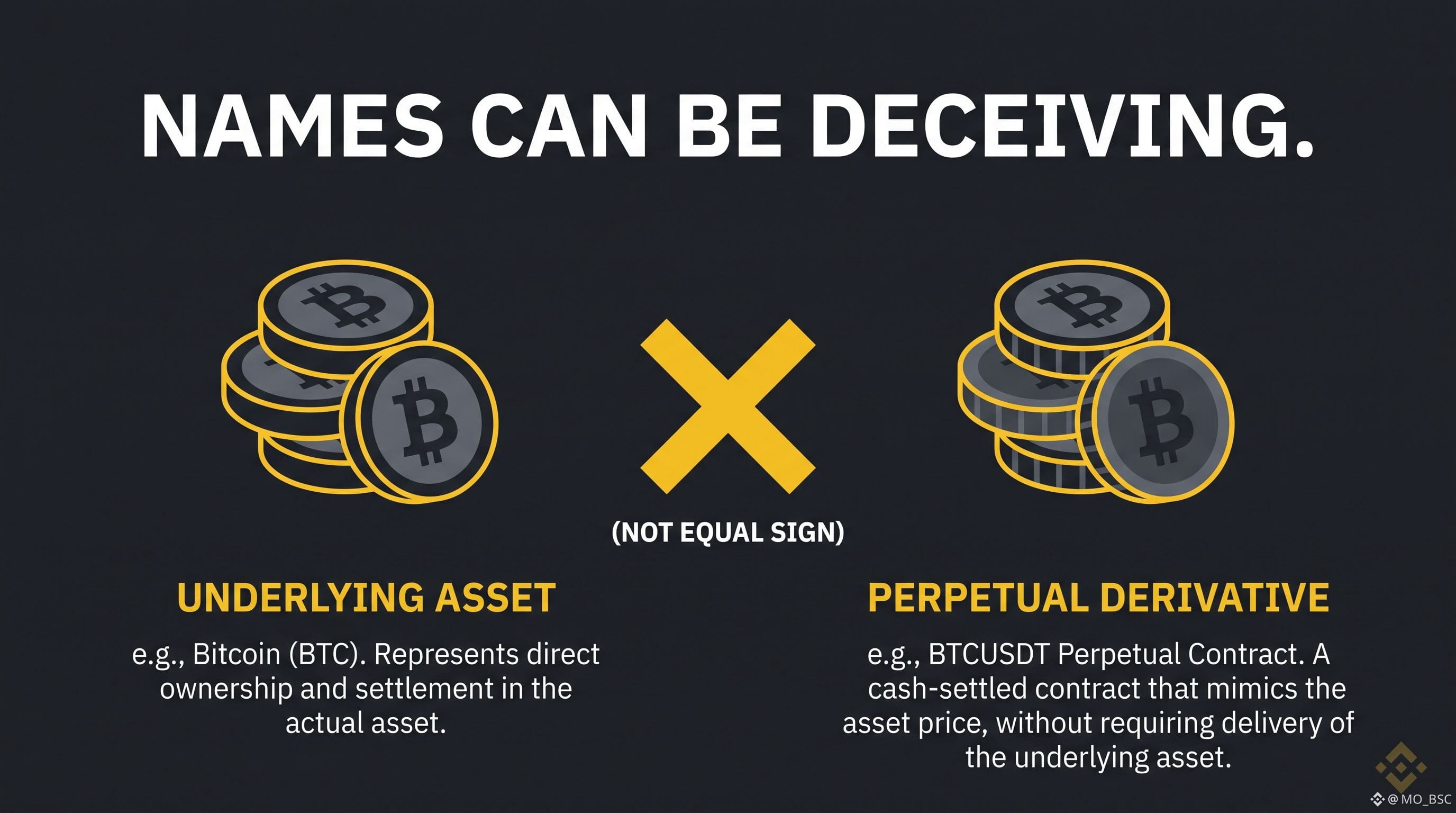
One of the easiest mistakes in finance?
Assuming two products are the same because their names sound similar.
$BTC ≠ BTC perpetual.
Stock ≠ stock perpetual.
Gold ≠ gold perpetual.
ETF ≠ ETF-linked perpetual.
The underlying asset can be the same while the financial instrument is completely different.
That's why Binance product pages and Binance Academy explanations matter.
Don't just ask:
"What can this track?"
Also ask:
"What exactly am I holding or trading?"
DYOR.
@Binance_Academy
#Binance
One of the easiest mistakes in finance?
Assuming two products are the same because their names sound similar.
$BTC ≠ BTC perpetual.
Stock ≠ stock perpetual.
Gold ≠ gold perpetual.
ETF ≠ ETF-linked perpetual.
The underlying asset can be the same while the financial instrument is completely different.
That's why Binance product pages and Binance Academy explanations matter.
Don't just ask:
"What can this track?"
Also ask:
"What exactly am I holding or trading?"
DYOR.
@Binance Academy
#Binance
Assuming two products are the same because their names sound similar.
$BTC ≠ BTC perpetual.
Stock ≠ stock perpetual.
Gold ≠ gold perpetual.
ETF ≠ ETF-linked perpetual.
The underlying asset can be the same while the financial instrument is completely different.
That's why Binance product pages and Binance Academy explanations matter.
Don't just ask:
"What can this track?"
Also ask:
"What exactly am I holding or trading?"
DYOR.
@Binance Academy
#Binance
3
22
·
--
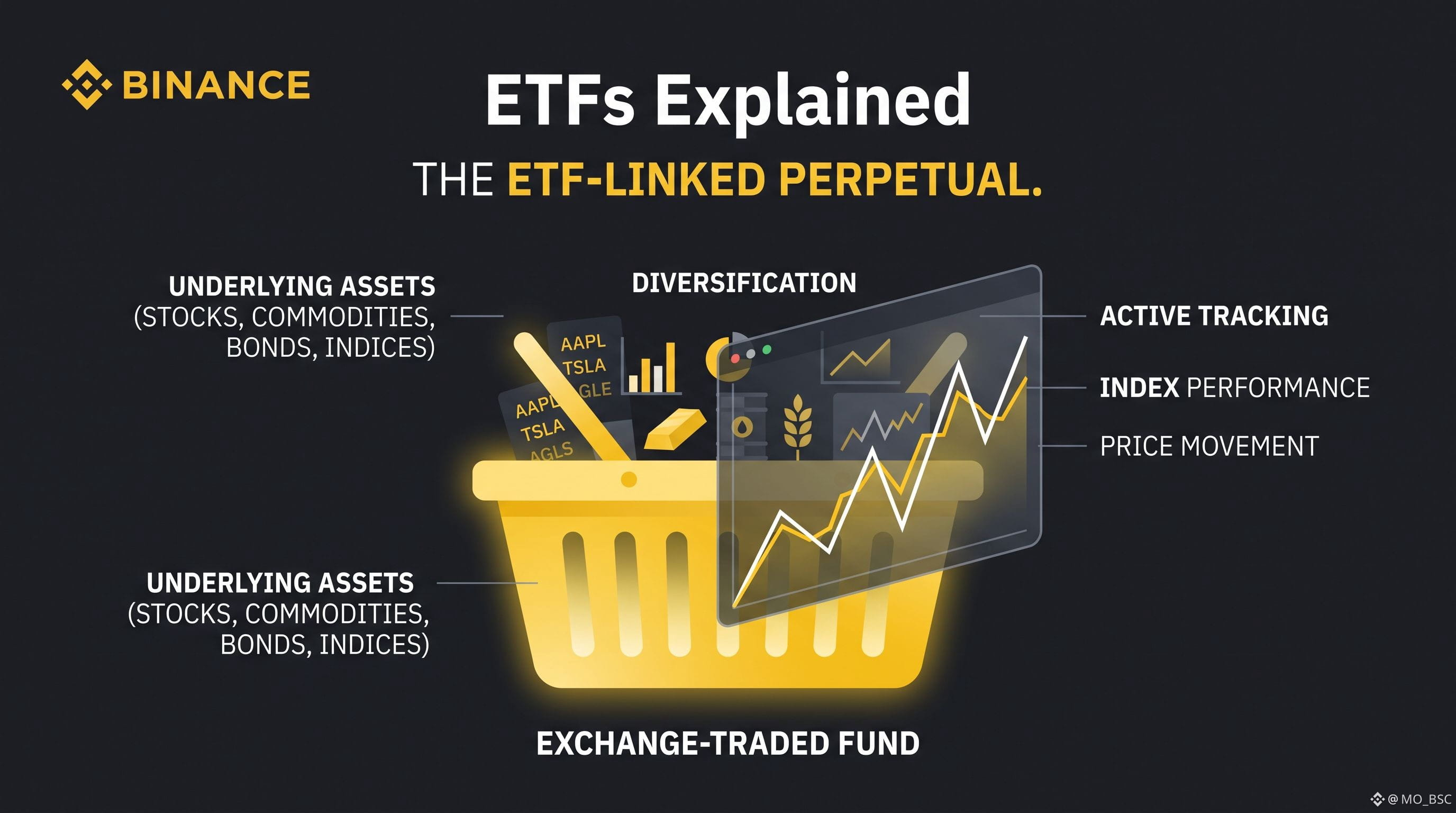
ETF sounds complicated until you break it down.
An ETF is a fund that can hold a collection of assets and is traded on a market like a security.
For example, an index ETF can track a basket of companies rather than representing one company.
Binance's TradFi offering includes ETF-linked perpetual contracts.
Important distinction:
An ETF-linked perpetual is a derivative tracking the ETF's price.
It does NOT mean you directly own the ETF.
Different instrument.
Different rights.
Different risks.
Learn the structure before trading it.
@Binance_Academy
#ETF
ETF sounds complicated until you break it down.
An ETF is a fund that can hold a collection of assets and is traded on a market like a security.
For example, an index ETF can track a basket of companies rather than representing one company.
Binance's TradFi offering includes ETF-linked perpetual contracts.
Important distinction:
An ETF-linked perpetual is a derivative tracking the ETF's price.
It does NOT mean you directly own the ETF.
Different instrument.
Different rights.
Different risks.
Learn the structure before trading it.
@Binance Academy
#ETF
An ETF is a fund that can hold a collection of assets and is traded on a market like a security.
For example, an index ETF can track a basket of companies rather than representing one company.
Binance's TradFi offering includes ETF-linked perpetual contracts.
Important distinction:
An ETF-linked perpetual is a derivative tracking the ETF's price.
It does NOT mean you directly own the ETF.
Different instrument.
Different rights.
Different risks.
Learn the structure before trading it.
@Binance Academy
#ETF
3
430
Connectez-vous pour découvrir plus de contenu
Rejoignez la communauté mondiale des adeptes de cryptomonnaies sur Binance Square
⚡️ Suviez les dernières informations importantes sur les cryptomonnaies.
💬 Jugé digne de confiance par la plus grande plateforme d’échange de cryptomonnaies au monde.
👍 Découvrez les connaissances que partagent les créateurs vérifiés.
Adresse e-mail/Nº de téléphone
Sujets d’actualité
BitcoinClears$85200
15,759 vues
237 mentions
We got the move, and $BTC is standing exactly where we were before the data. That’s what actual patience for a trade looks like.
The data came in mixed but with some important numbers. ADP Non-Farm Employment Change came at 90K vs 73K forecast, while Core PCE came in at 0.2% vs 0.3% expected. Final GDP was also stronger at 2.2% vs 1.5% forecast, while Personal Spending came in at 0.9% vs 0.8% expected. At the same time, Personal Income missed at 0.2% vs 0.5% forecast.
BTC initially surged to $85,600 and is now back where it needs to be. I’m still looking toward the lower ranges at $82,759 and the $80,000 liquidity, because the overhead liquidity is done and dusted.
We had a live session during the data, and during that session we saw the market at $83,800, then $85,600, and then back toward $83,000 and we still didn’t enter a trade.
That’s what patience is.
We can’t force an entry when the market has no clear direction. The same range is still in focus, and we’ll wait for the market to give us the setup.
Let me know, guys, how was the session? And should we have more regular sessions with our respected members so we can have proper discussions regarding the market?
#BitcoinClears$85200 #AltcoinSeasonIndexHoldsAbove60For5Days #USADPAdds90000JobsInSeptember #BitcoinSlipsBelow$84000 #SECToClarifyOnChainFundraisingRules
Crypto_LUX
·26 mentions J’aime
·22.8k vues
AltcoinSeasonIndexHoldsAbove60For5Days
78,548 vues
1,292 mentions
USADPAdds90000JobsInSeptember
35,288 vues
713 mentions