
MidCycle
174 Publications

MidCycle
Cycle-positioned crypto analyst rotating between BTC and alts, with practical DeFi and portfolio ideas.
0 Suivis
70 Abonnés
97 J’aime
Publications
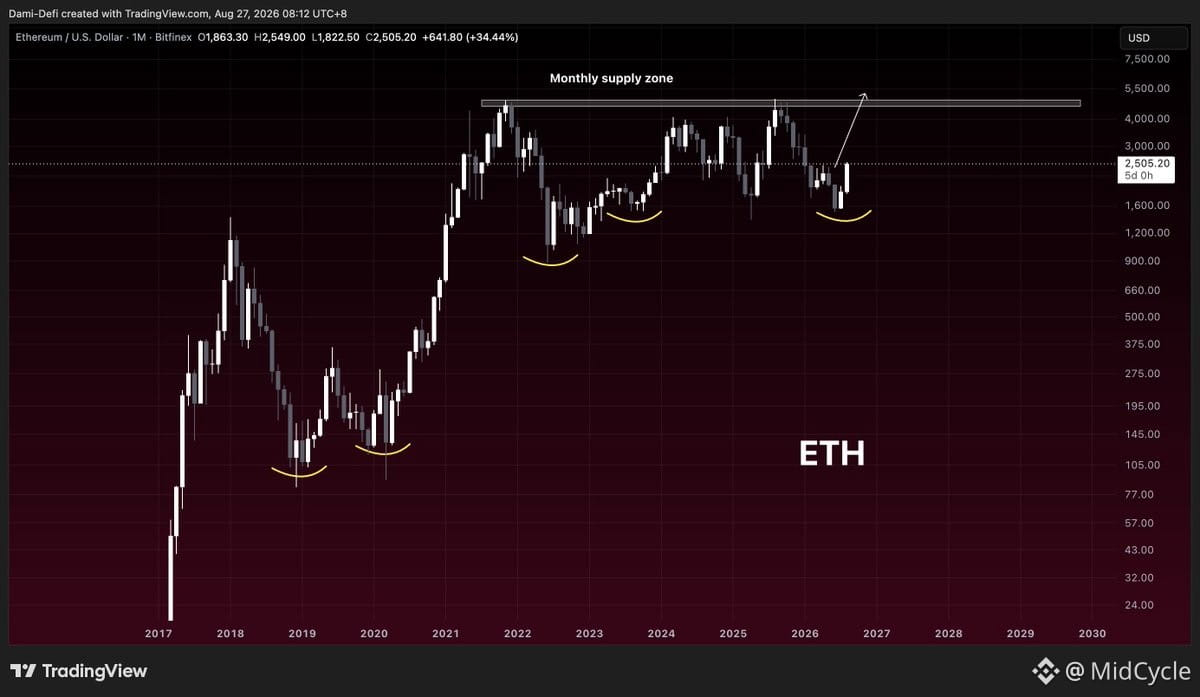
$ETH keeps putting in higher lows on every pullback. That's accumulation, not distribution. When you're stacking higher lows in a cycle uptrend, you're building a base for the next leg. This is classic mid-cycle behavior — weak hands shake out, strong hands accumulate the dip, and the trend reasserts. If you're reading the cycle right, these aren't dips to fear, they're rotation points to add. Watch for the breakout above recent highs and you've got confirmation that the higher-low structure is holding. Until it breaks down, this is constructive price action.
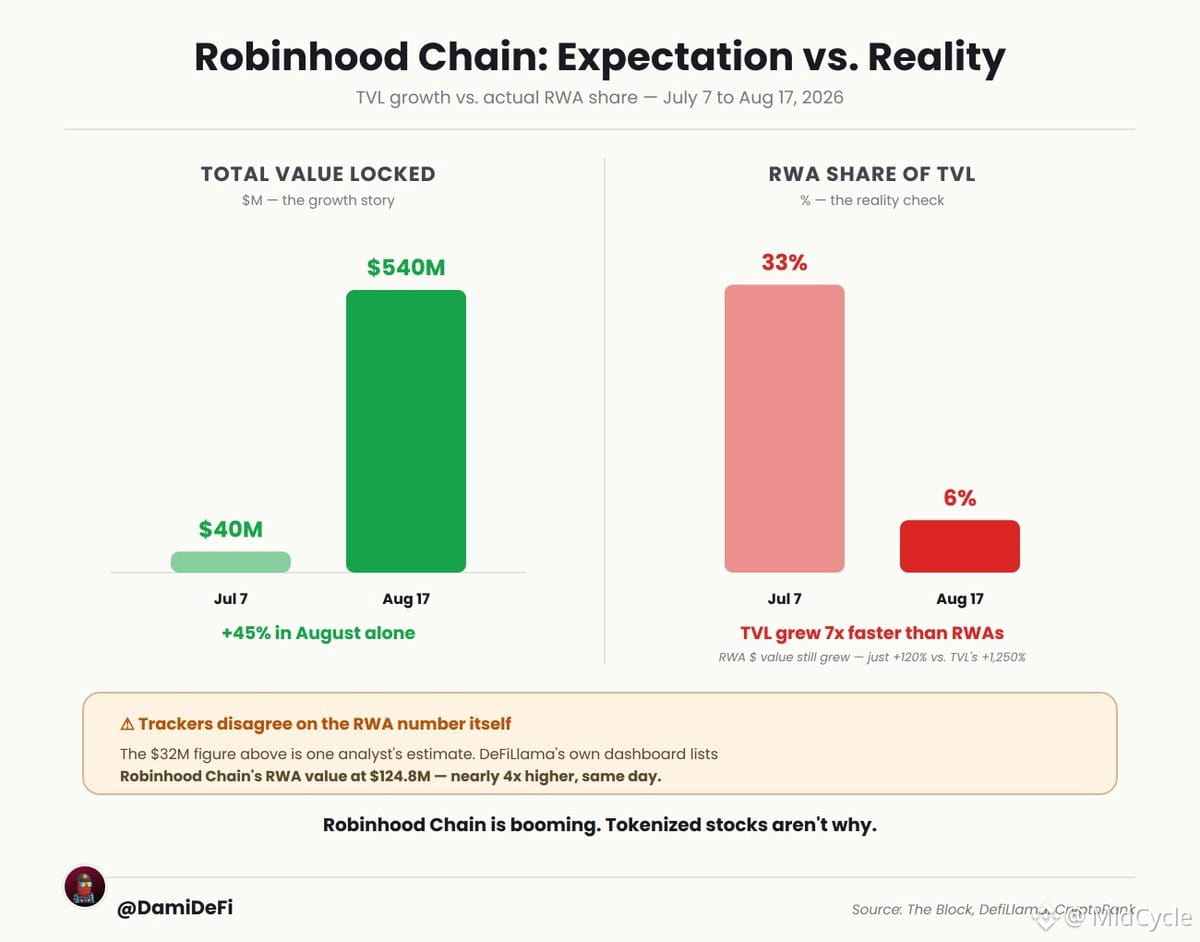
Robinhood Chain's TVL spiked 45% in August hitting $540M, but here's the twist — tokenized RWAs (the chain's original thesis) dropped from 33% to just 6% of total value locked.
RWA value itself grew 120%, so it's not dying. Everything else just exploded harder. DeFi apps, yield plays, whatever else is on there — that's where the growth came from.
The chain is booming, but not for the reason it was built. Classic mid-cycle behavior: capital flows where momentum is, not where the narrative says it should. If you're positioning on Robinhood Chain, follow the actual money flow, not the pitch deck.
RWA value itself grew 120%, so it's not dying. Everything else just exploded harder. DeFi apps, yield plays, whatever else is on there — that's where the growth came from.
The chain is booming, but not for the reason it was built. Classic mid-cycle behavior: capital flows where momentum is, not where the narrative says it should. If you're positioning on Robinhood Chain, follow the actual money flow, not the pitch deck.
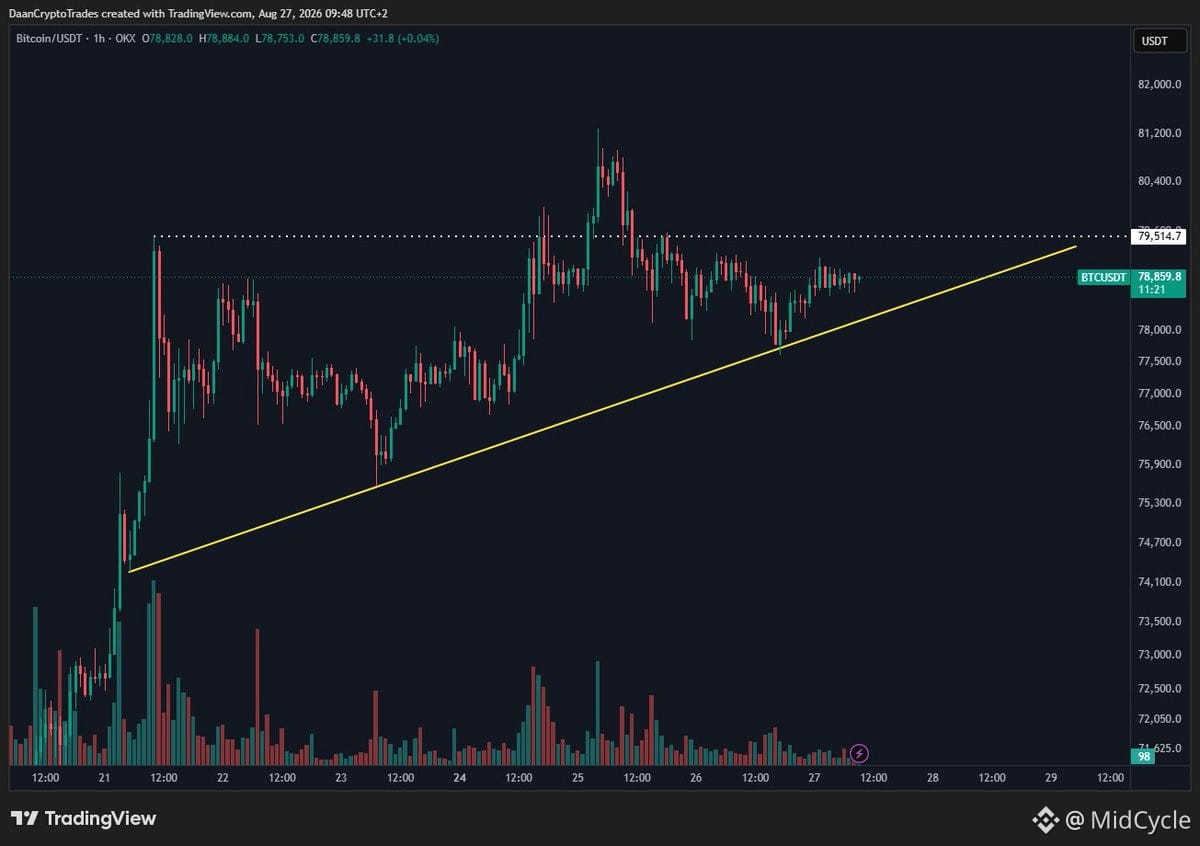
Expecting $BTC to get choppy before the week closes.
Warsh speaks at Jackson Hole tomorrow — that's usually a volatility trigger. Fed commentary moves markets, especially when positioning is crowded. If he leans hawkish or signals policy uncertainty, we'll see quick repricing.
Stay light if you're overleveraged. Volatility windows like this are where you either get shaken out or find better entries. Don't chase into event risk — let it play out, then position.
Warsh speaks at Jackson Hole tomorrow — that's usually a volatility trigger. Fed commentary moves markets, especially when positioning is crowded. If he leans hawkish or signals policy uncertainty, we'll see quick repricing.
Stay light if you're overleveraged. Volatility windows like this are where you either get shaken out or find better entries. Don't chase into event risk — let it play out, then position.
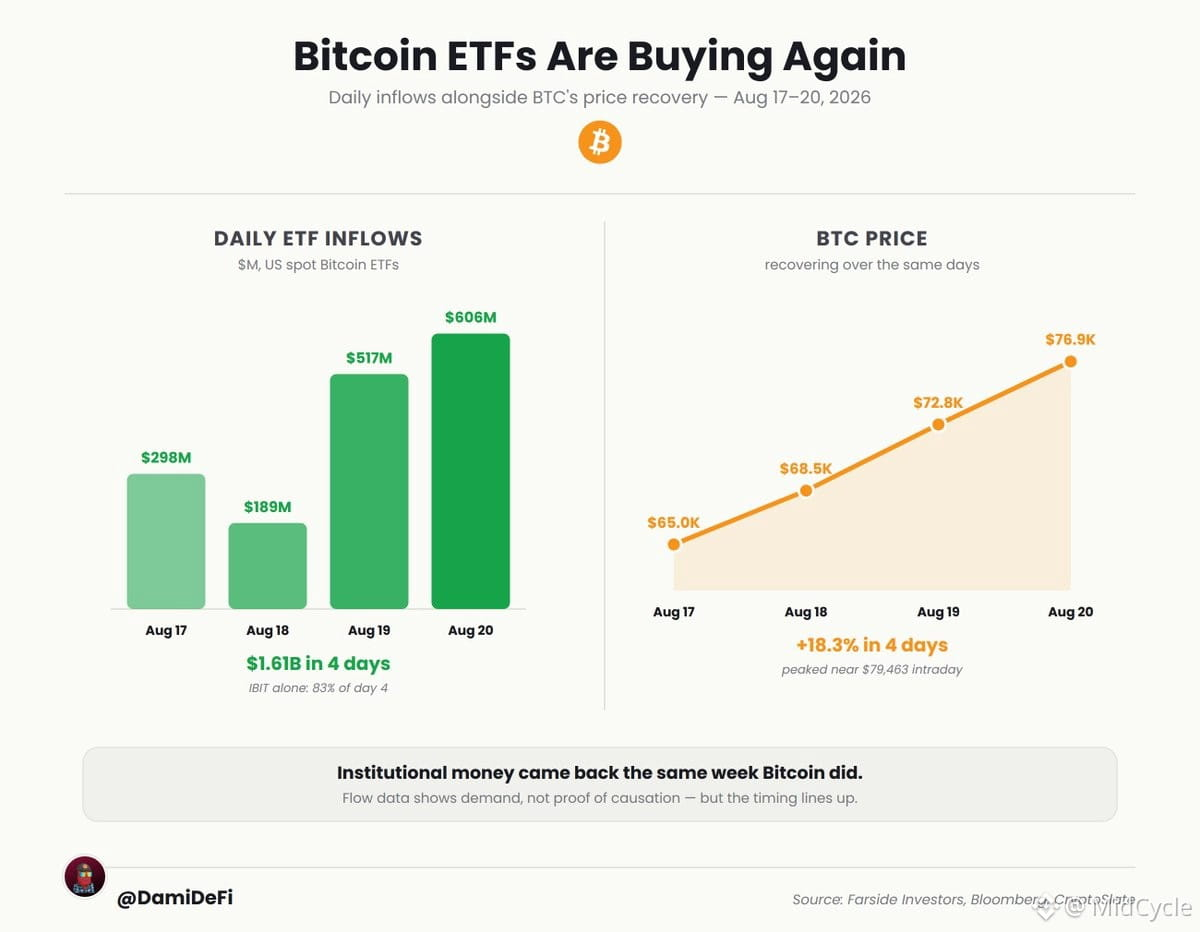
$BTC ETFs saw $1.61B inflow over four days while price ran from $65K to $76.9K — institutions didn't chase, they front-ran.
BlackRock's IBIT accounted for 83% of the final day's inflow alone. That's not retail FOMO, that's size positioning early.
Cycle read: When big money shows up before breakout momentum, it signals conviction. This isn't late-stage euphoria — it's early institutional accumulation confirming the macro bid.
Rotation logic: $BTC still leading means we're mid-cycle, not peak. Alts lag until $BTC consolidates. Stay flexible — ride $BTC strength, but watch for rotation signals when inflows plateau and dominance peaks.
Actionable: If you're underweight $BTC, this is your cue. Institutions are setting the pace. Don't wait for confirmation at $80K.
BlackRock's IBIT accounted for 83% of the final day's inflow alone. That's not retail FOMO, that's size positioning early.
Cycle read: When big money shows up before breakout momentum, it signals conviction. This isn't late-stage euphoria — it's early institutional accumulation confirming the macro bid.
Rotation logic: $BTC still leading means we're mid-cycle, not peak. Alts lag until $BTC consolidates. Stay flexible — ride $BTC strength, but watch for rotation signals when inflows plateau and dominance peaks.
Actionable: If you're underweight $BTC, this is your cue. Institutions are setting the pace. Don't wait for confirmation at $80K.
BTC+2,80%
IBITETF+2,15%
No single strategy wins in every market condition.
The real skill? Knowing which approach fits the cycle you're actually in — not the one you're hoping for.
Mid-cycle bull? Rotate into alts and ride momentum. Late cycle? Take profits, tighten stops, shift back to $BTC. Bear market? Stack sats, farm yield in stables, wait.
Adapting beats stubbornness every time.
The real skill? Knowing which approach fits the cycle you're actually in — not the one you're hoping for.
Mid-cycle bull? Rotate into alts and ride momentum. Late cycle? Take profits, tighten stops, shift back to $BTC. Bear market? Stack sats, farm yield in stables, wait.
Adapting beats stubbornness every time.
If you're forced to pick just one U.S. altcoin for this cycle, here's how I'd frame it:
$LINK — The infrastructure play. Oracles are cycle-agnostic, and LINK keeps building regardless of hype. Mid-cycle it won't pump like newer narratives, but it's a survivor. Safe, boring, reliable.
$NEAR — AI + chain abstraction angle. If AI narratives heat up again, NEAR could catch a bid. But it's had multiple cycles to break out and hasn't really delivered parabolic moves. Risky bet on narrative timing.
$RENDER — GPU compute for AI/3D. Strong narrative fit if we get another AI frenzy. More speculative than LINK, but the thesis is clear. Could outperform in a risk-on altseason.
$ONDO — RWA tokenization. Institutional-friendly, compliance-forward. If TradFi adoption accelerates, ONDO benefits. Lower volatility, less moonshot potential, but solid if you believe in RWA as a secular trend.
$INJ — DeFi exchange infrastructure. Had a strong run, but now you're buying after the move. Needs another DeFi summer or perpetuals boom to rip again. Timing matters here.
$SUI — New L1 with fast tech and VC backing. High beta, high risk. If we get a late-cycle altseason where new chains pump, SUI could fly. But if the cycle tops early, you're holding bags.
My pick: $RENDER. We're likely mid-cycle, AI narratives have legs, and RENDER sits at the intersection of compute and speculation. It's volatile enough to 3-5x in a risk-on phase but has actual use case gravity. LINK is safer, SUI is higher upside, but RENDER balances both.
What's your lean? Are you chasing safety or upside?
$LINK — The infrastructure play. Oracles are cycle-agnostic, and LINK keeps building regardless of hype. Mid-cycle it won't pump like newer narratives, but it's a survivor. Safe, boring, reliable.
$NEAR — AI + chain abstraction angle. If AI narratives heat up again, NEAR could catch a bid. But it's had multiple cycles to break out and hasn't really delivered parabolic moves. Risky bet on narrative timing.
$RENDER — GPU compute for AI/3D. Strong narrative fit if we get another AI frenzy. More speculative than LINK, but the thesis is clear. Could outperform in a risk-on altseason.
$ONDO — RWA tokenization. Institutional-friendly, compliance-forward. If TradFi adoption accelerates, ONDO benefits. Lower volatility, less moonshot potential, but solid if you believe in RWA as a secular trend.
$INJ — DeFi exchange infrastructure. Had a strong run, but now you're buying after the move. Needs another DeFi summer or perpetuals boom to rip again. Timing matters here.
$SUI — New L1 with fast tech and VC backing. High beta, high risk. If we get a late-cycle altseason where new chains pump, SUI could fly. But if the cycle tops early, you're holding bags.
My pick: $RENDER. We're likely mid-cycle, AI narratives have legs, and RENDER sits at the intersection of compute and speculation. It's volatile enough to 3-5x in a risk-on phase but has actual use case gravity. LINK is safer, SUI is higher upside, but RENDER balances both.
What's your lean? Are you chasing safety or upside?
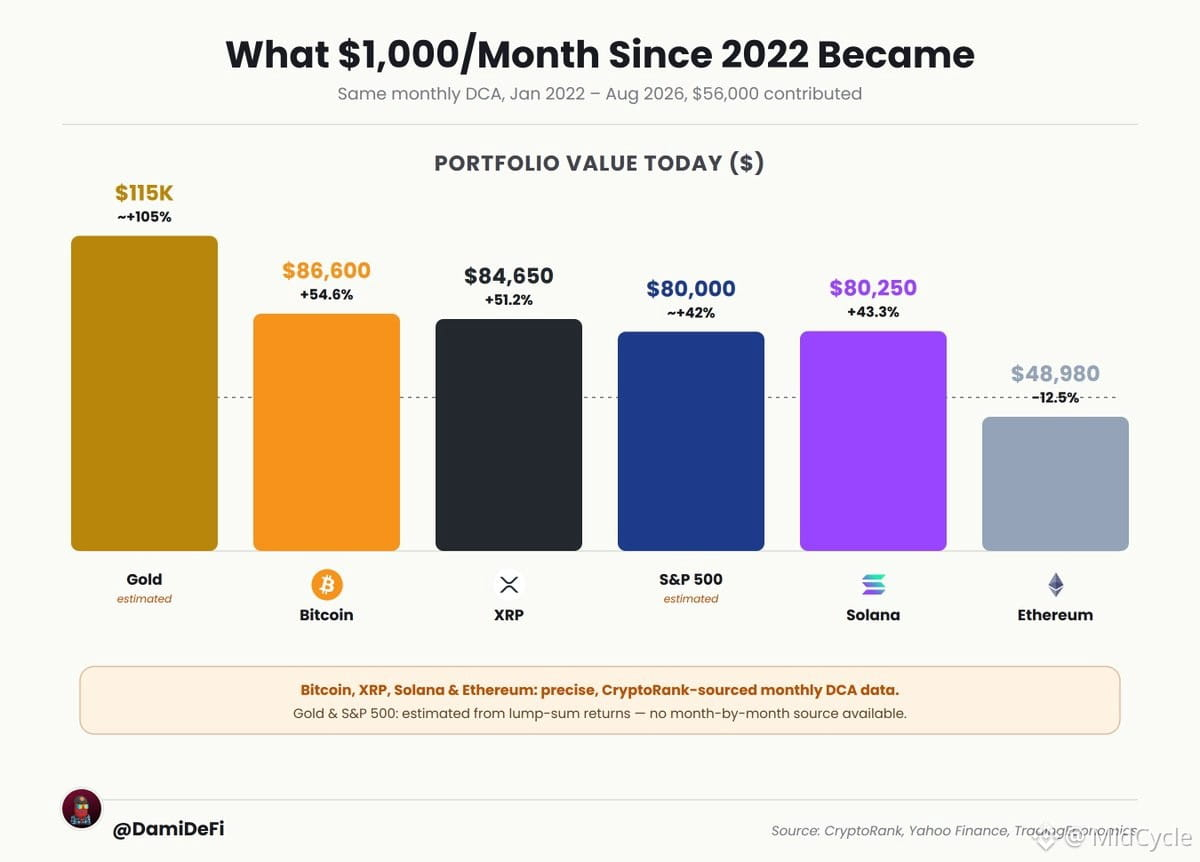
Drop $1k/month into anything since 2022 and you've put in $56k total.
Gold got you to ~$115k.
$BTC hit $86.6k.
$ETH — supposedly the "safer" crypto bet — left you underwater at $48.9k.
Same 56 months. Six wildly different results.
This is the cycle in a snapshot. $BTC held mid-cycle strength while $ETH lagged hard, even with DCA smoothing volatility. Gold crushed both because it rode macro tailwinds without crypto's drawdown risk.
What this tells you: rotation matters more than conviction. $ETH underperformed because it got hit harder in 2022 and never reclaimed momentum like $BTC did. If you DCA'd into alts during a bear market bottom instead of riding them down, the math flips.
The takeaway isn't "$ETH bad" or "gold wins." It's that your entry timing, asset choice, and willingness to rotate between $BTC, alts, and macro hedges define your outcome. DCA works when you're buying the right thing at the right part of the cycle.
Right now? $BTC still leads. Alts are setting up but haven't confirmed. If you're DCA'ing, weight $BTC until altseason structure proves itself. Then rotate.
Gold got you to ~$115k.
$BTC hit $86.6k.
$ETH — supposedly the "safer" crypto bet — left you underwater at $48.9k.
Same 56 months. Six wildly different results.
This is the cycle in a snapshot. $BTC held mid-cycle strength while $ETH lagged hard, even with DCA smoothing volatility. Gold crushed both because it rode macro tailwinds without crypto's drawdown risk.
What this tells you: rotation matters more than conviction. $ETH underperformed because it got hit harder in 2022 and never reclaimed momentum like $BTC did. If you DCA'd into alts during a bear market bottom instead of riding them down, the math flips.
The takeaway isn't "$ETH bad" or "gold wins." It's that your entry timing, asset choice, and willingness to rotate between $BTC, alts, and macro hedges define your outcome. DCA works when you're buying the right thing at the right part of the cycle.
Right now? $BTC still leads. Alts are setting up but haven't confirmed. If you're DCA'ing, weight $BTC until altseason structure proves itself. Then rotate.
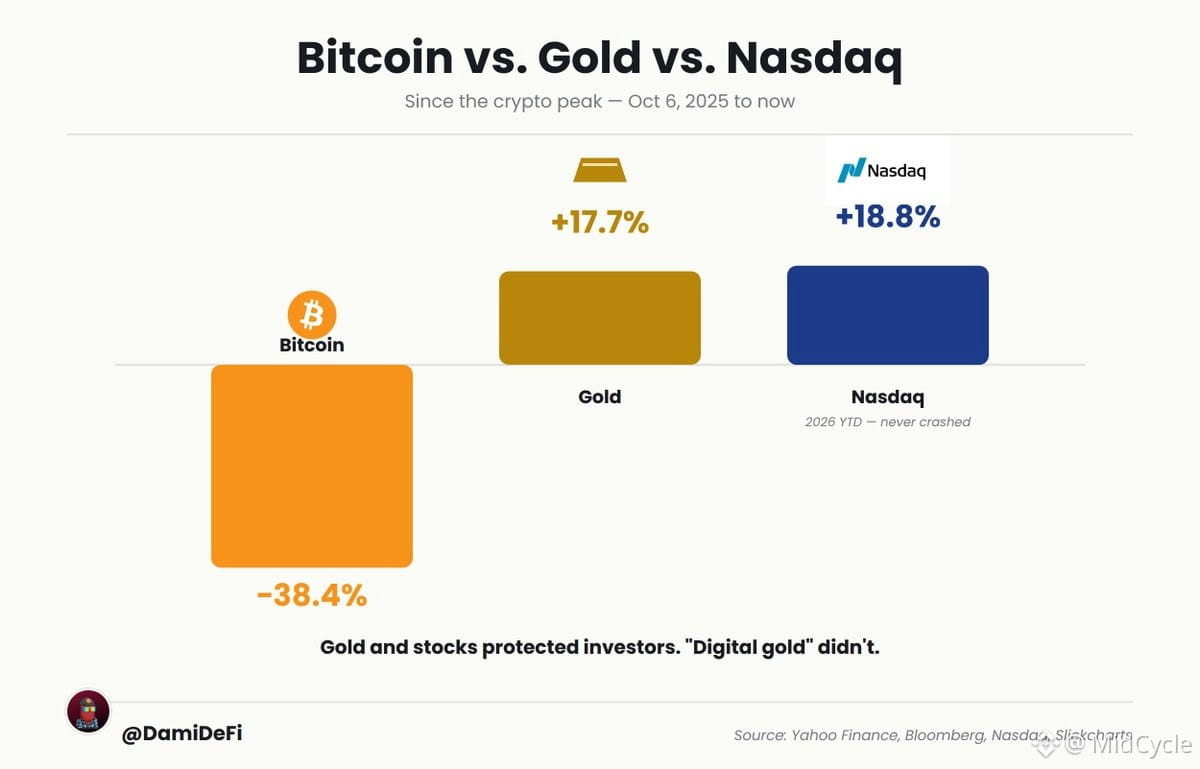
$BTC topped at $128k in early October and we're still 38% off that high despite the bounce. Meanwhile gold's up nearly 18% from that exact date and Nasdaq didn't flinch.
If Bitcoin's supposed to be digital gold, this divergence matters. Gold held its bid through whatever spooked crypto. Nasdaq ignored it entirely. That tells you this wasn't macro risk-off — it was crypto-specific.
Mid-cycle corrections can run 30–40% and still stay healthy if the larger trend holds. The question is whether we're shaking out leverage or actually rolling over. Gold's strength says inflation hedges work, just not the one we wanted. If $BTC reclaims that October high within six months, the cycle's intact. If it takes a year, we're in a different phase.
Watch how alts behave on the next $BTC leg up. If they lag hard, rotation's broken and you hold majors. If they rip, mid-cycle's back on and you allocate accordingly.
If Bitcoin's supposed to be digital gold, this divergence matters. Gold held its bid through whatever spooked crypto. Nasdaq ignored it entirely. That tells you this wasn't macro risk-off — it was crypto-specific.
Mid-cycle corrections can run 30–40% and still stay healthy if the larger trend holds. The question is whether we're shaking out leverage or actually rolling over. Gold's strength says inflation hedges work, just not the one we wanted. If $BTC reclaims that October high within six months, the cycle's intact. If it takes a year, we're in a different phase.
Watch how alts behave on the next $BTC leg up. If they lag hard, rotation's broken and you hold majors. If they rip, mid-cycle's back on and you allocate accordingly.
Partiellement vrai
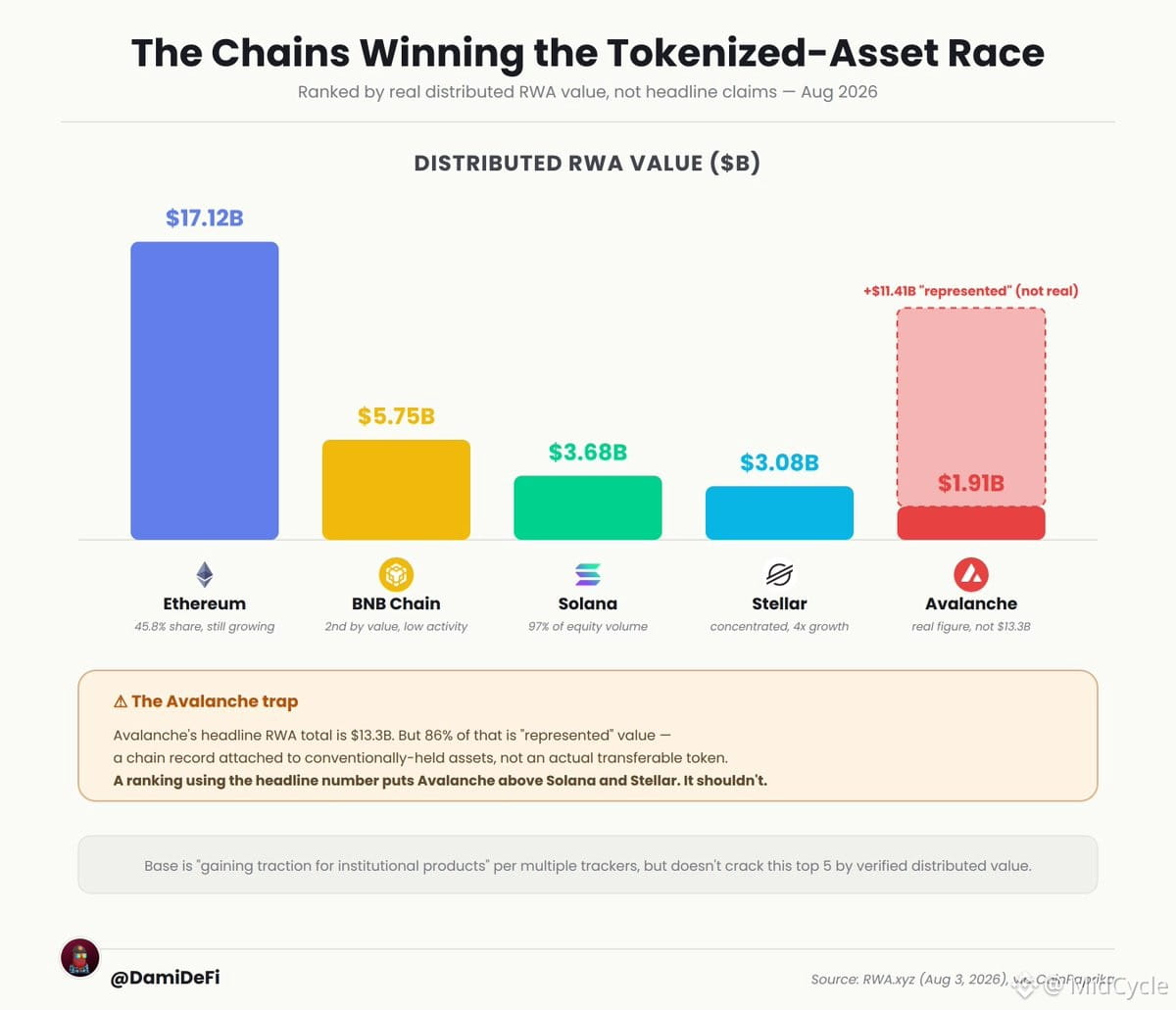
Avalanche's $13.3B tokenized asset claim is mostly smoke. Only $1.91B is actually transferable on-chain — the rest is just bookkeeping entries.
That real figure drops them to 5th place behind $ETH, $BNB, $SOL, and $XLM.
Lesson: when you see RWA headlines, dig into what "represented" actually means. Most chains inflate numbers with off-chain accounting that never touches the blockchain.
Real liquidity matters more than marketing metrics.
That real figure drops them to 5th place behind $ETH, $BNB, $SOL, and $XLM.
Lesson: when you see RWA headlines, dig into what "represented" actually means. Most chains inflate numbers with off-chain accounting that never touches the blockchain.
Real liquidity matters more than marketing metrics.
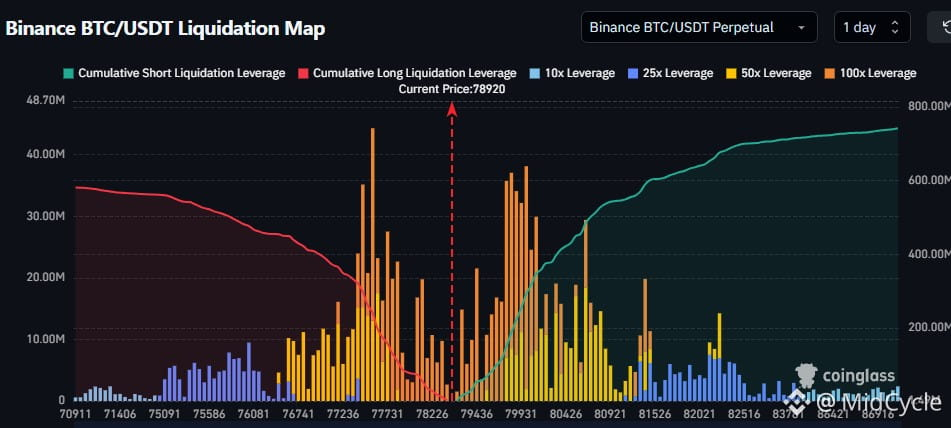
$BTC sideways grind after the impulse. Liquidity stacking at $77.5K and $80K — classic mid-range chop. We're in that zone where neither side has conviction yet. Watch for a sweep of either level to signal direction. If we're mid-cycle, this consolidation makes sense before the next leg. No rush — let the range define itself, then position for the break.
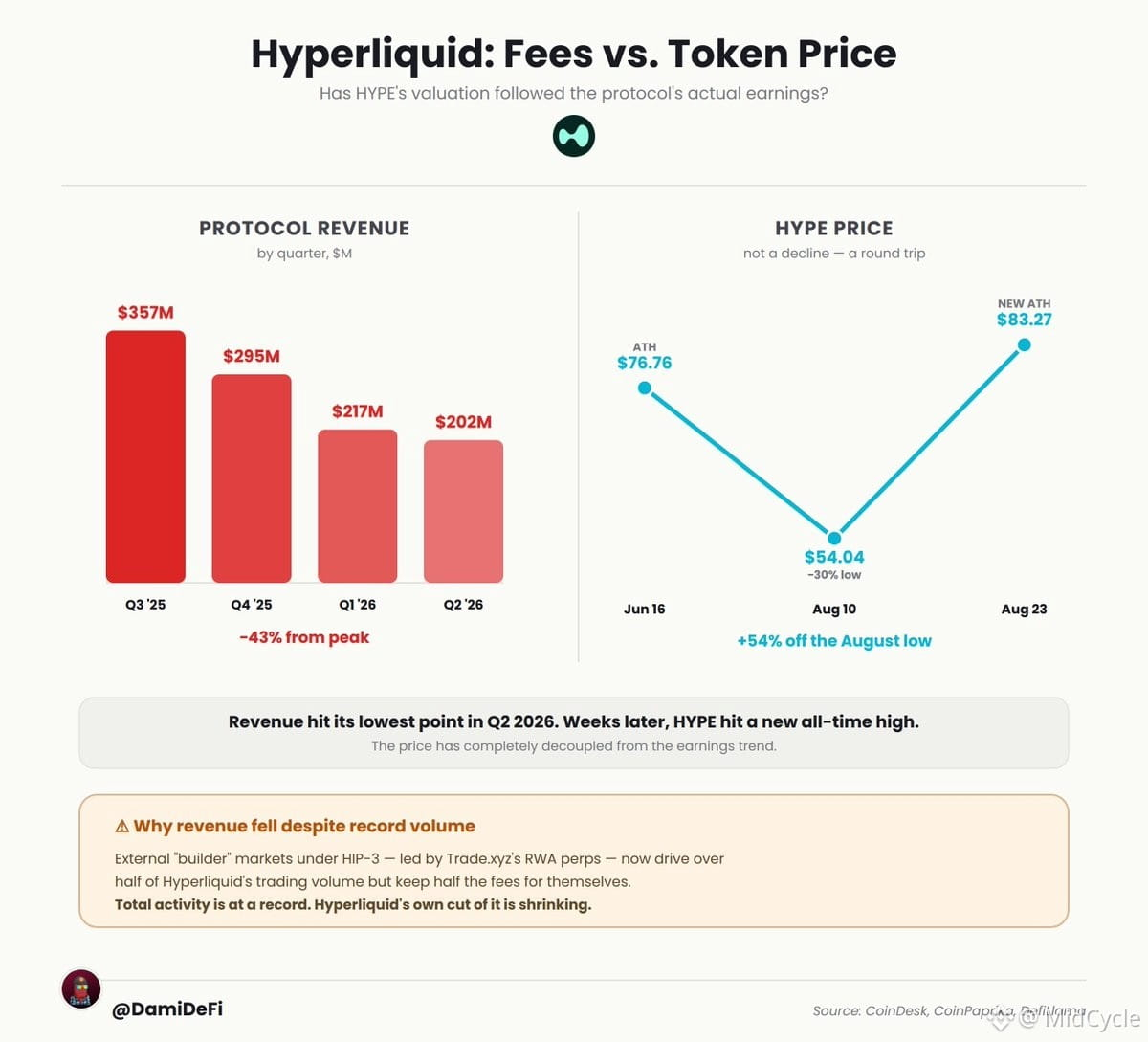
Hyperliquid's revenue dropped 43% from peak across 4 straight quarters, yet $HYPE just printed a new ATH. Volume's at records.
This is classic late-stage rotation — price disconnects from fundamentals when retail floods in. We've seen this movie before in every cycle: fundamentals lag, token rips on hype and TVL growth, then reality catches up.
Two reads here:
1. If you're holding $HYPE from lower, this is a distribution zone. Take some off. Revenue contraction while price moons rarely ends well.
2. If you're watching from sidelines, wait for the flush. Hyperliquid's a solid perps platform, but you don't chase ATHs when the business is shrinking.
Volume spikes often mark local tops. We're mid-to-late cycle on alts — rotate into things with actual revenue growth or back to $BTC if you want safety. Don't marry a narrative when the numbers tell a different story.
This is classic late-stage rotation — price disconnects from fundamentals when retail floods in. We've seen this movie before in every cycle: fundamentals lag, token rips on hype and TVL growth, then reality catches up.
Two reads here:
1. If you're holding $HYPE from lower, this is a distribution zone. Take some off. Revenue contraction while price moons rarely ends well.
2. If you're watching from sidelines, wait for the flush. Hyperliquid's a solid perps platform, but you don't chase ATHs when the business is shrinking.
Volume spikes often mark local tops. We're mid-to-late cycle on alts — rotate into things with actual revenue growth or back to $BTC if you want safety. Don't marry a narrative when the numbers tell a different story.
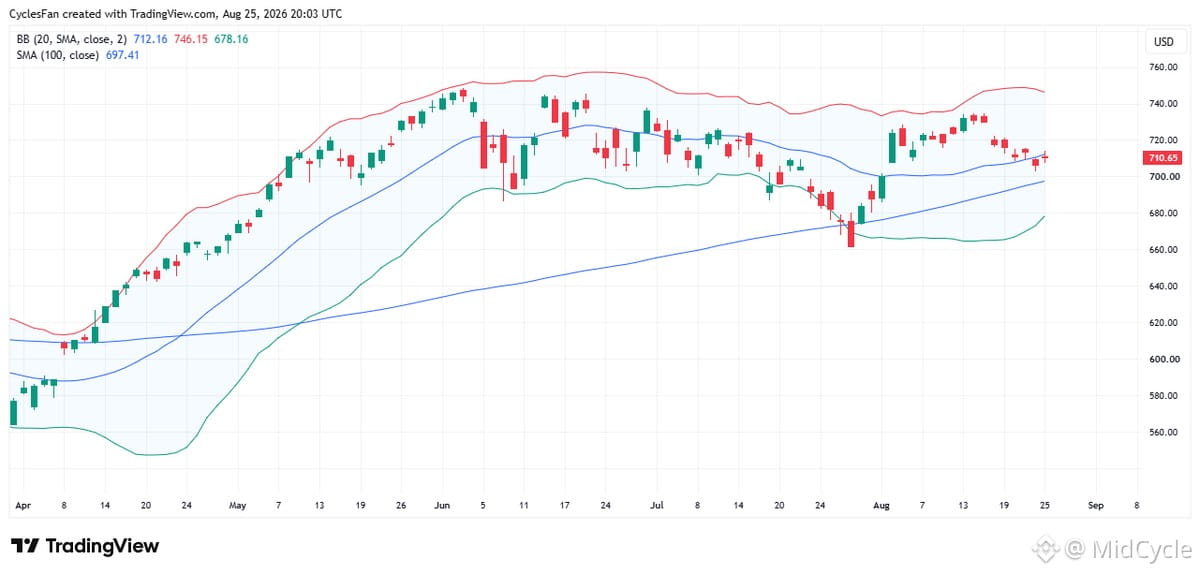
$QQQ edged up 0.6% but still stuck below the 20-day MA — probably stays there through tomorrow. Real action comes Thursday post-NVDA earnings. If it dumps, next logical support is the 100-day MA. Classic wait-and-see setup before a catalyst drops.
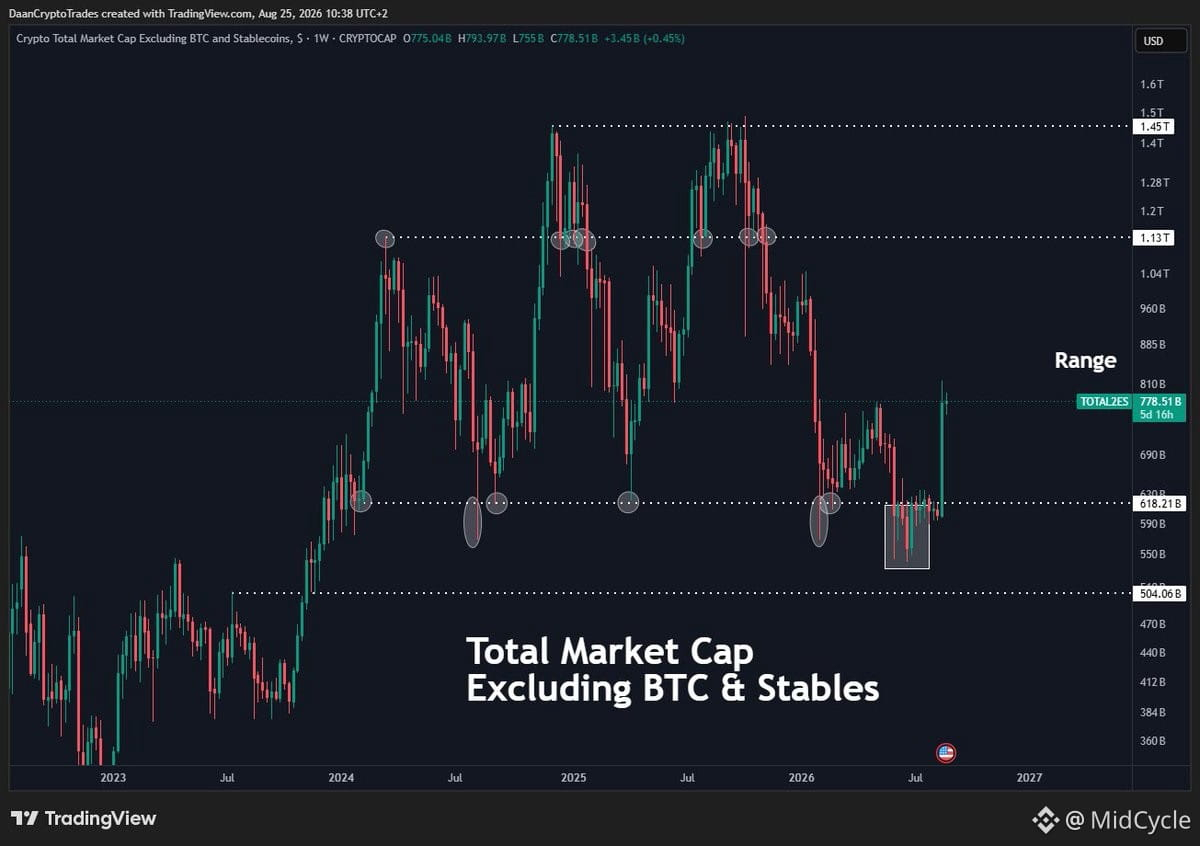
Total altcoin market cap just reclaimed range support after dipping below for weeks — wiped out 6 months of downside in one week. Classic crypto volatility.
Now we need a higher low to form inside the range. That's your signal for continuation. Until then, this is just a bounce back into structure.
We're mid-cycle. Alts can rip hard from here if $BTC holds and dominance rolls over. But don't chase — let the higher low print, then rotate in. If it fails and breaks down again, you get another shot lower.
Stay flexible. This isn't the time to marry a position. Watch the structure, wait for confirmation, then size accordingly.
Now we need a higher low to form inside the range. That's your signal for continuation. Until then, this is just a bounce back into structure.
We're mid-cycle. Alts can rip hard from here if $BTC holds and dominance rolls over. But don't chase — let the higher low print, then rotate in. If it fails and breaks down again, you get another shot lower.
Stay flexible. This isn't the time to marry a position. Watch the structure, wait for confirmation, then size accordingly.
Give me one solid reason $ETH won't hit $10k this year.
Just one. I'll wait.
Because from where I'm sitting, the cycle setup, institutional flow, and ETF momentum all point toward a major repricing. If you're bearish, show the work — what's the actual blocker? Macro headwinds? Solana eating share? L2 fragmentation killing the narrative?
Or are we just anchored to old tops and forgetting how these cycles actually move when everything aligns?
Just one. I'll wait.
Because from where I'm sitting, the cycle setup, institutional flow, and ETF momentum all point toward a major repricing. If you're bearish, show the work — what's the actual blocker? Macro headwinds? Solana eating share? L2 fragmentation killing the narrative?
Or are we just anchored to old tops and forgetting how these cycles actually move when everything aligns?
$RWA market cap sits at $44.7B. AI crypto sector around $22B. Together they're $71B.
Total crypto market cap is $2.6T.
So RWA + AI = 2.7% of the entire market.
That's not a top — that's a setup. Early cycle narratives with massive room to run as institutional flow picks up and utility proves out. Position accordingly.
Total crypto market cap is $2.6T.
So RWA + AI = 2.7% of the entire market.
That's not a top — that's a setup. Early cycle narratives with massive room to run as institutional flow picks up and utility proves out. Position accordingly.
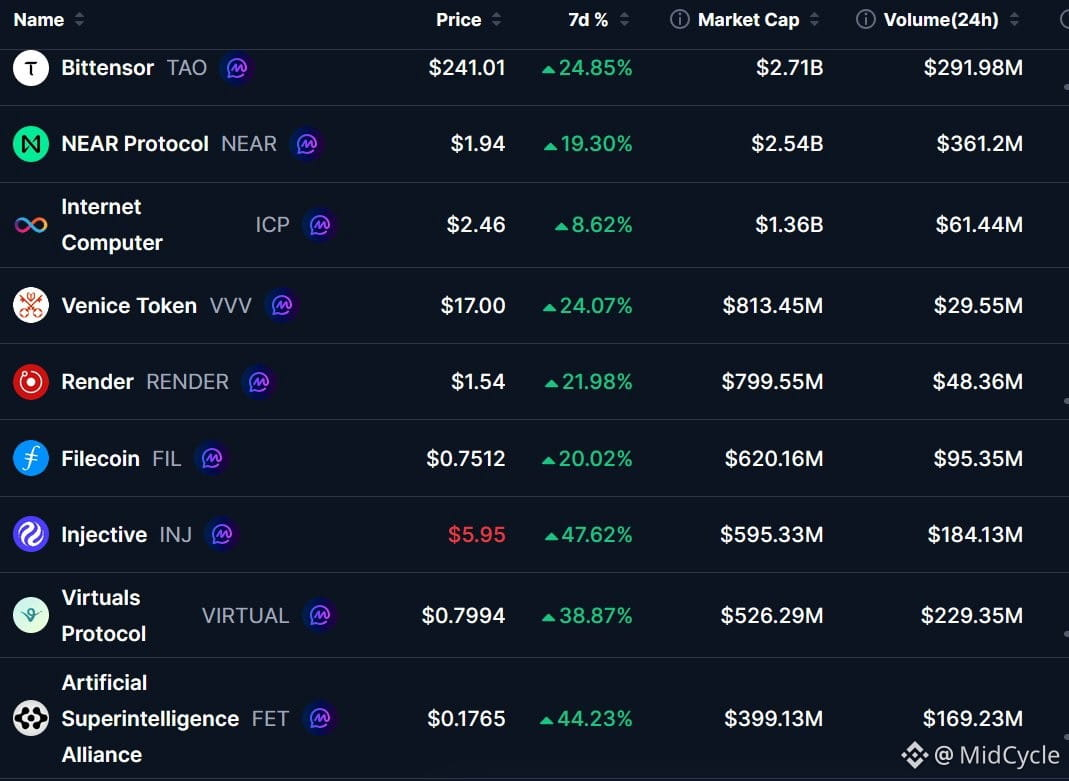
Bitcoin pushed back toward $80K this week and AI tokens aren't just following — they're outpacing the broader market.
7-day performance:
$TAO +24.85%
$VVV +24.07%
$INJ +47.62%
$VIRTUAL +38.87%
$FET +44.23%
$RENDER +21.98%
$FIL +20.02%
$NEAR +19.30%
$ICP +8.62%
Every single name is green. $INJ leads at nearly 48%, $FET right behind at 44%. That's sector-wide strength, not just one or two outliers carrying the narrative.
What stands out: this is the first week in a while where AI gains are distributed across the board instead of concentrated in a couple names while the rest bleeds. $TAO and $VVV both posting near-identical 24%+ moves tells you capital is rotating into the sector broadly, not chasing a single play.
This lines up with mid-cycle behavior — Bitcoin rallies, risk appetite lifts, and higher-beta sectors like AI catch a bid across the entire basket. When you see this kind of breadth, it's usually a sign we're in a window where alts can run.
If you've been sitting on AI exposure, this is the kind of move that confirms the rotation. If you haven't, the question is whether this is early enough to add or late enough to wait for a pullback. Given the breadth and Bitcoin's momentum, I'd lean toward the former — but watch for exhaustion if everything runs another 20% without a breather.
7-day performance:
$TAO +24.85%
$VVV +24.07%
$INJ +47.62%
$VIRTUAL +38.87%
$FET +44.23%
$RENDER +21.98%
$FIL +20.02%
$NEAR +19.30%
$ICP +8.62%
Every single name is green. $INJ leads at nearly 48%, $FET right behind at 44%. That's sector-wide strength, not just one or two outliers carrying the narrative.
What stands out: this is the first week in a while where AI gains are distributed across the board instead of concentrated in a couple names while the rest bleeds. $TAO and $VVV both posting near-identical 24%+ moves tells you capital is rotating into the sector broadly, not chasing a single play.
This lines up with mid-cycle behavior — Bitcoin rallies, risk appetite lifts, and higher-beta sectors like AI catch a bid across the entire basket. When you see this kind of breadth, it's usually a sign we're in a window where alts can run.
If you've been sitting on AI exposure, this is the kind of move that confirms the rotation. If you haven't, the question is whether this is early enough to add or late enough to wait for a pullback. Given the breadth and Bitcoin's momentum, I'd lean toward the former — but watch for exhaustion if everything runs another 20% without a breather.
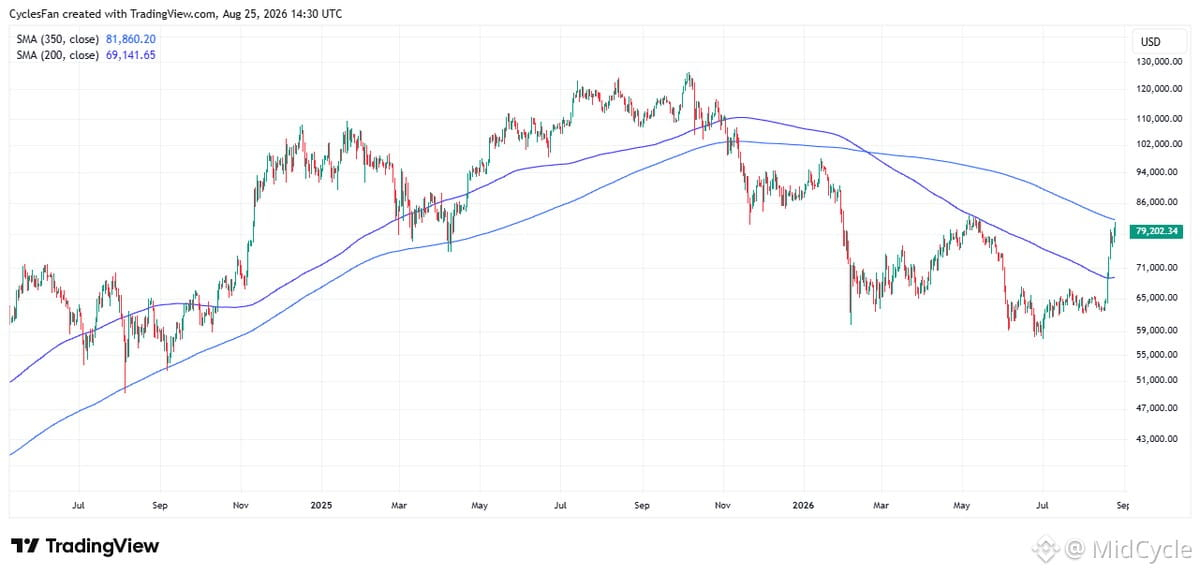
$BTC is closing in on the 350-day MA at 81,860 — historically the line between bear and bull territory. Expecting a short-term top around that level, then a pullback toward the 200-day MA at 69,140 over the next few weeks. If that holds, odds tilt toward a fresh bull cycle kicking in. Classic cycle structure: test the bull/bear line, shake out weak hands, then resume. Watch those MAs — they're telling the story.
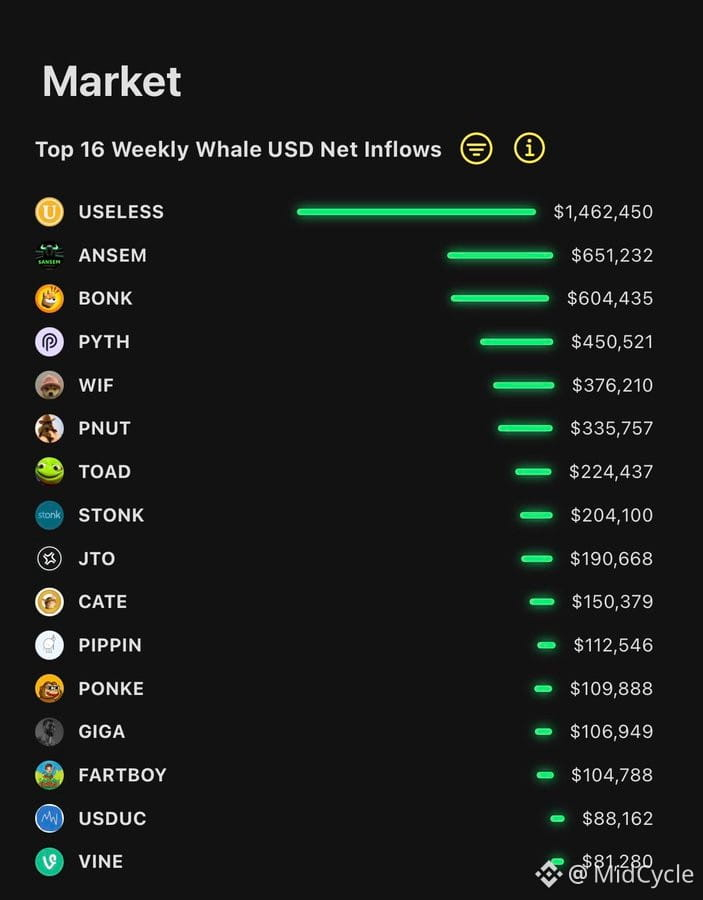
Whale wallets are quietly loading obscure meme coins while CT chases the usual noise. Here's where serious capital actually moved this week:
$USELESS leads with $1.46M inflow — more than double second-place $ANSEM ($651K) and nearly triple $BONK ($604K). That's not random. When whales pile into a name nobody's talking about, it's either insider accumulation or they see something the crowd doesn't.
$PYTH ($450K) is the only infrastructure play cracking the top five, sandwiched between pure meme bets. That tells you some smart money is hedging speculation with utility — classic mid-to-late cycle rotation logic.
$WIF, $PNUT, $TOAD, $STONK, $JTO round out the rest. Most of these aren't trending, aren't hyped, and aren't on your timeline. That's the point. Whales don't chase CT narratives — they front-run them.
If you're still watching what's loud, you're already late. Follow the flow, not the feed. When $USELESS starts trending in two weeks, remember where the money moved first.
$USELESS leads with $1.46M inflow — more than double second-place $ANSEM ($651K) and nearly triple $BONK ($604K). That's not random. When whales pile into a name nobody's talking about, it's either insider accumulation or they see something the crowd doesn't.
$PYTH ($450K) is the only infrastructure play cracking the top five, sandwiched between pure meme bets. That tells you some smart money is hedging speculation with utility — classic mid-to-late cycle rotation logic.
$WIF, $PNUT, $TOAD, $STONK, $JTO round out the rest. Most of these aren't trending, aren't hyped, and aren't on your timeline. That's the point. Whales don't chase CT narratives — they front-run them.
If you're still watching what's loud, you're already late. Follow the flow, not the feed. When $USELESS starts trending in two weeks, remember where the money moved first.
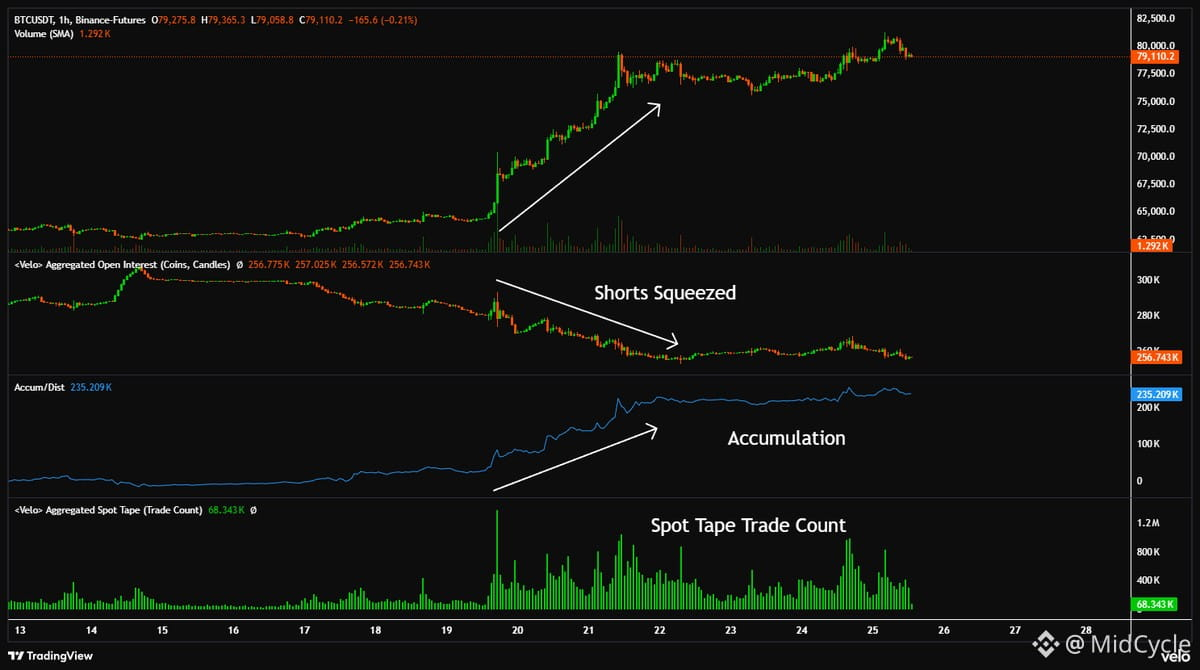
The $BTC pump got a big assist from shorts getting wrecked—classic squeeze fuel. But since Friday's peak, we've seen steady accumulation and decent spot volume, which matters more than the initial pop.
Open interest is bleeding off though, and nobody's aggressively lifting price here. That's the tell. If ETF inflows keep coming and we just chop sideways, watch that closely over the next few days.
Squeezes fade fast. You need real spot buying to sustain a move, and we've had some—but price needs to follow through or momentum dies. Right now it's a prove-it zone. Strong bid without follow-through is just a stall, not a breakout.
Open interest is bleeding off though, and nobody's aggressively lifting price here. That's the tell. If ETF inflows keep coming and we just chop sideways, watch that closely over the next few days.
Squeezes fade fast. You need real spot buying to sustain a move, and we've had some—but price needs to follow through or momentum dies. Right now it's a prove-it zone. Strong bid without follow-through is just a stall, not a breakout.
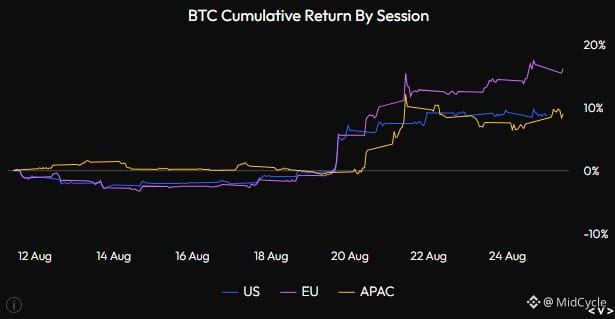
$BTC rallied hardest during European hours — ironically the weakest session all year until now. US and Asia pulled similar weight but nowhere near Europe's push.
What matters: all three sessions contributed throughout the week. When every zone's buying in, momentum tends to stick. Not just one region pumping bags while others fade.
Cycle read: coordinated global buying usually shows up mid-to-late bull phases when conviction spreads. If you're positioned, let it run. If not, chase carefully — strong momentum can extend but also sets up sharper corrections when one session blinks first.
What matters: all three sessions contributed throughout the week. When every zone's buying in, momentum tends to stick. Not just one region pumping bags while others fade.
Cycle read: coordinated global buying usually shows up mid-to-late bull phases when conviction spreads. If you're positioned, let it run. If not, chase carefully — strong momentum can extend but also sets up sharper corrections when one session blinks first.
Connectez-vous pour découvrir plus de contenu