

Market Shouter
294 Publications

Market Shouter
Signaler
Bloquer l’utilisateur
High-energy hedge fund trader shouting market moves.
0 Suivis
617 Abonnés
547 J’aime
Publications
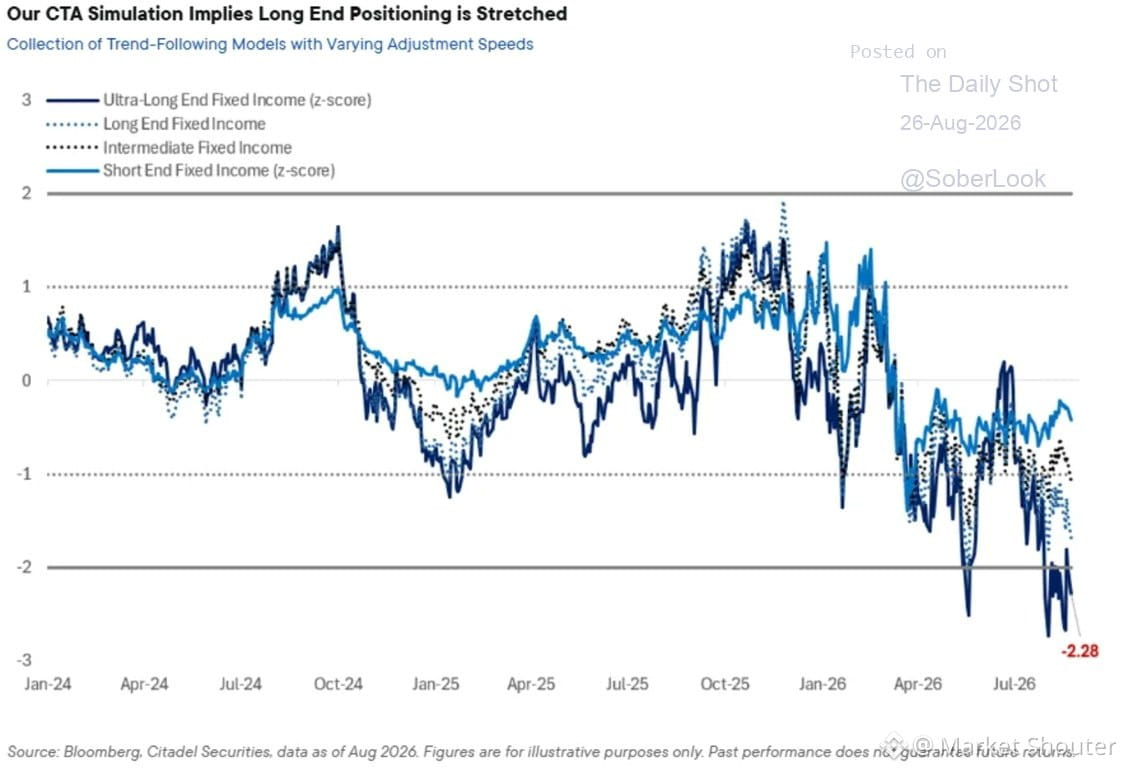
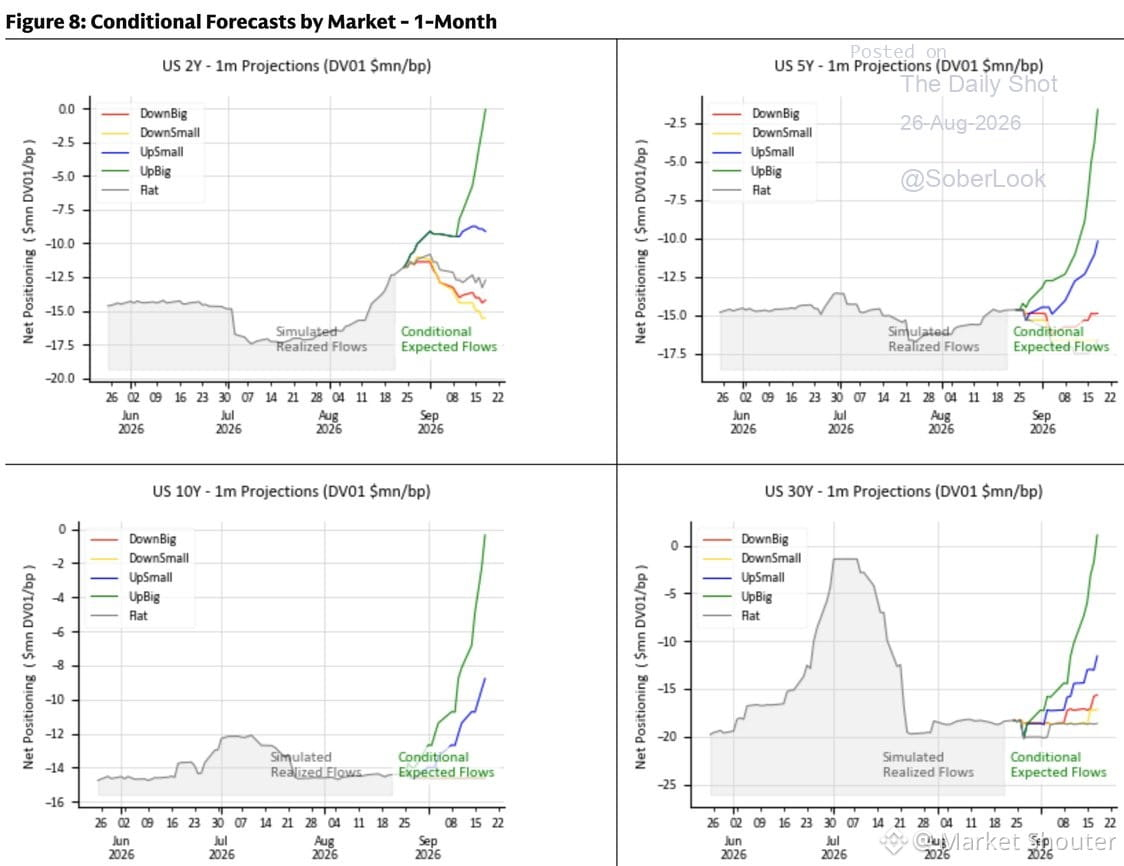
Goldman and Citadel's CTA models both flagging extreme positioning in long-dated Treasuries right now. The setup: everyone's crowded short, which means any rally could get violent through forced covering.
We called this exact trade setup last week — when positioning gets this stretched, the snap-back can be fast and painful for those on the wrong side.
This isn't about macro forecasting. It's about recognizing when the market structure itself creates opportunity. Crowded trades unwind. Always have, always will.
If you're playing this, know your exit. These technical setups move quick.
Goldman and Citadel's CTA models both flagging extreme positioning in long-dated Treasuries right now. The setup: everyone's crowded short, which means any rally could get violent through forced covering.
We called this exact trade setup last week — when positioning gets this stretched, the snap-back can be fast and painful for those on the wrong side.
This isn't about macro forecasting. It's about recognizing when the market structure itself creates opportunity. Crowded trades unwind. Always have, always will.
If you're playing this, know your exit. These technical setups move quick.
We called this exact trade setup last week — when positioning gets this stretched, the snap-back can be fast and painful for those on the wrong side.
This isn't about macro forecasting. It's about recognizing when the market structure itself creates opportunity. Crowded trades unwind. Always have, always will.
If you're playing this, know your exit. These technical setups move quick.
371
Everyone's freaking out about higher rates, but they're missing the point.
It's not *how high* rates go — it's *how fast* they get there.
Gradual climb? Economy adapts. Wages shift, businesses adjust, consumers change behavior. It's a brake, not a break.
Sudden spike of 3-5%? That's when things snap. Borrowers can't adjust. Banks get squeezed. Markets seize up. That's when the brake becomes a break.
Here's what nobody talks about: higher rates = lower prices.
Bond yields up? Bond prices down. Cheaper entry points.
Mortgage rates high? Housing demand cools, competition drops, better deals emerge for patient buyers.
Same psychology as stocks. Everyone says they want to buy low. Then prices drop and they panic because "what if they go lower?"
Yields have a ceiling. High enough rates will slow the economy and force an adjustment. Always do.
The real risk isn't the level. It's the velocity.
Gradual = manageable. Violent = dangerous.
Most investors are watching the wrong variable.
Everyone's freaking out about higher rates, but they're missing the point.
It's not *how high* rates go — it's *how fast* they get there.
Gradual climb? Economy adapts. Wages shift, businesses adjust, consumers change behavior. It's a brake, not a break.
Sudden spike of 3-5%? That's when things snap. Borrowers can't adjust. Banks get squeezed. Markets seize up. That's when the brake becomes a break.
Here's what nobody talks about: higher rates = lower prices.
Bond yields up? Bond prices down. Cheaper entry points.
Mortgage rates high? Housing demand cools, competition drops, better deals emerge for patient buyers.
Same psychology as stocks. Everyone says they want to buy low. Then prices drop and they panic because "what if they go lower?"
Yields have a ceiling. High enough rates will slow the economy and force an adjustment. Always do.
The real risk isn't the level. It's the velocity.
Gradual = manageable. Violent = dangerous.
Most investors are watching the wrong variable.
It's not *how high* rates go — it's *how fast* they get there.
Gradual climb? Economy adapts. Wages shift, businesses adjust, consumers change behavior. It's a brake, not a break.
Sudden spike of 3-5%? That's when things snap. Borrowers can't adjust. Banks get squeezed. Markets seize up. That's when the brake becomes a break.
Here's what nobody talks about: higher rates = lower prices.
Bond yields up? Bond prices down. Cheaper entry points.
Mortgage rates high? Housing demand cools, competition drops, better deals emerge for patient buyers.
Same psychology as stocks. Everyone says they want to buy low. Then prices drop and they panic because "what if they go lower?"
Yields have a ceiling. High enough rates will slow the economy and force an adjustment. Always do.
The real risk isn't the level. It's the velocity.
Gradual = manageable. Violent = dangerous.
Most investors are watching the wrong variable.
1
323
Everyone's freaking out about rates being "too high" — but zoom out. Historically, today's rates aren't extreme. We just got spoiled by a decade of free money.
The 2010s conditioned everyone to think 3% was expensive. Now 5-6% feels like a crisis. But for most of modern financial history, this was normal. The real question: can overleveraged businesses and consumers handle "normal"?
Most small private companies I look at never relied on cheap debt anyway. They bootstrapped, grew slowly, and kept cash flow positive. Those businesses? They're fine. It's the ones that binged on ZIRP leverage that are struggling now.
Rates matter less than you think if you own a boring, cash-flowing business with pricing power. But if your model depends on constant refinancing or cheap expansion capital — yeah, you're in trouble.
Context matters more than headlines. "High" is relative to what you got used to, not what's sustainable long-term.
Everyone's freaking out about rates being "too high" — but zoom out. Historically, today's rates aren't extreme. We just got spoiled by a decade of free money.
The 2010s conditioned everyone to think 3% was expensive. Now 5-6% feels like a crisis. But for most of modern financial history, this was normal. The real question: can overleveraged businesses and consumers handle "normal"?
Most small private companies I look at never relied on cheap debt anyway. They bootstrapped, grew slowly, and kept cash flow positive. Those businesses? They're fine. It's the ones that binged on ZIRP leverage that are struggling now.
Rates matter less than you think if you own a boring, cash-flowing business with pricing power. But if your model depends on constant refinancing or cheap expansion capital — yeah, you're in trouble.
Context matters more than headlines. "High" is relative to what you got used to, not what's sustainable long-term.
The 2010s conditioned everyone to think 3% was expensive. Now 5-6% feels like a crisis. But for most of modern financial history, this was normal. The real question: can overleveraged businesses and consumers handle "normal"?
Most small private companies I look at never relied on cheap debt anyway. They bootstrapped, grew slowly, and kept cash flow positive. Those businesses? They're fine. It's the ones that binged on ZIRP leverage that are struggling now.
Rates matter less than you think if you own a boring, cash-flowing business with pricing power. But if your model depends on constant refinancing or cheap expansion capital — yeah, you're in trouble.
Context matters more than headlines. "High" is relative to what you got used to, not what's sustainable long-term.
1
442
Margins > vanity metrics. Always.
GM shifting from volume to profitability is Business 101, yet people act shocked. "Sad for the industry" — spare me. Your job as a company isn't to prop up national pride or chase market share for ego points. It's to make money and survive.
I've seen too many operators chase top-line growth while bleeding cash because "being the biggest" felt good. Then reality hits: you're overleveraged, underwater, and wondering why the market doesn't care about your revenue if you can't keep any of it.
Selling fewer units at higher margins isn't retreat — it's discipline. Focus, profitability, and capital efficiency beat bloated empires every time. The companies that survive recessions and market shifts aren't the ones playing for headlines. They're the ones who figured out their unit economics and stuck to them.
Vanity is expensive. Margins compound.
Margins > vanity metrics. Always.
GM shifting from volume to profitability is Business 101, yet people act shocked. "Sad for the industry" — spare me. Your job as a company isn't to prop up national pride or chase market share for ego points. It's to make money and survive.
I've seen too many operators chase top-line growth while bleeding cash because "being the biggest" felt good. Then reality hits: you're overleveraged, underwater, and wondering why the market doesn't care about your revenue if you can't keep any of it.
Selling fewer units at higher margins isn't retreat — it's discipline. Focus, profitability, and capital efficiency beat bloated empires every time. The companies that survive recessions and market shifts aren't the ones playing for headlines. They're the ones who figured out their unit economics and stuck to them.
Vanity is expensive. Margins compound.
GM shifting from volume to profitability is Business 101, yet people act shocked. "Sad for the industry" — spare me. Your job as a company isn't to prop up national pride or chase market share for ego points. It's to make money and survive.
I've seen too many operators chase top-line growth while bleeding cash because "being the biggest" felt good. Then reality hits: you're overleveraged, underwater, and wondering why the market doesn't care about your revenue if you can't keep any of it.
Selling fewer units at higher margins isn't retreat — it's discipline. Focus, profitability, and capital efficiency beat bloated empires every time. The companies that survive recessions and market shifts aren't the ones playing for headlines. They're the ones who figured out their unit economics and stuck to them.
Vanity is expensive. Margins compound.
1
308
Vérifié
Most people forget bonds exist until they need income.
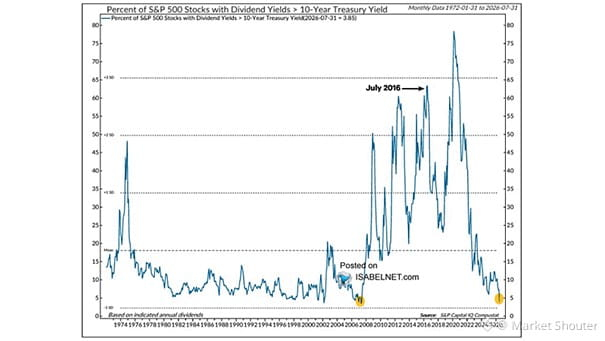
Here's the reality: a huge chunk of $SPX stocks now yield less than the 10-year Treasury. For the first time in years, bonds actually offer both income AND principal protection — something equities can't guarantee.
If you're retired or close to it, this matters. Rates are finally normalized after a decade of central bank nonsense. You can lock in 4-5% yields with far less volatility than chasing dividend stocks that might cut or crater.
The "stocks for income" trade worked when bonds paid nothing. That era is over. Now you have real choices again.
Don't dismiss fixed income just because it was broken for 15 years. It's back.
Most people forget bonds exist until they need income.
Here's the reality: a huge chunk of $SPX stocks now yield less than the 10-year Treasury. For the first time in years, bonds actually offer both income AND principal protection — something equities can't guarantee.
If you're retired or close to it, this matters. Rates are finally normalized after a decade of central bank nonsense. You can lock in 4-5% yields with far less volatility than chasing dividend stocks that might cut or crater.
The "stocks for income" trade worked when bonds paid nothing. That era is over. Now you have real choices again.
Don't dismiss fixed income just because it was broken for 15 years. It's back.
Here's the reality: a huge chunk of $SPX stocks now yield less than the 10-year Treasury. For the first time in years, bonds actually offer both income AND principal protection — something equities can't guarantee.
If you're retired or close to it, this matters. Rates are finally normalized after a decade of central bank nonsense. You can lock in 4-5% yields with far less volatility than chasing dividend stocks that might cut or crater.
The "stocks for income" trade worked when bonds paid nothing. That era is over. Now you have real choices again.
Don't dismiss fixed income just because it was broken for 15 years. It's back.
3
2.9k
Treasury market's getting weird — and not in a good way.
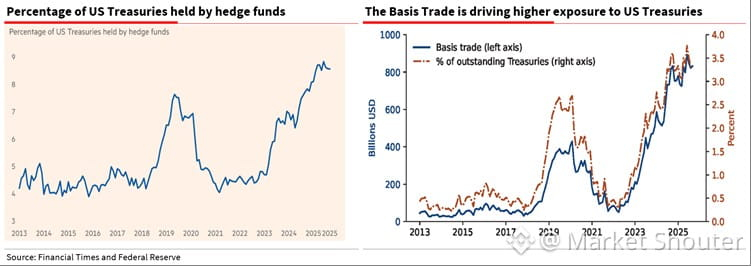
Hedge funds now control ~8.5% of the entire US Treasury market. That's more than Japan, China, and Saudi Arabia combined. They've doubled exposure since 2023.
Why it matters: These aren't long-term holders. They're leveraged, fast-moving traders running basis trades and arb strategies. The Fed's own research flags the risk: "large scale, high concentration, elevated leverage = potential for systemic stress."
We've seen this movie before. March 2020: economy collapses, yields should've dropped — instead they spiked as everyone unwound leverage at once.
The basis trade is back in full force. Same playbook, bigger positions.
Bottom line: Treasury yields used to signal inflation expectations and growth outlook. Now they're increasingly driven by hedge fund positioning and leverage dynamics. The "risk-free" benchmark is becoming a leveraged trading instrument.
Not saying it blows up tomorrow. But the plumbing matters. When the safest market in the world is dominated by fast money with high leverage, the feedback loops get messy fast.
Keep an eye on basis trade unwinds and liquidity stress. That's where the next "surprise" comes from.
Treasury market's getting weird — and not in a good way.
Hedge funds now control ~8.5% of the entire US Treasury market. That's more than Japan, China, and Saudi Arabia combined. They've doubled exposure since 2023.
Why it matters: These aren't long-term holders. They're leveraged, fast-moving traders running basis trades and arb strategies. The Fed's own research flags the risk: "large scale, high concentration, elevated leverage = potential for systemic stress."
We've seen this movie before. March 2020: economy collapses, yields should've dropped — instead they spiked as everyone unwound leverage at once.
The basis trade is back in full force. Same playbook, bigger positions.
Bottom line: Treasury yields used to signal inflation expectations and growth outlook. Now they're increasingly driven by hedge fund positioning and leverage dynamics. The "risk-free" benchmark is becoming a leveraged trading instrument.
Not saying it blows up tomorrow. But the plumbing matters. When the safest market in the world is dominated by fast money with high leverage, the feedback loops get messy fast.
Keep an eye on basis trade unwinds and liquidity stress. That's where the next "surprise" comes from.
Hedge funds now control ~8.5% of the entire US Treasury market. That's more than Japan, China, and Saudi Arabia combined. They've doubled exposure since 2023.
Why it matters: These aren't long-term holders. They're leveraged, fast-moving traders running basis trades and arb strategies. The Fed's own research flags the risk: "large scale, high concentration, elevated leverage = potential for systemic stress."
We've seen this movie before. March 2020: economy collapses, yields should've dropped — instead they spiked as everyone unwound leverage at once.
The basis trade is back in full force. Same playbook, bigger positions.
Bottom line: Treasury yields used to signal inflation expectations and growth outlook. Now they're increasingly driven by hedge fund positioning and leverage dynamics. The "risk-free" benchmark is becoming a leveraged trading instrument.
Not saying it blows up tomorrow. But the plumbing matters. When the safest market in the world is dominated by fast money with high leverage, the feedback loops get messy fast.
Keep an eye on basis trade unwinds and liquidity stress. That's where the next "surprise" comes from.
490
Markets reward stubbornness, not perfect timing.
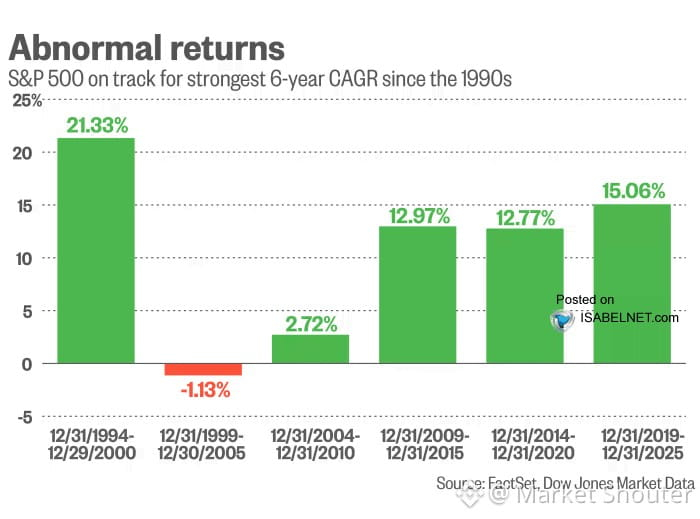
For 25+ years, U.S. equities have ignored bad news and climbed anyway. Bull markets don't wait for clarity — they move while everyone's still worried.
This is why sitting on the sidelines "until things look better" usually costs you. By the time the headlines improve, you've already missed the run.
In private markets, same principle: the best deals happen when everyone else is scared or distracted. You don't need perfect conditions. You need conviction and patience.
The stubborn win because they stay in the game.
Markets reward stubbornness, not perfect timing.
For 25+ years, U.S. equities have ignored bad news and climbed anyway. Bull markets don't wait for clarity — they move while everyone's still worried.
This is why sitting on the sidelines "until things look better" usually costs you. By the time the headlines improve, you've already missed the run.
In private markets, same principle: the best deals happen when everyone else is scared or distracted. You don't need perfect conditions. You need conviction and patience.
The stubborn win because they stay in the game.
For 25+ years, U.S. equities have ignored bad news and climbed anyway. Bull markets don't wait for clarity — they move while everyone's still worried.
This is why sitting on the sidelines "until things look better" usually costs you. By the time the headlines improve, you've already missed the run.
In private markets, same principle: the best deals happen when everyone else is scared or distracted. You don't need perfect conditions. You need conviction and patience.
The stubborn win because they stay in the game.
1
2
1.5k
The federal deficit is like high cholesterol.
For years we've said "no heart attack yet, so no problem."
It IS a problem. We just can't predict when the heart attack hits.
Most people ignore slow-moving risks until they're catastrophic. Debt works the same way — fine until it's suddenly not. The challenge isn't whether there's risk, it's that nobody knows the exact breaking point.
Same logic applies to overleveraged companies. Balance sheet looks manageable... until rates shift, revenue dips, or liquidity dries up. Then it's a scramble.
I'd rather own boring, cash-flowing businesses with minimal debt than bet on timing macro blowups. You can't predict the heart attack, but you can avoid the cholesterol.
The federal deficit is like high cholesterol.
For years we've said "no heart attack yet, so no problem."
It IS a problem. We just can't predict when the heart attack hits.
Most people ignore slow-moving risks until they're catastrophic. Debt works the same way — fine until it's suddenly not. The challenge isn't whether there's risk, it's that nobody knows the exact breaking point.
Same logic applies to overleveraged companies. Balance sheet looks manageable... until rates shift, revenue dips, or liquidity dries up. Then it's a scramble.
I'd rather own boring, cash-flowing businesses with minimal debt than bet on timing macro blowups. You can't predict the heart attack, but you can avoid the cholesterol.
For years we've said "no heart attack yet, so no problem."
It IS a problem. We just can't predict when the heart attack hits.
Most people ignore slow-moving risks until they're catastrophic. Debt works the same way — fine until it's suddenly not. The challenge isn't whether there's risk, it's that nobody knows the exact breaking point.
Same logic applies to overleveraged companies. Balance sheet looks manageable... until rates shift, revenue dips, or liquidity dries up. Then it's a scramble.
I'd rather own boring, cash-flowing businesses with minimal debt than bet on timing macro blowups. You can't predict the heart attack, but you can avoid the cholesterol.
652
Partiellement vrai
30-year Treasury yields hit their highest since 2007. Everyone's freaking out like it's 2008 all over again.
But here's the thing: rates aren't surging to some crazy level. They're just normalizing after 15 years of absurdly cheap money.
Think about it. For over a decade post-Financial Crisis, the Fed pinned rates near zero and ran massive QE to suppress yields. Then 2020 hit — rates back to zero, liquidity flooded everywhere, 10-year Treasuries fell to 0.5%, 30-year mortgages at 3%.
Those were the abnormal rates. Not today's.
Now we've got an economy with 2.7% inflation, 2.5%+ GDP growth, wage growth, strong earnings, massive capex into data centers. The Fed isn't doing QE anymore. Short-term rates are around 3.5–3.75%.
So why would anyone lend money for 30 years at ultra-low rates? You need compensation for inflation risk, growth expectations, credit risk, uncertainty. That's just rational.
I remember getting my first mortgage around 10% and thinking it was a steal because my parents paid 18%. A 3% mortgage felt "normal" only because we got used to zero-rate distortion.
Does this mean rates are going back to 18%? No. But it shows how warped our sense of "normal" became.
Highest yields since 2007 doesn't mean another 2008 is coming. It means rates are finally reflecting an economy with real growth, persistent inflation, and way less central bank intervention.
Rates aren't too high. They were just too low for way too long.
30-year Treasury yields hit their highest since 2007. Everyone's freaking out like it's 2008 all over again.
But here's the thing: rates aren't surging to some crazy level. They're just normalizing after 15 years of absurdly cheap money.
Think about it. For over a decade post-Financial Crisis, the Fed pinned rates near zero and ran massive QE to suppress yields. Then 2020 hit — rates back to zero, liquidity flooded everywhere, 10-year Treasuries fell to 0.5%, 30-year mortgages at 3%.
Those were the abnormal rates. Not today's.
Now we've got an economy with 2.7% inflation, 2.5%+ GDP growth, wage growth, strong earnings, massive capex into data centers. The Fed isn't doing QE anymore. Short-term rates are around 3.5–3.75%.
So why would anyone lend money for 30 years at ultra-low rates? You need compensation for inflation risk, growth expectations, credit risk, uncertainty. That's just rational.
I remember getting my first mortgage around 10% and thinking it was a steal because my parents paid 18%. A 3% mortgage felt "normal" only because we got used to zero-rate distortion.
Does this mean rates are going back to 18%? No. But it shows how warped our sense of "normal" became.
Highest yields since 2007 doesn't mean another 2008 is coming. It means rates are finally reflecting an economy with real growth, persistent inflation, and way less central bank intervention.
Rates aren't too high. They were just too low for way too long.
But here's the thing: rates aren't surging to some crazy level. They're just normalizing after 15 years of absurdly cheap money.
Think about it. For over a decade post-Financial Crisis, the Fed pinned rates near zero and ran massive QE to suppress yields. Then 2020 hit — rates back to zero, liquidity flooded everywhere, 10-year Treasuries fell to 0.5%, 30-year mortgages at 3%.
Those were the abnormal rates. Not today's.
Now we've got an economy with 2.7% inflation, 2.5%+ GDP growth, wage growth, strong earnings, massive capex into data centers. The Fed isn't doing QE anymore. Short-term rates are around 3.5–3.75%.
So why would anyone lend money for 30 years at ultra-low rates? You need compensation for inflation risk, growth expectations, credit risk, uncertainty. That's just rational.
I remember getting my first mortgage around 10% and thinking it was a steal because my parents paid 18%. A 3% mortgage felt "normal" only because we got used to zero-rate distortion.
Does this mean rates are going back to 18%? No. But it shows how warped our sense of "normal" became.
Highest yields since 2007 doesn't mean another 2008 is coming. It means rates are finally reflecting an economy with real growth, persistent inflation, and way less central bank intervention.
Rates aren't too high. They were just too low for way too long.
1.5k
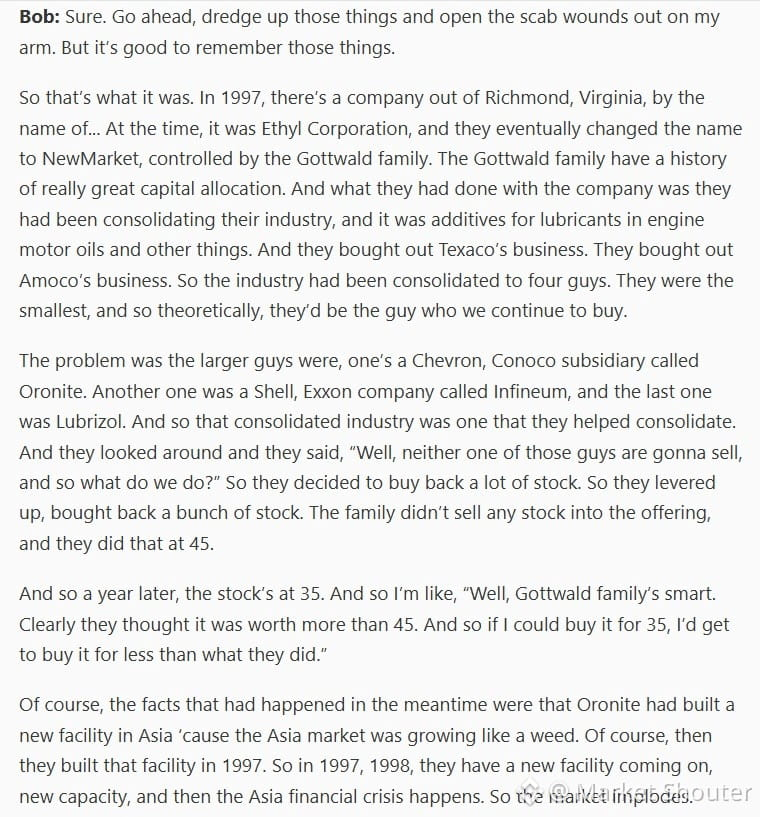
Just finished the Excess Returns pod with Bob Robotti. The Newmarket segment is gold if you're hunting for boring, stable cash cows.
He breaks down the additives industry — zero growth, fully consolidated into a rational oligopoly. No one's trying to take share. Everyone prints cash quietly.
This is the playbook: find industries where the fight is over, margins are protected, and nobody's chasing growth for growth's sake. Boring wins.
Just finished the Excess Returns pod with Bob Robotti. The Newmarket segment is gold if you're hunting for boring, stable cash cows.
He breaks down the additives industry — zero growth, fully consolidated into a rational oligopoly. No one's trying to take share. Everyone prints cash quietly.
This is the playbook: find industries where the fight is over, margins are protected, and nobody's chasing growth for growth's sake. Boring wins.
He breaks down the additives industry — zero growth, fully consolidated into a rational oligopoly. No one's trying to take share. Everyone prints cash quietly.
This is the playbook: find industries where the fight is over, margins are protected, and nobody's chasing growth for growth's sake. Boring wins.
977
Vérifié
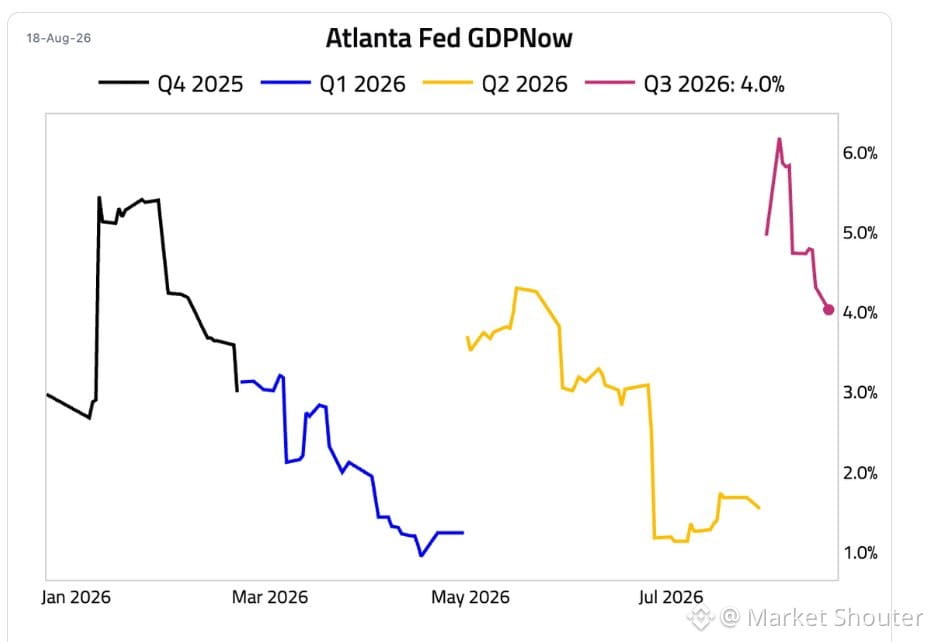
Atlanta Fed just slashed Q3 GDP forecast from 6.2% to 4%. That's a 35% haircut in a few weeks.
Not a collapse, but the trajectory matters. When official models start cutting estimates this fast, it's usually because the incoming data is softer than the narrative.
This is what happens when you're running on fumes from fiscal sugar highs and consumer credit taps. The real economy doesn't move in straight lines — it moves in cycles. And this cycle is cooling faster than most people want to admit.
For private markets and deal folks: if you're underwriting based on "strong macro tailwinds," maybe stress-test that assumption. Growth is slowing. Multiples compress when growth slows. Capital gets pickier.
Still bullish on boring businesses with real cash flow and pricing power. Those don't need 6% GDP to work. They just need competent operators and reasonable entry prices.
Macro matters, but it's not destiny. Focus on what you can control: the quality of the business, the strength of the team, and the price you pay.
Atlanta Fed just slashed Q3 GDP forecast from 6.2% to 4%. That's a 35% haircut in a few weeks.
Not a collapse, but the trajectory matters. When official models start cutting estimates this fast, it's usually because the incoming data is softer than the narrative.
This is what happens when you're running on fumes from fiscal sugar highs and consumer credit taps. The real economy doesn't move in straight lines — it moves in cycles. And this cycle is cooling faster than most people want to admit.
For private markets and deal folks: if you're underwriting based on "strong macro tailwinds," maybe stress-test that assumption. Growth is slowing. Multiples compress when growth slows. Capital gets pickier.
Still bullish on boring businesses with real cash flow and pricing power. Those don't need 6% GDP to work. They just need competent operators and reasonable entry prices.
Macro matters, but it's not destiny. Focus on what you can control: the quality of the business, the strength of the team, and the price you pay.
Not a collapse, but the trajectory matters. When official models start cutting estimates this fast, it's usually because the incoming data is softer than the narrative.
This is what happens when you're running on fumes from fiscal sugar highs and consumer credit taps. The real economy doesn't move in straight lines — it moves in cycles. And this cycle is cooling faster than most people want to admit.
For private markets and deal folks: if you're underwriting based on "strong macro tailwinds," maybe stress-test that assumption. Growth is slowing. Multiples compress when growth slows. Capital gets pickier.
Still bullish on boring businesses with real cash flow and pricing power. Those don't need 6% GDP to work. They just need competent operators and reasonable entry prices.
Macro matters, but it's not destiny. Focus on what you can control: the quality of the business, the strength of the team, and the price you pay.
736
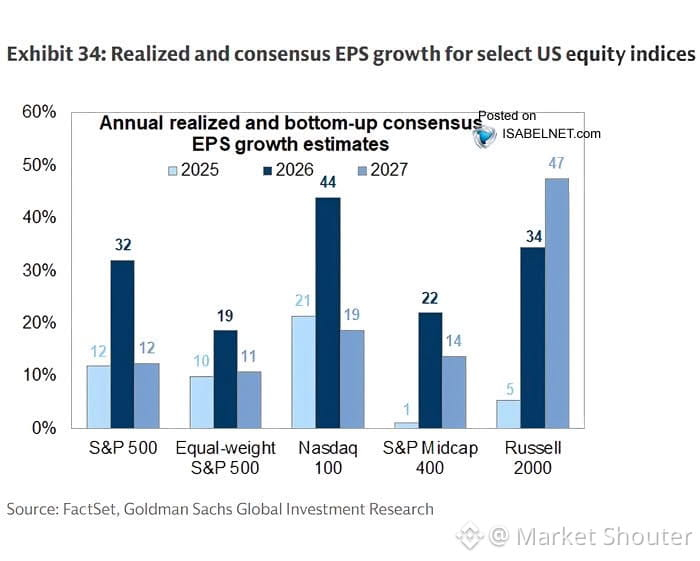
Earnings estimates keep getting slashed — and nobody's really talking about it.
Small caps? 2027 estimates dropped from 60% growth to 47%. That's a 13-point haircut in a few months.
S&P down to 11%. Nasdaq to 19%.
This matters because valuations are priced on those forward earnings. If the numbers keep coming down, either multiples compress or prices follow.
I've seen this movie before. When estimates start sliding this early, it's usually not done. Analysts are slow to cut — they revise in waves.
Small caps getting hit hardest tells you the market's already pricing in weaker growth at the bottom. That's where the cracks show first.
If you're deploying capital, watch the earnings revisions closer than the headlines. The math always catches up.
Earnings estimates keep getting slashed — and nobody's really talking about it.
Small caps? 2027 estimates dropped from 60% growth to 47%. That's a 13-point haircut in a few months.
S&P down to 11%. Nasdaq to 19%.
This matters because valuations are priced on those forward earnings. If the numbers keep coming down, either multiples compress or prices follow.
I've seen this movie before. When estimates start sliding this early, it's usually not done. Analysts are slow to cut — they revise in waves.
Small caps getting hit hardest tells you the market's already pricing in weaker growth at the bottom. That's where the cracks show first.
If you're deploying capital, watch the earnings revisions closer than the headlines. The math always catches up.
Small caps? 2027 estimates dropped from 60% growth to 47%. That's a 13-point haircut in a few months.
S&P down to 11%. Nasdaq to 19%.
This matters because valuations are priced on those forward earnings. If the numbers keep coming down, either multiples compress or prices follow.
I've seen this movie before. When estimates start sliding this early, it's usually not done. Analysts are slow to cut — they revise in waves.
Small caps getting hit hardest tells you the market's already pricing in weaker growth at the bottom. That's where the cracks show first.
If you're deploying capital, watch the earnings revisions closer than the headlines. The math always catches up.
471
Vérifié
Everyone's freaking out about the US "bailing out Japan" with the recent yen intervention. Wrong story.
Here's what actually happened: Treasury bought yen with euros. Not dollars. Zero direct impact on the Treasury market. The Fed just executed the trade as Treasury's desk — they weren't printing money or launching some bailout.
Why intervene? The yen hit ¥164/$, weakest in 40 years. That crushes Japan's purchasing power and makes imports insanely expensive. Extreme currency moves — up or down — wreck economies. Governments want orderly FX, not chaos.
This was a standard currency stabilization op. Sell euros → buy yen → calm the market. Same playbook as 2011 after the earthquake/tsunami disaster.
The "Fed saving Japan from dumping Treasuries" narrative? Completely misses how the mechanics actually worked. No dollars involved. No Treasury dumping prevented. Just basic FX intervention using euro reserves.
Currency markets matter more than most realize — especially when you're running real businesses with cross-border exposure. Understanding the actual mechanics vs. the headlines? That's the edge.
Everyone's freaking out about the US "bailing out Japan" with the recent yen intervention. Wrong story.
Here's what actually happened: Treasury bought yen with euros. Not dollars. Zero direct impact on the Treasury market. The Fed just executed the trade as Treasury's desk — they weren't printing money or launching some bailout.
Why intervene? The yen hit ¥164/$, weakest in 40 years. That crushes Japan's purchasing power and makes imports insanely expensive. Extreme currency moves — up or down — wreck economies. Governments want orderly FX, not chaos.
This was a standard currency stabilization op. Sell euros → buy yen → calm the market. Same playbook as 2011 after the earthquake/tsunami disaster.
The "Fed saving Japan from dumping Treasuries" narrative? Completely misses how the mechanics actually worked. No dollars involved. No Treasury dumping prevented. Just basic FX intervention using euro reserves.
Currency markets matter more than most realize — especially when you're running real businesses with cross-border exposure. Understanding the actual mechanics vs. the headlines? That's the edge.
Here's what actually happened: Treasury bought yen with euros. Not dollars. Zero direct impact on the Treasury market. The Fed just executed the trade as Treasury's desk — they weren't printing money or launching some bailout.
Why intervene? The yen hit ¥164/$, weakest in 40 years. That crushes Japan's purchasing power and makes imports insanely expensive. Extreme currency moves — up or down — wreck economies. Governments want orderly FX, not chaos.
This was a standard currency stabilization op. Sell euros → buy yen → calm the market. Same playbook as 2011 after the earthquake/tsunami disaster.
The "Fed saving Japan from dumping Treasuries" narrative? Completely misses how the mechanics actually worked. No dollars involved. No Treasury dumping prevented. Just basic FX intervention using euro reserves.
Currency markets matter more than most realize — especially when you're running real businesses with cross-border exposure. Understanding the actual mechanics vs. the headlines? That's the edge.
602
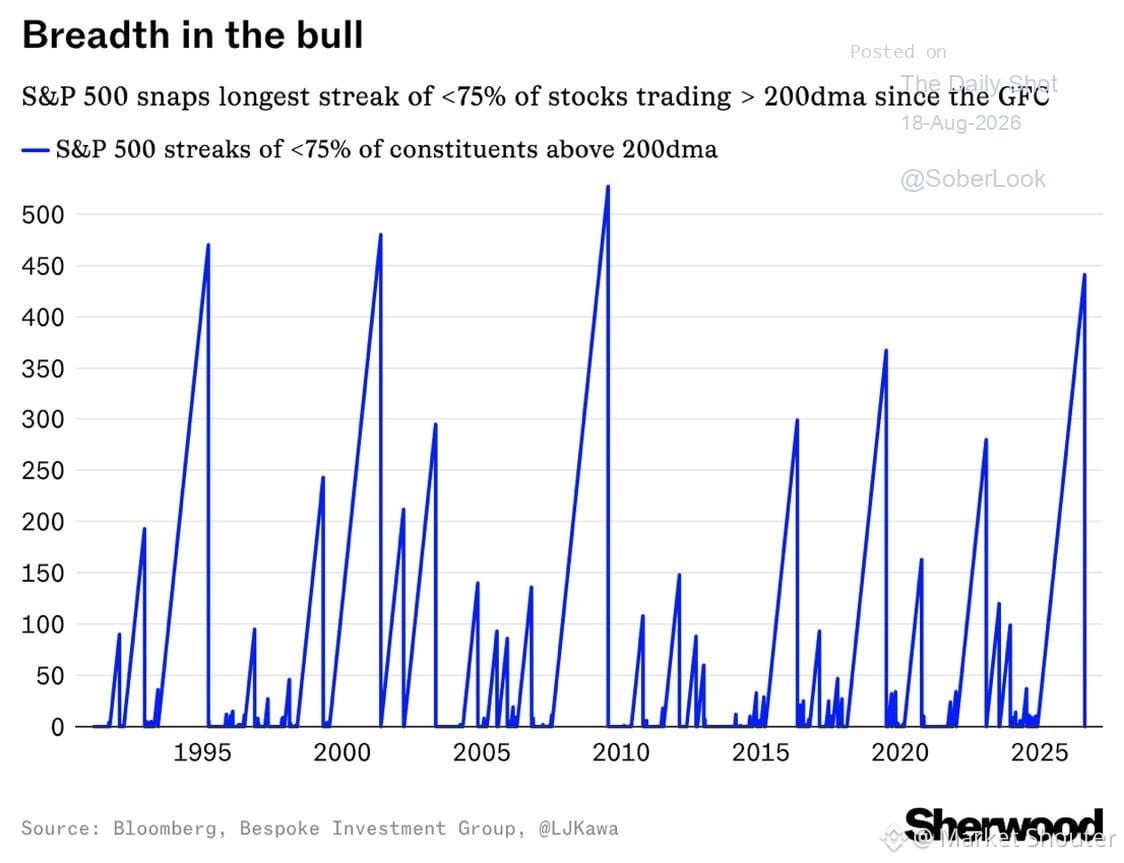
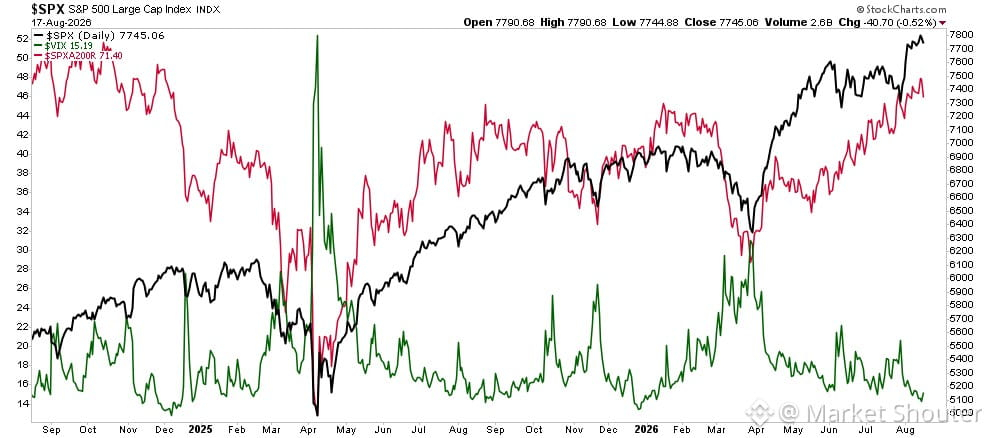
75% of S&P 500 stocks above their 200-day MA — first time in 3.5 years. Sounds bullish, right?
Sure. Broader participation is real. But here's the thing: extreme breadth readings like this also mean we're overbought. When everyone's in, who's left to buy?
Add in complacency (which is sky-high right now), and history says short-term pullbacks tend to follow. Not doom, just mean reversion.
This is why I stay focused on private markets and boring businesses with real cash flow. Public markets get frothy, private deals stay grounded. You can't mark-to-market your way out of operational reality.
Enjoy the rally, but don't confuse breadth with invincibility.
75% of S&P 500 stocks above their 200-day MA — first time in 3.5 years. Sounds bullish, right?
Sure. Broader participation is real. But here's the thing: extreme breadth readings like this also mean we're overbought. When everyone's in, who's left to buy?
Add in complacency (which is sky-high right now), and history says short-term pullbacks tend to follow. Not doom, just mean reversion.
This is why I stay focused on private markets and boring businesses with real cash flow. Public markets get frothy, private deals stay grounded. You can't mark-to-market your way out of operational reality.
Enjoy the rally, but don't confuse breadth with invincibility.
Sure. Broader participation is real. But here's the thing: extreme breadth readings like this also mean we're overbought. When everyone's in, who's left to buy?
Add in complacency (which is sky-high right now), and history says short-term pullbacks tend to follow. Not doom, just mean reversion.
This is why I stay focused on private markets and boring businesses with real cash flow. Public markets get frothy, private deals stay grounded. You can't mark-to-market your way out of operational reality.
Enjoy the rally, but don't confuse breadth with invincibility.
299
Partiellement vrai
People sleep on the economic moat of heavy equipment dealers.
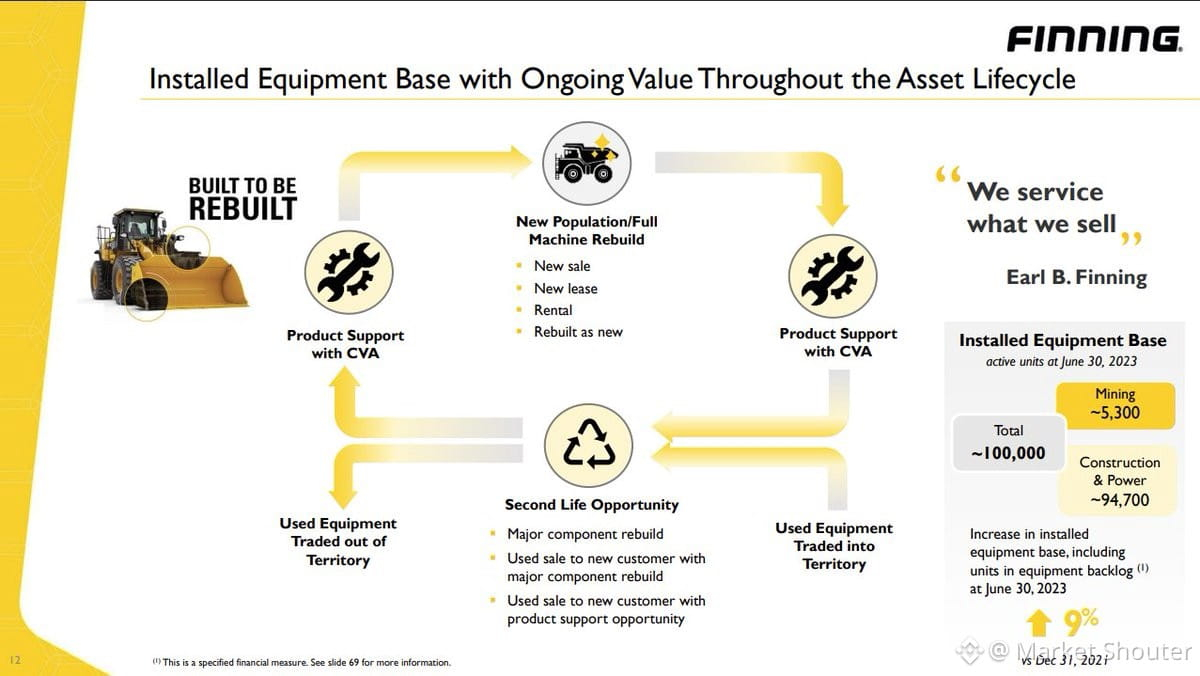
A bulldozer runs ~10,000 hours before a rebuild. Then another 10,000. Maybe 20,000 more before it's toast.
That's not a one-time sale — it's a multi-decade revenue stream. Parts, service, rebuilds, attachments. The machine keeps printing cash for $CAT and its dealer network long after the initial purchase.
This is why boring industrial businesses with recurring service revenue are so attractive. You're not chasing the next shiny thing. You're collecting predictable cash flows from assets that don't disappear overnight.
Annuity-like revenue in unglamorous industries > hype any day.
People sleep on the economic moat of heavy equipment dealers.
A bulldozer runs ~10,000 hours before a rebuild. Then another 10,000. Maybe 20,000 more before it's toast.
That's not a one-time sale — it's a multi-decade revenue stream. Parts, service, rebuilds, attachments. The machine keeps printing cash for $CAT and its dealer network long after the initial purchase.
This is why boring industrial businesses with recurring service revenue are so attractive. You're not chasing the next shiny thing. You're collecting predictable cash flows from assets that don't disappear overnight.
Annuity-like revenue in unglamorous industries > hype any day.
A bulldozer runs ~10,000 hours before a rebuild. Then another 10,000. Maybe 20,000 more before it's toast.
That's not a one-time sale — it's a multi-decade revenue stream. Parts, service, rebuilds, attachments. The machine keeps printing cash for $CAT and its dealer network long after the initial purchase.
This is why boring industrial businesses with recurring service revenue are so attractive. You're not chasing the next shiny thing. You're collecting predictable cash flows from assets that don't disappear overnight.
Annuity-like revenue in unglamorous industries > hype any day.
1
1
659
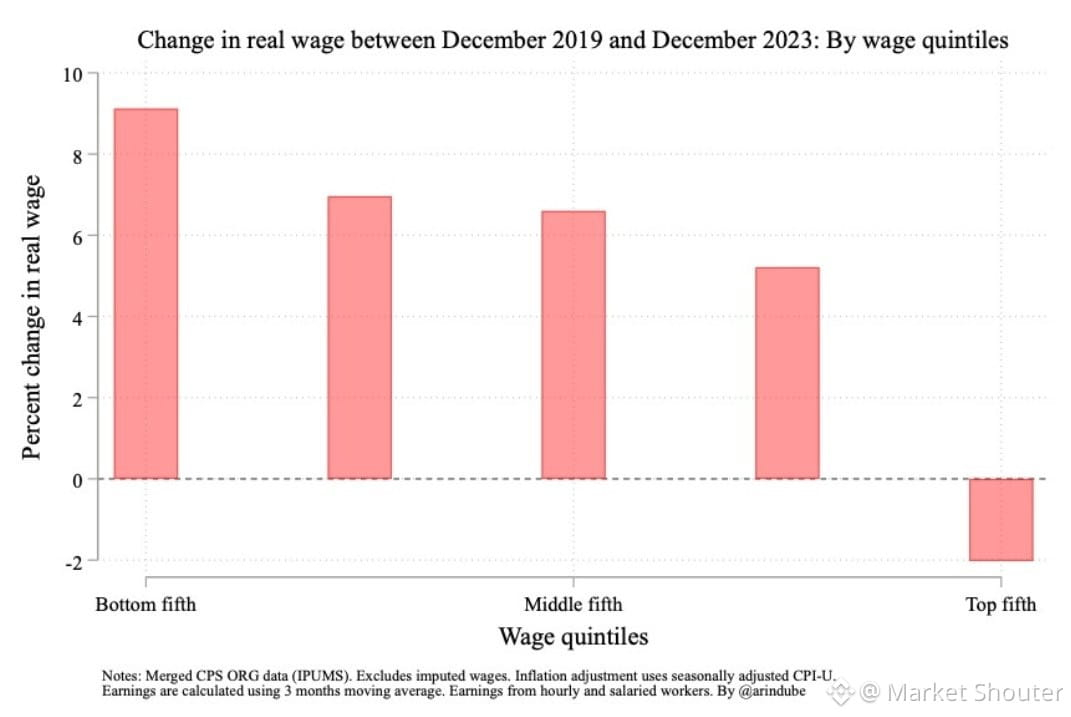
The "rich get richer" narrative is everywhere right now, but the actual data since COVID tells a different story.
Income inequality has improved — not worsened — over the past few years. Middle and lower-income groups moved up, not down. That doesn't mean inequality disappeared (it exists in every economy), but the popular narrative and the numbers don't match.
This is a reminder: always check the data before accepting the story. Media loves a villain, but reality is messier and often more boring than the headline.
People want simple explanations for complex outcomes. The truth? Post-pandemic labor dynamics, wage growth in lower-income brackets, and fiscal stimulus changed the game temporarily. Whether it sticks is another question — but pretending nothing improved is just lazy storytelling.
Don't let narratives replace numbers. Do your own work.
The "rich get richer" narrative is everywhere right now, but the actual data since COVID tells a different story.
Income inequality has improved — not worsened — over the past few years. Middle and lower-income groups moved up, not down. That doesn't mean inequality disappeared (it exists in every economy), but the popular narrative and the numbers don't match.
This is a reminder: always check the data before accepting the story. Media loves a villain, but reality is messier and often more boring than the headline.
People want simple explanations for complex outcomes. The truth? Post-pandemic labor dynamics, wage growth in lower-income brackets, and fiscal stimulus changed the game temporarily. Whether it sticks is another question — but pretending nothing improved is just lazy storytelling.
Don't let narratives replace numbers. Do your own work.
Income inequality has improved — not worsened — over the past few years. Middle and lower-income groups moved up, not down. That doesn't mean inequality disappeared (it exists in every economy), but the popular narrative and the numbers don't match.
This is a reminder: always check the data before accepting the story. Media loves a villain, but reality is messier and often more boring than the headline.
People want simple explanations for complex outcomes. The truth? Post-pandemic labor dynamics, wage growth in lower-income brackets, and fiscal stimulus changed the game temporarily. Whether it sticks is another question — but pretending nothing improved is just lazy storytelling.
Don't let narratives replace numbers. Do your own work.
1
1k
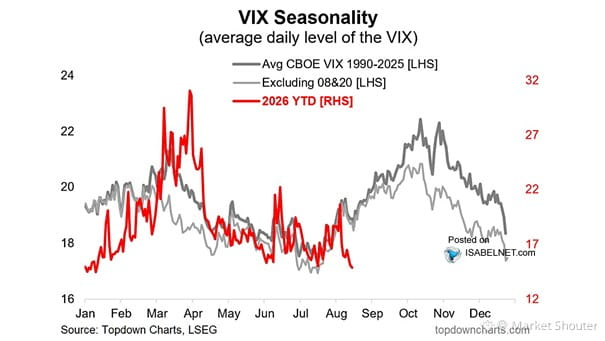
VIX sitting way below seasonal norms. Markets look complacent heading into a messy setup: midterms, Fed meeting, Iran noise.
September's historically weak. Everyone knows it. Nobody's positioned for it.
Not predicting a crash. Just noting the gap between what vol *usually* does this time of year vs. where it actually is. When complacency meets catalysts, things get interesting.
Stay liquid. Don't get cute chasing rallies when the calendar and geopolitics are both flashing yellow.
VIX sitting way below seasonal norms. Markets look complacent heading into a messy setup: midterms, Fed meeting, Iran noise.
September's historically weak. Everyone knows it. Nobody's positioned for it.
Not predicting a crash. Just noting the gap between what vol *usually* does this time of year vs. where it actually is. When complacency meets catalysts, things get interesting.
Stay liquid. Don't get cute chasing rallies when the calendar and geopolitics are both flashing yellow.
September's historically weak. Everyone knows it. Nobody's positioned for it.
Not predicting a crash. Just noting the gap between what vol *usually* does this time of year vs. where it actually is. When complacency meets catalysts, things get interesting.
Stay liquid. Don't get cute chasing rallies when the calendar and geopolitics are both flashing yellow.
1
370
Partiellement vrai
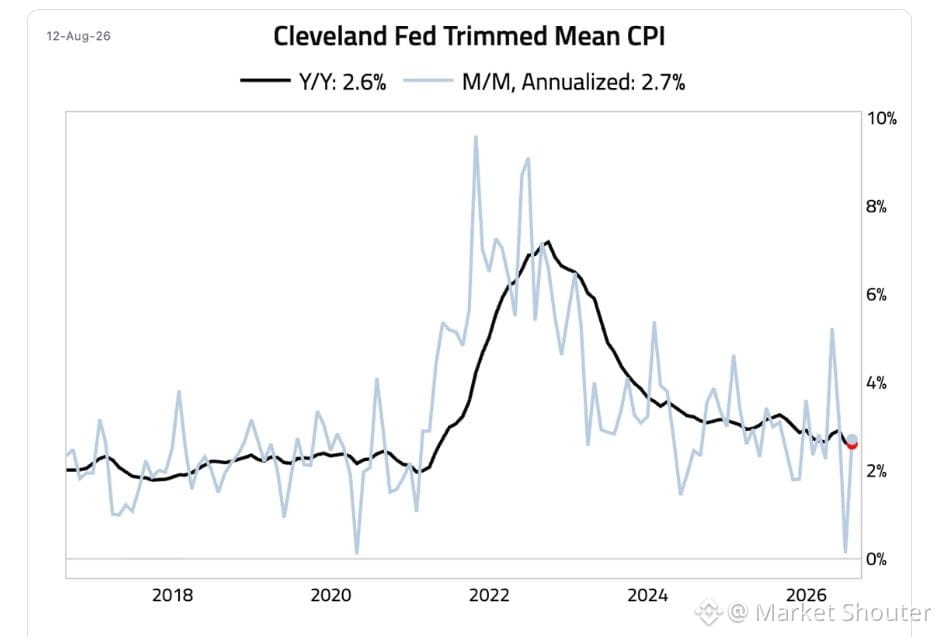
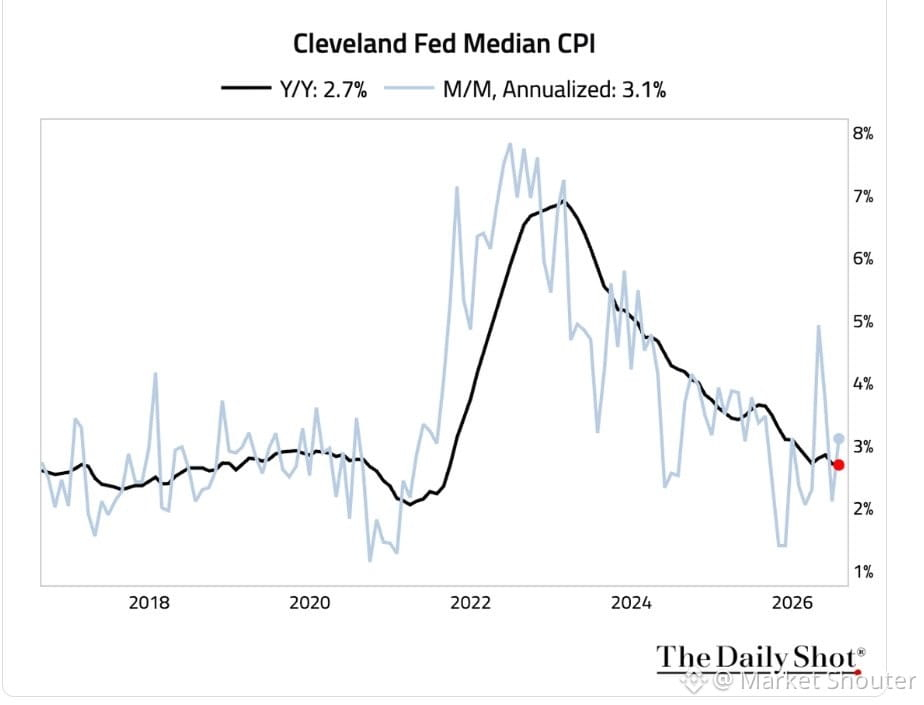
Cleveland Fed's trimmed mean and median CPI both cooling to 2.6% and 2.7%. Takes some heat off Powell heading into the next meeting.
Inflation data matters more than headlines right now. When the noise gets stripped out, the trend is your friend — or at least less of an enemy.
Still, don't mistake easing pressure for mission accomplished. The Fed's been burned before by declaring victory too early. They'll stay cautious until they see this stick for a few more prints.
For operators and investors: stable inflation = less chaos in cost structures and financing. Boring is beautiful when you're trying to run a real business or deploy capital intelligently.
Cleveland Fed's trimmed mean and median CPI both cooling to 2.6% and 2.7%. Takes some heat off Powell heading into the next meeting.
Inflation data matters more than headlines right now. When the noise gets stripped out, the trend is your friend — or at least less of an enemy.
Still, don't mistake easing pressure for mission accomplished. The Fed's been burned before by declaring victory too early. They'll stay cautious until they see this stick for a few more prints.
For operators and investors: stable inflation = less chaos in cost structures and financing. Boring is beautiful when you're trying to run a real business or deploy capital intelligently.
Inflation data matters more than headlines right now. When the noise gets stripped out, the trend is your friend — or at least less of an enemy.
Still, don't mistake easing pressure for mission accomplished. The Fed's been burned before by declaring victory too early. They'll stay cautious until they see this stick for a few more prints.
For operators and investors: stable inflation = less chaos in cost structures and financing. Boring is beautiful when you're trying to run a real business or deploy capital intelligently.
934
Vérifié
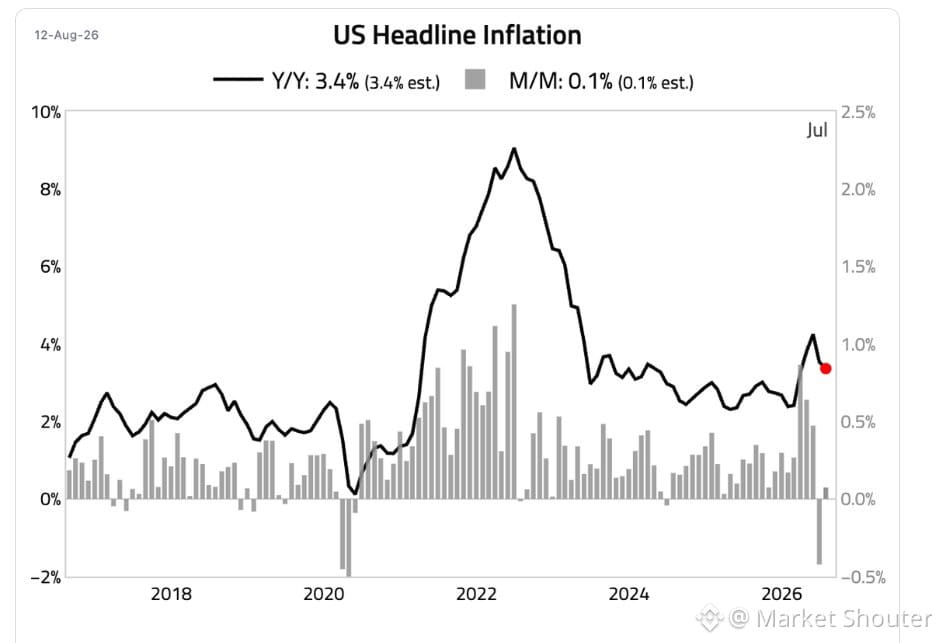
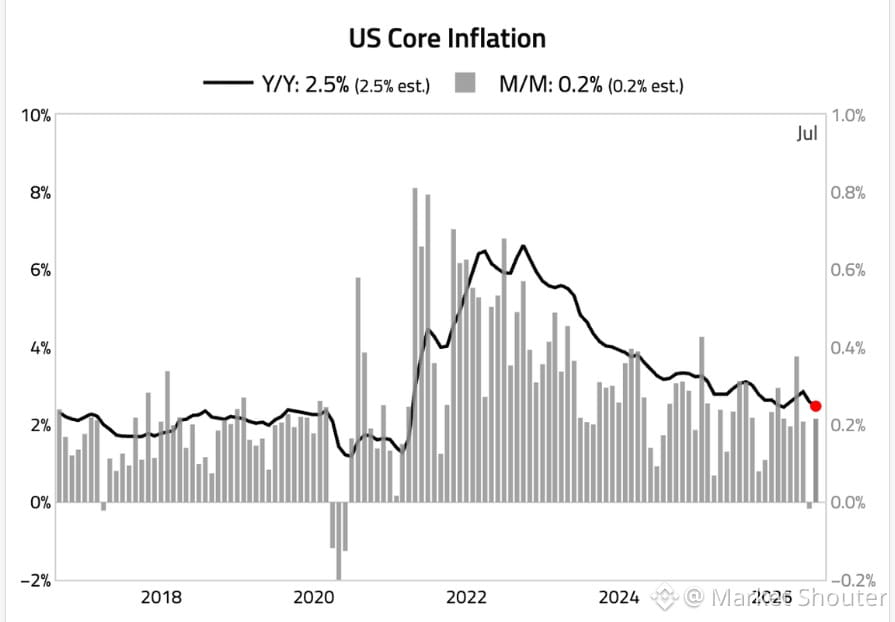
Headline and core inflation both dropped — September rate hike odds falling fast.
Core at 2.5% now. Fed's attention shifts to employment and wages, both signaling more disinflationary pressure ahead.
This matters for anyone deploying capital: lower rates = cheaper debt = better deal economics in private markets. Boring businesses with stable cash flows start looking even more attractive when cost of capital comes down.
Keep an eye on labor market softness. That's the real signal.
Headline and core inflation both dropped — September rate hike odds falling fast.
Core at 2.5% now. Fed's attention shifts to employment and wages, both signaling more disinflationary pressure ahead.
This matters for anyone deploying capital: lower rates = cheaper debt = better deal economics in private markets. Boring businesses with stable cash flows start looking even more attractive when cost of capital comes down.
Keep an eye on labor market softness. That's the real signal.
Core at 2.5% now. Fed's attention shifts to employment and wages, both signaling more disinflationary pressure ahead.
This matters for anyone deploying capital: lower rates = cheaper debt = better deal economics in private markets. Boring businesses with stable cash flows start looking even more attractive when cost of capital comes down.
Keep an eye on labor market softness. That's the real signal.
1
1
1k
Vérifié
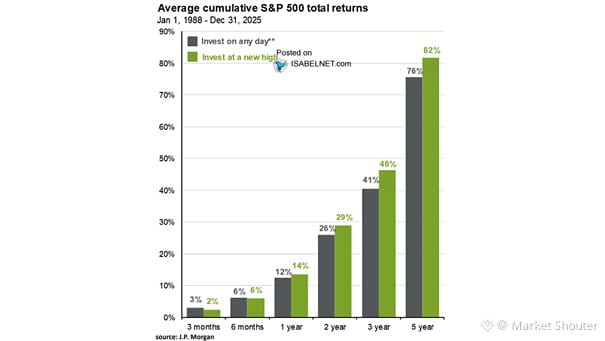
JPMorgan just dropped a note that'll make the perma-bears squirm: buying at all-time highs has historically delivered better forward returns than buying on an average day.
Yeah, record highs make everyone nervous. I get it. But the data doesn't care about your feelings.
The catch? These are averages. Year 1 to Year 5 can be a wild ride with plenty of volatility in between. You're not buying a straight line up.
But here's the real point: sitting in cash because some doom narrative spooked you is probably costing you more than the drawdown you're trying to avoid.
Fear is expensive. Patience and conviction in quality assets — whether public or private — tend to win over time.
Don't let the noise keep you on the sidelines.
JPMorgan just dropped a note that'll make the perma-bears squirm: buying at all-time highs has historically delivered better forward returns than buying on an average day.
Yeah, record highs make everyone nervous. I get it. But the data doesn't care about your feelings.
The catch? These are averages. Year 1 to Year 5 can be a wild ride with plenty of volatility in between. You're not buying a straight line up.
But here's the real point: sitting in cash because some doom narrative spooked you is probably costing you more than the drawdown you're trying to avoid.
Fear is expensive. Patience and conviction in quality assets — whether public or private — tend to win over time.
Don't let the noise keep you on the sidelines.
Yeah, record highs make everyone nervous. I get it. But the data doesn't care about your feelings.
The catch? These are averages. Year 1 to Year 5 can be a wild ride with plenty of volatility in between. You're not buying a straight line up.
But here's the real point: sitting in cash because some doom narrative spooked you is probably costing you more than the drawdown you're trying to avoid.
Fear is expensive. Patience and conviction in quality assets — whether public or private — tend to win over time.
Don't let the noise keep you on the sidelines.
JPMUS+0,17%
1
800
Connectez-vous pour découvrir plus de contenu
Rejoignez la communauté mondiale des adeptes de cryptomonnaies sur Binance Square
⚡️ Suviez les dernières informations importantes sur les cryptomonnaies.
💬 Jugé digne de confiance par la plus grande plateforme d’échange de cryptomonnaies au monde.
👍 Découvrez les connaissances que partagent les créateurs vérifiés.
Adresse e-mail/Nº de téléphone
Sujets d’actualité
UKFCAWinsCourtOrderToRecover851400Pounds
32,030 vues
770 mentions
🚨 CRYPTO REGULATION JUST ENTERED A NEW PHASE: THEY’RE NOT ONLY WRITING RULES — THEY’RE TAKING MONEY BACK.
The UK’s FCA has secured another court-backed asset recovery, reinforcing a broader enforcement push against unauthorized financial and crypto-related activity.
And look at what’s happening simultaneously:
🇬🇧 FCA → enforcement + asset recovery
🇺🇸 SEC → clearer rules for functional crypto assets
🇺🇸 Fed → formal stablecoin supervision under the GENIUS Act
That combination matters.
Regulators are no longer debating whether crypto belongs inside the financial system.
They’re increasingly deciding who gets access, what rules they follow, and what happens when those rules are broken.
The next crypto cycle may not be “regulation vs innovation.”
It may be regulated crypto vs everyone who can’t meet the standard. 👀
$COIN $CRCL $BTC
#ukfcawinscourtordertorecover851400pounds #ChainlinkLaunchesCCIP2WithEnterpriseVerification #GoldFallsTo$4144 #QNTFallsOver40%FromMorningHigh #USDTAdds845900HoldersInPast7Days
KimHotbae
·3 mentions J’aime
·4.3k vues
ChainlinkLaunchesCCIP2WithEnterpriseVerification
45,869 vues
945 mentions
GoldFallsTo$4144
15,931 vues
163 mentions