
CryptoTradeMask
9.4k Publications
CryptoTradeMask
Cryptocurrency market news, financial reviews, courses and training, all about cryptocurrencies and blockchain | 📊Technical analyses, Trading Strategy | 🦈
Ouvert au trading
Trade fréquemment
8.2 an(s)
237 Suivis
1.8K+ Abonnés
12.0K+ J’aime
Publications
Portefeuille
Tous
Citations
Vidéos

#BTC #ETH 🌈
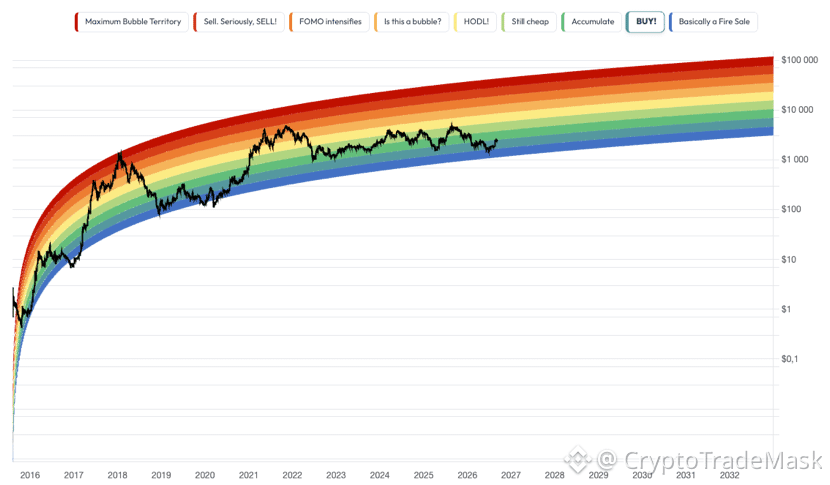
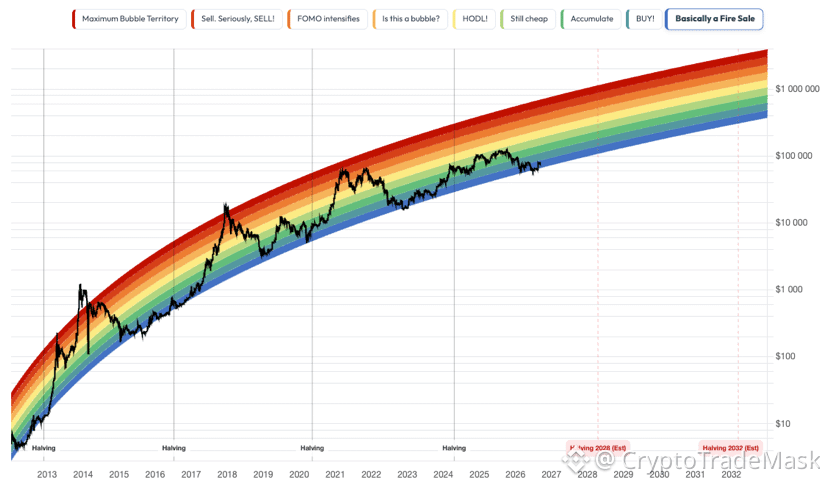
Les mathématiques confirment : ce n’est pas le chaos qui dirige le marché des crypto-monnaies, mais des lois claires de la Power Law 📈
Le modèle de régression (Power Law) montre de manière évidente que la tendance de hausse du BTC et de l’ETH reste mathématiquement indestructible pendant plus de 10 ans.
🎯#bitcoin ($BTC ) (depuis 2012) : la précision du modèle R^2 = 94.3\%. Le prix évolue le long d’une courbe logarithmique stricte, où chaque creux se trouve dans la zone « BUY » / « Basically a Fire Sale ».
🎯#Ethereum ($ETH ) (depuis 2015) : la précision du modèle R^2 = 85.6\%. Un horizon plus court et une volatilité plus élevée, mais la trajectoire reproduit le même schéma mathématique.
⚠️ Conclusion principale :
Le bruit du marché crée de la panique sur de courtes distances, mais les mathématiques prouvent : nous sommes encore au niveau des bas des zones d’accumulation. Le modèle arc-en-ciel indique que les repères de prix les plus intéressants nous attendent plus près des années 2028-2032.
Les mathématiques confirment : ce n’est pas le chaos qui dirige le marché des crypto-monnaies, mais des lois claires de la Power Law 📈
Le modèle de régression (Power Law) montre de manière évidente que la tendance de hausse du BTC et de l’ETH reste mathématiquement indestructible pendant plus de 10 ans.
🎯#bitcoin ($BTC ) (depuis 2012) : la précision du modèle R^2 = 94.3\%. Le prix évolue le long d’une courbe logarithmique stricte, où chaque creux se trouve dans la zone « BUY » / « Basically a Fire Sale ».
🎯#Ethereum ($ETH ) (depuis 2015) : la précision du modèle R^2 = 85.6\%. Un horizon plus court et une volatilité plus élevée, mais la trajectoire reproduit le même schéma mathématique.
⚠️ Conclusion principale :
Le bruit du marché crée de la panique sur de courtes distances, mais les mathématiques prouvent : nous sommes encore au niveau des bas des zones d’accumulation. Le modèle arc-en-ciel indique que les repères de prix les plus intéressants nous attendent plus près des années 2028-2032.
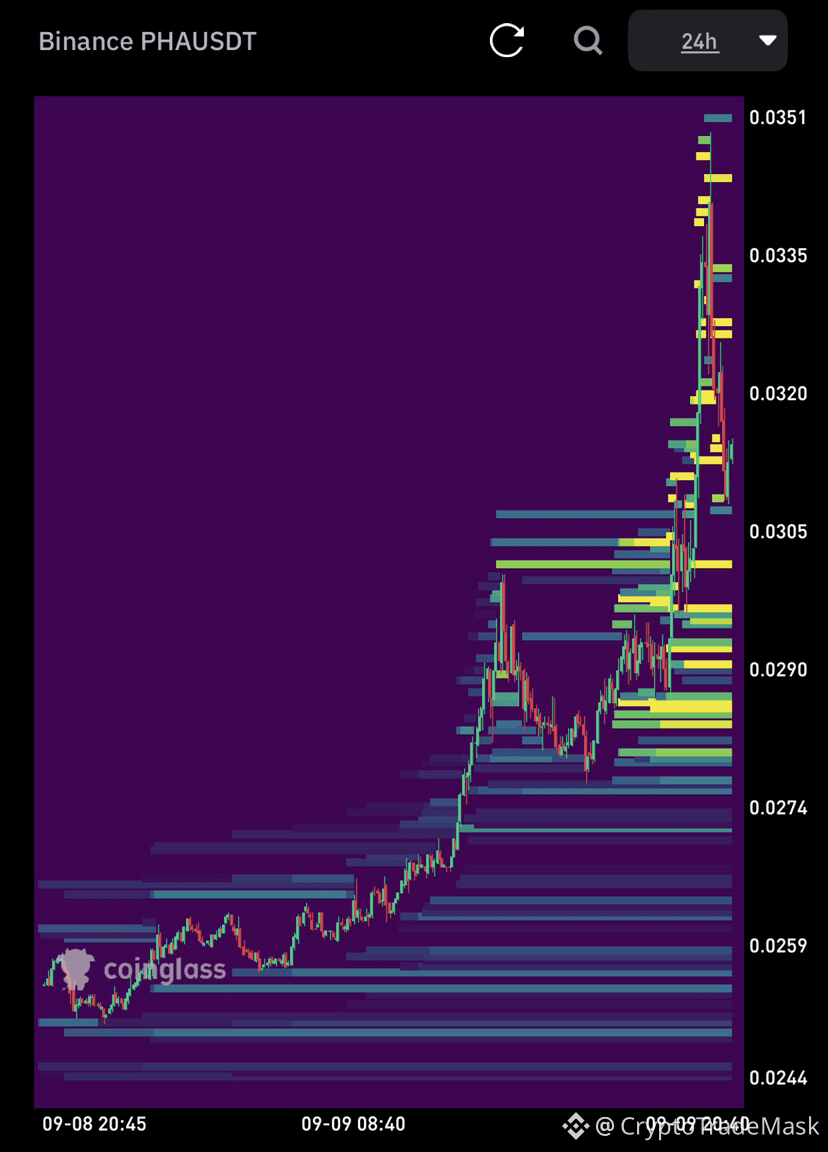
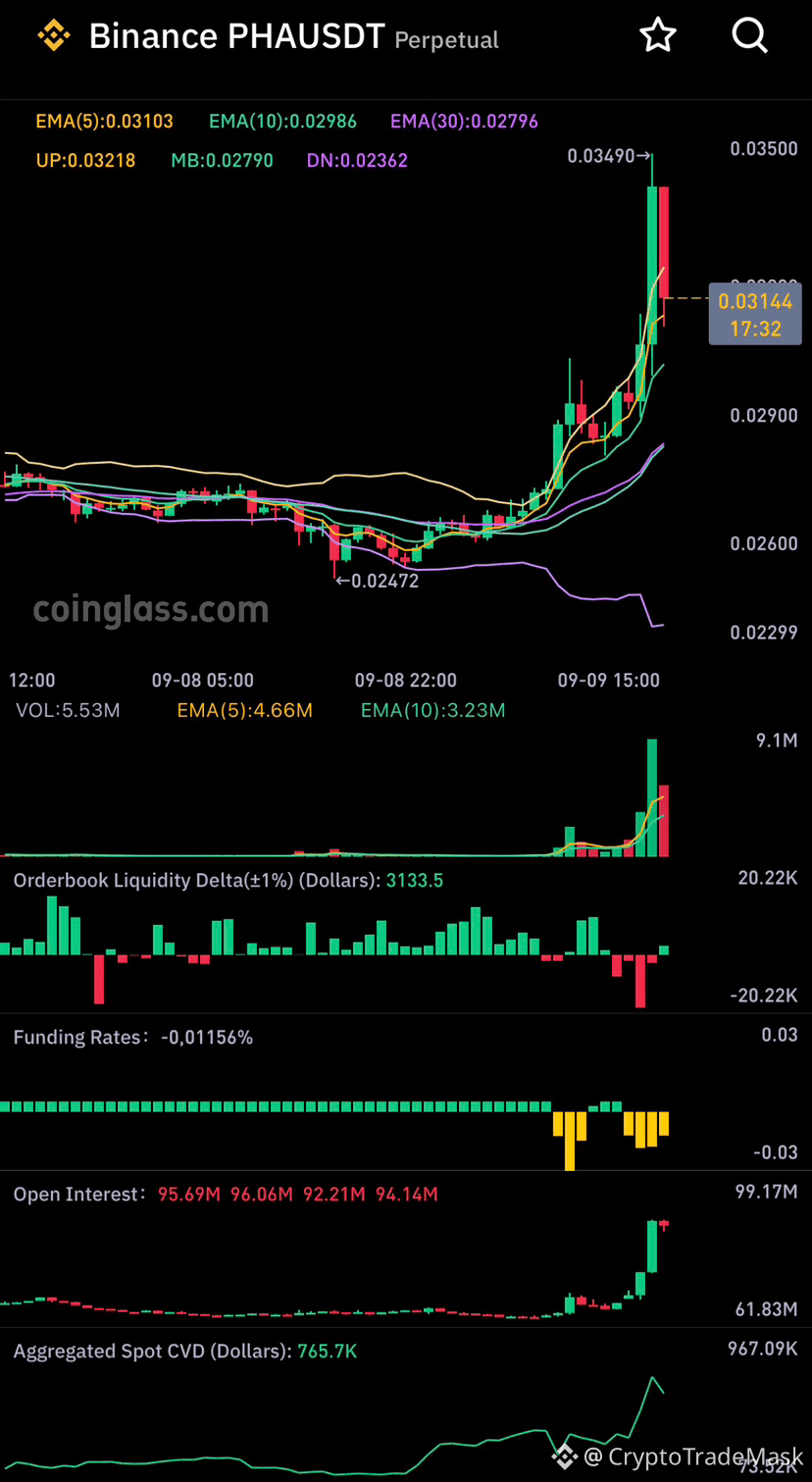
📊 Préparation spéculative sur $PHA /USDT
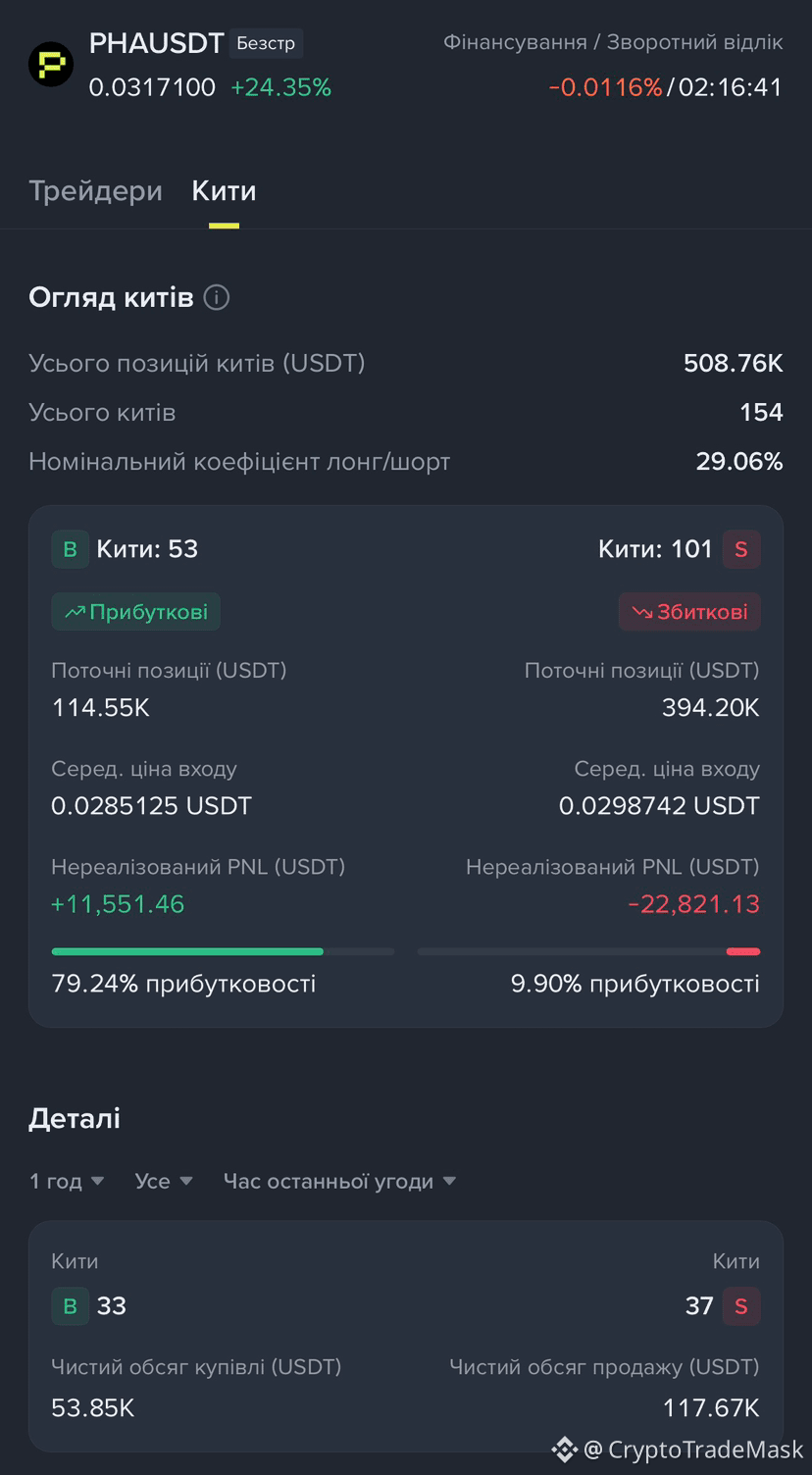
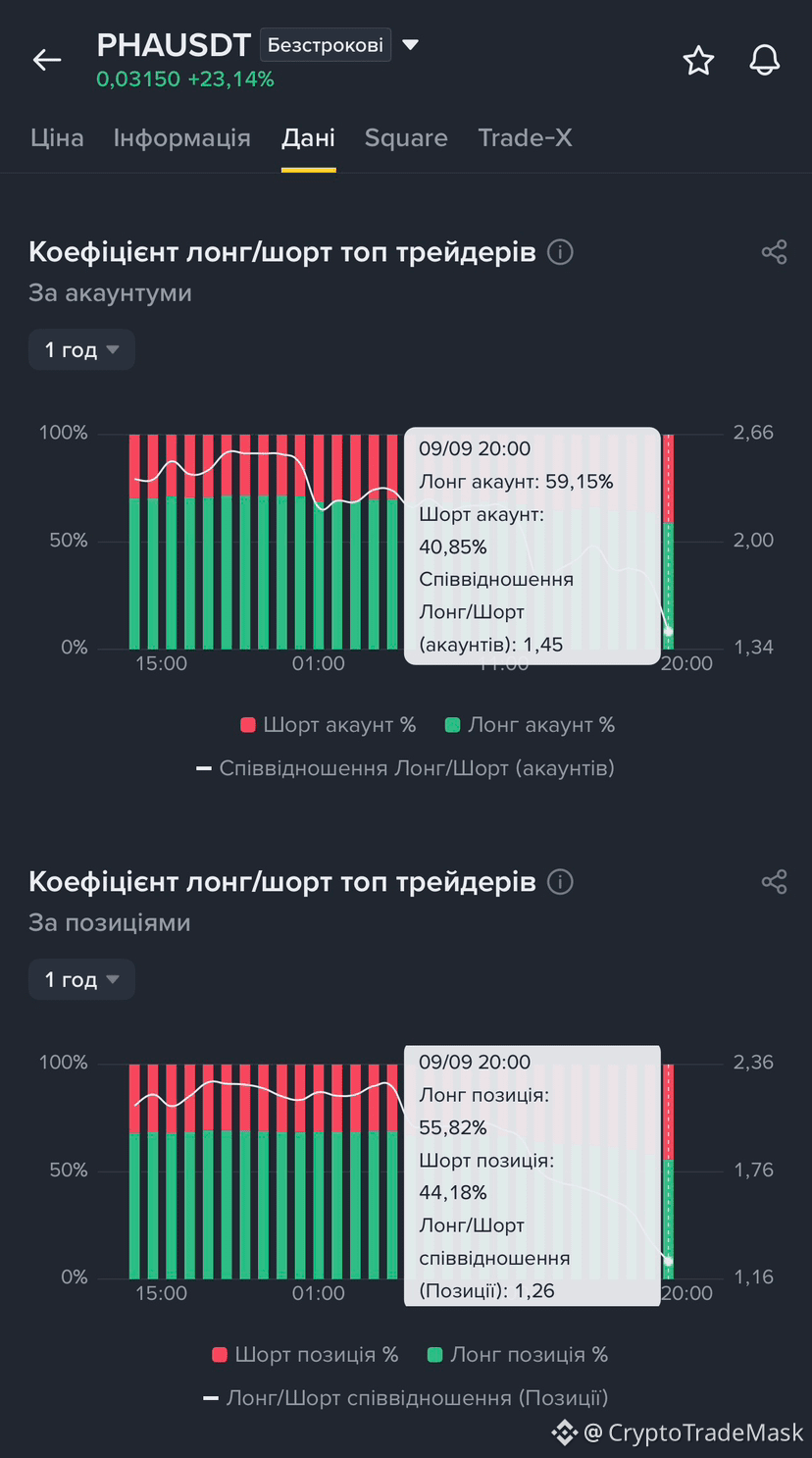
Après une impulsion rapide jusqu’à 0.0349, le prix est entré dans une phase de repli local. Une anomalie intéressante est observée sur le marché : 101 baleines sont en positions vendeuses (short) contre 53 en positions acheteuses (long) (le ratio L/S des baleines n’est que de 29%), et le financement est négatif (-0.0115%).
Les traders poussent à la baisse, mais les shorts accumulés créent le risque d’un short squeeze.
🚦 Niveaux de trading
🔴 SHORT (Priorité sur la correction)
Entrée : 0.0318 – 0.0325 (retest de la résistance)
Take profit : 0.0298 / 0.0279
Stop loss : 0.0336
🟢 LONG (Depuis le support / Squeeze)
Entrée : 0.0290 – 0.0298 (rebond confirmé)
Take profit : 0.0325 / 0.0349
Stop loss : 0.0279
⚠️ Respectez la gestion du risque : pas plus de 1 à 2% de risque par trade.
Après une impulsion rapide jusqu’à 0.0349, le prix est entré dans une phase de repli local. Une anomalie intéressante est observée sur le marché : 101 baleines sont en positions vendeuses (short) contre 53 en positions acheteuses (long) (le ratio L/S des baleines n’est que de 29%), et le financement est négatif (-0.0115%).
Les traders poussent à la baisse, mais les shorts accumulés créent le risque d’un short squeeze.
🚦 Niveaux de trading
🔴 SHORT (Priorité sur la correction)
Entrée : 0.0318 – 0.0325 (retest de la résistance)
Take profit : 0.0298 / 0.0279
Stop loss : 0.0336
🟢 LONG (Depuis le support / Squeeze)
Entrée : 0.0290 – 0.0298 (rebond confirmé)
Take profit : 0.0325 / 0.0349
Stop loss : 0.0279
⚠️ Respectez la gestion du risque : pas plus de 1 à 2% de risque par trade.
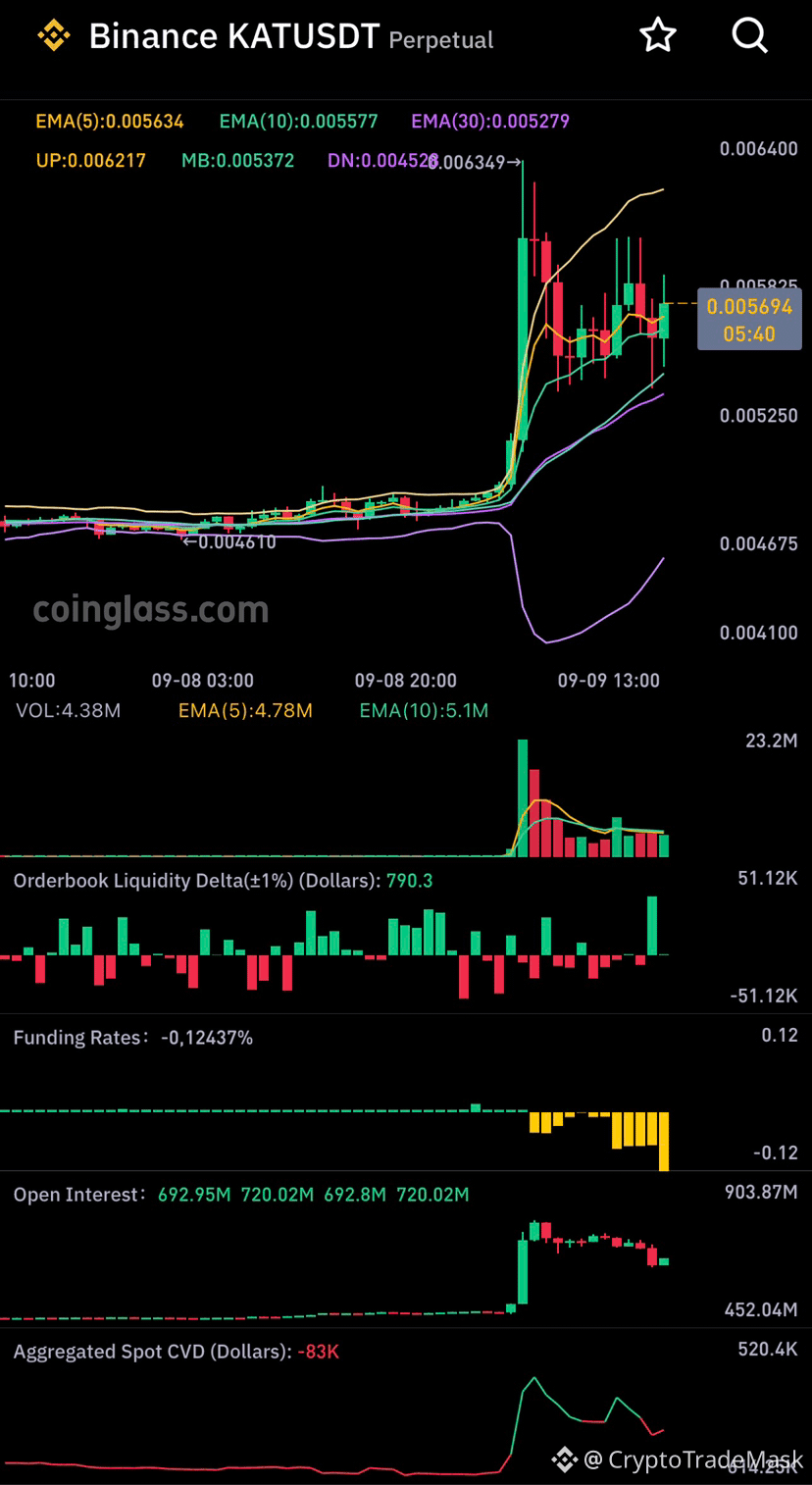
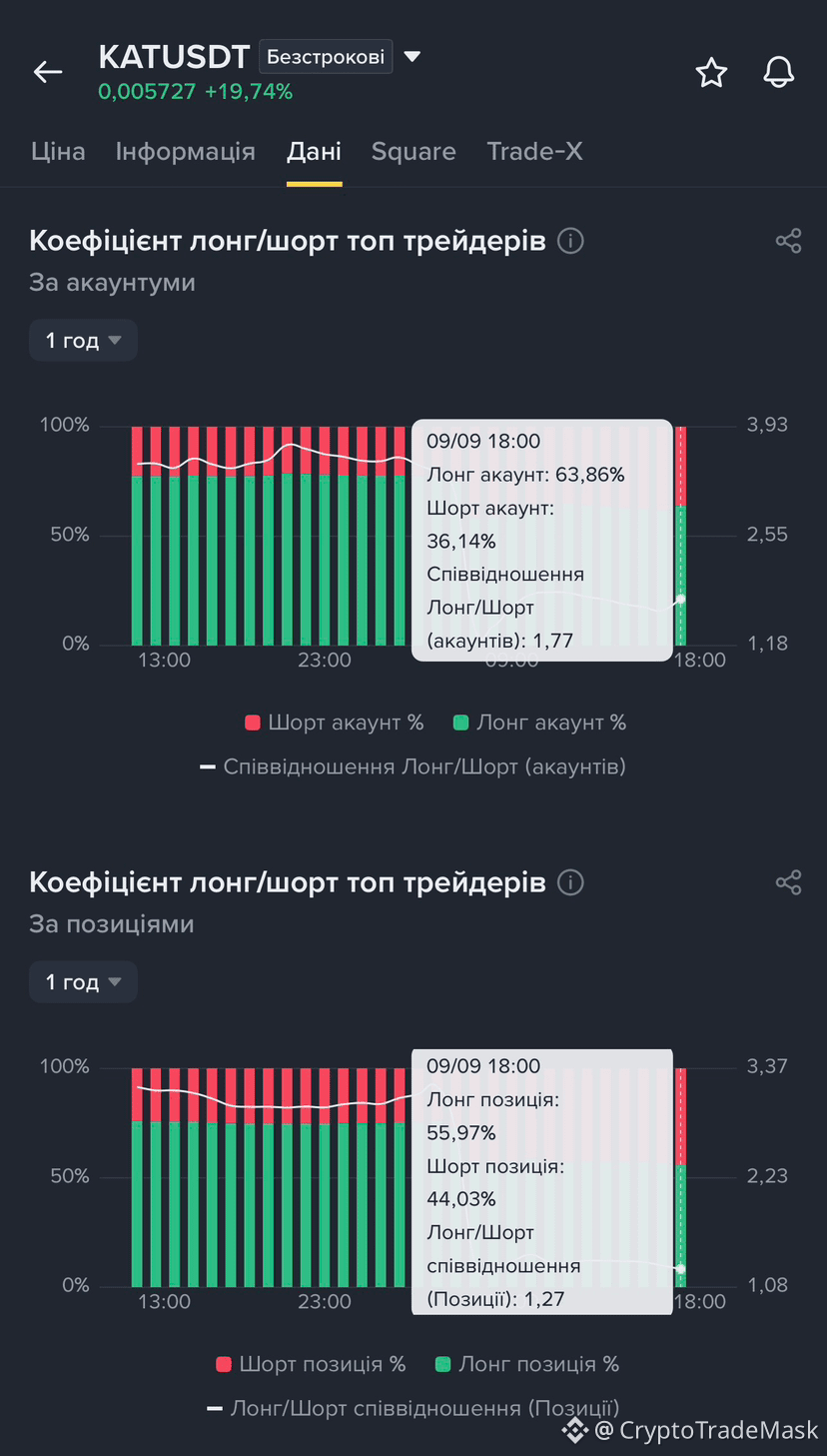
🚀 $KAT /USDT : Une short squeeze est-elle en approche ?
Après un fort pump, le prix est bloqué dans une phase de consolidation 0.00530–0.00585. Une image intéressante se dessine pour le scénario local :
Financement négatif (-0.13%) : Les shorts ont surchargé le marché et paient des commissions aux longs.
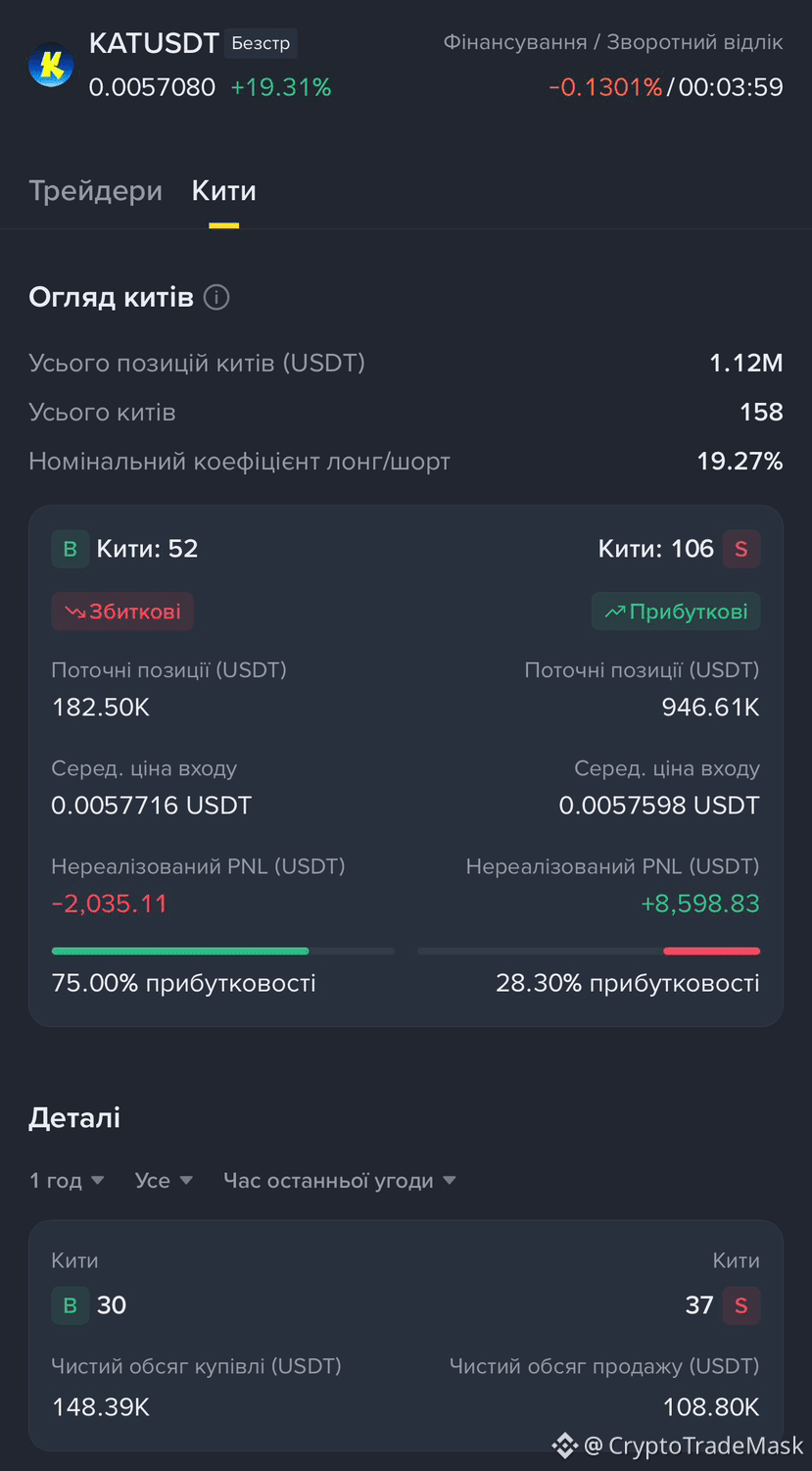
Positions des whales : Plus de 940K$ est en shorts avec un prix d’entrée moyen 0.00576. Le prix est exactement à son point mort.
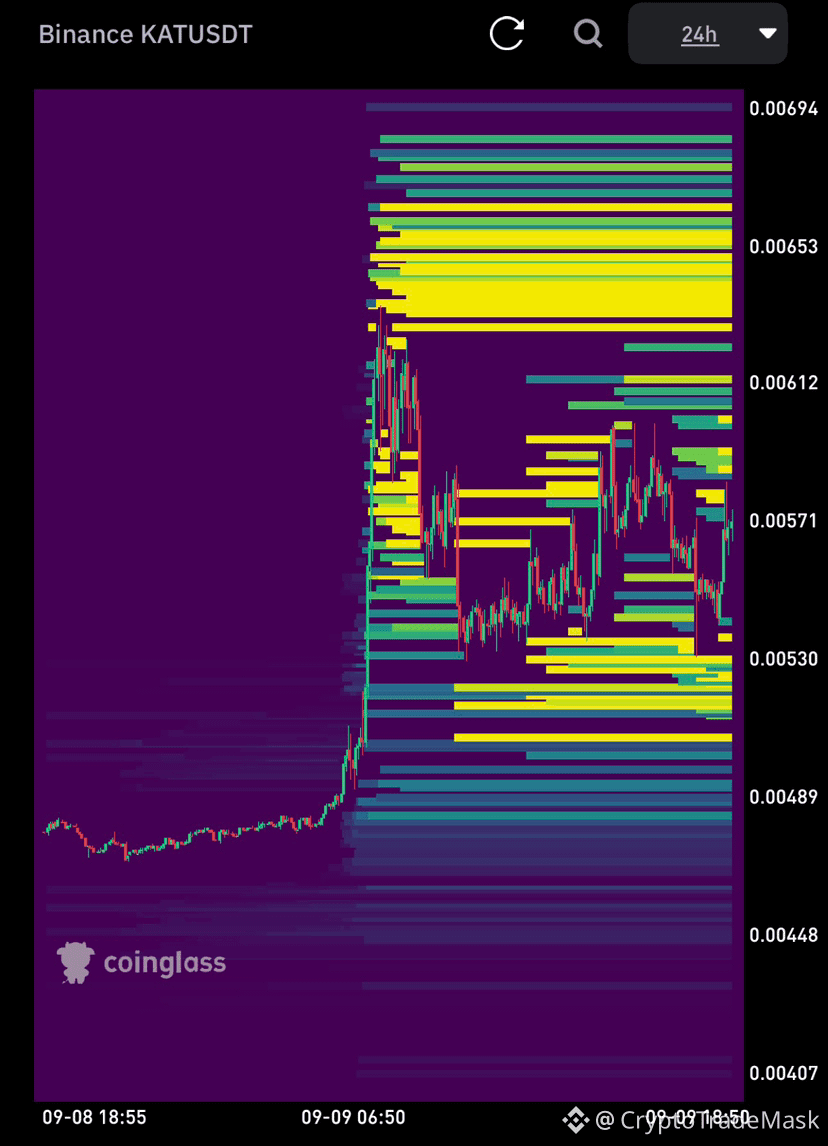
Carte de liquidité : La principale accumulation de stops et de liquidations de shorts se situe au-dessus de 0.00630–0.00680.
🟢 Plan de trading (LONG)
Zone d’entrée : 0.00535 – 0.00550 USDT (en repli) ou cassure 0.00585 USDT
Take-Profit 1 : 0.00620 USDT
Take-Profit 2 : 0.00665 USDT
Stop-Loss : 0.00512 USDT
‼️ Actif “scam-pump” : suivez la gestion du risque et travaillez avec des stops !
Après un fort pump, le prix est bloqué dans une phase de consolidation 0.00530–0.00585. Une image intéressante se dessine pour le scénario local :
Financement négatif (-0.13%) : Les shorts ont surchargé le marché et paient des commissions aux longs.
Positions des whales : Plus de 940K$ est en shorts avec un prix d’entrée moyen 0.00576. Le prix est exactement à son point mort.
Carte de liquidité : La principale accumulation de stops et de liquidations de shorts se situe au-dessus de 0.00630–0.00680.
🟢 Plan de trading (LONG)
Zone d’entrée : 0.00535 – 0.00550 USDT (en repli) ou cassure 0.00585 USDT
Take-Profit 1 : 0.00620 USDT
Take-Profit 2 : 0.00665 USDT
Stop-Loss : 0.00512 USDT
‼️ Actif “scam-pump” : suivez la gestion du risque et travaillez avec des stops !
Voir la traduction
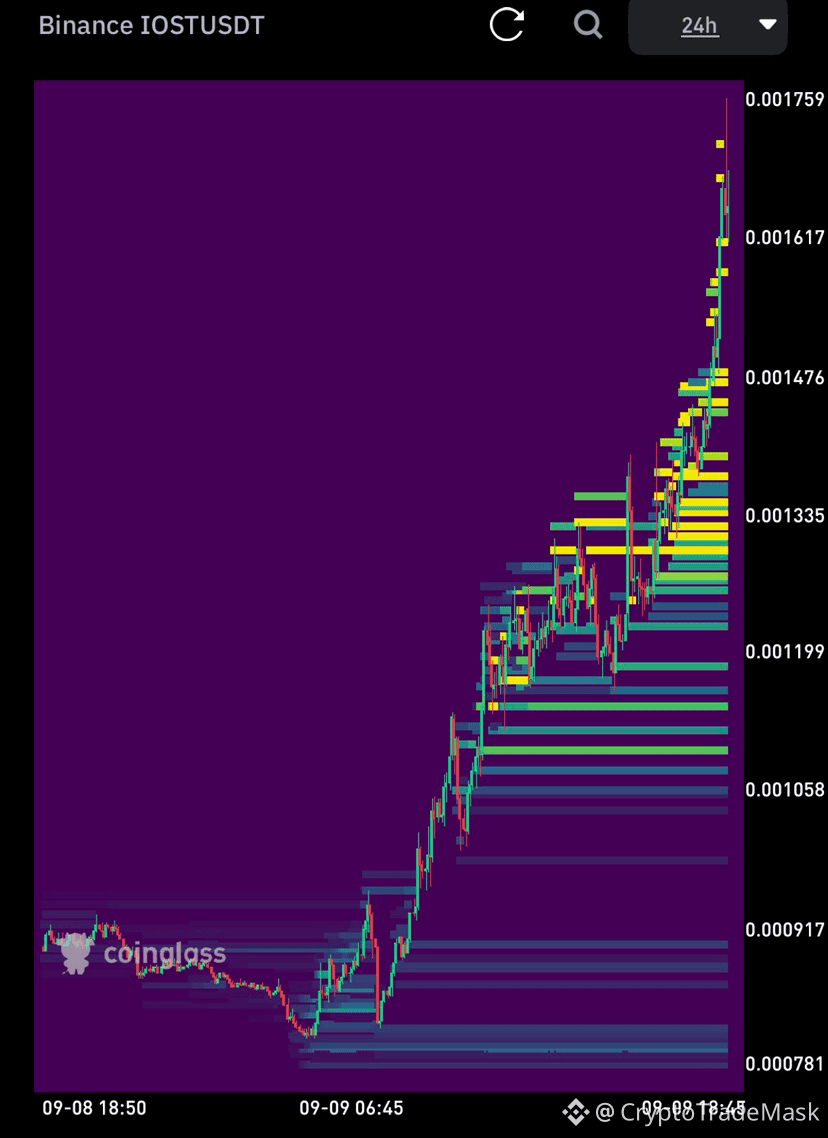
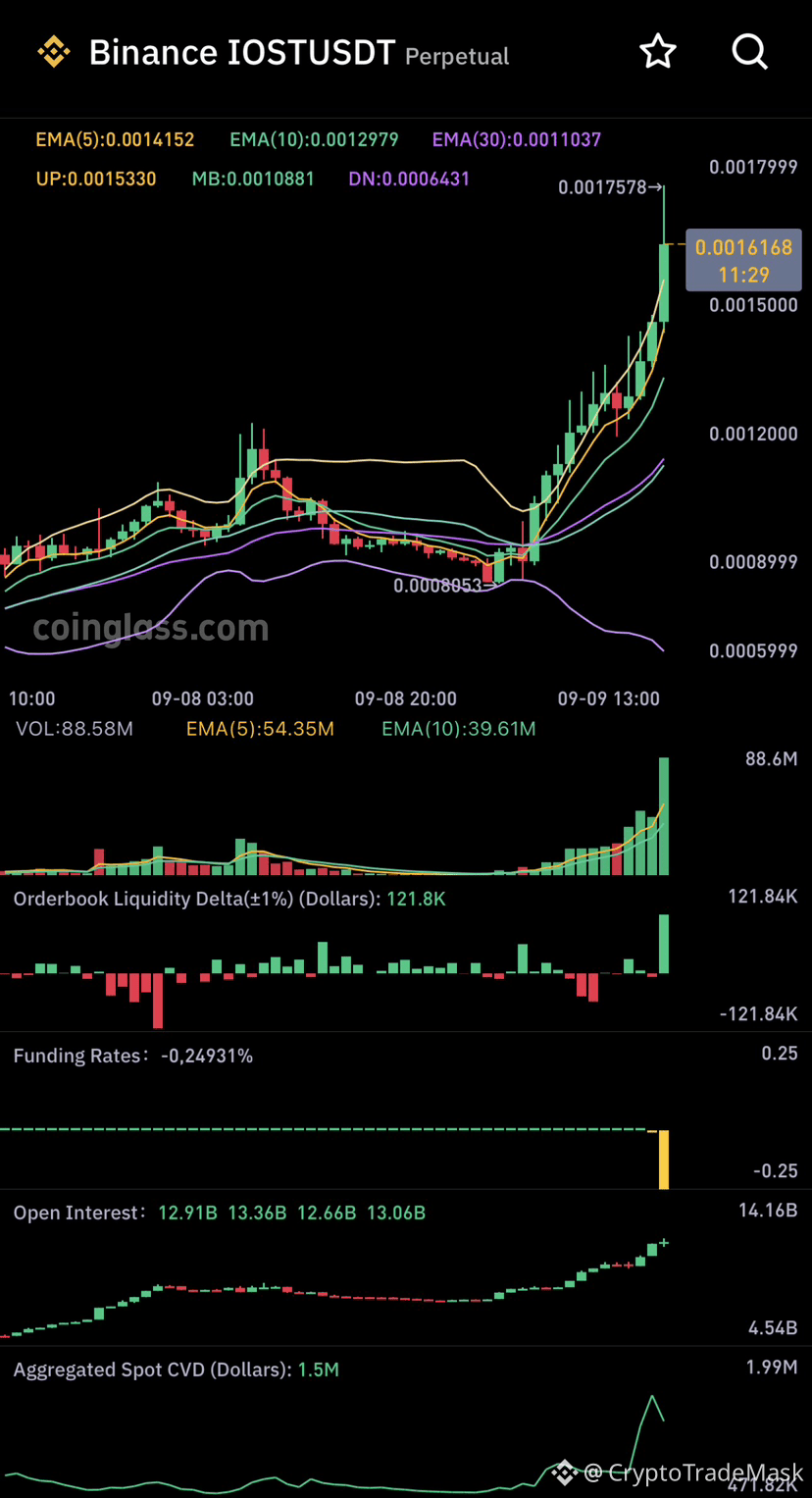
$IOST /USDT: Powerful Short Squeeze and Parabolic Phase 🚀
Over the past 24 hours, $IOST has shown a rapid growth (+80%), breaking local highs and reaching the 0.00175 mark.
📊 What's happening in the market:
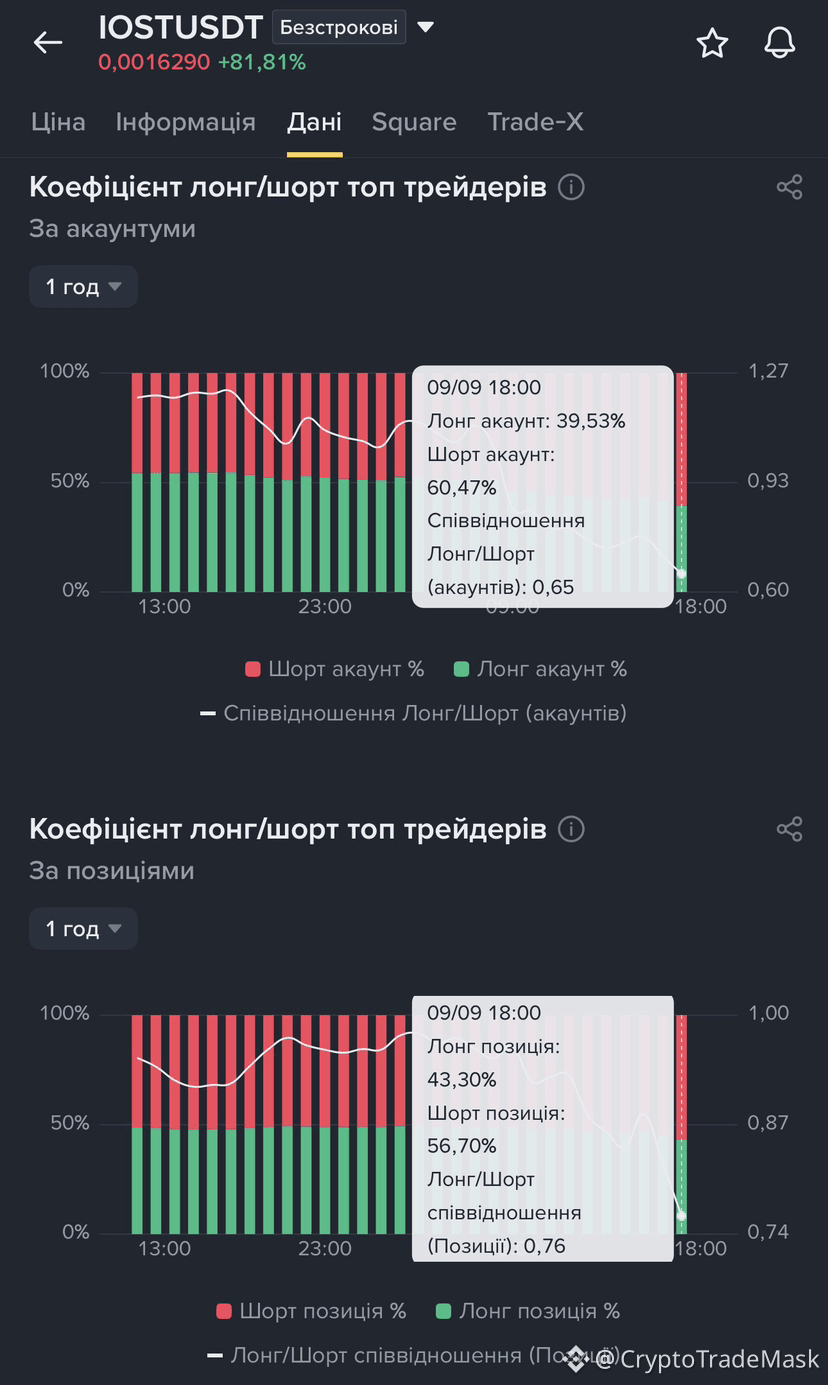
Funding: Deeply negative (-0.25%). The market is significantly overshorted, with shorts paying large commissions to longs, which continues to push the price up (Short Squeeze).
Open Interest (OI): Increased to 14.16B, indicating an active inflow of liquidity.
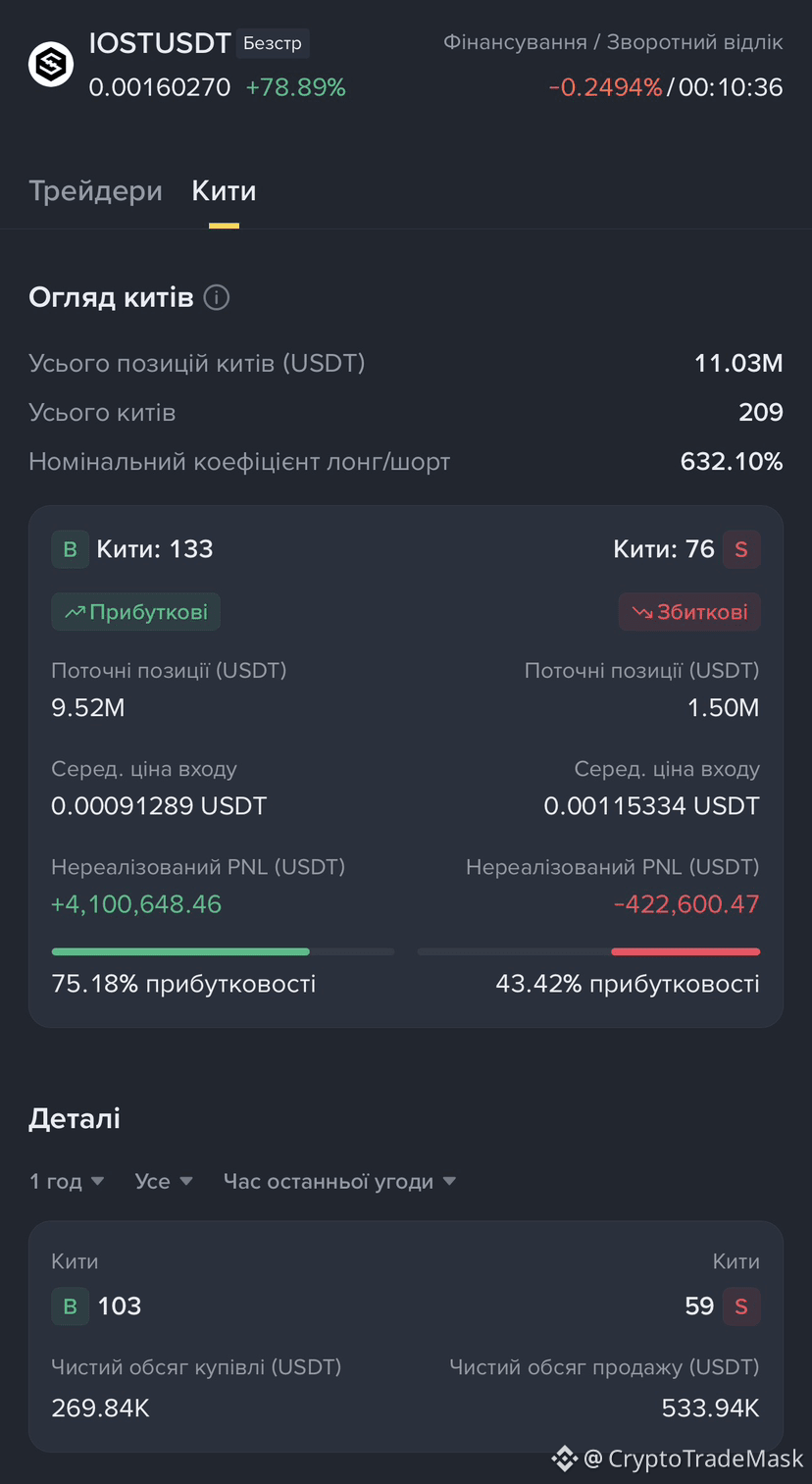
Whale Actions: Large players are holding net longs ($9.52M volume vs. $1.50M in shorts) with an average entry price of 0.00091. They are in significant profit (+ $4.1M PnL).
🚦Trading plan:
🔴 Short (Priority): Entry in the zone 0.00165 – 0.00175 after the first signs of buyers exhaustion.
Take-Profit: 0.00135 / 0.00120
Stop-Loss: 0.00182
🟢 Long (Only on a deep pullback): Entry in the zone 0.00130 – 0.00135.
Take-Profit: 0.00160 / 0.00175
Stop-Loss: 0.00118
⚠️ Buying at the very peak of the parabola carries high risks. Do not forget about risk control and take into account the high financing rate when opening short positions.
Over the past 24 hours, $IOST has shown a rapid growth (+80%), breaking local highs and reaching the 0.00175 mark.
📊 What's happening in the market:
Funding: Deeply negative (-0.25%). The market is significantly overshorted, with shorts paying large commissions to longs, which continues to push the price up (Short Squeeze).
Open Interest (OI): Increased to 14.16B, indicating an active inflow of liquidity.
Whale Actions: Large players are holding net longs ($9.52M volume vs. $1.50M in shorts) with an average entry price of 0.00091. They are in significant profit (+ $4.1M PnL).
🚦Trading plan:
🔴 Short (Priority): Entry in the zone 0.00165 – 0.00175 after the first signs of buyers exhaustion.
Take-Profit: 0.00135 / 0.00120
Stop-Loss: 0.00182
🟢 Long (Only on a deep pullback): Entry in the zone 0.00130 – 0.00135.
Take-Profit: 0.00160 / 0.00175
Stop-Loss: 0.00118
⚠️ Buying at the very peak of the parabola carries high risks. Do not forget about risk control and take into account the high financing rate when opening short positions.
#Geopolitics #bitcoin
🚀 Test militaire du Bitcoin : pétrole à 100 $, risque d’inflation et positions longues surendettées
Le Bitcoin se maintient au-dessus de 78 000 $ au milieu d’une nouvelle tempête macroéconomique : le brut Brent a franchi la barre des 100 $ le baril à cause des tensions au Moyen-Orient, tandis que le rendement des obligations du Trésor américain à 10 ans s’est approché de 4,81 %.
La Réserve fédérale américaine se retrouve face à un choix difficile : contenir une nouvelle vague d’inflation ou éviter une pression sur l’économie. Le marché estime déjà la probabilité d’une hausse des taux de la Fed la semaine prochaine à 60,4 %.
📊 Les principaux facteurs de marché avant la publication de l’IPC
➡️ Corrélation record avec l’or : Selon Talos, la corrélation sur 90 jours du BTC avec l’or est montée à 0,56 (le plus haut depuis 2020), tandis que la corrélation avec le Nasdaq est tombée à presque zéro. Le Bitcoin est de plus en plus négocié comme un actif refuge rare.
➡️ Choc pétrolier : le Brent atteint 100,19 $ (+25 % depuis août). Goldman Sachs prévoit que le prix pourrait grimper jusqu’à 120 $ si les perturbations de l’offre se poursuivent.
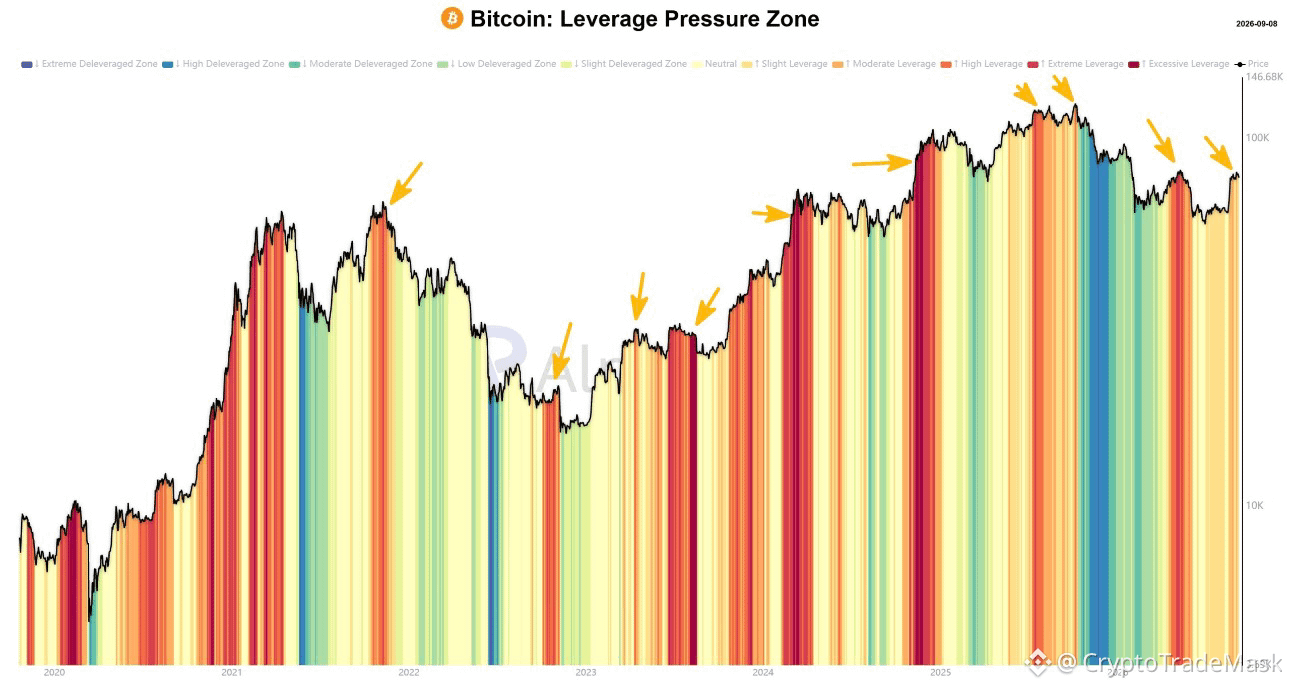
➡️ Accumulation d’effet de levier : D’après Alphractal, le marché est à nouveau inondé de « longs » financés par des fonds empruntés. Cela rend le BTC vulnérable à des liquidations en cascade en cas de nouvelles négatives.
🔥 Le test principal est vendredi 11 septembre
La publication des données sur l’inflation des prix à la consommation (IPC) aux États-Unis à 15 h 30 (heure de Kyiv) déterminera la tendance à venir :
➡️ Inflation modérée (inférieure à 2,4 %) : devrait soulager la pression sur le marché, permettant au BTC de poursuivre sa hausse.
➡️ Croissance inattendue : pourrait déclencher une vague de liquidations de positions longues surendettées et faire sortir le BTC de la zone des 78 000 $+.
🚀 Test militaire du Bitcoin : pétrole à 100 $, risque d’inflation et positions longues surendettées
Le Bitcoin se maintient au-dessus de 78 000 $ au milieu d’une nouvelle tempête macroéconomique : le brut Brent a franchi la barre des 100 $ le baril à cause des tensions au Moyen-Orient, tandis que le rendement des obligations du Trésor américain à 10 ans s’est approché de 4,81 %.
La Réserve fédérale américaine se retrouve face à un choix difficile : contenir une nouvelle vague d’inflation ou éviter une pression sur l’économie. Le marché estime déjà la probabilité d’une hausse des taux de la Fed la semaine prochaine à 60,4 %.
📊 Les principaux facteurs de marché avant la publication de l’IPC
➡️ Corrélation record avec l’or : Selon Talos, la corrélation sur 90 jours du BTC avec l’or est montée à 0,56 (le plus haut depuis 2020), tandis que la corrélation avec le Nasdaq est tombée à presque zéro. Le Bitcoin est de plus en plus négocié comme un actif refuge rare.
➡️ Choc pétrolier : le Brent atteint 100,19 $ (+25 % depuis août). Goldman Sachs prévoit que le prix pourrait grimper jusqu’à 120 $ si les perturbations de l’offre se poursuivent.
➡️ Accumulation d’effet de levier : D’après Alphractal, le marché est à nouveau inondé de « longs » financés par des fonds empruntés. Cela rend le BTC vulnérable à des liquidations en cascade en cas de nouvelles négatives.
🔥 Le test principal est vendredi 11 septembre
La publication des données sur l’inflation des prix à la consommation (IPC) aux États-Unis à 15 h 30 (heure de Kyiv) déterminera la tendance à venir :
➡️ Inflation modérée (inférieure à 2,4 %) : devrait soulager la pression sur le marché, permettant au BTC de poursuivre sa hausse.
➡️ Croissance inattendue : pourrait déclencher une vague de liquidations de positions longues surendettées et faire sortir le BTC de la zone des 78 000 $+.
#Cosmos
🚀 Cosmos ($ATOM ) Analyse : Niveaux clés et scénarios de développement
$ATOM a grimpé à la 24e place du classement avec un résultat de +12,62 % par jour et un prix de 1,92 $. La pièce affiche une dynamique positive, mais elle se trouve à proximité d’une résistance importante.
📊 Les points principaux de l’analyse :
1️⃣ Facteur fondamental :
La fonctionnalité d’intercommunication entre blockchains (IBC) maintient une activité élevée sur le réseau Cosmos tout au long de 2026. Le volume des transactions a augmenté de 227 % par mois, ce qui confirme l’intérêt constant des utilisateurs et des développeurs.
2️⃣ Condition technique :
Support : Le niveau de 1,63 $ agit comme une zone clé de protection pour les acheteurs et comme la ligne d’annulation de la tendance haussière locale.
Indicateur RSI (14) : Il se situe à 59,6, ce qui indique un élan modérément positif, sans signes de conditions critiques de surachat.
🎯 Scénarios de trading :
🟢 Scénario haussier :
En consolidant le prix au-dessus du niveau clé de 1,80 $, cela ouvre la voie à l’objectif suivant à 2,02 $.
🔴 Scénario baissier :
La perte du support de 1,80 $ peut provoquer une baisse corrective vers le niveau de 1,63 $.
⚠️ Synthèse et conseil :
Cosmos se trouve actuellement dans une zone de forte volatilité. La stratégie la plus optimale consiste à attendre une confirmation de la cassure du niveau de 1,80 $ pour ouvrir de nouvelles positions. N’oubliez pas la gestion des risques et les ordres stop !
🚀 Cosmos ($ATOM ) Analyse : Niveaux clés et scénarios de développement
$ATOM a grimpé à la 24e place du classement avec un résultat de +12,62 % par jour et un prix de 1,92 $. La pièce affiche une dynamique positive, mais elle se trouve à proximité d’une résistance importante.
📊 Les points principaux de l’analyse :
1️⃣ Facteur fondamental :
La fonctionnalité d’intercommunication entre blockchains (IBC) maintient une activité élevée sur le réseau Cosmos tout au long de 2026. Le volume des transactions a augmenté de 227 % par mois, ce qui confirme l’intérêt constant des utilisateurs et des développeurs.
2️⃣ Condition technique :
Support : Le niveau de 1,63 $ agit comme une zone clé de protection pour les acheteurs et comme la ligne d’annulation de la tendance haussière locale.
Indicateur RSI (14) : Il se situe à 59,6, ce qui indique un élan modérément positif, sans signes de conditions critiques de surachat.
🎯 Scénarios de trading :
🟢 Scénario haussier :
En consolidant le prix au-dessus du niveau clé de 1,80 $, cela ouvre la voie à l’objectif suivant à 2,02 $.
🔴 Scénario baissier :
La perte du support de 1,80 $ peut provoquer une baisse corrective vers le niveau de 1,63 $.
⚠️ Synthèse et conseil :
Cosmos se trouve actuellement dans une zone de forte volatilité. La stratégie la plus optimale consiste à attendre une confirmation de la cassure du niveau de 1,80 $ pour ouvrir de nouvelles positions. N’oubliez pas la gestion des risques et les ordres stop !

Voir la traduction
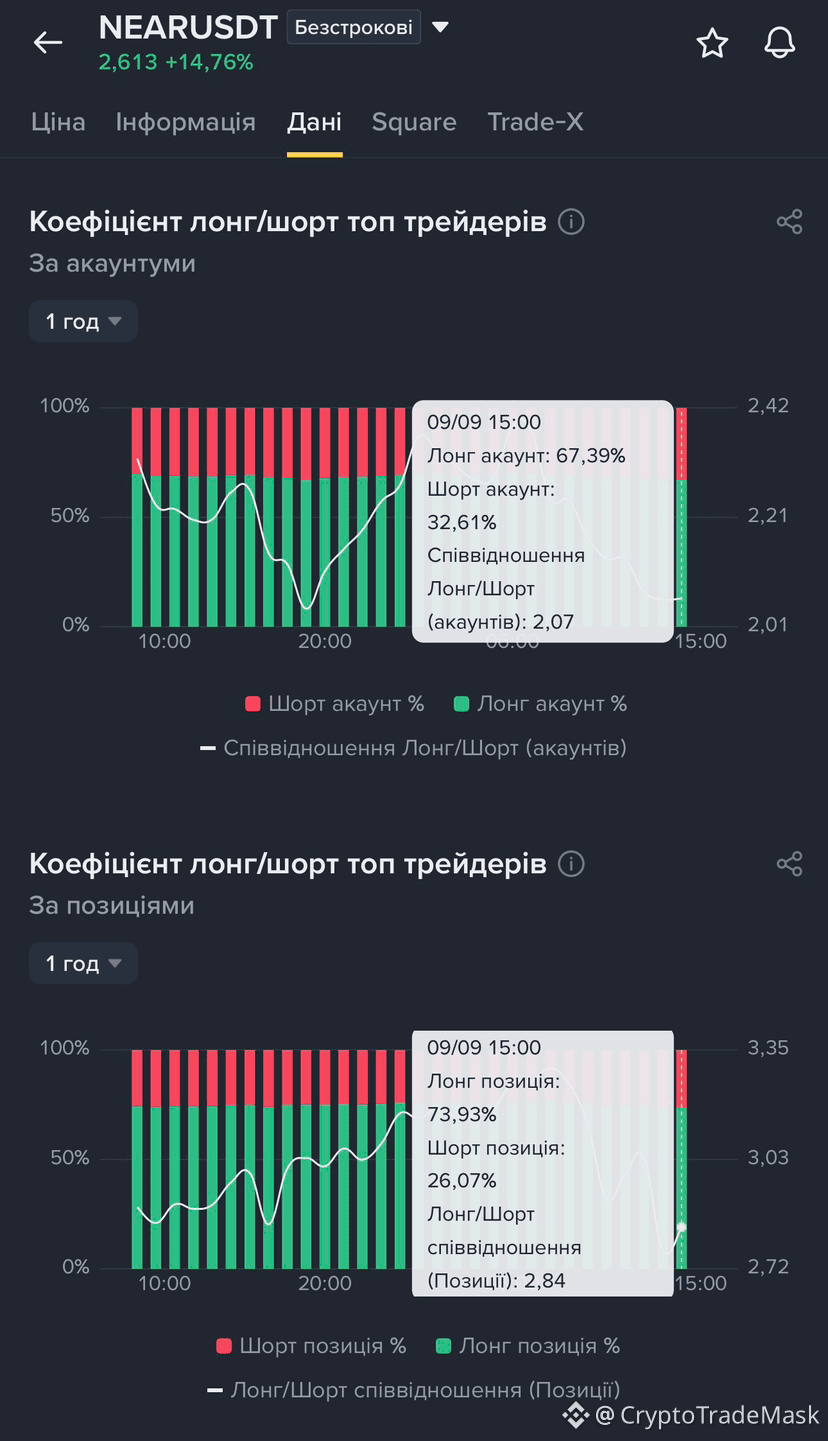
🚀 $NEAR /USDT: Liquidity Withdrawal and Risk of Local Pullback
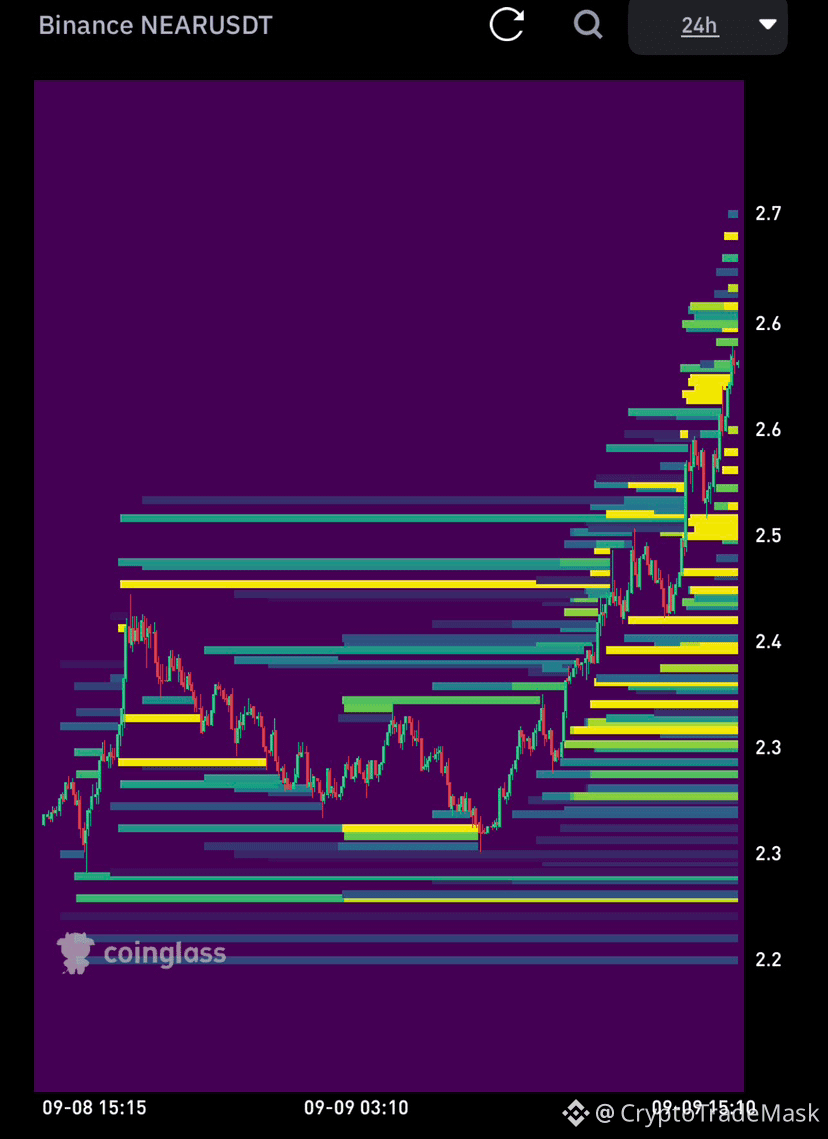
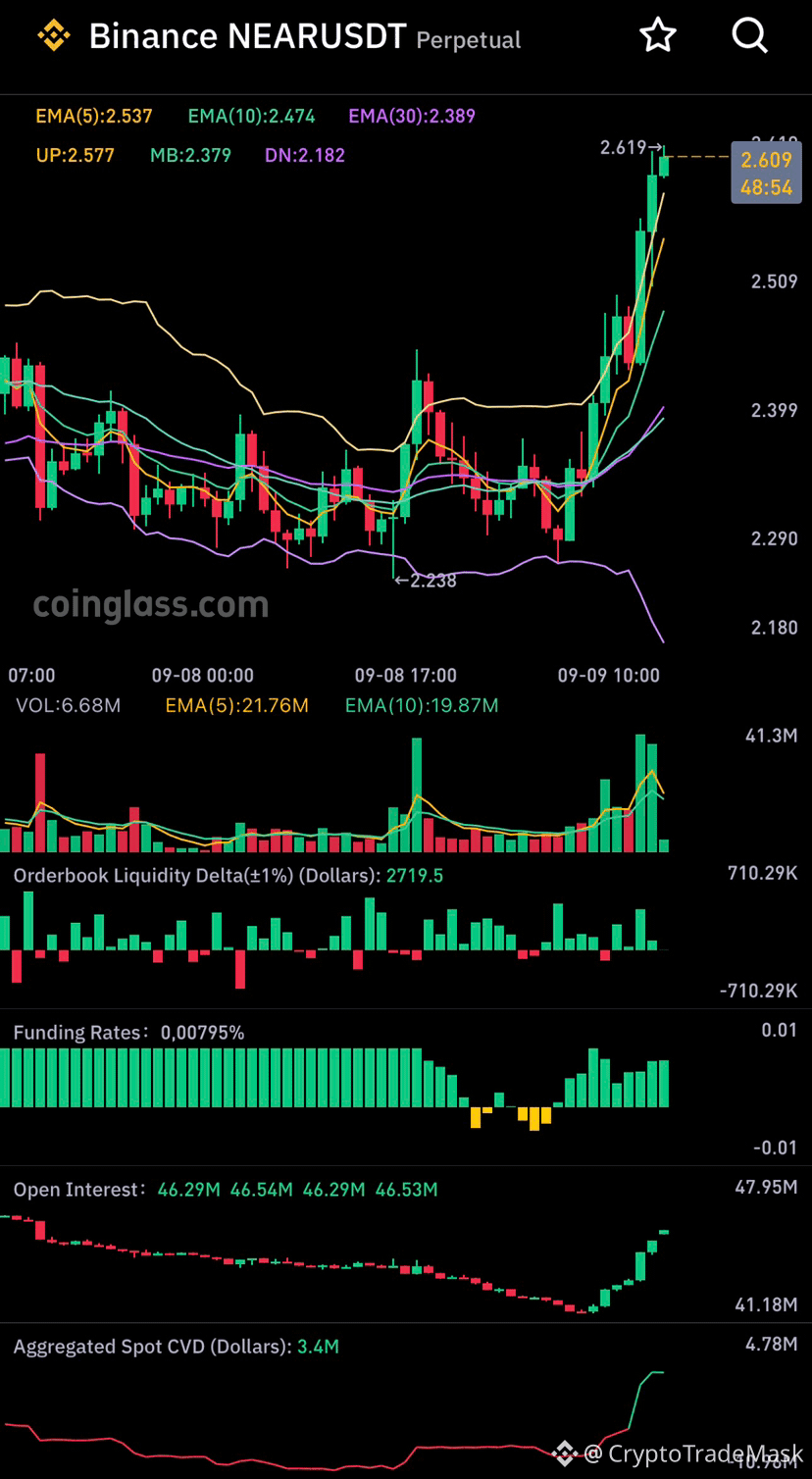
$NEAR showed strong momentum (+15%), breaking through the $2.60 level and reaching a local high of $2.619. However, technical and derivative indicators signal that the market is overheating:
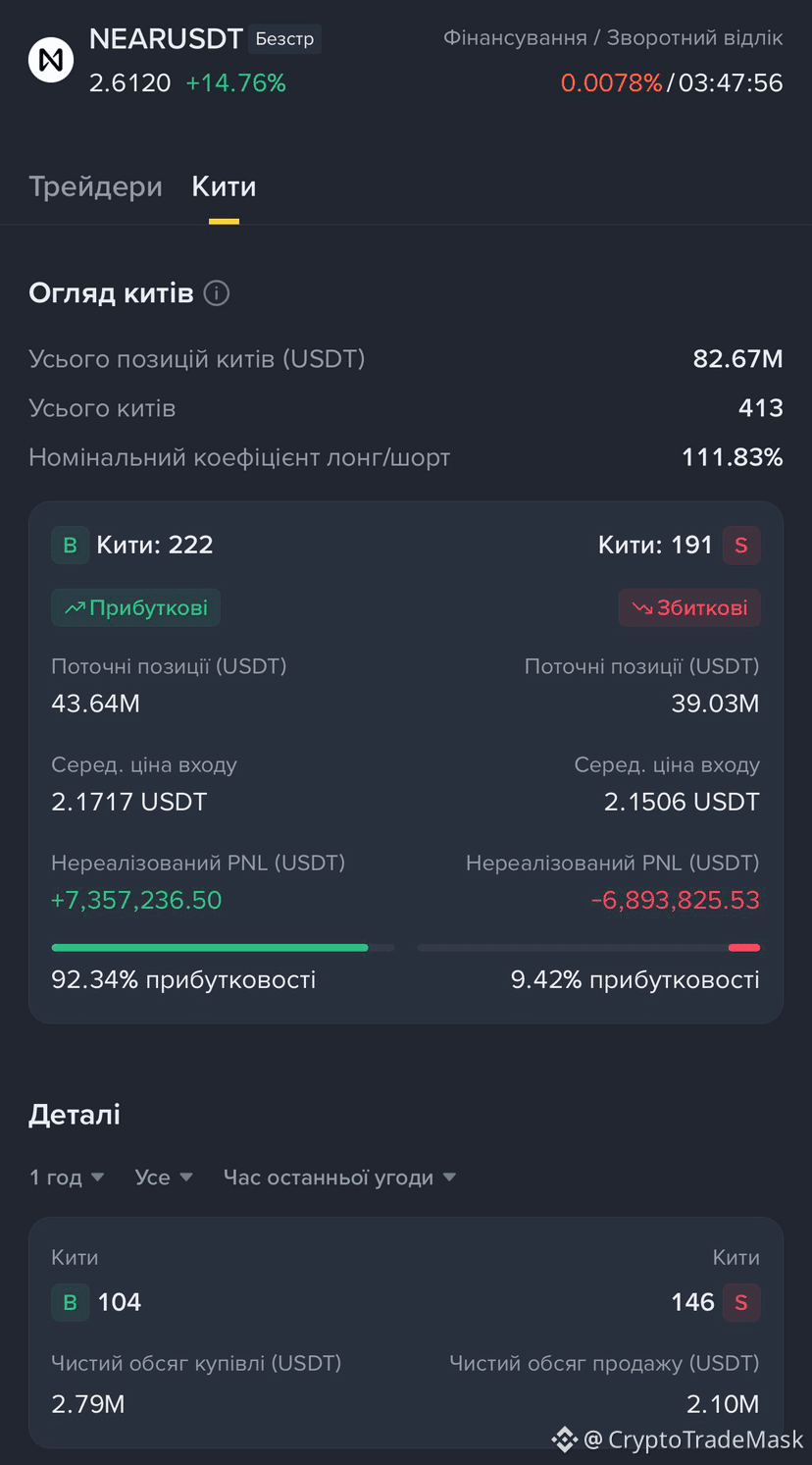
Long Overload: Over 73% of top traders’ positions are fixed in Long. The market is too one-sided, which creates the risk of a “long squeeze”.
Whales in Profit: Long whales have over +92% profitability (average entry $2.17) and may start taking profits.
Imbalance with EMA: The price deviated strongly from the EMA(10) ($2.47), which increases the probability of a correction.
🚦 Trading Levels:
🔴 Resistance / Sell Zone: $2,620 – $2,660 (Stop-Loss: $2,710)
🟢 Support / Buy Zone: $2,420 – $2,480 (Stop-Loss: $2,360)
Short Targets (TP): $2,500 / $2,420
⚠️ Buying at the very peak after +15% is risky. It is optimal to wait for either a confirmed setup for a short from resistance, or a pullback to support for a long.
$NEAR showed strong momentum (+15%), breaking through the $2.60 level and reaching a local high of $2.619. However, technical and derivative indicators signal that the market is overheating:
Long Overload: Over 73% of top traders’ positions are fixed in Long. The market is too one-sided, which creates the risk of a “long squeeze”.
Whales in Profit: Long whales have over +92% profitability (average entry $2.17) and may start taking profits.
Imbalance with EMA: The price deviated strongly from the EMA(10) ($2.47), which increases the probability of a correction.
🚦 Trading Levels:
🔴 Resistance / Sell Zone: $2,620 – $2,660 (Stop-Loss: $2,710)
🟢 Support / Buy Zone: $2,420 – $2,480 (Stop-Loss: $2,360)
Short Targets (TP): $2,500 / $2,420
⚠️ Buying at the very peak after +15% is risky. It is optimal to wait for either a confirmed setup for a short from resistance, or a pullback to support for a long.
#Ray
🚀 Raydium ($RAY ) est en hausse de 15% : qu’est-ce qui alimente la hausse et à quoi s’attendre ensuite ?
Au cours des dernières 24 heures, le token $RAY a progressé d’environ 15%, atteignant 1,27 $ au milieu du redressement du Bitcoin. Cependant, le principal moteur de la croissance provient de nouvelles internes à l’écosystème Solana.
🔥 Principaux catalyseurs de croissance
Intégration StonkFun et LaunchLab : La plateforme StonkFun s’est intégrée à Raydium LaunchLab. Tous les nouveaux tokens de StonkFun créeront un pool de liquidité directement sur Raydium, et la combustion de RAY sera une condition préalable au lancement des projets.
Entrées de capitaux dans DeFi Solana : Raydium affiche des APR élevées (par ex. ~228% dans le pool SOL/USDC). En plus, l’ajout de nouveaux actifs comme Bittensor ($TAO ) attire de nouveaux volumes d’échanges.
Momentum technique : Le prix est monté au-dessus du niveau de retracement de 50% (1,26 $) et le RSI (55,69) indique que le sentiment haussier reste intact, sans signes de surachat.
📊 Niveaux techniques pour les traders
Résistance (1,46 $) : la cible la plus proche. Une cassure de ce niveau ouvrira la voie à une nouvelle hausse.
Support (1,26 $ - 1,15 $) : la zone des 1,26 $ agit comme premier rempart pour les acheteurs. En cas de repli local, le prix pourrait tester le niveau de 1,15 $.
⚠️ L’intégration de StonkFun crée une pression déflationniste constante sur RAY via le mécanisme de combustion des tokens. Si le marché global reste positif, RAY a toutes les chances de se consolider au-dessus de 1,30 $.
🚀 Raydium ($RAY ) est en hausse de 15% : qu’est-ce qui alimente la hausse et à quoi s’attendre ensuite ?
Au cours des dernières 24 heures, le token $RAY a progressé d’environ 15%, atteignant 1,27 $ au milieu du redressement du Bitcoin. Cependant, le principal moteur de la croissance provient de nouvelles internes à l’écosystème Solana.
🔥 Principaux catalyseurs de croissance
Intégration StonkFun et LaunchLab : La plateforme StonkFun s’est intégrée à Raydium LaunchLab. Tous les nouveaux tokens de StonkFun créeront un pool de liquidité directement sur Raydium, et la combustion de RAY sera une condition préalable au lancement des projets.
Entrées de capitaux dans DeFi Solana : Raydium affiche des APR élevées (par ex. ~228% dans le pool SOL/USDC). En plus, l’ajout de nouveaux actifs comme Bittensor ($TAO ) attire de nouveaux volumes d’échanges.
Momentum technique : Le prix est monté au-dessus du niveau de retracement de 50% (1,26 $) et le RSI (55,69) indique que le sentiment haussier reste intact, sans signes de surachat.
📊 Niveaux techniques pour les traders
Résistance (1,46 $) : la cible la plus proche. Une cassure de ce niveau ouvrira la voie à une nouvelle hausse.
Support (1,26 $ - 1,15 $) : la zone des 1,26 $ agit comme premier rempart pour les acheteurs. En cas de repli local, le prix pourrait tester le niveau de 1,15 $.
⚠️ L’intégration de StonkFun crée une pression déflationniste constante sur RAY via le mécanisme de combustion des tokens. Si le marché global reste positif, RAY a toutes les chances de se consolider au-dessus de 1,30 $.
#Altseason ❓
Les altcoins dépassent-ils #bitcoin ? Il semblerait que ce ne soit qu’une illusion 📊📉
Récemment, des rumeurs circulent sur le marché au sujet du début d’un « alt season » à grande échelle, mais des chiffres trop secs disent le contraire. Comparaison des prix des principaux altcoins le 22 août et le 9 septembre — des jours où Bitcoin a coûté presque la même chose (~78 300 $ et ~78 440 $).
📈📉Les résultats ont montré que la « croissance générale » s’est révélée être un mythe :
➡️ La plupart des principaux altcoins ont baissé ou stagné : $ETH (-1 %), XRP (-2 %), $DOGE (-2 %), TRX (-1 %), $ADA (-3 %).
➡️ La moyenne est inchangée : AVAX n’a progressé que de (+2 %).
Seuls quelques éléments ont réellement augmenté : Solana (+10 %), BNB (+9 %) et Chainlink (+5 %).
📊 Principales conclusions :
1. Les altcoins suivent encore Bitcoin. Une pièce qui réagit simplement « plus fort » aux mouvements de #BTC, mais revient à son point de départ, n’est pas une tendance indépendante.
2. Concentration plutôt que marché. Seulement 2-3 actifs du TOP-10 ont montré une croissance réelle, et pas l’ensemble du marché, comme c’est le cas pendant une vraie alt season.
3. Piège du FOMO. Il est généralement trop tard pour entrer sur les altcoins quand tous les intervenants discutent déjà de leur croissance — la majeure partie de l’élan a déjà été consommée.
À présent, le marché est déchiré entre deux feux : les optimistes pointent des percées techniques sur les graphiques Total 2/3 et se préparent au « plus grand alt season de l’histoire », tandis que les pragmatiques préfèrent attendre du côté de Bitcoin.
⚠️ Conclusion du trader : « Je reste sur Bitcoin et j’attends. Ce n’est pas parce que les altcoins sont morts, mais parce que la phrase “les altcoins progressent” signifie en fait “seuls deux ou trois coins ont progressé”. »
Les altcoins dépassent-ils #bitcoin ? Il semblerait que ce ne soit qu’une illusion 📊📉
Récemment, des rumeurs circulent sur le marché au sujet du début d’un « alt season » à grande échelle, mais des chiffres trop secs disent le contraire. Comparaison des prix des principaux altcoins le 22 août et le 9 septembre — des jours où Bitcoin a coûté presque la même chose (~78 300 $ et ~78 440 $).
📈📉Les résultats ont montré que la « croissance générale » s’est révélée être un mythe :
➡️ La plupart des principaux altcoins ont baissé ou stagné : $ETH (-1 %), XRP (-2 %), $DOGE (-2 %), TRX (-1 %), $ADA (-3 %).
➡️ La moyenne est inchangée : AVAX n’a progressé que de (+2 %).
Seuls quelques éléments ont réellement augmenté : Solana (+10 %), BNB (+9 %) et Chainlink (+5 %).
📊 Principales conclusions :
1. Les altcoins suivent encore Bitcoin. Une pièce qui réagit simplement « plus fort » aux mouvements de #BTC, mais revient à son point de départ, n’est pas une tendance indépendante.
2. Concentration plutôt que marché. Seulement 2-3 actifs du TOP-10 ont montré une croissance réelle, et pas l’ensemble du marché, comme c’est le cas pendant une vraie alt season.
3. Piège du FOMO. Il est généralement trop tard pour entrer sur les altcoins quand tous les intervenants discutent déjà de leur croissance — la majeure partie de l’élan a déjà été consommée.
À présent, le marché est déchiré entre deux feux : les optimistes pointent des percées techniques sur les graphiques Total 2/3 et se préparent au « plus grand alt season de l’histoire », tandis que les pragmatiques préfèrent attendre du côté de Bitcoin.
⚠️ Conclusion du trader : « Je reste sur Bitcoin et j’attends. Ce n’est pas parce que les altcoins sont morts, mais parce que la phrase “les altcoins progressent” signifie en fait “seuls deux ou trois coins ont progressé”. »
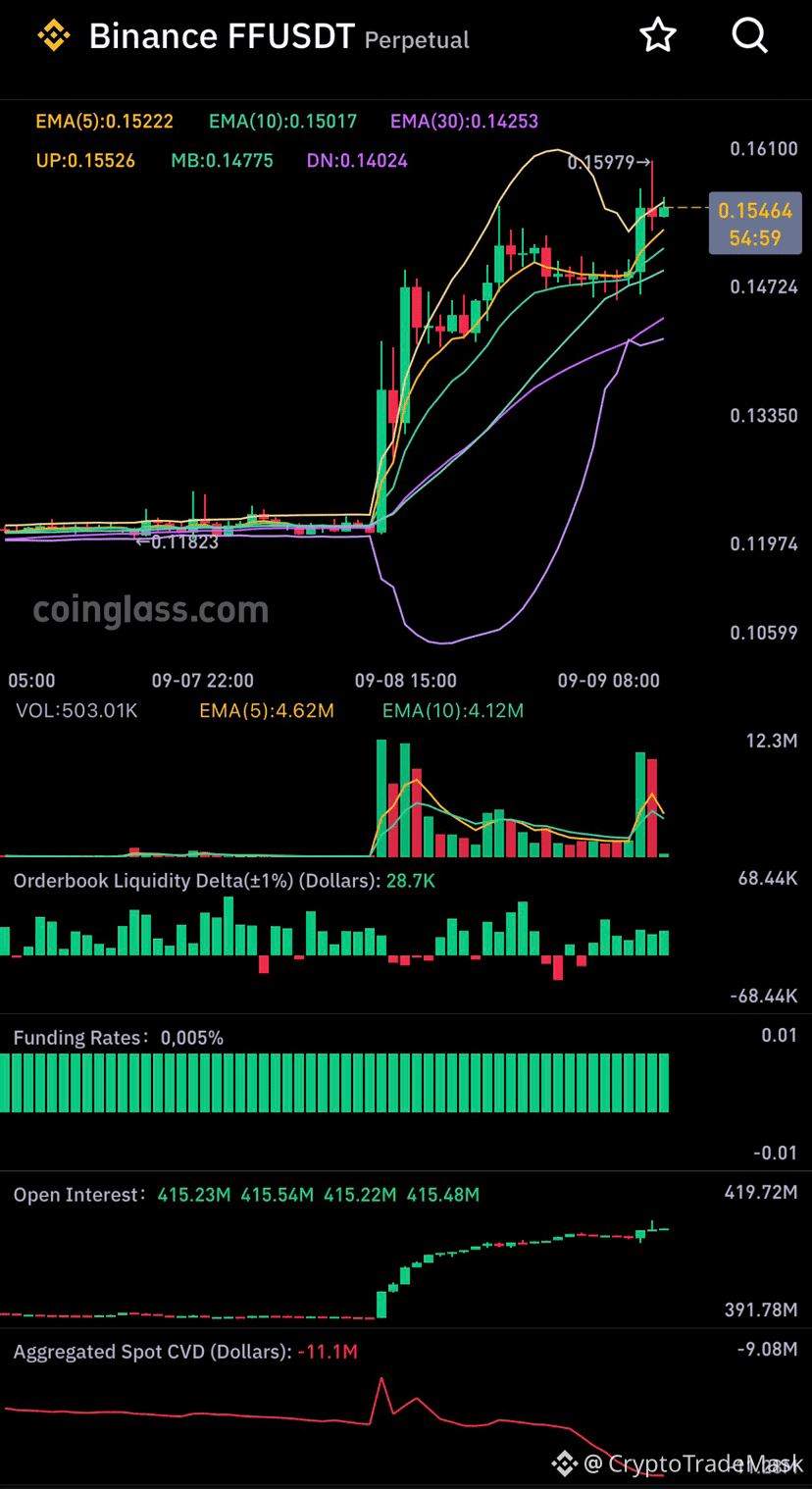
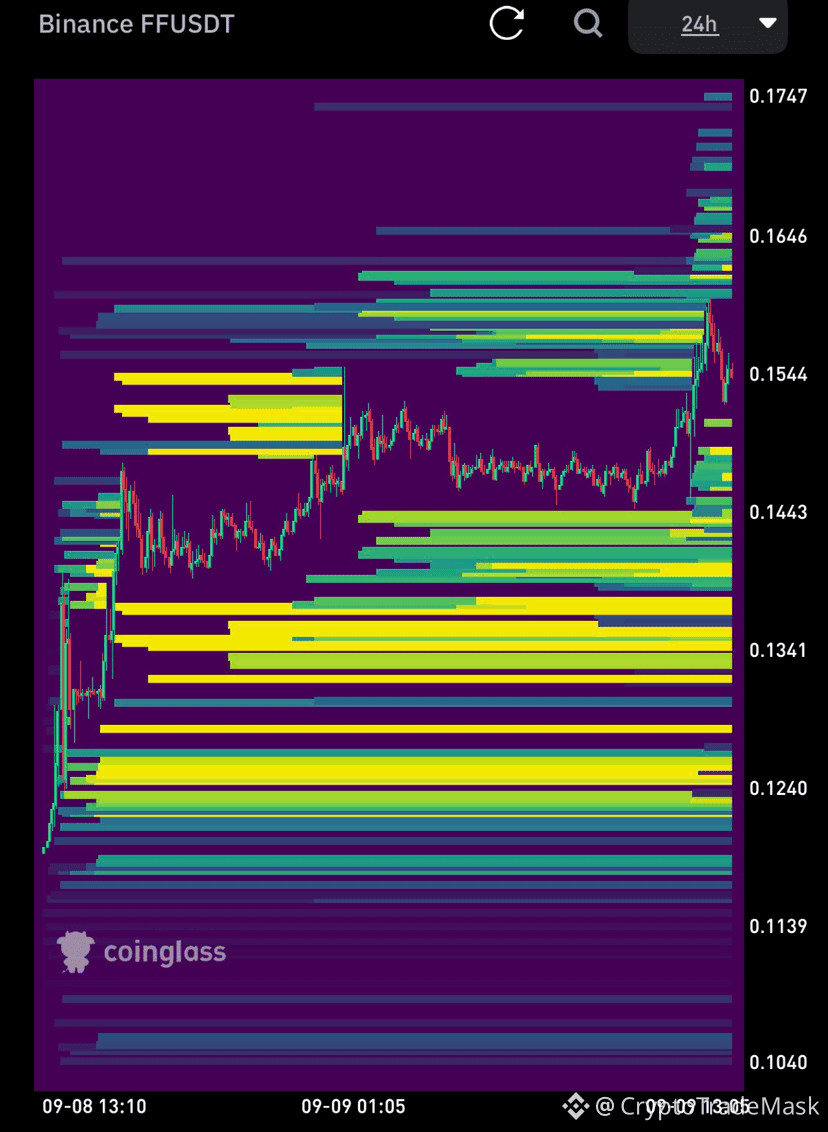
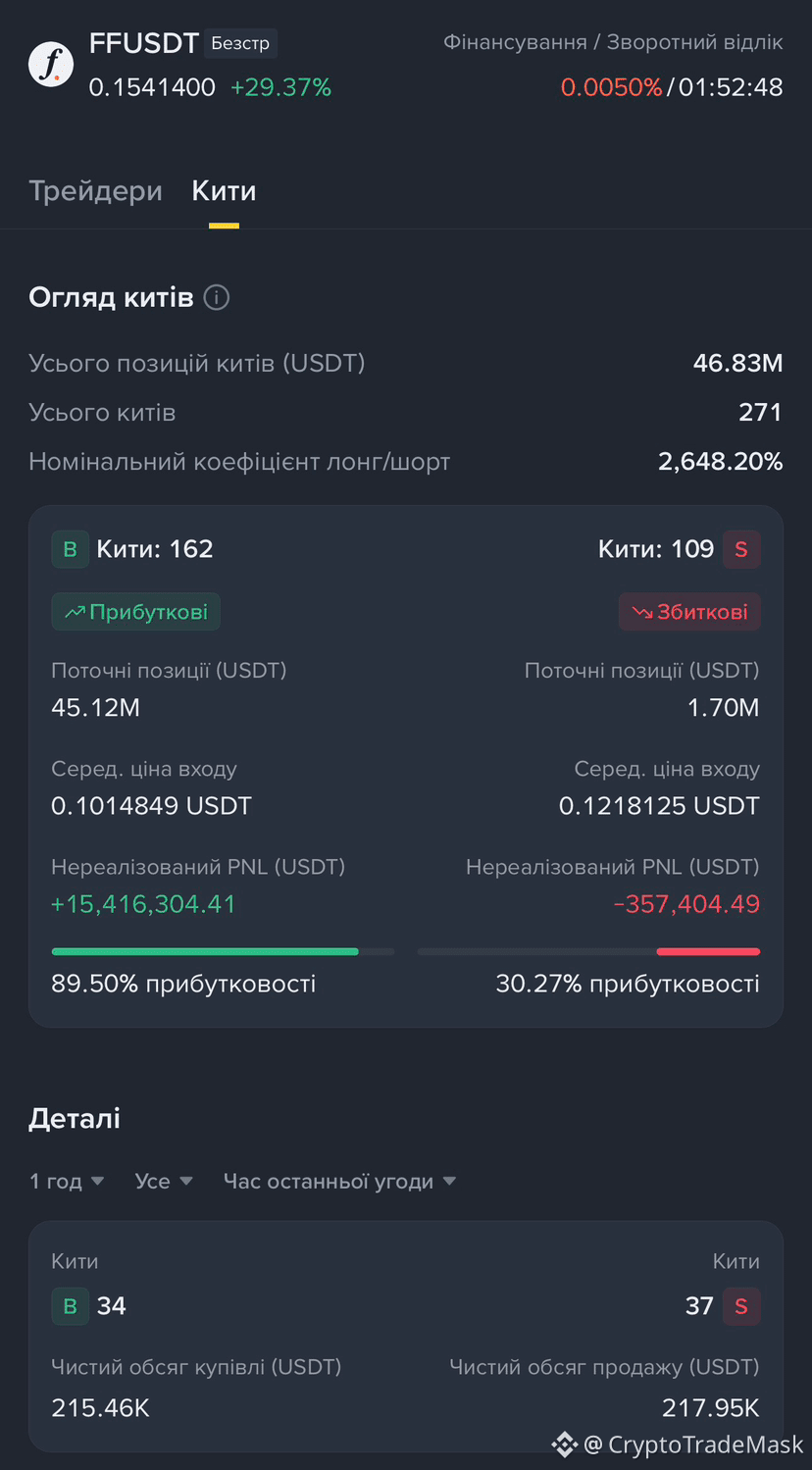
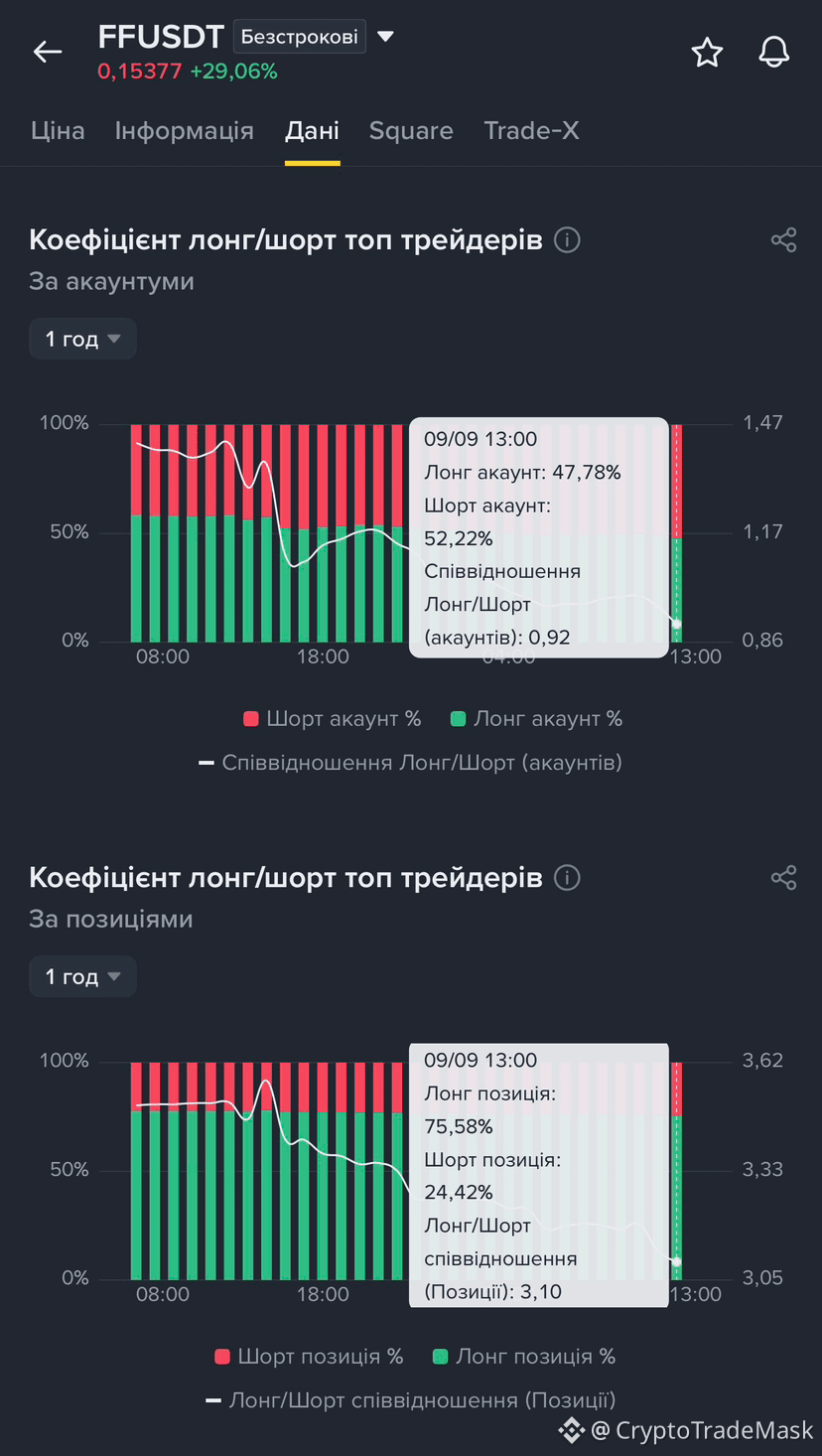
🚀 Analyse $FF /USDT
L’actif montre une forte dynamique vers 0,1546 $, mais les indicateurs signalent un risque de correction locale :
Divergence CVD : La variation du volume au comptant (spot) est négative (-11,1 M), ce qui indique une fixation/vente au comptant pendant la hausse des futures.
Déséquilibre des positions : 75,58 % du volume des positions ouvertes est en Long, ce qui crée un risque de long squeeze.
Facteur « baleines » : Les gros acteurs sont en forte plus-value (prix d’entrée moyen 0,1014 $) et peuvent commencer à clôturer des positions.
🔴 Short (Contre-tendance / retrait de liquidité)
Entrée : 0,1590 $ – 0,1630 $ (retrait élevé 0,1597 $)
Stop-Loss : 0,1665 $
Objectifs : 0,1480 $ / 0,1420 $
🟢 Long (Entrée depuis le support)
Entrée : 0,1420 $ – 0,1445 $ (test EMA30 et du bloc de liquidité)
Stop-Loss : 0,1330 $
Objectifs : 0,1550 $ / 0,1640 $
⚠️ Respectez la gestion du risque et travaillez avec les stops !
L’actif montre une forte dynamique vers 0,1546 $, mais les indicateurs signalent un risque de correction locale :
Divergence CVD : La variation du volume au comptant (spot) est négative (-11,1 M), ce qui indique une fixation/vente au comptant pendant la hausse des futures.
Déséquilibre des positions : 75,58 % du volume des positions ouvertes est en Long, ce qui crée un risque de long squeeze.
Facteur « baleines » : Les gros acteurs sont en forte plus-value (prix d’entrée moyen 0,1014 $) et peuvent commencer à clôturer des positions.
🔴 Short (Contre-tendance / retrait de liquidité)
Entrée : 0,1590 $ – 0,1630 $ (retrait élevé 0,1597 $)
Stop-Loss : 0,1665 $
Objectifs : 0,1480 $ / 0,1420 $
🟢 Long (Entrée depuis le support)
Entrée : 0,1420 $ – 0,1445 $ (test EMA30 et du bloc de liquidité)
Stop-Loss : 0,1330 $
Objectifs : 0,1550 $ / 0,1640 $
⚠️ Respectez la gestion du risque et travaillez avec les stops !
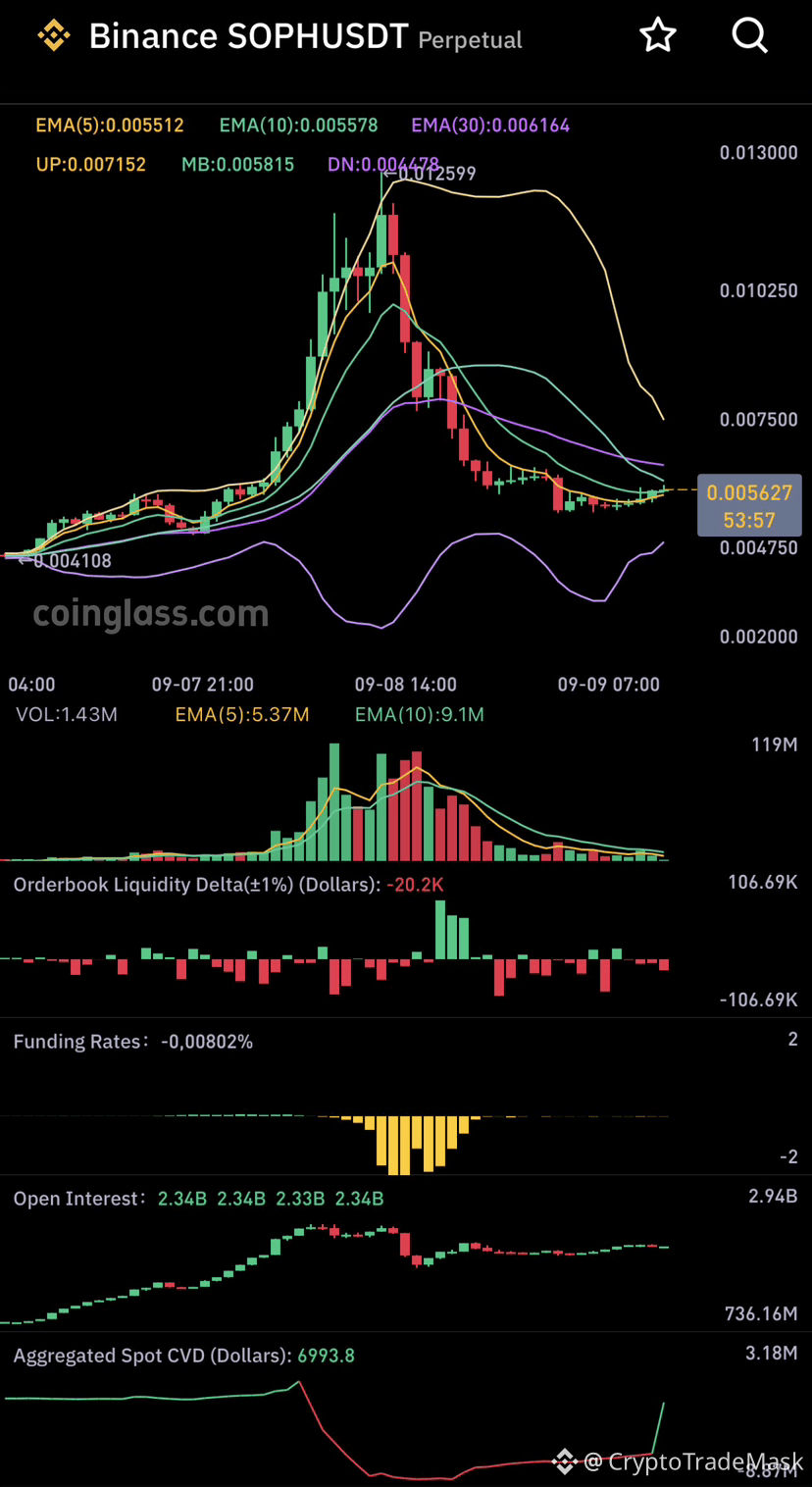
$SOPH /USDT: Pump & Dump en plein essor 📉
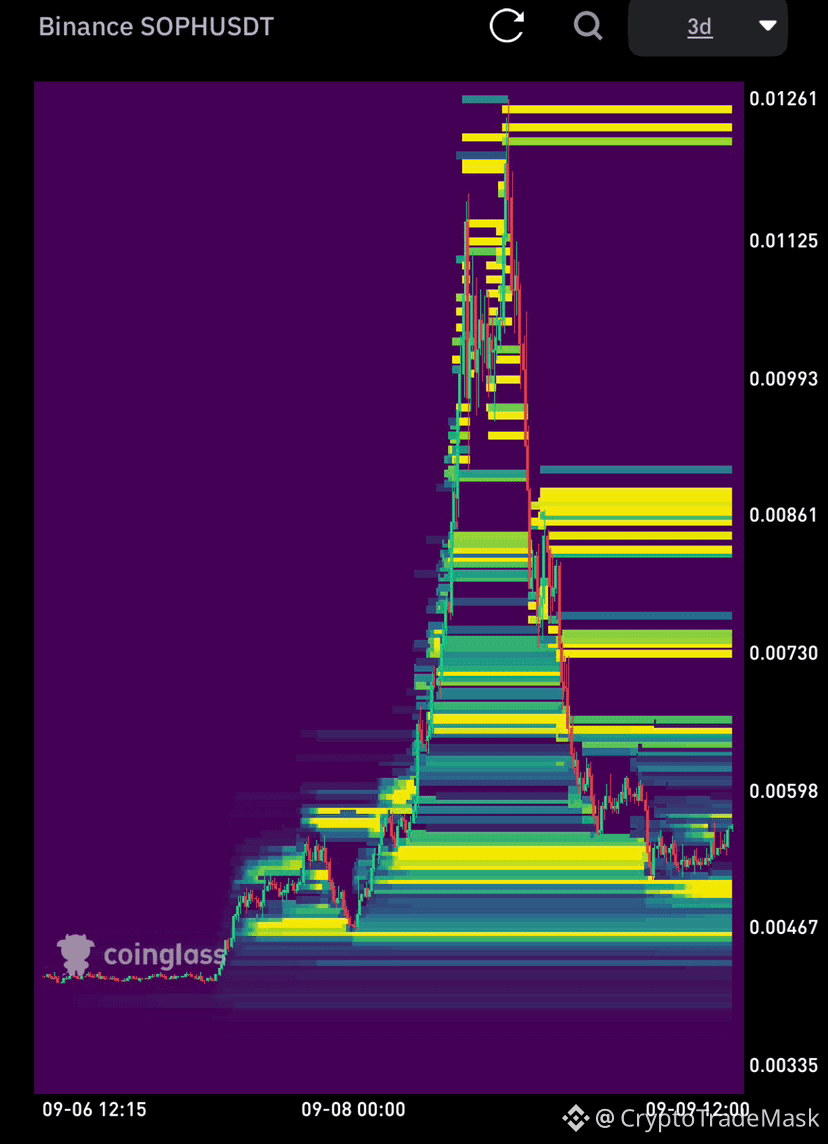
Après un fort pump jusqu’à 0,0126 $, la pièce a perdu plus de 50 % de sa valeur. Le graphique et les analyses de Coinglass montrent clairement un scénario de dump classique :
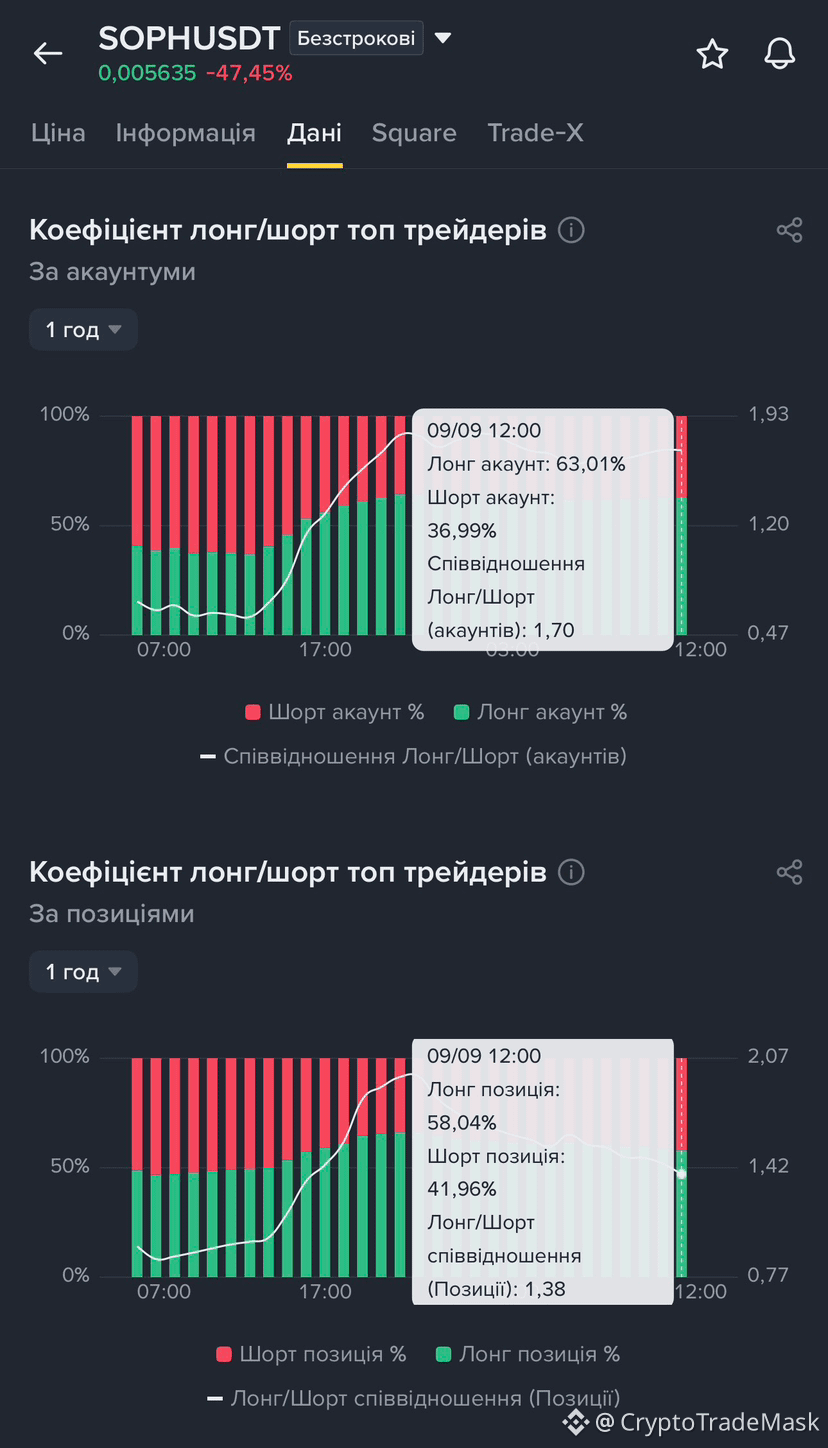
Longs massifs : Plus de 63 % des comptes et 58 % des positions sont en long — la foule essaie de « attraper le couteau », ce qui est le carburant parfait pour une nouvelle baisse.
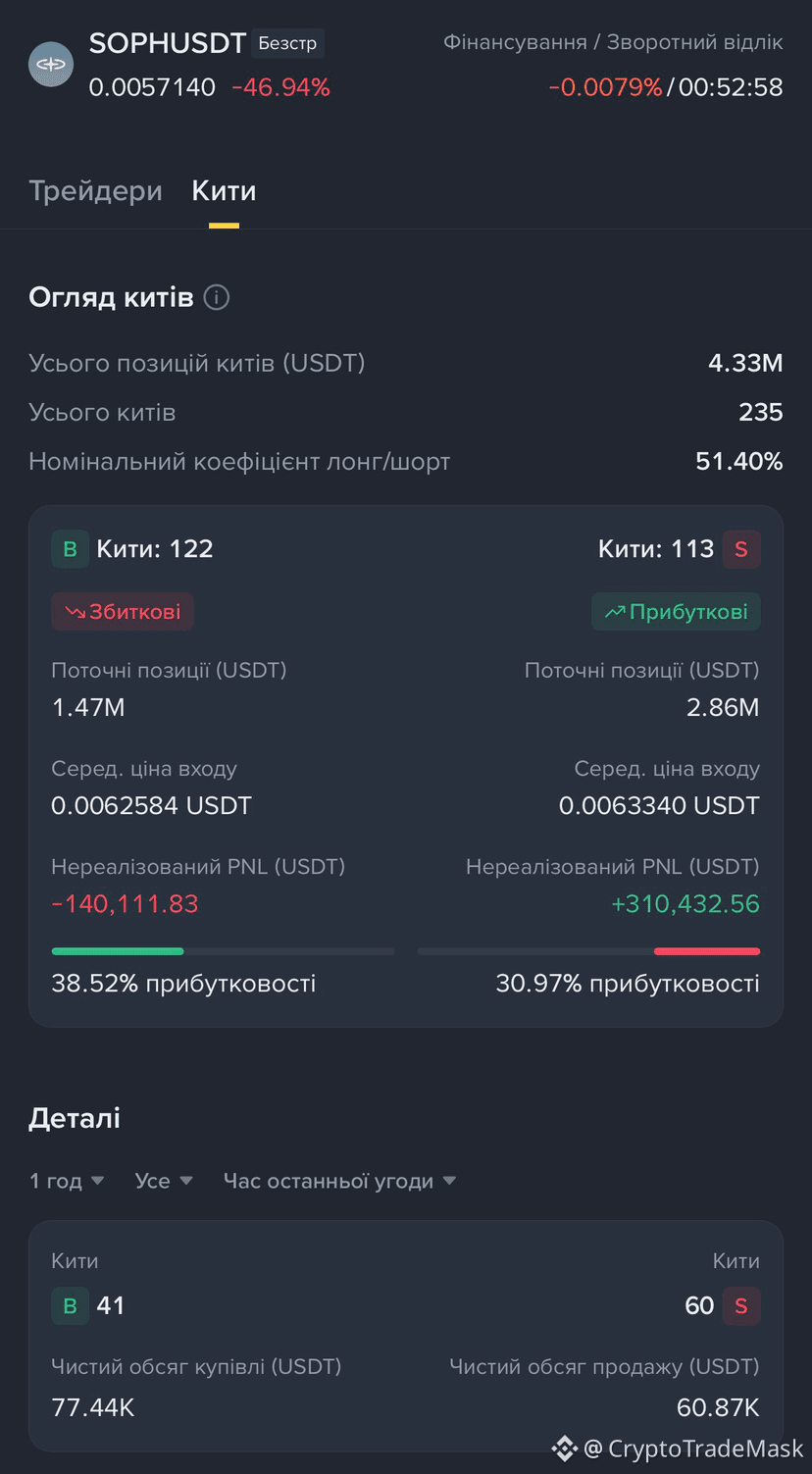
Baleines en shorts : De gros acteurs détiennent des shorts rentables (+ 310 k$ de PnL) avec un prix d’entrée moyen à 0,0063 $, tandis que les baleines en long sont dans le rouge.
Ventes au comptant : Le Spot CVD est constamment négatif (-8,87 M), les volumes d’achat ont complètement cessé, et la liquidité principale du carnet se situe beaucoup plus bas — dans la fourchette 0,0046–0,0033 $.
🔴 Plan de trading (SHORT)
Entrée : 0,00580 – 0,00610 (retrait vers l’EMA)
Stop-Loss : 0,00655
Take-Profit : 0,00470 / 0,00350
⚠️ Un long à contre-tendance n’est possible qu’après un retrait de liquidité autour de 0,0045 $ avec un retournement clair du CVD.
Après un fort pump jusqu’à 0,0126 $, la pièce a perdu plus de 50 % de sa valeur. Le graphique et les analyses de Coinglass montrent clairement un scénario de dump classique :
Longs massifs : Plus de 63 % des comptes et 58 % des positions sont en long — la foule essaie de « attraper le couteau », ce qui est le carburant parfait pour une nouvelle baisse.
Baleines en shorts : De gros acteurs détiennent des shorts rentables (+ 310 k$ de PnL) avec un prix d’entrée moyen à 0,0063 $, tandis que les baleines en long sont dans le rouge.
Ventes au comptant : Le Spot CVD est constamment négatif (-8,87 M), les volumes d’achat ont complètement cessé, et la liquidité principale du carnet se situe beaucoup plus bas — dans la fourchette 0,0046–0,0033 $.
🔴 Plan de trading (SHORT)
Entrée : 0,00580 – 0,00610 (retrait vers l’EMA)
Stop-Loss : 0,00655
Take-Profit : 0,00470 / 0,00350
⚠️ Un long à contre-tendance n’est possible qu’après un retrait de liquidité autour de 0,0045 $ avec un retournement clair du CVD.
#bank & #Trust
🚀 Le bloc dépose une demande de licence bancaire pour la garde de Bitcoin
$BTC $ETH $SOL
Le Block de Jack Dorsey (développeur de Cash App et Square) a officiellement soumis une demande au Bureau du contrôleur de la monnaie (OCC) des États-Unis afin d’obtenir une charte nationale pour créer Builders Bank & Trust.
La nouvelle structure est prévue comme une banque fiduciaire nationale, sans accepter les dépôts et sans octroyer de prêts.
🔑 Points clés du dossier :
➡️ Spécialisation : conservation (garde) du Bitcoin et d’autres actifs numériques, exécution des ordres clients pour l’achat/la vente sur une base sans risque, ainsi que des règlements en stablecoins.
➡️ Structure : siège à Sioux Falls (Dakota du Sud) sans agences physiques. Lee Woolley (ancien dirigeant principal de Northern Trust et de BNY Mellon) est proposé comme président et directeur général.
➡️ Échelle : la demande s’appuie sur l’expérience de Block, qui en 2025 a sécurisé 10,7 milliards de dollars de volume de transactions BTC grâce à plus de 50 licences d’État, au service d’environ 2 millions d’utilisateurs crypto mensuels sur Cash App.
➡️ Cadre fédéral unifié : l’obtention d’une licence fédérale permettra à Block de dépasser la réglementation au niveau des États et d’unifier ses opérations.
⚠️ Contexte et risques :
➡️ Avis divergents : l’inclusion de règlements en stablecoins est intéressante, d’autant que Jack Dorsey lui-même se montre sceptique à l’égard des stablecoins, préférant développer l’infrastructure directement sur Bitcoin.
➡️ Tendances réglementaires : l’OCC a récemment approuvé conditionnellement plusieurs chartes similaires pour Circle, Ripple, BitGo, Fidelity Digital Assets, Paxos, Crypto.com, Bridge (Stripe) et Coinbase.
➡️ Obstacles bureaucratiques : l’approbation n’est pas garantie (par exemple, la demande de Wise a été rejetée), et la sénatrice Elizabeth Warren continue d’insister sur le fait que l’OCC n’a pas l’autorité d’émettre des licences de fiducie à des entreprises sans activités fiduciaires classiques.
🚀 Le bloc dépose une demande de licence bancaire pour la garde de Bitcoin
$BTC $ETH $SOL
Le Block de Jack Dorsey (développeur de Cash App et Square) a officiellement soumis une demande au Bureau du contrôleur de la monnaie (OCC) des États-Unis afin d’obtenir une charte nationale pour créer Builders Bank & Trust.
La nouvelle structure est prévue comme une banque fiduciaire nationale, sans accepter les dépôts et sans octroyer de prêts.
🔑 Points clés du dossier :
➡️ Spécialisation : conservation (garde) du Bitcoin et d’autres actifs numériques, exécution des ordres clients pour l’achat/la vente sur une base sans risque, ainsi que des règlements en stablecoins.
➡️ Structure : siège à Sioux Falls (Dakota du Sud) sans agences physiques. Lee Woolley (ancien dirigeant principal de Northern Trust et de BNY Mellon) est proposé comme président et directeur général.
➡️ Échelle : la demande s’appuie sur l’expérience de Block, qui en 2025 a sécurisé 10,7 milliards de dollars de volume de transactions BTC grâce à plus de 50 licences d’État, au service d’environ 2 millions d’utilisateurs crypto mensuels sur Cash App.
➡️ Cadre fédéral unifié : l’obtention d’une licence fédérale permettra à Block de dépasser la réglementation au niveau des États et d’unifier ses opérations.
⚠️ Contexte et risques :
➡️ Avis divergents : l’inclusion de règlements en stablecoins est intéressante, d’autant que Jack Dorsey lui-même se montre sceptique à l’égard des stablecoins, préférant développer l’infrastructure directement sur Bitcoin.
➡️ Tendances réglementaires : l’OCC a récemment approuvé conditionnellement plusieurs chartes similaires pour Circle, Ripple, BitGo, Fidelity Digital Assets, Paxos, Crypto.com, Bridge (Stripe) et Coinbase.
➡️ Obstacles bureaucratiques : l’approbation n’est pas garantie (par exemple, la demande de Wise a été rejetée), et la sénatrice Elizabeth Warren continue d’insister sur le fait que l’OCC n’a pas l’autorité d’émettre des licences de fiducie à des entreprises sans activités fiduciaires classiques.

#CryptoMarkets
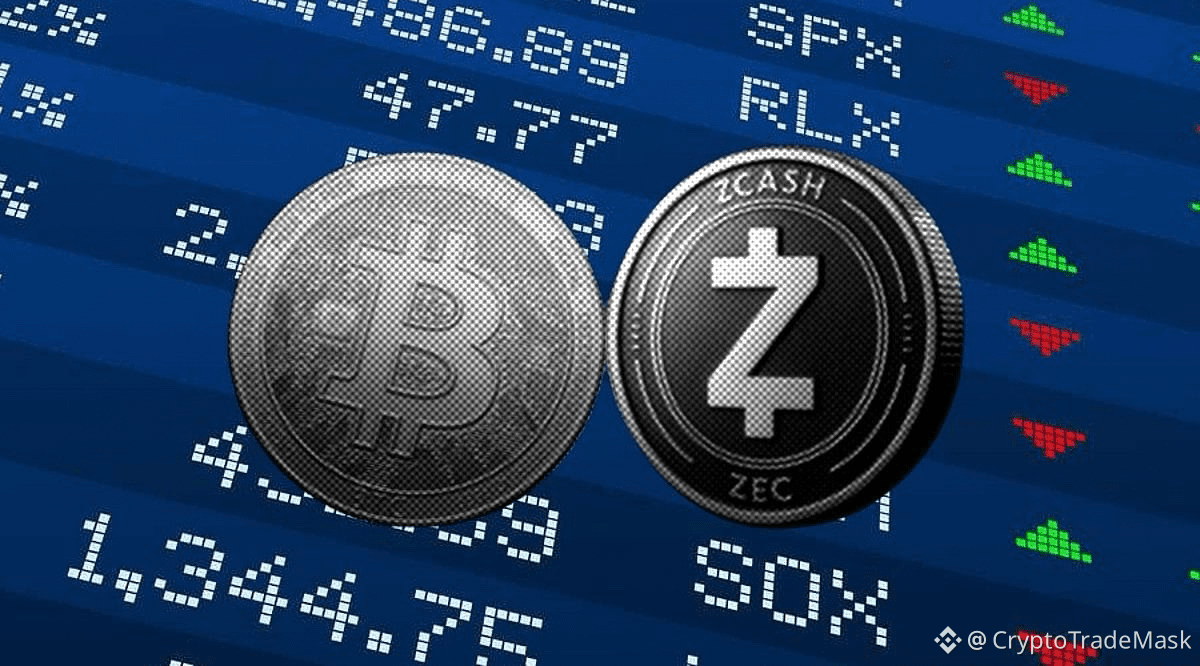
📊 Mise à jour du marché : $BTC Maintient la fourchette, tandis que $ZEC Mine le marché, grâce à l’ETF
Le Bitcoin continue d’évoluer dans une tendance latérale, mais des rotations de capitaux intéressantes ont lieu au sein du marché.
📊 Points clés du jour :
➡️ BTC sous emprise macroéconomique : après une baisse à court terme jusqu’à 77 666 $, le Bitcoin est revenu à 78 900 $. Le marché est coincé dans la fourchette 75 000 $–82 000 $, et les traders attendent la réunion de la Fed (15–16 septembre).
➡️ L’effet boom autour du Zcash (ZEC) : le prix du ZEC dépasse 1 180 $ (capitalisation : 20 milliards $, top 10 du marché). Le principal moteur est le lancement d’un ETF par Grayscale (ZCSH), qui, en seulement deux semaines, a levé plus de 500 millions $ d’encours (AUM) et a absorbé ~3 % du ZEC en circulation (plus de 550 000 pièces).
➡️ Macro chaude : le pétrole Brent s’approche de 100 $ sous l’effet de la géopolitique au Moyen-Orient, et l’or a établi une autre barre près de 4 407 $. Cela maintient le rendement des obligations US à 10 ans à un niveau élevé (4,8 %), et la probabilité d’une hausse du taux de la Fed à la prochaine réunion est estimée à ~60 %.
➡️ Altcoins : #bnb affiche de la confiance (+2 % à 755 $), TRX et #xrp ajoutent +1 %. #ETH (2 490 $) et #sol (103 $) restent encore sans mouvements significatifs.
⚠️ À quoi faut-il faire attention ensuite ?
Tous les regards se tournent vers les données PPI jeudi et l’IPC vendredi. Si les flux entrants dans les crypto-ETF restent positifs malgré des taux élevés des bons du Trésor, ce sera un signal clair que le marché crypto ne considère plus la politique de la Fed comme le principal frein.
📊 Mise à jour du marché : $BTC Maintient la fourchette, tandis que $ZEC Mine le marché, grâce à l’ETF
Le Bitcoin continue d’évoluer dans une tendance latérale, mais des rotations de capitaux intéressantes ont lieu au sein du marché.
📊 Points clés du jour :
➡️ BTC sous emprise macroéconomique : après une baisse à court terme jusqu’à 77 666 $, le Bitcoin est revenu à 78 900 $. Le marché est coincé dans la fourchette 75 000 $–82 000 $, et les traders attendent la réunion de la Fed (15–16 septembre).
➡️ L’effet boom autour du Zcash (ZEC) : le prix du ZEC dépasse 1 180 $ (capitalisation : 20 milliards $, top 10 du marché). Le principal moteur est le lancement d’un ETF par Grayscale (ZCSH), qui, en seulement deux semaines, a levé plus de 500 millions $ d’encours (AUM) et a absorbé ~3 % du ZEC en circulation (plus de 550 000 pièces).
➡️ Macro chaude : le pétrole Brent s’approche de 100 $ sous l’effet de la géopolitique au Moyen-Orient, et l’or a établi une autre barre près de 4 407 $. Cela maintient le rendement des obligations US à 10 ans à un niveau élevé (4,8 %), et la probabilité d’une hausse du taux de la Fed à la prochaine réunion est estimée à ~60 %.
➡️ Altcoins : #bnb affiche de la confiance (+2 % à 755 $), TRX et #xrp ajoutent +1 %. #ETH (2 490 $) et #sol (103 $) restent encore sans mouvements significatifs.
⚠️ À quoi faut-il faire attention ensuite ?
Tous les regards se tournent vers les données PPI jeudi et l’IPC vendredi. Si les flux entrants dans les crypto-ETF restent positifs malgré des taux élevés des bons du Trésor, ce sera un signal clair que le marché crypto ne considère plus la politique de la Fed comme le principal frein.
#EthereumClassic
🚀 Ethereum Classic ($ETC ) se prépare à bondir : 3 facteurs clés pour les traders
Ethereum Classic affiche une croissance confiante (+7,73 % sur 24 heures, prix ~8,60 $), en avance sur la plupart des altcoins de première catégorie.
🔍 Voici ce qu’il faut savoir sur l’état actuel et les perspectives de l’ETC :
➡️ Rallye des altcoins de couche 1 : Des blockchains plus anciennes reviennent sur le devant de la scène. Dans un contexte de forte hausse de Polkadot (+16,7 %), l’ETC, tout comme Cosmos, enregistre une progression régulière, confirmant la tendance générale au redressement du secteur.
➡️ Activité haussière sur le réseau : Les volumes de trading et l’intérêt ouvert augmentent. L’indicateur de financement reste positif, et la hausse de l’activité montre que le marché demeure du côté des acheteurs.
➡️ Point de vue technique : Le prix reste au-dessus des moyennes mobiles sur 30 jours (8,37 $) et 200 jours (7,66 $). Le RSI à 56,4 laisse de la marge pour une poursuite de la hausse sans risque de conditions de surachat.
📊 Niveaux clés :
Support : 8,41 $ (correction de 50 %) et 8,28 $ (61,8 %). La zone 8,00 $–8,10 $ joue le rôle de barrière de sécurité principale.
Résistance : L’objectif le plus proche se situe à 8,99 $. En cas de cassure, la voie vers 9,31 $ (plus haut sur 11 mois) s’ouvre.
⚠️ Verdict : $ETC montre une structure technique saine. Le fait de tenir le niveau de 8,41 $ ouvre d’excellentes opportunités pour la poursuite de la tendance haussière.
🚀 Ethereum Classic ($ETC ) se prépare à bondir : 3 facteurs clés pour les traders
Ethereum Classic affiche une croissance confiante (+7,73 % sur 24 heures, prix ~8,60 $), en avance sur la plupart des altcoins de première catégorie.
🔍 Voici ce qu’il faut savoir sur l’état actuel et les perspectives de l’ETC :
➡️ Rallye des altcoins de couche 1 : Des blockchains plus anciennes reviennent sur le devant de la scène. Dans un contexte de forte hausse de Polkadot (+16,7 %), l’ETC, tout comme Cosmos, enregistre une progression régulière, confirmant la tendance générale au redressement du secteur.
➡️ Activité haussière sur le réseau : Les volumes de trading et l’intérêt ouvert augmentent. L’indicateur de financement reste positif, et la hausse de l’activité montre que le marché demeure du côté des acheteurs.
➡️ Point de vue technique : Le prix reste au-dessus des moyennes mobiles sur 30 jours (8,37 $) et 200 jours (7,66 $). Le RSI à 56,4 laisse de la marge pour une poursuite de la hausse sans risque de conditions de surachat.
📊 Niveaux clés :
Support : 8,41 $ (correction de 50 %) et 8,28 $ (61,8 %). La zone 8,00 $–8,10 $ joue le rôle de barrière de sécurité principale.
Résistance : L’objectif le plus proche se situe à 8,99 $. En cas de cassure, la voie vers 9,31 $ (plus haut sur 11 mois) s’ouvre.
⚠️ Verdict : $ETC montre une structure technique saine. Le fait de tenir le niveau de 8,41 $ ouvre d’excellentes opportunités pour la poursuite de la tendance haussière.
Voir la traduction
#GrowthFall
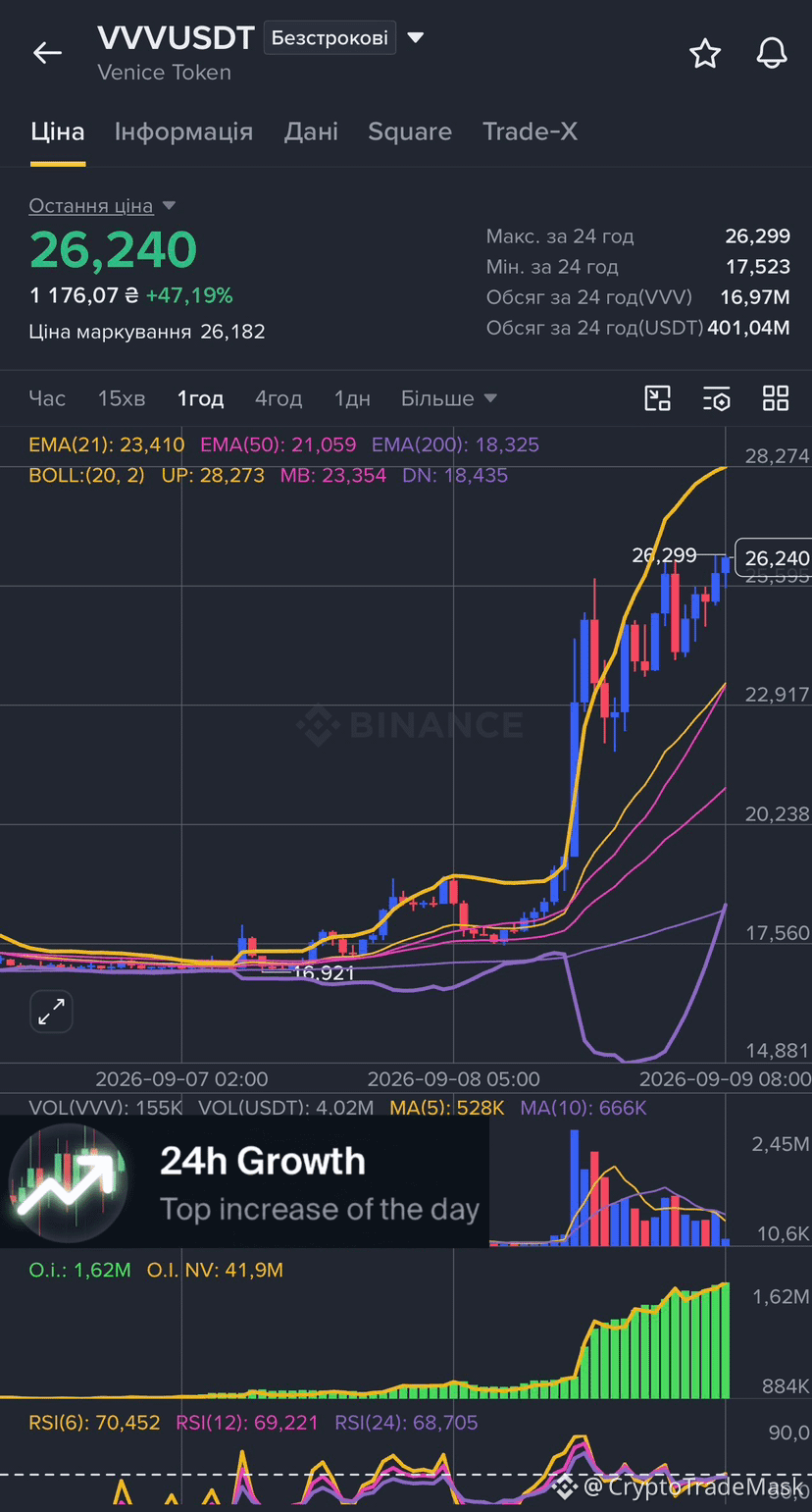
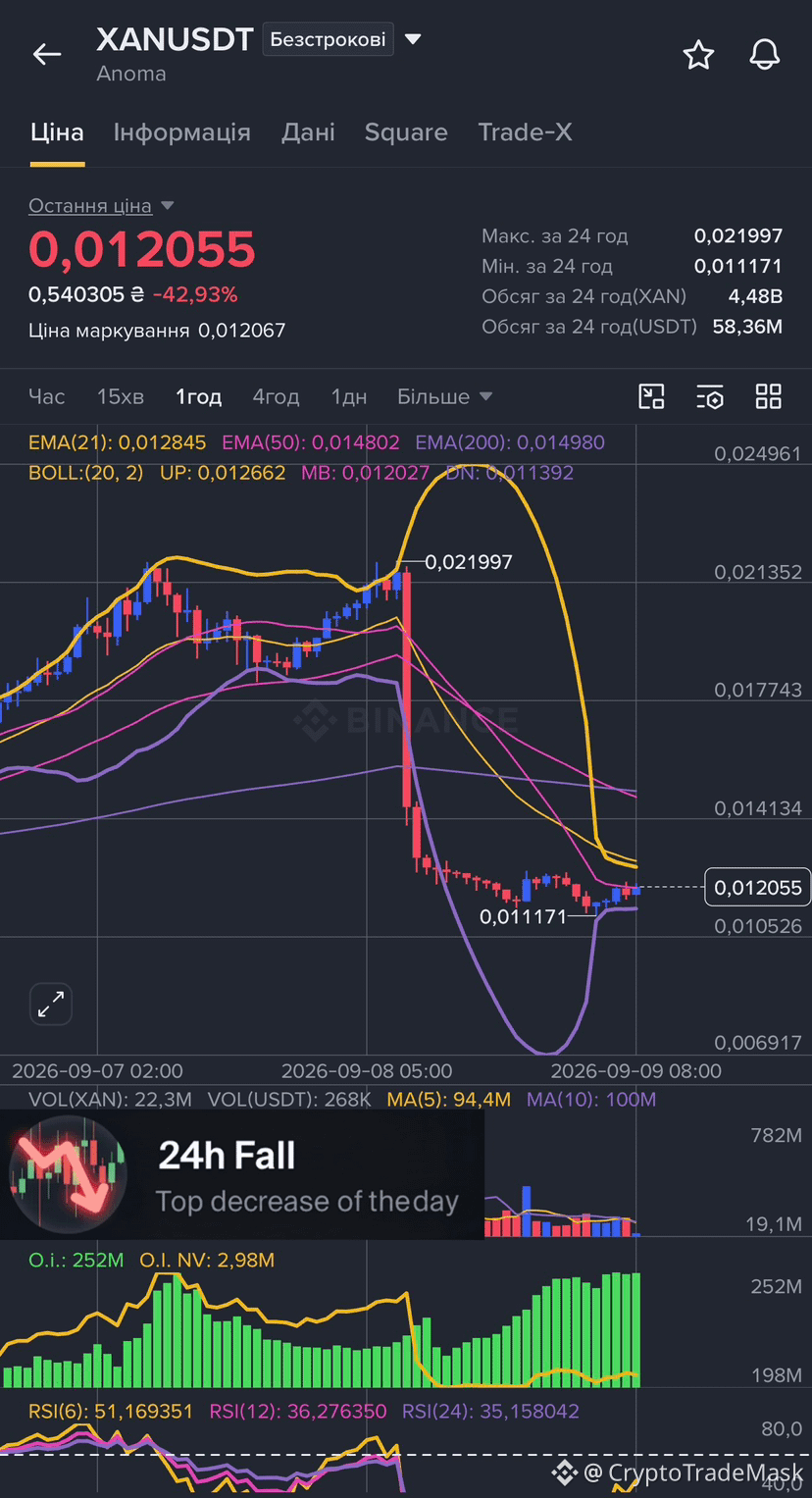
📈⏱️ Growth/Fall 24h 📉
📊 Futures Market Update 📊
$VVV $XAN
🚀 Over the past 24 hours, the market has shown strong fluctuations.
🔻 Some coins fell, others gave rapid growth - volatility at its maximum.
⚠️ Reminder:
• High volatility = high risk = potentially large profits.
• Always set a stop-loss.
• Risk management is the key to stable trading.
💹 Keep your finger on the pulse of the market! DYOR
📈⏱️ Growth/Fall 24h 📉
📊 Futures Market Update 📊
$VVV $XAN
🚀 Over the past 24 hours, the market has shown strong fluctuations.
🔻 Some coins fell, others gave rapid growth - volatility at its maximum.
⚠️ Reminder:
• High volatility = high risk = potentially large profits.
• Always set a stop-loss.
• Risk management is the key to stable trading.
💹 Keep your finger on the pulse of the market! DYOR
#cryptotradingpro #BTC
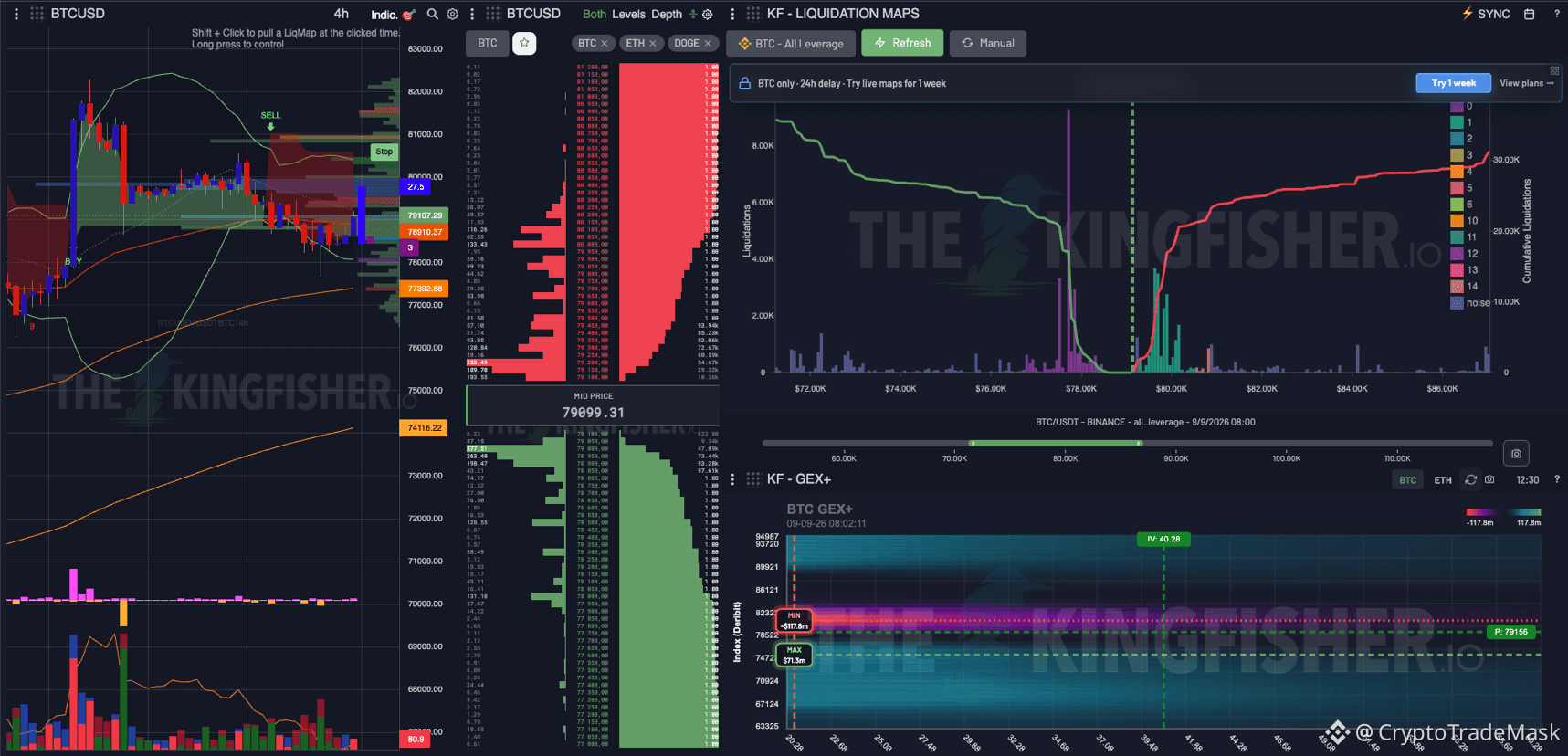
🔥 $BTC /USD: Accumulation avant l’explosion ou la suppression des stops ?
Le Bitcoin se négocie actuellement autour de 79 100 $, dans une phase de consolidation après le repli depuis les sommets. Une zone claire d’incertitude est apparue sur le graphique, mais la carte des liquidations suggère où le prix ira ensuite.
📊 Niveaux clés et analyse de la liquidité
Support (77 500 - 78 000 $) : Zone de liquidations longues locales. Tenir ce bloc est essentiel pour maintenir la structure haussière.
Résistance (81 000 - 83 000 $) : Le premier obstacle sérieux sur le chemin à la hausse, où se concentre l’essentiel du volume des shorts.
Le principal « aimant » (84 000 - 86 000 $) : Un énorme pool de liquidations courtes cumulées. Le market maker voit clairement ces niveaux.
🚦 Scénarios de trading
🟢 Priorité (Expansion haussière) :
Tenir 78 000 $ ➡️ Rupture impulsive à la hausse avec une cassure de 81 000 $ ➡️ Cascade de liquidations des shorts jusqu’à 85 000+.
🔴 Alternative (Sweep de liquidité) :
Squeeze rapide vers le bas jusqu’à la zone 77 000 - 77 500 $ (suppression des stops longs) ➡️ Rebond rapide en forme de V ➡️ Début d’un mouvement à la hausse.
⚠️ Résumé : Le marché se contracte, la tension augmente. Surveillez la réaction du prix au niveau de 78 000 $ et préparez-vous à une volatilité accrue !
🔥 $BTC /USD: Accumulation avant l’explosion ou la suppression des stops ?
Le Bitcoin se négocie actuellement autour de 79 100 $, dans une phase de consolidation après le repli depuis les sommets. Une zone claire d’incertitude est apparue sur le graphique, mais la carte des liquidations suggère où le prix ira ensuite.
📊 Niveaux clés et analyse de la liquidité
Support (77 500 - 78 000 $) : Zone de liquidations longues locales. Tenir ce bloc est essentiel pour maintenir la structure haussière.
Résistance (81 000 - 83 000 $) : Le premier obstacle sérieux sur le chemin à la hausse, où se concentre l’essentiel du volume des shorts.
Le principal « aimant » (84 000 - 86 000 $) : Un énorme pool de liquidations courtes cumulées. Le market maker voit clairement ces niveaux.
🚦 Scénarios de trading
🟢 Priorité (Expansion haussière) :
Tenir 78 000 $ ➡️ Rupture impulsive à la hausse avec une cassure de 81 000 $ ➡️ Cascade de liquidations des shorts jusqu’à 85 000+.
🔴 Alternative (Sweep de liquidité) :
Squeeze rapide vers le bas jusqu’à la zone 77 000 - 77 500 $ (suppression des stops longs) ➡️ Rebond rapide en forme de V ➡️ Début d’un mouvement à la hausse.
⚠️ Résumé : Le marché se contracte, la tension augmente. Surveillez la réaction du prix au niveau de 78 000 $ et préparez-vous à une volatilité accrue !
Connectez-vous pour découvrir plus de contenu