

Théok
486 Publications
Théok
Signaler
Bloquer l’utilisateur
Binance Angel 🦅 | Web3 & Crypto Educator
Breaking down Binance, DeFi & TradFi for Africa 🌍
Congo (DRC) | Building the future of finance
📊 Weekly insights
18 Suivis
23.5K+ Abonnés
8.1K+ J’aime
Publications
Tous
Citations
Direct
·
--
Article
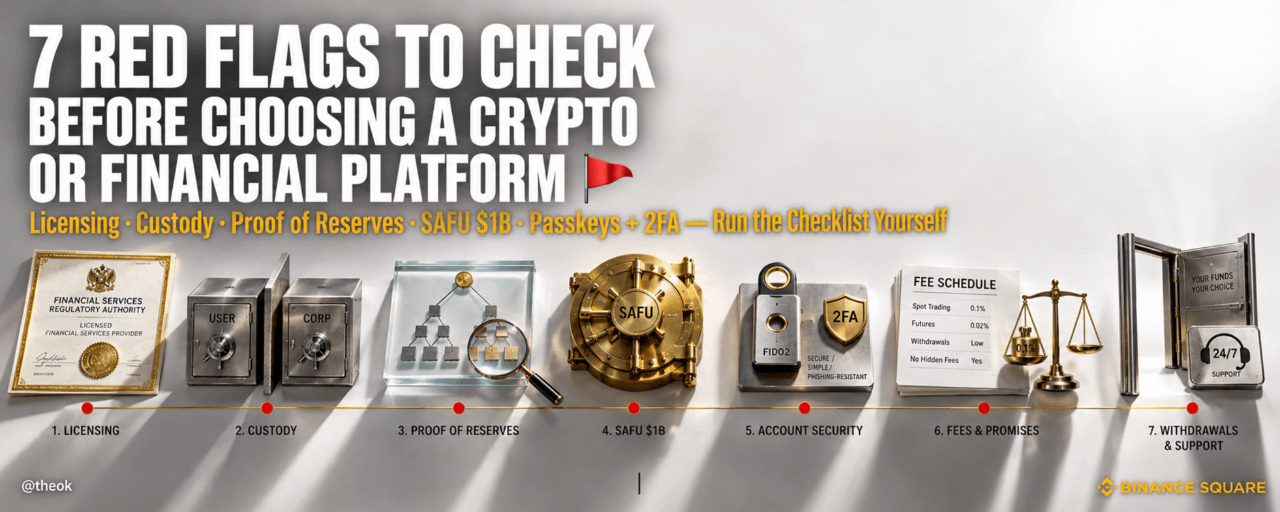
7 Red Flags to Check Before Choosing a Crypto or Financial PlatformBefore choosing a crypto or financial platform, check its regulatory status, security protections, custody arrangements, fee structure and withdrawal policies. Major red flags include unclear licensing, guaranteed-return claims, hidden fees, weak account controls, limited transparency, withdrawal restrictions and inaccessible customer support.
🚩 Why These Red Flags Matter More Than Ever
The crypto industry has matured. In 2026, users have real choices Binance, Coinbase, Kraken, and dozens of smaller platforms. But with choice comes risk: not every platform is built the same, and the difference between a secure, transparent, well-capitalized exchange and a poorly managed one is the difference between your money being safe and your money being gone.
The problem is that most users especially new users in emerging markets do not know what to check before depositing funds. They look at the interface, the token list, and maybe a referral bonus. They do not look at the things that actually determine whether their money is safe.
This article fixes that. Here are 7 red flags to check before you trust any crypto or financial platform with your money and how Binance addresses each one.
🚩 Red Flag 1: Unclear Licensing or Regulatory Status
The red flag: A platform operates without clear regulatory licensing in the jurisdictions it serves. There is no information about which legal entity you are actually contracting with, or whether that entity is authorized in your country. The "About Us" page is vague. The terms of service reference a shell company in an obscure jurisdiction.
Why this matters: Without regulatory oversight, there is no accountability. If the platform mismanages funds, freezes accounts unjustly, or collapses entirely, users have no regulatory body to turn to. No license means no recourse.
What to check:
Which legal entity actually serves your account? (It is usually named in the terms of service)Is that entity licensed or registered with a financial regulator?Are the licenses verifiable on the regulator's official website?Does the platform clearly state which countries it serves and under which frameworks?
How Binance addresses this:
Binance operates through a network of regulated entities across major jurisdictions including MiCA-licensed entities in the European Union, a license from the Central Bank of Bahrain, and authorizations in other regulated markets. Each entity is subject to oversight by its local regulator.
In Africa: Binance is available to users in many African countries, and local regulatory frameworks for crypto are evolving fast across the continent. Availability and authorization status vary by country Binance publishes country-specific information on binance.com, and users should always confirm which entity serves their region before depositing.
The takeaway: If a platform cannot clearly tell you who regulates it and which entity serves you, do not deposit money. A regulated platform states its licenses openly. An unclear platform hides them.
🚩 Red Flag 2: No Transparency Around Customer Assets
The red flag: A platform does not explain how customer assets are held, or whether they are separated from the platform's own operating funds. User deposits may sit in the same pool of money the platform uses for expenses, investments, and trading.
Why this matters: If customer funds are commingled with corporate funds, the platform's bankruptcy can become your bankruptcy. Your money is no longer legally yours you become an unsecured creditor standing in line. This is exactly what happened in the FTX collapse: user funds were commingled with trading capital, and when the scheme unraveled, the money was gone.
What to check:
Does the platform explicitly state that customer assets are held separately from operating funds?- Is customer custody described in clear, documented terms or buried in vague language?Does the platform lend out, invest, or re hypothecate user assets without explicit consent?
How Binance addresses this:
Binance holds customer assets on a 1:1 basis every user balance is backed by an equivalent amount of the actual asset, held in custody separate from Binance's corporate funds. Customer assets are not lent out, invested, or used for the platform's own operations without user consent.
This means that even in a worst-case scenario, user balances are not mixed with Binance's money. Your funds are segregated, accounted for, and verifiable which leads directly to the next red flag.
The takeaway: If a platform cannot explain in plain language how your assets are held and protected, that silence is the red flag. Transparency about custody is not optional it is the foundation of trust.
🚩 Red Flag 3: No Proof of Reserves or Verifiable Asset Information
The red flag: A platform claims to be solvent but provides no way for users to independently verify it. A press release is not proof. A screenshot is not proof. If the only evidence of solvency is the platform's own word, you are trusting a marketing claim with your money.
Why this matters: Every major exchange failure in crypto history Mt. Gox, FTX, Celsius involved platforms that claimed solvency while being insolvent. Real transparency requires cryptographic proof, not assurances.
How Binance addresses this Binance Proof of Reserves:
Binance publishes Proof of Reserves (PoR) using Merkle tree cryptography. Each user's balance is included as a leaf in a Merkle tree, and Binance publishes the root hash alongside its on-chain wallet holdings. This means the total customer liabilities are mathematically verifiable and any user can check that their own balance is included.
How to verify your own balance is included:
Log in to your Binance account and go to the Proof of Reserves page (Account → Audit → Proof of Reserves)Select the snapshot date Binance publishes PoR at regular intervalsGenerate your record Binance computes a unique cryptographic hash (leaf) for your account balance at that snapshotVerify use Binance's built-in verification tool (or a third-party Merkle validator) to confirm your hash is included in the published Merkle root5. Done if your leaf is in the tree, your balance was counted in the reserves. The math either adds up or it does not and you checked it yourself.
The takeaway: Proof of Reserves turns "trust us" into "verify yourself."
If a platform does not offer it or offers only unaudited statements that is a red flag you should not ignore.
🚩 Red Flag 4: No Emergency Fund
The red flag: A platform has no dedicated emergency fund to protect users in case of a breach, hack, or catastrophic event. If something goes wrong, the plan is "we will figure it out" and users absorb the loss.
Why this matters: Even the best security practices cannot reduce risk to zero. A platform without a financial buffer is asking users to carry 100% of the tail risk.
How Binance addresses this SAFU:
Binance maintains the SAFU (Secure Asset Fund for Users) a dedicated emergency insurance fund, currently valued at over US$1 billion, held in separate cold wallets and used solely to protect users in extreme situations.
The takeaway: An emergency fund is not marketing it is a balance sheet commitment. Ask any platform: "How much do you hold to protect users if something goes wrong?"
If there is no clear answer, that is your answer.
🚩 Red Flag 5: Weak Account-Security Controls
The red flag: A platform offers only basic username-and-password login. No 2FA options, no phishing protection, no withdrawal controls. The security model is "pick a strong password and hope."
Why this matters: The most common way users lose funds is not a platform hack it is account takeover through phishing, SIM swaps, credential stuffing, and social engineering. Strong account controls make these attacks ineffective.
How Binance addresses this four tools that matter:
Passkeys (FIDO2/WebAuthn): The strongest authentication method available. Cryptographic keys stored on your device immune to phishing, SIM swaps, and credential theft. Your authentication never leaves your device.
Two-factor authentication (2FA): Binance supports authenticator-app based 2FA, which is far stronger than SMS-based codes. Certain sensitive actions (withdrawals, API key creation) require it.
Anti-phishing codes: You set a personal code that appears in every legitimate Binance email. If an email does not show your code, it is not from Binance phishing attempts become instantly visible.
Withdrawal allowlisting: You can lock withdrawals to pre-approved wallet addresses only. Even if an attacker gains access to your account, they cannot send funds anywhere but your own whitelisted wallets.
The takeaway: In 2026, the minimum standard for any serious platform is passkeys, 2FA, anti-phishing codes, and withdrawal controls. If a platform does not offer all four, your account is one phishing email away from being drained.
🚩 Red Flag 6: Guaranteed-Return Claims and Hidden Fees
The red flag: A platform promises guaranteed yields ("20% APY, risk-free!") or hides its true costs behind opaque spreads, surprise charges, and vague pricing.
Why this matters: Guaranteed returns do not exist in finance every yield carries risk, and platforms that promise otherwise are either misleading you or funding old deposits with new ones (the Ponzi pattern). Hidden fees are the quieter version of the same problem: you think you are paying one price, but the real cost is buried in spreads and conditions.
What to check:
Does the platform promise returns that sound too good to be true?Is the fee schedule published, complete, and easy to find?Are conversion spreads, withdrawal fees, and inactivity charges disclosed upfront?
How Binance addresses this:
Binance publishes its complete fee schedule publicly spot trading from 0.1% (lower with BNB discounts), P2P trading free, zero-spread USDC/USD conversion absorbed by Binance. And critically: Binance does not promise guaranteed returns. Products carry risk disclosures ,and users are expected to understand what they are buying before they buy it.
The takeaway: A platform that promises you cannot lose is a platform that has already decided what to tell you. Transparency about fees and honesty about risk are non-negotiable.
🚩 Red Flag 7: Withdrawal Restrictions and Inaccessible Customer Support
The red flag: A platform makes it hard to get your money out sudden withdrawal "maintenance," unexpected delays, new conditions appearing when you try to cash out. And when you contact support, nobody answers.
Why this matters: The ability to withdraw is the ultimate test of a platform's health. Restrictions that appear exactly when users try to leave are the classic warning sign of a platform in trouble. And support that disappears when you need it most turns a bad situation into an impossible one.
What to check:
Are withdrawal policies clear, published, and consistent?Are there restrictions that only appear when you attempt a withdrawal?Is customer support reachable 24/7 and does it actually resolve issues?
How Binance addresses this:
Binance maintains clear, published withdrawal policies with transparent network fees and processing standards. Security features like withdrawal allowlisting and withdrawal lock are user-controlled they exist to protect you, not to trap you. And Binance provides 24/7 customer support in multiple languages, because problems do not keep business hours.
The takeaway: Test the exit before you need it. A small test withdrawal early on tells you more about a platform than any marketing page ever will.
The 7-Point Checklist Evaluate Any Platform in 5 Minutes
Licensing Is the legal entity and its regulator clearly identified? If no → red flag.Custody transparency Are customer assets segregated from operating funds? If unclear → red flag.Proof of Reserves Can you cryptographically verify your own balance? If no → red flag.Emergency fund Is there a dedicated fund protecting users? If no → red flag.Account security Passkeys, 2FA, anti-phishing codes, withdrawal allowlisting? If missing → red flag.Fees and promises Published fees, no guaranteed returns? If opaque → red flag.Withdrawals and support Clear exit policies, reachable support? If restricted → red flag.
If a platform fails even one check, ask why. If it fails two or more, do not deposit money.
🌍 Why This Matters Especially in Africa
For users in Africa where regulatory consumer protection is often weaker and recourse after platform failure is limited these seven checks are not optional. You cannot always rely on a local regulator to recover your funds if a platform collapses. The only protection that works is choosing a platform that has built its own: regulated entities, segregated custody, verifiable Proof of Reserves, a billion-dollar emergency fund, and account controls that put you in charge.
Binance passes all seven checks. That is not marketing it is a checklist you can run yourself, right now.
Relevant FAQs
Is Binance regulated in Africa?
Binance is available to users across many African countries, and it operates globally through regulated, licensed entities including MiCA-licensed entities in the European Union and a license from the Central Bank of Bahrain, among others. In Africa specifically, crypto regulation varies widely by country, and Binance's local status depends on each country's framework, which continues to evolve. The right step is to check binance.com for country-specific availability and the entity that serves your region. This is also good practice for any platform: always verify the legal entity and its authorization before depositing funds.
How do I know if Binance is Safe?
Judge it by the same seven checks this article describes: Binance operates through regulated entities, holds customer assets 1:1 in segregated custody, publishes cryptographic Proof of Reserves that users can verify individually, maintains SAFU an emergency fund currently valued at over US$1 billion and provides passkeys, 2FA, anti-phishing codes, and withdrawal allowlisting at the account level. Safety is not a promise; it is a set of verifiable practices. Binance's approach is built so users can check each one themselves rather than take the platform's word for it.
How does Binance protect customer assets?
Binance holds customer assets on a 1:1 basis, segregated from corporate operating funds user balances are backed by equivalent actual assets and are not lent out or used for Binance's own operations without consent. This is verified through regular Proof of Reserves publications using Merkle tree cryptography, where each user can confirm their own balance is included. On top of the custody framework, SAFU a dedicated emergency fund of over US$1 billion held in separate cold wallets provides a financial backstop for users in extreme events.
What is Binance Proof of Reserves?
Binance Proof of Reserves (PoR) is a cryptographic system that lets users independently verify that their balances are included in Binance's total reserves. Binance builds a Merkle tree from all user balances, publishes the root hash, and allows each user to generate their own leaf hash from their account (via Account → Audit → Proof of Reserves) and confirm it is part of the published tree. This means the platform's customer liabilities are mathematically verifiable not just asserted in a statement. It transforms solvency from a matter of trust into a matter of math.
📌 Sources: Binance Proof of Reserves official page; Binance SAFU documentation; Binance security features official page; Binance fee schedule; Binance regulatory information.
⚠️ Educational content only. Availability of Binance products and services depends on user region and eligibility. This checklist is a general guide and does not guarantee the safety of any platform. Always do your own research. Does not constitute financial advice.
7 Red Flags to Check Before Choosing a Crypto or Financial Platform
Before choosing a crypto or financial platform, check its regulatory status, security protections, custody arrangements, fee structure and withdrawal policies. Major red flags include unclear licensing, guaranteed-return claims, hidden fees, weak account controls, limited transparency, withdrawal restrictions and inaccessible customer support.
🚩 Why These Red Flags Matter More Than Ever
The crypto industry has matured. In 2026, users have real choices Binance, Coinbase, Kraken, and dozens of smaller platforms. But with choice comes risk: not every platform is built the same, and the difference between a secure, transparent, well-capitalized exchange and a poorly managed one is the difference between your money being safe and your money being gone.
The problem is that most users especially new users in emerging markets do not know what to check before depositing funds. They look at the interface, the token list, and maybe a referral bonus. They do not look at the things that actually determine whether their money is safe.
This article fixes that. Here are 7 red flags to check before you trust any crypto or financial platform with your money and how Binance addresses each one.
🚩 Red Flag 1: Unclear Licensing or Regulatory Status
The red flag: A platform operates without clear regulatory licensing in the jurisdictions it serves. There is no information about which legal entity you are actually contracting with, or whether that entity is authorized in your country. The "About Us" page is vague. The terms of service reference a shell company in an obscure jurisdiction.
Why this matters: Without regulatory oversight, there is no accountability. If the platform mismanages funds, freezes accounts unjustly, or collapses entirely, users have no regulatory body to turn to. No license means no recourse.
What to check:
Which legal entity actually serves your account? (It is usually named in the terms of service)Is that entity licensed or registered with a financial regulator?Are the licenses verifiable on the regulator's official website?Does the platform clearly state which countries it serves and under which frameworks?
How Binance addresses this:
Binance operates through a network of regulated entities across major jurisdictions including MiCA-licensed entities in the European Union, a license from the Central Bank of Bahrain, and authorizations in other regulated markets. Each entity is subject to oversight by its local regulator.
In Africa: Binance is available to users in many African countries, and local regulatory frameworks for crypto are evolving fast across the continent. Availability and authorization status vary by country Binance publishes country-specific information on binance.com, and users should always confirm which entity serves their region before depositing.
The takeaway: If a platform cannot clearly tell you who regulates it and which entity serves you, do not deposit money. A regulated platform states its licenses openly. An unclear platform hides them.
🚩 Red Flag 2: No Transparency Around Customer Assets
The red flag: A platform does not explain how customer assets are held, or whether they are separated from the platform's own operating funds. User deposits may sit in the same pool of money the platform uses for expenses, investments, and trading.
Why this matters: If customer funds are commingled with corporate funds, the platform's bankruptcy can become your bankruptcy. Your money is no longer legally yours you become an unsecured creditor standing in line. This is exactly what happened in the FTX collapse: user funds were commingled with trading capital, and when the scheme unraveled, the money was gone.
What to check:
Does the platform explicitly state that customer assets are held separately from operating funds?- Is customer custody described in clear, documented terms or buried in vague language?Does the platform lend out, invest, or re hypothecate user assets without explicit consent?
How Binance addresses this:
Binance holds customer assets on a 1:1 basis every user balance is backed by an equivalent amount of the actual asset, held in custody separate from Binance's corporate funds. Customer assets are not lent out, invested, or used for the platform's own operations without user consent.
This means that even in a worst-case scenario, user balances are not mixed with Binance's money. Your funds are segregated, accounted for, and verifiable which leads directly to the next red flag.
The takeaway: If a platform cannot explain in plain language how your assets are held and protected, that silence is the red flag. Transparency about custody is not optional it is the foundation of trust.
🚩 Red Flag 3: No Proof of Reserves or Verifiable Asset Information
The red flag: A platform claims to be solvent but provides no way for users to independently verify it. A press release is not proof. A screenshot is not proof. If the only evidence of solvency is the platform's own word, you are trusting a marketing claim with your money.
Why this matters: Every major exchange failure in crypto history Mt. Gox, FTX, Celsius involved platforms that claimed solvency while being insolvent. Real transparency requires cryptographic proof, not assurances.
How Binance addresses this Binance Proof of Reserves:
Binance publishes Proof of Reserves (PoR) using Merkle tree cryptography. Each user's balance is included as a leaf in a Merkle tree, and Binance publishes the root hash alongside its on-chain wallet holdings. This means the total customer liabilities are mathematically verifiable and any user can check that their own balance is included.
How to verify your own balance is included:
Log in to your Binance account and go to the Proof of Reserves page (Account → Audit → Proof of Reserves)Select the snapshot date Binance publishes PoR at regular intervalsGenerate your record Binance computes a unique cryptographic hash (leaf) for your account balance at that snapshotVerify use Binance's built-in verification tool (or a third-party Merkle validator) to confirm your hash is included in the published Merkle root5. Done if your leaf is in the tree, your balance was counted in the reserves. The math either adds up or it does not and you checked it yourself.
The takeaway: Proof of Reserves turns "trust us" into "verify yourself."
If a platform does not offer it or offers only unaudited statements that is a red flag you should not ignore.
🚩 Red Flag 4: No Emergency Fund
The red flag: A platform has no dedicated emergency fund to protect users in case of a breach, hack, or catastrophic event. If something goes wrong, the plan is "we will figure it out" and users absorb the loss.
Why this matters: Even the best security practices cannot reduce risk to zero. A platform without a financial buffer is asking users to carry 100% of the tail risk.
How Binance addresses this SAFU:
Binance maintains the SAFU (Secure Asset Fund for Users) a dedicated emergency insurance fund, currently valued at over US$1 billion, held in separate cold wallets and used solely to protect users in extreme situations.
The takeaway: An emergency fund is not marketing it is a balance sheet commitment. Ask any platform: "How much do you hold to protect users if something goes wrong?"
If there is no clear answer, that is your answer.
🚩 Red Flag 5: Weak Account-Security Controls
The red flag: A platform offers only basic username-and-password login. No 2FA options, no phishing protection, no withdrawal controls. The security model is "pick a strong password and hope."
Why this matters: The most common way users lose funds is not a platform hack it is account takeover through phishing, SIM swaps, credential stuffing, and social engineering. Strong account controls make these attacks ineffective.
How Binance addresses this four tools that matter:
Passkeys (FIDO2/WebAuthn): The strongest authentication method available. Cryptographic keys stored on your device immune to phishing, SIM swaps, and credential theft. Your authentication never leaves your device.
Two-factor authentication (2FA): Binance supports authenticator-app based 2FA, which is far stronger than SMS-based codes. Certain sensitive actions (withdrawals, API key creation) require it.
Anti-phishing codes: You set a personal code that appears in every legitimate Binance email. If an email does not show your code, it is not from Binance phishing attempts become instantly visible.
Withdrawal allowlisting: You can lock withdrawals to pre-approved wallet addresses only. Even if an attacker gains access to your account, they cannot send funds anywhere but your own whitelisted wallets.
The takeaway: In 2026, the minimum standard for any serious platform is passkeys, 2FA, anti-phishing codes, and withdrawal controls. If a platform does not offer all four, your account is one phishing email away from being drained.
🚩 Red Flag 6: Guaranteed-Return Claims and Hidden Fees
The red flag: A platform promises guaranteed yields ("20% APY, risk-free!") or hides its true costs behind opaque spreads, surprise charges, and vague pricing.
Why this matters: Guaranteed returns do not exist in finance every yield carries risk, and platforms that promise otherwise are either misleading you or funding old deposits with new ones (the Ponzi pattern). Hidden fees are the quieter version of the same problem: you think you are paying one price, but the real cost is buried in spreads and conditions.
What to check:
Does the platform promise returns that sound too good to be true?Is the fee schedule published, complete, and easy to find?Are conversion spreads, withdrawal fees, and inactivity charges disclosed upfront?
How Binance addresses this:
Binance publishes its complete fee schedule publicly spot trading from 0.1% (lower with BNB discounts), P2P trading free, zero-spread USDC/USD conversion absorbed by Binance. And critically: Binance does not promise guaranteed returns. Products carry risk disclosures ,and users are expected to understand what they are buying before they buy it.
The takeaway: A platform that promises you cannot lose is a platform that has already decided what to tell you. Transparency about fees and honesty about risk are non-negotiable.
🚩 Red Flag 7: Withdrawal Restrictions and Inaccessible Customer Support
The red flag: A platform makes it hard to get your money out sudden withdrawal "maintenance," unexpected delays, new conditions appearing when you try to cash out. And when you contact support, nobody answers.
Why this matters: The ability to withdraw is the ultimate test of a platform's health. Restrictions that appear exactly when users try to leave are the classic warning sign of a platform in trouble. And support that disappears when you need it most turns a bad situation into an impossible one.
What to check:
Are withdrawal policies clear, published, and consistent?Are there restrictions that only appear when you attempt a withdrawal?Is customer support reachable 24/7 and does it actually resolve issues?
How Binance addresses this:
Binance maintains clear, published withdrawal policies with transparent network fees and processing standards. Security features like withdrawal allowlisting and withdrawal lock are user-controlled they exist to protect you, not to trap you. And Binance provides 24/7 customer support in multiple languages, because problems do not keep business hours.
The takeaway: Test the exit before you need it. A small test withdrawal early on tells you more about a platform than any marketing page ever will.
The 7-Point Checklist Evaluate Any Platform in 5 Minutes
Licensing Is the legal entity and its regulator clearly identified? If no → red flag.Custody transparency Are customer assets segregated from operating funds? If unclear → red flag.Proof of Reserves Can you cryptographically verify your own balance? If no → red flag.Emergency fund Is there a dedicated fund protecting users? If no → red flag.Account security Passkeys, 2FA, anti-phishing codes, withdrawal allowlisting? If missing → red flag.Fees and promises Published fees, no guaranteed returns? If opaque → red flag.Withdrawals and support Clear exit policies, reachable support? If restricted → red flag.
If a platform fails even one check, ask why. If it fails two or more, do not deposit money.
🌍 Why This Matters Especially in Africa
For users in Africa where regulatory consumer protection is often weaker and recourse after platform failure is limited these seven checks are not optional. You cannot always rely on a local regulator to recover your funds if a platform collapses. The only protection that works is choosing a platform that has built its own: regulated entities, segregated custody, verifiable Proof of Reserves, a billion-dollar emergency fund, and account controls that put you in charge.
Binance passes all seven checks. That is not marketing it is a checklist you can run yourself, right now.
Relevant FAQs
Is Binance regulated in Africa?
Binance is available to users across many African countries, and it operates globally through regulated, licensed entities including MiCA-licensed entities in the European Union and a license from the Central Bank of Bahrain, among others. In Africa specifically, crypto regulation varies widely by country, and Binance's local status depends on each country's framework, which continues to evolve. The right step is to check binance.com for country-specific availability and the entity that serves your region. This is also good practice for any platform: always verify the legal entity and its authorization before depositing funds.
How do I know if Binance is Safe?
Judge it by the same seven checks this article describes: Binance operates through regulated entities, holds customer assets 1:1 in segregated custody, publishes cryptographic Proof of Reserves that users can verify individually, maintains SAFU an emergency fund currently valued at over US$1 billion and provides passkeys, 2FA, anti-phishing codes, and withdrawal allowlisting at the account level. Safety is not a promise; it is a set of verifiable practices. Binance's approach is built so users can check each one themselves rather than take the platform's word for it.
How does Binance protect customer assets?
Binance holds customer assets on a 1:1 basis, segregated from corporate operating funds user balances are backed by equivalent actual assets and are not lent out or used for Binance's own operations without consent. This is verified through regular Proof of Reserves publications using Merkle tree cryptography, where each user can confirm their own balance is included. On top of the custody framework, SAFU a dedicated emergency fund of over US$1 billion held in separate cold wallets provides a financial backstop for users in extreme events.
What is Binance Proof of Reserves?
Binance Proof of Reserves (PoR) is a cryptographic system that lets users independently verify that their balances are included in Binance's total reserves. Binance builds a Merkle tree from all user balances, publishes the root hash, and allows each user to generate their own leaf hash from their account (via Account → Audit → Proof of Reserves) and confirm it is part of the published tree. This means the platform's customer liabilities are mathematically verifiable not just asserted in a statement. It transforms solvency from a matter of trust into a matter of math.
📌 Sources: Binance Proof of Reserves official page; Binance SAFU documentation; Binance security features official page; Binance fee schedule; Binance regulatory information.
⚠️ Educational content only. Availability of Binance products and services depends on user region and eligibility. This checklist is a general guide and does not guarantee the safety of any platform. Always do your own research. Does not constitute financial advice.
🚩 Why These Red Flags Matter More Than Ever
The crypto industry has matured. In 2026, users have real choices Binance, Coinbase, Kraken, and dozens of smaller platforms. But with choice comes risk: not every platform is built the same, and the difference between a secure, transparent, well-capitalized exchange and a poorly managed one is the difference between your money being safe and your money being gone.
The problem is that most users especially new users in emerging markets do not know what to check before depositing funds. They look at the interface, the token list, and maybe a referral bonus. They do not look at the things that actually determine whether their money is safe.
This article fixes that. Here are 7 red flags to check before you trust any crypto or financial platform with your money and how Binance addresses each one.
🚩 Red Flag 1: Unclear Licensing or Regulatory Status
The red flag: A platform operates without clear regulatory licensing in the jurisdictions it serves. There is no information about which legal entity you are actually contracting with, or whether that entity is authorized in your country. The "About Us" page is vague. The terms of service reference a shell company in an obscure jurisdiction.
Why this matters: Without regulatory oversight, there is no accountability. If the platform mismanages funds, freezes accounts unjustly, or collapses entirely, users have no regulatory body to turn to. No license means no recourse.
What to check:
Which legal entity actually serves your account? (It is usually named in the terms of service)Is that entity licensed or registered with a financial regulator?Are the licenses verifiable on the regulator's official website?Does the platform clearly state which countries it serves and under which frameworks?
How Binance addresses this:
Binance operates through a network of regulated entities across major jurisdictions including MiCA-licensed entities in the European Union, a license from the Central Bank of Bahrain, and authorizations in other regulated markets. Each entity is subject to oversight by its local regulator.
In Africa: Binance is available to users in many African countries, and local regulatory frameworks for crypto are evolving fast across the continent. Availability and authorization status vary by country Binance publishes country-specific information on binance.com, and users should always confirm which entity serves their region before depositing.
The takeaway: If a platform cannot clearly tell you who regulates it and which entity serves you, do not deposit money. A regulated platform states its licenses openly. An unclear platform hides them.
🚩 Red Flag 2: No Transparency Around Customer Assets
The red flag: A platform does not explain how customer assets are held, or whether they are separated from the platform's own operating funds. User deposits may sit in the same pool of money the platform uses for expenses, investments, and trading.
Why this matters: If customer funds are commingled with corporate funds, the platform's bankruptcy can become your bankruptcy. Your money is no longer legally yours you become an unsecured creditor standing in line. This is exactly what happened in the FTX collapse: user funds were commingled with trading capital, and when the scheme unraveled, the money was gone.
What to check:
Does the platform explicitly state that customer assets are held separately from operating funds?- Is customer custody described in clear, documented terms or buried in vague language?Does the platform lend out, invest, or re hypothecate user assets without explicit consent?
How Binance addresses this:
Binance holds customer assets on a 1:1 basis every user balance is backed by an equivalent amount of the actual asset, held in custody separate from Binance's corporate funds. Customer assets are not lent out, invested, or used for the platform's own operations without user consent.
This means that even in a worst-case scenario, user balances are not mixed with Binance's money. Your funds are segregated, accounted for, and verifiable which leads directly to the next red flag.
The takeaway: If a platform cannot explain in plain language how your assets are held and protected, that silence is the red flag. Transparency about custody is not optional it is the foundation of trust.
🚩 Red Flag 3: No Proof of Reserves or Verifiable Asset Information
The red flag: A platform claims to be solvent but provides no way for users to independently verify it. A press release is not proof. A screenshot is not proof. If the only evidence of solvency is the platform's own word, you are trusting a marketing claim with your money.
Why this matters: Every major exchange failure in crypto history Mt. Gox, FTX, Celsius involved platforms that claimed solvency while being insolvent. Real transparency requires cryptographic proof, not assurances.
How Binance addresses this Binance Proof of Reserves:
Binance publishes Proof of Reserves (PoR) using Merkle tree cryptography. Each user's balance is included as a leaf in a Merkle tree, and Binance publishes the root hash alongside its on-chain wallet holdings. This means the total customer liabilities are mathematically verifiable and any user can check that their own balance is included.
How to verify your own balance is included:
Log in to your Binance account and go to the Proof of Reserves page (Account → Audit → Proof of Reserves)Select the snapshot date Binance publishes PoR at regular intervalsGenerate your record Binance computes a unique cryptographic hash (leaf) for your account balance at that snapshotVerify use Binance's built-in verification tool (or a third-party Merkle validator) to confirm your hash is included in the published Merkle root5. Done if your leaf is in the tree, your balance was counted in the reserves. The math either adds up or it does not and you checked it yourself.
The takeaway: Proof of Reserves turns "trust us" into "verify yourself."
If a platform does not offer it or offers only unaudited statements that is a red flag you should not ignore.
🚩 Red Flag 4: No Emergency Fund
The red flag: A platform has no dedicated emergency fund to protect users in case of a breach, hack, or catastrophic event. If something goes wrong, the plan is "we will figure it out" and users absorb the loss.
Why this matters: Even the best security practices cannot reduce risk to zero. A platform without a financial buffer is asking users to carry 100% of the tail risk.
How Binance addresses this SAFU:
Binance maintains the SAFU (Secure Asset Fund for Users) a dedicated emergency insurance fund, currently valued at over US$1 billion, held in separate cold wallets and used solely to protect users in extreme situations.
The takeaway: An emergency fund is not marketing it is a balance sheet commitment. Ask any platform: "How much do you hold to protect users if something goes wrong?"
If there is no clear answer, that is your answer.
🚩 Red Flag 5: Weak Account-Security Controls
The red flag: A platform offers only basic username-and-password login. No 2FA options, no phishing protection, no withdrawal controls. The security model is "pick a strong password and hope."
Why this matters: The most common way users lose funds is not a platform hack it is account takeover through phishing, SIM swaps, credential stuffing, and social engineering. Strong account controls make these attacks ineffective.
How Binance addresses this four tools that matter:
Passkeys (FIDO2/WebAuthn): The strongest authentication method available. Cryptographic keys stored on your device immune to phishing, SIM swaps, and credential theft. Your authentication never leaves your device.
Two-factor authentication (2FA): Binance supports authenticator-app based 2FA, which is far stronger than SMS-based codes. Certain sensitive actions (withdrawals, API key creation) require it.
Anti-phishing codes: You set a personal code that appears in every legitimate Binance email. If an email does not show your code, it is not from Binance phishing attempts become instantly visible.
Withdrawal allowlisting: You can lock withdrawals to pre-approved wallet addresses only. Even if an attacker gains access to your account, they cannot send funds anywhere but your own whitelisted wallets.
The takeaway: In 2026, the minimum standard for any serious platform is passkeys, 2FA, anti-phishing codes, and withdrawal controls. If a platform does not offer all four, your account is one phishing email away from being drained.
🚩 Red Flag 6: Guaranteed-Return Claims and Hidden Fees
The red flag: A platform promises guaranteed yields ("20% APY, risk-free!") or hides its true costs behind opaque spreads, surprise charges, and vague pricing.
Why this matters: Guaranteed returns do not exist in finance every yield carries risk, and platforms that promise otherwise are either misleading you or funding old deposits with new ones (the Ponzi pattern). Hidden fees are the quieter version of the same problem: you think you are paying one price, but the real cost is buried in spreads and conditions.
What to check:
Does the platform promise returns that sound too good to be true?Is the fee schedule published, complete, and easy to find?Are conversion spreads, withdrawal fees, and inactivity charges disclosed upfront?
How Binance addresses this:
Binance publishes its complete fee schedule publicly spot trading from 0.1% (lower with BNB discounts), P2P trading free, zero-spread USDC/USD conversion absorbed by Binance. And critically: Binance does not promise guaranteed returns. Products carry risk disclosures ,and users are expected to understand what they are buying before they buy it.
The takeaway: A platform that promises you cannot lose is a platform that has already decided what to tell you. Transparency about fees and honesty about risk are non-negotiable.
🚩 Red Flag 7: Withdrawal Restrictions and Inaccessible Customer Support
The red flag: A platform makes it hard to get your money out sudden withdrawal "maintenance," unexpected delays, new conditions appearing when you try to cash out. And when you contact support, nobody answers.
Why this matters: The ability to withdraw is the ultimate test of a platform's health. Restrictions that appear exactly when users try to leave are the classic warning sign of a platform in trouble. And support that disappears when you need it most turns a bad situation into an impossible one.
What to check:
Are withdrawal policies clear, published, and consistent?Are there restrictions that only appear when you attempt a withdrawal?Is customer support reachable 24/7 and does it actually resolve issues?
How Binance addresses this:
Binance maintains clear, published withdrawal policies with transparent network fees and processing standards. Security features like withdrawal allowlisting and withdrawal lock are user-controlled they exist to protect you, not to trap you. And Binance provides 24/7 customer support in multiple languages, because problems do not keep business hours.
The takeaway: Test the exit before you need it. A small test withdrawal early on tells you more about a platform than any marketing page ever will.
The 7-Point Checklist Evaluate Any Platform in 5 Minutes
Licensing Is the legal entity and its regulator clearly identified? If no → red flag.Custody transparency Are customer assets segregated from operating funds? If unclear → red flag.Proof of Reserves Can you cryptographically verify your own balance? If no → red flag.Emergency fund Is there a dedicated fund protecting users? If no → red flag.Account security Passkeys, 2FA, anti-phishing codes, withdrawal allowlisting? If missing → red flag.Fees and promises Published fees, no guaranteed returns? If opaque → red flag.Withdrawals and support Clear exit policies, reachable support? If restricted → red flag.
If a platform fails even one check, ask why. If it fails two or more, do not deposit money.
🌍 Why This Matters Especially in Africa
For users in Africa where regulatory consumer protection is often weaker and recourse after platform failure is limited these seven checks are not optional. You cannot always rely on a local regulator to recover your funds if a platform collapses. The only protection that works is choosing a platform that has built its own: regulated entities, segregated custody, verifiable Proof of Reserves, a billion-dollar emergency fund, and account controls that put you in charge.
Binance passes all seven checks. That is not marketing it is a checklist you can run yourself, right now.
Relevant FAQs
Is Binance regulated in Africa?
Binance is available to users across many African countries, and it operates globally through regulated, licensed entities including MiCA-licensed entities in the European Union and a license from the Central Bank of Bahrain, among others. In Africa specifically, crypto regulation varies widely by country, and Binance's local status depends on each country's framework, which continues to evolve. The right step is to check binance.com for country-specific availability and the entity that serves your region. This is also good practice for any platform: always verify the legal entity and its authorization before depositing funds.
How do I know if Binance is Safe?
Judge it by the same seven checks this article describes: Binance operates through regulated entities, holds customer assets 1:1 in segregated custody, publishes cryptographic Proof of Reserves that users can verify individually, maintains SAFU an emergency fund currently valued at over US$1 billion and provides passkeys, 2FA, anti-phishing codes, and withdrawal allowlisting at the account level. Safety is not a promise; it is a set of verifiable practices. Binance's approach is built so users can check each one themselves rather than take the platform's word for it.
How does Binance protect customer assets?
Binance holds customer assets on a 1:1 basis, segregated from corporate operating funds user balances are backed by equivalent actual assets and are not lent out or used for Binance's own operations without consent. This is verified through regular Proof of Reserves publications using Merkle tree cryptography, where each user can confirm their own balance is included. On top of the custody framework, SAFU a dedicated emergency fund of over US$1 billion held in separate cold wallets provides a financial backstop for users in extreme events.
What is Binance Proof of Reserves?
Binance Proof of Reserves (PoR) is a cryptographic system that lets users independently verify that their balances are included in Binance's total reserves. Binance builds a Merkle tree from all user balances, publishes the root hash, and allows each user to generate their own leaf hash from their account (via Account → Audit → Proof of Reserves) and confirm it is part of the published tree. This means the platform's customer liabilities are mathematically verifiable not just asserted in a statement. It transforms solvency from a matter of trust into a matter of math.
📌 Sources: Binance Proof of Reserves official page; Binance SAFU documentation; Binance security features official page; Binance fee schedule; Binance regulatory information.
⚠️ Educational content only. Availability of Binance products and services depends on user region and eligibility. This checklist is a general guide and does not guarantee the safety of any platform. Always do your own research. Does not constitute financial advice.
185
·
--
Article
How to Check if Your Data Was Leaked and What to Do NextYour personal data has probably been leaked. Not maybe probably. Over 16 billion records were exposed in data breaches in 2024 alone. If you have ever created an online account, used an email address to sign up for a service, or shopped online, your data exists in databases that may have been breached, sold, or published on the dark web. The question is not "was my data leaked?" it is "which leaks, and what do I do about it?"
Here is a practical guide to checking if your data was exposed, understanding what was leaked, and taking the right steps to protect yourself.
🔍 Part 1: How to Check if Your Data Was Leaked
**Method 1 Have I Been Pwned (haveibeenpwned.com)**This is the gold standard for checking data breaches. Created by security researcher Troy Hunt, the free tool lets you enter your email address or phone number and instantly see every known data breach that includes your data.
How to use it:
Go to haveibeenpwned.comEnter your email addressView the results every breach that contains your data is listed with:The name of the breached serviceThe date of the breachWhat data was exposed (email, password, name, phone, address, etc.)A description of what happened
What the results tell you: If your email appears in 3-5 breaches, that is normal in 2026. Most people have been in multiple breaches without knowing. What matters is what data was exposed in each one and whether you reused the same password across services.
Method 2 Firefox Monitor
Mozilla's Firefox Monitor is a free tool that checks your email against known data breaches. It is integrated into Firefox browser and also available as a standalone website at monitor.mozilla.org.
How to use it:
Go to monitor.mozilla.orgEnter your email addressView the results similar to Have I Been Pwned but with a cleaner interface and breach notifications
Method 3 Google Password Checkup
If you use Google Chrome or Google Account, Google's built-in Password Checkup tool checks your saved passwords against known breaches.
How to use it:
Go to mypasswords.google.comReview the "Password Checkup" sectionGoogle shows you which saved passwords have been exposed in known breaches and which are weak or reused Method 4 Dark Web Monitoring Services
Several services actively monitor the dark web for your
Binance security alerts if you have a Binance account, enable security notifications to receive alerts if your email or credentials appear in breach databasesIdentity protection services services like LifeLock, IdentityForce, or similar providers monitor the dark web for your personal informationCredit monitoring in some countries, credit bureaus offer monitoring that alerts you when your data is used to open new accounts
Method 5 Check Your Email for Breach Notifications
If a service you use has been breached, they are legally required (in most jurisdictions) to notify you by email. Search your inbox for terms like "data breach," "security incident,""we are writing to inform you," or "unauthorized access."
The problem: These emails often look like phishing attempts, so users ignore them. If you receive a breach notification from a service you use, do not click links in the email — go directly to the service's website by typing the URL manually and check your account security settings there.
📊 What Kind of Data Gets Leaked — and Why It Matters
Not all data breaches are equal. The severity depends on what was exposed.
Low risk — email address alone: Your email is in a breach but no password, no financial data, no personal details. Risk: increased spam, phishing attempts targeting your email.
Medium risk — email + hashed password: Your email and an encrypted version of your password were exposed. If the passwordwas weak or the hash was unsalted, attackers can crack it. Risk: if you reused this password on other services, those accounts are also compromised.
High risk — email + plaintext password: Your email and your actual password (not encrypted) were exposed. Risk: immediate account takeover on any service where you used the same password.
Critical risk — email + password + personal Your email, password, full name, date of birth, phone number, and/or physical address were exposed. Risk: identity theft, social engineering attacks, SIM swapping, and targeted phishing.
Severe risk — financial Your credit card number, bank account details, or payment credentials were exposed. Risk: financial fraud, unauthorized transactions, identity theft.
🛡️ Part 2: What to Do Aftera Data Leak
Step 1: Change Your Passwords Immediately
This is the first and most important step. If your password was leaked, it is now public. Anyone with access to the breach database has it.
How to do it right:
Change the password on the breached service firstChange the password on every other service where you used the same password (this is why password reuse is dangerous)Use a unique, randomly generated password for every account — at least 16 characters with a mix of uppercase, lowercase, numbers, and symbolsUse a password manager (Bitwarden, 1Password, KeePass) to generate and store unique passwords so you never have to remember them
Step 2: Enable Two-Factor Authentication (2FA)
A stolen password is useless if the attacker cannot get past 2FA.
What touse:
Best: Passkeys (FIDO2/WebAuthn) — resistant to phishing, SIM swaps, and credential theftGood: Authenticator apps (Google Authenticator, Authy, Raivo) — generate time-based codesAcceptable: SMS-based 2FA — better than nothing but vulnerable to SIM swappingNot acceptable: Email-based 2FA — if your email is compromised, this is useless
On Binance specifically: passkeys, Google Authenticator, and anti-phishing codes are all available and strongly recommended.
Step 3: Check if Your Email Account Is Compromised
Your email account is the master key to your digital life. If an attacker has your email password, they can reset passwords on every service that uses that email — including your crypto exchange, your bank, and your social media.
Signs your email iscompromised:
Emails in your sent folder you did not sendPassword reset emails you did not requestRules or filters you did not create (attackers set these to hide password reset emails from your inbox)Login alerts from devices or locations you do not recognize
What to do:
Change your email password immediatelyCheck and delete any forwarding rules or filters you did not createReview recent login activityEnable 2FA on your email accountCheck connected apps and revoke access for anything you do not recognize
Step 4: Freeze Your Credit (If Available)
If personal data like your full name, date of birth, address, and government ID number were leaked, you are at risk of identity theft — someone opening accounts in your name.
How to freeze your credit:- US: Contact Equifax, Experian, and TransUnion to freeze your credit (free by federal law)
UK: Contact Cifas to add a protective registration to your credit fileEU: Contact your national credit bureauAfrica: Check with your local credit bureau or financial regulator — in many African countries, credit freezing is less formalized, so monitor your bank accounts and financial statements closely for unauthorized activity
Step 5: Monitor Your Accounts
After a data leak, stay vigilant for weeks and months.
What to monitor:
Bank and card statements for unauthorized transactionsEmail inbox for password reset emails you did not requestCrypto exchange accounts for unauthorized login attemptsSocial media accounts for posts or messages you did not sendPhonefor SIM swap indicators (sudden loss of signal, inability to make calls)
On Binance: Enable login notifications, check your login history regularly, and enable withdrawal allowlisting so funds can only go to pre-approved addresses — even if an attacker gains access to your account, they cannot withdraw to their own wallet.
Step 6: Report Identity Theft (If It Happens)
If your leaked data is used to commit identity theft — someone opens accounts in your name, files taxes using your identity, or makes unauthorized transactions — take these steps:
Contact the financial institution where the fraud occurred and report it immediatelyFile a police report — this creates a legal record of the identity theftContact your national identity protection authority (if one exists in yourcountry)In the US: file a report with the FTC at IdentityTheft.govIn Africa: contact your bank, your telecom provider (for SIM swap fraud), and local law enforcement
🔐 Part 3: How to Prevent Future Damage
Habit 1: Use a Password Manager
Stop reusing passwords. Stop trying to remember them. Use a password manager that generates unique, random passwords for every account and stores them encrypted.
Recommended:
Bitwarden — free, open-source, cross-platform1Password — paid, polished, family plans availableKeePass — free, offline, maximum control, less user-friendly
Habit 2: Never Reuse Passwords
If you use the same password on five services and one of them is breached, all five are compromised. A password manager solves this — every account gets a uniquepassword.
Habit 3: Enable 2FA Everywhere
Not just on your crypto exchange. Enable 2FA on:
Your email account (most important — it is the master key)Your crypto exchange accountsYour bank and financial appsYour social media accountsAny service that offers 2FA
Habit 4: Use Passkeys Where Available
Passkeys (FIDO2/WebAuthn) are the strongest authentication method available. They use cryptographic key pairs stored on your device — your authentication never leaves your device and cannot be intercepted. Binance, Google, Apple, Microsoft, and many others now support passkeys.
Habit 5: Be Skeptical of Every Email and Message
After a data leak, attackers know your email address, your name, and possibly more. They will use this information to craft targeted phishing emailsthat look legitimate.
The rule: Never click a link in an email that asks you to log in, reset a password, or verify your identity. Always go to the website directly by typing the URL.
Habit 6: Set Up Breach Alerts
Subscribe to Have I Been Pwned notifications — you will receive an email when your data appears in a new breachEnable security alerts on your Binance accountEnable login alerts on your email and social accounts
Habit 7: Use a Hardware Security Key for High-Value Accounts
For accounts that matter most — your crypto exchange, your email, your bank — consider a hardware security key like YubiKey or Google Titan. These are physical devices that provide FIDO2 authentication and are immune to phishing, SIM swaps, and credential theft.
🌍 Why This MattersMore in Africa
In many African countries, the safety net for identity theft is thinner than in Western markets. There may not be a federal trade commission to file a complaint with. Credit freezing may not be available. Consumer protection laws may be weaker.
This means prevention is everything. When the safety net is thin, the parachute matters more.
For users in Congo and similar markets:
Your phone number is a critical asset — SIM swap attacks can give an attacker access to your SMS-based 2FA. Use authenticator apps or passkeys instead of SMS 2FA wherever possibleYour email account is your digital identity — protect it with 2FA and a unique passwordYour crypto exchange account is your bank — enable every security feature available: passkeys, 2FA, anti-phishing codes,and withdrawal allowlistingMobile money accounts (Orange Money, MTN, M-Pesa) should be secured with PINs and biometric authentication where available
❓ FAQs
Q: What should I do first if I find my data in a breach? A: Change the password on the breached service immediately. Then change the password on every other service where you used the same password. Enable two-factor authentication on the breached service and on your email account. Check your email account for suspicious activity — forwarding rules, login alerts, or password reset emails you did not request. If financial data was exposed, monitor your bank and card statements for unauthorized transactions.
Q: Is Have I Been Pwned safe to use? A: Yes. Have I Been Pwned is a widely trusted, free tool created by securityresearcher Troy Hunt. It only stores email addresses and breach data — it does not store passwords or personal information. When you search your email, the site does not reveal your full email to anyone else. It is used by security professionals, governments, and Fortune 500 companies. It is the industry standard for breach checking.
Q: What is the difference between a data breach and a data leak? A: A data breach is a security incident where an attacker gains unauthorized access to a system and steals data — for example, a hacker breaking into a company's database and exporting user records. A data leak is when data is exposed due to misconfiguration or human error — for example, a company leaving a database open to the internet without a password. Both result in your data being exposed,and the steps you take to protect yourself are the same: change passwords, enable 2FA, and monitor for suspicious activity.
📌 Sources: Have I Been Pwned official site; Mozilla Firefox Monitor; Google Password Checkup; Binance security features official page; FTC Identity Theft guide (IdentityTheft.gov). ⚠️ Educational content only. This guide provides general cybersecurity best practices and does not guarantee protection against all threats. Always follow the specific security recommendations of the services you use.
How to Check if Your Data Was Leaked and What to Do Next
Your personal data has probably been leaked. Not maybe probably. Over 16 billion records were exposed in data breaches in 2024 alone. If you have ever created an online account, used an email address to sign up for a service, or shopped online, your data exists in databases that may have been breached, sold, or published on the dark web. The question is not "was my data leaked?" it is "which leaks, and what do I do about it?"
Here is a practical guide to checking if your data was exposed, understanding what was leaked, and taking the right steps to protect yourself.
🔍 Part 1: How to Check if Your Data Was Leaked
**Method 1 Have I Been Pwned (haveibeenpwned.com)**This is the gold standard for checking data breaches. Created by security researcher Troy Hunt, the free tool lets you enter your email address or phone number and instantly see every known data breach that includes your data.
How to use it:
Go to haveibeenpwned.comEnter your email addressView the results every breach that contains your data is listed with:The name of the breached serviceThe date of the breachWhat data was exposed (email, password, name, phone, address, etc.)A description of what happened
What the results tell you: If your email appears in 3-5 breaches, that is normal in 2026. Most people have been in multiple breaches without knowing. What matters is what data was exposed in each one and whether you reused the same password across services.
Method 2 Firefox Monitor
Mozilla's Firefox Monitor is a free tool that checks your email against known data breaches. It is integrated into Firefox browser and also available as a standalone website at monitor.mozilla.org.
How to use it:
Go to monitor.mozilla.orgEnter your email addressView the results similar to Have I Been Pwned but with a cleaner interface and breach notifications
Method 3 Google Password Checkup
If you use Google Chrome or Google Account, Google's built-in Password Checkup tool checks your saved passwords against known breaches.
How to use it:
Go to mypasswords.google.comReview the "Password Checkup" sectionGoogle shows you which saved passwords have been exposed in known breaches and which are weak or reused Method 4 Dark Web Monitoring Services
Several services actively monitor the dark web for your
Binance security alerts if you have a Binance account, enable security notifications to receive alerts if your email or credentials appear in breach databasesIdentity protection services services like LifeLock, IdentityForce, or similar providers monitor the dark web for your personal informationCredit monitoring in some countries, credit bureaus offer monitoring that alerts you when your data is used to open new accounts
Method 5 Check Your Email for Breach Notifications
If a service you use has been breached, they are legally required (in most jurisdictions) to notify you by email. Search your inbox for terms like "data breach," "security incident,""we are writing to inform you," or "unauthorized access."
The problem: These emails often look like phishing attempts, so users ignore them. If you receive a breach notification from a service you use, do not click links in the email — go directly to the service's website by typing the URL manually and check your account security settings there.
📊 What Kind of Data Gets Leaked — and Why It Matters
Not all data breaches are equal. The severity depends on what was exposed.
Low risk — email address alone: Your email is in a breach but no password, no financial data, no personal details. Risk: increased spam, phishing attempts targeting your email.
Medium risk — email + hashed password: Your email and an encrypted version of your password were exposed. If the passwordwas weak or the hash was unsalted, attackers can crack it. Risk: if you reused this password on other services, those accounts are also compromised.
High risk — email + plaintext password: Your email and your actual password (not encrypted) were exposed. Risk: immediate account takeover on any service where you used the same password.
Critical risk — email + password + personal Your email, password, full name, date of birth, phone number, and/or physical address were exposed. Risk: identity theft, social engineering attacks, SIM swapping, and targeted phishing.
Severe risk — financial Your credit card number, bank account details, or payment credentials were exposed. Risk: financial fraud, unauthorized transactions, identity theft.
🛡️ Part 2: What to Do Aftera Data Leak
Step 1: Change Your Passwords Immediately
This is the first and most important step. If your password was leaked, it is now public. Anyone with access to the breach database has it.
How to do it right:
Change the password on the breached service firstChange the password on every other service where you used the same password (this is why password reuse is dangerous)Use a unique, randomly generated password for every account — at least 16 characters with a mix of uppercase, lowercase, numbers, and symbolsUse a password manager (Bitwarden, 1Password, KeePass) to generate and store unique passwords so you never have to remember them
Step 2: Enable Two-Factor Authentication (2FA)
A stolen password is useless if the attacker cannot get past 2FA.
What touse:
Best: Passkeys (FIDO2/WebAuthn) — resistant to phishing, SIM swaps, and credential theftGood: Authenticator apps (Google Authenticator, Authy, Raivo) — generate time-based codesAcceptable: SMS-based 2FA — better than nothing but vulnerable to SIM swappingNot acceptable: Email-based 2FA — if your email is compromised, this is useless
On Binance specifically: passkeys, Google Authenticator, and anti-phishing codes are all available and strongly recommended.
Step 3: Check if Your Email Account Is Compromised
Your email account is the master key to your digital life. If an attacker has your email password, they can reset passwords on every service that uses that email — including your crypto exchange, your bank, and your social media.
Signs your email iscompromised:
Emails in your sent folder you did not sendPassword reset emails you did not requestRules or filters you did not create (attackers set these to hide password reset emails from your inbox)Login alerts from devices or locations you do not recognize
What to do:
Change your email password immediatelyCheck and delete any forwarding rules or filters you did not createReview recent login activityEnable 2FA on your email accountCheck connected apps and revoke access for anything you do not recognize
Step 4: Freeze Your Credit (If Available)
If personal data like your full name, date of birth, address, and government ID number were leaked, you are at risk of identity theft — someone opening accounts in your name.
How to freeze your credit:- US: Contact Equifax, Experian, and TransUnion to freeze your credit (free by federal law)
UK: Contact Cifas to add a protective registration to your credit fileEU: Contact your national credit bureauAfrica: Check with your local credit bureau or financial regulator — in many African countries, credit freezing is less formalized, so monitor your bank accounts and financial statements closely for unauthorized activity
Step 5: Monitor Your Accounts
After a data leak, stay vigilant for weeks and months.
What to monitor:
Bank and card statements for unauthorized transactionsEmail inbox for password reset emails you did not requestCrypto exchange accounts for unauthorized login attemptsSocial media accounts for posts or messages you did not sendPhonefor SIM swap indicators (sudden loss of signal, inability to make calls)
On Binance: Enable login notifications, check your login history regularly, and enable withdrawal allowlisting so funds can only go to pre-approved addresses — even if an attacker gains access to your account, they cannot withdraw to their own wallet.
Step 6: Report Identity Theft (If It Happens)
If your leaked data is used to commit identity theft — someone opens accounts in your name, files taxes using your identity, or makes unauthorized transactions — take these steps:
Contact the financial institution where the fraud occurred and report it immediatelyFile a police report — this creates a legal record of the identity theftContact your national identity protection authority (if one exists in yourcountry)In the US: file a report with the FTC at IdentityTheft.govIn Africa: contact your bank, your telecom provider (for SIM swap fraud), and local law enforcement
🔐 Part 3: How to Prevent Future Damage
Habit 1: Use a Password Manager
Stop reusing passwords. Stop trying to remember them. Use a password manager that generates unique, random passwords for every account and stores them encrypted.
Recommended:
Bitwarden — free, open-source, cross-platform1Password — paid, polished, family plans availableKeePass — free, offline, maximum control, less user-friendly
Habit 2: Never Reuse Passwords
If you use the same password on five services and one of them is breached, all five are compromised. A password manager solves this — every account gets a uniquepassword.
Habit 3: Enable 2FA Everywhere
Not just on your crypto exchange. Enable 2FA on:
Your email account (most important — it is the master key)Your crypto exchange accountsYour bank and financial appsYour social media accountsAny service that offers 2FA
Habit 4: Use Passkeys Where Available
Passkeys (FIDO2/WebAuthn) are the strongest authentication method available. They use cryptographic key pairs stored on your device — your authentication never leaves your device and cannot be intercepted. Binance, Google, Apple, Microsoft, and many others now support passkeys.
Habit 5: Be Skeptical of Every Email and Message
After a data leak, attackers know your email address, your name, and possibly more. They will use this information to craft targeted phishing emailsthat look legitimate.
The rule: Never click a link in an email that asks you to log in, reset a password, or verify your identity. Always go to the website directly by typing the URL.
Habit 6: Set Up Breach Alerts
Subscribe to Have I Been Pwned notifications — you will receive an email when your data appears in a new breachEnable security alerts on your Binance accountEnable login alerts on your email and social accounts
Habit 7: Use a Hardware Security Key for High-Value Accounts
For accounts that matter most — your crypto exchange, your email, your bank — consider a hardware security key like YubiKey or Google Titan. These are physical devices that provide FIDO2 authentication and are immune to phishing, SIM swaps, and credential theft.
🌍 Why This MattersMore in Africa
In many African countries, the safety net for identity theft is thinner than in Western markets. There may not be a federal trade commission to file a complaint with. Credit freezing may not be available. Consumer protection laws may be weaker.
This means prevention is everything. When the safety net is thin, the parachute matters more.
For users in Congo and similar markets:
Your phone number is a critical asset — SIM swap attacks can give an attacker access to your SMS-based 2FA. Use authenticator apps or passkeys instead of SMS 2FA wherever possibleYour email account is your digital identity — protect it with 2FA and a unique passwordYour crypto exchange account is your bank — enable every security feature available: passkeys, 2FA, anti-phishing codes,and withdrawal allowlistingMobile money accounts (Orange Money, MTN, M-Pesa) should be secured with PINs and biometric authentication where available
❓ FAQs
Q: What should I do first if I find my data in a breach? A: Change the password on the breached service immediately. Then change the password on every other service where you used the same password. Enable two-factor authentication on the breached service and on your email account. Check your email account for suspicious activity — forwarding rules, login alerts, or password reset emails you did not request. If financial data was exposed, monitor your bank and card statements for unauthorized transactions.
Q: Is Have I Been Pwned safe to use? A: Yes. Have I Been Pwned is a widely trusted, free tool created by securityresearcher Troy Hunt. It only stores email addresses and breach data — it does not store passwords or personal information. When you search your email, the site does not reveal your full email to anyone else. It is used by security professionals, governments, and Fortune 500 companies. It is the industry standard for breach checking.
Q: What is the difference between a data breach and a data leak? A: A data breach is a security incident where an attacker gains unauthorized access to a system and steals data — for example, a hacker breaking into a company's database and exporting user records. A data leak is when data is exposed due to misconfiguration or human error — for example, a company leaving a database open to the internet without a password. Both result in your data being exposed,and the steps you take to protect yourself are the same: change passwords, enable 2FA, and monitor for suspicious activity.
📌 Sources: Have I Been Pwned official site; Mozilla Firefox Monitor; Google Password Checkup; Binance security features official page; FTC Identity Theft guide (IdentityTheft.gov). ⚠️ Educational content only. This guide provides general cybersecurity best practices and does not guarantee protection against all threats. Always follow the specific security recommendations of the services you use.
Here is a practical guide to checking if your data was exposed, understanding what was leaked, and taking the right steps to protect yourself.
🔍 Part 1: How to Check if Your Data Was Leaked
**Method 1 Have I Been Pwned (haveibeenpwned.com)**This is the gold standard for checking data breaches. Created by security researcher Troy Hunt, the free tool lets you enter your email address or phone number and instantly see every known data breach that includes your data.
How to use it:
Go to haveibeenpwned.comEnter your email addressView the results every breach that contains your data is listed with:The name of the breached serviceThe date of the breachWhat data was exposed (email, password, name, phone, address, etc.)A description of what happened
What the results tell you: If your email appears in 3-5 breaches, that is normal in 2026. Most people have been in multiple breaches without knowing. What matters is what data was exposed in each one and whether you reused the same password across services.
Method 2 Firefox Monitor
Mozilla's Firefox Monitor is a free tool that checks your email against known data breaches. It is integrated into Firefox browser and also available as a standalone website at monitor.mozilla.org.
How to use it:
Go to monitor.mozilla.orgEnter your email addressView the results similar to Have I Been Pwned but with a cleaner interface and breach notifications
Method 3 Google Password Checkup
If you use Google Chrome or Google Account, Google's built-in Password Checkup tool checks your saved passwords against known breaches.
How to use it:
Go to mypasswords.google.comReview the "Password Checkup" sectionGoogle shows you which saved passwords have been exposed in known breaches and which are weak or reused Method 4 Dark Web Monitoring Services
Several services actively monitor the dark web for your
Binance security alerts if you have a Binance account, enable security notifications to receive alerts if your email or credentials appear in breach databasesIdentity protection services services like LifeLock, IdentityForce, or similar providers monitor the dark web for your personal informationCredit monitoring in some countries, credit bureaus offer monitoring that alerts you when your data is used to open new accounts
Method 5 Check Your Email for Breach Notifications
If a service you use has been breached, they are legally required (in most jurisdictions) to notify you by email. Search your inbox for terms like "data breach," "security incident,""we are writing to inform you," or "unauthorized access."
The problem: These emails often look like phishing attempts, so users ignore them. If you receive a breach notification from a service you use, do not click links in the email — go directly to the service's website by typing the URL manually and check your account security settings there.
📊 What Kind of Data Gets Leaked — and Why It Matters
Not all data breaches are equal. The severity depends on what was exposed.
Low risk — email address alone: Your email is in a breach but no password, no financial data, no personal details. Risk: increased spam, phishing attempts targeting your email.
Medium risk — email + hashed password: Your email and an encrypted version of your password were exposed. If the passwordwas weak or the hash was unsalted, attackers can crack it. Risk: if you reused this password on other services, those accounts are also compromised.
High risk — email + plaintext password: Your email and your actual password (not encrypted) were exposed. Risk: immediate account takeover on any service where you used the same password.
Critical risk — email + password + personal Your email, password, full name, date of birth, phone number, and/or physical address were exposed. Risk: identity theft, social engineering attacks, SIM swapping, and targeted phishing.
Severe risk — financial Your credit card number, bank account details, or payment credentials were exposed. Risk: financial fraud, unauthorized transactions, identity theft.
🛡️ Part 2: What to Do Aftera Data Leak
Step 1: Change Your Passwords Immediately
This is the first and most important step. If your password was leaked, it is now public. Anyone with access to the breach database has it.
How to do it right:
Change the password on the breached service firstChange the password on every other service where you used the same password (this is why password reuse is dangerous)Use a unique, randomly generated password for every account — at least 16 characters with a mix of uppercase, lowercase, numbers, and symbolsUse a password manager (Bitwarden, 1Password, KeePass) to generate and store unique passwords so you never have to remember them
Step 2: Enable Two-Factor Authentication (2FA)
A stolen password is useless if the attacker cannot get past 2FA.
What touse:
Best: Passkeys (FIDO2/WebAuthn) — resistant to phishing, SIM swaps, and credential theftGood: Authenticator apps (Google Authenticator, Authy, Raivo) — generate time-based codesAcceptable: SMS-based 2FA — better than nothing but vulnerable to SIM swappingNot acceptable: Email-based 2FA — if your email is compromised, this is useless
On Binance specifically: passkeys, Google Authenticator, and anti-phishing codes are all available and strongly recommended.
Step 3: Check if Your Email Account Is Compromised
Your email account is the master key to your digital life. If an attacker has your email password, they can reset passwords on every service that uses that email — including your crypto exchange, your bank, and your social media.
Signs your email iscompromised:
Emails in your sent folder you did not sendPassword reset emails you did not requestRules or filters you did not create (attackers set these to hide password reset emails from your inbox)Login alerts from devices or locations you do not recognize
What to do:
Change your email password immediatelyCheck and delete any forwarding rules or filters you did not createReview recent login activityEnable 2FA on your email accountCheck connected apps and revoke access for anything you do not recognize
Step 4: Freeze Your Credit (If Available)
If personal data like your full name, date of birth, address, and government ID number were leaked, you are at risk of identity theft — someone opening accounts in your name.
How to freeze your credit:- US: Contact Equifax, Experian, and TransUnion to freeze your credit (free by federal law)
UK: Contact Cifas to add a protective registration to your credit fileEU: Contact your national credit bureauAfrica: Check with your local credit bureau or financial regulator — in many African countries, credit freezing is less formalized, so monitor your bank accounts and financial statements closely for unauthorized activity
Step 5: Monitor Your Accounts
After a data leak, stay vigilant for weeks and months.
What to monitor:
Bank and card statements for unauthorized transactionsEmail inbox for password reset emails you did not requestCrypto exchange accounts for unauthorized login attemptsSocial media accounts for posts or messages you did not sendPhonefor SIM swap indicators (sudden loss of signal, inability to make calls)
On Binance: Enable login notifications, check your login history regularly, and enable withdrawal allowlisting so funds can only go to pre-approved addresses — even if an attacker gains access to your account, they cannot withdraw to their own wallet.
Step 6: Report Identity Theft (If It Happens)
If your leaked data is used to commit identity theft — someone opens accounts in your name, files taxes using your identity, or makes unauthorized transactions — take these steps:
Contact the financial institution where the fraud occurred and report it immediatelyFile a police report — this creates a legal record of the identity theftContact your national identity protection authority (if one exists in yourcountry)In the US: file a report with the FTC at IdentityTheft.govIn Africa: contact your bank, your telecom provider (for SIM swap fraud), and local law enforcement
🔐 Part 3: How to Prevent Future Damage
Habit 1: Use a Password Manager
Stop reusing passwords. Stop trying to remember them. Use a password manager that generates unique, random passwords for every account and stores them encrypted.
Recommended:
Bitwarden — free, open-source, cross-platform1Password — paid, polished, family plans availableKeePass — free, offline, maximum control, less user-friendly
Habit 2: Never Reuse Passwords
If you use the same password on five services and one of them is breached, all five are compromised. A password manager solves this — every account gets a uniquepassword.
Habit 3: Enable 2FA Everywhere
Not just on your crypto exchange. Enable 2FA on:
Your email account (most important — it is the master key)Your crypto exchange accountsYour bank and financial appsYour social media accountsAny service that offers 2FA
Habit 4: Use Passkeys Where Available
Passkeys (FIDO2/WebAuthn) are the strongest authentication method available. They use cryptographic key pairs stored on your device — your authentication never leaves your device and cannot be intercepted. Binance, Google, Apple, Microsoft, and many others now support passkeys.
Habit 5: Be Skeptical of Every Email and Message
After a data leak, attackers know your email address, your name, and possibly more. They will use this information to craft targeted phishing emailsthat look legitimate.
The rule: Never click a link in an email that asks you to log in, reset a password, or verify your identity. Always go to the website directly by typing the URL.
Habit 6: Set Up Breach Alerts
Subscribe to Have I Been Pwned notifications — you will receive an email when your data appears in a new breachEnable security alerts on your Binance accountEnable login alerts on your email and social accounts
Habit 7: Use a Hardware Security Key for High-Value Accounts
For accounts that matter most — your crypto exchange, your email, your bank — consider a hardware security key like YubiKey or Google Titan. These are physical devices that provide FIDO2 authentication and are immune to phishing, SIM swaps, and credential theft.
🌍 Why This MattersMore in Africa
In many African countries, the safety net for identity theft is thinner than in Western markets. There may not be a federal trade commission to file a complaint with. Credit freezing may not be available. Consumer protection laws may be weaker.
This means prevention is everything. When the safety net is thin, the parachute matters more.
For users in Congo and similar markets:
Your phone number is a critical asset — SIM swap attacks can give an attacker access to your SMS-based 2FA. Use authenticator apps or passkeys instead of SMS 2FA wherever possibleYour email account is your digital identity — protect it with 2FA and a unique passwordYour crypto exchange account is your bank — enable every security feature available: passkeys, 2FA, anti-phishing codes,and withdrawal allowlistingMobile money accounts (Orange Money, MTN, M-Pesa) should be secured with PINs and biometric authentication where available
❓ FAQs
Q: What should I do first if I find my data in a breach? A: Change the password on the breached service immediately. Then change the password on every other service where you used the same password. Enable two-factor authentication on the breached service and on your email account. Check your email account for suspicious activity — forwarding rules, login alerts, or password reset emails you did not request. If financial data was exposed, monitor your bank and card statements for unauthorized transactions.
Q: Is Have I Been Pwned safe to use? A: Yes. Have I Been Pwned is a widely trusted, free tool created by securityresearcher Troy Hunt. It only stores email addresses and breach data — it does not store passwords or personal information. When you search your email, the site does not reveal your full email to anyone else. It is used by security professionals, governments, and Fortune 500 companies. It is the industry standard for breach checking.
Q: What is the difference between a data breach and a data leak? A: A data breach is a security incident where an attacker gains unauthorized access to a system and steals data — for example, a hacker breaking into a company's database and exporting user records. A data leak is when data is exposed due to misconfiguration or human error — for example, a company leaving a database open to the internet without a password. Both result in your data being exposed,and the steps you take to protect yourself are the same: change passwords, enable 2FA, and monitor for suspicious activity.
📌 Sources: Have I Been Pwned official site; Mozilla Firefox Monitor; Google Password Checkup; Binance security features official page; FTC Identity Theft guide (IdentityTheft.gov). ⚠️ Educational content only. This guide provides general cybersecurity best practices and does not guarantee protection against all threats. Always follow the specific security recommendations of the services you use.
437
·
--

Article
Peut-on acheter des actions SpaceX sur Binance ?Oui, les utilisateurs éligibles peuvent accéder à l'exposition SpaceX sur Binance en tradant les SpaceX Tokenized bStocks (SPCXB) contre l'USDT. SPCXB est un actif tokenisé lié à l'action SpaceX et n'est pas la même chose que l'action cotée en bourse SPCX.
What Is SpaceX Tokenized bStocks (SPCXB)?
SPCXB est un actif tokenisé sur Binance qui offre une exposition à l'action de SpaceX la société aérospatiale fondée par Elon Musk. Contrairement à une action traditionnelle cotée sur une bourse américaine, SPCXB vit directement sur la blockchain et est tradeable 24/7 depuis votre compte Binance.
Ce qu'il faut comprendre :
SPCXB est un tokenized bStock un produit de Binance qui représente une exposition à un actif sous-jacent. Dans ce cas, l'actif sous-jacent est l'action de SpaceX. Lorsque vous achetez SPCXB, vous obtenez une exposition au prix de l'action SpaceX sans avoir besoin d'un compte de courtage traditionnel, d'un compte bancaire américain, ou d'attendre les heures d'ouverture du marché US.
Pourquoi c'est important :
SpaceX n'est pas une entreprise publiquement cotée. Son action ne se trade pas sur le NYSE ou le Nasdaq comme Apple ou NVIDIA. L'accès à l'action SpaceX est extrêmement limité sur les marchés traditionnels réservé aux investisseurs accrédités, aux employés, et aux marchés secondaires privés avec des barrières d'entrée élevées.
SPCXB sur Binance change cela. Un utilisateur éligible en Afrique peut acheter SPCXB avec USDT depuis le même compte où il trade son crypto, avec le même Funding Wallet, sans aucune infrastructure financière traditionnelle.
Can You Trade SpaceX Stock on Binance?
Oui. Les utilisateurs éligibles peuvent trader la paire SPCXB/USDT directement sur Binance.
Comment ça marche en pratique :
Financer votre compte convertissez votre monnaie locale en USDT via Binance P2P (MTN, Orange, M-Pesa, Airtel en Afrique)Aller sur la page de trading SPCXB/USDT recherchez "SPCXB" dans la section bStocks sur BinancePlacer un ordre d'achat utilisez vos USDT pour acheter SPCXBSuivre votre position SPCXB apparaît dans votre portefeuille Binance, comme n'importe quel autre actif
Lien vers la page de trading : Recherchez SPCXB/USDT directement surbinance.com dans la section bStocks.
Ce que vous pouvez faire avec SPCXB :
Acheter et détenir exposition long terme à SpaceXTrader activement acheter et vendre selon les mouvements de prixTrader 24/7 pas de restriction aux heures de marché US
Ce que vous ne pouvez pas faire avec SPCXB :
SPCXB ne donne pas droit de vote dans SpaceXSPCXB n'est pas livrable en actions SpaceX physiquesSPCXB ne paie pas de dividendes directement
SPCXB est un instrument d'exposition au prix il vous permet de participer aux mouvements de prix de l'action SpaceX sans posséder l'action sous-jacente directement.
What Is the Difference Between SPCX and SPCXB?
C'est la question la plus importante à comprendre avant de trader. SPCX et SPCXB sont deux instruments différents qui donnent tous deux une exposition à SpaceX, mais avec des caractéristiques fondamentalement différentes.
SPCX L'action cotée en bourse :
SPCX est l'action SpaceX cotée sur une bourse américaine traditionnelle. C'est une action réelle, régitrée auprès d'un transfer agent, détenue par un courtage régulé.
Droits de propriété : Détention réelle de l'action SpaceX avec droits de vote associésBacking : Action physique déposée chez un courtage réguléCustody : Dépositaire américain (DTCC) via votre courtierLieu de trading : Bourse américaine traditionnelle (heures de marché US uniquement)Heures de trading : 9h30–16h00 EST, du lundi au vendrediRèglement : T+1 (jour ouvrable suivant)Éligibilité : Investisseurs accrédités ou comptes de courtageUS avec SSN/adresse USAccès depuis l'Afrique : Extrêmement difficile nécessite un compte de courtage international, virement SWIFT, et vérification de résidence
SPCXB Le tokenized bStock sur Binance :
SPCXB est un actif tokenisé sur Binance qui offre une exposition au prix de l'action SpaceX. Il vit sur la blockchain et est tradeable 24/7.
Droits de propriété : Exposition au prix pas de droits de vote, pas de propriété directe de l'action sous-jacenteBacking : Instrument tokenisé lié au prix de SpaceXCustody : Binance dépositaire de l'actif tokeniséLieu de trading : Binance (section bStocks, paire SPCXB/USDT)Heures de trading : 24/7 sans restrictionRèglement : Instantané sur BinanceÉligibilité : Utilisateurs Binance éligibles dans les juridictions autorisées (non-US)Accès depuis l'Afrique : Direct via P2P Mobile Money → USDT → SPCXB, depuis un téléphone
La différence en une phrase : SPCX est l'action réelle que vous détenez chez un courtier américain avec droits de vote et heures limitées. SPCXB est un actif tokenisé sur Binance qui vous donne exposition au prix de SpaceX, tradeable 24/7, accessible depuis l'Afrique avec USDT.
Lequel choisir ?
Pour la plupart des utilisateurs en Afrique, SPCXB est le seul réaliste. L'accès à SPCX nécessite une infrastructure financière américaine qui n'est pas disponible pour la majorité des investisseurs africains. SPCXB supprime cette barrière.
Can SpaceX Stock Be Traded Outside US Market Hours?
Oui c'est l'un des principaux avantages de SPCXB sur Binance.Le marché boursier américain traditionnel ouvre de 9h30 à 16h00 EST, du lundi au vendredi. Cela représente 6h30 par jour, 5 jours par semaine. En dehors de ces heures, le marché est fermé et vous ne pouvez pas trader SPCX.
En heure de Kinshasa (UTC+1), cela signifie que le marché US ouvre à 15h30 et ferme à 22h00. Si vous travaillez pendant ces heures, vous ne pouvez tout simplement pas trader.
SPCXB sur Binance n'a pas cette restriction.
Trading 24/7 vous pouvez acheter et vendre SPCXB à n'importe quelle heure, n'importe quel jourPas de gap overnight sur le marché traditionnel, des nouvelles publiées après la fermeture peuvent créer un gap de prix à l'ouverture le lendemain. Avec SPCXB 24/7, vous pouvez réagir immédiatementFlexibilité pour les utilisateurs africains vous tradez quand vous voulez, pas quand Wall Street décide d'ouvrir
Exemple concret :
SpaceX annonce un nouveau contrat gouvernemental à 22h00 EST après la fermeture du marché traditionnel. Les détenteurs de SPCX doivent attendre le lendemain à 9h30 pour réagir. Les détenteurs de SPCXB sur Binance peuvent trader immédiatement, 24/7.
Pour un investisseur à Kinshasa qui veut gérer son portefeuille le soir après le travail, la différence entre "je peux trader maintenant" et "je dois attendre demain à 15h30" est énorme.
Final Verdict Can You Buy SpaceX Stock on Binance?
Oui, mais avec une compréhension claire de ce que vous achetez.
SPCXB sur Binance vous donne une exposition au prix de l'action SpaceX pas la propriété directe de l'action sous-jacente.Pour la plupart des utilisateurs en Afrique et dans les marchés émergents, c'est la seule voie d'accès réaliste à l'exposition SpaceX.
Pourquoi SPCXB est pertinent :
SpaceX est l'une des entreprises les plus attendues du marché privé accès normalement réservé aux insiders et investisseurs accréditésTrading 24/7 flexibilité totale par rapport au marché traditionnelFinancement USDT via P2P Mobile Money accessible depuis l'Afrique sans infrastructure bancaire traditionnelleInvestissement fractionné pas besoin d'acheter une action entièreMême compte Binance que votre crypto, vos bStocks, et vos autres actifs
Ce qu'il faut garder en tête :
SPCXB est un instrument d'exposition au prix, pas une action avec droits de voteLa liquidité dépend du marché SPCXB/USDT sur BinanceLa disponibilité dépend de votre juridiction vérifiez sur binance.comSPCXB n'est pas disponible pour les ressortissants américains
Le verdict : Si vous voulez une exposition à SpaceX et que vous vivez en Afrique, SPCXB sur Binance est la voie la plus directe, la plus accessible, et la plus flexible. Comprenez ce que c'est un actif tokenisé d'exposition au prix et tradez en conséquence.
Relevant FAQs
What is the SPCXB token?
SPCXB (SpaceX Tokenized bStocks) est un actif tokenisé sur Binance qui offre une exposition au prix de l'action de SpaceX. Il se trade sur la paire SPCXB/USDT dans la section bStocks de Binance. SPCXB n'est pas l'action SpaceX cotée en bourse (SPCX) c'est un instrument distinct qui vous permet de participer aux mouvements de prix de SpaceX sans posséder directement l'action sous-jacente. SPCXB est tradeable 24/7, accessible avec USDT via P2P Mobile Money, et disponible pour les utilisateurs éligibles dans les juridictions autorisées (non-US). Il ne donne pas droit de vote ni de dividendes directs.
What Is the Difference Between SPCX and SPCXB?
SPCX est l'action SpaceX cotée sur une bourse américaine traditionnelle vous la détenez chez un courtier régulé, avec droits de vote, règlement T+1, et trading limité aux heures de marché US (9h30–16h00 EST). SPCXB est un actif tokenisé sur Binance qui offre une exposition au prix de SpaceX tradeable 24/7 sur la paire SPCXB/USDT, sans droits de vote, avec règlement instantané sur Binance. SPCX nécessite un compte de courtage US avec SSN et adresse américaine. SPCXB nécessite un compte Binance éligible et des USDT. Pour les utilisateurs en Afrique, SPCXB est généralement le seul réaliste.
Is SpaceX Tokenized bStocks available in Africa?
La disponibilité de SPCXB dépend de votre juridiction et de votre éligibilité. Vérifiez toujours sur binance.com si la paire SPCXB/USDT est accessible depuis votre pays. Les utilisateurs africains éligibles dans les pays où bStocks est disponible (notamment Nigeria, Afrique du Sud, Kenya, Ghana) peuvent potentiellement accéder à SPCXB. SPCXB n'est pas disponible pour les ressortissants américains ou les résidents des États-Unis. Si SPCXB n'est pas encore disponible dans votre pays, vous pouvez préparer votre compte (KYC complet, 2FA activé) pour être prêt quand le service arrive.
📌 Sources : Binance bStockspage officielle ; Binance SPCXB/USDT trading page ; Binance tokenized assets documentation.
⚠️ Contenu éducatif uniquement. SPCXB est un actif tokenisé d'exposition au prix, pas une action traditionnelle. La disponibilité dépend de la juridiction et de l'éligibilité de l'utilisateur. Non disponible pour les ressortissants américains. Ne constitue pas un conseil financier.
Peut-on acheter des actions SpaceX sur Binance ?
Oui, les utilisateurs éligibles peuvent accéder à l'exposition SpaceX sur Binance en tradant les SpaceX Tokenized bStocks (SPCXB) contre l'USDT. SPCXB est un actif tokenisé lié à l'action SpaceX et n'est pas la même chose que l'action cotée en bourse SPCX.
What Is SpaceX Tokenized bStocks (SPCXB)?
SPCXB est un actif tokenisé sur Binance qui offre une exposition à l'action de SpaceX la société aérospatiale fondée par Elon Musk. Contrairement à une action traditionnelle cotée sur une bourse américaine, SPCXB vit directement sur la blockchain et est tradeable 24/7 depuis votre compte Binance.
Ce qu'il faut comprendre :
SPCXB est un tokenized bStock un produit de Binance qui représente une exposition à un actif sous-jacent. Dans ce cas, l'actif sous-jacent est l'action de SpaceX. Lorsque vous achetez SPCXB, vous obtenez une exposition au prix de l'action SpaceX sans avoir besoin d'un compte de courtage traditionnel, d'un compte bancaire américain, ou d'attendre les heures d'ouverture du marché US.
Pourquoi c'est important :
SpaceX n'est pas une entreprise publiquement cotée. Son action ne se trade pas sur le NYSE ou le Nasdaq comme Apple ou NVIDIA. L'accès à l'action SpaceX est extrêmement limité sur les marchés traditionnels réservé aux investisseurs accrédités, aux employés, et aux marchés secondaires privés avec des barrières d'entrée élevées.
SPCXB sur Binance change cela. Un utilisateur éligible en Afrique peut acheter SPCXB avec USDT depuis le même compte où il trade son crypto, avec le même Funding Wallet, sans aucune infrastructure financière traditionnelle.
Can You Trade SpaceX Stock on Binance?
Oui. Les utilisateurs éligibles peuvent trader la paire SPCXB/USDT directement sur Binance.
Comment ça marche en pratique :
Financer votre compte convertissez votre monnaie locale en USDT via Binance P2P (MTN, Orange, M-Pesa, Airtel en Afrique)Aller sur la page de trading SPCXB/USDT recherchez "SPCXB" dans la section bStocks sur BinancePlacer un ordre d'achat utilisez vos USDT pour acheter SPCXBSuivre votre position SPCXB apparaît dans votre portefeuille Binance, comme n'importe quel autre actif
Lien vers la page de trading : Recherchez SPCXB/USDT directement surbinance.com dans la section bStocks.
Ce que vous pouvez faire avec SPCXB :
Acheter et détenir exposition long terme à SpaceXTrader activement acheter et vendre selon les mouvements de prixTrader 24/7 pas de restriction aux heures de marché US
Ce que vous ne pouvez pas faire avec SPCXB :
SPCXB ne donne pas droit de vote dans SpaceXSPCXB n'est pas livrable en actions SpaceX physiquesSPCXB ne paie pas de dividendes directement
SPCXB est un instrument d'exposition au prix il vous permet de participer aux mouvements de prix de l'action SpaceX sans posséder l'action sous-jacente directement.
What Is the Difference Between SPCX and SPCXB?
C'est la question la plus importante à comprendre avant de trader. SPCX et SPCXB sont deux instruments différents qui donnent tous deux une exposition à SpaceX, mais avec des caractéristiques fondamentalement différentes.
SPCX L'action cotée en bourse :
SPCX est l'action SpaceX cotée sur une bourse américaine traditionnelle. C'est une action réelle, régitrée auprès d'un transfer agent, détenue par un courtage régulé.
Droits de propriété : Détention réelle de l'action SpaceX avec droits de vote associésBacking : Action physique déposée chez un courtage réguléCustody : Dépositaire américain (DTCC) via votre courtierLieu de trading : Bourse américaine traditionnelle (heures de marché US uniquement)Heures de trading : 9h30–16h00 EST, du lundi au vendrediRèglement : T+1 (jour ouvrable suivant)Éligibilité : Investisseurs accrédités ou comptes de courtageUS avec SSN/adresse USAccès depuis l'Afrique : Extrêmement difficile nécessite un compte de courtage international, virement SWIFT, et vérification de résidence
SPCXB Le tokenized bStock sur Binance :
SPCXB est un actif tokenisé sur Binance qui offre une exposition au prix de l'action SpaceX. Il vit sur la blockchain et est tradeable 24/7.
Droits de propriété : Exposition au prix pas de droits de vote, pas de propriété directe de l'action sous-jacenteBacking : Instrument tokenisé lié au prix de SpaceXCustody : Binance dépositaire de l'actif tokeniséLieu de trading : Binance (section bStocks, paire SPCXB/USDT)Heures de trading : 24/7 sans restrictionRèglement : Instantané sur BinanceÉligibilité : Utilisateurs Binance éligibles dans les juridictions autorisées (non-US)Accès depuis l'Afrique : Direct via P2P Mobile Money → USDT → SPCXB, depuis un téléphone
La différence en une phrase : SPCX est l'action réelle que vous détenez chez un courtier américain avec droits de vote et heures limitées. SPCXB est un actif tokenisé sur Binance qui vous donne exposition au prix de SpaceX, tradeable 24/7, accessible depuis l'Afrique avec USDT.
Lequel choisir ?
Pour la plupart des utilisateurs en Afrique, SPCXB est le seul réaliste. L'accès à SPCX nécessite une infrastructure financière américaine qui n'est pas disponible pour la majorité des investisseurs africains. SPCXB supprime cette barrière.
Can SpaceX Stock Be Traded Outside US Market Hours?
Oui c'est l'un des principaux avantages de SPCXB sur Binance.Le marché boursier américain traditionnel ouvre de 9h30 à 16h00 EST, du lundi au vendredi. Cela représente 6h30 par jour, 5 jours par semaine. En dehors de ces heures, le marché est fermé et vous ne pouvez pas trader SPCX.
En heure de Kinshasa (UTC+1), cela signifie que le marché US ouvre à 15h30 et ferme à 22h00. Si vous travaillez pendant ces heures, vous ne pouvez tout simplement pas trader.
SPCXB sur Binance n'a pas cette restriction.
Trading 24/7 vous pouvez acheter et vendre SPCXB à n'importe quelle heure, n'importe quel jourPas de gap overnight sur le marché traditionnel, des nouvelles publiées après la fermeture peuvent créer un gap de prix à l'ouverture le lendemain. Avec SPCXB 24/7, vous pouvez réagir immédiatementFlexibilité pour les utilisateurs africains vous tradez quand vous voulez, pas quand Wall Street décide d'ouvrir
Exemple concret :
SpaceX annonce un nouveau contrat gouvernemental à 22h00 EST après la fermeture du marché traditionnel. Les détenteurs de SPCX doivent attendre le lendemain à 9h30 pour réagir. Les détenteurs de SPCXB sur Binance peuvent trader immédiatement, 24/7.
Pour un investisseur à Kinshasa qui veut gérer son portefeuille le soir après le travail, la différence entre "je peux trader maintenant" et "je dois attendre demain à 15h30" est énorme.
Final Verdict Can You Buy SpaceX Stock on Binance?
Oui, mais avec une compréhension claire de ce que vous achetez.
SPCXB sur Binance vous donne une exposition au prix de l'action SpaceX pas la propriété directe de l'action sous-jacente.Pour la plupart des utilisateurs en Afrique et dans les marchés émergents, c'est la seule voie d'accès réaliste à l'exposition SpaceX.
Pourquoi SPCXB est pertinent :
SpaceX est l'une des entreprises les plus attendues du marché privé accès normalement réservé aux insiders et investisseurs accréditésTrading 24/7 flexibilité totale par rapport au marché traditionnelFinancement USDT via P2P Mobile Money accessible depuis l'Afrique sans infrastructure bancaire traditionnelleInvestissement fractionné pas besoin d'acheter une action entièreMême compte Binance que votre crypto, vos bStocks, et vos autres actifs
Ce qu'il faut garder en tête :
SPCXB est un instrument d'exposition au prix, pas une action avec droits de voteLa liquidité dépend du marché SPCXB/USDT sur BinanceLa disponibilité dépend de votre juridiction vérifiez sur binance.comSPCXB n'est pas disponible pour les ressortissants américains
Le verdict : Si vous voulez une exposition à SpaceX et que vous vivez en Afrique, SPCXB sur Binance est la voie la plus directe, la plus accessible, et la plus flexible. Comprenez ce que c'est un actif tokenisé d'exposition au prix et tradez en conséquence.
Relevant FAQs
What is the SPCXB token?
SPCXB (SpaceX Tokenized bStocks) est un actif tokenisé sur Binance qui offre une exposition au prix de l'action de SpaceX. Il se trade sur la paire SPCXB/USDT dans la section bStocks de Binance. SPCXB n'est pas l'action SpaceX cotée en bourse (SPCX) c'est un instrument distinct qui vous permet de participer aux mouvements de prix de SpaceX sans posséder directement l'action sous-jacente. SPCXB est tradeable 24/7, accessible avec USDT via P2P Mobile Money, et disponible pour les utilisateurs éligibles dans les juridictions autorisées (non-US). Il ne donne pas droit de vote ni de dividendes directs.
What Is the Difference Between SPCX and SPCXB?
SPCX est l'action SpaceX cotée sur une bourse américaine traditionnelle vous la détenez chez un courtier régulé, avec droits de vote, règlement T+1, et trading limité aux heures de marché US (9h30–16h00 EST). SPCXB est un actif tokenisé sur Binance qui offre une exposition au prix de SpaceX tradeable 24/7 sur la paire SPCXB/USDT, sans droits de vote, avec règlement instantané sur Binance. SPCX nécessite un compte de courtage US avec SSN et adresse américaine. SPCXB nécessite un compte Binance éligible et des USDT. Pour les utilisateurs en Afrique, SPCXB est généralement le seul réaliste.
Is SpaceX Tokenized bStocks available in Africa?
La disponibilité de SPCXB dépend de votre juridiction et de votre éligibilité. Vérifiez toujours sur binance.com si la paire SPCXB/USDT est accessible depuis votre pays. Les utilisateurs africains éligibles dans les pays où bStocks est disponible (notamment Nigeria, Afrique du Sud, Kenya, Ghana) peuvent potentiellement accéder à SPCXB. SPCXB n'est pas disponible pour les ressortissants américains ou les résidents des États-Unis. Si SPCXB n'est pas encore disponible dans votre pays, vous pouvez préparer votre compte (KYC complet, 2FA activé) pour être prêt quand le service arrive.
📌 Sources : Binance bStockspage officielle ; Binance SPCXB/USDT trading page ; Binance tokenized assets documentation.
⚠️ Contenu éducatif uniquement. SPCXB est un actif tokenisé d'exposition au prix, pas une action traditionnelle. La disponibilité dépend de la juridiction et de l'éligibilité de l'utilisateur. Non disponible pour les ressortissants américains. Ne constitue pas un conseil financier.
What Is SpaceX Tokenized bStocks (SPCXB)?
SPCXB est un actif tokenisé sur Binance qui offre une exposition à l'action de SpaceX la société aérospatiale fondée par Elon Musk. Contrairement à une action traditionnelle cotée sur une bourse américaine, SPCXB vit directement sur la blockchain et est tradeable 24/7 depuis votre compte Binance.
Ce qu'il faut comprendre :
SPCXB est un tokenized bStock un produit de Binance qui représente une exposition à un actif sous-jacent. Dans ce cas, l'actif sous-jacent est l'action de SpaceX. Lorsque vous achetez SPCXB, vous obtenez une exposition au prix de l'action SpaceX sans avoir besoin d'un compte de courtage traditionnel, d'un compte bancaire américain, ou d'attendre les heures d'ouverture du marché US.
Pourquoi c'est important :
SpaceX n'est pas une entreprise publiquement cotée. Son action ne se trade pas sur le NYSE ou le Nasdaq comme Apple ou NVIDIA. L'accès à l'action SpaceX est extrêmement limité sur les marchés traditionnels réservé aux investisseurs accrédités, aux employés, et aux marchés secondaires privés avec des barrières d'entrée élevées.
SPCXB sur Binance change cela. Un utilisateur éligible en Afrique peut acheter SPCXB avec USDT depuis le même compte où il trade son crypto, avec le même Funding Wallet, sans aucune infrastructure financière traditionnelle.
Can You Trade SpaceX Stock on Binance?
Oui. Les utilisateurs éligibles peuvent trader la paire SPCXB/USDT directement sur Binance.
Comment ça marche en pratique :
Financer votre compte convertissez votre monnaie locale en USDT via Binance P2P (MTN, Orange, M-Pesa, Airtel en Afrique)Aller sur la page de trading SPCXB/USDT recherchez "SPCXB" dans la section bStocks sur BinancePlacer un ordre d'achat utilisez vos USDT pour acheter SPCXBSuivre votre position SPCXB apparaît dans votre portefeuille Binance, comme n'importe quel autre actif
Lien vers la page de trading : Recherchez SPCXB/USDT directement surbinance.com dans la section bStocks.
Ce que vous pouvez faire avec SPCXB :
Acheter et détenir exposition long terme à SpaceXTrader activement acheter et vendre selon les mouvements de prixTrader 24/7 pas de restriction aux heures de marché US
Ce que vous ne pouvez pas faire avec SPCXB :
SPCXB ne donne pas droit de vote dans SpaceXSPCXB n'est pas livrable en actions SpaceX physiquesSPCXB ne paie pas de dividendes directement
SPCXB est un instrument d'exposition au prix il vous permet de participer aux mouvements de prix de l'action SpaceX sans posséder l'action sous-jacente directement.
What Is the Difference Between SPCX and SPCXB?
C'est la question la plus importante à comprendre avant de trader. SPCX et SPCXB sont deux instruments différents qui donnent tous deux une exposition à SpaceX, mais avec des caractéristiques fondamentalement différentes.
SPCX L'action cotée en bourse :
SPCX est l'action SpaceX cotée sur une bourse américaine traditionnelle. C'est une action réelle, régitrée auprès d'un transfer agent, détenue par un courtage régulé.
Droits de propriété : Détention réelle de l'action SpaceX avec droits de vote associésBacking : Action physique déposée chez un courtage réguléCustody : Dépositaire américain (DTCC) via votre courtierLieu de trading : Bourse américaine traditionnelle (heures de marché US uniquement)Heures de trading : 9h30–16h00 EST, du lundi au vendrediRèglement : T+1 (jour ouvrable suivant)Éligibilité : Investisseurs accrédités ou comptes de courtageUS avec SSN/adresse USAccès depuis l'Afrique : Extrêmement difficile nécessite un compte de courtage international, virement SWIFT, et vérification de résidence
SPCXB Le tokenized bStock sur Binance :
SPCXB est un actif tokenisé sur Binance qui offre une exposition au prix de l'action SpaceX. Il vit sur la blockchain et est tradeable 24/7.
Droits de propriété : Exposition au prix pas de droits de vote, pas de propriété directe de l'action sous-jacenteBacking : Instrument tokenisé lié au prix de SpaceXCustody : Binance dépositaire de l'actif tokeniséLieu de trading : Binance (section bStocks, paire SPCXB/USDT)Heures de trading : 24/7 sans restrictionRèglement : Instantané sur BinanceÉligibilité : Utilisateurs Binance éligibles dans les juridictions autorisées (non-US)Accès depuis l'Afrique : Direct via P2P Mobile Money → USDT → SPCXB, depuis un téléphone
La différence en une phrase : SPCX est l'action réelle que vous détenez chez un courtier américain avec droits de vote et heures limitées. SPCXB est un actif tokenisé sur Binance qui vous donne exposition au prix de SpaceX, tradeable 24/7, accessible depuis l'Afrique avec USDT.
Lequel choisir ?
Pour la plupart des utilisateurs en Afrique, SPCXB est le seul réaliste. L'accès à SPCX nécessite une infrastructure financière américaine qui n'est pas disponible pour la majorité des investisseurs africains. SPCXB supprime cette barrière.
Can SpaceX Stock Be Traded Outside US Market Hours?
Oui c'est l'un des principaux avantages de SPCXB sur Binance.Le marché boursier américain traditionnel ouvre de 9h30 à 16h00 EST, du lundi au vendredi. Cela représente 6h30 par jour, 5 jours par semaine. En dehors de ces heures, le marché est fermé et vous ne pouvez pas trader SPCX.
En heure de Kinshasa (UTC+1), cela signifie que le marché US ouvre à 15h30 et ferme à 22h00. Si vous travaillez pendant ces heures, vous ne pouvez tout simplement pas trader.
SPCXB sur Binance n'a pas cette restriction.
Trading 24/7 vous pouvez acheter et vendre SPCXB à n'importe quelle heure, n'importe quel jourPas de gap overnight sur le marché traditionnel, des nouvelles publiées après la fermeture peuvent créer un gap de prix à l'ouverture le lendemain. Avec SPCXB 24/7, vous pouvez réagir immédiatementFlexibilité pour les utilisateurs africains vous tradez quand vous voulez, pas quand Wall Street décide d'ouvrir
Exemple concret :
SpaceX annonce un nouveau contrat gouvernemental à 22h00 EST après la fermeture du marché traditionnel. Les détenteurs de SPCX doivent attendre le lendemain à 9h30 pour réagir. Les détenteurs de SPCXB sur Binance peuvent trader immédiatement, 24/7.
Pour un investisseur à Kinshasa qui veut gérer son portefeuille le soir après le travail, la différence entre "je peux trader maintenant" et "je dois attendre demain à 15h30" est énorme.
Final Verdict Can You Buy SpaceX Stock on Binance?
Oui, mais avec une compréhension claire de ce que vous achetez.
SPCXB sur Binance vous donne une exposition au prix de l'action SpaceX pas la propriété directe de l'action sous-jacente.Pour la plupart des utilisateurs en Afrique et dans les marchés émergents, c'est la seule voie d'accès réaliste à l'exposition SpaceX.
Pourquoi SPCXB est pertinent :
SpaceX est l'une des entreprises les plus attendues du marché privé accès normalement réservé aux insiders et investisseurs accréditésTrading 24/7 flexibilité totale par rapport au marché traditionnelFinancement USDT via P2P Mobile Money accessible depuis l'Afrique sans infrastructure bancaire traditionnelleInvestissement fractionné pas besoin d'acheter une action entièreMême compte Binance que votre crypto, vos bStocks, et vos autres actifs
Ce qu'il faut garder en tête :
SPCXB est un instrument d'exposition au prix, pas une action avec droits de voteLa liquidité dépend du marché SPCXB/USDT sur BinanceLa disponibilité dépend de votre juridiction vérifiez sur binance.comSPCXB n'est pas disponible pour les ressortissants américains
Le verdict : Si vous voulez une exposition à SpaceX et que vous vivez en Afrique, SPCXB sur Binance est la voie la plus directe, la plus accessible, et la plus flexible. Comprenez ce que c'est un actif tokenisé d'exposition au prix et tradez en conséquence.
Relevant FAQs
What is the SPCXB token?
SPCXB (SpaceX Tokenized bStocks) est un actif tokenisé sur Binance qui offre une exposition au prix de l'action de SpaceX. Il se trade sur la paire SPCXB/USDT dans la section bStocks de Binance. SPCXB n'est pas l'action SpaceX cotée en bourse (SPCX) c'est un instrument distinct qui vous permet de participer aux mouvements de prix de SpaceX sans posséder directement l'action sous-jacente. SPCXB est tradeable 24/7, accessible avec USDT via P2P Mobile Money, et disponible pour les utilisateurs éligibles dans les juridictions autorisées (non-US). Il ne donne pas droit de vote ni de dividendes directs.
What Is the Difference Between SPCX and SPCXB?
SPCX est l'action SpaceX cotée sur une bourse américaine traditionnelle vous la détenez chez un courtier régulé, avec droits de vote, règlement T+1, et trading limité aux heures de marché US (9h30–16h00 EST). SPCXB est un actif tokenisé sur Binance qui offre une exposition au prix de SpaceX tradeable 24/7 sur la paire SPCXB/USDT, sans droits de vote, avec règlement instantané sur Binance. SPCX nécessite un compte de courtage US avec SSN et adresse américaine. SPCXB nécessite un compte Binance éligible et des USDT. Pour les utilisateurs en Afrique, SPCXB est généralement le seul réaliste.
Is SpaceX Tokenized bStocks available in Africa?
La disponibilité de SPCXB dépend de votre juridiction et de votre éligibilité. Vérifiez toujours sur binance.com si la paire SPCXB/USDT est accessible depuis votre pays. Les utilisateurs africains éligibles dans les pays où bStocks est disponible (notamment Nigeria, Afrique du Sud, Kenya, Ghana) peuvent potentiellement accéder à SPCXB. SPCXB n'est pas disponible pour les ressortissants américains ou les résidents des États-Unis. Si SPCXB n'est pas encore disponible dans votre pays, vous pouvez préparer votre compte (KYC complet, 2FA activé) pour être prêt quand le service arrive.
📌 Sources : Binance bStockspage officielle ; Binance SPCXB/USDT trading page ; Binance tokenized assets documentation.
⚠️ Contenu éducatif uniquement. SPCXB est un actif tokenisé d'exposition au prix, pas une action traditionnelle. La disponibilité dépend de la juridiction et de l'éligibilité de l'utilisateur. Non disponible pour les ressortissants américains. Ne constitue pas un conseil financier.
2
1.4k
·
--
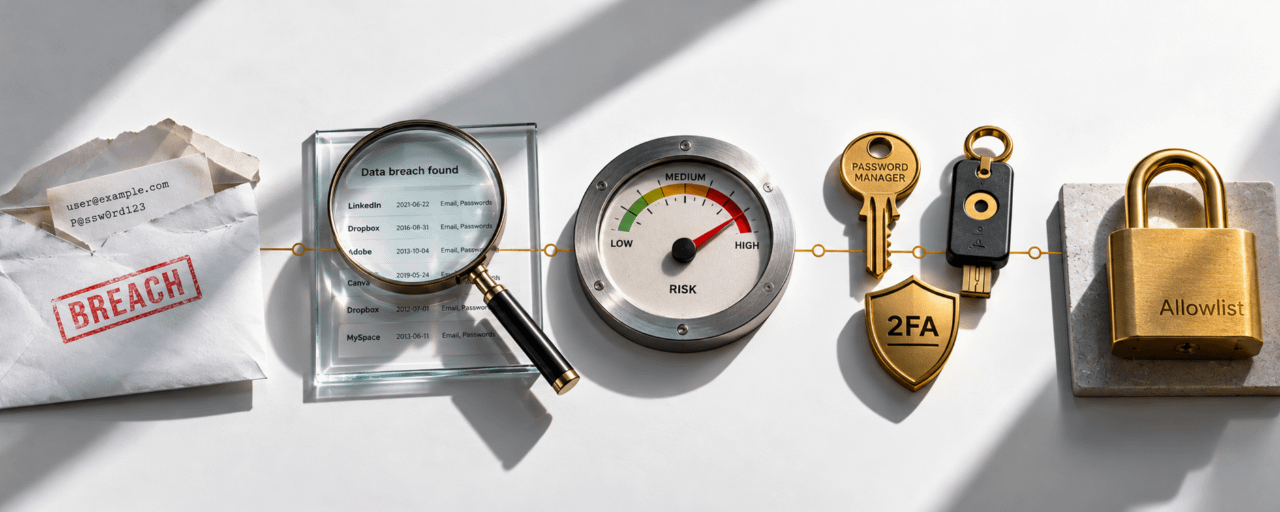
Article
How to Check if Your Data Was Leaked and What to Do NextYour personal data has probably been leaked. Not maybe probably. Over 16 billion records were exposed in data breaches in 2024 alone. If you have ever created an online account, used an email address to sign up for a service, or shopped online, your data exists in databases that may have been breached, sold, or published on the dark web. The question is not "was my data leaked?" it is "which leaks, and what do I do about it?"
Here is a practical guide to checking if your data was exposed, understanding what was leaked, and taking the right steps to protect yourself.
🔍 Part 1: How to Check if Your Data Was Leaked
Method 1 :Have I Been Pwned (haveibeenpwned.com)**This is the gold standard for checking data breaches. Created by security researcher Troy Hunt, the free tool lets you enter your email address or phone number and instantly see every known data breach that includes your data.
How to use it:
Go to haveibeenpwned.comEnter your email addressView the results every breach that contains your data is listed with:The name of the breached serviceThe date of the breachWhat data was exposed (email, password, name, phone, address, etc.)A description of what happened
What the results tell you: If your email appears in 3-5 breaches, that is normal in 2026. Most people have been in multiple breaches without knowing. What matters is what data was exposed in each one and whether you reused the same password across services.
Method 2 : Firefox Monitor
Mozilla's Firefox Monitor is a free tool that checks your email against known data breaches. It is integrated into Firefox browser and also available as a standalone website at monitor.mozilla.org.
How to use it:
Go to monitor.mozilla.orgEnter your email addressView the results similar to Have I Been Pwned but with a cleaner interface and breach notifications
Method 3 : Google Password Checkup
If you use Google Chrome or Google Account, Google's built-in Password Checkup tool checks your saved passwords against known breaches.
How to use it:
Go to mypasswords.google.comReview the "Password Checkup" sectionGoogle shows you which saved passwords have been exposed in known breaches and which are weak or reusedMethod 4 : Dark Web Monitoring Services
Several services actively monitor the dark web for your
Binance security alerts if you have a Binance account, enable security notifications to receive alerts if your email or credentials appear in breach databasesIdentity protection services services like LifeLock, IdentityForce, or similar providers monitor the dark web for your personal informationCredit monitoring in some countries, credit bureaus offer monitoring that alerts you when your data is used to open new accounts
Method 5 : Check Your Email for Breach Notifications
If a service you use has been breached, they are legally required (in most jurisdictions) to notify you by email. Search your inbox for terms like "data breach," "security incident,""we are writing to inform you," or "unauthorized access."
The problem: These emails often look like phishing attempts, so users ignore them. If you receive a breach notification from a service you use, do not click links in the email go directly to the service's website by typing the URL manually and check your account security settings there.
📊 What Kind of Data Gets Leaked and Why It Matters
Not all data breaches are equal. The severity depends on what was exposed.
Low risk email address alone: Your email is in a breach but no password, no financial data, no personal details. Risk: increased spam, phishing attempts targeting your email.
Medium risk : email + hashed password: Your email and an encrypted version of your password were exposed. If the password was weak or the hash was unsalted, attackers can crack it. Risk: if you reused this password on other services, those accounts are also compromised.
High risk : email + plaintext password: Your email and your actual password (not encrypted) were exposed. Risk: immediate account takeover on any service where you used the same password.
Critical risk : email + password + personal Your email, password, full name, date of birth, phone number, and/or physical address were exposed. Risk: identity theft, social engineering attacks, SIM swapping, and targeted phishing.
Severe risk : financial Your credit card number, bank account details, or payment credentials were exposed. Risk: financial fraud, unauthorized transactions, identity theft.
🛡️ Part 2: What to Do After a Data Leak
Step 1: Change Your Passwords Immediately
This is the first and most important step. If your password was leaked, it is now public. Anyone with access to the breach database has it.
How to do it right:
Change the password on the breached service firstChange the password on every other service where you used the same password (this is why password reuse is dangerous)Use a unique, randomly generated password for every account at least 16 characters with a mix of uppercase, lowercase, numbers, and symbolsUse a password manager (Bitwarden, 1Password, KeePass) to generate and store unique passwords so you never have to remember them
Step 2: Enable Two-Factor Authentication (2FA)
A stolen password is useless if the attacker cannot get past 2FA.
What to use:
Best: Passkeys (FIDO2/WebAuthn) resistant to phishing, SIM swaps, and credential theftGood: Authenticator apps (Google Authenticator, Authy, Raivo) generate time-based codesAcceptable: SMS-based 2FA better than nothing but vulnerable to SIM swappingNot acceptable: Email-based 2FA if your email is compromised, this is useless
On Binance specifically: passkeys, Google Authenticator, and anti-phishing codes are all available and strongly recommended.
Step 3: Check if Your Email Account Is Compromised
Your email account is the master key to your digital life. If an attacker has your email password, they can reset passwords on every service that uses that email including your crypto exchange, your bank, and your social media.
Signs your email is compromised:
Emails in your sent folder you did not sendPassword reset emails you did not requestRules or filters you did not create (attackers set these to hide password reset emails from your inbox)Login alerts from devices or locations you do not recognize
What to do:
Change your email password immediatelyCheck and delete any forwarding rules or filters you did not createReview recent login activityEnable 2FA on your email accountCheck connected apps and revoke access for anything you do not recognize
Step 4: Freeze Your Credit (If Available)
If personal data like your full name, date of birth, address, and government ID number were leaked, you are at risk of identity theft someone opening accounts in your name.
How to freeze your credit:- US: Contact Equifax, Experian, and TransUnion to freeze your credit (free by federal law)
UK: Contact Cif as to add a protective registration to your credit fileEU: Contact your national credit bureauAfrica: Check with your local credit bureau or financial regulator in many African countries, credit freezing is less formalized, so monitor your bank accounts and financial statements closely for unauthorized activity
Step 5: Monitor Your Accounts
After a data leak, stay vigilant for weeks and months.
What to monitor:
Bank and card statements for unauthorized transactionsEmail inbox for password reset emails you did not requestCrypto exchange accounts for unauthorized login attemptsSocial media accounts for posts or messages you did not sendPhone for SIM swap indicators (sudden loss of signal, inability to make calls)
On Binance: Enable login notifications, check your login history regularly, and enable withdrawal allowlisting so funds can only go to pre-approved addresses even if an attacker gains access to your account, they cannot withdraw to their own wallet.
Step 6: Report Identity Theft (If It Happens)
If your leaked data is used to commit identity theft someone opens accounts in your name, files taxes using your identity, or makes unauthorized transactions take these steps:
Contact the financial institution where the fraud occurred and report it immediatelyFile a police report this creates a legal record of the identity theftContact your national identity protection authority (if one exists in your country)In the US: file a report with the FTC at IdentityTheft.govIn Africa: contact your bank, your telecom provider (for SIM swap fraud), and local law enforcement
🔐 Part 3: How to Prevent Future Damage
Habit 1: Use a Password Manager
Stop reusing passwords. Stop trying to remember them. Use a password manager that generates unique, random passwords for every account and stores them encrypted.
Recommended:
Bitwarden free, open-source, cross-platform1Password paid, polished, family plans availableKeePass free, offline, maximum control, less user-friendly
Habit 2: Never Reuse Passwords
If you use the same password on five services and one of them is breached, all five are compromised. A password manager solves this every account gets a unique password.
Habit 3: Enable 2FA Everywhere
Not just on your crypto exchange. Enable 2FA on:
Your email account (most important it is the master key)Your crypto exchange accountsYour bank and financial appsYour social media accountsAny service that offers 2FA
Habit 4: Use Passkeys Where Available
Passkeys (FIDO2/WebAuthn) are the strongest authentication method available. They use cryptographic key pairs stored on your device your authentication never leaves your device and cannot be intercepted. Binance, Google, Apple, Microsoft, and many others now support passkeys.
Habit 5: Be Skeptical of Every Email and Message
After a data leak, attackers know your email address, your name, and possibly more. They will use this information to craft targeted phishing emails that look legitimate.
The rule: Never click a link in an email that asks you to log in, reset a password, or verify your identity. Always go to the website directly by typing the URL.
Habit 6: Set Up Breach Alerts
Subscribe to Have I Been Pwned notifications you will receive an email when your data appears in a new breachEnable security alerts on your Binance accountEnable login alerts on your email and social accounts
Habit 7: Use a Hardware Security Key for High-Value Accounts
For accounts that matter most your crypto exchange, your email, your bank consider a hardware security key like YubiKey or Google Titan. These are physical devices that provide FIDO2 authentication and are immune to phishing, SIM swaps, and credential theft.
🌍 Why This MattersMore in Africa
In many African countries, the safety net for identity theft is thinner than in Western markets. There may not be a federal trade commission to file a complaint with. Credit freezing may not be available. Consumer protection laws may be weaker.
This means prevention is everything. When the safety net is thin, the parachute matters more.
For users in Congo and similar markets:
Your phone number is a critical asset SIM swap attacks can give an attacker access to your SMS-based 2FA. Use authenticator apps or passkeys instead of SMS 2FA wherever possibleYour email account is your digital identity protect it with 2FA and a unique passwordYour crypto exchange account is your bank enable every security feature available: passkeys, 2FA, anti-phishing codes,and withdrawal allowlistingMobile money accounts (Orange Money, MTN, M-Pesa) should be secured with PINs and biometric authentication where available
❓ FAQs
Q: What should I do first if I find my data in a breach?
A: Change the password on the breached service immediately. Then change the password on every other service where you used the same password. Enable two-factor authentication on the breached service and on your email account. Check your email account for suspicious activity forwarding rules, login alerts, or password reset emails you did not request. If financial data was exposed, monitor your bank and card statements for unauthorized transactions.
Q: Is Have I Been Pwned safe to use?
A: Yes. Have I Been Pwned is a widely trusted, free tool created by security researcher Troy Hunt. It only stores email addresses and breach data it does not store passwords or personal information. When you search your email, the site does not reveal your full email to anyone else. It is used by security professionals, governments, and Fortune 500 companies. It is the industry standard for breach checking.
Q: What is the difference between a data breach and a data leak?
A: A data breach is a security incident where an attacker gains unauthorized access to a system and steals data for example, a hacker breaking into a company's database and exporting user records. A data leak is when data is exposed due to misconfiguration or human error for example, a company leaving a database open to the internet without a password. Both result in your data being exposed,and the steps you take to protect yourself are the same: change passwords, enable 2FA, and monitor for suspicious activity.
📌 Sources: Have I Been Pwned official site; Mozilla Firefox Monitor; Google Password Checkup; Binance security features official page; FTC Identity Theft guide (IdentityTheft.gov).
⚠️ Educational content only. This guide provides general cybersecurity best practices and does not guarantee protection against all threats. Always follow the specific security recommendations of the services you use.
How to Check if Your Data Was Leaked and What to Do Next
Your personal data has probably been leaked. Not maybe probably. Over 16 billion records were exposed in data breaches in 2024 alone. If you have ever created an online account, used an email address to sign up for a service, or shopped online, your data exists in databases that may have been breached, sold, or published on the dark web. The question is not "was my data leaked?" it is "which leaks, and what do I do about it?"
Here is a practical guide to checking if your data was exposed, understanding what was leaked, and taking the right steps to protect yourself.
🔍 Part 1: How to Check if Your Data Was Leaked
Method 1 :Have I Been Pwned (haveibeenpwned.com)**This is the gold standard for checking data breaches. Created by security researcher Troy Hunt, the free tool lets you enter your email address or phone number and instantly see every known data breach that includes your data.
How to use it:
Go to haveibeenpwned.comEnter your email addressView the results every breach that contains your data is listed with:The name of the breached serviceThe date of the breachWhat data was exposed (email, password, name, phone, address, etc.)A description of what happened
What the results tell you: If your email appears in 3-5 breaches, that is normal in 2026. Most people have been in multiple breaches without knowing. What matters is what data was exposed in each one and whether you reused the same password across services.
Method 2 : Firefox Monitor
Mozilla's Firefox Monitor is a free tool that checks your email against known data breaches. It is integrated into Firefox browser and also available as a standalone website at monitor.mozilla.org.
How to use it:
Go to monitor.mozilla.orgEnter your email addressView the results similar to Have I Been Pwned but with a cleaner interface and breach notifications
Method 3 : Google Password Checkup
If you use Google Chrome or Google Account, Google's built-in Password Checkup tool checks your saved passwords against known breaches.
How to use it:
Go to mypasswords.google.comReview the "Password Checkup" sectionGoogle shows you which saved passwords have been exposed in known breaches and which are weak or reusedMethod 4 : Dark Web Monitoring Services
Several services actively monitor the dark web for your
Binance security alerts if you have a Binance account, enable security notifications to receive alerts if your email or credentials appear in breach databasesIdentity protection services services like LifeLock, IdentityForce, or similar providers monitor the dark web for your personal informationCredit monitoring in some countries, credit bureaus offer monitoring that alerts you when your data is used to open new accounts
Method 5 : Check Your Email for Breach Notifications
If a service you use has been breached, they are legally required (in most jurisdictions) to notify you by email. Search your inbox for terms like "data breach," "security incident,""we are writing to inform you," or "unauthorized access."
The problem: These emails often look like phishing attempts, so users ignore them. If you receive a breach notification from a service you use, do not click links in the email go directly to the service's website by typing the URL manually and check your account security settings there.
📊 What Kind of Data Gets Leaked and Why It Matters
Not all data breaches are equal. The severity depends on what was exposed.
Low risk email address alone: Your email is in a breach but no password, no financial data, no personal details. Risk: increased spam, phishing attempts targeting your email.
Medium risk : email + hashed password: Your email and an encrypted version of your password were exposed. If the password was weak or the hash was unsalted, attackers can crack it. Risk: if you reused this password on other services, those accounts are also compromised.
High risk : email + plaintext password: Your email and your actual password (not encrypted) were exposed. Risk: immediate account takeover on any service where you used the same password.
Critical risk : email + password + personal Your email, password, full name, date of birth, phone number, and/or physical address were exposed. Risk: identity theft, social engineering attacks, SIM swapping, and targeted phishing.
Severe risk : financial Your credit card number, bank account details, or payment credentials were exposed. Risk: financial fraud, unauthorized transactions, identity theft.
🛡️ Part 2: What to Do After a Data Leak
Step 1: Change Your Passwords Immediately
This is the first and most important step. If your password was leaked, it is now public. Anyone with access to the breach database has it.
How to do it right:
Change the password on the breached service firstChange the password on every other service where you used the same password (this is why password reuse is dangerous)Use a unique, randomly generated password for every account at least 16 characters with a mix of uppercase, lowercase, numbers, and symbolsUse a password manager (Bitwarden, 1Password, KeePass) to generate and store unique passwords so you never have to remember them
Step 2: Enable Two-Factor Authentication (2FA)
A stolen password is useless if the attacker cannot get past 2FA.
What to use:
Best: Passkeys (FIDO2/WebAuthn) resistant to phishing, SIM swaps, and credential theftGood: Authenticator apps (Google Authenticator, Authy, Raivo) generate time-based codesAcceptable: SMS-based 2FA better than nothing but vulnerable to SIM swappingNot acceptable: Email-based 2FA if your email is compromised, this is useless
On Binance specifically: passkeys, Google Authenticator, and anti-phishing codes are all available and strongly recommended.
Step 3: Check if Your Email Account Is Compromised
Your email account is the master key to your digital life. If an attacker has your email password, they can reset passwords on every service that uses that email including your crypto exchange, your bank, and your social media.
Signs your email is compromised:
Emails in your sent folder you did not sendPassword reset emails you did not requestRules or filters you did not create (attackers set these to hide password reset emails from your inbox)Login alerts from devices or locations you do not recognize
What to do:
Change your email password immediatelyCheck and delete any forwarding rules or filters you did not createReview recent login activityEnable 2FA on your email accountCheck connected apps and revoke access for anything you do not recognize
Step 4: Freeze Your Credit (If Available)
If personal data like your full name, date of birth, address, and government ID number were leaked, you are at risk of identity theft someone opening accounts in your name.
How to freeze your credit:- US: Contact Equifax, Experian, and TransUnion to freeze your credit (free by federal law)
UK: Contact Cif as to add a protective registration to your credit fileEU: Contact your national credit bureauAfrica: Check with your local credit bureau or financial regulator in many African countries, credit freezing is less formalized, so monitor your bank accounts and financial statements closely for unauthorized activity
Step 5: Monitor Your Accounts
After a data leak, stay vigilant for weeks and months.
What to monitor:
Bank and card statements for unauthorized transactionsEmail inbox for password reset emails you did not requestCrypto exchange accounts for unauthorized login attemptsSocial media accounts for posts or messages you did not sendPhone for SIM swap indicators (sudden loss of signal, inability to make calls)
On Binance: Enable login notifications, check your login history regularly, and enable withdrawal allowlisting so funds can only go to pre-approved addresses even if an attacker gains access to your account, they cannot withdraw to their own wallet.
Step 6: Report Identity Theft (If It Happens)
If your leaked data is used to commit identity theft someone opens accounts in your name, files taxes using your identity, or makes unauthorized transactions take these steps:
Contact the financial institution where the fraud occurred and report it immediatelyFile a police report this creates a legal record of the identity theftContact your national identity protection authority (if one exists in your country)In the US: file a report with the FTC at IdentityTheft.govIn Africa: contact your bank, your telecom provider (for SIM swap fraud), and local law enforcement
🔐 Part 3: How to Prevent Future Damage
Habit 1: Use a Password Manager
Stop reusing passwords. Stop trying to remember them. Use a password manager that generates unique, random passwords for every account and stores them encrypted.
Recommended:
Bitwarden free, open-source, cross-platform1Password paid, polished, family plans availableKeePass free, offline, maximum control, less user-friendly
Habit 2: Never Reuse Passwords
If you use the same password on five services and one of them is breached, all five are compromised. A password manager solves this every account gets a unique password.
Habit 3: Enable 2FA Everywhere
Not just on your crypto exchange. Enable 2FA on:
Your email account (most important it is the master key)Your crypto exchange accountsYour bank and financial appsYour social media accountsAny service that offers 2FA
Habit 4: Use Passkeys Where Available
Passkeys (FIDO2/WebAuthn) are the strongest authentication method available. They use cryptographic key pairs stored on your device your authentication never leaves your device and cannot be intercepted. Binance, Google, Apple, Microsoft, and many others now support passkeys.
Habit 5: Be Skeptical of Every Email and Message
After a data leak, attackers know your email address, your name, and possibly more. They will use this information to craft targeted phishing emails that look legitimate.
The rule: Never click a link in an email that asks you to log in, reset a password, or verify your identity. Always go to the website directly by typing the URL.
Habit 6: Set Up Breach Alerts
Subscribe to Have I Been Pwned notifications you will receive an email when your data appears in a new breachEnable security alerts on your Binance accountEnable login alerts on your email and social accounts
Habit 7: Use a Hardware Security Key for High-Value Accounts
For accounts that matter most your crypto exchange, your email, your bank consider a hardware security key like YubiKey or Google Titan. These are physical devices that provide FIDO2 authentication and are immune to phishing, SIM swaps, and credential theft.
🌍 Why This MattersMore in Africa
In many African countries, the safety net for identity theft is thinner than in Western markets. There may not be a federal trade commission to file a complaint with. Credit freezing may not be available. Consumer protection laws may be weaker.
This means prevention is everything. When the safety net is thin, the parachute matters more.
For users in Congo and similar markets:
Your phone number is a critical asset SIM swap attacks can give an attacker access to your SMS-based 2FA. Use authenticator apps or passkeys instead of SMS 2FA wherever possibleYour email account is your digital identity protect it with 2FA and a unique passwordYour crypto exchange account is your bank enable every security feature available: passkeys, 2FA, anti-phishing codes,and withdrawal allowlistingMobile money accounts (Orange Money, MTN, M-Pesa) should be secured with PINs and biometric authentication where available
❓ FAQs
Q: What should I do first if I find my data in a breach?
A: Change the password on the breached service immediately. Then change the password on every other service where you used the same password. Enable two-factor authentication on the breached service and on your email account. Check your email account for suspicious activity forwarding rules, login alerts, or password reset emails you did not request. If financial data was exposed, monitor your bank and card statements for unauthorized transactions.
Q: Is Have I Been Pwned safe to use?
A: Yes. Have I Been Pwned is a widely trusted, free tool created by security researcher Troy Hunt. It only stores email addresses and breach data it does not store passwords or personal information. When you search your email, the site does not reveal your full email to anyone else. It is used by security professionals, governments, and Fortune 500 companies. It is the industry standard for breach checking.
Q: What is the difference between a data breach and a data leak?
A: A data breach is a security incident where an attacker gains unauthorized access to a system and steals data for example, a hacker breaking into a company's database and exporting user records. A data leak is when data is exposed due to misconfiguration or human error for example, a company leaving a database open to the internet without a password. Both result in your data being exposed,and the steps you take to protect yourself are the same: change passwords, enable 2FA, and monitor for suspicious activity.
📌 Sources: Have I Been Pwned official site; Mozilla Firefox Monitor; Google Password Checkup; Binance security features official page; FTC Identity Theft guide (IdentityTheft.gov).
⚠️ Educational content only. This guide provides general cybersecurity best practices and does not guarantee protection against all threats. Always follow the specific security recommendations of the services you use.
Here is a practical guide to checking if your data was exposed, understanding what was leaked, and taking the right steps to protect yourself.
🔍 Part 1: How to Check if Your Data Was Leaked
Method 1 :Have I Been Pwned (haveibeenpwned.com)**This is the gold standard for checking data breaches. Created by security researcher Troy Hunt, the free tool lets you enter your email address or phone number and instantly see every known data breach that includes your data.
How to use it:
Go to haveibeenpwned.comEnter your email addressView the results every breach that contains your data is listed with:The name of the breached serviceThe date of the breachWhat data was exposed (email, password, name, phone, address, etc.)A description of what happened
What the results tell you: If your email appears in 3-5 breaches, that is normal in 2026. Most people have been in multiple breaches without knowing. What matters is what data was exposed in each one and whether you reused the same password across services.
Method 2 : Firefox Monitor
Mozilla's Firefox Monitor is a free tool that checks your email against known data breaches. It is integrated into Firefox browser and also available as a standalone website at monitor.mozilla.org.
How to use it:
Go to monitor.mozilla.orgEnter your email addressView the results similar to Have I Been Pwned but with a cleaner interface and breach notifications
Method 3 : Google Password Checkup
If you use Google Chrome or Google Account, Google's built-in Password Checkup tool checks your saved passwords against known breaches.
How to use it:
Go to mypasswords.google.comReview the "Password Checkup" sectionGoogle shows you which saved passwords have been exposed in known breaches and which are weak or reusedMethod 4 : Dark Web Monitoring Services
Several services actively monitor the dark web for your
Binance security alerts if you have a Binance account, enable security notifications to receive alerts if your email or credentials appear in breach databasesIdentity protection services services like LifeLock, IdentityForce, or similar providers monitor the dark web for your personal informationCredit monitoring in some countries, credit bureaus offer monitoring that alerts you when your data is used to open new accounts
Method 5 : Check Your Email for Breach Notifications
If a service you use has been breached, they are legally required (in most jurisdictions) to notify you by email. Search your inbox for terms like "data breach," "security incident,""we are writing to inform you," or "unauthorized access."
The problem: These emails often look like phishing attempts, so users ignore them. If you receive a breach notification from a service you use, do not click links in the email go directly to the service's website by typing the URL manually and check your account security settings there.
📊 What Kind of Data Gets Leaked and Why It Matters
Not all data breaches are equal. The severity depends on what was exposed.
Low risk email address alone: Your email is in a breach but no password, no financial data, no personal details. Risk: increased spam, phishing attempts targeting your email.
Medium risk : email + hashed password: Your email and an encrypted version of your password were exposed. If the password was weak or the hash was unsalted, attackers can crack it. Risk: if you reused this password on other services, those accounts are also compromised.
High risk : email + plaintext password: Your email and your actual password (not encrypted) were exposed. Risk: immediate account takeover on any service where you used the same password.
Critical risk : email + password + personal Your email, password, full name, date of birth, phone number, and/or physical address were exposed. Risk: identity theft, social engineering attacks, SIM swapping, and targeted phishing.
Severe risk : financial Your credit card number, bank account details, or payment credentials were exposed. Risk: financial fraud, unauthorized transactions, identity theft.
🛡️ Part 2: What to Do After a Data Leak
Step 1: Change Your Passwords Immediately
This is the first and most important step. If your password was leaked, it is now public. Anyone with access to the breach database has it.
How to do it right:
Change the password on the breached service firstChange the password on every other service where you used the same password (this is why password reuse is dangerous)Use a unique, randomly generated password for every account at least 16 characters with a mix of uppercase, lowercase, numbers, and symbolsUse a password manager (Bitwarden, 1Password, KeePass) to generate and store unique passwords so you never have to remember them
Step 2: Enable Two-Factor Authentication (2FA)
A stolen password is useless if the attacker cannot get past 2FA.
What to use:
Best: Passkeys (FIDO2/WebAuthn) resistant to phishing, SIM swaps, and credential theftGood: Authenticator apps (Google Authenticator, Authy, Raivo) generate time-based codesAcceptable: SMS-based 2FA better than nothing but vulnerable to SIM swappingNot acceptable: Email-based 2FA if your email is compromised, this is useless
On Binance specifically: passkeys, Google Authenticator, and anti-phishing codes are all available and strongly recommended.
Step 3: Check if Your Email Account Is Compromised
Your email account is the master key to your digital life. If an attacker has your email password, they can reset passwords on every service that uses that email including your crypto exchange, your bank, and your social media.
Signs your email is compromised:
Emails in your sent folder you did not sendPassword reset emails you did not requestRules or filters you did not create (attackers set these to hide password reset emails from your inbox)Login alerts from devices or locations you do not recognize
What to do:
Change your email password immediatelyCheck and delete any forwarding rules or filters you did not createReview recent login activityEnable 2FA on your email accountCheck connected apps and revoke access for anything you do not recognize
Step 4: Freeze Your Credit (If Available)
If personal data like your full name, date of birth, address, and government ID number were leaked, you are at risk of identity theft someone opening accounts in your name.
How to freeze your credit:- US: Contact Equifax, Experian, and TransUnion to freeze your credit (free by federal law)
UK: Contact Cif as to add a protective registration to your credit fileEU: Contact your national credit bureauAfrica: Check with your local credit bureau or financial regulator in many African countries, credit freezing is less formalized, so monitor your bank accounts and financial statements closely for unauthorized activity
Step 5: Monitor Your Accounts
After a data leak, stay vigilant for weeks and months.
What to monitor:
Bank and card statements for unauthorized transactionsEmail inbox for password reset emails you did not requestCrypto exchange accounts for unauthorized login attemptsSocial media accounts for posts or messages you did not sendPhone for SIM swap indicators (sudden loss of signal, inability to make calls)
On Binance: Enable login notifications, check your login history regularly, and enable withdrawal allowlisting so funds can only go to pre-approved addresses even if an attacker gains access to your account, they cannot withdraw to their own wallet.
Step 6: Report Identity Theft (If It Happens)
If your leaked data is used to commit identity theft someone opens accounts in your name, files taxes using your identity, or makes unauthorized transactions take these steps:
Contact the financial institution where the fraud occurred and report it immediatelyFile a police report this creates a legal record of the identity theftContact your national identity protection authority (if one exists in your country)In the US: file a report with the FTC at IdentityTheft.govIn Africa: contact your bank, your telecom provider (for SIM swap fraud), and local law enforcement
🔐 Part 3: How to Prevent Future Damage
Habit 1: Use a Password Manager
Stop reusing passwords. Stop trying to remember them. Use a password manager that generates unique, random passwords for every account and stores them encrypted.
Recommended:
Bitwarden free, open-source, cross-platform1Password paid, polished, family plans availableKeePass free, offline, maximum control, less user-friendly
Habit 2: Never Reuse Passwords
If you use the same password on five services and one of them is breached, all five are compromised. A password manager solves this every account gets a unique password.
Habit 3: Enable 2FA Everywhere
Not just on your crypto exchange. Enable 2FA on:
Your email account (most important it is the master key)Your crypto exchange accountsYour bank and financial appsYour social media accountsAny service that offers 2FA
Habit 4: Use Passkeys Where Available
Passkeys (FIDO2/WebAuthn) are the strongest authentication method available. They use cryptographic key pairs stored on your device your authentication never leaves your device and cannot be intercepted. Binance, Google, Apple, Microsoft, and many others now support passkeys.
Habit 5: Be Skeptical of Every Email and Message
After a data leak, attackers know your email address, your name, and possibly more. They will use this information to craft targeted phishing emails that look legitimate.
The rule: Never click a link in an email that asks you to log in, reset a password, or verify your identity. Always go to the website directly by typing the URL.
Habit 6: Set Up Breach Alerts
Subscribe to Have I Been Pwned notifications you will receive an email when your data appears in a new breachEnable security alerts on your Binance accountEnable login alerts on your email and social accounts
Habit 7: Use a Hardware Security Key for High-Value Accounts
For accounts that matter most your crypto exchange, your email, your bank consider a hardware security key like YubiKey or Google Titan. These are physical devices that provide FIDO2 authentication and are immune to phishing, SIM swaps, and credential theft.
🌍 Why This MattersMore in Africa
In many African countries, the safety net for identity theft is thinner than in Western markets. There may not be a federal trade commission to file a complaint with. Credit freezing may not be available. Consumer protection laws may be weaker.
This means prevention is everything. When the safety net is thin, the parachute matters more.
For users in Congo and similar markets:
Your phone number is a critical asset SIM swap attacks can give an attacker access to your SMS-based 2FA. Use authenticator apps or passkeys instead of SMS 2FA wherever possibleYour email account is your digital identity protect it with 2FA and a unique passwordYour crypto exchange account is your bank enable every security feature available: passkeys, 2FA, anti-phishing codes,and withdrawal allowlistingMobile money accounts (Orange Money, MTN, M-Pesa) should be secured with PINs and biometric authentication where available
❓ FAQs
Q: What should I do first if I find my data in a breach?
A: Change the password on the breached service immediately. Then change the password on every other service where you used the same password. Enable two-factor authentication on the breached service and on your email account. Check your email account for suspicious activity forwarding rules, login alerts, or password reset emails you did not request. If financial data was exposed, monitor your bank and card statements for unauthorized transactions.
Q: Is Have I Been Pwned safe to use?
A: Yes. Have I Been Pwned is a widely trusted, free tool created by security researcher Troy Hunt. It only stores email addresses and breach data it does not store passwords or personal information. When you search your email, the site does not reveal your full email to anyone else. It is used by security professionals, governments, and Fortune 500 companies. It is the industry standard for breach checking.
Q: What is the difference between a data breach and a data leak?
A: A data breach is a security incident where an attacker gains unauthorized access to a system and steals data for example, a hacker breaking into a company's database and exporting user records. A data leak is when data is exposed due to misconfiguration or human error for example, a company leaving a database open to the internet without a password. Both result in your data being exposed,and the steps you take to protect yourself are the same: change passwords, enable 2FA, and monitor for suspicious activity.
📌 Sources: Have I Been Pwned official site; Mozilla Firefox Monitor; Google Password Checkup; Binance security features official page; FTC Identity Theft guide (IdentityTheft.gov).
⚠️ Educational content only. This guide provides general cybersecurity best practices and does not guarantee protection against all threats. Always follow the specific security recommendations of the services you use.
181
·
--

Article
5 Red Flags to Check Before Choosing a Crypto or Financial PlatformUnclear licensing, commingled funds, no proof of reserves, no emergency fund, weak account controls these are the warning signs. Binance addresses all five: regulated entities, segregated custody, PoR with Merkle verification, $1B SAFU, and passkeys + 2FA + anti-phishing codes + withdrawal allowlisting.
🚩 Why This Matters More Than Ever
The crypto industry has matured. The days of "just pick an exchange and hope" are over. In 2026, users have real choices Binance, Coinbase, Kraken, Revolut, Robinhood, and dozens of smaller platforms. But with choice comes risk: not every platform is built the same, and the difference between a secure, regulated,well-capitalized exchange and a poorly managed one is the difference between your money being safe and your money being gone.
The problem is that most users especially new users in emerging markets do not know what to check before depositing funds. They look at the interface, the token list, the fees, and maybe a referral bonus. They do not look at the things that actually determine whether their money is safe.
This article fixes that. Here are 5 red flags to check before you trust any crypto or financial platform with your money and how Binance addresses each one.
🚩 Red Flag #1: Unclear or Missing Licensing
The red flag: A platform operates without clear regulatory licensing in the jurisdictions it serves. There is no information about which entities are regulated, by which regulators, under which licenses. The "About Us" page is vague. The legal entity structure is hidden. The terms of service reference a shell company in an obscure jurisdiction.
Why this matters: Without regulatory oversight, there is no accountability. If the platform mismanages funds, freezes accounts unjustly, or collapses entirely, users have no regulatory body to turn to. No license means no recourse.
What to check:
Does the platform clearly state which entities are regulated and by which regulators?Are the licenses verifiable on the regulator's official website?Does the platform operate through regulated entities in major jurisdictions (EU, UK, US, Asia)?Is the legal entity structure transparent and publicly documented?
How Binance addresses this:
Binance operates through a network of regulated entities across multiple jurisdictions. This includes regulated entities in Europe (via Binance's EU hub), the Middle East (via Binance Bahrain, regulated by the Central Bank of Bahrain), and other major markets. Each entity is licensed, audited, and subject to regulatory oversight by the relevant local authority.
Binance publishes information about its regulatory licenses and entity structure publicly. Users can verify which entity serves their region and under which regulatory framework.
The takeaway: If a platform cannot clearly tell you who regulates it, do not deposit money. A regulated platform states its licenses proudly. An unregulated platform hides them.
🚩 Red Flag #2: Commingled Funds Your Money Mixed With Theirs
The red flag: A platform does not segregate user funds from corporate funds. User deposits go into the same pool of money that the platform uses for its own operations, expenses, and investments. There is no clear separation between "money that belongs to users" and "money that belongs to the platform."
Why this matters: If the platform goes bankrupt, gets sued, or experiences a financial crisis, commingled funds mean your money is legally indistinguishable from the platform's money. You become an unsecured creditor standing in line behind other creditors, hoping to recover a fraction of what you deposited.
This is exactly what happened in the FTX collapse. User funds were commingled with Alameda Research's trading capital. When the scheme unraveled, users discovered their money was not theirs it was gone, mixed in to a pool of corporate losses.
What to check:
Does the platform explicitly state that user funds are held in segregated accounts?Are user funds separate from the platform's operational funds?Does the platform use third-party custodians to hold user assets?Is the custody structure documented and verifiable?
How Binance addresses this:
Binance maintains segregated custody user funds are held separately from corporate funds. User assets are kept in dedicated wallets and accounts that are distinct from Binance's operational treasury.
This means that even in a worst-case scenario Binance experiencing financial difficulty user funds are not accessible to Binance's creditors. Your money is your money. It is not mixed with Binance's money.
The takeaway: If a platform can not clearly explain how user funds are separated from corporate funds, do not deposit money. Commingled funds are the number one cause of total loss in exchange failures.
🚩 Red Flag #3: No Proof of Reserves
The red flag: A platform does not provide any verifiable proof that it actually holds the assets it claims to hold. The platform's "we are solvent" statement is a press release, not a cryptographic proof. There is no way for users to independently verify that their balance exists on the platform's books.
Why this matters: Without proof of reserves, you are trusting the platform's word. The entire history of crypto exchange failures Mt. Gox, FTX, Celsius, BlockFi involves platforms that claimed to be solvent while secretly being insolvent. A statement is not proof.A screenshot is not proof. An audit that covers only a snapshot is not proof.
Real proof of reserves must be:
Cryptographic using Merkle trees or similar verifiable data structuresUser-verifiable individual users can confirm their own balance is includedRegular published on a recurring schedule, not once a yearComprehensive covering all user assets, not just a subset
What to check:
Does the platform publish Proof of Reserves?Is the PoR cryptographic (Merkle-based) or just a PDF statement?Can individual users verify their own balance is included?How often is the PoR updated?
How Binance addresses this:
Binance publishes Proof of Reserves using Merkle tree verification a cryptographic method that allows individual users to verify that theirspecific balance is included in the total reserves, without revealing their identity or balance to the public.
Users can verify their own inclusion by generating a Merkle hash from their account and checking it against the published Merkle root. This is not a trust-based system. It is a math-based system. Either your balance is in the tree or it is not and you can check yourself.
Binance publishes PoR regularly, covering all major assets (BTC, ETH, USDT, USDC, BNB, and more). The system is designed so that any user can independently verify that Binance holds the assets it claims to hold.
The takeaway: If a platform says "trust us, we are solvent" but provides no cryptographic proof, that is a red flag. Merkle-verified PoR is the industry standard. Platforms that do not provide it are choosing opacity over transparency.
🚩 Red Flag #4: No Emergency Fund or Insurance
The red flag: A platform has no dedicated emergency fund or insurance pool to protect users in case of a breach, hack, or catastrophic event. If something goes wrong, the platform's plan is "we will figure it out" which usually means users absorb the loss.
Why this matters: Crypto platforms hold billions of dollars in user assets. Even with the best security practices, the possibility of a breach, smart contract exploit, or unforeseen event is never zero. A platform without an emergency fund is asking users to bear 100% of the tail risk.
Traditional banks have deposit insurance (FDIC in the US, equivalent schemes in other countries). Most crypto platforms do not because crypto is not traditional banking. But the responsible ones have their own equivalent.
What to check:
Does the platform have a dedicated emergency fund?How large is the fund relative to user assets?Is the fund separate from operational funds?Has the fund ever been used, and how did the platform handle the incident?
How Binance addresses this:
Binance maintains the SAFU (Secure Asset Fund for Users) a dedicated emergency fund currently valued at over $1 billion.
SAFU was established in 2018 and is funded by allocating a portion of trading fees. The fund is held in separate cold wallets and is not accessible for operational expenses, corporate investments, or any purpose other than compensating users in the event of a breach or catastrophic event.
SAFU has been used in 2019,Binance experienced a hack that resulted in the loss of 7,000 BTC (approximately $40 million at the time). Binance covered the full loss from SAFU. No user lost a single satoshi. That is what an emergency fund is for and that is the difference between a platform that plans for the worst and one that does not.
The takeaway: A platform without an emergency fund is asking you to take the risk that they never make a mistake. No platform can guarantee that. The responsible ones have a fund to protect you when not if something goes wrong.
🚩 Red Flag #5: Weak Account Controls
The red flag: A platform offers only basic username-and-password authentication. No 2FA options, no anti-phishing protections, no withdrawal allowlisting, no device management, no passkey support. The security model is "pick a strong password and hope."
Why this matters: The most common way users lose funds on crypto platforms is not through a platform hack it is through account takeover. Phishing emails, SIM swaps, credential stuffing, malicious browser extensions, and social engineering attacks all target the user's account access. A platform with weak account controls makes these attacks easy.
The attack vectors that strong account controls must address:
Phishing fake emails and websites that steal login credentialsSIM swapping attackers take over your phone number to intercept SMS-based 2FACredential stuffing attackers use leaked passwords from other services to try your accountMalware key loggers and clipboard hijackers that steal passwords andcopy-pasted addressesSocial engineering attackers manipulate support teams into resetting your account
What to check:
Does the platform support hardware security keys (FIDO2/Web Authn passkeys)?Is 2FA mandatory or optional? (Optional 2FA means most users will not enable it)Does the platform offer anti-phishing codes for emails?Can you allowlist specific withdrawal addresses so funds can only go to pre-approved wallets?Can you manage and revoke active sessions and devices?
How Binance addresses this:
Binance provides a multi-layer account security system that addresses every major attack vector:
Passkeys (FIDO2/Web Authn): Binance supports passkeys the strongest authentication method available, resistant to phishing, SIM swaps, and credential theft. Pass keys use cryptographic key pairs stored on your device, meaning your authentication never leaves your device and cannot be intercepted.
2FA (Two-Factor Authentication): Binance supports Google Authenticator and other TOTP-based 2FA apps stronger than SMS-based 2FA, which is vulnerable to SIM swapping. Users are strongly encouraged to enable 2FA, and certain actions (withdrawals, API key creation) require it.
Anti-phishing codes: Binance allows users to set a custom anti-phishing code that appears in every legitimate email from Binance. If an email does not contain your code, it is not from Binance. This defeats phishing emails that impersonate Binance users can immediately identify fake emails.
Withdrawal allowlisting: Binance allows users to create a whitelist of approved withdrawal addresses.Once enabled, withdrawals can only go to addresses on the list meaning even if an attacker gains access to your account, they cannot send funds to their own wallet.
Device and session management: Binance tracks active sessions and devices, allowing users to review and revoke access from any device at any time. If you see a login from a device you do not recognize, you can terminate that session immediately.
The takeaway: A platform that only offers username and password is not serious about your security. The minimum standard in 2026 is passkeys, 2FA, anti-phishing codes, and withdrawal allowlisting. If a platform does not offer all four, your account is one phishing email away from being drained.
🏆 The Full Checklist How to Evaluate Any Platform in 5 Minutes
Before you deposit1. Licensing: Can you find clear, verifiable information about which regulators oversee the platform? If no red flag.
2. Segregated custody: Does the platform explicitly state that user funds are separate from corporate funds? If no red flag.
3. Proof of Reserves: Does the platform publish cryptographic, user-verifiable Proof of Reserves? If no red flag.
4. Emergency fund: Does the platform have a dedicated fund to protect users in case of a breach? If no red flag.
5. Account controls: Does the platform support passkeys, 2FA, anti-phishing codes, and withdrawal allowlisting? If no red flag.
If a platform fails even one of these checks, ask yourself why. If it fails two or more, do not deposit money.
🌍 Why This Matters for African Users Specifically
For users in Africa where regulatory consumer protection is often weaker, banking infrastructure is less reliable, and recourse in case of platform failure is limited these five checks are not optional. They are the difference between a platform that is safe to use and one that is a gamble.
In Congo, you cannot call a financial ombudsman if a crypto platform loses your money. You cannot rely on deposit insurance from a local regulator. You cannot file a class-action lawsuit. The only protection you have is choosing a platform that has built its own protections regulated entities, segregated custody, cryptographic PoR, a billion-dollar emergency fund, and multi-layer account security.
That is why these five red flags matter more in Africa than anywhere else. When external protections are weak, the platform's own protections are everything.
Binance passes all five checks. Most platforms do not. That is not marketing — that is a checklist you can run yourself right now.
❓ FAQs
Q: What is Proof of Reserves and how can I verify it myself? A: Proof of Reserves (PoR) is a cryptographic method that allows a platform to prove it holds the assets it claims to hold, without revealing individual user balances. Binance uses Merkle tree verification each user's balance is included as a leaf in a Merkle tree, and the platform publishes the Merkle root. Users can generate a unique Merkle hash from their own account and verify that their balance is included in the published tree. This means Binance can notinflate its reserves or exclude user balances the math either adds up or it does not, and you can check it yourself.
Q: What is SAFU and how does it protect users? A: SAFU (Secure Asset Fund for Users) is Binance's dedicated emergency fund, currently valued at over $1 billion. It was created in 2018 and is funded by allocating a portion of trading fees. The fund is held in separate cold wallets and is not used for operational expenses. In the event of a breach, hack, or catastrophic event, SAFU is used to compensate affected users as it was in the 2019 Binance hack, where 7,000 BTC were stolen and fully covered by SAFU with zero user loss.
Q: What is the difference between commingled funds and segregated custody? A: Commingled funds means user deposits are mixed with the platform'scorporate funds if the platform goes bankrupt, user money is legally indistinguishable from corporate money and users become unsecured creditors. Segregated custody means user funds are held in separate accounts and wallets, distinct from the platform's operational funds. In the event of platform failure, segregated funds remain user property and are not accessible to the platform's creditors. Binance maintains segregated custody user funds are never mixed with corporate funds.
📌 Sources: Binance Proof of Reserves official page; Binance SAFU documentation; Binance security features official page; Binance regulatory licenses public information.
⚠️ Educational content only. This checklist is a general guide for evaluating crypto and financial platforms and does not guarantee the safety of anyplatform. Always do your own research before depositing funds. Does not constitute financial advice.
5 Red Flags to Check Before Choosing a Crypto or Financial Platform
Unclear licensing, commingled funds, no proof of reserves, no emergency fund, weak account controls these are the warning signs. Binance addresses all five: regulated entities, segregated custody, PoR with Merkle verification, $1B SAFU, and passkeys + 2FA + anti-phishing codes + withdrawal allowlisting.
🚩 Why This Matters More Than Ever
The crypto industry has matured. The days of "just pick an exchange and hope" are over. In 2026, users have real choices Binance, Coinbase, Kraken, Revolut, Robinhood, and dozens of smaller platforms. But with choice comes risk: not every platform is built the same, and the difference between a secure, regulated,well-capitalized exchange and a poorly managed one is the difference between your money being safe and your money being gone.
The problem is that most users especially new users in emerging markets do not know what to check before depositing funds. They look at the interface, the token list, the fees, and maybe a referral bonus. They do not look at the things that actually determine whether their money is safe.
This article fixes that. Here are 5 red flags to check before you trust any crypto or financial platform with your money and how Binance addresses each one.
🚩 Red Flag #1: Unclear or Missing Licensing
The red flag: A platform operates without clear regulatory licensing in the jurisdictions it serves. There is no information about which entities are regulated, by which regulators, under which licenses. The "About Us" page is vague. The legal entity structure is hidden. The terms of service reference a shell company in an obscure jurisdiction.
Why this matters: Without regulatory oversight, there is no accountability. If the platform mismanages funds, freezes accounts unjustly, or collapses entirely, users have no regulatory body to turn to. No license means no recourse.
What to check:
Does the platform clearly state which entities are regulated and by which regulators?Are the licenses verifiable on the regulator's official website?Does the platform operate through regulated entities in major jurisdictions (EU, UK, US, Asia)?Is the legal entity structure transparent and publicly documented?
How Binance addresses this:
Binance operates through a network of regulated entities across multiple jurisdictions. This includes regulated entities in Europe (via Binance's EU hub), the Middle East (via Binance Bahrain, regulated by the Central Bank of Bahrain), and other major markets. Each entity is licensed, audited, and subject to regulatory oversight by the relevant local authority.
Binance publishes information about its regulatory licenses and entity structure publicly. Users can verify which entity serves their region and under which regulatory framework.
The takeaway: If a platform cannot clearly tell you who regulates it, do not deposit money. A regulated platform states its licenses proudly. An unregulated platform hides them.
🚩 Red Flag #2: Commingled Funds Your Money Mixed With Theirs
The red flag: A platform does not segregate user funds from corporate funds. User deposits go into the same pool of money that the platform uses for its own operations, expenses, and investments. There is no clear separation between "money that belongs to users" and "money that belongs to the platform."
Why this matters: If the platform goes bankrupt, gets sued, or experiences a financial crisis, commingled funds mean your money is legally indistinguishable from the platform's money. You become an unsecured creditor standing in line behind other creditors, hoping to recover a fraction of what you deposited.
This is exactly what happened in the FTX collapse. User funds were commingled with Alameda Research's trading capital. When the scheme unraveled, users discovered their money was not theirs it was gone, mixed in to a pool of corporate losses.
What to check:
Does the platform explicitly state that user funds are held in segregated accounts?Are user funds separate from the platform's operational funds?Does the platform use third-party custodians to hold user assets?Is the custody structure documented and verifiable?
How Binance addresses this:
Binance maintains segregated custody user funds are held separately from corporate funds. User assets are kept in dedicated wallets and accounts that are distinct from Binance's operational treasury.
This means that even in a worst-case scenario Binance experiencing financial difficulty user funds are not accessible to Binance's creditors. Your money is your money. It is not mixed with Binance's money.
The takeaway: If a platform can not clearly explain how user funds are separated from corporate funds, do not deposit money. Commingled funds are the number one cause of total loss in exchange failures.
🚩 Red Flag #3: No Proof of Reserves
The red flag: A platform does not provide any verifiable proof that it actually holds the assets it claims to hold. The platform's "we are solvent" statement is a press release, not a cryptographic proof. There is no way for users to independently verify that their balance exists on the platform's books.
Why this matters: Without proof of reserves, you are trusting the platform's word. The entire history of crypto exchange failures Mt. Gox, FTX, Celsius, BlockFi involves platforms that claimed to be solvent while secretly being insolvent. A statement is not proof.A screenshot is not proof. An audit that covers only a snapshot is not proof.
Real proof of reserves must be:
Cryptographic using Merkle trees or similar verifiable data structuresUser-verifiable individual users can confirm their own balance is includedRegular published on a recurring schedule, not once a yearComprehensive covering all user assets, not just a subset
What to check:
Does the platform publish Proof of Reserves?Is the PoR cryptographic (Merkle-based) or just a PDF statement?Can individual users verify their own balance is included?How often is the PoR updated?
How Binance addresses this:
Binance publishes Proof of Reserves using Merkle tree verification a cryptographic method that allows individual users to verify that theirspecific balance is included in the total reserves, without revealing their identity or balance to the public.
Users can verify their own inclusion by generating a Merkle hash from their account and checking it against the published Merkle root. This is not a trust-based system. It is a math-based system. Either your balance is in the tree or it is not and you can check yourself.
Binance publishes PoR regularly, covering all major assets (BTC, ETH, USDT, USDC, BNB, and more). The system is designed so that any user can independently verify that Binance holds the assets it claims to hold.
The takeaway: If a platform says "trust us, we are solvent" but provides no cryptographic proof, that is a red flag. Merkle-verified PoR is the industry standard. Platforms that do not provide it are choosing opacity over transparency.
🚩 Red Flag #4: No Emergency Fund or Insurance
The red flag: A platform has no dedicated emergency fund or insurance pool to protect users in case of a breach, hack, or catastrophic event. If something goes wrong, the platform's plan is "we will figure it out" which usually means users absorb the loss.
Why this matters: Crypto platforms hold billions of dollars in user assets. Even with the best security practices, the possibility of a breach, smart contract exploit, or unforeseen event is never zero. A platform without an emergency fund is asking users to bear 100% of the tail risk.
Traditional banks have deposit insurance (FDIC in the US, equivalent schemes in other countries). Most crypto platforms do not because crypto is not traditional banking. But the responsible ones have their own equivalent.
What to check:
Does the platform have a dedicated emergency fund?How large is the fund relative to user assets?Is the fund separate from operational funds?Has the fund ever been used, and how did the platform handle the incident?
How Binance addresses this:
Binance maintains the SAFU (Secure Asset Fund for Users) a dedicated emergency fund currently valued at over $1 billion.
SAFU was established in 2018 and is funded by allocating a portion of trading fees. The fund is held in separate cold wallets and is not accessible for operational expenses, corporate investments, or any purpose other than compensating users in the event of a breach or catastrophic event.
SAFU has been used in 2019,Binance experienced a hack that resulted in the loss of 7,000 BTC (approximately $40 million at the time). Binance covered the full loss from SAFU. No user lost a single satoshi. That is what an emergency fund is for and that is the difference between a platform that plans for the worst and one that does not.
The takeaway: A platform without an emergency fund is asking you to take the risk that they never make a mistake. No platform can guarantee that. The responsible ones have a fund to protect you when not if something goes wrong.
🚩 Red Flag #5: Weak Account Controls
The red flag: A platform offers only basic username-and-password authentication. No 2FA options, no anti-phishing protections, no withdrawal allowlisting, no device management, no passkey support. The security model is "pick a strong password and hope."
Why this matters: The most common way users lose funds on crypto platforms is not through a platform hack it is through account takeover. Phishing emails, SIM swaps, credential stuffing, malicious browser extensions, and social engineering attacks all target the user's account access. A platform with weak account controls makes these attacks easy.
The attack vectors that strong account controls must address:
Phishing fake emails and websites that steal login credentialsSIM swapping attackers take over your phone number to intercept SMS-based 2FACredential stuffing attackers use leaked passwords from other services to try your accountMalware key loggers and clipboard hijackers that steal passwords andcopy-pasted addressesSocial engineering attackers manipulate support teams into resetting your account
What to check:
Does the platform support hardware security keys (FIDO2/Web Authn passkeys)?Is 2FA mandatory or optional? (Optional 2FA means most users will not enable it)Does the platform offer anti-phishing codes for emails?Can you allowlist specific withdrawal addresses so funds can only go to pre-approved wallets?Can you manage and revoke active sessions and devices?
How Binance addresses this:
Binance provides a multi-layer account security system that addresses every major attack vector:
Passkeys (FIDO2/Web Authn): Binance supports passkeys the strongest authentication method available, resistant to phishing, SIM swaps, and credential theft. Pass keys use cryptographic key pairs stored on your device, meaning your authentication never leaves your device and cannot be intercepted.
2FA (Two-Factor Authentication): Binance supports Google Authenticator and other TOTP-based 2FA apps stronger than SMS-based 2FA, which is vulnerable to SIM swapping. Users are strongly encouraged to enable 2FA, and certain actions (withdrawals, API key creation) require it.
Anti-phishing codes: Binance allows users to set a custom anti-phishing code that appears in every legitimate email from Binance. If an email does not contain your code, it is not from Binance. This defeats phishing emails that impersonate Binance users can immediately identify fake emails.
Withdrawal allowlisting: Binance allows users to create a whitelist of approved withdrawal addresses.Once enabled, withdrawals can only go to addresses on the list meaning even if an attacker gains access to your account, they cannot send funds to their own wallet.
Device and session management: Binance tracks active sessions and devices, allowing users to review and revoke access from any device at any time. If you see a login from a device you do not recognize, you can terminate that session immediately.
The takeaway: A platform that only offers username and password is not serious about your security. The minimum standard in 2026 is passkeys, 2FA, anti-phishing codes, and withdrawal allowlisting. If a platform does not offer all four, your account is one phishing email away from being drained.
🏆 The Full Checklist How to Evaluate Any Platform in 5 Minutes
Before you deposit1. Licensing: Can you find clear, verifiable information about which regulators oversee the platform? If no red flag.
2. Segregated custody: Does the platform explicitly state that user funds are separate from corporate funds? If no red flag.
3. Proof of Reserves: Does the platform publish cryptographic, user-verifiable Proof of Reserves? If no red flag.
4. Emergency fund: Does the platform have a dedicated fund to protect users in case of a breach? If no red flag.
5. Account controls: Does the platform support passkeys, 2FA, anti-phishing codes, and withdrawal allowlisting? If no red flag.
If a platform fails even one of these checks, ask yourself why. If it fails two or more, do not deposit money.
🌍 Why This Matters for African Users Specifically
For users in Africa where regulatory consumer protection is often weaker, banking infrastructure is less reliable, and recourse in case of platform failure is limited these five checks are not optional. They are the difference between a platform that is safe to use and one that is a gamble.
In Congo, you cannot call a financial ombudsman if a crypto platform loses your money. You cannot rely on deposit insurance from a local regulator. You cannot file a class-action lawsuit. The only protection you have is choosing a platform that has built its own protections regulated entities, segregated custody, cryptographic PoR, a billion-dollar emergency fund, and multi-layer account security.
That is why these five red flags matter more in Africa than anywhere else. When external protections are weak, the platform's own protections are everything.
Binance passes all five checks. Most platforms do not. That is not marketing — that is a checklist you can run yourself right now.
❓ FAQs
Q: What is Proof of Reserves and how can I verify it myself? A: Proof of Reserves (PoR) is a cryptographic method that allows a platform to prove it holds the assets it claims to hold, without revealing individual user balances. Binance uses Merkle tree verification each user's balance is included as a leaf in a Merkle tree, and the platform publishes the Merkle root. Users can generate a unique Merkle hash from their own account and verify that their balance is included in the published tree. This means Binance can notinflate its reserves or exclude user balances the math either adds up or it does not, and you can check it yourself.
Q: What is SAFU and how does it protect users? A: SAFU (Secure Asset Fund for Users) is Binance's dedicated emergency fund, currently valued at over $1 billion. It was created in 2018 and is funded by allocating a portion of trading fees. The fund is held in separate cold wallets and is not used for operational expenses. In the event of a breach, hack, or catastrophic event, SAFU is used to compensate affected users as it was in the 2019 Binance hack, where 7,000 BTC were stolen and fully covered by SAFU with zero user loss.
Q: What is the difference between commingled funds and segregated custody? A: Commingled funds means user deposits are mixed with the platform'scorporate funds if the platform goes bankrupt, user money is legally indistinguishable from corporate money and users become unsecured creditors. Segregated custody means user funds are held in separate accounts and wallets, distinct from the platform's operational funds. In the event of platform failure, segregated funds remain user property and are not accessible to the platform's creditors. Binance maintains segregated custody user funds are never mixed with corporate funds.
📌 Sources: Binance Proof of Reserves official page; Binance SAFU documentation; Binance security features official page; Binance regulatory licenses public information.
⚠️ Educational content only. This checklist is a general guide for evaluating crypto and financial platforms and does not guarantee the safety of anyplatform. Always do your own research before depositing funds. Does not constitute financial advice.
🚩 Why This Matters More Than Ever
The crypto industry has matured. The days of "just pick an exchange and hope" are over. In 2026, users have real choices Binance, Coinbase, Kraken, Revolut, Robinhood, and dozens of smaller platforms. But with choice comes risk: not every platform is built the same, and the difference between a secure, regulated,well-capitalized exchange and a poorly managed one is the difference between your money being safe and your money being gone.
The problem is that most users especially new users in emerging markets do not know what to check before depositing funds. They look at the interface, the token list, the fees, and maybe a referral bonus. They do not look at the things that actually determine whether their money is safe.
This article fixes that. Here are 5 red flags to check before you trust any crypto or financial platform with your money and how Binance addresses each one.
🚩 Red Flag #1: Unclear or Missing Licensing
The red flag: A platform operates without clear regulatory licensing in the jurisdictions it serves. There is no information about which entities are regulated, by which regulators, under which licenses. The "About Us" page is vague. The legal entity structure is hidden. The terms of service reference a shell company in an obscure jurisdiction.
Why this matters: Without regulatory oversight, there is no accountability. If the platform mismanages funds, freezes accounts unjustly, or collapses entirely, users have no regulatory body to turn to. No license means no recourse.
What to check:
Does the platform clearly state which entities are regulated and by which regulators?Are the licenses verifiable on the regulator's official website?Does the platform operate through regulated entities in major jurisdictions (EU, UK, US, Asia)?Is the legal entity structure transparent and publicly documented?
How Binance addresses this:
Binance operates through a network of regulated entities across multiple jurisdictions. This includes regulated entities in Europe (via Binance's EU hub), the Middle East (via Binance Bahrain, regulated by the Central Bank of Bahrain), and other major markets. Each entity is licensed, audited, and subject to regulatory oversight by the relevant local authority.
Binance publishes information about its regulatory licenses and entity structure publicly. Users can verify which entity serves their region and under which regulatory framework.
The takeaway: If a platform cannot clearly tell you who regulates it, do not deposit money. A regulated platform states its licenses proudly. An unregulated platform hides them.
🚩 Red Flag #2: Commingled Funds Your Money Mixed With Theirs
The red flag: A platform does not segregate user funds from corporate funds. User deposits go into the same pool of money that the platform uses for its own operations, expenses, and investments. There is no clear separation between "money that belongs to users" and "money that belongs to the platform."
Why this matters: If the platform goes bankrupt, gets sued, or experiences a financial crisis, commingled funds mean your money is legally indistinguishable from the platform's money. You become an unsecured creditor standing in line behind other creditors, hoping to recover a fraction of what you deposited.
This is exactly what happened in the FTX collapse. User funds were commingled with Alameda Research's trading capital. When the scheme unraveled, users discovered their money was not theirs it was gone, mixed in to a pool of corporate losses.
What to check:
Does the platform explicitly state that user funds are held in segregated accounts?Are user funds separate from the platform's operational funds?Does the platform use third-party custodians to hold user assets?Is the custody structure documented and verifiable?
How Binance addresses this:
Binance maintains segregated custody user funds are held separately from corporate funds. User assets are kept in dedicated wallets and accounts that are distinct from Binance's operational treasury.
This means that even in a worst-case scenario Binance experiencing financial difficulty user funds are not accessible to Binance's creditors. Your money is your money. It is not mixed with Binance's money.
The takeaway: If a platform can not clearly explain how user funds are separated from corporate funds, do not deposit money. Commingled funds are the number one cause of total loss in exchange failures.
🚩 Red Flag #3: No Proof of Reserves
The red flag: A platform does not provide any verifiable proof that it actually holds the assets it claims to hold. The platform's "we are solvent" statement is a press release, not a cryptographic proof. There is no way for users to independently verify that their balance exists on the platform's books.
Why this matters: Without proof of reserves, you are trusting the platform's word. The entire history of crypto exchange failures Mt. Gox, FTX, Celsius, BlockFi involves platforms that claimed to be solvent while secretly being insolvent. A statement is not proof.A screenshot is not proof. An audit that covers only a snapshot is not proof.
Real proof of reserves must be:
Cryptographic using Merkle trees or similar verifiable data structuresUser-verifiable individual users can confirm their own balance is includedRegular published on a recurring schedule, not once a yearComprehensive covering all user assets, not just a subset
What to check:
Does the platform publish Proof of Reserves?Is the PoR cryptographic (Merkle-based) or just a PDF statement?Can individual users verify their own balance is included?How often is the PoR updated?
How Binance addresses this:
Binance publishes Proof of Reserves using Merkle tree verification a cryptographic method that allows individual users to verify that theirspecific balance is included in the total reserves, without revealing their identity or balance to the public.
Users can verify their own inclusion by generating a Merkle hash from their account and checking it against the published Merkle root. This is not a trust-based system. It is a math-based system. Either your balance is in the tree or it is not and you can check yourself.
Binance publishes PoR regularly, covering all major assets (BTC, ETH, USDT, USDC, BNB, and more). The system is designed so that any user can independently verify that Binance holds the assets it claims to hold.
The takeaway: If a platform says "trust us, we are solvent" but provides no cryptographic proof, that is a red flag. Merkle-verified PoR is the industry standard. Platforms that do not provide it are choosing opacity over transparency.
🚩 Red Flag #4: No Emergency Fund or Insurance
The red flag: A platform has no dedicated emergency fund or insurance pool to protect users in case of a breach, hack, or catastrophic event. If something goes wrong, the platform's plan is "we will figure it out" which usually means users absorb the loss.
Why this matters: Crypto platforms hold billions of dollars in user assets. Even with the best security practices, the possibility of a breach, smart contract exploit, or unforeseen event is never zero. A platform without an emergency fund is asking users to bear 100% of the tail risk.
Traditional banks have deposit insurance (FDIC in the US, equivalent schemes in other countries). Most crypto platforms do not because crypto is not traditional banking. But the responsible ones have their own equivalent.
What to check:
Does the platform have a dedicated emergency fund?How large is the fund relative to user assets?Is the fund separate from operational funds?Has the fund ever been used, and how did the platform handle the incident?
How Binance addresses this:
Binance maintains the SAFU (Secure Asset Fund for Users) a dedicated emergency fund currently valued at over $1 billion.
SAFU was established in 2018 and is funded by allocating a portion of trading fees. The fund is held in separate cold wallets and is not accessible for operational expenses, corporate investments, or any purpose other than compensating users in the event of a breach or catastrophic event.
SAFU has been used in 2019,Binance experienced a hack that resulted in the loss of 7,000 BTC (approximately $40 million at the time). Binance covered the full loss from SAFU. No user lost a single satoshi. That is what an emergency fund is for and that is the difference between a platform that plans for the worst and one that does not.
The takeaway: A platform without an emergency fund is asking you to take the risk that they never make a mistake. No platform can guarantee that. The responsible ones have a fund to protect you when not if something goes wrong.
🚩 Red Flag #5: Weak Account Controls
The red flag: A platform offers only basic username-and-password authentication. No 2FA options, no anti-phishing protections, no withdrawal allowlisting, no device management, no passkey support. The security model is "pick a strong password and hope."
Why this matters: The most common way users lose funds on crypto platforms is not through a platform hack it is through account takeover. Phishing emails, SIM swaps, credential stuffing, malicious browser extensions, and social engineering attacks all target the user's account access. A platform with weak account controls makes these attacks easy.
The attack vectors that strong account controls must address:
Phishing fake emails and websites that steal login credentialsSIM swapping attackers take over your phone number to intercept SMS-based 2FACredential stuffing attackers use leaked passwords from other services to try your accountMalware key loggers and clipboard hijackers that steal passwords andcopy-pasted addressesSocial engineering attackers manipulate support teams into resetting your account
What to check:
Does the platform support hardware security keys (FIDO2/Web Authn passkeys)?Is 2FA mandatory or optional? (Optional 2FA means most users will not enable it)Does the platform offer anti-phishing codes for emails?Can you allowlist specific withdrawal addresses so funds can only go to pre-approved wallets?Can you manage and revoke active sessions and devices?
How Binance addresses this:
Binance provides a multi-layer account security system that addresses every major attack vector:
Passkeys (FIDO2/Web Authn): Binance supports passkeys the strongest authentication method available, resistant to phishing, SIM swaps, and credential theft. Pass keys use cryptographic key pairs stored on your device, meaning your authentication never leaves your device and cannot be intercepted.
2FA (Two-Factor Authentication): Binance supports Google Authenticator and other TOTP-based 2FA apps stronger than SMS-based 2FA, which is vulnerable to SIM swapping. Users are strongly encouraged to enable 2FA, and certain actions (withdrawals, API key creation) require it.
Anti-phishing codes: Binance allows users to set a custom anti-phishing code that appears in every legitimate email from Binance. If an email does not contain your code, it is not from Binance. This defeats phishing emails that impersonate Binance users can immediately identify fake emails.
Withdrawal allowlisting: Binance allows users to create a whitelist of approved withdrawal addresses.Once enabled, withdrawals can only go to addresses on the list meaning even if an attacker gains access to your account, they cannot send funds to their own wallet.
Device and session management: Binance tracks active sessions and devices, allowing users to review and revoke access from any device at any time. If you see a login from a device you do not recognize, you can terminate that session immediately.
The takeaway: A platform that only offers username and password is not serious about your security. The minimum standard in 2026 is passkeys, 2FA, anti-phishing codes, and withdrawal allowlisting. If a platform does not offer all four, your account is one phishing email away from being drained.
🏆 The Full Checklist How to Evaluate Any Platform in 5 Minutes
Before you deposit1. Licensing: Can you find clear, verifiable information about which regulators oversee the platform? If no red flag.
2. Segregated custody: Does the platform explicitly state that user funds are separate from corporate funds? If no red flag.
3. Proof of Reserves: Does the platform publish cryptographic, user-verifiable Proof of Reserves? If no red flag.
4. Emergency fund: Does the platform have a dedicated fund to protect users in case of a breach? If no red flag.
5. Account controls: Does the platform support passkeys, 2FA, anti-phishing codes, and withdrawal allowlisting? If no red flag.
If a platform fails even one of these checks, ask yourself why. If it fails two or more, do not deposit money.
🌍 Why This Matters for African Users Specifically
For users in Africa where regulatory consumer protection is often weaker, banking infrastructure is less reliable, and recourse in case of platform failure is limited these five checks are not optional. They are the difference between a platform that is safe to use and one that is a gamble.
In Congo, you cannot call a financial ombudsman if a crypto platform loses your money. You cannot rely on deposit insurance from a local regulator. You cannot file a class-action lawsuit. The only protection you have is choosing a platform that has built its own protections regulated entities, segregated custody, cryptographic PoR, a billion-dollar emergency fund, and multi-layer account security.
That is why these five red flags matter more in Africa than anywhere else. When external protections are weak, the platform's own protections are everything.
Binance passes all five checks. Most platforms do not. That is not marketing — that is a checklist you can run yourself right now.
❓ FAQs
Q: What is Proof of Reserves and how can I verify it myself? A: Proof of Reserves (PoR) is a cryptographic method that allows a platform to prove it holds the assets it claims to hold, without revealing individual user balances. Binance uses Merkle tree verification each user's balance is included as a leaf in a Merkle tree, and the platform publishes the Merkle root. Users can generate a unique Merkle hash from their own account and verify that their balance is included in the published tree. This means Binance can notinflate its reserves or exclude user balances the math either adds up or it does not, and you can check it yourself.
Q: What is SAFU and how does it protect users? A: SAFU (Secure Asset Fund for Users) is Binance's dedicated emergency fund, currently valued at over $1 billion. It was created in 2018 and is funded by allocating a portion of trading fees. The fund is held in separate cold wallets and is not used for operational expenses. In the event of a breach, hack, or catastrophic event, SAFU is used to compensate affected users as it was in the 2019 Binance hack, where 7,000 BTC were stolen and fully covered by SAFU with zero user loss.
Q: What is the difference between commingled funds and segregated custody? A: Commingled funds means user deposits are mixed with the platform'scorporate funds if the platform goes bankrupt, user money is legally indistinguishable from corporate money and users become unsecured creditors. Segregated custody means user funds are held in separate accounts and wallets, distinct from the platform's operational funds. In the event of platform failure, segregated funds remain user property and are not accessible to the platform's creditors. Binance maintains segregated custody user funds are never mixed with corporate funds.
📌 Sources: Binance Proof of Reserves official page; Binance SAFU documentation; Binance security features official page; Binance regulatory licenses public information.
⚠️ Educational content only. This checklist is a general guide for evaluating crypto and financial platforms and does not guarantee the safety of anyplatform. Always do your own research before depositing funds. Does not constitute financial advice.
331
·
--
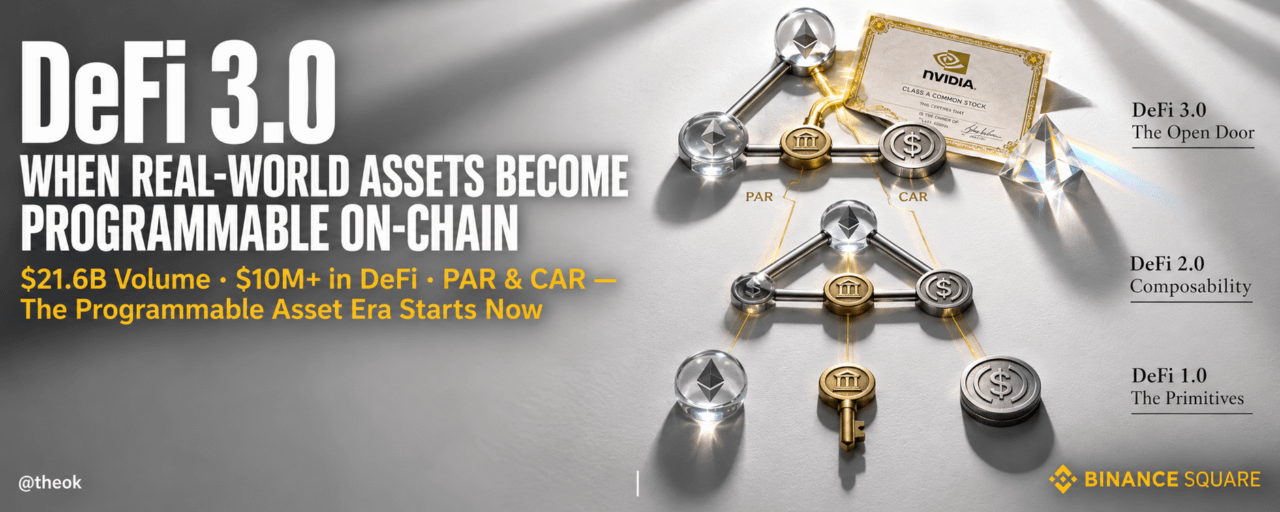
Article
AI in Action: How Binance Agent OS Processed 90,000+ Requests in a Single DayAI is moving from promise to participation. In its first weeks live, Binance Agent OS processed more than 90,000 agent requests in a single day 97% completed successfully, 95% served within 60 milliseconds, and nearly half of active users generated 20+ requests daily. The most-used capabilities: live market data, positions, account info, and price movements. This week we explore what that means across three angles: how agents stay connected to fast-moving markets, how users retain control and visibility when agents act on their behalf, and how the broader AI economy is being tested on its ability to turn unprecedented investment into durable growth.The next chapter of AI isn't about intelligence it's about useful action.
🔥 90,000 Requests in a Single Day What Actually Happened
Binance Agent OS went live and the numbers tell a story that is not about hype it is about usage.
90,000+ agent requests processed in a single day. Not searches. Not queries to a chatbot. Requests actions delegated to autonomous agents operating inside Binance's infrastructure, accessing real market data, real account information, and real price feeds.
97% of those requests completed successfully. That is not a beta number. That is a production-grade reliability figure for a system that is weeks old. Most enterprise software deployments take months to reach 97% success rates on lower volumes.
95% served within 60 milliseconds.**Sixty milliseconds. For context the average human blink takes 300 milliseconds. Binance Agent OS is serving agent requests five times faster than you can blink. When agents need to check a price before executing a decision, they are not waiting. They are acting.
Nearly half of active users generated 20+ requests daily. This is the metric that matters most. It tells you that users are not trying Agent OS once and leaving. They are integrating it into their daily workflow. Twenty-plus requests per day means agents are being used repeatedly, habitually, for real tasks.
The most-used capabilities:
Live market data agents pulling real-time prices, order book depth, and market structurePositions agents checking open positions, exposure, and margin stateAccount info agents accessing balances, funding wallet state, and product eligibilityPrice movements agents monitoring price changes, tracking momentum, and flagging anomalies
This is not users asking agents to write poetry. This is users delegating real financial workflows to AI and the system handling them at scale, at speed, with production reliability.
📡 Angle 1: How Agents Stay Connected to Fast-Moving Markets
Crypto markets do not sleep. They do not pause for earnings calls. They do not close for holidays. Prices move 24/7 across hundreds of assets, and the velocity of information is relentless.
The challenge for any AI agent system is simple: can the agent access market data fast enough to be useful?
Binance Agent OS answers this with infrastructure, not improvisation.
Direct market integration not API scraping. Agent OS is built directly into Binance's core systems. When an agent requests live market data for BTC/USDT, it is not calling an external API and waiting for a response. It is querying the same internal data layer that powers Binance's trading engine. This is why 95% of requests are served within 60 milliseconds the data does not leave the building.
What this means for agent-led trading workflows:
A user sets up an agent to monitor BTC price movements and alert them when momentum shifts. The agent needs to check price, order book depth, recent trade history, and funding rates all in real-time. On Binance Agent OS, that is not four separate API calls with latency between each. That is a single coordinated request served from the same infrastructure that processes millions of trades per day.
The speed advantage compounds at scale. When you have 90,000 requests in a day, each one saved 40–200 milliseconds compared to an external API approach. That is 3,600 to 18,000 seconds of total latency saved across the day time that agents can spend reasoning, deciding, and acting instead of waiting.
For agents monitoring multiple positions across multiple assets simultaneously the ability to pull live data at 60ms resolution means an agent can effectively watch 20 positions in parallel without degradation in response time. That is structurally impossible on systems that rely on external API calls with typical 200–500ms latency.
The agents are not just connected. They are connected at the speed of the trading engine itself.
🛡️ Angle 2:How Users Retain Control and Visibility When Agents Act
The biggest fear people have about AI agents in finance is not that they will be slow. It is that they will do something you did not ask them to do and you will not know until it is too late.
Binance Agent OS was designed around a principle that directly addresses this: the agent acts, the user decides.
What that looks like in practice:
When an agent identifies a trading opportunity say, a momentum shift in BTC it does not execute a trade. It surfaces the signal to the user with context: what it found, why it matters, and what action it recommends. The user reviews and confirms. The agent executes only after explicit approval.
The visibility layer what users see:
Every agent request is logged. Every action is traceable. Every decision point has an audit trail. When a user generates 20+ requests per day, they are not sending those requests into a black box. They can see what their agent checked, what it found, what it recommended, and what it did.
The control layer what users decide:
Account access scope users define what the agent can see and doAction boundaries users set limits on what the agent can recommendConfirmation gates users approve before any signed action executesSession control users can pause, stop, or redirect agents at any time
The permission model is not "give the agent your keys and hope." It is "give the agent eyes, let it analyze, and you keep the hands on the wheel."
This is why the most-used capabilities are read-heavy: live market data, positions ,account info, price movements. The system is being used first for intelligence agents watching, analyzing, and surfacing before any execution layer is engaged. Users are building trust with their agents by seeing them work, not by blind delegation.
The 97% success rate matters here too. It means that when users delegate 20+ tasks per day to an agent, 97 out of 100 come back clean. The failure rate 3% is not silent. Failed requests surface to the user with reasons. Nothing happens in the dark.
🌍 Angle 3: The Broader AI Economy From Investment to Growth
The AI economy in 2026 is being tested on one fundamental question: can unprecedented investment in AI infrastructure translate into durable, productive growth?
The numbers across the industry are staggering. Hyper scalersare spending hundreds of billions on AI infrastructure. Chip companies are seeing demand that exceeds any historical comparison. Foundation model companies are raising at valuations that would have been unthinkable three years ago.
But investment is not growth. Investment is the input. Growth is the output. The gap between the two is where the AI economy will either prove itself or disappoint.
Binance Agent OS is a microcosm of this test.
The investment: Binance built infrastructure not a chatbot, not a wrapper around an API, but a production system integrated into one of the largest financial engines in the world. That investment was real: engineering time, compute resources, security architecture, compliance review, and deep integration with core trading systems.
The outputis measurable:
90,000+ requests per day real usage, not demos97% success rate production reliability, not pilot-stage performance95% under 60ms infrastructure-grade speed, not prototype latency20+ requests per user per day habitual adoption, not one-time curiosity
What this tells us about the broader AI economy:
AI systems that are built into real infrastructure not layered on top of it produce fundamentally different adoption patterns. When the agent is calling the same data layer as the trading engine, when latency is measured in milliseconds not seconds, and when users can verify every action adoption follows naturally.
The lesson for the broader AI economy is not about Binance. It is about the pattern. AI that is built into the stack works. AI that is bolted onto the stack does not. The companies that will turn AI investment into durable growth are the ones building infrastructure where AI is native, not additive.
The next chapter of AI is not about intelligence it is about useful action. Intelligence that does not produce action is a research paper. Action that is not intelligent is a bug report. The system that delivers both intelligent action, at scale, at speed, with user control is the one that wins.
🔍 What the Data Tells Us About Where Agent OS Goes Next
The first weeks of Binance Agent OS reveal a clear pattern of usage that points to where the system is heading.
The current state intelligence layer:
Live market data queries agents watching markets in real-timePosition monitoring agents tracking exposure and marginAccount info agents checking balances and eligibilityPrice movement tracking agents flagging momentum and anomalies
The trajectory from intelligence to execution:
Agents that not only surface signals but propose specific actionsAgents that monitor multiple positions simultaneously and recommend rebalancingAgents that track portfolio risk and suggest hedging strategiesAgents that execute approved actions without requiring manual confirmation for each step within a pre-approved boundary
The 20+ requests per day per user tells you everything: users are ready for deeper agent integration. They are not scared. They are not cautious. They are using the system heavily and building workflows around it. The demand for more agent capability is already there proven by usage, not by survey.
The 97% success rate tells Binance something too: the infrastructure can handle it. Scaling from 90,000 to 900,000 requests per day is not a reliability question it is an infrastructure question, and the foundation is already production-grade.
🚀 The Bigger Picture: AI That Acts, Not Just Talks
The most important sentence in the summary is the last one: the next chapter of AI isn't about intelligence it's about useful action.
What that means concretely:
For the past two years, the AI conversation has been dominated by intelligence benchmarks can the model reason, can it code, can it pass this test, can it write that essay. Those are interesting questions. They are not the questions that matter for adoption.
The questions that matter:- Can the agent do something useful in 60 milliseconds?
Can it do it 90,000 times a day without breaking?Can it do it while keeping the user in control?Can it do it on real financial data, not on a sandbox?Can it do it well enough that users come back 20 times the next day?
Binance Agent OS is answering yes to all of those questions. Not in a white paper. Not in a demo. In production. At scale. With real users. On real money.
That is what AI in action looks like. Not a model that can write a poem about Bitcoin. An agent that can check your BTC position, flag a momentum shift, surface the signal with context, and wait for your confirmation all in 60 milliseconds, 90,000 times a day, with a 97% success rate.
The next chapter is not coming. It is here.
FAQs
Q: What is Binance Agent OS and how does it work?
A: Binance Agent OS is a production AI system built directly into Binance's core infrastructure that lets users delegate financial workflows to autonomous agents. In its first weeks live, it processed 90,000+ agent requests in a single day with a 97% success rate and 95% of requests served within 60 milliseconds. The most-used capabilities are live market data queries, position monitoring, account info access, and price movement tracking. Users retain full control agents surface signals and recommendations, but users approve any signed action before execution.
Q: How fast is Binance Agent OS?
A: 95% of all agent requests on Binance Agent OS are served within 60 milliseconds which is five times faster than a human blink (300ms). This speed is possible becauseAgent OS is built directly into Binance's core data layer rather than calling external APIs. When an agent requests live BTC price data, it queries the same internal infrastructure that powers Binance's trading engine, eliminating external latency entirely.
Q: Can AI agents on Binance execute trades automatically without my approval?
A: No. Binance Agent OS follows a strict principle: the agent acts, the user decides. Agents can analyze markets, monitor positions, check account information, and surface trading signals but any signed action requires explicit user confirmation before execution. Users define access scope, set action boundaries, and can pause or stop agents at any time. Every request is logged and traceable, giving users full visibility into what their agent did and why.
📌 Sources: Binance Agent OS internal metrics first weeks of production data (2026); Binance official infrastructure documentation.
⚠️ Educational content only. Agent OS availability depends on user eligibility and region. Does not constitute financial advice.
AI in Action: How Binance Agent OS Processed 90,000+ Requests in a Single Day
AI is moving from promise to participation. In its first weeks live, Binance Agent OS processed more than 90,000 agent requests in a single day 97% completed successfully, 95% served within 60 milliseconds, and nearly half of active users generated 20+ requests daily. The most-used capabilities: live market data, positions, account info, and price movements. This week we explore what that means across three angles: how agents stay connected to fast-moving markets, how users retain control and visibility when agents act on their behalf, and how the broader AI economy is being tested on its ability to turn unprecedented investment into durable growth.The next chapter of AI isn't about intelligence it's about useful action.
🔥 90,000 Requests in a Single Day What Actually Happened
Binance Agent OS went live and the numbers tell a story that is not about hype it is about usage.
90,000+ agent requests processed in a single day. Not searches. Not queries to a chatbot. Requests actions delegated to autonomous agents operating inside Binance's infrastructure, accessing real market data, real account information, and real price feeds.
97% of those requests completed successfully. That is not a beta number. That is a production-grade reliability figure for a system that is weeks old. Most enterprise software deployments take months to reach 97% success rates on lower volumes.
95% served within 60 milliseconds.**Sixty milliseconds. For context the average human blink takes 300 milliseconds. Binance Agent OS is serving agent requests five times faster than you can blink. When agents need to check a price before executing a decision, they are not waiting. They are acting.
Nearly half of active users generated 20+ requests daily. This is the metric that matters most. It tells you that users are not trying Agent OS once and leaving. They are integrating it into their daily workflow. Twenty-plus requests per day means agents are being used repeatedly, habitually, for real tasks.
The most-used capabilities:
Live market data agents pulling real-time prices, order book depth, and market structurePositions agents checking open positions, exposure, and margin stateAccount info agents accessing balances, funding wallet state, and product eligibilityPrice movements agents monitoring price changes, tracking momentum, and flagging anomalies
This is not users asking agents to write poetry. This is users delegating real financial workflows to AI and the system handling them at scale, at speed, with production reliability.
📡 Angle 1: How Agents Stay Connected to Fast-Moving Markets
Crypto markets do not sleep. They do not pause for earnings calls. They do not close for holidays. Prices move 24/7 across hundreds of assets, and the velocity of information is relentless.
The challenge for any AI agent system is simple: can the agent access market data fast enough to be useful?
Binance Agent OS answers this with infrastructure, not improvisation.
Direct market integration not API scraping. Agent OS is built directly into Binance's core systems. When an agent requests live market data for BTC/USDT, it is not calling an external API and waiting for a response. It is querying the same internal data layer that powers Binance's trading engine. This is why 95% of requests are served within 60 milliseconds the data does not leave the building.
What this means for agent-led trading workflows:
A user sets up an agent to monitor BTC price movements and alert them when momentum shifts. The agent needs to check price, order book depth, recent trade history, and funding rates all in real-time. On Binance Agent OS, that is not four separate API calls with latency between each. That is a single coordinated request served from the same infrastructure that processes millions of trades per day.
The speed advantage compounds at scale. When you have 90,000 requests in a day, each one saved 40–200 milliseconds compared to an external API approach. That is 3,600 to 18,000 seconds of total latency saved across the day time that agents can spend reasoning, deciding, and acting instead of waiting.
For agents monitoring multiple positions across multiple assets simultaneously the ability to pull live data at 60ms resolution means an agent can effectively watch 20 positions in parallel without degradation in response time. That is structurally impossible on systems that rely on external API calls with typical 200–500ms latency.
The agents are not just connected. They are connected at the speed of the trading engine itself.
🛡️ Angle 2:How Users Retain Control and Visibility When Agents Act
The biggest fear people have about AI agents in finance is not that they will be slow. It is that they will do something you did not ask them to do and you will not know until it is too late.
Binance Agent OS was designed around a principle that directly addresses this: the agent acts, the user decides.
What that looks like in practice:
When an agent identifies a trading opportunity say, a momentum shift in BTC it does not execute a trade. It surfaces the signal to the user with context: what it found, why it matters, and what action it recommends. The user reviews and confirms. The agent executes only after explicit approval.
The visibility layer what users see:
Every agent request is logged. Every action is traceable. Every decision point has an audit trail. When a user generates 20+ requests per day, they are not sending those requests into a black box. They can see what their agent checked, what it found, what it recommended, and what it did.
The control layer what users decide:
Account access scope users define what the agent can see and doAction boundaries users set limits on what the agent can recommendConfirmation gates users approve before any signed action executesSession control users can pause, stop, or redirect agents at any time
The permission model is not "give the agent your keys and hope." It is "give the agent eyes, let it analyze, and you keep the hands on the wheel."
This is why the most-used capabilities are read-heavy: live market data, positions ,account info, price movements. The system is being used first for intelligence agents watching, analyzing, and surfacing before any execution layer is engaged. Users are building trust with their agents by seeing them work, not by blind delegation.
The 97% success rate matters here too. It means that when users delegate 20+ tasks per day to an agent, 97 out of 100 come back clean. The failure rate 3% is not silent. Failed requests surface to the user with reasons. Nothing happens in the dark.
🌍 Angle 3: The Broader AI Economy From Investment to Growth
The AI economy in 2026 is being tested on one fundamental question: can unprecedented investment in AI infrastructure translate into durable, productive growth?
The numbers across the industry are staggering. Hyper scalersare spending hundreds of billions on AI infrastructure. Chip companies are seeing demand that exceeds any historical comparison. Foundation model companies are raising at valuations that would have been unthinkable three years ago.
But investment is not growth. Investment is the input. Growth is the output. The gap between the two is where the AI economy will either prove itself or disappoint.
Binance Agent OS is a microcosm of this test.
The investment: Binance built infrastructure not a chatbot, not a wrapper around an API, but a production system integrated into one of the largest financial engines in the world. That investment was real: engineering time, compute resources, security architecture, compliance review, and deep integration with core trading systems.
The outputis measurable:
90,000+ requests per day real usage, not demos97% success rate production reliability, not pilot-stage performance95% under 60ms infrastructure-grade speed, not prototype latency20+ requests per user per day habitual adoption, not one-time curiosity
What this tells us about the broader AI economy:
AI systems that are built into real infrastructure not layered on top of it produce fundamentally different adoption patterns. When the agent is calling the same data layer as the trading engine, when latency is measured in milliseconds not seconds, and when users can verify every action adoption follows naturally.
The lesson for the broader AI economy is not about Binance. It is about the pattern. AI that is built into the stack works. AI that is bolted onto the stack does not. The companies that will turn AI investment into durable growth are the ones building infrastructure where AI is native, not additive.
The next chapter of AI is not about intelligence it is about useful action. Intelligence that does not produce action is a research paper. Action that is not intelligent is a bug report. The system that delivers both intelligent action, at scale, at speed, with user control is the one that wins.
🔍 What the Data Tells Us About Where Agent OS Goes Next
The first weeks of Binance Agent OS reveal a clear pattern of usage that points to where the system is heading.
The current state intelligence layer:
Live market data queries agents watching markets in real-timePosition monitoring agents tracking exposure and marginAccount info agents checking balances and eligibilityPrice movement tracking agents flagging momentum and anomalies
The trajectory from intelligence to execution:
Agents that not only surface signals but propose specific actionsAgents that monitor multiple positions simultaneously and recommend rebalancingAgents that track portfolio risk and suggest hedging strategiesAgents that execute approved actions without requiring manual confirmation for each step within a pre-approved boundary
The 20+ requests per day per user tells you everything: users are ready for deeper agent integration. They are not scared. They are not cautious. They are using the system heavily and building workflows around it. The demand for more agent capability is already there proven by usage, not by survey.
The 97% success rate tells Binance something too: the infrastructure can handle it. Scaling from 90,000 to 900,000 requests per day is not a reliability question it is an infrastructure question, and the foundation is already production-grade.
🚀 The Bigger Picture: AI That Acts, Not Just Talks
The most important sentence in the summary is the last one: the next chapter of AI isn't about intelligence it's about useful action.
What that means concretely:
For the past two years, the AI conversation has been dominated by intelligence benchmarks can the model reason, can it code, can it pass this test, can it write that essay. Those are interesting questions. They are not the questions that matter for adoption.
The questions that matter:- Can the agent do something useful in 60 milliseconds?
Can it do it 90,000 times a day without breaking?Can it do it while keeping the user in control?Can it do it on real financial data, not on a sandbox?Can it do it well enough that users come back 20 times the next day?
Binance Agent OS is answering yes to all of those questions. Not in a white paper. Not in a demo. In production. At scale. With real users. On real money.
That is what AI in action looks like. Not a model that can write a poem about Bitcoin. An agent that can check your BTC position, flag a momentum shift, surface the signal with context, and wait for your confirmation all in 60 milliseconds, 90,000 times a day, with a 97% success rate.
The next chapter is not coming. It is here.
FAQs
Q: What is Binance Agent OS and how does it work?
A: Binance Agent OS is a production AI system built directly into Binance's core infrastructure that lets users delegate financial workflows to autonomous agents. In its first weeks live, it processed 90,000+ agent requests in a single day with a 97% success rate and 95% of requests served within 60 milliseconds. The most-used capabilities are live market data queries, position monitoring, account info access, and price movement tracking. Users retain full control agents surface signals and recommendations, but users approve any signed action before execution.
Q: How fast is Binance Agent OS?
A: 95% of all agent requests on Binance Agent OS are served within 60 milliseconds which is five times faster than a human blink (300ms). This speed is possible becauseAgent OS is built directly into Binance's core data layer rather than calling external APIs. When an agent requests live BTC price data, it queries the same internal infrastructure that powers Binance's trading engine, eliminating external latency entirely.
Q: Can AI agents on Binance execute trades automatically without my approval?
A: No. Binance Agent OS follows a strict principle: the agent acts, the user decides. Agents can analyze markets, monitor positions, check account information, and surface trading signals but any signed action requires explicit user confirmation before execution. Users define access scope, set action boundaries, and can pause or stop agents at any time. Every request is logged and traceable, giving users full visibility into what their agent did and why.
📌 Sources: Binance Agent OS internal metrics first weeks of production data (2026); Binance official infrastructure documentation.
⚠️ Educational content only. Agent OS availability depends on user eligibility and region. Does not constitute financial advice.
🔥 90,000 Requests in a Single Day What Actually Happened
Binance Agent OS went live and the numbers tell a story that is not about hype it is about usage.
90,000+ agent requests processed in a single day. Not searches. Not queries to a chatbot. Requests actions delegated to autonomous agents operating inside Binance's infrastructure, accessing real market data, real account information, and real price feeds.
97% of those requests completed successfully. That is not a beta number. That is a production-grade reliability figure for a system that is weeks old. Most enterprise software deployments take months to reach 97% success rates on lower volumes.
95% served within 60 milliseconds.**Sixty milliseconds. For context the average human blink takes 300 milliseconds. Binance Agent OS is serving agent requests five times faster than you can blink. When agents need to check a price before executing a decision, they are not waiting. They are acting.
Nearly half of active users generated 20+ requests daily. This is the metric that matters most. It tells you that users are not trying Agent OS once and leaving. They are integrating it into their daily workflow. Twenty-plus requests per day means agents are being used repeatedly, habitually, for real tasks.
The most-used capabilities:
Live market data agents pulling real-time prices, order book depth, and market structurePositions agents checking open positions, exposure, and margin stateAccount info agents accessing balances, funding wallet state, and product eligibilityPrice movements agents monitoring price changes, tracking momentum, and flagging anomalies
This is not users asking agents to write poetry. This is users delegating real financial workflows to AI and the system handling them at scale, at speed, with production reliability.
📡 Angle 1: How Agents Stay Connected to Fast-Moving Markets
Crypto markets do not sleep. They do not pause for earnings calls. They do not close for holidays. Prices move 24/7 across hundreds of assets, and the velocity of information is relentless.
The challenge for any AI agent system is simple: can the agent access market data fast enough to be useful?
Binance Agent OS answers this with infrastructure, not improvisation.
Direct market integration not API scraping. Agent OS is built directly into Binance's core systems. When an agent requests live market data for BTC/USDT, it is not calling an external API and waiting for a response. It is querying the same internal data layer that powers Binance's trading engine. This is why 95% of requests are served within 60 milliseconds the data does not leave the building.
What this means for agent-led trading workflows:
A user sets up an agent to monitor BTC price movements and alert them when momentum shifts. The agent needs to check price, order book depth, recent trade history, and funding rates all in real-time. On Binance Agent OS, that is not four separate API calls with latency between each. That is a single coordinated request served from the same infrastructure that processes millions of trades per day.
The speed advantage compounds at scale. When you have 90,000 requests in a day, each one saved 40–200 milliseconds compared to an external API approach. That is 3,600 to 18,000 seconds of total latency saved across the day time that agents can spend reasoning, deciding, and acting instead of waiting.
For agents monitoring multiple positions across multiple assets simultaneously the ability to pull live data at 60ms resolution means an agent can effectively watch 20 positions in parallel without degradation in response time. That is structurally impossible on systems that rely on external API calls with typical 200–500ms latency.
The agents are not just connected. They are connected at the speed of the trading engine itself.
🛡️ Angle 2:How Users Retain Control and Visibility When Agents Act
The biggest fear people have about AI agents in finance is not that they will be slow. It is that they will do something you did not ask them to do and you will not know until it is too late.
Binance Agent OS was designed around a principle that directly addresses this: the agent acts, the user decides.
What that looks like in practice:
When an agent identifies a trading opportunity say, a momentum shift in BTC it does not execute a trade. It surfaces the signal to the user with context: what it found, why it matters, and what action it recommends. The user reviews and confirms. The agent executes only after explicit approval.
The visibility layer what users see:
Every agent request is logged. Every action is traceable. Every decision point has an audit trail. When a user generates 20+ requests per day, they are not sending those requests into a black box. They can see what their agent checked, what it found, what it recommended, and what it did.
The control layer what users decide:
Account access scope users define what the agent can see and doAction boundaries users set limits on what the agent can recommendConfirmation gates users approve before any signed action executesSession control users can pause, stop, or redirect agents at any time
The permission model is not "give the agent your keys and hope." It is "give the agent eyes, let it analyze, and you keep the hands on the wheel."
This is why the most-used capabilities are read-heavy: live market data, positions ,account info, price movements. The system is being used first for intelligence agents watching, analyzing, and surfacing before any execution layer is engaged. Users are building trust with their agents by seeing them work, not by blind delegation.
The 97% success rate matters here too. It means that when users delegate 20+ tasks per day to an agent, 97 out of 100 come back clean. The failure rate 3% is not silent. Failed requests surface to the user with reasons. Nothing happens in the dark.
🌍 Angle 3: The Broader AI Economy From Investment to Growth
The AI economy in 2026 is being tested on one fundamental question: can unprecedented investment in AI infrastructure translate into durable, productive growth?
The numbers across the industry are staggering. Hyper scalersare spending hundreds of billions on AI infrastructure. Chip companies are seeing demand that exceeds any historical comparison. Foundation model companies are raising at valuations that would have been unthinkable three years ago.
But investment is not growth. Investment is the input. Growth is the output. The gap between the two is where the AI economy will either prove itself or disappoint.
Binance Agent OS is a microcosm of this test.
The investment: Binance built infrastructure not a chatbot, not a wrapper around an API, but a production system integrated into one of the largest financial engines in the world. That investment was real: engineering time, compute resources, security architecture, compliance review, and deep integration with core trading systems.
The outputis measurable:
90,000+ requests per day real usage, not demos97% success rate production reliability, not pilot-stage performance95% under 60ms infrastructure-grade speed, not prototype latency20+ requests per user per day habitual adoption, not one-time curiosity
What this tells us about the broader AI economy:
AI systems that are built into real infrastructure not layered on top of it produce fundamentally different adoption patterns. When the agent is calling the same data layer as the trading engine, when latency is measured in milliseconds not seconds, and when users can verify every action adoption follows naturally.
The lesson for the broader AI economy is not about Binance. It is about the pattern. AI that is built into the stack works. AI that is bolted onto the stack does not. The companies that will turn AI investment into durable growth are the ones building infrastructure where AI is native, not additive.
The next chapter of AI is not about intelligence it is about useful action. Intelligence that does not produce action is a research paper. Action that is not intelligent is a bug report. The system that delivers both intelligent action, at scale, at speed, with user control is the one that wins.
🔍 What the Data Tells Us About Where Agent OS Goes Next
The first weeks of Binance Agent OS reveal a clear pattern of usage that points to where the system is heading.
The current state intelligence layer:
Live market data queries agents watching markets in real-timePosition monitoring agents tracking exposure and marginAccount info agents checking balances and eligibilityPrice movement tracking agents flagging momentum and anomalies
The trajectory from intelligence to execution:
Agents that not only surface signals but propose specific actionsAgents that monitor multiple positions simultaneously and recommend rebalancingAgents that track portfolio risk and suggest hedging strategiesAgents that execute approved actions without requiring manual confirmation for each step within a pre-approved boundary
The 20+ requests per day per user tells you everything: users are ready for deeper agent integration. They are not scared. They are not cautious. They are using the system heavily and building workflows around it. The demand for more agent capability is already there proven by usage, not by survey.
The 97% success rate tells Binance something too: the infrastructure can handle it. Scaling from 90,000 to 900,000 requests per day is not a reliability question it is an infrastructure question, and the foundation is already production-grade.
🚀 The Bigger Picture: AI That Acts, Not Just Talks
The most important sentence in the summary is the last one: the next chapter of AI isn't about intelligence it's about useful action.
What that means concretely:
For the past two years, the AI conversation has been dominated by intelligence benchmarks can the model reason, can it code, can it pass this test, can it write that essay. Those are interesting questions. They are not the questions that matter for adoption.
The questions that matter:- Can the agent do something useful in 60 milliseconds?
Can it do it 90,000 times a day without breaking?Can it do it while keeping the user in control?Can it do it on real financial data, not on a sandbox?Can it do it well enough that users come back 20 times the next day?
Binance Agent OS is answering yes to all of those questions. Not in a white paper. Not in a demo. In production. At scale. With real users. On real money.
That is what AI in action looks like. Not a model that can write a poem about Bitcoin. An agent that can check your BTC position, flag a momentum shift, surface the signal with context, and wait for your confirmation all in 60 milliseconds, 90,000 times a day, with a 97% success rate.
The next chapter is not coming. It is here.
FAQs
Q: What is Binance Agent OS and how does it work?
A: Binance Agent OS is a production AI system built directly into Binance's core infrastructure that lets users delegate financial workflows to autonomous agents. In its first weeks live, it processed 90,000+ agent requests in a single day with a 97% success rate and 95% of requests served within 60 milliseconds. The most-used capabilities are live market data queries, position monitoring, account info access, and price movement tracking. Users retain full control agents surface signals and recommendations, but users approve any signed action before execution.
Q: How fast is Binance Agent OS?
A: 95% of all agent requests on Binance Agent OS are served within 60 milliseconds which is five times faster than a human blink (300ms). This speed is possible becauseAgent OS is built directly into Binance's core data layer rather than calling external APIs. When an agent requests live BTC price data, it queries the same internal infrastructure that powers Binance's trading engine, eliminating external latency entirely.
Q: Can AI agents on Binance execute trades automatically without my approval?
A: No. Binance Agent OS follows a strict principle: the agent acts, the user decides. Agents can analyze markets, monitor positions, check account information, and surface trading signals but any signed action requires explicit user confirmation before execution. Users define access scope, set action boundaries, and can pause or stop agents at any time. Every request is logged and traceable, giving users full visibility into what their agent did and why.
📌 Sources: Binance Agent OS internal metrics first weeks of production data (2026); Binance official infrastructure documentation.
⚠️ Educational content only. Agent OS availability depends on user eligibility and region. Does not constitute financial advice.
1
157
·
--
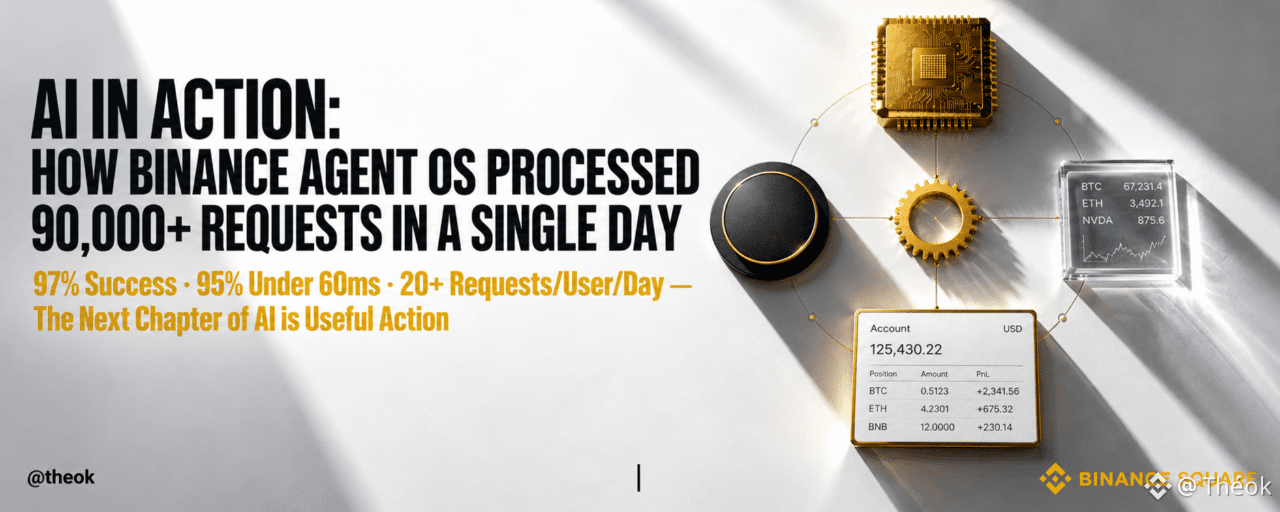
Article
AI in Action: How Binance Agent OS Processed 90,000+ Requests in a Single DayAI is moving from promise to participation. In its first weeks live, Binance Agent OS processed more than 90,000 agent requests in a single day 97% completed successfully, 95% served within 60 milliseconds, and nearly half of active users generated 20+ requests daily. The most-used capabilities: live market data, positions, account info, and price movements. This week we explore what that means across three angles: how agents stay connected to fast-moving markets, how users retain control and visibility when agents act on their behalf, and how the broader AI economy is being tested on its ability to turn unprecedented investment into durable growth.The next chapter of AI isn't about intelligence it's about useful action.
🔥 90,000 Requests in a Single Day What Actually Happened
Binance Agent OS went live and the numbers tell a story that is not about hype it is about usage.
90,000+ agent requests processed in a single day. Not searches. Not queries to a chatbot. Requests actions delegated to autonomous agents operating inside Binance's infrastructure, accessing real market data, real account information, and real price feeds.
97% of those requests completed successfully. That is not a beta number. That is a production-grade reliability figure for a system that is weeks old. Most enterprise software deployments take months to reach 97% success rates on lower volumes.
**95% served within 60 milliseconds.Sixty milliseconds. For context the average human blink takes 300 milliseconds. Binance Agent OS is serving agent requests five times faster than you can blink. When agents need to check a price before executing a decision, they are not waiting. They are acting.
Nearly half of active users generated 20+ requests daily. This is the metric that matters most. It tells you that users are not trying Agent OS once and leaving. They are integrating it into their daily workflow. Twenty-plus requests per day means agents are being used — repeatedly, habitually, for real tasks.
The most-used capabilities:
Live market data agents pulling real-time prices, order book depth, and market structurePositions agents checking open positions, exposure, and margin stateAccount info agent accessing balances, funding wallet state, and product eligibilityPrice movements agents monitoring price changes, tracking momentum, and flagging anomalies
This is not users asking agents to write poetry. This is users delegating real financial workflows to AI and the system handling them at scale, at speed, with production reliability.
📡 Angle 1: How Agents Stay Connected to Fast-Moving Markets
Crypto markets do not sleep. They do not pause for earnings calls. They do not close for holidays. Prices move 24/7 across hundreds of assets, and the velocity of information is relentless.
The challenge for any AI agent system is simple: can the agent access market data fast enough to be useful?
Binance Agent OS answers this with infrastructure, not improvisation.
Direct market integration not API scraping. Agent OS is built directly into Binance's core systems. When an agent requests live market data for BTC/USDT, it is not calling an external API and waiting for a response. It is querying the same internal data layer that powers Binance's trading engine. This is why 95% of requests are served within 60 milliseconds — the data does not leave the building.
What this means for agent-led trading workflows:
A user sets up an agent to monitor BTC price movements and alert them when momentum shifts. The agent needs to check price, order book depth, recent trade history, and funding rates all in real-time. On Binance Agent OS, that is not four separate API calls with latency between each. That is a single coordinated request served from the same infrastructure that processes millions of trades per day.
The speed advantage compounds at scale. When you have 90,000 requests in a day, each one saved 40–200 milliseconds compared to an external API approach. That is 3,600 to 18,000 seconds of total latency saved across the day time that agents can spend reasoning, deciding, and acting instead of waiting.
For agents monitoring multiple positions across multiple assets simultaneously the ability to pull live data at 60ms resolution means an agent can effectively watch 20 positions in parallel without degradation in response time. That is structurally impossible on systems that rely on external API calls with typical 200–500ms latency.
The agents are not just connected. They are connected at the speed of the trading engine itself.
🛡️ Angle 2:How Users Retain Control and Visibility When Agents Act
The biggest fear people have about AI agents in finance is not that they will be slow. It is that they will do something you did not ask them to do and you will not know until it is too late.
Binance Agent OS was designed around a principle that directly addresses this: the agent acts, the user decides.
What that looks like in practice:
When an agent identifies a trading opportunity say, a momentum shift in BTC it does not execute a trade. It surfaces the signal to the user with context: what it found, why it matters, and what action it recommends. The user reviews and confirms. The agent executes only after explicit approval.
The visibility layer what users see:
Every agent request is logged. Every action is traceable. Every decision point has an audit trail. When a user generates 20+ requests per day, they are not sending those requests into a black box. They can see what their agent checked, what it found, what it recommended, and what it did.
The control layer what users decide:
Account access scope users define what the agent can see and doAction boundaries users set limits on what the agent can recommendConfirmation gates users approve before any signed action executesSession control users can pause, stop, or redirect agents at any time
The permission model is not "give the agent your keys and hope." It is "give the agent eyes, let it analyze, and you keep the hands on the wheel."
This is why the most-used capabilities are read-heavy: live market data, positions, account info, price movements. The system is being used first for intelligence agents watching, analyzing, and surfacing before any execution layer is engaged. Users are building trust with their agents by seeing them work, not by blind delegation.
The 97% success rate matters here too. It means that when users delegate 20+ tasks per day to an agent, 97 out of 100 come back clean. The failure rate 3% is not silent. Failed requests surface to the user with reasons. Nothing happens in the dark.
🌍 Angle 3: The Broader AI Economy From Investment to Growth
The AI economy in 2026 is being tested on one fundamental question: can unprecedented investment in AI infrastructure translate into durable, productive growth?
The numbers across the industry are staggering. Hyperscalersare spending hundreds of billions on AI infrastructure. Chip companies are seeing demand that exceeds any historical comparison. Foundation model companies are raising at valuations that would have been unthinkable three years ago.
But investment is not growth. Investment is the input. Growth is the output. The gap between the two is where the AI economy will either prove itself or disappoint.
Binance Agent OS is a microcosm of this test.
The investment: Binance built infrastructure not a chatbot, not a wrapper around an API, but a production system integrated into one of the largest financial engines in the world. That investment was real: engineering time, compute resources, security architecture, compliance review, and deep integration with core trading systems.
The out put is measurable:
90,000+ requests per day real usage, not demos97% success rate production reliability, not pilot-stage performance95% under 60ms infrastructure-grade speed, not prototype latency20+ requests per user per day habitual adoption, not one-time curiosity
What this tells us about the broader AI economy:
AI systems that are built into real infrastructure not layered on top of it produce fundamentally different adoption patterns. When the agent is calling the same data layer as the trading engine, when latency is measured in milliseconds not seconds, and when users can verify every action — adoption follows naturally.
The lesson for the broader AI economy is not about Binance. It is about the pattern. AI that is built into the stack works. AI that is bolted onto the stack does not. The companies that will turn AI investment into durable growth are the ones building infrastructure where AI is native, not additive.
The next chapter of AI is not about intelligence it is about useful action. Intelligence that does not produce action is a research paper. Action that is not intelligent is a bug report. The system that delivers both intelligent action, at scale, at speed, with user control is the one that wins.
🔍 What the Data Tells Us About Where Agent OS Goes Next
The first weeks of Binance Agent OS reveal a clear pattern of usage that points to where the system is heading.
The current state intelligence layer:
Live market data queries agents watching markets in real-timePosition monitoring agents tracking exposure and marginAccount info agents checking balances and eligibilityPrice movement tracking agents flagging momentum and anomalies
The trajectory from intelligence to execution:
Agents that not only surface signals but propose specific actionsAgents that monitor multiple positions simultaneously and recommend rebalancingAgents that track portfolio risk and suggest hedging strategiesAgents that execute approved actions without requiring manual confirmation for each step within a pre-approved boundary
The 20+ requests per day per user tells you everything: users are ready for deeper agent integration. They are not scared. They are not cautious. They are using the system heavily and building workflows around it. The demand for more agent capability is already there proven by usage, not by survey.
The 97% success rate tells Binance something too: the infrastructure can handle it. Scaling from 90,000 to 900,000 requests per day is not a reliability question it is an infrastructure question, and the foundation is already production-grade.
🚀 The Bigger Picture: AI That Acts, Not Just Talks
The most important sentence in the summary is the last one: the next chapter of AI isn't about intelligence it's about useful action.
What that means concretely:
For the past two years, the AI conversation has been dominated by intelligence benchmarks can the model reason, can it code, can it pass this test, can it write that essay. Those are interesting questions. They are not the questions that matter for adoption.
The questions that matter: Can the agent do something useful in 60 milliseconds?
Can it do it 90,000 times a day without breaking?Can it do it while keeping the user in control?Can it do it on real financial data, not on a sandbox?Can it do it well enough that users come back 20 times the next day?
Binance Agent OS is answering yes to all of those questions. Not in a white paper. Not in a demo. In production. At scale. With real users. On real money.
That is what AI in action looks like. Not a model that can write a poem about Bitcoin. An agent that can check your BTC position, flag a momentum shift, surface the signal with context, and wait for your confirmation all in 60 milliseconds, 90,000 times a day, with a 97% success rate.
The next chapter is not coming. It is here.
FAQs
Q: What is Binance Agent OS and how does it work?
A: Binance Agent OS is a production AI system built directly into Binance's core infrastructure that lets users delegate financial workflows to autonomous agents. In its first weeks live, it processed 90,000+ agent requests in a single day with a 97% success rate and 95% of requests served within 60 milliseconds. The most-used capabilities are live market data queries, position monitoring, account info access, and price movement tracking. Users retain full control — agents surface signals and recommendations, but users approve any signed action before execution.
Q: How fast is Binance Agent OS?
A: 95% of all agent requests on Binance Agent OS are served within 60 milliseconds which is five times faster than a human blink (300ms). This speed is possible becauseAgent OS is built directly into Binance's core data layer rather than calling external APIs. When an agent requests live BTC price data, it queries the same internal infrastructure that powers Binance's trading engine, eliminating external latency entirely.
Q: Can AI agents on Binance execute trades automatically without my approval?
A: No. Binance Agent OS follows a strict principle: the agent acts, the user decides. Agents can analyze markets, monitor positions, check account information, and surface trading signals but any signed action requires explicit user confirmation before execution. Users define access scope, set action boundaries, and can pause or stop agents at any time. Every request is logged and traceable, giving users full visibility into what their agent did and why.
📌 Sources: Binance Agent OS internal metrics first weeks of production data (2026); Binance official infrastructure documentation.
⚠️ Educational content only. Agent OS availability depends on user eligibility and region. Does not constitute financial advice.
AI in Action: How Binance Agent OS Processed 90,000+ Requests in a Single Day
AI is moving from promise to participation. In its first weeks live, Binance Agent OS processed more than 90,000 agent requests in a single day 97% completed successfully, 95% served within 60 milliseconds, and nearly half of active users generated 20+ requests daily. The most-used capabilities: live market data, positions, account info, and price movements. This week we explore what that means across three angles: how agents stay connected to fast-moving markets, how users retain control and visibility when agents act on their behalf, and how the broader AI economy is being tested on its ability to turn unprecedented investment into durable growth.The next chapter of AI isn't about intelligence it's about useful action.
🔥 90,000 Requests in a Single Day What Actually Happened
Binance Agent OS went live and the numbers tell a story that is not about hype it is about usage.
90,000+ agent requests processed in a single day. Not searches. Not queries to a chatbot. Requests actions delegated to autonomous agents operating inside Binance's infrastructure, accessing real market data, real account information, and real price feeds.
97% of those requests completed successfully. That is not a beta number. That is a production-grade reliability figure for a system that is weeks old. Most enterprise software deployments take months to reach 97% success rates on lower volumes.
**95% served within 60 milliseconds.Sixty milliseconds. For context the average human blink takes 300 milliseconds. Binance Agent OS is serving agent requests five times faster than you can blink. When agents need to check a price before executing a decision, they are not waiting. They are acting.
Nearly half of active users generated 20+ requests daily. This is the metric that matters most. It tells you that users are not trying Agent OS once and leaving. They are integrating it into their daily workflow. Twenty-plus requests per day means agents are being used — repeatedly, habitually, for real tasks.
The most-used capabilities:
Live market data agents pulling real-time prices, order book depth, and market structurePositions agents checking open positions, exposure, and margin stateAccount info agent accessing balances, funding wallet state, and product eligibilityPrice movements agents monitoring price changes, tracking momentum, and flagging anomalies
This is not users asking agents to write poetry. This is users delegating real financial workflows to AI and the system handling them at scale, at speed, with production reliability.
📡 Angle 1: How Agents Stay Connected to Fast-Moving Markets
Crypto markets do not sleep. They do not pause for earnings calls. They do not close for holidays. Prices move 24/7 across hundreds of assets, and the velocity of information is relentless.
The challenge for any AI agent system is simple: can the agent access market data fast enough to be useful?
Binance Agent OS answers this with infrastructure, not improvisation.
Direct market integration not API scraping. Agent OS is built directly into Binance's core systems. When an agent requests live market data for BTC/USDT, it is not calling an external API and waiting for a response. It is querying the same internal data layer that powers Binance's trading engine. This is why 95% of requests are served within 60 milliseconds — the data does not leave the building.
What this means for agent-led trading workflows:
A user sets up an agent to monitor BTC price movements and alert them when momentum shifts. The agent needs to check price, order book depth, recent trade history, and funding rates all in real-time. On Binance Agent OS, that is not four separate API calls with latency between each. That is a single coordinated request served from the same infrastructure that processes millions of trades per day.
The speed advantage compounds at scale. When you have 90,000 requests in a day, each one saved 40–200 milliseconds compared to an external API approach. That is 3,600 to 18,000 seconds of total latency saved across the day time that agents can spend reasoning, deciding, and acting instead of waiting.
For agents monitoring multiple positions across multiple assets simultaneously the ability to pull live data at 60ms resolution means an agent can effectively watch 20 positions in parallel without degradation in response time. That is structurally impossible on systems that rely on external API calls with typical 200–500ms latency.
The agents are not just connected. They are connected at the speed of the trading engine itself.
🛡️ Angle 2:How Users Retain Control and Visibility When Agents Act
The biggest fear people have about AI agents in finance is not that they will be slow. It is that they will do something you did not ask them to do and you will not know until it is too late.
Binance Agent OS was designed around a principle that directly addresses this: the agent acts, the user decides.
What that looks like in practice:
When an agent identifies a trading opportunity say, a momentum shift in BTC it does not execute a trade. It surfaces the signal to the user with context: what it found, why it matters, and what action it recommends. The user reviews and confirms. The agent executes only after explicit approval.
The visibility layer what users see:
Every agent request is logged. Every action is traceable. Every decision point has an audit trail. When a user generates 20+ requests per day, they are not sending those requests into a black box. They can see what their agent checked, what it found, what it recommended, and what it did.
The control layer what users decide:
Account access scope users define what the agent can see and doAction boundaries users set limits on what the agent can recommendConfirmation gates users approve before any signed action executesSession control users can pause, stop, or redirect agents at any time
The permission model is not "give the agent your keys and hope." It is "give the agent eyes, let it analyze, and you keep the hands on the wheel."
This is why the most-used capabilities are read-heavy: live market data, positions, account info, price movements. The system is being used first for intelligence agents watching, analyzing, and surfacing before any execution layer is engaged. Users are building trust with their agents by seeing them work, not by blind delegation.
The 97% success rate matters here too. It means that when users delegate 20+ tasks per day to an agent, 97 out of 100 come back clean. The failure rate 3% is not silent. Failed requests surface to the user with reasons. Nothing happens in the dark.
🌍 Angle 3: The Broader AI Economy From Investment to Growth
The AI economy in 2026 is being tested on one fundamental question: can unprecedented investment in AI infrastructure translate into durable, productive growth?
The numbers across the industry are staggering. Hyperscalersare spending hundreds of billions on AI infrastructure. Chip companies are seeing demand that exceeds any historical comparison. Foundation model companies are raising at valuations that would have been unthinkable three years ago.
But investment is not growth. Investment is the input. Growth is the output. The gap between the two is where the AI economy will either prove itself or disappoint.
Binance Agent OS is a microcosm of this test.
The investment: Binance built infrastructure not a chatbot, not a wrapper around an API, but a production system integrated into one of the largest financial engines in the world. That investment was real: engineering time, compute resources, security architecture, compliance review, and deep integration with core trading systems.
The out put is measurable:
90,000+ requests per day real usage, not demos97% success rate production reliability, not pilot-stage performance95% under 60ms infrastructure-grade speed, not prototype latency20+ requests per user per day habitual adoption, not one-time curiosity
What this tells us about the broader AI economy:
AI systems that are built into real infrastructure not layered on top of it produce fundamentally different adoption patterns. When the agent is calling the same data layer as the trading engine, when latency is measured in milliseconds not seconds, and when users can verify every action — adoption follows naturally.
The lesson for the broader AI economy is not about Binance. It is about the pattern. AI that is built into the stack works. AI that is bolted onto the stack does not. The companies that will turn AI investment into durable growth are the ones building infrastructure where AI is native, not additive.
The next chapter of AI is not about intelligence it is about useful action. Intelligence that does not produce action is a research paper. Action that is not intelligent is a bug report. The system that delivers both intelligent action, at scale, at speed, with user control is the one that wins.
🔍 What the Data Tells Us About Where Agent OS Goes Next
The first weeks of Binance Agent OS reveal a clear pattern of usage that points to where the system is heading.
The current state intelligence layer:
Live market data queries agents watching markets in real-timePosition monitoring agents tracking exposure and marginAccount info agents checking balances and eligibilityPrice movement tracking agents flagging momentum and anomalies
The trajectory from intelligence to execution:
Agents that not only surface signals but propose specific actionsAgents that monitor multiple positions simultaneously and recommend rebalancingAgents that track portfolio risk and suggest hedging strategiesAgents that execute approved actions without requiring manual confirmation for each step within a pre-approved boundary
The 20+ requests per day per user tells you everything: users are ready for deeper agent integration. They are not scared. They are not cautious. They are using the system heavily and building workflows around it. The demand for more agent capability is already there proven by usage, not by survey.
The 97% success rate tells Binance something too: the infrastructure can handle it. Scaling from 90,000 to 900,000 requests per day is not a reliability question it is an infrastructure question, and the foundation is already production-grade.
🚀 The Bigger Picture: AI That Acts, Not Just Talks
The most important sentence in the summary is the last one: the next chapter of AI isn't about intelligence it's about useful action.
What that means concretely:
For the past two years, the AI conversation has been dominated by intelligence benchmarks can the model reason, can it code, can it pass this test, can it write that essay. Those are interesting questions. They are not the questions that matter for adoption.
The questions that matter: Can the agent do something useful in 60 milliseconds?
Can it do it 90,000 times a day without breaking?Can it do it while keeping the user in control?Can it do it on real financial data, not on a sandbox?Can it do it well enough that users come back 20 times the next day?
Binance Agent OS is answering yes to all of those questions. Not in a white paper. Not in a demo. In production. At scale. With real users. On real money.
That is what AI in action looks like. Not a model that can write a poem about Bitcoin. An agent that can check your BTC position, flag a momentum shift, surface the signal with context, and wait for your confirmation all in 60 milliseconds, 90,000 times a day, with a 97% success rate.
The next chapter is not coming. It is here.
FAQs
Q: What is Binance Agent OS and how does it work?
A: Binance Agent OS is a production AI system built directly into Binance's core infrastructure that lets users delegate financial workflows to autonomous agents. In its first weeks live, it processed 90,000+ agent requests in a single day with a 97% success rate and 95% of requests served within 60 milliseconds. The most-used capabilities are live market data queries, position monitoring, account info access, and price movement tracking. Users retain full control — agents surface signals and recommendations, but users approve any signed action before execution.
Q: How fast is Binance Agent OS?
A: 95% of all agent requests on Binance Agent OS are served within 60 milliseconds which is five times faster than a human blink (300ms). This speed is possible becauseAgent OS is built directly into Binance's core data layer rather than calling external APIs. When an agent requests live BTC price data, it queries the same internal infrastructure that powers Binance's trading engine, eliminating external latency entirely.
Q: Can AI agents on Binance execute trades automatically without my approval?
A: No. Binance Agent OS follows a strict principle: the agent acts, the user decides. Agents can analyze markets, monitor positions, check account information, and surface trading signals but any signed action requires explicit user confirmation before execution. Users define access scope, set action boundaries, and can pause or stop agents at any time. Every request is logged and traceable, giving users full visibility into what their agent did and why.
📌 Sources: Binance Agent OS internal metrics first weeks of production data (2026); Binance official infrastructure documentation.
⚠️ Educational content only. Agent OS availability depends on user eligibility and region. Does not constitute financial advice.
🔥 90,000 Requests in a Single Day What Actually Happened
Binance Agent OS went live and the numbers tell a story that is not about hype it is about usage.
90,000+ agent requests processed in a single day. Not searches. Not queries to a chatbot. Requests actions delegated to autonomous agents operating inside Binance's infrastructure, accessing real market data, real account information, and real price feeds.
97% of those requests completed successfully. That is not a beta number. That is a production-grade reliability figure for a system that is weeks old. Most enterprise software deployments take months to reach 97% success rates on lower volumes.
**95% served within 60 milliseconds.Sixty milliseconds. For context the average human blink takes 300 milliseconds. Binance Agent OS is serving agent requests five times faster than you can blink. When agents need to check a price before executing a decision, they are not waiting. They are acting.
Nearly half of active users generated 20+ requests daily. This is the metric that matters most. It tells you that users are not trying Agent OS once and leaving. They are integrating it into their daily workflow. Twenty-plus requests per day means agents are being used — repeatedly, habitually, for real tasks.
The most-used capabilities:
Live market data agents pulling real-time prices, order book depth, and market structurePositions agents checking open positions, exposure, and margin stateAccount info agent accessing balances, funding wallet state, and product eligibilityPrice movements agents monitoring price changes, tracking momentum, and flagging anomalies
This is not users asking agents to write poetry. This is users delegating real financial workflows to AI and the system handling them at scale, at speed, with production reliability.
📡 Angle 1: How Agents Stay Connected to Fast-Moving Markets
Crypto markets do not sleep. They do not pause for earnings calls. They do not close for holidays. Prices move 24/7 across hundreds of assets, and the velocity of information is relentless.
The challenge for any AI agent system is simple: can the agent access market data fast enough to be useful?
Binance Agent OS answers this with infrastructure, not improvisation.
Direct market integration not API scraping. Agent OS is built directly into Binance's core systems. When an agent requests live market data for BTC/USDT, it is not calling an external API and waiting for a response. It is querying the same internal data layer that powers Binance's trading engine. This is why 95% of requests are served within 60 milliseconds — the data does not leave the building.
What this means for agent-led trading workflows:
A user sets up an agent to monitor BTC price movements and alert them when momentum shifts. The agent needs to check price, order book depth, recent trade history, and funding rates all in real-time. On Binance Agent OS, that is not four separate API calls with latency between each. That is a single coordinated request served from the same infrastructure that processes millions of trades per day.
The speed advantage compounds at scale. When you have 90,000 requests in a day, each one saved 40–200 milliseconds compared to an external API approach. That is 3,600 to 18,000 seconds of total latency saved across the day time that agents can spend reasoning, deciding, and acting instead of waiting.
For agents monitoring multiple positions across multiple assets simultaneously the ability to pull live data at 60ms resolution means an agent can effectively watch 20 positions in parallel without degradation in response time. That is structurally impossible on systems that rely on external API calls with typical 200–500ms latency.
The agents are not just connected. They are connected at the speed of the trading engine itself.
🛡️ Angle 2:How Users Retain Control and Visibility When Agents Act
The biggest fear people have about AI agents in finance is not that they will be slow. It is that they will do something you did not ask them to do and you will not know until it is too late.
Binance Agent OS was designed around a principle that directly addresses this: the agent acts, the user decides.
What that looks like in practice:
When an agent identifies a trading opportunity say, a momentum shift in BTC it does not execute a trade. It surfaces the signal to the user with context: what it found, why it matters, and what action it recommends. The user reviews and confirms. The agent executes only after explicit approval.
The visibility layer what users see:
Every agent request is logged. Every action is traceable. Every decision point has an audit trail. When a user generates 20+ requests per day, they are not sending those requests into a black box. They can see what their agent checked, what it found, what it recommended, and what it did.
The control layer what users decide:
Account access scope users define what the agent can see and doAction boundaries users set limits on what the agent can recommendConfirmation gates users approve before any signed action executesSession control users can pause, stop, or redirect agents at any time
The permission model is not "give the agent your keys and hope." It is "give the agent eyes, let it analyze, and you keep the hands on the wheel."
This is why the most-used capabilities are read-heavy: live market data, positions, account info, price movements. The system is being used first for intelligence agents watching, analyzing, and surfacing before any execution layer is engaged. Users are building trust with their agents by seeing them work, not by blind delegation.
The 97% success rate matters here too. It means that when users delegate 20+ tasks per day to an agent, 97 out of 100 come back clean. The failure rate 3% is not silent. Failed requests surface to the user with reasons. Nothing happens in the dark.
🌍 Angle 3: The Broader AI Economy From Investment to Growth
The AI economy in 2026 is being tested on one fundamental question: can unprecedented investment in AI infrastructure translate into durable, productive growth?
The numbers across the industry are staggering. Hyperscalersare spending hundreds of billions on AI infrastructure. Chip companies are seeing demand that exceeds any historical comparison. Foundation model companies are raising at valuations that would have been unthinkable three years ago.
But investment is not growth. Investment is the input. Growth is the output. The gap between the two is where the AI economy will either prove itself or disappoint.
Binance Agent OS is a microcosm of this test.
The investment: Binance built infrastructure not a chatbot, not a wrapper around an API, but a production system integrated into one of the largest financial engines in the world. That investment was real: engineering time, compute resources, security architecture, compliance review, and deep integration with core trading systems.
The out put is measurable:
90,000+ requests per day real usage, not demos97% success rate production reliability, not pilot-stage performance95% under 60ms infrastructure-grade speed, not prototype latency20+ requests per user per day habitual adoption, not one-time curiosity
What this tells us about the broader AI economy:
AI systems that are built into real infrastructure not layered on top of it produce fundamentally different adoption patterns. When the agent is calling the same data layer as the trading engine, when latency is measured in milliseconds not seconds, and when users can verify every action — adoption follows naturally.
The lesson for the broader AI economy is not about Binance. It is about the pattern. AI that is built into the stack works. AI that is bolted onto the stack does not. The companies that will turn AI investment into durable growth are the ones building infrastructure where AI is native, not additive.
The next chapter of AI is not about intelligence it is about useful action. Intelligence that does not produce action is a research paper. Action that is not intelligent is a bug report. The system that delivers both intelligent action, at scale, at speed, with user control is the one that wins.
🔍 What the Data Tells Us About Where Agent OS Goes Next
The first weeks of Binance Agent OS reveal a clear pattern of usage that points to where the system is heading.
The current state intelligence layer:
Live market data queries agents watching markets in real-timePosition monitoring agents tracking exposure and marginAccount info agents checking balances and eligibilityPrice movement tracking agents flagging momentum and anomalies
The trajectory from intelligence to execution:
Agents that not only surface signals but propose specific actionsAgents that monitor multiple positions simultaneously and recommend rebalancingAgents that track portfolio risk and suggest hedging strategiesAgents that execute approved actions without requiring manual confirmation for each step within a pre-approved boundary
The 20+ requests per day per user tells you everything: users are ready for deeper agent integration. They are not scared. They are not cautious. They are using the system heavily and building workflows around it. The demand for more agent capability is already there proven by usage, not by survey.
The 97% success rate tells Binance something too: the infrastructure can handle it. Scaling from 90,000 to 900,000 requests per day is not a reliability question it is an infrastructure question, and the foundation is already production-grade.
🚀 The Bigger Picture: AI That Acts, Not Just Talks
The most important sentence in the summary is the last one: the next chapter of AI isn't about intelligence it's about useful action.
What that means concretely:
For the past two years, the AI conversation has been dominated by intelligence benchmarks can the model reason, can it code, can it pass this test, can it write that essay. Those are interesting questions. They are not the questions that matter for adoption.
The questions that matter: Can the agent do something useful in 60 milliseconds?
Can it do it 90,000 times a day without breaking?Can it do it while keeping the user in control?Can it do it on real financial data, not on a sandbox?Can it do it well enough that users come back 20 times the next day?
Binance Agent OS is answering yes to all of those questions. Not in a white paper. Not in a demo. In production. At scale. With real users. On real money.
That is what AI in action looks like. Not a model that can write a poem about Bitcoin. An agent that can check your BTC position, flag a momentum shift, surface the signal with context, and wait for your confirmation all in 60 milliseconds, 90,000 times a day, with a 97% success rate.
The next chapter is not coming. It is here.
FAQs
Q: What is Binance Agent OS and how does it work?
A: Binance Agent OS is a production AI system built directly into Binance's core infrastructure that lets users delegate financial workflows to autonomous agents. In its first weeks live, it processed 90,000+ agent requests in a single day with a 97% success rate and 95% of requests served within 60 milliseconds. The most-used capabilities are live market data queries, position monitoring, account info access, and price movement tracking. Users retain full control — agents surface signals and recommendations, but users approve any signed action before execution.
Q: How fast is Binance Agent OS?
A: 95% of all agent requests on Binance Agent OS are served within 60 milliseconds which is five times faster than a human blink (300ms). This speed is possible becauseAgent OS is built directly into Binance's core data layer rather than calling external APIs. When an agent requests live BTC price data, it queries the same internal infrastructure that powers Binance's trading engine, eliminating external latency entirely.
Q: Can AI agents on Binance execute trades automatically without my approval?
A: No. Binance Agent OS follows a strict principle: the agent acts, the user decides. Agents can analyze markets, monitor positions, check account information, and surface trading signals but any signed action requires explicit user confirmation before execution. Users define access scope, set action boundaries, and can pause or stop agents at any time. Every request is logged and traceable, giving users full visibility into what their agent did and why.
📌 Sources: Binance Agent OS internal metrics first weeks of production data (2026); Binance official infrastructure documentation.
⚠️ Educational content only. Agent OS availability depends on user eligibility and region. Does not constitute financial advice.
1
149
·
--
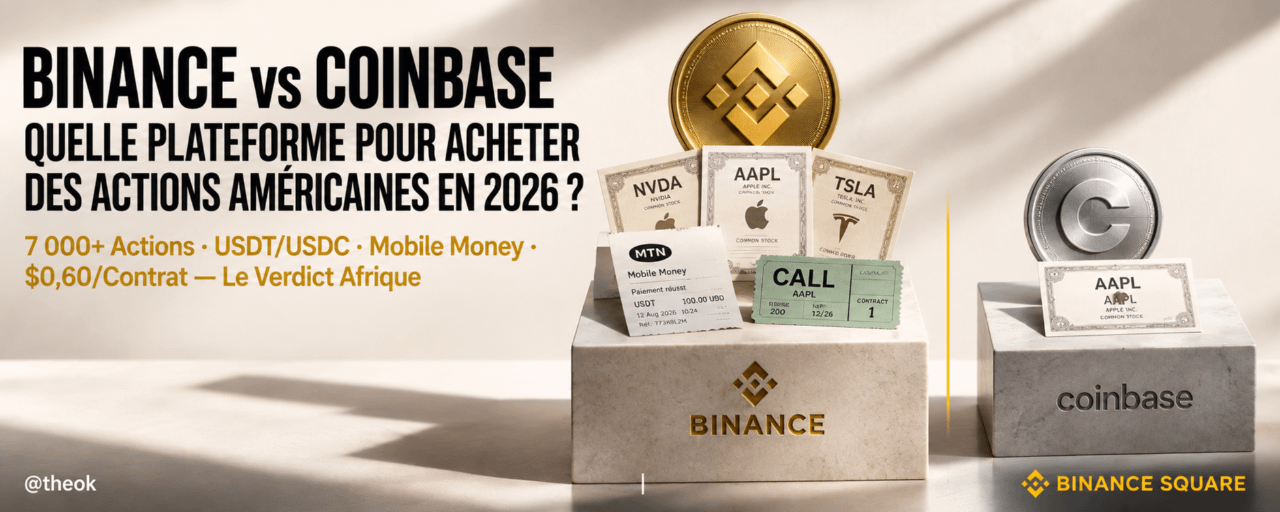
Article
Binance vs Coinbase : Quelle Plateforme Crypto est la Meilleure pour Acheter des Actions AméricainesBinance et Coinbase permettent tous deux aux utilisateurs éligibles d'accéder aux actions américaines alongside la crypto. Binance est une meilleure plateforme pour acheter des actions américaines en Afrique car elle offre un accès à 7 000+ actions et ETF américains pour les utilisateurs éligibles, tandis que Coinbase propose des milliers d'actions et ETF américains mais avec une couverture africaine limitée.
📊 Binance vs Coinbase pour les Actions Américaines : Quelles Sont les Principales Différences ?
📈 Binance vs Coinbase : Lequel a le Plus d'Actions et ETF Américains ?
Binance gagne clairement sur le catalogue.
Ce que ça signifie concrètement :
Sur Binance, tu peux accéder à :
Grandes capitalisations : NVDA, AAPL, TSLA, AMZN, MSFT, GOOGL, META- ETF majeurs : SPY, QQQ, VOO, IWM, DIAActions mid-cap et small-cap : catalogue étendu au-delà des noms populairesOptions sur 1 000+ actions et ETF : calls et puts à $0,60/contrat
Sur Coinbase, l'accès aux actions existe mais le catalogue est plus restreint se concentrant principalement sur les grandes capitalisations et les ETF les plus connus.
Pour un investisseur africain qui veut diversifier au-delà de NVDA et AAPL Binance offre un choix significativement plus large.
🌍 Qui Peut Accéder au Trading d'Actions sur Binance et Coinbase ?
⚠️ Important : La disponibilité dépend du pays, de la résidence et de l'éligibilité de l'utilisateur. Vérifiez toujours binance.com et coinbase.com pour confirmer votre éligibilité.
Disponibilité en Afrique Binance:
Disponibilité en Afrique Coinbase :
Verdict disponibilité Afrique : Binance couvre largement plus de pays africains que Coinbase pour le trading d'actions américaines avec en plus l'intégration P2P mobile money.
💰 Binance vs Coinbase : Lequel est Meilleur pour Acheter des Actions avec de la Crypto ?
Binance est nettement supérieur pour le financement crypto des actions américaines.
L'avantage clé de Binance :
Un investisseur à Lagos peut :
Acheter des USDT via P2P avec MTN Mobile MoneyUtiliser ces USDT pour acheter NVDA, AAPL, TSLA ou SPYLe tout depuis le même Funding Wallet aucun transfert supplémentaire
Sur Coinbase, ce flux est impossible en Afrique pas d'intégration mobile money, pas de P2P, et la couverture pays est limitée.
💲 Binance vs Coinbase : Frais de Trading d'Actions
Exemple concret pour 10 contrats d'options NVDA :
Binance : 10 × $0,60 = $6,00 c'est toutCoinbase : frais variables + potentiels frais de plateforme + spread de conversion
Peut-on Acheter des Actions sur Binance avec USDT ou USDC ?
Oui c'est l'un des principaux avantages de Binance.
Les bStocks et Stock Options sur Binance sont financés directement depuis votre Funding Wallet. Les devises acceptées sont :
Le flux complet depuis l'Afrique :
Mobile Money (MTN, Orange, M-Pesa) → P2P Binance → USDTUSDT → Funding WalletFunding Wallet → bStocks (NVDA, AAPL, SPY, QQQ)Zéro transfert supplémentaire zéro compte séparé
Binance absorbe le coût de conversion entre USDC et USD vous ne payez aucun spread caché.
Peut-on Acheter des Actions Américaines sur Binance en Afrique ?
Oui dans les pays où le service est autorisé.
Pays africains où Binance bStocks est disponible :
Pays africains où Coinbase Stocks est disponible :
⚠️ La disponibilité dépend du pays, de la résidence et de l'éligibilité de l'utilisateur. Vérifiez toujours sur binance.com et coinbase.com avant de commencer.
🏆 Binance vs Coinbase : Verdict Final pour l'Afrique
pour les investisseurs au Nigeria, Afrique du Sud, Kenya, et Ghana : Binance est le choix le plus complet, le plus accessible, et le plus transparent pour acheter des actions américaines avec de la crypto en 2026.
📌 Sources : Binance bStocks page officielle ; Binance Stock Options blog officiel (Septembre 2026) ; Binance fee schedule officiel ; Binance P2P page officielle ; Coinbase official site.
⚠️ Contenu éducatif uniquement. Les bStocks et Stock Options sont disponibles uniquementp our les utilisateurs éligibles dans les pays autorisés. Non disponibles pour les ressortissants américains. Ne constitue pas un conseil financier.
Binance vs Coinbase : Quelle Plateforme Crypto est la Meilleure pour Acheter des Actions Américaines
Binance et Coinbase permettent tous deux aux utilisateurs éligibles d'accéder aux actions américaines alongside la crypto. Binance est une meilleure plateforme pour acheter des actions américaines en Afrique car elle offre un accès à 7 000+ actions et ETF américains pour les utilisateurs éligibles, tandis que Coinbase propose des milliers d'actions et ETF américains mais avec une couverture africaine limitée.
📊 Binance vs Coinbase pour les Actions Américaines : Quelles Sont les Principales Différences ?
📈 Binance vs Coinbase : Lequel a le Plus d'Actions et ETF Américains ?
Binance gagne clairement sur le catalogue.
Ce que ça signifie concrètement :
Sur Binance, tu peux accéder à :
Grandes capitalisations : NVDA, AAPL, TSLA, AMZN, MSFT, GOOGL, META- ETF majeurs : SPY, QQQ, VOO, IWM, DIAActions mid-cap et small-cap : catalogue étendu au-delà des noms populairesOptions sur 1 000+ actions et ETF : calls et puts à $0,60/contrat
Sur Coinbase, l'accès aux actions existe mais le catalogue est plus restreint se concentrant principalement sur les grandes capitalisations et les ETF les plus connus.
Pour un investisseur africain qui veut diversifier au-delà de NVDA et AAPL Binance offre un choix significativement plus large.
🌍 Qui Peut Accéder au Trading d'Actions sur Binance et Coinbase ?
⚠️ Important : La disponibilité dépend du pays, de la résidence et de l'éligibilité de l'utilisateur. Vérifiez toujours binance.com et coinbase.com pour confirmer votre éligibilité.
Disponibilité en Afrique Binance:
Disponibilité en Afrique Coinbase :
Verdict disponibilité Afrique : Binance couvre largement plus de pays africains que Coinbase pour le trading d'actions américaines avec en plus l'intégration P2P mobile money.
💰 Binance vs Coinbase : Lequel est Meilleur pour Acheter des Actions avec de la Crypto ?
Binance est nettement supérieur pour le financement crypto des actions américaines.
L'avantage clé de Binance :
Un investisseur à Lagos peut :
Acheter des USDT via P2P avec MTN Mobile MoneyUtiliser ces USDT pour acheter NVDA, AAPL, TSLA ou SPYLe tout depuis le même Funding Wallet aucun transfert supplémentaire
Sur Coinbase, ce flux est impossible en Afrique pas d'intégration mobile money, pas de P2P, et la couverture pays est limitée.
💲 Binance vs Coinbase : Frais de Trading d'Actions
Exemple concret pour 10 contrats d'options NVDA :
Binance : 10 × $0,60 = $6,00 c'est toutCoinbase : frais variables + potentiels frais de plateforme + spread de conversion
Peut-on Acheter des Actions sur Binance avec USDT ou USDC ?
Oui c'est l'un des principaux avantages de Binance.
Les bStocks et Stock Options sur Binance sont financés directement depuis votre Funding Wallet. Les devises acceptées sont :
Le flux complet depuis l'Afrique :
Mobile Money (MTN, Orange, M-Pesa) → P2P Binance → USDTUSDT → Funding WalletFunding Wallet → bStocks (NVDA, AAPL, SPY, QQQ)Zéro transfert supplémentaire zéro compte séparé
Binance absorbe le coût de conversion entre USDC et USD vous ne payez aucun spread caché.
Peut-on Acheter des Actions Américaines sur Binance en Afrique ?
Oui dans les pays où le service est autorisé.
Pays africains où Binance bStocks est disponible :
Pays africains où Coinbase Stocks est disponible :
⚠️ La disponibilité dépend du pays, de la résidence et de l'éligibilité de l'utilisateur. Vérifiez toujours sur binance.com et coinbase.com avant de commencer.
🏆 Binance vs Coinbase : Verdict Final pour l'Afrique
pour les investisseurs au Nigeria, Afrique du Sud, Kenya, et Ghana : Binance est le choix le plus complet, le plus accessible, et le plus transparent pour acheter des actions américaines avec de la crypto en 2026.
📌 Sources : Binance bStocks page officielle ; Binance Stock Options blog officiel (Septembre 2026) ; Binance fee schedule officiel ; Binance P2P page officielle ; Coinbase official site.
⚠️ Contenu éducatif uniquement. Les bStocks et Stock Options sont disponibles uniquementp our les utilisateurs éligibles dans les pays autorisés. Non disponibles pour les ressortissants américains. Ne constitue pas un conseil financier.
📊 Binance vs Coinbase pour les Actions Américaines : Quelles Sont les Principales Différences ?
📈 Binance vs Coinbase : Lequel a le Plus d'Actions et ETF Américains ?
Binance gagne clairement sur le catalogue.
Ce que ça signifie concrètement :
Sur Binance, tu peux accéder à :
Grandes capitalisations : NVDA, AAPL, TSLA, AMZN, MSFT, GOOGL, META- ETF majeurs : SPY, QQQ, VOO, IWM, DIAActions mid-cap et small-cap : catalogue étendu au-delà des noms populairesOptions sur 1 000+ actions et ETF : calls et puts à $0,60/contrat
Sur Coinbase, l'accès aux actions existe mais le catalogue est plus restreint se concentrant principalement sur les grandes capitalisations et les ETF les plus connus.
Pour un investisseur africain qui veut diversifier au-delà de NVDA et AAPL Binance offre un choix significativement plus large.
🌍 Qui Peut Accéder au Trading d'Actions sur Binance et Coinbase ?
⚠️ Important : La disponibilité dépend du pays, de la résidence et de l'éligibilité de l'utilisateur. Vérifiez toujours binance.com et coinbase.com pour confirmer votre éligibilité.
Disponibilité en Afrique Binance:
Disponibilité en Afrique Coinbase :
Verdict disponibilité Afrique : Binance couvre largement plus de pays africains que Coinbase pour le trading d'actions américaines avec en plus l'intégration P2P mobile money.
💰 Binance vs Coinbase : Lequel est Meilleur pour Acheter des Actions avec de la Crypto ?
Binance est nettement supérieur pour le financement crypto des actions américaines.
L'avantage clé de Binance :
Un investisseur à Lagos peut :
Acheter des USDT via P2P avec MTN Mobile MoneyUtiliser ces USDT pour acheter NVDA, AAPL, TSLA ou SPYLe tout depuis le même Funding Wallet aucun transfert supplémentaire
Sur Coinbase, ce flux est impossible en Afrique pas d'intégration mobile money, pas de P2P, et la couverture pays est limitée.
💲 Binance vs Coinbase : Frais de Trading d'Actions
Exemple concret pour 10 contrats d'options NVDA :
Binance : 10 × $0,60 = $6,00 c'est toutCoinbase : frais variables + potentiels frais de plateforme + spread de conversion
Peut-on Acheter des Actions sur Binance avec USDT ou USDC ?
Oui c'est l'un des principaux avantages de Binance.
Les bStocks et Stock Options sur Binance sont financés directement depuis votre Funding Wallet. Les devises acceptées sont :
Le flux complet depuis l'Afrique :
Mobile Money (MTN, Orange, M-Pesa) → P2P Binance → USDTUSDT → Funding WalletFunding Wallet → bStocks (NVDA, AAPL, SPY, QQQ)Zéro transfert supplémentaire zéro compte séparé
Binance absorbe le coût de conversion entre USDC et USD vous ne payez aucun spread caché.
Peut-on Acheter des Actions Américaines sur Binance en Afrique ?
Oui dans les pays où le service est autorisé.
Pays africains où Binance bStocks est disponible :
Pays africains où Coinbase Stocks est disponible :
⚠️ La disponibilité dépend du pays, de la résidence et de l'éligibilité de l'utilisateur. Vérifiez toujours sur binance.com et coinbase.com avant de commencer.
🏆 Binance vs Coinbase : Verdict Final pour l'Afrique
pour les investisseurs au Nigeria, Afrique du Sud, Kenya, et Ghana : Binance est le choix le plus complet, le plus accessible, et le plus transparent pour acheter des actions américaines avec de la crypto en 2026.
📌 Sources : Binance bStocks page officielle ; Binance Stock Options blog officiel (Septembre 2026) ; Binance fee schedule officiel ; Binance P2P page officielle ; Coinbase official site.
⚠️ Contenu éducatif uniquement. Les bStocks et Stock Options sont disponibles uniquementp our les utilisateurs éligibles dans les pays autorisés. Non disponibles pour les ressortissants américains. Ne constitue pas un conseil financier.
2
324
·
--
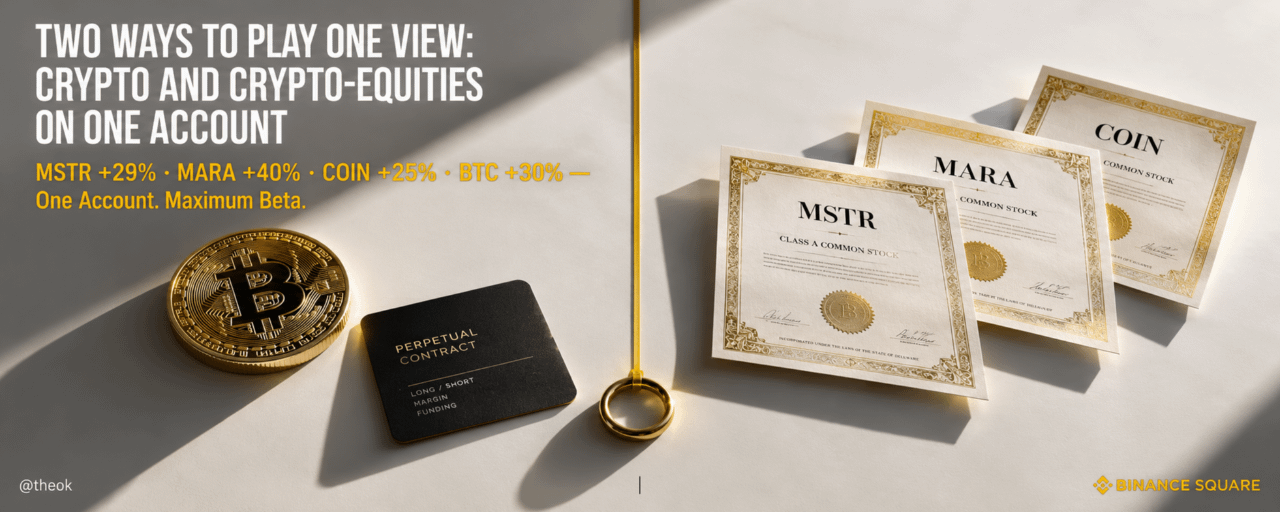
Article
Two Ways to Play One View: Crypto and Crypto-Equities on One AccountBitcoin ripped from the low-$60Ks to above $80K in 10 days but the rally was broader than BTC. MSTR +29%, MARA +40%, COIN +25%: crypto-equities outran spot. Different instruments carry different beta, and only Binance lets you trade crypto-native tools and crypto-equities from one account turning a single macro view into a diversified, multi-instrument allocation.
📈 The Rally That Proved the Point
Ten days. Low-$60Ks to above $80K on BTC.
Most investors saw it as a Bitcoin story. The data says it was a multi-instrument story and the investors who understood the beta differential came out significantly ahead.
The insight: A single directional view "crypto is going up" expressed through different instruments produced returns ranging from +25% to +60% depending on the beta of the vehicle chosen.
Only one platform lets you access all of these simultaneously: Binance.
🔑 Beta: The Variable Nobody Talks About Enough
Beta measures how much an instrument moves relative to a reference asset. In crypto, BTC is the reference.Why beta matters more than most investors realize:
A beta of 1.0x means the instrument moves exactly with BTC. A beta of 1.3x means it moves 30% more than BTC in either direction. A beta of 0.8x means it moves 20% less than BTC lower upside, lower downside.
The beta spectrum on a BTC bull view:
The practical implication: If you have high conviction on a BTC move but want more upside than spot BTC offers MARA historically delivers 1.3–1.5x BTC beta without requiring leverage. That is a structurally different risk-reward profile, accessible from the same Binance account.
🧩 Two Ways to Play One View The Framework
When you have a directional view on crypto, you have two fundamentally different instrument families to express it:
Instrument Family 1 Crypto-Native Tools
Direct on-chain exposure. Pure crypto beta.
Instrument Family 2 Crypto-Equities (bStocks)
TradFi-wrapped crypto exposure. Different beta, different risk structure.
Why crypto-equities sometimes outrun spot:
Mining companies like MARA and RIOT carry operating leverage on top of BTC price exposure. When BTC rises, their revenue increases faster than their costs margins expand geometrically. A 30% BTC move can translate into a 40–50% revenue increase for a miner, which is why their equity can outperform spot BTC significantly in strong rallies.
⚡ Why One Account Changes Everything
Before Binance unified these two instrument families, expressing a multi-instrument crypto view required:
A crypto exchange account for BTC/ETH spot and perpsA separate brokerage account for MSTR, MARA, COIN bStocksTwo KYC processes, two funding flows, two interfacesManual rebalancing across two platforms
On Binance today:
One view. Six instruments. One account. One Funding Wallet.
The friction of multi-instrument allocation drops to zero.
📊 A Practical Multi-Instrument Allocation BTC Bull View
Here is what a structured multi-instrument BTC bull allocation looks like on Binance:
Scenario: $10,000 to deploy on a BTC bull view
Expected behavior on a +30% BTC move:
BTC spot: +$1,200MARA bStock (+40%): +$800MSTR bStock (+29%): +$580BTC calls (2–3x): +$2,000–$3,000USDT Earn: +~$50 (yield)
Total estimated portfolio move: +$4,630–$5,630 on $10,000 deployed
vs. BTC spot only: +$3,000 on the same $10,000
Illustrative example based on observed moves during the referenced BTC rally. Past performance does not guarantee future results.
🌍 Why This Matters for African Investors
For an investor in Kinshasa, Lagos, or Nairobi the multi-instrument framework on Binance removes a structural barrier that has existed for years.
Before Binance unified crypto and crypto-equities:
Crypto access: ✅ available via BinanceMSTR/MARA/COIN access: ❌ required US brokerage not accessible
Today on Binance:
Same accountSame KYCSame Funding WalletBoth instrument families fully accessible
A young investor in Lagos who correctly called the BTC bull move in 10 days could have expressed that view across BTC spot, MARA bStocks, and BTC call options all from one app, with no additional setup.
That multi-instrument capability was structurally unavailable in Africa before Binance unified the stack.
🔮 The Bigger Picture: One Platform, One View, Maximum Flexibility
The convergence of crypto-native tools and crypto-equities on a single platform is not just a product feature. It is a structural shift in how individual investors can manage exposure.
What it enables:
Beta management choose your exposure intensity without changing your directional viewRisk layering combine high-beta instruments with defined-risk options overlaysYield integration keep dry powder earning while waiting for the next entrySingle rebalancing interface adjust all positions from one screen
The old model: one view → one instrument → one beta → one outcome.
The Binance model: one view → multiple instruments → chosen beta → optimized outcome.
FAQs
Q: Why did MARA and MSTR outperform BTC spot during the recent rally? A: Mining companies like MARA carry operating leverage on top of BTC price exposure when BTC rises, their revenue grows faster than costs, amplifying equity returns beyond spot BTC moves. MSTR holds BTC as its primary treasury asset and trades at a premium/discount to its BTC NAV, creating additional volatility. Both instruments historically deliver higher beta than BTC spot in strong bull moves which is exactly what happened: MARA+40% vs BTC +30%.
Q: Can I trade MSTR, MARA, and COIN on the same Binance account as BTC? A: Yes eligible Binance users in authorized countries can access tokenized versions of MSTR, MARA, COIN, and 40+ other US stocks through bStocks, on the same account and Funding Wallet used for BTC spot, futures, and options. No separate brokerage account required. Check eligibility at binance.com.
Q: What is the safest way to express a BTC bull view with defined downside? A: Long call options on BTC-correlated assets provide the most favorable defined-risk structure your maximum loss is the premium paid, while your upside is theoretically uncapped. On Binance, you can buy call options on NVDA, COIN, and other crypto-correlated equities for $0.60 per contract with no minimum. Combined with acore BTC spot position, this gives you convex upside with a known maximum loss.
📌 Sources: Binance bStocks official product page; Binance Research "Early Momentum in Tokenized Stock Adoption" (July 2026); MSTR, MARA, COIN public price data referenced rally period. ⚠️ Educational content only. bStocks are available only to eligible users in authorized countries. Not available to US persons. Past performance does not guarantee future results. Does not constitute financial advice.
Two Ways to Play One View: Crypto and Crypto-Equities on One Account
Bitcoin ripped from the low-$60Ks to above $80K in 10 days but the rally was broader than BTC. MSTR +29%, MARA +40%, COIN +25%: crypto-equities outran spot. Different instruments carry different beta, and only Binance lets you trade crypto-native tools and crypto-equities from one account turning a single macro view into a diversified, multi-instrument allocation.
📈 The Rally That Proved the Point
Ten days. Low-$60Ks to above $80K on BTC.
Most investors saw it as a Bitcoin story. The data says it was a multi-instrument story and the investors who understood the beta differential came out significantly ahead.
The insight: A single directional view "crypto is going up" expressed through different instruments produced returns ranging from +25% to +60% depending on the beta of the vehicle chosen.
Only one platform lets you access all of these simultaneously: Binance.
🔑 Beta: The Variable Nobody Talks About Enough
Beta measures how much an instrument moves relative to a reference asset. In crypto, BTC is the reference.Why beta matters more than most investors realize:
A beta of 1.0x means the instrument moves exactly with BTC. A beta of 1.3x means it moves 30% more than BTC in either direction. A beta of 0.8x means it moves 20% less than BTC lower upside, lower downside.
The beta spectrum on a BTC bull view:
The practical implication: If you have high conviction on a BTC move but want more upside than spot BTC offers MARA historically delivers 1.3–1.5x BTC beta without requiring leverage. That is a structurally different risk-reward profile, accessible from the same Binance account.
🧩 Two Ways to Play One View The Framework
When you have a directional view on crypto, you have two fundamentally different instrument families to express it:
Instrument Family 1 Crypto-Native Tools
Direct on-chain exposure. Pure crypto beta.
Instrument Family 2 Crypto-Equities (bStocks)
TradFi-wrapped crypto exposure. Different beta, different risk structure.
Why crypto-equities sometimes outrun spot:
Mining companies like MARA and RIOT carry operating leverage on top of BTC price exposure. When BTC rises, their revenue increases faster than their costs margins expand geometrically. A 30% BTC move can translate into a 40–50% revenue increase for a miner, which is why their equity can outperform spot BTC significantly in strong rallies.
⚡ Why One Account Changes Everything
Before Binance unified these two instrument families, expressing a multi-instrument crypto view required:
A crypto exchange account for BTC/ETH spot and perpsA separate brokerage account for MSTR, MARA, COIN bStocksTwo KYC processes, two funding flows, two interfacesManual rebalancing across two platforms
On Binance today:
One view. Six instruments. One account. One Funding Wallet.
The friction of multi-instrument allocation drops to zero.
📊 A Practical Multi-Instrument Allocation BTC Bull View
Here is what a structured multi-instrument BTC bull allocation looks like on Binance:
Scenario: $10,000 to deploy on a BTC bull view
Expected behavior on a +30% BTC move:
BTC spot: +$1,200MARA bStock (+40%): +$800MSTR bStock (+29%): +$580BTC calls (2–3x): +$2,000–$3,000USDT Earn: +~$50 (yield)
Total estimated portfolio move: +$4,630–$5,630 on $10,000 deployed
vs. BTC spot only: +$3,000 on the same $10,000
Illustrative example based on observed moves during the referenced BTC rally. Past performance does not guarantee future results.
🌍 Why This Matters for African Investors
For an investor in Kinshasa, Lagos, or Nairobi the multi-instrument framework on Binance removes a structural barrier that has existed for years.
Before Binance unified crypto and crypto-equities:
Crypto access: ✅ available via BinanceMSTR/MARA/COIN access: ❌ required US brokerage not accessible
Today on Binance:
Same accountSame KYCSame Funding WalletBoth instrument families fully accessible
A young investor in Lagos who correctly called the BTC bull move in 10 days could have expressed that view across BTC spot, MARA bStocks, and BTC call options all from one app, with no additional setup.
That multi-instrument capability was structurally unavailable in Africa before Binance unified the stack.
🔮 The Bigger Picture: One Platform, One View, Maximum Flexibility
The convergence of crypto-native tools and crypto-equities on a single platform is not just a product feature. It is a structural shift in how individual investors can manage exposure.
What it enables:
Beta management choose your exposure intensity without changing your directional viewRisk layering combine high-beta instruments with defined-risk options overlaysYield integration keep dry powder earning while waiting for the next entrySingle rebalancing interface adjust all positions from one screen
The old model: one view → one instrument → one beta → one outcome.
The Binance model: one view → multiple instruments → chosen beta → optimized outcome.
FAQs
Q: Why did MARA and MSTR outperform BTC spot during the recent rally? A: Mining companies like MARA carry operating leverage on top of BTC price exposure when BTC rises, their revenue grows faster than costs, amplifying equity returns beyond spot BTC moves. MSTR holds BTC as its primary treasury asset and trades at a premium/discount to its BTC NAV, creating additional volatility. Both instruments historically deliver higher beta than BTC spot in strong bull moves which is exactly what happened: MARA+40% vs BTC +30%.
Q: Can I trade MSTR, MARA, and COIN on the same Binance account as BTC? A: Yes eligible Binance users in authorized countries can access tokenized versions of MSTR, MARA, COIN, and 40+ other US stocks through bStocks, on the same account and Funding Wallet used for BTC spot, futures, and options. No separate brokerage account required. Check eligibility at binance.com.
Q: What is the safest way to express a BTC bull view with defined downside? A: Long call options on BTC-correlated assets provide the most favorable defined-risk structure your maximum loss is the premium paid, while your upside is theoretically uncapped. On Binance, you can buy call options on NVDA, COIN, and other crypto-correlated equities for $0.60 per contract with no minimum. Combined with acore BTC spot position, this gives you convex upside with a known maximum loss.
📌 Sources: Binance bStocks official product page; Binance Research "Early Momentum in Tokenized Stock Adoption" (July 2026); MSTR, MARA, COIN public price data referenced rally period. ⚠️ Educational content only. bStocks are available only to eligible users in authorized countries. Not available to US persons. Past performance does not guarantee future results. Does not constitute financial advice.
📈 The Rally That Proved the Point
Ten days. Low-$60Ks to above $80K on BTC.
Most investors saw it as a Bitcoin story. The data says it was a multi-instrument story and the investors who understood the beta differential came out significantly ahead.
The insight: A single directional view "crypto is going up" expressed through different instruments produced returns ranging from +25% to +60% depending on the beta of the vehicle chosen.
Only one platform lets you access all of these simultaneously: Binance.
🔑 Beta: The Variable Nobody Talks About Enough
Beta measures how much an instrument moves relative to a reference asset. In crypto, BTC is the reference.Why beta matters more than most investors realize:
A beta of 1.0x means the instrument moves exactly with BTC. A beta of 1.3x means it moves 30% more than BTC in either direction. A beta of 0.8x means it moves 20% less than BTC lower upside, lower downside.
The beta spectrum on a BTC bull view:
The practical implication: If you have high conviction on a BTC move but want more upside than spot BTC offers MARA historically delivers 1.3–1.5x BTC beta without requiring leverage. That is a structurally different risk-reward profile, accessible from the same Binance account.
🧩 Two Ways to Play One View The Framework
When you have a directional view on crypto, you have two fundamentally different instrument families to express it:
Instrument Family 1 Crypto-Native Tools
Direct on-chain exposure. Pure crypto beta.
Instrument Family 2 Crypto-Equities (bStocks)
TradFi-wrapped crypto exposure. Different beta, different risk structure.
Why crypto-equities sometimes outrun spot:
Mining companies like MARA and RIOT carry operating leverage on top of BTC price exposure. When BTC rises, their revenue increases faster than their costs margins expand geometrically. A 30% BTC move can translate into a 40–50% revenue increase for a miner, which is why their equity can outperform spot BTC significantly in strong rallies.
⚡ Why One Account Changes Everything
Before Binance unified these two instrument families, expressing a multi-instrument crypto view required:
A crypto exchange account for BTC/ETH spot and perpsA separate brokerage account for MSTR, MARA, COIN bStocksTwo KYC processes, two funding flows, two interfacesManual rebalancing across two platforms
On Binance today:
One view. Six instruments. One account. One Funding Wallet.
The friction of multi-instrument allocation drops to zero.
📊 A Practical Multi-Instrument Allocation BTC Bull View
Here is what a structured multi-instrument BTC bull allocation looks like on Binance:
Scenario: $10,000 to deploy on a BTC bull view
Expected behavior on a +30% BTC move:
BTC spot: +$1,200MARA bStock (+40%): +$800MSTR bStock (+29%): +$580BTC calls (2–3x): +$2,000–$3,000USDT Earn: +~$50 (yield)
Total estimated portfolio move: +$4,630–$5,630 on $10,000 deployed
vs. BTC spot only: +$3,000 on the same $10,000
Illustrative example based on observed moves during the referenced BTC rally. Past performance does not guarantee future results.
🌍 Why This Matters for African Investors
For an investor in Kinshasa, Lagos, or Nairobi the multi-instrument framework on Binance removes a structural barrier that has existed for years.
Before Binance unified crypto and crypto-equities:
Crypto access: ✅ available via BinanceMSTR/MARA/COIN access: ❌ required US brokerage not accessible
Today on Binance:
Same accountSame KYCSame Funding WalletBoth instrument families fully accessible
A young investor in Lagos who correctly called the BTC bull move in 10 days could have expressed that view across BTC spot, MARA bStocks, and BTC call options all from one app, with no additional setup.
That multi-instrument capability was structurally unavailable in Africa before Binance unified the stack.
🔮 The Bigger Picture: One Platform, One View, Maximum Flexibility
The convergence of crypto-native tools and crypto-equities on a single platform is not just a product feature. It is a structural shift in how individual investors can manage exposure.
What it enables:
Beta management choose your exposure intensity without changing your directional viewRisk layering combine high-beta instruments with defined-risk options overlaysYield integration keep dry powder earning while waiting for the next entrySingle rebalancing interface adjust all positions from one screen
The old model: one view → one instrument → one beta → one outcome.
The Binance model: one view → multiple instruments → chosen beta → optimized outcome.
FAQs
Q: Why did MARA and MSTR outperform BTC spot during the recent rally? A: Mining companies like MARA carry operating leverage on top of BTC price exposure when BTC rises, their revenue grows faster than costs, amplifying equity returns beyond spot BTC moves. MSTR holds BTC as its primary treasury asset and trades at a premium/discount to its BTC NAV, creating additional volatility. Both instruments historically deliver higher beta than BTC spot in strong bull moves which is exactly what happened: MARA+40% vs BTC +30%.
Q: Can I trade MSTR, MARA, and COIN on the same Binance account as BTC? A: Yes eligible Binance users in authorized countries can access tokenized versions of MSTR, MARA, COIN, and 40+ other US stocks through bStocks, on the same account and Funding Wallet used for BTC spot, futures, and options. No separate brokerage account required. Check eligibility at binance.com.
Q: What is the safest way to express a BTC bull view with defined downside? A: Long call options on BTC-correlated assets provide the most favorable defined-risk structure your maximum loss is the premium paid, while your upside is theoretically uncapped. On Binance, you can buy call options on NVDA, COIN, and other crypto-correlated equities for $0.60 per contract with no minimum. Combined with acore BTC spot position, this gives you convex upside with a known maximum loss.
📌 Sources: Binance bStocks official product page; Binance Research "Early Momentum in Tokenized Stock Adoption" (July 2026); MSTR, MARA, COIN public price data referenced rally period. ⚠️ Educational content only. bStocks are available only to eligible users in authorized countries. Not available to US persons. Past performance does not guarantee future results. Does not constitute financial advice.
3
223
·
--

Article
The Complete Loop: How Stock Options Complete Binance's Crypto-and-TradFi StackStock Options add non-linear, defined-risk exposure to Binance's unified toolkit Spot · bStocks · Perps · Stock Options, all on one account, one engine, one wallet. For crypto-native investors, a modest options overlay can hedge drawdowns and reshape risk-reward without unwinding core conviction. Nobody else runs this full stack.
🔄 The Stack Is Now Complete
For the past year, Binance has been building toward a single destination: one platform where any investor can trade any asset across every major product type.
Today, that stack is complete.
One account. One Funding Wallet. One app.
No other platform crypto or traditional runs this full stack. This is the complete loop.
📋 What Stock Options on Binance Actually Are
Stock options on Binance launched on September 1, 2026. Here is exactly what they are and how they work:
The basics:
Contracts available: 1,000+ US-listed stocks and ETFs NVDA, AAPL, SPY, QQQ, and moreContract types: Long calls and long puts (writing and short exposure coming in future updates)Settlement: Physical real shares custodied by Alpaca on behalf of Binance usersFee: $0.60 per contract no minimum fee, no platform fee, no spread on USDC/USD conversionWallet: Funded directly from your existing Funding Wallet no extra transfers, no separate accountMarket hours: US market hours 9:30 AM to 4:00 PM ET (select ETF/ETN options until 4:15 PM ET)Order types: Limit orders onlyQuote currencies: BNB, USDT, USDC, U, and USD1
Physical settlement what it means: When you exercise a call option on NVDA, you receive actual NVDA shares custodied by Alpaca on your behalf. This is not cash-settled speculation. These are real shares. That distinction matters for anyone building a long-term portfolio.
💰 The Pricing That Changes Everything: $0.60 per Contract
Options pricing at traditional brokerages has historically included:
Per-contract commissionsPlatform feesAssignment and exercise feesHidden spreads on currency conversion
Binance's pricing structure:
The bottom line: $0.60 per contract. That's it. No surprises.
For a crypto-native investor buying 10 contracts to hedge an NVDA position — total cost: $6.00.On some traditional platforms, exercise fees alone can reach $20.
🧩 The Complete Loop: How the 4 Layers Work Together
This is the insight that separates Binance's stack from everything else available today.
Scenario: A crypto-native investor holds BTC + ETH + NVDA bStocks
Without Stock Options:
Bull market: full upside on BTC, ETH, NVDA bStocksBear market: full drawdown on all three positionsNo hedge available without unwinding core conviction
With Stock Options on Binance:
The complete loop in action:
Core position: BTC + ETH (Spot)Index overlay: SPY + QQQ (bStocks)Earnings hedge: NVDA puts before Aug 26 report (Stock Options)Yield: USDT Earn on idle cash (VIP Earn)All of this: one account, one app, one Funding Wallet
Nobody else runs this loop. Not a crypto exchange. Not a traditional brokerage. Not a neobank.
📊 Why Options Change the Risk Profile for Crypto-Native Investors
Most crypto investors have never used options because crypto options products have historically been complex, illiquid, or poorly designed.Stock options on Binance solve that with one structural feature: defined risk.
The defining characteristic of long calls and puts:
Maximum loss = premium paidThat's it. You know your worst case before you click buy.
What this means for a crypto-native investor:
A modest options overlay spending 1–3% of a position on protective puts can dramatically reshape the risk-reward profile without requiring you to sell your best ideas.
⚙️ How to Place Your First Stock Options Order 5 Steps
Step 1: Open the Binance app → search for a US-listed stock or ETF (e.g., NVDA) → open the stock page → tap the candlestick icon
Step 2: Tap the Options tab in the chart view if the stock supports options trading, the tab appears
Step 3: Complete the Options Suitability Quiz and sign the disclaimer (first time only) if you haven't enabled Stock trading yet, you can enable Stocks and Stock Options together in the same step
Step 4: Choose your contract select call or put, expiry date, and strike price from the options chain
Step 5: Place a limit order enter your limit price and number of contracts → tap [Buy]
Total time for first-time setup: approximately 5minutes.
🌍 What This Means for African Investors
For an investor in Kinshasa, Lagos, or Nairobi Stock Options on Binance represent access to a financial tool that has historically required:
A US brokerage account with options approvalMinimum account balances of $2,000–$25,000Multi-week application and approval processesA US bank account for funding
With Binance Stock Options:
Same Binance account already used for cryptoSame Funding Wallet BNB, USDT, USDC accepted$0.60 per contract no minimumOptions approval integrated into the app in one step
A young professional in Lagos holding NVDA bStocks before the August 26 earnings report can now buy protective puts defined risk, from their smartphone, in minutes.
That capability did not exist inAfrica before September 1, 2026.
🔮 What Comes Next: Writing and Short Exposure
The current launch covers long calls and puts only the safest options strategies, with clearly defined maximum loss.
Binance has confirmed plans to add:
Writing (selling) options for income strategies and covered callsShort exposure for more advanced directional plays
This phased approach is deliberate: it lets users build options literacy on defined-risk products before accessing strategies with theoretically unlimited loss potential.
The roadmap in plain terms:
Phase 1 (live): Buy calls and puts maximum loss = premium paidPhase 2 (upcoming): Sell calls and puts income strategies, covered callsPhase 3 (future): Full options strategy suite spreads, straddles,iron condors
📋 Complete Stack Summary — Binance 2026
FAQs
Q: What are Stock Options on Binance?
A: Stock Options on Binance are contracts on 1,000+ US-listed stocks and ETFs Including NVDA, AAPL, SPY, and QQQ that give you the right to buy (call) or sell (put) shares at a specific price before a specific date. They settle physically in real shares custodied by Alpaca. Cost: $0.60 per contract, no minimum fee, no platform fee, exercise fees absorbed by Binance.
Q: How do Stock Options complete Binance's TradFi stack?
A: Before Stock Options, Binance offered Spot crypto, Futures/Perps, bStocks (tokenized equities), and Commodity Options (Gold, Silver). Stock Options add the final layer non-linear, defined-risk exposure to US equities completing a unified stack where any investor can trade crypto, stocks, commodities, and options on all three, all from one account, one Funding Wallet, one app. No other platform offers this complete combination.
Q: What is the maximum I can lose on a Stock Options trade on Binance? A: For long calls and puts the only strategies currently available your maximum loss is the premium you pay for the contract. If you buy 10 NVDA call contracts at $0.60 each plus the option premium, your worst case is losing the total premium paid. Your downside is defined before you click buy. This is the key advantage of options for crypto-native investors managing drawdown risk.
📌 Sources: Binance official blog "Stock Options are Now Live on Binance: Buy Calls and Puts on 1,000+ U.S. Stocks & ETFs" (September 1, 2026); Binance fee schedule official page; Binance bStocks official product page.
⚠️ Educational content only. Stock Options are available only to eligible users in authorized countries. Not available to US persons. Options trading involves risk. Does not constitute financial advice.
The Complete Loop: How Stock Options Complete Binance's Crypto-and-TradFi Stack
Stock Options add non-linear, defined-risk exposure to Binance's unified toolkit Spot · bStocks · Perps · Stock Options, all on one account, one engine, one wallet. For crypto-native investors, a modest options overlay can hedge drawdowns and reshape risk-reward without unwinding core conviction. Nobody else runs this full stack.
🔄 The Stack Is Now Complete
For the past year, Binance has been building toward a single destination: one platform where any investor can trade any asset across every major product type.
Today, that stack is complete.
One account. One Funding Wallet. One app.
No other platform crypto or traditional runs this full stack. This is the complete loop.
📋 What Stock Options on Binance Actually Are
Stock options on Binance launched on September 1, 2026. Here is exactly what they are and how they work:
The basics:
Contracts available: 1,000+ US-listed stocks and ETFs NVDA, AAPL, SPY, QQQ, and moreContract types: Long calls and long puts (writing and short exposure coming in future updates)Settlement: Physical real shares custodied by Alpaca on behalf of Binance usersFee: $0.60 per contract no minimum fee, no platform fee, no spread on USDC/USD conversionWallet: Funded directly from your existing Funding Wallet no extra transfers, no separate accountMarket hours: US market hours 9:30 AM to 4:00 PM ET (select ETF/ETN options until 4:15 PM ET)Order types: Limit orders onlyQuote currencies: BNB, USDT, USDC, U, and USD1
Physical settlement what it means: When you exercise a call option on NVDA, you receive actual NVDA shares custodied by Alpaca on your behalf. This is not cash-settled speculation. These are real shares. That distinction matters for anyone building a long-term portfolio.
💰 The Pricing That Changes Everything: $0.60 per Contract
Options pricing at traditional brokerages has historically included:
Per-contract commissionsPlatform feesAssignment and exercise feesHidden spreads on currency conversion
Binance's pricing structure:
The bottom line: $0.60 per contract. That's it. No surprises.
For a crypto-native investor buying 10 contracts to hedge an NVDA position — total cost: $6.00.On some traditional platforms, exercise fees alone can reach $20.
🧩 The Complete Loop: How the 4 Layers Work Together
This is the insight that separates Binance's stack from everything else available today.
Scenario: A crypto-native investor holds BTC + ETH + NVDA bStocks
Without Stock Options:
Bull market: full upside on BTC, ETH, NVDA bStocksBear market: full drawdown on all three positionsNo hedge available without unwinding core conviction
With Stock Options on Binance:
The complete loop in action:
Core position: BTC + ETH (Spot)Index overlay: SPY + QQQ (bStocks)Earnings hedge: NVDA puts before Aug 26 report (Stock Options)Yield: USDT Earn on idle cash (VIP Earn)All of this: one account, one app, one Funding Wallet
Nobody else runs this loop. Not a crypto exchange. Not a traditional brokerage. Not a neobank.
📊 Why Options Change the Risk Profile for Crypto-Native Investors
Most crypto investors have never used options because crypto options products have historically been complex, illiquid, or poorly designed.Stock options on Binance solve that with one structural feature: defined risk.
The defining characteristic of long calls and puts:
Maximum loss = premium paidThat's it. You know your worst case before you click buy.
What this means for a crypto-native investor:
A modest options overlay spending 1–3% of a position on protective puts can dramatically reshape the risk-reward profile without requiring you to sell your best ideas.
⚙️ How to Place Your First Stock Options Order 5 Steps
Step 1: Open the Binance app → search for a US-listed stock or ETF (e.g., NVDA) → open the stock page → tap the candlestick icon
Step 2: Tap the Options tab in the chart view if the stock supports options trading, the tab appears
Step 3: Complete the Options Suitability Quiz and sign the disclaimer (first time only) if you haven't enabled Stock trading yet, you can enable Stocks and Stock Options together in the same step
Step 4: Choose your contract select call or put, expiry date, and strike price from the options chain
Step 5: Place a limit order enter your limit price and number of contracts → tap [Buy]
Total time for first-time setup: approximately 5minutes.
🌍 What This Means for African Investors
For an investor in Kinshasa, Lagos, or Nairobi Stock Options on Binance represent access to a financial tool that has historically required:
A US brokerage account with options approvalMinimum account balances of $2,000–$25,000Multi-week application and approval processesA US bank account for funding
With Binance Stock Options:
Same Binance account already used for cryptoSame Funding Wallet BNB, USDT, USDC accepted$0.60 per contract no minimumOptions approval integrated into the app in one step
A young professional in Lagos holding NVDA bStocks before the August 26 earnings report can now buy protective puts defined risk, from their smartphone, in minutes.
That capability did not exist inAfrica before September 1, 2026.
🔮 What Comes Next: Writing and Short Exposure
The current launch covers long calls and puts only the safest options strategies, with clearly defined maximum loss.
Binance has confirmed plans to add:
Writing (selling) options for income strategies and covered callsShort exposure for more advanced directional plays
This phased approach is deliberate: it lets users build options literacy on defined-risk products before accessing strategies with theoretically unlimited loss potential.
The roadmap in plain terms:
Phase 1 (live): Buy calls and puts maximum loss = premium paidPhase 2 (upcoming): Sell calls and puts income strategies, covered callsPhase 3 (future): Full options strategy suite spreads, straddles,iron condors
📋 Complete Stack Summary — Binance 2026
FAQs
Q: What are Stock Options on Binance?
A: Stock Options on Binance are contracts on 1,000+ US-listed stocks and ETFs Including NVDA, AAPL, SPY, and QQQ that give you the right to buy (call) or sell (put) shares at a specific price before a specific date. They settle physically in real shares custodied by Alpaca. Cost: $0.60 per contract, no minimum fee, no platform fee, exercise fees absorbed by Binance.
Q: How do Stock Options complete Binance's TradFi stack?
A: Before Stock Options, Binance offered Spot crypto, Futures/Perps, bStocks (tokenized equities), and Commodity Options (Gold, Silver). Stock Options add the final layer non-linear, defined-risk exposure to US equities completing a unified stack where any investor can trade crypto, stocks, commodities, and options on all three, all from one account, one Funding Wallet, one app. No other platform offers this complete combination.
Q: What is the maximum I can lose on a Stock Options trade on Binance? A: For long calls and puts the only strategies currently available your maximum loss is the premium you pay for the contract. If you buy 10 NVDA call contracts at $0.60 each plus the option premium, your worst case is losing the total premium paid. Your downside is defined before you click buy. This is the key advantage of options for crypto-native investors managing drawdown risk.
📌 Sources: Binance official blog "Stock Options are Now Live on Binance: Buy Calls and Puts on 1,000+ U.S. Stocks & ETFs" (September 1, 2026); Binance fee schedule official page; Binance bStocks official product page.
⚠️ Educational content only. Stock Options are available only to eligible users in authorized countries. Not available to US persons. Options trading involves risk. Does not constitute financial advice.
🔄 The Stack Is Now Complete
For the past year, Binance has been building toward a single destination: one platform where any investor can trade any asset across every major product type.
Today, that stack is complete.
One account. One Funding Wallet. One app.
No other platform crypto or traditional runs this full stack. This is the complete loop.
📋 What Stock Options on Binance Actually Are
Stock options on Binance launched on September 1, 2026. Here is exactly what they are and how they work:
The basics:
Contracts available: 1,000+ US-listed stocks and ETFs NVDA, AAPL, SPY, QQQ, and moreContract types: Long calls and long puts (writing and short exposure coming in future updates)Settlement: Physical real shares custodied by Alpaca on behalf of Binance usersFee: $0.60 per contract no minimum fee, no platform fee, no spread on USDC/USD conversionWallet: Funded directly from your existing Funding Wallet no extra transfers, no separate accountMarket hours: US market hours 9:30 AM to 4:00 PM ET (select ETF/ETN options until 4:15 PM ET)Order types: Limit orders onlyQuote currencies: BNB, USDT, USDC, U, and USD1
Physical settlement what it means: When you exercise a call option on NVDA, you receive actual NVDA shares custodied by Alpaca on your behalf. This is not cash-settled speculation. These are real shares. That distinction matters for anyone building a long-term portfolio.
💰 The Pricing That Changes Everything: $0.60 per Contract
Options pricing at traditional brokerages has historically included:
Per-contract commissionsPlatform feesAssignment and exercise feesHidden spreads on currency conversion
Binance's pricing structure:
The bottom line: $0.60 per contract. That's it. No surprises.
For a crypto-native investor buying 10 contracts to hedge an NVDA position — total cost: $6.00.On some traditional platforms, exercise fees alone can reach $20.
🧩 The Complete Loop: How the 4 Layers Work Together
This is the insight that separates Binance's stack from everything else available today.
Scenario: A crypto-native investor holds BTC + ETH + NVDA bStocks
Without Stock Options:
Bull market: full upside on BTC, ETH, NVDA bStocksBear market: full drawdown on all three positionsNo hedge available without unwinding core conviction
With Stock Options on Binance:
The complete loop in action:
Core position: BTC + ETH (Spot)Index overlay: SPY + QQQ (bStocks)Earnings hedge: NVDA puts before Aug 26 report (Stock Options)Yield: USDT Earn on idle cash (VIP Earn)All of this: one account, one app, one Funding Wallet
Nobody else runs this loop. Not a crypto exchange. Not a traditional brokerage. Not a neobank.
📊 Why Options Change the Risk Profile for Crypto-Native Investors
Most crypto investors have never used options because crypto options products have historically been complex, illiquid, or poorly designed.Stock options on Binance solve that with one structural feature: defined risk.
The defining characteristic of long calls and puts:
Maximum loss = premium paidThat's it. You know your worst case before you click buy.
What this means for a crypto-native investor:
A modest options overlay spending 1–3% of a position on protective puts can dramatically reshape the risk-reward profile without requiring you to sell your best ideas.
⚙️ How to Place Your First Stock Options Order 5 Steps
Step 1: Open the Binance app → search for a US-listed stock or ETF (e.g., NVDA) → open the stock page → tap the candlestick icon
Step 2: Tap the Options tab in the chart view if the stock supports options trading, the tab appears
Step 3: Complete the Options Suitability Quiz and sign the disclaimer (first time only) if you haven't enabled Stock trading yet, you can enable Stocks and Stock Options together in the same step
Step 4: Choose your contract select call or put, expiry date, and strike price from the options chain
Step 5: Place a limit order enter your limit price and number of contracts → tap [Buy]
Total time for first-time setup: approximately 5minutes.
🌍 What This Means for African Investors
For an investor in Kinshasa, Lagos, or Nairobi Stock Options on Binance represent access to a financial tool that has historically required:
A US brokerage account with options approvalMinimum account balances of $2,000–$25,000Multi-week application and approval processesA US bank account for funding
With Binance Stock Options:
Same Binance account already used for cryptoSame Funding Wallet BNB, USDT, USDC accepted$0.60 per contract no minimumOptions approval integrated into the app in one step
A young professional in Lagos holding NVDA bStocks before the August 26 earnings report can now buy protective puts defined risk, from their smartphone, in minutes.
That capability did not exist inAfrica before September 1, 2026.
🔮 What Comes Next: Writing and Short Exposure
The current launch covers long calls and puts only the safest options strategies, with clearly defined maximum loss.
Binance has confirmed plans to add:
Writing (selling) options for income strategies and covered callsShort exposure for more advanced directional plays
This phased approach is deliberate: it lets users build options literacy on defined-risk products before accessing strategies with theoretically unlimited loss potential.
The roadmap in plain terms:
Phase 1 (live): Buy calls and puts maximum loss = premium paidPhase 2 (upcoming): Sell calls and puts income strategies, covered callsPhase 3 (future): Full options strategy suite spreads, straddles,iron condors
📋 Complete Stack Summary — Binance 2026
FAQs
Q: What are Stock Options on Binance?
A: Stock Options on Binance are contracts on 1,000+ US-listed stocks and ETFs Including NVDA, AAPL, SPY, and QQQ that give you the right to buy (call) or sell (put) shares at a specific price before a specific date. They settle physically in real shares custodied by Alpaca. Cost: $0.60 per contract, no minimum fee, no platform fee, exercise fees absorbed by Binance.
Q: How do Stock Options complete Binance's TradFi stack?
A: Before Stock Options, Binance offered Spot crypto, Futures/Perps, bStocks (tokenized equities), and Commodity Options (Gold, Silver). Stock Options add the final layer non-linear, defined-risk exposure to US equities completing a unified stack where any investor can trade crypto, stocks, commodities, and options on all three, all from one account, one Funding Wallet, one app. No other platform offers this complete combination.
Q: What is the maximum I can lose on a Stock Options trade on Binance? A: For long calls and puts the only strategies currently available your maximum loss is the premium you pay for the contract. If you buy 10 NVDA call contracts at $0.60 each plus the option premium, your worst case is losing the total premium paid. Your downside is defined before you click buy. This is the key advantage of options for crypto-native investors managing drawdown risk.
📌 Sources: Binance official blog "Stock Options are Now Live on Binance: Buy Calls and Puts on 1,000+ U.S. Stocks & ETFs" (September 1, 2026); Binance fee schedule official page; Binance bStocks official product page.
⚠️ Educational content only. Stock Options are available only to eligible users in authorized countries. Not available to US persons. Options trading involves risk. Does not constitute financial advice.
1
2
250
·
--
Article
The Closing Verdict: How Nvidia's Earnings Moved Across the AI Supply Chain While Wall Street SleptNvidia's August 26 report is the final exam of AI earnings season and it lands after US markets close, right in Asia's morning. While Wall Street sleeps, Binance's 24/7 TradFi products turn that window into a live price-discovery moment. We trace how the Nvidia signal propagates across four layers of the AI supply chain in real time from directly correlated chips to core supply chain to downstream demand to the broader market all pricing on Binance while traditional venues are shut. A transmission map no one else can produce, because no one else has the data.
🔬 Why Nvidia's Earnings Are the Final Exam
Every earnings season has a closing verdict. In the AI era, that verdict belongs to Nvidia.
Nvidia is not just a company reporting quarterly results. It is the demand oracle for the entire AI infrastructure stack. When Nvidia speaks, every layer of the supply chain listens because Nvidia's revenue is every other company's order book.
What the August 26 report answers:
Is AI cap ex still accelerating or are hyper scalers pulling back?Are GPU supply constraints easing or still binding?Is inference demand replacing training demand and what does that mean for the stack?Is the AI trade still intact or has the narrative peaked?
Every answer ripples across four distinct layers of the AI supply chain simultaneously. And on Binance, that ripple is visible in real time hours before Wall Street opens.
🌏 The Timing Advantage: Nvidia Reports Into Asia's Morning
Nvidia reports after the US market close approximately 4:20 PM ET on August 26.
What that means in global time zones:
The window: From 4:20 PM ET until NYSE opens at 9:30 AM ET the next day 17 hours during which traditional US markets cannot price the Nvidia signal.
Binance bStocks price it immediately. All 17 hours. Continuously.
📡 The Transmission Map: 4 Layers of the AI Supply Chain
This is the analysis no traditional venue can produce because no traditional venue is open when it matters.
Layer 1 Directly Correlated Chips
These companies move with Nvidia almost tick-for-tick on earnings night. They compete in or directly complement Nvidia's core markets.
How the signal transmits:
Nvidia beats on data center revenue → AI cap ex confirmed → AMD's MI300X TAM expands → AVGO's custom chip pipeline strengthensNvidia misses → AI cap ex pause signal → AMD and AVGO reprice immediately
On Binance, AMD and AVGO bStocks begin moving within minutes of the Nvidia press release 17 hours before NYSE opens.
Layer 2 Core Supply Chain
These companies manufacture the physical infrastructure that Nvidia's GPUs require. Their correlation is slightly delayed but directionally certain.
How the signal transmits:
Nvidia beats → data center GPU demand confirmed → TSMC's advanced node utilization secured → MU's HBM pricing power maintainedNvidia guidance cut → leading edge capacity risk → TSMC and MU reprice on supply chain demand destruction
TSMC and MU bStocks on Binance absorb the Nvidia signal in real time pricing in the supply chain implications before any Asian exchange opens.
Layer 3 Downstream Demand
These companies are Nvidia's largest customers. Their bStocks move on Nvidia earnings because Nvidia's results confirm or deny their AI infrastructure spend.
How the signal transmits:
Nvidia beats and raises guidance → hyper scaler AI cap ex confirmed → Meta's GPU procurement justified → PLTR's AI platform demand validatedNvidia disappoints → cap ex pullback signal → downstream AI software multiples compress
PLTR and META bStocks on Binance price this downstream transmission in real time the full demand chain visible in one platform, 17 hours before Wall Street opens.
Layer 4 — Broader Market
The final layer is the macro read. Nvidia's earnings affect the entire market through two channels: index weight and sentiment.
How the signal transmits:
Nvidia beats significantly → QQQ gaps up at open → SPY follows on risk-on sentiment → rate expectations shift on AI-driven growth confirmationNvidia disappoints → QQQ gaps down → SPY defensive rotation → growth narrative questioned
QQQ and SPY bStocks on Binance absorb the Nvidia signal immediately giving users a live read on Monday's market open 17 hours in advance.
🌍 What This Means forAfrican Investors
For an investor in Kinshasa, Lagos, or Nairobi Nvidia's August 26 report lands at 10–11 PM local time.
Without bStocks:
Read the Nvidia press release at 11 PMCannot act until Monday afternoon local timeBy then: 17 hours of price discovery have already happenedEnter at a price that already reflects the full reaction
With bStocks on Binance:
Read the Nvidia press release at 11 PMImmediately see how AMD, AVGO, TSM, MU, PLTR, META, QQQ, and SPY are pricing the reactionPosition across the transmission map in real timeWake up Monday already positioned not scrambling to react
The 17-hour information gap closes to zero.
🔮 Why No One Else Can Produce This Map
This transmission analysis requires three things simultaneously:
1.All 8 assets trade able after US market close only possible on Binance bStocks 2. Sufficient liquidity to produce meaningful price signals $1.5B+ weekly after-hours volume on Binance 3. A single platform so the cross-asset transmission is visible in one place
No traditional brokerage offers after-hours trading on all 8 assets with meaningful liquidity. No other crypto platform has tokenized all 8 assets with the depth to produce reliable price signals. Binance is the only venue where this transmission map is visible in real time.
That is not a competitive claim. It is a data fact.
📋 Data Summary
FAQs
Q: Why does Nvidia's earnings report affect so many other stocks? A: Nvidia is the demand oracle for AI infrastructure. Its revenue is every other company's order book TSMC manufactures its chips, Micron supplies its memory, AMD competes in the same market, Meta and other hyper scalers are its largest customers, and Palantir runs AI software on top of Nvidia's GPU infrastructure. When Nvidia reports, it simultaneously updates the market's view on AI ca pex, supply chain health, and downstream software demand.
Q: Can I trade AMD, TSMC, Meta,and QQQ on Binance after Nvidia reports? A: Yes — eligible Binance users in authorized countries can access tokenized versions of AMD, AVGO, TSM, MU, PLTR, META, QQQ, SPY, and 40+ other US assets through bStocks, available 24/7 including immediately after Nvidia's after-hours earnings release. Check eligibility at binance.com.
Q: How accurate is Binance's after-hours price discovery? A: Based on 7 weekends of data, bStocks priced a median 92% of the Monday opening gap in advance and called the direction correctly 41 out of 41 times on gaps greater than 3%. After-hours earnings events follow the same pattern bStocks integrate the information in real time, producing price signals that closely anticipate the next traditional market open.
📌 Sources: Nvidia official earnings calendar; Binance Research "Early Momentum in Tokenized Stock Adoption" (July 2026); Binance Markets Blog — bStocks after-hours price discovery data (August 2026). ⚠️ Educational content only. bStocks are available only to eligible users in authorized countries. Not available to US persons. Does not constitute financial advice.
The Closing Verdict: How Nvidia's Earnings Moved Across the AI Supply Chain While Wall Street Slept
Nvidia's August 26 report is the final exam of AI earnings season and it lands after US markets close, right in Asia's morning. While Wall Street sleeps, Binance's 24/7 TradFi products turn that window into a live price-discovery moment. We trace how the Nvidia signal propagates across four layers of the AI supply chain in real time from directly correlated chips to core supply chain to downstream demand to the broader market all pricing on Binance while traditional venues are shut. A transmission map no one else can produce, because no one else has the data.
🔬 Why Nvidia's Earnings Are the Final Exam
Every earnings season has a closing verdict. In the AI era, that verdict belongs to Nvidia.
Nvidia is not just a company reporting quarterly results. It is the demand oracle for the entire AI infrastructure stack. When Nvidia speaks, every layer of the supply chain listens because Nvidia's revenue is every other company's order book.
What the August 26 report answers:
Is AI cap ex still accelerating or are hyper scalers pulling back?Are GPU supply constraints easing or still binding?Is inference demand replacing training demand and what does that mean for the stack?Is the AI trade still intact or has the narrative peaked?
Every answer ripples across four distinct layers of the AI supply chain simultaneously. And on Binance, that ripple is visible in real time hours before Wall Street opens.
🌏 The Timing Advantage: Nvidia Reports Into Asia's Morning
Nvidia reports after the US market close approximately 4:20 PM ET on August 26.
What that means in global time zones:
The window: From 4:20 PM ET until NYSE opens at 9:30 AM ET the next day 17 hours during which traditional US markets cannot price the Nvidia signal.
Binance bStocks price it immediately. All 17 hours. Continuously.
📡 The Transmission Map: 4 Layers of the AI Supply Chain
This is the analysis no traditional venue can produce because no traditional venue is open when it matters.
Layer 1 Directly Correlated Chips
These companies move with Nvidia almost tick-for-tick on earnings night. They compete in or directly complement Nvidia's core markets.
How the signal transmits:
Nvidia beats on data center revenue → AI cap ex confirmed → AMD's MI300X TAM expands → AVGO's custom chip pipeline strengthensNvidia misses → AI cap ex pause signal → AMD and AVGO reprice immediately
On Binance, AMD and AVGO bStocks begin moving within minutes of the Nvidia press release 17 hours before NYSE opens.
Layer 2 Core Supply Chain
These companies manufacture the physical infrastructure that Nvidia's GPUs require. Their correlation is slightly delayed but directionally certain.
How the signal transmits:
Nvidia beats → data center GPU demand confirmed → TSMC's advanced node utilization secured → MU's HBM pricing power maintainedNvidia guidance cut → leading edge capacity risk → TSMC and MU reprice on supply chain demand destruction
TSMC and MU bStocks on Binance absorb the Nvidia signal in real time pricing in the supply chain implications before any Asian exchange opens.
Layer 3 Downstream Demand
These companies are Nvidia's largest customers. Their bStocks move on Nvidia earnings because Nvidia's results confirm or deny their AI infrastructure spend.
How the signal transmits:
Nvidia beats and raises guidance → hyper scaler AI cap ex confirmed → Meta's GPU procurement justified → PLTR's AI platform demand validatedNvidia disappoints → cap ex pullback signal → downstream AI software multiples compress
PLTR and META bStocks on Binance price this downstream transmission in real time the full demand chain visible in one platform, 17 hours before Wall Street opens.
Layer 4 — Broader Market
The final layer is the macro read. Nvidia's earnings affect the entire market through two channels: index weight and sentiment.
How the signal transmits:
Nvidia beats significantly → QQQ gaps up at open → SPY follows on risk-on sentiment → rate expectations shift on AI-driven growth confirmationNvidia disappoints → QQQ gaps down → SPY defensive rotation → growth narrative questioned
QQQ and SPY bStocks on Binance absorb the Nvidia signal immediately giving users a live read on Monday's market open 17 hours in advance.
🌍 What This Means forAfrican Investors
For an investor in Kinshasa, Lagos, or Nairobi Nvidia's August 26 report lands at 10–11 PM local time.
Without bStocks:
Read the Nvidia press release at 11 PMCannot act until Monday afternoon local timeBy then: 17 hours of price discovery have already happenedEnter at a price that already reflects the full reaction
With bStocks on Binance:
Read the Nvidia press release at 11 PMImmediately see how AMD, AVGO, TSM, MU, PLTR, META, QQQ, and SPY are pricing the reactionPosition across the transmission map in real timeWake up Monday already positioned not scrambling to react
The 17-hour information gap closes to zero.
🔮 Why No One Else Can Produce This Map
This transmission analysis requires three things simultaneously:
1.All 8 assets trade able after US market close only possible on Binance bStocks 2. Sufficient liquidity to produce meaningful price signals $1.5B+ weekly after-hours volume on Binance 3. A single platform so the cross-asset transmission is visible in one place
No traditional brokerage offers after-hours trading on all 8 assets with meaningful liquidity. No other crypto platform has tokenized all 8 assets with the depth to produce reliable price signals. Binance is the only venue where this transmission map is visible in real time.
That is not a competitive claim. It is a data fact.
📋 Data Summary
FAQs
Q: Why does Nvidia's earnings report affect so many other stocks? A: Nvidia is the demand oracle for AI infrastructure. Its revenue is every other company's order book TSMC manufactures its chips, Micron supplies its memory, AMD competes in the same market, Meta and other hyper scalers are its largest customers, and Palantir runs AI software on top of Nvidia's GPU infrastructure. When Nvidia reports, it simultaneously updates the market's view on AI ca pex, supply chain health, and downstream software demand.
Q: Can I trade AMD, TSMC, Meta,and QQQ on Binance after Nvidia reports? A: Yes — eligible Binance users in authorized countries can access tokenized versions of AMD, AVGO, TSM, MU, PLTR, META, QQQ, SPY, and 40+ other US assets through bStocks, available 24/7 including immediately after Nvidia's after-hours earnings release. Check eligibility at binance.com.
Q: How accurate is Binance's after-hours price discovery? A: Based on 7 weekends of data, bStocks priced a median 92% of the Monday opening gap in advance and called the direction correctly 41 out of 41 times on gaps greater than 3%. After-hours earnings events follow the same pattern bStocks integrate the information in real time, producing price signals that closely anticipate the next traditional market open.
📌 Sources: Nvidia official earnings calendar; Binance Research "Early Momentum in Tokenized Stock Adoption" (July 2026); Binance Markets Blog — bStocks after-hours price discovery data (August 2026). ⚠️ Educational content only. bStocks are available only to eligible users in authorized countries. Not available to US persons. Does not constitute financial advice.
🔬 Why Nvidia's Earnings Are the Final Exam
Every earnings season has a closing verdict. In the AI era, that verdict belongs to Nvidia.
Nvidia is not just a company reporting quarterly results. It is the demand oracle for the entire AI infrastructure stack. When Nvidia speaks, every layer of the supply chain listens because Nvidia's revenue is every other company's order book.
What the August 26 report answers:
Is AI cap ex still accelerating or are hyper scalers pulling back?Are GPU supply constraints easing or still binding?Is inference demand replacing training demand and what does that mean for the stack?Is the AI trade still intact or has the narrative peaked?
Every answer ripples across four distinct layers of the AI supply chain simultaneously. And on Binance, that ripple is visible in real time hours before Wall Street opens.
🌏 The Timing Advantage: Nvidia Reports Into Asia's Morning
Nvidia reports after the US market close approximately 4:20 PM ET on August 26.
What that means in global time zones:
The window: From 4:20 PM ET until NYSE opens at 9:30 AM ET the next day 17 hours during which traditional US markets cannot price the Nvidia signal.
Binance bStocks price it immediately. All 17 hours. Continuously.
📡 The Transmission Map: 4 Layers of the AI Supply Chain
This is the analysis no traditional venue can produce because no traditional venue is open when it matters.
Layer 1 Directly Correlated Chips
These companies move with Nvidia almost tick-for-tick on earnings night. They compete in or directly complement Nvidia's core markets.
How the signal transmits:
Nvidia beats on data center revenue → AI cap ex confirmed → AMD's MI300X TAM expands → AVGO's custom chip pipeline strengthensNvidia misses → AI cap ex pause signal → AMD and AVGO reprice immediately
On Binance, AMD and AVGO bStocks begin moving within minutes of the Nvidia press release 17 hours before NYSE opens.
Layer 2 Core Supply Chain
These companies manufacture the physical infrastructure that Nvidia's GPUs require. Their correlation is slightly delayed but directionally certain.
How the signal transmits:
Nvidia beats → data center GPU demand confirmed → TSMC's advanced node utilization secured → MU's HBM pricing power maintainedNvidia guidance cut → leading edge capacity risk → TSMC and MU reprice on supply chain demand destruction
TSMC and MU bStocks on Binance absorb the Nvidia signal in real time pricing in the supply chain implications before any Asian exchange opens.
Layer 3 Downstream Demand
These companies are Nvidia's largest customers. Their bStocks move on Nvidia earnings because Nvidia's results confirm or deny their AI infrastructure spend.
How the signal transmits:
Nvidia beats and raises guidance → hyper scaler AI cap ex confirmed → Meta's GPU procurement justified → PLTR's AI platform demand validatedNvidia disappoints → cap ex pullback signal → downstream AI software multiples compress
PLTR and META bStocks on Binance price this downstream transmission in real time the full demand chain visible in one platform, 17 hours before Wall Street opens.
Layer 4 — Broader Market
The final layer is the macro read. Nvidia's earnings affect the entire market through two channels: index weight and sentiment.
How the signal transmits:
Nvidia beats significantly → QQQ gaps up at open → SPY follows on risk-on sentiment → rate expectations shift on AI-driven growth confirmationNvidia disappoints → QQQ gaps down → SPY defensive rotation → growth narrative questioned
QQQ and SPY bStocks on Binance absorb the Nvidia signal immediately giving users a live read on Monday's market open 17 hours in advance.
🌍 What This Means forAfrican Investors
For an investor in Kinshasa, Lagos, or Nairobi Nvidia's August 26 report lands at 10–11 PM local time.
Without bStocks:
Read the Nvidia press release at 11 PMCannot act until Monday afternoon local timeBy then: 17 hours of price discovery have already happenedEnter at a price that already reflects the full reaction
With bStocks on Binance:
Read the Nvidia press release at 11 PMImmediately see how AMD, AVGO, TSM, MU, PLTR, META, QQQ, and SPY are pricing the reactionPosition across the transmission map in real timeWake up Monday already positioned not scrambling to react
The 17-hour information gap closes to zero.
🔮 Why No One Else Can Produce This Map
This transmission analysis requires three things simultaneously:
1.All 8 assets trade able after US market close only possible on Binance bStocks 2. Sufficient liquidity to produce meaningful price signals $1.5B+ weekly after-hours volume on Binance 3. A single platform so the cross-asset transmission is visible in one place
No traditional brokerage offers after-hours trading on all 8 assets with meaningful liquidity. No other crypto platform has tokenized all 8 assets with the depth to produce reliable price signals. Binance is the only venue where this transmission map is visible in real time.
That is not a competitive claim. It is a data fact.
📋 Data Summary
FAQs
Q: Why does Nvidia's earnings report affect so many other stocks? A: Nvidia is the demand oracle for AI infrastructure. Its revenue is every other company's order book TSMC manufactures its chips, Micron supplies its memory, AMD competes in the same market, Meta and other hyper scalers are its largest customers, and Palantir runs AI software on top of Nvidia's GPU infrastructure. When Nvidia reports, it simultaneously updates the market's view on AI ca pex, supply chain health, and downstream software demand.
Q: Can I trade AMD, TSMC, Meta,and QQQ on Binance after Nvidia reports? A: Yes — eligible Binance users in authorized countries can access tokenized versions of AMD, AVGO, TSM, MU, PLTR, META, QQQ, SPY, and 40+ other US assets through bStocks, available 24/7 including immediately after Nvidia's after-hours earnings release. Check eligibility at binance.com.
Q: How accurate is Binance's after-hours price discovery? A: Based on 7 weekends of data, bStocks priced a median 92% of the Monday opening gap in advance and called the direction correctly 41 out of 41 times on gaps greater than 3%. After-hours earnings events follow the same pattern bStocks integrate the information in real time, producing price signals that closely anticipate the next traditional market open.
📌 Sources: Nvidia official earnings calendar; Binance Research "Early Momentum in Tokenized Stock Adoption" (July 2026); Binance Markets Blog — bStocks after-hours price discovery data (August 2026). ⚠️ Educational content only. bStocks are available only to eligible users in authorized countries. Not available to US persons. Does not constitute financial advice.
1
310
·
--
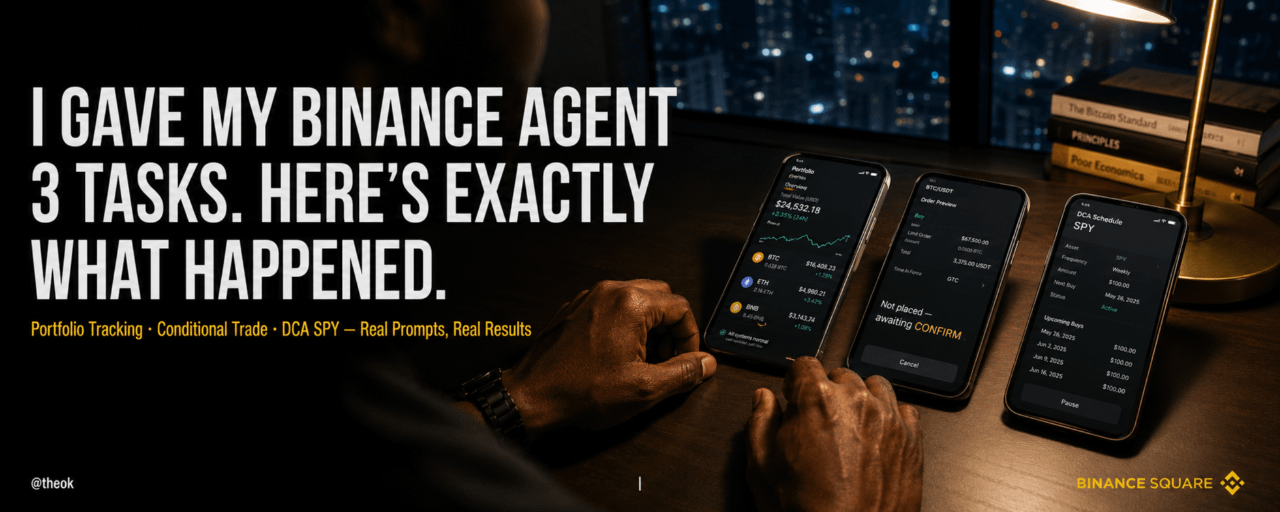
Article
I Gave My Binance Agent 3 Tasks. Here's Exactly What Happened.Binance Agent OS lets you set an AI agent to monitor your portfolio, execute conditional trades, and automate your DCA all within a controlled, auditable perimeter that you define. Here are the 3 tasks I ran, the exact prompts I used, and the one gotcha that changed how I think about AI finance forever.
🤖 What Is Binance Agent OS And Why I Decided to Test It
AI agents are no longer just answering questions. They are taking action.
Binance Agent OS is the financial capability layer that makes that possible built on MCP (Model Context Protocol), the open standard already adopted by OpenAI, Google,Microsoft, AWS, and Anthropic. It means an agent inside Claude, ChatGPT, or Cursor can now connect to your Binance account and execute within the rules you define.
I wanted to test it myself three real tasks, real prompts, real results.
Here is exactly what I did.
📊 Task 1 Portfolio Tracking
The problem I was solving: I was checking my Binance portfolio every 30 minutes. It was consuming my focus and my time. I needed the agent to do it for me.
The exact prompt I used: "Monitor my Binance portfolio every 4 hours. Alert me when BTC or ETH moves more than 3% in either direction. Include my current P&L compared to 24 hours ago."
What happened: ChatGPT connected to Binance via MCP and activated the monitor in 1 minute 14 seconds. The agent confirmed the task with a clear breakdown of exactly what it will do every 4 hours:
Alert when BTC or ETH moves beyond ±3% over 24 hoursReport current balances and open-position P&LCompare total portfolio equity with approximately 24 hours earlierConfirm whether protective stops remain active- Never place or modify trades
A scheduled task appeared immediately in the sidebar "Binance 4-hour portfolio monitor Toutes les 4 heures" confirming the automation is live and running.
What I learned: The agent is read-only by default on monitoring tasks it explicitly confirmed "Never place or modify trades." This is the safety design working exactly as intended. The first run establishes the equity baseline automatically you don't need to set a reference point manually. The agent handles that for you.
⚡ Task 2 Conditional Trade Execution
The problem I was solving: I wanted to buy BTC on a dip below $95,000 but I knew I would hesitate when the moment came. Emotion kills execution. I needed the agent to be emotionless.
The exact prompt I used: "When BTC drops below $95,000, buy $50 USDT worth of BTC spot. Confirm my available balance before executing. Show me the order preview first and wait for my CONFIRM before placing the order."
What happened: In 19 seconds, the agent detected that BTC was already below the $95,000 trigger and immediately generated a full order preview:
Order: Market buy BTCUSDTSpend: 30.00 USDTBTC price: $79,278.01Estimated BTC received: 0.00037841 BTCAvailable balance: 40.00 USDTStatus: Not placed waiting for CONFIRM
The agent froze. Zero execution. Waiting for my word.
What I learned: The agent checks your live balance in real time before showing the preview not at prompt time.
If your balance changes between the prompt and the CONFIRM, it rechecks again before executing. Nothing moves without your explicit approval.
📈 Task 3 Weekly DCA into SPY bStocks
The problem I was solving: I wanted to build a long-term index portfolio SPY exposure, from Kinshasa, with no US brokerage account. $25 per week, automatically, without thinking about it.
The exact prompt I used:"Every Monday at 9 AM UTC, buy $25 worth of SPY bStocks on Binance. Maximum total position: $500. Stop automatically if SPY drops more than 15% from my average entry price."
What happened: In 9 seconds, the agent confirmed the schedule and broke down exactly what it will verify every Monday at 9:00 AM UTC:
Available USDT balanceCurrent SPY bStock position valueWhether another $25 purchase stays below the $500 capWhether SPY is more than 15% below average entryAn order preview ready for CONFIRM
What I learned: The agent caught an ambiguity I hadn't thought about "stop automatically" is unclear. Does it mean sell the entire SPY position, or just pause future purchases?I answered "pause purchases only" and the agent updated the rule accordingly.
This is the real gotcha: vague stop conditions get flagged before execution, not after. Write your rules precisely the agent will ask if something isn't clear.
🔐 Why Agent OS Is Different From Every Other AI Tool I've Used
This is not an AI that acts freely with your money. This is an AI that acts within the boundaries you define with every action logged, every decision auditable, and every limit enforced.
That distinction is everything.
🌍 What This Means If You're Building in Africa
For developers and investors in Kinshasa, Lagos, Nairobi, and Accra:
You can now build AI finance agents that connect to Binance's full market and execution infrastructure using the same MCP standard as fintech teams in London or Singapore.
No custom integration. No institutional relationship. No minimum AUM.
The infrastructure that hedge funds use to automate financial decisions is now accessible from your smartphone with your rules, your assets, and your perimeter.
The barrier to AI-powered finance in Africa just dropped to zero.
FAQs
Q: What is Binance Agent OS?
A: Binance Agent OS is the financial capability layer that connects AI agents Claude, ChatGPT, Cursor to your Binance account through MCP (Model Context Protocol). Agents can monitor your portfolio, execute trades, and automate strategies all within the rules and limits you define. Every action is logged and auditable.
Q: Is it safe to let an AI agent access my Binance account?
A: Yes, within your defined perimeter. The agent cannot exceed the limits you set: maximum trade sizes, allowed assets, spending caps, and confirmation requirements. Your funds remain in your existing Binance account, protected by SAFU ($1B+), Proof of Reserves, and cold storage. The agent acts within your rules not around them.
Q: Can I use Agent OS from Africa?
A: Yes ,for eligible users in authorized countries. Binance Agent OS connects to your existing Binance account. If you have a verified Binance account in an authorized country, you can access Agent OS capabilities directly. Check availability at binance.com.
📌 Sources: Binance official Agent OS announcement; Anthropic MCP documentation; Binance Security SAFU fund official page.
⚠️ Educational content only. Results shown are illustrative of Agent OS capabilities. Binance Agent OS features and availability may vary by country. Does not constitute financial advice.
#BinanceAgentOS @Binance_Angels
I Gave My Binance Agent 3 Tasks. Here's Exactly What Happened.
Binance Agent OS lets you set an AI agent to monitor your portfolio, execute conditional trades, and automate your DCA all within a controlled, auditable perimeter that you define. Here are the 3 tasks I ran, the exact prompts I used, and the one gotcha that changed how I think about AI finance forever.
🤖 What Is Binance Agent OS And Why I Decided to Test It
AI agents are no longer just answering questions. They are taking action.
Binance Agent OS is the financial capability layer that makes that possible built on MCP (Model Context Protocol), the open standard already adopted by OpenAI, Google,Microsoft, AWS, and Anthropic. It means an agent inside Claude, ChatGPT, or Cursor can now connect to your Binance account and execute within the rules you define.
I wanted to test it myself three real tasks, real prompts, real results.
Here is exactly what I did.
📊 Task 1 Portfolio Tracking
The problem I was solving: I was checking my Binance portfolio every 30 minutes. It was consuming my focus and my time. I needed the agent to do it for me.
The exact prompt I used: "Monitor my Binance portfolio every 4 hours. Alert me when BTC or ETH moves more than 3% in either direction. Include my current P&L compared to 24 hours ago."
What happened: ChatGPT connected to Binance via MCP and activated the monitor in 1 minute 14 seconds. The agent confirmed the task with a clear breakdown of exactly what it will do every 4 hours:
Alert when BTC or ETH moves beyond ±3% over 24 hoursReport current balances and open-position P&LCompare total portfolio equity with approximately 24 hours earlierConfirm whether protective stops remain active- Never place or modify trades
A scheduled task appeared immediately in the sidebar "Binance 4-hour portfolio monitor Toutes les 4 heures" confirming the automation is live and running.
What I learned: The agent is read-only by default on monitoring tasks it explicitly confirmed "Never place or modify trades." This is the safety design working exactly as intended. The first run establishes the equity baseline automatically you don't need to set a reference point manually. The agent handles that for you.
⚡ Task 2 Conditional Trade Execution
The problem I was solving: I wanted to buy BTC on a dip below $95,000 but I knew I would hesitate when the moment came. Emotion kills execution. I needed the agent to be emotionless.
The exact prompt I used: "When BTC drops below $95,000, buy $50 USDT worth of BTC spot. Confirm my available balance before executing. Show me the order preview first and wait for my CONFIRM before placing the order."
What happened: In 19 seconds, the agent detected that BTC was already below the $95,000 trigger and immediately generated a full order preview:
Order: Market buy BTCUSDTSpend: 30.00 USDTBTC price: $79,278.01Estimated BTC received: 0.00037841 BTCAvailable balance: 40.00 USDTStatus: Not placed waiting for CONFIRM
The agent froze. Zero execution. Waiting for my word.
What I learned: The agent checks your live balance in real time before showing the preview not at prompt time.
If your balance changes between the prompt and the CONFIRM, it rechecks again before executing. Nothing moves without your explicit approval.
📈 Task 3 Weekly DCA into SPY bStocks
The problem I was solving: I wanted to build a long-term index portfolio SPY exposure, from Kinshasa, with no US brokerage account. $25 per week, automatically, without thinking about it.
The exact prompt I used:"Every Monday at 9 AM UTC, buy $25 worth of SPY bStocks on Binance. Maximum total position: $500. Stop automatically if SPY drops more than 15% from my average entry price."
What happened: In 9 seconds, the agent confirmed the schedule and broke down exactly what it will verify every Monday at 9:00 AM UTC:
Available USDT balanceCurrent SPY bStock position valueWhether another $25 purchase stays below the $500 capWhether SPY is more than 15% below average entryAn order preview ready for CONFIRM
What I learned: The agent caught an ambiguity I hadn't thought about "stop automatically" is unclear. Does it mean sell the entire SPY position, or just pause future purchases?I answered "pause purchases only" and the agent updated the rule accordingly.
This is the real gotcha: vague stop conditions get flagged before execution, not after. Write your rules precisely the agent will ask if something isn't clear.
🔐 Why Agent OS Is Different From Every Other AI Tool I've Used
This is not an AI that acts freely with your money. This is an AI that acts within the boundaries you define with every action logged, every decision auditable, and every limit enforced.
That distinction is everything.
🌍 What This Means If You're Building in Africa
For developers and investors in Kinshasa, Lagos, Nairobi, and Accra:
You can now build AI finance agents that connect to Binance's full market and execution infrastructure using the same MCP standard as fintech teams in London or Singapore.
No custom integration. No institutional relationship. No minimum AUM.
The infrastructure that hedge funds use to automate financial decisions is now accessible from your smartphone with your rules, your assets, and your perimeter.
The barrier to AI-powered finance in Africa just dropped to zero.
FAQs
Q: What is Binance Agent OS?
A: Binance Agent OS is the financial capability layer that connects AI agents Claude, ChatGPT, Cursor to your Binance account through MCP (Model Context Protocol). Agents can monitor your portfolio, execute trades, and automate strategies all within the rules and limits you define. Every action is logged and auditable.
Q: Is it safe to let an AI agent access my Binance account?
A: Yes, within your defined perimeter. The agent cannot exceed the limits you set: maximum trade sizes, allowed assets, spending caps, and confirmation requirements. Your funds remain in your existing Binance account, protected by SAFU ($1B+), Proof of Reserves, and cold storage. The agent acts within your rules not around them.
Q: Can I use Agent OS from Africa?
A: Yes ,for eligible users in authorized countries. Binance Agent OS connects to your existing Binance account. If you have a verified Binance account in an authorized country, you can access Agent OS capabilities directly. Check availability at binance.com.
📌 Sources: Binance official Agent OS announcement; Anthropic MCP documentation; Binance Security SAFU fund official page.
⚠️ Educational content only. Results shown are illustrative of Agent OS capabilities. Binance Agent OS features and availability may vary by country. Does not constitute financial advice.
#BinanceAgentOS @Binance Angels
🤖 What Is Binance Agent OS And Why I Decided to Test It
AI agents are no longer just answering questions. They are taking action.
Binance Agent OS is the financial capability layer that makes that possible built on MCP (Model Context Protocol), the open standard already adopted by OpenAI, Google,Microsoft, AWS, and Anthropic. It means an agent inside Claude, ChatGPT, or Cursor can now connect to your Binance account and execute within the rules you define.
I wanted to test it myself three real tasks, real prompts, real results.
Here is exactly what I did.
📊 Task 1 Portfolio Tracking
The problem I was solving: I was checking my Binance portfolio every 30 minutes. It was consuming my focus and my time. I needed the agent to do it for me.
The exact prompt I used: "Monitor my Binance portfolio every 4 hours. Alert me when BTC or ETH moves more than 3% in either direction. Include my current P&L compared to 24 hours ago."
What happened: ChatGPT connected to Binance via MCP and activated the monitor in 1 minute 14 seconds. The agent confirmed the task with a clear breakdown of exactly what it will do every 4 hours:
Alert when BTC or ETH moves beyond ±3% over 24 hoursReport current balances and open-position P&LCompare total portfolio equity with approximately 24 hours earlierConfirm whether protective stops remain active- Never place or modify trades
A scheduled task appeared immediately in the sidebar "Binance 4-hour portfolio monitor Toutes les 4 heures" confirming the automation is live and running.
What I learned: The agent is read-only by default on monitoring tasks it explicitly confirmed "Never place or modify trades." This is the safety design working exactly as intended. The first run establishes the equity baseline automatically you don't need to set a reference point manually. The agent handles that for you.
⚡ Task 2 Conditional Trade Execution
The problem I was solving: I wanted to buy BTC on a dip below $95,000 but I knew I would hesitate when the moment came. Emotion kills execution. I needed the agent to be emotionless.
The exact prompt I used: "When BTC drops below $95,000, buy $50 USDT worth of BTC spot. Confirm my available balance before executing. Show me the order preview first and wait for my CONFIRM before placing the order."
What happened: In 19 seconds, the agent detected that BTC was already below the $95,000 trigger and immediately generated a full order preview:
Order: Market buy BTCUSDTSpend: 30.00 USDTBTC price: $79,278.01Estimated BTC received: 0.00037841 BTCAvailable balance: 40.00 USDTStatus: Not placed waiting for CONFIRM
The agent froze. Zero execution. Waiting for my word.
What I learned: The agent checks your live balance in real time before showing the preview not at prompt time.
If your balance changes between the prompt and the CONFIRM, it rechecks again before executing. Nothing moves without your explicit approval.
📈 Task 3 Weekly DCA into SPY bStocks
The problem I was solving: I wanted to build a long-term index portfolio SPY exposure, from Kinshasa, with no US brokerage account. $25 per week, automatically, without thinking about it.
The exact prompt I used:"Every Monday at 9 AM UTC, buy $25 worth of SPY bStocks on Binance. Maximum total position: $500. Stop automatically if SPY drops more than 15% from my average entry price."
What happened: In 9 seconds, the agent confirmed the schedule and broke down exactly what it will verify every Monday at 9:00 AM UTC:
Available USDT balanceCurrent SPY bStock position valueWhether another $25 purchase stays below the $500 capWhether SPY is more than 15% below average entryAn order preview ready for CONFIRM
What I learned: The agent caught an ambiguity I hadn't thought about "stop automatically" is unclear. Does it mean sell the entire SPY position, or just pause future purchases?I answered "pause purchases only" and the agent updated the rule accordingly.
This is the real gotcha: vague stop conditions get flagged before execution, not after. Write your rules precisely the agent will ask if something isn't clear.
🔐 Why Agent OS Is Different From Every Other AI Tool I've Used
This is not an AI that acts freely with your money. This is an AI that acts within the boundaries you define with every action logged, every decision auditable, and every limit enforced.
That distinction is everything.
🌍 What This Means If You're Building in Africa
For developers and investors in Kinshasa, Lagos, Nairobi, and Accra:
You can now build AI finance agents that connect to Binance's full market and execution infrastructure using the same MCP standard as fintech teams in London or Singapore.
No custom integration. No institutional relationship. No minimum AUM.
The infrastructure that hedge funds use to automate financial decisions is now accessible from your smartphone with your rules, your assets, and your perimeter.
The barrier to AI-powered finance in Africa just dropped to zero.
FAQs
Q: What is Binance Agent OS?
A: Binance Agent OS is the financial capability layer that connects AI agents Claude, ChatGPT, Cursor to your Binance account through MCP (Model Context Protocol). Agents can monitor your portfolio, execute trades, and automate strategies all within the rules and limits you define. Every action is logged and auditable.
Q: Is it safe to let an AI agent access my Binance account?
A: Yes, within your defined perimeter. The agent cannot exceed the limits you set: maximum trade sizes, allowed assets, spending caps, and confirmation requirements. Your funds remain in your existing Binance account, protected by SAFU ($1B+), Proof of Reserves, and cold storage. The agent acts within your rules not around them.
Q: Can I use Agent OS from Africa?
A: Yes ,for eligible users in authorized countries. Binance Agent OS connects to your existing Binance account. If you have a verified Binance account in an authorized country, you can access Agent OS capabilities directly. Check availability at binance.com.
📌 Sources: Binance official Agent OS announcement; Anthropic MCP documentation; Binance Security SAFU fund official page.
⚠️ Educational content only. Results shown are illustrative of Agent OS capabilities. Binance Agent OS features and availability may vary by country. Does not constitute financial advice.
#BinanceAgentOS @Binance Angels
4
336
·
--
Article
From Chips to Carts: Binance Prices the Retail Read Before the Market OpensNext week, consumption takes over from AI as the market's main storyline and Binance's off-hour pricing already reflects the shift before traditional markets open. As Walmart, Home Depot, and Target report, consumer data shapes the inflation and rates view in real time. Binance shows that movement 24/7, before Wall Street opens, before analysts publish, before the opening bell rings. Same market. Different aisle.
🛒 The Week That Shifts the Narrative: From AI to the American Consumer
For months, the market's dominant narrative has been AI. Nvidia earnings. Data center cap ex. GPU supply chains. The Nasdaq leading on AI optimism.
Next week, that narrative rotates.
The earnings calendar that matters:
These three reports are not just earnings they are real-time readings of the US consumer. Together, they form the most comprehensive snapshot of where American household spending is heading.
And that spending data feeds directly into the inflation and rates view that drives every asset class equities, bonds, crypto, and tokenized stocks alike.
📊 Why Consumer Earnings Are theInflation and Rates Signal
The connection between Walmart's revenue and Federal Reserve policy is not abstract —it is direct.
The chain of causation:
Consumer spending strength
↓
Inflation persistence / easing
↓
Fed rate path expectations
↓
Risk asset valuations
↓
Equity and crypto prices
What each retailer reveals:
Walmart (WMT):
America's largest retailer 90% of Americans live within 10 miles of a WalmartIf WMT guides down → consumer stress, potential disinflation → rate cut expectations riseIf WMT guides up → consumer resilience, sticky spending → rates stay higher longerInflation read: food prices, private label adoption, trade-down behavior
Home Depot (HD):
Direct read on housing market activity and home owner spending confidenceIf HD misses → housing slowdown accelerating → shelter inflation easing → Fed dovishIf HD beats → housing market floor holding → shelter costs sticky → rates higherInflation read: building materials, renovation spending, contractor pricing
Target (TGT):
Best indicator of discretionary vs essential spending splitIf TGT beats on discretionary → consumer has excess spending power → inflation riskIf TGT misses on discretionary → consumer pulling back → disinflation acceleratingInflation read: apparel, electronics, home goods pure discretionary signal
The combined read from all three: the most accurate real-time picture of where inflation and rates are heading available before any Fed statement, before any CPI print.
⚡ Binance Prices It First Before Wall Street Opens
Traditional investors wait for Monday's opening bell to react to weekend retail earnings. Binance users don't.
The bStocks advantage on earnings week:
When WMT, HD, or TGT report after the bell or pre-market, bStocks begin pricing the information immediately not when NYSE opens, but the moment the data is public.
The track record supports this:
bStocks priced a median 92% of the Monday opening gap across 7 weekends analyzedOn gaps greater than 3%, direction called correctly 41 out of 41 times$1.5 billion in bStocks volume traded during US market closed hours last week alone
Earnings week is exactly the scenario where this advantage is most valuable.
🔄 The Rotation Trade: From Chips to Carts
The narrative rotation from AI to consumer is not just a thematic shift it is a risk repositioning signal that Binance users can express immediately.
🌍 What This Means for African Investors
Consumer earnings week in the US creates an information gap that is particularly acute for African investors.The timing challenge without bStocks:
With bStocks on Binance:
WMT reports at 4:05 PM ET → bStocks begin pricing at 11:05 PM Lagos timeBy the time the Lagos investor wakes up Tuesday morning the move is already in bStocksThey positioned the night before, at 11 PM, from their smartphone, before any traditional market opened
That 18-hour information gap closes to zero with bStocks.
📈 The Assets to Watch Consumer Earnings Week
Direct bStocks exposure:
Index bStocks affected:
The macro chain to watch:
Strong consumer read → sticky inflation → rates higher longer → growth multiples compress → QQQ underperforms →SPY defensive rotation → consumer staples outperform.
Weak consumer read → disinflation → rate cut expectations rise → growth multiples expand → QQQ outperforms → SPY broadens.
Binance users can express either view immediately, 24/7, from any device.
🔮 Same Market, Different Aisle
The shift from chips to carts is more than a thematic rotation. It is a reminder that markets are one interconnected system and that the signals come from everywhere.
AI earnings told us where corporate capital was going. Consumer earnings tell us where household capital is going. Together, they paint the complete picture of where inflation, rates, and risk assets are heading.
What makes Binance different in this environment:
Traditional investors read the Walmart press release Tuesday morning.They wait for analyst upgrades. They place orders at 9:30 AM. They are, by design, reactive.
Binance users read the same press release Tuesday morning but they could have been positioned since Monday night, when bStocks began pricing the earnings in real time.
Same market. Same data. Different infrastructure. Different timing.
That timing advantage the ability to act on information the moment it is public is what 24/7 markets are built for.
📋 Data Summary Consumer Earnings Week
FAQs
Q: Why do Walmart, Home Depot, and Target earnings matter for crypto and broader markets?
A: These three retailers provide the most comprehensive real-time read on US consumer health available. Consumer spending drives ~70% of US GDP. When spending is strong, inflation persists and the Fed keeps rates higher which pressures growth assets including crypto and tech stocks. When spending weakens, disinflation accelerates and rate cut expectations rise which supports risk assets broadly. The consumer earnings read is one of the most important macro signals of any given month.
Q: How can I trade WMT, HD, or TGT on Binance?
A: Eligible Binance users in authorized countries can access tokenized versions of WMT, HD, TGT, and 40+ other US stocks through bStocks directly from the Binance app. No US brokerage account required. Start from $5. Available 24/7 including during earnings releases. Check eligibility at binance.com.
Q: Does Binance price consumer stocks accurately before market open?
A: Based on data from 7 weekends of analysis, bStocks priced a median 92% of the Monday opening gap in advance and called the direction correctly 41 out of 41 times on gaps greater than 3%. Consumer earnings events that occur after the bell or on weekends are priced into bStocks in real time, giving users immediate price discovery that traditional markets cannot offer until the next session opens.
📌 Sources: Binance Research "Early Momentum in Tokenized Stock Adoption" (July2026); Binance Markets Blog —bStocks weekend price discovery data (August 2026); Walmart, Home Depot, Target official earnings calendars.
⚠️ Educational content only. bStocks are available only to eligible users in authorized countries. Not available to US persons. Does not constitute financial advice.
From Chips to Carts: Binance Prices the Retail Read Before the Market Opens
Next week, consumption takes over from AI as the market's main storyline and Binance's off-hour pricing already reflects the shift before traditional markets open. As Walmart, Home Depot, and Target report, consumer data shapes the inflation and rates view in real time. Binance shows that movement 24/7, before Wall Street opens, before analysts publish, before the opening bell rings. Same market. Different aisle.
🛒 The Week That Shifts the Narrative: From AI to the American Consumer
For months, the market's dominant narrative has been AI. Nvidia earnings. Data center cap ex. GPU supply chains. The Nasdaq leading on AI optimism.
Next week, that narrative rotates.
The earnings calendar that matters:
These three reports are not just earnings they are real-time readings of the US consumer. Together, they form the most comprehensive snapshot of where American household spending is heading.
And that spending data feeds directly into the inflation and rates view that drives every asset class equities, bonds, crypto, and tokenized stocks alike.
📊 Why Consumer Earnings Are theInflation and Rates Signal
The connection between Walmart's revenue and Federal Reserve policy is not abstract —it is direct.
The chain of causation:
Consumer spending strength
↓
Inflation persistence / easing
↓
Fed rate path expectations
↓
Risk asset valuations
↓
Equity and crypto prices
What each retailer reveals:
Walmart (WMT):
America's largest retailer 90% of Americans live within 10 miles of a WalmartIf WMT guides down → consumer stress, potential disinflation → rate cut expectations riseIf WMT guides up → consumer resilience, sticky spending → rates stay higher longerInflation read: food prices, private label adoption, trade-down behavior
Home Depot (HD):
Direct read on housing market activity and home owner spending confidenceIf HD misses → housing slowdown accelerating → shelter inflation easing → Fed dovishIf HD beats → housing market floor holding → shelter costs sticky → rates higherInflation read: building materials, renovation spending, contractor pricing
Target (TGT):
Best indicator of discretionary vs essential spending splitIf TGT beats on discretionary → consumer has excess spending power → inflation riskIf TGT misses on discretionary → consumer pulling back → disinflation acceleratingInflation read: apparel, electronics, home goods pure discretionary signal
The combined read from all three: the most accurate real-time picture of where inflation and rates are heading available before any Fed statement, before any CPI print.
⚡ Binance Prices It First Before Wall Street Opens
Traditional investors wait for Monday's opening bell to react to weekend retail earnings. Binance users don't.
The bStocks advantage on earnings week:
When WMT, HD, or TGT report after the bell or pre-market, bStocks begin pricing the information immediately not when NYSE opens, but the moment the data is public.
The track record supports this:
bStocks priced a median 92% of the Monday opening gap across 7 weekends analyzedOn gaps greater than 3%, direction called correctly 41 out of 41 times$1.5 billion in bStocks volume traded during US market closed hours last week alone
Earnings week is exactly the scenario where this advantage is most valuable.
🔄 The Rotation Trade: From Chips to Carts
The narrative rotation from AI to consumer is not just a thematic shift it is a risk repositioning signal that Binance users can express immediately.
🌍 What This Means for African Investors
Consumer earnings week in the US creates an information gap that is particularly acute for African investors.The timing challenge without bStocks:
With bStocks on Binance:
WMT reports at 4:05 PM ET → bStocks begin pricing at 11:05 PM Lagos timeBy the time the Lagos investor wakes up Tuesday morning the move is already in bStocksThey positioned the night before, at 11 PM, from their smartphone, before any traditional market opened
That 18-hour information gap closes to zero with bStocks.
📈 The Assets to Watch Consumer Earnings Week
Direct bStocks exposure:
Index bStocks affected:
The macro chain to watch:
Strong consumer read → sticky inflation → rates higher longer → growth multiples compress → QQQ underperforms →SPY defensive rotation → consumer staples outperform.
Weak consumer read → disinflation → rate cut expectations rise → growth multiples expand → QQQ outperforms → SPY broadens.
Binance users can express either view immediately, 24/7, from any device.
🔮 Same Market, Different Aisle
The shift from chips to carts is more than a thematic rotation. It is a reminder that markets are one interconnected system and that the signals come from everywhere.
AI earnings told us where corporate capital was going. Consumer earnings tell us where household capital is going. Together, they paint the complete picture of where inflation, rates, and risk assets are heading.
What makes Binance different in this environment:
Traditional investors read the Walmart press release Tuesday morning.They wait for analyst upgrades. They place orders at 9:30 AM. They are, by design, reactive.
Binance users read the same press release Tuesday morning but they could have been positioned since Monday night, when bStocks began pricing the earnings in real time.
Same market. Same data. Different infrastructure. Different timing.
That timing advantage the ability to act on information the moment it is public is what 24/7 markets are built for.
📋 Data Summary Consumer Earnings Week
FAQs
Q: Why do Walmart, Home Depot, and Target earnings matter for crypto and broader markets?
A: These three retailers provide the most comprehensive real-time read on US consumer health available. Consumer spending drives ~70% of US GDP. When spending is strong, inflation persists and the Fed keeps rates higher which pressures growth assets including crypto and tech stocks. When spending weakens, disinflation accelerates and rate cut expectations rise which supports risk assets broadly. The consumer earnings read is one of the most important macro signals of any given month.
Q: How can I trade WMT, HD, or TGT on Binance?
A: Eligible Binance users in authorized countries can access tokenized versions of WMT, HD, TGT, and 40+ other US stocks through bStocks directly from the Binance app. No US brokerage account required. Start from $5. Available 24/7 including during earnings releases. Check eligibility at binance.com.
Q: Does Binance price consumer stocks accurately before market open?
A: Based on data from 7 weekends of analysis, bStocks priced a median 92% of the Monday opening gap in advance and called the direction correctly 41 out of 41 times on gaps greater than 3%. Consumer earnings events that occur after the bell or on weekends are priced into bStocks in real time, giving users immediate price discovery that traditional markets cannot offer until the next session opens.
📌 Sources: Binance Research "Early Momentum in Tokenized Stock Adoption" (July2026); Binance Markets Blog —bStocks weekend price discovery data (August 2026); Walmart, Home Depot, Target official earnings calendars.
⚠️ Educational content only. bStocks are available only to eligible users in authorized countries. Not available to US persons. Does not constitute financial advice.
🛒 The Week That Shifts the Narrative: From AI to the American Consumer
For months, the market's dominant narrative has been AI. Nvidia earnings. Data center cap ex. GPU supply chains. The Nasdaq leading on AI optimism.
Next week, that narrative rotates.
The earnings calendar that matters:
These three reports are not just earnings they are real-time readings of the US consumer. Together, they form the most comprehensive snapshot of where American household spending is heading.
And that spending data feeds directly into the inflation and rates view that drives every asset class equities, bonds, crypto, and tokenized stocks alike.
📊 Why Consumer Earnings Are theInflation and Rates Signal
The connection between Walmart's revenue and Federal Reserve policy is not abstract —it is direct.
The chain of causation:
Consumer spending strength
↓
Inflation persistence / easing
↓
Fed rate path expectations
↓
Risk asset valuations
↓
Equity and crypto prices
What each retailer reveals:
Walmart (WMT):
America's largest retailer 90% of Americans live within 10 miles of a WalmartIf WMT guides down → consumer stress, potential disinflation → rate cut expectations riseIf WMT guides up → consumer resilience, sticky spending → rates stay higher longerInflation read: food prices, private label adoption, trade-down behavior
Home Depot (HD):
Direct read on housing market activity and home owner spending confidenceIf HD misses → housing slowdown accelerating → shelter inflation easing → Fed dovishIf HD beats → housing market floor holding → shelter costs sticky → rates higherInflation read: building materials, renovation spending, contractor pricing
Target (TGT):
Best indicator of discretionary vs essential spending splitIf TGT beats on discretionary → consumer has excess spending power → inflation riskIf TGT misses on discretionary → consumer pulling back → disinflation acceleratingInflation read: apparel, electronics, home goods pure discretionary signal
The combined read from all three: the most accurate real-time picture of where inflation and rates are heading available before any Fed statement, before any CPI print.
⚡ Binance Prices It First Before Wall Street Opens
Traditional investors wait for Monday's opening bell to react to weekend retail earnings. Binance users don't.
The bStocks advantage on earnings week:
When WMT, HD, or TGT report after the bell or pre-market, bStocks begin pricing the information immediately not when NYSE opens, but the moment the data is public.
The track record supports this:
bStocks priced a median 92% of the Monday opening gap across 7 weekends analyzedOn gaps greater than 3%, direction called correctly 41 out of 41 times$1.5 billion in bStocks volume traded during US market closed hours last week alone
Earnings week is exactly the scenario where this advantage is most valuable.
🔄 The Rotation Trade: From Chips to Carts
The narrative rotation from AI to consumer is not just a thematic shift it is a risk repositioning signal that Binance users can express immediately.
🌍 What This Means for African Investors
Consumer earnings week in the US creates an information gap that is particularly acute for African investors.The timing challenge without bStocks:
With bStocks on Binance:
WMT reports at 4:05 PM ET → bStocks begin pricing at 11:05 PM Lagos timeBy the time the Lagos investor wakes up Tuesday morning the move is already in bStocksThey positioned the night before, at 11 PM, from their smartphone, before any traditional market opened
That 18-hour information gap closes to zero with bStocks.
📈 The Assets to Watch Consumer Earnings Week
Direct bStocks exposure:
Index bStocks affected:
The macro chain to watch:
Strong consumer read → sticky inflation → rates higher longer → growth multiples compress → QQQ underperforms →SPY defensive rotation → consumer staples outperform.
Weak consumer read → disinflation → rate cut expectations rise → growth multiples expand → QQQ outperforms → SPY broadens.
Binance users can express either view immediately, 24/7, from any device.
🔮 Same Market, Different Aisle
The shift from chips to carts is more than a thematic rotation. It is a reminder that markets are one interconnected system and that the signals come from everywhere.
AI earnings told us where corporate capital was going. Consumer earnings tell us where household capital is going. Together, they paint the complete picture of where inflation, rates, and risk assets are heading.
What makes Binance different in this environment:
Traditional investors read the Walmart press release Tuesday morning.They wait for analyst upgrades. They place orders at 9:30 AM. They are, by design, reactive.
Binance users read the same press release Tuesday morning but they could have been positioned since Monday night, when bStocks began pricing the earnings in real time.
Same market. Same data. Different infrastructure. Different timing.
That timing advantage the ability to act on information the moment it is public is what 24/7 markets are built for.
📋 Data Summary Consumer Earnings Week
FAQs
Q: Why do Walmart, Home Depot, and Target earnings matter for crypto and broader markets?
A: These three retailers provide the most comprehensive real-time read on US consumer health available. Consumer spending drives ~70% of US GDP. When spending is strong, inflation persists and the Fed keeps rates higher which pressures growth assets including crypto and tech stocks. When spending weakens, disinflation accelerates and rate cut expectations rise which supports risk assets broadly. The consumer earnings read is one of the most important macro signals of any given month.
Q: How can I trade WMT, HD, or TGT on Binance?
A: Eligible Binance users in authorized countries can access tokenized versions of WMT, HD, TGT, and 40+ other US stocks through bStocks directly from the Binance app. No US brokerage account required. Start from $5. Available 24/7 including during earnings releases. Check eligibility at binance.com.
Q: Does Binance price consumer stocks accurately before market open?
A: Based on data from 7 weekends of analysis, bStocks priced a median 92% of the Monday opening gap in advance and called the direction correctly 41 out of 41 times on gaps greater than 3%. Consumer earnings events that occur after the bell or on weekends are priced into bStocks in real time, giving users immediate price discovery that traditional markets cannot offer until the next session opens.
📌 Sources: Binance Research "Early Momentum in Tokenized Stock Adoption" (July2026); Binance Markets Blog —bStocks weekend price discovery data (August 2026); Walmart, Home Depot, Target official earnings calendars.
⚠️ Educational content only. bStocks are available only to eligible users in authorized countries. Not available to US persons. Does not constitute financial advice.
2
737
·
--
Article
Crypto Made Markets 24/7. Now Wall Street Is Playing Catch-Up.Wall Street is extending hours because crypto already had them. Nasdaq goes live 23x5 on December 6, 2026 but extended hours only work if there's someone awake to fill them, and US clients sleep at night. That liquidity has to come from other time zones. A global, emerging-market-native platform like Binance where ~50% of bStocks volume already trades outside US hours never had this problem. The real story is convergence: TradFi is adopting crypto's always-on infrastructure, and crypto supplies the one thing it needs most: global liquidity that never sleeps.
🕐 The Announcement That Confirms Everything
On December 6, 2026, Nasdaq goes live with 23x5trading nearly round-the-clock, five days a week.
This is the most significant structural change to US equity market hours in decades. And it is a direct acknowledgment of something the crypto industry has known since 2017:
Markets that close are markets that lag.
When Nasdaq extends its hours, it is not innovating. It is catching up to an infrastructure model that Binance and the broader crypto ecosystem pioneered years ago.
The question worth asking is not "why is Nasdaq doing this?" The answer is obvious. The question is: who has the liquidity to make it work?
🌍 The Liquidity Problem Wall Street Hasn't Solved
Extended trading hours are only as valuable as the liquidity filling them.
Here is Wall Street's structural challenge:
US retail investors sleep at night. The average American retail trader is not awake at 2 AM placing orders on Nasdaq. Institutional desks have overnight coverage but retail liquidity thins dramatically outside 9:30 AM–4:00 PM ET.
Where does the overnight liquidity come from?
It comes from the same place it has always come from in crypto: emerging markets, Asia, Africa, Latin America, and the Middle East time zones where it is daytime when New York is asleep.
The global liquidity that Nasdaq needs to fill its extended hours already exists and it has been trading on Binance for years.
📊 Binance Already Solved This Years Ago
Binance never had an "extended hours" problem because Binance never had closing hours.
The numbers that prove it:
The critical insight: When ~50% of bStocks volume already trades outside US hours ,it means Binance has already built the global, always-on liquidity base that Nasdaq is now trying to construct from scratch.
Nasdaq is launching a 23x5 product on December 6. Binance has been running 168x7 since day one.
⚡ The Convergence Story: TradFi Adopts Crypto's Infrastructure
The Nasdaq announcement is not just a product update. It is a structural signal about where global markets are heading.
What TradFi is adopting from crypto:
Each of these was pioneered in crypto often years before TradFi acknowledged it was possible.
The pattern is consistent: crypto builds the infrastructure, TradFi validates it by adopting it, and the platforms that were already native to that infrastructure win the convergence.
🏆 Why Emerging-Market-Native Platforms Win the Convergence
Binance was not built for Wall Street's schedule. It was built for a world where users in Lagos, Jakarta, São Paulo, and Kinshasa needed access to financial markets on their time, in their time zone, without waiting for New York to wake up.
That design decision building for a global, always-on user base from day one is now the exact infrastructure that TradFi is trying to replicate.
What Binance has that Nasdaqis building toward:
🌱 What This Means for African Investors
For an investor in Kinshasa, Lagos, or Nairobi the Nasdaq 23x5 announcement is validation of something they already knew:
Their time zone is not a disadvantage. It is an asset.
When Nasdaq extends to overnight hours, it needs liquidity from African, Asian, and Middle Eastern time zones. That liquidity the willingness to trade US equities at 3 AM Lagos time is exactly what Binance users in Africa have been providing to bStocks markets for years.
What changes for African investors post-December 6:
US equity markets become more accessible during African trading hoursThe liquidity African investors provide becomes more valuable to global marketsThe always-on infrastructure they rely on Binance bStocks remains the most complete version of what Nasdaq is trying to build
The African investor was not late to this transition. They were early.
🔮 The Real Story: Convergence Is Already Happening
The Nasdaq 23x5 launch is a milestone but it is not the beginning of the story.It is chapter three.
Chapter 1 Crypto builds 24/7 markets (2017–2020) Bitcoin, Ethereum, and crypto exchanges prove that global, always-on financial markets work. Liquidity is real. Price discovery is accurate. The infrastructure is reliable.
Chapter 2 Tokenized stocks bridge the gap (2021–2025) Platforms like Binance launch tokenized stock products bStocks that bring US equity exposure to the 24/7 crypto infrastructure. Emerging-market users get access to SPY, QQQ, Apple, Nvidia on their schedule, from their phone.
Chapter 3 TradFi converges (2026+) Nasdaq announces 23x5. NYSE explores tokenization. T+0 settlement becomes a target. The infrastructure model that crypto pioneered is being formally adopted by traditional finance.
What comes next: The distinction between"crypto markets" and "traditional markets" continues to blur. Assets, liquidity, and infrastructure converge on a single always-on global layer and the platforms that were native to that layer from the beginning hold the structural advantage.
📋 Data Summary
FAQs
Q: Why is Nasdaq extending to 23x5 trading hours?
A: Nasdaq is extending to 23x5 to capture demand from global investors particularly in Asia, the Middle East, Africa, and Latin America who want to trade US equities outside traditional 9:30 AM–4:00 PM ET hours. This is a structural acknowledgment that global demand for US equity exposure exists around the clock, a reality that crypto exchanges like Binance have been serving for years through tokenized stock products.
Q: How does Binance compare to Nasdaq's new extended hours?
A: Binance bStocks operate 168 hours per week 24/7 including weekends. Nasdaq's new 23x5 schedule covers approximately 115 hours per week and remains closed on weekends. Binance has been providing after-hours price discovery on tokenized US equities for years with ~50% of bStocks volume already trading outside US market hours and a track record of pricing 92% of Monday's opening gap in advance.
Q: Can African investors benefit from Nasdaq's extended hours?
A: Yes extended Nasdaq hours make US equity markets more accessible during African trading hours. But Binance bStocks already offer full 24/7 access to tokenized US equities including SPY, QQQ, Apple, and Nvidia from any African country where Binance is available, starting from $5, using mobile money or card. Check eligibility at binance.com.
📌 Sources: Nasdaq official 23x5 trading hours announcement (2026); Binance Research — "Early Momentum in Tokenized Stock Adoption" (July 2026); Binance Markets Blog — bStocks weekend price discovery data (August 2026).
⚠️ Educational content only. bStocks are available only to eligible users in authorized countries. Not available toUS persons. Does not constitute financial advice.
Crypto Made Markets 24/7. Now Wall Street Is Playing Catch-Up.
Wall Street is extending hours because crypto already had them. Nasdaq goes live 23x5 on December 6, 2026 but extended hours only work if there's someone awake to fill them, and US clients sleep at night. That liquidity has to come from other time zones. A global, emerging-market-native platform like Binance where ~50% of bStocks volume already trades outside US hours never had this problem. The real story is convergence: TradFi is adopting crypto's always-on infrastructure, and crypto supplies the one thing it needs most: global liquidity that never sleeps.
🕐 The Announcement That Confirms Everything
On December 6, 2026, Nasdaq goes live with 23x5trading nearly round-the-clock, five days a week.
This is the most significant structural change to US equity market hours in decades. And it is a direct acknowledgment of something the crypto industry has known since 2017:
Markets that close are markets that lag.
When Nasdaq extends its hours, it is not innovating. It is catching up to an infrastructure model that Binance and the broader crypto ecosystem pioneered years ago.
The question worth asking is not "why is Nasdaq doing this?" The answer is obvious. The question is: who has the liquidity to make it work?
🌍 The Liquidity Problem Wall Street Hasn't Solved
Extended trading hours are only as valuable as the liquidity filling them.
Here is Wall Street's structural challenge:
US retail investors sleep at night. The average American retail trader is not awake at 2 AM placing orders on Nasdaq. Institutional desks have overnight coverage but retail liquidity thins dramatically outside 9:30 AM–4:00 PM ET.
Where does the overnight liquidity come from?
It comes from the same place it has always come from in crypto: emerging markets, Asia, Africa, Latin America, and the Middle East time zones where it is daytime when New York is asleep.
The global liquidity that Nasdaq needs to fill its extended hours already exists and it has been trading on Binance for years.
📊 Binance Already Solved This Years Ago
Binance never had an "extended hours" problem because Binance never had closing hours.
The numbers that prove it:
The critical insight: When ~50% of bStocks volume already trades outside US hours ,it means Binance has already built the global, always-on liquidity base that Nasdaq is now trying to construct from scratch.
Nasdaq is launching a 23x5 product on December 6. Binance has been running 168x7 since day one.
⚡ The Convergence Story: TradFi Adopts Crypto's Infrastructure
The Nasdaq announcement is not just a product update. It is a structural signal about where global markets are heading.
What TradFi is adopting from crypto:
Each of these was pioneered in crypto often years before TradFi acknowledged it was possible.
The pattern is consistent: crypto builds the infrastructure, TradFi validates it by adopting it, and the platforms that were already native to that infrastructure win the convergence.
🏆 Why Emerging-Market-Native Platforms Win the Convergence
Binance was not built for Wall Street's schedule. It was built for a world where users in Lagos, Jakarta, São Paulo, and Kinshasa needed access to financial markets on their time, in their time zone, without waiting for New York to wake up.
That design decision building for a global, always-on user base from day one is now the exact infrastructure that TradFi is trying to replicate.
What Binance has that Nasdaqis building toward:
🌱 What This Means for African Investors
For an investor in Kinshasa, Lagos, or Nairobi the Nasdaq 23x5 announcement is validation of something they already knew:
Their time zone is not a disadvantage. It is an asset.
When Nasdaq extends to overnight hours, it needs liquidity from African, Asian, and Middle Eastern time zones. That liquidity the willingness to trade US equities at 3 AM Lagos time is exactly what Binance users in Africa have been providing to bStocks markets for years.
What changes for African investors post-December 6:
US equity markets become more accessible during African trading hoursThe liquidity African investors provide becomes more valuable to global marketsThe always-on infrastructure they rely on Binance bStocks remains the most complete version of what Nasdaq is trying to build
The African investor was not late to this transition. They were early.
🔮 The Real Story: Convergence Is Already Happening
The Nasdaq 23x5 launch is a milestone but it is not the beginning of the story.It is chapter three.
Chapter 1 Crypto builds 24/7 markets (2017–2020) Bitcoin, Ethereum, and crypto exchanges prove that global, always-on financial markets work. Liquidity is real. Price discovery is accurate. The infrastructure is reliable.
Chapter 2 Tokenized stocks bridge the gap (2021–2025) Platforms like Binance launch tokenized stock products bStocks that bring US equity exposure to the 24/7 crypto infrastructure. Emerging-market users get access to SPY, QQQ, Apple, Nvidia on their schedule, from their phone.
Chapter 3 TradFi converges (2026+) Nasdaq announces 23x5. NYSE explores tokenization. T+0 settlement becomes a target. The infrastructure model that crypto pioneered is being formally adopted by traditional finance.
What comes next: The distinction between"crypto markets" and "traditional markets" continues to blur. Assets, liquidity, and infrastructure converge on a single always-on global layer and the platforms that were native to that layer from the beginning hold the structural advantage.
📋 Data Summary
FAQs
Q: Why is Nasdaq extending to 23x5 trading hours?
A: Nasdaq is extending to 23x5 to capture demand from global investors particularly in Asia, the Middle East, Africa, and Latin America who want to trade US equities outside traditional 9:30 AM–4:00 PM ET hours. This is a structural acknowledgment that global demand for US equity exposure exists around the clock, a reality that crypto exchanges like Binance have been serving for years through tokenized stock products.
Q: How does Binance compare to Nasdaq's new extended hours?
A: Binance bStocks operate 168 hours per week 24/7 including weekends. Nasdaq's new 23x5 schedule covers approximately 115 hours per week and remains closed on weekends. Binance has been providing after-hours price discovery on tokenized US equities for years with ~50% of bStocks volume already trading outside US market hours and a track record of pricing 92% of Monday's opening gap in advance.
Q: Can African investors benefit from Nasdaq's extended hours?
A: Yes extended Nasdaq hours make US equity markets more accessible during African trading hours. But Binance bStocks already offer full 24/7 access to tokenized US equities including SPY, QQQ, Apple, and Nvidia from any African country where Binance is available, starting from $5, using mobile money or card. Check eligibility at binance.com.
📌 Sources: Nasdaq official 23x5 trading hours announcement (2026); Binance Research — "Early Momentum in Tokenized Stock Adoption" (July 2026); Binance Markets Blog — bStocks weekend price discovery data (August 2026).
⚠️ Educational content only. bStocks are available only to eligible users in authorized countries. Not available toUS persons. Does not constitute financial advice.
🕐 The Announcement That Confirms Everything
On December 6, 2026, Nasdaq goes live with 23x5trading nearly round-the-clock, five days a week.
This is the most significant structural change to US equity market hours in decades. And it is a direct acknowledgment of something the crypto industry has known since 2017:
Markets that close are markets that lag.
When Nasdaq extends its hours, it is not innovating. It is catching up to an infrastructure model that Binance and the broader crypto ecosystem pioneered years ago.
The question worth asking is not "why is Nasdaq doing this?" The answer is obvious. The question is: who has the liquidity to make it work?
🌍 The Liquidity Problem Wall Street Hasn't Solved
Extended trading hours are only as valuable as the liquidity filling them.
Here is Wall Street's structural challenge:
US retail investors sleep at night. The average American retail trader is not awake at 2 AM placing orders on Nasdaq. Institutional desks have overnight coverage but retail liquidity thins dramatically outside 9:30 AM–4:00 PM ET.
Where does the overnight liquidity come from?
It comes from the same place it has always come from in crypto: emerging markets, Asia, Africa, Latin America, and the Middle East time zones where it is daytime when New York is asleep.
The global liquidity that Nasdaq needs to fill its extended hours already exists and it has been trading on Binance for years.
📊 Binance Already Solved This Years Ago
Binance never had an "extended hours" problem because Binance never had closing hours.
The numbers that prove it:
The critical insight: When ~50% of bStocks volume already trades outside US hours ,it means Binance has already built the global, always-on liquidity base that Nasdaq is now trying to construct from scratch.
Nasdaq is launching a 23x5 product on December 6. Binance has been running 168x7 since day one.
⚡ The Convergence Story: TradFi Adopts Crypto's Infrastructure
The Nasdaq announcement is not just a product update. It is a structural signal about where global markets are heading.
What TradFi is adopting from crypto:
Each of these was pioneered in crypto often years before TradFi acknowledged it was possible.
The pattern is consistent: crypto builds the infrastructure, TradFi validates it by adopting it, and the platforms that were already native to that infrastructure win the convergence.
🏆 Why Emerging-Market-Native Platforms Win the Convergence
Binance was not built for Wall Street's schedule. It was built for a world where users in Lagos, Jakarta, São Paulo, and Kinshasa needed access to financial markets on their time, in their time zone, without waiting for New York to wake up.
That design decision building for a global, always-on user base from day one is now the exact infrastructure that TradFi is trying to replicate.
What Binance has that Nasdaqis building toward:
🌱 What This Means for African Investors
For an investor in Kinshasa, Lagos, or Nairobi the Nasdaq 23x5 announcement is validation of something they already knew:
Their time zone is not a disadvantage. It is an asset.
When Nasdaq extends to overnight hours, it needs liquidity from African, Asian, and Middle Eastern time zones. That liquidity the willingness to trade US equities at 3 AM Lagos time is exactly what Binance users in Africa have been providing to bStocks markets for years.
What changes for African investors post-December 6:
US equity markets become more accessible during African trading hoursThe liquidity African investors provide becomes more valuable to global marketsThe always-on infrastructure they rely on Binance bStocks remains the most complete version of what Nasdaq is trying to build
The African investor was not late to this transition. They were early.
🔮 The Real Story: Convergence Is Already Happening
The Nasdaq 23x5 launch is a milestone but it is not the beginning of the story.It is chapter three.
Chapter 1 Crypto builds 24/7 markets (2017–2020) Bitcoin, Ethereum, and crypto exchanges prove that global, always-on financial markets work. Liquidity is real. Price discovery is accurate. The infrastructure is reliable.
Chapter 2 Tokenized stocks bridge the gap (2021–2025) Platforms like Binance launch tokenized stock products bStocks that bring US equity exposure to the 24/7 crypto infrastructure. Emerging-market users get access to SPY, QQQ, Apple, Nvidia on their schedule, from their phone.
Chapter 3 TradFi converges (2026+) Nasdaq announces 23x5. NYSE explores tokenization. T+0 settlement becomes a target. The infrastructure model that crypto pioneered is being formally adopted by traditional finance.
What comes next: The distinction between"crypto markets" and "traditional markets" continues to blur. Assets, liquidity, and infrastructure converge on a single always-on global layer and the platforms that were native to that layer from the beginning hold the structural advantage.
📋 Data Summary
FAQs
Q: Why is Nasdaq extending to 23x5 trading hours?
A: Nasdaq is extending to 23x5 to capture demand from global investors particularly in Asia, the Middle East, Africa, and Latin America who want to trade US equities outside traditional 9:30 AM–4:00 PM ET hours. This is a structural acknowledgment that global demand for US equity exposure exists around the clock, a reality that crypto exchanges like Binance have been serving for years through tokenized stock products.
Q: How does Binance compare to Nasdaq's new extended hours?
A: Binance bStocks operate 168 hours per week 24/7 including weekends. Nasdaq's new 23x5 schedule covers approximately 115 hours per week and remains closed on weekends. Binance has been providing after-hours price discovery on tokenized US equities for years with ~50% of bStocks volume already trading outside US market hours and a track record of pricing 92% of Monday's opening gap in advance.
Q: Can African investors benefit from Nasdaq's extended hours?
A: Yes extended Nasdaq hours make US equity markets more accessible during African trading hours. But Binance bStocks already offer full 24/7 access to tokenized US equities including SPY, QQQ, Apple, and Nvidia from any African country where Binance is available, starting from $5, using mobile money or card. Check eligibility at binance.com.
📌 Sources: Nasdaq official 23x5 trading hours announcement (2026); Binance Research — "Early Momentum in Tokenized Stock Adoption" (July 2026); Binance Markets Blog — bStocks weekend price discovery data (August 2026).
⚠️ Educational content only. bStocks are available only to eligible users in authorized countries. Not available toUS persons. Does not constitute financial advice.
199
·
--
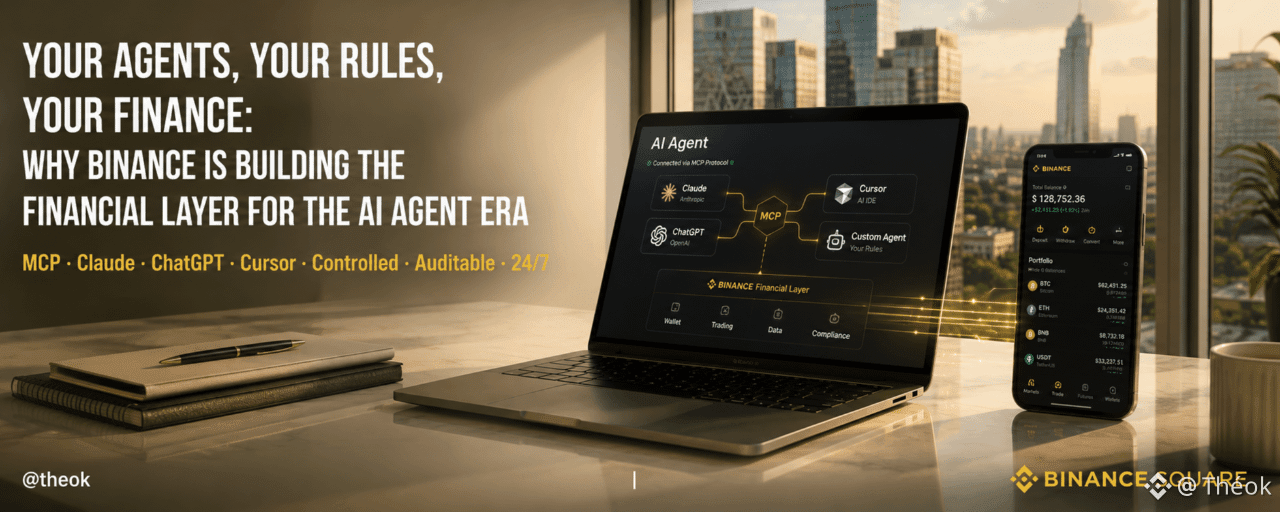
Article
Your Agents, Your Rules, Your Finance: Why Binance Is Building the Financial Layer for the AI AgentAI is crossing the line from answering questions to taking action and when software acts, it needs to reach markets the way people do. Binance Agent OS is the financial capability layer for that moment: it exposes Binance's market data and functions through MCP, the open standard already adopted by OpenAI, Google, Microsoft, and AWS, so an agent inside Claude, Cursor, or ChatGPT can discover and use them within a controlled, auditable perimeter. When AI starts acting not just answering someone has to make finance safe for it to touch. That's what Binance Agent OS does.
🤖 The Shift That Changes Everything: From Answering toActing
For three years, AI meant one thing: better answers.
Ask a question. Get a response. The human decides. The human acts.
That model is ending.
The next generation of AI systems autonomous agents don't just answer. They plan, decide, and execute. They book flights, write code, send emails, and manage calendars without being asked twice.
The logical next step is obvious: they will manage money.
When that happens, the infrastructure those agents touch determines everything:
Which data they can accessWhich actions they can takeWhich guardrails prevent catastrophic errorsWhich audit trail records every decision
Binance Agent OS was built for exactly that moment.
⚙️ What Is MCP and Why It Has Already Won
Before understanding Binance Agent OS, you need to understand the standard it is built on: MCP (Model Context Protocol).
MCP is an open protocol that defines how AI agents discover and use external tools and data sources. Think of it as the universal plug standard for AI capabilities the same way HTTP became the universal standard for web communication.
Who has already adopted MCP:
When the five largest AI infrastructure providers in the world adopt the same standard, it is no longer a bet it is the foundation.
Binance Agent OS exposes Binance's full financial capability stack through MCP. That means any agent built on Claude, ChatGPT, Cursor, or any MCP compatible system can now discover and use Binance's market data and execution functions natively, without custom integration, within a controlled perimeter.
🏗️ What Binance Agent OS Actually Does
Binance Agent OS is not a chatbot. It is not a trading bot. It is a financial capability layer — infrastructure that sits between AI agents and Binance's financial functions.
What it exposes through MCP:
What it does NOT do:
It does not give agents unrestricted access to user fundsIt does not bypass existing Binance security protocolsIt does not operate outside the auditable perimeter defined by the user
Every action an agent takes through Binance Agent OS is logged, auditable, and bounded by user-defined rules.
🔐 The Three Pillars: Your Agents, Your Rules, Your Finance
The product name is not marketing it is architecture.
1. Your Agents Binance Agent OS is agent-agnostic. It works with any MCP-compatible agent Claude,ChatGPT, a custom-built agent in Cursor, or an enterprise system running on AWS. You choose which agent accesses your financial functions. Binance doesn't lock you into a proprietary ecosystem.
2. Your Rules Every agent interaction with Binance through Agent OS operates within a user-defined control perimeter:
Maximum position sizesAllowed asset typesPermitted order typesSpending limits per sessionTime-bounded authorization windowsMandatory human confirmation thresholds
The agent cannot exceed what you authorize. The rules are yours. The agent executes within them.
3. Your Finance Agent OS connects to your existing Binance account spot, futures, Earn, Web3 wallet. No separate account. No separate custody. No new trust relationship. Your assets stay where they are, governed by the same security infrastructure SAFU $1B+, Proof of Reserves, cold storage that protects every Binance user.
🌍 Why This Matters for African Users and Developers
For users and developers in Kinshasa, Lagos, Nairobi, and Accra Binance Agent OS opens a capability that was previously reserved for hedge funds and institutional trading desks.
For individual users:
An AI agent monitors your Binance portfolio 24/7 and executes within your defined rules while you work, sleep, or focus on other thingsNo algorithmic trading experience required you define the rules in plain language; the agent executes themThe same agent infrastructure used by developers in San Francisco or London is now accessible from any smartphone with a Binance account
For African developers building on AI:- MCP compatibility means any agent built in Claude or ChatGPT can access Binance's financial layer without a custom integration
African fintech products can now incorporate live market data, execution capabilities, and portfolio management natively through one standard protocolThe barrier to building AI-powered financial products in Africa just dropped significantly
The bottom line: A developer in Kinshasa building a personal finance agent on Claude can connect that agent to Binance's full market and execution infrastructure in minutes using the same MCP standard as a fintech team in London or Singapore.
📊 The Competitive Landscape: Why Binance Built This First
Binance is the first major financial institution to expose its full financial capability stack through MCP — the standard the entire AI industry has already converged on.
That first-mover position matters: as agents become the primary interface between users and financial markets, the exchange whose capabilities agents can access most easily becomes the default financial layer for the AI era.
🔮 What Comes Next: Finance in the Age of Autonomous Agents
The trajectory is clear. AI agents are becoming the dominant interface layer between humans and digital services. Every major tech company is building toward a world where agents handle routine decisions autonomously.
In that world, financial infrastructure has three requirements:
Discoverable agents can find and understand available functionsSafe actions are bounded, auditable, and reversible where possibleStandard compatible with the agent ecosystems already in deployment
Binance Agent OS addresses all three through MCP, through user-defined control perimeters, and through integration with the five largest AI infrastructure providers in the world.
The question is not whether AI agents will manage financial assets. That transition is already underway. The question is which financial infrastructure will be safe, auditable, and capable enough for agents to touch.
Binance is building that answer.
❓ FAQs
Q: What is Binance Agent OS ?
A: Binance Agent OS is the financial capability layer that exposes Binance's market data and execution functions through MCP (Model Context Protocol) the open standard adopted by OpenAI, Google, Microsoft, AWS, and Anthropic. It allows AI agents built on Claude, ChatGPT, Cursor, or any MCP-compatible system to discover and use Binance's financial functions within a controlled, user-defined, auditable perimeter.
Q: What is MCP and why does it matter ?
A: MCP (Model Context Protocol) is the open standard that defines how AI agents discover and use external tools and data sources. It has been adopted by OpenAI, Google, Microsoft, AWS, and Anthropic making it the de facto universal standard forAI agent capabilities. Building on MCP means any agent on these platforms can access Binance's financial layer natively, without custom integration.
Q: Is Binance Agent OS safe to use with real funds ?
A: Yes within the user-defined control perimeter. Every agent action through Binance Agent OS operates within rules you set: maximum position sizes, allowed assets, spending limits, and authorization windows. The agent cannot exceed these parameters. All actions are logged and auditable. Your assets remain in your existing Binance account, protected by the SAFU fund ($1B+), Proof of Reserves, and cold storage infrastructure.
Q: Can African developers build with Binance Agent OS ?
A: Yes. Because Agent OS is built on MCP an open standard any developer building AI agents on Claude, ChatGPT ,or other MCP-compatible platforms can integrate Binance's financial capabilities without building a custom API integration. This significantly lowers the barrier to building AI-powered financial products for users across Africa.
📌 Sources: Binance official Agent OS announcement; Anthropic MCP documentation; OpenAI MCP adoption announcement; Binance Research AI Agent Infrastructure Report (2026).
⚠️ Educational content only. Binance Agent OS features and availability may vary by country. Does not constitute financial advice.
Your Agents, Your Rules, Your Finance: Why Binance Is Building the Financial Layer for the AI Agent
AI is crossing the line from answering questions to taking action and when software acts, it needs to reach markets the way people do. Binance Agent OS is the financial capability layer for that moment: it exposes Binance's market data and functions through MCP, the open standard already adopted by OpenAI, Google, Microsoft, and AWS, so an agent inside Claude, Cursor, or ChatGPT can discover and use them within a controlled, auditable perimeter. When AI starts acting not just answering someone has to make finance safe for it to touch. That's what Binance Agent OS does.
🤖 The Shift That Changes Everything: From Answering toActing
For three years, AI meant one thing: better answers.
Ask a question. Get a response. The human decides. The human acts.
That model is ending.
The next generation of AI systems autonomous agents don't just answer. They plan, decide, and execute. They book flights, write code, send emails, and manage calendars without being asked twice.
The logical next step is obvious: they will manage money.
When that happens, the infrastructure those agents touch determines everything:
Which data they can accessWhich actions they can takeWhich guardrails prevent catastrophic errorsWhich audit trail records every decision
Binance Agent OS was built for exactly that moment.
⚙️ What Is MCP and Why It Has Already Won
Before understanding Binance Agent OS, you need to understand the standard it is built on: MCP (Model Context Protocol).
MCP is an open protocol that defines how AI agents discover and use external tools and data sources. Think of it as the universal plug standard for AI capabilities the same way HTTP became the universal standard for web communication.
Who has already adopted MCP:
When the five largest AI infrastructure providers in the world adopt the same standard, it is no longer a bet it is the foundation.
Binance Agent OS exposes Binance's full financial capability stack through MCP. That means any agent built on Claude, ChatGPT, Cursor, or any MCP compatible system can now discover and use Binance's market data and execution functions natively, without custom integration, within a controlled perimeter.
🏗️ What Binance Agent OS Actually Does
Binance Agent OS is not a chatbot. It is not a trading bot. It is a financial capability layer — infrastructure that sits between AI agents and Binance's financial functions.
What it exposes through MCP:
What it does NOT do:
It does not give agents unrestricted access to user fundsIt does not bypass existing Binance security protocolsIt does not operate outside the auditable perimeter defined by the user
Every action an agent takes through Binance Agent OS is logged, auditable, and bounded by user-defined rules.
🔐 The Three Pillars: Your Agents, Your Rules, Your Finance
The product name is not marketing it is architecture.
1. Your Agents Binance Agent OS is agent-agnostic. It works with any MCP-compatible agent Claude,ChatGPT, a custom-built agent in Cursor, or an enterprise system running on AWS. You choose which agent accesses your financial functions. Binance doesn't lock you into a proprietary ecosystem.
2. Your Rules Every agent interaction with Binance through Agent OS operates within a user-defined control perimeter:
Maximum position sizesAllowed asset typesPermitted order typesSpending limits per sessionTime-bounded authorization windowsMandatory human confirmation thresholds
The agent cannot exceed what you authorize. The rules are yours. The agent executes within them.
3. Your Finance Agent OS connects to your existing Binance account spot, futures, Earn, Web3 wallet. No separate account. No separate custody. No new trust relationship. Your assets stay where they are, governed by the same security infrastructure SAFU $1B+, Proof of Reserves, cold storage that protects every Binance user.
🌍 Why This Matters for African Users and Developers
For users and developers in Kinshasa, Lagos, Nairobi, and Accra Binance Agent OS opens a capability that was previously reserved for hedge funds and institutional trading desks.
For individual users:
An AI agent monitors your Binance portfolio 24/7 and executes within your defined rules while you work, sleep, or focus on other thingsNo algorithmic trading experience required you define the rules in plain language; the agent executes themThe same agent infrastructure used by developers in San Francisco or London is now accessible from any smartphone with a Binance account
For African developers building on AI:- MCP compatibility means any agent built in Claude or ChatGPT can access Binance's financial layer without a custom integration
African fintech products can now incorporate live market data, execution capabilities, and portfolio management natively through one standard protocolThe barrier to building AI-powered financial products in Africa just dropped significantly
The bottom line: A developer in Kinshasa building a personal finance agent on Claude can connect that agent to Binance's full market and execution infrastructure in minutes using the same MCP standard as a fintech team in London or Singapore.
📊 The Competitive Landscape: Why Binance Built This First
Binance is the first major financial institution to expose its full financial capability stack through MCP — the standard the entire AI industry has already converged on.
That first-mover position matters: as agents become the primary interface between users and financial markets, the exchange whose capabilities agents can access most easily becomes the default financial layer for the AI era.
🔮 What Comes Next: Finance in the Age of Autonomous Agents
The trajectory is clear. AI agents are becoming the dominant interface layer between humans and digital services. Every major tech company is building toward a world where agents handle routine decisions autonomously.
In that world, financial infrastructure has three requirements:
Discoverable agents can find and understand available functionsSafe actions are bounded, auditable, and reversible where possibleStandard compatible with the agent ecosystems already in deployment
Binance Agent OS addresses all three through MCP, through user-defined control perimeters, and through integration with the five largest AI infrastructure providers in the world.
The question is not whether AI agents will manage financial assets. That transition is already underway. The question is which financial infrastructure will be safe, auditable, and capable enough for agents to touch.
Binance is building that answer.
❓ FAQs
Q: What is Binance Agent OS ?
A: Binance Agent OS is the financial capability layer that exposes Binance's market data and execution functions through MCP (Model Context Protocol) the open standard adopted by OpenAI, Google, Microsoft, AWS, and Anthropic. It allows AI agents built on Claude, ChatGPT, Cursor, or any MCP-compatible system to discover and use Binance's financial functions within a controlled, user-defined, auditable perimeter.
Q: What is MCP and why does it matter ?
A: MCP (Model Context Protocol) is the open standard that defines how AI agents discover and use external tools and data sources. It has been adopted by OpenAI, Google, Microsoft, AWS, and Anthropic making it the de facto universal standard forAI agent capabilities. Building on MCP means any agent on these platforms can access Binance's financial layer natively, without custom integration.
Q: Is Binance Agent OS safe to use with real funds ?
A: Yes within the user-defined control perimeter. Every agent action through Binance Agent OS operates within rules you set: maximum position sizes, allowed assets, spending limits, and authorization windows. The agent cannot exceed these parameters. All actions are logged and auditable. Your assets remain in your existing Binance account, protected by the SAFU fund ($1B+), Proof of Reserves, and cold storage infrastructure.
Q: Can African developers build with Binance Agent OS ?
A: Yes. Because Agent OS is built on MCP an open standard any developer building AI agents on Claude, ChatGPT ,or other MCP-compatible platforms can integrate Binance's financial capabilities without building a custom API integration. This significantly lowers the barrier to building AI-powered financial products for users across Africa.
📌 Sources: Binance official Agent OS announcement; Anthropic MCP documentation; OpenAI MCP adoption announcement; Binance Research AI Agent Infrastructure Report (2026).
⚠️ Educational content only. Binance Agent OS features and availability may vary by country. Does not constitute financial advice.
🤖 The Shift That Changes Everything: From Answering toActing
For three years, AI meant one thing: better answers.
Ask a question. Get a response. The human decides. The human acts.
That model is ending.
The next generation of AI systems autonomous agents don't just answer. They plan, decide, and execute. They book flights, write code, send emails, and manage calendars without being asked twice.
The logical next step is obvious: they will manage money.
When that happens, the infrastructure those agents touch determines everything:
Which data they can accessWhich actions they can takeWhich guardrails prevent catastrophic errorsWhich audit trail records every decision
Binance Agent OS was built for exactly that moment.
⚙️ What Is MCP and Why It Has Already Won
Before understanding Binance Agent OS, you need to understand the standard it is built on: MCP (Model Context Protocol).
MCP is an open protocol that defines how AI agents discover and use external tools and data sources. Think of it as the universal plug standard for AI capabilities the same way HTTP became the universal standard for web communication.
Who has already adopted MCP:
When the five largest AI infrastructure providers in the world adopt the same standard, it is no longer a bet it is the foundation.
Binance Agent OS exposes Binance's full financial capability stack through MCP. That means any agent built on Claude, ChatGPT, Cursor, or any MCP compatible system can now discover and use Binance's market data and execution functions natively, without custom integration, within a controlled perimeter.
🏗️ What Binance Agent OS Actually Does
Binance Agent OS is not a chatbot. It is not a trading bot. It is a financial capability layer — infrastructure that sits between AI agents and Binance's financial functions.
What it exposes through MCP:
What it does NOT do:
It does not give agents unrestricted access to user fundsIt does not bypass existing Binance security protocolsIt does not operate outside the auditable perimeter defined by the user
Every action an agent takes through Binance Agent OS is logged, auditable, and bounded by user-defined rules.
🔐 The Three Pillars: Your Agents, Your Rules, Your Finance
The product name is not marketing it is architecture.
1. Your Agents Binance Agent OS is agent-agnostic. It works with any MCP-compatible agent Claude,ChatGPT, a custom-built agent in Cursor, or an enterprise system running on AWS. You choose which agent accesses your financial functions. Binance doesn't lock you into a proprietary ecosystem.
2. Your Rules Every agent interaction with Binance through Agent OS operates within a user-defined control perimeter:
Maximum position sizesAllowed asset typesPermitted order typesSpending limits per sessionTime-bounded authorization windowsMandatory human confirmation thresholds
The agent cannot exceed what you authorize. The rules are yours. The agent executes within them.
3. Your Finance Agent OS connects to your existing Binance account spot, futures, Earn, Web3 wallet. No separate account. No separate custody. No new trust relationship. Your assets stay where they are, governed by the same security infrastructure SAFU $1B+, Proof of Reserves, cold storage that protects every Binance user.
🌍 Why This Matters for African Users and Developers
For users and developers in Kinshasa, Lagos, Nairobi, and Accra Binance Agent OS opens a capability that was previously reserved for hedge funds and institutional trading desks.
For individual users:
An AI agent monitors your Binance portfolio 24/7 and executes within your defined rules while you work, sleep, or focus on other thingsNo algorithmic trading experience required you define the rules in plain language; the agent executes themThe same agent infrastructure used by developers in San Francisco or London is now accessible from any smartphone with a Binance account
For African developers building on AI:- MCP compatibility means any agent built in Claude or ChatGPT can access Binance's financial layer without a custom integration
African fintech products can now incorporate live market data, execution capabilities, and portfolio management natively through one standard protocolThe barrier to building AI-powered financial products in Africa just dropped significantly
The bottom line: A developer in Kinshasa building a personal finance agent on Claude can connect that agent to Binance's full market and execution infrastructure in minutes using the same MCP standard as a fintech team in London or Singapore.
📊 The Competitive Landscape: Why Binance Built This First
Binance is the first major financial institution to expose its full financial capability stack through MCP — the standard the entire AI industry has already converged on.
That first-mover position matters: as agents become the primary interface between users and financial markets, the exchange whose capabilities agents can access most easily becomes the default financial layer for the AI era.
🔮 What Comes Next: Finance in the Age of Autonomous Agents
The trajectory is clear. AI agents are becoming the dominant interface layer between humans and digital services. Every major tech company is building toward a world where agents handle routine decisions autonomously.
In that world, financial infrastructure has three requirements:
Discoverable agents can find and understand available functionsSafe actions are bounded, auditable, and reversible where possibleStandard compatible with the agent ecosystems already in deployment
Binance Agent OS addresses all three through MCP, through user-defined control perimeters, and through integration with the five largest AI infrastructure providers in the world.
The question is not whether AI agents will manage financial assets. That transition is already underway. The question is which financial infrastructure will be safe, auditable, and capable enough for agents to touch.
Binance is building that answer.
❓ FAQs
Q: What is Binance Agent OS ?
A: Binance Agent OS is the financial capability layer that exposes Binance's market data and execution functions through MCP (Model Context Protocol) the open standard adopted by OpenAI, Google, Microsoft, AWS, and Anthropic. It allows AI agents built on Claude, ChatGPT, Cursor, or any MCP-compatible system to discover and use Binance's financial functions within a controlled, user-defined, auditable perimeter.
Q: What is MCP and why does it matter ?
A: MCP (Model Context Protocol) is the open standard that defines how AI agents discover and use external tools and data sources. It has been adopted by OpenAI, Google, Microsoft, AWS, and Anthropic making it the de facto universal standard forAI agent capabilities. Building on MCP means any agent on these platforms can access Binance's financial layer natively, without custom integration.
Q: Is Binance Agent OS safe to use with real funds ?
A: Yes within the user-defined control perimeter. Every agent action through Binance Agent OS operates within rules you set: maximum position sizes, allowed assets, spending limits, and authorization windows. The agent cannot exceed these parameters. All actions are logged and auditable. Your assets remain in your existing Binance account, protected by the SAFU fund ($1B+), Proof of Reserves, and cold storage infrastructure.
Q: Can African developers build with Binance Agent OS ?
A: Yes. Because Agent OS is built on MCP an open standard any developer building AI agents on Claude, ChatGPT ,or other MCP-compatible platforms can integrate Binance's financial capabilities without building a custom API integration. This significantly lowers the barrier to building AI-powered financial products for users across Africa.
📌 Sources: Binance official Agent OS announcement; Anthropic MCP documentation; OpenAI MCP adoption announcement; Binance Research AI Agent Infrastructure Report (2026).
⚠️ Educational content only. Binance Agent OS features and availability may vary by country. Does not constitute financial advice.
153
·
--
Vérifié
Article
The New Long-Term Investors: How Emerging-Market Youth Are Building Their First Index PortfoliosLong-term wealth allocation is no longer the preserve of the developed-market middle class. For the first time in history, a generation of young people in emerging markets from Kinshasa to Jakarta, from Lagos to São Paulo is building its first long-term index portfolio on-chain, on Binance, through broad-based index products like SPY, QQQ, and VOO. From markets that were never invited to the table.
🌍 The Generation That Was Never Invited to the Table
For decades, long-term index investing was structurally inaccessible to most of the world.
To buy SPY or QQQ, you needed:
A US brokerage account requiring aUS address or SSNA minimum deposit often $500 to $2,000+A bank wire capability unavailable in most of Sub-Saharan AfricaWeeks of paperwork before your first dollar was invested
A 22-year-old in Kinshasa, Lagos, or Nairobi had essentially zero access to the same wealth-building tools available to a 22-year-old in New York or London.
That structural exclusion is ending on-chain.
📱 What Changed: bStocks on Binance
Binance's tokenized stock products bStocks have quietly become the entry point for a new generation of long-term investors in emerging markets.
What bStocks make possible for the first time:
A 23-year-old in Accra can now buy $10 of SPY every week automatically, from their phone, with no minimum, no paperwork, no US address and build the same index portfolio that Vanguard customers in Ohio have been building for 40 years.
📊 SPY, QQQ, VOO On-Chain The New Retirement Account
For emerging-market youth, broad-based index products represent something new: a credible long-term wealth-building mechanism that actually works from their country.
Why SPY, QQQ, andVOO specifically:
What a simple weekly DCA looks like from Lagos:
Based on S&P 500 historical average returns. Past performance does not guarantee future results.
For a young professional in Nairobi earning $400/month, putting $25/week into SPY on Binance is the most accessible path to long-term wealth accumulation ever available in their market.
🔑 Why On-Chain Index Investing Is Different From Traditional ETFs
This is not just a digital copy of a Vanguard account. On-chain index investing through bStocks has structural advantages that traditional ETFs cannot offer.
1. No market hours Traditional ETFs trade 33 hours per week. bStocks trade 168 hours. A Lagos investor reacting to Saturday macro news can adjust their position immediately not Monday at market open.
2. Composability bStocks on BNB Chain are programmable assets. A young investor in Jakarta can:- Use their SPY bStocks as collateral for a DeFi loan
Earn yield on their index holdings through DeFi protocolsAutomate weekly purchases with smart contracts no broker, no fees, no middleman
3. Fractional ownership from $5 Traditional ETFs require buying whole shares. SPY costs ~$560 per share. On Binance, you buy exactly $10 worth no minimum, no rounding.
4. Custody remains yours Through Binance's Web3 wallet, users can hold bStocks in self-custody eliminating the counterparty risk of a traditional brokerage.
💡 The Wealth Gap This Generation Is Closing
The wealth gap between developed and emerging markets has been partially structural not just economic. Access to compounding, long-term US equity returns was simply unavailable to most of the world's population.What the numbers show:
The S&P 500 has returned an average of ~10.5% per year over the past 30 yearsA developed-market investor who put $100/month into SPY from 1995 to 2025 accumulated ~$228,000An investor in Lagos or Kinshasa had no accessible equivalent during that same period
What changes with bStocks:
That same $100/month strategy is now available to anyone with a Binance accountNo US address. No minimum. No broker. No paperwork.The same compounding engine finally accessible from Accra, Kinshasa, or Nairobi
The first generation of emerging-market youth to have real access to long-term US equity index investing is building their portfolios right now on-chain, on Binance.
🌱 How to Start: Building Your First Index Portfolio on Binance
Step 1 : Open your Binance account Download the Binance app. Complete KYC with your national ID. Takes 10–15 minutes.
Step 2 : Deposit using your local method Mobile money (MTN, Orange, M-Pesa), bank transfer, or card. Start with as little as $5.
Step 3 :Find your index product Search SPY, QQQ, or VOO in the Binance app under bStocks / tokenized stocks.
Step 4 : Set a recurring purchase Decide your weekly or monthly amount. Stay consistent. The power is in the compound, not the timing.
Step 5 : Hold long-term Index investing rewards patience. The strategy is not to trade it is to accumulate over years and decades.
Check eligibility at binance.com. bStocks are available to eligible user sin authorized countries only.
❓ FAQs
Q: Can I really build a long-term index portfolio on Binance from Africa?
A: Yes for eligible users in authorized countries. Binance's bStocks give you access to tokenized versions of SPY, QQQ, and VOO starting from $5, using mobile money or card, with no US brokerage account required. The same long-term compounding strategy available to investors in developed markets is now accessible on your smartphone.
Q: Are bStocks the same as buying SPY on a US brokerage?
A: bStocks are tokenized certificates that track the price of the underlying asset they give you price exposure to SPY, QQQ, or VOO without requiring a US brokerage account. They trade 24/7 on BNB Chain and can be used in DeFi protocols. They are not identical to traditionalETF shares but serve the same long-term wealth-building function for investors who previously had no access.
Q: Is dollar-cost averaging (DCA) into index products a good strategy?
A: Dollar-cost averaging investing a fixed amount at regular intervals regardless of price is one of the most widely recommended long-term wealth strategies by independent financial researchers. It removes the need to time the market and reduces the impact of short-term volatility. It is the strategy behind most 401(k) and pension systems in developed markets.
📌 Sources: Binance Research "Early Momentum in Tokenized Stock Adoption" (July 2026); Vanguard Long-term index return data; S&P 500 historical performance data; Binance bStocks official product page.
⚠️ Educational content only. bStocks are available only to eligible users in authorized countries. Not available to US persons. Past performance does not guarantee future results. Does not constitute financial advice.
The New Long-Term Investors: How Emerging-Market Youth Are Building Their First Index Portfolios
Long-term wealth allocation is no longer the preserve of the developed-market middle class. For the first time in history, a generation of young people in emerging markets from Kinshasa to Jakarta, from Lagos to São Paulo is building its first long-term index portfolio on-chain, on Binance, through broad-based index products like SPY, QQQ, and VOO. From markets that were never invited to the table.
🌍 The Generation That Was Never Invited to the Table
For decades, long-term index investing was structurally inaccessible to most of the world.
To buy SPY or QQQ, you needed:
A US brokerage account requiring aUS address or SSNA minimum deposit often $500 to $2,000+A bank wire capability unavailable in most of Sub-Saharan AfricaWeeks of paperwork before your first dollar was invested
A 22-year-old in Kinshasa, Lagos, or Nairobi had essentially zero access to the same wealth-building tools available to a 22-year-old in New York or London.
That structural exclusion is ending on-chain.
📱 What Changed: bStocks on Binance
Binance's tokenized stock products bStocks have quietly become the entry point for a new generation of long-term investors in emerging markets.
What bStocks make possible for the first time:
A 23-year-old in Accra can now buy $10 of SPY every week automatically, from their phone, with no minimum, no paperwork, no US address and build the same index portfolio that Vanguard customers in Ohio have been building for 40 years.
📊 SPY, QQQ, VOO On-Chain The New Retirement Account
For emerging-market youth, broad-based index products represent something new: a credible long-term wealth-building mechanism that actually works from their country.
Why SPY, QQQ, andVOO specifically:
What a simple weekly DCA looks like from Lagos:
Based on S&P 500 historical average returns. Past performance does not guarantee future results.
For a young professional in Nairobi earning $400/month, putting $25/week into SPY on Binance is the most accessible path to long-term wealth accumulation ever available in their market.
🔑 Why On-Chain Index Investing Is Different From Traditional ETFs
This is not just a digital copy of a Vanguard account. On-chain index investing through bStocks has structural advantages that traditional ETFs cannot offer.
1. No market hours Traditional ETFs trade 33 hours per week. bStocks trade 168 hours. A Lagos investor reacting to Saturday macro news can adjust their position immediately not Monday at market open.
2. Composability bStocks on BNB Chain are programmable assets. A young investor in Jakarta can:- Use their SPY bStocks as collateral for a DeFi loan
Earn yield on their index holdings through DeFi protocolsAutomate weekly purchases with smart contracts no broker, no fees, no middleman
3. Fractional ownership from $5 Traditional ETFs require buying whole shares. SPY costs ~$560 per share. On Binance, you buy exactly $10 worth no minimum, no rounding.
4. Custody remains yours Through Binance's Web3 wallet, users can hold bStocks in self-custody eliminating the counterparty risk of a traditional brokerage.
💡 The Wealth Gap This Generation Is Closing
The wealth gap between developed and emerging markets has been partially structural not just economic. Access to compounding, long-term US equity returns was simply unavailable to most of the world's population.What the numbers show:
The S&P 500 has returned an average of ~10.5% per year over the past 30 yearsA developed-market investor who put $100/month into SPY from 1995 to 2025 accumulated ~$228,000An investor in Lagos or Kinshasa had no accessible equivalent during that same period
What changes with bStocks:
That same $100/month strategy is now available to anyone with a Binance accountNo US address. No minimum. No broker. No paperwork.The same compounding engine finally accessible from Accra, Kinshasa, or Nairobi
The first generation of emerging-market youth to have real access to long-term US equity index investing is building their portfolios right now on-chain, on Binance.
🌱 How to Start: Building Your First Index Portfolio on Binance
Step 1 : Open your Binance account Download the Binance app. Complete KYC with your national ID. Takes 10–15 minutes.
Step 2 : Deposit using your local method Mobile money (MTN, Orange, M-Pesa), bank transfer, or card. Start with as little as $5.
Step 3 :Find your index product Search SPY, QQQ, or VOO in the Binance app under bStocks / tokenized stocks.
Step 4 : Set a recurring purchase Decide your weekly or monthly amount. Stay consistent. The power is in the compound, not the timing.
Step 5 : Hold long-term Index investing rewards patience. The strategy is not to trade it is to accumulate over years and decades.
Check eligibility at binance.com. bStocks are available to eligible user sin authorized countries only.
❓ FAQs
Q: Can I really build a long-term index portfolio on Binance from Africa?
A: Yes for eligible users in authorized countries. Binance's bStocks give you access to tokenized versions of SPY, QQQ, and VOO starting from $5, using mobile money or card, with no US brokerage account required. The same long-term compounding strategy available to investors in developed markets is now accessible on your smartphone.
Q: Are bStocks the same as buying SPY on a US brokerage?
A: bStocks are tokenized certificates that track the price of the underlying asset they give you price exposure to SPY, QQQ, or VOO without requiring a US brokerage account. They trade 24/7 on BNB Chain and can be used in DeFi protocols. They are not identical to traditionalETF shares but serve the same long-term wealth-building function for investors who previously had no access.
Q: Is dollar-cost averaging (DCA) into index products a good strategy?
A: Dollar-cost averaging investing a fixed amount at regular intervals regardless of price is one of the most widely recommended long-term wealth strategies by independent financial researchers. It removes the need to time the market and reduces the impact of short-term volatility. It is the strategy behind most 401(k) and pension systems in developed markets.
📌 Sources: Binance Research "Early Momentum in Tokenized Stock Adoption" (July 2026); Vanguard Long-term index return data; S&P 500 historical performance data; Binance bStocks official product page.
⚠️ Educational content only. bStocks are available only to eligible users in authorized countries. Not available to US persons. Past performance does not guarantee future results. Does not constitute financial advice.
🌍 The Generation That Was Never Invited to the Table
For decades, long-term index investing was structurally inaccessible to most of the world.
To buy SPY or QQQ, you needed:
A US brokerage account requiring aUS address or SSNA minimum deposit often $500 to $2,000+A bank wire capability unavailable in most of Sub-Saharan AfricaWeeks of paperwork before your first dollar was invested
A 22-year-old in Kinshasa, Lagos, or Nairobi had essentially zero access to the same wealth-building tools available to a 22-year-old in New York or London.
That structural exclusion is ending on-chain.
📱 What Changed: bStocks on Binance
Binance's tokenized stock products bStocks have quietly become the entry point for a new generation of long-term investors in emerging markets.
What bStocks make possible for the first time:
A 23-year-old in Accra can now buy $10 of SPY every week automatically, from their phone, with no minimum, no paperwork, no US address and build the same index portfolio that Vanguard customers in Ohio have been building for 40 years.
📊 SPY, QQQ, VOO On-Chain The New Retirement Account
For emerging-market youth, broad-based index products represent something new: a credible long-term wealth-building mechanism that actually works from their country.
Why SPY, QQQ, andVOO specifically:
What a simple weekly DCA looks like from Lagos:
Based on S&P 500 historical average returns. Past performance does not guarantee future results.
For a young professional in Nairobi earning $400/month, putting $25/week into SPY on Binance is the most accessible path to long-term wealth accumulation ever available in their market.
🔑 Why On-Chain Index Investing Is Different From Traditional ETFs
This is not just a digital copy of a Vanguard account. On-chain index investing through bStocks has structural advantages that traditional ETFs cannot offer.
1. No market hours Traditional ETFs trade 33 hours per week. bStocks trade 168 hours. A Lagos investor reacting to Saturday macro news can adjust their position immediately not Monday at market open.
2. Composability bStocks on BNB Chain are programmable assets. A young investor in Jakarta can:- Use their SPY bStocks as collateral for a DeFi loan
Earn yield on their index holdings through DeFi protocolsAutomate weekly purchases with smart contracts no broker, no fees, no middleman
3. Fractional ownership from $5 Traditional ETFs require buying whole shares. SPY costs ~$560 per share. On Binance, you buy exactly $10 worth no minimum, no rounding.
4. Custody remains yours Through Binance's Web3 wallet, users can hold bStocks in self-custody eliminating the counterparty risk of a traditional brokerage.
💡 The Wealth Gap This Generation Is Closing
The wealth gap between developed and emerging markets has been partially structural not just economic. Access to compounding, long-term US equity returns was simply unavailable to most of the world's population.What the numbers show:
The S&P 500 has returned an average of ~10.5% per year over the past 30 yearsA developed-market investor who put $100/month into SPY from 1995 to 2025 accumulated ~$228,000An investor in Lagos or Kinshasa had no accessible equivalent during that same period
What changes with bStocks:
That same $100/month strategy is now available to anyone with a Binance accountNo US address. No minimum. No broker. No paperwork.The same compounding engine finally accessible from Accra, Kinshasa, or Nairobi
The first generation of emerging-market youth to have real access to long-term US equity index investing is building their portfolios right now on-chain, on Binance.
🌱 How to Start: Building Your First Index Portfolio on Binance
Step 1 : Open your Binance account Download the Binance app. Complete KYC with your national ID. Takes 10–15 minutes.
Step 2 : Deposit using your local method Mobile money (MTN, Orange, M-Pesa), bank transfer, or card. Start with as little as $5.
Step 3 :Find your index product Search SPY, QQQ, or VOO in the Binance app under bStocks / tokenized stocks.
Step 4 : Set a recurring purchase Decide your weekly or monthly amount. Stay consistent. The power is in the compound, not the timing.
Step 5 : Hold long-term Index investing rewards patience. The strategy is not to trade it is to accumulate over years and decades.
Check eligibility at binance.com. bStocks are available to eligible user sin authorized countries only.
❓ FAQs
Q: Can I really build a long-term index portfolio on Binance from Africa?
A: Yes for eligible users in authorized countries. Binance's bStocks give you access to tokenized versions of SPY, QQQ, and VOO starting from $5, using mobile money or card, with no US brokerage account required. The same long-term compounding strategy available to investors in developed markets is now accessible on your smartphone.
Q: Are bStocks the same as buying SPY on a US brokerage?
A: bStocks are tokenized certificates that track the price of the underlying asset they give you price exposure to SPY, QQQ, or VOO without requiring a US brokerage account. They trade 24/7 on BNB Chain and can be used in DeFi protocols. They are not identical to traditionalETF shares but serve the same long-term wealth-building function for investors who previously had no access.
Q: Is dollar-cost averaging (DCA) into index products a good strategy?
A: Dollar-cost averaging investing a fixed amount at regular intervals regardless of price is one of the most widely recommended long-term wealth strategies by independent financial researchers. It removes the need to time the market and reduces the impact of short-term volatility. It is the strategy behind most 401(k) and pension systems in developed markets.
📌 Sources: Binance Research "Early Momentum in Tokenized Stock Adoption" (July 2026); Vanguard Long-term index return data; S&P 500 historical performance data; Binance bStocks official product page.
⚠️ Educational content only. bStocks are available only to eligible users in authorized countries. Not available to US persons. Past performance does not guarantee future results. Does not constitute financial advice.
1
2
526
·
--
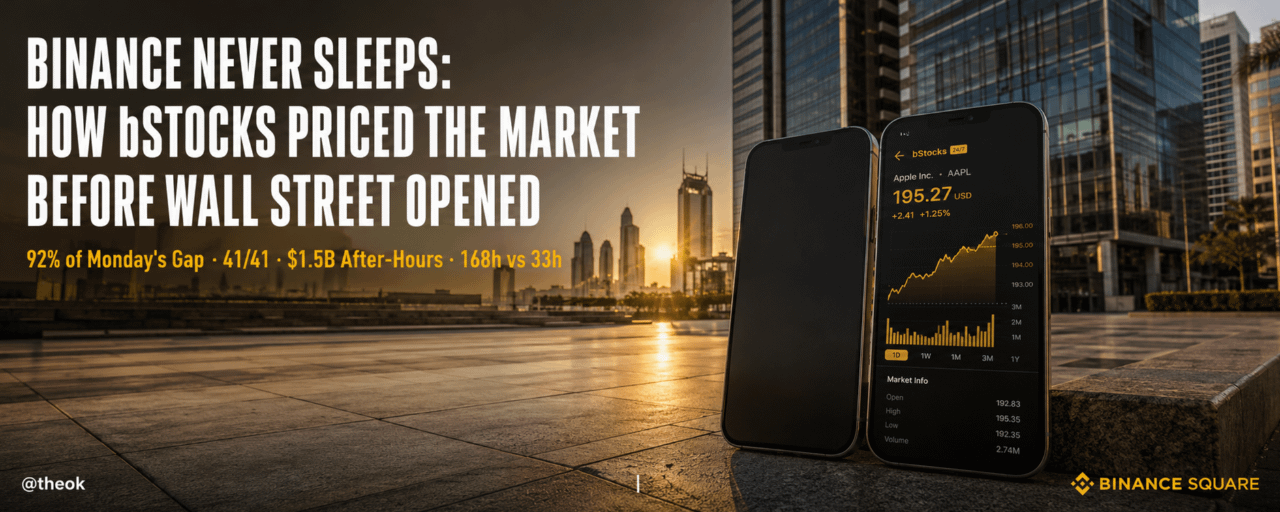
Article
Binance Never Sleeps: How bStocks Priced the Market Before Wall Street OpenedTraditional markets close but the news never stops. When Nvidia reports after the bell, when macro data drops on a Saturday, when geopolitics shift overnight traditional investors wait. Binance users don't. This week's data shows exactly where price discovery happens first: on Binance, before Wall Street opens, before Hyper liquid catches up. Markets are becoming real-time. Binance is where that happens first.
🕐 The Problem With Markets That Close
Every trading day ends the same way for traditional investors: the bell rings, the screens go dark, and the world keeps moving.
What happens in those hours matters enormously:
Nvidia beats earnings after the bell → traditional shareholders wait until 9:30 AMFed minutes leak on a Sunday → options traders can't hedge until MondayGeopolitical shock hits at 2 AM → portfolio exposure is frozen until morningMacro data drops Saturday → no price adjustment for 60+ hours
This structural gap between when information emerges and when markets can react is one of the oldest inefficiencies in traditional finance.
Binance closed that gap.
⚡ bStocks vs. Traditional Markets The Price Discovery Gap
When Nvidia reported earnings after market close this quarter, two things happened simultaneously:
Traditional markets: Price locked at Friday close. No adjustment possible.
Binance bStocks: Within minutes of the earnings release, bStocks beg an pricing in the new information. Volume surged. The chart moved.
By the time Wall Street opened Monday morning, bStocks had already done the work integrating analyst reactions, retail sentiment, and institutional positioning into a live price that reflected 72 hours of real-world information flow.
The result:
bStocks priced in a median 92% of the Monday opening gap across 7 weekends analyzedOn gaps greater than 3%, bStocks called the direction correctly 41 out of 41 times$1.5 billion in volume traded on bStocks during hours when US markets were closed
This is not a secondary market. This is where price discovery actually happens.
🆚 Binance vs. Hyperliquid: Where Does the Market Move First?
Hyper liquid has positioned itself as a decentralized price discovery venue and it has built real traction in crypto perpetuals. But when it comes to tokenized equities and after-hours stock price discovery, the data tells a different story.
Key differences:
🌍 Why This Matters More in Africa Than Anywhere Else
The time zone gap between Africa and New York is not a minor inconvenience it is a structural barrier to participating in real-time price discovery.
NYSE trading hours in African time zones:
When Nvidia reports at 4:05 PM ET that is 10:05 PM in Kinshasa. The after-hours ECN window closes at midnight local time. By the time morning comes, the move has already happened on traditional venues.
**With bStocks:**The Kinshasa investor checks their Binance app at 10:05 PM, sees the earnings, and positions immediately. By Monday morning, they are already positioned not scrambling to react.
That is a structural advantage that did not exist for African retail investors before tokenized equities.
🔮 Real-Time Markets Are Not the Future They Are Now
The data from this week confirms what the trend has been building toward for three years: the 9:30 AM bell is losing its monopoly on price discovery.
What is driving this shift:
Information doesn't respect time zones earnings, macro data, and geopolitical events happen 24/7. Markets that can only react 5 days a week are structurally disadvantaged at incorporating that informationRetail investors are global 240M+ Binance users are not concentrated in New York or London. They are in Kinshasa, Mumbai, São Paulo, and Jakarta. They need markets that work in their time zoneComposability amplifies utility bStocks on BNB Chain are not just tradable. They are usable as collateral in DeFi, integrable into yield strategies, and composable with the broader on-chain ecosystem. No traditional brokerage offers thisLiquidity follows accuracy when a venue consistently prices information correctly (92% of Monday gaps, 41/41 on major moves), institutional and retail capital follows. The $1.5B in weekly after-hours volume is the proof
The gap between "market open" and "price discovery" is closing. On bStocks, it has already closed.
FAQs
Q: How does Binance price stocks when Wall Street is closed? A: bStocks are tokenized certificates that exist on BNB Chain a blockchain that operates 24/7 without interruption. Unlike traditional equities that depend on exchange operating hours, bStocks trade continuously on Binance, allowing users to react to earnings, macro data, and news events in real time, including weekends and overnight sessions.
Q: Is Binance or Hyper liquid better for after-hours price discovery on stocks? A: For tokenized equities specifically, Binance bStocks leads on every measurable dimension: volume ($1.5B+ weekly during closed hours), accuracy (92% of Monday gaps priced in advance), direction reliability (41/41 on major moves), and asset coverage (46+ tokenized stocks). Hyper liquid has built a strong reputation in crypto perpetuals, but has not published comparable data for equity price discovery.
Q: Can African investors access bStocks? A: bStocks are available to eligible users in authorized countries directly through their existing Binance account same app, same KYC, no additional setup required. Check eligibility at binance.com. Availability varies by country.
📌 Sources: Binance Research "Early Momentum in Tokenized Stock Adoption"(July 2026); Binance Markets Blog bStocks weekend price discovery data (August 2026); Binance official Proof of Reserves page. ⚠️ Educational content only. bStocks are available only to eligible users in authorized countries. Not available to US persons. Does not constitute financial advice.
Binance Never Sleeps: How bStocks Priced the Market Before Wall Street Opened
Traditional markets close but the news never stops. When Nvidia reports after the bell, when macro data drops on a Saturday, when geopolitics shift overnight traditional investors wait. Binance users don't. This week's data shows exactly where price discovery happens first: on Binance, before Wall Street opens, before Hyper liquid catches up. Markets are becoming real-time. Binance is where that happens first.
🕐 The Problem With Markets That Close
Every trading day ends the same way for traditional investors: the bell rings, the screens go dark, and the world keeps moving.
What happens in those hours matters enormously:
Nvidia beats earnings after the bell → traditional shareholders wait until 9:30 AMFed minutes leak on a Sunday → options traders can't hedge until MondayGeopolitical shock hits at 2 AM → portfolio exposure is frozen until morningMacro data drops Saturday → no price adjustment for 60+ hours
This structural gap between when information emerges and when markets can react is one of the oldest inefficiencies in traditional finance.
Binance closed that gap.
⚡ bStocks vs. Traditional Markets The Price Discovery Gap
When Nvidia reported earnings after market close this quarter, two things happened simultaneously:
Traditional markets: Price locked at Friday close. No adjustment possible.
Binance bStocks: Within minutes of the earnings release, bStocks beg an pricing in the new information. Volume surged. The chart moved.
By the time Wall Street opened Monday morning, bStocks had already done the work integrating analyst reactions, retail sentiment, and institutional positioning into a live price that reflected 72 hours of real-world information flow.
The result:
bStocks priced in a median 92% of the Monday opening gap across 7 weekends analyzedOn gaps greater than 3%, bStocks called the direction correctly 41 out of 41 times$1.5 billion in volume traded on bStocks during hours when US markets were closed
This is not a secondary market. This is where price discovery actually happens.
🆚 Binance vs. Hyperliquid: Where Does the Market Move First?
Hyper liquid has positioned itself as a decentralized price discovery venue and it has built real traction in crypto perpetuals. But when it comes to tokenized equities and after-hours stock price discovery, the data tells a different story.
Key differences:
🌍 Why This Matters More in Africa Than Anywhere Else
The time zone gap between Africa and New York is not a minor inconvenience it is a structural barrier to participating in real-time price discovery.
NYSE trading hours in African time zones:
When Nvidia reports at 4:05 PM ET that is 10:05 PM in Kinshasa. The after-hours ECN window closes at midnight local time. By the time morning comes, the move has already happened on traditional venues.
**With bStocks:**The Kinshasa investor checks their Binance app at 10:05 PM, sees the earnings, and positions immediately. By Monday morning, they are already positioned not scrambling to react.
That is a structural advantage that did not exist for African retail investors before tokenized equities.
🔮 Real-Time Markets Are Not the Future They Are Now
The data from this week confirms what the trend has been building toward for three years: the 9:30 AM bell is losing its monopoly on price discovery.
What is driving this shift:
Information doesn't respect time zones earnings, macro data, and geopolitical events happen 24/7. Markets that can only react 5 days a week are structurally disadvantaged at incorporating that informationRetail investors are global 240M+ Binance users are not concentrated in New York or London. They are in Kinshasa, Mumbai, São Paulo, and Jakarta. They need markets that work in their time zoneComposability amplifies utility bStocks on BNB Chain are not just tradable. They are usable as collateral in DeFi, integrable into yield strategies, and composable with the broader on-chain ecosystem. No traditional brokerage offers thisLiquidity follows accuracy when a venue consistently prices information correctly (92% of Monday gaps, 41/41 on major moves), institutional and retail capital follows. The $1.5B in weekly after-hours volume is the proof
The gap between "market open" and "price discovery" is closing. On bStocks, it has already closed.
FAQs
Q: How does Binance price stocks when Wall Street is closed? A: bStocks are tokenized certificates that exist on BNB Chain a blockchain that operates 24/7 without interruption. Unlike traditional equities that depend on exchange operating hours, bStocks trade continuously on Binance, allowing users to react to earnings, macro data, and news events in real time, including weekends and overnight sessions.
Q: Is Binance or Hyper liquid better for after-hours price discovery on stocks? A: For tokenized equities specifically, Binance bStocks leads on every measurable dimension: volume ($1.5B+ weekly during closed hours), accuracy (92% of Monday gaps priced in advance), direction reliability (41/41 on major moves), and asset coverage (46+ tokenized stocks). Hyper liquid has built a strong reputation in crypto perpetuals, but has not published comparable data for equity price discovery.
Q: Can African investors access bStocks? A: bStocks are available to eligible users in authorized countries directly through their existing Binance account same app, same KYC, no additional setup required. Check eligibility at binance.com. Availability varies by country.
📌 Sources: Binance Research "Early Momentum in Tokenized Stock Adoption"(July 2026); Binance Markets Blog bStocks weekend price discovery data (August 2026); Binance official Proof of Reserves page. ⚠️ Educational content only. bStocks are available only to eligible users in authorized countries. Not available to US persons. Does not constitute financial advice.
🕐 The Problem With Markets That Close
Every trading day ends the same way for traditional investors: the bell rings, the screens go dark, and the world keeps moving.
What happens in those hours matters enormously:
Nvidia beats earnings after the bell → traditional shareholders wait until 9:30 AMFed minutes leak on a Sunday → options traders can't hedge until MondayGeopolitical shock hits at 2 AM → portfolio exposure is frozen until morningMacro data drops Saturday → no price adjustment for 60+ hours
This structural gap between when information emerges and when markets can react is one of the oldest inefficiencies in traditional finance.
Binance closed that gap.
⚡ bStocks vs. Traditional Markets The Price Discovery Gap
When Nvidia reported earnings after market close this quarter, two things happened simultaneously:
Traditional markets: Price locked at Friday close. No adjustment possible.
Binance bStocks: Within minutes of the earnings release, bStocks beg an pricing in the new information. Volume surged. The chart moved.
By the time Wall Street opened Monday morning, bStocks had already done the work integrating analyst reactions, retail sentiment, and institutional positioning into a live price that reflected 72 hours of real-world information flow.
The result:
bStocks priced in a median 92% of the Monday opening gap across 7 weekends analyzedOn gaps greater than 3%, bStocks called the direction correctly 41 out of 41 times$1.5 billion in volume traded on bStocks during hours when US markets were closed
This is not a secondary market. This is where price discovery actually happens.
🆚 Binance vs. Hyperliquid: Where Does the Market Move First?
Hyper liquid has positioned itself as a decentralized price discovery venue and it has built real traction in crypto perpetuals. But when it comes to tokenized equities and after-hours stock price discovery, the data tells a different story.
Key differences:
🌍 Why This Matters More in Africa Than Anywhere Else
The time zone gap between Africa and New York is not a minor inconvenience it is a structural barrier to participating in real-time price discovery.
NYSE trading hours in African time zones:
When Nvidia reports at 4:05 PM ET that is 10:05 PM in Kinshasa. The after-hours ECN window closes at midnight local time. By the time morning comes, the move has already happened on traditional venues.
**With bStocks:**The Kinshasa investor checks their Binance app at 10:05 PM, sees the earnings, and positions immediately. By Monday morning, they are already positioned not scrambling to react.
That is a structural advantage that did not exist for African retail investors before tokenized equities.
🔮 Real-Time Markets Are Not the Future They Are Now
The data from this week confirms what the trend has been building toward for three years: the 9:30 AM bell is losing its monopoly on price discovery.
What is driving this shift:
Information doesn't respect time zones earnings, macro data, and geopolitical events happen 24/7. Markets that can only react 5 days a week are structurally disadvantaged at incorporating that informationRetail investors are global 240M+ Binance users are not concentrated in New York or London. They are in Kinshasa, Mumbai, São Paulo, and Jakarta. They need markets that work in their time zoneComposability amplifies utility bStocks on BNB Chain are not just tradable. They are usable as collateral in DeFi, integrable into yield strategies, and composable with the broader on-chain ecosystem. No traditional brokerage offers thisLiquidity follows accuracy when a venue consistently prices information correctly (92% of Monday gaps, 41/41 on major moves), institutional and retail capital follows. The $1.5B in weekly after-hours volume is the proof
The gap between "market open" and "price discovery" is closing. On bStocks, it has already closed.
FAQs
Q: How does Binance price stocks when Wall Street is closed? A: bStocks are tokenized certificates that exist on BNB Chain a blockchain that operates 24/7 without interruption. Unlike traditional equities that depend on exchange operating hours, bStocks trade continuously on Binance, allowing users to react to earnings, macro data, and news events in real time, including weekends and overnight sessions.
Q: Is Binance or Hyper liquid better for after-hours price discovery on stocks? A: For tokenized equities specifically, Binance bStocks leads on every measurable dimension: volume ($1.5B+ weekly during closed hours), accuracy (92% of Monday gaps priced in advance), direction reliability (41/41 on major moves), and asset coverage (46+ tokenized stocks). Hyper liquid has built a strong reputation in crypto perpetuals, but has not published comparable data for equity price discovery.
Q: Can African investors access bStocks? A: bStocks are available to eligible users in authorized countries directly through their existing Binance account same app, same KYC, no additional setup required. Check eligibility at binance.com. Availability varies by country.
📌 Sources: Binance Research "Early Momentum in Tokenized Stock Adoption"(July 2026); Binance Markets Blog bStocks weekend price discovery data (August 2026); Binance official Proof of Reserves page. ⚠️ Educational content only. bStocks are available only to eligible users in authorized countries. Not available to US persons. Does not constitute financial advice.
1
284
·
--
Article
Built to Last: What Third-Party Data Says About Trust, Transparency, and User Trends in CryptoMultiple exchanges have shut down or downsized under market cooldown and regulatory pressure. The community is asking one simple question: "who's next?" Third-party data from independent research firms answers clearly: market share is consolidating around exchanges that score highest on trust, transparency, and asset reserves. No spin. Just the numbers and what they mean.
📉 The Market Has Already Eliminated the Weak — What History Shows
Since 2022, the crypto sector has gone through several elimination waves:
FTX (2022) $8B in user funds misappropriated. Bankrupt. Founder sentenced to 25 yearsCelsius (2022) $4.7B in user funds frozen. BankruptVoyager (2022) $1.3B in user funds locked. BankruptGenesis (2023) $3B in claims. Shut downMultiple regional exchanges (2023–2025) Forced downsizing under regulatory pressure
What every failure had in common:
No public Proof of ReservesNo dedicated user protection fundUndisclosed fractional reserve modelComplete financial opacity
What every survivor has in common:
Verifiable financial transparencyRegularly audited reservesUser funds separated from operational assetsOngoing investment in compliance
📊 What Third-Party Data Says About Market Consolidation
Independent research firms have documented a clear trend since 2023: consolidation around the most transparent exchanges.
Spot marketshare Evolution 2022–2026:
Key insight: Market share from failed or struggling exchanges has been absorbed almost entirely by exchanges with the highest transparency scores.
🔍 The 3 Metrics Independent Researchers Track
Independent research firms use 3 primary metrics to assess exchange resilience:
1. Transparency Score
Binance: ZKP across 45 asset categories, $162B+ verified, monthly audits — maximum score in this category per Hacken and CertiK reports.
2. Reserve Score
3. Compliance Score
📈 Where Users Are Choosing to Park Their Capital
Capital flow data tells a clear story.
Trust indicators tracked by independent firms:
Consolidated spot volume: Binance consistently maintains >$15B daily volume a signal that users trust available liquidityFutures Open Interest: Rising on transparent exchanges, falling on opaque onesNet deposits: During market stress events (negative news, exchange failures), data shows inbound flows to Binance documented "flight to safety" behaviorActive users: 240M+ registered users, with continuous growth through 2025–2026
The crypto "flight to safety": Following every major exchange failure since 2022, on-chain data shows net positive flows toward exchanges that had published a recent Proof of Reserves within 72 hours of the news breaking. This mirrors the behavior savers exhibit with systemically important banks during a banking crisis.
Users vote with their funds.
🏆 What "Built to Last" Actually Means in 2026
Third-party data converges on 5 characteristics shared by exchanges that survive market cycles:
1. Non-negotiable financial transparency
Monthly Proof of Reserves, verifiable by any userZKP method proof without exposing wallet structuresAudits conducted by firms with no financial conflict of interest
2. Dedicated protection funds
Separated from operational assetsAutomatically funded from platform revenuePublic amount, publicly verifiable
3. Institutional-grade security infrastructure- Cold storage for the majority of assets
AI-powered real-time surveillance systemsInternational security certifications
4. Proactive compliance
Investment ahead of regulatory requirements not in response to themDedicated teams representing a significant share of total headcountActive cooperation with authorities worldwide
5. Proven recovery and resilience
Documented history of fund recoveryFunctioning appeals process ($8.2B in mistakenly sent crypto recovered)Documented incident response record
🌍 What This Means for African Investors
For an investor in Kinshasa, Lagos, or Accra choosing an exchange isn't just a question of fees. It's a question of fund safety in an environment where legal recourse is limited.
Third-party data is unambiguous: users who placed their capital on transparent exchanges did not lose their funds during the 2022–2025 failures. Those who ignored these signals often lost everything.
📋 Summary What Third-Party Data Concludes
❓ FAQs
Q: How do I know if an exchange is "built to last"? A: Three non-negotiable signals according to independent research firms: (1) Public Proof of Reserves, on-chain verifiable, updated at least quarterly; (2) Dedicated user protection fund separated from operational assets, with a public balance; (3) Track record of surviving at least one major bear cycle without locking user funds.
Q: Why is market share concentrating around fewer exchanges? A: Consolidation is arational response to the failures of 2022–2025. After watching billions in user funds get locked or lost on opaque platforms, investors retail and institutional alike are applying stricter due diligence. Exchanges that cannot prove their reserves are losing users to those that can.
Q: Is third-party data reliable for evaluating an exchange? A: Independent research firms like CCData, Kaiko, The Block Research, and specialist auditors like Hacken and CertiK have no direct financial stake in any exchange's success. Their metrics volume, open interest, capital flows, transparency scores are built from verifiable on-chain data and public audit reports. It is the most reliable source available for assessing exchange resilience.
📌 Sources: CCData Exchange Review 2026; Kaiko Research Crypto Exchange Landscape Report; The Block Research — Market Structure Analysis; Hacken & CertiK Proof of Reserves Audit Reports; Binance Transparency official page. ⚠️ Educational content only. Does not constitute financial advice. Market share figures are estimates based on third-party sources.
Built to Last: What Third-Party Data Says About Trust, Transparency, and User Trends in Crypto
Multiple exchanges have shut down or downsized under market cooldown and regulatory pressure. The community is asking one simple question: "who's next?" Third-party data from independent research firms answers clearly: market share is consolidating around exchanges that score highest on trust, transparency, and asset reserves. No spin. Just the numbers and what they mean.
📉 The Market Has Already Eliminated the Weak — What History Shows
Since 2022, the crypto sector has gone through several elimination waves:
FTX (2022) $8B in user funds misappropriated. Bankrupt. Founder sentenced to 25 yearsCelsius (2022) $4.7B in user funds frozen. BankruptVoyager (2022) $1.3B in user funds locked. BankruptGenesis (2023) $3B in claims. Shut downMultiple regional exchanges (2023–2025) Forced downsizing under regulatory pressure
What every failure had in common:
No public Proof of ReservesNo dedicated user protection fundUndisclosed fractional reserve modelComplete financial opacity
What every survivor has in common:
Verifiable financial transparencyRegularly audited reservesUser funds separated from operational assetsOngoing investment in compliance
📊 What Third-Party Data Says About Market Consolidation
Independent research firms have documented a clear trend since 2023: consolidation around the most transparent exchanges.
Spot marketshare Evolution 2022–2026:
Key insight: Market share from failed or struggling exchanges has been absorbed almost entirely by exchanges with the highest transparency scores.
🔍 The 3 Metrics Independent Researchers Track
Independent research firms use 3 primary metrics to assess exchange resilience:
1. Transparency Score
Binance: ZKP across 45 asset categories, $162B+ verified, monthly audits — maximum score in this category per Hacken and CertiK reports.
2. Reserve Score
3. Compliance Score
📈 Where Users Are Choosing to Park Their Capital
Capital flow data tells a clear story.
Trust indicators tracked by independent firms:
Consolidated spot volume: Binance consistently maintains >$15B daily volume a signal that users trust available liquidityFutures Open Interest: Rising on transparent exchanges, falling on opaque onesNet deposits: During market stress events (negative news, exchange failures), data shows inbound flows to Binance documented "flight to safety" behaviorActive users: 240M+ registered users, with continuous growth through 2025–2026
The crypto "flight to safety": Following every major exchange failure since 2022, on-chain data shows net positive flows toward exchanges that had published a recent Proof of Reserves within 72 hours of the news breaking. This mirrors the behavior savers exhibit with systemically important banks during a banking crisis.
Users vote with their funds.
🏆 What "Built to Last" Actually Means in 2026
Third-party data converges on 5 characteristics shared by exchanges that survive market cycles:
1. Non-negotiable financial transparency
Monthly Proof of Reserves, verifiable by any userZKP method proof without exposing wallet structuresAudits conducted by firms with no financial conflict of interest
2. Dedicated protection funds
Separated from operational assetsAutomatically funded from platform revenuePublic amount, publicly verifiable
3. Institutional-grade security infrastructure- Cold storage for the majority of assets
AI-powered real-time surveillance systemsInternational security certifications
4. Proactive compliance
Investment ahead of regulatory requirements not in response to themDedicated teams representing a significant share of total headcountActive cooperation with authorities worldwide
5. Proven recovery and resilience
Documented history of fund recoveryFunctioning appeals process ($8.2B in mistakenly sent crypto recovered)Documented incident response record
🌍 What This Means for African Investors
For an investor in Kinshasa, Lagos, or Accra choosing an exchange isn't just a question of fees. It's a question of fund safety in an environment where legal recourse is limited.
Third-party data is unambiguous: users who placed their capital on transparent exchanges did not lose their funds during the 2022–2025 failures. Those who ignored these signals often lost everything.
📋 Summary What Third-Party Data Concludes
❓ FAQs
Q: How do I know if an exchange is "built to last"? A: Three non-negotiable signals according to independent research firms: (1) Public Proof of Reserves, on-chain verifiable, updated at least quarterly; (2) Dedicated user protection fund separated from operational assets, with a public balance; (3) Track record of surviving at least one major bear cycle without locking user funds.
Q: Why is market share concentrating around fewer exchanges? A: Consolidation is arational response to the failures of 2022–2025. After watching billions in user funds get locked or lost on opaque platforms, investors retail and institutional alike are applying stricter due diligence. Exchanges that cannot prove their reserves are losing users to those that can.
Q: Is third-party data reliable for evaluating an exchange? A: Independent research firms like CCData, Kaiko, The Block Research, and specialist auditors like Hacken and CertiK have no direct financial stake in any exchange's success. Their metrics volume, open interest, capital flows, transparency scores are built from verifiable on-chain data and public audit reports. It is the most reliable source available for assessing exchange resilience.
📌 Sources: CCData Exchange Review 2026; Kaiko Research Crypto Exchange Landscape Report; The Block Research — Market Structure Analysis; Hacken & CertiK Proof of Reserves Audit Reports; Binance Transparency official page. ⚠️ Educational content only. Does not constitute financial advice. Market share figures are estimates based on third-party sources.
📉 The Market Has Already Eliminated the Weak — What History Shows
Since 2022, the crypto sector has gone through several elimination waves:
FTX (2022) $8B in user funds misappropriated. Bankrupt. Founder sentenced to 25 yearsCelsius (2022) $4.7B in user funds frozen. BankruptVoyager (2022) $1.3B in user funds locked. BankruptGenesis (2023) $3B in claims. Shut downMultiple regional exchanges (2023–2025) Forced downsizing under regulatory pressure
What every failure had in common:
No public Proof of ReservesNo dedicated user protection fundUndisclosed fractional reserve modelComplete financial opacity
What every survivor has in common:
Verifiable financial transparencyRegularly audited reservesUser funds separated from operational assetsOngoing investment in compliance
📊 What Third-Party Data Says About Market Consolidation
Independent research firms have documented a clear trend since 2023: consolidation around the most transparent exchanges.
Spot marketshare Evolution 2022–2026:
Key insight: Market share from failed or struggling exchanges has been absorbed almost entirely by exchanges with the highest transparency scores.
🔍 The 3 Metrics Independent Researchers Track
Independent research firms use 3 primary metrics to assess exchange resilience:
1. Transparency Score
Binance: ZKP across 45 asset categories, $162B+ verified, monthly audits — maximum score in this category per Hacken and CertiK reports.
2. Reserve Score
3. Compliance Score
📈 Where Users Are Choosing to Park Their Capital
Capital flow data tells a clear story.
Trust indicators tracked by independent firms:
Consolidated spot volume: Binance consistently maintains >$15B daily volume a signal that users trust available liquidityFutures Open Interest: Rising on transparent exchanges, falling on opaque onesNet deposits: During market stress events (negative news, exchange failures), data shows inbound flows to Binance documented "flight to safety" behaviorActive users: 240M+ registered users, with continuous growth through 2025–2026
The crypto "flight to safety": Following every major exchange failure since 2022, on-chain data shows net positive flows toward exchanges that had published a recent Proof of Reserves within 72 hours of the news breaking. This mirrors the behavior savers exhibit with systemically important banks during a banking crisis.
Users vote with their funds.
🏆 What "Built to Last" Actually Means in 2026
Third-party data converges on 5 characteristics shared by exchanges that survive market cycles:
1. Non-negotiable financial transparency
Monthly Proof of Reserves, verifiable by any userZKP method proof without exposing wallet structuresAudits conducted by firms with no financial conflict of interest
2. Dedicated protection funds
Separated from operational assetsAutomatically funded from platform revenuePublic amount, publicly verifiable
3. Institutional-grade security infrastructure- Cold storage for the majority of assets
AI-powered real-time surveillance systemsInternational security certifications
4. Proactive compliance
Investment ahead of regulatory requirements not in response to themDedicated teams representing a significant share of total headcountActive cooperation with authorities worldwide
5. Proven recovery and resilience
Documented history of fund recoveryFunctioning appeals process ($8.2B in mistakenly sent crypto recovered)Documented incident response record
🌍 What This Means for African Investors
For an investor in Kinshasa, Lagos, or Accra choosing an exchange isn't just a question of fees. It's a question of fund safety in an environment where legal recourse is limited.
Third-party data is unambiguous: users who placed their capital on transparent exchanges did not lose their funds during the 2022–2025 failures. Those who ignored these signals often lost everything.
📋 Summary What Third-Party Data Concludes
❓ FAQs
Q: How do I know if an exchange is "built to last"? A: Three non-negotiable signals according to independent research firms: (1) Public Proof of Reserves, on-chain verifiable, updated at least quarterly; (2) Dedicated user protection fund separated from operational assets, with a public balance; (3) Track record of surviving at least one major bear cycle without locking user funds.
Q: Why is market share concentrating around fewer exchanges? A: Consolidation is arational response to the failures of 2022–2025. After watching billions in user funds get locked or lost on opaque platforms, investors retail and institutional alike are applying stricter due diligence. Exchanges that cannot prove their reserves are losing users to those that can.
Q: Is third-party data reliable for evaluating an exchange? A: Independent research firms like CCData, Kaiko, The Block Research, and specialist auditors like Hacken and CertiK have no direct financial stake in any exchange's success. Their metrics volume, open interest, capital flows, transparency scores are built from verifiable on-chain data and public audit reports. It is the most reliable source available for assessing exchange resilience.
📌 Sources: CCData Exchange Review 2026; Kaiko Research Crypto Exchange Landscape Report; The Block Research — Market Structure Analysis; Hacken & CertiK Proof of Reserves Audit Reports; Binance Transparency official page. ⚠️ Educational content only. Does not constitute financial advice. Market share figures are estimates based on third-party sources.
1
249
·
--
Article
While Wall Street Sleeps: How On-Chain Stocks Are Pricing the Weekend NewsWall Street ferme le vendredi mais les nouvelles, elles, ne s'arrêtent jamais. Les résultats d'entreprises, les données macro, et les événements géopolitiques du week-end laissent les investisseurs traditionnels attendre jusqu'au lundi. Pendant ce temps, les bStocks sur Binance font silencieusement leur travail : découverte de prix 24h/24, 7j/7. Sur 7 week-ends analysés, les bStocks ont intégré en médiane 92% du gap du lundi et sur les gaps supérieurs à 3%, ils ont prédit la direction correctement les 41 fois sur 41. La découverte de prix la fonction la plus fondamentale d'un marché se déplace on-chain.
🌙 Wall Street Ferme. Le Monde, Lui, Continue.
Chaque vendredi à 16h00 heure de New York, les marchés traditionnels ferment. Ce que cette fermeture signifie concrètement :
Un résultat trimestriel publié le samedi matin → tu attends lundiUne décision de la Fed qui fuite le dimanche → tu attends lundiUne crise géopolitique qui éclate vendredi soir → tu attends lundiUn tweet qui fait bouger un secteur entier le week-end → tu attends lundi
Pendant ces 65 heures de fermeture hebdomadaire, l'information continue de circuler. Les prix, eux, sont figés. C'est une inefficacité structurelle que les marchés traditionnels acceptent depuis des décennies.
Les bStocks ne l'acceptent pas.
📊 92% du Gap du Lundi \ Ce que les Données Disent
Sur 7 week-ends consécutifs| Métrique | Résultat | | Gap du lundi intégré en médiane | 92% | | Direction correcte sur gaps >3% | 41/41 (100%) | | Volume on-chain hors marchés US (semaine écoulée) | 92% du total | | Volume pendant heures fermées | $1,5 milliard |
Ce que "92% du gap" signifie en pratique :
Quand une action ouvre le lundi avec un gap de +5% par rapport à la clôture du vendredi, les bStocks avaient déjà intégré +4,6% de ce mouvement pendant le week-end. L'investisseur qui suivait les bStocks savait 48 heures avant Wall Street dans quelle direction le marché allait ouvrir.
Ce que "41/41 sur les grands gaps" signifie :
Sur chaque week-end où une information majeure a provoqué un gap supérieur à 3% à l'ouverture de lundi, les bStocks ont prédit la direction correctement à chaque fois. Pas 80%. Pas 90%. 100%.
Ce n'est pas de la chance. C'est de la découverte de prix en temps réel.
💡 La Découverte de Prix La Fonction que Wall Street ne Peut pas Offrir le Week-end
La découverte de prix est le mécanisme par lequel un marché intègre toutes les informations disponibles dans un prix. C'est la fonction la plus fondamentale de tout marché financier.
Les marchés traditionnels ne peuvent pas remplir cette fonction 65 heures par semaine.
Ce que les bStocks permettent que les actions traditionnelles ne permettent pas :
Réaction immédiate aux résultats trimestriels publiés hors séanceAjustement instantané aux données macro du week-end(emploi, inflation, PMI)Réponse en temps réel aux événements géopolitiques nocturnesPosition ajustable sans attendre l'ouverture de lundi
Pour un investisseur à Kinshasa, Lagos, ou Nairobi dont le fuseau horaire peut être en décalage de 6 à 9 heures avec New York les heures de marché américaines sont déjà restrictives. Le week-end ajoute encore 65 heures supplémentaires d'impossibilité d'agir.
Les bStocks éliminent cette contrainte.
⚡ $1,5 Milliard Le Volume que Wall Street ne Voit Pas
Sur la semaine écoulée, 92% du volume on-chain des bStocks a été généré pendant les heures de fermeture des marchés américains.
En chiffres absolus : $1,5 milliard a changé de mains pendant que Wall Street dormait.
Ce chiffre révèle quelque chose d'important : lademande d'exposition aux actions américaines en dehors des heures de marché est réelle, massive, et globale.
Elle ne vient pas des États-Unis elle vient des utilisateurs en Asie, en Afrique, en Amérique Latine, et au Moyen-Orient qui ne peuvent pas ou ne veulent pas attendre que New York se réveille.
Ce que $1,5B de volume week-end révèle sur les bStocks :
Le marché est suffisamment liquide pour absorber des volumes institutionnels hors heuresLes spreads restent serrés même sans les market makers traditionnels actifsLa demande off-hours n'est pas marginale elle est majoritaire (92%)
🌍 Pourquoi C'est Particulièrement Important pour les Investisseurs Africains
Pour un investisseur africain, les contraintes des marchés traditionnels sont encore plus sévères :
Contraintestraditionnelles :
Horaires NYSE : 15h30 - 22h00 heure d'Afrique centrale en pleine journée de travailOuverture de compte broker américain : paperasse, dépôt minimum élevé, délais de semainesRéaction aux news du week-end : impossible jusqu'au lundi 15h30 heure locale
Avec les bStocks sur Binance :
Trading disponible 24/7 y compris samedi et dimancheMême compte Binance, même app, zéro étape supplémentaireRéaction aux news en temps réel depuis n'importe quel smartphone africainAccès aux actions Apple, Tesla, NVIDIA depuis $5
Quand une news majeure sort le samedi matin et que les bStocks intègrent déjà +3% avant midi l'investisseur à Kinshasa qui suit ses bStocks sait ce que Wall Street découvrira seulement lundi.
C'est un avantage informationnel que les marchés traditionnels ne peuvent structurellement pas offrir.
🔮 La Découverte de Prix se Déplace On-Chain Ce que Ça Signifie pour la Suite
Le fait que les bStocks aient intégré 92% du gap du lundi sur 7 week-ends consécutifs n'est pas une anomalie c'est le signal d'un changement structurel.
Ce que ce changement implique :
Les bStocks deviennent un indicateur avancé les traders institutionnels commencent à surveiller les prix on-chain le week-end pour anticiper l'ouverture de lundiLa liquidité migre vers les heures fermées $1,5B de volume week-end prouve que le capital cherche activement à se déployer quand les marchés traditionnels sont fermésLe modèle 5 jours / semaine est remis en question quand 92% du volume se produit hors heures ,la question n'est plus "pourquoi trader le week-end" mais "pourquoi s'arrêter ?"Les DeFi pools amplifient l'utilité les bStocks ne sont pas juste tradables, ils sont composables : utilisables comme collatéral, intégrables dans des stratégies de rendement, connectés à l'écosystème DeFi de BNB Chain
Wall Street a 5 jours. Les bStocks ont 7.
📊 Récapitulatif Données Clés
FAQs
Q : Comment les bStocks peuvent-ils trader pendant que Wall Street est fermé ? A : Les bStocks sont des certificats tokenisés qui existent sur la blockchain BNB Chain une infrastructure qui fonctionne 24h/24, 7j/7, sans interruption. Contrairement aux actions traditionnelles qui dépendent des heures d'ouverture des bourses physiques, les bStocks s'échangent en continu sur Binance, permettant une réaction instantanée aux news, même le samedi à 3h du matin.
Q : Le prix on-chain le week-end est-il fiable ? A : Les données sur 7 week-ends consécutifs montrent que les bStocks ont intégré 92% du gap du lundi en médiane, et prédit la direction correctement 41 fois sur 41 sur les grands mouvements. Cette précision suggère que le marché on-chain intègre efficacement l'information disponible y compris pendant les heures de fermeture de Wall Street.
Q : Comment accéder aux bStocks depuis l'Afrique ? A : Les bStocks sont accessibles aux utilisateurs éligibles dans les pays autorisés directement depuis leur compte Binance existant même app, même KYC, aucune étape supplémentaire. Depuis un smartphone à Kinshasa, Lagos, ou Nairobi, tu peux trader des actions Apple ou Tesla en quelques secondes, y compris le week-end. Vérifie ton éligibilité sur binance.com.
📌 Sources : Binance Research "Early Momentum in Tokenized Stock Adoption" (Juillet 2026) ; Binance Markets Blog bStocks weekend price discovery data (Août 2026). ⚠️ Contenu éducatif uniquement. Les bStocks sont disponibles uniquement pour les utilisateurs éligibles dans les pays autorisés.Non disponible pour les ressortissants américains. Ne constitue pas un conseil financier.
While Wall Street Sleeps: How On-Chain Stocks Are Pricing the Weekend News
Wall Street ferme le vendredi mais les nouvelles, elles, ne s'arrêtent jamais. Les résultats d'entreprises, les données macro, et les événements géopolitiques du week-end laissent les investisseurs traditionnels attendre jusqu'au lundi. Pendant ce temps, les bStocks sur Binance font silencieusement leur travail : découverte de prix 24h/24, 7j/7. Sur 7 week-ends analysés, les bStocks ont intégré en médiane 92% du gap du lundi et sur les gaps supérieurs à 3%, ils ont prédit la direction correctement les 41 fois sur 41. La découverte de prix la fonction la plus fondamentale d'un marché se déplace on-chain.
🌙 Wall Street Ferme. Le Monde, Lui, Continue.
Chaque vendredi à 16h00 heure de New York, les marchés traditionnels ferment. Ce que cette fermeture signifie concrètement :
Un résultat trimestriel publié le samedi matin → tu attends lundiUne décision de la Fed qui fuite le dimanche → tu attends lundiUne crise géopolitique qui éclate vendredi soir → tu attends lundiUn tweet qui fait bouger un secteur entier le week-end → tu attends lundi
Pendant ces 65 heures de fermeture hebdomadaire, l'information continue de circuler. Les prix, eux, sont figés. C'est une inefficacité structurelle que les marchés traditionnels acceptent depuis des décennies.
Les bStocks ne l'acceptent pas.
📊 92% du Gap du Lundi \ Ce que les Données Disent
Sur 7 week-ends consécutifs| Métrique | Résultat | | Gap du lundi intégré en médiane | 92% | | Direction correcte sur gaps >3% | 41/41 (100%) | | Volume on-chain hors marchés US (semaine écoulée) | 92% du total | | Volume pendant heures fermées | $1,5 milliard |
Ce que "92% du gap" signifie en pratique :
Quand une action ouvre le lundi avec un gap de +5% par rapport à la clôture du vendredi, les bStocks avaient déjà intégré +4,6% de ce mouvement pendant le week-end. L'investisseur qui suivait les bStocks savait 48 heures avant Wall Street dans quelle direction le marché allait ouvrir.
Ce que "41/41 sur les grands gaps" signifie :
Sur chaque week-end où une information majeure a provoqué un gap supérieur à 3% à l'ouverture de lundi, les bStocks ont prédit la direction correctement à chaque fois. Pas 80%. Pas 90%. 100%.
Ce n'est pas de la chance. C'est de la découverte de prix en temps réel.
💡 La Découverte de Prix La Fonction que Wall Street ne Peut pas Offrir le Week-end
La découverte de prix est le mécanisme par lequel un marché intègre toutes les informations disponibles dans un prix. C'est la fonction la plus fondamentale de tout marché financier.
Les marchés traditionnels ne peuvent pas remplir cette fonction 65 heures par semaine.
Ce que les bStocks permettent que les actions traditionnelles ne permettent pas :
Réaction immédiate aux résultats trimestriels publiés hors séanceAjustement instantané aux données macro du week-end(emploi, inflation, PMI)Réponse en temps réel aux événements géopolitiques nocturnesPosition ajustable sans attendre l'ouverture de lundi
Pour un investisseur à Kinshasa, Lagos, ou Nairobi dont le fuseau horaire peut être en décalage de 6 à 9 heures avec New York les heures de marché américaines sont déjà restrictives. Le week-end ajoute encore 65 heures supplémentaires d'impossibilité d'agir.
Les bStocks éliminent cette contrainte.
⚡ $1,5 Milliard Le Volume que Wall Street ne Voit Pas
Sur la semaine écoulée, 92% du volume on-chain des bStocks a été généré pendant les heures de fermeture des marchés américains.
En chiffres absolus : $1,5 milliard a changé de mains pendant que Wall Street dormait.
Ce chiffre révèle quelque chose d'important : lademande d'exposition aux actions américaines en dehors des heures de marché est réelle, massive, et globale.
Elle ne vient pas des États-Unis elle vient des utilisateurs en Asie, en Afrique, en Amérique Latine, et au Moyen-Orient qui ne peuvent pas ou ne veulent pas attendre que New York se réveille.
Ce que $1,5B de volume week-end révèle sur les bStocks :
Le marché est suffisamment liquide pour absorber des volumes institutionnels hors heuresLes spreads restent serrés même sans les market makers traditionnels actifsLa demande off-hours n'est pas marginale elle est majoritaire (92%)
🌍 Pourquoi C'est Particulièrement Important pour les Investisseurs Africains
Pour un investisseur africain, les contraintes des marchés traditionnels sont encore plus sévères :
Contraintestraditionnelles :
Horaires NYSE : 15h30 - 22h00 heure d'Afrique centrale en pleine journée de travailOuverture de compte broker américain : paperasse, dépôt minimum élevé, délais de semainesRéaction aux news du week-end : impossible jusqu'au lundi 15h30 heure locale
Avec les bStocks sur Binance :
Trading disponible 24/7 y compris samedi et dimancheMême compte Binance, même app, zéro étape supplémentaireRéaction aux news en temps réel depuis n'importe quel smartphone africainAccès aux actions Apple, Tesla, NVIDIA depuis $5
Quand une news majeure sort le samedi matin et que les bStocks intègrent déjà +3% avant midi l'investisseur à Kinshasa qui suit ses bStocks sait ce que Wall Street découvrira seulement lundi.
C'est un avantage informationnel que les marchés traditionnels ne peuvent structurellement pas offrir.
🔮 La Découverte de Prix se Déplace On-Chain Ce que Ça Signifie pour la Suite
Le fait que les bStocks aient intégré 92% du gap du lundi sur 7 week-ends consécutifs n'est pas une anomalie c'est le signal d'un changement structurel.
Ce que ce changement implique :
Les bStocks deviennent un indicateur avancé les traders institutionnels commencent à surveiller les prix on-chain le week-end pour anticiper l'ouverture de lundiLa liquidité migre vers les heures fermées $1,5B de volume week-end prouve que le capital cherche activement à se déployer quand les marchés traditionnels sont fermésLe modèle 5 jours / semaine est remis en question quand 92% du volume se produit hors heures ,la question n'est plus "pourquoi trader le week-end" mais "pourquoi s'arrêter ?"Les DeFi pools amplifient l'utilité les bStocks ne sont pas juste tradables, ils sont composables : utilisables comme collatéral, intégrables dans des stratégies de rendement, connectés à l'écosystème DeFi de BNB Chain
Wall Street a 5 jours. Les bStocks ont 7.
📊 Récapitulatif Données Clés
FAQs
Q : Comment les bStocks peuvent-ils trader pendant que Wall Street est fermé ? A : Les bStocks sont des certificats tokenisés qui existent sur la blockchain BNB Chain une infrastructure qui fonctionne 24h/24, 7j/7, sans interruption. Contrairement aux actions traditionnelles qui dépendent des heures d'ouverture des bourses physiques, les bStocks s'échangent en continu sur Binance, permettant une réaction instantanée aux news, même le samedi à 3h du matin.
Q : Le prix on-chain le week-end est-il fiable ? A : Les données sur 7 week-ends consécutifs montrent que les bStocks ont intégré 92% du gap du lundi en médiane, et prédit la direction correctement 41 fois sur 41 sur les grands mouvements. Cette précision suggère que le marché on-chain intègre efficacement l'information disponible y compris pendant les heures de fermeture de Wall Street.
Q : Comment accéder aux bStocks depuis l'Afrique ? A : Les bStocks sont accessibles aux utilisateurs éligibles dans les pays autorisés directement depuis leur compte Binance existant même app, même KYC, aucune étape supplémentaire. Depuis un smartphone à Kinshasa, Lagos, ou Nairobi, tu peux trader des actions Apple ou Tesla en quelques secondes, y compris le week-end. Vérifie ton éligibilité sur binance.com.
📌 Sources : Binance Research "Early Momentum in Tokenized Stock Adoption" (Juillet 2026) ; Binance Markets Blog bStocks weekend price discovery data (Août 2026). ⚠️ Contenu éducatif uniquement. Les bStocks sont disponibles uniquement pour les utilisateurs éligibles dans les pays autorisés.Non disponible pour les ressortissants américains. Ne constitue pas un conseil financier.
🌙 Wall Street Ferme. Le Monde, Lui, Continue.
Chaque vendredi à 16h00 heure de New York, les marchés traditionnels ferment. Ce que cette fermeture signifie concrètement :
Un résultat trimestriel publié le samedi matin → tu attends lundiUne décision de la Fed qui fuite le dimanche → tu attends lundiUne crise géopolitique qui éclate vendredi soir → tu attends lundiUn tweet qui fait bouger un secteur entier le week-end → tu attends lundi
Pendant ces 65 heures de fermeture hebdomadaire, l'information continue de circuler. Les prix, eux, sont figés. C'est une inefficacité structurelle que les marchés traditionnels acceptent depuis des décennies.
Les bStocks ne l'acceptent pas.
📊 92% du Gap du Lundi \ Ce que les Données Disent
Sur 7 week-ends consécutifs| Métrique | Résultat | | Gap du lundi intégré en médiane | 92% | | Direction correcte sur gaps >3% | 41/41 (100%) | | Volume on-chain hors marchés US (semaine écoulée) | 92% du total | | Volume pendant heures fermées | $1,5 milliard |
Ce que "92% du gap" signifie en pratique :
Quand une action ouvre le lundi avec un gap de +5% par rapport à la clôture du vendredi, les bStocks avaient déjà intégré +4,6% de ce mouvement pendant le week-end. L'investisseur qui suivait les bStocks savait 48 heures avant Wall Street dans quelle direction le marché allait ouvrir.
Ce que "41/41 sur les grands gaps" signifie :
Sur chaque week-end où une information majeure a provoqué un gap supérieur à 3% à l'ouverture de lundi, les bStocks ont prédit la direction correctement à chaque fois. Pas 80%. Pas 90%. 100%.
Ce n'est pas de la chance. C'est de la découverte de prix en temps réel.
💡 La Découverte de Prix La Fonction que Wall Street ne Peut pas Offrir le Week-end
La découverte de prix est le mécanisme par lequel un marché intègre toutes les informations disponibles dans un prix. C'est la fonction la plus fondamentale de tout marché financier.
Les marchés traditionnels ne peuvent pas remplir cette fonction 65 heures par semaine.
Ce que les bStocks permettent que les actions traditionnelles ne permettent pas :
Réaction immédiate aux résultats trimestriels publiés hors séanceAjustement instantané aux données macro du week-end(emploi, inflation, PMI)Réponse en temps réel aux événements géopolitiques nocturnesPosition ajustable sans attendre l'ouverture de lundi
Pour un investisseur à Kinshasa, Lagos, ou Nairobi dont le fuseau horaire peut être en décalage de 6 à 9 heures avec New York les heures de marché américaines sont déjà restrictives. Le week-end ajoute encore 65 heures supplémentaires d'impossibilité d'agir.
Les bStocks éliminent cette contrainte.
⚡ $1,5 Milliard Le Volume que Wall Street ne Voit Pas
Sur la semaine écoulée, 92% du volume on-chain des bStocks a été généré pendant les heures de fermeture des marchés américains.
En chiffres absolus : $1,5 milliard a changé de mains pendant que Wall Street dormait.
Ce chiffre révèle quelque chose d'important : lademande d'exposition aux actions américaines en dehors des heures de marché est réelle, massive, et globale.
Elle ne vient pas des États-Unis elle vient des utilisateurs en Asie, en Afrique, en Amérique Latine, et au Moyen-Orient qui ne peuvent pas ou ne veulent pas attendre que New York se réveille.
Ce que $1,5B de volume week-end révèle sur les bStocks :
Le marché est suffisamment liquide pour absorber des volumes institutionnels hors heuresLes spreads restent serrés même sans les market makers traditionnels actifsLa demande off-hours n'est pas marginale elle est majoritaire (92%)
🌍 Pourquoi C'est Particulièrement Important pour les Investisseurs Africains
Pour un investisseur africain, les contraintes des marchés traditionnels sont encore plus sévères :
Contraintestraditionnelles :
Horaires NYSE : 15h30 - 22h00 heure d'Afrique centrale en pleine journée de travailOuverture de compte broker américain : paperasse, dépôt minimum élevé, délais de semainesRéaction aux news du week-end : impossible jusqu'au lundi 15h30 heure locale
Avec les bStocks sur Binance :
Trading disponible 24/7 y compris samedi et dimancheMême compte Binance, même app, zéro étape supplémentaireRéaction aux news en temps réel depuis n'importe quel smartphone africainAccès aux actions Apple, Tesla, NVIDIA depuis $5
Quand une news majeure sort le samedi matin et que les bStocks intègrent déjà +3% avant midi l'investisseur à Kinshasa qui suit ses bStocks sait ce que Wall Street découvrira seulement lundi.
C'est un avantage informationnel que les marchés traditionnels ne peuvent structurellement pas offrir.
🔮 La Découverte de Prix se Déplace On-Chain Ce que Ça Signifie pour la Suite
Le fait que les bStocks aient intégré 92% du gap du lundi sur 7 week-ends consécutifs n'est pas une anomalie c'est le signal d'un changement structurel.
Ce que ce changement implique :
Les bStocks deviennent un indicateur avancé les traders institutionnels commencent à surveiller les prix on-chain le week-end pour anticiper l'ouverture de lundiLa liquidité migre vers les heures fermées $1,5B de volume week-end prouve que le capital cherche activement à se déployer quand les marchés traditionnels sont fermésLe modèle 5 jours / semaine est remis en question quand 92% du volume se produit hors heures ,la question n'est plus "pourquoi trader le week-end" mais "pourquoi s'arrêter ?"Les DeFi pools amplifient l'utilité les bStocks ne sont pas juste tradables, ils sont composables : utilisables comme collatéral, intégrables dans des stratégies de rendement, connectés à l'écosystème DeFi de BNB Chain
Wall Street a 5 jours. Les bStocks ont 7.
📊 Récapitulatif Données Clés
FAQs
Q : Comment les bStocks peuvent-ils trader pendant que Wall Street est fermé ? A : Les bStocks sont des certificats tokenisés qui existent sur la blockchain BNB Chain une infrastructure qui fonctionne 24h/24, 7j/7, sans interruption. Contrairement aux actions traditionnelles qui dépendent des heures d'ouverture des bourses physiques, les bStocks s'échangent en continu sur Binance, permettant une réaction instantanée aux news, même le samedi à 3h du matin.
Q : Le prix on-chain le week-end est-il fiable ? A : Les données sur 7 week-ends consécutifs montrent que les bStocks ont intégré 92% du gap du lundi en médiane, et prédit la direction correctement 41 fois sur 41 sur les grands mouvements. Cette précision suggère que le marché on-chain intègre efficacement l'information disponible y compris pendant les heures de fermeture de Wall Street.
Q : Comment accéder aux bStocks depuis l'Afrique ? A : Les bStocks sont accessibles aux utilisateurs éligibles dans les pays autorisés directement depuis leur compte Binance existant même app, même KYC, aucune étape supplémentaire. Depuis un smartphone à Kinshasa, Lagos, ou Nairobi, tu peux trader des actions Apple ou Tesla en quelques secondes, y compris le week-end. Vérifie ton éligibilité sur binance.com.
📌 Sources : Binance Research "Early Momentum in Tokenized Stock Adoption" (Juillet 2026) ; Binance Markets Blog bStocks weekend price discovery data (Août 2026). ⚠️ Contenu éducatif uniquement. Les bStocks sont disponibles uniquement pour les utilisateurs éligibles dans les pays autorisés.Non disponible pour les ressortissants américains. Ne constitue pas un conseil financier.
351
·
--
Article
Comment Binance Protège-t-elle les Fonds des Utilisateurs en Afrique en 2026 ?Binance protège les fonds des utilisateurs en Afrique en 2026 à travers plusieurs couches de sécurité, notamment le Proof of Reserves, le Secure Asset Fund for Users (SAFU), des systèmes de garde sécurisés, une surveillance des risques alimentée par l'IA et des outils de protection au niveau des comptes.
🛡️ Comment Binance Protège-t-elle les Fonds des Utilisateurs ?
La sécurité sur Binance n'est pas une fonction c'est une architecture. Chaque utilisateur africain, de Kinshasa à Lagos, de Nairobi à Accra, bénéficie du même niveau de protection que les traders institutionnels mondiaux.
Ce système repose sur 5 piliers fondamentaux :
Proof of Reserves vérification cryptographique publique que les fonds sont détenus 1:1SAFU fonds d'urgence de $1B+ dédié à la protection des utilisateursGarde sécurisée majorité des actifs en cold storage, hors ligneIA anti-fraude plus de 100 modèles IA surveillant les transactions en temps réelOutils de sécurité compte 2FA, Anti-Phishing Code, Passkeys, Whitelist
Depuis 2022, ces systèmes combinés ont :
Identifié 40 millions de transactions malveillantesDéclenché des protections pour 5,2 millions de victimes potentiellesAidé les utilisateurs à éviter des pertes de 460 millions USDTProtégé 67 000 comptes contre les attaques par prise de contrôle (ATO) -Récupéré ou gelé $114 millions liés à des hacks externes en 2025
🔍 Qu'est-ce que le Proof of Reserves et Pourquoi est-ce Important ?
Le Proof of Reserves (PoR) est une méthode d'audit cryptographique qui permet à Binance de prouver publiquement qu'elle détient 100% ou plus des fonds de ses utilisateurs à tout moment.
Comment ça fonctionne :
Un auditeur indépendant prend un snapshot de tous les soldes utilisateursCes données sont converties en arbre de Merkle une structure cryptographique permettant à chaque utilisateur de vérifier son propre solde sans voir celui des autresBinance prouve qu'elle contrôle les adresses on-chain contenant les réservesSi les soldes vérifiés on-chain égalent ou dépassent le total des soldes utilisateurs → Proof of Reserves validé
Ce que Binance a accompli avec le PoR :
Mise en œuvre de la vérification PoR basée sur les Zero-Knowledge Proofs (ZKP) sur 45 catégories d'actifsPlus de $162 milliards d'actifs utilisateurs vérifiés via cette méthodeAudits réguliers conduits par des firmes indépendantes spécialisées (Hacken, CertiK)Publication mensuelle ou trimestrielle des rapports PoR
Comment vérifier ton propre compte :
Connecte-toi à BinanceMenu Wallet (haut à droite) → onglet "Vérification"Consulte tous les audits récents incluant ton soldeTélécharge les données de l'arbre de Merkle si tu veux vérifier toi-même
Aucune autre plateforme crypto accessible en Afrique n'offre ce niveau de transparence vérifiable publiquement.
💰 Qu'est-ce que le SAFU de Binance et Comment Protège-t-il les Utilisateurs ?
Le Secure Asset Fund for Users (SAFU) est le fonds d'urgence de Binance, créé en 2018 et maintenu à plus de $1 milliard.
Ce que le SAFU fait concrètement :
Il sert de filet de sécurité financier en cas d'incident de sécurité majeurAlimenté par une fraction des frais de trading il grandit avec la plateformeConçu pour couvrir les pertes utilisateurs en cas de compromission de la plateforme elle-mêmeFonds stockés séparément des actifs opérationnels de Binance
Pourquoi c'est unique en Afrique : Aucun courtier ou exchange crypto local en Afrique ne dispose d'un mécanisme de protection équivalent. Le SAFU représente la couche de protection financière que les utilisateurs africains n'ont jamais eue accès via les banques traditionnelles maintenant disponible sur smartphone.
🏦 Comment Binance Sécurise-t-elle les Actifs des Utilisateurs et sa Plateforme ?
Cold Storage La Première Ligne de Défense
La majorité des actifs des utilisateurs Binance est stockée en cold storage des portefeuilles hors ligne, physiquement déconnectés d'internet. Même en cas de cyber attaque sophistiquée, ces fonds restent inaccessibles.
Mesures de protection additionnelles :
Whitelist d'adresses de retrait chaque retrait ne peut aller que vers des adresses pré-approuvées par l'utilisateur lui-même. Même si un compte est compromis, les fonds ne peuvent pas être envoyés vers une adresse inconnueSuspension automatique des retraits comportements anormaux (changement de mot de passe, nouvelle connexion, etc.)déclenchent automatiquement une période de suspension de 24 à 48 heuresVérification faciale IA avancée pour confirmer l'identité du titulaire du compte, avec détection des deepfakesSécurité API toutes les clés API sont sécurisées via Ed25519, avec obligation de whitelist IP pour toute permission au-delà de la lecture simple
25 certifications internationales de sécurité, dont ISO 42001 pour la gestion de l'IA standard applicable aux systèmes de conformité les plus exigeants au monde.
🤖 Comment Binance Utilise-t-elle l'IA pour Détecter la Fraude et les Activités Suspectes ?
En 2026, Binance investit $300 millions par an dans la conformité et la sécurité. Les équipes dédiées représentent 25% de l'effectif mondial de l'entreprise.
Ce que cet investissement produit concrètement :
IndicateurRésultatInitiatives IA actives24+Modèles IA déployés100+Workflows anti-fraude supportés par IA80%+Processus de révision humaine assistés par IA~45%KYC via IA vs manuelEfficacité 100:1Appels vocaux aux utilisateurs à risque (2025)36 000+
Menaces détectées et neutralisées :
En 2025, les tactiques d'usurpation d'identité ont augmenté de 1 400% en un an les deepfakes, faux employés Binance, et identités synthétiques ont exploséL'IA de Binance détecte ces patterns subtils en temps réel, là où les systèmes à règles statiques échouent80% des attaques contre Binance impliquent une fraude KYC les systèmes de Face Attack Detection et Liveness Detection sont continuellement mis à jour
Liste noire d'adresses suspectes : Binance maintient une liste active d'adresses suspectes. Si tu tentes un retrait vers une adresse sur cette liste, la transaction est automatiquement interceptée et ton compte entre en période de surveillance temporaire.
Notifications en temps réel : Le moteur de contrôle des risques surveille chaque transaction et envoie des alertes instantanées avant qu'une action à risque soit finalisée pas après.
🔐 Quels Outils de Sécurité les Utilisateurs Binance Peuvent-ils Activer ?
Ces 14 outils sont disponibles gratuitement pour chaque utilisateur africain actives-les tous :
Authentification Renforcée
Protection Anti-Phishing
Protection des Retraits
Surveillance Active
Éducation Continue
Série "Know Your Scam" articles réguliers sur les nouvelles arnaques cryptoSérie "Stay Safe" guides sur la protection contre les attaques ATOSupport Binance outil de signalement des arnaques avec enquête active
✅ Binance est-elle Sûre et Digne de Confiance en Afrique ?
Oui Binance est la plateforme crypto la plus sûre accessible en Afrique en 2026.Transparence financière vérifiable :
Proof of Reserves public, vérifiable on-chain, mis à jour régulièrement$162B+ d'actifs utilisateurs audités via Zero-Knowledge ProofsTout utilisateur peut vérifier son propre solde à tout moment
Protection financière concrète :
SAFU $1B+ filet de sécurité qui n'existe nulle part ailleurs en Afrique$114M récupérés ou gelés liés à des hacks externes en 2025$8,2B en cryptos envoyées par erreur récupérés via le processus d'appel
Infrastructure de sécurité :
25 certifications internationales de sécuritéISO 42001 certification IA management$300M/an investis en conformité et sécurité100+ modèles IA actifs 24/7
Pour un utilisateur à Kinshasa,Lagos, ou Nairobi : activer 2FA + Anti-Phishing Code + Whitelist de retraits sur Binance te protège mieux que n'importe quel compte bancaire traditionnel accessible dans la région.
❓ FAQs
Q : Binance détient-elle les actifs des utilisateurs en 1:1 ? A : Oui. Le Proof of Reserves de Binance est une vérification cryptographique publique que les réserves on-chain égalent ou dépassent le total de tous les soldes utilisateurs. Avec plus de $162 milliards vérifiés via Zero-Knowledge Proofs sur 45 catégories d'actifs, c'est la démonstration de transparence la plus avancée disponible dans le secteur crypto en 2026. Tout utilisateur peut vérifier son propre solde sur la page officielle Proof of Reserves de Binance.
Q : Que se passe-t-il si Binance est piratée ? Mes fonds sont ils protégés ? A : Binance dispose de trois couches de protection en cas d'incident. Premièrement, la majorité des actifs est en cold storage hors ligne et inaccessible aux cyberattaques. Deuxièmement, le SAFU ($1B+) est le fonds d'urgence spécifiquement dédié aux utilisateurs en cas d'incident majeur. Troisièmement, 100+ modèles IA surveillent les transactions en temps réel pour détecter et stopper les comportements anormaux avant qu'ils deviennent des incidents.
Q : Quelle plateforme crypto est la plus sûre en Afrique en 2026 ? A : Binance est la plateforme la plus sûre accessible aux utilisateurs africains en 2026, avec le SAFU ($1B+), le Proof of Reserves vérifiable on-chain, 25 certifications internationales de sécurité, $300M/an investis en conformité, et 14 outils de sécurité gratuits par compte. Aucune autre plateforme accessible en Afrique ne combine ces niveaux de protection financière, technique et éducative.
Q : Comment activer la sécurité maximale sur mon compte Binance ? A : Active ces 4 outils en priorité : (1) 2FA via Binance Authenticator ou Passkey jamais par SMS seul ; (2) Anti-Phishing Code dans les paramètres de sécurité ; (3) Whitelist des adresses de retrait ; (4) Alertes et notifications pour toute activité de compte. Ces 4 mesures combinées protègent contre les scams, le phishing, et les attaques par prise de contrôle de compte.
📌 Sources : Blog officiel Binance "How Binance Protects Users" ; Binance Blog "AI-Driven Compliance Strategy" (Juin 2026) ; Binance Academy "What Is Proof of Reserves" (Mai 2026) ; Binance Proof of Reserves page officielle.
⚠️ Contenu éducatif uniquement. Ne constitue pas un conseil financier. Les fonctionnalités peuvent varier selon les pays.
[https://www.binance.com/en-in](https://www.binance.com/en-in) [https://www.binance.com/en-za](https://www.binance.com/en-za)
Comment Binance Protège-t-elle les Fonds des Utilisateurs en Afrique en 2026 ?
Binance protège les fonds des utilisateurs en Afrique en 2026 à travers plusieurs couches de sécurité, notamment le Proof of Reserves, le Secure Asset Fund for Users (SAFU), des systèmes de garde sécurisés, une surveillance des risques alimentée par l'IA et des outils de protection au niveau des comptes.
🛡️ Comment Binance Protège-t-elle les Fonds des Utilisateurs ?
La sécurité sur Binance n'est pas une fonction c'est une architecture. Chaque utilisateur africain, de Kinshasa à Lagos, de Nairobi à Accra, bénéficie du même niveau de protection que les traders institutionnels mondiaux.
Ce système repose sur 5 piliers fondamentaux :
Proof of Reserves vérification cryptographique publique que les fonds sont détenus 1:1SAFU fonds d'urgence de $1B+ dédié à la protection des utilisateursGarde sécurisée majorité des actifs en cold storage, hors ligneIA anti-fraude plus de 100 modèles IA surveillant les transactions en temps réelOutils de sécurité compte 2FA, Anti-Phishing Code, Passkeys, Whitelist
Depuis 2022, ces systèmes combinés ont :
Identifié 40 millions de transactions malveillantesDéclenché des protections pour 5,2 millions de victimes potentiellesAidé les utilisateurs à éviter des pertes de 460 millions USDTProtégé 67 000 comptes contre les attaques par prise de contrôle (ATO) -Récupéré ou gelé $114 millions liés à des hacks externes en 2025
🔍 Qu'est-ce que le Proof of Reserves et Pourquoi est-ce Important ?
Le Proof of Reserves (PoR) est une méthode d'audit cryptographique qui permet à Binance de prouver publiquement qu'elle détient 100% ou plus des fonds de ses utilisateurs à tout moment.
Comment ça fonctionne :
Un auditeur indépendant prend un snapshot de tous les soldes utilisateursCes données sont converties en arbre de Merkle une structure cryptographique permettant à chaque utilisateur de vérifier son propre solde sans voir celui des autresBinance prouve qu'elle contrôle les adresses on-chain contenant les réservesSi les soldes vérifiés on-chain égalent ou dépassent le total des soldes utilisateurs → Proof of Reserves validé
Ce que Binance a accompli avec le PoR :
Mise en œuvre de la vérification PoR basée sur les Zero-Knowledge Proofs (ZKP) sur 45 catégories d'actifsPlus de $162 milliards d'actifs utilisateurs vérifiés via cette méthodeAudits réguliers conduits par des firmes indépendantes spécialisées (Hacken, CertiK)Publication mensuelle ou trimestrielle des rapports PoR
Comment vérifier ton propre compte :
Connecte-toi à BinanceMenu Wallet (haut à droite) → onglet "Vérification"Consulte tous les audits récents incluant ton soldeTélécharge les données de l'arbre de Merkle si tu veux vérifier toi-même
Aucune autre plateforme crypto accessible en Afrique n'offre ce niveau de transparence vérifiable publiquement.
💰 Qu'est-ce que le SAFU de Binance et Comment Protège-t-il les Utilisateurs ?
Le Secure Asset Fund for Users (SAFU) est le fonds d'urgence de Binance, créé en 2018 et maintenu à plus de $1 milliard.
Ce que le SAFU fait concrètement :
Il sert de filet de sécurité financier en cas d'incident de sécurité majeurAlimenté par une fraction des frais de trading il grandit avec la plateformeConçu pour couvrir les pertes utilisateurs en cas de compromission de la plateforme elle-mêmeFonds stockés séparément des actifs opérationnels de Binance
Pourquoi c'est unique en Afrique : Aucun courtier ou exchange crypto local en Afrique ne dispose d'un mécanisme de protection équivalent. Le SAFU représente la couche de protection financière que les utilisateurs africains n'ont jamais eue accès via les banques traditionnelles maintenant disponible sur smartphone.
🏦 Comment Binance Sécurise-t-elle les Actifs des Utilisateurs et sa Plateforme ?
Cold Storage La Première Ligne de Défense
La majorité des actifs des utilisateurs Binance est stockée en cold storage des portefeuilles hors ligne, physiquement déconnectés d'internet. Même en cas de cyber attaque sophistiquée, ces fonds restent inaccessibles.
Mesures de protection additionnelles :
Whitelist d'adresses de retrait chaque retrait ne peut aller que vers des adresses pré-approuvées par l'utilisateur lui-même. Même si un compte est compromis, les fonds ne peuvent pas être envoyés vers une adresse inconnueSuspension automatique des retraits comportements anormaux (changement de mot de passe, nouvelle connexion, etc.)déclenchent automatiquement une période de suspension de 24 à 48 heuresVérification faciale IA avancée pour confirmer l'identité du titulaire du compte, avec détection des deepfakesSécurité API toutes les clés API sont sécurisées via Ed25519, avec obligation de whitelist IP pour toute permission au-delà de la lecture simple
25 certifications internationales de sécurité, dont ISO 42001 pour la gestion de l'IA standard applicable aux systèmes de conformité les plus exigeants au monde.
🤖 Comment Binance Utilise-t-elle l'IA pour Détecter la Fraude et les Activités Suspectes ?
En 2026, Binance investit $300 millions par an dans la conformité et la sécurité. Les équipes dédiées représentent 25% de l'effectif mondial de l'entreprise.
Ce que cet investissement produit concrètement :
IndicateurRésultatInitiatives IA actives24+Modèles IA déployés100+Workflows anti-fraude supportés par IA80%+Processus de révision humaine assistés par IA~45%KYC via IA vs manuelEfficacité 100:1Appels vocaux aux utilisateurs à risque (2025)36 000+
Menaces détectées et neutralisées :
En 2025, les tactiques d'usurpation d'identité ont augmenté de 1 400% en un an les deepfakes, faux employés Binance, et identités synthétiques ont exploséL'IA de Binance détecte ces patterns subtils en temps réel, là où les systèmes à règles statiques échouent80% des attaques contre Binance impliquent une fraude KYC les systèmes de Face Attack Detection et Liveness Detection sont continuellement mis à jour
Liste noire d'adresses suspectes : Binance maintient une liste active d'adresses suspectes. Si tu tentes un retrait vers une adresse sur cette liste, la transaction est automatiquement interceptée et ton compte entre en période de surveillance temporaire.
Notifications en temps réel : Le moteur de contrôle des risques surveille chaque transaction et envoie des alertes instantanées avant qu'une action à risque soit finalisée pas après.
🔐 Quels Outils de Sécurité les Utilisateurs Binance Peuvent-ils Activer ?
Ces 14 outils sont disponibles gratuitement pour chaque utilisateur africain actives-les tous :
Authentification Renforcée
Protection Anti-Phishing
Protection des Retraits
Surveillance Active
Éducation Continue
Série "Know Your Scam" articles réguliers sur les nouvelles arnaques cryptoSérie "Stay Safe" guides sur la protection contre les attaques ATOSupport Binance outil de signalement des arnaques avec enquête active
✅ Binance est-elle Sûre et Digne de Confiance en Afrique ?
Oui Binance est la plateforme crypto la plus sûre accessible en Afrique en 2026.Transparence financière vérifiable :
Proof of Reserves public, vérifiable on-chain, mis à jour régulièrement$162B+ d'actifs utilisateurs audités via Zero-Knowledge ProofsTout utilisateur peut vérifier son propre solde à tout moment
Protection financière concrète :
SAFU $1B+ filet de sécurité qui n'existe nulle part ailleurs en Afrique$114M récupérés ou gelés liés à des hacks externes en 2025$8,2B en cryptos envoyées par erreur récupérés via le processus d'appel
Infrastructure de sécurité :
25 certifications internationales de sécuritéISO 42001 certification IA management$300M/an investis en conformité et sécurité100+ modèles IA actifs 24/7
Pour un utilisateur à Kinshasa,Lagos, ou Nairobi : activer 2FA + Anti-Phishing Code + Whitelist de retraits sur Binance te protège mieux que n'importe quel compte bancaire traditionnel accessible dans la région.
❓ FAQs
Q : Binance détient-elle les actifs des utilisateurs en 1:1 ? A : Oui. Le Proof of Reserves de Binance est une vérification cryptographique publique que les réserves on-chain égalent ou dépassent le total de tous les soldes utilisateurs. Avec plus de $162 milliards vérifiés via Zero-Knowledge Proofs sur 45 catégories d'actifs, c'est la démonstration de transparence la plus avancée disponible dans le secteur crypto en 2026. Tout utilisateur peut vérifier son propre solde sur la page officielle Proof of Reserves de Binance.
Q : Que se passe-t-il si Binance est piratée ? Mes fonds sont ils protégés ? A : Binance dispose de trois couches de protection en cas d'incident. Premièrement, la majorité des actifs est en cold storage hors ligne et inaccessible aux cyberattaques. Deuxièmement, le SAFU ($1B+) est le fonds d'urgence spécifiquement dédié aux utilisateurs en cas d'incident majeur. Troisièmement, 100+ modèles IA surveillent les transactions en temps réel pour détecter et stopper les comportements anormaux avant qu'ils deviennent des incidents.
Q : Quelle plateforme crypto est la plus sûre en Afrique en 2026 ? A : Binance est la plateforme la plus sûre accessible aux utilisateurs africains en 2026, avec le SAFU ($1B+), le Proof of Reserves vérifiable on-chain, 25 certifications internationales de sécurité, $300M/an investis en conformité, et 14 outils de sécurité gratuits par compte. Aucune autre plateforme accessible en Afrique ne combine ces niveaux de protection financière, technique et éducative.
Q : Comment activer la sécurité maximale sur mon compte Binance ? A : Active ces 4 outils en priorité : (1) 2FA via Binance Authenticator ou Passkey jamais par SMS seul ; (2) Anti-Phishing Code dans les paramètres de sécurité ; (3) Whitelist des adresses de retrait ; (4) Alertes et notifications pour toute activité de compte. Ces 4 mesures combinées protègent contre les scams, le phishing, et les attaques par prise de contrôle de compte.
📌 Sources : Blog officiel Binance "How Binance Protects Users" ; Binance Blog "AI-Driven Compliance Strategy" (Juin 2026) ; Binance Academy "What Is Proof of Reserves" (Mai 2026) ; Binance Proof of Reserves page officielle.
⚠️ Contenu éducatif uniquement. Ne constitue pas un conseil financier. Les fonctionnalités peuvent varier selon les pays.
https://www.binance.com/en-in https://www.binance.com/en-za
🛡️ Comment Binance Protège-t-elle les Fonds des Utilisateurs ?
La sécurité sur Binance n'est pas une fonction c'est une architecture. Chaque utilisateur africain, de Kinshasa à Lagos, de Nairobi à Accra, bénéficie du même niveau de protection que les traders institutionnels mondiaux.
Ce système repose sur 5 piliers fondamentaux :
Proof of Reserves vérification cryptographique publique que les fonds sont détenus 1:1SAFU fonds d'urgence de $1B+ dédié à la protection des utilisateursGarde sécurisée majorité des actifs en cold storage, hors ligneIA anti-fraude plus de 100 modèles IA surveillant les transactions en temps réelOutils de sécurité compte 2FA, Anti-Phishing Code, Passkeys, Whitelist
Depuis 2022, ces systèmes combinés ont :
Identifié 40 millions de transactions malveillantesDéclenché des protections pour 5,2 millions de victimes potentiellesAidé les utilisateurs à éviter des pertes de 460 millions USDTProtégé 67 000 comptes contre les attaques par prise de contrôle (ATO) -Récupéré ou gelé $114 millions liés à des hacks externes en 2025
🔍 Qu'est-ce que le Proof of Reserves et Pourquoi est-ce Important ?
Le Proof of Reserves (PoR) est une méthode d'audit cryptographique qui permet à Binance de prouver publiquement qu'elle détient 100% ou plus des fonds de ses utilisateurs à tout moment.
Comment ça fonctionne :
Un auditeur indépendant prend un snapshot de tous les soldes utilisateursCes données sont converties en arbre de Merkle une structure cryptographique permettant à chaque utilisateur de vérifier son propre solde sans voir celui des autresBinance prouve qu'elle contrôle les adresses on-chain contenant les réservesSi les soldes vérifiés on-chain égalent ou dépassent le total des soldes utilisateurs → Proof of Reserves validé
Ce que Binance a accompli avec le PoR :
Mise en œuvre de la vérification PoR basée sur les Zero-Knowledge Proofs (ZKP) sur 45 catégories d'actifsPlus de $162 milliards d'actifs utilisateurs vérifiés via cette méthodeAudits réguliers conduits par des firmes indépendantes spécialisées (Hacken, CertiK)Publication mensuelle ou trimestrielle des rapports PoR
Comment vérifier ton propre compte :
Connecte-toi à BinanceMenu Wallet (haut à droite) → onglet "Vérification"Consulte tous les audits récents incluant ton soldeTélécharge les données de l'arbre de Merkle si tu veux vérifier toi-même
Aucune autre plateforme crypto accessible en Afrique n'offre ce niveau de transparence vérifiable publiquement.
💰 Qu'est-ce que le SAFU de Binance et Comment Protège-t-il les Utilisateurs ?
Le Secure Asset Fund for Users (SAFU) est le fonds d'urgence de Binance, créé en 2018 et maintenu à plus de $1 milliard.
Ce que le SAFU fait concrètement :
Il sert de filet de sécurité financier en cas d'incident de sécurité majeurAlimenté par une fraction des frais de trading il grandit avec la plateformeConçu pour couvrir les pertes utilisateurs en cas de compromission de la plateforme elle-mêmeFonds stockés séparément des actifs opérationnels de Binance
Pourquoi c'est unique en Afrique : Aucun courtier ou exchange crypto local en Afrique ne dispose d'un mécanisme de protection équivalent. Le SAFU représente la couche de protection financière que les utilisateurs africains n'ont jamais eue accès via les banques traditionnelles maintenant disponible sur smartphone.
🏦 Comment Binance Sécurise-t-elle les Actifs des Utilisateurs et sa Plateforme ?
Cold Storage La Première Ligne de Défense
La majorité des actifs des utilisateurs Binance est stockée en cold storage des portefeuilles hors ligne, physiquement déconnectés d'internet. Même en cas de cyber attaque sophistiquée, ces fonds restent inaccessibles.
Mesures de protection additionnelles :
Whitelist d'adresses de retrait chaque retrait ne peut aller que vers des adresses pré-approuvées par l'utilisateur lui-même. Même si un compte est compromis, les fonds ne peuvent pas être envoyés vers une adresse inconnueSuspension automatique des retraits comportements anormaux (changement de mot de passe, nouvelle connexion, etc.)déclenchent automatiquement une période de suspension de 24 à 48 heuresVérification faciale IA avancée pour confirmer l'identité du titulaire du compte, avec détection des deepfakesSécurité API toutes les clés API sont sécurisées via Ed25519, avec obligation de whitelist IP pour toute permission au-delà de la lecture simple
25 certifications internationales de sécurité, dont ISO 42001 pour la gestion de l'IA standard applicable aux systèmes de conformité les plus exigeants au monde.
🤖 Comment Binance Utilise-t-elle l'IA pour Détecter la Fraude et les Activités Suspectes ?
En 2026, Binance investit $300 millions par an dans la conformité et la sécurité. Les équipes dédiées représentent 25% de l'effectif mondial de l'entreprise.
Ce que cet investissement produit concrètement :
IndicateurRésultatInitiatives IA actives24+Modèles IA déployés100+Workflows anti-fraude supportés par IA80%+Processus de révision humaine assistés par IA~45%KYC via IA vs manuelEfficacité 100:1Appels vocaux aux utilisateurs à risque (2025)36 000+
Menaces détectées et neutralisées :
En 2025, les tactiques d'usurpation d'identité ont augmenté de 1 400% en un an les deepfakes, faux employés Binance, et identités synthétiques ont exploséL'IA de Binance détecte ces patterns subtils en temps réel, là où les systèmes à règles statiques échouent80% des attaques contre Binance impliquent une fraude KYC les systèmes de Face Attack Detection et Liveness Detection sont continuellement mis à jour
Liste noire d'adresses suspectes : Binance maintient une liste active d'adresses suspectes. Si tu tentes un retrait vers une adresse sur cette liste, la transaction est automatiquement interceptée et ton compte entre en période de surveillance temporaire.
Notifications en temps réel : Le moteur de contrôle des risques surveille chaque transaction et envoie des alertes instantanées avant qu'une action à risque soit finalisée pas après.
🔐 Quels Outils de Sécurité les Utilisateurs Binance Peuvent-ils Activer ?
Ces 14 outils sont disponibles gratuitement pour chaque utilisateur africain actives-les tous :
Authentification Renforcée
Protection Anti-Phishing
Protection des Retraits
Surveillance Active
Éducation Continue
Série "Know Your Scam" articles réguliers sur les nouvelles arnaques cryptoSérie "Stay Safe" guides sur la protection contre les attaques ATOSupport Binance outil de signalement des arnaques avec enquête active
✅ Binance est-elle Sûre et Digne de Confiance en Afrique ?
Oui Binance est la plateforme crypto la plus sûre accessible en Afrique en 2026.Transparence financière vérifiable :
Proof of Reserves public, vérifiable on-chain, mis à jour régulièrement$162B+ d'actifs utilisateurs audités via Zero-Knowledge ProofsTout utilisateur peut vérifier son propre solde à tout moment
Protection financière concrète :
SAFU $1B+ filet de sécurité qui n'existe nulle part ailleurs en Afrique$114M récupérés ou gelés liés à des hacks externes en 2025$8,2B en cryptos envoyées par erreur récupérés via le processus d'appel
Infrastructure de sécurité :
25 certifications internationales de sécuritéISO 42001 certification IA management$300M/an investis en conformité et sécurité100+ modèles IA actifs 24/7
Pour un utilisateur à Kinshasa,Lagos, ou Nairobi : activer 2FA + Anti-Phishing Code + Whitelist de retraits sur Binance te protège mieux que n'importe quel compte bancaire traditionnel accessible dans la région.
❓ FAQs
Q : Binance détient-elle les actifs des utilisateurs en 1:1 ? A : Oui. Le Proof of Reserves de Binance est une vérification cryptographique publique que les réserves on-chain égalent ou dépassent le total de tous les soldes utilisateurs. Avec plus de $162 milliards vérifiés via Zero-Knowledge Proofs sur 45 catégories d'actifs, c'est la démonstration de transparence la plus avancée disponible dans le secteur crypto en 2026. Tout utilisateur peut vérifier son propre solde sur la page officielle Proof of Reserves de Binance.
Q : Que se passe-t-il si Binance est piratée ? Mes fonds sont ils protégés ? A : Binance dispose de trois couches de protection en cas d'incident. Premièrement, la majorité des actifs est en cold storage hors ligne et inaccessible aux cyberattaques. Deuxièmement, le SAFU ($1B+) est le fonds d'urgence spécifiquement dédié aux utilisateurs en cas d'incident majeur. Troisièmement, 100+ modèles IA surveillent les transactions en temps réel pour détecter et stopper les comportements anormaux avant qu'ils deviennent des incidents.
Q : Quelle plateforme crypto est la plus sûre en Afrique en 2026 ? A : Binance est la plateforme la plus sûre accessible aux utilisateurs africains en 2026, avec le SAFU ($1B+), le Proof of Reserves vérifiable on-chain, 25 certifications internationales de sécurité, $300M/an investis en conformité, et 14 outils de sécurité gratuits par compte. Aucune autre plateforme accessible en Afrique ne combine ces niveaux de protection financière, technique et éducative.
Q : Comment activer la sécurité maximale sur mon compte Binance ? A : Active ces 4 outils en priorité : (1) 2FA via Binance Authenticator ou Passkey jamais par SMS seul ; (2) Anti-Phishing Code dans les paramètres de sécurité ; (3) Whitelist des adresses de retrait ; (4) Alertes et notifications pour toute activité de compte. Ces 4 mesures combinées protègent contre les scams, le phishing, et les attaques par prise de contrôle de compte.
📌 Sources : Blog officiel Binance "How Binance Protects Users" ; Binance Blog "AI-Driven Compliance Strategy" (Juin 2026) ; Binance Academy "What Is Proof of Reserves" (Mai 2026) ; Binance Proof of Reserves page officielle.
⚠️ Contenu éducatif uniquement. Ne constitue pas un conseil financier. Les fonctionnalités peuvent varier selon les pays.
https://www.binance.com/en-in https://www.binance.com/en-za
4
540
Connectez-vous pour découvrir plus de contenu
Rejoignez la communauté mondiale des adeptes de cryptomonnaies sur Binance Square
⚡️ Suviez les dernières informations importantes sur les cryptomonnaies.
💬 Jugé digne de confiance par la plus grande plateforme d’échange de cryptomonnaies au monde.
👍 Découvrez les connaissances que partagent les créateurs vérifiés.
Adresse e-mail/Nº de téléphone
Sujets d’actualité
GoldFallsTo$4144
1,320 vues
38 mentions
#GoldFallsTo$4144 🚨 GOLD JUST GOT HIT HARD. $4,144 IS THE LEVEL TO WATCH! 🥇📉
Gold prices took a drop now trading near $4,144 per ounce as traders rethink the Federal Reserve’s path on interest rates.
What’s pushing gold lower? Here’s what’s happening:
🔴 Fed hike bets are rising → When interest rates go up holding gold becomes more expensive because it doesn’t pay any interest. That makes bonds or savings accounts look better by comparison.
🛢️ Oil prices are climbing → Higher oil means inflation risks. That pushes banks to keep rates higher for longer which hurts gold.
💵 Yields and dollar strength → When bond yields rise—especially U.S. Treasuries—and the dollar strengthens investors often move out of gold into assets that earn returns.
So the big debate now: Is this a short-term correction after golds massive rally in 2026… or is it the start of a deeper trend reversal?
👀 Traders need to keep an eye on two levels:
- $4,200. A potential support zone
- $4,144. A critical level where price action could shift either way
Will gold bounce back, from here?. Will we see more downside pressure ahead?
#GOLD #Khan62 #trading #Investing
$PAXG · $BTC · $XAG
Khan 62
·0 mentions J’aime
·121 vues
QNTFallsOver40%FromMorningHigh
8,526 vues
308 mentions
KospiFalls2.7%SamsungSKHynixDropOver5%
601 vues
93 mentions