The Fed Has Finally Ended QT After Years. What This Liquidity Shift Means for Crypto Right Now
For the last three years, the entire global market has lived under one shadow. The Federal Reserve’s Quantitative Tightening program has been draining liquidity month after month, quietly squeezing every risk market. Anyone who lived through these years understands how brutal they were for crypto. Prices were slower. Liquidity was thinner. The mood was cautious. Even strong narratives struggled to break out because the macro climate was acting like a massive weight on everything.
But today, something different has happened. The Fed has officially stopped QT. It is one of the biggest macro turning points of this cycle and people who truly understand liquidity know how huge this is. When the Fed stops draining liquidity, the first asset class to feel the effect is always crypto. The market is already reacting and December is shaping up to be far more interesting than anyone expected.
When QT ends, the liquidity tap that was slowly closing begins to open again. That does not mean instant printing or aggressive easing, but it means the relentless drain finally stops. Markets breathe again. Risk assets begin to expand again. And crypto, which reacts faster than stocks and commodities, starts to move with a different kind of confidence.
If you look closely, you can already see early signals across Bitcoin, Ethereum, and even lower cap ecosystems. Volatility is increasing. Demand is shifting. Volume is returning. These reactions happen when liquidity expectations change. The Fed ending QT gives traders and institutions a green light to take bigger positions because they know the macro headwind is no longer tightening the system every month.
The timing also matters. This comes in December, a month that is already historically important for Bitcoin. Combine that with ETF flows, treasury buybacks, and repo injections, and suddenly the liquidity picture looks completely different from what we saw earlier in the year. The Fed quietly injected more than 13 billion dollars through overnight repo. That number is not small. It tells you one thing clearly. Liquidity is entering the system and crypto is one of the first places where that liquidity expresses itself.
The psychology of the market shifts too. Traders who were cautious now feel a sense of relief. Institutions who were waiting for macro clarity finally see the direction. And retail, which had been silent during the heavy QT phases, starts waking up. This is how new cycles ignite. Not with loud headlines, but with small pieces of macro data that open the path for the next expansion.
The end of QT also creates a new environment for stablecoins, liquidity layers, and Layer 1 ecosystems. Projects like Plasma, Falcon Finance, Injective, Kite, and others that rely on capital movement become more attractive. When liquidity flows, users explore new protocols faster. They take more risks. They move capital into yield systems, DeFi pools, and new narratives. This is exactly how Layer 1 and Layer 2 ecosystems gain momentum.
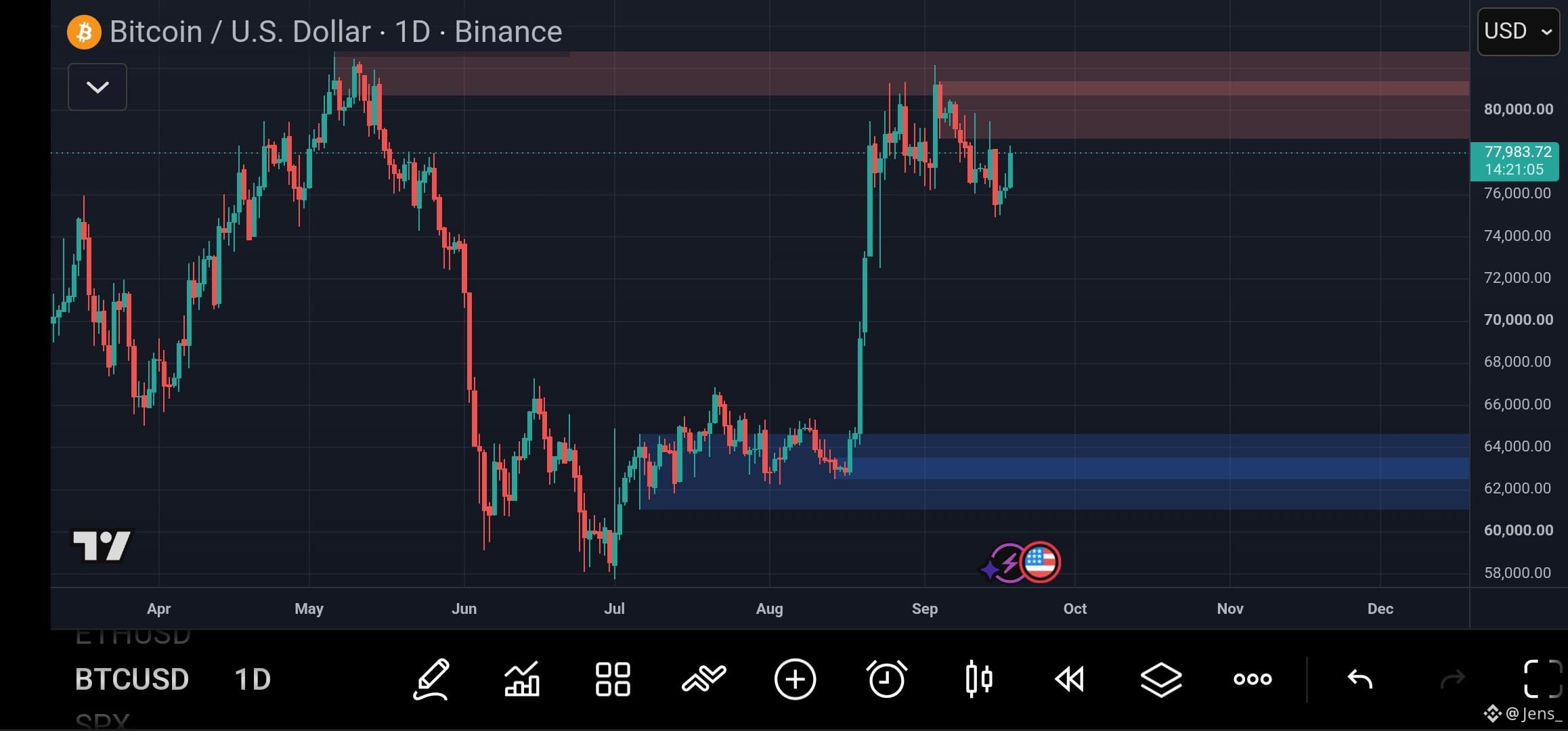
Bitcoin is the first asset that reacts. Its structure is sensitive to macro liquidity. When QT was aggressive, Bitcoin had to fight against a drying pool of capital. Now the drain is turned off and the pool is slowly refilling. That alone can create a strong base for a December rally, especially when combined with positive ETF flows and institutional buy pressure.
Ethereum also benefits, particularly in the long term. Every cycle shows that when liquidity improves, ETH begins lagging slightly at first then makes strong relative moves as capital rotates out of Bitcoin dominance. The ETH BTC ratio is already showing signs of wanting to shift after a long period of compression. If macro works in Ethereum’s favor, the ratio can flip much sooner than expected.
The interesting thing is how the market blends macro and narrative at the same time. When QT ends, it does not only help Bitcoin. It energizes the entire risk economy. AI projects start heating up again because traders expect cheaper liquidity. RWA protocols benefit because institutional money feels safer entering tokenized assets. Stablecoin ecosystems find more adoption because liquidity wants on chain velocity. This is the kind of environment where new narratives explode and older narratives return stronger.
But there is something even bigger here. The Fed’s decision signals that the tightening cycle is effectively done. Whether rate cuts come early or late, the direction has already shifted. Markets care more about direction than exact timing. Today’s announcement tells traders exactly what they wanted to hear. The liquidity squeeze is over.
December becomes even more unpredictable now. If the Bank of Japan makes a surprise announcement, volatility can spike. But the core macro engine behind crypto has changed direction. Liquidity is turning supportive. That is the foundation of every major crypto rally in history.
Right now, the market is in a strange but powerful zone. It feels like the calm before an expansion. Bitcoin is holding strong despite global tensions. Ethereum is stabilizing. Altcoins are waking up slowly. And narratives like agentic payments, universal collateralization, gamefi revival, and stablecoin infrastructure are starting to attract attention again.
This moment is where smart traders stay focused. You do not need hype. You need clarity. And today’s clarity is simple. The biggest headwind in global macro is finally gone. QT has ended. The liquidity cycle has turned. Crypto is entering its next chapter and December might become far more explosive than people expect.
If liquidity continues to move in this direction, the next few weeks could surprise a lot of traders. Not everyone is watching the macro signals. But the ones who do understand exactly how powerful this shift is. The market does not turn bullish with noise. It turns bullish with liquidity. And today, that liquidity has officially started coming back. #crypto #Fed #CryptoIn401k
Falcon Finance: The System That Is Rebuilding How People Borrow, Lend, And Move Value On Chain
In every cycle of crypto, a new financial idea rises quietly before the world understands its power. Sometimes these ideas come from trading platforms. Sometimes they come from decentralized exchanges. But every once in a while, a project emerges that feels different. Something that looks like it was designed for the problems the entire industry has been ignoring for years. Falcon Finance is exactly that kind of protocol. It is not simply a lending platform. It is not just another stablecoin. It is a complete financial engine built around a vision of universal collateralization.
To understand Falcon Finance, you must understand the challenge it aims to solve. In the crypto world, capital is often trapped. Billions of dollars sit locked in wallets, staking pools, NFTs, governance systems, and tokens that cannot be used effectively. People hold value, but they cannot unlock it easily. Borrowing against assets is complicated. Risk models are outdated. And most lending protocols treat assets like isolated islands instead of parts of a connected ecosystem.
Falcon Finance arrived with a simple but powerful mission. Free that locked value. Build a system where any asset can become collateral. Create a stablecoin backed by a flexible and dynamic collateral engine. And design a platform where liquidity flows naturally instead of sitting idle.
The result is USDf, the native stablecoin of Falcon Finance. But USDf is more than just a token. It is the foundation of an entire financial architecture that behaves unlike anything in traditional DeFi. While most stablecoins rely on single collateral models or over restrictive rules, USDf is backed by a universal collateral engine that can integrate a wide variety of assets. This includes staking positions, LSTs, LRTs, blue chip tokens, real world backed assets, governance exposure, synthetic tokens, and future yield bearing assets. Falcon Finance is building what many call the next evolution of stablecoin design.
But the journey of Falcon Finance is not only technical. It feels like a quiet revolution happening beneath the surface. The ecosystem grew step by step, layer by layer, until it became clear that Falcon is designing a financial system with long term purpose.
The first breakthrough of Falcon Finance came from its collateralization engine. Instead of limiting users to a small set of tokens, Falcon focuses on expanding the range of collateral types. Staking derivatives, yield bearing assets, locked governance tokens, and even tokenized real world assets can eventually become part of the engine. This creates a financial environment where value is not stuck. It becomes fluid. It becomes usable. It becomes productive.
Imagine holding an LST or an LRT and being able to mint USDf without sacrificing yield. Imagine holding governance assets and being able to borrow against them without selling. Imagine accessing liquidity from assets that never had utility in lending protocols. Falcon Finance makes that possible.
Then came the second major breakthrough. The universal collateral engine does not just accept assets. It analyzes them. It adjusts risk. It calculates safe borrowing limits. It incorporates yield data. It protects the system from bad debt. Falcon Finance is built to operate like a smart, dynamic, evolving financial system rather than a static lending pool.
This adaptive design gave the protocol a distinct edge. While many lending platforms struggle to grow because they support only a few assets, Falcon can expand naturally as new forms of on chain value emerge. Every new ecosystem, every new staking system, every new yield market becomes potential collateral inside the Falcon engine.
The stablecoin USDf sits at the center of this ecosystem. Unlike algorithmic stablecoins that failed during past cycles, USDf is backed by real assets and a robust risk framework. It is redeemable, scalable, and designed for long term stability. Falcon intends for USDf to become a widely used settlement asset across DeFi. Payments. Trading. Liquidity pools. Yield markets. Derivatives. Wherever stablecoins go, USDf can go too.
Falcon Finance also introduced a staking model that strengthens the entire system. Users can stake FALCON, the protocol’s native token, to secure the system and share in revenue generated from the collateral engine. Stakers become long term partners of the protocol instead of passive token holders. This aligns incentives across users, borrowers, builders, and the platform itself.
As the protocol matured, more integrations began to form across the ecosystem. Falcon is connecting with decentralized exchanges, liquid staking platforms, yield vaults, real world asset networks, and cross chain infrastructure. These integrations allow users to move assets smoothly into Falcon’s collateral engine and mint USDf with minimal friction. Every new connection makes the ecosystem stronger.
One of the most exciting developments is the concept of universal collateral routing. When a user deposits an asset, the protocol does not simply hold it. In the future, it can route the asset to yield sources, staking pools, and liquidity environments while maintaining on chain accounting for collateral value. This transforms passive collateral into active collateral. Instead of just supporting borrowing, it generates yield while backing the stablecoin.
This model unlocks a powerful loop.
Collateral creates liquidity.
Liquidity supports borrowing.
Borrowing unlocks utility.
Utility attracts users.
Users bring more assets.
Assets generate more yield.
Yield strengthens the stablecoin.
The stablecoin strengthens the ecosystem.
This positive feedback loop is the core of Falcon Finance’s vision.
As the ecosystem expanded, more users began to recognize Falcon as one of the most forward looking stablecoin platforms in the market. While many projects focused on pure DeFi speculation, Falcon built an infrastructure designed for the next decade of on chain finance. It fits naturally into major trends that are shaping the future. Tokenization of real world assets. Growth of staking derivatives. Cross chain liquidity networks. On chain credit markets. Advanced risk engines. Falcon connects to all of them.
But perhaps the most powerful part of Falcon Finance is that it solves real problems for real users. If you are a staker, you can unlock liquidity. If you are a trader, you can borrow against assets without selling. If you are a yield farmer, you can increase capital efficiency. If you are a long term holder, you can access stable liquidity without abandoning your convictions. Falcon gives every type of user more flexibility.
As the ecosystem grew, the narrative around Falcon began to shift. People realized that this is not just a lending protocol. It is a universal liquidity engine. A stablecoin issuer. A collateral optimizer. A risk management system. A multi chain financial foundation. Falcon Finance is evolving into a platform that feels like a decentralized version of a global credit and liquidity network.
The FALCON token became an increasingly important part of the system. Stakers secure the ecosystem. Governance participants shape collateral onboarding decisions. Token holders influence yield distribution. As more assets enter the collateral engine, the importance of FALCON grows. It becomes the connective tissue that supports the system’s economic alignment.
When you step back and follow the arc of Falcon Finance, you begin to see a long term picture forming. A world where users control their own liquidity. A world where stablecoins are backed by diversified collateral. A world where financial systems adapt dynamically. A world where on chain credit becomes as powerful as traditional banking.
Falcon Finance is not building for a single cycle. It is building for the next era of on chain finance. And the more the ecosystem expands, the more its vision becomes clear. Universal collateralization is not just a concept. It is the future. A future where every asset has utility. A future where value moves freely. A future where stablecoins become smarter, safer, and more scalable.
Falcon Finance is designing that future step by step. From the collateral engine, to USDf, to staking, to risk systems, to integrations, to yield routing, the protocol is shaping itself into a financial infrastructure layer that can support millions of users across chains and ecosystems.
In the end, Falcon Finance is not just a protocol. It is a new model for how liquidity should work. A new architecture for how stablecoins should be built. A new foundation for how people should access credit. And a new path for how the next generation of financial systems will operate.
It is a rising force in the world of decentralized finance. And its journey is only beginning. #FalconFinance $FF @Falcon Finance
KITE: The Network Preparing The World For Autonomous AI Payments
Every once in a while, a project arrives that feels like it belongs to the future more than the present. Something that does not fit the usual categories of Layer 1, DeFi, gaming, or meme culture. Something that feels like the infrastructure for a world that is just starting to appear. KITE is exactly that kind of project. It is not trying to copy anyone. It is not chasing hype. It is building a new financial foundation for a world where AI agents transact on their own.
To understand KITE, you first need to understand the shift happening around us. Artificial intelligence is no longer a tool we command. It is becoming an active participant in our digital life. AI agents generate content, analyze markets, schedule tasks, make recommendations, manage workflows, negotiate deals, and soon, they will transact. But there is one missing link that the world has not solved yet. How do AI agents pay for things? How do they settle microtransactions? How do they interact with financial systems without human friction?
KITE emerged with a bold answer. Create a blockchain designed specifically for agentic payments. Build a financial layer where AI agents can move money, buy services, subscribe to tools, access APIs, pay for compute, and coordinate autonomously. Not someday far in the future. But now. KITE sees the world shifting fast, and it is positioning itself at the center of the coming agent economy.
Most blockchains were designed for humans. Wallets, signatures, gas fees, private keys, and complicated interactions all assume that a person is pressing buttons. AI cannot operate in that environment at scale. It needs a chain that understands identity, security, permissions, and real time payments. KITE built all of this from the ground up.
The first thing that makes KITE feel different is its identity structure. Instead of relying on a single wallet identity, KITE created a three layer identity model. There is a user layer, an agent layer, and a session layer. The user represents the human owner. The agent represents the AI entity acting on behalf of the user. And the session is a temporary instance limited to specific tasks. This separation creates safety. It allows users to authorize what their AI can and cannot do. It prevents agents from overstepping. It controls how sessions access funds. It creates boundaries that protect users while giving AI the freedom to operate.
This identity system solves a real problem. AI systems need autonomy, but humans need protection. KITE balances both. It is a system that lets your AI act but never without your permission. And because identity is built on chain, it is verifiable, traceable, and secure.
Then comes the transactional layer. KITE is a high performance Layer 1 built for speed and real time payments. AI agents need fast settlement. They need low fees. They need guaranteed execution. They need a chain where thousands of small transactions can happen every second without breaking. KITE is designed exactly for that environment. The chain is optimized for microtransactions, programmatic payments, and continuous settlement flows. Whether an AI is paying for compute time, API access, cloud services, or interacting with other agents, KITE ensures that payments happen instantly.
But perhaps the most visionary part of KITE is how it imagines the future economy. Many people believe AI will replace tasks. KITE believes AI will become economic participants. Agents will hire other agents. Agents will gather data, sell services, purchase tools, subscribe to models, and negotiate costs. This ecosystem needs a financial layer. KITE is building it.
As the months passed, KITE began rolling out updates that signaled how aggressively it was moving toward this future. The network improved its developer environment, enhanced its EVM compatibility, expanded its identity infrastructure, and began onboarding AI tool builders who wanted to integrate payments directly into their agents.
Developers realized that KITE solves one of their biggest problems. How do you make AI agents transact without supervising every action? KITE gives them a platform where agents can operate safely, execute instructions, follow permissions, and settle transactions automatically. It becomes a programmable environment for intelligent payments.
One of the biggest strengths of KITE is its on chain governance design. The KITE token is not simply a transactional asset. It represents participation in the network’s evolution. Holders influence governance decisions, security parameters, staking mechanics, and the future structure of the agent ecosystem. The token transitions through two major phases. In the first phase, it powers incentives, participation, and ecosystem growth. In the second phase, it becomes the governance and staking token that secures the network and aligns economic interests.
This phased utility shows that KITE is designed for a long term arc rather than short term hype. It is building the fundamentals first. Then it is expanding into full decentralization, where agents themselves become contributors to the network.
As the AI revolution accelerated globally, more developers, researchers, and founders began realizing how important agent based payments will become. AI agents cannot depend on centralized financial services. They need permissionless access. They need cryptographic identity. They need programmable security. KITE began positioning itself as the base layer for this new category of applications.
The more the world talked about the agent economy, the more relevant KITE became. Analysts started referring to agentic payments as one of the biggest blockchain opportunities of the next decade. Payment rails designed for humans will not scale to agents. Traditional banks cannot support autonomous AI. Even stablecoin networks are not structured for agent identity and permissions. KITE is one of the first networks solving this gap directly.
Inside the ecosystem, developers began exploring new use cases:
AI agents that trade markets automatically
AI agents that manage business subscriptions
AI agents that pay one another for data
AI agents that hire microservices on chain
AI agents that manage digital inventories
AI agents that coordinate logistics and workflows
Every scenario needs a payment layer that is trustless, fast, and secure. KITE provides that layer.
As adoption increased, the network started releasing deeper features. Enhanced session controls. Improved identity permissions. Wallet libraries designed for AI interaction. Back end support for autonomous execution. Payment routers specialized for agent cooperation. Each release made the ecosystem feel more alive and more aligned with the AI driven world forming around us.
One of the most exciting aspects of KITE is how naturally it fits into global trends. Companies are shifting to AI automation. Developers are moving toward agent architecture. Platforms are integrating AI assistants. Governments are exploring AI regulation. And the entire economy is slowly preparing for a world where intelligent systems operate side by side with humans. KITE sits right at the intersection of these trends. It is a network that sees the next decade clearly.
As the ecosystem grows, more people begin to see KITE not as another blockchain but as an infrastructure layer for intelligence. A place where your AI agent can buy access to a service. A place where your automation can pay for the tools it uses. A place where two agents can transact without human involvement. A place where microtransactions flow naturally between digital entities.
The potential of KITE becomes even stronger when you connect it to the future of decentralized AI. If AI models become distributed and agents become autonomous, they will need a permissionless network to interact financially. KITE becomes that foundation. It can support infinite use cases because every intelligent process eventually needs payments.
When you step back and observe the bigger picture, it becomes clear that KITE is not trying to win today’s narratives. It is building for the narratives that the world will talk about two or three years from now. The agent economy. Autonomous finance. Intelligent payments. A world where digital intelligence functions as an economic force.
KITE feels like the early days of the internet when people could sense that something huge was coming but did not yet understand its scale. The network is building the rails for a new type of economy that is forming quietly but powerfully.
And in that future, the chains that serve humans will compete. But the chains that serve AI will lead.
Lorenzo Protocol The Vision That Is Transforming How On Chain Funds Are Built And Managed
There are projects in crypto that appear quietly, almost unnoticed, and yet when you look closely you realize they are building something far more ambitious than most people expect. Lorenzo Protocol is one of those rare projects. It did not enter the market trying to create hype. It entered with a purpose. A purpose rooted in traditional finance, yet fully reimagined for the on chain world. As the months passed and the ecosystem expanded, it became clear that Lorenzo is not just another DeFi platform. It is a new model for how people invest, manage capital, and access institutional grade trading strategies directly on the blockchain.
The beginning of Lorenzo feels like the start of a journey that evolved from a simple idea into an entire asset management universe. The founders understood something that most people overlooked. While DeFi created new opportunities, it did not solve a crucial problem. Everyday users and most crypto natives had limited access to professional, diversified trading strategies. Traditional finance was full of complex funds, structured products, and quantitative models, but these tools were locked away behind institutions. Retail investors could not reach them. Crypto users had even fewer pathways.
Lorenzo appeared with a clear answer. Bring those strategies on chain. Make them accessible. Make them transparent. Make them tokenized. And allow anyone in the world to benefit from what used to be exclusive to hedge funds and asset managers.
From its earliest days, Lorenzo positioned itself not as a single product but as a framework. A platform where strategies could be built, combined, automated, and distributed as tokenized funds. These funds, known as OTFs or On Chain Traded Funds, became the center of the ecosystem. Each OTF represents a professionally designed strategy. It can be a quantitative strategy, a trend following model, a volatility strategy, a structured yield product, or even a multi strategy combination that mirrors the complexity of traditional finance.
The beauty of Lorenzo is that these strategies exist as tokens. A user does not need to understand advanced financial modeling. They do not need institutional connections. They do not need large capital. With one token, they gain access to an institutional grade investment product that automatically executes and rebalances on chain.
The ecosystem architecture is divided into simple vaults and composed vaults. Simple vaults represent a single strategy. Composed vaults combine multiple strategies to create a diversified portfolio. This structure mirrors the same design used by hedge funds, but it is delivered in a transparent and permissionless way.
As Lorenzo grew, more strategies began to enter the ecosystem. Quantitative trading, momentum based models, managed futures, volatility harvesting, liquidity provisioning, and structured income products. Each new addition made the platform more powerful. Each new vault expanded the possibilities for users who wanted exposure to advanced strategies without managing the complexity themselves.
The level of automation within Lorenzo is one of its most impressive achievements. While other DeFi protocols rely heavily on manual adjustments, Lorenzo is designed to operate like a professional asset management engine. Strategies execute based on predefined logic. Portfolios rebalance automatically. Risk management is built in. Execution happens according to strict rules. This makes Lorenzo feel less like a typical DeFi platform and more like a digital asset manager coded entirely on chain.
Then came the rise of the BANK token, the heart of the Lorenzo ecosystem. BANK is not just another governance token. It represents influence, ownership, and economic alignment. Holders participate in governance decisions, incentive programs, and long term ecosystem direction. They can lock BANK to gain veBANK, a vote escrow model that strengthens the protocol’s decision making process. The veBANK system allows users to shape reward distribution, new strategy launches, and the evolution of the protocol.
As BANK gained traction, it became clear that Lorenzo was not just a set of strategies. It was a living, evolving financial infrastructure. One where the community, strategy creators, and investors all participate in shaping the future of on chain asset management.
The growth of the ecosystem brought with it new integrations. As more strategies appeared, the protocol began connecting with major platforms, liquidity hubs, oracle networks, and execution layers. This integration allowed Lorenzo’s strategies to operate across multiple DeFi environments. Whether it was sourcing liquidity from decentralized exchanges, accessing real time market data from oracles, or executing trades on different networks, Lorenzo built a foundation capable of supporting sophisticated financial operations.
Over time, people began to see how powerful the Lorenzo model is. Traditional finance has always relied on centralized control, opaque structures, and restricted access. Lorenzo flipped that model entirely. Strategies become tokens. Funds become smart contracts. Execution becomes automated. Transparency becomes default. And access becomes global.
It was not long before advanced users and analysts noticed that Lorenzo was aligning itself with one of the biggest trends in global finance. Tokenization. The world is moving toward tokenized assets, tokenized funds, and tokenized investment products. Lorenzo is positioned directly in the center of that transition. While institutions experiment with digitizing real world assets, Lorenzo is digitizing institutional level strategies themselves. It is a different but equally powerful form of tokenization.
The protocol’s evolution continued with new features designed to support both developers and investors. Strategy creators gained better tools for launching their own vaults. Investors gained more detailed performance metrics. Automated risk controls improved. Multi strategy compositions became smoother. The entire ecosystem began feeling like a modern on chain version of a hedge fund ecosystem.
Yet what makes Lorenzo truly fascinating is the human side of its growth. Users who were once overwhelmed by DeFi complexity found a place where investment is simplified. Developers who once struggled to build advanced strategies discovered a protocol that supports deep customization. Investors who once lacked access to institutional grade products finally found an open door.
As the market matured, Lorenzo began gaining recognition across the crypto ecosystem. Analysts highlighted its structured approach. Content creators explored its vault performance. Advanced traders used it to diversify their portfolios. Yield seekers used it to access risk managed strategies. Even institutions began observing it as a potential blueprint for future asset management systems.
The narrative around Lorenzo became stronger. People realized it was not just a DeFi platform. It was a financial transformation. A new way of thinking about funds, portfolios, and strategies. A new way of democratizing access to investment opportunities that were once controlled by a very small percentage of the world.
The more the ecosystem expanded, the clearer Lorenzo’s future became. It is building a platform where strategy creators, investors, and community members all operate in sync. A place where complex financial tools are delivered through simple tokenized products. A network where transparency replaces trust. A system where investors anywhere in the world can access strategies that were previously locked behind institutional walls.
If you look at the broad direction of global finance, three trends dominate the conversation. Automation. Tokenization. Decentralization. Lorenzo sits at the intersection of all three. It automates the creation and execution of strategies. It tokenizes investment products. And it decentralizes the management of funds through governance and community driven oversight.
What started as a quiet project has now become one of the most forward looking protocols in the entire on chain finance sector. Lorenzo is not simply innovating. It is rewriting how funds are built, managed, and owned.
And this is just the beginning. As more strategies launch, as BANK governance evolves, as partnerships expand, and as on chain finance continues to grow, Lorenzo is positioning itself to become one of the key pillars of the decentralized asset management economy.
The journey of Lorenzo Protocol shows that when a project builds with clarity, conviction, and purpose, it does not need hype. It creates its own momentum. It creates its own identity. And it becomes a force that influences the future of financial technology.
Lorenzo is not only creating a new class of on chain financial products. It is redefining what people can access, how they can invest, and who gets to participate in the next generation of global finance. #lorenzoprotocol $BANK @Lorenzo Protocol
Yield Guild Games The Guild That Is Rebuilding The Next Era Of Web3 Gaming
Every cycle in crypto has a moment where everything resets. Narratives disappear, hype fades, and the projects that were built only for short term excitement collapse under their own weight. When the first wave of play to earn gaming exploded, it brought millions of players into Web3, but it also created inflated economies that could not survive without constant rewards. As the market cooled, the entire sector was tested. People wondered which projects were real and which ones were temporary. For many, the answer became clearer over time. Yield Guild Games was not just surviving. It was evolving.
YGG did not vanish into the noise like many early GameFi platforms. It did not rely on inflated rewards or unrealistic promises. Instead, it focused on building something deeper. A long term gaming ecosystem designed around skill, community, progression, and ownership. YGG shifted from being just a guild to becoming an entire gateway into Web3 gaming. A place where players learn, grow, earn, compete, and build digital careers that extend beyond a single title.
If you look closely at the YGG journey, it feels like a long path filled with lessons, challenges, and reinvention. The guild started during the play to earn boom, but it quickly realized that sustainable gaming requires more than tokens. It requires ecosystem structure. It requires real games, not quick money schemes. It requires communities that evolve with time. YGG embraced that reality and transformed itself into a global network that connects players to hundreds of opportunities.
The foundation of YGG has always been people. Players from Asia, Europe, Africa, the Middle East, and the Americas. Students, parents, professionals, competitive gamers, and newcomers. Each person enters the guild with different goals. Some want to earn while playing. Some want to join tournaments. Some want to learn blockchain gaming. Some want to build a digital identity that represents their effort. YGG brought all these paths together and created a structure that turns individual journeys into a collective movement.
One of the biggest transformations in YGG’s evolution is the rise of the YGG Quest System. This new system is one of the smartest innovations in Web3 gaming. Instead of forcing players into one game, YGG offers quests across multiple titles and worlds. Every quest is tied to progression, rewards, and reputation. Players complete challenges, join events, build skills, and unlock new levels inside the guild. Their progress is recorded through soulbound achievements and badges which form their digital identity within YGG.
This approach changed everything. Instead of players relying on token payouts, they now build meaningful progression that leads to better opportunities. Reputation becomes the new currency. Skill becomes the new asset. Effort becomes the new pathway. YGG transformed gaming from a simple earn model into a multi directional progression model where long term engagement is rewarded more than short term farming.
YGG’s SubDAO model is another major force behind its success. Rather than trying to control the entire global ecosystem from one place, YGG expanded into regional guilds called SubDAOs. YGG Philippines, YGG Japan, YGG India, YGG Brazil, YGG Korea, YGG Latam, and several more form the backbone of this structure. Each SubDAO has its own leaders, its own community, its own training programs, onboarding events, meetups, tournaments, and partnerships. This grassroots approach allows YGG to remain global while staying locally relevant.
YGG Philippines remains one of the strongest SubDAOs, known for its passionate gaming community and early involvement in the Axie era. But as the ecosystem expands, new SubDAOs are becoming just as influential. YGG Japan is forming its identity through high quality RPGs and strategic partnerships. YGG India is entering a massive market driven by mobile gamers. YGG Brazil is helping onboard competitive players into Web3 tournaments. This regional expansion is not only smart, it is necessary for a world where gaming culture differs across continents.
Another major evolution inside YGG is the introduction of the Soulbound Reputation System. Instead of measuring players by wallet balance, YGG measures their history, contributions, quests, and consistency. This creates fairness. It rewards loyalty. It prevents bots from gaming the system. And it gives dedicated players a true identity inside the guild. As players complete more quests, compete in tournaments, help others, or join events, their soulbound reputation grows. This unlocks higher tier quests, early access to new games, NFT rewards, and special guild privileges.
Game studios love this system because it brings real players, not temporary farmers. Developers want players who engage meaningfully with their games. YGG delivers exactly that. This is why so many studios started partnering with the guild. They see the guild as a pipeline of trained and passionate players ready to explore new worlds.
In recent months, YGG partnerships have been expanding steadily. Games like Pixels, Big Time, Parallel, Illuvium, Apeiron, My Pet Hooligan, Axie Origins, and many more collaborate with YGG through quests, tournaments, rewards, and onboarding events. This network effect gives players exposure to a wide range of high quality Web3 titles. It also gives game studios access to thousands of motivated testers, explorers, creators, and competitive gamers. This partnership flow is one reason why YGG remains relevant even after many GameFi projects faded away.
YGG’s growth is not only in players. It is also in technology. The guild invested heavily in building the infrastructure needed to support millions of Web3 gamers. That includes identity systems, quest smart contracts, onboarding lite wallets, verification layers, Data Driven player analytics, and scalable platforms for distributing rewards. YGG understands one truth about the gaming world. Traditional gamers want simple onboarding. They do not want complex blockchain steps. So the guild is smoothing out every barrier.
Esports is another powerful direction YGG has moved into. Many guild members now compete in Web3 tournaments that offer both digital and real world rewards. As competitive gaming grows globally, YGG is shaping itself into a major Web3 esports organization. This gives players new career paths that never existed in the early GameFi era. Instead of grinding for tokens, players can rise through competition, team play, skill development, and professional level tournaments.
The YGG token also plays a growing role in this expanding ecosystem. It is not just a speculative asset anymore. It supports quest rewards, SubDAO coordination, governance discussions, reputation based incentives, and in some cases staking utilities. As the guild grows and more players join, the token’s utility grows too. The future of YGG depends on the strength of its ecosystem, and that ecosystem is evolving rapidly.
Another important update is YGG’s deeper focus on sustainability. Instead of supporting games with weak token economies, YGG now works closely with studios that prioritize real gameplay, strong design, balanced economies, and long term vision. The guild wants players to enjoy games first. Earnings become a natural result of strong engagement, not the main purpose. This philosophy is critical for the next era of Web3 gaming.
YGG’s comeback is now visible across every part of the ecosystem. Quests have increased in number and quality. Player participation is rising. New SubDAOs are onboarding thousands. Studios are lining up to collaborate. Tournaments are becoming more frequent. Digital identities are gaining value. The guild feels alive with a new sense of direction and purpose.
When you step back and look at the big picture, the future of Web3 gaming becomes clearer. Players will no longer stay limited to a single game. They will explore multiple digital worlds, collect assets across chains, build identities that grow over time, participate in global tournaments, and join communities that feel like digital nations. YGG is building the foundation for that world.
The guild acts as a passport across the Metaverse. It connects players to games. It connects games to players. It connects communities to opportunities. It connects digital identities to real digital careers. YGG is not the same guild that started in the early play to earn era. It is now a platform, a network, an economy, and a global movement that evolves with every new update.
The more you observe YGG today, the clearer it becomes that it is not living in the past. It is shaping the next chapter of Web3 gaming. A chapter defined by skill, reputation, ownership, competition, and community.
Yield Guild Games is not only rebuilding itself. It is rebuilding the future of gaming. And with every new quest, every new SubDAO, every new partnership, every new player onboarding, it becomes more obvious that YGG is preparing to lead the next era of the digital gaming universe. #YGGPlay $YGG @Yield Guild Games
Injective: The Network Rising Into The Center of On Chain Finance
There are blockchains you hear about every day. They trend on social media, they launch random tokens, and they try to be everything for everyone. Then there are the quiet ones. The chains that move differently. The ones that focus on real utility instead of noise. Injective is one of those rare networks. It did not arrive with fireworks. It arrived with precision. It arrived with a purpose so clear that anyone looking closely could tell this chain was built for something bigger.
Injective came into the world as a Layer 1 blockchain, but from the beginning it felt like more than that. It felt like a financial engine. A system designed to handle trading, markets, and liquidity with the type of speed and reliability that traditional finance depends on. While many chains were experimenting with games or NFTs, Injective was quietly constructing a financial universe.
What makes Injective unforgettable is how intentional everything feels. Nothing about Injective looks random. Its consensus design, its cross chain connections, its burn auctions, its developer tooling, its tokenomics, its partnerships, all point toward one direction. A chain that wants to become the home of the world’s decentralized markets. Not just crypto markets. All markets.
You can feel this when you look at how Injective handles interoperability. Instead of being stuck inside its own world, Injective opens itself to every major ecosystem. It connects to Ethereum. It connects to Cosmos. It connects to Solana. It connects through IBC. It connects through Wormhole. It connects through multiple bridges that allow assets to move in and out smoothly. This makes Injective the opposite of a closed financial garden. It becomes a fluid cross chain marketplace where liquidity can enter from everywhere.
The early years were about setting the foundation. Injective spent time building its core modules. Perpetual trading, order book infrastructure, high speed execution, oracle integration, staking, governance, and a deflationary burn system that would eventually shape the identity of the INJ token. Slowly, layer by layer, the network grew its architecture until it became clear that Injective was not just trying to be a blockchain for trading. It was trying to be the most powerful decentralized trading environment in the world.
As time passed, more developers began to understand what Injective was offering. They realized this was a chain built for people who care about execution speed, reliability, and precision. Traders want a network that never lags. Developers want a network with predictable performance. Institutions want a network that is safe, scalable, and compliant ready. Injective fits all of these categories. That is why its ecosystem began to expand faster than expected.
But everything changed when Injective started hitting major updates and milestones that signaled a new phase. One of the biggest upgrades was the introduction of WASM smart contracts. This allowed developers to move beyond simple EVM environments and start building highly complex financial applications. Options markets, prediction markets, synthetic assets, structured instruments, automated trading strategies, and even AI assisted trading modules all became possible.
Then came another major achievement. Injective enhanced its IBC connections and introduced ultra fast cross chain channels that allowed movement of assets between ecosystems at a speed that felt instant. This was a turning point because it showed that Injective was not just interoperable. It was redefining what interoperability could look like. Instead of cross chain being a slow and fragile process, Injective made it feel natural.
You could sense that something big was forming. Applications like Helix, Dojo, Craft, Frontrunner, and many others started attracting users. Liquidity grew. Developers built new trading primitives. Oracles like Pyth, Chainlink, and Chronicle joined the network. Institutional developers began to explore Injective as the base layer for on chain financial products.
Then the burn auctions started gaining real attention. While most networks inflate supply to pay validators or rewards, Injective goes in the opposite direction. Every week, a portion of fees from across the ecosystem are collected and used to buy INJ off the market. Those tokens are then permanently destroyed. That means supply goes down every week. And as network activity grows, the burn grows too. This deflationary pressure turned INJ into one of the strongest designed finance tokens in the crypto world.
You could feel the shift happening. Injective no longer felt like a niche financial chain. It felt like a system preparing to scale into global markets.
The next phase came with partnerships that truly elevated Injective. Projects that wanted deep liquidity, real time execution, or advanced trading tools naturally migrated toward Injective. Many founders who previously built on Ethereum or Solana realized that complex financial systems fit better on Injective. Market makers joined. Institutions began pilots. Developers started creating cross chain synthetic markets. AI trading engines found a new home because Injective could handle high frequency execution without lag.
Every chain has key turning points. For Injective, one of the most significant was the rise of tokenized assets. As real world asset tokenization gained global attention, Injective was positioned perfectly. Its infrastructure was already built for financial instruments. So when institutions wanted to explore tokenized bonds, equities, indexes, and synthetic commodities, Injective naturally became a candidate.
Another milestone was the explosion of on chain trading volume across Injective powered platforms. Exchanges built on Injective started reaching millions in daily volume. Liquidity providers locked capital. Stakers increased their participation. Developers built custom modules that connected prediction markets with perpetual markets. Everything became more interconnected.
One of Injective’s strongest advantages is its speed. Transactions finalize in under a second. This might sound simple, but it changes everything. Traders feel the difference. Bots feel the difference. Applications feel the difference. In finance, milliseconds matter. Injective gives developers and users a chain that feels instant.
Then there is the economic side. INJ stakers secure the network. Validators maintain stability. Burn auctions reduce supply. Governance allows holders to influence the evolution of the network. Every system is aligned in a way that gives INJ long term value as the network grows. There is no artificial inflation designed to pump yields. The token grows in value because the network grows in utility.
As Injective evolved, its ecosystem moved into AI based systems. Developers began building intelligent trading agents, automated strategies, portfolio rebalancers, and data driven execution engines. Injective became one of the few chains where AI trading actually makes sense because the network can handle real time execution.
Then came another wave of expansion with new markets. New AMMs. New derivatives. New trading pairs. New incentives for liquidity providers. Injective started attracting global traders who wanted exposure to unique financial products that did not exist elsewhere.
The more you look at Injective, the more you realize it is not trying to be like other chains. It is not building for hype. It is building for longevity. It is building for serious financial applications that need precision. It is building for a world where trading, settlement, and markets move on chain.
And yet, Injective still feels early. Despite its rapid rise, it is still in the early stages of what it can become. The network is gaining recognition in institutional circles. Developers are building more advanced modules. Liquidity is increasing. Tokenization is accelerating. AI trading is growing. All these trends align perfectly with Injective’s purpose.
If global finance continues shifting toward digital assets and decentralized settlement, Injective may end up being one of the most important chains in the world. A chain that gives users the speed of traditional markets with the transparency of blockchain. A chain that lets developers build financial systems that were impossible before. A chain where liquidity flows naturally across ecosystems. A chain where markets can form without middlemen. A chain where the entire financial infrastructure is open to everyone.
Injective has reached a point where its identity is fully shaped. It is a financial chain. A trading chain. A derivatives chain. A liquidity chain. A multi chain execution layer. And a network that is evolving faster than most people realize.
In the end, Injective is not just rising. It is transforming into the backbone for the next generation of global finance. And anyone watching closely can see that the network is stepping into a future where its relevance will only grow stronger. #injective $INJ @Injective
Plasma: The Chain That Is Redefining How Stablecoins Move Across the World
There are moments in crypto where a new network arrives and instantly feels different. Not because of hype or marketing, but because you can sense a quiet confidence in its purpose. Plasma entered the scene with exactly that feeling. A chain that was not designed to compete with every other blockchain, not designed to chase the latest narrative, and not built to become a general purpose playground. Instead, it came with a clear mission. Build the most powerful and frictionless environment for stablecoins the world has ever seen.
From the first day, Plasma focused on one thing. Making stablecoin transactions fast, smooth, cheap, and accessible for everyone. Most chains try to do everything at once. Plasma did the opposite. It took the most important real world use case in crypto and built an entire chain around it. That is why so many people immediately recognized its potential. Plasma does not feel like another Layer 1. It feels like a payment engine. It feels like the beginning of a new kind of digital money system.
When you look at Plasma closely, you start to understand how deeply the team thought about friction. Every chain says it is user friendly. Plasma actually proves it. Stablecoin transfers are zero fee through its built in paymaster system. Anyone can send USD stablecoins without holding XPL or any other token for gas. This is the type of detail that most blockchains ignore, but it is exactly what real people need. A worker sending money home does not want to think about gas. A merchant receiving payments does not want to explain gas tokens to customers. Plasma removes that complexity completely.
The ecosystem is built on EVM infrastructure which makes it a comfortable home for developers. Anything built on Ethereum can launch on Plasma with minimal effort. But Plasma still performs better because it is optimized for one job instead of trying to handle every possible use case. That focus gives it an advantage in throughput, cost efficiency, and reliability. If stablecoins become the world’s default digital money, Plasma is positioning itself to be the chain that carries them.
Momentum began building even before mainnet launched. But the moment mainnet beta went live, something unusual happened. Instead of a slow ramp up, the network saw explosive activity. Two million transactions were processed in the early days. One point four million transactions occurred in just twelve hours. That is not the pattern of a chain that people are merely testing. That is the pattern of a chain people were waiting to use. From exchanges to wallets to remittance tools, early adopters were ready.
Plasma also entered the market with one of the strongest early liquidity bases of any new blockchain this year. More than two billion dollars in stablecoin liquidity was reserved for the network. This is an enormous signal. It shows that Plasma did not come to the market weak or experimental. It arrived with deep backing and real financial weight behind it. For a stablecoin focused chain, liquidity is lifeblood. Without it, payments fail, transfers stall, and trust disappears. Plasma started with more liquidity than most established chains.
Then came a milestone that immediately captured global attention. Coinbase officially listed XPL on December 2, 2025. The XPL USD pair went live across the platform. It is rare for a new chain to receive a Coinbase listing this early. It means one thing. Plasma has strong institutional credibility. Coinbase listing is not a casual decision. It requires regulatory alignment, stability, and high trust in the project. The market reacted quickly. XPL debuted with a market cap above two point four billion dollars, placing it among the top new Layer 1 tokens of the year.
But Plasma did not stop there. Developers received one of the most important upgrades recently with the integration of the Reth execution client. This upgrade improves EVM compatibility, increases execution efficiency, and strengthens the foundation for large scale applications. Developers prefer chains that are fast, reliable, and easy to deploy on. Plasma is aligning itself perfectly with that mindset.
Alongside performance updates, the team revealed early plans for privacy enhanced stablecoin transfers. This is one of the most important research directions for future blockchain adoption. Real world payments require confidentiality. Everyday users do not want all their transactions visible. Businesses must protect pricing and supplier information. Institutions cannot operate without controlled privacy. Plasma understands this reality and is building toward a privacy layer that still respects compliance.
Not all updates are bullish by default. The token unlock on November 25 introduced around eighty eight point eight million XPL into circulation. Token unlocks can create volatility if adoption growth does not keep pace with supply. Plasma will face the challenge of balancing expansion with inflation. However, the network’s strong early user growth gives it a better chance to absorb unlocks compared to typical speculative chains.
One of the emerging patterns that analysts find most exciting is how quickly Plasma is gaining attention in regions that rely heavily on remittances. Countries where currency instability is common. Countries where millions of workers send money home every month. Countries where banking systems charge high fees for cross border transfers. Plasma’s zero fee stablecoin system becomes life changing in these environments. A worker can send money home instantly. A merchant can accept USD tokens without losing a percentage to middlemen. Families can store value in stablecoins without exposure to local currency inflation.
These are not theoretical use cases. They are real economic struggles that people face every day. And Plasma is positioning itself as a real solution. When a technology meets a real need at the right moment, adoption can grow faster than anyone expects.
Institutional interest is also quietly building. Reports surfaced that Plasma and Aave collaborated on an institutional blockchain fund focused on stablecoin payment rails and global settlement infrastructure. This type of partnership is how large scale adoption begins. Institutions do not build on meme chains or speculative networks. They build on infrastructure that solves real problems. Plasma checks every box for that category.
From a global perspective, the timing for Plasma is almost perfect. Stablecoins are becoming the largest use case in crypto. They now account for more transaction volume than almost every other category combined. Governments are exploring digital currency frameworks. Remittance companies are integrating blockchain rails. Merchants are beginning to treat stablecoins as a serious payment option. The entire world is shifting toward digital dollars, digital euros, and digital payment systems.
In this environment, a chain built specifically for stablecoins has a massive advantage. Plasma is not trying to compete with gaming chains or meme ecosystems. It aims to become the settlement layer for digital money. And every update from the last few months shows that it is building in the right direction.
What makes Plasma feel unique is the human context behind its purpose. This chain exists because people need a better way to move money. It exists because gas fees confuse new users. It exists because stablecoins are powerful but still limited by the networks they depend on. Plasma is removing those limits step by step.
The coming months will be important. Transaction volume needs to keep rising. Liquidity must remain strong. Developer growth must continue. Token unlocks will need to be absorbed. But the foundation Plasma is building is solid. It has real world momentum. It has institutional visibility. It has user friendly design. And most importantly, it has a clear identity in a market full of chains that are still trying to find theirs.
If Plasma succeeds, it may not just become another blockchain. It may become the network that powers global stablecoin movement for the next decade. A chain where sending money feels as simple as sending a message. A chain where merchants, families, businesses, developers, and institutions all operate side by side. A chain where stablecoins finally reach their full potential. #Plasma $XPL @Plasma
Every cycle has a moment where the market feels completely broken. Bitcoin drops hard. Sentiment collapses. Traders panic. Social media fills with fear. Yet beneath that noise, something deeper begins to form. That something is the rotation. The moment when Bitcoin finishes absorbing liquidity after a period of capitulation, and the market quietly prepares for the next phase. The phase where altcoins finally wake up.
Right now, we appear to be standing exactly at that point. The charts do not look clean. The market does not feel confident. But the underlying behaviour is shifting in a way that only experienced traders recognize. Bitcoin has shown classic capitulation signals. Leverage has been wiped. Funding has reset. Weak hands have exited. And BTC dominance is reaching levels that historically mark the end of a risk-off period. Whenever dominance stalls at these upper zones, it creates the setup for the next rotation.
Altcoin rotations never begin during hype. They begin during fear. When Bitcoin is stealing all the attention, altcoins look dead. Liquidity drains from smaller assets, not because the market hates them, but because capital becomes defensive. But once that defensive phase ends, liquidity naturally rotates back into higher beta assets. It has happened in every cycle. The market breathes in through Bitcoin and breathes out through altcoins.
We are reaching that point again. You can see the early signs in on-chain activity. Developers are still building. Networks are still active. L2 volumes are holding strong even during volatility. Stablecoin market cap is rising again, meaning liquidity is returning. And whales have begun quietly accumulating selective altcoins even while retail remains scared. This pattern is one of the strongest signals of an upcoming rotation.
Another important shift is happening in market structure. Bitcoin’s dominance tends to rise sharply in the early stage of a correction, but once capitulation hits, dominance usually forms a top. After this top, the market starts redistributing liquidity to assets with higher growth potential. Ethereum often leads this rotation. Then L2 ecosystems follow. After that, sectors with strong narratives begin to outperform, including AI tokens, gaming projects, new L1s, RWAs, and DeFi protocols that survived the bear.
The same setup happened in 2019. Bitcoin recovered first after a deep capitulation event. Then ETH began strengthening. After ETH moved, altcoins like LINK, BNB, and early DeFi tokens exploded. In 2020 and 2021, the pattern was even clearer. Bitcoin rallied alone at first. Dominance peaked. Then came the rotation. The timing frustrated many traders because it felt slow, but when it arrived, it arrived with force.
Today feels very similar. The correction has been painful. Many altcoins are sitting at multi-month lows. Narratives feel quiet. But the market is not dead. It is resetting. These periods of silence are often the moments where the biggest opportunities hide. When retail gives up, when charts flatten, when liquidity sits still, that is when accumulation takes place.
You can also see rotation signals through stablecoin positioning. A large portion of stablecoins is sitting on exchanges. This money is waiting for a trigger. It has not left the ecosystem. Traders are not running away. They are preparing. This is exactly what happens before a rotation. Once the market senses stability, this liquidity begins flowing into assets that were oversold during the panic.
Ethereum is a major part of this story. Historically, ETH strength against BTC is the first sign that altcoin season is forming. Right now, the ETH to BTC ratio is near an important structure zone. If ETH begins to outperform, the rotation will accelerate quickly. ETH does not need to outperform massively. Even a small move is enough to flip market sentiment and open the door for altcoins to follow.
L2 networks are also positioned for this moment. Linea, zkSync, Base, and Scroll continue to attract developers and liquidity even during volatility. These ecosystems have strong fundamentals that do not disappear during corrections. Once risk appetite returns, these networks often lead the first wave of altcoin strength. A rotation is never random; it always follows the path of fundamentals plus liquidity.
AI tokens are another category attracting attention for the next rotation. As AI becomes a global macro narrative, tokens that connect AI to blockchain are gaining momentum. Projects like KITE, which are building agentic payment systems, are catching early interest. AI narratives tend to outperform during new cycles because they combine technology hype with real utility growth.
On-chain finance protocols are also positioned for strong performance. Falcon Finance with its universal collateral model. Lorenzo Protocol with on-chain asset strategies. Yield Guild Games reviving the gaming economy. Plasma pushing liquidity rails forward. These sectors are quietly building momentum beneath the surface. Traders do not notice it during fear, but once liquidity rotates, these ecosystems become some of the fastest movers.
The emotional landscape also confirms the setup. Traders are exhausted. Narratives feel empty. Influencers are quiet. These phases always occur before the rotation begins. Markets test conviction before they reward it. Just like Bitcoin needs to flush weak hands before rising, altcoins need the market to stop believing in them before they can create outsized gains. Pain first. Rotation next. Then momentum.
Another overlooked indicator is developer activity. Even during this correction, the most serious projects are shipping updates, deploying features, investing in growth, and expanding their ecosystems. Developers do not care about short-term dips. They care about long-term adoption. When a sector remains active during a downturn, it almost always outperforms when the rotation starts.
As we move forward, the key question becomes timing. Rotations do not happen instantly. They happen in layers. First Bitcoin stabilizes. Then Bitcoin dominance softens. Then Ethereum strengthens. Then majors move. Then narratives return. And finally the broad altcoin market ignites. This process can take weeks, but once it begins, the speed often surprises everyone.
Liquidity is the engine behind everything. With stablecoin supply rising again, with macro conditions slowly improving, and with Bitcoin completing a capitulation phase, the environment for a rotation is building. The rotation begins quietly and becomes obvious later. Right now we are in the quiet part.
The next cycle will not look like the previous ones. It will be shaped by AI adoption, tokenisation of real assets, the rise of on-chain funds, new L2 standards, and global participation from regions like the Middle East and Asia. The altcoins that capture these narratives will lead the new wave.
The market is giving early signals. Those who understand rotations know that these moments are rare but powerful. The panic is temporary. The reset is intentional. And the opportunity is building. Once Bitcoin stabilizes fully, the rotation will come. And when it comes, it will reward those who saw the signs before the crowd.
The big altcoin rotation is not just a possibility. It is forming slowly, quietly, and structurally. The only question now is whether traders are prepared for it. Because historically, the biggest altcoin moves happen when people least expect them. And right now, most people are not expecting them at all. Which is exactly why the rotation might be much closer than it looks. #Crypto #CryptoIn401k #altcoins #Write2Earn
Stablecoin Market Cap Rising Again – Early Signal of a New Crypto Cycle
Every major crypto cycle begins long before prices start moving. The first signs rarely show up in Bitcoin’s chart or in the hype on social media. They appear quietly, deep inside the plumbing of the ecosystem, where liquidity flows, market makers position themselves, and on-chain money begins to expand. One of the strongest early indicators has always been stablecoin market cap growth. And after months of contraction and sideways movement, stablecoins are finally expanding again. This is not a small detail. It is the early heartbeat of a new cycle.
Stablecoins are the fuel of the crypto economy. They measure liquidity, they reflect trader appetite, and they represent the willingness of capital to re-enter risk markets. When stablecoin supply increases, it means new money is flowing into the ecosystem rather than out of it. And right now, we are witnessing that quiet but powerful shift. On-chain data shows stablecoin market caps climbing again, with USDT leading the surge, USDC stabilizing, and new synthetic dollars entering the conversation. This pattern has historically predicted the next expansion phase months in advance.
To understand why this matters, you have to look at how cycles typically work. In 2019, stablecoin issuance grew significantly months before Bitcoin broke out of its long accumulation zone. In 2020 and early 2021, stablecoin supply exploded ahead of the biggest bull cycle in crypto history. And even in early 2023, before the market recovered from the FTX collapse, stablecoin flows quietly began turning positive again. The price action always follows liquidity, not the other way around.
Today, the same signal is flashing once more. Despite volatility, fear, and uncertainty across global markets, stablecoins are expanding. This means capital is positioning itself early, waiting for the right moment to rotate into BTC, ETH, and then the broader altcoin ecosystem. Even during recent pullbacks, stablecoin inflows did not shrink. That is one of the clearest signs that this correction, while loud, does not reflect a true exit of liquidity. Instead, it shows capital waiting on the sidelines, ready for re-entry.
The timing is important as well. The macro environment has begun shifting. Treasury yields are falling, markets are pricing in a potential rate cut, and the overall liquidity environment is slowly improving. Risk assets thrive in these conditions. But before that liquidity flows into volatile assets, it first enters the system through stablecoins. This is why every analyst who understands macro cycles watches stablecoin supply more closely than Bitcoin dominance or RSI indicators. Stablecoins show where the money is before the market decides where the money is going.
Another key detail is the rise of new stablecoin models. Beyond traditional giants like USDT and USDC, decentralized and synthetic stablecoins are gaining momentum again. Protocols that allow users to mint on-chain dollars against collateral are seeing renewed interest. USDf, crvUSD, GHO, and others are beginning to scale, showing that demand for crypto-native liquidity is growing. This pattern appears only when market confidence begins to rebuild. People don’t mint stablecoins unless they plan to deploy them.
You can also see this shift in trading behavior. Exchanges are reporting higher stablecoin inflows even on red days. Market makers are increasing liquidity pools. Whales are moving capital from self-custody into exchange wallets. These are not predictions. They are actions. And actions speak louder than sentiment. Traders might sound scared, but capital is preparing for the next phase.
On-chain settlement volume for stablecoins is also rising again. This is extremely important because it reflects real economic activity inside crypto. When people start transferring, deploying, lending, and borrowing stablecoins, it means the on-chain economy is waking up. For months, this activity had slowed down due to macro uncertainty. Now it is climbing again, suggesting that confidence is returning.
Looking deeper, you can see that stablecoins are not just sitting idle. They are beginning to move into DeFi protocols, liquidity pools, staking systems, and yield markets. The appetite for yield is always one of the earliest signs that traders are warming up. When capital seeks yield, it means the market expects growth. This is the same behaviour that appeared at the early stages of every bullish transition.
What makes the current moment even more interesting is the global distribution of stablecoin flows. Asia has become increasingly active. Middle Eastern markets, especially as tokenisation narratives grow, are contributing more volume. European trading hours show more steady inflows. Crypto is no longer driven by just one region; it is becoming a synchronized global liquidity engine. And stablecoin growth reflects that global participation more accurately than any single asset price.
Another overlooked point is that stablecoins act as a liquidity buffer during fear. When traders convert into stablecoins instead of exiting completely into fiat, it shows they are staying inside the ecosystem. This is exactly what happened during recent capitulation events. Instead of leaving crypto, many participants rotated into stablecoins and held their position. This is not the behavior of a market preparing for collapse. It is the behavior of a market bracing for the next move.
As stablecoin supply grows, market depth improves. This allows whales and institutional players to enter positions without causing large price impact. It also makes it easier for large funds, trading firms, and liquidity providers to deploy capital. Strong market depth is one of the core foundations of sustainable rallies. Without it, every move becomes fragile. With it, trends can form and last.
If stablecoin supply continues to expand over the next few weeks, we may look back at this moment as the true beginning of the next cycle. Not the breakout, not the ATH, but the quiet accumulation phase that only experienced participants recognize. That window where the noise is misleading but the data is accurate. The moment where capital begins preparing long before the crowd understands what is happening.
Bitcoin will likely be the first to react once liquidity begins rotating. Historically, BTC absorbs the initial capital flow because it is the most liquid and macro-sensitive asset. After BTC stabilizes and begins a steady trend, Ethereum usually follows with a stronger percentage move. Only after BTC and ETH make their moves does the capital rotate fully into altcoins. This rotation pattern has repeated across multiple cycles, and stablecoin supply has always acted as the fuel behind it.
For traders and investors, the takeaway is clear. Markets are built on liquidity, and liquidity is expanding again. The sentiment might still feel uncertain, but the underlying signals are not uncertain at all. Stablecoins are growing. On-chain activity is rising. Capital is entering quietly. Macro conditions are improving. This is how a new cycle begins every time.
We rarely realize we are in the early stages of a trend until it becomes obvious. But those who understand the deeper signals always see it first. Stablecoin growth is one of those signals. And today, it is flashing clearly, hinting that the market may be much closer to its next phase than most people think.
If momentum continues, this expansion could become one of the defining narratives of the coming months. A narrative where liquidity returns, adoption rises, and crypto steps into a stronger, more globally integrated cycle. And it all starts here, with the quiet rise of stablecoins, the simplest but most powerful signal that the market is waking up again. #crypto #CryptoIn401k #Stablecoins
Falcon Finance The Protocol Trying To Redesign How Liquidity Works Across The Entire On Chain World
Falcon Finance is one of those projects that you do not fully understand until you zoom out and look at the direction the entire crypto industry is heading. Everything in Web3 today depends on liquidity. Lending depends on it. Stablecoins depend on it. Perps and DEXs depend on it. Real world assets depend on it. Even new chains depend on it. But the truth is that most liquidity in crypto is trapped. Trapped in pools. Trapped in isolated chains. Trapped behind collateral models that were never designed for a global on chain economy. Falcon Finance was created to break that trap.
The vision behind Falcon is simple but extremely powerful. What if any digital asset or tokenized real world asset could be deposited once and instantly turned into usable liquidity across the entire ecosystem. No more siloed pools. No more manually moving capital. No more inefficient collateral that just sits there doing nothing. Falcon wants to act as the universal collateral machine that unlocks value everywhere it goes.
This mission began with a very real problem in crypto. People hold billions of dollars in assets but cannot use them without selling or locking them in old systems. Builders want liquidity but cannot always access it cheaply. New protocols want growth but cannot attract enough capital. And users want stability without losing upside. Falcon saw this gap and decided to build an infrastructure layer that could solve it elegantly.
At the center of Falcon Finance is USDf. This is not just another stablecoin. It is an overcollateralized synthetic dollar that is created by depositing liquid assets into the Falcon system. When a user deposits tokens or tokenized real world assets, they can mint USDf without having to sell their underlying holdings. This unlocks a new flow of liquidity that is stable, predictable and accessible across chains. USDf becomes the base layer currency of Falcon’s ecosystem, giving builders and users a consistent asset to rely on regardless of market conditions.
The magic of Falcon is in how it manages this collateral. The protocol treats every asset as a productive entity rather than something that must sit idle. This makes Falcon different from many early generation stablecoin systems that locked assets away in rigid vaults. Falcon instead routes collateral intelligently, balancing safety with liquidity generation. It creates conditions that maintain overcollateralization while still enabling deep liquidity flows. This approach turns Falcon into something closer to an economic engine than a simple minting protocol.
Over the past months Falcon has continued to push updates that strengthen this system. Liquidity partners are joining. Cross chain expansion is underway. New collateral types are being explored. Stability parameters are being refined. And integrations with DeFi applications are increasing. This momentum is important because the future of on chain finance depends on stable liquidity that can move without friction. Falcon is positioning itself exactly at that intersection.
One of the biggest reasons Falcon is gaining attention is because the industry is entering a new era. Real world assets are moving on chain. Institutions want safe liquidity rails. Tokenized treasuries are becoming normal. Derivatives and structured products require stable collateral. And cross chain activity is exploding across ecosystems. All of this creates a massive need for a system that can unify liquidity across multiple markets. Falcon is emerging as one of the few protocols designed specifically for that purpose.
Falcon’s architecture also acknowledges a key truth. The next stage of DeFi is not just about yield. It is about capital efficiency. It is about risk aware collateral. It is about liquidity that flows intelligently. It is about stability that holds during volatility. It is about systems that behave like real financial infrastructure. Falcon recognizes that overcollateralization is not a weakness but a pillar of trust. It ensures USDf remains safe even during turbulent markets. And it allows users to maintain their exposure while unlocking dollar liquidity.
The protocol also gives asset holders a powerful new tool. Imagine holding a token or yield bearing asset and being able to unlock liquidity instantly without selling. Imagine using that liquidity in DeFi, trading, stable swaps or yield strategies while still keeping your original position. Imagine a world where your assets do not force trade offs but create compounding opportunities. This is the type of financial flexibility Falcon wants to bring to everyone.
Another major storyline forming around Falcon is the rise of universal collateral models. In the past collateral was isolated. Each protocol had its own collateral set. Each chain had its own liquidity. Each ecosystem had its own rules. But as crypto expands, this fragmentation becomes a barrier. Falcon’s design allows collateral to be recognized universally, creating a bridge like effect across products, chains and liquidity zones. The result is a smoother, more connected financial environment.
As the ecosystem matures the role of USDf becomes central. It is not just a stablecoin; it is a liquidity key. It is the way users unlock capital. It is the way builders tap into predictable stable flows. It is the foundation for lending, trading, real world asset settlement and cross chain commerce. As more integrations are added across DeFi platforms, USDf becomes the stable layer that powers the experience.
But what makes Falcon more compelling is how quietly confident the protocol feels. It is not pushing hype narratives. It is not chasing short term attention. It is not trying to be everything for everyone. Instead it is focused on one mission. Building the most efficient universal collateral layer in Web3. And because the team stays aligned with that purpose, every update feels meaningful. Every partnership strengthens the system. Every new integration expands the reach of collateral mobility.
This brings us to the most fascinating part of Falcon’s journey. Crypto is growing into a multi trillion dollar cross chain economy. Billions of dollars in assets sit idle. Trillions more in tokenized real world assets will soon enter the space. Every single one of those assets will need liquidity. They will need stability. They will need a way to be productive without increasing risk. Falcon wants to be the bridge between passive holdings and active liquidity.
Think about how big this can become. A chain unlocks its native asset through Falcon and increases activity. A stablecoin issuer uses USDf liquidity rails for predictable settlement. A lending protocol integrates Falcon collateral to scale safely. A real world asset marketplace uses Falcon to enable instant dollar liquidity. A derivatives platform uses USDf as margin. The possibilities expand endlessly once capital no longer sits locked and unused.
And yet the mission stays simple. Let users unlock liquidity without giving up their positions. Let builders access stable liquidity without friction. Let the ecosystem grow through efficient collateral flows rather than speculative cycles.
Falcon Finance is building infrastructure that feels like the early days of a financial transformation. A transformation where assets do not sit idle. A transformation where liquidity is universal. A transformation where stable synthetic dollars power cross chain commerce. A transformation where users keep ownership and still gain access to capital. A transformation where DeFi becomes more stable, more transparent and more accessible.
Falcon is one of those protocols that could quietly become a backbone of the next financial cycle. Not by being loud. Not by being trendy. But by solving one of the biggest problems in crypto. The liquidity trap.
And the story is still only in its early chapters. More collateral types will come. More integrations across chains will appear. More liquidity partners will join. USDf will deepen its presence. And Falcon will continue evolving into the universal liquidity layer it was always meant to be.
Falcon Finance is not just building a product. It is building a foundation for how value will move in the on chain world. And that foundation is becoming stronger with every update. #FalconFinance $FF @Falcon Finance
Kite: The Chain Building A New Economy Where AI Agents Can Transact On Their Own
Kite is not just another blockchain trying to be faster or cheaper. It is not entering the market with the usual promises of solving scalability or reinventing DeFi. Kite has a completely different mission that feels like it belongs to the future rather than the present. It wants to build the financial rails for a world where autonomous AI agents can interact, negotiate, make decisions and settle transactions without human assistance. This sounds futuristic, but if you follow the direction of technology, it is exactly where we are heading.
The rise of AI has changed everything. We now have AI systems that write code, analyze markets, manage workflows, optimize business decisions and even operate complex coordination tasks. But all these agents have one limitation. They cannot transact natively. They cannot hold balances. They cannot pay for services. They cannot sign their own instructions on chain. Every AI agent today depends on a human to approve, manage or authorize payments. That limitation blocks an entire new economic era from emerging. Kite was created to solve exactly that.
The story of Kite began with a simple observation. If AI continues to evolve at this pace, we will soon have millions of agents navigating digital economies on behalf of humans and organizations. These agents will need identity, permissions, spending limits, verifiable signatures and secure self controlled payment channels. They will need a chain that understands autonomy. They will need infrastructure built for machine level decision making. Traditional blockchains were never designed for this. They were designed for people. Kite is designing a chain for agents.
The core breakthrough of Kite lies in its three layered identity model. One layer for the human user. One layer for the AI agent acting on behalf of that user. And one layer for the session level identity that scopes what the agent is allowed to do. This sounds simple, but it is one of the most important innovations in the entire agent economy. It introduces a structure that ensures agents can act independently with verifiable instructions while still maintaining user safety. No more private key sharing. No more insecure workarounds. No more manual approvals for every micro action.
This identity system is what makes agentic payments possible. For the first time an AI agent can have a chain level presence. It can hold a balance. It can pay transaction fees. It can subscribe to a service. It can trigger smart contracts. It can execute logic in real time without pinging the human every second. And this single shift opens the door to a machine powered economy far bigger than anything Web3 has seen to date.
Kite’s creators understood something powerful. If AI agents are going to become the next wave of digital workers, they need economic functionality. They need the ability to take action. They need programmable guardrails, not human bottlenecks. They need autonomy, not dependency. And once you enable financial autonomy for agents, you unlock an entirely new type of market. One where humans delegate tasks to thousands of agents. One where businesses operate with teams of autonomous digital workers. One where protocols scale through automated agent networks. One where payments flow between machines because they are completing tasks on the fly.
This is the world Kite is preparing for.
Over the past months Kite has accelerated its ecosystem development. The chain’s EVM compatibility means builders can deploy familiar smart contracts while also tapping into the agent identity system. The network architecture has been optimized for real time execution to ensure agents can operate instantly. Gas fees remain predictable to allow autonomous decision engines to model costs. And the security model is built to ensure that agent identities cannot be misused or hijacked.
Developers have been exploring Kite for early agent frameworks. Autonomous trading agents. Automated accounting agents. Monitoring agents. Subscription management bots. Cross chain messaging agents. Even AI agents that negotiate pricing between protocols. These use cases are early, but they already reveal the potential of a chain designed for machine activity.
One of the most interesting use cases being tested in the ecosystem is agent powered payments. Imagine an AI assistant that monitors your software subscriptions and automatically finds cheaper alternatives. Imagine an AI travel agent that scans global prices, books flights, pays for them on chain and adjusts the plan if things change. Imagine a trading agent that executes micro adjustments every few minutes based on your rules. Imagine a business where every department has AI workers that handle repetitive tasks automatically while paying for resources in real time.
All these scenarios require agents to transact without friction. They require identity separation. They require spending limits. They require self custody at the agent level. And that is exactly what Kite is building.
The KITE token plays a central role. In the first phase it is heavily tied to participation, incentives and early ecosystem bootstrapping. In the second phase it evolves into a more advanced utility layer powering staking, governance and fee mechanics across the agent economy. As more agents populate the network, demand for block space, identity queries and settlement actions naturally increases. In a world where AI agents are millions in number, chain level activity could expand faster than anything we have seen in traditional user based networks.
But what makes Kite even more compelling is the timing. In 2025 the agent economy narrative is exploding across tech. Companies are exploring autonomous sales agents. Payment giants are testing agent powered commerce. Developer teams are building long running AI systems that make decisions without human supervision. Governments are even considering frameworks for machine identities. Everyone knows the future includes agents. The only question is who builds the rails.
Kite is positioning itself at the center of this shift by being early, focused and technically aligned with the direction AI is moving. While other chains compete to be the fastest, the cheapest or the best for DeFi, Kite is quietly building the financial operating system for autonomous machine activity. This is the kind of narrative that grows slowly at first and then explodes once the ecosystem starts shipping scalable agent applications.
The most exciting part is that Kite is not just a blockchain project. It is a philosophy about how digital work will happen in the future. It predicts that humans will supervise but agents will execute. That value creation will come from distributed machine activity. That payments will happen thousands of times per second between agents managing tasks in the background. That identity and permissions will be the foundation of this machine economy. And Kite wants to be the chain that enables it all.
Every new update from the team reinforces this vision. More developer tools. More identity standards. More ecosystem partners. More research on agent security. More progress toward a world where AI does not just think or respond, but acts.
Kite is not competing with today’s blockchains. It is building for the world that is coming. A world of autonomous systems. A world of programmable finance. A world of continuous machine to machine activity. A world where trillions of micro transactions happen between digital agents without any human involvement.
And in that world, Kite stands as one of the first chains designed specifically for this purpose. Not because it wants to follow trends, but because it understands that the next evolution of the internet will not be built around human clicks. It will be built around agent actions.
Kite is building the economy where those actions finally become possible. #Kite $KITE @KITE AI
Lorenzo Protocol: The New Machine Behind On Chain Institutional Strategies
Lorenzo Protocol is one of those projects that you understand better the more you look at it. On the surface it sounds simple. A platform that brings institutional grade trading strategies on chain. A place where people can access strategies that once belonged only to hedge funds, asset managers and high tier trading desks. But once you go deeper, you realize Lorenzo is not simply moving strategies on chain. It is trying to redesign how the entire investment engine works for the next decade.
The story begins with a shift happening across global markets. Traditional finance is moving toward tokenization at a speed that nobody predicted five years ago. Funds are becoming digital. Portfolios are becoming programmable. Real world assets are entering blockchains. But one problem kept repeating. The infrastructure to route capital into strategies uniformly, transparently and efficiently simply did not exist. Traders had strategies. Institutions had liquidity. Users had demand. But the rails were missing. Lorenzo was designed to solve exactly this gap.
What makes Lorenzo interesting is that it did not start with a token first mindset. It started with a strategy first mindset. The team asked a very direct question. If institutional strategies were rebuilt from scratch using blockchain infrastructure, how should they work. How should liquidity be routed. How should yield be distributed. How should risk be monitored. How should transparency be maintained. And most importantly, how do you build an execution system that anyone can use while still respecting the principles of professional asset management.
This thinking shaped Lorenzo’s entire architecture. At its core the protocol runs through two main components. Simple vaults and composed vaults. A simple vault is exactly what it sounds like. A direct route into a specific strategy such as managed futures, quantitative models, volatility strategies or directional momentum systems. A composed vault takes multiple strategies and forms a portfolio that adapts to market conditions. This might sound like a small detail, but it is actually one of the biggest innovations. It means Lorenzo is not only giving access to individual strategies but building a system that behaves like a programmable multi strategy fund.
Over the past months Lorenzo has been rolling out updates that make this vision more powerful. Vault logic has been upgraded. Strategy onboarding is becoming smoother. New partners are joining the pipeline. Risk monitoring tools are more advanced. And liquidity routing is becoming more efficient. The protocol feels like it is maturing into the type of infrastructure that serious investors want, rather than the type of infrastructure that only appeals to short term trend chasers.
One of the strongest signals came when the ecosystem started expanding through OTFs, also known as On Chain Traded Funds. These are tokenized financial vehicles that bundle strategies, rules and liquidity flows into a form that behaves very similar to a fund, but operates entirely on chain. This concept is becoming more relevant globally because institutions and high net worth investors want transparent and programmable investment structures. Lorenzo’s OTF framework became a natural gateway for that.
BANK, the native token, plays an important role in this system but not in the superficial way many tokens do. BANK is tied to governance, incentives, strategy onboarding and the veBANK model that aligns long term holders with the protocol’s growth. Instead of being a token with artificial hype cycles, BANK is becoming a utility layer for participation. The more the ecosystem grows, the more meaningful BANK becomes. This is quite rare in a market where many tokens exist only for speculation.
One of the most interesting new updates is the growth of automation tooling within the protocol. Strategy builders can now design models, test them, automate execution and deploy them into vault structures without needing deep blockchain expertise. This lowers the barrier for institutional style strategies to appear on chain. It means quants, systematic traders and portfolio designers can bring their ideas into the blockchain world faster than ever.
Lorenzo is also benefiting from a global shift toward yield reliability. After years of unstable DeFi yields driven by liquidity mining, the market now wants sustainable, transparent and data driven yield sources. Strategies like managed futures, volatility capture and macro factor systems provide this kind of structure. They do not rely on hype. They rely on market conditions, risk modeling and proven investment logic. Lorenzo’s decision to focus on these categories instead of short lived reward loops shows a different level of long term thinking.
Another layer to the story is integration. The protocol is expanding across different chains, connecting liquidity sources and preparing to host strategies that draw inputs from multiple ecosystems. This is extremely valuable because institutional style strategies often depend on multi market signals. Lorenzo is shaping itself into a network where strategies can evolve across the entire multi chain economy instead of being trapped inside isolated chains.
Then there is the social layer forming around Lorenzo. More creators are educating users about how digital asset management really works. More analysts are covering strategies. More community members are participating in governance. It feels like a shift toward maturity. People are beginning to understand that the future of on chain finance cannot rely only on speculation. It needs real strategy engines. It needs risk aware products. It needs sustainable flows of capital that behave like traditional finance but improve with blockchain benefits.
Recently Lorenzo has also been onboarding new strategy partners who bring high level expertise from traditional markets. Algorithmic funds, volatility managers, futures traders and structured product designers are experimenting with OTF formats. This is where the protocol begins to feel like a bridge. It is connecting the knowledge of traditional finance with the openness of Web3. It is merging the science of systematic investing with the transparency of blockchain ledgers. And it is giving everyday users access to things that once required millions of dollars to participate.
When you look at the broader macro environment, the growth of Lorenzo makes even more sense. Global markets are preparing for a tokenized future. Institutions are moving trillions of dollars toward digital rails. Asset managers are adopting blockchain settlement. And the world is entering an era where investment products will live on chain by default. Lorenzo is positioning itself at the perfect time to become one of the main engines powering this transition.
The protocol is not trying to be overly flashy. It is not chasing hype. It is not pretending to solve every problem in DeFi. Instead it is staying focused on one challenge. Making institutional investment strategies accessible, automated and transparent for everyone. And when a project stays this focused, it usually ends up becoming far more powerful than those trying to do everything at once.
As the roadmap continues, more vaults will launch. More partners will join. More automation features will roll out. BANK governance will become richer. And the protocol will keep expanding its OTF ecosystem. The story of Lorenzo is still early, but it is unfolding with a sense of confidence and purpose that feels rare in today’s market.
In many ways Lorenzo represents the next generation of on chain asset management. It is moving beyond yield farming. Beyond temporary incentives. Beyond pure speculation. It is building a real investment engine that mirrors the discipline of traditional finance but upgrades it with transparency, automation and global accessibility.
The future of on chain strategies will not be built on hype. It will be built on systems that perform, adapt and scale. And Lorenzo Protocol is one of the clearest examples of how that future is beginning to take shape. #lorenzoprotocol $BANK @Lorenzo Protocol
Injective: The Chain That Keeps Redefining What On Chain Finance Can Look Like
Injective has hit a point in its journey where it no longer feels like a new Layer 1 trying to prove itself. It feels like a network that knows exactly who it is. A chain that understands its strengths. A chain that understands its users. A chain that is building not for hype cycles but for the long term evolution of global on chain finance. And if you have been tracking Injective lately, you can feel something shifting again. New upgrades. New liquidity. New protocols. New cross chain activity. It is like the network is entering its next growth phase at the perfect moment when the entire financial world is turning toward tokenized assets and decentralized trading infrastructure.
One thing that makes Injective different today is the pace of development across its ecosystem. Over the past months the chain has been rolling out improvements that strengthen everything. Faster block times. Better interoperability. New ecosystem grants. New builders joining the stack. New integrations with Solana based protocols. Deeper liquidity flowing in from Ethereum. And of course new financial primitives launching almost every week. It feels like a chain that wakes up every morning and decides to improve its foundation a little more.
The most interesting part is how Injective keeps attracting builders who actually understand markets. These are not meme token devs. These are teams that come from structured products, derivatives, market making and quantitative research. They choose Injective because the chain is built for their type of innovation. Sub second finality means derivatives behave the way they should. Predictable fees mean trading strategies stay efficient. Native orderbook support means builders do not have to force AMM models on use cases that clearly want something else. And the interoperability means liquidity can travel where it is needed without limits.
Lately Injective has been gaining attention from institutions as well. Not the slow moving traditional ones, but the crypto native institutional desks that run billions in daily trading. These players need chains that can handle volume without breaking. They need transparency around settlement. They need low fees at all times. And they need a network that treats financial logic as a core design principle. Injective fits that role perfectly. It is no surprise that more institutional activity is moving into Injective based DEXs, automated trading protocols and structured markets.
On the developer side the activity is even more exciting. In the last few updates the chain introduced major improvements to its CosmWasm and Ethereum based tooling. Developers can deploy faster. Integrations take fewer steps. Performance is stronger. It almost feels like Injective is preparing for a large wave of builders who need a home for their on chain financial apps in 2025 and 2026. And in many ways the timing is perfect because the financial narrative is heating up across the entire crypto market.
Another major storyline is the growing number of real world asset and decentralized institutional platforms exploring Injective. As tokenized treasuries, tokenized funds and on chain fixed income markets expand, they need a settlement environment that behaves more like a real financial network. Injective provides exactly that. Deep interoperability. Low latency. High reliability. Transparent execution. These are the things that matter when real assets start moving on chain. And Injective is positioning itself as the chain that can scale this new category.
But the heart of Injective remains its user communities. Traders who want fast execution. Builders who want clean infrastructure. Validators who want a secure environment. And liquidity providers who want a chain that respects financial logic. The community energy around Injective has been growing again. More people are joining X spaces. More developers are participating in hackathons. More analysts are covering Injective’s updates. It feels like the beginning of a new cycle, but one that is built on actual fundamentals rather than hype.
What makes Injective interesting is how simple the vision is even as the architecture becomes more advanced. The chain wants to be the best environment for financial applications. That is it. Not the best for gaming. Not the best for memecoins. Not the best for social apps. The best for finance. And when a chain stays focused on its purpose, the ecosystem grows in a more natural and sustainable way. Every new protocol that launches on Injective strengthens that financial identity instead of distracting from it.
One of the biggest catalysts recently has been Interchain expansion. Injective is now deeply connected to Cosmos IBC routes, Ethereum bridges, Solana integrations and other major hubs of liquidity. This opens the door for cross ecosystem trading flows that were almost impossible two years ago. Imagine perps on Injective that settle against liquidity coming from Ethereum. Imagine structured products built on Injective using yields that originate from Cosmos zones. Imagine Solana based assets brought into Injective derivatives markets. These are no longer ideas. Builders are already working on them.
And then there is the token itself. INJ has had one of the strongest long term performances in the entire market. But what makes the token more compelling today is its expanding utility. It secures the chain. It powers governance. It is used by multiple financial protocols. And as the ecosystem grows the token’s role becomes even more important. The fact that Injective keeps delivering real updates gives the market confidence that this utility will continue strengthening.
There is also something very refreshing about how Injective communicates. Instead of drowning the community with hype posts, they share real progress. Instead of shouting about price movements, they highlight builders. Instead of pushing empty announcements, they announce actual launches. This creates a certain trust. A feeling that the chain is being guided by people who care about financial infrastructure, not just trends.
If you zoom out a little, the entire market is shifting toward a new macro cycle where finance becomes the biggest narrative. Institutions are moving on chain. Tokenized assets are becoming normal. Real yield markets are expanding. Treasury backed stablecoins are evolving. In this world the demand for financial Layer 1s will increase dramatically. Injective sits in the center of this transition with a years long head start.
The story of Injective today feels like a chain that is tuning itself for the next decade of on chain finance. It is becoming faster. More connected. More accessible to builders. More attractive to institutions. More useful for traders. More trusted by its community. And more aligned with the macro direction of the entire blockchain industry.
Injective is not a chain that tries to become everything. It is a chain that becomes better at the thing it was always meant to be. The financial engine of Web3. A chain where markets can be built freely. A chain where liquidity can travel instantly. A chain where builders are not limited by technical constraints. A chain where the future of trading, derivatives, structured products and tokenized assets can unfold in real time.
And the most exciting part is that everything still feels early. Injective continues to evolve. The builders are becoming more ambitious. Liquidity is expanding. Cross chain routes are opening. Major updates are coming. And as global finance slowly shifts on chain, Injective is positioning itself exactly where it needs to be. Ready for the next wave. Ready for the institutions. Ready for the developers. Ready for the users. Ready for the financial future that is now unfolding faster than anyone expected.
Injective is not just building a chain. It is building a financial world without borders. And right now that world is growing stronger every single week.
Plasma: The Story Of A Chain Built For A Borderless Money Future
The story of Plasma does not begin with code. It begins with a question. What if money could move like light. What if settling value across the world could feel as instant as sending a message. What if the digital currencies people trust the most, stablecoins, finally had a home designed specifically for their movement. Not a general purpose chain. Not a chain overloaded with hype tokens. A chain built for money itself.
This question was simple but powerful. It started in the minds of the early Plasma architects who watched the crypto market evolve year after year. They saw bull runs and crashes. They saw tokens come and go. They saw new ecosystems rise and fade. But through everything, they saw one pattern that never changed. Stablecoins kept growing. Every month. Every cycle. Every market condition. People always came back to stablecoins because they wanted safety, simplicity, and a reliable way to transact without worrying about volatility. But the infrastructure carrying these stablecoins was old. Expensive. Fragmented. Slow. And scattered across dozens of chains that were never built for stablecoins in the first place.
One night, as the story goes among early contributors, a simple idea took shape. If the world is going to move on chain, it needs a chain where money feels native. A chain where stablecoins flow like water. A chain where developers do not fight gas fees or congestion. A chain where liquidity does not break when markets shake. A chain that treats stablecoins as first class citizens. That idea became Plasma.
Plasma’s early design was focused on something most chains ignored. Predictability. In a money system, nothing matters more than knowing your transaction will go through at the same price every time. Traders want it. Banks want it. Merchants want it. People sending money want it. So Plasma built a gas model where fees stay stable and low. Not cheap for one week and expensive the next. Not depending on whatever meme token just went viral. It created a system where users know exactly what they pay. This gave Plasma the first piece of its identity: stability for the assets built to be stable.
As the architecture expanded, the Plasma team realized something bigger. If stablecoins were going to become the backbone of digital finance, then cross chain movement had to become seamless. The world could no longer rely on unreliable bridges or shifting liquidity. So Plasma began building an environment where stablecoins could be issued, transferred, swapped and managed in the same place without friction. Slowly the idea transformed from a technical goal into a mission. Plasma would become the global settlement layer for digital money.
The next chapter of Plasma’s story unfolded as developers, creators and early adopters started joining. Many of them came from chains where transaction costs were rising or networks were congested. For them, Plasma felt refreshing. It was calm. Clean. Purpose driven. A chain without noise. A chain with an identity. Soon, new stablecoin projects began launching directly on Plasma. Liquidity partners started exploring deep pools for global stablecoin pairs. On chain fintech builders found a home where infrastructure did not limit their imagination.
One of the most symbolic moments in Plasma’s early journey was when communities across Southeast Asia and Latin America started using stablecoin rails for everyday needs. Sending money to families. Paying freelancers. Running digital businesses. These regions understood the value of fast and predictable settlement more than anyone. For them Plasma was not just technology. It was empowerment. It was financial access. It was a silent shift that made life easier without fanfare.
As momentum grew, Plasma’s ecosystem expanded into something more coordinated. New protocols began building lending markets specifically optimized for stablecoins. Yield projects created transparent mechanisms to generate returns on top of stablecoin liquidity. Cross chain partners integrated Plasma as a settlement route for their stable assets. Slowly the story of Plasma went from a technical narrative to a real world one. People were not just hearing about Plasma. They were using it.
Through this growth Plasma always stayed true to its purpose. It did not chase every trend. It did not try to become a gaming empire. It did not attempt to be an all in one chain for everything. That discipline gave Plasma a personality. It became known as the chain that chooses money over noise. Developers appreciated that. Institutions noticed it. Even crypto traders who normally chase volatility started turning their attention to Plasma because wherever stablecoins gather, liquidity and opportunities eventually follow.
With every update Plasma pushed the story forward. Faster finality. More predictable fees. Larger liquidity pools. More on chain fintech integrations. Each improvement strengthened the core goal. Plasma was becoming the chain where stablecoins finally felt like they belonged.
One story often shared inside the community captures this shift perfectly. A small business owner in Dubai was testing multiple blockchains to choose a stable payment network for global clients. Gas fees on one chain were too high during peak hours. A second chain had unpredictable confirmation times. Another had complicated bridging steps. Plasma was the only chain where every transaction felt the same. Fast. Smooth. Simple. Expected. That business eventually adopted Plasma rails and soon introduced it to its partners. One small decision multiplied into a wave.
This is how Plasma grows. Quietly. Organically. Through people who use it and then tell others. Through builders who want infrastructure that makes sense. Through stablecoin projects that want a neutral home. Through liquidity providers who want stability more than hype.
The most interesting chapter is the one unfolding now. The world is entering a digital money boom. Tokenized dollars. On chain treasuries. Instant cross border payments. Institutional stablecoin adoption. Central banks exploring blockchain rails. This is the moment Plasma has been preparing for. While many chains are trying to reinvent themselves after years of chasing trends, Plasma stands exactly where it always wanted to stand. At the center of the stablecoin economy.
And the story is still early. More partners are entering the ecosystem. More fintech builders are choosing Plasma rails. More stablecoins are exploring native deployment. The community is expanding. The infrastructure is getting stronger. The narrative is becoming louder. Each new chapter feels like a step toward the core vision. A future where stablecoins do not just exist. They move with purpose. They flow without borders. They settle without friction. And they live on a chain built for them.
Plasma’s story is not just about technology. It is about a future where movement of money is as natural as movement of information. A future where people anywhere in the world can access stable digital cash without worrying about speed or cost. A future where developers build financial tools that scale globally. A future where stablecoins have a home that respects their role in the economy. That future is what Plasma is writing.
And as the ecosystem grows, one thing becomes clear. Plasma is not just another chain. Plasma is a story. A mission. A new path for money. A settlement layer for a world that is finally realizing that the financial system of tomorrow must be on chain. And in that future, Plasma stands ready. Quiet. Focused. And built for the movement of global stablecoin liquidity. #Plasma $XPL @Plasma
Yield Guild Games: The New Wave Of Web3 Gaming Energy In 2025
Yield Guild Games is in a completely different chapter now. If someone last checked YGG during the play to earn hype days, they would not even recognize what it has become today. The organization that once started as a guild helping players rent NFTs and earn rewards in early Web3 games is now transforming into a full gaming ecosystem that publishes games, invests in creators, builds communities, shapes digital skills and scales an entire Web3 gaming movement across the world.
The last few months have felt like a new beginning for YGG. The team is pushing out updates at a speed that shows they have a long term vision and a clear roadmap. The launches are bigger. The events are global. The treasury strategy is smarter. The games are more casual, more fun and more accessible to everyday users instead of only crypto heavy players. And the community is becoming a serious power in the Web3 world. It feels like YGG has stepped into its next evolution and the timing could not be better as the entire Web3 gaming narrative is heating up again.
One of the biggest highlights this year has been the rise of YGG Play. This is YGG’s own publishing division that focuses on onboarding millions of new gamers into Web3 through simple fun games. This is not the typical model of complex token farms or endless NFT requirements. Instead it is about lightweight browser games that anyone can start in seconds. The first major success story from this new direction is LOL Land. Built with support from the Pudgy Penguins IP, this casual game crossed more than four point five million dollars in revenue since launch. That kind of performance from a simple Web3 browser game proves that people still enjoy earning while playing if the experience is smooth, easy and entertaining.
YGG is expanding this casual gaming category with new titles. GIGACHADBAT is one of the latest. It is a Web3 powered baseball game where players hit, score points and earn rewards. This game has already built hype because it taps into nostalgia while keeping everything simple. Then there is Waifu Sweeper, a puzzle based game that brings a different flavor into the YGG Play ecosystem. More games are in the pipeline as YGG aims to build a portfolio instead of relying on one or two flagship titles. The goal is to attract all types of players and slowly bring them into the Web3 economy without complicated onboarding.
Behind the scenes, YGG has also redesigned how its treasury works. This part is extremely important because the sustainability of any Web3 gaming ecosystem depends on smart capital deployment, transparent reserves and long term value creation. The guild allocated around fifty million YGG tokens toward yield strategies, liquidity activities and game investments. Instead of depending on token sales or hype cycles, they are building a treasury engine that can support development, fund creators and grow the gaming pipeline. This new approach signals maturity. It shows that YGG is ready for the next phase where financial strength is just as important as community strength.
Another major moment that boosted global attention was the YGG Play Summit 2025 held in Manila. Thousands of gamers, developers, creators and community members showed up. Web3 gaming often struggles with real world presence, but YGG solved this by turning the summit into a cultural event rather than just a conference. There were tournaments, game demos, skill workshops, networking zones and creator sessions. Brands, Web2 gamers and crypto veterans all came under one roof. This blend of energy clearly showed that gaming is the bridge Web3 needs to reach the mainstream. YGG understands this and is focusing on real community building instead of staying only online.
The summit also emphasized digital upskilling. YGG is investing in creators, streamers, storytellers and players by giving them tools and training. They want to shape a region of digitally capable individuals who can participate in the new economy. This is deeply aligned with YGG’s early mission of empowering players but now the scope is broader. It is not just about renting an NFT and earning. It is about skill building, creative income opportunities and long term gateways into Web3 careers.
On the player experience side, the YGG ecosystem continues to evolve. Their partnerships with new chains, gaming studios and community groups are growing. More games are integrating YGG rewards. More developers are approaching YGG Play for support. The pipeline is becoming healthier and more diverse. This is important because Web3 gaming needs variety. Not everyone likes battlers. Not everyone wants long grind to earn gameplay. Casual gaming, puzzle games, arcade games and quick matchups bring more people in. YGG is betting big on this multi game portfolio future.
Another thing that makes this phase powerful is the shift in global sentiment about gaming tokens. In 2021 people chased play to earn. In 2022 and 2023 the hype collapsed. But by 2024 and early 2025 the world started to realize something new. Gaming is still the strongest vehicle to onboard new users into crypto because it gives people something to enjoy, not just something to trade. YGG’s new direction fits perfectly into this macro trend. Instead of promising unrealistic earnings, they are focusing on fun, community and simple paths to Web3 engagement.
At the same time, YGG is also working with other gaming ecosystems expanding across the Asia Pacific region. Markets like the Philippines, Indonesia, Vietnam and even the Middle East are witnessing a big rise in Web3 gaming interest. YGG’s activations in these regions show that the guild understands where the next wave of gamers will come from. They are building not only platforms but also offline communities, real events, meetups and creator groups. This combination of online and offline growth gives YGG an advantage that many Web3 gaming projects do not have.
But of course every growing ecosystem comes with challenges. One question that investors and players ask is how sustainable the rewards model will be as more gamers join. Another concern is whether the new games will maintain long term engagement or if they will spike early and then drop off. Web3 gaming projects in the past have struggled with retention. The difference this time is that YGG is not relying on one game or one model. They are building a lineup. They are building a brand. They are building a publishing network. When you have multiple games feeding into one ecosystem the retention naturally becomes healthier.
Token price movements are also part of the conversation. YGG has seen volatility but that is expected in any token connected to gaming cycles. What matters more now is that the token has clearer utility. It ties into the treasury activities, creator economy, rewards structure and governance. As the ecosystem grows the token naturally becomes more important. The performance of LOL Land and the hype around upcoming games also help create real use cases rather than speculative waves.
Looking forward, the roadmap looks promising. More game launches are expected in the coming months. Community expansions in more countries are in progress. Creator onboarding programs are scaling. Cross chain gaming partnerships are developing. The team is transparent about wanting to bring millions into Web3 through easy to start, fun to play games. If they execute consistently they could become one of the biggest entry points into the Web3 economy outside of exchanges.
For now, YGG is in a growth phase that feels different from the early days. The organization looks more mature, more focused and more grounded. The new generation of Web3 gamers does not want complicated processes or unrealistic promises. They want fun, identity, community, events, earning opportunities and accessible games that feel like everyday entertainment. YGG is building exactly that. The momentum is new, the energy is fresh and the ecosystem is becoming stronger every week.
If the coming year goes according to plan, Yield Guild Games could become one of the main symbols of how gaming and crypto blend together to create a new digital economy. They already have creators. They have players. They have builders. They have events. And now they have a publishing system delivering real games with real results. The story of YGG is entering an exciting chapter and this time it looks more sustainable, more global and more community driven than ever before. #YGGPlay $YGG @Yield Guild Games
Plasma: The Silent Chain Rising Behind The Global Stablecoin Movement
Every cycle in crypto introduces a new protagonist. A character that does not appear with fireworks or loud announcements, but slowly shapes the direction of the entire industry. Plasma feels like that kind of character. A chain that enters the room quietly, without the noise that dominates most Layer 1 launches, yet carries an energy that makes you feel something big is forming beneath the surface.
This is not the story of a chain trying to become a general purpose world computer. It is not the story of a chain trying to be the fastest or the cheapest or the most scalable just for the sake of marketing. Instead, this is the story of a chain that understands its purpose deeply. Plasma exists to solve the growing fragmentation of stablecoins and to become the settlement foundation for money that needs to move across borders, exchanges, wallets and applications with absolute reliability.
To understand why Plasma matters, you need to zoom out and look at the role of stablecoins in crypto today. Every major ecosystem relies on them. They are the liquidity engines of DeFi, the safe haven during market volatility, the core units of settlement on exchanges, and the bridge between on chain and off chain value. But there is a gap in the story. Stablecoins grew quickly, but their infrastructure did not. They expanded across networks, but they did not have a unified settlement layer built specifically for their needs.
This is where Plasma appears. A chain designed around stablecoin activity from day one. A chain that asks a simple question. What would the world look like if stablecoins had a dedicated home that was fast, compliant friendly, liquid, predictable under stress, and optimized for real world usage? When you build a chain with that question in mind, everything changes. Instead of designing for speculation, Plasma designs for money movement. Instead of designing for hype, it designs for scale.
The story of Plasma begins like a blueprint being drafted in a quiet room by architects who know exactly what kind of city they want to build. They did not want to create a chain that tries to be everything to everyone. They wanted to create the layer where global stablecoin activity can settle without friction. And they knew that builders, merchants, institutions and users would eventually need such rails because stablecoins are no longer just trading tools. They are becoming the rails of the digital economy itself.
When you look at the last few months, you see the slow but confident rise of Plasma through real updates, new partnerships, builder interest and liquidity activity. The tone is different. It feels intentional. Every update is aligned with one mission. Plasma is not another Layer 1 trying to win a popularity contest. It is becoming the backbone of stablecoin mobility. It is building the missing foundation the industry quietly needed.
As the global adoption of digital dollars accelerates, the cracks in the current infrastructure become clear. Settlement times are inconsistent across networks. Fees fluctuate depending on congestion. Liquidity splits across ecosystems and breaks into isolated pools. Compliance is often unclear. Builders cannot depend on stablecoins scaling uniformly across chains. Plasma saw this breakdown and decided to design a network that solves it before it becomes a bigger issue.
This is why Plasma focuses on predictable fees, rapid finality, clean infrastructure design, and an environment where stablecoin liquidity can move like water. When you watch how the chain is evolving, you begin to understand why more developers are starting to pay attention. A stablecoin centric Layer 1 opens a new category of applications that were previously difficult to scale on traditional networks. Think of cross border payments that settle in seconds. Think of merchant solutions that work with stable value currencies at scale. Think of market making corridors that do not collapse during volatile events. Plasma is positioning itself exactly at this intersection.
What makes this story powerful is the calm confidence running through the Plasma community. They are not chasing speculative hype. They are not forcing themselves into narratives that fade within weeks. They are building for the long term. And that kind of mindset creates a different kind of trajectory. It creates a chain that becomes more relevant with time, not less.
Over the last several weeks, Plasma updates have started shaping a more complete picture. New tooling. New infrastructure partners. New liquidity routes. More stablecoin interest. More signals from builders who need reliable settlement rails. These updates do not feel random. They feel like a chain moving through its early chapters with clarity. Plasma is constructing the foundation for something large enough to influence how stablecoins operate globally.
Imagine a world where stablecoins settle across borders as easily as sending a WhatsApp message. Imagine a DeFi ecosystem where liquidity pools remain deep even during market panic because the underlying stablecoin network is built for resilience. Imagine merchant systems where payments are stable, fast, and scalable without relying on old financial rails. All of these visions require a chain that focuses on one thing. Stable value movement at scale. Plasma is becoming that chain.
The more you look at the architecture of Plasma, the more you realise how intentional it is. Everything from infrastructure design to fee structure to network finality is built to support stablecoin heavy workloads. The typical Layer 1 design revolves around broad generalization. Plasma does the opposite. It narrows its design so it can scale more efficiently. And that focus is becoming its competitive advantage.
The chain is still early, which is the most exciting part. There is a sense that many updates, integrations and liquidity corridors are still waiting to unfold. The story feels like it is just entering its second chapter. The foundation is here. The narrative is forming. Builders are noticing. The market is slowly waking up to the idea that stablecoins deserve their own specialized chain. And Plasma is stepping forward to take that role.
In a market filled with noise, Plasma feels like a signal. A chain writing its own story without the need for chaotic marketing. A chain that understands money flow at scale is one of the biggest narratives of the next decade. A chain that wants to become the silent backbone behind global stablecoin activity.
If you have been in crypto long enough, you know these kinds of chains tend to surprise the entire market. They rise slowly, then suddenly they are everywhere. They power liquidity. They power payments. They power cross border activity. And they unlock use cases that only appear once the settlement layer beneath them becomes strong enough.
This is the path Plasma is walking. Not loud. Not chaotic. Not seeking attention. Just building the infrastructure for the future of digital money. When the world shifts fully into stablecoin powered finance, Plasma will already be there, quietly holding the weight of an entire ecosystem.
The story is still unfolding, and the most exciting chapters are ahead. But one thing feels clear. Plasma is not just another chain. It is becoming the layer that stablecoins have been waiting for. And in a global market where stability and speed matter more every day, that makes Plasma one of the most important stories to watch as this cycle evolves. #Plasma $XPL @Plasma
Every few years in crypto, a new kind of protocol appears that tries to solve a problem people did not realize was so big. Falcon Finance is one of those protocols. It is not a meme coin, not a simple lending market, not another DEX, and definitely not a recycled DeFi idea. Falcon Finance is attempting to rebuild one of the most important financial primitives on chain. Collateral.
If you look at the crypto ecosystem today, you notice something strange. Billions of dollars in liquid assets sit idle across wallets, exchanges and on chain protocols. People hold tokens, staked assets, LRTs, RWAs, LP positions and yield bearing assets, but most of these assets cannot be used freely as collateral in a unified way. Each chain has its own rules. Each protocol has its own restrictions. Liquidity becomes trapped, fragmented and underutilized. Falcon Finance wants to unlock all of it.
Falcon calls itself the first universal collateralization infrastructure. In simple language, it is building a system where almost anything you hold on chain can become usable financial collateral without forcing you to sell it. Whether you hold digital tokens like ETH, SOL or INJ, whether you hold tokenized real world assets, whether you hold LP shares, yield positions or structured vault tokens, Falcon wants to accept these assets and allow you to mint USDf, an overcollateralized synthetic dollar backed by your deposits.
This might sound like what other stablecoin protocols do, but the difference is huge. Most existing systems only accept a very small list of assets. Falcon is designed to accept a wide range of liquid assets across the on chain world. It does not want to just be a stablecoin. It wants to be a base layer for collateralized liquidity, similar to how a clearinghouse or a collateral engine works in traditional finance.
Let us walk through the core idea.
Falcon Finance lets users deposit assets into vaults. Those assets become collateral. Against that collateral, users can mint USDf, which acts as a stable and flexible on chain dollar. This is not just a borrowing system. It is a liquidity engine. Because instead of selling your assets for liquidity, you unlock liquidity without losing exposure to the underlying assets.
For example, if someone is holding a token they believe will grow, they often hesitate to sell it. Falcon solves this by allowing them to mint USDf, use the liquidity, and keep their long term token exposure. This is one of the reasons sophisticated traders love collateralized stablecoins. It lets them stay in the market without losing their positioning.
But Falcon takes this one step further. It wants to make USDf the most accessible and fluid liquidity layer in the ecosystem. Whether users want to trade, provide liquidity, farm yields or move value across chains, USDf acts as a stable unit that is easy to use and easy to integrate.
The beauty of this system comes from the breadth of collateral it accepts. Falcon is one of the few protocols that actively includes tokenized RWAs. And this is a big deal. Real world assets are becoming a major growth engine for the next crypto cycle. People want exposure to tokenized treasuries, credit assets, commodities and yield based products. These RWAs act like strong collateral but most DeFi protocols do not accept them because they are not designed for it.
Falcon is filling that gap by creating collateral infrastructure that does not care where the asset came from, as long as it is liquid, verifiable and on chain. This makes Falcon one of the earliest players to unify traditional finance assets and DeFi assets in a single collateral engine.
Then there is the USDf design. Unlike algorithmic stablecoins that collapsed in the past, USDf is designed to be overcollateralized. This means every USDf minted is backed by more value than it represents. This adds a layer of safety that stablecoin systems desperately need. When markets move aggressively, the protocol has buffers to protect the stability of USDf.
The overcollateralized model also helps Falcon scale responsibly. As more users deposit assets, the protocol becomes stronger, more liquid and more attractive for integration.
Now let us talk about the bigger picture. What Falcon is actually trying to solve is something that has limited DeFi since day one. Fragmented liquidity. Assets trapped inside different protocols. Capital inefficiency. And a lack of unified collateral rules across the multi chain ecosystem.
Right now the on chain world behaves like dozens of isolated islands. Each island has its own liquidity and its own collateral rules. Falcon wants to build a universal bridge that sits in the middle of all of these islands. A system where liquidity does not get stuck, where collateral moves freely and where users can unlock value without friction.
This is why Falcon Finance resonates with people who think about the macro future of on chain finance. Every major financial system in the world uses collateral as its foundation. Banks, clearinghouses, derivatives markets, credit networks and settlement systems all rely on collateral flows. Crypto needs the same backbone. Falcon is trying to become that backbone.
Another powerful part of Falcon’s design is how it benefits long term DeFi users. Imagine you have yield bearing assets, staking rewards or structured vault positions. Normally, you cannot use those positions as collateral. Falcon changes that. It allows users to treat yield generating assets as productive collateral. This creates a compounding effect. Your assets earn yield while also unlocking liquidity. This is something traditional markets cannot match easily.
On the technical side, Falcon is carefully engineered around risk management, liquidation safety and multi asset collateralization. The goal is to ensure that the system remains stable across both normal and high volatility market conditions. A strong collateral engine must survive bear markets as well as it thrives in bull markets. Falcon’s architecture shows it is preparing for both.
Now let us turn to the human side of this story.
Falcon Finance is not just building technology. It is building confidence. In crypto, confidence is everything. A stablecoin backed by strong collateral builds confidence. A universal collateral system builds confidence. A liquidity engine that does not collapse under pressure builds confidence. And once users trust the system, they bring their assets, their liquidity and their long term participation.
USDf could easily grow into one of the most important stable units in the ecosystem once integrations expand. DeFi protocols need stable liquidity for trading, farming, lending and structured products. USDf can flow through all of these environments, creating deeper liquidity and more efficient capital usage.
The Falcon ecosystem will likely expand into more areas. Cross chain collateralization. Institutional RWA support. Yield aggregators using USDf. Derivatives based on multi asset collateral. Treasury management tools for DAOs. And new vault strategies that combine RWAs and DeFi assets under one risk framework. The protocol’s foundation is strong enough to support all of this over time.
What makes Falcon different from earlier stablecoin systems is that it is built for the market we are entering, not the market we left behind. This new market is driven by real yield, tokenized traditional assets, credit markets, institutional onboarding and cross chain liquidity. Falcon sits directly at the intersection of these trends.
It is not hype driven. It is infrastructure driven.
And infrastructure is what shapes the next decade of crypto.
If you step back and view Falcon’s mission from a high level, it becomes clear. Falcon wants to create a world where your assets work for you, where liquidity is never stuck, where stablecoins are safe, where RWA collateral is normal and where every token you hold becomes part of a universal collateral system.
This is more than a DeFi protocol. It is a long term liquidity engine. A universal collateral backbone. A stablecoin system with real collateral. A bridge between traditional finance and decentralized finance. And a platform that could potentially become one of the most important sources of stable liquidity across the multi chain world.
Falcon Finance is still early in its journey, but the direction is clear. As more assets come on chain, as more institutions tokenize their portfolios, as more users demand stable and predictable liquidity, Falcon will be one of the platforms that benefits from this transformation.
It is building the rails that future liquidity will travel on.
Kite: The Blockchain Built For AI Agents And The Future Of Autonomous Digital Payments
Every crypto cycle introduces a new idea that feels slightly ahead of its time. Sometimes it is NFTs. Sometimes it is DeFi. Sometimes it is L2 scaling. But in this new cycle, one narrative is growing faster than anyone expected. Autonomous AI agents. Small digital workers that can think, act, trade, pay, verify and operate without human instruction. They are not science fiction anymore. They are becoming real. And the one blockchain trying to build the rails for that future is Kite.
Kite is not just another Layer 1 with a shiny vision. It is a chain designed from the ground up for autonomous agent payments. Think about this for a moment. If AI agents become millions in number, if they run businesses, if they handle transactions, if they coordinate tasks, they need a trustless environment to operate. They need identity, security, instant settlement and programmable governance. No traditional financial system can support that. No Web2 infrastructure can support that. But a chain like Kite can.
So what exactly is Kite trying to build?
At the center of its architecture is the idea that autonomous agents should be able to hold wallets, make payments, sign transactions, process tasks, verify identity and follow rules on chain. You can think of it as a blockchain built not for humans but for digital entities that behave like humans. The world is heading there faster than most people realize. AI agents will subscribe to services. They will rent computing resources. They will pay for APIs. They will execute trades. They will negotiate data access. And they will need a secure place to operate.
Kite wants to be that place.
The most interesting part of Kite is its three layer identity system. In the AI world, identity is everything. You cannot let an agent make payments unless you know who created it, who controls it and what permissions it has. Kite solves this problem in a very elegant way. There are identities for the human user, identities for the AI agent itself, and identities for the session the agent is currently running. These three layers separate ownership, autonomy and permissions in a way that keeps the system safe.
Imagine you create an AI agent that books flights for you. You want it to operate freely but you also want clear rules. You want limits. You want tracking. You want permissions. You want to know what the agent is doing. Kite’s identity layers give exactly this.
The second big strength of Kite is its architecture. The chain is fully EVM compatible. This means developers can build and deploy applications on Kite using the same tools they use on Ethereum. Solidity, smart contracts, familiar libraries and the existing developer ecosystem all work here. But unlike general purpose L1s, Kite is optimized for real time coordination between agents. It prioritizes responsiveness, security and cost efficiency because AI agents will generate massive transaction volume.
In simple terms, humans transact occasionally. AI agents transact constantly. This demands a chain capable of fast confirmation times and predictable execution. That is why Kite is engineered for instant agent to agent communication.
Then there is the governance side. An agent economy cannot exist without rules. You cannot have AI bots paying each other without oversight. So Kite integrates programmable governance where every user and every agent can follow permission frameworks. This means that developers can set limits, create automated approvals, define who the agent can pay and create safety boundaries to prevent agent misuse.
This idea becomes even bigger when you imagine enterprise scale adoption. Companies in the future will deploy thousands of agents across different tasks. These agents will need shared identity, audit trails, financial controls and autonomous actions. Web2 architecture simply cannot support that. But a blockchain designed for agents can.
Now let us talk about the KITE token. Just like any functioning blockchain, KITE acts as the core utility asset. In the first phase, the token supports ecosystem incentives, agent operations, developer participation and early network growth. In the second phase, the token becomes central to staking, governance and network security. This staggered rollout aligns token utility with the growth of the network. It ensures the ecosystem can scale with AI adoption rather than ahead of it.
But the magic of Kite is not in the token. It is in the use case. Most blockchains today target human users. Kite is targeting a future where humans are not the only ones making decisions. Where digital agents become an entire economic category. Where payments become machine to machine. Where workflows are automated. Where identity is permissioned at the agent level.
Think about how large this could become. AI assistants will perform daily tasks. AI negotiators will manage subscriptions. AI trading bots will operate portfolios. AI workers will handle research, scheduling, optimization and commerce. But they all need a secure home where they can interact economically. Kite is designing that home.
Another point worth exploring is trust. Humans can verify identity using documents. AI cannot. That is why Kite’s identity architecture is crucial. It protects users from rogue agents, prevents fraudulent activity and ensures that every agent interacts through a trustable framework.
On top of this, Kite imagines a world where AI agents are not just tools but economic actors. That requires smart contract frameworks that allow autonomy, conditional logic, on chain rules and permissioned activity. Kite’s EVM compatibility will allow developers to build sophisticated agent frameworks using the same infrastructure as traditional smart contracts. This unlocks innovation at a very large scale.
Then comes security. Traditional blockchains were built for slow manual transactions. AI agents will generate millions of micro transactions per hour. They will require real time verification. They will need cryptographic safety at a high frequency. Kite is preparing its execution environment to meet this demand. This kind of engineering is not simple. It requires rethinking throughput, identity, finality and resource allocation.
If Kite succeeds, it could become the default settlement layer for AI economies.
Now let us step into the future for a moment. Imagine you have 10 AI agents. Each one handles a different part of your work. One manages your calendar. One invests your money. One handles your communication. One buys your groceries. One books travel. One compiles research. One manages subscriptions. One pays for services on your behalf. Each one needs a wallet. Each one needs identity. Each one needs permissions. Each one needs to make payments.
Kite is building the rails that make this possible.
AI will not be a single central intelligence. It will be millions of small agents, each doing specific tasks. These agents will communicate with each other. They will coordinate with other agents. They will collaborate across applications. They will complete tasks autonomously. And they will require a trustless, programmable, scalable financial layer.
Kite is designing itself to become that financial layer.
The conversational part of this story is simple. The world is moving toward autonomy. Machines are beginning to perform tasks that humans used to do manually. Payments, decisions, scheduling, trading, purchasing, data processing, workflow management and resource allocation are becoming automated. This is not a guess. It is happening right now. But the infrastructure for autonomous economic activity does not exist yet. That is why Kite is one of the most important early movers in this space.
There will be a moment where millions of AI agents come online. When that happens, they will need a blockchain that understands them, that supports them and that secures them. If Kite is positioned correctly, it could become the chain that powers the agent economy.
The more you look at Kite, the more you realize it is not competing with normal chains. It is building something entirely different. Not a chain for humans. A chain for agents. A chain for autonomy. A chain for machine generated payments. A chain for AI driven workflows. A chain for the next evolution of the internet.
Kite is early. But the direction of the world is clear. Autonomous agents will become a global force. And when that happens, they will need a financial engine. Kite wants to be that engine. #Kite $KITE @KITE AI
Connectez-vous pour découvrir d’autres contenus
Découvrez les dernières actus sur les cryptos
⚡️ Prenez part aux dernières discussions sur les cryptos