Binance Square

Jeeya_Awan

MPhil Student | 📚 🌍 Exploring crypto 💡 Excited to grow in digital finance | Let’s connect, learn & grow in blockchain 🚀
Ouvert au trading
Trade fréquemment
2.8 an(s)
470 Suivis
22.8K+ Abonnés
15.4K+ J’aime
334 Partagé(s)
Publications
Portefeuille
PINNED
·
--
Market SentimentCurrent market sentiment as of April 5, 2026, is characterized by cautious consolidation following a volatile Q1. Bitcoin is currently trading near $66,914, showing a modest +0.3% to +0.45% gain in the last 24 hours. While some specific sectors like AI tokens have seen recent double-digit surges, the broader market remains in a no direction phase below key resistance levels. Sustainability vs. Late Money Indicators * Consolidation Below Resistance: Bitcoin has repeatedly failed to sustain levels above $70,000–$72,000, suggesting that overhead supply is currently dominant. Until a clean weekly close above $72,000 occurs on strong volume, recent spikes may be temporary relief rallies rather than sustainable breakouts. * Overbought Signals: Some recent gainers show an RSI above 70, indicating overbought conditions that often precede short-term corrections. Chasing these +10-25% moves now carries a higher risk of entering as late money. * Sector Rotations: While major assets like Ethereum ($ETH) are facing mild downward pressure (trading around $2,052), niche sectors like AI (e.g., $TAO , $RENDER , $FET ) have posted 30%+ gains recently. Experts suggest waiting for pullbacks in these sectors rather than chasing the initial surge. * Supply Shocks: Over $100 million in token unlocks (including $HYPE, $ZRO, and $SUI) are scheduled through April 5, which may create significant selling pressure and contribute to imminent reversals for those specific projects. [1, 3, 4, 5, 6] Key Macro & Technical Triggers to Watch * Support Zones: The $64,500–$65,000 range is a critical support level for Bitcoin. A sustained break below this could lead to a deeper retracement toward $60,000. * Regulatory Catalysts: The CLARITY Act markup in the Senate Banking Committee, expected in mid-April, is considered a high-impact event that could provide the regulatory clarity needed for more sustainable institutional inflows. * Institutional Sentiment: U.S.-listed Bitcoin ETFs recently saw over $360 million in inflows, indicating that while retail may be cautious, institutional interest remains a supportive floor for the long-term narrative. {spot}(BTCUSDT)

Market Sentiment

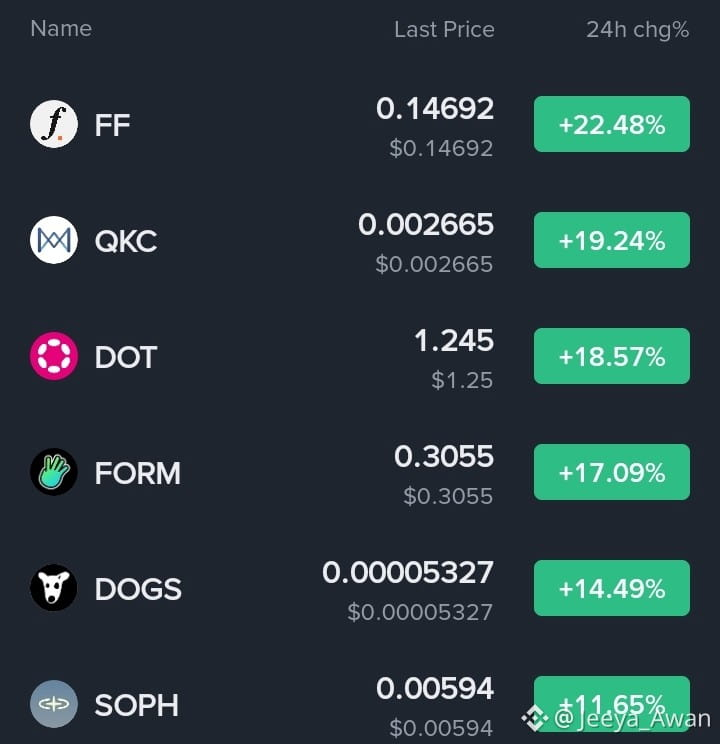
Current market sentiment as of April 5, 2026, is characterized by cautious consolidation following a volatile Q1. Bitcoin is currently trading near $66,914, showing a modest +0.3% to +0.45% gain in the last 24 hours. While some specific sectors like AI tokens have seen recent double-digit surges, the broader market remains in a no direction phase below key resistance levels.
Sustainability vs. Late Money Indicators

* Consolidation Below Resistance: Bitcoin has repeatedly failed to sustain levels above $70,000–$72,000, suggesting that overhead supply is currently dominant. Until a clean weekly close above $72,000 occurs on strong volume, recent spikes may be temporary relief rallies rather than sustainable breakouts.
* Overbought Signals: Some recent gainers show an RSI above 70, indicating overbought conditions that often precede short-term corrections. Chasing these +10-25% moves now carries a higher risk of entering as late money.
* Sector Rotations: While major assets like Ethereum ($ETH) are facing mild downward pressure (trading around $2,052), niche sectors like AI (e.g., $TAO , $RENDER , $FET ) have posted 30%+ gains recently. Experts suggest waiting for pullbacks in these sectors rather than chasing the initial surge.
* Supply Shocks: Over $100 million in token unlocks (including $HYPE, $ZRO, and $SUI) are scheduled through April 5, which may create significant selling pressure and contribute to imminent reversals for those specific projects. [1, 3, 4, 5, 6]

Key Macro & Technical Triggers to Watch

* Support Zones: The $64,500–$65,000 range is a critical support level for Bitcoin. A sustained break below this could lead to a deeper retracement toward $60,000.
* Regulatory Catalysts: The CLARITY Act markup in the Senate Banking Committee, expected in mid-April, is considered a high-impact event that could provide the regulatory clarity needed for more sustainable institutional inflows.
* Institutional Sentiment: U.S.-listed Bitcoin ETFs recently saw over $360 million in inflows, indicating that while retail may be cautious, institutional interest remains a supportive floor for the long-term narrative.
welcome everyone
welcome everyone
Jeeya_Awan
·
--
[Terminé] 🎙️ followUP...
182 auditeurs
VINI TRAP
·
--
🚨 2 min Alert! 🚨
🎁 $1,000 USDT Giveaway – 50 winners, $20 each!
✨ How to Join:
1️⃣ Follow✅
2️⃣ Like + Retweet👍
3️⃣ Comment “VINI”
⚠️ Less than 70 valid entries → ❌ Cancelled
💎 Coins to Hold now in strong buying positions are $SIREN $MYX $RIVER
They all shall 2x to 4x your holding capital.
{alpha}(560xda7ad9dea9397cffddae2f8a052b82f1484252b3)

{alpha}(560xd82544bf0dfe8385ef8fa34d67e6e4940cc63e16)

{alpha}(560x997a58129890bbda032231a52ed1ddc845fc18e1)

🎉🎉🎉🎉🎉🎉🎉
Sign Protocol is the cryptographic evidence layer of the S.I.G.N. stack. It standardizes how facts are expressed using schemas, issues verifiable attestations, and anchors evidence across chains and systems in Middle East. Governments, institutions, and developers can query, verify, and audit data reliably. It supports public, private, and hybrid attestations, enables selective disclosure and privacy, and ensures all actions, from eligibility checks to capital distributions, are auditable, verifiable, and trustworthy, thus proving itself as the digital sovereign infrastructure for Middle East economic growth. @SignOfficial #SignDigitalSovereignInfra $SIGN
Sign Protocol is the cryptographic evidence

layer of the S.I.G.N. stack.

It standardizes how facts are expressed

using schemas, issues verifiable

attestations, and anchors evidence across

chains and systems in Middle East.

Governments, institutions, and developers

can query, verify, and audit data reliably.

It supports public, private, and hybrid

attestations, enables selective disclosure

and privacy, and ensures all actions, from

eligibility checks to capital distributions, are

auditable, verifiable, and trustworthy, thus

proving itself as the digital sovereign

infrastructure for Middle East economic

growth.

@SignOfficial #SignDigitalSovereignInfra $SIGN
Article
When I First Understood How National Digital Systems Actually WorkWhen I first started reading about these national digital systems, New Money New ID New Capital I honestly thought it would be too technical for me. I just wanted to understand the basics, nothing more. I expected long jargon, complicated diagrams, the kind of stuff that makes you close the tab after five minutes. But when I actually sat with it and tried to understand the flow, something different happened. It felt less like theory and more like a real structure that countries might actually use. The first thing that caught my attention was how everything connects: identity, money, and capital. Not separately, not in pieces, one framework, three layers, but working together. The New Money System isn’t just about CBDCs or stablecoins, but about giving a government two parallel rails. One private rail for privacy-heavy CBDC, and one public rail for transparent stablecoins. At first I thought, okay, sounds technical, but then the idea clicked. It’s like giving the system two different roads depending on what the country needs: privacy when required, openness when necessary. The architecture felt surprisingly simple. If you need transparency, go with the public blockchain or even a sovereign Layer 2. If you need quiet, controlled operations, the private CBDC mode handles that. No one-size-fits-all pressure. Just choices. It reminded me of tools that don’t force you into one setup, they let you pick the mode that matches your reality. The identity part also surprised me. The New ID System works on SSI principles, but the way it was structured made sense. Issuers create credentials, citizens hold them, verifiers check them, without constantly hitting some central database. The privacy aspect stood out: reveal only what is needed, nothing extra. Age without full DOB, residency without full address. For the first time, I felt like digital identity wasn’t about losing control, it was about keeping it. Then I looked at the capital system. This one caught me because it deals with real people, real needs. Instead of messy manual audits and mismatching records, everything is rule-driven. Eligibility comes from identity proofs. Allocations happen through TokenTable. And then settlement runs through whichever rail the program selects. It didn’t feel futuristic or unrealistic; it felt like something governments should have already implemented by now. What tied the whole picture together was Sign Protocol. It doesn’t run the programs, but it anchors the evidence: who was eligible, what rules were used, when funds were allocated, what was approved. It’s like the quiet layer that keeps everyone honest. No flashy behavior, just solid verification. Would I say this system solves everything? Of course not. Nothing is perfect. Countries will still need to tune it, adjust policies, configure thresholds, change rules when required. But the concept itself, identity, money, and capital working together with verifiable evidence, felt like a step in the right direction. Not hype, not buzzwords, just structure. If someone asked me whether they should explore it, I’d say don’t overthink. Start with one part. Maybe the identity layer or the money rails. Follow a small flow. See how it connects. You’ll understand it faster than you expect. In a world moving toward digitization at full speed, understanding these foundations feels necessary, not optional. And honestly, once you see how the pieces fit, the whole system starts making sense on its own. @SignOfficial #SignDigitalSovereignInfra $SIGN {spot}(SIGNUSDT)

When I First Understood How National Digital Systems Actually Work

When I first started reading about these national digital systems,
New Money
New ID
New Capital
I honestly thought it would be too technical for me. I just wanted to understand the basics, nothing more. I expected long jargon, complicated diagrams, the kind of stuff that makes you close the tab after five minutes. But when I actually sat with it and tried to understand the flow, something different happened. It felt less like theory and more like a real structure that countries might actually use.

The first thing that caught my attention was how everything connects: identity, money, and capital. Not separately, not in pieces, one framework, three layers, but working together. The New Money System isn’t just about CBDCs or stablecoins, but about giving a government two parallel rails. One private rail for privacy-heavy CBDC, and one public rail for transparent stablecoins. At first I thought, okay, sounds technical, but then the idea clicked. It’s like giving the system two different roads depending on what the country needs: privacy when required, openness when necessary.

The architecture felt surprisingly simple. If you need transparency, go with the public blockchain or even a sovereign Layer 2. If you need quiet, controlled operations, the private CBDC mode handles that. No one-size-fits-all pressure. Just choices. It reminded me of tools that don’t force you into one setup, they let you pick the mode that matches your reality.

The identity part also surprised me. The New ID System works on SSI principles, but the way it was structured made sense. Issuers create credentials, citizens hold them, verifiers check them, without constantly hitting some central database. The privacy aspect stood out: reveal only what is needed, nothing extra. Age without full DOB, residency without full address. For the first time, I felt like digital identity wasn’t about losing control, it was about keeping it.

Then I looked at the capital system. This one caught me because it deals with real people, real needs. Instead of messy manual audits and mismatching records, everything is rule-driven. Eligibility comes from identity proofs. Allocations happen through TokenTable. And then settlement runs through whichever rail the program selects. It didn’t feel futuristic or unrealistic; it felt like something governments should have already implemented by now.

What tied the whole picture together was Sign Protocol. It doesn’t run the programs, but it anchors the evidence: who was eligible, what rules were used, when funds were allocated, what was approved. It’s like the quiet layer that keeps everyone honest. No flashy behavior, just solid verification.

Would I say this system solves everything? Of course not. Nothing is perfect. Countries will still need to tune it, adjust policies, configure thresholds, change rules when required. But the concept itself, identity, money, and capital working together with verifiable evidence, felt like a step in the right direction. Not hype, not buzzwords, just structure.

If someone asked me whether they should explore it, I’d say don’t overthink. Start with one part. Maybe the identity layer or the money rails. Follow a small flow. See how it connects. You’ll understand it faster than you expect. In a world moving toward digitization at full speed, understanding these foundations feels necessary, not optional. And honestly, once you see how the pieces fit, the whole system starts making sense on its own.
@SignOfficial #SignDigitalSovereignInfra $SIGN
When I first connected my developer accounts to Aspecta and saw them verified through Sign Protocol, it felt like my work finally had a real on-chain identity. My GitHub commits, projects, and community contributions turned into verifiable attestations. Suddenly, my skills and achievements weren’t just claims, they were proofs. The Aspecta Developer Reputation System made my profile feel complete, trusted, and visible in a way that opened new doors in the blockchain community. @SignOfficial #SignDigitalSovereignInfra $SIGN
When I first connected my developer accounts to Aspecta and saw them verified through Sign Protocol, it felt like my work finally had a real on-chain identity.

My GitHub commits, projects, and community contributions turned into verifiable attestations.

Suddenly, my skills and achievements weren’t just claims, they were proofs.

The Aspecta Developer Reputation System made my profile feel complete, trusted, and visible in a way that opened new doors in the blockchain community.

@SignOfficial #SignDigitalSovereignInfra $SIGN
Article
From Surface to Depth: How SIGN Redefined Digital Sovereign ArchitectureWhen I first started working with SIGN, I honestly thought it would be just another digital system, some identity tool, some database, maybe a blockchain component. But the moment I got involved in a real sovereign deployment, I realized something much bigger was happening. SIGN wasn’t software, it was an entire operational structure. It felt like stepping into the control room of a country’s digital nervous system. My first real understanding came during a governance review session. Three layers, policy, operational, and technical, each handled by different authorities. It surprised me how clearly everything was separated. Policy governance decided what programs even existed and what rules should bind them. Operational governance handled the day-to-day realities, SLAs, incident response, real monitoring dashboards. And technical governance quietly ensured upgrades, key custody, and emergency actions never happened impulsively. Nothing moved without structure, approval, and traceability. I remember seeing for the first time how roles were divided. The sovereign authority acted like the constitutional root of the system. The central bank controlled the money rails. The identity authority set the trust registry rules. Program authorities handled eligibility and distributions. Technical operators ran infra but never issued credentials. That separation of duties hit me deeply; it’s what made the system trustworthy. Key management felt like the heartbeat of the whole setup. Governance keys locked behind multisig, issuer keys inside HSMs, operator and audit keys each serving precise responsibilities. Everything rotated on schedule, everything documented. I had never seen digital sovereignty implemented with this level of discipline. The change management process impressed me most. Nothing was just pushed. Every modification required a rationale, an impact analysis, a rollback plan, and signed approvals. Even an emergency pause had a formal workflow and a mandatory post-incident review. Over time, I also saw how audit readiness shaped the entire system. Every program had rule versions, revocation logs, distribution manifests, and settlement references, all exportable for independent supervision. It made accountability feel built-in, not added later. Working with SIGN in the Middle East context made this even more meaningful. These countries are building new digital foundations for rapidly expanding economies, and SIGN fits perfectly as a sovereign infrastructure layer, private when needed, auditable when required, and governed like a national asset. I went in expecting a tool. I came out realizing I had witnessed the blueprint for digital sovereignty. @SignOfficial #SignDigitalSovereignInfra $SIGN {spot}(SIGNUSDT)

From Surface to Depth: How SIGN Redefined Digital Sovereign Architecture

When I first started working with SIGN, I honestly thought it would be just another digital system, some identity tool, some database, maybe a blockchain component. But the moment I got involved in a real sovereign deployment, I realized something much bigger was happening. SIGN wasn’t software, it was an entire operational structure. It felt like stepping into the control room of a country’s digital nervous system.

My first real understanding came during a governance review session. Three layers, policy, operational, and technical, each handled by different authorities. It surprised me how clearly everything was separated. Policy governance decided what programs even existed and what rules should bind them. Operational governance handled the day-to-day realities, SLAs, incident response, real monitoring dashboards. And technical governance quietly ensured upgrades, key custody, and emergency actions never happened impulsively. Nothing moved without structure, approval, and traceability.

I remember seeing for the first time how roles were divided. The sovereign authority acted like the constitutional root of the system. The central bank controlled the money rails. The identity authority set the trust registry rules. Program authorities handled eligibility and distributions. Technical operators ran infra but never issued credentials. That separation of duties hit me deeply; it’s what made the system trustworthy.

Key management felt like the heartbeat of the whole setup. Governance keys locked behind multisig, issuer keys inside HSMs, operator and audit keys each serving precise responsibilities. Everything rotated on schedule, everything documented. I had never seen digital sovereignty implemented with this level of discipline.

The change management process impressed me most. Nothing was just pushed. Every modification required a rationale, an impact analysis, a rollback plan, and signed approvals. Even an emergency pause had a formal workflow and a mandatory post-incident review.

Over time, I also saw how audit readiness shaped the entire system. Every program had rule versions, revocation logs, distribution manifests, and settlement references, all exportable for independent supervision. It made accountability feel built-in, not added later.

Working with SIGN in the Middle East context made this even more meaningful. These countries are building new digital foundations for rapidly expanding economies, and SIGN fits perfectly as a sovereign infrastructure layer, private when needed, auditable when required, and governed like a national asset.

I went in expecting a tool. I came out realizing I had witnessed the blueprint for digital sovereignty.

@SignOfficial #SignDigitalSovereignInfra $SIGN
Article
RWA Market Explosive Growth: The 5x Surge Since March 2025 and the Rise of Tokenized CommoditieSince March 2025, the Real-World Asset (RWA) market has experienced truly explosive expansion, fundamentally reshaping how traditional value enters blockchain and digital finance. Over the past year, the total value of tokenized real-world assets, including bonds, credit, commodities and more, has surged many times over, with some measures suggesting roughly fivefold growth in the sector’s on-chain footprint. This rapid acceleration reflects a key turning point: tokenization is no longer a niche experiment but is moving into mainstream institutional play. What was once early-stage in 2022 and early 2023 has now ballooned into tens of billions of dollars under management, with asset classes like tokenized U.S. Treasuries, money market funds and private credit dominating the market. Institutional entrants such as global investment firms and banks have pushed adoption, drawn by the promise of fractional ownership, liquidity, programmable settlement, and interoperability with decentralized finance (DeFi). One of the most striking aspects of this RWA boom has been the surge in tokenized commodities. Precious metals, energy products, and other tangible resources have become fertile ground for token issuers and investors alike. For example, certain blockchain ledgers have seen the total value of tokenized commodities grow from the low hundreds of millions of dollars to well over a billion in a matter of months, an increase approaching tenfold, as on-chain demand and institutional backing gather pace. Trading volumes for tokenized commodity ETFs, such as those for silver, have also spiked, illustrating strong investor interest in real assets that blend traditional value with on-chain liquidity. Several dynamics are driving this 5x expansion and commodities momentum: clear regulatory frameworks in key jurisdictions, growing institutional participation seeking yield and hedges against volatility, and improved technological infrastructure that makes issuance and settlement far more efficient. As a result, the once-theoretical benefits of tokenization, such as global accessibility and 24/7 trading, are becoming operational realities, pushing RWAs closer to becoming a core pillar of the digital financial ecosystem. In essence, the RWA market’s explosive growth since March 2025 signals a major evolution in capital markets. By converting previously illiquid real assets into programmable tokens, the industry is opening access to new classes of investors, expanding liquidity, and creating bridges between traditional finance and decentralized networks. This transformation is especially vivid in the rise of tokenized commodities, which exemplify how tangible value can be digitally represented, traded, and integrated into the broader financial fabric. #RWA

RWA Market Explosive Growth: The 5x Surge Since March 2025 and the Rise of Tokenized Commoditie

Since March 2025, the Real-World Asset (RWA) market has experienced truly explosive expansion, fundamentally reshaping how traditional value enters blockchain and digital finance. Over the past year, the total value of tokenized real-world assets, including bonds, credit, commodities and more, has surged many times over, with some measures suggesting roughly fivefold growth in the sector’s on-chain footprint.
This rapid acceleration reflects a key turning point: tokenization is no longer a niche experiment but is moving into mainstream institutional play. What was once early-stage in 2022 and early 2023 has now ballooned into tens of billions of dollars under management, with asset classes like tokenized U.S. Treasuries, money market funds and private credit dominating the market. Institutional entrants such as global investment firms and banks have pushed adoption, drawn by the promise of fractional ownership, liquidity, programmable settlement, and interoperability with decentralized finance (DeFi).
One of the most striking aspects of this RWA boom has been the surge in tokenized commodities. Precious metals, energy products, and other tangible resources have become fertile ground for token issuers and investors alike. For example, certain blockchain ledgers have seen the total value of tokenized commodities grow from the low hundreds of millions of dollars to well over a billion in a matter of months, an increase approaching tenfold, as on-chain demand and institutional backing gather pace. Trading volumes for tokenized commodity ETFs, such as those for silver, have also spiked, illustrating strong investor interest in real assets that blend traditional value with on-chain liquidity.
Several dynamics are driving this 5x expansion and commodities momentum: clear regulatory frameworks in key jurisdictions, growing institutional participation seeking yield and hedges against volatility, and improved technological infrastructure that makes issuance and settlement far more efficient. As a result, the once-theoretical benefits of tokenization, such as global accessibility and 24/7 trading, are becoming operational realities, pushing RWAs closer to becoming a core pillar of the digital financial ecosystem.
In essence, the RWA market’s explosive growth since March 2025 signals a major evolution in capital markets. By converting previously illiquid real assets into programmable tokens, the industry is opening access to new classes of investors, expanding liquidity, and creating bridges between traditional finance and decentralized networks. This transformation is especially vivid in the rise of tokenized commodities, which exemplify how tangible value can be digitally represented, traded, and integrated into the broader financial fabric.
#RWA
When I first used Sign Protocol to onboard my Web2 data, I was amazed by how seamless and secure it felt. MPC-TLS let me prove the authenticity of information in my browser without revealing the data itself. With zero-knowledge proofs, I could self-attest things like my bank statement or credentials privately. Integrating with PADO and zkPass made the process even smoother, letting me securely bridge data to Web3 while keeping full control of my information. @SignOfficial #SignDigitalSovereignInfra $SIGN
When I first used Sign Protocol to onboard my Web2 data, I was amazed by how seamless and secure it felt.

MPC-TLS let me prove the authenticity of information in my browser without revealing the data itself.

With zero-knowledge proofs, I could self-attest things like my bank statement or credentials privately.

Integrating with PADO and zkPass made the process even smoother, letting me securely bridge data to Web3 while keeping full control of my information.

@SignOfficial #SignDigitalSovereignInfra $SIGN
Article
From Confusion To Clarity: How Sign Redefined Privacy And AuditabilityWhen I first used SIGN, I didn’t expect it to change how I thought about digital trust. It started with something small: I had to prove a simple detail about myself. Nothing sensitive, nothing complicated. But instead of the usual endless loops of uploading documents, waiting, and getting random rejections, SIGN handled it smoothly. That was the moment I realized this system wasn’t built on noise, hype, or flashy promises, it was built on quiet, serious engineering. As I explored more, I began understanding what truly sets SIGN apart: its purpose. It defines exactly what should go on-chain and what must stay off-chain, how privacy can be protected while still allowing lawful auditability, and the security expectations for national-scale deployments. For the first time, I saw a system where privacy wasn’t sacrificed for transparency, and transparency wasn’t sacrificed for privacy. SIGN followed the principle that everything should remain private to the public, but fully auditable to lawful authorities. I learned that the security goals were not theoretical. Integrity meant evidence couldn’t be forged. Confidentiality meant no one could trivially see identities, balances, or eligibility data. Availability meant the system would continue running even under heavy national load. And non-repudiation meant every approval, issuance, or distribution was cryptographically attributable. For me, this created a feeling that nothing in the system existed without a traceable, verifiable story. The more I used SIGN, the more I appreciated its design. Sensitive details like PII always stayed off-chain. What went on-chain were only proofs, hashes, schema IDs, or revocation references. Even eligibility verification happened through selective disclosure: proving “I’m eligible” without revealing the underlying data. Unlinkability made sure I wasn’t trackable across different services. And minimal disclosure kept everything reduced to what was necessary, nothing extra. I also liked how SIGN handled money flows. Public programs used open rails for transparency, but sensitive benefits moved through private CBDC rails with stronger privacy controls. All of this was tied together through strict role-based access, tamper-evident logs, lawful audits, and well-defined emergency procedures. Over time, I started seeing SIGN not just as a tool, but as an architecture for trust. A system where governments, banks, and citizens can operate with confidence that records are real, private data stays private, and when needed, authorities can still reconstruct who did what, when, and why. My first experience with SIGN was simple, but it opened the door to understanding how digital trust should actually work, secure, private, verifiable, and built for real-world governance rather than hype. @SignOfficial #SignDigitalSovereignInfra $SIGN {spot}(SIGNUSDT)

From Confusion To Clarity: How Sign Redefined Privacy And Auditability

When I first used SIGN, I didn’t expect it to change how I thought about digital trust. It started with something small: I had to prove a simple detail about myself. Nothing sensitive, nothing complicated. But instead of the usual endless loops of uploading documents, waiting, and getting random rejections, SIGN handled it smoothly. That was the moment I realized this system wasn’t built on noise, hype, or flashy promises, it was built on quiet, serious engineering.
As I explored more, I began understanding what truly sets SIGN apart: its purpose. It defines exactly what should go on-chain and what must stay off-chain, how privacy can be protected while still allowing lawful auditability, and the security expectations for national-scale deployments. For the first time, I saw a system where privacy wasn’t sacrificed for transparency, and transparency wasn’t sacrificed for privacy. SIGN followed the principle that everything should remain private to the public, but fully auditable to lawful authorities.
I learned that the security goals were not theoretical. Integrity meant evidence couldn’t be forged. Confidentiality meant no one could trivially see identities, balances, or eligibility data. Availability meant the system would continue running even under heavy national load. And non-repudiation meant every approval, issuance, or distribution was cryptographically attributable. For me, this created a feeling that nothing in the system existed without a traceable, verifiable story.
The more I used SIGN, the more I appreciated its design. Sensitive details like PII always stayed off-chain. What went on-chain were only proofs, hashes, schema IDs, or revocation references. Even eligibility verification happened through selective disclosure: proving “I’m eligible” without revealing the underlying data. Unlinkability made sure I wasn’t trackable across different services. And minimal disclosure kept everything reduced to what was necessary, nothing extra.
I also liked how SIGN handled money flows. Public programs used open rails for transparency, but sensitive benefits moved through private CBDC rails with stronger privacy controls. All of this was tied together through strict role-based access, tamper-evident logs, lawful audits, and well-defined emergency procedures.
Over time, I started seeing SIGN not just as a tool, but as an architecture for trust. A system where governments, banks, and citizens can operate with confidence that records are real, private data stays private, and when needed, authorities can still reconstruct who did what, when, and why.
My first experience with SIGN was simple, but it opened the door to understanding how digital trust should actually work, secure, private, verifiable, and built for real-world governance rather than hype.

@SignOfficial #SignDigitalSovereignInfra $SIGN
TP 1 ✔✔
TP 1 ✔✔
Jeeya_Awan
·
--
$TURTLE
Current Price: 0.0394
Entry: 0.0382 – 0.0388
TP1: 0.0400
TP2: 0.0406
TP3: 0.0415
SL: 0.0375
Entry Confirmation: Price holds above 0.0382 low with RSI above 45
{spot}(TURTLEUSDT)
Tp 1, ✔✔
Tp 1, ✔✔
Jeeya_Awan
·
--
$SCR
Current Price: 0.04016
Entry: 0.03852 – 0.03900
TP1: 0.04078
TP2: 0.04138
TP3: 0.04200
SL: 0.03800
Entry Confirmation: Price holds above 0.03852 low with RSI turning up from oversold below 30
{spot}(SCRUSDT)
TP 1 ✔✔
TP 1 ✔✔
Jeeya_Awan
·
--
$PIVX
Current Price: 0.0784
Entry: 0.0750 – 0.0765
TP1: 0.0796
TP2: 0.0809
TP3: 0.0821
SL: 0.0730
Entry Confirmation: Price holds above 0.0750 low with RSI turning up from oversold below 25
{spot}(PIVXUSDT)
TP 1,2 ✔✔
TP 1,2 ✔✔
Jeeya_Awan
·
--
$CHR
Current Price: 0.0148
Entry: 0.0140 – 0.0142
TP1: 0.0149
TP2: 0.0151
TP3: 0.0155
SL: 0.0137
Entry Confirmation: Price holds above 0.0140 low with RSI turning up from below 40
{spot}(CHRUSDT)
Tp 1 ✔✔
Tp 1 ✔✔
Jeeya_Awan
·
--
$RARE
Current Price: 0.0142
Entry: 0.0136 – 0.0138
TP1: 0.0143
TP2: 0.0144
TP3: 0.0150
SL: 0.0133
Entry Confirmation: Price holds above 0.0136 low with RSI above 45
{spot}(RAREUSDT)
TP 1 ✔✔
TP 1 ✔✔
Jeeya_Awan
·
--
$COOKIE
Current Price: 0.0154
Entry: 0.0148 – 0.0150
TP1: 0.0157
TP2: 0.0160
TP3: 0.0165
SL: 0.0145
Entry Confirmation: Price holds above 0.0148 low with RSI above 45
{spot}(COOKIEUSDT)
TP 1 ✔✔
TP 1 ✔✔
Jeeya_Awan
·
--
$FET
Current Price: 0.2425
Entry: 0.2222 – 0.2300
TP1: 0.2443
TP2: 0.2513
TP3: 0.2600
SL: 0.2150
Entry Confirmation: Price holds above 0.2222 low with RSI turning up from below 40
{spot}(FETUSDT)
Connectez-vous pour découvrir d’autres contenus
Rejoignez la communauté mondiale des adeptes de cryptomonnaies sur Binance Square
⚡️ Suviez les dernières informations importantes sur les cryptomonnaies.
💬 Jugé digne de confiance par la plus grande plateforme d’échange de cryptomonnaies au monde.
👍 Découvrez les connaissances que partagent les créateurs vérifiés.
Adresse e-mail/Nº de téléphone
Plan du site
Préférences en matière de cookies
CGU de la plateforme