

A R M I N
6.9k Publications

A R M I N
 Compte Square Vérifié+
Signaler
Bloquer l’utilisateur
Silent moves, loud results.
Trade régulièrement
5.6 an(s)
419 Suivis
55.5K+ Abonnés
30.1K+ J’aime
Publications
Tous
Citations
Vidéos
Direct
·
--
STRK is Pumping Hard! Let's Go! 🔥
Guys, look at this chart! 🤯
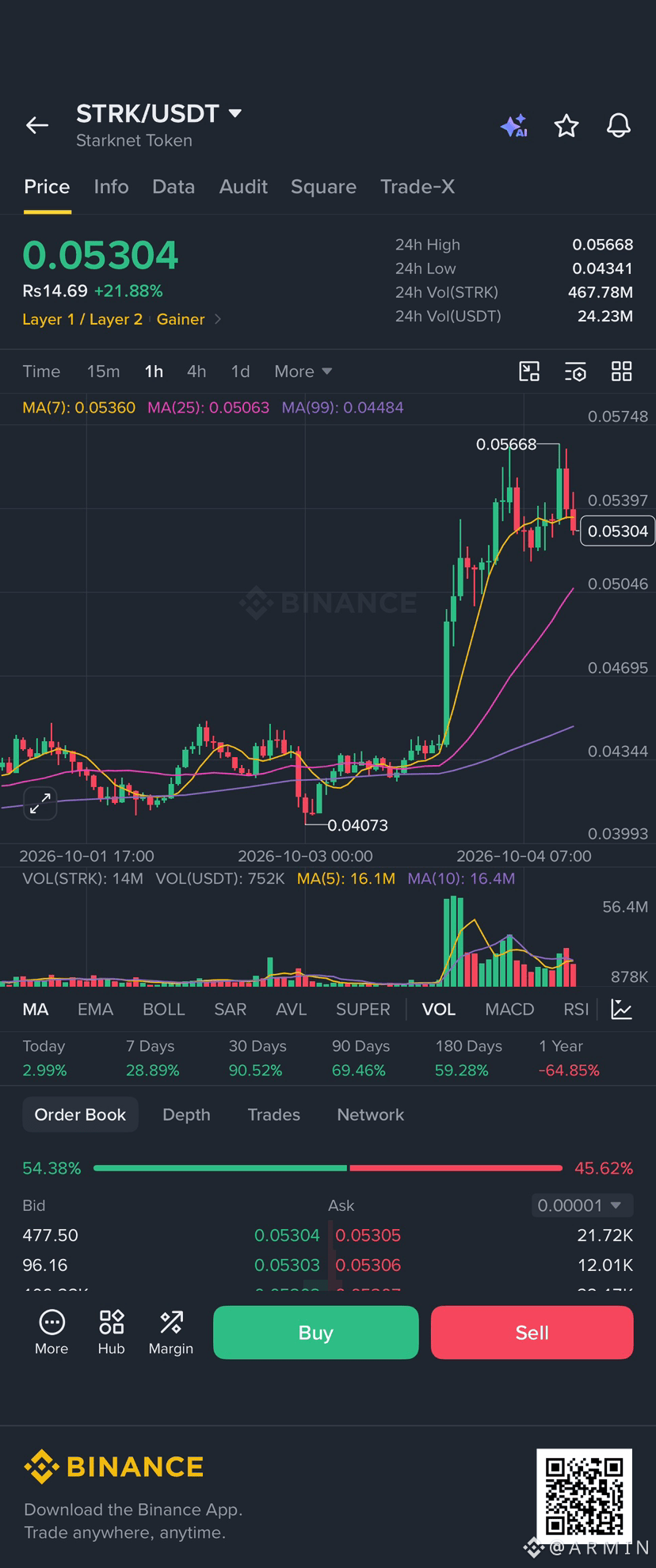
$STRK just had a massive breakout, jumping up from around $0.0407 all the way past $0.056 before cooling off a bit.
Trading volume is huge (467M+ STRK), and the price trend looks super strong. People thought it was going nowhere, but the buyers stepped in big time! 🧑🍳
A Quick Warning: The price went up really fast, so everyone is feeling major #FOMO right now. But look closely at the chart-after a giant spike, the price usually takes a little break or dips slightly before doing anything else.
• What to do: Don't rush in blindly right at the top. Wait for a small dip to get a better entry price.
• Smart Move: Protect your money, don't trade with money you can't afford to lose, and be patient!
Are you holding onto your coins, or did you miss the pump?
Tell me what you think below!
#STRK #BinanceSquare #Altcoins
STRK is Pumping Hard! Let's Go! 🔥
Guys, look at this chart! 🤯
$STRK just had a massive breakout, jumping up from around $0.0407 all the way past $0.056 before cooling off a bit.
Trading volume is huge (467M+ STRK), and the price trend looks super strong. People thought it was going nowhere, but the buyers stepped in big time! 🧑🍳
A Quick Warning: The price went up really fast, so everyone is feeling major #FOMO right now. But look closely at the chart-after a giant spike, the price usually takes a little break or dips slightly before doing anything else.
• What to do: Don't rush in blindly right at the top. Wait for a small dip to get a better entry price.
• Smart Move: Protect your money, don't trade with money you can't afford to lose, and be patient!
Are you holding onto your coins, or did you miss the pump?
Tell me what you think below!
#STRK #BinanceSquare #Altcoins
Guys, look at this chart! 🤯
$STRK just had a massive breakout, jumping up from around $0.0407 all the way past $0.056 before cooling off a bit.
Trading volume is huge (467M+ STRK), and the price trend looks super strong. People thought it was going nowhere, but the buyers stepped in big time! 🧑🍳
A Quick Warning: The price went up really fast, so everyone is feeling major #FOMO right now. But look closely at the chart-after a giant spike, the price usually takes a little break or dips slightly before doing anything else.
• What to do: Don't rush in blindly right at the top. Wait for a small dip to get a better entry price.
• Smart Move: Protect your money, don't trade with money you can't afford to lose, and be patient!
Are you holding onto your coins, or did you miss the pump?
Tell me what you think below!
#STRK #BinanceSquare #Altcoins
22
17
2.6k
·
--
Just keeping an eye on $SAND right now...
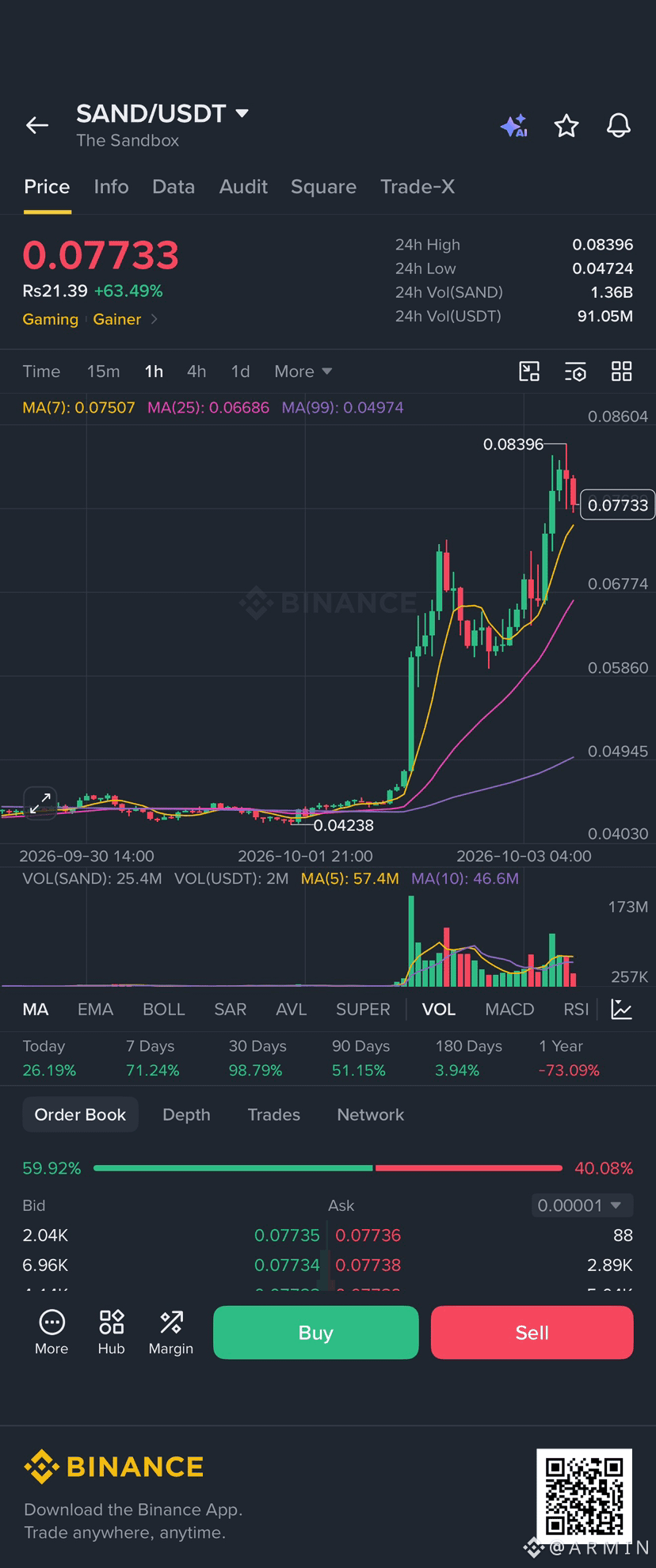
Noticed it waking up out of nowhere, pumping over +63% up to $0.077 with massive volume flowing in ($91M+ USDT traded). From that $0.042 base, the momentum has been wild.
Order book is leaning heavy on the buy side (~60%), and it's testing near that $0.083 high. Definitely worth watching to see if gaming is about to catch a wider rotation here.
Anyone else tracking this move, or waiting for a dip to look? 📉📈
#SAND #BinanceSquare #TheSandbox
Just keeping an eye on $SAND right now...
Noticed it waking up out of nowhere, pumping over +63% up to $0.077 with massive volume flowing in ($91M+ USDT traded). From that $0.042 base, the momentum has been wild.
Order book is leaning heavy on the buy side (~60%), and it's testing near that $0.083 high. Definitely worth watching to see if gaming is about to catch a wider rotation here.
Anyone else tracking this move, or waiting for a dip to look? 📉📈
#SAND #BinanceSquare #TheSandbox
Noticed it waking up out of nowhere, pumping over +63% up to $0.077 with massive volume flowing in ($91M+ USDT traded). From that $0.042 base, the momentum has been wild.
Order book is leaning heavy on the buy side (~60%), and it's testing near that $0.083 high. Definitely worth watching to see if gaming is about to catch a wider rotation here.
Anyone else tracking this move, or waiting for a dip to look? 📉📈
#SAND #BinanceSquare #TheSandbox
26
22
4.5k
·
--
$EDEL is consolidating perfectly at the new floor!
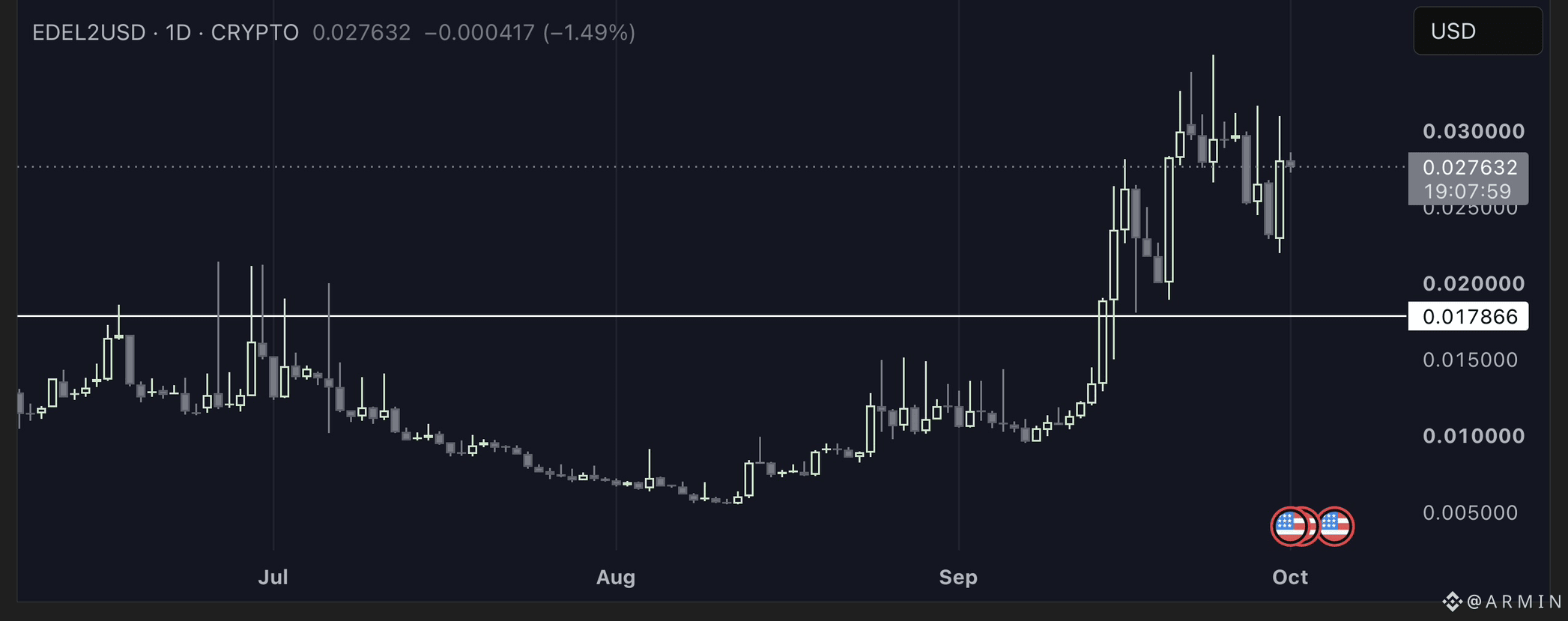
After that massive 100%+ run from $0.017 to the $0.030 level, the bulls are just catching their breath.
This is textbook retesting.
Current price is $0.0276. If it holds above this key support, the next leg up could be explosive.
Eyes on the chart! Not financial advice.
#EDEL #Trading #TechnicalAnalysis
$EDEL is consolidating perfectly at the new floor!
After that massive 100%+ run from $0.017 to the $0.030 level, the bulls are just catching their breath.
This is textbook retesting.
Current price is $0.0276. If it holds above this key support, the next leg up could be explosive.
Eyes on the chart! Not financial advice.
#EDEL #Trading #TechnicalAnalysis
After that massive 100%+ run from $0.017 to the $0.030 level, the bulls are just catching their breath.
This is textbook retesting.
Current price is $0.0276. If it holds above this key support, the next leg up could be explosive.
Eyes on the chart! Not financial advice.
#EDEL #Trading #TechnicalAnalysis
35
17
806
·
--
$QNT /USDT TA
QNT just woke the hell up. 🚀
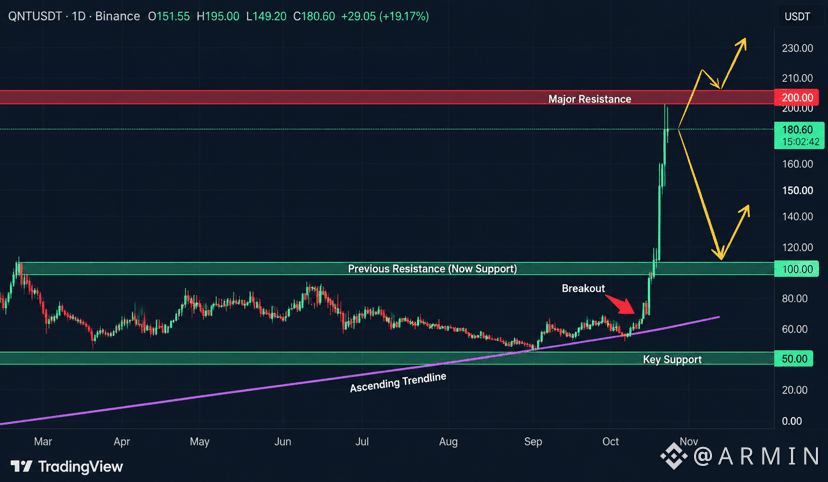
Daily chart showing a +19% move to ~$180.60 after finally breaking out of that long accumulation/range structure.
Now the levels get interesting:
🔴 $195–200 → major resistance
🟢 $100–110 → key breakout/retest zone
🟢 ~$50 → deeper structural support
If QNT clears $200 with a clean daily close, the next psychological levels come into play around $210 → $230.
But after a move this vertical, a pullback/retest wouldn’t surprise me either. If $100 holds as support, bulls still have a pretty clean structure to work with.
No chasing candles. Let the chart confirm. 👀
#QNT
$QNT /USDT TA
QNT just woke the hell up. 🚀
Daily chart showing a +19% move to ~$180.60 after finally breaking out of that long accumulation/range structure.
Now the levels get interesting:
🔴 $195–200 → major resistance
🟢 $100–110 → key breakout/retest zone
🟢 ~$50 → deeper structural support
If QNT clears $200 with a clean daily close, the next psychological levels come into play around $210 → $230.
But after a move this vertical, a pullback/retest wouldn’t surprise me either. If $100 holds as support, bulls still have a pretty clean structure to work with.
No chasing candles. Let the chart confirm. 👀
#QNT
QNT just woke the hell up. 🚀
Daily chart showing a +19% move to ~$180.60 after finally breaking out of that long accumulation/range structure.
Now the levels get interesting:
🔴 $195–200 → major resistance
🟢 $100–110 → key breakout/retest zone
🟢 ~$50 → deeper structural support
If QNT clears $200 with a clean daily close, the next psychological levels come into play around $210 → $230.
But after a move this vertical, a pullback/retest wouldn’t surprise me either. If $100 holds as support, bulls still have a pretty clean structure to work with.
No chasing candles. Let the chart confirm. 👀
#QNT
40
25
7.5k
·
--
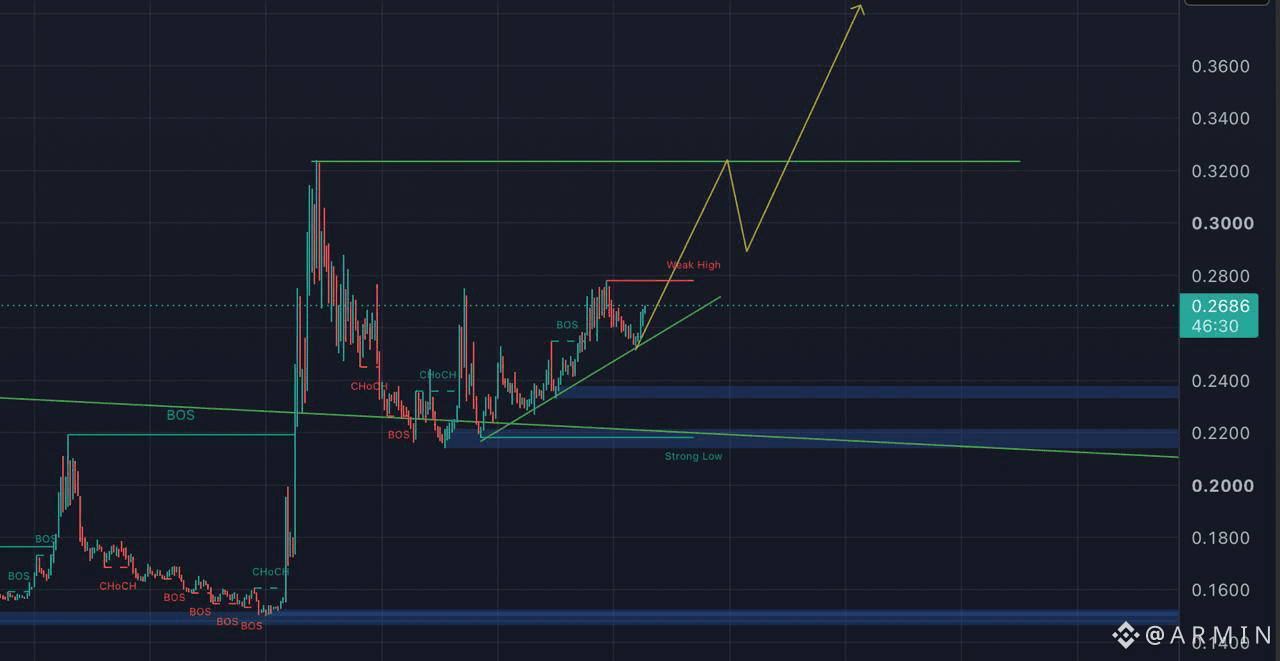
$AVA is starting to look interesting 👀
The chart is building higher lows, while price is now approaching the $0.28 weak high.
A clean break and hold above that level could put $0.32 back in focus. If momentum continues beyond there, the next move could get interesting.
But I’m watching the reaction at $0.28 first no need to front-run the confirmation.
$0.28 → $0.32 → then we see.
Not financial advice. DYOR.
$AVA is starting to look interesting 👀
The chart is building higher lows, while price is now approaching the $0.28 weak high.
A clean break and hold above that level could put $0.32 back in focus. If momentum continues beyond there, the next move could get interesting.
But I’m watching the reaction at $0.28 first no need to front-run the confirmation.
$0.28 → $0.32 → then we see.
Not financial advice. DYOR.
The chart is building higher lows, while price is now approaching the $0.28 weak high.
A clean break and hold above that level could put $0.32 back in focus. If momentum continues beyond there, the next move could get interesting.
But I’m watching the reaction at $0.28 first no need to front-run the confirmation.
$0.28 → $0.32 → then we see.
Not financial advice. DYOR.
28
20
6.2k
·
--
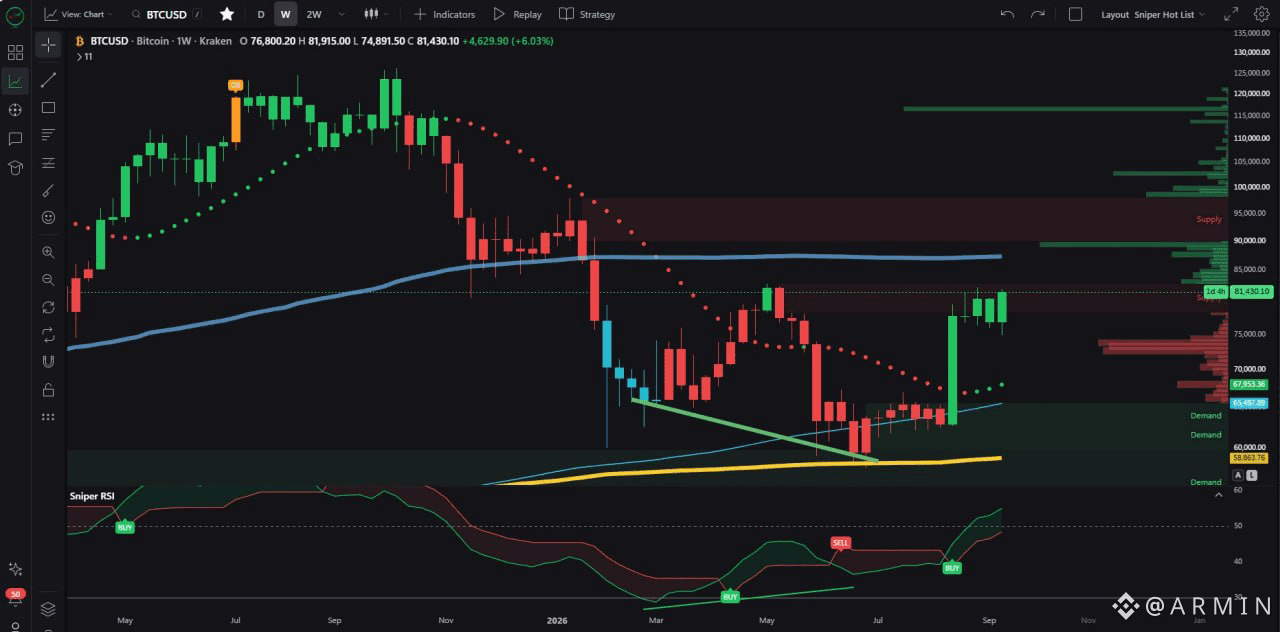
#BTC remains bullish on the weekly chart.
Large short liquidation cluster near $90,000.
SO BE CAREFUL
#BTC remains bullish on the weekly chart.
Large short liquidation cluster near $90,000.
SO BE CAREFUL
Large short liquidation cluster near $90,000.
SO BE CAREFUL
32
21
5.2k
·
--
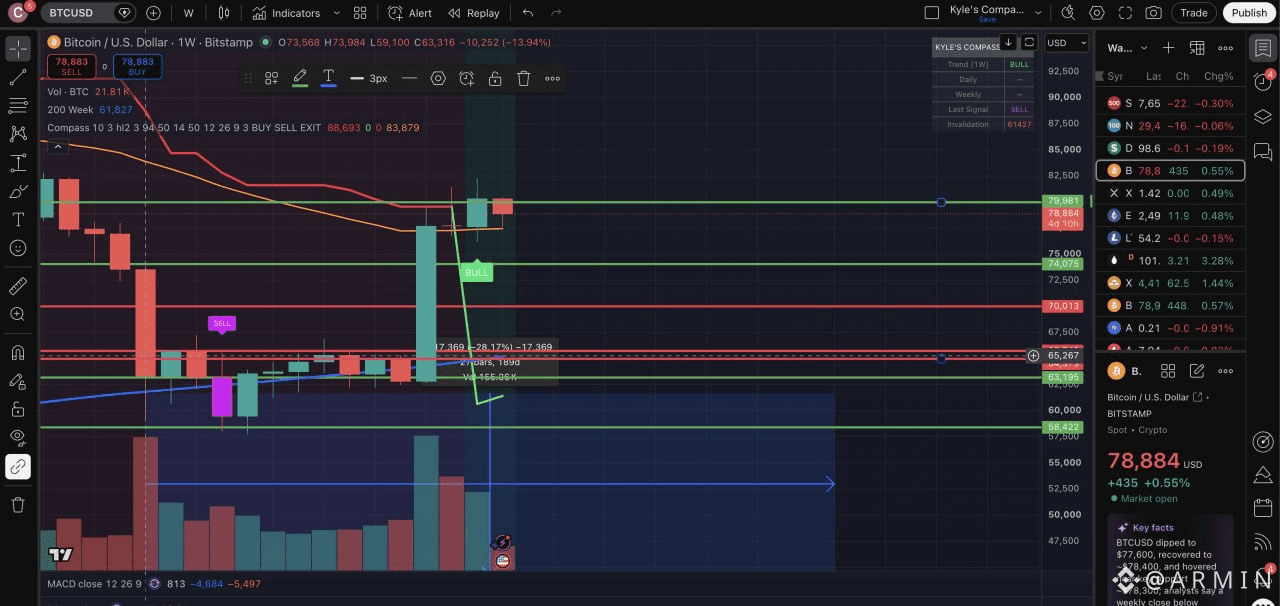
Macro Week is Live: The $80K Test & The 9-Day Regulatory Gauntlet
We are staring down one of the most compressed macro and policy weeks of the year. Bitcoin is attempting to hold its ground against a backdrop of sticky yields and macro crosscurrents, but the charts are making one thing clear: patience wins over guessing until the weekly candle prints.
The Catalyst Calendar:
Thursday: Treasury’s first upsized long-end buyback hits alongside the ECB rate decision and PPI prints.
Friday: US CPI release takes center stage (Street consensus around 3.4%).
Sunday: The critical weekly close relative to the pivotal $80K threshold.
Tuesday: The Senate’s high-stakes CLARITY Act cloture vote.
Wednesday: The Federal Reserve's rate decision (with live hike odds priced in near 60%).
The charts aren't here to guess direction; they are waiting for confirmation. Keep your risk managed and watch how liquidity reacts as these data points drop back-to-back.
What’s your play for the weekly close continuation or consolidation? Let’s discuss below. 👇
Macro Week is Live: The $80K Test & The 9-Day Regulatory Gauntlet
We are staring down one of the most compressed macro and policy weeks of the year. Bitcoin is attempting to hold its ground against a backdrop of sticky yields and macro crosscurrents, but the charts are making one thing clear: patience wins over guessing until the weekly candle prints.
The Catalyst Calendar:
Thursday: Treasury’s first upsized long-end buyback hits alongside the ECB rate decision and PPI prints.
Friday: US CPI release takes center stage (Street consensus around 3.4%).
Sunday: The critical weekly close relative to the pivotal $80K threshold.
Tuesday: The Senate’s high-stakes CLARITY Act cloture vote.
Wednesday: The Federal Reserve's rate decision (with live hike odds priced in near 60%).
The charts aren't here to guess direction; they are waiting for confirmation. Keep your risk managed and watch how liquidity reacts as these data points drop back-to-back.
What’s your play for the weekly close continuation or consolidation? Let’s discuss below. 👇
We are staring down one of the most compressed macro and policy weeks of the year. Bitcoin is attempting to hold its ground against a backdrop of sticky yields and macro crosscurrents, but the charts are making one thing clear: patience wins over guessing until the weekly candle prints.
The Catalyst Calendar:
Thursday: Treasury’s first upsized long-end buyback hits alongside the ECB rate decision and PPI prints.
Friday: US CPI release takes center stage (Street consensus around 3.4%).
Sunday: The critical weekly close relative to the pivotal $80K threshold.
Tuesday: The Senate’s high-stakes CLARITY Act cloture vote.
Wednesday: The Federal Reserve's rate decision (with live hike odds priced in near 60%).
The charts aren't here to guess direction; they are waiting for confirmation. Keep your risk managed and watch how liquidity reacts as these data points drop back-to-back.
What’s your play for the weekly close continuation or consolidation? Let’s discuss below. 👇
20
20
632
·
--
⚠️A hacker drained an estimated $75 MILLION from a Cronos lending protocol, forcing the entire blockchain to HALT in the middle of the attack.
The attacker reportedly drove up the price of Tectonic’s thinly traded TONIC token 100-fold in just 20 minutes, then used the inflated collateral to borrow millions in other assets.
Cronos froze the network before most of the funds could be withdrawn, leaving roughly $69M trapped on-chain while only about $6M was transferred to Ethereum.
Tectonic had roughly $122M in TVL and $83M in active loans before the exploit. The $75M estimate has not yet been independently confirmed by Tectonic or Cronos.
Crypto.com says its app and exchange were not compromised, while its security team is assisting with the investigation.
⚠️A hacker drained an estimated $75 MILLION from a Cronos lending protocol, forcing the entire blockchain to HALT in the middle of the attack.
The attacker reportedly drove up the price of Tectonic’s thinly traded TONIC token 100-fold in just 20 minutes, then used the inflated collateral to borrow millions in other assets.
Cronos froze the network before most of the funds could be withdrawn, leaving roughly $69M trapped on-chain while only about $6M was transferred to Ethereum.
Tectonic had roughly $122M in TVL and $83M in active loans before the exploit. The $75M estimate has not yet been independently confirmed by Tectonic or Cronos.
Crypto.com says its app and exchange were not compromised, while its security team is assisting with the investigation.
The attacker reportedly drove up the price of Tectonic’s thinly traded TONIC token 100-fold in just 20 minutes, then used the inflated collateral to borrow millions in other assets.
Cronos froze the network before most of the funds could be withdrawn, leaving roughly $69M trapped on-chain while only about $6M was transferred to Ethereum.
Tectonic had roughly $122M in TVL and $83M in active loans before the exploit. The $75M estimate has not yet been independently confirmed by Tectonic or Cronos.
Crypto.com says its app and exchange were not compromised, while its security team is assisting with the investigation.

3
789
·
--
I spent some time looking into how Dusk Network handles multi iteration agreement through its Succinct Attestation mechanism, expecting the primary focus to be purely on speed. What caught my attention instead was how the proposal, validation, and ratification steps deliberately force consensus to cross multiple checkpoints within seconds before a block is allowed to settle on Dusk. Naturally, looking at how the protocol coordinates these layers made me think about Dusk.
The architecture breaks agreement down into three distinct phases rather than relying on a single validator sprint. A randomly sorted provisioner proposes a candidate block, a validation committee votes on its mathematical validity, and a separate ratification committee confirms the outcome using BLS aggregated signatures. Splitting the process this way means agreement is continuously cross-checked by different subsets of stakers before it locks in.
It makes you realize that achieving fast finality isn't just about throwing hardware at the network layer; it is about engineering a rigid sequence where skipping a step or trying to force a shortcut breaks the cryptographic chain of custody. Watching committees cycle through these iterations smoothly changes how you view the overhead of security in PoS designs.
Still, I keep wondering how gracefully these multi-phase committees will behave under severe, unexpected network splits when multiple iterations start competing for the same slot.
@Dusk_Foundation #dusk $DUSK
I spent some time looking into how Dusk Network handles multi iteration agreement through its Succinct Attestation mechanism, expecting the primary focus to be purely on speed. What caught my attention instead was how the proposal, validation, and ratification steps deliberately force consensus to cross multiple checkpoints within seconds before a block is allowed to settle on Dusk. Naturally, looking at how the protocol coordinates these layers made me think about Dusk.
The architecture breaks agreement down into three distinct phases rather than relying on a single validator sprint. A randomly sorted provisioner proposes a candidate block, a validation committee votes on its mathematical validity, and a separate ratification committee confirms the outcome using BLS aggregated signatures. Splitting the process this way means agreement is continuously cross-checked by different subsets of stakers before it locks in.
It makes you realize that achieving fast finality isn't just about throwing hardware at the network layer; it is about engineering a rigid sequence where skipping a step or trying to force a shortcut breaks the cryptographic chain of custody. Watching committees cycle through these iterations smoothly changes how you view the overhead of security in PoS designs.
Still, I keep wondering how gracefully these multi-phase committees will behave under severe, unexpected network splits when multiple iterations start competing for the same slot.
@Dusk #dusk $DUSK
The architecture breaks agreement down into three distinct phases rather than relying on a single validator sprint. A randomly sorted provisioner proposes a candidate block, a validation committee votes on its mathematical validity, and a separate ratification committee confirms the outcome using BLS aggregated signatures. Splitting the process this way means agreement is continuously cross-checked by different subsets of stakers before it locks in.
It makes you realize that achieving fast finality isn't just about throwing hardware at the network layer; it is about engineering a rigid sequence where skipping a step or trying to force a shortcut breaks the cryptographic chain of custody. Watching committees cycle through these iterations smoothly changes how you view the overhead of security in PoS designs.
Still, I keep wondering how gracefully these multi-phase committees will behave under severe, unexpected network splits when multiple iterations start competing for the same slot.
@Dusk #dusk $DUSK

29
18
656
·
--
Vérifié
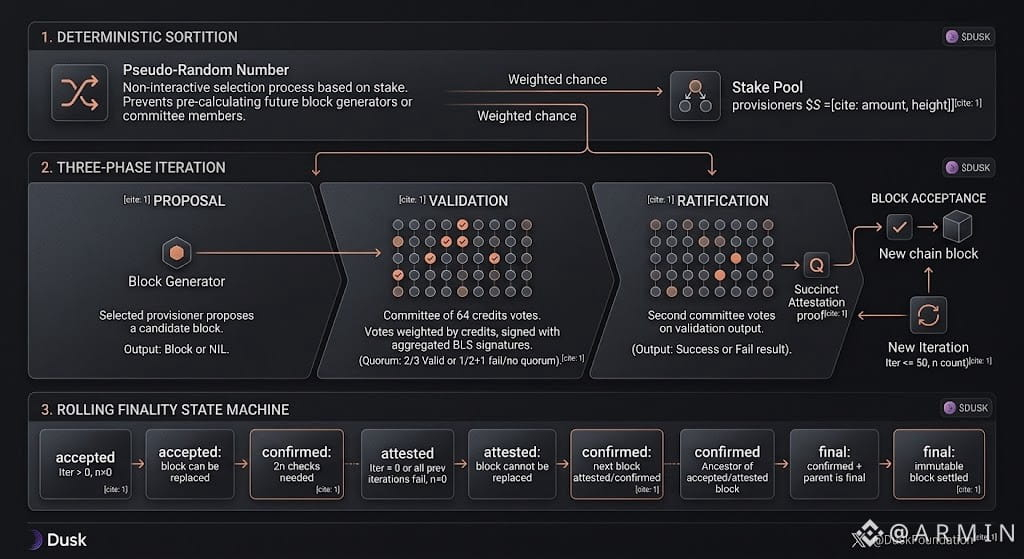
Watching a round finalize on Dusk made me pause when I noticed how the Succinct Attestation mechanism actually handles validation in real time. You hold some $DUSK, lock the minimum stake to become a provisioner via the stake contract, and expect the usual heavy validator churn, but @DuskFoundation built this around lightweight, deterministic sortition instead of raw validator brute force. It makes #Dusk feel less like an unwieldy PoS behemoth and more like a tight, non-interactive lottery of rotating committees.
What clicked while tracking the blocks was the separation between the proposal, validation, and ratification phases. Instead of relying on full-network broadcast floods, a 64-credit committee gets extracted via SHA3 scoring, signs off with aggregated BLS signatures, and locks down attestations with minimal overhead. The fallback logic and rolling finality mean that if an iteration stalls or forks under latency, earlier attestations step in to clean up the chain state deterministically.
Most PoS chains patch latency issues by throwing more hardware at the problem or relying on centralized sequencer shortcuts. Seeing provisioners cycle through committee slots without needing interactive coordination shifted my perspective on how lean a regulated settlement layer can actually run.
Still, I wonder how that deterministic sortition behaves when edge cases hit under heavy real-world transaction stress. If consecutive iterations fail and emergency mode triggers open iterations simultaneously, does the incentive penalty structure keep provisioners aligned, or does network latency end up forcing too many fallback rollbacks?
@Dusk_Foundation #dusk $DUSK
Watching a round finalize on Dusk made me pause when I noticed how the Succinct Attestation mechanism actually handles validation in real time. You hold some $DUSK , lock the minimum stake to become a provisioner via the stake contract, and expect the usual heavy validator churn, but @DuskFoundation built this around lightweight, deterministic sortition instead of raw validator brute force. It makes #Dusk feel less like an unwieldy PoS behemoth and more like a tight, non-interactive lottery of rotating committees.
What clicked while tracking the blocks was the separation between the proposal, validation, and ratification phases. Instead of relying on full-network broadcast floods, a 64-credit committee gets extracted via SHA3 scoring, signs off with aggregated BLS signatures, and locks down attestations with minimal overhead. The fallback logic and rolling finality mean that if an iteration stalls or forks under latency, earlier attestations step in to clean up the chain state deterministically.
Most PoS chains patch latency issues by throwing more hardware at the problem or relying on centralized sequencer shortcuts. Seeing provisioners cycle through committee slots without needing interactive coordination shifted my perspective on how lean a regulated settlement layer can actually run.
Still, I wonder how that deterministic sortition behaves when edge cases hit under heavy real-world transaction stress. If consecutive iterations fail and emergency mode triggers open iterations simultaneously, does the incentive penalty structure keep provisioners aligned, or does network latency end up forcing too many fallback rollbacks?
@Dusk #dusk $DUSK
What clicked while tracking the blocks was the separation between the proposal, validation, and ratification phases. Instead of relying on full-network broadcast floods, a 64-credit committee gets extracted via SHA3 scoring, signs off with aggregated BLS signatures, and locks down attestations with minimal overhead. The fallback logic and rolling finality mean that if an iteration stalls or forks under latency, earlier attestations step in to clean up the chain state deterministically.
Most PoS chains patch latency issues by throwing more hardware at the problem or relying on centralized sequencer shortcuts. Seeing provisioners cycle through committee slots without needing interactive coordination shifted my perspective on how lean a regulated settlement layer can actually run.
Still, I wonder how that deterministic sortition behaves when edge cases hit under heavy real-world transaction stress. If consecutive iterations fail and emergency mode triggers open iterations simultaneously, does the incentive penalty structure keep provisioners aligned, or does network latency end up forcing too many fallback rollbacks?
@Dusk #dusk $DUSK
31
25
876
·
--
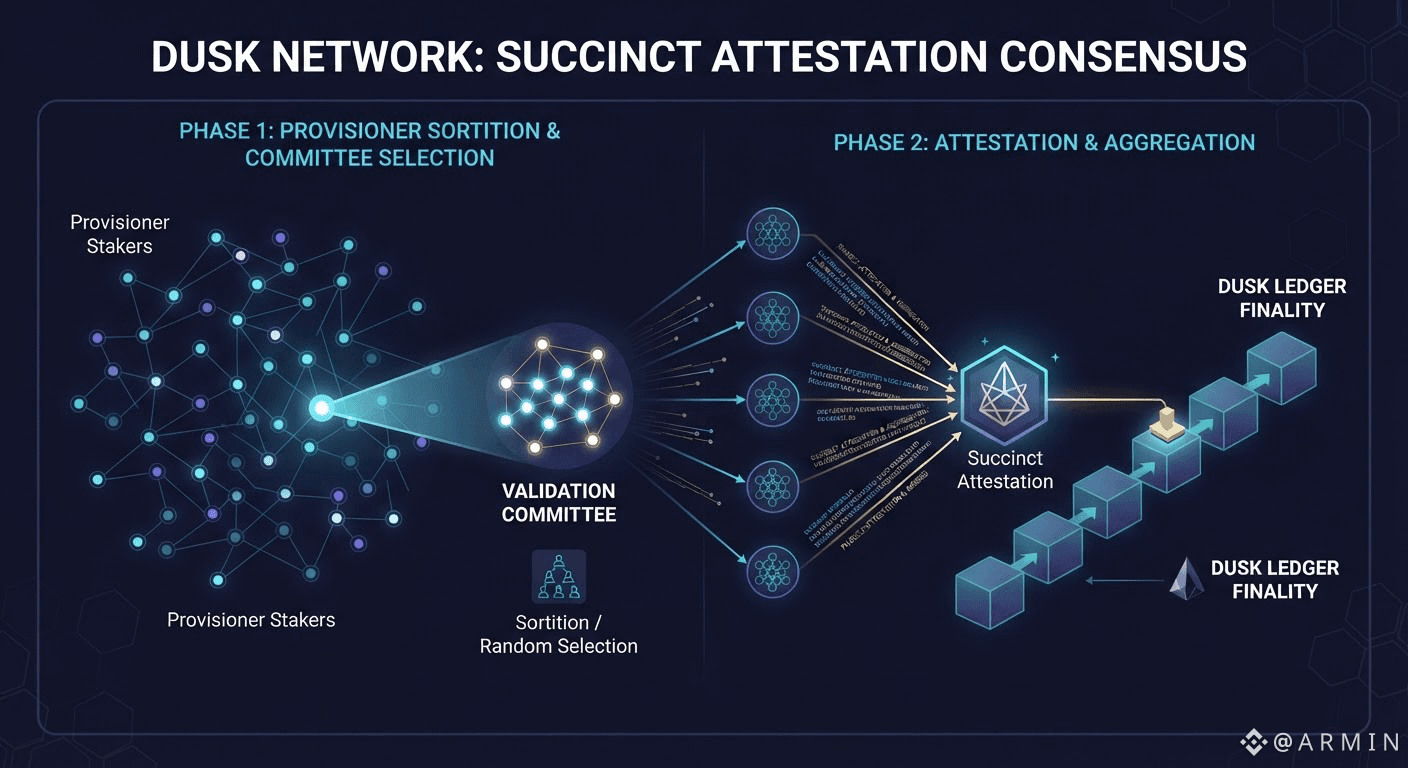
Stumbled down a bit of a rabbit hole looking into how blocks actually get stamped on Dusk Network today. What caught my eye wasn't just the privacy angles everyone usually shouts about, but watching how the provisioners handle committee duties under the Succinct Attestation mechanism. Seeing $DUSK stakers rotate through these cryptographic duties without turning the whole network into a sluggish voting pool made me pause.
Instead of dragging every single node into a heavy consensus brawl for every single block, the protocol uses sortition to spin up targeted committees that handle the heavy lifting. Following how those localized validation votes get bundled together actually made the scalability trade offs click for me. It feels a lot closer to how traditional settlement layers operate, just decentralized across permissionless stakers.
I used to think committee based setups always sacrificed a bit too much openness for speed, but the way validation and aggregation are split here keeps things surprisingly tight. It forces you to rethink what a leaner proof of stake loop can look like when it’s built specifically for financial grade finality rather than general purpose noise.
Still, watching how these rotating groups perform under heavier, chaotic market stress will be the real test. Whether these dynamic committees hold up cleanly over long stretches without centralizing participation pressure is anyone's guess.
#dusk @Dusk
Stumbled down a bit of a rabbit hole looking into how blocks actually get stamped on Dusk Network today. What caught my eye wasn't just the privacy angles everyone usually shouts about, but watching how the provisioners handle committee duties under the Succinct Attestation mechanism. Seeing $DUSK stakers rotate through these cryptographic duties without turning the whole network into a sluggish voting pool made me pause.
Instead of dragging every single node into a heavy consensus brawl for every single block, the protocol uses sortition to spin up targeted committees that handle the heavy lifting. Following how those localized validation votes get bundled together actually made the scalability trade offs click for me. It feels a lot closer to how traditional settlement layers operate, just decentralized across permissionless stakers.
I used to think committee based setups always sacrificed a bit too much openness for speed, but the way validation and aggregation are split here keeps things surprisingly tight. It forces you to rethink what a leaner proof of stake loop can look like when it’s built specifically for financial grade finality rather than general purpose noise.
Still, watching how these rotating groups perform under heavier, chaotic market stress will be the real test. Whether these dynamic committees hold up cleanly over long stretches without centralizing participation pressure is anyone's guess.
#dusk @Dusk
Instead of dragging every single node into a heavy consensus brawl for every single block, the protocol uses sortition to spin up targeted committees that handle the heavy lifting. Following how those localized validation votes get bundled together actually made the scalability trade offs click for me. It feels a lot closer to how traditional settlement layers operate, just decentralized across permissionless stakers.
I used to think committee based setups always sacrificed a bit too much openness for speed, but the way validation and aggregation are split here keeps things surprisingly tight. It forces you to rethink what a leaner proof of stake loop can look like when it’s built specifically for financial grade finality rather than general purpose noise.
Still, watching how these rotating groups perform under heavier, chaotic market stress will be the real test. Whether these dynamic committees hold up cleanly over long stretches without centralizing participation pressure is anyone's guess.
#dusk @Dusk
31
28
696
·
--
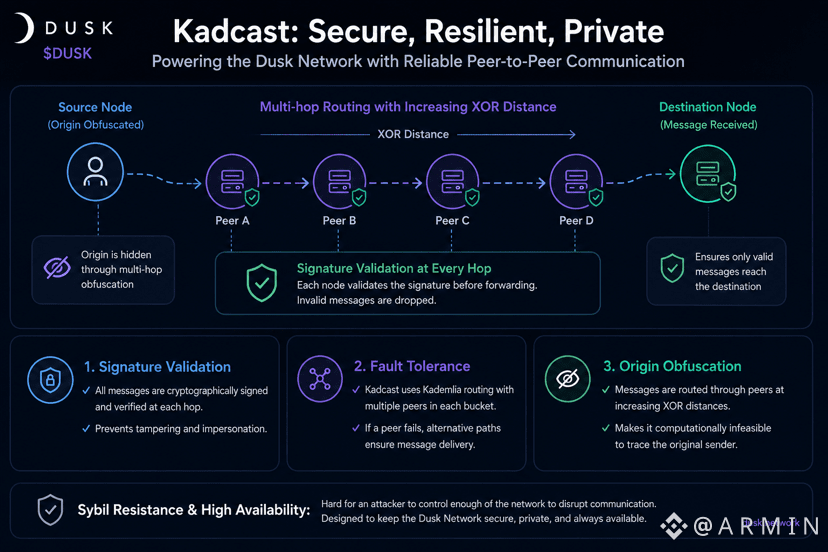
I was looking at how Kadcast behaves when you stop thinking about “nodes” and start thinking about unreliable peers. That’s where @Dusk_Foundation and $DUSK got more interesting to me. #dusk
The part that stood out: messages are signed and verified before a node forwards them, while the Kademlia-based routing keeps multiple peers in its buckets. So a bad message can be rejected, and a failed peer doesn’t necessarily break the path.
I initially thought the privacy angle would be the main thing here. But the more I looked at it, the resilience piece felt just as important. Kadcast keeps replacing failed peers and can use alternative paths when one node goes offline.
And then there’s the origin obfuscation: messages move through selected peers at increasing XOR distances, making the original sender harder to trace. I’m still wondering how these properties behave under a genuinely hostile network, not just an unreliable one.
I was looking at how Kadcast behaves when you stop thinking about “nodes” and start thinking about unreliable peers. That’s where @Dusk and $DUSK got more interesting to me. #dusk
The part that stood out: messages are signed and verified before a node forwards them, while the Kademlia-based routing keeps multiple peers in its buckets. So a bad message can be rejected, and a failed peer doesn’t necessarily break the path.
I initially thought the privacy angle would be the main thing here. But the more I looked at it, the resilience piece felt just as important. Kadcast keeps replacing failed peers and can use alternative paths when one node goes offline.
And then there’s the origin obfuscation: messages move through selected peers at increasing XOR distances, making the original sender harder to trace. I’m still wondering how these properties behave under a genuinely hostile network, not just an unreliable one.
The part that stood out: messages are signed and verified before a node forwards them, while the Kademlia-based routing keeps multiple peers in its buckets. So a bad message can be rejected, and a failed peer doesn’t necessarily break the path.
I initially thought the privacy angle would be the main thing here. But the more I looked at it, the resilience piece felt just as important. Kadcast keeps replacing failed peers and can use alternative paths when one node goes offline.
And then there’s the origin obfuscation: messages move through selected peers at increasing XOR distances, making the original sender harder to trace. I’m still wondering how these properties behave under a genuinely hostile network, not just an unreliable one.
24
20
405
·
--
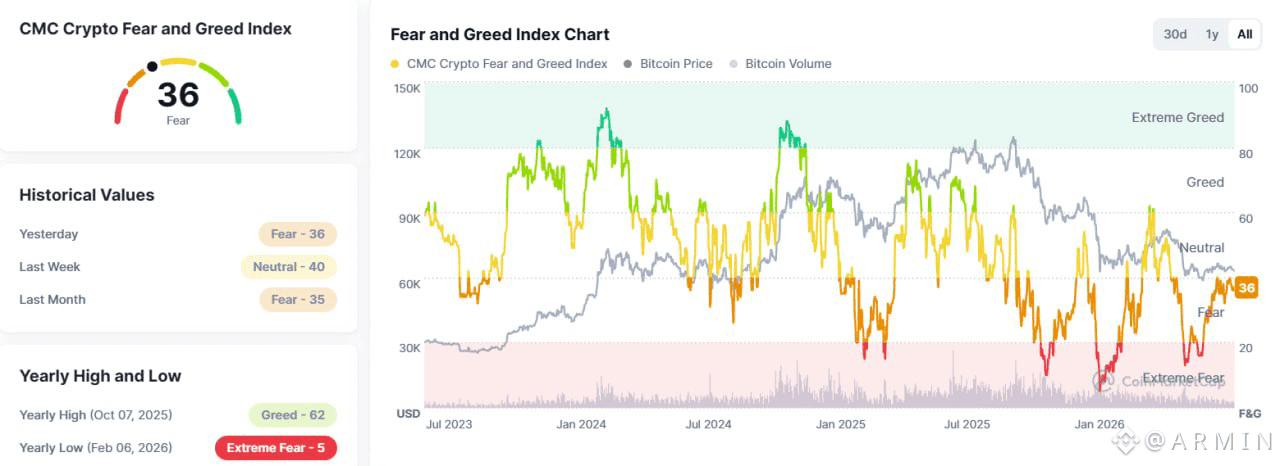
Crypto Fear & Greed Index is at 36
Fear dominates the market.
The crowd is still scared. Not surprising.🙄
Crypto Fear & Greed Index is at 36
Fear dominates the market.
The crowd is still scared. Not surprising.🙄
Fear dominates the market.
The crowd is still scared. Not surprising.🙄
2
403
·
--
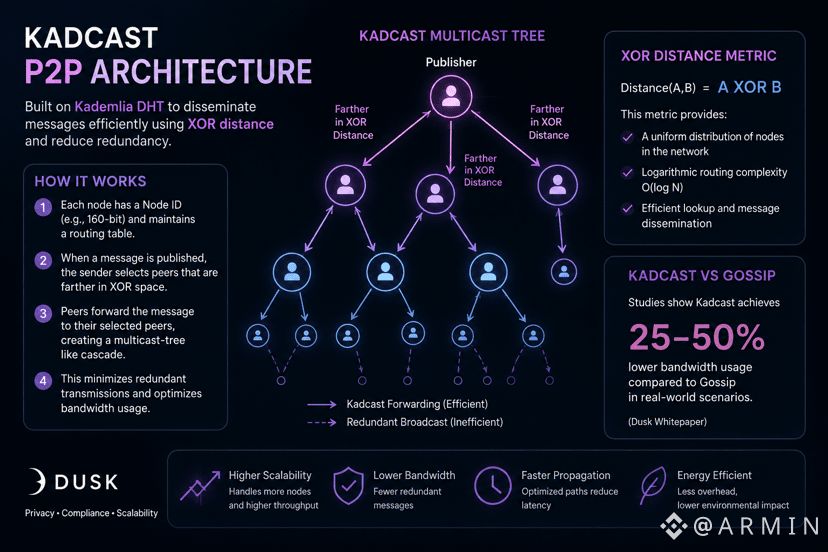
What made me stop here was how Dusk doesn’t simply broadcast everything everywhere. @Dusk_Foundation use Kadcast, built on Kademlia’s DHT, to make message propagation more structured.
The interesting part is the #XOR distance metric. Nodes keep routing tables based on how far other nodes are from them, then forward messages to selected peers at increasing distances instead of flooding every neighbor. That creates a multicast tree style cascade with fewer redundant transmissions.
I initially thought P2P efficiency was mostly about having more connections. But Kadcast made me look at it differently: sometimes the better network isn’t the one shouting to everyone it’s the one choosing who needs to hear next. The whitepaper cites roughly 25–50% lower bandwidth usage vs. Gossip in studies of Kadcast.
And that leaves me with an interesting question: as blockchains push toward faster finality and higher throughput, could smarter message routing become just as important as the consensus mechanism itself?
$DUSK #dusk
What made me stop here was how Dusk doesn’t simply broadcast everything everywhere. @Dusk use Kadcast, built on Kademlia’s DHT, to make message propagation more structured.
The interesting part is the #XOR distance metric. Nodes keep routing tables based on how far other nodes are from them, then forward messages to selected peers at increasing distances instead of flooding every neighbor. That creates a multicast tree style cascade with fewer redundant transmissions.
I initially thought P2P efficiency was mostly about having more connections. But Kadcast made me look at it differently: sometimes the better network isn’t the one shouting to everyone it’s the one choosing who needs to hear next. The whitepaper cites roughly 25–50% lower bandwidth usage vs. Gossip in studies of Kadcast.
And that leaves me with an interesting question: as blockchains push toward faster finality and higher throughput, could smarter message routing become just as important as the consensus mechanism itself?
$DUSK #dusk
The interesting part is the #XOR distance metric. Nodes keep routing tables based on how far other nodes are from them, then forward messages to selected peers at increasing distances instead of flooding every neighbor. That creates a multicast tree style cascade with fewer redundant transmissions.
I initially thought P2P efficiency was mostly about having more connections. But Kadcast made me look at it differently: sometimes the better network isn’t the one shouting to everyone it’s the one choosing who needs to hear next. The whitepaper cites roughly 25–50% lower bandwidth usage vs. Gossip in studies of Kadcast.
And that leaves me with an interesting question: as blockchains push toward faster finality and higher throughput, could smarter message routing become just as important as the consensus mechanism itself?
$DUSK #dusk
36
23
423
·
--
Vérifié
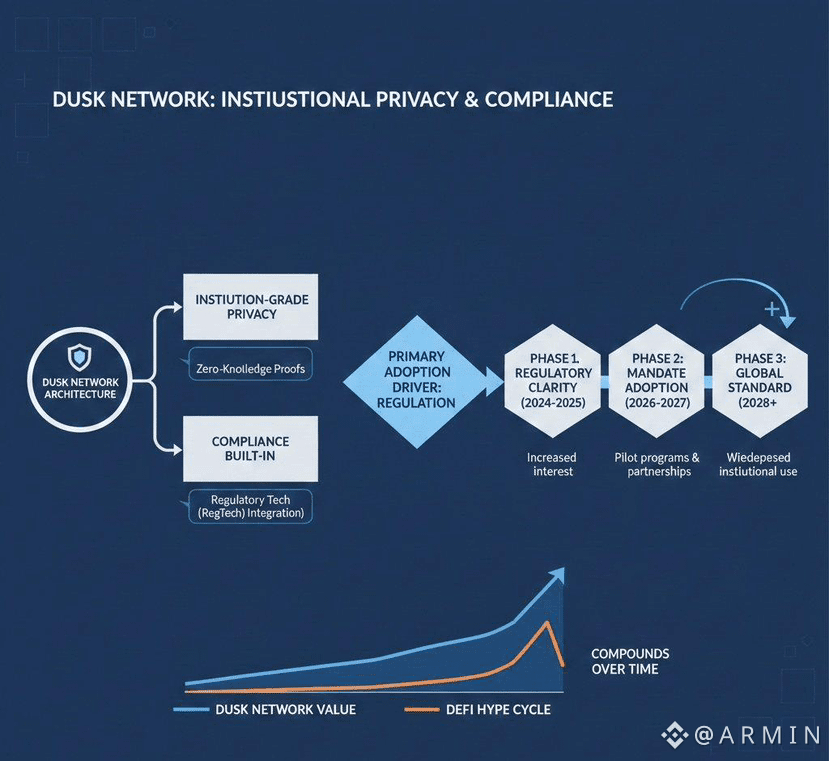
The part that made me stop was realizing that privacy on Dusk isn’t really about making everything invisible. $DUSK , #dusk @Dusk_Foundation takes a more nuanced route: some activity can stay transparent, while sensitive financial activity can be shielded.
Looking into the architecture, Moonlight keeps the account state public, so balances and transaction details can be checked directly. Phoenix takes the opposite approach for obfuscated transactions: the network verifies a ZK proof instead of directly seeing the underlying transaction data.
That changed my initial assumption a bit. I was thinking the privacy side would mostly be about hiding financial information. It’s actually more interesting than that. The network still needs to prove ownership, preserve balance integrity and prevent double spending just without necessarily exposing the information used to prove those things.
And that’s probably the harder problem for financial markets: not choosing between transparency and privacy, but deciding what should be visible, to whom, and under what conditions. I’m still wondering how that balance behaves once real regulated financial activity starts putting pressure on both sides.
The part that made me stop was realizing that privacy on Dusk isn’t really about making everything invisible. $DUSK , #dusk @Dusk takes a more nuanced route: some activity can stay transparent, while sensitive financial activity can be shielded.
Looking into the architecture, Moonlight keeps the account state public, so balances and transaction details can be checked directly. Phoenix takes the opposite approach for obfuscated transactions: the network verifies a ZK proof instead of directly seeing the underlying transaction data.
That changed my initial assumption a bit. I was thinking the privacy side would mostly be about hiding financial information. It’s actually more interesting than that. The network still needs to prove ownership, preserve balance integrity and prevent double spending just without necessarily exposing the information used to prove those things.
And that’s probably the harder problem for financial markets: not choosing between transparency and privacy, but deciding what should be visible, to whom, and under what conditions. I’m still wondering how that balance behaves once real regulated financial activity starts putting pressure on both sides.
Looking into the architecture, Moonlight keeps the account state public, so balances and transaction details can be checked directly. Phoenix takes the opposite approach for obfuscated transactions: the network verifies a ZK proof instead of directly seeing the underlying transaction data.
That changed my initial assumption a bit. I was thinking the privacy side would mostly be about hiding financial information. It’s actually more interesting than that. The network still needs to prove ownership, preserve balance integrity and prevent double spending just without necessarily exposing the information used to prove those things.
And that’s probably the harder problem for financial markets: not choosing between transparency and privacy, but deciding what should be visible, to whom, and under what conditions. I’m still wondering how that balance behaves once real regulated financial activity starts putting pressure on both sides.
45
24
343
·
--
Vérifié
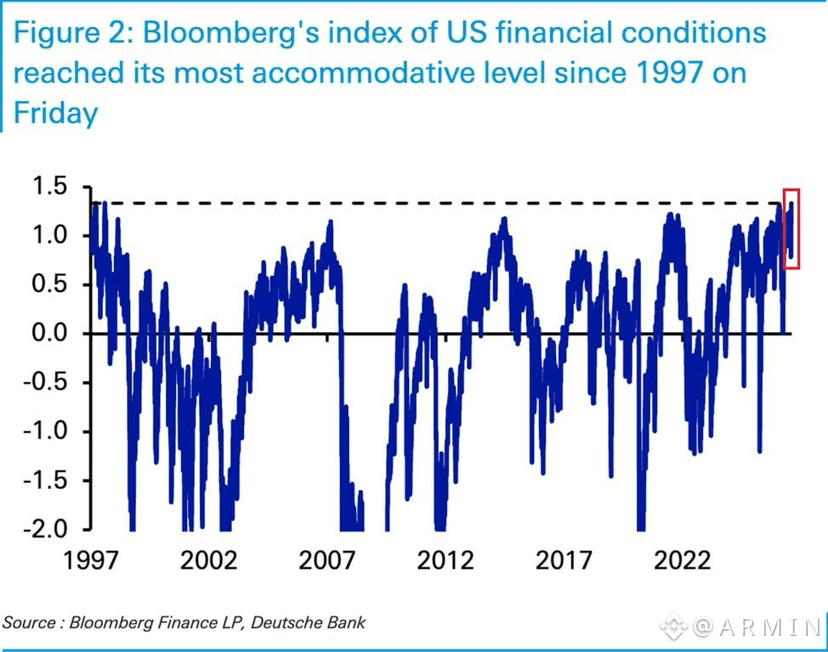
BREAKING: The Index of US Financial Conditions is up to ~1.29 points, the easiest since 1997.
This index measures access to money across financial markets, incorporating things like interest rates, credit spreads, stock prices, the dollar, and overall borrowing conditions.
By comparison, during the March 2026 market selloff, the index was on the verge of turning negative.
Not even during the 2021 meme stock frenzy were financial conditions this easy.
The latest surge has been driven by equity markets hitting all-time highs, with US corporate bond credit spreads remaining near their tightest levels since 1998.
AI has transformed the global economy.
BREAKING: The Index of US Financial Conditions is up to ~1.29 points, the easiest since 1997.
This index measures access to money across financial markets, incorporating things like interest rates, credit spreads, stock prices, the dollar, and overall borrowing conditions.
By comparison, during the March 2026 market selloff, the index was on the verge of turning negative.
Not even during the 2021 meme stock frenzy were financial conditions this easy.
The latest surge has been driven by equity markets hitting all-time highs, with US corporate bond credit spreads remaining near their tightest levels since 1998.
AI has transformed the global economy.
This index measures access to money across financial markets, incorporating things like interest rates, credit spreads, stock prices, the dollar, and overall borrowing conditions.
By comparison, during the March 2026 market selloff, the index was on the verge of turning negative.
Not even during the 2021 meme stock frenzy were financial conditions this easy.
The latest surge has been driven by equity markets hitting all-time highs, with US corporate bond credit spreads remaining near their tightest levels since 1998.
AI has transformed the global economy.
189
·
--
Vérifié
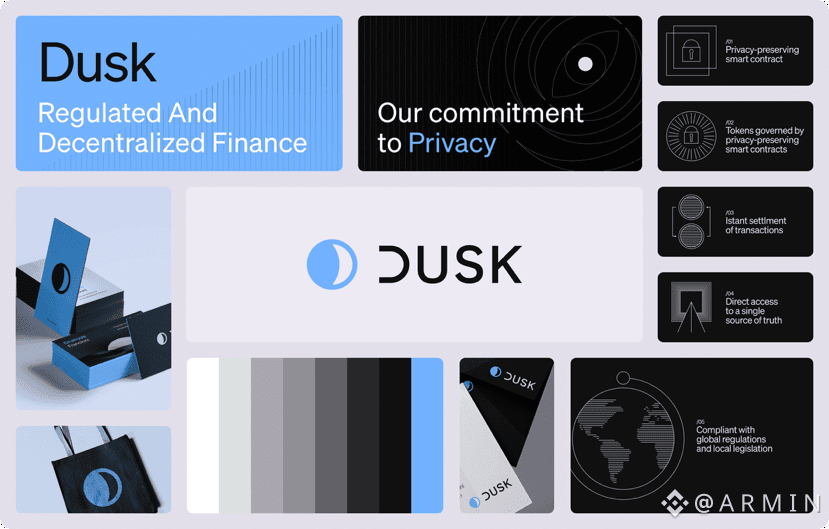
The more I read about @Dusk_Foundation , the more I think the interesting part of #DUSK isn’t simply putting TradFi on a blockchain.
The harder problem is making blockchain usable where privacy and compliance both matter. Dusk approaches this at the protocol level, combining transparent and privacy preserving transaction models rather than treating privacy as something that has to be added later.
That changes how I look at the whole “TradFi meets DeFi” narrative. Financial institutions don’t necessarily need everything hidden, but they also can’t operate with every sensitive transaction exposed publicly. Dusk’s Phoenix model is built around proving transaction validity with ZK proofs without exposing the underlying transaction details.
I’m still curious about the practical side of this: how much of the existing financial system can actually move on-chain once privacy and regulatory requirements stop being theoretical constraints?
$DUSK
The more I read about @Dusk , the more I think the interesting part of #DUSK isn’t simply putting TradFi on a blockchain.
The harder problem is making blockchain usable where privacy and compliance both matter. Dusk approaches this at the protocol level, combining transparent and privacy preserving transaction models rather than treating privacy as something that has to be added later.
That changes how I look at the whole “TradFi meets DeFi” narrative. Financial institutions don’t necessarily need everything hidden, but they also can’t operate with every sensitive transaction exposed publicly. Dusk’s Phoenix model is built around proving transaction validity with ZK proofs without exposing the underlying transaction details.
I’m still curious about the practical side of this: how much of the existing financial system can actually move on-chain once privacy and regulatory requirements stop being theoretical constraints?
$DUSK
The harder problem is making blockchain usable where privacy and compliance both matter. Dusk approaches this at the protocol level, combining transparent and privacy preserving transaction models rather than treating privacy as something that has to be added later.
That changes how I look at the whole “TradFi meets DeFi” narrative. Financial institutions don’t necessarily need everything hidden, but they also can’t operate with every sensitive transaction exposed publicly. Dusk’s Phoenix model is built around proving transaction validity with ZK proofs without exposing the underlying transaction details.
I’m still curious about the practical side of this: how much of the existing financial system can actually move on-chain once privacy and regulatory requirements stop being theoretical constraints?
$DUSK
85
34
272
·
--
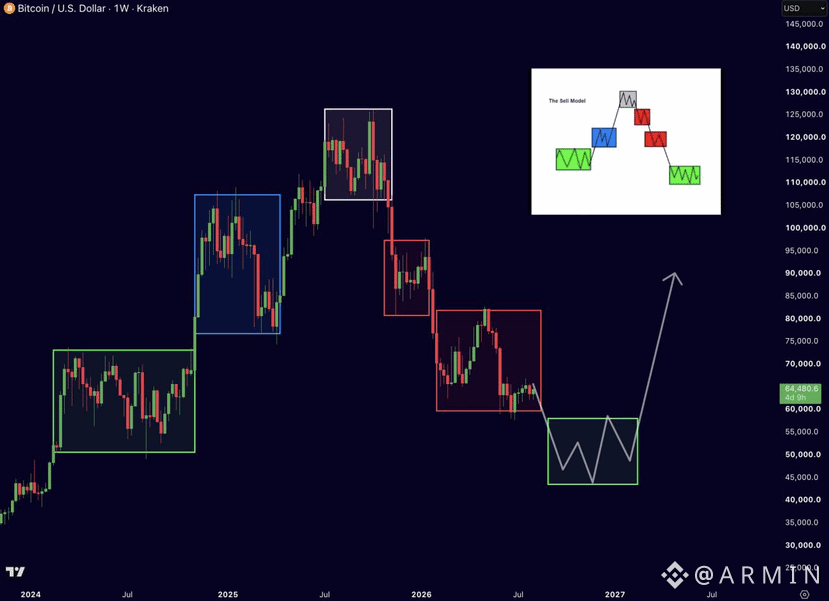
Bitcoin is pumping, but don’t be fooled by the short-term relief.
The market maker sell model is still playing out.
Accumulate → Expand → Distribute → Mark down.
→ Distribution formed around $126,000
→ The markdown phase is still underway
→ The final accumulation zone sits around $44,000–$58,000
Short-term pumps are exactly what keep people convinced the bottom is already in.
If this model completes, there is still one final flush left before the real opportunity.
One more drop. Then we reload.
Bitcoin is pumping, but don’t be fooled by the short-term relief.
The market maker sell model is still playing out.
Accumulate → Expand → Distribute → Mark down.
→ Distribution formed around $126,000
→ The markdown phase is still underway
→ The final accumulation zone sits around $44,000–$58,000
Short-term pumps are exactly what keep people convinced the bottom is already in.
If this model completes, there is still one final flush left before the real opportunity.
One more drop. Then we reload.
The market maker sell model is still playing out.
Accumulate → Expand → Distribute → Mark down.
→ Distribution formed around $126,000
→ The markdown phase is still underway
→ The final accumulation zone sits around $44,000–$58,000
Short-term pumps are exactly what keep people convinced the bottom is already in.
If this model completes, there is still one final flush left before the real opportunity.
One more drop. Then we reload.
2
253
·
--
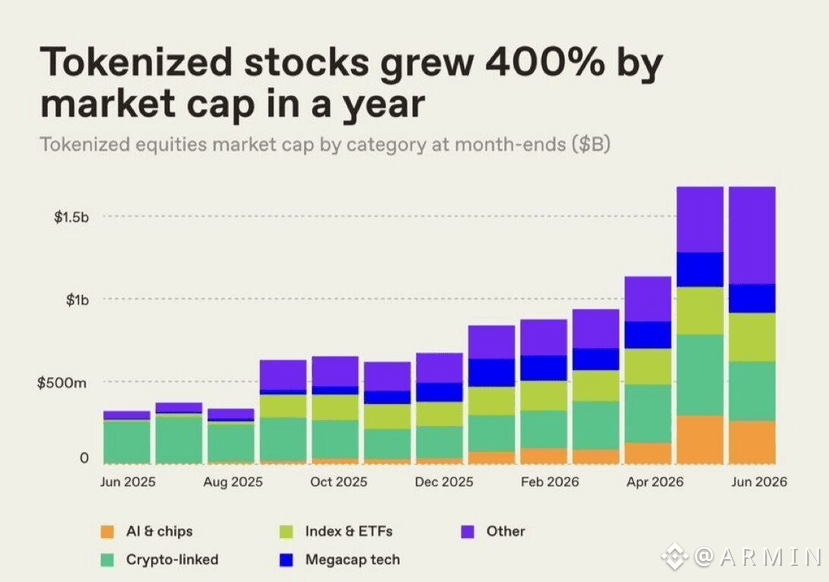
The market cap of tokenized stocks grew 400% over the past year.
The market cap of tokenized stocks grew 400% over the past year.
2
251
·
--
Partiellement vrai
Is @babylonlabs_io Building the Next Standard for Native Bitcoin Collateral?
One detail kept pulling me back while reading through Babylon’s Trustless Bitcoin Vault design: the protocol seems less interested in moving Bitcoin than in making it useful without giving up custody. That feels like a subtle shift, but it changes how I think about Bitcoin-backed lending.
While checking recent network activity, I noticed BABY’s market activity stayed fairly steady even as 24-hour trading volume moved back into roughly the $5.8–6.2M range between July 21–24, without a dramatic price breakout. That’s easy enough to verify on historical market data.
By itself, volume doesn’t prove adoption. But paired with Babylon’s live chain activity—where the network has continued producing blocks at a regular cadence with dozens of transactions per block—it suggests people are still interacting with the ecosystem instead of disappearing after the initial launch excitement.
The interesting part for me isn’t the token. It’s the architecture. TBV asks whether Bitcoin can remain locked in a native Taproot output while other execution environments coordinate lending around it. That separation of custody from application logic feels more significant than another wrapped BTC design.
One small surprise: I expected the lending mechanics to be the most interesting section of the docs, but I kept highlighting the custody model instead.
I’m still not sure whether users will ultimately value this distinction enough to change borrowing behavior or whether it’s mainly an infrastructure improvement that stays invisible. I’m curious which of those ends up being true.
#baby $BABY
Is @BabylonLabs_io Building the Next Standard for Native Bitcoin Collateral?
One detail kept pulling me back while reading through Babylon’s Trustless Bitcoin Vault design: the protocol seems less interested in moving Bitcoin than in making it useful without giving up custody. That feels like a subtle shift, but it changes how I think about Bitcoin-backed lending.
While checking recent network activity, I noticed BABY’s market activity stayed fairly steady even as 24-hour trading volume moved back into roughly the $5.8–6.2M range between July 21–24, without a dramatic price breakout. That’s easy enough to verify on historical market data.
By itself, volume doesn’t prove adoption. But paired with Babylon’s live chain activity—where the network has continued producing blocks at a regular cadence with dozens of transactions per block—it suggests people are still interacting with the ecosystem instead of disappearing after the initial launch excitement.
The interesting part for me isn’t the token. It’s the architecture. TBV asks whether Bitcoin can remain locked in a native Taproot output while other execution environments coordinate lending around it. That separation of custody from application logic feels more significant than another wrapped BTC design.
One small surprise: I expected the lending mechanics to be the most interesting section of the docs, but I kept highlighting the custody model instead.
I’m still not sure whether users will ultimately value this distinction enough to change borrowing behavior or whether it’s mainly an infrastructure improvement that stays invisible. I’m curious which of those ends up being true.
#baby $BABY
One detail kept pulling me back while reading through Babylon’s Trustless Bitcoin Vault design: the protocol seems less interested in moving Bitcoin than in making it useful without giving up custody. That feels like a subtle shift, but it changes how I think about Bitcoin-backed lending.
While checking recent network activity, I noticed BABY’s market activity stayed fairly steady even as 24-hour trading volume moved back into roughly the $5.8–6.2M range between July 21–24, without a dramatic price breakout. That’s easy enough to verify on historical market data.
By itself, volume doesn’t prove adoption. But paired with Babylon’s live chain activity—where the network has continued producing blocks at a regular cadence with dozens of transactions per block—it suggests people are still interacting with the ecosystem instead of disappearing after the initial launch excitement.
The interesting part for me isn’t the token. It’s the architecture. TBV asks whether Bitcoin can remain locked in a native Taproot output while other execution environments coordinate lending around it. That separation of custody from application logic feels more significant than another wrapped BTC design.
One small surprise: I expected the lending mechanics to be the most interesting section of the docs, but I kept highlighting the custody model instead.
I’m still not sure whether users will ultimately value this distinction enough to change borrowing behavior or whether it’s mainly an infrastructure improvement that stays invisible. I’m curious which of those ends up being true.
#baby $BABY
21
9
339
Connectez-vous pour découvrir plus de contenu
Rejoignez la communauté mondiale des adeptes de cryptomonnaies sur Binance Square
⚡️ Suviez les dernières informations importantes sur les cryptomonnaies.
💬 Jugé digne de confiance par la plus grande plateforme d’échange de cryptomonnaies au monde.
👍 Découvrez les connaissances que partagent les créateurs vérifiés.
Adresse e-mail/Nº de téléphone
Sujets d’actualité
BNBSurpasses$790
10,808 vues
88 mentions
$BNB strategic long plan -> FOCUS NOW
BNB has created 2 strong lows after taking out internal liquidity
I'm expecting a move towards swing high $815-$830 and looking for a long on a retest of the green box
#BNBSurpasses$790 #bnb
Ghost Writer
·4 mentions J’aime
·5.4k vues
ZamaRises15.99%ToIntradayHigh$0.09
5,444 vues
75 mentions
BitcoinSpotETFsDraw$6.34BInflowsInQ3
3,728 vues
60 mentions