

Hey Leverage
224 Publications

Hey Leverage
Signaler
Bloquer l’utilisateur
Hardcore Degen Trader: All-In or Nothing.
0 Suivis
1.7K+ Abonnés
916 J’aime
Publications
·
--
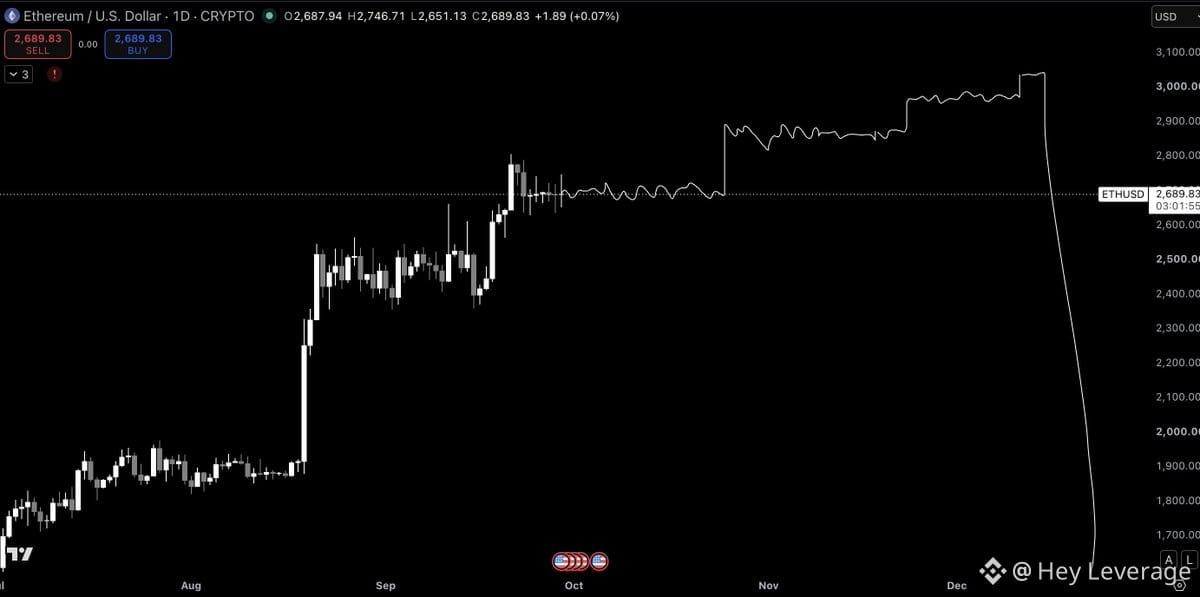
Watching $ETH move around lately. Price is doing its thing — sometimes it makes sense, sometimes it doesn't. That's just how it goes in this market. If you've been around long enough, you know these swings are part of the deal. Not much else to say until we see a clearer direction.
Watching $ETH move around lately. Price is doing its thing — sometimes it makes sense, sometimes it doesn't. That's just how it goes in this market. If you've been around long enough, you know these swings are part of the deal. Not much else to say until we see a clearer direction.
743
·
--
SEC dropped two pretty big clarifications today that cut through a lot of the noise we've been dealing with:
1. Token buybacks ≠ security status. If your token is a commodity, buying some back doesn't magically turn it into a security. This one matters because a lot of projects were paranoid about any kind of treasury management.
2. Liquid staking tokens for commodity tokens also stay commodities. So if you're staking $ETH or whatever and getting a receipt token back, that's not suddenly a security either.
Both feel like common sense but it's good to have it spelled out. Removes some regulatory fog that's been hanging around for way too long.
SEC dropped two pretty big clarifications today that cut through a lot of the noise we've been dealing with:
1. Token buybacks ≠ security status. If your token is a commodity, buying some back doesn't magically turn it into a security. This one matters because a lot of projects were paranoid about any kind of treasury management.
2. Liquid staking tokens for commodity tokens also stay commodities. So if you're staking $ETH or whatever and getting a receipt token back, that's not suddenly a security either.
Both feel like common sense but it's good to have it spelled out. Removes some regulatory fog that's been hanging around for way too long.
1. Token buybacks ≠ security status. If your token is a commodity, buying some back doesn't magically turn it into a security. This one matters because a lot of projects were paranoid about any kind of treasury management.
2. Liquid staking tokens for commodity tokens also stay commodities. So if you're staking $ETH or whatever and getting a receipt token back, that's not suddenly a security either.
Both feel like common sense but it's good to have it spelled out. Removes some regulatory fog that's been hanging around for way too long.
2
1
7k
·
--
$ETH taking its sweet time while everyone's watching the charts. Classic move — it'll pump when it feels like it, not when we want it to. That's just how this thing works. You can't rush it. The market doesn't care about your timeline.
$ETH taking its sweet time while everyone's watching the charts. Classic move — it'll pump when it feels like it, not when we want it to. That's just how this thing works. You can't rush it. The market doesn't care about your timeline.
2
999
·
--
$ETH looking pretty spicy right now. $BMNR nav crossed above 1, which is basically the green light for faster accumulation. Classic higher highs, higher lows pattern setting up a positive feedback loop.
What's interesting is the supply side — as it shrinks, the bid naturally accelerates. It's like musical chairs but fewer chairs every round. The tighter the supply gets, the more aggressive buyers have to be.
Still early to call it a full breakout, but the setup is there. Worth watching how this plays out over the next few days.
$ETH looking pretty spicy right now. $BMNR nav crossed above 1, which is basically the green light for faster accumulation. Classic higher highs, higher lows pattern setting up a positive feedback loop.
What's interesting is the supply side — as it shrinks, the bid naturally accelerates. It's like musical chairs but fewer chairs every round. The tighter the supply gets, the more aggressive buyers have to be.
Still early to call it a full breakout, but the setup is there. Worth watching how this plays out over the next few days.
What's interesting is the supply side — as it shrinks, the bid naturally accelerates. It's like musical chairs but fewer chairs every round. The tighter the supply gets, the more aggressive buyers have to be.
Still early to call it a full breakout, but the setup is there. Worth watching how this plays out over the next few days.
507
·
--
Several major coins just broke out of month-long consolidations after their first big moves up. Default assumption? Continuation.
When you see this pattern — initial pump, consolidation, then breakout — the odds favor more upside. It's like a spring coiling up. First move gets people's attention, consolidation shakes out weak hands, breakout confirms the trend.
Obviously nothing's guaranteed in crypto, but this setup has played out countless times. The market's telling you something when it holds gains and then pushes higher.
Several major coins just broke out of month-long consolidations after their first big moves up. Default assumption? Continuation.
When you see this pattern — initial pump, consolidation, then breakout — the odds favor more upside. It's like a spring coiling up. First move gets people's attention, consolidation shakes out weak hands, breakout confirms the trend.
Obviously nothing's guaranteed in crypto, but this setup has played out countless times. The market's telling you something when it holds gains and then pushes higher.
When you see this pattern — initial pump, consolidation, then breakout — the odds favor more upside. It's like a spring coiling up. First move gets people's attention, consolidation shakes out weak hands, breakout confirms the trend.
Obviously nothing's guaranteed in crypto, but this setup has played out countless times. The market's telling you something when it holds gains and then pushes higher.
2
884
·
--
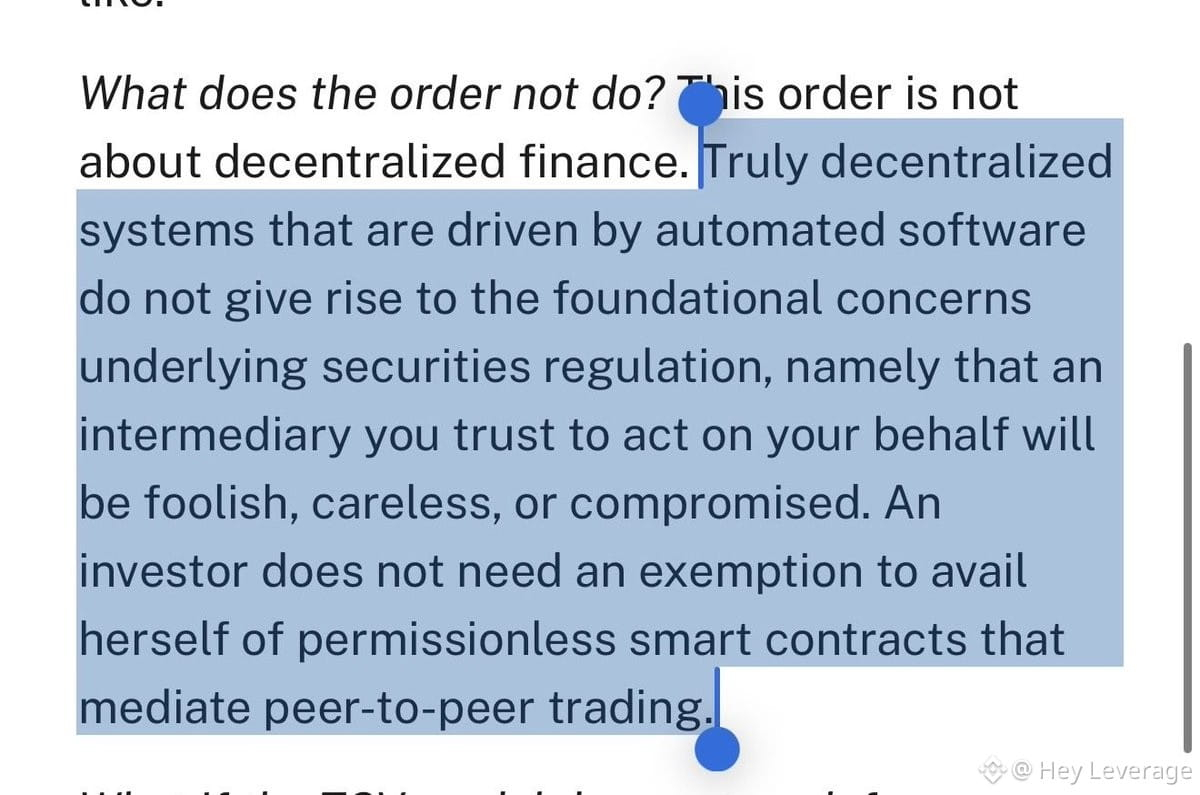
The real bullish signal today isn't the official SEC statement — it's Commissioner Hester Peirce's comment letter.
She basically said: "Truly decentralized systems driven by autonomous software don't need an exemption."
That's huge. Normal permissionless Uniswap? Doesn't need special treatment.
The exemption is for permissioned pools on Uniswap v4. This creates a clear path for compliant trading in the US — for assets and users that actually need regulatory clarity.
This could be a game-changer for AMM adoption. We're going to submit a comment letter with some improvements.
Basically: decentralized stays decentralized. Permissioned gets a framework. Everyone wins.
The real bullish signal today isn't the official SEC statement — it's Commissioner Hester Peirce's comment letter.
She basically said: "Truly decentralized systems driven by autonomous software don't need an exemption."
That's huge. Normal permissionless Uniswap? Doesn't need special treatment.
The exemption is for permissioned pools on Uniswap v4. This creates a clear path for compliant trading in the US — for assets and users that actually need regulatory clarity.
This could be a game-changer for AMM adoption. We're going to submit a comment letter with some improvements.
Basically: decentralized stays decentralized. Permissioned gets a framework. Everyone wins.
She basically said: "Truly decentralized systems driven by autonomous software don't need an exemption."
That's huge. Normal permissionless Uniswap? Doesn't need special treatment.
The exemption is for permissioned pools on Uniswap v4. This creates a clear path for compliant trading in the US — for assets and users that actually need regulatory clarity.
This could be a game-changer for AMM adoption. We're going to submit a comment letter with some improvements.
Basically: decentralized stays decentralized. Permissioned gets a framework. Everyone wins.
2
1
2.5k
·
--
Meme coins took a hit after the clarity act didn't pass. The "sophisticated" crowd is worried institutions won't touch the 1000th spinoff of Pepe.
Classic market moment — everyone's betting on regulatory clarity to bring in the suits, but the suits were never gonna bid dog coins with hats anyway. The whole thesis was shaky from the start.
If your investment case depends on BlackRock buying $PEPE2000, you're not trading fundamentals, you're trading hopium. Regulatory clarity matters for real infrastructure plays, not for meme derivatives that exist purely for the lulz.
Memes pump on attention and narratives, not institutional balance sheets. When the narrative shifts, the floor drops fast. That's the game.
Meme coins took a hit after the clarity act didn't pass. The "sophisticated" crowd is worried institutions won't touch the 1000th spinoff of Pepe.
Classic market moment — everyone's betting on regulatory clarity to bring in the suits, but the suits were never gonna bid dog coins with hats anyway. The whole thesis was shaky from the start.
If your investment case depends on BlackRock buying $PEPE2000, you're not trading fundamentals, you're trading hopium. Regulatory clarity matters for real infrastructure plays, not for meme derivatives that exist purely for the lulz.
Memes pump on attention and narratives, not institutional balance sheets. When the narrative shifts, the floor drops fast. That's the game.
Classic market moment — everyone's betting on regulatory clarity to bring in the suits, but the suits were never gonna bid dog coins with hats anyway. The whole thesis was shaky from the start.
If your investment case depends on BlackRock buying $PEPE2000, you're not trading fundamentals, you're trading hopium. Regulatory clarity matters for real infrastructure plays, not for meme derivatives that exist purely for the lulz.
Memes pump on attention and narratives, not institutional balance sheets. When the narrative shifts, the floor drops fast. That's the game.
1
315
·
--
Every actually useful technology gets flooded with scams. Phone calls, texts, emails, websites, social — all crawling with garbage. No filter catches everything.
But here's the thing: nobody blames SMTP or HTTPS for that. Nobody says "email is broken because of phishing."
Same logic applies here. The protocol isn't the problem — it's just neutral infrastructure. Scammers show up wherever there's value and attention. That's always been true.
If a tech is clean and scam-free from day one, it probably means nobody's using it yet.
Every actually useful technology gets flooded with scams. Phone calls, texts, emails, websites, social — all crawling with garbage. No filter catches everything.
But here's the thing: nobody blames SMTP or HTTPS for that. Nobody says "email is broken because of phishing."
Same logic applies here. The protocol isn't the problem — it's just neutral infrastructure. Scammers show up wherever there's value and attention. That's always been true.
If a tech is clean and scam-free from day one, it probably means nobody's using it yet.
But here's the thing: nobody blames SMTP or HTTPS for that. Nobody says "email is broken because of phishing."
Same logic applies here. The protocol isn't the problem — it's just neutral infrastructure. Scammers show up wherever there's value and attention. That's always been true.
If a tech is clean and scam-free from day one, it probably means nobody's using it yet.
324
·
--
Crypto hit trillions in market cap without any regulatory clarity. We didn't need permission slips then, we don't need them now.
The opportunities? They're always there. Bull market, bear market, regulatory chaos — doesn't matter. If you know what you're looking for, you'll find it.
People get too hung up on waiting for the "perfect conditions." News flash: there are no perfect conditions. There's just what's in front of you and whether you're paying attention.
The game doesn't stop because some act passes or doesn't pass. It just keeps moving.
Crypto hit trillions in market cap without any regulatory clarity. We didn't need permission slips then, we don't need them now.
The opportunities? They're always there. Bull market, bear market, regulatory chaos — doesn't matter. If you know what you're looking for, you'll find it.
People get too hung up on waiting for the "perfect conditions." News flash: there are no perfect conditions. There's just what's in front of you and whether you're paying attention.
The game doesn't stop because some act passes or doesn't pass. It just keeps moving.
The opportunities? They're always there. Bull market, bear market, regulatory chaos — doesn't matter. If you know what you're looking for, you'll find it.
People get too hung up on waiting for the "perfect conditions." News flash: there are no perfect conditions. There's just what's in front of you and whether you're paying attention.
The game doesn't stop because some act passes or doesn't pass. It just keeps moving.
1
882
·
--
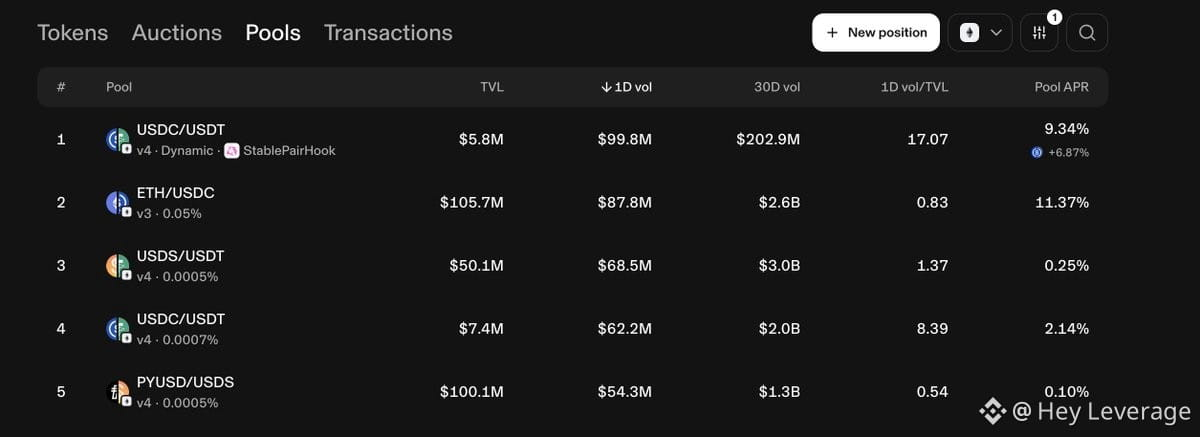
The highest volume pool on Ethereum right now? It's that stable pair hook we dropped 5 days ago.
And LPs are making way more on it.
Why we built v4: we needed to ship custom AMM designs faster. Simple as that.
The hooks we're cooking up at Uniswap Labs — people aren't ready for what's coming 🦄🚀
The highest volume pool on Ethereum right now? It's that stable pair hook we dropped 5 days ago.
And LPs are making way more on it.
Why we built v4: we needed to ship custom AMM designs faster. Simple as that.
The hooks we're cooking up at Uniswap Labs — people aren't ready for what's coming 🦄🚀
And LPs are making way more on it.
Why we built v4: we needed to ship custom AMM designs faster. Simple as that.
The hooks we're cooking up at Uniswap Labs — people aren't ready for what's coming 🦄🚀
1
2
353
·
--
Market structure is all over the place right now — which is actually a good thing. Forces you to be picky instead of chasing everything.
$ETH is on my radar for early next week. After the next rally (whenever that happens), I'm thinking we could see around 3.2k. Would love to see a sweep lower first for better entry points, but we'll see what we get.
Market structure is all over the place right now — which is actually a good thing. Forces you to be picky instead of chasing everything.
$ETH is on my radar for early next week. After the next rally (whenever that happens), I'm thinking we could see around 3.2k. Would love to see a sweep lower first for better entry points, but we'll see what we get.
$ETH is on my radar for early next week. After the next rally (whenever that happens), I'm thinking we could see around 3.2k. Would love to see a sweep lower first for better entry points, but we'll see what we get.
2
1.6k
·
--
If you're a big name thinking about launching a memecoin, just use Uniswap CCA and save yourself the headache.
It actually figures out what the market thinks your token is worth and sets up real liquidity at that price from day one. Plus it blocks snipers.
Or you can keep getting destroyed in the dark forest for literally no reason. Your call.
If you're a big name thinking about launching a memecoin, just use Uniswap CCA and save yourself the headache.
It actually figures out what the market thinks your token is worth and sets up real liquidity at that price from day one. Plus it blocks snipers.
Or you can keep getting destroyed in the dark forest for literally no reason. Your call.
It actually figures out what the market thinks your token is worth and sets up real liquidity at that price from day one. Plus it blocks snipers.
Or you can keep getting destroyed in the dark forest for literally no reason. Your call.
1
1
2.3k
·
--
Reminder: we're not geniuses, it's just a bull market 🐂
Everyone looks smart when everything's going up. The real test comes when the music stops.
Reminder: we're not geniuses, it's just a bull market 🐂
Everyone looks smart when everything's going up. The real test comes when the music stops.
Everyone looks smart when everything's going up. The real test comes when the music stops.
499
·
--
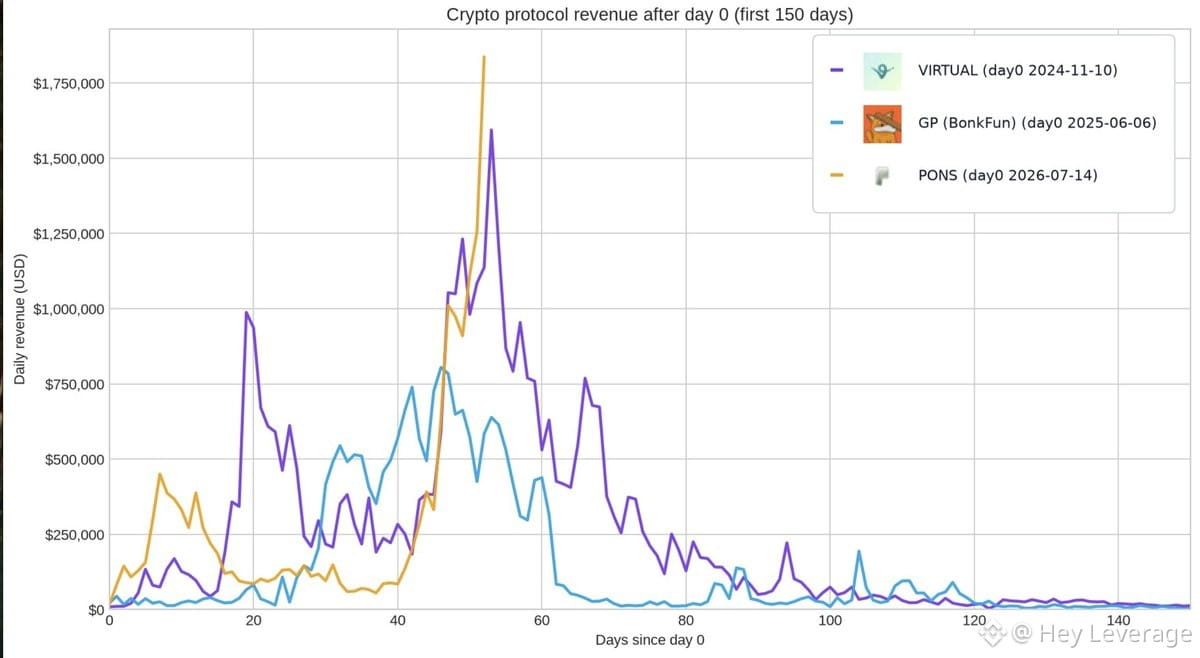
Someone asked me about $PONS and sent over a chart. Yeah CT loves to project revenue way too far out, we all know that. But I actually think this one could stick around for a bit.
Most people calling it overvalued didn't catch any of the upside anyway 🤷♂️
At least this token has some real underlying value. Will revenues stay at this pace forever? Probably not. Could it run longer than people think? Sure. Are there risks like new competitors? Of course there are tons of risks.
But look — plenty of stuff trades way higher with literally ZERO value backing it.
The market's just a giant pendulum swinging between extremes. I'm here for the volatility honestly, that's the whole point. Is $PONS overvalued? Nobody really knows. Are they crushing it right now? Yes. Will they always? Maybe not.
The chart shows past performance but it's a pretty small sample size. I think we'll see this thing swing hard both ways — overvalued then undervalued then back again.
Just ride the volatility and make the most of it 🎢
Someone asked me about $PONS and sent over a chart. Yeah CT loves to project revenue way too far out, we all know that. But I actually think this one could stick around for a bit.
Most people calling it overvalued didn't catch any of the upside anyway 🤷♂️
At least this token has some real underlying value. Will revenues stay at this pace forever? Probably not. Could it run longer than people think? Sure. Are there risks like new competitors? Of course there are tons of risks.
But look — plenty of stuff trades way higher with literally ZERO value backing it.
The market's just a giant pendulum swinging between extremes. I'm here for the volatility honestly, that's the whole point. Is $PONS overvalued? Nobody really knows. Are they crushing it right now? Yes. Will they always? Maybe not.
The chart shows past performance but it's a pretty small sample size. I think we'll see this thing swing hard both ways — overvalued then undervalued then back again.
Just ride the volatility and make the most of it 🎢
Most people calling it overvalued didn't catch any of the upside anyway 🤷♂️
At least this token has some real underlying value. Will revenues stay at this pace forever? Probably not. Could it run longer than people think? Sure. Are there risks like new competitors? Of course there are tons of risks.
But look — plenty of stuff trades way higher with literally ZERO value backing it.
The market's just a giant pendulum swinging between extremes. I'm here for the volatility honestly, that's the whole point. Is $PONS overvalued? Nobody really knows. Are they crushing it right now? Yes. Will they always? Maybe not.
The chart shows past performance but it's a pretty small sample size. I think we'll see this thing swing hard both ways — overvalued then undervalued then back again.
Just ride the volatility and make the most of it 🎢
1
1
4.1k
·
--
Crypto feels different this cycle — in a good way. Less VC theater, more actual alignment between teams and communities. People are finally asking "what do I actually get for holding this?" and that's healthy.
Last cycle was all about who raised the biggest round and which fund was backing what. This time around there's more focus on real utility and giving holders something tangible. Not just promises and roadmaps.
If this trend holds — less extraction, more value creation — we might actually build something that lasts beyond the next hype wave. The shift from "trust me bro" tokenomics to actual product-market fit is long overdue.
Still early to call it a trend, but the vibe is better. Teams that treat their communities like partners instead of exit liquidity tend to stick around. And that's the kind of foundation you want when building for the long run.
Crypto feels different this cycle — in a good way. Less VC theater, more actual alignment between teams and communities. People are finally asking "what do I actually get for holding this?" and that's healthy.
Last cycle was all about who raised the biggest round and which fund was backing what. This time around there's more focus on real utility and giving holders something tangible. Not just promises and roadmaps.
If this trend holds — less extraction, more value creation — we might actually build something that lasts beyond the next hype wave. The shift from "trust me bro" tokenomics to actual product-market fit is long overdue.
Still early to call it a trend, but the vibe is better. Teams that treat their communities like partners instead of exit liquidity tend to stick around. And that's the kind of foundation you want when building for the long run.
Last cycle was all about who raised the biggest round and which fund was backing what. This time around there's more focus on real utility and giving holders something tangible. Not just promises and roadmaps.
If this trend holds — less extraction, more value creation — we might actually build something that lasts beyond the next hype wave. The shift from "trust me bro" tokenomics to actual product-market fit is long overdue.
Still early to call it a trend, but the vibe is better. Teams that treat their communities like partners instead of exit liquidity tend to stick around. And that's the kind of foundation you want when building for the long run.
356
·
--
This year I've only been sharing revenue-generating projects I actually believe in. Pretty boring approach, I know — but it's intentional. Quality over quantity, always.
$HYPE at $28
$PONS at 9 cents
$PUMP at 0.0017
These are the ones I'm holding and trading. They've got solid liquidity, strong narratives, and good structures to work with — easy to trade around a core position.
If the market keeps heating up and liquidity stays strong, I might share some non-revenue plays I trade privately. That's actually my favorite stuff to play with, just haven't been posting it publicly.
Honestly think there are quite a few decent teams building right now. Hoping we see more of this kind of alignment and execution going forward.
This year I've only been sharing revenue-generating projects I actually believe in. Pretty boring approach, I know — but it's intentional. Quality over quantity, always.
$HYPE at $28
$PONS at 9 cents
$PUMP at 0.0017
These are the ones I'm holding and trading. They've got solid liquidity, strong narratives, and good structures to work with — easy to trade around a core position.
If the market keeps heating up and liquidity stays strong, I might share some non-revenue plays I trade privately. That's actually my favorite stuff to play with, just haven't been posting it publicly.
Honestly think there are quite a few decent teams building right now. Hoping we see more of this kind of alignment and execution going forward.
$HYPE at $28
$PONS at 9 cents
$PUMP at 0.0017
These are the ones I'm holding and trading. They've got solid liquidity, strong narratives, and good structures to work with — easy to trade around a core position.
If the market keeps heating up and liquidity stays strong, I might share some non-revenue plays I trade privately. That's actually my favorite stuff to play with, just haven't been posting it publicly.
Honestly think there are quite a few decent teams building right now. Hoping we see more of this kind of alignment and execution going forward.
2
3.4k
·
--
Hyperliquid will probably always trade at a premium compared to other projects — and honestly, that makes sense.
The trust factor is real. The team has built multiple revenue streams, and some of them aren't even tied to market cycles. Stablecoin yield, for example. That's diversification done right.
The product is sticky. People don't just try it and leave — they stay. That's rare.
And alignment? This team might be the most aligned with their project's success in all of crypto history. That's not hype, that's just what you see when you look at how they operate.
We've also seen how they performed during the bear market. Revenue didn't collapse. That tells you something about the model.
So when you compare $HYPE to other successful projects and wonder why the valuation is higher — this is what you're paying for. Trust, diversification, stickiness, and a team that actually cares about long-term success.
Hyperliquid will probably always trade at a premium compared to other projects — and honestly, that makes sense.
The trust factor is real. The team has built multiple revenue streams, and some of them aren't even tied to market cycles. Stablecoin yield, for example. That's diversification done right.
The product is sticky. People don't just try it and leave — they stay. That's rare.
And alignment? This team might be the most aligned with their project's success in all of crypto history. That's not hype, that's just what you see when you look at how they operate.
We've also seen how they performed during the bear market. Revenue didn't collapse. That tells you something about the model.
So when you compare $HYPE to other successful projects and wonder why the valuation is higher — this is what you're paying for. Trust, diversification, stickiness, and a team that actually cares about long-term success.
The trust factor is real. The team has built multiple revenue streams, and some of them aren't even tied to market cycles. Stablecoin yield, for example. That's diversification done right.
The product is sticky. People don't just try it and leave — they stay. That's rare.
And alignment? This team might be the most aligned with their project's success in all of crypto history. That's not hype, that's just what you see when you look at how they operate.
We've also seen how they performed during the bear market. Revenue didn't collapse. That tells you something about the model.
So when you compare $HYPE to other successful projects and wonder why the valuation is higher — this is what you're paying for. Trust, diversification, stickiness, and a team that actually cares about long-term success.
2
954
·
--
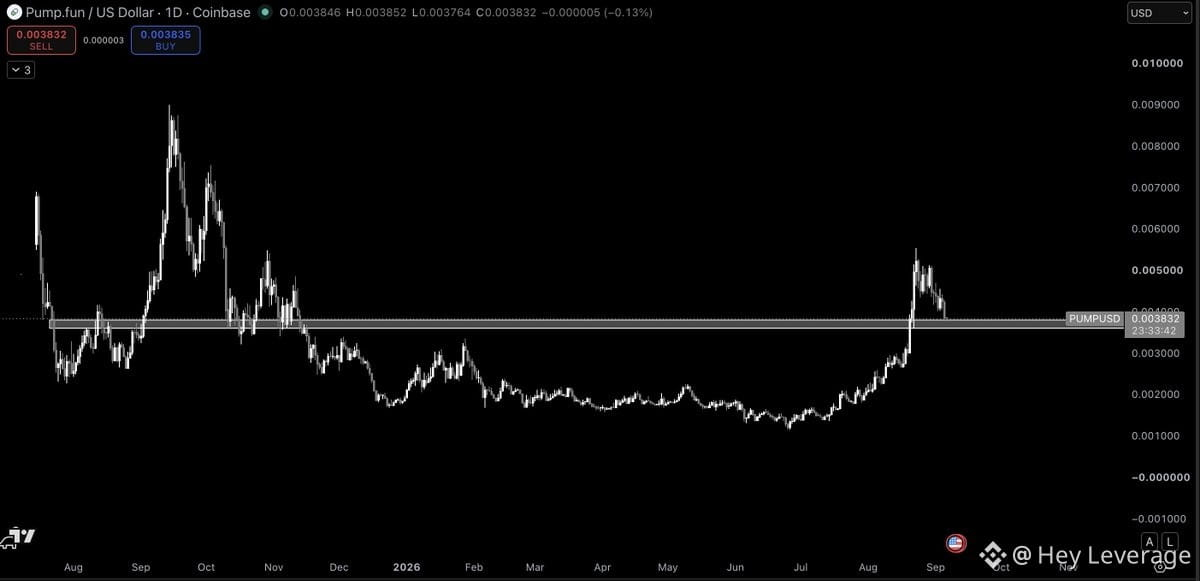
Getting some fills on $PUMP around current levels. Starting to layer back in for round 2.
Ideally looking for entries down in the .0036xx range if we get that dip. But this zone is already decent to start building a position.
Not going all in yet — just beginning the accumulation.
Getting some fills on $PUMP around current levels. Starting to layer back in for round 2.
Ideally looking for entries down in the .0036xx range if we get that dip. But this zone is already decent to start building a position.
Not going all in yet — just beginning the accumulation.
Ideally looking for entries down in the .0036xx range if we get that dip. But this zone is already decent to start building a position.
Not going all in yet — just beginning the accumulation.
1
2.9k
·
--
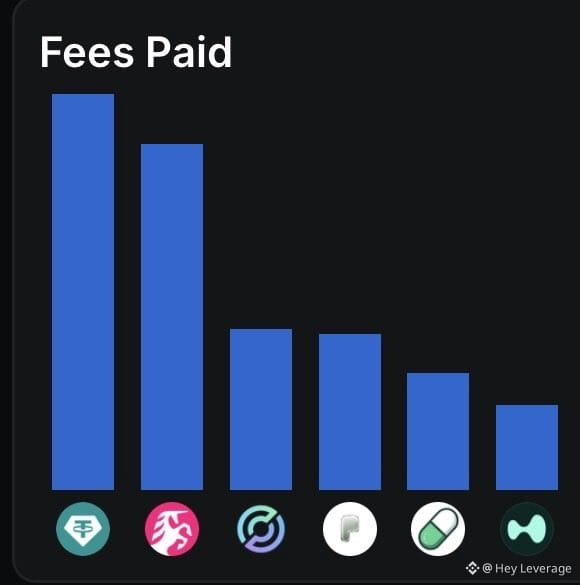
Wild stat: Uniswap is about 10% away from beating Tether in total fees generated. Just needs people to swap a bit more and it'll be #1 across all crypto platforms.
Think about that — a decentralized exchange protocol potentially outearning the biggest stablecoin issuer. That's basically saying the infrastructure for moving money around is becoming more valuable than the money itself.
Kind of like how Visa makes more money than most banks. Except here it's all on-chain, no middleman taking a cut. The protocol just collects fees from every swap.
Pretty good signal for where value actually lives in crypto. Not in holding tokens, but in facilitating the movement of them.
Wild stat: Uniswap is about 10% away from beating Tether in total fees generated. Just needs people to swap a bit more and it'll be #1 across all crypto platforms.
Think about that — a decentralized exchange protocol potentially outearning the biggest stablecoin issuer. That's basically saying the infrastructure for moving money around is becoming more valuable than the money itself.
Kind of like how Visa makes more money than most banks. Except here it's all on-chain, no middleman taking a cut. The protocol just collects fees from every swap.
Pretty good signal for where value actually lives in crypto. Not in holding tokens, but in facilitating the movement of them.
Think about that — a decentralized exchange protocol potentially outearning the biggest stablecoin issuer. That's basically saying the infrastructure for moving money around is becoming more valuable than the money itself.
Kind of like how Visa makes more money than most banks. Except here it's all on-chain, no middleman taking a cut. The protocol just collects fees from every swap.
Pretty good signal for where value actually lives in crypto. Not in holding tokens, but in facilitating the movement of them.
1
2
8.5k
·
--
Partiellement vrai
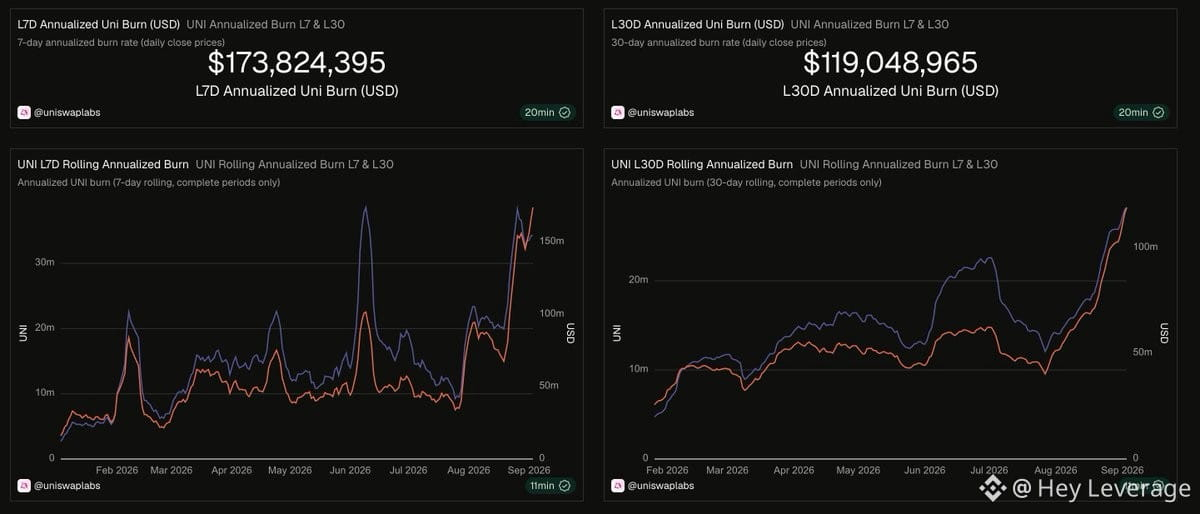
The 7-day $UNI burn rate is approaching $200M annually.
And this isn't even the bull market yet.
Pretty wild when you think about it — this is just the warm-up phase. Once things really heat up and volume explodes, those numbers are going to look completely different. Token burns at this scale basically mean the protocol is generating serious value and eating its own supply. Classic supply-demand setup.
If you're watching tokenomics, this is one of those quiet signals that speaks louder than most headlines.
The 7-day $UNI burn rate is approaching $200M annually.
And this isn't even the bull market yet.
Pretty wild when you think about it — this is just the warm-up phase. Once things really heat up and volume explodes, those numbers are going to look completely different. Token burns at this scale basically mean the protocol is generating serious value and eating its own supply. Classic supply-demand setup.
If you're watching tokenomics, this is one of those quiet signals that speaks louder than most headlines.
And this isn't even the bull market yet.
Pretty wild when you think about it — this is just the warm-up phase. Once things really heat up and volume explodes, those numbers are going to look completely different. Token burns at this scale basically mean the protocol is generating serious value and eating its own supply. Classic supply-demand setup.
If you're watching tokenomics, this is one of those quiet signals that speaks louder than most headlines.
1
8
11.7k
Connectez-vous pour découvrir plus de contenu
Rejoignez la communauté mondiale des adeptes de cryptomonnaies sur Binance Square
⚡️ Suviez les dernières informations importantes sur les cryptomonnaies.
💬 Jugé digne de confiance par la plus grande plateforme d’échange de cryptomonnaies au monde.
👍 Découvrez les connaissances que partagent les créateurs vérifiés.
Adresse e-mail/Nº de téléphone