Binance Square

Dream Spicer 梦想家

Dream big, earn smart | Crypto learner | Airdrop Hunter | Charts on, stress gone | Let’s grow 🚀
355 Suivis
14.1K+ Abonnés
4.8K+ J’aime
156 Partagé(s)
Publications
PINNED
·
--
Hi Good Morning I’ve set up a Red Packet for my community. Don’t miss out grab your share before they’re all gone! First come, first served. [click here](https://app.binance.com/uni-qr/6idS2azR?utm_medium=web_share_copy) Follow for more rewards and updates! #RedPacketGiveAway
Hi Good Morning

I’ve set up a Red Packet for my community. Don’t miss out grab your share before they’re all gone! First come, first served.

click here

Follow for more rewards and updates!

#RedPacketGiveAway
PINNED
yes
100%
No
0%
3 votes • Vote fermé
Gooo
Gooo
Hawk自由哥
·
--
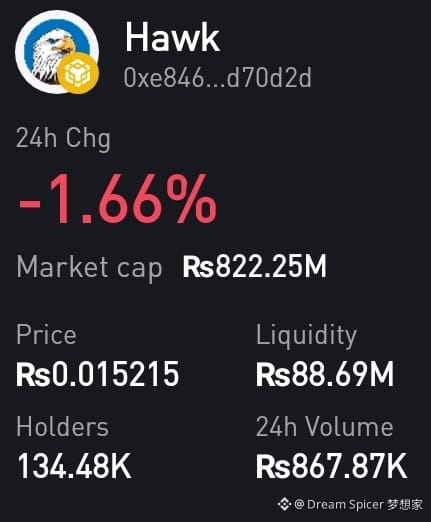
#2026世界杯 吉祥物#Hawk 🦅🧧🧧🧧
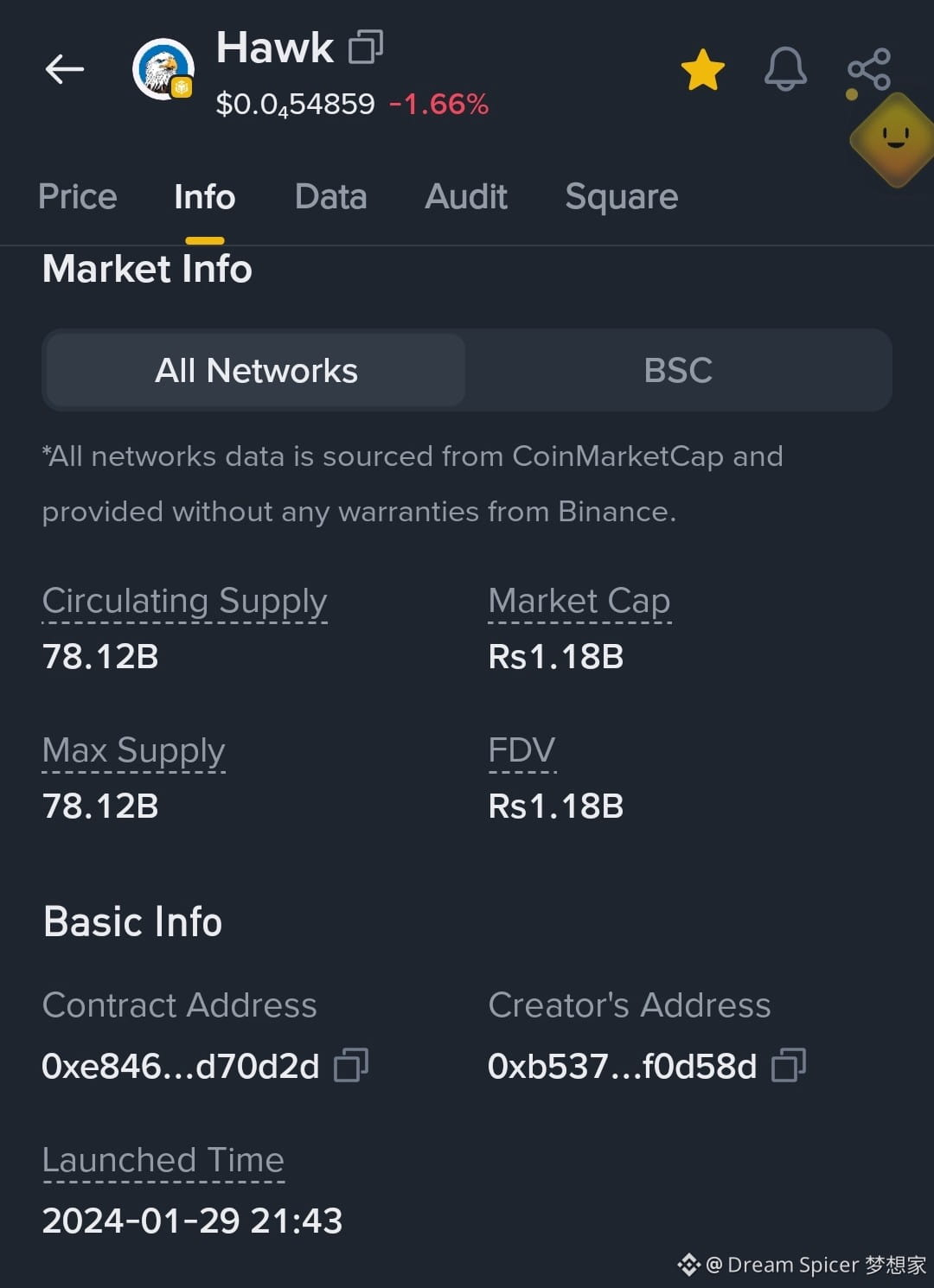
区块链的本质,是把权力归还个体,恪守「代码即法律,主权归自我」我们以#自由 信仰为社群基因,是对去中心化、公平未来的长期传承。雄鹰代表高瞻远瞩与独立坚韧的精神,契合社群内核。行情恐慌时保持冷静,泡沫狂热时坚守价值,传承独立思考的心智与格局,引领社群保持长远视野🌈Hawk必将起飞🔥#美联储主席交接临近 #BinanceOnline即将开启 $BTC $BNB

{web3_wallet_create}(560xe846d164b88ed2e1209609fea3cf7a3d89d70d2d)
666
666
HAMIDHN404
·
--
FOLLOW ME.

LIKE. SHARE.And

CLAIM REWARD.
Gooo
Gooo
Triple_S
·
--
Claimed 100Usst gift code.Don,t miss.limited slot.🫶
Type👉 40k
🕺
Claim free 0.7-100 banna31 usdt.
Gooo
Gooo
AK_BNB
·
--
Hello everyone
I have gifts for you🎁🧧🎁

1️⃣ claim your gift click me

2️⃣ claim your gift click me
Gooo
Gooo
Nolan南山南
·
--
Haussier
朝起迎新光,盘面消化波动、重回稳健区间🌤️
经历前几日关口反复拉锯,今日整体止跌反弹修复支撑,每一次回撤都是洗盘蓄力,每一次回暖都是趋势延续。
牛熊轮回皆是常态,坚守价值方能穿越周期。
祝所有币友周五顺遂,心态从容不浮躁,布局有耐心,后市皆迎丰收💸$BNB
goo
goo
RaYa雷亚 29
·
--
📍📍BP0Y2IOEH4 🧧🧧
🧧🧧🧧🧧🧧🧧🍁🧧🧧🧧🧧🧧🧧

♻️♻️CLAIM 100 USDT💲💲

👉 REDEEM GIFT 👈

📍 GET REWARD 📍
Gooo
Gooo
Ahmed Ali Nizamani
·
--
You Like $BNB Give away Gifts?

Yes✅ or ❌Now
{spot}(BNBUSDT)
Informative
Informative
Yiz13
·
--
BINANCELOVERSSSSSS 🇻🇪🇻🇪

Hoy estuve presente en el Binance University Tour en la UCAB y la experiencia fue de otro nivel. No solo por el contenido, sino por el feedback constante y lo dinámico que fue el evento junto a Academia BT&C.

​Para los que están dando sus primeros pasos en el mundo cripto, cubrieron los pilares fundamentales:

✅ Análisis técnico desde cero.

✅ Gestión de riesgo (vital para no morir en el intento).

✅ Uso de Binance Spot y Futuros.

​Me encantó ver cómo temas que parecen complejos se explicaron de forma tan educativa y entretenida.

¡Mañana sigue la jornada y si estás en Caracas, no te lo puedes perder! 🔥 @Binance LATAM Official @Binance Angels @Tineoysidro7

#BinanceLatam #BİNANCE #squarecommunity
Join with us
Join with us
VINii1 维尼
·
--
[Revoir] 🎙️ Testing Just
01 h 01 min 01 sec · 246 auditeurs
🎙️ 一起聊聊币圈未来发展Let's talk about the development of the coin circle!
avatar
Fin
04 h 50 min 06 sec
28.7k
42
59
Dream Spicer 梦想家
·
--
[Terminé] 🎙️ Testing
525 auditeurs
Article
Pixels Doesn’t Create Excitement It Absorbs FatigueSomething feels quieter lately. Not calmer just less reactive. People aren’t chasing every new token spike the same way. Losses aren’t even talked about much anymore. They just get absorbed, processed and then everyone moves on like it was expected. It doesn’t look like grief but it kind of behaves like it. I started noticing it in how players approach Pixels. Not with excitement not even with greed. More like routine. They log in tend crops, manage resources, optimize land. There’s no rush to win. It feels closer to maintenance than ambition. And that’s where it got strange for me. Because Pixels doesn’t really fight that mood. It leans into it. The farming loop is slow on purpose. You plant, you wait, you harvest. It’s repetitive almost meditative. But under that, there’s a constant awareness of value. Every crop has a purpose. Every resource feeds into something else. Nothing feels wasted, but nothing feels urgent either. It reminded me of how people handle losses they don’t fully process. You don’t react loudly. You just keep going quietly adjusting your behavior. In @pixels , progression works the same way. You don’t recover from bad decisions. You adapt your loop. Maybe you switch crops. Maybe you optimize your land layout. Maybe you collaborate more with others. The system doesn’t reward emotional reactions. It rewards steady correction. Land ownership makes this even more visible. It’s not just status. It’s responsibility. Owning land means you’re part of production now. You’re not just playing. You’re managing flow. Deciding what gets produced, what gets sold, what gets reinvested. And the return isn’t explosive. It’s gradual. That’s what makes it feel different. The $PIXEL token sits inside this system like a quiet scoreboard. It tracks activity, but it doesn’t dominate behavior the way you’d expect. People aren’t maximizing for quick exits as much as they’re stabilizing their loops. Earning still matters, but it’s not frantic. It feels like players already went through the phase where everything had to be extracted immediately. Now they’re pacing it. Even the Ronin integration adds to this feeling. It lowers friction, makes everything smoother. But instead of accelerating speculation, it seems to normalize participation. Like the infrastructure is there not for spikes, but for consistency. And then there’s the social layer. You see players helping each other optimize. Sharing strategies. Coordinating production. Not because it’s idealistic but because it works better that way. Cooperation becomes less about community and more about efficiency. It’s practical, almost detached. That’s where the idea of digital mourning started making sense to me. Pixels doesn’t create excitement to pull people in. It meets players where they already are. Slightly tired, more calculated, less emotional about outcomes. It gives them a system where they can keep engaging without needing to feel too much about it. But I’m not sure if that’s entirely healthy for the system itself. Because a lot of the economy still depends on activity. On people continuing to farm, craft, trade. If the motivation isn’t excitement or belief, but just habit what happens when the habit breaks? The earning mechanics are stable for now, but they still rely on balance. Too many players optimizing the same loop can compress margins. Too few new players can slow down demand. And if everyone is just quietly extracting without strong conviction, the system might hold until it suddenly doesn’t. I keep coming back to that feeling. Pixels isn’t trying to cheer players up. It’s not promising a comeback story. It’s giving them a place to continue, without asking too many questions. And maybe that’s why it works right now. But it also makes me wonder if this is a phase the market is passing through or something it’s settling into. Because if Pixels really is training people to operate inside this quieter, more detached state… then the question isn’t whether the game succeeds. It’s whether the players ever feel the need to care again. #pixel

Pixels Doesn’t Create Excitement It Absorbs Fatigue

Something feels quieter lately. Not calmer just less reactive. People aren’t chasing every new token spike the same way. Losses aren’t even talked about much anymore. They just get absorbed, processed and then everyone moves on like it was expected.
It doesn’t look like grief but it kind of behaves like it.
I started noticing it in how players approach Pixels. Not with excitement not even with greed. More like routine. They log in tend crops, manage resources, optimize land. There’s no rush to win. It feels closer to maintenance than ambition.
And that’s where it got strange for me.
Because Pixels doesn’t really fight that mood. It leans into it.
The farming loop is slow on purpose. You plant, you wait, you harvest. It’s repetitive almost meditative. But under that, there’s a constant awareness of value. Every crop has a purpose. Every resource feeds into something else. Nothing feels wasted, but nothing feels urgent either.
It reminded me of how people handle losses they don’t fully process. You don’t react loudly. You just keep going quietly adjusting your behavior.
In @Pixels , progression works the same way. You don’t recover from bad decisions. You adapt your loop. Maybe you switch crops. Maybe you optimize your land layout. Maybe you collaborate more with others. The system doesn’t reward emotional reactions. It rewards steady correction.
Land ownership makes this even more visible. It’s not just status. It’s responsibility. Owning land means you’re part of production now. You’re not just playing. You’re managing flow. Deciding what gets produced, what gets sold, what gets reinvested.
And the return isn’t explosive. It’s gradual.
That’s what makes it feel different.
The $PIXEL token sits inside this system like a quiet scoreboard. It tracks activity, but it doesn’t dominate behavior the way you’d expect. People aren’t maximizing for quick exits as much as they’re stabilizing their loops. Earning still matters, but it’s not frantic.
It feels like players already went through the phase where everything had to be extracted immediately. Now they’re pacing it.
Even the Ronin integration adds to this feeling. It lowers friction, makes everything smoother. But instead of accelerating speculation, it seems to normalize participation. Like the infrastructure is there not for spikes, but for consistency.
And then there’s the social layer.
You see players helping each other optimize. Sharing strategies. Coordinating production. Not because it’s idealistic but because it works better that way. Cooperation becomes less about community and more about efficiency.
It’s practical, almost detached.
That’s where the idea of digital mourning started making sense to me.
Pixels doesn’t create excitement to pull people in. It meets players where they already are. Slightly tired, more calculated, less emotional about outcomes. It gives them a system where they can keep engaging without needing to feel too much about it.
But I’m not sure if that’s entirely healthy for the system itself.
Because a lot of the economy still depends on activity. On people continuing to farm, craft, trade. If the motivation isn’t excitement or belief, but just habit what happens when the habit breaks?
The earning mechanics are stable for now, but they still rely on balance. Too many players optimizing the same loop can compress margins. Too few new players can slow down demand. And if everyone is just quietly extracting without strong conviction, the system might hold until it suddenly doesn’t.
I keep coming back to that feeling.
Pixels isn’t trying to cheer players up. It’s not promising a comeback story. It’s giving them a place to continue, without asking too many questions.
And maybe that’s why it works right now.
But it also makes me wonder if this is a phase the market is passing through or something it’s settling into.
Because if Pixels really is training people to operate inside this quieter, more detached state… then the question isn’t whether the game succeeds.
It’s whether the players ever feel the need to care again.
#pixel
I didn’t think Reputation Score would matter beyond squeezing more out of farming loops, but the Pixel Dungeons beta changed that. Access wasn’t bought or farmed directly. It came from how you played over time. That reputation is built inside the grind planting, crafting, fulfilling quests on time using energy efficiently. Players who routed their day cleanly, avoided waste and stayed consistent just accumulated it in the background. Now it gates entirely new gameplay. Not $PIXEL not land just behavioral history. The tension is obvious. Token farmers can scale with alts, but reputation doesn’t copy cleanly. That quietly shifts advantage toward players who stayed disciplined inside the loop. #pixel @pixels {spot}(PIXELUSDT)
I didn’t think Reputation Score would matter beyond squeezing more out of farming loops, but the Pixel Dungeons beta changed that. Access wasn’t bought or farmed directly. It came from how you played over time.

That reputation is built inside the grind planting, crafting, fulfilling quests on time using energy efficiently. Players who routed their day cleanly, avoided waste and stayed consistent just accumulated it in the background.

Now it gates entirely new gameplay. Not $PIXEL not land just behavioral history.

The tension is obvious. Token farmers can scale with alts, but reputation doesn’t copy cleanly. That quietly shifts advantage toward players who stayed disciplined inside the loop.

#pixel @Pixels
Article
Pixels: When the Economy Starts Learning From PlayersSomething feels different in how value moves inside Pixels lately. Not bigger not louder just quicker to react. You try something that worked yesterday and today it barely holds. It’s like the system isn’t waiting anymore. It’s watching, adjusting and answering back almost instantly. I don’t think this is accidental. The game feels less like a fixed design and more like a loop that listens. Player behavior goes in small economic shifts come out. And over time, you start noticing that you’re not just optimizing the game you’re responding to it, almost the same way it responds to you. That’s where Pixels starts to feel less like a game and more like a behavior responsive system. Not in a technical sense but in how it actually feels to play. The farming loop is still there. You plant, harvest, craft, sell. But the meaning of each action keeps shifting depending on what the system seems to need at that moment. I’ve had days where one crop felt like the obvious choice. Then suddenly margins disappear. Something else becomes more valuable. No announcement no clear signal just a quiet change that pushes you to adapt. It’s subtle, but it builds this habit of constant recalibration. Resource gathering and progression follow the same pattern. Early on it feels linear. You unlock tools, expand land, increase output. But later, progression starts to depend less on grinding and more on reading the system. What’s scarce? What’s being over produced? Where is the gap right now? That’s where the $PIXEL token plays a strange role. It’s not just something you earn. It behaves more like a feedback layer. When earning slows down or costs shift, you feel it immediately. Your strategy changes without you even thinking too hard about it. It’s less about rewards and more about signals. Land ownership adds another dimension to this. At first, it looks like a simple upgrade path. More land, more production. But over time land feels like positioning inside a moving economy. The value of what you grow or produce on that land changes depending on how the system reacts to overall player behavior. I’ve seen players completely reorganize their land setups overnight. Not because of updates but because of small shifts in demand. It creates this feeling that you’re always slightly behind the system, trying to catch up to where it’s heading next. The social layer makes this even more interesting. Players don’t just share tips they compare signals. What’s selling faster? What’s dropping in value? Small groups start moving together adjusting strategies almost like coordinated responses. It doesn’t feel like casual collaboration. It feels like collective adaptation. And Ronin plays a quiet but important role here. Everything moves faster. Transactions are smooth. There’s very little friction when you want to act on a decision. That speed matters because a slow system wouldn’t feel responsive. Here, the feedback loop stays tight. But this kind of design brings its own tension. When a system reacts this quickly it starts relying on constant player input. The economy needs activity to stay balanced. If players slow down, does the system lose its rhythm? Or does it overcorrect in ways that push people out? I also keep thinking about who the system is really optimizing for. Players who stay and build long term? Or players who are just good at reading signals and extracting value quickly? Because if both behaviors feed the same feedback loop the system might unintentionally favor the faster, more opportunistic side. There’s also a limit to how much adaptation feels good. At some point, constant change can start feeling unstable. Like you’re not building toward something just reacting to whatever comes next. And not every player wants that kind of experience. Still, I can’t ignore what @pixels is experimenting with here. It’s not trying to lock players into a fixed economy. It’s letting the economy move, and then shaping itself around how players behave inside it. That’s what makes it feel like a nervous system. Not perfect, not always balanced but alive in a way most game economies aren’t. I just don’t know if players are fully ready for a system that watches them this closely and responds this quickly. #pixel

Pixels: When the Economy Starts Learning From Players

Something feels different in how value moves inside Pixels lately. Not bigger not louder just quicker to react. You try something that worked yesterday and today it barely holds. It’s like the system isn’t waiting anymore. It’s watching, adjusting and answering back almost instantly.
I don’t think this is accidental. The game feels less like a fixed design and more like a loop that listens. Player behavior goes in small economic shifts come out. And over time, you start noticing that you’re not just optimizing the game you’re responding to it, almost the same way it responds to you.
That’s where Pixels starts to feel less like a game and more like a behavior responsive system. Not in a technical sense but in how it actually feels to play. The farming loop is still there. You plant, harvest, craft, sell. But the meaning of each action keeps shifting depending on what the system seems to need at that moment.
I’ve had days where one crop felt like the obvious choice. Then suddenly margins disappear. Something else becomes more valuable. No announcement no clear signal just a quiet change that pushes you to adapt. It’s subtle, but it builds this habit of constant recalibration.
Resource gathering and progression follow the same pattern. Early on it feels linear. You unlock tools, expand land, increase output. But later, progression starts to depend less on grinding and more on reading the system. What’s scarce? What’s being over produced? Where is the gap right now?
That’s where the $PIXEL token plays a strange role. It’s not just something you earn. It behaves more like a feedback layer. When earning slows down or costs shift, you feel it immediately. Your strategy changes without you even thinking too hard about it. It’s less about rewards and more about signals.
Land ownership adds another dimension to this. At first, it looks like a simple upgrade path. More land, more production. But over time land feels like positioning inside a moving economy. The value of what you grow or produce on that land changes depending on how the system reacts to overall player behavior.
I’ve seen players completely reorganize their land setups overnight. Not because of updates but because of small shifts in demand. It creates this feeling that you’re always slightly behind the system, trying to catch up to where it’s heading next.
The social layer makes this even more interesting. Players don’t just share tips they compare signals. What’s selling faster? What’s dropping in value? Small groups start moving together adjusting strategies almost like coordinated responses. It doesn’t feel like casual collaboration. It feels like collective adaptation.
And Ronin plays a quiet but important role here. Everything moves faster. Transactions are smooth. There’s very little friction when you want to act on a decision. That speed matters because a slow system wouldn’t feel responsive. Here, the feedback loop stays tight.
But this kind of design brings its own tension.
When a system reacts this quickly it starts relying on constant player input. The economy needs activity to stay balanced. If players slow down, does the system lose its rhythm? Or does it overcorrect in ways that push people out?
I also keep thinking about who the system is really optimizing for. Players who stay and build long term? Or players who are just good at reading signals and extracting value quickly? Because if both behaviors feed the same feedback loop the system might unintentionally favor the faster, more opportunistic side.
There’s also a limit to how much adaptation feels good. At some point, constant change can start feeling unstable. Like you’re not building toward something just reacting to whatever comes next. And not every player wants that kind of experience.
Still, I can’t ignore what @Pixels is experimenting with here. It’s not trying to lock players into a fixed economy. It’s letting the economy move, and then shaping itself around how players behave inside it.
That’s what makes it feel like a nervous system. Not perfect, not always balanced but alive in a way most game economies aren’t.
I just don’t know if players are fully ready for a system that watches them this closely and responds this quickly.
#pixel
I started noticing it in the farming loop not the yield, but the timing. Plant, wait, craft, sell but the real edge came from anticipating when the system expects you to act. Quests, energy regen, and $PIXEL payouts aren’t random. They quietly reward repetition same routes, same cycles. Top players don’t just optimize they align with that pattern and extract more by staying predictable. That predictability scales. Multi accounts replicate it perfectly, turning optimization into volume extraction. Efficiency compounds for them, while emissions spread thinner for everyone else. At that point, the system isn’t being played it’s being mirrored and the advantage shifts to whoever can repeat it fastest. #pixel @pixels {future}(PIXELUSDT)
I started noticing it in the farming loop not the yield, but the timing.
Plant, wait, craft, sell but the real edge came from anticipating when the system expects you to act.

Quests, energy regen, and $PIXEL payouts aren’t random.
They quietly reward repetition same routes, same cycles.
Top players don’t just optimize they align with that pattern and extract more by staying predictable.

That predictability scales.

Multi accounts replicate it perfectly, turning optimization into volume extraction.
Efficiency compounds for them, while emissions spread thinner for everyone else.

At that point, the system isn’t being played it’s being mirrored and the advantage shifts to whoever can repeat it fastest.

#pixel @Pixels
Article
Signals Over Rules: How Pixels Is Quietly Changing the Way We PlaySomething has been shifting quietly in how people play Pixels. Not in the updates or announcements, but in the way outcomes feel less predictable. The same actions don’t always lead to the same rewards anymore. And no one really explains why. You just notice it. I started to feel like the game wasn’t teaching me through instructions, but through consequences. Plant the same crops follow the same route optimize like before and suddenly the returns feel thinner. Not broken just different. Like the system is nudging you without ever saying a word. That’s when it clicked for me. @pixels doesn’t operate on clear, stated rules anymore. It behaves more like a non verbal system. The real logic sits beneath the surface revealed only through changing results. You’re not told what works you’re expected to figure it out. In the farming loop, this becomes obvious. Early on, it feels straightforward. Grow, harvest, sell, repeat. But over time, the efficiency shifts. Some crops lose their edge. Some routines stop making sense. The game never announces these changes clearly. You just feel them through your wallet. Resource gathering works the same way. I remember when certain routes felt optimal. Then slowly without warning they weren’t. Either competition increased, or yields felt off. It’s hard to tell if it’s the system adjusting or just more players optimizing. Probably both. But again, no clear signal just a changed outcome. Even progression feels like this quiet negotiation. You invest time upgrade tools expand land. But the payoff curve isn’t stable. Sometimes it feels rewarding. Other times it feels like you’re running in place. The rules of growth exist, but they’re never fully visible. Land ownership adds another layer to this. On paper, it’s about utility and passive value. But in practice, the value depends on how others behave. Foot traffic, social activity, resource demand all of it shifts. Owning land isn’t just strategy. It’s reading invisible patterns in player behavior. The $PIXEL token sits right in the middle of this uncertainty. You earn it through effort, but the meaning of that effort changes. Prices fluctuate, sinks adjust and suddenly what felt profitable doesn’t anymore. The token isn’t just a reward. It’s feedback. A signal that something in the system has shifted. I think the Ronin integration made this even more pronounced. Lower friction brought in more players. More players meant faster optimization cycles. And faster cycles mean the unspoken rules evolve quicker. What worked last week feels outdated today. Social gameplay amplifies this effect. You watch others. You copy, adapt, experiment. But everyone is doing the same. So strategies decay fast. There’s no stable meta because the system doesn’t allow one to exist for long. It’s constantly being rewritten through player interaction. And that’s where I start to question things. Is this intentional design, or just a side effect of a fragile economy? Because a system that never explains itself can feel engaging but it can also feel exhausting. Especially when rewards depend on reading signals that aren’t clearly there. The earning mechanics highlight this tension. You can still make value. But it requires constant adjustment. Constant awareness. It’s less about playing well, and more about interpreting the system correctly at the right moment. That’s a different kind of game. Sometimes I wonder if this creates depth, or just uncertainty. Because when rules are invisible, it’s hard to tell if you’re improving or just guessing better than before. Pixels feels like it’s moving away from being a game you understand, toward being a system you sense. And maybe that’s the point. A kind of living economy where clarity is replaced by adaptation. But I’m not sure if most players actually want that. Or if they’re just following patterns that haven’t broken yet. And that leaves me thinking... Is Pixels teaching players a new way to play, or quietly testing how long they’ll keep playing without ever fully knowing the rules. #pixel

Signals Over Rules: How Pixels Is Quietly Changing the Way We Play

Something has been shifting quietly in how people play Pixels. Not in the updates or announcements, but in the way outcomes feel less predictable. The same actions don’t always lead to the same rewards anymore. And no one really explains why. You just notice it.
I started to feel like the game wasn’t teaching me through instructions, but through consequences. Plant the same crops follow the same route optimize like before and suddenly the returns feel thinner. Not broken just different. Like the system is nudging you without ever saying a word.
That’s when it clicked for me. @Pixels doesn’t operate on clear, stated rules anymore. It behaves more like a non verbal system. The real logic sits beneath the surface revealed only through changing results. You’re not told what works you’re expected to figure it out.
In the farming loop, this becomes obvious. Early on, it feels straightforward. Grow, harvest, sell, repeat. But over time, the efficiency shifts. Some crops lose their edge. Some routines stop making sense. The game never announces these changes clearly. You just feel them through your wallet.
Resource gathering works the same way. I remember when certain routes felt optimal. Then slowly without warning they weren’t. Either competition increased, or yields felt off. It’s hard to tell if it’s the system adjusting or just more players optimizing. Probably both. But again, no clear signal just a changed outcome.
Even progression feels like this quiet negotiation. You invest time upgrade tools expand land. But the payoff curve isn’t stable. Sometimes it feels rewarding. Other times it feels like you’re running in place. The rules of growth exist, but they’re never fully visible.
Land ownership adds another layer to this. On paper, it’s about utility and passive value. But in practice, the value depends on how others behave. Foot traffic, social activity, resource demand all of it shifts. Owning land isn’t just strategy. It’s reading invisible patterns in player behavior.
The $PIXEL token sits right in the middle of this uncertainty. You earn it through effort, but the meaning of that effort changes. Prices fluctuate, sinks adjust and suddenly what felt profitable doesn’t anymore. The token isn’t just a reward. It’s feedback. A signal that something in the system has shifted.
I think the Ronin integration made this even more pronounced. Lower friction brought in more players. More players meant faster optimization cycles. And faster cycles mean the unspoken rules evolve quicker. What worked last week feels outdated today.
Social gameplay amplifies this effect. You watch others. You copy, adapt, experiment. But everyone is doing the same. So strategies decay fast. There’s no stable meta because the system doesn’t allow one to exist for long. It’s constantly being rewritten through player interaction.
And that’s where I start to question things. Is this intentional design, or just a side effect of a fragile economy? Because a system that never explains itself can feel engaging but it can also feel exhausting. Especially when rewards depend on reading signals that aren’t clearly there.
The earning mechanics highlight this tension. You can still make value. But it requires constant adjustment. Constant awareness. It’s less about playing well, and more about interpreting the system correctly at the right moment. That’s a different kind of game.
Sometimes I wonder if this creates depth, or just uncertainty. Because when rules are invisible, it’s hard to tell if you’re improving or just guessing better than before.
Pixels feels like it’s moving away from being a game you understand, toward being a system you sense. And maybe that’s the point. A kind of living economy where clarity is replaced by adaptation.
But I’m not sure if most players actually want that. Or if they’re just following patterns that haven’t broken yet.
And that leaves me thinking...
Is Pixels teaching players a new way to play, or quietly testing how long they’ll keep playing without ever fully knowing the rules.
#pixel
It creeps in quietly your best route still works but the returns feel thinner like the system already moved on without telling you. Same crops same crafting chain same sell cycle just less edge than before. $PIXEL flows through quests, energy windows, and tight timing loops. What looks like a stable farming cycle is actually shifting underneath, as more players compress into the same optimized paths and emissions spread thinner. The tension sits in that crowding. Early optimizers extract cleanly late ones inherit diluted routes. Landowners and multi accounters adapt faster while linear grinders fall behind. Progress here isn’t about perfecting a loop. It’s about dropping it the moment it becomes predictable. #pixel @pixels {future}(PIXELUSDT)
It creeps in quietly your best route still works but the returns feel thinner like the system already moved on without telling you. Same crops same crafting chain same sell cycle just less edge than before.

$PIXEL flows through quests, energy windows, and tight timing loops. What looks like a stable farming cycle is actually shifting underneath, as more players compress into the same optimized paths and emissions spread thinner.

The tension sits in that crowding. Early optimizers extract cleanly late ones inherit diluted routes. Landowners and multi accounters adapt faster while linear grinders fall behind.

Progress here isn’t about perfecting a loop. It’s about dropping it the moment it becomes predictable.

#pixel @Pixels
Connectez-vous pour découvrir d’autres contenus
Rejoignez la communauté mondiale des adeptes de cryptomonnaies sur Binance Square
⚡️ Suviez les dernières informations importantes sur les cryptomonnaies.
💬 Jugé digne de confiance par la plus grande plateforme d’échange de cryptomonnaies au monde.
👍 Découvrez les connaissances que partagent les créateurs vérifiés.
Adresse e-mail/Nº de téléphone
Plan du site
Préférences en matière de cookies
CGU de la plateforme