

New Day Dk007
1.7k Publications

New Day Dk007
Signaler
Bloquer l’utilisateur
Ouvert au trading
Trade fréquemment
3.6 an(s)
2.0K+ Suivis
877 Abonnés
504 J’aime
Publications
Portefeuille
Tous
Citations
Direct
PINNED

Article
Whales accumulates MOVR#MOVRAnalysis $MOVR
{spot}(MOVRUSDT)
TRADE $MOVR its pumping hard also the candles looks green , Moonriver is $3.12, with a total trading volume of $ 2.59M in the last 24 hours. The price of Moonriver changed by +80.35% in the past day, and its USD value has increased by +242.16% over the last week. With a circulating supply of 12,488,232 MOVR, the market cap of Moonriver is currently 39.63M USD, marking a +80.35% increase today
$MOVR The recent slowdown in whale accumulation on MOVR coin has led to a 10.93% price drop in the last hour, currently trading at $2.582. This significant decline follows a rally that saw the price reach as high as $3.029 earlier today. The rapid price movement has caught the attention of traders, particularly in light of the recent trading volume exceeding $84 million. The slowdown in whale accumulation may be influencing current price dynamics, and traders are closely monitoring MOVR's price action as it tests key support levels
Whales accumulates MOVR
#MOVRAnalysis $MOVR
TRADE $MOVR its pumping hard also the candles looks green , Moonriver is $3.12, with a total trading volume of $ 2.59M in the last 24 hours. The price of Moonriver changed by +80.35% in the past day, and its USD value has increased by +242.16% over the last week. With a circulating supply of 12,488,232 MOVR, the market cap of Moonriver is currently 39.63M USD, marking a +80.35% increase today
$MOVR The recent slowdown in whale accumulation on MOVR coin has led to a 10.93% price drop in the last hour, currently trading at $2.582. This significant decline follows a rally that saw the price reach as high as $3.029 earlier today. The rapid price movement has caught the attention of traders, particularly in light of the recent trading volume exceeding $84 million. The slowdown in whale accumulation may be influencing current price dynamics, and traders are closely monitoring MOVR's price action as it tests key support levels
TRADE $MOVR its pumping hard also the candles looks green , Moonriver is $3.12, with a total trading volume of $ 2.59M in the last 24 hours. The price of Moonriver changed by +80.35% in the past day, and its USD value has increased by +242.16% over the last week. With a circulating supply of 12,488,232 MOVR, the market cap of Moonriver is currently 39.63M USD, marking a +80.35% increase today
$MOVR The recent slowdown in whale accumulation on MOVR coin has led to a 10.93% price drop in the last hour, currently trading at $2.582. This significant decline follows a rally that saw the price reach as high as $3.029 earlier today. The rapid price movement has caught the attention of traders, particularly in light of the recent trading volume exceeding $84 million. The slowdown in whale accumulation may be influencing current price dynamics, and traders are closely monitoring MOVR's price action as it tests key support levels
240
PINNED

Article
QNT is approaching towards strong upward Trend, Trade and keep it long#QNT $QNT
{spot}(QNTUSDT)
$QNT The current analysis of Quant (QNT) coin indicates a strong upward trend with significant price movements. The coin has surged by 57.01% in the last 24 hours, driven by a major banking partnership announcement and surging on-chain activity. The price has broken decisively above major moving averages, confirming a powerful breakout. If QNT holds above the 23.6% Fibonacci retracement at $171.96, it could retest the recent high near $193. A break below risks a deeper pullback toward $158.76. The bullish momentum is supported by a high-volume technical breakout and active on-chain activity.
QNT is approaching towards strong upward Trend, Trade and keep it long
#QNT $QNT
$QNT The current analysis of Quant (QNT) coin indicates a strong upward trend with significant price movements. The coin has surged by 57.01% in the last 24 hours, driven by a major banking partnership announcement and surging on-chain activity. The price has broken decisively above major moving averages, confirming a powerful breakout. If QNT holds above the 23.6% Fibonacci retracement at $171.96, it could retest the recent high near $193. A break below risks a deeper pullback toward $158.76. The bullish momentum is supported by a high-volume technical breakout and active on-chain activity.
$QNT The current analysis of Quant (QNT) coin indicates a strong upward trend with significant price movements. The coin has surged by 57.01% in the last 24 hours, driven by a major banking partnership announcement and surging on-chain activity. The price has broken decisively above major moving averages, confirming a powerful breakout. If QNT holds above the 23.6% Fibonacci retracement at $171.96, it could retest the recent high near $193. A break below risks a deeper pullback toward $158.76. The bullish momentum is supported by a high-volume technical breakout and active on-chain activity.
1
201
#RLC/USDT $RLC trade here below 👇 with me because the meme coin going to explode anytime , opening long the candle looks extensively great and green ,grab you bite of profit with .$RLC 💚💚💚
#RLC/USDT $RLC trade here below 👇 with me because the meme coin going to explode anytime , opening long the candle looks extensively great and green ,grab you bite of profit with .$RLC 💚💚💚
4
246
Article
PUMP Coin Price Surges 15% as Whales Accumulate: How High Can PUMP Go?#PUMP $PUMP
{spot}(PUMPUSDT)
$PUMP Pump.fun (PUMP) coin price rose 15% to $0.006369 on October 4 as whale accumulation drew attention to the token. It has a market capitalization of about $2.95 billion and ranked 35th in the market capitalization of cryptocurrencies.
Liquidations totaled $390,000 over the same period, with short positions accounting for most losses as the token advanced. The rally outpaced the wider cryptocurrency market, which gained 0.77% over the same period.
Total cryptocurrency market capitalization consequently climbed to approximately $2.9 trillion during the broader recovery.
Bitcoin price held above $85,000, while Ethereum climbed to $2,699 and XRP reached $1.50 during the wider market recovery. Steady institutional accumulation and relatively low leverage supported the broader advance, according to the supplied market overview.
The PUMP token drew fresh attention after whale wallet “netherlol” purchased 383.34 million tokens worth approximately $2.4 million. Look on chain said the transaction marked the wallet’s first purchase in more than a year.
A separate, newly created wallet, identified as GnZqfY, withdrew 189.22 million PUMP tokens from MEXC. The transfer was valued at $1.18 million and occurred seven hours before Lookonchain’s update. Together, the transactions involved 572.56 million tokens worth roughly $3.58 million.
$PUMP reportedly climbed 20% over 24 hours, reaching a fresh local high following the previous day’s long position liquidations. The rebound accompanied renewed activity from large holders, although the transactions do not establish what drove the rally.
Lookonchain did not publicly identify a reason for netherlol’s return. The MEXC withdrawal also does not independently confirm a new purchase.
PUMP Coin Price Surges 15% as Whales Accumulate: How High Can PUMP Go?
#PUMP $PUMP
$PUMP Pump.fun (PUMP) coin price rose 15% to $0.006369 on October 4 as whale accumulation drew attention to the token. It has a market capitalization of about $2.95 billion and ranked 35th in the market capitalization of cryptocurrencies.
Liquidations totaled $390,000 over the same period, with short positions accounting for most losses as the token advanced. The rally outpaced the wider cryptocurrency market, which gained 0.77% over the same period.
Total cryptocurrency market capitalization consequently climbed to approximately $2.9 trillion during the broader recovery.
Bitcoin price held above $85,000, while Ethereum climbed to $2,699 and XRP reached $1.50 during the wider market recovery. Steady institutional accumulation and relatively low leverage supported the broader advance, according to the supplied market overview.
The PUMP token drew fresh attention after whale wallet “netherlol” purchased 383.34 million tokens worth approximately $2.4 million. Look on chain said the transaction marked the wallet’s first purchase in more than a year.
A separate, newly created wallet, identified as GnZqfY, withdrew 189.22 million PUMP tokens from MEXC. The transfer was valued at $1.18 million and occurred seven hours before Lookonchain’s update. Together, the transactions involved 572.56 million tokens worth roughly $3.58 million.
$PUMP reportedly climbed 20% over 24 hours, reaching a fresh local high following the previous day’s long position liquidations. The rebound accompanied renewed activity from large holders, although the transactions do not establish what drove the rally.
Lookonchain did not publicly identify a reason for netherlol’s return. The MEXC withdrawal also does not independently confirm a new purchase.
$PUMP Pump.fun (PUMP) coin price rose 15% to $0.006369 on October 4 as whale accumulation drew attention to the token. It has a market capitalization of about $2.95 billion and ranked 35th in the market capitalization of cryptocurrencies.
Liquidations totaled $390,000 over the same period, with short positions accounting for most losses as the token advanced. The rally outpaced the wider cryptocurrency market, which gained 0.77% over the same period.
Total cryptocurrency market capitalization consequently climbed to approximately $2.9 trillion during the broader recovery.
Bitcoin price held above $85,000, while Ethereum climbed to $2,699 and XRP reached $1.50 during the wider market recovery. Steady institutional accumulation and relatively low leverage supported the broader advance, according to the supplied market overview.
The PUMP token drew fresh attention after whale wallet “netherlol” purchased 383.34 million tokens worth approximately $2.4 million. Look on chain said the transaction marked the wallet’s first purchase in more than a year.
A separate, newly created wallet, identified as GnZqfY, withdrew 189.22 million PUMP tokens from MEXC. The transfer was valued at $1.18 million and occurred seven hours before Lookonchain’s update. Together, the transactions involved 572.56 million tokens worth roughly $3.58 million.
$PUMP reportedly climbed 20% over 24 hours, reaching a fresh local high following the previous day’s long position liquidations. The rebound accompanied renewed activity from large holders, although the transactions do not establish what drove the rally.
Lookonchain did not publicly identify a reason for netherlol’s return. The MEXC withdrawal also does not independently confirm a new purchase.
81

Article
Binance CMO reveals the 'Satoshi Test' for safer crypto payments#BNB $BNB
{spot}(BNBUSDT)
$BNB Binance chief marketing officer Eowyn Chen says crypto users should make one small move before sending a large payment: test the address first.
Speaking on The Sujal Show, which premiered Oct. 1, Chen said users can reduce the risk of sending funds to the wrong wallet by making a small test transaction before transferring the full amount.
“I think one simplest thing that people remember is just to do a so-called Satoshi test, meaning that do not send your full amount,” said Chen, who previously served as CEO of Trust Wallet.
Because cryptocurrencies can be divided into small amounts, Chen suggested sending about $1 first and checking that it reaches the intended wallet.
“Once you verify it, send it the large amounts,” she said. “Just use your one dollar to check if that’s actually the right address.”
The practice is particularly useful because blockchain transfers are generally irreversible. Sending funds to an incorrect address can therefore result in a permanent loss.
Chen highlighted address poisoning as one reason for taking extra precautions. In such attacks, scammers create wallet addresses resembling ones that victims have previously used, hoping they will copy the fraudulent address from their transaction history.
Binance CMO reveals the 'Satoshi Test' for safer crypto payments
#BNB $BNB
$BNB Binance chief marketing officer Eowyn Chen says crypto users should make one small move before sending a large payment: test the address first.
Speaking on The Sujal Show, which premiered Oct. 1, Chen said users can reduce the risk of sending funds to the wrong wallet by making a small test transaction before transferring the full amount.
“I think one simplest thing that people remember is just to do a so-called Satoshi test, meaning that do not send your full amount,” said Chen, who previously served as CEO of Trust Wallet.
Because cryptocurrencies can be divided into small amounts, Chen suggested sending about $1 first and checking that it reaches the intended wallet.
“Once you verify it, send it the large amounts,” she said. “Just use your one dollar to check if that’s actually the right address.”
The practice is particularly useful because blockchain transfers are generally irreversible. Sending funds to an incorrect address can therefore result in a permanent loss.
Chen highlighted address poisoning as one reason for taking extra precautions. In such attacks, scammers create wallet addresses resembling ones that victims have previously used, hoping they will copy the fraudulent address from their transaction history.
$BNB Binance chief marketing officer Eowyn Chen says crypto users should make one small move before sending a large payment: test the address first.
Speaking on The Sujal Show, which premiered Oct. 1, Chen said users can reduce the risk of sending funds to the wrong wallet by making a small test transaction before transferring the full amount.
“I think one simplest thing that people remember is just to do a so-called Satoshi test, meaning that do not send your full amount,” said Chen, who previously served as CEO of Trust Wallet.
Because cryptocurrencies can be divided into small amounts, Chen suggested sending about $1 first and checking that it reaches the intended wallet.
“Once you verify it, send it the large amounts,” she said. “Just use your one dollar to check if that’s actually the right address.”
The practice is particularly useful because blockchain transfers are generally irreversible. Sending funds to an incorrect address can therefore result in a permanent loss.
Chen highlighted address poisoning as one reason for taking extra precautions. In such attacks, scammers create wallet addresses resembling ones that victims have previously used, hoping they will copy the fraudulent address from their transaction history.
71
Article
Moonbeam (GLMR) Among Top Crypto Gainers#GLMR $GLMR
{spot}(GLMRUSDT)
$GLMR (Moonbeam) is the native token of the Moonbeam smart‑contract platform on Polkadot, currently trading around $0.0089–$0.0091 with a market cap of roughly $10–11 million and a circulating supply of about 1.2 billion tokens.
Moonbeam (GLMR) is an Ethereum‑compatible smart‑contract parachain built on Polkadot. It allows developers to deploy Solidity‑based applications using familiar Ethereum tools (MetaMask, Hardhat, Web3.js, Ethers.js) while benefiting from Polkadot’s interoperability and scalability.
GLMR is the utility token powering Moonbeam, a Polkadot‑based, Ethereum‑compatible smart‑contract platform focused on interoperability and developer accessibility.
Moonbeam (GLMR) Among Top Crypto Gainers
#GLMR $GLMR
$GLMR (Moonbeam) is the native token of the Moonbeam smart‑contract platform on Polkadot, currently trading around $0.0089–$0.0091 with a market cap of roughly $10–11 million and a circulating supply of about 1.2 billion tokens.
Moonbeam (GLMR) is an Ethereum‑compatible smart‑contract parachain built on Polkadot. It allows developers to deploy Solidity‑based applications using familiar Ethereum tools (MetaMask, Hardhat, Web3.js, Ethers.js) while benefiting from Polkadot’s interoperability and scalability.
GLMR is the utility token powering Moonbeam, a Polkadot‑based, Ethereum‑compatible smart‑contract platform focused on interoperability and developer accessibility.
$GLMR (Moonbeam) is the native token of the Moonbeam smart‑contract platform on Polkadot, currently trading around $0.0089–$0.0091 with a market cap of roughly $10–11 million and a circulating supply of about 1.2 billion tokens.
Moonbeam (GLMR) is an Ethereum‑compatible smart‑contract parachain built on Polkadot. It allows developers to deploy Solidity‑based applications using familiar Ethereum tools (MetaMask, Hardhat, Web3.js, Ethers.js) while benefiting from Polkadot’s interoperability and scalability.
GLMR is the utility token powering Moonbeam, a Polkadot‑based, Ethereum‑compatible smart‑contract platform focused on interoperability and developer accessibility.
145
Article
AIN is pumping for the last 24hr#AIN $AIN
{future}(AINUSDT)
$AIN Coin, also known as Infinity Ground, is currently trading at ₹4.47 per unit. It has seen a 10.4% increase in value today and a 79.3% increase since yesterday. The price of 1 AIN is approximately ₹2.22, which is a 4.24% decrease in the last 24 hours. The total trading volume of Infinity Ground in the last 24 hours was ₹924,901,270.
AI Network (AIN) is another cryptocurrency with a market cap of $3,199,829, valued at $0.01188 today. It has a trading volume of $56,038.29 in the last 24 hours, representing a -1.50% decrease from one day ago. The all-time high price of AI Network (AIN) reached $0.2648, and the all-time low was $0.003779.
Both cryptocurrencies are part of the growing interest in blockchain technology and decentralized finance, with AIN Coin focusing on the AI sector and AI Network on a decentralized AI development ecosystem.
AIN is pumping for the last 24hr
#AIN $AIN
$AIN Coin, also known as Infinity Ground, is currently trading at ₹4.47 per unit. It has seen a 10.4% increase in value today and a 79.3% increase since yesterday. The price of 1 AIN is approximately ₹2.22, which is a 4.24% decrease in the last 24 hours. The total trading volume of Infinity Ground in the last 24 hours was ₹924,901,270.
AI Network (AIN) is another cryptocurrency with a market cap of $3,199,829, valued at $0.01188 today. It has a trading volume of $56,038.29 in the last 24 hours, representing a -1.50% decrease from one day ago. The all-time high price of AI Network (AIN) reached $0.2648, and the all-time low was $0.003779.
Both cryptocurrencies are part of the growing interest in blockchain technology and decentralized finance, with AIN Coin focusing on the AI sector and AI Network on a decentralized AI development ecosystem.
$AIN Coin, also known as Infinity Ground, is currently trading at ₹4.47 per unit. It has seen a 10.4% increase in value today and a 79.3% increase since yesterday. The price of 1 AIN is approximately ₹2.22, which is a 4.24% decrease in the last 24 hours. The total trading volume of Infinity Ground in the last 24 hours was ₹924,901,270.
AI Network (AIN) is another cryptocurrency with a market cap of $3,199,829, valued at $0.01188 today. It has a trading volume of $56,038.29 in the last 24 hours, representing a -1.50% decrease from one day ago. The all-time high price of AI Network (AIN) reached $0.2648, and the all-time low was $0.003779.
Both cryptocurrencies are part of the growing interest in blockchain technology and decentralized finance, with AIN Coin focusing on the AI sector and AI Network on a decentralized AI development ecosystem.
372
Vérifié
Article
Quant jumps 158%#QNT $QNT
{spot}(QNTUSDT)
$QNT Quant’s rally followed The Clearing House’s Sep. 24 announcement that it had selected the company to power its On-Chain Money Initiative, a network for clearing and settling tokenized commercial-bank deposits.
The payments operator said the network would connect with existing U.S. infrastructure, including RTP and CHIPS. Availability for participating financial institutions is expected in the first half of 2027.
Gold analyst Jan Nieuwenhuijs posted on X on Sep. 26 that buying one QNT carried the risk of losing $120 against the potential to earn $10,000.
His post did not set a date for that outcome. The comment came before the Oct. 3 price of $261.42 and represents a speculative upside view rather than a forecast for the next few days.
The Clearing House announcement concerns infrastructure for bank deposits. Its planned first-half 2027 launch is the next dated milestone in the payments operator’s release.
Quant jumps 158%
#QNT $QNT
$QNT Quant’s rally followed The Clearing House’s Sep. 24 announcement that it had selected the company to power its On-Chain Money Initiative, a network for clearing and settling tokenized commercial-bank deposits.
The payments operator said the network would connect with existing U.S. infrastructure, including RTP and CHIPS. Availability for participating financial institutions is expected in the first half of 2027.
Gold analyst Jan Nieuwenhuijs posted on X on Sep. 26 that buying one QNT carried the risk of losing $120 against the potential to earn $10,000.
His post did not set a date for that outcome. The comment came before the Oct. 3 price of $261.42 and represents a speculative upside view rather than a forecast for the next few days.
The Clearing House announcement concerns infrastructure for bank deposits. Its planned first-half 2027 launch is the next dated milestone in the payments operator’s release.
$QNT Quant’s rally followed The Clearing House’s Sep. 24 announcement that it had selected the company to power its On-Chain Money Initiative, a network for clearing and settling tokenized commercial-bank deposits.
The payments operator said the network would connect with existing U.S. infrastructure, including RTP and CHIPS. Availability for participating financial institutions is expected in the first half of 2027.
Gold analyst Jan Nieuwenhuijs posted on X on Sep. 26 that buying one QNT carried the risk of losing $120 against the potential to earn $10,000.
His post did not set a date for that outcome. The comment came before the Oct. 3 price of $261.42 and represents a speculative upside view rather than a forecast for the next few days.
The Clearing House announcement concerns infrastructure for bank deposits. Its planned first-half 2027 launch is the next dated milestone in the payments operator’s release.
615

Article
Sandbox Within a Sandbox#SAND $SAND
{spot}(SANDUSDT)
Ethereum gaming metaverse “The Sandbox” is building their very own Ethereum L2 called SAND Chain.
According to their website, the network will be developed using the ZK stack, and aims to become the hub for creators to manage communities and monetize content seamlessly.
The network will be fueled by 3 main drivers of value, which include SANDpoints to represent user’s on-chain reputation and loyalty, Creator Points to incentivize builders and Creator Tokens that are tied to a creator’s brand value.
A testnet launch is scheduled for October 14 where SAND will be the native gas token powering this upcoming L2.
$SAND holders will be able to gain early access to new features in the Sandbox ecosystem and stake their assets to earn rewards.
Since the news, SAND is up by 5.0% from $0.261 to $0.274 today.
Sandbox Within a Sandbox
#SAND $SAND
Ethereum gaming metaverse “The Sandbox” is building their very own Ethereum L2 called SAND Chain.
According to their website, the network will be developed using the ZK stack, and aims to become the hub for creators to manage communities and monetize content seamlessly.
The network will be fueled by 3 main drivers of value, which include SANDpoints to represent user’s on-chain reputation and loyalty, Creator Points to incentivize builders and Creator Tokens that are tied to a creator’s brand value.
A testnet launch is scheduled for October 14 where SAND will be the native gas token powering this upcoming L2.
$SAND holders will be able to gain early access to new features in the Sandbox ecosystem and stake their assets to earn rewards.
Since the news, SAND is up by 5.0% from $0.261 to $0.274 today.
Ethereum gaming metaverse “The Sandbox” is building their very own Ethereum L2 called SAND Chain.
According to their website, the network will be developed using the ZK stack, and aims to become the hub for creators to manage communities and monetize content seamlessly.
The network will be fueled by 3 main drivers of value, which include SANDpoints to represent user’s on-chain reputation and loyalty, Creator Points to incentivize builders and Creator Tokens that are tied to a creator’s brand value.
A testnet launch is scheduled for October 14 where SAND will be the native gas token powering this upcoming L2.
$SAND holders will be able to gain early access to new features in the Sandbox ecosystem and stake their assets to earn rewards.
Since the news, SAND is up by 5.0% from $0.261 to $0.274 today.
178

Article
龙虾 lobster's is pumping trade wisely龙虾 (Lobster)$龙虾
{future}(龙虾USDT)
TRADE $龙虾 Lobster's market cap briefly surged to $16.5 million earlier today, a 127% increase over 24 hours. This is classic memeBOME-3.48% coin volatility, driven by pure speculative sentiment. The trading volume confirms the frenzy, with 24-hour volume reaching $6.91 million (R$6.91M). That level of turnover indicates high speculative turnover, where the coin is being bought and sold rapidly in pursuit of short-term gains.
$龙虾 has remarkably bounce back so keep it long opening and trade safely
Yet the underlying liquidity tells a different story. Despite the volume spike, the coin remains extremely thin. There are only 1.92K holders, and the reported liquidity pool sits at just $170.45K. This creates a dangerous mismatch: a massive price pop fueled by high-volume trading, but on a foundation of minimal capital and shallow order books.
龙虾 lobster's is pumping trade wisely
龙虾 (Lobster)$龙虾
TRADE $龙虾 Lobster's market cap briefly surged to $16.5 million earlier today, a 127% increase over 24 hours. This is classic memeBOME-3.48% coin volatility, driven by pure speculative sentiment. The trading volume confirms the frenzy, with 24-hour volume reaching $6.91 million (R$6.91M). That level of turnover indicates high speculative turnover, where the coin is being bought and sold rapidly in pursuit of short-term gains.
$龙虾 has remarkably bounce back so keep it long opening and trade safely
Yet the underlying liquidity tells a different story. Despite the volume spike, the coin remains extremely thin. There are only 1.92K holders, and the reported liquidity pool sits at just $170.45K. This creates a dangerous mismatch: a massive price pop fueled by high-volume trading, but on a foundation of minimal capital and shallow order books.
TRADE $龙虾 Lobster's market cap briefly surged to $16.5 million earlier today, a 127% increase over 24 hours. This is classic memeBOME-3.48% coin volatility, driven by pure speculative sentiment. The trading volume confirms the frenzy, with 24-hour volume reaching $6.91 million (R$6.91M). That level of turnover indicates high speculative turnover, where the coin is being bought and sold rapidly in pursuit of short-term gains.
$龙虾 has remarkably bounce back so keep it long opening and trade safely
Yet the underlying liquidity tells a different story. Despite the volume spike, the coin remains extremely thin. There are only 1.92K holders, and the reported liquidity pool sits at just $170.45K. This creates a dangerous mismatch: a massive price pop fueled by high-volume trading, but on a foundation of minimal capital and shallow order books.
651

Article
NEAR Protocol Price Surges 80% in a Week: Can the Breakout Push NEAR Toward $5?#NEAR $NEAR
{spot}(NEARUSDT)
$NEAR Protocol has delivered a sharp breakout rally amid the broader crypto market rally, climbing from nearly $2.20 to around $4.20 in seven days. The rally has pushed NEAR above a major resistance structure that had capped previous recovery attempts, bringing the token to a critical phase. With NEAR price approaching the $4.10–$4.40 supply zone, traders are watching whether buyers can sustain the breakout or whether the sharp rally triggers a short-term pullback.
$NEAR Protocol which has been promoted as a confidential perpetual futures trading feature powered by Hyperliquid. The product allows users to open positions without publicly linking trades to their accounts, according to the recent market data.
This development has increased discussion around NEAR’s privacy-focused trading infrastructure. However, the sustainability of the token’s rally will depend on whether the increased attention translates into persistent network activity, liquidity and demand rather than short-term speculative buying.
NEAR Protocol Price Surges 80% in a Week: Can the Breakout Push NEAR Toward $5?
#NEAR $NEAR
$NEAR Protocol has delivered a sharp breakout rally amid the broader crypto market rally, climbing from nearly $2.20 to around $4.20 in seven days. The rally has pushed NEAR above a major resistance structure that had capped previous recovery attempts, bringing the token to a critical phase. With NEAR price approaching the $4.10–$4.40 supply zone, traders are watching whether buyers can sustain the breakout or whether the sharp rally triggers a short-term pullback.
$NEAR Protocol which has been promoted as a confidential perpetual futures trading feature powered by Hyperliquid. The product allows users to open positions without publicly linking trades to their accounts, according to the recent market data.
This development has increased discussion around NEAR’s privacy-focused trading infrastructure. However, the sustainability of the token’s rally will depend on whether the increased attention translates into persistent network activity, liquidity and demand rather than short-term speculative buying.
$NEAR Protocol has delivered a sharp breakout rally amid the broader crypto market rally, climbing from nearly $2.20 to around $4.20 in seven days. The rally has pushed NEAR above a major resistance structure that had capped previous recovery attempts, bringing the token to a critical phase. With NEAR price approaching the $4.10–$4.40 supply zone, traders are watching whether buyers can sustain the breakout or whether the sharp rally triggers a short-term pullback.
$NEAR Protocol which has been promoted as a confidential perpetual futures trading feature powered by Hyperliquid. The product allows users to open positions without publicly linking trades to their accounts, according to the recent market data.
This development has increased discussion around NEAR’s privacy-focused trading infrastructure. However, the sustainability of the token’s rally will depend on whether the increased attention translates into persistent network activity, liquidity and demand rather than short-term speculative buying.
138
Article
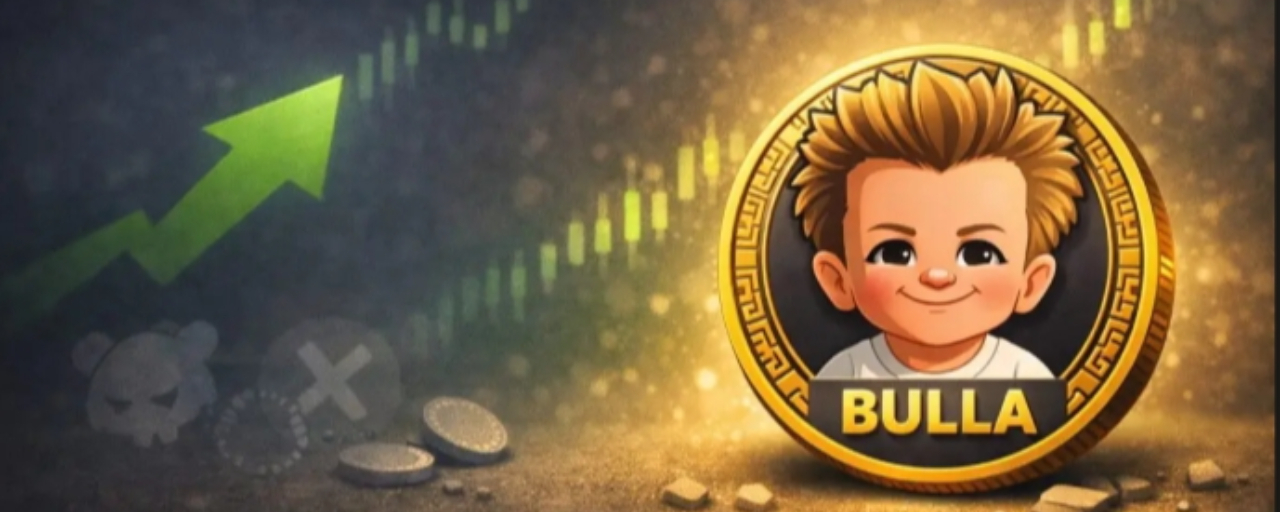
BULLA looks good, set short target#BULLA $BULLA
{future}(BULLAUSDT)
$BULLA (BULLA) coin today reveals a mixed market sentiment. The current price is $0.092193 USD, with a 24-hour trading volume of $2,499,057 USD, indicating a slight increase of 1.68% in the last 24 hours. The market cap is $92,193,140 USD, with a circulating supply of 1,000,000,000 BULLA coins. Bulla's performance is influenced by the broader market trends, particularly the sector rotation into altcoins, which has led to a 3.11% increase in Bulla's price over the past 24 hours. However, the price is also subject to volatility, with a potential pullback if the altcoin rotation does not sustain its momentum. The market outlook remains cautiously bullish, contingent on the continuation of the sector-wide trend favoring smaller-cap tokens like Bulla.
BULLA looks good, set short target
#BULLA $BULLA
$BULLA (BULLA) coin today reveals a mixed market sentiment. The current price is $0.092193 USD, with a 24-hour trading volume of $2,499,057 USD, indicating a slight increase of 1.68% in the last 24 hours. The market cap is $92,193,140 USD, with a circulating supply of 1,000,000,000 BULLA coins. Bulla's performance is influenced by the broader market trends, particularly the sector rotation into altcoins, which has led to a 3.11% increase in Bulla's price over the past 24 hours. However, the price is also subject to volatility, with a potential pullback if the altcoin rotation does not sustain its momentum. The market outlook remains cautiously bullish, contingent on the continuation of the sector-wide trend favoring smaller-cap tokens like Bulla.
$BULLA (BULLA) coin today reveals a mixed market sentiment. The current price is $0.092193 USD, with a 24-hour trading volume of $2,499,057 USD, indicating a slight increase of 1.68% in the last 24 hours. The market cap is $92,193,140 USD, with a circulating supply of 1,000,000,000 BULLA coins. Bulla's performance is influenced by the broader market trends, particularly the sector rotation into altcoins, which has led to a 3.11% increase in Bulla's price over the past 24 hours. However, the price is also subject to volatility, with a potential pullback if the altcoin rotation does not sustain its momentum. The market outlook remains cautiously bullish, contingent on the continuation of the sector-wide trend favoring smaller-cap tokens like Bulla.
219

Article
W coin may have the possibility to kick off very soon#W $W
{spot}(WUSDT)
$W Coin (WCO) indicates a positive trend with a price of $0.00007692 and a market cap of $76.92K. The coin has seen a slight increase in price, reaching a high of $0.00007696 and a low of $0.00007168 in the last 24 hours. The trading volume has also increased, confirming buyer confidence and potential short-term dominance of the bulls. The price has broken through the critical level of $0.0090, driven by increased trading volume and market microstructure optimization.
For those interested in trading W Coin, it is recommended to actively monitor the price movement in the range of $0.0090 to $0.0090. The coin's unique features, such as the clawback address for recovery in cases of fraudulent transactions, and the token recycle ecosystem, add to its appeal as a cryptocurrency.
W coin may have the possibility to kick off very soon
#W $W
$W Coin (WCO) indicates a positive trend with a price of $0.00007692 and a market cap of $76.92K. The coin has seen a slight increase in price, reaching a high of $0.00007696 and a low of $0.00007168 in the last 24 hours. The trading volume has also increased, confirming buyer confidence and potential short-term dominance of the bulls. The price has broken through the critical level of $0.0090, driven by increased trading volume and market microstructure optimization.
For those interested in trading W Coin, it is recommended to actively monitor the price movement in the range of $0.0090 to $0.0090. The coin's unique features, such as the clawback address for recovery in cases of fraudulent transactions, and the token recycle ecosystem, add to its appeal as a cryptocurrency.
$W Coin (WCO) indicates a positive trend with a price of $0.00007692 and a market cap of $76.92K. The coin has seen a slight increase in price, reaching a high of $0.00007696 and a low of $0.00007168 in the last 24 hours. The trading volume has also increased, confirming buyer confidence and potential short-term dominance of the bulls. The price has broken through the critical level of $0.0090, driven by increased trading volume and market microstructure optimization.
For those interested in trading W Coin, it is recommended to actively monitor the price movement in the range of $0.0090 to $0.0090. The coin's unique features, such as the clawback address for recovery in cases of fraudulent transactions, and the token recycle ecosystem, add to its appeal as a cryptocurrency.
266

Article
ARX is about to fly in the moon, the pitch is perfect to take off.#ARX $ARX
{future}(ARXUSDT)
$ARX The current price of Arcium (ARX) is $0.295426 USD, with a 24-hour trading volume of $21,384,917 USD. Arcium has seen a 29.05% increase in the last 24 hours, and it has a market cap of $61,694,138 USD. The circulating supply of ARX coins is 208,831,342, and the maximum supply is 1,000,000,000 ARX coins. The live price is updated in real-time, and the current CoinMarketCap ranking is #347.
In India, the price of ARX is ₹16.14, with a 24-hour trading volume of ₹52,52,936.47. The market cap in Indian Rupees is ₹3.37 Cr, and the circulating supply is at 20,88,31,342.00 ARX coins. Arcium is treated as a virtual digital asset under India’s applicable tax and compliance framework, and it can be legally traded on FIU-IND registered exchanges like Mudrex.
$ARX For a comprehensive analysis of Arcium (ARX) and its market performance, users can refer to platforms like CoinMarketCap, CoinGlass, and Bybit for real-time updates and detailed market data.
ARX is about to fly in the moon, the pitch is perfect to take off.
#ARX $ARX
$ARX The current price of Arcium (ARX) is $0.295426 USD, with a 24-hour trading volume of $21,384,917 USD. Arcium has seen a 29.05% increase in the last 24 hours, and it has a market cap of $61,694,138 USD. The circulating supply of ARX coins is 208,831,342, and the maximum supply is 1,000,000,000 ARX coins. The live price is updated in real-time, and the current CoinMarketCap ranking is #347.
In India, the price of ARX is ₹16.14, with a 24-hour trading volume of ₹52,52,936.47. The market cap in Indian Rupees is ₹3.37 Cr, and the circulating supply is at 20,88,31,342.00 ARX coins. Arcium is treated as a virtual digital asset under India’s applicable tax and compliance framework, and it can be legally traded on FIU-IND registered exchanges like Mudrex.
$ARX For a comprehensive analysis of Arcium (ARX) and its market performance, users can refer to platforms like CoinMarketCap, CoinGlass, and Bybit for real-time updates and detailed market data.
$ARX The current price of Arcium (ARX) is $0.295426 USD, with a 24-hour trading volume of $21,384,917 USD. Arcium has seen a 29.05% increase in the last 24 hours, and it has a market cap of $61,694,138 USD. The circulating supply of ARX coins is 208,831,342, and the maximum supply is 1,000,000,000 ARX coins. The live price is updated in real-time, and the current CoinMarketCap ranking is #347.
In India, the price of ARX is ₹16.14, with a 24-hour trading volume of ₹52,52,936.47. The market cap in Indian Rupees is ₹3.37 Cr, and the circulating supply is at 20,88,31,342.00 ARX coins. Arcium is treated as a virtual digital asset under India’s applicable tax and compliance framework, and it can be legally traded on FIU-IND registered exchanges like Mudrex.
$ARX For a comprehensive analysis of Arcium (ARX) and its market performance, users can refer to platforms like CoinMarketCap, CoinGlass, and Bybit for real-time updates and detailed market data.
1
342

Article
Its time to trade the coin NEAR as it looks healthy, trading strategy keep it long#NEAR $NEAR
{spot}(NEARUSDT)
$NEAR The current analysis of NEAR Protocol (NEAR) indicates a strong upward trend driven by regulatory approval for a spot NEAR ETF, the price has surged by 7.47% in the last 24 hours, significantly outperforming the broader market. The social sentiment is mildly bullish, with the price holding above key moving averages and the RSI-14 suggesting room for further upside before becoming overbought. If NEAR holds above the $4.82–$4.98 support zone, it could retest the recent high near $5.47. A break below risks a deeper pullback toward the 38.2% Fibonacci level at $5.20.
For those considering investing in NEAR Protocol, it is recommended to stay updated with the latest news and market trends, as well as to conduct thorough research before making any investment decisions.
Its time to trade the coin NEAR as it looks healthy, trading strategy keep it long
#NEAR $NEAR
$NEAR The current analysis of NEAR Protocol (NEAR) indicates a strong upward trend driven by regulatory approval for a spot NEAR ETF, the price has surged by 7.47% in the last 24 hours, significantly outperforming the broader market. The social sentiment is mildly bullish, with the price holding above key moving averages and the RSI-14 suggesting room for further upside before becoming overbought. If NEAR holds above the $4.82–$4.98 support zone, it could retest the recent high near $5.47. A break below risks a deeper pullback toward the 38.2% Fibonacci level at $5.20.
For those considering investing in NEAR Protocol, it is recommended to stay updated with the latest news and market trends, as well as to conduct thorough research before making any investment decisions.
$NEAR The current analysis of NEAR Protocol (NEAR) indicates a strong upward trend driven by regulatory approval for a spot NEAR ETF, the price has surged by 7.47% in the last 24 hours, significantly outperforming the broader market. The social sentiment is mildly bullish, with the price holding above key moving averages and the RSI-14 suggesting room for further upside before becoming overbought. If NEAR holds above the $4.82–$4.98 support zone, it could retest the recent high near $5.47. A break below risks a deeper pullback toward the 38.2% Fibonacci level at $5.20.
For those considering investing in NEAR Protocol, it is recommended to stay updated with the latest news and market trends, as well as to conduct thorough research before making any investment decisions.
1
106

Article
SEC Staff Says Token Buybacks Don't Make Crypto a Security—If the Network Works#SEC $BTC
{spot}(BTCUSDT)
$BTC Crypto projects looking to buy back their own tokens just got a green light from the SEC's staff, with one big condition.
In new FAQs published Friday, the agency's Division of Corporation Finance said that once a crypto system is functional, announcing a token buyback program doesn't amount to a promise of "essential managerial efforts." That's a key ingredient of the Howey test, the Supreme Court standard for deciding whether something is an investment contract, and therefore a security.
The picture changes for networks that aren't functional yet. There, staff said, a buyback announcement could cross the line if the issuer pitches it as generating yield or returns for holders.
The FAQs also said that after a network is functional, promises to maintain, upgrade or grow it wouldn't satisfy Howey. Promoting a system's current uses, or making vague aspirational statements that don't tout profit, likely wouldn't either.
Gabriel Shapiro, a corporate securities attorney at MetaLeX Labs and former general counsel at Delphi Labs, said the guidance goes a long way.
"The securities laws are starting to look opt-in now, at least as applied by the SEC to crypto," he wrote on X. The buyback section, he added, "goes further than I expected."
In Shapiro's reading, teams can keep building, prop up prices with buybacks and enjoy many perks of a public investment without giving holders shareholder-style rights. "They have opened a loophole in a regulatory regime whose whole point was supposed to be that you couldn't draft your way around economic reality," he wrote.
Crypto's bigger trend, he argued, isn't tokenized equity but the drive to "get all the benefits of equity with none of the burdens."
SEC Staff Says Token Buybacks Don't Make Crypto a Security—If the Network Works
#SEC $BTC
$BTC Crypto projects looking to buy back their own tokens just got a green light from the SEC's staff, with one big condition.
In new FAQs published Friday, the agency's Division of Corporation Finance said that once a crypto system is functional, announcing a token buyback program doesn't amount to a promise of "essential managerial efforts." That's a key ingredient of the Howey test, the Supreme Court standard for deciding whether something is an investment contract, and therefore a security.
The picture changes for networks that aren't functional yet. There, staff said, a buyback announcement could cross the line if the issuer pitches it as generating yield or returns for holders.
The FAQs also said that after a network is functional, promises to maintain, upgrade or grow it wouldn't satisfy Howey. Promoting a system's current uses, or making vague aspirational statements that don't tout profit, likely wouldn't either.
Gabriel Shapiro, a corporate securities attorney at MetaLeX Labs and former general counsel at Delphi Labs, said the guidance goes a long way.
"The securities laws are starting to look opt-in now, at least as applied by the SEC to crypto," he wrote on X. The buyback section, he added, "goes further than I expected."
In Shapiro's reading, teams can keep building, prop up prices with buybacks and enjoy many perks of a public investment without giving holders shareholder-style rights. "They have opened a loophole in a regulatory regime whose whole point was supposed to be that you couldn't draft your way around economic reality," he wrote.
Crypto's bigger trend, he argued, isn't tokenized equity but the drive to "get all the benefits of equity with none of the burdens."
$BTC Crypto projects looking to buy back their own tokens just got a green light from the SEC's staff, with one big condition.
In new FAQs published Friday, the agency's Division of Corporation Finance said that once a crypto system is functional, announcing a token buyback program doesn't amount to a promise of "essential managerial efforts." That's a key ingredient of the Howey test, the Supreme Court standard for deciding whether something is an investment contract, and therefore a security.
The picture changes for networks that aren't functional yet. There, staff said, a buyback announcement could cross the line if the issuer pitches it as generating yield or returns for holders.
The FAQs also said that after a network is functional, promises to maintain, upgrade or grow it wouldn't satisfy Howey. Promoting a system's current uses, or making vague aspirational statements that don't tout profit, likely wouldn't either.
Gabriel Shapiro, a corporate securities attorney at MetaLeX Labs and former general counsel at Delphi Labs, said the guidance goes a long way.
"The securities laws are starting to look opt-in now, at least as applied by the SEC to crypto," he wrote on X. The buyback section, he added, "goes further than I expected."
In Shapiro's reading, teams can keep building, prop up prices with buybacks and enjoy many perks of a public investment without giving holders shareholder-style rights. "They have opened a loophole in a regulatory regime whose whole point was supposed to be that you couldn't draft your way around economic reality," he wrote.
Crypto's bigger trend, he argued, isn't tokenized equity but the drive to "get all the benefits of equity with none of the burdens."
72
$PHA 💥💥 boomer please trade pha with me my followers and keep it opening long,it's pumping hard trade with me below 👇$PHA
$PHA 💥💥 boomer please trade pha with me my followers and keep it opening long,it's pumping hard trade with me below 👇$PHA
1
246
trade $BROCCOLI714 below 👇 keep it long the beast is exploding $BROCCOLI714
trade $BROCCOLI714 below 👇 keep it long the beast is exploding $BROCCOLI714
216
$BROCCOLI714 trade this coin it's pumping very hard this coin will reach to moon $BROCCOLI714 keep it long my followers and small traders follow me and trade$AAPL.US with me below 👇
$BROCCOLI714 trade this coin it's pumping very hard this coin will reach to moon $BROCCOLI714 keep it long my followers and small traders follow me and trade$AAPL.US with me below 👇
1
98

Article
Saga Price Today in India#SAGA $SAGA
{spot}(SAGAUSDT)
$SAGA Saga ranks among the top daily gainers, with a 24-hour trading volume of $147 million, indicating strong trader interest and momentum-driven buying.
These developments suggest a bullish outlook for Saga (SAGA) in the short term, but also highlight the potential risks of sharp gains on high volume, which could lead to a volatile pullback if market sentiment shifts.
$SAGA Saga (SAGA) is trading at Rs.4.91 (about $0.0512) up 35.56% over the last 24 hours. It is ranked #672 by market capitalisation, with a market cap of Rs.204.37 Cr. Its trading volume over the last 24 hours is Rs.967.47 Cr. Over the last 10 days the price has moved from Rs.1.69 to Rs.4.91, ranging between Rs.1.69 and Rs.4.91. Across the last 52 weeks SAGA has traded between a low of Rs.1.15 and a high of Rs.19.94. Saga has a circulating supply of 416.51M SAGA and no fixed maximum supply.
Saga Price Today in India
#SAGA $SAGA
$SAGA Saga ranks among the top daily gainers, with a 24-hour trading volume of $147 million, indicating strong trader interest and momentum-driven buying.
These developments suggest a bullish outlook for Saga (SAGA) in the short term, but also highlight the potential risks of sharp gains on high volume, which could lead to a volatile pullback if market sentiment shifts.
$SAGA Saga (SAGA) is trading at Rs.4.91 (about $0.0512) up 35.56% over the last 24 hours. It is ranked #672 by market capitalisation, with a market cap of Rs.204.37 Cr. Its trading volume over the last 24 hours is Rs.967.47 Cr. Over the last 10 days the price has moved from Rs.1.69 to Rs.4.91, ranging between Rs.1.69 and Rs.4.91. Across the last 52 weeks SAGA has traded between a low of Rs.1.15 and a high of Rs.19.94. Saga has a circulating supply of 416.51M SAGA and no fixed maximum supply.
$SAGA Saga ranks among the top daily gainers, with a 24-hour trading volume of $147 million, indicating strong trader interest and momentum-driven buying.
These developments suggest a bullish outlook for Saga (SAGA) in the short term, but also highlight the potential risks of sharp gains on high volume, which could lead to a volatile pullback if market sentiment shifts.
$SAGA Saga (SAGA) is trading at Rs.4.91 (about $0.0512) up 35.56% over the last 24 hours. It is ranked #672 by market capitalisation, with a market cap of Rs.204.37 Cr. Its trading volume over the last 24 hours is Rs.967.47 Cr. Over the last 10 days the price has moved from Rs.1.69 to Rs.4.91, ranging between Rs.1.69 and Rs.4.91. Across the last 52 weeks SAGA has traded between a low of Rs.1.15 and a high of Rs.19.94. Saga has a circulating supply of 416.51M SAGA and no fixed maximum supply.
1
318
Connectez-vous pour découvrir plus de contenu
Rejoignez la communauté mondiale des adeptes de cryptomonnaies sur Binance Square
⚡️ Suviez les dernières informations importantes sur les cryptomonnaies.
💬 Jugé digne de confiance par la plus grande plateforme d’échange de cryptomonnaies au monde.
👍 Découvrez les connaissances que partagent les créateurs vérifiés.
Adresse e-mail/Nº de téléphone
Sujets d’actualité
BinanceLaunchesBinanceIntelligence
561,617 vues
3,560 mentions
Picture this: you are juggling five different analytics tabs, watching order books flicker, and trying to decipher whether a sudden price spike is genuine volume or just another liquidity trap.
Most traders end up losing money not because they lack passion, but because they are constantly drowning in noisy data and entering positions five minutes too late. When information is fragmented across dozens of complex dashboards, retail investors usually end up holding the bag while faster players front-run the actionable insights.
The rollout of Binance Intelligence feels very similar to the early days when on-chain analytics first went mainstream. Back in previous cycles, tracking wallet movements or sentiment shifts required specialized technical setups. Having deep market analytics and pattern recognition integrated directly into the core trading interface changes the dynamic, much like when real-time order flow data became accessible to everyday holders of $BNB and $BTC.
When retail gets access to structured intelligence directly at the point of execution, the edge shifts from who has the fastest raw data feeds to who can actually interpret market context better. We saw a similar maturation curve with $ETH analytics years ago, where better data transparency gradually reduced blind FOMO and forced traders to develop disciplined risk management.
Do you think integrated intelligence tools will actually level the playing field for retail traders, or will sophisticated algorithms always stay one step ahead?
#BinanceLaunchesBinanceIntelligence #BitcoinTargets2026OpenAt #ETHUp70
Evonne Dashiell
·1 mentions J’aime
·220 vues
WinklevossFilesSpotZcashETFApplication
0 vues
3 mentions
SouthKoreaAITradeLiftsWorldcoinTo$7.41B
0 vues
2 mentions