
DirecK _Black
6.1k Publications

DirecK _Black
Signaler
Bloquer l’utilisateur
Living life, one goal at a time.
Ouvert au trading
Trade régulièrement
7.4 mois
57 Suivis
13.3K+ Abonnés
6.1K+ J’aime
Publications
Portefeuille
Tous
Citations
Direct
·
--
Haussier
$IDOL affiche une configuration de repli (LONG) après une forte impulsion portée par la liquidité, passant de 0.00881$ à 0.01244$. Les acheteurs restent solides au-dessus de la zone de support 0.01102$–0.01120$, mais poursuivre à 0.01148$ comporte un risque accru après le mouvement quotidien de +26%.
EP : 0.01105$–0.01125$
TP1 : 0.01180$
TP2 : 0.01240$
TP3 : 0.01260$
SL : 0.01065$
La zone clé de liquidité se situe autour de 0.01100$–0.01120$, où un repli peut tester si les acheteurs défendent la cassure. Une reconquête nette de 0.01180$ renforcerait la structure vers le récent plus haut à 0.01244$. La perte de 0.01065$ invalide la configuration et signale que le pump retrace plus profondément. La configuration offre environ 1.7R vers TP1, 3.0R vers TP2 et 4.1R vers TP3 depuis le point médian de la fourchette d’entrée.$AKE
{alpha}(560x2c3a8ee94ddd97244a93bc48298f97d2c412f7db)
$LAB
{alpha}(560x7ec43cf65f1663f820427c62a5780b8f2e25593a)
$IDOL affiche une configuration de repli (LONG) après une forte impulsion portée par la liquidité, passant de 0.00881$ à 0.01244$. Les acheteurs restent solides au-dessus de la zone de support 0.01102$–0.01120$, mais poursuivre à 0.01148$ comporte un risque accru après le mouvement quotidien de +26%.
EP : 0.01105$–0.01125$
TP1 : 0.01180$
TP2 : 0.01240$
TP3 : 0.01260$
SL : 0.01065$
La zone clé de liquidité se situe autour de 0.01100$–0.01120$, où un repli peut tester si les acheteurs défendent la cassure. Une reconquête nette de 0.01180$ renforcerait la structure vers le récent plus haut à 0.01244$. La perte de 0.01065$ invalide la configuration et signale que le pump retrace plus profondément. La configuration offre environ 1.7R vers TP1, 3.0R vers TP2 et 4.1R vers TP3 depuis le point médian de la fourchette d’entrée.$AKE
$LAB
EP : 0.01105$–0.01125$
TP1 : 0.01180$
TP2 : 0.01240$
TP3 : 0.01260$
SL : 0.01065$
La zone clé de liquidité se situe autour de 0.01100$–0.01120$, où un repli peut tester si les acheteurs défendent la cassure. Une reconquête nette de 0.01180$ renforcerait la structure vers le récent plus haut à 0.01244$. La perte de 0.01065$ invalide la configuration et signale que le pump retrace plus profondément. La configuration offre environ 1.7R vers TP1, 3.0R vers TP2 et 4.1R vers TP3 depuis le point médian de la fourchette d’entrée.$AKE
$LAB
$AKE✅💚
$LAB❤️✅
$IDOL⬆️💪
Trunning Top💪💪💪
17 heure(s) restante(s)
1
329
·
--
Haussier
$PONS affiche une forte dynamique haussière après une hausse de 28,78% sur 24 heures et un mouvement vers le sommet à 0,6939 $. Les acheteurs restent aux commandes, mais le prix actuel est étendu, ce qui rend une correction LONG plus réaliste que de courir après la pompe.
EP : 0,6700 $–0,6760 $
TP1 : 0,6930 $
TP2 : 0,7000 $
TP3 : 0,7140 $
SL : 0,6570 $
La zone de 0,6730 $ est le support visible le plus proche et une zone potentielle de retest après la cassure. Une correction qui tient ce niveau pourrait attirer des acheteurs vers la résistance de 0,6939 $–0,7000 $ et la liquidité à proximité. Le scénario est invalidé si le prix perd 0,6570 $, indiquant que la cassure a échoué et que les vendeurs reprennent le contrôle. Le risque/rendement estimé est d’environ 1:1,5 vers le TP1, 1:2 vers le TP2, et 1:3 vers le TP3, en utilisant le point médian de la fourchette d’entrée.
{alpha}(46630x39dbed3a2bd333467115de45665cc57f813c4571)
$AIN
{alpha}(560x9558a9254890b2a8b057a789f413631b9084f4a3)
$IDOL
{alpha}(560x3b4de3c7855c03bb9f50ea252cd2c9fa1125ab07)
$PONS affiche une forte dynamique haussière après une hausse de 28,78% sur 24 heures et un mouvement vers le sommet à 0,6939 $. Les acheteurs restent aux commandes, mais le prix actuel est étendu, ce qui rend une correction LONG plus réaliste que de courir après la pompe.
EP : 0,6700 $–0,6760 $
TP1 : 0,6930 $
TP2 : 0,7000 $
TP3 : 0,7140 $
SL : 0,6570 $
La zone de 0,6730 $ est le support visible le plus proche et une zone potentielle de retest après la cassure. Une correction qui tient ce niveau pourrait attirer des acheteurs vers la résistance de 0,6939 $–0,7000 $ et la liquidité à proximité. Le scénario est invalidé si le prix perd 0,6570 $, indiquant que la cassure a échoué et que les vendeurs reprennent le contrôle. Le risque/rendement estimé est d’environ 1:1,5 vers le TP1, 1:2 vers le TP2, et 1:3 vers le TP3, en utilisant le point médian de la fourchette d’entrée.
$AIN
$IDOL
EP : 0,6700 $–0,6760 $
TP1 : 0,6930 $
TP2 : 0,7000 $
TP3 : 0,7140 $
SL : 0,6570 $
La zone de 0,6730 $ est le support visible le plus proche et une zone potentielle de retest après la cassure. Une correction qui tient ce niveau pourrait attirer des acheteurs vers la résistance de 0,6939 $–0,7000 $ et la liquidité à proximité. Le scénario est invalidé si le prix perd 0,6570 $, indiquant que la cassure a échoué et que les vendeurs reprennent le contrôle. Le risque/rendement estimé est d’environ 1:1,5 vers le TP1, 1:2 vers le TP2, et 1:3 vers le TP3, en utilisant le point médian de la fourchette d’entrée.
$AIN
$IDOL
$PONS💖✅
$AIN💚✅
$IDOL❤️✅
Training Top 🎩💪
15 heure(s) restante(s)
1
3.3k
FOMC septembre : La Fed se prépare-t-elle à un nouveau cycle de hausse des taux ?
La réunion du FOMC de septembre attire à nouveau l’attention sur l’inflation, les taux d’intérêt et les actifs mondiaux à risque. L’IPC de base (hors éléments volatils) d’août aurait progressé de 0,3 % en variation mensuelle, tandis que les attentes de marché concernant une hausse de taux de 25 points de base cette semaine se sont rapprochées de 90 %. Si la hausse se matérialise, la question plus importante sera de savoir s’il s’agit d’un ajustement de politique ponctuel ou du début d’un cycle de resserrement plus long.
Pour le Bitcoin, une hausse des taux pourrait créer de la volatilité à court terme, car les traders réévalueront les conditions de liquidité et l’appétit pour le risque. Toutefois, la réaction du BTC dépendra des indications prospectives de la Fed, des rendements réels et de la solidité du dollar américain—pas seulement de la décision de taux elle-même. Une surprise “hawkish” pourrait peser sur les actifs spéculatifs, tandis qu’une hausse bien anticipée pourrait être en partie déjà intégrée dans les prix.
Les valeurs technologiques y sont sensibles de manière similaire, car des rendements plus élevés peuvent réduire l’attrait des actifs de croissance à longue duration. L’or, quant à lui, pourrait être confronté à des forces concurrentes : des rendements réels plus élevés peuvent peser sur les prix, mais les inquiétudes liées à l’inflation et l’incertitude autour de la politique monétaire peuvent soutenir la demande de valeur refuge.
Ma démarche consiste à éviter de poursuivre le premier mouvement du FOMC. Je me concentrerais sur la réaction autour des niveaux clés de support et de résistance, surveillerais les rendements des bons du Trésor et le dollar, puis j’attendrais une confirmation avant de prendre une position directionnelle. Pour les actions et l’or, je privilégierais la gestion du risque plutôt que des entrées dictées par des gros titres.
Les données clés à surveiller ensuite sont la déclaration de la Fed, les projections économiques et la conférence de presse de Powell. Une hausse durable des rendements réels et un dollar plus fort mettraient à l’épreuve le scénario haussier des actifs à risque, tandis que des indications plus faibles et un assouplissement des conditions financières pourraient modifier l’interprétation du marché.
Quel est votre avis ?
La Fed va-t-elle effectuer une hausse ponctuelle, ou entrons-nous dans un cycle de resserrement plus long ? Comment vous attendez-vous à ce que $BTC les actions technologiques et l’or réagissent
#FedRateWatch
$BNB
{spot}(BNBUSDT)
$POWR
{future}(POWRUSDT)
FOMC septembre : La Fed se prépare-t-elle à un nouveau cycle de hausse des taux ?
La réunion du FOMC de septembre attire à nouveau l’attention sur l’inflation, les taux d’intérêt et les actifs mondiaux à risque. L’IPC de base (hors éléments volatils) d’août aurait progressé de 0,3 % en variation mensuelle, tandis que les attentes de marché concernant une hausse de taux de 25 points de base cette semaine se sont rapprochées de 90 %. Si la hausse se matérialise, la question plus importante sera de savoir s’il s’agit d’un ajustement de politique ponctuel ou du début d’un cycle de resserrement plus long.
Pour le Bitcoin, une hausse des taux pourrait créer de la volatilité à court terme, car les traders réévalueront les conditions de liquidité et l’appétit pour le risque. Toutefois, la réaction du BTC dépendra des indications prospectives de la Fed, des rendements réels et de la solidité du dollar américain—pas seulement de la décision de taux elle-même. Une surprise “hawkish” pourrait peser sur les actifs spéculatifs, tandis qu’une hausse bien anticipée pourrait être en partie déjà intégrée dans les prix.
Les valeurs technologiques y sont sensibles de manière similaire, car des rendements plus élevés peuvent réduire l’attrait des actifs de croissance à longue duration. L’or, quant à lui, pourrait être confronté à des forces concurrentes : des rendements réels plus élevés peuvent peser sur les prix, mais les inquiétudes liées à l’inflation et l’incertitude autour de la politique monétaire peuvent soutenir la demande de valeur refuge.
Ma démarche consiste à éviter de poursuivre le premier mouvement du FOMC. Je me concentrerais sur la réaction autour des niveaux clés de support et de résistance, surveillerais les rendements des bons du Trésor et le dollar, puis j’attendrais une confirmation avant de prendre une position directionnelle. Pour les actions et l’or, je privilégierais la gestion du risque plutôt que des entrées dictées par des gros titres.
Les données clés à surveiller ensuite sont la déclaration de la Fed, les projections économiques et la conférence de presse de Powell. Une hausse durable des rendements réels et un dollar plus fort mettraient à l’épreuve le scénario haussier des actifs à risque, tandis que des indications plus faibles et un assouplissement des conditions financières pourraient modifier l’interprétation du marché.
Quel est votre avis ?
La Fed va-t-elle effectuer une hausse ponctuelle, ou entrons-nous dans un cycle de resserrement plus long ? Comment vous attendez-vous à ce que $BTC les actions technologiques et l’or réagissent
#FedRateWatch
$BNB
$POWR
La réunion du FOMC de septembre attire à nouveau l’attention sur l’inflation, les taux d’intérêt et les actifs mondiaux à risque. L’IPC de base (hors éléments volatils) d’août aurait progressé de 0,3 % en variation mensuelle, tandis que les attentes de marché concernant une hausse de taux de 25 points de base cette semaine se sont rapprochées de 90 %. Si la hausse se matérialise, la question plus importante sera de savoir s’il s’agit d’un ajustement de politique ponctuel ou du début d’un cycle de resserrement plus long.
Pour le Bitcoin, une hausse des taux pourrait créer de la volatilité à court terme, car les traders réévalueront les conditions de liquidité et l’appétit pour le risque. Toutefois, la réaction du BTC dépendra des indications prospectives de la Fed, des rendements réels et de la solidité du dollar américain—pas seulement de la décision de taux elle-même. Une surprise “hawkish” pourrait peser sur les actifs spéculatifs, tandis qu’une hausse bien anticipée pourrait être en partie déjà intégrée dans les prix.
Les valeurs technologiques y sont sensibles de manière similaire, car des rendements plus élevés peuvent réduire l’attrait des actifs de croissance à longue duration. L’or, quant à lui, pourrait être confronté à des forces concurrentes : des rendements réels plus élevés peuvent peser sur les prix, mais les inquiétudes liées à l’inflation et l’incertitude autour de la politique monétaire peuvent soutenir la demande de valeur refuge.
Ma démarche consiste à éviter de poursuivre le premier mouvement du FOMC. Je me concentrerais sur la réaction autour des niveaux clés de support et de résistance, surveillerais les rendements des bons du Trésor et le dollar, puis j’attendrais une confirmation avant de prendre une position directionnelle. Pour les actions et l’or, je privilégierais la gestion du risque plutôt que des entrées dictées par des gros titres.
Les données clés à surveiller ensuite sont la déclaration de la Fed, les projections économiques et la conférence de presse de Powell. Une hausse durable des rendements réels et un dollar plus fort mettraient à l’épreuve le scénario haussier des actifs à risque, tandis que des indications plus faibles et un assouplissement des conditions financières pourraient modifier l’interprétation du marché.
Quel est votre avis ?
La Fed va-t-elle effectuer une hausse ponctuelle, ou entrons-nous dans un cycle de resserrement plus long ? Comment vous attendez-vous à ce que $BTC les actions technologiques et l’or réagissent
#FedRateWatch
$BNB
$POWR

11
9
2.1k
·
--
Haussier
$AIN affiche un setup de repli haussier après une hausse de 63,93% depuis 0,08503$ jusqu’à 0,17290$. Le graphique en 15m montre un fort élan acheteur, mais le rejet près du plus haut récent du $BTCrecent rend la poursuite du prix actuel risquée. Un repli contrôlé $BNB vers la zone de cassure offre une opportunité LONG plus réaliste.
EP : 0,15796–0,16050$
TP1 : 0,16850$
TP2 : 0,17290$
TP3 : 0,17730$
SL : 0,15180$
Le récent balayage de liquidité sous 0,12$ a été suivi d’un fort redressement et d’une cassure au-dessus de 0,13863$, ce qui a fait évoluer la structure à court terme vers le haussier. La zone 0,15796–0,16050$ est la zone de retest clé ; les acheteurs doivent la défendre, tandis qu’un rejet depuis 0,16850–0,17290$ pourrait provoquer un repli plus profond. Le setup est invalidé si le prix clôture de façon décisive en dessous de 0,15180$ sur le graphique 15m. À une entrée approximative de 0,15923$, le ratio risque/rendement est de 1:1,25 vers le TP1, 1:1,85 vers le TP2 et 1:2,44 vers le TP3.
Note de trade : Ceci est une entrée sur repli, pas un signal d’achat au marché. Si AIN ne retrace pas dans la zone d’entrée, évitez de poursuivre la hausse.
Préférez-vous un setup de repli LONG ou un setup de rejet SHORT pour #Grok #Crypto_Jobs🎯
{future}(AINUSDT)
$龙虾
{alpha}(560xeccbb861c0dda7efd964010085488b69317e4444)
$AKE
$AIN affiche un setup de repli haussier après une hausse de 63,93% depuis 0,08503$ jusqu’à 0,17290$. Le graphique en 15m montre un fort élan acheteur, mais le rejet près du plus haut récent du $BTCrecent rend la poursuite du prix actuel risquée. Un repli contrôlé $BNB vers la zone de cassure offre une opportunité LONG plus réaliste.
EP : 0,15796–0,16050$
TP1 : 0,16850$
TP2 : 0,17290$
TP3 : 0,17730$
SL : 0,15180$
Le récent balayage de liquidité sous 0,12$ a été suivi d’un fort redressement et d’une cassure au-dessus de 0,13863$, ce qui a fait évoluer la structure à court terme vers le haussier. La zone 0,15796–0,16050$ est la zone de retest clé ; les acheteurs doivent la défendre, tandis qu’un rejet depuis 0,16850–0,17290$ pourrait provoquer un repli plus profond. Le setup est invalidé si le prix clôture de façon décisive en dessous de 0,15180$ sur le graphique 15m. À une entrée approximative de 0,15923$, le ratio risque/rendement est de 1:1,25 vers le TP1, 1:1,85 vers le TP2 et 1:2,44 vers le TP3.
Note de trade : Ceci est une entrée sur repli, pas un signal d’achat au marché. Si AIN ne retrace pas dans la zone d’entrée, évitez de poursuivre la hausse.
Préférez-vous un setup de repli LONG ou un setup de rejet SHORT pour #Grok #Crypto_Jobs🎯
$龙虾
$AKE
EP : 0,15796–0,16050$
TP1 : 0,16850$
TP2 : 0,17290$
TP3 : 0,17730$
SL : 0,15180$
Le récent balayage de liquidité sous 0,12$ a été suivi d’un fort redressement et d’une cassure au-dessus de 0,13863$, ce qui a fait évoluer la structure à court terme vers le haussier. La zone 0,15796–0,16050$ est la zone de retest clé ; les acheteurs doivent la défendre, tandis qu’un rejet depuis 0,16850–0,17290$ pourrait provoquer un repli plus profond. Le setup est invalidé si le prix clôture de façon décisive en dessous de 0,15180$ sur le graphique 15m. À une entrée approximative de 0,15923$, le ratio risque/rendement est de 1:1,25 vers le TP1, 1:1,85 vers le TP2 et 1:2,44 vers le TP3.
Note de trade : Ceci est une entrée sur repli, pas un signal d’achat au marché. Si AIN ne retrace pas dans la zone d’entrée, évitez de poursuivre la hausse.
Préférez-vous un setup de repli LONG ou un setup de rejet SHORT pour #Grok #Crypto_Jobs🎯
$龙虾
$AKE
$龙虾✅💚
$AKE✅♥️
$AIN✅🎉💖
$BNB😭⬇️
1 jour(s) restant(s)
1
1.2k
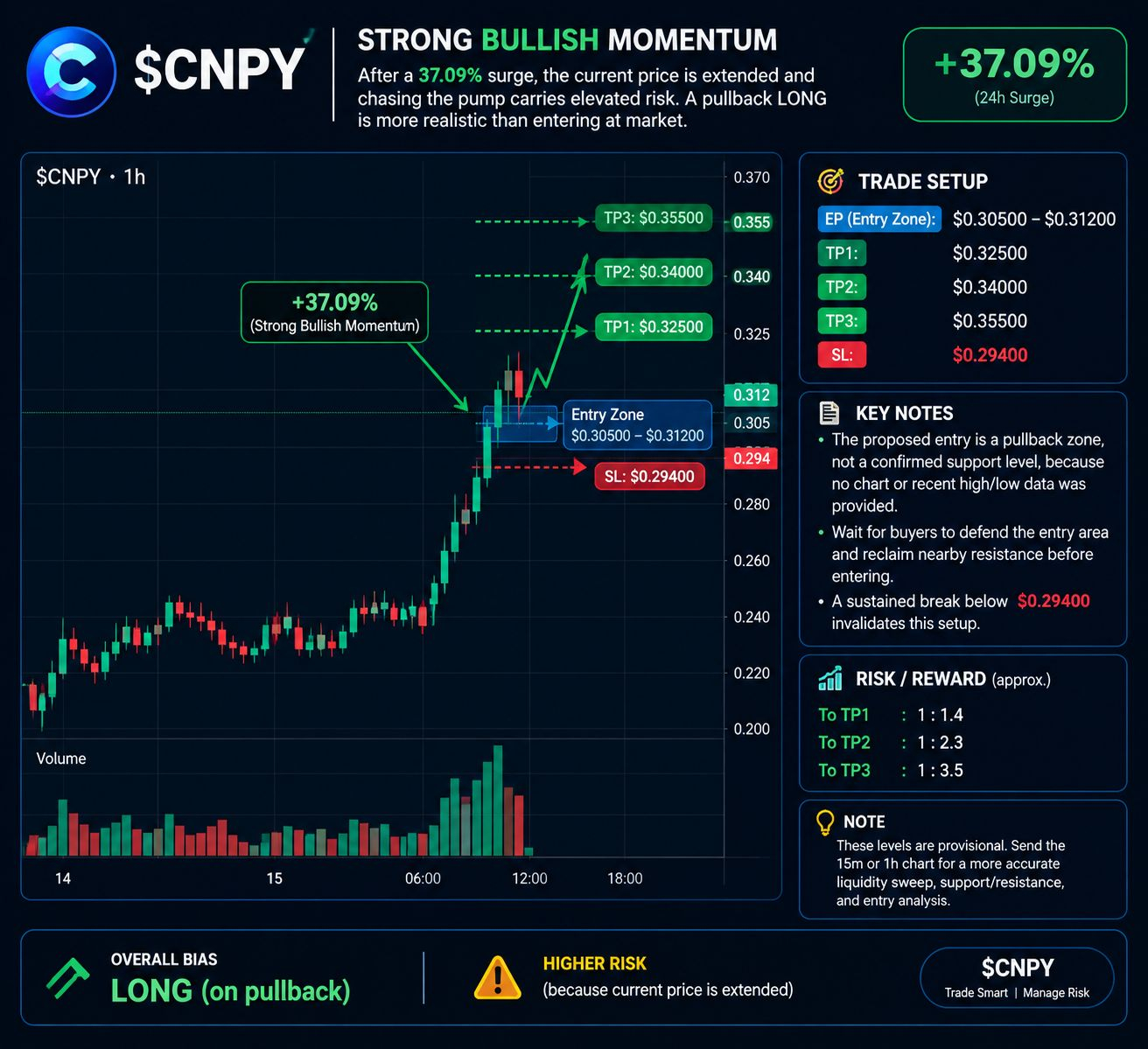
$CNPY montre un fort momentum haussier après une hausse de 37,09 %, mais le prix actuel est étendu et poursuivre la hausse (le “pump”) comporte un risque élevé. Une entrée en LONG sur repli est plus réaliste que d’entrer au marché.
EP : 0,30500 $–0,31200 $
TP1 : 0,32500 $
TP2 : 0,34000 $
TP3 : 0,35500 $
SL : 0,29400 $
L’entrée proposée correspond à une zone de repli, pas à un niveau de support confirmé, car aucun graphique ni données récentes de plus haut/plus bas n’ont été fournis. Attendez que les acheteurs défendent la zone d’entrée et reprennent la résistance à proximité avant d’entrer ; une cassure durable sous 0,29400 $ invalide ce scénario. Le ratio risque/rendement est d’environ 1:1,4 vers TP1, 1:2,3 vers TP2 et 1:3,5 vers TP3.
Note : Ces niveaux sont provisoires. Envoyez le graphique en 15m ou 1h pour un balayage de liquidité plus précis, ainsi que pour le support/résistance et l’analyse d’entrée.$NES
{alpha}(560x097acf27503753e77bca940277806156c5925b81)
$CNPY
{alpha}(560xc69b16cf18cea1e5d0bb6a1a9db802097790ddd2)
$CNPY montre un fort momentum haussier après une hausse de 37,09 %, mais le prix actuel est étendu et poursuivre la hausse (le “pump”) comporte un risque élevé. Une entrée en LONG sur repli est plus réaliste que d’entrer au marché.
EP : 0,30500 $–0,31200 $
TP1 : 0,32500 $
TP2 : 0,34000 $
TP3 : 0,35500 $
SL : 0,29400 $
L’entrée proposée correspond à une zone de repli, pas à un niveau de support confirmé, car aucun graphique ni données récentes de plus haut/plus bas n’ont été fournis. Attendez que les acheteurs défendent la zone d’entrée et reprennent la résistance à proximité avant d’entrer ; une cassure durable sous 0,29400 $ invalide ce scénario. Le ratio risque/rendement est d’environ 1:1,4 vers TP1, 1:2,3 vers TP2 et 1:3,5 vers TP3.
Note : Ces niveaux sont provisoires. Envoyez le graphique en 15m ou 1h pour un balayage de liquidité plus précis, ainsi que pour le support/résistance et l’analyse d’entrée.$NES
$CNPY
EP : 0,30500 $–0,31200 $
TP1 : 0,32500 $
TP2 : 0,34000 $
TP3 : 0,35500 $
SL : 0,29400 $
L’entrée proposée correspond à une zone de repli, pas à un niveau de support confirmé, car aucun graphique ni données récentes de plus haut/plus bas n’ont été fournis. Attendez que les acheteurs défendent la zone d’entrée et reprennent la résistance à proximité avant d’entrer ; une cassure durable sous 0,29400 $ invalide ce scénario. Le ratio risque/rendement est d’environ 1:1,4 vers TP1, 1:2,3 vers TP2 et 1:3,5 vers TP3.
Note : Ces niveaux sont provisoires. Envoyez le graphique en 15m ou 1h pour un balayage de liquidité plus précis, ainsi que pour le support/résistance et l’analyse d’entrée.$NES
$CNPY
1
573
·
--
Haussier
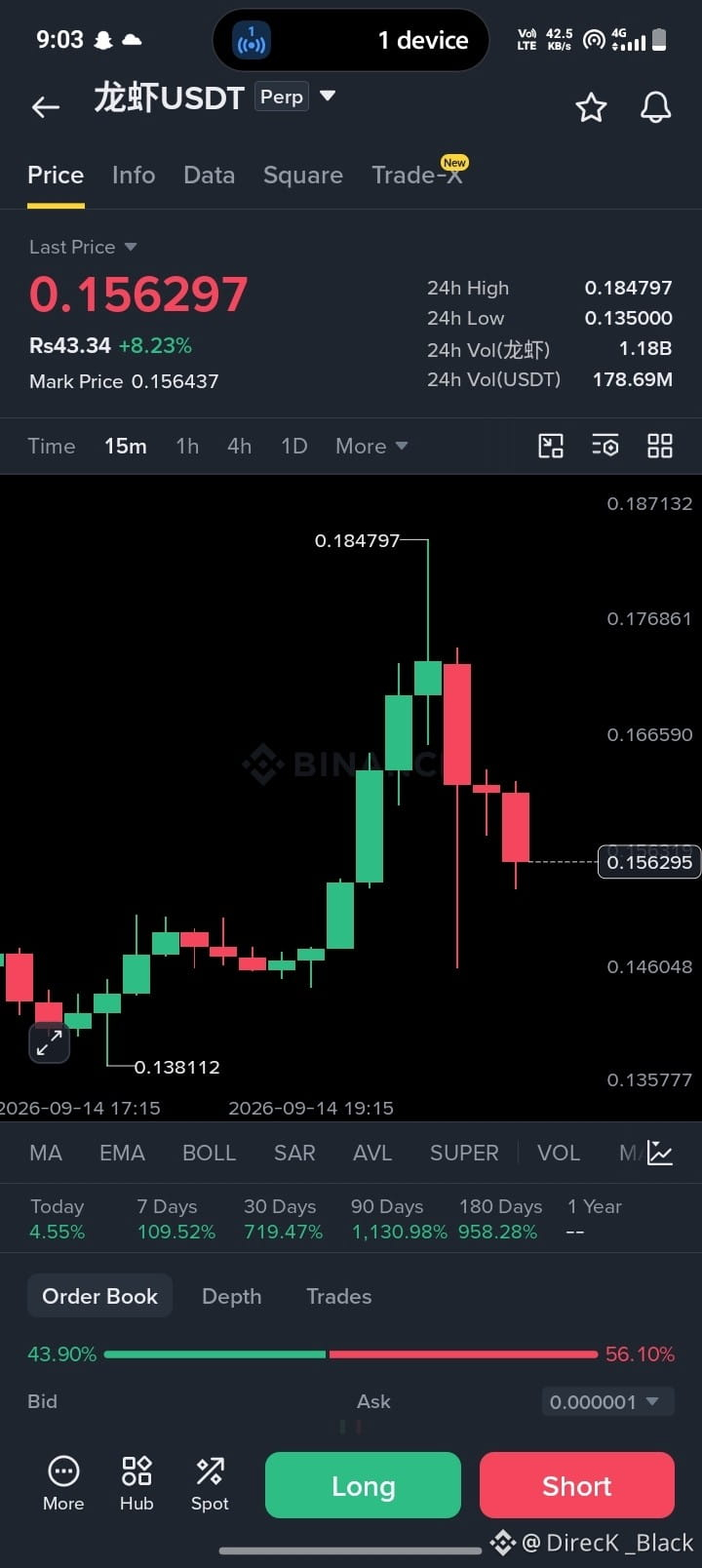
$龙虾 affiche une configuration de repli baissier après une forte hausse vers 0.184797 $ et un rejet au niveau des plus hauts. Les vendeurs reprennent le contrôle alors que le prix forme des plus bas, tandis que le carnet d’ordres montre un léger avantage vendeur.
Le récent balayage de liquidité au-dessus de 0.184797 $ a été suivi par un fort rejet. Un retest de 0.160000–0.163000 pourrait offrir une entrée SHORT réaliste si les acheteurs ne parviennent pas à reconquérir cette zone.
EP : 0.160000–0.163000
TP1 : 0.152000
TP2 : 0.146000
TP3 : 0.140000
SL : 0.169500
Les principales zones de liquidité sont le récent plus haut proche de 0.184797 $ et la zone de support autour de 0.146000–0.150000. Une cassure durable sous 0.152000 renforcerait la structure baissière, tandis qu’une clôture de bougie de 15 minutes au-dessus de 0.169500 invalide cette configuration SHORT. À partir de l’entrée au milieu de 0.161500, le risque/rendement approximatif est de 1:1,2 vers TP1, 1:1,9 vers TP2 et 1:2,7 vers TP3.
Note de trading : Évitez de SHORT directement dans la baisse actuelle. Attendez un rebond et un rejet dans la zone d’entrée ; si le prix casse au-dessus de la zone d’entrée et s’y maintient, la configuration est invalidée.
Préférez-vous la prochaine configuration en LONG sur support, en SHORT sur rejet, ou les deux avec des niveaux de confirmation ?$4 $CNPY
$龙虾 affiche une configuration de repli baissier après une forte hausse vers 0.184797 $ et un rejet au niveau des plus hauts. Les vendeurs reprennent le contrôle alors que le prix forme des plus bas, tandis que le carnet d’ordres montre un léger avantage vendeur.
Le récent balayage de liquidité au-dessus de 0.184797 $ a été suivi par un fort rejet. Un retest de 0.160000–0.163000 pourrait offrir une entrée SHORT réaliste si les acheteurs ne parviennent pas à reconquérir cette zone.
EP : 0.160000–0.163000
TP1 : 0.152000
TP2 : 0.146000
TP3 : 0.140000
SL : 0.169500
Les principales zones de liquidité sont le récent plus haut proche de 0.184797 $ et la zone de support autour de 0.146000–0.150000. Une cassure durable sous 0.152000 renforcerait la structure baissière, tandis qu’une clôture de bougie de 15 minutes au-dessus de 0.169500 invalide cette configuration SHORT. À partir de l’entrée au milieu de 0.161500, le risque/rendement approximatif est de 1:1,2 vers TP1, 1:1,9 vers TP2 et 1:2,7 vers TP3.
Note de trading : Évitez de SHORT directement dans la baisse actuelle. Attendez un rebond et un rejet dans la zone d’entrée ; si le prix casse au-dessus de la zone d’entrée et s’y maintient, la configuration est invalidée.
Préférez-vous la prochaine configuration en LONG sur support, en SHORT sur rejet, ou les deux avec des niveaux de confirmation ?$4 $CNPY
Le récent balayage de liquidité au-dessus de 0.184797 $ a été suivi par un fort rejet. Un retest de 0.160000–0.163000 pourrait offrir une entrée SHORT réaliste si les acheteurs ne parviennent pas à reconquérir cette zone.
EP : 0.160000–0.163000
TP1 : 0.152000
TP2 : 0.146000
TP3 : 0.140000
SL : 0.169500
Les principales zones de liquidité sont le récent plus haut proche de 0.184797 $ et la zone de support autour de 0.146000–0.150000. Une cassure durable sous 0.152000 renforcerait la structure baissière, tandis qu’une clôture de bougie de 15 minutes au-dessus de 0.169500 invalide cette configuration SHORT. À partir de l’entrée au milieu de 0.161500, le risque/rendement approximatif est de 1:1,2 vers TP1, 1:1,9 vers TP2 et 1:2,7 vers TP3.
Note de trading : Évitez de SHORT directement dans la baisse actuelle. Attendez un rebond et un rejet dans la zone d’entrée ; si le prix casse au-dessus de la zone d’entrée et s’y maintient, la configuration est invalidée.
Préférez-vous la prochaine configuration en LONG sur support, en SHORT sur rejet, ou les deux avec des niveaux de confirmation ?$4 $CNPY
630

4
139
·
--
Haussier
$BR affiche une configuration de RETOUR EN ARRIÈRE (PULLBACK) LONG après une énorme impulsion (pump) et un rejet depuis le sommet à 0.55622 $. Les acheteurs restent solides, mais poursuivre au prix actuel offre un risque/rendement médiocre. Un repli vers 0.47–0.48 $ offrirait une entrée plus réaliste.
EP : 0.47000–0.48000
TP1 : 0.50000
TP2 : 0.53000
TP3 : 0.55000
SL : 0.44500
La cassure récente au-dessus de 0.44654 $ soutient la structure haussière, tandis que 0.55622 $ est la résistance majeure la plus proche et la zone de liquidité. Le setup devient invalide si le prix perd 0.44500 $ sur une base durable ; évitez d’entrer si le prix continue de “pump” sans repli. Le risque/rendement approximatif est de 1:1.1 vers TP1, 1:2.4 vers TP2 et 1:3.8 vers TP3, selon le point d’entrée.
Voulez-vous une configuration de REJET SHORT ou une configuration LONG de pullback plus sûre pour $POWER #Jasmyusdt⚠️⚠️ #Grok
{alpha}(560x9dc44ae5be187eca9e2a67e33f27a4c91cea1223)
$DEBIT
{alpha}(560xff7d6a96ae471bbcd7713af9cb1feeb16cf56b41)
$BR affiche une configuration de RETOUR EN ARRIÈRE (PULLBACK) LONG après une énorme impulsion (pump) et un rejet depuis le sommet à 0.55622 $. Les acheteurs restent solides, mais poursuivre au prix actuel offre un risque/rendement médiocre. Un repli vers 0.47–0.48 $ offrirait une entrée plus réaliste.
EP : 0.47000–0.48000
TP1 : 0.50000
TP2 : 0.53000
TP3 : 0.55000
SL : 0.44500
La cassure récente au-dessus de 0.44654 $ soutient la structure haussière, tandis que 0.55622 $ est la résistance majeure la plus proche et la zone de liquidité. Le setup devient invalide si le prix perd 0.44500 $ sur une base durable ; évitez d’entrer si le prix continue de “pump” sans repli. Le risque/rendement approximatif est de 1:1.1 vers TP1, 1:2.4 vers TP2 et 1:3.8 vers TP3, selon le point d’entrée.
Voulez-vous une configuration de REJET SHORT ou une configuration LONG de pullback plus sûre pour $POWER #Jasmyusdt⚠️⚠️ #Grok
$DEBIT
EP : 0.47000–0.48000
TP1 : 0.50000
TP2 : 0.53000
TP3 : 0.55000
SL : 0.44500
La cassure récente au-dessus de 0.44654 $ soutient la structure haussière, tandis que 0.55622 $ est la résistance majeure la plus proche et la zone de liquidité. Le setup devient invalide si le prix perd 0.44500 $ sur une base durable ; évitez d’entrer si le prix continue de “pump” sans repli. Le risque/rendement approximatif est de 1:1.1 vers TP1, 1:2.4 vers TP2 et 1:3.8 vers TP3, selon le point d’entrée.
Voulez-vous une configuration de REJET SHORT ou une configuration LONG de pullback plus sûre pour $POWER #Jasmyusdt⚠️⚠️ #Grok
$DEBIT
$POWER✅💚
35%
$DEBIT♥️✅
36%
$BR💚🥰
27%
Trending top ⬆️↗️❤️♥️💚
2%
95 Votes • Vote fermé
1
5.9k
·
--
Haussier
$CAP montre un potentiel schéma de rejet après un rallye brutal de 15 m jusqu’à la zone de résistance à 0,07065 $. Le prix a déjà effectué un mouvement massif, donc poursuivre des positions longues près du plus haut offre un risque/rendement faible.
Le dernier graphique montre un fort momentum acheteur, mais la mèche haute près du récent plus haut suggère que des vendeurs sont actifs. Une position short devient réaliste uniquement si le prix rejette le plus haut et perd la zone de cassure à proximité.
EP : 0,06850–0,07000 $
TP1 : 0,06450 $
TP2 : 0,06080 $
TP3 : 0,05530 $
SL : 0,07220 $
Le récent plus bas vers 0,04531 $ a été balayé avant la cassure, et le mouvement impulsif a créé un grand déséquilibre entre 0,05522 $ et 0,06078 $. Cela fait de la zone 0,06078–0,06450 une zone de liquidité de pullback réaliste plutôt qu’une cible extrême à la baisse. Le setup est invalidé si le prix reprend 0,07065 $ et se maintient au-dessus sur le graphique en 15 m ; attendez une confirmation de rejet au lieu de shorter aveuglément dans la force.
Risque/rendement : environ 1:1,5 vers TP1, 1:3,1 vers TP2, et 1:5,2 vers TP3, en utilisant le point milieu de la fourchette d’entrée.
Préférez-vous un short confirmé par rejet ou une position longue plus sûre en cas de cassure-retest pour
$牛来
{future}(牛来USDT)
$KOMA
{alpha}(560xd5eaaac47bd1993d661bc087e15dfb079a7f3c19)
{alpha}(560x99991c6aabba5a096f24f250b73580f5179b9999)
$CAP montre un potentiel schéma de rejet après un rallye brutal de 15 m jusqu’à la zone de résistance à 0,07065 $. Le prix a déjà effectué un mouvement massif, donc poursuivre des positions longues près du plus haut offre un risque/rendement faible.
Le dernier graphique montre un fort momentum acheteur, mais la mèche haute près du récent plus haut suggère que des vendeurs sont actifs. Une position short devient réaliste uniquement si le prix rejette le plus haut et perd la zone de cassure à proximité.
EP : 0,06850–0,07000 $
TP1 : 0,06450 $
TP2 : 0,06080 $
TP3 : 0,05530 $
SL : 0,07220 $
Le récent plus bas vers 0,04531 $ a été balayé avant la cassure, et le mouvement impulsif a créé un grand déséquilibre entre 0,05522 $ et 0,06078 $. Cela fait de la zone 0,06078–0,06450 une zone de liquidité de pullback réaliste plutôt qu’une cible extrême à la baisse. Le setup est invalidé si le prix reprend 0,07065 $ et se maintient au-dessus sur le graphique en 15 m ; attendez une confirmation de rejet au lieu de shorter aveuglément dans la force.
Risque/rendement : environ 1:1,5 vers TP1, 1:3,1 vers TP2, et 1:5,2 vers TP3, en utilisant le point milieu de la fourchette d’entrée.
Préférez-vous un short confirmé par rejet ou une position longue plus sûre en cas de cassure-retest pour
$牛来
$KOMA
Le dernier graphique montre un fort momentum acheteur, mais la mèche haute près du récent plus haut suggère que des vendeurs sont actifs. Une position short devient réaliste uniquement si le prix rejette le plus haut et perd la zone de cassure à proximité.
EP : 0,06850–0,07000 $
TP1 : 0,06450 $
TP2 : 0,06080 $
TP3 : 0,05530 $
SL : 0,07220 $
Le récent plus bas vers 0,04531 $ a été balayé avant la cassure, et le mouvement impulsif a créé un grand déséquilibre entre 0,05522 $ et 0,06078 $. Cela fait de la zone 0,06078–0,06450 une zone de liquidité de pullback réaliste plutôt qu’une cible extrême à la baisse. Le setup est invalidé si le prix reprend 0,07065 $ et se maintient au-dessus sur le graphique en 15 m ; attendez une confirmation de rejet au lieu de shorter aveuglément dans la force.
Risque/rendement : environ 1:1,5 vers TP1, 1:3,1 vers TP2, et 1:5,2 vers TP3, en utilisant le point milieu de la fourchette d’entrée.
Préférez-vous un short confirmé par rejet ou une position longue plus sûre en cas de cassure-retest pour
$牛来
$KOMA
$牛来 ⬇️😭
88%
$KOMA✅💚
6%
$CAP♥️✅
6%
Training🆗
0%
52 Votes • Vote fermé
1
3.2k
·
--
Haussier
Les gars, les plus fortes hausses du jour sont intéressantes 👑👑
$AIN $0.10277AINUSDTPerp$0.1027744.52% 🔥
AIN mène le mouvement avec une forte hausse de 44,52%, attirant l’attention après un pump brutal. Le marché semble sélectif, et le mouvement d’AIN mérite qu’on s’y intéresse, mais poursuivre un pump soudain peut être risqué. 👀
Les traders devraient attendre une confirmation ou un repli avant d’envisager une entrée.
{alpha}(560x9558a9254890b2a8b057a789f413631b9084f4a3)
Vous voulez le prochain post dans un style haussier, baissier ou neutre ?
#Grok #CPI数据
$BTW
{alpha}(560x444045b0ee1ee319a660a5e3d604ca0ffa35acaa)
$BR
{alpha}(560xff7d6a96ae471bbcd7713af9cb1feeb16cf56b41)
Les gars, les plus fortes hausses du jour sont intéressantes 👑👑
$AIN $0.10277AINUSDTPerp$0.1027744.52% 🔥
AIN mène le mouvement avec une forte hausse de 44,52%, attirant l’attention après un pump brutal. Le marché semble sélectif, et le mouvement d’AIN mérite qu’on s’y intéresse, mais poursuivre un pump soudain peut être risqué. 👀
Les traders devraient attendre une confirmation ou un repli avant d’envisager une entrée.
Vous voulez le prochain post dans un style haussier, baissier ou neutre ?
#Grok #CPI数据
$BTW
$BR
$AIN $0.10277AINUSDTPerp$0.1027744.52% 🔥
AIN mène le mouvement avec une forte hausse de 44,52%, attirant l’attention après un pump brutal. Le marché semble sélectif, et le mouvement d’AIN mérite qu’on s’y intéresse, mais poursuivre un pump soudain peut être risqué. 👀
Les traders devraient attendre une confirmation ou un repli avant d’envisager une entrée.
Vous voulez le prochain post dans un style haussier, baissier ou neutre ?
#Grok #CPI数据
$BTW
$BR
$BR😎
25%
$BTW💚
50%
$AIN❤️
25%
4 Votes • Vote fermé
1
111
·
--
Haussier
⚡ $POWER vs $LSK vs Deux visions différentes de la crypto
Que se passe-t-il lorsque la blockchain dépasse la simple spéculation et commence à résoudre des problèmes du monde réel ?
vise à cibler les marchés de l’énergie décentralisés, en intégrant la blockchain à la coordination et au règlement dans le secteur énergétique.
adopte une approche différente, en construisant une infrastructure qui aide les développeurs à créer et déployer des applications Web3.
Les deux projets ont une feuille de route différente à venir.
POWER a besoin d’une adoption réelle dans les marchés de l’énergie. LSK a besoin de développeurs, d’applications et d’activité réseau pour continuer à croître.
La vraie question n’est pas quel token a le récit le plus fort.
La question est : quel projet peut transformer sa technologie en demande durable.
Deux secteurs. Deux stratégies. Une chose à surveiller : l’adoption.
Lequel a le cas d’usage le plus solide à long terme
$BR
#Crypto_Jobs🎯 #CryptoTrends2024
{alpha}(560xff7d6a96ae471bbcd7713af9cb1feeb16cf56b41)
{future}(POWERUSDT)
{spot}(LSKUSDT)
⚡ $POWER vs $LSK vs Deux visions différentes de la crypto
Que se passe-t-il lorsque la blockchain dépasse la simple spéculation et commence à résoudre des problèmes du monde réel ?
vise à cibler les marchés de l’énergie décentralisés, en intégrant la blockchain à la coordination et au règlement dans le secteur énergétique.
adopte une approche différente, en construisant une infrastructure qui aide les développeurs à créer et déployer des applications Web3.
Les deux projets ont une feuille de route différente à venir.
POWER a besoin d’une adoption réelle dans les marchés de l’énergie. LSK a besoin de développeurs, d’applications et d’activité réseau pour continuer à croître.
La vraie question n’est pas quel token a le récit le plus fort.
La question est : quel projet peut transformer sa technologie en demande durable.
Deux secteurs. Deux stratégies. Une chose à surveiller : l’adoption.
Lequel a le cas d’usage le plus solide à long terme
$BR
#Crypto_Jobs🎯 #CryptoTrends2024
Que se passe-t-il lorsque la blockchain dépasse la simple spéculation et commence à résoudre des problèmes du monde réel ?
vise à cibler les marchés de l’énergie décentralisés, en intégrant la blockchain à la coordination et au règlement dans le secteur énergétique.
adopte une approche différente, en construisant une infrastructure qui aide les développeurs à créer et déployer des applications Web3.
Les deux projets ont une feuille de route différente à venir.
POWER a besoin d’une adoption réelle dans les marchés de l’énergie. LSK a besoin de développeurs, d’applications et d’activité réseau pour continuer à croître.
La vraie question n’est pas quel token a le récit le plus fort.
La question est : quel projet peut transformer sa technologie en demande durable.
Deux secteurs. Deux stratégies. Une chose à surveiller : l’adoption.
Lequel a le cas d’usage le plus solide à long terme
$BR
#Crypto_Jobs🎯 #CryptoTrends2024
$POWER ❤️
59%
$LSK 💚
38%
$BR💖
3%
37 Votes • Vote fermé
1
2
1.8k
·
--
Haussier
🚀 Meilleures hausses crypto | Suivi du momentum de trading
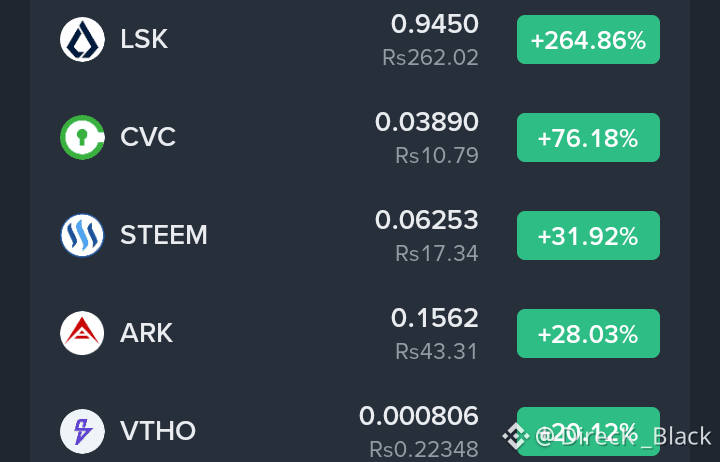
Le dernier aperçu du marché met en évidence un fort élan d’achat sur plusieurs altcoins, avec en tête un mouvement impressionnant de +264,86%. $CVC, $STEEM, $ARK, et affichent également une notable solidité.
📊 Plus fortes hausses
🔹 $LSK — 0,9450 | +264,86%
🔹 $CVC — 0,03890 | +76,18%
🔹 $STEEM — 0,06253 | +31,92%
🔹 $ARK — 0,1562 | +28,03%
🔹 $VTHO — 0,000806 | +20,12%
Analyse du trading :
Les fortes hausses en pourcentage peuvent attirer les traders de momentum, mais elles augmentent aussi le risque de volatilité et de prises de profits. Avant d’entrer dans une position, surveillez le volume spot, la liquidité, la profondeur du carnet d’ordres, ainsi que la capacité du prix à rester au-dessus du récent support.
La question clé est de savoir si la pression d’achat se poursuit après la cassure initiale, ou si le volume commence à s’essouffler. Un mouvement solide soutenu par un volume maintenu est plus significatif qu’une hausse en pourcentage à elle seule.
Tradez avec discipline. Évitez de poursuivre des bougies trop étendues et utilisez la gestion des risques pour protéger votre capital.
Les prix et variations en pourcentage sont basés sur l’aperçu fourni et peuvent avoir évolué.
🚀 Meilleures hausses crypto | Suivi du momentum de trading
Le dernier aperçu du marché met en évidence un fort élan d’achat sur plusieurs altcoins, avec en tête un mouvement impressionnant de +264,86%. $CVC , $STEEM, $ARK, et affichent également une notable solidité.
📊 Plus fortes hausses
🔹 $LSK — 0,9450 | +264,86%
🔹 $CVC — 0,03890 | +76,18%
🔹 $STEEM — 0,06253 | +31,92%
🔹 $ARK — 0,1562 | +28,03%
🔹 $VTHO — 0,000806 | +20,12%
Analyse du trading :
Les fortes hausses en pourcentage peuvent attirer les traders de momentum, mais elles augmentent aussi le risque de volatilité et de prises de profits. Avant d’entrer dans une position, surveillez le volume spot, la liquidité, la profondeur du carnet d’ordres, ainsi que la capacité du prix à rester au-dessus du récent support.
La question clé est de savoir si la pression d’achat se poursuit après la cassure initiale, ou si le volume commence à s’essouffler. Un mouvement solide soutenu par un volume maintenu est plus significatif qu’une hausse en pourcentage à elle seule.
Tradez avec discipline. Évitez de poursuivre des bougies trop étendues et utilisez la gestion des risques pour protéger votre capital.
Les prix et variations en pourcentage sont basés sur l’aperçu fourni et peuvent avoir évolué.
Le dernier aperçu du marché met en évidence un fort élan d’achat sur plusieurs altcoins, avec en tête un mouvement impressionnant de +264,86%. $CVC , $STEEM, $ARK, et affichent également une notable solidité.
📊 Plus fortes hausses
🔹 $LSK — 0,9450 | +264,86%
🔹 $CVC — 0,03890 | +76,18%
🔹 $STEEM — 0,06253 | +31,92%
🔹 $ARK — 0,1562 | +28,03%
🔹 $VTHO — 0,000806 | +20,12%
Analyse du trading :
Les fortes hausses en pourcentage peuvent attirer les traders de momentum, mais elles augmentent aussi le risque de volatilité et de prises de profits. Avant d’entrer dans une position, surveillez le volume spot, la liquidité, la profondeur du carnet d’ordres, ainsi que la capacité du prix à rester au-dessus du récent support.
La question clé est de savoir si la pression d’achat se poursuit après la cassure initiale, ou si le volume commence à s’essouffler. Un mouvement solide soutenu par un volume maintenu est plus significatif qu’une hausse en pourcentage à elle seule.
Tradez avec discipline. Évitez de poursuivre des bougies trop étendues et utilisez la gestion des risques pour protéger votre capital.
Les prix et variations en pourcentage sont basés sur l’aperçu fourni et peuvent avoir évolué.
353
·
--
Haussier
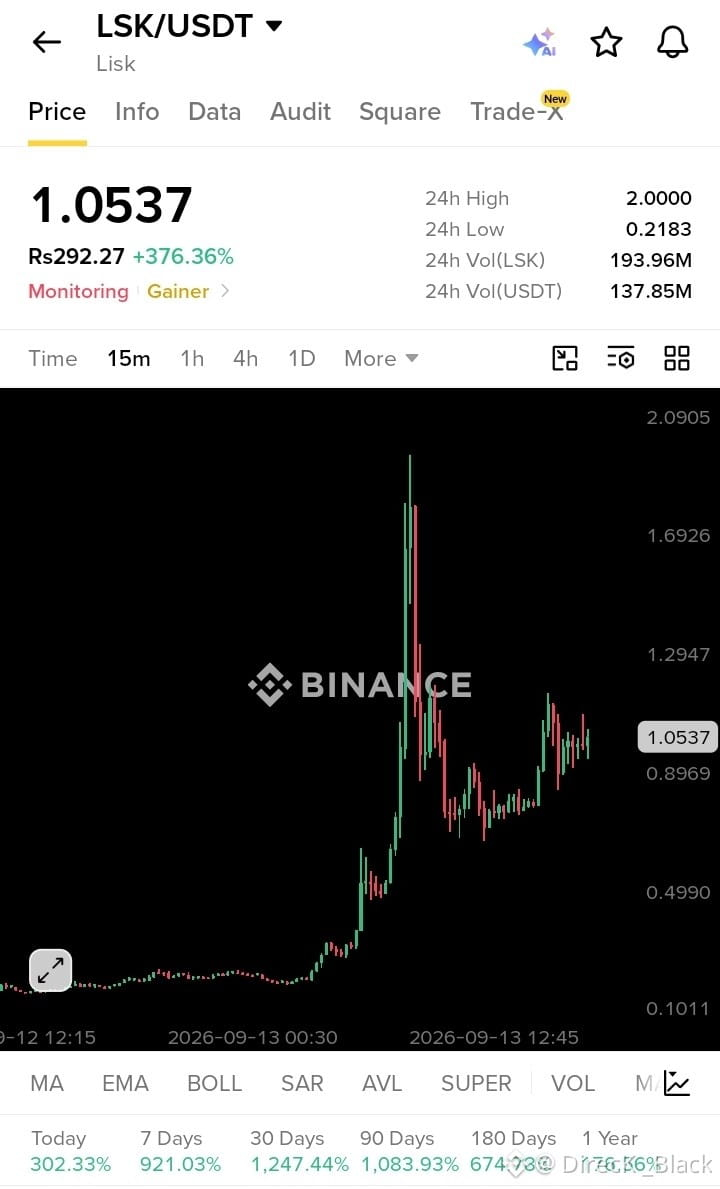
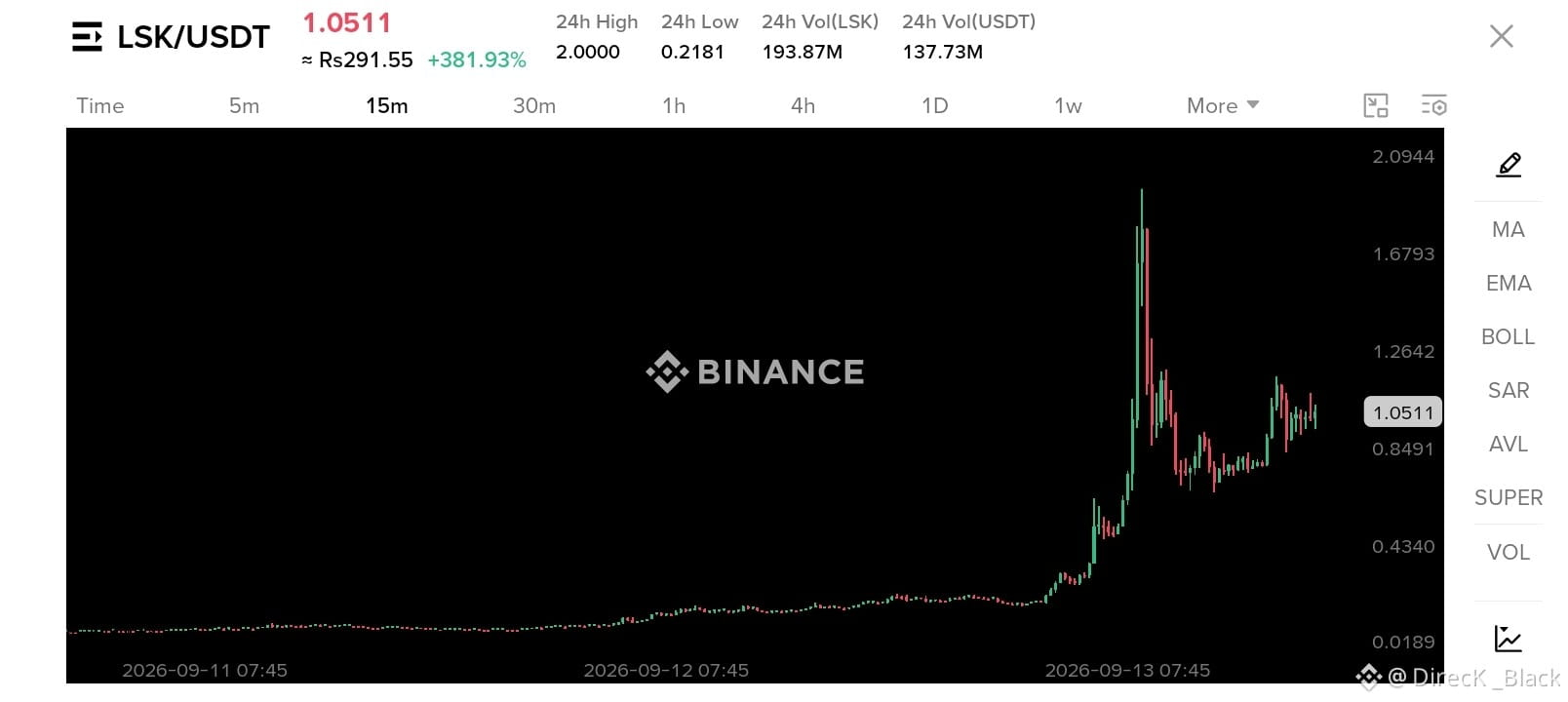
$LSK /USDT affiche une configuration de repli/rejet après un énorme balayage de liquidité vertical, tandis que le prix se consolide actuellement autour de 1,0537 $ après un rejet net du sommet psychologique à 2,00 $. Les acheteurs se sont épuisés lors de la première impulsion, et les vendeurs défendent désormais activement la zone 1,20–1,30 $, formant une structure de plus bas. Le niveau critique à surveiller est la zone 0,90–0,95 $, qui a servi de base de cassure précédente ; sa perte confirmerait un retracement plus profond.
EP : 1,00–1,05
TP1 : 1,20
TP2 : 1,35
TP3 : 1,55
SL : 0,88
La pompe massive de 376 % a balayé la liquidité au-dessus de 1,50 et 2,00, laissant un vide en dessous. La consolidation actuelle est probablement une phase de distribution avant la prochaine étape à la baisse, avec des liquidités à proximité situées sur le support à 0,90 et la zone à 0,50 (l’origine du mouvement). L’invalidation se produit si le prix reprend 1,30 avec du volume, ce qui indiquerait la poursuite de la tendance haussière ; sinon, le ratio risque/rendement favorise le short lors des rebonds vers la résistance.$LSK
$JOE
{spot}(JOEUSDT)
{spot}(LSKUSDT)
$LSK /USDT affiche une configuration de repli/rejet après un énorme balayage de liquidité vertical, tandis que le prix se consolide actuellement autour de 1,0537 $ après un rejet net du sommet psychologique à 2,00 $. Les acheteurs se sont épuisés lors de la première impulsion, et les vendeurs défendent désormais activement la zone 1,20–1,30 $, formant une structure de plus bas. Le niveau critique à surveiller est la zone 0,90–0,95 $, qui a servi de base de cassure précédente ; sa perte confirmerait un retracement plus profond.
EP : 1,00–1,05
TP1 : 1,20
TP2 : 1,35
TP3 : 1,55
SL : 0,88
La pompe massive de 376 % a balayé la liquidité au-dessus de 1,50 et 2,00, laissant un vide en dessous. La consolidation actuelle est probablement une phase de distribution avant la prochaine étape à la baisse, avec des liquidités à proximité situées sur le support à 0,90 et la zone à 0,50 (l’origine du mouvement). L’invalidation se produit si le prix reprend 1,30 avec du volume, ce qui indiquerait la poursuite de la tendance haussière ; sinon, le ratio risque/rendement favorise le short lors des rebonds vers la résistance.$LSK
$JOE
EP : 1,00–1,05
TP1 : 1,20
TP2 : 1,35
TP3 : 1,55
SL : 0,88
La pompe massive de 376 % a balayé la liquidité au-dessus de 1,50 et 2,00, laissant un vide en dessous. La consolidation actuelle est probablement une phase de distribution avant la prochaine étape à la baisse, avec des liquidités à proximité situées sur le support à 0,90 et la zone à 0,50 (l’origine du mouvement). L’invalidation se produit si le prix reprend 1,30 avec du volume, ce qui indiquerait la poursuite de la tendance haussière ; sinon, le ratio risque/rendement favorise le short lors des rebonds vers la résistance.$LSK
$JOE
171
🔴 $ONDO Liquidation longue : 3,6938 K$ à 0,3474 BINANCE
🟢 $LSK Liquidation courte : 3,3494 K$ à 0,51705 BINANCE
🔴 $牛来 Liquidation longue : 1,1499 K$ à 0,14996 BINANCE
{spot}(牛来USDT)
🔴 $ONDO Liquidation longue : 3,6938 K$ à 0,3474 BINANCE
🟢 $LSK Liquidation courte : 3,3494 K$ à 0,51705 BINANCE
🔴 $牛来 Liquidation longue : 1,1499 K$ à 0,14996 BINANCE
🟢 $LSK Liquidation courte : 3,3494 K$ à 0,51705 BINANCE
🔴 $牛来 Liquidation longue : 1,1499 K$ à 0,14996 BINANCE
Bullish♥️
72%
Banter♥️
28%
25 Votes • Vote fermé
1
4.4k
·
--
Haussier
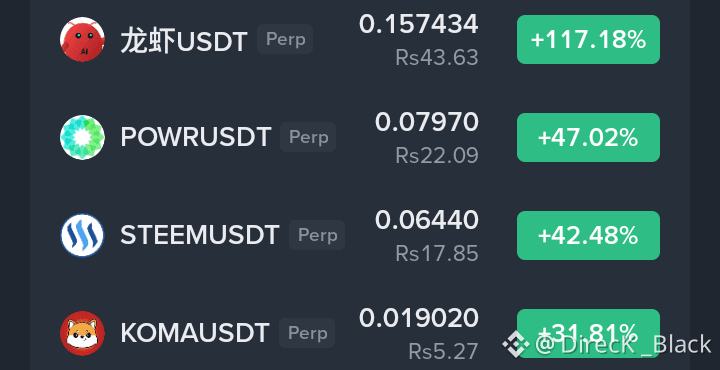
🚀 GAGNANTS FUTURES TOP — L’ELAN S’INTENSIFIE !
Le marché des futures affiche une forte dynamique, avec plusieurs cryptos enregistrant de très fortes hausses. <c-1/> mène la tendance avec +117,18 %, suivi de +47,02 %, de <c-2/> à +42,48 % et de <c-3/> à +31,81 %.
🔥 À surveiller : • 🦞 $龙虾117,18%
• $POWR +47,02%
• $STEEM +42,48%
• $KOMA +31,81%
Après de tels mouvements agressifs, la volatilité et les replis peuvent être importants. Évitez de courir après les bougies vertes et attendez une cassure nette, un retracement, ou un rejet confirmé avant de prendre une position en futures.
{spot}(STEEMUSDT)
Tradez intelligemment. Gérez le risque.
🚀 GAGNANTS FUTURES TOP — L’ELAN S’INTENSIFIE !
Le marché des futures affiche une forte dynamique, avec plusieurs cryptos enregistrant de très fortes hausses. <c-1/> mène la tendance avec +117,18 %, suivi de +47,02 %, de <c-2/> à +42,48 % et de <c-3/> à +31,81 %.
🔥 À surveiller : • 🦞 $龙虾117,18%
• $POWR +47,02%
• $STEEM +42,48%
• $KOMA +31,81%
Après de tels mouvements agressifs, la volatilité et les replis peuvent être importants. Évitez de courir après les bougies vertes et attendez une cassure nette, un retracement, ou un rejet confirmé avant de prendre une position en futures.
Tradez intelligemment. Gérez le risque.
Le marché des futures affiche une forte dynamique, avec plusieurs cryptos enregistrant de très fortes hausses. <c-1/> mène la tendance avec +117,18 %, suivi de +47,02 %, de <c-2/> à +42,48 % et de <c-3/> à +31,81 %.
🔥 À surveiller : • 🦞 $龙虾117,18%
• $POWR +47,02%
• $STEEM +42,48%
• $KOMA +31,81%
Après de tels mouvements agressifs, la volatilité et les replis peuvent être importants. Évitez de courir après les bougies vertes et attendez une cassure nette, un retracement, ou un rejet confirmé avant de prendre une position en futures.
Tradez intelligemment. Gérez le risque.
2
504
·
--
Haussier
$LSK montre une phase de repli (pullback) après une percée extrême en 4H, avec une chasse à la liquidité vers le sommet à $0.66028. Les acheteurs restent dominants, mais poursuivre au-dessus de $LSK $0.59 comporte un risque élevé ; un repli vers la zone de la précédente percée est plus réaliste.
EP : $0.43–$0.47
TP1 : $0.52
TP2 : $0.59
TP3 : $0.65
SL : $0.39
La zone à $0.44 est le niveau clé de percée/retest, tandis que $0.66 est le principal niveau de liquidité et de résistance à proximité. Si le prix balaie (sweep) sous $0.43 et échoue à le reprendre, le scénario long est invalidé ; une tenue durable au-dessus de $0.47 renforcerait le scénario de reprise. Le setup offre environ 1.5R–3.5R de potentiel selon l’objectif. #cpi
{spot}(LSKUSDT)
$POWR
{spot}(POWRUSDT)
$LSK montre une phase de repli (pullback) après une percée extrême en 4H, avec une chasse à la liquidité vers le sommet à $0.66028. Les acheteurs restent dominants, mais poursuivre au-dessus de $LSK $0.59 comporte un risque élevé ; un repli vers la zone de la précédente percée est plus réaliste.
EP : $0.43–$0.47
TP1 : $0.52
TP2 : $0.59
TP3 : $0.65
SL : $0.39
La zone à $0.44 est le niveau clé de percée/retest, tandis que $0.66 est le principal niveau de liquidité et de résistance à proximité. Si le prix balaie (sweep) sous $0.43 et échoue à le reprendre, le scénario long est invalidé ; une tenue durable au-dessus de $0.47 renforcerait le scénario de reprise. Le setup offre environ 1.5R–3.5R de potentiel selon l’objectif. #cpi
$POWR
EP : $0.43–$0.47
TP1 : $0.52
TP2 : $0.59
TP3 : $0.65
SL : $0.39
La zone à $0.44 est le niveau clé de percée/retest, tandis que $0.66 est le principal niveau de liquidité et de résistance à proximité. Si le prix balaie (sweep) sous $0.43 et échoue à le reprendre, le scénario long est invalidé ; une tenue durable au-dessus de $0.47 renforcerait le scénario de reprise. Le setup offre environ 1.5R–3.5R de potentiel selon l’objectif. #cpi
$POWR
$ALCH♥️
100%
$LSK💔
0%
Bullish❤️🩹
0%
2 Votes • Vote fermé
2
105
·
--
Haussier
🦞 $龙虾 vs 🤖 Deux paris crypto très différents
et $NES représentent deux récits totalement différents dans la crypto.
Homard
Un token mème de chaîne alimenté principalement par le récit OpenClaw/Lobster, l’attention de la communauté, l’élan des mèmes et la demande de trading. Nesa
Une couche 1 axée sur l’IA, construite autour de l’utilité du réseau, y compris les paiements d’inférence IA, les frais de gas, le staking et les récompenses pour les participants au réseau.
Donc la comparaison est simple :
Mème Communauté + Récit
vs
🤖 Infrastructure IA Utilité + Utilisation du réseau
La vraie question est :
Quel camp choisiriez-vous ? Récit viral Vraie utilité
#GameStop带动Meme板块 #WIF #BitcoinDunyamiz
$LSK
{spot}(LSKUSDT)
Choisissez votre camp et dites-nous pourquoi.
{alpha}(560xeccbb861c0dda7efd964010085488b69317e4444)
🦞 $龙虾 vs 🤖 Deux paris crypto très différents
et $NES représentent deux récits totalement différents dans la crypto.
Homard
Un token mème de chaîne alimenté principalement par le récit OpenClaw/Lobster, l’attention de la communauté, l’élan des mèmes et la demande de trading. Nesa
Une couche 1 axée sur l’IA, construite autour de l’utilité du réseau, y compris les paiements d’inférence IA, les frais de gas, le staking et les récompenses pour les participants au réseau.
Donc la comparaison est simple :
Mème Communauté + Récit
vs
🤖 Infrastructure IA Utilité + Utilisation du réseau
La vraie question est :
Quel camp choisiriez-vous ? Récit viral Vraie utilité
#GameStop带动Meme板块 #WIF #BitcoinDunyamiz
$LSK
Choisissez votre camp et dites-nous pourquoi.
et $NES représentent deux récits totalement différents dans la crypto.
Homard
Un token mème de chaîne alimenté principalement par le récit OpenClaw/Lobster, l’attention de la communauté, l’élan des mèmes et la demande de trading. Nesa
Une couche 1 axée sur l’IA, construite autour de l’utilité du réseau, y compris les paiements d’inférence IA, les frais de gas, le staking et les récompenses pour les participants au réseau.
Donc la comparaison est simple :
Mème Communauté + Récit
vs
🤖 Infrastructure IA Utilité + Utilisation du réseau
La vraie question est :
Quel camp choisiriez-vous ? Récit viral Vraie utilité
#GameStop带动Meme板块 #WIF #BitcoinDunyamiz
$LSK
Choisissez votre camp et dites-nous pourquoi.
龙虾
67%
$NES
33%
Choose Coin
0%
3 Votes • Vote fermé
2
93
·
--
Haussier
$GRIFFAIN affiche une configuration de short après une cassure massive et un rejet clair de la$GRIFFAIN sommet à $0.016907.
Les acheteurs restent agressifs, mais la mèche supérieure et la bougie de réaction rouge suggèrent une prise de profit proche de la zone de liquidité $0.0158–$0.0169. Un échec de reprise de $0.0160–$0.0163 favoriserait les vendeurs.
EP : $0.0158–$0.0163
TP1 : $0.01433
TP2 : $0.01288
TP3 : $0.01140
SL : $0.01735
Le mouvement récent a balayé la liquidité côté acheteurs au-dessus de $0.0169 puis a rejeté, rendant un pullback plus réaliste que la poursuite de la hausse. Le TP1 vise le premier support majeur de la cassure, tandis que le TP2 vise la zone de consolidation précédente. L’invalidation correspond à une cassure soutenue au-dessus de $0.01735, ce qui signalerait que les acheteurs ont regagné le contrôle.
$LSK
{spot}(LSKUSDT)
$GRIFFAIN affiche une configuration de short après une cassure massive et un rejet clair de la$GRIFFAIN sommet à $0.016907.
Les acheteurs restent agressifs, mais la mèche supérieure et la bougie de réaction rouge suggèrent une prise de profit proche de la zone de liquidité $0.0158–$0.0169. Un échec de reprise de $0.0160–$0.0163 favoriserait les vendeurs.
EP : $0.0158–$0.0163
TP1 : $0.01433
TP2 : $0.01288
TP3 : $0.01140
SL : $0.01735
Le mouvement récent a balayé la liquidité côté acheteurs au-dessus de $0.0169 puis a rejeté, rendant un pullback plus réaliste que la poursuite de la hausse. Le TP1 vise le premier support majeur de la cassure, tandis que le TP2 vise la zone de consolidation précédente. L’invalidation correspond à une cassure soutenue au-dessus de $0.01735, ce qui signalerait que les acheteurs ont regagné le contrôle.
$LSK
Les acheteurs restent agressifs, mais la mèche supérieure et la bougie de réaction rouge suggèrent une prise de profit proche de la zone de liquidité $0.0158–$0.0169. Un échec de reprise de $0.0160–$0.0163 favoriserait les vendeurs.
EP : $0.0158–$0.0163
TP1 : $0.01433
TP2 : $0.01288
TP3 : $0.01140
SL : $0.01735
Le mouvement récent a balayé la liquidité côté acheteurs au-dessus de $0.0169 puis a rejeté, rendant un pullback plus réaliste que la poursuite de la hausse. Le TP1 vise le premier support majeur de la cassure, tandis que le TP2 vise la zone de consolidation précédente. L’invalidation correspond à une cassure soutenue au-dessus de $0.01735, ce qui signalerait que les acheteurs ont regagné le contrôle.
$LSK
Bhules♥️
68%
Banate 💚
32%
19 Votes • Vote fermé
2
4.5k
·
--
Haussier
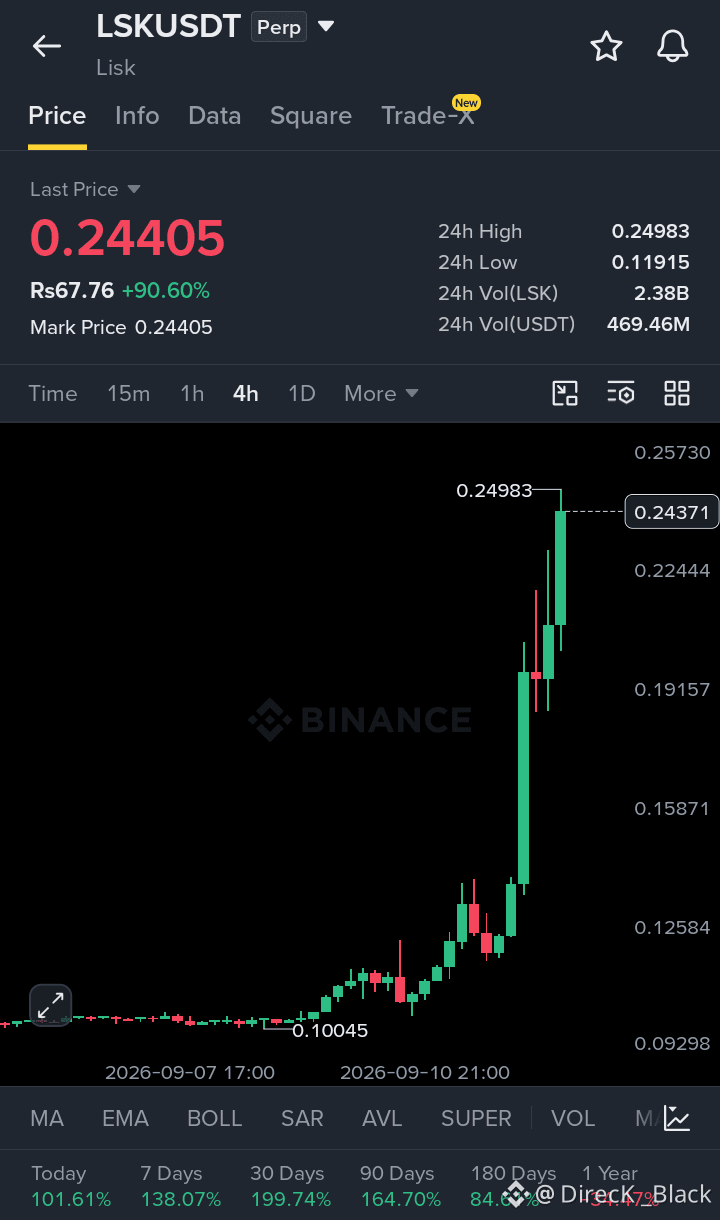
$LSK USDT] affiche une cassure verticale avec continuation après une expansion quotidienne massive de +101% depuis le plus bas de 0,1191.
Les acheteurs ont le contrôle total, balayant agressivement la liquidité au-dessus du seuil psychologique de 0,20, mais la bougie actuelle montre une légère mèche de rejet au plus haut de 0,2498. Le niveau clé à surveiller est 0,2244 : le conserver lors d’un retest confirmerait la prochaine impulsion à la hausse, tandis que le perdre signale une régression vers la moyenne plus profonde.
EP : 0,2240–0,2400
TP1 : 0,2500
TP2 : 0,2750
TP3 : 0,3000
SL : 0,2050
La liquidité est fortement empilée au-dessus de 0,2500 (liquidations courtes et stops de cassure) et en dessous de 0,2050 (stop-loss traînants des longs initiaux). La structure est extrêmement haussière mais trop étendue, ce qui rend une entrée à l’aveugle à 0,2440 un mauvais ratio risque/rendement. L’invalidation se produit si le prix clôture une bougie 4H en dessous de 0,2050, ce qui signalerait une cassure manquée et probablement une rotation de retour vers la zone de demande à 0,18. Attendez un repli contrôlé vers la zone EP avant d’entrer.#USBankCompletesCrossBorderPaymentPilotOnStellar #CPI数据 #GameStop带动Meme板块
{spot}(LSKUSDT)
$LSK USDT] affiche une cassure verticale avec continuation après une expansion quotidienne massive de +101% depuis le plus bas de 0,1191.
Les acheteurs ont le contrôle total, balayant agressivement la liquidité au-dessus du seuil psychologique de 0,20, mais la bougie actuelle montre une légère mèche de rejet au plus haut de 0,2498. Le niveau clé à surveiller est 0,2244 : le conserver lors d’un retest confirmerait la prochaine impulsion à la hausse, tandis que le perdre signale une régression vers la moyenne plus profonde.
EP : 0,2240–0,2400
TP1 : 0,2500
TP2 : 0,2750
TP3 : 0,3000
SL : 0,2050
La liquidité est fortement empilée au-dessus de 0,2500 (liquidations courtes et stops de cassure) et en dessous de 0,2050 (stop-loss traînants des longs initiaux). La structure est extrêmement haussière mais trop étendue, ce qui rend une entrée à l’aveugle à 0,2440 un mauvais ratio risque/rendement. L’invalidation se produit si le prix clôture une bougie 4H en dessous de 0,2050, ce qui signalerait une cassure manquée et probablement une rotation de retour vers la zone de demande à 0,18. Attendez un repli contrôlé vers la zone EP avant d’entrer.#USBankCompletesCrossBorderPaymentPilotOnStellar #CPI数据 #GameStop带动Meme板块
Les acheteurs ont le contrôle total, balayant agressivement la liquidité au-dessus du seuil psychologique de 0,20, mais la bougie actuelle montre une légère mèche de rejet au plus haut de 0,2498. Le niveau clé à surveiller est 0,2244 : le conserver lors d’un retest confirmerait la prochaine impulsion à la hausse, tandis que le perdre signale une régression vers la moyenne plus profonde.
EP : 0,2240–0,2400
TP1 : 0,2500
TP2 : 0,2750
TP3 : 0,3000
SL : 0,2050
La liquidité est fortement empilée au-dessus de 0,2500 (liquidations courtes et stops de cassure) et en dessous de 0,2050 (stop-loss traînants des longs initiaux). La structure est extrêmement haussière mais trop étendue, ce qui rend une entrée à l’aveugle à 0,2440 un mauvais ratio risque/rendement. L’invalidation se produit si le prix clôture une bougie 4H en dessous de 0,2050, ce qui signalerait une cassure manquée et probablement une rotation de retour vers la zone de demande à 0,18. Attendez un repli contrôlé vers la zone EP avant d’entrer.#USBankCompletesCrossBorderPaymentPilotOnStellar #CPI数据 #GameStop带动Meme板块
204
·
--
Haussier
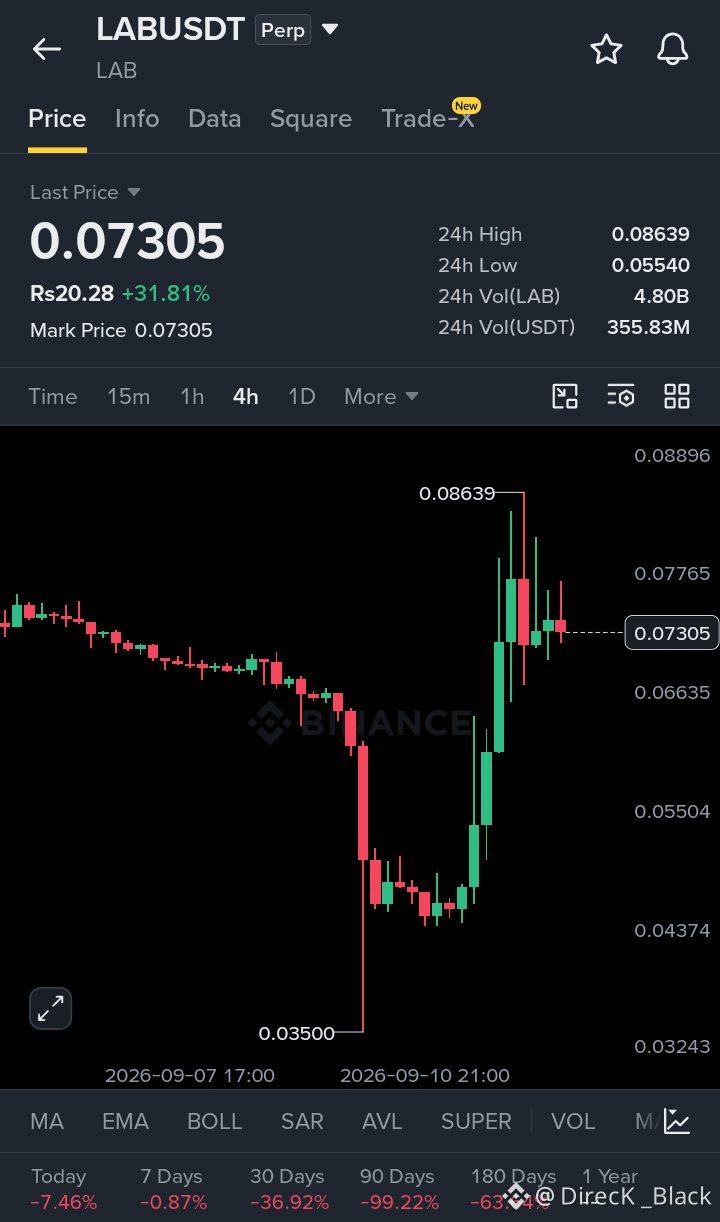
$LAB USDT] affiche une retracement baissier au sein d’un rebond de soulagement après un rejet violent du plus haut à 0.0864 (-15% depuis le pic).
Les vendeurs défendent actuellement le niveau 0.0776, tandis que les acheteurs tentent d’établir un support à 0.0730. La structure suggère qu’un plus haut plus bas se forme, sauf si le prix reconquiert 0.0780 avec du volume ; sinon, le récent balayage à 0.0350 reste vulnérable à une retouche.
EP : 0.0700–0.0730
TP1 : 0.0665
TP2 : 0.0550
TP3 : 0.0435
SL : 0.0790
La liquidité se situe sous 0.0663 (bas de consolidation récents) et au-dessus de 0.0790 (ordres stop des vendeurs à découvert). La tendance macro demeure profondément baissière (-63% sur 180 jours), ce qui fait de ce scénario un setup à contre-tendance. L’invalidation se produit si le prix clôture une bougie 4H au-dessus de 0.0790, ce qui signalerait un retournement haussier et viserait probablement le plus haut à 0.0864. Prudence : c’est un short à haut risque contre une récente impulsion massive.
{future}(LABUSDT)
$LAB USDT] affiche une retracement baissier au sein d’un rebond de soulagement après un rejet violent du plus haut à 0.0864 (-15% depuis le pic).
Les vendeurs défendent actuellement le niveau 0.0776, tandis que les acheteurs tentent d’établir un support à 0.0730. La structure suggère qu’un plus haut plus bas se forme, sauf si le prix reconquiert 0.0780 avec du volume ; sinon, le récent balayage à 0.0350 reste vulnérable à une retouche.
EP : 0.0700–0.0730
TP1 : 0.0665
TP2 : 0.0550
TP3 : 0.0435
SL : 0.0790
La liquidité se situe sous 0.0663 (bas de consolidation récents) et au-dessus de 0.0790 (ordres stop des vendeurs à découvert). La tendance macro demeure profondément baissière (-63% sur 180 jours), ce qui fait de ce scénario un setup à contre-tendance. L’invalidation se produit si le prix clôture une bougie 4H au-dessus de 0.0790, ce qui signalerait un retournement haussier et viserait probablement le plus haut à 0.0864. Prudence : c’est un short à haut risque contre une récente impulsion massive.
Les vendeurs défendent actuellement le niveau 0.0776, tandis que les acheteurs tentent d’établir un support à 0.0730. La structure suggère qu’un plus haut plus bas se forme, sauf si le prix reconquiert 0.0780 avec du volume ; sinon, le récent balayage à 0.0350 reste vulnérable à une retouche.
EP : 0.0700–0.0730
TP1 : 0.0665
TP2 : 0.0550
TP3 : 0.0435
SL : 0.0790
La liquidité se situe sous 0.0663 (bas de consolidation récents) et au-dessus de 0.0790 (ordres stop des vendeurs à découvert). La tendance macro demeure profondément baissière (-63% sur 180 jours), ce qui fait de ce scénario un setup à contre-tendance. L’invalidation se produit si le prix clôture une bougie 4H au-dessus de 0.0790, ce qui signalerait un retournement haussier et viserait probablement le plus haut à 0.0864. Prudence : c’est un short à haut risque contre une récente impulsion massive.
104
Connectez-vous pour découvrir plus de contenu
Rejoignez la communauté mondiale des adeptes de cryptomonnaies sur Binance Square
⚡️ Suviez les dernières informations importantes sur les cryptomonnaies.
💬 Jugé digne de confiance par la plus grande plateforme d’échange de cryptomonnaies au monde.
👍 Découvrez les connaissances que partagent les créateurs vérifiés.
Adresse e-mail/Nº de téléphone
Sujets d’actualité
FedRateWatch
464,734 vues
2,431 mentions
Partagez et gagnez une récompense de trafic dans notre campagne de hashtag tendance
✨Sujet : FOMC de septembre — Quelle sera la prochaine décision de la Fed ?
👉Comment participer :
Publiez une courte publication ou un article avec le hashtag #FedRateWatch
Créez du contenu à partir des angles ci-dessous :
- L’inflation cœur de l’IPC d’août a augmenté de 0,3% d’un mois sur l’autre, et les chances d’une hausse de 25 points de base cette semaine sont désormais proches de 90%. Anticipez-vous une hausse des taux cette semaine ? Est-ce un cas isolé, ou le début d’un cycle de hausses plus long ?
- Si la hausse a lieu, comment cela se répercute-t-il sur le BTC, les valeurs technologiques et l’or ? Plutôt haussier ou baissier ?
- Comment comptez-vous trader ensuite ? Partagez votre trading/positions BTC, actions ou or avec notre widget de partage de trades.
⏰Période de la campagne :
- 2026-09-15 11:00 - 2026-09-17 3:00 UTC
🎁Récompense :
- Les publications éligibles qui respectent les consignes ci-dessus et contiennent plus de 100 mots seront examinées et pourraient recevoir un boost aléatoire de trafic de 500 à 3 000 vues. Vous recevrez une notification de votre secrétaire de flux si votre publication est sélectionnée.
- Ayez une chance de faire apparaître votre article sur Binance Square Official
Vous manque-t-il des idées pour votre publication ? Visitez la page du sujet #FedRateWatch ou le Square Guide on How to Post for Better Reach.
Binance Square Official
·359 mentions J’aime
·759.6k vues
BitcoinSlidesTo$76000
13,435 vues
103 mentions
BitcoinReboundsTo$79K
58,717 vues
394 mentions