
Crypto Solutions
2.9k Publications

Crypto Solutions
 Compte Square Vérifié+
Signaler
Bloquer l’utilisateur
Event Coordinator | X: @creptosolutions | Content Creator | Community Builder

Creator Awards 2024

Top Voices

Level 2 Creator
52 Suivis
95.4K+ Abonnés
70.1K+ J’aime
3 Badges
Publications
Tous
Citations
Vidéos
Direct
Populaire

Article
Binance va présenter le listing Bonk (BONK) avec une application unique de Seed TagDans une démarche importante pour les passionnés de cryptographie, Binance se prépare à inscrire Bonk (BONK), marquant une étape stratégique dans le paysage en constante évolution des actifs numériques. Prévue pour commencer le trading au comptant le 15 décembre 2023 à 08h00 (UTC), l'introduction de BONK sur Binance ouvre des opportunités passionnantes pour les traders du monde entier. Paires de trading au comptant et dépôtsLes utilisateurs de Binance peuvent anticiper la disponibilité des paires de trading au comptant, y compris BONK. /USDT, BONK/FDUSD et BONK/TRY. L'option de dépôt pour BONK est déjà ouverte, permettant aux utilisateurs de se préparer aux activités de trading. Retraits et frais d'inscriptionLe 16 décembre 2023, à 08h00 (UTC), l'option de retrait pour BONK sera activée, offrant aux utilisateurs la flexibilité de gérer leurs atouts. Notamment, les frais d'inscription pour BONK s'élèvent à 0 BNB, offrant une approche conviviale pour interagir avec ce nouvel ajout à la plateforme Binance. BONK en tant qu'actif empruntable sur marge isolée Dans un développement supplémentaire, Binance est sur le point d'intégrer BONK en tant qu'actif empruntable. actif sur marge isolée, introduisant une nouvelle paire de marge, BONK/USDT. Cette décision stratégique reflète l'engagement de Binance à élargir ses offres et à répondre à diverses préférences commerciales. Application Seed TagIl est essentiel de souligner que BONK se distinguera par un Seed Tag. Cette désignation souligne sa classification en tant que projet innovant, présentant potentiellement une volatilité et des risques plus élevés par rapport aux autres jetons répertoriés sur Binance. Comprendre Bonk (BONK) BONK est reconnu comme la plus grande pièce de monnaie sur Solana, créée par une équipe anonyme. Sa cotation sur Binance ouvre de nouvelles voies aux traders pour interagir avec cet actif numérique unique. Considérations sur les risques et quiz sur les étiquettes de départ Pour rappel, les traders sont invités à faire preuve de prudence lorsqu'ils traitent avec BONK, reconnaissant son statut de jeton relativement nouveau portant plus que -risque normal. Il est conseillé de mener des recherches approfondies sur les fondamentaux de BONK et de bien comprendre le projet avant de participer à des activités de trading.Le Seed Tag, emblème de projets innovants présentant une volatilité et des risques potentiels, sera appliqué à BONK. Les traders souhaitant accéder aux jetons avec Seed Tags doivent répondre aux quiz correspondants tous les 90 jours sur les plateformes Binance Spot et/ou Binance Margin. Cela garantit que les utilisateurs sont conscients des risques associés avant de s’engager dans des transactions avec des jetons portant des Seed Tags. Les Seed Tags, ainsi qu'une bannière d'avertissement de risque, seront affichés bien en évidence sur les pages Binance concernées. ConclusionLa décision de Binance de lister Bonk (BONK) reflète l'engagement de la plateforme à fournir une gamme diversifiée d'actifs numériques tout en donnant la priorité à la sensibilisation des utilisateurs et à la gestion des risques. L'introduction de BONK avec son Seed Tag unique marque un chapitre notable dans les efforts continus de Binance pour évoluer et répondre aux demandes dynamiques de la communauté crypto. Les traders sont encouragés à rester informés, à faire preuve de diligence raisonnable et à saisir les opportunités présentées par ce dernier ajout à l'écosystème Binance. Le voyage crypto se poursuit avec BONK à bord.#BinanceListing #BONK #cryptosolutions
Binance va présenter le listing Bonk (BONK) avec une application unique de Seed Tag
Dans une démarche importante pour les passionnés de cryptographie, Binance se prépare à inscrire Bonk (BONK), marquant une étape stratégique dans le paysage en constante évolution des actifs numériques. Prévue pour commencer le trading au comptant le 15 décembre 2023 à 08h00 (UTC), l'introduction de BONK sur Binance ouvre des opportunités passionnantes pour les traders du monde entier. Paires de trading au comptant et dépôtsLes utilisateurs de Binance peuvent anticiper la disponibilité des paires de trading au comptant, y compris BONK. /USDT, BONK/FDUSD et BONK/TRY. L'option de dépôt pour BONK est déjà ouverte, permettant aux utilisateurs de se préparer aux activités de trading. Retraits et frais d'inscriptionLe 16 décembre 2023, à 08h00 (UTC), l'option de retrait pour BONK sera activée, offrant aux utilisateurs la flexibilité de gérer leurs atouts. Notamment, les frais d'inscription pour BONK s'élèvent à 0 BNB, offrant une approche conviviale pour interagir avec ce nouvel ajout à la plateforme Binance. BONK en tant qu'actif empruntable sur marge isolée Dans un développement supplémentaire, Binance est sur le point d'intégrer BONK en tant qu'actif empruntable. actif sur marge isolée, introduisant une nouvelle paire de marge, BONK/USDT. Cette décision stratégique reflète l'engagement de Binance à élargir ses offres et à répondre à diverses préférences commerciales. Application Seed TagIl est essentiel de souligner que BONK se distinguera par un Seed Tag. Cette désignation souligne sa classification en tant que projet innovant, présentant potentiellement une volatilité et des risques plus élevés par rapport aux autres jetons répertoriés sur Binance. Comprendre Bonk (BONK) BONK est reconnu comme la plus grande pièce de monnaie sur Solana, créée par une équipe anonyme. Sa cotation sur Binance ouvre de nouvelles voies aux traders pour interagir avec cet actif numérique unique. Considérations sur les risques et quiz sur les étiquettes de départ Pour rappel, les traders sont invités à faire preuve de prudence lorsqu'ils traitent avec BONK, reconnaissant son statut de jeton relativement nouveau portant plus que -risque normal. Il est conseillé de mener des recherches approfondies sur les fondamentaux de BONK et de bien comprendre le projet avant de participer à des activités de trading.Le Seed Tag, emblème de projets innovants présentant une volatilité et des risques potentiels, sera appliqué à BONK. Les traders souhaitant accéder aux jetons avec Seed Tags doivent répondre aux quiz correspondants tous les 90 jours sur les plateformes Binance Spot et/ou Binance Margin. Cela garantit que les utilisateurs sont conscients des risques associés avant de s’engager dans des transactions avec des jetons portant des Seed Tags. Les Seed Tags, ainsi qu'une bannière d'avertissement de risque, seront affichés bien en évidence sur les pages Binance concernées. ConclusionLa décision de Binance de lister Bonk (BONK) reflète l'engagement de la plateforme à fournir une gamme diversifiée d'actifs numériques tout en donnant la priorité à la sensibilisation des utilisateurs et à la gestion des risques. L'introduction de BONK avec son Seed Tag unique marque un chapitre notable dans les efforts continus de Binance pour évoluer et répondre aux demandes dynamiques de la communauté crypto. Les traders sont encouragés à rester informés, à faire preuve de diligence raisonnable et à saisir les opportunités présentées par ce dernier ajout à l'écosystème Binance. Le voyage crypto se poursuit avec BONK à bord.#BinanceListing #BONK #cryptosolutions
45
34
486
20.3k
Populaire

Article
L'incroyable histoire de Zhao Tong et BitcoinicaEn 2010, un adolescent chinois nommé Zhao Tong a acheté du Bitcoin pour 10 dollars. Fasciné par l’idée d’une monnaie numérique mondiale, Zhao, à seulement 16 ans, a plongé tête première dans le monde de la cryptomonnaie.
Intérêt précoce et défis
Zhao était captivé par le potentiel de Bitcoin et partageait avec enthousiasme son enthousiasme avec ses amis. Cependant, acheter du Bitcoin en 2011 n’a pas été facile. La plus grande bourse, Mt. Gox, s'est fréquemment déconnectée et a même connu un crash éclair qui a vu le prix du Bitcoin chuter à 0,01 $ peu de temps après l'achat de Zhao.
L'incroyable histoire de Zhao Tong et Bitcoinica
En 2010, un adolescent chinois nommé Zhao Tong a acheté du Bitcoin pour 10 dollars. Fasciné par l’idée d’une monnaie numérique mondiale, Zhao, à seulement 16 ans, a plongé tête première dans le monde de la cryptomonnaie.
Intérêt précoce et défis
Zhao était captivé par le potentiel de Bitcoin et partageait avec enthousiasme son enthousiasme avec ses amis. Cependant, acheter du Bitcoin en 2011 n’a pas été facile. La plus grande bourse, Mt. Gox, s'est fréquemment déconnectée et a même connu un crash éclair qui a vu le prix du Bitcoin chuter à 0,01 $ peu de temps après l'achat de Zhao.
Intérêt précoce et défis
Zhao était captivé par le potentiel de Bitcoin et partageait avec enthousiasme son enthousiasme avec ses amis. Cependant, acheter du Bitcoin en 2011 n’a pas été facile. La plus grande bourse, Mt. Gox, s'est fréquemment déconnectée et a même connu un crash éclair qui a vu le prix du Bitcoin chuter à 0,01 $ peu de temps après l'achat de Zhao.
9
3
257
113.1k
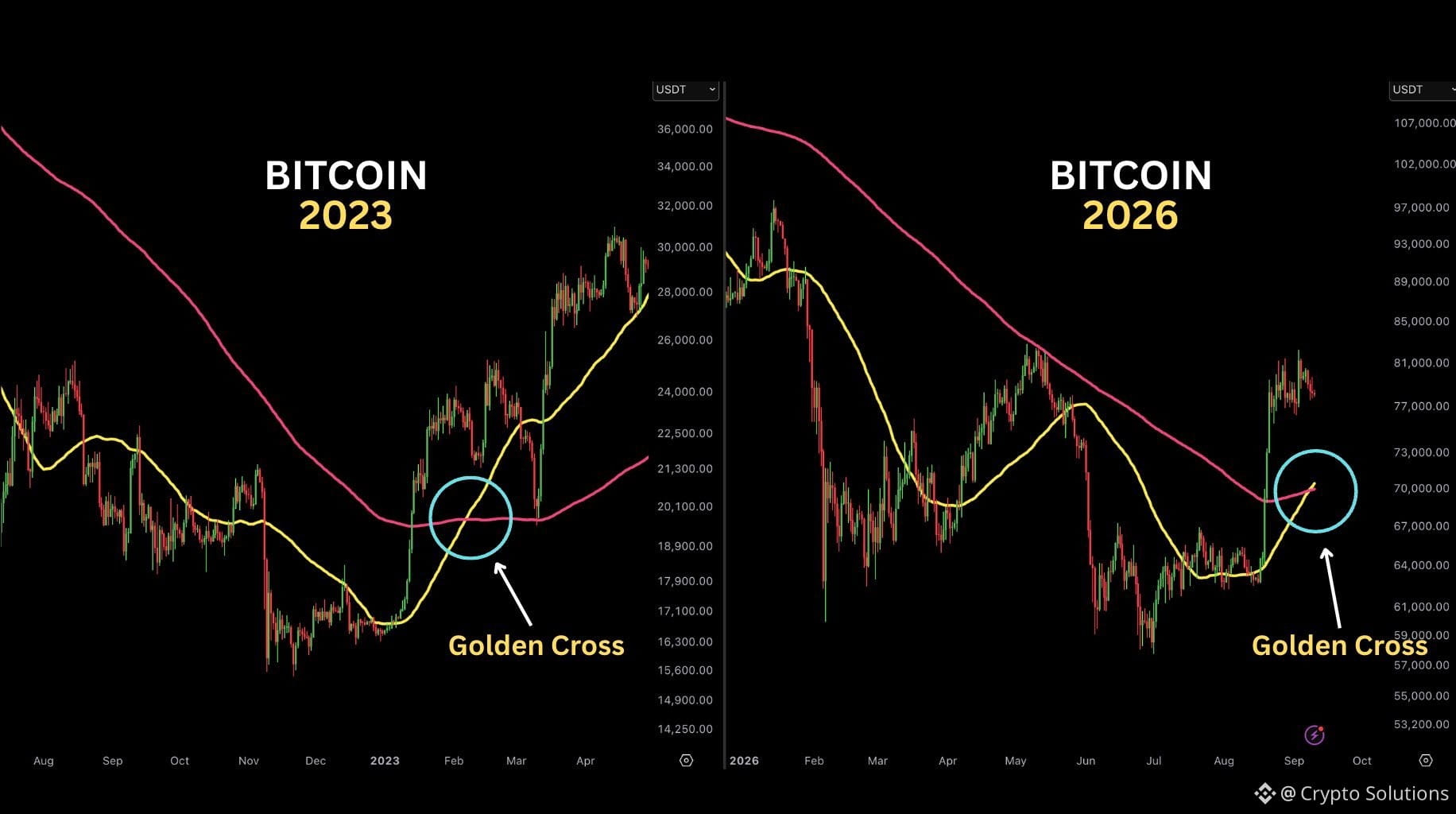
La dernière fois que le $BTC a formé son premier Golden Cross après le début du marché baissier de 2022, cela a marqué un retournement majeur du marché.
À présent, nous observons le même schéma.
La dernière fois que le $BTC a formé son premier Golden Cross après le début du marché baissier de 2022, cela a marqué un retournement majeur du marché.
À présent, nous observons le même schéma.
À présent, nous observons le même schéma.
506
CASSER : 255 000 000 $ de positions crypto à découvert liquidées au cours des 60 dernières minutes.
🔴
CASSER : 255 000 000 $ de positions crypto à découvert liquidées au cours des 60 dernières minutes.
🔴
🔴
2
5
362
Ce n'est pas grave si vous avez manqué $ANSEM le meme Solana Black Bull
Ce n'est pas grave si vous avez manqué $CASHCAT sur la chaîne Robinhood, si vous avez manqué la launchpad $PONS, si vous avez manqué Artificial Inu $Ai
Ce n'est pas grave si vous avez manqué $SKR, le token mobile Web3 de Solana
Ce n'est pas grave si vous avez manqué $USELESS, un autre meme Solana
C'est même normal si vous avez manqué $MARSCOIN, un meme BSC lancé il y a quelques jours.
Ne vous détestez pas, ne cédez pas au FOMO, vous êtes encore tôt. Mais si vous ne voulez pas manquer un autre pump x100, vous devez verrouiller votre position.
Restez ici sur X en permanence, échangez avec des amis qui sont déjà dedans, et surtout, gardez les yeux ouverts à l'affût de la prochaine opportunité avec votre capital PRÊT.
Ce n'est pas grave si vous avez manqué $ANSEM le meme Solana Black Bull
Ce n'est pas grave si vous avez manqué $CASHCAT sur la chaîne Robinhood, si vous avez manqué la launchpad $PONS, si vous avez manqué Artificial Inu $Ai
Ce n'est pas grave si vous avez manqué $SKR, le token mobile Web3 de Solana
Ce n'est pas grave si vous avez manqué $USELESS, un autre meme Solana
C'est même normal si vous avez manqué $MARSCOIN, un meme BSC lancé il y a quelques jours.
Ne vous détestez pas, ne cédez pas au FOMO, vous êtes encore tôt. Mais si vous ne voulez pas manquer un autre pump x100, vous devez verrouiller votre position.
Restez ici sur X en permanence, échangez avec des amis qui sont déjà dedans, et surtout, gardez les yeux ouverts à l'affût de la prochaine opportunité avec votre capital PRÊT.
Ce n'est pas grave si vous avez manqué $CASHCAT sur la chaîne Robinhood, si vous avez manqué la launchpad $PONS, si vous avez manqué Artificial Inu $Ai
Ce n'est pas grave si vous avez manqué $SKR, le token mobile Web3 de Solana
Ce n'est pas grave si vous avez manqué $USELESS, un autre meme Solana
C'est même normal si vous avez manqué $MARSCOIN, un meme BSC lancé il y a quelques jours.
Ne vous détestez pas, ne cédez pas au FOMO, vous êtes encore tôt. Mais si vous ne voulez pas manquer un autre pump x100, vous devez verrouiller votre position.
Restez ici sur X en permanence, échangez avec des amis qui sont déjà dedans, et surtout, gardez les yeux ouverts à l'affût de la prochaine opportunité avec votre capital PRÊT.
3
1.2k
@CZ Avant que le monde ne vous qualifie de visionnaire, votre mère avait apparemment une description beaucoup plus simple :
傻孩子 - enfant stupide.
C’est ce qui rend l’histoire si humaine.
Chaque bâtisseur atteint tôt ou tard un point où sa vision semble irrationnelle à tous les autres.
Votre histoire a simplement la particularité d’avoir un surnom inoubliable qui y est attaché.
Votre mère utilise-t-elle encore 傻孩子 aujourd’hui, ou a-t-elle enfin amélioré votre titre ? 😂
@CZ Avant que le monde ne vous qualifie de visionnaire, votre mère avait apparemment une description beaucoup plus simple :
傻孩子 - enfant stupide.
C’est ce qui rend l’histoire si humaine.
Chaque bâtisseur atteint tôt ou tard un point où sa vision semble irrationnelle à tous les autres.
Votre histoire a simplement la particularité d’avoir un surnom inoubliable qui y est attaché.
Votre mère utilise-t-elle encore 傻孩子 aujourd’hui, ou a-t-elle enfin amélioré votre titre ? 😂
傻孩子 - enfant stupide.
C’est ce qui rend l’histoire si humaine.
Chaque bâtisseur atteint tôt ou tard un point où sa vision semble irrationnelle à tous les autres.
Votre histoire a simplement la particularité d’avoir un surnom inoubliable qui y est attaché.
Votre mère utilise-t-elle encore 傻孩子 aujourd’hui, ou a-t-elle enfin amélioré votre titre ? 😂
423
@CZ Avant les milliards, avant Binance, il n’y avait qu’une mère qui se demandait ce que faisait son fils. Qu’a-t-elle dit lorsque les choses ont enfin marché ?
@CZ Avant les milliards, avant Binance, il n’y avait qu’une mère qui se demandait ce que faisait son fils. Qu’a-t-elle dit lorsque les choses ont enfin marché ?
1
1
329
$AI $10m → $300m en 12 jours
$AMC $1m → $150m en 5 heures
$FATCOIN $0 → $50m en 3 jours
$BONER $2m → $80m en 3 jours
$Basecat $15m → $65m en 5 jours
$PONS $30m → $500m en 11 jours
$MARSCOIN $30m → $200m en 10 jours
$USELESS $40m → $300m en 2 semaines
Quelle est la suite ?
$AI $10m → $300m en 12 jours
$AMC $1m → $150m en 5 heures
$FATCOIN $0 → $50m en 3 jours
$BONER $2m → $80m en 3 jours
$Basecat $15m → $65m en 5 jours
$PONS $30m → $500m en 11 jours
$MARSCOIN $30m → $200m en 10 jours
$USELESS $40m → $300m en 2 semaines
Quelle est la suite ?
$AMC $1m → $150m en 5 heures
$FATCOIN $0 → $50m en 3 jours
$BONER $2m → $80m en 3 jours
$Basecat $15m → $65m en 5 jours
$PONS $30m → $500m en 11 jours
$MARSCOIN $30m → $200m en 10 jours
$USELESS $40m → $300m en 2 semaines
Quelle est la suite ?
480
@CZ a visité alem.ai au Kazakhstan, mettant en lumière l’ambition croissante du pays de devenir un pôle régional pour la blockchain, l’IA et la finance numérique.
Lors de la visite, Binance et Alatau City Bank ont présenté en direct des paiements en crypto, tandis que de nouveaux projets CryptoCity AI et de centres de données ont été présentés.
La visite s’est conclue par un nouveau mémorandum d’accord, renforçant la coopération et la volonté du Kazakhstan de construire l’infrastructure de la prochaine génération de finance numérique.
La crypto, l’IA, la banque et les infrastructures convergent, et le Kazakhstan veut être au centre de tout cela.
@CZ a visité alem.ai au Kazakhstan, mettant en lumière l’ambition croissante du pays de devenir un pôle régional pour la blockchain, l’IA et la finance numérique.
Lors de la visite, Binance et Alatau City Bank ont présenté en direct des paiements en crypto, tandis que de nouveaux projets CryptoCity AI et de centres de données ont été présentés.
La visite s’est conclue par un nouveau mémorandum d’accord, renforçant la coopération et la volonté du Kazakhstan de construire l’infrastructure de la prochaine génération de finance numérique.
La crypto, l’IA, la banque et les infrastructures convergent, et le Kazakhstan veut être au centre de tout cela.
Lors de la visite, Binance et Alatau City Bank ont présenté en direct des paiements en crypto, tandis que de nouveaux projets CryptoCity AI et de centres de données ont été présentés.
La visite s’est conclue par un nouveau mémorandum d’accord, renforçant la coopération et la volonté du Kazakhstan de construire l’infrastructure de la prochaine génération de finance numérique.
La crypto, l’IA, la banque et les infrastructures convergent, et le Kazakhstan veut être au centre de tout cela.
125
Article
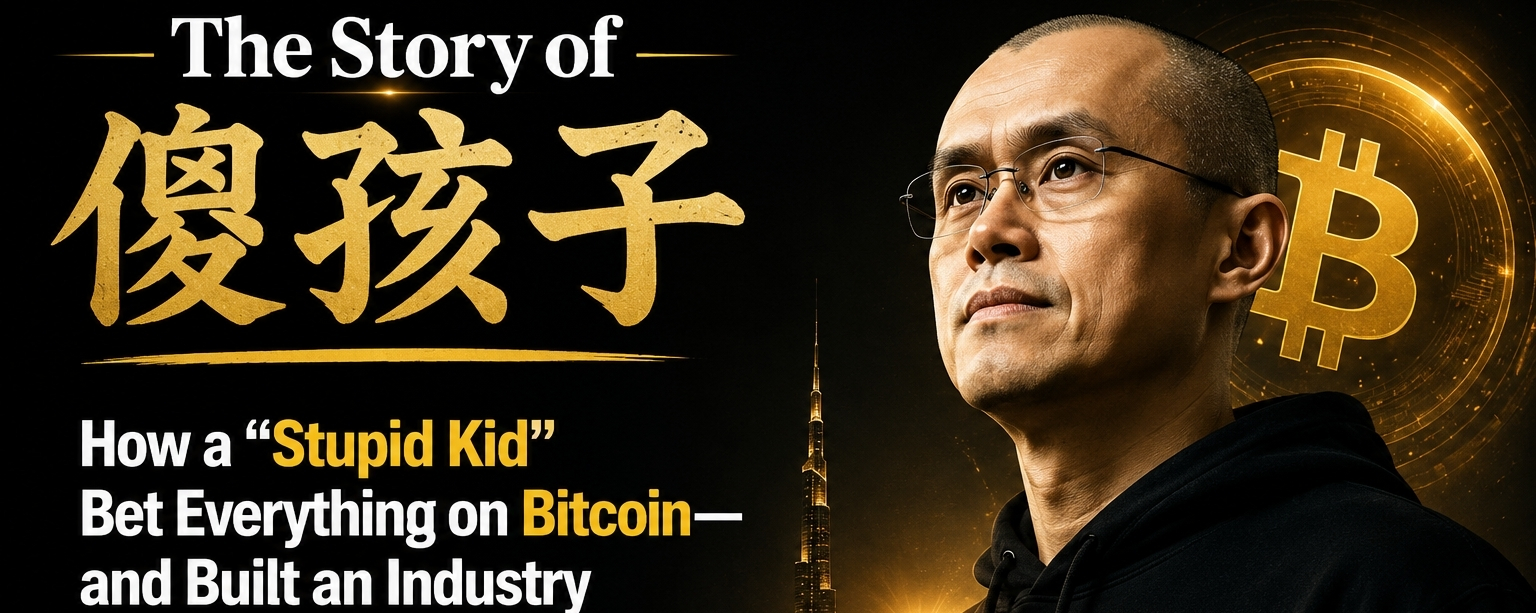
L’histoire de 傻孩子 : comment un « enfant stupide » a tout parié sur le Bitcoin et bâti une industrieAvant que Changpeng Zhao ne devienne CZ, avant que Binance ne devienne une puissance mondiale de la crypto, il y avait un appartement, une décision risquée et une mère qui pensait que son fils avait perdu la tête.
Elle l’a appelé 傻孩子.
Traduit littéralement, cela signifie « enfant stupide ».
Mais parfois, l’histoire a une étrange manière de transformer une insulte en insigne d’honneur.
L’Appartement
En 2014, @CZ a pris une décision qui aurait semblé imprudente à presque n’importe quel observateur extérieur.
Il a vendu son appartement et utilisé l’argent pour acheter du Bitcoin.
L’histoire de 傻孩子 : comment un « enfant stupide » a tout parié sur le Bitcoin et bâti une industrie
Avant que Changpeng Zhao ne devienne CZ, avant que Binance ne devienne une puissance mondiale de la crypto, il y avait un appartement, une décision risquée et une mère qui pensait que son fils avait perdu la tête.
Elle l’a appelé 傻孩子.
Traduit littéralement, cela signifie « enfant stupide ».
Mais parfois, l’histoire a une étrange manière de transformer une insulte en insigne d’honneur.
L’Appartement
En 2014, @CZ a pris une décision qui aurait semblé imprudente à presque n’importe quel observateur extérieur.
Il a vendu son appartement et utilisé l’argent pour acheter du Bitcoin.
Elle l’a appelé 傻孩子.
Traduit littéralement, cela signifie « enfant stupide ».
Mais parfois, l’histoire a une étrange manière de transformer une insulte en insigne d’honneur.
L’Appartement
En 2014, @CZ a pris une décision qui aurait semblé imprudente à presque n’importe quel observateur extérieur.
Il a vendu son appartement et utilisé l’argent pour acheter du Bitcoin.
4
4
11
613
Certaines personnes ont tout perdu en poursuivant une promesse. D’autres ont été sous-estimées et ont pourtant construit quelque chose d’extraordinaire.
Beaucoup ont vendu leur terrain, leur maison, leurs biens, et même vidé leurs économies pour investir dans des systèmes de Ponzi, et aujourd’hui, ils sont de retour à la case départ.
Puis il y a @CZ .
Il a expliqué comment sa mère l’appelait autrefois « Enfant stupide ». Mais au lieu de laisser cette étiquette le définir, il a continué à apprendre, à construire, à prendre des risques et à poursuivre sa vision.
Aujourd’hui, son parcours rappelle que la sous-estimation n’est pas la même chose que l’incapacité.
La leçon ?
Un enfant stupide avec une vision immense peut devenir un génie.
Un génie sans vision peut, au final, devenir un autre enfant stupide.
Ne laisse jamais l’avis de quelqu’un sur toi devenir la limite de ton potentiel.
La vision change la trajectoire.
Certaines personnes ont tout perdu en poursuivant une promesse. D’autres ont été sous-estimées et ont pourtant construit quelque chose d’extraordinaire.
Beaucoup ont vendu leur terrain, leur maison, leurs biens, et même vidé leurs économies pour investir dans des systèmes de Ponzi, et aujourd’hui, ils sont de retour à la case départ.
Puis il y a @CZ .
Il a expliqué comment sa mère l’appelait autrefois « Enfant stupide ». Mais au lieu de laisser cette étiquette le définir, il a continué à apprendre, à construire, à prendre des risques et à poursuivre sa vision.
Aujourd’hui, son parcours rappelle que la sous-estimation n’est pas la même chose que l’incapacité.
La leçon ?
Un enfant stupide avec une vision immense peut devenir un génie.
Un génie sans vision peut, au final, devenir un autre enfant stupide.
Ne laisse jamais l’avis de quelqu’un sur toi devenir la limite de ton potentiel.
La vision change la trajectoire.
Beaucoup ont vendu leur terrain, leur maison, leurs biens, et même vidé leurs économies pour investir dans des systèmes de Ponzi, et aujourd’hui, ils sont de retour à la case départ.
Puis il y a @CZ .
Il a expliqué comment sa mère l’appelait autrefois « Enfant stupide ». Mais au lieu de laisser cette étiquette le définir, il a continué à apprendre, à construire, à prendre des risques et à poursuivre sa vision.
Aujourd’hui, son parcours rappelle que la sous-estimation n’est pas la même chose que l’incapacité.
La leçon ?
Un enfant stupide avec une vision immense peut devenir un génie.
Un génie sans vision peut, au final, devenir un autre enfant stupide.
Ne laisse jamais l’avis de quelqu’un sur toi devenir la limite de ton potentiel.
La vision change la trajectoire.
1
221
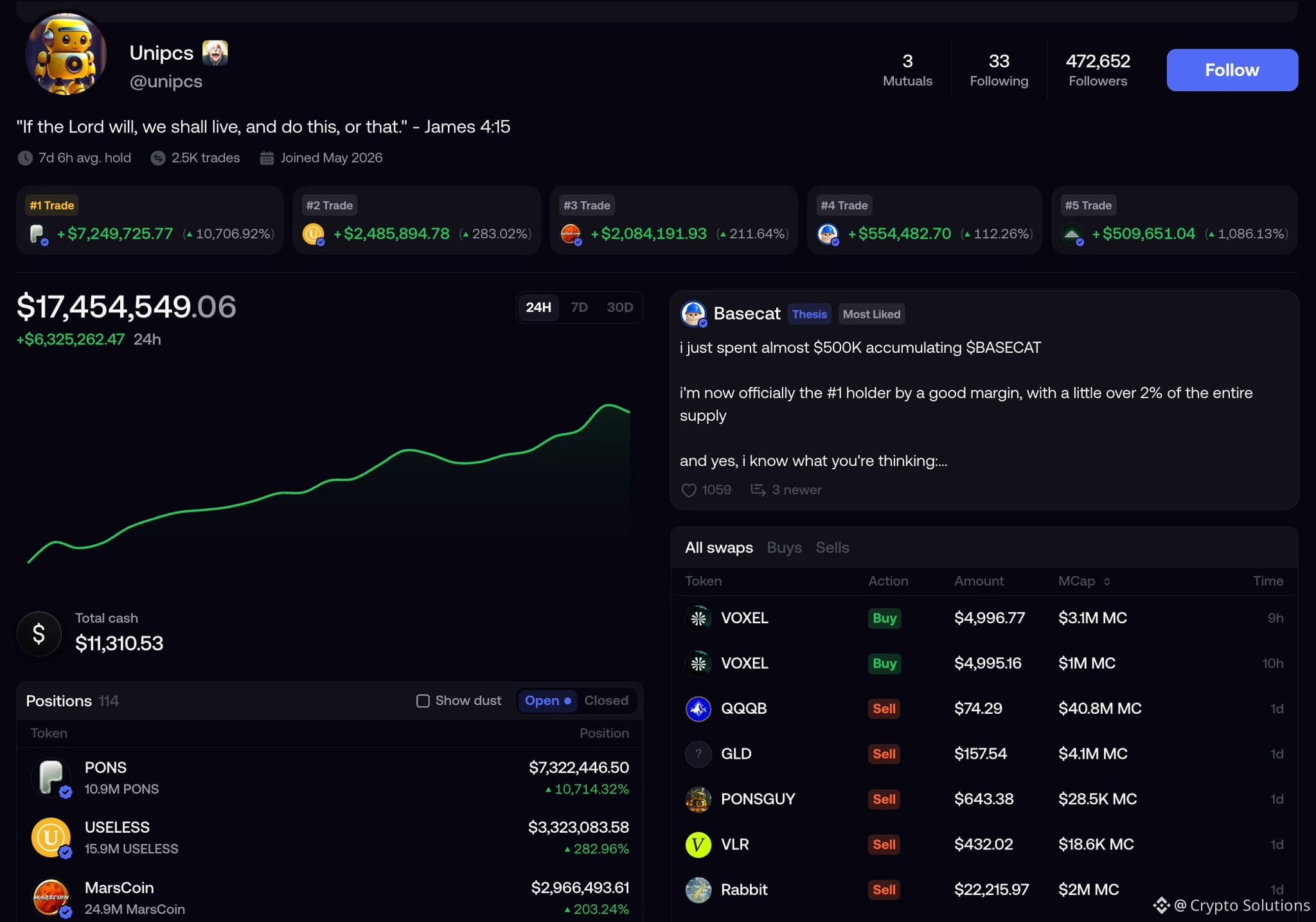
C’est probablement la partie la plus folle du trading PONS :
Un trader a investi 67,7 K$, n’a jamais vendu.
Et la position vaut désormais 7,52 M$.
C’est déjà un x110. 🔥
Mais rien que sur les dernières 24 heures, son portefeuille a encore augmenté de 6,3 M$. 🤯
L’argent correspondant à la vie entière d’une personne normale en une seule journée, à partir d’une seule position en memecoin.
Les tranchées ont vraiment leur propre économie.
C’est probablement la partie la plus folle du trading PONS :
Un trader a investi 67,7 K$, n’a jamais vendu.
Et la position vaut désormais 7,52 M$.
C’est déjà un x110. 🔥
Mais rien que sur les dernières 24 heures, son portefeuille a encore augmenté de 6,3 M$. 🤯
L’argent correspondant à la vie entière d’une personne normale en une seule journée, à partir d’une seule position en memecoin.
Les tranchées ont vraiment leur propre économie.
Un trader a investi 67,7 K$, n’a jamais vendu.
Et la position vaut désormais 7,52 M$.
C’est déjà un x110. 🔥
Mais rien que sur les dernières 24 heures, son portefeuille a encore augmenté de 6,3 M$. 🤯
L’argent correspondant à la vie entière d’une personne normale en une seule journée, à partir d’une seule position en memecoin.
Les tranchées ont vraiment leur propre économie.
1
396
Article
L’argent ne disparaît pas : pourquoi le capital pourrait revenir vers la cryptoDepuis quelques années, l’intelligence artificielle est l’un des plus grands aimants à capitaux.
Les investisseurs ont injecté de l’argent dans les modèles d’IA, les semi-conducteurs, les centres de données, l’infrastructure cloud et les entreprises qui construisent l’ossature de l’économie de l’IA. Le récit était puissant, et pour une bonne raison : l’IA représente l’une des évolutions technologiques les plus importantes de notre génération.
Mais les marchés évoluent par cycles.
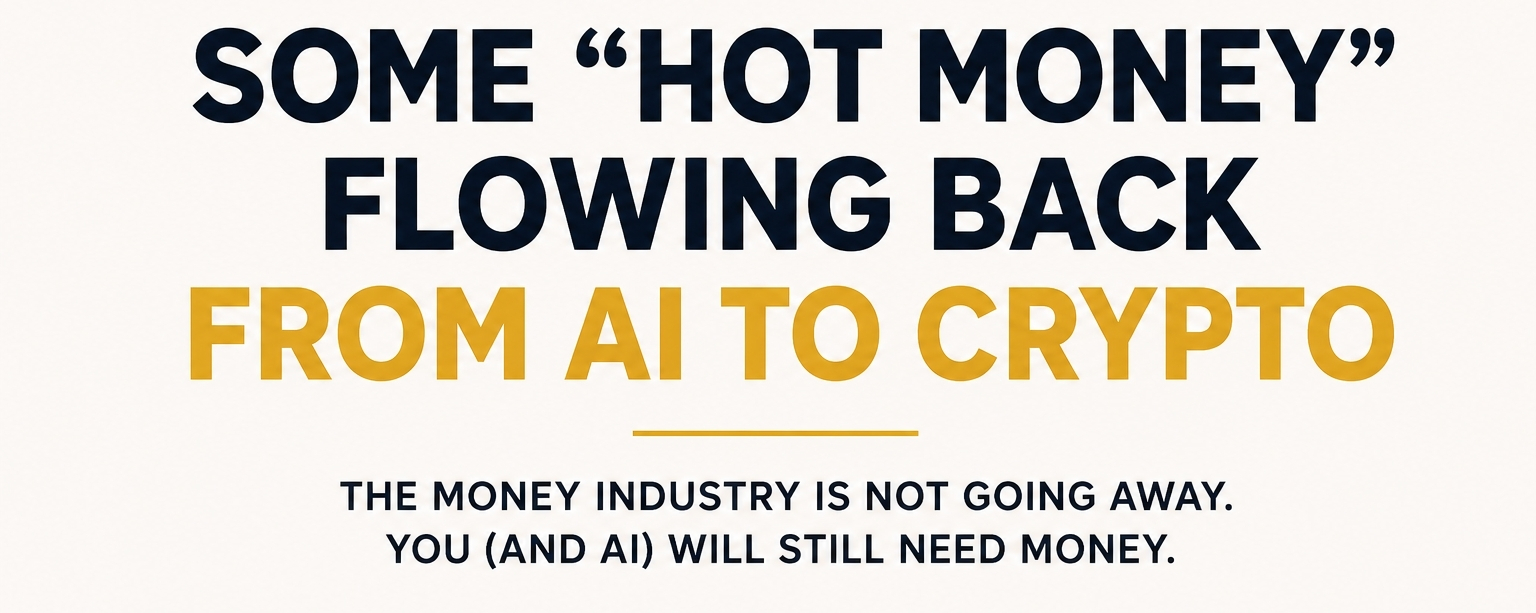
Comme @CZ l’a récemment souligné sur X, une partie de ce qu’on appelle « l’argent brûlant » qui courait après l’IA semble revenir vers la crypto.
L’argent ne disparaît pas : pourquoi le capital pourrait revenir vers la crypto
Depuis quelques années, l’intelligence artificielle est l’un des plus grands aimants à capitaux.
Les investisseurs ont injecté de l’argent dans les modèles d’IA, les semi-conducteurs, les centres de données, l’infrastructure cloud et les entreprises qui construisent l’ossature de l’économie de l’IA. Le récit était puissant, et pour une bonne raison : l’IA représente l’une des évolutions technologiques les plus importantes de notre génération.
Mais les marchés évoluent par cycles.
Comme @CZ l’a récemment souligné sur X, une partie de ce qu’on appelle « l’argent brûlant » qui courait après l’IA semble revenir vers la crypto.
Les investisseurs ont injecté de l’argent dans les modèles d’IA, les semi-conducteurs, les centres de données, l’infrastructure cloud et les entreprises qui construisent l’ossature de l’économie de l’IA. Le récit était puissant, et pour une bonne raison : l’IA représente l’une des évolutions technologiques les plus importantes de notre génération.
Mais les marchés évoluent par cycles.
Comme @CZ l’a récemment souligné sur X, une partie de ce qu’on appelle « l’argent brûlant » qui courait après l’IA semble revenir vers la crypto.
329
En 2014, une mère a traité son fils de « gamin stupide » pour avoir vendu son appartement à Shanghai afin d’acheter du Bitcoin juste avant sa chute.
En 2026, ce « gamin stupide » a fait de Binance un moteur capable de traiter 156 billions de dollars de volume, en y intégrant 323M d’utilisateurs, et en servant environ 43 % de tous les détenteurs de crypto dans le monde.
@CZ La preuve que la conviction dépasse le consensus. Quel était le moment exact, en 2014, où vous avez su, malgré la chute et le fait que tout le monde vous disait fou, que vous aviez raison ?
En 2014, une mère a traité son fils de « gamin stupide » pour avoir vendu son appartement à Shanghai afin d’acheter du Bitcoin juste avant sa chute.
En 2026, ce « gamin stupide » a fait de Binance un moteur capable de traiter 156 billions de dollars de volume, en y intégrant 323M d’utilisateurs, et en servant environ 43 % de tous les détenteurs de crypto dans le monde.
@CZ La preuve que la conviction dépasse le consensus. Quel était le moment exact, en 2014, où vous avez su, malgré la chute et le fait que tout le monde vous disait fou, que vous aviez raison ?
En 2026, ce « gamin stupide » a fait de Binance un moteur capable de traiter 156 billions de dollars de volume, en y intégrant 323M d’utilisateurs, et en servant environ 43 % de tous les détenteurs de crypto dans le monde.
@CZ La preuve que la conviction dépasse le consensus. Quel était le moment exact, en 2014, où vous avez su, malgré la chute et le fait que tout le monde vous disait fou, que vous aviez raison ?
10
3
65
29.7k
Il existe une vieille expression :
« Suivez là où coule la rivière. »
Le marché des crypto-monnaies semble parler très fort en ce moment.
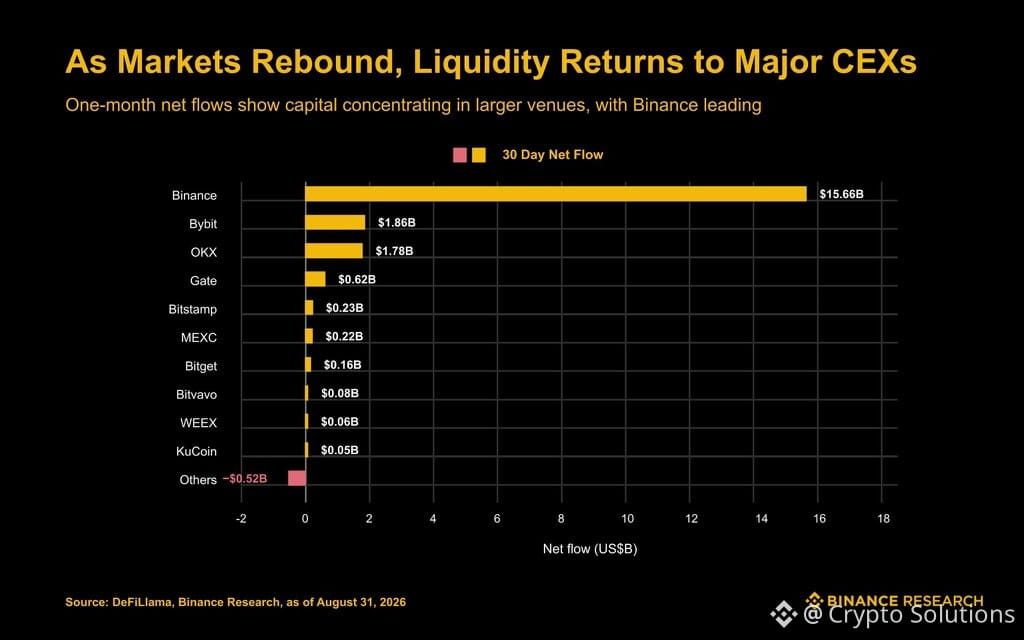
Au cours du dernier mois :
🟢Binance : 15,7 Md$
🟢Bybit : 1,86 Md$
🟢OKX : 1,78 Md$
Près de 75 % des entrées nettes positives sont allées à Binance.
Les marchés peuvent être bruyants.
Les avis peuvent l’être encore plus.
Mais le capital a son propre langage.
Et en ce moment, l’argent parle très clairement.
Source : Binance Research
Il existe une vieille expression :
« Suivez là où coule la rivière. »
Le marché des crypto-monnaies semble parler très fort en ce moment.
Au cours du dernier mois :
🟢Binance : 15,7 Md$
🟢Bybit : 1,86 Md$
🟢OKX : 1,78 Md$
Près de 75 % des entrées nettes positives sont allées à Binance.
Les marchés peuvent être bruyants.
Les avis peuvent l’être encore plus.
Mais le capital a son propre langage.
Et en ce moment, l’argent parle très clairement.
Source : Binance Research
« Suivez là où coule la rivière. »
Le marché des crypto-monnaies semble parler très fort en ce moment.
Au cours du dernier mois :
🟢Binance : 15,7 Md$
🟢Bybit : 1,86 Md$
🟢OKX : 1,78 Md$
Près de 75 % des entrées nettes positives sont allées à Binance.
Les marchés peuvent être bruyants.
Les avis peuvent l’être encore plus.
Mais le capital a son propre langage.
Et en ce moment, l’argent parle très clairement.
Source : Binance Research
1
232
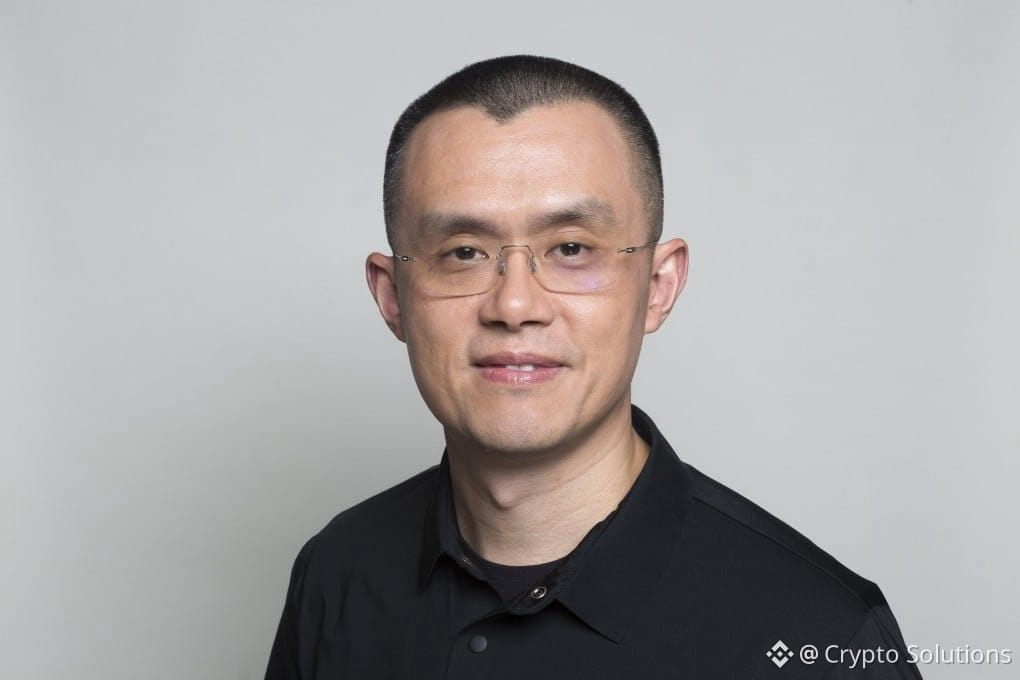
Chère @CZ Rien ne frappe plus fort qu’une mère et son « 傻孩子 » (shǎ hái zi). C’est 50 % d’inquiétude, 50 % d’amour, et 100 % de maman asiatique classique. C’est quoi la chose la plus « 傻 » que tu as faite et qui l’a fait te le dire, et est-ce que ça a fini par changer ta vie ?
Chère @CZ Rien ne frappe plus fort qu’une mère et son « 傻孩子 » (shǎ hái zi). C’est 50 % d’inquiétude, 50 % d’amour, et 100 % de maman asiatique classique. C’est quoi la chose la plus « 傻 » que tu as faite et qui l’a fait te le dire, et est-ce que ça a fini par changer ta vie ?
1
398
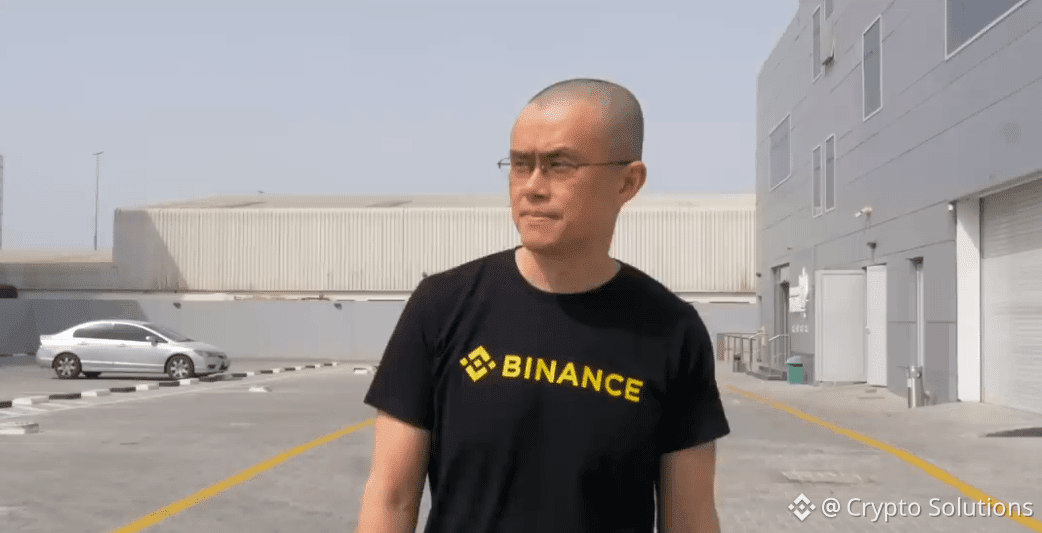
Le marché peut vous faire paraître stupide avant de vous faire paraître juste.
Prenons un exemple : @CZ a vendu sa maison à Shanghai pour 1 million de dollars en 2014, l’a vue s’effondrer de 70 % deux mois plus tard, et s’est fait traiter de « gamin stupide » (傻孩子) par sa mère.
Imaginez être en baisse de 700 000 dollars sur le papier et rester calme. Conviction réelle ou folie pure ?
Le marché peut vous faire paraître stupide avant de vous faire paraître juste.
Prenons un exemple : @CZ a vendu sa maison à Shanghai pour 1 million de dollars en 2014, l’a vue s’effondrer de 70 % deux mois plus tard, et s’est fait traiter de « gamin stupide » (傻孩子) par sa mère.
Imaginez être en baisse de 700 000 dollars sur le papier et rester calme. Conviction réelle ou folie pure ?
Prenons un exemple : @CZ a vendu sa maison à Shanghai pour 1 million de dollars en 2014, l’a vue s’effondrer de 70 % deux mois plus tard, et s’est fait traiter de « gamin stupide » (傻孩子) par sa mère.
Imaginez être en baisse de 700 000 dollars sur le papier et rester calme. Conviction réelle ou folie pure ?
3
1
17
25.3k
Article
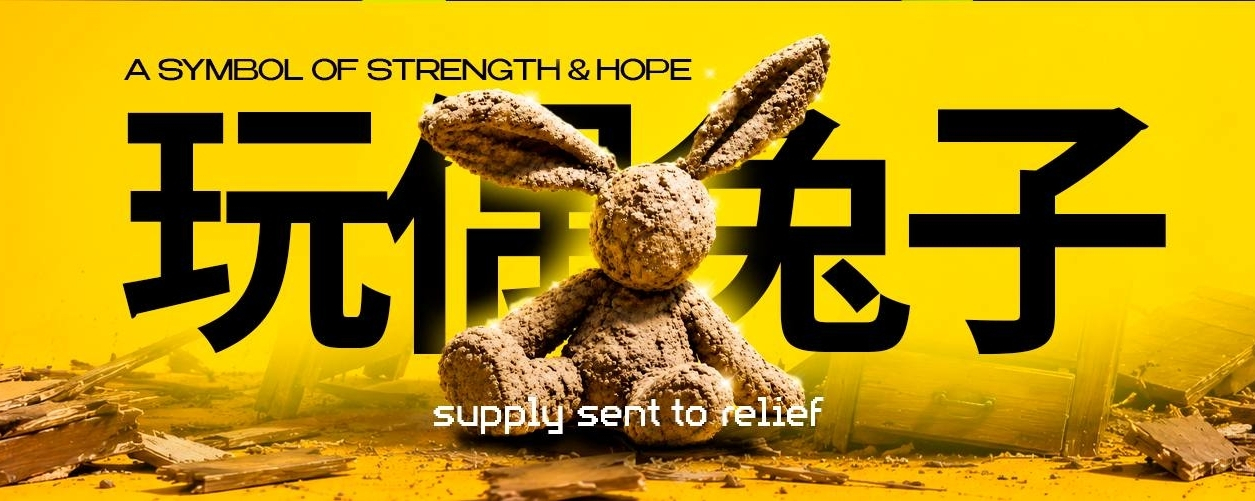
L’histoire derrière 玩偶兔子 🐇
et une communauté qui transforme un mème en aide réelleParfois, les symboles les plus puissants ne sont pas créés intentionnellement.
On les trouve simplement.
Un petit lapin dans la boue
Le 29 août, sur le site de secours à la suite d’une coulée de débris à Gyirong, un journaliste a trouvé quelque chose de petit le long de la berge.
Un lapin en peluche.
Recouvert de boue.
Un jouet ordinaire qui, en un instant, est devenu un rappel silencieux de la brutalité avec laquelle un désastre peut changer des vies.
Quelque part, il a peut-être un jour appartenu à un enfant. Quelque part, il a peut-être fait partie d’une vie ordinaire avant que tout ne change.
Maintenant, il était assis au milieu des conséquences du désastre — recouvert de boue, mais toujours là.
L’histoire derrière 玩偶兔子 🐇 et une communauté qui transforme un mème en aide réelle
Parfois, les symboles les plus puissants ne sont pas créés intentionnellement.
On les trouve simplement.
Un petit lapin dans la boue
Le 29 août, sur le site de secours à la suite d’une coulée de débris à Gyirong, un journaliste a trouvé quelque chose de petit le long de la berge.
Un lapin en peluche.
Recouvert de boue.
Un jouet ordinaire qui, en un instant, est devenu un rappel silencieux de la brutalité avec laquelle un désastre peut changer des vies.
Quelque part, il a peut-être un jour appartenu à un enfant. Quelque part, il a peut-être fait partie d’une vie ordinaire avant que tout ne change.
Maintenant, il était assis au milieu des conséquences du désastre — recouvert de boue, mais toujours là.
On les trouve simplement.
Un petit lapin dans la boue
Le 29 août, sur le site de secours à la suite d’une coulée de débris à Gyirong, un journaliste a trouvé quelque chose de petit le long de la berge.
Un lapin en peluche.
Recouvert de boue.
Un jouet ordinaire qui, en un instant, est devenu un rappel silencieux de la brutalité avec laquelle un désastre peut changer des vies.
Quelque part, il a peut-être un jour appartenu à un enfant. Quelque part, il a peut-être fait partie d’une vie ordinaire avant que tout ne change.
Maintenant, il était assis au milieu des conséquences du désastre — recouvert de boue, mais toujours là.
6
661
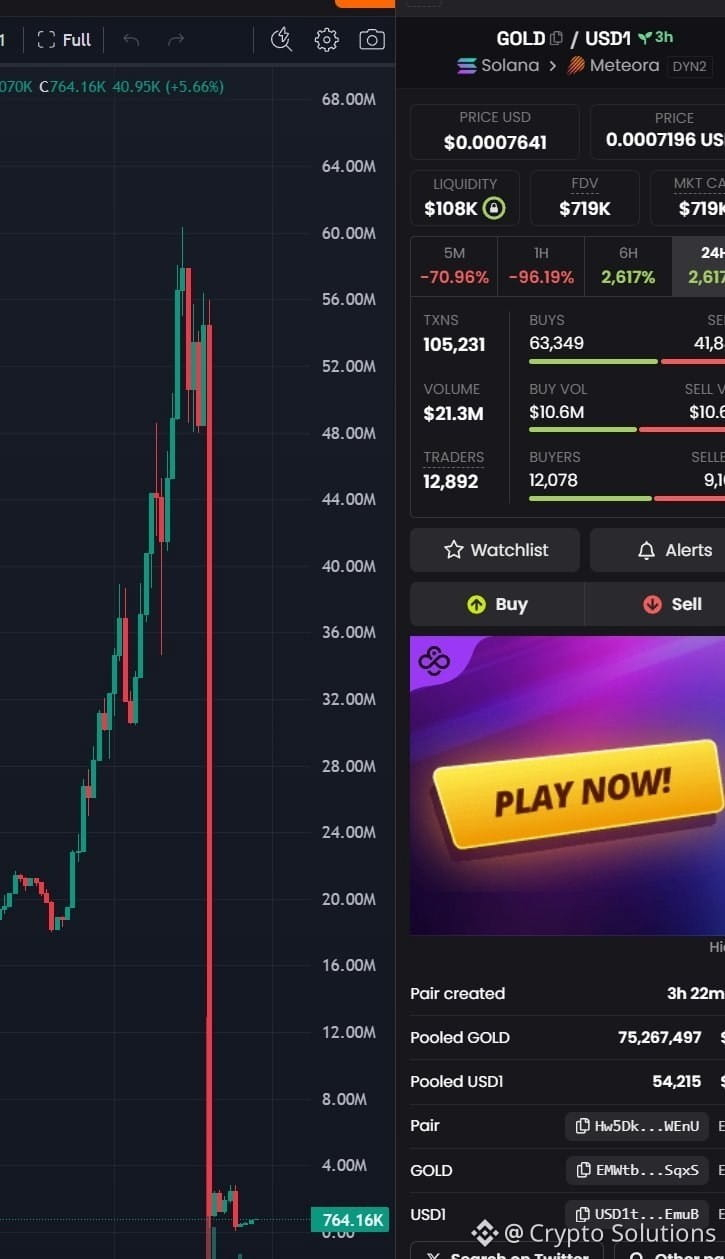
ne wallet round-tripped plus de 88,87K$ de $fone vers $gold, il vaut maintenant moins de 8K$😭
wallet : EmxhsE5eJF6TZ8XJy7hjizjpACirUqpwFGkK4E2euZMP
ne wallet round-tripped plus de 88,87K$ de $fone vers $gold, il vaut maintenant moins de 8K$😭
wallet : EmxhsE5eJF6TZ8XJy7hjizjpACirUqpwFGkK4E2euZMP
wallet : EmxhsE5eJF6TZ8XJy7hjizjpACirUqpwFGkK4E2euZMP
2
439
Connectez-vous pour découvrir plus de contenu
Rejoignez la communauté mondiale des adeptes de cryptomonnaies sur Binance Square
⚡️ Suviez les dernières informations importantes sur les cryptomonnaies.
💬 Jugé digne de confiance par la plus grande plateforme d’échange de cryptomonnaies au monde.
👍 Découvrez les connaissances que partagent les créateurs vérifiés.
Adresse e-mail/Nº de téléphone
Sujets d’actualité
BitcoinReboundsTo$79K
10,840 vues
110 mentions
🚨 $BTC est en train de progresser.
Le Bitcoin s’échange autour de 78 804 $ , en hausse d’environ 1,9 %, après avoir repris la zone des 78 K. Le prochain niveau à surveiller est le plus haut intraday, vers 78 905 $.
Une cassure nette au-dessus de ce niveau pourrait ouvrir la voie vers 79 K–80 K. Si le BTC est rejeté, le support se situe autour de 78 300 $, puis 77 975 $.
Les haussiers ont de l’élan, mais le BTC doit rester au-dessus de 78 K.
#Bitcoin #BTC #CryptoTrading #CryptoMarket #CryptoAnalysis
PulseON
·11 mentions J’aime
·11.2k vues
GrayscalePutsXRPAt26.11%InAdvisorPortfolio
1,489 vues
86 mentions
PhiladelphiaSemiconductorIndexFalls5.9%
1,512 vues
58 mentions