

C Y R O N
5.5k Publications

C Y R O N
Signaler
Bloquer l’utilisateur
Binance KOL & Web3 Mentor

Détenteur pour XPL
Trade régulièrement
4.8 an(s)
292 Suivis
18.2K+ Abonnés
18.0K+ J’aime
Publications
Tous
Citations
Vidéos
Direct
·
--
Haussier
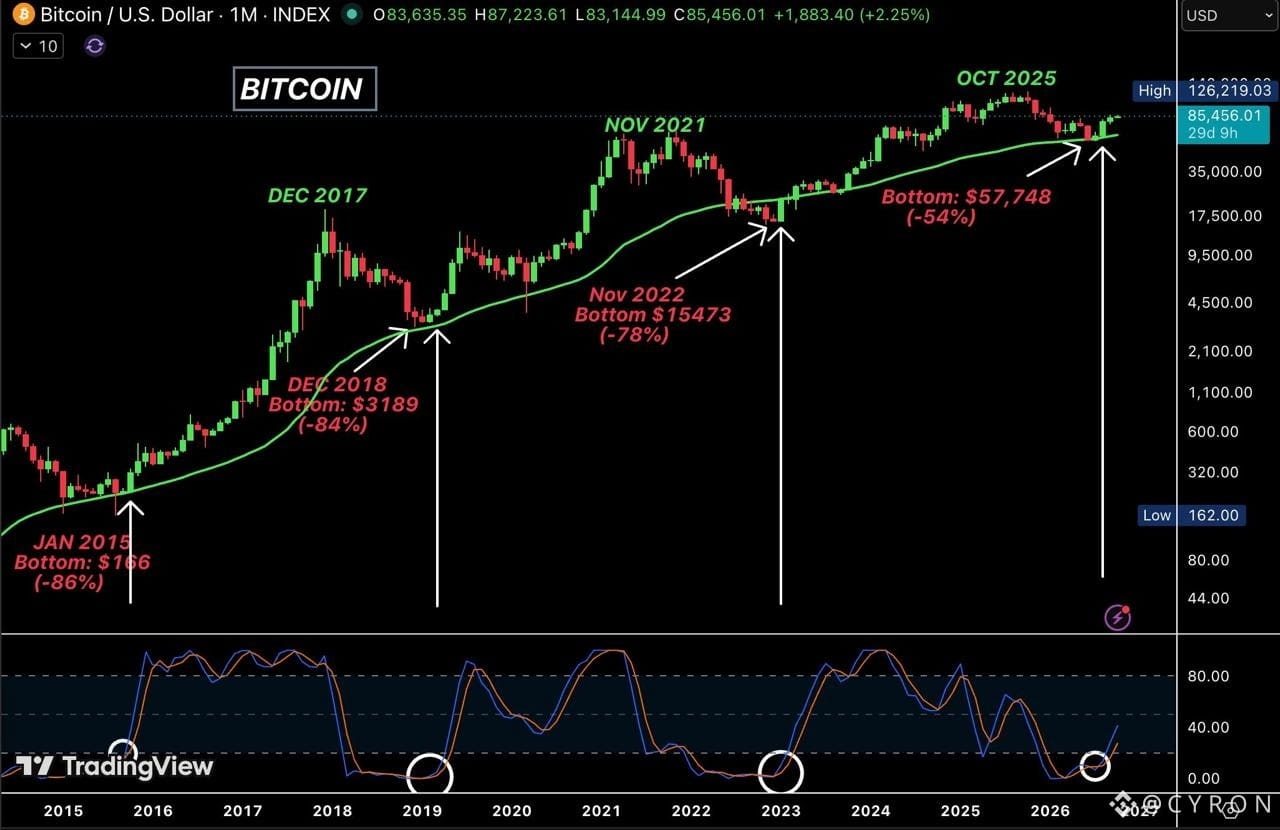
📊 BITCOIN MONTHLY ANALYSIS
➮ $BTC gained 6.35%, closing the month at a 9-month high.
➮ Q3 ended with a 43% gain, marking Bitcoin’s strongest Q3 since 2017.
➮ Monthly Stoch RSI is showing improving momentum, with similar historical setups preceding major bullish phases.
➮ Bitcoin also bounced from the Monthly MA 50, an important long-term technical level.
➮ Key support levels: Weekly MA 50 ~$77,670 and Weekly MA 200 ~$65K.
The technical structure remains constructive, but these levels will be important to watch going forward. 👀
{spot}(BTCUSDT)
#SECApproves3xLongCryptoCommodityETPs
#SECProposesCryptoCustodyRules
📊 BITCOIN MONTHLY ANALYSIS
➮ $BTC gained 6.35%, closing the month at a 9-month high.
➮ Q3 ended with a 43% gain, marking Bitcoin’s strongest Q3 since 2017.
➮ Monthly Stoch RSI is showing improving momentum, with similar historical setups preceding major bullish phases.
➮ Bitcoin also bounced from the Monthly MA 50, an important long-term technical level.
➮ Key support levels: Weekly MA 50 ~$77,670 and Weekly MA 200 ~$65K.
The technical structure remains constructive, but these levels will be important to watch going forward. 👀
#SECApproves3xLongCryptoCommodityETPs
#SECProposesCryptoCustodyRules
➮ $BTC gained 6.35%, closing the month at a 9-month high.
➮ Q3 ended with a 43% gain, marking Bitcoin’s strongest Q3 since 2017.
➮ Monthly Stoch RSI is showing improving momentum, with similar historical setups preceding major bullish phases.
➮ Bitcoin also bounced from the Monthly MA 50, an important long-term technical level.
➮ Key support levels: Weekly MA 50 ~$77,670 and Weekly MA 200 ~$65K.
The technical structure remains constructive, but these levels will be important to watch going forward. 👀
#SECApproves3xLongCryptoCommodityETPs
#SECProposesCryptoCustodyRules
93
·
--
Haussier
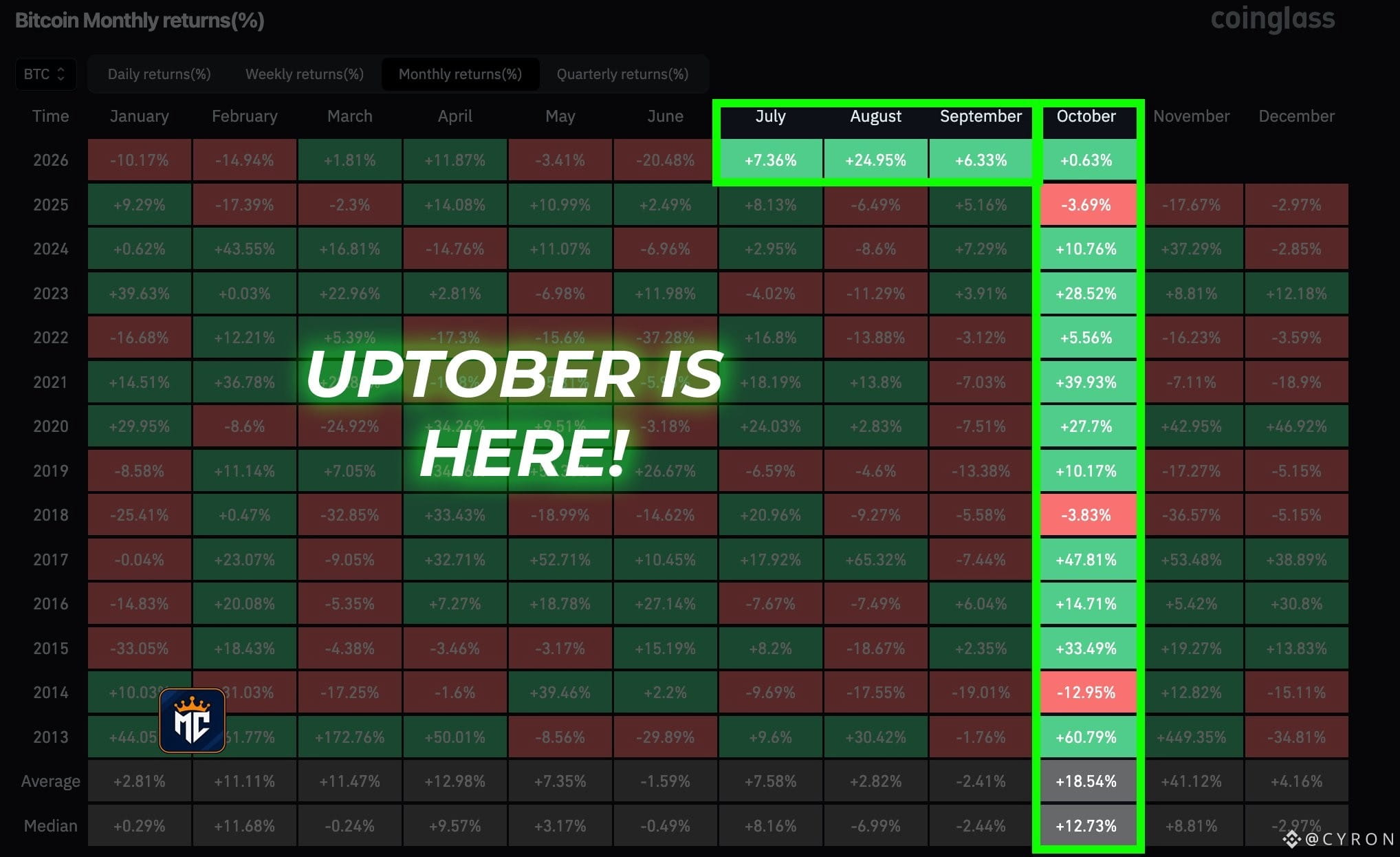
🚨 UPTOBER IS HERE
• $BTC has closed 3 consecutive green months heading into October.
• Historically, October has delivered an average +18.54% return for Bitcoin.
• Momentum is already building as Q4 begins.
• If the trend continues, October could be another interesting month for BTC. 📈
Q4 is officially underway. 👀
{spot}(BTCUSDT)
#EvernorthPlansNasdaqListingOct8
#XRPPostsFirstThreeGreenMonthsInQ3
🚨 UPTOBER IS HERE
• $BTC has closed 3 consecutive green months heading into October.
• Historically, October has delivered an average +18.54% return for Bitcoin.
• Momentum is already building as Q4 begins.
• If the trend continues, October could be another interesting month for BTC. 📈
Q4 is officially underway. 👀
#EvernorthPlansNasdaqListingOct8
#XRPPostsFirstThreeGreenMonthsInQ3
• $BTC has closed 3 consecutive green months heading into October.
• Historically, October has delivered an average +18.54% return for Bitcoin.
• Momentum is already building as Q4 begins.
• If the trend continues, October could be another interesting month for BTC. 📈
Q4 is officially underway. 👀
#EvernorthPlansNasdaqListingOct8
#XRPPostsFirstThreeGreenMonthsInQ3
208
·
--
Haussier
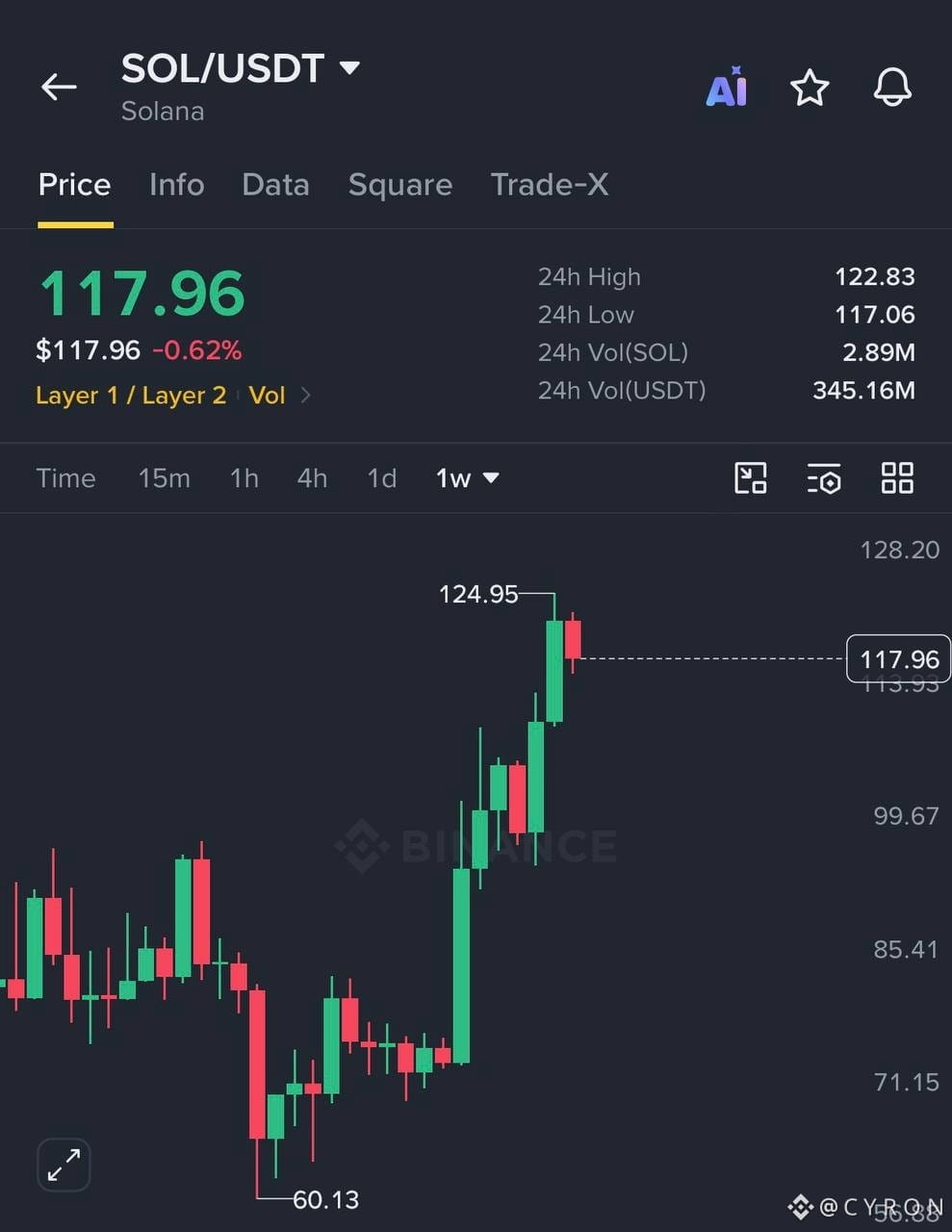
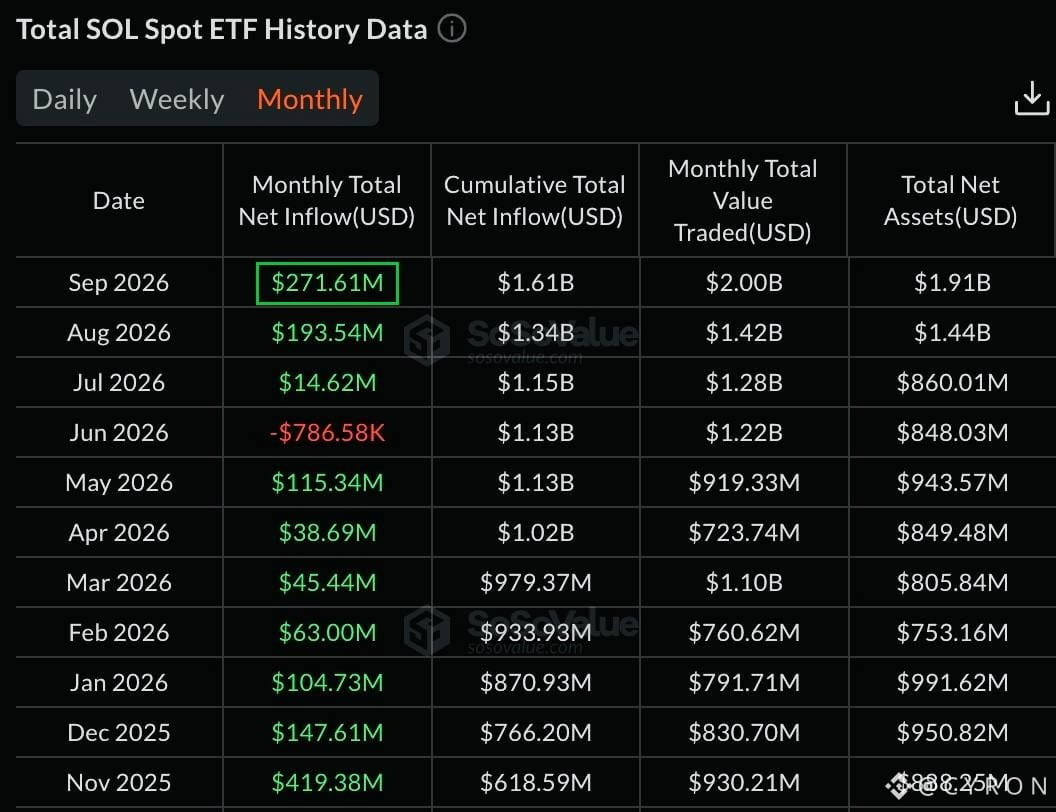
$SOL is making moves 👀.
Up 70% in 60 days, while ETFs bought $271M worth of SOL in September, the biggest monthly inflow in 10 months.
That’s some serious demand. 🔥
{spot}(SOLUSDT)
#USCorePCEEasesTo3%InAugust
#USADPAdds90000JobsInSeptember
$SOL is making moves 👀.
Up 70% in 60 days, while ETFs bought $271M worth of SOL in September, the biggest monthly inflow in 10 months.
That’s some serious demand. 🔥
#USCorePCEEasesTo3%InAugust
#USADPAdds90000JobsInSeptember
Up 70% in 60 days, while ETFs bought $271M worth of SOL in September, the biggest monthly inflow in 10 months.
That’s some serious demand. 🔥
#USCorePCEEasesTo3%InAugust
#USADPAdds90000JobsInSeptember
105
·
--
Haussier
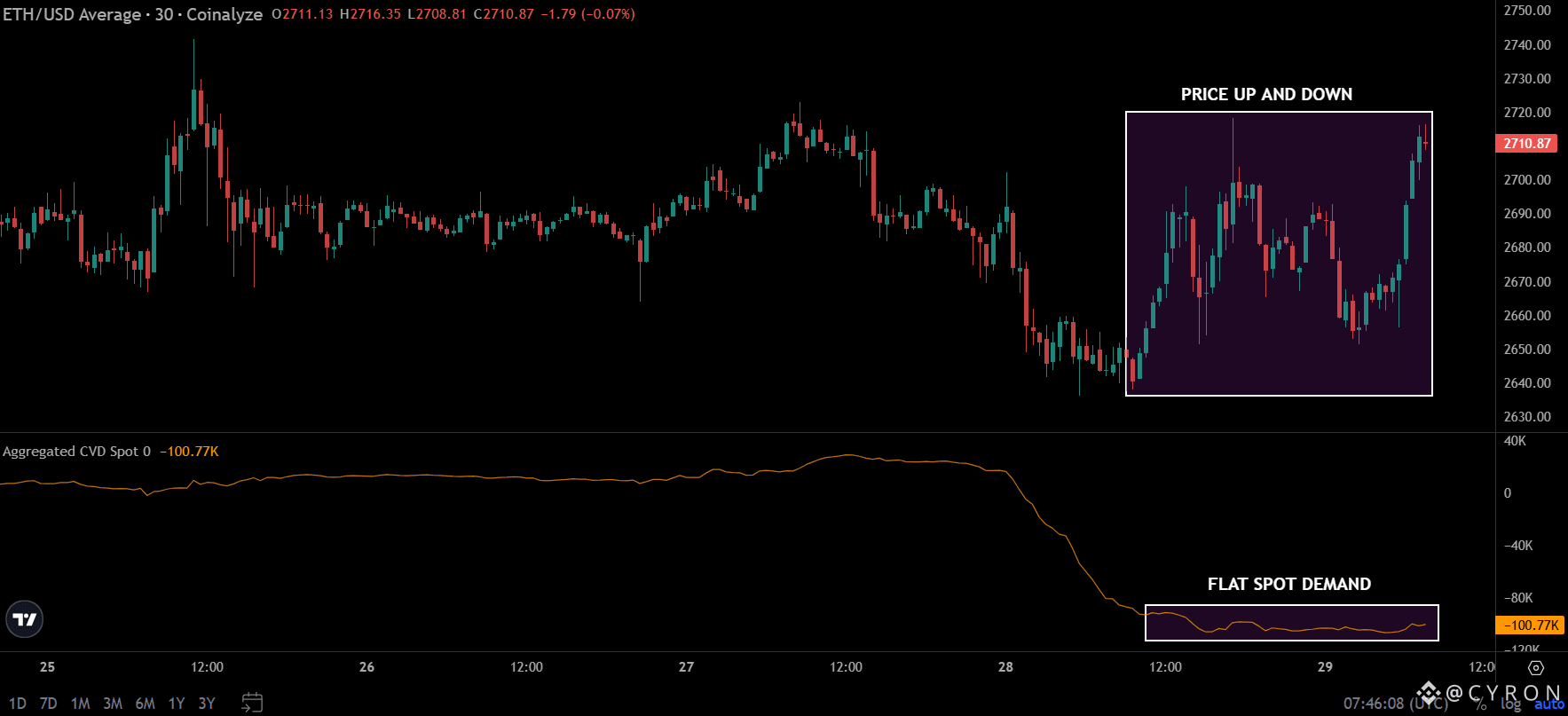
$ETH has been moving on leverage since yesterday.
Positions keep getting added and wiped out, while spot activity remains quiet.
Without fresh spot demand, ETH could stay range bound for a while. 👀
{spot}(ETHUSDT)
#QNTFallsOver40%FromMorningHigh
#ChainlinkLaunchesCCIP2WithEnterpriseVerification
$ETH has been moving on leverage since yesterday.
Positions keep getting added and wiped out, while spot activity remains quiet.
Without fresh spot demand, ETH could stay range bound for a while. 👀
#QNTFallsOver40%FromMorningHigh
#ChainlinkLaunchesCCIP2WithEnterpriseVerification
Positions keep getting added and wiped out, while spot activity remains quiet.
Without fresh spot demand, ETH could stay range bound for a while. 👀
#QNTFallsOver40%FromMorningHigh
#ChainlinkLaunchesCCIP2WithEnterpriseVerification
259
·
--
Baissier
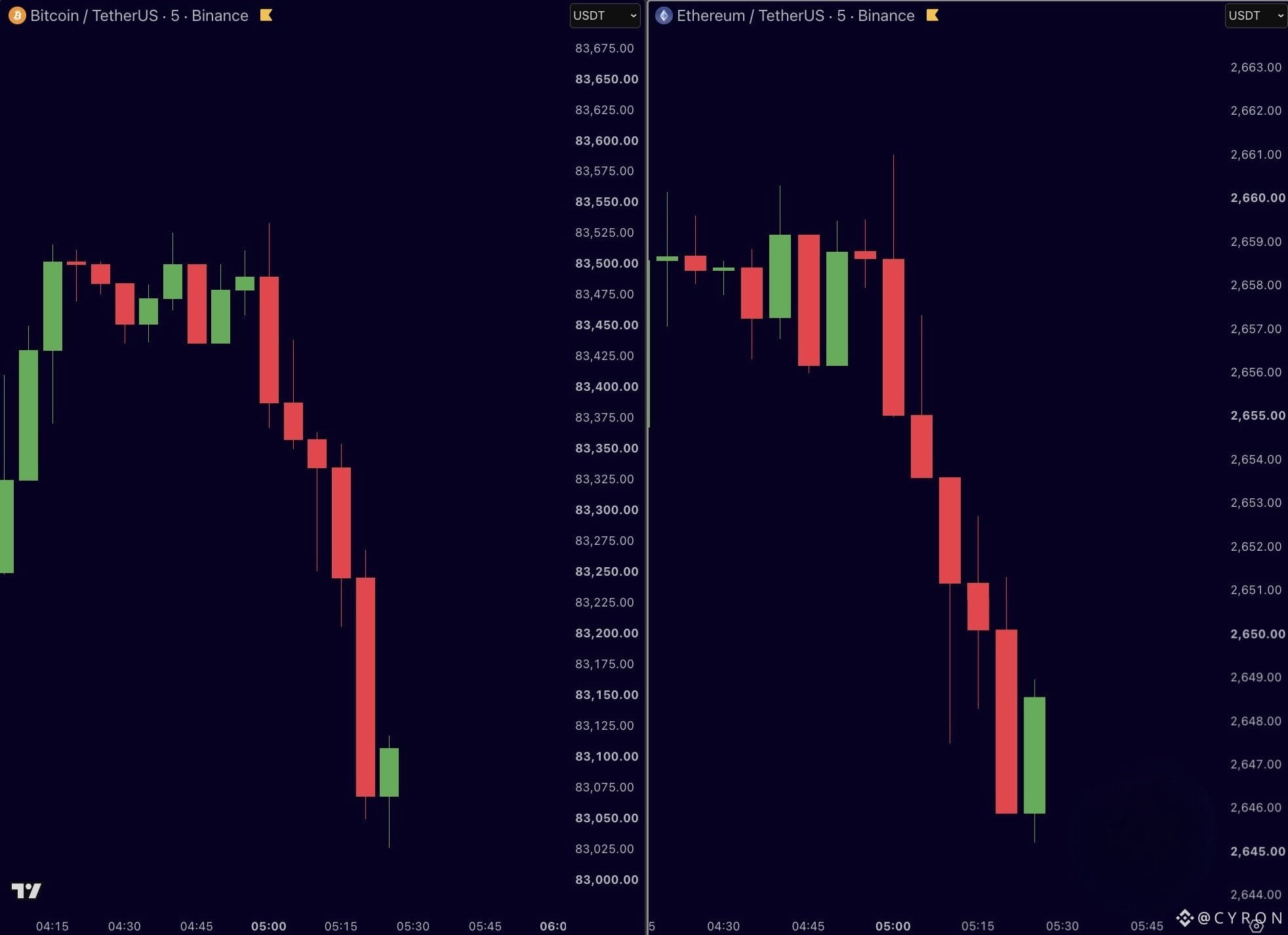
$BTC just slipped below $83K.
$ETH is below $2,650, with around $50M in longs liquidated within an hour.
Renewed U.S.-Iran tensions are adding to the market pressure.
Crypto is getting hit again. 👀
{spot}(BTCUSDT)
{spot}(ETHUSDT)
#StrategyStriveAdd2305BitcoinThisWeek
#BitwiseFilesFinalNEARSpotETFProspectus
#BitwiseFilesFinalNEARSpotETFProspectus
$BTC just slipped below $83K.
$ETH is below $2,650, with around $50M in longs liquidated within an hour.
Renewed U.S.-Iran tensions are adding to the market pressure.
Crypto is getting hit again. 👀
#StrategyStriveAdd2305BitcoinThisWeek
#BitwiseFilesFinalNEARSpotETFProspectus
#BitwiseFilesFinalNEARSpotETFProspectus
$ETH is below $2,650, with around $50M in longs liquidated within an hour.
Renewed U.S.-Iran tensions are adding to the market pressure.
Crypto is getting hit again. 👀
#StrategyStriveAdd2305BitcoinThisWeek
#BitwiseFilesFinalNEARSpotETFProspectus
#BitwiseFilesFinalNEARSpotETFProspectus
126
·
--
Haussier
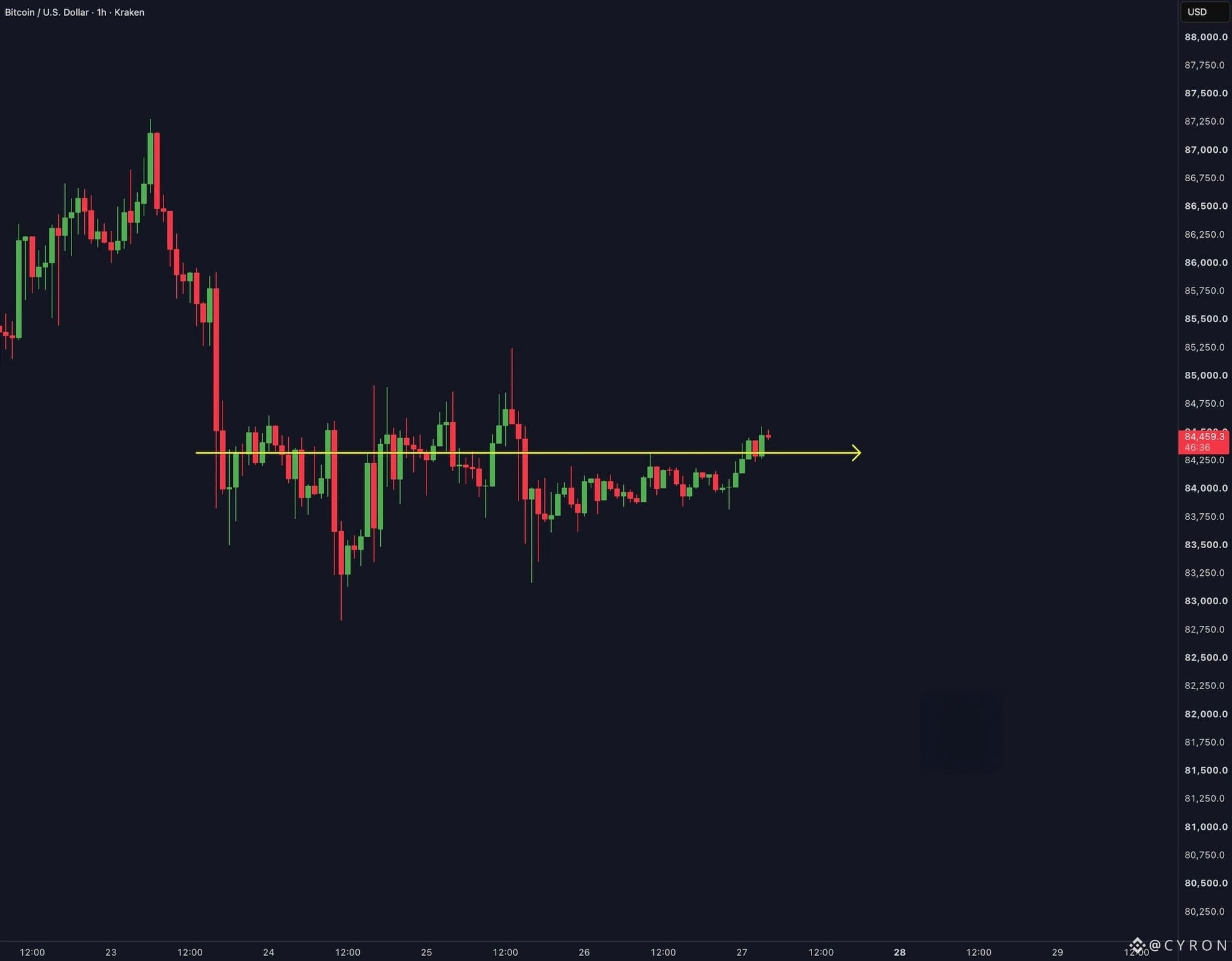
Bitcoin is completely flat right now.
The market is just sitting here, waiting for the next catalyst.
After that big move, a little consolidation makes sense.
But we all know what happens when $BTC gets too quiet…
The next move can come fast. 👀
Let's see what's coming.
{spot}(BTCUSDT)
#StrategyStriveAdd2305BitcoinThisWeek
#TrumpRejectsIranHormuzReopening
#CircleTetherFreezeBitgetHackerWallet
Bitcoin is completely flat right now.
The market is just sitting here, waiting for the next catalyst.
After that big move, a little consolidation makes sense.
But we all know what happens when $BTC gets too quiet…
The next move can come fast. 👀
Let's see what's coming.
#StrategyStriveAdd2305BitcoinThisWeek
#TrumpRejectsIranHormuzReopening
#CircleTetherFreezeBitgetHackerWallet
The market is just sitting here, waiting for the next catalyst.
After that big move, a little consolidation makes sense.
But we all know what happens when $BTC gets too quiet…
The next move can come fast. 👀
Let's see what's coming.
#StrategyStriveAdd2305BitcoinThisWeek
#TrumpRejectsIranHormuzReopening
#CircleTetherFreezeBitgetHackerWallet
1
164
·
--
Baissier
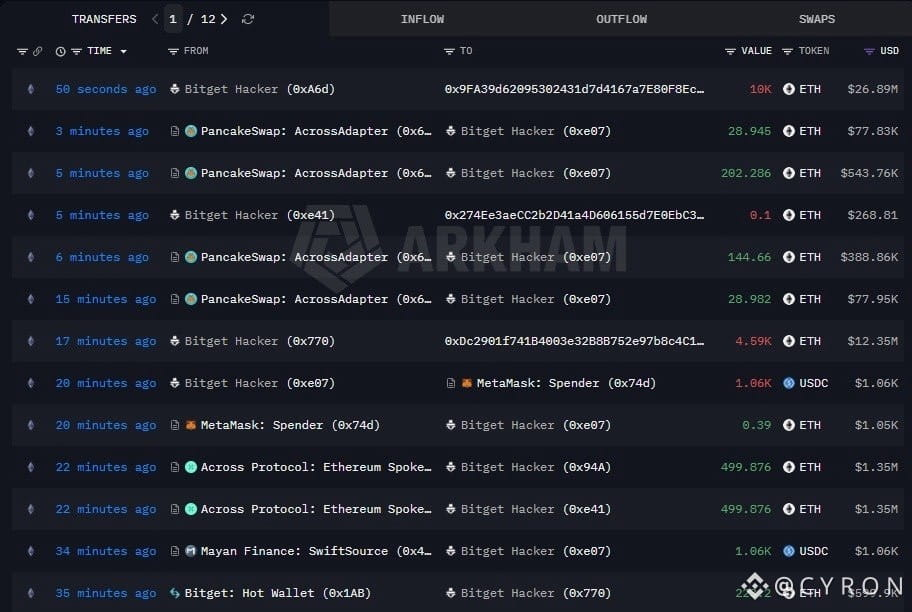
🚨 Bitget has confirmed a major security incident.
Around $351.6M in assets were affected after unauthorized transfers from parts of its hot and warm wallet infrastructure.
The good news: Bitget says cold wallets remain secure, user balances are protected, and its $464M+ User Protection Fund is sufficient to cover the reported loss.
Withdrawals have been temporarily suspended while the security review continues.
On-chain activity also shows the stolen assets being moved and swapped, with $ETH among the assets involved.
This is still developing. The full attack vector has not been disclosed yet.
Stay alert and follow Bitget's official updates before making any assumptions. 👀
{spot}(ETHUSDT)
#BinanceWillListHyperliquid(HYPE)
#FedOctoberRateHikeOddsRiseTo69.7%
🚨 Bitget has confirmed a major security incident.
Around $351.6M in assets were affected after unauthorized transfers from parts of its hot and warm wallet infrastructure.
The good news: Bitget says cold wallets remain secure, user balances are protected, and its $464M+ User Protection Fund is sufficient to cover the reported loss.
Withdrawals have been temporarily suspended while the security review continues.
On-chain activity also shows the stolen assets being moved and swapped, with $ETH among the assets involved.
This is still developing. The full attack vector has not been disclosed yet.
Stay alert and follow Bitget's official updates before making any assumptions. 👀
#BinanceWillListHyperliquid(HYPE)
#FedOctoberRateHikeOddsRiseTo69.7%
Around $351.6M in assets were affected after unauthorized transfers from parts of its hot and warm wallet infrastructure.
The good news: Bitget says cold wallets remain secure, user balances are protected, and its $464M+ User Protection Fund is sufficient to cover the reported loss.
Withdrawals have been temporarily suspended while the security review continues.
On-chain activity also shows the stolen assets being moved and swapped, with $ETH among the assets involved.
This is still developing. The full attack vector has not been disclosed yet.
Stay alert and follow Bitget's official updates before making any assumptions. 👀
#BinanceWillListHyperliquid(HYPE)
#FedOctoberRateHikeOddsRiseTo69.7%
1
1
912
·
--
Haussier
Bitcoin is doing something we haven't seen in a long time.
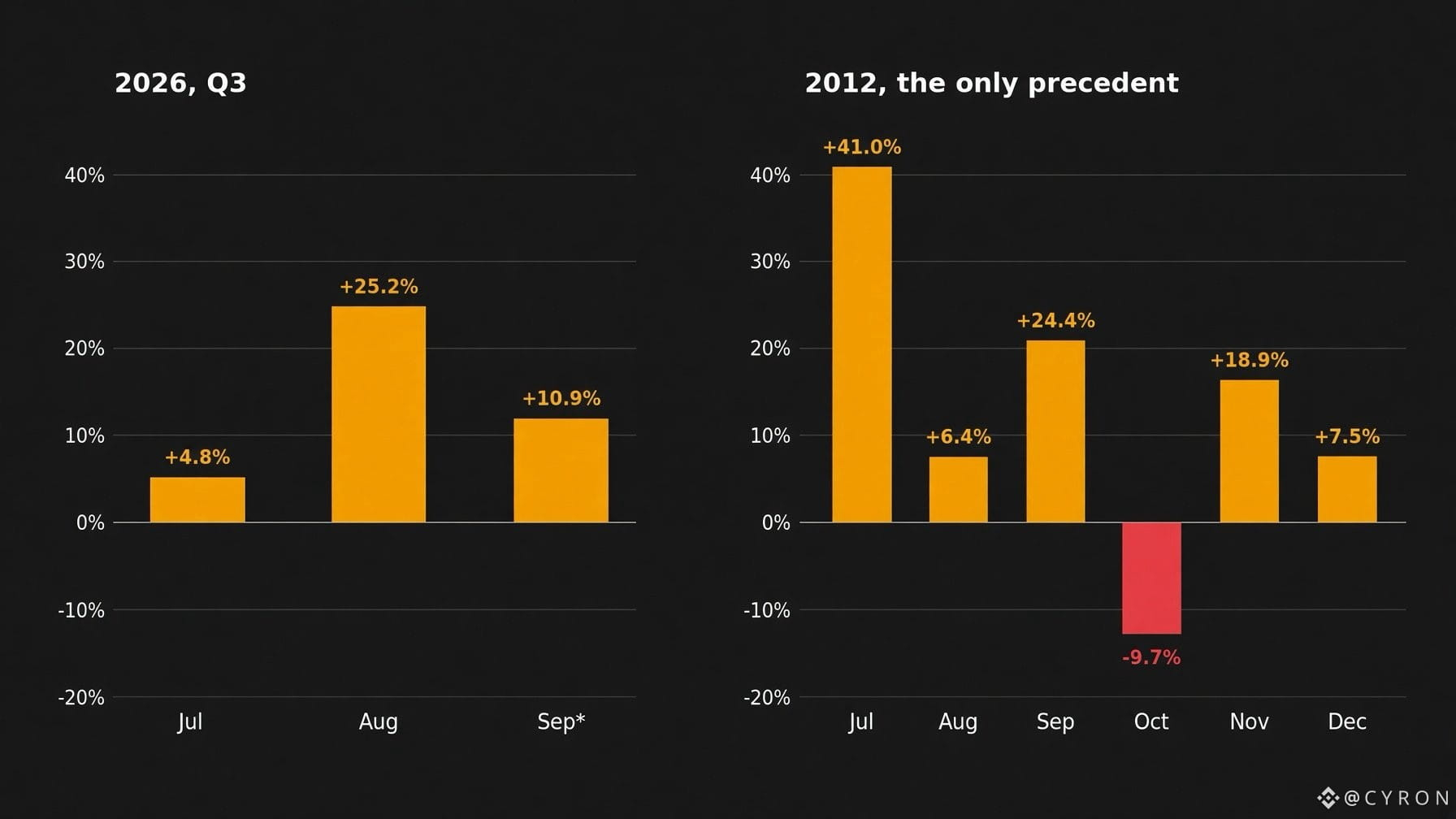
September is currently up around 10%, which puts $BTC on track for a rare three-month winning streak.
What's interesting is that September has historically been one of Bitcoin's weaker months. Instead, we're seeing BTC continue pushing higher while the market usually expects this period to be more difficult.
August already delivered strong momentum, and September is now building on it.
The month isn't finished yet, so nothing is confirmed.
But if BTC closes September in the green, this streak becomes pretty hard to ignore.
Now I'm watching October. 👀
{spot}(BTCUSDT)
#AIStocksWhatNext
#BTC
Bitcoin is doing something we haven't seen in a long time.
September is currently up around 10%, which puts $BTC on track for a rare three-month winning streak.
What's interesting is that September has historically been one of Bitcoin's weaker months. Instead, we're seeing BTC continue pushing higher while the market usually expects this period to be more difficult.
August already delivered strong momentum, and September is now building on it.
The month isn't finished yet, so nothing is confirmed.
But if BTC closes September in the green, this streak becomes pretty hard to ignore.
Now I'm watching October. 👀
#AIStocksWhatNext
#BTC
September is currently up around 10%, which puts $BTC on track for a rare three-month winning streak.
What's interesting is that September has historically been one of Bitcoin's weaker months. Instead, we're seeing BTC continue pushing higher while the market usually expects this period to be more difficult.
August already delivered strong momentum, and September is now building on it.
The month isn't finished yet, so nothing is confirmed.
But if BTC closes September in the green, this streak becomes pretty hard to ignore.
Now I'm watching October. 👀
#AIStocksWhatNext
#BTC
118
·
--
Haussier
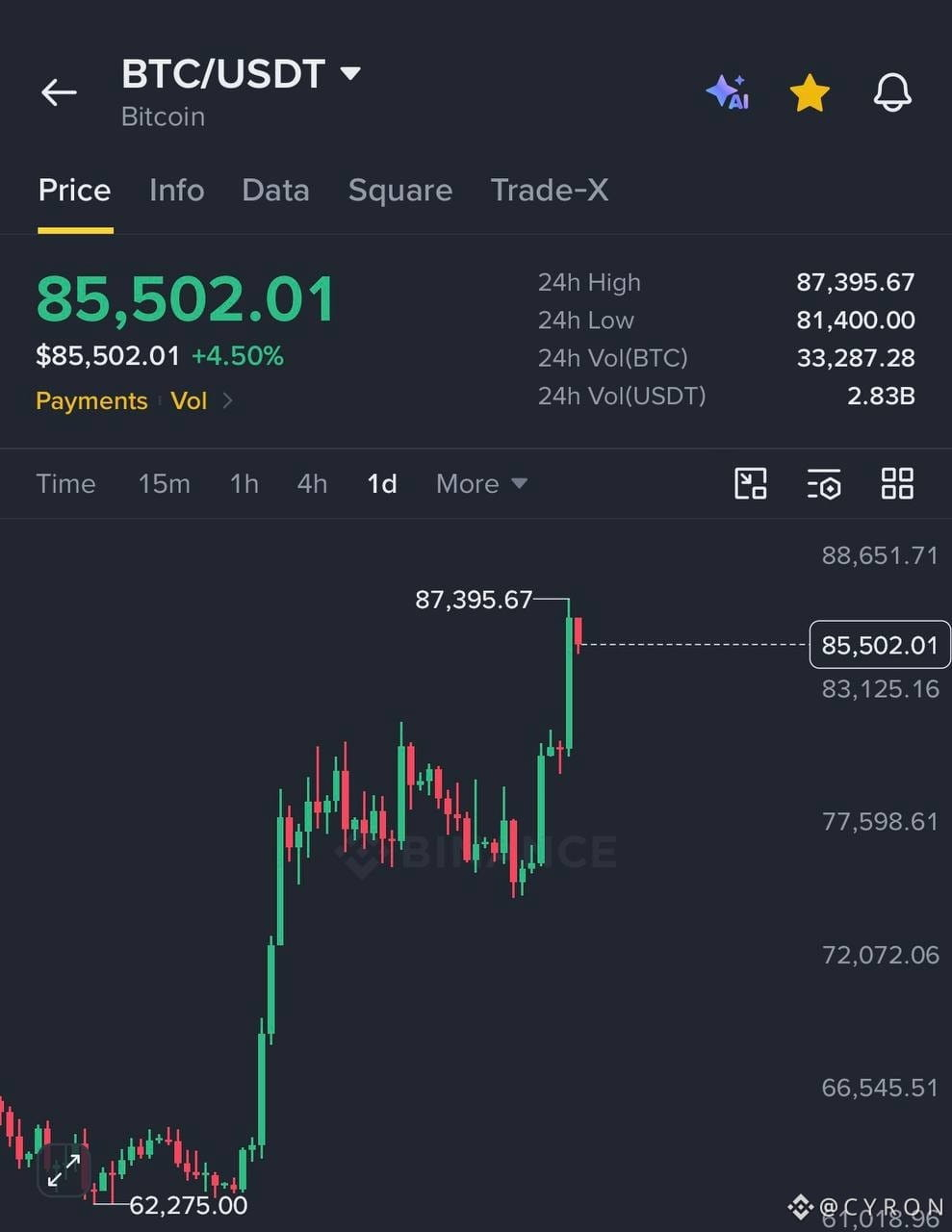
$BTC just closed above $86,000 for the first time in nearly 8 months.
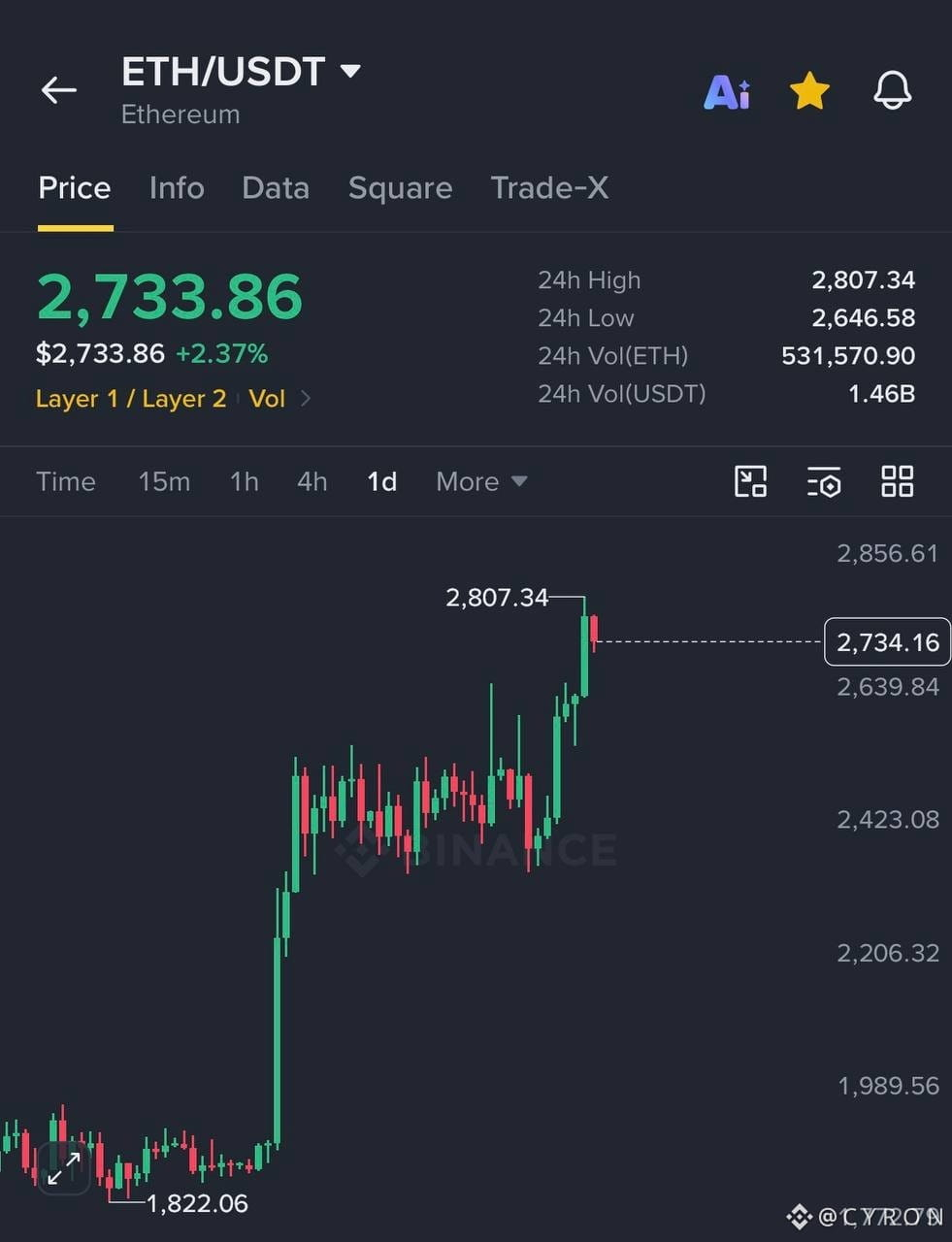
$ETH is back above $2,700 too.
BTC is now roughly $7.3K above its 50-week MA, a pretty notable shift after months of weakness and consolidation.
The market structure is starting to look very different.
One thing is clear: momentum is back, and the next few weekly closes will be important.
After all that chop…
Feels like we’re finally back. 👀🔥
{spot}(BTCUSDT)
{spot}(ETHUSDT)
#CardanoAddedToX402KitForADAPayments
#XRPRises8%
$BTC just closed above $86,000 for the first time in nearly 8 months.
$ETH is back above $2,700 too.
BTC is now roughly $7.3K above its 50-week MA, a pretty notable shift after months of weakness and consolidation.
The market structure is starting to look very different.
One thing is clear: momentum is back, and the next few weekly closes will be important.
After all that chop…
Feels like we’re finally back. 👀🔥
#CardanoAddedToX402KitForADAPayments
#XRPRises8%
$ETH is back above $2,700 too.
BTC is now roughly $7.3K above its 50-week MA, a pretty notable shift after months of weakness and consolidation.
The market structure is starting to look very different.
One thing is clear: momentum is back, and the next few weekly closes will be important.
After all that chop…
Feels like we’re finally back. 👀🔥
#CardanoAddedToX402KitForADAPayments
#XRPRises8%
211
·
--
Haussier
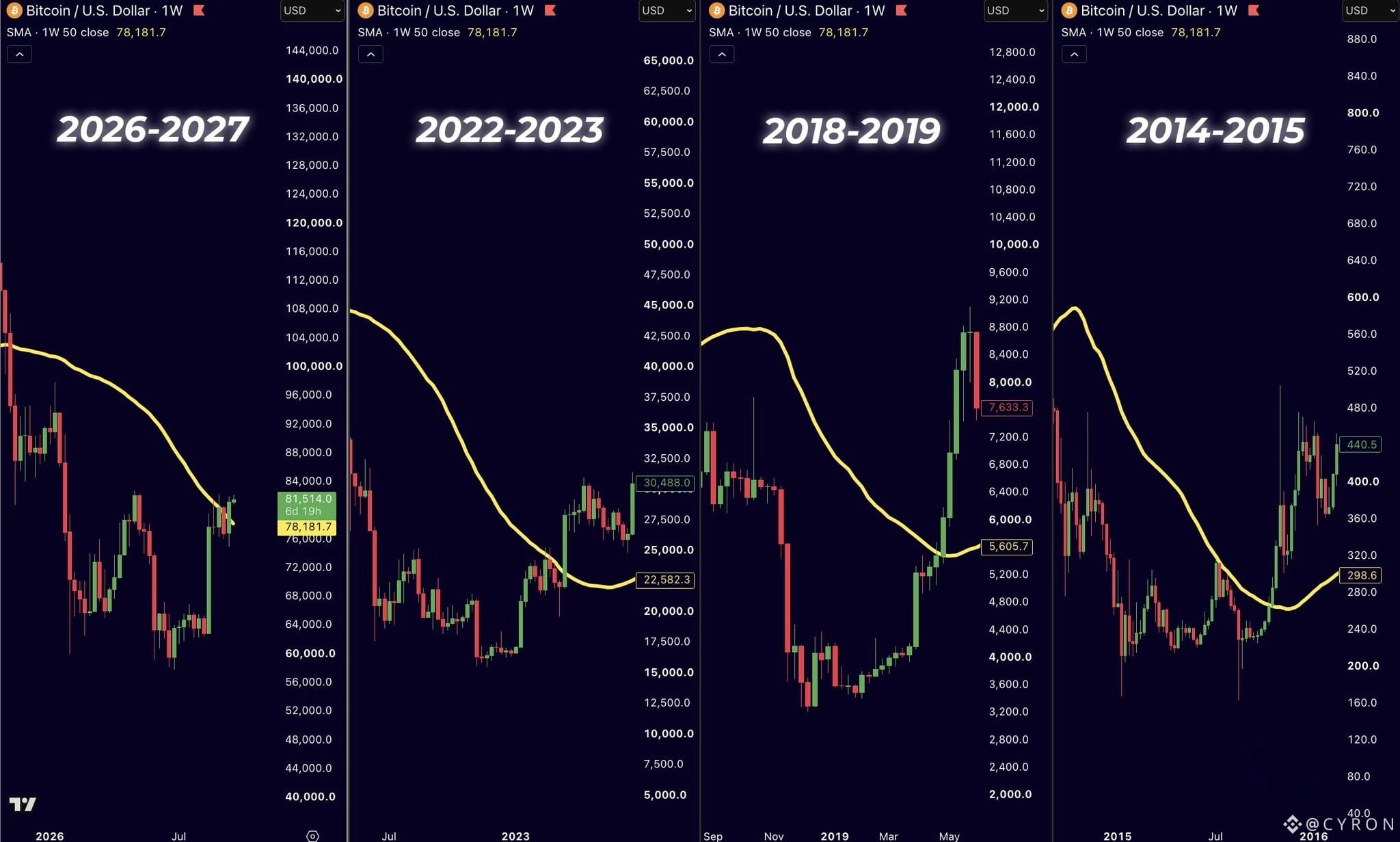
🚨 $BTC just closed above the 50-week MA.
Bitcoin is currently around $81.5K after reclaiming the 50W MA near $78.2K.
This is an important level because previous major cycle recoveries also saw BTC reclaim the 50-week moving average before stronger upside followed.
But one weekly close isn't enough to call a trend change.
The next thing to watch is whether BTC can hold above the 50W MA and eventually reclaim the $84K resistance area.
If that happens, the setup gets a lot more interesting. 👀
{spot}(BTCUSDT)
#SaylorHintsStrategyBitcoinBuy
#BTCBreaks80K
#BitcoinMarketCapTopsTesla
🚨 $BTC just closed above the 50-week MA.
Bitcoin is currently around $81.5K after reclaiming the 50W MA near $78.2K.
This is an important level because previous major cycle recoveries also saw BTC reclaim the 50-week moving average before stronger upside followed.
But one weekly close isn't enough to call a trend change.
The next thing to watch is whether BTC can hold above the 50W MA and eventually reclaim the $84K resistance area.
If that happens, the setup gets a lot more interesting. 👀
#SaylorHintsStrategyBitcoinBuy
#BTCBreaks80K
#BitcoinMarketCapTopsTesla
Bitcoin is currently around $81.5K after reclaiming the 50W MA near $78.2K.
This is an important level because previous major cycle recoveries also saw BTC reclaim the 50-week moving average before stronger upside followed.
But one weekly close isn't enough to call a trend change.
The next thing to watch is whether BTC can hold above the 50W MA and eventually reclaim the $84K resistance area.
If that happens, the setup gets a lot more interesting. 👀
#SaylorHintsStrategyBitcoinBuy
#BTCBreaks80K
#BitcoinMarketCapTopsTesla
2
3.5k
·
--
Haussier
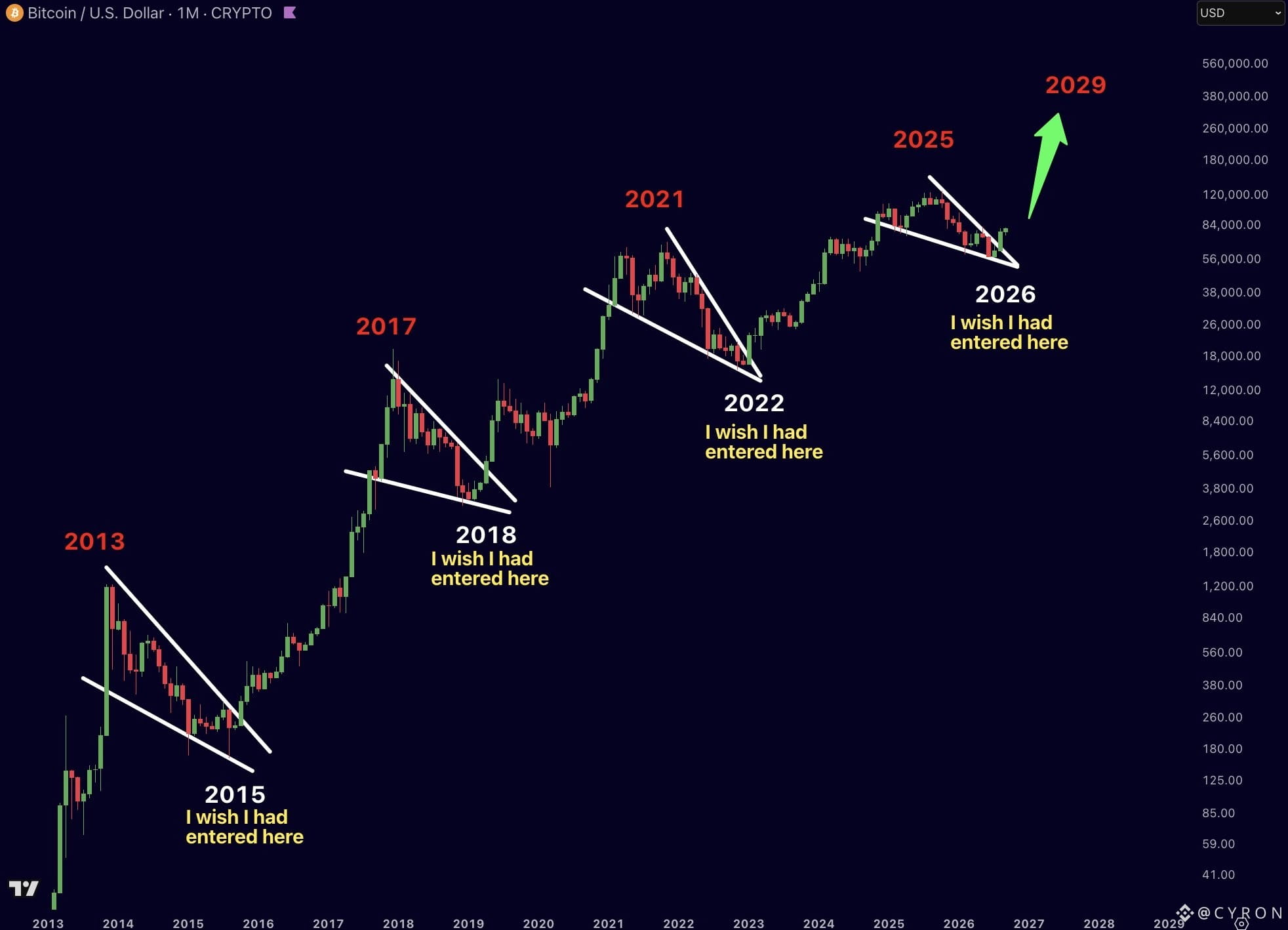
$BTC is starting to break out of its falling wedge.
What caught my attention is that similar structures appeared around the end of the 2013, 2017 and 2021 cycles.
Those breakouts were followed by major moves higher, although the pattern itself doesn’t guarantee the same outcome every time.
Now we’re seeing a similar setup in 2026.
Could this be another cycle turning point?
History doesn’t repeat perfectly, but sometimes the similarities are hard to ignore. 👀
{spot}(BTCUSDT)
#BTCBreaks80K
#BitcoinMarketCapTopsTesla
$BTC is starting to break out of its falling wedge.
What caught my attention is that similar structures appeared around the end of the 2013, 2017 and 2021 cycles.
Those breakouts were followed by major moves higher, although the pattern itself doesn’t guarantee the same outcome every time.
Now we’re seeing a similar setup in 2026.
Could this be another cycle turning point?
History doesn’t repeat perfectly, but sometimes the similarities are hard to ignore. 👀
#BTCBreaks80K
#BitcoinMarketCapTopsTesla
What caught my attention is that similar structures appeared around the end of the 2013, 2017 and 2021 cycles.
Those breakouts were followed by major moves higher, although the pattern itself doesn’t guarantee the same outcome every time.
Now we’re seeing a similar setup in 2026.
Could this be another cycle turning point?
History doesn’t repeat perfectly, but sometimes the similarities are hard to ignore. 👀
#BTCBreaks80K
#BitcoinMarketCapTopsTesla
252
·
--
Haussier
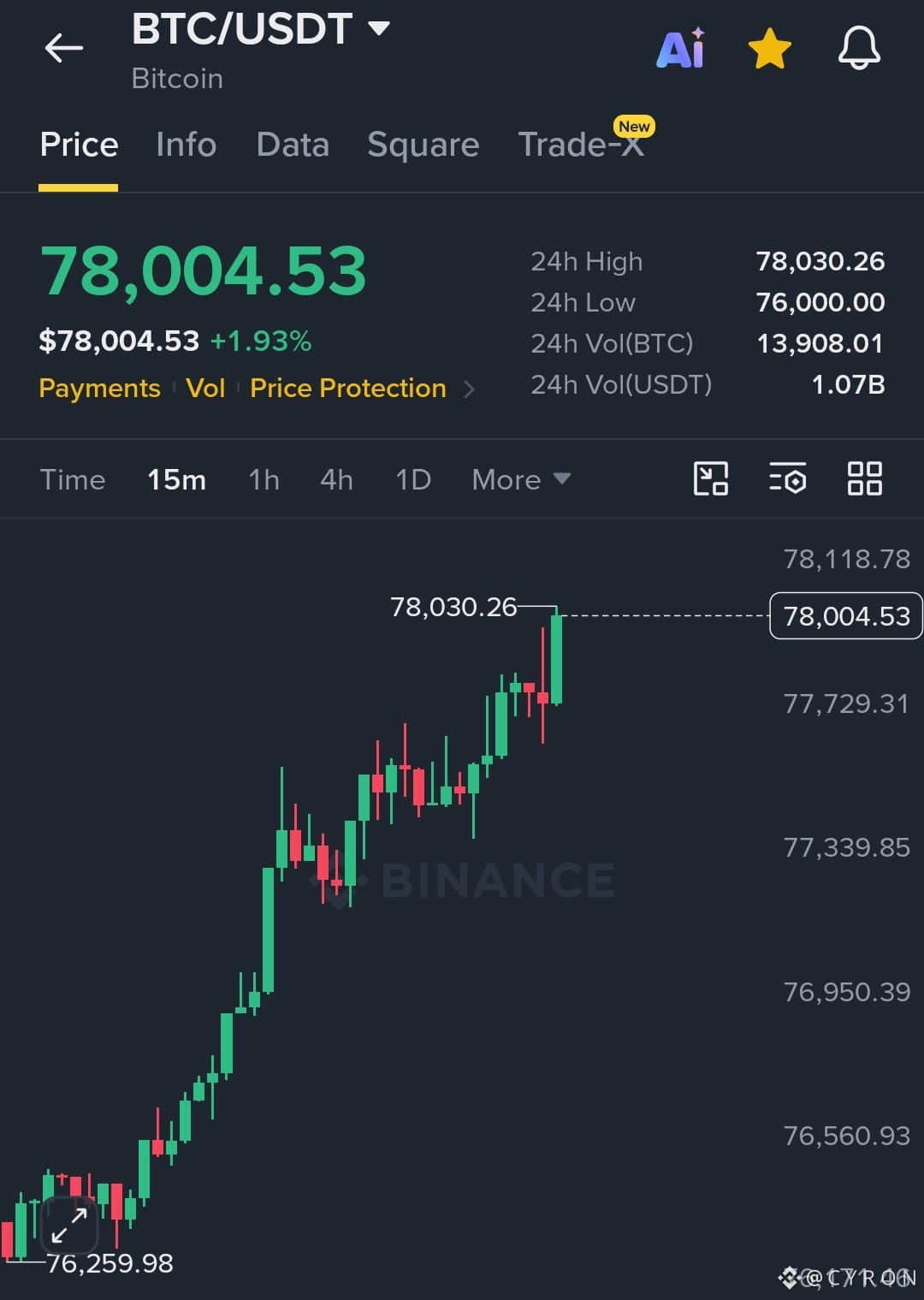
$BTC back at $78,000.
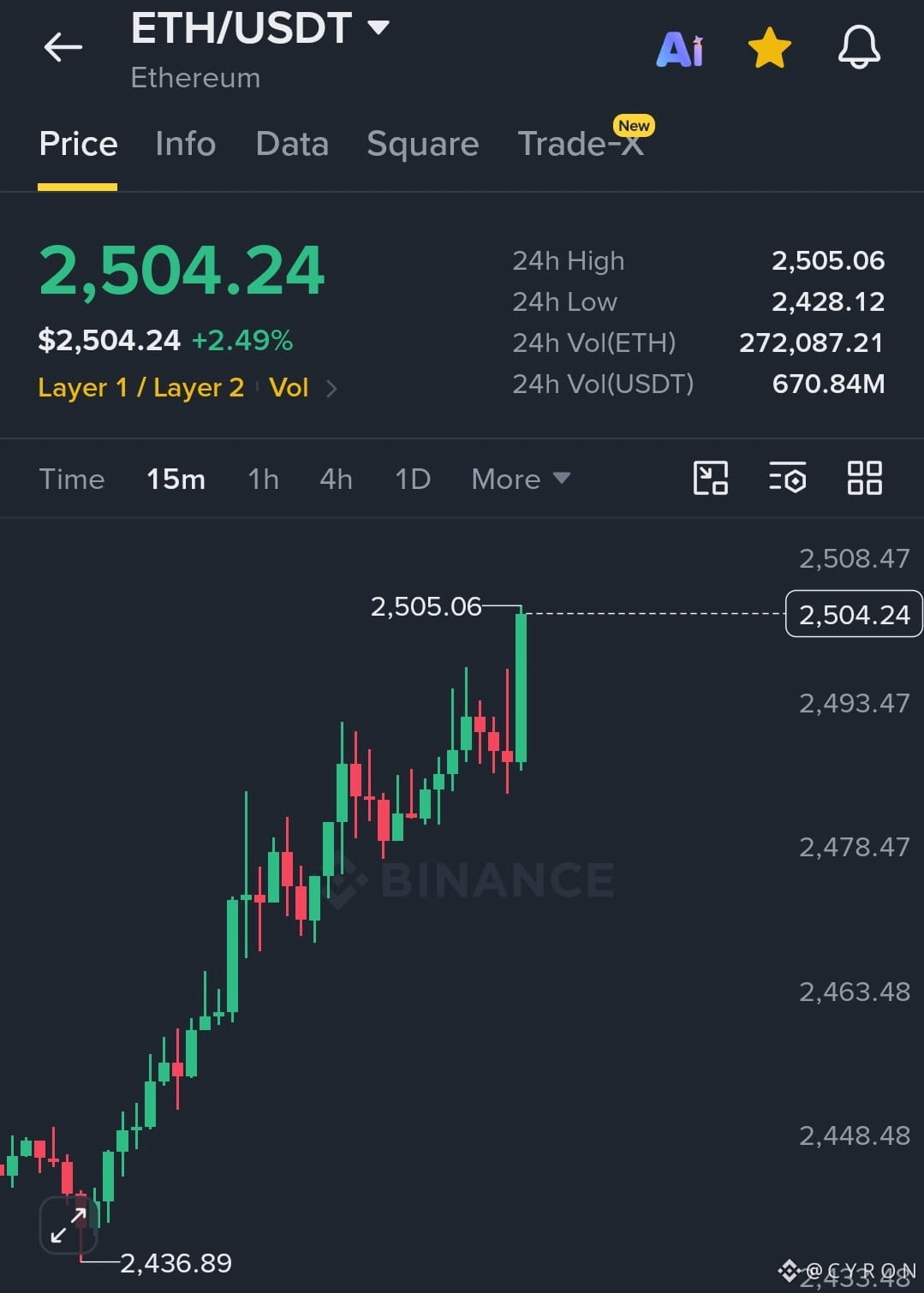
$ETH back above $2,500.
After all the chop and uncertainty, seeing both majors reclaim these levels feels good.
Now the interesting part starts — can they actually hold these levels and build from here?
Either way, the market finally feels like it has some energy again.
We’re back. 👀🔥
{spot}(BTCUSDT)
{spot}(ETHUSDT)
#BOJHikesRatesTo31YearHigh
#ChainlinkPowersBottomlinePaymentPlatform
$BTC back at $78,000.
$ETH back above $2,500.
After all the chop and uncertainty, seeing both majors reclaim these levels feels good.
Now the interesting part starts — can they actually hold these levels and build from here?
Either way, the market finally feels like it has some energy again.
We’re back. 👀🔥
#BOJHikesRatesTo31YearHigh
#ChainlinkPowersBottomlinePaymentPlatform
$ETH back above $2,500.
After all the chop and uncertainty, seeing both majors reclaim these levels feels good.
Now the interesting part starts — can they actually hold these levels and build from here?
Either way, the market finally feels like it has some energy again.
We’re back. 👀🔥
#BOJHikesRatesTo31YearHigh
#ChainlinkPowersBottomlinePaymentPlatform
1
1
231
·
--
Baissier
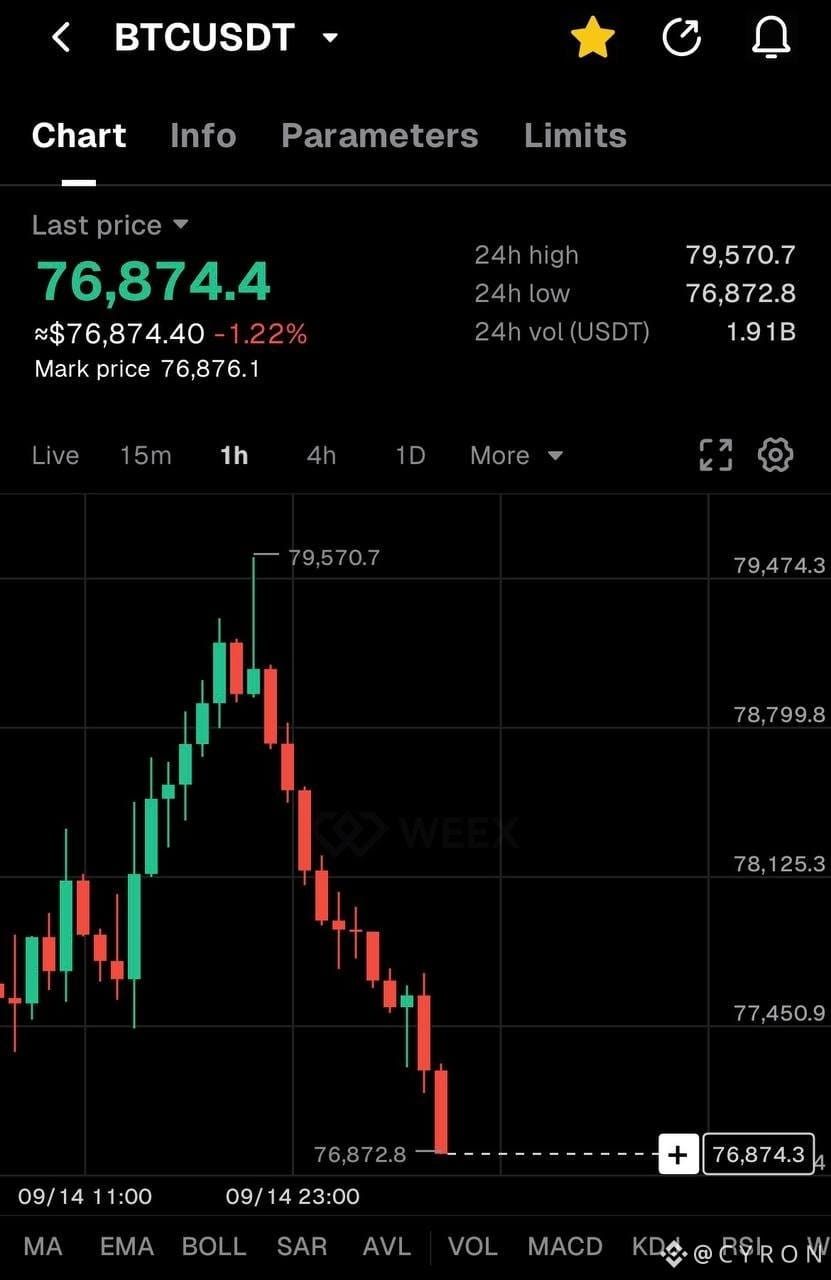
🚨 BITCOIN JUST LOST $77,000.
Selling pressure is accelerating.
$75,000 is now the key level bulls need to defend.
Lose $75K, and the downside could open up fast.
This is a level I’m watching closely.
{spot}(BTCUSDT)
#SolanaTransactionV1GoesLiveOnMainnet
#FedHikeOddsRiseTo89%
🚨 BITCOIN JUST LOST $77,000.
Selling pressure is accelerating.
$75,000 is now the key level bulls need to defend.
Lose $75K, and the downside could open up fast.
This is a level I’m watching closely.
#SolanaTransactionV1GoesLiveOnMainnet
#FedHikeOddsRiseTo89%
Selling pressure is accelerating.
$75,000 is now the key level bulls need to defend.
Lose $75K, and the downside could open up fast.
This is a level I’m watching closely.
#SolanaTransactionV1GoesLiveOnMainnet
#FedHikeOddsRiseTo89%
1
146
·
--
Haussier
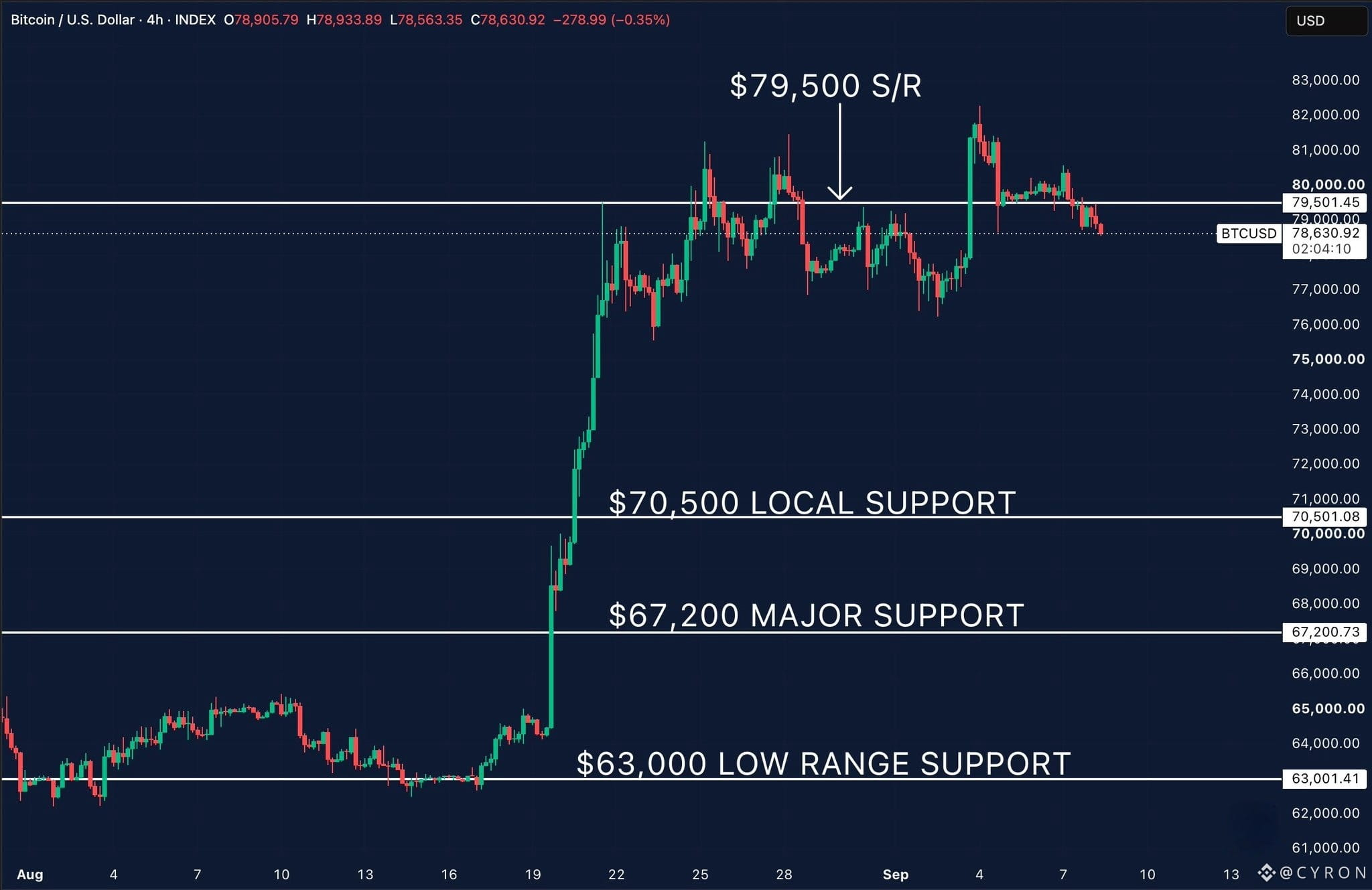
Bitcoin is at a key level.
$79,500 has flipped from support into resistance after $BTC failed to hold above it.
If we reclaim $79.5K and hold, I’d be looking for a move back towards $81K+.
If we lose $78K, I’d expect the liquidity below to get taken first.
Simple levels to watch.
$79.5K reclaim = bullish.
$78K loss = bearish.
Until then, I’m waiting...
{spot}(BTCUSDT)
#SaudiHaltsSouthernEnergySitesAfterAttacks
#YenBreaks155NearingYearHigh
#USIranTradeTankerStrikesEscalate
Bitcoin is at a key level.
$79,500 has flipped from support into resistance after $BTC failed to hold above it.
If we reclaim $79.5K and hold, I’d be looking for a move back towards $81K+.
If we lose $78K, I’d expect the liquidity below to get taken first.
Simple levels to watch.
$79.5K reclaim = bullish.
$78K loss = bearish.
Until then, I’m waiting...
#SaudiHaltsSouthernEnergySitesAfterAttacks
#YenBreaks155NearingYearHigh
#USIranTradeTankerStrikesEscalate
$79,500 has flipped from support into resistance after $BTC failed to hold above it.
If we reclaim $79.5K and hold, I’d be looking for a move back towards $81K+.
If we lose $78K, I’d expect the liquidity below to get taken first.
Simple levels to watch.
$79.5K reclaim = bullish.
$78K loss = bearish.
Until then, I’m waiting...
#SaudiHaltsSouthernEnergySitesAfterAttacks
#YenBreaks155NearingYearHigh
#USIranTradeTankerStrikesEscalate
118
·
--
Haussier
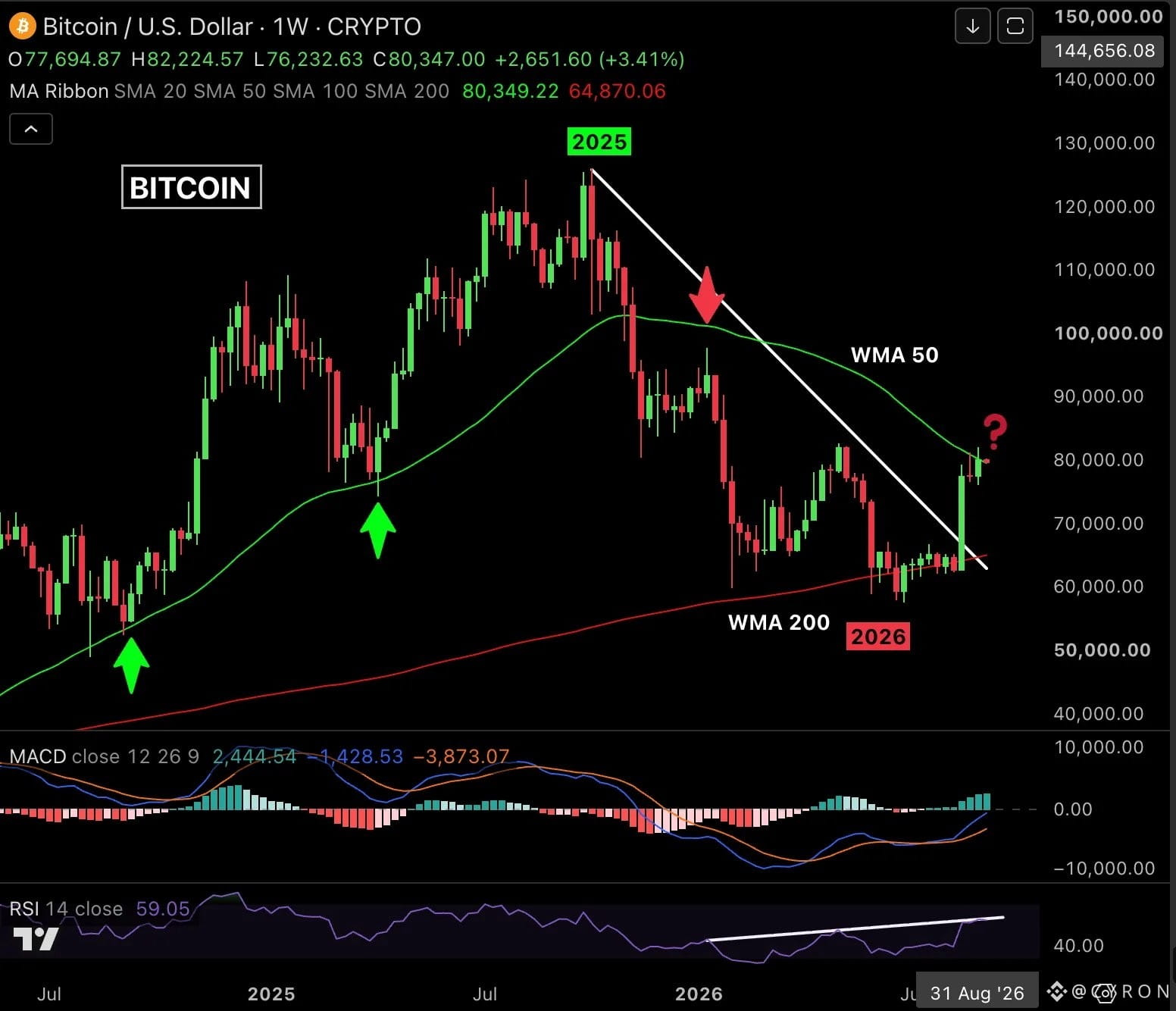
BITCOIN WEEKLY ANALYSIS
Bitcoin closed the week right around the Weekly MA 50 near $80,349.
This is a major test for $BTC , not a confirmed breakout yet.
Here’s what I’m watching next 🧵
{spot}(BTCUSDT)
#USIranTradeTankerStrikesEscalate
#IMFSaysElSalvadorBTCNoPublicFunds
#IranSaysItHit3USShips3Tankers
BITCOIN WEEKLY ANALYSIS
Bitcoin closed the week right around the Weekly MA 50 near $80,349.
This is a major test for $BTC , not a confirmed breakout yet.
Here’s what I’m watching next 🧵
#USIranTradeTankerStrikesEscalate
#IMFSaysElSalvadorBTCNoPublicFunds
#IranSaysItHit3USShips3Tankers
Bitcoin closed the week right around the Weekly MA 50 near $80,349.
This is a major test for $BTC , not a confirmed breakout yet.
Here’s what I’m watching next 🧵
#USIranTradeTankerStrikesEscalate
#IMFSaysElSalvadorBTCNoPublicFunds
#IranSaysItHit3USShips3Tankers
216
·
--
Haussier
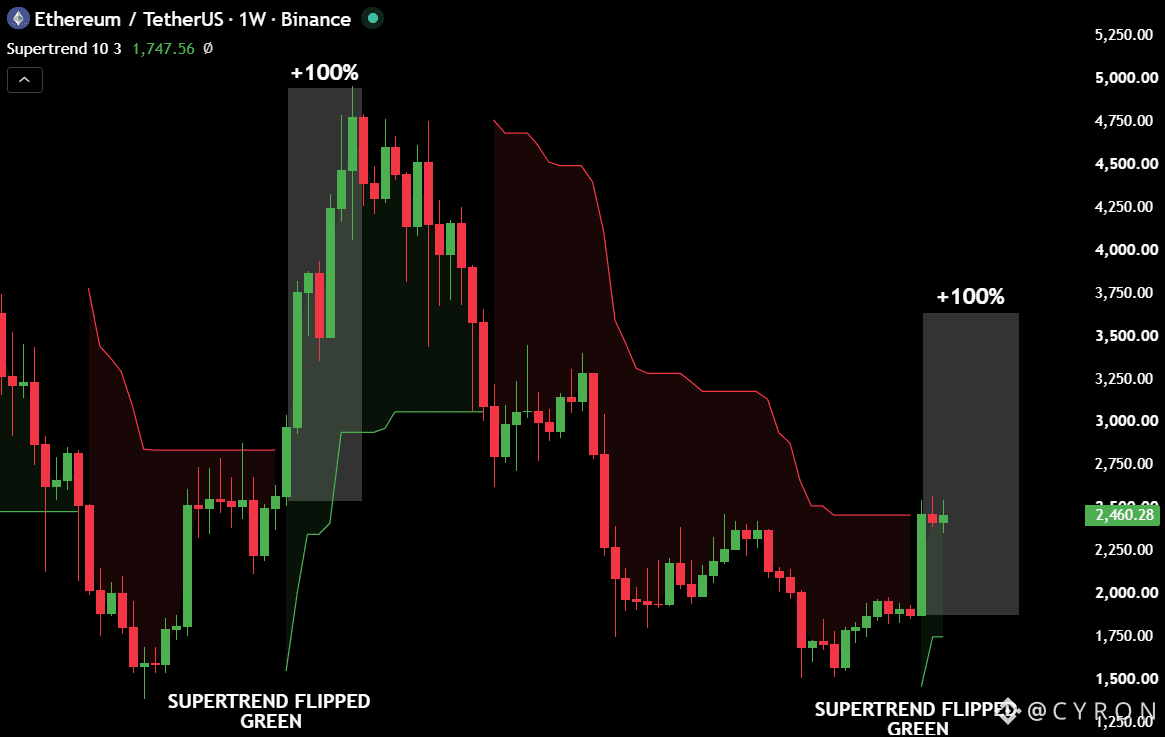
$ETH weekly Supertrend has flipped green. 🟢
The last time this happened, ETH pumped over 100% in just 6 weeks.
If history repeats, a similar move could put ETH around $3,600 by October.
One signal doesn't guarantee the same outcome.
But this is definitely worth watching. 👀
{spot}(ETHUSDT)
#ZECHitsANewAllTimeHigh
#BitcoinETFsBiggestDailyInflowSinceJanuary
#USAugustJobGrowthNearlyTriplesForecast
$ETH weekly Supertrend has flipped green. 🟢
The last time this happened, ETH pumped over 100% in just 6 weeks.
If history repeats, a similar move could put ETH around $3,600 by October.
One signal doesn't guarantee the same outcome.
But this is definitely worth watching. 👀
#ZECHitsANewAllTimeHigh
#BitcoinETFsBiggestDailyInflowSinceJanuary
#USAugustJobGrowthNearlyTriplesForecast
The last time this happened, ETH pumped over 100% in just 6 weeks.
If history repeats, a similar move could put ETH around $3,600 by October.
One signal doesn't guarantee the same outcome.
But this is definitely worth watching. 👀
#ZECHitsANewAllTimeHigh
#BitcoinETFsBiggestDailyInflowSinceJanuary
#USAugustJobGrowthNearlyTriplesForecast
166
·
--
Haussier
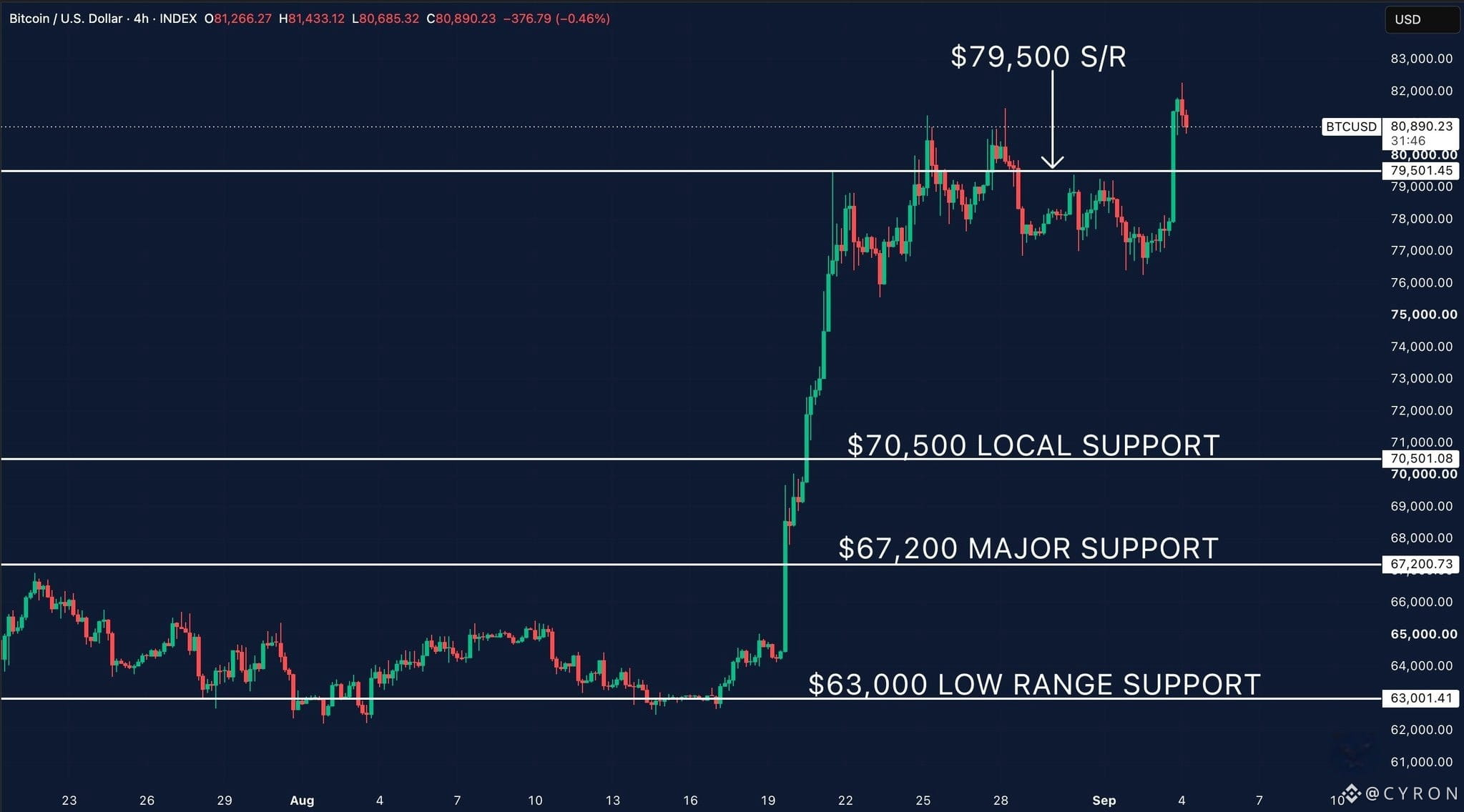
BITCOIN JUST FLIPPED $79,500 INTO SUPPORT 🚨
Bitcoin broke through the $79,500 resistance I’ve been watching and pushed above $80K.
$BTC is now trading around $80.9K after briefly reaching above $82K.
The key level now is simple: $79.5K.
If Bitcoin holds above it, I’m watching $82K next.
Lose $79.5K, and this breakout starts looking a lot less convincing.
For now, the structure has improved significantly.
{spot}(BTCUSDT)
#USWeeklyInitialJoblessClaimsRiseTo206000
#HousePressesSenateOnCLARITYAct
BITCOIN JUST FLIPPED $79,500 INTO SUPPORT 🚨
Bitcoin broke through the $79,500 resistance I’ve been watching and pushed above $80K.
$BTC is now trading around $80.9K after briefly reaching above $82K.
The key level now is simple: $79.5K.
If Bitcoin holds above it, I’m watching $82K next.
Lose $79.5K, and this breakout starts looking a lot less convincing.
For now, the structure has improved significantly.
#USWeeklyInitialJoblessClaimsRiseTo206000
#HousePressesSenateOnCLARITYAct
Bitcoin broke through the $79,500 resistance I’ve been watching and pushed above $80K.
$BTC is now trading around $80.9K after briefly reaching above $82K.
The key level now is simple: $79.5K.
If Bitcoin holds above it, I’m watching $82K next.
Lose $79.5K, and this breakout starts looking a lot less convincing.
For now, the structure has improved significantly.
#USWeeklyInitialJoblessClaimsRiseTo206000
#HousePressesSenateOnCLARITYAct
1
1
143
·
--
Haussier
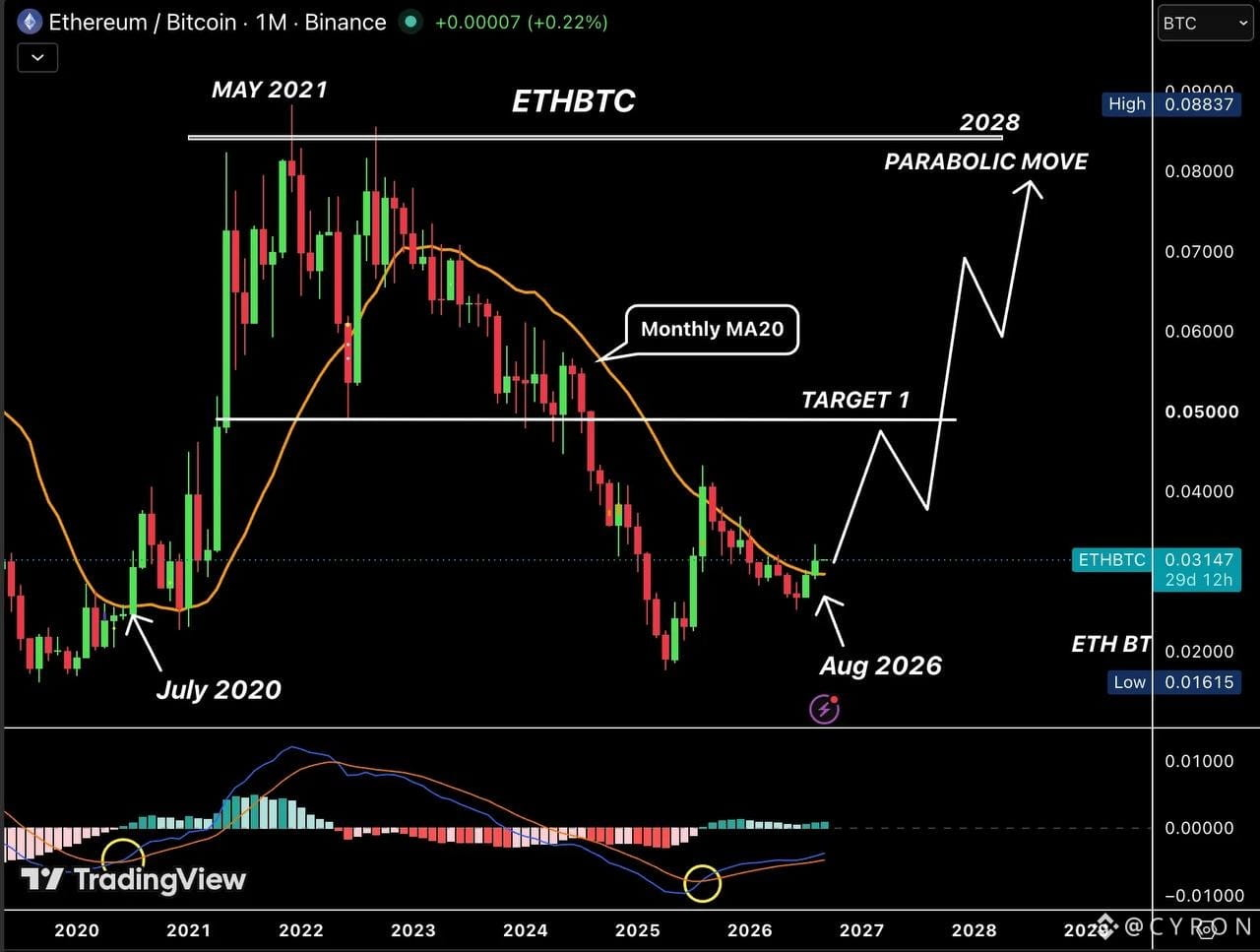
ETH/BTC monthly chart is starting to look interesting.
Price has closed above the MA 20.
The last clean reclaim of this level came in July 2020.
What followed?
ETH/BTC: 0.0315 → 0.088
ETH: $225 → $4,372
In August 2025, price also touched this average but failed to hold it and eventually dumped back toward the lows.
That’s the key difference now.
ETH/BTC needs to stay above the MA 20.
MACD is also turning up from a similar area to the one that preceded the 2020 breakout.
If the hold works:
First target → 0.050
Stretch target → 0.088
Meanwhile, ISM came in at 54.6 vs 55.2 expected, showing growth is still holding up but slowing.
If macro conditions continue moving toward easier monetary policy, ETH could have more room to outperform.
This setup is definitely worth watching. 👀
{spot}(BTCUSDT)
{spot}(ETHUSDT)
#BitcoinETFBuyersReturn
#FedHikeOddsRiseTo68%
#G20StatementCitesDigitalAssets
ETH/BTC monthly chart is starting to look interesting.
Price has closed above the MA 20.
The last clean reclaim of this level came in July 2020.
What followed?
ETH/BTC: 0.0315 → 0.088
ETH: $225 → $4,372
In August 2025, price also touched this average but failed to hold it and eventually dumped back toward the lows.
That’s the key difference now.
ETH/BTC needs to stay above the MA 20.
MACD is also turning up from a similar area to the one that preceded the 2020 breakout.
If the hold works:
First target → 0.050
Stretch target → 0.088
Meanwhile, ISM came in at 54.6 vs 55.2 expected, showing growth is still holding up but slowing.
If macro conditions continue moving toward easier monetary policy, ETH could have more room to outperform.
This setup is definitely worth watching. 👀
#BitcoinETFBuyersReturn
#FedHikeOddsRiseTo68%
#G20StatementCitesDigitalAssets
Price has closed above the MA 20.
The last clean reclaim of this level came in July 2020.
What followed?
ETH/BTC: 0.0315 → 0.088
ETH: $225 → $4,372
In August 2025, price also touched this average but failed to hold it and eventually dumped back toward the lows.
That’s the key difference now.
ETH/BTC needs to stay above the MA 20.
MACD is also turning up from a similar area to the one that preceded the 2020 breakout.
If the hold works:
First target → 0.050
Stretch target → 0.088
Meanwhile, ISM came in at 54.6 vs 55.2 expected, showing growth is still holding up but slowing.
If macro conditions continue moving toward easier monetary policy, ETH could have more room to outperform.
This setup is definitely worth watching. 👀
#BitcoinETFBuyersReturn
#FedHikeOddsRiseTo68%
#G20StatementCitesDigitalAssets
1
114
·
--
Haussier
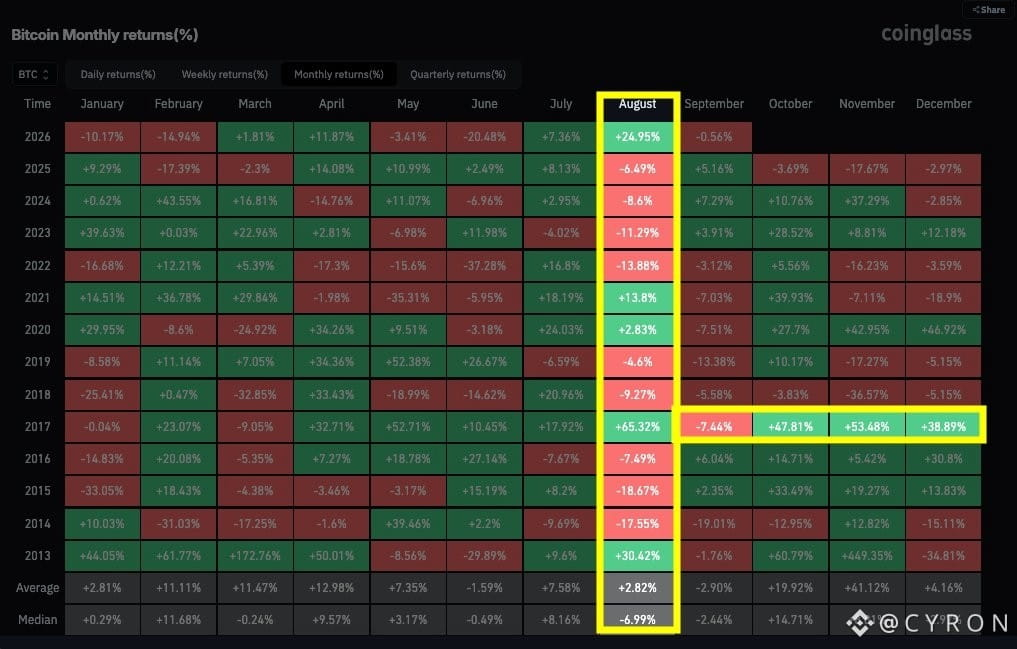
Bitcoin just had its BEST August since 2017.
August 2026: +24.95%
August 2017: +65.32%
But here's what happened after August 2017:
October: +47.81%
November: +53.48%
December: +38.89%
History doesn't have to repeat.
But when you see a setup like this, it's hard not to pay attention. 👀
{spot}(BTCUSDT)
#ARBRises30%OnRobinhoodChainRevenue
#Japan10YYieldHits3%FirstSince1996
#WTIOilRisesAsOpenInterestShrinks
Bitcoin just had its BEST August since 2017.
August 2026: +24.95%
August 2017: +65.32%
But here's what happened after August 2017:
October: +47.81%
November: +53.48%
December: +38.89%
History doesn't have to repeat.
But when you see a setup like this, it's hard not to pay attention. 👀
#ARBRises30%OnRobinhoodChainRevenue
#Japan10YYieldHits3%FirstSince1996
#WTIOilRisesAsOpenInterestShrinks
August 2026: +24.95%
August 2017: +65.32%
But here's what happened after August 2017:
October: +47.81%
November: +53.48%
December: +38.89%
History doesn't have to repeat.
But when you see a setup like this, it's hard not to pay attention. 👀
#ARBRises30%OnRobinhoodChainRevenue
#Japan10YYieldHits3%FirstSince1996
#WTIOilRisesAsOpenInterestShrinks
186
·
--
Baissier
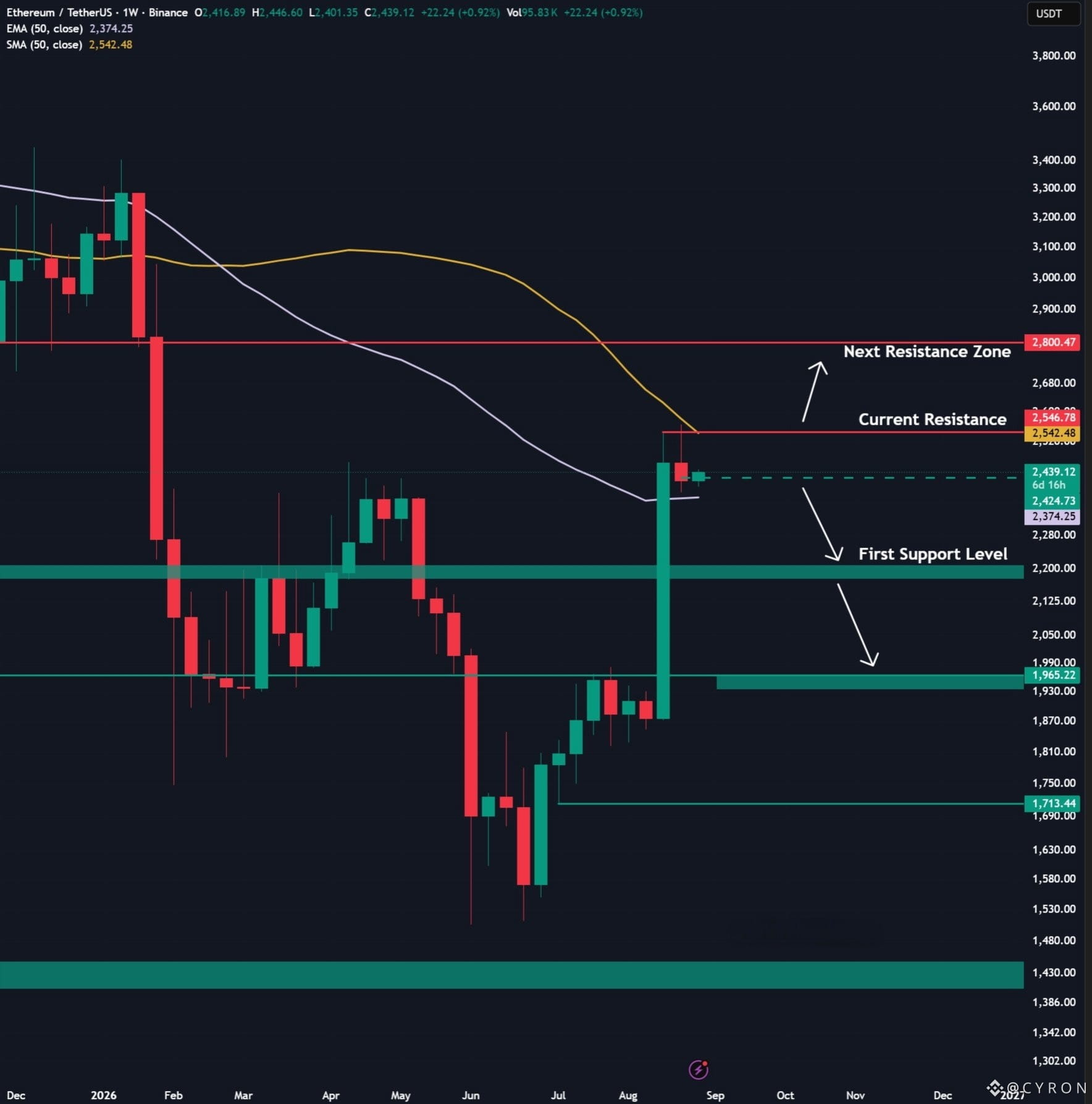
$ETH tried to break above the $2,550 level but failed again.
For now, I think most of Ethereum's short-term upside may already be priced in.
Expecting more chop around these levels, with the possibility of one more small capitulation before a proper reversal.
Patience here.
{spot}(ETHUSDT)
#SKHynixStudiesJapanMemoryChipVenture
#KospiDrops3.6%AsSamsungSKHynixWeaken
#UKReleasesFirstCryptoGainsTaxStats
$ETH tried to break above the $2,550 level but failed again.
For now, I think most of Ethereum's short-term upside may already be priced in.
Expecting more chop around these levels, with the possibility of one more small capitulation before a proper reversal.
Patience here.
#SKHynixStudiesJapanMemoryChipVenture
#KospiDrops3.6%AsSamsungSKHynixWeaken
#UKReleasesFirstCryptoGainsTaxStats
For now, I think most of Ethereum's short-term upside may already be priced in.
Expecting more chop around these levels, with the possibility of one more small capitulation before a proper reversal.
Patience here.
#SKHynixStudiesJapanMemoryChipVenture
#KospiDrops3.6%AsSamsungSKHynixWeaken
#UKReleasesFirstCryptoGainsTaxStats
148
Connectez-vous pour découvrir plus de contenu
Rejoignez la communauté mondiale des adeptes de cryptomonnaies sur Binance Square
⚡️ Suviez les dernières informations importantes sur les cryptomonnaies.
💬 Jugé digne de confiance par la plus grande plateforme d’échange de cryptomonnaies au monde.
👍 Découvrez les connaissances que partagent les créateurs vérifiés.
Adresse e-mail/Nº de téléphone
Sujets d’actualité
SolanaTokenizedStockVolumeTops$4.4BInSeptember
59 vues
3 mentions
🚨 SOLANA JUST CLEARED $4.4B IN TOKENIZED STOCK VOLUME — IN ONE MONTH.
September 2026 saw Solana-based tokenized stock trading volume surpass $4.4 BILLION, with DEXs like Raydium and Orca helping drive the activity.
And this isn’t just another memecoin-volume headline.
Tokenized equities are effectively bringing traditional stocks into 24/7, on-chain markets — fractional, programmable and capable of settling with stablecoins.
The bigger picture is getting harder to ignore: Solana’s tokenized-equity supply recently crossed $620M, while its broader RWA ecosystem moved above $4.5B.
$SOL started as the “fast crypto chain.”
Now it’s quietly competing to become infrastructure for internet capital markets.
$4.4B/month may look small next to Wall Street.
But if tokenized stocks keep compounding from here?
The real question isn’t whether stocks move on-chain — it’s which chain captures the volume. 👀
#SolanaTokenizedStockVolumeTops$4.4BInSeptember #BitcoinSpotETFsDraw$6.34BInflowsInQ3 #EthereumValidatorExitQueueJumps392% #IMFApprovesElSalvador$138MWithBitcoinWaiver #SECHaltsCryptoETFReviewsAmidFundingLapse
KimHotbae
·1 mentions J’aime
·170 vues
BitcoinSpotETFsDraw$6.34BInflowsInQ3
7,816 vues
115 mentions
EthereumValidatorExitQueueJumps392%
146,680 vues
1,151 mentions