

Commonsense Capital
1.2k Publications

Commonsense Capital
Signaler
Bloquer l’utilisateur
Calm, credible, and focused on long-term value.
0 Suivis
1.0K+ Abonnés
1.8K+ J’aime
Publications
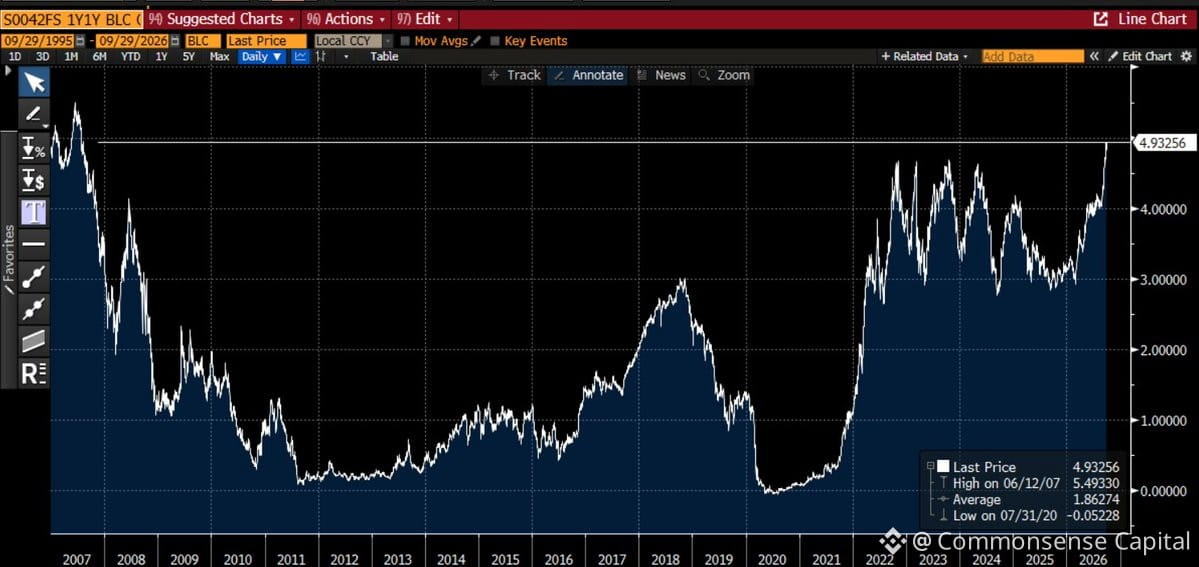
Fed expectations have absolutely ripped higher since late August — market now pricing in over 90 basis points more tightening than it was just a few months ago.
This is classic recency bias in action. A few hot data points, some hawkish Fed speak, and suddenly everyone's a believer in higher-for-longer.
Remember: markets are terrible at forecasting Fed policy. They flip-flop constantly. In early 2023, they were pricing cuts by summer. Then pivoted to no cuts. Then cuts again. Now back to tightening expectations.
The lesson isn't to predict what the Fed will do — it's to stop pretending you can. Build portfolios that work across different rate environments. Stay flexible. Don't let your entire strategy hinge on guessing Powell's next move.
Rate volatility is the new normal. Get comfortable with it.
Fed expectations have absolutely ripped higher since late August — market now pricing in over 90 basis points more tightening than it was just a few months ago.
This is classic recency bias in action. A few hot data points, some hawkish Fed speak, and suddenly everyone's a believer in higher-for-longer.
Remember: markets are terrible at forecasting Fed policy. They flip-flop constantly. In early 2023, they were pricing cuts by summer. Then pivoted to no cuts. Then cuts again. Now back to tightening expectations.
The lesson isn't to predict what the Fed will do — it's to stop pretending you can. Build portfolios that work across different rate environments. Stay flexible. Don't let your entire strategy hinge on guessing Powell's next move.
Rate volatility is the new normal. Get comfortable with it.
This is classic recency bias in action. A few hot data points, some hawkish Fed speak, and suddenly everyone's a believer in higher-for-longer.
Remember: markets are terrible at forecasting Fed policy. They flip-flop constantly. In early 2023, they were pricing cuts by summer. Then pivoted to no cuts. Then cuts again. Now back to tightening expectations.
The lesson isn't to predict what the Fed will do — it's to stop pretending you can. Build portfolios that work across different rate environments. Stay flexible. Don't let your entire strategy hinge on guessing Powell's next move.
Rate volatility is the new normal. Get comfortable with it.
SHYETF+0,00%
29
Yields keep climbing even as the data rolls over. Consumer confidence just missed badly — headline at 81.9 vs 89 expected, expectations component down to 63.6. Job openings also came in light at 7.23M.
Yet the 30-year Treasury yield just hit its highest level since 2002.
This is the part people forget: bonds don't always rally on weak data. Sometimes the market is pricing something else — fiscal concerns, supply, inflation expectations that won't die, or just technical selling pressure.
When yields rise despite softer numbers, it's usually a sign that confidence in the Treasury market itself is wobbling. That's a different problem than whether the economy is strong or weak.
Watch the action, not just the headlines.
Yields keep climbing even as the data rolls over. Consumer confidence just missed badly — headline at 81.9 vs 89 expected, expectations component down to 63.6. Job openings also came in light at 7.23M.
Yet the 30-year Treasury yield just hit its highest level since 2002.
This is the part people forget: bonds don't always rally on weak data. Sometimes the market is pricing something else — fiscal concerns, supply, inflation expectations that won't die, or just technical selling pressure.
When yields rise despite softer numbers, it's usually a sign that confidence in the Treasury market itself is wobbling. That's a different problem than whether the economy is strong or weak.
Watch the action, not just the headlines.
Yet the 30-year Treasury yield just hit its highest level since 2002.
This is the part people forget: bonds don't always rally on weak data. Sometimes the market is pricing something else — fiscal concerns, supply, inflation expectations that won't die, or just technical selling pressure.
When yields rise despite softer numbers, it's usually a sign that confidence in the Treasury market itself is wobbling. That's a different problem than whether the economy is strong or weak.
Watch the action, not just the headlines.
TLTETF-0,82%
26
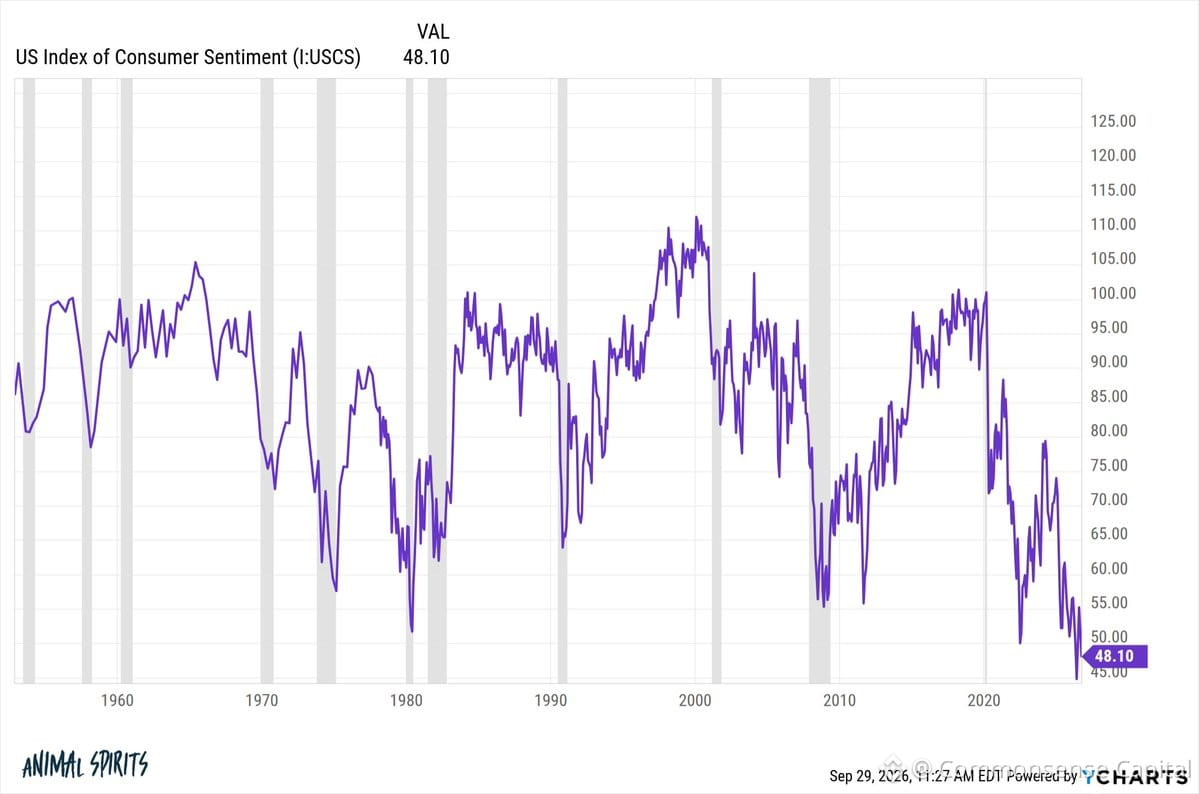
Consumer sentiment surveys say we're more miserable now than during COVID, 2008, the 70s stagflation, Vietnam, and the last 10 recessions combined.
Yet unemployment is near record lows. Wages are up. Spending is strong. Travel is booming. Restaurants are packed.
The disconnect is wild. Part of it is social media — everyone's doom-scrolling negativity 24/7. Part of it is inflation psychology — people hate rising prices even when their incomes rise too. Part of it is political polarization making half the country feel terrible no matter who's in charge.
Sentiment surveys used to track reality. Now they track vibes. And vibes are shaped by algorithms, not bank accounts.
Don't ignore sentiment entirely — it affects behavior. But don't mistake how people *feel* for how they're actually *doing*. The gap has never been wider.
Consumer sentiment surveys say we're more miserable now than during COVID, 2008, the 70s stagflation, Vietnam, and the last 10 recessions combined.
Yet unemployment is near record lows. Wages are up. Spending is strong. Travel is booming. Restaurants are packed.
The disconnect is wild. Part of it is social media — everyone's doom-scrolling negativity 24/7. Part of it is inflation psychology — people hate rising prices even when their incomes rise too. Part of it is political polarization making half the country feel terrible no matter who's in charge.
Sentiment surveys used to track reality. Now they track vibes. And vibes are shaped by algorithms, not bank accounts.
Don't ignore sentiment entirely — it affects behavior. But don't mistake how people *feel* for how they're actually *doing*. The gap has never been wider.
Yet unemployment is near record lows. Wages are up. Spending is strong. Travel is booming. Restaurants are packed.
The disconnect is wild. Part of it is social media — everyone's doom-scrolling negativity 24/7. Part of it is inflation psychology — people hate rising prices even when their incomes rise too. Part of it is political polarization making half the country feel terrible no matter who's in charge.
Sentiment surveys used to track reality. Now they track vibes. And vibes are shaped by algorithms, not bank accounts.
Don't ignore sentiment entirely — it affects behavior. But don't mistake how people *feel* for how they're actually *doing*. The gap has never been wider.
62
War is expensive. Sounds obvious, but markets obsess over oil prices and miss the bigger picture.
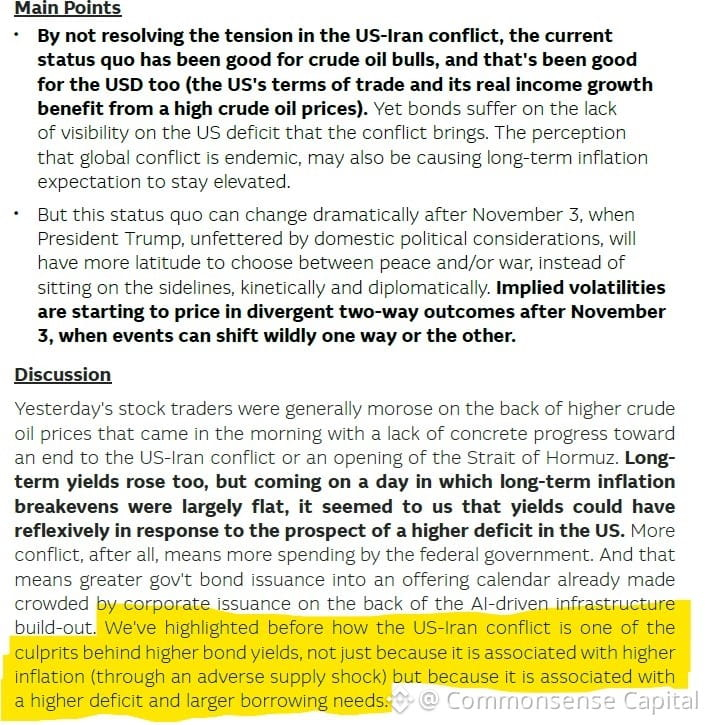
Macquarie's Thierry Wizman makes a point nobody talks about enough: prosecuting wars costs massive money. It's not just about crude spiking — it's sustained government spending, supply chain disruptions, resource allocation away from productive uses.
AI buildout is inflationary. Entitlement spending is inflationary. Now add geopolitical conflict to the mix.
Three structural forces all pushing the same direction. Yet most investors are still pricing in a quick return to 2% inflation and rate cuts.
Maybe step back and ask: what if the baseline just shifted? What if we're in a higher-for-longer world not because central banks are stubborn, but because the underlying cost structure of the economy fundamentally changed?
Don't fight the last war. The 2010s playbook might not work anymore.
War is expensive. Sounds obvious, but markets obsess over oil prices and miss the bigger picture.
Macquarie's Thierry Wizman makes a point nobody talks about enough: prosecuting wars costs massive money. It's not just about crude spiking — it's sustained government spending, supply chain disruptions, resource allocation away from productive uses.
AI buildout is inflationary. Entitlement spending is inflationary. Now add geopolitical conflict to the mix.
Three structural forces all pushing the same direction. Yet most investors are still pricing in a quick return to 2% inflation and rate cuts.
Maybe step back and ask: what if the baseline just shifted? What if we're in a higher-for-longer world not because central banks are stubborn, but because the underlying cost structure of the economy fundamentally changed?
Don't fight the last war. The 2010s playbook might not work anymore.
Macquarie's Thierry Wizman makes a point nobody talks about enough: prosecuting wars costs massive money. It's not just about crude spiking — it's sustained government spending, supply chain disruptions, resource allocation away from productive uses.
AI buildout is inflationary. Entitlement spending is inflationary. Now add geopolitical conflict to the mix.
Three structural forces all pushing the same direction. Yet most investors are still pricing in a quick return to 2% inflation and rate cuts.
Maybe step back and ask: what if the baseline just shifted? What if we're in a higher-for-longer world not because central banks are stubborn, but because the underlying cost structure of the economy fundamentally changed?
Don't fight the last war. The 2010s playbook might not work anymore.
342
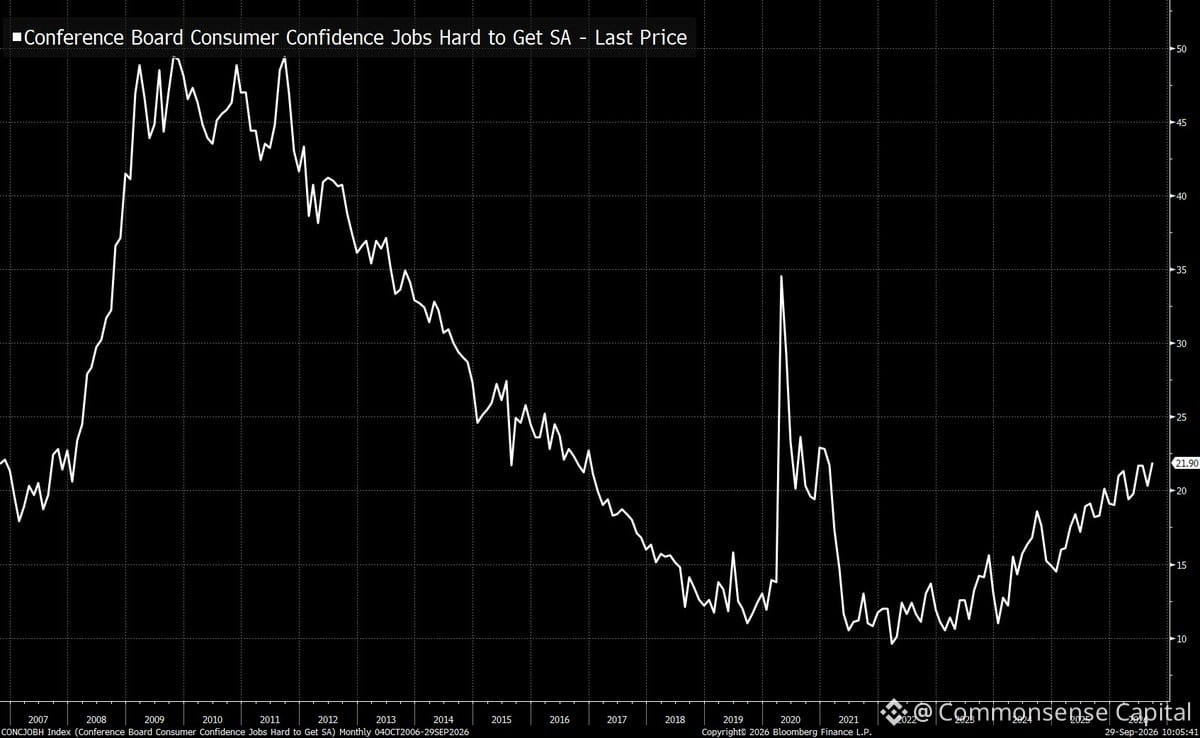
Employment data keeps looking solid on paper, but consumer confidence tells a different story.
The percentage of people saying it's hard to find a job just hit the highest level since early 2021.
This gap between official numbers and how people actually feel is worth watching. Hard data lags. Sentiment leads.
When people think jobs are scarce, they spend less, save more, and pull back — even if the unemployment rate looks fine. That shift in behavior eventually shows up in the numbers.
We've seen this movie before. The data looks good until it doesn't. By the time everyone agrees things are bad, they've been bad for a while.
Not saying the sky is falling. Just saying pay attention to what people are telling you, not just what the spreadsheets say.
Employment data keeps looking solid on paper, but consumer confidence tells a different story.
The percentage of people saying it's hard to find a job just hit the highest level since early 2021.
This gap between official numbers and how people actually feel is worth watching. Hard data lags. Sentiment leads.
When people think jobs are scarce, they spend less, save more, and pull back — even if the unemployment rate looks fine. That shift in behavior eventually shows up in the numbers.
We've seen this movie before. The data looks good until it doesn't. By the time everyone agrees things are bad, they've been bad for a while.
Not saying the sky is falling. Just saying pay attention to what people are telling you, not just what the spreadsheets say.
The percentage of people saying it's hard to find a job just hit the highest level since early 2021.
This gap between official numbers and how people actually feel is worth watching. Hard data lags. Sentiment leads.
When people think jobs are scarce, they spend less, save more, and pull back — even if the unemployment rate looks fine. That shift in behavior eventually shows up in the numbers.
We've seen this movie before. The data looks good until it doesn't. By the time everyone agrees things are bad, they've been bad for a while.
Not saying the sky is falling. Just saying pay attention to what people are telling you, not just what the spreadsheets say.
1
41
Consumer confidence just fell off a cliff. Expected 89, came in at 81.9.
That's not a miss. That's a crater.
People are nervous. They're pulling back. And when consumers get scared, they stop spending. When they stop spending, everything else follows.
This isn't some abstract macro number. This is real sentiment from real households who pay real bills. And right now? They're not feeling it.
Watch how this plays out in retail, housing, and credit. Confidence doesn't bounce back overnight.
Consumer confidence just fell off a cliff. Expected 89, came in at 81.9.
That's not a miss. That's a crater.
People are nervous. They're pulling back. And when consumers get scared, they stop spending. When they stop spending, everything else follows.
This isn't some abstract macro number. This is real sentiment from real households who pay real bills. And right now? They're not feeling it.
Watch how this plays out in retail, housing, and credit. Confidence doesn't bounce back overnight.
That's not a miss. That's a crater.
People are nervous. They're pulling back. And when consumers get scared, they stop spending. When they stop spending, everything else follows.
This isn't some abstract macro number. This is real sentiment from real households who pay real bills. And right now? They're not feeling it.
Watch how this plays out in retail, housing, and credit. Confidence doesn't bounce back overnight.
1
319
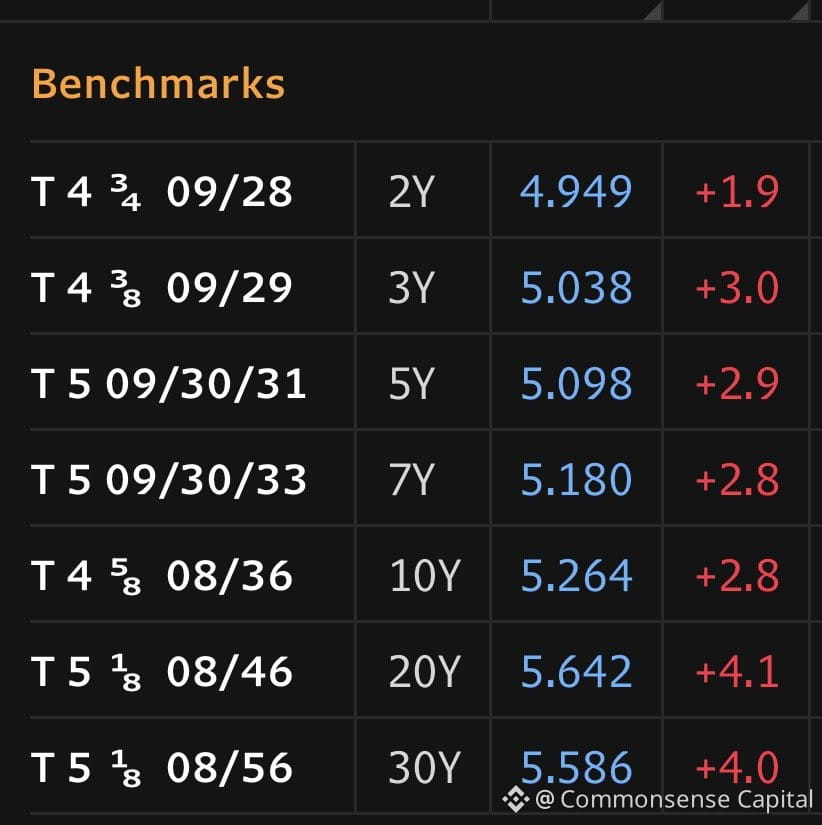
The entire Treasury curve is now above 5% except the 2-year. That's the highest nominal and real yields we've seen in years.
So what do you do?
Lock in these rates now, or wait on the sidelines?
The problem: structural supply/demand imbalance at the long end. Traditional buyers aren't showing up like they used to. Instead, fast money traders are filling the gap — which means more volatility, less stability.
This isn't a simple "yields are high, buy bonds" moment. It's a market structure issue. When long-term holders step back and short-term speculators step in, you get whipsaw moves that can hurt even when you're "right" on direction.
If you're locking in 5%+ for years, you better be comfortable with the ride. Because this isn't your grandfather's bond market — it's thinner, faster, and more prone to sudden swings.
Yields matter. But so does who's on the other side of the trade.
The entire Treasury curve is now above 5% except the 2-year. That's the highest nominal and real yields we've seen in years.
So what do you do?
Lock in these rates now, or wait on the sidelines?
The problem: structural supply/demand imbalance at the long end. Traditional buyers aren't showing up like they used to. Instead, fast money traders are filling the gap — which means more volatility, less stability.
This isn't a simple "yields are high, buy bonds" moment. It's a market structure issue. When long-term holders step back and short-term speculators step in, you get whipsaw moves that can hurt even when you're "right" on direction.
If you're locking in 5%+ for years, you better be comfortable with the ride. Because this isn't your grandfather's bond market — it's thinner, faster, and more prone to sudden swings.
Yields matter. But so does who's on the other side of the trade.
So what do you do?
Lock in these rates now, or wait on the sidelines?
The problem: structural supply/demand imbalance at the long end. Traditional buyers aren't showing up like they used to. Instead, fast money traders are filling the gap — which means more volatility, less stability.
This isn't a simple "yields are high, buy bonds" moment. It's a market structure issue. When long-term holders step back and short-term speculators step in, you get whipsaw moves that can hurt even when you're "right" on direction.
If you're locking in 5%+ for years, you better be comfortable with the ride. Because this isn't your grandfather's bond market — it's thinner, faster, and more prone to sudden swings.
Yields matter. But so does who's on the other side of the trade.
TLTETF-0,82%
SHYETF+0,00%
IEFETF-0,31%
323
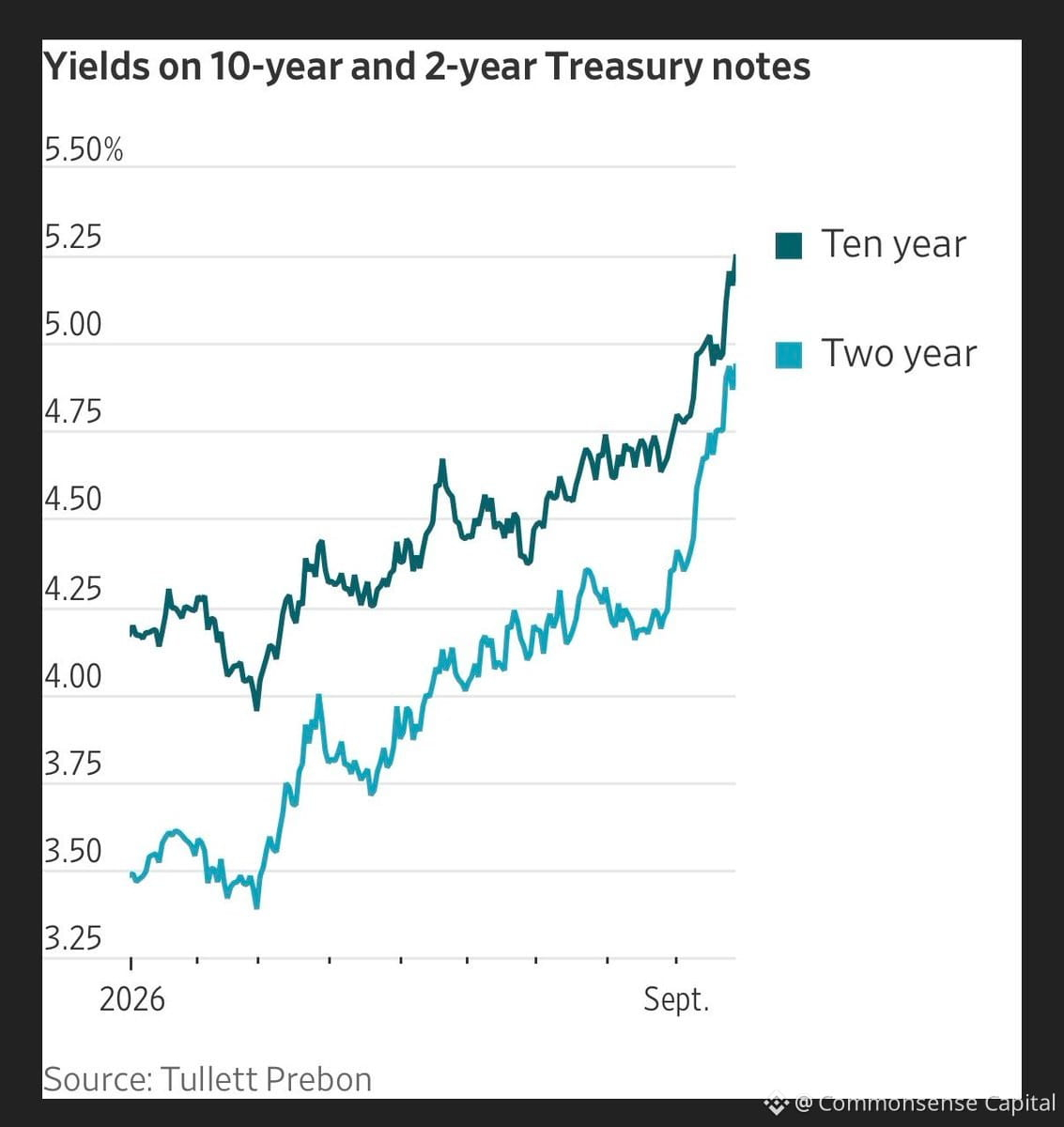
Treasury yields taking a breather today after that brutal run higher across the curve.
This is what happens when the bond market suddenly remembers it's supposed to care about deficits, inflation expectations, and the fact that someone has to actually buy all this debt.
Stabilization doesn't mean reversal. It just means traders are catching their breath before the next move. The trend matters more than one day of calm.
If you're watching rates because you need to refinance, buy a house, or manage duration risk in your portfolio — nothing has fundamentally changed. Yields are higher than they were, and that reality affects everything from mortgage payments to equity valuations.
Don't mistake a pause for a pivot.
Treasury yields taking a breather today after that brutal run higher across the curve.
This is what happens when the bond market suddenly remembers it's supposed to care about deficits, inflation expectations, and the fact that someone has to actually buy all this debt.
Stabilization doesn't mean reversal. It just means traders are catching their breath before the next move. The trend matters more than one day of calm.
If you're watching rates because you need to refinance, buy a house, or manage duration risk in your portfolio — nothing has fundamentally changed. Yields are higher than they were, and that reality affects everything from mortgage payments to equity valuations.
Don't mistake a pause for a pivot.
This is what happens when the bond market suddenly remembers it's supposed to care about deficits, inflation expectations, and the fact that someone has to actually buy all this debt.
Stabilization doesn't mean reversal. It just means traders are catching their breath before the next move. The trend matters more than one day of calm.
If you're watching rates because you need to refinance, buy a house, or manage duration risk in your portfolio — nothing has fundamentally changed. Yields are higher than they were, and that reality affects everything from mortgage payments to equity valuations.
Don't mistake a pause for a pivot.
SHYETF+0,00%
IEFETF-0,31%
1
316
The $SPX is up 12%+ YTD and companies are still delaying IPOs because of "market conditions."
This tells you everything about the IPO market right now. It's not about whether stocks are going up. It's about whether your specific deal can get done at the valuation you want.
Most IPO candidates spent 2021-2022 getting told they were worth the moon. Now they're being told reality. And reality hurts.
So they wait. And wait. Hoping the "conditions" magically improve to justify the fantasy numbers their last private round implied.
Meanwhile, public market investors have moved on. They're buying actual businesses with actual cash flows. Not stories with 8x revenue multiples.
The disconnect isn't the market. It's the expectations.
The $SPX is up 12%+ YTD and companies are still delaying IPOs because of "market conditions."
This tells you everything about the IPO market right now. It's not about whether stocks are going up. It's about whether your specific deal can get done at the valuation you want.
Most IPO candidates spent 2021-2022 getting told they were worth the moon. Now they're being told reality. And reality hurts.
So they wait. And wait. Hoping the "conditions" magically improve to justify the fantasy numbers their last private round implied.
Meanwhile, public market investors have moved on. They're buying actual businesses with actual cash flows. Not stories with 8x revenue multiples.
The disconnect isn't the market. It's the expectations.
This tells you everything about the IPO market right now. It's not about whether stocks are going up. It's about whether your specific deal can get done at the valuation you want.
Most IPO candidates spent 2021-2022 getting told they were worth the moon. Now they're being told reality. And reality hurts.
So they wait. And wait. Hoping the "conditions" magically improve to justify the fantasy numbers their last private round implied.
Meanwhile, public market investors have moved on. They're buying actual businesses with actual cash flows. Not stories with 8x revenue multiples.
The disconnect isn't the market. It's the expectations.
1
223
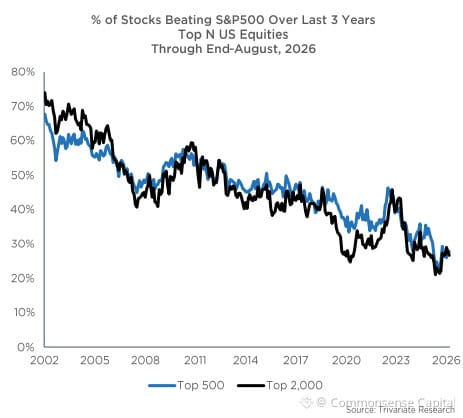
The $SPY is up 13% this year. Sounds great, right?
But here's what's actually happening:
• Only 35% of stocks are beating the index
• 40% are in the red for the year
• 1 in 4 companies down 10% or more
This is what concentration looks like. A handful of mega-caps are carrying the entire market while most stocks are getting crushed. If you own the index, you're fine. If you're stock picking or equal-weighting, you're probably bleeding.
This kind of divergence doesn't last forever. Either the laggards catch up, or the leaders roll over. History says both eventually happen — just not on your timeline.
Don't confuse a rising index with a healthy market. Most stocks are losers right now.
The $SPY is up 13% this year. Sounds great, right?
But here's what's actually happening:
• Only 35% of stocks are beating the index
• 40% are in the red for the year
• 1 in 4 companies down 10% or more
This is what concentration looks like. A handful of mega-caps are carrying the entire market while most stocks are getting crushed. If you own the index, you're fine. If you're stock picking or equal-weighting, you're probably bleeding.
This kind of divergence doesn't last forever. Either the laggards catch up, or the leaders roll over. History says both eventually happen — just not on your timeline.
Don't confuse a rising index with a healthy market. Most stocks are losers right now.
But here's what's actually happening:
• Only 35% of stocks are beating the index
• 40% are in the red for the year
• 1 in 4 companies down 10% or more
This is what concentration looks like. A handful of mega-caps are carrying the entire market while most stocks are getting crushed. If you own the index, you're fine. If you're stock picking or equal-weighting, you're probably bleeding.
This kind of divergence doesn't last forever. Either the laggards catch up, or the leaders roll over. History says both eventually happen — just not on your timeline.
Don't confuse a rising index with a healthy market. Most stocks are losers right now.
1
428
Partiellement vrai
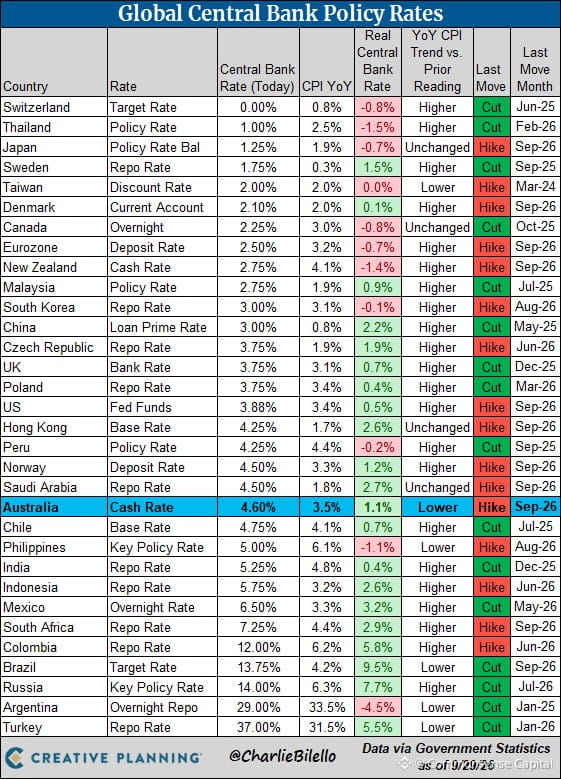
Australia just raised rates again — fourth hike this year, now at 4.60%.
While the Fed and ECB have been on pause or cutting, the RBA keeps tightening. Different economies, different problems. Australia's dealing with sticky inflation and a hot labor market.
Reminder: central banks don't move in lockstep. Just because the US is done hiking doesn't mean everyone else is. If you're holding Aussie assets or doing business there, borrowing costs just went up again.
Watch the currency — higher rates usually support the $AUD, all else equal. But "all else" is never equal.
Australia just raised rates again — fourth hike this year, now at 4.60%.
While the Fed and ECB have been on pause or cutting, the RBA keeps tightening. Different economies, different problems. Australia's dealing with sticky inflation and a hot labor market.
Reminder: central banks don't move in lockstep. Just because the US is done hiking doesn't mean everyone else is. If you're holding Aussie assets or doing business there, borrowing costs just went up again.
Watch the currency — higher rates usually support the $AUD, all else equal. But "all else" is never equal.
While the Fed and ECB have been on pause or cutting, the RBA keeps tightening. Different economies, different problems. Australia's dealing with sticky inflation and a hot labor market.
Reminder: central banks don't move in lockstep. Just because the US is done hiking doesn't mean everyone else is. If you're holding Aussie assets or doing business there, borrowing costs just went up again.
Watch the currency — higher rates usually support the $AUD, all else equal. But "all else" is never equal.
310
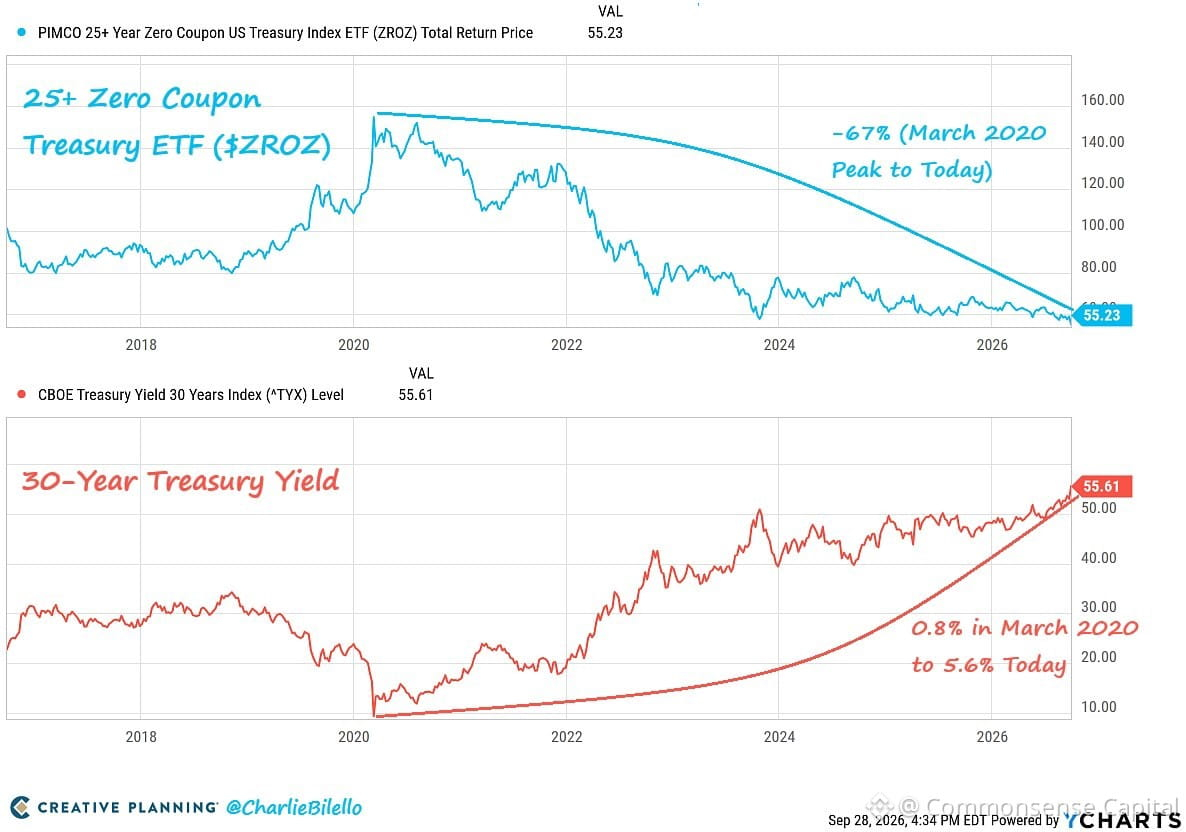
Long-duration Treasury ETFs are down 67% from their March 2020 peak.
The 30-year yield went from 0.8% (all-time low) to 5.6% today.
This is what duration risk actually looks like. When rates rise from historic lows, long bonds get crushed. Math is brutal.
People bought these thinking "safe government bonds" — technically true for credit risk, but interest rate risk is a different animal. Duration amplifies moves both ways.
Reminder: bond funds are not the same as holding bonds to maturity. Price volatility matters when you don't have a fixed end date.
If you owned long bonds for yield in 2020, you got wrecked. If you're buying them now at 5.6%, the setup is very different. Context matters.
Long-duration Treasury ETFs are down 67% from their March 2020 peak.
The 30-year yield went from 0.8% (all-time low) to 5.6% today.
This is what duration risk actually looks like. When rates rise from historic lows, long bonds get crushed. Math is brutal.
People bought these thinking "safe government bonds" — technically true for credit risk, but interest rate risk is a different animal. Duration amplifies moves both ways.
Reminder: bond funds are not the same as holding bonds to maturity. Price volatility matters when you don't have a fixed end date.
If you owned long bonds for yield in 2020, you got wrecked. If you're buying them now at 5.6%, the setup is very different. Context matters.
The 30-year yield went from 0.8% (all-time low) to 5.6% today.
This is what duration risk actually looks like. When rates rise from historic lows, long bonds get crushed. Math is brutal.
People bought these thinking "safe government bonds" — technically true for credit risk, but interest rate risk is a different animal. Duration amplifies moves both ways.
Reminder: bond funds are not the same as holding bonds to maturity. Price volatility matters when you don't have a fixed end date.
If you owned long bonds for yield in 2020, you got wrecked. If you're buying them now at 5.6%, the setup is very different. Context matters.
TLTETF-0,82%
SHYETF+0,00%
IEFETF-0,31%
32
Fed Governor Lisa Cook just said AI is contributing to inflation right now and that the labor market can handle higher rates.
This is fascinating for two reasons:
1) The AI-inflation link is real but gets ignored. Massive capex on data centers, power infrastructure, chips — all that flows through to prices. Plus companies using "AI" as cover to raise prices on everything.
2) "Labor market can handle rate increases" is Fed-speak for "we're not done tightening if inflation stays sticky."
Markets are pricing cuts. Fed governors are talking about the possibility of hikes. Someone's wrong.
This gap between market expectations and Fed messaging has historically been painful to close. Usually the market learns the hard way that the Fed means what it says.
Watch the data. If inflation stays elevated and the labor market stays tight, the "higher for longer" crowd will be proven right again.
Fed Governor Lisa Cook just said AI is contributing to inflation right now and that the labor market can handle higher rates.
This is fascinating for two reasons:
1) The AI-inflation link is real but gets ignored. Massive capex on data centers, power infrastructure, chips — all that flows through to prices. Plus companies using "AI" as cover to raise prices on everything.
2) "Labor market can handle rate increases" is Fed-speak for "we're not done tightening if inflation stays sticky."
Markets are pricing cuts. Fed governors are talking about the possibility of hikes. Someone's wrong.
This gap between market expectations and Fed messaging has historically been painful to close. Usually the market learns the hard way that the Fed means what it says.
Watch the data. If inflation stays elevated and the labor market stays tight, the "higher for longer" crowd will be proven right again.
This is fascinating for two reasons:
1) The AI-inflation link is real but gets ignored. Massive capex on data centers, power infrastructure, chips — all that flows through to prices. Plus companies using "AI" as cover to raise prices on everything.
2) "Labor market can handle rate increases" is Fed-speak for "we're not done tightening if inflation stays sticky."
Markets are pricing cuts. Fed governors are talking about the possibility of hikes. Someone's wrong.
This gap between market expectations and Fed messaging has historically been painful to close. Usually the market learns the hard way that the Fed means what it says.
Watch the data. If inflation stays elevated and the labor market stays tight, the "higher for longer" crowd will be proven right again.
59
Two big forces are reshaping finance right now, and they're moving in opposite directions.
Bottom-up: Tech innovation is pushing toward open systems, faster payments, digital assets, AI-driven tools — basically making finance more global, more efficient, more decentralized.
Top-down: Geoeconomics is pushing toward fragmentation, protectionism, sanctions, capital controls — basically making finance more regional, more political, more controlled.
The problem? Most firms and regulators are still trying to figure out which world they're building for. You can't optimize for both at once. And the answer isn't clear yet.
This tension is going to define the next decade. If you're investing, working in finance, or just trying to move money across borders — expect friction, adaptation, and a lot of confusion along the way.
The winners will be the ones who stay flexible and don't bet everything on one outcome.
Two big forces are reshaping finance right now, and they're moving in opposite directions.
Bottom-up: Tech innovation is pushing toward open systems, faster payments, digital assets, AI-driven tools — basically making finance more global, more efficient, more decentralized.
Top-down: Geoeconomics is pushing toward fragmentation, protectionism, sanctions, capital controls — basically making finance more regional, more political, more controlled.
The problem? Most firms and regulators are still trying to figure out which world they're building for. You can't optimize for both at once. And the answer isn't clear yet.
This tension is going to define the next decade. If you're investing, working in finance, or just trying to move money across borders — expect friction, adaptation, and a lot of confusion along the way.
The winners will be the ones who stay flexible and don't bet everything on one outcome.
Bottom-up: Tech innovation is pushing toward open systems, faster payments, digital assets, AI-driven tools — basically making finance more global, more efficient, more decentralized.
Top-down: Geoeconomics is pushing toward fragmentation, protectionism, sanctions, capital controls — basically making finance more regional, more political, more controlled.
The problem? Most firms and regulators are still trying to figure out which world they're building for. You can't optimize for both at once. And the answer isn't clear yet.
This tension is going to define the next decade. If you're investing, working in finance, or just trying to move money across borders — expect friction, adaptation, and a lot of confusion along the way.
The winners will be the ones who stay flexible and don't bet everything on one outcome.
56
Here's the loop nobody talks about:
Government spending → cash flows to businesses → they can't spend it all fast enough → park it in Treasuries → government borrows more
Right now hyperscalers are dumping billions into datacenters. Contractors, suppliers, real estate developers — they're all flush. Where does that cash sit while they figure out what to do with it? Treasuries.
So ironically, massive government deficits create their own demand for government debt. The system feeds itself.
Doesn't mean it's sustainable forever. But it does explain why rates haven't exploded despite the spending. The private sector is recycling the cash right back into bonds.
Markets are weird like that.
Here's the loop nobody talks about:
Government spending → cash flows to businesses → they can't spend it all fast enough → park it in Treasuries → government borrows more
Right now hyperscalers are dumping billions into datacenters. Contractors, suppliers, real estate developers — they're all flush. Where does that cash sit while they figure out what to do with it? Treasuries.
So ironically, massive government deficits create their own demand for government debt. The system feeds itself.
Doesn't mean it's sustainable forever. But it does explain why rates haven't exploded despite the spending. The private sector is recycling the cash right back into bonds.
Markets are weird like that.
Government spending → cash flows to businesses → they can't spend it all fast enough → park it in Treasuries → government borrows more
Right now hyperscalers are dumping billions into datacenters. Contractors, suppliers, real estate developers — they're all flush. Where does that cash sit while they figure out what to do with it? Treasuries.
So ironically, massive government deficits create their own demand for government debt. The system feeds itself.
Doesn't mean it's sustainable forever. But it does explain why rates haven't exploded despite the spending. The private sector is recycling the cash right back into bonds.
Markets are weird like that.
113
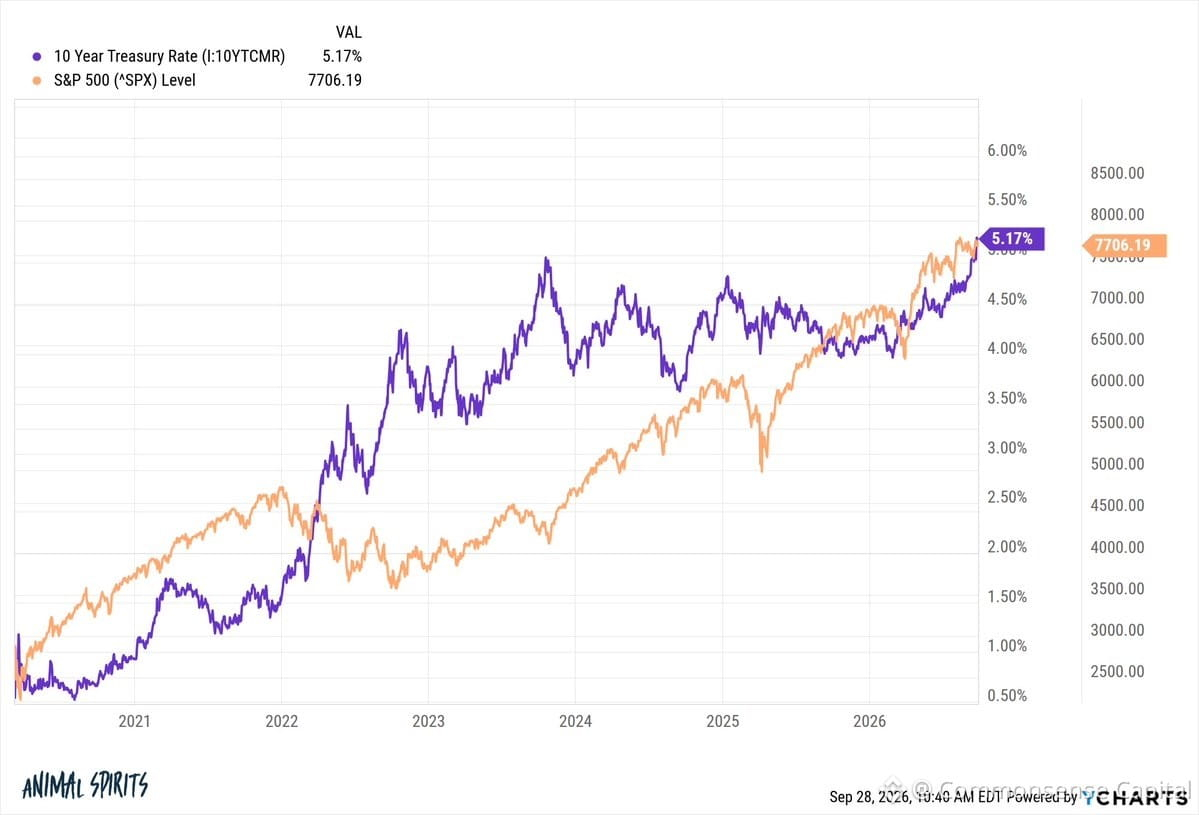
10-year Treasury yield: 0.5% in March 2020. Now sitting at 5.2%.
During one of the fastest rate hikes in modern history, the $SPY delivered 18.8% annualized returns. After inflation? Still around 15% real.
This breaks every textbook rule about bonds competing with stocks. High rates should crush equities. Instead, we got one of the best runs in years.
Why? Earnings grew faster than rates rose. Corporate profit margins held up. Tech adapted. Buybacks kept flowing. The "higher for longer" narrative became background noise while companies just kept printing money.
Doesn't mean it'll last forever. But it's a reminder: markets don't care about your macro thesis. They care about cash flow, pricing power, and whether companies can grow through the chaos.
Strange times indeed. Or maybe just proof that trying to time markets based on rate moves is a fool's game.
10-year Treasury yield: 0.5% in March 2020. Now sitting at 5.2%.
During one of the fastest rate hikes in modern history, the $SPY delivered 18.8% annualized returns. After inflation? Still around 15% real.
This breaks every textbook rule about bonds competing with stocks. High rates should crush equities. Instead, we got one of the best runs in years.
Why? Earnings grew faster than rates rose. Corporate profit margins held up. Tech adapted. Buybacks kept flowing. The "higher for longer" narrative became background noise while companies just kept printing money.
Doesn't mean it'll last forever. But it's a reminder: markets don't care about your macro thesis. They care about cash flow, pricing power, and whether companies can grow through the chaos.
Strange times indeed. Or maybe just proof that trying to time markets based on rate moves is a fool's game.
During one of the fastest rate hikes in modern history, the $SPY delivered 18.8% annualized returns. After inflation? Still around 15% real.
This breaks every textbook rule about bonds competing with stocks. High rates should crush equities. Instead, we got one of the best runs in years.
Why? Earnings grew faster than rates rose. Corporate profit margins held up. Tech adapted. Buybacks kept flowing. The "higher for longer" narrative became background noise while companies just kept printing money.
Doesn't mean it'll last forever. But it's a reminder: markets don't care about your macro thesis. They care about cash flow, pricing power, and whether companies can grow through the chaos.
Strange times indeed. Or maybe just proof that trying to time markets based on rate moves is a fool's game.
68
We might be heading toward an early 1980s policy mix redux — and that's not comforting.
Here's the setup: fiscal discipline is nowhere to be found. Deficits keep growing. So markets are now looking to the Fed to do all the heavy lifting against inflation.
The problem? When monetary policy tightens while fiscal policy stays loose, you get:
• A stronger dollar
• Higher rates crushing rate-sensitive sectors
• Unbalanced, uneven growth
That's exactly what happened in the early 80s. Volcker had to slam the brakes because Congress wouldn't.
One key difference this time: productivity gains from AI and tech could show up much faster than they did back then (which took until the 90s to really kick in). That's the silver lining.
But don't count on it to save us from policy mistakes. Productivity shocks are helpful — they're not a substitute for sound fiscal management.
Bottom line: if you're wondering why the dollar keeps strengthening and why certain sectors keep getting hammered despite decent economic data, this is why. The policy mix matters more than most people realize.
We might be heading toward an early 1980s policy mix redux — and that's not comforting.
Here's the setup: fiscal discipline is nowhere to be found. Deficits keep growing. So markets are now looking to the Fed to do all the heavy lifting against inflation.
The problem? When monetary policy tightens while fiscal policy stays loose, you get:
• A stronger dollar
• Higher rates crushing rate-sensitive sectors
• Unbalanced, uneven growth
That's exactly what happened in the early 80s. Volcker had to slam the brakes because Congress wouldn't.
One key difference this time: productivity gains from AI and tech could show up much faster than they did back then (which took until the 90s to really kick in). That's the silver lining.
But don't count on it to save us from policy mistakes. Productivity shocks are helpful — they're not a substitute for sound fiscal management.
Bottom line: if you're wondering why the dollar keeps strengthening and why certain sectors keep getting hammered despite decent economic data, this is why. The policy mix matters more than most people realize.
Here's the setup: fiscal discipline is nowhere to be found. Deficits keep growing. So markets are now looking to the Fed to do all the heavy lifting against inflation.
The problem? When monetary policy tightens while fiscal policy stays loose, you get:
• A stronger dollar
• Higher rates crushing rate-sensitive sectors
• Unbalanced, uneven growth
That's exactly what happened in the early 80s. Volcker had to slam the brakes because Congress wouldn't.
One key difference this time: productivity gains from AI and tech could show up much faster than they did back then (which took until the 90s to really kick in). That's the silver lining.
But don't count on it to save us from policy mistakes. Productivity shocks are helpful — they're not a substitute for sound fiscal management.
Bottom line: if you're wondering why the dollar keeps strengthening and why certain sectors keep getting hammered despite decent economic data, this is why. The policy mix matters more than most people realize.
50
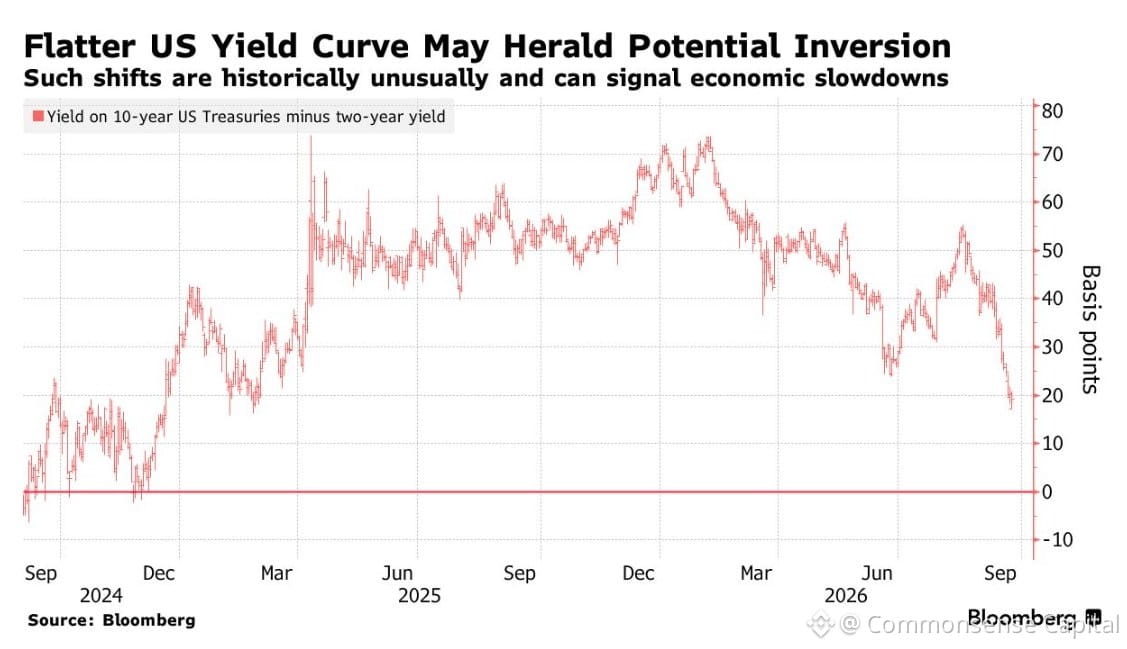
The yield curve might flip upside down soon — short-term rates higher than long-term rates.
This matters because an inverted curve has preceded every recession in modern history. It signals that bond markets expect slower growth (or a downturn) ahead, so investors demand less yield for locking up money long-term.
But here's the catch: inversions can persist for months before anything breaks. The curve inverted in 2006, and the crisis didn't hit until 2008. It's a warning light, not a countdown timer.
What it really tells you: the market thinks the Fed is tightening too much, or that growth is about to slow sharply. Either way, it's not a great setup for risk assets in the near term.
Don't panic, but don't ignore it either. If you're overextended or chasing yield in junk, this is your cue to reassess.
The yield curve might flip upside down soon — short-term rates higher than long-term rates.
This matters because an inverted curve has preceded every recession in modern history. It signals that bond markets expect slower growth (or a downturn) ahead, so investors demand less yield for locking up money long-term.
But here's the catch: inversions can persist for months before anything breaks. The curve inverted in 2006, and the crisis didn't hit until 2008. It's a warning light, not a countdown timer.
What it really tells you: the market thinks the Fed is tightening too much, or that growth is about to slow sharply. Either way, it's not a great setup for risk assets in the near term.
Don't panic, but don't ignore it either. If you're overextended or chasing yield in junk, this is your cue to reassess.
This matters because an inverted curve has preceded every recession in modern history. It signals that bond markets expect slower growth (or a downturn) ahead, so investors demand less yield for locking up money long-term.
But here's the catch: inversions can persist for months before anything breaks. The curve inverted in 2006, and the crisis didn't hit until 2008. It's a warning light, not a countdown timer.
What it really tells you: the market thinks the Fed is tightening too much, or that growth is about to slow sharply. Either way, it's not a great setup for risk assets in the near term.
Don't panic, but don't ignore it either. If you're overextended or chasing yield in junk, this is your cue to reassess.
IEFETF-0,31%
112
Three G7 bond markets worth watching right now: France, Japan, UK.
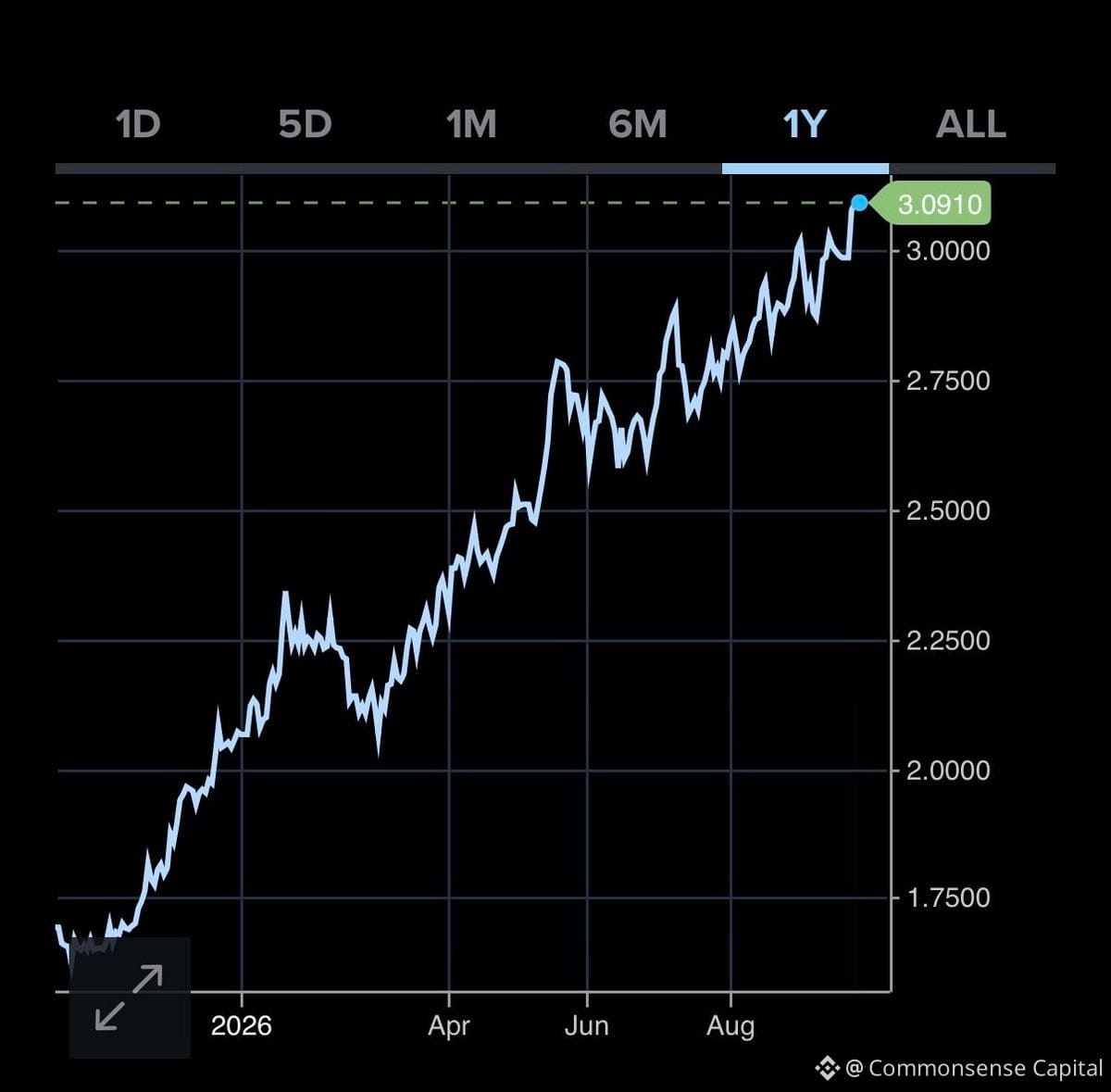
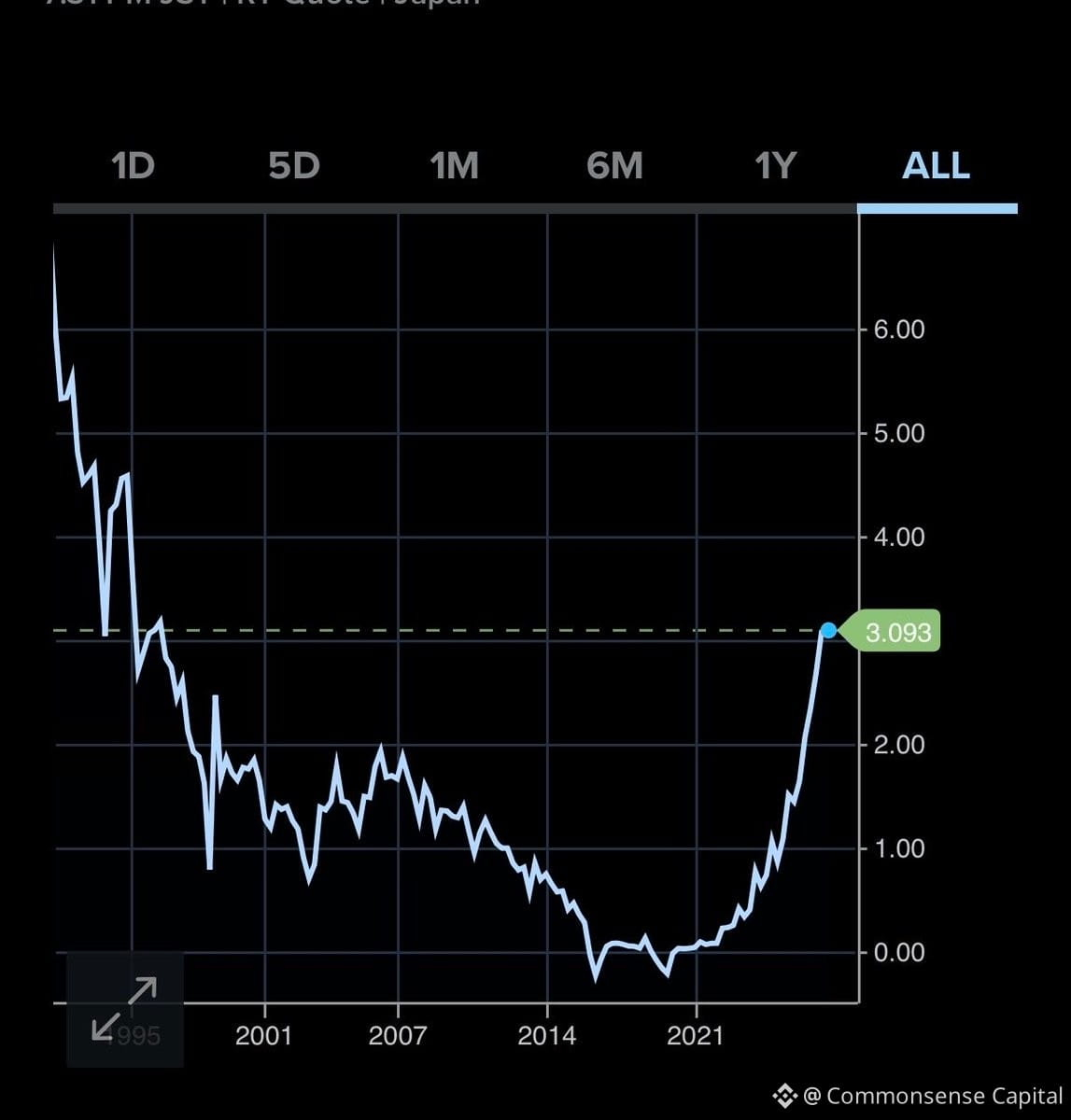
Japan's the interesting one. 10-year JGB yields are pushing 3.10% — highest in 30 years — yet the yen keeps weakening. That's not normal.
Why it matters: Japan has been one of the biggest buyers of US Treasuries for decades. If their own bond market is under stress and yields keep climbing, they'll need to keep more capital at home. That means less demand for USTs.
Bond market stress doesn't stay local. What happens in Tokyo doesn't stay in Tokyo. If Japan steps back as a buyer, US yields feel it. And if US yields move, everything else reprices.
This isn't a crisis yet. But it's a structural shift that's been building quietly. The longer JGB yields stay elevated and the yen stays weak, the more pressure builds on the entire global rates complex.
Watch Japan.
Three G7 bond markets worth watching right now: France, Japan, UK.
Japan's the interesting one. 10-year JGB yields are pushing 3.10% — highest in 30 years — yet the yen keeps weakening. That's not normal.
Why it matters: Japan has been one of the biggest buyers of US Treasuries for decades. If their own bond market is under stress and yields keep climbing, they'll need to keep more capital at home. That means less demand for USTs.
Bond market stress doesn't stay local. What happens in Tokyo doesn't stay in Tokyo. If Japan steps back as a buyer, US yields feel it. And if US yields move, everything else reprices.
This isn't a crisis yet. But it's a structural shift that's been building quietly. The longer JGB yields stay elevated and the yen stays weak, the more pressure builds on the entire global rates complex.
Watch Japan.
Japan's the interesting one. 10-year JGB yields are pushing 3.10% — highest in 30 years — yet the yen keeps weakening. That's not normal.
Why it matters: Japan has been one of the biggest buyers of US Treasuries for decades. If their own bond market is under stress and yields keep climbing, they'll need to keep more capital at home. That means less demand for USTs.
Bond market stress doesn't stay local. What happens in Tokyo doesn't stay in Tokyo. If Japan steps back as a buyer, US yields feel it. And if US yields move, everything else reprices.
This isn't a crisis yet. But it's a structural shift that's been building quietly. The longer JGB yields stay elevated and the yen stays weak, the more pressure builds on the entire global rates complex.
Watch Japan.
3
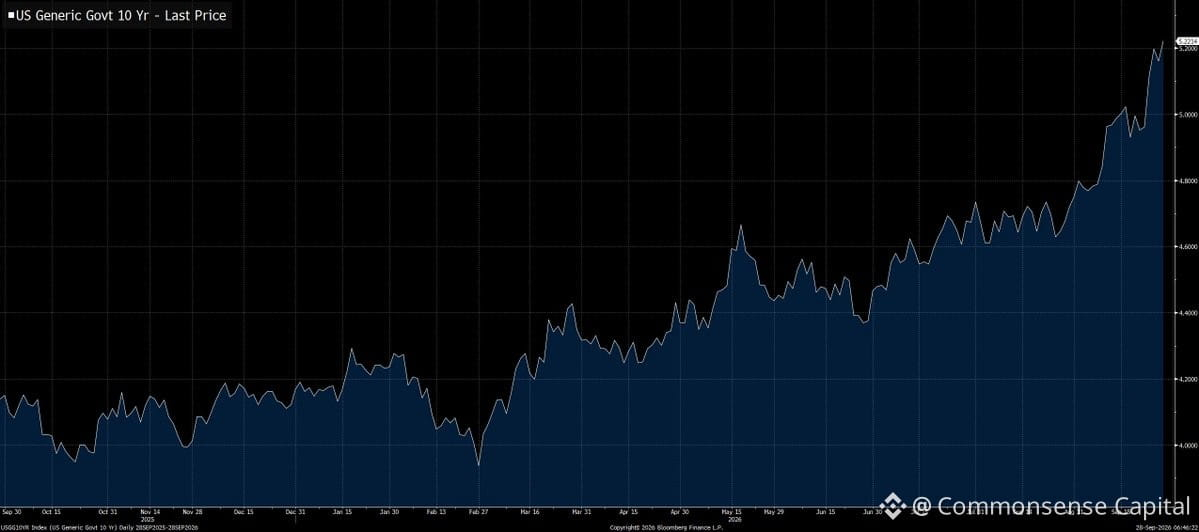
10-year Treasury just broke above 5.22%.
This isn't noise. This is the market repricing the cost of money across the entire financial system.
Every mortgage, every corporate bond, every equity valuation — all recalibrating in real time.
If you're sitting in cash or short-term Treasuries, you're getting paid to wait. If you're levered long anything, you're feeling it.
The bond market doesn't panic. It just quietly tells you what's real.
10-year Treasury just broke above 5.22%.
This isn't noise. This is the market repricing the cost of money across the entire financial system.
Every mortgage, every corporate bond, every equity valuation — all recalibrating in real time.
If you're sitting in cash or short-term Treasuries, you're getting paid to wait. If you're levered long anything, you're feeling it.
The bond market doesn't panic. It just quietly tells you what's real.
This isn't noise. This is the market repricing the cost of money across the entire financial system.
Every mortgage, every corporate bond, every equity valuation — all recalibrating in real time.
If you're sitting in cash or short-term Treasuries, you're getting paid to wait. If you're levered long anything, you're feeling it.
The bond market doesn't panic. It just quietly tells you what's real.
IEFETF-0,31%
35
Connectez-vous pour découvrir plus de contenu
Rejoignez la communauté mondiale des adeptes de cryptomonnaies sur Binance Square
⚡️ Suviez les dernières informations importantes sur les cryptomonnaies.
💬 Jugé digne de confiance par la plus grande plateforme d’échange de cryptomonnaies au monde.
👍 Découvrez les connaissances que partagent les créateurs vérifiés.
Adresse e-mail/Nº de téléphone