

Captain
7.1k Publications

Captain
Signaler
Bloquer l’utilisateur
Latest News , Chart , Information .
X : bnbcaptain
Ouvert au trading
Trade fréquemment
7 an(s)
7 Suivis
24.7K+ Abonnés
38.7K+ J’aime
Publications
Portefeuille
Tous
Citations
Vidéos
Direct

·
--
CZ on YZi Labs:
“We invest with positive impact.”
YZi Labs allocates roughly:
• 70% to crypto & blockchain
• 20% to AI
• 5–10% to biotech
But the philosophy is bigger than returns.
If investing $1B could help create a cheap cure for cancer even if the company made little money CZ says he’d still be happy.
Create more value than you capture.
If a company creates $10 of value and takes less than $5, it leaves value on the table, grows faster, and creates greater impact.
Impact first. Returns follow
@CZ
CZ on YZi Labs:
“We invest with positive impact.”
YZi Labs allocates roughly:
• 70% to crypto & blockchain
• 20% to AI
• 5–10% to biotech
But the philosophy is bigger than returns.
If investing $1B could help create a cheap cure for cancer even if the company made little money CZ says he’d still be happy.
Create more value than you capture.
If a company creates $10 of value and takes less than $5, it leaves value on the table, grows faster, and creates greater impact.
Impact first. Returns follow
@CZ
“We invest with positive impact.”
YZi Labs allocates roughly:
• 70% to crypto & blockchain
• 20% to AI
• 5–10% to biotech
But the philosophy is bigger than returns.
If investing $1B could help create a cheap cure for cancer even if the company made little money CZ says he’d still be happy.
Create more value than you capture.
If a company creates $10 of value and takes less than $5, it leaves value on the table, grows faster, and creates greater impact.
Impact first. Returns follow
@CZ
3
458
·
--
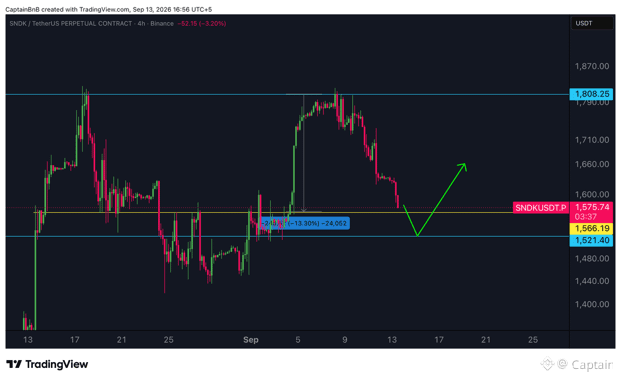
$SNDKB got rejected from the 1800 level
1400_1500 zone is good Entry point for a QUICK small bounce !!
Lets watch global war situation also
#bstocks #GlobalFinance
$SNDKB got rejected from the 1800 level
1400_1500 zone is good Entry point for a QUICK small bounce !!
Lets watch global war situation also
#bstocks #GlobalFinance
1400_1500 zone is good Entry point for a QUICK small bounce !!
Lets watch global war situation also
#bstocks #GlobalFinance
1
4
713
·
--
Vérifié
Article
U.S. Treasury Bans ESG Funds From Trump AccountsThe U.S. Treasury has implemented a new rule that effectively bans ESG funds from accounts associated with Donald Trump. According to Odaily, this restriction is part of broader regulations aimed at maintaining low-cost investment options within these accounts, allowing investors to retain more of their money.
The move appears to be targeted at limiting the availability of environmental, social, and governance (ESG) funds in certain accounts linked to the former president. ESG funds are investment products that evaluate companies based on their environmental impact, social responsibility, and governance practices alongside financial performance.
The Treasury’s decision reflects ongoing debates over the role and effectiveness of ESG investing, with critics arguing that such funds can sometimes prioritize social or environmental goals over financial returns. By restricting these funds from Trump accounts, the Treasury aims to streamline investment choices and ensure that account offerings focus on traditional and cost-effective options.
This development is likely to influence the landscape of ESG investing, especially in accounts with political or ideological ties. Market participants and investors will be watching how this rule impacts the availability and popularity of ESG funds across different account types moving forward. #ESG #Investing #Regulation
U.S. Treasury Bans ESG Funds From Trump Accounts
The U.S. Treasury has implemented a new rule that effectively bans ESG funds from accounts associated with Donald Trump. According to Odaily, this restriction is part of broader regulations aimed at maintaining low-cost investment options within these accounts, allowing investors to retain more of their money.
The move appears to be targeted at limiting the availability of environmental, social, and governance (ESG) funds in certain accounts linked to the former president. ESG funds are investment products that evaluate companies based on their environmental impact, social responsibility, and governance practices alongside financial performance.
The Treasury’s decision reflects ongoing debates over the role and effectiveness of ESG investing, with critics arguing that such funds can sometimes prioritize social or environmental goals over financial returns. By restricting these funds from Trump accounts, the Treasury aims to streamline investment choices and ensure that account offerings focus on traditional and cost-effective options.
This development is likely to influence the landscape of ESG investing, especially in accounts with political or ideological ties. Market participants and investors will be watching how this rule impacts the availability and popularity of ESG funds across different account types moving forward. #ESG #Investing #Regulation
The move appears to be targeted at limiting the availability of environmental, social, and governance (ESG) funds in certain accounts linked to the former president. ESG funds are investment products that evaluate companies based on their environmental impact, social responsibility, and governance practices alongside financial performance.
The Treasury’s decision reflects ongoing debates over the role and effectiveness of ESG investing, with critics arguing that such funds can sometimes prioritize social or environmental goals over financial returns. By restricting these funds from Trump accounts, the Treasury aims to streamline investment choices and ensure that account offerings focus on traditional and cost-effective options.
This development is likely to influence the landscape of ESG investing, especially in accounts with political or ideological ties. Market participants and investors will be watching how this rule impacts the availability and popularity of ESG funds across different account types moving forward. #ESG #Investing #Regulation
2
3
113
·
--
Article
Franklin Templeton to Add Tokenized Assets to Traditional FundsFranklin Templeton has announced plans to incorporate tokenized assets into its traditional investment funds following what it describes as the first U.S. regulatory approval for digitally native products to be used within conventional funds. This development marks a significant milestone in the integration of blockchain-based assets into mainstream finance, according to Bloomberg.
The firm stated that this approval allows for the inclusion of digitally native assets within existing investment structures, potentially offering investors new avenues for exposure and diversification. The move is part of Franklin Templeton’s broader strategy to innovate and adapt to the evolving landscape of digital assets and blockchain technology.
This regulatory clearance is seen as a key step toward mainstream acceptance of tokenized assets, which are often viewed as a way to increase liquidity, transparency, and efficiency in the investment process. Franklin Templeton's initiative could pave the way for other asset managers to follow suit, further bridging the gap between traditional finance and digital asset markets.
By enabling the use of tokenized assets in conventional funds, the firm aims to unlock new opportunities for investors and enhance the flexibility of fund structures. The industry will be watching closely to see how this development influences broader adoption and regulation of digital assets in the traditional financial ecosystem. #TokenizedAssets #DigitalAssets #AssetManagement
Franklin Templeton to Add Tokenized Assets to Traditional Funds
Franklin Templeton has announced plans to incorporate tokenized assets into its traditional investment funds following what it describes as the first U.S. regulatory approval for digitally native products to be used within conventional funds. This development marks a significant milestone in the integration of blockchain-based assets into mainstream finance, according to Bloomberg.
The firm stated that this approval allows for the inclusion of digitally native assets within existing investment structures, potentially offering investors new avenues for exposure and diversification. The move is part of Franklin Templeton’s broader strategy to innovate and adapt to the evolving landscape of digital assets and blockchain technology.
This regulatory clearance is seen as a key step toward mainstream acceptance of tokenized assets, which are often viewed as a way to increase liquidity, transparency, and efficiency in the investment process. Franklin Templeton's initiative could pave the way for other asset managers to follow suit, further bridging the gap between traditional finance and digital asset markets.
By enabling the use of tokenized assets in conventional funds, the firm aims to unlock new opportunities for investors and enhance the flexibility of fund structures. The industry will be watching closely to see how this development influences broader adoption and regulation of digital assets in the traditional financial ecosystem. #TokenizedAssets #DigitalAssets #AssetManagement
The firm stated that this approval allows for the inclusion of digitally native assets within existing investment structures, potentially offering investors new avenues for exposure and diversification. The move is part of Franklin Templeton’s broader strategy to innovate and adapt to the evolving landscape of digital assets and blockchain technology.
This regulatory clearance is seen as a key step toward mainstream acceptance of tokenized assets, which are often viewed as a way to increase liquidity, transparency, and efficiency in the investment process. Franklin Templeton's initiative could pave the way for other asset managers to follow suit, further bridging the gap between traditional finance and digital asset markets.
By enabling the use of tokenized assets in conventional funds, the firm aims to unlock new opportunities for investors and enhance the flexibility of fund structures. The industry will be watching closely to see how this development influences broader adoption and regulation of digital assets in the traditional financial ecosystem. #TokenizedAssets #DigitalAssets #AssetManagement
2
63
·
--
Article
STOCKS | Hovnanian Swings to a Third-Quarter Loss as Revenue Falls 12%Hovnanian Enterprises reported a third-quarter loss of $1.8 million, reversing from a profit of $16.6 million a year earlier, according to Sina Finance. The homebuilder’s revenue also declined significantly, dropping 12% to $705.7 million for the three months ending July 31.
The company attributed the revenue decline to softer demand in the housing market, which impacted its sales volume and pricing. The decrease in sales translated into an earnings per share loss of $0.70, compared to earnings of $1.99 per share in the same period last year.
Following the earnings release, Hovnanian’s stock fell by 7.5% in morning trading, reaching a price of $118.02. The decline reflects investor concerns over the company’s recent financial performance and the broader challenges facing the residential construction sector.
This earnings report highlights ongoing pressures in the housing market, including rising mortgage rates and economic uncertainty, which continue to affect homebuilders’ revenues and profitability. Market watchers will be monitoring upcoming data and company guidance for further insights into the sector’s outlook. #HousingMarket #Homebuilder #Earnings
STOCKS | Hovnanian Swings to a Third-Quarter Loss as Revenue Falls 12%
Hovnanian Enterprises reported a third-quarter loss of $1.8 million, reversing from a profit of $16.6 million a year earlier, according to Sina Finance. The homebuilder’s revenue also declined significantly, dropping 12% to $705.7 million for the three months ending July 31.
The company attributed the revenue decline to softer demand in the housing market, which impacted its sales volume and pricing. The decrease in sales translated into an earnings per share loss of $0.70, compared to earnings of $1.99 per share in the same period last year.
Following the earnings release, Hovnanian’s stock fell by 7.5% in morning trading, reaching a price of $118.02. The decline reflects investor concerns over the company’s recent financial performance and the broader challenges facing the residential construction sector.
This earnings report highlights ongoing pressures in the housing market, including rising mortgage rates and economic uncertainty, which continue to affect homebuilders’ revenues and profitability. Market watchers will be monitoring upcoming data and company guidance for further insights into the sector’s outlook. #HousingMarket #Homebuilder #Earnings
The company attributed the revenue decline to softer demand in the housing market, which impacted its sales volume and pricing. The decrease in sales translated into an earnings per share loss of $0.70, compared to earnings of $1.99 per share in the same period last year.
Following the earnings release, Hovnanian’s stock fell by 7.5% in morning trading, reaching a price of $118.02. The decline reflects investor concerns over the company’s recent financial performance and the broader challenges facing the residential construction sector.
This earnings report highlights ongoing pressures in the housing market, including rising mortgage rates and economic uncertainty, which continue to affect homebuilders’ revenues and profitability. Market watchers will be monitoring upcoming data and company guidance for further insights into the sector’s outlook. #HousingMarket #Homebuilder #Earnings
4
264
·
--
Article
Banca Monte dei Paschi di Siena Board to Approve All-Stock Deals for BPM and Banca GeneraliSources familiar with the matter have indicated that the board of Banca Monte dei Paschi di Siena is set to approve all-stock acquisitions of BPM and Banca Generali. This move represents a strategic step by the bank to expand its operations through mergers and acquisitions without immediate cash outlays.
The planned approvals are part of a broader effort by Monte dei Paschi to strengthen its position within Italy's banking sector, leveraging stock-based deals to facilitate growth while managing capital reserves. The decision to proceed with all-stock transactions suggests the bank aims to preserve liquidity and avoid significant cash expenditure during the integration process.
While specific details of the deals remain undisclosed, the approval indicates that the bank's leadership sees value in consolidating with BPM and Banca Generali, potentially creating synergies and expanding its market footprint. The moves are expected to be finalized shortly, pending formal approval from the board.
This development highlights ongoing consolidation in the Italian banking industry, with institutions seeking to bolster their competitive edge amid evolving market conditions. The approval for all-stock acquisitions underscores a cautious but strategic approach to growth, emphasizing asset optimization and operational integration. #Banking #MergersAndAcquisitions #Italy
Banca Monte dei Paschi di Siena Board to Approve All-Stock Deals for BPM and Banca Generali
Sources familiar with the matter have indicated that the board of Banca Monte dei Paschi di Siena is set to approve all-stock acquisitions of BPM and Banca Generali. This move represents a strategic step by the bank to expand its operations through mergers and acquisitions without immediate cash outlays.
The planned approvals are part of a broader effort by Monte dei Paschi to strengthen its position within Italy's banking sector, leveraging stock-based deals to facilitate growth while managing capital reserves. The decision to proceed with all-stock transactions suggests the bank aims to preserve liquidity and avoid significant cash expenditure during the integration process.
While specific details of the deals remain undisclosed, the approval indicates that the bank's leadership sees value in consolidating with BPM and Banca Generali, potentially creating synergies and expanding its market footprint. The moves are expected to be finalized shortly, pending formal approval from the board.
This development highlights ongoing consolidation in the Italian banking industry, with institutions seeking to bolster their competitive edge amid evolving market conditions. The approval for all-stock acquisitions underscores a cautious but strategic approach to growth, emphasizing asset optimization and operational integration. #Banking #MergersAndAcquisitions #Italy
The planned approvals are part of a broader effort by Monte dei Paschi to strengthen its position within Italy's banking sector, leveraging stock-based deals to facilitate growth while managing capital reserves. The decision to proceed with all-stock transactions suggests the bank aims to preserve liquidity and avoid significant cash expenditure during the integration process.
While specific details of the deals remain undisclosed, the approval indicates that the bank's leadership sees value in consolidating with BPM and Banca Generali, potentially creating synergies and expanding its market footprint. The moves are expected to be finalized shortly, pending formal approval from the board.
This development highlights ongoing consolidation in the Italian banking industry, with institutions seeking to bolster their competitive edge amid evolving market conditions. The approval for all-stock acquisitions underscores a cautious but strategic approach to growth, emphasizing asset optimization and operational integration. #Banking #MergersAndAcquisitions #Italy
2
36
·
--
Article
South Korea, U.S. Make Meaningful Progress on Investment Talks, Minister SaysSouth Korea and the United States have reportedly made significant progress in their investment discussions, according to South Korean Industry Minister Kim Jung-kwan. During his visit, Kim stated that the two countries had achieved "quite meaningful progress" on Seoul's investment plans in the U.S., with the first project primarily focused on the energy sector and expected to be announced in September.
Kim detailed that he held back-to-back meetings with U.S. Commerce Secretary Gina Raimondo during his visit, spanning two consecutive days. These talks aimed to strengthen economic cooperation and facilitate joint investments, reflecting a shared commitment to deepening economic ties amid a complex geopolitical environment.
The primary focus of the ongoing discussions is on energy-related projects, which are seen as strategic for both nations. While specific details of the projects remain under wraps, the anticipation of an announcement in September indicates that negotiations are nearing completion and that the projects are moving toward execution.
This development underscores a broader effort by Seoul and Washington to bolster their economic partnership through cross-border investments, especially in critical sectors like energy. The progress signals a positive trajectory for future cooperation and highlights the importance both countries place on strengthening their bilateral economic relations. #SouthKorea #U.S. #Investment
South Korea, U.S. Make Meaningful Progress on Investment Talks, Minister Says
South Korea and the United States have reportedly made significant progress in their investment discussions, according to South Korean Industry Minister Kim Jung-kwan. During his visit, Kim stated that the two countries had achieved "quite meaningful progress" on Seoul's investment plans in the U.S., with the first project primarily focused on the energy sector and expected to be announced in September.
Kim detailed that he held back-to-back meetings with U.S. Commerce Secretary Gina Raimondo during his visit, spanning two consecutive days. These talks aimed to strengthen economic cooperation and facilitate joint investments, reflecting a shared commitment to deepening economic ties amid a complex geopolitical environment.
The primary focus of the ongoing discussions is on energy-related projects, which are seen as strategic for both nations. While specific details of the projects remain under wraps, the anticipation of an announcement in September indicates that negotiations are nearing completion and that the projects are moving toward execution.
This development underscores a broader effort by Seoul and Washington to bolster their economic partnership through cross-border investments, especially in critical sectors like energy. The progress signals a positive trajectory for future cooperation and highlights the importance both countries place on strengthening their bilateral economic relations. #SouthKorea #U.S. #Investment
Kim detailed that he held back-to-back meetings with U.S. Commerce Secretary Gina Raimondo during his visit, spanning two consecutive days. These talks aimed to strengthen economic cooperation and facilitate joint investments, reflecting a shared commitment to deepening economic ties amid a complex geopolitical environment.
The primary focus of the ongoing discussions is on energy-related projects, which are seen as strategic for both nations. While specific details of the projects remain under wraps, the anticipation of an announcement in September indicates that negotiations are nearing completion and that the projects are moving toward execution.
This development underscores a broader effort by Seoul and Washington to bolster their economic partnership through cross-border investments, especially in critical sectors like energy. The progress signals a positive trajectory for future cooperation and highlights the importance both countries place on strengthening their bilateral economic relations. #SouthKorea #U.S. #Investment
2
60
·
--
Article
Iranian Media Says Houthi Forces Used Attack Drones Against Najran Airport and Saudi Aramco FacilitiTasnim News Agency, citing Iranian media reports, stated that Houthi forces used attack drones to strike Najran Airport and Saudi Aramco oil facilities. The reports indicate that these drone attacks targeted key infrastructure in the region, escalating tensions amid ongoing conflicts.
According to the reports, the drone strikes were carried out by Houthi forces, a Yemeni rebel group known for their offensive capabilities and recent increased activity in the conflict zone. The attacks specifically targeted Najran Airport, a strategic location near the border, as well as oil facilities operated by Saudi Aramco, one of the world's largest oil producers.
The reports did not specify the extent of damage caused by the drone attacks but emphasized their significance given the strategic importance of the targeted sites. Saudi authorities and related agencies have yet to issue detailed statements regarding the impact of these strikes, but the incident has heightened regional security concerns.
The use of attack drones in this context underscores the evolving tactics of the Houthis and their ability to target critical infrastructure beyond Yemen. The escalation of such attacks could influence regional stability and global oil markets, given the importance of Saudi Aramco facilities in global energy supplies. #Houthi #Drones #MiddleEast
Iranian Media Says Houthi Forces Used Attack Drones Against Najran Airport and Saudi Aramco Faciliti
Tasnim News Agency, citing Iranian media reports, stated that Houthi forces used attack drones to strike Najran Airport and Saudi Aramco oil facilities. The reports indicate that these drone attacks targeted key infrastructure in the region, escalating tensions amid ongoing conflicts.
According to the reports, the drone strikes were carried out by Houthi forces, a Yemeni rebel group known for their offensive capabilities and recent increased activity in the conflict zone. The attacks specifically targeted Najran Airport, a strategic location near the border, as well as oil facilities operated by Saudi Aramco, one of the world's largest oil producers.
The reports did not specify the extent of damage caused by the drone attacks but emphasized their significance given the strategic importance of the targeted sites. Saudi authorities and related agencies have yet to issue detailed statements regarding the impact of these strikes, but the incident has heightened regional security concerns.
The use of attack drones in this context underscores the evolving tactics of the Houthis and their ability to target critical infrastructure beyond Yemen. The escalation of such attacks could influence regional stability and global oil markets, given the importance of Saudi Aramco facilities in global energy supplies. #Houthi #Drones #MiddleEast
According to the reports, the drone strikes were carried out by Houthi forces, a Yemeni rebel group known for their offensive capabilities and recent increased activity in the conflict zone. The attacks specifically targeted Najran Airport, a strategic location near the border, as well as oil facilities operated by Saudi Aramco, one of the world's largest oil producers.
The reports did not specify the extent of damage caused by the drone attacks but emphasized their significance given the strategic importance of the targeted sites. Saudi authorities and related agencies have yet to issue detailed statements regarding the impact of these strikes, but the incident has heightened regional security concerns.
The use of attack drones in this context underscores the evolving tactics of the Houthis and their ability to target critical infrastructure beyond Yemen. The escalation of such attacks could influence regional stability and global oil markets, given the importance of Saudi Aramco facilities in global energy supplies. #Houthi #Drones #MiddleEast
2
232
·
--
Article
STOCKS | Virtu Financial Rises More Than 5% on Report It Is Exploring Sale of Brokerage UnitVirtu Financial's stock price surged by more than 5% following reports that the company is considering selling its brokerage business unit for over $3.5 billion. The potential sale has generated significant investor interest, as it could reshape the firm’s strategic focus and influence its valuation.
According to Wallstreetcn, the news of the exploration into a sale has prompted a positive market reaction, reflecting optimism about the company's future prospects and its ability to unlock value through this move. The report indicates that Virtu is currently in the early stages of evaluating options for divesting the brokerage segment, which is a key part of its overall business.
The company’s decision to explore a sale suggests a strategic shift, possibly aiming to concentrate on other core areas or to streamline operations amid changing market conditions. While no definitive deal has been announced, the market’s response indicates strong investor confidence in the potential outcomes of this process.
As Virtu considers its options, stakeholders and analysts will be closely watching for further updates and official confirmation. The move could have substantial implications for the firm’s financial structure and future growth trajectory, depending on how the sale process unfolds. #Virtu #StockMarket #MergersAndAcquisitions
STOCKS | Virtu Financial Rises More Than 5% on Report It Is Exploring Sale of Brokerage Unit
Virtu Financial's stock price surged by more than 5% following reports that the company is considering selling its brokerage business unit for over $3.5 billion. The potential sale has generated significant investor interest, as it could reshape the firm’s strategic focus and influence its valuation.
According to Wallstreetcn, the news of the exploration into a sale has prompted a positive market reaction, reflecting optimism about the company's future prospects and its ability to unlock value through this move. The report indicates that Virtu is currently in the early stages of evaluating options for divesting the brokerage segment, which is a key part of its overall business.
The company’s decision to explore a sale suggests a strategic shift, possibly aiming to concentrate on other core areas or to streamline operations amid changing market conditions. While no definitive deal has been announced, the market’s response indicates strong investor confidence in the potential outcomes of this process.
As Virtu considers its options, stakeholders and analysts will be closely watching for further updates and official confirmation. The move could have substantial implications for the firm’s financial structure and future growth trajectory, depending on how the sale process unfolds. #Virtu #StockMarket #MergersAndAcquisitions
According to Wallstreetcn, the news of the exploration into a sale has prompted a positive market reaction, reflecting optimism about the company's future prospects and its ability to unlock value through this move. The report indicates that Virtu is currently in the early stages of evaluating options for divesting the brokerage segment, which is a key part of its overall business.
The company’s decision to explore a sale suggests a strategic shift, possibly aiming to concentrate on other core areas or to streamline operations amid changing market conditions. While no definitive deal has been announced, the market’s response indicates strong investor confidence in the potential outcomes of this process.
As Virtu considers its options, stakeholders and analysts will be closely watching for further updates and official confirmation. The move could have substantial implications for the firm’s financial structure and future growth trajectory, depending on how the sale process unfolds. #Virtu #StockMarket #MergersAndAcquisitions
1
48
·
--
Article
State Street's Heinel Says Bessent Bond Buyback Won't Stop Yield RiseLori Heinel, Chief Investment Officer at State Street Investment Management Global, stated that the bond buyback announcement by Treasury Secretary Scott Bessent is a short-term measure unlikely to alter the ongoing upward trend in bond yields. Her comments were made during an interview on Bloomberg Open Interest, where she emphasized that the move does not fundamentally change market dynamics.
Heinel explained that bond yields are driven by broader macroeconomic factors, including inflation expectations and monetary policy outlooks, which are not significantly impacted by temporary buyback strategies. She noted that such measures may provide some short-term support but are unlikely to reverse the underlying trend of rising yields.
According to her assessment, the upward trajectory in bond yields reflects investor concerns about inflation and the Federal Reserve’s policy stance, which remain dominant influences on the market. She pointed out that bond yields are more sensitive to these macroeconomic factors than to isolated buyback programs.
Heinel’s comments suggest that market participants should focus on the longer-term fundamentals rather than short-term interventions when assessing bond markets. Despite the bond buyback, the overall outlook indicates persistent pressure on yields, driven by macroeconomic trends and policy expectations. #BondYields #Treasury #Inflation
State Street's Heinel Says Bessent Bond Buyback Won't Stop Yield Rise
Lori Heinel, Chief Investment Officer at State Street Investment Management Global, stated that the bond buyback announcement by Treasury Secretary Scott Bessent is a short-term measure unlikely to alter the ongoing upward trend in bond yields. Her comments were made during an interview on Bloomberg Open Interest, where she emphasized that the move does not fundamentally change market dynamics.
Heinel explained that bond yields are driven by broader macroeconomic factors, including inflation expectations and monetary policy outlooks, which are not significantly impacted by temporary buyback strategies. She noted that such measures may provide some short-term support but are unlikely to reverse the underlying trend of rising yields.
According to her assessment, the upward trajectory in bond yields reflects investor concerns about inflation and the Federal Reserve’s policy stance, which remain dominant influences on the market. She pointed out that bond yields are more sensitive to these macroeconomic factors than to isolated buyback programs.
Heinel’s comments suggest that market participants should focus on the longer-term fundamentals rather than short-term interventions when assessing bond markets. Despite the bond buyback, the overall outlook indicates persistent pressure on yields, driven by macroeconomic trends and policy expectations. #BondYields #Treasury #Inflation
Heinel explained that bond yields are driven by broader macroeconomic factors, including inflation expectations and monetary policy outlooks, which are not significantly impacted by temporary buyback strategies. She noted that such measures may provide some short-term support but are unlikely to reverse the underlying trend of rising yields.
According to her assessment, the upward trajectory in bond yields reflects investor concerns about inflation and the Federal Reserve’s policy stance, which remain dominant influences on the market. She pointed out that bond yields are more sensitive to these macroeconomic factors than to isolated buyback programs.
Heinel’s comments suggest that market participants should focus on the longer-term fundamentals rather than short-term interventions when assessing bond markets. Despite the bond buyback, the overall outlook indicates persistent pressure on yields, driven by macroeconomic trends and policy expectations. #BondYields #Treasury #Inflation
1
26
·
--
Article
Chip Price Hikes Spread Across Semiconductor Supply Chain as AI Demand Tightens CapacityThe demand for AI applications is continuing to drive up prices across the semiconductor supply chain in the second half of 2026. According to Odaily, Maxscend Microelectronics, a manufacturer specializing in RF chips, announced that it will increase prices across its RF product line starting from September 1. This move reflects the widespread impact of AI's rising demand on the supply chain, pushing suppliers to adjust prices to meet the increased capacity pressures.
In addition, Nationz Technologies revealed that it plans to raise prices for certain microcontroller (MCU) products by 10% to 20%, beginning the following day. This sharp increase underscores how AI-driven demand is tightening supply and prompting manufacturers to respond with higher pricing to manage capacity constraints and meet market needs.
The ripple effect from AI demand is forcing chip makers to reassess pricing strategies and inventory management, resulting in broader price hikes across various segments of the semiconductor industry. This trend highlights the growing importance of AI applications in driving technological and economic shifts within the sector.
As the second half of 2026 unfolds, industry analysts expect these price increases to persist as AI continues to push demand for advanced chips and components. The broader supply chain is adjusting to this new reality, emphasizing the importance of capacity expansion and technological innovation to keep pace with AI-driven growth. #Semiconductors #AI #ChipPrices
Chip Price Hikes Spread Across Semiconductor Supply Chain as AI Demand Tightens Capacity
The demand for AI applications is continuing to drive up prices across the semiconductor supply chain in the second half of 2026. According to Odaily, Maxscend Microelectronics, a manufacturer specializing in RF chips, announced that it will increase prices across its RF product line starting from September 1. This move reflects the widespread impact of AI's rising demand on the supply chain, pushing suppliers to adjust prices to meet the increased capacity pressures.
In addition, Nationz Technologies revealed that it plans to raise prices for certain microcontroller (MCU) products by 10% to 20%, beginning the following day. This sharp increase underscores how AI-driven demand is tightening supply and prompting manufacturers to respond with higher pricing to manage capacity constraints and meet market needs.
The ripple effect from AI demand is forcing chip makers to reassess pricing strategies and inventory management, resulting in broader price hikes across various segments of the semiconductor industry. This trend highlights the growing importance of AI applications in driving technological and economic shifts within the sector.
As the second half of 2026 unfolds, industry analysts expect these price increases to persist as AI continues to push demand for advanced chips and components. The broader supply chain is adjusting to this new reality, emphasizing the importance of capacity expansion and technological innovation to keep pace with AI-driven growth. #Semiconductors #AI #ChipPrices
In addition, Nationz Technologies revealed that it plans to raise prices for certain microcontroller (MCU) products by 10% to 20%, beginning the following day. This sharp increase underscores how AI-driven demand is tightening supply and prompting manufacturers to respond with higher pricing to manage capacity constraints and meet market needs.
The ripple effect from AI demand is forcing chip makers to reassess pricing strategies and inventory management, resulting in broader price hikes across various segments of the semiconductor industry. This trend highlights the growing importance of AI applications in driving technological and economic shifts within the sector.
As the second half of 2026 unfolds, industry analysts expect these price increases to persist as AI continues to push demand for advanced chips and components. The broader supply chain is adjusting to this new reality, emphasizing the importance of capacity expansion and technological innovation to keep pace with AI-driven growth. #Semiconductors #AI #ChipPrices
1
40
·
--
Article
STOCKS | SOFR Falls to 3.62% as Effective Fed Funds Rate Holds at 3.63%The secured overnight financing rate (SOFR) was recorded at 3.62% on the previous trading day, marking a slight decrease from 3.65% the day before, according to Wallstreetcn. This rate, which reflects the cost of borrowing cash overnight collateralized by Treasury securities, remains close to recent levels and indicates a relatively stable short-term funding environment.
Meanwhile, the effective federal funds rate held steady at 3.63%, unchanged from the previous day. The stability in this key benchmark rate suggests that the Federal Reserve’s monetary policy stance remains cautious, with no immediate indications of rate adjustments in the near term.
The slight decline in SOFR alongside an unchanged effective Fed Funds rate highlights a period of relative equilibrium in short-term interest rates. Investors and traders are closely monitoring these rates as they influence a wide range of financial instruments, from loans to derivatives, and serve as indicators of broader liquidity conditions in the economy.
Overall, these stable rates reflect a cautious outlook in the financial markets, with no significant shifts in monetary policy expectations at this time. Market participants will continue to observe upcoming data releases and Fed communications for clues on future interest rate movements. #SOFR #FederalFundsRate #InterestRates
STOCKS | SOFR Falls to 3.62% as Effective Fed Funds Rate Holds at 3.63%
The secured overnight financing rate (SOFR) was recorded at 3.62% on the previous trading day, marking a slight decrease from 3.65% the day before, according to Wallstreetcn. This rate, which reflects the cost of borrowing cash overnight collateralized by Treasury securities, remains close to recent levels and indicates a relatively stable short-term funding environment.
Meanwhile, the effective federal funds rate held steady at 3.63%, unchanged from the previous day. The stability in this key benchmark rate suggests that the Federal Reserve’s monetary policy stance remains cautious, with no immediate indications of rate adjustments in the near term.
The slight decline in SOFR alongside an unchanged effective Fed Funds rate highlights a period of relative equilibrium in short-term interest rates. Investors and traders are closely monitoring these rates as they influence a wide range of financial instruments, from loans to derivatives, and serve as indicators of broader liquidity conditions in the economy.
Overall, these stable rates reflect a cautious outlook in the financial markets, with no significant shifts in monetary policy expectations at this time. Market participants will continue to observe upcoming data releases and Fed communications for clues on future interest rate movements. #SOFR #FederalFundsRate #InterestRates
Meanwhile, the effective federal funds rate held steady at 3.63%, unchanged from the previous day. The stability in this key benchmark rate suggests that the Federal Reserve’s monetary policy stance remains cautious, with no immediate indications of rate adjustments in the near term.
The slight decline in SOFR alongside an unchanged effective Fed Funds rate highlights a period of relative equilibrium in short-term interest rates. Investors and traders are closely monitoring these rates as they influence a wide range of financial instruments, from loans to derivatives, and serve as indicators of broader liquidity conditions in the economy.
Overall, these stable rates reflect a cautious outlook in the financial markets, with no significant shifts in monetary policy expectations at this time. Market participants will continue to observe upcoming data releases and Fed communications for clues on future interest rate movements. #SOFR #FederalFundsRate #InterestRates
1
203
·
--
Article
Danone €1bn Huel Takeover Approved by WatchdogThe Competition and Markets Authority (CMA) has approved Danone’s €1 billion (£864 million) takeover of British meal supplement maker Huel, according to BBC. After a thorough review, the watchdog concluded that the merger could proceed in its current form without raising significant competition concerns.
Danone announced its intention to acquire Huel in March, aiming to expand its portfolio in the health and nutrition sector. Huel, founded in 2015 by Julian Hearn and based in Hertfordshire, specializes in producing nutritionally complete meal replacements and supplements, which have gained popularity among health-conscious consumers.
The CMA’s decision indicates that the merger is unlikely to substantially reduce competition in the UK market. The authority reviewed potential impacts on consumer choice and market dynamics and found no evidence that the deal would lead to higher prices or diminished innovation in the sector.
This approval allows Danone to move forward with its plans to integrate Huel into its broader health-focused offerings, potentially leveraging its global distribution channels to expand Huel’s reach. The deal marks a significant step in consolidating the plant-based and nutrition supplement markets in the UK. #Danone #Huel #MergersAndAcquisitions
Danone €1bn Huel Takeover Approved by Watchdog
The Competition and Markets Authority (CMA) has approved Danone’s €1 billion (£864 million) takeover of British meal supplement maker Huel, according to BBC. After a thorough review, the watchdog concluded that the merger could proceed in its current form without raising significant competition concerns.
Danone announced its intention to acquire Huel in March, aiming to expand its portfolio in the health and nutrition sector. Huel, founded in 2015 by Julian Hearn and based in Hertfordshire, specializes in producing nutritionally complete meal replacements and supplements, which have gained popularity among health-conscious consumers.
The CMA’s decision indicates that the merger is unlikely to substantially reduce competition in the UK market. The authority reviewed potential impacts on consumer choice and market dynamics and found no evidence that the deal would lead to higher prices or diminished innovation in the sector.
This approval allows Danone to move forward with its plans to integrate Huel into its broader health-focused offerings, potentially leveraging its global distribution channels to expand Huel’s reach. The deal marks a significant step in consolidating the plant-based and nutrition supplement markets in the UK. #Danone #Huel #MergersAndAcquisitions
Danone announced its intention to acquire Huel in March, aiming to expand its portfolio in the health and nutrition sector. Huel, founded in 2015 by Julian Hearn and based in Hertfordshire, specializes in producing nutritionally complete meal replacements and supplements, which have gained popularity among health-conscious consumers.
The CMA’s decision indicates that the merger is unlikely to substantially reduce competition in the UK market. The authority reviewed potential impacts on consumer choice and market dynamics and found no evidence that the deal would lead to higher prices or diminished innovation in the sector.
This approval allows Danone to move forward with its plans to integrate Huel into its broader health-focused offerings, potentially leveraging its global distribution channels to expand Huel’s reach. The deal marks a significant step in consolidating the plant-based and nutrition supplement markets in the UK. #Danone #Huel #MergersAndAcquisitions
1
32
·
--
Article
TS Lombard Says U.S. Treasury Buybacks Sound Like Yield Curve ControlTS Lombard has stated that the U.S. Treasury’s recent buyback of ultra-long-dated bonds closely resembles yield curve control (YCC), a monetary policy tool used by some central banks to influence interest rates. The firm’s analysis suggests that these buybacks are effectively suppressing long-term yields, which could have implications for the dollar’s strength.
According to Wallstreetcn, chief economist Freya Beamish explained in a report that this move by the Treasury appears to be a form of artificial yield suppression. She noted that such actions could weaken the dollar because artificially holding down yields reduces the attractiveness of U.S. assets to international investors, putting downward pressure on the currency.
Beamish further pointed out that the U.S. is pursuing a pro-cyclical fiscal policy, which should normally lead to higher interest rates and support a stronger dollar. However, the Treasury’s buybacks seem to counteract this trend by keeping yields artificially low, potentially undermining the dollar’s upward momentum.
The analysis underscores concerns that these measures could distort market signals and complicate the outlook for interest rates and currency valuation. As the Treasury continues to engage in bond buybacks that resemble yield curve control, market participants will likely scrutinize the impact on yields, the dollar, and broader financial stability. #YieldCurveControl #Treasury #Dollar
TS Lombard Says U.S. Treasury Buybacks Sound Like Yield Curve Control
TS Lombard has stated that the U.S. Treasury’s recent buyback of ultra-long-dated bonds closely resembles yield curve control (YCC), a monetary policy tool used by some central banks to influence interest rates. The firm’s analysis suggests that these buybacks are effectively suppressing long-term yields, which could have implications for the dollar’s strength.
According to Wallstreetcn, chief economist Freya Beamish explained in a report that this move by the Treasury appears to be a form of artificial yield suppression. She noted that such actions could weaken the dollar because artificially holding down yields reduces the attractiveness of U.S. assets to international investors, putting downward pressure on the currency.
Beamish further pointed out that the U.S. is pursuing a pro-cyclical fiscal policy, which should normally lead to higher interest rates and support a stronger dollar. However, the Treasury’s buybacks seem to counteract this trend by keeping yields artificially low, potentially undermining the dollar’s upward momentum.
The analysis underscores concerns that these measures could distort market signals and complicate the outlook for interest rates and currency valuation. As the Treasury continues to engage in bond buybacks that resemble yield curve control, market participants will likely scrutinize the impact on yields, the dollar, and broader financial stability. #YieldCurveControl #Treasury #Dollar
According to Wallstreetcn, chief economist Freya Beamish explained in a report that this move by the Treasury appears to be a form of artificial yield suppression. She noted that such actions could weaken the dollar because artificially holding down yields reduces the attractiveness of U.S. assets to international investors, putting downward pressure on the currency.
Beamish further pointed out that the U.S. is pursuing a pro-cyclical fiscal policy, which should normally lead to higher interest rates and support a stronger dollar. However, the Treasury’s buybacks seem to counteract this trend by keeping yields artificially low, potentially undermining the dollar’s upward momentum.
The analysis underscores concerns that these measures could distort market signals and complicate the outlook for interest rates and currency valuation. As the Treasury continues to engage in bond buybacks that resemble yield curve control, market participants will likely scrutinize the impact on yields, the dollar, and broader financial stability. #YieldCurveControl #Treasury #Dollar
1
48
·
--
Article
AI TRENDS | Morgan Stanley Says AI Job Substitution in the U.S. Remains Limited but Is Becoming MoreMorgan Stanley's economists have reported that the extent of job displacement caused by AI in the United States remains relatively small but is becoming increasingly noticeable. In a recent report, they estimated that AI-driven substitution has lifted the U.S. unemployment rate by no more than about 15 basis points as of June 2026. This is an increase from the approximately 10 basis points observed in December 2025, indicating a gradual but clear trend.
The report highlights that, so far, the impact of AI on employment is limited, with only certain segments of the workforce experiencing noticeable substitution. The most evident signs of AI-related job displacement are concentrated among specific roles, particularly those that are more routine or repetitive in nature. However, the overall effect on the broader labor market remains modest.
Despite the relatively small impact to date, the trend is gaining visibility as AI technology advances and becomes more integrated into various industries. Morgan Stanley's analysts suggest that continued growth in AI capabilities could lead to more substantial displacement in the future, potentially affecting a wider range of jobs and sectors.
The findings imply that while AI is not yet causing large-scale unemployment, policymakers and businesses should stay vigilant as the trend evolves. The gradual increase in AI-related job substitution underscores the importance of workforce adaptation and the need for strategies to manage potential disruptions in the labor market. #AI #Jobs #Unemployment
AI TRENDS | Morgan Stanley Says AI Job Substitution in the U.S. Remains Limited but Is Becoming More
Morgan Stanley's economists have reported that the extent of job displacement caused by AI in the United States remains relatively small but is becoming increasingly noticeable. In a recent report, they estimated that AI-driven substitution has lifted the U.S. unemployment rate by no more than about 15 basis points as of June 2026. This is an increase from the approximately 10 basis points observed in December 2025, indicating a gradual but clear trend.
The report highlights that, so far, the impact of AI on employment is limited, with only certain segments of the workforce experiencing noticeable substitution. The most evident signs of AI-related job displacement are concentrated among specific roles, particularly those that are more routine or repetitive in nature. However, the overall effect on the broader labor market remains modest.
Despite the relatively small impact to date, the trend is gaining visibility as AI technology advances and becomes more integrated into various industries. Morgan Stanley's analysts suggest that continued growth in AI capabilities could lead to more substantial displacement in the future, potentially affecting a wider range of jobs and sectors.
The findings imply that while AI is not yet causing large-scale unemployment, policymakers and businesses should stay vigilant as the trend evolves. The gradual increase in AI-related job substitution underscores the importance of workforce adaptation and the need for strategies to manage potential disruptions in the labor market. #AI #Jobs #Unemployment
The report highlights that, so far, the impact of AI on employment is limited, with only certain segments of the workforce experiencing noticeable substitution. The most evident signs of AI-related job displacement are concentrated among specific roles, particularly those that are more routine or repetitive in nature. However, the overall effect on the broader labor market remains modest.
Despite the relatively small impact to date, the trend is gaining visibility as AI technology advances and becomes more integrated into various industries. Morgan Stanley's analysts suggest that continued growth in AI capabilities could lead to more substantial displacement in the future, potentially affecting a wider range of jobs and sectors.
The findings imply that while AI is not yet causing large-scale unemployment, policymakers and businesses should stay vigilant as the trend evolves. The gradual increase in AI-related job substitution underscores the importance of workforce adaptation and the need for strategies to manage potential disruptions in the labor market. #AI #Jobs #Unemployment
1
144
·
--
Article
U.S. Treasury Proposes Low-Cost Investment Rules for Trump AccountsThe U.S. Treasury Department has proposed new investment rules aimed at low-cost management for what they refer to as "Trump accounts," according to a statement made by the department and reported by Odaily. The proposal is part of an effort to introduce more straightforward, cost-effective guidelines for managing these accounts, which are believed to involve specific types of investments or funds associated with former President Donald Trump.
While details remain limited, the department described the new rules as "common-sense" measures designed to reduce costs and simplify investment procedures. The focus appears to be on streamlining management practices to ensure efficiency and transparency, possibly addressing concerns about overly complex or expensive investment strategies.
The proposal highlights a broader initiative within the Treasury to improve the governance and operational costs of certain account types, potentially setting a precedent for similar management standards across other accounts or funds. The department's aim is likely to balance fiscal responsibility with effective oversight.
As the proposal is still in the discussion phase, industry observers and stakeholders await further details on how these rules will be implemented and whether they will lead to significant changes in the handling of these accounts. The move underscores ongoing efforts to reform and optimize investment management practices within government-related financial activities. #Treasury #InvestmentRules #GovernmentFinance
U.S. Treasury Proposes Low-Cost Investment Rules for Trump Accounts
The U.S. Treasury Department has proposed new investment rules aimed at low-cost management for what they refer to as "Trump accounts," according to a statement made by the department and reported by Odaily. The proposal is part of an effort to introduce more straightforward, cost-effective guidelines for managing these accounts, which are believed to involve specific types of investments or funds associated with former President Donald Trump.
While details remain limited, the department described the new rules as "common-sense" measures designed to reduce costs and simplify investment procedures. The focus appears to be on streamlining management practices to ensure efficiency and transparency, possibly addressing concerns about overly complex or expensive investment strategies.
The proposal highlights a broader initiative within the Treasury to improve the governance and operational costs of certain account types, potentially setting a precedent for similar management standards across other accounts or funds. The department's aim is likely to balance fiscal responsibility with effective oversight.
As the proposal is still in the discussion phase, industry observers and stakeholders await further details on how these rules will be implemented and whether they will lead to significant changes in the handling of these accounts. The move underscores ongoing efforts to reform and optimize investment management practices within government-related financial activities. #Treasury #InvestmentRules #GovernmentFinance
While details remain limited, the department described the new rules as "common-sense" measures designed to reduce costs and simplify investment procedures. The focus appears to be on streamlining management practices to ensure efficiency and transparency, possibly addressing concerns about overly complex or expensive investment strategies.
The proposal highlights a broader initiative within the Treasury to improve the governance and operational costs of certain account types, potentially setting a precedent for similar management standards across other accounts or funds. The department's aim is likely to balance fiscal responsibility with effective oversight.
As the proposal is still in the discussion phase, industry observers and stakeholders await further details on how these rules will be implemented and whether they will lead to significant changes in the handling of these accounts. The move underscores ongoing efforts to reform and optimize investment management practices within government-related financial activities. #Treasury #InvestmentRules #GovernmentFinance
41
·
--
Article
SK Hynix's CPO Roadmap Points to System-Level AI Data Transfer EfficiencyJukan, a Citrini analyst, indicated that SK Hynix’s CPO roadmap suggests a focus on both HBM (High Bandwidth Memory) and optical communications as key areas for future development. He explained that the underlying logic behind this roadmap is the shift in AI competition from emphasizing single-chip performance to enhancing system-wide data transfer efficiency.
According to Odaily, Jukan emphasized that this concept remains at an early stage and is currently only a roadmap, highlighting that SK Hynix is still in the development phase of these technologies. The roadmap reflects a strategic effort by the company to address the growing demand for faster, more efficient data transfer mechanisms in AI applications.
Jukan also noted that HBM has already solved the problem of GPUs not receiving data quickly enough, which has been a bottleneck in high-performance computing. This solution improves data throughput between memory and processing units, and SK Hynix’s focus on system-level improvements indicates a broader push toward optimizing entire AI data pipelines.
Overall, while the roadmap shows promising directions for SK Hynix’s future innovations, Jukan stressed that these plans are still in the early stages and will require significant research and development before they become commercially viable. The ongoing evolution of data transfer technologies will likely play a crucial role in advancing AI hardware capabilities in the coming years. #SKHynix #AI #DataTransfer
SK Hynix's CPO Roadmap Points to System-Level AI Data Transfer Efficiency
Jukan, a Citrini analyst, indicated that SK Hynix’s CPO roadmap suggests a focus on both HBM (High Bandwidth Memory) and optical communications as key areas for future development. He explained that the underlying logic behind this roadmap is the shift in AI competition from emphasizing single-chip performance to enhancing system-wide data transfer efficiency.
According to Odaily, Jukan emphasized that this concept remains at an early stage and is currently only a roadmap, highlighting that SK Hynix is still in the development phase of these technologies. The roadmap reflects a strategic effort by the company to address the growing demand for faster, more efficient data transfer mechanisms in AI applications.
Jukan also noted that HBM has already solved the problem of GPUs not receiving data quickly enough, which has been a bottleneck in high-performance computing. This solution improves data throughput between memory and processing units, and SK Hynix’s focus on system-level improvements indicates a broader push toward optimizing entire AI data pipelines.
Overall, while the roadmap shows promising directions for SK Hynix’s future innovations, Jukan stressed that these plans are still in the early stages and will require significant research and development before they become commercially viable. The ongoing evolution of data transfer technologies will likely play a crucial role in advancing AI hardware capabilities in the coming years. #SKHynix #AI #DataTransfer
According to Odaily, Jukan emphasized that this concept remains at an early stage and is currently only a roadmap, highlighting that SK Hynix is still in the development phase of these technologies. The roadmap reflects a strategic effort by the company to address the growing demand for faster, more efficient data transfer mechanisms in AI applications.
Jukan also noted that HBM has already solved the problem of GPUs not receiving data quickly enough, which has been a bottleneck in high-performance computing. This solution improves data throughput between memory and processing units, and SK Hynix’s focus on system-level improvements indicates a broader push toward optimizing entire AI data pipelines.
Overall, while the roadmap shows promising directions for SK Hynix’s future innovations, Jukan stressed that these plans are still in the early stages and will require significant research and development before they become commercially viable. The ongoing evolution of data transfer technologies will likely play a crucial role in advancing AI hardware capabilities in the coming years. #SKHynix #AI #DataTransfer
58
·
--
Article
STOCKS | Philadelphia Fed New Orders Index Falls to 30.1 in AugustThe Philadelphia Fed’s manufacturing new orders index for August has declined to 30.1, down from a previous reading of 37, according to Jin10. This decrease indicates a slowdown in new order activity within the regional manufacturing sector, reflecting cautious optimism amid ongoing economic uncertainties.
The lower index value suggests that new orders received by manufacturers in the Philadelphia region have weakened somewhat, which could signal softer demand or supply chain adjustments. Despite the decline, a reading of 30.1 still points to expansion, but at a more moderate pace compared to earlier periods.
Market analysts are paying close attention to these regional data points as they provide insights into the broader health of the U.S. manufacturing sector. A continued slowdown in new orders could influence expectations around economic growth and Federal Reserve policy decisions.
Overall, the decline in the Philadelphia Fed New Orders Index highlights a cautious outlook among manufacturers, with ongoing monitoring needed to see if this trend persists or if conditions stabilize in the coming months. #PhiladelphiaFed #Manufacturing #EconomicData
STOCKS | Philadelphia Fed New Orders Index Falls to 30.1 in August
The Philadelphia Fed’s manufacturing new orders index for August has declined to 30.1, down from a previous reading of 37, according to Jin10. This decrease indicates a slowdown in new order activity within the regional manufacturing sector, reflecting cautious optimism amid ongoing economic uncertainties.
The lower index value suggests that new orders received by manufacturers in the Philadelphia region have weakened somewhat, which could signal softer demand or supply chain adjustments. Despite the decline, a reading of 30.1 still points to expansion, but at a more moderate pace compared to earlier periods.
Market analysts are paying close attention to these regional data points as they provide insights into the broader health of the U.S. manufacturing sector. A continued slowdown in new orders could influence expectations around economic growth and Federal Reserve policy decisions.
Overall, the decline in the Philadelphia Fed New Orders Index highlights a cautious outlook among manufacturers, with ongoing monitoring needed to see if this trend persists or if conditions stabilize in the coming months. #PhiladelphiaFed #Manufacturing #EconomicData
The lower index value suggests that new orders received by manufacturers in the Philadelphia region have weakened somewhat, which could signal softer demand or supply chain adjustments. Despite the decline, a reading of 30.1 still points to expansion, but at a more moderate pace compared to earlier periods.
Market analysts are paying close attention to these regional data points as they provide insights into the broader health of the U.S. manufacturing sector. A continued slowdown in new orders could influence expectations around economic growth and Federal Reserve policy decisions.
Overall, the decline in the Philadelphia Fed New Orders Index highlights a cautious outlook among manufacturers, with ongoing monitoring needed to see if this trend persists or if conditions stabilize in the coming months. #PhiladelphiaFed #Manufacturing #EconomicData
1
86
·
--
Article
Brent Crude Surges 3% to $92.71 a BarrelBrent crude oil prices surged by 3% during intraday trading, reaching $92.71 a barrel, according to Jin10. The significant rise reflects ongoing market concerns over supply disruptions and geopolitical tensions that continue to influence global oil markets.
The sharp increase in Brent crude underscores traders' reactions to recent developments, which may include supply constraints, geopolitical risks in key oil-producing regions, or shifts in demand expectations. The price movement indicates a tightening of the market, with investors reacting to factors that could threaten supply stability.
Market analysts are closely monitoring these price changes, as sustained increases could impact inflation forecasts and energy costs worldwide. The $92.71 level marks a notable point in recent trading, signaling heightened volatility and traders' focus on potential risks that could keep prices elevated.
As the market continues to grapple with uncertain geopolitical and economic factors, traders and industry stakeholders will remain vigilant for further price movements and their implications for the broader energy market. #BrentCrude #OilPrices #EnergyMarket
Brent Crude Surges 3% to $92.71 a Barrel
Brent crude oil prices surged by 3% during intraday trading, reaching $92.71 a barrel, according to Jin10. The significant rise reflects ongoing market concerns over supply disruptions and geopolitical tensions that continue to influence global oil markets.
The sharp increase in Brent crude underscores traders' reactions to recent developments, which may include supply constraints, geopolitical risks in key oil-producing regions, or shifts in demand expectations. The price movement indicates a tightening of the market, with investors reacting to factors that could threaten supply stability.
Market analysts are closely monitoring these price changes, as sustained increases could impact inflation forecasts and energy costs worldwide. The $92.71 level marks a notable point in recent trading, signaling heightened volatility and traders' focus on potential risks that could keep prices elevated.
As the market continues to grapple with uncertain geopolitical and economic factors, traders and industry stakeholders will remain vigilant for further price movements and their implications for the broader energy market. #BrentCrude #OilPrices #EnergyMarket
The sharp increase in Brent crude underscores traders' reactions to recent developments, which may include supply constraints, geopolitical risks in key oil-producing regions, or shifts in demand expectations. The price movement indicates a tightening of the market, with investors reacting to factors that could threaten supply stability.
Market analysts are closely monitoring these price changes, as sustained increases could impact inflation forecasts and energy costs worldwide. The $92.71 level marks a notable point in recent trading, signaling heightened volatility and traders' focus on potential risks that could keep prices elevated.
As the market continues to grapple with uncertain geopolitical and economic factors, traders and industry stakeholders will remain vigilant for further price movements and their implications for the broader energy market. #BrentCrude #OilPrices #EnergyMarket
30
Connectez-vous pour découvrir plus de contenu
Rejoignez la communauté mondiale des adeptes de cryptomonnaies sur Binance Square
⚡️ Suviez les dernières informations importantes sur les cryptomonnaies.
💬 Jugé digne de confiance par la plus grande plateforme d’échange de cryptomonnaies au monde.
👍 Découvrez les connaissances que partagent les créateurs vérifiés.
Adresse e-mail/Nº de téléphone
Sujets d’actualité
GoldFallsTo$4144
764 vues
26 mentions
🔎Something about gold's selloff doesn't add up...
#GoldFallsTo$4144
Oil is back above $100. Middle East risk is still elevated. Yet gold is getting hammered toward $4,144.
Shouldn't those things be pushing investors into gold?
Here's where it gets interesting.
The market isn't treating this primarily as a “war = safe haven” story anymore.
It's treating it as an inflation → rates story.
Reuters reports that the jump in oil prices is strengthening expectations that the Fed may keep policy tighter, putting pressure on gold.
The chain looks like this:
Hormuz risk → oil ↑ → inflation risk ↑ → rate expectations ↑ → yields ↑ → gold ↓
That's the paradox.
The geopolitical shock is creating the very inflationary pressure that makes holding a zero-yield asset less attractive.
And that's why I'm watching oil and Treasury yields, not just the headlines coming out of the Middle East.
If oil stays elevated, the next gold move may have less to do with “safe haven demand” and much more to do with how long the Fed can realistically stay tight.
$XAU $XAUT $BZ
#GOLD #Macro #CryptoMarket #PAXG
Stink meaner
·0 mentions J’aime
·185 vues
QNTFallsOver40%FromMorningHigh
4,074 vues
194 mentions
KospiFalls2.7%SamsungSKHynixDropOver5%
0 vues
2 mentions