

BRAVO_78
7.6k Publications

BRAVO_78
Signaler
Bloquer l’utilisateur
Crypto lover ,Trade designer .GEN KOL X BRAVO
Ouvert au trading
Trade régulièrement
9.9 mois
442 Suivis
18.8K+ Abonnés
3.9K+ J’aime
Publications
Portefeuille
Tous
Citations
Direct
·
--
Haussier
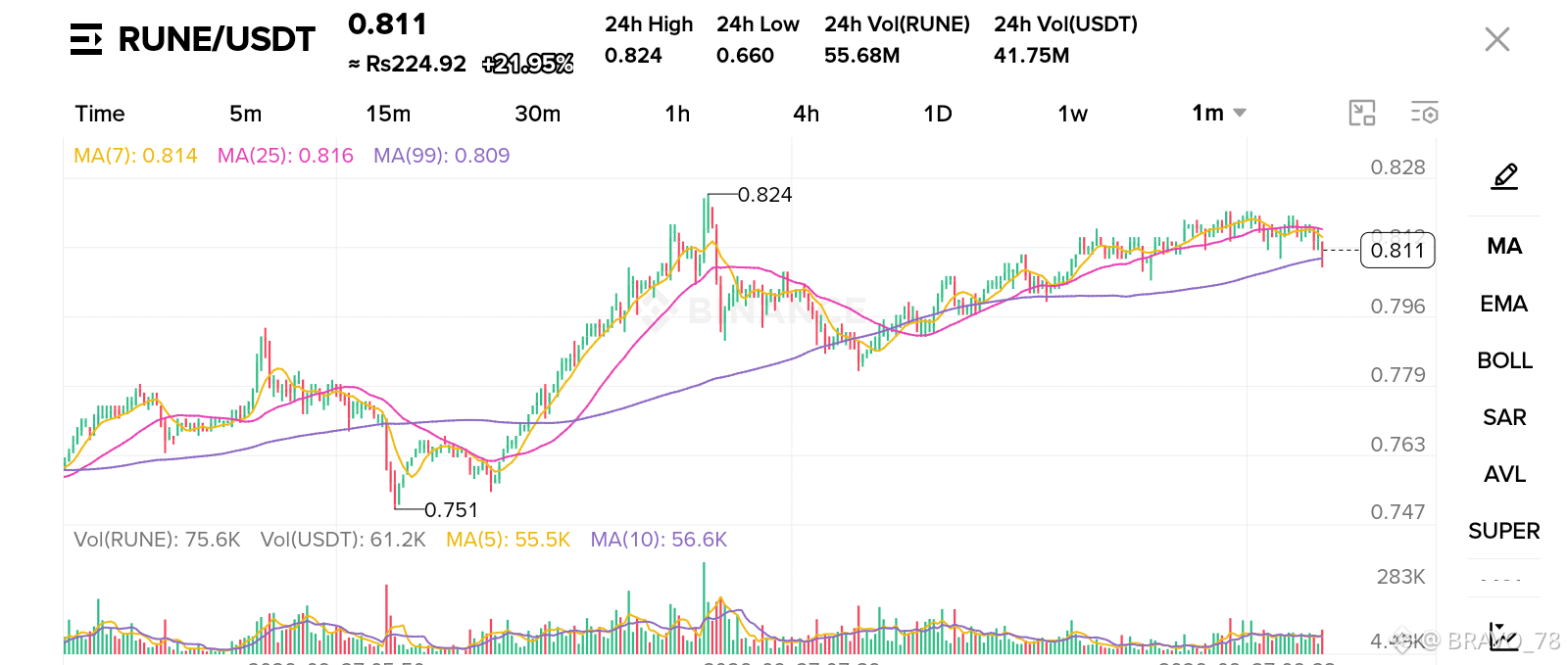
$RUNE has pushed +22.69%, adding another strong move to an already active market.
Market insight: THORChain’s network activity has been rebuilding, with July recording $796.97M in swap volume and continued fee generation. Trade points: watch the current breakout for acceptance above resistance; failed acceptance could trigger a sharper retracement.
TG1: first continuation zone above the current structure.
TG2: next resistance area if buyers maintain higher lows.
TG3: extended target only if volume and network-driven narrative continue supporting momentum.
#CircleMints500MUSDCOnSolana #PolymarketBankFailureBetsDrawFDICConcern
$RUNE has pushed +22.69%, adding another strong move to an already active market.
Market insight: THORChain’s network activity has been rebuilding, with July recording $796.97M in swap volume and continued fee generation. Trade points: watch the current breakout for acceptance above resistance; failed acceptance could trigger a sharper retracement.
TG1: first continuation zone above the current structure.
TG2: next resistance area if buyers maintain higher lows.
TG3: extended target only if volume and network-driven narrative continue supporting momentum.
#CircleMints500MUSDCOnSolana #PolymarketBankFailureBetsDrawFDICConcern
Market insight: THORChain’s network activity has been rebuilding, with July recording $796.97M in swap volume and continued fee generation. Trade points: watch the current breakout for acceptance above resistance; failed acceptance could trigger a sharper retracement.
TG1: first continuation zone above the current structure.
TG2: next resistance area if buyers maintain higher lows.
TG3: extended target only if volume and network-driven narrative continue supporting momentum.
#CircleMints500MUSDCOnSolana #PolymarketBankFailureBetsDrawFDICConcern
115
·
--
Baissier
$MUBARAK is showing a sharp momentum expansion at Rs21.28, up 35.95%, with the broader market also favoring high-beta names.
Market insight: the move is strong, but after a vertical push, volume confirmation matters more than chasing candles.
Trade points: watch Rs20.50–21.30 as the immediate reaction zone.
TG1: Rs22.50
TG2: Rs24.00
TG3: Rs26.00
A clean hold above the breakout area could keep momentum active, while losing it would signal cooling pressure.
#AIStocksWhatNext #DogecoinRises15% #BNBMarketCapPassesBNYMellon
$MUBARAK is showing a sharp momentum expansion at Rs21.28, up 35.95%, with the broader market also favoring high-beta names.
Market insight: the move is strong, but after a vertical push, volume confirmation matters more than chasing candles.
Trade points: watch Rs20.50–21.30 as the immediate reaction zone.
TG1: Rs22.50
TG2: Rs24.00
TG3: Rs26.00
A clean hold above the breakout area could keep momentum active, while losing it would signal cooling pressure.
#AIStocksWhatNext #DogecoinRises15% #BNBMarketCapPassesBNYMellon
Market insight: the move is strong, but after a vertical push, volume confirmation matters more than chasing candles.
Trade points: watch Rs20.50–21.30 as the immediate reaction zone.
TG1: Rs22.50
TG2: Rs24.00
TG3: Rs26.00
A clean hold above the breakout area could keep momentum active, while losing it would signal cooling pressure.
#AIStocksWhatNext #DogecoinRises15% #BNBMarketCapPassesBNYMellon
206
·
--
Baissier
$METAB is pushing Rs100.86 after a 34.01% surge, putting it firmly on the momentum radar.
Market insight: MET is trading with aggressive upside participation, but the next phase needs sustained volume rather than a single spike.
Trade points: Rs98–101 becomes the key short-term structure zone.
TG1: Rs106
TG2: Rs112
TG3: Rs120
Holding above the psychological Rs100 area would keep the bullish structure intact; rejection could trigger a deeper retest.
#AIStocksWhatNext #DogecoinRises15% #BNBMarketCapPassesBNYMellon
$METAB is pushing Rs100.86 after a 34.01% surge, putting it firmly on the momentum radar.
Market insight: MET is trading with aggressive upside participation, but the next phase needs sustained volume rather than a single spike.
Trade points: Rs98–101 becomes the key short-term structure zone.
TG1: Rs106
TG2: Rs112
TG3: Rs120
Holding above the psychological Rs100 area would keep the bullish structure intact; rejection could trigger a deeper retest.
#AIStocksWhatNext #DogecoinRises15% #BNBMarketCapPassesBNYMellon
Market insight: MET is trading with aggressive upside participation, but the next phase needs sustained volume rather than a single spike.
Trade points: Rs98–101 becomes the key short-term structure zone.
TG1: Rs106
TG2: Rs112
TG3: Rs120
Holding above the psychological Rs100 area would keep the bullish structure intact; rejection could trigger a deeper retest.
#AIStocksWhatNext #DogecoinRises15% #BNBMarketCapPassesBNYMellon
47
·
--
Baissier
$BCH is ripping to Rs98,223.20 with a 33.71% move, showing serious rotation into BCH exposure.
Market insight: BCH is also among today’s major crypto gainers, reinforcing that this is broader than one isolated market print. �
Trade points: Rs96,000–98,200 is the zone to monitor for acceptance.
TG1: Rs102,000
TG2: Rs106,000
TG3: Rs112,000
A sustained breakout above the current high could attract another momentum wave.
#AIStocksWhatNext #DogecoinRises15% #BNBMarketCapPassesBNYMellon
$BCH is ripping to Rs98,223.20 with a 33.71% move, showing serious rotation into BCH exposure.
Market insight: BCH is also among today’s major crypto gainers, reinforcing that this is broader than one isolated market print. �
Trade points: Rs96,000–98,200 is the zone to monitor for acceptance.
TG1: Rs102,000
TG2: Rs106,000
TG3: Rs112,000
A sustained breakout above the current high could attract another momentum wave.
#AIStocksWhatNext #DogecoinRises15% #BNBMarketCapPassesBNYMellon
Market insight: BCH is also among today’s major crypto gainers, reinforcing that this is broader than one isolated market print. �
Trade points: Rs96,000–98,200 is the zone to monitor for acceptance.
TG1: Rs102,000
TG2: Rs106,000
TG3: Rs112,000
A sustained breakout above the current high could attract another momentum wave.
#AIStocksWhatNext #DogecoinRises15% #BNBMarketCapPassesBNYMellon
85
·
--
Haussier
$NIL is trading around Rs28.07 after climbing 32.37%, showing buyers are aggressively stepping into the move.
Market insight: NIL is displaying high-beta momentum, so confirmation around the current price is important before expecting continuation.
Trade points: Rs27.00–28.00 is the immediate structure zone.
TG1: Rs30.00
TG2: Rs33.00
TG3: Rs36.00
If buyers defend the breakout region, the trend can remain constructive; a fast rejection would warn of profit-taking.
#AIStocksWhatNext #DogecoinRises15%
$NIL is trading around Rs28.07 after climbing 32.37%, showing buyers are aggressively stepping into the move.
Market insight: NIL is displaying high-beta momentum, so confirmation around the current price is important before expecting continuation.
Trade points: Rs27.00–28.00 is the immediate structure zone.
TG1: Rs30.00
TG2: Rs33.00
TG3: Rs36.00
If buyers defend the breakout region, the trend can remain constructive; a fast rejection would warn of profit-taking.
#AIStocksWhatNext #DogecoinRises15%
Market insight: NIL is displaying high-beta momentum, so confirmation around the current price is important before expecting continuation.
Trade points: Rs27.00–28.00 is the immediate structure zone.
TG1: Rs30.00
TG2: Rs33.00
TG3: Rs36.00
If buyers defend the breakout region, the trend can remain constructive; a fast rejection would warn of profit-taking.
#AIStocksWhatNext #DogecoinRises15%
129
·
--
Baissier
$CHR has pushed to Rs6.33 with a 28.72% surge, putting the token into a strong momentum expansion.
Market insight: this type of move can accelerate quickly when liquidity rotates into lagging altcoins.
Trade points: Rs6.05–6.35 is the first area to watch for a successful hold.
TG1: Rs6.70
TG2: Rs7.20
TG3: Rs7.80
The key signal now is whether buyers can build support above the breakout instead of allowing the entire move to retrace.
#AIStocksWhatNext #DogecoinRises15%
$CHR has pushed to Rs6.33 with a 28.72% surge, putting the token into a strong momentum expansion.
Market insight: this type of move can accelerate quickly when liquidity rotates into lagging altcoins.
Trade points: Rs6.05–6.35 is the first area to watch for a successful hold.
TG1: Rs6.70
TG2: Rs7.20
TG3: Rs7.80
The key signal now is whether buyers can build support above the breakout instead of allowing the entire move to retrace.
#AIStocksWhatNext #DogecoinRises15%
Market insight: this type of move can accelerate quickly when liquidity rotates into lagging altcoins.
Trade points: Rs6.05–6.35 is the first area to watch for a successful hold.
TG1: Rs6.70
TG2: Rs7.20
TG3: Rs7.80
The key signal now is whether buyers can build support above the breakout instead of allowing the entire move to retrace.
#AIStocksWhatNext #DogecoinRises15%
142
·
--
Haussier
$HEI is pushing higher with a +15.36% gain to Rs45.63. Market insight: the move adds another strong altcoin momentum signal to an already active market. Trade point: Rs45.63 is the immediate breakout reference. TG1: Rs50 TG2: Rs55 TG3: Rs60 Sustained volume above the current zone could keep the trend moving toward fresh resistance. A rejection could send price into consolidation after the recent expansion. Traders should watch whether buyers continue printing higher highs. The broader momentum tape remains active, but risk management matters after extended moves.
#BOJRaisesRatesTo31YearHigh #HKCompletesFirstHKDStablecoinUseCase #BitcoinMarketCapTopsTesla
$HEI is pushing higher with a +15.36% gain to Rs45.63. Market insight: the move adds another strong altcoin momentum signal to an already active market. Trade point: Rs45.63 is the immediate breakout reference. TG1: Rs50 TG2: Rs55 TG3: Rs60 Sustained volume above the current zone could keep the trend moving toward fresh resistance. A rejection could send price into consolidation after the recent expansion. Traders should watch whether buyers continue printing higher highs. The broader momentum tape remains active, but risk management matters after extended moves.
#BOJRaisesRatesTo31YearHigh #HKCompletesFirstHKDStablecoinUseCase #BitcoinMarketCapTopsTesla
#BOJRaisesRatesTo31YearHigh #HKCompletesFirstHKDStablecoinUseCase #BitcoinMarketCapTopsTesla
73
·
--
Baissier
$SKL is up +18.59% at Rs1.31, keeping buyers active across the altcoin board. Market insight: SSKL is showing steady momentum, with price now testing a higher trading range. Trade point: Rs1.31 is the key level for continuation. TG1: Rs1.45 TG2: Rs1.60 TG3: Rs1.80 A volume-backed move through the current zone could bring another momentum wave. If buyers fail to defend the breakout, short-term profit-taking becomes the main risk. Compared with the strongest movers, SSKL is advancing at a more measured pace. That makes volume and structure especially important for the next move.
#BOJRaisesRatesTo31YearHigh #HKCompletesFirstHKDStablecoinUseCase #HKCompletesFirstHKDStablecoinUseCase
$SKL is up +18.59% at Rs1.31, keeping buyers active across the altcoin board. Market insight: SSKL is showing steady momentum, with price now testing a higher trading range. Trade point: Rs1.31 is the key level for continuation. TG1: Rs1.45 TG2: Rs1.60 TG3: Rs1.80 A volume-backed move through the current zone could bring another momentum wave. If buyers fail to defend the breakout, short-term profit-taking becomes the main risk. Compared with the strongest movers, SSKL is advancing at a more measured pace. That makes volume and structure especially important for the next move.
#BOJRaisesRatesTo31YearHigh #HKCompletesFirstHKDStablecoinUseCase #HKCompletesFirstHKDStablecoinUseCase
#BOJRaisesRatesTo31YearHigh #HKCompletesFirstHKDStablecoinUseCase #HKCompletesFirstHKDStablecoinUseCase
68
·
--
Baissier
$BANK is gaining +19.93%, reaching Rs9.85 as buyers push higher. Market insight: the move shows steady momentum rather than the extreme vertical expansion seen in CELR or ONE. Trade point: Rs9.85 is the immediate level to watch for a clean continuation. TG1: Rs10.50 TG2: Rs11.25 TG3: Rs12 Volume needs to stay supportive for the breakout structure to develop further. A failure above the current zone could bring a controlled pullback toward nearby support. The setup remains constructive while higher lows are maintained. Traders should focus on confirmation and liquidity.
#BOJRaisesRatesTo31YearHigh #HKCompletesFirstHKDStablecoinUseCase #BitcoinMarketCapTopsTesla
$BANK is gaining +19.93%, reaching Rs9.85 as buyers push higher. Market insight: the move shows steady momentum rather than the extreme vertical expansion seen in CELR or ONE. Trade point: Rs9.85 is the immediate level to watch for a clean continuation. TG1: Rs10.50 TG2: Rs11.25 TG3: Rs12 Volume needs to stay supportive for the breakout structure to develop further. A failure above the current zone could bring a controlled pullback toward nearby support. The setup remains constructive while higher lows are maintained. Traders should focus on confirmation and liquidity.
#BOJRaisesRatesTo31YearHigh #HKCompletesFirstHKDStablecoinUseCase #BitcoinMarketCapTopsTesla
#BOJRaisesRatesTo31YearHigh #HKCompletesFirstHKDStablecoinUseCase #BitcoinMarketCapTopsTesla
134
·
--
Haussier
$C has climbed +25.00% to Rs23.44, showing solid upside momentum. Market insight: price acceleration is currently the clearest signal, with buyers pushing into higher territory. Trade point: Rs23.44 becomes the key breakout reference for continuation. TG1: Rs25 TG2: Rs27 TG3: Rs30 Holding above the breakout area with stronger volume would keep the momentum structure active. A rejection around current levels could trigger short-term profit-taking. Traders should monitor liquidity and order-book strength before adding exposure. Momentum remains positive, but volatility is elevated.
#BOJRaisesRatesTo31YearHigh #HKCompletesFirstHKDStablecoinUseCase #BitcoinMarketCapTopsTesla
$C has climbed +25.00% to Rs23.44, showing solid upside momentum. Market insight: price acceleration is currently the clearest signal, with buyers pushing into higher territory. Trade point: Rs23.44 becomes the key breakout reference for continuation. TG1: Rs25 TG2: Rs27 TG3: Rs30 Holding above the breakout area with stronger volume would keep the momentum structure active. A rejection around current levels could trigger short-term profit-taking. Traders should monitor liquidity and order-book strength before adding exposure. Momentum remains positive, but volatility is elevated.
#BOJRaisesRatesTo31YearHigh #HKCompletesFirstHKDStablecoinUseCase #BitcoinMarketCapTopsTesla
#BOJRaisesRatesTo31YearHigh #HKCompletesFirstHKDStablecoinUseCase #BitcoinMarketCapTopsTesla
63
·
--
Baissier
$CTSI is up +25.94%, trading around Rs9.10 as momentum builds. Market insight: the move places CTSI firmly among the active altcoin momentum names. Trade point: Rs9.10 is the immediate level traders should monitor. TG1: Rs10 TG2: Rs11 TG3: Rs12 A sustained hold above Rs9.10 could attract additional momentum flows. Failure to maintain the breakout zone could lead to a fast retracement. Volume confirmation remains essential because the move is already extended. The structure is constructive while buyers continue defending higher levels.
#BOJRaisesRatesTo31YearHigh #VietnamPlansFirstCryptoLicensesIn2026 #XRPExchangeReservesHitSevenYearLow
$CTSI is up +25.94%, trading around Rs9.10 as momentum builds. Market insight: the move places CTSI firmly among the active altcoin momentum names. Trade point: Rs9.10 is the immediate level traders should monitor. TG1: Rs10 TG2: Rs11 TG3: Rs12 A sustained hold above Rs9.10 could attract additional momentum flows. Failure to maintain the breakout zone could lead to a fast retracement. Volume confirmation remains essential because the move is already extended. The structure is constructive while buyers continue defending higher levels.
#BOJRaisesRatesTo31YearHigh #VietnamPlansFirstCryptoLicensesIn2026 #XRPExchangeReservesHitSevenYearLow
#BOJRaisesRatesTo31YearHigh #VietnamPlansFirstCryptoLicensesIn2026 #XRPExchangeReservesHitSevenYearLow
45
·
--
Haussier
$CELR is leading the board with a powerful +113.10% move to Rs1.36. Market insight: volume expansion is important here; recent data also shows a major jump in CELR trading activity. Trade point: watch Rs1.36 as the immediate breakout area and avoid chasing a vertical candle. TG1: Rs1.50 TG2: Rs1.65 TG3: Rs1.80 A clean hold above the breakout zone could keep momentum active, while rejection may trigger fast profit-taking. The broader tape is showing strong altcoin momentum, so CELR remains a high-volatility watch.
#BOJRaisesRatesTo31YearHigh #HKCompletesFirstHKDStablecoinUseCase #VietnamPlansFirstCryptoLicensesIn2026
$CELR is leading the board with a powerful +113.10% move to Rs1.36. Market insight: volume expansion is important here; recent data also shows a major jump in CELR trading activity. Trade point: watch Rs1.36 as the immediate breakout area and avoid chasing a vertical candle. TG1: Rs1.50 TG2: Rs1.65 TG3: Rs1.80 A clean hold above the breakout zone could keep momentum active, while rejection may trigger fast profit-taking. The broader tape is showing strong altcoin momentum, so CELR remains a high-volatility watch.
#BOJRaisesRatesTo31YearHigh #HKCompletesFirstHKDStablecoinUseCase #VietnamPlansFirstCryptoLicensesIn2026
#BOJRaisesRatesTo31YearHigh #HKCompletesFirstHKDStablecoinUseCase #VietnamPlansFirstCryptoLicensesIn2026
88
·
--
Baissier
$ONE is pushing aggressively higher, up +74.79% at Rs1.14. Market insight: ONE is also appearing among the strongest current gainers, with substantial spot turnover reported. Trade point: Rs1.14 is the immediate level to monitor for continuation. TG1: Rs1.25 TG2: Rs1.40 TG3: Rs1.55 A sustained breakout with volume would strengthen the momentum setup; losing the breakout area could bring a sharp pullback. Momentum remains extremely active, so traders should watch liquidity closely.
#BOJRaisesRatesTo31YearHigh #HKCompletesFirstHKDStablecoinUseCase #BitcoinMarketCapTopsTesla
$ONE is pushing aggressively higher, up +74.79% at Rs1.14. Market insight: ONE is also appearing among the strongest current gainers, with substantial spot turnover reported. Trade point: Rs1.14 is the immediate level to monitor for continuation. TG1: Rs1.25 TG2: Rs1.40 TG3: Rs1.55 A sustained breakout with volume would strengthen the momentum setup; losing the breakout area could bring a sharp pullback. Momentum remains extremely active, so traders should watch liquidity closely.
#BOJRaisesRatesTo31YearHigh #HKCompletesFirstHKDStablecoinUseCase #BitcoinMarketCapTopsTesla
#BOJRaisesRatesTo31YearHigh #HKCompletesFirstHKDStablecoinUseCase #BitcoinMarketCapTopsTesla
163
·
--
Haussier
$GGG.US has jumped +65.31% to Rs3.71, putting buyers firmly in focus. Market insight: this is a momentum-driven move, with price acceleration becoming the main signal. Trade point: Rs3.71 is the first level to defend after the surge. TG1: Rs4.00 TG2: Rs4.35 TG3: Rs4.70 A volume-backed hold could extend the move, while a failed breakout may invite short-term selling. Traders should watch order-book depth before entering after such a fast expansion. The setup remains aggressive and highly volatile.
#BOJRaisesRatesTo31YearHigh #HKCompletesFirstHKDStablecoinUseCase #VietnamPlansFirstCryptoLicensesIn2026
$GGG.US has jumped +65.31% to Rs3.71, putting buyers firmly in focus. Market insight: this is a momentum-driven move, with price acceleration becoming the main signal. Trade point: Rs3.71 is the first level to defend after the surge. TG1: Rs4.00 TG2: Rs4.35 TG3: Rs4.70 A volume-backed hold could extend the move, while a failed breakout may invite short-term selling. Traders should watch order-book depth before entering after such a fast expansion. The setup remains aggressive and highly volatile.
#BOJRaisesRatesTo31YearHigh #HKCompletesFirstHKDStablecoinUseCase #VietnamPlansFirstCryptoLicensesIn2026
#BOJRaisesRatesTo31YearHigh #HKCompletesFirstHKDStablecoinUseCase #VietnamPlansFirstCryptoLicensesIn2026
GGGUS-1,17%
76
·
--
Baissier
$ZAMA is continuing its breakout run, up +33.91% at Rs22.72. Market insight: ZAMA has seen a major rise in market activity, with recent data showing sharply increased volume. Trade point: Rs22.72 is the immediate breakout reference. TG1: Rs25 TG2: Rs28 TG3: Rs32 Holding higher levels with sustained participation would keep the structure constructive. A rejection could quickly send price back toward lower liquidity zones. Momentum remains strong, but traders should respect the expanded volatility.
#BOJRaisesRatesTo31YearHigh #HKCompletesFirstHKDStablecoinUseCase #BitcoinMarketCapTopsTesla
$ZAMA is continuing its breakout run, up +33.91% at Rs22.72. Market insight: ZAMA has seen a major rise in market activity, with recent data showing sharply increased volume. Trade point: Rs22.72 is the immediate breakout reference. TG1: Rs25 TG2: Rs28 TG3: Rs32 Holding higher levels with sustained participation would keep the structure constructive. A rejection could quickly send price back toward lower liquidity zones. Momentum remains strong, but traders should respect the expanded volatility.
#BOJRaisesRatesTo31YearHigh #HKCompletesFirstHKDStablecoinUseCase #BitcoinMarketCapTopsTesla
#BOJRaisesRatesTo31YearHigh #HKCompletesFirstHKDStablecoinUseCase #BitcoinMarketCapTopsTesla
124
·
--
Haussier
$ZIL is moving sharply higher, gaining +26.67% to Rs1.09. Market insight: buyers are clearly active, with the coin entering a stronger momentum phase. Trade point: Rs1.09 is the first area to monitor for continuation. TG1: Rs1.20 TG2: Rs1.35 TG3: Rs1.50 A breakout supported by rising volume would keep buyers in control. If momentum fades, profit-taking can arrive quickly after a 26% move. The broader market remains supportive of aggressive altcoin rotations. Watch confirmation rather than chasing the first spike.
#BTCBreaks80K #BOJRaisesRatesTo31YearHigh #HKCompletesFirstHKDStablecoinUseCase
$ZIL is moving sharply higher, gaining +26.67% to Rs1.09. Market insight: buyers are clearly active, with the coin entering a stronger momentum phase. Trade point: Rs1.09 is the first area to monitor for continuation. TG1: Rs1.20 TG2: Rs1.35 TG3: Rs1.50 A breakout supported by rising volume would keep buyers in control. If momentum fades, profit-taking can arrive quickly after a 26% move. The broader market remains supportive of aggressive altcoin rotations. Watch confirmation rather than chasing the first spike.
#BTCBreaks80K #BOJRaisesRatesTo31YearHigh #HKCompletesFirstHKDStablecoinUseCase
#BTCBreaks80K #BOJRaisesRatesTo31YearHigh #HKCompletesFirstHKDStablecoinUseCase
117


·
--
Haussier
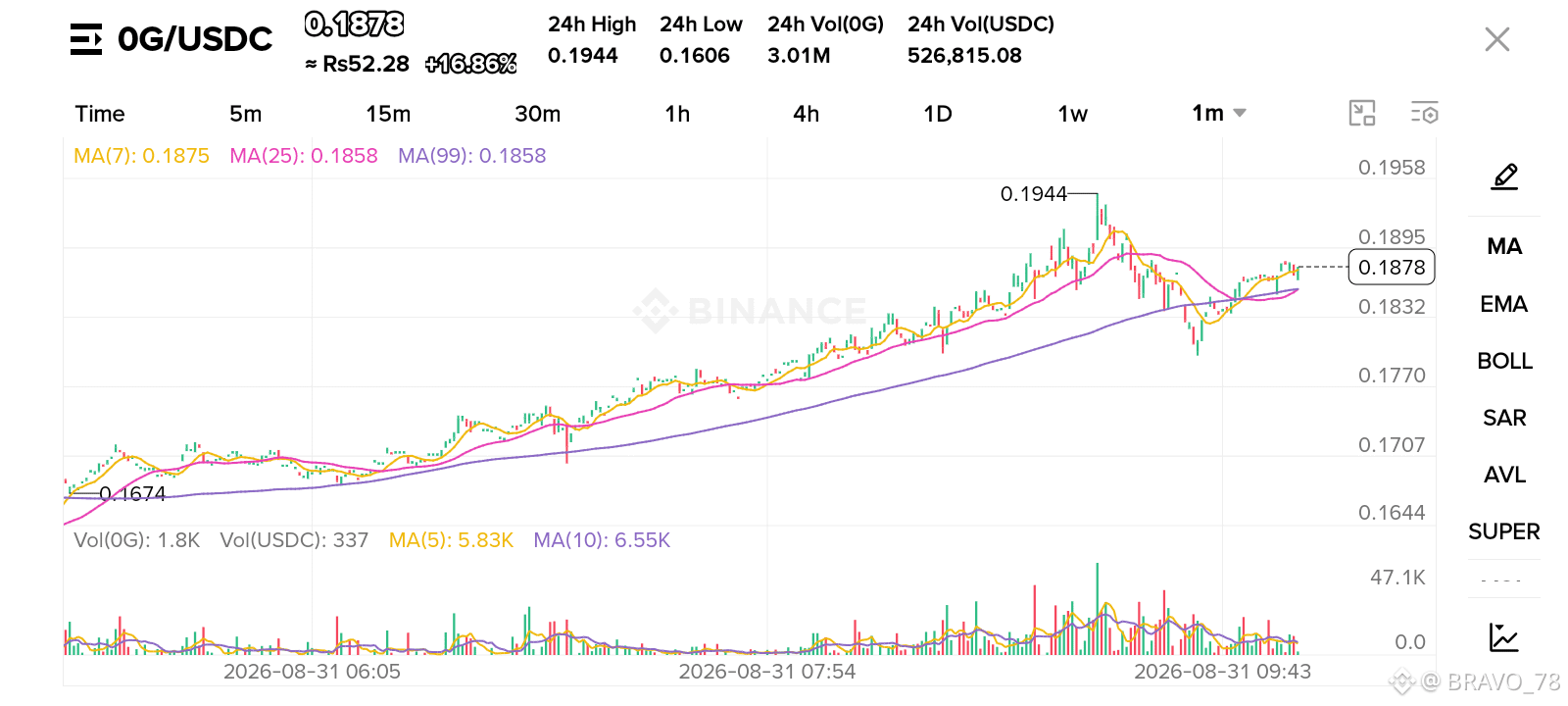
$OG is gaining serious attention after climbing 16.71%, with momentum building steadily.
Market insight: Strong upside movement suggests renewed demand and possible continuation.
Trade point: Avoid chasing extended candles and watch for a stable retest.
TG1: First resistance zone for partial profit-taking.
TG2: Higher target if momentum and volume expand.
TG3: Extended upside target during a sustained breakout.
Risk management is essential because sharp gains can trigger fast corrections.
#KoreaSingleStockLeveragedETFTradingFalls #HormuzStraitFightingReignites #About67MAmericansHoldCrypto
$OG is gaining serious attention after climbing 16.71%, with momentum building steadily.
Market insight: Strong upside movement suggests renewed demand and possible continuation.
Trade point: Avoid chasing extended candles and watch for a stable retest.
TG1: First resistance zone for partial profit-taking.
TG2: Higher target if momentum and volume expand.
TG3: Extended upside target during a sustained breakout.
Risk management is essential because sharp gains can trigger fast corrections.
#KoreaSingleStockLeveragedETFTradingFalls #HormuzStraitFightingReignites #About67MAmericansHoldCrypto
Market insight: Strong upside movement suggests renewed demand and possible continuation.
Trade point: Avoid chasing extended candles and watch for a stable retest.
TG1: First resistance zone for partial profit-taking.
TG2: Higher target if momentum and volume expand.
TG3: Extended upside target during a sustained breakout.
Risk management is essential because sharp gains can trigger fast corrections.
#KoreaSingleStockLeveragedETFTradingFalls #HormuzStraitFightingReignites #About67MAmericansHoldCrypto
54
·
--
Baissier
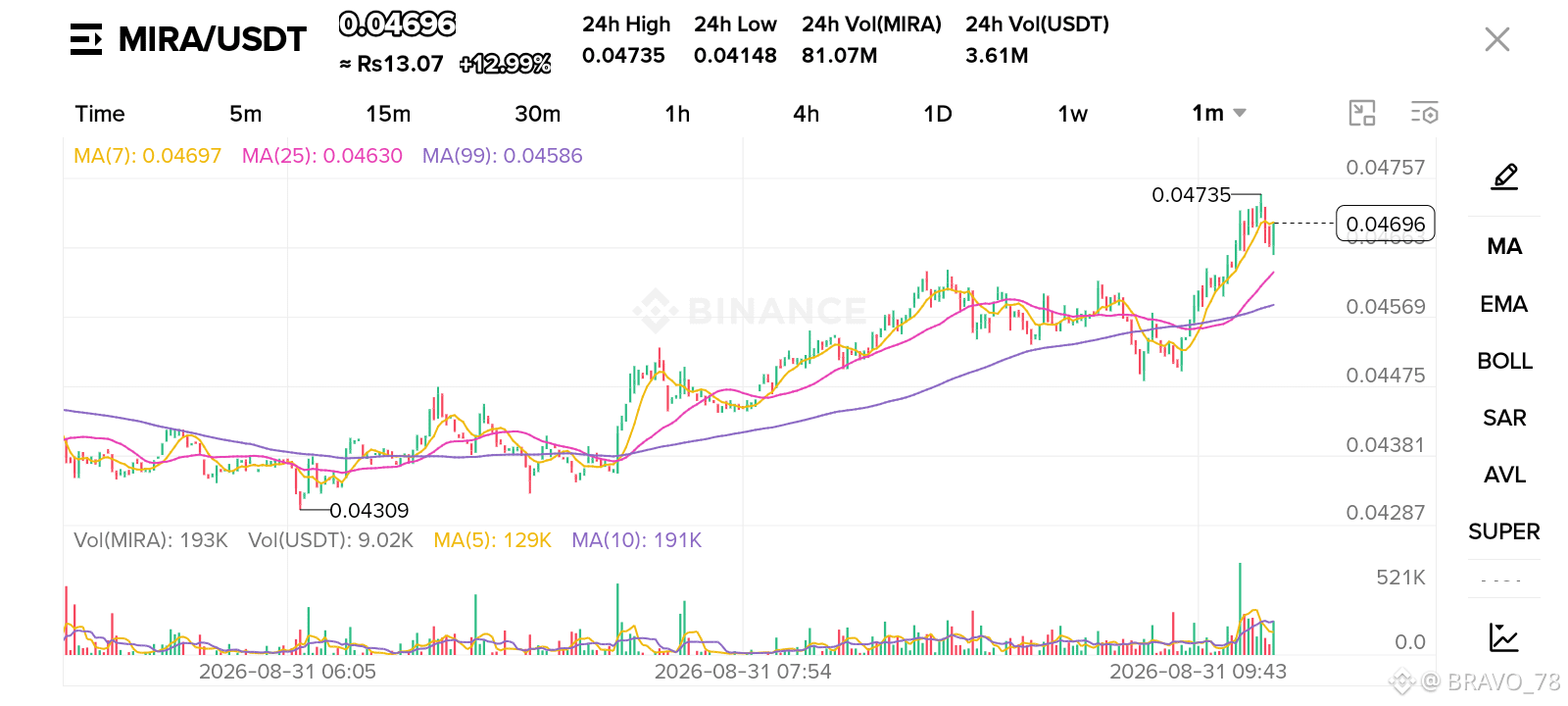
$MIRA is also moving higher with an impressive 11.95% gain, attracting fresh momentum.
Market insight: The steady rise suggests buyers are entering, but confirmation is still important.
Trade point: Watch whether the current price zone holds during any retracement.
TG1: First profit zone near immediate resistance.
TG2: Next target opens if the bullish structure remains intact.
TG3: Extended target for a stronger continuation move.
The key signal now is whether volume supports another leg higher.
#KoreaSingleStockLeveragedETFTradingFalls #HormuzStraitFightingReignites #USStrikesIranianRocketLaunchers
{future}(MIRAUSDT)
$MIRA is also moving higher with an impressive 11.95% gain, attracting fresh momentum.
Market insight: The steady rise suggests buyers are entering, but confirmation is still important.
Trade point: Watch whether the current price zone holds during any retracement.
TG1: First profit zone near immediate resistance.
TG2: Next target opens if the bullish structure remains intact.
TG3: Extended target for a stronger continuation move.
The key signal now is whether volume supports another leg higher.
#KoreaSingleStockLeveragedETFTradingFalls #HormuzStraitFightingReignites #USStrikesIranianRocketLaunchers
Market insight: The steady rise suggests buyers are entering, but confirmation is still important.
Trade point: Watch whether the current price zone holds during any retracement.
TG1: First profit zone near immediate resistance.
TG2: Next target opens if the bullish structure remains intact.
TG3: Extended target for a stronger continuation move.
The key signal now is whether volume supports another leg higher.
#KoreaSingleStockLeveragedETFTradingFalls #HormuzStraitFightingReignites #USStrikesIranianRocketLaunchers
86
Connectez-vous pour découvrir plus de contenu
Rejoignez la communauté mondiale des adeptes de cryptomonnaies sur Binance Square
⚡️ Suviez les dernières informations importantes sur les cryptomonnaies.
💬 Jugé digne de confiance par la plus grande plateforme d’échange de cryptomonnaies au monde.
👍 Découvrez les connaissances que partagent les créateurs vérifiés.
Adresse e-mail/Nº de téléphone
Sujets d’actualité
BitcoinClears$85200
932 vues
75 mentions
We got the move, and $BTC is standing exactly where we were before the data. That’s what actual patience for a trade looks like.
The data came in mixed but with some important numbers. ADP Non-Farm Employment Change came at 90K vs 73K forecast, while Core PCE came in at 0.2% vs 0.3% expected. Final GDP was also stronger at 2.2% vs 1.5% forecast, while Personal Spending came in at 0.9% vs 0.8% expected. At the same time, Personal Income missed at 0.2% vs 0.5% forecast.
BTC initially surged to $85,600 and is now back where it needs to be. I’m still looking toward the lower ranges at $82,759 and the $80,000 liquidity, because the overhead liquidity is done and dusted.
We had a live session during the data, and during that session we saw the market at $83,800, then $85,600, and then back toward $83,000 and we still didn’t enter a trade.
That’s what patience is.
We can’t force an entry when the market has no clear direction. The same range is still in focus, and we’ll wait for the market to give us the setup.
Let me know, guys, how was the session? And should we have more regular sessions with our respected members so we can have proper discussions regarding the market?
#BitcoinClears$85200 #AltcoinSeasonIndexHoldsAbove60For5Days #USADPAdds90000JobsInSeptember #BitcoinSlipsBelow$84000 #SECToClarifyOnChainFundraisingRules
Crypto_LUX
·16 mentions J’aime
·3.8k vues
AltcoinSeasonIndexHoldsAbove60For5Days
8,733 vues
480 mentions
USADPAdds90000JobsInSeptember
2,384 vues
221 mentions