

boxbo
96 Publications

boxbo
Signaler
Bloquer l’utilisateur
Join and earn And following me
Ouvert au trading
Trade occasionnellement
3 an(s)
16 Suivis
37 Abonnés
92 J’aime
Publications
Portefeuille
Tous
Citations
Vidéos
Direct
·
--
#earningsseason
Structural Valuation & Guidance Shifts: Decoding Market Dynamics in Earnings Season
Earnings season serves as the primary mechanism for fundamental price discovery, shifting market focus from macroeconomic sentiment to microeconomic reality. The key operational dynamic centers on the guidance gap and margin trajectory: while backward-looking earnings beats provide immediate headline momentum, forward revenue guidance and operating margin resilience dictate whether a stock sustains its trend or experiences sharp mean-reversion. In modern market structure, algorithms heavily penalize companies that beat top- and bottom-line estimates but fail to exceed elevated "whisper numbers" or offer cautious forward outlooks. Practically, institutional traders watch for how corporate capital expenditure—particularly investments in high-growth infrastructure like AI—translates into tangible return on capital (ROIC) and free cash flow generation rather than expanded expense profiles. Retail participants should avoid trading initial post-announcement volatility spikes, focusing instead on post-earnings drift once management commentary on earnings calls stabilizes technical support and resistance levels.
💡 Tech & Market Mechanics
The primary catalyst driving this session's market movements is the fundamental shifting point between aggressive growth projections and real operational margins. Quantitative trading algorithms are optimized to scan raw data reports within milliseconds of release, executing multi-billion-dollar trades before retail participants can process the headlines. Subtle variations in corporate guidance indicators or unexpected shifts in capital expenditure budgets are triggering rapid re-pricing loops. This high-velocity volume is spilling out of traditional equity spaces and impacting correlated digital asset channels, setting off structural liquidity swings across the board.
$GOOGL.US
{stock_us}(GOOGL.US)
{stock_us}(NVDA.US)
#earningsseason
Structural Valuation & Guidance Shifts: Decoding Market Dynamics in Earnings Season
Earnings season serves as the primary mechanism for fundamental price discovery, shifting market focus from macroeconomic sentiment to microeconomic reality. The key operational dynamic centers on the guidance gap and margin trajectory: while backward-looking earnings beats provide immediate headline momentum, forward revenue guidance and operating margin resilience dictate whether a stock sustains its trend or experiences sharp mean-reversion. In modern market structure, algorithms heavily penalize companies that beat top- and bottom-line estimates but fail to exceed elevated "whisper numbers" or offer cautious forward outlooks. Practically, institutional traders watch for how corporate capital expenditure—particularly investments in high-growth infrastructure like AI—translates into tangible return on capital (ROIC) and free cash flow generation rather than expanded expense profiles. Retail participants should avoid trading initial post-announcement volatility spikes, focusing instead on post-earnings drift once management commentary on earnings calls stabilizes technical support and resistance levels.
💡 Tech & Market Mechanics
The primary catalyst driving this session's market movements is the fundamental shifting point between aggressive growth projections and real operational margins. Quantitative trading algorithms are optimized to scan raw data reports within milliseconds of release, executing multi-billion-dollar trades before retail participants can process the headlines. Subtle variations in corporate guidance indicators or unexpected shifts in capital expenditure budgets are triggering rapid re-pricing loops. This high-velocity volume is spilling out of traditional equity spaces and impacting correlated digital asset channels, setting off structural liquidity swings across the board.
$GOOGL.US
Structural Valuation & Guidance Shifts: Decoding Market Dynamics in Earnings Season
Earnings season serves as the primary mechanism for fundamental price discovery, shifting market focus from macroeconomic sentiment to microeconomic reality. The key operational dynamic centers on the guidance gap and margin trajectory: while backward-looking earnings beats provide immediate headline momentum, forward revenue guidance and operating margin resilience dictate whether a stock sustains its trend or experiences sharp mean-reversion. In modern market structure, algorithms heavily penalize companies that beat top- and bottom-line estimates but fail to exceed elevated "whisper numbers" or offer cautious forward outlooks. Practically, institutional traders watch for how corporate capital expenditure—particularly investments in high-growth infrastructure like AI—translates into tangible return on capital (ROIC) and free cash flow generation rather than expanded expense profiles. Retail participants should avoid trading initial post-announcement volatility spikes, focusing instead on post-earnings drift once management commentary on earnings calls stabilizes technical support and resistance levels.
💡 Tech & Market Mechanics
The primary catalyst driving this session's market movements is the fundamental shifting point between aggressive growth projections and real operational margins. Quantitative trading algorithms are optimized to scan raw data reports within milliseconds of release, executing multi-billion-dollar trades before retail participants can process the headlines. Subtle variations in corporate guidance indicators or unexpected shifts in capital expenditure budgets are triggering rapid re-pricing loops. This high-velocity volume is spilling out of traditional equity spaces and impacting correlated digital asset channels, setting off structural liquidity swings across the board.
$GOOGL.US

161
·
--
#chainlinklaunchesccip2withenterpriseverification
Institutional Interoperability Upgrade: Chainlink Rolls Out CCIP 2.0 with Enterprise Verification
Chainlink has launched CCIP 2.0, introducing a major architectural shift that allows financial institutions and token issuers to deploy custom enterprise verification layers—known as Cross-Chain Verifiers (CCVs)—on top of Chainlink’s core network of 16 independent node operators. The upgrade addresses compliance and security bottlenecks for institutional tokenization by enabling banks and Web3 protocols to enforce bespoke risk management checks, custom finality settings, and third-party validator oversight without requiring centralized approval. From a practical perspective, CCIP 2.0 bridges traditional corporate compliance with decentralized cross-chain messaging, allowing institutions to manage cross-border settlement, multi-chain liquidity, and asset oversight under a unified standard while maintaining defense-in-depth security. $CCL.US
💡 Tech & Cross-Chain Mechanics
The core upgrade centers on a native, zero-knowledge identity matching engine built directly inside the decentralized oracle network. When financial institutions or sovereign digital asset platforms initiate cross-chain data transfers or tokenize real-world assets (RWAs), CCIP v2 dynamically evaluates corporate credentials and strict compliance parameters before routing any asset off-chain. This eliminates the risk of public network pollution, preventing unauthorized wallets or unsanctioned capital from interacting with regulated corporate liquidity pools while maintaining fast, sub-second execution finality across isolated ledger environments.
{stock_us}(CCL.US)
#chainlinklaunchesccip2withenterpriseverification
Institutional Interoperability Upgrade: Chainlink Rolls Out CCIP 2.0 with Enterprise Verification
Chainlink has launched CCIP 2.0, introducing a major architectural shift that allows financial institutions and token issuers to deploy custom enterprise verification layers—known as Cross-Chain Verifiers (CCVs)—on top of Chainlink’s core network of 16 independent node operators. The upgrade addresses compliance and security bottlenecks for institutional tokenization by enabling banks and Web3 protocols to enforce bespoke risk management checks, custom finality settings, and third-party validator oversight without requiring centralized approval. From a practical perspective, CCIP 2.0 bridges traditional corporate compliance with decentralized cross-chain messaging, allowing institutions to manage cross-border settlement, multi-chain liquidity, and asset oversight under a unified standard while maintaining defense-in-depth security. $CCL.US
💡 Tech & Cross-Chain Mechanics
The core upgrade centers on a native, zero-knowledge identity matching engine built directly inside the decentralized oracle network. When financial institutions or sovereign digital asset platforms initiate cross-chain data transfers or tokenize real-world assets (RWAs), CCIP v2 dynamically evaluates corporate credentials and strict compliance parameters before routing any asset off-chain. This eliminates the risk of public network pollution, preventing unauthorized wallets or unsanctioned capital from interacting with regulated corporate liquidity pools while maintaining fast, sub-second execution finality across isolated ledger environments.
Institutional Interoperability Upgrade: Chainlink Rolls Out CCIP 2.0 with Enterprise Verification
Chainlink has launched CCIP 2.0, introducing a major architectural shift that allows financial institutions and token issuers to deploy custom enterprise verification layers—known as Cross-Chain Verifiers (CCVs)—on top of Chainlink’s core network of 16 independent node operators. The upgrade addresses compliance and security bottlenecks for institutional tokenization by enabling banks and Web3 protocols to enforce bespoke risk management checks, custom finality settings, and third-party validator oversight without requiring centralized approval. From a practical perspective, CCIP 2.0 bridges traditional corporate compliance with decentralized cross-chain messaging, allowing institutions to manage cross-border settlement, multi-chain liquidity, and asset oversight under a unified standard while maintaining defense-in-depth security. $CCL.US
💡 Tech & Cross-Chain Mechanics
The core upgrade centers on a native, zero-knowledge identity matching engine built directly inside the decentralized oracle network. When financial institutions or sovereign digital asset platforms initiate cross-chain data transfers or tokenize real-world assets (RWAs), CCIP v2 dynamically evaluates corporate credentials and strict compliance parameters before routing any asset off-chain. This eliminates the risk of public network pollution, preventing unauthorized wallets or unsanctioned capital from interacting with regulated corporate liquidity pools while maintaining fast, sub-second execution finality across isolated ledger environments.

CCLUS+13,70%
2
308
·
--
#ukfcawinscourtordertorecover851400pounds
Regulatory Crackdown: UK $FCA.ETF
{etf_us}(FCA.ETF)
Obtains £851,400 Recovery Order for Crypto Scam Victims
The UK Financial Conduct Authority (FCA) has secured confiscation orders totaling £851,402 against convicted fraudsters Raymondip Bedi and Patrick Mavanga under the Proceeds of Crime Act 2002. Operating unauthorized entities, including $CCXI.US
{stock_us}(CCXI.US)
Capital, the duo, used high-pressure cold-calling tactics to lure 65 retail investors into non-existent crypto investment schemes, causing overall losses of £1.54 million. Under Southwark Crown Court's ruling, Bedi must pay £603,404 and Mavanga £247,998—representing roughly 55% of total victim losses—with strict three-month payment deadlines backed by up to five additional years of default prison sentences. From a practical standpoint, this outcome demonstrates that regulatory enforcement can successfully claw back funds from illicit operations, emphasizing the critical need for investors to check the FCA Financial Services Register and verify authorizations before deploying capital into digital asset schemes.
💡 Tech & Legal Mechanics
The Exploit Vector: Operating under the radar without mandatory FCA authorization, the bad actors leveraged deceptive social media and digital marketing frameworks to lure retail investors into fraudulent algorithmic trading systems.
The Recovery Pipeline: By tracing moving assets through complex decentralized ledgers and fiat integration ramps, investigators successfully isolated the remaining funds. The High Court-approved distribution order routes the seized capital back to identified victims, setting a strict deadline for final asset liquidation.
Precedent for Sandboxed Fraud: The enforcement demonstrates that regulatory sandboxes and sovereign compliance agencies are rapidly closing the tracking gap on unauthorized digital asset schemes.
#ukfcawinscourtordertorecover851400pounds
Regulatory Crackdown: UK $FCA.ETF
Obtains £851,400 Recovery Order for Crypto Scam Victims
The UK Financial Conduct Authority (FCA) has secured confiscation orders totaling £851,402 against convicted fraudsters Raymondip Bedi and Patrick Mavanga under the Proceeds of Crime Act 2002. Operating unauthorized entities, including $CCXI.US
Capital, the duo, used high-pressure cold-calling tactics to lure 65 retail investors into non-existent crypto investment schemes, causing overall losses of £1.54 million. Under Southwark Crown Court's ruling, Bedi must pay £603,404 and Mavanga £247,998—representing roughly 55% of total victim losses—with strict three-month payment deadlines backed by up to five additional years of default prison sentences. From a practical standpoint, this outcome demonstrates that regulatory enforcement can successfully claw back funds from illicit operations, emphasizing the critical need for investors to check the FCA Financial Services Register and verify authorizations before deploying capital into digital asset schemes.
💡 Tech & Legal Mechanics
The Exploit Vector: Operating under the radar without mandatory FCA authorization, the bad actors leveraged deceptive social media and digital marketing frameworks to lure retail investors into fraudulent algorithmic trading systems.
The Recovery Pipeline: By tracing moving assets through complex decentralized ledgers and fiat integration ramps, investigators successfully isolated the remaining funds. The High Court-approved distribution order routes the seized capital back to identified victims, setting a strict deadline for final asset liquidation.
Precedent for Sandboxed Fraud: The enforcement demonstrates that regulatory sandboxes and sovereign compliance agencies are rapidly closing the tracking gap on unauthorized digital asset schemes.
Regulatory Crackdown: UK $FCA.ETF
Obtains £851,400 Recovery Order for Crypto Scam Victims
The UK Financial Conduct Authority (FCA) has secured confiscation orders totaling £851,402 against convicted fraudsters Raymondip Bedi and Patrick Mavanga under the Proceeds of Crime Act 2002. Operating unauthorized entities, including $CCXI.US
Capital, the duo, used high-pressure cold-calling tactics to lure 65 retail investors into non-existent crypto investment schemes, causing overall losses of £1.54 million. Under Southwark Crown Court's ruling, Bedi must pay £603,404 and Mavanga £247,998—representing roughly 55% of total victim losses—with strict three-month payment deadlines backed by up to five additional years of default prison sentences. From a practical standpoint, this outcome demonstrates that regulatory enforcement can successfully claw back funds from illicit operations, emphasizing the critical need for investors to check the FCA Financial Services Register and verify authorizations before deploying capital into digital asset schemes.
💡 Tech & Legal Mechanics
The Exploit Vector: Operating under the radar without mandatory FCA authorization, the bad actors leveraged deceptive social media and digital marketing frameworks to lure retail investors into fraudulent algorithmic trading systems.
The Recovery Pipeline: By tracing moving assets through complex decentralized ledgers and fiat integration ramps, investigators successfully isolated the remaining funds. The High Court-approved distribution order routes the seized capital back to identified victims, setting a strict deadline for final asset liquidation.
Precedent for Sandboxed Fraud: The enforcement demonstrates that regulatory sandboxes and sovereign compliance agencies are rapidly closing the tracking gap on unauthorized digital asset schemes.

CCXIUS+2,49%
FCAETF+0,55%
1
2
1.1k
·
--
💡 Tech & Macro Mechanics
The core catalyst for this multi-trillion-dollar expansion rests entirely on establishing clear, standardized regulatory frameworks. Saylor noted that transparent, compliant rules will unlock the gates for 10 million new corporate entities to actively issue tokenized capital and access global digital asset liquidity. By replacing ambiguous enforcement guidelines with formalized guardrails, enterprise entities can legally deploy capital onto secure public networks without regulatory friction. This institutional integration effectively bridges traditional corporate balance sheets with decentralized architecture, transforming crypto from a speculative retail instrument into the foundation of programmable corporate finance.
🛠️ Practical Market Strategy
For corporate treasury managers and macro allocators, Saylor’s structural outlook reframes long-term capital allocation strategies. If the asset ecosystem follows this scaling trajectory, early institutional framework adoption offers a distinct first-mover advantage before mainstream enterprise deployment compresses the available asset supply. $BTC
{spot}(BTCUSDT)
Strategic Metric: Current Market Regime Saylor’s Projected Regime Total Industry Cap Early Trillion-Dollar Baseline: $100 Trillion Macro Scale Corporate Access: High Regulatory Friction 10 Million Capitalized Firms Primary Utility Speculative Accumulation Standard Enterprise Treasury Property Infrastructure FocusRetail Liquidity Venues Regulated Tokenized Capital Rails
Active market participants should monitor corporate treasury accumulation trends and tracking indicators like net inflows into spot digital asset products. Position sizing parameters must remain disciplined, taking into account multi-year macro horizons rather than micro-cap volatility cycles. Focus on high-liquidity, institutional-grade digital property layers that stand to absorb the initial wave of corporate capitalization, and manage risk parameters around definitive long-term structural support shelves.
💡 Tech & Macro Mechanics
The core catalyst for this multi-trillion-dollar expansion rests entirely on establishing clear, standardized regulatory frameworks. Saylor noted that transparent, compliant rules will unlock the gates for 10 million new corporate entities to actively issue tokenized capital and access global digital asset liquidity. By replacing ambiguous enforcement guidelines with formalized guardrails, enterprise entities can legally deploy capital onto secure public networks without regulatory friction. This institutional integration effectively bridges traditional corporate balance sheets with decentralized architecture, transforming crypto from a speculative retail instrument into the foundation of programmable corporate finance.
🛠️ Practical Market Strategy
For corporate treasury managers and macro allocators, Saylor’s structural outlook reframes long-term capital allocation strategies. If the asset ecosystem follows this scaling trajectory, early institutional framework adoption offers a distinct first-mover advantage before mainstream enterprise deployment compresses the available asset supply. $BTC
Strategic Metric: Current Market Regime Saylor’s Projected Regime Total Industry Cap Early Trillion-Dollar Baseline: $100 Trillion Macro Scale Corporate Access: High Regulatory Friction 10 Million Capitalized Firms Primary Utility Speculative Accumulation Standard Enterprise Treasury Property Infrastructure FocusRetail Liquidity Venues Regulated Tokenized Capital Rails
Active market participants should monitor corporate treasury accumulation trends and tracking indicators like net inflows into spot digital asset products. Position sizing parameters must remain disciplined, taking into account multi-year macro horizons rather than micro-cap volatility cycles. Focus on high-liquidity, institutional-grade digital property layers that stand to absorb the initial wave of corporate capitalization, and manage risk parameters around definitive long-term structural support shelves.
The core catalyst for this multi-trillion-dollar expansion rests entirely on establishing clear, standardized regulatory frameworks. Saylor noted that transparent, compliant rules will unlock the gates for 10 million new corporate entities to actively issue tokenized capital and access global digital asset liquidity. By replacing ambiguous enforcement guidelines with formalized guardrails, enterprise entities can legally deploy capital onto secure public networks without regulatory friction. This institutional integration effectively bridges traditional corporate balance sheets with decentralized architecture, transforming crypto from a speculative retail instrument into the foundation of programmable corporate finance.
🛠️ Practical Market Strategy
For corporate treasury managers and macro allocators, Saylor’s structural outlook reframes long-term capital allocation strategies. If the asset ecosystem follows this scaling trajectory, early institutional framework adoption offers a distinct first-mover advantage before mainstream enterprise deployment compresses the available asset supply. $BTC
Strategic Metric: Current Market Regime Saylor’s Projected Regime Total Industry Cap Early Trillion-Dollar Baseline: $100 Trillion Macro Scale Corporate Access: High Regulatory Friction 10 Million Capitalized Firms Primary Utility Speculative Accumulation Standard Enterprise Treasury Property Infrastructure FocusRetail Liquidity Venues Regulated Tokenized Capital Rails
Active market participants should monitor corporate treasury accumulation trends and tracking indicators like net inflows into spot digital asset products. Position sizing parameters must remain disciplined, taking into account multi-year macro horizons rather than micro-cap volatility cycles. Focus on high-liquidity, institutional-grade digital property layers that stand to absorb the initial wave of corporate capitalization, and manage risk parameters around definitive long-term structural support shelves.

1
112
·
--
#seccommissionerpeircetoleaveoct2
End of an Era: SEC Commissioner Hester Peirce Resigns Effective October 2
$SECZ.US
{stock_us}(SECZ.US)
Commissioner Hester Peirce—affectionately dubbed "Crypto Mom" for her long-standing advocacy for digital assets—has formally announced her resignation effective October 2. Having served nearly nine years on the Commission and leading the SEC’s Crypto Task Force, Peirce leaves behind a legacy defined by pushback against "regulation by enforcement" and key initiatives like the "Innovation Exemption" for tokenization and proposed safe harbors for decentralized protocols. Her departure leaves the SEC temporarily reduced to two sitting commissioners—Chairman Paul Atkins and Mark Uyeda—as she transitions to academia as a law professor at Regent University. For the crypto market, this transition signals short-term administrative uncertainty regarding regulatory timelines, though the framework and momentum established under the agency's Crypto Task Force are expected to proceed under current leadership.
#seccommissionerpeircetoleaveoct2
End of an Era: SEC Commissioner Hester Peirce Resigns Effective October 2
$SECZ.US
Commissioner Hester Peirce—affectionately dubbed "Crypto Mom" for her long-standing advocacy for digital assets—has formally announced her resignation effective October 2. Having served nearly nine years on the Commission and leading the SEC’s Crypto Task Force, Peirce leaves behind a legacy defined by pushback against "regulation by enforcement" and key initiatives like the "Innovation Exemption" for tokenization and proposed safe harbors for decentralized protocols. Her departure leaves the SEC temporarily reduced to two sitting commissioners—Chairman Paul Atkins and Mark Uyeda—as she transitions to academia as a law professor at Regent University. For the crypto market, this transition signals short-term administrative uncertainty regarding regulatory timelines, though the framework and momentum established under the agency's Crypto Task Force are expected to proceed under current leadership.
End of an Era: SEC Commissioner Hester Peirce Resigns Effective October 2
$SECZ.US
Commissioner Hester Peirce—affectionately dubbed "Crypto Mom" for her long-standing advocacy for digital assets—has formally announced her resignation effective October 2. Having served nearly nine years on the Commission and leading the SEC’s Crypto Task Force, Peirce leaves behind a legacy defined by pushback against "regulation by enforcement" and key initiatives like the "Innovation Exemption" for tokenization and proposed safe harbors for decentralized protocols. Her departure leaves the SEC temporarily reduced to two sitting commissioners—Chairman Paul Atkins and Mark Uyeda—as she transitions to academia as a law professor at Regent University. For the crypto market, this transition signals short-term administrative uncertainty regarding regulatory timelines, though the framework and momentum established under the agency's Crypto Task Force are expected to proceed under current leadership.

SECZUS-4,74%
1
1
39
·
--
#bitwisefilestolistnearetfonnysearca
Regulatory Milestone: Bitwise Clears $NYSE Arca Hurdle for Spot NEAR $ETFT.ETF
{etf_us}(ETFT.ETF)
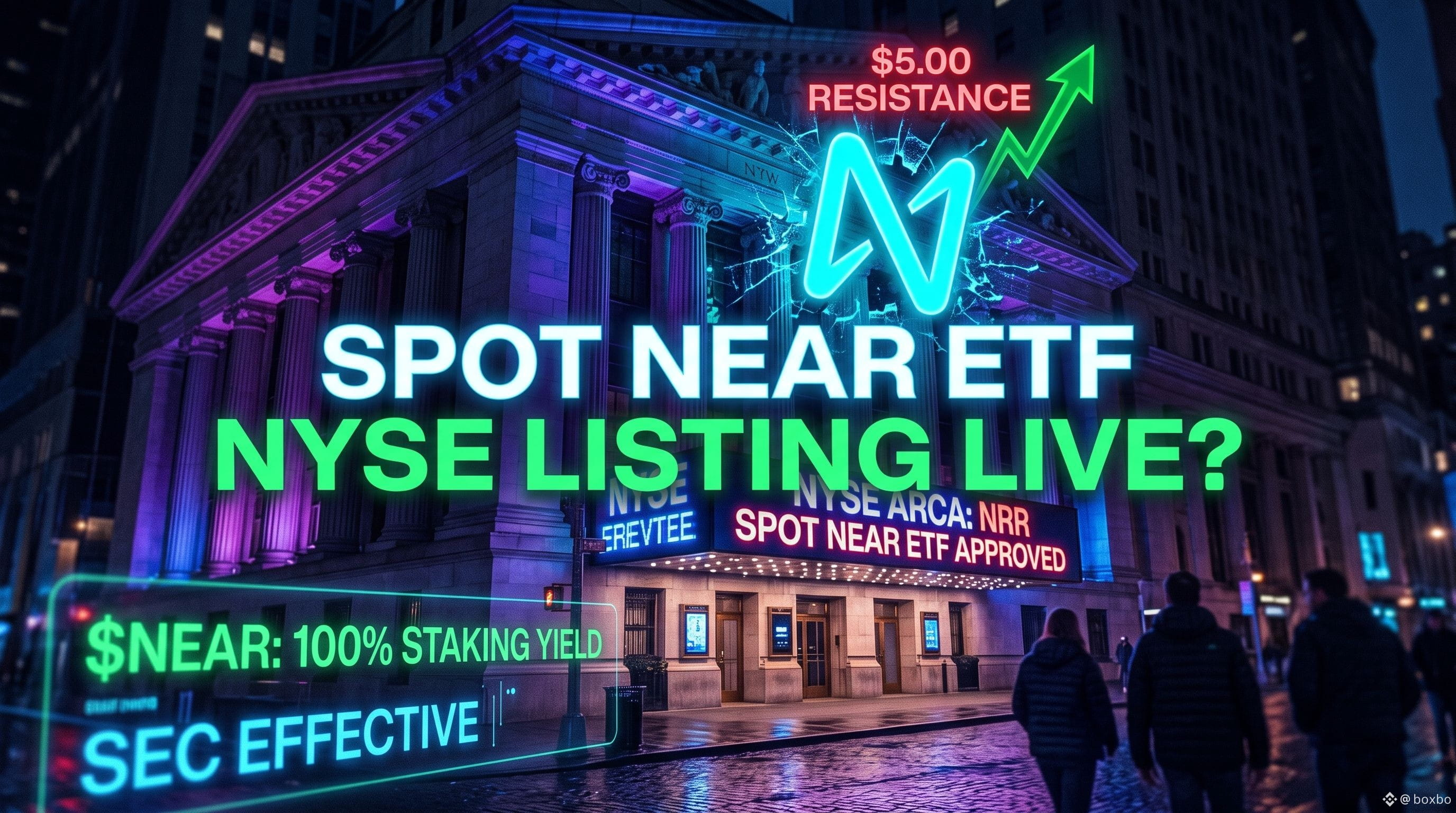
Bitwise Asset Management has taken a major step toward launching the first spot Near Protocol ETF, receiving listing approval from NYSE Arca under the ticker NRR. Following its S-1 submission and Form 8-A registration, the SEC declared the filing effective, paving the way for traditional market access to NEAR. Uniquely, the fund is structured around a 100% yield-staking model, allowing institutional holders to capture raw network staking rewards—minus a 33% staking expense fee—alongside spot price exposure. With a 0.75% sponsor fee and seed capital secured, the product marks a shift from simple asset tracking to yield-bearing layer-1 ETF products. Traders should note that while this regulatory milestone drove NEAR above $5.00 on surging futures open interest, actual market listing remains pending final $CERT.US
{stock_us}(CERT.US)
exchange operational green greenlights.
#bitwisefilestolistnearetfonnysearca
Regulatory Milestone: Bitwise Clears $NYSE Arca Hurdle for Spot NEAR $ETFT.ETF
Bitwise Asset Management has taken a major step toward launching the first spot Near Protocol ETF, receiving listing approval from NYSE Arca under the ticker NRR. Following its S-1 submission and Form 8-A registration, the SEC declared the filing effective, paving the way for traditional market access to NEAR. Uniquely, the fund is structured around a 100% yield-staking model, allowing institutional holders to capture raw network staking rewards—minus a 33% staking expense fee—alongside spot price exposure. With a 0.75% sponsor fee and seed capital secured, the product marks a shift from simple asset tracking to yield-bearing layer-1 ETF products. Traders should note that while this regulatory milestone drove NEAR above $5.00 on surging futures open interest, actual market listing remains pending final $CERT.US
exchange operational green greenlights.
Regulatory Milestone: Bitwise Clears $NYSE Arca Hurdle for Spot NEAR $ETFT.ETF
Bitwise Asset Management has taken a major step toward launching the first spot Near Protocol ETF, receiving listing approval from NYSE Arca under the ticker NRR. Following its S-1 submission and Form 8-A registration, the SEC declared the filing effective, paving the way for traditional market access to NEAR. Uniquely, the fund is structured around a 100% yield-staking model, allowing institutional holders to capture raw network staking rewards—minus a 33% staking expense fee—alongside spot price exposure. With a 0.75% sponsor fee and seed capital secured, the product marks a shift from simple asset tracking to yield-bearing layer-1 ETF products. Traders should note that while this regulatory milestone drove NEAR above $5.00 on surging futures open interest, actual market listing remains pending final $CERT.US
exchange operational green greenlights.
1
96
·
--
#blackrockbuildstokenizedportfoliosforondo
On-Chain Asset Management Evolution: BlackRock and Ondo Launch Tokenized Portfolios
Ondo Finance has launched "Ondo Intelligent Portfolios," introducing three single-token investment strategies powered by model portfolios designed by BlackRock. Marking a shift from tokenizing individual real-world assets (like Treasuries or single stocks) to wrapping entire multi-asset strategies into single ERC-20 tokens, the initial offerings—High Income (BLKHIon), Diversified Growth (BLKDIGon), and High Growth (BLKGRWon)—allow non-U.S. investors to gain exposure to pre-balanced baskets of tokenized ETFs and equities with automated smart contract rebalancing. From a market infrastructure perspective, this setup bridges Wall Street portfolio construction with DeFi functionality, enabling users to hold, mint, or transfer entire asset allocations or deploy them as collateral across protocols 24/7 without incurring continuous manual rebalancing fees or capital gains events. $ERA
{spot}(ERAUSDT)
#blackrockbuildstokenizedportfoliosforondo
On-Chain Asset Management Evolution: BlackRock and Ondo Launch Tokenized Portfolios
Ondo Finance has launched "Ondo Intelligent Portfolios," introducing three single-token investment strategies powered by model portfolios designed by BlackRock. Marking a shift from tokenizing individual real-world assets (like Treasuries or single stocks) to wrapping entire multi-asset strategies into single ERC-20 tokens, the initial offerings—High Income (BLKHIon), Diversified Growth (BLKDIGon), and High Growth (BLKGRWon)—allow non-U.S. investors to gain exposure to pre-balanced baskets of tokenized ETFs and equities with automated smart contract rebalancing. From a market infrastructure perspective, this setup bridges Wall Street portfolio construction with DeFi functionality, enabling users to hold, mint, or transfer entire asset allocations or deploy them as collateral across protocols 24/7 without incurring continuous manual rebalancing fees or capital gains events. $ERA
On-Chain Asset Management Evolution: BlackRock and Ondo Launch Tokenized Portfolios
Ondo Finance has launched "Ondo Intelligent Portfolios," introducing three single-token investment strategies powered by model portfolios designed by BlackRock. Marking a shift from tokenizing individual real-world assets (like Treasuries or single stocks) to wrapping entire multi-asset strategies into single ERC-20 tokens, the initial offerings—High Income (BLKHIon), Diversified Growth (BLKDIGon), and High Growth (BLKGRWon)—allow non-U.S. investors to gain exposure to pre-balanced baskets of tokenized ETFs and equities with automated smart contract rebalancing. From a market infrastructure perspective, this setup bridges Wall Street portfolio construction with DeFi functionality, enabling users to hold, mint, or transfer entire asset allocations or deploy them as collateral across protocols 24/7 without incurring continuous manual rebalancing fees or capital gains events. $ERA

1
152
·
--
#polymarketbankfailurebetsdrawfdicconcern
Systematic Risk vs. Price Discovery: Why Polymarket's Bank Failure Bets Concern the $FDIC $POL
{spot}(POLUSDT)
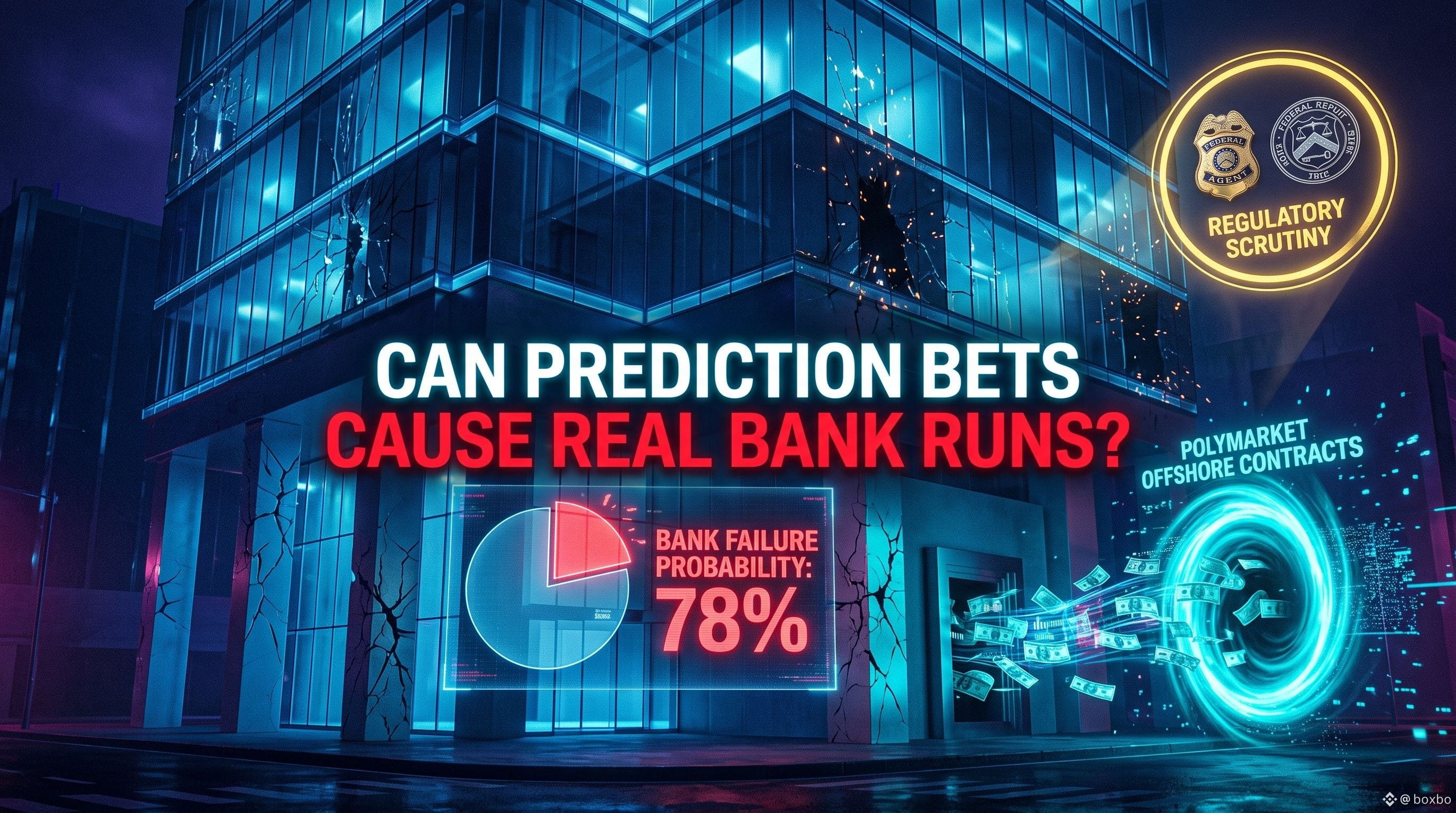
Prediction market platform Polymarket has drawn heightened scrutiny from Washington, with Federal Deposit Insurance Corp. (FDIC) officials monitoring offshore contracts that allow traders to bet on individual bank collapses. Regulators express concern that public odds on bank failures—even with current low trading volumes—could act as a self-fulfilling reflexivity engine. Visible spikes in failure probability can spook institutional depositors, accelerate digital bank runs, and exacerbate systemic liquidity crunches before official interventions occur. Moreover, internal discussions at the FDIC are evaluating insider trading ethics to prevent nonpublic regulatory data—like "problem bank" lists—from leaking into crypto prediction pools. While supporters argue these markets aggregate real-time risk data more transparently than traditional credit default swaps, regulators view consumer-facing bank insolvency betting as an unnecessary systemic hazard.
#polymarketbankfailurebetsdrawfdicconcern
Systematic Risk vs. Price Discovery: Why Polymarket's Bank Failure Bets Concern the $FDIC $POL
Prediction market platform Polymarket has drawn heightened scrutiny from Washington, with Federal Deposit Insurance Corp. (FDIC) officials monitoring offshore contracts that allow traders to bet on individual bank collapses. Regulators express concern that public odds on bank failures—even with current low trading volumes—could act as a self-fulfilling reflexivity engine. Visible spikes in failure probability can spook institutional depositors, accelerate digital bank runs, and exacerbate systemic liquidity crunches before official interventions occur. Moreover, internal discussions at the FDIC are evaluating insider trading ethics to prevent nonpublic regulatory data—like "problem bank" lists—from leaking into crypto prediction pools. While supporters argue these markets aggregate real-time risk data more transparently than traditional credit default swaps, regulators view consumer-facing bank insolvency betting as an unnecessary systemic hazard.
Systematic Risk vs. Price Discovery: Why Polymarket's Bank Failure Bets Concern the $FDIC $POL
Prediction market platform Polymarket has drawn heightened scrutiny from Washington, with Federal Deposit Insurance Corp. (FDIC) officials monitoring offshore contracts that allow traders to bet on individual bank collapses. Regulators express concern that public odds on bank failures—even with current low trading volumes—could act as a self-fulfilling reflexivity engine. Visible spikes in failure probability can spook institutional depositors, accelerate digital bank runs, and exacerbate systemic liquidity crunches before official interventions occur. Moreover, internal discussions at the FDIC are evaluating insider trading ethics to prevent nonpublic regulatory data—like "problem bank" lists—from leaking into crypto prediction pools. While supporters argue these markets aggregate real-time risk data more transparently than traditional credit default swaps, regulators view consumer-facing bank insolvency betting as an unnecessary systemic hazard.
2
545
·
--
Vérifié
#circlemints500musdconsolana
On-Chain Liquidity Injection: What Does Circle’s $500M USDC Mint on Solana Signal?
Circle’s issuance of $500 million in $USDC
{spot}(USDCUSDT)
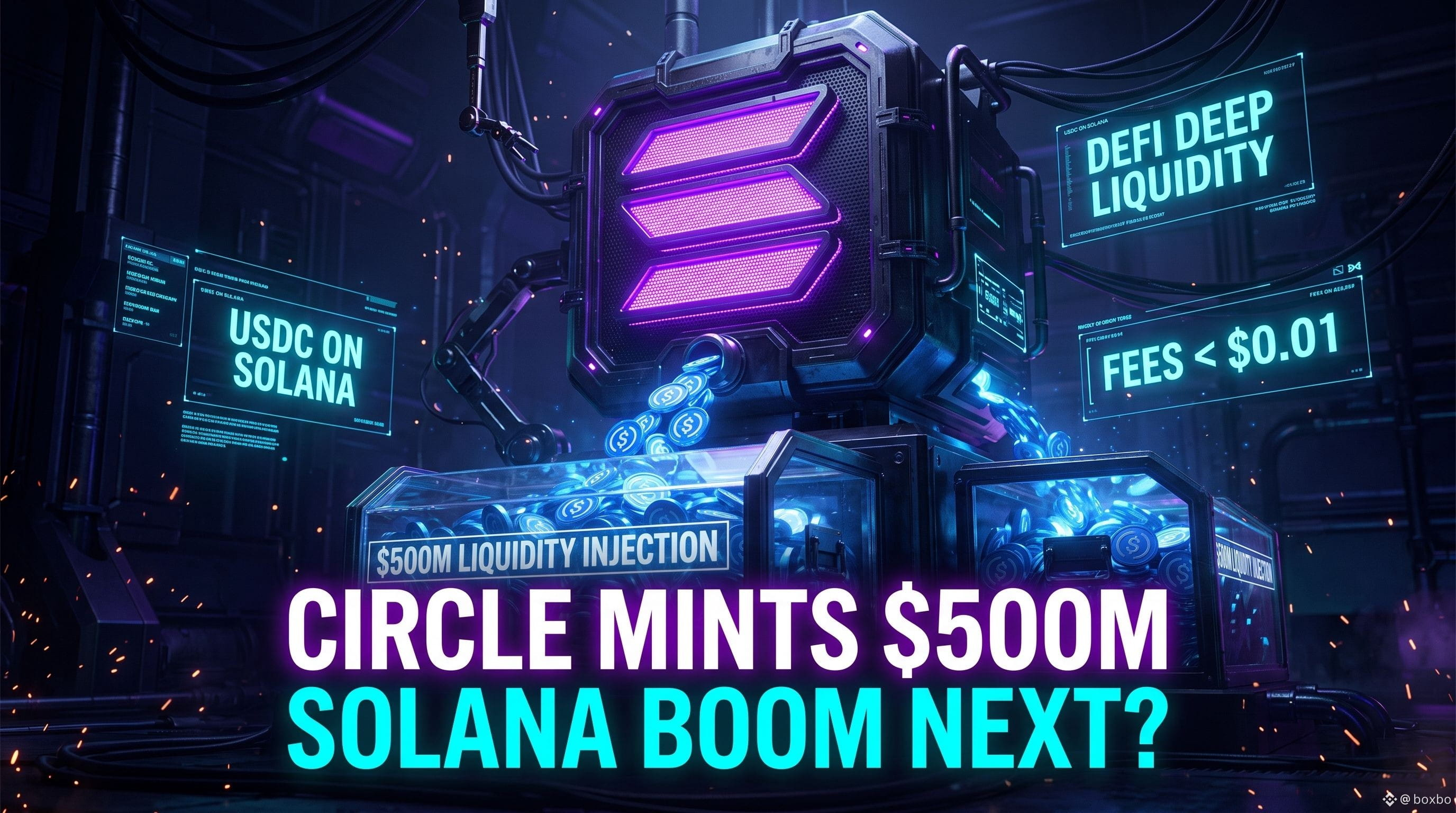
on the Solana blockchain represents a direct liquidity injection targeting high-throughput decentralized finance (DeFi) and institutional settlement. Because stablecoin mints reflect growing fiat capital inflows, large-scale issuances provide the essential quote currency needed to absorb market volatility, power automated market maker (AMM) liquidity pools, and fuel cross-border payment rails. Historically, recurring mega-mints by Circle point to aggressive market maker positioning and rising demand from institutional trading desks seeking low-latency execution. From a technical perspective, this surge in stablecoin supply lowers structural slippage across Solana-based decentralized exchanges (DEXs), providing a bullish liquidity tailwind for SOL and ecosystem assets, provided on-chain DEX trading volume and active wallet metrics expand alongside the new supply.
#circlemints500musdconsolana
On-Chain Liquidity Injection: What Does Circle’s $500M USDC Mint on Solana Signal?
Circle’s issuance of $500 million in $USDC
on the Solana blockchain represents a direct liquidity injection targeting high-throughput decentralized finance (DeFi) and institutional settlement. Because stablecoin mints reflect growing fiat capital inflows, large-scale issuances provide the essential quote currency needed to absorb market volatility, power automated market maker (AMM) liquidity pools, and fuel cross-border payment rails. Historically, recurring mega-mints by Circle point to aggressive market maker positioning and rising demand from institutional trading desks seeking low-latency execution. From a technical perspective, this surge in stablecoin supply lowers structural slippage across Solana-based decentralized exchanges (DEXs), providing a bullish liquidity tailwind for SOL and ecosystem assets, provided on-chain DEX trading volume and active wallet metrics expand alongside the new supply.
On-Chain Liquidity Injection: What Does Circle’s $500M USDC Mint on Solana Signal?
Circle’s issuance of $500 million in $USDC
on the Solana blockchain represents a direct liquidity injection targeting high-throughput decentralized finance (DeFi) and institutional settlement. Because stablecoin mints reflect growing fiat capital inflows, large-scale issuances provide the essential quote currency needed to absorb market volatility, power automated market maker (AMM) liquidity pools, and fuel cross-border payment rails. Historically, recurring mega-mints by Circle point to aggressive market maker positioning and rising demand from institutional trading desks seeking low-latency execution. From a technical perspective, this surge in stablecoin supply lowers structural slippage across Solana-based decentralized exchanges (DEXs), providing a bullish liquidity tailwind for SOL and ecosystem assets, provided on-chain DEX trading volume and active wallet metrics expand alongside the new supply.
2
804
·
--
#bitgetbreachforgedrequestsnotstolenkeys
Infrastructure Hijack: How Bitget Lost $351.6 Million Without Losing Private Keys $BTC
{spot}(BTCUSDT)
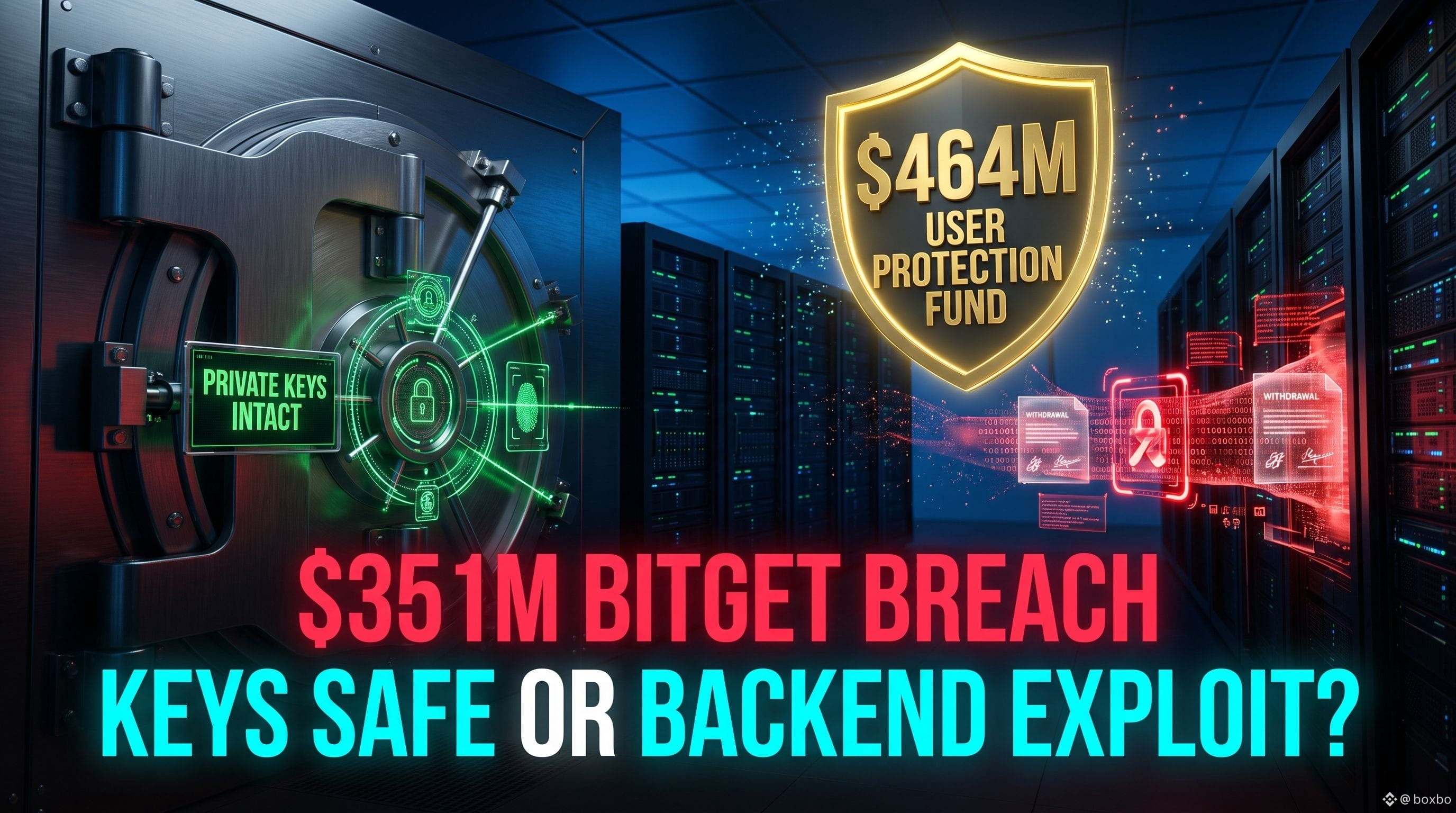
Bitget suffered a $351.6 million security breach affecting its hot and warm wallet layers, but CEO Gracy Chen confirmed that cryptographic private keys were never compromised. Instead, attackers infiltrated a core backend system within the exchange's wallet infrastructure, allowing them to forge fraudulent withdrawal requests and trick the automated authorization process into signing and executing unauthorized transfers. Because private keys remained intact, cold storage assets were unaffected, preventing a complete platform drain. From a risk perspective, Bitget's $464 million User Protection Fund covers 100% of the stolen capital; however, while trading and deposits remain open, withdrawals have been temporarily frozen pending a full system audit. This incident highlights a growing security shift: modern exchange vulnerabilities are increasingly targeting API workflows and backend authorization pipelines rather than raw private key theft. $BNB
{spot}(BNBUSDT)
#bitgetbreachforgedrequestsnotstolenkeys
Infrastructure Hijack: How Bitget Lost $351.6 Million Without Losing Private Keys $BTC
Bitget suffered a $351.6 million security breach affecting its hot and warm wallet layers, but CEO Gracy Chen confirmed that cryptographic private keys were never compromised. Instead, attackers infiltrated a core backend system within the exchange's wallet infrastructure, allowing them to forge fraudulent withdrawal requests and trick the automated authorization process into signing and executing unauthorized transfers. Because private keys remained intact, cold storage assets were unaffected, preventing a complete platform drain. From a risk perspective, Bitget's $464 million User Protection Fund covers 100% of the stolen capital; however, while trading and deposits remain open, withdrawals have been temporarily frozen pending a full system audit. This incident highlights a growing security shift: modern exchange vulnerabilities are increasingly targeting API workflows and backend authorization pipelines rather than raw private key theft. $BNB
Infrastructure Hijack: How Bitget Lost $351.6 Million Without Losing Private Keys $BTC
Bitget suffered a $351.6 million security breach affecting its hot and warm wallet layers, but CEO Gracy Chen confirmed that cryptographic private keys were never compromised. Instead, attackers infiltrated a core backend system within the exchange's wallet infrastructure, allowing them to forge fraudulent withdrawal requests and trick the automated authorization process into signing and executing unauthorized transfers. Because private keys remained intact, cold storage assets were unaffected, preventing a complete platform drain. From a risk perspective, Bitget's $464 million User Protection Fund covers 100% of the stolen capital; however, while trading and deposits remain open, withdrawals have been temporarily frozen pending a full system audit. This incident highlights a growing security shift: modern exchange vulnerabilities are increasingly targeting API workflows and backend authorization pipelines rather than raw private key theft. $BNB
2
3.7k
·
--
#EthereumBreaksAbove2700
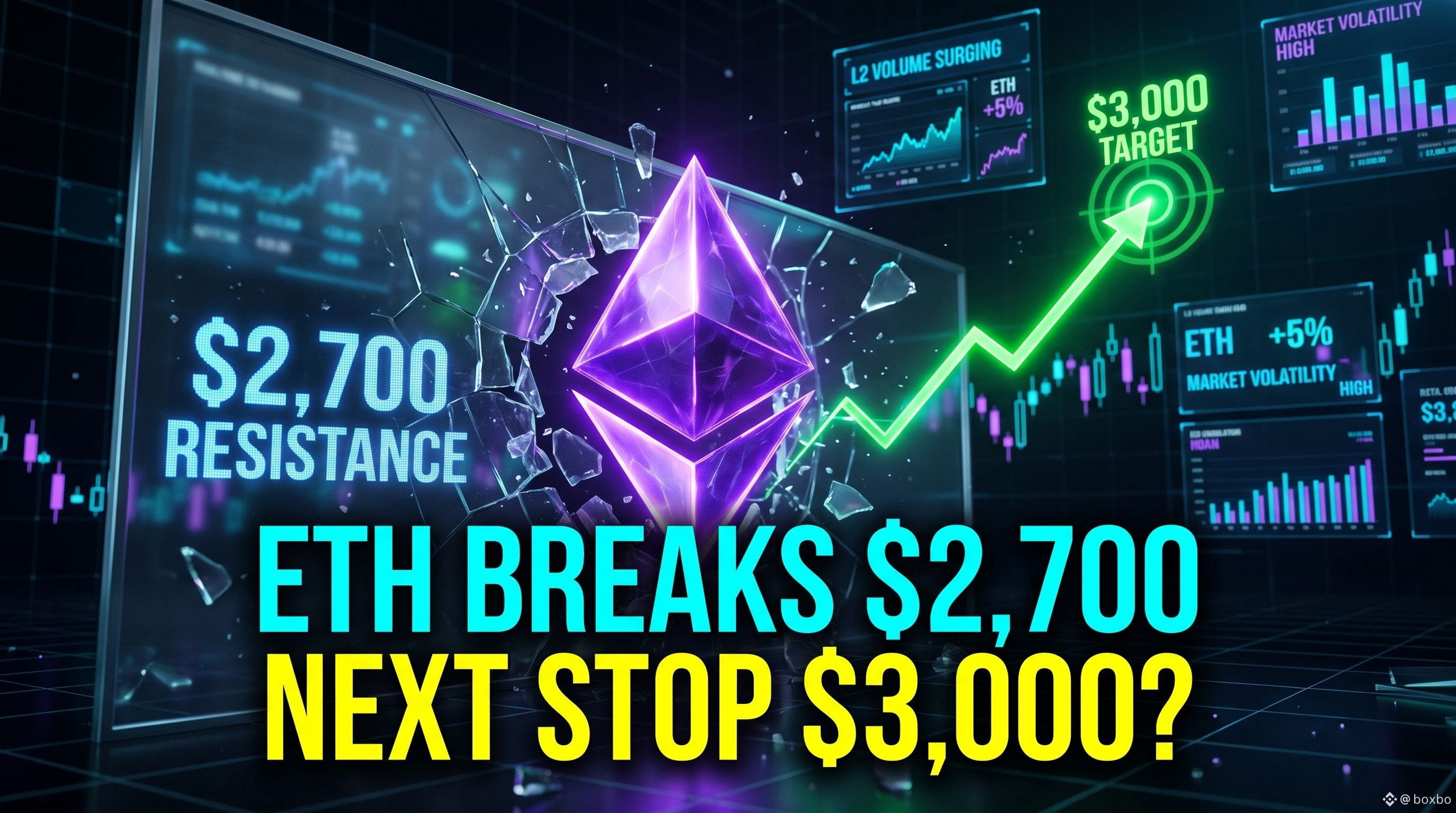
Momentum Reclaimed: What Driven Ethereum’s Break Above $2,700?
Ethereum ( $ETH
{spot}(ETHUSDT)
) has successfully reclaimed the crucial $2,700 threshold, breaking past key technical resistance following a broader crypto market recovery. The rally is primarily fueled by a surge in Layer-2 activity, renewed institutional accumulation, and improving macroeconomic sentiment following recent monetary policy shifts. From a practical technical perspective, holding above the $2,680–$2,700 support band is critical to maintaining this bullish structure. A sustained close above $2,725 opens the doorway for a retest of the $2,850 to $3,000 supply cluster. However, traders should monitor
capital flows and 4-hour RSI levels closely—if buying volume stalls near immediate resistance, a minor pull-back toward the $2,620–$2,650 support zone could materialize before the next directional leg up.
#EthereumBreaksAbove2700
Momentum Reclaimed: What Driven Ethereum’s Break Above $2,700?
Ethereum ( $ETH
) has successfully reclaimed the crucial $2,700 threshold, breaking past key technical resistance following a broader crypto market recovery. The rally is primarily fueled by a surge in Layer-2 activity, renewed institutional accumulation, and improving macroeconomic sentiment following recent monetary policy shifts. From a practical technical perspective, holding above the $2,680–$2,700 support band is critical to maintaining this bullish structure. A sustained close above $2,725 opens the doorway for a retest of the $2,850 to $3,000 supply cluster. However, traders should monitor
capital flows and 4-hour RSI levels closely—if buying volume stalls near immediate resistance, a minor pull-back toward the $2,620–$2,650 support zone could materialize before the next directional leg up.
Momentum Reclaimed: What Driven Ethereum’s Break Above $2,700?
Ethereum ( $ETH
) has successfully reclaimed the crucial $2,700 threshold, breaking past key technical resistance following a broader crypto market recovery. The rally is primarily fueled by a surge in Layer-2 activity, renewed institutional accumulation, and improving macroeconomic sentiment following recent monetary policy shifts. From a practical technical perspective, holding above the $2,680–$2,700 support band is critical to maintaining this bullish structure. A sustained close above $2,725 opens the doorway for a retest of the $2,850 to $3,000 supply cluster. However, traders should monitor
capital flows and 4-hour RSI levels closely—if buying volume stalls near immediate resistance, a minor pull-back toward the $2,620–$2,650 support zone could materialize before the next directional leg up.
1
140
·
--
Vérifié
#qntrises39%
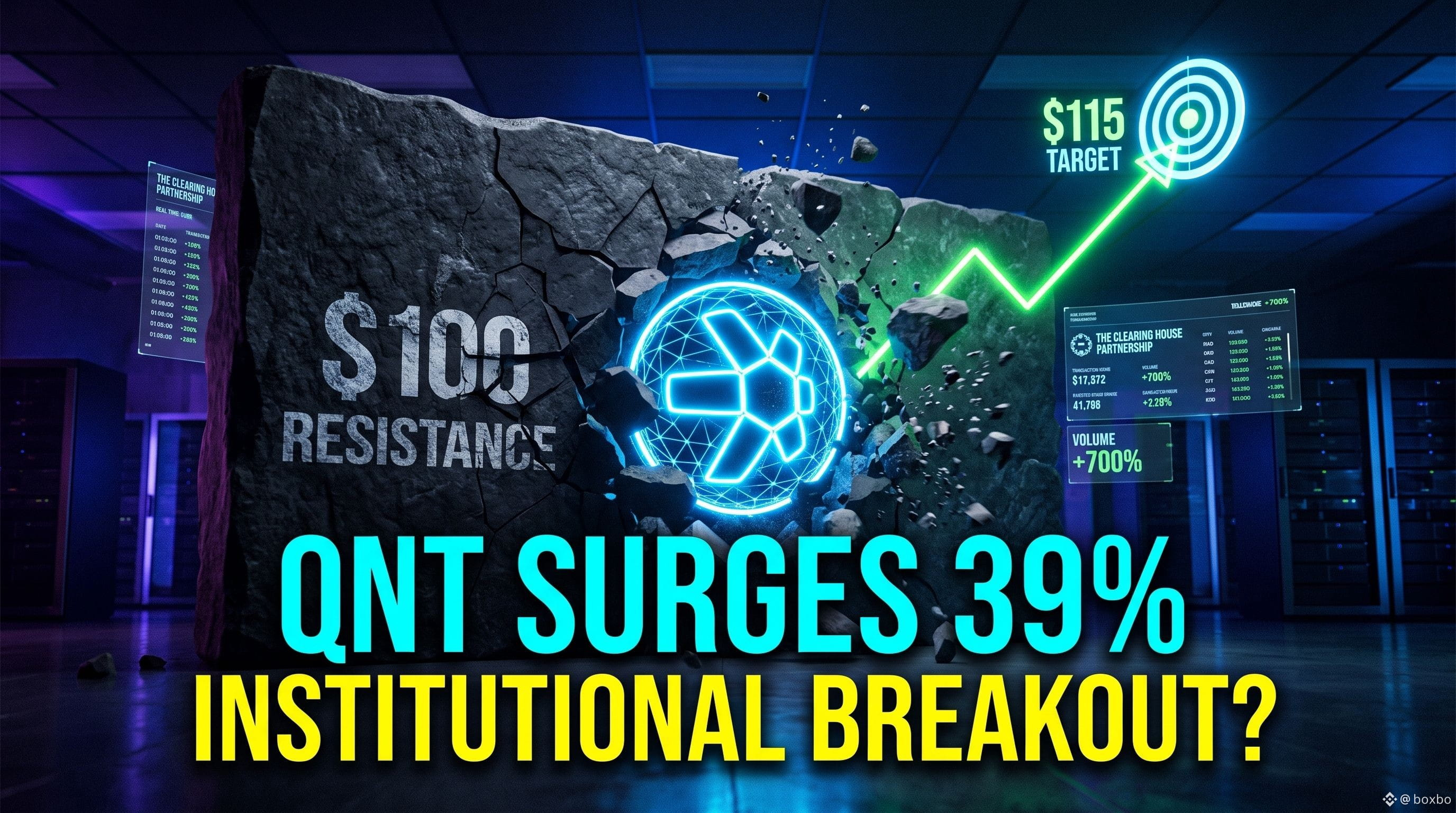
Enterprise Liquidity Surge: What Sparked Quant’s (QNT) 39% Price Expansion?
Quant ( $QNT
{spot}(QNTUSDT)
) broke out of its prolonged consolidation phase with a sharp ~39% rally, testing the critical $100 psychological level. The primary fundamental driver was the announcement of Quant's selection by The Clearing House (TCH) to provide the interoperability layer for its U.S. tokenized deposit network. With nearly 99.5% of QNT's supply already in circulation, the combination of institutional adoption news and a low-dilution supply profile triggered an explosive 700%+ surge in trading volume. From a practical standpoint, QNT has cleared its multi-month descending trendline, but it now faces heavy technical resistance between $100 and $103. Traders should watch for whether sustained spot buying flips $100 into support toward the $110–$115 target range or if a mean-reversion retest occurs toward the $83–$85 breakout zone.
#qntrises39%
Enterprise Liquidity Surge: What Sparked Quant’s (QNT) 39% Price Expansion?
Quant ( $QNT
) broke out of its prolonged consolidation phase with a sharp ~39% rally, testing the critical $100 psychological level. The primary fundamental driver was the announcement of Quant's selection by The Clearing House (TCH) to provide the interoperability layer for its U.S. tokenized deposit network. With nearly 99.5% of QNT's supply already in circulation, the combination of institutional adoption news and a low-dilution supply profile triggered an explosive 700%+ surge in trading volume. From a practical standpoint, QNT has cleared its multi-month descending trendline, but it now faces heavy technical resistance between $100 and $103. Traders should watch for whether sustained spot buying flips $100 into support toward the $110–$115 target range or if a mean-reversion retest occurs toward the $83–$85 breakout zone.
Enterprise Liquidity Surge: What Sparked Quant’s (QNT) 39% Price Expansion?
Quant ( $QNT
) broke out of its prolonged consolidation phase with a sharp ~39% rally, testing the critical $100 psychological level. The primary fundamental driver was the announcement of Quant's selection by The Clearing House (TCH) to provide the interoperability layer for its U.S. tokenized deposit network. With nearly 99.5% of QNT's supply already in circulation, the combination of institutional adoption news and a low-dilution supply profile triggered an explosive 700%+ surge in trading volume. From a practical standpoint, QNT has cleared its multi-month descending trendline, but it now faces heavy technical resistance between $100 and $103. Traders should watch for whether sustained spot buying flips $100 into support toward the $110–$115 target range or if a mean-reversion retest occurs toward the $83–$85 breakout zone.
1
3
1.7k
·
--
Core Security Architecture: Is Trading on Binance Safe? $BNB
{spot}(BNBUSDT)
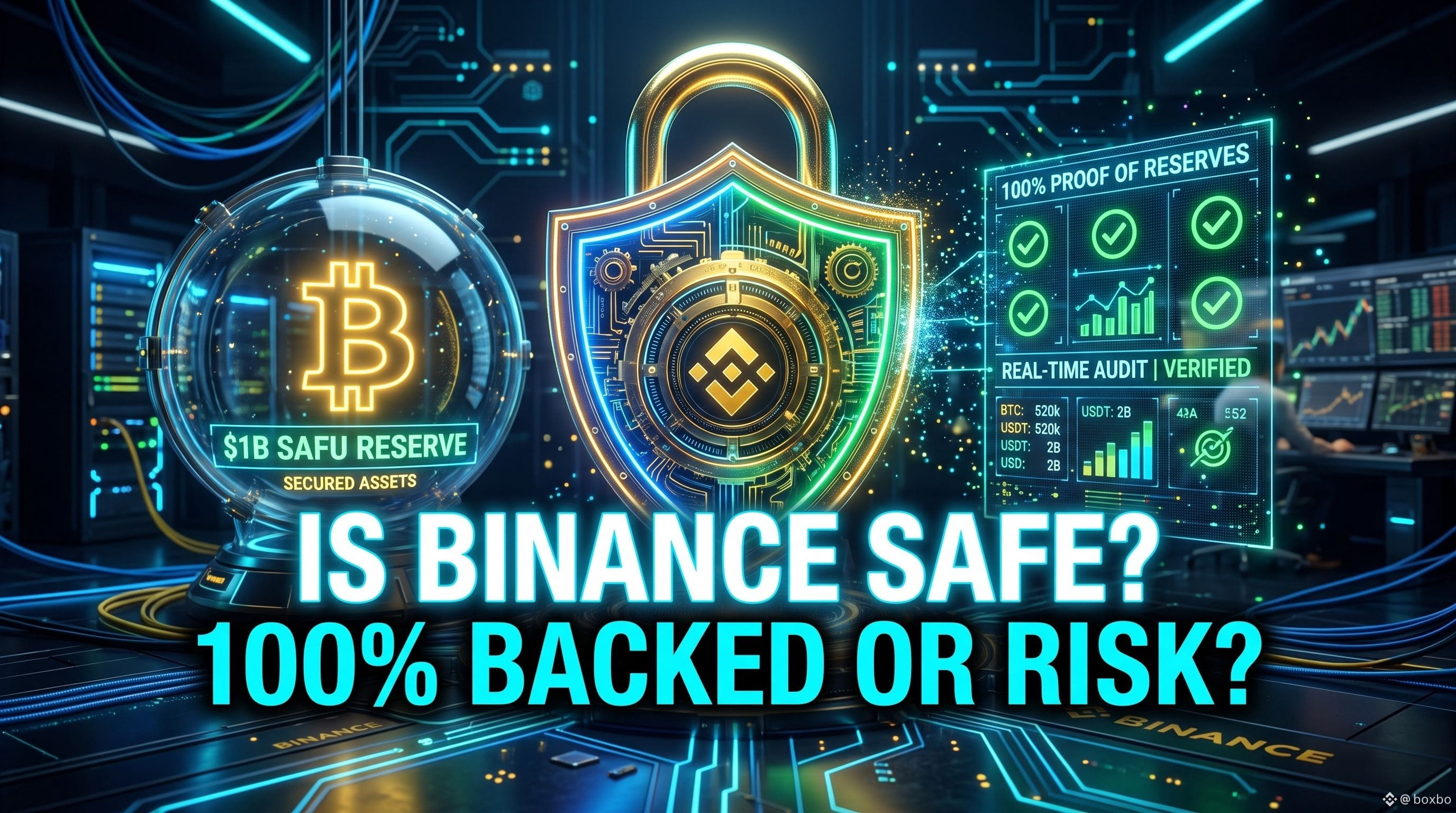
Safety on Binance relies on a multi-layered security infrastructure combining platform safeguards with user-level controls. The platform's backstop is the Secure Asset Fund for Users (SAFU)—a ~$1B emergency reserve fund stored separately from operational capital to reimburse users during extreme platform-level security breaches. Transparency is enforced via Zero-Knowledge Proof of Reserves (PoR), allowing traders to cryptographically verify 1:1 asset backing on-chain. However, centralized exchange safety requires individual risk management: institutional-grade protections like 2FA passkeys, withdrawal address whitelisting, and anti-phishing codes shield accounts from phishing and credential theft. While Binance's cold-storage architecture and AI risk monitoring mitigate systemic exchange hacks, full safety depends on coupling exchange mechanisms with personal custody discipline. $USD1
{spot}(USD1USDT)
Core Security Architecture: Is Trading on Binance Safe? $BNB
Safety on Binance relies on a multi-layered security infrastructure combining platform safeguards with user-level controls. The platform's backstop is the Secure Asset Fund for Users (SAFU)—a ~$1B emergency reserve fund stored separately from operational capital to reimburse users during extreme platform-level security breaches. Transparency is enforced via Zero-Knowledge Proof of Reserves (PoR), allowing traders to cryptographically verify 1:1 asset backing on-chain. However, centralized exchange safety requires individual risk management: institutional-grade protections like 2FA passkeys, withdrawal address whitelisting, and anti-phishing codes shield accounts from phishing and credential theft. While Binance's cold-storage architecture and AI risk monitoring mitigate systemic exchange hacks, full safety depends on coupling exchange mechanisms with personal custody discipline. $USD1
Safety on Binance relies on a multi-layered security infrastructure combining platform safeguards with user-level controls. The platform's backstop is the Secure Asset Fund for Users (SAFU)—a ~$1B emergency reserve fund stored separately from operational capital to reimburse users during extreme platform-level security breaches. Transparency is enforced via Zero-Knowledge Proof of Reserves (PoR), allowing traders to cryptographically verify 1:1 asset backing on-chain. However, centralized exchange safety requires individual risk management: institutional-grade protections like 2FA passkeys, withdrawal address whitelisting, and anti-phishing codes shield accounts from phishing and credential theft. While Binance's cold-storage architecture and AI risk monitoring mitigate systemic exchange hacks, full safety depends on coupling exchange mechanisms with personal custody discipline. $USD1
1
1
489
·
--
#fedoctoberratehikeoddsriseto69.7%
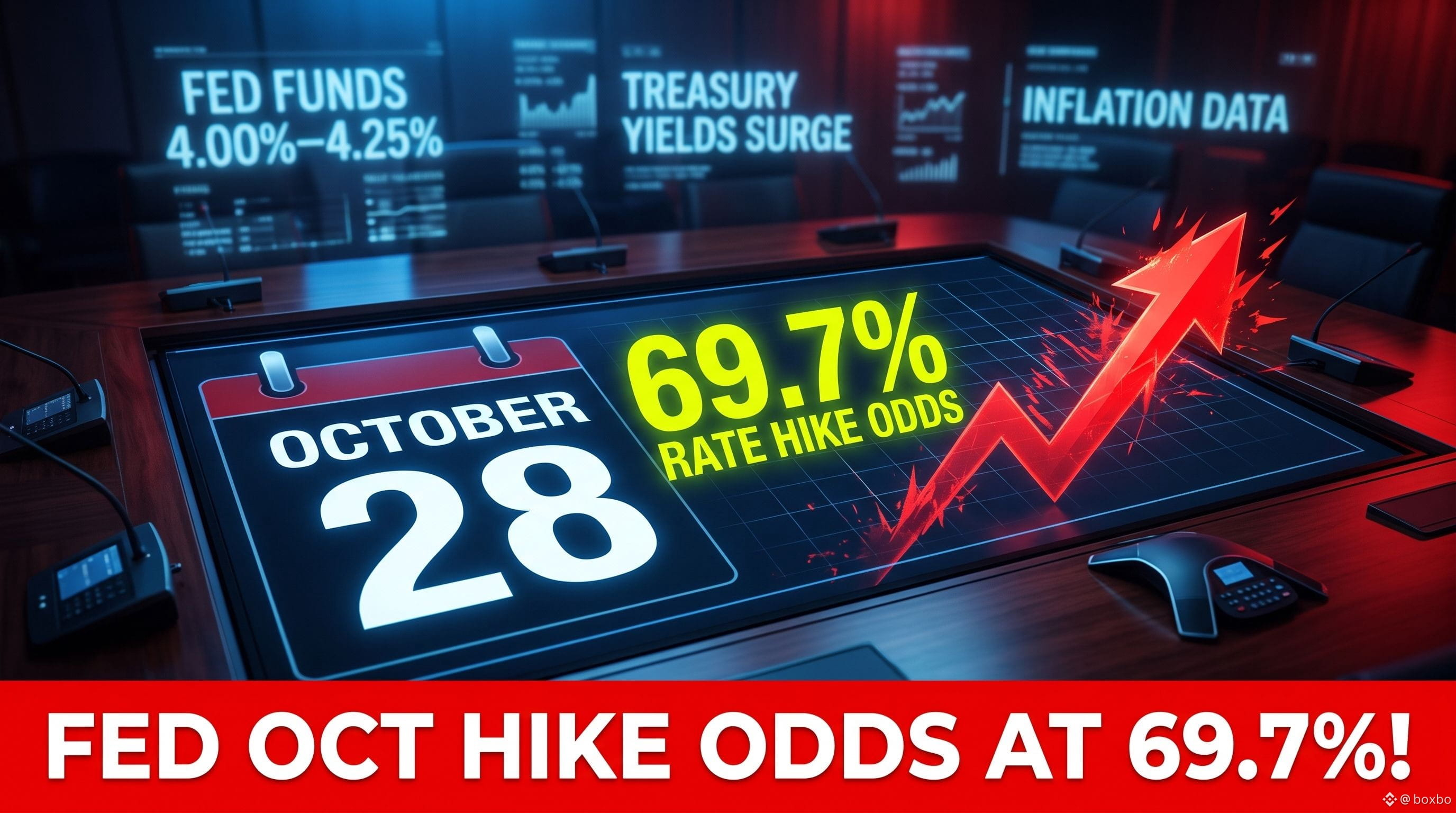
Hawkish Shifts: CME FedWatch Implied Probability for October Rate Hike Surges Near 70% $BNB
{spot}(BNBUSDT)
Expectations for another Federal Reserve rate hike at the October 28 meeting have surged to 69.7%, driven by persistent inflation signals, robust U.S. business activity data, and hawkish central bank rhetoric. $ETH
{spot}(ETHUSDT)
Coming immediately after the Fed’s mid-September decision to lift the target rate to 3.75%–4.00%, futures traders are rapidly pricing in a follow-up 25-basis-point increase. Higher oil prices and rising Treasury yields have reinforced expectations of a tight monetary stance. From a practical execution standpoint, this rapid repricing shifts liquidity mechanics across risk assets: elevated benchmark yields tighten debt refinancing terms, lift borrowing costs across money markets, and exert persistent resistance on leveraged crypto positions as institutional capital pivots toward higher-yielding risk-free sovereign debt. $BTC
{spot}(BTCUSDT)
#fedoctoberratehikeoddsriseto69.7%
Hawkish Shifts: CME FedWatch Implied Probability for October Rate Hike Surges Near 70% $BNB
Expectations for another Federal Reserve rate hike at the October 28 meeting have surged to 69.7%, driven by persistent inflation signals, robust U.S. business activity data, and hawkish central bank rhetoric. $ETH
Coming immediately after the Fed’s mid-September decision to lift the target rate to 3.75%–4.00%, futures traders are rapidly pricing in a follow-up 25-basis-point increase. Higher oil prices and rising Treasury yields have reinforced expectations of a tight monetary stance. From a practical execution standpoint, this rapid repricing shifts liquidity mechanics across risk assets: elevated benchmark yields tighten debt refinancing terms, lift borrowing costs across money markets, and exert persistent resistance on leveraged crypto positions as institutional capital pivots toward higher-yielding risk-free sovereign debt. $BTC
Hawkish Shifts: CME FedWatch Implied Probability for October Rate Hike Surges Near 70% $BNB
Expectations for another Federal Reserve rate hike at the October 28 meeting have surged to 69.7%, driven by persistent inflation signals, robust U.S. business activity data, and hawkish central bank rhetoric. $ETH
Coming immediately after the Fed’s mid-September decision to lift the target rate to 3.75%–4.00%, futures traders are rapidly pricing in a follow-up 25-basis-point increase. Higher oil prices and rising Treasury yields have reinforced expectations of a tight monetary stance. From a practical execution standpoint, this rapid repricing shifts liquidity mechanics across risk assets: elevated benchmark yields tighten debt refinancing terms, lift borrowing costs across money markets, and exert persistent resistance on leveraged crypto positions as institutional capital pivots toward higher-yielding risk-free sovereign debt. $BTC
1
1.3k
·
--
Vérifié
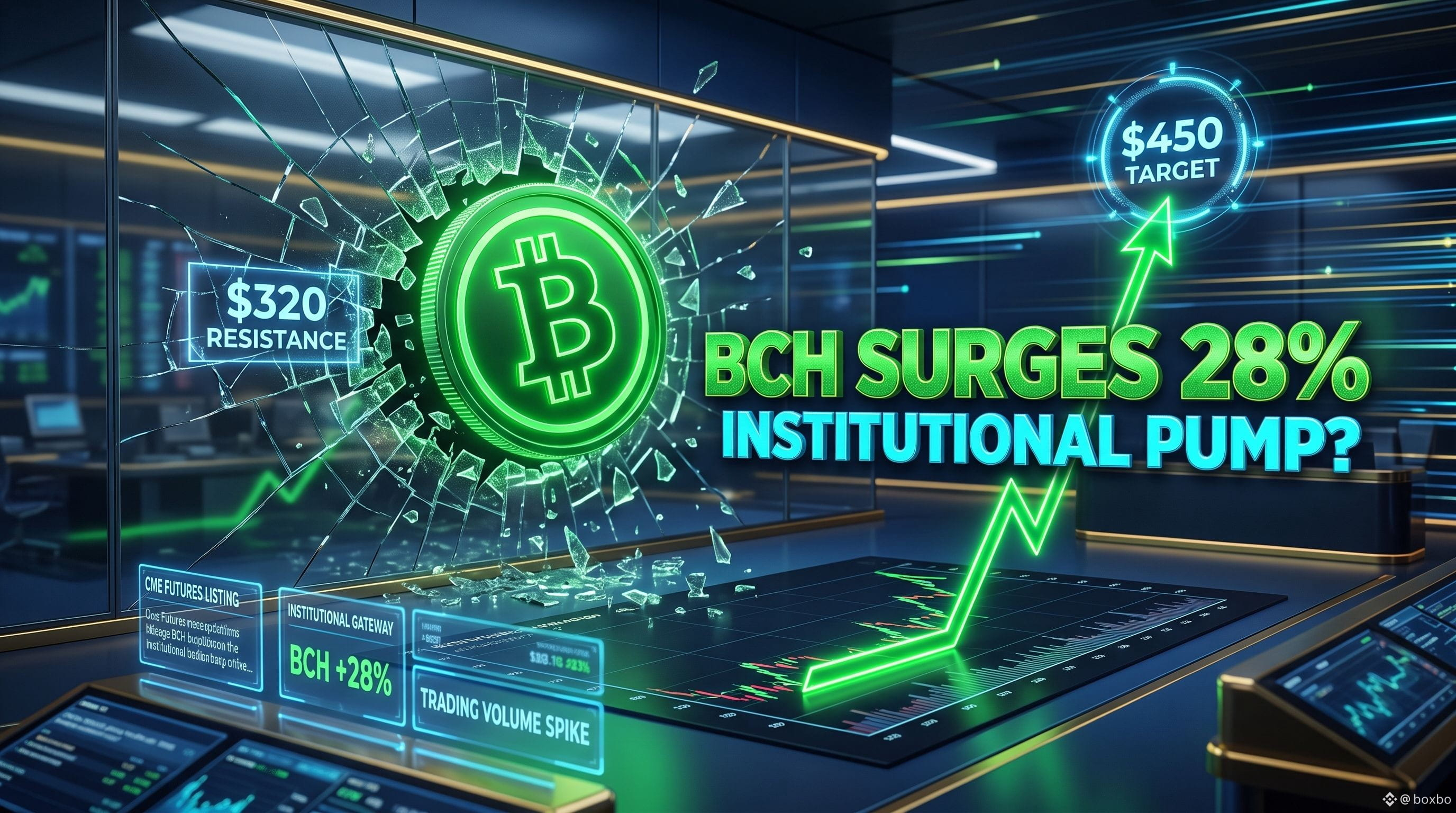
#bchjumps28%oncmefutureslisting
Topic: Institutional Derivatives & Market Dynamics
Institutional Validation: Why $CME.US
{stock_us}(CME.US)
Futures Sparked a 28% Bitcoin Cash Surge
Bitcoin Cash (BCH) rallied 28% toward $349 following CME Group's announcement to launch cash-settled $BCH
{spot}(BCHUSDT)
and Micro BCH futures. Scheduled to list alongside Uniswap futures pending regulatory approval, CME’s expansion opens regulated access for institutional capital, enabling sophisticated basis trades, risk hedging, and direct directional exposure without custody constraints. The immediate spot breakout reflects market participants front-running expected institutional liquidity and leverage. Practically, while flipping key multi-month moving averages signals strong bullish momentum, traders should exercise risk controls: historical data indicates post-announcement pumps frequently experience mean-reversion pullbacks prior to product launch dates as initial speculative momentum digests.
#bchjumps28%oncmefutureslisting
Topic: Institutional Derivatives & Market Dynamics
Institutional Validation: Why $CME.US
Futures Sparked a 28% Bitcoin Cash Surge
Bitcoin Cash (BCH) rallied 28% toward $349 following CME Group's announcement to launch cash-settled $BCH
and Micro BCH futures. Scheduled to list alongside Uniswap futures pending regulatory approval, CME’s expansion opens regulated access for institutional capital, enabling sophisticated basis trades, risk hedging, and direct directional exposure without custody constraints. The immediate spot breakout reflects market participants front-running expected institutional liquidity and leverage. Practically, while flipping key multi-month moving averages signals strong bullish momentum, traders should exercise risk controls: historical data indicates post-announcement pumps frequently experience mean-reversion pullbacks prior to product launch dates as initial speculative momentum digests.
Topic: Institutional Derivatives & Market Dynamics
Institutional Validation: Why $CME.US
Futures Sparked a 28% Bitcoin Cash Surge
Bitcoin Cash (BCH) rallied 28% toward $349 following CME Group's announcement to launch cash-settled $BCH
and Micro BCH futures. Scheduled to list alongside Uniswap futures pending regulatory approval, CME’s expansion opens regulated access for institutional capital, enabling sophisticated basis trades, risk hedging, and direct directional exposure without custody constraints. The immediate spot breakout reflects market participants front-running expected institutional liquidity and leverage. Practically, while flipping key multi-month moving averages signals strong bullish momentum, traders should exercise risk controls: historical data indicates post-announcement pumps frequently experience mean-reversion pullbacks prior to product launch dates as initial speculative momentum digests.
BCH-0,06%
CMEUS-0,09%
1
570
·
--
#BitcoinRejectedAt$87 ,300Twice
#BitcoinRejectedAt$87,300Twice
Double Resistance Barrier: Analyzing Bitcoin’s Repeated Rejection at $87,300 $NVDAB
{spot}(NVDABUSDT)
Bitcoin’s consecutive rejections at $87,300 signal an intense supply barrier just below the critical 100-week moving average (~$89,000). This double-top pattern highlights a lack of sustained spot-buying aggression needed to absorb overhead profit-taking and US spot $ETFT.ETF
{etf_us}(ETFT.ETF)
cost$ bases, causing prices to slide back toward the $84,600 support zone. Macro headwinds further exacerbate the exhaustion: a rising US Dollar Index (DXY reaching 101) and elevated Treasury yields continue to tighten conditions across risk assets. From a tactical standpoint, holding the $83,000–$86,000 long-term holder base remains critical to prevent a deeper mean-reversion retest toward the 50-week simple moving average (~$81,081). A decisive daily candle close above $87,300 is mandatory to reignite momentum toward the $89,000–$90,000 target. $BTC
{spot}(BTCUSDT)
#BitcoinRejectedAt$87 ,300Twice
#BitcoinRejectedAt$87,300Twice
Double Resistance Barrier: Analyzing Bitcoin’s Repeated Rejection at $87,300 $NVDAB
Bitcoin’s consecutive rejections at $87,300 signal an intense supply barrier just below the critical 100-week moving average (~$89,000). This double-top pattern highlights a lack of sustained spot-buying aggression needed to absorb overhead profit-taking and US spot $ETFT.ETF
cost$ bases, causing prices to slide back toward the $84,600 support zone. Macro headwinds further exacerbate the exhaustion: a rising US Dollar Index (DXY reaching 101) and elevated Treasury yields continue to tighten conditions across risk assets. From a tactical standpoint, holding the $83,000–$86,000 long-term holder base remains critical to prevent a deeper mean-reversion retest toward the 50-week simple moving average (~$81,081). A decisive daily candle close above $87,300 is mandatory to reignite momentum toward the $89,000–$90,000 target. $BTC
#BitcoinRejectedAt$87,300Twice
Double Resistance Barrier: Analyzing Bitcoin’s Repeated Rejection at $87,300 $NVDAB
Bitcoin’s consecutive rejections at $87,300 signal an intense supply barrier just below the critical 100-week moving average (~$89,000). This double-top pattern highlights a lack of sustained spot-buying aggression needed to absorb overhead profit-taking and US spot $ETFT.ETF
cost$ bases, causing prices to slide back toward the $84,600 support zone. Macro headwinds further exacerbate the exhaustion: a rising US Dollar Index (DXY reaching 101) and elevated Treasury yields continue to tighten conditions across risk assets. From a tactical standpoint, holding the $83,000–$86,000 long-term holder base remains critical to prevent a deeper mean-reversion retest toward the 50-week simple moving average (~$81,081). A decisive daily candle close above $87,300 is mandatory to reignite momentum toward the $89,000–$90,000 target. $BTC

1
127
·
--
Vérifié
#cardanojoinsx402paymentstandard
Autonomous Machine Economy: Cardano Integrates Official x402 Open Payment Standard
Cardano has integrated into the official x402 open payment SDK, reviving the long-dormant web status code HTTP 402 ("Payment Required") to enable seamless machine-to-machine microtransactions. This implementation allows software services, web APIs, and autonomous AI agents to make instant, pay-per-request settlements using $ADA
{spot}(ADAUSDT)
or Cardano-native tokens (including stablecoins like USDM and DJED) over standard HTTP calls without user registration or account creation. Leveraging Cardano’s extended UTxO (eUTxO) model, clients pre-build and sign precise transactions that servers or facilitators verify and submit, preventing unauthorized spending or destination tampering. From a practical developer and trader standpoint, while this unlocks major infrastructure capabilities for automated Web3/AI agentic commerce, scaling solutions like Hydra Layer-2 will remain vital to lower per-request transaction fees for ultra-high-frequency API calls. $BTC
{spot}(BTCUSDT)
#cardanojoinsx402paymentstandard
Autonomous Machine Economy: Cardano Integrates Official x402 Open Payment Standard
Cardano has integrated into the official x402 open payment SDK, reviving the long-dormant web status code HTTP 402 ("Payment Required") to enable seamless machine-to-machine microtransactions. This implementation allows software services, web APIs, and autonomous AI agents to make instant, pay-per-request settlements using $ADA
or Cardano-native tokens (including stablecoins like USDM and DJED) over standard HTTP calls without user registration or account creation. Leveraging Cardano’s extended UTxO (eUTxO) model, clients pre-build and sign precise transactions that servers or facilitators verify and submit, preventing unauthorized spending or destination tampering. From a practical developer and trader standpoint, while this unlocks major infrastructure capabilities for automated Web3/AI agentic commerce, scaling solutions like Hydra Layer-2 will remain vital to lower per-request transaction fees for ultra-high-frequency API calls. $BTC
Autonomous Machine Economy: Cardano Integrates Official x402 Open Payment Standard
Cardano has integrated into the official x402 open payment SDK, reviving the long-dormant web status code HTTP 402 ("Payment Required") to enable seamless machine-to-machine microtransactions. This implementation allows software services, web APIs, and autonomous AI agents to make instant, pay-per-request settlements using $ADA
or Cardano-native tokens (including stablecoins like USDM and DJED) over standard HTTP calls without user registration or account creation. Leveraging Cardano’s extended UTxO (eUTxO) model, clients pre-build and sign precise transactions that servers or facilitators verify and submit, preventing unauthorized spending or destination tampering. From a practical developer and trader standpoint, while this unlocks major infrastructure capabilities for automated Web3/AI agentic commerce, scaling solutions like Hydra Layer-2 will remain vital to lower per-request transaction fees for ultra-high-frequency API calls. $BTC

2
960
·
--
Vérifié
#21shareslauncheseuropesfirstzcashetp
Institutional Access Expands: 21Shares Debuts Europe’s First Spot Zcash ETP 👀
Topic: Crypto Institutional Adoption & ETP Products
21Shares has officially listed Europe’s first physically backed Zcash ETP (ticker: ZCASH) on Euronext Paris and Euronext Amsterdam. Carrying a 2.5% annual management fee, the product offers European institutional and retail investors direct, regulated exposure to $ZEC
{spot}(ZECUSDT)
without requiring self-custody or complex wallet management. Coming closely after Grayscale’s US launch of its Zcash trust (ZCSH), this ETP reinforces growing institutional demand for privacy-focused, fixed-supply digital assets. Functionally, the listing unlocks new traditional capital channels for Zcash—which has gained over 1,100% over the past year—while establishing a compliant bridge for asset managers looking to gain exposure to zero-knowledge privacy infrastructure through standard brokerage accounts.
#21shareslauncheseuropesfirstzcashetp
Institutional Access Expands: 21Shares Debuts Europe’s First Spot Zcash ETP 👀
Topic: Crypto Institutional Adoption & ETP Products
21Shares has officially listed Europe’s first physically backed Zcash ETP (ticker: ZCASH) on Euronext Paris and Euronext Amsterdam. Carrying a 2.5% annual management fee, the product offers European institutional and retail investors direct, regulated exposure to $ZEC
without requiring self-custody or complex wallet management. Coming closely after Grayscale’s US launch of its Zcash trust (ZCSH), this ETP reinforces growing institutional demand for privacy-focused, fixed-supply digital assets. Functionally, the listing unlocks new traditional capital channels for Zcash—which has gained over 1,100% over the past year—while establishing a compliant bridge for asset managers looking to gain exposure to zero-knowledge privacy infrastructure through standard brokerage accounts.
Institutional Access Expands: 21Shares Debuts Europe’s First Spot Zcash ETP 👀
Topic: Crypto Institutional Adoption & ETP Products
21Shares has officially listed Europe’s first physically backed Zcash ETP (ticker: ZCASH) on Euronext Paris and Euronext Amsterdam. Carrying a 2.5% annual management fee, the product offers European institutional and retail investors direct, regulated exposure to $ZEC
without requiring self-custody or complex wallet management. Coming closely after Grayscale’s US launch of its Zcash trust (ZCSH), this ETP reinforces growing institutional demand for privacy-focused, fixed-supply digital assets. Functionally, the listing unlocks new traditional capital channels for Zcash—which has gained over 1,100% over the past year—while establishing a compliant bridge for asset managers looking to gain exposure to zero-knowledge privacy infrastructure through standard brokerage accounts.

2
4.1k
·
--
Vérifié
#aistockswhatnext
Beyond the Hardware Boom: What Is Next for AI Stocks?
The artificial intelligence trade is transitioning from the initial semiconductor buildout phase into a secondary utility and infrastructure wave. While hardware leaders like $NVIDIA continue to post massive top-line expansion, market focus is shifting toward software monetization, custom $ASIC.US
{stock_us}(ASIC.US)
design, and data center energy constraints. Major hyperscalers are driving enterprise AI integration, but investors are increasingly evaluating return on capital expenditures (CapEx) rather than pure spending capacity. From a practical portfolio stance, the key structural risk is elevated forward valuation multiples across hypergrowth software, which demand consistent 30%+ revenue acceleration to justify current levels. Tactical investors should monitor the rotation from primary chip fabricators toward specialized networking, liquid cooling providers, and software platforms demonstrating clear enterprise pricing power.
#aistockswhatnext
Beyond the Hardware Boom: What Is Next for AI Stocks?
The artificial intelligence trade is transitioning from the initial semiconductor buildout phase into a secondary utility and infrastructure wave. While hardware leaders like $NVIDIA continue to post massive top-line expansion, market focus is shifting toward software monetization, custom $ASIC.US
design, and data center energy constraints. Major hyperscalers are driving enterprise AI integration, but investors are increasingly evaluating return on capital expenditures (CapEx) rather than pure spending capacity. From a practical portfolio stance, the key structural risk is elevated forward valuation multiples across hypergrowth software, which demand consistent 30%+ revenue acceleration to justify current levels. Tactical investors should monitor the rotation from primary chip fabricators toward specialized networking, liquid cooling providers, and software platforms demonstrating clear enterprise pricing power.
Beyond the Hardware Boom: What Is Next for AI Stocks?
The artificial intelligence trade is transitioning from the initial semiconductor buildout phase into a secondary utility and infrastructure wave. While hardware leaders like $NVIDIA continue to post massive top-line expansion, market focus is shifting toward software monetization, custom $ASIC.US
design, and data center energy constraints. Major hyperscalers are driving enterprise AI integration, but investors are increasingly evaluating return on capital expenditures (CapEx) rather than pure spending capacity. From a practical portfolio stance, the key structural risk is elevated forward valuation multiples across hypergrowth software, which demand consistent 30%+ revenue acceleration to justify current levels. Tactical investors should monitor the rotation from primary chip fabricators toward specialized networking, liquid cooling providers, and software platforms demonstrating clear enterprise pricing power.

NVDAB-0,27%
ASICUS-0,71%
2
908
Connectez-vous pour découvrir plus de contenu
Rejoignez la communauté mondiale des adeptes de cryptomonnaies sur Binance Square
⚡️ Suviez les dernières informations importantes sur les cryptomonnaies.
💬 Jugé digne de confiance par la plus grande plateforme d’échange de cryptomonnaies au monde.
👍 Découvrez les connaissances que partagent les créateurs vérifiés.
Adresse e-mail/Nº de téléphone