Binance Square
Block_WaveX 0
19.9k Publications

Block_WaveX 0

Crypto Futures Trader | Risk Managed | Trend Focused | Trade Smart. Stay Ahead.
Ouvert au trading
Trade régulièrement
9.2 mois
739 Suivis
10.8K+ Abonnés
7.4K+ J’aime
Publications
Portefeuille
PINNED
·
--
Haussier
Look, Newton Protocol says the problem is simple: AI is becoming capable of moving money, but blockchains don't know whether those actions should happen. They only know whether they can happen. That sounds reasonable. I've seen this movie before. Every cycle introduces another protocol that promises to become the missing security layer everyone suddenly needs. The idea is to place policy checks between AI agents and blockchain transactions. It sounds tidy. On paper, at least. But every new checkpoint also becomes another dependency that can fail. Let's be honest. More security usually means more complexity. Developers now have another protocol to integrate, another system to monitor, and another point where transactions can be delayed or rejected. Then there's decentralization. Newton talks about decentralized verification, but someone still writes the rules, approves upgrades, and decides how those policies change over time. Control doesn't disappear. It simply moves. The token raises another question. Is NEWT essential to the network, or is it mainly the economic engine that funds the ecosystem while adoption catches up? The real challenge isn't building the technology. It's convincing institutions to trust another layer between their assets and the blockchain. Financial firms don't adopt infrastructure because it's innovative. They adopt it because it becomes unavoidable. The marketing focuses on what happens before a transaction is approved. It spends much less time explaining what happens when the policy itself is wrong, outdated, or becomes the bottleneck during a critical moment. The problem Newton is targeting is real. Autonomous finance will need stronger controls. But solving one trust problem by introducing another trust layer isn't automatically progress. That's the question the market will eventually have to answer. $TAC $ESPORTS $TAG
Look, Newton Protocol says the problem is simple: AI is becoming capable of moving money, but blockchains don't know whether those actions should happen. They only know whether they can happen.

That sounds reasonable. I've seen this movie before. Every cycle introduces another protocol that promises to become the missing security layer everyone suddenly needs.

The idea is to place policy checks between AI agents and blockchain transactions. It sounds tidy. On paper, at least. But every new checkpoint also becomes another dependency that can fail.

Let's be honest. More security usually means more complexity. Developers now have another protocol to integrate, another system to monitor, and another point where transactions can be delayed or rejected.

Then there's decentralization. Newton talks about decentralized verification, but someone still writes the rules, approves upgrades, and decides how those policies change over time. Control doesn't disappear. It simply moves.

The token raises another question. Is NEWT essential to the network, or is it mainly the economic engine that funds the ecosystem while adoption catches up?

The real challenge isn't building the technology. It's convincing institutions to trust another layer between their assets and the blockchain. Financial firms don't adopt infrastructure because it's innovative. They adopt it because it becomes unavoidable.

The marketing focuses on what happens before a transaction is approved. It spends much less time explaining what happens when the policy itself is wrong, outdated, or becomes the bottleneck during a critical moment.

The problem Newton is targeting is real. Autonomous finance will need stronger controls. But solving one trust problem by introducing another trust layer isn't automatically progress. That's the question the market will eventually have to answer.

$TAC $ESPORTS $TAG
Bullish 📈
Bearish 📉
12 heure(s) restante(s)
PINNED
Article
NEWTON PROTOCOL: EVERYONE AGREES AI NEEDS GUARDRAILS. THE QUESTION IS WHETHER NEWTON BUILT THE RIGHTLook, I understand why Newton Protocol exists. In fact, the problem it points to is becoming impossible to ignore. Software is no longer limited to answering questions or writing code. AI agents are beginning to execute trades, manage liquidity, rebalance portfolios, pay invoices, and interact directly with blockchains. The more responsibility we hand to software, the less acceptable it becomes to simply hope everything goes according to plan. That changes the conversation. A few years ago the biggest challenge was making blockchains programmable. Today the challenge is making autonomous software predictable. Newton believes it has the answer. I'm not convinced the answer is that simple. The protocol introduces something it calls programmable authorization. Instead of allowing an AI agent to execute transactions freely, every action must first satisfy predefined policies. Spending limits. Approved wallets. Identity checks. Compliance rules. Risk thresholds. If the transaction violates those rules, execution stops before settlement. It's a sensible idea. Most security systems work exactly this way. Banks already use transaction limits. Corporations already require multiple approvals. Traditional finance already separates authorization from execution. Newton's argument is that blockchain infrastructure should do the same. That makes sense. Where things become complicated is everything that happens after the marketing slides end. I've seen this movie before. Crypto has an unusual habit of finding genuine problems and solving them by adding another blockchain, another governance system, another validator network, and another token. Sometimes that works. Sometimes it simply creates another layer that itself requires trust. Newton doesn't eliminate trust. It redistributes it. Someone still defines the policies. Someone decides which regulations matter. Someone determines how identity is verified. Someone updates compliance rules when governments change sanctions overnight. Someone maintains the software. Someone approves protocol upgrades. These aren't technical questions. They're organizational ones. And organizations are rarely decentralized for very long when real money is involved. Newton often describes itself as decentralized infrastructure, but decentralization is rarely absolute. If a critical vulnerability appears tomorrow, nobody is waiting for thousands of token holders to debate the solution for three weeks. A small engineering team will write a patch. Core contributors will coordinate deployment. Large validators will upgrade first. Everyone else will follow. That's how infrastructure works. The blockchain may be decentralized. Decision-making usually isn't. There's another assumption hidden inside Newton's design. It assumes policies themselves are stable enough to automate. Reality isn't nearly that cooperative. Financial regulation changes constantly. One country may require additional screening while another removes restrictions. Stablecoin rules continue evolving. Digital asset legislation remains inconsistent across jurisdictions. Every policy engine eventually runs into politics. Software likes fixed rules. Regulators don't write them that way. This creates an endless maintenance cycle. Every regulatory update becomes another governance decision. Every governance decision introduces another opportunity for disagreement. That doesn't mean Newton's approach is wrong. It means policy infrastructure ages differently than payment infrastructure. Rules expire. Code eventually follows. Then there's the question nobody enjoys discussing. Who benefits financially? The protocol introduces NEWT as the economic layer supporting staking, governance, validator incentives, and network security. None of those functions are unusual. Most infrastructure protocols use similar economic models. The uncomfortable question is whether every one of those functions genuinely requires a tradeable token or whether some exist because crypto funding models still revolve around token appreciation. Those aren't identical incentives. Institutions care about predictable operating costs. Validators care about staking rewards. Early investors care about token value. Governance participants care about influence. Developers care about adoption. Each group wants something slightly different. Keeping those incentives aligned becomes harder as the ecosystem grows. The technical challenge is equally demanding. Newton can verify whether an AI followed predefined policies. It cannot verify whether those policies represented good judgment. Imagine an autonomous trading agent loses fifty million dollars while remaining perfectly compliant with every authorization rule. The transaction history looks flawless. Every cryptographic proof validates successfully. Every signature checks out. The money is still gone. Verification proves execution. It doesn't prove intelligence. That's an important distinction because AI mistakes don't always come from breaking rules. Sometimes they come from following bad instructions perfectly. The strongest part of Newton's architecture may actually be the least exciting. Moving compliance checks before settlement instead of after settlement is a practical improvement. Audit trails become easier. Institutional controls become stronger. Risk management becomes more consistent across multiple blockchains. Those are tangible benefits. They solve operational problems rather than imaginary ones. But good infrastructure rarely wins because it's technically elegant. It wins because thousands of developers quietly adopt it until nobody notices it's there anymore. That's the hurdle Newton hasn't crossed yet. Real adoption doesn't happen through whitepapers. It happens when exchanges integrate the protocol without friction. When custodians trust it. When stablecoin issuers rely on it. When developers decide another authorization layer saves more time than it costs. Infrastructure succeeds by disappearing into the background. If every transaction now requires another protocol, another validator network, another governance process, another staking mechanism, and another dependency, the obvious question becomes whether we've actually reduced complexity or simply rearranged it. That's the part worth watching. Because the history of technology is full of products that correctly identified tomorrow's problem but underestimated how difficult people would find adopting today's solution. @NewtonProtocol #Newt $NEWT {future}(NEWTUSDT) $LAB $TAG

NEWTON PROTOCOL: EVERYONE AGREES AI NEEDS GUARDRAILS. THE QUESTION IS WHETHER NEWTON BUILT THE RIGHT

Look, I understand why Newton Protocol exists.
In fact, the problem it points to is becoming impossible to ignore.
Software is no longer limited to answering questions or writing code. AI agents are beginning to execute trades, manage liquidity, rebalance portfolios, pay invoices, and interact directly with blockchains. The more responsibility we hand to software, the less acceptable it becomes to simply hope everything goes according to plan.
That changes the conversation.
A few years ago the biggest challenge was making blockchains programmable.
Today the challenge is making autonomous software predictable.
Newton believes it has the answer.
I'm not convinced the answer is that simple.
The protocol introduces something it calls programmable authorization. Instead of allowing an AI agent to execute transactions freely, every action must first satisfy predefined policies. Spending limits. Approved wallets. Identity checks. Compliance rules. Risk thresholds. If the transaction violates those rules, execution stops before settlement.
It's a sensible idea.
Most security systems work exactly this way.
Banks already use transaction limits.
Corporations already require multiple approvals.
Traditional finance already separates authorization from execution.
Newton's argument is that blockchain infrastructure should do the same.
That makes sense.
Where things become complicated is everything that happens after the marketing slides end.
I've seen this movie before.
Crypto has an unusual habit of finding genuine problems and solving them by adding another blockchain, another governance system, another validator network, and another token.
Sometimes that works.
Sometimes it simply creates another layer that itself requires trust.
Newton doesn't eliminate trust.
It redistributes it.
Someone still defines the policies.
Someone decides which regulations matter.
Someone determines how identity is verified.
Someone updates compliance rules when governments change sanctions overnight.
Someone maintains the software.
Someone approves protocol upgrades.
These aren't technical questions.
They're organizational ones.
And organizations are rarely decentralized for very long when real money is involved.
Newton often describes itself as decentralized infrastructure, but decentralization is rarely absolute.
If a critical vulnerability appears tomorrow, nobody is waiting for thousands of token holders to debate the solution for three weeks.
A small engineering team will write a patch.
Core contributors will coordinate deployment.
Large validators will upgrade first.
Everyone else will follow.
That's how infrastructure works.
The blockchain may be decentralized.
Decision-making usually isn't.
There's another assumption hidden inside Newton's design.
It assumes policies themselves are stable enough to automate.
Reality isn't nearly that cooperative.
Financial regulation changes constantly.
One country may require additional screening while another removes restrictions.
Stablecoin rules continue evolving.
Digital asset legislation remains inconsistent across jurisdictions.
Every policy engine eventually runs into politics.
Software likes fixed rules.
Regulators don't write them that way.
This creates an endless maintenance cycle.
Every regulatory update becomes another governance decision.
Every governance decision introduces another opportunity for disagreement.
That doesn't mean Newton's approach is wrong.
It means policy infrastructure ages differently than payment infrastructure.
Rules expire.
Code eventually follows.
Then there's the question nobody enjoys discussing.
Who benefits financially?
The protocol introduces NEWT as the economic layer supporting staking, governance, validator incentives, and network security.
None of those functions are unusual.
Most infrastructure protocols use similar economic models.
The uncomfortable question is whether every one of those functions genuinely requires a tradeable token or whether some exist because crypto funding models still revolve around token appreciation.
Those aren't identical incentives.
Institutions care about predictable operating costs.
Validators care about staking rewards.
Early investors care about token value.
Governance participants care about influence.
Developers care about adoption.
Each group wants something slightly different.
Keeping those incentives aligned becomes harder as the ecosystem grows.
The technical challenge is equally demanding.
Newton can verify whether an AI followed predefined policies.
It cannot verify whether those policies represented good judgment.
Imagine an autonomous trading agent loses fifty million dollars while remaining perfectly compliant with every authorization rule.
The transaction history looks flawless.
Every cryptographic proof validates successfully.
Every signature checks out.
The money is still gone.
Verification proves execution.
It doesn't prove intelligence.
That's an important distinction because AI mistakes don't always come from breaking rules.
Sometimes they come from following bad instructions perfectly.
The strongest part of Newton's architecture may actually be the least exciting.
Moving compliance checks before settlement instead of after settlement is a practical improvement.
Audit trails become easier.
Institutional controls become stronger.
Risk management becomes more consistent across multiple blockchains.
Those are tangible benefits.
They solve operational problems rather than imaginary ones.
But good infrastructure rarely wins because it's technically elegant.
It wins because thousands of developers quietly adopt it until nobody notices it's there anymore.
That's the hurdle Newton hasn't crossed yet.
Real adoption doesn't happen through whitepapers.
It happens when exchanges integrate the protocol without friction.
When custodians trust it.
When stablecoin issuers rely on it.
When developers decide another authorization layer saves more time than it costs.
Infrastructure succeeds by disappearing into the background.
If every transaction now requires another protocol, another validator network, another governance process, another staking mechanism, and another dependency, the obvious question becomes whether we've actually reduced complexity or simply rearranged it.
That's the part worth watching.
Because the history of technology is full of products that correctly identified tomorrow's problem but underestimated how difficult people would find adopting today's solution.
@NewtonProtocol #Newt $NEWT
$LAB $TAG
·
--
Haussier
Guy's $VELVET Long Trade Setup Entry: 0.6600 – 0.6750 SL: 0.6280 TP1: 0.7150 TP2: 0.7340 TP3: 0.7480 VELVET remains in a strong short-term uptrend with higher highs and higher lows following a momentum breakout. However, the recent vertical rally increases pullback risk. Wait for price to retrace into the entry zone rather than chasing. Keep position size controlled and respect the stop loss if momentum weakens. Trade idea: Wait patiently for retracement, protect capital with disciplined stops, and target continuation only if buyers defend support with strong conviction. {future}(VELVETUSDT)
Guy's $VELVET Long Trade Setup

Entry: 0.6600 – 0.6750

SL: 0.6280

TP1: 0.7150
TP2: 0.7340
TP3: 0.7480

VELVET remains in a strong short-term uptrend with higher highs and higher lows following a momentum breakout. However, the recent vertical rally increases pullback risk. Wait for price to retrace into the entry zone rather than chasing. Keep position size controlled and respect the stop loss if momentum weakens.

Trade idea: Wait patiently for retracement, protect capital with disciplined stops, and target continuation only if buyers defend support with strong conviction.
·
--
Haussier
Guy's $TAC Short Trade Setup Entry: 0.004320 – 0.004420 SL: 0.004620 TP1: 0.004120 TP2: 0.003950 TP3: 0.003700 After a strong rally, TAC is printing lower highs while repeatedly failing near resistance around 0.00450–0.00490. Momentum has weakened and price is consolidating beneath resistance. Wait for a pullback into the entry zone before considering a short, manage risk carefully, and avoid chasing an already extended move. Trade idea: Patience beats impulse; wait for rejection near resistance, respect stop losses, and secure profits gradually as bearish momentum strengthens consistently. #LABTokenDrops94% {alpha}(560x1219c409fabe2c27bd0d1a565daeed9bd9f271de)
Guy's $TAC Short Trade Setup

Entry: 0.004320 – 0.004420

SL: 0.004620

TP1: 0.004120
TP2: 0.003950
TP3: 0.003700

After a strong rally, TAC is printing lower highs while repeatedly failing near resistance around 0.00450–0.00490. Momentum has weakened and price is consolidating beneath resistance. Wait for a pullback into the entry zone before considering a short, manage risk carefully, and avoid chasing an already extended move.

Trade idea: Patience beats impulse; wait for rejection near resistance, respect stop losses, and secure profits gradually as bearish momentum strengthens consistently.
#LABTokenDrops94%
🎙️ 👏👏👏娱乐一下
avatar
Fin
04 h 05 min 00 sec
5.6k
14
12
·
--
Haussier
@NewtonProtocol Analysis 🟡 Trust Layer Perspective Newton Protocol is addressing a real problem: AI agents can execute transactions, but blockchains only verify whether an action can happen, not whether it should happen. The project introduces policy-based authorization before transactions are approved, aiming to add an extra layer of security for autonomous finance. However, every new security layer also adds complexity. Developers must integrate another protocol, monitor another system, and accept another potential point of failure. As long as governance remains transparent and policy updates are reliable, the model has room to grow. But if policies become outdated or the approval layer turns into a bottleneck, adoption could slow despite strong technology. What's your opinion? Vote below and share your view. $TAC $ESPORTS $VELVET
@NewtonProtocol Analysis

🟡 Trust Layer Perspective

Newton Protocol is addressing a real problem: AI agents can execute transactions, but blockchains only verify whether an action can happen, not whether it should happen.

The project introduces policy-based authorization before transactions are approved, aiming to add an extra layer of security for autonomous finance.

However, every new security layer also adds complexity. Developers must integrate another protocol, monitor another system, and accept another potential point of failure.

As long as governance remains transparent and policy updates are reliable, the model has room to grow. But if policies become outdated or the approval layer turns into a bottleneck, adoption could slow despite strong technology.

What's your opinion?

Vote below and share your view.

$TAC $ESPORTS $VELVET
Bullish 📈
Bearish 📉
15 heure(s) restante(s)
·
--
Haussier
🟢$TAC | Bullish Breakout Structure TAC continues to print higher highs and higher lows, showing strong bullish momentum. Buyers remain in control as long as the breakout level holds. 📍Support: 0.00460–0.00475 🎯Breakout Confirmation: Above 0.00510 What's your view? 👇 $TAG $VELVET
🟢$TAC | Bullish Breakout Structure

TAC continues to print higher highs and higher lows, showing strong bullish momentum. Buyers remain in control as long as the breakout level holds.

📍Support: 0.00460–0.00475
🎯Breakout Confirmation: Above 0.00510

What's your view? 👇

$TAG $VELVET
🟢 Bullish 📈
🔴 Bearish 📉
13 heure(s) restante(s)
·
--
Haussier
$TAG Chart Analysis 🟢 Bullish Breakout Structure After a strong rally, TAG is holding above the breakout zone while maintaining bullish momentum. Buyers continue defending pullbacks, keeping the uptrend intact. As long as the 0.00108–0.00110 support zone holds, the bullish structure remains valid. A sustained move above 0.00115 could open the door for the next leg higher. What's your opinion? Vote below and share your view. $ESPORTS $LAB
$TAG Chart Analysis
🟢 Bullish Breakout Structure

After a strong rally, TAG is holding above the breakout zone while maintaining bullish momentum. Buyers continue defending pullbacks, keeping the uptrend intact.

As long as the 0.00108–0.00110 support zone holds, the bullish structure remains valid. A sustained move above 0.00115 could open the door for the next leg higher.

What's your opinion?

Vote below and share your view.

$ESPORTS $LAB
Bullish 📈
Bearish📉
2 heure(s) restante(s)
Guy's $BEL Short Trade Setup Entry: 0.1053 – 0.1062 SL: 0.1074 TP1: 0.1042 TP2: 0.1032 TP3: 0.1020 The 15-minute chart continues to favor sellers, with a clear sequence of lower highs and lower lows after repeated rejection from intraday resistance. The recent consolidation remains below key resistance, suggesting weakness rather than accumulation. Wait for a pullback into the entry zone, respect the stop loss, and avoid chasing price after extended bearish candles. Trade idea: Short rebounds beneath resistance, maintain disciplined position sizing, and allow confirmed bearish momentum to determine high probability trade execution consistently. {spot}(BELUSDT)
Guy's $BEL Short Trade Setup

Entry: 0.1053 – 0.1062

SL: 0.1074

TP1: 0.1042
TP2: 0.1032
TP3: 0.1020

The 15-minute chart continues to favor sellers, with a clear sequence of lower highs and lower lows after repeated rejection from intraday resistance. The recent consolidation remains below key resistance, suggesting weakness rather than accumulation. Wait for a pullback into the entry zone, respect the stop loss, and avoid chasing price after extended bearish candles.

Trade idea: Short rebounds beneath resistance, maintain disciplined position sizing, and allow confirmed bearish momentum to determine high probability trade execution consistently.
Guy's $BSP Short Trade Setup Entry: 34.25 – 34.55 SL: 34.95 TP1: 33.80 TP2: 33.40 TP3: 33.10 The 15-minute chart remains bearish, with the broader trend still producing lower highs despite recent sideways consolidation. Price is trading below key intraday resistance, suggesting the latest bounce lacks conviction. Wait for a pullback into the entry zone before entering, keep risk tightly controlled, and avoid chasing after sharp bearish candles. Trade idea: Short rallies into resistance, respect defined risk parameters, and let prevailing bearish structure confirm disciplined execution before adding exposure consistently. {future}(BSPUSDT)
Guy's $BSP Short Trade Setup

Entry: 34.25 – 34.55

SL: 34.95

TP1: 33.80
TP2: 33.40
TP3: 33.10

The 15-minute chart remains bearish, with the broader trend still producing lower highs despite recent sideways consolidation. Price is trading below key intraday resistance, suggesting the latest bounce lacks conviction. Wait for a pullback into the entry zone before entering, keep risk tightly controlled, and avoid chasing after sharp bearish candles.

Trade idea: Short rallies into resistance, respect defined risk parameters, and let prevailing bearish structure confirm disciplined execution before adding exposure consistently.
Guy's $ICNT Short Trade Setup Entry: 0.1598 – 0.1612 SL: 0.1638 TP1: 0.1580 TP2: 0.1565 TP3: 0.1545 The 15-minute chart continues to print lower highs and lower lows, confirming a bearish market structure. Price is consolidating near support after a steady decline, but there is no clear reversal signal yet. Wait for a pullback into the entry zone before entering, keep risk tightly controlled, and avoid chasing price after impulsive downside moves. Trade idea: Short relief rallies beneath resistance, preserve capital through disciplined execution, and let confirmed bearish momentum determine high probability trade entries consistently. {future}(ICNTUSDT)
Guy's $ICNT Short Trade Setup

Entry: 0.1598 – 0.1612

SL: 0.1638

TP1: 0.1580
TP2: 0.1565
TP3: 0.1545

The 15-minute chart continues to print lower highs and lower lows, confirming a bearish market structure. Price is consolidating near support after a steady decline, but there is no clear reversal signal yet. Wait for a pullback into the entry zone before entering, keep risk tightly controlled, and avoid chasing price after impulsive downside moves.

Trade idea: Short relief rallies beneath resistance, preserve capital through disciplined execution, and let confirmed bearish momentum determine high probability trade entries consistently.
Guy's $SPELL Short Trade Setup Entry: 0.0000925 – 0.0000935 SL: 0.0000952 TP1: 0.0000910 TP2: 0.0000898 TP3: 0.0000885 The 15-minute chart continues to show a bearish market structure with persistent lower highs and lower lows. Recent price action is consolidating beneath resistance after an extended decline, favoring continuation unless buyers reclaim higher levels. Wait for a pullback into the entry zone, manage risk with a strict stop loss, and avoid chasing price after sharp moves. Trade idea: Short rallies into nearby resistance, manage downside risk carefully, and let confirmed bearish momentum determine disciplined trade execution consistently every time. {spot}(SPELLUSDT)
Guy's $SPELL Short Trade Setup

Entry: 0.0000925 – 0.0000935

SL: 0.0000952

TP1: 0.0000910
TP2: 0.0000898
TP3: 0.0000885

The 15-minute chart continues to show a bearish market structure with persistent lower highs and lower lows. Recent price action is consolidating beneath resistance after an extended decline, favoring continuation unless buyers reclaim higher levels. Wait for a pullback into the entry zone, manage risk with a strict stop loss, and avoid chasing price after sharp moves.

Trade idea: Short rallies into nearby resistance, manage downside risk carefully, and let confirmed bearish momentum determine disciplined trade execution consistently every time.
Guy's $SLX Short Trade Setup Entry: 0.1670 – 0.1690 SL: 0.1725 TP1: 0.1635 TP2: 0.1600 TP3: 0.1560 The 15-minute chart is firmly bearish, with a sequence of lower highs and lower lows following a sustained breakdown. Momentum continues favoring sellers despite a minor bounce from the session low. Wait for a pullback into the entry zone before initiating shorts, use disciplined risk management, and avoid chasing after extended bearish candles. Trade idea: Short pullbacks into resistance, protect capital with disciplined stops, and follow prevailing trend until confirmed reversal signals emerge consistently patiently. {future}(SLXUSDT)
Guy's $SLX Short Trade Setup

Entry: 0.1670 – 0.1690

SL: 0.1725

TP1: 0.1635
TP2: 0.1600
TP3: 0.1560

The 15-minute chart is firmly bearish, with a sequence of lower highs and lower lows following a sustained breakdown. Momentum continues favoring sellers despite a minor bounce from the session low. Wait for a pullback into the entry zone before initiating shorts, use disciplined risk management, and avoid chasing after extended bearish candles.

Trade idea: Short pullbacks into resistance, protect capital with disciplined stops, and follow prevailing trend until confirmed reversal signals emerge consistently patiently.
Guy's $ZEST Short Trade Setup Entry: 0.2045 – 0.2065 SL: 0.2095 TP1: 0.2015 TP2: 0.1985 TP3: 0.1955 The 15-minute chart remains in a bearish structure after a sharp selloff, with lower highs and fading recovery attempts. The recent bounce is approaching nearby resistance but has not confirmed a reversal. Wait for a pullback into the entry zone, respect the stop loss, and avoid chasing price after sudden moves. Trade idea: Short resistance after weak recovery confirmation, preserve capital through disciplined execution, and allow bearish structure to guide profitable positioning patiently. {future}(ZESTUSDT)
Guy's $ZEST Short Trade Setup

Entry: 0.2045 – 0.2065

SL: 0.2095

TP1: 0.2015
TP2: 0.1985
TP3: 0.1955

The 15-minute chart remains in a bearish structure after a sharp selloff, with lower highs and fading recovery attempts. The recent bounce is approaching nearby resistance but has not confirmed a reversal. Wait for a pullback into the entry zone, respect the stop loss, and avoid chasing price after sudden moves.

Trade idea: Short resistance after weak recovery confirmation, preserve capital through disciplined execution, and allow bearish structure to guide profitable positioning patiently.
Guy's $M Short Trade Setup Entry: 1.1950 – 1.2100 SL: 1.2280 TP1: 1.1750 TP2: 1.1600 TP3: 1.1460 The 15-minute chart shows a decisive bearish breakdown followed by weak sideways consolidation beneath former support, indicating sellers still control the trend. Wait for a pullback into the entry zone before considering shorts, maintain disciplined position sizing, and avoid chasing price after another impulsive decline. Trade idea: Short retracements beneath broken support, protect capital with disciplined stops, and let prevailing bearish momentum dictate every trading decision patiently. {future}(MUSDT)
Guy's $M Short Trade Setup

Entry: 1.1950 – 1.2100

SL: 1.2280

TP1: 1.1750
TP2: 1.1600
TP3: 1.1460

The 15-minute chart shows a decisive bearish breakdown followed by weak sideways consolidation beneath former support, indicating sellers still control the trend. Wait for a pullback into the entry zone before considering shorts, maintain disciplined position sizing, and avoid chasing price after another impulsive decline.

Trade idea: Short retracements beneath broken support, protect capital with disciplined stops, and let prevailing bearish momentum dictate every trading decision patiently.
Guy's $BANANAS31 Long Trade Setup Entry: 0.00758 – 0.00766 SL: 0.00738 TP1: 0.00782 TP2: 0.00798 TP3: 0.00818 The sharp bullish impulse has broken above the recent consolidation range, suggesting buyers have regained short-term control. Wait for a pullback into the entry zone rather than chasing the breakout candle. Keep risk defined with the stop loss, as failed breakouts can reverse quickly after strong momentum. Trade idea: Buy healthy pullbacks after breakout confirmation, protect capital with disciplined stops, and let sustained momentum drive profitable continuation trades patiently. {spot}(BANANAS31USDT)
Guy's $BANANAS31 Long Trade Setup

Entry: 0.00758 – 0.00766

SL: 0.00738

TP1: 0.00782
TP2: 0.00798
TP3: 0.00818

The sharp bullish impulse has broken above the recent consolidation range, suggesting buyers have regained short-term control. Wait for a pullback into the entry zone rather than chasing the breakout candle. Keep risk defined with the stop loss, as failed breakouts can reverse quickly after strong momentum.

Trade idea: Buy healthy pullbacks after breakout confirmation, protect capital with disciplined stops, and let sustained momentum drive profitable continuation trades patiently.
Guy's $COLLECT Long Trade Setup Entry: 0.04050 – 0.04070 SL: 0.03980 TP1: 0.04130 TP2: 0.04200 TP3: 0.04300 After a sharp selloff, price has transitioned into a consolidation range and is beginning to print higher lows. The recent push toward range resistance suggests improving short-term momentum. Wait for a slight pullback into the entry zone before entering, use disciplined risk management, and avoid chasing if price extends rapidly above resistance. Trade Idea: Buy controlled pullbacks above developing support, respect predefined risk, and let strengthening momentum confirm continuation before increasing position exposure. {future}(COLLECTUSDT)
Guy's $COLLECT Long Trade Setup

Entry: 0.04050 – 0.04070

SL: 0.03980

TP1: 0.04130
TP2: 0.04200
TP3: 0.04300

After a sharp selloff, price has transitioned into a consolidation range and is beginning to print higher lows. The recent push toward range resistance suggests improving short-term momentum. Wait for a slight pullback into the entry zone before entering, use disciplined risk management, and avoid chasing if price extends rapidly above resistance.

Trade Idea: Buy controlled pullbacks above developing support, respect predefined risk, and let strengthening momentum confirm continuation before increasing position exposure.
Guy's $BROCCOLIF3B USDT Short Trade Setup Entry: 0.00538 – 0.00548 SL: 0.00562 TP1: 0.00525 TP2: 0.00518 TP3: 0.00508 The 15-minute chart remains under bearish pressure after a sharp breakdown from consolidation. Although a small rebound is visible, it appears to be a relief bounce into resistance rather than a confirmed reversal. Wait for a pullback into the entry zone, keep position size controlled, and avoid chasing price immediately after high-volatility candles. Trade idea: Short weak rebounds into resistance, maintain disciplined risk management, and let confirmed bearish momentum determine trade execution with patience consistently. {future}(BROCCOLIF3BUSDT)
Guy's $BROCCOLIF3B USDT Short Trade Setup

Entry: 0.00538 – 0.00548

SL: 0.00562

TP1: 0.00525
TP2: 0.00518
TP3: 0.00508

The 15-minute chart remains under bearish pressure after a sharp breakdown from consolidation. Although a small rebound is visible, it appears to be a relief bounce into resistance rather than a confirmed reversal. Wait for a pullback into the entry zone, keep position size controlled, and avoid chasing price immediately after high-volatility candles.

Trade idea: Short weak rebounds into resistance, maintain disciplined risk management, and let confirmed bearish momentum determine trade execution with patience consistently.
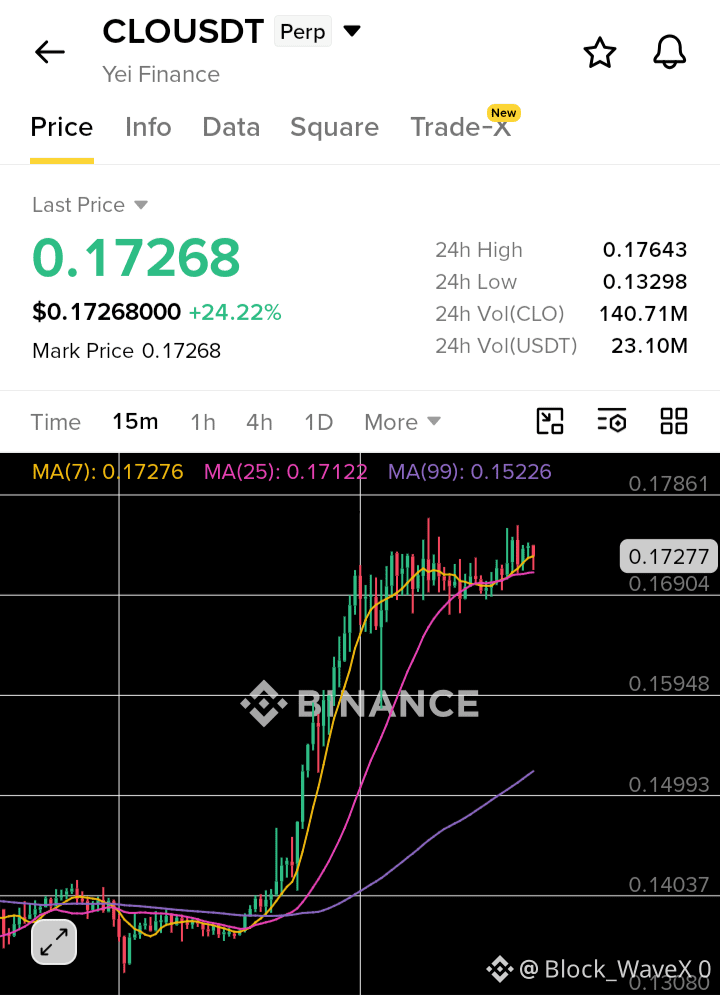
Guy's $CLO Short Trade Setup Entry: 0.1980 – 0.2005 SL: 0.2050 TP1: 0.1935 TP2: 0.1885 TP3: 0.1825 The 15-minute structure continues to favor sellers, with price printing lower highs after failing to sustain the earlier rally. The current bounce is approaching nearby resistance rather than confirming a reversal. Wait for a pullback into the entry zone, maintain disciplined risk management, and avoid entering after an impulsive move. Trade idea: Short failed rallies near resistance, respect predefined stops, protect capital consistently, and let confirmed momentum guide every trading decision patiently. {future}(CLOUSDT)
Guy's $CLO Short Trade Setup

Entry: 0.1980 – 0.2005

SL: 0.2050

TP1: 0.1935
TP2: 0.1885
TP3: 0.1825

The 15-minute structure continues to favor sellers, with price printing lower highs after failing to sustain the earlier rally. The current bounce is approaching nearby resistance rather than confirming a reversal. Wait for a pullback into the entry zone, maintain disciplined risk management, and avoid entering after an impulsive move.

Trade idea: Short failed rallies near resistance, respect predefined stops, protect capital consistently, and let confirmed momentum guide every trading decision patiently.
Guy's $SYRUP Short Trade Setup Entry: 0.1600 – 0.1620 SL: 0.1650 TP1: 0.1570 TP2: 0.1550 TP3: 0.1530 The 15-minute chart remains bearish with a sequence of lower highs and lower lows. The current bounce is testing nearby resistance but lacks confirmation of a trend reversal. Wait for a pullback into the entry zone before considering shorts, respect the stop loss, and avoid chasing price after impulsive moves. Trade idea: Sell resistance after confirmed rejection, preserve capital through disciplined sizing, and avoid emotional entries during temporary relief bounces only. {spot}(SYRUPUSDT)
Guy's $SYRUP Short Trade Setup

Entry: 0.1600 – 0.1620

SL: 0.1650

TP1: 0.1570
TP2: 0.1550
TP3: 0.1530

The 15-minute chart remains bearish with a sequence of lower highs and lower lows. The current bounce is testing nearby resistance but lacks confirmation of a trend reversal. Wait for a pullback into the entry zone before considering shorts, respect the stop loss, and avoid chasing price after impulsive moves.

Trade idea: Sell resistance after confirmed rejection, preserve capital through disciplined sizing, and avoid emotional entries during temporary relief bounces only.
Connectez-vous pour découvrir plus de contenu
Rejoignez la communauté mondiale des adeptes de cryptomonnaies sur Binance Square
⚡️ Suviez les dernières informations importantes sur les cryptomonnaies.
💬 Jugé digne de confiance par la plus grande plateforme d’échange de cryptomonnaies au monde.
👍 Découvrez les connaissances que partagent les créateurs vérifiés.
Adresse e-mail/Nº de téléphone
Plan du site
Préférences de cookies
CGU de la plateforme