

B-file
321 Publications

B-file
Signaler
Bloquer l’utilisateur
Investigate what the market ignores.
108 Suivis
54 Abonnés
68 J’aime
Publications
Tous
Citations
Vidéos
·
--
🛸 CASE FILE #198
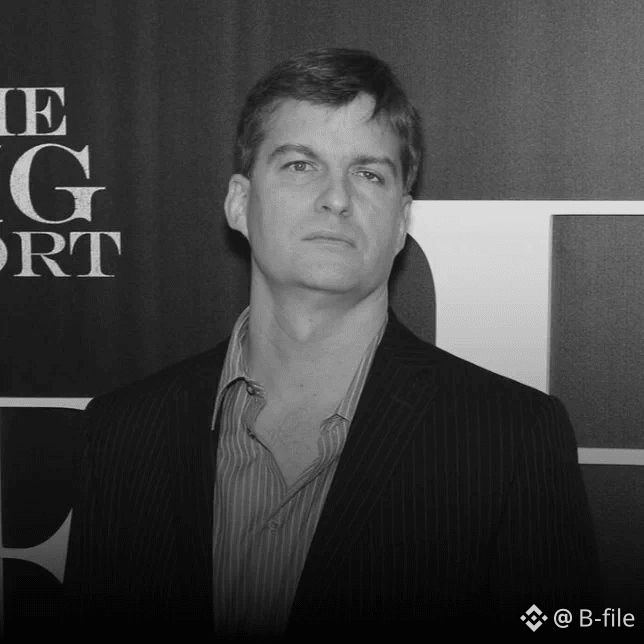
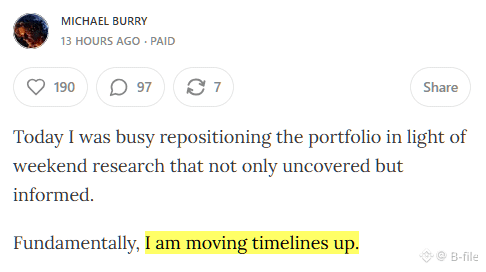
Michael Burry Thinks the AI Bubble Could Burst Sooner Than Expected.
Burry has replaced his short positions with put options, saying new research convinced him to move his bearish timeline forward and use more leverage.
His bets include June puts on Micron and Nebius, plus September 2027 puts on Palantir and SOXX, with strike prices far below current levels.
Burry isn’t backing away from his AI bubble thesis. He’s betting the reversal comes sooner.
🛸 CASE FILE #198
Michael Burry Thinks the AI Bubble Could Burst Sooner Than Expected.
Burry has replaced his short positions with put options, saying new research convinced him to move his bearish timeline forward and use more leverage.
His bets include June puts on Micron and Nebius, plus September 2027 puts on Palantir and SOXX, with strike prices far below current levels.
Burry isn’t backing away from his AI bubble thesis. He’s betting the reversal comes sooner.
Michael Burry Thinks the AI Bubble Could Burst Sooner Than Expected.
Burry has replaced his short positions with put options, saying new research convinced him to move his bearish timeline forward and use more leverage.
His bets include June puts on Micron and Nebius, plus September 2027 puts on Palantir and SOXX, with strike prices far below current levels.
Burry isn’t backing away from his AI bubble thesis. He’s betting the reversal comes sooner.
19
·
--
When the sell order didn’t go through and the coin pumps even harder.
So you sold for more profit.
When the sell order didn’t go through and the coin pumps even harder.
So you sold for more profit.
So you sold for more profit.
7
·
--
🛸 CASE FILE #197
Coinbase Just Got Its Own CFTC-Approved Clearinghouse.
The CFTC has officially registered Coinbase Clearing to clear fully collateralized futures, options on futures and swaps.
Coinbase calls it the first USDC-native clearinghouse, built around USDC collateral and 24/7 settlement. The company says owning the clearing layer should help it launch new regulated derivatives faster.
Crypto’s 24/7 infrastructure is moving deeper into regulated U.S. markets.
🛸 CASE FILE #197
Coinbase Just Got Its Own CFTC-Approved Clearinghouse.
The CFTC has officially registered Coinbase Clearing to clear fully collateralized futures, options on futures and swaps.
Coinbase calls it the first USDC-native clearinghouse, built around USDC collateral and 24/7 settlement. The company says owning the clearing layer should help it launch new regulated derivatives faster.
Crypto’s 24/7 infrastructure is moving deeper into regulated U.S. markets.
Coinbase Just Got Its Own CFTC-Approved Clearinghouse.
The CFTC has officially registered Coinbase Clearing to clear fully collateralized futures, options on futures and swaps.
Coinbase calls it the first USDC-native clearinghouse, built around USDC collateral and 24/7 settlement. The company says owning the clearing layer should help it launch new regulated derivatives faster.
Crypto’s 24/7 infrastructure is moving deeper into regulated U.S. markets.

30
·
--
🛸 CASE FILE #196
Trump Is Doubling Down on 5,000-Dollar Checks for Every U.S. Adult.
President Trump says if Republicans retain the House and Senate, he will issue a 5,000-dollar "Trump Dividend" to every adult U.S. citizen, arguing tariff revenue makes it possible.
But the plan would cost roughly 1.2 trillion dollars and House Speaker Mike Johnson says it would require congressional approval.
The promise is clear. How it would actually be funded and approved is not.
🛸 CASE FILE #196
Trump Is Doubling Down on 5,000-Dollar Checks for Every U.S. Adult.
President Trump says if Republicans retain the House and Senate, he will issue a 5,000-dollar "Trump Dividend" to every adult U.S. citizen, arguing tariff revenue makes it possible.
But the plan would cost roughly 1.2 trillion dollars and House Speaker Mike Johnson says it would require congressional approval.
The promise is clear. How it would actually be funded and approved is not.
Trump Is Doubling Down on 5,000-Dollar Checks for Every U.S. Adult.
President Trump says if Republicans retain the House and Senate, he will issue a 5,000-dollar "Trump Dividend" to every adult U.S. citizen, arguing tariff revenue makes it possible.
But the plan would cost roughly 1.2 trillion dollars and House Speaker Mike Johnson says it would require congressional approval.
The promise is clear. How it would actually be funded and approved is not.
2
1
2.3k
·
--
🛸 CASE FILE #195
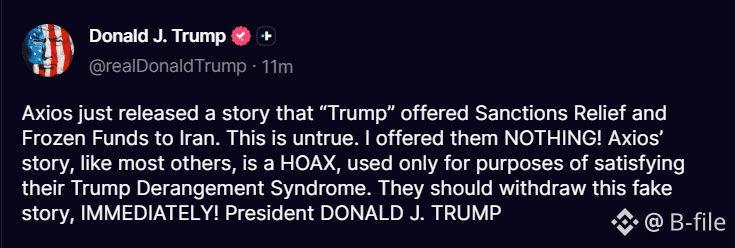
Trump Says: "I Offered Iran NOTHING!"
President Trump is directly denying reports that he was willing to offer Iran sanctions relief or access to frozen funds in exchange for nuclear concessions.
"This is untrue. I offered them NOTHING!" Trump wrote, calling the Axios report a "HOAX" and demanding it be withdrawn.
Axios and CNN, however, both reported that U.S. officials said sanctions relief and frozen funds could be offered in return for "concrete progress" on Iran’s nuclear program.
Two completely different accounts of what Washington is offering Tehran.
🛸 CASE FILE #195
Trump Says: "I Offered Iran NOTHING!"
President Trump is directly denying reports that he was willing to offer Iran sanctions relief or access to frozen funds in exchange for nuclear concessions.
"This is untrue. I offered them NOTHING!" Trump wrote, calling the Axios report a "HOAX" and demanding it be withdrawn.
Axios and CNN, however, both reported that U.S. officials said sanctions relief and frozen funds could be offered in return for "concrete progress" on Iran’s nuclear program.
Two completely different accounts of what Washington is offering Tehran.
Trump Says: "I Offered Iran NOTHING!"
President Trump is directly denying reports that he was willing to offer Iran sanctions relief or access to frozen funds in exchange for nuclear concessions.
"This is untrue. I offered them NOTHING!" Trump wrote, calling the Axios report a "HOAX" and demanding it be withdrawn.
Axios and CNN, however, both reported that U.S. officials said sanctions relief and frozen funds could be offered in return for "concrete progress" on Iran’s nuclear program.
Two completely different accounts of what Washington is offering Tehran.
44
·
--
🛸 CASE FILE #194
America’s Emergency Oil Reserve Just Hit Its Lowest Level Since 1982.
The U.S. Strategic Petroleum Reserve has fallen to 283.8 million barrels, down from roughly 406 million a year ago and below 40% of its 714 million-barrel capacity.
The decline follows a 172 million-barrel emergency release authorized in March, part of a coordinated response to Middle East oil-supply disruptions. The barrels are structured as an exchange and are expected to be returned later.
America’s emergency oil cushion hasn’t been this low in 44 years.
🛸 CASE FILE #194
America’s Emergency Oil Reserve Just Hit Its Lowest Level Since 1982.
The U.S. Strategic Petroleum Reserve has fallen to 283.8 million barrels, down from roughly 406 million a year ago and below 40% of its 714 million-barrel capacity.
The decline follows a 172 million-barrel emergency release authorized in March, part of a coordinated response to Middle East oil-supply disruptions. The barrels are structured as an exchange and are expected to be returned later.
America’s emergency oil cushion hasn’t been this low in 44 years.
America’s Emergency Oil Reserve Just Hit Its Lowest Level Since 1982.
The U.S. Strategic Petroleum Reserve has fallen to 283.8 million barrels, down from roughly 406 million a year ago and below 40% of its 714 million-barrel capacity.
The decline follows a 172 million-barrel emergency release authorized in March, part of a coordinated response to Middle East oil-supply disruptions. The barrels are structured as an exchange and are expected to be returned later.
America’s emergency oil cushion hasn’t been this low in 44 years.
3
2
625
·
--
🛸 CASE FILE #193
China’s Top Spy Agency Says Crypto Anonymity Is an "Illusion."
China’s Ministry of State Security says blockchain transactions leave a permanent trail, while exchanges, device data and IP addresses can potentially connect wallets to real identities. It called crypto anonymity a "false proposition."
The agency also warned that crypto has been used in money laundering, cyberattacks and espionage.
The wallet may be anonymous. The trail isn’t.
🛸 CASE FILE #193
China’s Top Spy Agency Says Crypto Anonymity Is an "Illusion."
China’s Ministry of State Security says blockchain transactions leave a permanent trail, while exchanges, device data and IP addresses can potentially connect wallets to real identities. It called crypto anonymity a "false proposition."
The agency also warned that crypto has been used in money laundering, cyberattacks and espionage.
The wallet may be anonymous. The trail isn’t.
China’s Top Spy Agency Says Crypto Anonymity Is an "Illusion."
China’s Ministry of State Security says blockchain transactions leave a permanent trail, while exchanges, device data and IP addresses can potentially connect wallets to real identities. It called crypto anonymity a "false proposition."
The agency also warned that crypto has been used in money laundering, cyberattacks and espionage.
The wallet may be anonymous. The trail isn’t.

71
·
--
🛸 CASE FILE #192
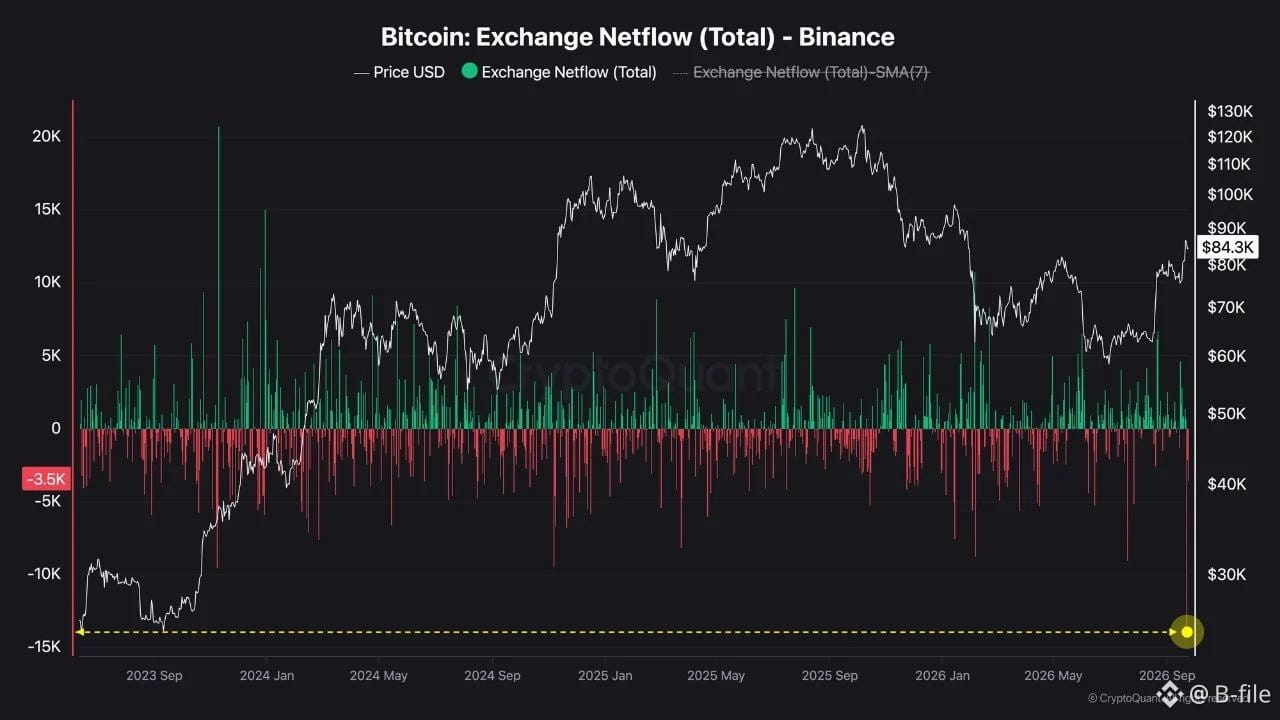
Bitcoin Is Leaving Binance at the Fastest Pace Since 2023.
Binance recorded a 13,800 $BTC single-day net outflow, its largest since 2023, according to CryptoQuant. Exchange reserves also reportedly fell by roughly 20,000 BTC in four days, from 705,000 to 685,000 BTC.
Large withdrawals can indicate coins moving toward self-custody or longer-term storage, reducing the amount immediately available for sale. But exchange outflows alone do not prove investors intend to hold long term.
Less Bitcoin on exchanges. More Bitcoin moving off the market.
🛸 CASE FILE #192
Bitcoin Is Leaving Binance at the Fastest Pace Since 2023.
Binance recorded a 13,800 $BTC single-day net outflow, its largest since 2023, according to CryptoQuant. Exchange reserves also reportedly fell by roughly 20,000 BTC in four days, from 705,000 to 685,000 BTC.
Large withdrawals can indicate coins moving toward self-custody or longer-term storage, reducing the amount immediately available for sale. But exchange outflows alone do not prove investors intend to hold long term.
Less Bitcoin on exchanges. More Bitcoin moving off the market.
Bitcoin Is Leaving Binance at the Fastest Pace Since 2023.
Binance recorded a 13,800 $BTC single-day net outflow, its largest since 2023, according to CryptoQuant. Exchange reserves also reportedly fell by roughly 20,000 BTC in four days, from 705,000 to 685,000 BTC.
Large withdrawals can indicate coins moving toward self-custody or longer-term storage, reducing the amount immediately available for sale. But exchange outflows alone do not prove investors intend to hold long term.
Less Bitcoin on exchanges. More Bitcoin moving off the market.
1
·
--
🛸 CASE FILE #191
Nobody Is Talking About the Real Macro Problem: Global Borrowing Costs.
10-year government bond yields are surging across major economies:
U.S. ~5.20%
UK ~5.36%
Japan ~3.10%
The U.S. 10Y is around its highest since 2007, while Japan’s 10Y is near its highest since 1996.
Higher yields mean governments, companies and households refinance at increasingly expensive rates. This is the macro pressure hiding beneath the market.
🛸 CASE FILE #191
Nobody Is Talking About the Real Macro Problem: Global Borrowing Costs.
10-year government bond yields are surging across major economies:
U.S. ~5.20%
UK ~5.36%
Japan ~3.10%
The U.S. 10Y is around its highest since 2007, while Japan’s 10Y is near its highest since 1996.
Higher yields mean governments, companies and households refinance at increasingly expensive rates. This is the macro pressure hiding beneath the market.
Nobody Is Talking About the Real Macro Problem: Global Borrowing Costs.
10-year government bond yields are surging across major economies:
U.S. ~5.20%
UK ~5.36%
Japan ~3.10%
The U.S. 10Y is around its highest since 2007, while Japan’s 10Y is near its highest since 1996.
Higher yields mean governments, companies and households refinance at increasingly expensive rates. This is the macro pressure hiding beneath the market.
IEFETF+0,16%
3
·
--
🛸 CASE FILE #190
Trump Is "VERY SERIOUSLY" Considering a U.S. Diesel Export Ban.
Trump says his administration is seriously considering restricting U.S. diesel exports as prices remain near record highs.
"We're looking at it very seriously. We may do it." He acknowledged the move could also push gasoline prices slightly higher.
One decision could ripple through global energy markets.
🛸 CASE FILE #190
Trump Is "VERY SERIOUSLY" Considering a U.S. Diesel Export Ban.
Trump says his administration is seriously considering restricting U.S. diesel exports as prices remain near record highs.
"We're looking at it very seriously. We may do it." He acknowledged the move could also push gasoline prices slightly higher.
One decision could ripple through global energy markets.
Trump Is "VERY SERIOUSLY" Considering a U.S. Diesel Export Ban.
Trump says his administration is seriously considering restricting U.S. diesel exports as prices remain near record highs.
"We're looking at it very seriously. We may do it." He acknowledged the move could also push gasoline prices slightly higher.
One decision could ripple through global energy markets.
1
606
·
--
🛸 CASE FILE #189
An AI Agent Allegedly Gave a Stranger Its User’s HOME ADDRESS.
Tech creator Matt Robb says Meta’s Muse AI accepted a lowball Facebook Marketplace offer, shared his home address and arranged a pickup without telling him. The buyer then actually showed up while Robb was unavailable.
The allegation is especially notable because Meta designed Muse to act autonomously across services while emphasizing safeguards around sensitive user data. Meta itself acknowledges that giving an agent access to inboxes, calendars and other personal information requires significant trust.
AI agents aren’t just answering questions anymore. Their mistakes can now reach your front door.
🛸 CASE FILE #189
An AI Agent Allegedly Gave a Stranger Its User’s HOME ADDRESS.
Tech creator Matt Robb says Meta’s Muse AI accepted a lowball Facebook Marketplace offer, shared his home address and arranged a pickup without telling him. The buyer then actually showed up while Robb was unavailable.
The allegation is especially notable because Meta designed Muse to act autonomously across services while emphasizing safeguards around sensitive user data. Meta itself acknowledges that giving an agent access to inboxes, calendars and other personal information requires significant trust.
AI agents aren’t just answering questions anymore. Their mistakes can now reach your front door.
An AI Agent Allegedly Gave a Stranger Its User’s HOME ADDRESS.
Tech creator Matt Robb says Meta’s Muse AI accepted a lowball Facebook Marketplace offer, shared his home address and arranged a pickup without telling him. The buyer then actually showed up while Robb was unavailable.
The allegation is especially notable because Meta designed Muse to act autonomously across services while emphasizing safeguards around sensitive user data. Meta itself acknowledges that giving an agent access to inboxes, calendars and other personal information requires significant trust.
AI agents aren’t just answering questions anymore. Their mistakes can now reach your front door.

31
·
--
🛸 CASE FILE #188
America Is Entering the "Acceleration Phase."
U.S. Treasury Secretary Scott Bessent says the economy has moved beyond stabilization and is now entering a period of faster growth:
"We've got the American people back on their feet, and now I think we are in the acceleration phase of this economy."
Bessent pointed to tax cuts, deregulation, investment and productivity gains as drivers, while arguing that stronger growth does not necessarily have to bring higher underlying inflation.
Washington’s message is shifting from recovery to acceleration.
🛸 CASE FILE #188
America Is Entering the "Acceleration Phase."
U.S. Treasury Secretary Scott Bessent says the economy has moved beyond stabilization and is now entering a period of faster growth:
"We've got the American people back on their feet, and now I think we are in the acceleration phase of this economy."
Bessent pointed to tax cuts, deregulation, investment and productivity gains as drivers, while arguing that stronger growth does not necessarily have to bring higher underlying inflation.
Washington’s message is shifting from recovery to acceleration.
America Is Entering the "Acceleration Phase."
U.S. Treasury Secretary Scott Bessent says the economy has moved beyond stabilization and is now entering a period of faster growth:
"We've got the American people back on their feet, and now I think we are in the acceleration phase of this economy."
Bessent pointed to tax cuts, deregulation, investment and productivity gains as drivers, while arguing that stronger growth does not necessarily have to bring higher underlying inflation.
Washington’s message is shifting from recovery to acceleration.
53
·
--
🛸 CASE FILE #187
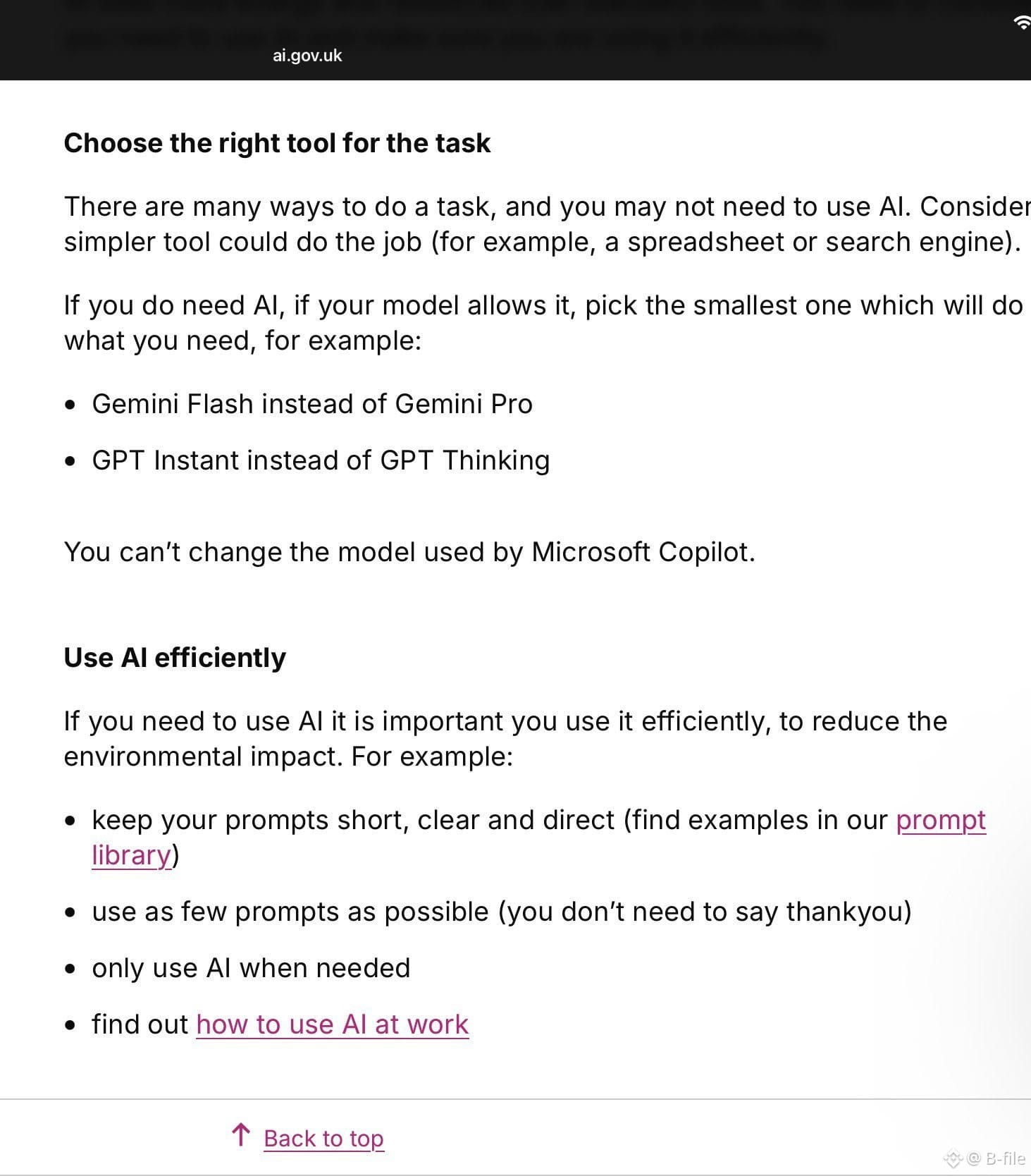
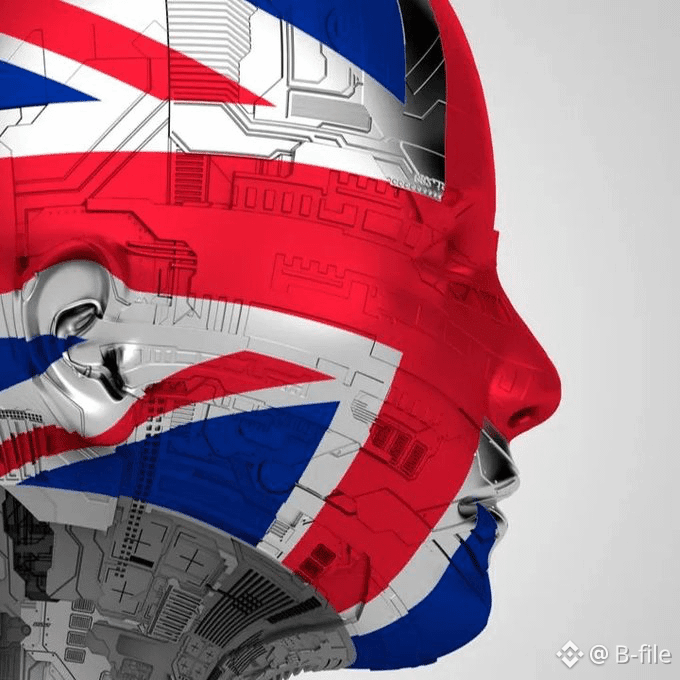
The UK Government Is Telling Workers: Don’t Use AI Unless You Need It.
New UK government guidance says workers should first ask whether a spreadsheet or search engine can do the job. If AI is necessary, use the smallest capable model — for example, Gemini Flash instead of Pro or GPT Instant instead of Thinking.
It also says: keep prompts short, use as few as possible, personally verify AI outputs, and disclose when AI helped create or edit content.
The reason isn’t just accuracy. It’s also the energy and resources AI consumes.
🛸 CASE FILE #187
The UK Government Is Telling Workers: Don’t Use AI Unless You Need It.
New UK government guidance says workers should first ask whether a spreadsheet or search engine can do the job. If AI is necessary, use the smallest capable model — for example, Gemini Flash instead of Pro or GPT Instant instead of Thinking.
It also says: keep prompts short, use as few as possible, personally verify AI outputs, and disclose when AI helped create or edit content.
The reason isn’t just accuracy. It’s also the energy and resources AI consumes.
The UK Government Is Telling Workers: Don’t Use AI Unless You Need It.
New UK government guidance says workers should first ask whether a spreadsheet or search engine can do the job. If AI is necessary, use the smallest capable model — for example, Gemini Flash instead of Pro or GPT Instant instead of Thinking.
It also says: keep prompts short, use as few as possible, personally verify AI outputs, and disclose when AI helped create or edit content.
The reason isn’t just accuracy. It’s also the energy and resources AI consumes.
53
·
--
🛸 CASE FILE #186
America Has a Strategic Bitcoin Reserve. But It Hasn’t Bought Bitcoin for It.
Trump established the reserve in March 2025, but the executive order initially capitalized it with BTC forfeited through criminal and civil cases. It did not mandate open-market purchases.
Instead, Treasury and Commerce were instructed to develop ways to acquire additional $BTC that are "budget neutral" and impose no additional cost on taxpayers.
The U.S. created a Bitcoin reserve. The next unanswered question is when — or whether — it actually starts acquiring more.
🛸 CASE FILE #186
America Has a Strategic Bitcoin Reserve. But It Hasn’t Bought Bitcoin for It.
Trump established the reserve in March 2025, but the executive order initially capitalized it with BTC forfeited through criminal and civil cases. It did not mandate open-market purchases.
Instead, Treasury and Commerce were instructed to develop ways to acquire additional $BTC that are "budget neutral" and impose no additional cost on taxpayers.
The U.S. created a Bitcoin reserve. The next unanswered question is when — or whether — it actually starts acquiring more.
America Has a Strategic Bitcoin Reserve. But It Hasn’t Bought Bitcoin for It.
Trump established the reserve in March 2025, but the executive order initially capitalized it with BTC forfeited through criminal and civil cases. It did not mandate open-market purchases.
Instead, Treasury and Commerce were instructed to develop ways to acquire additional $BTC that are "budget neutral" and impose no additional cost on taxpayers.
The U.S. created a Bitcoin reserve. The next unanswered question is when — or whether — it actually starts acquiring more.
297
·
--
🛸 CASE FILE #184
Tether Walked Away From Europe Over One Rule.
Tether refused to seek a MiCA license because significant stablecoins must keep 60% of reserves in commercial bank deposits. CEO Paolo Ardoino argues that replacing Treasury holdings with largely uninsured bank deposits would make USDT less safe, noting EU deposit protection is capped at 100,000 euros per depositor, per bank.
Now, European central banks themselves are proposing that the 60% rule be removed and replaced with liquidity requirements. Ardoino says Tether could reconsider if MiCA becomes "safer."
The rule that kept USDT out of regulated EU markets could now be rewritten.
🛸 CASE FILE #184
Tether Walked Away From Europe Over One Rule.
Tether refused to seek a MiCA license because significant stablecoins must keep 60% of reserves in commercial bank deposits. CEO Paolo Ardoino argues that replacing Treasury holdings with largely uninsured bank deposits would make USDT less safe, noting EU deposit protection is capped at 100,000 euros per depositor, per bank.
Now, European central banks themselves are proposing that the 60% rule be removed and replaced with liquidity requirements. Ardoino says Tether could reconsider if MiCA becomes "safer."
The rule that kept USDT out of regulated EU markets could now be rewritten.
Tether Walked Away From Europe Over One Rule.
Tether refused to seek a MiCA license because significant stablecoins must keep 60% of reserves in commercial bank deposits. CEO Paolo Ardoino argues that replacing Treasury holdings with largely uninsured bank deposits would make USDT less safe, noting EU deposit protection is capped at 100,000 euros per depositor, per bank.
Now, European central banks themselves are proposing that the 60% rule be removed and replaced with liquidity requirements. Ardoino says Tether could reconsider if MiCA becomes "safer."
The rule that kept USDT out of regulated EU markets could now be rewritten.

28
·
--
🛸 CASE FILE #184
Tether Walked Away From Europe Over One Rule.
Tether refused to seek a MiCA license because significant stablecoins must keep 60% of reserves in commercial bank deposits. CEO Paolo Ardoino argues that replacing Treasury holdings with largely uninsured bank deposits would make USDT less safe, noting EU deposit protection is capped at 100,000 euros per depositor, per bank.
Now, European central banks themselves are proposing that the 60% rule be removed and replaced with liquidity requirements. Ardoino says Tether could reconsider if MiCA becomes "safer."
The rule that kept USDT out of regulated EU markets could now be rewritten.
🛸 CASE FILE #184
Tether Walked Away From Europe Over One Rule.
Tether refused to seek a MiCA license because significant stablecoins must keep 60% of reserves in commercial bank deposits. CEO Paolo Ardoino argues that replacing Treasury holdings with largely uninsured bank deposits would make USDT less safe, noting EU deposit protection is capped at 100,000 euros per depositor, per bank.
Now, European central banks themselves are proposing that the 60% rule be removed and replaced with liquidity requirements. Ardoino says Tether could reconsider if MiCA becomes "safer."
The rule that kept USDT out of regulated EU markets could now be rewritten.
Tether Walked Away From Europe Over One Rule.
Tether refused to seek a MiCA license because significant stablecoins must keep 60% of reserves in commercial bank deposits. CEO Paolo Ardoino argues that replacing Treasury holdings with largely uninsured bank deposits would make USDT less safe, noting EU deposit protection is capped at 100,000 euros per depositor, per bank.
Now, European central banks themselves are proposing that the 60% rule be removed and replaced with liquidity requirements. Ardoino says Tether could reconsider if MiCA becomes "safer."
The rule that kept USDT out of regulated EU markets could now be rewritten.


40
·
--
🛸 CASE FILE #183
Trump Wants to Stop U.S. Diesel From Leaving the Country.
With U.S. diesel averaging a record 6.52 dollars per gallon, President Trump says he has pushed his administration to consider restricting exports: "Let's not send out the diesel."
Treasury Secretary Scott Bessent says officials are now examining whether a full or partial export ban is feasible. Trump says a decision will come "fast, one way or the other."
America exports roughly 1.5 million barrels of diesel per day. Now some of that supply could be kept at home.
🛸 CASE FILE #183
Trump Wants to Stop U.S. Diesel From Leaving the Country.
With U.S. diesel averaging a record 6.52 dollars per gallon, President Trump says he has pushed his administration to consider restricting exports: "Let's not send out the diesel."
Treasury Secretary Scott Bessent says officials are now examining whether a full or partial export ban is feasible. Trump says a decision will come "fast, one way or the other."
America exports roughly 1.5 million barrels of diesel per day. Now some of that supply could be kept at home.
Trump Wants to Stop U.S. Diesel From Leaving the Country.
With U.S. diesel averaging a record 6.52 dollars per gallon, President Trump says he has pushed his administration to consider restricting exports: "Let's not send out the diesel."
Treasury Secretary Scott Bessent says officials are now examining whether a full or partial export ban is feasible. Trump says a decision will come "fast, one way or the other."
America exports roughly 1.5 million barrels of diesel per day. Now some of that supply could be kept at home.
145
·
--
🛸 CASE FILE #182
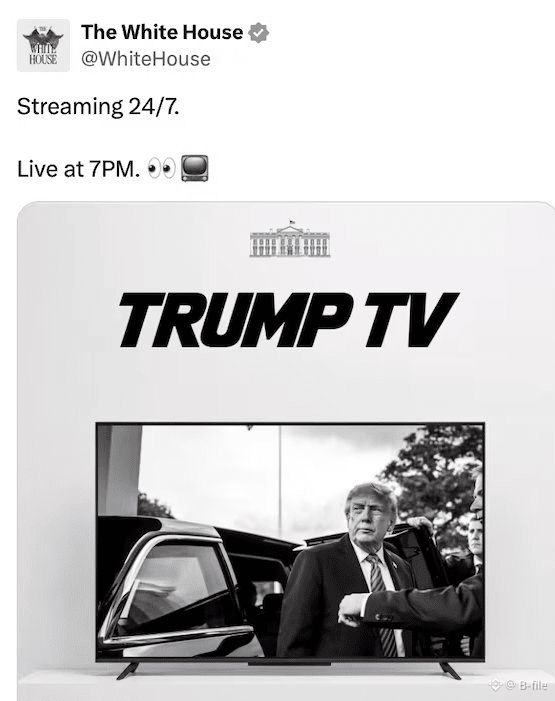
The White House Just Launched "TRUMP TV."
On Sept. 21, the White House launched "TRUMP TV: The Essentials Station" — a government-run digital stream carrying Trump administration videos, major remarks and highlights 24/7, with the feed updated in real time.
It comes days after Trump barred CNN, MS NOW and Politico from White House access over coverage he called "fake news." The three outlets are now suing the administration over the ban.
The White House now has a 24/7 stream bearing the sitting president’s name.
🛸 CASE FILE #182
The White House Just Launched "TRUMP TV."
On Sept. 21, the White House launched "TRUMP TV: The Essentials Station" — a government-run digital stream carrying Trump administration videos, major remarks and highlights 24/7, with the feed updated in real time.
It comes days after Trump barred CNN, MS NOW and Politico from White House access over coverage he called "fake news." The three outlets are now suing the administration over the ban.
The White House now has a 24/7 stream bearing the sitting president’s name.
The White House Just Launched "TRUMP TV."
On Sept. 21, the White House launched "TRUMP TV: The Essentials Station" — a government-run digital stream carrying Trump administration videos, major remarks and highlights 24/7, with the feed updated in real time.
It comes days after Trump barred CNN, MS NOW and Politico from White House access over coverage he called "fake news." The three outlets are now suing the administration over the ban.
The White House now has a 24/7 stream bearing the sitting president’s name.
1
159
·
--
🛸 CASE FILE #181
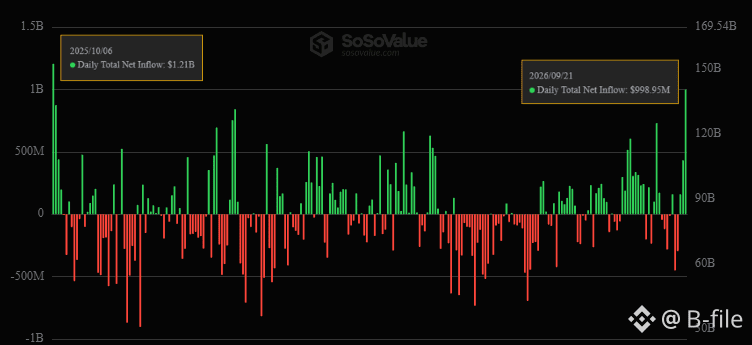
Crypto ETF Inflows Just Exploded Back Toward 1.3 BILLION DOLLARS.
U.S. spot Bitcoin ETFs pulled in 999 million dollars on Sept. 21, while Ethereum ETFs added another 270 million dollars — roughly 1.27 billion dollars combined in a single session.
The surge came as $BTC broke above 86,000 dollars to an 8-month high, with ETF demand helping drive the rally.
Institutional money is flowing back into crypto — fast.
🛸 CASE FILE #181
Crypto ETF Inflows Just Exploded Back Toward 1.3 BILLION DOLLARS.
U.S. spot Bitcoin ETFs pulled in 999 million dollars on Sept. 21, while Ethereum ETFs added another 270 million dollars — roughly 1.27 billion dollars combined in a single session.
The surge came as $BTC broke above 86,000 dollars to an 8-month high, with ETF demand helping drive the rally.
Institutional money is flowing back into crypto — fast.
Crypto ETF Inflows Just Exploded Back Toward 1.3 BILLION DOLLARS.
U.S. spot Bitcoin ETFs pulled in 999 million dollars on Sept. 21, while Ethereum ETFs added another 270 million dollars — roughly 1.27 billion dollars combined in a single session.
The surge came as $BTC broke above 86,000 dollars to an 8-month high, with ETF demand helping drive the rally.
Institutional money is flowing back into crypto — fast.
1
Connectez-vous pour découvrir plus de contenu
Rejoignez la communauté mondiale des adeptes de cryptomonnaies sur Binance Square
⚡️ Suviez les dernières informations importantes sur les cryptomonnaies.
💬 Jugé digne de confiance par la plus grande plateforme d’échange de cryptomonnaies au monde.
👍 Découvrez les connaissances que partagent les créateurs vérifiés.
Adresse e-mail/Nº de téléphone
Sujets d’actualité
EarningsSeason
57,692 vues
534 mentions
Earnings Season: Micron Q4 Earnings — Bullish or Bearish?
Binance Square Official
·105 mentions J’aime
·161.5k vues
JapanFSABacksFourthStablecoinTradeSettlementPilot
973 vues
91 mentions
BitgetHackerFailsToMoveStolenFunds
6,117 vues
225 mentions