

Alizeh Ali _Angel
7.2k Publications

Alizeh Ali _Angel
 Compte Square Vérifié+
Signaler
Bloquer l’utilisateur
Spot & Futures Trader | Content Creator | Verified KOL | Drama Queen | Market structure, risk-first setups, and consistent trade management. X: ali_alizeh72722
358 Suivis
66.2K+ Abonnés
31.0K+ J’aime
Publications
Tous
Citations
Direct
PINNED
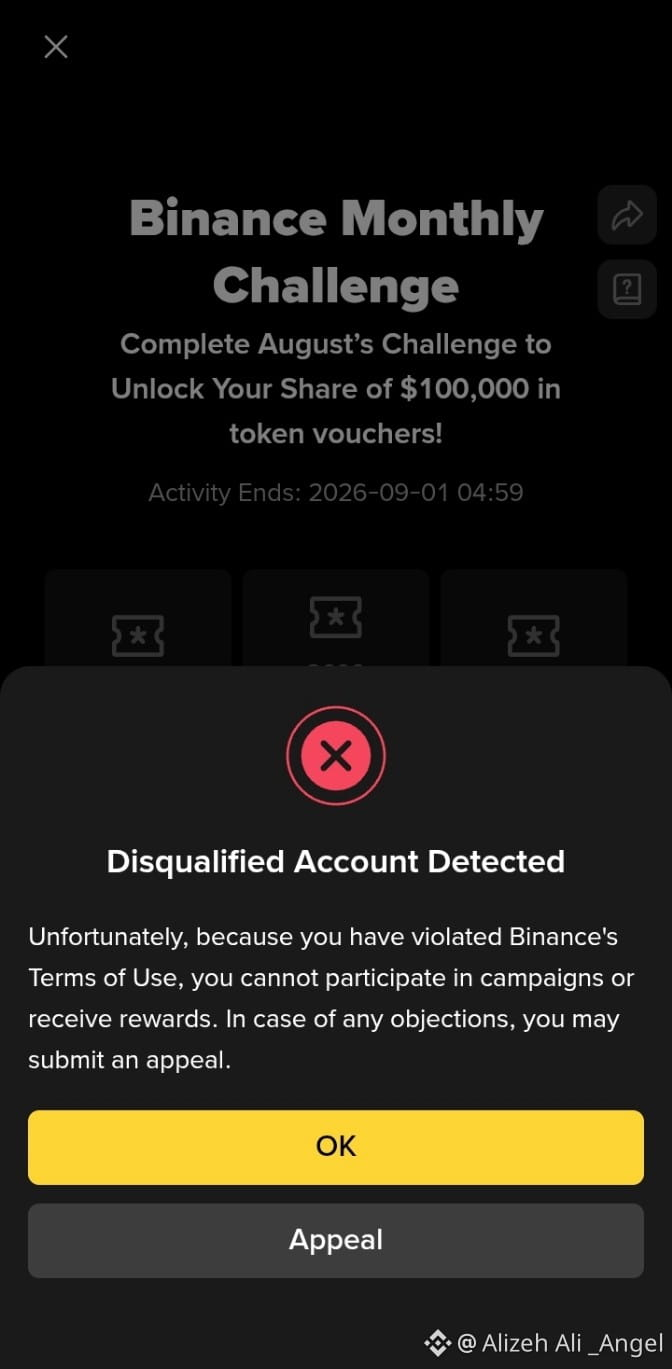
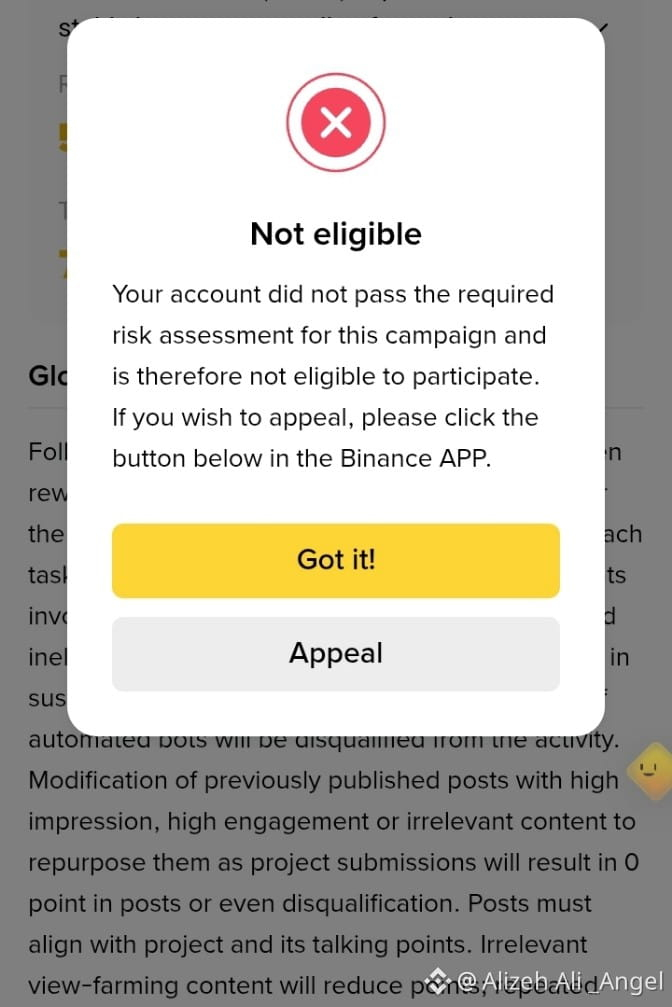
On May 10, 2026, my Binance account was marked "Not Eligible" — it's now been over 3 months, and my eligibility still hasn't been restored. 😔
During this time, I've submitted multiple appeals, each with the required proofs and documents. Every single one has been rejected, but I understand Binance is a large platform serving millions of users — so I've followed the process patiently.
When I contact customer support, the response is always the same: "The system will restore it automatically, please wait." I respect this process, but 3 months is a long time, and it feels like my case may now deserve a manual review to understand what steps to take next.
I've been a verified creator on Binance for the past 2 years, with 65K+ followers, and being part of this community has always made me proud. I've put in consistent effort day and night to create quality content because I believe in Binance's mission and its community.
My simple request is: could @Binance_Customer_Support or a senior team please manually review this case? This isn't a complaint — it's a genuine request. After so many appeals and so much waiting, I'm simply hoping for a fair response.
Binance has always supported its creators, and I trust that once this reaches the right team, it will be resolved soon. 🙏
#Binance #BinanceSquare #creatorpad
@Binance_Academy @Binance_Square_Official
@Binance_Customer_Support @CZ @blueshirt666 @heyi @Cy123456 @Franc1s @ETHcryptohub @Square-Creator-8be407b9c @Square-Creator-46eb16893 @Square-Creator-bcad19bdc3c3
@China_BNB
@Muqeem-94 @Tapu13 @Sahil1987 @monkist @btc_fahmi @The-master-minds
@Square-Creator-3ca6144669ec @happynaccy @Maya2001 @themrpofficial @tangyuan131419 @CoinKing007 @BullRun_Signals @CoinCoachSignalsAdmin @mavis54 @Sattar_Chaqer @Flicky123Nohawn @Hua_BNB @Ayesha_Kanwal_007 @KazeBNB @Tayyab12 @jenni_aura @NextGemHunter @Prime_Crypto_Outlet @Square-Creator-94f358866a009 @bullish_banter @millie_charles @1O69852872 @venomrana @Mr_BeAst10
On May 10, 2026, my Binance account was marked "Not Eligible" — it's now been over 3 months, and my eligibility still hasn't been restored. 😔
During this time, I've submitted multiple appeals, each with the required proofs and documents. Every single one has been rejected, but I understand Binance is a large platform serving millions of users — so I've followed the process patiently.
When I contact customer support, the response is always the same: "The system will restore it automatically, please wait." I respect this process, but 3 months is a long time, and it feels like my case may now deserve a manual review to understand what steps to take next.
I've been a verified creator on Binance for the past 2 years, with 65K+ followers, and being part of this community has always made me proud. I've put in consistent effort day and night to create quality content because I believe in Binance's mission and its community.
My simple request is: could @Binance Customer Support or a senior team please manually review this case? This isn't a complaint — it's a genuine request. After so many appeals and so much waiting, I'm simply hoping for a fair response.
Binance has always supported its creators, and I trust that once this reaches the right team, it will be resolved soon. 🙏
#Binance #BinanceSquare #creatorpad
@Binance Academy @Binance Square Official
@Binance Customer Support @CZ @Daniel Zou (DZ) 🔶 @Yi He @Cy_Binance @Franc1s @ETHcryptohub @Casper Sheraz @Mohsin_Trader_King @Rayyan_Trader
@China_BNB
@Muqeeem @Tapu13 @Sahil987 @Fox夕 @BTC_Fahmi @TMM Crypto
@Neeeno @Naccy小妹 @MAYA_ @ViiNii1 @Anna-汤圆 @Coin--King @BullRun_Signals @Coin Coach Signals @Mavis Evan @Sattar Chaqer @Dr Nohawn @Hua BNB @OG Analyst @Kaze BNB @KAZ_0 @Jia Lilly @ParvezMayar @Twin Tulips @Bullish_ Bhai @BullishBanter @Aryâ_Crypto @Fatima_Tariq @Venom Rana BNB @Zenobia-Rox
During this time, I've submitted multiple appeals, each with the required proofs and documents. Every single one has been rejected, but I understand Binance is a large platform serving millions of users — so I've followed the process patiently.
When I contact customer support, the response is always the same: "The system will restore it automatically, please wait." I respect this process, but 3 months is a long time, and it feels like my case may now deserve a manual review to understand what steps to take next.
I've been a verified creator on Binance for the past 2 years, with 65K+ followers, and being part of this community has always made me proud. I've put in consistent effort day and night to create quality content because I believe in Binance's mission and its community.
My simple request is: could @Binance Customer Support or a senior team please manually review this case? This isn't a complaint — it's a genuine request. After so many appeals and so much waiting, I'm simply hoping for a fair response.
Binance has always supported its creators, and I trust that once this reaches the right team, it will be resolved soon. 🙏
#Binance #BinanceSquare #creatorpad
@Binance Academy @Binance Square Official
@Binance Customer Support @CZ @Daniel Zou (DZ) 🔶 @Yi He @Cy_Binance @Franc1s @ETHcryptohub @Casper Sheraz @Mohsin_Trader_King @Rayyan_Trader
@China_BNB
@Muqeeem @Tapu13 @Sahil987 @Fox夕 @BTC_Fahmi @TMM Crypto
@Neeeno @Naccy小妹 @MAYA_ @ViiNii1 @Anna-汤圆 @Coin--King @BullRun_Signals @Coin Coach Signals @Mavis Evan @Sattar Chaqer @Dr Nohawn @Hua BNB @OG Analyst @Kaze BNB @KAZ_0 @Jia Lilly @ParvezMayar @Twin Tulips @Bullish_ Bhai @BullishBanter @Aryâ_Crypto @Fatima_Tariq @Venom Rana BNB @Zenobia-Rox
13
22
620
$NEAR Bounced off 4.758, reclaimed MA(7), now testing MA(25) — recovery from the flush still fragile. ⚔️
$NEAR USDT LONG (Scalp) 💚
📋 Entry: 4.845-4.855 | SL: 4.795 | TP1: 4.889 | TP2: 4.937 | TP3: 4.973
⚡ Sharp V-bounce off 4.758 with price reclaiming MA(7) — first test of MA(25) as resistance after the drop from 4.973.
🔍 Res: MA(25) 4.866, then MA(99) 4.937 | Sup: MA(7) 4.841, 4.758 low | Vol(5) picking up on the bounce candle
⚠️ -4.6% on the day means bigger trend is down — rejection at MA(25) sends it back toward 4.758.
DYOR. 🧭 #Near #BounceSetup #Write2Earrn
$NEAR
{future}(NEARUSDT)
$NEAR Bounced off 4.758, reclaimed MA(7), now testing MA(25) — recovery from the flush still fragile. ⚔️
$NEAR USDT LONG (Scalp) 💚
📋 Entry: 4.845-4.855 | SL: 4.795 | TP1: 4.889 | TP2: 4.937 | TP3: 4.973
⚡ Sharp V-bounce off 4.758 with price reclaiming MA(7) — first test of MA(25) as resistance after the drop from 4.973.
🔍 Res: MA(25) 4.866, then MA(99) 4.937 | Sup: MA(7) 4.841, 4.758 low | Vol(5) picking up on the bounce candle
⚠️ -4.6% on the day means bigger trend is down — rejection at MA(25) sends it back toward 4.758.
DYOR. 🧭 #Near #BounceSetup #Write2Earrn
$NEAR
$NEAR USDT LONG (Scalp) 💚
📋 Entry: 4.845-4.855 | SL: 4.795 | TP1: 4.889 | TP2: 4.937 | TP3: 4.973
⚡ Sharp V-bounce off 4.758 with price reclaiming MA(7) — first test of MA(25) as resistance after the drop from 4.973.
🔍 Res: MA(25) 4.866, then MA(99) 4.937 | Sup: MA(7) 4.841, 4.758 low | Vol(5) picking up on the bounce candle
⚠️ -4.6% on the day means bigger trend is down — rejection at MA(25) sends it back toward 4.758.
DYOR. 🧭 #Near #BounceSetup #Write2Earrn
$NEAR
6
557
$BR +26%, staircasing higher off 0.8434 with every dip bought into MA(7). 🚀
$BR USDT LONG (Scalp) 💚
📋 Entry: 1.048-1.054 | SL: 1.010 | TP1: 1.065 | TP2: 1.079 | TP3: 1.100
⚡ Clean impulsive trend since 0.8434, price never losing MA(7) through multiple pullbacks — momentum fully intact.
🔍 Res: 1.07910 | Sup: MA(7) 1.04777, MA(25) 1.00829 | MA structure wide and bullish | Vol steady, no clear exhaustion signal yet
⚠️ Break below MA(25) at 1.008 would be first real crack in this trend.
DYOR. 🧭 #BRUSDT #TrendFollow
$BR
{alpha}(560xff7d6a96ae471bbcd7713af9cb1feeb16cf56b41)
$BR +26%, staircasing higher off 0.8434 with every dip bought into MA(7). 🚀
$BR USDT LONG (Scalp) 💚
📋 Entry: 1.048-1.054 | SL: 1.010 | TP1: 1.065 | TP2: 1.079 | TP3: 1.100
⚡ Clean impulsive trend since 0.8434, price never losing MA(7) through multiple pullbacks — momentum fully intact.
🔍 Res: 1.07910 | Sup: MA(7) 1.04777, MA(25) 1.00829 | MA structure wide and bullish | Vol steady, no clear exhaustion signal yet
⚠️ Break below MA(25) at 1.008 would be first real crack in this trend.
DYOR. 🧭 #BRUSDT #TrendFollow
$BR
$BR USDT LONG (Scalp) 💚
📋 Entry: 1.048-1.054 | SL: 1.010 | TP1: 1.065 | TP2: 1.079 | TP3: 1.100
⚡ Clean impulsive trend since 0.8434, price never losing MA(7) through multiple pullbacks — momentum fully intact.
🔍 Res: 1.07910 | Sup: MA(7) 1.04777, MA(25) 1.00829 | MA structure wide and bullish | Vol steady, no clear exhaustion signal yet
⚠️ Break below MA(25) at 1.008 would be first real crack in this trend.
DYOR. 🧭 #BRUSDT #TrendFollow
$BR
2
487
$LINK b+2.7%, clean uptrend off 13.921, pulling back into MA(7) after tagging 14.499. 🚀
$LINK USDT LONG (Scalp) 💚
📋 Entry: 14.30-14.36 | SL: 14.10 | TP1: 14.42 | TP2: 14.50 | TP3: 14.60
⚡ Price holding above MA(7) through the pullback — every dip since 13.921 has bought into the fast MA.
🔍 Res: 14.499 | Sup: MA(7) 14.367, MA(25) 14.225 | MA structure fully bullish, wide separation | Vol(5) above Vol(10), steady participation
⚠️ Loss of MA(25) at 14.225 breaks the staircase pattern.
DYOR. 🧭 #LINKUSDT #TrendFollow
$LINK
{future}(LINKUSDT)
$LINK b+2.7%, clean uptrend off 13.921, pulling back into MA(7) after tagging 14.499. 🚀
$LINK USDT LONG (Scalp) 💚
📋 Entry: 14.30-14.36 | SL: 14.10 | TP1: 14.42 | TP2: 14.50 | TP3: 14.60
⚡ Price holding above MA(7) through the pullback — every dip since 13.921 has bought into the fast MA.
🔍 Res: 14.499 | Sup: MA(7) 14.367, MA(25) 14.225 | MA structure fully bullish, wide separation | Vol(5) above Vol(10), steady participation
⚠️ Loss of MA(25) at 14.225 breaks the staircase pattern.
DYOR. 🧭 #LINKUSDT #TrendFollow
$LINK
$LINK USDT LONG (Scalp) 💚
📋 Entry: 14.30-14.36 | SL: 14.10 | TP1: 14.42 | TP2: 14.50 | TP3: 14.60
⚡ Price holding above MA(7) through the pullback — every dip since 13.921 has bought into the fast MA.
🔍 Res: 14.499 | Sup: MA(7) 14.367, MA(25) 14.225 | MA structure fully bullish, wide separation | Vol(5) above Vol(10), steady participation
⚠️ Loss of MA(25) at 14.225 breaks the staircase pattern.
DYOR. 🧭 #LINKUSDT #TrendFollow
$LINK
1
4
761
$FIL
+16%, vertical spike to 1.1927 with massive volume, now basing tight above MA(7). 🚀
$FIL USDT LONG (Scalp) 💚
📋 Entry: 1.170-1.178 | SL: 1.130 | TP1: 1.190 | TP2: 1.220 | TP3: 1.260
⚡ Price ripped clean above all MAs on huge volume — this pullback holding above MA(7) is the first real test post-spike.
🔍 Res: 1.1927 | Sup: MA(7) 1.1237, MA(25) 1.0956 | Vol(5) massively above Vol(10), confirms real breakout
⚠️ Loss of MA(7) fast after a spike this sharp signals exhaustion, not continuation.
DYOR. 🧭 #FILUSDT #BreakoutSetup
$FIL
{future}(FILUSDT)
$FIL
+16%, vertical spike to 1.1927 with massive volume, now basing tight above MA(7). 🚀
$FIL USDT LONG (Scalp) 💚
📋 Entry: 1.170-1.178 | SL: 1.130 | TP1: 1.190 | TP2: 1.220 | TP3: 1.260
⚡ Price ripped clean above all MAs on huge volume — this pullback holding above MA(7) is the first real test post-spike.
🔍 Res: 1.1927 | Sup: MA(7) 1.1237, MA(25) 1.0956 | Vol(5) massively above Vol(10), confirms real breakout
⚠️ Loss of MA(7) fast after a spike this sharp signals exhaustion, not continuation.
DYOR. 🧭 #FILUSDT #BreakoutSetup
$FIL
+16%, vertical spike to 1.1927 with massive volume, now basing tight above MA(7). 🚀
$FIL USDT LONG (Scalp) 💚
📋 Entry: 1.170-1.178 | SL: 1.130 | TP1: 1.190 | TP2: 1.220 | TP3: 1.260
⚡ Price ripped clean above all MAs on huge volume — this pullback holding above MA(7) is the first real test post-spike.
🔍 Res: 1.1927 | Sup: MA(7) 1.1237, MA(25) 1.0956 | Vol(5) massively above Vol(10), confirms real breakout
⚠️ Loss of MA(7) fast after a spike this sharp signals exhaustion, not continuation.
DYOR. 🧭 #FILUSDT #BreakoutSetup
$FIL
2
841
$ZEC
Reclaimed MA(99) and broke above it on strong volume, now stalling near the highs. 🚀
$ZEC USDT LONG (Scalp) 💚
📋 Entry: 1,545-1,549 | SL: 1,530 | TP1: 1,552 | TP2: 1,560 | TP3: 1,570
⚡ Price cleared MA(7), MA(25), and finally MA(99) on the last big green candle — trend structure just flipped bullish after the drop to 1,517.
🔍 Res: 1,552.31 | Sup: MA(7) 1,541.80, MA(99) 1,541.29 | Vol(5) spiked on breakout candle, above Vol(10)
⚠️ Loss of MA(99) at 1,541 puts this back into the range, breakout fails.
DYOR. 🧭 #ZEC #BreakoutRetest #Write2Earrn
$ZEC
{future}(ZECUSDT)
$ZEC
Reclaimed MA(99) and broke above it on strong volume, now stalling near the highs. 🚀
$ZEC USDT LONG (Scalp) 💚
📋 Entry: 1,545-1,549 | SL: 1,530 | TP1: 1,552 | TP2: 1,560 | TP3: 1,570
⚡ Price cleared MA(7), MA(25), and finally MA(99) on the last big green candle — trend structure just flipped bullish after the drop to 1,517.
🔍 Res: 1,552.31 | Sup: MA(7) 1,541.80, MA(99) 1,541.29 | Vol(5) spiked on breakout candle, above Vol(10)
⚠️ Loss of MA(99) at 1,541 puts this back into the range, breakout fails.
DYOR. 🧭 #ZEC #BreakoutRetest #Write2Earrn
$ZEC
Reclaimed MA(99) and broke above it on strong volume, now stalling near the highs. 🚀
$ZEC USDT LONG (Scalp) 💚
📋 Entry: 1,545-1,549 | SL: 1,530 | TP1: 1,552 | TP2: 1,560 | TP3: 1,570
⚡ Price cleared MA(7), MA(25), and finally MA(99) on the last big green candle — trend structure just flipped bullish after the drop to 1,517.
🔍 Res: 1,552.31 | Sup: MA(7) 1,541.80, MA(99) 1,541.29 | Vol(5) spiked on breakout candle, above Vol(10)
⚠️ Loss of MA(99) at 1,541 puts this back into the range, breakout fails.
DYOR. 🧭 #ZEC #BreakoutRetest #Write2Earrn
$ZEC
2
707
$ICP
Sharp breakout 3.144→3.259, now retesting MA(7). 🚀
$ICP USDT LONG (Scalp) 💚
📋 Entry: 3.225-3.232 | SL: 3.190 | TP1: 3.248 | TP2: 3.259 | TP3: 3.280
⚡ First pullback into MA(7) after clean breakout above all MAs.
🔍 Res: 3.259 | Sup: MA(7) 3.221, MA(25) 3.201 | Vol(5) > Vol(10), fresh buying
⚠️ Loss of MA(25) at 3.201 = breakout fails.
DYOR. 🧭 #icp #BreakoutRetest
$ICP
{future}(ICPUSDT)
$ICP
Sharp breakout 3.144→3.259, now retesting MA(7). 🚀
$ICP USDT LONG (Scalp) 💚
📋 Entry: 3.225-3.232 | SL: 3.190 | TP1: 3.248 | TP2: 3.259 | TP3: 3.280
⚡ First pullback into MA(7) after clean breakout above all MAs.
🔍 Res: 3.259 | Sup: MA(7) 3.221, MA(25) 3.201 | Vol(5) > Vol(10), fresh buying
⚠️ Loss of MA(25) at 3.201 = breakout fails.
DYOR. 🧭 #icp #BreakoutRetest
$ICP
Sharp breakout 3.144→3.259, now retesting MA(7). 🚀
$ICP USDT LONG (Scalp) 💚
📋 Entry: 3.225-3.232 | SL: 3.190 | TP1: 3.248 | TP2: 3.259 | TP3: 3.280
⚡ First pullback into MA(7) after clean breakout above all MAs.
🔍 Res: 3.259 | Sup: MA(7) 3.221, MA(25) 3.201 | Vol(5) > Vol(10), fresh buying
⚠️ Loss of MA(25) at 3.201 = breakout fails.
DYOR. 🧭 #icp #BreakoutRetest
$ICP
1
913
Bitcoin has returned above $80,000 for the first time since mid-May, briefly reaching around $81,200 before trading near $80,100. The rebound was supported by renewed ETF demand, with U.S. spot Bitcoin ETFs recording about $1.9 billion in weekly inflows, the strongest total so far in 2026.
The breakout also forced another wave of short liquidations after weeks of consolidation. Attention now turns to whether $80,000 can hold as support, with resistance still seen near $81,000–$83,000. DYOR.
#write2earn
#bitcoin #BTC #crypto
$BTC
Bitcoin has returned above $80,000 for the first time since mid-May, briefly reaching around $81,200 before trading near $80,100. The rebound was supported by renewed ETF demand, with U.S. spot Bitcoin ETFs recording about $1.9 billion in weekly inflows, the strongest total so far in 2026.
The breakout also forced another wave of short liquidations after weeks of consolidation. Attention now turns to whether $80,000 can hold as support, with resistance still seen near $81,000–$83,000. DYOR.
#write2earn
#bitcoin #BTC #crypto
$BTC
The breakout also forced another wave of short liquidations after weeks of consolidation. Attention now turns to whether $80,000 can hold as support, with resistance still seen near $81,000–$83,000. DYOR.
#write2earn
#bitcoin #BTC #crypto
$BTC
1
1
6
872
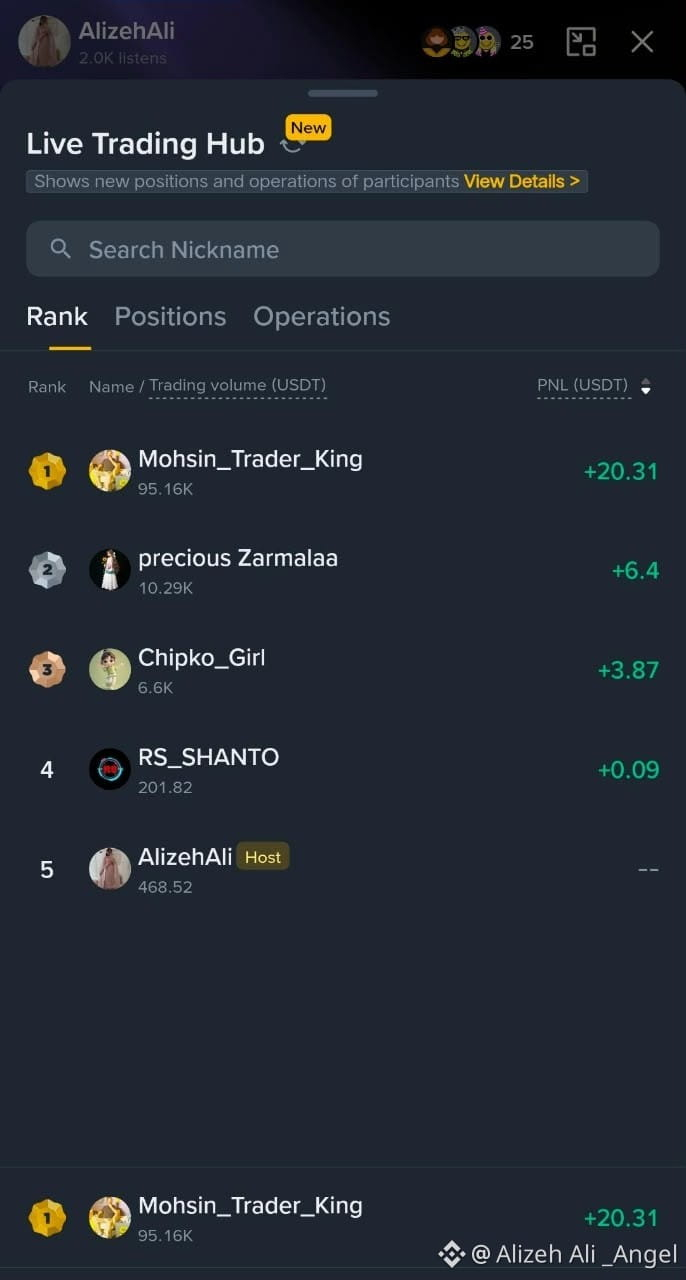
Wow, @Square-Creator-46eb16893 you finally did it! 🎉 95K+ volume, and with profit too — that right there shows you're a real pro trader. 📊 You have such a pure heart 💛, and you're truly a real gem 💎 — someone who doesn't just look out for his own benefit, but always thinks about others first. 🤝
But honestly, this isn't just about the numbers for me. If a person has one true friend like you, they don't really need anyone else's support in life. 🙏 It's been more than 10 months now, and you're still there for me — every single time, in every situation, without fail. ⏳
Thank you for always standing by me 🫂, for motivating me 🔥, and for making me believe that we're not less than anyone else — that we can achieve everything others are achieving, even when we're doing it alone. 💪 Watching you hit this milestone just proves what I've always known — you're built different ⭐, and this is only the beginning. 🚀
Thank you for always, always being there, @Square-Creator-46eb16893 Proud of you. 💕💕
Thank you so much Chattar, Coin Bhai Venom Bhai, RS_SHANTO and CHAR-Si
@Sattar_Chaqer
@CoinKing007
@venomrana
@Square-Creator-7d7c6b04461d5
@rs_shanto
#dusk
#Binance
#FutureTarding
Wow, @Mohsin_Trader_King you finally did it! 🎉 95K+ volume, and with profit too — that right there shows you're a real pro trader. 📊 You have such a pure heart 💛, and you're truly a real gem 💎 — someone who doesn't just look out for his own benefit, but always thinks about others first. 🤝
But honestly, this isn't just about the numbers for me. If a person has one true friend like you, they don't really need anyone else's support in life. 🙏 It's been more than 10 months now, and you're still there for me — every single time, in every situation, without fail. ⏳
Thank you for always standing by me 🫂, for motivating me 🔥, and for making me believe that we're not less than anyone else — that we can achieve everything others are achieving, even when we're doing it alone. 💪 Watching you hit this milestone just proves what I've always known — you're built different ⭐, and this is only the beginning. 🚀
Thank you for always, always being there, @Mohsin_Trader_King Proud of you. 💕💕
Thank you so much Chattar, Coin Bhai Venom Bhai, RS_SHANTO and CHAR-Si
@Sattar Chaqer
@Coin--King
@Venom Rana BNB
@Beb0-
@RS_SHANTO
#dusk
#Binance
#FutureTarding
But honestly, this isn't just about the numbers for me. If a person has one true friend like you, they don't really need anyone else's support in life. 🙏 It's been more than 10 months now, and you're still there for me — every single time, in every situation, without fail. ⏳
Thank you for always standing by me 🫂, for motivating me 🔥, and for making me believe that we're not less than anyone else — that we can achieve everything others are achieving, even when we're doing it alone. 💪 Watching you hit this milestone just proves what I've always known — you're built different ⭐, and this is only the beginning. 🚀
Thank you for always, always being there, @Mohsin_Trader_King Proud of you. 💕💕
Thank you so much Chattar, Coin Bhai Venom Bhai, RS_SHANTO and CHAR-Si
@Sattar Chaqer
@Coin--King
@Venom Rana BNB
@Beb0-
@RS_SHANTO
#dusk
#Binance
#FutureTarding
5
10
1.2k
Vérifié
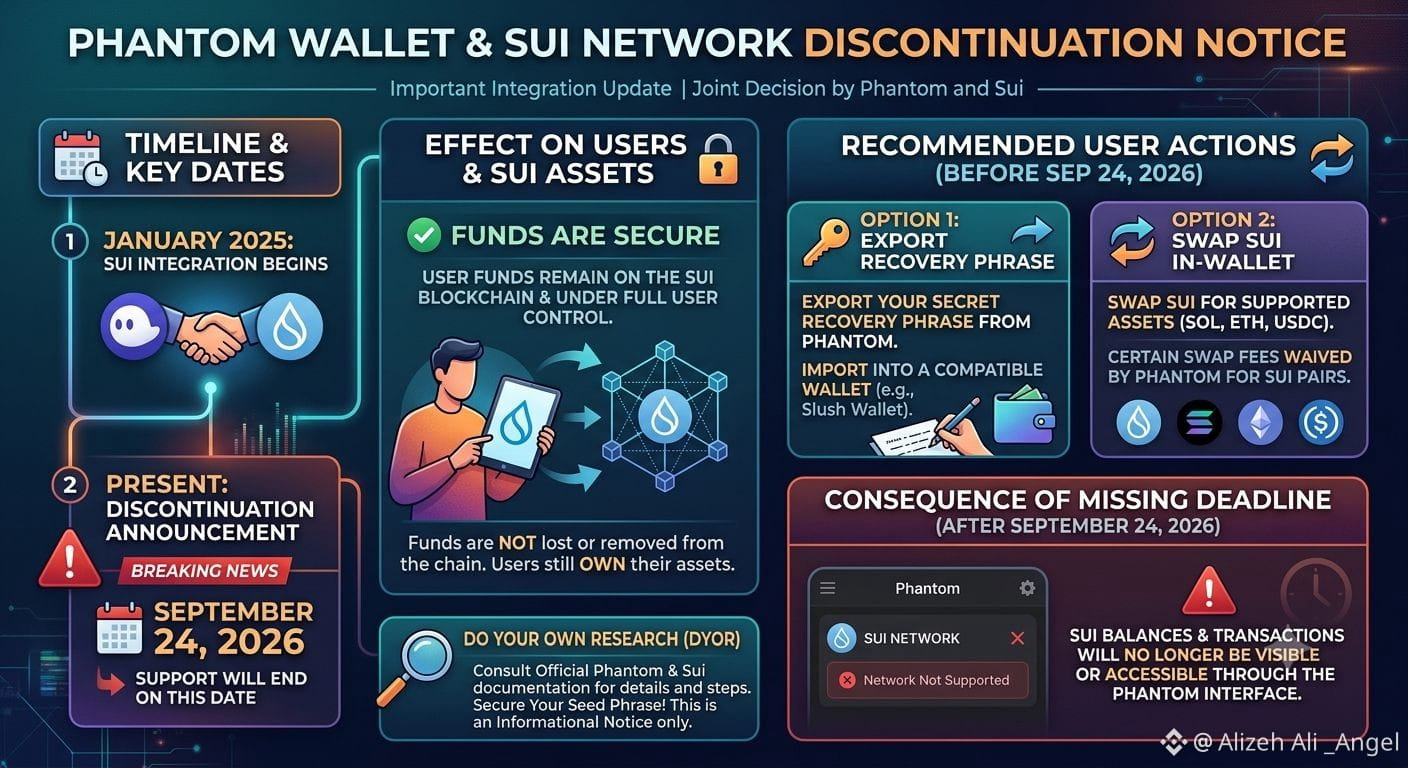
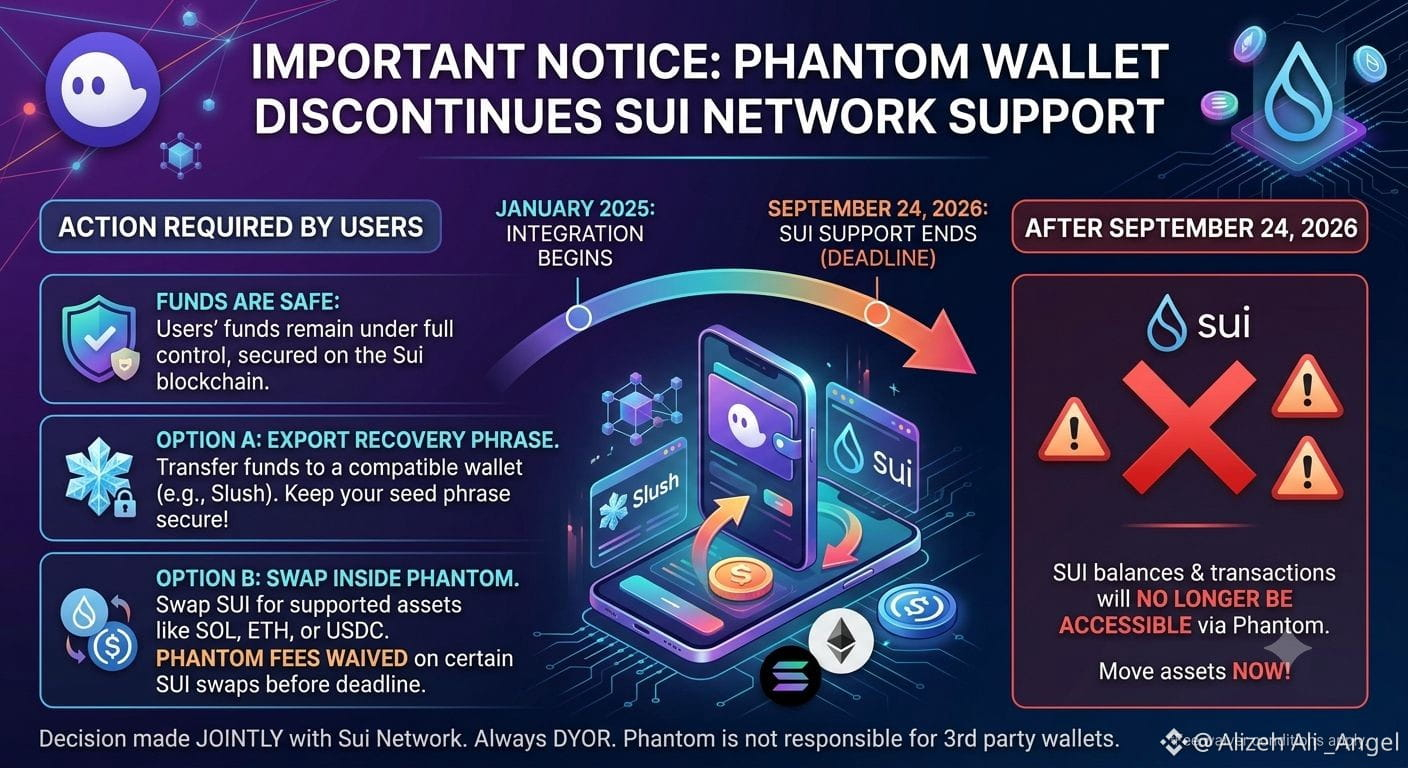
Phantom Wallet will discontinue support for the Sui Network on September 24, 2026. The decision was made jointly with Sui, ending an integration that began in January 2025.
Users’ funds remain fully under their control and stay on the Sui blockchain. Before the deadline, holders can export their recovery phrase to a compatible wallet such as, or swap SUI for supported assets like SOL, ETH, or USDC inside Phantom (with Phantom’s fee waived on certain swaps). After September 24, Sui balances and transactions will no longer be accessible through Phantom. DYOR.
#Write2Earn
#Phantom #SUİ #crypto $SUI
Phantom Wallet will discontinue support for the Sui Network on September 24, 2026. The decision was made jointly with Sui, ending an integration that began in January 2025.
Users’ funds remain fully under their control and stay on the Sui blockchain. Before the deadline, holders can export their recovery phrase to a compatible wallet such as, or swap SUI for supported assets like SOL, ETH, or USDC inside Phantom (with Phantom’s fee waived on certain swaps). After September 24, Sui balances and transactions will no longer be accessible through Phantom. DYOR.
#Write2Earn
#Phantom #SUİ #crypto $SUI
Users’ funds remain fully under their control and stay on the Sui blockchain. Before the deadline, holders can export their recovery phrase to a compatible wallet such as, or swap SUI for supported assets like SOL, ETH, or USDC inside Phantom (with Phantom’s fee waived on certain swaps). After September 24, Sui balances and transactions will no longer be accessible through Phantom. DYOR.
#Write2Earn
#Phantom #SUİ #crypto $SUI
2
906
·
--
Haussier
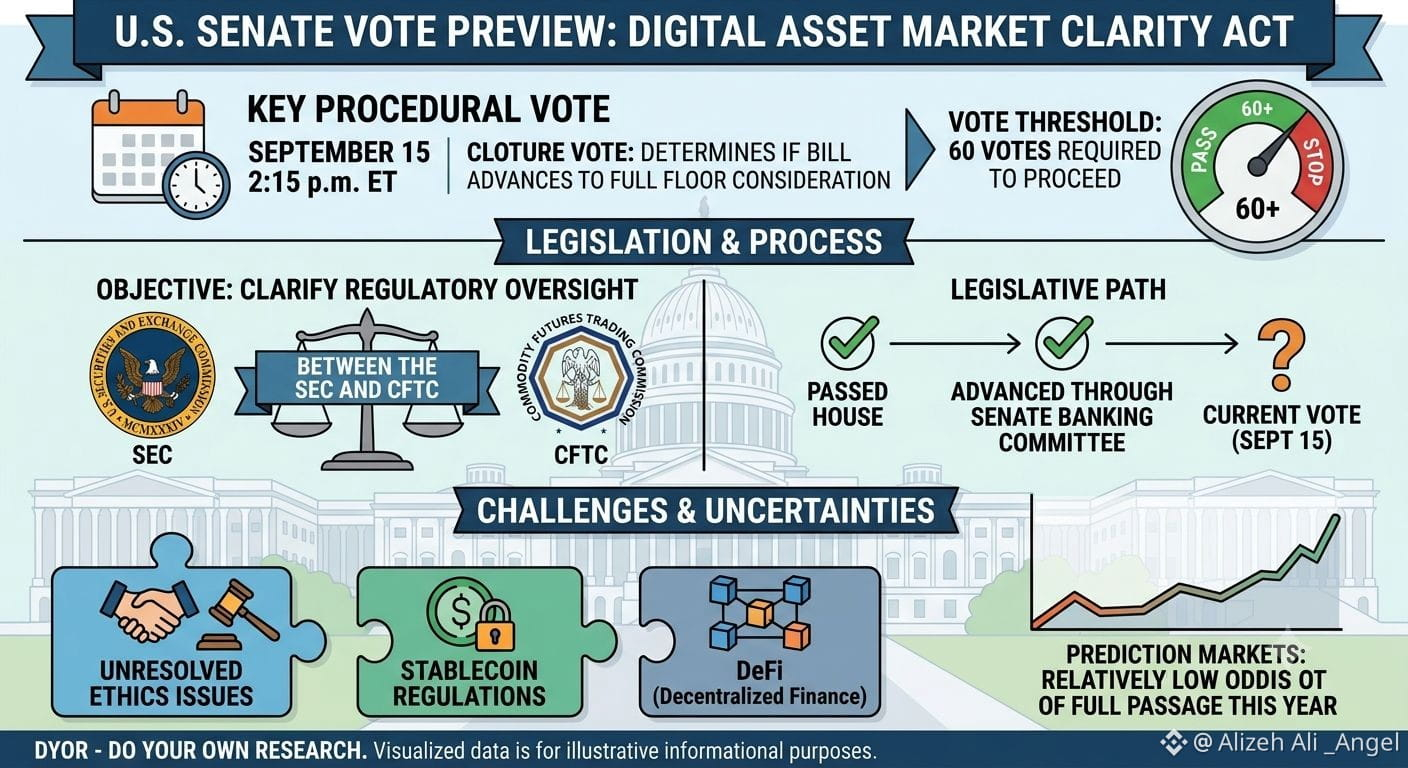
The U.S. Senate has scheduled a key procedural vote on the Digital Asset Market Clarity Act for September 15 at 2:15 p.m. ET. The cloture vote will determine whether the bill can advance to full floor consideration and requires 60 votes to proceed.
The legislation seeks to clarify regulatory oversight between the SEC and CFTC. While it previously passed the House and advanced through the Senate Banking Committee, unresolved issues around ethics, stablecoins, and DeFi continue to create uncertainty, with prediction markets assigning relatively low odds of full passage this year. DYOR.
#Write2Earn
#CLARITYAct #crypto #bitcoin $BTC
$TUT $ZEC
The U.S. Senate has scheduled a key procedural vote on the Digital Asset Market Clarity Act for September 15 at 2:15 p.m. ET. The cloture vote will determine whether the bill can advance to full floor consideration and requires 60 votes to proceed.
The legislation seeks to clarify regulatory oversight between the SEC and CFTC. While it previously passed the House and advanced through the Senate Banking Committee, unresolved issues around ethics, stablecoins, and DeFi continue to create uncertainty, with prediction markets assigning relatively low odds of full passage this year. DYOR.
#Write2Earn
#CLARITYAct #crypto #bitcoin $BTC
$TUT $ZEC
The legislation seeks to clarify regulatory oversight between the SEC and CFTC. While it previously passed the House and advanced through the Senate Banking Committee, unresolved issues around ethics, stablecoins, and DeFi continue to create uncertainty, with prediction markets assigning relatively low odds of full passage this year. DYOR.
#Write2Earn
#CLARITYAct #crypto #bitcoin $BTC
$TUT $ZEC
5
1.6k
·
--
Haussier
$ZEC
27% up and still climbing while the market sleeps — trend's not asking for permission. 🌙
$ZECUSDT LONG 💚
📋 Entry: 715-720 | SL: 685 | TP1: 730 | TP2: 745 | TP3: 765
⚡ Riding MA(7) support, volume confirming the breakout — not a wick fake.
🔍 Res: 729.69 | Sup: 705.64 | MAs stacked bullish | Vol(5) > Vol(10)
⚠️ Close below MA(7) on fading volume = pause, not send.
DYOR. 🧭 #ZECUSDT #CryptoTrading
$ZEC
$ZEC
27% up and still climbing while the market sleeps — trend's not asking for permission. 🌙
$ZECUSDT LONG 💚
📋 Entry: 715-720 | SL: 685 | TP1: 730 | TP2: 745 | TP3: 765
⚡ Riding MA(7) support, volume confirming the breakout — not a wick fake.
🔍 Res: 729.69 | Sup: 705.64 | MAs stacked bullish | Vol(5) > Vol(10)
⚠️ Close below MA(7) on fading volume = pause, not send.
DYOR. 🧭 #ZECUSDT #CryptoTrading
$ZEC
27% up and still climbing while the market sleeps — trend's not asking for permission. 🌙
$ZECUSDT LONG 💚
📋 Entry: 715-720 | SL: 685 | TP1: 730 | TP2: 745 | TP3: 765
⚡ Riding MA(7) support, volume confirming the breakout — not a wick fake.
🔍 Res: 729.69 | Sup: 705.64 | MAs stacked bullish | Vol(5) > Vol(10)
⚠️ Close below MA(7) on fading volume = pause, not send.
DYOR. 🧭 #ZECUSDT #CryptoTrading
$ZEC
3
5
1k
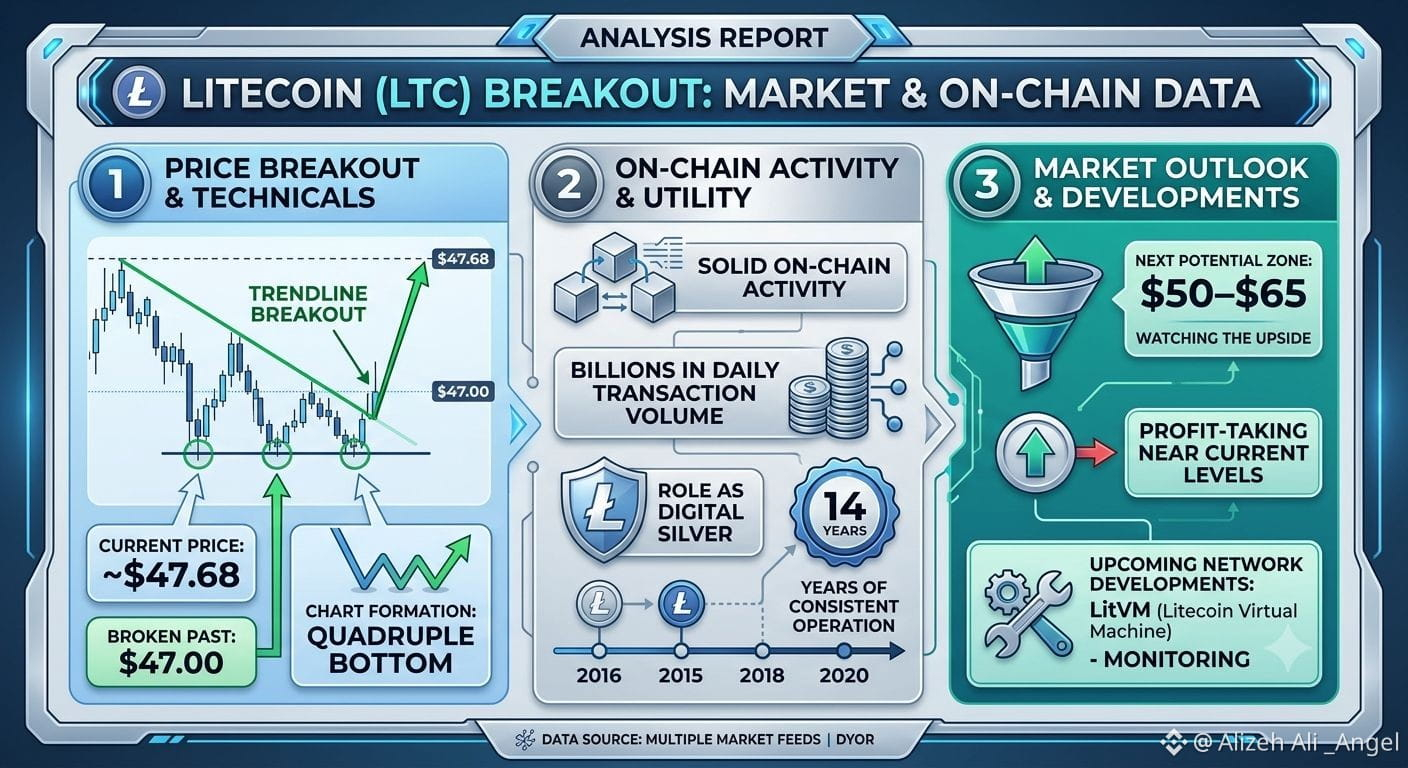
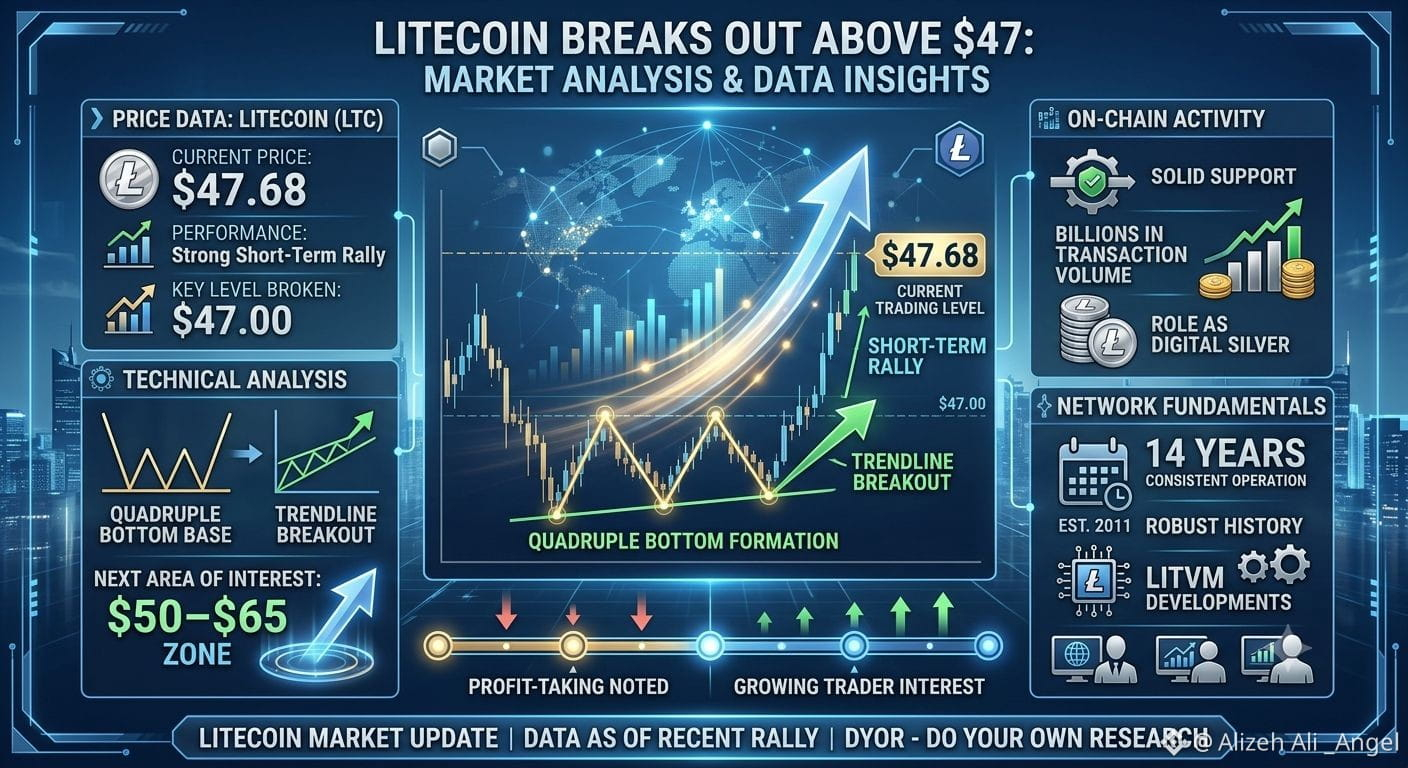
Litecoin has broken past $47, currently trading near $47.68 after a strong short-term rally. The move comes with a trendline breakout and what traders are describing as a quadruple bottom formation.
On-chain activity remains solid, with billions in transaction volume supporting its role as digital silver after 14 years of consistent operation. Some market participants are watching the $50–$65 zone as the next potential area of interest, while others note profit-taking near current levels. Upcoming network developments, including LitVM, continue to be monitored. DYOR.
#write2earn
#Litecoin #LTC #crypto $LTC
Litecoin has broken past $47, currently trading near $47.68 after a strong short-term rally. The move comes with a trendline breakout and what traders are describing as a quadruple bottom formation.
On-chain activity remains solid, with billions in transaction volume supporting its role as digital silver after 14 years of consistent operation. Some market participants are watching the $50–$65 zone as the next potential area of interest, while others note profit-taking near current levels. Upcoming network developments, including LitVM, continue to be monitored. DYOR.
#write2earn
#Litecoin #LTC #crypto $LTC
On-chain activity remains solid, with billions in transaction volume supporting its role as digital silver after 14 years of consistent operation. Some market participants are watching the $50–$65 zone as the next potential area of interest, while others note profit-taking near current levels. Upcoming network developments, including LitVM, continue to be monitored. DYOR.
#write2earn
#Litecoin #LTC #crypto $LTC
1
733
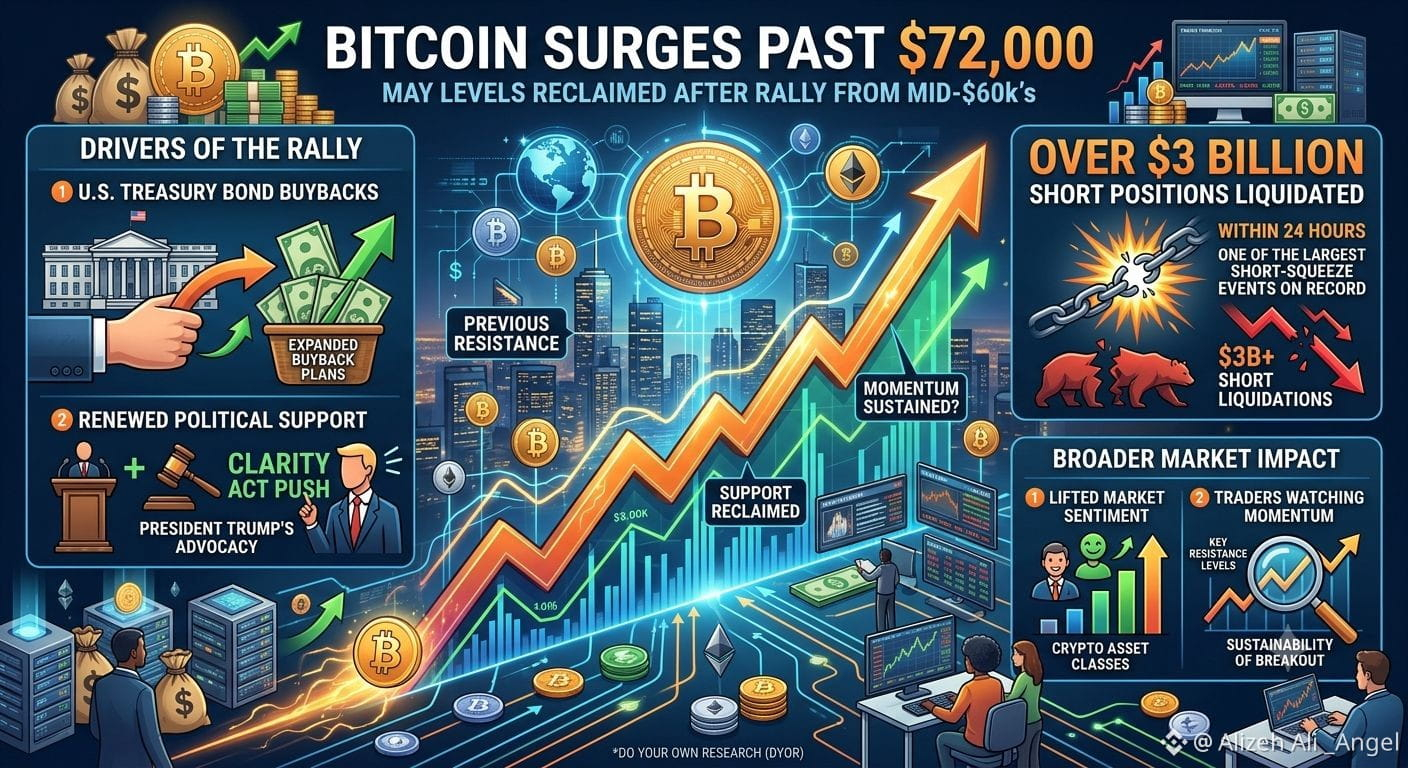
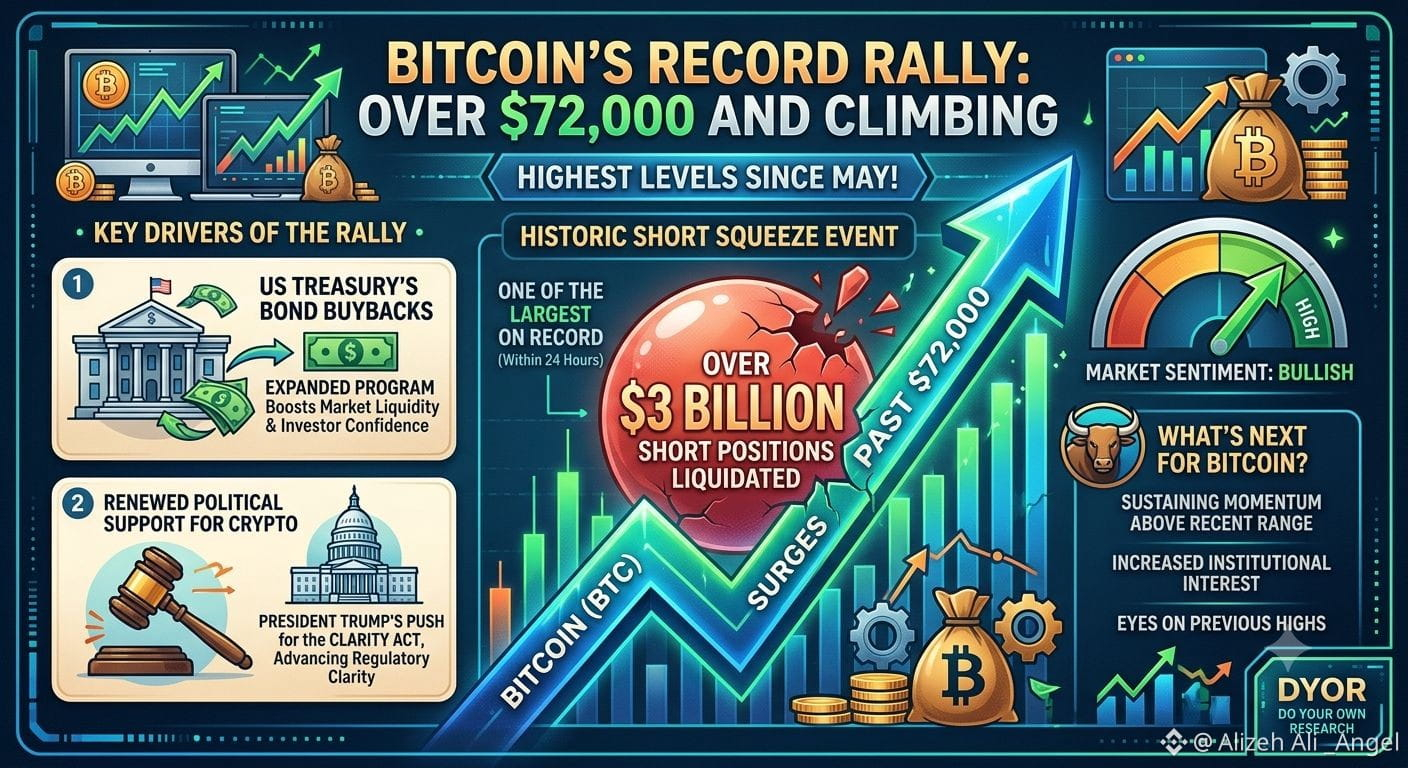
Bitcoin has surged past $72,000, reaching levels not seen since May after climbing from the mid-$60,000s. The rally was driven by the U.S. Treasury’s expanded bond buyback plans and renewed political support for crypto regulation, including President Trump’s push for the Clarity Act.
Over $3 billion in short positions were liquidated within 24 hours, marking one of the largest short-squeeze events on record. The move has lifted broader market sentiment, with traders now watching whether Bitcoin can sustain momentum above the recent range. DYOR.
#Write2Earn
#Bitcoin #BTC #crypto $BTC $BNB $ZEC
Bitcoin has surged past $72,000, reaching levels not seen since May after climbing from the mid-$60,000s. The rally was driven by the U.S. Treasury’s expanded bond buyback plans and renewed political support for crypto regulation, including President Trump’s push for the Clarity Act.
Over $3 billion in short positions were liquidated within 24 hours, marking one of the largest short-squeeze events on record. The move has lifted broader market sentiment, with traders now watching whether Bitcoin can sustain momentum above the recent range. DYOR.
#Write2Earn
#Bitcoin #BTC #crypto $BTC $BNB $ZEC
Over $3 billion in short positions were liquidated within 24 hours, marking one of the largest short-squeeze events on record. The move has lifted broader market sentiment, with traders now watching whether Bitcoin can sustain momentum above the recent range. DYOR.
#Write2Earn
#Bitcoin #BTC #crypto $BTC $BNB $ZEC
1
517
Partiellement vrai
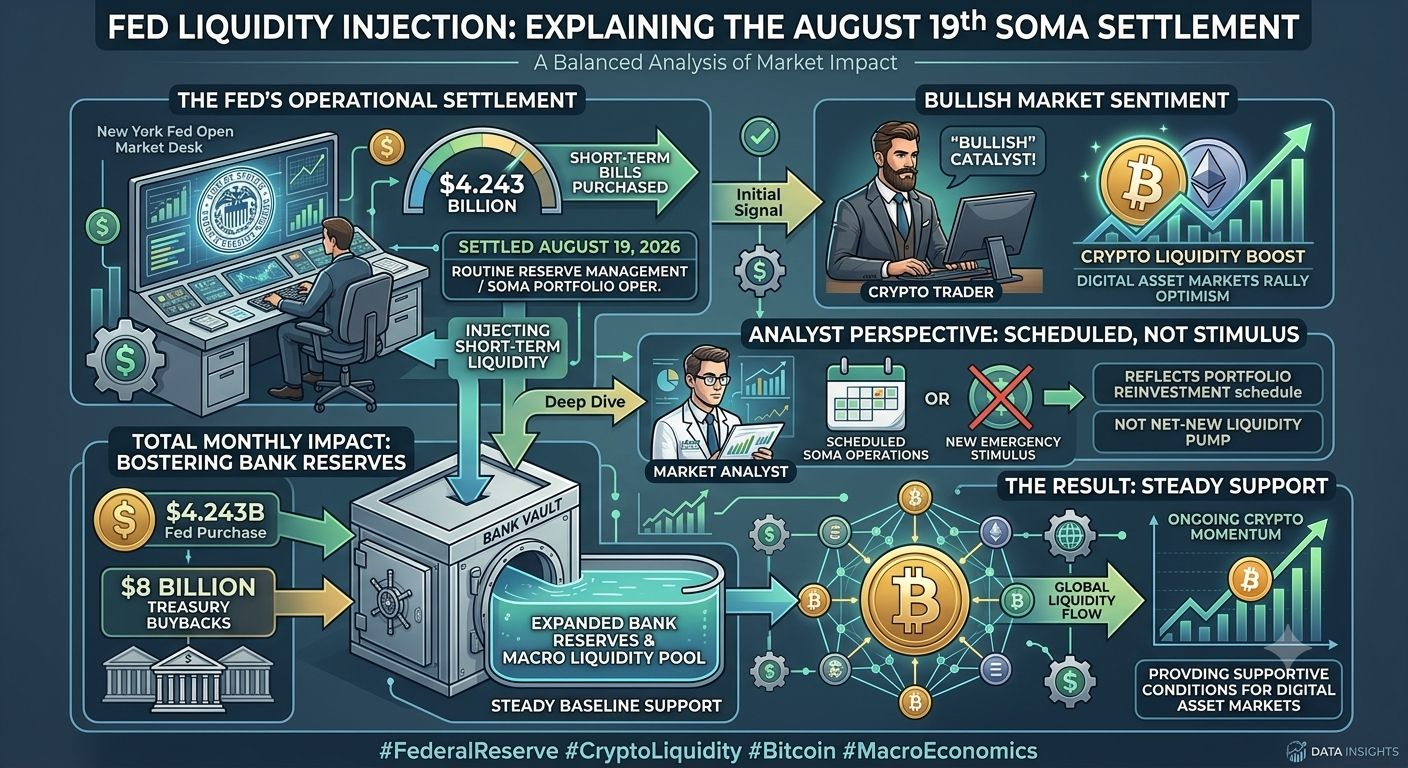
On August 19, 2026, the New York Fed’s Open Market Desk settled a standard $4.243 billion purchase of short-term Treasury bills, injecting short-term liquidity into the banking system as part of routine reserve management. While crypto traders quickly highlighted the move as a "BULLISH" catalyst for digital asset markets, analysts emphasize it reflects scheduled SOMA portfolio operations rather than net-new stimulus. Combined with broader Treasury buybacks totaling $8 billion this month, the operational settlement helped expand bank reserves and bolster macro liquidity, providing a steady baseline of support for ongoing crypto market momentum.
#FederalReserve #CryptoLiquidity #bitcoin #MacroEconomics #Write2Earn
$BTC $BNB $SOL
On August 19, 2026, the New York Fed’s Open Market Desk settled a standard $4.243 billion purchase of short-term Treasury bills, injecting short-term liquidity into the banking system as part of routine reserve management. While crypto traders quickly highlighted the move as a "BULLISH" catalyst for digital asset markets, analysts emphasize it reflects scheduled SOMA portfolio operations rather than net-new stimulus. Combined with broader Treasury buybacks totaling $8 billion this month, the operational settlement helped expand bank reserves and bolster macro liquidity, providing a steady baseline of support for ongoing crypto market momentum.
#FederalReserve #CryptoLiquidity #bitcoin #MacroEconomics #Write2Earn
$BTC $BNB $SOL
#FederalReserve #CryptoLiquidity #bitcoin #MacroEconomics #Write2Earn
$BTC $BNB $SOL
4
2k
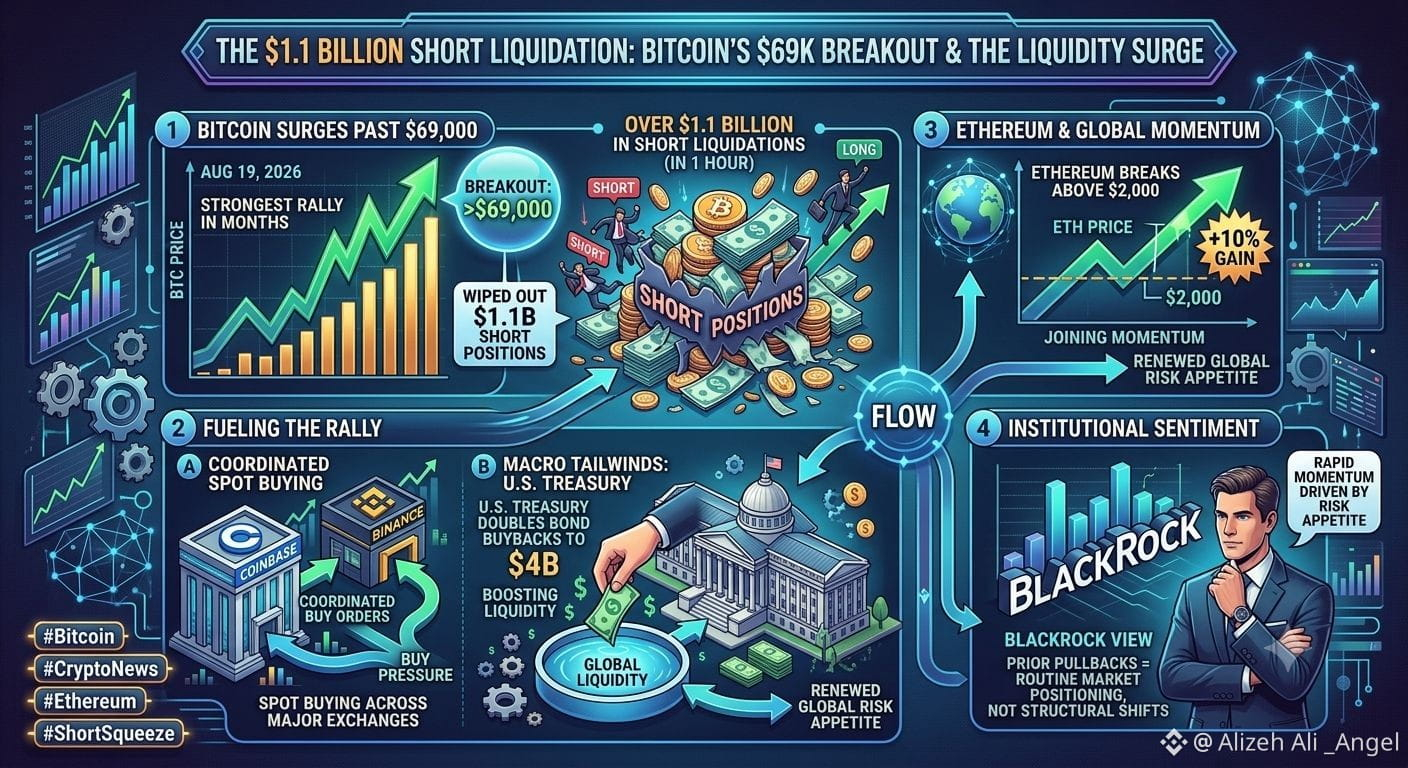
Bitcoin staged its strongest rally in months on August 19, surging past $69,000 and triggering over $1.1 billion in short liquidations within a single hour. The sudden breakout was fueled by coordinated spot buying across major exchanges like Coinbase and Binance, alongside macro tailwinds after the U.S. Treasury doubled long-term bond buybacks to $4 billion to boost liquidity. Ethereum joined the momentum, breaking above $2,000 with a 10% gain. With institutional leaders like BlackRock viewing prior pullbacks as routine market positioning rather than structural shifts, renewed global risk appetite is driving rapid momentum across crypto markets.
#Bitcoin #CryptoNews #Ethereum #ShortSqueeze #Write2Earn
$BTC $ETH $ZEC
Bitcoin staged its strongest rally in months on August 19, surging past $69,000 and triggering over $1.1 billion in short liquidations within a single hour. The sudden breakout was fueled by coordinated spot buying across major exchanges like Coinbase and Binance, alongside macro tailwinds after the U.S. Treasury doubled long-term bond buybacks to $4 billion to boost liquidity. Ethereum joined the momentum, breaking above $2,000 with a 10% gain. With institutional leaders like BlackRock viewing prior pullbacks as routine market positioning rather than structural shifts, renewed global risk appetite is driving rapid momentum across crypto markets.
#Bitcoin #CryptoNews #Ethereum #ShortSqueeze #Write2Earn
$BTC $ETH $ZEC
#Bitcoin #CryptoNews #Ethereum #ShortSqueeze #Write2Earn
$BTC $ETH $ZEC
2
591
The U.S. crypto market has a major date ahead.
The Senate is scheduled to vote on September 15 on advancing the CLARITY Act, which could establish clearer regulatory boundaries between the SEC and CFTC.
The House already passed its version 294–134, while the Senate Banking Committee advanced its version 15–9.
But this is a procedural step, not final passage.
If the Senate moves it forward, it could be a significant step toward regulatory clarity and stronger institutional confidence in U.S. crypto markets.
#CLARITYAct #CryptoRegulation #CryptoNews #DigitalAssets #Write2Earn
$RE $MAGMA $SKYAI
The U.S. crypto market has a major date ahead.
The Senate is scheduled to vote on September 15 on advancing the CLARITY Act, which could establish clearer regulatory boundaries between the SEC and CFTC.
The House already passed its version 294–134, while the Senate Banking Committee advanced its version 15–9.
But this is a procedural step, not final passage.
If the Senate moves it forward, it could be a significant step toward regulatory clarity and stronger institutional confidence in U.S. crypto markets.
#CLARITYAct #CryptoRegulation #CryptoNews #DigitalAssets #Write2Earn
$RE $MAGMA $SKYAI
The Senate is scheduled to vote on September 15 on advancing the CLARITY Act, which could establish clearer regulatory boundaries between the SEC and CFTC.
The House already passed its version 294–134, while the Senate Banking Committee advanced its version 15–9.
But this is a procedural step, not final passage.
If the Senate moves it forward, it could be a significant step toward regulatory clarity and stronger institutional confidence in U.S. crypto markets.
#CLARITYAct #CryptoRegulation #CryptoNews #DigitalAssets #Write2Earn
$RE $MAGMA $SKYAI
4
1.5k
🌋 Breakout alert — three coins quietly pumping while the majors sleep. Who's got the strongest chart from here?
$ACE 🌕 | $CLO 💫 | $CYS ⚡
📈 ACE — up +31.56% (now $0.22250) 🚀
📈 CLO — up +25.28% (now $0.14532) 🌊
📈 CYS — up +14.88% (now $0.5242) 💎
ACE is leading the pack hard 🏆, CLO's not far behind 🥈, and CYS is the steady grinder of the three 🐢💨. Bold targets ahead — ACE to $0.50 is ~125% 🔥, CLO to $0.30 is ~106% 💥, and CYS to $1.00 is ~91% ⚡.
🗳️ PICK YOUR CALL 👇
💬 Which one keeps ripping, and which one runs out of steam first? Drop your vote and reasoning below ⚔️
⚠️ Not financial advice. Always DYOR. 🔍
#Altcoins #CryptoGems #CryptoTrading #MarketWatch #Write2Earn
{alpha}(560x0c69199c1562233640e0db5ce2c399a88eb507c7)
{future}(ACEUSDT)
{alpha}(560x81d3a238b02827f62b9f390f947d36d4a5bf89d2)
🌋 Breakout alert — three coins quietly pumping while the majors sleep. Who's got the strongest chart from here?
$ACE 🌕 | $CLO 💫 | $CYS ⚡
📈 ACE — up +31.56% (now $0.22250) 🚀
📈 CLO — up +25.28% (now $0.14532) 🌊
📈 CYS — up +14.88% (now $0.5242) 💎
ACE is leading the pack hard 🏆, CLO's not far behind 🥈, and CYS is the steady grinder of the three 🐢💨. Bold targets ahead — ACE to $0.50 is ~125% 🔥, CLO to $0.30 is ~106% 💥, and CYS to $1.00 is ~91% ⚡.
🗳️ PICK YOUR CALL 👇
💬 Which one keeps ripping, and which one runs out of steam first? Drop your vote and reasoning below ⚔️
⚠️ Not financial advice. Always DYOR. 🔍
#Altcoins #CryptoGems #CryptoTrading #MarketWatch #Write2Earn
$ACE 🌕 | $CLO 💫 | $CYS ⚡
📈 ACE — up +31.56% (now $0.22250) 🚀
📈 CLO — up +25.28% (now $0.14532) 🌊
📈 CYS — up +14.88% (now $0.5242) 💎
ACE is leading the pack hard 🏆, CLO's not far behind 🥈, and CYS is the steady grinder of the three 🐢💨. Bold targets ahead — ACE to $0.50 is ~125% 🔥, CLO to $0.30 is ~106% 💥, and CYS to $1.00 is ~91% ⚡.
🗳️ PICK YOUR CALL 👇
💬 Which one keeps ripping, and which one runs out of steam first? Drop your vote and reasoning below ⚔️
⚠️ Not financial advice. Always DYOR. 🔍
#Altcoins #CryptoGems #CryptoTrading #MarketWatch #Write2Earn
$ACE $0.22250 ➜ $0.50 🌕
35%
CLO $0.14532 ➜ $0.30 💫
14%
CYS $0.5242 ➜ $1.00 ⚡
48%
None,waiting for confirmation⏳
3%
29 Votes • Vote fermé
1
2
1.3k
Ethereum Traders Eye End to Downtrend Near $1,900 📊
$ETH is coiling tight — trading around $1,900 after a fresh 2026 cycle low, and the setup looks like a classic pre-breakout squeeze.
🔑 Levels to watch:
🔴 $1,884 — lose this, caution creeps back in
🟡 $1,918–$1,920 — the breakout trigger
🟢 $2,000 — short-term target on a hold above
🟢 $2,500 — weekly close here reclaims key MAs and confirms the bear market is over
Backdrop turning constructive:
✅ Positive ETF inflows
✅ Buy-side depth building in the order book
✅ Bitmine Immersion added ~9,926 ETH last week, pushing its treasury to ~5.82M ETH (~4.8% of supply, ~$11B)
Compression like this rarely lasts — the next volume-driven move decides the trend.
⚠️ Not financial advice. DYOR.
#Ethereum #ETH #Crypto #defi #Write2Earn $ETH
{future}(ETHUSDT)
Ethereum Traders Eye End to Downtrend Near $1,900 📊
$ETH is coiling tight — trading around $1,900 after a fresh 2026 cycle low, and the setup looks like a classic pre-breakout squeeze.
🔑 Levels to watch:
🔴 $1,884 — lose this, caution creeps back in
🟡 $1,918–$1,920 — the breakout trigger
🟢 $2,000 — short-term target on a hold above
🟢 $2,500 — weekly close here reclaims key MAs and confirms the bear market is over
Backdrop turning constructive:
✅ Positive ETF inflows
✅ Buy-side depth building in the order book
✅ Bitmine Immersion added ~9,926 ETH last week, pushing its treasury to ~5.82M ETH (~4.8% of supply, ~$11B)
Compression like this rarely lasts — the next volume-driven move decides the trend.
⚠️ Not financial advice. DYOR.
#Ethereum #ETH #Crypto #defi #Write2Earn $ETH
$ETH is coiling tight — trading around $1,900 after a fresh 2026 cycle low, and the setup looks like a classic pre-breakout squeeze.
🔑 Levels to watch:
🔴 $1,884 — lose this, caution creeps back in
🟡 $1,918–$1,920 — the breakout trigger
🟢 $2,000 — short-term target on a hold above
🟢 $2,500 — weekly close here reclaims key MAs and confirms the bear market is over
Backdrop turning constructive:
✅ Positive ETF inflows
✅ Buy-side depth building in the order book
✅ Bitmine Immersion added ~9,926 ETH last week, pushing its treasury to ~5.82M ETH (~4.8% of supply, ~$11B)
Compression like this rarely lasts — the next volume-driven move decides the trend.
⚠️ Not financial advice. DYOR.
#Ethereum #ETH #Crypto #defi #Write2Earn $ETH
1
641
·
--
Baissier
$PORTAL
Popped to 0.020, cooled off, and now it's testing whether the second leg is real or just a fading echo of the first 📡
$PORTALUSDT SHORT 🩸
Entry: 0.01720 – 0.01780 🎯
SL: 0.01900 🚫
TP: 0.01597 / 0.01533 / 0.01472 🕸️
Price broke below both MA(7) and MA(25) after rejecting the 0.02024 high, and the last candle cut through the recent range low without hesitation. Volume MA(5) is sliding toward MA(10), signaling the buying pressure that drove the spike has clearly faded.
The 0.01472 swing low is the last real floor here — a hold there could spark another sharp reaction. DYOR ⚓
#PORTAL #Write2Earn #CryptoSignals #BreakdownWatch
$PORTAL
$PORTAL
Popped to 0.020, cooled off, and now it's testing whether the second leg is real or just a fading echo of the first 📡
$PORTALUSDT SHORT 🩸
Entry: 0.01720 – 0.01780 🎯
SL: 0.01900 🚫
TP: 0.01597 / 0.01533 / 0.01472 🕸️
Price broke below both MA(7) and MA(25) after rejecting the 0.02024 high, and the last candle cut through the recent range low without hesitation. Volume MA(5) is sliding toward MA(10), signaling the buying pressure that drove the spike has clearly faded.
The 0.01472 swing low is the last real floor here — a hold there could spark another sharp reaction. DYOR ⚓
#PORTAL #Write2Earn #CryptoSignals #BreakdownWatch
$PORTAL
Popped to 0.020, cooled off, and now it's testing whether the second leg is real or just a fading echo of the first 📡
$PORTALUSDT SHORT 🩸
Entry: 0.01720 – 0.01780 🎯
SL: 0.01900 🚫
TP: 0.01597 / 0.01533 / 0.01472 🕸️
Price broke below both MA(7) and MA(25) after rejecting the 0.02024 high, and the last candle cut through the recent range low without hesitation. Volume MA(5) is sliding toward MA(10), signaling the buying pressure that drove the spike has clearly faded.
The 0.01472 swing low is the last real floor here — a hold there could spark another sharp reaction. DYOR ⚓
#PORTAL #Write2Earn #CryptoSignals #BreakdownWatch
$PORTAL
1
223
Connectez-vous pour découvrir plus de contenu
Rejoignez la communauté mondiale des adeptes de cryptomonnaies sur Binance Square
⚡️ Suviez les dernières informations importantes sur les cryptomonnaies.
💬 Jugé digne de confiance par la plus grande plateforme d’échange de cryptomonnaies au monde.
👍 Découvrez les connaissances que partagent les créateurs vérifiés.
Adresse e-mail/Nº de téléphone
Sujets d’actualité
SECHaltsCryptoETFReviewsAmidFundingLapse
878 vues
62 mentions
#SECHaltsCryptoETFReviewsAmidFundingLapse
SEC Halts Crypto ETF Reviews Amid Funding Lapse
The U.S. Securities and Exchange Commission (SEC) has reportedly paused certain cryptocurrency ETF review activities amid a government funding lapse.
This development has created uncertainty in the crypto market, particularly for investors and companies waiting for regulatory decisions on crypto-related exchange-traded funds (ETFs).
Impact on the Crypto Market
The delay could affect the approval timeline of pending crypto ETF applications. Investors are closely monitoring the situation as regulatory clarity remains an important factor in the growth of the digital asset industry.
Although the pause does not necessarily mean that crypto ETF applications will be rejected, it highlights how government funding disruptions can influence financial regulatory processes.
What Happens Next?
Market participants will be watching for updates on government funding and the SEC's ability to resume normal operations.
Crypto ETFs remain an important topic for institutional adoption, market development, and investor confidence.
Conclusion: The temporary halt highlights the importance of regulatory stability for the future of cryptocurrency investments.
#Crypto #Bitcoin #ETF #SEC #CryptoNews #Blockchain #Binance
King2112
·0 mentions J’aime
·10 vues
ZcashETFPostsFirstWeeklyOutflow$93.6M
53,690 vues
163 mentions
GreekPoliceBustCryptoScamRingArrest17
154,001 vues
1,089 mentions