

RONALDO _CR7
812 Publications

RONALDO _CR7
Signaler
Bloquer l’utilisateur
Crypto analyst and binance trader focused on precise signals,solid research,and risk-managed insights
369 Suivis
3.8K+ Abonnés
226 J’aime
Publications
Tous
Citations
Direct
·
--
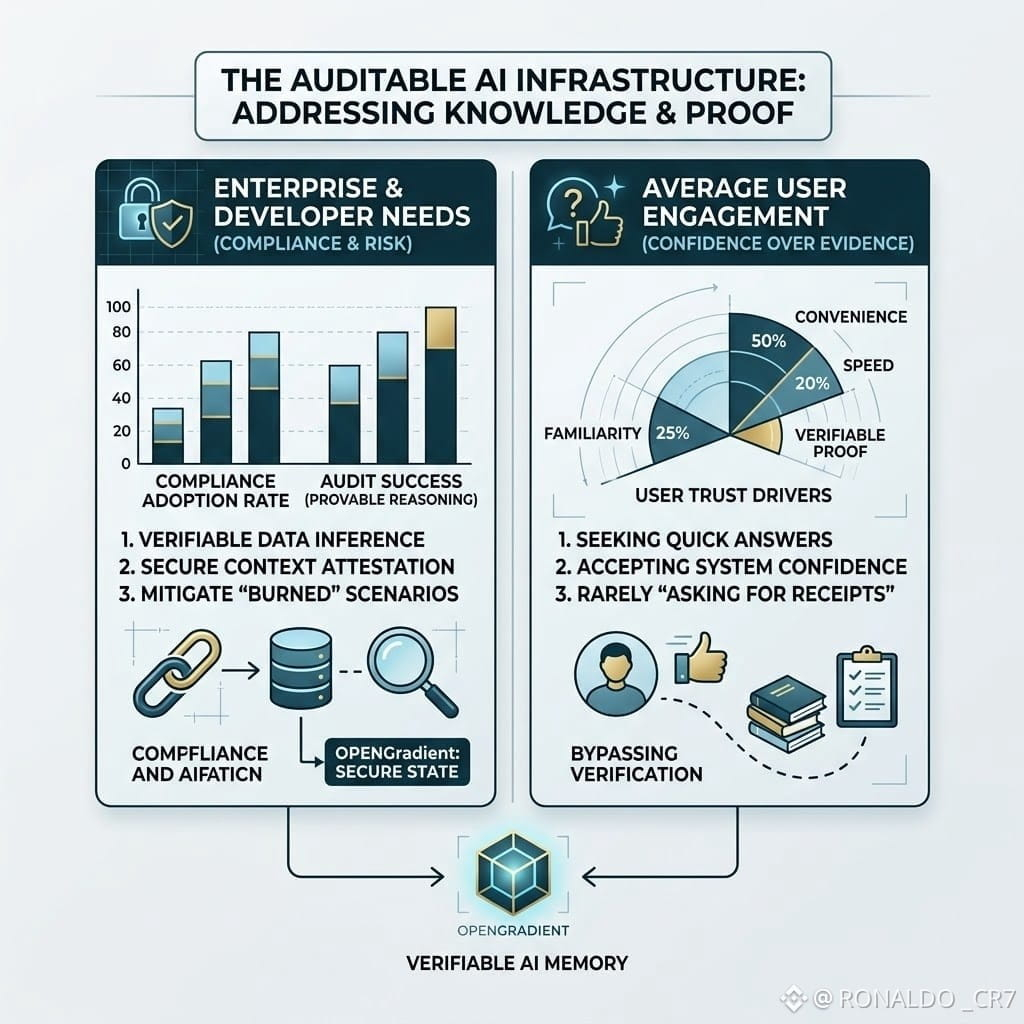
#opg $OPG Honestly, I've been sitting with OpenGradient for a while, and one question keeps coming back — who actually asked for this?
The idea makes sense on paper. Verifiable AI memory. Provable reasoning. Context you can audit. That sounds like infrastructure that matters.
But here's what I can't shake: we've watched people pick confidence over evidence, even when the record is right there. So what changes with verifiable AI?
Maybe enterprises under compliance pressure. Maybe developers who got burned once and learned. But average users? They rarely ask for receipts.
That's what makes OpenGradient genuinely interesting to watch — not whether the tech holds up, but whether the market actually wants accountability. Capability is an easy sell. Memory with proof is a different conversation entirely.@OpenGradient $LAB $RE
#opg $OPG Honestly, I've been sitting with OpenGradient for a while, and one question keeps coming back — who actually asked for this?
The idea makes sense on paper. Verifiable AI memory. Provable reasoning. Context you can audit. That sounds like infrastructure that matters.
But here's what I can't shake: we've watched people pick confidence over evidence, even when the record is right there. So what changes with verifiable AI?
Maybe enterprises under compliance pressure. Maybe developers who got burned once and learned. But average users? They rarely ask for receipts.
That's what makes OpenGradient genuinely interesting to watch — not whether the tech holds up, but whether the market actually wants accountability. Capability is an easy sell. Memory with proof is a different conversation entirely.@OpenGradient $LAB $RE
The idea makes sense on paper. Verifiable AI memory. Provable reasoning. Context you can audit. That sounds like infrastructure that matters.
But here's what I can't shake: we've watched people pick confidence over evidence, even when the record is right there. So what changes with verifiable AI?
Maybe enterprises under compliance pressure. Maybe developers who got burned once and learned. But average users? They rarely ask for receipts.
That's what makes OpenGradient genuinely interesting to watch — not whether the tech holds up, but whether the market actually wants accountability. Capability is an easy sell. Memory with proof is a different conversation entirely.@OpenGradient $LAB $RE
418
·
--
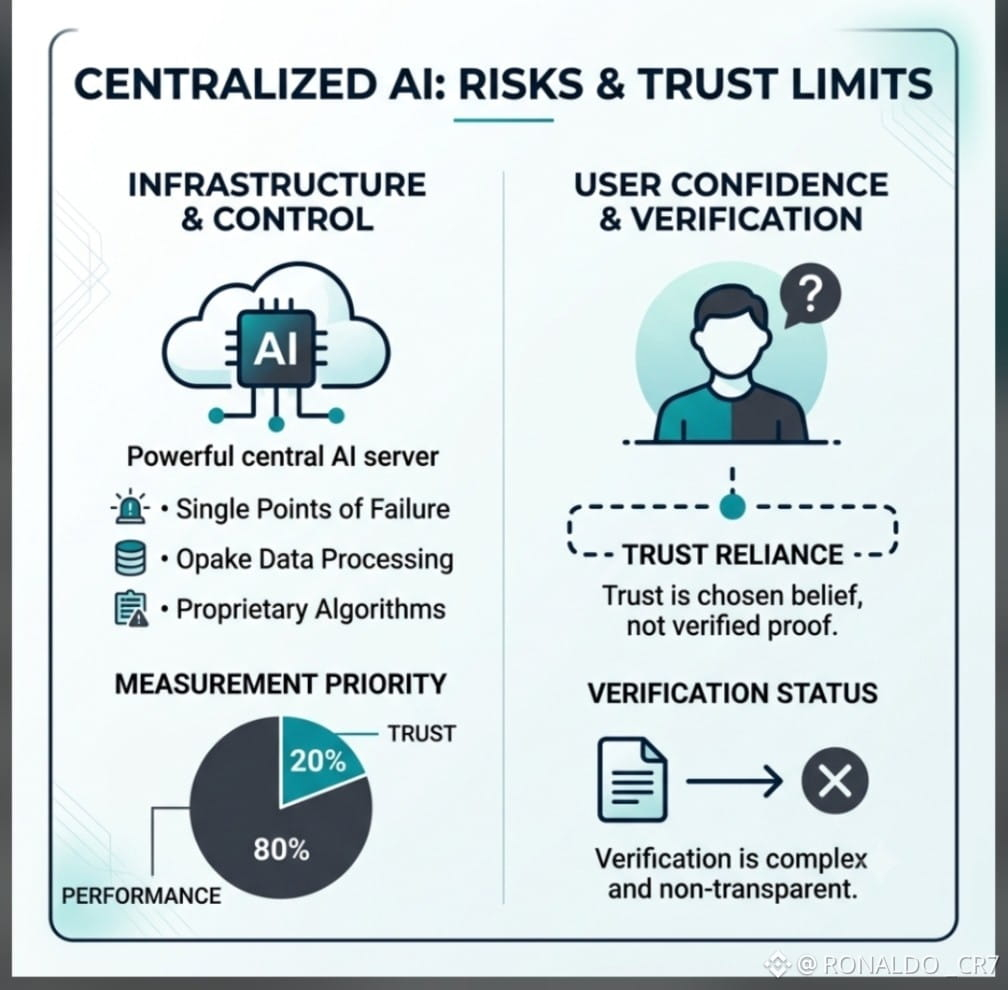
#opg $OPG The more I think about AI, the less I find myself asking how powerful the models are.
Instead, I keep coming back to a different question.
If intelligence is going to become part of everyday life, shouldn't we care just as much about where it's running, who verifies it, and whether anyone can actually trust the process behind the output?
That's probably why I've been paying attention to OpenGradient.
Not because it promises bigger AI, but because it quietly shifts the conversation toward infrastructure, verification, and ownership.
Maybe I'm looking at this the wrong way, but I wonder...
Do we spend too much time measuring intelligence and too little time measuring trust?
If AI inference happens on decentralized infrastructure, does that actually change how much confidence users can have, or is trust still something people simply choose to believe?
Can verification become as important as performance over the next few years?
And if AI eventually becomes critical infrastructure, should transparency be treated as a feature, or as a requirement?
I'm genuinely curious how others think about this.
Are we entering an era where the real competition isn't about building smarter AI, but about building AI that people can confidently verify and rely on?@OpenGradient $LAB $RE
#opg $OPG The more I think about AI, the less I find myself asking how powerful the models are.
Instead, I keep coming back to a different question.
If intelligence is going to become part of everyday life, shouldn't we care just as much about where it's running, who verifies it, and whether anyone can actually trust the process behind the output?
That's probably why I've been paying attention to OpenGradient.
Not because it promises bigger AI, but because it quietly shifts the conversation toward infrastructure, verification, and ownership.
Maybe I'm looking at this the wrong way, but I wonder...
Do we spend too much time measuring intelligence and too little time measuring trust?
If AI inference happens on decentralized infrastructure, does that actually change how much confidence users can have, or is trust still something people simply choose to believe?
Can verification become as important as performance over the next few years?
And if AI eventually becomes critical infrastructure, should transparency be treated as a feature, or as a requirement?
I'm genuinely curious how others think about this.
Are we entering an era where the real competition isn't about building smarter AI, but about building AI that people can confidently verify and rely on?@OpenGradient $LAB $RE
Instead, I keep coming back to a different question.
If intelligence is going to become part of everyday life, shouldn't we care just as much about where it's running, who verifies it, and whether anyone can actually trust the process behind the output?
That's probably why I've been paying attention to OpenGradient.
Not because it promises bigger AI, but because it quietly shifts the conversation toward infrastructure, verification, and ownership.
Maybe I'm looking at this the wrong way, but I wonder...
Do we spend too much time measuring intelligence and too little time measuring trust?
If AI inference happens on decentralized infrastructure, does that actually change how much confidence users can have, or is trust still something people simply choose to believe?
Can verification become as important as performance over the next few years?
And if AI eventually becomes critical infrastructure, should transparency be treated as a feature, or as a requirement?
I'm genuinely curious how others think about this.
Are we entering an era where the real competition isn't about building smarter AI, but about building AI that people can confidently verify and rely on?@OpenGradient $LAB $RE
7
3
141
·
--
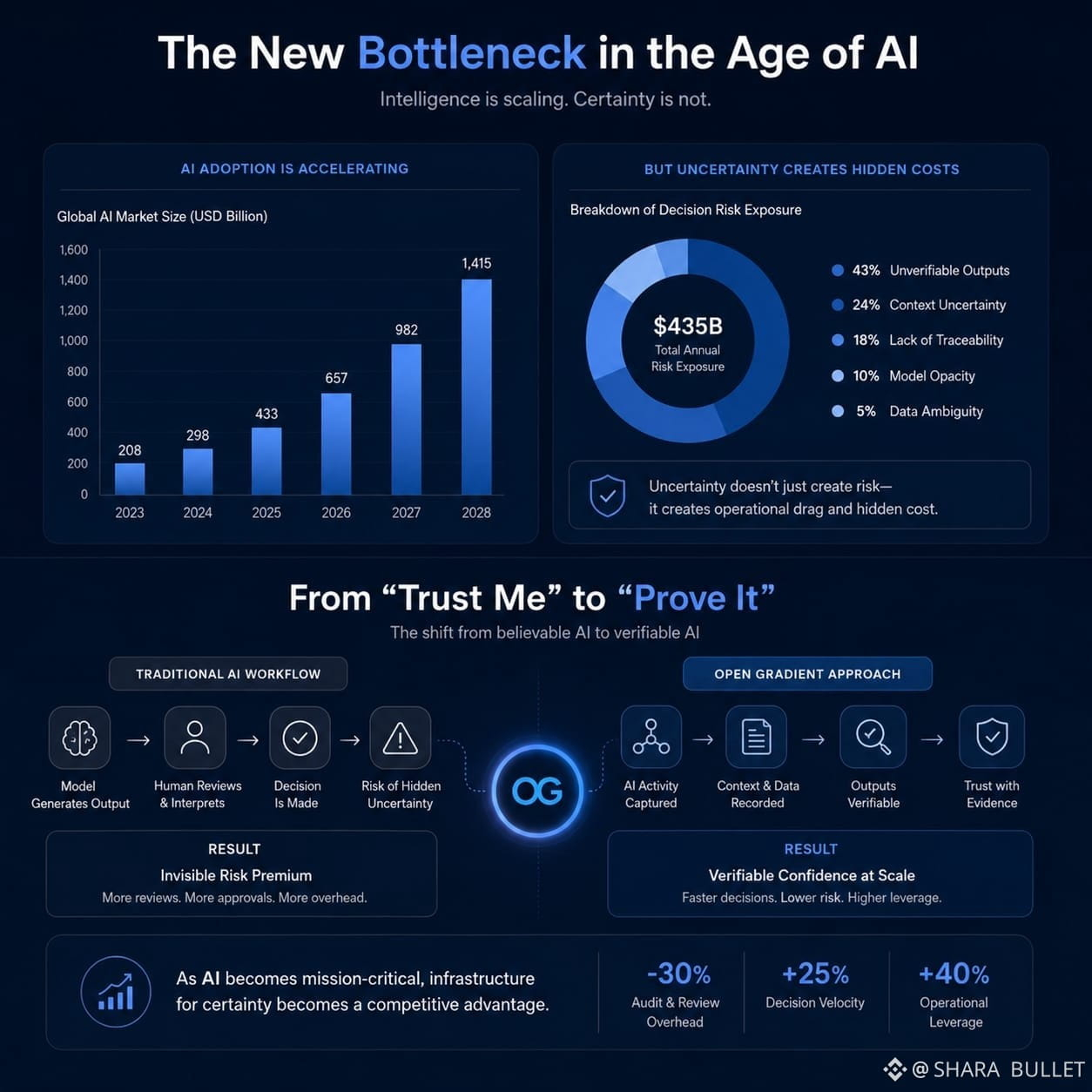
#opg $OPG A thought kept bothering me while I was reading about OpenGradient.
What happens when AI becomes important enough that "trust me" is no longer an acceptable answer?
At first, I dismissed that question.
Most AI conversations today revolve around performance. Which model is faster. Which one is cheaper. Which one produces better outputs.
That seems logical.
But the more I looked into how AI is being integrated into businesses, research, and automated systems, the more I noticed a different problem emerging.
The cost of a wrong answer is often visible.
The cost of uncertainty is not.
When nobody can verify where information came from, what context influenced it, or how a conclusion was reached, every decision carries an invisible risk premium.
People compensate by adding reviews, approvals, audits, and layers of human oversight.
In other words, they spend resources trying to create confidence.
That is where OpenGradient started making more sense to me.
Not because it is building AI.
Many teams are doing that.
What caught my attention is the attempt to make AI activity verifiable rather than simply believable.
The distinction seems small until you think about scale.
As AI becomes part of financial systems, research pipelines, and critical operations, the real bottleneck may not be intelligence.
It may be certainty.
And infrastructure that reduces uncertainty often becomes far more valuable than people initially expect@OpenGradient $LAB $RE
#opg $OPG A thought kept bothering me while I was reading about OpenGradient.
What happens when AI becomes important enough that "trust me" is no longer an acceptable answer?
At first, I dismissed that question.
Most AI conversations today revolve around performance. Which model is faster. Which one is cheaper. Which one produces better outputs.
That seems logical.
But the more I looked into how AI is being integrated into businesses, research, and automated systems, the more I noticed a different problem emerging.
The cost of a wrong answer is often visible.
The cost of uncertainty is not.
When nobody can verify where information came from, what context influenced it, or how a conclusion was reached, every decision carries an invisible risk premium.
People compensate by adding reviews, approvals, audits, and layers of human oversight.
In other words, they spend resources trying to create confidence.
That is where OpenGradient started making more sense to me.
Not because it is building AI.
Many teams are doing that.
What caught my attention is the attempt to make AI activity verifiable rather than simply believable.
The distinction seems small until you think about scale.
As AI becomes part of financial systems, research pipelines, and critical operations, the real bottleneck may not be intelligence.
It may be certainty.
And infrastructure that reduces uncertainty often becomes far more valuable than people initially expect@OpenGradient $LAB $RE
What happens when AI becomes important enough that "trust me" is no longer an acceptable answer?
At first, I dismissed that question.
Most AI conversations today revolve around performance. Which model is faster. Which one is cheaper. Which one produces better outputs.
That seems logical.
But the more I looked into how AI is being integrated into businesses, research, and automated systems, the more I noticed a different problem emerging.
The cost of a wrong answer is often visible.
The cost of uncertainty is not.
When nobody can verify where information came from, what context influenced it, or how a conclusion was reached, every decision carries an invisible risk premium.
People compensate by adding reviews, approvals, audits, and layers of human oversight.
In other words, they spend resources trying to create confidence.
That is where OpenGradient started making more sense to me.
Not because it is building AI.
Many teams are doing that.
What caught my attention is the attempt to make AI activity verifiable rather than simply believable.
The distinction seems small until you think about scale.
As AI becomes part of financial systems, research pipelines, and critical operations, the real bottleneck may not be intelligence.
It may be certainty.
And infrastructure that reduces uncertainty often becomes far more valuable than people initially expect@OpenGradient $LAB $RE
19
9
105
·
--
A thought kept bothering me while I was reading about OpenGradient.
What happens when AI becomes important enough that "trust me" is no longer an acceptable answer?
At first, I dismissed that question.
Most AI conversations today revolve around performance. Which model is faster. Which one is cheaper. Which one produces better outputs.
That seems logical.
But the more I looked into how AI is being integrated into businesses, research, and automated systems, the more I noticed a different problem emerging.
The cost of a wrong answer is often visible.
The cost of uncertainty is not.
When nobody can verify where information came from, what context influenced it, or how a conclusion was reached, every decision carries an invisible risk premium.
People compensate by adding reviews, approvals, audits, and layers of human oversight.
In other words, they spend resources trying to create confidence.
That is where OpenGradient started making more sense to me.
Not because it is building AI.
Many teams are doing that.
What caught my attention is the attempt to make AI activity verifiable rather than simply believable.
The distinction seems small until you think about scale.
As AI becomes part of financial systems, research pipelines, and critical operations, the real bottleneck may not be intelligence.
It may be certainty.
And infrastructure that reduces uncertainty often becomes far more valuable than people initially expect@OpenGradient $LAB $RE
A thought kept bothering me while I was reading about OpenGradient.
What happens when AI becomes important enough that "trust me" is no longer an acceptable answer?
At first, I dismissed that question.
Most AI conversations today revolve around performance. Which model is faster. Which one is cheaper. Which one produces better outputs.
That seems logical.
But the more I looked into how AI is being integrated into businesses, research, and automated systems, the more I noticed a different problem emerging.
The cost of a wrong answer is often visible.
The cost of uncertainty is not.
When nobody can verify where information came from, what context influenced it, or how a conclusion was reached, every decision carries an invisible risk premium.
People compensate by adding reviews, approvals, audits, and layers of human oversight.
In other words, they spend resources trying to create confidence.
That is where OpenGradient started making more sense to me.
Not because it is building AI.
Many teams are doing that.
What caught my attention is the attempt to make AI activity verifiable rather than simply believable.
The distinction seems small until you think about scale.
As AI becomes part of financial systems, research pipelines, and critical operations, the real bottleneck may not be intelligence.
It may be certainty.
And infrastructure that reduces uncertainty often becomes far more valuable than people initially expect@OpenGradient $LAB $RE
What happens when AI becomes important enough that "trust me" is no longer an acceptable answer?
At first, I dismissed that question.
Most AI conversations today revolve around performance. Which model is faster. Which one is cheaper. Which one produces better outputs.
That seems logical.
But the more I looked into how AI is being integrated into businesses, research, and automated systems, the more I noticed a different problem emerging.
The cost of a wrong answer is often visible.
The cost of uncertainty is not.
When nobody can verify where information came from, what context influenced it, or how a conclusion was reached, every decision carries an invisible risk premium.
People compensate by adding reviews, approvals, audits, and layers of human oversight.
In other words, they spend resources trying to create confidence.
That is where OpenGradient started making more sense to me.
Not because it is building AI.
Many teams are doing that.
What caught my attention is the attempt to make AI activity verifiable rather than simply believable.
The distinction seems small until you think about scale.
As AI becomes part of financial systems, research pipelines, and critical operations, the real bottleneck may not be intelligence.
It may be certainty.
And infrastructure that reduces uncertainty often becomes far more valuable than people initially expect@OpenGradient $LAB $RE
399
·
--
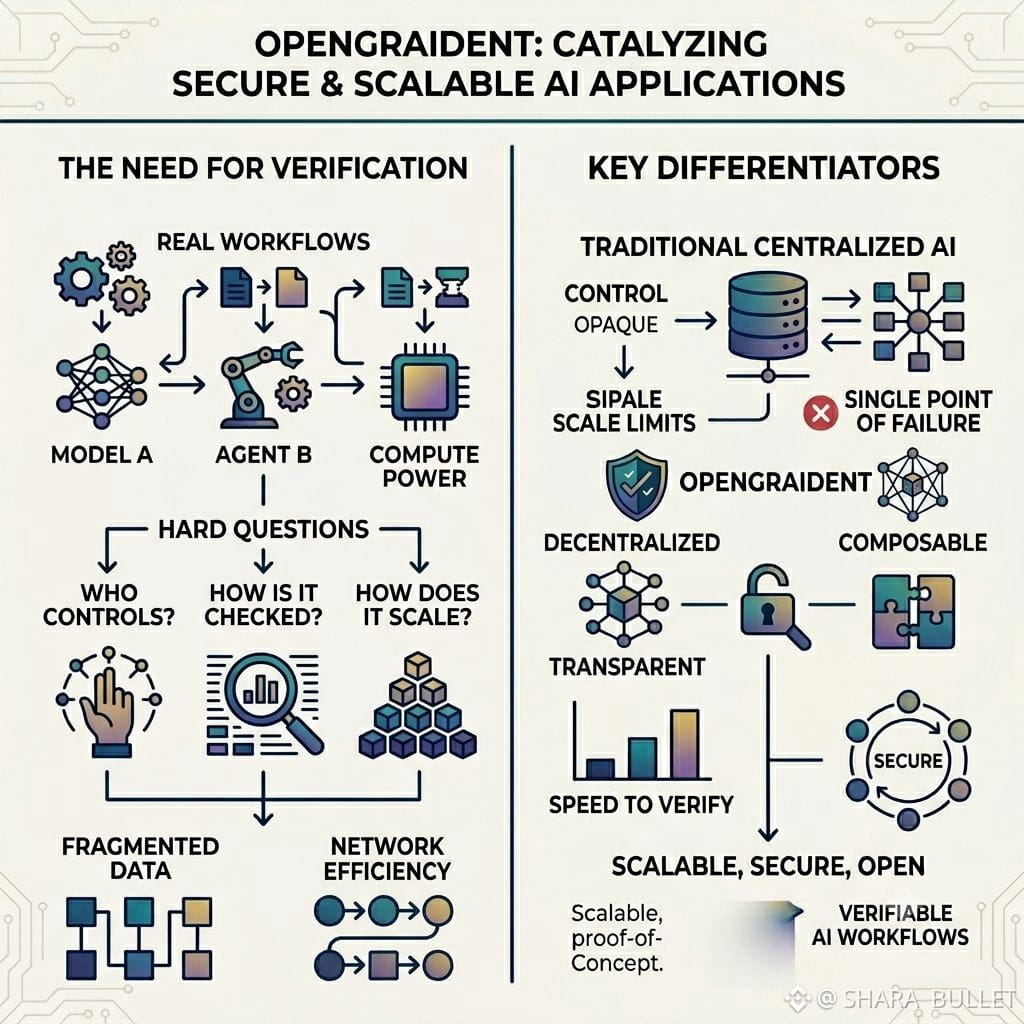
Whenever I read about a project, I pay attention to who is backing it and what problem it claims to solve. With OpenGradient, both signals feel aligned. The names around it suggest people who think in infrastructure, not noise. More interestingly, the project sits where AI systems and decentralized networks meet, and that is usually where questions about trust, coordination, and verification start to matter. As models, agents, and compute become part of real workflows, people will ask harder questions: who controls it, how is it checked, and what happens when it needs to scale? OpenGradient feels like an attempt to answer those questions from the ground up, not as a feature, but as a foundation, in a practical way.
@OpenGradient $OPG #OPG $LAB
Whenever I read about a project, I pay attention to who is backing it and what problem it claims to solve. With OpenGradient, both signals feel aligned. The names around it suggest people who think in infrastructure, not noise. More interestingly, the project sits where AI systems and decentralized networks meet, and that is usually where questions about trust, coordination, and verification start to matter. As models, agents, and compute become part of real workflows, people will ask harder questions: who controls it, how is it checked, and what happens when it needs to scale? OpenGradient feels like an attempt to answer those questions from the ground up, not as a feature, but as a foundation, in a practical way.
@OpenGradient $OPG #OPG $LAB
@OpenGradient $OPG #OPG $LAB
1
1
198
·
--
#opg $OPG A few years ago, a project like OpenGradient probably would've grabbed my attention instantly.
Now, my reaction is different.
Not because the idea is bad. Mostly because crypto has a way of making every new narrative sound like the next inevitable future. After seeing enough cycles, you start noticing how often strong stories arrive long before proven demand.
That's the lens I looked through when I started reading about OpenGradient.
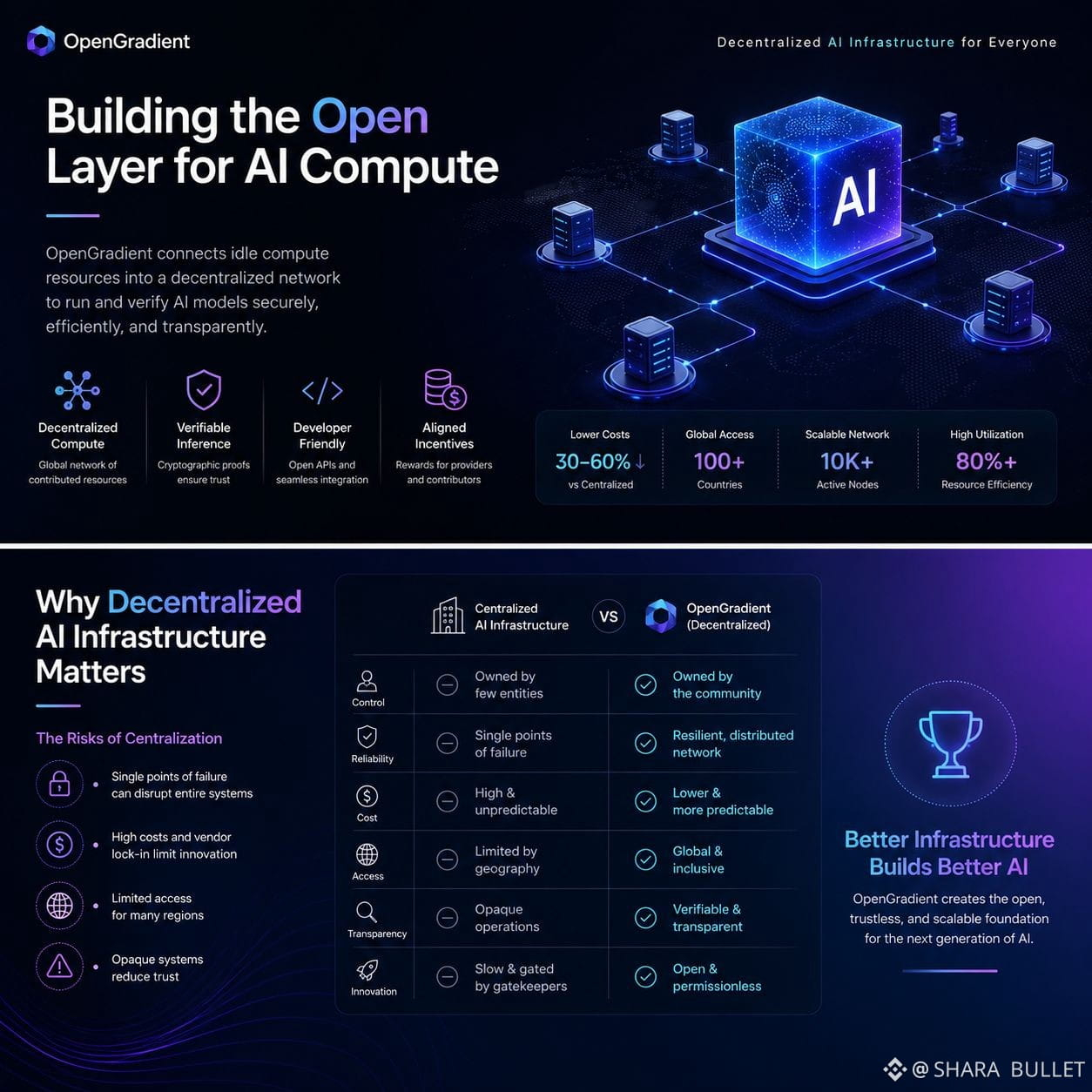
At its core, the project is exploring something that feels increasingly relevant: what happens when AI becomes more important, but the infrastructure behind it becomes more concentrated?
Most conversations around AI focus on models. Much less attention goes to who controls the compute, where inference happens, and how access is distributed. OpenGradient is attempting to build a decentralized network around those layers, creating an environment where AI models can be run and verified without relying entirely on a handful of centralized providers.
It's an idea that sounds reasonable.
Whether it's a product people genuinely need is a much harder question.
The challenge isn't explaining why decentralization matters. The challenge is building something that developers would actually choose when speed, cost, reliability, and convenience are competing priorities.
That's where many ambitious ideas run into reality.
I don't look at OpenGradient and see an obvious success story. I also don't see something that should be dismissed simply because it sits at the intersection of two popular themes: crypto and AI.
What I see is a project trying to solve a real issue in a market that hasn't fully decided how much it cares about the solution yet.
For me, that's the interesting part.
Not the narrative.
Not the token.
Just the simple question of whether decentralized AI infrastructure can become useful enough that people choose it for practical reasons rather than ideological ones.
The answer isn't clear today.
And that's exactly why I'm paying attention.@OpenGradient $LAB
#opg $OPG A few years ago, a project like OpenGradient probably would've grabbed my attention instantly.
Now, my reaction is different.
Not because the idea is bad. Mostly because crypto has a way of making every new narrative sound like the next inevitable future. After seeing enough cycles, you start noticing how often strong stories arrive long before proven demand.
That's the lens I looked through when I started reading about OpenGradient.
At its core, the project is exploring something that feels increasingly relevant: what happens when AI becomes more important, but the infrastructure behind it becomes more concentrated?
Most conversations around AI focus on models. Much less attention goes to who controls the compute, where inference happens, and how access is distributed. OpenGradient is attempting to build a decentralized network around those layers, creating an environment where AI models can be run and verified without relying entirely on a handful of centralized providers.
It's an idea that sounds reasonable.
Whether it's a product people genuinely need is a much harder question.
The challenge isn't explaining why decentralization matters. The challenge is building something that developers would actually choose when speed, cost, reliability, and convenience are competing priorities.
That's where many ambitious ideas run into reality.
I don't look at OpenGradient and see an obvious success story. I also don't see something that should be dismissed simply because it sits at the intersection of two popular themes: crypto and AI.
What I see is a project trying to solve a real issue in a market that hasn't fully decided how much it cares about the solution yet.
For me, that's the interesting part.
Not the narrative.
Not the token.
Just the simple question of whether decentralized AI infrastructure can become useful enough that people choose it for practical reasons rather than ideological ones.
The answer isn't clear today.
And that's exactly why I'm paying attention.@OpenGradient $LAB
Now, my reaction is different.
Not because the idea is bad. Mostly because crypto has a way of making every new narrative sound like the next inevitable future. After seeing enough cycles, you start noticing how often strong stories arrive long before proven demand.
That's the lens I looked through when I started reading about OpenGradient.
At its core, the project is exploring something that feels increasingly relevant: what happens when AI becomes more important, but the infrastructure behind it becomes more concentrated?
Most conversations around AI focus on models. Much less attention goes to who controls the compute, where inference happens, and how access is distributed. OpenGradient is attempting to build a decentralized network around those layers, creating an environment where AI models can be run and verified without relying entirely on a handful of centralized providers.
It's an idea that sounds reasonable.
Whether it's a product people genuinely need is a much harder question.
The challenge isn't explaining why decentralization matters. The challenge is building something that developers would actually choose when speed, cost, reliability, and convenience are competing priorities.
That's where many ambitious ideas run into reality.
I don't look at OpenGradient and see an obvious success story. I also don't see something that should be dismissed simply because it sits at the intersection of two popular themes: crypto and AI.
What I see is a project trying to solve a real issue in a market that hasn't fully decided how much it cares about the solution yet.
For me, that's the interesting part.
Not the narrative.
Not the token.
Just the simple question of whether decentralized AI infrastructure can become useful enough that people choose it for practical reasons rather than ideological ones.
The answer isn't clear today.
And that's exactly why I'm paying attention.@OpenGradient $LAB
6
4
140
·
--
#opg $OPG A thought kept bothering me while I was reading about OpenGradient.
What happens when AI becomes important enough that "trust me" is no longer an acceptable answer?
At first, I dismissed that question.
Most AI conversations today revolve around performance. Which model is faster. Which one is cheaper. Which one produces better outputs.
That seems logical.
But the more I looked into how AI is being integrated into businesses, research, and automated systems, the more I noticed a different problem emerging.
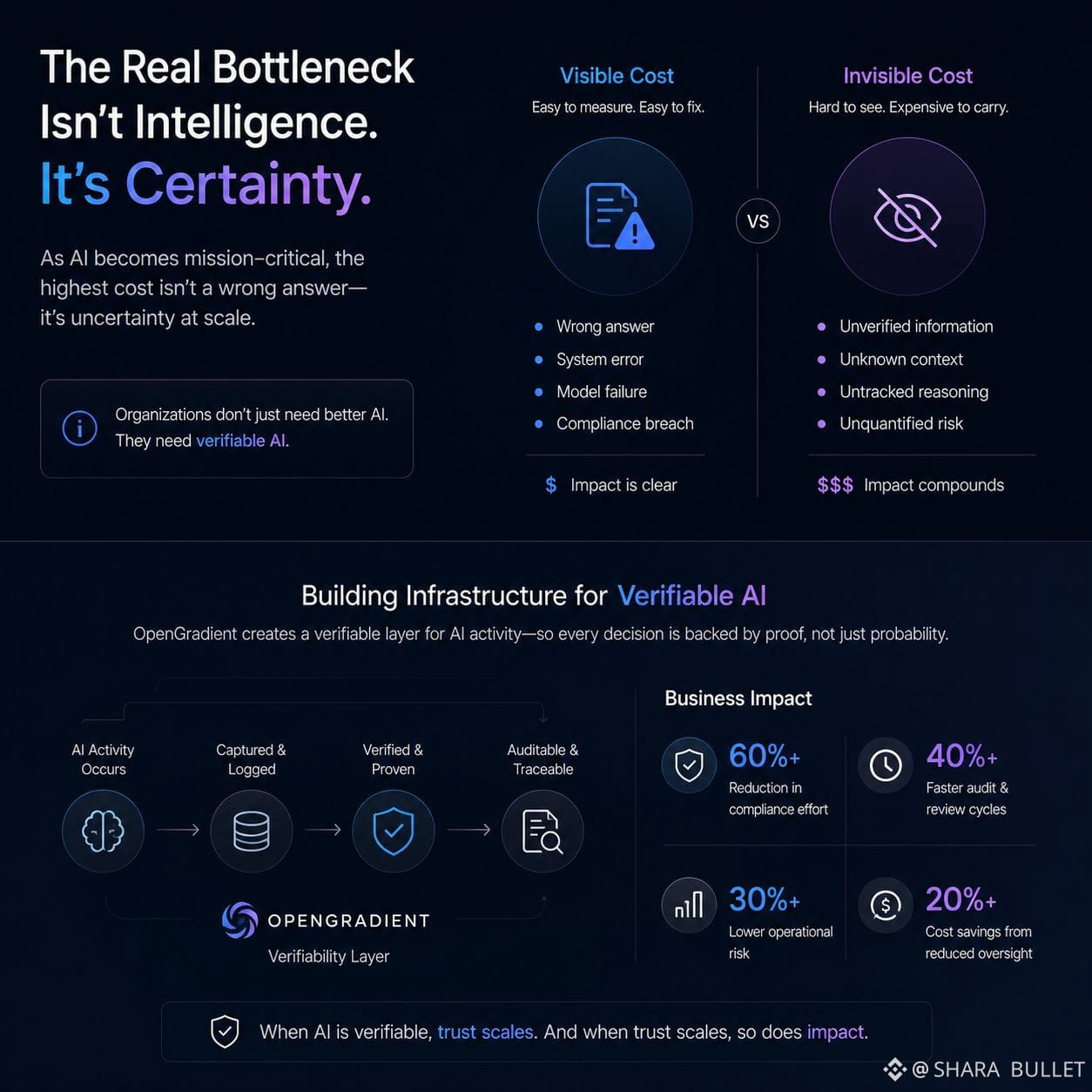
The cost of a wrong answer is often visible.
The cost of uncertainty is not.
When nobody can verify where information came from, what context influenced it, or how a conclusion was reached, every decision carries an invisible risk premium.
People compensate by adding reviews, approvals, audits, and layers of human oversight.
In other words, they spend resources trying to create confidence.
That is where OpenGradient started making more sense to me.
Not because it is building AI.
Many teams are doing that.
What caught my attention is the attempt to make AI activity verifiable rather than simply believable.
The distinction seems small until you think about scale.
As AI becomes part of financial systems, research pipelines, and critical operations, the real bottleneck may not be intelligence.
It may be certainty.
And infrastructure that reduces uncertainty often becomes far more valuable than people initially expect.@OpenGradient $LAB
#opg $OPG A thought kept bothering me while I was reading about OpenGradient.
What happens when AI becomes important enough that "trust me" is no longer an acceptable answer?
At first, I dismissed that question.
Most AI conversations today revolve around performance. Which model is faster. Which one is cheaper. Which one produces better outputs.
That seems logical.
But the more I looked into how AI is being integrated into businesses, research, and automated systems, the more I noticed a different problem emerging.
The cost of a wrong answer is often visible.
The cost of uncertainty is not.
When nobody can verify where information came from, what context influenced it, or how a conclusion was reached, every decision carries an invisible risk premium.
People compensate by adding reviews, approvals, audits, and layers of human oversight.
In other words, they spend resources trying to create confidence.
That is where OpenGradient started making more sense to me.
Not because it is building AI.
Many teams are doing that.
What caught my attention is the attempt to make AI activity verifiable rather than simply believable.
The distinction seems small until you think about scale.
As AI becomes part of financial systems, research pipelines, and critical operations, the real bottleneck may not be intelligence.
It may be certainty.
And infrastructure that reduces uncertainty often becomes far more valuable than people initially expect.@OpenGradient $LAB
What happens when AI becomes important enough that "trust me" is no longer an acceptable answer?
At first, I dismissed that question.
Most AI conversations today revolve around performance. Which model is faster. Which one is cheaper. Which one produces better outputs.
That seems logical.
But the more I looked into how AI is being integrated into businesses, research, and automated systems, the more I noticed a different problem emerging.
The cost of a wrong answer is often visible.
The cost of uncertainty is not.
When nobody can verify where information came from, what context influenced it, or how a conclusion was reached, every decision carries an invisible risk premium.
People compensate by adding reviews, approvals, audits, and layers of human oversight.
In other words, they spend resources trying to create confidence.
That is where OpenGradient started making more sense to me.
Not because it is building AI.
Many teams are doing that.
What caught my attention is the attempt to make AI activity verifiable rather than simply believable.
The distinction seems small until you think about scale.
As AI becomes part of financial systems, research pipelines, and critical operations, the real bottleneck may not be intelligence.
It may be certainty.
And infrastructure that reduces uncertainty often becomes far more valuable than people initially expect.@OpenGradient $LAB
12
9
272
·
--
#opg $OPG The longer I spend around crypto projects, the more I find myself paying attention to a different signal.
Not who joins.
Who stays.
Almost every network can attract people when incentives are strong enough. Builders arrive, communities become active, dashboards fill with numbers, and everything starts to look like momentum. But I am not always sure momentum and conviction are the same thing.
What interests me is what happens after the initial excitement. When rewards become normal, when attention moves elsewhere, and when people have a hundred other opportunities competing for their time.
That is why I keep wondering about projects like Bendlejet. If developers continue building, what exactly is keeping them there? Is it simply because the incentives are attractive, or are they gradually creating something they would not want to leave behind?
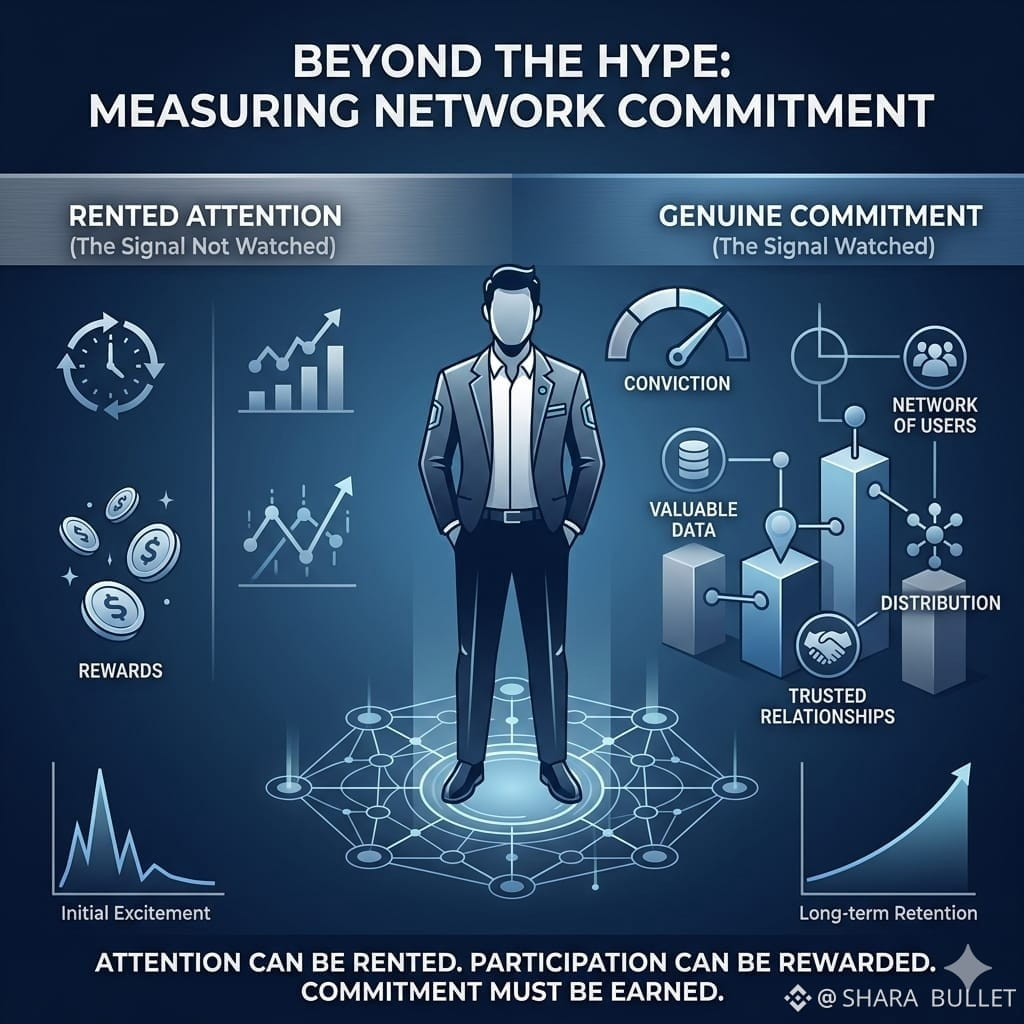
The strongest ecosystems usually create invisible forms of commitment. A network of users. Valuable data. Trusted relationships. Distribution. Familiar workflows. Things that become harder to replace over time.
Maybe that is the real test.
Not whether a project can attract builders today, but whether staying becomes more valuable with every month they remain involved.
Because attention can be rented.
Participation can be rewarded.
But genuine commitment is usually earned much more slowly, and once it appears, it often becomes the most valuable asset a network has.@OpenGradient $LAB
#opg $OPG The longer I spend around crypto projects, the more I find myself paying attention to a different signal.
Not who joins.
Who stays.
Almost every network can attract people when incentives are strong enough. Builders arrive, communities become active, dashboards fill with numbers, and everything starts to look like momentum. But I am not always sure momentum and conviction are the same thing.
What interests me is what happens after the initial excitement. When rewards become normal, when attention moves elsewhere, and when people have a hundred other opportunities competing for their time.
That is why I keep wondering about projects like Bendlejet. If developers continue building, what exactly is keeping them there? Is it simply because the incentives are attractive, or are they gradually creating something they would not want to leave behind?
The strongest ecosystems usually create invisible forms of commitment. A network of users. Valuable data. Trusted relationships. Distribution. Familiar workflows. Things that become harder to replace over time.
Maybe that is the real test.
Not whether a project can attract builders today, but whether staying becomes more valuable with every month they remain involved.
Because attention can be rented.
Participation can be rewarded.
But genuine commitment is usually earned much more slowly, and once it appears, it often becomes the most valuable asset a network has.@OpenGradient $LAB
Not who joins.
Who stays.
Almost every network can attract people when incentives are strong enough. Builders arrive, communities become active, dashboards fill with numbers, and everything starts to look like momentum. But I am not always sure momentum and conviction are the same thing.
What interests me is what happens after the initial excitement. When rewards become normal, when attention moves elsewhere, and when people have a hundred other opportunities competing for their time.
That is why I keep wondering about projects like Bendlejet. If developers continue building, what exactly is keeping them there? Is it simply because the incentives are attractive, or are they gradually creating something they would not want to leave behind?
The strongest ecosystems usually create invisible forms of commitment. A network of users. Valuable data. Trusted relationships. Distribution. Familiar workflows. Things that become harder to replace over time.
Maybe that is the real test.
Not whether a project can attract builders today, but whether staying becomes more valuable with every month they remain involved.
Because attention can be rented.
Participation can be rewarded.
But genuine commitment is usually earned much more slowly, and once it appears, it often becomes the most valuable asset a network has.@OpenGradient $LAB
5
4
251
·
--
#opg $OPG The more I follow the conversation around OpenGradient, the less interested I become in the technology alone and the more interested I become in the people shaping it.
That is not a criticism of the project. If anything, it comes from experience. Technology is usually tested later. Incentives are tested first.
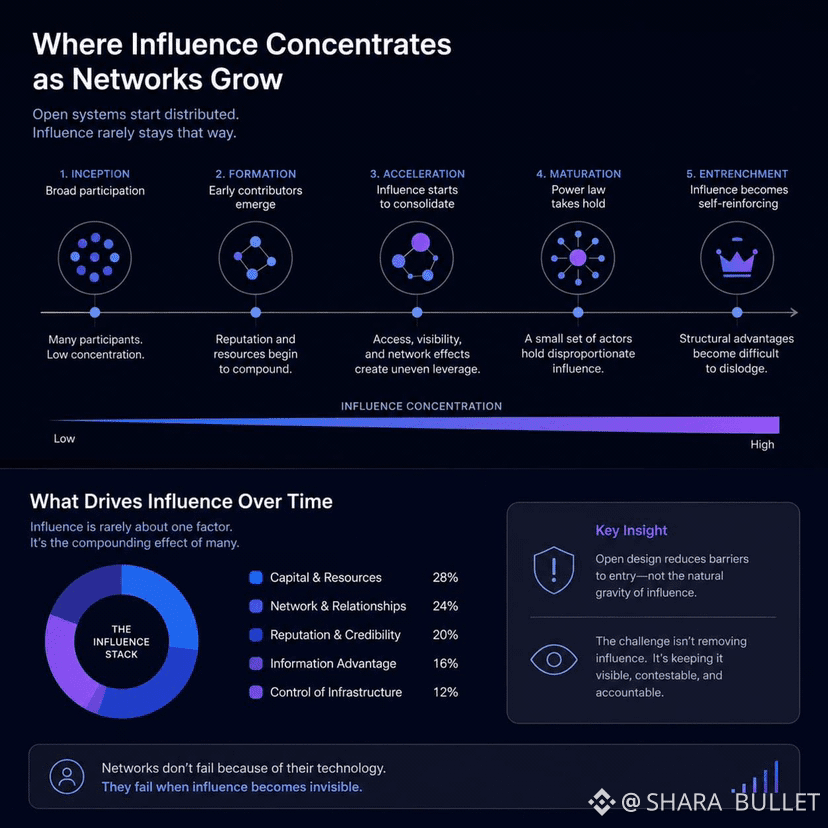
What keeps sitting in the back of my mind is a simple question: when a network is designed to be open and decentralized, where does influence gradually concentrate as it grows?
In theory, participation should distribute power. In practice, influence often finds its way toward those with the deepest resources, the strongest networks, or the greatest stake in the outcome.
That does not mean anything is wrong today. In fact, many systems look strongest during the period when hidden dependencies are still forming. Growth is healthy, engagement increases, and the broader narrative remains intact. Yet the forces that eventually matter most are often the ones nobody is paying attention to.
That is why I keep looking at OpenGradient through a wider lens. Not only as AI infrastructure, but as a living network of incentives, relationships, and decision-making.
The technology is an important piece of the story. I am just not convinced it is the entire story.
Over time, the future of a network is often shaped less by what it was designed to do and more by who gains influence inside it when nobody is watching.
The difficult part is figuring out how visible that influence is before it becomes important.@OpenGradient $LAB
#opg $OPG The more I follow the conversation around OpenGradient, the less interested I become in the technology alone and the more interested I become in the people shaping it.
That is not a criticism of the project. If anything, it comes from experience. Technology is usually tested later. Incentives are tested first.
What keeps sitting in the back of my mind is a simple question: when a network is designed to be open and decentralized, where does influence gradually concentrate as it grows?
In theory, participation should distribute power. In practice, influence often finds its way toward those with the deepest resources, the strongest networks, or the greatest stake in the outcome.
That does not mean anything is wrong today. In fact, many systems look strongest during the period when hidden dependencies are still forming. Growth is healthy, engagement increases, and the broader narrative remains intact. Yet the forces that eventually matter most are often the ones nobody is paying attention to.
That is why I keep looking at OpenGradient through a wider lens. Not only as AI infrastructure, but as a living network of incentives, relationships, and decision-making.
The technology is an important piece of the story. I am just not convinced it is the entire story.
Over time, the future of a network is often shaped less by what it was designed to do and more by who gains influence inside it when nobody is watching.
The difficult part is figuring out how visible that influence is before it becomes important.@OpenGradient $LAB
That is not a criticism of the project. If anything, it comes from experience. Technology is usually tested later. Incentives are tested first.
What keeps sitting in the back of my mind is a simple question: when a network is designed to be open and decentralized, where does influence gradually concentrate as it grows?
In theory, participation should distribute power. In practice, influence often finds its way toward those with the deepest resources, the strongest networks, or the greatest stake in the outcome.
That does not mean anything is wrong today. In fact, many systems look strongest during the period when hidden dependencies are still forming. Growth is healthy, engagement increases, and the broader narrative remains intact. Yet the forces that eventually matter most are often the ones nobody is paying attention to.
That is why I keep looking at OpenGradient through a wider lens. Not only as AI infrastructure, but as a living network of incentives, relationships, and decision-making.
The technology is an important piece of the story. I am just not convinced it is the entire story.
Over time, the future of a network is often shaped less by what it was designed to do and more by who gains influence inside it when nobody is watching.
The difficult part is figuring out how visible that influence is before it becomes important.@OpenGradient $LAB
5
7
200
·
--
#opg $OPG I’ve been wondering whether the hardest thing for infrastructure projects is not building technology, but interpreting signals correctly.
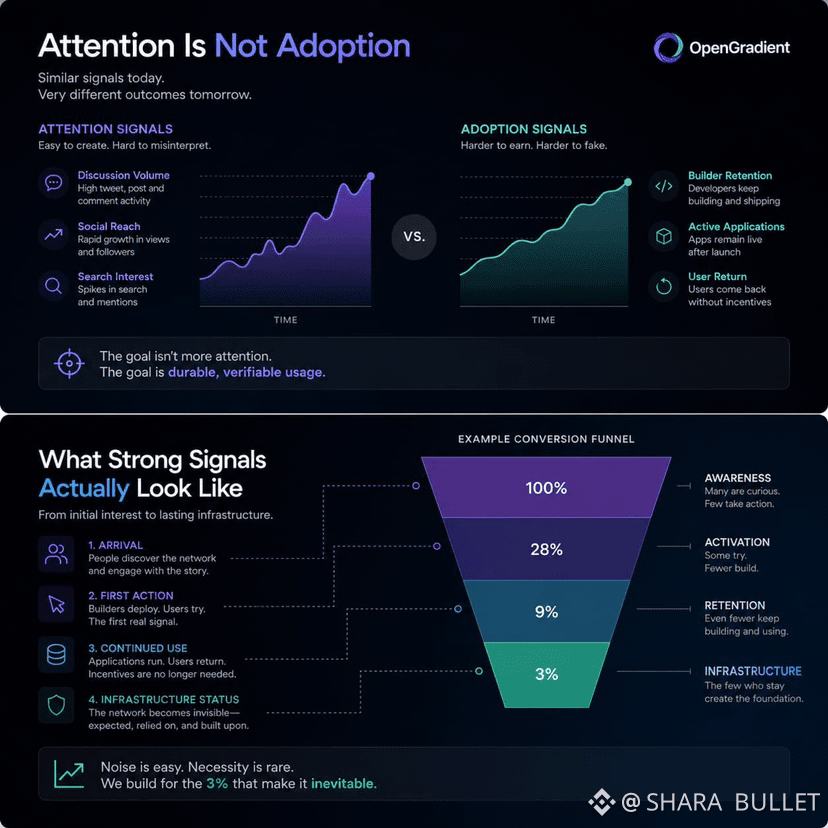
When I look at OpenGradient, a question keeps coming back to me. If more developers join, more people discuss the network, and the token attracts greater attention, what exactly is the project learning from that activity? Is it learning that demand exists, or simply learning that attention exists?
Those two things can look identical from a distance.
A crowded discussion often feels like proof of adoption. But I’m not sure it always is. Sometimes people are interested in the story before they are committed to the product. The challenge is that both behaviors create similar metrics in the short term, while leading to very different outcomes over time.
What makes this interesting is that OpenGradient is positioning itself around verifiable AI infrastructure. If the goal is making intelligence more transparent and measurable, then perhaps the same principle should apply to growth itself. Not every signal deserves equal weight.
An idea I keep returning to is this: maybe the most valuable metric is not how many people arrive, but what they do after arriving. Do builders keep deploying? Do applications continue operating months later? Do users return when incentives disappear?
If those numbers grow, they may reveal something deeper than attention ever could.
Because in technology, the strongest signals are often the ones that make the least noise. The infrastructure that matters most usually becomes invisible. People stop talking about it because they simply expect it to work. And maybe that is the point where a network stops being a narrative and starts becoming a necessity.
@OpenGradient $LAB
#opg $OPG I’ve been wondering whether the hardest thing for infrastructure projects is not building technology, but interpreting signals correctly.
When I look at OpenGradient, a question keeps coming back to me. If more developers join, more people discuss the network, and the token attracts greater attention, what exactly is the project learning from that activity? Is it learning that demand exists, or simply learning that attention exists?
Those two things can look identical from a distance.
A crowded discussion often feels like proof of adoption. But I’m not sure it always is. Sometimes people are interested in the story before they are committed to the product. The challenge is that both behaviors create similar metrics in the short term, while leading to very different outcomes over time.
What makes this interesting is that OpenGradient is positioning itself around verifiable AI infrastructure. If the goal is making intelligence more transparent and measurable, then perhaps the same principle should apply to growth itself. Not every signal deserves equal weight.
An idea I keep returning to is this: maybe the most valuable metric is not how many people arrive, but what they do after arriving. Do builders keep deploying? Do applications continue operating months later? Do users return when incentives disappear?
If those numbers grow, they may reveal something deeper than attention ever could.
Because in technology, the strongest signals are often the ones that make the least noise. The infrastructure that matters most usually becomes invisible. People stop talking about it because they simply expect it to work. And maybe that is the point where a network stops being a narrative and starts becoming a necessity.
@OpenGradient $LAB
When I look at OpenGradient, a question keeps coming back to me. If more developers join, more people discuss the network, and the token attracts greater attention, what exactly is the project learning from that activity? Is it learning that demand exists, or simply learning that attention exists?
Those two things can look identical from a distance.
A crowded discussion often feels like proof of adoption. But I’m not sure it always is. Sometimes people are interested in the story before they are committed to the product. The challenge is that both behaviors create similar metrics in the short term, while leading to very different outcomes over time.
What makes this interesting is that OpenGradient is positioning itself around verifiable AI infrastructure. If the goal is making intelligence more transparent and measurable, then perhaps the same principle should apply to growth itself. Not every signal deserves equal weight.
An idea I keep returning to is this: maybe the most valuable metric is not how many people arrive, but what they do after arriving. Do builders keep deploying? Do applications continue operating months later? Do users return when incentives disappear?
If those numbers grow, they may reveal something deeper than attention ever could.
Because in technology, the strongest signals are often the ones that make the least noise. The infrastructure that matters most usually becomes invisible. People stop talking about it because they simply expect it to work. And maybe that is the point where a network stops being a narrative and starts becoming a necessity.
@OpenGradient $LAB
5
6
208
·
--
#opg $OPG Most people are focusing on the wrong part of private AI.
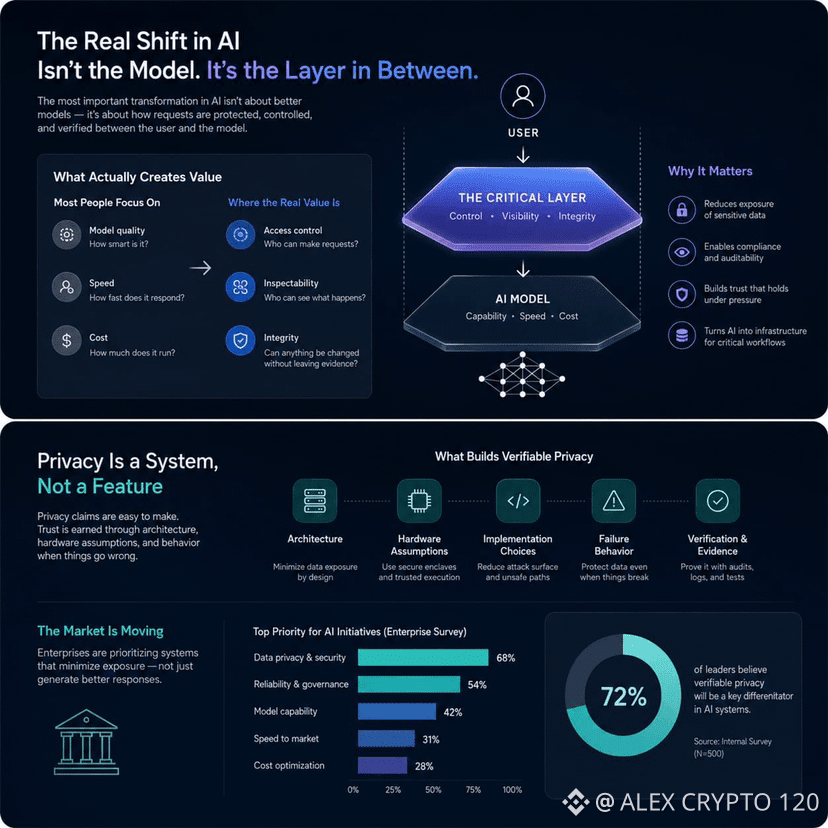
The conversation usually revolves around model quality — how smart it is, how fast it responds, or how much it costs to run. Those things matter, but they are not what makes this shift important.
The real change is happening in the layer that sits between the user and the model. Who can access a request. Who can inspect it. Whether anyone can modify it without leaving evidence. Once those questions start getting solid answers, AI stops being just another chat interface and becomes infrastructure for handling sensitive information.
That is where I think the market is gradually heading. The systems that minimize exposure may end up creating more value than the ones that simply generate better responses. In many real-world environments, capability alone is not enough. People need confidence in how their data moves through the system.
At the same time, privacy is easy to claim and much harder to prove. The real test comes from architecture, hardware assumptions, implementation choices, and how a system behaves when something goes wrong. Trust only matters when it holds up under pressure.
That is what makes this area worth watching. Not because it is the loudest trend in AI, but because it is slowly turning privacy from a marketing promise into something that can be designed, verified, and built into the foundation itself.@OpenGradient $LAB
#opg $OPG Most people are focusing on the wrong part of private AI.
The conversation usually revolves around model quality — how smart it is, how fast it responds, or how much it costs to run. Those things matter, but they are not what makes this shift important.
The real change is happening in the layer that sits between the user and the model. Who can access a request. Who can inspect it. Whether anyone can modify it without leaving evidence. Once those questions start getting solid answers, AI stops being just another chat interface and becomes infrastructure for handling sensitive information.
That is where I think the market is gradually heading. The systems that minimize exposure may end up creating more value than the ones that simply generate better responses. In many real-world environments, capability alone is not enough. People need confidence in how their data moves through the system.
At the same time, privacy is easy to claim and much harder to prove. The real test comes from architecture, hardware assumptions, implementation choices, and how a system behaves when something goes wrong. Trust only matters when it holds up under pressure.
That is what makes this area worth watching. Not because it is the loudest trend in AI, but because it is slowly turning privacy from a marketing promise into something that can be designed, verified, and built into the foundation itself.@OpenGradient $LAB
The conversation usually revolves around model quality — how smart it is, how fast it responds, or how much it costs to run. Those things matter, but they are not what makes this shift important.
The real change is happening in the layer that sits between the user and the model. Who can access a request. Who can inspect it. Whether anyone can modify it without leaving evidence. Once those questions start getting solid answers, AI stops being just another chat interface and becomes infrastructure for handling sensitive information.
That is where I think the market is gradually heading. The systems that minimize exposure may end up creating more value than the ones that simply generate better responses. In many real-world environments, capability alone is not enough. People need confidence in how their data moves through the system.
At the same time, privacy is easy to claim and much harder to prove. The real test comes from architecture, hardware assumptions, implementation choices, and how a system behaves when something goes wrong. Trust only matters when it holds up under pressure.
That is what makes this area worth watching. Not because it is the loudest trend in AI, but because it is slowly turning privacy from a marketing promise into something that can be designed, verified, and built into the foundation itself.@OpenGradient $LAB
2
2
259
·
--
#genius $GENIUS @GeniusOfficial
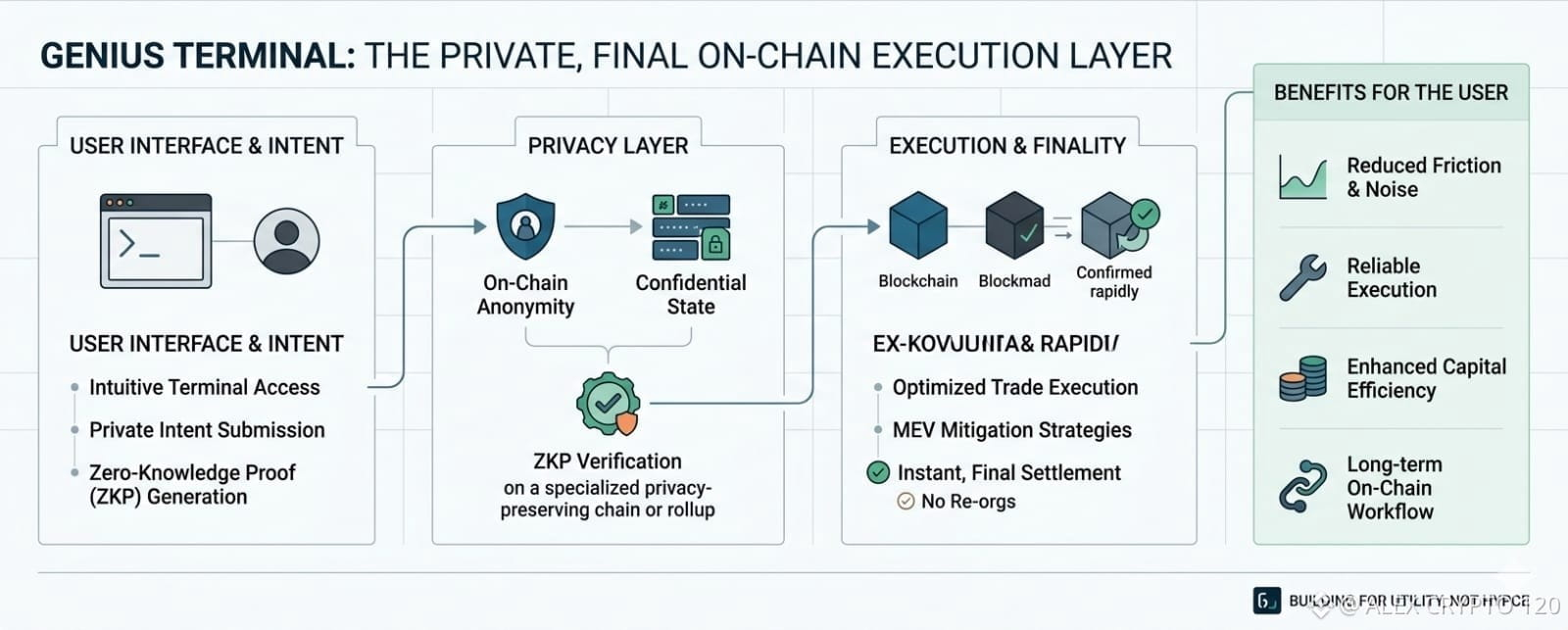
I’ve noticed that the longer I spend around crypto, the less impressed I am by big claims and the more attention I give to tools that simply work. Most users are not looking for another story; they are trying to get things done without unnecessary friction. That’s why concepts like a private, final on-chain terminal catch my attention. If Genius Terminal can make execution feel more reliable and reduce the noise that often surrounds on-chain activity, that has far more value than any short-term excitement around a launch.
#genius $GENIUS @GeniusOfficial
I’ve noticed that the longer I spend around crypto, the less impressed I am by big claims and the more attention I give to tools that simply work. Most users are not looking for another story; they are trying to get things done without unnecessary friction. That’s why concepts like a private, final on-chain terminal catch my attention. If Genius Terminal can make execution feel more reliable and reduce the noise that often surrounds on-chain activity, that has far more value than any short-term excitement around a launch.
I’ve noticed that the longer I spend around crypto, the less impressed I am by big claims and the more attention I give to tools that simply work. Most users are not looking for another story; they are trying to get things done without unnecessary friction. That’s why concepts like a private, final on-chain terminal catch my attention. If Genius Terminal can make execution feel more reliable and reduce the noise that often surrounds on-chain activity, that has far more value than any short-term excitement around a launch.
137
·
--
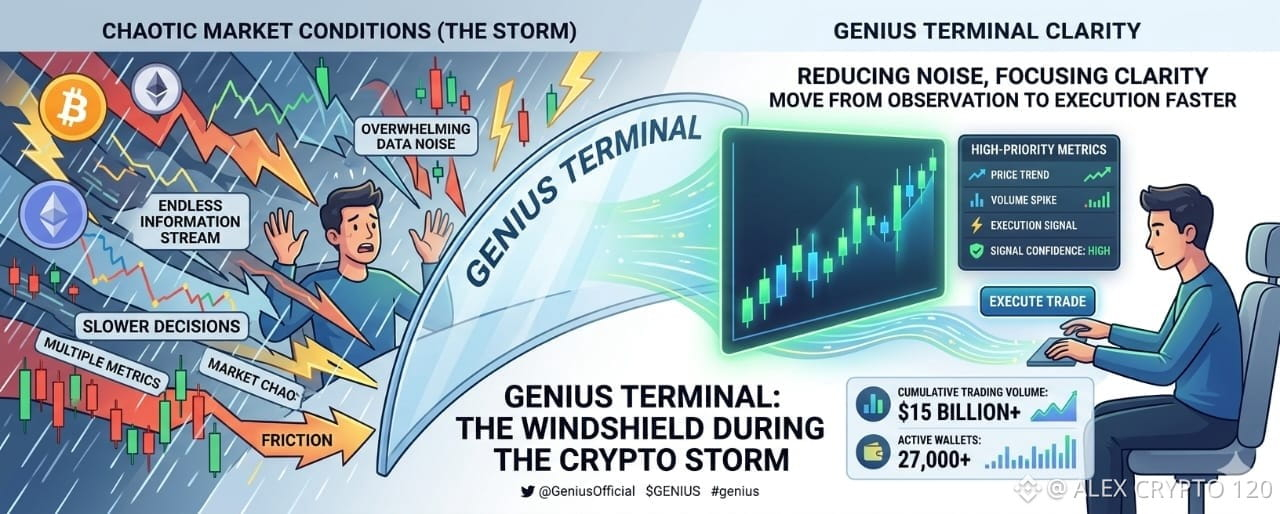
$GENIUS @GeniusOfficial #genius
A thought crossed my mind recently: the best trading tools are a lot like a good windshield during a storm.
You don't notice them when everything is calm. Their value becomes obvious when visibility drops and decisions have to be made quickly.
That's partly why I've been paying attention to Genius Terminal. Crypto markets produce an endless stream of information every second, but more data doesn't automatically create better decisions. In many cases, it does the opposite. Traders end up spending more time sorting information than acting on it.
What makes the idea behind Genius interesting is its focus on reducing that noise. Instead of treating every metric as equally important, the platform seems designed around helping users move from observation to execution with fewer interruptions.
A couple of numbers stand out. The platform has reported more than $15 billion in cumulative trading volume and roughly 27,000 active wallets. Numbers alone never tell the full story, but they do suggest that people are using the product in live market conditions rather than simply experimenting with it.
The part that interests me most isn't the current growth. It's what happens when market conditions become chaotic. Bull markets make every platform look efficient. Sharp volatility is where infrastructure earns its reputation.
For now, Genius feels less like a tool competing for attention and more like an attempt to solve a problem traders quietly deal with every day: too much information arriving at the exact moment clarity matters most.
In markets where seconds can change outcomes, reducing friction is often more valuable than adding another feature.
$GENIUS @GeniusOfficial #genius
A thought crossed my mind recently: the best trading tools are a lot like a good windshield during a storm.
You don't notice them when everything is calm. Their value becomes obvious when visibility drops and decisions have to be made quickly.
That's partly why I've been paying attention to Genius Terminal. Crypto markets produce an endless stream of information every second, but more data doesn't automatically create better decisions. In many cases, it does the opposite. Traders end up spending more time sorting information than acting on it.
What makes the idea behind Genius interesting is its focus on reducing that noise. Instead of treating every metric as equally important, the platform seems designed around helping users move from observation to execution with fewer interruptions.
A couple of numbers stand out. The platform has reported more than $15 billion in cumulative trading volume and roughly 27,000 active wallets. Numbers alone never tell the full story, but they do suggest that people are using the product in live market conditions rather than simply experimenting with it.
The part that interests me most isn't the current growth. It's what happens when market conditions become chaotic. Bull markets make every platform look efficient. Sharp volatility is where infrastructure earns its reputation.
For now, Genius feels less like a tool competing for attention and more like an attempt to solve a problem traders quietly deal with every day: too much information arriving at the exact moment clarity matters most.
In markets where seconds can change outcomes, reducing friction is often more valuable than adding another feature.
A thought crossed my mind recently: the best trading tools are a lot like a good windshield during a storm.
You don't notice them when everything is calm. Their value becomes obvious when visibility drops and decisions have to be made quickly.
That's partly why I've been paying attention to Genius Terminal. Crypto markets produce an endless stream of information every second, but more data doesn't automatically create better decisions. In many cases, it does the opposite. Traders end up spending more time sorting information than acting on it.
What makes the idea behind Genius interesting is its focus on reducing that noise. Instead of treating every metric as equally important, the platform seems designed around helping users move from observation to execution with fewer interruptions.
A couple of numbers stand out. The platform has reported more than $15 billion in cumulative trading volume and roughly 27,000 active wallets. Numbers alone never tell the full story, but they do suggest that people are using the product in live market conditions rather than simply experimenting with it.
The part that interests me most isn't the current growth. It's what happens when market conditions become chaotic. Bull markets make every platform look efficient. Sharp volatility is where infrastructure earns its reputation.
For now, Genius feels less like a tool competing for attention and more like an attempt to solve a problem traders quietly deal with every day: too much information arriving at the exact moment clarity matters most.
In markets where seconds can change outcomes, reducing friction is often more valuable than adding another feature.
131
·
--
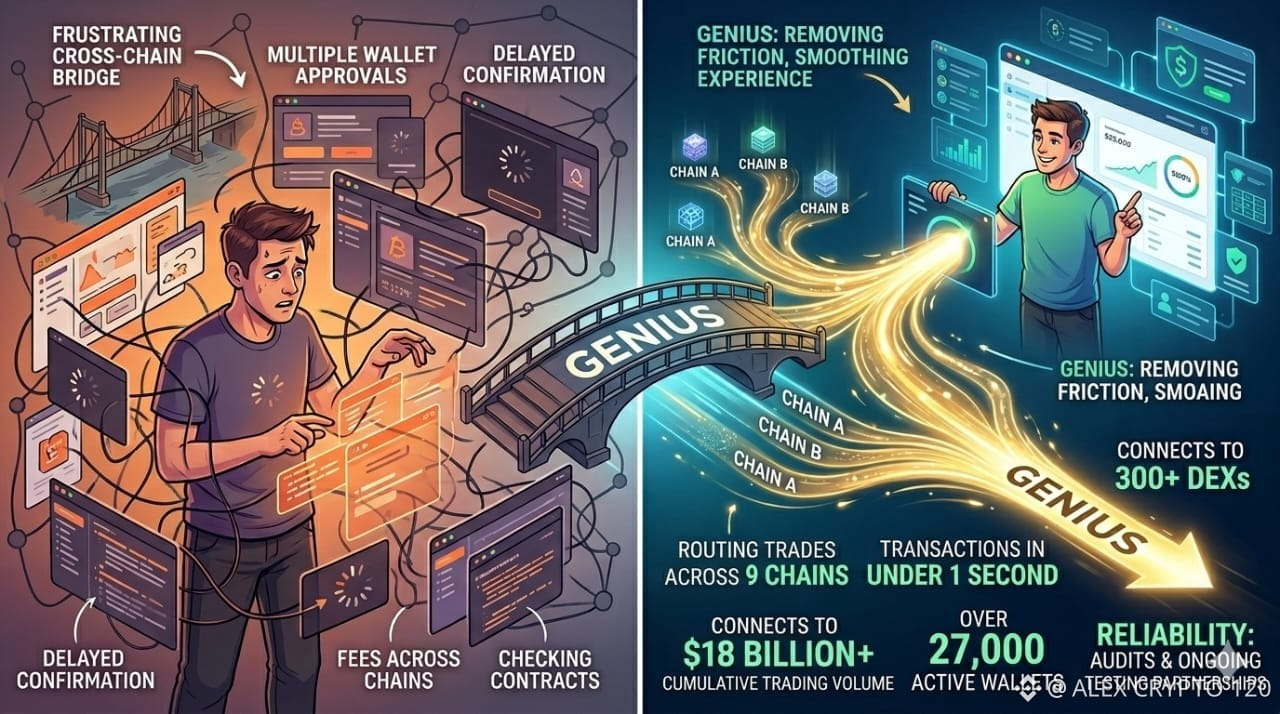
@GeniusOfficial #genius $GENIUS
One thing I've learned from spending time in crypto is that opportunities are rarely missed because people don't know what to do. More often, they're missed because the process gets in the way.
A trade looks good, but then comes the usual routine: switching between apps, checking different chains, comparing liquidity, approving transactions, and hoping the price doesn't move before everything is finished. It sounds minor, but those small delays add up.
That's why Genius Terminal caught my attention.
What I like about it is the focus on making trading feel simpler. Instead of bouncing around multiple platforms, it brings together liquidity from more than 150 DEXs across 9 chains in one place. The experience feels less about managing crypto infrastructure and more about staying focused on the trade itself.
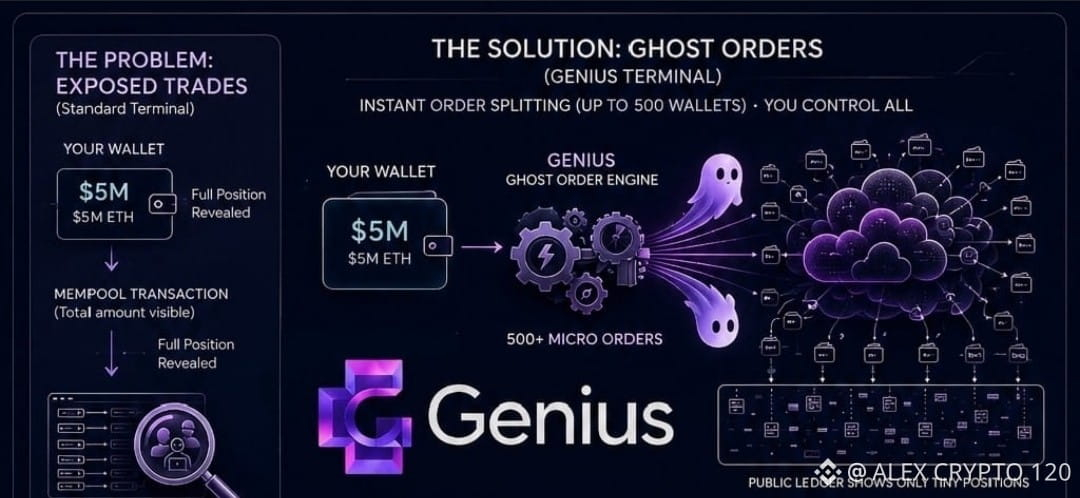
I was also curious about the Gh0st privacy layer on BNB Chain. From what I've read, orders can be routed through hundreds of temporary wallets before settlement. In a market where front-running and copied trades are real concerns, having an extra layer of privacy feels practical rather than just another feature on a long list.
The numbers are interesting too. Around $60M in daily trading volume suggests people are actively using the platform, not simply watching from the sidelines.
What stands out most to me is something simple: the best technology often fades into the background. When a platform works well, you stop thinking about how everything is connected underneath. You just focus on what you came to do.
In many ways, that's what good infrastructure should feel like—quiet, reliable, and easy enough that you hardly notice it's there.
@GeniusOfficial #genius $GENIUS
One thing I've learned from spending time in crypto is that opportunities are rarely missed because people don't know what to do. More often, they're missed because the process gets in the way.
A trade looks good, but then comes the usual routine: switching between apps, checking different chains, comparing liquidity, approving transactions, and hoping the price doesn't move before everything is finished. It sounds minor, but those small delays add up.
That's why Genius Terminal caught my attention.
What I like about it is the focus on making trading feel simpler. Instead of bouncing around multiple platforms, it brings together liquidity from more than 150 DEXs across 9 chains in one place. The experience feels less about managing crypto infrastructure and more about staying focused on the trade itself.
I was also curious about the Gh0st privacy layer on BNB Chain. From what I've read, orders can be routed through hundreds of temporary wallets before settlement. In a market where front-running and copied trades are real concerns, having an extra layer of privacy feels practical rather than just another feature on a long list.
The numbers are interesting too. Around $60M in daily trading volume suggests people are actively using the platform, not simply watching from the sidelines.
What stands out most to me is something simple: the best technology often fades into the background. When a platform works well, you stop thinking about how everything is connected underneath. You just focus on what you came to do.
In many ways, that's what good infrastructure should feel like—quiet, reliable, and easy enough that you hardly notice it's there.
One thing I've learned from spending time in crypto is that opportunities are rarely missed because people don't know what to do. More often, they're missed because the process gets in the way.
A trade looks good, but then comes the usual routine: switching between apps, checking different chains, comparing liquidity, approving transactions, and hoping the price doesn't move before everything is finished. It sounds minor, but those small delays add up.
That's why Genius Terminal caught my attention.
What I like about it is the focus on making trading feel simpler. Instead of bouncing around multiple platforms, it brings together liquidity from more than 150 DEXs across 9 chains in one place. The experience feels less about managing crypto infrastructure and more about staying focused on the trade itself.
I was also curious about the Gh0st privacy layer on BNB Chain. From what I've read, orders can be routed through hundreds of temporary wallets before settlement. In a market where front-running and copied trades are real concerns, having an extra layer of privacy feels practical rather than just another feature on a long list.
The numbers are interesting too. Around $60M in daily trading volume suggests people are actively using the platform, not simply watching from the sidelines.
What stands out most to me is something simple: the best technology often fades into the background. When a platform works well, you stop thinking about how everything is connected underneath. You just focus on what you came to do.
In many ways, that's what good infrastructure should feel like—quiet, reliable, and easy enough that you hardly notice it's there.
120
·
--
@GeniusOfficial #genius $GENIUS
When Good Trading Tools Stop Feeling Like Tools
The longer I spend around crypto, the more I realize that most trading mistakes don't come from bad decisions. They come from friction. A few extra clicks, switching between chains, hunting for liquidity, or dealing with endless approvals can be enough to make someone miss an opportunity.
That's why Genius Terminal has caught my attention.
What I find interesting isn't just the technology itself, but the way it's trying to simplify the experience. Instead of forcing traders to search across different platforms, it connects liquidity from more than 150 DEXs across 9 chains within a single environment. The result feels less like managing infrastructure and more like focusing on the trade itself.
I was also intrigued by the Gh0st privacy layer on BNB Chain. According to the platform, orders can be distributed across hundreds of temporary wallets before settlement. For traders who worry about front-running or having their moves copied, that kind of protection could be far more valuable than another flashy feature added to a dashboard.
The activity behind the platform is starting to become noticeable as well. With roughly $60M in daily trading volume and a circulating supply near 335M tokens, the numbers suggest people are actually using the system rather than simply talking about it.
What stands out to me most is a simple idea: the strongest infrastructure often stays out of the spotlight. When a platform removes enough complexity, users stop thinking about the machinery underneath and focus entirely on what they came there to do. In many ways, that's the clearest sign that the technology is doing its job well.
@GeniusOfficial #genius $GENIUS
When Good Trading Tools Stop Feeling Like Tools
The longer I spend around crypto, the more I realize that most trading mistakes don't come from bad decisions. They come from friction. A few extra clicks, switching between chains, hunting for liquidity, or dealing with endless approvals can be enough to make someone miss an opportunity.
That's why Genius Terminal has caught my attention.
What I find interesting isn't just the technology itself, but the way it's trying to simplify the experience. Instead of forcing traders to search across different platforms, it connects liquidity from more than 150 DEXs across 9 chains within a single environment. The result feels less like managing infrastructure and more like focusing on the trade itself.
I was also intrigued by the Gh0st privacy layer on BNB Chain. According to the platform, orders can be distributed across hundreds of temporary wallets before settlement. For traders who worry about front-running or having their moves copied, that kind of protection could be far more valuable than another flashy feature added to a dashboard.
The activity behind the platform is starting to become noticeable as well. With roughly $60M in daily trading volume and a circulating supply near 335M tokens, the numbers suggest people are actually using the system rather than simply talking about it.
What stands out to me most is a simple idea: the strongest infrastructure often stays out of the spotlight. When a platform removes enough complexity, users stop thinking about the machinery underneath and focus entirely on what they came there to do. In many ways, that's the clearest sign that the technology is doing its job well.
When Good Trading Tools Stop Feeling Like Tools
The longer I spend around crypto, the more I realize that most trading mistakes don't come from bad decisions. They come from friction. A few extra clicks, switching between chains, hunting for liquidity, or dealing with endless approvals can be enough to make someone miss an opportunity.
That's why Genius Terminal has caught my attention.
What I find interesting isn't just the technology itself, but the way it's trying to simplify the experience. Instead of forcing traders to search across different platforms, it connects liquidity from more than 150 DEXs across 9 chains within a single environment. The result feels less like managing infrastructure and more like focusing on the trade itself.
I was also intrigued by the Gh0st privacy layer on BNB Chain. According to the platform, orders can be distributed across hundreds of temporary wallets before settlement. For traders who worry about front-running or having their moves copied, that kind of protection could be far more valuable than another flashy feature added to a dashboard.
The activity behind the platform is starting to become noticeable as well. With roughly $60M in daily trading volume and a circulating supply near 335M tokens, the numbers suggest people are actually using the system rather than simply talking about it.
What stands out to me most is a simple idea: the strongest infrastructure often stays out of the spotlight. When a platform removes enough complexity, users stop thinking about the machinery underneath and focus entirely on what they came there to do. In many ways, that's the clearest sign that the technology is doing its job well.
1
118
·
--
#genius @GeniusOfficial $GENIUS
The Most Expensive Lesson I Learned Had Nothing to Do With Technology
I used to think that if I did enough research, picked strong projects, and stayed patient, the market would eventually reward me.
Then I learned a lesson that was far more expensive than any chart pattern or trading mistake.
I was holding a project that I genuinely believed in. I followed the updates, understood the vision, and felt comfortable with my position. When the price started falling, I wasn't too concerned because nothing about the project itself had changed.
But within a few days, the token lost a huge portion of its value.
The surprising part was that the product was still the same. The team was still building. The community was still active.
The real reason was much simpler.
More supply entered the market than many people had fully accounted for.
That moment changed the way I look at crypto.
Now, whenever I study a project like Genius Terminal, I spend as much time looking at the unlock schedule as I do reading about the technology. A launch circulating supply can tell me what is available today, but it doesn't tell me what the market may need to absorb tomorrow.
I often compare it to buying into a new neighborhood where only a fraction of the homes are available. The demand might look strong, but if most of the properties are still waiting to be released, future supply becomes part of the story whether people notice it or not.
The lesson I carry with me now is simple:
A compelling narrative can attract attention.
A great product can create long-term value.
But if I ignore how supply enters the market, I am only looking at half of the picture.
And sometimes, that missing half is the part that matters most.
#genius @GeniusOfficial $GENIUS
The Most Expensive Lesson I Learned Had Nothing to Do With Technology
I used to think that if I did enough research, picked strong projects, and stayed patient, the market would eventually reward me.
Then I learned a lesson that was far more expensive than any chart pattern or trading mistake.
I was holding a project that I genuinely believed in. I followed the updates, understood the vision, and felt comfortable with my position. When the price started falling, I wasn't too concerned because nothing about the project itself had changed.
But within a few days, the token lost a huge portion of its value.
The surprising part was that the product was still the same. The team was still building. The community was still active.
The real reason was much simpler.
More supply entered the market than many people had fully accounted for.
That moment changed the way I look at crypto.
Now, whenever I study a project like Genius Terminal, I spend as much time looking at the unlock schedule as I do reading about the technology. A launch circulating supply can tell me what is available today, but it doesn't tell me what the market may need to absorb tomorrow.
I often compare it to buying into a new neighborhood where only a fraction of the homes are available. The demand might look strong, but if most of the properties are still waiting to be released, future supply becomes part of the story whether people notice it or not.
The lesson I carry with me now is simple:
A compelling narrative can attract attention.
A great product can create long-term value.
But if I ignore how supply enters the market, I am only looking at half of the picture.
And sometimes, that missing half is the part that matters most.
The Most Expensive Lesson I Learned Had Nothing to Do With Technology
I used to think that if I did enough research, picked strong projects, and stayed patient, the market would eventually reward me.
Then I learned a lesson that was far more expensive than any chart pattern or trading mistake.
I was holding a project that I genuinely believed in. I followed the updates, understood the vision, and felt comfortable with my position. When the price started falling, I wasn't too concerned because nothing about the project itself had changed.
But within a few days, the token lost a huge portion of its value.
The surprising part was that the product was still the same. The team was still building. The community was still active.
The real reason was much simpler.
More supply entered the market than many people had fully accounted for.
That moment changed the way I look at crypto.
Now, whenever I study a project like Genius Terminal, I spend as much time looking at the unlock schedule as I do reading about the technology. A launch circulating supply can tell me what is available today, but it doesn't tell me what the market may need to absorb tomorrow.
I often compare it to buying into a new neighborhood where only a fraction of the homes are available. The demand might look strong, but if most of the properties are still waiting to be released, future supply becomes part of the story whether people notice it or not.
The lesson I carry with me now is simple:
A compelling narrative can attract attention.
A great product can create long-term value.
But if I ignore how supply enters the market, I am only looking at half of the picture.
And sometimes, that missing half is the part that matters most.
199
·
--
$GENIUS @GeniusOfficial #genius
I Realized GENIUS Isn’t Rewarding Patience — It’s Exposing Conviction
I used to think early exits were proof of discipline. Lock something in, remove the uncertainty, and move on before emotions could interfere. At the time, it always felt rational.
But the more I’ve watched my own decisions over time, the more I’ve realized something uncomfortable: most early exits weren’t really about strategy. They were about wanting relief.
That’s why GENIUS caught my attention in a way most airdrops don’t.
I don’t think the interesting part is the reward structure itself. I think it’s the psychological pressure hidden inside it. The system quietly creates a moment where I have to decide whether I truly believe in my position — or whether I just want certainty as fast as possible.
Two people can start with the same allocation, same timing, and same information. But time changes them differently. One starts justifying an exit because uncertainty becomes emotionally heavy. The other keeps holding despite not knowing what happens next.
That’s what makes this fascinating to me.
GENIUS doesn’t just measure participation.
It reveals how people behave when patience stops feeling comfortable and conviction has to survive without reassurance.
$GENIUS @GeniusOfficial #genius
I Realized GENIUS Isn’t Rewarding Patience — It’s Exposing Conviction
I used to think early exits were proof of discipline. Lock something in, remove the uncertainty, and move on before emotions could interfere. At the time, it always felt rational.
But the more I’ve watched my own decisions over time, the more I’ve realized something uncomfortable: most early exits weren’t really about strategy. They were about wanting relief.
That’s why GENIUS caught my attention in a way most airdrops don’t.
I don’t think the interesting part is the reward structure itself. I think it’s the psychological pressure hidden inside it. The system quietly creates a moment where I have to decide whether I truly believe in my position — or whether I just want certainty as fast as possible.
Two people can start with the same allocation, same timing, and same information. But time changes them differently. One starts justifying an exit because uncertainty becomes emotionally heavy. The other keeps holding despite not knowing what happens next.
That’s what makes this fascinating to me.
GENIUS doesn’t just measure participation.
It reveals how people behave when patience stops feeling comfortable and conviction has to survive without reassurance.
I Realized GENIUS Isn’t Rewarding Patience — It’s Exposing Conviction
I used to think early exits were proof of discipline. Lock something in, remove the uncertainty, and move on before emotions could interfere. At the time, it always felt rational.
But the more I’ve watched my own decisions over time, the more I’ve realized something uncomfortable: most early exits weren’t really about strategy. They were about wanting relief.
That’s why GENIUS caught my attention in a way most airdrops don’t.
I don’t think the interesting part is the reward structure itself. I think it’s the psychological pressure hidden inside it. The system quietly creates a moment where I have to decide whether I truly believe in my position — or whether I just want certainty as fast as possible.
Two people can start with the same allocation, same timing, and same information. But time changes them differently. One starts justifying an exit because uncertainty becomes emotionally heavy. The other keeps holding despite not knowing what happens next.
That’s what makes this fascinating to me.
GENIUS doesn’t just measure participation.
It reveals how people behave when patience stops feeling comfortable and conviction has to survive without reassurance.
136
·
--
#genius $GENIUS @GeniusOfficial
Visibility Is the New Edge in Crypto
I used to think exposure began the moment a transaction hit the chain. I do not think that anymore.
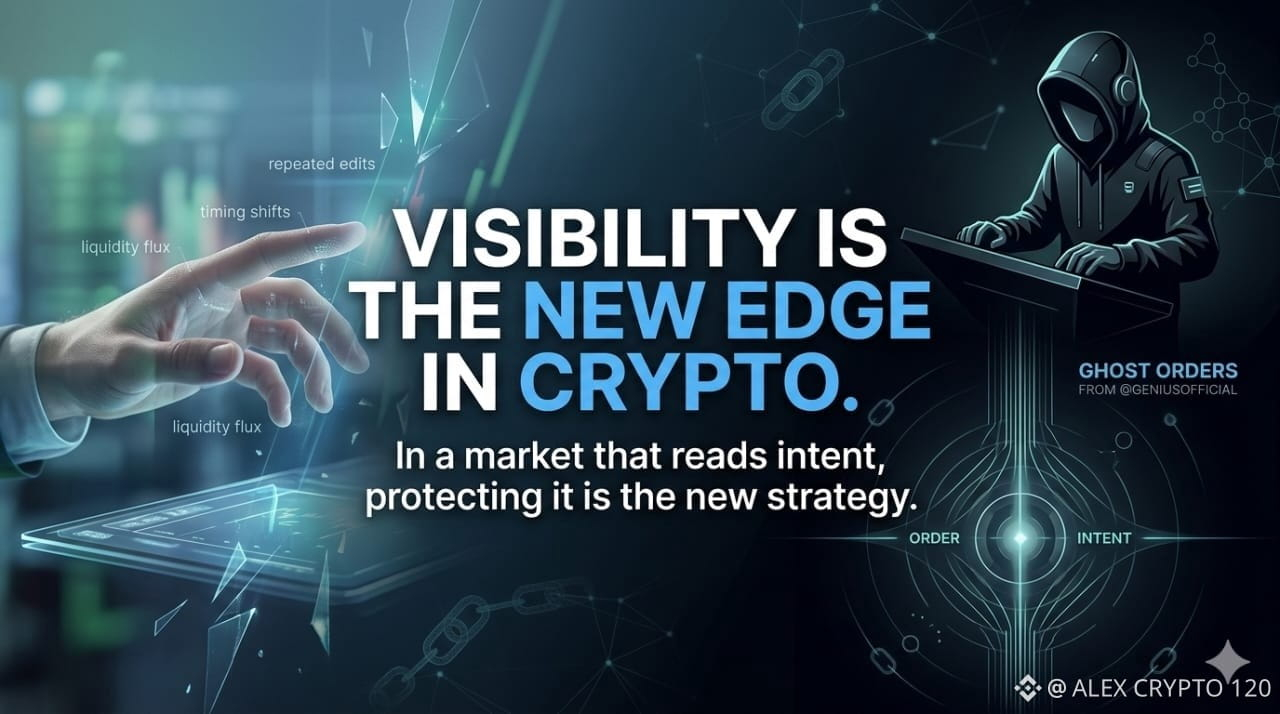
In crypto, the market often starts reading you much earlier — through hesitation, repeated edits, timing shifts, and the way liquidity responds before execution is even finalized. Sometimes the trade is not the first signal. Sometimes it is only the last one.
That is why Ghost Orders from @GeniusOfficial feels so interesting to me. Not because privacy is a buzzword, but because it points to something deeper: the idea that execution should not automatically broadcast intent. The less readable a trader becomes before the order is complete, the more control they may keep over the outcome.
I think this is where the conversation is heading. Visibility is no longer just a byproduct of trading. It is becoming part of market structure itself. It shapes behavior, changes reactions, and can quietly influence price before anything is settled.
That changes the game.
Not because traders need secrecy for drama. But because in a market that reacts to intention, protecting intent may matter just as much as protecting capital.
#genius $GENIUS @GeniusOfficial
Visibility Is the New Edge in Crypto
I used to think exposure began the moment a transaction hit the chain. I do not think that anymore.
In crypto, the market often starts reading you much earlier — through hesitation, repeated edits, timing shifts, and the way liquidity responds before execution is even finalized. Sometimes the trade is not the first signal. Sometimes it is only the last one.
That is why Ghost Orders from @GeniusOfficial feels so interesting to me. Not because privacy is a buzzword, but because it points to something deeper: the idea that execution should not automatically broadcast intent. The less readable a trader becomes before the order is complete, the more control they may keep over the outcome.
I think this is where the conversation is heading. Visibility is no longer just a byproduct of trading. It is becoming part of market structure itself. It shapes behavior, changes reactions, and can quietly influence price before anything is settled.
That changes the game.
Not because traders need secrecy for drama. But because in a market that reacts to intention, protecting intent may matter just as much as protecting capital.
Visibility Is the New Edge in Crypto
I used to think exposure began the moment a transaction hit the chain. I do not think that anymore.
In crypto, the market often starts reading you much earlier — through hesitation, repeated edits, timing shifts, and the way liquidity responds before execution is even finalized. Sometimes the trade is not the first signal. Sometimes it is only the last one.
That is why Ghost Orders from @GeniusOfficial feels so interesting to me. Not because privacy is a buzzword, but because it points to something deeper: the idea that execution should not automatically broadcast intent. The less readable a trader becomes before the order is complete, the more control they may keep over the outcome.
I think this is where the conversation is heading. Visibility is no longer just a byproduct of trading. It is becoming part of market structure itself. It shapes behavior, changes reactions, and can quietly influence price before anything is settled.
That changes the game.
Not because traders need secrecy for drama. But because in a market that reacts to intention, protecting intent may matter just as much as protecting capital.
119
·
--
Baissier
#genius $GENIUS @GeniusOfficial
DeFi Is Entering Its “Invisible Infrastructure” Era — And Genius Might Be Early
I’ve started noticing something interesting about DeFi in 2026: the biggest bottleneck is no longer speed, liquidity, or even access. It’s exhaustion.
Most traders are not spending their time analyzing markets anymore. They’re managing friction. Switching chains, confirming approvals, reopening dashboards, checking bridges, tracking balances across ecosystems that still feel disconnected. A large part of modern crypto activity has quietly become operational maintenance disguised as user experience.
That’s why @GeniusOfficial caught my attention differently.
What makes $GENIUS interesting to me is not the idea of adding more complexity to trading. It’s the opposite. The platform seems designed around removing the invisible clutter surrounding DeFi itself.
Chain-invisible execution reduces the constant network management users deal with every day. Signatureless trading removes the approval interruptions that break momentum during volatile conditions. And the unified portfolio experience changes something psychologically important: assets stop feeling scattered across isolated environments.
Individually, these features sound small.
#genius$GENIUS@GeniusOfficial
Together, they point toward a much bigger shift where the strongest infrastructure becomes the infrastructure users barely notice.
I think that’s where DeFi is heading next — not toward louder complexity, but toward systems that finally feel seamless.
#genius $GENIUS @GeniusOfficial
DeFi Is Entering Its “Invisible Infrastructure” Era — And Genius Might Be Early
I’ve started noticing something interesting about DeFi in 2026: the biggest bottleneck is no longer speed, liquidity, or even access. It’s exhaustion.
Most traders are not spending their time analyzing markets anymore. They’re managing friction. Switching chains, confirming approvals, reopening dashboards, checking bridges, tracking balances across ecosystems that still feel disconnected. A large part of modern crypto activity has quietly become operational maintenance disguised as user experience.
That’s why @GeniusOfficial caught my attention differently.
What makes $GENIUS interesting to me is not the idea of adding more complexity to trading. It’s the opposite. The platform seems designed around removing the invisible clutter surrounding DeFi itself.
Chain-invisible execution reduces the constant network management users deal with every day. Signatureless trading removes the approval interruptions that break momentum during volatile conditions. And the unified portfolio experience changes something psychologically important: assets stop feeling scattered across isolated environments.
Individually, these features sound small.
#genius$GENIUS @GeniusOfficial
Together, they point toward a much bigger shift where the strongest infrastructure becomes the infrastructure users barely notice.
I think that’s where DeFi is heading next — not toward louder complexity, but toward systems that finally feel seamless.
DeFi Is Entering Its “Invisible Infrastructure” Era — And Genius Might Be Early
I’ve started noticing something interesting about DeFi in 2026: the biggest bottleneck is no longer speed, liquidity, or even access. It’s exhaustion.
Most traders are not spending their time analyzing markets anymore. They’re managing friction. Switching chains, confirming approvals, reopening dashboards, checking bridges, tracking balances across ecosystems that still feel disconnected. A large part of modern crypto activity has quietly become operational maintenance disguised as user experience.
That’s why @GeniusOfficial caught my attention differently.
What makes $GENIUS interesting to me is not the idea of adding more complexity to trading. It’s the opposite. The platform seems designed around removing the invisible clutter surrounding DeFi itself.
Chain-invisible execution reduces the constant network management users deal with every day. Signatureless trading removes the approval interruptions that break momentum during volatile conditions. And the unified portfolio experience changes something psychologically important: assets stop feeling scattered across isolated environments.
Individually, these features sound small.
#genius$GENIUS @GeniusOfficial
Together, they point toward a much bigger shift where the strongest infrastructure becomes the infrastructure users barely notice.
I think that’s where DeFi is heading next — not toward louder complexity, but toward systems that finally feel seamless.
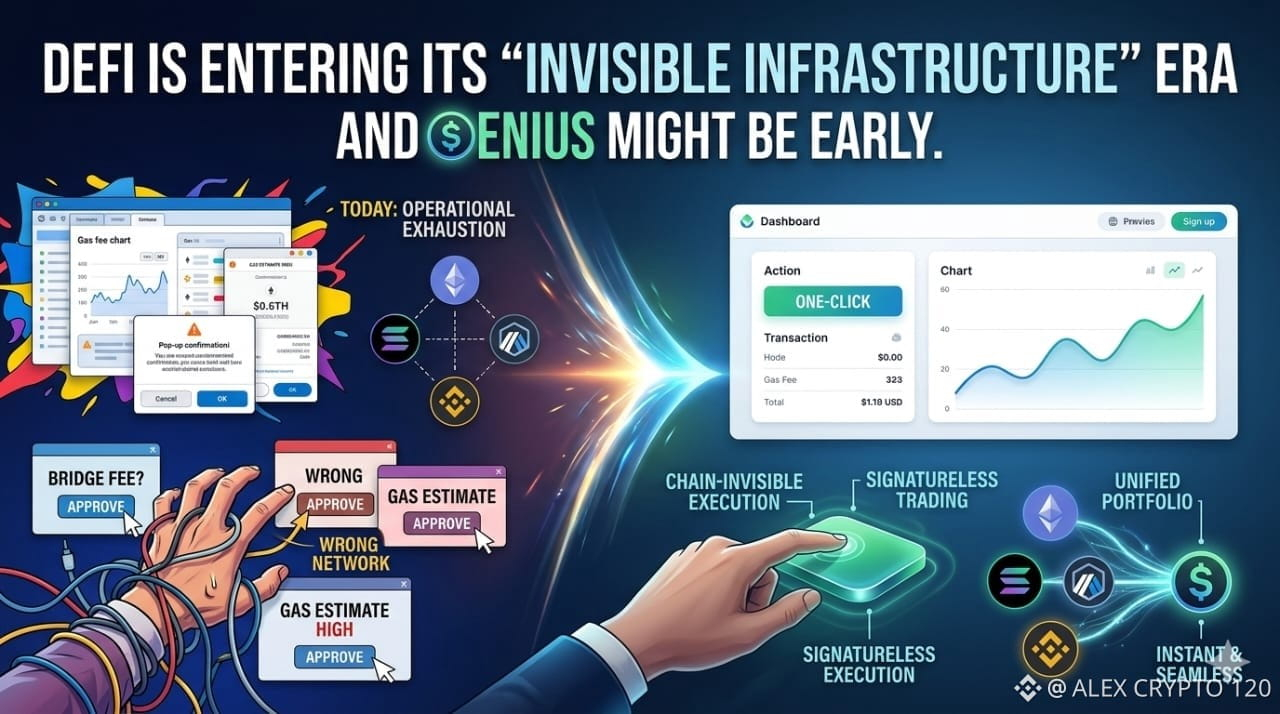
1
152
·
--
#genius $GENIUS @GeniusOfficial
I’ve started thinking about on-chain trading the same way people think about city traffic. The problem usually isn’t the destination — it’s the endless stops, detours, and bottlenecks along the way. Most terminals still make users manage every bridge, approval, and liquidity hop manually. Genius Terminal feels like it’s trying to remove that mental load entirely.
What impressed me recently is how the platform now routes liquidity through more than 150 DEXs across 9 chains while presenting it through one trading environment. That may sound like a backend detail, but it changes the experience dramatically. Traders spend less time navigating ecosystems and more time actually reacting to the market.
Another update that caught my eye was the launch of its Gh0st privacy execution layer on BNB Chain. Orders can reportedly be split across as many as 500 temporary wallets before settlement. In practice, that reduces the visibility that front-running bots and copy traders rely on. For active traders, that protection matters more than flashy dashboards ever will.
The numbers are beginning to reflect real usage too. GENIUS recently pushed beyond roughly $60M in 24-hour volume, with the circulating supply sitting near 335M tokens. That combination suggests the platform is building actual trading activity instead of temporary hype cycles.
The smartest crypto infrastructure rarely feels loud — it simply removes friction so effectively that users stop noticing the system underneath.
#genius $GENIUS @GeniusOfficial
I’ve started thinking about on-chain trading the same way people think about city traffic. The problem usually isn’t the destination — it’s the endless stops, detours, and bottlenecks along the way. Most terminals still make users manage every bridge, approval, and liquidity hop manually. Genius Terminal feels like it’s trying to remove that mental load entirely.
What impressed me recently is how the platform now routes liquidity through more than 150 DEXs across 9 chains while presenting it through one trading environment. That may sound like a backend detail, but it changes the experience dramatically. Traders spend less time navigating ecosystems and more time actually reacting to the market.
Another update that caught my eye was the launch of its Gh0st privacy execution layer on BNB Chain. Orders can reportedly be split across as many as 500 temporary wallets before settlement. In practice, that reduces the visibility that front-running bots and copy traders rely on. For active traders, that protection matters more than flashy dashboards ever will.
The numbers are beginning to reflect real usage too. GENIUS recently pushed beyond roughly $60M in 24-hour volume, with the circulating supply sitting near 335M tokens. That combination suggests the platform is building actual trading activity instead of temporary hype cycles.
The smartest crypto infrastructure rarely feels loud — it simply removes friction so effectively that users stop noticing the system underneath.
I’ve started thinking about on-chain trading the same way people think about city traffic. The problem usually isn’t the destination — it’s the endless stops, detours, and bottlenecks along the way. Most terminals still make users manage every bridge, approval, and liquidity hop manually. Genius Terminal feels like it’s trying to remove that mental load entirely.
What impressed me recently is how the platform now routes liquidity through more than 150 DEXs across 9 chains while presenting it through one trading environment. That may sound like a backend detail, but it changes the experience dramatically. Traders spend less time navigating ecosystems and more time actually reacting to the market.
Another update that caught my eye was the launch of its Gh0st privacy execution layer on BNB Chain. Orders can reportedly be split across as many as 500 temporary wallets before settlement. In practice, that reduces the visibility that front-running bots and copy traders rely on. For active traders, that protection matters more than flashy dashboards ever will.
The numbers are beginning to reflect real usage too. GENIUS recently pushed beyond roughly $60M in 24-hour volume, with the circulating supply sitting near 335M tokens. That combination suggests the platform is building actual trading activity instead of temporary hype cycles.
The smartest crypto infrastructure rarely feels loud — it simply removes friction so effectively that users stop noticing the system underneath.
140
Connectez-vous pour découvrir plus de contenu
Rejoignez la communauté mondiale des adeptes de cryptomonnaies sur Binance Square
⚡️ Suviez les dernières informations importantes sur les cryptomonnaies.
💬 Jugé digne de confiance par la plus grande plateforme d’échange de cryptomonnaies au monde.
👍 Découvrez les connaissances que partagent les créateurs vérifiés.
Adresse e-mail/Nº de téléphone