
Aeri 艾瑞
7.9k Publications

Aeri 艾瑞
@Aeshiha
427 Suivis
13.8K+ Abonnés
10.6K+ J’aime
Publications
Tous
Citations
Direct
PINNED
THE ONE WHO DIDN’T CLAP
By sunrise, the video had spread everywhere.
Millions of views.
Thousands of comments.
Everyone wanted to know who the girl in the Silvia was.
Nobody got an answer.
Then someone posted eleven seconds of another driver.
No caption.
No explanation.
Just a black car tearing through a rain-soaked mountain road.
One corner.
One transition.
Perfect.
The video ended.
The comments called him Ghost.
No face.
No name.
No history anyone could verify.
Just a reputation.
He had been running the underground circuit for years.
Never lost a wet-road run.
Never crashed.
Never celebrated.
And apparently...
Never clapped for anyone.
Three nights later, the Silvia returned to the circuit.
The crowd was bigger this time.
Phones were already raised.
But across the lot, one person wasn't watching the crowd.
He was watching the Silvia.
Black helmet.
Dark jacket.
Standing beside a car with its headlights off.
The driver slowly walked over.
He stopped beside the window.
Looked at the scratched bodywork.
The mismatched wheels.
The handmade repairs.
Then looked inside.
"You built it yourself?"
A pause.
"Mostly."
He nodded.
"That's why."
The window lowered.
"Why what?"
He looked toward the road.
"You drive like you're trying to prove something."
Silence.
Then:
"And you?"
He turned back.
"I drive like I've already proven it."
He walked away.
No challenge.
No race.
Nothing.
Just before midnight, an engine started somewhere beyond the warehouses.
Then another.
The black car rolled toward the exit.
The Silvia followed.
The road ahead disappeared into darkness.
One corner waited beyond the rain.
And somewhere ahead...
Someone was finally waiting for a driver worth chasing.
#Aeri
#MooDCirCuiT
$USELESS
$SOL
$BEAT
By sunrise, the video had spread everywhere.
Millions of views.
Thousands of comments.
Everyone wanted to know who the girl in the Silvia was.
Nobody got an answer.
Then someone posted eleven seconds of another driver.
No caption.
No explanation.
Just a black car tearing through a rain-soaked mountain road.
One corner.
One transition.
Perfect.
The video ended.
The comments called him Ghost.
No face.
No name.
No history anyone could verify.
Just a reputation.
He had been running the underground circuit for years.
Never lost a wet-road run.
Never crashed.
Never celebrated.
And apparently...
Never clapped for anyone.
Three nights later, the Silvia returned to the circuit.
The crowd was bigger this time.
Phones were already raised.
But across the lot, one person wasn't watching the crowd.
He was watching the Silvia.
Black helmet.
Dark jacket.
Standing beside a car with its headlights off.
The driver slowly walked over.
He stopped beside the window.
Looked at the scratched bodywork.
The mismatched wheels.
The handmade repairs.
Then looked inside.
"You built it yourself?"
A pause.
"Mostly."
He nodded.
"That's why."
The window lowered.
"Why what?"
He looked toward the road.
"You drive like you're trying to prove something."
Silence.
Then:
"And you?"
He turned back.
"I drive like I've already proven it."
He walked away.
No challenge.
No race.
Nothing.
Just before midnight, an engine started somewhere beyond the warehouses.
Then another.
The black car rolled toward the exit.
The Silvia followed.
The road ahead disappeared into darkness.
One corner waited beyond the rain.
And somewhere ahead...
Someone was finally waiting for a driver worth chasing.
#Aeri
#MooDCirCuiT
$USELESS
$SOL
$BEAT



Cryptology_7
·
--
𝐅𝐎𝐂𝐔𝐒 𝐎𝐍 𝐈𝐌𝐏𝐑𝐎𝐕𝐈𝐍𝐆 ✨
𝐍𝐎𝐓 𝐏𝐑𝐎𝐕𝐈𝐍𝐆 𝐘𝐎𝐔𝐑𝐒𝐄𝐋𝐅 🎀
𝐃𝐎𝐍’𝐓 𝐂𝐎𝐌𝐏𝐀𝐑𝐄 𝐘𝐎𝐔𝐑 𝐏𝐎𝐑𝐓𝐅𝐎𝐋𝐈𝐎 𝐖𝐈𝐓𝐇 𝐒𝐎𝐌𝐄𝐎𝐍𝐄 𝐄𝐋𝐒𝐄’𝐒 $𝟏𝐌.
𝐘𝐎𝐔 𝐃𝐎𝐍’𝐓 𝐊𝐍𝐎𝐖 𝐓𝐇𝐄𝐈𝐑 𝐉𝐎𝐔𝐑𝐍𝐄𝐘, 𝐑𝐈𝐒𝐊, 𝐋𝐎𝐒𝐒𝐄𝐒, 𝐎𝐑 𝐒𝐓𝐀𝐑𝐓𝐈𝐍𝐆 𝐏𝐎𝐈𝐍𝐓 ❤️🩹
$HEMI
#CryptoPatience #BinanceSquareTalks
#Cryptology_7
𝐍𝐎𝐓 𝐏𝐑𝐎𝐕𝐈𝐍𝐆 𝐘𝐎𝐔𝐑𝐒𝐄𝐋𝐅 🎀
𝐃𝐎𝐍’𝐓 𝐂𝐎𝐌𝐏𝐀𝐑𝐄 𝐘𝐎𝐔𝐑 𝐏𝐎𝐑𝐓𝐅𝐎𝐋𝐈𝐎 𝐖𝐈𝐓𝐇 𝐒𝐎𝐌𝐄𝐎𝐍𝐄 𝐄𝐋𝐒𝐄’𝐒 $𝟏𝐌.
𝐘𝐎𝐔 𝐃𝐎𝐍’𝐓 𝐊𝐍𝐎𝐖 𝐓𝐇𝐄𝐈𝐑 𝐉𝐎𝐔𝐑𝐍𝐄𝐘, 𝐑𝐈𝐒𝐊, 𝐋𝐎𝐒𝐒𝐄𝐒, 𝐎𝐑 𝐒𝐓𝐀𝐑𝐓𝐈𝐍𝐆 𝐏𝐎𝐈𝐍𝐓 ❤️🩹
$HEMI
#CryptoPatience #BinanceSquareTalks
#Cryptology_7


Coin--King
·
--
A breakout can open a new door.
A breakdown can teach you when to step back.
In trading, both are part of the game.
Don’t chase the move.
Read the chart, manage your risk, and stay patient.
Every move has a lesson. 📈
$BTC $USELESS $BULLA
#ZECHitsANewAllTimeHigh #LululemonTumbles20%OnWeakGuidance #BitcoinETFsBiggestDailyInflowSinceJanuary
A breakdown can teach you when to step back.
In trading, both are part of the game.
Don’t chase the move.
Read the chart, manage your risk, and stay patient.
Every move has a lesson. 📈
$BTC $USELESS $BULLA
#ZECHitsANewAllTimeHigh #LululemonTumbles20%OnWeakGuidance #BitcoinETFsBiggestDailyInflowSinceJanuary

Muzamil Abbas⁷⁵ 穆扎米尔_阿巴斯
·
--
Haussier🎉 $USTC GIVEAWAY ALERT 🎉
To celebrate and give back to this amazing community, I'm giving away $USTC on Binance
💛 How to Participate: ✅ Like this post
✅ Repost this post
✅ Comment "1" below
✅ Claim 🎁
Every like, comment, and repost means a lot to me. Your support motivates me to keep sharing crypto content and opportunities with the community.
⏳ Don't miss your chance. Join now and invite your friends too
Good luck to everyone 🎁 #Bitcoin #BinanceSquare #CryptoCommunity #USTC.智能策略库 #MuzamilAbbasCryptoTrading
To celebrate and give back to this amazing community, I'm giving away $USTC on Binance
💛 How to Participate: ✅ Like this post
✅ Repost this post
✅ Comment "1" below
✅ Claim 🎁
Every like, comment, and repost means a lot to me. Your support motivates me to keep sharing crypto content and opportunities with the community.
⏳ Don't miss your chance. Join now and invite your friends too
Good luck to everyone 🎁 #Bitcoin #BinanceSquare #CryptoCommunity #USTC.智能策略库 #MuzamilAbbasCryptoTrading

Cryptology_7
·
--
𝐅𝐎𝐂𝐔𝐒 𝐎𝐍 𝐈𝐌𝐏𝐑𝐎𝐕𝐈𝐍𝐆 ✨
𝐍𝐎𝐓 𝐏𝐑𝐎𝐕𝐈𝐍𝐆 𝐘𝐎𝐔𝐑𝐒𝐄𝐋𝐅 🎀
𝐃𝐎𝐍’𝐓 𝐂𝐎𝐌𝐏𝐀𝐑𝐄 𝐘𝐎𝐔𝐑 𝐏𝐎𝐑𝐓𝐅𝐎𝐋𝐈𝐎 𝐖𝐈𝐓𝐇 𝐒𝐎𝐌𝐄𝐎𝐍𝐄 𝐄𝐋𝐒𝐄’𝐒 $𝟏𝐌.
𝐘𝐎𝐔 𝐃𝐎𝐍’𝐓 𝐊𝐍𝐎𝐖 𝐓𝐇𝐄𝐈𝐑 𝐉𝐎𝐔𝐑𝐍𝐄𝐘, 𝐑𝐈𝐒𝐊, 𝐋𝐎𝐒𝐒𝐄𝐒, 𝐎𝐑 𝐒𝐓𝐀𝐑𝐓𝐈𝐍𝐆 𝐏𝐎𝐈𝐍𝐓 ❤️🩹
$HEMI
#CryptoPatience #BinanceSquareTalks
#Cryptology_7
𝐍𝐎𝐓 𝐏𝐑𝐎𝐕𝐈𝐍𝐆 𝐘𝐎𝐔𝐑𝐒𝐄𝐋𝐅 🎀
𝐃𝐎𝐍’𝐓 𝐂𝐎𝐌𝐏𝐀𝐑𝐄 𝐘𝐎𝐔𝐑 𝐏𝐎𝐑𝐓𝐅𝐎𝐋𝐈𝐎 𝐖𝐈𝐓𝐇 𝐒𝐎𝐌𝐄𝐎𝐍𝐄 𝐄𝐋𝐒𝐄’𝐒 $𝟏𝐌.
𝐘𝐎𝐔 𝐃𝐎𝐍’𝐓 𝐊𝐍𝐎𝐖 𝐓𝐇𝐄𝐈𝐑 𝐉𝐎𝐔𝐑𝐍𝐄𝐘, 𝐑𝐈𝐒𝐊, 𝐋𝐎𝐒𝐒𝐄𝐒, 𝐎𝐑 𝐒𝐓𝐀𝐑𝐓𝐈𝐍𝐆 𝐏𝐎𝐈𝐍𝐓 ❤️🩹
$HEMI
#CryptoPatience #BinanceSquareTalks
#Cryptology_7



Muzamil Abbas⁷⁵ 穆扎米尔_阿巴斯
·
--
Haussier🎉 $USTC GIVEAWAY ALERT 🎉
To celebrate and give back to this amazing community, I'm giving away $USTC on Binance
💛 How to Participate: ✅ Like this post
✅ Repost this post
✅ Comment "1" below
✅ Claim 🎁
Every like, comment, and repost means a lot to me. Your support motivates me to keep sharing crypto content and opportunities with the community.
⏳ Don't miss your chance. Join now and invite your friends too
Good luck to everyone 🎁 #Bitcoin #BinanceSquare #CryptoCommunity #USTC.智能策略库 #MuzamilAbbasCryptoTrading
To celebrate and give back to this amazing community, I'm giving away $USTC on Binance
💛 How to Participate: ✅ Like this post
✅ Repost this post
✅ Comment "1" below
✅ Claim 🎁
Every like, comment, and repost means a lot to me. Your support motivates me to keep sharing crypto content and opportunities with the community.
⏳ Don't miss your chance. Join now and invite your friends too
Good luck to everyone 🎁 #Bitcoin #BinanceSquare #CryptoCommunity #USTC.智能策略库 #MuzamilAbbasCryptoTrading
Coin vs Token What’s the Difference? 🪙
People often use “coin” and “token” like they mean the same thing,
but there’s one important difference:
🪙 Coin = has its own blockchain
BITCOIN ($BTC ) runs on the Bitcoin blockchain.
$ETH runs on Ethereum.
Coins are native assets of their own networks and are often used to pay transaction fees.
🧩 Token = built on an existing blockchain
A token doesn’t need its own blockchain. It can be created on networks like Ethereum, BNB Chain, or Solana.
USDT is a good example: it can exist on multiple blockchains, depending on the version being used.
The easiest way to remember it:
👉 Coin = its own blockchain
👉 Token = uses another blockchain
So, every coin is a crypto asset, but not every crypto asset is a coin.
#crypto #blockchain #Binance #Aeri #MooDCirCuiT
People often use “coin” and “token” like they mean the same thing,
but there’s one important difference:
🪙 Coin = has its own blockchain
BITCOIN ($BTC ) runs on the Bitcoin blockchain.
$ETH runs on Ethereum.
Coins are native assets of their own networks and are often used to pay transaction fees.
🧩 Token = built on an existing blockchain
A token doesn’t need its own blockchain. It can be created on networks like Ethereum, BNB Chain, or Solana.
USDT is a good example: it can exist on multiple blockchains, depending on the version being used.
The easiest way to remember it:
👉 Coin = its own blockchain
👉 Token = uses another blockchain
So, every coin is a crypto asset, but not every crypto asset is a coin.
#crypto #blockchain #Binance #Aeri #MooDCirCuiT
Shipping Strategy Is Becoming Part of the Oil Story
The Strait of Hormuz situation is creating a ripple effect beyond crude prices.
Gulf oil producers are reportedly adjusting how they move exports including expanding tanker capacity and changing transshipment strategies as shipping security becomes a bigger concern.
That shift matters because it can tighten tanker availability and push both vessel prices and charter rates higher.
So the interesting part isn’t only what happens to oil itself.
It’s how geopolitical risk is starting to reshape the logistics and cost structure behind global energy flows.
#MooDCirCuiT #Aeri
The Strait of Hormuz situation is creating a ripple effect beyond crude prices.
Gulf oil producers are reportedly adjusting how they move exports including expanding tanker capacity and changing transshipment strategies as shipping security becomes a bigger concern.
That shift matters because it can tighten tanker availability and push both vessel prices and charter rates higher.
So the interesting part isn’t only what happens to oil itself.
It’s how geopolitical risk is starting to reshape the logistics and cost structure behind global energy flows.
#MooDCirCuiT #Aeri
#dusk $DUSK
@Dusk
i’ve been digging into Dusk’s Citadel setup for a while now, and the way it handles identity feels more practical than most privacy tools I’ve seen.
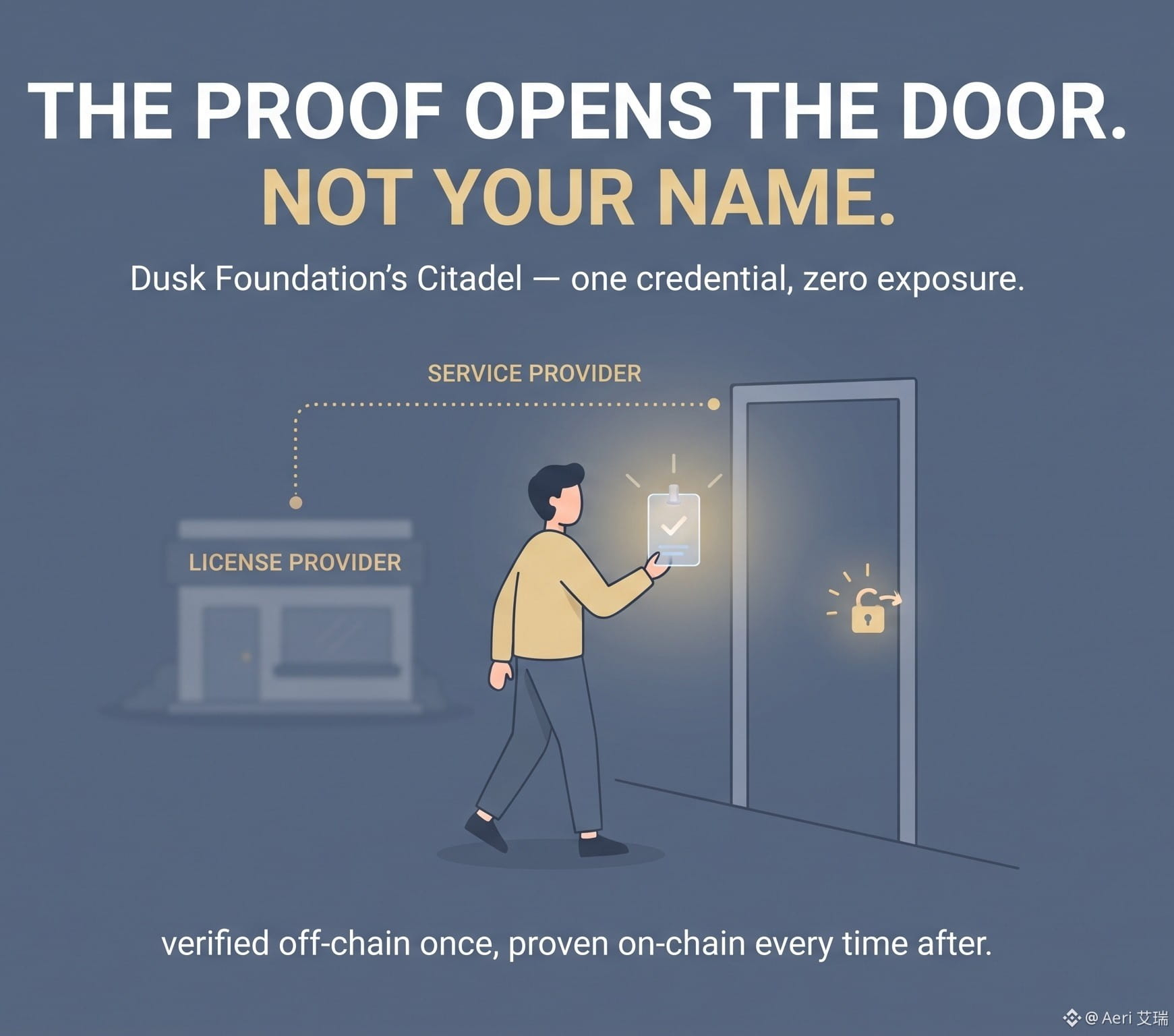
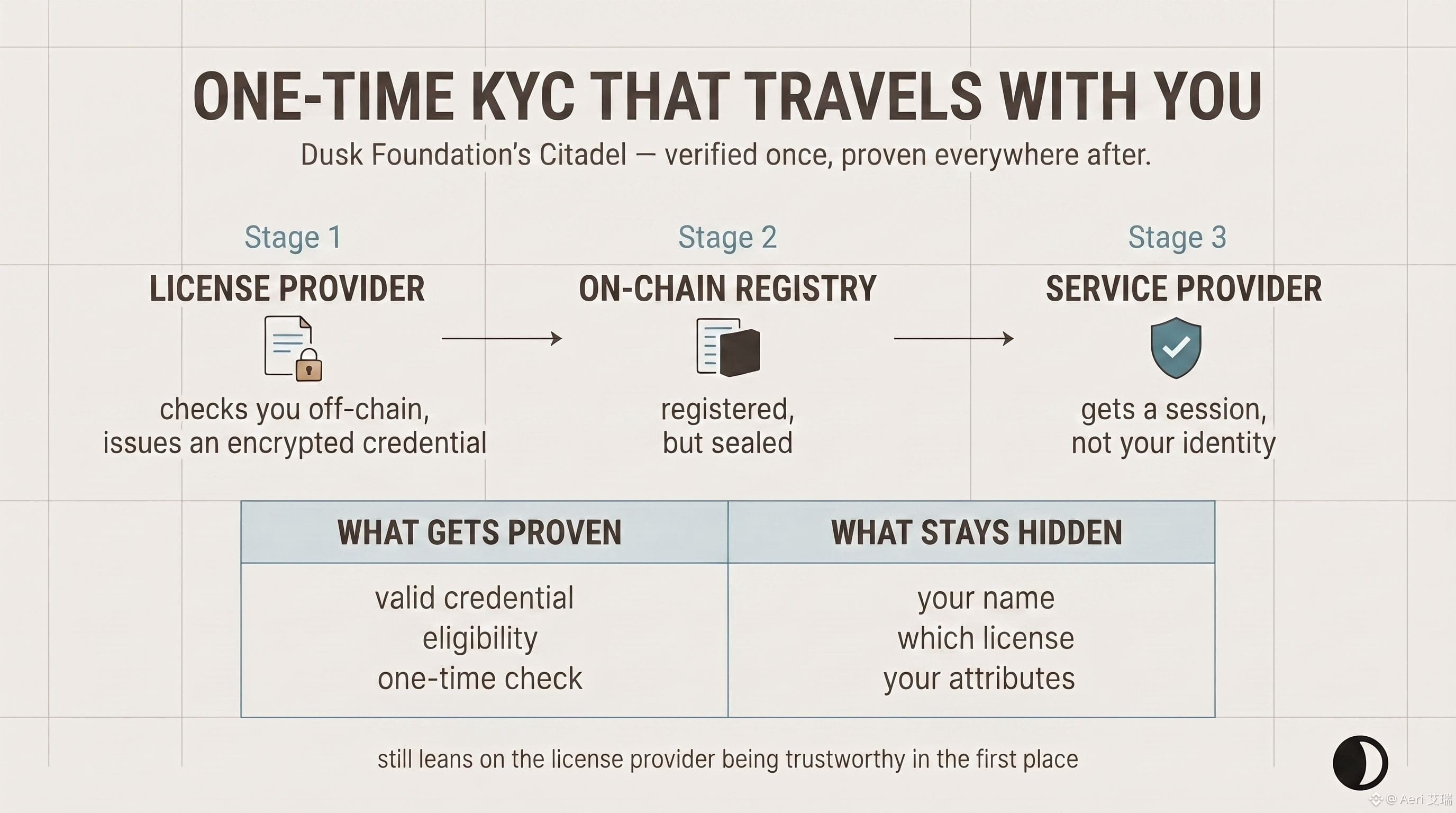
basically you go to a license provider, they check you off chain the normal way, then issue an encrypted credential that gets registered on chain. Later when you need access to something, you generate a zero knowledge proof that you hold a valid one. The contract verifies it and records a session, but nothing about you, the exact license or the attributes ends up public. You just hand the service provider a session cookie and they decide based on their own rules.
it’s a bit like showing a building pass that opens the door without ever revealing your name or which company issued it. The proof is enough. That matters for regulated stuff because institutions still get the compliance signal they need while users avoid dumping personal data across every platform. One time KYC that travels with you instead of getting repeated.
of course it still leans on those license providers being trustworthy in the first place, and service providers keep full control over what they accept. The code itself carries the usual caveats about not being production hardened yet. Adoption will hinge on whether enough real services actually plug into it and whether the incentives line up for issuers to stick around.
curious what others think: does this kind of selective proof model actually lower the barrier for institutions more than it complicates things for everyday users?
@Dusk
i’ve been digging into Dusk’s Citadel setup for a while now, and the way it handles identity feels more practical than most privacy tools I’ve seen.
basically you go to a license provider, they check you off chain the normal way, then issue an encrypted credential that gets registered on chain. Later when you need access to something, you generate a zero knowledge proof that you hold a valid one. The contract verifies it and records a session, but nothing about you, the exact license or the attributes ends up public. You just hand the service provider a session cookie and they decide based on their own rules.
it’s a bit like showing a building pass that opens the door without ever revealing your name or which company issued it. The proof is enough. That matters for regulated stuff because institutions still get the compliance signal they need while users avoid dumping personal data across every platform. One time KYC that travels with you instead of getting repeated.
of course it still leans on those license providers being trustworthy in the first place, and service providers keep full control over what they accept. The code itself carries the usual caveats about not being production hardened yet. Adoption will hinge on whether enough real services actually plug into it and whether the incentives line up for issuers to stick around.
curious what others think: does this kind of selective proof model actually lower the barrier for institutions more than it complicates things for everyday users?
#dusk $DUSK @Dusk
courts don't treat guilty and not guilty the same way. You need near everyone to agree to convict someone. One holdout is enough to walk them free. Different bar for different outcomes, because getting it wrong one way costs a lot more than the other.
dusk's consensus runs on that same logic and I didn't expect that from a blockchain.
when i looked into how a block actually gets confirmed i found the same split. To confirm it as valid, the committee needs two thirds on board. To reject it or say "we couldn't decide," it only takes half plus one. Yes is expensive. No is cheap. On purpose i'd guess. A bad block slipping through is a mess to undo. A stalled block just tries again next round.
those votes aren't headcount. Dusk splits each committee into 64 credits, and bigger stakers get more of them. Three credits from one whale beats three small holders voting the same way. The bar looks fixed 2/3 and half plus one, but who i'd need to convince to hit it depends on how those credits are spread out.
that's what nags at me. If stake keeps piling into fewer hands, the cheap side the "no" side, gets even easier to trigger. Not because the math changed, but because fewer people end up owning enough of Dusk to swing it and i don't love that.
courts don't treat guilty and not guilty the same way. You need near everyone to agree to convict someone. One holdout is enough to walk them free. Different bar for different outcomes, because getting it wrong one way costs a lot more than the other.
dusk's consensus runs on that same logic and I didn't expect that from a blockchain.
when i looked into how a block actually gets confirmed i found the same split. To confirm it as valid, the committee needs two thirds on board. To reject it or say "we couldn't decide," it only takes half plus one. Yes is expensive. No is cheap. On purpose i'd guess. A bad block slipping through is a mess to undo. A stalled block just tries again next round.
those votes aren't headcount. Dusk splits each committee into 64 credits, and bigger stakers get more of them. Three credits from one whale beats three small holders voting the same way. The bar looks fixed 2/3 and half plus one, but who i'd need to convince to hit it depends on how those credits are spread out.
that's what nags at me. If stake keeps piling into fewer hands, the cheap side the "no" side, gets even easier to trigger. Not because the math changed, but because fewer people end up owning enough of Dusk to swing it and i don't love that.
Vérifié
#dusk $DUSK @Dusk
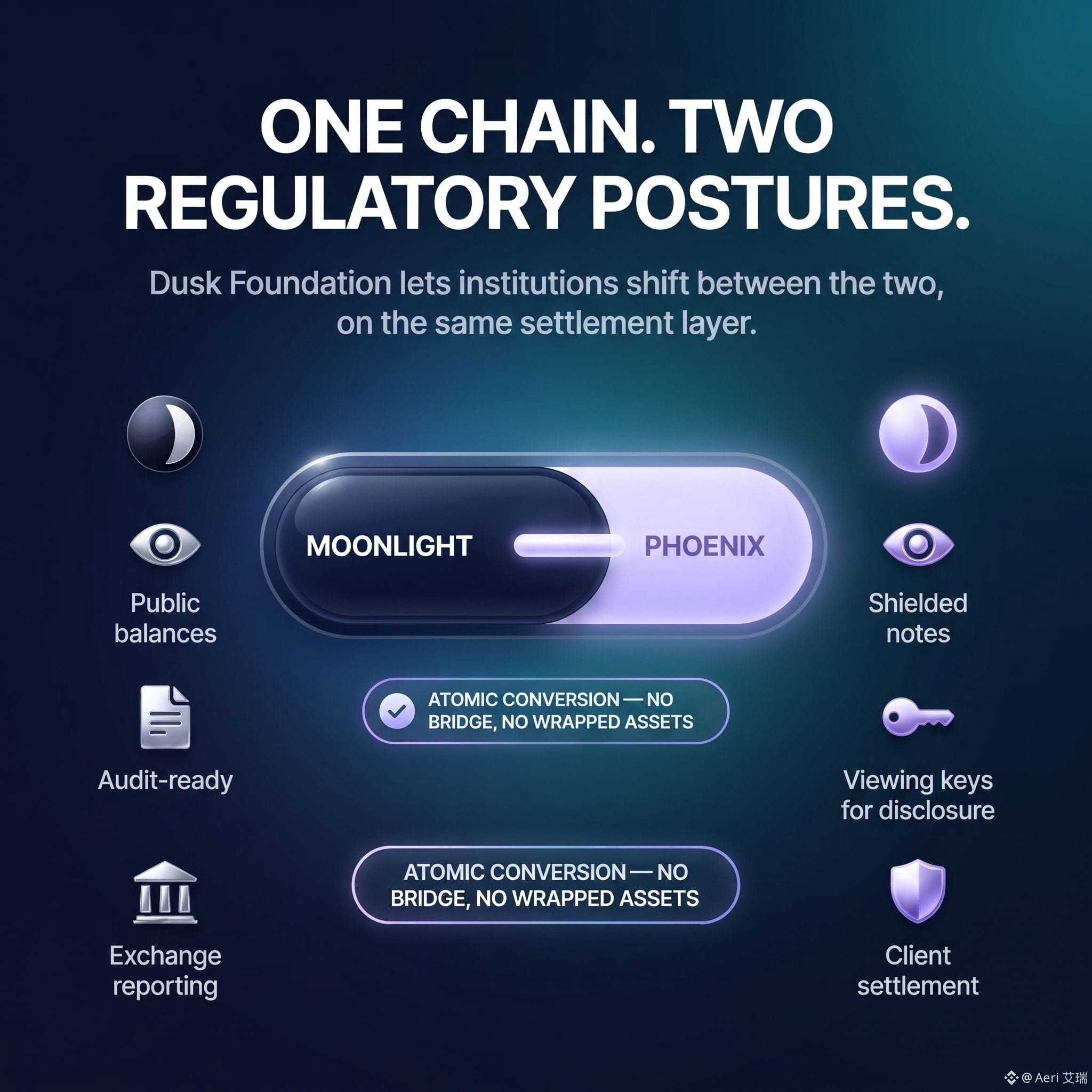
been digging into Dusk’s dual models more carefully lately and the Moonlight versus Phoenix setup feels less like two separate tools and more like a single institution’s ability to flip its regulatory posture without leaving the chain.
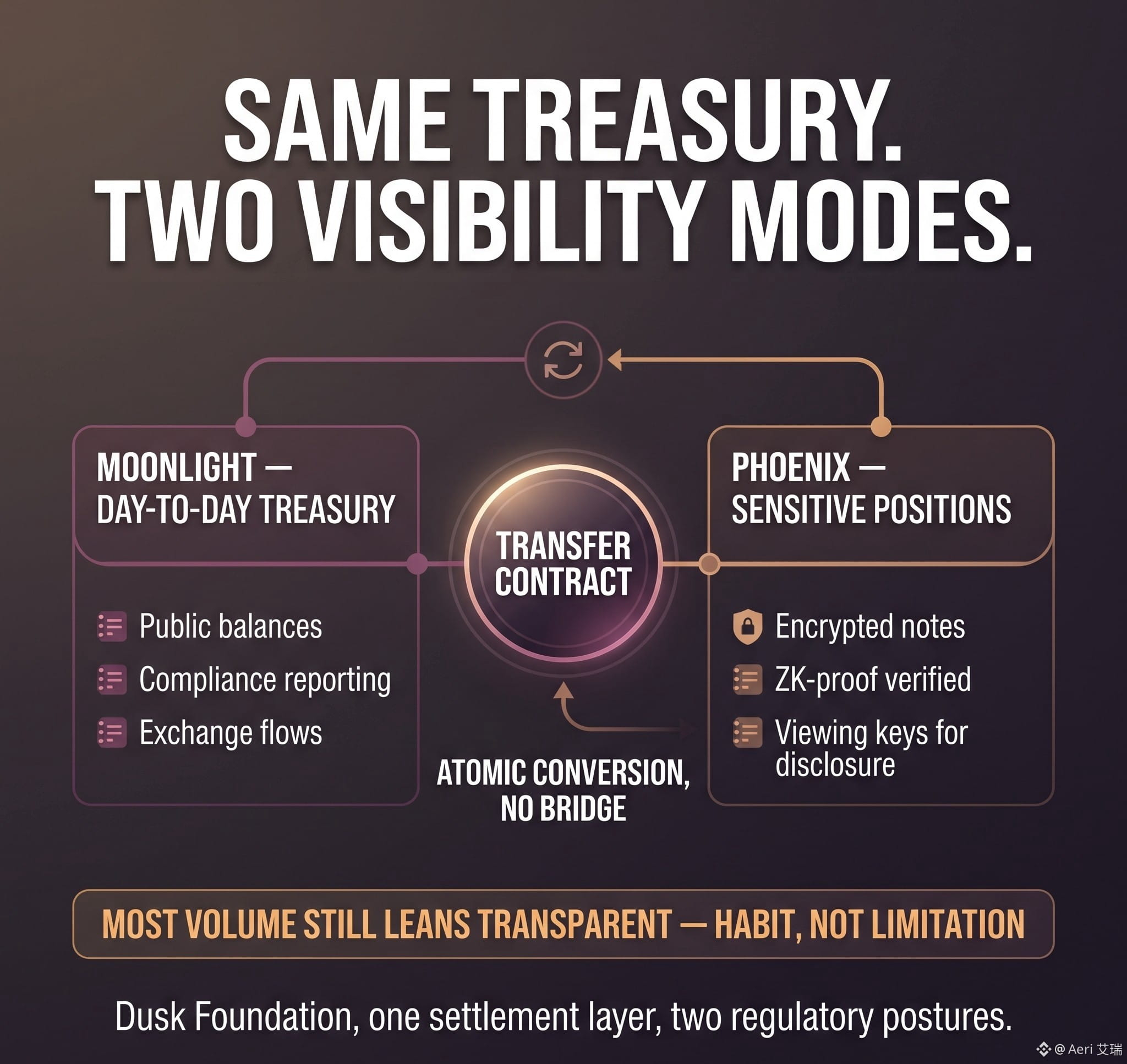
moonlight is the open ledger side. Balances sit in plain view, every transfer shows who sent what to whom. That makes it the path of least resistance for exchanges, reporting or any flow where auditors or counterparties need full visibility. Phoenix flips it. Funds move as encrypted notes. The network only sees that the math checks out through zero knowledge proofs. Amounts and links stay hidden from the public yet the receiver still knows the sender and viewing keys can open the box for authorized parties when required.
what stands out is how cleanly the two sit on the same settlement layer. An institution can keep day to day treasury or compliance reporting on Moonlight then move sensitive positions or client settlements into Phoenix when the disclosure rules tighten or when market impact becomes a concern. No bridge, no wrapped assets, just an atomic conversion through the Transfer contract. That removes the usual fragmentation tax you see when privacy and transparency live on different networks.
the limitation is real though. Most volume still seems to prefer the transparent path, whether from habit, wallet defaults or the simple fact that many regulated workflows still demand public trails. Privacy only matters if the incentives and tooling actually pull people into the shielded side.
does that dual mode flexibility actually lower the barrier for institutions or does it just create another layer of operational complexity they will hesitate to manage?
been digging into Dusk’s dual models more carefully lately and the Moonlight versus Phoenix setup feels less like two separate tools and more like a single institution’s ability to flip its regulatory posture without leaving the chain.
moonlight is the open ledger side. Balances sit in plain view, every transfer shows who sent what to whom. That makes it the path of least resistance for exchanges, reporting or any flow where auditors or counterparties need full visibility. Phoenix flips it. Funds move as encrypted notes. The network only sees that the math checks out through zero knowledge proofs. Amounts and links stay hidden from the public yet the receiver still knows the sender and viewing keys can open the box for authorized parties when required.
what stands out is how cleanly the two sit on the same settlement layer. An institution can keep day to day treasury or compliance reporting on Moonlight then move sensitive positions or client settlements into Phoenix when the disclosure rules tighten or when market impact becomes a concern. No bridge, no wrapped assets, just an atomic conversion through the Transfer contract. That removes the usual fragmentation tax you see when privacy and transparency live on different networks.
the limitation is real though. Most volume still seems to prefer the transparent path, whether from habit, wallet defaults or the simple fact that many regulated workflows still demand public trails. Privacy only matters if the incentives and tooling actually pull people into the shielded side.
does that dual mode flexibility actually lower the barrier for institutions or does it just create another layer of operational complexity they will hesitate to manage?
Partiellement vrai
#dusk $DUSK @Dusk
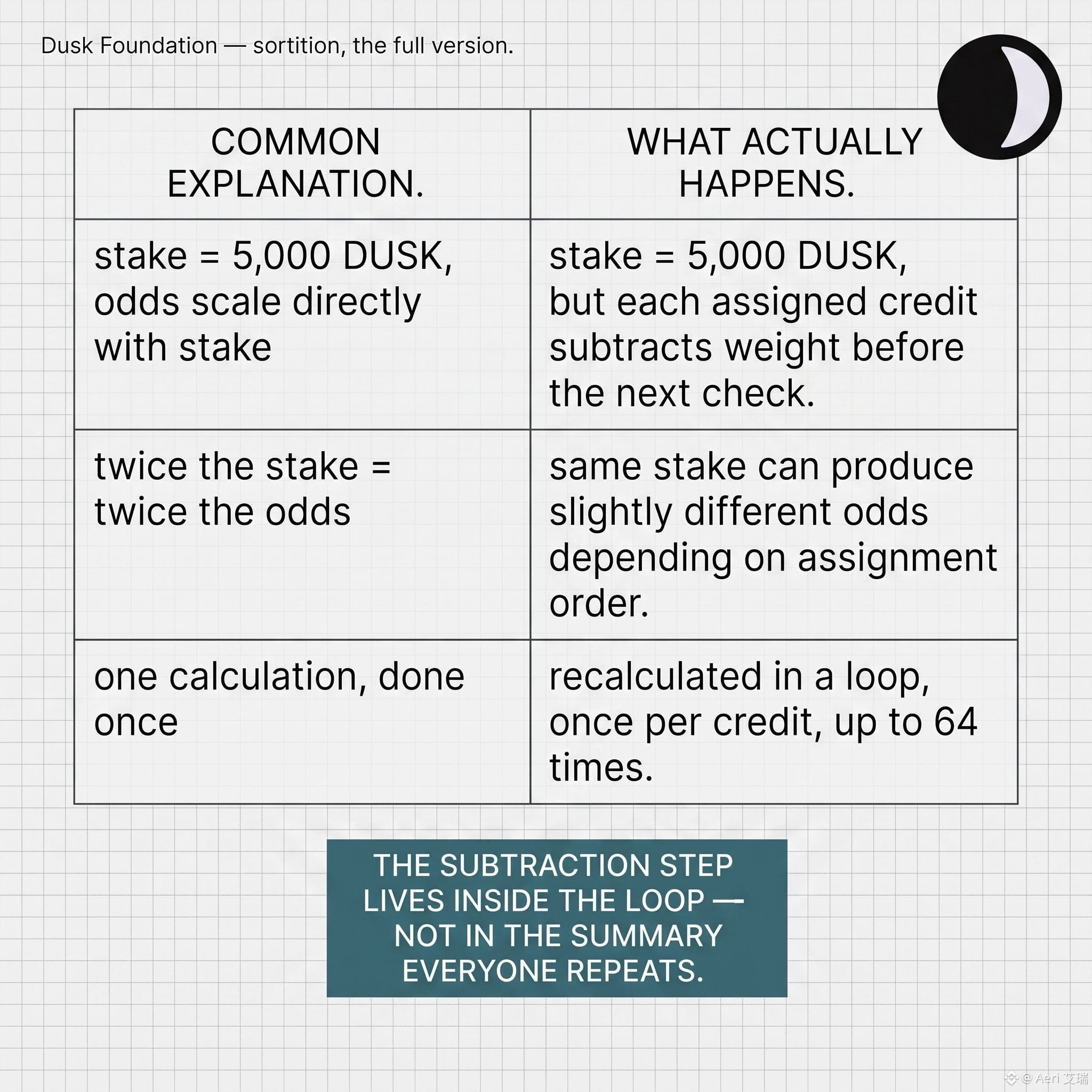
i thought more stakes just meant more voting power, plain and simple. Twice the DUSK staked, twice the odds of getting picked. Dusk's own sortition algorithm says that's not quite the full picture and i only caught it by reading past the summary.
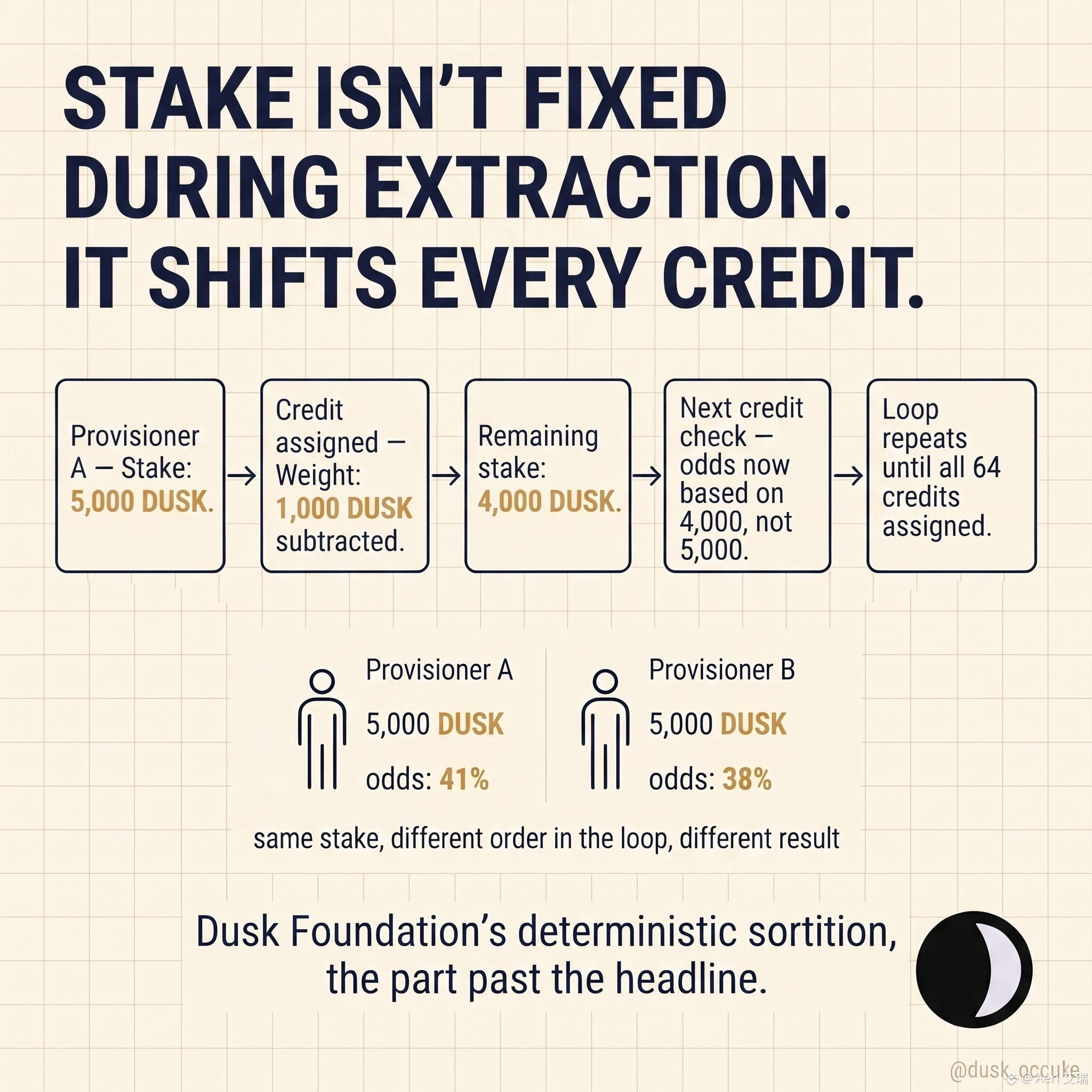
when Dusk builds a voting committee, it doesn't just look at your stake once and hand out credits based on that single number. It assigns credits one at a time, in a loop. And every time a provisioner gets a credit, the algorithm subtracts that credit's weight from their stake before it even checks who's eligible for the next credit in line.
so your stake isn't a fixed, frozen number for the whole extraction process. It's shifting, credit by credit as the loop runs through the committee. That means the exact same raw stake, say two identical provisioners with equal DUSK staked can end up with slightly different real odds depending purely on where in the sequence their credits get assigned. Not some huge swing that flips outcomes. But not the perfectly clean straight line most people assume when someone says "more stake, more power" either.
i almost missed this entirely, honestly. The usual explanation of Dusk's sortition stops right at "bigger stake, better odds" and leaves it there which isn't wrong, just incomplete. The subtraction step lives one layer deeper, inside the actual deterministic extraction loop not in the headline version everyone repeats.
so here's the honest take. This isn't some hidden flaw or a gotcha. It's just more textured than the pitch. Dusk built a system where stake matters a lot just not in a perfectly linear way once you actually watch the loop run credit by credit.
i thought more stakes just meant more voting power, plain and simple. Twice the DUSK staked, twice the odds of getting picked. Dusk's own sortition algorithm says that's not quite the full picture and i only caught it by reading past the summary.
when Dusk builds a voting committee, it doesn't just look at your stake once and hand out credits based on that single number. It assigns credits one at a time, in a loop. And every time a provisioner gets a credit, the algorithm subtracts that credit's weight from their stake before it even checks who's eligible for the next credit in line.
so your stake isn't a fixed, frozen number for the whole extraction process. It's shifting, credit by credit as the loop runs through the committee. That means the exact same raw stake, say two identical provisioners with equal DUSK staked can end up with slightly different real odds depending purely on where in the sequence their credits get assigned. Not some huge swing that flips outcomes. But not the perfectly clean straight line most people assume when someone says "more stake, more power" either.
i almost missed this entirely, honestly. The usual explanation of Dusk's sortition stops right at "bigger stake, better odds" and leaves it there which isn't wrong, just incomplete. The subtraction step lives one layer deeper, inside the actual deterministic extraction loop not in the headline version everyone repeats.
so here's the honest take. This isn't some hidden flaw or a gotcha. It's just more textured than the pitch. Dusk built a system where stake matters a lot just not in a perfectly linear way once you actually watch the loop run credit by credit.
Connectez-vous pour découvrir plus de contenu