

BlockViz.xyz
239 Publications

BlockViz.xyz
Signaler
Bloquer l’utilisateur
Crypto price and market data analysis, visualizations, and portfolio simulations. Do your own at → blockviz.xyz
0 Suivis
3 Abonnés
8 J’aime
Publications
·
--
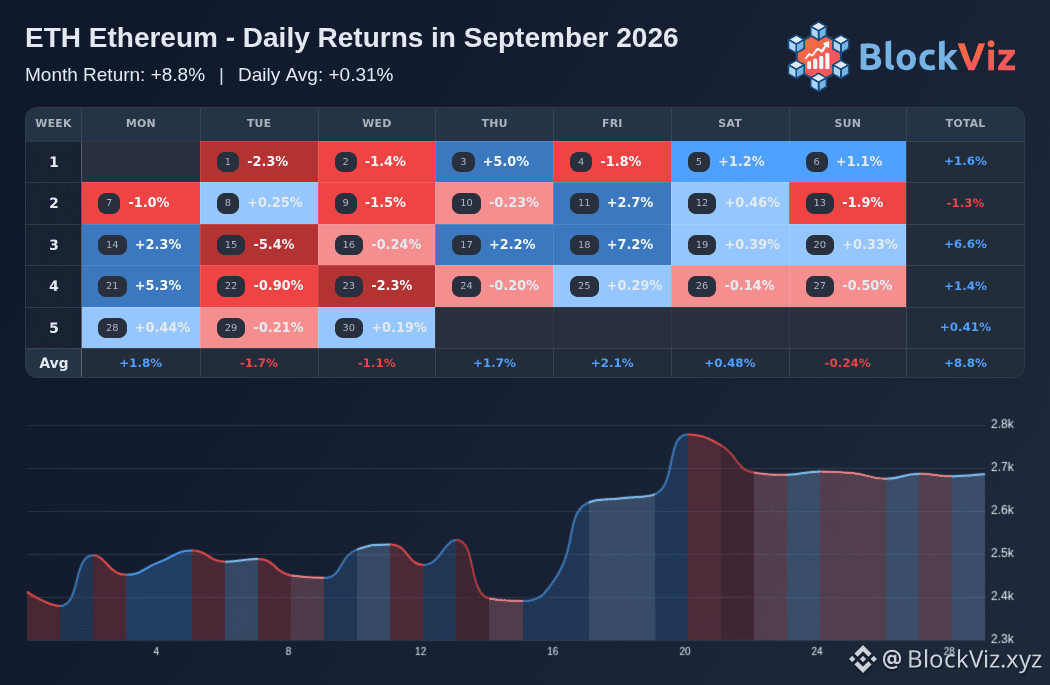
Ethereum finished September 2026 at +8.8%. If you held only the best days, the return jumps to +31.4%, while missing them drops it to -17.2%. That tells you the month was driven by a handful of outsized sessions rather than smooth trend strength. The biggest upside day was 9/18/26 (+7.2%), and the roughest day was 9/15/26 (-5.4%) $ETH
Ethereum finished September 2026 at +8.8%. If you held only the best days, the return jumps to +31.4%, while missing them drops it to -17.2%. That tells you the month was driven by a handful of outsized sessions rather than smooth trend strength. The biggest upside day was 9/18/26 (+7.2%), and the roughest day was 9/15/26 (-5.4%) $ETH
58
·
--
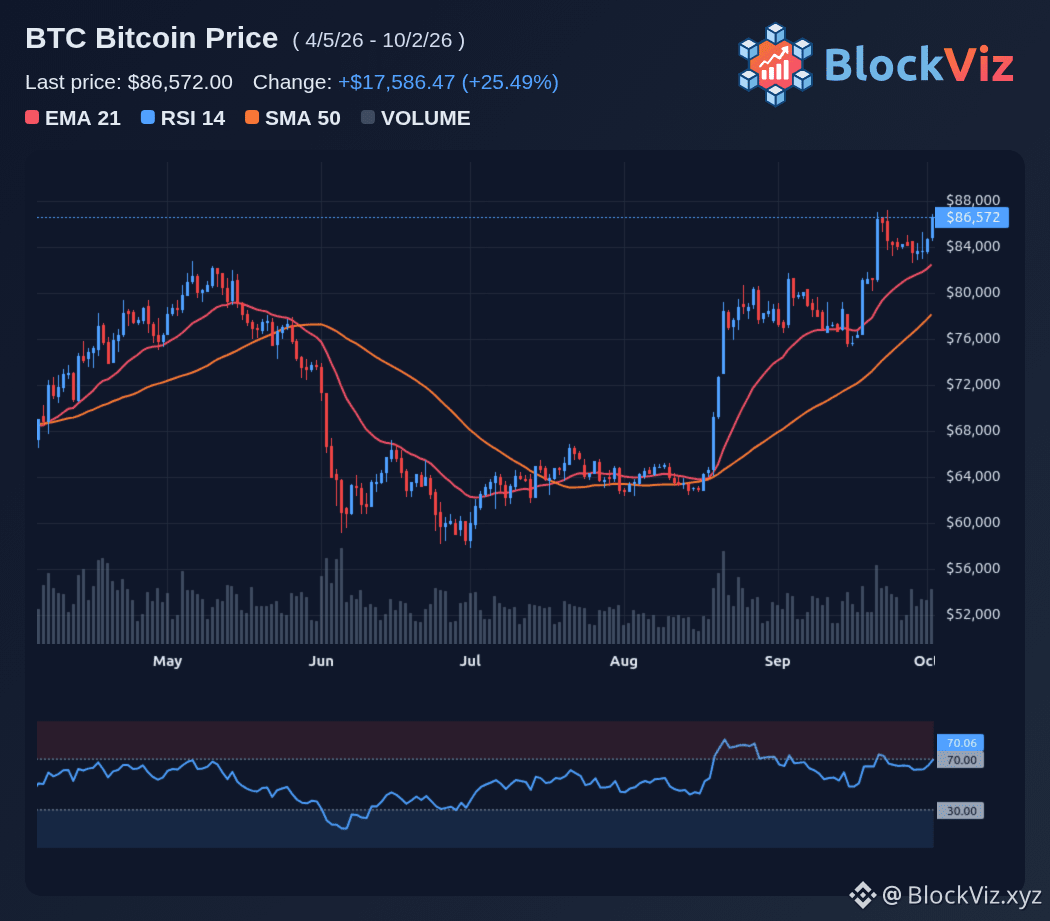
Weak jobs data just sank Fed hike odds to 17%, and Citi is back in the Bitcoin bull camp with a 113,000 dollar target. The September nonfarm payrolls print came in at 29,000 jobs, well below the 80,000 to 90,000 expected, and the unemployment rate ticked up to 4.2%. That combination has traders pricing out an October rate hike and back in a dovish Fed path, which is exactly the liquidity setup that has BTC ripping from 82,000 toward 86,000 to 87,000. The tension is between the macro bid and the speed of the move. Citi raised its 12-month target from 82,000 to 113,000, a 38% increase, citing stronger crypto activity, a supportive economic backdrop, and the return of ETF inflows. The bank expects about 5 billion in crypto investment product inflows over the next year, slower but steadier than the earlier boom, as financial advisers and brokerages gradually add Bitcoin to client portfolios. That is a far cry from the 10 billion inflow assumption Citi used before cutting its target in July. For traders, the question is how fast BTC can grind toward 113,000 and whether the path is linear. The 86,000 to 87,000 zone is the first resistance, with 88,000 to 90,000 as the next leg. A clean break above 90,000 would open the path to 100,000 and then the 113,000 target, while a failure at 88,000 could see a retest of 83,000 to 85,000. The key is whether ETF inflows sustain the bid and whether the Fed stays on hold as the labor market cools. Watch the 17% Fed hike odds and any shift toward a cut narrative, and monitor ETF flows for the next 5 billion in cumulative inflows. A dovish pivot would accelerate the timeline toward 113,000, while a hawkish surprise could delay the target into late 2027. The next catalysts are the October CPI print and any follow-through in BTC above 88,000 to confirm the bull le... $BTC
Weak jobs data just sank Fed hike odds to 17%, and Citi is back in the Bitcoin bull camp with a 113,000 dollar target. The September nonfarm payrolls print came in at 29,000 jobs, well below the 80,000 to 90,000 expected, and the unemployment rate ticked up to 4.2%. That combination has traders pricing out an October rate hike and back in a dovish Fed path, which is exactly the liquidity setup that has BTC ripping from 82,000 toward 86,000 to 87,000. The tension is between the macro bid and the speed of the move. Citi raised its 12-month target from 82,000 to 113,000, a 38% increase, citing stronger crypto activity, a supportive economic backdrop, and the return of ETF inflows. The bank expects about 5 billion in crypto investment product inflows over the next year, slower but steadier than the earlier boom, as financial advisers and brokerages gradually add Bitcoin to client portfolios. That is a far cry from the 10 billion inflow assumption Citi used before cutting its target in July. For traders, the question is how fast BTC can grind toward 113,000 and whether the path is linear. The 86,000 to 87,000 zone is the first resistance, with 88,000 to 90,000 as the next leg. A clean break above 90,000 would open the path to 100,000 and then the 113,000 target, while a failure at 88,000 could see a retest of 83,000 to 85,000. The key is whether ETF inflows sustain the bid and whether the Fed stays on hold as the labor market cools. Watch the 17% Fed hike odds and any shift toward a cut narrative, and monitor ETF flows for the next 5 billion in cumulative inflows. A dovish pivot would accelerate the timeline toward 113,000, while a hawkish surprise could delay the target into late 2027. The next catalysts are the October CPI print and any follow-through in BTC above 88,000 to confirm the bull le... $BTC
55
·
--
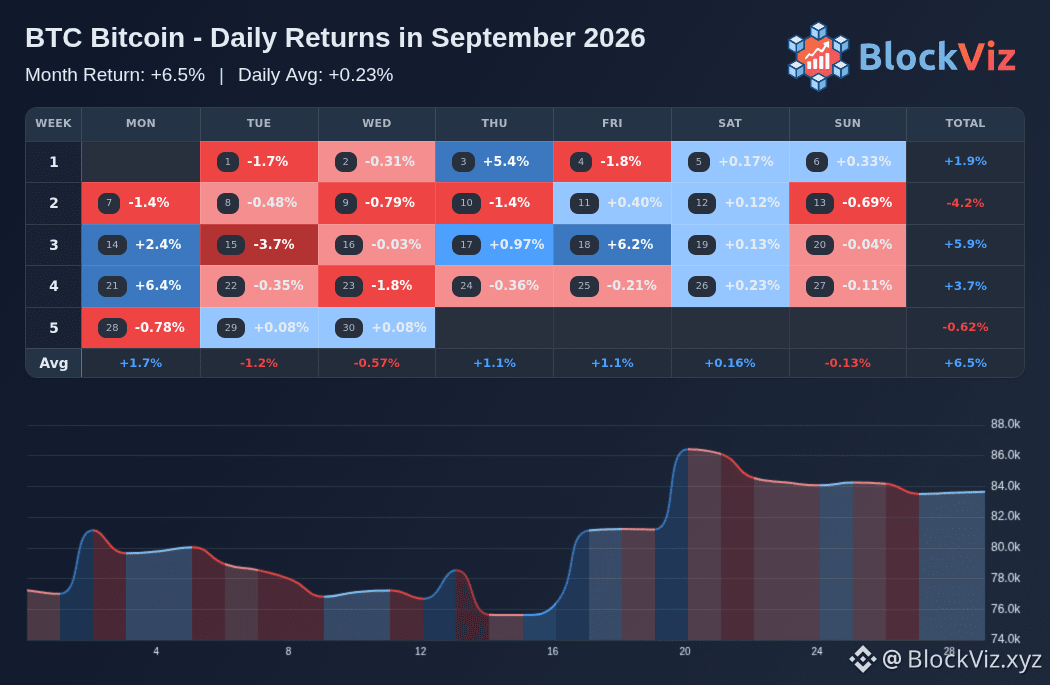
Bitcoin finished September 2026 at +6.5%. If you held only the best days, the return jumps to +24.8%, while missing them drops it to -14.7%. That tells you the month was driven by a handful of outsized sessions rather than smooth trend strength. The biggest upside day was 9/21/26 (+6.4%), and the roughest day was 9/15/26 (-3.7%) $BTC
Bitcoin finished September 2026 at +6.5%. If you held only the best days, the return jumps to +24.8%, while missing them drops it to -14.7%. That tells you the month was driven by a handful of outsized sessions rather than smooth trend strength. The biggest upside day was 9/21/26 (+6.4%), and the roughest day was 9/15/26 (-3.7%) $BTC
55
·
--
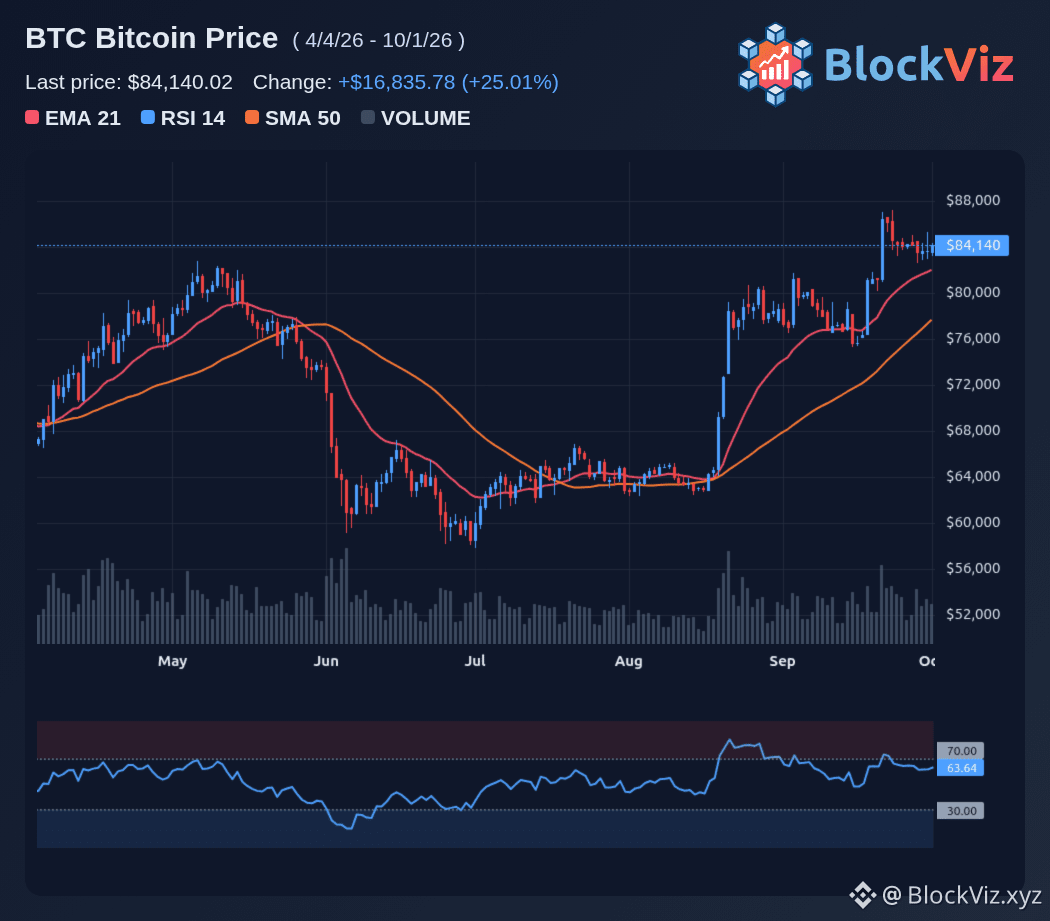
BTC is hovering around 82,000 to 84,000 after last week's 2.4 billion dollar ETF inflow surge, and the market is asking the obvious question. Who gets liquidated first on a 3% dip? The 82,000 level is the strongest nearby support, sitting near the ETF holder cost basis around 81,700 to 82,500 and the breakout zone from August that must hold for the bull case to stay intact. The tension is between leveraged longs and ETF buyers. Futures open interest sits around 52 billion, down 14% from recent peaks, but long liquidation clusters are stacked between 75,000 and 76,000 and then 60,000 to 63,000. A 3% dip from 83,000 would take BTC to roughly 80,500, testing the ETF breakeven and the corporate treasury cost basis near 80,500. That is where the first wave of long liquidations would hit, with the 75,000 to 76,000 zone acting as the next major support. For traders, the setup is about defense and flow. Watch 82,000 as the key pivot and 83,300 to 83,500 as immediate support. A break below 82,000 could open the path to 80,500 and then 78,000, with long liquidations accelerating into the 75,000 to 76,000 cluster. The ETF buyers are the marginal bid, and their 81,700 to 82,500 cost basis is the line that must hold to avoid a deeper flush. The next catalysts are the October monthly candle open and any follow-through in ETF flows. A hold above 82,000 with continued inflows would signal the breakout zone is solid, while a break below could trigger a 3% to 5% dip into 78,000 to 80,000 before the long liquidation cascade eases. Watch the liquidation heatmap for the 75,000 to 76,000 cluster and the 82,000 pivot for the next move. $BTC
BTC is hovering around 82,000 to 84,000 after last week's 2.4 billion dollar ETF inflow surge, and the market is asking the obvious question. Who gets liquidated first on a 3% dip? The 82,000 level is the strongest nearby support, sitting near the ETF holder cost basis around 81,700 to 82,500 and the breakout zone from August that must hold for the bull case to stay intact. The tension is between leveraged longs and ETF buyers. Futures open interest sits around 52 billion, down 14% from recent peaks, but long liquidation clusters are stacked between 75,000 and 76,000 and then 60,000 to 63,000. A 3% dip from 83,000 would take BTC to roughly 80,500, testing the ETF breakeven and the corporate treasury cost basis near 80,500. That is where the first wave of long liquidations would hit, with the 75,000 to 76,000 zone acting as the next major support. For traders, the setup is about defense and flow. Watch 82,000 as the key pivot and 83,300 to 83,500 as immediate support. A break below 82,000 could open the path to 80,500 and then 78,000, with long liquidations accelerating into the 75,000 to 76,000 cluster. The ETF buyers are the marginal bid, and their 81,700 to 82,500 cost basis is the line that must hold to avoid a deeper flush. The next catalysts are the October monthly candle open and any follow-through in ETF flows. A hold above 82,000 with continued inflows would signal the breakout zone is solid, while a break below could trigger a 3% to 5% dip into 78,000 to 80,000 before the long liquidation cascade eases. Watch the liquidation heatmap for the 75,000 to 76,000 cluster and the 82,000 pivot for the next move. $BTC
66
·
--
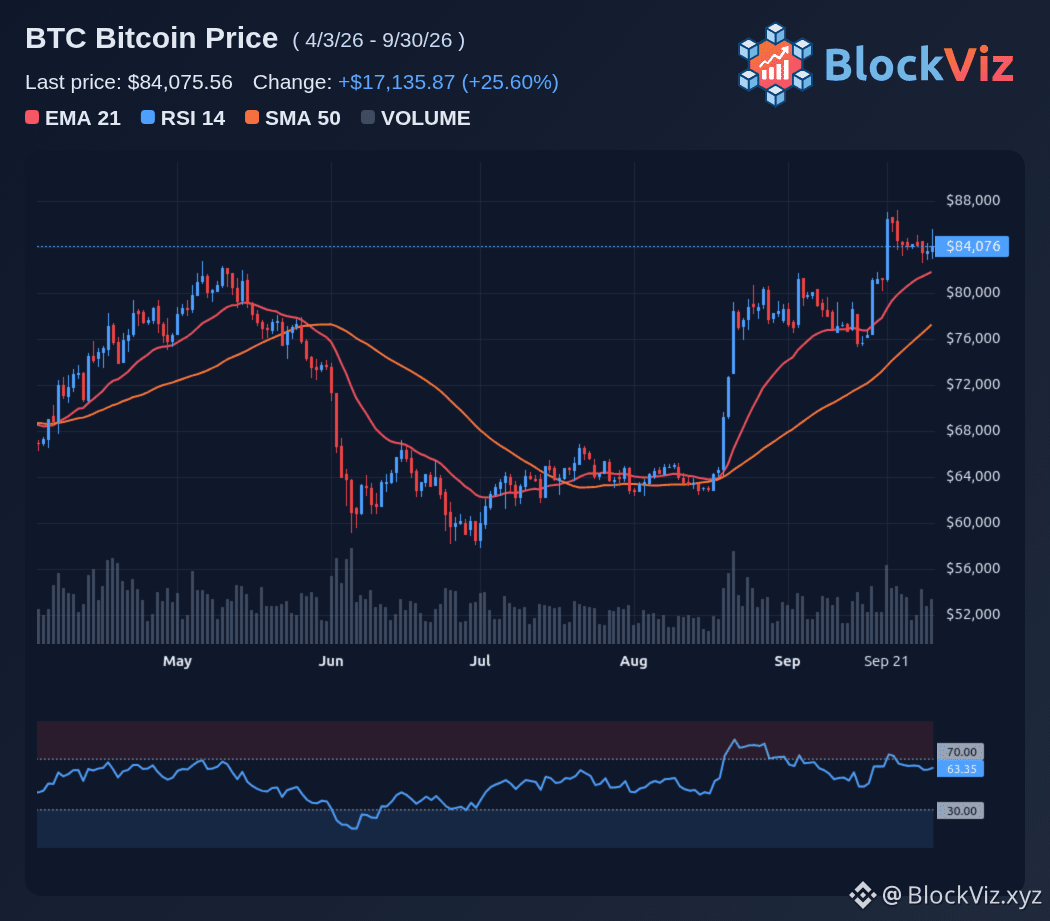
Uptober is back in the conversation, but history alone is not enough to trust this time. Bitcoin has closed green in 10 of the last 13 Octobers, with an average return around 19% and a median near 14%, but 2025 broke a seven-year streak with a 4% loss and this year comes with serious macro headwinds from high yields and options overhang. The tension is between seasonality and setup. BTC enters October near 85,000 to 87,000 after gaining roughly 9% in September and about 25% in August, a rare back-to-back green combination that has often preceded strong Uptober runs. The 18 billion options expiry is now behind us, and the market is watching whether liquidity can support a push toward 90,000 to 100,000 or whether profit-taking at record levels caps the move. For traders, the question is whether Uptober is a base rate or a trap. The pattern has a 76.9% win rate, but the three red Octobers, including 2018 and 2025, remind us that seasonality is not a guarantee. The setup this year is different from 2025, with BTC starting from 85,000 instead of 114,000 and with ETF flows and stablecoin liquidity providing a stronger bid than last year's top-heavy structure. Watch 88,000 to 90,000 for the next leg and then 100,000 for the Uptober target. A clean break above 90,000 would align with the historical 19% average October gain, while a failure at 88,000 could see a retest of 83,000 to 85,000. The next catalysts are the October monthly candle open, any follow-through in ETF inflows, and whether BTC can hold above 85,000 as the Uptober narrative plays out. $BTC
Uptober is back in the conversation, but history alone is not enough to trust this time. Bitcoin has closed green in 10 of the last 13 Octobers, with an average return around 19% and a median near 14%, but 2025 broke a seven-year streak with a 4% loss and this year comes with serious macro headwinds from high yields and options overhang. The tension is between seasonality and setup. BTC enters October near 85,000 to 87,000 after gaining roughly 9% in September and about 25% in August, a rare back-to-back green combination that has often preceded strong Uptober runs. The 18 billion options expiry is now behind us, and the market is watching whether liquidity can support a push toward 90,000 to 100,000 or whether profit-taking at record levels caps the move. For traders, the question is whether Uptober is a base rate or a trap. The pattern has a 76.9% win rate, but the three red Octobers, including 2018 and 2025, remind us that seasonality is not a guarantee. The setup this year is different from 2025, with BTC starting from 85,000 instead of 114,000 and with ETF flows and stablecoin liquidity providing a stronger bid than last year's top-heavy structure. Watch 88,000 to 90,000 for the next leg and then 100,000 for the Uptober target. A clean break above 90,000 would align with the historical 19% average October gain, while a failure at 88,000 could see a retest of 83,000 to 85,000. The next catalysts are the October monthly candle open, any follow-through in ETF inflows, and whether BTC can hold above 85,000 as the Uptober narrative plays out. $BTC
74
·
--
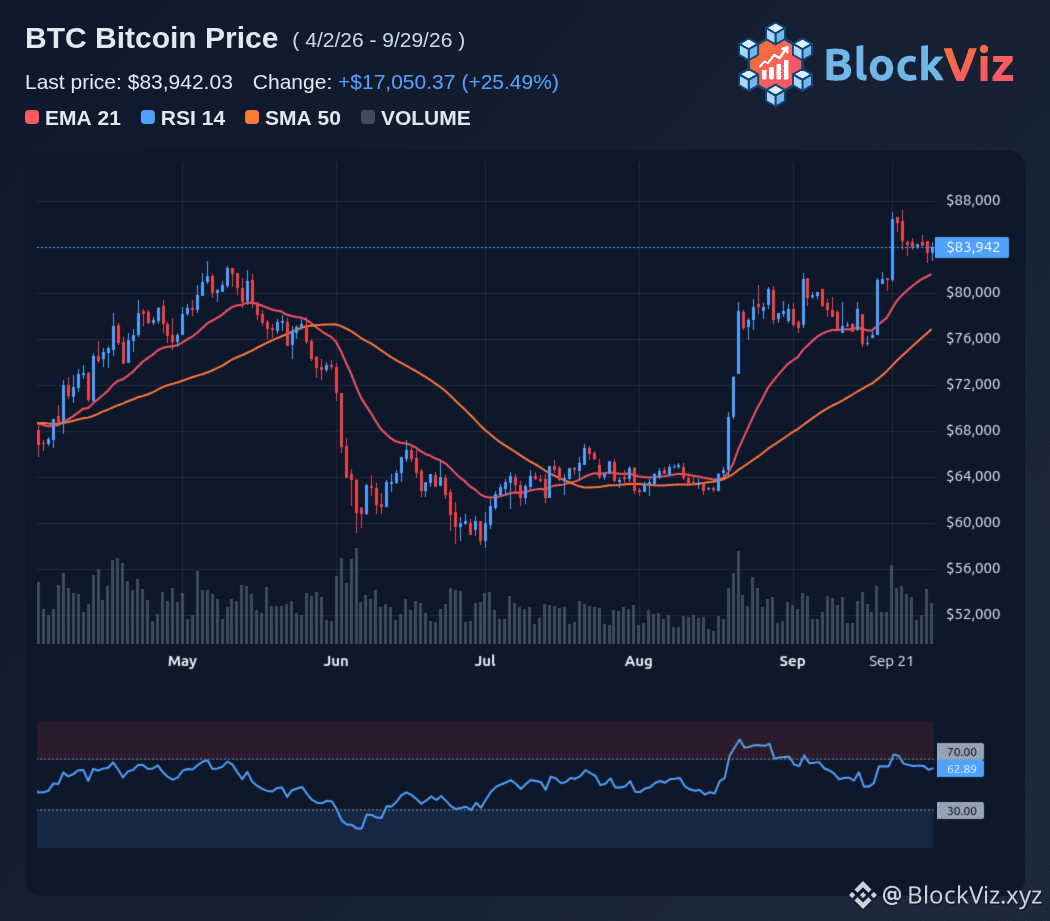
Altcoin spot volume just hit nearly four times Bitcoin's, the highest ratio since September 2025, and it is forcing a hard question. Is this early altseason or just fuel for a final BTC leg higher? The Altcoin Season Index rose to 62% in late September, with 72.5% of alts outperforming BTC in the week ending September 22, but it still sits below the 75 threshold that confirms a full altseason. The tension is between the volume signal and the positioning. Glassnode notes that heavy altcoin participation has often coincided with local Bitcoin tops, and altcoin deposits to exchanges have climbed to levels last seen before the October 2025 peak. At the same time, altcoin futures open interest showed little growth, which differs from previous market tops that saw leveraged position build-ups. That mix suggests strong spot demand but not yet a blow-off top in derivatives. For traders, the setup is about rotation and risk. Bitcoin dominance fell below 59% as capital rotated into alts, but BTC is still consolidating near 84,000 to 87,000 after its run from below 63,000 in August. The question is whether alts can sustain the bid without a decisive BTC breakout above 88,000 to 90,000, or whether this volume surge is a distribution signal into a local top. Watch the Altcoin Season Index at 62 and then 75 for confirmation, and monitor BTC dominance at 59% for the next leg. A break below 58% dominance and a push above 75 on the index would signal a true altseason, while a bounce back above 60% dominance would suggest BTC is still anchoring liquidity. The next catalysts are the October monthly candle close and any follow-through in altcoin futures open interest to confirm whether this volume surge has leverage behind it. $BTC
Altcoin spot volume just hit nearly four times Bitcoin's, the highest ratio since September 2025, and it is forcing a hard question. Is this early altseason or just fuel for a final BTC leg higher? The Altcoin Season Index rose to 62% in late September, with 72.5% of alts outperforming BTC in the week ending September 22, but it still sits below the 75 threshold that confirms a full altseason. The tension is between the volume signal and the positioning. Glassnode notes that heavy altcoin participation has often coincided with local Bitcoin tops, and altcoin deposits to exchanges have climbed to levels last seen before the October 2025 peak. At the same time, altcoin futures open interest showed little growth, which differs from previous market tops that saw leveraged position build-ups. That mix suggests strong spot demand but not yet a blow-off top in derivatives. For traders, the setup is about rotation and risk. Bitcoin dominance fell below 59% as capital rotated into alts, but BTC is still consolidating near 84,000 to 87,000 after its run from below 63,000 in August. The question is whether alts can sustain the bid without a decisive BTC breakout above 88,000 to 90,000, or whether this volume surge is a distribution signal into a local top. Watch the Altcoin Season Index at 62 and then 75 for confirmation, and monitor BTC dominance at 59% for the next leg. A break below 58% dominance and a push above 75 on the index would signal a true altseason, while a bounce back above 60% dominance would suggest BTC is still anchoring liquidity. The next catalysts are the October monthly candle close and any follow-through in altcoin futures open interest to confirm whether this volume surge has leverage behind it. $BTC
69
·
--
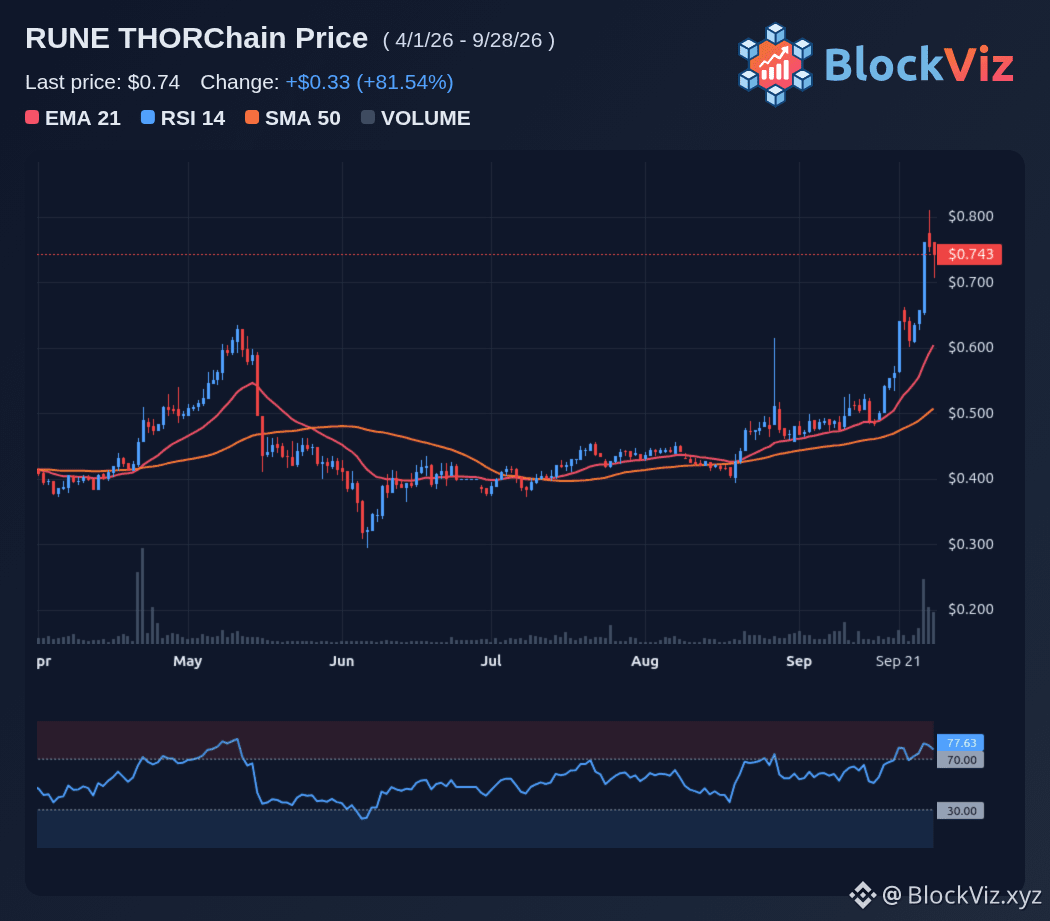
THORChain just drew a line in the sand over the 387.5 million dollar Bitget hack, and it is splitting the crypto community. The exchange asked the protocol to block wallets tied to the attacker, but THORChain said no, arguing that its emergency halt tools protect the network as a whole and are not meant to freeze individual addresses or swaps. That stance has reignited the oldest debate in crypto: is censorship resistance a feature or a bug when stolen funds are moving through your rails? The tension is real. Bitget CEO Gracy Chen called out THORChain publicly, saying decentralization is a design principle, not a shield for facilitating known stolen funds. THORChain pushed back, noting it retired its admin key in February 2025 and that its validators lack a switch to blacklist single addresses without compromising the permissionless model. The protocol pointed to its own May 2026 exploit, where it paused the network to contain a 10.7 million dollar loss but did not blacklist the attacker's wallets afterward. For traders, the setup is about narrative and flow. RUNE is up more than 20% in 24 hours as the market prices in a purity premium for a protocol that refuses to censor, even under pressure. The question is whether that bid holds once the dust settles and whether other DeFi primitives follow the same line. Watch RUNE around its recent breakout levels and monitor whether any node operators vote to pause Bitget-linked flows, which would signal a shift in the governance stance. The next catalysts are the ongoing on-chain movements of the stolen funds and any further statements from THORChain validators or Bitget. If the protocol holds firm, expect more capital to rotate into censorship-resistant narratives. If validators waver or coordinate a selective pause, the purity trade could reverse... $RUNE
THORChain just drew a line in the sand over the 387.5 million dollar Bitget hack, and it is splitting the crypto community. The exchange asked the protocol to block wallets tied to the attacker, but THORChain said no, arguing that its emergency halt tools protect the network as a whole and are not meant to freeze individual addresses or swaps. That stance has reignited the oldest debate in crypto: is censorship resistance a feature or a bug when stolen funds are moving through your rails? The tension is real. Bitget CEO Gracy Chen called out THORChain publicly, saying decentralization is a design principle, not a shield for facilitating known stolen funds. THORChain pushed back, noting it retired its admin key in February 2025 and that its validators lack a switch to blacklist single addresses without compromising the permissionless model. The protocol pointed to its own May 2026 exploit, where it paused the network to contain a 10.7 million dollar loss but did not blacklist the attacker's wallets afterward. For traders, the setup is about narrative and flow. RUNE is up more than 20% in 24 hours as the market prices in a purity premium for a protocol that refuses to censor, even under pressure. The question is whether that bid holds once the dust settles and whether other DeFi primitives follow the same line. Watch RUNE around its recent breakout levels and monitor whether any node operators vote to pause Bitget-linked flows, which would signal a shift in the governance stance. The next catalysts are the ongoing on-chain movements of the stolen funds and any further statements from THORChain validators or Bitget. If the protocol holds firm, expect more capital to rotate into censorship-resistant narratives. If validators waver or coordinate a selective pause, the purity trade could reverse... $RUNE
76
·
--
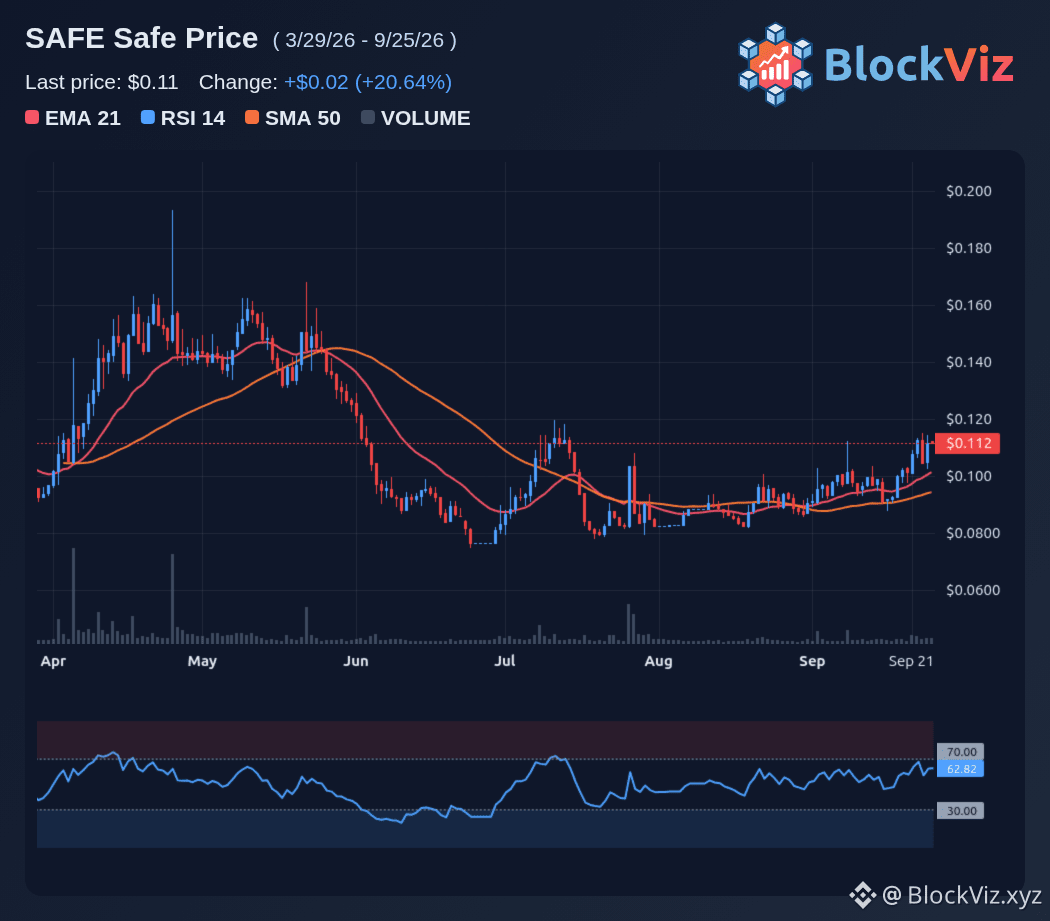
Bitget just confirmed a 351.6 million dollar hot wallet breach and halted withdrawals, and the market is asking the obvious questions. Who did it, how did they get in, and are user funds actually safe? The exchange says yes on the last one, pointing to a 464 million dollar User Protection Fund that covers the full loss, but the attack vector remains unknown pending a full incident report. The tension is between the backstop and the unknown. CEO Gracy Chen said the breach was limited to a portion of the hot and warm wallet layers in Bitget's three-tier architecture, with cold wallets untouched and user account balances accurate. Deposits and trading are still live, but withdrawals are frozen until the security review wraps up. That is a critical distinction for anyone with size on the platform, because coverage in theory does not always mean instant reimbursement in practice. For traders, the setup is about risk management and flow. Watch BTC around 83,000 to 85,000 for any contagion spill from the headline, and monitor stablecoin flows on and off Bitget once withdrawals reopen. The next catalysts are the 24-hour incident report and any updates on the attack method, with law enforcement and on-chain security firms already involved. If the report points to a known exploit or a specific actor, the market will price that in fast. If it stays vague, expect lingering withdrawal anxiety and potential outflows to competitors. The key levels are 83,000 support for BTC and the 464 million protection fund coverage ratio for Bitget. A clean resolution with full reimbursement and a clear attack vector would contain the damage, while delays or gaps in the report could extend the headline risk into the weekend. Until then, traders should assume heightened volatility and keep size diversified across venue... $SAFE
Bitget just confirmed a 351.6 million dollar hot wallet breach and halted withdrawals, and the market is asking the obvious questions. Who did it, how did they get in, and are user funds actually safe? The exchange says yes on the last one, pointing to a 464 million dollar User Protection Fund that covers the full loss, but the attack vector remains unknown pending a full incident report. The tension is between the backstop and the unknown. CEO Gracy Chen said the breach was limited to a portion of the hot and warm wallet layers in Bitget's three-tier architecture, with cold wallets untouched and user account balances accurate. Deposits and trading are still live, but withdrawals are frozen until the security review wraps up. That is a critical distinction for anyone with size on the platform, because coverage in theory does not always mean instant reimbursement in practice. For traders, the setup is about risk management and flow. Watch BTC around 83,000 to 85,000 for any contagion spill from the headline, and monitor stablecoin flows on and off Bitget once withdrawals reopen. The next catalysts are the 24-hour incident report and any updates on the attack method, with law enforcement and on-chain security firms already involved. If the report points to a known exploit or a specific actor, the market will price that in fast. If it stays vague, expect lingering withdrawal anxiety and potential outflows to competitors. The key levels are 83,000 support for BTC and the 464 million protection fund coverage ratio for Bitget. A clean resolution with full reimbursement and a clear attack vector would contain the damage, while delays or gaps in the report could extend the headline risk into the weekend. Until then, traders should assume heightened volatility and keep size diversified across venue... $SAFE
74
·
--
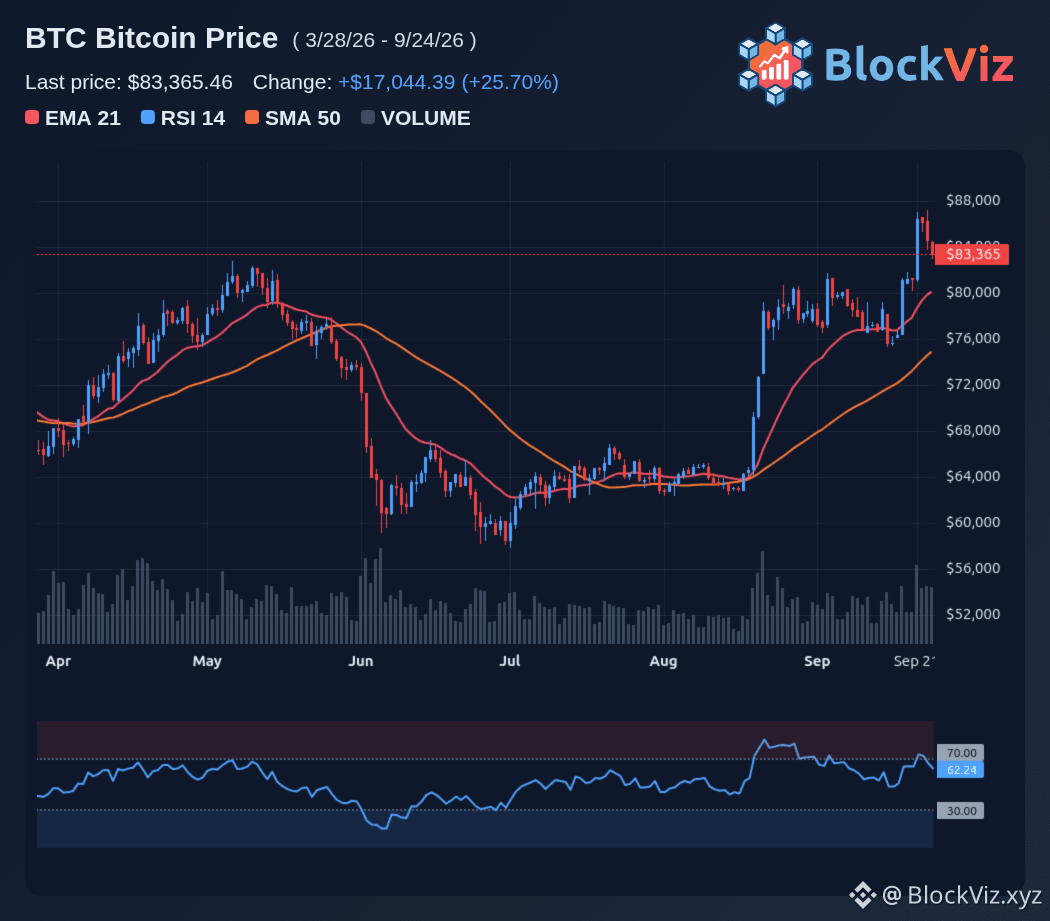
The 10-year Treasury yield just hit 5.12%, its highest level since 2007, and it is forcing a hard question for Bitcoin bulls. Why take risk on a non-yielding asset when you can lock in a risk-free 5% in government bonds? That opportunity cost is the cleanest read on why BTC slipped from the 85,000s toward 83,000 as yields surged. The tension is between macro headwinds and crypto-specific catalysts. On one side, higher yields drain liquidity from risk assets, push up discount rates on long-duration bets, and strengthen the dollar. On the other side, Bitcoin is holding above 83,000 with a 14% gain since its max-pain low near 75,000, and it is still up roughly 33% from the July low near 58,000. The market is weighing a risk-free 5% against the potential for a bull market breakout if BTC can clear 88,000 to 90,000. For traders, the setup is clear. Watch the 10-year yield at 5.12% and then 5.15% for the next leg. A move above 5.15% would signal more pressure on risk assets, while a pullback toward 5.00% would ease the opportunity cost headwind. For BTC, the key levels are 83,000 support and 88,000 to 90,000 resistance. A break below 83,000 could open the path to 80,000 and then 75,000, while a hold above 88,000 would suggest buyers are defending the bull case. The next catalysts are the Friday 18 billion options expiry and any follow-through in yields. If the 10-year backs off from 5.12% and BTC holds 85,000, the path to 90,000 opens. If yields push toward 5.15% and BTC loses 83,000, the risk-free rate narrative will dominate and drag crypto lower. $BTC
The 10-year Treasury yield just hit 5.12%, its highest level since 2007, and it is forcing a hard question for Bitcoin bulls. Why take risk on a non-yielding asset when you can lock in a risk-free 5% in government bonds? That opportunity cost is the cleanest read on why BTC slipped from the 85,000s toward 83,000 as yields surged. The tension is between macro headwinds and crypto-specific catalysts. On one side, higher yields drain liquidity from risk assets, push up discount rates on long-duration bets, and strengthen the dollar. On the other side, Bitcoin is holding above 83,000 with a 14% gain since its max-pain low near 75,000, and it is still up roughly 33% from the July low near 58,000. The market is weighing a risk-free 5% against the potential for a bull market breakout if BTC can clear 88,000 to 90,000. For traders, the setup is clear. Watch the 10-year yield at 5.12% and then 5.15% for the next leg. A move above 5.15% would signal more pressure on risk assets, while a pullback toward 5.00% would ease the opportunity cost headwind. For BTC, the key levels are 83,000 support and 88,000 to 90,000 resistance. A break below 83,000 could open the path to 80,000 and then 75,000, while a hold above 88,000 would suggest buyers are defending the bull case. The next catalysts are the Friday 18 billion options expiry and any follow-through in yields. If the 10-year backs off from 5.12% and BTC holds 85,000, the path to 90,000 opens. If yields push toward 5.15% and BTC loses 83,000, the risk-free rate narrative will dominate and drag crypto lower. $BTC
60
·
--
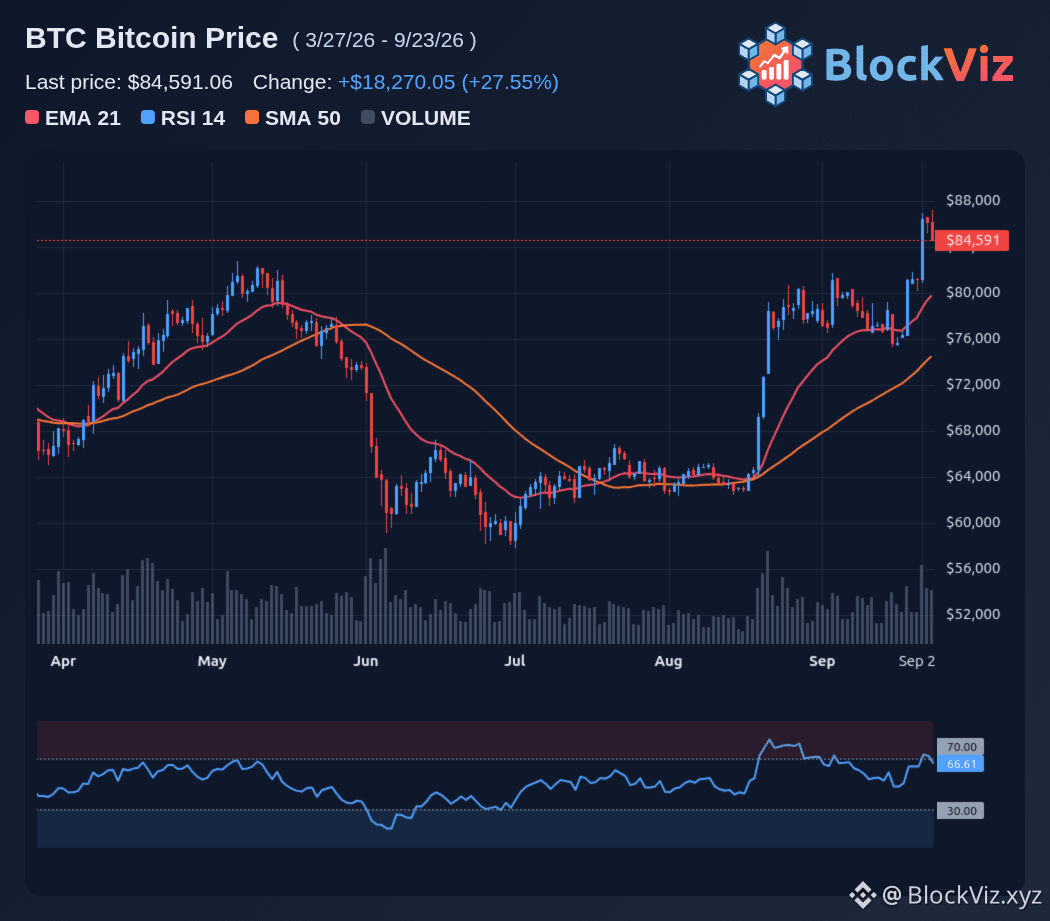
About 18 billion in BTC and ETH options expire Friday, and max pain sits right at 75,000 for Bitcoin. That is roughly 10,000 below the current spot price near 85,000 to 86,000, and it has traders asking whether dealer hedging and gamma flows will drag BTC lower into the 08:00 UTC settlement. The tension is between the max pain magnet and the call-heavy positioning. BTC options are skewed bullish with about 9.4 billion in calls versus 6.5 billion in puts, crowded at 90,000 and 100,000 strikes. For the settlement price to land on max pain, Bitcoin would need to fall 11% to 12% between now and Friday, which is a big move but not impossible in a quarterly expiry week. History shows max pain does not always win, but it often acts as a soft magnet into expiry. In past quarters, BTC has settled closer to max pain when open interest is large and dealer gamma is short. This week, the 70,000 strike has the most open contracts, and puts are stacked at 60,000, 70,000 and 75,000, creating a layered support floor that could limit downside if sellers push toward 75,000. For traders, the setup is clear. Watch 85,000 as the key support and 88,000 to 90,000 for resistance into Friday. A break below 85,000 could open the path to 80,000 and then 75,000 max pain, while a hold above 88,000 would suggest buyers are defending the call-heavy positioning. The next catalysts are the daily options rolls and any large block trades that shift dealer hedges before the 08:00 UTC Friday settlement. $BTC
About 18 billion in BTC and ETH options expire Friday, and max pain sits right at 75,000 for Bitcoin. That is roughly 10,000 below the current spot price near 85,000 to 86,000, and it has traders asking whether dealer hedging and gamma flows will drag BTC lower into the 08:00 UTC settlement. The tension is between the max pain magnet and the call-heavy positioning. BTC options are skewed bullish with about 9.4 billion in calls versus 6.5 billion in puts, crowded at 90,000 and 100,000 strikes. For the settlement price to land on max pain, Bitcoin would need to fall 11% to 12% between now and Friday, which is a big move but not impossible in a quarterly expiry week. History shows max pain does not always win, but it often acts as a soft magnet into expiry. In past quarters, BTC has settled closer to max pain when open interest is large and dealer gamma is short. This week, the 70,000 strike has the most open contracts, and puts are stacked at 60,000, 70,000 and 75,000, creating a layered support floor that could limit downside if sellers push toward 75,000. For traders, the setup is clear. Watch 85,000 as the key support and 88,000 to 90,000 for resistance into Friday. A break below 85,000 could open the path to 80,000 and then 75,000 max pain, while a hold above 88,000 would suggest buyers are defending the call-heavy positioning. The next catalysts are the daily options rolls and any large block trades that shift dealer hedges before the 08:00 UTC Friday settlement. $BTC
61
·
--
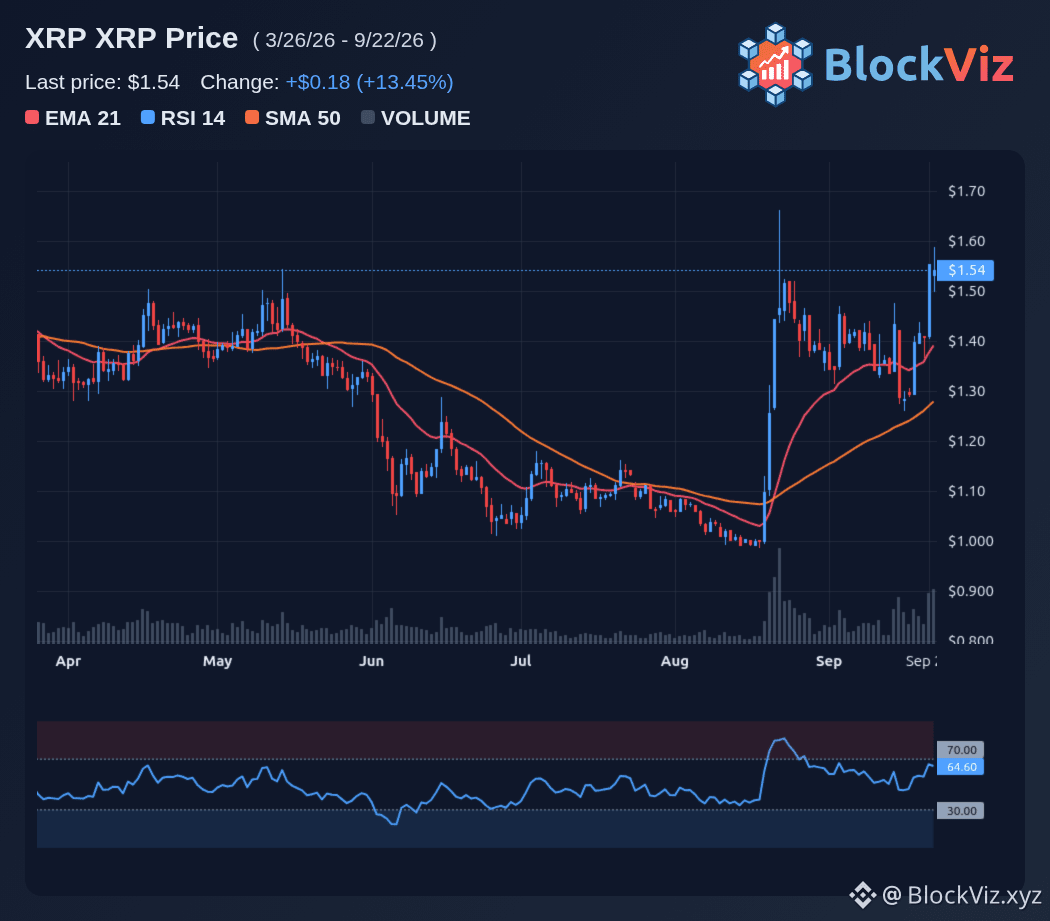
XRP, DOGE, BCH and NEAR just left BTC behind, but not all of these runs are built the same. DOGE is up 14% to 15% in 24 hours, XRP jumped from 1.40 to 1.54, and NEAR is posting double-digit gains with a 55% weekly move. BTC added roughly 5% over the same window, and its dominance slipped to about 57% from 59.2% earlier in September. The tension is whether this is early altseason or just a late-cycle speculative leg. Altcoin Season Index readings are still near 46 to 49, well below the 75 threshold traders use to call a full altseason. NEAR and BCH have strong momentum and clear catalysts, with NEAR up 55% on the week and BCH logging a 14% weekly gain. XRP and DOGE are more mixed, with XRP still almost 10% below its August 22 high and DOGE rallying into heavy leverage and memecoin speculation. For traders, the question is which runs have follow-through and which are fading fast. NEAR and BCH look like the real momentum plays, with sustained volume and breakouts above key resistance. XRP needs a clean break above 1.54 and then 1.60 to confirm the trend, while DOGE is more sensitive to retail flows and could reverse quickly if leverage unwinds. Watch BTC dominance at 57% and the Altcoin Season Index at 50 for signs of a broader rotation. A break below 56% dominance and a push above 55 on the index would signal capital is rotating into alts, while a bounce back above 58% would suggest BTC is still anchoring liquidity. The next catalysts are the September monthly candle close and any follow-through above 1.60 for XRP and 0.10 for DOGE. $XRP
XRP, DOGE, BCH and NEAR just left BTC behind, but not all of these runs are built the same. DOGE is up 14% to 15% in 24 hours, XRP jumped from 1.40 to 1.54, and NEAR is posting double-digit gains with a 55% weekly move. BTC added roughly 5% over the same window, and its dominance slipped to about 57% from 59.2% earlier in September. The tension is whether this is early altseason or just a late-cycle speculative leg. Altcoin Season Index readings are still near 46 to 49, well below the 75 threshold traders use to call a full altseason. NEAR and BCH have strong momentum and clear catalysts, with NEAR up 55% on the week and BCH logging a 14% weekly gain. XRP and DOGE are more mixed, with XRP still almost 10% below its August 22 high and DOGE rallying into heavy leverage and memecoin speculation. For traders, the question is which runs have follow-through and which are fading fast. NEAR and BCH look like the real momentum plays, with sustained volume and breakouts above key resistance. XRP needs a clean break above 1.54 and then 1.60 to confirm the trend, while DOGE is more sensitive to retail flows and could reverse quickly if leverage unwinds. Watch BTC dominance at 57% and the Altcoin Season Index at 50 for signs of a broader rotation. A break below 56% dominance and a push above 55 on the index would signal capital is rotating into alts, while a bounce back above 58% would suggest BTC is still anchoring liquidity. The next catalysts are the September monthly candle close and any follow-through above 1.60 for XRP and 0.10 for DOGE. $XRP
53
·
--
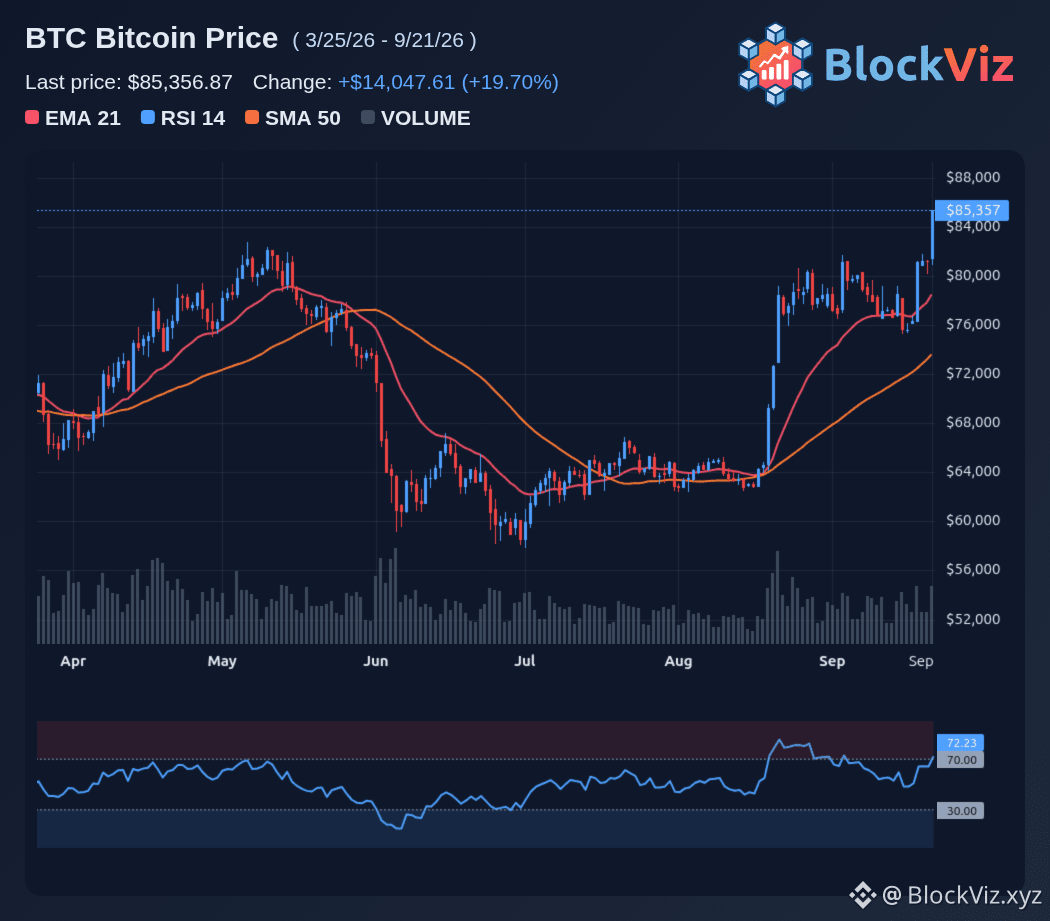
Bitcoin just closed above its 50-week moving average for the first time in 45 weeks, and history says this matters. Galaxy Research notes that in four of five completed bear markets, the first weekly reclaim of the 50W MA confirmed the cycle low was in. That is a signal that has ended 84% of bear markets, and it is flashing green now with BTC closing the week at 81,159 above the 78,788 average. The tension is whether this close is enough to call the bull market or whether we need more confirmation. Analysts are watching 83,000 as the key level that would break the lower-high pattern on the monthly chart and open the path to 90,000. A sustained move above 83,000 would align with past cycles where BTC gained 700% to 900% after breaking the 50W MA, while a failure could see a retest of 78,800 and then 74,000. For traders, the setup is clear. Hold above 80,000 and then 83,000, and the path to 90,000 opens with momentum. Lose 78,800 on a weekly close, and the signal is invalidated, with a drop toward 74,000 to 75,000 likely. The next catalysts are the September monthly candle close and any follow-through above 83,000 to confirm the trend reversal. Watch 83,000 for the breakout and 78,800 for the invalidation. A clean break and hold above 83,000 would signal the bull market has begun, while a weekly close below 78,800 would suggest the bear is not done yet. The 50W MA close is a strong signal, but it is the follow-through that will determine whether 90,000 is next or whether BTC remains stuck in its consolidation phase. $BTC
Bitcoin just closed above its 50-week moving average for the first time in 45 weeks, and history says this matters. Galaxy Research notes that in four of five completed bear markets, the first weekly reclaim of the 50W MA confirmed the cycle low was in. That is a signal that has ended 84% of bear markets, and it is flashing green now with BTC closing the week at 81,159 above the 78,788 average. The tension is whether this close is enough to call the bull market or whether we need more confirmation. Analysts are watching 83,000 as the key level that would break the lower-high pattern on the monthly chart and open the path to 90,000. A sustained move above 83,000 would align with past cycles where BTC gained 700% to 900% after breaking the 50W MA, while a failure could see a retest of 78,800 and then 74,000. For traders, the setup is clear. Hold above 80,000 and then 83,000, and the path to 90,000 opens with momentum. Lose 78,800 on a weekly close, and the signal is invalidated, with a drop toward 74,000 to 75,000 likely. The next catalysts are the September monthly candle close and any follow-through above 83,000 to confirm the trend reversal. Watch 83,000 for the breakout and 78,800 for the invalidation. A clean break and hold above 83,000 would signal the bull market has begun, while a weekly close below 78,800 would suggest the bear is not done yet. The 50W MA close is a strong signal, but it is the follow-through that will determine whether 90,000 is next or whether BTC remains stuck in its consolidation phase. $BTC
1
162
·
--
The Fed just hiked rates, but the market is fixated on a different number: 15.6 billion. That is the size of the Treasury's latest bond buyback operation, and it has traders asking whether this is stealth QE that is fueling Bitcoin's breakout toward 80,000. The tension is real. On one side, the Fed raised the policy rate by 25 basis points to 3.75% to 4.00%, the first hike since 2023, and signaled a hawkish path with one more increase possible by year end. On the other side, the Treasury is injecting liquidity through debt buybacks, with up to 14.5 billion per week in purchases and a 15.6 billion operation hitting the market this week. That combination of tightening policy and targeted liquidity is exactly what has BTC ripping from the 76,000s back toward 77,300 to 78,000. For traders, the question is whether this liquidity bid is enough to offset the headwinds from higher rates, ETF outflows, and the Clarity Act setback. BTC has already recovered from a July low near 58,000, gaining nearly 33% into mid-September, but it still faces heavy resistance at 78,000 and then the 365-day moving average near 82,300. A clean break above 78,000 would signal that the Treasury liquidity injection is winning, while a failure could see BTC slide back toward 74,000 to 75,000. Watch the next Treasury buyback announcements and the Fed's balance sheet data for signs of continued liquidity support. The key levels are 78,000 on the upside and 74,000 on the downside. If the 15.6 billion operation is just the start of a larger program, BTC could test 80,000 and then 82,300. If the liquidity tap slows, the hawkish Fed path will likely dominate and push BTC back toward 70,000. $BTC
The Fed just hiked rates, but the market is fixated on a different number: 15.6 billion. That is the size of the Treasury's latest bond buyback operation, and it has traders asking whether this is stealth QE that is fueling Bitcoin's breakout toward 80,000. The tension is real. On one side, the Fed raised the policy rate by 25 basis points to 3.75% to 4.00%, the first hike since 2023, and signaled a hawkish path with one more increase possible by year end. On the other side, the Treasury is injecting liquidity through debt buybacks, with up to 14.5 billion per week in purchases and a 15.6 billion operation hitting the market this week. That combination of tightening policy and targeted liquidity is exactly what has BTC ripping from the 76,000s back toward 77,300 to 78,000. For traders, the question is whether this liquidity bid is enough to offset the headwinds from higher rates, ETF outflows, and the Clarity Act setback. BTC has already recovered from a July low near 58,000, gaining nearly 33% into mid-September, but it still faces heavy resistance at 78,000 and then the 365-day moving average near 82,300. A clean break above 78,000 would signal that the Treasury liquidity injection is winning, while a failure could see BTC slide back toward 74,000 to 75,000. Watch the next Treasury buyback announcements and the Fed's balance sheet data for signs of continued liquidity support. The key levels are 78,000 on the upside and 74,000 on the downside. If the 15.6 billion operation is just the start of a larger program, BTC could test 80,000 and then 82,300. If the liquidity tap slows, the hawkish Fed path will likely dominate and push BTC back toward 70,000. $BTC
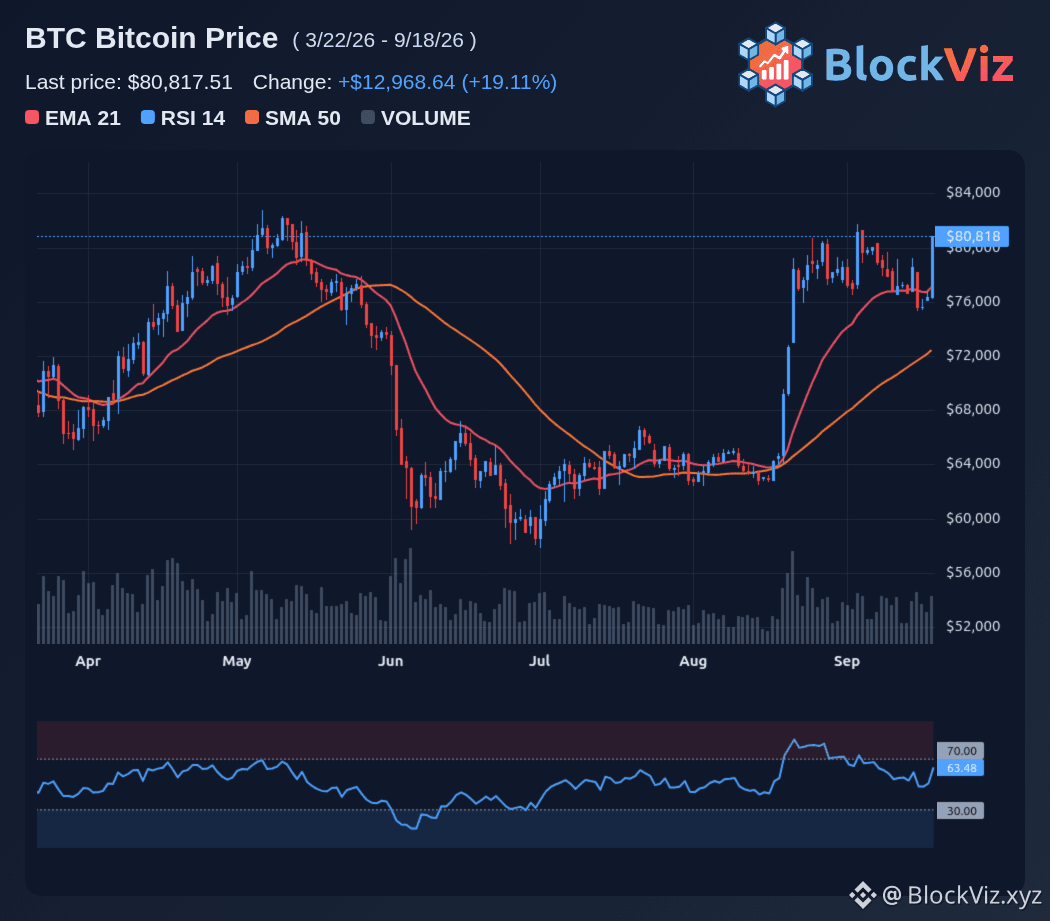
72
·
--
Hackers want Monero. VCs want Zcash. That split is the cleanest read on the privacy trade right now. The Revolut breach just put Monero back in the headlines with a 3 million dollar ransom demand, while Zcash is riding a wave of institutional flows, ETF access, and VC treasury positioning that has pushed ZEC toward 1,400 and extended its lead over XMR by more than 10 billion in market cap. The tension matters because the two assets are now telling different stories. Monero is the default privacy choice for illicit actors, with every transaction hidden at the protocol level and no viewing key option. That keeps demand high in the underground economy but also keeps regulated venues away, with Kraken and other EU platforms already restricting XMR ahead of the July 2027 AMLR ban. Zcash, by contrast, offers optional shielded transactions and viewing keys that let holders disclose details to auditors or regulators, which is exactly why Grayscale could launch a US-listed product and why funds like Multicoin Capital and Cypherpunk have built large ZEC positions. For traders, the question is whether the privacy bid rotates further into ZEC or whether Monero's illicit-use narrative and delisting pressure create a contrarian setup. ZEC has outperformed on institutional inflows, with more than 34 million in net flows reported in the first two weeks of the ZCSH product and fresh liquidity from THORChain integration and SwissBorg listing. XMR remains more sensitive to exchange delistings and regulatory headlines, but it still commands deep liquidity in OTC and non-KYC venues. Watch ZEC around 1,400 and then 1,500 for the next leg, with a failure back below 1,200 signaling a cooling institutional bid. For XMR, monitor whether it can hold key support after the Revolut headlines fade and whether any new exc... $ZEC
Hackers want Monero. VCs want Zcash. That split is the cleanest read on the privacy trade right now. The Revolut breach just put Monero back in the headlines with a 3 million dollar ransom demand, while Zcash is riding a wave of institutional flows, ETF access, and VC treasury positioning that has pushed ZEC toward 1,400 and extended its lead over XMR by more than 10 billion in market cap. The tension matters because the two assets are now telling different stories. Monero is the default privacy choice for illicit actors, with every transaction hidden at the protocol level and no viewing key option. That keeps demand high in the underground economy but also keeps regulated venues away, with Kraken and other EU platforms already restricting XMR ahead of the July 2027 AMLR ban. Zcash, by contrast, offers optional shielded transactions and viewing keys that let holders disclose details to auditors or regulators, which is exactly why Grayscale could launch a US-listed product and why funds like Multicoin Capital and Cypherpunk have built large ZEC positions. For traders, the question is whether the privacy bid rotates further into ZEC or whether Monero's illicit-use narrative and delisting pressure create a contrarian setup. ZEC has outperformed on institutional inflows, with more than 34 million in net flows reported in the first two weeks of the ZCSH product and fresh liquidity from THORChain integration and SwissBorg listing. XMR remains more sensitive to exchange delistings and regulatory headlines, but it still commands deep liquidity in OTC and non-KYC venues. Watch ZEC around 1,400 and then 1,500 for the next leg, with a failure back below 1,200 signaling a cooling institutional bid. For XMR, monitor whether it can hold key support after the Revolut headlines fade and whether any new exc... $ZEC
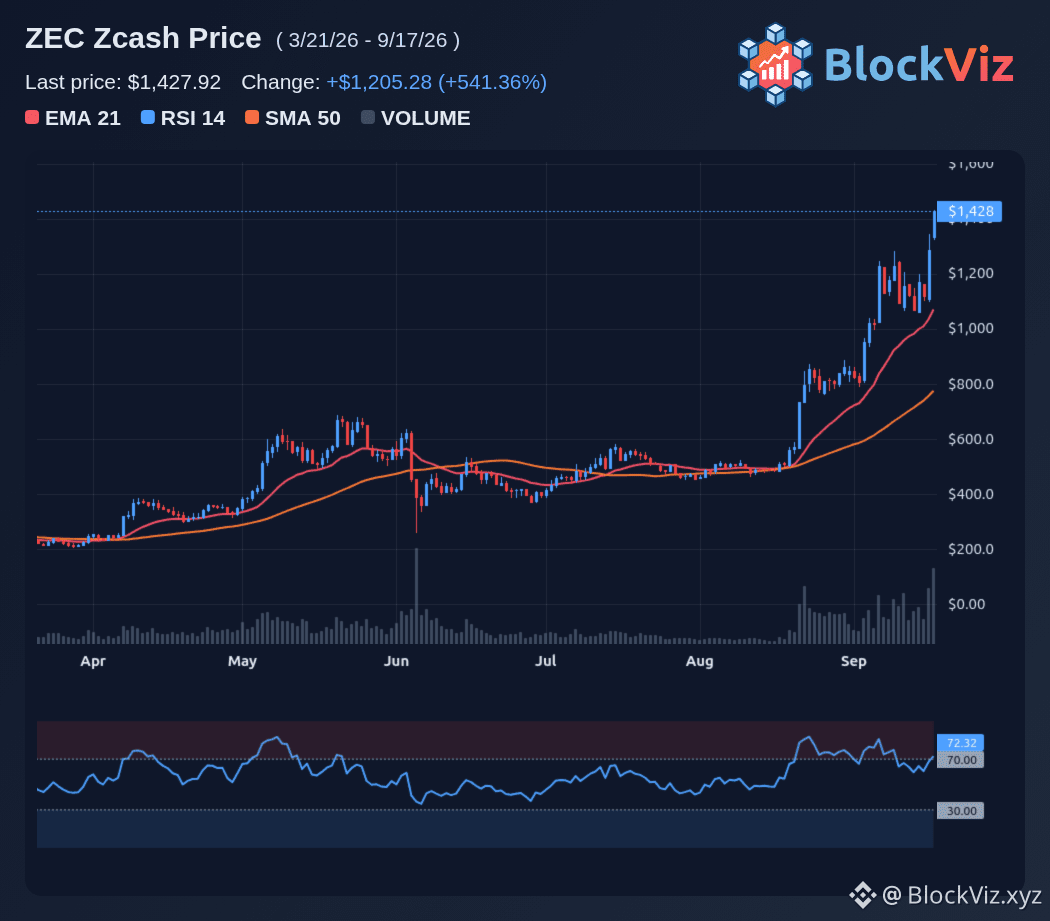
54
·
--
The first Fed hike in three years is now the main event, but the real risk for crypto is not the hike itself. Markets are pricing a 92% to 93% chance of a 25 basis point move to 3.75% to 4.00%, so the headline is largely expected. What can move BTC from the 75,000 to 78,000 range is a surprise hold or a dot plot and press conference tone that is more hawkish or dovish than priced in. A surprise hold would be the bigger shock. It would force shorts to cover quickly and could push Bitcoin through 78,189, with XRP and ETH also breaking key resistance. The odds are against it, but that is exactly why a hold would hit harder than a standard hike. The more likely scenario is a hike with the market watching the dot plot for clues on whether another move is coming in October or December. BTC is already down from the low 80,000s after the Clarity Act failed to clear the 60-vote hurdle, and it briefly dipped below 75,000 before stabilizing near 75,500 to 75,900. A hawkish dot plot or guidance could extend the move toward 74,000 and then 70,000. A neutral to dovish read could help BTC reclaim 78,000 and test 80,000 again. Traders should watch the 2 p.m. ET decision, the dot plot projections and Warsh's press conference at 2:30 p.m. ET. The key levels are 74,000 on the downside and 78,189 on the upside. A close below 74,000 would confirm a hawkish read, while a break and hold above 78,189 would signal that the market is treating the hike as a buy-the-news event. $WOULD
The first Fed hike in three years is now the main event, but the real risk for crypto is not the hike itself. Markets are pricing a 92% to 93% chance of a 25 basis point move to 3.75% to 4.00%, so the headline is largely expected. What can move BTC from the 75,000 to 78,000 range is a surprise hold or a dot plot and press conference tone that is more hawkish or dovish than priced in. A surprise hold would be the bigger shock. It would force shorts to cover quickly and could push Bitcoin through 78,189, with XRP and ETH also breaking key resistance. The odds are against it, but that is exactly why a hold would hit harder than a standard hike. The more likely scenario is a hike with the market watching the dot plot for clues on whether another move is coming in October or December. BTC is already down from the low 80,000s after the Clarity Act failed to clear the 60-vote hurdle, and it briefly dipped below 75,000 before stabilizing near 75,500 to 75,900. A hawkish dot plot or guidance could extend the move toward 74,000 and then 70,000. A neutral to dovish read could help BTC reclaim 78,000 and test 80,000 again. Traders should watch the 2 p.m. ET decision, the dot plot projections and Warsh's press conference at 2:30 p.m. ET. The key levels are 74,000 on the downside and 78,189 on the upside. A close below 74,000 would confirm a hawkish read, while a break and hold above 78,189 would signal that the market is treating the hike as a buy-the-news event. $WOULD
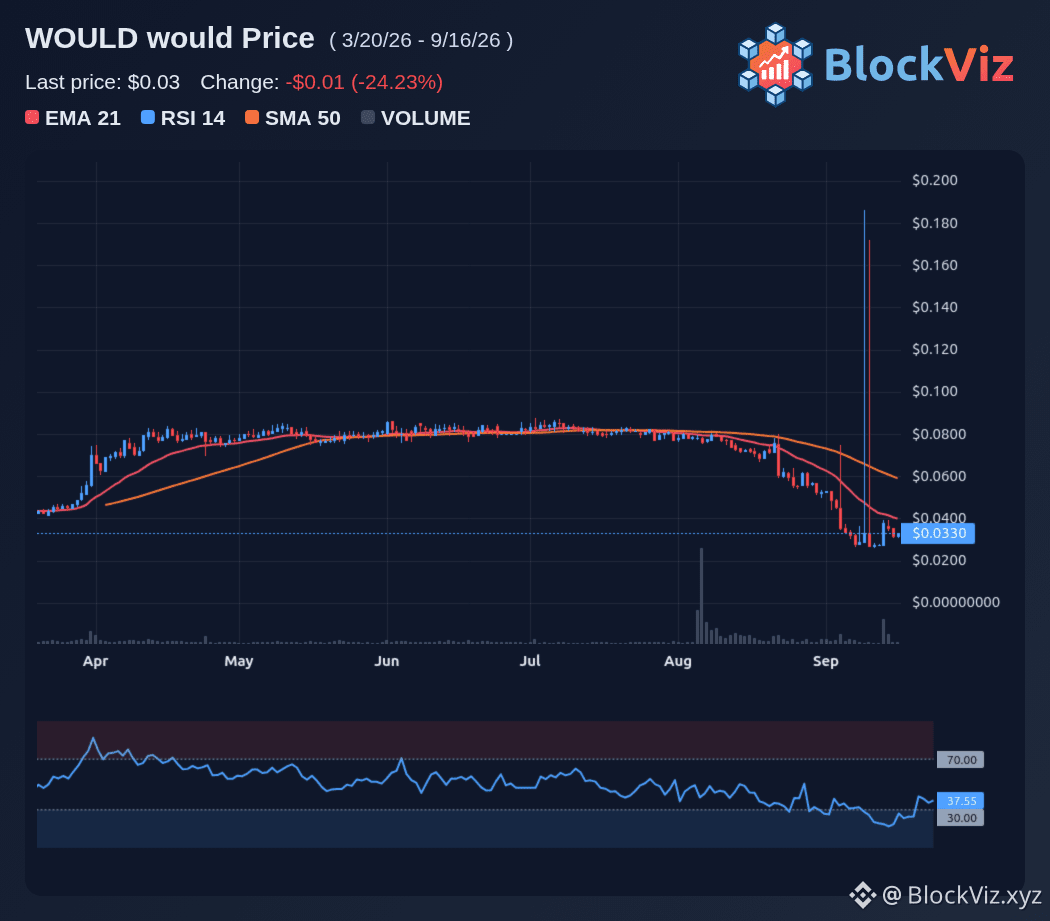
79
·
--
The Clarity Act just went from priced-in win to real doubt in less than 24 hours. Prediction markets saw passage odds jump from about 14% to near 30% over the weekend, then crash back toward 14% to 18% on Tuesday as Democrats pushed back on ethics provisions and banks, state attorneys general and Elizabeth Warren all voiced opposition. The immediate test is the Senate cloture vote at 2:15 p.m. ET. This is not final passage. It is a procedural vote on whether the Senate can even start debating the bill, and it needs 60 yes votes. Republicans hold 53 seats, so at least seven Democrats must cross the aisle, with some analysts saying the real number could be closer to nine if one or two Republicans defect on procedure. That is why BTC slid from the high 70,000s toward 76,000 and why majors turned red across the board. The market spent Monday pricing a regulatory win and then spent Tuesday morning taking that bet back off the table. If cloture clears, the bill moves to formal debate and a final vote that only needs 51 votes. If it fails, the Clarity Act is likely dead for 2026 and possibly until after the midterms. Traders should watch the vote count, whether it lands above or below 60, and how BTC reacts around 76,000 to 78,000. A close failure in the 55 to 59 range would keep some hope for 2027. A clear miss would shift focus back to macro, with the Fed decision and liquidity conditions dominating the next move. $BTC
The Clarity Act just went from priced-in win to real doubt in less than 24 hours. Prediction markets saw passage odds jump from about 14% to near 30% over the weekend, then crash back toward 14% to 18% on Tuesday as Democrats pushed back on ethics provisions and banks, state attorneys general and Elizabeth Warren all voiced opposition. The immediate test is the Senate cloture vote at 2:15 p.m. ET. This is not final passage. It is a procedural vote on whether the Senate can even start debating the bill, and it needs 60 yes votes. Republicans hold 53 seats, so at least seven Democrats must cross the aisle, with some analysts saying the real number could be closer to nine if one or two Republicans defect on procedure. That is why BTC slid from the high 70,000s toward 76,000 and why majors turned red across the board. The market spent Monday pricing a regulatory win and then spent Tuesday morning taking that bet back off the table. If cloture clears, the bill moves to formal debate and a final vote that only needs 51 votes. If it fails, the Clarity Act is likely dead for 2026 and possibly until after the midterms. Traders should watch the vote count, whether it lands above or below 60, and how BTC reacts around 76,000 to 78,000. A close failure in the 55 to 59 range would keep some hope for 2027. A clear miss would shift focus back to macro, with the Fed decision and liquidity conditions dominating the next move. $BTC
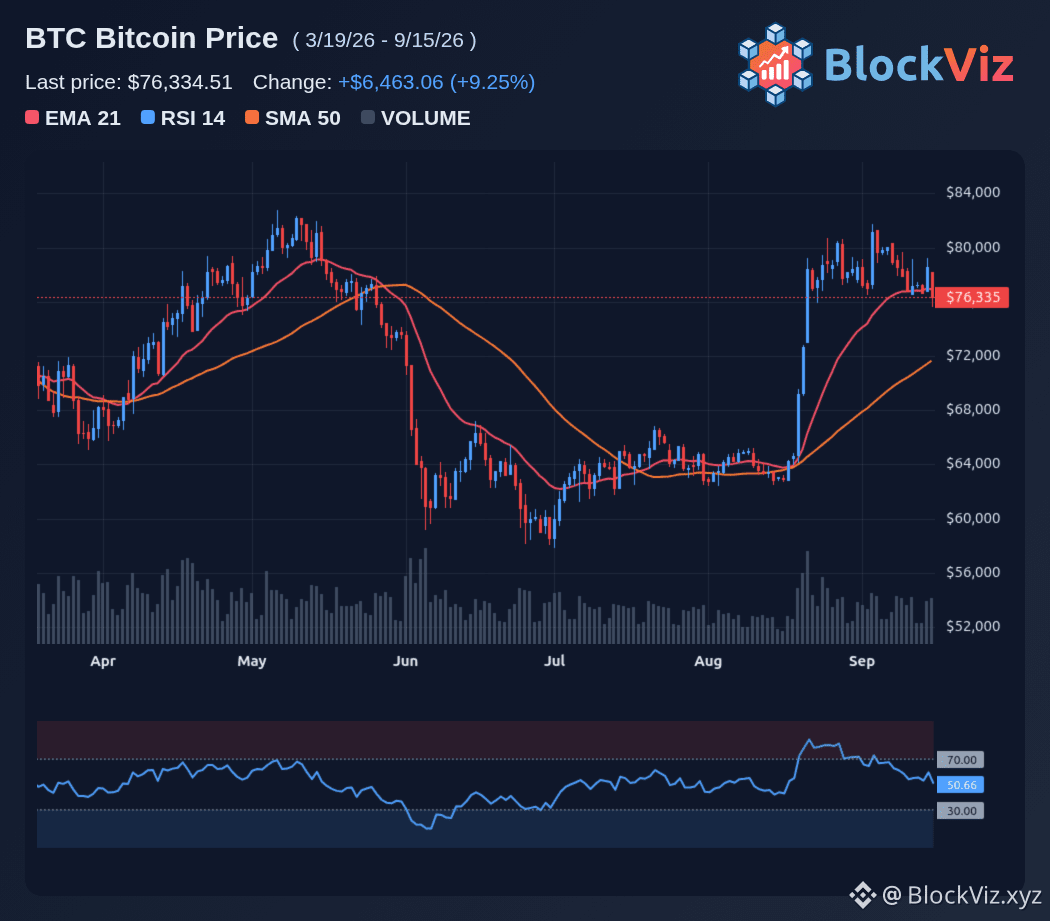
48
·
--
Two very different narratives are colliding this week. On the policy side, Trump's ethics concession lifted Clarity Act odds to around 32% to 34%, setting up a key Senate vote. On the flow side, BlackRock's ETH products have now seen 20 straight days of net inflows, with ETHA and the staking-enabled ETHB pulling in hundreds of millions while BTC ETFs bled about 463 million over four sessions before a partial rebound. That divergence is why people are asking whether Wall Street is quietly tilting toward ETH. Ethereum ETFs drew roughly 197 million last week and then another 281 million on Monday, with BlackRock supplying the largest share. Bitcoin ETFs, by contrast, just ended their best three-week inflow streak of 2026 with a 462.7 million outflow week, even as IBIT managed a 160 million inflow day on September 14. The macro overlay matters. Markets are pricing a high probability of a 25 basis point Fed hike on September 16, which would tighten liquidity and strengthen the dollar right as Clarity hopes to lift sentiment. BTC has been rejected multiple times at 82,000 and is hovering in the high 70,000s, while ETH has shown more relative strength into the decision. Traders should watch Tuesday's cloture outcome, Wednesday's Fed decision, and whether BTC can reclaim 80,000 to 82,000 while ETH holds above 2,500. If Clarity advances and the Fed pauses, both BTC and ETH can rerate higher. If Clarity stalls and the Fed hikes, the macro headwind may dominate, and the ETH-BTC flow divergence will be the key tell on whether institutions are really rotating or just tactically positioning. $BTC
Two very different narratives are colliding this week. On the policy side, Trump's ethics concession lifted Clarity Act odds to around 32% to 34%, setting up a key Senate vote. On the flow side, BlackRock's ETH products have now seen 20 straight days of net inflows, with ETHA and the staking-enabled ETHB pulling in hundreds of millions while BTC ETFs bled about 463 million over four sessions before a partial rebound. That divergence is why people are asking whether Wall Street is quietly tilting toward ETH. Ethereum ETFs drew roughly 197 million last week and then another 281 million on Monday, with BlackRock supplying the largest share. Bitcoin ETFs, by contrast, just ended their best three-week inflow streak of 2026 with a 462.7 million outflow week, even as IBIT managed a 160 million inflow day on September 14. The macro overlay matters. Markets are pricing a high probability of a 25 basis point Fed hike on September 16, which would tighten liquidity and strengthen the dollar right as Clarity hopes to lift sentiment. BTC has been rejected multiple times at 82,000 and is hovering in the high 70,000s, while ETH has shown more relative strength into the decision. Traders should watch Tuesday's cloture outcome, Wednesday's Fed decision, and whether BTC can reclaim 80,000 to 82,000 while ETH holds above 2,500. If Clarity advances and the Fed pauses, both BTC and ETH can rerate higher. If Clarity stalls and the Fed hikes, the macro headwind may dominate, and the ETH-BTC flow divergence will be the key tell on whether institutions are really rotating or just tactically positioning. $BTC
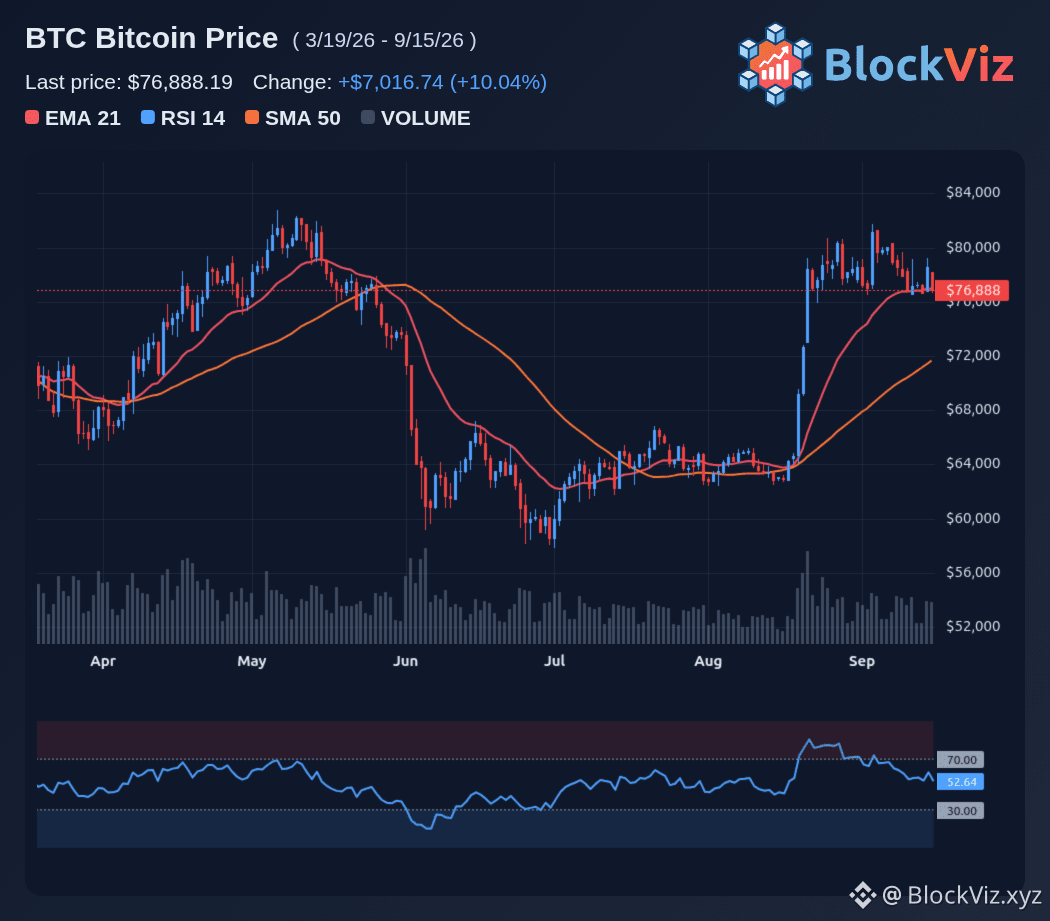
61
·
--
The Clarity Act just got its best political tailwind in months, but the Fed is still the bigger hammer. Trump's concession on ethics provisions has lifted the odds of the bill becoming law to around 32% on prediction markets, up from the low teens last week. A cloture vote is scheduled for Tuesday, and sponsors say they expect to clear the 60-vote threshold needed to advance debate. That is the bullish setup for crypto. If Clarity passes, it would create the first clear U.S. regulatory framework for digital assets, splitting oversight between the SEC and CFTC and potentially unlocking more institutional participation. Bernstein notes that any positive surprise is not priced in, with Bitcoin hovering near 77,700 to 80,000 and XRP up about 4% on the news. The problem is timing. The Fed meets on September 16, one day after the Senate vote, and markets are pricing a high probability of a 25 basis point rate hike. A hike would tighten liquidity, strengthen the dollar and pressure risk assets just as Clarity hopes to lift sentiment. Bitcoin has already been rejected multiple times at 82,000, and a hawkish Fed could push it back toward 77,300 and then 75,500 if Clarity fails or disappoints. Traders should watch Tuesday's cloture outcome, Wednesday's Fed decision and whether BTC can close above 82,283 before the Fed speaks. If Clarity advances and the Fed pauses or signals a dovish path, 80,000 to 82,000 could flip from resistance to support. If Clarity stalls and the Fed hikes, the macro headwind may dominate, regardless of the regulatory progress. $BTC
The Clarity Act just got its best political tailwind in months, but the Fed is still the bigger hammer. Trump's concession on ethics provisions has lifted the odds of the bill becoming law to around 32% on prediction markets, up from the low teens last week. A cloture vote is scheduled for Tuesday, and sponsors say they expect to clear the 60-vote threshold needed to advance debate. That is the bullish setup for crypto. If Clarity passes, it would create the first clear U.S. regulatory framework for digital assets, splitting oversight between the SEC and CFTC and potentially unlocking more institutional participation. Bernstein notes that any positive surprise is not priced in, with Bitcoin hovering near 77,700 to 80,000 and XRP up about 4% on the news. The problem is timing. The Fed meets on September 16, one day after the Senate vote, and markets are pricing a high probability of a 25 basis point rate hike. A hike would tighten liquidity, strengthen the dollar and pressure risk assets just as Clarity hopes to lift sentiment. Bitcoin has already been rejected multiple times at 82,000, and a hawkish Fed could push it back toward 77,300 and then 75,500 if Clarity fails or disappoints. Traders should watch Tuesday's cloture outcome, Wednesday's Fed decision and whether BTC can close above 82,283 before the Fed speaks. If Clarity advances and the Fed pauses or signals a dovish path, 80,000 to 82,000 could flip from resistance to support. If Clarity stalls and the Fed hikes, the macro headwind may dominate, regardless of the regulatory progress. $BTC
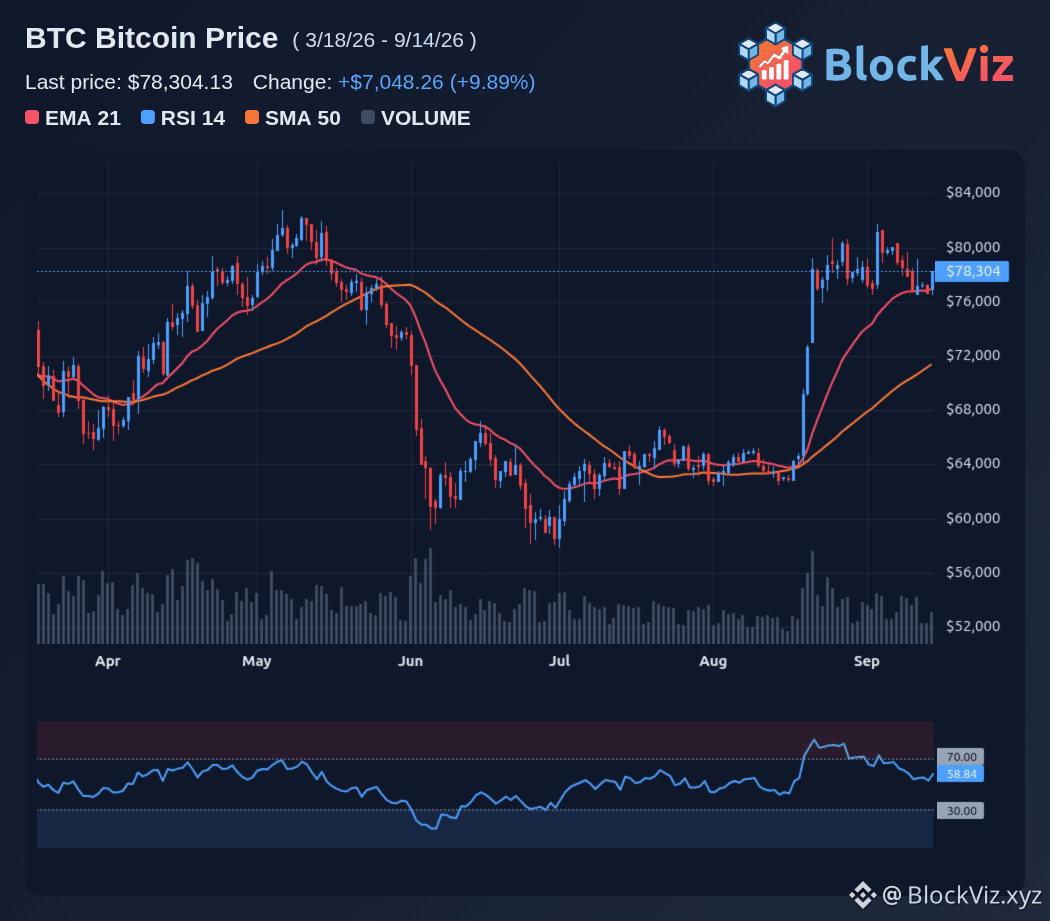
70
·
--
Hunter Biden is turning political meme warfare into an on-chain experiment. LAPTOP, a 1 billion supply memecoin launching on Base on September 9, is allocating 20% of its tokens to airdrops that include wallets that lost money on TRUMP, plus subscribers to his Substack and Andrew Callaghan's Channel 5 list. The angle is obvious: target the underwater TRUMP bagholders and frame LAPTOP as the coin funded by the other side's losses. About 20 million LAPTOP is reportedly reserved for TRUMP-loss recipients, distributed through participating exchanges, while the rest of the airdrop goes to early subscribers. Founders hold 30% locked for six months, with additional event-based burns tied to political and market milestones. The degen vote will likely split along lines rather than logic. TRUMP holders who are deep in loss now have a potential recovery narrative, but they are being asked to engage with a token explicitly designed to mock their position. Biden and crypto-native degens may see it as a clever distribution mechanism, but the overlap between Substack subscribers and active memecoin traders is not guaranteed. Traders should watch the launch liquidity, whether the airdrop creates immediate sell pressure, and how TRUMP itself reacts as the snapshot and claim window approach. If LAPTOP opens strong and holds, it could pull attention and volume toward Base memecoins. If it fades quickly, this may be remembered as a political stunt rather than a lasting shift in where the degen flow goes. $ETH
Hunter Biden is turning political meme warfare into an on-chain experiment. LAPTOP, a 1 billion supply memecoin launching on Base on September 9, is allocating 20% of its tokens to airdrops that include wallets that lost money on TRUMP, plus subscribers to his Substack and Andrew Callaghan's Channel 5 list. The angle is obvious: target the underwater TRUMP bagholders and frame LAPTOP as the coin funded by the other side's losses. About 20 million LAPTOP is reportedly reserved for TRUMP-loss recipients, distributed through participating exchanges, while the rest of the airdrop goes to early subscribers. Founders hold 30% locked for six months, with additional event-based burns tied to political and market milestones. The degen vote will likely split along lines rather than logic. TRUMP holders who are deep in loss now have a potential recovery narrative, but they are being asked to engage with a token explicitly designed to mock their position. Biden and crypto-native degens may see it as a clever distribution mechanism, but the overlap between Substack subscribers and active memecoin traders is not guaranteed. Traders should watch the launch liquidity, whether the airdrop creates immediate sell pressure, and how TRUMP itself reacts as the snapshot and claim window approach. If LAPTOP opens strong and holds, it could pull attention and volume toward Base memecoins. If it fades quickly, this may be remembered as a political stunt rather than a lasting shift in where the degen flow goes. $ETH

54
·
--
Stimulus talk is back, and the market is immediately asking whether this can replay the 2020 Bitcoin run. The setup is different this time. In 2020, fresh fiscal and monetary stimulus flooded the system while BTC was still priced around 10,000 dollars and had years of adoption ahead. Now BTC is consolidating near 80,000 to 82,000 after a strong August, with a much larger market cap and more institutional ownership. The bullish argument is that any new 1 trillion dollar stimulus package would weaken the dollar, lift inflation expectations and push investors back into hard assets. Bitcoin’s 90-day correlation with gold just hit a six-year high above 0.5, echoing the 2020 stimulus era. If liquidity expands again, the debasement trade could extend the rally toward 90,000 and then 100,000. The bearish case is that stimulus alone may not be enough. Rate expectations, Treasury yields and the dollar still matter, and BTC is no longer the small, high-beta asset it was in 2020. A stimulus headline without follow-through could produce a sell-the-news reaction, especially if price fails to break cleanly above 82,000 to 84,000. Traders should watch whether BTC can hold 80,000 as support, whether a stimulus push drives fresh ETF inflows and a weaker dollar, and whether gold and BTC continue to move together. If stimulus leads to sustained liquidity expansion, 100K is back in play. If the move fades at resistance, this may be another macro headfake rather than a 2020-style rerating. $BTC
Stimulus talk is back, and the market is immediately asking whether this can replay the 2020 Bitcoin run. The setup is different this time. In 2020, fresh fiscal and monetary stimulus flooded the system while BTC was still priced around 10,000 dollars and had years of adoption ahead. Now BTC is consolidating near 80,000 to 82,000 after a strong August, with a much larger market cap and more institutional ownership. The bullish argument is that any new 1 trillion dollar stimulus package would weaken the dollar, lift inflation expectations and push investors back into hard assets. Bitcoin’s 90-day correlation with gold just hit a six-year high above 0.5, echoing the 2020 stimulus era. If liquidity expands again, the debasement trade could extend the rally toward 90,000 and then 100,000. The bearish case is that stimulus alone may not be enough. Rate expectations, Treasury yields and the dollar still matter, and BTC is no longer the small, high-beta asset it was in 2020. A stimulus headline without follow-through could produce a sell-the-news reaction, especially if price fails to break cleanly above 82,000 to 84,000. Traders should watch whether BTC can hold 80,000 as support, whether a stimulus push drives fresh ETF inflows and a weaker dollar, and whether gold and BTC continue to move together. If stimulus leads to sustained liquidity expansion, 100K is back in play. If the move fades at resistance, this may be another macro headfake rather than a 2020-style rerating. $BTC
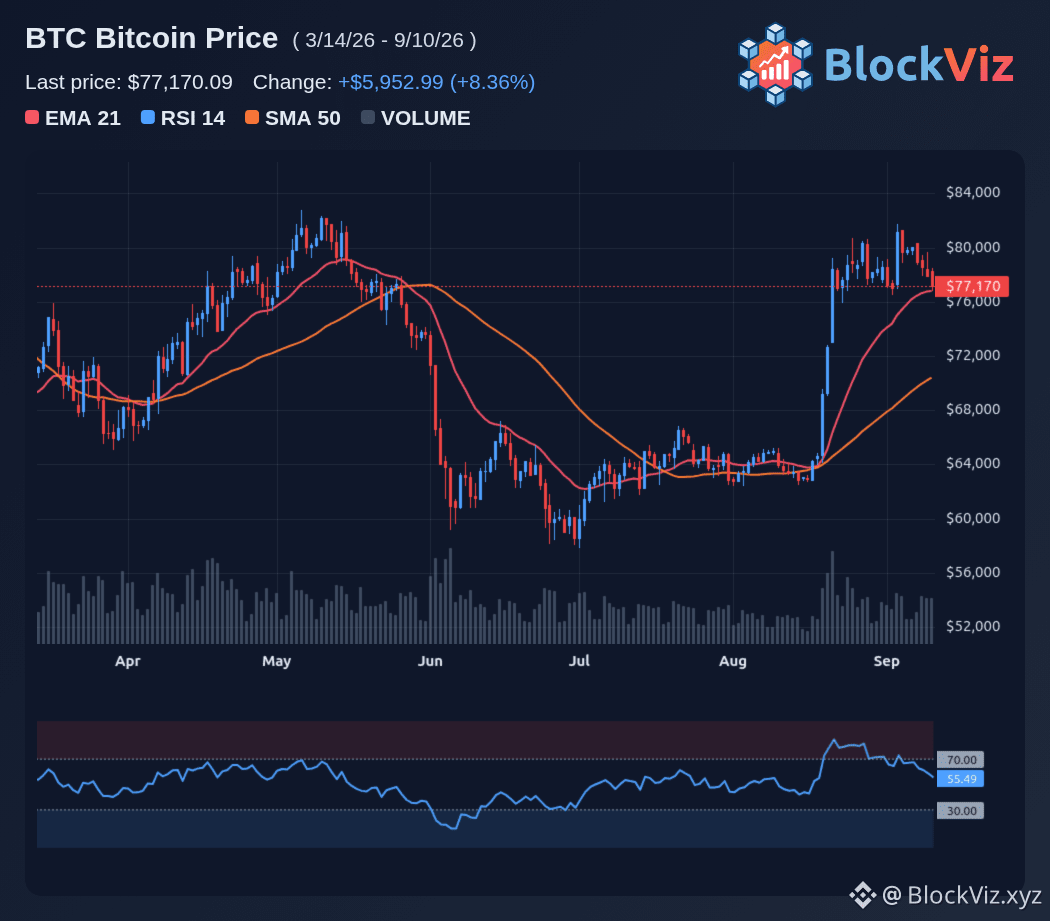
57
Connectez-vous pour découvrir plus de contenu
Rejoignez la communauté mondiale des adeptes de cryptomonnaies sur Binance Square
⚡️ Suviez les dernières informations importantes sur les cryptomonnaies.
💬 Jugé digne de confiance par la plus grande plateforme d’échange de cryptomonnaies au monde.
👍 Découvrez les connaissances que partagent les créateurs vérifiés.
Adresse e-mail/Nº de téléphone
Sujets d’actualité
ZcashETFPostsFirstWeeklyOutflow$93.6M
30,251 vues
89 mentions
#ZcashETFPostsFirstWeeklyOutflow$93.6M
🚨🚨🚨🚨🚨🚨🚨🚨🚨🚨🚨🚨🚨🚨✅ 🚨 ZCASH ETF FLOWS TURN NEGATIVE FOR THE FIRST TIME! 📉
$ZEC is facing a notable shift in institutional fund flows, with Zcash investment products recording their first weekly net outflow since launching in August.
According to fund-flow data, around $93.6M was withdrawn from Zcash products during the latest week, while ZEC price action also cooled significantly.
📊 WHAT HAPPENED?
• Weekly Zcash ETF outflow: $93.6M
• September 30 daily outflow: $30.25M
• ZCSH previously attracted around $98.2M in one week
• ZEC is trading near $1,300
• Recent high: around $1,690
• Weekly decline: roughly 17%+
🔍 LEVELS TO WATCH
🟢 Support: $1,280–$1,300
🔴 Resistance: $1,450–$1,500
The key question now is whether the $1,300 area can hold and attract fresh buyers.
Institutional flows will also be important. A return of consistent positive inflows could signal renewed confidence, while continued outflows may keep pressure on $ZEC .
👀 Is this simply profit-taking after ZEC’s huge rally, or could we see another deeper pullback before buyers return?
Share your view below. 👇
#Zcash #ZEC #ZcashETF #Crypto
#analysis
owhggwiohsjowve
·0 mentions J’aime
·133 vues
GreekPoliceBustCryptoScamRingArrest17
53,443 vues
551 mentions
BitcoinRejectedAt$87K
111,618 vues
148 mentions