

abj0404
242 Publications

abj0404
Signaler
Bloquer l’utilisateur
Cutting through the noise. Just tracking how Global Events hit the chain. Recording the reality of market as it happens, one news cycle at a time.
6 Suivis
39 Abonnés
73 J’aime
Publications
·
--
The physical infrastructure of the digital world—telecom networks, cloud storage, and compute power—is tightly controlled by a few massive, monopolistic corporations.
In the traditional Web2 model, building physical networks requires billions of dollars in upfront capital. This creates an impenetrable moat where a handful of tech giants build massive, centralized data centers and telecom towers, forcing everyone else to pay exorbitant rent to access them. They own the hardware, they dictate the pricing, and they possess complete control over the data.
Decentralized Physical Infrastructure Networks (DePIN) are completely dismantling this monopoly.
By using blockchain tokenomics to crowdsource hardware, DePIN protocols allow anyone, anywhere, to seamlessly contribute to global infrastructure. Instead of a corporation building a billion-dollar server farm, millions of individuals connect their idle GPUs, hard drives, local Wi-Fi routers, or dashcams to a decentralized network. The users provide the physical utility, and the protocol pays them directly for their contribution, creating a self-sustaining economic loop.
We are bypassing corporate gatekeepers entirely. We are actively transitioning from top-down, centralized infrastructure to bottom-up, user-owned physical networks that scale infinitely faster and cheaper than any traditional company ever could.
$RENDER $FIL $AR
#Write2Earn #DePIN #CryptoInfrastructure #Web3 #DecentralizedNetworks
The physical infrastructure of the digital world—telecom networks, cloud storage, and compute power—is tightly controlled by a few massive, monopolistic corporations.
In the traditional Web2 model, building physical networks requires billions of dollars in upfront capital. This creates an impenetrable moat where a handful of tech giants build massive, centralized data centers and telecom towers, forcing everyone else to pay exorbitant rent to access them. They own the hardware, they dictate the pricing, and they possess complete control over the data.
Decentralized Physical Infrastructure Networks (DePIN) are completely dismantling this monopoly.
By using blockchain tokenomics to crowdsource hardware, DePIN protocols allow anyone, anywhere, to seamlessly contribute to global infrastructure. Instead of a corporation building a billion-dollar server farm, millions of individuals connect their idle GPUs, hard drives, local Wi-Fi routers, or dashcams to a decentralized network. The users provide the physical utility, and the protocol pays them directly for their contribution, creating a self-sustaining economic loop.
We are bypassing corporate gatekeepers entirely. We are actively transitioning from top-down, centralized infrastructure to bottom-up, user-owned physical networks that scale infinitely faster and cheaper than any traditional company ever could.
$RENDER $FIL $AR
#Write2Earn #DePIN #CryptoInfrastructure #Web3 #DecentralizedNetworks
In the traditional Web2 model, building physical networks requires billions of dollars in upfront capital. This creates an impenetrable moat where a handful of tech giants build massive, centralized data centers and telecom towers, forcing everyone else to pay exorbitant rent to access them. They own the hardware, they dictate the pricing, and they possess complete control over the data.
Decentralized Physical Infrastructure Networks (DePIN) are completely dismantling this monopoly.
By using blockchain tokenomics to crowdsource hardware, DePIN protocols allow anyone, anywhere, to seamlessly contribute to global infrastructure. Instead of a corporation building a billion-dollar server farm, millions of individuals connect their idle GPUs, hard drives, local Wi-Fi routers, or dashcams to a decentralized network. The users provide the physical utility, and the protocol pays them directly for their contribution, creating a self-sustaining economic loop.
We are bypassing corporate gatekeepers entirely. We are actively transitioning from top-down, centralized infrastructure to bottom-up, user-owned physical networks that scale infinitely faster and cheaper than any traditional company ever could.
$RENDER $FIL $AR
#Write2Earn #DePIN #CryptoInfrastructure #Web3 #DecentralizedNetworks

1
558
·
--
Artificial intelligence is currently being monopolized by a handful of massive tech giants who control the compute, hoard the data, and keep the models closed.
When centralized corporations control the foundation of AI, they control the future of human intelligence. They act as absolute gatekeepers, deciding who gets access, what the models are allowed to say, and how much you have to pay. The entire direction of the most powerful technology in human history is being decided behind closed doors.
Decentralized AI is actively tearing down these walled gardens.
By merging artificial intelligence with blockchain technology, protocols are crowdsourcing machine learning and building open, permissionless intelligence networks. Instead of one mega-corporation controlling a massive data center, decentralized networks allow anyone to contribute computing power, training data, and models to a shared ecosystem, getting paid directly for their utility. We are creating an environment where autonomous AI agents can freely interact and transact on-chain without centralized human intervention.
We are moving away from closed, centralized AI monopolies and building an open-source, decentralized intelligence layer that is owned, operated, and monetized by the users who build it.
$TAO $FET $NEAR
#Write2Earn #DecentralizedAI #Web3 #crypto #AI
Artificial intelligence is currently being monopolized by a handful of massive tech giants who control the compute, hoard the data, and keep the models closed.
When centralized corporations control the foundation of AI, they control the future of human intelligence. They act as absolute gatekeepers, deciding who gets access, what the models are allowed to say, and how much you have to pay. The entire direction of the most powerful technology in human history is being decided behind closed doors.
Decentralized AI is actively tearing down these walled gardens.
By merging artificial intelligence with blockchain technology, protocols are crowdsourcing machine learning and building open, permissionless intelligence networks. Instead of one mega-corporation controlling a massive data center, decentralized networks allow anyone to contribute computing power, training data, and models to a shared ecosystem, getting paid directly for their utility. We are creating an environment where autonomous AI agents can freely interact and transact on-chain without centralized human intervention.
We are moving away from closed, centralized AI monopolies and building an open-source, decentralized intelligence layer that is owned, operated, and monetized by the users who build it.
$TAO $FET $NEAR
#Write2Earn #DecentralizedAI #Web3 #crypto #AI
When centralized corporations control the foundation of AI, they control the future of human intelligence. They act as absolute gatekeepers, deciding who gets access, what the models are allowed to say, and how much you have to pay. The entire direction of the most powerful technology in human history is being decided behind closed doors.
Decentralized AI is actively tearing down these walled gardens.
By merging artificial intelligence with blockchain technology, protocols are crowdsourcing machine learning and building open, permissionless intelligence networks. Instead of one mega-corporation controlling a massive data center, decentralized networks allow anyone to contribute computing power, training data, and models to a shared ecosystem, getting paid directly for their utility. We are creating an environment where autonomous AI agents can freely interact and transact on-chain without centralized human intervention.
We are moving away from closed, centralized AI monopolies and building an open-source, decentralized intelligence layer that is owned, operated, and monetized by the users who build it.
$TAO $FET $NEAR
#Write2Earn #DecentralizedAI #Web3 #crypto #AI

828
·
--
The entire blockchain industry has been trying to build a supercomputer that does everything at once, and it is failing miserably.
Traditional monolithic blockchains try to handle execution, consensus, and data availability all on one single layer. It is the equivalent of forcing one person to cook the food, wait the tables, and clean the dishes in a massive restaurant. The moment user activity spikes, the network inevitably chokes, leading to slow processing times and astronomical gas fees.
Modular blockchains are completely dismantling this bottleneck.
Instead of forcing one chain to do everything, a modular blockchain is a type of blockchain architecture that separates the core functions of a blockchain into distinct modules or layers. You have one layer dedicated entirely to execution, another purely for consensus, and a separate foundation for data availability. By decoupling these tasks, developers can build incredibly fast, customizable networks that plug into each other seamlessly. This allows for massive scaling leaps without sacrificing security or decentralization.
We are moving away from the era of congested, do-it-all monolithic chains and entering an ecosystem of hyper-efficient, specialized layers.
$TIA $DYM $SAGA
#Write2Earn #ModularBlockchains #CryptoScaling #Web3Infrastructure
The entire blockchain industry has been trying to build a supercomputer that does everything at once, and it is failing miserably.
Traditional monolithic blockchains try to handle execution, consensus, and data availability all on one single layer. It is the equivalent of forcing one person to cook the food, wait the tables, and clean the dishes in a massive restaurant. The moment user activity spikes, the network inevitably chokes, leading to slow processing times and astronomical gas fees.
Modular blockchains are completely dismantling this bottleneck.
Instead of forcing one chain to do everything, a modular blockchain is a type of blockchain architecture that separates the core functions of a blockchain into distinct modules or layers. You have one layer dedicated entirely to execution, another purely for consensus, and a separate foundation for data availability. By decoupling these tasks, developers can build incredibly fast, customizable networks that plug into each other seamlessly. This allows for massive scaling leaps without sacrificing security or decentralization.
We are moving away from the era of congested, do-it-all monolithic chains and entering an ecosystem of hyper-efficient, specialized layers.
$TIA $DYM $SAGA
#Write2Earn #ModularBlockchains #CryptoScaling #Web3Infrastructure
Traditional monolithic blockchains try to handle execution, consensus, and data availability all on one single layer. It is the equivalent of forcing one person to cook the food, wait the tables, and clean the dishes in a massive restaurant. The moment user activity spikes, the network inevitably chokes, leading to slow processing times and astronomical gas fees.
Modular blockchains are completely dismantling this bottleneck.
Instead of forcing one chain to do everything, a modular blockchain is a type of blockchain architecture that separates the core functions of a blockchain into distinct modules or layers. You have one layer dedicated entirely to execution, another purely for consensus, and a separate foundation for data availability. By decoupling these tasks, developers can build incredibly fast, customizable networks that plug into each other seamlessly. This allows for massive scaling leaps without sacrificing security or decentralization.
We are moving away from the era of congested, do-it-all monolithic chains and entering an ecosystem of hyper-efficient, specialized layers.
$TIA $DYM $SAGA
#Write2Earn #ModularBlockchains #CryptoScaling #Web3Infrastructure

478
·
--
You are still using crypto wallets that work like an unchangeable lock-and-key combination from decades ago.
Externally Owned Accounts (EOAs)—the standard wallets—rely entirely on a single, irrecoverable seed phrase. You have to manually calculate gas fees, manage complex transaction nonces, and face catastrophic consequences for a single mistake. One lost seed phrase or one clicked malicious link means everything is gone. It is a security bottleneck designed for developers, not billions of users.
Account Abstraction is completely replacing this antiquated model.
By turning user accounts into programmable smart contract wallets, we are unlocking the next generation of user experience. We are abstracting away the fear of managing seed phrases by enabling social recovery and multi-signature security. We are moving towards "gasless" transactions, allowing dApps to pay fees on behalf of users. Complex sequences can be batched into a single click, and users can finally interact with crypto with the same ease and security of a modern banking app.
We are moving past the era of fragile, manual wallets. Account Abstraction is building the secure, user-friendly gateway that will finally bring Web3 to a global audience.
$SAFE $BICO $TWT
#Write2Earn #AccountAbstraction #ERC4337 #CryptoUX #Web3Onboarding
You are still using crypto wallets that work like an unchangeable lock-and-key combination from decades ago.
Externally Owned Accounts (EOAs)—the standard wallets—rely entirely on a single, irrecoverable seed phrase. You have to manually calculate gas fees, manage complex transaction nonces, and face catastrophic consequences for a single mistake. One lost seed phrase or one clicked malicious link means everything is gone. It is a security bottleneck designed for developers, not billions of users.
Account Abstraction is completely replacing this antiquated model.
By turning user accounts into programmable smart contract wallets, we are unlocking the next generation of user experience. We are abstracting away the fear of managing seed phrases by enabling social recovery and multi-signature security. We are moving towards "gasless" transactions, allowing dApps to pay fees on behalf of users. Complex sequences can be batched into a single click, and users can finally interact with crypto with the same ease and security of a modern banking app.
We are moving past the era of fragile, manual wallets. Account Abstraction is building the secure, user-friendly gateway that will finally bring Web3 to a global audience.
$SAFE $BICO $TWT
#Write2Earn #AccountAbstraction #ERC4337 #CryptoUX #Web3Onboarding
Externally Owned Accounts (EOAs)—the standard wallets—rely entirely on a single, irrecoverable seed phrase. You have to manually calculate gas fees, manage complex transaction nonces, and face catastrophic consequences for a single mistake. One lost seed phrase or one clicked malicious link means everything is gone. It is a security bottleneck designed for developers, not billions of users.
Account Abstraction is completely replacing this antiquated model.
By turning user accounts into programmable smart contract wallets, we are unlocking the next generation of user experience. We are abstracting away the fear of managing seed phrases by enabling social recovery and multi-signature security. We are moving towards "gasless" transactions, allowing dApps to pay fees on behalf of users. Complex sequences can be batched into a single click, and users can finally interact with crypto with the same ease and security of a modern banking app.
We are moving past the era of fragile, manual wallets. Account Abstraction is building the secure, user-friendly gateway that will finally bring Web3 to a global audience.
$SAFE $BICO $TWT
#Write2Earn #AccountAbstraction #ERC4337 #CryptoUX #Web3Onboarding

404
·
--
The world’s most valuable assets are trapped in a slow, outdated, and heavily gated financial system.
Real estate, private credit, fine art, and government bonds hold trillions of dollars in value, yet they remain entirely disconnected from the modern digital economy. Buying a fraction of a commercial building or accessing high-yield U.S. Treasuries requires mountains of paperwork, excessive broker fees, and massive capital requirements, completely shutting out the average person. Capital in the traditional world moves at a glacial pace.
Real World Asset (RWA) tokenization is actively tearing down these walled gardens.
By bringing physical and traditional financial assets on-chain, protocols are converting them into verifiable, fractionally tradeable digital tokens. You can now buy a slice of a Manhattan high-rise, invest in tokenized U.S. debt, or access institutional private credit markets directly from a self-custodial wallet. Transactions settle instantly, markets are open 24/7, and the middleman is completely eliminated.
We are not just making up new speculative crypto tokens anymore. We are actively migrating the entire global financial system onto the blockchain, merging Wall Street liquidity with Web3 efficiency.
$ONDO $PENDLE $CFG
#Write2Earn #RWA #Tokenization #defi #crypto
The world’s most valuable assets are trapped in a slow, outdated, and heavily gated financial system.
Real estate, private credit, fine art, and government bonds hold trillions of dollars in value, yet they remain entirely disconnected from the modern digital economy. Buying a fraction of a commercial building or accessing high-yield U.S. Treasuries requires mountains of paperwork, excessive broker fees, and massive capital requirements, completely shutting out the average person. Capital in the traditional world moves at a glacial pace.
Real World Asset (RWA) tokenization is actively tearing down these walled gardens.
By bringing physical and traditional financial assets on-chain, protocols are converting them into verifiable, fractionally tradeable digital tokens. You can now buy a slice of a Manhattan high-rise, invest in tokenized U.S. debt, or access institutional private credit markets directly from a self-custodial wallet. Transactions settle instantly, markets are open 24/7, and the middleman is completely eliminated.
We are not just making up new speculative crypto tokens anymore. We are actively migrating the entire global financial system onto the blockchain, merging Wall Street liquidity with Web3 efficiency.
$ONDO $PENDLE $CFG
#Write2Earn #RWA #Tokenization #defi #crypto
Real estate, private credit, fine art, and government bonds hold trillions of dollars in value, yet they remain entirely disconnected from the modern digital economy. Buying a fraction of a commercial building or accessing high-yield U.S. Treasuries requires mountains of paperwork, excessive broker fees, and massive capital requirements, completely shutting out the average person. Capital in the traditional world moves at a glacial pace.
Real World Asset (RWA) tokenization is actively tearing down these walled gardens.
By bringing physical and traditional financial assets on-chain, protocols are converting them into verifiable, fractionally tradeable digital tokens. You can now buy a slice of a Manhattan high-rise, invest in tokenized U.S. debt, or access institutional private credit markets directly from a self-custodial wallet. Transactions settle instantly, markets are open 24/7, and the middleman is completely eliminated.
We are not just making up new speculative crypto tokens anymore. We are actively migrating the entire global financial system onto the blockchain, merging Wall Street liquidity with Web3 efficiency.
$ONDO $PENDLE $CFG
#Write2Earn #RWA #Tokenization #defi #crypto

281
·
--
Your social media attention is the most valuable resource on the planet, and massive corporations are currently selling it without giving you a dime.
The traditional social media model is a form of digital serfdom. Users provide the content, the interactions, and the data, while platforms extract all the advertising revenue. You build an audience, only to have the algorithm decide if they can even see your posts. You are the product.
SocialFi (Social Finance) is completely seizing control of this monetization layer.
By bringing social networks on-chain, SocialFi protocols tokenize your social capital and return ownership to the users. Your audience, your interactions, and your digital reputation are verifiable assets that you control directly, allowing you to create permissionless, trustless revenue streams from your content and influence. Instead of building value for a tech giant, you are building a sovereign digital economy for yourself.
We are actively moving from a world where social capital is hoarded by central platforms to one where it is owned and monetized by the users who create it. This is the financialization of human attention.
$CYBER $MASK $ID
#Write2Earn #SocialFi #Web3Social #DigitalOwnership #CryptoSocial
Your social media attention is the most valuable resource on the planet, and massive corporations are currently selling it without giving you a dime.
The traditional social media model is a form of digital serfdom. Users provide the content, the interactions, and the data, while platforms extract all the advertising revenue. You build an audience, only to have the algorithm decide if they can even see your posts. You are the product.
SocialFi (Social Finance) is completely seizing control of this monetization layer.
By bringing social networks on-chain, SocialFi protocols tokenize your social capital and return ownership to the users. Your audience, your interactions, and your digital reputation are verifiable assets that you control directly, allowing you to create permissionless, trustless revenue streams from your content and influence. Instead of building value for a tech giant, you are building a sovereign digital economy for yourself.
We are actively moving from a world where social capital is hoarded by central platforms to one where it is owned and monetized by the users who create it. This is the financialization of human attention.
$CYBER $MASK $ID
#Write2Earn #SocialFi #Web3Social #DigitalOwnership #CryptoSocial
The traditional social media model is a form of digital serfdom. Users provide the content, the interactions, and the data, while platforms extract all the advertising revenue. You build an audience, only to have the algorithm decide if they can even see your posts. You are the product.
SocialFi (Social Finance) is completely seizing control of this monetization layer.
By bringing social networks on-chain, SocialFi protocols tokenize your social capital and return ownership to the users. Your audience, your interactions, and your digital reputation are verifiable assets that you control directly, allowing you to create permissionless, trustless revenue streams from your content and influence. Instead of building value for a tech giant, you are building a sovereign digital economy for yourself.
We are actively moving from a world where social capital is hoarded by central platforms to one where it is owned and monetized by the users who create it. This is the financialization of human attention.
$CYBER $MASK $ID
#Write2Earn #SocialFi #Web3Social #DigitalOwnership #CryptoSocial

394
·
--
You are overpaying for cloud storage, wireless networks, and computing power because a handful of massive corporations own all the hardware.
Amazon, Google, and major telecom giants have built absolute monopolies over the physical infrastructure that powers the internet. They dictate the pricing, control the data centers, and operate with massive single points of failure that can take down half the web in an instant. The entire digital world is currently reliant on centralized hardware.
DePIN (Decentralized Physical Infrastructure Networks) is flipping this model entirely upside down.
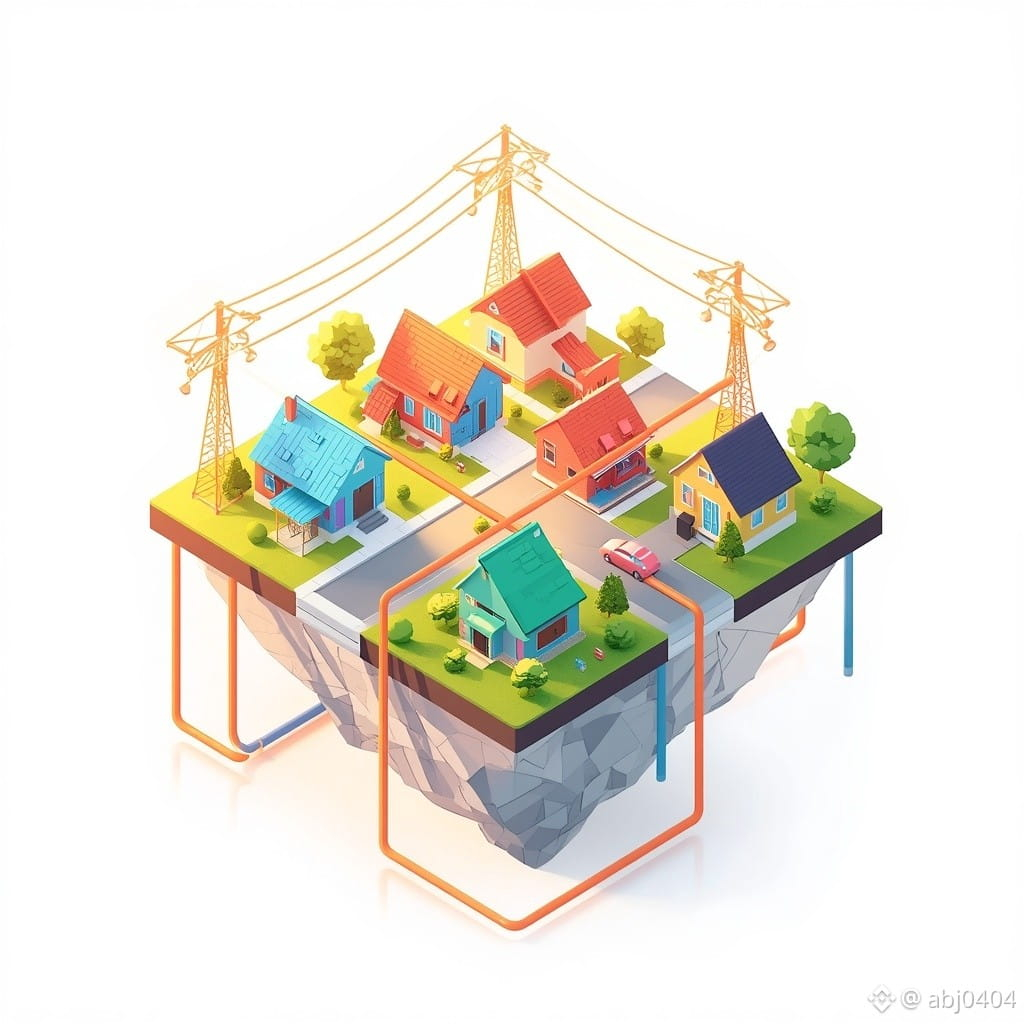
Instead of relying on centralized mega-corporations to build billion-dollar facilities, DePIN crowdsources the hardware. By using token incentives, these protocols pay everyday people to deploy physical infrastructure—like wireless routers, hard drives, and idle GPUs—right in their own homes. You contribute your unused bandwidth or computing power to the network, and you get paid directly for the utility you provide.
We are actively crowdsourcing the next iteration of the physical internet. By distributing hardware across millions of individual users, we are building a cheaper, faster, and infinitely more resilient global network that cannot be shut down by a single CEO.
$RENDER $AKT $FIL
#Write2Earn #DePIN #Web3 #CryptoInfrastructure
You are overpaying for cloud storage, wireless networks, and computing power because a handful of massive corporations own all the hardware.
Amazon, Google, and major telecom giants have built absolute monopolies over the physical infrastructure that powers the internet. They dictate the pricing, control the data centers, and operate with massive single points of failure that can take down half the web in an instant. The entire digital world is currently reliant on centralized hardware.
DePIN (Decentralized Physical Infrastructure Networks) is flipping this model entirely upside down.
Instead of relying on centralized mega-corporations to build billion-dollar facilities, DePIN crowdsources the hardware. By using token incentives, these protocols pay everyday people to deploy physical infrastructure—like wireless routers, hard drives, and idle GPUs—right in their own homes. You contribute your unused bandwidth or computing power to the network, and you get paid directly for the utility you provide.
We are actively crowdsourcing the next iteration of the physical internet. By distributing hardware across millions of individual users, we are building a cheaper, faster, and infinitely more resilient global network that cannot be shut down by a single CEO.
$RENDER $AKT $FIL
#Write2Earn #DePIN #Web3 #CryptoInfrastructure
Amazon, Google, and major telecom giants have built absolute monopolies over the physical infrastructure that powers the internet. They dictate the pricing, control the data centers, and operate with massive single points of failure that can take down half the web in an instant. The entire digital world is currently reliant on centralized hardware.
DePIN (Decentralized Physical Infrastructure Networks) is flipping this model entirely upside down.
Instead of relying on centralized mega-corporations to build billion-dollar facilities, DePIN crowdsources the hardware. By using token incentives, these protocols pay everyday people to deploy physical infrastructure—like wireless routers, hard drives, and idle GPUs—right in their own homes. You contribute your unused bandwidth or computing power to the network, and you get paid directly for the utility you provide.
We are actively crowdsourcing the next iteration of the physical internet. By distributing hardware across millions of individual users, we are building a cheaper, faster, and infinitely more resilient global network that cannot be shut down by a single CEO.
$RENDER $AKT $FIL
#Write2Earn #DePIN #Web3 #CryptoInfrastructure
382
·
--
Bitcoin is the most secure, decentralized, and valuable network in human history.
But it was designed to do exactly one thing: process peer-to-peer transfers. The trade-off for this absolute security is a hard ceiling on speed and a deliberate lack of complex smart contracts. While the rest of the industry built sprawling decentralized finance ecosystems, the single largest pool of capital in the world just sat dormant in cold storage.
Bitcoin Layer 2s are waking up this trillion-dollar giant.
Rather than trying to change the flawless base layer, developers are building programmable networks directly on top of it. We are finally bringing true utility to the Bitcoin ecosystem. This allows the massive, untapped liquidity locked in BTC to be deployed into lending markets, decentralized exchanges, and autonomous yield strategies—all while still anchoring to the unmatched security of the main chain.
The network is no longer just a static store of value. It is rapidly becoming a fully operational financial powerhouse.
$STX $ORDI $MERL
#Write2Earn #BitcoinL2 #BTCFi #CryptoScaling
Bitcoin is the most secure, decentralized, and valuable network in human history.
But it was designed to do exactly one thing: process peer-to-peer transfers. The trade-off for this absolute security is a hard ceiling on speed and a deliberate lack of complex smart contracts. While the rest of the industry built sprawling decentralized finance ecosystems, the single largest pool of capital in the world just sat dormant in cold storage.
Bitcoin Layer 2s are waking up this trillion-dollar giant.
Rather than trying to change the flawless base layer, developers are building programmable networks directly on top of it. We are finally bringing true utility to the Bitcoin ecosystem. This allows the massive, untapped liquidity locked in BTC to be deployed into lending markets, decentralized exchanges, and autonomous yield strategies—all while still anchoring to the unmatched security of the main chain.
The network is no longer just a static store of value. It is rapidly becoming a fully operational financial powerhouse.
$STX $ORDI $MERL
#Write2Earn #BitcoinL2 #BTCFi #CryptoScaling
But it was designed to do exactly one thing: process peer-to-peer transfers. The trade-off for this absolute security is a hard ceiling on speed and a deliberate lack of complex smart contracts. While the rest of the industry built sprawling decentralized finance ecosystems, the single largest pool of capital in the world just sat dormant in cold storage.
Bitcoin Layer 2s are waking up this trillion-dollar giant.
Rather than trying to change the flawless base layer, developers are building programmable networks directly on top of it. We are finally bringing true utility to the Bitcoin ecosystem. This allows the massive, untapped liquidity locked in BTC to be deployed into lending markets, decentralized exchanges, and autonomous yield strategies—all while still anchoring to the unmatched security of the main chain.
The network is no longer just a static store of value. It is rapidly becoming a fully operational financial powerhouse.
$STX $ORDI $MERL
#Write2Earn #BitcoinL2 #BTCFi #CryptoScaling

266
·
--
Blockchains used to be massive, slow monoliths trying to do absolutely everything at once.
If a network handled execution, data availability, consensus, and settlement all on a single layer, it inevitably choked under its own weight the second people actually tried to use it. Fees would spike, the network would stall, and the entire system would become a rigid bottleneck. It is like forcing a single processor to run an entire data center simultaneously—eventually, it crashes.
Modular blockchains are completely breaking this monolithic architecture apart.
Instead of forcing one chain to do everything poorly, it splits the heavy lifting into specialized layers. One layer handles raw execution, another ensures data availability, and another manages consensus. By plugging these specialized components together like digital building blocks, developers can launch ultra-fast networks tailored exactly to their needs without disrupting the rest of the stack.
We are moving past the era of bloated, monolithic networks. The modular stack is actively building the ultra-scalable foundation that Web3 actually needs to promote true innovation and efficiency.
$TIA $DYM $SAGA
#Write2Earn #ModularBlockchain #Web3Scalability #CryptoInfrastructure
Blockchains used to be massive, slow monoliths trying to do absolutely everything at once.
If a network handled execution, data availability, consensus, and settlement all on a single layer, it inevitably choked under its own weight the second people actually tried to use it. Fees would spike, the network would stall, and the entire system would become a rigid bottleneck. It is like forcing a single processor to run an entire data center simultaneously—eventually, it crashes.
Modular blockchains are completely breaking this monolithic architecture apart.
Instead of forcing one chain to do everything poorly, it splits the heavy lifting into specialized layers. One layer handles raw execution, another ensures data availability, and another manages consensus. By plugging these specialized components together like digital building blocks, developers can launch ultra-fast networks tailored exactly to their needs without disrupting the rest of the stack.
We are moving past the era of bloated, monolithic networks. The modular stack is actively building the ultra-scalable foundation that Web3 actually needs to promote true innovation and efficiency.
$TIA $DYM $SAGA
#Write2Earn #ModularBlockchain #Web3Scalability #CryptoInfrastructure
If a network handled execution, data availability, consensus, and settlement all on a single layer, it inevitably choked under its own weight the second people actually tried to use it. Fees would spike, the network would stall, and the entire system would become a rigid bottleneck. It is like forcing a single processor to run an entire data center simultaneously—eventually, it crashes.
Modular blockchains are completely breaking this monolithic architecture apart.
Instead of forcing one chain to do everything poorly, it splits the heavy lifting into specialized layers. One layer handles raw execution, another ensures data availability, and another manages consensus. By plugging these specialized components together like digital building blocks, developers can launch ultra-fast networks tailored exactly to their needs without disrupting the rest of the stack.
We are moving past the era of bloated, monolithic networks. The modular stack is actively building the ultra-scalable foundation that Web3 actually needs to promote true innovation and efficiency.
$TIA $DYM $SAGA
#Write2Earn #ModularBlockchain #Web3Scalability #CryptoInfrastructure

484
·
--
Using crypto right now is a fractured, frustrating mess.
You want to buy a token, but it is on a different chain. You have to find a bridge, pay a fee on the origin chain, wait, realize you do not have the native gas token on the destination network, and then pray you did not just interact with a malicious smart contract. This fragmented user experience is the single biggest bottleneck preventing true mainstream adoption.
Chain abstraction is quietly fixing this nightmare.
Instead of forcing you to manually manage multiple wallets, switch networks, and juggle half a dozen different gas tokens, it moves all that friction completely behind the scenes. Advanced middleware and intent-based execution layers handle the cross-chain messaging and complex routing under the hood. You just click a single button, and the network handles the rest instantly. You interact with Web3 as a single, unified ecosystem without ever needing to know—or care—which specific blockchain is running the code.
The infrastructure protocols building this seamless experience are laying down the exact foundation required to finally onboard the next billion users.
$NEAR $LINK $POL
#Write2Earn #ChainAbstraction #Web3UX #CryptoAdoption
Using crypto right now is a fractured, frustrating mess.
You want to buy a token, but it is on a different chain. You have to find a bridge, pay a fee on the origin chain, wait, realize you do not have the native gas token on the destination network, and then pray you did not just interact with a malicious smart contract. This fragmented user experience is the single biggest bottleneck preventing true mainstream adoption.
Chain abstraction is quietly fixing this nightmare.
Instead of forcing you to manually manage multiple wallets, switch networks, and juggle half a dozen different gas tokens, it moves all that friction completely behind the scenes. Advanced middleware and intent-based execution layers handle the cross-chain messaging and complex routing under the hood. You just click a single button, and the network handles the rest instantly. You interact with Web3 as a single, unified ecosystem without ever needing to know—or care—which specific blockchain is running the code.
The infrastructure protocols building this seamless experience are laying down the exact foundation required to finally onboard the next billion users.
$NEAR $LINK $POL
#Write2Earn #ChainAbstraction #Web3UX #CryptoAdoption
You want to buy a token, but it is on a different chain. You have to find a bridge, pay a fee on the origin chain, wait, realize you do not have the native gas token on the destination network, and then pray you did not just interact with a malicious smart contract. This fragmented user experience is the single biggest bottleneck preventing true mainstream adoption.
Chain abstraction is quietly fixing this nightmare.
Instead of forcing you to manually manage multiple wallets, switch networks, and juggle half a dozen different gas tokens, it moves all that friction completely behind the scenes. Advanced middleware and intent-based execution layers handle the cross-chain messaging and complex routing under the hood. You just click a single button, and the network handles the rest instantly. You interact with Web3 as a single, unified ecosystem without ever needing to know—or care—which specific blockchain is running the code.
The infrastructure protocols building this seamless experience are laying down the exact foundation required to finally onboard the next billion users.
$NEAR $LINK $POL
#Write2Earn #ChainAbstraction #Web3UX #CryptoAdoption

173
·
--
Gamers spend thousands of hours and billions of dollars grinding in virtual worlds, only to own absolutely nothing.
You buy the skins, you earn the loot, you build the guilds—but the centralized studio holds the keys. The second a publisher decides to shut down the servers or ban your account, your entire digital legacy vanishes into thin air. It is a one-way extraction model where players provide all the value and corporations take 100% of the profit.
Web3 gaming is violently disrupting this dynamic.
By integrating decentralized rails directly into game economies, in-game assets are minted as verifiable, scarce tokens. For the first time ever, when you earn a legendary weapon or buy a piece of digital land, you actually own it in your own non-custodial wallet. You can trade it, sell it on open secondary markets for real-world value, or move it across interoperable ecosystems.
We aren't just adding financial layers to games. We are fundamentally transforming players from pure consumers into actual stakeholders. The next generation of AAA titles won't just be fun to play—they will be fully player-owned economies.
$IMX $GALA $RONIN
#Write2Earn #GameFi #web3gaming #CryptoGames #PlayToEarn
Gamers spend thousands of hours and billions of dollars grinding in virtual worlds, only to own absolutely nothing.
You buy the skins, you earn the loot, you build the guilds—but the centralized studio holds the keys. The second a publisher decides to shut down the servers or ban your account, your entire digital legacy vanishes into thin air. It is a one-way extraction model where players provide all the value and corporations take 100% of the profit.
Web3 gaming is violently disrupting this dynamic.
By integrating decentralized rails directly into game economies, in-game assets are minted as verifiable, scarce tokens. For the first time ever, when you earn a legendary weapon or buy a piece of digital land, you actually own it in your own non-custodial wallet. You can trade it, sell it on open secondary markets for real-world value, or move it across interoperable ecosystems.
We aren't just adding financial layers to games. We are fundamentally transforming players from pure consumers into actual stakeholders. The next generation of AAA titles won't just be fun to play—they will be fully player-owned economies.
$IMX $GALA $RONIN
#Write2Earn #GameFi #web3gaming #CryptoGames #PlayToEarn
You buy the skins, you earn the loot, you build the guilds—but the centralized studio holds the keys. The second a publisher decides to shut down the servers or ban your account, your entire digital legacy vanishes into thin air. It is a one-way extraction model where players provide all the value and corporations take 100% of the profit.
Web3 gaming is violently disrupting this dynamic.
By integrating decentralized rails directly into game economies, in-game assets are minted as verifiable, scarce tokens. For the first time ever, when you earn a legendary weapon or buy a piece of digital land, you actually own it in your own non-custodial wallet. You can trade it, sell it on open secondary markets for real-world value, or move it across interoperable ecosystems.
We aren't just adding financial layers to games. We are fundamentally transforming players from pure consumers into actual stakeholders. The next generation of AAA titles won't just be fun to play—they will be fully player-owned economies.
$IMX $GALA $RONIN
#Write2Earn #GameFi #web3gaming #CryptoGames #PlayToEarn

315
·
--
Ethereum’s multi-billion dollar security layer is no longer just securing Ethereum.
The introduction of restaking protocols fundamentally shifted how we view staked capital. Instead of locking up ETH to secure a single network for a standard base yield, that exact same bonded capital can now be simultaneously pledged to secure external data availability layers, oracles, and bridges—known as Actively Validated Services (AVSs). It is the most aggressive capital efficiency upgrade the industry has seen since the invention of DeFi.
But retail investors are not running their own validators to manage this complex architecture.
Liquid Restaking Tokens (LRTs) have become the default gateway. Protocols accept your staked assets, deploy them across various AVSs on your behalf, and issue a liquid receipt token in return. You earn the base Ethereum yield, the layered AVS rewards, and you retain a token that can be instantly traded, lent, or used as collateral across the broader ecosystem.
We are watching the rapid commoditization of crypto-economic security. The platforms successfully managing these restaking strategies and mitigating operator risk are actively capturing the most crucial liquidity layer in Web3.
$EIGEN $ETHFI $REZ
#Write2Earn #restaking
Ethereum’s multi-billion dollar security layer is no longer just securing Ethereum.
The introduction of restaking protocols fundamentally shifted how we view staked capital. Instead of locking up ETH to secure a single network for a standard base yield, that exact same bonded capital can now be simultaneously pledged to secure external data availability layers, oracles, and bridges—known as Actively Validated Services (AVSs). It is the most aggressive capital efficiency upgrade the industry has seen since the invention of DeFi.
But retail investors are not running their own validators to manage this complex architecture.
Liquid Restaking Tokens (LRTs) have become the default gateway. Protocols accept your staked assets, deploy them across various AVSs on your behalf, and issue a liquid receipt token in return. You earn the base Ethereum yield, the layered AVS rewards, and you retain a token that can be instantly traded, lent, or used as collateral across the broader ecosystem.
We are watching the rapid commoditization of crypto-economic security. The platforms successfully managing these restaking strategies and mitigating operator risk are actively capturing the most crucial liquidity layer in Web3.
$EIGEN $ETHFI $REZ
#Write2Earn #restaking
The introduction of restaking protocols fundamentally shifted how we view staked capital. Instead of locking up ETH to secure a single network for a standard base yield, that exact same bonded capital can now be simultaneously pledged to secure external data availability layers, oracles, and bridges—known as Actively Validated Services (AVSs). It is the most aggressive capital efficiency upgrade the industry has seen since the invention of DeFi.
But retail investors are not running their own validators to manage this complex architecture.
Liquid Restaking Tokens (LRTs) have become the default gateway. Protocols accept your staked assets, deploy them across various AVSs on your behalf, and issue a liquid receipt token in return. You earn the base Ethereum yield, the layered AVS rewards, and you retain a token that can be instantly traded, lent, or used as collateral across the broader ecosystem.
We are watching the rapid commoditization of crypto-economic security. The platforms successfully managing these restaking strategies and mitigating operator risk are actively capturing the most crucial liquidity layer in Web3.
$EIGEN $ETHFI $REZ
#Write2Earn #restaking

7
·
--
The most powerful technology in human history is currently locked inside corporate black boxes.
Massive tech conglomerates scrape the entire internet for free, hoarding our collective data to train their closed-source artificial intelligence models. The algorithms that shape our reality and make autonomous decisions on our behalf are completely opaque and controlled by a handful of executives. We are being forced to trust black-box systems that prioritize corporate profit over human alignment.
Decentralized AI is completely dismantling this dangerous concentration of power.
By bringing AI on-chain, protocols are democratizing access to machine learning compute, verifiable data, and open-source models. Instead of relying on a centralized tech giant, developers can tap into permissionless networks to train models, while users maintain absolute ownership over the data they provide. Furthermore, autonomous AI agents are now being equipped with crypto wallets, allowing them to independently transact, trade, and allocate resources on public blockchains without human friction.
We are actively shifting from closed, corporate-owned AI to an open, verifiable, and programmable intelligence layer. The protocols building the infrastructure at the intersection of AI and Web3 are ensuring that the future of machine learning is owned by the collective, rather than a few Silicon Valley elites.
$TAO $VIRTUAL $FET
#Write2Earn #DecentralizedAI
The most powerful technology in human history is currently locked inside corporate black boxes.
Massive tech conglomerates scrape the entire internet for free, hoarding our collective data to train their closed-source artificial intelligence models. The algorithms that shape our reality and make autonomous decisions on our behalf are completely opaque and controlled by a handful of executives. We are being forced to trust black-box systems that prioritize corporate profit over human alignment.
Decentralized AI is completely dismantling this dangerous concentration of power.
By bringing AI on-chain, protocols are democratizing access to machine learning compute, verifiable data, and open-source models. Instead of relying on a centralized tech giant, developers can tap into permissionless networks to train models, while users maintain absolute ownership over the data they provide. Furthermore, autonomous AI agents are now being equipped with crypto wallets, allowing them to independently transact, trade, and allocate resources on public blockchains without human friction.
We are actively shifting from closed, corporate-owned AI to an open, verifiable, and programmable intelligence layer. The protocols building the infrastructure at the intersection of AI and Web3 are ensuring that the future of machine learning is owned by the collective, rather than a few Silicon Valley elites.
$TAO $VIRTUAL $FET
#Write2Earn #DecentralizedAI
Massive tech conglomerates scrape the entire internet for free, hoarding our collective data to train their closed-source artificial intelligence models. The algorithms that shape our reality and make autonomous decisions on our behalf are completely opaque and controlled by a handful of executives. We are being forced to trust black-box systems that prioritize corporate profit over human alignment.
Decentralized AI is completely dismantling this dangerous concentration of power.
By bringing AI on-chain, protocols are democratizing access to machine learning compute, verifiable data, and open-source models. Instead of relying on a centralized tech giant, developers can tap into permissionless networks to train models, while users maintain absolute ownership over the data they provide. Furthermore, autonomous AI agents are now being equipped with crypto wallets, allowing them to independently transact, trade, and allocate resources on public blockchains without human friction.
We are actively shifting from closed, corporate-owned AI to an open, verifiable, and programmable intelligence layer. The protocols building the infrastructure at the intersection of AI and Web3 are ensuring that the future of machine learning is owned by the collective, rather than a few Silicon Valley elites.
$TAO $VIRTUAL $FET
#Write2Earn #DecentralizedAI

273
·
--
For generations, the most lucrative investment vehicles on the planet have been exclusively gatekept by Wall Street.
Private credit, commercial real estate, fine art, and Treasury yields have historically been reserved for institutional elites and ultra-high-net-worth individuals. The average retail investor is blocked by absurd minimum capital requirements, geographic restrictions, and layers of bureaucratic friction. You are systematically locked out of the exact assets that build true, generational wealth.
Real-World Asset (RWA) tokenization is completely dismantling this exclusionary system.
By bringing traditional financial assets on-chain, protocols are converting highly illiquid, gatekept investments into fractionalized, highly liquid digital tokens. This means anyone with an internet connection and a digital wallet can instantly purchase fractions of U.S. Treasuries, prime real estate, or corporate debt, earning programmatic yield directly on the blockchain. We are bypassing the middlemen, clearinghouses, and brokers who have extracted exorbitant fees for decades.
We are actively shifting from a closed, analog financial system to a borderless, programmable global market. The protocols building the infrastructure to tokenize trillions of dollars in real-world assets are executing the greatest democratization of wealth in human history.
$ONDO $PENDLE $CFG
#Write2Earn #RWA
For generations, the most lucrative investment vehicles on the planet have been exclusively gatekept by Wall Street.
Private credit, commercial real estate, fine art, and Treasury yields have historically been reserved for institutional elites and ultra-high-net-worth individuals. The average retail investor is blocked by absurd minimum capital requirements, geographic restrictions, and layers of bureaucratic friction. You are systematically locked out of the exact assets that build true, generational wealth.
Real-World Asset (RWA) tokenization is completely dismantling this exclusionary system.
By bringing traditional financial assets on-chain, protocols are converting highly illiquid, gatekept investments into fractionalized, highly liquid digital tokens. This means anyone with an internet connection and a digital wallet can instantly purchase fractions of U.S. Treasuries, prime real estate, or corporate debt, earning programmatic yield directly on the blockchain. We are bypassing the middlemen, clearinghouses, and brokers who have extracted exorbitant fees for decades.
We are actively shifting from a closed, analog financial system to a borderless, programmable global market. The protocols building the infrastructure to tokenize trillions of dollars in real-world assets are executing the greatest democratization of wealth in human history.
$ONDO $PENDLE $CFG
#Write2Earn #RWA
Private credit, commercial real estate, fine art, and Treasury yields have historically been reserved for institutional elites and ultra-high-net-worth individuals. The average retail investor is blocked by absurd minimum capital requirements, geographic restrictions, and layers of bureaucratic friction. You are systematically locked out of the exact assets that build true, generational wealth.
Real-World Asset (RWA) tokenization is completely dismantling this exclusionary system.
By bringing traditional financial assets on-chain, protocols are converting highly illiquid, gatekept investments into fractionalized, highly liquid digital tokens. This means anyone with an internet connection and a digital wallet can instantly purchase fractions of U.S. Treasuries, prime real estate, or corporate debt, earning programmatic yield directly on the blockchain. We are bypassing the middlemen, clearinghouses, and brokers who have extracted exorbitant fees for decades.
We are actively shifting from a closed, analog financial system to a borderless, programmable global market. The protocols building the infrastructure to tokenize trillions of dollars in real-world assets are executing the greatest democratization of wealth in human history.
$ONDO $PENDLE $CFG
#Write2Earn #RWA

246
·
--
For decades, human innovation has been held hostage by a deeply parasitic, centralized academic cartel.
If a brilliant researcher wants to cure a disease, they are forced to spend half their time begging legacy institutions for grants. When they finally publish, a massive publishing monopoly takes their work for free, forces other scientists to peer-review it for free, and then charges the public astronomical fees just to read the results. Intellectual property is locked away in corporate silos, severely bottlenecking global scientific progress.
Decentralized Science (DeSci) is systematically destroying this outdated bottleneck.
By moving scientific intellectual property on-chain as IP-NFTs, researchers can now directly crowdsource funding from global decentralized autonomous organizations (DAOs). Peer review is financially incentivized through tokenized rewards, and the underlying research data is stored permanently on decentralized networks, accessible to anyone.
We are actively shifting from closed, proprietary research to an open-source, programmable scientific economy. The protocols building this decentralized research infrastructure are not just disrupting academic publishing; they are fundamentally accelerating the pace of human discovery.
$ATH $BIO $RIF
#Write2Earn #DeSci
For decades, human innovation has been held hostage by a deeply parasitic, centralized academic cartel.
If a brilliant researcher wants to cure a disease, they are forced to spend half their time begging legacy institutions for grants. When they finally publish, a massive publishing monopoly takes their work for free, forces other scientists to peer-review it for free, and then charges the public astronomical fees just to read the results. Intellectual property is locked away in corporate silos, severely bottlenecking global scientific progress.
Decentralized Science (DeSci) is systematically destroying this outdated bottleneck.
By moving scientific intellectual property on-chain as IP-NFTs, researchers can now directly crowdsource funding from global decentralized autonomous organizations (DAOs). Peer review is financially incentivized through tokenized rewards, and the underlying research data is stored permanently on decentralized networks, accessible to anyone.
We are actively shifting from closed, proprietary research to an open-source, programmable scientific economy. The protocols building this decentralized research infrastructure are not just disrupting academic publishing; they are fundamentally accelerating the pace of human discovery.
$ATH $BIO $RIF
#Write2Earn #DeSci
If a brilliant researcher wants to cure a disease, they are forced to spend half their time begging legacy institutions for grants. When they finally publish, a massive publishing monopoly takes their work for free, forces other scientists to peer-review it for free, and then charges the public astronomical fees just to read the results. Intellectual property is locked away in corporate silos, severely bottlenecking global scientific progress.
Decentralized Science (DeSci) is systematically destroying this outdated bottleneck.
By moving scientific intellectual property on-chain as IP-NFTs, researchers can now directly crowdsource funding from global decentralized autonomous organizations (DAOs). Peer review is financially incentivized through tokenized rewards, and the underlying research data is stored permanently on decentralized networks, accessible to anyone.
We are actively shifting from closed, proprietary research to an open-source, programmable scientific economy. The protocols building this decentralized research infrastructure are not just disrupting academic publishing; they are fundamentally accelerating the pace of human discovery.
$ATH $BIO $RIF
#Write2Earn #DeSci

276
·
--
We spent the last five years breaking the blockchain into pieces just to make it function.
When the Ethereum Virtual Machine (EVM) was created, it was designed to process transactions sequentially—one by one, in a single, congested line. As global demand exploded, this bottleneck caused astronomical gas fees and network crashes. Our solution was to fracture the ecosystem into dozens of Layer-2 rollups, modular data layers, and isolated sidechains. We achieved scalability, but we completely destroyed composability. Liquidity became heavily fragmented, and users were forced to navigate a nightmare of bridges just to interact with different applications.
Parallel EVM architecture is finally fixing the root of the problem.
Instead of fragmenting the network to handle the load, developers have successfully re-engineered the execution environment to process thousands of independent transactions simultaneously. By intelligently identifying which transactions do not conflict with each other, high-performance monolithic chains can execute them in parallel. This unlocks Web2-level speeds on a single, unified global state, meaning you no longer need to sacrifice seamless composability for massive scalability.
We are witnessing the pendulum swing back from a chaotic, modular web of Layer-2s to incredibly powerful, unified base layers. The protocols successfully bringing parallel processing to the EVM are actively consolidating the fragmented liquidity of the entire industry.
$MON $SEI $SUI
#Write2Earn #ParallelEVM
We spent the last five years breaking the blockchain into pieces just to make it function.
When the Ethereum Virtual Machine (EVM) was created, it was designed to process transactions sequentially—one by one, in a single, congested line. As global demand exploded, this bottleneck caused astronomical gas fees and network crashes. Our solution was to fracture the ecosystem into dozens of Layer-2 rollups, modular data layers, and isolated sidechains. We achieved scalability, but we completely destroyed composability. Liquidity became heavily fragmented, and users were forced to navigate a nightmare of bridges just to interact with different applications.
Parallel EVM architecture is finally fixing the root of the problem.
Instead of fragmenting the network to handle the load, developers have successfully re-engineered the execution environment to process thousands of independent transactions simultaneously. By intelligently identifying which transactions do not conflict with each other, high-performance monolithic chains can execute them in parallel. This unlocks Web2-level speeds on a single, unified global state, meaning you no longer need to sacrifice seamless composability for massive scalability.
We are witnessing the pendulum swing back from a chaotic, modular web of Layer-2s to incredibly powerful, unified base layers. The protocols successfully bringing parallel processing to the EVM are actively consolidating the fragmented liquidity of the entire industry.
$MON $SEI $SUI
#Write2Earn #ParallelEVM
When the Ethereum Virtual Machine (EVM) was created, it was designed to process transactions sequentially—one by one, in a single, congested line. As global demand exploded, this bottleneck caused astronomical gas fees and network crashes. Our solution was to fracture the ecosystem into dozens of Layer-2 rollups, modular data layers, and isolated sidechains. We achieved scalability, but we completely destroyed composability. Liquidity became heavily fragmented, and users were forced to navigate a nightmare of bridges just to interact with different applications.
Parallel EVM architecture is finally fixing the root of the problem.
Instead of fragmenting the network to handle the load, developers have successfully re-engineered the execution environment to process thousands of independent transactions simultaneously. By intelligently identifying which transactions do not conflict with each other, high-performance monolithic chains can execute them in parallel. This unlocks Web2-level speeds on a single, unified global state, meaning you no longer need to sacrifice seamless composability for massive scalability.
We are witnessing the pendulum swing back from a chaotic, modular web of Layer-2s to incredibly powerful, unified base layers. The protocols successfully bringing parallel processing to the EVM are actively consolidating the fragmented liquidity of the entire industry.
$MON $SEI $SUI
#Write2Earn #ParallelEVM

242
·
--
For the last decade, we have freely surrendered our most valuable asset to massive tech monopolies.
We build massive communities and generate billions of impressions, but the social graph itself is locked inside corporate walled gardens. Every connection, follower, and piece of content you create is owned by a centralized entity that monetizes your attention and can deplatform you in a single keystroke. You do not own your audience; you are simply renting access to it.
Decentralized Social (DeSoc) architecture is completely destroying this dynamic.
By moving the underlying social graph directly on-chain, users and creators finally possess absolute ownership of their digital identities. If a specific platform changes its algorithm, manipulates your feed, or attempts to censor you, you can instantly take your entire follower base, content history, and monetization streams to a competing application. The network effects are permanently untethered from the interface.
We are actively shifting from platforms that extract value from users to protocols that distribute value directly back to the creators. The infrastructure enabling this sovereign, portable social layer is laying the groundwork for the next evolution of human coordination online.
$ID $CYBER $MASK
#Write2Earn #SocialFi
For the last decade, we have freely surrendered our most valuable asset to massive tech monopolies.
We build massive communities and generate billions of impressions, but the social graph itself is locked inside corporate walled gardens. Every connection, follower, and piece of content you create is owned by a centralized entity that monetizes your attention and can deplatform you in a single keystroke. You do not own your audience; you are simply renting access to it.
Decentralized Social (DeSoc) architecture is completely destroying this dynamic.
By moving the underlying social graph directly on-chain, users and creators finally possess absolute ownership of their digital identities. If a specific platform changes its algorithm, manipulates your feed, or attempts to censor you, you can instantly take your entire follower base, content history, and monetization streams to a competing application. The network effects are permanently untethered from the interface.
We are actively shifting from platforms that extract value from users to protocols that distribute value directly back to the creators. The infrastructure enabling this sovereign, portable social layer is laying the groundwork for the next evolution of human coordination online.
$ID $CYBER $MASK
#Write2Earn #SocialFi
We build massive communities and generate billions of impressions, but the social graph itself is locked inside corporate walled gardens. Every connection, follower, and piece of content you create is owned by a centralized entity that monetizes your attention and can deplatform you in a single keystroke. You do not own your audience; you are simply renting access to it.
Decentralized Social (DeSoc) architecture is completely destroying this dynamic.
By moving the underlying social graph directly on-chain, users and creators finally possess absolute ownership of their digital identities. If a specific platform changes its algorithm, manipulates your feed, or attempts to censor you, you can instantly take your entire follower base, content history, and monetization streams to a competing application. The network effects are permanently untethered from the interface.
We are actively shifting from platforms that extract value from users to protocols that distribute value directly back to the creators. The infrastructure enabling this sovereign, portable social layer is laying the groundwork for the next evolution of human coordination online.
$ID $CYBER $MASK
#Write2Earn #SocialFi

297
·
--
Trusting the internet used to mean handing over every piece of your personal data just to prove you were real.
Whenever you verify your identity, apply for a loan, or log into a network, you are forced to surrender highly sensitive information to centralized databases. Those servers are essentially ticking time bombs, constantly being breached and exploited by malicious actors. We have collectively accepted this massive privacy leak as the standard cost of doing business online.
Zero-Knowledge (ZK) cryptography is quietly rendering this entire data-harvesting model obsolete.
Instead of revealing your actual data, ZK proofs allow you to cryptographically verify that a statement is true without disclosing the underlying information itself. You can prove you have enough collateral for a decentralized loan without revealing your total wallet balance. You can prove you meet a protocol's regional requirements without exposing your passport.
We are rapidly moving toward a digital economy where absolute privacy and absolute verification coexist seamlessly. The networks deploying zero-knowledge infrastructure are fundamentally reprogramming how trust operates on the internet, shifting power away from centralized data silos and directly back to the user.
$STRK $MINA $ZEC
#Write2Earn #ZK
Trusting the internet used to mean handing over every piece of your personal data just to prove you were real.
Whenever you verify your identity, apply for a loan, or log into a network, you are forced to surrender highly sensitive information to centralized databases. Those servers are essentially ticking time bombs, constantly being breached and exploited by malicious actors. We have collectively accepted this massive privacy leak as the standard cost of doing business online.
Zero-Knowledge (ZK) cryptography is quietly rendering this entire data-harvesting model obsolete.
Instead of revealing your actual data, ZK proofs allow you to cryptographically verify that a statement is true without disclosing the underlying information itself. You can prove you have enough collateral for a decentralized loan without revealing your total wallet balance. You can prove you meet a protocol's regional requirements without exposing your passport.
We are rapidly moving toward a digital economy where absolute privacy and absolute verification coexist seamlessly. The networks deploying zero-knowledge infrastructure are fundamentally reprogramming how trust operates on the internet, shifting power away from centralized data silos and directly back to the user.
$STRK $MINA $ZEC
#Write2Earn #ZK
Whenever you verify your identity, apply for a loan, or log into a network, you are forced to surrender highly sensitive information to centralized databases. Those servers are essentially ticking time bombs, constantly being breached and exploited by malicious actors. We have collectively accepted this massive privacy leak as the standard cost of doing business online.
Zero-Knowledge (ZK) cryptography is quietly rendering this entire data-harvesting model obsolete.
Instead of revealing your actual data, ZK proofs allow you to cryptographically verify that a statement is true without disclosing the underlying information itself. You can prove you have enough collateral for a decentralized loan without revealing your total wallet balance. You can prove you meet a protocol's regional requirements without exposing your passport.
We are rapidly moving toward a digital economy where absolute privacy and absolute verification coexist seamlessly. The networks deploying zero-knowledge infrastructure are fundamentally reprogramming how trust operates on the internet, shifting power away from centralized data silos and directly back to the user.
$STRK $MINA $ZEC
#Write2Earn #ZK

224
·
--
For years, the decentralized user experience has been deeply hostile to mainstream adoption.
If you wanted to buy an asset on a different network, you were forced to manually bridge capital, calculate slippage across multiple decentralized exchanges, configure new RPC endpoints in your wallet, and somehow acquire a native token just to pay the gas fees. You had to understand the underlying infrastructure of the blockchain simply to execute a basic financial transaction. It was the equivalent of needing to understand TCP/IP protocols just to send an email.
Intent-centric architecture and chain abstraction are completely eliminating this friction.
Instead of forcing users to submit step-by-step technical instructions, this new framework allows you to simply declare your desired outcome. You sign a single "intent" stating you want a specific asset at a specific price, and a decentralized network of sophisticated solvers instantly competes to execute the complex routing, bridging, and gas payments behind the scenes.
We are finally shifting from a fragmented, developer-focused environment to a unified, consumer-grade financial system. By completely abstracting the blockchain away from the end user, these orchestration layers are unlocking the liquidity and usability required to onboard the next hundred million users.
$COW $PARTI $ACX
#Write2Earn #intents
For years, the decentralized user experience has been deeply hostile to mainstream adoption.
If you wanted to buy an asset on a different network, you were forced to manually bridge capital, calculate slippage across multiple decentralized exchanges, configure new RPC endpoints in your wallet, and somehow acquire a native token just to pay the gas fees. You had to understand the underlying infrastructure of the blockchain simply to execute a basic financial transaction. It was the equivalent of needing to understand TCP/IP protocols just to send an email.
Intent-centric architecture and chain abstraction are completely eliminating this friction.
Instead of forcing users to submit step-by-step technical instructions, this new framework allows you to simply declare your desired outcome. You sign a single "intent" stating you want a specific asset at a specific price, and a decentralized network of sophisticated solvers instantly competes to execute the complex routing, bridging, and gas payments behind the scenes.
We are finally shifting from a fragmented, developer-focused environment to a unified, consumer-grade financial system. By completely abstracting the blockchain away from the end user, these orchestration layers are unlocking the liquidity and usability required to onboard the next hundred million users.
$COW $PARTI $ACX
#Write2Earn #intents
If you wanted to buy an asset on a different network, you were forced to manually bridge capital, calculate slippage across multiple decentralized exchanges, configure new RPC endpoints in your wallet, and somehow acquire a native token just to pay the gas fees. You had to understand the underlying infrastructure of the blockchain simply to execute a basic financial transaction. It was the equivalent of needing to understand TCP/IP protocols just to send an email.
Intent-centric architecture and chain abstraction are completely eliminating this friction.
Instead of forcing users to submit step-by-step technical instructions, this new framework allows you to simply declare your desired outcome. You sign a single "intent" stating you want a specific asset at a specific price, and a decentralized network of sophisticated solvers instantly competes to execute the complex routing, bridging, and gas payments behind the scenes.
We are finally shifting from a fragmented, developer-focused environment to a unified, consumer-grade financial system. By completely abstracting the blockchain away from the end user, these orchestration layers are unlocking the liquidity and usability required to onboard the next hundred million users.
$COW $PARTI $ACX
#Write2Earn #intents

316
·
--
We have been trying to build a global financial network the wrong way for an entire decade.
Imagine forcing a single computer server to simultaneously execute every user's command, verify the underlying security of the entire system, and store every piece of historical data permanently. That is exactly how monolithic blockchains operate. When a network is forced to do everything at once, it inevitably chokes under pressure, leading to astronomical fees and inevitable congestion.
Modular Blockchain architecture is the elegant solution to this scaling nightmare.
Instead of cramming every function into a single layer, modularity splits the blockchain stack into highly specialized components. We now have dedicated execution layers processing the transactions at lightning speed, while separate Data Availability (DA) networks act as massive, decentralized hard drives securing the transaction data. By decoupling execution from data storage, developers can launch high-performance, application-specific rollups that process thousands of transactions per second for fractions of a cent, all while inheriting the security of a robust base layer.
We are watching the entire industry migrate from clunky, congested monolithic chains to an interconnected web of highly specialized, modular rollups. The protocols providing the foundational DA and settlement layers for this modular stack are effectively becoming the invisible bedrock for the next generation of Web3.
What is the single biggest security vulnerability of a highly fragmented, modular ecosystem compared to a unified monolithic chain?
$TIA $DYM $ALT
#Write2Earn #modular #Web3
We have been trying to build a global financial network the wrong way for an entire decade.
Imagine forcing a single computer server to simultaneously execute every user's command, verify the underlying security of the entire system, and store every piece of historical data permanently. That is exactly how monolithic blockchains operate. When a network is forced to do everything at once, it inevitably chokes under pressure, leading to astronomical fees and inevitable congestion.
Modular Blockchain architecture is the elegant solution to this scaling nightmare.
Instead of cramming every function into a single layer, modularity splits the blockchain stack into highly specialized components. We now have dedicated execution layers processing the transactions at lightning speed, while separate Data Availability (DA) networks act as massive, decentralized hard drives securing the transaction data. By decoupling execution from data storage, developers can launch high-performance, application-specific rollups that process thousands of transactions per second for fractions of a cent, all while inheriting the security of a robust base layer.
We are watching the entire industry migrate from clunky, congested monolithic chains to an interconnected web of highly specialized, modular rollups. The protocols providing the foundational DA and settlement layers for this modular stack are effectively becoming the invisible bedrock for the next generation of Web3.
What is the single biggest security vulnerability of a highly fragmented, modular ecosystem compared to a unified monolithic chain?
$TIA $DYM $ALT
#Write2Earn #modular #Web3
Imagine forcing a single computer server to simultaneously execute every user's command, verify the underlying security of the entire system, and store every piece of historical data permanently. That is exactly how monolithic blockchains operate. When a network is forced to do everything at once, it inevitably chokes under pressure, leading to astronomical fees and inevitable congestion.
Modular Blockchain architecture is the elegant solution to this scaling nightmare.
Instead of cramming every function into a single layer, modularity splits the blockchain stack into highly specialized components. We now have dedicated execution layers processing the transactions at lightning speed, while separate Data Availability (DA) networks act as massive, decentralized hard drives securing the transaction data. By decoupling execution from data storage, developers can launch high-performance, application-specific rollups that process thousands of transactions per second for fractions of a cent, all while inheriting the security of a robust base layer.
We are watching the entire industry migrate from clunky, congested monolithic chains to an interconnected web of highly specialized, modular rollups. The protocols providing the foundational DA and settlement layers for this modular stack are effectively becoming the invisible bedrock for the next generation of Web3.
What is the single biggest security vulnerability of a highly fragmented, modular ecosystem compared to a unified monolithic chain?
$TIA $DYM $ALT
#Write2Earn #modular #Web3

300
Connectez-vous pour découvrir plus de contenu
Rejoignez la communauté mondiale des adeptes de cryptomonnaies sur Binance Square
⚡️ Suviez les dernières informations importantes sur les cryptomonnaies.
💬 Jugé digne de confiance par la plus grande plateforme d’échange de cryptomonnaies au monde.
👍 Découvrez les connaissances que partagent les créateurs vérifiés.
Adresse e-mail/Nº de téléphone