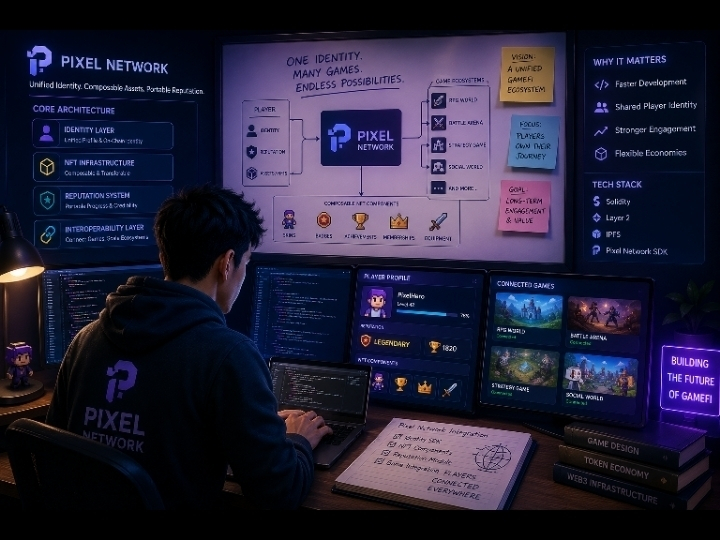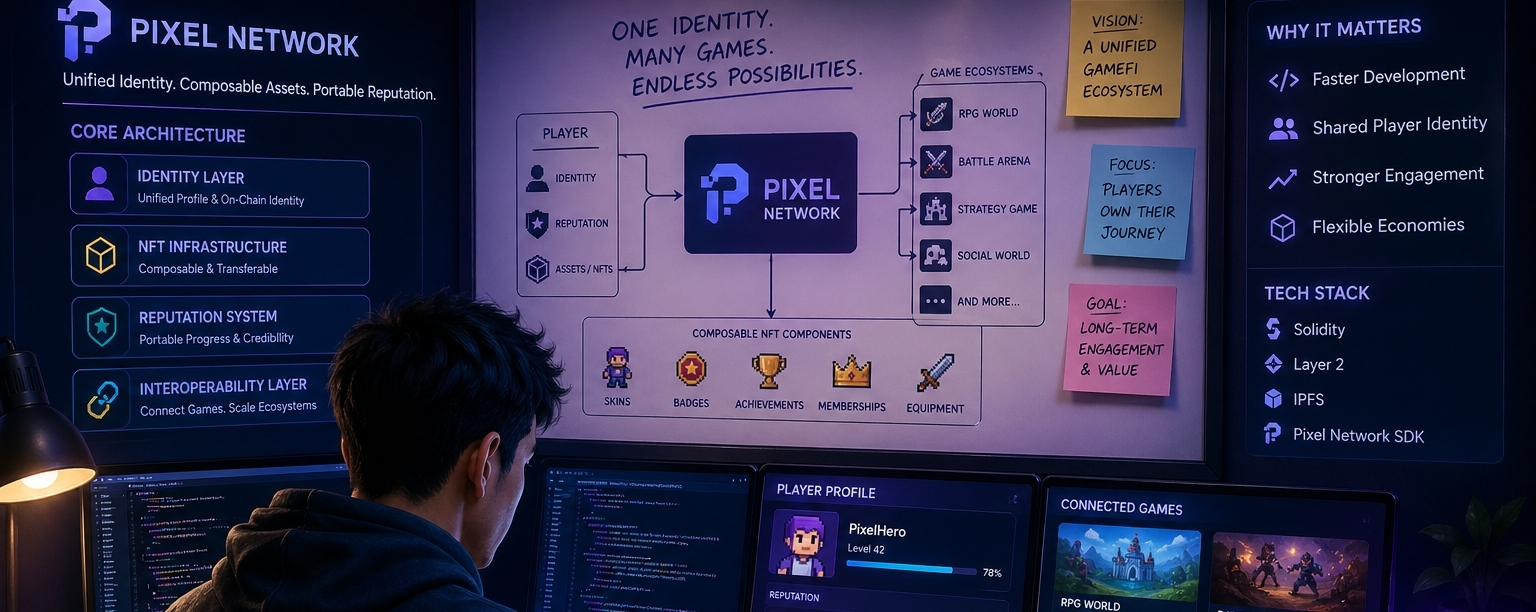
GameFi is evolving fast, but most projects still struggle with the same core problems fragmented identity, weak interoperability, and short-lived player engagement. Pixel Network is trying to solve these issues not just with features, but with its underlying architecture. For builders, that architecture is where the real value sits.
A Unified Identity Layer for Games
At the heart of Pixel Network is a system that connects NFTs, reputation, and user activity into a single identity layer. Instead of players starting from zero in every new game, their progress, achievements, and digital assets can travel with them.
For GameFi builders, this is a game-changer. It means you’re not just building isolated games—you’re building experiences inside a larger ecosystem where players already have history, status, and identity.
Composable NFT Infrastructure
Traditional GameFi models lock assets inside one game. Pixel Network takes a different approach: NFTs become composable identity components.
Think of skins, badges, achievements, and memberships as modular pieces that can be reused across games and platforms. This allows developers to create richer economies without forcing players to abandon their assets when they switch experiences.
In practical terms, this reduces friction and increases player retention—two of the hardest problems in Web3 gaming.
Reputation as a Core Mechanic
Most games track progress, but Pixel Network turns that progress into portable reputation. That reputation is not just cosmetic—it can influence access, matchmaking, rewards, and even governance inside GameFi ecosystems.
For builders, this opens up new design space. You can now create games where trust, skill, and contribution matter across multiple titles, not just within one server or season.
Interoperability Without Complexity
One of the biggest headaches in GameFi development is integration between platforms. Pixel Network’s architecture is designed to simplify that.
Instead of each game building its own wallet logic, identity system, and asset tracking, developers plug into a shared protocol layer. This reduces engineering overhead and lets teams focus on gameplay rather than infrastructure.
Why Builders Should Care
At first glance, Pixel Network might look like another Web3 identity project. But under the hood, it’s closer to a foundational layer for GameFi ecosystems.
For builders, the benefits are clear:
Faster development cycles
Shared player identity across games
Stronger long-term engagement
More flexible in-game economies
The Bigger Picture
GameFi has often struggled to balance fun with financial systems. Pixel Network’s architecture doesn’t solve that directly but it removes one of the biggest barriers: fragmentation.
By unifying identity and assets across ecosystems, it gives developers something rare in Web3 continuity. And in gaming, continuity is what turns short-term users into long-term communities.
In the end, @Pixels Network isn’t just infrastructure. It’s a shift in how GameFi worlds can connect, grow, and scale together.