

$BTC I still remember when Bitcoin was first explained to me as “digital gold,” something you buy, hold, and wait for the world to catch up to its value.
Back then, the idea was simple — you weren’t earning from Bitcoin, you were trusting it to grow over time, like a silent asset sitting in the background of a changing financial system.
I have seen investors treat it almost like a belief system, not just a financial position, holding through volatility because they believed scarcity alone would eventually reward patience.
But something feels different now, like the narrative is quietly shifting right in front of us without most people fully realizing it.
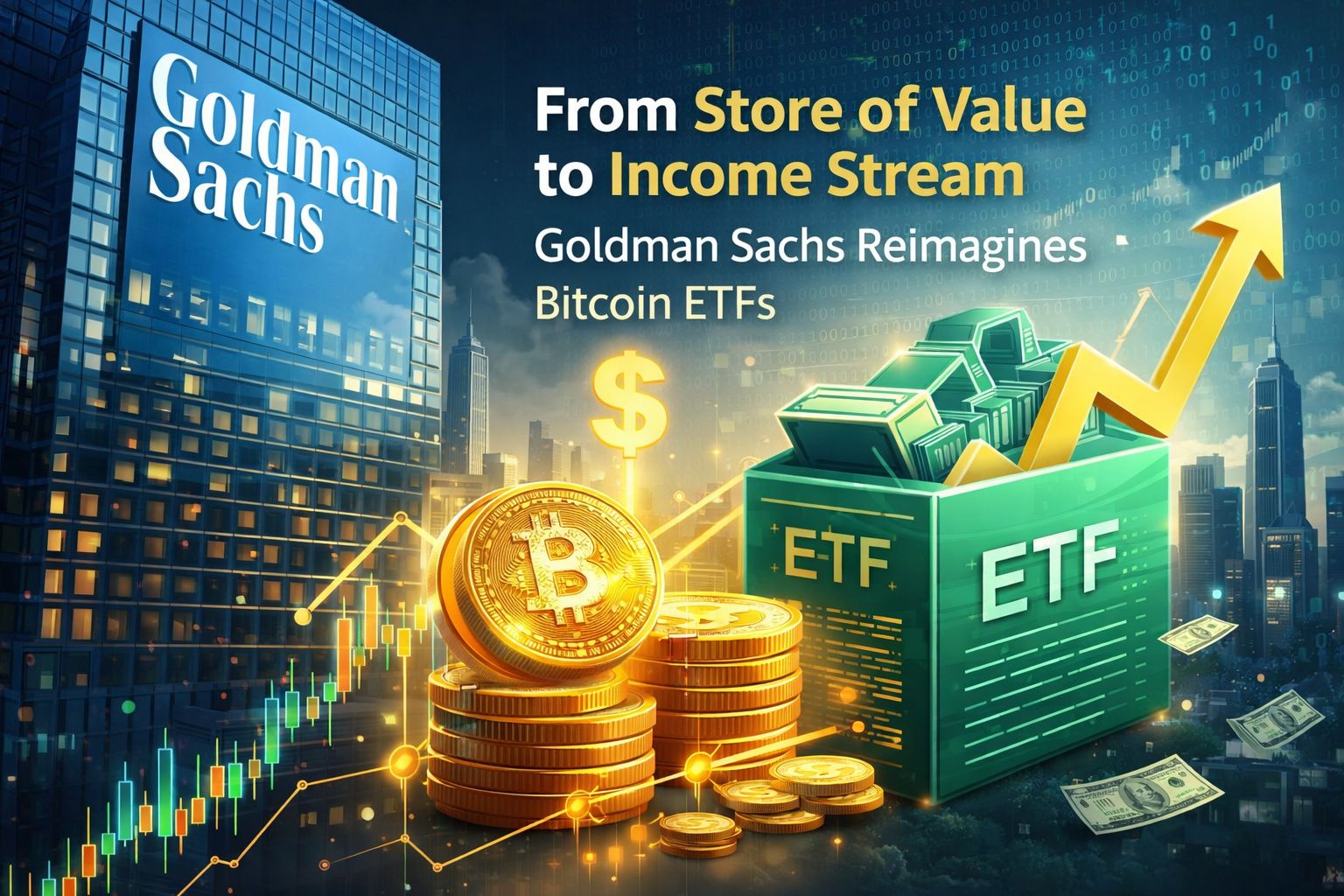
When institutions like Goldman Sachs start exploring Bitcoin income ETFs, it signals that Bitcoin is no longer being viewed as just a store of value, but as something that can actively generate returns.
That’s a fundamental change, because income is what traditional investors understand best — not just holding assets, but making those assets work continuously.
I think about how stocks evolved over time, where dividends became just as important as price appreciation, giving investors a reason to stay invested beyond speculation.
Now imagine that same mindset being applied to Bitcoin, an asset that was once considered purely passive, suddenly being structured into something that could provide yield.
It makes me realize that this isn’t just about creating a new financial product, it’s about reshaping how Bitcoin fits into the broader financial system.
For years, one of the biggest criticisms from traditional finance was simple — Bitcoin doesn’t produce cash flow.
It doesn’t pay dividends, it doesn’t generate income, and for many institutions, that made it difficult to justify large allocations despite its growth potential.
But I’ve noticed that Wall Street rarely rejects an asset permanently — it usually finds a way to reshape it into something that fits existing financial models.
That’s exactly what seems to be happening now, where Bitcoin is being wrapped into structured products that can generate yield through strategies like options, lending, or derivatives.
And suddenly, Bitcoin starts looking less like a speculative asset and more like something that can fit into income-focused portfolios.
I have seen how powerful that shift can be, because once an asset starts producing income, it becomes easier for conservative investors to accept it.
It’s no longer just about timing the market or hoping for price appreciation, it becomes about steady participation and predictable returns.
That changes behavior, because income-generating assets are typically held longer, traded less emotionally, and integrated into long-term strategies.
I think this is where the real transformation begins, not in price charts, but in perception.
When Bitcoin becomes something that can generate yield, it starts competing with bonds, dividend stocks, and other traditional income instruments.
That’s a completely different battlefield compared to the early days where it was competing mostly with gold or speculative tech assets.
But at the same time, I can’t ignore the complexity that comes with this shift.
Bitcoin itself doesn’t naturally generate yield, so any income product built around it relies on financial engineering, and that introduces layers of risk that didn’t exist in simple holding.
I’ve seen how these strategies can work well in stable conditions, but they also depend heavily on market dynamics, liquidity, and risk management.
So while the idea of earning from Bitcoin sounds attractive, it also requires a deeper understanding of how that income is actually being generated.
That’s where institutions like Goldman Sachs come in, because they bring the infrastructure, experience, and credibility needed to package these strategies in a way that feels accessible to traditional investors.
And credibility matters more than people think, especially for institutions that have been hesitant to fully embrace crypto.
I have noticed that once a trusted name enters a space, it doesn’t just add capital, it changes the narrative for everyone watching from the sidelines.
Suddenly, what once felt experimental starts to feel inevitable.
This is how markets evolve, not through sudden revolutions, but through gradual integration into systems people already trust.
And Bitcoin income ETFs feel like one of those integration points, where crypto starts aligning more closely with the expectations of traditional finance.
At the same time, I wonder what this means for the original philosophy behind Bitcoin.
It was designed to be simple, transparent, and independent of complex financial systems, yet now it’s being woven into some of the most sophisticated structures on Wall Street.
There’s a certain irony in that, but also a sense of maturity, like the asset is growing beyond its initial identity.
I think this is the phase where Bitcoin stops being just an alternative and starts becoming part of the mainstream financial toolkit.
Not replacing traditional assets, but existing alongside them in new and unexpected ways.
And maybe that’s the real story here, not just that Bitcoin can generate income, but that its role is expanding far beyond what it was originally meant to be.
I have seen markets change narratives many times, but the ones that last are the ones that adapt without losing their core value.
Bitcoin is still scarce, still decentralized, still fundamentally different, but now it’s also becoming more flexible in how it can be used.
And that flexibility might be what drives the next wave of adoption, not just from individuals, but from institutions that need assets to do more than just sit and wait.
In the end, this shift from store of value to income stream isn’t just about Bitcoin evolving, it’s about the financial world learning how to reshape new assets into familiar frameworks.
And once that process begins, it rarely goes backwards.#GoldmanSachsFilesforBitcoinIncomeETF