

#web3gaming
web3gaming
984,157 vues
7,624 mentions
Populaire
Récents

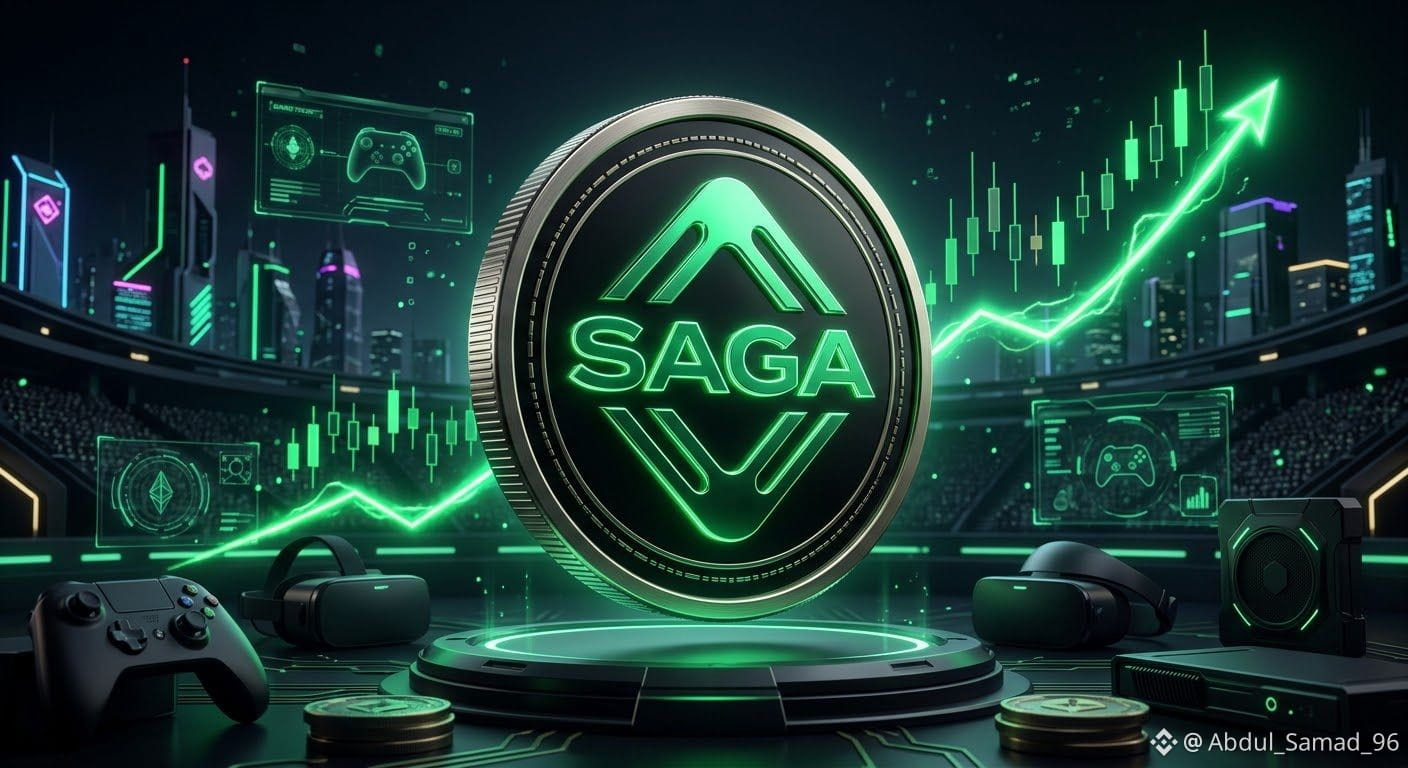
GTA 6 & Web3 Gaming: Can $SAGA 10x? 🎮🚀
With GTA 6 launching in 2026, massive global hype is shifting toward the Web3 gaming ecosystem.
Here is why $SAGA is positioned to lead the next rally:
• Gaming Chain Leader:
Built specifically to launch auto-scaling, high-performance gaming chains.
• Liquidity Rotation:
Capital moves from major assets into high-potential Web3 gaming infrastructure.
• Whale Accumulation:
Smart money accumulates silently during low-volatility sideways markets.
When the gaming narrative explodes, infrastructure tokens pump first.
10x is driven by market cycles, not hype! 💎
💬 Are you holding or buying $SAGA on the dips? Drop your strategy below! 👇
#Saga #GTA6 #web3gaming #BinanceSquare #Crypto2026🔥
GTA 6 & Web3 Gaming: Can $SAGA 10x? 🎮🚀
With GTA 6 launching in 2026, massive global hype is shifting toward the Web3 gaming ecosystem.
Here is why $SAGA is positioned to lead the next rally:
• Gaming Chain Leader:
Built specifically to launch auto-scaling, high-performance gaming chains.
• Liquidity Rotation:
Capital moves from major assets into high-potential Web3 gaming infrastructure.
• Whale Accumulation:
Smart money accumulates silently during low-volatility sideways markets.
When the gaming narrative explodes, infrastructure tokens pump first.
10x is driven by market cycles, not hype! 💎
💬 Are you holding or buying $SAGA on the dips? Drop your strategy below! 👇
#Saga #GTA6 #web3gaming #BinanceSquare #Crypto2026🔥
With GTA 6 launching in 2026, massive global hype is shifting toward the Web3 gaming ecosystem.
Here is why $SAGA is positioned to lead the next rally:
• Gaming Chain Leader:
Built specifically to launch auto-scaling, high-performance gaming chains.
• Liquidity Rotation:
Capital moves from major assets into high-potential Web3 gaming infrastructure.
• Whale Accumulation:
Smart money accumulates silently during low-volatility sideways markets.
When the gaming narrative explodes, infrastructure tokens pump first.
10x is driven by market cycles, not hype! 💎
💬 Are you holding or buying $SAGA on the dips? Drop your strategy below! 👇
#Saga #GTA6 #web3gaming #BinanceSquare #Crypto2026🔥
User-8525b36e:
good 👍
4
2
673

·
--
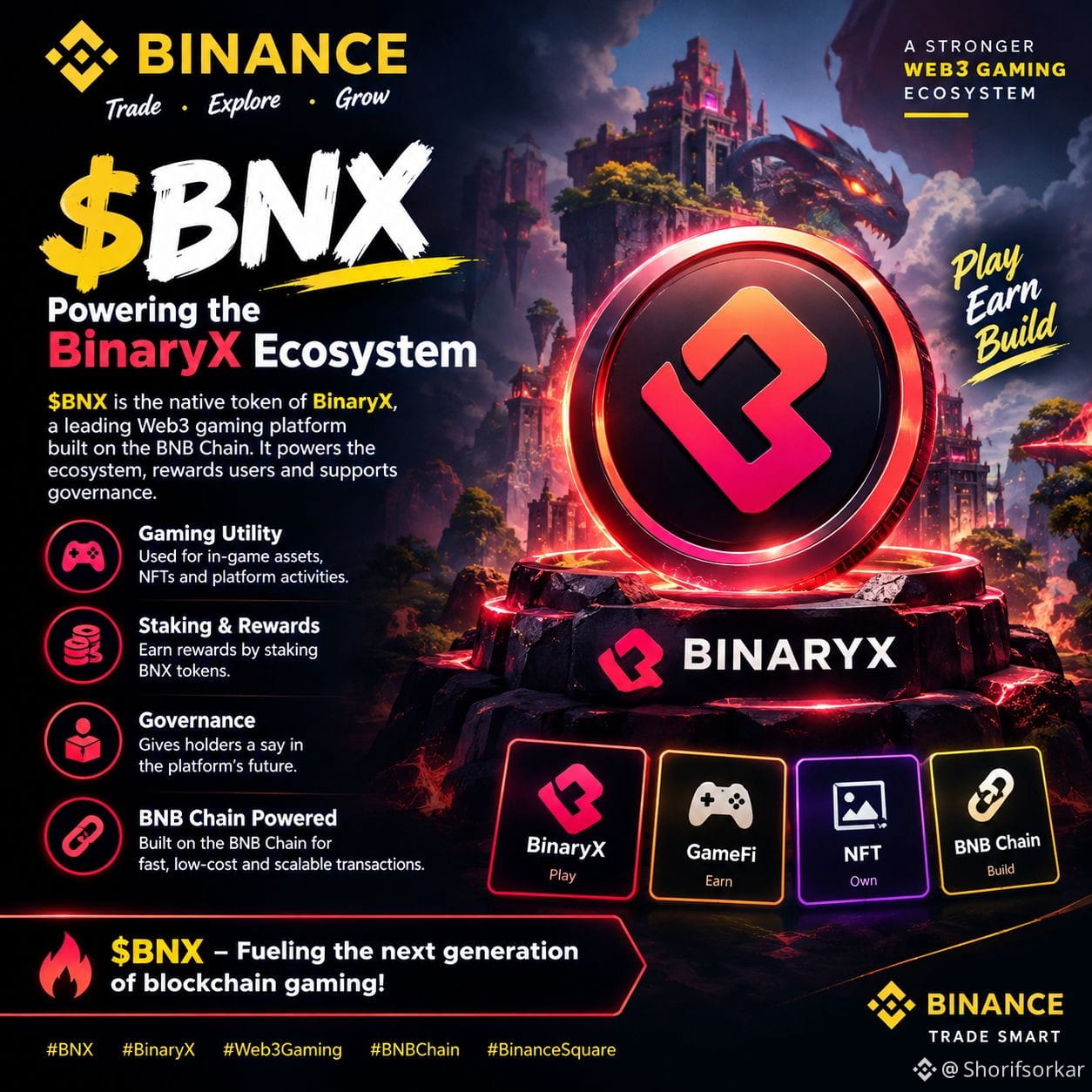
🎮 $BNX — BinaryX Ecosystem
$BNX is the native token associated with the BinaryX Web3 gaming ecosystem on BNB Chain.
💰My pofit 2d $259$BNX 🤑
🔹 Web3 gaming utility
🔹 In-game ecosystem use
🔹 Community & governance features
🔹 Built within the BNB Chain ecosystem
🔹 Focused on blockchain gaming and digital experiences
📌 Always research a token’s technology, utility and risks before making any decision.
#BNX #BinaryX #BNBChain #Web3Gaming #Crypt o #BinanceSquare
🎮 $BNX — BinaryX Ecosystem
$BNX is the native token associated with the BinaryX Web3 gaming ecosystem on BNB Chain.
💰My pofit 2d $259$BNX 🤑
🔹 Web3 gaming utility
🔹 In-game ecosystem use
🔹 Community & governance features
🔹 Built within the BNB Chain ecosystem
🔹 Focused on blockchain gaming and digital experiences
📌 Always research a token’s technology, utility and risks before making any decision.
#BNX #BinaryX #BNBChain #Web3Gaming #Crypt o #BinanceSquare
$BNX is the native token associated with the BinaryX Web3 gaming ecosystem on BNB Chain.
💰My pofit 2d $259$BNX 🤑
🔹 Web3 gaming utility
🔹 In-game ecosystem use
🔹 Community & governance features
🔹 Built within the BNB Chain ecosystem
🔹 Focused on blockchain gaming and digital experiences
📌 Always research a token’s technology, utility and risks before making any decision.
#BNX #BinaryX #BNBChain #Web3Gaming #Crypt o #BinanceSquare
Cholidaja:
👍🏻
1
2
81
·
--
$W is connected to the broader Web3 gaming ecosystem.
Gaming infrastructure has a different adoption challenge from DeFi:
The product needs to attract players first.
Blockchain utility must fit naturally into the experience.
#W #web3gaming #GameFi
$W is connected to the broader Web3 gaming ecosystem.
Gaming infrastructure has a different adoption challenge from DeFi:
The product needs to attract players first.
Blockchain utility must fit naturally into the experience.
#W #web3gaming #GameFi
Gaming infrastructure has a different adoption challenge from DeFi:
The product needs to attract players first.
Blockchain utility must fit naturally into the experience.
#W #web3gaming #GameFi
638
·
--
🚨 WEB3 GAMING META: THE MASS ADOPTION REVOLUTION! 🎮⚡
Traditional gaming generates hundreds of billions, but players own zero assets. Web3 gaming flips the script with true digital asset ownership. Smart Money is quietly positioning in gaming infrastructure titans IMX andGALA ahead of mass retail onboarding! 📈
📊 GAMING SECTOR ALLOCATION (TEXT CHART):
55% 🛡️🛡️🛡️🛡️🛡️🟩 | L2 Gaming Chain ($IMX)
40% 🎮🎮🎮🎮🟦 | Gaming & Entertainment ($GALA)
5% 🎲 | Niche Game Tokens
🔹 $IMX: The premier Ethereum zkEVM Layer-2 scaling solution offering zero gas fees and seamless Web3 game integration.
🔹 $GALA: A decentralized gaming, music, and film ecosystem driving player-owned digital economies.
💡 WHALE LESSON: Don't chase individual game titles that lose hype. Bet on the underlying publishing ecosystems and execution chains! 🎒
📊 COMMUNITY POLL: Which gaming power player are you holding?
💬 Vote above & drop your target prices below! 👇
#Web3Gaming #ImmutableX #GalaGames #IMX #GALA #BinanceSquare #SmartMoney
🚨 WEB3 GAMING META: THE MASS ADOPTION REVOLUTION! 🎮⚡
Traditional gaming generates hundreds of billions, but players own zero assets. Web3 gaming flips the script with true digital asset ownership. Smart Money is quietly positioning in gaming infrastructure titans IMX andGALA ahead of mass retail onboarding! 📈
📊 GAMING SECTOR ALLOCATION (TEXT CHART):
55% 🛡️🛡️🛡️🛡️🛡️🟩 | L2 Gaming Chain ($IMX)
40% 🎮🎮🎮🎮🟦 | Gaming & Entertainment ($GALA)
5% 🎲 | Niche Game Tokens
🔹 $IMX: The premier Ethereum zkEVM Layer-2 scaling solution offering zero gas fees and seamless Web3 game integration.
🔹 $GALA: A decentralized gaming, music, and film ecosystem driving player-owned digital economies.
💡 WHALE LESSON: Don't chase individual game titles that lose hype. Bet on the underlying publishing ecosystems and execution chains! 🎒
📊 COMMUNITY POLL: Which gaming power player are you holding?
💬 Vote above & drop your target prices below! 👇
#Web3Gaming #ImmutableX #GalaGames #IMX #GALA #BinanceSquare #SmartMoney
Traditional gaming generates hundreds of billions, but players own zero assets. Web3 gaming flips the script with true digital asset ownership. Smart Money is quietly positioning in gaming infrastructure titans IMX andGALA ahead of mass retail onboarding! 📈
📊 GAMING SECTOR ALLOCATION (TEXT CHART):
55% 🛡️🛡️🛡️🛡️🛡️🟩 | L2 Gaming Chain ($IMX)
40% 🎮🎮🎮🎮🟦 | Gaming & Entertainment ($GALA)
5% 🎲 | Niche Game Tokens
🔹 $IMX: The premier Ethereum zkEVM Layer-2 scaling solution offering zero gas fees and seamless Web3 game integration.
🔹 $GALA: A decentralized gaming, music, and film ecosystem driving player-owned digital economies.
💡 WHALE LESSON: Don't chase individual game titles that lose hype. Bet on the underlying publishing ecosystems and execution chains! 🎒
📊 COMMUNITY POLL: Which gaming power player are you holding?
💬 Vote above & drop your target prices below! 👇
#Web3Gaming #ImmutableX #GalaGames #IMX #GALA #BinanceSquare #SmartMoney
1️⃣ Immutable ($IMX) 🛡️
5%
2️⃣ Gala ($GALA) 🎮
68%
3️⃣ Holding Both ($IMX +$GALA) 🚀
23%
4️⃣ Waiting for DIP 📉
4%
22 Votes • Vote fermé
4
2.5k

·
--
🚨 INSTITUTIONAL GAMING FLOODS INTO STABLECOINS UNLOCKING MASSIVE UTILITY FOR $ZETA AND BEYOND 🚀
Institutional order flow is shifting as gaming giants re-engineer monetization pipelines through stablecoin settlement networks. With 35% of player bases actively using digital assets, smart money is pricing in a structural shift toward friction-free, high-throughput ecosystem rails. 📊
This adoption velocity creates a massive liquidity sponge for infrastructure tokens like $FTT , $NIL , and $ZETA as global transaction volume scales. 🦈 Institutional capital targets these adoption inefficiencies before retail catches onto the expanding network utility. 💬 Will stablecoin gaming settlement trigger the next macro expansion cycle for ecosystem tokens? 👇
⚠️ Not financial advice. Always manage your risk. 🛡️
🏷️ #ZETA #FTT #Web3Gaming #Stablecoins #Crypto
🎯 🦈
🚨 INSTITUTIONAL GAMING FLOODS INTO STABLECOINS UNLOCKING MASSIVE UTILITY FOR $ZETA AND BEYOND 🚀
Institutional order flow is shifting as gaming giants re-engineer monetization pipelines through stablecoin settlement networks. With 35% of player bases actively using digital assets, smart money is pricing in a structural shift toward friction-free, high-throughput ecosystem rails. 📊
This adoption velocity creates a massive liquidity sponge for infrastructure tokens like $FTT , $NIL , and $ZETA as global transaction volume scales. 🦈 Institutional capital targets these adoption inefficiencies before retail catches onto the expanding network utility. 💬 Will stablecoin gaming settlement trigger the next macro expansion cycle for ecosystem tokens? 👇
⚠️ Not financial advice. Always manage your risk. 🛡️
🏷️ #ZETA #FTT #Web3Gaming #Stablecoins #Crypto
🎯 🦈
Institutional order flow is shifting as gaming giants re-engineer monetization pipelines through stablecoin settlement networks. With 35% of player bases actively using digital assets, smart money is pricing in a structural shift toward friction-free, high-throughput ecosystem rails. 📊
This adoption velocity creates a massive liquidity sponge for infrastructure tokens like $FTT , $NIL , and $ZETA as global transaction volume scales. 🦈 Institutional capital targets these adoption inefficiencies before retail catches onto the expanding network utility. 💬 Will stablecoin gaming settlement trigger the next macro expansion cycle for ecosystem tokens? 👇
⚠️ Not financial advice. Always manage your risk. 🛡️
🏷️ #ZETA #FTT #Web3Gaming #Stablecoins #Crypto
🎯 🦈
233

GameFi
🎮 Top 3 GameFi Tokens to Watch This Week 🚀
The Web3 gaming sector continues to evolve with projects focused on sustainability and mass adoption. If you are passionate about gaming and crypto, here are 3 key projects to keep on your radar this week:
1️⃣ $IMX (Immutable X): Continues to lead Layer 2 infrastructure for Web3 gaming, providing fast and scalable transactions for AAA titles.
2️⃣ $GALA (Gala Games): Maintains a highly diversified entertainment ecosystem with constant updates across its decentralized network.
3️⃣ $RONIN (Ronin Network): Shows one of the strongest daily active user bases in the Web3 space, powered by community-driven games.
📊 Risk Management: Always analyze market trends and price charts before making any trading decisions.
👇 Tap the cashtags ($IMX, $GALA,$RONIN) to view real-time price charts.
💬 Which of these 3 projects do you think will lead the market this month? Let me know in the comments!
#GameFi #web3gaming #CryptoGaming #BinanceSquare
GameFi
🎮 Top 3 GameFi Tokens to Watch This Week 🚀
The Web3 gaming sector continues to evolve with projects focused on sustainability and mass adoption. If you are passionate about gaming and crypto, here are 3 key projects to keep on your radar this week:
1️⃣ $IMX (Immutable X): Continues to lead Layer 2 infrastructure for Web3 gaming, providing fast and scalable transactions for AAA titles.
2️⃣ $GALA (Gala Games): Maintains a highly diversified entertainment ecosystem with constant updates across its decentralized network.
3️⃣ $RONIN (Ronin Network): Shows one of the strongest daily active user bases in the Web3 space, powered by community-driven games.
📊 Risk Management: Always analyze market trends and price charts before making any trading decisions.
👇 Tap the cashtags ($IMX, $GALA,$RONIN) to view real-time price charts.
💬 Which of these 3 projects do you think will lead the market this month? Let me know in the comments!
#GameFi #web3gaming #CryptoGaming #BinanceSquare
🎮 Top 3 GameFi Tokens to Watch This Week 🚀
The Web3 gaming sector continues to evolve with projects focused on sustainability and mass adoption. If you are passionate about gaming and crypto, here are 3 key projects to keep on your radar this week:
1️⃣ $IMX (Immutable X): Continues to lead Layer 2 infrastructure for Web3 gaming, providing fast and scalable transactions for AAA titles.
2️⃣ $GALA (Gala Games): Maintains a highly diversified entertainment ecosystem with constant updates across its decentralized network.
3️⃣ $RONIN (Ronin Network): Shows one of the strongest daily active user bases in the Web3 space, powered by community-driven games.
📊 Risk Management: Always analyze market trends and price charts before making any trading decisions.
👇 Tap the cashtags ($IMX, $GALA,$RONIN) to view real-time price charts.
💬 Which of these 3 projects do you think will lead the market this month? Let me know in the comments!
#GameFi #web3gaming #CryptoGaming #BinanceSquare
1
533

·
--
🚀 PIEVERSE: Where Gaming Meets Real Value & True Ownership! 🎮
Step into the future of Web3 gaming — PIEVERSE isn’t just a game, it’s a whole vibrant digital universe built for YOU! 🎯 Play, earn, build, trade, and own your in-game assets as NFTs. No middlemen, full control, endless possibilities. The ecosystem is growing fast, community-driven, and pushing the boundaries of what decentralized gaming can be. This is where fun meets utility — don’t sleep on the revolution! 🔥
$PIEVERSE
#PIEVERSE #Web3Gaming #PlayToEarn #NFTCommunity
🚀 PIEVERSE: Where Gaming Meets Real Value & True Ownership! 🎮
Step into the future of Web3 gaming — PIEVERSE isn’t just a game, it’s a whole vibrant digital universe built for YOU! 🎯 Play, earn, build, trade, and own your in-game assets as NFTs. No middlemen, full control, endless possibilities. The ecosystem is growing fast, community-driven, and pushing the boundaries of what decentralized gaming can be. This is where fun meets utility — don’t sleep on the revolution! 🔥
$PIEVERSE
#PIEVERSE #Web3Gaming #PlayToEarn #NFTCommunity
Step into the future of Web3 gaming — PIEVERSE isn’t just a game, it’s a whole vibrant digital universe built for YOU! 🎯 Play, earn, build, trade, and own your in-game assets as NFTs. No middlemen, full control, endless possibilities. The ecosystem is growing fast, community-driven, and pushing the boundaries of what decentralized gaming can be. This is where fun meets utility — don’t sleep on the revolution! 🔥
$PIEVERSE
#PIEVERSE #Web3Gaming #PlayToEarn #NFTCommunity
114

نظرة سريعة على عملة $ACE 🚀
عملة ACE هي العملة الأساسية لمنظومة Fusionist، وهو مشروع يركز على ألعاب Web3 والخيال العلمي والاستراتيجية، مع شبكة Endurance التي تشكل جزءًا من البنية التحتية للنظام البيئي.
تُستخدم ACE في رسوم الشبكة، وبعض الأنشطة والخدمات داخل منظومة Fusionist، إضافة إلى ارتباطها باقتصاد الألعاب والـStaking وبعض وظائف النظام البيئي.
حالياً يتحرك سعر ACE قرب 0.15 دولار، مع قيمة سوقية تقارب 16.7 مليون دولار وحجم تداول يومي يتجاوز 11 مليون دولار وفق بيانات السوق الحالية.
المعروض المتداول يقارب 110.55 مليون ACE من إجمالي 147 مليون، لذلك تبقى عمليات فتح الرموز وزيادة المعروض من العوامل المهمة التي تستحق المتابعة.
⚠️ $ACE من العملات منخفضة القيمة السوقية وعالية التذبذب، لذلك قد تكون الحركة السعرية سريعة في الاتجاهين.
$ACE
ACEUSDT
دائم
#Fusionist #Web3Gaming #Crypto #BinanceSquare
نظرة سريعة على عملة $ACE 🚀
عملة ACE هي العملة الأساسية لمنظومة Fusionist، وهو مشروع يركز على ألعاب Web3 والخيال العلمي والاستراتيجية، مع شبكة Endurance التي تشكل جزءًا من البنية التحتية للنظام البيئي.
تُستخدم ACE في رسوم الشبكة، وبعض الأنشطة والخدمات داخل منظومة Fusionist، إضافة إلى ارتباطها باقتصاد الألعاب والـStaking وبعض وظائف النظام البيئي.
حالياً يتحرك سعر ACE قرب 0.15 دولار، مع قيمة سوقية تقارب 16.7 مليون دولار وحجم تداول يومي يتجاوز 11 مليون دولار وفق بيانات السوق الحالية.
المعروض المتداول يقارب 110.55 مليون ACE من إجمالي 147 مليون، لذلك تبقى عمليات فتح الرموز وزيادة المعروض من العوامل المهمة التي تستحق المتابعة.
⚠️ $ACE من العملات منخفضة القيمة السوقية وعالية التذبذب، لذلك قد تكون الحركة السعرية سريعة في الاتجاهين.
$ACE
ACEUSDT
دائم
#Fusionist #Web3Gaming #Crypto #BinanceSquare
عملة ACE هي العملة الأساسية لمنظومة Fusionist، وهو مشروع يركز على ألعاب Web3 والخيال العلمي والاستراتيجية، مع شبكة Endurance التي تشكل جزءًا من البنية التحتية للنظام البيئي.
تُستخدم ACE في رسوم الشبكة، وبعض الأنشطة والخدمات داخل منظومة Fusionist، إضافة إلى ارتباطها باقتصاد الألعاب والـStaking وبعض وظائف النظام البيئي.
حالياً يتحرك سعر ACE قرب 0.15 دولار، مع قيمة سوقية تقارب 16.7 مليون دولار وحجم تداول يومي يتجاوز 11 مليون دولار وفق بيانات السوق الحالية.
المعروض المتداول يقارب 110.55 مليون ACE من إجمالي 147 مليون، لذلك تبقى عمليات فتح الرموز وزيادة المعروض من العوامل المهمة التي تستحق المتابعة.
⚠️ $ACE من العملات منخفضة القيمة السوقية وعالية التذبذب، لذلك قد تكون الحركة السعرية سريعة في الاتجاهين.
$ACE
ACEUSDT
دائم
#Fusionist #Web3Gaming #Crypto #BinanceSquare
1
350

·
--
Is the future of gaming fully on-chain? If you are tracking the next big wave in Web3, Argus is a name you need to know. Founded by Scott Sunarto, the co-creator of the legendary on-chain game Dark Forest, Argus Labs is on a mission to solve one of the biggest bottlenecks in crypto: scaling decentralized gaming.
Traditional blockchains are too slow and expensive to support complex multiplayer games where every action is a transaction. Argus is changing this with World Engine, a custom-built, sharded blockchain software development kit designed specifically for fully on-chain games.
Think of World Engine as a high-performance operating system for virtual worlds. Instead of jamming a game into a standard blockchain, World Engine allows developers to build their own customizable, high-throughput game shards. These shards can run demanding game loops while remaining seamlessly connected to the broader Web3 ecosystem.
Why does this matter? Fully on-chain gaming is not just about owning your in-game assets as NFTs. It is about creating autonomous worlds. These are games where the rules, state, and physics are hardcoded into smart contracts. They are permissionless, meaning anyone can build mods, clients, or entire economies on top of them without needing the original creator's permission. Even if the developer shuts down, the game lives on forever.
With a massive funding round led by Haun Ventures and support from top-tier builders, Argus is positioning itself as the infrastructure backbone for the next generation of digital worlds.
As Web3 gaming shifts from basic play-to-earn models to deeply immersive, decentralized experiences, infrastructure like Argus will be the ultimate differentiator.
What are your thoughts on fully on-chain gaming? Is this the future, or are hybrid models here to stay? Let us know below.
#Web3Gaming #ArgusLabs #OnChainGaming
Is the future of gaming fully on-chain? If you are tracking the next big wave in Web3, Argus is a name you need to know. Founded by Scott Sunarto, the co-creator of the legendary on-chain game Dark Forest, Argus Labs is on a mission to solve one of the biggest bottlenecks in crypto: scaling decentralized gaming.
Traditional blockchains are too slow and expensive to support complex multiplayer games where every action is a transaction. Argus is changing this with World Engine, a custom-built, sharded blockchain software development kit designed specifically for fully on-chain games.
Think of World Engine as a high-performance operating system for virtual worlds. Instead of jamming a game into a standard blockchain, World Engine allows developers to build their own customizable, high-throughput game shards. These shards can run demanding game loops while remaining seamlessly connected to the broader Web3 ecosystem.
Why does this matter? Fully on-chain gaming is not just about owning your in-game assets as NFTs. It is about creating autonomous worlds. These are games where the rules, state, and physics are hardcoded into smart contracts. They are permissionless, meaning anyone can build mods, clients, or entire economies on top of them without needing the original creator's permission. Even if the developer shuts down, the game lives on forever.
With a massive funding round led by Haun Ventures and support from top-tier builders, Argus is positioning itself as the infrastructure backbone for the next generation of digital worlds.
As Web3 gaming shifts from basic play-to-earn models to deeply immersive, decentralized experiences, infrastructure like Argus will be the ultimate differentiator.
What are your thoughts on fully on-chain gaming? Is this the future, or are hybrid models here to stay? Let us know below.
#Web3Gaming #ArgusLabs #OnChainGaming
Traditional blockchains are too slow and expensive to support complex multiplayer games where every action is a transaction. Argus is changing this with World Engine, a custom-built, sharded blockchain software development kit designed specifically for fully on-chain games.
Think of World Engine as a high-performance operating system for virtual worlds. Instead of jamming a game into a standard blockchain, World Engine allows developers to build their own customizable, high-throughput game shards. These shards can run demanding game loops while remaining seamlessly connected to the broader Web3 ecosystem.
Why does this matter? Fully on-chain gaming is not just about owning your in-game assets as NFTs. It is about creating autonomous worlds. These are games where the rules, state, and physics are hardcoded into smart contracts. They are permissionless, meaning anyone can build mods, clients, or entire economies on top of them without needing the original creator's permission. Even if the developer shuts down, the game lives on forever.
With a massive funding round led by Haun Ventures and support from top-tier builders, Argus is positioning itself as the infrastructure backbone for the next generation of digital worlds.
As Web3 gaming shifts from basic play-to-earn models to deeply immersive, decentralized experiences, infrastructure like Argus will be the ultimate differentiator.
What are your thoughts on fully on-chain gaming? Is this the future, or are hybrid models here to stay? Let us know below.
#Web3Gaming #ArgusLabs #OnChainGaming
63

·
--
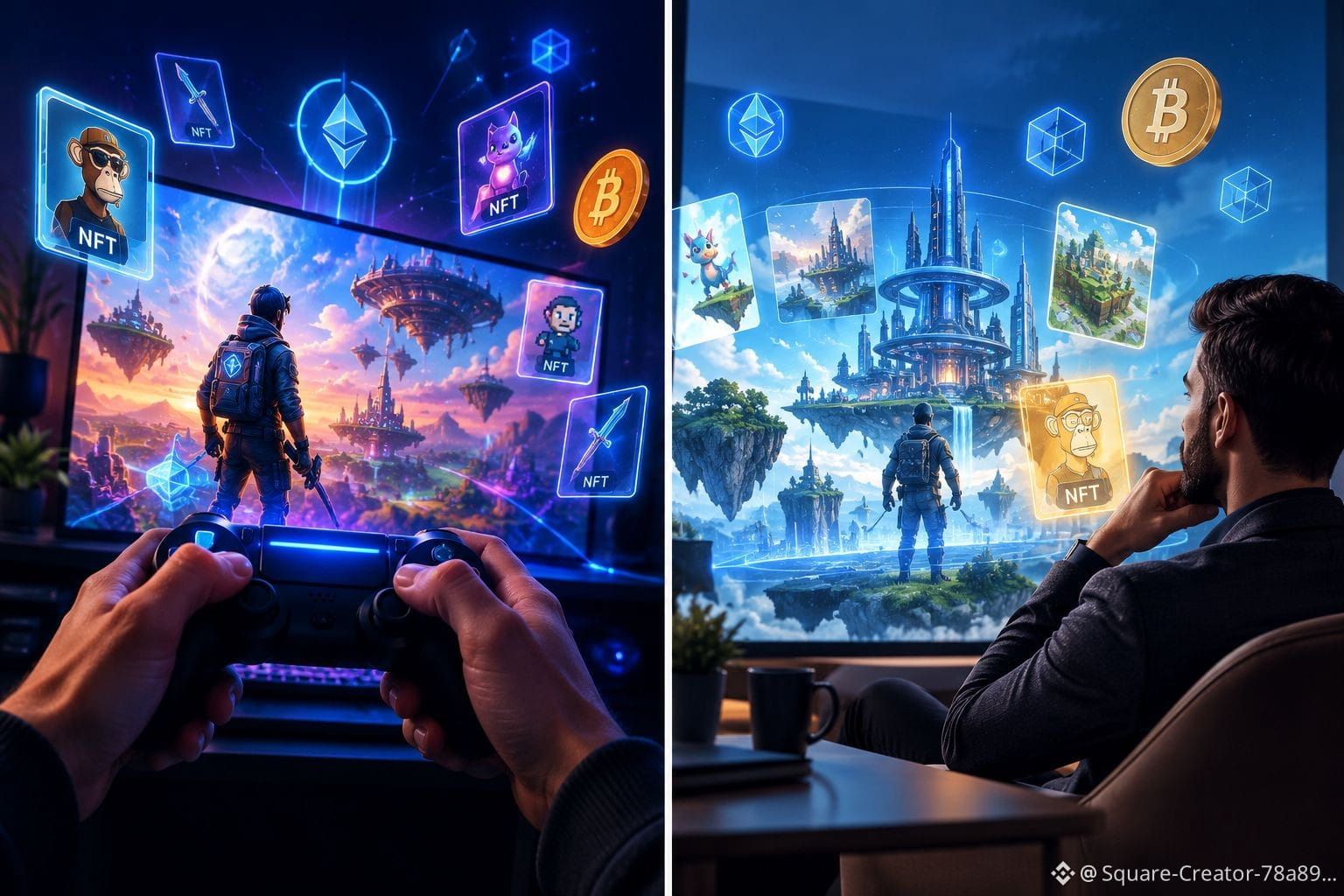
🎮 هل ولى زمن ألعاب الميم.. وجاء عصر ألعاب الويب 3 (Web3 Gaming)؟
الاستثمار في المشاريع التي تقدم "منفعة حقيقية" هو الأبقى دائماً. قطاع الألعاب القائمة على البلوكشين (GameFi) ينمو بسرعة هائلة، والشركات التقليدية بدأت تضخ مليارات الدولارات لتطوير ألعاب تتيح للاعبين ملكية حقيقية لأصولهم داخل اللعبة على شكل NFTs.
💡 نصيحة اليوم: لا تحصر محفظتك في عملات التداول السريع فقط. خصص جزءاً بسيطاً للمشاريع التي تبني بنية تحتية قوية للألعاب والميتافيرس، لأن الطفرة القادمة قد تنطلق من هذا القطاع.
ما هي العملة المفضلة لديك في قطاع الألعاب (GameFi) وتتوقع لها مستقبلاً كبيراً؟ 🚀👇
#Web3Gaming #GamingCoins #NFTs
$BNB $BTC $ETH
🎮 هل ولى زمن ألعاب الميم.. وجاء عصر ألعاب الويب 3 (Web3 Gaming)؟
الاستثمار في المشاريع التي تقدم "منفعة حقيقية" هو الأبقى دائماً. قطاع الألعاب القائمة على البلوكشين (GameFi) ينمو بسرعة هائلة، والشركات التقليدية بدأت تضخ مليارات الدولارات لتطوير ألعاب تتيح للاعبين ملكية حقيقية لأصولهم داخل اللعبة على شكل NFTs.
💡 نصيحة اليوم: لا تحصر محفظتك في عملات التداول السريع فقط. خصص جزءاً بسيطاً للمشاريع التي تبني بنية تحتية قوية للألعاب والميتافيرس، لأن الطفرة القادمة قد تنطلق من هذا القطاع.
ما هي العملة المفضلة لديك في قطاع الألعاب (GameFi) وتتوقع لها مستقبلاً كبيراً؟ 🚀👇
#Web3Gaming #GamingCoins #NFTs
$BNB $BTC $ETH
الاستثمار في المشاريع التي تقدم "منفعة حقيقية" هو الأبقى دائماً. قطاع الألعاب القائمة على البلوكشين (GameFi) ينمو بسرعة هائلة، والشركات التقليدية بدأت تضخ مليارات الدولارات لتطوير ألعاب تتيح للاعبين ملكية حقيقية لأصولهم داخل اللعبة على شكل NFTs.
💡 نصيحة اليوم: لا تحصر محفظتك في عملات التداول السريع فقط. خصص جزءاً بسيطاً للمشاريع التي تبني بنية تحتية قوية للألعاب والميتافيرس، لأن الطفرة القادمة قد تنطلق من هذا القطاع.
ما هي العملة المفضلة لديك في قطاع الألعاب (GameFi) وتتوقع لها مستقبلاً كبيراً؟ 🚀👇
#Web3Gaming #GamingCoins #NFTs
$BNB $BTC $ETH
2
3
5
34

·
--
Can Web3 Gaming make a massive comeback with $GALA ? 🎮🚀
Crypto gaming narratives move fast. Gala continues to expand beyond just games into decentralized music and film nodes, creating multiple avenues for token utility.
Retail interest explodes the moment a Web3 game goes truly mainstream.
What’s your take: Will crypto gaming pump hardest this season, or are AI tokens taking all the liquidity? 🕹️
#gala #web3gaming #PlayToEarn
Can Web3 Gaming make a massive comeback with $GALA ? 🎮🚀
Crypto gaming narratives move fast. Gala continues to expand beyond just games into decentralized music and film nodes, creating multiple avenues for token utility.
Retail interest explodes the moment a Web3 game goes truly mainstream.
What’s your take: Will crypto gaming pump hardest this season, or are AI tokens taking all the liquidity? 🕹️
#gala #web3gaming #PlayToEarn
Crypto gaming narratives move fast. Gala continues to expand beyond just games into decentralized music and film nodes, creating multiple avenues for token utility.
Retail interest explodes the moment a Web3 game goes truly mainstream.
What’s your take: Will crypto gaming pump hardest this season, or are AI tokens taking all the liquidity? 🕹️
#gala #web3gaming #PlayToEarn
313
نظرة سريعة على عملة $PORTAL :
تُعد PORTAL العملة الأساسية لمنصة Portal، وهي منظومة تركز على ربط ألعاب Web3 واللاعبين ضمن شبكة واحدة، بهدف تسهيل الوصول إلى ألعاب البلوكشين وتوسيع استخدام الأصول الرقمية داخل قطاع الألعاب.
تُستخدم PORTAL ضمن منظومة الألعاب والخدمات المرتبطة بالمنصة، كما ترتبط باقتصاد النظام البيئي والحوافز والتفاعل مع المنتجات والألعاب المدعومة.
حالياً يتحرك سعر PORTAL قرب 0.018 دولار، مع قيمة سوقية في نطاق 16–18 مليون دولار، ما يجعلها من العملات ذات القيمة السوقية الصغيرة نسبياً مقارنة بحجم قطاع الألعاب. citeturn0search10turn0search11
المعروض المتداول يقارب 891 مليون PORTAL من إجمالي مليار توكن، أي أن حوالي 89% من المعروض أصبح متاحاً، لذلك تبقى حركة المعروض المتبقي عاملاً يستحق المتابعة. citeturn0search12
⚠️ $PORTAL من العملات عالية التذبذب، والسيولة وحجم التداول قد يؤديان إلى تحركات سريعة في الاتجاهين.
$PORTAL #Gaming #Web3Gaming #Crypto #BinanceSquare
نظرة سريعة على عملة $PORTAL :
تُعد PORTAL العملة الأساسية لمنصة Portal، وهي منظومة تركز على ربط ألعاب Web3 واللاعبين ضمن شبكة واحدة، بهدف تسهيل الوصول إلى ألعاب البلوكشين وتوسيع استخدام الأصول الرقمية داخل قطاع الألعاب.
تُستخدم PORTAL ضمن منظومة الألعاب والخدمات المرتبطة بالمنصة، كما ترتبط باقتصاد النظام البيئي والحوافز والتفاعل مع المنتجات والألعاب المدعومة.
حالياً يتحرك سعر PORTAL قرب 0.018 دولار، مع قيمة سوقية في نطاق 16–18 مليون دولار، ما يجعلها من العملات ذات القيمة السوقية الصغيرة نسبياً مقارنة بحجم قطاع الألعاب. citeturn0search10turn0search11
المعروض المتداول يقارب 891 مليون PORTAL من إجمالي مليار توكن، أي أن حوالي 89% من المعروض أصبح متاحاً، لذلك تبقى حركة المعروض المتبقي عاملاً يستحق المتابعة. citeturn0search12
⚠️ $PORTAL من العملات عالية التذبذب، والسيولة وحجم التداول قد يؤديان إلى تحركات سريعة في الاتجاهين.
$PORTAL #Gaming #Web3Gaming #Crypto #BinanceSquare
تُعد PORTAL العملة الأساسية لمنصة Portal، وهي منظومة تركز على ربط ألعاب Web3 واللاعبين ضمن شبكة واحدة، بهدف تسهيل الوصول إلى ألعاب البلوكشين وتوسيع استخدام الأصول الرقمية داخل قطاع الألعاب.
تُستخدم PORTAL ضمن منظومة الألعاب والخدمات المرتبطة بالمنصة، كما ترتبط باقتصاد النظام البيئي والحوافز والتفاعل مع المنتجات والألعاب المدعومة.
حالياً يتحرك سعر PORTAL قرب 0.018 دولار، مع قيمة سوقية في نطاق 16–18 مليون دولار، ما يجعلها من العملات ذات القيمة السوقية الصغيرة نسبياً مقارنة بحجم قطاع الألعاب. citeturn0search10turn0search11
المعروض المتداول يقارب 891 مليون PORTAL من إجمالي مليار توكن، أي أن حوالي 89% من المعروض أصبح متاحاً، لذلك تبقى حركة المعروض المتبقي عاملاً يستحق المتابعة. citeturn0search12
⚠️ $PORTAL من العملات عالية التذبذب، والسيولة وحجم التداول قد يؤديان إلى تحركات سريعة في الاتجاهين.
$PORTAL #Gaming #Web3Gaming #Crypto #BinanceSquare
172
مشروعنظرة سريعة على عملة $ACE : مشروع Fusionist في قطاع ألعاب Web3
تُعد ACE العملة الأساسية لمشروع Fusionist، وهو مشروع يجمع بين ألعاب البلوكشين والخيال العلمي والاستراتيجية، إلى جانب شبكة Endurance التي تدعم بعض مكونات النظام البيئي للمشروع.
ما استخدامات عملة ACE؟
تُستخدم ACE في عدة جوانب داخل منظومة Fusionist، ومنها:
التفاعل مع اقتصاد الألعاب والمكافآت.
المشاركة في بعض الخدمات والأنشطة المرتبطة بالنظام البيئي.
دفع رسوم أو استخدام ميزات محددة ضمن شبكة Endurance ومنتجات المشروع.
دعم الحوكمة والمشاركة المجتمعية عند توفر هذه الوظائف ضمن المنتجات.
لماذا تهم ACE المتابعين لقطاع الألعاب؟
قطاع ألعاب Web3 يعتمد بصورة كبيرة على وجود مستخدمين حقيقيين وتجربة لعب قابلة للاستمرار، وليس فقط على الاهتمام بالمضاربة. لذلك، قد يرتبط أداء ACE بعوامل مثل نمو مجتمع اللاعبين، إطلاق تحديثات أو ألعاب جديدة، وتوسع استخدام شبكة Endurance.
عوامل تستحق المتابعة
نشاط المستخدمين واللاعبين: زيادة الاستخدام الفعلي قد تدعم الطلب على خدمات النظام البيئي.
تطورات المشروع: الإطلاقات الجديدة، الشراكات، وتحسين تجربة المنتج قد تؤثر في اهتمام السوق.
توكنوميكس وفتح الرموز: من المهم مراقبة زيادة المعروض المتداول ومواعيد الاستحقاقات.
السيولة وحجم التداول: تساعد السيولة المرتفعة على سهولة التداول، لكنها لا تلغي مخاطر التقلب.
حالة سوق العملات البديلة: غالبًا ما تتأثر رموز الألعاب بمزاج السوق العام وحركة BTC وETH.
الخلاصة
ACE تمثل مشروعًا يركز على تقاطع الألعاب والبلوكشين، وهي فئة تحمل فرص نمو مرتبطة بنجاح المنتج واكتساب المستخدمين، لكنها أيضًا قد تشهد تقلبات مرتفعة. متابعة تطورات Fusionist، بيانات المعروض، واستخدامات العملة تظل أهم من الاعتماد على حركة السعر وحدها.
هذا المحتوى لأغراض تعليمية ومعلوماتية فقط، وليس نصيحة استثمارية. العملات الرقمية عالية المخاطر، وقد تتغير الأسعار بسرعة.
$ACE #fusionist #web3gaming #crypto #BinanceSquare
مشروع
نظرة سريعة على عملة $ACE : مشروع Fusionist في قطاع ألعاب Web3
تُعد ACE العملة الأساسية لمشروع Fusionist، وهو مشروع يجمع بين ألعاب البلوكشين والخيال العلمي والاستراتيجية، إلى جانب شبكة Endurance التي تدعم بعض مكونات النظام البيئي للمشروع.
ما استخدامات عملة ACE؟
تُستخدم ACE في عدة جوانب داخل منظومة Fusionist، ومنها:
التفاعل مع اقتصاد الألعاب والمكافآت.
المشاركة في بعض الخدمات والأنشطة المرتبطة بالنظام البيئي.
دفع رسوم أو استخدام ميزات محددة ضمن شبكة Endurance ومنتجات المشروع.
دعم الحوكمة والمشاركة المجتمعية عند توفر هذه الوظائف ضمن المنتجات.
لماذا تهم ACE المتابعين لقطاع الألعاب؟
قطاع ألعاب Web3 يعتمد بصورة كبيرة على وجود مستخدمين حقيقيين وتجربة لعب قابلة للاستمرار، وليس فقط على الاهتمام بالمضاربة. لذلك، قد يرتبط أداء ACE بعوامل مثل نمو مجتمع اللاعبين، إطلاق تحديثات أو ألعاب جديدة، وتوسع استخدام شبكة Endurance.
عوامل تستحق المتابعة
نشاط المستخدمين واللاعبين: زيادة الاستخدام الفعلي قد تدعم الطلب على خدمات النظام البيئي.
تطورات المشروع: الإطلاقات الجديدة، الشراكات، وتحسين تجربة المنتج قد تؤثر في اهتمام السوق.
توكنوميكس وفتح الرموز: من المهم مراقبة زيادة المعروض المتداول ومواعيد الاستحقاقات.
السيولة وحجم التداول: تساعد السيولة المرتفعة على سهولة التداول، لكنها لا تلغي مخاطر التقلب.
حالة سوق العملات البديلة: غالبًا ما تتأثر رموز الألعاب بمزاج السوق العام وحركة BTC وETH.
الخلاصة
ACE تمثل مشروعًا يركز على تقاطع الألعاب والبلوكشين، وهي فئة تحمل فرص نمو مرتبطة بنجاح المنتج واكتساب المستخدمين، لكنها أيضًا قد تشهد تقلبات مرتفعة. متابعة تطورات Fusionist، بيانات المعروض، واستخدامات العملة تظل أهم من الاعتماد على حركة السعر وحدها.
هذا المحتوى لأغراض تعليمية ومعلوماتية فقط، وليس نصيحة استثمارية. العملات الرقمية عالية المخاطر، وقد تتغير الأسعار بسرعة.
$ACE #fusionist #web3gaming #crypto #BinanceSquare
تُعد ACE العملة الأساسية لمشروع Fusionist، وهو مشروع يجمع بين ألعاب البلوكشين والخيال العلمي والاستراتيجية، إلى جانب شبكة Endurance التي تدعم بعض مكونات النظام البيئي للمشروع.
ما استخدامات عملة ACE؟
تُستخدم ACE في عدة جوانب داخل منظومة Fusionist، ومنها:
التفاعل مع اقتصاد الألعاب والمكافآت.
المشاركة في بعض الخدمات والأنشطة المرتبطة بالنظام البيئي.
دفع رسوم أو استخدام ميزات محددة ضمن شبكة Endurance ومنتجات المشروع.
دعم الحوكمة والمشاركة المجتمعية عند توفر هذه الوظائف ضمن المنتجات.
لماذا تهم ACE المتابعين لقطاع الألعاب؟
قطاع ألعاب Web3 يعتمد بصورة كبيرة على وجود مستخدمين حقيقيين وتجربة لعب قابلة للاستمرار، وليس فقط على الاهتمام بالمضاربة. لذلك، قد يرتبط أداء ACE بعوامل مثل نمو مجتمع اللاعبين، إطلاق تحديثات أو ألعاب جديدة، وتوسع استخدام شبكة Endurance.
عوامل تستحق المتابعة
نشاط المستخدمين واللاعبين: زيادة الاستخدام الفعلي قد تدعم الطلب على خدمات النظام البيئي.
تطورات المشروع: الإطلاقات الجديدة، الشراكات، وتحسين تجربة المنتج قد تؤثر في اهتمام السوق.
توكنوميكس وفتح الرموز: من المهم مراقبة زيادة المعروض المتداول ومواعيد الاستحقاقات.
السيولة وحجم التداول: تساعد السيولة المرتفعة على سهولة التداول، لكنها لا تلغي مخاطر التقلب.
حالة سوق العملات البديلة: غالبًا ما تتأثر رموز الألعاب بمزاج السوق العام وحركة BTC وETH.
الخلاصة
ACE تمثل مشروعًا يركز على تقاطع الألعاب والبلوكشين، وهي فئة تحمل فرص نمو مرتبطة بنجاح المنتج واكتساب المستخدمين، لكنها أيضًا قد تشهد تقلبات مرتفعة. متابعة تطورات Fusionist، بيانات المعروض، واستخدامات العملة تظل أهم من الاعتماد على حركة السعر وحدها.
هذا المحتوى لأغراض تعليمية ومعلوماتية فقط، وليس نصيحة استثمارية. العملات الرقمية عالية المخاطر، وقد تتغير الأسعار بسرعة.
$ACE #fusionist #web3gaming #crypto #BinanceSquare
2
279

·
--
GALA — $GALA
{future}(GALAUSDT)
Gala is a well-known Web3 gaming ecosystem focused on blockchain-based games and digital assets. Gaming remains an important sector for crypto adoption. Traders are watching GALA as interest in Web3 gaming changes across the market.
#GALA #Gala #Web3Gaming #BinanceSquare
GALA — $GALA
Gala is a well-known Web3 gaming ecosystem focused on blockchain-based games and digital assets. Gaming remains an important sector for crypto adoption. Traders are watching GALA as interest in Web3 gaming changes across the market.
#GALA #Gala #Web3Gaming #BinanceSquare
Gala is a well-known Web3 gaming ecosystem focused on blockchain-based games and digital assets. Gaming remains an important sector for crypto adoption. Traders are watching GALA as interest in Web3 gaming changes across the market.
#GALA #Gala #Web3Gaming #BinanceSquare
1
250

·
--
Haussier
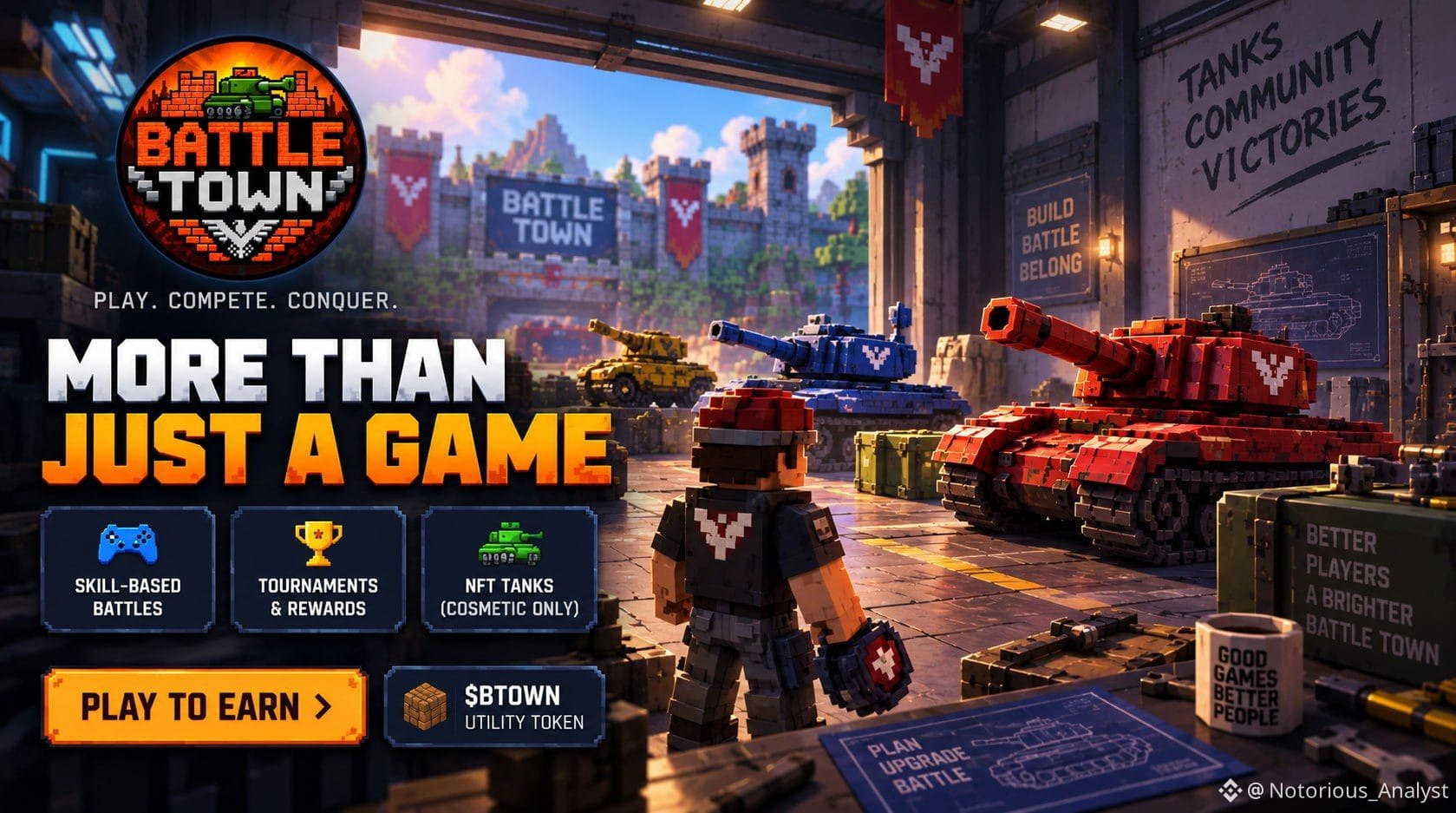
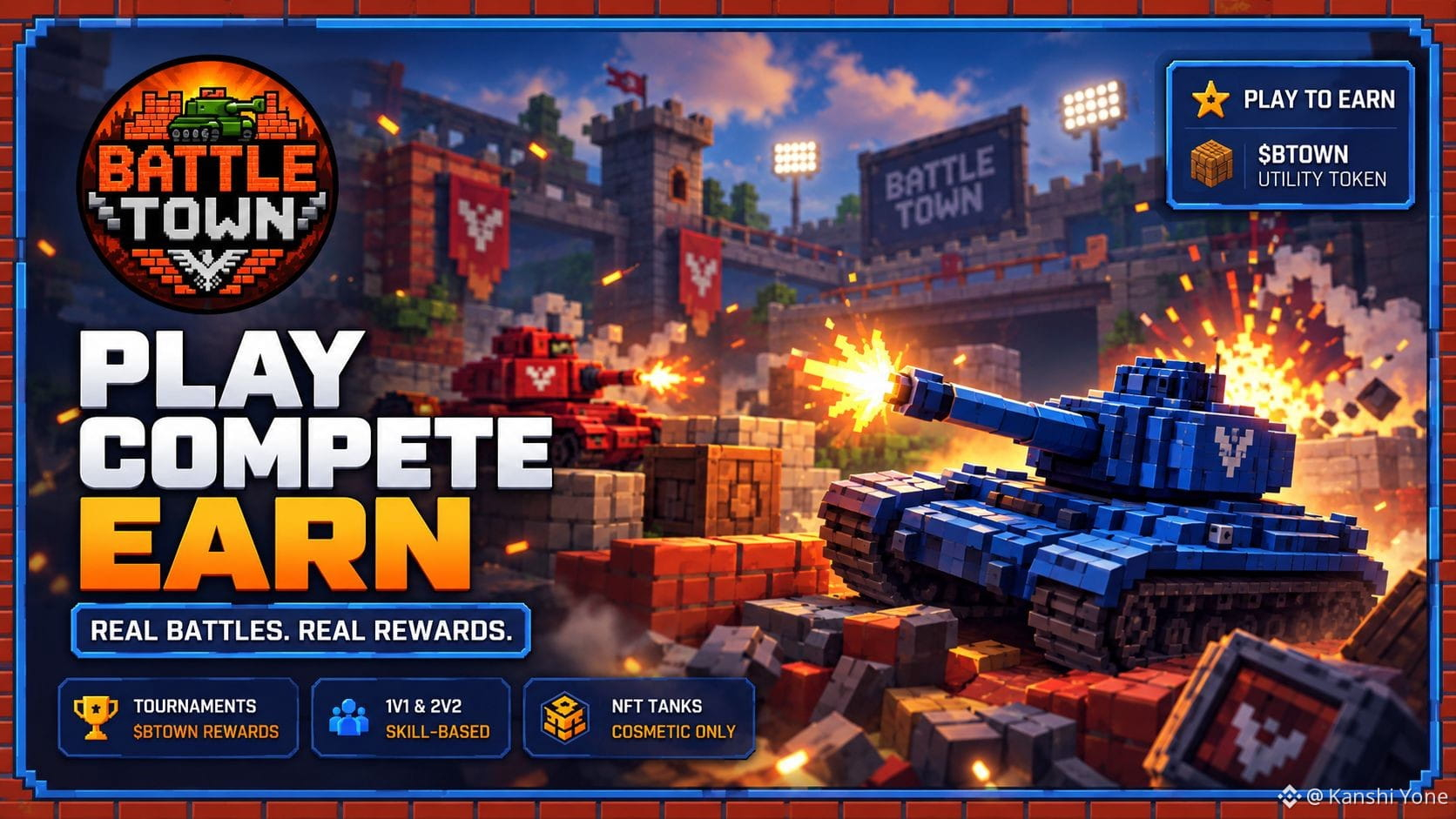
👀 Web3 gaming project BattleTown to keep on the radar.
Why?
Because it is an ecosystem that combines several well-known concepts:
🎮 Retro tank action
🛡️ 10 levels of tank progression
🧩 NFT features
🌐 Web3 integration
📊 Multi-round presale structure
📈 Higher announced prices in subsequent rounds
The project is essentially taking a tried-and-true gaming formula and building a Web3 economy around it.
This is more interesting than watching the token’s development journey.
The key milestones from here will be:
🎮 Evolution of the Gameplay
🏆 Tank Progression Explained
🛡️ Player interaction with the ecosystem
🌐 How Web3 mechanics play into the experience
Because in the end, the strongest GameFi projects need to make the game fun first.
BattleTown has the idea.
DYOR before doing anything.
#BattleTown #BTOWN #GameFi #Web3Gaming
👀 Web3 gaming project BattleTown to keep on the radar.
Why?
Because it is an ecosystem that combines several well-known concepts:
🎮 Retro tank action
🛡️ 10 levels of tank progression
🧩 NFT features
🌐 Web3 integration
📊 Multi-round presale structure
📈 Higher announced prices in subsequent rounds
The project is essentially taking a tried-and-true gaming formula and building a Web3 economy around it.
This is more interesting than watching the token’s development journey.
The key milestones from here will be:
🎮 Evolution of the Gameplay
🏆 Tank Progression Explained
🛡️ Player interaction with the ecosystem
🌐 How Web3 mechanics play into the experience
Because in the end, the strongest GameFi projects need to make the game fun first.
BattleTown has the idea.
DYOR before doing anything.
#BattleTown #BTOWN #GameFi #Web3Gaming
Why?
Because it is an ecosystem that combines several well-known concepts:
🎮 Retro tank action
🛡️ 10 levels of tank progression
🧩 NFT features
🌐 Web3 integration
📊 Multi-round presale structure
📈 Higher announced prices in subsequent rounds
The project is essentially taking a tried-and-true gaming formula and building a Web3 economy around it.
This is more interesting than watching the token’s development journey.
The key milestones from here will be:
🎮 Evolution of the Gameplay
🏆 Tank Progression Explained
🛡️ Player interaction with the ecosystem
🌐 How Web3 mechanics play into the experience
Because in the end, the strongest GameFi projects need to make the game fun first.
BattleTown has the idea.
DYOR before doing anything.
#BattleTown #BTOWN #GameFi #Web3Gaming
11
3
3.6k

·
--
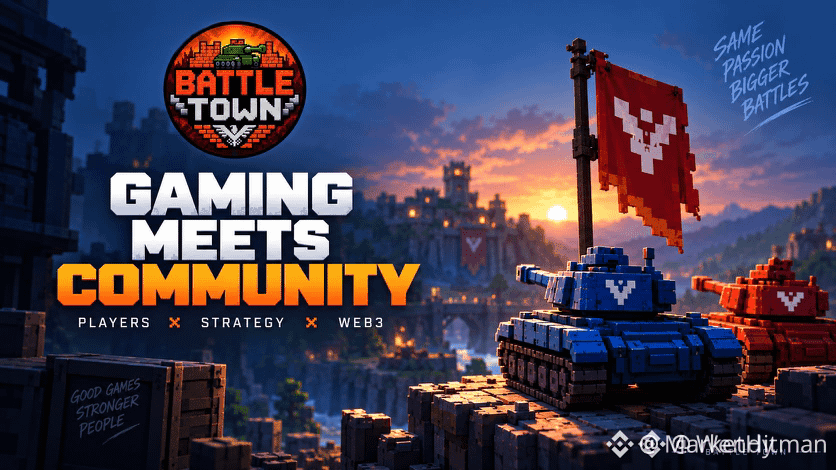
🚨 $BATTLETOWN UNVEILS STAGED PRESALE STRUCTURE AMID GAMEFI LIQUIDITY HUNT 📈
In a saturated GameFi landscape, token generation design dictates early market behavior. $BATTLETOWN is implementing a tiered presale model, scaling valuation upwards across consecutive rounds to build structured capital efficiency before public listing. 📊
Beyond tokenomics, sustainable order flow relies on product retention. The ecosystem pairs retro tank combat dynamics with 10-tier vehicle progression and collectible mechanics to absorb long-term sell pressure. 🌊
As beta rollouts and tank progression modules approach, execution will separate true institutional interest from short-term presale momentum. 💡 How are you evaluating project sustainability when analyzing early-stage GameFi launches? 👇
⚠️ Not financial advice. Always manage your risk. 🛡️
🏷️ #BattleTown #GameFi #Web3Gaming #Presale
🎯 🦈
🚨 $BATTLETOWN UNVEILS STAGED PRESALE STRUCTURE AMID GAMEFI LIQUIDITY HUNT 📈
In a saturated GameFi landscape, token generation design dictates early market behavior. $BATTLETOWN is implementing a tiered presale model, scaling valuation upwards across consecutive rounds to build structured capital efficiency before public listing. 📊
Beyond tokenomics, sustainable order flow relies on product retention. The ecosystem pairs retro tank combat dynamics with 10-tier vehicle progression and collectible mechanics to absorb long-term sell pressure. 🌊
As beta rollouts and tank progression modules approach, execution will separate true institutional interest from short-term presale momentum. 💡 How are you evaluating project sustainability when analyzing early-stage GameFi launches? 👇
⚠️ Not financial advice. Always manage your risk. 🛡️
🏷️ #BattleTown #GameFi #Web3Gaming #Presale
🎯 🦈
In a saturated GameFi landscape, token generation design dictates early market behavior. $BATTLETOWN is implementing a tiered presale model, scaling valuation upwards across consecutive rounds to build structured capital efficiency before public listing. 📊
Beyond tokenomics, sustainable order flow relies on product retention. The ecosystem pairs retro tank combat dynamics with 10-tier vehicle progression and collectible mechanics to absorb long-term sell pressure. 🌊
As beta rollouts and tank progression modules approach, execution will separate true institutional interest from short-term presale momentum. 💡 How are you evaluating project sustainability when analyzing early-stage GameFi launches? 👇
⚠️ Not financial advice. Always manage your risk. 🛡️
🏷️ #BattleTown #GameFi #Web3Gaming #Presale
🎯 🦈
31

·
--
Vérifié
I’ve looked at a lot of Web3 games, and most of them lose my attention pretty quickly.
Battle Town has been different. It’s simple.
You get into a tank, fight another player and try to win.
That simplicity is actually what I like about it.
There isn’t a huge amount of stuff you need to understand before you can enjoy the core gameplay.
Then you have the Web3 side built around it: NFT tanks, tournaments and the upcoming $BTOWN token.
For me, that order makes sense.
Make the game worth playing first.
Then give the ecosystem a reason to exist around it.
It’s still early and currently in closed beta, but this is one I’m keeping an eye on.
|
🔗 https://battletown.com
#BattleTown #web3gaming #NFTGaming
I’ve looked at a lot of Web3 games, and most of them lose my attention pretty quickly.
Battle Town has been different. It’s simple.
You get into a tank, fight another player and try to win.
That simplicity is actually what I like about it.
There isn’t a huge amount of stuff you need to understand before you can enjoy the core gameplay.
Then you have the Web3 side built around it: NFT tanks, tournaments and the upcoming $BTOWN token.
For me, that order makes sense.
Make the game worth playing first.
Then give the ecosystem a reason to exist around it.
It’s still early and currently in closed beta, but this is one I’m keeping an eye on.
|
🔗 https://battletown.com
#BattleTown #web3gaming #NFTGaming
Battle Town has been different. It’s simple.
You get into a tank, fight another player and try to win.
That simplicity is actually what I like about it.
There isn’t a huge amount of stuff you need to understand before you can enjoy the core gameplay.
Then you have the Web3 side built around it: NFT tanks, tournaments and the upcoming $BTOWN token.
For me, that order makes sense.
Make the game worth playing first.
Then give the ecosystem a reason to exist around it.
It’s still early and currently in closed beta, but this is one I’m keeping an eye on.
|
🔗 https://battletown.com
#BattleTown #web3gaming #NFTGaming
8
4
4k

💥 WEB3 AI REVOLUTION: $CLAW AGENT OUTPERFORMS TOP MODELS AT 88% LOWER COST! ⚡
Smart money loves efficiency, and ClawQuest's new AIP2-1.0 agent just put on a masterclass in AI performance benchmarks. In 2,400 real-world battle tests, this game-creation engine matched top-tier model capability while slashing operational compute costs by up to 88%. 📊
By letting players draft raw concepts while AI executes complex game builds in real time, $CLAW is tearing down developer friction completely. 💡 When lower overhead meets zero-barrier user accessibility, ecosystem growth usually accelerates fast. 🔍
Will cost-effective Web3 AI agents trigger the next major gaming narrative shift? 👇
⚠️ Not financial advice. Always manage your risk. 🛡️
🏷️ #CLAW #Web3Gaming #AIAgents #Crypto
🔥 ⚡
💥 WEB3 AI REVOLUTION: $CLAW AGENT OUTPERFORMS TOP MODELS AT 88% LOWER COST! ⚡
Smart money loves efficiency, and ClawQuest's new AIP2-1.0 agent just put on a masterclass in AI performance benchmarks. In 2,400 real-world battle tests, this game-creation engine matched top-tier model capability while slashing operational compute costs by up to 88%. 📊
By letting players draft raw concepts while AI executes complex game builds in real time, $CLAW is tearing down developer friction completely. 💡 When lower overhead meets zero-barrier user accessibility, ecosystem growth usually accelerates fast. 🔍
Will cost-effective Web3 AI agents trigger the next major gaming narrative shift? 👇
⚠️ Not financial advice. Always manage your risk. 🛡️
🏷️ #CLAW #Web3Gaming #AIAgents #Crypto
🔥 ⚡
Smart money loves efficiency, and ClawQuest's new AIP2-1.0 agent just put on a masterclass in AI performance benchmarks. In 2,400 real-world battle tests, this game-creation engine matched top-tier model capability while slashing operational compute costs by up to 88%. 📊
By letting players draft raw concepts while AI executes complex game builds in real time, $CLAW is tearing down developer friction completely. 💡 When lower overhead meets zero-barrier user accessibility, ecosystem growth usually accelerates fast. 🔍
Will cost-effective Web3 AI agents trigger the next major gaming narrative shift? 👇
⚠️ Not financial advice. Always manage your risk. 🛡️
🏷️ #CLAW #Web3Gaming #AIAgents #Crypto
🔥 ⚡
17


Article
🚀 The Next 10X Sector: Why Web3 Gaming & Layer-2 Chains Are Taking Over! 🎮💎The crypto landscape is evolving rapidly in 2026. While meme coins capture temporary hype, smart investors are silently accumulating assets in a sector with real-world utility and massive user retention: Web3 Gaming paired with Layer-2 scaling solutions.
🎮 Why Web3 Gaming is Different This Time:
The era of boring "Play-to-Earn" games with terrible graphics is over. Today, blockchain games offer AAA-quality graphics, immersive storylines, and seamless asset ownership. Players truly own their in-game items as NFTs, which they can trade freely on decentralized marketplaces.
⚡ The Power of Layer-2 Infrastructure:
In the past, high Ethereum gas fees killed the gaming experience. Now, Layer-2 scaling networks have solved this bottleneck.
Networks like Polygon ($POL ) and Arbitrum ($ARB ) allow millions of micro-transactions per second for fractions of a cent.This makes playing, mints, and transfers instant and virtually free for global gamers.
📊 The Investment Opportunity:
As traditional gaming giants continue to integrate blockchain technology, token ecosystems built on top-tier Layer-2 networks are seeing massive capital inflows. Projects that focus on infrastructure and scalability are the ones positioned for long-term growth.
💡 Trader's Note:
Look for Layer-2 tokens that are currently consolidating near strong historical support levels. Volume precedes price, so watch for sudden spikes in daily trading volume before planning your entry.
#web3gaming #Layer2 #CryptoAnalysis" #Write2Earn
🚀 The Next 10X Sector: Why Web3 Gaming & Layer-2 Chains Are Taking Over! 🎮💎
The crypto landscape is evolving rapidly in 2026. While meme coins capture temporary hype, smart investors are silently accumulating assets in a sector with real-world utility and massive user retention: Web3 Gaming paired with Layer-2 scaling solutions.
🎮 Why Web3 Gaming is Different This Time:
The era of boring "Play-to-Earn" games with terrible graphics is over. Today, blockchain games offer AAA-quality graphics, immersive storylines, and seamless asset ownership. Players truly own their in-game items as NFTs, which they can trade freely on decentralized marketplaces.
⚡ The Power of Layer-2 Infrastructure:
In the past, high Ethereum gas fees killed the gaming experience. Now, Layer-2 scaling networks have solved this bottleneck.
Networks like Polygon ($POL ) and Arbitrum ($ARB ) allow millions of micro-transactions per second for fractions of a cent.This makes playing, mints, and transfers instant and virtually free for global gamers.
📊 The Investment Opportunity:
As traditional gaming giants continue to integrate blockchain technology, token ecosystems built on top-tier Layer-2 networks are seeing massive capital inflows. Projects that focus on infrastructure and scalability are the ones positioned for long-term growth.
💡 Trader's Note:
Look for Layer-2 tokens that are currently consolidating near strong historical support levels. Volume precedes price, so watch for sudden spikes in daily trading volume before planning your entry.
#web3gaming #Layer2 #CryptoAnalysis" #Write2Earn
🎮 Why Web3 Gaming is Different This Time:
The era of boring "Play-to-Earn" games with terrible graphics is over. Today, blockchain games offer AAA-quality graphics, immersive storylines, and seamless asset ownership. Players truly own their in-game items as NFTs, which they can trade freely on decentralized marketplaces.
⚡ The Power of Layer-2 Infrastructure:
In the past, high Ethereum gas fees killed the gaming experience. Now, Layer-2 scaling networks have solved this bottleneck.
Networks like Polygon ($POL ) and Arbitrum ($ARB ) allow millions of micro-transactions per second for fractions of a cent.This makes playing, mints, and transfers instant and virtually free for global gamers.
📊 The Investment Opportunity:
As traditional gaming giants continue to integrate blockchain technology, token ecosystems built on top-tier Layer-2 networks are seeing massive capital inflows. Projects that focus on infrastructure and scalability are the ones positioned for long-term growth.
💡 Trader's Note:
Look for Layer-2 tokens that are currently consolidating near strong historical support levels. Volume precedes price, so watch for sudden spikes in daily trading volume before planning your entry.
#web3gaming #Layer2 #CryptoAnalysis" #Write2Earn
145

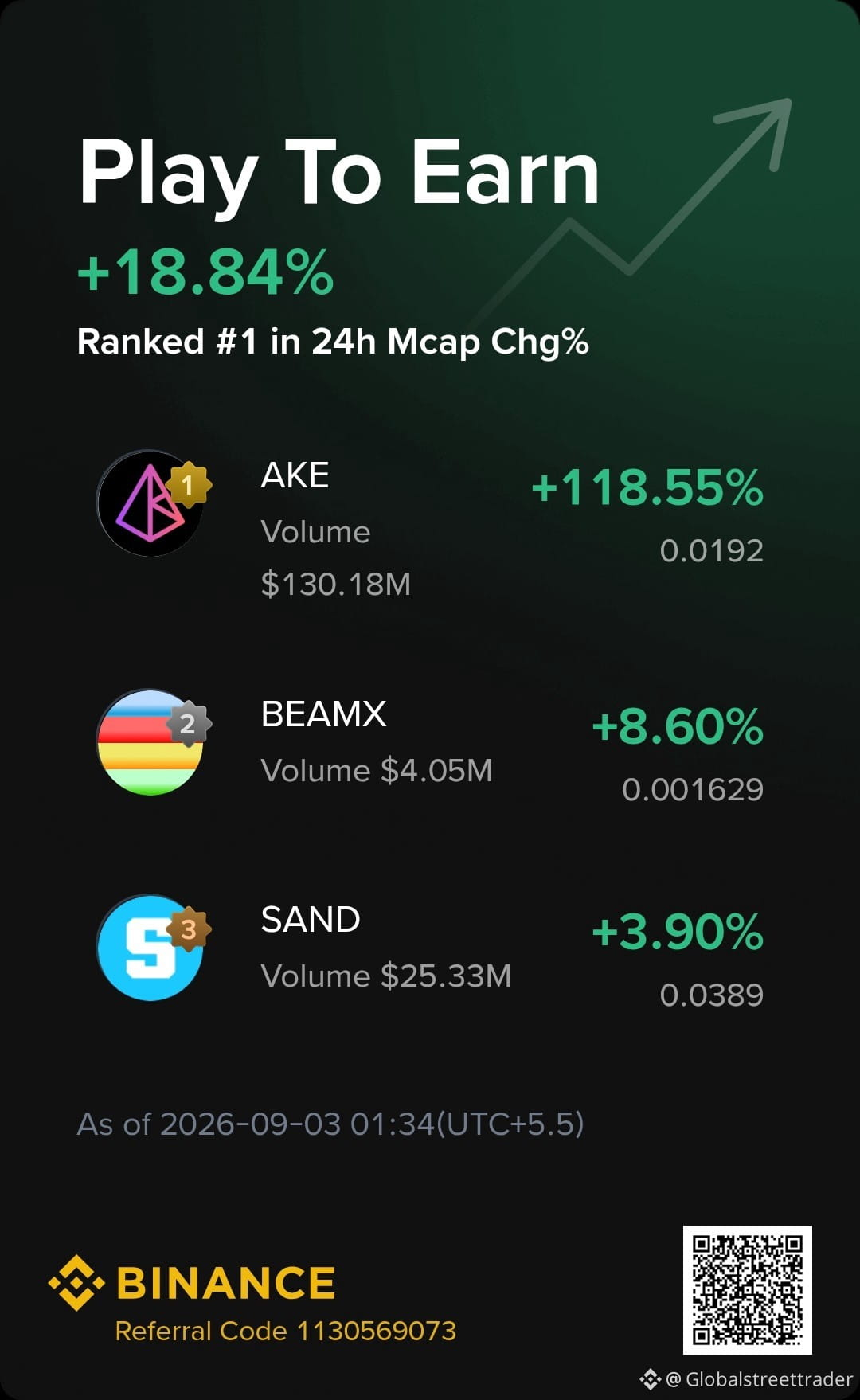
Play-To-Earn takes the #1 spot in 24h market cap gains!
🏆 $AKE is leading the pack with an insane 118% run, while $BEAMX and $SAND stay green.
Which P2E token are you holding right now? 👇
#crypto #BİNANCE #web3gaming
Play-To-Earn takes the #1 spot in 24h market cap gains!
🏆 $AKE is leading the pack with an insane 118% run, while $BEAMX and $SAND stay green.
Which P2E token are you holding right now? 👇
#crypto #BİNANCE #web3gaming
🏆 $AKE is leading the pack with an insane 118% run, while $BEAMX and $SAND stay green.
Which P2E token are you holding right now? 👇
#crypto #BİNANCE #web3gaming
1
1
346
Connectez-vous pour découvrir plus de contenu
Rejoignez la communauté mondiale des adeptes de cryptomonnaies sur Binance Square
⚡️ Suviez les dernières informations importantes sur les cryptomonnaies.
💬 Jugé digne de confiance par la plus grande plateforme d’échange de cryptomonnaies au monde.
👍 Découvrez les connaissances que partagent les créateurs vérifiés.
Adresse e-mail/Nº de téléphone
Sujets d’actualité
1
#EtherGains70.9%InQ3
176,981 vues
1,187 mentions
2
#TreasuryLetsStatesFileStablecoinCertificationsEarly
11,616 vues
93 mentions
3
#US10YearYieldNears5.3%
160,399 vues
1,161 mentions
4
#DollarIndexHitsHighestSinceMay2025
47,185 vues
631 mentions
5
#USWeeklyJoblessClaimsFallTo197000
38,501 vues
512 mentions
6
#BitcoinETFsTake$6.34BillionInQ3
10,513 vues
77 mentions
7
#KoreaProposesTokenizingStocksAndBonds
75,932 vues
830 mentions
8
#MetaMaskExitsLidoValidatorsAfterSecurityIncident
175,484 vues
1,560 mentions
9
#MicronBeatsEarningsLiftsGuidance
89,248 vues
1,125 mentions
10
#CFTCSubmitsTwoEventContractRulesToWhiteHouse
61,495 vues
834 mentions