

#security
security
1.8M vues
4,744 mentions
Populaire
Récents

·
--
$3 signs a crypto giveaway is a scam 🚩
1 . It asks you to send crypto first. Real giveaways never ask you to "verify" by sending funds.
2 . It asks for your seed phrase or login codes. No real company or project ever needs these.
3 . It pushes you to hurry. "Only 10 minutes left!" is meant to stop you from thinking.
Before you click any link, check that it's from the official Binance app or website. Stay safe out there!
#Crypto #Scam #security #EarningsSeason #scamriskwarning $GOOGL.US $NVDAB
$3 signs a crypto giveaway is a scam 🚩
1 . It asks you to send crypto first. Real giveaways never ask you to "verify" by sending funds.
2 . It asks for your seed phrase or login codes. No real company or project ever needs these.
3 . It pushes you to hurry. "Only 10 minutes left!" is meant to stop you from thinking.
Before you click any link, check that it's from the official Binance app or website. Stay safe out there!
#Crypto #Scam #security #EarningsSeason #scamriskwarning $GOOGL.US $NVDAB
1 . It asks you to send crypto first. Real giveaways never ask you to "verify" by sending funds.
2 . It asks for your seed phrase or login codes. No real company or project ever needs these.
3 . It pushes you to hurry. "Only 10 minutes left!" is meant to stop you from thinking.
Before you click any link, check that it's from the official Binance app or website. Stay safe out there!
#Crypto #Scam #security #EarningsSeason #scamriskwarning $GOOGL.US $NVDAB
NVDAB-1,18%
GOOGLUS+0,80%
1
100

·
--
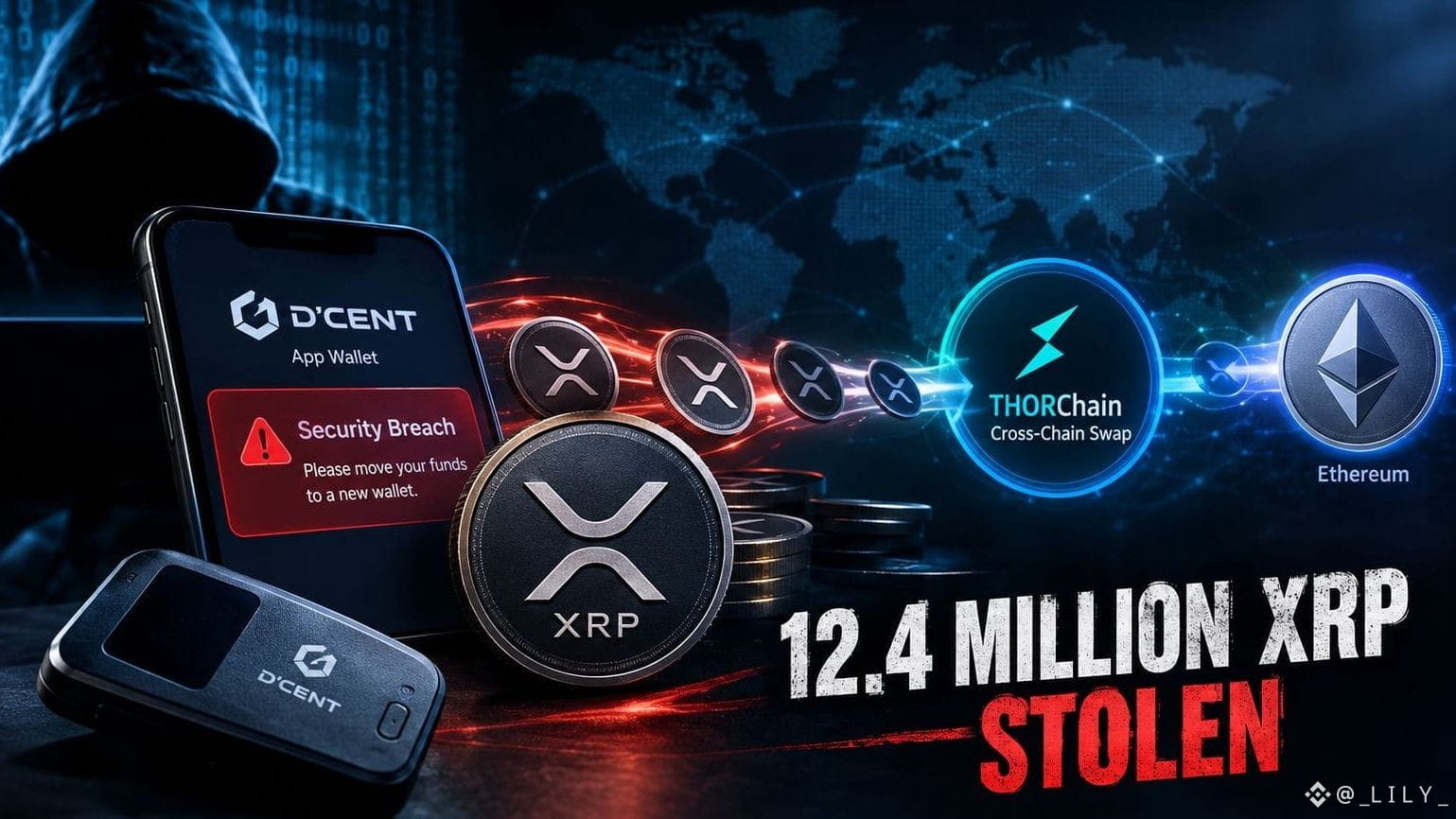
⚠️ 7,300+ D’CENT WALLETS HIT — 12.4M+ XRP DRAINED📝
🚨 A major security breach involving D’CENT App Wallets has reportedly resulted in more than 12.4 million $XRP being drained from over 7,300 wallets.
🔐 The XRP Ledger itself was not exploited — attackers used valid signatures from compromised private keys.
📉 Even after security warnings, additional XRP was reportedly stolen, pushing total losses to around $18–20M.
🌉 Some stolen funds have reportedly moved through THORChain into Ethereum, making recovery more difficult.
⚠️ D’CENT has urged affected users to generate new recovery phrases immediately.
$XRP $ETH
{future}(ETHUSDT)
#XRP #Crypto #Hack #Dcent #Security
⚠️ 7,300+ D’CENT WALLETS HIT — 12.4M+ XRP DRAINED📝
🚨 A major security breach involving D’CENT App Wallets has reportedly resulted in more than 12.4 million $XRP being drained from over 7,300 wallets.
🔐 The XRP Ledger itself was not exploited — attackers used valid signatures from compromised private keys.
📉 Even after security warnings, additional XRP was reportedly stolen, pushing total losses to around $18–20M.
🌉 Some stolen funds have reportedly moved through THORChain into Ethereum, making recovery more difficult.
⚠️ D’CENT has urged affected users to generate new recovery phrases immediately.
$XRP $ETH
#XRP #Crypto #Hack #Dcent #Security
🚨 A major security breach involving D’CENT App Wallets has reportedly resulted in more than 12.4 million $XRP being drained from over 7,300 wallets.
🔐 The XRP Ledger itself was not exploited — attackers used valid signatures from compromised private keys.
📉 Even after security warnings, additional XRP was reportedly stolen, pushing total losses to around $18–20M.
🌉 Some stolen funds have reportedly moved through THORChain into Ethereum, making recovery more difficult.
⚠️ D’CENT has urged affected users to generate new recovery phrases immediately.
$XRP $ETH
#XRP #Crypto #Hack #Dcent #Security
96

·
--
🚨 $XRP SECURITY ALERT
Hackers have drained 12.4M+ $XRP from more than 7,000 D’CENT wallets in one of the biggest XRP thefts of 2026. 😳
The attack also affected assets on Bitcoin, Ethereum, Tron and Stellar.
D’CENT is urging affected users to create a new recovery phrase and migrate their assets immediately.
How safe are your crypto wallets right now? 👀
#crypto #bitcoin #Ethereum #security
#hackersdrainover12.4mxrpfromdcentwallets
🚨 $XRP SECURITY ALERT
Hackers have drained 12.4M+ $XRP from more than 7,000 D’CENT wallets in one of the biggest XRP thefts of 2026. 😳
The attack also affected assets on Bitcoin, Ethereum, Tron and Stellar.
D’CENT is urging affected users to create a new recovery phrase and migrate their assets immediately.
How safe are your crypto wallets right now? 👀
#crypto #bitcoin #Ethereum #security
#hackersdrainover12.4mxrpfromdcentwallets
Hackers have drained 12.4M+ $XRP from more than 7,000 D’CENT wallets in one of the biggest XRP thefts of 2026. 😳
The attack also affected assets on Bitcoin, Ethereum, Tron and Stellar.
D’CENT is urging affected users to create a new recovery phrase and migrate their assets immediately.
How safe are your crypto wallets right now? 👀
#crypto #bitcoin #Ethereum #security
#hackersdrainover12.4mxrpfromdcentwallets
2
104

·
--
🚨 CRITICAL SECURITY ALERT FOR ALL $BTC HOLDERS ON APPLE DEVICES BEFORE SYSTEM EXPLOITS 🚨
Institutional security vectors are being tested as SlowMist confirms black-hat entities actively exploiting zero-day vulnerabilities in pre-iOS 27 Apple operating systems to compromise wallet assets. 🔍 Smart money understands that operational security is the foundation of capital preservation when protecting your $BTC position. 🛡️
Attackers are executing targeted exploits via custom browser vectors and unauthorized application installs to bypass client-side encryption. 📥 Immediate system updates across all devices, alongside strict isolation of wallet interactions from Safari or unverified links, are non-negotiable protocol requirements. ⚡
Have you updated your mobile firmware today to lock down your self-custody cold storage? 💬
⚠️ Not financial advice. Always manage your risk. 🛡️
🏷️ #BTC #CryptoSecurity #RiskManagement #Security
🛡️ 🔍
🚨 CRITICAL SECURITY ALERT FOR ALL $BTC HOLDERS ON APPLE DEVICES BEFORE SYSTEM EXPLOITS 🚨
Institutional security vectors are being tested as SlowMist confirms black-hat entities actively exploiting zero-day vulnerabilities in pre-iOS 27 Apple operating systems to compromise wallet assets. 🔍 Smart money understands that operational security is the foundation of capital preservation when protecting your $BTC position. 🛡️
Attackers are executing targeted exploits via custom browser vectors and unauthorized application installs to bypass client-side encryption. 📥 Immediate system updates across all devices, alongside strict isolation of wallet interactions from Safari or unverified links, are non-negotiable protocol requirements. ⚡
Have you updated your mobile firmware today to lock down your self-custody cold storage? 💬
⚠️ Not financial advice. Always manage your risk. 🛡️
🏷️ #BTC #CryptoSecurity #RiskManagement #Security
🛡️ 🔍
Institutional security vectors are being tested as SlowMist confirms black-hat entities actively exploiting zero-day vulnerabilities in pre-iOS 27 Apple operating systems to compromise wallet assets. 🔍 Smart money understands that operational security is the foundation of capital preservation when protecting your $BTC position. 🛡️
Attackers are executing targeted exploits via custom browser vectors and unauthorized application installs to bypass client-side encryption. 📥 Immediate system updates across all devices, alongside strict isolation of wallet interactions from Safari or unverified links, are non-negotiable protocol requirements. ⚡
Have you updated your mobile firmware today to lock down your self-custody cold storage? 💬
⚠️ Not financial advice. Always manage your risk. 🛡️
🏷️ #BTC #CryptoSecurity #RiskManagement #Security
🛡️ 🔍
11
·
--
THORChain under fire for processing stolen Bitget assets.
Bitget confirmed on September 25 that $387.5 million reached attacker addresses, up from $351.6 million after Zcash and Tron assets were added.
CEO Gracy Chen asked THORChain on September 26 to refuse service to those addresses, saying “decentralization is a design principle, not a shield for facilitating known stolen funds.”
THORChain replied it is decentralized and permissionless like Bitcoin, Ethereum and BNB Chain, and asked what responsibility those networks would bear.
Bitget’s public tracker lists 2,377 attacker addresses holding $378 million, with 1,497 moving funds through THORChain for cross‑chain swaps.
Security researcher Taylor Monahan debated that screening transactions is equivalent to censorship; the discussion cited a May halt after a $10.7 million exploit that paused trading for five weeks.
Bitget offered 5 % bounties on frozen and recovered funds and announced phased withdrawals, with BTC restarting on September 28 at 08:00 UTC.
Should permissionless protocols intervene when known stolen assets flow through them?
#Crypto #DeFi #CrossChain #Security
THORChain under fire for processing stolen Bitget assets.
Bitget confirmed on September 25 that $387.5 million reached attacker addresses, up from $351.6 million after Zcash and Tron assets were added.
CEO Gracy Chen asked THORChain on September 26 to refuse service to those addresses, saying “decentralization is a design principle, not a shield for facilitating known stolen funds.”
THORChain replied it is decentralized and permissionless like Bitcoin, Ethereum and BNB Chain, and asked what responsibility those networks would bear.
Bitget’s public tracker lists 2,377 attacker addresses holding $378 million, with 1,497 moving funds through THORChain for cross‑chain swaps.
Security researcher Taylor Monahan debated that screening transactions is equivalent to censorship; the discussion cited a May halt after a $10.7 million exploit that paused trading for five weeks.
Bitget offered 5 % bounties on frozen and recovered funds and announced phased withdrawals, with BTC restarting on September 28 at 08:00 UTC.
Should permissionless protocols intervene when known stolen assets flow through them?
#Crypto #DeFi #CrossChain #Security
Bitget confirmed on September 25 that $387.5 million reached attacker addresses, up from $351.6 million after Zcash and Tron assets were added.
CEO Gracy Chen asked THORChain on September 26 to refuse service to those addresses, saying “decentralization is a design principle, not a shield for facilitating known stolen funds.”
THORChain replied it is decentralized and permissionless like Bitcoin, Ethereum and BNB Chain, and asked what responsibility those networks would bear.
Bitget’s public tracker lists 2,377 attacker addresses holding $378 million, with 1,497 moving funds through THORChain for cross‑chain swaps.
Security researcher Taylor Monahan debated that screening transactions is equivalent to censorship; the discussion cited a May halt after a $10.7 million exploit that paused trading for five weeks.
Bitget offered 5 % bounties on frozen and recovered funds and announced phased withdrawals, with BTC restarting on September 28 at 08:00 UTC.
Should permissionless protocols intervene when known stolen assets flow through them?
#Crypto #DeFi #CrossChain #Security
1
542

#bitgetdetailssecurityincidenttimeline
#bitgetdetailssecurityincidenttimeline
Hey everyone! 👋 Let's talk about the latest updates regarding the [Bitget](https://www.binance.com/square/hashtag/Bitget) security incident timeline.
As many of you know, [Bitget](https://www.binance.com/square/hashtag/Bitget) recently faced unauthorized transfers from its hot and warm wallets, with the final affected amount revised to $387.5M.
Here is a quick look at how things unfolded:
Sept. 24: Unauthorized transfers detected and withdrawals temporarily suspended 🛑
Sept. 25: Attack path identified and vulnerability successfully fixed 🔍
Sept. 28: BTC withdrawals started returning in phases 📅
The great news is that cold wallets were completely unaffected, and the $464M+ User Protection Fund fully covers the losses, meaning user account balances remain safe and secure! 🛡️
What are your thoughts on how they handled this? Are you feeling confident about the phased withdrawal restart, or are you staying cautious? Let’s chat in the comments! 👇
$BTC, $ZEC
{spot}(ZECUSDT)
, $HBAR
{spot}(HBARUSDT)
#Bitget #crypto #security
#bitgetdetailssecurityincidenttimeline
#bitgetdetailssecurityincidenttimeline
Hey everyone! 👋 Let's talk about the latest updates regarding the Bitget security incident timeline.
As many of you know, Bitget recently faced unauthorized transfers from its hot and warm wallets, with the final affected amount revised to $387.5M.
Here is a quick look at how things unfolded:
Sept. 24: Unauthorized transfers detected and withdrawals temporarily suspended 🛑
Sept. 25: Attack path identified and vulnerability successfully fixed 🔍
Sept. 28: BTC withdrawals started returning in phases 📅
The great news is that cold wallets were completely unaffected, and the $464M+ User Protection Fund fully covers the losses, meaning user account balances remain safe and secure! 🛡️
What are your thoughts on how they handled this? Are you feeling confident about the phased withdrawal restart, or are you staying cautious? Let’s chat in the comments! 👇
$BTC, $ZEC
, $HBAR
#Bitget #crypto #security
#bitgetdetailssecurityincidenttimeline
Hey everyone! 👋 Let's talk about the latest updates regarding the Bitget security incident timeline.
As many of you know, Bitget recently faced unauthorized transfers from its hot and warm wallets, with the final affected amount revised to $387.5M.
Here is a quick look at how things unfolded:
Sept. 24: Unauthorized transfers detected and withdrawals temporarily suspended 🛑
Sept. 25: Attack path identified and vulnerability successfully fixed 🔍
Sept. 28: BTC withdrawals started returning in phases 📅
The great news is that cold wallets were completely unaffected, and the $464M+ User Protection Fund fully covers the losses, meaning user account balances remain safe and secure! 🛡️
What are your thoughts on how they handled this? Are you feeling confident about the phased withdrawal restart, or are you staying cautious? Let’s chat in the comments! 👇
$BTC, $ZEC
, $HBAR
#Bitget #crypto #security
1
3.6k

·
--
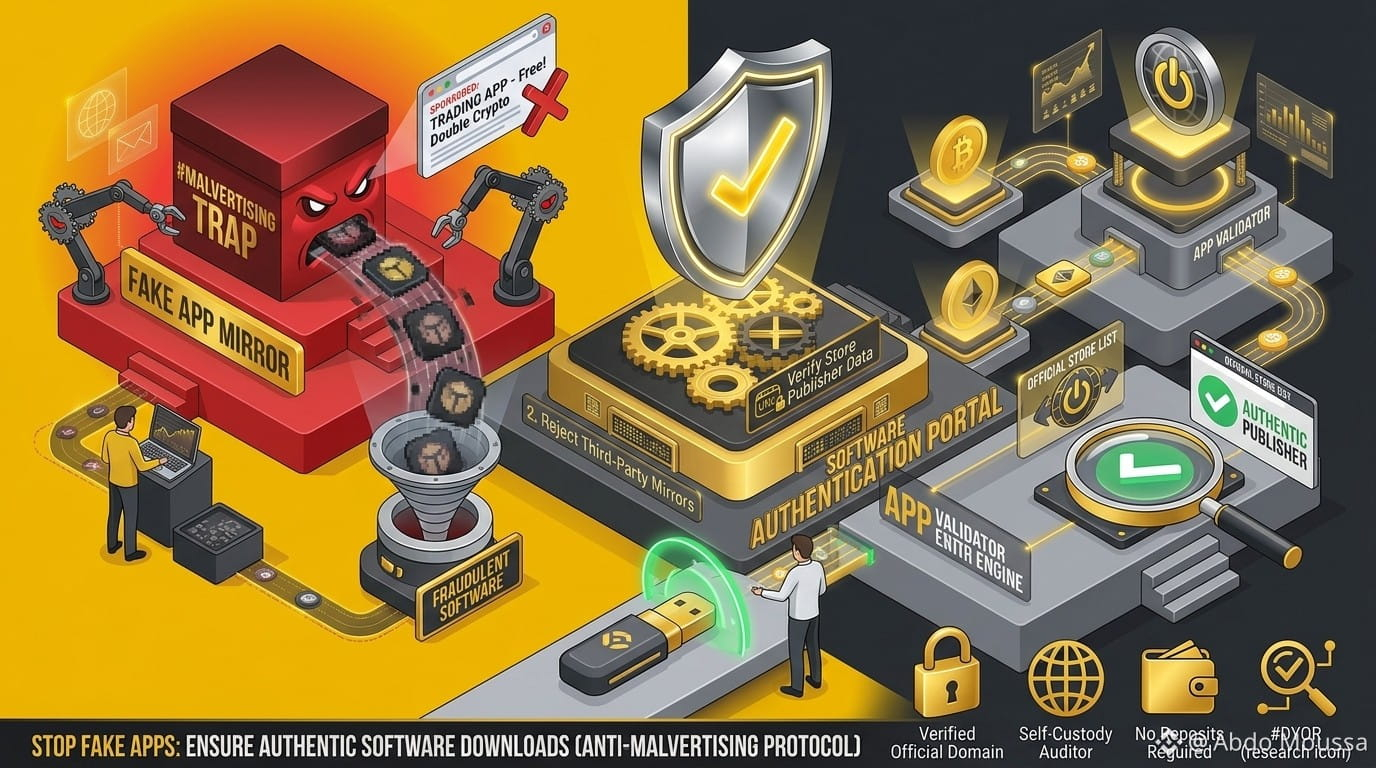
📥 Malvertising & Fake App Threats: Ensuring Authentic Software Downloads
Bad actors frequently leverage sponsored search engine ad slots—known as Malvertising—and malicious third-party mirrors to trick users into downloading counterfeit trading applications designed to harvest account credentials.
💡 Core Protocols for Software Authenticity
Avoid Sponsored Ad Links: When using search engines, bypass top "Sponsored" ad results and navigate directly to official verified web domains.
Verify Store Publisher Data: When installing applications from official stores (Google Play or Apple App Store), verify the publisher entity name and download metrics.
Reject External APK Installs: Avoid downloading third-party android package files (.apk) or software installers distributed via messaging platforms or unverified forums.
Cross-Check Developer Signatures: Ensure device security settings block side-loading of unknown applications.
⚠️ Security & Educational Disclaimer
Ensuring software integrity prevents remote keylogging and credential theft, This publication is prepared strictly for educational and security awareness purposes.
[https://www.binance.com/en/academy/glossary/malware](https://www.binance.com/en/academy/glossary/malware)
Verify your download origins, protect your endpoints, and always DYOR (Do Your Own Research) 💡
#Binance #security #AntiPhishingCode #CryptoSafety #dyor
📥 Malvertising & Fake App Threats: Ensuring Authentic Software Downloads
Bad actors frequently leverage sponsored search engine ad slots—known as Malvertising—and malicious third-party mirrors to trick users into downloading counterfeit trading applications designed to harvest account credentials.
💡 Core Protocols for Software Authenticity
Avoid Sponsored Ad Links: When using search engines, bypass top "Sponsored" ad results and navigate directly to official verified web domains.
Verify Store Publisher Data: When installing applications from official stores (Google Play or Apple App Store), verify the publisher entity name and download metrics.
Reject External APK Installs: Avoid downloading third-party android package files (.apk) or software installers distributed via messaging platforms or unverified forums.
Cross-Check Developer Signatures: Ensure device security settings block side-loading of unknown applications.
⚠️ Security & Educational Disclaimer
Ensuring software integrity prevents remote keylogging and credential theft, This publication is prepared strictly for educational and security awareness purposes.
https://www.binance.com/en/academy/glossary/malware
Verify your download origins, protect your endpoints, and always DYOR (Do Your Own Research) 💡
#Binance #security #AntiPhishingCode #CryptoSafety #dyor
Bad actors frequently leverage sponsored search engine ad slots—known as Malvertising—and malicious third-party mirrors to trick users into downloading counterfeit trading applications designed to harvest account credentials.
💡 Core Protocols for Software Authenticity
Avoid Sponsored Ad Links: When using search engines, bypass top "Sponsored" ad results and navigate directly to official verified web domains.
Verify Store Publisher Data: When installing applications from official stores (Google Play or Apple App Store), verify the publisher entity name and download metrics.
Reject External APK Installs: Avoid downloading third-party android package files (.apk) or software installers distributed via messaging platforms or unverified forums.
Cross-Check Developer Signatures: Ensure device security settings block side-loading of unknown applications.
⚠️ Security & Educational Disclaimer
Ensuring software integrity prevents remote keylogging and credential theft, This publication is prepared strictly for educational and security awareness purposes.
https://www.binance.com/en/academy/glossary/malware
Verify your download origins, protect your endpoints, and always DYOR (Do Your Own Research) 💡
#Binance #security #AntiPhishingCode #CryptoSafety #dyor
5
66
·
--
🍪 Browser Hygiene: Protecting Active Sessions from Cookie Theft
Relying solely on multi-factor authentication is insufficient if active browser sessions are left vulnerable to session-hijacking malware designed to steal access cookies and authorization tokens.
💡 Mitigating Session Hijacking & Token Theft
Understand Cookie Stealers: Specialized malware (InfoStealers) targets localized browser databases to export active session cookies, allowing attackers to clone an authenticated session on a remote machine.
Explicit Logouts: Always click the explicit Log Out button rather than simply closing the browser tab when concluding sensitive financial activities.
Audit Browser Extensions: Routinely inspect and remove unnecessary or unverified third-party browser extensions that possess broad web-reading permissions.
Isolate Trading Environments: Dedicate a clean, extension-free browser profile or isolated device exclusively for executing digital asset transactions.
⚠️ Security & Educational Disclaimer
Maintaining strict browser environment hygiene prevents unauthorized session cloning and credential harvesting, This publication is prepared strictly for educational and security awareness purposes.
[https://www.binance.com/en/academy/articles/what-are-cookies](https://www.binance.com/en/academy/articles/what-are-cookies)
Clean your browser cache, log out of sensitive sessions, and always DYOR (Do Your Own Research) 💡
#Binance #Security #AccountSecurity #dyor
🍪 Browser Hygiene: Protecting Active Sessions from Cookie Theft
Relying solely on multi-factor authentication is insufficient if active browser sessions are left vulnerable to session-hijacking malware designed to steal access cookies and authorization tokens.
💡 Mitigating Session Hijacking & Token Theft
Understand Cookie Stealers: Specialized malware (InfoStealers) targets localized browser databases to export active session cookies, allowing attackers to clone an authenticated session on a remote machine.
Explicit Logouts: Always click the explicit Log Out button rather than simply closing the browser tab when concluding sensitive financial activities.
Audit Browser Extensions: Routinely inspect and remove unnecessary or unverified third-party browser extensions that possess broad web-reading permissions.
Isolate Trading Environments: Dedicate a clean, extension-free browser profile or isolated device exclusively for executing digital asset transactions.
⚠️ Security & Educational Disclaimer
Maintaining strict browser environment hygiene prevents unauthorized session cloning and credential harvesting, This publication is prepared strictly for educational and security awareness purposes.
https://www.binance.com/en/academy/articles/what-are-cookies
Clean your browser cache, log out of sensitive sessions, and always DYOR (Do Your Own Research) 💡
#Binance #Security #AccountSecurity #dyor
Relying solely on multi-factor authentication is insufficient if active browser sessions are left vulnerable to session-hijacking malware designed to steal access cookies and authorization tokens.
💡 Mitigating Session Hijacking & Token Theft
Understand Cookie Stealers: Specialized malware (InfoStealers) targets localized browser databases to export active session cookies, allowing attackers to clone an authenticated session on a remote machine.
Explicit Logouts: Always click the explicit Log Out button rather than simply closing the browser tab when concluding sensitive financial activities.
Audit Browser Extensions: Routinely inspect and remove unnecessary or unverified third-party browser extensions that possess broad web-reading permissions.
Isolate Trading Environments: Dedicate a clean, extension-free browser profile or isolated device exclusively for executing digital asset transactions.
⚠️ Security & Educational Disclaimer
Maintaining strict browser environment hygiene prevents unauthorized session cloning and credential harvesting, This publication is prepared strictly for educational and security awareness purposes.
https://www.binance.com/en/academy/articles/what-are-cookies
Clean your browser cache, log out of sensitive sessions, and always DYOR (Do Your Own Research) 💡
#Binance #Security #AccountSecurity #dyor

6
67

·
--
Haussier
#bitgetdetailssecurityincidenttimeline
🚨 BITGET JUST REVEALED THE FULL SECURITY INCIDENT TIMELINE.
On September 24, Bitget detected unauthorized transfers from part of its hot and warm wallet infrastructure. The estimated affected amount was later revised from $351.6M to $387.5M after additional transactions were identified.
⏰ 18:31 UTC: Unauthorized transfers detected
🛑 Same day: Withdrawals temporarily suspended
🔍 Sept. 25: Attack path identified and vulnerability fixed
💰 $387.5M: Revised total affected amount
🛡️ Cold wallets: Not affected
🏦 Protection Fund: Over $464M
📅 Sept. 28: BTC withdrawals scheduled to begin returning in phases
Bitget says the incident is contained, user account balances remain unaffected, and Mandiant + SlowMist are assisting with the investigation.
🔥 Now the big question:
Will Bitget's phased withdrawal restart restore confidence — or will traders remain cautious? 👀
#Bitget #crypto #security
#bitgetdetailssecurityincidenttimeline
🚨 BITGET JUST REVEALED THE FULL SECURITY INCIDENT TIMELINE.
On September 24, Bitget detected unauthorized transfers from part of its hot and warm wallet infrastructure. The estimated affected amount was later revised from $351.6M to $387.5M after additional transactions were identified.
⏰ 18:31 UTC: Unauthorized transfers detected
🛑 Same day: Withdrawals temporarily suspended
🔍 Sept. 25: Attack path identified and vulnerability fixed
💰 $387.5M: Revised total affected amount
🛡️ Cold wallets: Not affected
🏦 Protection Fund: Over $464M
📅 Sept. 28: BTC withdrawals scheduled to begin returning in phases
Bitget says the incident is contained, user account balances remain unaffected, and Mandiant + SlowMist are assisting with the investigation.
🔥 Now the big question:
Will Bitget's phased withdrawal restart restore confidence — or will traders remain cautious? 👀
#Bitget #crypto #security
🚨 BITGET JUST REVEALED THE FULL SECURITY INCIDENT TIMELINE.
On September 24, Bitget detected unauthorized transfers from part of its hot and warm wallet infrastructure. The estimated affected amount was later revised from $351.6M to $387.5M after additional transactions were identified.
⏰ 18:31 UTC: Unauthorized transfers detected
🛑 Same day: Withdrawals temporarily suspended
🔍 Sept. 25: Attack path identified and vulnerability fixed
💰 $387.5M: Revised total affected amount
🛡️ Cold wallets: Not affected
🏦 Protection Fund: Over $464M
📅 Sept. 28: BTC withdrawals scheduled to begin returning in phases
Bitget says the incident is contained, user account balances remain unaffected, and Mandiant + SlowMist are assisting with the investigation.
🔥 Now the big question:
Will Bitget's phased withdrawal restart restore confidence — or will traders remain cautious? 👀
#Bitget #crypto #security
AngelOfCrypto_-:
nice
6
13
27.3k

If you're still keeping your entire bag on a centralized exchange, stop now.
The real damage is not just the hack. It is sitting through a withdrawal freeze while $BTC dumps or a setup you wanted evaporates, with no way to move.
Bitget has started phased withdrawals after a $388M exploit. Some people will call that a win because the exchange is covering users from reserves and reopening access in stages. Others will say a $388 million hole is exactly why you never treat a CEX as a vault.
I'm with the second group. Phased access still means you were locked when it mattered. Traders holding $ETH or sitting in $USDT cannot hedge, cannot exit, cannot rotate until someone else decides the queue is open.
Exchanges are for trading. They are not for storing the stack you cannot afford to lose. Keep what you need to trade and move the rest.
Are you still comfortable leaving the bulk of your funds on a CEX after this, or does $388M change the math for you?
#Crypto #Bitcoin #Security
If you're still keeping your entire bag on a centralized exchange, stop now.
The real damage is not just the hack. It is sitting through a withdrawal freeze while $BTC dumps or a setup you wanted evaporates, with no way to move.
Bitget has started phased withdrawals after a $388M exploit. Some people will call that a win because the exchange is covering users from reserves and reopening access in stages. Others will say a $388 million hole is exactly why you never treat a CEX as a vault.
I'm with the second group. Phased access still means you were locked when it mattered. Traders holding $ETH or sitting in $USDT cannot hedge, cannot exit, cannot rotate until someone else decides the queue is open.
Exchanges are for trading. They are not for storing the stack you cannot afford to lose. Keep what you need to trade and move the rest.
Are you still comfortable leaving the bulk of your funds on a CEX after this, or does $388M change the math for you?
#Crypto #Bitcoin #Security
The real damage is not just the hack. It is sitting through a withdrawal freeze while $BTC dumps or a setup you wanted evaporates, with no way to move.
Bitget has started phased withdrawals after a $388M exploit. Some people will call that a win because the exchange is covering users from reserves and reopening access in stages. Others will say a $388 million hole is exactly why you never treat a CEX as a vault.
I'm with the second group. Phased access still means you were locked when it mattered. Traders holding $ETH or sitting in $USDT cannot hedge, cannot exit, cannot rotate until someone else decides the queue is open.
Exchanges are for trading. They are not for storing the stack you cannot afford to lose. Keep what you need to trade and move the rest.
Are you still comfortable leaving the bulk of your funds on a CEX after this, or does $388M change the math for you?
#Crypto #Bitcoin #Security
32

🚨 $340K $USDT EXPLOIT CLAIMS FLARE UP AS API SECURITY RISKS HIT MAJOR EXCHANGE! 🚨
🔒 A high-profile trader reported a staggering $340,000 asset drain on a top-tier exchange, pointing directly at unrevoked API access during a security compromise. 🚨 The platform has launched a dedicated investigation team to handle the case one-on-one and address user protection concerns.
💡 Beyond the headline noise, this is a severe reminder that cold storage and strict API management are non-negotiable for real capital protection. 🛡️ Even the cleanest setups mean nothing if your key permissions leave the vault door wide open.
💬 How often do you audit and revoke stale API permissions across your exchange accounts? 👇
⚠️ Not financial advice. Always manage your risk. 🛡️
🏷️ #USDT #CryptoSecurity #RiskManagement #Security
🛡️ 👁️
🚨 $340K $USDT EXPLOIT CLAIMS FLARE UP AS API SECURITY RISKS HIT MAJOR EXCHANGE! 🚨
🔒 A high-profile trader reported a staggering $340,000 asset drain on a top-tier exchange, pointing directly at unrevoked API access during a security compromise. 🚨 The platform has launched a dedicated investigation team to handle the case one-on-one and address user protection concerns.
💡 Beyond the headline noise, this is a severe reminder that cold storage and strict API management are non-negotiable for real capital protection. 🛡️ Even the cleanest setups mean nothing if your key permissions leave the vault door wide open.
💬 How often do you audit and revoke stale API permissions across your exchange accounts? 👇
⚠️ Not financial advice. Always manage your risk. 🛡️
🏷️ #USDT #CryptoSecurity #RiskManagement #Security
🛡️ 👁️
🔒 A high-profile trader reported a staggering $340,000 asset drain on a top-tier exchange, pointing directly at unrevoked API access during a security compromise. 🚨 The platform has launched a dedicated investigation team to handle the case one-on-one and address user protection concerns.
💡 Beyond the headline noise, this is a severe reminder that cold storage and strict API management are non-negotiable for real capital protection. 🛡️ Even the cleanest setups mean nothing if your key permissions leave the vault door wide open.
💬 How often do you audit and revoke stale API permissions across your exchange accounts? 👇
⚠️ Not financial advice. Always manage your risk. 🛡️
🏷️ #USDT #CryptoSecurity #RiskManagement #Security
🛡️ 👁️
8

🛡️ $BGB INFRASTRUCTURE RESTORES OPERATIONAL INTEGRITY AFTER THIRD-PARTY VULNERABILITY FIX 🔍
A top-tier exchange has fully contained an internal credential breach originating from a third-party vendor vulnerability. Affected servers were immediately isolated from the network, invalidating compromised access tokens and implementing mandatory multi-signature authorization for elevated operational protocols. 🔒
With patches finalized alongside security vendors, withdrawal architecture now enforces independent multi-chain verification prior to service resumption. System integrity remains intact, confirming zero ongoing unauthorized exposure across institutional wallet infrastructure. 🛡️
💬 How heavily do you weigh backend security protocols and withdrawal verification mechanisms when evaluating platform risk? 👇
⚠️ Not financial advice. Always manage your risk. 🛡️
🏷️ #BGB #Security #RiskManagement #Crypto
🛡️ ⚖️
🛡️ $BGB INFRASTRUCTURE RESTORES OPERATIONAL INTEGRITY AFTER THIRD-PARTY VULNERABILITY FIX 🔍
A top-tier exchange has fully contained an internal credential breach originating from a third-party vendor vulnerability. Affected servers were immediately isolated from the network, invalidating compromised access tokens and implementing mandatory multi-signature authorization for elevated operational protocols. 🔒
With patches finalized alongside security vendors, withdrawal architecture now enforces independent multi-chain verification prior to service resumption. System integrity remains intact, confirming zero ongoing unauthorized exposure across institutional wallet infrastructure. 🛡️
💬 How heavily do you weigh backend security protocols and withdrawal verification mechanisms when evaluating platform risk? 👇
⚠️ Not financial advice. Always manage your risk. 🛡️
🏷️ #BGB #Security #RiskManagement #Crypto
🛡️ ⚖️
A top-tier exchange has fully contained an internal credential breach originating from a third-party vendor vulnerability. Affected servers were immediately isolated from the network, invalidating compromised access tokens and implementing mandatory multi-signature authorization for elevated operational protocols. 🔒
With patches finalized alongside security vendors, withdrawal architecture now enforces independent multi-chain verification prior to service resumption. System integrity remains intact, confirming zero ongoing unauthorized exposure across institutional wallet infrastructure. 🛡️
💬 How heavily do you weigh backend security protocols and withdrawal verification mechanisms when evaluating platform risk? 👇
⚠️ Not financial advice. Always manage your risk. 🛡️
🏷️ #BGB #Security #RiskManagement #Crypto
🛡️ ⚖️
16

🚨 CRITICAL VULNERABILITY REVEALED IN $ETH HARDWARE WALLET LOGIC DEMANDS IMMEDIATE APP UPDATES 🛡️
🔍 Security researchers reproduced a critical race condition in $ETH hardware application logic, allowing compromised host environments to substitute transaction payloads during signing. ⚡ While firmware updates remain vital, this specific vulnerability requires manual app rebuilding through wallet software to patch the underlying buffer path.
💡 Institutional capital prioritizes custodial integrity above all market structure setups. 🛡️ Official reports indicate zero active exploits, but delayed patch timing highlights how host-level dApp vector exposure can compromise hardware validation. 💬 Are you verifying your contract interaction details on-chain before approving high-value executions? 👇
⚠️ Not financial advice. Always manage your risk. 🛡️
🏷️ #ETH #Ethereum #CryptoSecurity #Security
🛡️ 🔍
🚨 CRITICAL VULNERABILITY REVEALED IN $ETH HARDWARE WALLET LOGIC DEMANDS IMMEDIATE APP UPDATES 🛡️
🔍 Security researchers reproduced a critical race condition in $ETH hardware application logic, allowing compromised host environments to substitute transaction payloads during signing. ⚡ While firmware updates remain vital, this specific vulnerability requires manual app rebuilding through wallet software to patch the underlying buffer path.
💡 Institutional capital prioritizes custodial integrity above all market structure setups. 🛡️ Official reports indicate zero active exploits, but delayed patch timing highlights how host-level dApp vector exposure can compromise hardware validation. 💬 Are you verifying your contract interaction details on-chain before approving high-value executions? 👇
⚠️ Not financial advice. Always manage your risk. 🛡️
🏷️ #ETH #Ethereum #CryptoSecurity #Security
🛡️ 🔍
🔍 Security researchers reproduced a critical race condition in $ETH hardware application logic, allowing compromised host environments to substitute transaction payloads during signing. ⚡ While firmware updates remain vital, this specific vulnerability requires manual app rebuilding through wallet software to patch the underlying buffer path.
💡 Institutional capital prioritizes custodial integrity above all market structure setups. 🛡️ Official reports indicate zero active exploits, but delayed patch timing highlights how host-level dApp vector exposure can compromise hardware validation. 💬 Are you verifying your contract interaction details on-chain before approving high-value executions? 👇
⚠️ Not financial advice. Always manage your risk. 🛡️
🏷️ #ETH #Ethereum #CryptoSecurity #Security
🛡️ 🔍
13

Bitget has hit pause on XRP withdrawals following a major security breach involving millions of stolen tokens. On-chain data reveals the bad actors are actively shifting the loot across wallets, though spot markets haven't taken a direct hit yet. This highlights why centralized exchanges must level up their real-time monitoring. While freezes protect immediate solvency, transparency is key to maintaining user trust during these high-stakes incidents. Stay alert out there! $XRP #Security #Exchange #CryptoNews
Bitget has hit pause on XRP withdrawals following a major security breach involving millions of stolen tokens. On-chain data reveals the bad actors are actively shifting the loot across wallets, though spot markets haven't taken a direct hit yet. This highlights why centralized exchanges must level up their real-time monitoring. While freezes protect immediate solvency, transparency is key to maintaining user trust during these high-stakes incidents. Stay alert out there! $XRP #Security #Exchange #CryptoNews
36

Over $721 million was stolen from DeFi protocols in H1 2026 that had a completed security audit. Not "no audit." Not "sketchy anonymous team." Audited. The badge everyone tells you to check for before depositing.
A study covering 135 DeFi hacks this year found 67.6% happened outside the actual scope of what got audited. "Audited" almost never means "the whole protocol, forever." It means "this specific code, at this specific version, on this specific date." Add a feature next month, integrate a new bridge, tweak the liquidation logic — and you're now running unaudited code with an audited badge still on your website.
The Euler Finance case is the cleanest example: the exploit succeeded not because of a coding bug, but because of economic logic in the donation and liquidation mechanics. No line-by-line code review catches that. The code was correct. The design assumption was wrong.
Meanwhile $1.3B has been drained from DeFi in 2026 so far, and Chainalysis attributes roughly 76% of hack losses this year to state-backed groups, mostly Lazarus — not random script kiddies. These aren't people probing for typos in Solidity. They're well-funded teams studying validator infrastructure, RPC endpoints, and governance mechanisms, the stuff audits don't even look at.
"Audited" is a marketing word doing the job of a security guarantee it was never built for. Not saying skip protocols with audits. Saying: an audit tells you less than the badge implies, and knowing that is worth more than the badge itself.
Next time a project leads with "audited by [firm]" — do you know what that audit actually covered, or are you just trusting the checkmark?
#DeFi #Security #CryptoHacks #SmartContracts
Over $721 million was stolen from DeFi protocols in H1 2026 that had a completed security audit. Not "no audit." Not "sketchy anonymous team." Audited. The badge everyone tells you to check for before depositing.
A study covering 135 DeFi hacks this year found 67.6% happened outside the actual scope of what got audited. "Audited" almost never means "the whole protocol, forever." It means "this specific code, at this specific version, on this specific date." Add a feature next month, integrate a new bridge, tweak the liquidation logic — and you're now running unaudited code with an audited badge still on your website.
The Euler Finance case is the cleanest example: the exploit succeeded not because of a coding bug, but because of economic logic in the donation and liquidation mechanics. No line-by-line code review catches that. The code was correct. The design assumption was wrong.
Meanwhile $1.3B has been drained from DeFi in 2026 so far, and Chainalysis attributes roughly 76% of hack losses this year to state-backed groups, mostly Lazarus — not random script kiddies. These aren't people probing for typos in Solidity. They're well-funded teams studying validator infrastructure, RPC endpoints, and governance mechanisms, the stuff audits don't even look at.
"Audited" is a marketing word doing the job of a security guarantee it was never built for. Not saying skip protocols with audits. Saying: an audit tells you less than the badge implies, and knowing that is worth more than the badge itself.
Next time a project leads with "audited by [firm]" — do you know what that audit actually covered, or are you just trusting the checkmark?
#DeFi #Security #CryptoHacks #SmartContracts
A study covering 135 DeFi hacks this year found 67.6% happened outside the actual scope of what got audited. "Audited" almost never means "the whole protocol, forever." It means "this specific code, at this specific version, on this specific date." Add a feature next month, integrate a new bridge, tweak the liquidation logic — and you're now running unaudited code with an audited badge still on your website.
The Euler Finance case is the cleanest example: the exploit succeeded not because of a coding bug, but because of economic logic in the donation and liquidation mechanics. No line-by-line code review catches that. The code was correct. The design assumption was wrong.
Meanwhile $1.3B has been drained from DeFi in 2026 so far, and Chainalysis attributes roughly 76% of hack losses this year to state-backed groups, mostly Lazarus — not random script kiddies. These aren't people probing for typos in Solidity. They're well-funded teams studying validator infrastructure, RPC endpoints, and governance mechanisms, the stuff audits don't even look at.
"Audited" is a marketing word doing the job of a security guarantee it was never built for. Not saying skip protocols with audits. Saying: an audit tells you less than the badge implies, and knowing that is worth more than the badge itself.
Next time a project leads with "audited by [firm]" — do you know what that audit actually covered, or are you just trusting the checkmark?
#DeFi #Security #CryptoHacks #SmartContracts
1
57

·
--
Bitget刚被黑走3.88亿,用户反应真快!提款恢复才1小时,4000+个比特币就被提光了。这波操作,看得出来用户心里已经慌了,赶紧把币转走安心。交易所安全,真的太重要了!
Bitget just got hacked for $388M and users reacted fast! Within 1 hour of withdrawals resuming, over 4000 BTC were withdrawn. This shows how quickly trust can disappear when security fails. exchanges really need to step up their security game!
#crypto #exchange #security #hack $BTC
Bitget刚被黑走3.88亿,用户反应真快!提款恢复才1小时,4000+个比特币就被提光了。这波操作,看得出来用户心里已经慌了,赶紧把币转走安心。交易所安全,真的太重要了!
Bitget just got hacked for $388M and users reacted fast! Within 1 hour of withdrawals resuming, over 4000 BTC were withdrawn. This shows how quickly trust can disappear when security fails. exchanges really need to step up their security game!
#crypto #exchange #security #hack $BTC
Bitget just got hacked for $388M and users reacted fast! Within 1 hour of withdrawals resuming, over 4000 BTC were withdrawn. This shows how quickly trust can disappear when security fails. exchanges really need to step up their security game!
#crypto #exchange #security #hack $BTC
97

·
--
قبل ما تعمل أي تحويل للعملات الرقمية، راجع الـChecklist دي:
✅ عنوان المستلم
✅ الشبكة المستخدمة
✅ نوع العملة
✅ الرسوم
✅ المبلغ
✅ توافق الشبكة بين المرسل والمستقبل
ولو المبلغ كبير، من المفيد التأكد من التفاصيل أكثر من مرة.
الأهم: ما تعتمدش على Screenshot أو رسالة من شخص باعتباره دليلًا كافيًا. راجع بيانات المعاملة من المصدر المناسب.
في الكريبتو، التأكد قبل الضغط على Send أسهل بكثير من محاولة إصلاح تحويل خاطئ بعد تنفيذه.
#Crypto #Security #Blockchain #Binance
قبل ما تعمل أي تحويل للعملات الرقمية، راجع الـChecklist دي:
✅ عنوان المستلم
✅ الشبكة المستخدمة
✅ نوع العملة
✅ الرسوم
✅ المبلغ
✅ توافق الشبكة بين المرسل والمستقبل
ولو المبلغ كبير، من المفيد التأكد من التفاصيل أكثر من مرة.
الأهم: ما تعتمدش على Screenshot أو رسالة من شخص باعتباره دليلًا كافيًا. راجع بيانات المعاملة من المصدر المناسب.
في الكريبتو، التأكد قبل الضغط على Send أسهل بكثير من محاولة إصلاح تحويل خاطئ بعد تنفيذه.
#Crypto #Security #Blockchain #Binance
✅ عنوان المستلم
✅ الشبكة المستخدمة
✅ نوع العملة
✅ الرسوم
✅ المبلغ
✅ توافق الشبكة بين المرسل والمستقبل
ولو المبلغ كبير، من المفيد التأكد من التفاصيل أكثر من مرة.
الأهم: ما تعتمدش على Screenshot أو رسالة من شخص باعتباره دليلًا كافيًا. راجع بيانات المعاملة من المصدر المناسب.
في الكريبتو، التأكد قبل الضغط على Send أسهل بكثير من محاولة إصلاح تحويل خاطئ بعد تنفيذه.
#Crypto #Security #Blockchain #Binance
aljapaly:
تابعني
1
1
1
100

·
--
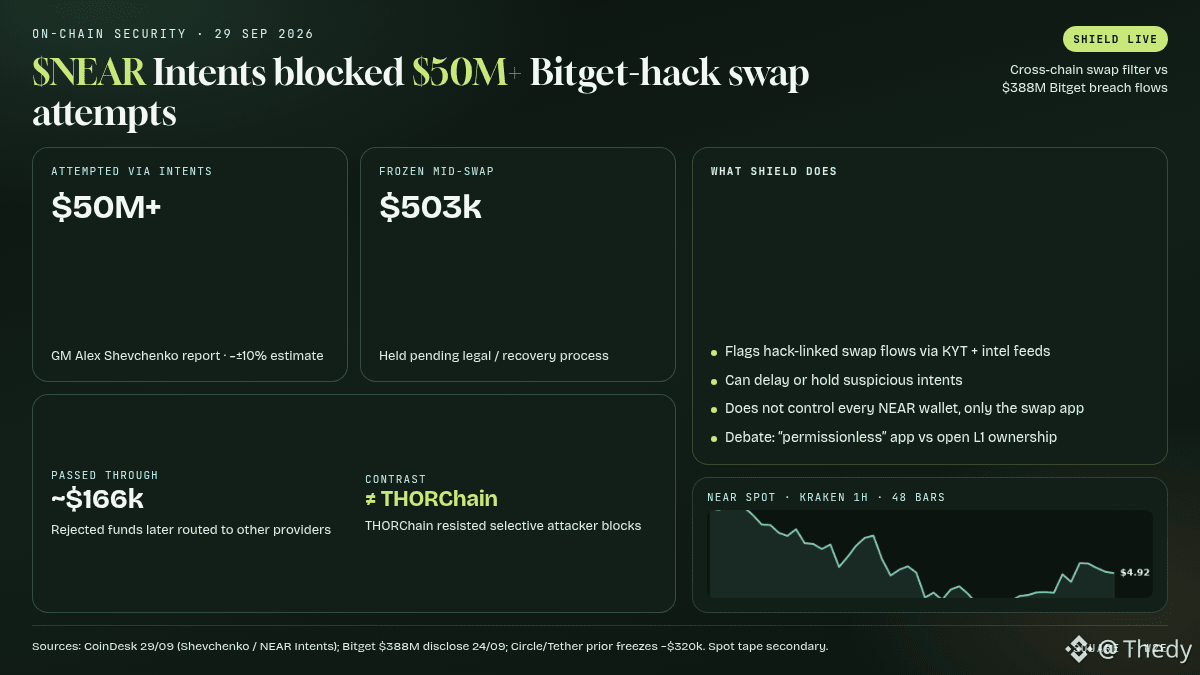
$NEAR Intents a bloqué plus de 50 M$ de tentatives de swap liées au hack Bitget.
Faits (CoinDesk 29/09, rapport du GM Alex Shevchenko) :
• Plus de 50 M$ de flux liés au vol Bitget (~388 M$ annoncé le 24/09) ont tenté de passer via NEAR Intents
• Le système SHIELD a bloqué l’essentiel ; ~503 k$ gelés en cours de swap
• Environ 166 k$ sont tout de même passés ; les fonds rejetés ont ensuite été routés ailleurs (estimation ±10 %)
• Contrairement à THORChain, qui a refusé de bloquer sélectivement des adresses attaquantes
• Rappel: Circle et Tether avaient déjà gelé ~320 k$ de stables liés à la brèche
Interprétation: le débat n’est pas “NEAR censure la chain”. Intents est une app de swap cross-chain avec filtres KYT. Illia Polosukhin le cadre ainsi: permissionless = détenir, transférer ou déployer sans permission sur le L1, pas l’obligation pour chaque app de traiter chaque flux. Question ouverte côté process: qui autorise la libération des fonds gelés, et quel recours en cas de faux positif.
Scénarios:
1. Récupération via canaux légaux Bitget / forces de l’ordre: les ~503 k$ entrent dans un process de restitution
2. La controverse “permissionless” pèse sur la narrative Intents, sans casser le volume (~100 M$+/jour cité par Shevchenko)
3. Les attaquants contournent via d’autres bridges/swaps moins filtrants (déjà observé après rejet)
Spot (Kraken ~17:05 UTC): $NEAR ~4,93 $ (+2 % 24h), $BTC ~83,1k, Fear & Greed 73.
Vous privilégiez des apps qui filtrent le butin de hacks, ou une neutralité type THORChain coûte que coûte ?
#NEAR #Crypto #Security
$NEAR Intents a bloqué plus de 50 M$ de tentatives de swap liées au hack Bitget.
Faits (CoinDesk 29/09, rapport du GM Alex Shevchenko) :
• Plus de 50 M$ de flux liés au vol Bitget (~388 M$ annoncé le 24/09) ont tenté de passer via NEAR Intents
• Le système SHIELD a bloqué l’essentiel ; ~503 k$ gelés en cours de swap
• Environ 166 k$ sont tout de même passés ; les fonds rejetés ont ensuite été routés ailleurs (estimation ±10 %)
• Contrairement à THORChain, qui a refusé de bloquer sélectivement des adresses attaquantes
• Rappel: Circle et Tether avaient déjà gelé ~320 k$ de stables liés à la brèche
Interprétation: le débat n’est pas “NEAR censure la chain”. Intents est une app de swap cross-chain avec filtres KYT. Illia Polosukhin le cadre ainsi: permissionless = détenir, transférer ou déployer sans permission sur le L1, pas l’obligation pour chaque app de traiter chaque flux. Question ouverte côté process: qui autorise la libération des fonds gelés, et quel recours en cas de faux positif.
Scénarios:
1. Récupération via canaux légaux Bitget / forces de l’ordre: les ~503 k$ entrent dans un process de restitution
2. La controverse “permissionless” pèse sur la narrative Intents, sans casser le volume (~100 M$+/jour cité par Shevchenko)
3. Les attaquants contournent via d’autres bridges/swaps moins filtrants (déjà observé après rejet)
Spot (Kraken ~17:05 UTC): $NEAR ~4,93 $ (+2 % 24h), $BTC ~83,1k, Fear & Greed 73.
Vous privilégiez des apps qui filtrent le butin de hacks, ou une neutralité type THORChain coûte que coûte ?
#NEAR #Crypto #Security
Faits (CoinDesk 29/09, rapport du GM Alex Shevchenko) :
• Plus de 50 M$ de flux liés au vol Bitget (~388 M$ annoncé le 24/09) ont tenté de passer via NEAR Intents
• Le système SHIELD a bloqué l’essentiel ; ~503 k$ gelés en cours de swap
• Environ 166 k$ sont tout de même passés ; les fonds rejetés ont ensuite été routés ailleurs (estimation ±10 %)
• Contrairement à THORChain, qui a refusé de bloquer sélectivement des adresses attaquantes
• Rappel: Circle et Tether avaient déjà gelé ~320 k$ de stables liés à la brèche
Interprétation: le débat n’est pas “NEAR censure la chain”. Intents est une app de swap cross-chain avec filtres KYT. Illia Polosukhin le cadre ainsi: permissionless = détenir, transférer ou déployer sans permission sur le L1, pas l’obligation pour chaque app de traiter chaque flux. Question ouverte côté process: qui autorise la libération des fonds gelés, et quel recours en cas de faux positif.
Scénarios:
1. Récupération via canaux légaux Bitget / forces de l’ordre: les ~503 k$ entrent dans un process de restitution
2. La controverse “permissionless” pèse sur la narrative Intents, sans casser le volume (~100 M$+/jour cité par Shevchenko)
3. Les attaquants contournent via d’autres bridges/swaps moins filtrants (déjà observé après rejet)
Spot (Kraken ~17:05 UTC): $NEAR ~4,93 $ (+2 % 24h), $BTC ~83,1k, Fear & Greed 73.
Vous privilégiez des apps qui filtrent le butin de hacks, ou une neutralité type THORChain coûte que coûte ?
#NEAR #Crypto #Security
1
242
·
--
$NEAR 遭遇黑客挑战!Bitget黑客试图转移5000万美元,被NEAR Intents拦截大半。这事儿直接质疑了NEAR "无需许可"的说法。看来所谓完全无限制的DeFi,也得先过安全关啊!
Bitget hacker attempted $50M transfer, blocked mostly by NEAR Intents. This directly challenges NEAR's "permissionless" claims. Seems even so-called unrestricted DeFi needs to pass security checks first!
#DeFi #Security $NEAR $BITGET
$NEAR 遭遇黑客挑战!Bitget黑客试图转移5000万美元,被NEAR Intents拦截大半。这事儿直接质疑了NEAR "无需许可"的说法。看来所谓完全无限制的DeFi,也得先过安全关啊!
Bitget hacker attempted $50M transfer, blocked mostly by NEAR Intents. This directly challenges NEAR's "permissionless" claims. Seems even so-called unrestricted DeFi needs to pass security checks first!
#DeFi #Security $NEAR $BITGET
Bitget hacker attempted $50M transfer, blocked mostly by NEAR Intents. This directly challenges NEAR's "permissionless" claims. Seems even so-called unrestricted DeFi needs to pass security checks first!
#DeFi #Security $NEAR $BITGET
216
·
--
NEAR跨界协议主动拦截了与Bitget黑客相关的5000万美元资金!这与其他一些协议不选择性审查交易的做法形成鲜明对比。在加密安全上,NEAR展示了积极态度!#DeFi #Security $NEAR $BIT
NEAR Intents just blocked $50M linked to Bitget hackers! This cross-chain protocol actively prevents stolen funds from being laundered, unlike others like THORChain that don't selectively censor transactions. NEAR taking security seriously! #DeFi #Security $NEAR $BIT
NEAR跨界协议主动拦截了与Bitget黑客相关的5000万美元资金!这与其他一些协议不选择性审查交易的做法形成鲜明对比。在加密安全上,NEAR展示了积极态度!#DeFi #Security $NEAR $BIT
NEAR Intents just blocked $50M linked to Bitget hackers! This cross-chain protocol actively prevents stolen funds from being laundered, unlike others like THORChain that don't selectively censor transactions. NEAR taking security seriously! #DeFi #Security $NEAR $BIT
NEAR Intents just blocked $50M linked to Bitget hackers! This cross-chain protocol actively prevents stolen funds from being laundered, unlike others like THORChain that don't selectively censor transactions. NEAR taking security seriously! #DeFi #Security $NEAR $BIT
263
Connectez-vous pour découvrir plus de contenu
Rejoignez la communauté mondiale des adeptes de cryptomonnaies sur Binance Square
⚡️ Suviez les dernières informations importantes sur les cryptomonnaies.
💬 Jugé digne de confiance par la plus grande plateforme d’échange de cryptomonnaies au monde.
👍 Découvrez les connaissances que partagent les créateurs vérifiés.
Adresse e-mail/Nº de téléphone
Sujets d’actualité
1
#SECToClarifyOnChainFundraisingRules
0 vues
0 mentions
2
#UKFCAOpensCryptoFirmAuthorization
600 vues
52 mentions
3
#JapanMOFStudyGroupOnTokenizedGovtBonds
1,061 vues
93 mentions
4
#QNTRises287%
20,062 vues
385 mentions
5
#TrumpRejectsAIRulesForVoluntaryAudits
17,952 vues
475 mentions
6
#BitgetHotWalletBreachTiedToThirdPartySecurityFlaw
9,226 vues
331 mentions
7
#OpenAIUnveilsAlwaysOnAgentDots
8,416 vues
348 mentions
8
#ChainlinkLaunchesBankSWIFTLedgerFramework
9,071 vues
270 mentions
9
#EarningsSeason
525,635 vues
3,764 mentions
10
#ZcashApproves$1.5MBugBounty
104 vues
4 mentions