

#plasma
plasma
24.9M vues
333,003 mentions
Populaire
Récents

·
--
Article
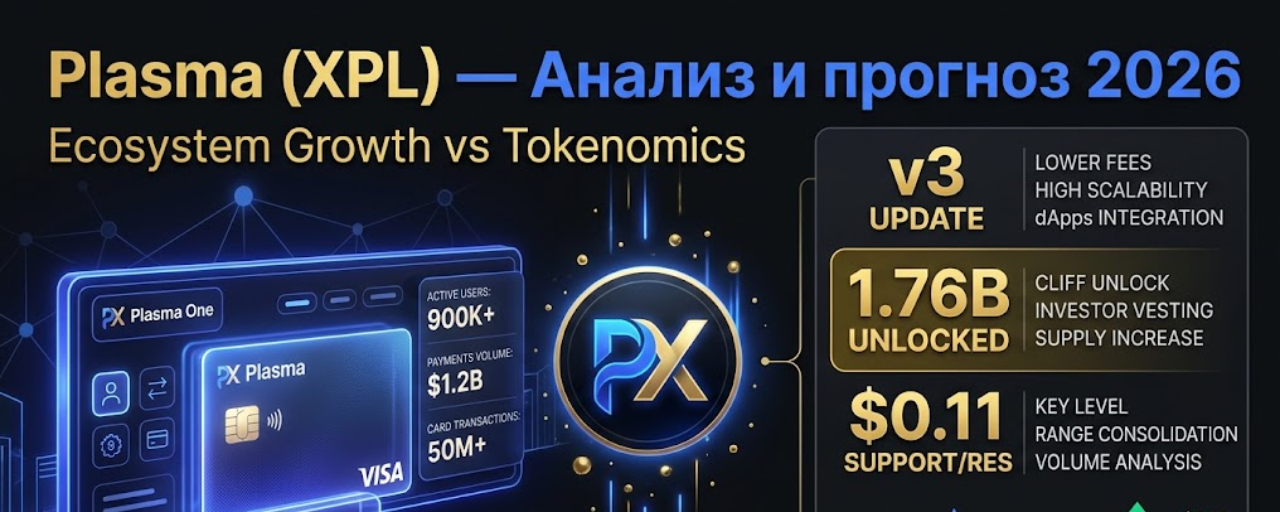
Разбор Plasma (XPL): Стоит ли покупать монету прямо сейчас?Сеть Plasma и её нативный токен $XPL продолжают привлекать внимание сообщества благодаря узкой специализации — созданию высокомасштабируемой инфраструктуры для платежей в стейблкоинах и интеграции с необанкингом.
Приводим подробный разбор фундаментальных факторов, последней аналитики и возможных сценариев движения цены XPL.
📌 Главные новости и фундаментальные драйверы
1. Технические обновления и рост экосистемы
Обновление v3:
Внедрение протокола Plasma v3 позволило существенно снизить комиссии и повысить скорость транзакций для dApps.
Запуск Plasma One:
Запуск необанка со встроенной поддержкой Visa и стейблкоинов стимулирует органический спрос на XPL как базовый актив для газа и стейкинга.
Ончейн-активность:
Объем стейблкоинов в сети превышает $900M+, а количество активных пользователей продолжает расти.
2. Давление со стороны токеномики (Разблокировки & Инфляция)
Масштабные разблокировки:
В третьем квартале прошёл крупнейший клифф-разблок (Cliff Unlock) для инвесторов и команды (~1.76 млрд XPL), который увеличил циркулирующее предложение более чем на 60%.
Стейкинг и инфляция:
Запуск PoS-валидаторов принес доходность держателям, но также задействовал годовую инфляцию на уровне 5% (с постепенным снижением до 3%).
📊 Технический обзор и ключевые уровни
На данный момент XPL торгуется в районе $0.094 – $0.096. Актив закрепился выше скользящих средних MA50/EMA50, что указывает на попытки формирования локального восходящего тренда.
Поддержка: $0.088 – $0.090 (зона консолидации), ключевой уровень — $0.060.
Сопротивление: $0.110 (первый локальный барьер), далее — $0.150 и $0.250.
📈 Сценарии движения цены XPL
1. 🟢 Бычий сценарий (Успешное поглощение предложения)
Условие: Закрепление цены выше уровня $0.110 на высоких объемах торгов.
Драйверы: Быстрый рост транзакционного объема в сервисе Plasma One, сжигание комиссий, перекрывающее инфляцию, и общий позитивный тренд на рынке альткоинов.
Цели: $0.15 ➔ $0.25 ➔ $0.35.
2. 🟡 Базовый сценарий (Консолидация и накопление)
Условие: Удержание диапазона $0.088 – $0.110.
Драйверы: Рынок постепенно переваривает предложение после сентябрьского разблока. Покупатели удерживают важные уровни поддержки, но для импульса вверх пока не хватает ликвидности.
Цели: Торговля во флэте вокруг $0.095 – $0.100.
3. 🔴 Медвежий сценарий (Давление продавцов)
Условие: Пробой поддержки $0.088 вниз на фоне негативного фона на широком рынке.
Драйверы: Фиксация прибыли инвесторами после разблокировки токенов и слабая динамика привлечения новых пользователей.
Цели: Откат к уровням $0.075 и повторный тест минимумов на уровне $0.060.
💡 Итог для трейдеров и инвесторов
Plasma (XPL) демонстрирует сильную фундаментальную базу в сфере платежных решений и стейблкоинов.
Однако инвесторам следует учитывать высокое давление со стороны разблокированных токенов.
Следите за пробоем ключевого уровня $0.110 для входа в бычий тренд и соблюдайте риски.
{future}(XPLUSDT)
#Plasma #CryptoNews #priceprediction #CryptoAnalysis
Разбор Plasma (XPL): Стоит ли покупать монету прямо сейчас?
Сеть Plasma и её нативный токен $XPL продолжают привлекать внимание сообщества благодаря узкой специализации — созданию высокомасштабируемой инфраструктуры для платежей в стейблкоинах и интеграции с необанкингом.
Приводим подробный разбор фундаментальных факторов, последней аналитики и возможных сценариев движения цены XPL.
📌 Главные новости и фундаментальные драйверы
1. Технические обновления и рост экосистемы
Обновление v3:
Внедрение протокола Plasma v3 позволило существенно снизить комиссии и повысить скорость транзакций для dApps.
Запуск Plasma One:
Запуск необанка со встроенной поддержкой Visa и стейблкоинов стимулирует органический спрос на XPL как базовый актив для газа и стейкинга.
Ончейн-активность:
Объем стейблкоинов в сети превышает $900M+, а количество активных пользователей продолжает расти.
2. Давление со стороны токеномики (Разблокировки & Инфляция)
Масштабные разблокировки:
В третьем квартале прошёл крупнейший клифф-разблок (Cliff Unlock) для инвесторов и команды (~1.76 млрд XPL), который увеличил циркулирующее предложение более чем на 60%.
Стейкинг и инфляция:
Запуск PoS-валидаторов принес доходность держателям, но также задействовал годовую инфляцию на уровне 5% (с постепенным снижением до 3%).
📊 Технический обзор и ключевые уровни
На данный момент XPL торгуется в районе $0.094 – $0.096. Актив закрепился выше скользящих средних MA50/EMA50, что указывает на попытки формирования локального восходящего тренда.
Поддержка: $0.088 – $0.090 (зона консолидации), ключевой уровень — $0.060.
Сопротивление: $0.110 (первый локальный барьер), далее — $0.150 и $0.250.
📈 Сценарии движения цены XPL
1. 🟢 Бычий сценарий (Успешное поглощение предложения)
Условие: Закрепление цены выше уровня $0.110 на высоких объемах торгов.
Драйверы: Быстрый рост транзакционного объема в сервисе Plasma One, сжигание комиссий, перекрывающее инфляцию, и общий позитивный тренд на рынке альткоинов.
Цели: $0.15 ➔ $0.25 ➔ $0.35.
2. 🟡 Базовый сценарий (Консолидация и накопление)
Условие: Удержание диапазона $0.088 – $0.110.
Драйверы: Рынок постепенно переваривает предложение после сентябрьского разблока. Покупатели удерживают важные уровни поддержки, но для импульса вверх пока не хватает ликвидности.
Цели: Торговля во флэте вокруг $0.095 – $0.100.
3. 🔴 Медвежий сценарий (Давление продавцов)
Условие: Пробой поддержки $0.088 вниз на фоне негативного фона на широком рынке.
Драйверы: Фиксация прибыли инвесторами после разблокировки токенов и слабая динамика привлечения новых пользователей.
Цели: Откат к уровням $0.075 и повторный тест минимумов на уровне $0.060.
💡 Итог для трейдеров и инвесторов
Plasma (XPL) демонстрирует сильную фундаментальную базу в сфере платежных решений и стейблкоинов.
Однако инвесторам следует учитывать высокое давление со стороны разблокированных токенов.
Следите за пробоем ключевого уровня $0.110 для входа в бычий тренд и соблюдайте риски.
#Plasma #CryptoNews #priceprediction #CryptoAnalysis
Приводим подробный разбор фундаментальных факторов, последней аналитики и возможных сценариев движения цены XPL.
📌 Главные новости и фундаментальные драйверы
1. Технические обновления и рост экосистемы
Обновление v3:
Внедрение протокола Plasma v3 позволило существенно снизить комиссии и повысить скорость транзакций для dApps.
Запуск Plasma One:
Запуск необанка со встроенной поддержкой Visa и стейблкоинов стимулирует органический спрос на XPL как базовый актив для газа и стейкинга.
Ончейн-активность:
Объем стейблкоинов в сети превышает $900M+, а количество активных пользователей продолжает расти.
2. Давление со стороны токеномики (Разблокировки & Инфляция)
Масштабные разблокировки:
В третьем квартале прошёл крупнейший клифф-разблок (Cliff Unlock) для инвесторов и команды (~1.76 млрд XPL), который увеличил циркулирующее предложение более чем на 60%.
Стейкинг и инфляция:
Запуск PoS-валидаторов принес доходность держателям, но также задействовал годовую инфляцию на уровне 5% (с постепенным снижением до 3%).
📊 Технический обзор и ключевые уровни
На данный момент XPL торгуется в районе $0.094 – $0.096. Актив закрепился выше скользящих средних MA50/EMA50, что указывает на попытки формирования локального восходящего тренда.
Поддержка: $0.088 – $0.090 (зона консолидации), ключевой уровень — $0.060.
Сопротивление: $0.110 (первый локальный барьер), далее — $0.150 и $0.250.
📈 Сценарии движения цены XPL
1. 🟢 Бычий сценарий (Успешное поглощение предложения)
Условие: Закрепление цены выше уровня $0.110 на высоких объемах торгов.
Драйверы: Быстрый рост транзакционного объема в сервисе Plasma One, сжигание комиссий, перекрывающее инфляцию, и общий позитивный тренд на рынке альткоинов.
Цели: $0.15 ➔ $0.25 ➔ $0.35.
2. 🟡 Базовый сценарий (Консолидация и накопление)
Условие: Удержание диапазона $0.088 – $0.110.
Драйверы: Рынок постепенно переваривает предложение после сентябрьского разблока. Покупатели удерживают важные уровни поддержки, но для импульса вверх пока не хватает ликвидности.
Цели: Торговля во флэте вокруг $0.095 – $0.100.
3. 🔴 Медвежий сценарий (Давление продавцов)
Условие: Пробой поддержки $0.088 вниз на фоне негативного фона на широком рынке.
Драйверы: Фиксация прибыли инвесторами после разблокировки токенов и слабая динамика привлечения новых пользователей.
Цели: Откат к уровням $0.075 и повторный тест минимумов на уровне $0.060.
💡 Итог для трейдеров и инвесторов
Plasma (XPL) демонстрирует сильную фундаментальную базу в сфере платежных решений и стейблкоинов.
Однако инвесторам следует учитывать высокое давление со стороны разблокированных токенов.
Следите за пробоем ключевого уровня $0.110 для входа в бычий тренд и соблюдайте риски.
#Plasma #CryptoNews #priceprediction #CryptoAnalysis
67

·
--
#Plasma $XPL
I have been following the development of @plasma closely, and it’s exciting to see how the project is building real utility in the blockchain space. Plasma focuses on scalability, efficiency, and long-term growth, which are critical for mass adoption. The $XPL token plays an important role in the ecosystem by supporting network operations and community participation. I believe #plasma has strong potential as the ecosystem continues to expand.
#Plasma $XPL
I have been following the development of @plasma closely, and it’s exciting to see how the project is building real utility in the blockchain space. Plasma focuses on scalability, efficiency, and long-term growth, which are critical for mass adoption. The $XPL token plays an important role in the ecosystem by supporting network operations and community participation. I believe #plasma has strong potential as the ecosystem continues to expand.
I have been following the development of @plasma closely, and it’s exciting to see how the project is building real utility in the blockchain space. Plasma focuses on scalability, efficiency, and long-term growth, which are critical for mass adoption. The $XPL token plays an important role in the ecosystem by supporting network operations and community participation. I believe #plasma has strong potential as the ecosystem continues to expand.
567


Most of the discussion around $XPL right now is focused on the 1.76B-token unlock.
But I think the more interesting question is what that supply event meets underneath it.
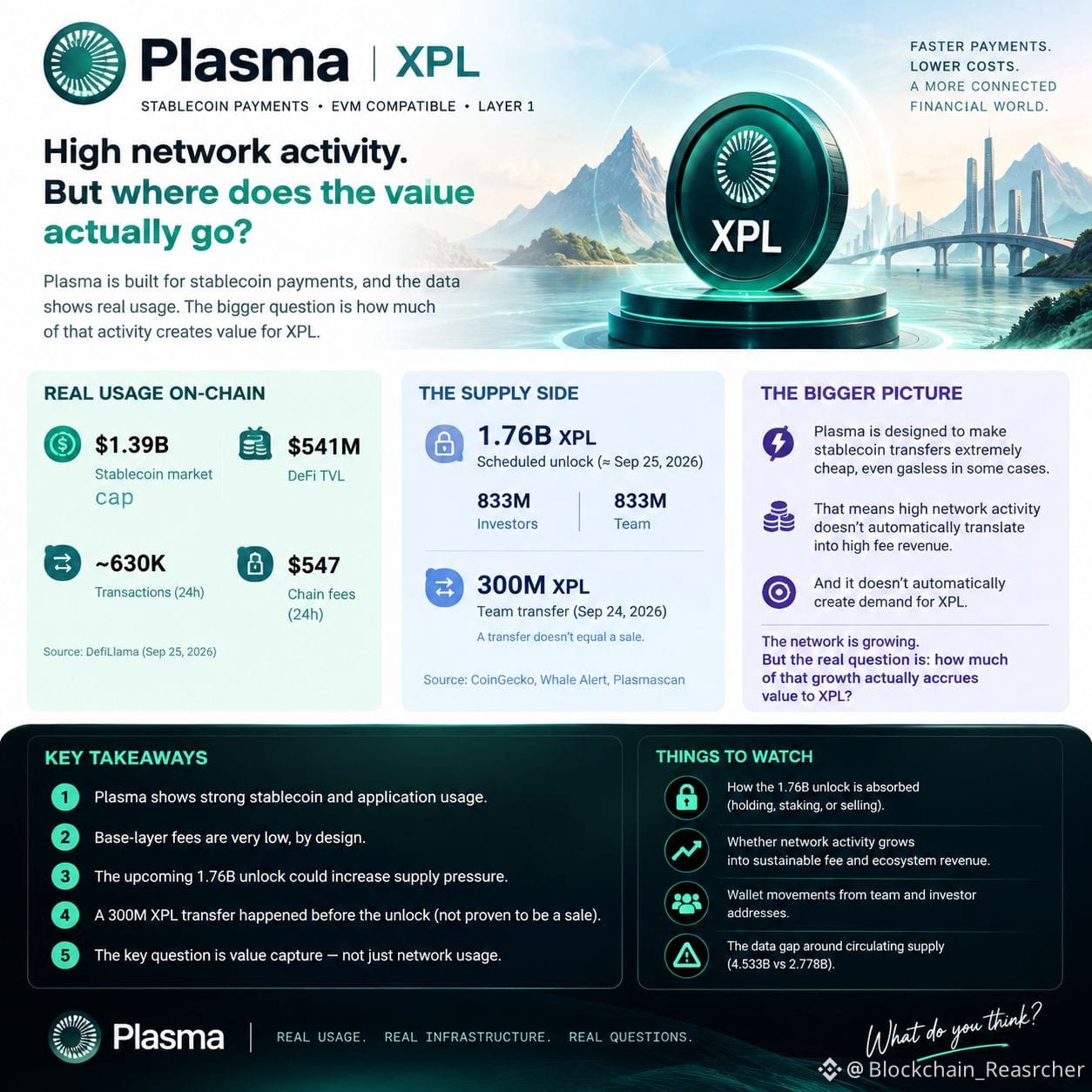
Plasma is currently carrying roughly $1.39B in stablecoins, around $541M in DeFi TVL, and about 630K transactions in 24 hours. Yet reported base-layer fees are only around $547 for the day.
That contrast says a lot about Plasma’s design.
The chain is built to make stablecoin transfers extremely cheap, even abstracting gas away from users in some cases. So high activity does not automatically translate into high fee revenue — and network usage does not automatically translate into equivalent demand for XPL.
Then comes the supply side.
Around 1.76B XPL is scheduled around the September 25 unlock, including roughly 833M for investors and another 833M for the team. Just one day earlier, a 300M XPL transfer from a Plasma Team-labelled wallet was recorded.
That is significant.
But a transfer is not a sale. Without evidence of exchange deposits or actual selling, calling it sell pressure would be speculation.
And this is where Plasma gets interesting: the network can show meaningful stablecoin usage while the token faces expanding supply and relatively weak direct fee capture.
So the key question may not be whether Plasma is being used.
It clearly is.
The harder question is: how much of that growing network activity actually accrues value to XPL?
$XPL #Plasma @Plasma
{future}(XPLUSDT)
Most of the discussion around $XPL right now is focused on the 1.76B-token unlock.
But I think the more interesting question is what that supply event meets underneath it.
Plasma is currently carrying roughly $1.39B in stablecoins, around $541M in DeFi TVL, and about 630K transactions in 24 hours. Yet reported base-layer fees are only around $547 for the day.
That contrast says a lot about Plasma’s design.
The chain is built to make stablecoin transfers extremely cheap, even abstracting gas away from users in some cases. So high activity does not automatically translate into high fee revenue — and network usage does not automatically translate into equivalent demand for XPL.
Then comes the supply side.
Around 1.76B XPL is scheduled around the September 25 unlock, including roughly 833M for investors and another 833M for the team. Just one day earlier, a 300M XPL transfer from a Plasma Team-labelled wallet was recorded.
That is significant.
But a transfer is not a sale. Without evidence of exchange deposits or actual selling, calling it sell pressure would be speculation.
And this is where Plasma gets interesting: the network can show meaningful stablecoin usage while the token faces expanding supply and relatively weak direct fee capture.
So the key question may not be whether Plasma is being used.
It clearly is.
The harder question is: how much of that growing network activity actually accrues value to XPL?
$XPL #Plasma @Plasma
But I think the more interesting question is what that supply event meets underneath it.
Plasma is currently carrying roughly $1.39B in stablecoins, around $541M in DeFi TVL, and about 630K transactions in 24 hours. Yet reported base-layer fees are only around $547 for the day.
That contrast says a lot about Plasma’s design.
The chain is built to make stablecoin transfers extremely cheap, even abstracting gas away from users in some cases. So high activity does not automatically translate into high fee revenue — and network usage does not automatically translate into equivalent demand for XPL.
Then comes the supply side.
Around 1.76B XPL is scheduled around the September 25 unlock, including roughly 833M for investors and another 833M for the team. Just one day earlier, a 300M XPL transfer from a Plasma Team-labelled wallet was recorded.
That is significant.
But a transfer is not a sale. Without evidence of exchange deposits or actual selling, calling it sell pressure would be speculation.
And this is where Plasma gets interesting: the network can show meaningful stablecoin usage while the token faces expanding supply and relatively weak direct fee capture.
So the key question may not be whether Plasma is being used.
It clearly is.
The harder question is: how much of that growing network activity actually accrues value to XPL?
$XPL #Plasma @Plasma
390

·
--
Vérifié
@Plasma
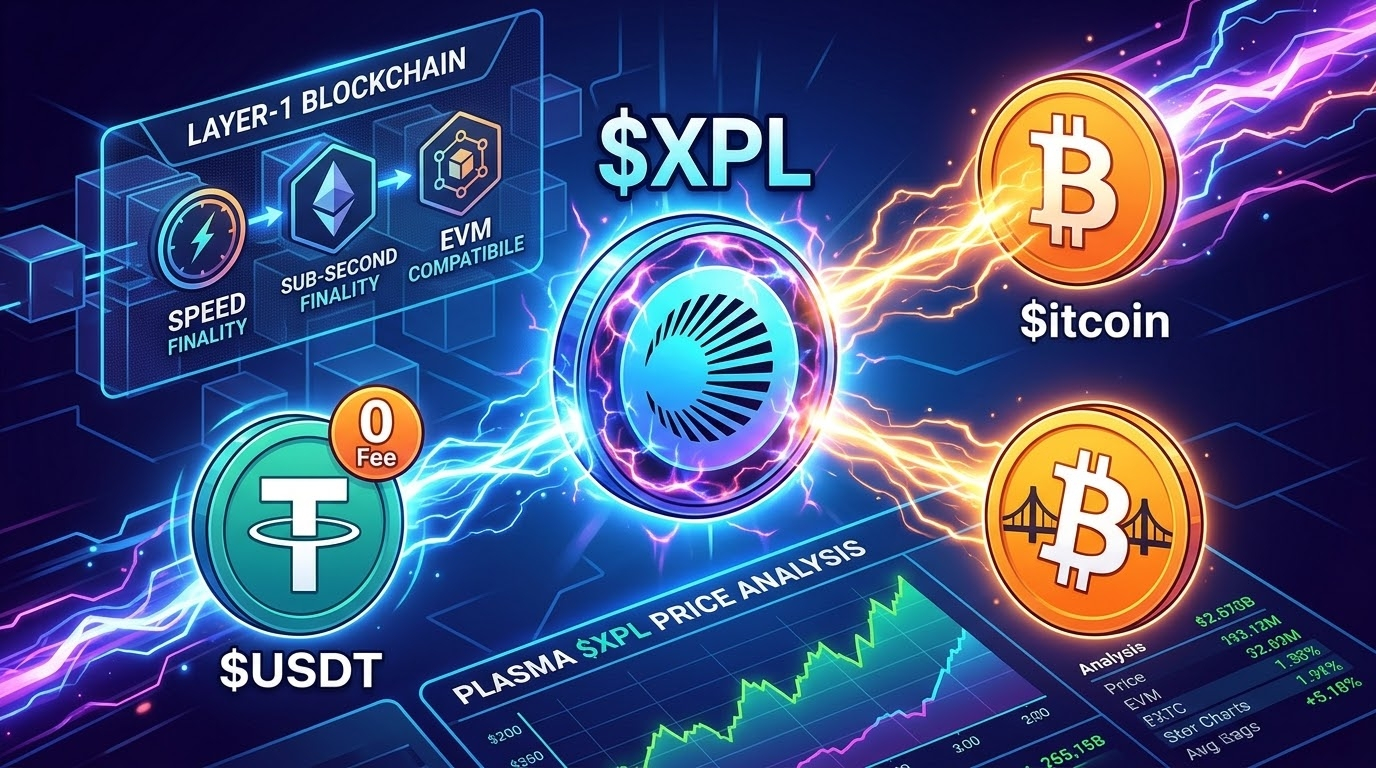
The Future of Stablecoin Payments: Plasma ($XPL) 🚀
Global payments are evolving, and Plasma ($XPL) is leading the charge as a purpose-built Layer-1 blockchain engineered specifically for stablecoin settlements. By combining sub-second finality via PlasmaBFT with full EVM compatibility, Plasma eliminates the traditional friction of moving digital dollars on-chain.
Its hallmark innovation? Zero-fee $USDT transfers powered by protocol-level paymasters, alongside a trust-minimized Bitcoin bridge. The $XPL
{future}(XPLUSDT)
XPL token sits at the center of this economy—securing the Proof-of-Stake consensus, fueling complex smart contracts, and benefiting from EIP-1559 fee burns as network adoption grows. Backed by institutional giants, Plasma bridges traditional finance with Web3 speed.
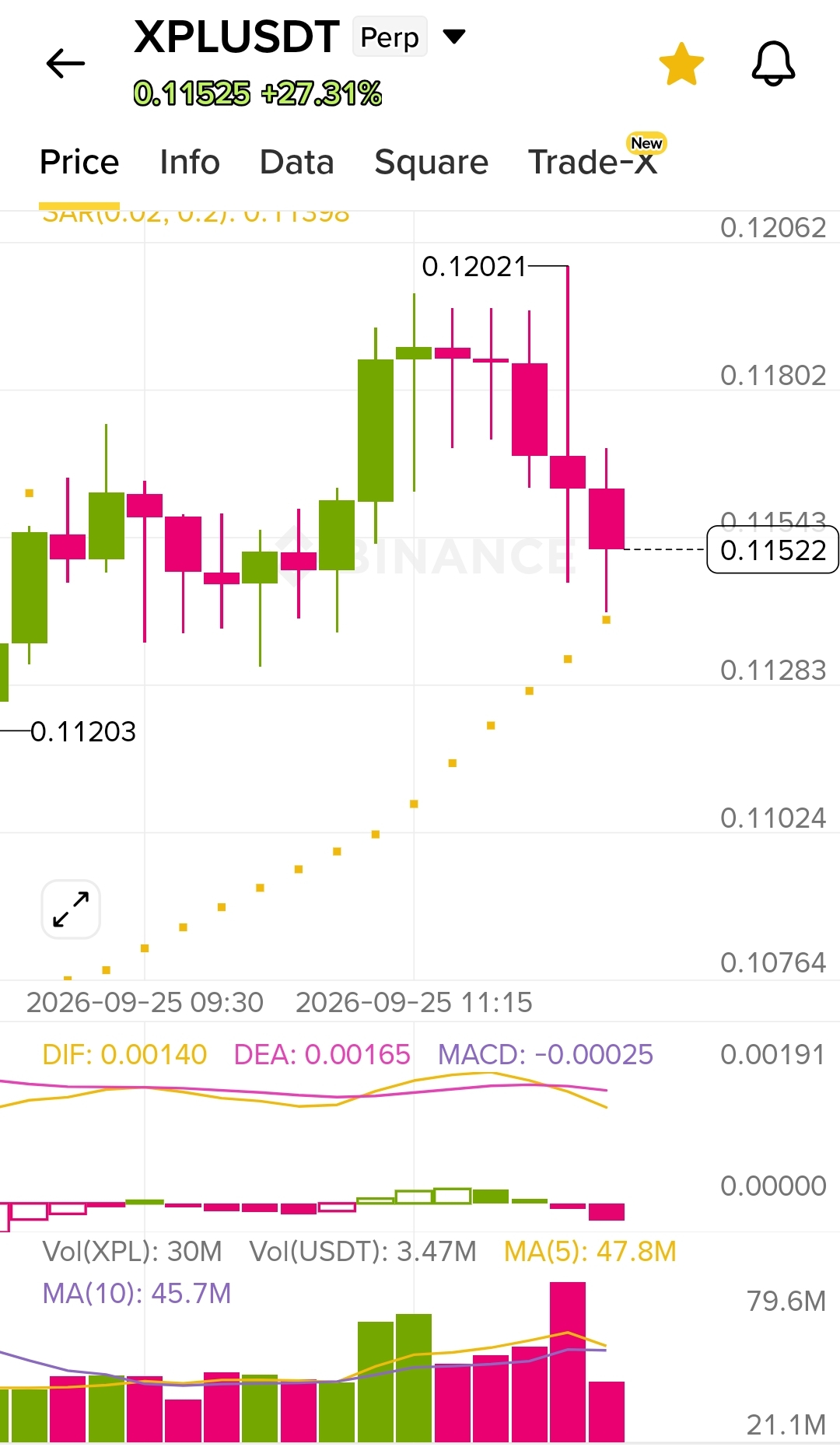
XPL/USDT Analysis
Current Price: $0.11522 (+27.31%)
Trend: Retracting from localized high of $0.12021 after a strong bullish run.
SAR: Dots below price confirm active uptrend support around $0.1130.
MACD: Bearish crossover (DIF 0.00140 < DEA 0.00165) signals short-term cooling/consolidation.
#Plasma
#Write2Earn!
#CFTCUpdatesGuidanceOnTokenizedAssets
$QNT
{future}(QNTUSDT)
$AR
{future}(ARUSDT)
#TradeHere☝️🤗
@Plasma
The Future of Stablecoin Payments: Plasma ($XPL ) 🚀
Global payments are evolving, and Plasma ($XPL ) is leading the charge as a purpose-built Layer-1 blockchain engineered specifically for stablecoin settlements. By combining sub-second finality via PlasmaBFT with full EVM compatibility, Plasma eliminates the traditional friction of moving digital dollars on-chain.
Its hallmark innovation? Zero-fee $USDT transfers powered by protocol-level paymasters, alongside a trust-minimized Bitcoin bridge. The $XPL
XPL token sits at the center of this economy—securing the Proof-of-Stake consensus, fueling complex smart contracts, and benefiting from EIP-1559 fee burns as network adoption grows. Backed by institutional giants, Plasma bridges traditional finance with Web3 speed.
XPL/USDT Analysis
Current Price: $0.11522 (+27.31%)
Trend: Retracting from localized high of $0.12021 after a strong bullish run.
SAR: Dots below price confirm active uptrend support around $0.1130.
MACD: Bearish crossover (DIF 0.00140 < DEA 0.00165) signals short-term cooling/consolidation.
#Plasma
#Write2Earn!
#CFTCUpdatesGuidanceOnTokenizedAssets
$QNT
$AR
#TradeHere☝️🤗
The Future of Stablecoin Payments: Plasma ($XPL ) 🚀
Global payments are evolving, and Plasma ($XPL ) is leading the charge as a purpose-built Layer-1 blockchain engineered specifically for stablecoin settlements. By combining sub-second finality via PlasmaBFT with full EVM compatibility, Plasma eliminates the traditional friction of moving digital dollars on-chain.
Its hallmark innovation? Zero-fee $USDT transfers powered by protocol-level paymasters, alongside a trust-minimized Bitcoin bridge. The $XPL
XPL token sits at the center of this economy—securing the Proof-of-Stake consensus, fueling complex smart contracts, and benefiting from EIP-1559 fee burns as network adoption grows. Backed by institutional giants, Plasma bridges traditional finance with Web3 speed.
XPL/USDT Analysis
Current Price: $0.11522 (+27.31%)
Trend: Retracting from localized high of $0.12021 after a strong bullish run.
SAR: Dots below price confirm active uptrend support around $0.1130.
MACD: Bearish crossover (DIF 0.00140 < DEA 0.00165) signals short-term cooling/consolidation.
#Plasma
#Write2Earn!
#CFTCUpdatesGuidanceOnTokenizedAssets
$QNT
$AR
#TradeHere☝️🤗
4
10
957

·
--
Haussier
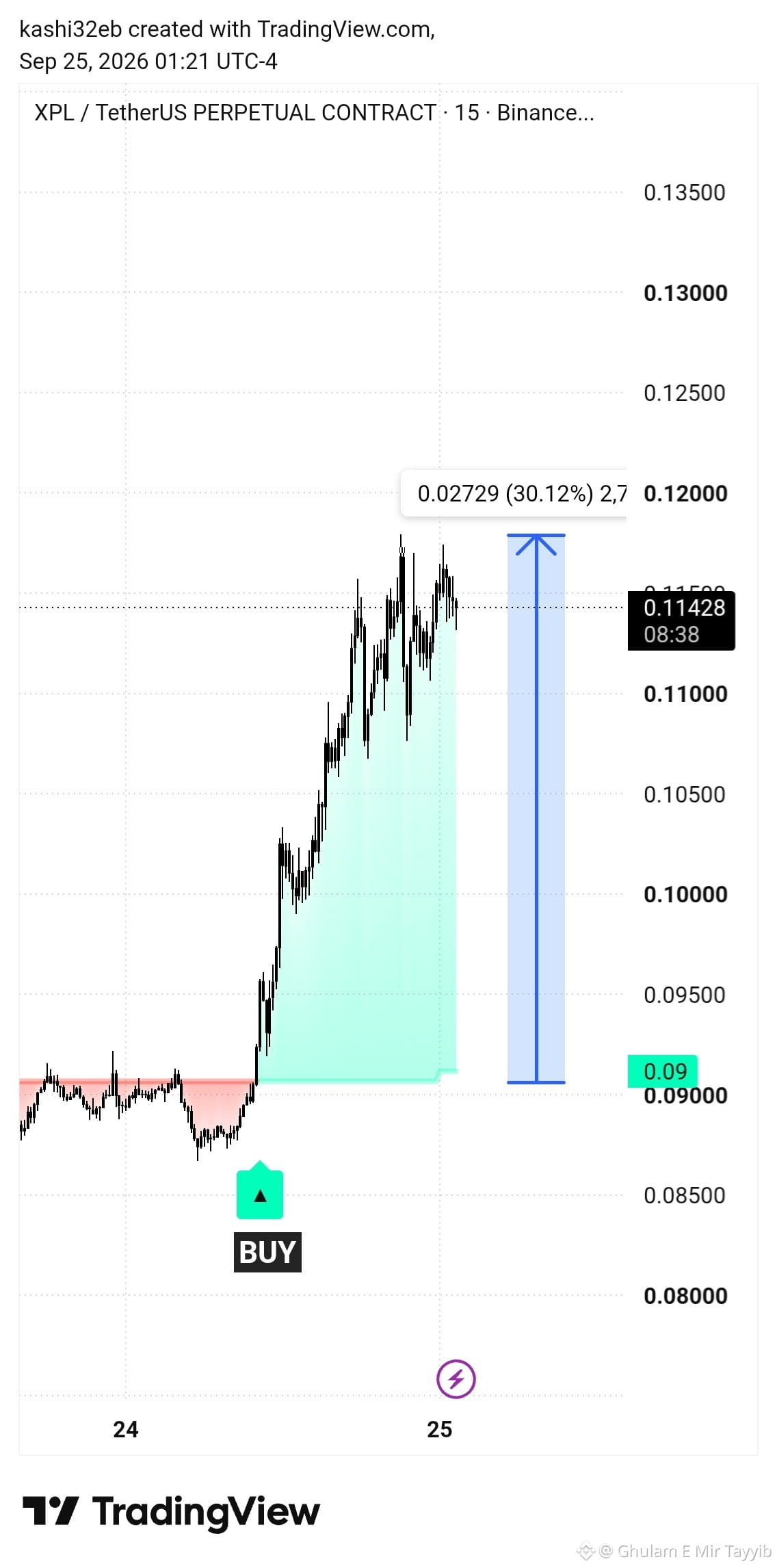
$XPL just pumped 30% from breakout — moving from $0.09 to highs near $0.114, even with today's token unlock in play! 🚀
Plasma is building a payments-focused chain, and this surge shows demand absorbing new supply with ease — a bullish signal for the project's momentum.
👉 Unlock dump or fresh breakout? What's your read?
#XPL #Plasma #BinanceTopGainer
{future}(XPLUSDT)
$XPL just pumped 30% from breakout — moving from $0.09 to highs near $0.114, even with today's token unlock in play! 🚀
Plasma is building a payments-focused chain, and this surge shows demand absorbing new supply with ease — a bullish signal for the project's momentum.
👉 Unlock dump or fresh breakout? What's your read?
#XPL #Plasma #BinanceTopGainer
Plasma is building a payments-focused chain, and this surge shows demand absorbing new supply with ease — a bullish signal for the project's momentum.
👉 Unlock dump or fresh breakout? What's your read?
#XPL #Plasma #BinanceTopGainer
1
100

·
--
Haussier
$XPL Rebounds +22%! Seed Gainer Solid Support Base — Parabolic SAR Trailing Floor at $0.10782 Targeting $0.11805 Peak Retest?
Demonstrating strong bullish consolidation in the Seed gainer list on Binance with an impressive 40.99M USDT (392.57M XPL) trading volume backing, $XPL (Plasma) has established a solid support floor, posting a +22.56% daily gain! After rebounding off its 0.08681 low to test a 24-hour peak high of 0.11805, price action completed a healthy cooling-off phase and is now consolidating near 0.11154.
Trade Bias: Bullish Continuation / Scalp Rebound
Entry Zone: 0.10900 – 0.11200 (Accumulate long positions near trailing SAR support floor)
Targets: 0.11805 ➡️ 0.12600 ➡️ 0.13500
Stop Loss: Below 0.10500
Technically, the 15m chart displays a textbook dip-buying opportunity following a bounce off the 0.10592 swing bottom. Parabolic SAR trailing dots sit directly beneath price action to lock dynamic floor support at 0.10782, while RSI (6) has cleanly reset down to a balanced 43.84. This indicator reset provides buyers with prime room for another upward breakout. A decisive 15m candle close above 0.11400 will clear the runway for a full retest of the 0.11805 peak high.
Are you buying this support rebound... or waiting for a breakout confirmation above 0.11400?
Trade Now $XPL
{spot}(XPLUSDT)
#XPL #Plasma #cryptotrading #cryptosignals
$XPL Rebounds +22%! Seed Gainer Solid Support Base — Parabolic SAR Trailing Floor at $0.10782 Targeting $0.11805 Peak Retest?
Demonstrating strong bullish consolidation in the Seed gainer list on Binance with an impressive 40.99M USDT (392.57M XPL) trading volume backing, $XPL (Plasma) has established a solid support floor, posting a +22.56% daily gain! After rebounding off its 0.08681 low to test a 24-hour peak high of 0.11805, price action completed a healthy cooling-off phase and is now consolidating near 0.11154.
Trade Bias: Bullish Continuation / Scalp Rebound
Entry Zone: 0.10900 – 0.11200 (Accumulate long positions near trailing SAR support floor)
Targets: 0.11805 ➡️ 0.12600 ➡️ 0.13500
Stop Loss: Below 0.10500
Technically, the 15m chart displays a textbook dip-buying opportunity following a bounce off the 0.10592 swing bottom. Parabolic SAR trailing dots sit directly beneath price action to lock dynamic floor support at 0.10782, while RSI (6) has cleanly reset down to a balanced 43.84. This indicator reset provides buyers with prime room for another upward breakout. A decisive 15m candle close above 0.11400 will clear the runway for a full retest of the 0.11805 peak high.
Are you buying this support rebound... or waiting for a breakout confirmation above 0.11400?
Trade Now $XPL
#XPL #Plasma #cryptotrading #cryptosignals
Demonstrating strong bullish consolidation in the Seed gainer list on Binance with an impressive 40.99M USDT (392.57M XPL) trading volume backing, $XPL (Plasma) has established a solid support floor, posting a +22.56% daily gain! After rebounding off its 0.08681 low to test a 24-hour peak high of 0.11805, price action completed a healthy cooling-off phase and is now consolidating near 0.11154.
Trade Bias: Bullish Continuation / Scalp Rebound
Entry Zone: 0.10900 – 0.11200 (Accumulate long positions near trailing SAR support floor)
Targets: 0.11805 ➡️ 0.12600 ➡️ 0.13500
Stop Loss: Below 0.10500
Technically, the 15m chart displays a textbook dip-buying opportunity following a bounce off the 0.10592 swing bottom. Parabolic SAR trailing dots sit directly beneath price action to lock dynamic floor support at 0.10782, while RSI (6) has cleanly reset down to a balanced 43.84. This indicator reset provides buyers with prime room for another upward breakout. A decisive 15m candle close above 0.11400 will clear the runway for a full retest of the 0.11805 peak high.
Are you buying this support rebound... or waiting for a breakout confirmation above 0.11400?
Trade Now $XPL
#XPL #Plasma #cryptotrading #cryptosignals
1
121

·
--
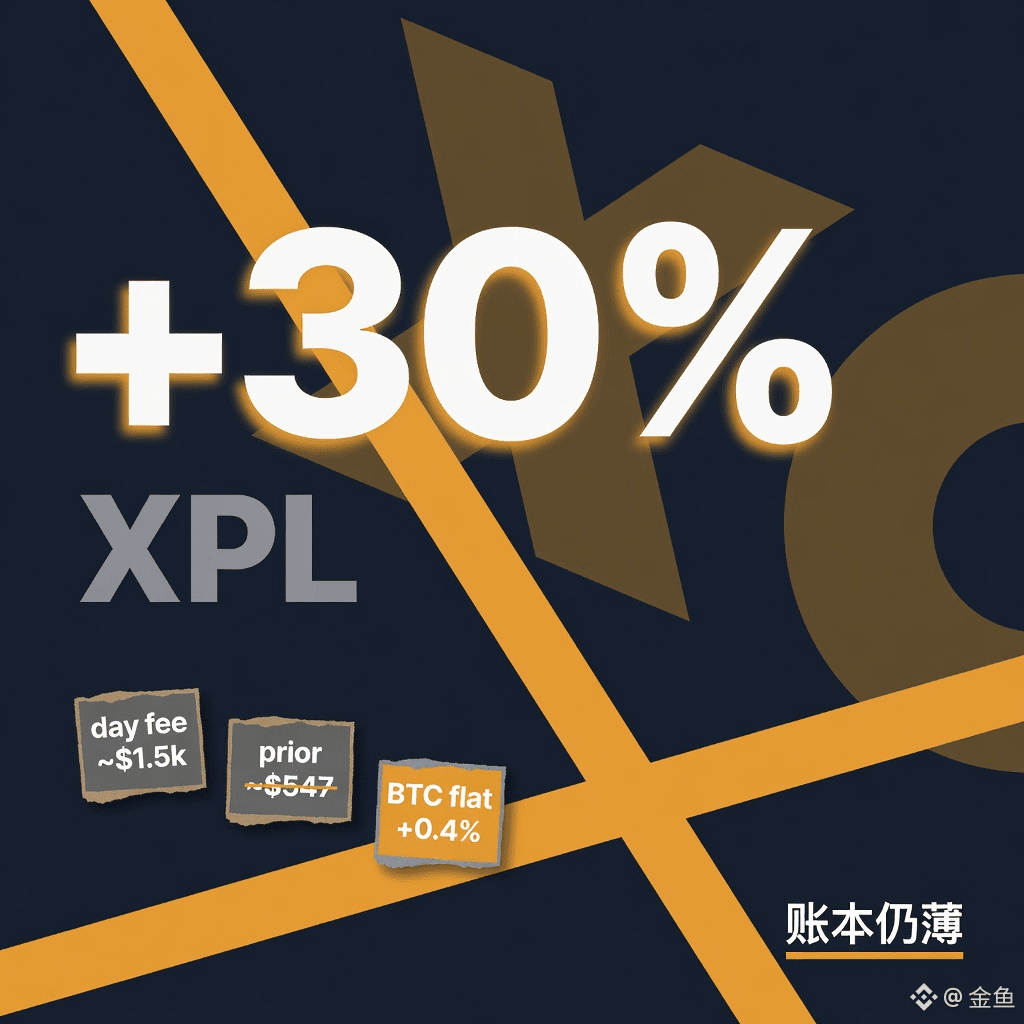
日租翻近3倍,账上仍只有一千五。
$XPL 币安0.116,日约+30%;成交约0.42亿。
Plasma日费约1546美元,前日约547。
OKX费率约+0.005%,仓约1010万。
$BTC 日仅+0.4%。
百分比点火,变现还没长大。
#Plasma #稳定币链
日租翻近3倍,账上仍只有一千五。
$XPL 币安0.116,日约+30%;成交约0.42亿。
Plasma日费约1546美元,前日约547。
OKX费率约+0.005%,仓约1010万。
$BTC 日仅+0.4%。
百分比点火,变现还没长大。
#Plasma #稳定币链
$XPL 币安0.116,日约+30%;成交约0.42亿。
Plasma日费约1546美元,前日约547。
OKX费率约+0.005%,仓约1010万。
$BTC 日仅+0.4%。
百分比点火,变现还没长大。
#Plasma #稳定币链
154

·
--
空头这两天卯着劲做空XPL,赌"解锁一到价格要崩"。
结果没崩,反而把自己挤爆了。
这道解锁到底是利空还是陷阱?先看时间线。
一年前的今天,2025年9月25日,Plasma主网Beta上线,币安现货同一天开盘,HODLer空投提前一天官宣。
今天2026年9月25日,日期分毫不差——不是巧合,是条款写死的:团队+机构合计占创世供应量50%,规定主网满一年解锁其中三分之一,刚好卡在今天,换算下来是16.7亿枚,占创世供应量16.7%。
所以广场上那些"币安上新了""空投来了"在吵的,其实是一年前的旧闻被翻出来重播。真正的扳机,是这道解锁悬崖。
"全部解锁要砸盘"这说法也说重了——到账的只是团队+机构总量的三分之一,不是全部;散户公售那批解锁7月28号早就走完了,是另一笔账,不该被混进这波恐慌。
2.78亿美元的未平仓合约堆在悬崖前,空头想提前收割,结果自己被挤了仓——这波拉升是仓位堆出来的,不是新钱进场。
如果是我,这波我不追。挤空能给一时的价格,给不了留存的买盘。真要我改主意,得看接下来两周解锁那16.7亿枚的链上流向:大部分被质押或长期锁仓,悬崖就是虚惊一场;开始批量流向交易所,跌的才刚开始。
$XPL #Plasma #解锁
空头这两天卯着劲做空XPL,赌"解锁一到价格要崩"。
结果没崩,反而把自己挤爆了。
这道解锁到底是利空还是陷阱?先看时间线。
一年前的今天,2025年9月25日,Plasma主网Beta上线,币安现货同一天开盘,HODLer空投提前一天官宣。
今天2026年9月25日,日期分毫不差——不是巧合,是条款写死的:团队+机构合计占创世供应量50%,规定主网满一年解锁其中三分之一,刚好卡在今天,换算下来是16.7亿枚,占创世供应量16.7%。
所以广场上那些"币安上新了""空投来了"在吵的,其实是一年前的旧闻被翻出来重播。真正的扳机,是这道解锁悬崖。
"全部解锁要砸盘"这说法也说重了——到账的只是团队+机构总量的三分之一,不是全部;散户公售那批解锁7月28号早就走完了,是另一笔账,不该被混进这波恐慌。
2.78亿美元的未平仓合约堆在悬崖前,空头想提前收割,结果自己被挤了仓——这波拉升是仓位堆出来的,不是新钱进场。
如果是我,这波我不追。挤空能给一时的价格,给不了留存的买盘。真要我改主意,得看接下来两周解锁那16.7亿枚的链上流向:大部分被质押或长期锁仓,悬崖就是虚惊一场;开始批量流向交易所,跌的才刚开始。
$XPL #Plasma #解锁
结果没崩,反而把自己挤爆了。
这道解锁到底是利空还是陷阱?先看时间线。
一年前的今天,2025年9月25日,Plasma主网Beta上线,币安现货同一天开盘,HODLer空投提前一天官宣。
今天2026年9月25日,日期分毫不差——不是巧合,是条款写死的:团队+机构合计占创世供应量50%,规定主网满一年解锁其中三分之一,刚好卡在今天,换算下来是16.7亿枚,占创世供应量16.7%。
所以广场上那些"币安上新了""空投来了"在吵的,其实是一年前的旧闻被翻出来重播。真正的扳机,是这道解锁悬崖。
"全部解锁要砸盘"这说法也说重了——到账的只是团队+机构总量的三分之一,不是全部;散户公售那批解锁7月28号早就走完了,是另一笔账,不该被混进这波恐慌。
2.78亿美元的未平仓合约堆在悬崖前,空头想提前收割,结果自己被挤了仓——这波拉升是仓位堆出来的,不是新钱进场。
如果是我,这波我不追。挤空能给一时的价格,给不了留存的买盘。真要我改主意,得看接下来两周解锁那16.7亿枚的链上流向:大部分被质押或长期锁仓,悬崖就是虚惊一场;开始批量流向交易所,跌的才刚开始。
$XPL #Plasma #解锁
129

·
--
Haussier
Vérifié
اللي يشدني في XPL هو التناقض بين الحركة السريعة والسؤال الأثقل خلفها. Plasma تبني L1 متمحورة حول الـStablecoins، ومع دخول USDC وEURC بشكل أصلي إلى الشبكة تصبح الفكرة أقرب إلى بنية مالية فعلية، لا مجرد سلسلة جديدة. لكن $0.1024 و+16.28% تأتي قبل فتح حوالي 1.8 مليار XPL في 25 سبتمبر. لذلك بالنسبة لي، الحركة الحالية ليست القصة؛ الاختبار الحقيقي هو كيف سيتصرف السعر والسيولة عندما يدخل هذا المعروض إلى السوق.
#Plasma #marouan47 #BinanceWillListHyperliquid(HYPE) @Plasma
$XPL
{spot}(XPLUSDT)
$XAI
{spot}(XAIUSDT)
اللي يشدني في XPL هو التناقض بين الحركة السريعة والسؤال الأثقل خلفها. Plasma تبني L1 متمحورة حول الـStablecoins، ومع دخول USDC وEURC بشكل أصلي إلى الشبكة تصبح الفكرة أقرب إلى بنية مالية فعلية، لا مجرد سلسلة جديدة. لكن $0.1024 و+16.28% تأتي قبل فتح حوالي 1.8 مليار XPL في 25 سبتمبر. لذلك بالنسبة لي، الحركة الحالية ليست القصة؛ الاختبار الحقيقي هو كيف سيتصرف السعر والسيولة عندما يدخل هذا المعروض إلى السوق.
#Plasma #marouan47 #BinanceWillListHyperliquid(HYPE) @Plasma
$XPL
$XAI
#Plasma #marouan47 #BinanceWillListHyperliquid(HYPE) @Plasma
$XPL
$XAI
2
612

·
--
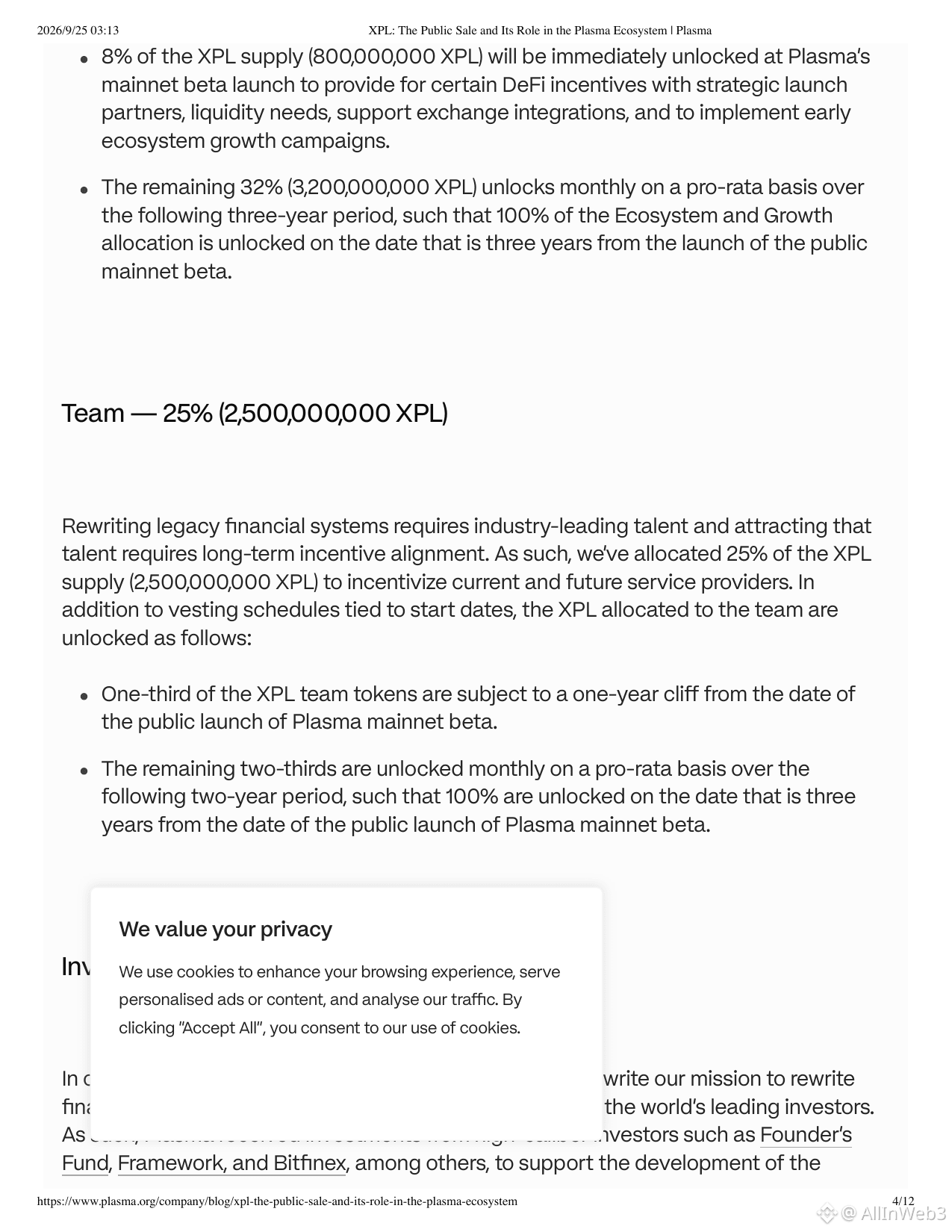
$XPL 我先观望:价格在涨,今天却撞上一年期解锁节点。Plasma 2025年7月公布的分配规则写明,初始100亿枚里团队和投资者各占25%,首个三分之一在主网公开上线满一年后解锁。主网于2025年9月25日上线;按原方案推算,两组首批合计约16.67亿枚。这是旧规则到期,不是今天新发的利好,更不等于已经卖出。
币安现货昨晚23点完整小时从0.09316收至0.10272,涨约10.3%,成交额约315万USDT;00点收回0.10038,02点又收0.10460、小时高0.10516。买盘顶着潜在供给上攻,但解锁后真实流向还没验证,不能一句“利空出尽”就带过。
我只看解锁后公开钱包转账与交易所入金,以及现货成交能否承接。下一完整小时放量收上0.10516,短线才算确认;若收破0.10000,就更像抢跑后回吐。解锁额是计划量,不是卖盘量。#XPL #Plasma #代币解锁
$XPL 我先观望:价格在涨,今天却撞上一年期解锁节点。Plasma 2025年7月公布的分配规则写明,初始100亿枚里团队和投资者各占25%,首个三分之一在主网公开上线满一年后解锁。主网于2025年9月25日上线;按原方案推算,两组首批合计约16.67亿枚。这是旧规则到期,不是今天新发的利好,更不等于已经卖出。
币安现货昨晚23点完整小时从0.09316收至0.10272,涨约10.3%,成交额约315万USDT;00点收回0.10038,02点又收0.10460、小时高0.10516。买盘顶着潜在供给上攻,但解锁后真实流向还没验证,不能一句“利空出尽”就带过。
我只看解锁后公开钱包转账与交易所入金,以及现货成交能否承接。下一完整小时放量收上0.10516,短线才算确认;若收破0.10000,就更像抢跑后回吐。解锁额是计划量,不是卖盘量。#XPL #Plasma #代币解锁
币安现货昨晚23点完整小时从0.09316收至0.10272,涨约10.3%,成交额约315万USDT;00点收回0.10038,02点又收0.10460、小时高0.10516。买盘顶着潜在供给上攻,但解锁后真实流向还没验证,不能一句“利空出尽”就带过。
我只看解锁后公开钱包转账与交易所入金,以及现货成交能否承接。下一完整小时放量收上0.10516,短线才算确认;若收破0.10000,就更像抢跑后回吐。解锁额是计划量,不是卖盘量。#XPL #Plasma #代币解锁
1
40

·
--
Article
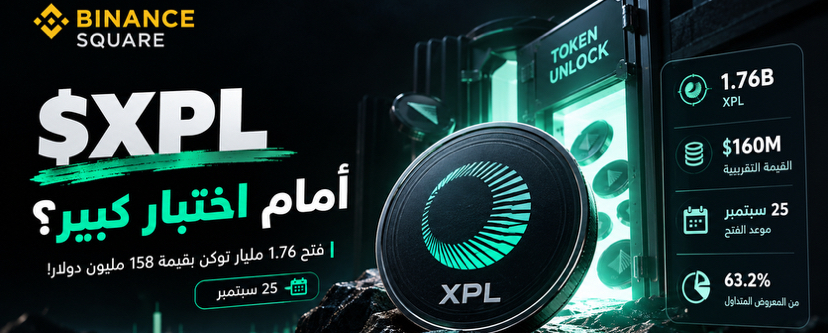
🚨 $XPL أمام اختبار قوي خلال الساعات القادمة!يوم 25 سبتمبر ينتظر مجتمع Plasma حدث مهم، مع فتح حوالي 1.76 مليار XPL للتداول، بقيمة تقارب 158–160 مليون دولار. والأهم أن الكمية تمثل حوالي 63.2% من المعروض المتداول الحالي. ([Binance](https://www.binance.com/en-AE/square/post/09-20-2026-xpl-and-other-tokens-will-see-large-scale-unlocking-next-week-368699270572598?utm_source=chatgpt.com))
هذا النوع من الـ Token Unlock يلفت أنظار المتداولين لأن دخول كمية كبيرة من التوكنات إلى السوق قد يزيد السيولة والتذبذب، خصوصاً إذا قرر بعض حاملي التوكنات بيع جزء من حصتهم.
لكن هل الـ Unlock يعني بالضرورة هبوط $XPL ؟ 🤔
مو بالضرورة.
التوكنات التي يتم فتحها قد تُستخدم لأغراض مختلفة، مثل الاحتفاظ بها، تمويل النظام البيئي أو إعادة توزيعها، لذلك حجم الـ Unlock وحده لا يكفي لمعرفة اتجاه السعر.
📌 الأرقام التي تستحق المتابعة:
• 🔓 حوالي 1.76B $XPL
• 💰 قيمة تقارب $160M
• 📅 موعد الـ Unlock: 25 سبتمبر
• 📊 حوالي 63.2% من المعروض المتداول الحالي (Tokenomics.com)
السؤال الآن:
هل السوق امتص تأثير الـ Unlock مسبقاً، أم أن 25 سبتمبر ممكن يكون يوم عالي التقلب لـ $XPL؟ 👀
اكتب توقعك تحت 👇
@boundless_network
#BinanceSquare #Plasma #Crypto #XPL #boundless
🚨 $XPL أمام اختبار قوي خلال الساعات القادمة!
يوم 25 سبتمبر ينتظر مجتمع Plasma حدث مهم، مع فتح حوالي 1.76 مليار XPL للتداول، بقيمة تقارب 158–160 مليون دولار. والأهم أن الكمية تمثل حوالي 63.2% من المعروض المتداول الحالي. (Binance)
هذا النوع من الـ Token Unlock يلفت أنظار المتداولين لأن دخول كمية كبيرة من التوكنات إلى السوق قد يزيد السيولة والتذبذب، خصوصاً إذا قرر بعض حاملي التوكنات بيع جزء من حصتهم.
لكن هل الـ Unlock يعني بالضرورة هبوط $XPL ؟ 🤔
مو بالضرورة.
التوكنات التي يتم فتحها قد تُستخدم لأغراض مختلفة، مثل الاحتفاظ بها، تمويل النظام البيئي أو إعادة توزيعها، لذلك حجم الـ Unlock وحده لا يكفي لمعرفة اتجاه السعر.
📌 الأرقام التي تستحق المتابعة:
• 🔓 حوالي 1.76B $XPL
• 💰 قيمة تقارب $160M
• 📅 موعد الـ Unlock: 25 سبتمبر
• 📊 حوالي 63.2% من المعروض المتداول الحالي (Tokenomics.com)
السؤال الآن:
هل السوق امتص تأثير الـ Unlock مسبقاً، أم أن 25 سبتمبر ممكن يكون يوم عالي التقلب لـ $XPL ؟ 👀
اكتب توقعك تحت 👇
@Boundless
#BinanceSquare #Plasma #Crypto #XPL #boundless
هذا النوع من الـ Token Unlock يلفت أنظار المتداولين لأن دخول كمية كبيرة من التوكنات إلى السوق قد يزيد السيولة والتذبذب، خصوصاً إذا قرر بعض حاملي التوكنات بيع جزء من حصتهم.
لكن هل الـ Unlock يعني بالضرورة هبوط $XPL ؟ 🤔
مو بالضرورة.
التوكنات التي يتم فتحها قد تُستخدم لأغراض مختلفة، مثل الاحتفاظ بها، تمويل النظام البيئي أو إعادة توزيعها، لذلك حجم الـ Unlock وحده لا يكفي لمعرفة اتجاه السعر.
📌 الأرقام التي تستحق المتابعة:
• 🔓 حوالي 1.76B $XPL
• 💰 قيمة تقارب $160M
• 📅 موعد الـ Unlock: 25 سبتمبر
• 📊 حوالي 63.2% من المعروض المتداول الحالي (Tokenomics.com)
السؤال الآن:
هل السوق امتص تأثير الـ Unlock مسبقاً، أم أن 25 سبتمبر ممكن يكون يوم عالي التقلب لـ $XPL ؟ 👀
اكتب توقعك تحت 👇
@Boundless
#BinanceSquare #Plasma #Crypto #XPL #boundless
154
·
--
Vérifié
🌐 Why Plasma ($XPL) Could Be the Next Big Gateway for Mass Web3 AdoptionThe Web3 space is evolving rapidly, but true global adoption requires infrastructure that is scalable, lightning-fast, and cost-effective. That is precisely why I have been following the development of @plasma so closely.
Rather than relying on short-lived market hype, Plasma is quietly building real, sustainable utility for the ecosystem. Here is a closer look at why $XPL deserves your attention:
🔥 Key Pillars of the Plasma Ecosystem
⚡ Unmatched Scalability & Speed: Plasma is purpose-built to tackle network congestion, enabling high-throughput transactions with minimal latency.
💸 Seamless & Cost-Effective Payments: By solving high gas fee limitations (especially for stablecoins like USDt), Plasma makes everyday crypto transactions practical for millions of users worldwide.
🛡️ Security Meets Innovation: Operating as a high-performance EVM-compatible chain anchored with robust security protocols, it combines enterprise-level safety with developer flexibility.💎 The Core Role of $XPL
The $XPL token sits at the center of this expanding architecture. It isn't just a speculative asset—it powers the entire network engine:
Network Security & Staking: Validators and community members stake $XPL to secure consensus and keep the blockchain decentralized.
Ecosystem Growth: Incentivizes builders, liquidity pools, and dApp activity to ensure long-term sustainability.
Transaction Powerhouse: Fueling cross-chain operations and smart contract execution seamlessly.
📈 Final Thoughts & Outlook
As institutional and retail interest in scalable payment networks grows, projects with real utility will naturally lead the market. Plasma's long-term vision, combined with strong fundamental growth, places $XPL in a very promising position.
👇 Let's Discuss!
Are you holding $XPL for the long haul, or trading the momentum? What features are you most excited to see next from the @plasma team?
Let me know your thoughts in the comments below! Don't forget to Like and Share if you found this analysis helpful! 🚀📈
#Plasma #XPL #Crypto #blockchain #DeFi
🌐 Why Plasma ($XPL) Could Be the Next Big Gateway for Mass Web3 Adoption
The Web3 space is evolving rapidly, but true global adoption requires infrastructure that is scalable, lightning-fast, and cost-effective. That is precisely why I have been following the development of @plasma so closely.
Rather than relying on short-lived market hype, Plasma is quietly building real, sustainable utility for the ecosystem. Here is a closer look at why $XPL deserves your attention:
🔥 Key Pillars of the Plasma Ecosystem
⚡ Unmatched Scalability & Speed: Plasma is purpose-built to tackle network congestion, enabling high-throughput transactions with minimal latency.
💸 Seamless & Cost-Effective Payments: By solving high gas fee limitations (especially for stablecoins like USDt), Plasma makes everyday crypto transactions practical for millions of users worldwide.
🛡️ Security Meets Innovation: Operating as a high-performance EVM-compatible chain anchored with robust security protocols, it combines enterprise-level safety with developer flexibility.💎 The Core Role of $XPL
The $XPL token sits at the center of this expanding architecture. It isn't just a speculative asset—it powers the entire network engine:
Network Security & Staking: Validators and community members stake $XPL to secure consensus and keep the blockchain decentralized.
Ecosystem Growth: Incentivizes builders, liquidity pools, and dApp activity to ensure long-term sustainability.
Transaction Powerhouse: Fueling cross-chain operations and smart contract execution seamlessly.
📈 Final Thoughts & Outlook
As institutional and retail interest in scalable payment networks grows, projects with real utility will naturally lead the market. Plasma's long-term vision, combined with strong fundamental growth, places $XPL in a very promising position.
👇 Let's Discuss!
Are you holding $XPL for the long haul, or trading the momentum? What features are you most excited to see next from the @plasma team?
Let me know your thoughts in the comments below! Don't forget to Like and Share if you found this analysis helpful! 🚀📈
#Plasma #XPL #Crypto #blockchain #DeFi
Rather than relying on short-lived market hype, Plasma is quietly building real, sustainable utility for the ecosystem. Here is a closer look at why $XPL deserves your attention:
🔥 Key Pillars of the Plasma Ecosystem
⚡ Unmatched Scalability & Speed: Plasma is purpose-built to tackle network congestion, enabling high-throughput transactions with minimal latency.
💸 Seamless & Cost-Effective Payments: By solving high gas fee limitations (especially for stablecoins like USDt), Plasma makes everyday crypto transactions practical for millions of users worldwide.
🛡️ Security Meets Innovation: Operating as a high-performance EVM-compatible chain anchored with robust security protocols, it combines enterprise-level safety with developer flexibility.💎 The Core Role of $XPL
The $XPL token sits at the center of this expanding architecture. It isn't just a speculative asset—it powers the entire network engine:
Network Security & Staking: Validators and community members stake $XPL to secure consensus and keep the blockchain decentralized.
Ecosystem Growth: Incentivizes builders, liquidity pools, and dApp activity to ensure long-term sustainability.
Transaction Powerhouse: Fueling cross-chain operations and smart contract execution seamlessly.
📈 Final Thoughts & Outlook
As institutional and retail interest in scalable payment networks grows, projects with real utility will naturally lead the market. Plasma's long-term vision, combined with strong fundamental growth, places $XPL in a very promising position.
👇 Let's Discuss!
Are you holding $XPL for the long haul, or trading the momentum? What features are you most excited to see next from the @plasma team?
Let me know your thoughts in the comments below! Don't forget to Like and Share if you found this analysis helpful! 🚀📈
#Plasma #XPL #Crypto #blockchain #DeFi
240

·
--
Haussier
شبكة #Plasma المبنية على بلوكتشين من الطبقة الأولى #Layer1 تقدم لكم أورورا، نظام التشغيل الخاص بشركة بلازما ون، والذي يجمع بين خدمات الكونسيرج وأسلوب الحياة.
السعر الآن 0.08$ وقريباً 🚀 🚀
$XPL #AURORA #TrendingTopic
{spot}(XPLUSDT)
شبكة #Plasma المبنية على بلوكتشين من الطبقة الأولى #Layer1 تقدم لكم أورورا، نظام التشغيل الخاص بشركة بلازما ون، والذي يجمع بين خدمات الكونسيرج وأسلوب الحياة.
السعر الآن 0.08$ وقريباً 🚀 🚀
$XPL #AURORA #TrendingTopic
السعر الآن 0.08$ وقريباً 🚀 🚀
$XPL #AURORA #TrendingTopic
1
1
71

·
--
Haussier
🚀 Is $XPL the Ultimate Layer-1 Solution for Global Payments?
While most Layer-1 networks try to do everything, Plasma ($XPL) focuses on solving one of crypto’s biggest real-world challenges: frictionless stablecoin payments.
Here is why $XPL is catching serious attention right now 👇
🔹 Zero-Gas USDT Transfers: Plasma allows users to transfer $USDT without needing native gas tokens in their wallets.
🔹 EVM Compatibility & Native BTC Bridge: Developers can easily deploy Ethereum dApps while $BTC enters the ecosystem seamlessly through a trust-minimized bridge.
🔹 Global Payment Focus: Built specifically for institutional payments, merchant settlement, and global remittances.
📊 Price & Market Sentiment:
XPL is holding key support levels as volume continues to build across trading pairs. A momentum breakout could target higher resistance zones soon.
👉 What’s your outlook on $XPL? Are you holding or trading the range?
Click XPL below to check live charts and trade! 👇
#Plasma
Disclaimer: Not financial advice. Always do your own research (DYOR).
XPL
🚀 Is $XPL the Ultimate Layer-1 Solution for Global Payments?
While most Layer-1 networks try to do everything, Plasma ($XPL ) focuses on solving one of crypto’s biggest real-world challenges: frictionless stablecoin payments.
Here is why $XPL is catching serious attention right now 👇
🔹 Zero-Gas USDT Transfers: Plasma allows users to transfer $USDT without needing native gas tokens in their wallets.
🔹 EVM Compatibility & Native BTC Bridge: Developers can easily deploy Ethereum dApps while $BTC enters the ecosystem seamlessly through a trust-minimized bridge.
🔹 Global Payment Focus: Built specifically for institutional payments, merchant settlement, and global remittances.
📊 Price & Market Sentiment:
XPL is holding key support levels as volume continues to build across trading pairs. A momentum breakout could target higher resistance zones soon.
👉 What’s your outlook on $XPL ? Are you holding or trading the range?
Click XPL below to check live charts and trade! 👇
#Plasma
Disclaimer: Not financial advice. Always do your own research (DYOR).
XPL
While most Layer-1 networks try to do everything, Plasma ($XPL ) focuses on solving one of crypto’s biggest real-world challenges: frictionless stablecoin payments.
Here is why $XPL is catching serious attention right now 👇
🔹 Zero-Gas USDT Transfers: Plasma allows users to transfer $USDT without needing native gas tokens in their wallets.
🔹 EVM Compatibility & Native BTC Bridge: Developers can easily deploy Ethereum dApps while $BTC enters the ecosystem seamlessly through a trust-minimized bridge.
🔹 Global Payment Focus: Built specifically for institutional payments, merchant settlement, and global remittances.
📊 Price & Market Sentiment:
XPL is holding key support levels as volume continues to build across trading pairs. A momentum breakout could target higher resistance zones soon.
👉 What’s your outlook on $XPL ? Are you holding or trading the range?
Click XPL below to check live charts and trade! 👇
#Plasma
Disclaimer: Not financial advice. Always do your own research (DYOR).
XPL
1
1
191
·
--
Haussier
سعر عملة Plasma يقفز بنسبة 18% على وقع أنباء حول عملية ضخ كبيرة للعملات في السوق.. ارتفع سعر عملة Plasma بنسبة 18% تزامناً مع تداول أنباء عن عملية ضخ كبيرة للعملات (Token Unlock) مقررة في 25 سبتمبر 2026؛ حيث سيتم طرح ما يقرب من 1.89 مليار وحدة من عملة XPL (ما يعادل 18.9% من إجمالي المعروض) وتبلغ قيمتها حوالي 150 مليون دولار، وذلك من خلال الجمع بين عمليات الإفراج عن العملات المخصصة للفريق والمستثمرين (وفق نظام "Cliff Unlock") وبين الدفعات الشهرية الأولى ضمن خطة الاستحقاق التدريجي (Vesting).
#Plasma #XPL #TrendingTopic
$XPL
{spot}(XPLUSDT)
سعر عملة Plasma يقفز بنسبة 18% على وقع أنباء حول عملية ضخ كبيرة للعملات في السوق.. ارتفع سعر عملة Plasma بنسبة 18% تزامناً مع تداول أنباء عن عملية ضخ كبيرة للعملات (Token Unlock) مقررة في 25 سبتمبر 2026؛ حيث سيتم طرح ما يقرب من 1.89 مليار وحدة من عملة XPL (ما يعادل 18.9% من إجمالي المعروض) وتبلغ قيمتها حوالي 150 مليون دولار، وذلك من خلال الجمع بين عمليات الإفراج عن العملات المخصصة للفريق والمستثمرين (وفق نظام "Cliff Unlock") وبين الدفعات الشهرية الأولى ضمن خطة الاستحقاق التدريجي (Vesting).
#Plasma #XPL #TrendingTopic
$XPL
#Plasma #XPL #TrendingTopic
$XPL
1
48
·
--
币安广场一夜之间被同一个名字刷屏——Plasma。热度冲到7.48倍,翻遍全网却翻不出一条撑得住这波热度的新闻。
数字不撒谎,但数字也不等于真相。这次警报测的是内容传播速度——48小时预测讨论量对比5天均值,涨了7.48倍。听着吓人,翻译过来就是:某个瞬间的高热度帖子被算法二次分发,仅此而已。
没有推文链接,没有作者名字,没有标题,任何关于空投、内幕、解锁的说法都是编的。这条警报只测了浏览和互动,没测现货成交量、没测持仓变化、没测资金流向——讨论量暴涨不代表真金白银在动。
价格和讨论互相喂养是常见剧本:价格一动,帖子跟着涨;帖子一多,又拉更多人进场讨论。这套循环能自己转起来,跟基本面没有必然关系。
这事我盯的不是讨论量涨了多少倍,是接下来24到48小时有没有出现真实的现货放量或者官方消息坐实。没等到这两样,我这边偏跌——这波更像自己攒起来的信息茧房;真等到坐实那天,判断才会反过来。
$XPL #Plasma #稳定币
币安广场一夜之间被同一个名字刷屏——Plasma。热度冲到7.48倍,翻遍全网却翻不出一条撑得住这波热度的新闻。
数字不撒谎,但数字也不等于真相。这次警报测的是内容传播速度——48小时预测讨论量对比5天均值,涨了7.48倍。听着吓人,翻译过来就是:某个瞬间的高热度帖子被算法二次分发,仅此而已。
没有推文链接,没有作者名字,没有标题,任何关于空投、内幕、解锁的说法都是编的。这条警报只测了浏览和互动,没测现货成交量、没测持仓变化、没测资金流向——讨论量暴涨不代表真金白银在动。
价格和讨论互相喂养是常见剧本:价格一动,帖子跟着涨;帖子一多,又拉更多人进场讨论。这套循环能自己转起来,跟基本面没有必然关系。
这事我盯的不是讨论量涨了多少倍,是接下来24到48小时有没有出现真实的现货放量或者官方消息坐实。没等到这两样,我这边偏跌——这波更像自己攒起来的信息茧房;真等到坐实那天,判断才会反过来。
$XPL #Plasma #稳定币
数字不撒谎,但数字也不等于真相。这次警报测的是内容传播速度——48小时预测讨论量对比5天均值,涨了7.48倍。听着吓人,翻译过来就是:某个瞬间的高热度帖子被算法二次分发,仅此而已。
没有推文链接,没有作者名字,没有标题,任何关于空投、内幕、解锁的说法都是编的。这条警报只测了浏览和互动,没测现货成交量、没测持仓变化、没测资金流向——讨论量暴涨不代表真金白银在动。
价格和讨论互相喂养是常见剧本:价格一动,帖子跟着涨;帖子一多,又拉更多人进场讨论。这套循环能自己转起来,跟基本面没有必然关系。
这事我盯的不是讨论量涨了多少倍,是接下来24到48小时有没有出现真实的现货放量或者官方消息坐实。没等到这两样,我这边偏跌——这波更像自己攒起来的信息茧房;真等到坐实那天,判断才会反过来。
$XPL #Plasma #稳定币
130

·
--
Article
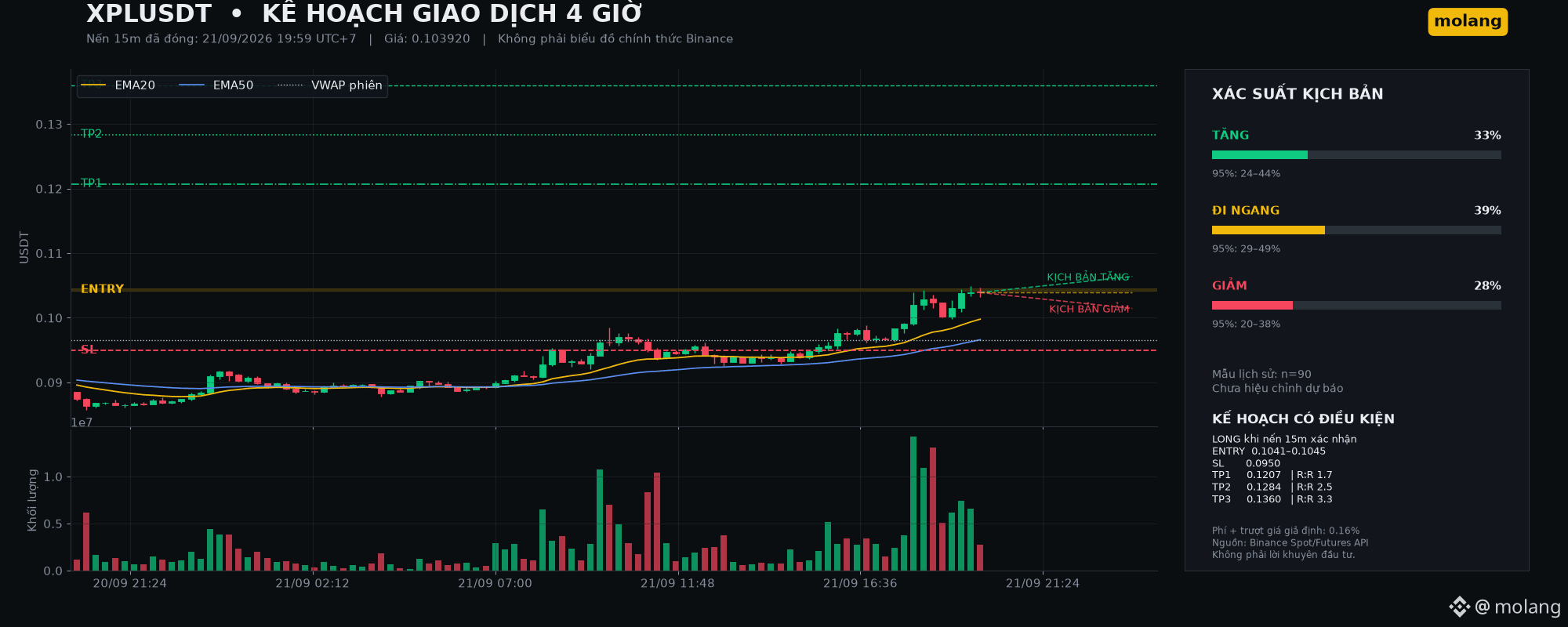
XPL TĂNG TỐC: SÓNG ĐANG MẠNH, PHANG KHI BREAKOUT XÁC NHẬNXPL đang tăng tốc với cấu trúc giá ngày càng chặt. Lúc chốt dữ liệu 19:59 UTC+7, XPLUSDT trên Binance ở 0.10392 USDT, tăng khoảng 17.62% trong 24 giờ; khối lượng riêng cặp spot đạt khoảng 24.3 triệu USDT. Giá đã thoát khỏi vùng đi ngang quanh 0.09 và liên tục tạo đáy cao hơn, cho thấy dòng tiền đang chủ động nâng mặt bằng giao dịch.
Quan điểm của tôi: sóng đang mạnh thì phang cật lực, nhưng điểm phang phải có xác nhận. Trên khung 15m, giá đứng trên EMA20 và EMA50; EMA20 khung 1h nằm trên EMA50; giá cũng cao hơn EMA20 khung 4h. VWAP phiên quanh 0.09651 đang nằm khá xa phía dưới, nghĩa là bên mua kiểm soát nhưng mức độ kéo giãn đã lớn. Đuổi giá ngay sau một cây nến xanh mạnh dễ biến mình thành thanh khoản cho nhịp chốt lời.
ENTRY: 0.10414–0.10454 USDT
SL: 0.09496 USDT
TP1: 0.12073 USDT
TP2: 0.12837 USDT
TP3: 0.13601 USDT
R:R: 1:1.7 / 1:2.5 / 1:3.3, tính tại đầu vào bất lợi nhất 0.10454 và đã dự trù 0.16% phí cộng trượt giá.
Điều kiện kích hoạt: nến 15m đã đóng phải giữ được vùng 0.10414–0.10454. Tín hiệu tốt hơn là giá retest vùng này với volume bán giảm, sau đó xuất hiện lực mua đẩy trở lại. Nếu chỉ rút râu qua entry rồi đóng xuống dưới, chưa có kèo. Khi được kích hoạt, chốt từng phần tại TP1, TP2 và TP3 sẽ hợp lý hơn việc đặt toàn bộ vị thế vào mục tiêu cuối.
Hủy kèo khi: breakout thất bại, giá mất vùng entry và không lấy lại được, hoặc nến đóng dưới 0.09496. Kế hoạch hết hiệu lực lúc 23:59 UTC+7 ngày 21/09/2026; quá thời điểm này phải tính lại bằng nến mới. Không nới SL và không trung bình giá xuống khi cấu trúc đã hỏng.
Bối cảnh hỗ trợ của XPL nằm ở định hướng Plasma dành riêng cho thanh toán stablecoin. Plasma vận hành hạ tầng EVM với PlasmaBFT, hỗ trợ chuyển USD₮ không phí trên các tuyến của hệ sinh thái và phát triển Plasma One như một ứng dụng tài chính dùng stablecoin để tiết kiệm, chuyển và chi tiêu. XPL là token gốc phục vụ bảo mật mạng lưới và điều phối động lực validator. Đây là nền tảng sản phẩm đã được dự án công bố, nhưng chưa có bằng chứng đủ mạnh để quy toàn bộ nhịp tăng hiện tại cho một thông báo riêng lẻ.
XPL đang có momentum tốt nhưng vốn hóa còn tương đối nhỏ, vì vậy biên rung và rủi ro false breakout sẽ lớn. Kèo này chỉ đáng đánh khi giá xác nhận đúng vùng; nếu thị trường không cho điểm vào, đứng ngoài vẫn là một quyết định thắng.
Nguồn: Binance Spot; CoinMarketCap; CoinGecko; Plasma.
#Plasma #XPL $XPL
Nội dung chỉ nhằm mục đích thông tin, không phải lời khuyên tài chính.
XPL TĂNG TỐC: SÓNG ĐANG MẠNH, PHANG KHI BREAKOUT XÁC NHẬN
XPL đang tăng tốc với cấu trúc giá ngày càng chặt. Lúc chốt dữ liệu 19:59 UTC+7, XPLUSDT trên Binance ở 0.10392 USDT, tăng khoảng 17.62% trong 24 giờ; khối lượng riêng cặp spot đạt khoảng 24.3 triệu USDT. Giá đã thoát khỏi vùng đi ngang quanh 0.09 và liên tục tạo đáy cao hơn, cho thấy dòng tiền đang chủ động nâng mặt bằng giao dịch.
Quan điểm của tôi: sóng đang mạnh thì phang cật lực, nhưng điểm phang phải có xác nhận. Trên khung 15m, giá đứng trên EMA20 và EMA50; EMA20 khung 1h nằm trên EMA50; giá cũng cao hơn EMA20 khung 4h. VWAP phiên quanh 0.09651 đang nằm khá xa phía dưới, nghĩa là bên mua kiểm soát nhưng mức độ kéo giãn đã lớn. Đuổi giá ngay sau một cây nến xanh mạnh dễ biến mình thành thanh khoản cho nhịp chốt lời.
ENTRY: 0.10414–0.10454 USDT
SL: 0.09496 USDT
TP1: 0.12073 USDT
TP2: 0.12837 USDT
TP3: 0.13601 USDT
R:R: 1:1.7 / 1:2.5 / 1:3.3, tính tại đầu vào bất lợi nhất 0.10454 và đã dự trù 0.16% phí cộng trượt giá.
Điều kiện kích hoạt: nến 15m đã đóng phải giữ được vùng 0.10414–0.10454. Tín hiệu tốt hơn là giá retest vùng này với volume bán giảm, sau đó xuất hiện lực mua đẩy trở lại. Nếu chỉ rút râu qua entry rồi đóng xuống dưới, chưa có kèo. Khi được kích hoạt, chốt từng phần tại TP1, TP2 và TP3 sẽ hợp lý hơn việc đặt toàn bộ vị thế vào mục tiêu cuối.
Hủy kèo khi: breakout thất bại, giá mất vùng entry và không lấy lại được, hoặc nến đóng dưới 0.09496. Kế hoạch hết hiệu lực lúc 23:59 UTC+7 ngày 21/09/2026; quá thời điểm này phải tính lại bằng nến mới. Không nới SL và không trung bình giá xuống khi cấu trúc đã hỏng.
Bối cảnh hỗ trợ của XPL nằm ở định hướng Plasma dành riêng cho thanh toán stablecoin. Plasma vận hành hạ tầng EVM với PlasmaBFT, hỗ trợ chuyển USD₮ không phí trên các tuyến của hệ sinh thái và phát triển Plasma One như một ứng dụng tài chính dùng stablecoin để tiết kiệm, chuyển và chi tiêu. XPL là token gốc phục vụ bảo mật mạng lưới và điều phối động lực validator. Đây là nền tảng sản phẩm đã được dự án công bố, nhưng chưa có bằng chứng đủ mạnh để quy toàn bộ nhịp tăng hiện tại cho một thông báo riêng lẻ.
XPL đang có momentum tốt nhưng vốn hóa còn tương đối nhỏ, vì vậy biên rung và rủi ro false breakout sẽ lớn. Kèo này chỉ đáng đánh khi giá xác nhận đúng vùng; nếu thị trường không cho điểm vào, đứng ngoài vẫn là một quyết định thắng.
Nguồn: Binance Spot; CoinMarketCap; CoinGecko; Plasma.
#Plasma #XPL $XPL
Nội dung chỉ nhằm mục đích thông tin, không phải lời khuyên tài chính.
Quan điểm của tôi: sóng đang mạnh thì phang cật lực, nhưng điểm phang phải có xác nhận. Trên khung 15m, giá đứng trên EMA20 và EMA50; EMA20 khung 1h nằm trên EMA50; giá cũng cao hơn EMA20 khung 4h. VWAP phiên quanh 0.09651 đang nằm khá xa phía dưới, nghĩa là bên mua kiểm soát nhưng mức độ kéo giãn đã lớn. Đuổi giá ngay sau một cây nến xanh mạnh dễ biến mình thành thanh khoản cho nhịp chốt lời.
ENTRY: 0.10414–0.10454 USDT
SL: 0.09496 USDT
TP1: 0.12073 USDT
TP2: 0.12837 USDT
TP3: 0.13601 USDT
R:R: 1:1.7 / 1:2.5 / 1:3.3, tính tại đầu vào bất lợi nhất 0.10454 và đã dự trù 0.16% phí cộng trượt giá.
Điều kiện kích hoạt: nến 15m đã đóng phải giữ được vùng 0.10414–0.10454. Tín hiệu tốt hơn là giá retest vùng này với volume bán giảm, sau đó xuất hiện lực mua đẩy trở lại. Nếu chỉ rút râu qua entry rồi đóng xuống dưới, chưa có kèo. Khi được kích hoạt, chốt từng phần tại TP1, TP2 và TP3 sẽ hợp lý hơn việc đặt toàn bộ vị thế vào mục tiêu cuối.
Hủy kèo khi: breakout thất bại, giá mất vùng entry và không lấy lại được, hoặc nến đóng dưới 0.09496. Kế hoạch hết hiệu lực lúc 23:59 UTC+7 ngày 21/09/2026; quá thời điểm này phải tính lại bằng nến mới. Không nới SL và không trung bình giá xuống khi cấu trúc đã hỏng.
Bối cảnh hỗ trợ của XPL nằm ở định hướng Plasma dành riêng cho thanh toán stablecoin. Plasma vận hành hạ tầng EVM với PlasmaBFT, hỗ trợ chuyển USD₮ không phí trên các tuyến của hệ sinh thái và phát triển Plasma One như một ứng dụng tài chính dùng stablecoin để tiết kiệm, chuyển và chi tiêu. XPL là token gốc phục vụ bảo mật mạng lưới và điều phối động lực validator. Đây là nền tảng sản phẩm đã được dự án công bố, nhưng chưa có bằng chứng đủ mạnh để quy toàn bộ nhịp tăng hiện tại cho một thông báo riêng lẻ.
XPL đang có momentum tốt nhưng vốn hóa còn tương đối nhỏ, vì vậy biên rung và rủi ro false breakout sẽ lớn. Kèo này chỉ đáng đánh khi giá xác nhận đúng vùng; nếu thị trường không cho điểm vào, đứng ngoài vẫn là một quyết định thắng.
Nguồn: Binance Spot; CoinMarketCap; CoinGecko; Plasma.
#Plasma #XPL $XPL
Nội dung chỉ nhằm mục đích thông tin, không phải lời khuyên tài chính.
94

·
--
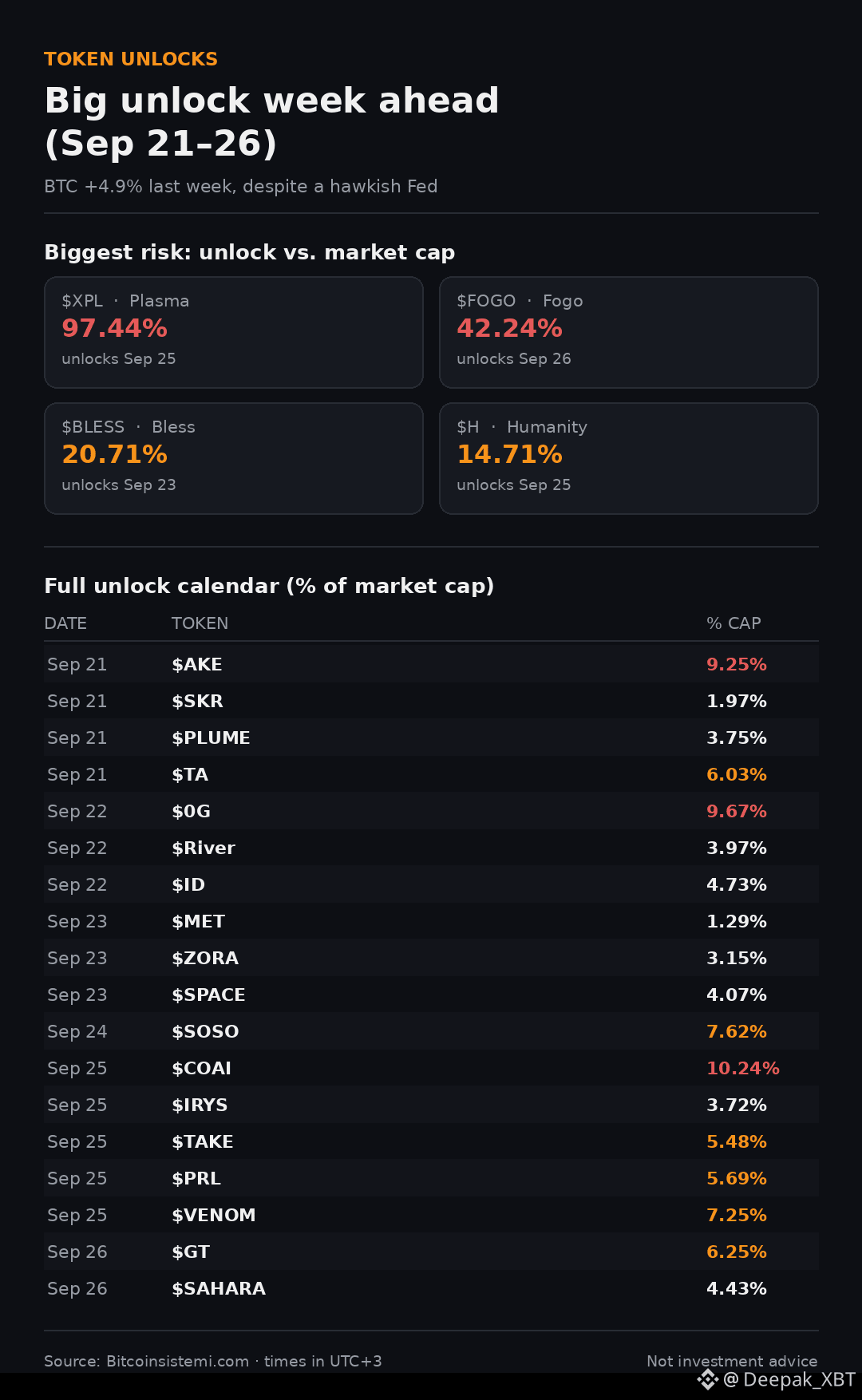
**Massive token unlock week ahead — here's what to watch 🔓**
Despite a hawkish Fed and Chair Warsh's post-decision tone, crypto rallied hard last week — BTC +4.9%, most top-10 alts following suit.
But a heavy unlock calendar (Sept 21–26) could test that momentum:
🔴 **Biggest risks:**
• **Plasma ($XPL)** — $151.64M unlocking = **97.44%** of market cap (Sept 25)
• **Fogo** — $9.83M = **42.24%** of market cap (Sept 26)
• **Bless** — $4.48M = **20.71%** of market cap (Sept 23)
• **Humanity (H)** — $20.76M = 14.71% of market cap (Sept 25)
**Also unlocking this week:** Akedo, Seeker, Plume, Trusta.AI, 0G, River, Space ID, Meteora, Zora, Spacecoin, SoSoValue, ChainOpera AI, Irys, OVERTAKE, Perle Labs, Venom, GateToken, Sahara AI
Unlocks near/above 15-20% of market cap historically bring added sell-side pressure — worth tracking price action around these dates, especially Plasma's near-total float unlock.
*NFA — DYOR* 🧠
#TokenUnlockSeries #Crypto_Jobs🎯 #Altcoins #Plasma #fogo
**Massive token unlock week ahead — here's what to watch 🔓**
Despite a hawkish Fed and Chair Warsh's post-decision tone, crypto rallied hard last week — BTC +4.9%, most top-10 alts following suit.
But a heavy unlock calendar (Sept 21–26) could test that momentum:
🔴 **Biggest risks:**
• **Plasma ($XPL)** — $151.64M unlocking = **97.44%** of market cap (Sept 25)
• **Fogo** — $9.83M = **42.24%** of market cap (Sept 26)
• **Bless** — $4.48M = **20.71%** of market cap (Sept 23)
• **Humanity (H)** — $20.76M = 14.71% of market cap (Sept 25)
**Also unlocking this week:** Akedo, Seeker, Plume, Trusta.AI, 0G, River, Space ID, Meteora, Zora, Spacecoin, SoSoValue, ChainOpera AI, Irys, OVERTAKE, Perle Labs, Venom, GateToken, Sahara AI
Unlocks near/above 15-20% of market cap historically bring added sell-side pressure — worth tracking price action around these dates, especially Plasma's near-total float unlock.
*NFA — DYOR* 🧠
#TokenUnlockSeries #Crypto_Jobs🎯 #Altcoins #Plasma #fogo
Despite a hawkish Fed and Chair Warsh's post-decision tone, crypto rallied hard last week — BTC +4.9%, most top-10 alts following suit.
But a heavy unlock calendar (Sept 21–26) could test that momentum:
🔴 **Biggest risks:**
• **Plasma ($XPL)** — $151.64M unlocking = **97.44%** of market cap (Sept 25)
• **Fogo** — $9.83M = **42.24%** of market cap (Sept 26)
• **Bless** — $4.48M = **20.71%** of market cap (Sept 23)
• **Humanity (H)** — $20.76M = 14.71% of market cap (Sept 25)
**Also unlocking this week:** Akedo, Seeker, Plume, Trusta.AI, 0G, River, Space ID, Meteora, Zora, Spacecoin, SoSoValue, ChainOpera AI, Irys, OVERTAKE, Perle Labs, Venom, GateToken, Sahara AI
Unlocks near/above 15-20% of market cap historically bring added sell-side pressure — worth tracking price action around these dates, especially Plasma's near-total float unlock.
*NFA — DYOR* 🧠
#TokenUnlockSeries #Crypto_Jobs🎯 #Altcoins #Plasma #fogo
2
1
1.5k

{spot}(XPLUSDT)
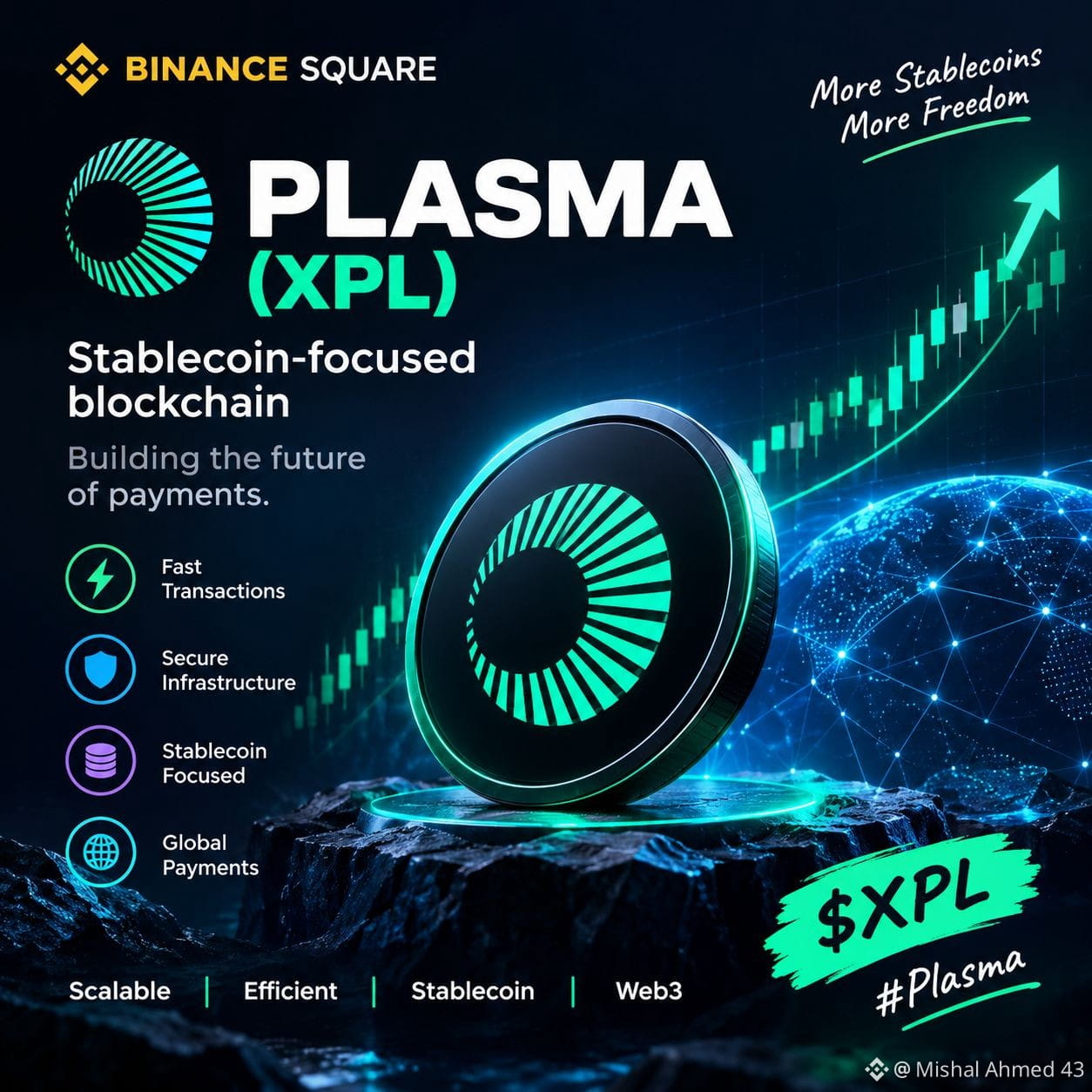
@Plasma plasma is building a new standard for fast, efficient, and stablecoin-focused blockchain infrastructure. I’m excited to follow the growth of @Plasma and see how $XPL develops as the ecosystem expands. The vision around scalable payments and stablecoins makes Plasma a project worth watching.
#Plasma @Plasma $XPL #Plasma
@Plasma plasma is building a new standard for fast, efficient, and stablecoin-focused blockchain infrastructure. I’m excited to follow the growth of @Plasma and see how $XPL develops as the ecosystem expands. The vision around scalable payments and stablecoins makes Plasma a project worth watching.
#Plasma @Plasma $XPL #Plasma
#Plasma @Plasma $XPL #Plasma
2
174
·
--
Haussier
بلازما تُعزز بطاقة بلاتينيوم بإضافة ميزة دخول صالات بريوريتي باس وسط أخبار عن شراكات جديدة. شهد رمز XPL الخاص بشركة بلازما ارتفاعًا في سعره بعد أن أصبحت بطاقة بلازما ون بلاتينيوم تتضمن الآن ميزة دخول صالات بريوريتي باس. كما ساهمت الشراكات الإعلامية الاستراتيجية وإمكانية دمج سول لابز في هذا الارتفاع الأخير.
#Plasma #SolanaLabs
$XPL
{spot}(XPLUSDT)
بلازما تُعزز بطاقة بلاتينيوم بإضافة ميزة دخول صالات بريوريتي باس وسط أخبار عن شراكات جديدة. شهد رمز XPL الخاص بشركة بلازما ارتفاعًا في سعره بعد أن أصبحت بطاقة بلازما ون بلاتينيوم تتضمن الآن ميزة دخول صالات بريوريتي باس. كما ساهمت الشراكات الإعلامية الاستراتيجية وإمكانية دمج سول لابز في هذا الارتفاع الأخير.
#Plasma #SolanaLabs
$XPL
#Plasma #SolanaLabs
$XPL
1
61
Connectez-vous pour découvrir plus de contenu
Rejoignez la communauté mondiale des adeptes de cryptomonnaies sur Binance Square
⚡️ Suviez les dernières informations importantes sur les cryptomonnaies.
💬 Jugé digne de confiance par la plus grande plateforme d’échange de cryptomonnaies au monde.
👍 Découvrez les connaissances que partagent les créateurs vérifiés.
Adresse e-mail/Nº de téléphone
Sujets d’actualité
1
#NFPWatch
10.8M vues
19,210 mentions
2
#BitcoinFundingRateTriplesTo10%
160,358 vues
1,147 mentions
3
#BitcoinSurpasses$86KUp2.99%
51,993 vues
112 mentions
4
#ZcashFalls21%FromSeptemberPeak
86,035 vues
826 mentions
5
#USSeptemberPayrollsAdd29KUnemploymentRises4.2%
70,238 vues
508 mentions
6
#XRPPostsFirstThreeGreenMonthsInQ3
57,531 vues
686 mentions
7
#BNBChainTokenizedStocksTop$1BAt30%Share
26,526 vues
38 mentions
8
#BitcoinRisesToward$85K
122,480 vues
157 mentions
9
#AmazonPlansToSell$8BNvidiaChips
8,018 vues
91 mentions
10
#NEARFallsToAround$4.70Down14%
49,809 vues
118 mentions