

#oil
oil
5M vues
14,358 mentions
Populaire
Récents

·
--
🚨 GEOPOLITICAL SHIFTS THREATEN $OIL AS INSTITUTIONAL LIQUIDITY PREPARES FOR RE-PRICING! 📉
Macro headlines surrounding Straits of Hormuz supply flows are driving heavy downside momentum across global energy benchmarks. 📊 Smart money positioning indicates an aggressive distribution phase in $OIL as geopolitical risk premiums unwind rapidly, threatening structural support levels across higher timeframes.
When energy volatility cools, macro liquidity historically shifts back into risk assets and stable coin reserves. 💡 Institutional desks are closely watching this inefficiency fill for structural pivots that could redefine market flow into Q4.
💬 Will falling energy overhead catalyze a relief bid across broader risk assets, or are you waiting for full structural confirmation? 👇
⚠️ Not financial advice. Always manage your risk. 🛡️
🏷️ #OIL #Macro #MarketStructure #Liquidity
🦈 👁️
🚨 GEOPOLITICAL SHIFTS THREATEN $OIL AS INSTITUTIONAL LIQUIDITY PREPARES FOR RE-PRICING! 📉
Macro headlines surrounding Straits of Hormuz supply flows are driving heavy downside momentum across global energy benchmarks. 📊 Smart money positioning indicates an aggressive distribution phase in $OIL as geopolitical risk premiums unwind rapidly, threatening structural support levels across higher timeframes.
When energy volatility cools, macro liquidity historically shifts back into risk assets and stable coin reserves. 💡 Institutional desks are closely watching this inefficiency fill for structural pivots that could redefine market flow into Q4.
💬 Will falling energy overhead catalyze a relief bid across broader risk assets, or are you waiting for full structural confirmation? 👇
⚠️ Not financial advice. Always manage your risk. 🛡️
🏷️ #OIL #Macro #MarketStructure #Liquidity
🦈 👁️
Macro headlines surrounding Straits of Hormuz supply flows are driving heavy downside momentum across global energy benchmarks. 📊 Smart money positioning indicates an aggressive distribution phase in $OIL as geopolitical risk premiums unwind rapidly, threatening structural support levels across higher timeframes.
When energy volatility cools, macro liquidity historically shifts back into risk assets and stable coin reserves. 💡 Institutional desks are closely watching this inefficiency fill for structural pivots that could redefine market flow into Q4.
💬 Will falling energy overhead catalyze a relief bid across broader risk assets, or are you waiting for full structural confirmation? 👇
⚠️ Not financial advice. Always manage your risk. 🛡️
🏷️ #OIL #Macro #MarketStructure #Liquidity
🦈 👁️
121

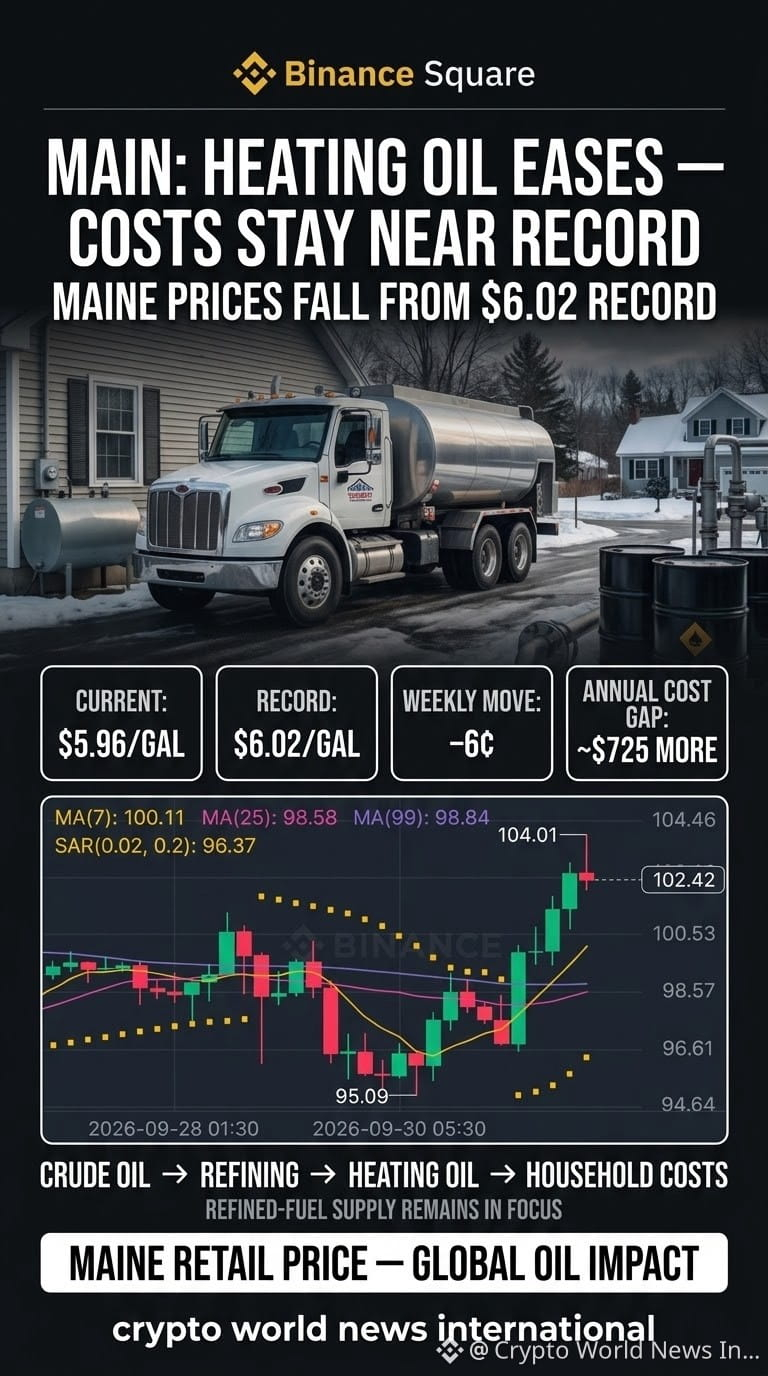
🚨 HEATING OIL EASES — BUT COSTS REMAIN NEAR RECORD LEVELS
Maine heating oil prices pulled back slightly from a record high, but household fuel costs remain dramatically above last year.
🔑 Key Points:
• Maine average heating oil: $5.96/gallon
• Previous record: $6.02/gallon
• Weekly decline: 6 cents
• Typical home tank costs roughly $725 more than a year ago
• Refining and refined-fuel supply remain key market concerns
📊 Market Insight:
The small weekly decline does little to change the broader picture: elevated diesel and heating-oil prices continue to pressure household energy costs.
The bigger market question is whether improved crude flows can translate into more stable supplies of refined fuels.
🛢️ Asset to Watch: Brent Crude
#Oil #HeatingOil #BrentCrude #EnergyMarkets #Inflation $BZ $CL $NATGAS
{future}(NATGASUSDT)
{future}(CLUSDT)
{future}(BZUSDT)
🚨 HEATING OIL EASES — BUT COSTS REMAIN NEAR RECORD LEVELS
Maine heating oil prices pulled back slightly from a record high, but household fuel costs remain dramatically above last year.
🔑 Key Points:
• Maine average heating oil: $5.96/gallon
• Previous record: $6.02/gallon
• Weekly decline: 6 cents
• Typical home tank costs roughly $725 more than a year ago
• Refining and refined-fuel supply remain key market concerns
📊 Market Insight:
The small weekly decline does little to change the broader picture: elevated diesel and heating-oil prices continue to pressure household energy costs.
The bigger market question is whether improved crude flows can translate into more stable supplies of refined fuels.
🛢️ Asset to Watch: Brent Crude
#Oil #HeatingOil #BrentCrude #EnergyMarkets #Inflation $BZ $CL $NATGAS
Maine heating oil prices pulled back slightly from a record high, but household fuel costs remain dramatically above last year.
🔑 Key Points:
• Maine average heating oil: $5.96/gallon
• Previous record: $6.02/gallon
• Weekly decline: 6 cents
• Typical home tank costs roughly $725 more than a year ago
• Refining and refined-fuel supply remain key market concerns
📊 Market Insight:
The small weekly decline does little to change the broader picture: elevated diesel and heating-oil prices continue to pressure household energy costs.
The bigger market question is whether improved crude flows can translate into more stable supplies of refined fuels.
🛢️ Asset to Watch: Brent Crude
#Oil #HeatingOil #BrentCrude #EnergyMarkets #Inflation $BZ $CL $NATGAS
249

Vérifié
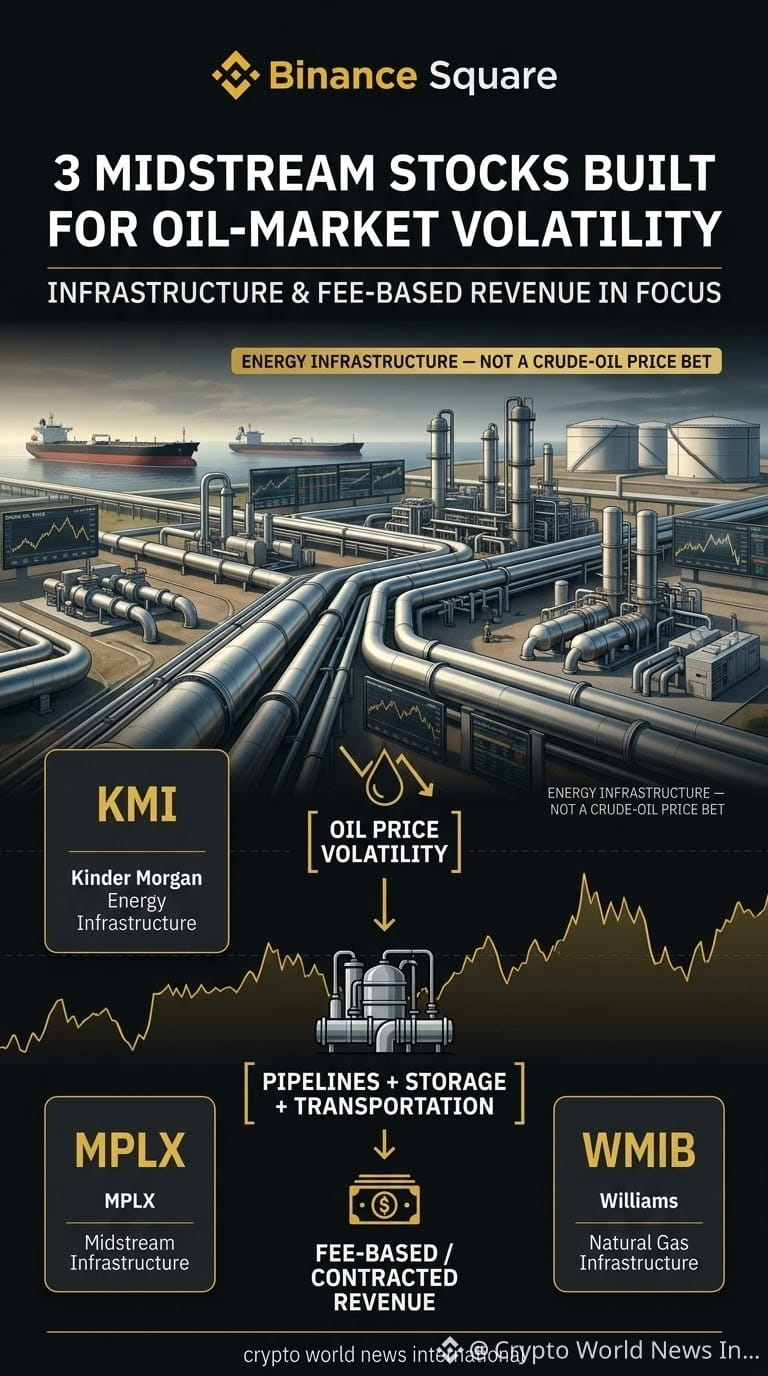
🚨 3 MIDSTREAM ENERGY STOCKS BUILT FOR OIL-MARKET VOLATILITY
Crude oil prices can swing sharply, but some midstream energy companies rely more on fee-based revenue and long-term contracts than direct exposure to oil prices.
🔑 Key Points:
• Kinder Morgan (KMI) — large U.S. pipeline and energy infrastructure network
• MPLX (MPLX) — diversified midstream infrastructure and logistics
• Williams (WMB) — major U.S. natural-gas infrastructure exposure
• Their business models emphasize contracted and fee-based revenue
• The focus is infrastructure cash flow rather than simply betting on higher oil prices
📊 Market Insight: The midstream model can provide a different way to gain energy-sector exposure because revenue is often linked to transportation, storage and infrastructure services rather than the daily direction of crude prices.
🛢️ Stocks to Watch: KMI • MPLX • WMB
#oil #EnergyStocks #Midstream #stockmarket #Investing $BZ $CL
{future}(CLUSDT)
{future}(BZUSDT)
🚨 3 MIDSTREAM ENERGY STOCKS BUILT FOR OIL-MARKET VOLATILITY
Crude oil prices can swing sharply, but some midstream energy companies rely more on fee-based revenue and long-term contracts than direct exposure to oil prices.
🔑 Key Points:
• Kinder Morgan (KMI) — large U.S. pipeline and energy infrastructure network
• MPLX (MPLX) — diversified midstream infrastructure and logistics
• Williams (WMB) — major U.S. natural-gas infrastructure exposure
• Their business models emphasize contracted and fee-based revenue
• The focus is infrastructure cash flow rather than simply betting on higher oil prices
📊 Market Insight: The midstream model can provide a different way to gain energy-sector exposure because revenue is often linked to transportation, storage and infrastructure services rather than the daily direction of crude prices.
🛢️ Stocks to Watch: KMI • MPLX • WMB
#oil #EnergyStocks #Midstream #stockmarket #Investing $BZ $CL
Crude oil prices can swing sharply, but some midstream energy companies rely more on fee-based revenue and long-term contracts than direct exposure to oil prices.
🔑 Key Points:
• Kinder Morgan (KMI) — large U.S. pipeline and energy infrastructure network
• MPLX (MPLX) — diversified midstream infrastructure and logistics
• Williams (WMB) — major U.S. natural-gas infrastructure exposure
• Their business models emphasize contracted and fee-based revenue
• The focus is infrastructure cash flow rather than simply betting on higher oil prices
📊 Market Insight: The midstream model can provide a different way to gain energy-sector exposure because revenue is often linked to transportation, storage and infrastructure services rather than the daily direction of crude prices.
🛢️ Stocks to Watch: KMI • MPLX • WMB
#oil #EnergyStocks #Midstream #stockmarket #Investing $BZ $CL
708

·
--
$XLE finished September down 3.85%, in a month where November $CL WTI gained 7.57% and November diesel futures 10.26%... the stocks fell while the barrels and products they're levered to rallied.
I think the reason sits further out the curve, since a producer is worth years of future barrels and the market prices those well below today's oil. At Wednesday's close January 2028 WTI was 17.23% under November, and I doubt equity investors want to capitalise a front-month premium that size for long. That gap has narrowed over the last five sessions, though.
I'd read the crude rally and the equity weakness as two different bets on how long the supply squeeze lasts. If the back of the curve starts to lift, $XLE could follow it. Sunday's OPEC+ call is expected to hold November quotas steady, so I'll be watching the deferred contracts into next week.
#Oil #Energy #XLE #Macro
$XLE finished September down 3.85%, in a month where November $CL WTI gained 7.57% and November diesel futures 10.26%... the stocks fell while the barrels and products they're levered to rallied.
I think the reason sits further out the curve, since a producer is worth years of future barrels and the market prices those well below today's oil. At Wednesday's close January 2028 WTI was 17.23% under November, and I doubt equity investors want to capitalise a front-month premium that size for long. That gap has narrowed over the last five sessions, though.
I'd read the crude rally and the equity weakness as two different bets on how long the supply squeeze lasts. If the back of the curve starts to lift, $XLE could follow it. Sunday's OPEC+ call is expected to hold November quotas steady, so I'll be watching the deferred contracts into next week.
#Oil #Energy #XLE #Macro
I think the reason sits further out the curve, since a producer is worth years of future barrels and the market prices those well below today's oil. At Wednesday's close January 2028 WTI was 17.23% under November, and I doubt equity investors want to capitalise a front-month premium that size for long. That gap has narrowed over the last five sessions, though.
I'd read the crude rally and the equity weakness as two different bets on how long the supply squeeze lasts. If the back of the curve starts to lift, $XLE could follow it. Sunday's OPEC+ call is expected to hold November quotas steady, so I'll be watching the deferred contracts into next week.
#Oil #Energy #XLE #Macro
253

Vérifié
Article
Iran expects US response today on Hormuz proposal as oil prices climb againTehran awaits for Washington to respond today as renewed diplomacy keeps oil traders guessing over the Strait of Hormuz situationIran foreign minister, Abbas Araqchi, says that Tehran expects to receive a US response today to its latest proposal surrounding the reopening of the Strait of Hormuz.That keeps the diplomatic door open somewhat, even after US president Trump publicly rejected Iran's original seven-day proposal over the weekend. Since then, the situation has become slightly more complicated.US and Iranian officials reportedly held separate talks with mediators on Monday, with further discussions expected to focus on an amended version of Tehran's initial proposal. That being said, Iran continues to tie the reopening of the Strait of Hormuz to specific conditions. That includes an end to hostilities, sanctions relief and the lifting of the US naval blockade.I don't think markets can completely write off the possibility of some hopeful progress just yet. But at the same time, the constant back and forth that we have been encountering for many months now makes it difficult to see a path for compromise. That especially with mixed messages from Washington, as Trump continues to talk of war but at the same time is said to be preparing the possibility of easing sanctions.And you can see that uncertainty playing out quite clearly in oil.Oil prices jumped by more than $4 at one stage on Monday after Trump's rejection of the Iranian proposal, only to give back most of those gains as hopes of further negotiations resurfaced. WTI crude ended the day lower and settled around $92.60 yesterday.Today, we're seeing another move higher in oil prices instead. WTI is moving up by nearly 2% to $94.60 as supply concerns remain firmly in focus. For oil traders, that leaves the next move to be fairly headline-driven in all likelihood.A US response that signals negotiations are moving forward could quickly revive hopes of a Hormuz reopening and take some geopolitical premium out of oil prices. However, another setback would leave the market confronting the same problem it has struggled with for months already.Oil flows may be showing some signs of improving. But at the end of the day, a return to normality for one of the world's most important energy routes remains a distant dream still.#oil
Iran expects US response today on Hormuz proposal as oil prices climb again
Tehran awaits for Washington to respond today as renewed diplomacy keeps oil traders guessing over the Strait of Hormuz situationIran foreign minister, Abbas Araqchi, says that Tehran expects to receive a US response today to its latest proposal surrounding the reopening of the Strait of Hormuz.That keeps the diplomatic door open somewhat, even after US president Trump publicly rejected Iran's original seven-day proposal over the weekend. Since then, the situation has become slightly more complicated.US and Iranian officials reportedly held separate talks with mediators on Monday, with further discussions expected to focus on an amended version of Tehran's initial proposal. That being said, Iran continues to tie the reopening of the Strait of Hormuz to specific conditions. That includes an end to hostilities, sanctions relief and the lifting of the US naval blockade.I don't think markets can completely write off the possibility of some hopeful progress just yet. But at the same time, the constant back and forth that we have been encountering for many months now makes it difficult to see a path for compromise. That especially with mixed messages from Washington, as Trump continues to talk of war but at the same time is said to be preparing the possibility of easing sanctions.And you can see that uncertainty playing out quite clearly in oil.Oil prices jumped by more than $4 at one stage on Monday after Trump's rejection of the Iranian proposal, only to give back most of those gains as hopes of further negotiations resurfaced. WTI crude ended the day lower and settled around $92.60 yesterday.Today, we're seeing another move higher in oil prices instead. WTI is moving up by nearly 2% to $94.60 as supply concerns remain firmly in focus. For oil traders, that leaves the next move to be fairly headline-driven in all likelihood.A US response that signals negotiations are moving forward could quickly revive hopes of a Hormuz reopening and take some geopolitical premium out of oil prices. However, another setback would leave the market confronting the same problem it has struggled with for months already.Oil flows may be showing some signs of improving. But at the end of the day, a return to normality for one of the world's most important energy routes remains a distant dream still.#oil
206 Atlas:
Diplomatic noise is not a trading thesis. Price action and volume tell the real story, not press releases.
1
1.2k

·
--
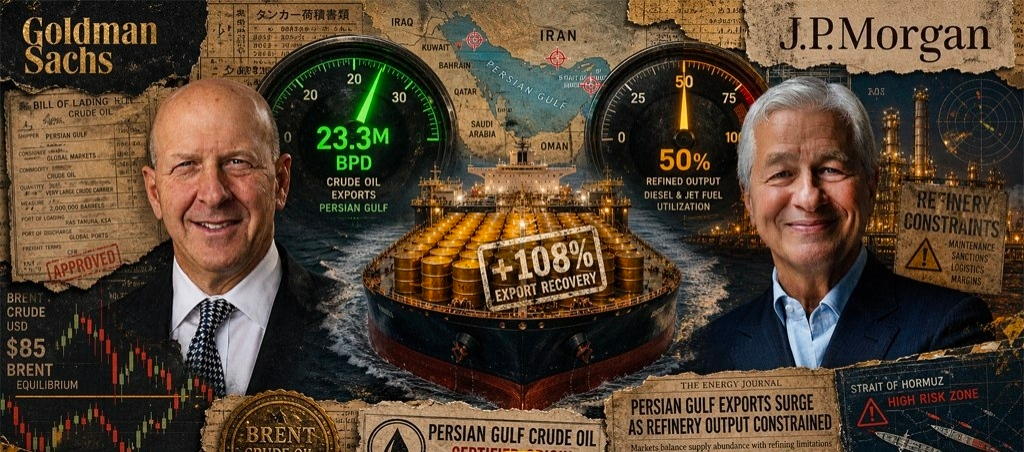
🛢️🚢 Gulf #oil Exports double in September, reaching 23.3M barrels per day and marking 108% of 2025 levels, fueled by a strong recovery in crude flows. 📈🌊
⚠️✈️ Refined product constraints restrict diesel and jet fuel to 50%, while Goldman Sachs maintains Brent crude at $85 per barrel amid ongoing warnings over maritime navigation risks. ⛽⚓
#EnergyMarkets #OilAndGas #GulfOil #GoldManSachs #BrentCrude #GlobalTrade #MacroEconomics
$BZ
{future}(BZUSDT)
$CL
{future}(CLUSDT)
🛢️🚢 Gulf #oil Exports double in September, reaching 23.3M barrels per day and marking 108% of 2025 levels, fueled by a strong recovery in crude flows. 📈🌊
⚠️✈️ Refined product constraints restrict diesel and jet fuel to 50%, while Goldman Sachs maintains Brent crude at $85 per barrel amid ongoing warnings over maritime navigation risks. ⛽⚓
#EnergyMarkets #OilAndGas #GulfOil #GoldManSachs #BrentCrude #GlobalTrade #MacroEconomics
$BZ
$CL
⚠️✈️ Refined product constraints restrict diesel and jet fuel to 50%, while Goldman Sachs maintains Brent crude at $85 per barrel amid ongoing warnings over maritime navigation risks. ⛽⚓
#EnergyMarkets #OilAndGas #GulfOil #GoldManSachs #BrentCrude #GlobalTrade #MacroEconomics
$BZ
$CL

AVA 4U 🍀
De OnionSam
Crypto Noob Boy:
why is $CL underperforming ?
5
2
292

·
--
🚨 $OIL SURGES TO $98 AS INSTITUTIONAL FLOWS HEDGE MACRO INFLATION INEFFICIENCIES! ⚡
Entry: 98.31 ⚡
Energy markets are printing aggressive institutional expansion, with Brent crude pushing 3% higher to $98.31 while $WTI accelerates up 2.6%. 🌊 Smart money is taking advantage of structural order block retests across global commodities, sweeping overhead liquidity as macro volatility builds.
📊 Data shows systematic momentum funds driving price action toward key quarterly supply zones, forcing risk realignment across broader markets. 💡 This massive influx of capital into energy underscores how fast institutional actors hedge against inflation risks when structural pivots break out.
💬 Will this aggressive commodity surge trigger a secondary liquidity sweep across crypto markets, or are you holding your bias? 👇
⚠️ Not financial advice. Always manage your risk. 🛡️
🏷️ #OIL #WTI #Macro #Liquidity #Trading
🔥 💎
🚨 $OIL SURGES TO $98 AS INSTITUTIONAL FLOWS HEDGE MACRO INFLATION INEFFICIENCIES! ⚡
Entry: 98.31 ⚡
Energy markets are printing aggressive institutional expansion, with Brent crude pushing 3% higher to $98.31 while $WTI accelerates up 2.6%. 🌊 Smart money is taking advantage of structural order block retests across global commodities, sweeping overhead liquidity as macro volatility builds.
📊 Data shows systematic momentum funds driving price action toward key quarterly supply zones, forcing risk realignment across broader markets. 💡 This massive influx of capital into energy underscores how fast institutional actors hedge against inflation risks when structural pivots break out.
💬 Will this aggressive commodity surge trigger a secondary liquidity sweep across crypto markets, or are you holding your bias? 👇
⚠️ Not financial advice. Always manage your risk. 🛡️
🏷️ #OIL #WTI #Macro #Liquidity #Trading
🔥 💎
Entry: 98.31 ⚡
Energy markets are printing aggressive institutional expansion, with Brent crude pushing 3% higher to $98.31 while $WTI accelerates up 2.6%. 🌊 Smart money is taking advantage of structural order block retests across global commodities, sweeping overhead liquidity as macro volatility builds.
📊 Data shows systematic momentum funds driving price action toward key quarterly supply zones, forcing risk realignment across broader markets. 💡 This massive influx of capital into energy underscores how fast institutional actors hedge against inflation risks when structural pivots break out.
💬 Will this aggressive commodity surge trigger a secondary liquidity sweep across crypto markets, or are you holding your bias? 👇
⚠️ Not financial advice. Always manage your risk. 🛡️
🏷️ #OIL #WTI #Macro #Liquidity #Trading
🔥 💎
25


Vérifié
🛢️🚨JUST IN: A tanker has reportedly been struck in the Strait of Hormuz, one of the world’s most important oil-shipping routes.
⚠️ Geopolitical tensions rising
🛢️ Oil supply routes under pressure
📈 Traders watching crude prices closely
🌍 Global markets could react
The BIG question now:
WHAT’S NEXT FOR OIL? 👀
🟢 🚀 Oil pumps higher
🟡 📊 More volatility
🔴 📉 Quick spike, then correction
🔥 💥 Major breakout
👇 VOTE YOUR OIL TARGET!
#oil #CrudeOil #markets
🛢️🚨JUST IN: A tanker has reportedly been struck in the Strait of Hormuz, one of the world’s most important oil-shipping routes.
⚠️ Geopolitical tensions rising
🛢️ Oil supply routes under pressure
📈 Traders watching crude prices closely
🌍 Global markets could react
The BIG question now:
WHAT’S NEXT FOR OIL? 👀
🟢 🚀 Oil pumps higher
🟡 📊 More volatility
🔴 📉 Quick spike, then correction
🔥 💥 Major breakout
👇 VOTE YOUR OIL TARGET!
#oil #CrudeOil #markets
⚠️ Geopolitical tensions rising
🛢️ Oil supply routes under pressure
📈 Traders watching crude prices closely
🌍 Global markets could react
The BIG question now:
WHAT’S NEXT FOR OIL? 👀
🟢 🚀 Oil pumps higher
🟡 📊 More volatility
🔴 📉 Quick spike, then correction
🔥 💥 Major breakout
👇 VOTE YOUR OIL TARGET!
#oil #CrudeOil #markets
$100
36%
Above $100
20%
Next $80
44%
73 Votes • Vote fermé
1
2.6k
·
--
Baissier
🇺🇸🚨 BREAKING: U.S. TAPS THE OIL RESERVE AGAIN!
The Trump administration is offering to loan up to 40 MILLION barrels of crude oil from the Strategic Petroleum Reserve as fuel prices surge.
This is the final portion of the U.S. commitment to a coordinated global reserve release involving the IEA.
🛢️ 40M barrels available
⛽ Fuel prices remain elevated
🌍 Part of a wider global oil release
📉 SPR could fall to its lowest level since the early 1980s
The move comes as the administration faces rising pressure over fuel costs ahead of the November midterms.
40 MILLION barrels hitting the market… 👀
Will this finally cool down fuel prices?
#oil #TRUMP #crypto
🇺🇸🚨 BREAKING: U.S. TAPS THE OIL RESERVE AGAIN!
The Trump administration is offering to loan up to 40 MILLION barrels of crude oil from the Strategic Petroleum Reserve as fuel prices surge.
This is the final portion of the U.S. commitment to a coordinated global reserve release involving the IEA.
🛢️ 40M barrels available
⛽ Fuel prices remain elevated
🌍 Part of a wider global oil release
📉 SPR could fall to its lowest level since the early 1980s
The move comes as the administration faces rising pressure over fuel costs ahead of the November midterms.
40 MILLION barrels hitting the market… 👀
Will this finally cool down fuel prices?
#oil #TRUMP #crypto
The Trump administration is offering to loan up to 40 MILLION barrels of crude oil from the Strategic Petroleum Reserve as fuel prices surge.
This is the final portion of the U.S. commitment to a coordinated global reserve release involving the IEA.
🛢️ 40M barrels available
⛽ Fuel prices remain elevated
🌍 Part of a wider global oil release
📉 SPR could fall to its lowest level since the early 1980s
The move comes as the administration faces rising pressure over fuel costs ahead of the November midterms.
40 MILLION barrels hitting the market… 👀
Will this finally cool down fuel prices?
#oil #TRUMP #crypto
272

🚨 GULF OIL SUPPLY REBOUND SLAMS $OIL AS DARK FLEET CAPS THE UPSIDE! 📉
Goldman data shows Persian Gulf exports surging back to baseline levels, with Saudi Arabia stepping up to flood the bids while dark fleet shipping absorbs supply shocks. 📊 This aggressive supply restoration completely wiped out crude momentum yesterday, leaving late buyers trapped.
💡 Here is the real macro play: while crude upside remains strictly capped, inventory dynamics are quietly shifting momentum toward refined products like diesel and European natural gas. 🔍 Smart money is watching these refined spreads for the next major volatility trigger. 💬 Are you positioning for a deeper crude retrace or rotating into natural gas setups? 👇
⚠️ Not financial advice. Always manage your risk. 🛡️
🏷️ #OIL #Macro #Energy #Gas #Trading
📊 ⚡
🚨 GULF OIL SUPPLY REBOUND SLAMS $OIL AS DARK FLEET CAPS THE UPSIDE! 📉
Goldman data shows Persian Gulf exports surging back to baseline levels, with Saudi Arabia stepping up to flood the bids while dark fleet shipping absorbs supply shocks. 📊 This aggressive supply restoration completely wiped out crude momentum yesterday, leaving late buyers trapped.
💡 Here is the real macro play: while crude upside remains strictly capped, inventory dynamics are quietly shifting momentum toward refined products like diesel and European natural gas. 🔍 Smart money is watching these refined spreads for the next major volatility trigger. 💬 Are you positioning for a deeper crude retrace or rotating into natural gas setups? 👇
⚠️ Not financial advice. Always manage your risk. 🛡️
🏷️ #OIL #Macro #Energy #Gas #Trading
📊 ⚡
Goldman data shows Persian Gulf exports surging back to baseline levels, with Saudi Arabia stepping up to flood the bids while dark fleet shipping absorbs supply shocks. 📊 This aggressive supply restoration completely wiped out crude momentum yesterday, leaving late buyers trapped.
💡 Here is the real macro play: while crude upside remains strictly capped, inventory dynamics are quietly shifting momentum toward refined products like diesel and European natural gas. 🔍 Smart money is watching these refined spreads for the next major volatility trigger. 💬 Are you positioning for a deeper crude retrace or rotating into natural gas setups? 👇
⚠️ Not financial advice. Always manage your risk. 🛡️
🏷️ #OIL #Macro #Energy #Gas #Trading
📊 ⚡
101
·
--
🚨 $OIL SLUMP INTENSIFIES AS SURGING GULF EXPORTS REINFORCE HEAVY LIQUIDITY REJECTION! 📉
Goldman Sachs data confirms Persian Gulf exports doubled in September, restoring market liquidity to multi-month averages despite ongoing geopolitical tensions. 📊 Saudi Arabia led this structural supply recovery while dark fleet shipping capped upside expansion, driving a sharp rejection across crude contracts.
With primary crude encountering heavy supply absorption, institutional focus is shifting toward downstream inefficiencies. 💡 Refined products and natural gas are showing superior relative strength, pointing to a rotation into diesel and European gas spreads over raw crude.
💬 Are you repositioning into refined energy spreads, or waiting for crude to sweep deeper demand pools? 👇
⚠️ Not financial advice. Always manage your risk. 🛡️
🏷️ #OIL #Commodities #Energy #MarketStructure #OrderFlow
📉 👁️
🚨 $OIL SLUMP INTENSIFIES AS SURGING GULF EXPORTS REINFORCE HEAVY LIQUIDITY REJECTION! 📉
Goldman Sachs data confirms Persian Gulf exports doubled in September, restoring market liquidity to multi-month averages despite ongoing geopolitical tensions. 📊 Saudi Arabia led this structural supply recovery while dark fleet shipping capped upside expansion, driving a sharp rejection across crude contracts.
With primary crude encountering heavy supply absorption, institutional focus is shifting toward downstream inefficiencies. 💡 Refined products and natural gas are showing superior relative strength, pointing to a rotation into diesel and European gas spreads over raw crude.
💬 Are you repositioning into refined energy spreads, or waiting for crude to sweep deeper demand pools? 👇
⚠️ Not financial advice. Always manage your risk. 🛡️
🏷️ #OIL #Commodities #Energy #MarketStructure #OrderFlow
📉 👁️
Goldman Sachs data confirms Persian Gulf exports doubled in September, restoring market liquidity to multi-month averages despite ongoing geopolitical tensions. 📊 Saudi Arabia led this structural supply recovery while dark fleet shipping capped upside expansion, driving a sharp rejection across crude contracts.
With primary crude encountering heavy supply absorption, institutional focus is shifting toward downstream inefficiencies. 💡 Refined products and natural gas are showing superior relative strength, pointing to a rotation into diesel and European gas spreads over raw crude.
💬 Are you repositioning into refined energy spreads, or waiting for crude to sweep deeper demand pools? 👇
⚠️ Not financial advice. Always manage your risk. 🛡️
🏷️ #OIL #Commodities #Energy #MarketStructure #OrderFlow
📉 👁️
84

·
--
🚨 $OIL RESERVES DROP TO 40-YEAR LOWS AS MACRO SUPPLY INEFFICIENCY WIDENS 💣
The continuous drawdown in Strategic Petroleum Reserves to 283.8M barrels creates a massive structural supply imbalance across macro markets. 📊 Institutional order flow suggests smart money is positioning for heightened volatility as physical emergency cushions reach multi-decade lows.
🌊 With potential further liquidations pushing reserve levels below 250M, energy market depth faces an unprecedented systemic stress test. 💡 As physical supply inefficiencies widen, how are you hedging your portfolio against potential macro volatility in $OIL and risk assets? 👇
⚠️ Not financial advice. Always manage your risk. 🛡️
🏷️ #OIL #Macro #Commodities #MarketStructure #Energy
🎯 🦈
🚨 $OIL RESERVES DROP TO 40-YEAR LOWS AS MACRO SUPPLY INEFFICIENCY WIDENS 💣
The continuous drawdown in Strategic Petroleum Reserves to 283.8M barrels creates a massive structural supply imbalance across macro markets. 📊 Institutional order flow suggests smart money is positioning for heightened volatility as physical emergency cushions reach multi-decade lows.
🌊 With potential further liquidations pushing reserve levels below 250M, energy market depth faces an unprecedented systemic stress test. 💡 As physical supply inefficiencies widen, how are you hedging your portfolio against potential macro volatility in $OIL and risk assets? 👇
⚠️ Not financial advice. Always manage your risk. 🛡️
🏷️ #OIL #Macro #Commodities #MarketStructure #Energy
🎯 🦈
The continuous drawdown in Strategic Petroleum Reserves to 283.8M barrels creates a massive structural supply imbalance across macro markets. 📊 Institutional order flow suggests smart money is positioning for heightened volatility as physical emergency cushions reach multi-decade lows.
🌊 With potential further liquidations pushing reserve levels below 250M, energy market depth faces an unprecedented systemic stress test. 💡 As physical supply inefficiencies widen, how are you hedging your portfolio against potential macro volatility in $OIL and risk assets? 👇
⚠️ Not financial advice. Always manage your risk. 🛡️
🏷️ #OIL #Macro #Commodities #MarketStructure #Energy
🎯 🦈
99

🚨 US OIL RESERVES CRASH TO 40-YEAR LOWS AS $OIL SUPPLIES DRAIN FOR 27 STRAIGHT WEEKS! ⚡
The US Strategic Petroleum Reserve just shed another 800 thousand barrels, pushing total holdings down to 283.8 million—the lowest level since 1982. We are witnessing an unprecedented 27-week streak of persistent drain, leaving the national energy cushion down over 132 million barrels from its peak. 📊
With plans emerging to unload up to 40 million additional barrels, reserves risk plunging under the critical 250 million mark. 💡 Floating this thin on emergency reserves fundamentally alters global supply dynamics, creating massive macro volatility that will spill directly into risk assets. 🌊
Is this massive supply drawdown creating an explosive macro tailwind, or are markets severely underpricing the risk of a sudden energy shock? 👇
⚠️ Not financial advice. Always manage your risk. 🛡️
🏷️ #OIL #Macro #Commodities #MarketAnalysis #Crypto
⚡ 🎯
🚨 US OIL RESERVES CRASH TO 40-YEAR LOWS AS $OIL SUPPLIES DRAIN FOR 27 STRAIGHT WEEKS! ⚡
The US Strategic Petroleum Reserve just shed another 800 thousand barrels, pushing total holdings down to 283.8 million—the lowest level since 1982. We are witnessing an unprecedented 27-week streak of persistent drain, leaving the national energy cushion down over 132 million barrels from its peak. 📊
With plans emerging to unload up to 40 million additional barrels, reserves risk plunging under the critical 250 million mark. 💡 Floating this thin on emergency reserves fundamentally alters global supply dynamics, creating massive macro volatility that will spill directly into risk assets. 🌊
Is this massive supply drawdown creating an explosive macro tailwind, or are markets severely underpricing the risk of a sudden energy shock? 👇
⚠️ Not financial advice. Always manage your risk. 🛡️
🏷️ #OIL #Macro #Commodities #MarketAnalysis #Crypto
⚡ 🎯
The US Strategic Petroleum Reserve just shed another 800 thousand barrels, pushing total holdings down to 283.8 million—the lowest level since 1982. We are witnessing an unprecedented 27-week streak of persistent drain, leaving the national energy cushion down over 132 million barrels from its peak. 📊
With plans emerging to unload up to 40 million additional barrels, reserves risk plunging under the critical 250 million mark. 💡 Floating this thin on emergency reserves fundamentally alters global supply dynamics, creating massive macro volatility that will spill directly into risk assets. 🌊
Is this massive supply drawdown creating an explosive macro tailwind, or are markets severely underpricing the risk of a sudden energy shock? 👇
⚠️ Not financial advice. Always manage your risk. 🛡️
🏷️ #OIL #Macro #Commodities #MarketAnalysis #Crypto
⚡ 🎯
149

·
--
Baissier
#oil
US offers up to 40 million barrels from the SPR
US releases more oil reserves
Breaking news:
Oil is under pressure as the US offers up to 40 million barrels from teh strategic
#oil
US offers up to 40 million barrels from the SPR
US releases more oil reserves
Breaking news:
Oil is under pressure as the US offers up to 40 million barrels from teh strategic
US offers up to 40 million barrels from the SPR
US releases more oil reserves
Breaking news:
Oil is under pressure as the US offers up to 40 million barrels from teh strategic

326

·
--
🚨 $OIL SLIPS AS US AND BRENT CRUDE DIP OVER $1 IN SHORT-TERM FLUSH! 📉
Energy markets just took a quick hit as both US WTI and Brent crude dropped by over $1 in short-order trading. 📊 Quotes slammed down to $89.42 and $96.03 per barrel as quick seller volume pressed through short-term support.
When energy cools down rapidly, global liquidity shifts can ripple across high-beta assets faster than scrollers expect. 💡 Keep a close eye on whether this pullback offers macro relief or signals a broader risk-off unwind. 💬 How are you positioning your portfolio as macro indicators start flashing mixed signals? 👇
⚠️ Not financial advice. Always manage your risk. 🛡️
🏷️ #OIL #Macro #Commodities #CrudeOil #MarketUpdate
📉 ⚠️
🚨 $OIL SLIPS AS US AND BRENT CRUDE DIP OVER $1 IN SHORT-TERM FLUSH! 📉
Energy markets just took a quick hit as both US WTI and Brent crude dropped by over $1 in short-order trading. 📊 Quotes slammed down to $89.42 and $96.03 per barrel as quick seller volume pressed through short-term support.
When energy cools down rapidly, global liquidity shifts can ripple across high-beta assets faster than scrollers expect. 💡 Keep a close eye on whether this pullback offers macro relief or signals a broader risk-off unwind. 💬 How are you positioning your portfolio as macro indicators start flashing mixed signals? 👇
⚠️ Not financial advice. Always manage your risk. 🛡️
🏷️ #OIL #Macro #Commodities #CrudeOil #MarketUpdate
📉 ⚠️
Energy markets just took a quick hit as both US WTI and Brent crude dropped by over $1 in short-order trading. 📊 Quotes slammed down to $89.42 and $96.03 per barrel as quick seller volume pressed through short-term support.
When energy cools down rapidly, global liquidity shifts can ripple across high-beta assets faster than scrollers expect. 💡 Keep a close eye on whether this pullback offers macro relief or signals a broader risk-off unwind. 💬 How are you positioning your portfolio as macro indicators start flashing mixed signals? 👇
⚠️ Not financial advice. Always manage your risk. 🛡️
🏷️ #OIL #Macro #Commodities #CrudeOil #MarketUpdate
📉 ⚠️
188


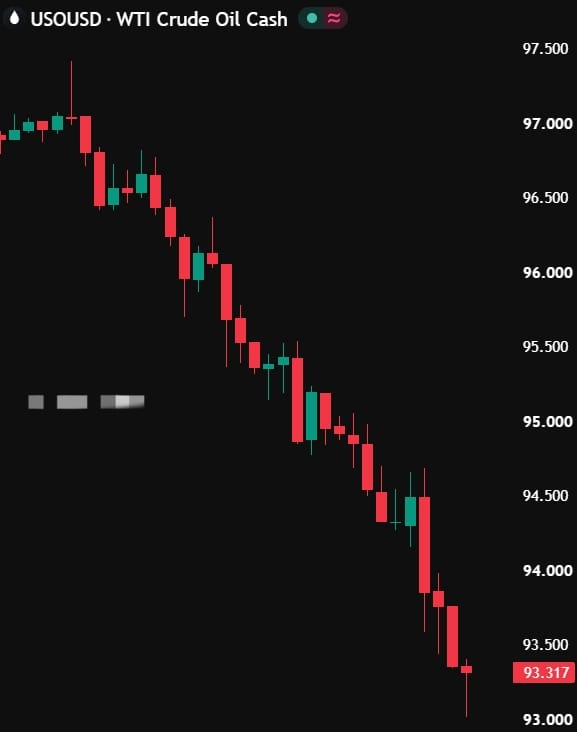
Oil is dropping hard ahead of the US stock market.
This is despite both the US and Iran rejecting each other's deal plan.
$CL
#oil #EarningsSeason
Oil is dropping hard ahead of the US stock market.
This is despite both the US and Iran rejecting each other's deal plan.
$CL
#oil #EarningsSeason
This is despite both the US and Iran rejecting each other's deal plan.
$CL
#oil #EarningsSeason
209
·
--
Baissier
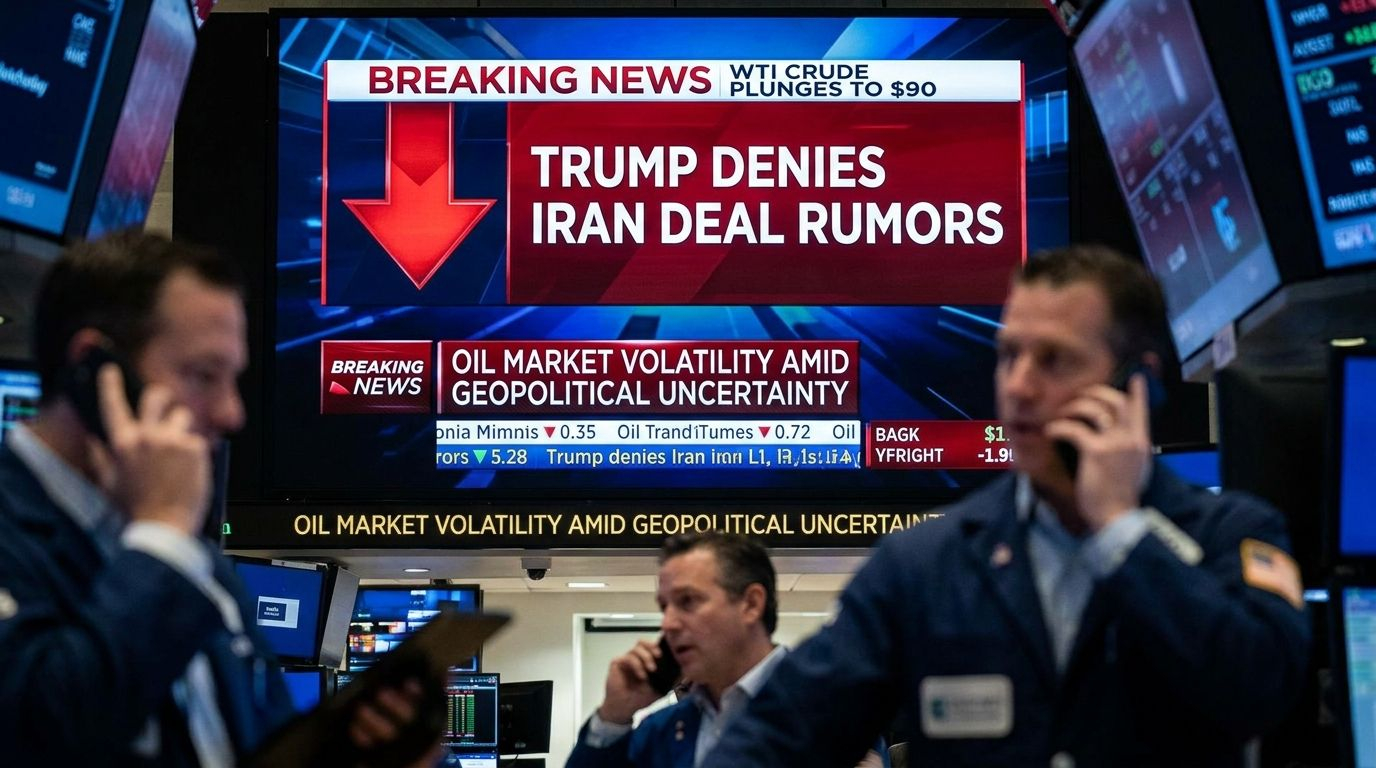
🚨 WTI CRUDE OIL CRASHES TO $90! 🛢️📉
WTI crude has dropped sharply toward $90, despite President Trump denying that any deal has been reached to provide Iran with sanctions relief.
Markets appear to be reacting to changing expectations around future oil supply and geopolitical risk. 👀
🛢️ WTI: ~$90
🇺🇸 Trump denies sanctions-relief deal
🇮🇷 Iran remains at the center of the supply story
📉 Oil traders are repricing the risk
The big question now:
IS THIS THE START OF A DEEPER OIL DROP — OR JUST A TEMPORARY SHAKEOUT? 👀
#oil #WTI #crudeoil
🚨 WTI CRUDE OIL CRASHES TO $90! 🛢️📉
WTI crude has dropped sharply toward $90, despite President Trump denying that any deal has been reached to provide Iran with sanctions relief.
Markets appear to be reacting to changing expectations around future oil supply and geopolitical risk. 👀
🛢️ WTI: ~$90
🇺🇸 Trump denies sanctions-relief deal
🇮🇷 Iran remains at the center of the supply story
📉 Oil traders are repricing the risk
The big question now:
IS THIS THE START OF A DEEPER OIL DROP — OR JUST A TEMPORARY SHAKEOUT? 👀
#oil #WTI #crudeoil
WTI crude has dropped sharply toward $90, despite President Trump denying that any deal has been reached to provide Iran with sanctions relief.
Markets appear to be reacting to changing expectations around future oil supply and geopolitical risk. 👀
🛢️ WTI: ~$90
🇺🇸 Trump denies sanctions-relief deal
🇮🇷 Iran remains at the center of the supply story
📉 Oil traders are repricing the risk
The big question now:
IS THIS THE START OF A DEEPER OIL DROP — OR JUST A TEMPORARY SHAKEOUT? 👀
#oil #WTI #crudeoil
1
449

·
--
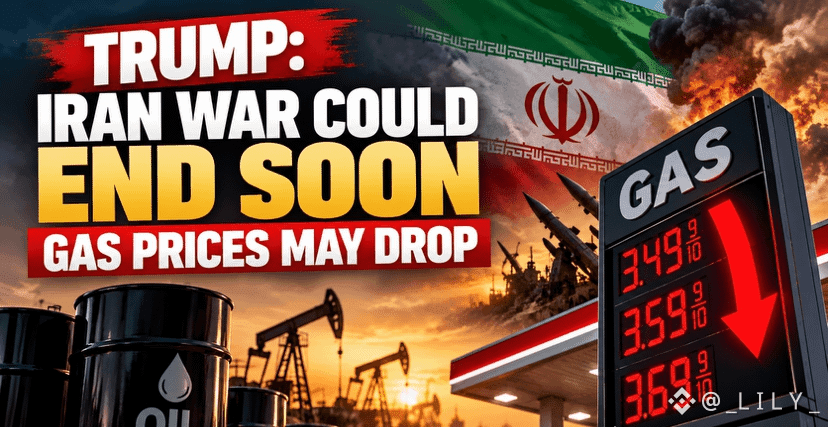
🇺🇸🇮🇷 TRUMP: IRAN WAR COULD END “VERY SOON” ⛽📉
President Trump said the U.S.-Iran conflict could end “very soon” and that gasoline prices could fall significantly once the war concludes. �
Reuters
🛢️ Oil markets remain highly sensitive to developments around the Strait of Hormuz, while diplomatic contacts between the U.S. and Iran continue. �
Reuters +1
🌍 If tensions ease and energy flows normalize, markets could see changes in oil, inflation and broader risk sentiment.
👀 Traders are watching Oil + Gold + Bitcoin closely.
$QNT $BZ $CL
{future}(CLUSDT)
#Trump #Iran #Oil #Crypto #QNT
🇺🇸🇮🇷 TRUMP: IRAN WAR COULD END “VERY SOON” ⛽📉
President Trump said the U.S.-Iran conflict could end “very soon” and that gasoline prices could fall significantly once the war concludes. �
Reuters
🛢️ Oil markets remain highly sensitive to developments around the Strait of Hormuz, while diplomatic contacts between the U.S. and Iran continue. �
Reuters +1
🌍 If tensions ease and energy flows normalize, markets could see changes in oil, inflation and broader risk sentiment.
👀 Traders are watching Oil + Gold + Bitcoin closely.
$QNT $BZ $CL
#Trump #Iran #Oil #Crypto #QNT
President Trump said the U.S.-Iran conflict could end “very soon” and that gasoline prices could fall significantly once the war concludes. �
Reuters
🛢️ Oil markets remain highly sensitive to developments around the Strait of Hormuz, while diplomatic contacts between the U.S. and Iran continue. �
Reuters +1
🌍 If tensions ease and energy flows normalize, markets could see changes in oil, inflation and broader risk sentiment.
👀 Traders are watching Oil + Gold + Bitcoin closely.
$QNT $BZ $CL
#Trump #Iran #Oil #Crypto #QNT
138
Connectez-vous pour découvrir plus de contenu
Rejoignez la communauté mondiale des adeptes de cryptomonnaies sur Binance Square
⚡️ Suviez les dernières informations importantes sur les cryptomonnaies.
💬 Jugé digne de confiance par la plus grande plateforme d’échange de cryptomonnaies au monde.
👍 Découvrez les connaissances que partagent les créateurs vérifiés.
Adresse e-mail/Nº de téléphone
Sujets d’actualité
1
#NEARFallsToAround$4.70Down14%
1,504 vues
12 mentions
2
#EthereumFoundationLaunchesZkAPIOnMainnet
3 vues
8 mentions
3
#EvernorthPlansNasdaqListingOct8
2,048 vues
50 mentions
4
#SECProposesCryptoCustodyFramework
1,550 vues
48 mentions
5
#IMFApproves$139MDisbursementToElSalvador
1,369 vues
12 mentions
6
#AnthropicTargetsIPOAsSoonAsMidNovember
3,201 vues
83 mentions
7
#EtherGains70.9%InQ3
204,419 vues
1,330 mentions
8
#TreasuryLetsStatesFileStablecoinCertificationsEarly
14,604 vues
106 mentions
9
#US10YearYieldNears5.3%
172,726 vues
1,261 mentions
10
#DollarIndexHitsHighestSinceMay2025
57,414 vues
713 mentions