

#bedrock
bedrock
7.3M vues
89,865 mentions
Populaire
Récents


·
--
Haussier
crypto fatigue is real these days.
you sit through enough cycles and the pattern starts feeling personal. same hype waves, same influencers shouting about the next yield trick, same recycled stories dressed up as something fresh. after a while you just get tired of pretending each one is different.
and then restaking shows up again.
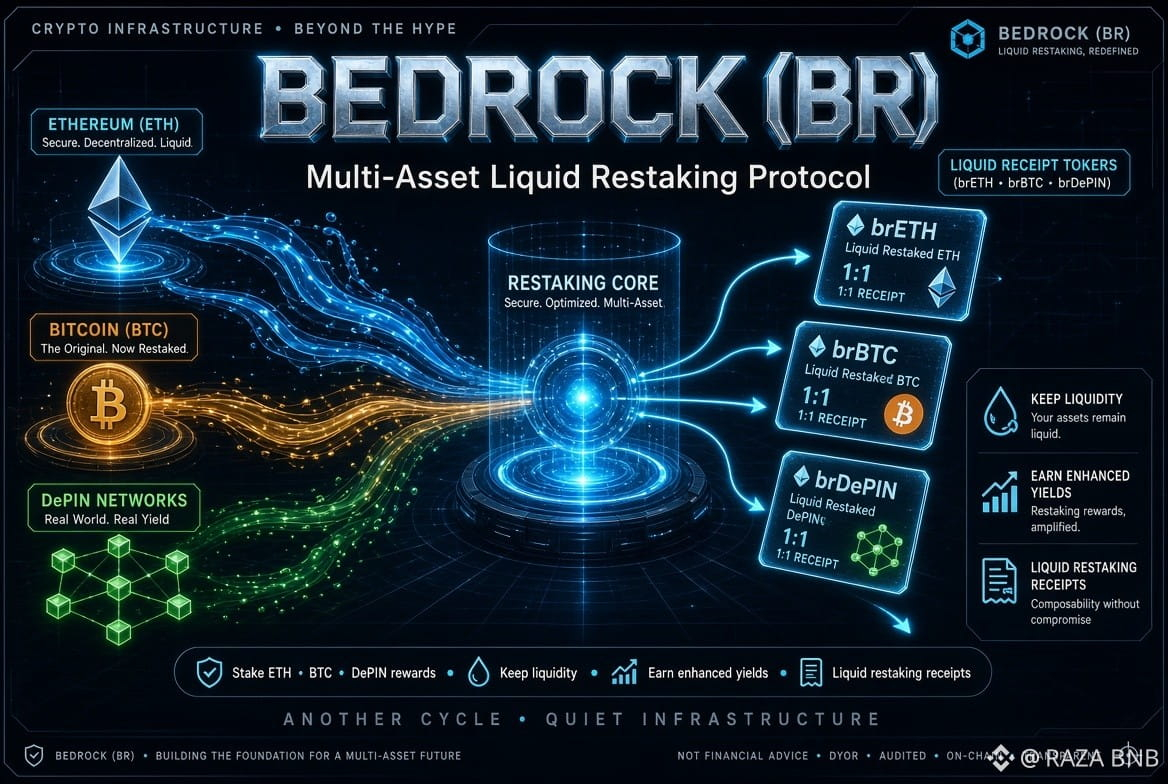
only now it’s multi-asset. eth. bitcoin. even those depin rewards that still feel half imaginary most of the time. the basic frustration never really left: you want the extra yield but you hate locking everything up. need the money and you’re stuck waiting. so the liquid versions appeared. receipts you can still move. bedrock is one of the ones that caught my eye for that reason.
the idea is pretty straightforward. you put the assets in, get something liquid back, and that something keeps collecting the restaked upside while you can still use it elsewhere. like leaving your claim in a group chat that keeps fighting over the rewards while you hold the receipt and walk around with it.
still.
most people already struggle with one restaking setup. stacking eth, btc and depin on top means more bridges, more contracts, more places for friction or delays. attention in this market is short. one quiet stretch and the liquidity just leaves. and the token will get speculated on long before any real usage settles in. that part is almost guaranteed.
it could fade the second yields tighten or the next shiny narrative arrives.
or it could just sit there as quiet plumbing that a handful of people keep using because the receipts stay liquid enough. boring infrastructure has a way of outlasting the loud stuff sometimes.
hard to know which way this one goes. most don’t last. a few just keep working without anyone making a big deal about it.
@Bedrock #Bedrock $BR $GRVT $FARTCOIN
{future}(FARTCOINUSDT)
{future}(GRVTUSDT)
{future}(BRUSDT)
crypto fatigue is real these days.
you sit through enough cycles and the pattern starts feeling personal. same hype waves, same influencers shouting about the next yield trick, same recycled stories dressed up as something fresh. after a while you just get tired of pretending each one is different.
and then restaking shows up again.
only now it’s multi-asset. eth. bitcoin. even those depin rewards that still feel half imaginary most of the time. the basic frustration never really left: you want the extra yield but you hate locking everything up. need the money and you’re stuck waiting. so the liquid versions appeared. receipts you can still move. bedrock is one of the ones that caught my eye for that reason.
the idea is pretty straightforward. you put the assets in, get something liquid back, and that something keeps collecting the restaked upside while you can still use it elsewhere. like leaving your claim in a group chat that keeps fighting over the rewards while you hold the receipt and walk around with it.
still.
most people already struggle with one restaking setup. stacking eth, btc and depin on top means more bridges, more contracts, more places for friction or delays. attention in this market is short. one quiet stretch and the liquidity just leaves. and the token will get speculated on long before any real usage settles in. that part is almost guaranteed.
it could fade the second yields tighten or the next shiny narrative arrives.
or it could just sit there as quiet plumbing that a handful of people keep using because the receipts stay liquid enough. boring infrastructure has a way of outlasting the loud stuff sometimes.
hard to know which way this one goes. most don’t last. a few just keep working without anyone making a big deal about it.
@Bedrock #Bedrock $BR $GRVT $FARTCOIN
you sit through enough cycles and the pattern starts feeling personal. same hype waves, same influencers shouting about the next yield trick, same recycled stories dressed up as something fresh. after a while you just get tired of pretending each one is different.
and then restaking shows up again.
only now it’s multi-asset. eth. bitcoin. even those depin rewards that still feel half imaginary most of the time. the basic frustration never really left: you want the extra yield but you hate locking everything up. need the money and you’re stuck waiting. so the liquid versions appeared. receipts you can still move. bedrock is one of the ones that caught my eye for that reason.
the idea is pretty straightforward. you put the assets in, get something liquid back, and that something keeps collecting the restaked upside while you can still use it elsewhere. like leaving your claim in a group chat that keeps fighting over the rewards while you hold the receipt and walk around with it.
still.
most people already struggle with one restaking setup. stacking eth, btc and depin on top means more bridges, more contracts, more places for friction or delays. attention in this market is short. one quiet stretch and the liquidity just leaves. and the token will get speculated on long before any real usage settles in. that part is almost guaranteed.
it could fade the second yields tighten or the next shiny narrative arrives.
or it could just sit there as quiet plumbing that a handful of people keep using because the receipts stay liquid enough. boring infrastructure has a way of outlasting the loud stuff sometimes.
hard to know which way this one goes. most don’t last. a few just keep working without anyone making a big deal about it.
@Bedrock #Bedrock $BR $GRVT $FARTCOIN
1
1.1k

·
--
Haussier
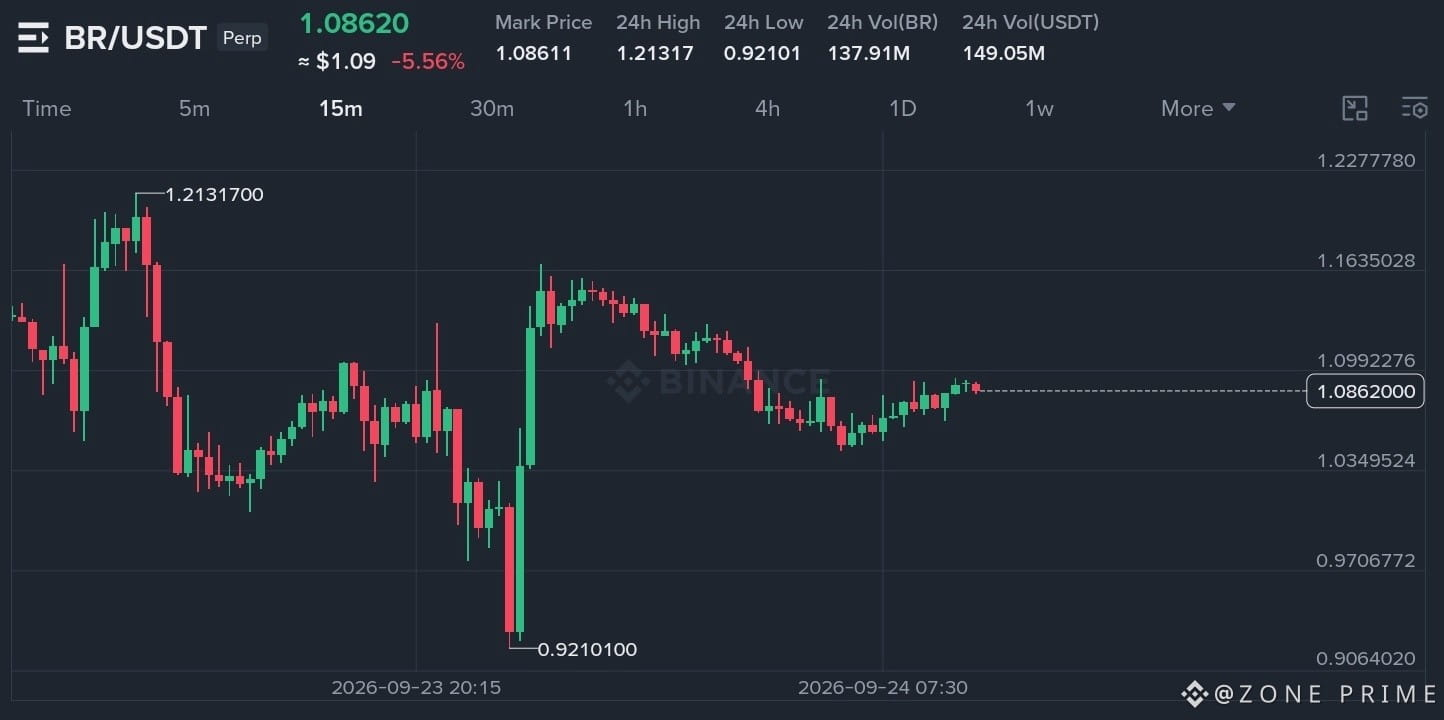
$BR /USDT — LONG SETUP Go 📈 🚀 💯 😱
Entry: 1.03495 - 1.08620
TP1: 1.09922
TP2: 1.16350
TP3: 1.21317
Stop: 0.99500
After sweeping liquidity down to 0.92101, price bounced sharply and is now forming a constructive consolidation floor.
Growing buyer delta volume signals strong interest in driving a secondary leg upward.
#BR #brusdt #bedrock #crypto #Write2Earn $BR
{future}(BRUSDT)
$BR /USDT — LONG SETUP Go 📈 🚀 💯 😱
Entry: 1.03495 - 1.08620
TP1: 1.09922
TP2: 1.16350
TP3: 1.21317
Stop: 0.99500
After sweeping liquidity down to 0.92101, price bounced sharply and is now forming a constructive consolidation floor.
Growing buyer delta volume signals strong interest in driving a secondary leg upward.
#BR #brusdt #bedrock #crypto #Write2Earn $BR
Entry: 1.03495 - 1.08620
TP1: 1.09922
TP2: 1.16350
TP3: 1.21317
Stop: 0.99500
After sweeping liquidity down to 0.92101, price bounced sharply and is now forming a constructive consolidation floor.
Growing buyer delta volume signals strong interest in driving a secondary leg upward.
#BR #brusdt #bedrock #crypto #Write2Earn $BR
264
·
--
Haussier
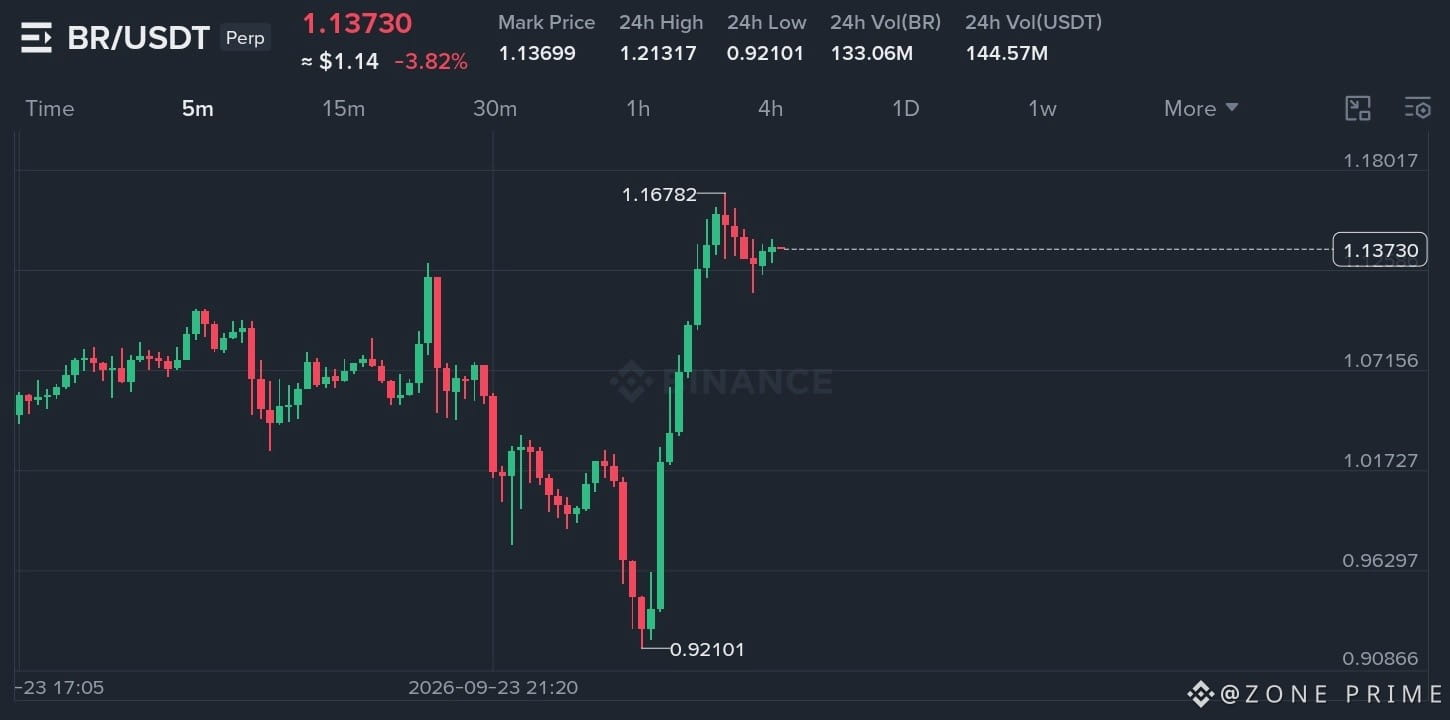
$BR /USDT — LONG SETUP Go Everyone 📈 🚀 💯
Entry: 1.07156 - 1.13730
TP1: 1.16782
TP2: 1.18017
TP3: 1.21317
Stop: 1.01727
Price initiated an aggressive impulse bounce from the 0.92101 trough, signaling strong institutional interest.
Robust limit bid clustering and diminishing sell volume point toward continuation momentum targeting higher resistance zones.
#br #brusdt #bedrock #crypto #Write2Earn $BR
{future}(BRUSDT)
$BR /USDT — LONG SETUP Go Everyone 📈 🚀 💯
Entry: 1.07156 - 1.13730
TP1: 1.16782
TP2: 1.18017
TP3: 1.21317
Stop: 1.01727
Price initiated an aggressive impulse bounce from the 0.92101 trough, signaling strong institutional interest.
Robust limit bid clustering and diminishing sell volume point toward continuation momentum targeting higher resistance zones.
#br #brusdt #bedrock #crypto #Write2Earn $BR
Entry: 1.07156 - 1.13730
TP1: 1.16782
TP2: 1.18017
TP3: 1.21317
Stop: 1.01727
Price initiated an aggressive impulse bounce from the 0.92101 trough, signaling strong institutional interest.
Robust limit bid clustering and diminishing sell volume point toward continuation momentum targeting higher resistance zones.
#br #brusdt #bedrock #crypto #Write2Earn $BR
1.3k

·
--
Baissier
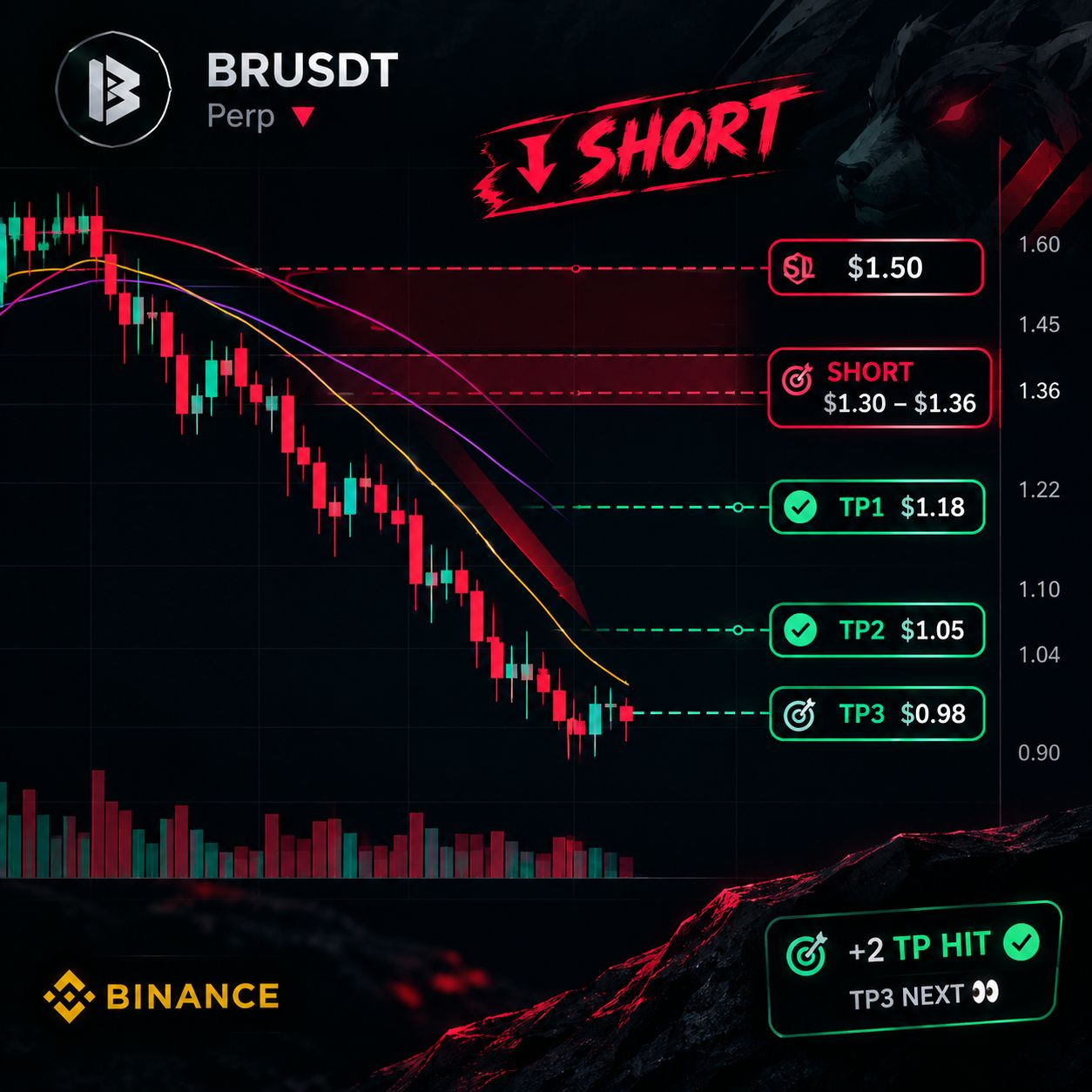
🤑UPDATE — $BR SHORT 🎯
2 TAKE-PROFIT levels already hit.
And TP3 is getting closer. 👀
The setup was clear from the beginning:
wait for the liquidity grab → rejection → follow the move.
No chasing. No guessing. Just patience and execution.
This is exactly why I share these setups early.
If you want to catch more opportunities like this, follow me — more setups are coming. 🚀
DYOR. Manage your risk.
$BR
#BR #Bedrock #Crypto #BinanceFutures #Trading
🤑UPDATE — $BR SHORT 🎯
2 TAKE-PROFIT levels already hit.
And TP3 is getting closer. 👀
The setup was clear from the beginning:
wait for the liquidity grab → rejection → follow the move.
No chasing. No guessing. Just patience and execution.
This is exactly why I share these setups early.
If you want to catch more opportunities like this, follow me — more setups are coming. 🚀
DYOR. Manage your risk.
$BR
#BR #Bedrock #Crypto #BinanceFutures #Trading
2 TAKE-PROFIT levels already hit.
And TP3 is getting closer. 👀
The setup was clear from the beginning:
wait for the liquidity grab → rejection → follow the move.
No chasing. No guessing. Just patience and execution.
This is exactly why I share these setups early.
If you want to catch more opportunities like this, follow me — more setups are coming. 🚀
DYOR. Manage your risk.
$BR
#BR #Bedrock #Crypto #BinanceFutures #Trading
364

·
--
من الواضح أن @Bedrock مع Bedrock 2.0 يحاول إعادة تعريف كيفية الاستفادة من الأصول داخل DeFi عبر نموذج يركّز على الكفاءة الرأسمالية والسيولة والاستخدام العملي للأصول المرهونة. هذا النوع من التطوير مهم لأنه لا يكتفي بتقديم فكرة نظرية، بل يسعى لبناء منظومة أكثر فاعلية للمستخدمين. أعتقد أن $BR قد يستفيد بقوة من هذا التوسع إذا استمر المشروع في تنفيذ رؤيته بهذا الزخم. #Bedrock
$BR
{future}(BRUSDT)
$BTC
{spot}(BTCUSDT)
من الواضح أن @Bedrock مع Bedrock 2.0 يحاول إعادة تعريف كيفية الاستفادة من الأصول داخل DeFi عبر نموذج يركّز على الكفاءة الرأسمالية والسيولة والاستخدام العملي للأصول المرهونة. هذا النوع من التطوير مهم لأنه لا يكتفي بتقديم فكرة نظرية، بل يسعى لبناء منظومة أكثر فاعلية للمستخدمين. أعتقد أن $BR قد يستفيد بقوة من هذا التوسع إذا استمر المشروع في تنفيذ رؤيته بهذا الزخم. #Bedrock
$BR
$BTC
$BR
$BTC
236

·
--
🚨 $BR TRADERS — 40.63M TOKENS UNLOCK TODAY! 👀
Bedrock is seeing strong momentum, but this unlock could bring serious volatility. ⚠️
The key question: will buyers absorb the new supply or will sellers take control?
Watch volume and price reaction around the unlock before chasing. 📊
A strong breakout needs confirmation — not FOMO.
Are you watching $BR today? 👇
#BR #Bedrock #Crypto #Binance #trading
{future}(BRUSDT)
🚨 $BR TRADERS — 40.63M TOKENS UNLOCK TODAY! 👀
Bedrock is seeing strong momentum, but this unlock could bring serious volatility. ⚠️
The key question: will buyers absorb the new supply or will sellers take control?
Watch volume and price reaction around the unlock before chasing. 📊
A strong breakout needs confirmation — not FOMO.
Are you watching $BR today? 👇
#BR #Bedrock #Crypto #Binance #trading
Bedrock is seeing strong momentum, but this unlock could bring serious volatility. ⚠️
The key question: will buyers absorb the new supply or will sellers take control?
Watch volume and price reaction around the unlock before chasing. 📊
A strong breakout needs confirmation — not FOMO.
Are you watching $BR today? 👇
#BR #Bedrock #Crypto #Binance #trading
186

{future}(BRUSDT)
$BR is moving hard, but I wouldn’t chase this pump blindly. 👀
BR is around $1.09, up more than 18% in 24H, after touching $1.24. On the 1H chart, price is still holding above the MA25 around $1.07 and comfortably above the MA99 near $0.76, so the bigger structure still looks strong.
But momentum has cooled. RSI(6) is around 40, and volume is dropping after the big move. That tells me buyers aren’t pushing with the same strength right now.
The interesting part is the $BR unlock scheduled for today, which could add selling pressure.
For me, $1.07 is the key short-term support, while $1.16–$1.24 is the zone bulls need to reclaim.
I’d watch price + volume before making any move. 🔎
#BR #Bedrock #Crypto #BinanceSquare #defi
$BR is moving hard, but I wouldn’t chase this pump blindly. 👀
BR is around $1.09, up more than 18% in 24H, after touching $1.24. On the 1H chart, price is still holding above the MA25 around $1.07 and comfortably above the MA99 near $0.76, so the bigger structure still looks strong.
But momentum has cooled. RSI(6) is around 40, and volume is dropping after the big move. That tells me buyers aren’t pushing with the same strength right now.
The interesting part is the $BR unlock scheduled for today, which could add selling pressure.
For me, $1.07 is the key short-term support, while $1.16–$1.24 is the zone bulls need to reclaim.
I’d watch price + volume before making any move. 🔎
#BR #Bedrock #Crypto #BinanceSquare #defi
BR is around $1.09, up more than 18% in 24H, after touching $1.24. On the 1H chart, price is still holding above the MA25 around $1.07 and comfortably above the MA99 near $0.76, so the bigger structure still looks strong.
But momentum has cooled. RSI(6) is around 40, and volume is dropping after the big move. That tells me buyers aren’t pushing with the same strength right now.
The interesting part is the $BR unlock scheduled for today, which could add selling pressure.
For me, $1.07 is the key short-term support, while $1.16–$1.24 is the zone bulls need to reclaim.
I’d watch price + volume before making any move. 🔎
#BR #Bedrock #Crypto #BinanceSquare #defi
277

·
--
Haussier
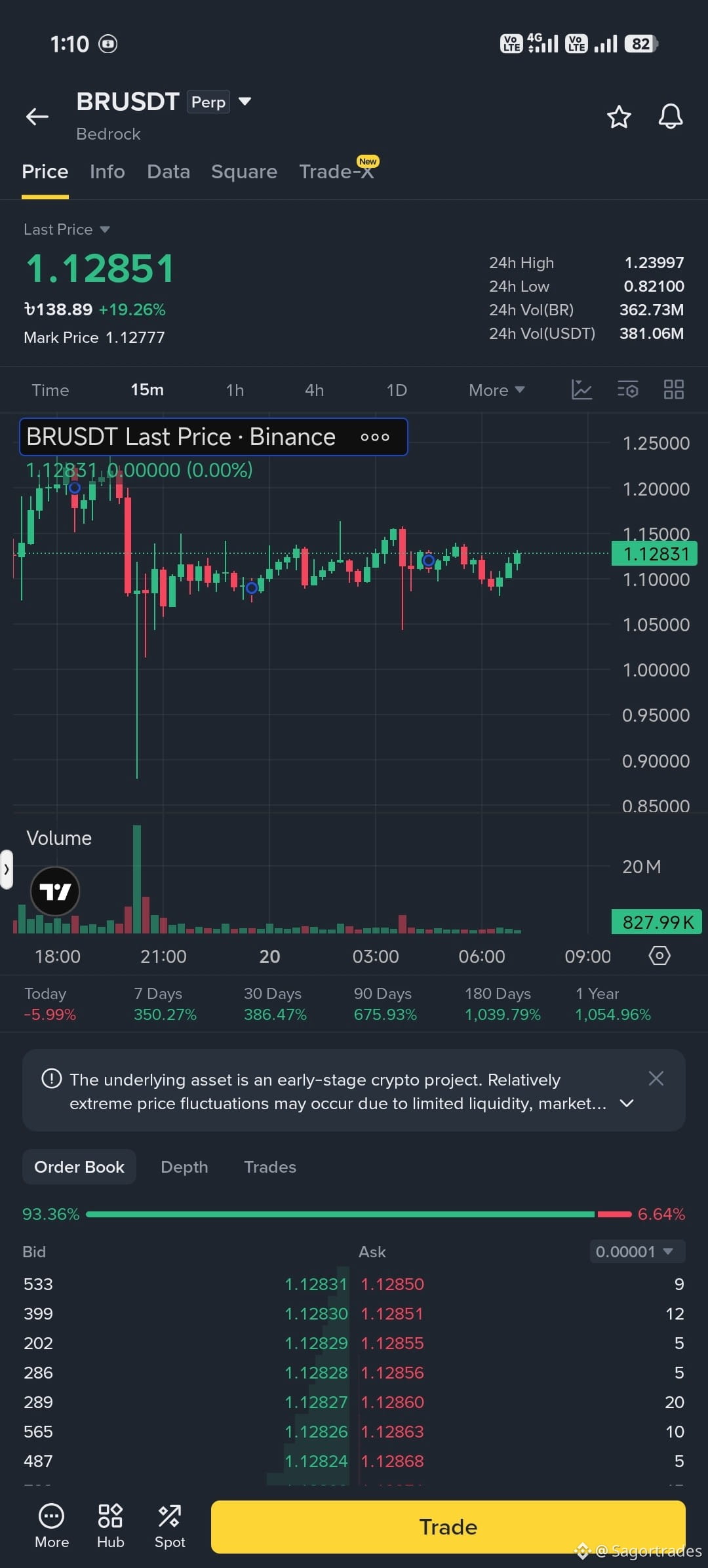
🔥 /USDT Market Update & Signal 🔥
📊 Current Price: $1.120
📈 Trading Setup:
• Entry Zone: $1.095 - $1.130
• Target 1: $1.175
• Target 2: $1.240
• Target 3: $1.320
• Stop Loss: $1.045
💡 Analysis:
BR (Bedrock) is holding strong bullish momentum, consolidating firmly above the $1.090 pivot support zone following a clean market structure shift. Holding above this level maintains buyer dominance for a push toward upper liquidity targets up to $1.320. Maintain strict risk management.
#BR #Bedrock #Crypto #Binance
🔥 /USDT Market Update & Signal 🔥
📊 Current Price: $1.120
📈 Trading Setup:
• Entry Zone: $1.095 - $1.130
• Target 1: $1.175
• Target 2: $1.240
• Target 3: $1.320
• Stop Loss: $1.045
💡 Analysis:
BR (Bedrock) is holding strong bullish momentum, consolidating firmly above the $1.090 pivot support zone following a clean market structure shift. Holding above this level maintains buyer dominance for a push toward upper liquidity targets up to $1.320. Maintain strict risk management.
#BR #Bedrock #Crypto #Binance
📊 Current Price: $1.120
📈 Trading Setup:
• Entry Zone: $1.095 - $1.130
• Target 1: $1.175
• Target 2: $1.240
• Target 3: $1.320
• Stop Loss: $1.045
💡 Analysis:
BR (Bedrock) is holding strong bullish momentum, consolidating firmly above the $1.090 pivot support zone following a clean market structure shift. Holding above this level maintains buyer dominance for a push toward upper liquidity targets up to $1.320. Maintain strict risk management.
#BR #Bedrock #Crypto #Binance
60

The $BR Parabolic Surge: Shaking Out Weak Longs Before the Next Macro Expansion? 🚀📊
🕒 Timestamp: Sept 20, 2026 | 15:12 UTC
The price action surrounding Bedrock ($BR ) has officially entered high-velocity territory! After a staggering +40.23% vertical explosion pushing up to an all-time high of $1.23, the market is witnessing heavy capital restructuring.
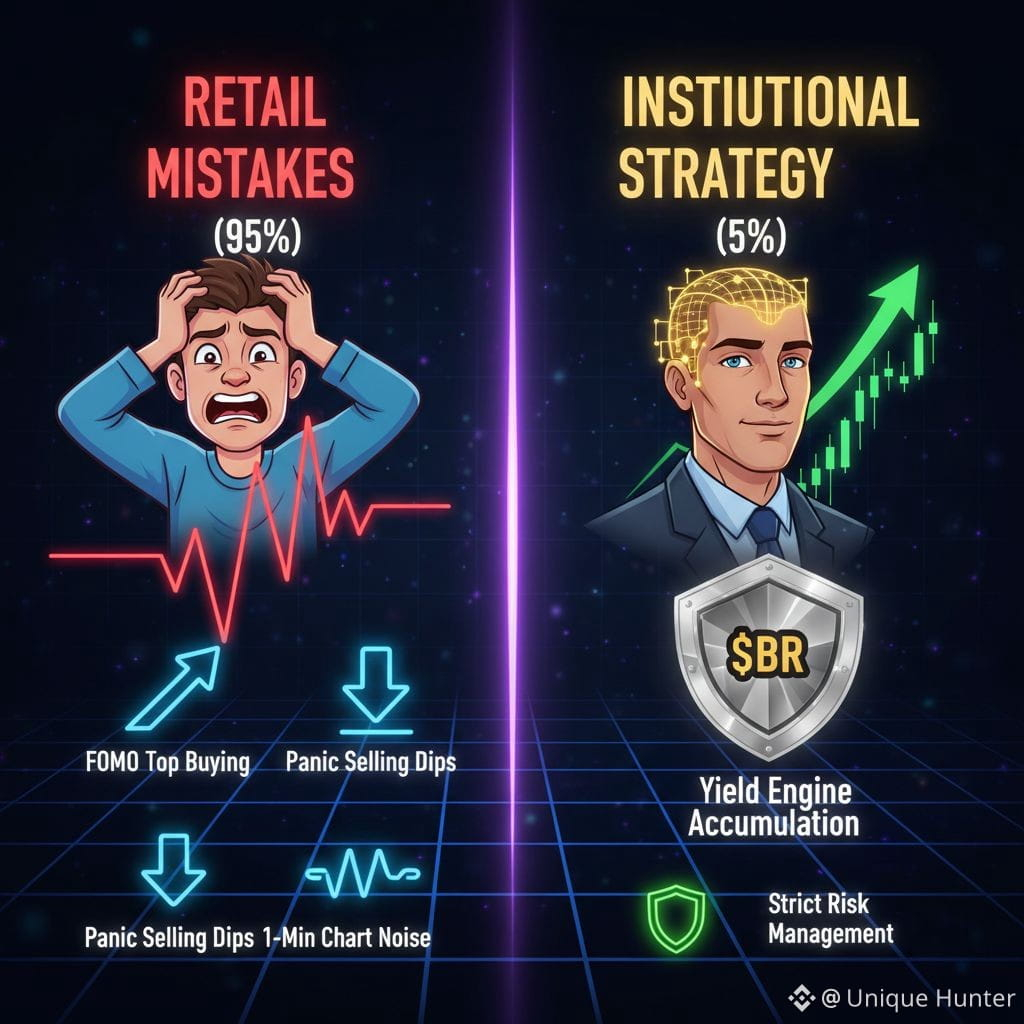
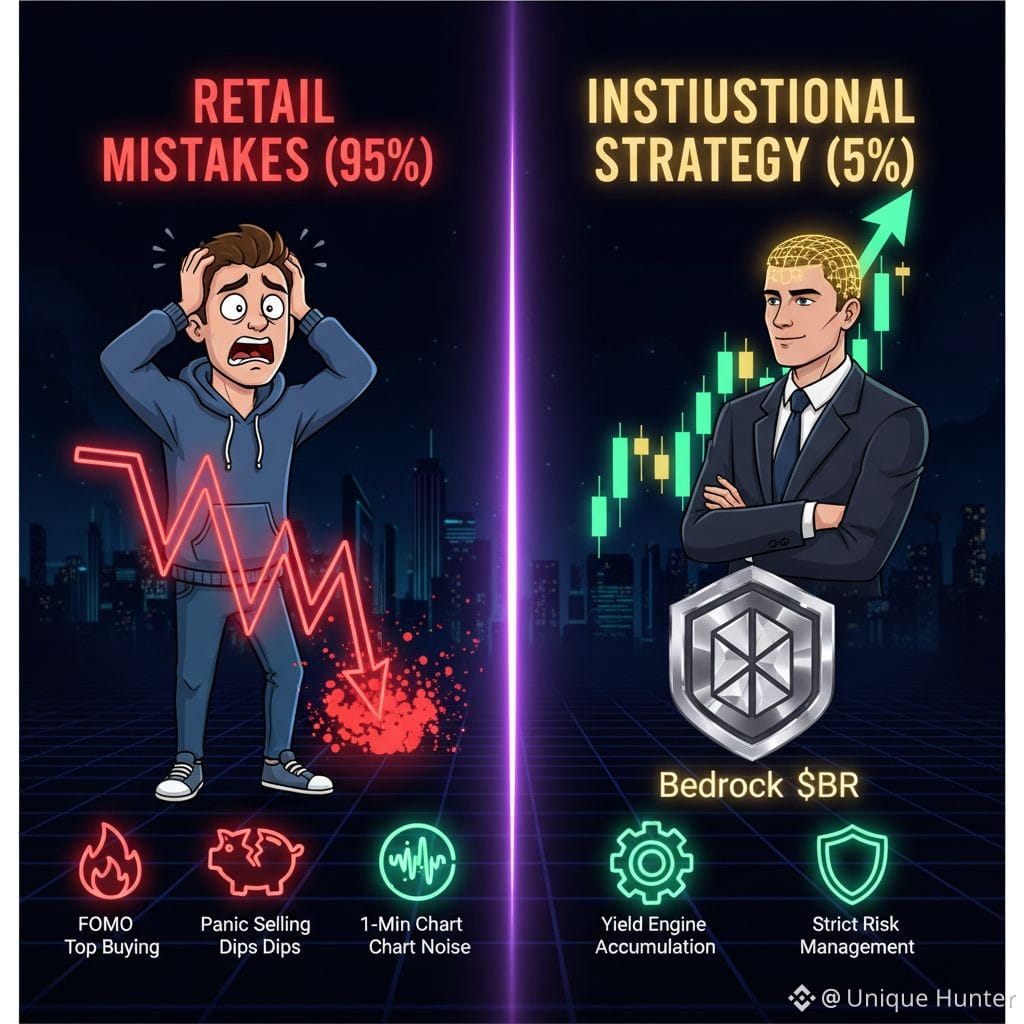
While the 95% retail crowd is reacting with pure panic to minor local pullbacks on 1-minute charts, Smart Money is executing a highly calculated allocation blueprint.
🔍 The Institutional Strategy vs. Retail Panic:
The Retail Mistake: FOMO buying at the exact peak of local resistance, panicking over minor margin flushes down to $1.11, and getting trapped by short-term leverage sweeps.
The Smart Money Edge: Identifying Bedrock 2.0’s core systemic updates (including the Intelligent Yield Engine and BRClaw AI automation) and systematically scaling spot positions at heavy institutional demand shelves.
💡 Market Insight:
Volatile assets do not move upward in straight lines. The sudden shakeouts are classic market-maker clearing runs designed to wipe out late-to-the-party leverage before the next distribution wave. The massive expansion in spot volume proves this is authentic institutional ecosystem rotation into Bitcoin capital-efficiency primitives rather than short-term retail speculation.
⚠️ Risk Warning: Sharp price discovery phases naturally invite severe funding rate spikes and localized long squeezes. Protect your trading margin, deploy strict trailing stop-losses, and always do your own research.
👇 Traders Corner: Did you lock in profits at the $1.23 peak, or are you accumulating spot bags on the current demand shelf? Drop your trade setups below! 💬📈
#Bedrock #BR #cryptotrading #TechnicalAnalysiss #Write2Earn
{future}(BRUSDT)
The $BR Parabolic Surge: Shaking Out Weak Longs Before the Next Macro Expansion? 🚀📊
🕒 Timestamp: Sept 20, 2026 | 15:12 UTC
The price action surrounding Bedrock ($BR ) has officially entered high-velocity territory! After a staggering +40.23% vertical explosion pushing up to an all-time high of $1.23, the market is witnessing heavy capital restructuring.
While the 95% retail crowd is reacting with pure panic to minor local pullbacks on 1-minute charts, Smart Money is executing a highly calculated allocation blueprint.
🔍 The Institutional Strategy vs. Retail Panic:
The Retail Mistake: FOMO buying at the exact peak of local resistance, panicking over minor margin flushes down to $1.11, and getting trapped by short-term leverage sweeps.
The Smart Money Edge: Identifying Bedrock 2.0’s core systemic updates (including the Intelligent Yield Engine and BRClaw AI automation) and systematically scaling spot positions at heavy institutional demand shelves.
💡 Market Insight:
Volatile assets do not move upward in straight lines. The sudden shakeouts are classic market-maker clearing runs designed to wipe out late-to-the-party leverage before the next distribution wave. The massive expansion in spot volume proves this is authentic institutional ecosystem rotation into Bitcoin capital-efficiency primitives rather than short-term retail speculation.
⚠️ Risk Warning: Sharp price discovery phases naturally invite severe funding rate spikes and localized long squeezes. Protect your trading margin, deploy strict trailing stop-losses, and always do your own research.
👇 Traders Corner: Did you lock in profits at the $1.23 peak, or are you accumulating spot bags on the current demand shelf? Drop your trade setups below! 💬📈
#Bedrock #BR #cryptotrading #TechnicalAnalysiss #Write2Earn
🕒 Timestamp: Sept 20, 2026 | 15:12 UTC
The price action surrounding Bedrock ($BR ) has officially entered high-velocity territory! After a staggering +40.23% vertical explosion pushing up to an all-time high of $1.23, the market is witnessing heavy capital restructuring.
While the 95% retail crowd is reacting with pure panic to minor local pullbacks on 1-minute charts, Smart Money is executing a highly calculated allocation blueprint.
🔍 The Institutional Strategy vs. Retail Panic:
The Retail Mistake: FOMO buying at the exact peak of local resistance, panicking over minor margin flushes down to $1.11, and getting trapped by short-term leverage sweeps.
The Smart Money Edge: Identifying Bedrock 2.0’s core systemic updates (including the Intelligent Yield Engine and BRClaw AI automation) and systematically scaling spot positions at heavy institutional demand shelves.
💡 Market Insight:
Volatile assets do not move upward in straight lines. The sudden shakeouts are classic market-maker clearing runs designed to wipe out late-to-the-party leverage before the next distribution wave. The massive expansion in spot volume proves this is authentic institutional ecosystem rotation into Bitcoin capital-efficiency primitives rather than short-term retail speculation.
⚠️ Risk Warning: Sharp price discovery phases naturally invite severe funding rate spikes and localized long squeezes. Protect your trading margin, deploy strict trailing stop-losses, and always do your own research.
👇 Traders Corner: Did you lock in profits at the $1.23 peak, or are you accumulating spot bags on the current demand shelf? Drop your trade setups below! 💬📈
#Bedrock #BR #cryptotrading #TechnicalAnalysiss #Write2Earn
216


·
--
Haussier
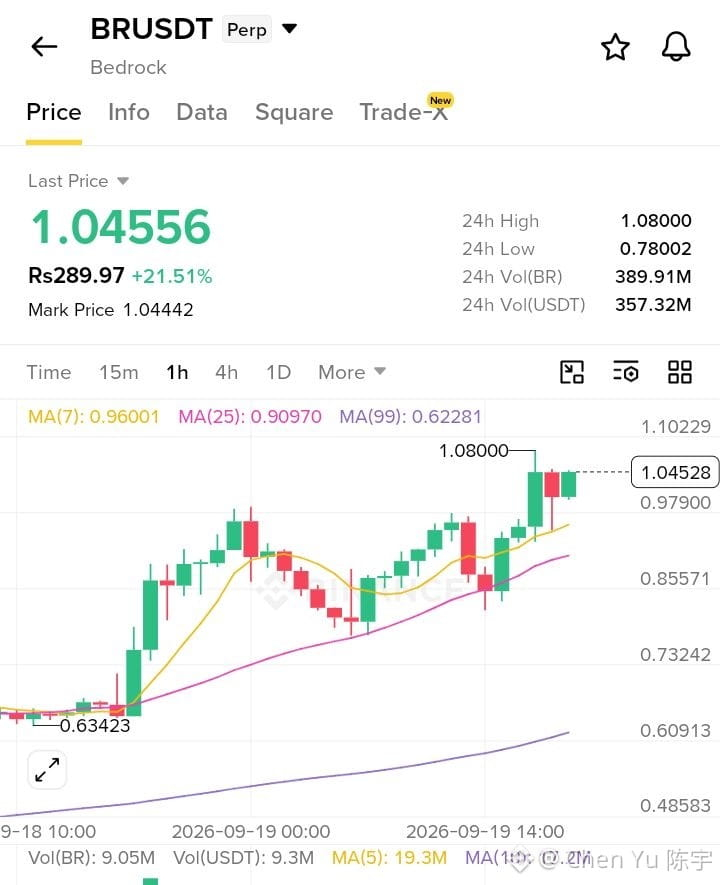
$BR USDT looks stretched after a sharp +21% move. Price is near the $1.08 resistance, so I’m watching for rejection and a breakdown.
Entry: 1.035–1.050
TP1: 0.995
TP2: 0.960
TP3: 0.910
SL: 1.085
No chase here — confirmation matters. If BR holds above $1.08, the short setup is invalid.
#BR #Bedrock #Crypto #Trading $BR
{future}(BRUSDT)
$BR USDT looks stretched after a sharp +21% move. Price is near the $1.08 resistance, so I’m watching for rejection and a breakdown.
Entry: 1.035–1.050
TP1: 0.995
TP2: 0.960
TP3: 0.910
SL: 1.085
No chase here — confirmation matters. If BR holds above $1.08, the short setup is invalid.
#BR #Bedrock #Crypto #Trading $BR
Entry: 1.035–1.050
TP1: 0.995
TP2: 0.960
TP3: 0.910
SL: 1.085
No chase here — confirmation matters. If BR holds above $1.08, the short setup is invalid.
#BR #Bedrock #Crypto #Trading $BR
487

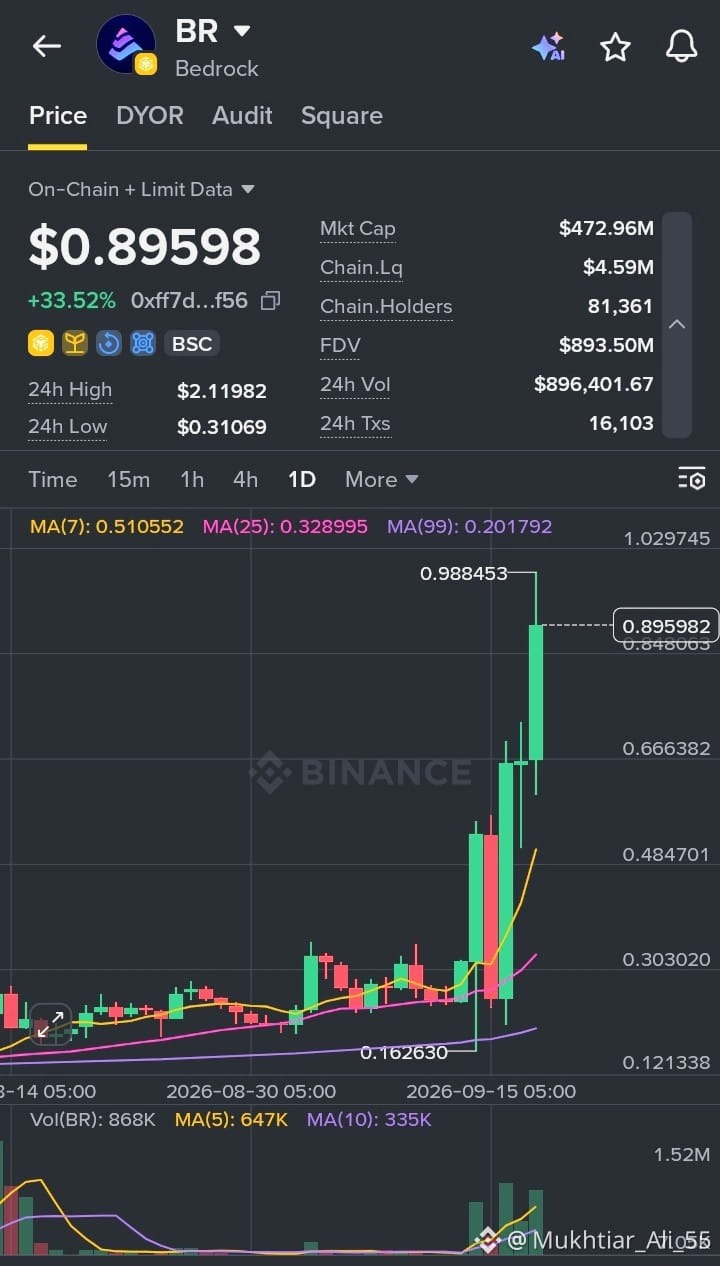
🚀 BEDROCK ($BR) EXPLODES +33.52% — MASSIVE PARABOLIC BREAKOUT UNDERWAY 📈🔥
$BR | BR/USDT
💰 Price: 0.89598
📈 24H Change: +33.52%
📊 24H High: 2.11982
📉 24H Low: 0.31069
💵 24H Vol: $896.40K
🏦 Mkt Cap: $472.96M
⚠️ Market Breakdown (1D Timeframe):
Bedrock delivered a violent bullish expansion, breaking out of a long-term accumulation base 🧨
🔻 Price launched vertically off the 0.16263 low, driving through multiple overhead resistances
🔻 The rally wicked to 2.11982 before pulling back to consolidate near current levels
🔻 Long green daily candles confirm intense buying activity and major trend acceleration
📈 Moving Averages Tell the Story:
📌 MA(7): 0.510552
📌 MA(25): 0.328995
📌 MA(99): 0.201792
✅ Price trades far above all major moving averages, reflecting strong momentum
✅ MA(7) sloped sharply upward, creating a wide bullish gap above MA(25) and MA(99)
✅ Bullish structural alignment confirms heavy buyer control over the daily timeframe 🐂
📊 Volume & On-Chain Insight:
🟢 24H volume stands at $896.40K across 16,103 recorded transactions
💥 On-chain data indicates 81,361 holders backing liquidity across the ecosystem
⚠️ High volatility following parabolic expansion suggests elevated risk near resistance
🧠 What This Means:
This is a powerful breakout rally shifting macro market structure firmly upward ❌
🔹 Trend: Strong Bullish Breakout
🔹 Momentum: Parabolic / High Volatility
🔹 Market emotion: Aggressive buyer expansion 🚀
🎯 Key Levels to Watch:
🟢 Support: 0.5105 – 0.6663 zone
🔴 Resistance: 0.9884 – 2.1198 zone
📌 Holding above MA(7) support at 0.5105 keeps macro upside structure intact
📌 Reclaiming above 0.9884 opens the path toward retesting the 2.1198 high ⬆️
💡 Final Take:
🧨 BR is demonstrating massive momentum and elevated market activity
🧘 Avoid chasing parabolic candles; look for healthy consolidation before taking positions
🛡️ Always enforce strict risk management on every trade
#BR #Bedrock #CryptoMarket
$BR
{future}(BRUSDT)
🚀 BEDROCK ($BR ) EXPLODES +33.52% — MASSIVE PARABOLIC BREAKOUT UNDERWAY 📈🔥
$BR | BR/USDT
💰 Price: 0.89598
📈 24H Change: +33.52%
📊 24H High: 2.11982
📉 24H Low: 0.31069
💵 24H Vol: $896.40K
🏦 Mkt Cap: $472.96M
⚠️ Market Breakdown (1D Timeframe):
Bedrock delivered a violent bullish expansion, breaking out of a long-term accumulation base 🧨
🔻 Price launched vertically off the 0.16263 low, driving through multiple overhead resistances
🔻 The rally wicked to 2.11982 before pulling back to consolidate near current levels
🔻 Long green daily candles confirm intense buying activity and major trend acceleration
📈 Moving Averages Tell the Story:
📌 MA(7): 0.510552
📌 MA(25): 0.328995
📌 MA(99): 0.201792
✅ Price trades far above all major moving averages, reflecting strong momentum
✅ MA(7) sloped sharply upward, creating a wide bullish gap above MA(25) and MA(99)
✅ Bullish structural alignment confirms heavy buyer control over the daily timeframe 🐂
📊 Volume & On-Chain Insight:
🟢 24H volume stands at $896.40K across 16,103 recorded transactions
💥 On-chain data indicates 81,361 holders backing liquidity across the ecosystem
⚠️ High volatility following parabolic expansion suggests elevated risk near resistance
🧠 What This Means:
This is a powerful breakout rally shifting macro market structure firmly upward ❌
🔹 Trend: Strong Bullish Breakout
🔹 Momentum: Parabolic / High Volatility
🔹 Market emotion: Aggressive buyer expansion 🚀
🎯 Key Levels to Watch:
🟢 Support: 0.5105 – 0.6663 zone
🔴 Resistance: 0.9884 – 2.1198 zone
📌 Holding above MA(7) support at 0.5105 keeps macro upside structure intact
📌 Reclaiming above 0.9884 opens the path toward retesting the 2.1198 high ⬆️
💡 Final Take:
🧨 BR is demonstrating massive momentum and elevated market activity
🧘 Avoid chasing parabolic candles; look for healthy consolidation before taking positions
🛡️ Always enforce strict risk management on every trade
#BR #Bedrock #CryptoMarket
$BR
$BR | BR/USDT
💰 Price: 0.89598
📈 24H Change: +33.52%
📊 24H High: 2.11982
📉 24H Low: 0.31069
💵 24H Vol: $896.40K
🏦 Mkt Cap: $472.96M
⚠️ Market Breakdown (1D Timeframe):
Bedrock delivered a violent bullish expansion, breaking out of a long-term accumulation base 🧨
🔻 Price launched vertically off the 0.16263 low, driving through multiple overhead resistances
🔻 The rally wicked to 2.11982 before pulling back to consolidate near current levels
🔻 Long green daily candles confirm intense buying activity and major trend acceleration
📈 Moving Averages Tell the Story:
📌 MA(7): 0.510552
📌 MA(25): 0.328995
📌 MA(99): 0.201792
✅ Price trades far above all major moving averages, reflecting strong momentum
✅ MA(7) sloped sharply upward, creating a wide bullish gap above MA(25) and MA(99)
✅ Bullish structural alignment confirms heavy buyer control over the daily timeframe 🐂
📊 Volume & On-Chain Insight:
🟢 24H volume stands at $896.40K across 16,103 recorded transactions
💥 On-chain data indicates 81,361 holders backing liquidity across the ecosystem
⚠️ High volatility following parabolic expansion suggests elevated risk near resistance
🧠 What This Means:
This is a powerful breakout rally shifting macro market structure firmly upward ❌
🔹 Trend: Strong Bullish Breakout
🔹 Momentum: Parabolic / High Volatility
🔹 Market emotion: Aggressive buyer expansion 🚀
🎯 Key Levels to Watch:
🟢 Support: 0.5105 – 0.6663 zone
🔴 Resistance: 0.9884 – 2.1198 zone
📌 Holding above MA(7) support at 0.5105 keeps macro upside structure intact
📌 Reclaiming above 0.9884 opens the path toward retesting the 2.1198 high ⬆️
💡 Final Take:
🧨 BR is demonstrating massive momentum and elevated market activity
🧘 Avoid chasing parabolic candles; look for healthy consolidation before taking positions
🛡️ Always enforce strict risk management on every trade
#BR #Bedrock #CryptoMarket
$BR
1
151

·
--
Another important factor: 40.63M $BR tokens (~$33.9M), representing approximately 4.1% of the total supply, are scheduled to be unlocked on September 20.
#BEDROCK $BR
Another important factor: 40.63M $BR tokens (~$33.9M), representing approximately 4.1% of the total supply, are scheduled to be unlocked on September 20.
#BEDROCK $BR
#BEDROCK $BR
517

·
--
Baissier
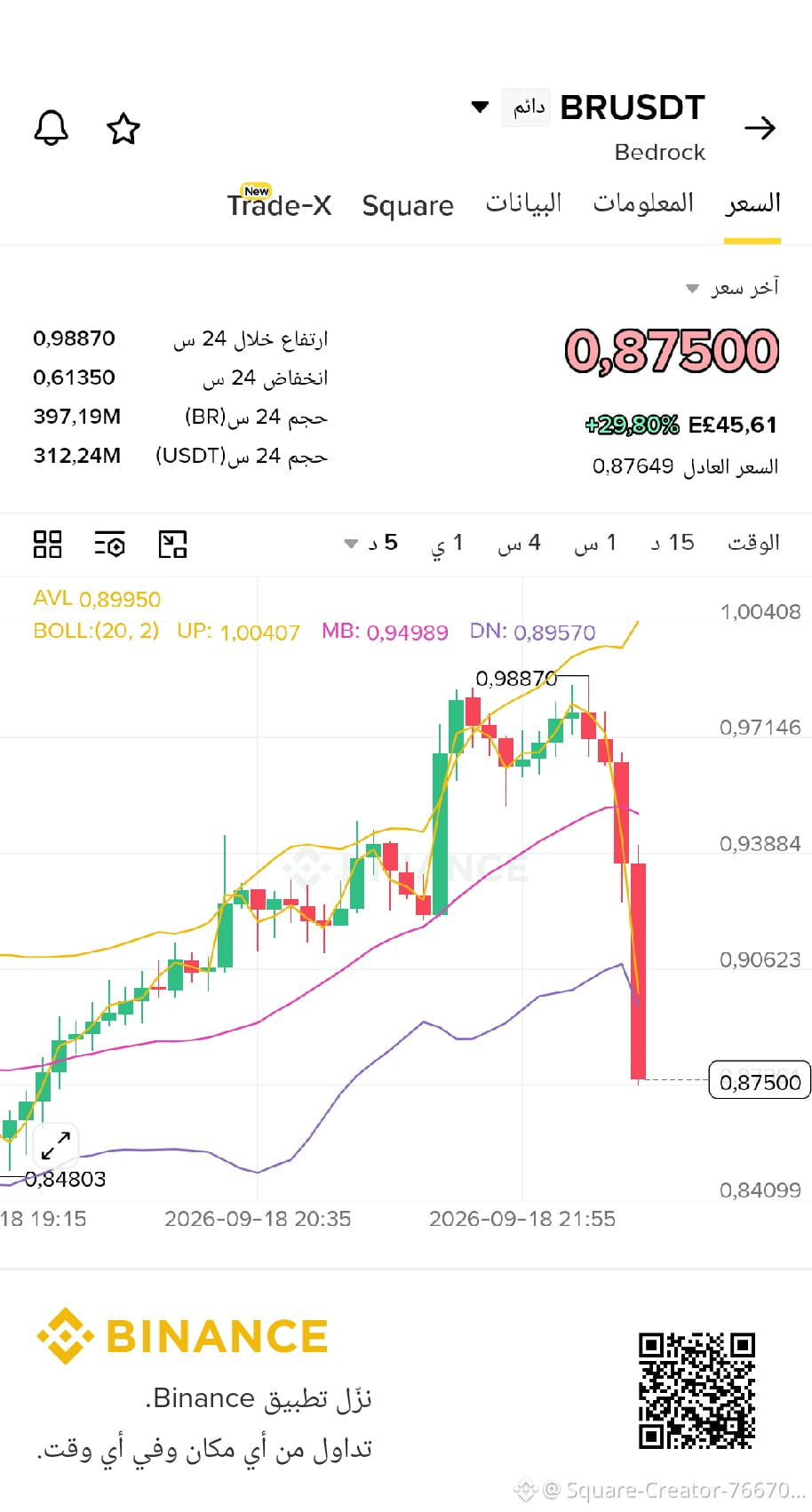
⚠️ تحذير عاجل: بداية الهبوط المفاجئ على عملة $BR ! 🚨
كما حذرنا سابقاً، بدأ السيناريو المتوقع وهبط سعر عملة Bedrock ($BR) بشكل حاد ومباشر ليصل حالياً إلى مستويات 0.87500 بعد أن كان عند القمة القريبة 0.98870!
قراءة الحركة الفنية الحالية:
* كسر الخط الأوسط لمؤشر البولينجر (MB): الشمعة الحمراء القوية كسرته بوضوح لتتجه نحو الحد السفلي (DN)، مما يؤكد سيطرة القوة البيعية وضغط جني الأرباح العنيف.
* تراجع نسبة الارتفاع: تقلصت أرباح اليوم لتصل إلى +29.80% بعد أن كانت تتجاوز 43%، مما يوضح سرعة تصفية الصفقات.
🔻 نصائح عاجلة للمتداولين:
* تجنب الشراء الاندفاعي (FOMO): لا تدخل في صفقة شراء أثناء هبوط الشمعة الحادة؛ انتظر حتى يستقر السعر وتظهر علامات ارتداد واضحة.
* تفعيل وقف الخسارة: إذا كنت لا تزال في صفقة شرائية، احرص على حماية باقي رأس مالك.
📲 تابع التحركات لحظة بلحظة عبر منصة باينانس.
#BR #Bedrock
#CryptoTrading
#Binance
#TechnicalAnalysis
NFA. DYOR.
⚠️ تحذير عاجل: بداية الهبوط المفاجئ على عملة $BR ! 🚨
كما حذرنا سابقاً، بدأ السيناريو المتوقع وهبط سعر عملة Bedrock ($BR ) بشكل حاد ومباشر ليصل حالياً إلى مستويات 0.87500 بعد أن كان عند القمة القريبة 0.98870!
قراءة الحركة الفنية الحالية:
* كسر الخط الأوسط لمؤشر البولينجر (MB): الشمعة الحمراء القوية كسرته بوضوح لتتجه نحو الحد السفلي (DN)، مما يؤكد سيطرة القوة البيعية وضغط جني الأرباح العنيف.
* تراجع نسبة الارتفاع: تقلصت أرباح اليوم لتصل إلى +29.80% بعد أن كانت تتجاوز 43%، مما يوضح سرعة تصفية الصفقات.
🔻 نصائح عاجلة للمتداولين:
* تجنب الشراء الاندفاعي (FOMO): لا تدخل في صفقة شراء أثناء هبوط الشمعة الحادة؛ انتظر حتى يستقر السعر وتظهر علامات ارتداد واضحة.
* تفعيل وقف الخسارة: إذا كنت لا تزال في صفقة شرائية، احرص على حماية باقي رأس مالك.
📲 تابع التحركات لحظة بلحظة عبر منصة باينانس.
#BR #Bedrock
#CryptoTrading
#Binance
#TechnicalAnalysis
NFA. DYOR.
كما حذرنا سابقاً، بدأ السيناريو المتوقع وهبط سعر عملة Bedrock ($BR ) بشكل حاد ومباشر ليصل حالياً إلى مستويات 0.87500 بعد أن كان عند القمة القريبة 0.98870!
قراءة الحركة الفنية الحالية:
* كسر الخط الأوسط لمؤشر البولينجر (MB): الشمعة الحمراء القوية كسرته بوضوح لتتجه نحو الحد السفلي (DN)، مما يؤكد سيطرة القوة البيعية وضغط جني الأرباح العنيف.
* تراجع نسبة الارتفاع: تقلصت أرباح اليوم لتصل إلى +29.80% بعد أن كانت تتجاوز 43%، مما يوضح سرعة تصفية الصفقات.
🔻 نصائح عاجلة للمتداولين:
* تجنب الشراء الاندفاعي (FOMO): لا تدخل في صفقة شراء أثناء هبوط الشمعة الحادة؛ انتظر حتى يستقر السعر وتظهر علامات ارتداد واضحة.
* تفعيل وقف الخسارة: إذا كنت لا تزال في صفقة شرائية، احرص على حماية باقي رأس مالك.
📲 تابع التحركات لحظة بلحظة عبر منصة باينانس.
#BR #Bedrock
#CryptoTrading
#Binance
#TechnicalAnalysis
NFA. DYOR.
256
Trading sur 30 j de 57.5 USDT en $BR
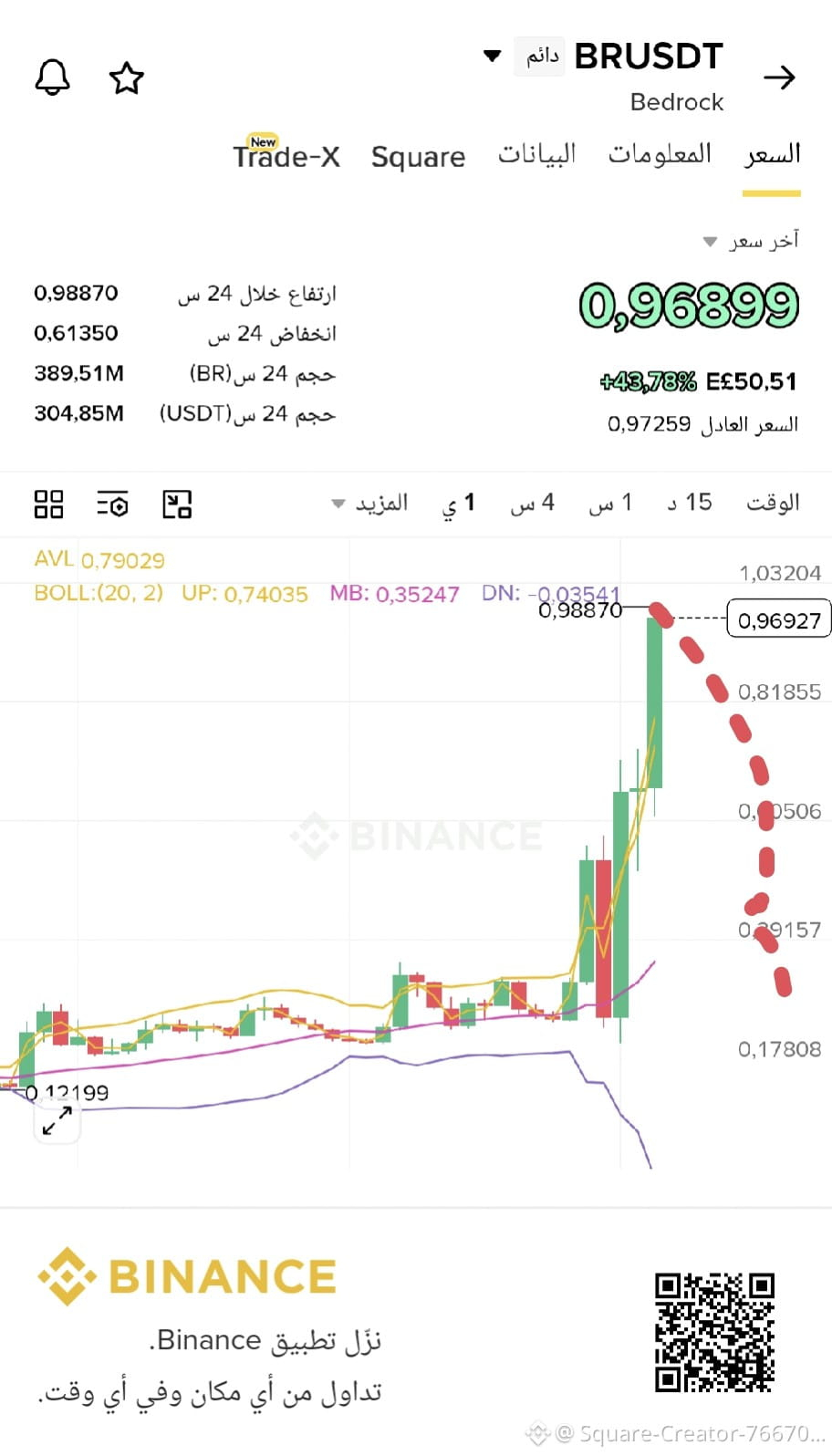
🚀 حلم تحقق على عملة Bedrock ($BR ).. ولكن احذر قبل أن تجني أرباحك! 🚀 الصعود مستمر ولكن لا تطمع
عملة BRUSDT تواصل الانفجار السعري وتحقق مستويات قياسية بعد وصولها إلى 0.98870 وصعود قادتها لنحو +43.78% خلال 24 ساعة فقط! لمن دخلوا من المستويات المنخفضة، هذا بالفعل إنجاز ممتاز وربح خيالي 💥.
⚠️ ولكن.. انتبه جيداً قبل اتخاذ قرار جني الأرباح:
* تجاوز نطاق البولينجر العلوي (UP): السعر حالياً يخترق حدود Bollinger Bands العلوي بشكل حاد عند مستويات 0.96899، مما يشير إلى تشبع شرائي عالٍ واحتمالية عالية لبدء حركة تصحيحية.
* إدارة المخاطر بحكمة: بدلاً من الاندفاع أو ترك الصفقة للصدفة، يمكنك استخدام استراتيجية رفع أمر وقف الخسارة المتحرك (Trailing Stop-Loss) لتأمين الأرباح المكتسبة.
🔻 تنبيه هام ومحذر:
الارتفاعات العنيفة والسريعة غالباً ما يتبعها هبوط مفاجئ وحاد لتصفية الصفقات وجني الأرباح السريع، فلا تدع النشوة تنسيك حماية رأس مالك واحذر من حدوث هذا الهبوط المفاجئ!
📲 تابع حركة السوق أولاً بأول ونفذ صفقاتك بحذر عبر منصة باينانس.
#BR
#Bedrock
#CryptoTrading #Binance
#TechnicalAnalysis
NFA. DYOR.
🚀 حلم تحقق على عملة Bedrock ($BR ).. ولكن احذر قبل أن تجني أرباحك! 🚀 الصعود مستمر ولكن لا تطمع
عملة BRUSDT تواصل الانفجار السعري وتحقق مستويات قياسية بعد وصولها إلى 0.98870 وصعود قادتها لنحو +43.78% خلال 24 ساعة فقط! لمن دخلوا من المستويات المنخفضة، هذا بالفعل إنجاز ممتاز وربح خيالي 💥.
⚠️ ولكن.. انتبه جيداً قبل اتخاذ قرار جني الأرباح:
* تجاوز نطاق البولينجر العلوي (UP): السعر حالياً يخترق حدود Bollinger Bands العلوي بشكل حاد عند مستويات 0.96899، مما يشير إلى تشبع شرائي عالٍ واحتمالية عالية لبدء حركة تصحيحية.
* إدارة المخاطر بحكمة: بدلاً من الاندفاع أو ترك الصفقة للصدفة، يمكنك استخدام استراتيجية رفع أمر وقف الخسارة المتحرك (Trailing Stop-Loss) لتأمين الأرباح المكتسبة.
🔻 تنبيه هام ومحذر:
الارتفاعات العنيفة والسريعة غالباً ما يتبعها هبوط مفاجئ وحاد لتصفية الصفقات وجني الأرباح السريع، فلا تدع النشوة تنسيك حماية رأس مالك واحذر من حدوث هذا الهبوط المفاجئ!
📲 تابع حركة السوق أولاً بأول ونفذ صفقاتك بحذر عبر منصة باينانس.
#BR
#Bedrock
#CryptoTrading #Binance
#TechnicalAnalysis
NFA. DYOR.
عملة BRUSDT تواصل الانفجار السعري وتحقق مستويات قياسية بعد وصولها إلى 0.98870 وصعود قادتها لنحو +43.78% خلال 24 ساعة فقط! لمن دخلوا من المستويات المنخفضة، هذا بالفعل إنجاز ممتاز وربح خيالي 💥.
⚠️ ولكن.. انتبه جيداً قبل اتخاذ قرار جني الأرباح:
* تجاوز نطاق البولينجر العلوي (UP): السعر حالياً يخترق حدود Bollinger Bands العلوي بشكل حاد عند مستويات 0.96899، مما يشير إلى تشبع شرائي عالٍ واحتمالية عالية لبدء حركة تصحيحية.
* إدارة المخاطر بحكمة: بدلاً من الاندفاع أو ترك الصفقة للصدفة، يمكنك استخدام استراتيجية رفع أمر وقف الخسارة المتحرك (Trailing Stop-Loss) لتأمين الأرباح المكتسبة.
🔻 تنبيه هام ومحذر:
الارتفاعات العنيفة والسريعة غالباً ما يتبعها هبوط مفاجئ وحاد لتصفية الصفقات وجني الأرباح السريع، فلا تدع النشوة تنسيك حماية رأس مالك واحذر من حدوث هذا الهبوط المفاجئ!
📲 تابع حركة السوق أولاً بأول ونفذ صفقاتك بحذر عبر منصة باينانس.
#BR
#Bedrock
#CryptoTrading #Binance
#TechnicalAnalysis
NFA. DYOR.
133
·
--
Haussier
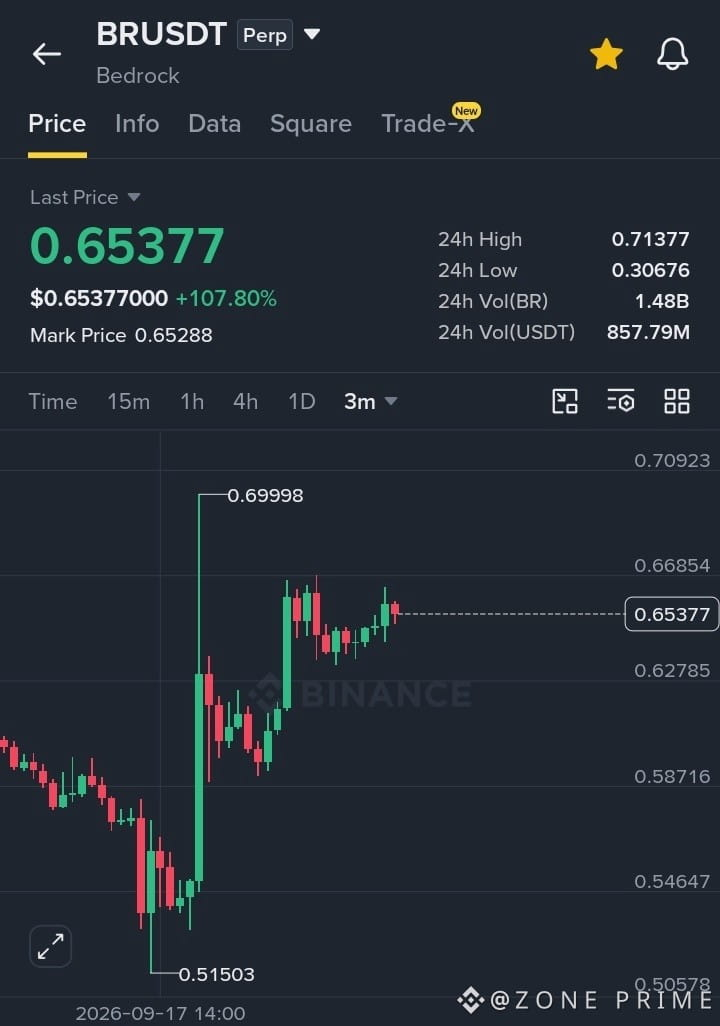
$BR /USDT — LONG SETUP Go 📈 🚀 💯
Entry: 0.62785 - 0.65377
TP1: 0.66854
TP2: 0.69998
TP3: 0.71377
Stop: 0.58700
Massive parabolic surge establishing a stable continuation base above 0.62785.
Persistent limit order bid stacking and high buying volume keep the broader bias strongly bullish for secondary price expansion.
#br #brusdt #bedrock #crypto $BR
{future}(BRUSDT)
$BR /USDT — LONG SETUP Go 📈 🚀 💯
Entry: 0.62785 - 0.65377
TP1: 0.66854
TP2: 0.69998
TP3: 0.71377
Stop: 0.58700
Massive parabolic surge establishing a stable continuation base above 0.62785.
Persistent limit order bid stacking and high buying volume keep the broader bias strongly bullish for secondary price expansion.
#br #brusdt #bedrock #crypto $BR
Entry: 0.62785 - 0.65377
TP1: 0.66854
TP2: 0.69998
TP3: 0.71377
Stop: 0.58700
Massive parabolic surge establishing a stable continuation base above 0.62785.
Persistent limit order bid stacking and high buying volume keep the broader bias strongly bullish for secondary price expansion.
#br #brusdt #bedrock #crypto $BR
301

·
--
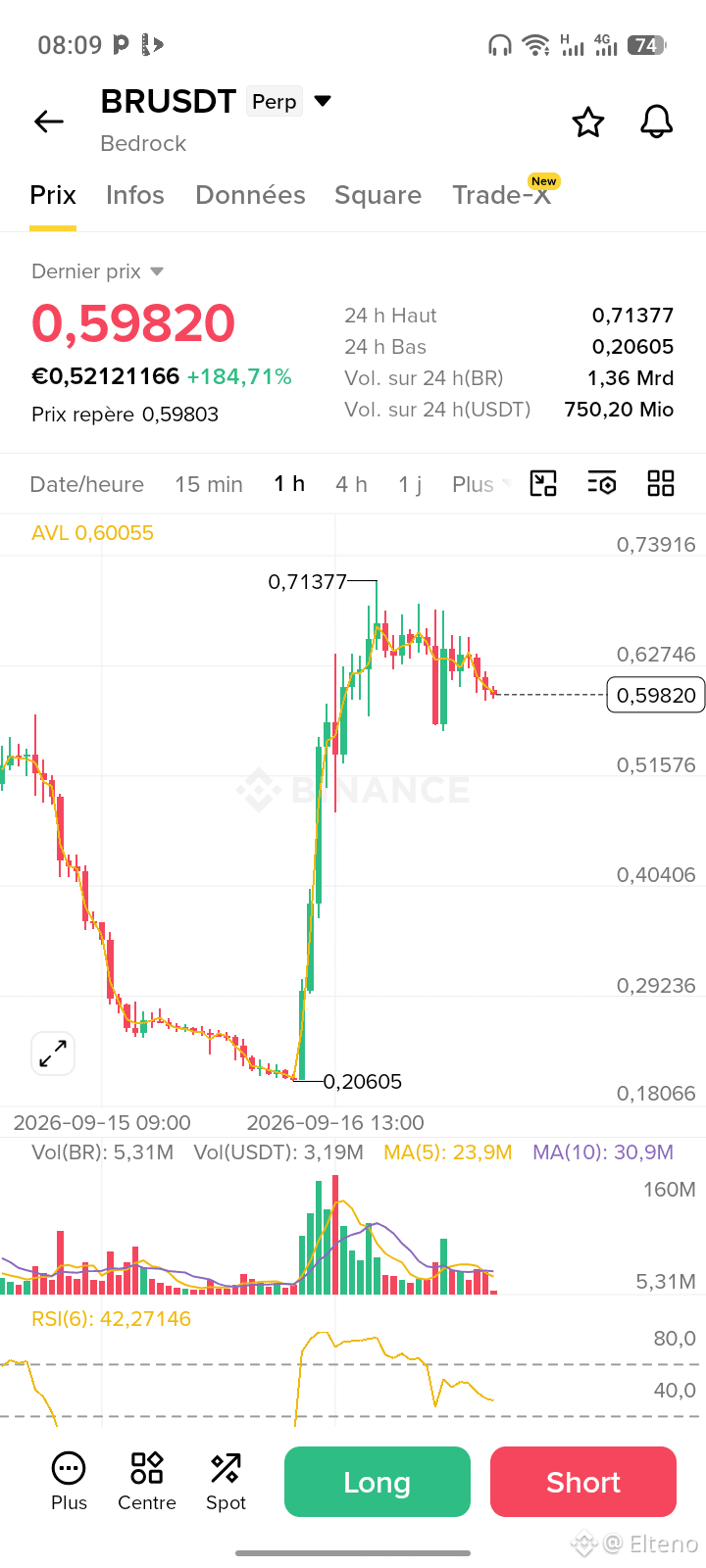
🚨 BRUSDT : après +184 %, le marché commence à souffler ! 🔥
BR (Bedrock) affiche +184,71 % en 24H et a atteint un sommet à 0,71377 $ avant de revenir autour de 0,598 $.
📊 On observe maintenant une phase de consolidation avec une légère pression vendeuse. Le volume reste très élevé, mais diminue par rapport à l’explosion initiale.
👀 Niveaux à surveiller :
🟢 0,598 $ → zone actuelle
🟢 0,516 $ → support important
🔴 0,627 $ → résistance immédiate
🚀 0,7138 $ → sommet à reprendre
Le RSI(6) ≈ 42 montre que la surchauffe précédente s’est fortement refroidie.
🔥 $BR
{future}(BRUSDT)
va-t-il reprendre de la force pour attaquer les 0,71 $, ou la correction va-t-elle continuer ?
#BR #Bedrock
🚨 BRUSDT : après +184 %, le marché commence à souffler ! 🔥
BR (Bedrock) affiche +184,71 % en 24H et a atteint un sommet à 0,71377 $ avant de revenir autour de 0,598 $.
📊 On observe maintenant une phase de consolidation avec une légère pression vendeuse. Le volume reste très élevé, mais diminue par rapport à l’explosion initiale.
👀 Niveaux à surveiller :
🟢 0,598 $ → zone actuelle
🟢 0,516 $ → support important
🔴 0,627 $ → résistance immédiate
🚀 0,7138 $ → sommet à reprendre
Le RSI(6) ≈ 42 montre que la surchauffe précédente s’est fortement refroidie.
🔥 $BR
va-t-il reprendre de la force pour attaquer les 0,71 $, ou la correction va-t-elle continuer ?
#BR #Bedrock
BR (Bedrock) affiche +184,71 % en 24H et a atteint un sommet à 0,71377 $ avant de revenir autour de 0,598 $.
📊 On observe maintenant une phase de consolidation avec une légère pression vendeuse. Le volume reste très élevé, mais diminue par rapport à l’explosion initiale.
👀 Niveaux à surveiller :
🟢 0,598 $ → zone actuelle
🟢 0,516 $ → support important
🔴 0,627 $ → résistance immédiate
🚀 0,7138 $ → sommet à reprendre
Le RSI(6) ≈ 42 montre que la surchauffe précédente s’est fortement refroidie.
🔥 $BR
va-t-il reprendre de la force pour attaquer les 0,71 $, ou la correction va-t-elle continuer ?
#BR #Bedrock
2
1
48
Short 3.2 USDT en $BR
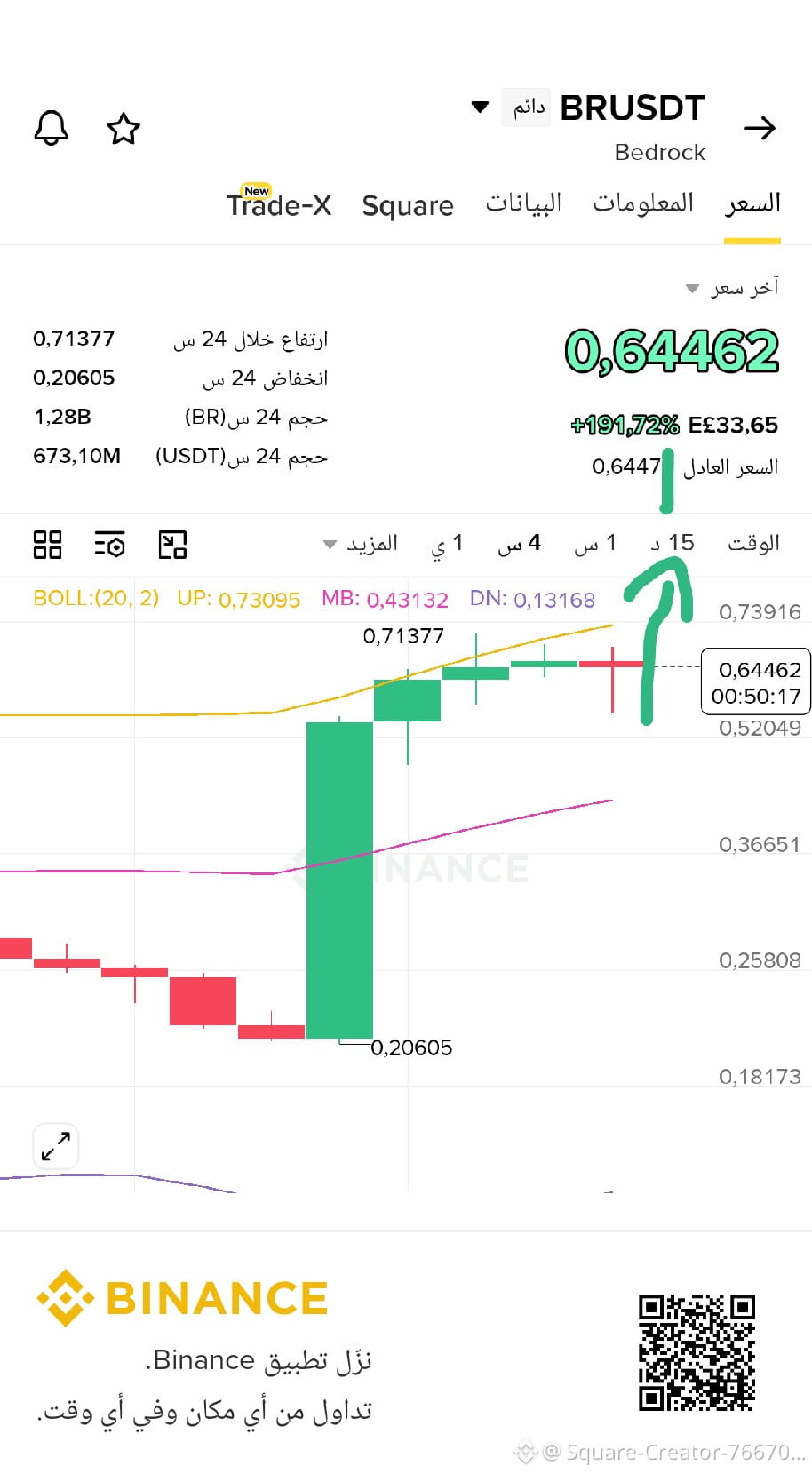
🚨 هل تسقط في فخ الـ 1 دولار مع عملة $BR ؟ 🛑
الكل يتحدث عن انطلاق Bedrock ($BR) نحو الـ 1 دولار بعد انفجار سعري مرعب تجاوز 190% وقمة عند 0.713$! 🔥
لكن قبل أن تندفع بدافع الفومو (FOMO)، انظر جلياً إلى الشارت:
* تشبع شرائي حاد: السعرخترق الحد العلوي للبولينجر باندز (UP: 0.730$) بشكل مجنون.
* فجوة التصحيح: التداول الحالي عند 0.644$ يبعد كثيراً عن المتوسط الأوسط (MB: 0.431$)، مما يعزز احتمالية هبوط تصحيحي مفاجئ لجني الأرباح!
💡 احذر: الحلم قريب جداً، لكن الشراء عند القمم دون إعادة اختبار هو المكان المفضل لصيادي الفخوخ.
هل ترجع العملة لتجميع القوة أم تواصل التحليق للـ 1 دولار مباشرة؟ شاركنا رؤيتك في التعليقات! 👇
#BR
#Bedrock #Binance
#Crypto
#Trading
NFA. DYOR.
🚨 هل تسقط في فخ الـ 1 دولار مع عملة $BR ؟ 🛑
الكل يتحدث عن انطلاق Bedrock ($BR ) نحو الـ 1 دولار بعد انفجار سعري مرعب تجاوز 190% وقمة عند 0.713$! 🔥
لكن قبل أن تندفع بدافع الفومو (FOMO)، انظر جلياً إلى الشارت:
* تشبع شرائي حاد: السعرخترق الحد العلوي للبولينجر باندز (UP: 0.730$) بشكل مجنون.
* فجوة التصحيح: التداول الحالي عند 0.644$ يبعد كثيراً عن المتوسط الأوسط (MB: 0.431$)، مما يعزز احتمالية هبوط تصحيحي مفاجئ لجني الأرباح!
💡 احذر: الحلم قريب جداً، لكن الشراء عند القمم دون إعادة اختبار هو المكان المفضل لصيادي الفخوخ.
هل ترجع العملة لتجميع القوة أم تواصل التحليق للـ 1 دولار مباشرة؟ شاركنا رؤيتك في التعليقات! 👇
#BR
#Bedrock #Binance
#Crypto
#Trading
NFA. DYOR.
الكل يتحدث عن انطلاق Bedrock ($BR ) نحو الـ 1 دولار بعد انفجار سعري مرعب تجاوز 190% وقمة عند 0.713$! 🔥
لكن قبل أن تندفع بدافع الفومو (FOMO)، انظر جلياً إلى الشارت:
* تشبع شرائي حاد: السعرخترق الحد العلوي للبولينجر باندز (UP: 0.730$) بشكل مجنون.
* فجوة التصحيح: التداول الحالي عند 0.644$ يبعد كثيراً عن المتوسط الأوسط (MB: 0.431$)، مما يعزز احتمالية هبوط تصحيحي مفاجئ لجني الأرباح!
💡 احذر: الحلم قريب جداً، لكن الشراء عند القمم دون إعادة اختبار هو المكان المفضل لصيادي الفخوخ.
هل ترجع العملة لتجميع القوة أم تواصل التحليق للـ 1 دولار مباشرة؟ شاركنا رؤيتك في التعليقات! 👇
#BR
#Bedrock #Binance
#Crypto
#Trading
NFA. DYOR.
4
1.2k

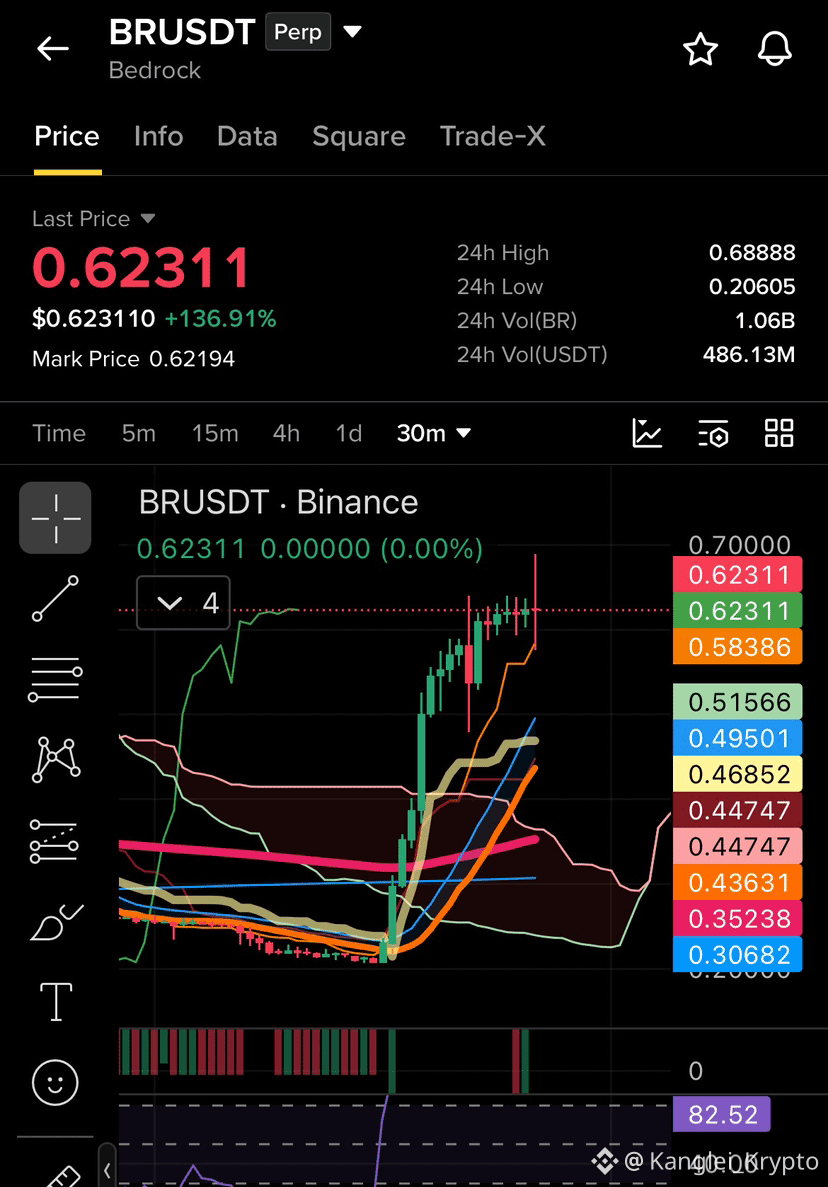
🚀 #BRUSDT (Bedrock) 30m Chart Deep Dive 📈📉
Massive +137% pump in 24h… but is the real move just starting or already overextended?
Current price: 0.623
24h range: 0.206 → 0.688
Volume is insane (486M USDT). This is classic early-stage volatility.
Technical Snapshot:
Price blasted through every MA after the low and is now riding the upper bands.
RSI-style oscillator sitting at 82.5 → clearly overbought on the 30m.
Strong higher-highs / higher-lows structure still intact, but we’re extended.
Perfect Long Entries (High-probability pullback zones):
1. Aggressive Long: 0.580 – 0.595 (orange MA + previous breakout zone)
2. Safer Long: 0.510 – 0.530 (blue + green MA confluence + volume support)
3. Deep discount: 0.440 – 0.460 (major structure support)
Long invalidation: Clean break and close below 0.430
Targets: 0.70 → 0.85 → 1.00+ (if momentum continues)
Perfect Short Entries (Counter-trend / take-profit zones)
1. Aggressive Short: 0.670 – 0.690 (recent high rejection zone)
2. Better Short: Rejection from 0.700 – 0.720 with volume drop
3. Confirmation Short: Breakdown below 0.580 with increasing sell volume
Short invalidation: Strong reclaim and close above 0.720
Targets: 0.55 → 0.48 → 0.40
This coin is still in pure discovery mode. One more vertical leg is possible… or a brutal 40-50% wipe can happen in hours.
What are you doing here?
Long the dip or fading the top? Drop your entry & leverage below 👇
#BRUSDT #Bedrock #FedRateWatch
⚠️ High-risk early-stage token. Extreme volatility. Never risk more than you can afford to lose. This is not financial advice.
{future}(BRUSDT)
$BR $BTC
🚀 #BRUSDT (Bedrock) 30m Chart Deep Dive 📈📉
Massive +137% pump in 24h… but is the real move just starting or already overextended?
Current price: 0.623
24h range: 0.206 → 0.688
Volume is insane (486M USDT). This is classic early-stage volatility.
Technical Snapshot:
Price blasted through every MA after the low and is now riding the upper bands.
RSI-style oscillator sitting at 82.5 → clearly overbought on the 30m.
Strong higher-highs / higher-lows structure still intact, but we’re extended.
Perfect Long Entries (High-probability pullback zones):
1. Aggressive Long: 0.580 – 0.595 (orange MA + previous breakout zone)
2. Safer Long: 0.510 – 0.530 (blue + green MA confluence + volume support)
3. Deep discount: 0.440 – 0.460 (major structure support)
Long invalidation: Clean break and close below 0.430
Targets: 0.70 → 0.85 → 1.00+ (if momentum continues)
Perfect Short Entries (Counter-trend / take-profit zones)
1. Aggressive Short: 0.670 – 0.690 (recent high rejection zone)
2. Better Short: Rejection from 0.700 – 0.720 with volume drop
3. Confirmation Short: Breakdown below 0.580 with increasing sell volume
Short invalidation: Strong reclaim and close above 0.720
Targets: 0.55 → 0.48 → 0.40
This coin is still in pure discovery mode. One more vertical leg is possible… or a brutal 40-50% wipe can happen in hours.
What are you doing here?
Long the dip or fading the top? Drop your entry & leverage below 👇
#BRUSDT #Bedrock #FedRateWatch
⚠️ High-risk early-stage token. Extreme volatility. Never risk more than you can afford to lose. This is not financial advice.
$BR $BTC
Massive +137% pump in 24h… but is the real move just starting or already overextended?
Current price: 0.623
24h range: 0.206 → 0.688
Volume is insane (486M USDT). This is classic early-stage volatility.
Technical Snapshot:
Price blasted through every MA after the low and is now riding the upper bands.
RSI-style oscillator sitting at 82.5 → clearly overbought on the 30m.
Strong higher-highs / higher-lows structure still intact, but we’re extended.
Perfect Long Entries (High-probability pullback zones):
1. Aggressive Long: 0.580 – 0.595 (orange MA + previous breakout zone)
2. Safer Long: 0.510 – 0.530 (blue + green MA confluence + volume support)
3. Deep discount: 0.440 – 0.460 (major structure support)
Long invalidation: Clean break and close below 0.430
Targets: 0.70 → 0.85 → 1.00+ (if momentum continues)
Perfect Short Entries (Counter-trend / take-profit zones)
1. Aggressive Short: 0.670 – 0.690 (recent high rejection zone)
2. Better Short: Rejection from 0.700 – 0.720 with volume drop
3. Confirmation Short: Breakdown below 0.580 with increasing sell volume
Short invalidation: Strong reclaim and close above 0.720
Targets: 0.55 → 0.48 → 0.40
This coin is still in pure discovery mode. One more vertical leg is possible… or a brutal 40-50% wipe can happen in hours.
What are you doing here?
Long the dip or fading the top? Drop your entry & leverage below 👇
#BRUSDT #Bedrock #FedRateWatch
⚠️ High-risk early-stage token. Extreme volatility. Never risk more than you can afford to lose. This is not financial advice.
$BR $BTC
1
2
444
·
--
Haussier
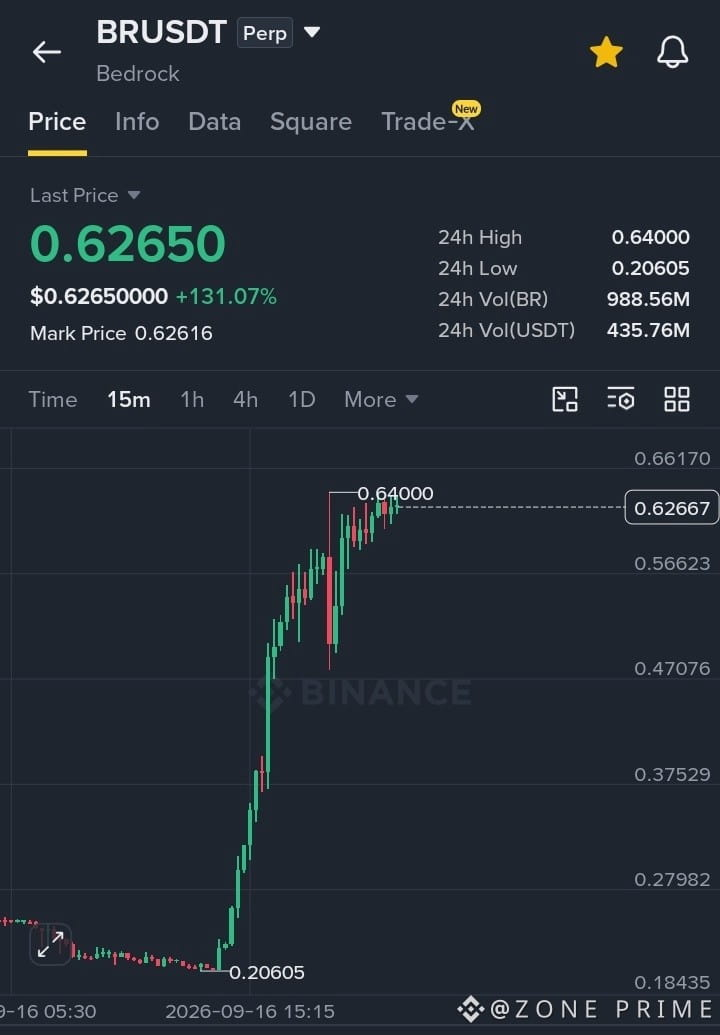
$BR /USDT — LONG SETUP Go 📈 🚀 💯
Entry: 0.56623 - 0.62650
TP1: 0.64000
TP2: 0.66170
TP3: 0.70000
Stop: 0.52500
Explosive impulse momentum breaking through previous structural levels with strong volume.
Sustained spot demand expansion and tight price consolidation favor further bullish price discovery.
#BR #brusdt #bedrock #crypto $BR
{future}(BRUSDT)
$BR /USDT — LONG SETUP Go 📈 🚀 💯
Entry: 0.56623 - 0.62650
TP1: 0.64000
TP2: 0.66170
TP3: 0.70000
Stop: 0.52500
Explosive impulse momentum breaking through previous structural levels with strong volume.
Sustained spot demand expansion and tight price consolidation favor further bullish price discovery.
#BR #brusdt #bedrock #crypto $BR
Entry: 0.56623 - 0.62650
TP1: 0.64000
TP2: 0.66170
TP3: 0.70000
Stop: 0.52500
Explosive impulse momentum breaking through previous structural levels with strong volume.
Sustained spot demand expansion and tight price consolidation favor further bullish price discovery.
#BR #brusdt #bedrock #crypto $BR
1
149
Connectez-vous pour découvrir plus de contenu
Rejoignez la communauté mondiale des adeptes de cryptomonnaies sur Binance Square
⚡️ Suviez les dernières informations importantes sur les cryptomonnaies.
💬 Jugé digne de confiance par la plus grande plateforme d’échange de cryptomonnaies au monde.
👍 Découvrez les connaissances que partagent les créateurs vérifiés.
Adresse e-mail/Nº de téléphone
Sujets d’actualité
1
#CircleMints500MUSDCOnSolana
92,570 vues
2,016 mentions
2
#PolymarketBankFailureBetsDrawFDICConcern
94,046 vues
1,809 mentions
3
#BlackRockBuildsTokenizedPortfoliosForOndo
87,032 vues
1,282 mentions
4
#BitwiseFilesToListNEARETFOnNYSEArca
67,917 vues
1,029 mentions
5
#SECCommissionerPeirceToLeaveOct2
68,775 vues
838 mentions
6
#SECSaysBuybacksUpgradesDontMakeTokenSecurity
55,975 vues
623 mentions
7
#StrategyProposesDailyDividendsForPreferreds
12,974 vues
228 mentions
8
#CircleTetherFreezeBitgetHackerWallet
13,848 vues
139 mentions
9
#CoinMarketCapCompletesCoinglassAcquisition
14,275 vues
183 mentions
10
#QNTRises39%
117,747 vues
1,700 mentions