

#zec
zec
44.5M vues
140,417 mentions
Populaire
Récents


·
--
$ZEC around $1,318 — this is where the chart gets interesting. 👀
After the recent move, Zcash is no longer in the “quiet altcoin” category.
The attention is already massive, but at this price I’m more interested in what buyers do next than in simply watching another green candle.
Here are the levels I’m watching:
$1,300–$1,320 → key support zone
If buyers continue defending this area, the first test is around:
🎯 $1,350
Then comes the bigger psychological level:
🎯 $1,400
And if ZEC can break above $1,400 with real volume, the next momentum zone could become much more interesting.
But there’s another side.
If $1,300 fails decisively, I would expect the market to start looking for a deeper pullback rather than blindly chasing the move.
That’s why I wouldn’t enter just because the chart is moving fast.
I want to see price + volume + confirmation working together.
And the community attention is already telling us something.
Binance Square’s ZEC page is showing around 44M+ views and 139K+ discussions, while ZEC is also appearing in Binance’s Most Searched list.
So the question isn't whether people are watching ZEC.
They clearly are.
The real question is whether buyers can turn all that attention into a sustained move.
For me:
$1,300 holds → bullish structure stays interesting.
$1,400 breaks → momentum could accelerate.
$1,300 loses → I’d rather wait than chase.
No blind FOMO.
Just watch the levels and let the market confirm the direction.
What do you think comes first — $1,400 or a deeper pullback? 👀
$ZEC
{future}(ZECUSDT)
#zec #Zcash #crypto #altcoins
$ZEC around $1,318 — this is where the chart gets interesting. 👀
After the recent move, Zcash is no longer in the “quiet altcoin” category.
The attention is already massive, but at this price I’m more interested in what buyers do next than in simply watching another green candle.
Here are the levels I’m watching:
$1,300–$1,320 → key support zone
If buyers continue defending this area, the first test is around:
🎯 $1,350
Then comes the bigger psychological level:
🎯 $1,400
And if ZEC can break above $1,400 with real volume, the next momentum zone could become much more interesting.
But there’s another side.
If $1,300 fails decisively, I would expect the market to start looking for a deeper pullback rather than blindly chasing the move.
That’s why I wouldn’t enter just because the chart is moving fast.
I want to see price + volume + confirmation working together.
And the community attention is already telling us something.
Binance Square’s ZEC page is showing around 44M+ views and 139K+ discussions, while ZEC is also appearing in Binance’s Most Searched list.
So the question isn't whether people are watching ZEC.
They clearly are.
The real question is whether buyers can turn all that attention into a sustained move.
For me:
$1,300 holds → bullish structure stays interesting.
$1,400 breaks → momentum could accelerate.
$1,300 loses → I’d rather wait than chase.
No blind FOMO.
Just watch the levels and let the market confirm the direction.
What do you think comes first — $1,400 or a deeper pullback? 👀
$ZEC
#zec #Zcash #crypto #altcoins
After the recent move, Zcash is no longer in the “quiet altcoin” category.
The attention is already massive, but at this price I’m more interested in what buyers do next than in simply watching another green candle.
Here are the levels I’m watching:
$1,300–$1,320 → key support zone
If buyers continue defending this area, the first test is around:
🎯 $1,350
Then comes the bigger psychological level:
🎯 $1,400
And if ZEC can break above $1,400 with real volume, the next momentum zone could become much more interesting.
But there’s another side.
If $1,300 fails decisively, I would expect the market to start looking for a deeper pullback rather than blindly chasing the move.
That’s why I wouldn’t enter just because the chart is moving fast.
I want to see price + volume + confirmation working together.
And the community attention is already telling us something.
Binance Square’s ZEC page is showing around 44M+ views and 139K+ discussions, while ZEC is also appearing in Binance’s Most Searched list.
So the question isn't whether people are watching ZEC.
They clearly are.
The real question is whether buyers can turn all that attention into a sustained move.
For me:
$1,300 holds → bullish structure stays interesting.
$1,400 breaks → momentum could accelerate.
$1,300 loses → I’d rather wait than chase.
No blind FOMO.
Just watch the levels and let the market confirm the direction.
What do you think comes first — $1,400 or a deeper pullback? 👀
$ZEC
#zec #Zcash #crypto #altcoins
1.3k

ZEC 4H Outlook🚀ZEC is pulling back into a strong confluence area on the 4H chart, and this is where the next move should be decided.
What I'm seeing:
- Price is sitting on the 1,240 - 1,305 demand zone. This area acted as resistance in early September, broke on the 17th, and is now being retested as support.
- The rising trendline from the September lows runs straight through the same zone, adding a second layer of support.
Since October 2, sellers have failed to close a 4H candle below the zone. Each dip is getting bought, which shows demand is still active.
2:25
The scenario:
A final sweep into the 1,300 - 1,310 area (zone top + trendline) would be an ideal spot for buyers to step in. If the zone holds, the upside levels to watch are:
- 1,410 - first resistance, previous breakdown level
- 1,485 - lower high from the drop
- 1,550 - supply from the late September range
- 1,680 - the swing high and main target of the move
Invalidation:
A 4H close below 1,240 breaks both the zone and the trendline. In that case the bullish idea is off and the next support sits around 1,170.
Wait for confirmation from the zone (a strong rejection wick or bullish engulfing candle) instead of buying blindly, and always size your position so a stop below the zone is a loss you can accept.
This is my personal analysis, not financial advice.
#ZEC #bullrun
ZEC 4H Outlook🚀
ZEC is pulling back into a strong confluence area on the 4H chart, and this is where the next move should be decided.
What I'm seeing:
- Price is sitting on the 1,240 - 1,305 demand zone. This area acted as resistance in early September, broke on the 17th, and is now being retested as support.
- The rising trendline from the September lows runs straight through the same zone, adding a second layer of support.
Since October 2, sellers have failed to close a 4H candle below the zone. Each dip is getting bought, which shows demand is still active.
2:25
The scenario:
A final sweep into the 1,300 - 1,310 area (zone top + trendline) would be an ideal spot for buyers to step in. If the zone holds, the upside levels to watch are:
- 1,410 - first resistance, previous breakdown level
- 1,485 - lower high from the drop
- 1,550 - supply from the late September range
- 1,680 - the swing high and main target of the move
Invalidation:
A 4H close below 1,240 breaks both the zone and the trendline. In that case the bullish idea is off and the next support sits around 1,170.
Wait for confirmation from the zone (a strong rejection wick or bullish engulfing candle) instead of buying blindly, and always size your position so a stop below the zone is a loss you can accept.
This is my personal analysis, not financial advice.
#ZEC #bullrun
What I'm seeing:
- Price is sitting on the 1,240 - 1,305 demand zone. This area acted as resistance in early September, broke on the 17th, and is now being retested as support.
- The rising trendline from the September lows runs straight through the same zone, adding a second layer of support.
Since October 2, sellers have failed to close a 4H candle below the zone. Each dip is getting bought, which shows demand is still active.
2:25
The scenario:
A final sweep into the 1,300 - 1,310 area (zone top + trendline) would be an ideal spot for buyers to step in. If the zone holds, the upside levels to watch are:
- 1,410 - first resistance, previous breakdown level
- 1,485 - lower high from the drop
- 1,550 - supply from the late September range
- 1,680 - the swing high and main target of the move
Invalidation:
A 4H close below 1,240 breaks both the zone and the trendline. In that case the bullish idea is off and the next support sits around 1,170.
Wait for confirmation from the zone (a strong rejection wick or bullish engulfing candle) instead of buying blindly, and always size your position so a stop below the zone is a loss you can accept.
This is my personal analysis, not financial advice.
#ZEC #bullrun
942

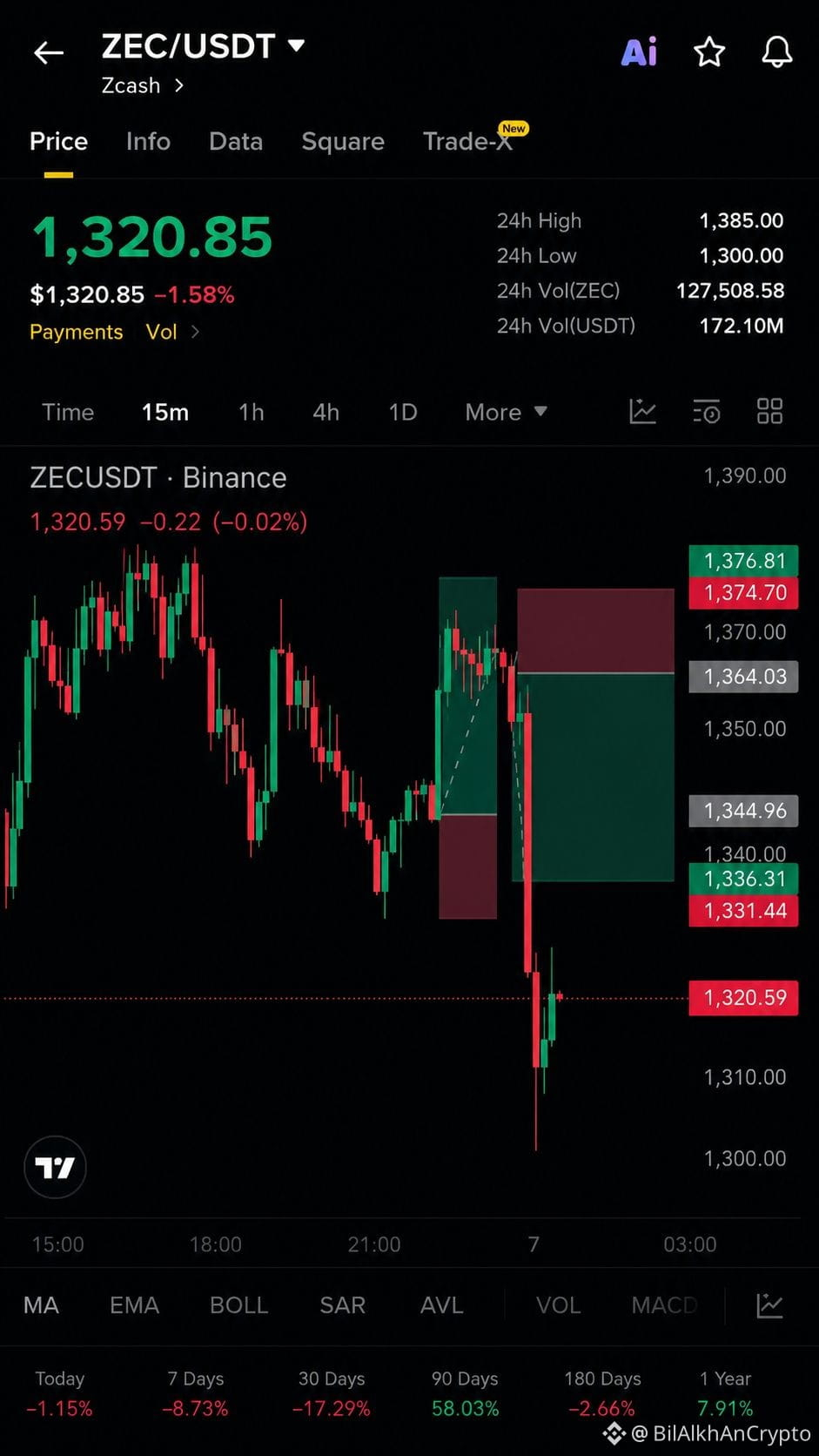
$ZEC — What a move! 🔥🤯
Michael Family, this one played out beautifully.
We entered around $1,362–$1,364, and ZEC rejected hard, moving down through the targets just as expected. Then came the bigger push, with price dropping toward $1,300. 🎯
The setup worked exactly the way we were looking for. Clean rejection, strong momentum, and great execution.
Big congratulations to everyone who caught this move! ❤️💰
$ZEC definitely delivered on this one. 🚀
#zec #Zcash #CryptoTrading #altcoins #crypto
{spot}(ZECUSDT)
$ZEC — What a move! 🔥🤯
Michael Family, this one played out beautifully.
We entered around $1,362–$1,364, and ZEC rejected hard, moving down through the targets just as expected. Then came the bigger push, with price dropping toward $1,300. 🎯
The setup worked exactly the way we were looking for. Clean rejection, strong momentum, and great execution.
Big congratulations to everyone who caught this move! ❤️💰
$ZEC definitely delivered on this one. 🚀
#zec #Zcash #CryptoTrading #altcoins #crypto
Michael Family, this one played out beautifully.
We entered around $1,362–$1,364, and ZEC rejected hard, moving down through the targets just as expected. Then came the bigger push, with price dropping toward $1,300. 🎯
The setup worked exactly the way we were looking for. Clean rejection, strong momentum, and great execution.
Big congratulations to everyone who caught this move! ❤️💰
$ZEC definitely delivered on this one. 🚀
#zec #Zcash #CryptoTrading #altcoins #crypto
1
1.1k

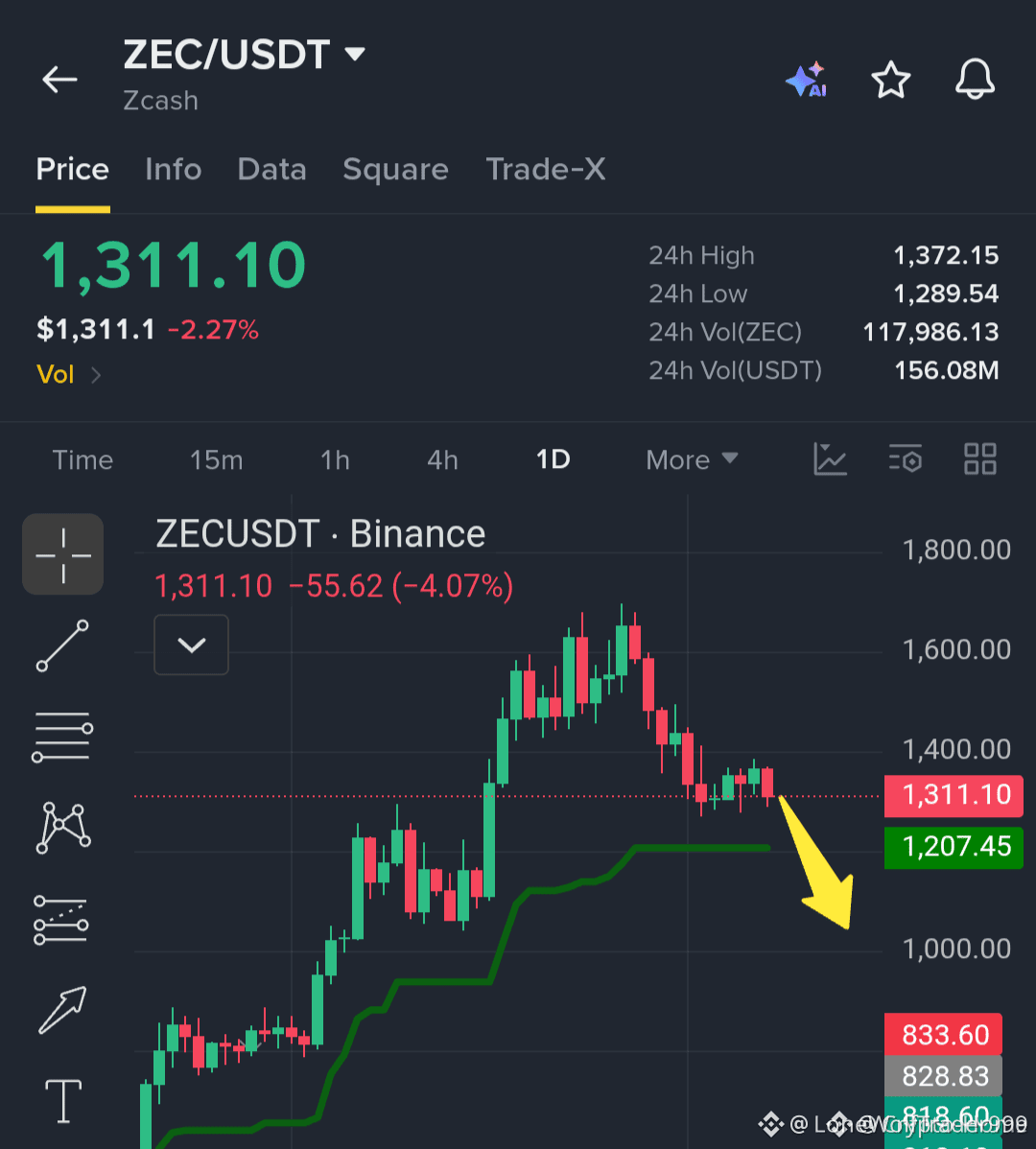
🚨 $ZEC SLIPS AS SELLER MOMENTUM DRAGS PRICE TOWARD THE $1,000 DEMAND ZONE! 📉
Entry: 1,311 🔴
Target: 1,000 📉
📊 Daily order flow on $ZEC shows clear structural weakness as sellers absorb every bounce around $1,311. Momentum indicators are tilting heavy, leaving minimal buyer defense before the key $1,000 support level.
📌 Liquidity below current price action looks primed for a sweep if bears keep pushing daily closes lower. 💡 Smart money appears to be letting market pressure drift naturally into the next lower demand block. 🤔 Are you waiting for a confirmed bounce at support or positioning for the breakdown lower? 👇
⚠️ Not financial advice. Always manage your risk. 🛡️
🏷️ #ZEC #ShortSetup #Bearish #Crypto
📉 🐻
🚨 $ZEC SLIPS AS SELLER MOMENTUM DRAGS PRICE TOWARD THE $1,000 DEMAND ZONE! 📉
Entry: 1,311 🔴
Target: 1,000 📉
📊 Daily order flow on $ZEC shows clear structural weakness as sellers absorb every bounce around $1,311. Momentum indicators are tilting heavy, leaving minimal buyer defense before the key $1,000 support level.
📌 Liquidity below current price action looks primed for a sweep if bears keep pushing daily closes lower. 💡 Smart money appears to be letting market pressure drift naturally into the next lower demand block. 🤔 Are you waiting for a confirmed bounce at support or positioning for the breakdown lower? 👇
⚠️ Not financial advice. Always manage your risk. 🛡️
🏷️ #ZEC #ShortSetup #Bearish #Crypto
📉 🐻
Entry: 1,311 🔴
Target: 1,000 📉
📊 Daily order flow on $ZEC shows clear structural weakness as sellers absorb every bounce around $1,311. Momentum indicators are tilting heavy, leaving minimal buyer defense before the key $1,000 support level.
📌 Liquidity below current price action looks primed for a sweep if bears keep pushing daily closes lower. 💡 Smart money appears to be letting market pressure drift naturally into the next lower demand block. 🤔 Are you waiting for a confirmed bounce at support or positioning for the breakdown lower? 👇
⚠️ Not financial advice. Always manage your risk. 🛡️
🏷️ #ZEC #ShortSetup #Bearish #Crypto
📉 🐻
324


·
--
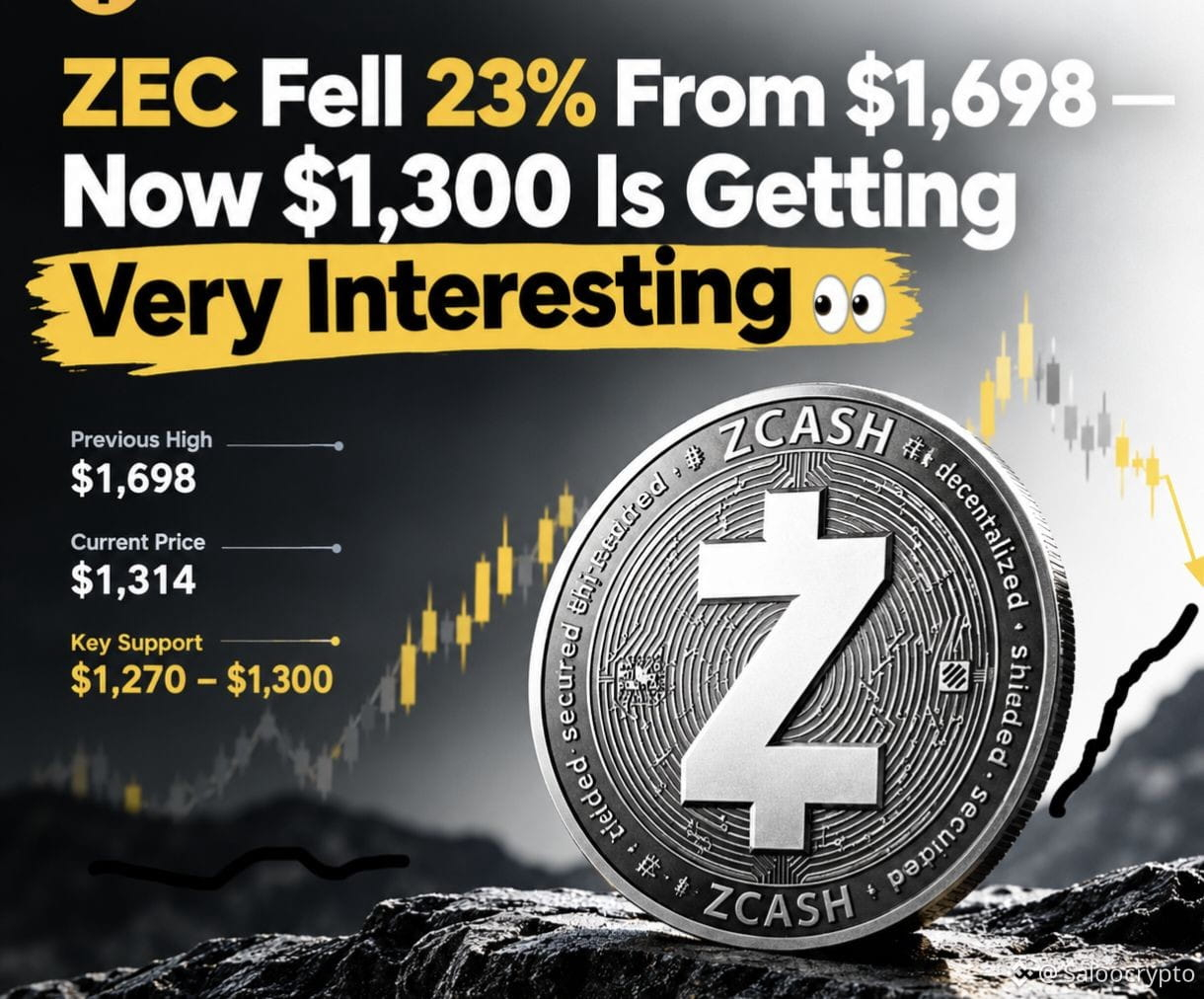
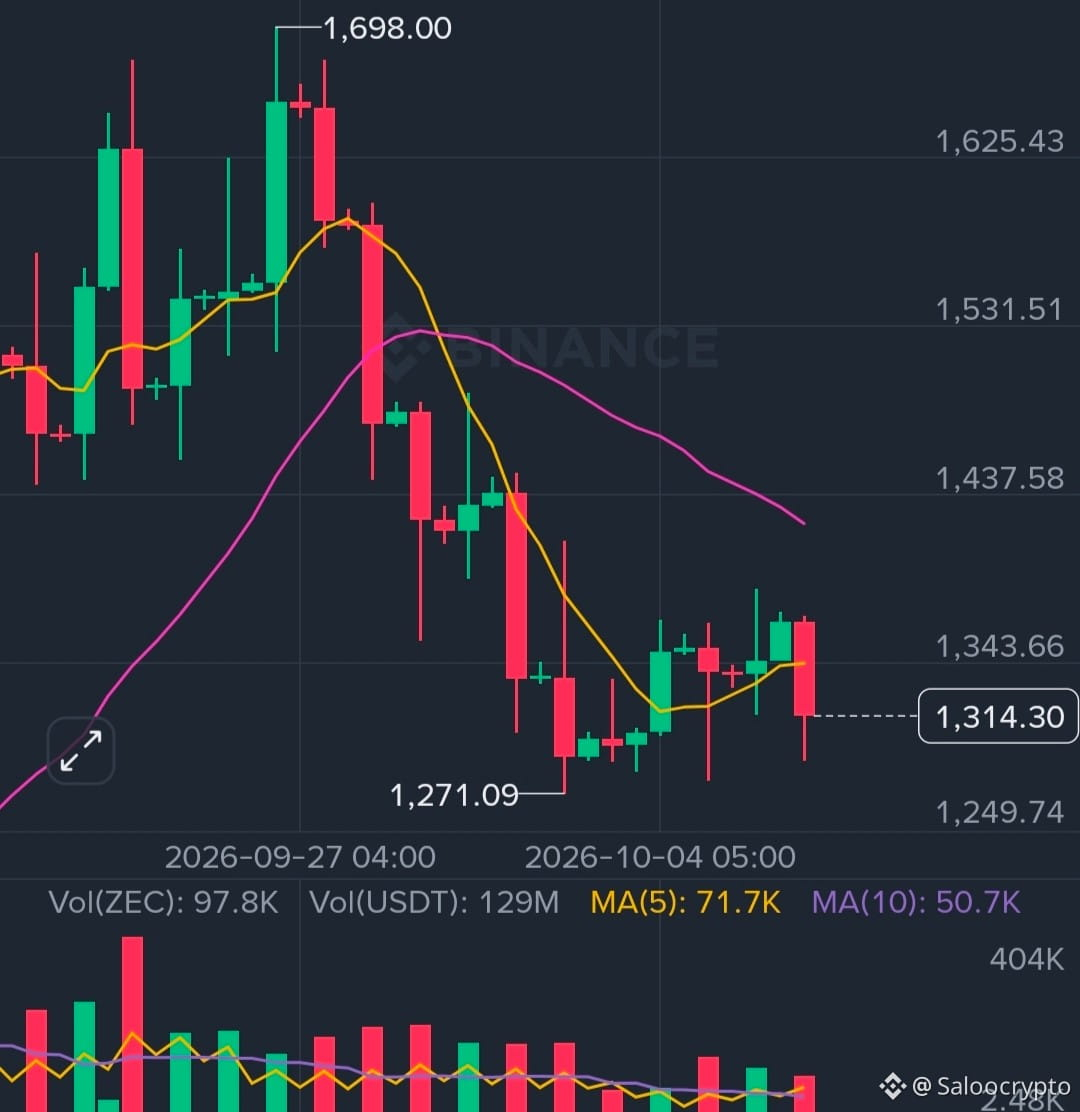
ZEC Fell 23% From $1,698 — Now $1,300 Is Getting Very Very Interesting
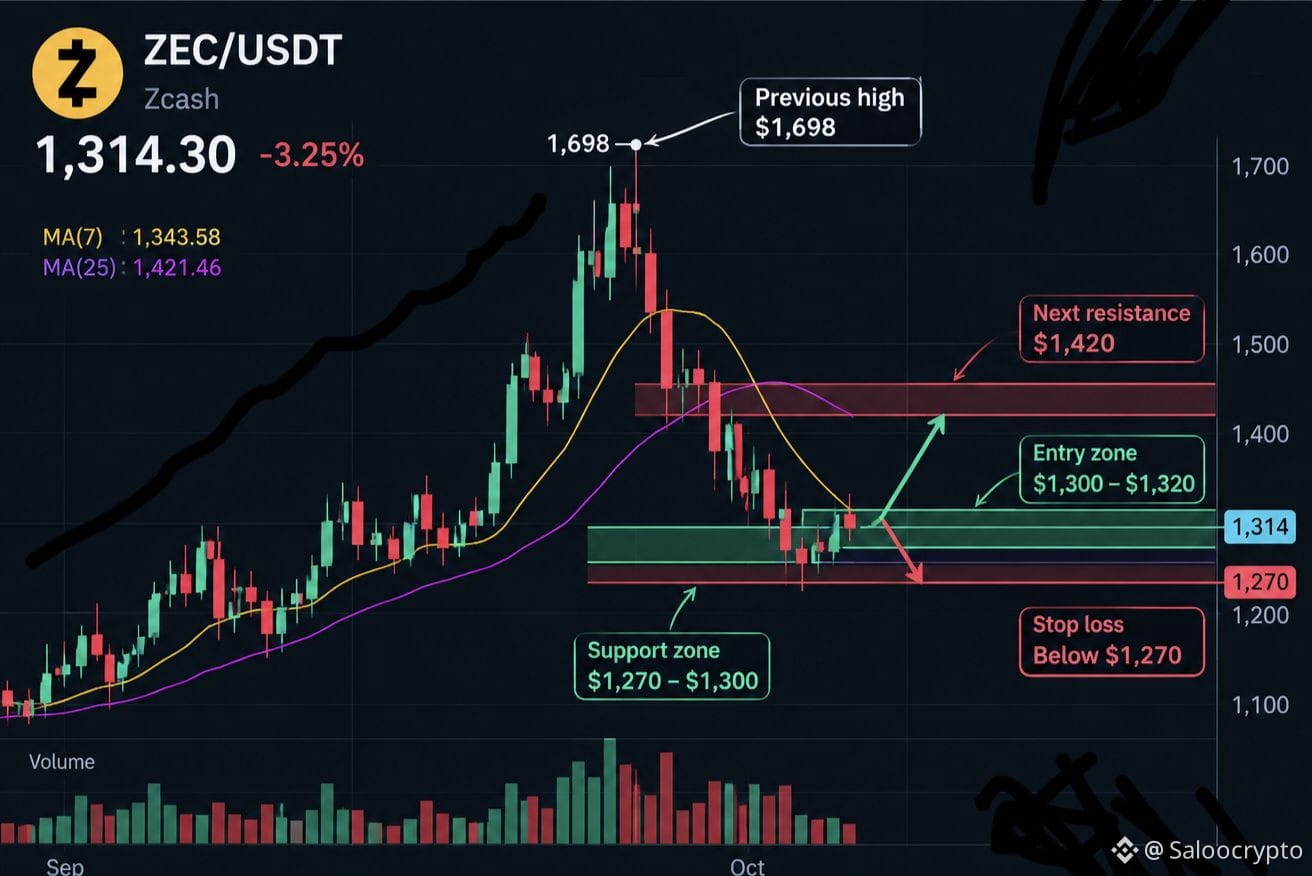
$ZEC is trading at ~ $1,314 after falling from $1,698. Short-term momentum is still weak but the broader trend is not yet fully broken.
Watching $1270-$1300 closely. If buyers defend this area and price gets back above $1,340, I’d look for $1,420 next.
My safer limit-entry zone would be $1,300-$1,320 with a stop below $1,270. If that support gives way on heavy selling, I’d prefer to sit out than force a trade.
At its heart the picture is mixed. ZCSH saw heavy outflows recently but the longer term story is still alive with NU7 testing, THORChain liquidity and a new Zcash ETF filing.
$1,270 for me is the line in the sand. If it holds, this correction could be interesting.
#zec #zcash $ZEC
{future}(ZECUSDT)
ZEC Fell 23% From $1,698 — Now $1,300 Is Getting Very Very Interesting
$ZEC is trading at ~ $1,314 after falling from $1,698. Short-term momentum is still weak but the broader trend is not yet fully broken.
Watching $1270-$1300 closely. If buyers defend this area and price gets back above $1,340, I’d look for $1,420 next.
My safer limit-entry zone would be $1,300-$1,320 with a stop below $1,270. If that support gives way on heavy selling, I’d prefer to sit out than force a trade.
At its heart the picture is mixed. ZCSH saw heavy outflows recently but the longer term story is still alive with NU7 testing, THORChain liquidity and a new Zcash ETF filing.
$1,270 for me is the line in the sand. If it holds, this correction could be interesting.
#zec #zcash $ZEC
$ZEC is trading at ~ $1,314 after falling from $1,698. Short-term momentum is still weak but the broader trend is not yet fully broken.
Watching $1270-$1300 closely. If buyers defend this area and price gets back above $1,340, I’d look for $1,420 next.
My safer limit-entry zone would be $1,300-$1,320 with a stop below $1,270. If that support gives way on heavy selling, I’d prefer to sit out than force a trade.
At its heart the picture is mixed. ZCSH saw heavy outflows recently but the longer term story is still alive with NU7 testing, THORChain liquidity and a new Zcash ETF filing.
$1,270 for me is the line in the sand. If it holds, this correction could be interesting.
#zec #zcash $ZEC
1
1
277

·
--
👀 🤔🤔ZEC, ZEN & DASH — Privacy Coins Are Getting Interesting!
Three coins worth watching closely:
🟢 $ZEC — Strong privacy technology and an established ecosystem.
🔵 $ZEN — Privacy-focused project that could attract attention if the narrative returns.
🟡 $DASH — One of the older and better-known privacy/payment coins.
The real question isn’t “Which one will pump?”
The real question is:
🔥 Could privacy coins become the next major market narrative?
I’m keeping a close eye on ZEC + ZEN + DASH.
Which one would you choose for a spot hold?
ZEC 🟢 | ZEN 🔵 | DASH 🟡
#ZEC #ZEN #DASH #Crypto #Altcoins #PrivacyCoins #BinanceSquare
👀 🤔🤔ZEC, ZEN & DASH — Privacy Coins Are Getting Interesting!
Three coins worth watching closely:
🟢 $ZEC — Strong privacy technology and an established ecosystem.
🔵 $ZEN — Privacy-focused project that could attract attention if the narrative returns.
🟡 $DASH — One of the older and better-known privacy/payment coins.
The real question isn’t “Which one will pump?”
The real question is:
🔥 Could privacy coins become the next major market narrative?
I’m keeping a close eye on ZEC + ZEN + DASH.
Which one would you choose for a spot hold?
ZEC 🟢 | ZEN 🔵 | DASH 🟡
#ZEC #ZEN #DASH #Crypto #Altcoins #PrivacyCoins #BinanceSquare
Three coins worth watching closely:
🟢 $ZEC — Strong privacy technology and an established ecosystem.
🔵 $ZEN — Privacy-focused project that could attract attention if the narrative returns.
🟡 $DASH — One of the older and better-known privacy/payment coins.
The real question isn’t “Which one will pump?”
The real question is:
🔥 Could privacy coins become the next major market narrative?
I’m keeping a close eye on ZEC + ZEN + DASH.
Which one would you choose for a spot hold?
ZEC 🟢 | ZEN 🔵 | DASH 🟡
#ZEC #ZEN #DASH #Crypto #Altcoins #PrivacyCoins #BinanceSquare
4
1.2k

$ZEC Coin Price Forecast 💥⚡🚀☠️🚀
Zcash Historical
According to the latest data gathered, the current price of Zcash is $1375.82, and ZEC is presently ranked No. 14 in the entire crypto ecosystem. The circulation supply of Zcash is 16,498,800 ZEC, with a market cap of $5,884,930,000.00.
The coin is in a dip right now, so it can be a good buying opportunity for quick investment.
Price Prediction 2026
After the analysis of the prices of in previous years, it is assumed that in 2026, the minimum price of will be around $1374.09 The maximum expected ZEC price may be around $1862.05 On average, the trading price might be $1649.06 in 2026.
Price Prediction 2027
Based on the technical analysis by cryptocurrency experts regarding the prices of , in 2027, ZEC is expected to have the following minimum and maximum prices: about $831.83 and $1,012.00, respectively. The average expected trading cost is $861.77.
Price Prediction 2028
The experts in the field of cryptocurrency have analyzed the prices of and their fluctuations during the previous years. It is assumed that in 2028, the minimum ZEC price might drop to $1,217.60, while its maximum can reach $1,422.48. On average, the trading cost will be around $1,252.07.
Price Prediction 2029
Based on the analysis of the costs of by crypto experts, the following maximum and minimum ZEC prices are expected in 2029: $2,121.13 and $1,865.64. On average, it will be traded at $1,928.25.
Stay tuned for more updates 🔥
#zec
$ZEC Coin Price Forecast 💥⚡🚀☠️🚀
Zcash Historical
According to the latest data gathered, the current price of Zcash is $1375.82, and ZEC is presently ranked No. 14 in the entire crypto ecosystem. The circulation supply of Zcash is 16,498,800 ZEC, with a market cap of $5,884,930,000.00.
The coin is in a dip right now, so it can be a good buying opportunity for quick investment.
Price Prediction 2026
After the analysis of the prices of in previous years, it is assumed that in 2026, the minimum price of will be around $1374.09 The maximum expected ZEC price may be around $1862.05 On average, the trading price might be $1649.06 in 2026.
Price Prediction 2027
Based on the technical analysis by cryptocurrency experts regarding the prices of , in 2027, ZEC is expected to have the following minimum and maximum prices: about $831.83 and $1,012.00, respectively. The average expected trading cost is $861.77.
Price Prediction 2028
The experts in the field of cryptocurrency have analyzed the prices of and their fluctuations during the previous years. It is assumed that in 2028, the minimum ZEC price might drop to $1,217.60, while its maximum can reach $1,422.48. On average, the trading cost will be around $1,252.07.
Price Prediction 2029
Based on the analysis of the costs of by crypto experts, the following maximum and minimum ZEC prices are expected in 2029: $2,121.13 and $1,865.64. On average, it will be traded at $1,928.25.
Stay tuned for more updates 🔥
#zec
Zcash Historical
According to the latest data gathered, the current price of Zcash is $1375.82, and ZEC is presently ranked No. 14 in the entire crypto ecosystem. The circulation supply of Zcash is 16,498,800 ZEC, with a market cap of $5,884,930,000.00.
The coin is in a dip right now, so it can be a good buying opportunity for quick investment.
Price Prediction 2026
After the analysis of the prices of in previous years, it is assumed that in 2026, the minimum price of will be around $1374.09 The maximum expected ZEC price may be around $1862.05 On average, the trading price might be $1649.06 in 2026.
Price Prediction 2027
Based on the technical analysis by cryptocurrency experts regarding the prices of , in 2027, ZEC is expected to have the following minimum and maximum prices: about $831.83 and $1,012.00, respectively. The average expected trading cost is $861.77.
Price Prediction 2028
The experts in the field of cryptocurrency have analyzed the prices of and their fluctuations during the previous years. It is assumed that in 2028, the minimum ZEC price might drop to $1,217.60, while its maximum can reach $1,422.48. On average, the trading cost will be around $1,252.07.
Price Prediction 2029
Based on the analysis of the costs of by crypto experts, the following maximum and minimum ZEC prices are expected in 2029: $2,121.13 and $1,865.64. On average, it will be traded at $1,928.25.
Stay tuned for more updates 🔥
#zec

1
4
1.9k

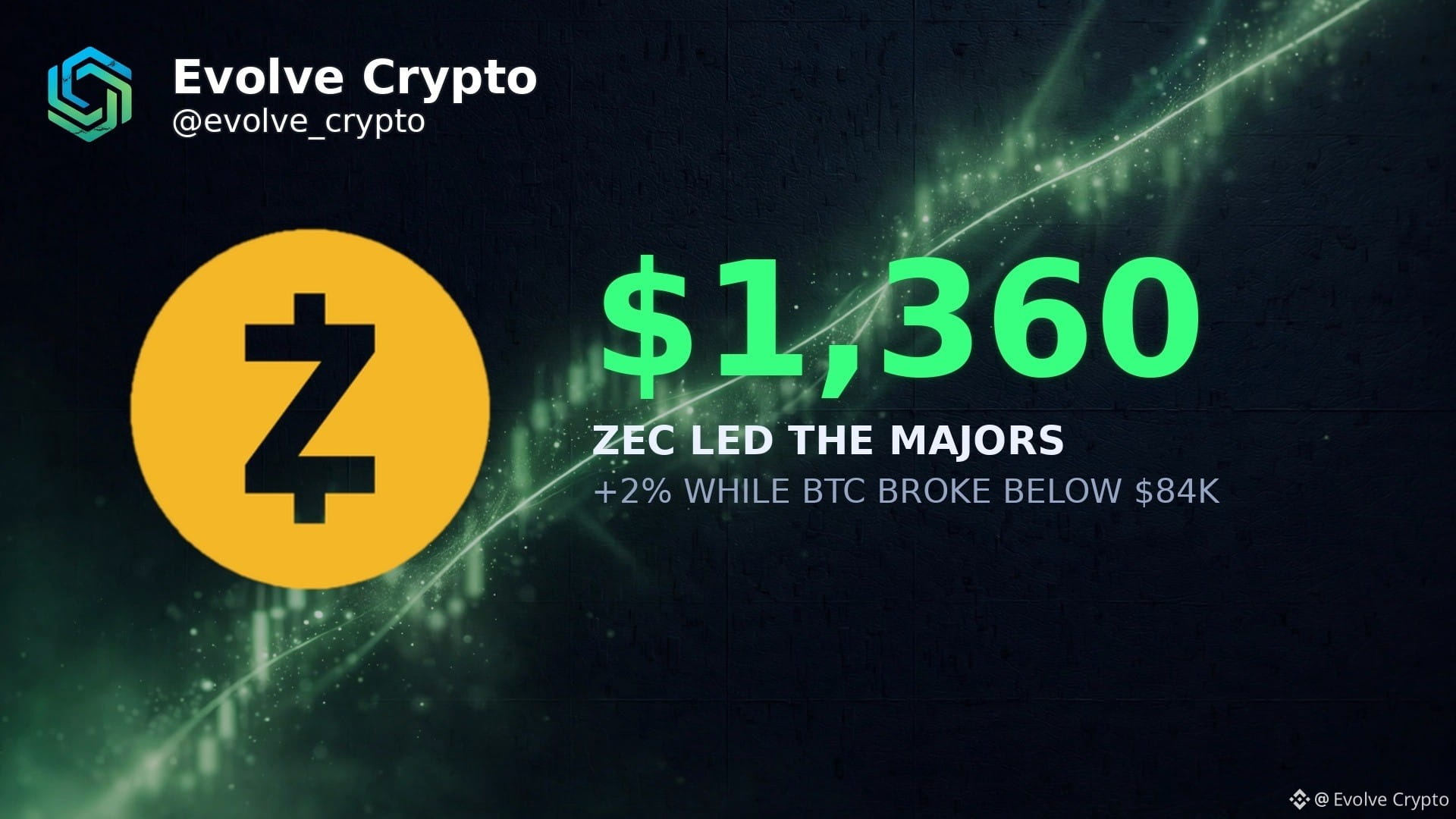
,300. That's the line $ZEC refuses to give up. 📈
Bitcoin slid under $84K and nearly everything bled red, but ZEC led the majors with a ~2% gain to about $1,360 (CoinDesk). Earlier today I posted about Grayscale's Zcash ETF pulling over $1B in its first month — then the Winklevoss twins filed their own at 0.25%, undercutting Grayscale's 2.5% fee by 90%.
My take: the market treats $ZEC like a trade. Institutions are starting to treat it like an allocation. When a coin holds up into a market-wide dump, that is the bid talking.
Which ZEC ETF wins the inflow race — Grayscale or Winklevoss?
$ZEC $BTC
#ZEC #WinklevossFilesSpotZcashETFApplication #CryptoNews
DYOR
,300. That's the line $ZEC refuses to give up. 📈
Bitcoin slid under $84K and nearly everything bled red, but ZEC led the majors with a ~2% gain to about $1,360 (CoinDesk). Earlier today I posted about Grayscale's Zcash ETF pulling over $1B in its first month — then the Winklevoss twins filed their own at 0.25%, undercutting Grayscale's 2.5% fee by 90%.
My take: the market treats $ZEC like a trade. Institutions are starting to treat it like an allocation. When a coin holds up into a market-wide dump, that is the bid talking.
Which ZEC ETF wins the inflow race — Grayscale or Winklevoss?
$ZEC $BTC
#ZEC #WinklevossFilesSpotZcashETFApplication #CryptoNews
DYOR
Bitcoin slid under $84K and nearly everything bled red, but ZEC led the majors with a ~2% gain to about $1,360 (CoinDesk). Earlier today I posted about Grayscale's Zcash ETF pulling over $1B in its first month — then the Winklevoss twins filed their own at 0.25%, undercutting Grayscale's 2.5% fee by 90%.
My take: the market treats $ZEC like a trade. Institutions are starting to treat it like an allocation. When a coin holds up into a market-wide dump, that is the bid talking.
Which ZEC ETF wins the inflow race — Grayscale or Winklevoss?
$ZEC $BTC
#ZEC #WinklevossFilesSpotZcashETFApplication #CryptoNews
DYOR
360

·
--
Haussier
🔥 $ZEC MARKET STRUCTURE — THIS MOVE IS GETTING SERIOUS
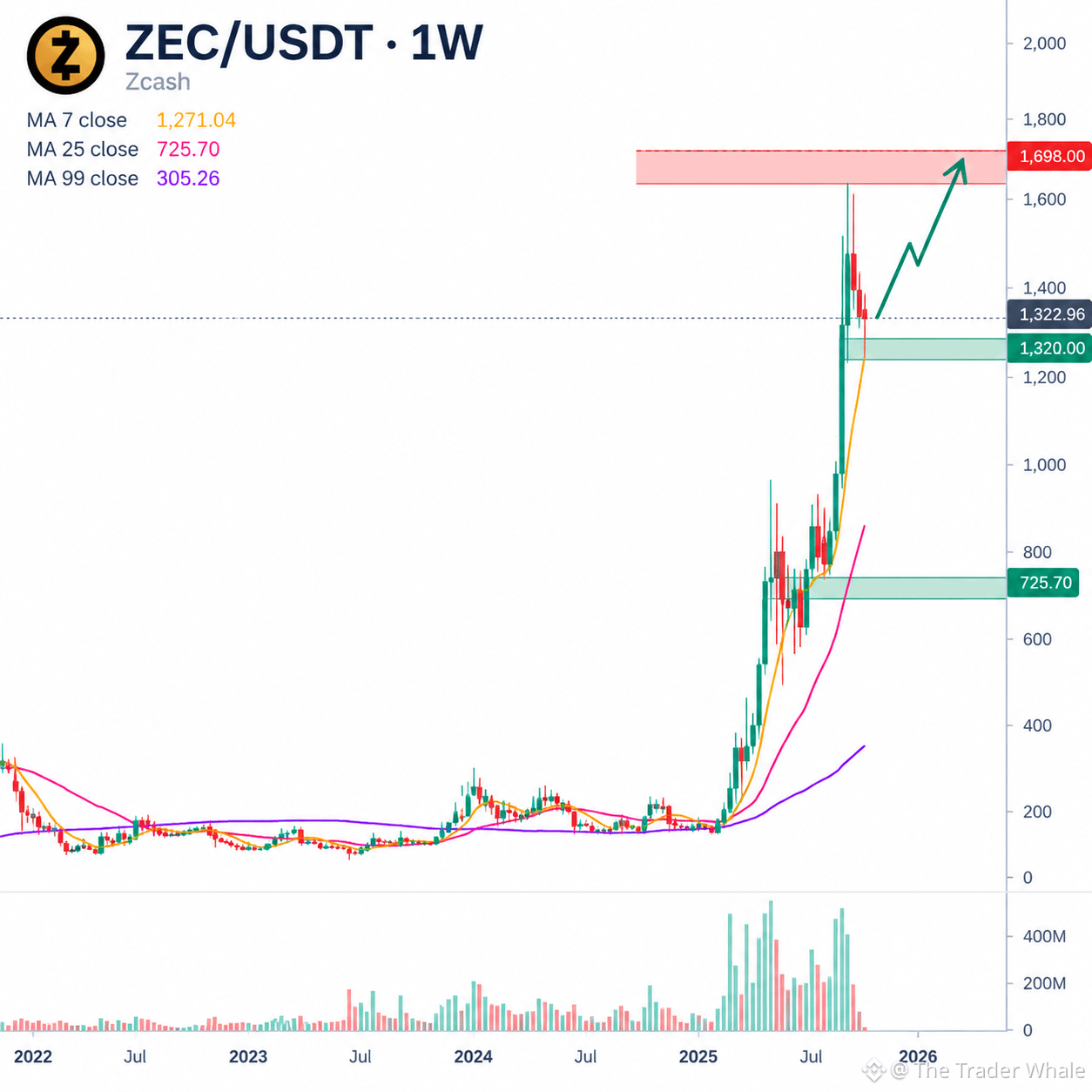
ZEC just went from a long period of silence to an explosive breakout.
The move from around $300 → $1,700 happened fast, and that tells us one thing: buyers are aggressively repricing ZEC.
📈 WHAT I LIKE
• Strong higher-high structure
• Price is well above the MA7, MA25 and MA99
• Volume expanded heavily during the breakout
• The old consolidation zone has been completely left behind
But here's the part traders shouldn't ignore…
⚠️ ZEC is now extremely extended.
$1,698 is the major resistance on this chart. If buyers can eventually reclaim that level with strong volume, the price discovery phase could continue.
On the other hand, a pullback wouldn't automatically mean the trend is dead. After a move this aggressive, cooling down and building a new base would actually be healthy.
{future}(ZECUSDT)
🔑 LEVELS TO WATCH
$1,698 → Major resistance
$1,300–$1,270 → First area to watch on a pullback
$725 → Major structural support
💭 MY TAKE
I'm bullish on the structure, but I wouldn't FOMO into a candle just because everyone suddenly started talking about ZEC.
The real opportunity may come from seeing how buyers behave after the excitement cools down.
Strong trends don't always give you a perfect entry.
Sometimes the smartest trade is simply waiting for the market to prove that the breakout is real.
#ZEC #Zcash #Crypto
🔥 $ZEC MARKET STRUCTURE — THIS MOVE IS GETTING SERIOUS
ZEC just went from a long period of silence to an explosive breakout.
The move from around $300 → $1,700 happened fast, and that tells us one thing: buyers are aggressively repricing ZEC.
📈 WHAT I LIKE
• Strong higher-high structure
• Price is well above the MA7, MA25 and MA99
• Volume expanded heavily during the breakout
• The old consolidation zone has been completely left behind
But here's the part traders shouldn't ignore…
⚠️ ZEC is now extremely extended.
$1,698 is the major resistance on this chart. If buyers can eventually reclaim that level with strong volume, the price discovery phase could continue.
On the other hand, a pullback wouldn't automatically mean the trend is dead. After a move this aggressive, cooling down and building a new base would actually be healthy.
🔑 LEVELS TO WATCH
$1,698 → Major resistance
$1,300–$1,270 → First area to watch on a pullback
$725 → Major structural support
💭 MY TAKE
I'm bullish on the structure, but I wouldn't FOMO into a candle just because everyone suddenly started talking about ZEC.
The real opportunity may come from seeing how buyers behave after the excitement cools down.
Strong trends don't always give you a perfect entry.
Sometimes the smartest trade is simply waiting for the market to prove that the breakout is real.
#ZEC #Zcash #Crypto
ZEC just went from a long period of silence to an explosive breakout.
The move from around $300 → $1,700 happened fast, and that tells us one thing: buyers are aggressively repricing ZEC.
📈 WHAT I LIKE
• Strong higher-high structure
• Price is well above the MA7, MA25 and MA99
• Volume expanded heavily during the breakout
• The old consolidation zone has been completely left behind
But here's the part traders shouldn't ignore…
⚠️ ZEC is now extremely extended.
$1,698 is the major resistance on this chart. If buyers can eventually reclaim that level with strong volume, the price discovery phase could continue.
On the other hand, a pullback wouldn't automatically mean the trend is dead. After a move this aggressive, cooling down and building a new base would actually be healthy.
🔑 LEVELS TO WATCH
$1,698 → Major resistance
$1,300–$1,270 → First area to watch on a pullback
$725 → Major structural support
💭 MY TAKE
I'm bullish on the structure, but I wouldn't FOMO into a candle just because everyone suddenly started talking about ZEC.
The real opportunity may come from seeing how buyers behave after the excitement cools down.
Strong trends don't always give you a perfect entry.
Sometimes the smartest trade is simply waiting for the market to prove that the breakout is real.
#ZEC #Zcash #Crypto
304

·
--
Baissier
🚨 $ZEC /USDT – ZEC STUCK IN A TIGHT RANGE, BEARS EYEING A BREAKDOWN! 🩸📉
**Short Trade Signal** 🔴
📍 Entry: 1,308 – 1,325
🎯 TP1: 1,295
🎯 TP2: 1,271
🎯 TP3: 1,264
🛑 SL: 1,345
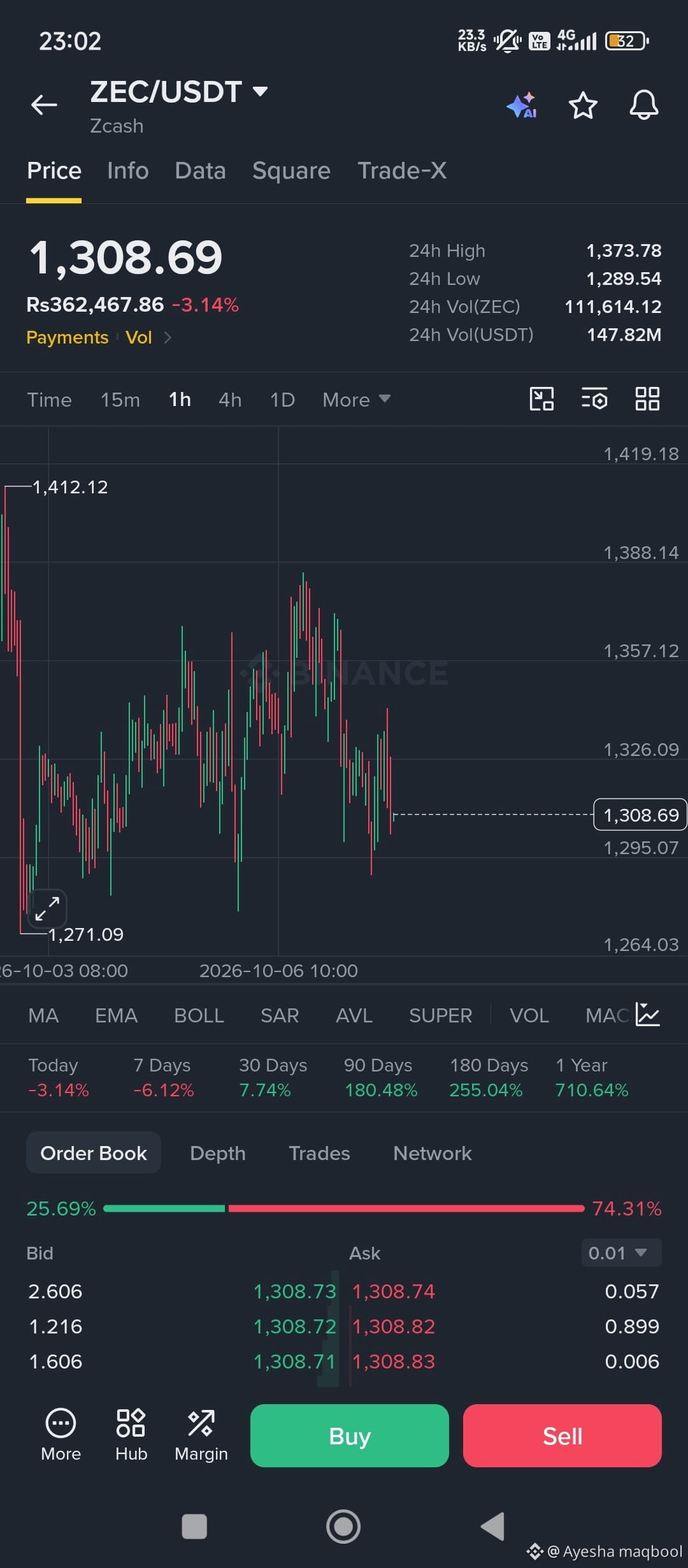
**Outlook:** Price is down 3.14% today and sellers dominate the order book (74%). Weak below 1,357, with a break under 1,271 opening more downside.
#ZEC #ZECUSDT #ShortSignal #TechnicalAnalysis #BİNANCE
{future}(ZECUSDT)
🚨 $ZEC /USDT – ZEC STUCK IN A TIGHT RANGE, BEARS EYEING A BREAKDOWN! 🩸📉
**Short Trade Signal** 🔴
📍 Entry: 1,308 – 1,325
🎯 TP1: 1,295
🎯 TP2: 1,271
🎯 TP3: 1,264
🛑 SL: 1,345
**Outlook:** Price is down 3.14% today and sellers dominate the order book (74%). Weak below 1,357, with a break under 1,271 opening more downside.
#ZEC #ZECUSDT #ShortSignal #TechnicalAnalysis #BİNANCE
**Short Trade Signal** 🔴
📍 Entry: 1,308 – 1,325
🎯 TP1: 1,295
🎯 TP2: 1,271
🎯 TP3: 1,264
🛑 SL: 1,345
**Outlook:** Price is down 3.14% today and sellers dominate the order book (74%). Weak below 1,357, with a break under 1,271 opening more downside.
#ZEC #ZECUSDT #ShortSignal #TechnicalAnalysis #BİNANCE
282

·
--
💥 $ZEC RECLAIMS KEY DEMAND BLOCK WITH BULLS EYEING LIQUIDITY RUN ABOVE $1,420! 🚀
Entry: $1,330 - $1,340 ⚡
Target: $1,360 / $1,390 / $1,420 🎯
Stop Loss: $1,300 ⚠️
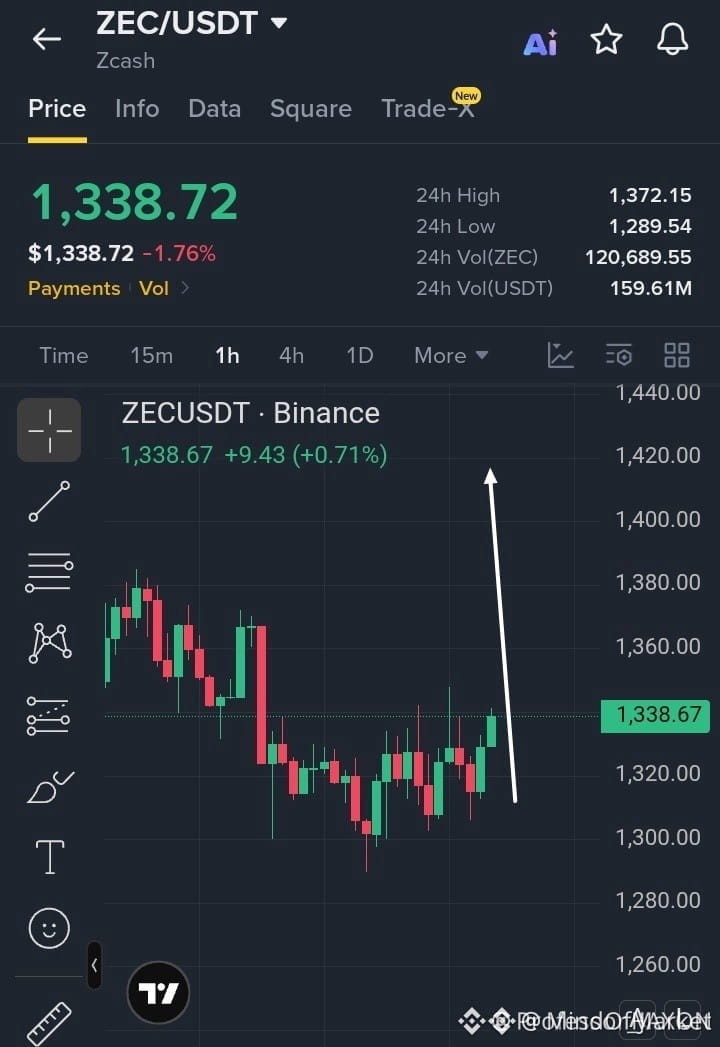
$ZEC has successfully defended the primary demand block at $1,300–$1,320, absorbing sell-side liquidity while momentum indicators tilt upward. 🔍 Price action shows clear signs of institutional accumulation ahead of the next structural pivot.
A decisive break above the $1,340 resistance layer will trigger an expansion phase to fill overhead inefficiencies toward $1,390 and $1,420. 💡 Risk parameters remain clean with sell-side risk defined tightly below structural support. 💬 Are you front-running this expansion or waiting for structural confirmation above $1,340? 👇
⚠️ Not financial advice. Always manage your risk. 🛡️
🏷️ #ZEC #LongSetup #MarketStructure #Crypto
🎯 🦈
💥 $ZEC RECLAIMS KEY DEMAND BLOCK WITH BULLS EYEING LIQUIDITY RUN ABOVE $1,420! 🚀
Entry: $1,330 - $1,340 ⚡
Target: $1,360 / $1,390 / $1,420 🎯
Stop Loss: $1,300 ⚠️
$ZEC has successfully defended the primary demand block at $1,300–$1,320, absorbing sell-side liquidity while momentum indicators tilt upward. 🔍 Price action shows clear signs of institutional accumulation ahead of the next structural pivot.
A decisive break above the $1,340 resistance layer will trigger an expansion phase to fill overhead inefficiencies toward $1,390 and $1,420. 💡 Risk parameters remain clean with sell-side risk defined tightly below structural support. 💬 Are you front-running this expansion or waiting for structural confirmation above $1,340? 👇
⚠️ Not financial advice. Always manage your risk. 🛡️
🏷️ #ZEC #LongSetup #MarketStructure #Crypto
🎯 🦈
Entry: $1,330 - $1,340 ⚡
Target: $1,360 / $1,390 / $1,420 🎯
Stop Loss: $1,300 ⚠️
$ZEC has successfully defended the primary demand block at $1,300–$1,320, absorbing sell-side liquidity while momentum indicators tilt upward. 🔍 Price action shows clear signs of institutional accumulation ahead of the next structural pivot.
A decisive break above the $1,340 resistance layer will trigger an expansion phase to fill overhead inefficiencies toward $1,390 and $1,420. 💡 Risk parameters remain clean with sell-side risk defined tightly below structural support. 💬 Are you front-running this expansion or waiting for structural confirmation above $1,340? 👇
⚠️ Not financial advice. Always manage your risk. 🛡️
🏷️ #ZEC #LongSetup #MarketStructure #Crypto
🎯 🦈
14
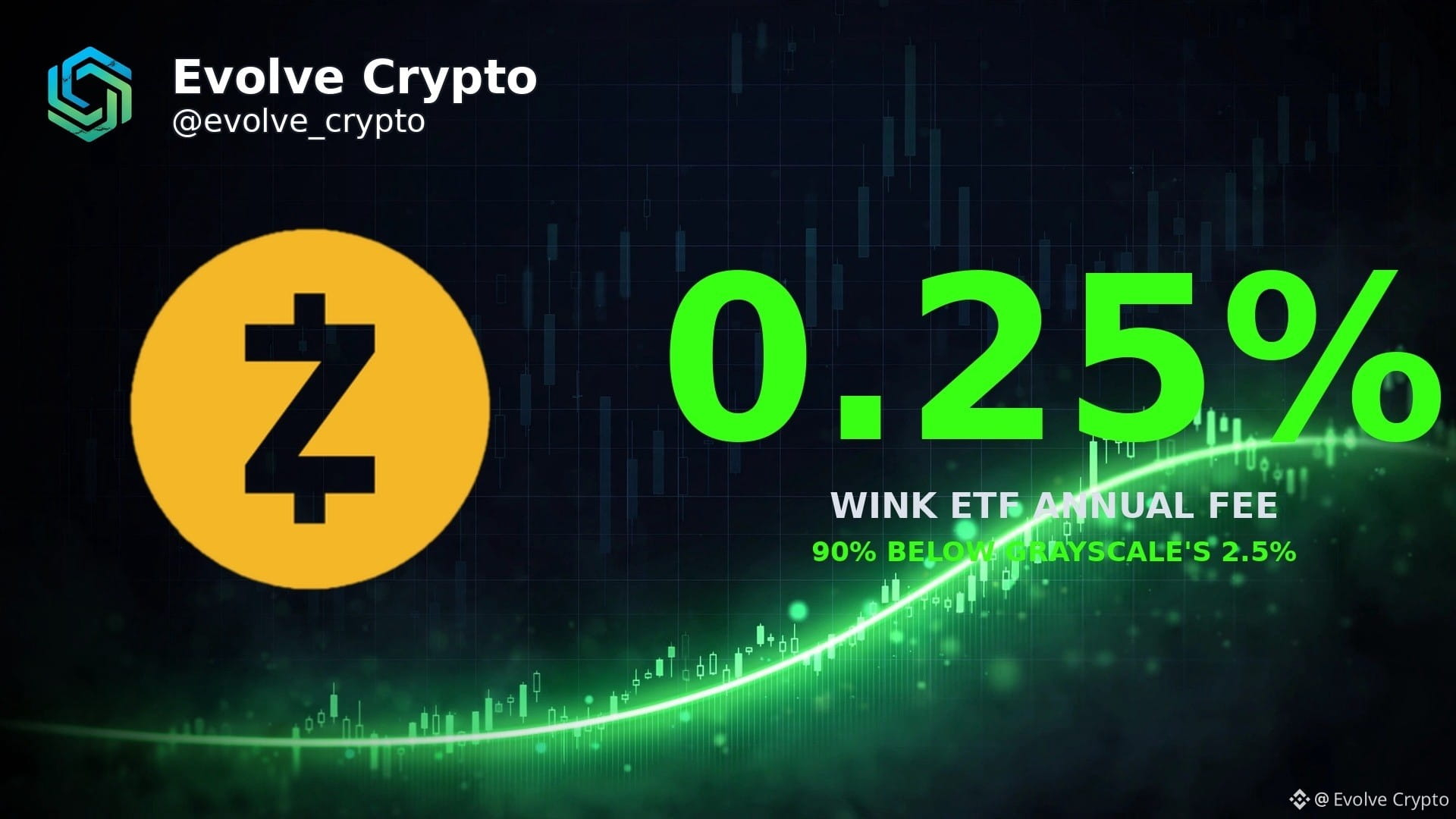
Grayscale charges 2.5% a year on its Zcash ETF. The Winklevoss twins just filed to launch one at 0.25%.
Winklevoss Asset Services filed a preliminary S-1 with the SEC for a spot Zcash ETF under the ticker WINK — direct ZEC holdings, Gemini as custodian, Nasdaq listing. That is one-tenth of what Grayscale's ZCSH charges, and ZCSH is the only live US spot Zcash fund: over $233M in inflows and nearly $890M in net assets in its first month. Winklevoss Capital also signaled up to $100M in share interest.
My take: a fee war starting this fast is the real signal. Big players do not fight over fees for a fad — they fight over demand that is here to stay. Grayscale proved the demand; now the twins want the crown. And Bitwise has filed too.
Would you pick the proven giant at 2.5%, or the cheaper newcomer at 0.25%? 👀
$ZEC
#ZEC #ETF #CryptoNews
DYOR
Grayscale charges 2.5% a year on its Zcash ETF. The Winklevoss twins just filed to launch one at 0.25%.
Winklevoss Asset Services filed a preliminary S-1 with the SEC for a spot Zcash ETF under the ticker WINK — direct ZEC holdings, Gemini as custodian, Nasdaq listing. That is one-tenth of what Grayscale's ZCSH charges, and ZCSH is the only live US spot Zcash fund: over $233M in inflows and nearly $890M in net assets in its first month. Winklevoss Capital also signaled up to $100M in share interest.
My take: a fee war starting this fast is the real signal. Big players do not fight over fees for a fad — they fight over demand that is here to stay. Grayscale proved the demand; now the twins want the crown. And Bitwise has filed too.
Would you pick the proven giant at 2.5%, or the cheaper newcomer at 0.25%? 👀
$ZEC
#ZEC #ETF #CryptoNews
DYOR
Winklevoss Asset Services filed a preliminary S-1 with the SEC for a spot Zcash ETF under the ticker WINK — direct ZEC holdings, Gemini as custodian, Nasdaq listing. That is one-tenth of what Grayscale's ZCSH charges, and ZCSH is the only live US spot Zcash fund: over $233M in inflows and nearly $890M in net assets in its first month. Winklevoss Capital also signaled up to $100M in share interest.
My take: a fee war starting this fast is the real signal. Big players do not fight over fees for a fad — they fight over demand that is here to stay. Grayscale proved the demand; now the twins want the crown. And Bitwise has filed too.
Would you pick the proven giant at 2.5%, or the cheaper newcomer at 0.25%? 👀
$ZEC
#ZEC #ETF #CryptoNews
DYOR
226
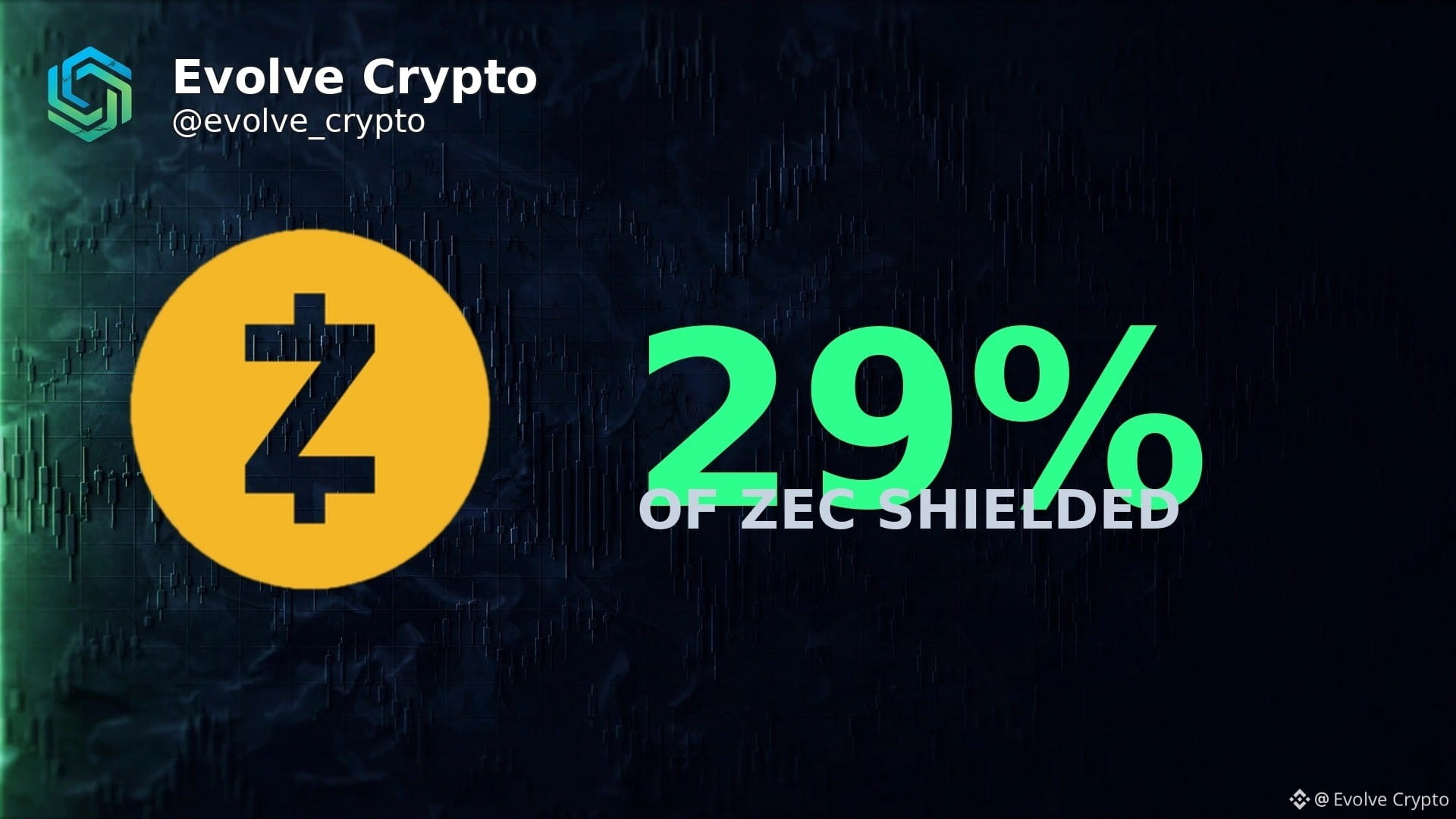
Close to 29% of all ZEC ever mined now sits inside Zcash's shielded pool. The privacy money is moving.
AI has made it cheap to link any wallet address to the person behind it, and those records never expire on a public chain. Grayscale's Michael Zhao argues shielded transactions are the answer.
Last week, wallets behind the $387M Bitget hack moved $4M in ZEC into the shielded pool to break the trail. Whatever you think of that, it proves the tech works.
My take: in a world where AI watches every on-chain move, privacy stops being a niche feature and becomes the premium. $ZEC is pricing it first.
Is financial privacy a human right or a tool for criminals?
#ZEC #Privacy #CryptoNews
DYOR
Close to 29% of all ZEC ever mined now sits inside Zcash's shielded pool. The privacy money is moving.
AI has made it cheap to link any wallet address to the person behind it, and those records never expire on a public chain. Grayscale's Michael Zhao argues shielded transactions are the answer.
Last week, wallets behind the $387M Bitget hack moved $4M in ZEC into the shielded pool to break the trail. Whatever you think of that, it proves the tech works.
My take: in a world where AI watches every on-chain move, privacy stops being a niche feature and becomes the premium. $ZEC is pricing it first.
Is financial privacy a human right or a tool for criminals?
#ZEC #Privacy #CryptoNews
DYOR
AI has made it cheap to link any wallet address to the person behind it, and those records never expire on a public chain. Grayscale's Michael Zhao argues shielded transactions are the answer.
Last week, wallets behind the $387M Bitget hack moved $4M in ZEC into the shielded pool to break the trail. Whatever you think of that, it proves the tech works.
My take: in a world where AI watches every on-chain move, privacy stops being a niche feature and becomes the premium. $ZEC is pricing it first.
Is financial privacy a human right or a tool for criminals?
#ZEC #Privacy #CryptoNews
DYOR
256

·
--
💥Update revuew $ZEC latest
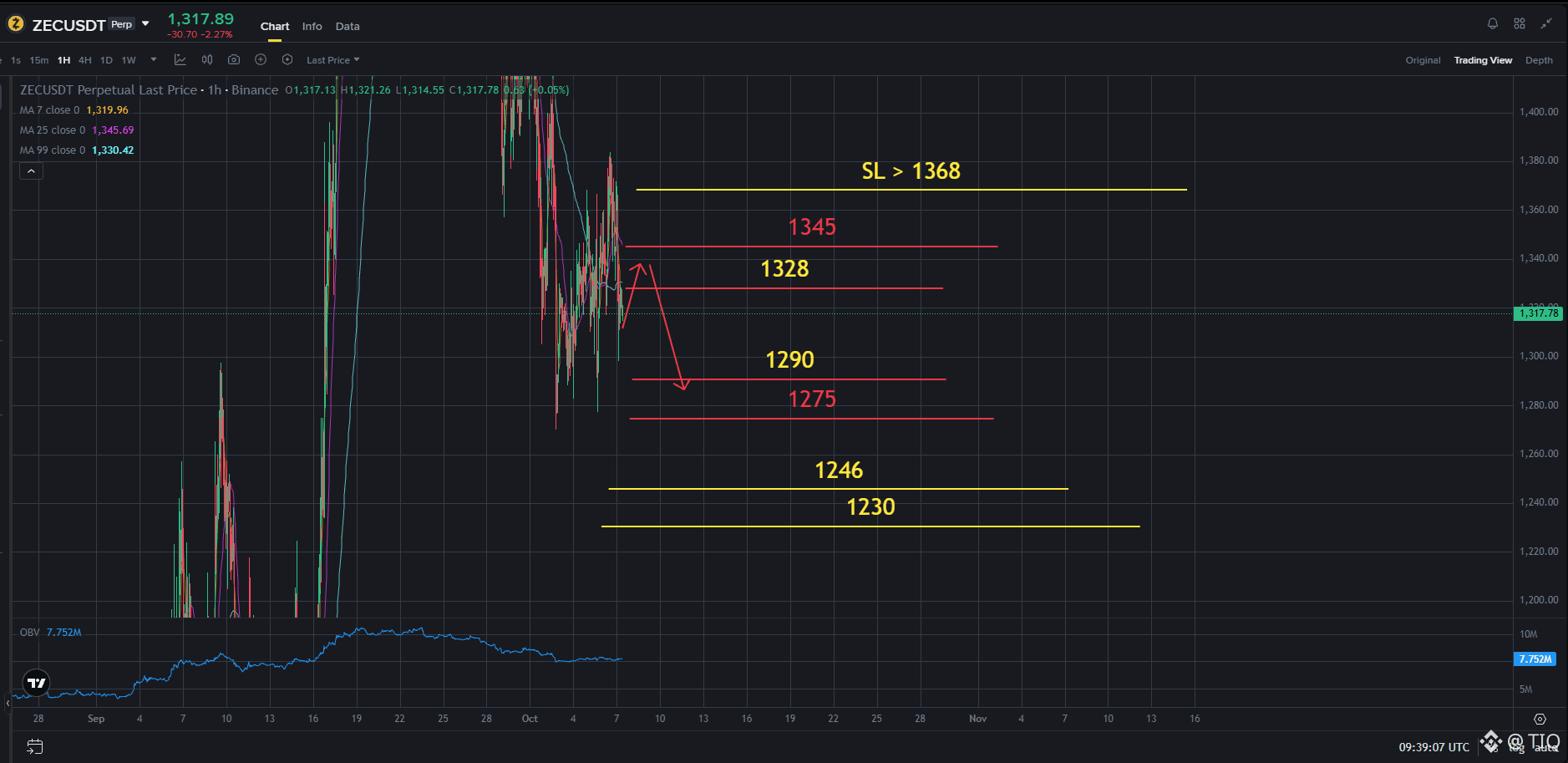
💥The $ZEC 1h chart displays #zcash trading around 1318 (-2.27%). Price is currently trading below key short term moving averages (MA 7 at 1320, MA 25 at 1345, and MA 99 at 1330). Following a sharp drop from recent swing highs, a minor relief bounce into nearby supply zones offers a potential short entry opportunity, anticipating a continued corrective move toward lower support levels
👉Entry Short: 1328 - 1345
💥Stop Loss: > 1368
🎉TP1: 1275 - 1290
🎉TP2: 1230 - 1246
Click here to view the chart #zec 👇️👇👇
{future}(ZECUSDT)
💥Update revuew $ZEC latest
💥The $ZEC 1h chart displays #zcash trading around 1318 (-2.27%). Price is currently trading below key short term moving averages (MA 7 at 1320, MA 25 at 1345, and MA 99 at 1330). Following a sharp drop from recent swing highs, a minor relief bounce into nearby supply zones offers a potential short entry opportunity, anticipating a continued corrective move toward lower support levels
👉Entry Short: 1328 - 1345
💥Stop Loss: > 1368
🎉TP1: 1275 - 1290
🎉TP2: 1230 - 1246
Click here to view the chart #zec 👇️👇👇
💥The $ZEC 1h chart displays #zcash trading around 1318 (-2.27%). Price is currently trading below key short term moving averages (MA 7 at 1320, MA 25 at 1345, and MA 99 at 1330). Following a sharp drop from recent swing highs, a minor relief bounce into nearby supply zones offers a potential short entry opportunity, anticipating a continued corrective move toward lower support levels
👉Entry Short: 1328 - 1345
💥Stop Loss: > 1368
🎉TP1: 1275 - 1290
🎉TP2: 1230 - 1246
Click here to view the chart #zec 👇️👇👇
511

⚡ $ZEC TESTING CRITICAL RESISTANCE AS SMART MONEY PREPARES FOR BREAKOUT VELOCITY! 💥
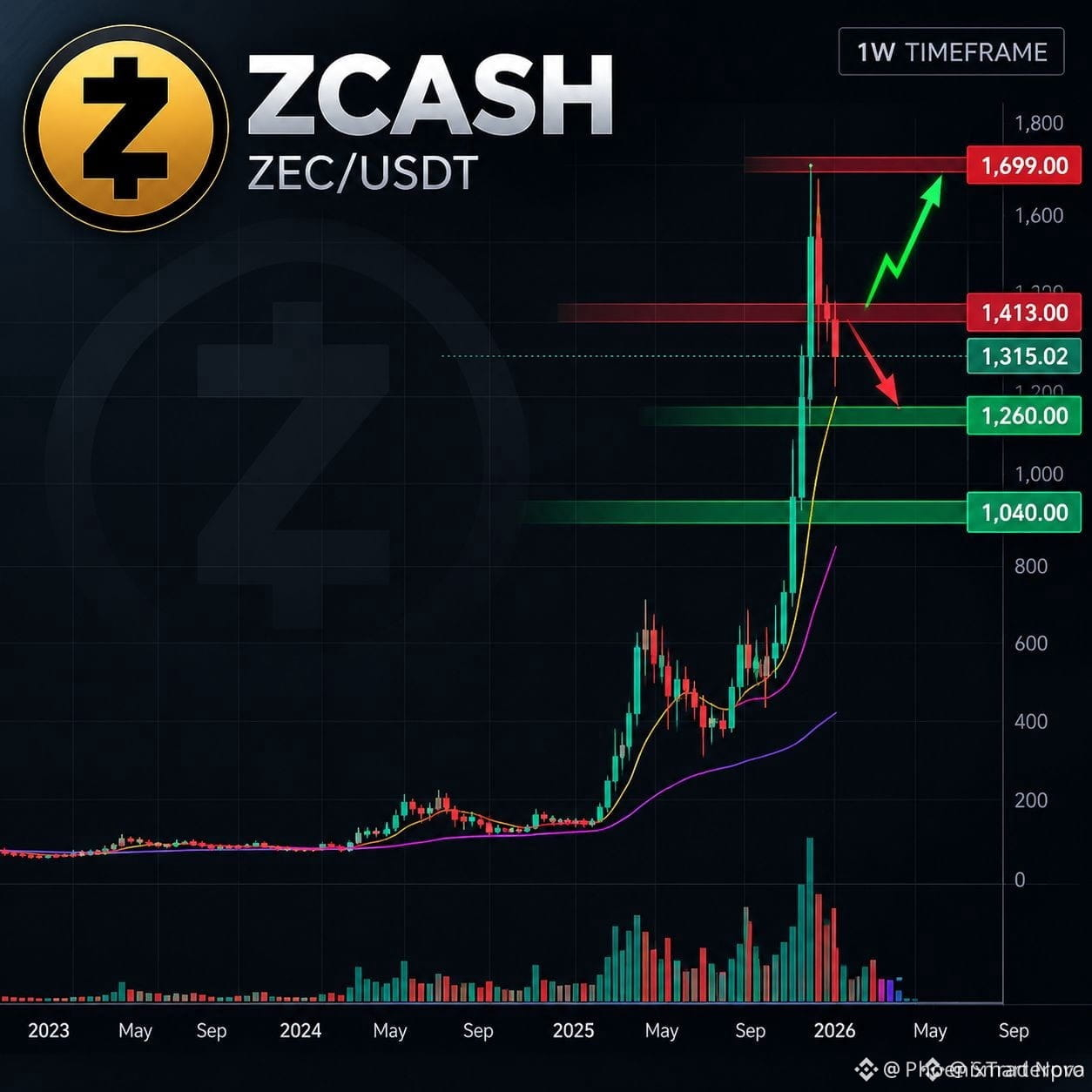
Entry: 1,260 - 1,310 ⚡
Target: 1,413 - 1,699 🚀
Stop Loss: 1,170 ⚠️
Chasing candle tops is where retail gets trapped, but smart order flow points toward the $1,260 demand block for prime positioning. 📊 Resting bids near key support offer a clean risk profile while momentum builds directly beneath major resistance.
A weekly close above $1,413 backed by heavy volume will serve as the final confirmation trigger. 📌 Waiting for structured pullbacks or clear breakouts separates disciplined traders from FOMO buyers. 💡
💬 Are you waiting to bid the pullback at support or trading the breakout above 1,413? 👇
⚠️ Not financial advice. Always manage your risk. 🛡️
🏷️ #ZEC #LongSetup #Crypto #Breakout #Altcoins
🔥 💎
⚡ $ZEC TESTING CRITICAL RESISTANCE AS SMART MONEY PREPARES FOR BREAKOUT VELOCITY! 💥
Entry: 1,260 - 1,310 ⚡
Target: 1,413 - 1,699 🚀
Stop Loss: 1,170 ⚠️
Chasing candle tops is where retail gets trapped, but smart order flow points toward the $1,260 demand block for prime positioning. 📊 Resting bids near key support offer a clean risk profile while momentum builds directly beneath major resistance.
A weekly close above $1,413 backed by heavy volume will serve as the final confirmation trigger. 📌 Waiting for structured pullbacks or clear breakouts separates disciplined traders from FOMO buyers. 💡
💬 Are you waiting to bid the pullback at support or trading the breakout above 1,413? 👇
⚠️ Not financial advice. Always manage your risk. 🛡️
🏷️ #ZEC #LongSetup #Crypto #Breakout #Altcoins
🔥 💎
Entry: 1,260 - 1,310 ⚡
Target: 1,413 - 1,699 🚀
Stop Loss: 1,170 ⚠️
Chasing candle tops is where retail gets trapped, but smart order flow points toward the $1,260 demand block for prime positioning. 📊 Resting bids near key support offer a clean risk profile while momentum builds directly beneath major resistance.
A weekly close above $1,413 backed by heavy volume will serve as the final confirmation trigger. 📌 Waiting for structured pullbacks or clear breakouts separates disciplined traders from FOMO buyers. 💡
💬 Are you waiting to bid the pullback at support or trading the breakout above 1,413? 👇
⚠️ Not financial advice. Always manage your risk. 🛡️
🏷️ #ZEC #LongSetup #Crypto #Breakout #Altcoins
🔥 💎
30
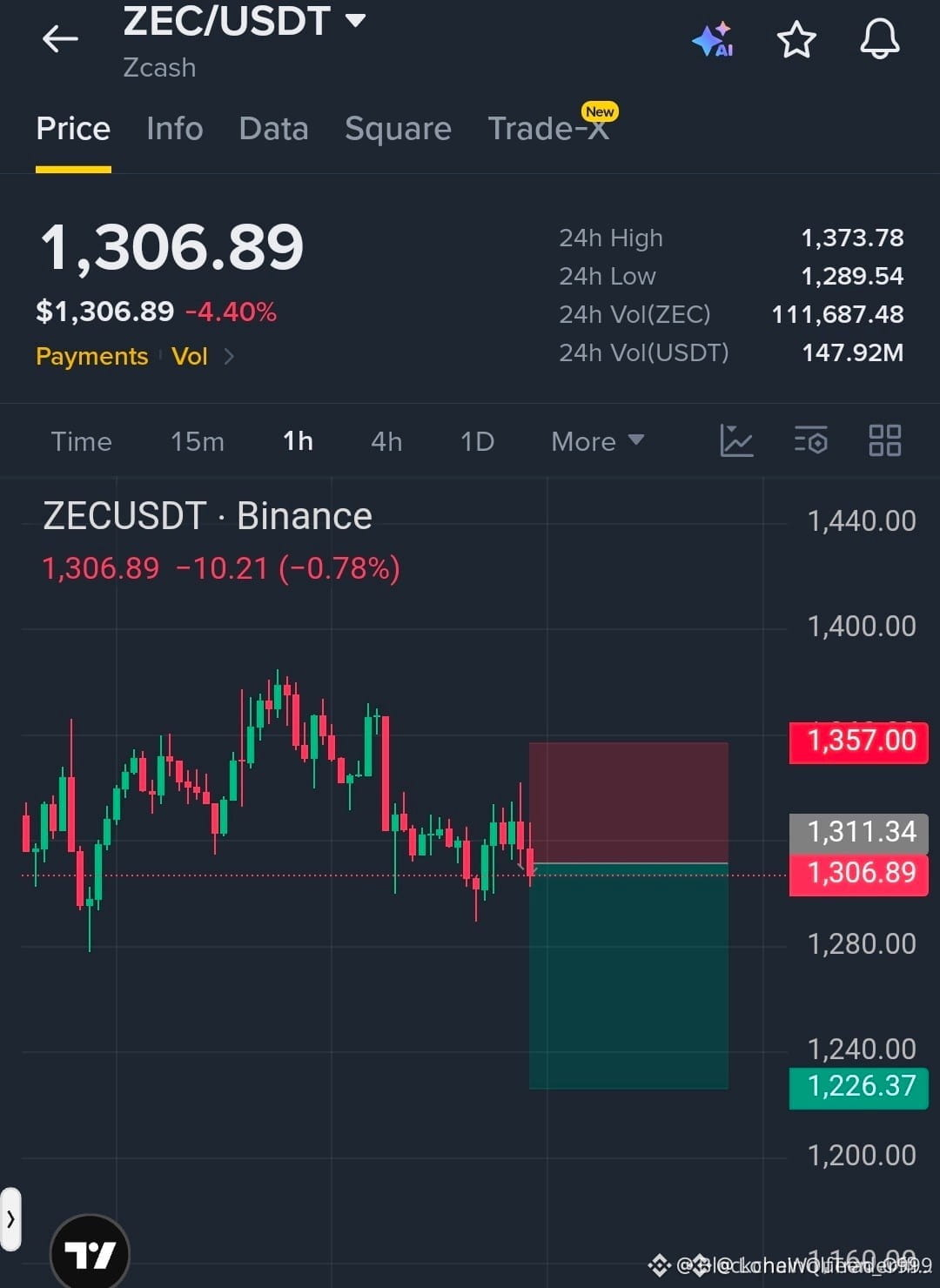
🚨 $ZEC FACES HEAVY RESISTANCE REJECTION AS BEARS PREPARE TO CRACK 1,300 SUPPORT! 📉
Entry: 1,306.89 ⚡
Target: 1,226.37 🎯
Stop Loss: 1,357.00 ⚠️
$ZEC just slammed straight into overhead supply and got aggressively rejected at resistance. Sellers are defending the key supply zone with heavy order flow, positioning for a momentum shift back down to lower liquidity pools. 📊
A clean breakdown below the pivotal 1,300 psychological level will likely trigger cascade selling toward our lower support targets. 📉 With overhead momentum stalling, the path of least resistance points sharply downward. 🔍
Are you loading up shorts on this retest, or waiting for 1,300 to snap first? 👇
⚠️ Not financial advice. Always manage your risk. 🛡️
🏷️ #ZEC #ShortSetup #Crypto #Trading #Bearish
📉 🐻
🚨 $ZEC FACES HEAVY RESISTANCE REJECTION AS BEARS PREPARE TO CRACK 1,300 SUPPORT! 📉
Entry: 1,306.89 ⚡
Target: 1,226.37 🎯
Stop Loss: 1,357.00 ⚠️
$ZEC just slammed straight into overhead supply and got aggressively rejected at resistance. Sellers are defending the key supply zone with heavy order flow, positioning for a momentum shift back down to lower liquidity pools. 📊
A clean breakdown below the pivotal 1,300 psychological level will likely trigger cascade selling toward our lower support targets. 📉 With overhead momentum stalling, the path of least resistance points sharply downward. 🔍
Are you loading up shorts on this retest, or waiting for 1,300 to snap first? 👇
⚠️ Not financial advice. Always manage your risk. 🛡️
🏷️ #ZEC #ShortSetup #Crypto #Trading #Bearish
📉 🐻
Entry: 1,306.89 ⚡
Target: 1,226.37 🎯
Stop Loss: 1,357.00 ⚠️
$ZEC just slammed straight into overhead supply and got aggressively rejected at resistance. Sellers are defending the key supply zone with heavy order flow, positioning for a momentum shift back down to lower liquidity pools. 📊
A clean breakdown below the pivotal 1,300 psychological level will likely trigger cascade selling toward our lower support targets. 📉 With overhead momentum stalling, the path of least resistance points sharply downward. 🔍
Are you loading up shorts on this retest, or waiting for 1,300 to snap first? 👇
⚠️ Not financial advice. Always manage your risk. 🛡️
🏷️ #ZEC #ShortSetup #Crypto #Trading #Bearish
📉 🐻
17

·
--
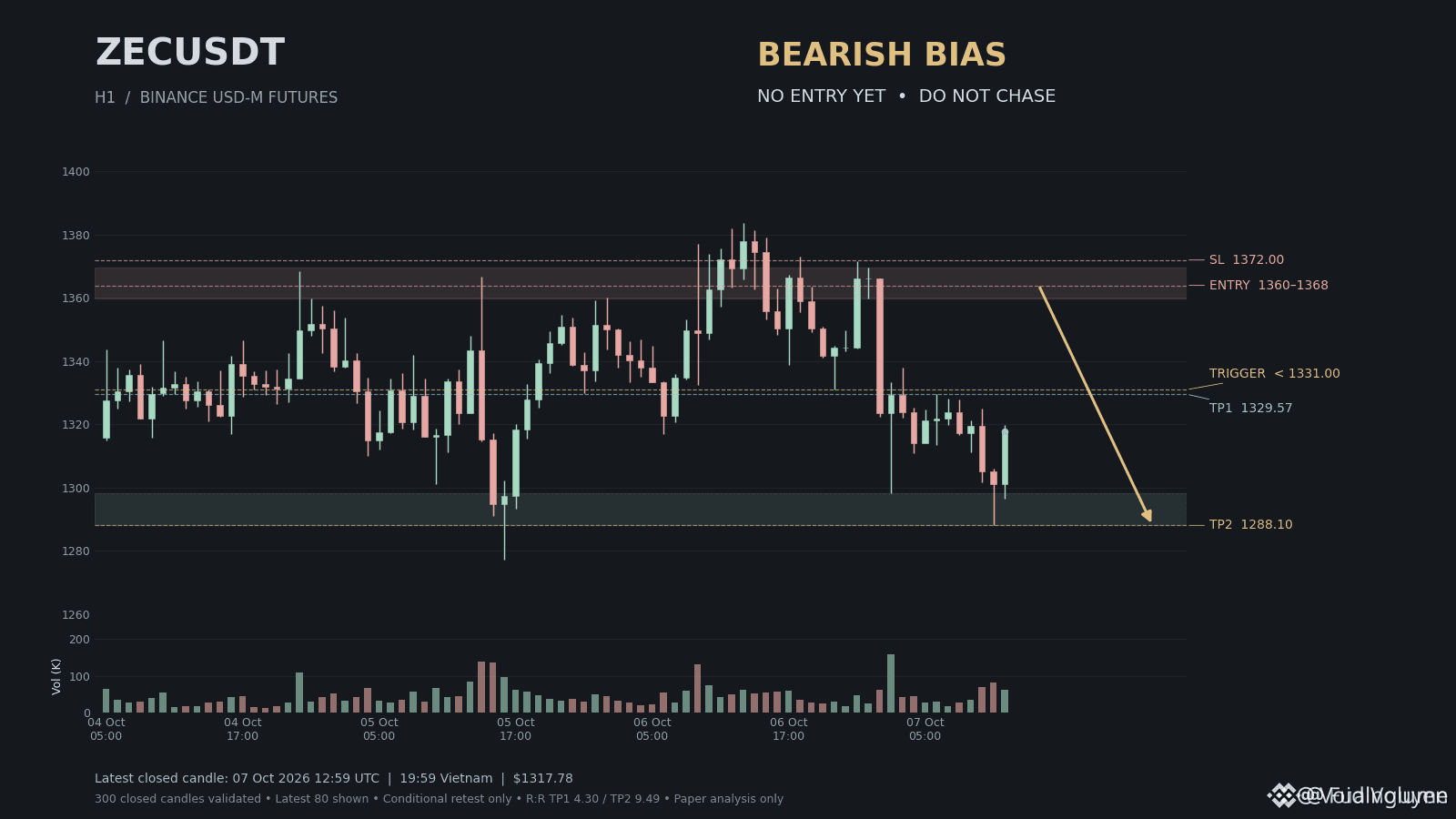
🚨 $ZEC PRINTS BEARISH STRUCTURE CHANGE AS INSTITUTIONAL SUPPLY ZONE AWAITS RETEST! 🔴
Entry: 1,360 - 1,368 ⚡
Target: 1,288.10 🚀
Stop Loss: 1,372 ⚠️
📌 $ZEC delivered a confirmed H1 CHoCH below 1,331, leaving behind a partially filled fair value gap between 1,333.45 and 1,359.90. Heavy downside volume spikes signal clear SOW while price consolidates beneath fresh overhead supply. 🔍
🌊 Smart money positioning favors patience here. We are monitoring the 1,360–1,368 zone for a clean rejection rather than chasing current levels into short-term support. 💬 Will sellers step up to defend this premium supply, or are you waiting for lower liquidity targets? 👇
⚠️ Not financial advice. Always manage your risk. 🛡️
🏷️ #ZEC #SmartMoney #Crypto #BearishSetup #SMC
🔴 📉
🚨 $ZEC PRINTS BEARISH STRUCTURE CHANGE AS INSTITUTIONAL SUPPLY ZONE AWAITS RETEST! 🔴
Entry: 1,360 - 1,368 ⚡
Target: 1,288.10 🚀
Stop Loss: 1,372 ⚠️
📌 $ZEC delivered a confirmed H1 CHoCH below 1,331, leaving behind a partially filled fair value gap between 1,333.45 and 1,359.90. Heavy downside volume spikes signal clear SOW while price consolidates beneath fresh overhead supply. 🔍
🌊 Smart money positioning favors patience here. We are monitoring the 1,360–1,368 zone for a clean rejection rather than chasing current levels into short-term support. 💬 Will sellers step up to defend this premium supply, or are you waiting for lower liquidity targets? 👇
⚠️ Not financial advice. Always manage your risk. 🛡️
🏷️ #ZEC #SmartMoney #Crypto #BearishSetup #SMC
🔴 📉
Entry: 1,360 - 1,368 ⚡
Target: 1,288.10 🚀
Stop Loss: 1,372 ⚠️
📌 $ZEC delivered a confirmed H1 CHoCH below 1,331, leaving behind a partially filled fair value gap between 1,333.45 and 1,359.90. Heavy downside volume spikes signal clear SOW while price consolidates beneath fresh overhead supply. 🔍
🌊 Smart money positioning favors patience here. We are monitoring the 1,360–1,368 zone for a clean rejection rather than chasing current levels into short-term support. 💬 Will sellers step up to defend this premium supply, or are you waiting for lower liquidity targets? 👇
⚠️ Not financial advice. Always manage your risk. 🛡️
🏷️ #ZEC #SmartMoney #Crypto #BearishSetup #SMC
🔴 📉
89

·
--
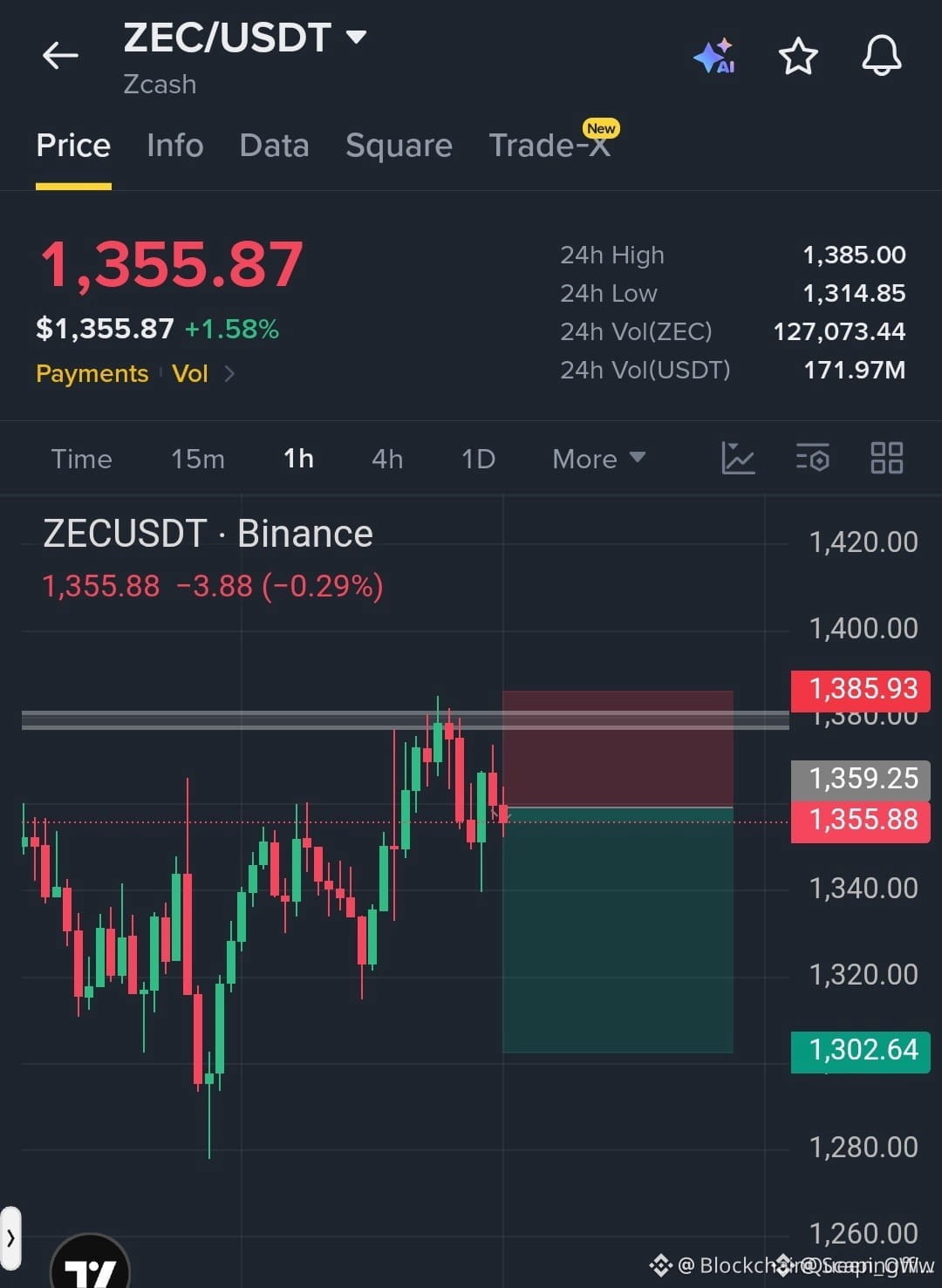
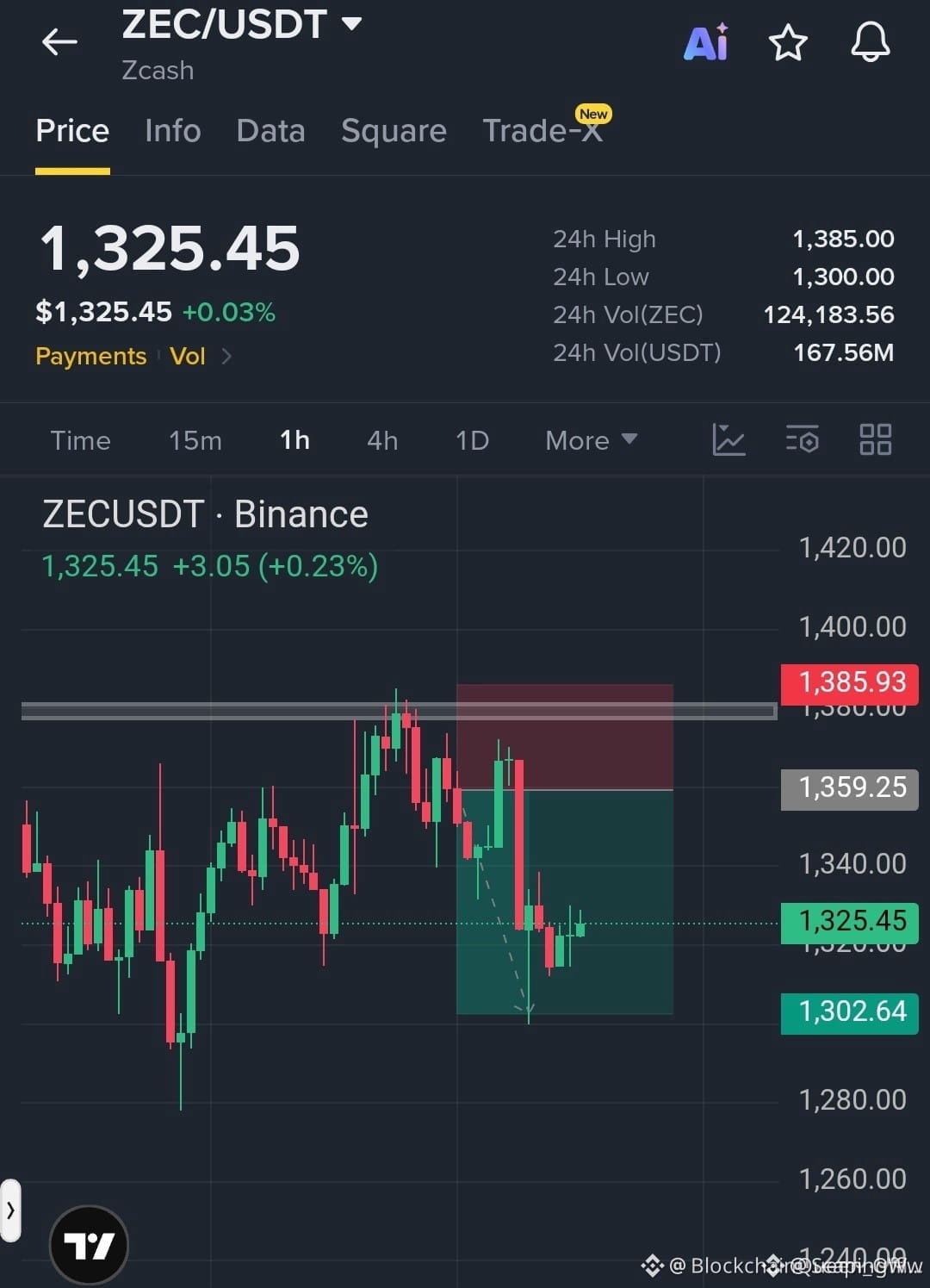
📉 $ZEC SHORT TARGET SMASHED AS SELLERS FLUSH THE ORDER BOOK! 💥
The downside narrative played out with surgical precision on $ZEC as bear momentum shredded key support levels. 📊 Aggressive bids evaporated exactly where the order flow signaled fatigue, sending price cascading straight into our take-profit zone. 🩸
Liquidity sweeps under local lows proved once again that market structure rewards patience over emotion. 💡 With momentum resetting, smart capital is already scanning the chart for the next high-conviction rotation. 💬 Did you secure your profits on this drop or are you holding out for a deeper leg down? 👇
⚠️ Not financial advice. Always manage your risk. 🛡️
🏷️ #ZEC #ShortSetup #Crypto #TakeProfit #Trading
🎯 📉
📉 $ZEC SHORT TARGET SMASHED AS SELLERS FLUSH THE ORDER BOOK! 💥
The downside narrative played out with surgical precision on $ZEC as bear momentum shredded key support levels. 📊 Aggressive bids evaporated exactly where the order flow signaled fatigue, sending price cascading straight into our take-profit zone. 🩸
Liquidity sweeps under local lows proved once again that market structure rewards patience over emotion. 💡 With momentum resetting, smart capital is already scanning the chart for the next high-conviction rotation. 💬 Did you secure your profits on this drop or are you holding out for a deeper leg down? 👇
⚠️ Not financial advice. Always manage your risk. 🛡️
🏷️ #ZEC #ShortSetup #Crypto #TakeProfit #Trading
🎯 📉
The downside narrative played out with surgical precision on $ZEC as bear momentum shredded key support levels. 📊 Aggressive bids evaporated exactly where the order flow signaled fatigue, sending price cascading straight into our take-profit zone. 🩸
Liquidity sweeps under local lows proved once again that market structure rewards patience over emotion. 💡 With momentum resetting, smart capital is already scanning the chart for the next high-conviction rotation. 💬 Did you secure your profits on this drop or are you holding out for a deeper leg down? 👇
⚠️ Not financial advice. Always manage your risk. 🛡️
🏷️ #ZEC #ShortSetup #Crypto #TakeProfit #Trading
🎯 📉
13

·
--
people are forgetting about $ZEC it's going down. I think may be it's just playing with traders or its really the end of golden time ........
{spot}(ZECUSDT)
#zec
people are forgetting about $ZEC it's going down. I think may be it's just playing with traders or its really the end of golden time ........
#zec
#zec
60
Connectez-vous pour découvrir plus de contenu
Rejoignez la communauté mondiale des adeptes de cryptomonnaies sur Binance Square
⚡️ Suviez les dernières informations importantes sur les cryptomonnaies.
💬 Jugé digne de confiance par la plus grande plateforme d’échange de cryptomonnaies au monde.
👍 Découvrez les connaissances que partagent les créateurs vérifiés.
Adresse e-mail/Nº de téléphone
Sujets d’actualité
1
#FedMinutesFocusOnOctoberPause
262,601 vues
1,636 mentions
2
#IMFGrantsWaiverForElSalvadorBitcoinBreach
115 vues
23 mentions
3
#BinanceLaunchesBinanceIntelligence
1.2M vues
6,793 mentions
4
#EvernorthDelaysNasdaqDebutToOct12
34,494 vues
411 mentions
5
#RobinhoodAdds$25MInBitcoinToBalanceSheet
13,077 vues
85 mentions
6
#SP500AndNasdaqHitRecordHighs
39,484 vues
563 mentions
7
#USMortgageRatesRiseTo7.49%
35,825 vues
451 mentions
8
#BTCFallsBelow$84K
152,201 vues
248 mentions
9
#DubaiVARAIssuesReserveAssetAuditCircular
54,470 vues
1,018 mentions
10
#SECApproves3XBitcoinETF
52,349 vues
816 mentions