

#usjapanjointyeninterventionfirstsince2011
usjapanjointyeninterventionfirstsince2011
187,468 vues
1,208 mentions
Populaire
Récents

🚨 BREAKING :🚨U.S. & JAPAN MAKE A RARE MARKET MOVE! 🇺🇸🇯🇵💴
The United States and Japan have confirmed a rare joint foreign exchange intervention to support the Japanese yen amid ongoing currency volatility.
💱 The coordinated action signals growing concern over instability in global currency markets.
🌍 Traders are now watching for ripple effects across forex, equities, bonds, and crypto as major economies step in to stabilize financial markets. 📈🔥
Stay tuned for updates ⚡
$BICO $UB $VIC
#USJapanJointYenInterventionFirstSince2011
🚨 BREAKING :🚨U.S. & JAPAN MAKE A RARE MARKET MOVE! 🇺🇸🇯🇵💴
The United States and Japan have confirmed a rare joint foreign exchange intervention to support the Japanese yen amid ongoing currency volatility.
💱 The coordinated action signals growing concern over instability in global currency markets.
🌍 Traders are now watching for ripple effects across forex, equities, bonds, and crypto as major economies step in to stabilize financial markets. 📈🔥
Stay tuned for updates ⚡
$BICO $UB $VIC
#USJapanJointYenInterventionFirstSince2011
The United States and Japan have confirmed a rare joint foreign exchange intervention to support the Japanese yen amid ongoing currency volatility.
💱 The coordinated action signals growing concern over instability in global currency markets.
🌍 Traders are now watching for ripple effects across forex, equities, bonds, and crypto as major economies step in to stabilize financial markets. 📈🔥
Stay tuned for updates ⚡
$BICO $UB $VIC
#USJapanJointYenInterventionFirstSince2011
96

·
--
🚨BREAKING: Japan just dropped a $34 BILLION hammer on forex speculators. 🇯🇵
The Bank of Japan’s latest data reveals a massive 11.4 trillion yen funding gap—completely shattering market expectations of 5.66–6.70 trillion.
The verdict? Japan didn’t just talk... they took action.
Estimates show a staggering ~$34 BILLION intervention on Friday alone. Tokyo and Washington are sending a crystal-clear message to yen short-sellers:
Play with fire, get burned. 📉🔥
Are you holding or shorting the JPY right now?
#YenRisesTo156 #USJapanJointYenInterventionFirstSince2011 #
#JapanEconomy #BinanceSquare
$BTC
{future}(BTCUSDT)
$BLESS
{future}(BLESSUSDT)
$BICO
{future}(BICOUSDT)
🚨BREAKING: Japan just dropped a $34 BILLION hammer on forex speculators. 🇯🇵
The Bank of Japan’s latest data reveals a massive 11.4 trillion yen funding gap—completely shattering market expectations of 5.66–6.70 trillion.
The verdict? Japan didn’t just talk... they took action.
Estimates show a staggering ~$34 BILLION intervention on Friday alone. Tokyo and Washington are sending a crystal-clear message to yen short-sellers:
Play with fire, get burned. 📉🔥
Are you holding or shorting the JPY right now?
#YenRisesTo156 #USJapanJointYenInterventionFirstSince2011 #
#JapanEconomy #BinanceSquare
$BTC
$BLESS
$BICO
The Bank of Japan’s latest data reveals a massive 11.4 trillion yen funding gap—completely shattering market expectations of 5.66–6.70 trillion.
The verdict? Japan didn’t just talk... they took action.
Estimates show a staggering ~$34 BILLION intervention on Friday alone. Tokyo and Washington are sending a crystal-clear message to yen short-sellers:
Play with fire, get burned. 📉🔥
Are you holding or shorting the JPY right now?
#YenRisesTo156 #USJapanJointYenInterventionFirstSince2011 #
#JapanEconomy #BinanceSquare
$BTC
$BLESS
$BICO

152

#USJapanJointYenInterventionFirstSince2011
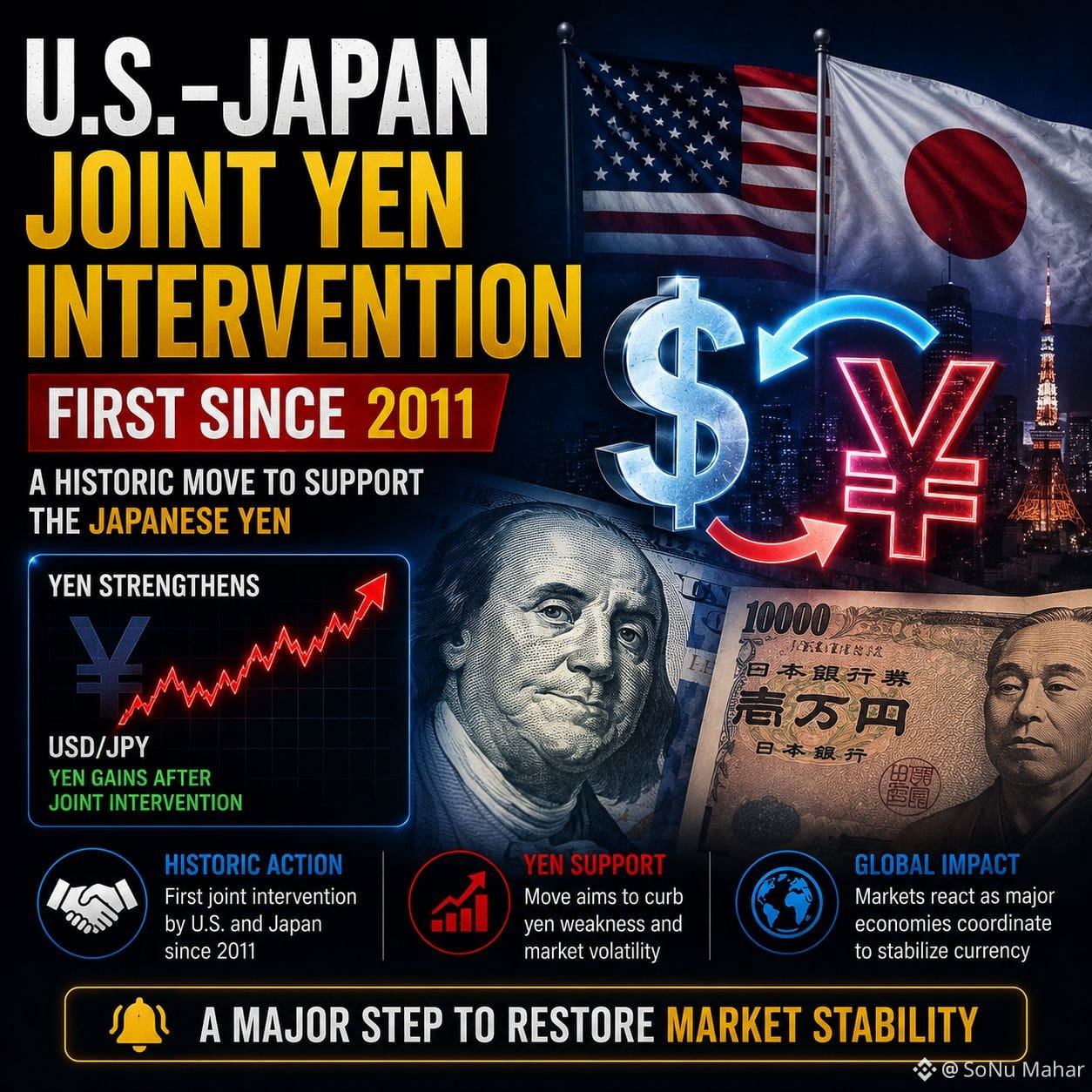
The United States and Japan have officially confirmed a rare, coordinated currency intervention to buy the Japanese yen, marking their first joint market operation since 2011. The historic joint action, executed on Friday and confirmed by officials today, Monday, August 3, 2026, aims to rescue the yen after it collapsed to a 40-year low against the U.S. dollar. Japanese Finance Minister Satsuki Katayama and U.S. Treasury Secretary Scott Bessent both issued statements warning that they "will not hesitate" to conduct further joint interventions to counter excessive market volatility.$AAPL.US $NVDA.US $NVDAB
#USJapanJointYenInterventionFirstSince2011
The United States and Japan have officially confirmed a rare, coordinated currency intervention to buy the Japanese yen, marking their first joint market operation since 2011. The historic joint action, executed on Friday and confirmed by officials today, Monday, August 3, 2026, aims to rescue the yen after it collapsed to a 40-year low against the U.S. dollar. Japanese Finance Minister Satsuki Katayama and U.S. Treasury Secretary Scott Bessent both issued statements warning that they "will not hesitate" to conduct further joint interventions to counter excessive market volatility.$AAPL.US $NVDA.US $NVDAB
The United States and Japan have officially confirmed a rare, coordinated currency intervention to buy the Japanese yen, marking their first joint market operation since 2011. The historic joint action, executed on Friday and confirmed by officials today, Monday, August 3, 2026, aims to rescue the yen after it collapsed to a 40-year low against the U.S. dollar. Japanese Finance Minister Satsuki Katayama and U.S. Treasury Secretary Scott Bessent both issued statements warning that they "will not hesitate" to conduct further joint interventions to counter excessive market volatility.$AAPL.US $NVDA.US $NVDAB
76


·
--

Article
US–Japan Joint Yen Intervention: First Since 2011#USJapanJointYenInterventionFirstSince2011
The United States and Japan have carried out a rare coordinated intervention to support the Japanese yen, marking the first joint action between the two countries since 2011. The move came after the yen weakened to around a 40-year low against the U.S. dollar, raising concerns about financial stability and imported inflation in Japan.
The intervention involved both governments buying yen in the foreign exchange market to slow the currency's sharp decline. Following the announcement, the yen strengthened noticeably, signaling that policymakers are prepared to act against excessive market volatility. Japanese officials also indicated that further coordinated action remains possible if needed.
While the intervention provided immediate support, many analysts believe its long-term success will depend on broader economic factors, particularly the interest-rate gap between the U.S. and Japan and future monetary policy decisions by the Bank of Japan. Without structural changes, currency interventions alone may only have temporary effects.
For investors, the event highlights how government actions can quickly reshape currency markets, influencing forex trading, bond yields, and global risk sentiment. It also underscores the close financial coordination between two of the world's largest economies during periods of market stress.
US–Japan Joint Yen Intervention: First Since 2011
#USJapanJointYenInterventionFirstSince2011
The United States and Japan have carried out a rare coordinated intervention to support the Japanese yen, marking the first joint action between the two countries since 2011. The move came after the yen weakened to around a 40-year low against the U.S. dollar, raising concerns about financial stability and imported inflation in Japan.
The intervention involved both governments buying yen in the foreign exchange market to slow the currency's sharp decline. Following the announcement, the yen strengthened noticeably, signaling that policymakers are prepared to act against excessive market volatility. Japanese officials also indicated that further coordinated action remains possible if needed.
While the intervention provided immediate support, many analysts believe its long-term success will depend on broader economic factors, particularly the interest-rate gap between the U.S. and Japan and future monetary policy decisions by the Bank of Japan. Without structural changes, currency interventions alone may only have temporary effects.
For investors, the event highlights how government actions can quickly reshape currency markets, influencing forex trading, bond yields, and global risk sentiment. It also underscores the close financial coordination between two of the world's largest economies during periods of market stress.
The United States and Japan have carried out a rare coordinated intervention to support the Japanese yen, marking the first joint action between the two countries since 2011. The move came after the yen weakened to around a 40-year low against the U.S. dollar, raising concerns about financial stability and imported inflation in Japan.
The intervention involved both governments buying yen in the foreign exchange market to slow the currency's sharp decline. Following the announcement, the yen strengthened noticeably, signaling that policymakers are prepared to act against excessive market volatility. Japanese officials also indicated that further coordinated action remains possible if needed.
While the intervention provided immediate support, many analysts believe its long-term success will depend on broader economic factors, particularly the interest-rate gap between the U.S. and Japan and future monetary policy decisions by the Bank of Japan. Without structural changes, currency interventions alone may only have temporary effects.
For investors, the event highlights how government actions can quickly reshape currency markets, influencing forex trading, bond yields, and global risk sentiment. It also underscores the close financial coordination between two of the world's largest economies during periods of market stress.
1
4
164

·
--
#USJapanJointYenInterventionFirstSince2011 🚨# U.S. and Japan Launch First Joint Yen Intervention Since 2011
The United States and Japan have reportedly carried out their first coordinated intervention in the currency market since 2011, aiming to stabilize the Japanese yen after a prolonged period of weakness. The rare move highlights growing concerns over excessive currency volatility and its impact on the global economy.
The joint action is designed to support the yen by influencing foreign exchange markets, helping restore confidence and reduce sharp fluctuations. Currency traders reacted quickly, with increased volatility seen across major forex pairs following the announcement.
A stronger yen could help ease import costs for Japan while affecting global trade dynamics and investor sentiment. Financial markets will now closely watch whether the coordinated effort has a lasting impact or if additional interventions become necessary.
The historic cooperation between the U.S. and Japan underscores the importance of international coordination during periods of financial uncertainty and could influence currency markets in the weeks ahead.
$BICO $CLO $BTC
#USJapanJointYenInterventionFirstSince2011 🚨# U.S. and Japan Launch First Joint Yen Intervention Since 2011
The United States and Japan have reportedly carried out their first coordinated intervention in the currency market since 2011, aiming to stabilize the Japanese yen after a prolonged period of weakness. The rare move highlights growing concerns over excessive currency volatility and its impact on the global economy.
The joint action is designed to support the yen by influencing foreign exchange markets, helping restore confidence and reduce sharp fluctuations. Currency traders reacted quickly, with increased volatility seen across major forex pairs following the announcement.
A stronger yen could help ease import costs for Japan while affecting global trade dynamics and investor sentiment. Financial markets will now closely watch whether the coordinated effort has a lasting impact or if additional interventions become necessary.
The historic cooperation between the U.S. and Japan underscores the importance of international coordination during periods of financial uncertainty and could influence currency markets in the weeks ahead.
$BICO $CLO $BTC
The United States and Japan have reportedly carried out their first coordinated intervention in the currency market since 2011, aiming to stabilize the Japanese yen after a prolonged period of weakness. The rare move highlights growing concerns over excessive currency volatility and its impact on the global economy.
The joint action is designed to support the yen by influencing foreign exchange markets, helping restore confidence and reduce sharp fluctuations. Currency traders reacted quickly, with increased volatility seen across major forex pairs following the announcement.
A stronger yen could help ease import costs for Japan while affecting global trade dynamics and investor sentiment. Financial markets will now closely watch whether the coordinated effort has a lasting impact or if additional interventions become necessary.
The historic cooperation between the U.S. and Japan underscores the importance of international coordination during periods of financial uncertainty and could influence currency markets in the weeks ahead.
$BICO $CLO $BTC
1
85

#USJapanJointYenInterventionFirstSince2011
Here is a concise post tailored for Binance Square:
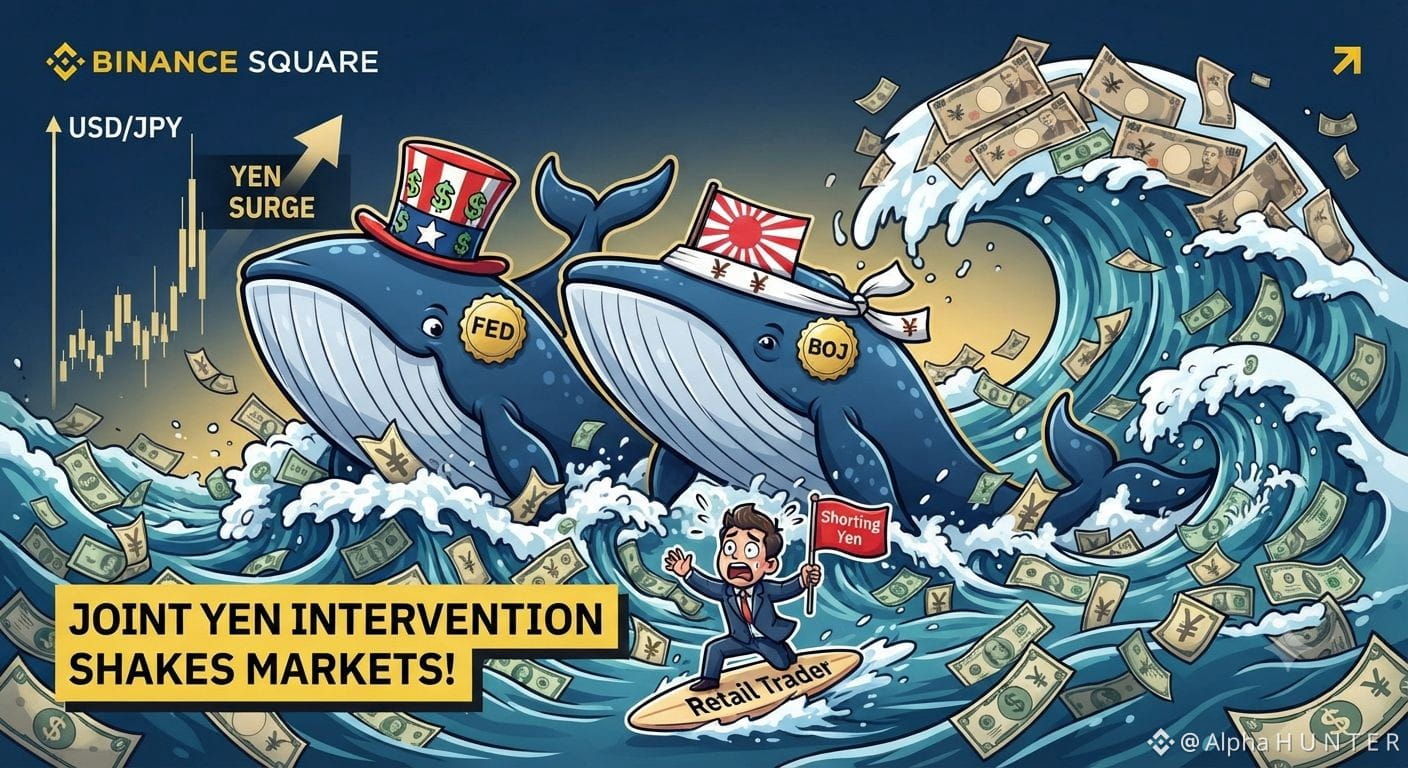
The US and Japan have shaken the global markets with their first joint yen intervention since 2011. Unlike past actions in 1998 to rescue a weak yen or 2011 to combat excessive strength, this modern move highlights high-stakes central bank coordination. Reports of a massive capital injection—highlighted by leaked notes pointing to a multi-billion dollar yen buy—signal that major institutional whales are actively shifting the tides.
For traders navigating this volatile shift, the golden rule remains clear: never fight the central banks. Shorting the yen in the face of direct intervention is a high-risk gamble. Instead, stay flexible, manage your leverage tightly, and closely monitor official currency flows to align with the new macro trend.
Not financial advice!
#YenIntervention #USDJPY #MacroEconomics #CryptoTrading.
$BTC
{future}(BTCUSDT)
$BLESS
{future}(BLESSUSDT)
$TAKE
{future}(TAKEUSDT)
#USJapanJointYenInterventionFirstSince2011
Here is a concise post tailored for Binance Square:
The US and Japan have shaken the global markets with their first joint yen intervention since 2011. Unlike past actions in 1998 to rescue a weak yen or 2011 to combat excessive strength, this modern move highlights high-stakes central bank coordination. Reports of a massive capital injection—highlighted by leaked notes pointing to a multi-billion dollar yen buy—signal that major institutional whales are actively shifting the tides.
For traders navigating this volatile shift, the golden rule remains clear: never fight the central banks. Shorting the yen in the face of direct intervention is a high-risk gamble. Instead, stay flexible, manage your leverage tightly, and closely monitor official currency flows to align with the new macro trend.
Not financial advice!
#YenIntervention #USDJPY #MacroEconomics #CryptoTrading.
$BTC
$BLESS
$TAKE
Here is a concise post tailored for Binance Square:
The US and Japan have shaken the global markets with their first joint yen intervention since 2011. Unlike past actions in 1998 to rescue a weak yen or 2011 to combat excessive strength, this modern move highlights high-stakes central bank coordination. Reports of a massive capital injection—highlighted by leaked notes pointing to a multi-billion dollar yen buy—signal that major institutional whales are actively shifting the tides.
For traders navigating this volatile shift, the golden rule remains clear: never fight the central banks. Shorting the yen in the face of direct intervention is a high-risk gamble. Instead, stay flexible, manage your leverage tightly, and closely monitor official currency flows to align with the new macro trend.
Not financial advice!
#YenIntervention #USDJPY #MacroEconomics #CryptoTrading.
$BTC
$BLESS
$TAKE
93

#usjapanjointyeninterventionfirstsince2011
🚨 Yen Roars Back as the U.S. & Japan Join Forces! 🇺🇸🇯🇵💴
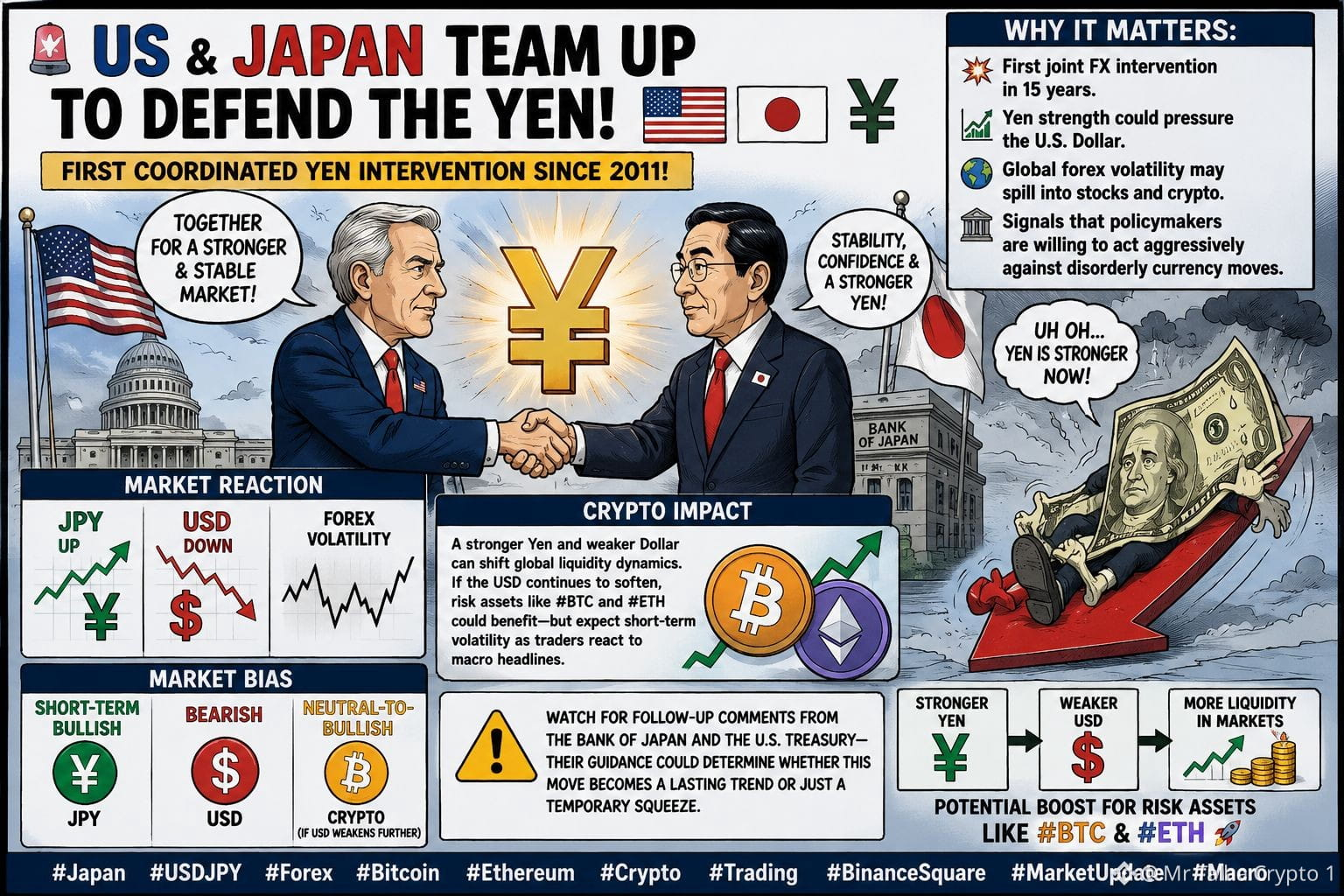
For the first time in years, the U.S. and Japan reportedly coordinated to support the Japanese Yen, shaking up the global FX market. Traders are now watching whether this marks the beginning of a stronger Yen trend or just a short-term intervention.
📊 Market Take:
💴 JPY gains momentum
💵 USD faces downside pressure
📈 Forex volatility rises
🪙 Crypto could benefit if the Dollar continues to weaken
Crypto Watch 👀
A softer U.S. Dollar has historically improved liquidity conditions for risk assets. If the trend continues, #BTC and #ETH could see renewed buying interest, although macro-driven volatility is likely to remain high.
Bias: 🟢 Bullish JPY | 🔴 Bearish USD | 🟡 Cautiously Bullish Crypto
⚠️ Keep an eye on upcoming statements from the Bank of Japan and the U.S. Treasury. Their next moves could decide whether this is the start of a new trend or just a temporary market squeeze.
#Japan #USDJPY #Forex #Bitcoin
$CLICK TO BELOW TRADE👇👈
$PAXG
$BTC
$USDC
{spot}(BTCUSDT)
{spot}(USDCUSDT)
{spot}(PAXGUSDT)
#usjapanjointyeninterventionfirstsince2011
🚨 Yen Roars Back as the U.S. & Japan Join Forces! 🇺🇸🇯🇵💴
For the first time in years, the U.S. and Japan reportedly coordinated to support the Japanese Yen, shaking up the global FX market. Traders are now watching whether this marks the beginning of a stronger Yen trend or just a short-term intervention.
📊 Market Take:
💴 JPY gains momentum
💵 USD faces downside pressure
📈 Forex volatility rises
🪙 Crypto could benefit if the Dollar continues to weaken
Crypto Watch 👀
A softer U.S. Dollar has historically improved liquidity conditions for risk assets. If the trend continues, #BTC and #ETH could see renewed buying interest, although macro-driven volatility is likely to remain high.
Bias: 🟢 Bullish JPY | 🔴 Bearish USD | 🟡 Cautiously Bullish Crypto
⚠️ Keep an eye on upcoming statements from the Bank of Japan and the U.S. Treasury. Their next moves could decide whether this is the start of a new trend or just a temporary market squeeze.
#Japan #USDJPY #Forex #Bitcoin
$CLICK TO BELOW TRADE👇👈
$PAXG
$BTC
$USDC
🚨 Yen Roars Back as the U.S. & Japan Join Forces! 🇺🇸🇯🇵💴
For the first time in years, the U.S. and Japan reportedly coordinated to support the Japanese Yen, shaking up the global FX market. Traders are now watching whether this marks the beginning of a stronger Yen trend or just a short-term intervention.
📊 Market Take:
💴 JPY gains momentum
💵 USD faces downside pressure
📈 Forex volatility rises
🪙 Crypto could benefit if the Dollar continues to weaken
Crypto Watch 👀
A softer U.S. Dollar has historically improved liquidity conditions for risk assets. If the trend continues, #BTC and #ETH could see renewed buying interest, although macro-driven volatility is likely to remain high.
Bias: 🟢 Bullish JPY | 🔴 Bearish USD | 🟡 Cautiously Bullish Crypto
⚠️ Keep an eye on upcoming statements from the Bank of Japan and the U.S. Treasury. Their next moves could decide whether this is the start of a new trend or just a temporary market squeeze.
#Japan #USDJPY #Forex #Bitcoin
$CLICK TO BELOW TRADE👇👈
$PAXG
$BTC
$USDC
4
4
2.5k

·
--

Article
US and Japan Join Forces to Prop Up the Yen—How Does This Impact Bitcoin and Risk Assets?In a historic move, the United States and Japan have conducted their first joint currency intervention to support the yen since 1998. 🇺🇸🇯🇵 This coordinated action, confirmed by President Trump and Treasury Secretary Scott Bessent, sent the yen soaring from its 40-year low of 163.99 per dollar to around 155. The question for crypto investors: what does this mean for $BTC and the broader risk-on sentiment? Let's break it down. 🧐
The Mechanics: Why They Intervened ⚙️
The yen has been battered by a massive interest rate differential. The Bank of Japan's rate (1.0%) is far below the US Federal Reserve's (3.5-3.75%). This gap fuels the popular "carry trade," where investors borrow cheap yen to invest in higher-yielding assets elsewhere. This weakens the yen further.
The Action: On Friday, the US and Japan jointly bought yen, marking the first such collaboration since 1998. The exact scale of the intervention remains undisclosed, but the impact was immediate and significant.The Message: President Trump called it a "signal of friendship" and "good for the world economy." Treasury Secretary Bessent stated that the US "strongly support[s] Japan's decisive market and monetary steps to correct the substantial undervaluation of the yen."
The Ripple Effect: A Liquidity Warning for Risk Assets 🌊
This is where it gets interesting for crypto. The yen carry trade has been a major source of cheap global liquidity. A significant unwind of these positions—as the yen strengthens—can have a cascading effect on risk assets.
Tighter Liquidity: When traders are forced to buy back yen to cover their positions, they often sell off riskier assets like stocks and $BTC to raise cash. This is precisely the dynamic we've been monitoring.The Macro Link: As we discussed recently, the yen's strength and rising US Treasury yields create a tightening of financial conditions, which is a headwind for BTC.
The Bigger Picture: A Pivotal Moment 📊
Economists view joint interventions as potentially marking key turning points in exchange rates. Michael Wan at MUFG noted that these events "have typically taken place around key turning points," though he cautioned that the fundamentals still need to change for a durable move.
The Fed's Role: The BoJ is expected to hike rates further, but the Fed might also be forced to raise rates to combat inflation, particularly given geopolitical tensions. This could keep the interest rate differential wide, limiting the yen's upside.
The Bottom Line: Volatility Ahead 📝
The coordinated intervention is a significant development that signals serious concern from both governments about the yen's weakness. For BTC and crypto, this reinforces the macro theme of tightening liquidity and potential deleveraging. A strong yen can act as a headwind for risk assets in the short term, as carry trades unwind.
However, it's not all doom and gloom. If this intervention stabilizes the yen and reduces uncertainty, it could eventually pave the way for a more stable macro environment, which would be positive for BTC in the long run. For now, expect continued volatility as the market digests this historic move.
Will the yen's strength lead to a sell-off in Bitcoin, or is this a healthy correction? Share your thoughts below! 👇
$ETH $BNB
#usjapanjointyeninterventionfirstsince2011
US and Japan Join Forces to Prop Up the Yen—How Does This Impact Bitcoin and Risk Assets?
In a historic move, the United States and Japan have conducted their first joint currency intervention to support the yen since 1998. 🇺🇸🇯🇵 This coordinated action, confirmed by President Trump and Treasury Secretary Scott Bessent, sent the yen soaring from its 40-year low of 163.99 per dollar to around 155. The question for crypto investors: what does this mean for $BTC and the broader risk-on sentiment? Let's break it down. 🧐
The Mechanics: Why They Intervened ⚙️
The yen has been battered by a massive interest rate differential. The Bank of Japan's rate (1.0%) is far below the US Federal Reserve's (3.5-3.75%). This gap fuels the popular "carry trade," where investors borrow cheap yen to invest in higher-yielding assets elsewhere. This weakens the yen further.
The Action: On Friday, the US and Japan jointly bought yen, marking the first such collaboration since 1998. The exact scale of the intervention remains undisclosed, but the impact was immediate and significant.The Message: President Trump called it a "signal of friendship" and "good for the world economy." Treasury Secretary Bessent stated that the US "strongly support[s] Japan's decisive market and monetary steps to correct the substantial undervaluation of the yen."
The Ripple Effect: A Liquidity Warning for Risk Assets 🌊
This is where it gets interesting for crypto. The yen carry trade has been a major source of cheap global liquidity. A significant unwind of these positions—as the yen strengthens—can have a cascading effect on risk assets.
Tighter Liquidity: When traders are forced to buy back yen to cover their positions, they often sell off riskier assets like stocks and $BTC to raise cash. This is precisely the dynamic we've been monitoring.The Macro Link: As we discussed recently, the yen's strength and rising US Treasury yields create a tightening of financial conditions, which is a headwind for BTC.
The Bigger Picture: A Pivotal Moment 📊
Economists view joint interventions as potentially marking key turning points in exchange rates. Michael Wan at MUFG noted that these events "have typically taken place around key turning points," though he cautioned that the fundamentals still need to change for a durable move.
The Fed's Role: The BoJ is expected to hike rates further, but the Fed might also be forced to raise rates to combat inflation, particularly given geopolitical tensions. This could keep the interest rate differential wide, limiting the yen's upside.
The Bottom Line: Volatility Ahead 📝
The coordinated intervention is a significant development that signals serious concern from both governments about the yen's weakness. For BTC and crypto, this reinforces the macro theme of tightening liquidity and potential deleveraging. A strong yen can act as a headwind for risk assets in the short term, as carry trades unwind.
However, it's not all doom and gloom. If this intervention stabilizes the yen and reduces uncertainty, it could eventually pave the way for a more stable macro environment, which would be positive for BTC in the long run. For now, expect continued volatility as the market digests this historic move.
Will the yen's strength lead to a sell-off in Bitcoin, or is this a healthy correction? Share your thoughts below! 👇
$ETH $BNB
#usjapanjointyeninterventionfirstsince2011
The Mechanics: Why They Intervened ⚙️
The yen has been battered by a massive interest rate differential. The Bank of Japan's rate (1.0%) is far below the US Federal Reserve's (3.5-3.75%). This gap fuels the popular "carry trade," where investors borrow cheap yen to invest in higher-yielding assets elsewhere. This weakens the yen further.
The Action: On Friday, the US and Japan jointly bought yen, marking the first such collaboration since 1998. The exact scale of the intervention remains undisclosed, but the impact was immediate and significant.The Message: President Trump called it a "signal of friendship" and "good for the world economy." Treasury Secretary Bessent stated that the US "strongly support[s] Japan's decisive market and monetary steps to correct the substantial undervaluation of the yen."
The Ripple Effect: A Liquidity Warning for Risk Assets 🌊
This is where it gets interesting for crypto. The yen carry trade has been a major source of cheap global liquidity. A significant unwind of these positions—as the yen strengthens—can have a cascading effect on risk assets.
Tighter Liquidity: When traders are forced to buy back yen to cover their positions, they often sell off riskier assets like stocks and $BTC to raise cash. This is precisely the dynamic we've been monitoring.The Macro Link: As we discussed recently, the yen's strength and rising US Treasury yields create a tightening of financial conditions, which is a headwind for BTC.
The Bigger Picture: A Pivotal Moment 📊
Economists view joint interventions as potentially marking key turning points in exchange rates. Michael Wan at MUFG noted that these events "have typically taken place around key turning points," though he cautioned that the fundamentals still need to change for a durable move.
The Fed's Role: The BoJ is expected to hike rates further, but the Fed might also be forced to raise rates to combat inflation, particularly given geopolitical tensions. This could keep the interest rate differential wide, limiting the yen's upside.
The Bottom Line: Volatility Ahead 📝
The coordinated intervention is a significant development that signals serious concern from both governments about the yen's weakness. For BTC and crypto, this reinforces the macro theme of tightening liquidity and potential deleveraging. A strong yen can act as a headwind for risk assets in the short term, as carry trades unwind.
However, it's not all doom and gloom. If this intervention stabilizes the yen and reduces uncertainty, it could eventually pave the way for a more stable macro environment, which would be positive for BTC in the long run. For now, expect continued volatility as the market digests this historic move.
Will the yen's strength lead to a sell-off in Bitcoin, or is this a healthy correction? Share your thoughts below! 👇
$ETH $BNB
#usjapanjointyeninterventionfirstsince2011
2
1
558

#USJapanJointYenInterventionFirstSince2011 "La intervención conjunta entre Japón y EE.UU. es un recordatorio de que, por muy descentralizado que parezca el mercado, las políticas macro siguen siendo las que mueven la aguja. Más allá del susto inicial en el USD/JPY, la clave aquí es cómo esto afectará la liquidez global y el flujo de capital hacia activos de riesgo.
Mi consejo: no operen el pánico. Las intervenciones de bancos centrales crean mucha volatilidad, pero la tendencia de fondo se impone tras la tormenta. ¿Cómo están ajustando sus carteras ante este movimiento macro?"
#USJapanJointYenInterventionFirstSince2011 "La intervención conjunta entre Japón y EE.UU. es un recordatorio de que, por muy descentralizado que parezca el mercado, las políticas macro siguen siendo las que mueven la aguja. Más allá del susto inicial en el USD/JPY, la clave aquí es cómo esto afectará la liquidez global y el flujo de capital hacia activos de riesgo.
Mi consejo: no operen el pánico. Las intervenciones de bancos centrales crean mucha volatilidad, pero la tendencia de fondo se impone tras la tormenta. ¿Cómo están ajustando sus carteras ante este movimiento macro?"
Mi consejo: no operen el pánico. Las intervenciones de bancos centrales crean mucha volatilidad, pero la tendencia de fondo se impone tras la tormenta. ¿Cómo están ajustando sus carteras ante este movimiento macro?"
1
283

·
--
#USJapanJointYenInterventionFirstSince2011
MARKET Shift: US JAPAN JOINT YEN INTERVENTION
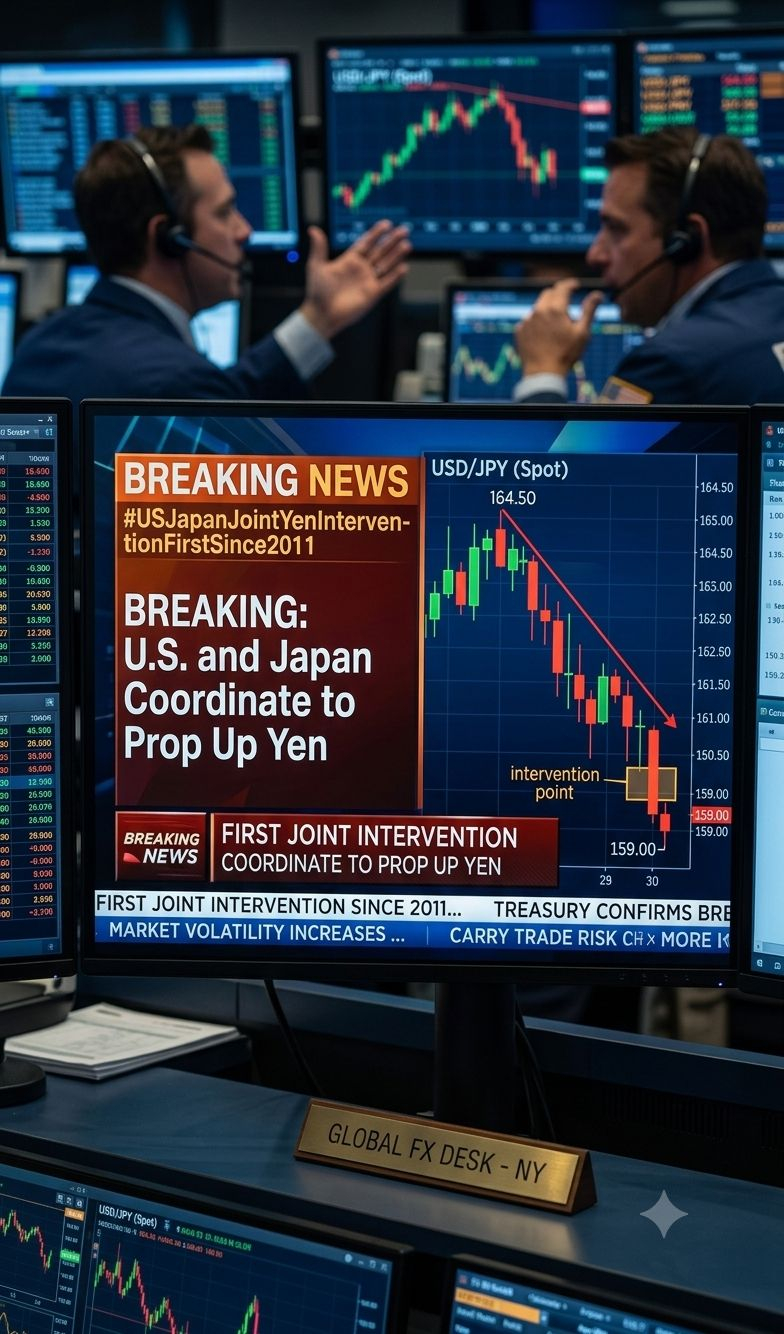
For the first time since 2011, the US Treasury and Japan’s Ministry of Finance executed a coordinated yen-buying intervention. Propping up the yen from 40-year lows near 164 marks a massive geopolitical and macroeconomic signal.
Key Takeaways:
Carry Trade Risk: A rapid yen rally forces unwind pressure on global risk assets funded by low-interest yen loans.
Policy Alignment: Direct US backing reinforces joint commitment to FX stability.
Liquidity Ripple: Cross-border capital adjustments could drive volatility across FX, Treasuries, and broader risk markets.
Watch key support bands closely as market leverage recalibrates.
$COTY.US
{stock_us}(COTY.US)
$KAITO LONG
{future}(KAITOUSDT)
$DOGE
{future}(DOGEUSDT)
#write2earn🌐💹
#Market_Update
#USJapanJointYenInterventionFirstSince2011
MARKET Shift: US JAPAN JOINT YEN INTERVENTION
For the first time since 2011, the US Treasury and Japan’s Ministry of Finance executed a coordinated yen-buying intervention. Propping up the yen from 40-year lows near 164 marks a massive geopolitical and macroeconomic signal.
Key Takeaways:
Carry Trade Risk: A rapid yen rally forces unwind pressure on global risk assets funded by low-interest yen loans.
Policy Alignment: Direct US backing reinforces joint commitment to FX stability.
Liquidity Ripple: Cross-border capital adjustments could drive volatility across FX, Treasuries, and broader risk markets.
Watch key support bands closely as market leverage recalibrates.
$COTY.US
$KAITO LONG
$DOGE
#write2earn🌐💹
#Market_Update
MARKET Shift: US JAPAN JOINT YEN INTERVENTION
For the first time since 2011, the US Treasury and Japan’s Ministry of Finance executed a coordinated yen-buying intervention. Propping up the yen from 40-year lows near 164 marks a massive geopolitical and macroeconomic signal.
Key Takeaways:
Carry Trade Risk: A rapid yen rally forces unwind pressure on global risk assets funded by low-interest yen loans.
Policy Alignment: Direct US backing reinforces joint commitment to FX stability.
Liquidity Ripple: Cross-border capital adjustments could drive volatility across FX, Treasuries, and broader risk markets.
Watch key support bands closely as market leverage recalibrates.
$COTY.US
$KAITO LONG
$DOGE
#write2earn🌐💹
#Market_Update
1
214

·
--
Haussier
#usjapanjointyeninterventionfirstsince2011
🚨 US AND JAPAN CONFIRM JOINT YEN INTERVENTION
Tokyo and Washington jointly bought yen to stop its slide.
This is their first coordinated FX intervention since 2011 — but the direction is reversed. Back then, authorities sold JPY after Fukushima. Now they are buying it.
💴 For crypto, this is not automatically #bullish
The lazy take is:
👉 stronger yen → weaker dollar → BTC up
The real mechanics are harder.
A controlled JPY recovery can support crypto later if the dollar softens while Nasdaq and BTC remain stable.
A violent yen squeeze does the opposite first.
Funds that borrowed cheap #JPY may be forced to buy it back, cut leverage and sell assets held on the other side of the carry trade. Stocks weaken, open interest falls and crypto gets hit before any benefit from a softer dollar arrives.
⚠️ Watch the reaction, not the headline
— USD/JPY falls while #NASDAQ and #BTC hold: healthy repricing
— USD/JPY falls while stocks, OI and crypto drop: carry-trade unwind
— more intervention signals: macro volatility stays elevated
This is no longer one isolated FX candle.
The market now knows that the US and Japan are prepared to defend the yen together — and another intervention can arrive without warning.
🤖 Markets like this punish emotional execution. Crypto Resources trading robots for Binance follow predefined long and short rules automatically, while filters, position limits and risk management control exposure.
$BLESS $BICO $CLO
#usjapanjointyeninterventionfirstsince2011
🚨 US AND JAPAN CONFIRM JOINT YEN INTERVENTION
Tokyo and Washington jointly bought yen to stop its slide.
This is their first coordinated FX intervention since 2011 — but the direction is reversed. Back then, authorities sold JPY after Fukushima. Now they are buying it.
💴 For crypto, this is not automatically #bullish
The lazy take is:
👉 stronger yen → weaker dollar → BTC up
The real mechanics are harder.
A controlled JPY recovery can support crypto later if the dollar softens while Nasdaq and BTC remain stable.
A violent yen squeeze does the opposite first.
Funds that borrowed cheap #JPY may be forced to buy it back, cut leverage and sell assets held on the other side of the carry trade. Stocks weaken, open interest falls and crypto gets hit before any benefit from a softer dollar arrives.
⚠️ Watch the reaction, not the headline
— USD/JPY falls while #NASDAQ and #BTC hold: healthy repricing
— USD/JPY falls while stocks, OI and crypto drop: carry-trade unwind
— more intervention signals: macro volatility stays elevated
This is no longer one isolated FX candle.
The market now knows that the US and Japan are prepared to defend the yen together — and another intervention can arrive without warning.
🤖 Markets like this punish emotional execution. Crypto Resources trading robots for Binance follow predefined long and short rules automatically, while filters, position limits and risk management control exposure.
$BLESS $BICO $CLO
🚨 US AND JAPAN CONFIRM JOINT YEN INTERVENTION
Tokyo and Washington jointly bought yen to stop its slide.
This is their first coordinated FX intervention since 2011 — but the direction is reversed. Back then, authorities sold JPY after Fukushima. Now they are buying it.
💴 For crypto, this is not automatically #bullish
The lazy take is:
👉 stronger yen → weaker dollar → BTC up
The real mechanics are harder.
A controlled JPY recovery can support crypto later if the dollar softens while Nasdaq and BTC remain stable.
A violent yen squeeze does the opposite first.
Funds that borrowed cheap #JPY may be forced to buy it back, cut leverage and sell assets held on the other side of the carry trade. Stocks weaken, open interest falls and crypto gets hit before any benefit from a softer dollar arrives.
⚠️ Watch the reaction, not the headline
— USD/JPY falls while #NASDAQ and #BTC hold: healthy repricing
— USD/JPY falls while stocks, OI and crypto drop: carry-trade unwind
— more intervention signals: macro volatility stays elevated
This is no longer one isolated FX candle.
The market now knows that the US and Japan are prepared to defend the yen together — and another intervention can arrive without warning.
🤖 Markets like this punish emotional execution. Crypto Resources trading robots for Binance follow predefined long and short rules automatically, while filters, position limits and risk management control exposure.
$BLESS $BICO $CLO

2
12
4.5k

·
--

Article
Cú sốc thị trường lớn nhất 2026 gọi tên Nhật Bản: Bitcoin sẽ đứng vững hay chịuNhật Bản có thể chính thức xác nhận hành động can thiệp tiền tệ chung với Washington vào thứ Hai, và một quan chức nói với Reuters rằng hoạt động này vẫn đang diễn ra, biến thông báo này thành một sự kiện có thể ảnh hưởng trực tiếp tới thị trường.
Bitcoin hiện giao dịch quanh mức 63,000 USD, đang chịu tác động bởi một vấn đề tại thị trường trái phiếu mà phần lớn nhà đầu tư nhỏ lẻ tiền điện tử chưa thật sự quan tâm.
🚨 JAPAN IS RUNNING OUT OF OPTIONS.The U.S. sold euros to buy yen in the first joint intervention in 15 years.Japan already deployed nearly $59 billion.Japan must choose: save the yen or risk a global recession. pic.twitter.com/64URQrjjI9— Crypto Rover (@cryptorover) August 2, 2026
Lý do thị trường trái phiếu đứng sau sự hợp tác này
Bối cảnh năm 2011 mang ý nghĩa quan trọng hơn bạn tưởng. Khi đó, Nhóm bảy nước phát triển (G7) đã bán đồng yên để ngăn giá tăng mạnh, còn lần này là sự phối hợp đầu tiên sau 15 năm theo hướng ngược lại – nhằm hỗ trợ đồng yên giảm giá.
Bộ trưởng Tài chính Satsuki Katayama sẽ phát đi thông báo này, theo chia sẻ của hai quan chức với Reuters. Nhà ngoại giao hàng đầu về tiền tệ của bà, ông Atsushi Mimura, cho biết bộ này hiện đang phối hợp chặt chẽ hơn với các chính sách tiền tệ.
Những câu từ này mang nhiều ý nghĩa, cho thấy Tokyo sẽ kết hợp việc can thiệp tiền tệ với thông báo tăng lãi suất mà Ngân hàng Trung ương Nhật Bản (BoJ) đã hé lộ tuần trước, thay vì chỉ sử dụng biện pháp can thiệp mua vào đơn thuần.
Thêm vào đó, một động thái lặng lẽ nhưng quan trọng là Bộ Tài chính Nhật Bản hiếm hoi đăng một bài viết bằng tiếng Anh lên X nhấn mạnh rằng họ có nhiều biện pháp hỗ trợ, bao gồm cả việc tiếp cận nguồn tiền USD thông qua kênh repo với Cục Dự trữ Liên bang Mỹ (Fed).
Cơ chế này rất đáng chú ý. Xuất hiện từ năm 2020, hệ thống repo cho phép Nhật Bản bổ sung nguồn USD mà không cần bán trái phiếu kho bạc Mỹ trực tiếp.
Japan, Bretton Woods 2.0, and the End of the Carry EraBessent’s move toward the New York Fed matters because it signals that Treasury understands the long end is being driven by flows, not by the inflation scare Wall Street keeps recycling. Japan is now central to that story.… https://t.co/yMhjHaMTRt— James E. Thorne (@DrJStrategy) August 2, 2026
Các chuyên gia phân tích cũng đã cảnh báo về vấn đề này. Nếu Nhật Bản bán ra lượng lớn trái phiếu kho bạc Mỹ để lấy tiền can thiệp, điều đó có thể khiến giá trái phiếu Mỹ lao dốc, lợi suất tăng mạnh – làm phức tạp tình hình tài chính toàn cầu.
Từ góc nhìn đó, lý do Mỹ cùng hợp tác cũng trở nên rõ ràng hơn. Các nhà phân tích nhận định Washington lo ngại việc lợi suất trái phiếu kho bạc Mỹ tăng cao hơn nữa nếu Tokyo thất bại trong việc ổn định cả đồng yên lẫn thị trường trái phiếu chính phủ Nhật Bản.
Cựu quan chức Ngân hàng Trung ương Nhật, ông Nobuyasu Atago đã nói thẳng quan điểmnày: “Cả hai nước đều đối mặt với áp lực lạm phát tăng và nguy cơ các ngân hàng trung ương bị ‘chậm chân’, nên hợp tác là điều có lợi cho đôi bên.”
🚨 WARNING: TOMORROW WILL BE THE WORST DAY OF 2026!!This is your FINAL warning.The US just officially began a COORDINATED intervention to prevent a market collapse.Last time this happened, stocks crashed 20% in a day.If you hold any assets right now, you MUST read this:… pic.twitter.com/0g9d5IVHN3— 0xNobler (@CryptoNobler) August 2, 2026
Những điều nhà đầu tư Bitcoin cần chú ý vào thứ Hai
Tokyo hiện còn phải giải quyết áp lực trong nước. Bộ trưởng Kinh tế Minoru Kiuchi cho biết hôm Chủ nhật rằng chính phủ sẽ cải thiện cách truyền đạt thông tin thị trường, nhấn mạnh tầm quan trọng của việc giữ vững niềm tin vào khả năng tài chính bền vững của Nhật Bản.
Nhà đầu tư Bitcoin nên đặc biệt quan tâm đến góc độ trái phiếu. Khi lợi suất toàn cầu tăng, dòng tiền sẽ bị hút khỏi các tài sản không sinh lời như Bitcoin, và bất ổn trái phiếu chính phủ Nhật Bản đã từng nhiều lần gây sóng gió cho thị trường crypto trong năm nay.
“Nếu các tài sản rủi ro trên toàn cầu bị ảnh hưởng do các giao dịch carry trade lớn nhất thế giới buộc phải đảo chiều thì điều gì sẽ xảy ra? Câu trả lời sẽ không đến ngay lập tức, nhưng có một điều chắc chắn: một câu chuyện bắt đầu từ thị trường tiền tệ có thể tác động đến mọi thứ, từ cổ phiếu cho đến Bitcoin…,” Wise Advice chia sẻ trên X.
Hiệu suất giá Bitcoin (BTC). Nguồn:BeInCrypto
Cách các tổ chức đầu tư hiện tại cũng làm tăng rủi ro. Tính đến cuối tháng 07, các hợp đồng bán khống đồng yên của giới đầu tư phi thương mại đã đạt 163,412 hợp đồng, khiến mức đòn bẩy rất cao và dễ bị ảnh hưởng nếu thị trường đảo chiều đột ngột. Lúc này, điều quan trọng không chỉ là nguồn lực mà còn là uy tín của cam kết can thiệp.
Thị trường sẽ chờ xem liệu thông báo xác nhận hôm thứ Hai có đi kèm cam kết tăng lãi suất, hay chỉ đơn thuần là lời hứa mua vào yên.
Nếu Nhật kết hợp hai biện pháp cùng lúc, tình hình sẽ thay đổi đáng kể. Khi chính sách tiền tệ lệch pha được điều chỉnh, chênh lệch lãi suất giữa hai nước sẽ được thu hẹp bền vững, còn nếu chỉ can thiệp mua vào thì tác động chỉ là tạm thời.
Điểm này sẽ quyết định kịch bản cho cả Bitcoin. Nếu đồng yên tăng giá đột ngột, nhiều vị thế đòn bẩy trên các tài sản rủi ro — như cổ phiếu, Bitcoin — có thể bị đóng vội. Ngược lại, đồng yên hồi phục từ từ và USD yếu đi thì thanh khoản thị trường lại có thể được cải thiện.
This is genuinely unbelievable.Over the weekend, $BTC dumped from $65,400 to below $62,300 liquidating $648M.$2.2B total Crypto liquidations this week alone!!! Now, $60,000 – $62,000 has sizable liquidity below that could be swept.However, $63,500 – $66,000 above has… pic.twitter.com/1FHEZz3YSt— CryptoReviewing (@CryptoReviewing) August 2, 2026
Thời điểm diễn ra sự kiện cũng rất quan trọng. Thị trường châu Á mở cửa đầu tiên vào thứ Hai, và nếu tỷ giá USD/JPY biến động mạnh, hiệu ứng sẽ lan sang thị trường crypto trước khi nhà đầu tư Mỹ kịp phản ứng.
“Nếu Mỹ bán USD để mua vào yên, đồng USD sẽ suy yếu và tỷ giá USD/JPY giảm. Điều này thông thường có lợi cho Bitcoin, vàng và cổ phiếu công nghệ. Tuy nhiên, có một điểm cần lưu ý: nếu đồng yên tăng giá mạnh, một trong những giao dịch carry trade lớn nhất thế giới có thể phải đảo chiều. Những nhà đầu tư vay rẻ đồng yên để mua cổ phiếu, crypto và các tài sản có lợi suất cao hơn có thể sẽ buộc phải bán tháo…,” Coin Bureau nhận xét.
Chênh lệch lãi suất chính là yếu tố neo giữ thị trường. Lãi suất chính sách của Nhật đang ở mức 1%, trong khi Mỹ vẫn giữ mức cao hơn rất nhiều. Không một biện pháp can thiệp tạm thời nào có thể xóa bỏ sự khác biệt đó.
Hãy chú ý theo dõi thị trường trái phiếu Nhật Bản cùng với đồng tiền của họ. Nếu lợi suất trái phiếu vẫn ổn định sau khi có thông báo, điều này cho thấy các biện pháp phối hợp bảo vệ thị trường đang phát huy tác dụng, qua đó những yếu tố vĩ mô gây áp lực lên Bitcoin cũng sẽ giảm bớt.
$BTC
{future}(BTCUSDT)
$WAXP
{future}(WAXPUSDT)
$TUT
{future}(TUTUSDT)
#KOFI #TheoDõiFOMC #45NgayTuDoTaiChinh #USIranTalksToBegin #USJapanJointYenInterventionFirstSince2011
Cú sốc thị trường lớn nhất 2026 gọi tên Nhật Bản: Bitcoin sẽ đứng vững hay chịu
Nhật Bản có thể chính thức xác nhận hành động can thiệp tiền tệ chung với Washington vào thứ Hai, và một quan chức nói với Reuters rằng hoạt động này vẫn đang diễn ra, biến thông báo này thành một sự kiện có thể ảnh hưởng trực tiếp tới thị trường.
Bitcoin hiện giao dịch quanh mức 63,000 USD, đang chịu tác động bởi một vấn đề tại thị trường trái phiếu mà phần lớn nhà đầu tư nhỏ lẻ tiền điện tử chưa thật sự quan tâm.
🚨 JAPAN IS RUNNING OUT OF OPTIONS.The U.S. sold euros to buy yen in the first joint intervention in 15 years.Japan already deployed nearly $59 billion.Japan must choose: save the yen or risk a global recession. pic.twitter.com/64URQrjjI9— Crypto Rover (@cryptorover) August 2, 2026
Lý do thị trường trái phiếu đứng sau sự hợp tác này
Bối cảnh năm 2011 mang ý nghĩa quan trọng hơn bạn tưởng. Khi đó, Nhóm bảy nước phát triển (G7) đã bán đồng yên để ngăn giá tăng mạnh, còn lần này là sự phối hợp đầu tiên sau 15 năm theo hướng ngược lại – nhằm hỗ trợ đồng yên giảm giá.
Bộ trưởng Tài chính Satsuki Katayama sẽ phát đi thông báo này, theo chia sẻ của hai quan chức với Reuters. Nhà ngoại giao hàng đầu về tiền tệ của bà, ông Atsushi Mimura, cho biết bộ này hiện đang phối hợp chặt chẽ hơn với các chính sách tiền tệ.
Những câu từ này mang nhiều ý nghĩa, cho thấy Tokyo sẽ kết hợp việc can thiệp tiền tệ với thông báo tăng lãi suất mà Ngân hàng Trung ương Nhật Bản (BoJ) đã hé lộ tuần trước, thay vì chỉ sử dụng biện pháp can thiệp mua vào đơn thuần.
Thêm vào đó, một động thái lặng lẽ nhưng quan trọng là Bộ Tài chính Nhật Bản hiếm hoi đăng một bài viết bằng tiếng Anh lên X nhấn mạnh rằng họ có nhiều biện pháp hỗ trợ, bao gồm cả việc tiếp cận nguồn tiền USD thông qua kênh repo với Cục Dự trữ Liên bang Mỹ (Fed).
Cơ chế này rất đáng chú ý. Xuất hiện từ năm 2020, hệ thống repo cho phép Nhật Bản bổ sung nguồn USD mà không cần bán trái phiếu kho bạc Mỹ trực tiếp.
Japan, Bretton Woods 2.0, and the End of the Carry EraBessent’s move toward the New York Fed matters because it signals that Treasury understands the long end is being driven by flows, not by the inflation scare Wall Street keeps recycling. Japan is now central to that story.… https://t.co/yMhjHaMTRt— James E. Thorne (@DrJStrategy) August 2, 2026
Các chuyên gia phân tích cũng đã cảnh báo về vấn đề này. Nếu Nhật Bản bán ra lượng lớn trái phiếu kho bạc Mỹ để lấy tiền can thiệp, điều đó có thể khiến giá trái phiếu Mỹ lao dốc, lợi suất tăng mạnh – làm phức tạp tình hình tài chính toàn cầu.
Từ góc nhìn đó, lý do Mỹ cùng hợp tác cũng trở nên rõ ràng hơn. Các nhà phân tích nhận định Washington lo ngại việc lợi suất trái phiếu kho bạc Mỹ tăng cao hơn nữa nếu Tokyo thất bại trong việc ổn định cả đồng yên lẫn thị trường trái phiếu chính phủ Nhật Bản.
Cựu quan chức Ngân hàng Trung ương Nhật, ông Nobuyasu Atago đã nói thẳng quan điểmnày: “Cả hai nước đều đối mặt với áp lực lạm phát tăng và nguy cơ các ngân hàng trung ương bị ‘chậm chân’, nên hợp tác là điều có lợi cho đôi bên.”
🚨 WARNING: TOMORROW WILL BE THE WORST DAY OF 2026!!This is your FINAL warning.The US just officially began a COORDINATED intervention to prevent a market collapse.Last time this happened, stocks crashed 20% in a day.If you hold any assets right now, you MUST read this:… pic.twitter.com/0g9d5IVHN3— 0xNobler (@CryptoNobler) August 2, 2026
Những điều nhà đầu tư Bitcoin cần chú ý vào thứ Hai
Tokyo hiện còn phải giải quyết áp lực trong nước. Bộ trưởng Kinh tế Minoru Kiuchi cho biết hôm Chủ nhật rằng chính phủ sẽ cải thiện cách truyền đạt thông tin thị trường, nhấn mạnh tầm quan trọng của việc giữ vững niềm tin vào khả năng tài chính bền vững của Nhật Bản.
Nhà đầu tư Bitcoin nên đặc biệt quan tâm đến góc độ trái phiếu. Khi lợi suất toàn cầu tăng, dòng tiền sẽ bị hút khỏi các tài sản không sinh lời như Bitcoin, và bất ổn trái phiếu chính phủ Nhật Bản đã từng nhiều lần gây sóng gió cho thị trường crypto trong năm nay.
“Nếu các tài sản rủi ro trên toàn cầu bị ảnh hưởng do các giao dịch carry trade lớn nhất thế giới buộc phải đảo chiều thì điều gì sẽ xảy ra? Câu trả lời sẽ không đến ngay lập tức, nhưng có một điều chắc chắn: một câu chuyện bắt đầu từ thị trường tiền tệ có thể tác động đến mọi thứ, từ cổ phiếu cho đến Bitcoin…,” Wise Advice chia sẻ trên X.
Hiệu suất giá Bitcoin (BTC). Nguồn:BeInCrypto
Cách các tổ chức đầu tư hiện tại cũng làm tăng rủi ro. Tính đến cuối tháng 07, các hợp đồng bán khống đồng yên của giới đầu tư phi thương mại đã đạt 163,412 hợp đồng, khiến mức đòn bẩy rất cao và dễ bị ảnh hưởng nếu thị trường đảo chiều đột ngột. Lúc này, điều quan trọng không chỉ là nguồn lực mà còn là uy tín của cam kết can thiệp.
Thị trường sẽ chờ xem liệu thông báo xác nhận hôm thứ Hai có đi kèm cam kết tăng lãi suất, hay chỉ đơn thuần là lời hứa mua vào yên.
Nếu Nhật kết hợp hai biện pháp cùng lúc, tình hình sẽ thay đổi đáng kể. Khi chính sách tiền tệ lệch pha được điều chỉnh, chênh lệch lãi suất giữa hai nước sẽ được thu hẹp bền vững, còn nếu chỉ can thiệp mua vào thì tác động chỉ là tạm thời.
Điểm này sẽ quyết định kịch bản cho cả Bitcoin. Nếu đồng yên tăng giá đột ngột, nhiều vị thế đòn bẩy trên các tài sản rủi ro — như cổ phiếu, Bitcoin — có thể bị đóng vội. Ngược lại, đồng yên hồi phục từ từ và USD yếu đi thì thanh khoản thị trường lại có thể được cải thiện.
This is genuinely unbelievable.Over the weekend, $BTC dumped from $65,400 to below $62,300 liquidating $648M.$2.2B total Crypto liquidations this week alone!!! Now, $60,000 – $62,000 has sizable liquidity below that could be swept.However, $63,500 – $66,000 above has… pic.twitter.com/1FHEZz3YSt— CryptoReviewing (@CryptoReviewing) August 2, 2026
Thời điểm diễn ra sự kiện cũng rất quan trọng. Thị trường châu Á mở cửa đầu tiên vào thứ Hai, và nếu tỷ giá USD/JPY biến động mạnh, hiệu ứng sẽ lan sang thị trường crypto trước khi nhà đầu tư Mỹ kịp phản ứng.
“Nếu Mỹ bán USD để mua vào yên, đồng USD sẽ suy yếu và tỷ giá USD/JPY giảm. Điều này thông thường có lợi cho Bitcoin, vàng và cổ phiếu công nghệ. Tuy nhiên, có một điểm cần lưu ý: nếu đồng yên tăng giá mạnh, một trong những giao dịch carry trade lớn nhất thế giới có thể phải đảo chiều. Những nhà đầu tư vay rẻ đồng yên để mua cổ phiếu, crypto và các tài sản có lợi suất cao hơn có thể sẽ buộc phải bán tháo…,” Coin Bureau nhận xét.
Chênh lệch lãi suất chính là yếu tố neo giữ thị trường. Lãi suất chính sách của Nhật đang ở mức 1%, trong khi Mỹ vẫn giữ mức cao hơn rất nhiều. Không một biện pháp can thiệp tạm thời nào có thể xóa bỏ sự khác biệt đó.
Hãy chú ý theo dõi thị trường trái phiếu Nhật Bản cùng với đồng tiền của họ. Nếu lợi suất trái phiếu vẫn ổn định sau khi có thông báo, điều này cho thấy các biện pháp phối hợp bảo vệ thị trường đang phát huy tác dụng, qua đó những yếu tố vĩ mô gây áp lực lên Bitcoin cũng sẽ giảm bớt.
$BTC
$WAXP
$TUT
#KOFI #TheoDõiFOMC #45NgayTuDoTaiChinh #USIranTalksToBegin #USJapanJointYenInterventionFirstSince2011
Bitcoin hiện giao dịch quanh mức 63,000 USD, đang chịu tác động bởi một vấn đề tại thị trường trái phiếu mà phần lớn nhà đầu tư nhỏ lẻ tiền điện tử chưa thật sự quan tâm.
🚨 JAPAN IS RUNNING OUT OF OPTIONS.The U.S. sold euros to buy yen in the first joint intervention in 15 years.Japan already deployed nearly $59 billion.Japan must choose: save the yen or risk a global recession. pic.twitter.com/64URQrjjI9— Crypto Rover (@cryptorover) August 2, 2026
Lý do thị trường trái phiếu đứng sau sự hợp tác này
Bối cảnh năm 2011 mang ý nghĩa quan trọng hơn bạn tưởng. Khi đó, Nhóm bảy nước phát triển (G7) đã bán đồng yên để ngăn giá tăng mạnh, còn lần này là sự phối hợp đầu tiên sau 15 năm theo hướng ngược lại – nhằm hỗ trợ đồng yên giảm giá.
Bộ trưởng Tài chính Satsuki Katayama sẽ phát đi thông báo này, theo chia sẻ của hai quan chức với Reuters. Nhà ngoại giao hàng đầu về tiền tệ của bà, ông Atsushi Mimura, cho biết bộ này hiện đang phối hợp chặt chẽ hơn với các chính sách tiền tệ.
Những câu từ này mang nhiều ý nghĩa, cho thấy Tokyo sẽ kết hợp việc can thiệp tiền tệ với thông báo tăng lãi suất mà Ngân hàng Trung ương Nhật Bản (BoJ) đã hé lộ tuần trước, thay vì chỉ sử dụng biện pháp can thiệp mua vào đơn thuần.
Thêm vào đó, một động thái lặng lẽ nhưng quan trọng là Bộ Tài chính Nhật Bản hiếm hoi đăng một bài viết bằng tiếng Anh lên X nhấn mạnh rằng họ có nhiều biện pháp hỗ trợ, bao gồm cả việc tiếp cận nguồn tiền USD thông qua kênh repo với Cục Dự trữ Liên bang Mỹ (Fed).
Cơ chế này rất đáng chú ý. Xuất hiện từ năm 2020, hệ thống repo cho phép Nhật Bản bổ sung nguồn USD mà không cần bán trái phiếu kho bạc Mỹ trực tiếp.
Japan, Bretton Woods 2.0, and the End of the Carry EraBessent’s move toward the New York Fed matters because it signals that Treasury understands the long end is being driven by flows, not by the inflation scare Wall Street keeps recycling. Japan is now central to that story.… https://t.co/yMhjHaMTRt— James E. Thorne (@DrJStrategy) August 2, 2026
Các chuyên gia phân tích cũng đã cảnh báo về vấn đề này. Nếu Nhật Bản bán ra lượng lớn trái phiếu kho bạc Mỹ để lấy tiền can thiệp, điều đó có thể khiến giá trái phiếu Mỹ lao dốc, lợi suất tăng mạnh – làm phức tạp tình hình tài chính toàn cầu.
Từ góc nhìn đó, lý do Mỹ cùng hợp tác cũng trở nên rõ ràng hơn. Các nhà phân tích nhận định Washington lo ngại việc lợi suất trái phiếu kho bạc Mỹ tăng cao hơn nữa nếu Tokyo thất bại trong việc ổn định cả đồng yên lẫn thị trường trái phiếu chính phủ Nhật Bản.
Cựu quan chức Ngân hàng Trung ương Nhật, ông Nobuyasu Atago đã nói thẳng quan điểmnày: “Cả hai nước đều đối mặt với áp lực lạm phát tăng và nguy cơ các ngân hàng trung ương bị ‘chậm chân’, nên hợp tác là điều có lợi cho đôi bên.”
🚨 WARNING: TOMORROW WILL BE THE WORST DAY OF 2026!!This is your FINAL warning.The US just officially began a COORDINATED intervention to prevent a market collapse.Last time this happened, stocks crashed 20% in a day.If you hold any assets right now, you MUST read this:… pic.twitter.com/0g9d5IVHN3— 0xNobler (@CryptoNobler) August 2, 2026
Những điều nhà đầu tư Bitcoin cần chú ý vào thứ Hai
Tokyo hiện còn phải giải quyết áp lực trong nước. Bộ trưởng Kinh tế Minoru Kiuchi cho biết hôm Chủ nhật rằng chính phủ sẽ cải thiện cách truyền đạt thông tin thị trường, nhấn mạnh tầm quan trọng của việc giữ vững niềm tin vào khả năng tài chính bền vững của Nhật Bản.
Nhà đầu tư Bitcoin nên đặc biệt quan tâm đến góc độ trái phiếu. Khi lợi suất toàn cầu tăng, dòng tiền sẽ bị hút khỏi các tài sản không sinh lời như Bitcoin, và bất ổn trái phiếu chính phủ Nhật Bản đã từng nhiều lần gây sóng gió cho thị trường crypto trong năm nay.
“Nếu các tài sản rủi ro trên toàn cầu bị ảnh hưởng do các giao dịch carry trade lớn nhất thế giới buộc phải đảo chiều thì điều gì sẽ xảy ra? Câu trả lời sẽ không đến ngay lập tức, nhưng có một điều chắc chắn: một câu chuyện bắt đầu từ thị trường tiền tệ có thể tác động đến mọi thứ, từ cổ phiếu cho đến Bitcoin…,” Wise Advice chia sẻ trên X.
Hiệu suất giá Bitcoin (BTC). Nguồn:BeInCrypto
Cách các tổ chức đầu tư hiện tại cũng làm tăng rủi ro. Tính đến cuối tháng 07, các hợp đồng bán khống đồng yên của giới đầu tư phi thương mại đã đạt 163,412 hợp đồng, khiến mức đòn bẩy rất cao và dễ bị ảnh hưởng nếu thị trường đảo chiều đột ngột. Lúc này, điều quan trọng không chỉ là nguồn lực mà còn là uy tín của cam kết can thiệp.
Thị trường sẽ chờ xem liệu thông báo xác nhận hôm thứ Hai có đi kèm cam kết tăng lãi suất, hay chỉ đơn thuần là lời hứa mua vào yên.
Nếu Nhật kết hợp hai biện pháp cùng lúc, tình hình sẽ thay đổi đáng kể. Khi chính sách tiền tệ lệch pha được điều chỉnh, chênh lệch lãi suất giữa hai nước sẽ được thu hẹp bền vững, còn nếu chỉ can thiệp mua vào thì tác động chỉ là tạm thời.
Điểm này sẽ quyết định kịch bản cho cả Bitcoin. Nếu đồng yên tăng giá đột ngột, nhiều vị thế đòn bẩy trên các tài sản rủi ro — như cổ phiếu, Bitcoin — có thể bị đóng vội. Ngược lại, đồng yên hồi phục từ từ và USD yếu đi thì thanh khoản thị trường lại có thể được cải thiện.
This is genuinely unbelievable.Over the weekend, $BTC dumped from $65,400 to below $62,300 liquidating $648M.$2.2B total Crypto liquidations this week alone!!! Now, $60,000 – $62,000 has sizable liquidity below that could be swept.However, $63,500 – $66,000 above has… pic.twitter.com/1FHEZz3YSt— CryptoReviewing (@CryptoReviewing) August 2, 2026
Thời điểm diễn ra sự kiện cũng rất quan trọng. Thị trường châu Á mở cửa đầu tiên vào thứ Hai, và nếu tỷ giá USD/JPY biến động mạnh, hiệu ứng sẽ lan sang thị trường crypto trước khi nhà đầu tư Mỹ kịp phản ứng.
“Nếu Mỹ bán USD để mua vào yên, đồng USD sẽ suy yếu và tỷ giá USD/JPY giảm. Điều này thông thường có lợi cho Bitcoin, vàng và cổ phiếu công nghệ. Tuy nhiên, có một điểm cần lưu ý: nếu đồng yên tăng giá mạnh, một trong những giao dịch carry trade lớn nhất thế giới có thể phải đảo chiều. Những nhà đầu tư vay rẻ đồng yên để mua cổ phiếu, crypto và các tài sản có lợi suất cao hơn có thể sẽ buộc phải bán tháo…,” Coin Bureau nhận xét.
Chênh lệch lãi suất chính là yếu tố neo giữ thị trường. Lãi suất chính sách của Nhật đang ở mức 1%, trong khi Mỹ vẫn giữ mức cao hơn rất nhiều. Không một biện pháp can thiệp tạm thời nào có thể xóa bỏ sự khác biệt đó.
Hãy chú ý theo dõi thị trường trái phiếu Nhật Bản cùng với đồng tiền của họ. Nếu lợi suất trái phiếu vẫn ổn định sau khi có thông báo, điều này cho thấy các biện pháp phối hợp bảo vệ thị trường đang phát huy tác dụng, qua đó những yếu tố vĩ mô gây áp lực lên Bitcoin cũng sẽ giảm bớt.
$BTC
$WAXP
$TUT
#KOFI #TheoDõiFOMC #45NgayTuDoTaiChinh #USIranTalksToBegin #USJapanJointYenInterventionFirstSince2011
1
4
377

·
--
#USJapanJointYenInterventionFirstSince2011
#USJapanJointYenInterventionFirstSince2011
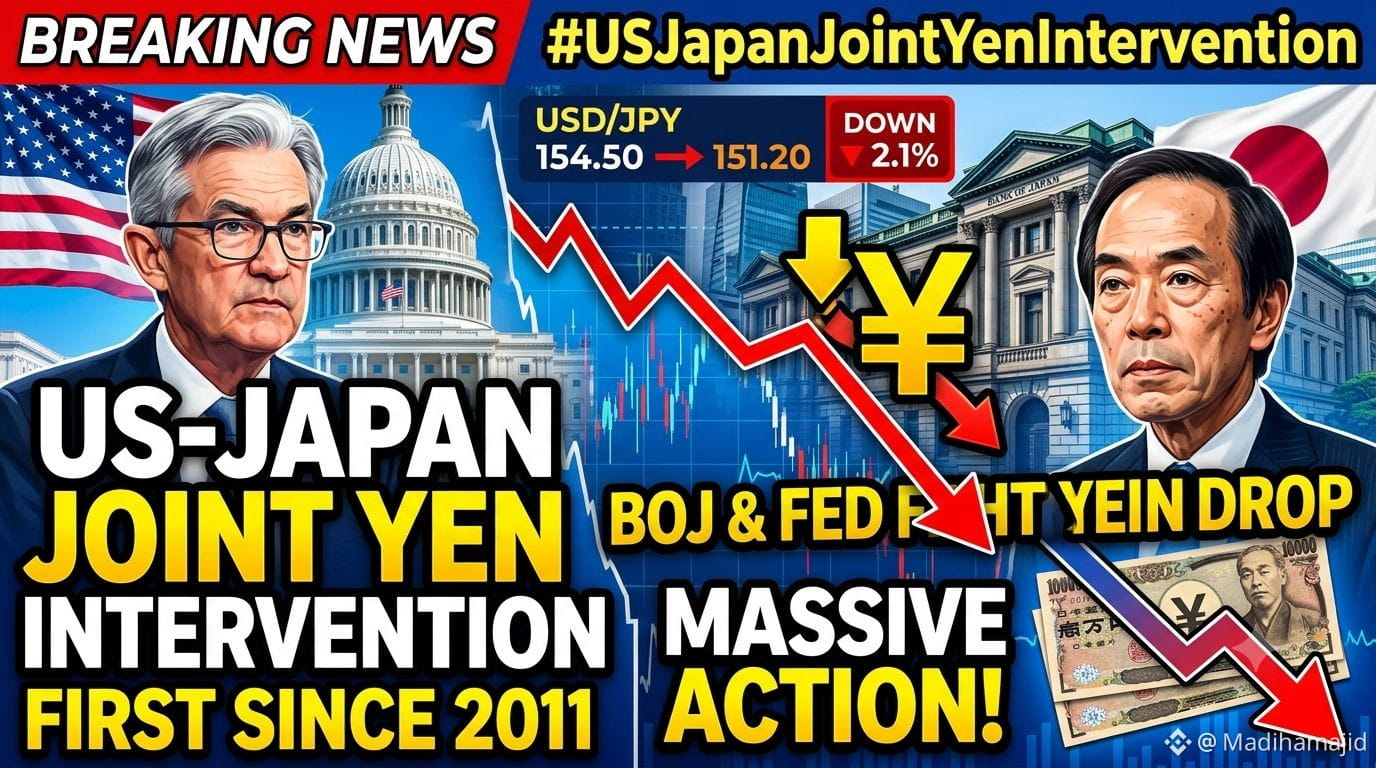
The United States and Japan have reportedly carried out their first joint intervention in the foreign exchange market since 2011, marking a significant step to stabilize the Japanese yen amid heightened currency volatility.
The coordinated action reflects growing concern over the yen's sharp depreciation and its impact on inflation, import costs, and broader financial stability. Joint interventions of this scale are rare and often signal a strong commitment by major economies to restore orderly market conditions.
The move has drawn global attention, as coordinated currency interventions can influence investor sentiment across foreign exchange, bond, and equity markets.
Traders will now watch whether the intervention has a lasting impact on the yen or if additional policy measures from Japanese authorities and central banks become necessary.
The outcome could shape expectations for future monetary policy, regional trade, and global currency markets.
#USJapanJointYenInterventionFirstSince2011
#USJapanJointYenInterventionFirstSince2011
#USJapanJointYenInterventionFirstSince2011
The United States and Japan have reportedly carried out their first joint intervention in the foreign exchange market since 2011, marking a significant step to stabilize the Japanese yen amid heightened currency volatility.
The coordinated action reflects growing concern over the yen's sharp depreciation and its impact on inflation, import costs, and broader financial stability. Joint interventions of this scale are rare and often signal a strong commitment by major economies to restore orderly market conditions.
The move has drawn global attention, as coordinated currency interventions can influence investor sentiment across foreign exchange, bond, and equity markets.
Traders will now watch whether the intervention has a lasting impact on the yen or if additional policy measures from Japanese authorities and central banks become necessary.
The outcome could shape expectations for future monetary policy, regional trade, and global currency markets.
#USJapanJointYenInterventionFirstSince2011
#USJapanJointYenInterventionFirstSince2011
The United States and Japan have reportedly carried out their first joint intervention in the foreign exchange market since 2011, marking a significant step to stabilize the Japanese yen amid heightened currency volatility.
The coordinated action reflects growing concern over the yen's sharp depreciation and its impact on inflation, import costs, and broader financial stability. Joint interventions of this scale are rare and often signal a strong commitment by major economies to restore orderly market conditions.
The move has drawn global attention, as coordinated currency interventions can influence investor sentiment across foreign exchange, bond, and equity markets.
Traders will now watch whether the intervention has a lasting impact on the yen or if additional policy measures from Japanese authorities and central banks become necessary.
The outcome could shape expectations for future monetary policy, regional trade, and global currency markets.
#USJapanJointYenInterventionFirstSince2011
1
90

·
--
#USJapanJointYenInterventionFirstSince2011 : A Rare Currency Move That Could Reshape Global Markets
One of the biggest macro stories this week isn't about stocks or crypto, it's about the Japanese yen.
The United States and Japan have confirmed a coordinated yen-buying intervention, marking the first joint currency intervention since 2011. The move came after the yen weakened to multi-decade lows, raising concerns over imported inflation, financial stability, and broader market disruptions.
What makes this significant is its rarity.
Major economies generally allow currencies to move freely. When two governments step into the foreign exchange market together, it's usually a sign that policymakers believe volatility has become excessive rather than reflecting normal market forces. Following the intervention, the yen strengthened sharply against the U.S. dollar, showing that coordinated action can quickly influence market sentiment.
However, history suggests intervention alone rarely changes a long-term trend. The yen's direction will still depend on the interest-rate gap between the Federal Reserve and the Bank of Japan, inflation dynamics, and future monetary policy decisions. Without those fundamentals shifting, the impact of intervention could fade over time.
My View
I see this as more than a currency story, it's a signal that governments are increasingly willing to act when financial stability is at risk. For investors, this reinforces an important lesson: policy decisions can move markets just as quickly as economic data.
#Write2Earn #BinanceSquare
#USJapanJointYenInterventionFirstSince2011 : A Rare Currency Move That Could Reshape Global Markets
One of the biggest macro stories this week isn't about stocks or crypto, it's about the Japanese yen.
The United States and Japan have confirmed a coordinated yen-buying intervention, marking the first joint currency intervention since 2011. The move came after the yen weakened to multi-decade lows, raising concerns over imported inflation, financial stability, and broader market disruptions.
What makes this significant is its rarity.
Major economies generally allow currencies to move freely. When two governments step into the foreign exchange market together, it's usually a sign that policymakers believe volatility has become excessive rather than reflecting normal market forces. Following the intervention, the yen strengthened sharply against the U.S. dollar, showing that coordinated action can quickly influence market sentiment.
However, history suggests intervention alone rarely changes a long-term trend. The yen's direction will still depend on the interest-rate gap between the Federal Reserve and the Bank of Japan, inflation dynamics, and future monetary policy decisions. Without those fundamentals shifting, the impact of intervention could fade over time.
My View
I see this as more than a currency story, it's a signal that governments are increasingly willing to act when financial stability is at risk. For investors, this reinforces an important lesson: policy decisions can move markets just as quickly as economic data.
#Write2Earn #BinanceSquare
One of the biggest macro stories this week isn't about stocks or crypto, it's about the Japanese yen.
The United States and Japan have confirmed a coordinated yen-buying intervention, marking the first joint currency intervention since 2011. The move came after the yen weakened to multi-decade lows, raising concerns over imported inflation, financial stability, and broader market disruptions.
What makes this significant is its rarity.
Major economies generally allow currencies to move freely. When two governments step into the foreign exchange market together, it's usually a sign that policymakers believe volatility has become excessive rather than reflecting normal market forces. Following the intervention, the yen strengthened sharply against the U.S. dollar, showing that coordinated action can quickly influence market sentiment.
However, history suggests intervention alone rarely changes a long-term trend. The yen's direction will still depend on the interest-rate gap between the Federal Reserve and the Bank of Japan, inflation dynamics, and future monetary policy decisions. Without those fundamentals shifting, the impact of intervention could fade over time.
My View
I see this as more than a currency story, it's a signal that governments are increasingly willing to act when financial stability is at risk. For investors, this reinforces an important lesson: policy decisions can move markets just as quickly as economic data.
#Write2Earn #BinanceSquare
1
2
215

·
--
Haussier
Vérifié
#usjapanjointyeninterventionfirstsince2011 🇺🇸🇯🇵 BREAKING: The U.S. and Japan reportedly carried out their first joint yen intervention since 2011.
This is a major development in global currency markets.
After years of letting the market dictate the yen's direction, both countries have now stepped in together to stabilize the currency. A coordinated intervention of this scale is extremely rare and signals growing concern over excessive FX volatility.
Why does it matter?
🔹 A stronger yen can reshape global capital flows.
🔹 It may impact Japanese exports and multinational earnings.
🔹 Currency moves often spill over into stocks, bonds, commodities, and crypto.
🔹 Traders should also watch how this influences the U.S. dollar, as major FX shifts can change overall market sentiment.
History shows that coordinated interventions don't happen often. When they do, markets pay attention because they usually reflect concerns that go beyond normal price fluctuations.
$PAXG $BTC $USDC #USJapanJointYenInterventionFirstSince2011
{spot}(BTCUSDT)
{spot}(USDCUSDT)
#usjapanjointyeninterventionfirstsince2011 🇺🇸🇯🇵 BREAKING: The U.S. and Japan reportedly carried out their first joint yen intervention since 2011.
This is a major development in global currency markets.
After years of letting the market dictate the yen's direction, both countries have now stepped in together to stabilize the currency. A coordinated intervention of this scale is extremely rare and signals growing concern over excessive FX volatility.
Why does it matter?
🔹 A stronger yen can reshape global capital flows.
🔹 It may impact Japanese exports and multinational earnings.
🔹 Currency moves often spill over into stocks, bonds, commodities, and crypto.
🔹 Traders should also watch how this influences the U.S. dollar, as major FX shifts can change overall market sentiment.
History shows that coordinated interventions don't happen often. When they do, markets pay attention because they usually reflect concerns that go beyond normal price fluctuations.
$PAXG $BTC $USDC #USJapanJointYenInterventionFirstSince2011
This is a major development in global currency markets.
After years of letting the market dictate the yen's direction, both countries have now stepped in together to stabilize the currency. A coordinated intervention of this scale is extremely rare and signals growing concern over excessive FX volatility.
Why does it matter?
🔹 A stronger yen can reshape global capital flows.
🔹 It may impact Japanese exports and multinational earnings.
🔹 Currency moves often spill over into stocks, bonds, commodities, and crypto.
🔹 Traders should also watch how this influences the U.S. dollar, as major FX shifts can change overall market sentiment.
History shows that coordinated interventions don't happen often. When they do, markets pay attention because they usually reflect concerns that go beyond normal price fluctuations.
$PAXG $BTC $USDC #USJapanJointYenInterventionFirstSince2011

1
2
790

·
--
Haussier
#USJapanJointYenInterventionFirstSince2011
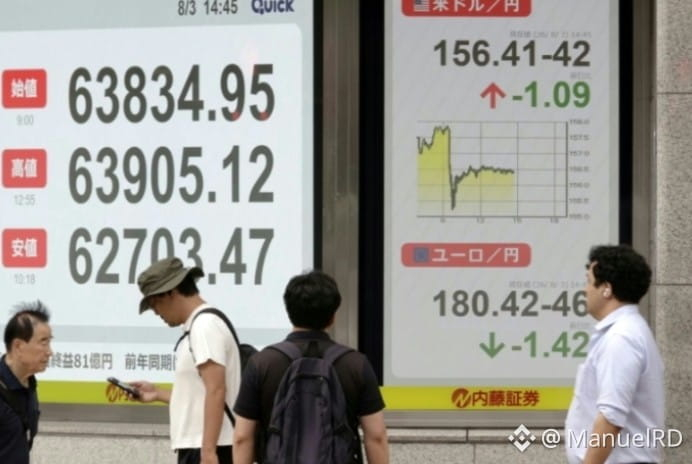
Dentro del pacto entre EE. UU. y Japón para llevar a cabo la primera intervención conjunta en el mercado del yen desde 2011.
Tokio y Washington llevaron a cabo una intervención coordinada de compra de yenes y no dudarán en tomar medidas adicionales, dijo el lunes el Ministerio de Finanzas de Japón, confirmando una inusual medida bilateral para detener la caída del yen a nuevos mínimos de 40 años.
Esta medida puso de manifiesto la determinación de ambos países de evitar que una venta masiva del yen y de los bonos del gobierno japonés (JGB) provocara repercusiones globales, como una mayor presión alcista sobre los rendimientos de los bonos del Tesoro estadounidense, que ya están en alza.
#YenRisesTo156
$NVDAB
{spot}(NVDABUSDT)
$NVDA.US
{stock_us}(NVDA.US)
$BNB
{spot}(BNBUSDT)
#USJapanJointYenInterventionFirstSince2011
Dentro del pacto entre EE. UU. y Japón para llevar a cabo la primera intervención conjunta en el mercado del yen desde 2011.
Tokio y Washington llevaron a cabo una intervención coordinada de compra de yenes y no dudarán en tomar medidas adicionales, dijo el lunes el Ministerio de Finanzas de Japón, confirmando una inusual medida bilateral para detener la caída del yen a nuevos mínimos de 40 años.
Esta medida puso de manifiesto la determinación de ambos países de evitar que una venta masiva del yen y de los bonos del gobierno japonés (JGB) provocara repercusiones globales, como una mayor presión alcista sobre los rendimientos de los bonos del Tesoro estadounidense, que ya están en alza.
#YenRisesTo156
$NVDAB
$NVDA.US
$BNB
Dentro del pacto entre EE. UU. y Japón para llevar a cabo la primera intervención conjunta en el mercado del yen desde 2011.
Tokio y Washington llevaron a cabo una intervención coordinada de compra de yenes y no dudarán en tomar medidas adicionales, dijo el lunes el Ministerio de Finanzas de Japón, confirmando una inusual medida bilateral para detener la caída del yen a nuevos mínimos de 40 años.
Esta medida puso de manifiesto la determinación de ambos países de evitar que una venta masiva del yen y de los bonos del gobierno japonés (JGB) provocara repercusiones globales, como una mayor presión alcista sobre los rendimientos de los bonos del Tesoro estadounidense, que ya están en alza.
#YenRisesTo156
$NVDAB
$NVDA.US
$BNB
1
1
548

·
--
Haussier
Vérifié
#usjapanjointyeninterventionfirstsince2011
🇺🇸🇯🇵 US–Japan Yen Intervention: Why Crypto Tradrs Should Pay Attention
The United States and Japan have confirmed a coordinated intervention to support the Japanese yen, marking their first joint action in the foreign exchange market since 2011. Unlike the post-Fukushima intervention, when authorities worked to weaken the yen, this time they are stepping in to strengthen it.
For crypto markets, this is not an automatic bullish signal.
A common assumption is that a stronger yen leads to a weaker US dollar, which benefits Bitcoin and other digital assets. While that relationship can develop over time, the short-term market reaction is often more complicated.
If the yen appreciates gradually and risk assets remain resilient, a softer dollar could eventually create a more supportive backdrop for cryptocurrencies. However, if the yen rallies too aggressively, investors involved in yen-funded carry trades may be forced to unwind leveraged positions. That process can trigger selling across equities and crypto, reduce open interest, and increase market volatility before conditions stabilize.
Key Signals to Watch
- USD/JPY declines while Bitcoin and Nasdaq remain firm: A healthy market adjustment that may support risk assets over time.
- USD/JPY declines alongside falling stocks and crypto: A potential carry-trade unwind with broader deleveraging across financial markets.
- Additional intervention signals: Increased macro uncertainty and higher volatility across global markets.
The key message is to focus on market reaction rather than headlines. With US and Japanese authorities now showing a willingness to intervene together, currency markets could remain highly sensitive, and unexpected policy actions may continue to influence crypto sentiment.
#USToCancelIranAttackSubjectToDeal
#CardanoRisesNearly10%
#ColdcardHaltsShipmentsAfterFirmwareFlaw
#KOSPIFalls3.28%
{future}(BTCUSDT)
{future}(BICOUSDT)
{future}(CLOUSDT)
#usjapanjointyeninterventionfirstsince2011
🇺🇸🇯🇵 US–Japan Yen Intervention: Why Crypto Tradrs Should Pay Attention
The United States and Japan have confirmed a coordinated intervention to support the Japanese yen, marking their first joint action in the foreign exchange market since 2011. Unlike the post-Fukushima intervention, when authorities worked to weaken the yen, this time they are stepping in to strengthen it.
For crypto markets, this is not an automatic bullish signal.
A common assumption is that a stronger yen leads to a weaker US dollar, which benefits Bitcoin and other digital assets. While that relationship can develop over time, the short-term market reaction is often more complicated.
If the yen appreciates gradually and risk assets remain resilient, a softer dollar could eventually create a more supportive backdrop for cryptocurrencies. However, if the yen rallies too aggressively, investors involved in yen-funded carry trades may be forced to unwind leveraged positions. That process can trigger selling across equities and crypto, reduce open interest, and increase market volatility before conditions stabilize.
Key Signals to Watch
- USD/JPY declines while Bitcoin and Nasdaq remain firm: A healthy market adjustment that may support risk assets over time.
- USD/JPY declines alongside falling stocks and crypto: A potential carry-trade unwind with broader deleveraging across financial markets.
- Additional intervention signals: Increased macro uncertainty and higher volatility across global markets.
The key message is to focus on market reaction rather than headlines. With US and Japanese authorities now showing a willingness to intervene together, currency markets could remain highly sensitive, and unexpected policy actions may continue to influence crypto sentiment.
#USToCancelIranAttackSubjectToDeal
#CardanoRisesNearly10%
#ColdcardHaltsShipmentsAfterFirmwareFlaw
#KOSPIFalls3.28%
🇺🇸🇯🇵 US–Japan Yen Intervention: Why Crypto Tradrs Should Pay Attention
The United States and Japan have confirmed a coordinated intervention to support the Japanese yen, marking their first joint action in the foreign exchange market since 2011. Unlike the post-Fukushima intervention, when authorities worked to weaken the yen, this time they are stepping in to strengthen it.
For crypto markets, this is not an automatic bullish signal.
A common assumption is that a stronger yen leads to a weaker US dollar, which benefits Bitcoin and other digital assets. While that relationship can develop over time, the short-term market reaction is often more complicated.
If the yen appreciates gradually and risk assets remain resilient, a softer dollar could eventually create a more supportive backdrop for cryptocurrencies. However, if the yen rallies too aggressively, investors involved in yen-funded carry trades may be forced to unwind leveraged positions. That process can trigger selling across equities and crypto, reduce open interest, and increase market volatility before conditions stabilize.
Key Signals to Watch
- USD/JPY declines while Bitcoin and Nasdaq remain firm: A healthy market adjustment that may support risk assets over time.
- USD/JPY declines alongside falling stocks and crypto: A potential carry-trade unwind with broader deleveraging across financial markets.
- Additional intervention signals: Increased macro uncertainty and higher volatility across global markets.
The key message is to focus on market reaction rather than headlines. With US and Japanese authorities now showing a willingness to intervene together, currency markets could remain highly sensitive, and unexpected policy actions may continue to influence crypto sentiment.
#USToCancelIranAttackSubjectToDeal
#CardanoRisesNearly10%
#ColdcardHaltsShipmentsAfterFirmwareFlaw
#KOSPIFalls3.28%
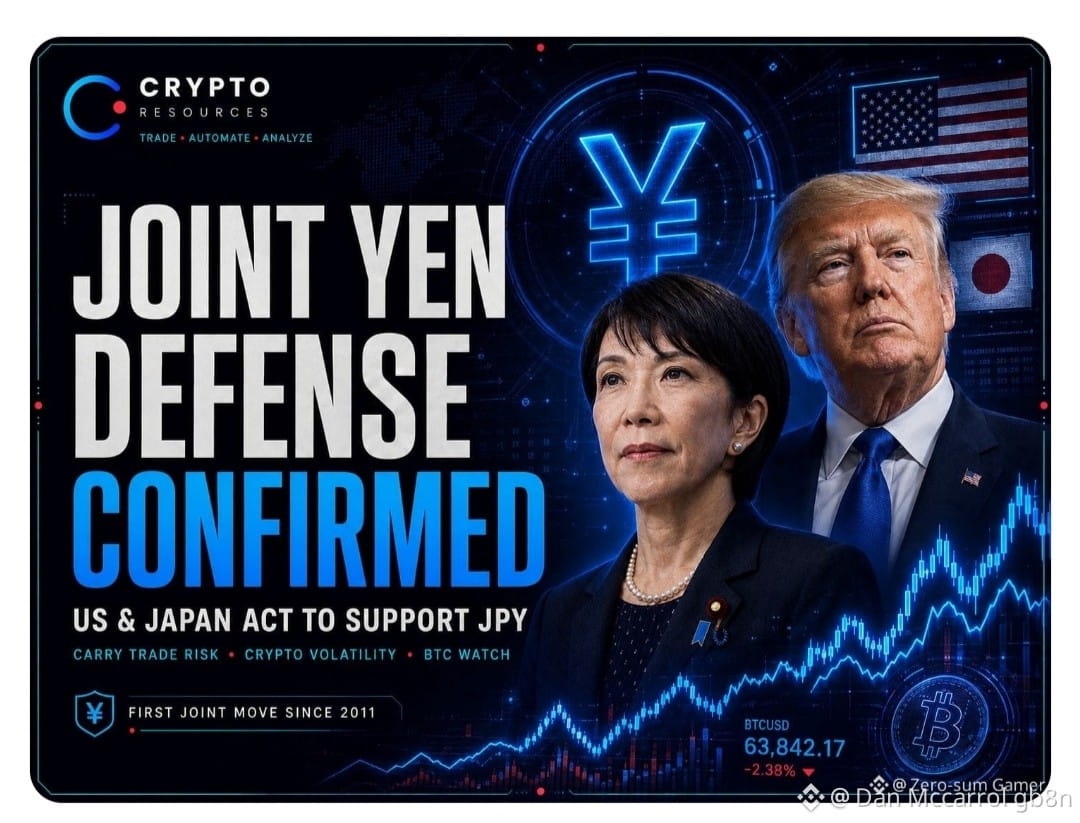
2.7k
·
--
Baissier
Vérifié
#USJapanJointYenInterventionFirstSince2011
Histórico! 🇯🇵🇺🇸
EE.UU. y Japón intervinieron juntos para comprar yenes…
la primera vez desde 2011.
El yen estaba en mínimos de 40 años (cerca de 164) y de un día para otro rebotó con fuerza hasta la zona de 155-157.
Esto no es un movimiento cualquiera.
Cuando dos potencias se coordinan así, el mercado se pone a escuchar.
Como trader, estos eventos macro me recuerdan algo importante:
las oportunidades más grandes no siempre salen de un gráfico de 15 minutos…
a veces salen de entender qué están haciendo los grandes.
Mientras mis hijos juegan, yo estudio estos movimientos.
Porque el trading no es solo números…
es construir un futuro más sólido para ellos. 👨👩👧👦💪
¿Tú cómo ves el USD/JPY después de esta intervención?
¿Crees que aguanta o vuelven a probar los 160?
Comenta 👇 y tradea siempre con cabeza.
#Binance #BinanceSquare #ContadorCripto #CryptoTrading #USDJPY #Forex #Bitcoin #Crypto #Trading #Yen #Mercados
#USJapanJointYenInterventionFirstSince2011
Histórico! 🇯🇵🇺🇸
EE.UU. y Japón intervinieron juntos para comprar yenes…
la primera vez desde 2011.
El yen estaba en mínimos de 40 años (cerca de 164) y de un día para otro rebotó con fuerza hasta la zona de 155-157.
Esto no es un movimiento cualquiera.
Cuando dos potencias se coordinan así, el mercado se pone a escuchar.
Como trader, estos eventos macro me recuerdan algo importante:
las oportunidades más grandes no siempre salen de un gráfico de 15 minutos…
a veces salen de entender qué están haciendo los grandes.
Mientras mis hijos juegan, yo estudio estos movimientos.
Porque el trading no es solo números…
es construir un futuro más sólido para ellos. 👨👩👧👦💪
¿Tú cómo ves el USD/JPY después de esta intervención?
¿Crees que aguanta o vuelven a probar los 160?
Comenta 👇 y tradea siempre con cabeza.
#Binance #BinanceSquare #ContadorCripto #CryptoTrading #USDJPY #Forex #Bitcoin #Crypto #Trading #Yen #Mercados
Histórico! 🇯🇵🇺🇸
EE.UU. y Japón intervinieron juntos para comprar yenes…
la primera vez desde 2011.
El yen estaba en mínimos de 40 años (cerca de 164) y de un día para otro rebotó con fuerza hasta la zona de 155-157.
Esto no es un movimiento cualquiera.
Cuando dos potencias se coordinan así, el mercado se pone a escuchar.
Como trader, estos eventos macro me recuerdan algo importante:
las oportunidades más grandes no siempre salen de un gráfico de 15 minutos…
a veces salen de entender qué están haciendo los grandes.
Mientras mis hijos juegan, yo estudio estos movimientos.
Porque el trading no es solo números…
es construir un futuro más sólido para ellos. 👨👩👧👦💪
¿Tú cómo ves el USD/JPY después de esta intervención?
¿Crees que aguanta o vuelven a probar los 160?
Comenta 👇 y tradea siempre con cabeza.
#Binance #BinanceSquare #ContadorCripto #CryptoTrading #USDJPY #Forex #Bitcoin #Crypto #Trading #Yen #Mercados
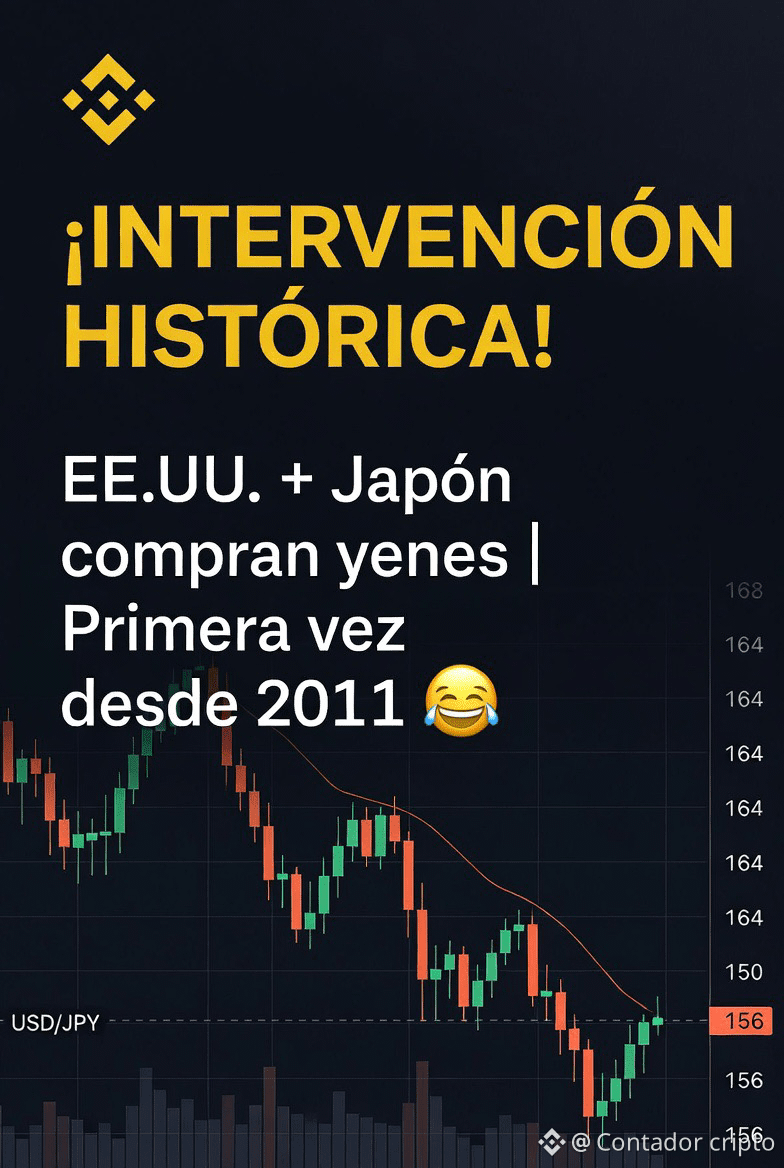
1
592

🚨 Trump Says U.S. Supported Japan Over Weakening Yen
• President Trump said the U.S. stepped in to support the Japanese yen as it weakened.
• He said Japan has “been very good to us.”
• Trump described the move as “good for the world economy.”
• Markets are watching the impact on the yen, dollar and global economy. 🌎📊
#USJapanJointYenInterventionFirstSince2011 #YenRisesTo156 #USToCancelIranAttackSubjectToDeal #ColdcardHaltsShipmentsAfterFirmwareFlaw #CardanoRisesNearly10%
🚨 Trump Says U.S. Supported Japan Over Weakening Yen
• President Trump said the U.S. stepped in to support the Japanese yen as it weakened.
• He said Japan has “been very good to us.”
• Trump described the move as “good for the world economy.”
• Markets are watching the impact on the yen, dollar and global economy. 🌎📊
#USJapanJointYenInterventionFirstSince2011 #YenRisesTo156 #USToCancelIranAttackSubjectToDeal #ColdcardHaltsShipmentsAfterFirmwareFlaw #CardanoRisesNearly10%
• President Trump said the U.S. stepped in to support the Japanese yen as it weakened.
• He said Japan has “been very good to us.”
• Trump described the move as “good for the world economy.”
• Markets are watching the impact on the yen, dollar and global economy. 🌎📊
#USJapanJointYenInterventionFirstSince2011 #YenRisesTo156 #USToCancelIranAttackSubjectToDeal #ColdcardHaltsShipmentsAfterFirmwareFlaw #CardanoRisesNearly10%
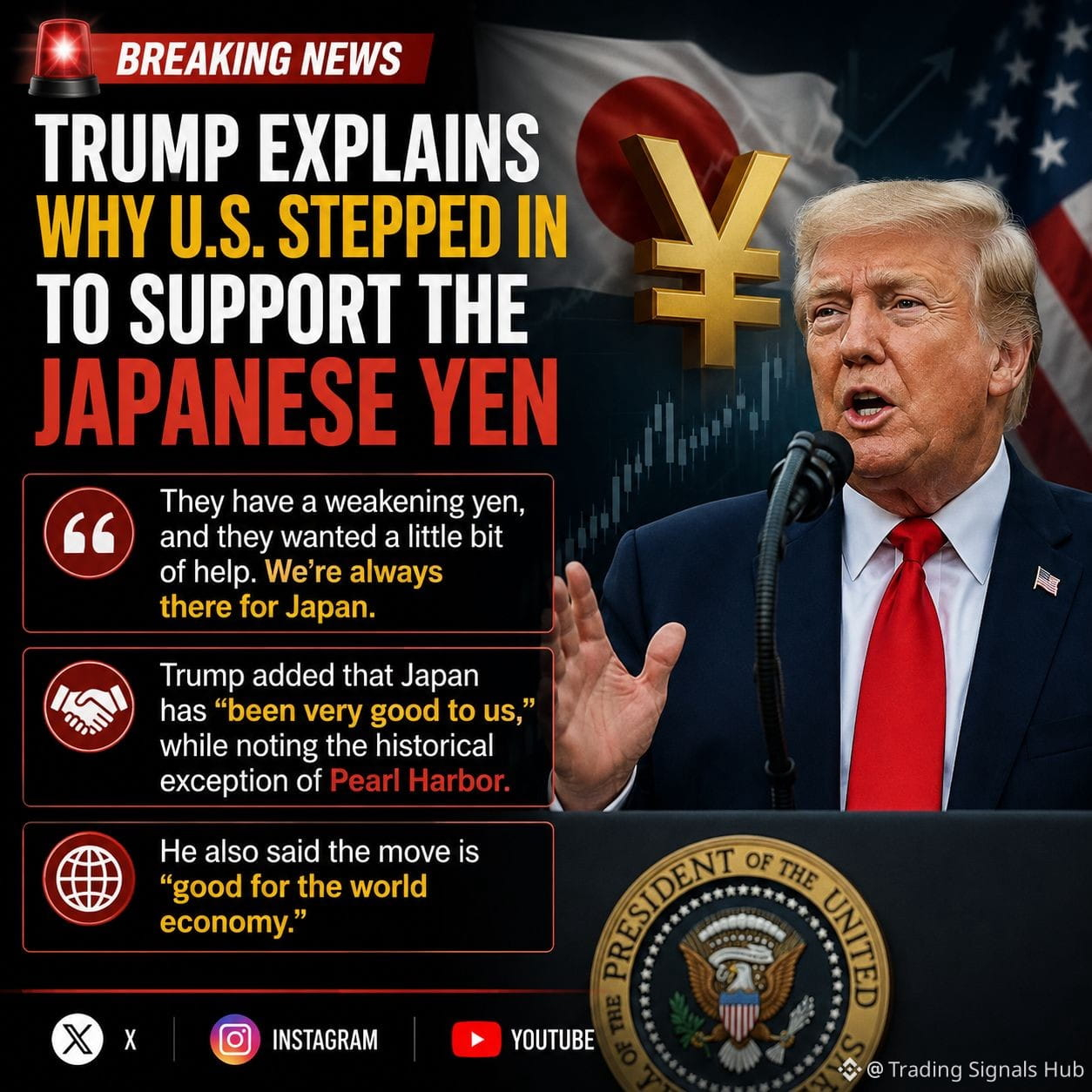
1
1
105

#USJapanJointYenInterventionFirstSince2011 It's a historic FX move — first joint US-Japan yen intervention since 2011.
What happened:
Yen collapsed to a 40-year low last week, hitting ∼163-164 per dollar. Japan intervened first — BoJ data suggests it sold up to $58.97B to buy yen on Thursday. Then the US Treasury joined on Friday, buying yen by selling euros via Goldman and Morgan Stanley. 
That pushed USD/JPY from 164 down to 157 in 2 days — a 4% jump for yen. 
Why it matters:
Last joint action was March 18, 2011, when G7 sold yen after the Tohoku earthquake to stop yen from surging. This time it was the opposite — to strengthen yen. 
Officials confirmed Monday:
• Treasury Sec. Scott Bessent: action "countered disorderly yen movements"
• Finance Minister Satsuki Katayama confirmed the joint move
Why US joined:
Analysts say it was to prevent yen/JGB selloff spilling into US Treasuries. Japan is the biggest foreign holder of US debt, and solo intervention would mean selling Treasuries and pushing US yields higher. $BNB
{spot}(BNBUSDT)
$SOL
{spot}(SOLUSDT)
$BTC
{spot}(BTCUSDT)
#USJapanJointYenInterventionFirstSince2011
#USJapanJointYenInterventionFirstSince2011 It's a historic FX move — first joint US-Japan yen intervention since 2011.
What happened:
Yen collapsed to a 40-year low last week, hitting ∼163-164 per dollar. Japan intervened first — BoJ data suggests it sold up to $58.97B to buy yen on Thursday. Then the US Treasury joined on Friday, buying yen by selling euros via Goldman and Morgan Stanley. 
That pushed USD/JPY from 164 down to 157 in 2 days — a 4% jump for yen. 
Why it matters:
Last joint action was March 18, 2011, when G7 sold yen after the Tohoku earthquake to stop yen from surging. This time it was the opposite — to strengthen yen. 
Officials confirmed Monday:
• Treasury Sec. Scott Bessent: action "countered disorderly yen movements"
• Finance Minister Satsuki Katayama confirmed the joint move
Why US joined:
Analysts say it was to prevent yen/JGB selloff spilling into US Treasuries. Japan is the biggest foreign holder of US debt, and solo intervention would mean selling Treasuries and pushing US yields higher. $BNB
$SOL
$BTC
#USJapanJointYenInterventionFirstSince2011
What happened:
Yen collapsed to a 40-year low last week, hitting ∼163-164 per dollar. Japan intervened first — BoJ data suggests it sold up to $58.97B to buy yen on Thursday. Then the US Treasury joined on Friday, buying yen by selling euros via Goldman and Morgan Stanley. 
That pushed USD/JPY from 164 down to 157 in 2 days — a 4% jump for yen. 
Why it matters:
Last joint action was March 18, 2011, when G7 sold yen after the Tohoku earthquake to stop yen from surging. This time it was the opposite — to strengthen yen. 
Officials confirmed Monday:
• Treasury Sec. Scott Bessent: action "countered disorderly yen movements"
• Finance Minister Satsuki Katayama confirmed the joint move
Why US joined:
Analysts say it was to prevent yen/JGB selloff spilling into US Treasuries. Japan is the biggest foreign holder of US debt, and solo intervention would mean selling Treasuries and pushing US yields higher. $BNB
$SOL
$BTC
#USJapanJointYenInterventionFirstSince2011
120
Connectez-vous pour découvrir plus de contenu
Rejoignez la communauté mondiale des adeptes de cryptomonnaies sur Binance Square
⚡️ Suviez les dernières informations importantes sur les cryptomonnaies.
💬 Jugé digne de confiance par la plus grande plateforme d’échange de cryptomonnaies au monde.
👍 Découvrez les connaissances que partagent les créateurs vérifiés.
Adresse e-mail/Nº de téléphone
Sujets d’actualité
1
#TrumpRejectsAIRulesForVoluntaryAudits
900 vues
112 mentions
2
#BitgetHotWalletBreachTiedToThirdPartySecurityFlaw
371 vues
87 mentions
3
#OpenAIUnveilsAlwaysOnAgentDots
1,532 vues
135 mentions
4
#ChainlinkLaunchesBankSWIFTLedgerFramework
3,117 vues
122 mentions
5
#EarningsSeason
442,347 vues
3,341 mentions
6
#SECChairWantsStockMarketsOnChain
6,495 vues
192 mentions
7
#MulticoinInvestsInGrass
3,918 vues
134 mentions
8
#CEARenamesToBNBStandardUnderBNC
5,035 vues
135 mentions
9
#BitwiseLaunchesFirstSpotNEARETF
60,279 vues
767 mentions
10
#USJobOpeningsFallToFiveMonthLow
64,182 vues
601 mentions