

#tokenunlocks
tokenunlocks
1.1M vues
1,425 mentions
Populaire
Récents

·
--
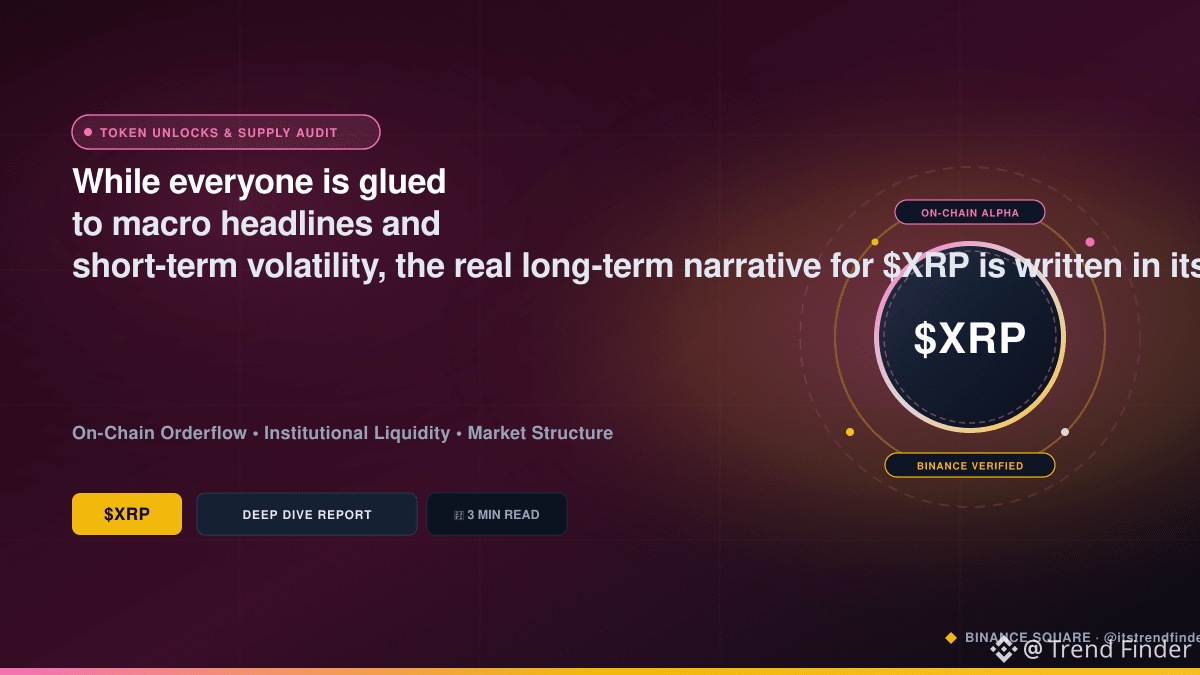
While everyone is glued to macro headlines and short-term volatility, the real long-term narrative for $XRP is written in its predictable on-chain tokenomics and supply mechanics.
Let's look at the hard data. Every month, Ripple unlocks 1 billion XRP from its escrow system, hovering around the 1.501 spot price region lately without causing major shocks. The reason is simple structure: a large portion, typically 700 to 800 million XRP, gets locked right back into new escrow contracts. That leaves a net new monthly supply increase of just 200 to 300 million tokens. With roughly 37 billion XRP still locked away, this controlled drip is programmed to stretch out for another decade, preventing any sudden supply flooding on the open market.
On the flip side, the XRPL utilizes a built-in fee burn mechanism where a tiny fraction of XRP is permanently destroyed with every single transaction. While about 14 million tokens have been burned since the network inception, the current daily burn rate sits around 373 XRP. This means the burn is more of an anti-spam feature than a true supply reducer, as the controlled escrow inflation still outpaces the burn rate by a wide margin.
Meanwhile, whale activity has added an interesting layer to the order books. Recent on-chain tracking shows over 104 million XRP leaving major exchanges like Binance and Upbit, pointing toward steady accumulation and cold storage moves by large-scale holders even during price consolidation phases. As critical network upgrades geared toward institutional utility roll out this month, the real question is whether upcoming utility demand can outpace this steady, predictable supply schedule.
What do you think is the bigger driver for XRP over the coming quarters - continuous whale accumulation or the ongoing escrow unlock schedule?
#TokenUnlocks #Tokenomics
While everyone is glued to macro headlines and short-term volatility, the real long-term narrative for $XRP is written in its predictable on-chain tokenomics and supply mechanics.
Let's look at the hard data. Every month, Ripple unlocks 1 billion XRP from its escrow system, hovering around the 1.501 spot price region lately without causing major shocks. The reason is simple structure: a large portion, typically 700 to 800 million XRP, gets locked right back into new escrow contracts. That leaves a net new monthly supply increase of just 200 to 300 million tokens. With roughly 37 billion XRP still locked away, this controlled drip is programmed to stretch out for another decade, preventing any sudden supply flooding on the open market.
On the flip side, the XRPL utilizes a built-in fee burn mechanism where a tiny fraction of XRP is permanently destroyed with every single transaction. While about 14 million tokens have been burned since the network inception, the current daily burn rate sits around 373 XRP. This means the burn is more of an anti-spam feature than a true supply reducer, as the controlled escrow inflation still outpaces the burn rate by a wide margin.
Meanwhile, whale activity has added an interesting layer to the order books. Recent on-chain tracking shows over 104 million XRP leaving major exchanges like Binance and Upbit, pointing toward steady accumulation and cold storage moves by large-scale holders even during price consolidation phases. As critical network upgrades geared toward institutional utility roll out this month, the real question is whether upcoming utility demand can outpace this steady, predictable supply schedule.
What do you think is the bigger driver for XRP over the coming quarters - continuous whale accumulation or the ongoing escrow unlock schedule?
#TokenUnlocks #Tokenomics
Let's look at the hard data. Every month, Ripple unlocks 1 billion XRP from its escrow system, hovering around the 1.501 spot price region lately without causing major shocks. The reason is simple structure: a large portion, typically 700 to 800 million XRP, gets locked right back into new escrow contracts. That leaves a net new monthly supply increase of just 200 to 300 million tokens. With roughly 37 billion XRP still locked away, this controlled drip is programmed to stretch out for another decade, preventing any sudden supply flooding on the open market.
On the flip side, the XRPL utilizes a built-in fee burn mechanism where a tiny fraction of XRP is permanently destroyed with every single transaction. While about 14 million tokens have been burned since the network inception, the current daily burn rate sits around 373 XRP. This means the burn is more of an anti-spam feature than a true supply reducer, as the controlled escrow inflation still outpaces the burn rate by a wide margin.
Meanwhile, whale activity has added an interesting layer to the order books. Recent on-chain tracking shows over 104 million XRP leaving major exchanges like Binance and Upbit, pointing toward steady accumulation and cold storage moves by large-scale holders even during price consolidation phases. As critical network upgrades geared toward institutional utility roll out this month, the real question is whether upcoming utility demand can outpace this steady, predictable supply schedule.
What do you think is the bigger driver for XRP over the coming quarters - continuous whale accumulation or the ongoing escrow unlock schedule?
#TokenUnlocks #Tokenomics
Astrian_7:
You don't know what you're saying, although there's little truth in it.
2
1
28

·
--
Vérifié
Article
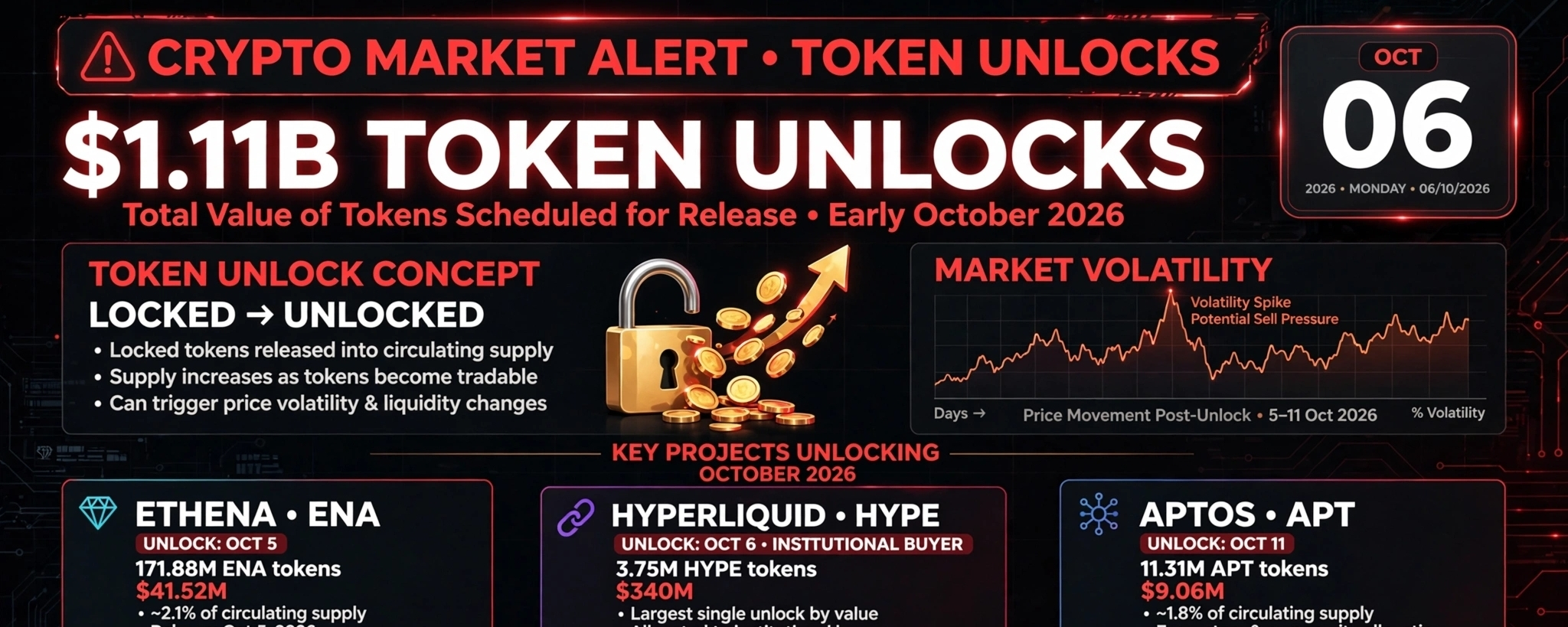
🔓 CRYPTO MARKET FACES $1.11 BILLION IN TOKEN UNLOCKS! ⚠️📉📅 06/10/2026
## 📰 WHAT HAPPENED?
The crypto market is set to receive about $1.11 billion in token unlocks in early October 2026. 💰 Several major projects are scheduled to release new supply, and traders are watching closely to see how the market absorbs it. 👀
According to NS3.AI, the biggest unlocks include Hyperliquid (HYPE), Ethena (ENA) and Aptos (APT). 🔥
## 🧠 WHAT IS A TOKEN UNLOCK? (SIMPLE EXPLANATION)
📌 Many crypto projects lock a portion of their tokens for the team, investors and contributors.
📌 These tokens are released on a fixed schedule (vesting).
📌 When tokens unlock, the circulating supply increases, and that can create selling pressure if recipients decide to sell. 📊
## 📅 THE BIG UNLOCKS THIS WEEK
🟣 Ethena (ENA), October 5
⚡ Amount: 171.88 million ENA
💵 Value: about $41.52 million
👥 Recipients: core contributors and investors
🔵 Hyperliquid (HYPE), October 6
⚡ Amount: 3.75 million HYPE
💵 Value: about $340 million
🏦 The team previously said the unlocked supply will go to one institutional buyer
🟢 Aptos (APT), October 11
⚡ Amount: 11.31 million APT
💵 Value: about $9.06 million
## 🔍 WHY THE HYPE UNLOCK STANDS OUT
The HYPE unlock is by far the largest, making up most of the $1.11 billion total. 🐋
The key detail is that the team said the tokens are going to a single institutional buyer. 🏛️ That can be read two ways:
🟢 Positive view: Supply going to one large buyer, rather than being spread across many holders, may mean less immediate dumping on the open market. It also signals institutional interest in the project. 💪
🔴 Cautious view: A large holder can still sell later, and concentrated ownership means a single decision could move the market. ⚠️
## 📈 THE BULLISH CASE
✅ Unlocks are scheduled and known in advance, so much of the impact may already be priced in. 📅
✅ Institutional buying of unlocked supply suggests real demand. 🏦
✅ Strong projects with growing adoption can absorb new supply. 🌊
✅ If the market is strong, unlocks may pass with little price impact. 🚀
## 📉 THE BEARISH CASE
⚠️ More supply entering circulation can create selling pressure. 🔻
⚠️ Early investors and contributors may take profits. 💸
⚠️ Traders may short or reduce positions ahead of the unlock date. 📊
⚠️ Weak overall sentiment can make unlock-related selling hit harder. 🌍
## 🧭 WHAT TO WATCH
👁️ Price reaction around the unlock dates, both before and after 📉📈
👁️ Trading volume and any sudden spikes 📊
👁️ Exchange inflows: tokens moving to exchanges can signal intent to sell 🏦
👁️ Key support levels on HYPE, ENA and APT 🎯
👁️ Overall market sentiment and Bitcoin's direction ₿
## 🛡️ SMART TRADER CHECKLIST
✅ Check official unlock schedules before opening positions 📅
✅ Don't assume every unlock means a price drop, since the reaction varies by project 🔍
✅ Use a stop-loss and manage position size 🎯
✅ Avoid excessive leverage during volatile periods ⚡
✅ Never invest more than you can afford to lose 💰
## 📌 SUMMARY
$1.11 billion in token unlocks may add volatility to the crypto market in early October 2026. 🌊 The HYPE unlock on October 6 is the largest, followed by ENA on October 5 and APT on October 11. 📅
Unlocks can pressure prices in the short term, but they are not automatically bearish. 🚦 What matters most is who receives the tokens, whether they sell, and how strong market demand is. 📈
Stay alert, plan your trades, and let the data guide your decisions. 🧠✨
💬 Do you think these unlocks will hit the market, or are they already priced in? 👇
⚠️
## 🏷️
#TokenUnlocks #HYPE #Ethena #Aptos #DriftHackVictimsBeginClaims
$XRP
🔓 CRYPTO MARKET FACES $1.11 BILLION IN TOKEN UNLOCKS! ⚠️📉
📅 06/10/2026
## 📰 WHAT HAPPENED?
The crypto market is set to receive about $1.11 billion in token unlocks in early October 2026. 💰 Several major projects are scheduled to release new supply, and traders are watching closely to see how the market absorbs it. 👀
According to NS3.AI, the biggest unlocks include Hyperliquid (HYPE), Ethena (ENA) and Aptos (APT). 🔥
## 🧠 WHAT IS A TOKEN UNLOCK? (SIMPLE EXPLANATION)
📌 Many crypto projects lock a portion of their tokens for the team, investors and contributors.
📌 These tokens are released on a fixed schedule (vesting).
📌 When tokens unlock, the circulating supply increases, and that can create selling pressure if recipients decide to sell. 📊
## 📅 THE BIG UNLOCKS THIS WEEK
🟣 Ethena (ENA), October 5
⚡ Amount: 171.88 million ENA
💵 Value: about $41.52 million
👥 Recipients: core contributors and investors
🔵 Hyperliquid (HYPE), October 6
⚡ Amount: 3.75 million HYPE
💵 Value: about $340 million
🏦 The team previously said the unlocked supply will go to one institutional buyer
🟢 Aptos (APT), October 11
⚡ Amount: 11.31 million APT
💵 Value: about $9.06 million
## 🔍 WHY THE HYPE UNLOCK STANDS OUT
The HYPE unlock is by far the largest, making up most of the $1.11 billion total. 🐋
The key detail is that the team said the tokens are going to a single institutional buyer. 🏛️ That can be read two ways:
🟢 Positive view: Supply going to one large buyer, rather than being spread across many holders, may mean less immediate dumping on the open market. It also signals institutional interest in the project. 💪
🔴 Cautious view: A large holder can still sell later, and concentrated ownership means a single decision could move the market. ⚠️
## 📈 THE BULLISH CASE
✅ Unlocks are scheduled and known in advance, so much of the impact may already be priced in. 📅
✅ Institutional buying of unlocked supply suggests real demand. 🏦
✅ Strong projects with growing adoption can absorb new supply. 🌊
✅ If the market is strong, unlocks may pass with little price impact. 🚀
## 📉 THE BEARISH CASE
⚠️ More supply entering circulation can create selling pressure. 🔻
⚠️ Early investors and contributors may take profits. 💸
⚠️ Traders may short or reduce positions ahead of the unlock date. 📊
⚠️ Weak overall sentiment can make unlock-related selling hit harder. 🌍
## 🧭 WHAT TO WATCH
👁️ Price reaction around the unlock dates, both before and after 📉📈
👁️ Trading volume and any sudden spikes 📊
👁️ Exchange inflows: tokens moving to exchanges can signal intent to sell 🏦
👁️ Key support levels on HYPE, ENA and APT 🎯
👁️ Overall market sentiment and Bitcoin's direction ₿
## 🛡️ SMART TRADER CHECKLIST
✅ Check official unlock schedules before opening positions 📅
✅ Don't assume every unlock means a price drop, since the reaction varies by project 🔍
✅ Use a stop-loss and manage position size 🎯
✅ Avoid excessive leverage during volatile periods ⚡
✅ Never invest more than you can afford to lose 💰
## 📌 SUMMARY
$1.11 billion in token unlocks may add volatility to the crypto market in early October 2026. 🌊 The HYPE unlock on October 6 is the largest, followed by ENA on October 5 and APT on October 11. 📅
Unlocks can pressure prices in the short term, but they are not automatically bearish. 🚦 What matters most is who receives the tokens, whether they sell, and how strong market demand is. 📈
Stay alert, plan your trades, and let the data guide your decisions. 🧠✨
💬 Do you think these unlocks will hit the market, or are they already priced in? 👇
⚠️
## 🏷️
#TokenUnlocks #HYPE #Ethena #Aptos #DriftHackVictimsBeginClaims
$XRP
## 📰 WHAT HAPPENED?
The crypto market is set to receive about $1.11 billion in token unlocks in early October 2026. 💰 Several major projects are scheduled to release new supply, and traders are watching closely to see how the market absorbs it. 👀
According to NS3.AI, the biggest unlocks include Hyperliquid (HYPE), Ethena (ENA) and Aptos (APT). 🔥
## 🧠 WHAT IS A TOKEN UNLOCK? (SIMPLE EXPLANATION)
📌 Many crypto projects lock a portion of their tokens for the team, investors and contributors.
📌 These tokens are released on a fixed schedule (vesting).
📌 When tokens unlock, the circulating supply increases, and that can create selling pressure if recipients decide to sell. 📊
## 📅 THE BIG UNLOCKS THIS WEEK
🟣 Ethena (ENA), October 5
⚡ Amount: 171.88 million ENA
💵 Value: about $41.52 million
👥 Recipients: core contributors and investors
🔵 Hyperliquid (HYPE), October 6
⚡ Amount: 3.75 million HYPE
💵 Value: about $340 million
🏦 The team previously said the unlocked supply will go to one institutional buyer
🟢 Aptos (APT), October 11
⚡ Amount: 11.31 million APT
💵 Value: about $9.06 million
## 🔍 WHY THE HYPE UNLOCK STANDS OUT
The HYPE unlock is by far the largest, making up most of the $1.11 billion total. 🐋
The key detail is that the team said the tokens are going to a single institutional buyer. 🏛️ That can be read two ways:
🟢 Positive view: Supply going to one large buyer, rather than being spread across many holders, may mean less immediate dumping on the open market. It also signals institutional interest in the project. 💪
🔴 Cautious view: A large holder can still sell later, and concentrated ownership means a single decision could move the market. ⚠️
## 📈 THE BULLISH CASE
✅ Unlocks are scheduled and known in advance, so much of the impact may already be priced in. 📅
✅ Institutional buying of unlocked supply suggests real demand. 🏦
✅ Strong projects with growing adoption can absorb new supply. 🌊
✅ If the market is strong, unlocks may pass with little price impact. 🚀
## 📉 THE BEARISH CASE
⚠️ More supply entering circulation can create selling pressure. 🔻
⚠️ Early investors and contributors may take profits. 💸
⚠️ Traders may short or reduce positions ahead of the unlock date. 📊
⚠️ Weak overall sentiment can make unlock-related selling hit harder. 🌍
## 🧭 WHAT TO WATCH
👁️ Price reaction around the unlock dates, both before and after 📉📈
👁️ Trading volume and any sudden spikes 📊
👁️ Exchange inflows: tokens moving to exchanges can signal intent to sell 🏦
👁️ Key support levels on HYPE, ENA and APT 🎯
👁️ Overall market sentiment and Bitcoin's direction ₿
## 🛡️ SMART TRADER CHECKLIST
✅ Check official unlock schedules before opening positions 📅
✅ Don't assume every unlock means a price drop, since the reaction varies by project 🔍
✅ Use a stop-loss and manage position size 🎯
✅ Avoid excessive leverage during volatile periods ⚡
✅ Never invest more than you can afford to lose 💰
## 📌 SUMMARY
$1.11 billion in token unlocks may add volatility to the crypto market in early October 2026. 🌊 The HYPE unlock on October 6 is the largest, followed by ENA on October 5 and APT on October 11. 📅
Unlocks can pressure prices in the short term, but they are not automatically bearish. 🚦 What matters most is who receives the tokens, whether they sell, and how strong market demand is. 📈
Stay alert, plan your trades, and let the data guide your decisions. 🧠✨
💬 Do you think these unlocks will hit the market, or are they already priced in? 👇
⚠️
## 🏷️
#TokenUnlocks #HYPE #Ethena #Aptos #DriftHackVictimsBeginClaims
$XRP
667

·
--
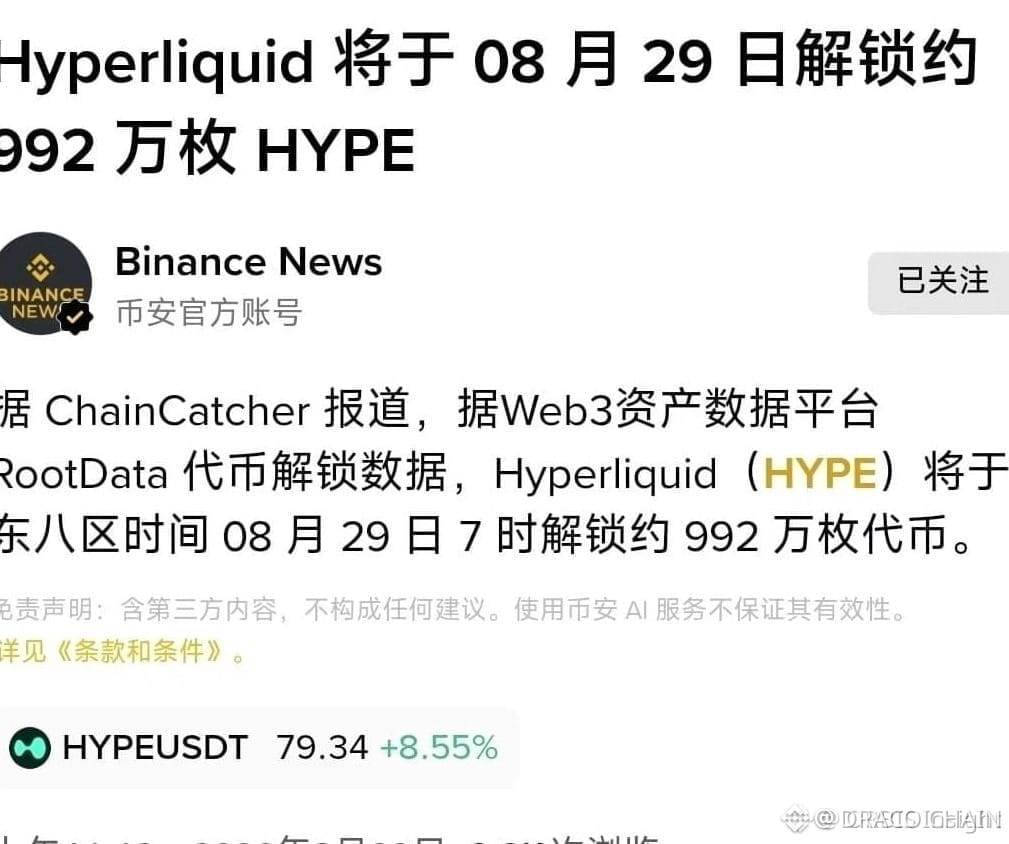
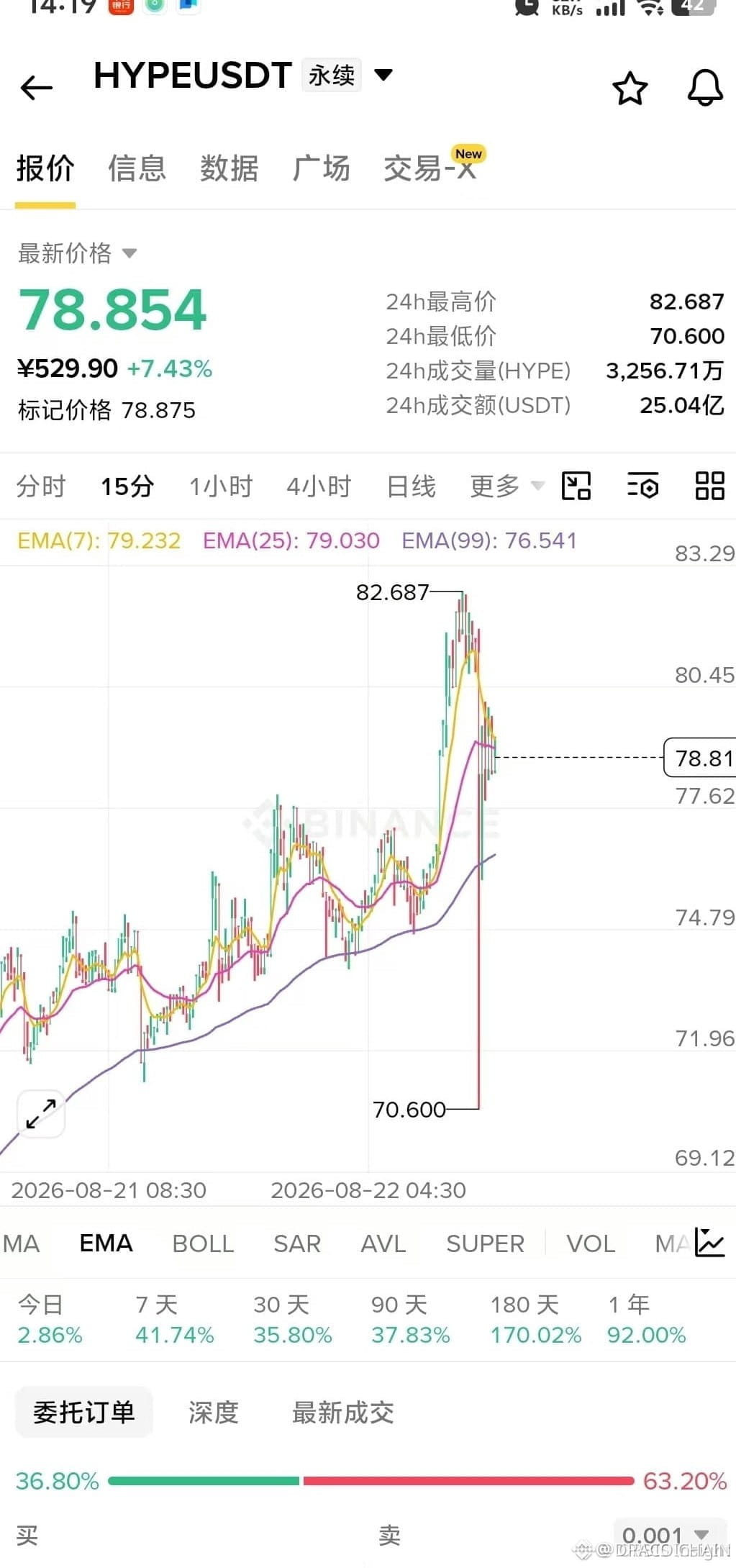
🚨 $HYPE FACES MASSIVE LIQUIDITY DILUTION AS 800M MONTHLY UNLOCK OVERHANG LOOMS! 📉
🔍 Structural supply pressure is mounting for $HYPE as an estimated 800 million USD token unlock schedule begins unleashing monthly market supply over the next year. Institutional distribution from zero-cost allocation pools creates a heavy overhead resistance zone, severely capping organic upside momentum.
📊 Order book depth will struggle to absorb this magnitude of persistent supply without significant buy-side order flow intervention. Smart money typically avoids bidding into aggressive structural dilution until lower key demand zones clear the inefficiency. 💬 How are you positioning against this incoming supply overhang? 👇
⚠️ Not financial advice. Always manage your risk. 🛡️
🏷️ #HYPE #ShortSetup #TokenUnlocks #Crypto
🐻 📉
🚨 $HYPE FACES MASSIVE LIQUIDITY DILUTION AS 800M MONTHLY UNLOCK OVERHANG LOOMS! 📉
🔍 Structural supply pressure is mounting for $HYPE as an estimated 800 million USD token unlock schedule begins unleashing monthly market supply over the next year. Institutional distribution from zero-cost allocation pools creates a heavy overhead resistance zone, severely capping organic upside momentum.
📊 Order book depth will struggle to absorb this magnitude of persistent supply without significant buy-side order flow intervention. Smart money typically avoids bidding into aggressive structural dilution until lower key demand zones clear the inefficiency. 💬 How are you positioning against this incoming supply overhang? 👇
⚠️ Not financial advice. Always manage your risk. 🛡️
🏷️ #HYPE #ShortSetup #TokenUnlocks #Crypto
🐻 📉
🔍 Structural supply pressure is mounting for $HYPE as an estimated 800 million USD token unlock schedule begins unleashing monthly market supply over the next year. Institutional distribution from zero-cost allocation pools creates a heavy overhead resistance zone, severely capping organic upside momentum.
📊 Order book depth will struggle to absorb this magnitude of persistent supply without significant buy-side order flow intervention. Smart money typically avoids bidding into aggressive structural dilution until lower key demand zones clear the inefficiency. 💬 How are you positioning against this incoming supply overhang? 👇
⚠️ Not financial advice. Always manage your risk. 🛡️
🏷️ #HYPE #ShortSetup #TokenUnlocks #Crypto
🐻 📉
40
·
--
Let's look past the intraday chop and dig straight into the supply mechanics driving $SOL right now with the token trading around 120.88. Everyone talks about the price action, but the structural shift in Solana tokenomics heading through late 2026 is where the real story sits.
The circulating supply currently hovers near 588 million tokens, but what keeps catching my attention is the massive staking commitment. Around 69 percent of eligible supply is locked up securely in staking, keeping a massive chunk of tokens completely out of immediate spot circulation and proving strong long-term holder conviction.
Of course, supply additions are still happening. We are tracking a legacy Alameda/FTX bankruptcy-related unlock hitting in about three days for 472,602 tokens, worth roughly 57 million dollars. It is a minor blip at about 0.09 percent of total supply, but a reminder that legacy lock-ups take time to clear. On top of that, weekly staking rewards inject around 401,600 tokens into the circulating pool.
The disinflationary shift is where things get interesting. Following the passing of the SGP-0002 governance proposal, the network effectively doubled its disinflation rate to 30 percent annually, putting the target 1.5 percent floor on track to hit in less than three years. At the same time, burn mechanics are getting a much-needed audit. Current transaction fee burns sit around 648 tokens daily against roughly 60,000 issued from inflation. However, community discussions around SIP-547 aim to overhaul this by routing resource-based fees straight to burns, potentially pushing daily burn velocity closer to 1,800 tokens as network usage smashes records with over 14 billion transactions processed last quarter.
Are these accelerated disinflation schedules and burn tweaks fast enough to offset network issuance down the line, or do we need deeper structural overhauls to reach true deflation? Drop your thoughts below.
#TokenUnlocks #Tokenomics
Let's look past the intraday chop and dig straight into the supply mechanics driving $SOL right now with the token trading around 120.88. Everyone talks about the price action, but the structural shift in Solana tokenomics heading through late 2026 is where the real story sits.
The circulating supply currently hovers near 588 million tokens, but what keeps catching my attention is the massive staking commitment. Around 69 percent of eligible supply is locked up securely in staking, keeping a massive chunk of tokens completely out of immediate spot circulation and proving strong long-term holder conviction.
Of course, supply additions are still happening. We are tracking a legacy Alameda/FTX bankruptcy-related unlock hitting in about three days for 472,602 tokens, worth roughly 57 million dollars. It is a minor blip at about 0.09 percent of total supply, but a reminder that legacy lock-ups take time to clear. On top of that, weekly staking rewards inject around 401,600 tokens into the circulating pool.
The disinflationary shift is where things get interesting. Following the passing of the SGP-0002 governance proposal, the network effectively doubled its disinflation rate to 30 percent annually, putting the target 1.5 percent floor on track to hit in less than three years. At the same time, burn mechanics are getting a much-needed audit. Current transaction fee burns sit around 648 tokens daily against roughly 60,000 issued from inflation. However, community discussions around SIP-547 aim to overhaul this by routing resource-based fees straight to burns, potentially pushing daily burn velocity closer to 1,800 tokens as network usage smashes records with over 14 billion transactions processed last quarter.
Are these accelerated disinflation schedules and burn tweaks fast enough to offset network issuance down the line, or do we need deeper structural overhauls to reach true deflation? Drop your thoughts below.
#TokenUnlocks #Tokenomics
The circulating supply currently hovers near 588 million tokens, but what keeps catching my attention is the massive staking commitment. Around 69 percent of eligible supply is locked up securely in staking, keeping a massive chunk of tokens completely out of immediate spot circulation and proving strong long-term holder conviction.
Of course, supply additions are still happening. We are tracking a legacy Alameda/FTX bankruptcy-related unlock hitting in about three days for 472,602 tokens, worth roughly 57 million dollars. It is a minor blip at about 0.09 percent of total supply, but a reminder that legacy lock-ups take time to clear. On top of that, weekly staking rewards inject around 401,600 tokens into the circulating pool.
The disinflationary shift is where things get interesting. Following the passing of the SGP-0002 governance proposal, the network effectively doubled its disinflation rate to 30 percent annually, putting the target 1.5 percent floor on track to hit in less than three years. At the same time, burn mechanics are getting a much-needed audit. Current transaction fee burns sit around 648 tokens daily against roughly 60,000 issued from inflation. However, community discussions around SIP-547 aim to overhaul this by routing resource-based fees straight to burns, potentially pushing daily burn velocity closer to 1,800 tokens as network usage smashes records with over 14 billion transactions processed last quarter.
Are these accelerated disinflation schedules and burn tweaks fast enough to offset network issuance down the line, or do we need deeper structural overhauls to reach true deflation? Drop your thoughts below.
#TokenUnlocks #Tokenomics
1
15

·
--
$CARV is Going wild ...
But here is the Dark part In this week their is major Token Unlock 🔓 of $CARV Tokens.
Which May Dump the price .
{future}(CARVUSDT)
#Carv #CARVUSDT #tokenunlocks
$CARV is Going wild ...
But here is the Dark part In this week their is major Token Unlock 🔓 of $CARV Tokens.
Which May Dump the price .
#Carv #CARVUSDT #tokenunlocks
But here is the Dark part In this week their is major Token Unlock 🔓 of $CARV Tokens.
Which May Dump the price .
#Carv #CARVUSDT #tokenunlocks

1
180
·
--
Focusing on supply dynamics while $FET hovers around 0.2566. Price action is fine, but the real impact comes from upcoming vesting cliffs and token unlocks. Ecosystem releases are one thing, but early investor exits shift the floor. Net inflation and staking ratios tell the true story for long-term holders. _
#TokenUnlocks #Tokenomics #FET
Focusing on supply dynamics while $FET hovers around 0.2566. Price action is fine, but the real impact comes from upcoming vesting cliffs and token unlocks. Ecosystem releases are one thing, but early investor exits shift the floor. Net inflation and staking ratios tell the true story for long-term holders. _
#TokenUnlocks #Tokenomics #FET
#TokenUnlocks #Tokenomics #FET
1
40

·
--
Picture this: a project suddenly releases millions of locked tokens and the chart collapses in a single session.
That's the risk most traders miss while they're glued to $BTC. You ride a rally only to watch your bags get dumped on by unlocks you never tracked.
When massive amounts of locked tokens enter circulation, sudden sell pressure and price swings usually follow. People watch macro trends and $BTC, yet these cliffs hit $ETH and $SOL just as violently.
Supply jumps and the market has to absorb it, often at the worst possible time. It's the kind of event that separates those paying attention from everyone else.
What's your take on tracking these unlocks going forward?
#TokenUnlocks #CryptoRisk #MarketDumps
Picture this: a project suddenly releases millions of locked tokens and the chart collapses in a single session.
That's the risk most traders miss while they're glued to $BTC . You ride a rally only to watch your bags get dumped on by unlocks you never tracked.
When massive amounts of locked tokens enter circulation, sudden sell pressure and price swings usually follow. People watch macro trends and $BTC , yet these cliffs hit $ETH and $SOL just as violently.
Supply jumps and the market has to absorb it, often at the worst possible time. It's the kind of event that separates those paying attention from everyone else.
What's your take on tracking these unlocks going forward?
#TokenUnlocks #CryptoRisk #MarketDumps
That's the risk most traders miss while they're glued to $BTC . You ride a rally only to watch your bags get dumped on by unlocks you never tracked.
When massive amounts of locked tokens enter circulation, sudden sell pressure and price swings usually follow. People watch macro trends and $BTC , yet these cliffs hit $ETH and $SOL just as violently.
Supply jumps and the market has to absorb it, often at the worst possible time. It's the kind of event that separates those paying attention from everyone else.
What's your take on tracking these unlocks going forward?
#TokenUnlocks #CryptoRisk #MarketDumps

12
·
--
If you are buying dips without checking vesting schedules, you are walking straight into a trap. Most traders only realize why their positions are bleeding after early investors finish dumping fresh allocations into retail bids.
Over 913 million dollars worth of token unlocks are hitting the market this week, expanding the circulating supply across major assets. While bulls often argue that scheduled unlocks like those coming for $TIA and $SUI are already priced in or hedged through OTC desks, history shows that sudden supply shocks almost always crush spot momentum in the short term.
Secondary markets simply lack the organic order book depth to absorb this volume without slippage. Unless fresh spot demand steps in immediately to soak up the dilution, holding through massive cliff releases remains an unnecessary risk.
Are you de-risking ahead of the cliff, or do you view this unlock dip as a buying opportunity?
#CryptoTrading #TokenUnlocks #Altcoins
If you are buying dips without checking vesting schedules, you are walking straight into a trap. Most traders only realize why their positions are bleeding after early investors finish dumping fresh allocations into retail bids.
Over 913 million dollars worth of token unlocks are hitting the market this week, expanding the circulating supply across major assets. While bulls often argue that scheduled unlocks like those coming for $TIA and $SUI are already priced in or hedged through OTC desks, history shows that sudden supply shocks almost always crush spot momentum in the short term.
Secondary markets simply lack the organic order book depth to absorb this volume without slippage. Unless fresh spot demand steps in immediately to soak up the dilution, holding through massive cliff releases remains an unnecessary risk.
Are you de-risking ahead of the cliff, or do you view this unlock dip as a buying opportunity?
#CryptoTrading #TokenUnlocks #Altcoins
Over 913 million dollars worth of token unlocks are hitting the market this week, expanding the circulating supply across major assets. While bulls often argue that scheduled unlocks like those coming for $TIA and $SUI are already priced in or hedged through OTC desks, history shows that sudden supply shocks almost always crush spot momentum in the short term.
Secondary markets simply lack the organic order book depth to absorb this volume without slippage. Unless fresh spot demand steps in immediately to soak up the dilution, holding through massive cliff releases remains an unnecessary risk.
Are you de-risking ahead of the cliff, or do you view this unlock dip as a buying opportunity?
#CryptoTrading #TokenUnlocks #Altcoins
18
·
--
everyone thinks dip buying low-cap momentum is free money, but actually supply schedules are quietly wrecking your portfolio before you even realize what happened. most traders stare at the chart all day wondering why their breakout setup completely melted down, completely blind to massive cliff unlocks dumping straight into their bid liquidity.
take a look at the supply shock hitting this week with over $913M in tokens entering circulation. the cleanest case study right now is DoubleZero $2Z unlocking a massive 1.66B tokens worth around $113.2M on oct 2. that is an instant 47.7% supply expansion on its one-year anniversary, and Jump Crypto alone is receiving 575M of that allocation.
when insiders and early backers get that much liquidity unlocked in a single clip, the orderbook rarely absorbs it cleanly ngl. even majors like $BTC and $SUI feel the rotation drag when hundreds of millions in fresh float start looking for an exit door. if you are longing without checking unlock dates first, you are basically volunteering as exit liquidity ser.
are you hedging spot bags ahead of major cliff unlocks or just riding out the volatility?
#CryptoTrading #TokenUnlocks #Altcoins
everyone thinks dip buying low-cap momentum is free money, but actually supply schedules are quietly wrecking your portfolio before you even realize what happened. most traders stare at the chart all day wondering why their breakout setup completely melted down, completely blind to massive cliff unlocks dumping straight into their bid liquidity.
take a look at the supply shock hitting this week with over $913M in tokens entering circulation. the cleanest case study right now is DoubleZero $2Z unlocking a massive 1.66B tokens worth around $113.2M on oct 2. that is an instant 47.7% supply expansion on its one-year anniversary, and Jump Crypto alone is receiving 575M of that allocation.
when insiders and early backers get that much liquidity unlocked in a single clip, the orderbook rarely absorbs it cleanly ngl. even majors like $BTC and $SUI feel the rotation drag when hundreds of millions in fresh float start looking for an exit door. if you are longing without checking unlock dates first, you are basically volunteering as exit liquidity ser.
are you hedging spot bags ahead of major cliff unlocks or just riding out the volatility?
#CryptoTrading #TokenUnlocks #Altcoins
take a look at the supply shock hitting this week with over $913M in tokens entering circulation. the cleanest case study right now is DoubleZero $2Z unlocking a massive 1.66B tokens worth around $113.2M on oct 2. that is an instant 47.7% supply expansion on its one-year anniversary, and Jump Crypto alone is receiving 575M of that allocation.
when insiders and early backers get that much liquidity unlocked in a single clip, the orderbook rarely absorbs it cleanly ngl. even majors like $BTC and $SUI feel the rotation drag when hundreds of millions in fresh float start looking for an exit door. if you are longing without checking unlock dates first, you are basically volunteering as exit liquidity ser.
are you hedging spot bags ahead of major cliff unlocks or just riding out the volatility?
#CryptoTrading #TokenUnlocks #Altcoins

33

Over $913 million in locked tokens are set to flood the market this week, but traders keep treating $BTC price action like it's the only variable that matters.
The real pain hits when you hold through a cliff unlock you didn't see coming, watching insiders dump and your position bleed while you wait for a bounce that never arrives.
Cliff unlocks release a massive block of tokens all at once after vesting ends, creating sudden supply shocks. DoubleZero is unlocking 1.66 billion $2Z tokens valued at $113.2 million on October 2, a 47.7 percent increase in circulating supply with Jump Crypto taking 575 million of them. $SUI has its own major release coming, adding to the overall $913 million wave.
These aren't slow drips. Early holders and VCs often sell immediately to lock in gains, which has historically led to sharp drops in the affected alts even if Bitcoin stays stable. The risk of getting caught holding the bag is high if you're not watching the calendar.
Where do you think this supply dump takes these tokens from here?
#TokenUnlocks #CryptoRisks #OnChainAnalysis
Over $913 million in locked tokens are set to flood the market this week, but traders keep treating $BTC price action like it's the only variable that matters.
The real pain hits when you hold through a cliff unlock you didn't see coming, watching insiders dump and your position bleed while you wait for a bounce that never arrives.
Cliff unlocks release a massive block of tokens all at once after vesting ends, creating sudden supply shocks. DoubleZero is unlocking 1.66 billion $2Z tokens valued at $113.2 million on October 2, a 47.7 percent increase in circulating supply with Jump Crypto taking 575 million of them. $SUI has its own major release coming, adding to the overall $913 million wave.
These aren't slow drips. Early holders and VCs often sell immediately to lock in gains, which has historically led to sharp drops in the affected alts even if Bitcoin stays stable. The risk of getting caught holding the bag is high if you're not watching the calendar.
Where do you think this supply dump takes these tokens from here?
#TokenUnlocks #CryptoRisks #OnChainAnalysis
The real pain hits when you hold through a cliff unlock you didn't see coming, watching insiders dump and your position bleed while you wait for a bounce that never arrives.
Cliff unlocks release a massive block of tokens all at once after vesting ends, creating sudden supply shocks. DoubleZero is unlocking 1.66 billion $2Z tokens valued at $113.2 million on October 2, a 47.7 percent increase in circulating supply with Jump Crypto taking 575 million of them. $SUI has its own major release coming, adding to the overall $913 million wave.
These aren't slow drips. Early holders and VCs often sell immediately to lock in gains, which has historically led to sharp drops in the affected alts even if Bitcoin stays stable. The risk of getting caught holding the bag is high if you're not watching the calendar.
Where do you think this supply dump takes these tokens from here?
#TokenUnlocks #CryptoRisks #OnChainAnalysis
36
·
--
Why is nobody talking about the $113 million $2Z unlock this week while traders stay glued to $BTC?
Most people get wrecked on these events. They either dump the second they hear extra supply is coming or they hold with no exit plan and watch their bags get diluted.
DoubleZero unlocks 1.66 billion $2Z tokens worth $113.2 million on October 2. That is a 47.7 percent jump in circulating supply on their one-year trading anniversary, with Jump Crypto taking the biggest slice at 575 million tokens. The usual story is that this always creates instant selling pressure. I think that view is lazy. Large holders like Jump rarely dump the entire allocation on day one, especially when they have real skin in the game.
$SUI faces a similar release. These cliff unlocks look scary on paper but the panic they generate usually overshoots the actual selling. The traders who study who is receiving the tokens instead of just reacting to the headline numbers tend to come out ahead.
Where do you think this $2Z unlock actually takes the price from here?
#TokenUnlocks #CryptoTrading #Altcoins
Why is nobody talking about the $113 million $2Z unlock this week while traders stay glued to $BTC ?
Most people get wrecked on these events. They either dump the second they hear extra supply is coming or they hold with no exit plan and watch their bags get diluted.
DoubleZero unlocks 1.66 billion $2Z tokens worth $113.2 million on October 2. That is a 47.7 percent jump in circulating supply on their one-year trading anniversary, with Jump Crypto taking the biggest slice at 575 million tokens. The usual story is that this always creates instant selling pressure. I think that view is lazy. Large holders like Jump rarely dump the entire allocation on day one, especially when they have real skin in the game.
$SUI faces a similar release. These cliff unlocks look scary on paper but the panic they generate usually overshoots the actual selling. The traders who study who is receiving the tokens instead of just reacting to the headline numbers tend to come out ahead.
Where do you think this $2Z unlock actually takes the price from here?
#TokenUnlocks #CryptoTrading #Altcoins
Most people get wrecked on these events. They either dump the second they hear extra supply is coming or they hold with no exit plan and watch their bags get diluted.
DoubleZero unlocks 1.66 billion $2Z tokens worth $113.2 million on October 2. That is a 47.7 percent jump in circulating supply on their one-year trading anniversary, with Jump Crypto taking the biggest slice at 575 million tokens. The usual story is that this always creates instant selling pressure. I think that view is lazy. Large holders like Jump rarely dump the entire allocation on day one, especially when they have real skin in the game.
$SUI faces a similar release. These cliff unlocks look scary on paper but the panic they generate usually overshoots the actual selling. The traders who study who is receiving the tokens instead of just reacting to the headline numbers tend to come out ahead.
Where do you think this $2Z unlock actually takes the price from here?
#TokenUnlocks #CryptoTrading #Altcoins
27
Picture this: a token marks its one-year trading anniversary by unlocking 47.7 percent extra supply in a single day.
Traders glued to $BTC charts routinely miss these scheduled events. That is how solid-looking positions turn into unexpected losses once new tokens hit the market.
DoubleZero is unlocking 1.66 billion $2Z tokens worth $113.2 million on October 2, with Jump Crypto receiving the largest allocation of 575 million. Recipients of cliff unlocks frequently sell into liquidity, creating the kind of overhead that stalls or reverses price even when the broader tape looks calm.
Sui is releasing additional $SUI during the same window as part of a $913 million total unlock wave. These supply events have a consistent pattern of amplifying volatility at the project level regardless of macro conditions.
The lesson is that vesting calendars can override narrative and technical setups. Most people only notice after the selling has already started.
Where do you think this goes from here?
#TokenUnlocks #SupplyShock #CryptoRisks
Picture this: a token marks its one-year trading anniversary by unlocking 47.7 percent extra supply in a single day.
Traders glued to $BTC charts routinely miss these scheduled events. That is how solid-looking positions turn into unexpected losses once new tokens hit the market.
DoubleZero is unlocking 1.66 billion $2Z tokens worth $113.2 million on October 2, with Jump Crypto receiving the largest allocation of 575 million. Recipients of cliff unlocks frequently sell into liquidity, creating the kind of overhead that stalls or reverses price even when the broader tape looks calm.
Sui is releasing additional $SUI during the same window as part of a $913 million total unlock wave. These supply events have a consistent pattern of amplifying volatility at the project level regardless of macro conditions.
The lesson is that vesting calendars can override narrative and technical setups. Most people only notice after the selling has already started.
Where do you think this goes from here?
#TokenUnlocks #SupplyShock #CryptoRisks
Traders glued to $BTC charts routinely miss these scheduled events. That is how solid-looking positions turn into unexpected losses once new tokens hit the market.
DoubleZero is unlocking 1.66 billion $2Z tokens worth $113.2 million on October 2, with Jump Crypto receiving the largest allocation of 575 million. Recipients of cliff unlocks frequently sell into liquidity, creating the kind of overhead that stalls or reverses price even when the broader tape looks calm.
Sui is releasing additional $SUI during the same window as part of a $913 million total unlock wave. These supply events have a consistent pattern of amplifying volatility at the project level regardless of macro conditions.
The lesson is that vesting calendars can override narrative and technical setups. Most people only notice after the selling has already started.
Where do you think this goes from here?
#TokenUnlocks #SupplyShock #CryptoRisks

33
If you're still ignoring token unlock schedules, stop now.
Traders constantly get wrecked by sudden supply increases that dump prices right after they pile in. You miss the exit and watch your portfolio bleed from the sell pressure that follows these cliffs.
This week a $913 million wave of tokens is hitting circulation. DoubleZero $2Z is unlocking 1.66 billion tokens valued at $113.2 million on October 2, a 47.7% jump in supply with Jump Crypto receiving 575 million of them. $SUI is releasing tokens in the same period too.
Some argue these events are priced in already and present accumulation chances since teams and VCs don't always dump everything at once. I think the scale here, particularly that huge percentage for $2Z, will create more downside than expected amid choppy $BTC conditions.
What's your take on holding through this week's unlocks?
#TokenUnlocks #SUI #CryptoTrading
If you're still ignoring token unlock schedules, stop now.
Traders constantly get wrecked by sudden supply increases that dump prices right after they pile in. You miss the exit and watch your portfolio bleed from the sell pressure that follows these cliffs.
This week a $913 million wave of tokens is hitting circulation. DoubleZero $2Z is unlocking 1.66 billion tokens valued at $113.2 million on October 2, a 47.7% jump in supply with Jump Crypto receiving 575 million of them. $SUI is releasing tokens in the same period too.
Some argue these events are priced in already and present accumulation chances since teams and VCs don't always dump everything at once. I think the scale here, particularly that huge percentage for $2Z, will create more downside than expected amid choppy $BTC conditions.
What's your take on holding through this week's unlocks?
#TokenUnlocks #SUI #CryptoTrading
Traders constantly get wrecked by sudden supply increases that dump prices right after they pile in. You miss the exit and watch your portfolio bleed from the sell pressure that follows these cliffs.
This week a $913 million wave of tokens is hitting circulation. DoubleZero $2Z is unlocking 1.66 billion tokens valued at $113.2 million on October 2, a 47.7% jump in supply with Jump Crypto receiving 575 million of them. $SUI is releasing tokens in the same period too.
Some argue these events are priced in already and present accumulation chances since teams and VCs don't always dump everything at once. I think the scale here, particularly that huge percentage for $2Z, will create more downside than expected amid choppy $BTC conditions.
What's your take on holding through this week's unlocks?
#TokenUnlocks #SUI #CryptoTrading
25

·
--
Article
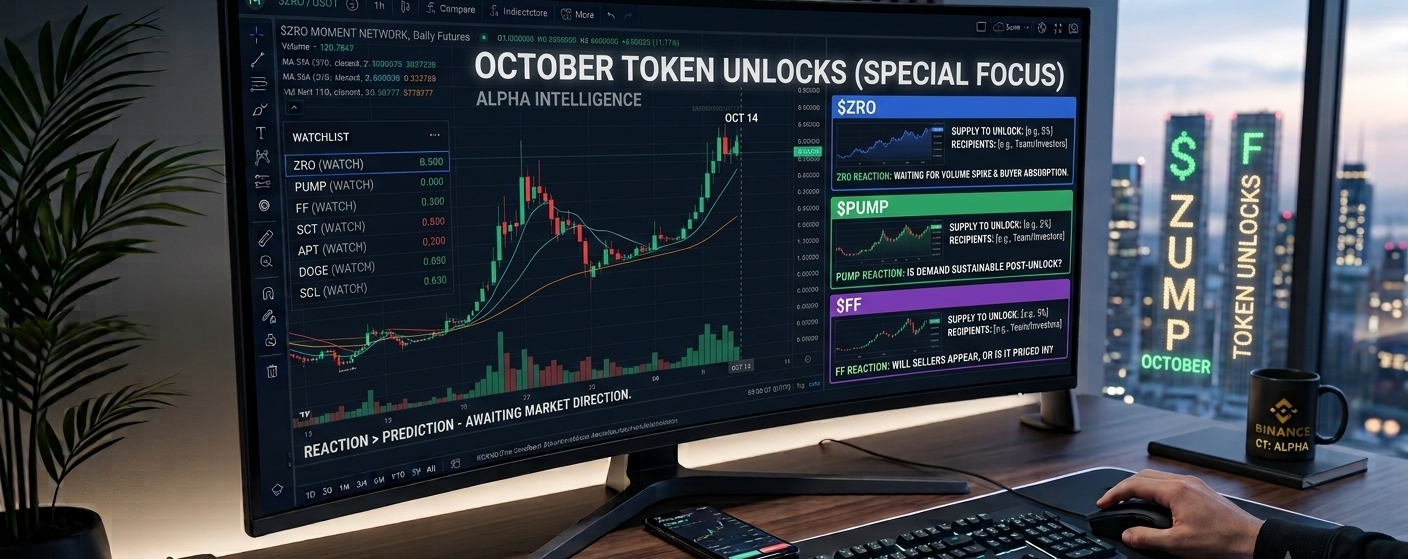
3 Token Unlocks I’m Watching Closely This October 🔥October has started with some interesting token unlocks, and this is something I’m watching more closely this month. 👀
When new tokens enter circulation, many traders immediately think:
“Unlock = dump.”
But I don't think it's always that simple. The market still needs to absorb the new supply.
If demand remains strong, the price can hold.
If demand is weak, the additional supply can create selling pressure.
Three October unlocks I'm personally watching are:
$ZRO
{future}(ZROUSDT)
$PUMP
{future}(PUMPUSDT)
$FF
{future}(FFUSDT)
What interests me isn't simply the unlock date. I want to see how the market reacts when those tokens actually become available.
Before entering a trade, I'd rather check:
• How much supply is being unlocked
• Who receives the tokens
• Current trading volume
• Price reaction before and after the unlock
• Whether buyers are absorbing the new supply
An unlock doesn't automatically mean a short opportunity either.
Sometimes the market has already priced the event in.
Sometimes traders sell before the unlock and buy back afterward.
And sometimes the new supply creates much stronger selling pressure than expected. That's why I'm more interested in the reaction than trying to predict it beforehand.
For me, ZRO, PUMP and FF are three names worth keeping on the calendar this month.
The best trade isn't always predicting what will happen. Sometimes it's simply waiting for the market to show its hand.
Which one are you watching — ZRO, PUMP or FF? 👀
#TokenUnlocks #CryptoSupply #AltcoinTrading #altcoins #ALPHA🔥
3 Token Unlocks I’m Watching Closely This October 🔥
October has started with some interesting token unlocks, and this is something I’m watching more closely this month. 👀
When new tokens enter circulation, many traders immediately think:
“Unlock = dump.”
But I don't think it's always that simple. The market still needs to absorb the new supply.
If demand remains strong, the price can hold.
If demand is weak, the additional supply can create selling pressure.
Three October unlocks I'm personally watching are:
$ZRO
$PUMP
$FF
What interests me isn't simply the unlock date. I want to see how the market reacts when those tokens actually become available.
Before entering a trade, I'd rather check:
• How much supply is being unlocked
• Who receives the tokens
• Current trading volume
• Price reaction before and after the unlock
• Whether buyers are absorbing the new supply
An unlock doesn't automatically mean a short opportunity either.
Sometimes the market has already priced the event in.
Sometimes traders sell before the unlock and buy back afterward.
And sometimes the new supply creates much stronger selling pressure than expected. That's why I'm more interested in the reaction than trying to predict it beforehand.
For me, ZRO, PUMP and FF are three names worth keeping on the calendar this month.
The best trade isn't always predicting what will happen. Sometimes it's simply waiting for the market to show its hand.
Which one are you watching — ZRO, PUMP or FF? 👀
#TokenUnlocks #CryptoSupply #AltcoinTrading #altcoins #ALPHA🔥
When new tokens enter circulation, many traders immediately think:
“Unlock = dump.”
But I don't think it's always that simple. The market still needs to absorb the new supply.
If demand remains strong, the price can hold.
If demand is weak, the additional supply can create selling pressure.
Three October unlocks I'm personally watching are:
$ZRO
$PUMP
$FF
What interests me isn't simply the unlock date. I want to see how the market reacts when those tokens actually become available.
Before entering a trade, I'd rather check:
• How much supply is being unlocked
• Who receives the tokens
• Current trading volume
• Price reaction before and after the unlock
• Whether buyers are absorbing the new supply
An unlock doesn't automatically mean a short opportunity either.
Sometimes the market has already priced the event in.
Sometimes traders sell before the unlock and buy back afterward.
And sometimes the new supply creates much stronger selling pressure than expected. That's why I'm more interested in the reaction than trying to predict it beforehand.
For me, ZRO, PUMP and FF are three names worth keeping on the calendar this month.
The best trade isn't always predicting what will happen. Sometimes it's simply waiting for the market to show its hand.
Which one are you watching — ZRO, PUMP or FF? 👀
#TokenUnlocks #CryptoSupply #AltcoinTrading #altcoins #ALPHA🔥
1
593
·
--
NEAR Tokenomics Unpacked: Why Upcoming Vesting Events Aren't Crashing the Float
While spot trading for $NEAR continues to hover around the 4.824 mark, the real story is taking place inside the protocol supply dynamics. A lot of retail traders panic the moment they see token unlock dates on a calendar, but a closer look at the actual float mechanics reveals a far more resilient setup than market sentiment suggests.
Right now, NEAR has a circulating supply of approximately 1.2 billion tokens. What sets this ecosystem apart from typical high-dilution Layer 1 networks is how these emissions are being structurally absorbed. Over 25 percent of the entire supply is actively locked up in staking contracts. That single metric removes a massive chunk of liquid float from exchange order books, effectively muting potential sell pressure whenever cliff or linear unlocks trigger for core contributors and early backers.
On the supply-reduction side, protocol fee burning is steadily accelerating due to increased transaction velocity. Driven by recent technical pushes into chain abstraction and autonomous AI agent interoperability, network usage directly burns the base transaction fees. While the protocol still carries baseline inflation to reward validators, this growing burn rate alongside locked staking yields creates a powerful balancing act that dampens net annual dilution.
Institutional participants holding these vesting tranches are largely opting to keep their holdings in staking rather than dumping into thin spot liquidity. When dilution risk is this predictable and well-buffered by on-chain utility, the fears of a sudden supply shock fade quickly.
Are you adjusting your positions around the upcoming vesting milestones, or do you view the current staking lockup ratio as enough of a safety net?
#TokenUnlocks #Tokenomics
NEAR Tokenomics Unpacked: Why Upcoming Vesting Events Aren't Crashing the Float
While spot trading for $NEAR continues to hover around the 4.824 mark, the real story is taking place inside the protocol supply dynamics. A lot of retail traders panic the moment they see token unlock dates on a calendar, but a closer look at the actual float mechanics reveals a far more resilient setup than market sentiment suggests.
Right now, NEAR has a circulating supply of approximately 1.2 billion tokens. What sets this ecosystem apart from typical high-dilution Layer 1 networks is how these emissions are being structurally absorbed. Over 25 percent of the entire supply is actively locked up in staking contracts. That single metric removes a massive chunk of liquid float from exchange order books, effectively muting potential sell pressure whenever cliff or linear unlocks trigger for core contributors and early backers.
On the supply-reduction side, protocol fee burning is steadily accelerating due to increased transaction velocity. Driven by recent technical pushes into chain abstraction and autonomous AI agent interoperability, network usage directly burns the base transaction fees. While the protocol still carries baseline inflation to reward validators, this growing burn rate alongside locked staking yields creates a powerful balancing act that dampens net annual dilution.
Institutional participants holding these vesting tranches are largely opting to keep their holdings in staking rather than dumping into thin spot liquidity. When dilution risk is this predictable and well-buffered by on-chain utility, the fears of a sudden supply shock fade quickly.
Are you adjusting your positions around the upcoming vesting milestones, or do you view the current staking lockup ratio as enough of a safety net?
#TokenUnlocks #Tokenomics
While spot trading for $NEAR continues to hover around the 4.824 mark, the real story is taking place inside the protocol supply dynamics. A lot of retail traders panic the moment they see token unlock dates on a calendar, but a closer look at the actual float mechanics reveals a far more resilient setup than market sentiment suggests.
Right now, NEAR has a circulating supply of approximately 1.2 billion tokens. What sets this ecosystem apart from typical high-dilution Layer 1 networks is how these emissions are being structurally absorbed. Over 25 percent of the entire supply is actively locked up in staking contracts. That single metric removes a massive chunk of liquid float from exchange order books, effectively muting potential sell pressure whenever cliff or linear unlocks trigger for core contributors and early backers.
On the supply-reduction side, protocol fee burning is steadily accelerating due to increased transaction velocity. Driven by recent technical pushes into chain abstraction and autonomous AI agent interoperability, network usage directly burns the base transaction fees. While the protocol still carries baseline inflation to reward validators, this growing burn rate alongside locked staking yields creates a powerful balancing act that dampens net annual dilution.
Institutional participants holding these vesting tranches are largely opting to keep their holdings in staking rather than dumping into thin spot liquidity. When dilution risk is this predictable and well-buffered by on-chain utility, the fears of a sudden supply shock fade quickly.
Are you adjusting your positions around the upcoming vesting milestones, or do you view the current staking lockup ratio as enough of a safety net?
#TokenUnlocks #Tokenomics

1
70

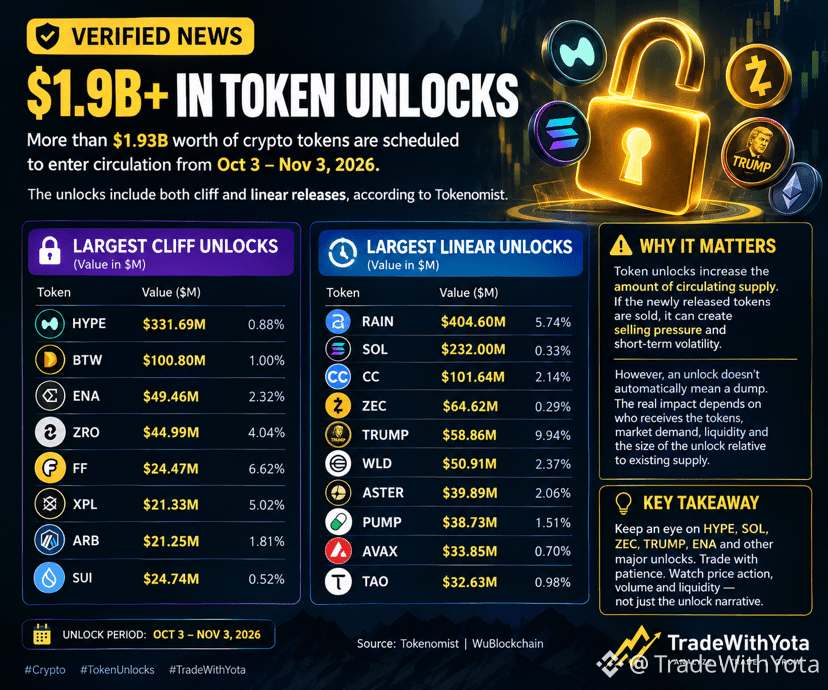
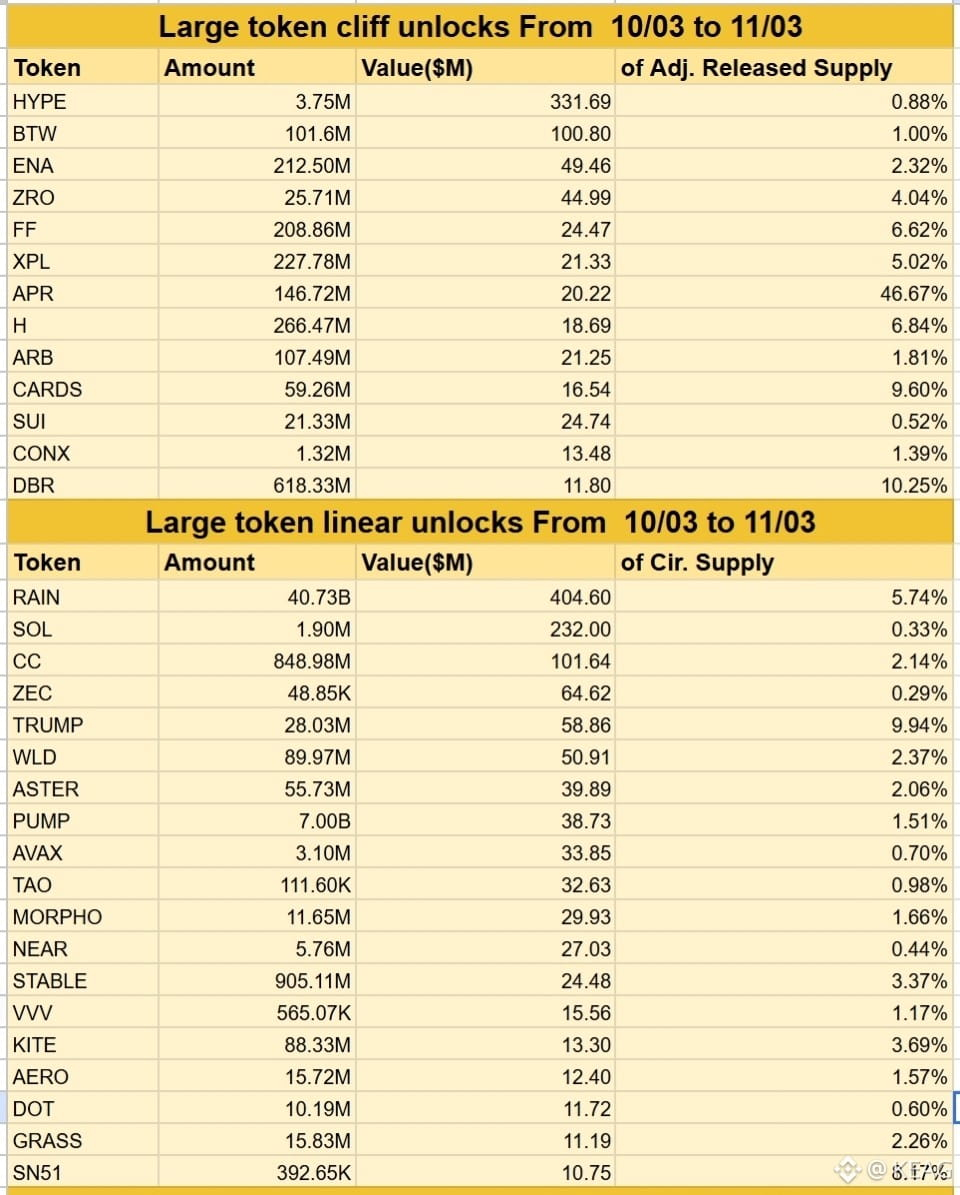
🚨 $1.9B+ CRYPTO TOKENS SET TO UNLOCK
A major wave of token unlocks is scheduled from October 3–November 3, with more than $1.9B worth of tokens entering circulation.
🔓 Largest unlocks to watch
Cliff Unlocks
* 🟣 $HYPE : $331.69M
* 🟠 BTW: $100.80M
* 🟢 ENA: $49.46M
* 🔵 ZRO: $44.99M
* 🟡 FF: $24.47M
* 🔴 XPL: $21.33M
* 🟢 ARB: $21.25M
* 🟣 SUI: $24.74M
Linear Unlocks
* 🔥 RAIN: $404.60M
* 🟣 $SOL : $232.00M
* 🔵 CC: $101.64M
* 🟡 ZEC: $64.62M
* 🔴 TRUMP: $58.86M
* 🟢 $WLD : $50.91M
* ASTER: $39.89M
* PUMP: $38.73M
* AVAX: $33.85M
* TAO: $32.63M
⚠️ Why does this matter?
Large token unlocks increase the amount of circulating supply. If the newly unlocked tokens are sold into the market, they can create additional selling pressure and short-term volatility.
However, an unlock doesn’t automatically mean a token will dump. The actual impact depends on who receives the tokens, whether they sell, overall market demand, and the size of the unlock relative to existing liquidity.
👀 Keep an eye on HYPE, SOL, ZEC, TRUMP, ENA and the other major unlocks.
Trade with patience. Watch liquidity, volume and price reaction rather than blindly shorting unlocks.
#crypto #tokenunlocks #TradeWithYota #Market_Update #cryptonews
{spot}(WLDUSDT)
{future}(SOLUSDT)
{future}(HYPEUSDT)
🚨 $1.9B+ CRYPTO TOKENS SET TO UNLOCK
A major wave of token unlocks is scheduled from October 3–November 3, with more than $1.9B worth of tokens entering circulation.
🔓 Largest unlocks to watch
Cliff Unlocks
* 🟣 $HYPE : $331.69M
* 🟠 BTW: $100.80M
* 🟢 ENA: $49.46M
* 🔵 ZRO: $44.99M
* 🟡 FF: $24.47M
* 🔴 XPL: $21.33M
* 🟢 ARB: $21.25M
* 🟣 SUI: $24.74M
Linear Unlocks
* 🔥 RAIN: $404.60M
* 🟣 $SOL : $232.00M
* 🔵 CC: $101.64M
* 🟡 ZEC: $64.62M
* 🔴 TRUMP: $58.86M
* 🟢 $WLD : $50.91M
* ASTER: $39.89M
* PUMP: $38.73M
* AVAX: $33.85M
* TAO: $32.63M
⚠️ Why does this matter?
Large token unlocks increase the amount of circulating supply. If the newly unlocked tokens are sold into the market, they can create additional selling pressure and short-term volatility.
However, an unlock doesn’t automatically mean a token will dump. The actual impact depends on who receives the tokens, whether they sell, overall market demand, and the size of the unlock relative to existing liquidity.
👀 Keep an eye on HYPE, SOL, ZEC, TRUMP, ENA and the other major unlocks.
Trade with patience. Watch liquidity, volume and price reaction rather than blindly shorting unlocks.
#crypto #tokenunlocks #TradeWithYota #Market_Update #cryptonews
A major wave of token unlocks is scheduled from October 3–November 3, with more than $1.9B worth of tokens entering circulation.
🔓 Largest unlocks to watch
Cliff Unlocks
* 🟣 $HYPE : $331.69M
* 🟠 BTW: $100.80M
* 🟢 ENA: $49.46M
* 🔵 ZRO: $44.99M
* 🟡 FF: $24.47M
* 🔴 XPL: $21.33M
* 🟢 ARB: $21.25M
* 🟣 SUI: $24.74M
Linear Unlocks
* 🔥 RAIN: $404.60M
* 🟣 $SOL : $232.00M
* 🔵 CC: $101.64M
* 🟡 ZEC: $64.62M
* 🔴 TRUMP: $58.86M
* 🟢 $WLD : $50.91M
* ASTER: $39.89M
* PUMP: $38.73M
* AVAX: $33.85M
* TAO: $32.63M
⚠️ Why does this matter?
Large token unlocks increase the amount of circulating supply. If the newly unlocked tokens are sold into the market, they can create additional selling pressure and short-term volatility.
However, an unlock doesn’t automatically mean a token will dump. The actual impact depends on who receives the tokens, whether they sell, overall market demand, and the size of the unlock relative to existing liquidity.
👀 Keep an eye on HYPE, SOL, ZEC, TRUMP, ENA and the other major unlocks.
Trade with patience. Watch liquidity, volume and price reaction rather than blindly shorting unlocks.
#crypto #tokenunlocks #TradeWithYota #Market_Update #cryptonews
2
1.4k

·
--
⚠️ WARNING ALERT: Heavy new supply is hitting the market soon! Major token unlocks are scheduled over the next month, which could bring massive selling pressure and potential dumps for affected coins. Check your portfolio and set tight Stop-Losses! 📉🔴🚨
Is your portfolio exposed to massive token dilution as over $1.913 Billion worth of crypto unlocks over the next 30 days? Latest data from Tokenomist shows heavy cliff and linear unlock schedules that could flood order books with relentless sell pressure!
Major Cliff Unlocks (> $10M Value):
• $HYPE : $331.69M (3.75M tokens)
• $BTW : $100.80M (101.6M tokens)
• $ENA : $49.46M (212.50M tokens)
• ZRO: $44.99M (25.71M tokens)
• FF: $24.47M (208.86M tokens — 6.62% of supply)
• SUI, ARB, APR, XPL, CARDS, CONX, DBR: Tens of millions unlocking in single cliff events!
Major Linear Unlocks (> $10M/Month):
• RAIN: $404.60M (40.73B tokens — 5.74% of supply)
• SOL: $232.00M (1.90M tokens)
• CC: $101.64M (848.98M tokens)
• ZEC, TRUMP, WLD, ASTER, PUMP, AVAX, TAO, NEAR, DOT, GRASS: Continuous daily inflation pressure on market liquidity!
When massive new token supply enters circulation without matching buy demand, prices usually experience severe downside volatility!
Which of these coins are you currently holding, and are you planning to de-risk before the unlock dates? Drop your game plan below! 👇
If you appreciate real-time risk alerts & data breakdowns:
❤️ Hit Like / React
💬 Comment your portfolio plan!
🔄 Share / Repost to warn your trading squad!
📌 Follow for fast market alerts & clean fundamental updates!
(Not Financial Advice — Track unlock dates, manage leverage, and DYOR!)
#USRussiaUkraineTalksReportedlyIncludeLukoilOilDeal #CerebrasSinksNearly20%OnReportNvidiaToPowerOpenAI #ThisMonthTokenUnlock #tokenunlocks
⚠️ WARNING ALERT: Heavy new supply is hitting the market soon! Major token unlocks are scheduled over the next month, which could bring massive selling pressure and potential dumps for affected coins. Check your portfolio and set tight Stop-Losses! 📉🔴🚨
Is your portfolio exposed to massive token dilution as over $1.913 Billion worth of crypto unlocks over the next 30 days? Latest data from Tokenomist shows heavy cliff and linear unlock schedules that could flood order books with relentless sell pressure!
Major Cliff Unlocks (> $10M Value):
• $HYPE : $331.69M (3.75M tokens)
• $BTW : $100.80M (101.6M tokens)
• $ENA : $49.46M (212.50M tokens)
• ZRO: $44.99M (25.71M tokens)
• FF: $24.47M (208.86M tokens — 6.62% of supply)
• SUI, ARB, APR, XPL, CARDS, CONX, DBR: Tens of millions unlocking in single cliff events!
Major Linear Unlocks (> $10M/Month):
• RAIN: $404.60M (40.73B tokens — 5.74% of supply)
• SOL: $232.00M (1.90M tokens)
• CC: $101.64M (848.98M tokens)
• ZEC, TRUMP, WLD, ASTER, PUMP, AVAX, TAO, NEAR, DOT, GRASS: Continuous daily inflation pressure on market liquidity!
When massive new token supply enters circulation without matching buy demand, prices usually experience severe downside volatility!
Which of these coins are you currently holding, and are you planning to de-risk before the unlock dates? Drop your game plan below! 👇
If you appreciate real-time risk alerts & data breakdowns:
❤️ Hit Like / React
💬 Comment your portfolio plan!
🔄 Share / Repost to warn your trading squad!
📌 Follow for fast market alerts & clean fundamental updates!
(Not Financial Advice — Track unlock dates, manage leverage, and DYOR!)
#USRussiaUkraineTalksReportedlyIncludeLukoilOilDeal #CerebrasSinksNearly20%OnReportNvidiaToPowerOpenAI #ThisMonthTokenUnlock #tokenunlocks
Is your portfolio exposed to massive token dilution as over $1.913 Billion worth of crypto unlocks over the next 30 days? Latest data from Tokenomist shows heavy cliff and linear unlock schedules that could flood order books with relentless sell pressure!
Major Cliff Unlocks (> $10M Value):
• $HYPE : $331.69M (3.75M tokens)
• $BTW : $100.80M (101.6M tokens)
• $ENA : $49.46M (212.50M tokens)
• ZRO: $44.99M (25.71M tokens)
• FF: $24.47M (208.86M tokens — 6.62% of supply)
• SUI, ARB, APR, XPL, CARDS, CONX, DBR: Tens of millions unlocking in single cliff events!
Major Linear Unlocks (> $10M/Month):
• RAIN: $404.60M (40.73B tokens — 5.74% of supply)
• SOL: $232.00M (1.90M tokens)
• CC: $101.64M (848.98M tokens)
• ZEC, TRUMP, WLD, ASTER, PUMP, AVAX, TAO, NEAR, DOT, GRASS: Continuous daily inflation pressure on market liquidity!
When massive new token supply enters circulation without matching buy demand, prices usually experience severe downside volatility!
Which of these coins are you currently holding, and are you planning to de-risk before the unlock dates? Drop your game plan below! 👇
If you appreciate real-time risk alerts & data breakdowns:
❤️ Hit Like / React
💬 Comment your portfolio plan!
🔄 Share / Repost to warn your trading squad!
📌 Follow for fast market alerts & clean fundamental updates!
(Not Financial Advice — Track unlock dates, manage leverage, and DYOR!)
#USRussiaUkraineTalksReportedlyIncludeLukoilOilDeal #CerebrasSinksNearly20%OnReportNvidiaToPowerOpenAI #ThisMonthTokenUnlock #tokenunlocks
crypto memer:
great information
2
1
5
3.4k
·
--
$2Z Major Token Unlock Happened Yesterday .
That will Result To Dump the price by 20%.
#tokenunlocks #2z #2zcoin
$2Z Major Token Unlock Happened Yesterday .
That will Result To Dump the price by 20%.
#tokenunlocks #2z #2zcoin
That will Result To Dump the price by 20%.
#tokenunlocks #2z #2zcoin

3
410

🚨 $1.913 BILLION+ TOKEN UNLOCK ALERT! 🚨
October crypto market ke liye ek important month ban sakta hai 👀🔥
💰 $1.913B+ worth of tokens aglay month unlock hone wale hain — aur major names mein $HYPE, $SUNI, $EMR, $ZRO, $ARB, $SOL, $ZEC, $TRUMP, $WLD, $AVAX, $TAO aur kai aur tokens shamil hain.
🔓 Major Unlocks to Watch:
🔥 $HYPE — ~$331.69M
🟢 $SUI — ~$24.74M
💎 $ENA — ~$49.46M
🔵 $ZRO — ~$44.99M
🟠 $ARB — ~$21.25M
⚡ $SOL — ~$232M linear unlocks
🚨 $ZEC — ~$64.62M
🔥 $TRUMP — ~$58.86M
🌐 $WLD — ~$50.91M
⚠️ Why is this important?
Token unlock ka matlab yeh nahi ke unlocked tokens zaroor market mein sell honge. Lekin supply increase hone ki wajah se volatility aur selling pressure ka risk barh sakta hai — especially agar unlocked tokens market mein move hone lagen.
👀 Traders should watch:
• Unlock dates 📅
• Circulating supply impact
• Whale wallet movements 🐋
• Exchange inflows/outflows
• Trading volume & liquidity
• BTC market direction
• Price reaction around unlocks
🔥 HYPE & $SNI are on the radar!
Don't blindly short just because of an unlock. Pehle volume + liquidity + price action ko confirm karo, phir trade decision lo. 📊
🚨 Big supply events = Big volatility opportunities!
DYOR | Not Financial Advice ⚠️
{spot}(HYPEUSDT)
{spot}(SUIUSDT)
{spot}(ENAUSDT)
#Crypto #TokenUnlocks #HYPE #SUI #Altcoins #CryptoNews #CryptoTrading #Bitcoin #DeFi #Trading #Binance
🚨 $1.913 BILLION+ TOKEN UNLOCK ALERT! 🚨
October crypto market ke liye ek important month ban sakta hai 👀🔥
💰 $1.913B+ worth of tokens aglay month unlock hone wale hain — aur major names mein $HYPE , $SUNI, $EMR, $ZRO, $ARB, $SOL, $ZEC, $TRUMP, $WLD, $AVAX, $TAO aur kai aur tokens shamil hain.
🔓 Major Unlocks to Watch:
🔥 $HYPE — ~$331.69M
🟢 $SUI — ~$24.74M
💎 $ENA — ~$49.46M
🔵 $ZRO — ~$44.99M
🟠 $ARB — ~$21.25M
⚡ $SOL — ~$232M linear unlocks
🚨 $ZEC — ~$64.62M
🔥 $TRUMP — ~$58.86M
🌐 $WLD — ~$50.91M
⚠️ Why is this important?
Token unlock ka matlab yeh nahi ke unlocked tokens zaroor market mein sell honge. Lekin supply increase hone ki wajah se volatility aur selling pressure ka risk barh sakta hai — especially agar unlocked tokens market mein move hone lagen.
👀 Traders should watch:
• Unlock dates 📅
• Circulating supply impact
• Whale wallet movements 🐋
• Exchange inflows/outflows
• Trading volume & liquidity
• BTC market direction
• Price reaction around unlocks
🔥 HYPE & $SNI are on the radar!
Don't blindly short just because of an unlock. Pehle volume + liquidity + price action ko confirm karo, phir trade decision lo. 📊
🚨 Big supply events = Big volatility opportunities!
DYOR | Not Financial Advice ⚠️
#Crypto #TokenUnlocks #HYPE #SUI #Altcoins #CryptoNews #CryptoTrading #Bitcoin #DeFi #Trading #Binance
October crypto market ke liye ek important month ban sakta hai 👀🔥
💰 $1.913B+ worth of tokens aglay month unlock hone wale hain — aur major names mein $HYPE , $SUNI, $EMR, $ZRO, $ARB, $SOL, $ZEC, $TRUMP, $WLD, $AVAX, $TAO aur kai aur tokens shamil hain.
🔓 Major Unlocks to Watch:
🔥 $HYPE — ~$331.69M
🟢 $SUI — ~$24.74M
💎 $ENA — ~$49.46M
🔵 $ZRO — ~$44.99M
🟠 $ARB — ~$21.25M
⚡ $SOL — ~$232M linear unlocks
🚨 $ZEC — ~$64.62M
🔥 $TRUMP — ~$58.86M
🌐 $WLD — ~$50.91M
⚠️ Why is this important?
Token unlock ka matlab yeh nahi ke unlocked tokens zaroor market mein sell honge. Lekin supply increase hone ki wajah se volatility aur selling pressure ka risk barh sakta hai — especially agar unlocked tokens market mein move hone lagen.
👀 Traders should watch:
• Unlock dates 📅
• Circulating supply impact
• Whale wallet movements 🐋
• Exchange inflows/outflows
• Trading volume & liquidity
• BTC market direction
• Price reaction around unlocks
🔥 HYPE & $SNI are on the radar!
Don't blindly short just because of an unlock. Pehle volume + liquidity + price action ko confirm karo, phir trade decision lo. 📊
🚨 Big supply events = Big volatility opportunities!
DYOR | Not Financial Advice ⚠️
#Crypto #TokenUnlocks #HYPE #SUI #Altcoins #CryptoNews #CryptoTrading #Bitcoin #DeFi #Trading #Binance
Like you 👍🚀💎
0%
Community ✍️🚀💎
0%
0 Votes • Vote fermé
88

Vérifié
I've written about unlocks throughout this month. Today is the biggest one: 2Z unlocks 1.66 billion tokens — roughly 47.69% of circulating supply — worth about $114 million. That's one of the largest single unlocks this quarter.
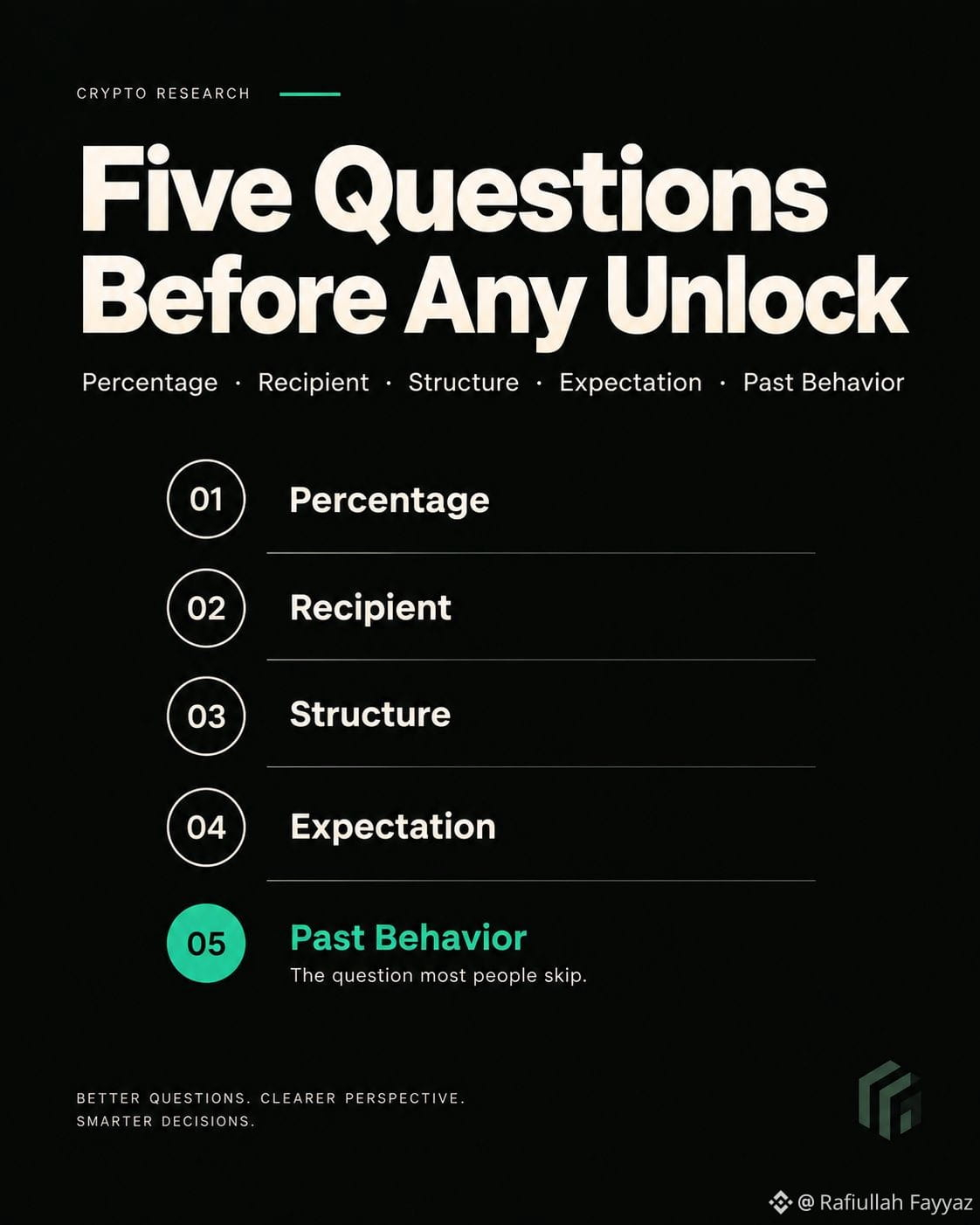
But I want to end the month with the framework I've been building. Five questions I ask before reacting to any unlock:
1. What's the percentage of circulating supply? Under 1% is noise. Over 5% is a real supply event. Over 20% is a supply shock.
2. Who receives the tokens? Team and VC unlocks often lead to selling. Ecosystem and community allocations might get held or staked. The recipient matters as much as the size.
3. Is it a cliff or linear? A cliff releases everything at once. Linear vesting drips over time. Cliff unlocks are sudden events. Linear unlocks are baked-in pressure.
4. What's the market already expecting? If the unlock has been on the calendar for months, some of the selling pressure is priced in. The surprise factor matters more than the event itself.
5. What did recipients do last time? This is the question most people skip. Check the claim rate from previous unlocks. If most tokens went unclaimed last time, the actual selling pressure might be far smaller than the headline number.
The unlock calendar tells you what's scheduled. These five questions tell you what might actually happen.
#CryptoEducation #TokenUnlocks #Tokenomics
I've written about unlocks throughout this month. Today is the biggest one: 2Z unlocks 1.66 billion tokens — roughly 47.69% of circulating supply — worth about $114 million. That's one of the largest single unlocks this quarter.
But I want to end the month with the framework I've been building. Five questions I ask before reacting to any unlock:
1. What's the percentage of circulating supply? Under 1% is noise. Over 5% is a real supply event. Over 20% is a supply shock.
2. Who receives the tokens? Team and VC unlocks often lead to selling. Ecosystem and community allocations might get held or staked. The recipient matters as much as the size.
3. Is it a cliff or linear? A cliff releases everything at once. Linear vesting drips over time. Cliff unlocks are sudden events. Linear unlocks are baked-in pressure.
4. What's the market already expecting? If the unlock has been on the calendar for months, some of the selling pressure is priced in. The surprise factor matters more than the event itself.
5. What did recipients do last time? This is the question most people skip. Check the claim rate from previous unlocks. If most tokens went unclaimed last time, the actual selling pressure might be far smaller than the headline number.
The unlock calendar tells you what's scheduled. These five questions tell you what might actually happen.
#CryptoEducation #TokenUnlocks #Tokenomics
But I want to end the month with the framework I've been building. Five questions I ask before reacting to any unlock:
1. What's the percentage of circulating supply? Under 1% is noise. Over 5% is a real supply event. Over 20% is a supply shock.
2. Who receives the tokens? Team and VC unlocks often lead to selling. Ecosystem and community allocations might get held or staked. The recipient matters as much as the size.
3. Is it a cliff or linear? A cliff releases everything at once. Linear vesting drips over time. Cliff unlocks are sudden events. Linear unlocks are baked-in pressure.
4. What's the market already expecting? If the unlock has been on the calendar for months, some of the selling pressure is priced in. The surprise factor matters more than the event itself.
5. What did recipients do last time? This is the question most people skip. Check the claim rate from previous unlocks. If most tokens went unclaimed last time, the actual selling pressure might be far smaller than the headline number.
The unlock calendar tells you what's scheduled. These five questions tell you what might actually happen.
#CryptoEducation #TokenUnlocks #Tokenomics
612
Connectez-vous pour découvrir plus de contenu
Rejoignez la communauté mondiale des adeptes de cryptomonnaies sur Binance Square
⚡️ Suviez les dernières informations importantes sur les cryptomonnaies.
💬 Jugé digne de confiance par la plus grande plateforme d’échange de cryptomonnaies au monde.
👍 Découvrez les connaissances que partagent les créateurs vérifiés.
Adresse e-mail/Nº de téléphone
Sujets d’actualité
1
#BinanceLaunchesBinanceIntelligence
684,640 vues
4,268 mentions
2
#BTCFallsBelow$84K
19,239 vues
78 mentions
3
#DubaiVARAIssuesReserveAssetAuditCircular
2,444 vues
185 mentions
4
#SECApproves3XBitcoinETF
2,385 vues
167 mentions
5
#WinklevossFilesSpotZcashETFApplication
11,135 vues
291 mentions
6
#SouthKoreaAITradeLiftsWorldcoinTo$7.41B
1,249 vues
28 mentions
7
#StrategyEstimates$4.1BIncomeTaxBenefit
1,146 vues
18 mentions
8
#IglooShutsDownAbstractBlockchain
4,498 vues
134 mentions
9
#StrategyMarketCapSurpassesRumble
41,370 vues
845 mentions
10
#StriveBuys2000BTCFor$169M
18,063 vues
159 mentions