

#stoplossstrategies
stoplossstrategies
13.2M vues
38,371 mentions
Discuss your stop-loss strategies and provide examples of how they helped you minimize losses during downturns.
Populaire
Récents


Introducing the second topic of our Risk Management Deep Dive – #StopLossStrategies
Stop-loss strategies are essential tools for managing risk in trading. By setting predetermined exit points, you can protect your investments from significant losses during market downturns. Understanding how to effectively implement stop-loss orders can help you maintain control over your trading outcomes.
👉 Your post can include:
• What types of stop-loss strategies do you use, and why?
• How do you determine the appropriate levels for your stop-loss orders?
• Can you share any examples where your stop-loss strategy successfully protected your investments?
E.g. of a post - “I use a combination of fixed stop-loss orders and trailing stop-loss orders. For fixed stop-loss orders, I set levels based on key support points and risk tolerance. Trailing stop-loss orders help me lock in profits while adapting to market movements. This approach has protected my investments during sudden downturns and allowed me to secure gains during uptrends. #StopLossStrategies ”
📢 Create a post with #StopLossStrategies and share your insights to earn Binance points! (Press the “+” on the App homepage and click on Task Center)
Full campaign details [here](https://www.binance.com/en/square/post/22460231593642).
Introducing the second topic of our Risk Management Deep Dive – #StopLossStrategies
Stop-loss strategies are essential tools for managing risk in trading. By setting predetermined exit points, you can protect your investments from significant losses during market downturns. Understanding how to effectively implement stop-loss orders can help you maintain control over your trading outcomes.
👉 Your post can include:
• What types of stop-loss strategies do you use, and why?
• How do you determine the appropriate levels for your stop-loss orders?
• Can you share any examples where your stop-loss strategy successfully protected your investments?
E.g. of a post - “I use a combination of fixed stop-loss orders and trailing stop-loss orders. For fixed stop-loss orders, I set levels based on key support points and risk tolerance. Trailing stop-loss orders help me lock in profits while adapting to market movements. This approach has protected my investments during sudden downturns and allowed me to secure gains during uptrends. #StopLossStrategies ”
📢 Create a post with #StopLossStrategies and share your insights to earn Binance points! (Press the “+” on the App homepage and click on Task Center)
Full campaign details here.
Stop-loss strategies are essential tools for managing risk in trading. By setting predetermined exit points, you can protect your investments from significant losses during market downturns. Understanding how to effectively implement stop-loss orders can help you maintain control over your trading outcomes.
👉 Your post can include:
• What types of stop-loss strategies do you use, and why?
• How do you determine the appropriate levels for your stop-loss orders?
• Can you share any examples where your stop-loss strategy successfully protected your investments?
E.g. of a post - “I use a combination of fixed stop-loss orders and trailing stop-loss orders. For fixed stop-loss orders, I set levels based on key support points and risk tolerance. Trailing stop-loss orders help me lock in profits while adapting to market movements. This approach has protected my investments during sudden downturns and allowed me to secure gains during uptrends. #StopLossStrategies ”
📢 Create a post with #StopLossStrategies and share your insights to earn Binance points! (Press the “+” on the App homepage and click on Task Center)
Full campaign details here.
43
47
234
96.4k

·
--
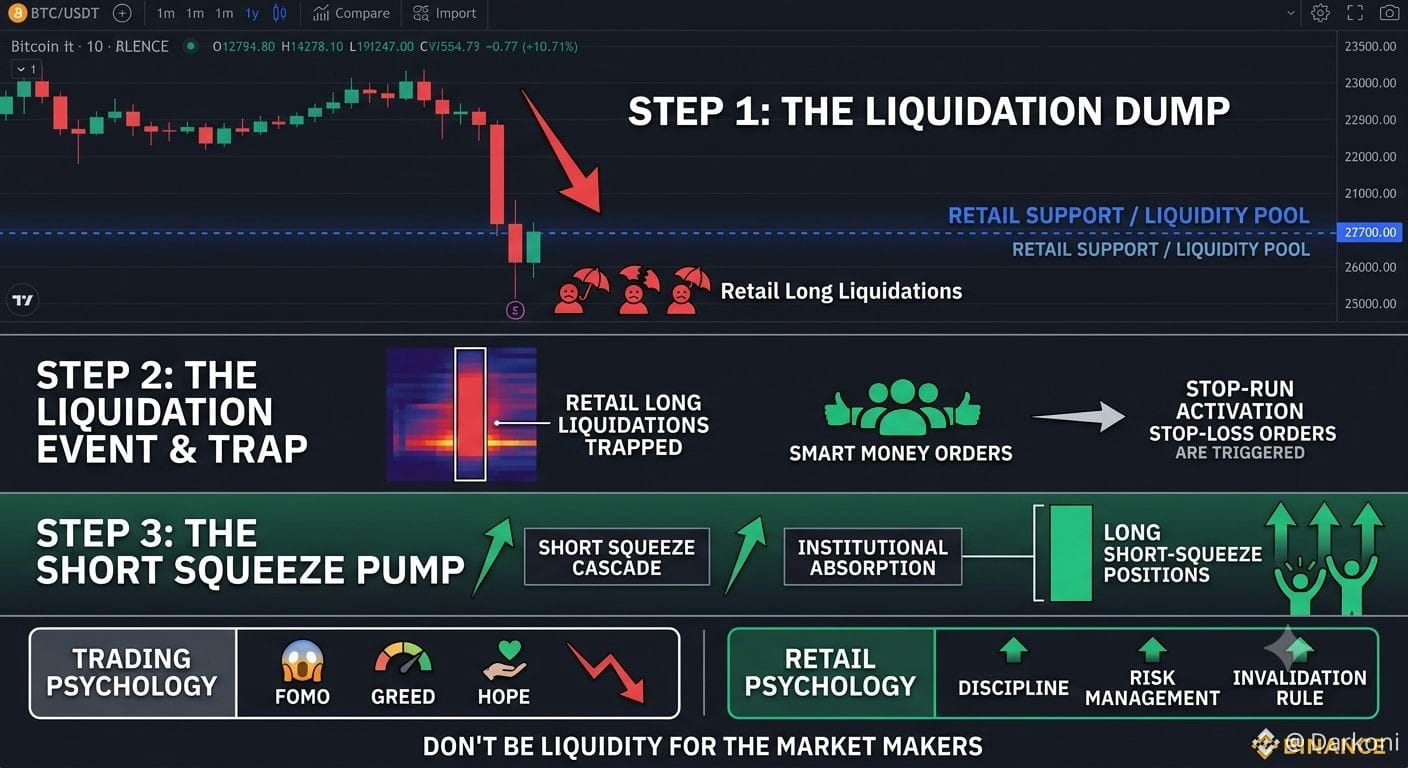
Retail longs are trapped again, and $BTC just swept the liquidity pool.
🚨 When price slices through key support, 90% of traders commit the ultimate account-killer: moving their stop loss deeper into the red. Hope replaces risk management, turning a calculated 2% loss into a devastating 25% liquidation.
Break the cycle with the Invalidation Rule:
• Pre-define invalidation before entering, never mid-trade
• Accept that market structure changes, your thesis failed
• Let the stop hit without emotional resistance
The market hunts liquidity where retail hides pain. Protect your capital first. 🧠
How do you stop yourself from widening your stop when a setup goes against you?
{future}(BTCUSDT)
#BTC🔥🔥🔥🔥🔥 #tradingpsychology #StopLossStrategies
Retail longs are trapped again, and $BTC just swept the liquidity pool.
🚨 When price slices through key support, 90% of traders commit the ultimate account-killer: moving their stop loss deeper into the red. Hope replaces risk management, turning a calculated 2% loss into a devastating 25% liquidation.
Break the cycle with the Invalidation Rule:
• Pre-define invalidation before entering, never mid-trade
• Accept that market structure changes, your thesis failed
• Let the stop hit without emotional resistance
The market hunts liquidity where retail hides pain. Protect your capital first. 🧠
How do you stop yourself from widening your stop when a setup goes against you?
#BTC🔥🔥🔥🔥🔥 #tradingpsychology #StopLossStrategies
🚨 When price slices through key support, 90% of traders commit the ultimate account-killer: moving their stop loss deeper into the red. Hope replaces risk management, turning a calculated 2% loss into a devastating 25% liquidation.
Break the cycle with the Invalidation Rule:
• Pre-define invalidation before entering, never mid-trade
• Accept that market structure changes, your thesis failed
• Let the stop hit without emotional resistance
The market hunts liquidity where retail hides pain. Protect your capital first. 🧠
How do you stop yourself from widening your stop when a setup goes against you?
#BTC🔥🔥🔥🔥🔥 #tradingpsychology #StopLossStrategies
1
45

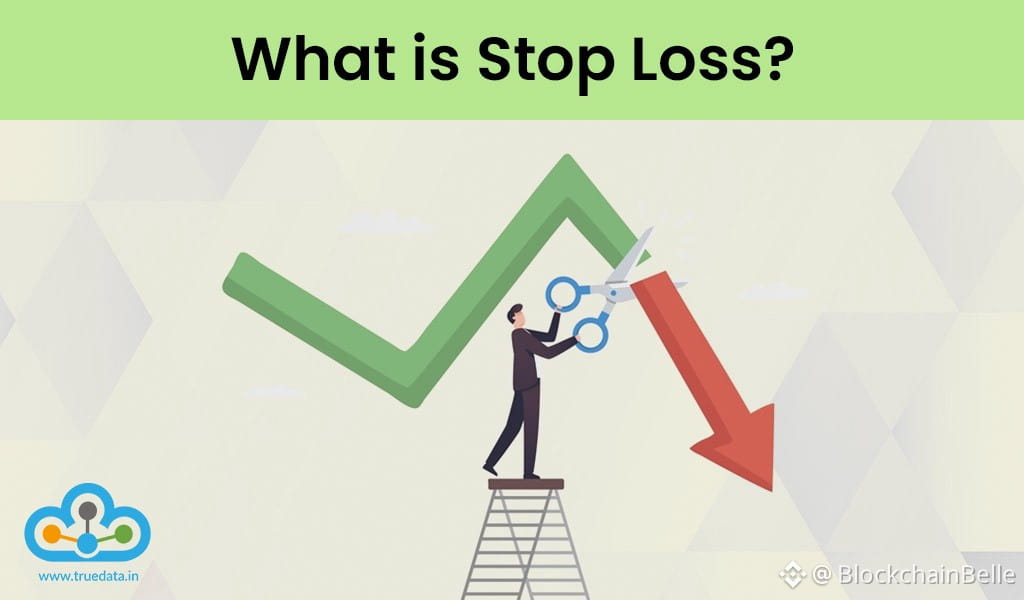
What is STOP LOSS (SL) 🛑?
"Learn to cut the Fingers earlier than cutting your arm later."
I have seen many influencencers sharing opinions on stop loss are for those who don't know how to trade. Stop loss is a sign of accepting defeat and what not.
You may disagree to me but stop loss is your analytical point where you believe if it gonna hit, it may change the whole trend and I can stuck badly. Stop loss is not a sign of accepting defeat , its a prevention from a bigger problem.
As it says, Prevention is better than cure.
always use Stop loss to manage your trades, improve your psychology and to sleep without tension.
#StopLossStrategies
#BitcoinThirdSingleBlockReorgInFourWeeks
$BTC
{future}(BTCUSDT)
$ZEC
{future}(ZECUSDT)
$TAO
{future}(TAOUSDT)
What is STOP LOSS (SL) 🛑?
"Learn to cut the Fingers earlier than cutting your arm later."
I have seen many influencencers sharing opinions on stop loss are for those who don't know how to trade. Stop loss is a sign of accepting defeat and what not.
You may disagree to me but stop loss is your analytical point where you believe if it gonna hit, it may change the whole trend and I can stuck badly. Stop loss is not a sign of accepting defeat , its a prevention from a bigger problem.
As it says, Prevention is better than cure.
always use Stop loss to manage your trades, improve your psychology and to sleep without tension.
#StopLossStrategies
#BitcoinThirdSingleBlockReorgInFourWeeks
$BTC
$ZEC
$TAO
"Learn to cut the Fingers earlier than cutting your arm later."
I have seen many influencencers sharing opinions on stop loss are for those who don't know how to trade. Stop loss is a sign of accepting defeat and what not.
You may disagree to me but stop loss is your analytical point where you believe if it gonna hit, it may change the whole trend and I can stuck badly. Stop loss is not a sign of accepting defeat , its a prevention from a bigger problem.
As it says, Prevention is better than cure.
always use Stop loss to manage your trades, improve your psychology and to sleep without tension.
#StopLossStrategies
#BitcoinThirdSingleBlockReorgInFourWeeks
$BTC
$ZEC
$TAO
1
211

·
--
Haussier
Stop on Structure
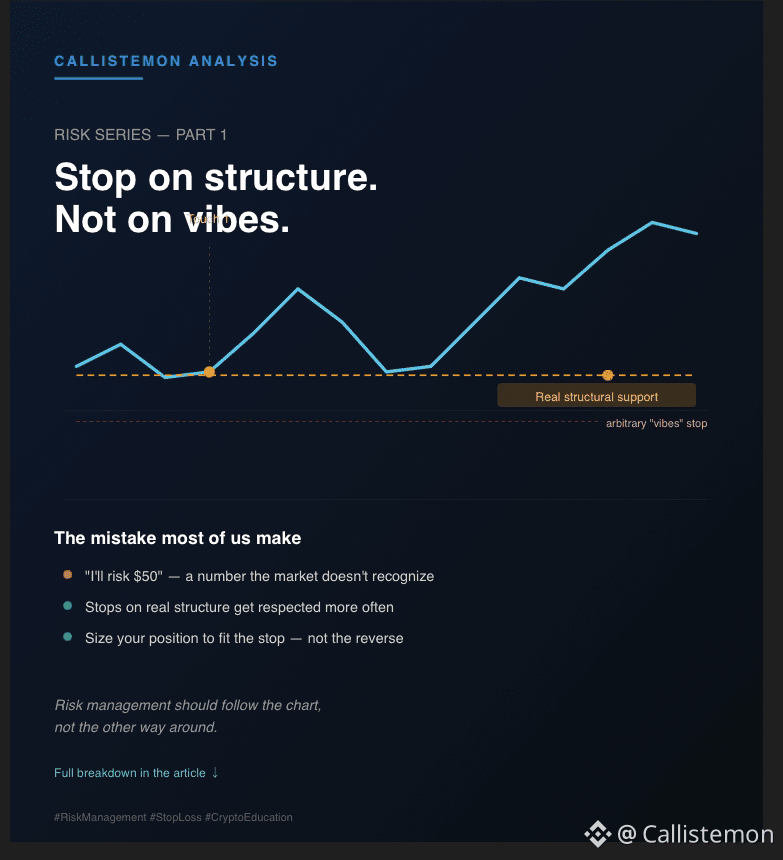
🛡️ Risk Series — Part 1: Stop on structure, not on vibes
"I'll risk $50" means nothing to the market. It doesn't know your account size — it only respects levels where real buying or selling has shown up before.
When your stop is just "a price below where I bought," it often sits exactly where everyone else's stop sits too. That's not a coincidence.
Better approach: find a real structural level — a swing low, a support zone with multiple touches — and size your position around that distance. Let the chart decide your risk, not your gut.
Full breakdown linked.👇👇👇#StopLossStrategies
Stop on Structure
🛡️ Risk Series — Part 1: Stop on structure, not on vibes
"I'll risk $50" means nothing to the market. It doesn't know your account size — it only respects levels where real buying or selling has shown up before.
When your stop is just "a price below where I bought," it often sits exactly where everyone else's stop sits too. That's not a coincidence.
Better approach: find a real structural level — a swing low, a support zone with multiple touches — and size your position around that distance. Let the chart decide your risk, not your gut.
Full breakdown linked.👇👇👇#StopLossStrategies
🛡️ Risk Series — Part 1: Stop on structure, not on vibes
"I'll risk $50" means nothing to the market. It doesn't know your account size — it only respects levels where real buying or selling has shown up before.
When your stop is just "a price below where I bought," it often sits exactly where everyone else's stop sits too. That's not a coincidence.
Better approach: find a real structural level — a swing low, a support zone with multiple touches — and size your position around that distance. Let the chart decide your risk, not your gut.
Full breakdown linked.👇👇👇#StopLossStrategies
Callistemon
·
--
Why Your Stop-Loss Feels Like It's "Always" Wrong (And What To Do Instead)
I used to think stop-losses were the enemy. Every time I set one, the market would dip just enough to wipe me out — then rip higher exactly where I would've taken profit if I'd just held. After enough of these, I started skipping stop-losses entirely. "I'll just watch the chart and exit manually," I told myself.
That decision cost me more than any single stop-loss ever did.
Here's what I eventually understood: the problem usually isn't the stop-loss. It's where — and why — you're placing it.
The Mistake: Setting Stops on Vibes, Not Structure
Most of us place stops based on how much we're willing to lose in dollar terms. "I'll risk $50 on this trade." That number means nothing to the market. The market doesn't know your account size — it only respects levels where real buying or selling has historically shown up.
When your stop is just "a price below where I bought," it often sits exactly where short-term traders expect it to sit too. That's not a coincidence — it's why those wicks happen.
Better approach: Place your stop below (or above) a real structural level — a prior swing low, a support zone with multiple touches, a recent consolidation range. Then size your position so that distance equals the dollar risk you're comfortable with. Risk management should follow the chart, not the other way around.
The Second Mistake: No Stop on Parabolic Moves
If you've followed any of my recent posts, you've seen coins like $RE move +70-90% in a single day. On moves like this, there often isn't a "real" structural level yet — the coin hasn't traded long enough to establish one.
This is the situation where people either:
Skip the stop entirely ("I'll watch it closely")Place an arbitrary stop that gets swept by normal volatility
Neither works well. My rule on parabolic, low-history coins: reduce position size dramatically, or don't enter at all until structure forms. Missing the move costs you nothing real. A bad entry on a structureless chart can cost you a lot.
Risk Management Is Not About Being Right
This is the part that took me the longest to accept: a good stop-loss strategy will make you "wrong" — meaning stopped out before a reversal — fairly often. That's not a flaw in the strategy. That's the cost of having defined risk at all.
The alternative — no stop, "I'll just watch it" — feels safer in the moment but means a single bad trade can wipe out the gains of ten good ones. I've had that happen. It only takes one.
A Simple Framework I Actually Use Now
Before entering: identify the level that, if broken, means my original thesis was wrong. That's where the stop goes — not where I'm "comfortable" losing money.Position size second: I calculate size based on the stop distance, not the other way around. If the stop has to be wide because of volatility, my position gets smaller — not my stop tighter.No structure, no full size: on coins with limited price history (new listings, parabolic pumps), I either skip the trade or use a fraction of normal size.One rule I don't break: I never move a stop further away once it's set. Moving it closer (locking in gains) is fine. Moving it further is how small losses become account-ending ones.
The Honest Bottom Line
Stop-losses aren't there to make you feel good. They're there so that being wrong costs you a known, survivable amount — instead of an unknown, unlimited one. I wish someone had told me that plainly before I learned it the expensive way.
If you've been skipping stops because they "never work," it might not be the tool. It might be where you're putting it.
Not financial advice. This reflects personal trading lessons, not specific recommendations. Always do your own research.
#RiskManagementMastery #StopLossStrategies #cryptoeducation #TradingLessons
That decision cost me more than any single stop-loss ever did.
Here's what I eventually understood: the problem usually isn't the stop-loss. It's where — and why — you're placing it.
The Mistake: Setting Stops on Vibes, Not Structure
Most of us place stops based on how much we're willing to lose in dollar terms. "I'll risk $50 on this trade." That number means nothing to the market. The market doesn't know your account size — it only respects levels where real buying or selling has historically shown up.
When your stop is just "a price below where I bought," it often sits exactly where short-term traders expect it to sit too. That's not a coincidence — it's why those wicks happen.
Better approach: Place your stop below (or above) a real structural level — a prior swing low, a support zone with multiple touches, a recent consolidation range. Then size your position so that distance equals the dollar risk you're comfortable with. Risk management should follow the chart, not the other way around.
The Second Mistake: No Stop on Parabolic Moves
If you've followed any of my recent posts, you've seen coins like $RE move +70-90% in a single day. On moves like this, there often isn't a "real" structural level yet — the coin hasn't traded long enough to establish one.
This is the situation where people either:
Skip the stop entirely ("I'll watch it closely")Place an arbitrary stop that gets swept by normal volatility
Neither works well. My rule on parabolic, low-history coins: reduce position size dramatically, or don't enter at all until structure forms. Missing the move costs you nothing real. A bad entry on a structureless chart can cost you a lot.
Risk Management Is Not About Being Right
This is the part that took me the longest to accept: a good stop-loss strategy will make you "wrong" — meaning stopped out before a reversal — fairly often. That's not a flaw in the strategy. That's the cost of having defined risk at all.
The alternative — no stop, "I'll just watch it" — feels safer in the moment but means a single bad trade can wipe out the gains of ten good ones. I've had that happen. It only takes one.
A Simple Framework I Actually Use Now
Before entering: identify the level that, if broken, means my original thesis was wrong. That's where the stop goes — not where I'm "comfortable" losing money.Position size second: I calculate size based on the stop distance, not the other way around. If the stop has to be wide because of volatility, my position gets smaller — not my stop tighter.No structure, no full size: on coins with limited price history (new listings, parabolic pumps), I either skip the trade or use a fraction of normal size.One rule I don't break: I never move a stop further away once it's set. Moving it closer (locking in gains) is fine. Moving it further is how small losses become account-ending ones.
The Honest Bottom Line
Stop-losses aren't there to make you feel good. They're there so that being wrong costs you a known, survivable amount — instead of an unknown, unlimited one. I wish someone had told me that plainly before I learned it the expensive way.
If you've been skipping stops because they "never work," it might not be the tool. It might be where you're putting it.
Not financial advice. This reflects personal trading lessons, not specific recommendations. Always do your own research.
#RiskManagementMastery #StopLossStrategies #cryptoeducation #TradingLessons
52

Article
Estratégias de colocação de stops: aprenda a gerenciar riscos no tradingNo trading, muitos focam apenas no potencial de lucro, mas os profissionais consistentes no longo prazo sabem que o verdadeiro segredo é o gerenciamento de risco e a adoção de estratégias de colocação de stops.
Mais importante do que saber a hora de entrar em uma operação é saber a hora de sair — seja para garantir lucros ou, crucialmente, para limitar perdas.
É aqui que entram as estratégias de colocação de stops. Dominar o uso do stop loss e do stop gain é o que separa a operação disciplinada da aposta incerta.
Neste texto, vamos explorar de forma mais específica estratégias para colocar stop loss e stop gain em suas operações para garantir o lucro da operação ou limitar a perda dela.
O que é stop loss e stop gain? $NIL
Antes de definir estratégias, precisamos entender os conceitos básicos. Stops são ordens automáticas que você configura na sua plataforma para encerrar automaticamente uma posição quando o ativo atinge um preço pré-determinado.
Esses stops são importantes para garantir que a sua estratégia de operações será respeitada, diminuindo a influência emocional do trader.
O stop loss é uma ordem de venda (em uma operação de compra) ou de compra (em uma operação de venda) programada para ser executada automaticamente se o preço do ativo se mover contra sua posição até um certo ponto.
Seu objetivo principal é proteger seu capital, definindo a perda máxima aceitável para aquela operação. Com isso, o trader não fica tentado a esperar que o mercado reverta o movimento para zerar o prejuízo da operação.
O stop gain, também conhecido como “take profit”, é uma ordem programada para encerrar sua posição automaticamente quando o preço atinge sua meta de lucro.
Ela garante que você encerre sua posição com lucros antes que o mercado reverta. Com isso, você se protege da ganância ao encerrar a posição com o lucro programado.
Por que usar stops é fundamental no trading?
Operar sem stops torna essa atividade mais arriscada, o que pode causar grandes prejuízos ao trader e dificultar a rentabilidade no longo prazo.
Embora seja possível você possa fazer isso por um tempo, um único imprevisto pode ser catastrófico.
O uso disciplinado de stops é fundamental por três motivos principais:
Proteção de capital: é a sua principal forma de proteger seu capital. Um stop loss garante que uma única operação ruim não comprometa uma parte significativa da sua conta, permitindo que você volte a operar no dia seguinte.Remoção do fator emocional: o calor do momento é o pior inimigo do trader. Medo e ganância podem fazer você segurar uma posição perdedora “só mais um pouquinho” ou sair de uma vencedora cedo demais. O stop é definido com base na sua análise racional, antes da emoção entrar em jogo.Consistência e estratégia: os stops permitem que você defina uma relação de risco/retorno clara para cada operação (ex: arriscar R$ 100 para buscar R$ 300). Isso é a base de qualquer estratégia de trading vencedora na Renda Variável.
Assim, fica evidente que o uso de stops é fundamental se você quer tornar o trading algo lucrativo e com foco no longo prazo, mantendo sua saúde financeira e psicológica durante as operações.
Principais estratégias de colocação de stops
Não existe uma única maneira para criar uma estratégia de colocação do stop. A melhor estratégia depende do seu perfil, do ativo operado e da sua análise.
Vamos ver as abordagens mais comuns:
Stop fixo (percentual ou financeiro)
Esta é a abordagem mais simples, ideal para iniciantes que estão começando no trading mas querem fazer isso com um gerenciamento de risco adequado.
Percentual: o stop é definico com base em uma porcentagem do preço de entrada (ex: 3% abaixo do preço de compra) ou em uma porcentagem do seu capital total (ex: arriscar no máximo 1% da conta por operação).Financeiro: o stopo é definido em um valor monetário máximo que aceita perder (ex: R$ 50,00 por operação).
A vantagem dessas estratégias é a sua facilidade em calcular e aplicar nas suas operações. Porém, ela ignora a volatilidade do mercado, podendo tornar a operação muito engessada.
Stop Técnico (baseado em análise gráfica) $AGT
Esta é a abordagem preferida da maioria dos traders, pois usa a própria lógica do mercado (análise técnica) para definir os pontos de saída.
Suportes e resistências: a estratégia mais clássica. Se você está comprando (long), seu stop loss deve ficar posicionado ligeiramente abaixo de uma zona de suporte relevante. Se está vendendo (short), o stop fica ligeiramente acima de uma resistência. A lógica é que, se o preço romper essa barreira, a tendência provavelmente reverteu.Médias móveis: muitos traders usam médias móveis (como a de 21 ou 200 períodos) como suportes ou resistências dinâmicos. O stop pode ser colocado abaixo (em compras) ou acima (em vendas) dessas linhas.Indicadores de volatilidade (ATR): O Average True Range (ATR) é um indicador que mede a volatilidade média de um ativo. Alguns traders definem seus stops usando um múltiplo do ATR (ex: 2x ATR abaixo do preço de entrada), ajustando o stop automaticamente às condições do mercado.
Stop móvel (Trailing Stop) $UB
O stop móvel é uma ferramenta poderosa para proteger lucros enquanto permite que a operação continue “andando”.
Nele você define um stop loss (ex: R$ 1,00 abaixo do preço atual). Se o ativo sobe R$ 0,50, seu stop sobe junto, mantendo a distância de R$ 1,00. No entanto, se o preço cair, o stop permanece fixo.
Ele só se move a seu favor, travando lucros progressivamente até que a tendência reverta e o execute.
Erros comuns ao definir stops
Definir stops é uma arte que exige prática e alguns erros podem acontecer ao trader que quer adotá-los em sua estratégia de operações.
Abaixo você pode conferir quais são para evitar cometê-los.
Stops muito curtos: colocar o stop muito próximo do preço de entrada por medo de perder. Isso faz com que você seja “violinado” — ou seja, o mercado faz um movimento rápido (ruído), aciona seu stop e depois volta para a direção que você previa.Stops muito longos: colocar o stop muito longe por excesso de confiança. Isso aumenta seu risco desnecessariamente e pode causar perdas que anulam vários ganhos anteriores.Mover o stop loss: este é o erro fatal. Sua operação começa a dar errado e você “arrasta” seu stop loss para mais longe, dando “só mais uma chance”. Isso viola seu planejamento inicial e transforma uma pequena perda controlada em um prejuízo descontrolado.Não usar stop: O erro mais básico. Achar que você vai conseguir “zerar na mão” quando as coisas ficarem ruins é confiar na emoção, e não na estratégia.
{spot}(NILUSDT)
{future}(AGTUSDT)
{future}(UBUSDT)
#StrategicTrading #StopLossStrategies
Estratégias de colocação de stops: aprenda a gerenciar riscos no trading
No trading, muitos focam apenas no potencial de lucro, mas os profissionais consistentes no longo prazo sabem que o verdadeiro segredo é o gerenciamento de risco e a adoção de estratégias de colocação de stops.
Mais importante do que saber a hora de entrar em uma operação é saber a hora de sair — seja para garantir lucros ou, crucialmente, para limitar perdas.
É aqui que entram as estratégias de colocação de stops. Dominar o uso do stop loss e do stop gain é o que separa a operação disciplinada da aposta incerta.
Neste texto, vamos explorar de forma mais específica estratégias para colocar stop loss e stop gain em suas operações para garantir o lucro da operação ou limitar a perda dela.
O que é stop loss e stop gain? $NIL
Antes de definir estratégias, precisamos entender os conceitos básicos. Stops são ordens automáticas que você configura na sua plataforma para encerrar automaticamente uma posição quando o ativo atinge um preço pré-determinado.
Esses stops são importantes para garantir que a sua estratégia de operações será respeitada, diminuindo a influência emocional do trader.
O stop loss é uma ordem de venda (em uma operação de compra) ou de compra (em uma operação de venda) programada para ser executada automaticamente se o preço do ativo se mover contra sua posição até um certo ponto.
Seu objetivo principal é proteger seu capital, definindo a perda máxima aceitável para aquela operação. Com isso, o trader não fica tentado a esperar que o mercado reverta o movimento para zerar o prejuízo da operação.
O stop gain, também conhecido como “take profit”, é uma ordem programada para encerrar sua posição automaticamente quando o preço atinge sua meta de lucro.
Ela garante que você encerre sua posição com lucros antes que o mercado reverta. Com isso, você se protege da ganância ao encerrar a posição com o lucro programado.
Por que usar stops é fundamental no trading?
Operar sem stops torna essa atividade mais arriscada, o que pode causar grandes prejuízos ao trader e dificultar a rentabilidade no longo prazo.
Embora seja possível você possa fazer isso por um tempo, um único imprevisto pode ser catastrófico.
O uso disciplinado de stops é fundamental por três motivos principais:
Proteção de capital: é a sua principal forma de proteger seu capital. Um stop loss garante que uma única operação ruim não comprometa uma parte significativa da sua conta, permitindo que você volte a operar no dia seguinte.Remoção do fator emocional: o calor do momento é o pior inimigo do trader. Medo e ganância podem fazer você segurar uma posição perdedora “só mais um pouquinho” ou sair de uma vencedora cedo demais. O stop é definido com base na sua análise racional, antes da emoção entrar em jogo.Consistência e estratégia: os stops permitem que você defina uma relação de risco/retorno clara para cada operação (ex: arriscar R$ 100 para buscar R$ 300). Isso é a base de qualquer estratégia de trading vencedora na Renda Variável.
Assim, fica evidente que o uso de stops é fundamental se você quer tornar o trading algo lucrativo e com foco no longo prazo, mantendo sua saúde financeira e psicológica durante as operações.
Principais estratégias de colocação de stops
Não existe uma única maneira para criar uma estratégia de colocação do stop. A melhor estratégia depende do seu perfil, do ativo operado e da sua análise.
Vamos ver as abordagens mais comuns:
Stop fixo (percentual ou financeiro)
Esta é a abordagem mais simples, ideal para iniciantes que estão começando no trading mas querem fazer isso com um gerenciamento de risco adequado.
Percentual: o stop é definico com base em uma porcentagem do preço de entrada (ex: 3% abaixo do preço de compra) ou em uma porcentagem do seu capital total (ex: arriscar no máximo 1% da conta por operação).Financeiro: o stopo é definido em um valor monetário máximo que aceita perder (ex: R$ 50,00 por operação).
A vantagem dessas estratégias é a sua facilidade em calcular e aplicar nas suas operações. Porém, ela ignora a volatilidade do mercado, podendo tornar a operação muito engessada.
Stop Técnico (baseado em análise gráfica) $AGT
Esta é a abordagem preferida da maioria dos traders, pois usa a própria lógica do mercado (análise técnica) para definir os pontos de saída.
Suportes e resistências: a estratégia mais clássica. Se você está comprando (long), seu stop loss deve ficar posicionado ligeiramente abaixo de uma zona de suporte relevante. Se está vendendo (short), o stop fica ligeiramente acima de uma resistência. A lógica é que, se o preço romper essa barreira, a tendência provavelmente reverteu.Médias móveis: muitos traders usam médias móveis (como a de 21 ou 200 períodos) como suportes ou resistências dinâmicos. O stop pode ser colocado abaixo (em compras) ou acima (em vendas) dessas linhas.Indicadores de volatilidade (ATR): O Average True Range (ATR) é um indicador que mede a volatilidade média de um ativo. Alguns traders definem seus stops usando um múltiplo do ATR (ex: 2x ATR abaixo do preço de entrada), ajustando o stop automaticamente às condições do mercado.
Stop móvel (Trailing Stop) $UB
O stop móvel é uma ferramenta poderosa para proteger lucros enquanto permite que a operação continue “andando”.
Nele você define um stop loss (ex: R$ 1,00 abaixo do preço atual). Se o ativo sobe R$ 0,50, seu stop sobe junto, mantendo a distância de R$ 1,00. No entanto, se o preço cair, o stop permanece fixo.
Ele só se move a seu favor, travando lucros progressivamente até que a tendência reverta e o execute.
Erros comuns ao definir stops
Definir stops é uma arte que exige prática e alguns erros podem acontecer ao trader que quer adotá-los em sua estratégia de operações.
Abaixo você pode conferir quais são para evitar cometê-los.
Stops muito curtos: colocar o stop muito próximo do preço de entrada por medo de perder. Isso faz com que você seja “violinado” — ou seja, o mercado faz um movimento rápido (ruído), aciona seu stop e depois volta para a direção que você previa.Stops muito longos: colocar o stop muito longe por excesso de confiança. Isso aumenta seu risco desnecessariamente e pode causar perdas que anulam vários ganhos anteriores.Mover o stop loss: este é o erro fatal. Sua operação começa a dar errado e você “arrasta” seu stop loss para mais longe, dando “só mais uma chance”. Isso viola seu planejamento inicial e transforma uma pequena perda controlada em um prejuízo descontrolado.Não usar stop: O erro mais básico. Achar que você vai conseguir “zerar na mão” quando as coisas ficarem ruins é confiar na emoção, e não na estratégia.
#StrategicTrading #StopLossStrategies
Mais importante do que saber a hora de entrar em uma operação é saber a hora de sair — seja para garantir lucros ou, crucialmente, para limitar perdas.
É aqui que entram as estratégias de colocação de stops. Dominar o uso do stop loss e do stop gain é o que separa a operação disciplinada da aposta incerta.
Neste texto, vamos explorar de forma mais específica estratégias para colocar stop loss e stop gain em suas operações para garantir o lucro da operação ou limitar a perda dela.
O que é stop loss e stop gain? $NIL
Antes de definir estratégias, precisamos entender os conceitos básicos. Stops são ordens automáticas que você configura na sua plataforma para encerrar automaticamente uma posição quando o ativo atinge um preço pré-determinado.
Esses stops são importantes para garantir que a sua estratégia de operações será respeitada, diminuindo a influência emocional do trader.
O stop loss é uma ordem de venda (em uma operação de compra) ou de compra (em uma operação de venda) programada para ser executada automaticamente se o preço do ativo se mover contra sua posição até um certo ponto.
Seu objetivo principal é proteger seu capital, definindo a perda máxima aceitável para aquela operação. Com isso, o trader não fica tentado a esperar que o mercado reverta o movimento para zerar o prejuízo da operação.
O stop gain, também conhecido como “take profit”, é uma ordem programada para encerrar sua posição automaticamente quando o preço atinge sua meta de lucro.
Ela garante que você encerre sua posição com lucros antes que o mercado reverta. Com isso, você se protege da ganância ao encerrar a posição com o lucro programado.
Por que usar stops é fundamental no trading?
Operar sem stops torna essa atividade mais arriscada, o que pode causar grandes prejuízos ao trader e dificultar a rentabilidade no longo prazo.
Embora seja possível você possa fazer isso por um tempo, um único imprevisto pode ser catastrófico.
O uso disciplinado de stops é fundamental por três motivos principais:
Proteção de capital: é a sua principal forma de proteger seu capital. Um stop loss garante que uma única operação ruim não comprometa uma parte significativa da sua conta, permitindo que você volte a operar no dia seguinte.Remoção do fator emocional: o calor do momento é o pior inimigo do trader. Medo e ganância podem fazer você segurar uma posição perdedora “só mais um pouquinho” ou sair de uma vencedora cedo demais. O stop é definido com base na sua análise racional, antes da emoção entrar em jogo.Consistência e estratégia: os stops permitem que você defina uma relação de risco/retorno clara para cada operação (ex: arriscar R$ 100 para buscar R$ 300). Isso é a base de qualquer estratégia de trading vencedora na Renda Variável.
Assim, fica evidente que o uso de stops é fundamental se você quer tornar o trading algo lucrativo e com foco no longo prazo, mantendo sua saúde financeira e psicológica durante as operações.
Principais estratégias de colocação de stops
Não existe uma única maneira para criar uma estratégia de colocação do stop. A melhor estratégia depende do seu perfil, do ativo operado e da sua análise.
Vamos ver as abordagens mais comuns:
Stop fixo (percentual ou financeiro)
Esta é a abordagem mais simples, ideal para iniciantes que estão começando no trading mas querem fazer isso com um gerenciamento de risco adequado.
Percentual: o stop é definico com base em uma porcentagem do preço de entrada (ex: 3% abaixo do preço de compra) ou em uma porcentagem do seu capital total (ex: arriscar no máximo 1% da conta por operação).Financeiro: o stopo é definido em um valor monetário máximo que aceita perder (ex: R$ 50,00 por operação).
A vantagem dessas estratégias é a sua facilidade em calcular e aplicar nas suas operações. Porém, ela ignora a volatilidade do mercado, podendo tornar a operação muito engessada.
Stop Técnico (baseado em análise gráfica) $AGT
Esta é a abordagem preferida da maioria dos traders, pois usa a própria lógica do mercado (análise técnica) para definir os pontos de saída.
Suportes e resistências: a estratégia mais clássica. Se você está comprando (long), seu stop loss deve ficar posicionado ligeiramente abaixo de uma zona de suporte relevante. Se está vendendo (short), o stop fica ligeiramente acima de uma resistência. A lógica é que, se o preço romper essa barreira, a tendência provavelmente reverteu.Médias móveis: muitos traders usam médias móveis (como a de 21 ou 200 períodos) como suportes ou resistências dinâmicos. O stop pode ser colocado abaixo (em compras) ou acima (em vendas) dessas linhas.Indicadores de volatilidade (ATR): O Average True Range (ATR) é um indicador que mede a volatilidade média de um ativo. Alguns traders definem seus stops usando um múltiplo do ATR (ex: 2x ATR abaixo do preço de entrada), ajustando o stop automaticamente às condições do mercado.
Stop móvel (Trailing Stop) $UB
O stop móvel é uma ferramenta poderosa para proteger lucros enquanto permite que a operação continue “andando”.
Nele você define um stop loss (ex: R$ 1,00 abaixo do preço atual). Se o ativo sobe R$ 0,50, seu stop sobe junto, mantendo a distância de R$ 1,00. No entanto, se o preço cair, o stop permanece fixo.
Ele só se move a seu favor, travando lucros progressivamente até que a tendência reverta e o execute.
Erros comuns ao definir stops
Definir stops é uma arte que exige prática e alguns erros podem acontecer ao trader que quer adotá-los em sua estratégia de operações.
Abaixo você pode conferir quais são para evitar cometê-los.
Stops muito curtos: colocar o stop muito próximo do preço de entrada por medo de perder. Isso faz com que você seja “violinado” — ou seja, o mercado faz um movimento rápido (ruído), aciona seu stop e depois volta para a direção que você previa.Stops muito longos: colocar o stop muito longe por excesso de confiança. Isso aumenta seu risco desnecessariamente e pode causar perdas que anulam vários ganhos anteriores.Mover o stop loss: este é o erro fatal. Sua operação começa a dar errado e você “arrasta” seu stop loss para mais longe, dando “só mais uma chance”. Isso viola seu planejamento inicial e transforma uma pequena perda controlada em um prejuízo descontrolado.Não usar stop: O erro mais básico. Achar que você vai conseguir “zerar na mão” quando as coisas ficarem ruins é confiar na emoção, e não na estratégia.
#StrategicTrading #StopLossStrategies
2
617

·
--
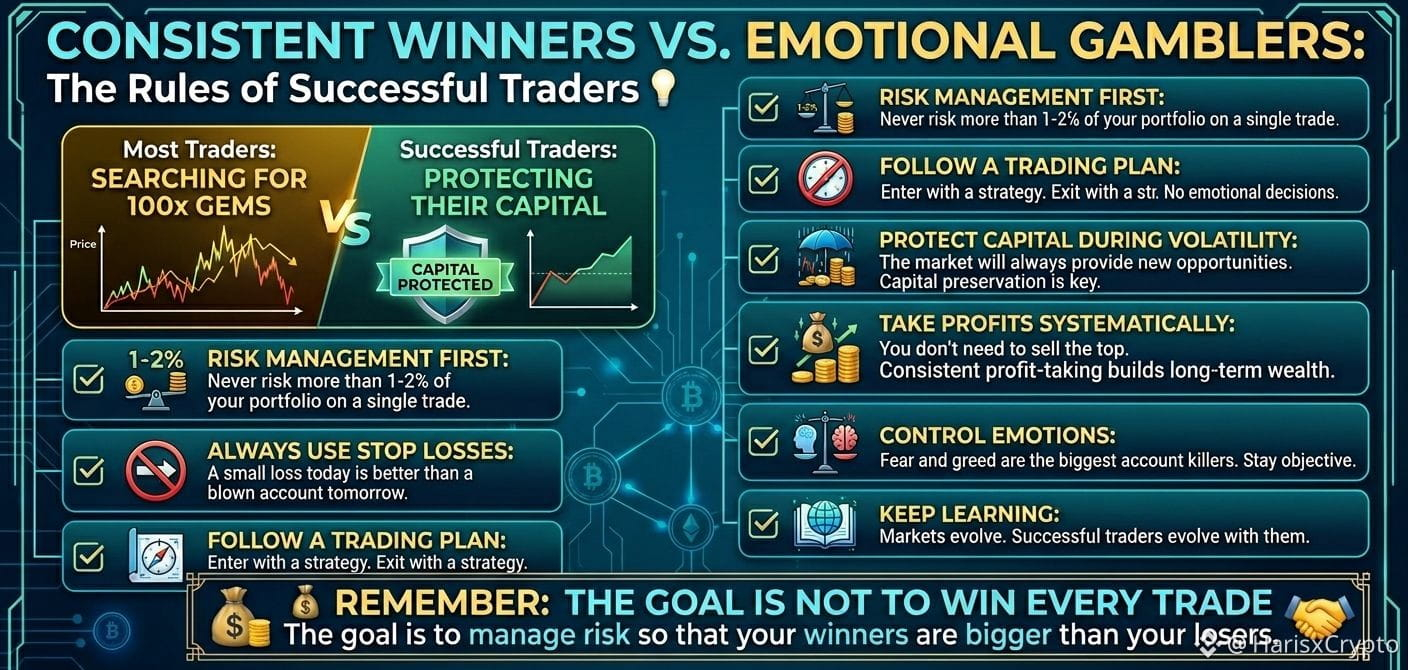
Many traders focus only on profits❗, but smart traders focus on protection first. A Stop Loss is not just a trading tool — it is your capital’s safety shield. 🛡️💰
✅ Why Stop Loss Matters in Trading
📌 1. Protects Your Funds
A stop loss helps prevent small losses from becoming big losses.
📌 2. Controls Emotions
It keeps fear, panic, and greed from controlling your decisions. 🧠
📌 3. Builds Discipline
Successful trading requires a clear plan — and stop loss is part of that plan. 📊
📌 4. Reduces Risk
You cannot control the market, but you can control how much you are willing to risk. ⚠️
📌 5. Keeps You in the Game
Protecting your capital means you have more opportunities to trade again tomorrow. 🚀
📌 6. Prevents Account Blow-Up
One bad trade should never destroy your entire trading journey. 🔐
$SKYAI
{future}(SKYAIUSDT)
💡 Remember:
A stop loss is not your enemy.
$LAB
{future}(LABUSDT)
its your protection, your discipline, and your trading insurance.
Like and follow for trading strategies and tips 🎯
🔥 Trade with a plan. Protect your capital. Respect your stop loss
#SmartTrading #StopLossStrategies #RiskManagement
Many traders focus only on profits❗, but smart traders focus on protection first. A Stop Loss is not just a trading tool — it is your capital’s safety shield. 🛡️💰
✅ Why Stop Loss Matters in Trading
📌 1. Protects Your Funds
A stop loss helps prevent small losses from becoming big losses.
📌 2. Controls Emotions
It keeps fear, panic, and greed from controlling your decisions. 🧠
📌 3. Builds Discipline
Successful trading requires a clear plan — and stop loss is part of that plan. 📊
📌 4. Reduces Risk
You cannot control the market, but you can control how much you are willing to risk. ⚠️
📌 5. Keeps You in the Game
Protecting your capital means you have more opportunities to trade again tomorrow. 🚀
📌 6. Prevents Account Blow-Up
One bad trade should never destroy your entire trading journey. 🔐
$SKYAI
💡 Remember:
A stop loss is not your enemy.
$LAB
its your protection, your discipline, and your trading insurance.
Like and follow for trading strategies and tips 🎯
🔥 Trade with a plan. Protect your capital. Respect your stop loss
#SmartTrading #StopLossStrategies #RiskManagement
✅ Why Stop Loss Matters in Trading
📌 1. Protects Your Funds
A stop loss helps prevent small losses from becoming big losses.
📌 2. Controls Emotions
It keeps fear, panic, and greed from controlling your decisions. 🧠
📌 3. Builds Discipline
Successful trading requires a clear plan — and stop loss is part of that plan. 📊
📌 4. Reduces Risk
You cannot control the market, but you can control how much you are willing to risk. ⚠️
📌 5. Keeps You in the Game
Protecting your capital means you have more opportunities to trade again tomorrow. 🚀
📌 6. Prevents Account Blow-Up
One bad trade should never destroy your entire trading journey. 🔐
$SKYAI
💡 Remember:
A stop loss is not your enemy.
$LAB
its your protection, your discipline, and your trading insurance.
Like and follow for trading strategies and tips 🎯
🔥 Trade with a plan. Protect your capital. Respect your stop loss
#SmartTrading #StopLossStrategies #RiskManagement
1
557
·
--
Article
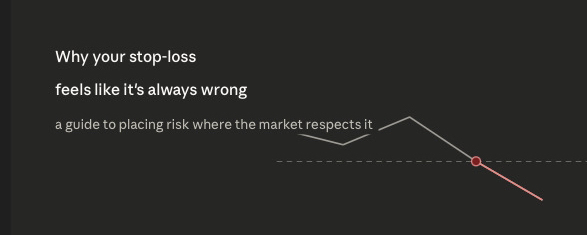
Why Your Stop-Loss Feels Like It's "Always" Wrong (And What To Do Instead)I used to think stop-losses were the enemy. Every time I set one, the market would dip just enough to wipe me out — then rip higher exactly where I would've taken profit if I'd just held. After enough of these, I started skipping stop-losses entirely. "I'll just watch the chart and exit manually," I told myself.
That decision cost me more than any single stop-loss ever did.
Here's what I eventually understood: the problem usually isn't the stop-loss. It's where — and why — you're placing it.
The Mistake: Setting Stops on Vibes, Not Structure
Most of us place stops based on how much we're willing to lose in dollar terms. "I'll risk $50 on this trade." That number means nothing to the market. The market doesn't know your account size — it only respects levels where real buying or selling has historically shown up.
When your stop is just "a price below where I bought," it often sits exactly where short-term traders expect it to sit too. That's not a coincidence — it's why those wicks happen.
Better approach: Place your stop below (or above) a real structural level — a prior swing low, a support zone with multiple touches, a recent consolidation range. Then size your position so that distance equals the dollar risk you're comfortable with. Risk management should follow the chart, not the other way around.
The Second Mistake: No Stop on Parabolic Moves
If you've followed any of my recent posts, you've seen coins like $RE move +70-90% in a single day. On moves like this, there often isn't a "real" structural level yet — the coin hasn't traded long enough to establish one.
This is the situation where people either:
Skip the stop entirely ("I'll watch it closely")Place an arbitrary stop that gets swept by normal volatility
Neither works well. My rule on parabolic, low-history coins: reduce position size dramatically, or don't enter at all until structure forms. Missing the move costs you nothing real. A bad entry on a structureless chart can cost you a lot.
Risk Management Is Not About Being Right
This is the part that took me the longest to accept: a good stop-loss strategy will make you "wrong" — meaning stopped out before a reversal — fairly often. That's not a flaw in the strategy. That's the cost of having defined risk at all.
The alternative — no stop, "I'll just watch it" — feels safer in the moment but means a single bad trade can wipe out the gains of ten good ones. I've had that happen. It only takes one.
A Simple Framework I Actually Use Now
Before entering: identify the level that, if broken, means my original thesis was wrong. That's where the stop goes — not where I'm "comfortable" losing money.Position size second: I calculate size based on the stop distance, not the other way around. If the stop has to be wide because of volatility, my position gets smaller — not my stop tighter.No structure, no full size: on coins with limited price history (new listings, parabolic pumps), I either skip the trade or use a fraction of normal size.One rule I don't break: I never move a stop further away once it's set. Moving it closer (locking in gains) is fine. Moving it further is how small losses become account-ending ones.
The Honest Bottom Line
Stop-losses aren't there to make you feel good. They're there so that being wrong costs you a known, survivable amount — instead of an unknown, unlimited one. I wish someone had told me that plainly before I learned it the expensive way.
If you've been skipping stops because they "never work," it might not be the tool. It might be where you're putting it.
Not financial advice. This reflects personal trading lessons, not specific recommendations. Always do your own research.
#RiskManagementMastery #StopLossStrategies #cryptoeducation #TradingLessons
Why Your Stop-Loss Feels Like It's "Always" Wrong (And What To Do Instead)
I used to think stop-losses were the enemy. Every time I set one, the market would dip just enough to wipe me out — then rip higher exactly where I would've taken profit if I'd just held. After enough of these, I started skipping stop-losses entirely. "I'll just watch the chart and exit manually," I told myself.
That decision cost me more than any single stop-loss ever did.
Here's what I eventually understood: the problem usually isn't the stop-loss. It's where — and why — you're placing it.
The Mistake: Setting Stops on Vibes, Not Structure
Most of us place stops based on how much we're willing to lose in dollar terms. "I'll risk $50 on this trade." That number means nothing to the market. The market doesn't know your account size — it only respects levels where real buying or selling has historically shown up.
When your stop is just "a price below where I bought," it often sits exactly where short-term traders expect it to sit too. That's not a coincidence — it's why those wicks happen.
Better approach: Place your stop below (or above) a real structural level — a prior swing low, a support zone with multiple touches, a recent consolidation range. Then size your position so that distance equals the dollar risk you're comfortable with. Risk management should follow the chart, not the other way around.
The Second Mistake: No Stop on Parabolic Moves
If you've followed any of my recent posts, you've seen coins like $RE move +70-90% in a single day. On moves like this, there often isn't a "real" structural level yet — the coin hasn't traded long enough to establish one.
This is the situation where people either:
Skip the stop entirely ("I'll watch it closely")Place an arbitrary stop that gets swept by normal volatility
Neither works well. My rule on parabolic, low-history coins: reduce position size dramatically, or don't enter at all until structure forms. Missing the move costs you nothing real. A bad entry on a structureless chart can cost you a lot.
Risk Management Is Not About Being Right
This is the part that took me the longest to accept: a good stop-loss strategy will make you "wrong" — meaning stopped out before a reversal — fairly often. That's not a flaw in the strategy. That's the cost of having defined risk at all.
The alternative — no stop, "I'll just watch it" — feels safer in the moment but means a single bad trade can wipe out the gains of ten good ones. I've had that happen. It only takes one.
A Simple Framework I Actually Use Now
Before entering: identify the level that, if broken, means my original thesis was wrong. That's where the stop goes — not where I'm "comfortable" losing money.Position size second: I calculate size based on the stop distance, not the other way around. If the stop has to be wide because of volatility, my position gets smaller — not my stop tighter.No structure, no full size: on coins with limited price history (new listings, parabolic pumps), I either skip the trade or use a fraction of normal size.One rule I don't break: I never move a stop further away once it's set. Moving it closer (locking in gains) is fine. Moving it further is how small losses become account-ending ones.
The Honest Bottom Line
Stop-losses aren't there to make you feel good. They're there so that being wrong costs you a known, survivable amount — instead of an unknown, unlimited one. I wish someone had told me that plainly before I learned it the expensive way.
If you've been skipping stops because they "never work," it might not be the tool. It might be where you're putting it.
Not financial advice. This reflects personal trading lessons, not specific recommendations. Always do your own research.
#RiskManagementMastery #StopLossStrategies #cryptoeducation #TradingLessons
That decision cost me more than any single stop-loss ever did.
Here's what I eventually understood: the problem usually isn't the stop-loss. It's where — and why — you're placing it.
The Mistake: Setting Stops on Vibes, Not Structure
Most of us place stops based on how much we're willing to lose in dollar terms. "I'll risk $50 on this trade." That number means nothing to the market. The market doesn't know your account size — it only respects levels where real buying or selling has historically shown up.
When your stop is just "a price below where I bought," it often sits exactly where short-term traders expect it to sit too. That's not a coincidence — it's why those wicks happen.
Better approach: Place your stop below (or above) a real structural level — a prior swing low, a support zone with multiple touches, a recent consolidation range. Then size your position so that distance equals the dollar risk you're comfortable with. Risk management should follow the chart, not the other way around.
The Second Mistake: No Stop on Parabolic Moves
If you've followed any of my recent posts, you've seen coins like $RE move +70-90% in a single day. On moves like this, there often isn't a "real" structural level yet — the coin hasn't traded long enough to establish one.
This is the situation where people either:
Skip the stop entirely ("I'll watch it closely")Place an arbitrary stop that gets swept by normal volatility
Neither works well. My rule on parabolic, low-history coins: reduce position size dramatically, or don't enter at all until structure forms. Missing the move costs you nothing real. A bad entry on a structureless chart can cost you a lot.
Risk Management Is Not About Being Right
This is the part that took me the longest to accept: a good stop-loss strategy will make you "wrong" — meaning stopped out before a reversal — fairly often. That's not a flaw in the strategy. That's the cost of having defined risk at all.
The alternative — no stop, "I'll just watch it" — feels safer in the moment but means a single bad trade can wipe out the gains of ten good ones. I've had that happen. It only takes one.
A Simple Framework I Actually Use Now
Before entering: identify the level that, if broken, means my original thesis was wrong. That's where the stop goes — not where I'm "comfortable" losing money.Position size second: I calculate size based on the stop distance, not the other way around. If the stop has to be wide because of volatility, my position gets smaller — not my stop tighter.No structure, no full size: on coins with limited price history (new listings, parabolic pumps), I either skip the trade or use a fraction of normal size.One rule I don't break: I never move a stop further away once it's set. Moving it closer (locking in gains) is fine. Moving it further is how small losses become account-ending ones.
The Honest Bottom Line
Stop-losses aren't there to make you feel good. They're there so that being wrong costs you a known, survivable amount — instead of an unknown, unlimited one. I wish someone had told me that plainly before I learned it the expensive way.
If you've been skipping stops because they "never work," it might not be the tool. It might be where you're putting it.
Not financial advice. This reflects personal trading lessons, not specific recommendations. Always do your own research.
#RiskManagementMastery #StopLossStrategies #cryptoeducation #TradingLessons
3
1
208

·
--
Should I close here ⁉️
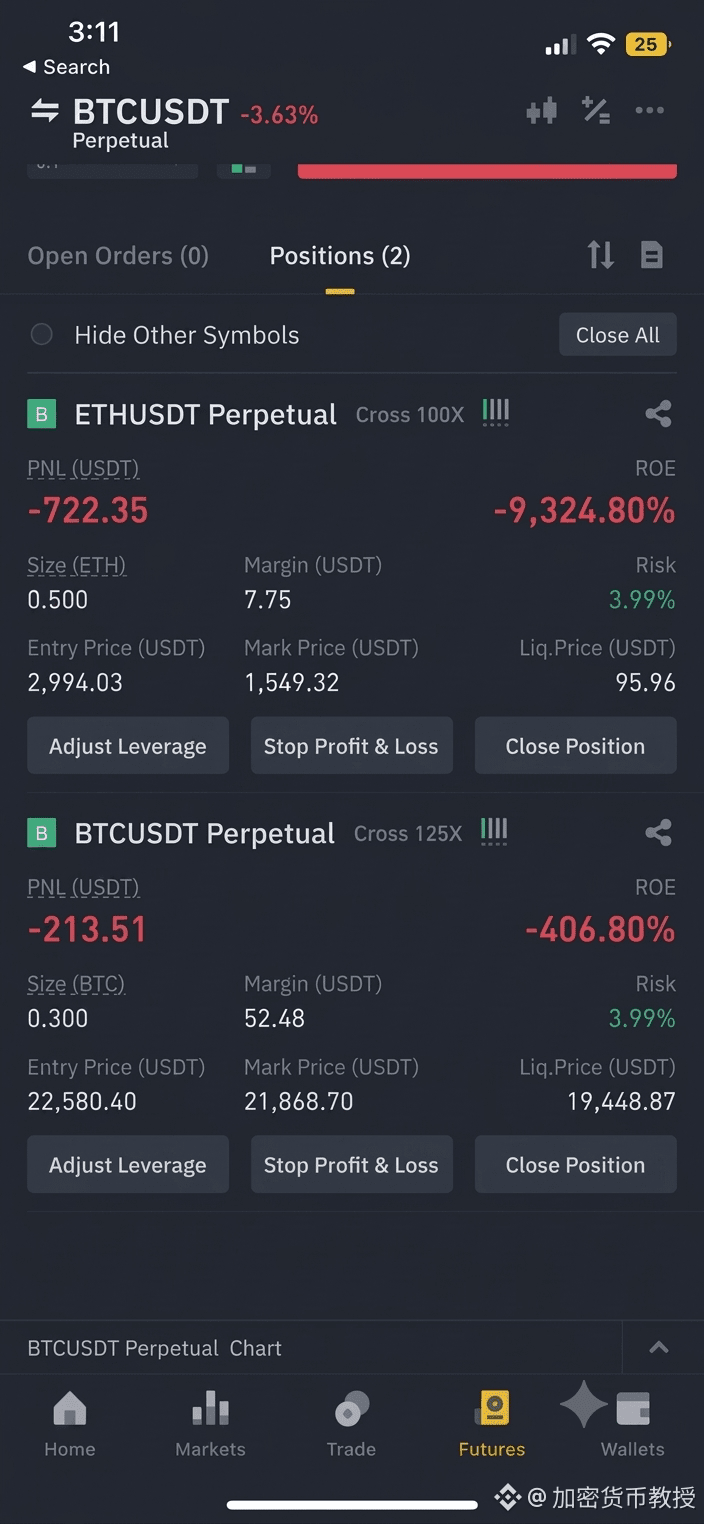
The question, whose answer is impossible to answer, for anyone. Human nature is very subjective , and every person has different threshold to bear the risk or take the risk. Before starting any trade think twice, how much risk reward you are expecting on this trade and then set atleast stop loss or trailing stop loss 🛑🚏.
$BTC $ETH #Binance #FutureTarding #BTC #ETH #StopLossStrategies
Should I close here ⁉️
The question, whose answer is impossible to answer, for anyone. Human nature is very subjective , and every person has different threshold to bear the risk or take the risk. Before starting any trade think twice, how much risk reward you are expecting on this trade and then set atleast stop loss or trailing stop loss 🛑🚏.
$BTC $ETH #Binance #FutureTarding #BTC #ETH #StopLossStrategies
The question, whose answer is impossible to answer, for anyone. Human nature is very subjective , and every person has different threshold to bear the risk or take the risk. Before starting any trade think twice, how much risk reward you are expecting on this trade and then set atleast stop loss or trailing stop loss 🛑🚏.
$BTC $ETH #Binance #FutureTarding #BTC #ETH #StopLossStrategies
144

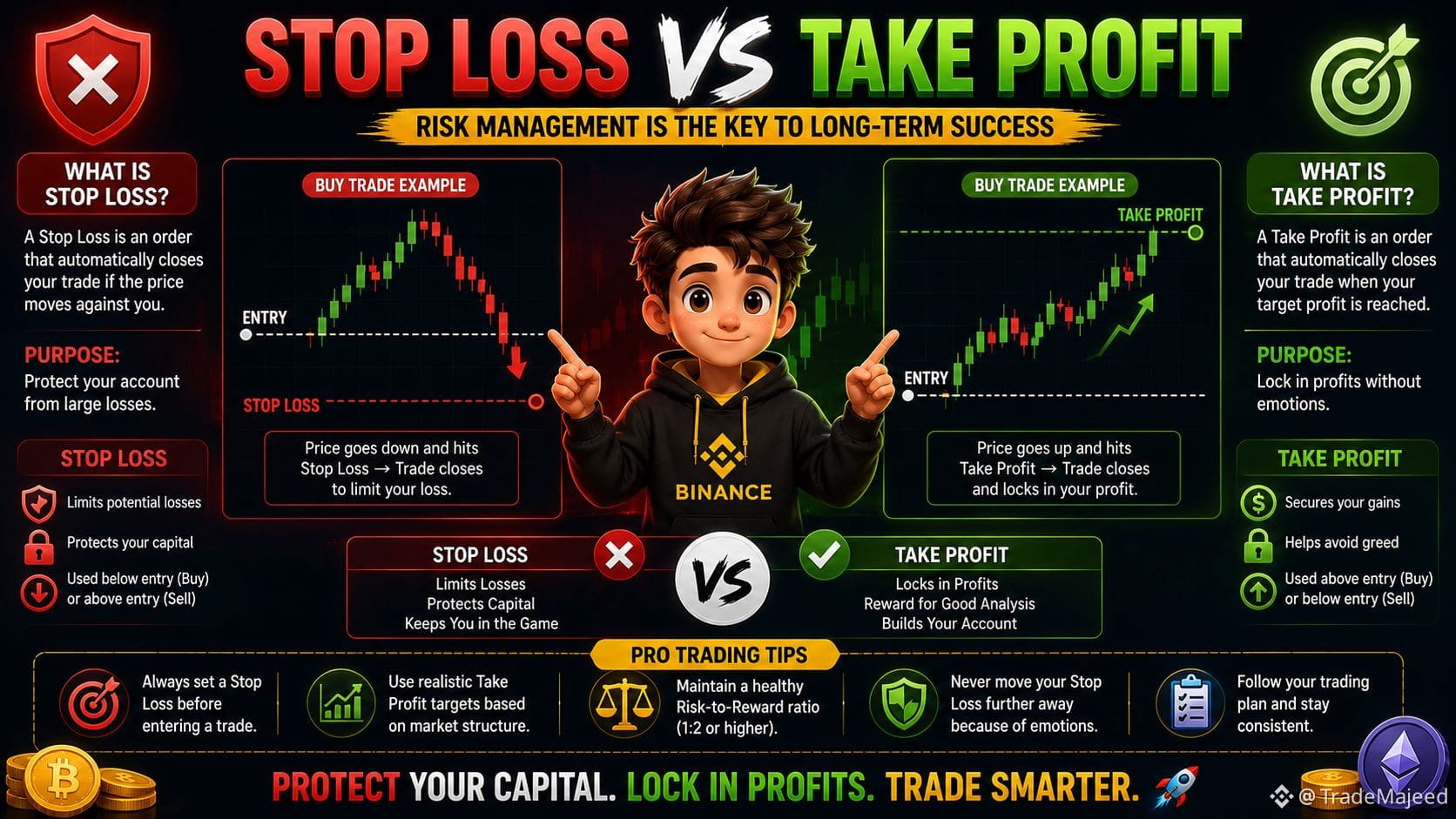
🛡️ Stop Loss vs Take Profit
Every successful trader knows that risk management is just as important as finding the right entry. Two of the most essential tools are Stop Loss (SL) and Take Profit (TP).
🔴 What is Stop Loss?
A Stop Loss is an order that automatically closes your trade if the price moves against you. It helps limit losses and protects your trading capital.
Purpose: Protect your account from large losses.
🟢 What is Take Profit?
A Take Profit is an order that automatically closes your trade when your target profit is reached.
Purpose: Lock in profits without letting emotions affect your decision.
⚖️ Stop Loss vs Take Profit
🔴 Stop Loss
Limits potential losses
Protects your capital
Used below entry (Buy) or above entry (Sell)
🟢 Take Profit
Secures your gains
Helps avoid greed
Used above entry (Buy) or below entry (Sell)
💡 Pro Trading Tips
✅ Always set a Stop Loss before entering a trade.
✅ Use realistic Take Profit targets based on market structure.
✅ Maintain a healthy Risk-to-Reward ratio (such as 1:2 or higher).
✅ Never move your Stop Loss further away because of emotions.
✅ Follow your trading plan consistently.
🎯 Remember: Winning traders don't win every trade—they manage risk on every trade.
Protect Your Capital. Lock in Profits. Trade Smarter. 📈
#Crypto_Jobs🎯 #CryptoTrading. #StopLossStrategies #TakeProfits #Binance
🛡️ Stop Loss vs Take Profit
Every successful trader knows that risk management is just as important as finding the right entry. Two of the most essential tools are Stop Loss (SL) and Take Profit (TP).
🔴 What is Stop Loss?
A Stop Loss is an order that automatically closes your trade if the price moves against you. It helps limit losses and protects your trading capital.
Purpose: Protect your account from large losses.
🟢 What is Take Profit?
A Take Profit is an order that automatically closes your trade when your target profit is reached.
Purpose: Lock in profits without letting emotions affect your decision.
⚖️ Stop Loss vs Take Profit
🔴 Stop Loss
Limits potential losses
Protects your capital
Used below entry (Buy) or above entry (Sell)
🟢 Take Profit
Secures your gains
Helps avoid greed
Used above entry (Buy) or below entry (Sell)
💡 Pro Trading Tips
✅ Always set a Stop Loss before entering a trade.
✅ Use realistic Take Profit targets based on market structure.
✅ Maintain a healthy Risk-to-Reward ratio (such as 1:2 or higher).
✅ Never move your Stop Loss further away because of emotions.
✅ Follow your trading plan consistently.
🎯 Remember: Winning traders don't win every trade—they manage risk on every trade.
Protect Your Capital. Lock in Profits. Trade Smarter. 📈
#Crypto_Jobs🎯 #CryptoTrading. #StopLossStrategies #TakeProfits #Binance
Every successful trader knows that risk management is just as important as finding the right entry. Two of the most essential tools are Stop Loss (SL) and Take Profit (TP).
🔴 What is Stop Loss?
A Stop Loss is an order that automatically closes your trade if the price moves against you. It helps limit losses and protects your trading capital.
Purpose: Protect your account from large losses.
🟢 What is Take Profit?
A Take Profit is an order that automatically closes your trade when your target profit is reached.
Purpose: Lock in profits without letting emotions affect your decision.
⚖️ Stop Loss vs Take Profit
🔴 Stop Loss
Limits potential losses
Protects your capital
Used below entry (Buy) or above entry (Sell)
🟢 Take Profit
Secures your gains
Helps avoid greed
Used above entry (Buy) or below entry (Sell)
💡 Pro Trading Tips
✅ Always set a Stop Loss before entering a trade.
✅ Use realistic Take Profit targets based on market structure.
✅ Maintain a healthy Risk-to-Reward ratio (such as 1:2 or higher).
✅ Never move your Stop Loss further away because of emotions.
✅ Follow your trading plan consistently.
🎯 Remember: Winning traders don't win every trade—they manage risk on every trade.
Protect Your Capital. Lock in Profits. Trade Smarter. 📈
#Crypto_Jobs🎯 #CryptoTrading. #StopLossStrategies #TakeProfits #Binance
99

·
--
🛑 Crypto में Stop-Loss क्यों जरूरी है?
अगर आपने ₹1,000 की Crypto खरीदी और कीमत लगातार नीचे जाने लगी, तो बिना Stop-Loss के नुकसान बढ़ता जा सकता है।
👉 Stop-Loss का मतलब है:
एक ऐसा price level तय करना जहाँ नुकसान सीमित करके trade से बाहर निकल जाएँ।
📌 Example:
Buy Price = ₹100
Stop-Loss = ₹95
➡️ कीमत ₹95 तक पहुँची तो exit।
💡 याद रखें:
Profit कमाना जरूरी है, लेकिन Capital बचाना उससे भी ज्यादा जरूरी है।
❌ बिना Stop-Loss = बड़ा Risk
✅ Stop-Loss = Controlled Risk
#CryptoLearning g #cryptoindia a #RiskManagement #StopLossStrategies s #BinanceSquare
🛑 Crypto में Stop-Loss क्यों जरूरी है?
अगर आपने ₹1,000 की Crypto खरीदी और कीमत लगातार नीचे जाने लगी, तो बिना Stop-Loss के नुकसान बढ़ता जा सकता है।
👉 Stop-Loss का मतलब है:
एक ऐसा price level तय करना जहाँ नुकसान सीमित करके trade से बाहर निकल जाएँ।
📌 Example:
Buy Price = ₹100
Stop-Loss = ₹95
➡️ कीमत ₹95 तक पहुँची तो exit।
💡 याद रखें:
Profit कमाना जरूरी है, लेकिन Capital बचाना उससे भी ज्यादा जरूरी है।
❌ बिना Stop-Loss = बड़ा Risk
✅ Stop-Loss = Controlled Risk
#CryptoLearning g #cryptoindia a #RiskManagement #StopLossStrategies s #BinanceSquare
अगर आपने ₹1,000 की Crypto खरीदी और कीमत लगातार नीचे जाने लगी, तो बिना Stop-Loss के नुकसान बढ़ता जा सकता है।
👉 Stop-Loss का मतलब है:
एक ऐसा price level तय करना जहाँ नुकसान सीमित करके trade से बाहर निकल जाएँ।
📌 Example:
Buy Price = ₹100
Stop-Loss = ₹95
➡️ कीमत ₹95 तक पहुँची तो exit।
💡 याद रखें:
Profit कमाना जरूरी है, लेकिन Capital बचाना उससे भी ज्यादा जरूरी है।
❌ बिना Stop-Loss = बड़ा Risk
✅ Stop-Loss = Controlled Risk
#CryptoLearning g #cryptoindia a #RiskManagement #StopLossStrategies s #BinanceSquare
33

YOUR STOP LOSS IS NOT YOUR ENEMY. NO STOP LOSS IS THE ENEMY THAT WILL KNOCK YOU OUT.
I used to think stop loss is for weak traders. Real traders hold, right? Then one trade without a stop took 40% of my portfolio in one night. That was my knockout.
In boxing you keep your guard up not because you are scared, but because you respect the game and want to fight tomorrow. Stop loss is your guard.
How I set it now: I decide my risk before entry. Max 1-2% of portfolio per trade. Then I place the stop where the setup is invalidated, not where I feel comfortable. If setup needs a 10% stop, I reduce position size. I never widen a stop because “it will come back.”
The best fighters are not the ones who never get hit. They are the ones who know how to take a small hit and stay in the ring.
Do you trade with a hard stop or mental stop?
If this hit hard, Like to protect another trader, Comment GUARD, and Tip to keep this fighter mindset series alive!
Educational only. #StopLossStrategies
{spot}(MSFTBUSDT)
YOUR STOP LOSS IS NOT YOUR ENEMY. NO STOP LOSS IS THE ENEMY THAT WILL KNOCK YOU OUT.
I used to think stop loss is for weak traders. Real traders hold, right? Then one trade without a stop took 40% of my portfolio in one night. That was my knockout.
In boxing you keep your guard up not because you are scared, but because you respect the game and want to fight tomorrow. Stop loss is your guard.
How I set it now: I decide my risk before entry. Max 1-2% of portfolio per trade. Then I place the stop where the setup is invalidated, not where I feel comfortable. If setup needs a 10% stop, I reduce position size. I never widen a stop because “it will come back.”
The best fighters are not the ones who never get hit. They are the ones who know how to take a small hit and stay in the ring.
Do you trade with a hard stop or mental stop?
If this hit hard, Like to protect another trader, Comment GUARD, and Tip to keep this fighter mindset series alive!
Educational only. #StopLossStrategies
I used to think stop loss is for weak traders. Real traders hold, right? Then one trade without a stop took 40% of my portfolio in one night. That was my knockout.
In boxing you keep your guard up not because you are scared, but because you respect the game and want to fight tomorrow. Stop loss is your guard.
How I set it now: I decide my risk before entry. Max 1-2% of portfolio per trade. Then I place the stop where the setup is invalidated, not where I feel comfortable. If setup needs a 10% stop, I reduce position size. I never widen a stop because “it will come back.”
The best fighters are not the ones who never get hit. They are the ones who know how to take a small hit and stay in the ring.
Do you trade with a hard stop or mental stop?
If this hit hard, Like to protect another trader, Comment GUARD, and Tip to keep this fighter mindset series alive!
Educational only. #StopLossStrategies

98

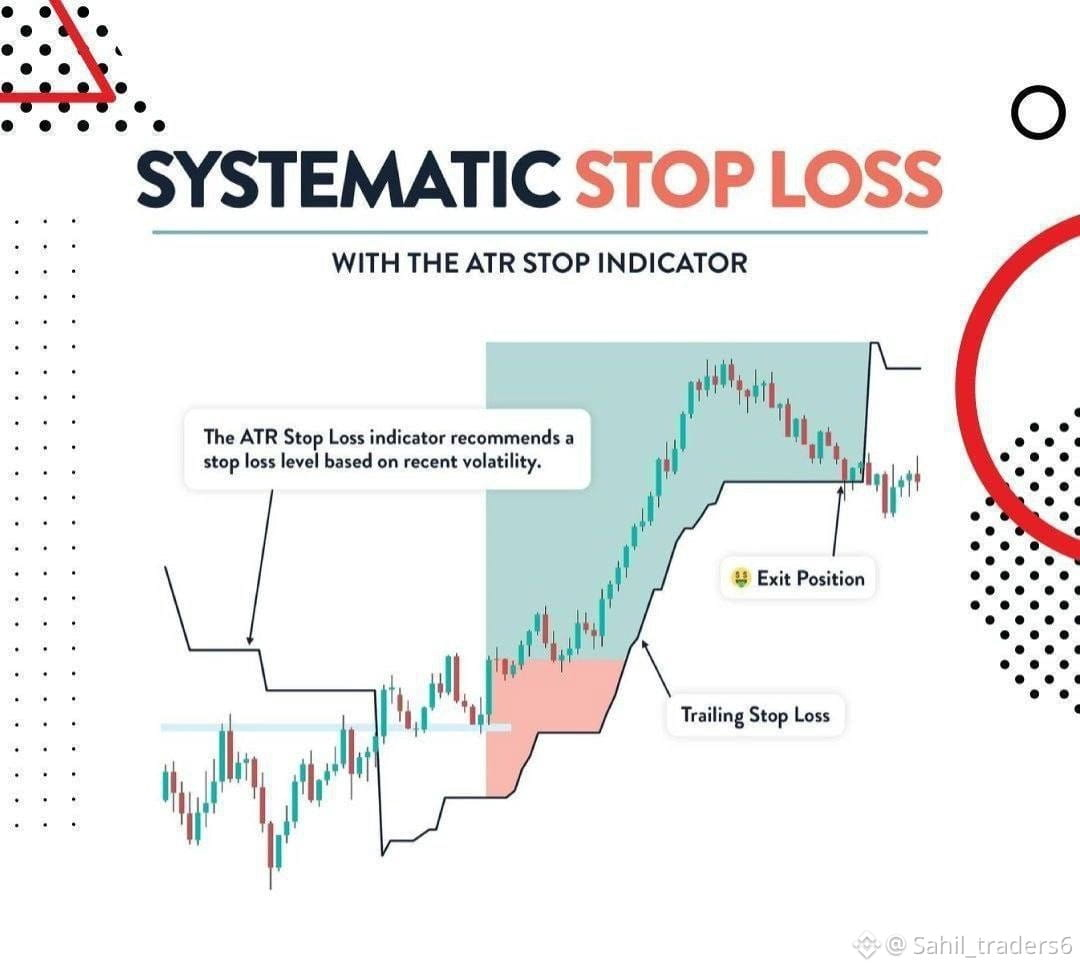
Secure your trades with the ATR Stop Indicator!
This powerful tool helps you implement a systematic stop-loss strategy, safeguarding your investments and minimizing risks. Trust the ATR Stop to navigate volatile markets with confidence. Start using it today and trade with peace of mind. Your success is our priority!
$BLESS $SOL $LYN
{future}(LYNUSDT)
{future}(SOLUSDT)
{future}(BLESSUSDT)
#StopLossStrategies #educational_post #crypto #CryptoNew #bitcoin
Secure your trades with the ATR Stop Indicator!
This powerful tool helps you implement a systematic stop-loss strategy, safeguarding your investments and minimizing risks. Trust the ATR Stop to navigate volatile markets with confidence. Start using it today and trade with peace of mind. Your success is our priority!
$BLESS $SOL $LYN
#StopLossStrategies #educational_post #crypto #CryptoNew #bitcoin
This powerful tool helps you implement a systematic stop-loss strategy, safeguarding your investments and minimizing risks. Trust the ATR Stop to navigate volatile markets with confidence. Start using it today and trade with peace of mind. Your success is our priority!
$BLESS $SOL $LYN
#StopLossStrategies #educational_post #crypto #CryptoNew #bitcoin
1
273


Article
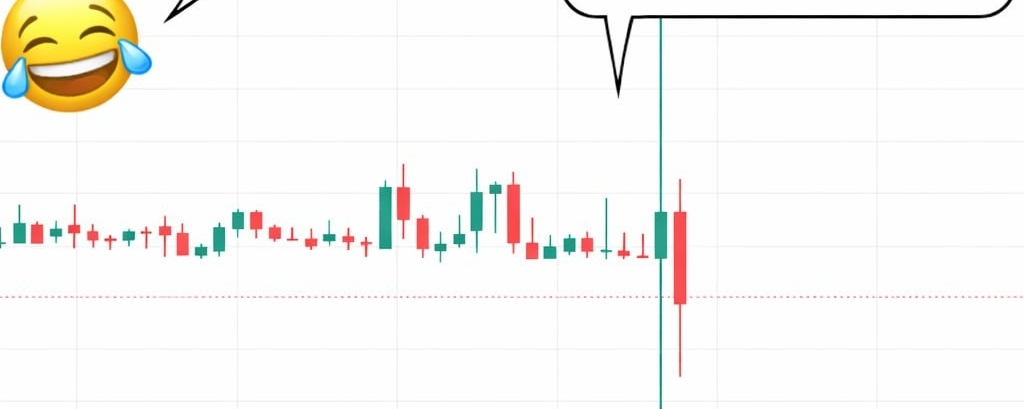
🚨 Beware of “Drama Coins”: When Volatility Turns into a Scam 🎭💥🚨 Beware of “Drama Coins”: When Volatility Turns into a Scam 🎭💥
Crypto trading is exciting — but sometimes, excitement hides danger. Recently, traders spotted charts that look less like market movement and more like a roller coaster gone wrong. One moment stable, the next a massive spike up and down. That’s not volatility — that’s manipulation.
🤔 What’s Really Happening?
These sudden spikes often come from low-liquidity coins or pump‑and‑dump schemes. A few whales or insiders push the price up to attract buyers, then dump everything, leaving retail traders holding the bag. The result? A chart that looks like a heart attack.
⚠️ How to Spot a “Drama Coin”
Unnatural price jumps within minutes
Huge candles with no news or volume support
Anonymous teams and vague project goals
Telegram hype but zero real-world utility
If you see a chart like the one in the meme — laugh first, but then walk away fast.
💡 Smart Trader Tips
Always check liquidity and volume consistency, Research the team and tokenomics before buying
Avoid coins that rely on hype instead of fundamentals
Use stop-losses and never chase green candles
😂 Humor Helps, But Awareness Saves
We turned one of these scam charts into a meme — because sometimes laughter spreads awareness faster than warnings.
“This crypto got more drama than a telenovela! 📺😂”
Share it, tag your friends, and remind them: Don’t let volatility become your villain.
#viralpost
#scam
#Volatilidad
#StopLossStrategies
🚨 Beware of “Drama Coins”: When Volatility Turns into a Scam 🎭💥
🚨 Beware of “Drama Coins”: When Volatility Turns into a Scam 🎭💥
Crypto trading is exciting — but sometimes, excitement hides danger. Recently, traders spotted charts that look less like market movement and more like a roller coaster gone wrong. One moment stable, the next a massive spike up and down. That’s not volatility — that’s manipulation.
🤔 What’s Really Happening?
These sudden spikes often come from low-liquidity coins or pump‑and‑dump schemes. A few whales or insiders push the price up to attract buyers, then dump everything, leaving retail traders holding the bag. The result? A chart that looks like a heart attack.
⚠️ How to Spot a “Drama Coin”
Unnatural price jumps within minutes
Huge candles with no news or volume support
Anonymous teams and vague project goals
Telegram hype but zero real-world utility
If you see a chart like the one in the meme — laugh first, but then walk away fast.
💡 Smart Trader Tips
Always check liquidity and volume consistency, Research the team and tokenomics before buying
Avoid coins that rely on hype instead of fundamentals
Use stop-losses and never chase green candles
😂 Humor Helps, But Awareness Saves
We turned one of these scam charts into a meme — because sometimes laughter spreads awareness faster than warnings.
“This crypto got more drama than a telenovela! 📺😂”
Share it, tag your friends, and remind them: Don’t let volatility become your villain.
#viralpost
#scam
#Volatilidad
#StopLossStrategies
Crypto trading is exciting — but sometimes, excitement hides danger. Recently, traders spotted charts that look less like market movement and more like a roller coaster gone wrong. One moment stable, the next a massive spike up and down. That’s not volatility — that’s manipulation.
🤔 What’s Really Happening?
These sudden spikes often come from low-liquidity coins or pump‑and‑dump schemes. A few whales or insiders push the price up to attract buyers, then dump everything, leaving retail traders holding the bag. The result? A chart that looks like a heart attack.
⚠️ How to Spot a “Drama Coin”
Unnatural price jumps within minutes
Huge candles with no news or volume support
Anonymous teams and vague project goals
Telegram hype but zero real-world utility
If you see a chart like the one in the meme — laugh first, but then walk away fast.
💡 Smart Trader Tips
Always check liquidity and volume consistency, Research the team and tokenomics before buying
Avoid coins that rely on hype instead of fundamentals
Use stop-losses and never chase green candles
😂 Humor Helps, But Awareness Saves
We turned one of these scam charts into a meme — because sometimes laughter spreads awareness faster than warnings.
“This crypto got more drama than a telenovela! 📺😂”
Share it, tag your friends, and remind them: Don’t let volatility become your villain.
#viralpost
#scam
#Volatilidad
#StopLossStrategies
2
241

·
--
#MarketMoves Wel come back
As long I can see market sweeps #Liquidations #StopLossStrategies
now we can see uptrend
#SUI🔥 just Enter At market prize there is much posibility for sui acheving $1.10 $1.16
$BNB we may see $800 + vry soon
what is your predction Can we discuss about the MARKET
comment here
#DYOR🟢 before trading
thank you
#MarketMoves Wel come back
As long I can see market sweeps #Liquidations #StopLossStrategies
now we can see uptrend
#SUI🔥 just Enter At market prize there is much posibility for sui acheving $1.10 $1.16
$BNB we may see $800 + vry soon
what is your predction Can we discuss about the MARKET
comment here
#DYOR🟢 before trading
thank you
As long I can see market sweeps #Liquidations #StopLossStrategies
now we can see uptrend
#SUI🔥 just Enter At market prize there is much posibility for sui acheving $1.10 $1.16
$BNB we may see $800 + vry soon
what is your predction Can we discuss about the MARKET
comment here
#DYOR🟢 before trading
thank you
83

·
--
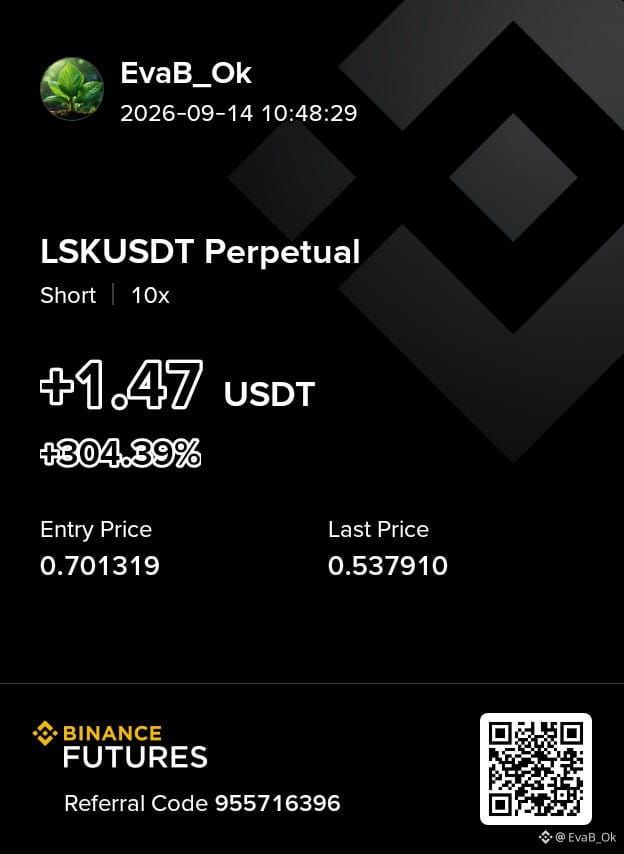
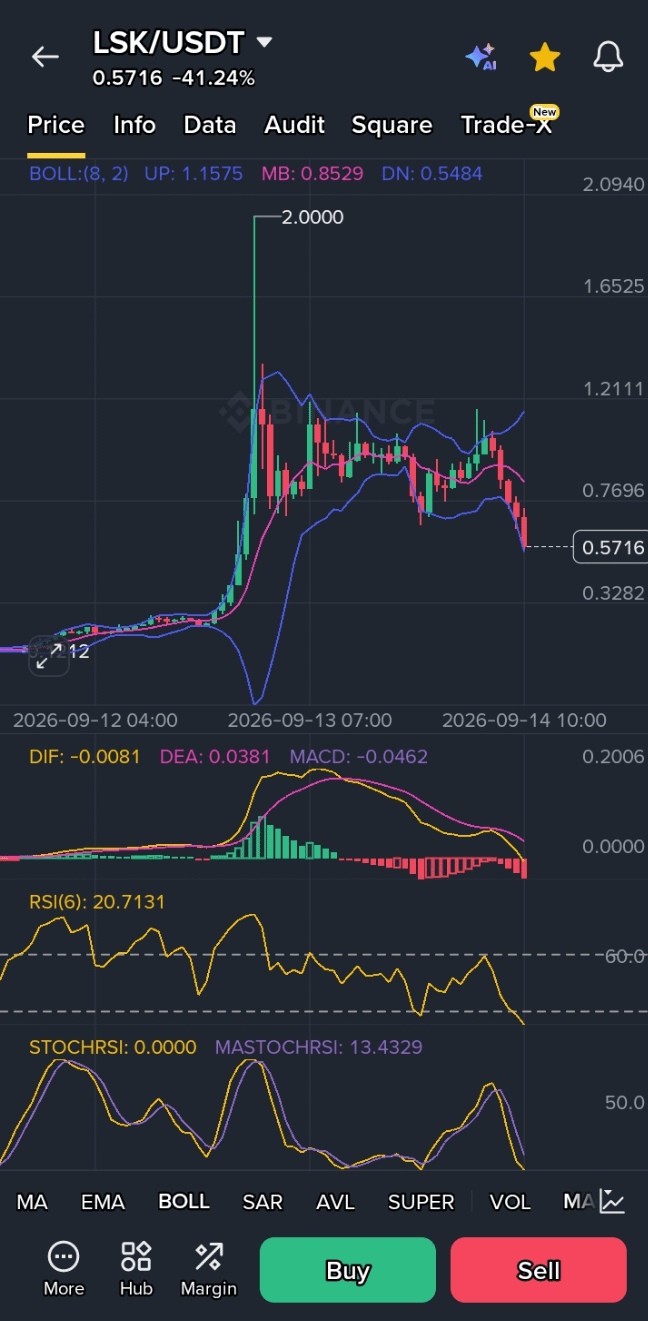
what do you understand about risk management #StopLossStrategies
what do you understand about risk management #StopLossStrategies
50



·
--
"Protect Your Trades Like a Pro! 🚀
Stop-loss orders are your best friend in trading! 🤝 Here's how to use them:
1. *Fixed Stop*: Set a percentage loss limit (5-10%) and stick to it! 📊
2. *Trailing Stop*: Let your profits grow while limiting losses! 📈
3. *Volatility Stop*: Use ATR to adjust stops based on market conditions! 🌟
4. *Support/Resistance Stop*: Place stops near key levels to avoid unnecessary losses! 📍
Remember: Risk only 1-2% of your portfolio per trade! 💸
Stay disciplined, review regularly, and trade smart! 💡
#StopLossStrategies
"Protect Your Trades Like a Pro! 🚀
Stop-loss orders are your best friend in trading! 🤝 Here's how to use them:
1. *Fixed Stop*: Set a percentage loss limit (5-10%) and stick to it! 📊
2. *Trailing Stop*: Let your profits grow while limiting losses! 📈
3. *Volatility Stop*: Use ATR to adjust stops based on market conditions! 🌟
4. *Support/Resistance Stop*: Place stops near key levels to avoid unnecessary losses! 📍
Remember: Risk only 1-2% of your portfolio per trade! 💸
Stay disciplined, review regularly, and trade smart! 💡
#StopLossStrategies
Stop-loss orders are your best friend in trading! 🤝 Here's how to use them:
1. *Fixed Stop*: Set a percentage loss limit (5-10%) and stick to it! 📊
2. *Trailing Stop*: Let your profits grow while limiting losses! 📈
3. *Volatility Stop*: Use ATR to adjust stops based on market conditions! 🌟
4. *Support/Resistance Stop*: Place stops near key levels to avoid unnecessary losses! 📍
Remember: Risk only 1-2% of your portfolio per trade! 💸
Stay disciplined, review regularly, and trade smart! 💡
#StopLossStrategies
200

#StopLossStrategies
STOP LOSS – Không phải để “bị hit”, mà để tồn tại lâu dài!
Trong giao dịch crypto, đừng chỉ hỏi “lệnh này lời bao nhiêu?” – mà hãy luôn hỏi: “Mình sẵn sàng mất bao nhiêu?”
Stop Loss (SL) là công cụ sinh tồn trong thị trường biến động cao. Nó không khiến bạn yếu – mà giúp bạn tự cắt lỗ khi còn kiểm soát được, tránh cháy tài khoản vì một cú sập mạnh.
Take Profit (TP) thì giúp bạn chốt lời đúng kế hoạch, không tham lam đến khi giá quay đầu.
Mẹo quản lý lệnh:
• Luôn đặt SL trước khi vào lệnh
• Tỉ lệ R:R tối thiểu 1:2 (mất 1 – lời 2)
• Đặt TP gần vùng kháng cự / hỗ trợ mạnh
• Xem xét trailing stop khi đang lời nhiều
Lệnh không có SL/TP thì chẳng khác gì thuyền ra khơi mà không la bàn.
#StopLoss #TakeProfit #QuảnLýVốn #CryptoTrading #BinanceVN #RiskManagement #GiaoDịchThôngMinh #SLTP #FuturesTips
#StopLossStrategies
STOP LOSS – Không phải để “bị hit”, mà để tồn tại lâu dài!
Trong giao dịch crypto, đừng chỉ hỏi “lệnh này lời bao nhiêu?” – mà hãy luôn hỏi: “Mình sẵn sàng mất bao nhiêu?”
Stop Loss (SL) là công cụ sinh tồn trong thị trường biến động cao. Nó không khiến bạn yếu – mà giúp bạn tự cắt lỗ khi còn kiểm soát được, tránh cháy tài khoản vì một cú sập mạnh.
Take Profit (TP) thì giúp bạn chốt lời đúng kế hoạch, không tham lam đến khi giá quay đầu.
Mẹo quản lý lệnh:
• Luôn đặt SL trước khi vào lệnh
• Tỉ lệ R:R tối thiểu 1:2 (mất 1 – lời 2)
• Đặt TP gần vùng kháng cự / hỗ trợ mạnh
• Xem xét trailing stop khi đang lời nhiều
Lệnh không có SL/TP thì chẳng khác gì thuyền ra khơi mà không la bàn.
#StopLoss #TakeProfit #QuảnLýVốn #CryptoTrading #BinanceVN #RiskManagement #GiaoDịchThôngMinh #SLTP #FuturesTips
STOP LOSS – Không phải để “bị hit”, mà để tồn tại lâu dài!
Trong giao dịch crypto, đừng chỉ hỏi “lệnh này lời bao nhiêu?” – mà hãy luôn hỏi: “Mình sẵn sàng mất bao nhiêu?”
Stop Loss (SL) là công cụ sinh tồn trong thị trường biến động cao. Nó không khiến bạn yếu – mà giúp bạn tự cắt lỗ khi còn kiểm soát được, tránh cháy tài khoản vì một cú sập mạnh.
Take Profit (TP) thì giúp bạn chốt lời đúng kế hoạch, không tham lam đến khi giá quay đầu.
Mẹo quản lý lệnh:
• Luôn đặt SL trước khi vào lệnh
• Tỉ lệ R:R tối thiểu 1:2 (mất 1 – lời 2)
• Đặt TP gần vùng kháng cự / hỗ trợ mạnh
• Xem xét trailing stop khi đang lời nhiều
Lệnh không có SL/TP thì chẳng khác gì thuyền ra khơi mà không la bàn.
#StopLoss #TakeProfit #QuảnLýVốn #CryptoTrading #BinanceVN #RiskManagement #GiaoDịchThôngMinh #SLTP #FuturesTips
1
5.4k

·
--
Baissier
$BTC Chắc chắn 100% là chưa thể downtrend bây giờ, nhưng giá có thể rút râu ở 71-72. 😭
Lịch sử cho thấy rằng Sau halving giá sẽ đạt đỉnh sau đó mới downtrend được. Đỉnh được xác lập khi Chỉ số CBBI đạt từ 96-100. Nhưng ở vùng 110k vừa rồi thì CBBI chỉ tầm 86 vậy nên đây chưa phải là đỉnh.🤔
Theo mình thì giá sẽ rút râu khá sâu vì hiện tại volume mua gần như không có hoặc bị phe bán áp đảo hoàn toàn. 🥹
Sau đó sẽ tích lũy sideway trong vài tháng trước khi đạt đỉnh vào nửa cuối của năm nay 2025. 😅
Tâm lý thị trường đang rất sợ hãi rồi. Đừng nghe con vợ nào phím lệnh hết anh em. Giá hợp lý với túi tiền của mình thì vào, kí quỹ 5% đổ lại thôi.🫡
Chúc mọi người an toàn. 🙏🙏🙏
#BinanceEarnYieldArena #DiversifyYourAssets
#StopLossStrategies
$BTC Chắc chắn 100% là chưa thể downtrend bây giờ, nhưng giá có thể rút râu ở 71-72. 😭
Lịch sử cho thấy rằng Sau halving giá sẽ đạt đỉnh sau đó mới downtrend được. Đỉnh được xác lập khi Chỉ số CBBI đạt từ 96-100. Nhưng ở vùng 110k vừa rồi thì CBBI chỉ tầm 86 vậy nên đây chưa phải là đỉnh.🤔
Theo mình thì giá sẽ rút râu khá sâu vì hiện tại volume mua gần như không có hoặc bị phe bán áp đảo hoàn toàn. 🥹
Sau đó sẽ tích lũy sideway trong vài tháng trước khi đạt đỉnh vào nửa cuối của năm nay 2025. 😅
Tâm lý thị trường đang rất sợ hãi rồi. Đừng nghe con vợ nào phím lệnh hết anh em. Giá hợp lý với túi tiền của mình thì vào, kí quỹ 5% đổ lại thôi.🫡
Chúc mọi người an toàn. 🙏🙏🙏
#BinanceEarnYieldArena #DiversifyYourAssets
#StopLossStrategies
Lịch sử cho thấy rằng Sau halving giá sẽ đạt đỉnh sau đó mới downtrend được. Đỉnh được xác lập khi Chỉ số CBBI đạt từ 96-100. Nhưng ở vùng 110k vừa rồi thì CBBI chỉ tầm 86 vậy nên đây chưa phải là đỉnh.🤔
Theo mình thì giá sẽ rút râu khá sâu vì hiện tại volume mua gần như không có hoặc bị phe bán áp đảo hoàn toàn. 🥹
Sau đó sẽ tích lũy sideway trong vài tháng trước khi đạt đỉnh vào nửa cuối của năm nay 2025. 😅
Tâm lý thị trường đang rất sợ hãi rồi. Đừng nghe con vợ nào phím lệnh hết anh em. Giá hợp lý với túi tiền của mình thì vào, kí quỹ 5% đổ lại thôi.🫡
Chúc mọi người an toàn. 🙏🙏🙏
#BinanceEarnYieldArena #DiversifyYourAssets
#StopLossStrategies
2
4.2k
Connectez-vous pour découvrir plus de contenu
Rejoignez la communauté mondiale des adeptes de cryptomonnaies sur Binance Square
⚡️ Suviez les dernières informations importantes sur les cryptomonnaies.
💬 Jugé digne de confiance par la plus grande plateforme d’échange de cryptomonnaies au monde.
👍 Découvrez les connaissances que partagent les créateurs vérifiés.
Adresse e-mail/Nº de téléphone
Sujets d’actualité
1
#BitcoinClears$85200
9,507 vues
200 mentions
2
#AltcoinSeasonIndexHoldsAbove60For5Days
49,985 vues
1,090 mentions
3
#USADPAdds90000JobsInSeptember
23,401 vues
616 mentions
4
#USCorePCEEasesTo3%InAugust
17,060 vues
479 mentions
5
#KospiPostsWorstQuarterSince2020
12,057 vues
469 mentions
6
#SECToClarifyOnChainFundraisingRules
29,636 vues
642 mentions
7
#UKFCAOpensCryptoFirmAuthorization
29,203 vues
539 mentions
8
#JapanMOFStudyGroupOnTokenizedGovtBonds
19,762 vues
412 mentions
9
#QNTRises287%
90,704 vues
895 mentions
10
#TrumpRejectsAIRulesForVoluntaryAudits
53,333 vues
783 mentions