

#megaeth
megaeth
173,793 vues
508 mentions
Populaire
Récents

·
--
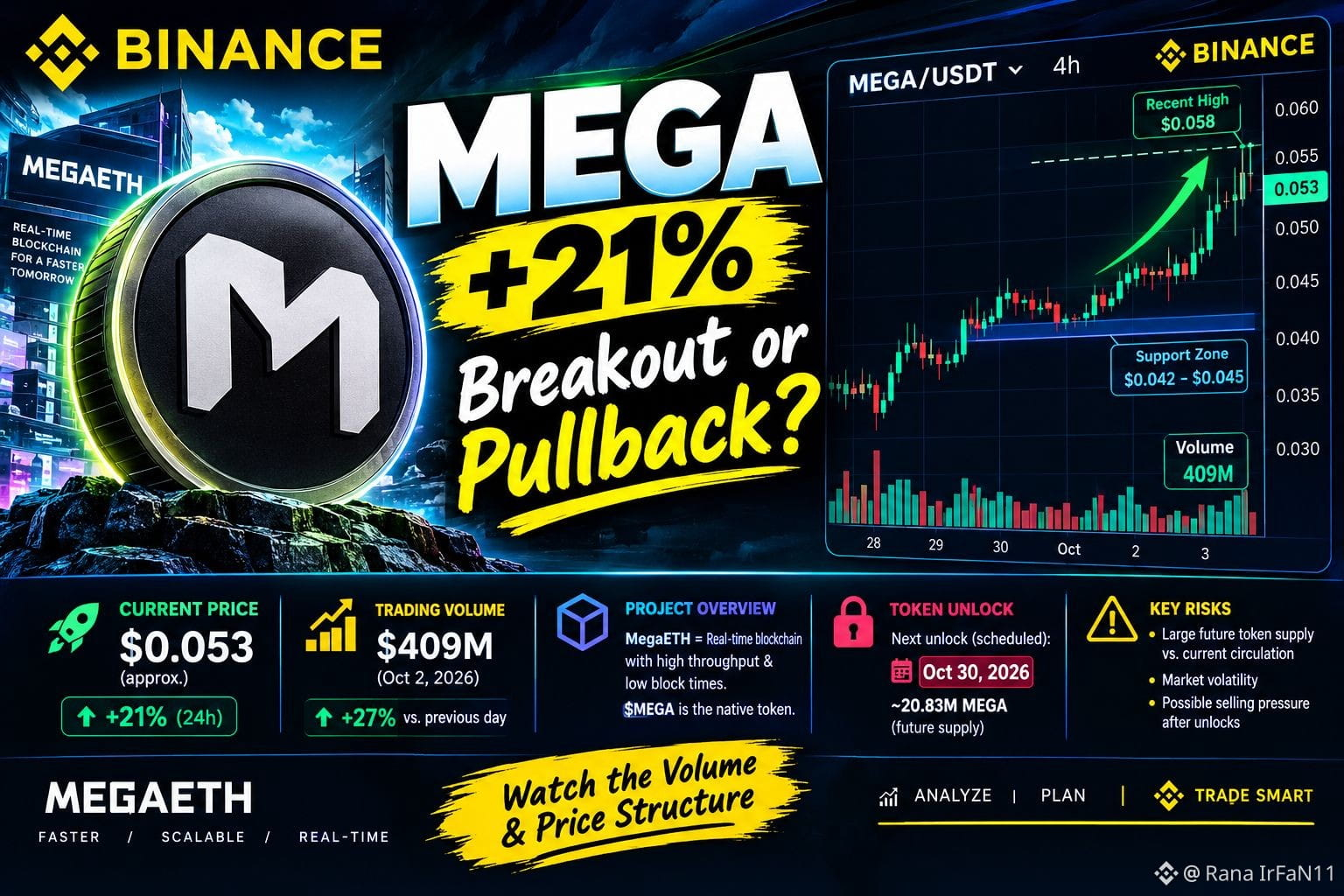
$MEGA is quietly becoming one of the interesting movers in today’s market.
MegaETH is currently trading around $0.053, with the token showing roughly a 20%+ gain on Binance’s current Top Gainers list. What stands out is the increase in trading activity alongside the price move — MEGA traded around $409M in volume on October 2, compared with roughly $322M the previous day. �
Binance +1
The project itself is also worth watching beyond today’s price action. MegaETH describes itself as a real-time blockchain focused on very high throughput and extremely low block times, and $MEGA is its native token. �
MegaETH +1
From a market perspective, the big question now is whether this move has enough strength behind it to continue.
The recent price action shows that buyers have stepped in aggressively after MEGA spent time trading much lower. But after a move of this size, I would be more interested in whether the price can hold the breakout area than simply looking at the percentage gain.
One positive sign is the rise in volume. If volume remains elevated while price continues making higher highs, that would suggest the move still has participation behind it.
But there is also a risk worth watching: MEGA has a relatively large future token supply compared with the amount currently circulating, and another scheduled unlock is listed for October 30, 2026, involving about 20.83M MEGA. Future supply can become an important factor when momentum cools down. �
CoinLaunch
My take: MEGA has strong short-term momentum, but I wouldn't judge the move simply by the green percentage. Volume, price structure and the reaction around the recent high will tell us much more.
I'm watching whether buyers can keep control without another sharp rejection.
Would you watch MEGA for another breakout, or wait for a pullback and confirmation first?
#MEGA #MegaETH H #BinancePizzaVN nce #Crypto #Altcoins! #TopGainersonBinance #CryptoAnalysis
$MEGA is quietly becoming one of the interesting movers in today’s market.
MegaETH is currently trading around $0.053, with the token showing roughly a 20%+ gain on Binance’s current Top Gainers list. What stands out is the increase in trading activity alongside the price move — MEGA traded around $409M in volume on October 2, compared with roughly $322M the previous day. �
Binance +1
The project itself is also worth watching beyond today’s price action. MegaETH describes itself as a real-time blockchain focused on very high throughput and extremely low block times, and $MEGA is its native token. �
MegaETH +1
From a market perspective, the big question now is whether this move has enough strength behind it to continue.
The recent price action shows that buyers have stepped in aggressively after MEGA spent time trading much lower. But after a move of this size, I would be more interested in whether the price can hold the breakout area than simply looking at the percentage gain.
One positive sign is the rise in volume. If volume remains elevated while price continues making higher highs, that would suggest the move still has participation behind it.
But there is also a risk worth watching: MEGA has a relatively large future token supply compared with the amount currently circulating, and another scheduled unlock is listed for October 30, 2026, involving about 20.83M MEGA. Future supply can become an important factor when momentum cools down. �
CoinLaunch
My take: MEGA has strong short-term momentum, but I wouldn't judge the move simply by the green percentage. Volume, price structure and the reaction around the recent high will tell us much more.
I'm watching whether buyers can keep control without another sharp rejection.
Would you watch MEGA for another breakout, or wait for a pullback and confirmation first?
#MEGA #MegaETH H #BinancePizzaVN nce #Crypto #Altcoins! #TopGainersonBinance #CryptoAnalysis
MegaETH is currently trading around $0.053, with the token showing roughly a 20%+ gain on Binance’s current Top Gainers list. What stands out is the increase in trading activity alongside the price move — MEGA traded around $409M in volume on October 2, compared with roughly $322M the previous day. �
Binance +1
The project itself is also worth watching beyond today’s price action. MegaETH describes itself as a real-time blockchain focused on very high throughput and extremely low block times, and $MEGA is its native token. �
MegaETH +1
From a market perspective, the big question now is whether this move has enough strength behind it to continue.
The recent price action shows that buyers have stepped in aggressively after MEGA spent time trading much lower. But after a move of this size, I would be more interested in whether the price can hold the breakout area than simply looking at the percentage gain.
One positive sign is the rise in volume. If volume remains elevated while price continues making higher highs, that would suggest the move still has participation behind it.
But there is also a risk worth watching: MEGA has a relatively large future token supply compared with the amount currently circulating, and another scheduled unlock is listed for October 30, 2026, involving about 20.83M MEGA. Future supply can become an important factor when momentum cools down. �
CoinLaunch
My take: MEGA has strong short-term momentum, but I wouldn't judge the move simply by the green percentage. Volume, price structure and the reaction around the recent high will tell us much more.
I'm watching whether buyers can keep control without another sharp rejection.
Would you watch MEGA for another breakout, or wait for a pullback and confirmation first?
#MEGA #MegaETH H #BinancePizzaVN nce #Crypto #Altcoins! #TopGainersonBinance #CryptoAnalysis
203

·
--
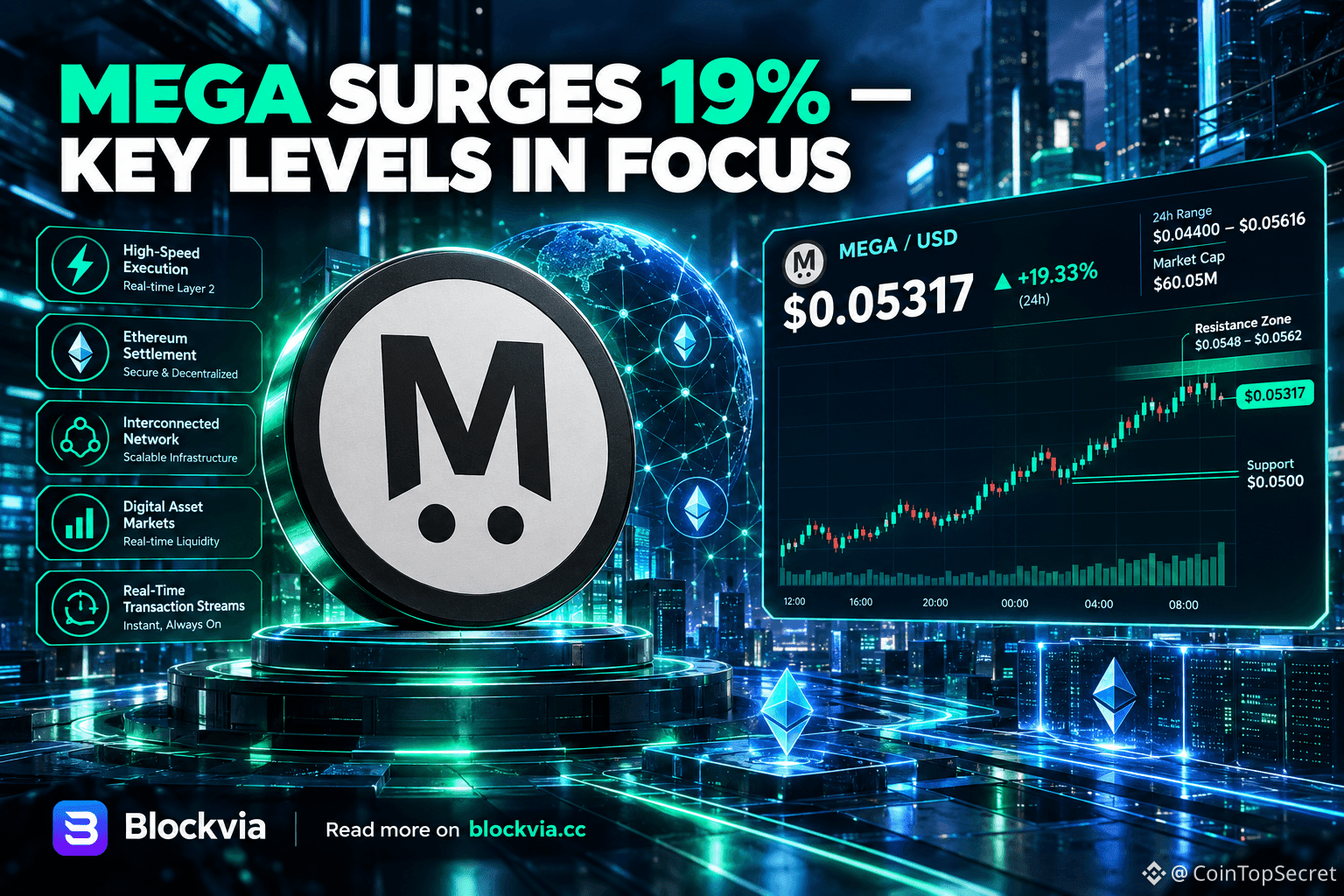
$MEGA Update 🔎 Can MegaETH hold its latest breakout?
💰 Price now: $0.05317 | 24h: +19.33%
📊 Market cap: $60.05M | Rank: #430
📈 24h range: $0.04400 – $0.05616
📰 What's happening:
MEGA has accelerated sharply, gaining nearly 20% in 24 hours alongside a major jump in trading activity. Binance shows a $0.0440–$0.05616 intraday range, while CoinGecko records about $65.5M in 24h volume. No specific new MegaETH catalyst has been confirmed in the latest news feeds.
🔥 Key catalyst:
The latest confirmed official ecosystem update is MOSS, MegaETH's wallet project, which went live on June 17.
👀 Next step to watch:
🔴 Bearish case: Below $0.0500 could bring $0.046–$0.047 into focus.
🟢 Bullish case: Holding above $0.0548 could put $0.0562 back in focus.
📝 My take:
The sharp volume expansion makes the $0.0500–$0.0562 area important to watch.
Not financial advice, DYOR ⚠️
#MEGA #MegaETH #Crypto #Ethereum #Layer2 #CryptoNews
$MEGA Update 🔎 Can MegaETH hold its latest breakout?
💰 Price now: $0.05317 | 24h: +19.33%
📊 Market cap: $60.05M | Rank: #430
📈 24h range: $0.04400 – $0.05616
📰 What's happening:
MEGA has accelerated sharply, gaining nearly 20% in 24 hours alongside a major jump in trading activity. Binance shows a $0.0440–$0.05616 intraday range, while CoinGecko records about $65.5M in 24h volume. No specific new MegaETH catalyst has been confirmed in the latest news feeds.
🔥 Key catalyst:
The latest confirmed official ecosystem update is MOSS, MegaETH's wallet project, which went live on June 17.
👀 Next step to watch:
🔴 Bearish case: Below $0.0500 could bring $0.046–$0.047 into focus.
🟢 Bullish case: Holding above $0.0548 could put $0.0562 back in focus.
📝 My take:
The sharp volume expansion makes the $0.0500–$0.0562 area important to watch.
Not financial advice, DYOR ⚠️
#MEGA #MegaETH #Crypto #Ethereum #Layer2 #CryptoNews
💰 Price now: $0.05317 | 24h: +19.33%
📊 Market cap: $60.05M | Rank: #430
📈 24h range: $0.04400 – $0.05616
📰 What's happening:
MEGA has accelerated sharply, gaining nearly 20% in 24 hours alongside a major jump in trading activity. Binance shows a $0.0440–$0.05616 intraday range, while CoinGecko records about $65.5M in 24h volume. No specific new MegaETH catalyst has been confirmed in the latest news feeds.
🔥 Key catalyst:
The latest confirmed official ecosystem update is MOSS, MegaETH's wallet project, which went live on June 17.
👀 Next step to watch:
🔴 Bearish case: Below $0.0500 could bring $0.046–$0.047 into focus.
🟢 Bullish case: Holding above $0.0548 could put $0.0562 back in focus.
📝 My take:
The sharp volume expansion makes the $0.0500–$0.0562 area important to watch.
Not financial advice, DYOR ⚠️
#MEGA #MegaETH #Crypto #Ethereum #Layer2 #CryptoNews
173

·
--
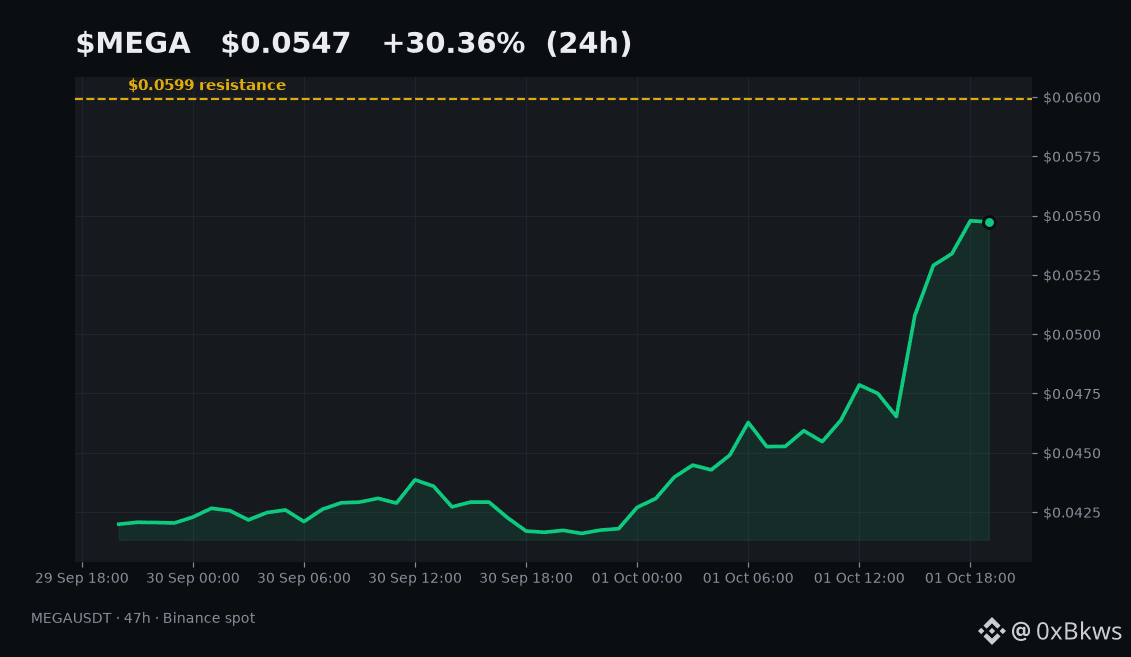
$MEGA spikes 30.36% — bullish move
$MEGA $0.0545 up 30.36% while $MOVR jumps 75.87% and $PUMP trends
Trader's read: MegaETH's 30% jump on zero volume in a greed-filled market is a short-lived rally—sell now and lock in gains.
Watch for $0.0599 resistance in 24-48h
Are you taking profits on $MEGA now?
#Write2Earn #CryptoTrading #MegaETH
$MEGA spikes 30.36% — bullish move
$MEGA $0.0545 up 30.36% while $MOVR jumps 75.87% and $PUMP trends
Trader's read: MegaETH's 30% jump on zero volume in a greed-filled market is a short-lived rally—sell now and lock in gains.
Watch for $0.0599 resistance in 24-48h
Are you taking profits on $MEGA now?
#Write2Earn #CryptoTrading #MegaETH
$MEGA $0.0545 up 30.36% while $MOVR jumps 75.87% and $PUMP trends
Trader's read: MegaETH's 30% jump on zero volume in a greed-filled market is a short-lived rally—sell now and lock in gains.
Watch for $0.0599 resistance in 24-48h
Are you taking profits on $MEGA now?
#Write2Earn #CryptoTrading #MegaETH
338

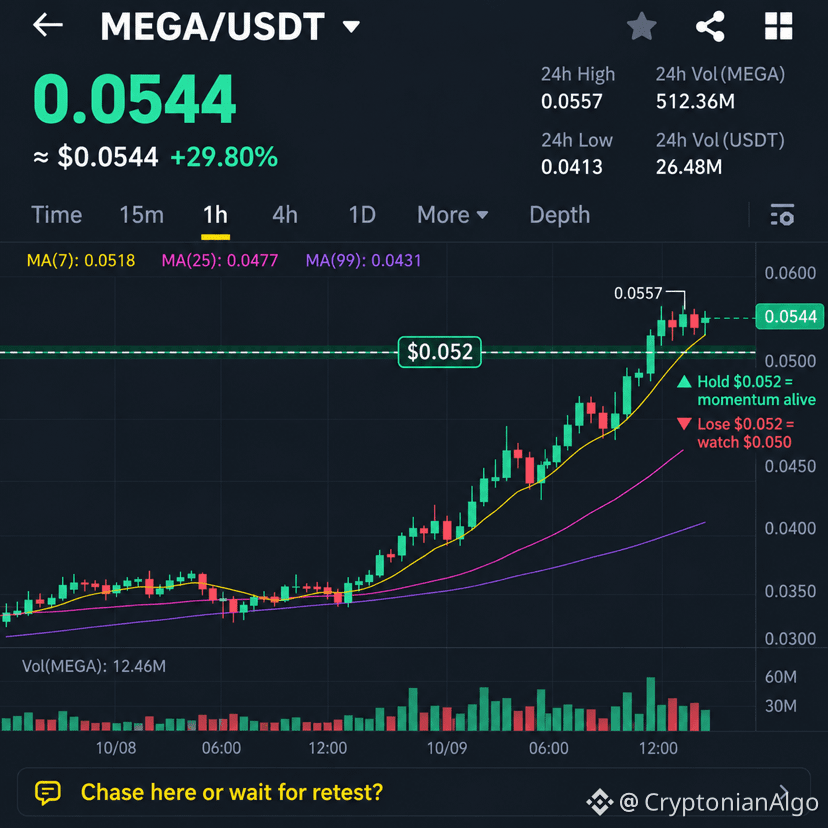
$MEGA just made the kind of move that attracts everyone at once.
Nearly +30%.
But I’m not chasing the green candles.
I’m watching $0.052.
That’s where this move gets interesting.
Hold $0.052 → momentum still has room.
Lose $0.052 → I’d watch $0.050 next.
And above?
$0.0557 is the level buyers still need to clear.
Big pumps create excitement.
They also create bad entries.
For now:
$0.052 holds = 👀
$0.052 breaks = ⚠️
$0.0557 clears = 🔥
Would you chase MEGA here — or wait for the retest?
$MEGA #MegaETH #Crypto
$MEGA just made the kind of move that attracts everyone at once.
Nearly +30%.
But I’m not chasing the green candles.
I’m watching $0.052.
That’s where this move gets interesting.
Hold $0.052 → momentum still has room.
Lose $0.052 → I’d watch $0.050 next.
And above?
$0.0557 is the level buyers still need to clear.
Big pumps create excitement.
They also create bad entries.
For now:
$0.052 holds = 👀
$0.052 breaks = ⚠️
$0.0557 clears = 🔥
Would you chase MEGA here — or wait for the retest?
$MEGA #MegaETH #Crypto
Nearly +30%.
But I’m not chasing the green candles.
I’m watching $0.052.
That’s where this move gets interesting.
Hold $0.052 → momentum still has room.
Lose $0.052 → I’d watch $0.050 next.
And above?
$0.0557 is the level buyers still need to clear.
Big pumps create excitement.
They also create bad entries.
For now:
$0.052 holds = 👀
$0.052 breaks = ⚠️
$0.0557 clears = 🔥
Would you chase MEGA here — or wait for the retest?
$MEGA #MegaETH #Crypto
1
178

·
--
MEGA这波25%的涨幅,功劳被记到了一个币安广场账号头上——翻一下发帖记录,时间对不上,价格先涨完,"功劳"才补发上去。
10月1日16:00到19:00(UTC),MEGA从0.04出头拉到0.05+,这是涨幅最陡的一段。等到18:45,账号cryptotradehead才发出第一条"今日涨幅榜",之后8小时连发8条,反复把MEGA和MOVR、ALICE、GTC这些票绑在一起喊"突破还是回调"。是价格先动,广场才把它包装成故事。
衍生品数据更直白:空头爆仓26.76万美元,多头爆仓只有21.17万美元,持仓量才3330万美元——这是逼空行情,不是新资金进场的信号。
真正被拿出来撑场面的,是"近10亿美元桥接TVL被低估"这套说法。查了DefiLlama,MegaETH链上TVL10月1日只有1830万美元,比9月1日的2160万美元还跌了一截。桥接资产不等于活跃协议留存的真实资金,这个数字从一开始就不该被拿来证明低估。
再往前翻:MOSS Live是6月17日的旧闻,代币上线是4月30日的旧闻,空投农场玩法是9月18日的旧闻,Upbit暂停硬分叉上币是8月21日的旧闻。这次拉升,项目方没发任何新公告、新集成、新上币——能讲的故事全是炒过的冷饭。
这波我不看多——杠杆逼空加旧闻拼盘,撑不起真正的资金轮动。真正该盯的不是这几条广场热帖,是链上TVL和真实活跃用户能不能跟着价格一起涨上来;盯不到这个,现在这个位置我不会进。
$MEGA #MegaETH #altcoin
MEGA这波25%的涨幅,功劳被记到了一个币安广场账号头上——翻一下发帖记录,时间对不上,价格先涨完,"功劳"才补发上去。
10月1日16:00到19:00(UTC),MEGA从0.04出头拉到0.05+,这是涨幅最陡的一段。等到18:45,账号cryptotradehead才发出第一条"今日涨幅榜",之后8小时连发8条,反复把MEGA和MOVR、ALICE、GTC这些票绑在一起喊"突破还是回调"。是价格先动,广场才把它包装成故事。
衍生品数据更直白:空头爆仓26.76万美元,多头爆仓只有21.17万美元,持仓量才3330万美元——这是逼空行情,不是新资金进场的信号。
真正被拿出来撑场面的,是"近10亿美元桥接TVL被低估"这套说法。查了DefiLlama,MegaETH链上TVL10月1日只有1830万美元,比9月1日的2160万美元还跌了一截。桥接资产不等于活跃协议留存的真实资金,这个数字从一开始就不该被拿来证明低估。
再往前翻:MOSS Live是6月17日的旧闻,代币上线是4月30日的旧闻,空投农场玩法是9月18日的旧闻,Upbit暂停硬分叉上币是8月21日的旧闻。这次拉升,项目方没发任何新公告、新集成、新上币——能讲的故事全是炒过的冷饭。
这波我不看多——杠杆逼空加旧闻拼盘,撑不起真正的资金轮动。真正该盯的不是这几条广场热帖,是链上TVL和真实活跃用户能不能跟着价格一起涨上来;盯不到这个,现在这个位置我不会进。
$MEGA #MegaETH #altcoin
10月1日16:00到19:00(UTC),MEGA从0.04出头拉到0.05+,这是涨幅最陡的一段。等到18:45,账号cryptotradehead才发出第一条"今日涨幅榜",之后8小时连发8条,反复把MEGA和MOVR、ALICE、GTC这些票绑在一起喊"突破还是回调"。是价格先动,广场才把它包装成故事。
衍生品数据更直白:空头爆仓26.76万美元,多头爆仓只有21.17万美元,持仓量才3330万美元——这是逼空行情,不是新资金进场的信号。
真正被拿出来撑场面的,是"近10亿美元桥接TVL被低估"这套说法。查了DefiLlama,MegaETH链上TVL10月1日只有1830万美元,比9月1日的2160万美元还跌了一截。桥接资产不等于活跃协议留存的真实资金,这个数字从一开始就不该被拿来证明低估。
再往前翻:MOSS Live是6月17日的旧闻,代币上线是4月30日的旧闻,空投农场玩法是9月18日的旧闻,Upbit暂停硬分叉上币是8月21日的旧闻。这次拉升,项目方没发任何新公告、新集成、新上币——能讲的故事全是炒过的冷饭。
这波我不看多——杠杆逼空加旧闻拼盘,撑不起真正的资金轮动。真正该盯的不是这几条广场热帖,是链上TVL和真实活跃用户能不能跟着价格一起涨上来;盯不到这个,现在这个位置我不会进。
$MEGA #MegaETH #altcoin
155

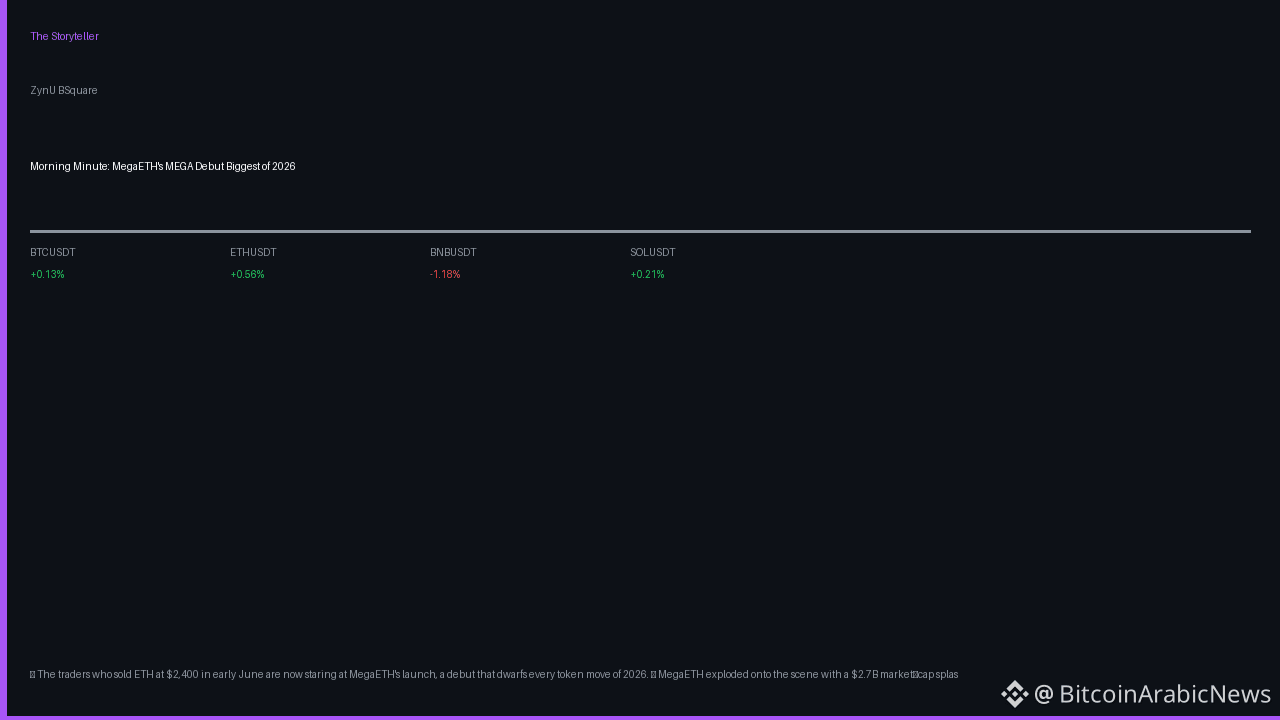
🔥 The traders who sold ETH at $2,400 in early June are now staring at MegaETH's launch, a debut that dwarfs every token move of 2026.
📊 MegaETH exploded onto the scene with a $2.7B market‑cap splash, instantly becoming the biggest token debut of the year while ETH clings to $2,688 (+0.56%) and BTC hovers at $83,464 (+0.13%) under a Greed sentiment of 73. Futures open interest remains massive—$7.75B for BTC and $6.10B for ETH—with funding rates still positive, signaling that longs are paying to stay in the game. Smart money on Solana is already shifting gears, loading up DOTS and EV wallets, and BNB is slipping to $754 (‑1.18%) as its RSI sinks to 37.4, hinting the next wave of capital may chase the new king. #ETH #MegaETH #CryptoMomentum
💡 The twist? Even with bullish funding and a dominant long‑side (65% net long on BTC, 72% on ETH), the market sits on a narrow Bollinger Band mid‑range, meaning MegaETH’s surge could either catapult the whole crypto rally into uncharted territory or snap the fragile equilibrium in an instant.
❓ Will MegaETH become the spark that drags Bitcoin past $90K, or will it expose the underlying fragility and trigger the next correction?
🔥 The traders who sold ETH at $2,400 in early June are now staring at MegaETH's launch, a debut that dwarfs every token move of 2026.
📊 MegaETH exploded onto the scene with a $2.7B market‑cap splash, instantly becoming the biggest token debut of the year while ETH clings to $2,688 (+0.56%) and BTC hovers at $83,464 (+0.13%) under a Greed sentiment of 73. Futures open interest remains massive—$7.75B for BTC and $6.10B for ETH—with funding rates still positive, signaling that longs are paying to stay in the game. Smart money on Solana is already shifting gears, loading up DOTS and EV wallets, and BNB is slipping to $754 (‑1.18%) as its RSI sinks to 37.4, hinting the next wave of capital may chase the new king. #ETH #MegaETH #CryptoMomentum
💡 The twist? Even with bullish funding and a dominant long‑side (65% net long on BTC, 72% on ETH), the market sits on a narrow Bollinger Band mid‑range, meaning MegaETH’s surge could either catapult the whole crypto rally into uncharted territory or snap the fragile equilibrium in an instant.
❓ Will MegaETH become the spark that drags Bitcoin past $90K, or will it expose the underlying fragility and trigger the next correction?
📊 MegaETH exploded onto the scene with a $2.7B market‑cap splash, instantly becoming the biggest token debut of the year while ETH clings to $2,688 (+0.56%) and BTC hovers at $83,464 (+0.13%) under a Greed sentiment of 73. Futures open interest remains massive—$7.75B for BTC and $6.10B for ETH—with funding rates still positive, signaling that longs are paying to stay in the game. Smart money on Solana is already shifting gears, loading up DOTS and EV wallets, and BNB is slipping to $754 (‑1.18%) as its RSI sinks to 37.4, hinting the next wave of capital may chase the new king. #ETH #MegaETH #CryptoMomentum
💡 The twist? Even with bullish funding and a dominant long‑side (65% net long on BTC, 72% on ETH), the market sits on a narrow Bollinger Band mid‑range, meaning MegaETH’s surge could either catapult the whole crypto rally into uncharted territory or snap the fragile equilibrium in an instant.
❓ Will MegaETH become the spark that drags Bitcoin past $90K, or will it expose the underlying fragility and trigger the next correction?
35

·
--
#MegaETH #Megadrop #MEGAUSDC
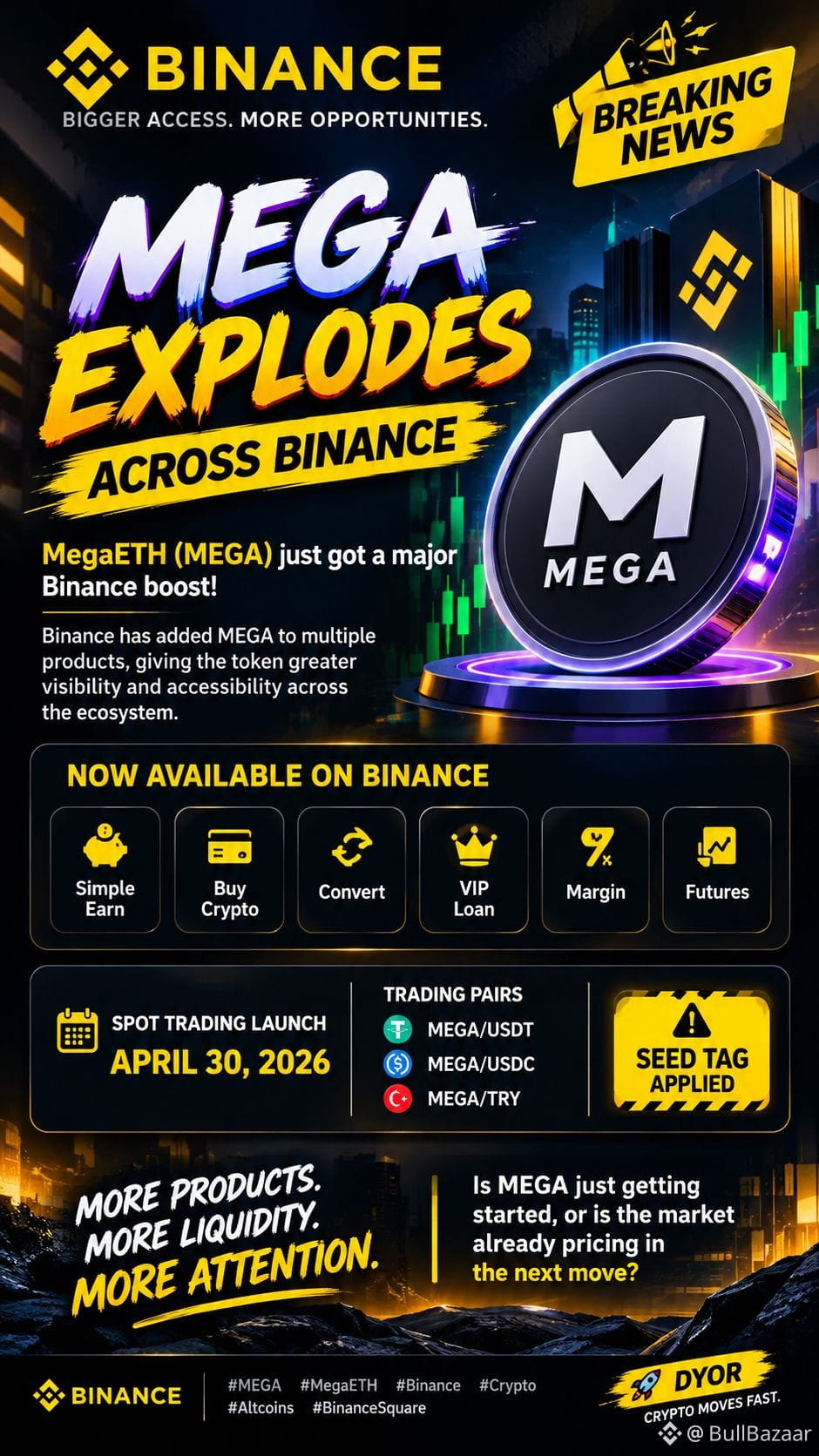
🚨 BREAKING: MEGAETH JUST GOT A MAJOR BINANCE BOOST!
MegaETH ($MEGA) is now expanding across multiple Binance products — putting the token firmly on traders’ radar. 👀
🔥 What’s happening?
Binance has added MEGA to: ✅ Simple Earn
✅ Buy Crypto
✅ Convert
✅ VIP Loan
✅ Margin
✅ Futures
📅 Spot trading went live on April 30, 2026
Trading pairs: 💥 MEGA/USDT
💥 MEGA/USDC
💥 MEGA/TRY
⚠️ Seed Tag applied
This means MEGA is now accessible across a much broader range of Binance products — potentially increasing market visibility and trading activity.
👀 The big question:
Is MEGA just getting started, or is the market already pricing in the next move?
📌 Watch MEGA. Watch the volume. Watch the volatility.
DYOR — crypto moves fast. ⚡
#MEGA #MegaETH #Binance #CryptoNews #Altcoins #BinanceSquare #Crypto
#MegaETH #Megadrop #MEGAUSDC
🚨 BREAKING: MEGAETH JUST GOT A MAJOR BINANCE BOOST!
MegaETH ($MEGA) is now expanding across multiple Binance products — putting the token firmly on traders’ radar. 👀
🔥 What’s happening?
Binance has added MEGA to: ✅ Simple Earn
✅ Buy Crypto
✅ Convert
✅ VIP Loan
✅ Margin
✅ Futures
📅 Spot trading went live on April 30, 2026
Trading pairs: 💥 MEGA/USDT
💥 MEGA/USDC
💥 MEGA/TRY
⚠️ Seed Tag applied
This means MEGA is now accessible across a much broader range of Binance products — potentially increasing market visibility and trading activity.
👀 The big question:
Is MEGA just getting started, or is the market already pricing in the next move?
📌 Watch MEGA. Watch the volume. Watch the volatility.
DYOR — crypto moves fast. ⚡
#MEGA #MegaETH #Binance #CryptoNews #Altcoins #BinanceSquare #Crypto
🚨 BREAKING: MEGAETH JUST GOT A MAJOR BINANCE BOOST!
MegaETH ($MEGA) is now expanding across multiple Binance products — putting the token firmly on traders’ radar. 👀
🔥 What’s happening?
Binance has added MEGA to: ✅ Simple Earn
✅ Buy Crypto
✅ Convert
✅ VIP Loan
✅ Margin
✅ Futures
📅 Spot trading went live on April 30, 2026
Trading pairs: 💥 MEGA/USDT
💥 MEGA/USDC
💥 MEGA/TRY
⚠️ Seed Tag applied
This means MEGA is now accessible across a much broader range of Binance products — potentially increasing market visibility and trading activity.
👀 The big question:
Is MEGA just getting started, or is the market already pricing in the next move?
📌 Watch MEGA. Watch the volume. Watch the volatility.
DYOR — crypto moves fast. ⚡
#MEGA #MegaETH #Binance #CryptoNews #Altcoins #BinanceSquare #Crypto
1
271

Token MegaETH giảm 55% trong ngày đầu giao dịch
- Token MegaETH được hậu thuẫn bởi Vitalik giảm 55% trong ngày đầu giao dịch.
- Mô tả RSS chưa cung cấp thêm chi tiết.
#MegaETH #CryptoNews #BinanceSquare
$btc $eth
#vlikevn #Titanbot
Nguồn: DL News
Token MegaETH giảm 55% trong ngày đầu giao dịch
- Token MegaETH được hậu thuẫn bởi Vitalik giảm 55% trong ngày đầu giao dịch.
- Mô tả RSS chưa cung cấp thêm chi tiết.
#MegaETH #CryptoNews #BinanceSquare
$btc $eth
#vlikevn #Titanbot
Nguồn: DL News
- Token MegaETH được hậu thuẫn bởi Vitalik giảm 55% trong ngày đầu giao dịch.
- Mô tả RSS chưa cung cấp thêm chi tiết.
#MegaETH #CryptoNews #BinanceSquare
$btc $eth
#vlikevn #Titanbot
Nguồn: DL News
111

·
--
Haussier
🟧👉 Disclosure: This post (✍️ Text + 🖼️ images) is AI-generated.
🚀 The Ethereum and Layer-2 scaling ecosystem is unleashing explosive development activity and blazing network throughput ⚡.
🔥 High-performance modular rollups and MegaETH innovations are redefining transaction speeds across global decentralized networks 📈.
1️⃣ Ultra-fast execution environments are dramatically lowering latency for real-time on-chain applications 🌐.
2️⃣ Gas fee optimizations are driving record daily smart contract interactions and protocol adoption 📊.
3️⃣ Capital is flowing swiftly into high-throughput ecosystems building next-generation decentralized finance rails 💰.
💪 Forward-thinking traders and builders are closely tracking developer commits and network stress-test results 🧠.
🏆 Stay ahead of the technology curve and position your strategies with unwavering discipline 🏁.
{spot}(MEGAUSDT)
#MegaETH #Ethereum #Layer2 #BinanceSquare #Crypto
🟧👉 Reminder: 🚨 Not Financial Advice (NFA), Please Do Your Own Research (DYOR) 🛡️.
🟧👉 Disclosure: This post (✍️ Text + 🖼️ images) is AI-generated.
🚀 The Ethereum and Layer-2 scaling ecosystem is unleashing explosive development activity and blazing network throughput ⚡.
🔥 High-performance modular rollups and MegaETH innovations are redefining transaction speeds across global decentralized networks 📈.
1️⃣ Ultra-fast execution environments are dramatically lowering latency for real-time on-chain applications 🌐.
2️⃣ Gas fee optimizations are driving record daily smart contract interactions and protocol adoption 📊.
3️⃣ Capital is flowing swiftly into high-throughput ecosystems building next-generation decentralized finance rails 💰.
💪 Forward-thinking traders and builders are closely tracking developer commits and network stress-test results 🧠.
🏆 Stay ahead of the technology curve and position your strategies with unwavering discipline 🏁.
#MegaETH #Ethereum #Layer2 #BinanceSquare #Crypto
🟧👉 Reminder: 🚨 Not Financial Advice (NFA), Please Do Your Own Research (DYOR) 🛡️.
🚀 The Ethereum and Layer-2 scaling ecosystem is unleashing explosive development activity and blazing network throughput ⚡.
🔥 High-performance modular rollups and MegaETH innovations are redefining transaction speeds across global decentralized networks 📈.
1️⃣ Ultra-fast execution environments are dramatically lowering latency for real-time on-chain applications 🌐.
2️⃣ Gas fee optimizations are driving record daily smart contract interactions and protocol adoption 📊.
3️⃣ Capital is flowing swiftly into high-throughput ecosystems building next-generation decentralized finance rails 💰.
💪 Forward-thinking traders and builders are closely tracking developer commits and network stress-test results 🧠.
🏆 Stay ahead of the technology curve and position your strategies with unwavering discipline 🏁.
#MegaETH #Ethereum #Layer2 #BinanceSquare #Crypto
🟧👉 Reminder: 🚨 Not Financial Advice (NFA), Please Do Your Own Research (DYOR) 🛡️.


207


·
--
Haussier
Partiellement vrai
$MEGA (MegaETH) is rapidly emerging as one of the most talked-about Layer 2 projects in crypto.
Backed by Dragonfly Capital, powered by revolutionary tokenomics, and capable of processing up to 100,000 TPS, MegaETH is positioning itself as a serious contender in the next generation of blockchain scalability.
Often highlighted as Vitalik's only major L2 bet after StarkNet, $MEGA is already listed on 13 exchanges with zero trading fees, attracting growing attention from investors and builders alike.
Is MegaETH about to become the next breakout ecosystem?
#MegaETH #Ethereum #CryptoNews #BitcoinETFPremiumTwoYearLow #USDollarUpOnInflationFedHawk $MEGA
{spot}(MEGAUSDT)
$MEGA (MegaETH) is rapidly emerging as one of the most talked-about Layer 2 projects in crypto.
Backed by Dragonfly Capital, powered by revolutionary tokenomics, and capable of processing up to 100,000 TPS, MegaETH is positioning itself as a serious contender in the next generation of blockchain scalability.
Often highlighted as Vitalik's only major L2 bet after StarkNet, $MEGA is already listed on 13 exchanges with zero trading fees, attracting growing attention from investors and builders alike.
Is MegaETH about to become the next breakout ecosystem?
#MegaETH #Ethereum #CryptoNews #BitcoinETFPremiumTwoYearLow #USDollarUpOnInflationFedHawk $MEGA
Backed by Dragonfly Capital, powered by revolutionary tokenomics, and capable of processing up to 100,000 TPS, MegaETH is positioning itself as a serious contender in the next generation of blockchain scalability.
Often highlighted as Vitalik's only major L2 bet after StarkNet, $MEGA is already listed on 13 exchanges with zero trading fees, attracting growing attention from investors and builders alike.
Is MegaETH about to become the next breakout ecosystem?
#MegaETH #Ethereum #CryptoNews #BitcoinETFPremiumTwoYearLow #USDollarUpOnInflationFedHawk $MEGA
1
355

MegaETH完成Terminal Program积分终结并开放奖励钱包登记,6月10号后所有领取相关信息将永久锁定——这是空投前置流程中唯一不可逆的确权窗口期,错过无二次修改机会。
从链上空投的常规逻辑来看,积分终结意味着早期社区参与者的贡献权重已经完全固化,不会因后续新增活动或用户流入被稀释;本次同步配套的钱包登记+邮箱绑定机制,也区别于多数无明确节奏的“盲盒空投”,说明项目方对奖励发放有清晰的执行规划,参与者的权益确权路径明确,降低了“贡献后无法落地奖励”的中间不确定性。
需要提醒的是,目前项目未披露代币分配比例、上线场景等核心信息,请勿基于模糊预期进行非理性操作;奖励钱包需选择支持EVM链的个人链上地址,切勿使用交易所钱包或合约地址,避免资产接收失败;6月10号的锁定节点无延期可能,需提前完成所有操作。
你是否参与了MegaETH的Terminal Program?已经完成奖励钱包的确认登记了吗?
#加密空投 #区块链 #MegaETH
$MegaETH $ETH
MegaETH完成Terminal Program积分终结并开放奖励钱包登记,6月10号后所有领取相关信息将永久锁定——这是空投前置流程中唯一不可逆的确权窗口期,错过无二次修改机会。
从链上空投的常规逻辑来看,积分终结意味着早期社区参与者的贡献权重已经完全固化,不会因后续新增活动或用户流入被稀释;本次同步配套的钱包登记+邮箱绑定机制,也区别于多数无明确节奏的“盲盒空投”,说明项目方对奖励发放有清晰的执行规划,参与者的权益确权路径明确,降低了“贡献后无法落地奖励”的中间不确定性。
需要提醒的是,目前项目未披露代币分配比例、上线场景等核心信息,请勿基于模糊预期进行非理性操作;奖励钱包需选择支持EVM链的个人链上地址,切勿使用交易所钱包或合约地址,避免资产接收失败;6月10号的锁定节点无延期可能,需提前完成所有操作。
你是否参与了MegaETH的Terminal Program?已经完成奖励钱包的确认登记了吗?
#加密空投 #区块链 #MegaETH
$MegaETH $ETH
从链上空投的常规逻辑来看,积分终结意味着早期社区参与者的贡献权重已经完全固化,不会因后续新增活动或用户流入被稀释;本次同步配套的钱包登记+邮箱绑定机制,也区别于多数无明确节奏的“盲盒空投”,说明项目方对奖励发放有清晰的执行规划,参与者的权益确权路径明确,降低了“贡献后无法落地奖励”的中间不确定性。
需要提醒的是,目前项目未披露代币分配比例、上线场景等核心信息,请勿基于模糊预期进行非理性操作;奖励钱包需选择支持EVM链的个人链上地址,切勿使用交易所钱包或合约地址,避免资产接收失败;6月10号的锁定节点无延期可能,需提前完成所有操作。
你是否参与了MegaETH的Terminal Program?已经完成奖励钱包的确认登记了吗?
#加密空投 #区块链 #MegaETH
$MegaETH $ETH
196

·
--
MegaETH 最近的画面有点难看。TVL 断崖式下滑,生态项目陆续撤离,团队也几乎失声——三件事叠在一起,就是典型的信任崩塌信号。
我拆一下逻辑:
1) 信任瓦解:团队沉默是最伤估值的动作,社区从"等更新"变成"找出口"。
2) 流动性抽干:生态出走 → TVL 缩水 → 深度变差 → 抛压放大,形成负反馈。
3) 核心叙事失效:曾经"实时以太坊"的故事撑不住数据面,叙事溢价快速回吐。
当前 $MEGA 报价 $0.04637,市值约 $52.39M,24h 成交仅 13.06M,属于典型的"低流动性 + 弱基本面"组合,反弹更多靠情绪而非资金。
个人观点:在团队重新露面、TVL 止跌、生态回流这三个信号出现之前,不建议左侧接刀。真正的机会永远出现在数据拐点,而不是价格拐点。
#MegaETH #链上风险 #叙事失效
MegaETH 最近的画面有点难看。TVL 断崖式下滑,生态项目陆续撤离,团队也几乎失声——三件事叠在一起,就是典型的信任崩塌信号。
我拆一下逻辑:
1) 信任瓦解:团队沉默是最伤估值的动作,社区从"等更新"变成"找出口"。
2) 流动性抽干:生态出走 → TVL 缩水 → 深度变差 → 抛压放大,形成负反馈。
3) 核心叙事失效:曾经"实时以太坊"的故事撑不住数据面,叙事溢价快速回吐。
当前 $MEGA 报价 $0.04637,市值约 $52.39M,24h 成交仅 13.06M,属于典型的"低流动性 + 弱基本面"组合,反弹更多靠情绪而非资金。
个人观点:在团队重新露面、TVL 止跌、生态回流这三个信号出现之前,不建议左侧接刀。真正的机会永远出现在数据拐点,而不是价格拐点。
#MegaETH #链上风险 #叙事失效
我拆一下逻辑:
1) 信任瓦解:团队沉默是最伤估值的动作,社区从"等更新"变成"找出口"。
2) 流动性抽干:生态出走 → TVL 缩水 → 深度变差 → 抛压放大,形成负反馈。
3) 核心叙事失效:曾经"实时以太坊"的故事撑不住数据面,叙事溢价快速回吐。
当前 $MEGA 报价 $0.04637,市值约 $52.39M,24h 成交仅 13.06M,属于典型的"低流动性 + 弱基本面"组合,反弹更多靠情绪而非资金。
个人观点:在团队重新露面、TVL 止跌、生态回流这三个信号出现之前,不建议左侧接刀。真正的机会永远出现在数据拐点,而不是价格拐点。
#MegaETH #链上风险 #叙事失效
77

·
--
Haussier
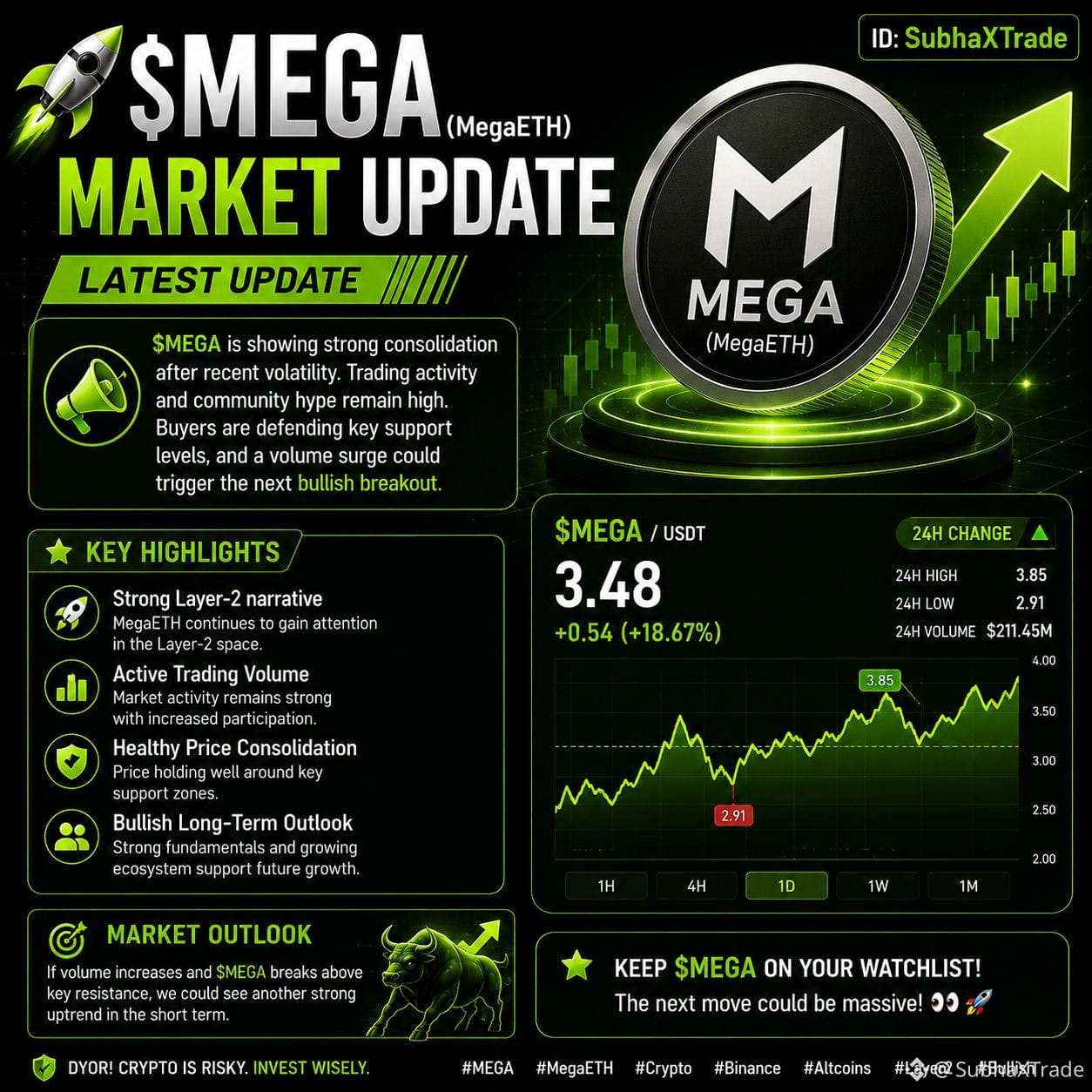
🚀 $MEGA Market Update:
$MEGA is showing strong consolidation after recent volatility, while trading activity and community hype remain active. 📈
Buyers are still defending key support levels, and if volume increases again, MEGA could attempt another bullish breakout soon. ⚡
✅ Strong Layer-2 narrative
✅ Active market interest
✅ Bullish long-term outlook
Are you bullish on $MEGA ? 👀
#MEGA #MegaETH #Crypto #Binance #Bullish
— SubhaXTrade
{spot}(MEGAUSDT)
🚀 $MEGA Market Update:
$MEGA is showing strong consolidation after recent volatility, while trading activity and community hype remain active. 📈
Buyers are still defending key support levels, and if volume increases again, MEGA could attempt another bullish breakout soon. ⚡
✅ Strong Layer-2 narrative
✅ Active market interest
✅ Bullish long-term outlook
Are you bullish on $MEGA ? 👀
#MEGA #MegaETH #Crypto #Binance #Bullish
— SubhaXTrade
$MEGA is showing strong consolidation after recent volatility, while trading activity and community hype remain active. 📈
Buyers are still defending key support levels, and if volume increases again, MEGA could attempt another bullish breakout soon. ⚡
✅ Strong Layer-2 narrative
✅ Active market interest
✅ Bullish long-term outlook
Are you bullish on $MEGA ? 👀
#MEGA #MegaETH #Crypto #Binance #Bullish
— SubhaXTrade
390

·
--
MegaETH's sudden decision to shutter Mega Mafia, its esteemed accelerator program, is a hidden bellwether for the broader Ethereum ecosystem. Most investors are focused on the price, but I'm reading the tea leaves in on-chain data, and it's telling a different story.
#Eth2 #MegaETH #AcceleratorNews
The signal is clear: of the 20 teams that successfully raised $80M through Mega Mafia, the majority have abandoned MegaETH's blockchain ecosystem. This suggests a concerning trend of decreasing adoption and usage of Ethereum-based solutions.
The interpretation is that this exodus could lead to a further decline in the already-struggling Ethereum fees, ultimately affecting the value of ETH. It's a contrarian play, but bearish sentiment is brewing, and this indicator won't help alleviate it.
The watch list is the Ethereum blockchain activity, particularly focusing on the number of active users on each cohort. #EthActiveUsers - a steady decline here could be a red flag for Ethereum's long-term prospects.
What will be the ripple effect of MegaETH's decision on the Ethereum ecosystem's momentum?
MegaETH's sudden decision to shutter Mega Mafia, its esteemed accelerator program, is a hidden bellwether for the broader Ethereum ecosystem. Most investors are focused on the price, but I'm reading the tea leaves in on-chain data, and it's telling a different story.
#Eth2 #MegaETH #AcceleratorNews
The signal is clear: of the 20 teams that successfully raised $80M through Mega Mafia, the majority have abandoned MegaETH's blockchain ecosystem. This suggests a concerning trend of decreasing adoption and usage of Ethereum-based solutions.
The interpretation is that this exodus could lead to a further decline in the already-struggling Ethereum fees, ultimately affecting the value of ETH. It's a contrarian play, but bearish sentiment is brewing, and this indicator won't help alleviate it.
The watch list is the Ethereum blockchain activity, particularly focusing on the number of active users on each cohort. #EthActiveUsers - a steady decline here could be a red flag for Ethereum's long-term prospects.
What will be the ripple effect of MegaETH's decision on the Ethereum ecosystem's momentum?
#Eth2 #MegaETH #AcceleratorNews
The signal is clear: of the 20 teams that successfully raised $80M through Mega Mafia, the majority have abandoned MegaETH's blockchain ecosystem. This suggests a concerning trend of decreasing adoption and usage of Ethereum-based solutions.
The interpretation is that this exodus could lead to a further decline in the already-struggling Ethereum fees, ultimately affecting the value of ETH. It's a contrarian play, but bearish sentiment is brewing, and this indicator won't help alleviate it.
The watch list is the Ethereum blockchain activity, particularly focusing on the number of active users on each cohort. #EthActiveUsers - a steady decline here could be a red flag for Ethereum's long-term prospects.
What will be the ripple effect of MegaETH's decision on the Ethereum ecosystem's momentum?
24

·
--
Baissier
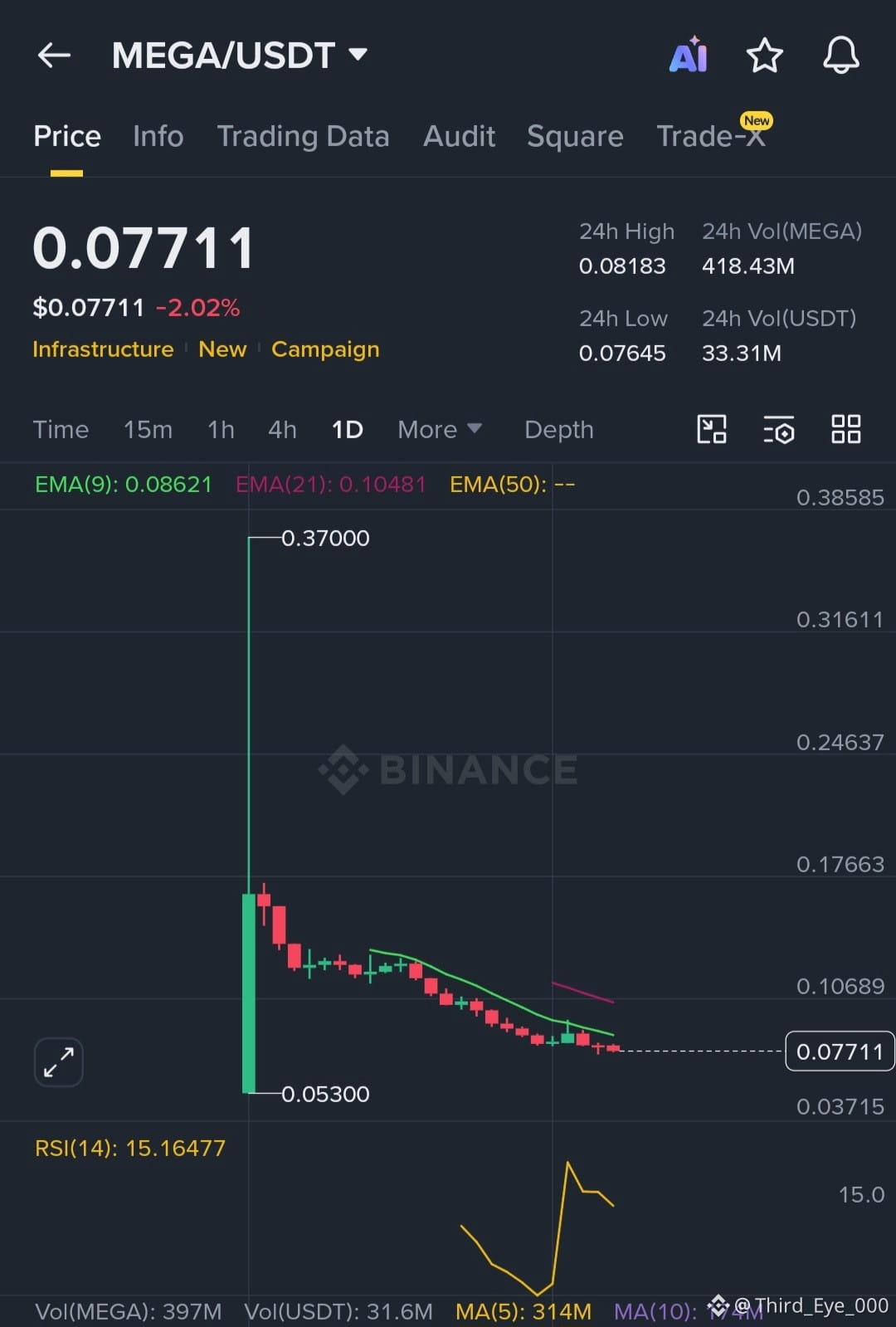
$MEGA — the anatomy of a collapse 💀
Raised $107M+. Listed at 2x ICO price. Looked like a winner.
Then came the mainnet campaign. Users paid $1,000–$2,000 in platform fees to participate. Two weeks later — campaign over.
NFTs minted on #MegaETH ? Down 90% overnight.
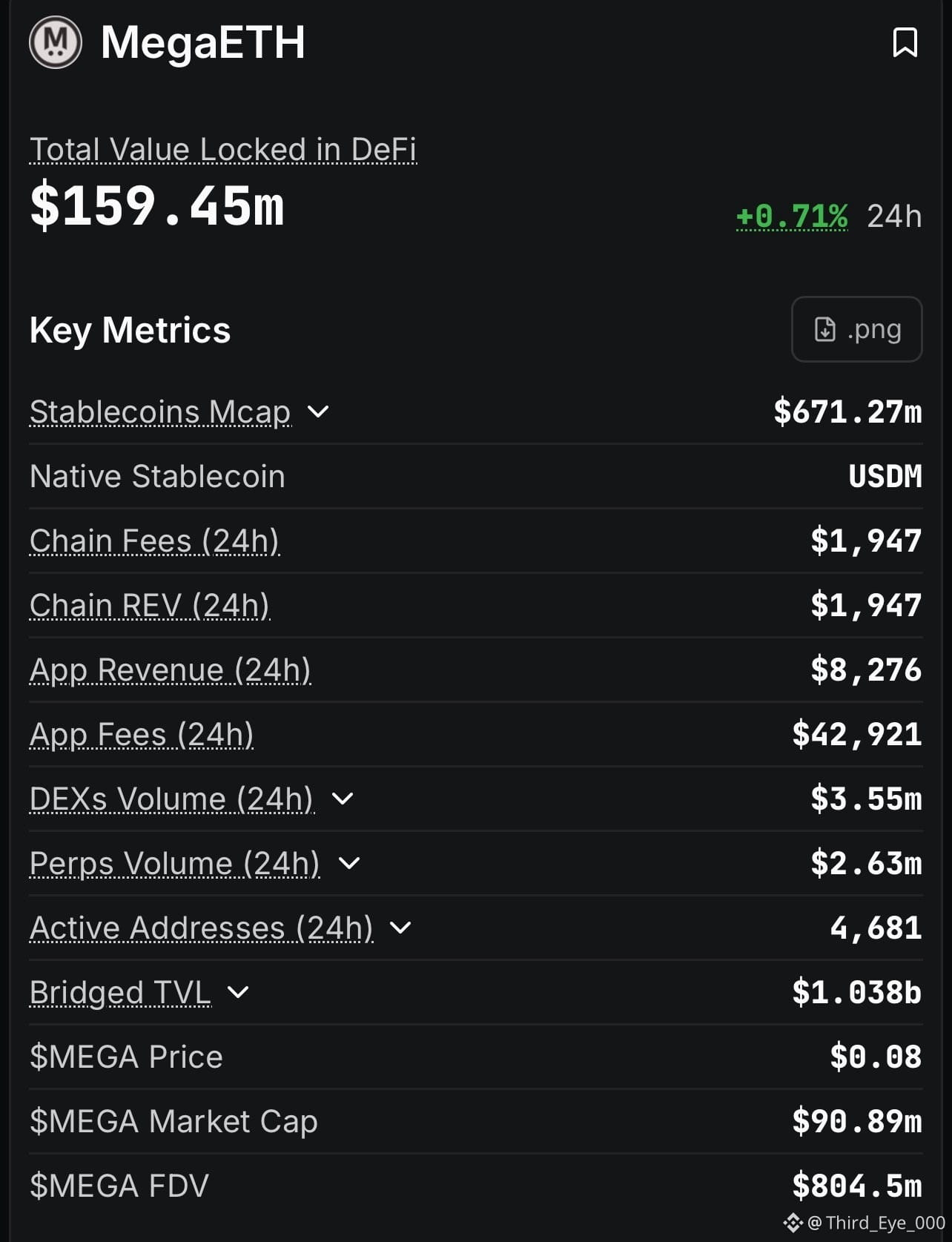
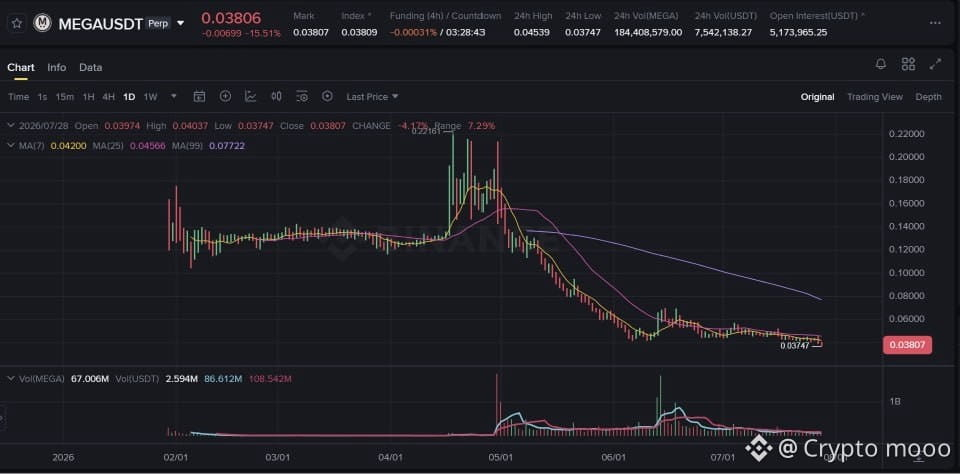
#Mega itself went from $0.37 → $0.08. RSI sitting at 15. The chart is a cliff with a long tail of regret.
TVL holds at $159M — but with 4,681 daily active addresses and an $804M FDV hanging overhead, the ratio tells the real story.
The hype left. The fees didn't.
{spot}(MEGAUSDT)
$MEGA — the anatomy of a collapse 💀
Raised $107M+. Listed at 2x ICO price. Looked like a winner.
Then came the mainnet campaign. Users paid $1,000–$2,000 in platform fees to participate. Two weeks later — campaign over.
NFTs minted on #MegaETH ? Down 90% overnight.
#Mega itself went from $0.37 → $0.08. RSI sitting at 15. The chart is a cliff with a long tail of regret.
TVL holds at $159M — but with 4,681 daily active addresses and an $804M FDV hanging overhead, the ratio tells the real story.
The hype left. The fees didn't.
Raised $107M+. Listed at 2x ICO price. Looked like a winner.
Then came the mainnet campaign. Users paid $1,000–$2,000 in platform fees to participate. Two weeks later — campaign over.
NFTs minted on #MegaETH ? Down 90% overnight.
#Mega itself went from $0.37 → $0.08. RSI sitting at 15. The chart is a cliff with a long tail of regret.
TVL holds at $159M — but with 4,681 daily active addresses and an $804M FDV hanging overhead, the ratio tells the real story.
The hype left. The fees didn't.
412

·
--
🔥 BREAKING NEWS 🔥
MegaETH faces a severe downturn alongside other Layer 2 projects despite its strong initial momentum.
**Prior to Launch Highlights:**
- Positioned as the fastest Ethereum L2
- Supported by Vitalik Buterin
- Founded by a team from Stanford, MIT, and ConsenSys
- Secured $20 million in funding led by Dragonfly
- Public sale (Sonar) oversubscribed by 9x
- Total Value Locked (TVL) rapidly surged past $500 million shortly after TGE
**Current Status:**
- COO Laura Shi departed the project to join Pharos
- CEO Yilong Li has ceased social media updates since January 2026
- Terminated the Terminal platform and USDm buyback program as daily revenue dropped to $10,000
- TVL sharply declined from $500 million to $45 million
- Participants who chose a 1-year lockup (purchased at $0.089) currently hold an unrealized loss exceeding 50%
The downturn raises questions about the long-term viability and necessity of the saturated Layer 2 ecosystem.
#MegaETH #Ethereum #Layer2 $ETH
$TON $ADA
Source: Compiled
🔥 BREAKING NEWS 🔥
MegaETH faces a severe downturn alongside other Layer 2 projects despite its strong initial momentum.
**Prior to Launch Highlights:**
- Positioned as the fastest Ethereum L2
- Supported by Vitalik Buterin
- Founded by a team from Stanford, MIT, and ConsenSys
- Secured $20 million in funding led by Dragonfly
- Public sale (Sonar) oversubscribed by 9x
- Total Value Locked (TVL) rapidly surged past $500 million shortly after TGE
**Current Status:**
- COO Laura Shi departed the project to join Pharos
- CEO Yilong Li has ceased social media updates since January 2026
- Terminated the Terminal platform and USDm buyback program as daily revenue dropped to $10,000
- TVL sharply declined from $500 million to $45 million
- Participants who chose a 1-year lockup (purchased at $0.089) currently hold an unrealized loss exceeding 50%
The downturn raises questions about the long-term viability and necessity of the saturated Layer 2 ecosystem.
#MegaETH #Ethereum #Layer2 $ETH
$TON $ADA
Source: Compiled
MegaETH faces a severe downturn alongside other Layer 2 projects despite its strong initial momentum.
**Prior to Launch Highlights:**
- Positioned as the fastest Ethereum L2
- Supported by Vitalik Buterin
- Founded by a team from Stanford, MIT, and ConsenSys
- Secured $20 million in funding led by Dragonfly
- Public sale (Sonar) oversubscribed by 9x
- Total Value Locked (TVL) rapidly surged past $500 million shortly after TGE
**Current Status:**
- COO Laura Shi departed the project to join Pharos
- CEO Yilong Li has ceased social media updates since January 2026
- Terminated the Terminal platform and USDm buyback program as daily revenue dropped to $10,000
- TVL sharply declined from $500 million to $45 million
- Participants who chose a 1-year lockup (purchased at $0.089) currently hold an unrealized loss exceeding 50%
The downturn raises questions about the long-term viability and necessity of the saturated Layer 2 ecosystem.
#MegaETH #Ethereum #Layer2 $ETH
$TON $ADA
Source: Compiled
135

·
--
$MEGA MegaETH Technical Analysis | Jul 4, 2026
Current Price: $0.05380 on Binance (MEGA/USDT)
Multi-Timeframe Analysis:
1H (Strong Buy) - All 4 indicators aligned bullish. EMA9/21 bullish cross, RSI at 63.7 with bullish bias, MACD positive. Primary timeframe showing strong momentum.
4H (Strong Buy) - Bullish cross intact. RSI at 78.4 (overbought - caution). MACD histogram expanding positively. Expect potential pullback.
12H (Buy) - Five consecutive green candles. RSI at 66.4. Price above upper Bollinger Band (extended).
Daily (Strong Sell) - EMA50 above current price. MACD negative. Weekly structure still resisting.
Key Levels:
Resistance: $0.05647
Support: $0.04967
1ATR range: $0.05262 - $0.05498
Verdict: Short-term bullish with overbought risk on 4H. Pullback to $0.051-0.052 likely before continuation. Higher timeframe (daily) still bearish.
#MegaETH #MEGA #Crypto #TechnicalAnalysis
Not financial advice.
$MEGA MegaETH Technical Analysis | Jul 4, 2026
Current Price: $0.05380 on Binance (MEGA/USDT)
Multi-Timeframe Analysis:
1H (Strong Buy) - All 4 indicators aligned bullish. EMA9/21 bullish cross, RSI at 63.7 with bullish bias, MACD positive. Primary timeframe showing strong momentum.
4H (Strong Buy) - Bullish cross intact. RSI at 78.4 (overbought - caution). MACD histogram expanding positively. Expect potential pullback.
12H (Buy) - Five consecutive green candles. RSI at 66.4. Price above upper Bollinger Band (extended).
Daily (Strong Sell) - EMA50 above current price. MACD negative. Weekly structure still resisting.
Key Levels:
Resistance: $0.05647
Support: $0.04967
1ATR range: $0.05262 - $0.05498
Verdict: Short-term bullish with overbought risk on 4H. Pullback to $0.051-0.052 likely before continuation. Higher timeframe (daily) still bearish.
#MegaETH #MEGA #Crypto #TechnicalAnalysis
Not financial advice.
Current Price: $0.05380 on Binance (MEGA/USDT)
Multi-Timeframe Analysis:
1H (Strong Buy) - All 4 indicators aligned bullish. EMA9/21 bullish cross, RSI at 63.7 with bullish bias, MACD positive. Primary timeframe showing strong momentum.
4H (Strong Buy) - Bullish cross intact. RSI at 78.4 (overbought - caution). MACD histogram expanding positively. Expect potential pullback.
12H (Buy) - Five consecutive green candles. RSI at 66.4. Price above upper Bollinger Band (extended).
Daily (Strong Sell) - EMA50 above current price. MACD negative. Weekly structure still resisting.
Key Levels:
Resistance: $0.05647
Support: $0.04967
1ATR range: $0.05262 - $0.05498
Verdict: Short-term bullish with overbought risk on 4H. Pullback to $0.051-0.052 likely before continuation. Higher timeframe (daily) still bearish.
#MegaETH #MEGA #Crypto #TechnicalAnalysis
Not financial advice.
156

·
--
Alpha: megaeth is setting up a breakout you’ll feel late 🚀
Been watching this weeks weekly range tight → daily higher lows → smart money accumulation near demand, whales absorbing under the MAs while institutions lift liquidity
Target: reclaim $0.028 $0.030 within 7-10 days, if it tags $0.025 again I’m calling continuation 🧠💎 @megaeth #MegaETH $MEGA
Alpha: megaeth is setting up a breakout you’ll feel late 🚀
Been watching this weeks weekly range tight → daily higher lows → smart money accumulation near demand, whales absorbing under the MAs while institutions lift liquidity
Target: reclaim $0.028 $0.030 within 7-10 days, if it tags $0.025 again I’m calling continuation 🧠💎 @megaeth #MegaETH $MEGA
Been watching this weeks weekly range tight → daily higher lows → smart money accumulation near demand, whales absorbing under the MAs while institutions lift liquidity
Target: reclaim $0.028 $0.030 within 7-10 days, if it tags $0.025 again I’m calling continuation 🧠💎 @megaeth #MegaETH $MEGA
102

📢 MegaETH (MEGA) Update
MegaETH is building a real-time Ethereum Layer-2 network designed for ultra-fast performance, targeting over 100,000 TPS and near-instant transaction confirmation while leveraging Ethereum's security.
🔹 Mainnet launched in February 2026
🔹 MEGA token launched on April 30, 2026
🔹 Maximum supply: 10 billion MEGA
🔹 Focused on scalable DeFi, gaming, and real-time applications
The project continues expanding its ecosystem through developer programs, user incentives, and community initiatives. MegaETH aims to deliver a blockchain experience that feels as responsive as traditional web applications while remaining compatible with Ethereum.
⚠️ As with any newly launched crypto asset, MEGA remains highly volatile and carries significant risk. Investors should conduct their own research before making financial decisions.
#MegaETH #MEGA #Ethereum #Layer2 #crypto
📢 MegaETH (MEGA) Update
MegaETH is building a real-time Ethereum Layer-2 network designed for ultra-fast performance, targeting over 100,000 TPS and near-instant transaction confirmation while leveraging Ethereum's security.
🔹 Mainnet launched in February 2026
🔹 MEGA token launched on April 30, 2026
🔹 Maximum supply: 10 billion MEGA
🔹 Focused on scalable DeFi, gaming, and real-time applications
The project continues expanding its ecosystem through developer programs, user incentives, and community initiatives. MegaETH aims to deliver a blockchain experience that feels as responsive as traditional web applications while remaining compatible with Ethereum.
⚠️ As with any newly launched crypto asset, MEGA remains highly volatile and carries significant risk. Investors should conduct their own research before making financial decisions.
#MegaETH #MEGA #Ethereum #Layer2 #crypto
MegaETH is building a real-time Ethereum Layer-2 network designed for ultra-fast performance, targeting over 100,000 TPS and near-instant transaction confirmation while leveraging Ethereum's security.
🔹 Mainnet launched in February 2026
🔹 MEGA token launched on April 30, 2026
🔹 Maximum supply: 10 billion MEGA
🔹 Focused on scalable DeFi, gaming, and real-time applications
The project continues expanding its ecosystem through developer programs, user incentives, and community initiatives. MegaETH aims to deliver a blockchain experience that feels as responsive as traditional web applications while remaining compatible with Ethereum.
⚠️ As with any newly launched crypto asset, MEGA remains highly volatile and carries significant risk. Investors should conduct their own research before making financial decisions.
#MegaETH #MEGA #Ethereum #Layer2 #crypto
87

·
--
MegaETH完成Terminal Program积分终结并开放奖励钱包登记,6月10号后所有领取相关信息将永久锁定——这是空投前置流程中唯一不可逆的确权窗口期,错过无二次修改机会。
从链上空投的常规逻辑来看,积分终结意味着早期社区参与者的贡献权重已经完全固化,不会因后续新增活动或用户流入被稀释;本次同步配套的钱包登记+邮箱绑定机制,也区别于多数无明确节奏的“盲盒空投”,说明项目方对奖励发放有清晰的执行规划,参与者的权益确权路径明确,降低了“贡献后无法落地奖励”的中间不确定性。
需要提醒的是,目前项目未披露代币分配比例、上线场景等核心信息,请勿基于模糊预期进行非理性操作;奖励钱包需选择支持EVM链的个人链上地址,切勿使用交易所钱包或合约地址,避免资产接收失败;6月10号的锁定节点无延期可能,需提前完成所有操作。
你是否参与了MegaETH的Terminal Program?已经完成奖励钱包的确认登记了吗?
#加密空投 #区块链 #MegaETH
$MegaETH $ETH
MegaETH完成Terminal Program积分终结并开放奖励钱包登记,6月10号后所有领取相关信息将永久锁定——这是空投前置流程中唯一不可逆的确权窗口期,错过无二次修改机会。
从链上空投的常规逻辑来看,积分终结意味着早期社区参与者的贡献权重已经完全固化,不会因后续新增活动或用户流入被稀释;本次同步配套的钱包登记+邮箱绑定机制,也区别于多数无明确节奏的“盲盒空投”,说明项目方对奖励发放有清晰的执行规划,参与者的权益确权路径明确,降低了“贡献后无法落地奖励”的中间不确定性。
需要提醒的是,目前项目未披露代币分配比例、上线场景等核心信息,请勿基于模糊预期进行非理性操作;奖励钱包需选择支持EVM链的个人链上地址,切勿使用交易所钱包或合约地址,避免资产接收失败;6月10号的锁定节点无延期可能,需提前完成所有操作。
你是否参与了MegaETH的Terminal Program?已经完成奖励钱包的确认登记了吗?
#加密空投 #区块链 #MegaETH
$MegaETH $ETH
从链上空投的常规逻辑来看,积分终结意味着早期社区参与者的贡献权重已经完全固化,不会因后续新增活动或用户流入被稀释;本次同步配套的钱包登记+邮箱绑定机制,也区别于多数无明确节奏的“盲盒空投”,说明项目方对奖励发放有清晰的执行规划,参与者的权益确权路径明确,降低了“贡献后无法落地奖励”的中间不确定性。
需要提醒的是,目前项目未披露代币分配比例、上线场景等核心信息,请勿基于模糊预期进行非理性操作;奖励钱包需选择支持EVM链的个人链上地址,切勿使用交易所钱包或合约地址,避免资产接收失败;6月10号的锁定节点无延期可能,需提前完成所有操作。
你是否参与了MegaETH的Terminal Program?已经完成奖励钱包的确认登记了吗?
#加密空投 #区块链 #MegaETH
$MegaETH $ETH
195
Connectez-vous pour découvrir plus de contenu
Rejoignez la communauté mondiale des adeptes de cryptomonnaies sur Binance Square
⚡️ Suviez les dernières informations importantes sur les cryptomonnaies.
💬 Jugé digne de confiance par la plus grande plateforme d’échange de cryptomonnaies au monde.
👍 Découvrez les connaissances que partagent les créateurs vérifiés.
Adresse e-mail/Nº de téléphone
Sujets d’actualité
1
#SECProposesCryptoCustodyRules
2 vues
12 mentions
2
#SECApproves3xLongCryptoCommodityETPs
658 vues
64 mentions
3
#G7PlansToReleaseUpTo100MBarrelsOilDiesel
2,006 vues
111 mentions
4
#ICBASuesOCCOverCryptoBankCharters
1,309 vues
76 mentions
5
#USStocksCloseHigherOnWeakJobsData
1,029 vues
62 mentions
6
#NFPWatch
10.9M vues
19,512 mentions
7
#BlastToGraduallyShutDownItsL2Network
318 vues
32 mentions
8
#BitcoinFundingRateTriplesTo10%
205,988 vues
1,350 mentions
9
#BitcoinSurpasses$86KUp2.99%
66,567 vues
122 mentions
10
#ZcashFalls21%FromSeptemberPeak
108,434 vues
930 mentions