

#iranrulesouttalksuntiluswithdraws
iranrulesouttalksuntiluswithdraws
224,450 vues
841 mentions
Populaire
Récents

#IranRulesOutTalksUntilUSWithdraws #IranRulesOutTalksUntilUSWithdraws
Iran has stated it will not resume negotiations until U.S. forces withdraw, underscoring ongoing tensions and reducing the likelihood of near-term diplomatic progress. The announcement may keep geopolitical risks elevated, with investors closely monitoring potential impacts on energy markets, regional stability, and global risk sentiment.
#IranRulesOutTalksUntilUSWithdraws #IranRulesOutTalksUntilUSWithdraws
Iran has stated it will not resume negotiations until U.S. forces withdraw, underscoring ongoing tensions and reducing the likelihood of near-term diplomatic progress. The announcement may keep geopolitical risks elevated, with investors closely monitoring potential impacts on energy markets, regional stability, and global risk sentiment.
Iran has stated it will not resume negotiations until U.S. forces withdraw, underscoring ongoing tensions and reducing the likelihood of near-term diplomatic progress. The announcement may keep geopolitical risks elevated, with investors closely monitoring potential impacts on energy markets, regional stability, and global risk sentiment.
27
·
--
#iranrulesouttalksuntiluswithdraws 🚨 Volatility Alert: Markets Could Be About to Explode ⚠️
Reports suggest Iran has ruled out returning to negotiations until U.S. forces withdraw, increasing geopolitical uncertainty and putting global markets on edge.$BNB
When macro risks rise, volatility usually follows.
👀 Assets to watch closely:
🟠 $BTC – Crypto reacts fast to shifts in global risk sentiment.
🛢️ Oil – Supply concerns could trigger sharp price swings.
📊 Global Equities – Stocks may experience increased volatility as investors reassess risk.$CL
Whether this situation moves toward diplomacy or further escalation, traders should be prepared for fast-moving markets.
🛡️ Stay disciplined. Protect your capital.
Sometimes the best trade is waiting for high-probability setups instead of chasing volatility.
💬 What's your outlook?
Bullish, bearish, or expecting more sideways action?
👇 Share your market view in the comments.
#Bitcoin #BTC #Crypto #Trading
{future}(BTCUSDT)
{future}(BNBUSDT)
{future}(CLUSDT)
#iranrulesouttalksuntiluswithdraws 🚨 Volatility Alert: Markets Could Be About to Explode ⚠️
Reports suggest Iran has ruled out returning to negotiations until U.S. forces withdraw, increasing geopolitical uncertainty and putting global markets on edge.$BNB
When macro risks rise, volatility usually follows.
👀 Assets to watch closely:
🟠 $BTC – Crypto reacts fast to shifts in global risk sentiment.
🛢️ Oil – Supply concerns could trigger sharp price swings.
📊 Global Equities – Stocks may experience increased volatility as investors reassess risk.$CL
Whether this situation moves toward diplomacy or further escalation, traders should be prepared for fast-moving markets.
🛡️ Stay disciplined. Protect your capital.
Sometimes the best trade is waiting for high-probability setups instead of chasing volatility.
💬 What's your outlook?
Bullish, bearish, or expecting more sideways action?
👇 Share your market view in the comments.
#Bitcoin #BTC #Crypto #Trading
Reports suggest Iran has ruled out returning to negotiations until U.S. forces withdraw, increasing geopolitical uncertainty and putting global markets on edge.$BNB
When macro risks rise, volatility usually follows.
👀 Assets to watch closely:
🟠 $BTC – Crypto reacts fast to shifts in global risk sentiment.
🛢️ Oil – Supply concerns could trigger sharp price swings.
📊 Global Equities – Stocks may experience increased volatility as investors reassess risk.$CL
Whether this situation moves toward diplomacy or further escalation, traders should be prepared for fast-moving markets.
🛡️ Stay disciplined. Protect your capital.
Sometimes the best trade is waiting for high-probability setups instead of chasing volatility.
💬 What's your outlook?
Bullish, bearish, or expecting more sideways action?
👇 Share your market view in the comments.
#Bitcoin #BTC #Crypto #Trading
2
2
10
9.1k

·
--
Haussier
#iranrulesouttalksuntiluswithdraws
I understand why the market thinks this is just an extreme negotiation tactic.
The logical assumption is that
Iran is using heavy rhetoric to force the US
back to the table for a more favorable sanctions deal.
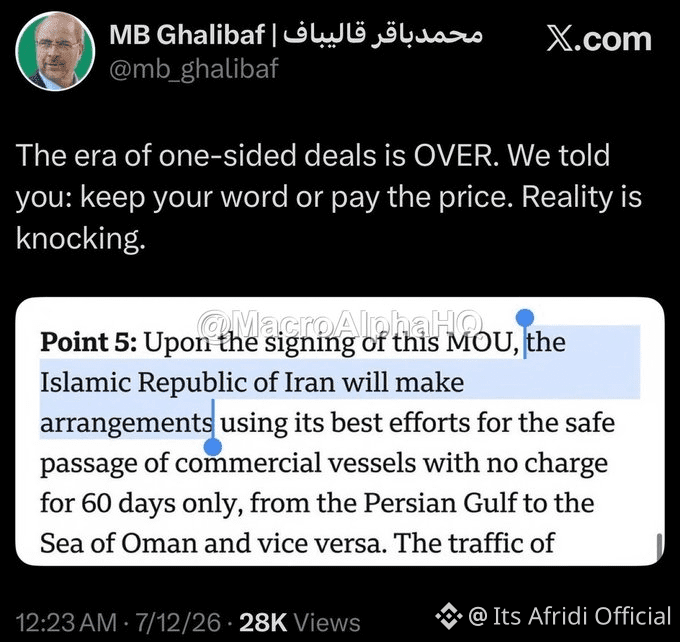
Wait, reading the actual sequence of events changes the math here. They did not threaten the Strait of Hormuz to get a deal, they physically shut it down and then explicitly stated the era of deals is over.
Anyone shorting energy for a diplomatic de-escalation is going to be forced to cover against a physical supply shock that is already active
$BTC
{future}(BTCUSDT)
$S
{future}(SUSDT)
$SC
{spot}(SCUSDT)
#iranrulesouttalksuntiluswithdraws
I understand why the market thinks this is just an extreme negotiation tactic.
The logical assumption is that
Iran is using heavy rhetoric to force the US
back to the table for a more favorable sanctions deal.
Wait, reading the actual sequence of events changes the math here. They did not threaten the Strait of Hormuz to get a deal, they physically shut it down and then explicitly stated the era of deals is over.
Anyone shorting energy for a diplomatic de-escalation is going to be forced to cover against a physical supply shock that is already active
$BTC
$S
$SC
I understand why the market thinks this is just an extreme negotiation tactic.
The logical assumption is that
Iran is using heavy rhetoric to force the US
back to the table for a more favorable sanctions deal.
Wait, reading the actual sequence of events changes the math here. They did not threaten the Strait of Hormuz to get a deal, they physically shut it down and then explicitly stated the era of deals is over.
Anyone shorting energy for a diplomatic de-escalation is going to be forced to cover against a physical supply shock that is already active
$BTC
$S
$SC
1
160


Article
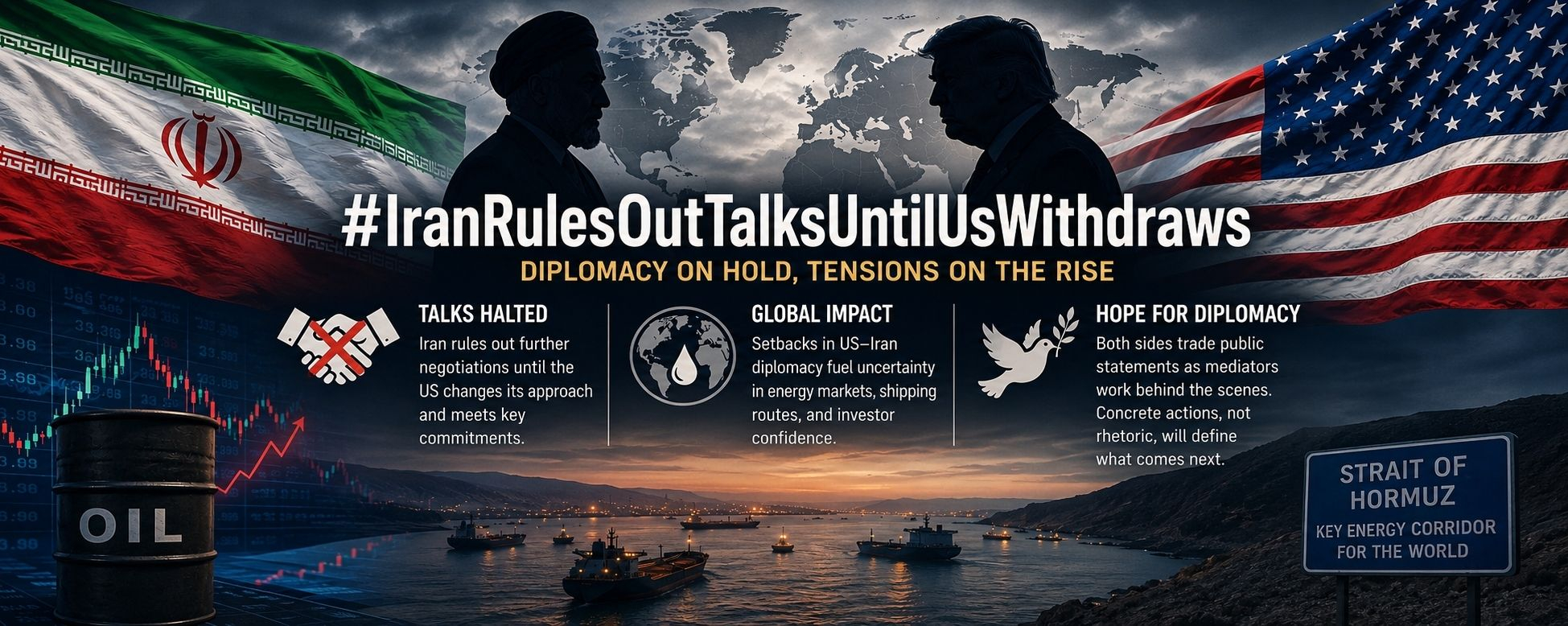
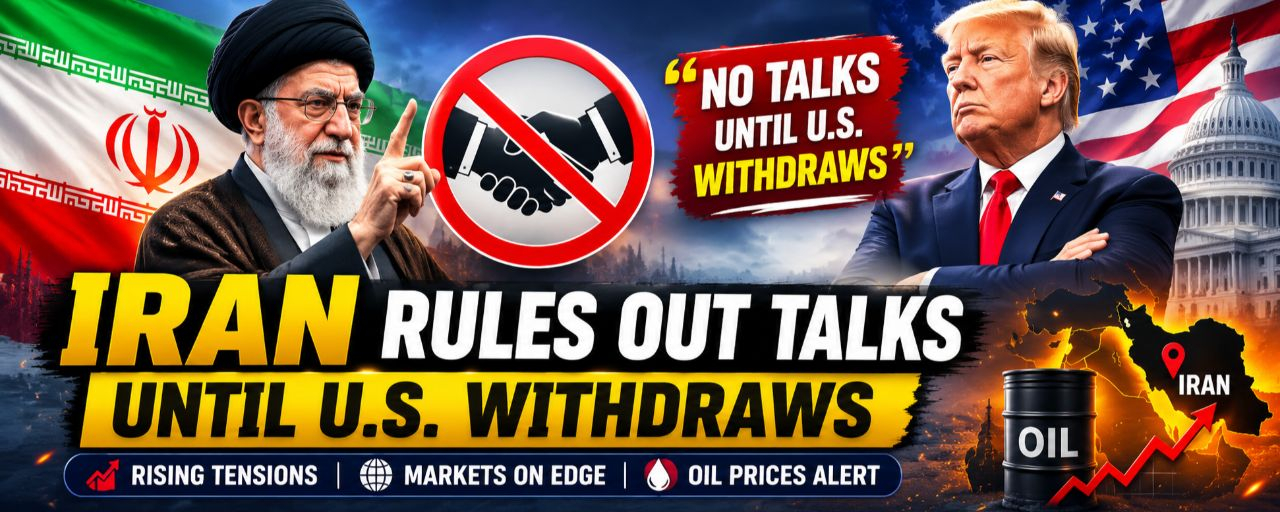
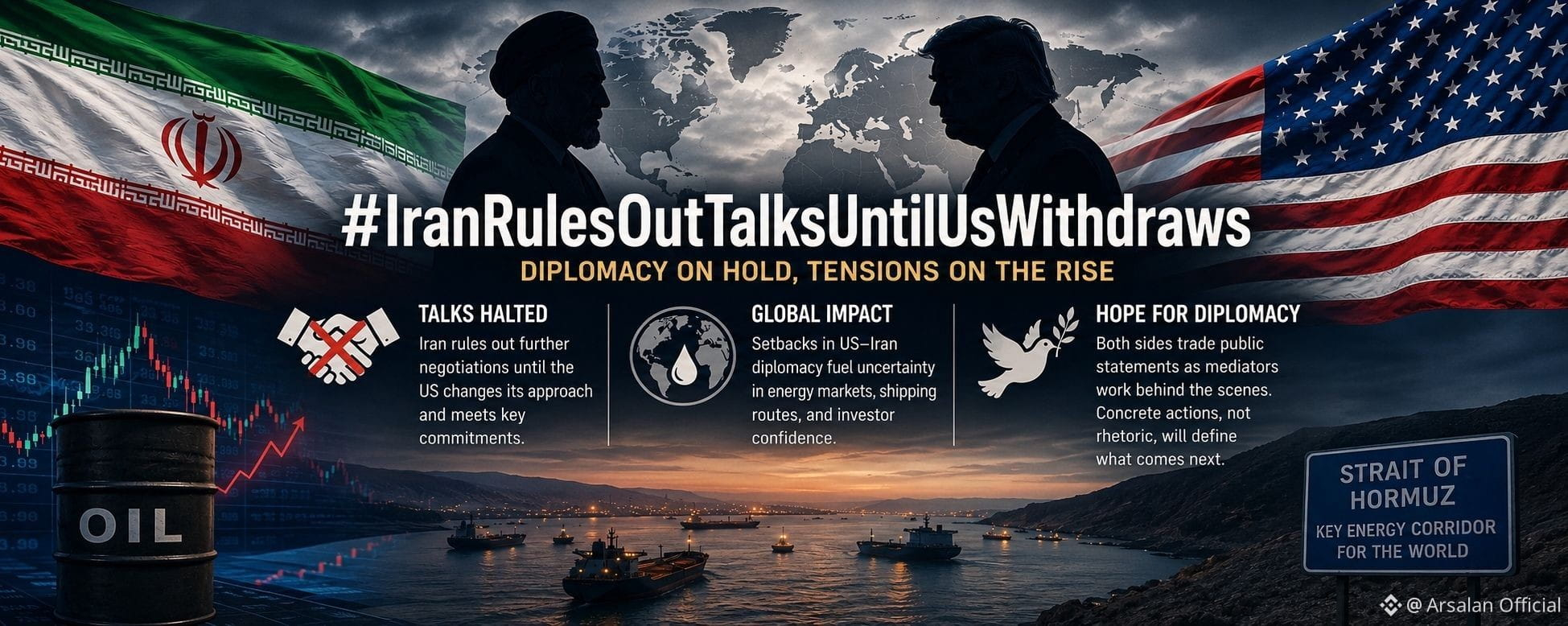
#IranRulesOutTalksUntilUsWithdrawsDiplomacy often depends as much on conditions as on willingness, and the latest developments highlight that reality. Iranian officials have signaled that they will not move forward with further negotiations until they believe the United States has met key commitments and changed its current approach. The position reflects deep mistrust built over years of sanctions, regional tensions, and disagreements over previous understandings.
For global markets, the significance goes beyond politics. Every setback in U.S.–Iran diplomacy increases uncertainty around energy supplies, shipping routes, and investor confidence. The Strait of Hormuz remains one of the world's most important energy corridors, making diplomatic developments closely watched by governments, businesses, and financial markets alike.
At the same time, both sides continue to exchange public statements while regional mediators explore opportunities to reduce tensions. Whether negotiations resume will likely depend on concrete actions rather than rhetoric alone. Until then, markets and observers are expected to remain focused on official announcements instead of speculation, as each new development could influence regional stability and the broader global economy.
#IranRulesOutTalksUntilUsWithdraws #Iran #US #Geopolitics #MiddleEast
#IranRulesOutTalksUntilUsWithdraws
Diplomacy often depends as much on conditions as on willingness, and the latest developments highlight that reality. Iranian officials have signaled that they will not move forward with further negotiations until they believe the United States has met key commitments and changed its current approach. The position reflects deep mistrust built over years of sanctions, regional tensions, and disagreements over previous understandings.
For global markets, the significance goes beyond politics. Every setback in U.S.–Iran diplomacy increases uncertainty around energy supplies, shipping routes, and investor confidence. The Strait of Hormuz remains one of the world's most important energy corridors, making diplomatic developments closely watched by governments, businesses, and financial markets alike.
At the same time, both sides continue to exchange public statements while regional mediators explore opportunities to reduce tensions. Whether negotiations resume will likely depend on concrete actions rather than rhetoric alone. Until then, markets and observers are expected to remain focused on official announcements instead of speculation, as each new development could influence regional stability and the broader global economy.
#IranRulesOutTalksUntilUsWithdraws #Iran #US #Geopolitics #MiddleEast
For global markets, the significance goes beyond politics. Every setback in U.S.–Iran diplomacy increases uncertainty around energy supplies, shipping routes, and investor confidence. The Strait of Hormuz remains one of the world's most important energy corridors, making diplomatic developments closely watched by governments, businesses, and financial markets alike.
At the same time, both sides continue to exchange public statements while regional mediators explore opportunities to reduce tensions. Whether negotiations resume will likely depend on concrete actions rather than rhetoric alone. Until then, markets and observers are expected to remain focused on official announcements instead of speculation, as each new development could influence regional stability and the broader global economy.
#IranRulesOutTalksUntilUsWithdraws #Iran #US #Geopolitics #MiddleEast
3
8
1k
Partiellement vrai
Article
Iran Rules Out Talks Until U.S. Withdraws: Geopolitical Tensions Keep Markets on Edge$BTC $ETH $XRP
Iran has stated that it will not resume negotiations with the United States until Washington changes its current approach and withdraws from what Tehran describes as pressure-driven policies. The announcement has added fresh uncertainty to global markets, particularly in energy and cryptocurrency sectors.
Iran Maintains Firm Position
Iranian officials reiterated that meaningful diplomatic discussions cannot move forward unless the United States first takes steps that demonstrate a willingness to reduce tensions. The statement signals that negotiations remain at a standstill despite international calls for renewed dialogue.
The ongoing diplomatic deadlock continues to influence investor sentiment as traders monitor developments in the Middle East.
Markets React to Geopolitical Uncertainty
Geopolitical tensions often have a significant impact on financial markets. Following the latest comments:
🛢️ Oil prices remained supported as traders assessed potential supply risks.📈 Gold attracted safe-haven demand.₿ Bitcoin and other cryptocurrencies experienced increased volatility as investors reacted to shifting market sentiment.📊 Global equity markets remained cautious amid uncertainty.
Why It Matters
The relationship between Iran and the United States plays an important role in global energy markets. Any escalation or prolonged diplomatic impasse could affect:
Global oil supply and prices.Inflation expectations.Central bank policy decisions.Risk appetite across financial markets.
Investors are closely watching for any signs of renewed diplomacy or further escalation.
Crypto Market Outlook
While geopolitical events often create short-term volatility, Bitcoin has increasingly been viewed by some investors as an alternative asset during periods of global uncertainty. However, crypto markets remain highly sensitive to macroeconomic news, interest rate expectations, and overall investor confidence.
Traders should expect continued price swings as headlines emerge from the region.
Iran's decision to rule out talks until the United States changes its position highlights the ongoing challenges facing diplomatic efforts. As geopolitical uncertainty persists, global markets are likely to remain sensitive to developments from the Middle East.
For investors, staying informed and maintaining disciplined risk management will be essential while monitoring both geopolitical events and broader economic trends.
#iranrulesouttalksuntiluswithdraws #BTC #Ethereum #xrp
Iran Rules Out Talks Until U.S. Withdraws: Geopolitical Tensions Keep Markets on Edge
$BTC $ETH $XRP
Iran has stated that it will not resume negotiations with the United States until Washington changes its current approach and withdraws from what Tehran describes as pressure-driven policies. The announcement has added fresh uncertainty to global markets, particularly in energy and cryptocurrency sectors.
Iran Maintains Firm Position
Iranian officials reiterated that meaningful diplomatic discussions cannot move forward unless the United States first takes steps that demonstrate a willingness to reduce tensions. The statement signals that negotiations remain at a standstill despite international calls for renewed dialogue.
The ongoing diplomatic deadlock continues to influence investor sentiment as traders monitor developments in the Middle East.
Markets React to Geopolitical Uncertainty
Geopolitical tensions often have a significant impact on financial markets. Following the latest comments:
🛢️ Oil prices remained supported as traders assessed potential supply risks.📈 Gold attracted safe-haven demand.₿ Bitcoin and other cryptocurrencies experienced increased volatility as investors reacted to shifting market sentiment.📊 Global equity markets remained cautious amid uncertainty.
Why It Matters
The relationship between Iran and the United States plays an important role in global energy markets. Any escalation or prolonged diplomatic impasse could affect:
Global oil supply and prices.Inflation expectations.Central bank policy decisions.Risk appetite across financial markets.
Investors are closely watching for any signs of renewed diplomacy or further escalation.
Crypto Market Outlook
While geopolitical events often create short-term volatility, Bitcoin has increasingly been viewed by some investors as an alternative asset during periods of global uncertainty. However, crypto markets remain highly sensitive to macroeconomic news, interest rate expectations, and overall investor confidence.
Traders should expect continued price swings as headlines emerge from the region.
Iran's decision to rule out talks until the United States changes its position highlights the ongoing challenges facing diplomatic efforts. As geopolitical uncertainty persists, global markets are likely to remain sensitive to developments from the Middle East.
For investors, staying informed and maintaining disciplined risk management will be essential while monitoring both geopolitical events and broader economic trends.
#iranrulesouttalksuntiluswithdraws #BTC #Ethereum #xrp
Iran has stated that it will not resume negotiations with the United States until Washington changes its current approach and withdraws from what Tehran describes as pressure-driven policies. The announcement has added fresh uncertainty to global markets, particularly in energy and cryptocurrency sectors.
Iran Maintains Firm Position
Iranian officials reiterated that meaningful diplomatic discussions cannot move forward unless the United States first takes steps that demonstrate a willingness to reduce tensions. The statement signals that negotiations remain at a standstill despite international calls for renewed dialogue.
The ongoing diplomatic deadlock continues to influence investor sentiment as traders monitor developments in the Middle East.
Markets React to Geopolitical Uncertainty
Geopolitical tensions often have a significant impact on financial markets. Following the latest comments:
🛢️ Oil prices remained supported as traders assessed potential supply risks.📈 Gold attracted safe-haven demand.₿ Bitcoin and other cryptocurrencies experienced increased volatility as investors reacted to shifting market sentiment.📊 Global equity markets remained cautious amid uncertainty.
Why It Matters
The relationship between Iran and the United States plays an important role in global energy markets. Any escalation or prolonged diplomatic impasse could affect:
Global oil supply and prices.Inflation expectations.Central bank policy decisions.Risk appetite across financial markets.
Investors are closely watching for any signs of renewed diplomacy or further escalation.
Crypto Market Outlook
While geopolitical events often create short-term volatility, Bitcoin has increasingly been viewed by some investors as an alternative asset during periods of global uncertainty. However, crypto markets remain highly sensitive to macroeconomic news, interest rate expectations, and overall investor confidence.
Traders should expect continued price swings as headlines emerge from the region.
Iran's decision to rule out talks until the United States changes its position highlights the ongoing challenges facing diplomatic efforts. As geopolitical uncertainty persists, global markets are likely to remain sensitive to developments from the Middle East.
For investors, staying informed and maintaining disciplined risk management will be essential while monitoring both geopolitical events and broader economic trends.
#iranrulesouttalksuntiluswithdraws #BTC #Ethereum #xrp
3
1
15
10.5k

·
--
Baissier
#IranRulesOutTalksUntilUSWithdraws This headline appears to mean Iran is refusing to resume higher-level talks with the U.S. until Washington first meets certain conditions or pulls back militarily, rather than “no talks at all.” Recent reporting says U.S.-Iran contacts have continued in indirect or technical form, especially around Doha and Strait of Hormuz issues. (english.alarabiya.net)
A few important clarifications:
Reporting from July 1–2, 2026 says Iran ruled out direct/high-level meetings with U.S. envoys while still allowing indirect discussions through mediators. (nationalsecuritynews.com)
Other reports say Iranian officials or parliament set preconditions before resuming fuller negotiations, including that the U.S. comply with prior understandings or change its posture first. (al-monitor.com)
As of July 10, 2026, Reuters-reported coverage said President Trump claimed the U.S. had agreed to talks after Iran asked to continue negotiations, which suggests the diplomatic channel is not fully closed. (usnews.com)
So the clean read is: Iran is not necessarily rejecting diplomacy altogether; it is signaling that broader or direct talks won’t proceed until its conditions are met. (nationalsecuritynews.com)
If you want, I can also:
give you a 2-sentence market impact summary for $BTC
{spot}(BTCUSDT)
, oil, and gold, or
find the exact original source behind that headline.$PAXG
{spot}(PAXGUSDT)
$BZ
{future}(BZUSDT)
#IranRulesOutTalksUntilUSWithdraws This headline appears to mean Iran is refusing to resume higher-level talks with the U.S. until Washington first meets certain conditions or pulls back militarily, rather than “no talks at all.” Recent reporting says U.S.-Iran contacts have continued in indirect or technical form, especially around Doha and Strait of Hormuz issues. (english.alarabiya.net)
A few important clarifications:
Reporting from July 1–2, 2026 says Iran ruled out direct/high-level meetings with U.S. envoys while still allowing indirect discussions through mediators. (nationalsecuritynews.com)
Other reports say Iranian officials or parliament set preconditions before resuming fuller negotiations, including that the U.S. comply with prior understandings or change its posture first. (al-monitor.com)
As of July 10, 2026, Reuters-reported coverage said President Trump claimed the U.S. had agreed to talks after Iran asked to continue negotiations, which suggests the diplomatic channel is not fully closed. (usnews.com)
So the clean read is: Iran is not necessarily rejecting diplomacy altogether; it is signaling that broader or direct talks won’t proceed until its conditions are met. (nationalsecuritynews.com)
If you want, I can also:
give you a 2-sentence market impact summary for $BTC
, oil, and gold, or
find the exact original source behind that headline.$PAXG
$BZ
A few important clarifications:
Reporting from July 1–2, 2026 says Iran ruled out direct/high-level meetings with U.S. envoys while still allowing indirect discussions through mediators. (nationalsecuritynews.com)
Other reports say Iranian officials or parliament set preconditions before resuming fuller negotiations, including that the U.S. comply with prior understandings or change its posture first. (al-monitor.com)
As of July 10, 2026, Reuters-reported coverage said President Trump claimed the U.S. had agreed to talks after Iran asked to continue negotiations, which suggests the diplomatic channel is not fully closed. (usnews.com)
So the clean read is: Iran is not necessarily rejecting diplomacy altogether; it is signaling that broader or direct talks won’t proceed until its conditions are met. (nationalsecuritynews.com)
If you want, I can also:
give you a 2-sentence market impact summary for $BTC
, oil, and gold, or
find the exact original source behind that headline.$PAXG
$BZ
2
77
·
--
⚠️ MARKET ALERT ⚠️
#IranRulesOutTalksUntilUSWithdraws
Geopolitical tensions are heating up again 🌍🔥
Iran has made it clear:
❌ No negotiations until U.S. withdrawal
💥 What does this mean for crypto?
• Increased market volatility
• Potential surge in safe-haven assets
• Traders watching Gold & BTC closely 👀
📊 Smart traders stay ready — not emotional.
👉 Track the market. Manage risk. Trade wisely.
#CryptoNews #Binance #Bitcoin #Ethereum #CryptoTrading #Forex #XAUUSD #MarketAlert #TradingMindset $GOOGLB $MSFTB
⚠️ MARKET ALERT ⚠️
#IranRulesOutTalksUntilUSWithdraws
Geopolitical tensions are heating up again 🌍🔥
Iran has made it clear:
❌ No negotiations until U.S. withdrawal
💥 What does this mean for crypto?
• Increased market volatility
• Potential surge in safe-haven assets
• Traders watching Gold & BTC closely 👀
📊 Smart traders stay ready — not emotional.
👉 Track the market. Manage risk. Trade wisely.
#CryptoNews #Binance #Bitcoin #Ethereum #CryptoTrading #Forex #XAUUSD #MarketAlert #TradingMindset $GOOGLB $MSFTB
#IranRulesOutTalksUntilUSWithdraws
Geopolitical tensions are heating up again 🌍🔥
Iran has made it clear:
❌ No negotiations until U.S. withdrawal
💥 What does this mean for crypto?
• Increased market volatility
• Potential surge in safe-haven assets
• Traders watching Gold & BTC closely 👀
📊 Smart traders stay ready — not emotional.
👉 Track the market. Manage risk. Trade wisely.
#CryptoNews #Binance #Bitcoin #Ethereum #CryptoTrading #Forex #XAUUSD #MarketAlert #TradingMindset $GOOGLB $MSFTB
168

📢 Geopolitical developments are back in the spotlight as Iran says negotiations won't move forward until the U.S. withdraws.
Events like these can shape market sentiment worldwide. Staying informed and thinking long term is key during uncertain times.
What's your view on the market's next move? 💬📈
#iranrulesouttalksuntiluswithdraws
📢 Geopolitical developments are back in the spotlight as Iran says negotiations won't move forward until the U.S. withdraws.
Events like these can shape market sentiment worldwide. Staying informed and thinking long term is key during uncertain times.
What's your view on the market's next move? 💬📈
#iranrulesouttalksuntiluswithdraws
Events like these can shape market sentiment worldwide. Staying informed and thinking long term is key during uncertain times.
What's your view on the market's next move? 💬📈
#iranrulesouttalksuntiluswithdraws
1
48
🌍 Iran says it will not resume talks until the U.S. withdraws, adding another layer of uncertainty to global markets.
Geopolitical developments like these can influence investor sentiment across stocks, commodities, and digital assets. Rather than reacting emotionally to headlines, it's often wiser to stay informed, focus on fundamentals, and manage risk carefully.
What impact do you think this could have on global markets? Share your thoughts below. 👇
#iranrulesouttalksuntiluswithdraws
🌍 Iran says it will not resume talks until the U.S. withdraws, adding another layer of uncertainty to global markets.
Geopolitical developments like these can influence investor sentiment across stocks, commodities, and digital assets. Rather than reacting emotionally to headlines, it's often wiser to stay informed, focus on fundamentals, and manage risk carefully.
What impact do you think this could have on global markets? Share your thoughts below. 👇
#iranrulesouttalksuntiluswithdraws
Geopolitical developments like these can influence investor sentiment across stocks, commodities, and digital assets. Rather than reacting emotionally to headlines, it's often wiser to stay informed, focus on fundamentals, and manage risk carefully.
What impact do you think this could have on global markets? Share your thoughts below. 👇
#iranrulesouttalksuntiluswithdraws
41

#IranRulesOutTalksUntilUSWithdraws
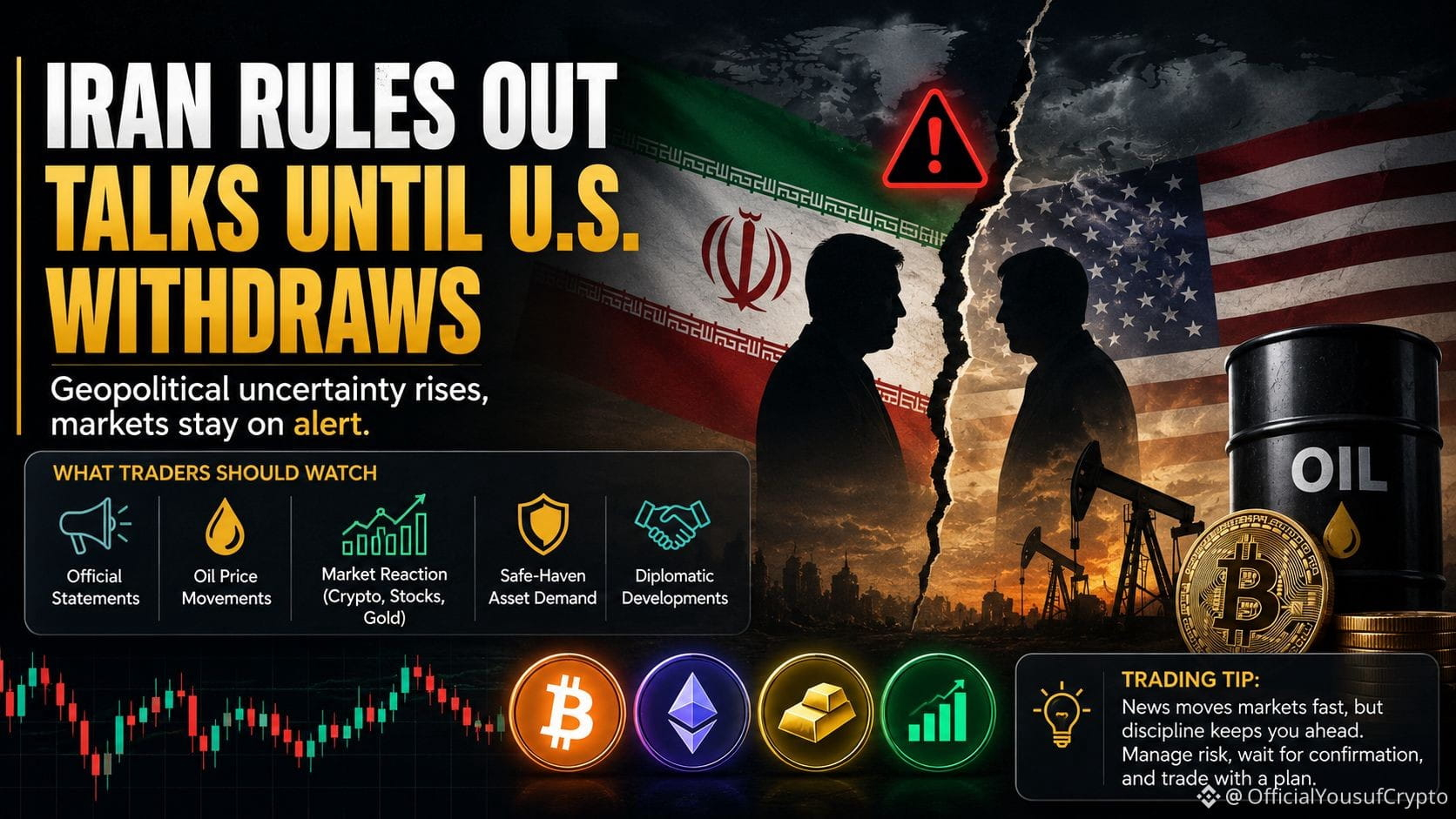
🌍 Iran says it will not return to negotiations unless the U.S. changes its current approach. This keeps geopolitical uncertainty high and could continue to influence global financial markets.
📌 What should traders keep an eye on?
⚠️ Any official updates from Iran or the U.S.
🛢️ Oil price movements, as they often react first to geopolitical events.
📈 Market sentiment across crypto, stocks, and gold.
💵 Demand for safe-haven assets if tensions increase.
💡 Market Tip: Headlines can create short-term volatility, but successful traders avoid emotional decisions. Focus on risk management, wait for confirmation, and stick to your trading plan instead of reacting to every news update.
#Iran #USA #Crypto #GlobalMarkets
$XRP
{future}(XRPUSDT)
$BTC
{future}(BTCUSDT)
$ETH
{future}(ETHUSDT)
#IranRulesOutTalksUntilUSWithdraws
🌍 Iran says it will not return to negotiations unless the U.S. changes its current approach. This keeps geopolitical uncertainty high and could continue to influence global financial markets.
📌 What should traders keep an eye on?
⚠️ Any official updates from Iran or the U.S.
🛢️ Oil price movements, as they often react first to geopolitical events.
📈 Market sentiment across crypto, stocks, and gold.
💵 Demand for safe-haven assets if tensions increase.
💡 Market Tip: Headlines can create short-term volatility, but successful traders avoid emotional decisions. Focus on risk management, wait for confirmation, and stick to your trading plan instead of reacting to every news update.
#Iran #USA #Crypto #GlobalMarkets
$XRP
$BTC
$ETH
🌍 Iran says it will not return to negotiations unless the U.S. changes its current approach. This keeps geopolitical uncertainty high and could continue to influence global financial markets.
📌 What should traders keep an eye on?
⚠️ Any official updates from Iran or the U.S.
🛢️ Oil price movements, as they often react first to geopolitical events.
📈 Market sentiment across crypto, stocks, and gold.
💵 Demand for safe-haven assets if tensions increase.
💡 Market Tip: Headlines can create short-term volatility, but successful traders avoid emotional decisions. Focus on risk management, wait for confirmation, and stick to your trading plan instead of reacting to every news update.
#Iran #USA #Crypto #GlobalMarkets
$XRP
$BTC
$ETH
1
66

·
--
Haussier
Partiellement vrai
Geopolitical Uncertainty Keeps Global Markets on Edge
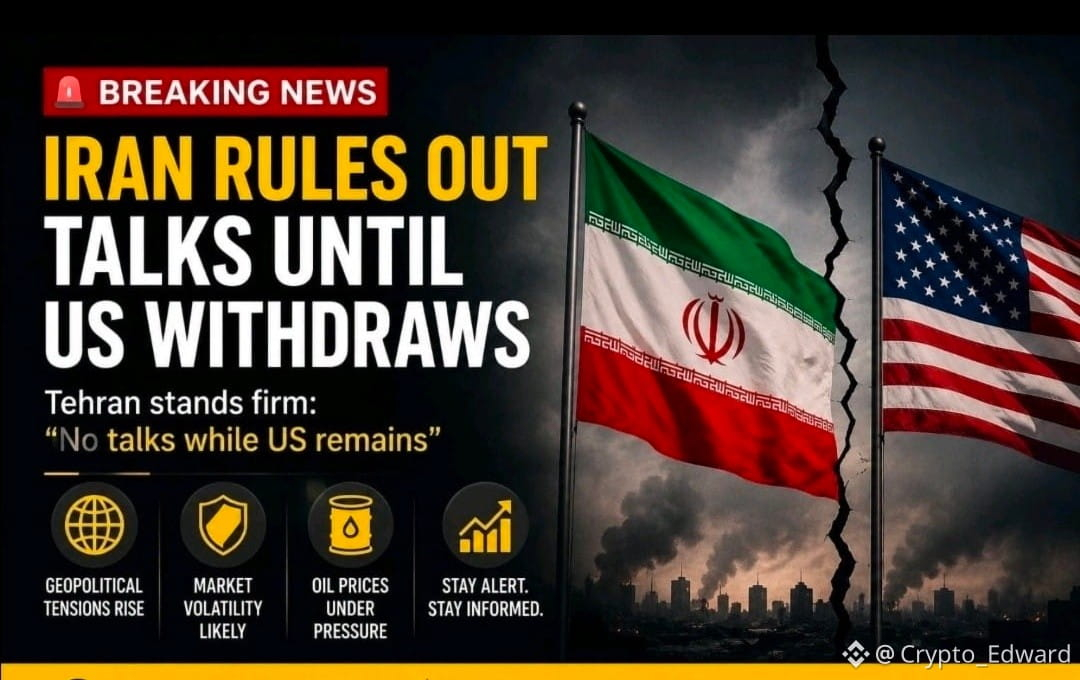
🇮🇷 According to reports, Iran has stated that it will not return to negotiations until the United States withdraws, adding fresh uncertainty to an already tense geopolitical environment.
Rising geopolitical risks could lead to increased volatility across major financial markets, including:
🪙 #Bitcoin
🛢️ Oil
📊 Global Equities
Market participants should stay alert, as any diplomatic progress—or further escalation—could trigger significant price movements across risk assets.
Stay informed. Trade wisely.
$BTC #iranrulesouttalksuntiluswithdraws
{future}(BTCUSDT)
Geopolitical Uncertainty Keeps Global Markets on Edge
🇮🇷 According to reports, Iran has stated that it will not return to negotiations until the United States withdraws, adding fresh uncertainty to an already tense geopolitical environment.
Rising geopolitical risks could lead to increased volatility across major financial markets, including:
🪙 #Bitcoin
🛢️ Oil
📊 Global Equities
Market participants should stay alert, as any diplomatic progress—or further escalation—could trigger significant price movements across risk assets.
Stay informed. Trade wisely.
$BTC #iranrulesouttalksuntiluswithdraws
🇮🇷 According to reports, Iran has stated that it will not return to negotiations until the United States withdraws, adding fresh uncertainty to an already tense geopolitical environment.
Rising geopolitical risks could lead to increased volatility across major financial markets, including:
🪙 #Bitcoin
🛢️ Oil
📊 Global Equities
Market participants should stay alert, as any diplomatic progress—or further escalation—could trigger significant price movements across risk assets.
Stay informed. Trade wisely.
$BTC #iranrulesouttalksuntiluswithdraws
1
18
10k

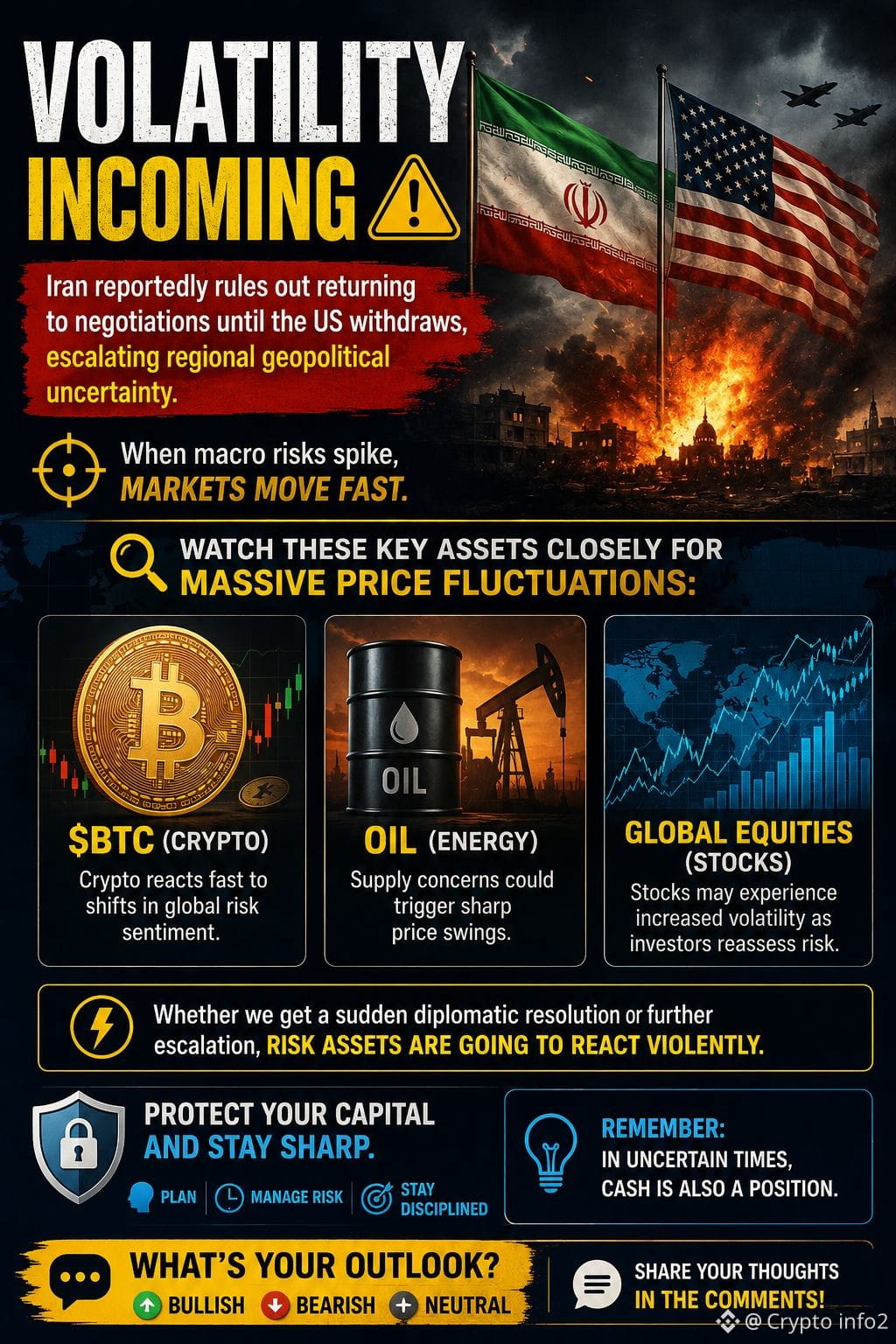
Volatility incoming. ⚠️ Iran reportedly rules out returning to negotiations until the US withdraws, escalating regional geopolitical uncertainty.
When macro risks spike, markets move fast. Watch these key assets closely for massive price fluctuations:
$BTC (Crypto) 🪙
Oil (Energy) 🛢️
Global Equities (Stocks) 📊
Whether we get a sudden diplomatic resolution or further escalation, risk assets are going to react violently. Protect your capital and stay sharp. 🧠
#iranrulesouttalksuntiluswithdraws $BNB $SPCXB
{spot}(BTCUSDT)
Volatility incoming. ⚠️ Iran reportedly rules out returning to negotiations until the US withdraws, escalating regional geopolitical uncertainty.
When macro risks spike, markets move fast. Watch these key assets closely for massive price fluctuations:
$BTC (Crypto) 🪙
Oil (Energy) 🛢️
Global Equities (Stocks) 📊
Whether we get a sudden diplomatic resolution or further escalation, risk assets are going to react violently. Protect your capital and stay sharp. 🧠
#iranrulesouttalksuntiluswithdraws $BNB $SPCXB
When macro risks spike, markets move fast. Watch these key assets closely for massive price fluctuations:
$BTC (Crypto) 🪙
Oil (Energy) 🛢️
Global Equities (Stocks) 📊
Whether we get a sudden diplomatic resolution or further escalation, risk assets are going to react violently. Protect your capital and stay sharp. 🧠
#iranrulesouttalksuntiluswithdraws $BNB $SPCXB
6
1
55
64.5k
·
--
#iranrulesouttalksuntiluswithdraws
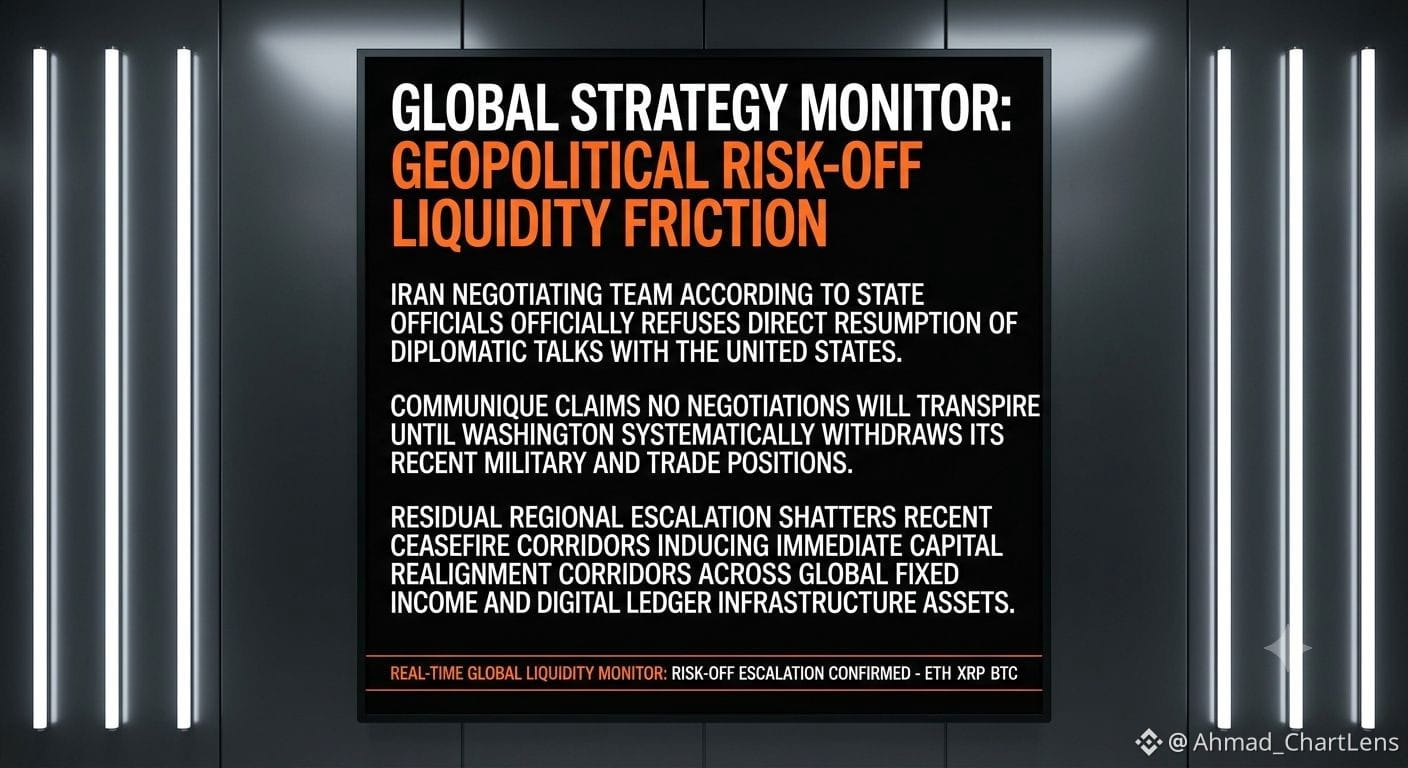
Geopolitical Risk-Off: Iran Rejects US Talks as Tensions Escalate 👇
The Reality:
Talks Halted:
Iran has officially rejected any diplomatic negotiations with the US until Washington completely withdraws its recent strategic positions.
💥 Ceasefire Fracture: This diplomatic freeze follows a breakdown in recent framework agreements after fresh friction points emerged in the Persian Gulf region.
⚠️ Macro Shift: The sudden loss of de-escalation expectations is driving institutional capital out of risk assets and into defensive, protective strategies.
Technical Blueprint & Trading Opportunities:
Ethereum $ETH
{spot}(ETHUSDT)
Despite macro pressure, ETH is compressing tightly and maintaining its key structural baseline within stable boundaries.
Ripple $XRP
{spot}(XRPUSDT)
Operating as a high-liquidity anchor, $XRP continues to defend major multi-week horizontal support levels.
🎯 Validation Floor: Near-term market structure depends heavily on holding the local invalidation zone. Defending this floor keeps the upward target paths valid.
Active Spot Execution Strategy:
Smart Money Playbook: High-velocity geopolitical headlines trigger heavy algorithmic liquidations on derivatives. To bypass this volatility, smart money is completely avoiding leverage and futures. Accumulate positions via spot entries on ETH and XRP while maintaining clear stablecoin reserves for intra-day discounts.
Let data guide, enforce defense, and let charts validate!
#iranrulesouttalksuntiluswithdraws
Geopolitical Risk-Off: Iran Rejects US Talks as Tensions Escalate 👇
The Reality:
Talks Halted:
Iran has officially rejected any diplomatic negotiations with the US until Washington completely withdraws its recent strategic positions.
💥 Ceasefire Fracture: This diplomatic freeze follows a breakdown in recent framework agreements after fresh friction points emerged in the Persian Gulf region.
⚠️ Macro Shift: The sudden loss of de-escalation expectations is driving institutional capital out of risk assets and into defensive, protective strategies.
Technical Blueprint & Trading Opportunities:
Ethereum $ETH
Despite macro pressure, ETH is compressing tightly and maintaining its key structural baseline within stable boundaries.
Ripple $XRP
Operating as a high-liquidity anchor, $XRP continues to defend major multi-week horizontal support levels.
🎯 Validation Floor: Near-term market structure depends heavily on holding the local invalidation zone. Defending this floor keeps the upward target paths valid.
Active Spot Execution Strategy:
Smart Money Playbook: High-velocity geopolitical headlines trigger heavy algorithmic liquidations on derivatives. To bypass this volatility, smart money is completely avoiding leverage and futures. Accumulate positions via spot entries on ETH and XRP while maintaining clear stablecoin reserves for intra-day discounts.
Let data guide, enforce defense, and let charts validate!
Geopolitical Risk-Off: Iran Rejects US Talks as Tensions Escalate 👇
The Reality:
Talks Halted:
Iran has officially rejected any diplomatic negotiations with the US until Washington completely withdraws its recent strategic positions.
💥 Ceasefire Fracture: This diplomatic freeze follows a breakdown in recent framework agreements after fresh friction points emerged in the Persian Gulf region.
⚠️ Macro Shift: The sudden loss of de-escalation expectations is driving institutional capital out of risk assets and into defensive, protective strategies.
Technical Blueprint & Trading Opportunities:
Ethereum $ETH
Despite macro pressure, ETH is compressing tightly and maintaining its key structural baseline within stable boundaries.
Ripple $XRP
Operating as a high-liquidity anchor, $XRP continues to defend major multi-week horizontal support levels.
🎯 Validation Floor: Near-term market structure depends heavily on holding the local invalidation zone. Defending this floor keeps the upward target paths valid.
Active Spot Execution Strategy:
Smart Money Playbook: High-velocity geopolitical headlines trigger heavy algorithmic liquidations on derivatives. To bypass this volatility, smart money is completely avoiding leverage and futures. Accumulate positions via spot entries on ETH and XRP while maintaining clear stablecoin reserves for intra-day discounts.
Let data guide, enforce defense, and let charts validate!
70

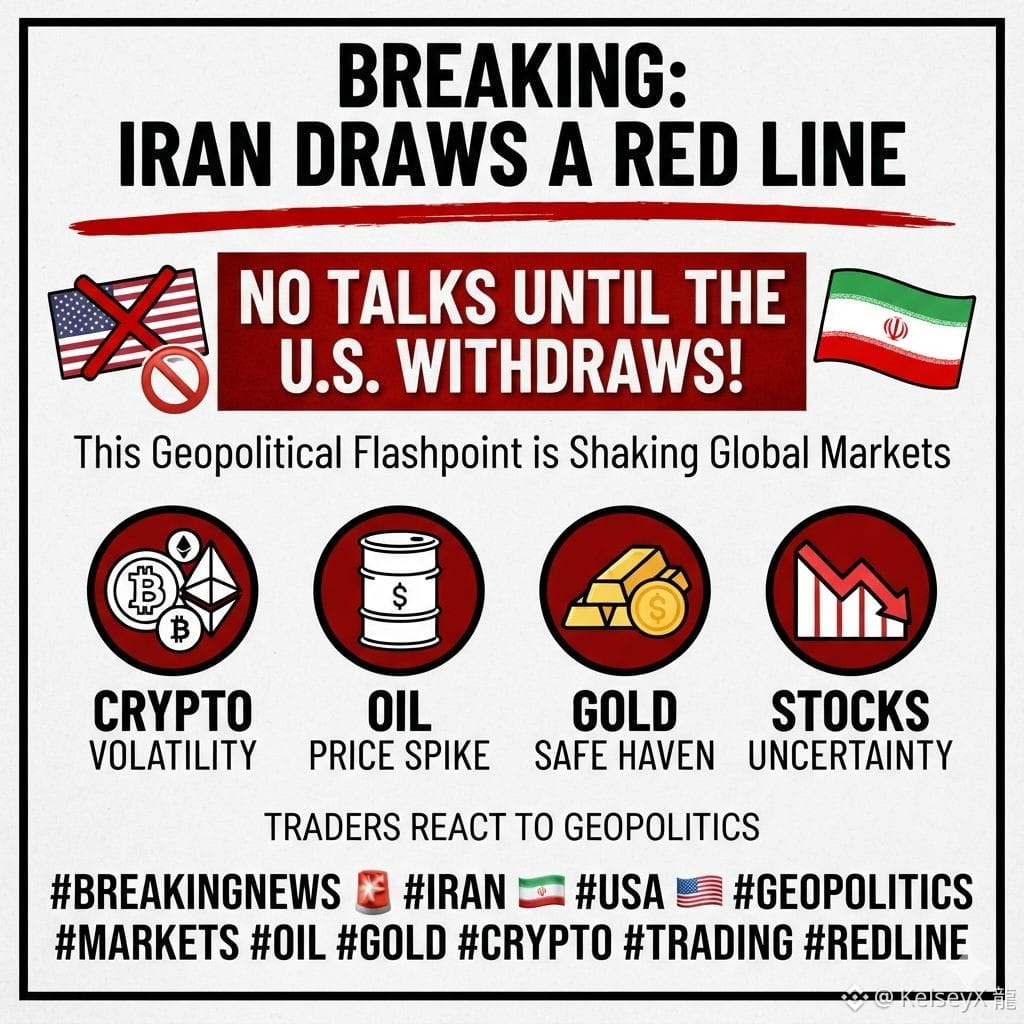
🚨 BREAKING: IRAN DRAWS A RED LINE — NO TALKS UNTIL THE U.S. WITHDRAWS! 🔥🌍
💥 This is a major geopolitical flashpoint that could shake global markets at any moment.
🇮🇷 Iran has made its position crystal clear: No talks. No negotiations. No compromise—until the United States withdraws.
📉 Expect heightened volatility across Crypto 🪙, Oil 🛢️, Gold 🥇, and Global Stocks 📊 as traders react to every new headline.
⚠️ Stay alert. The next major market move could be driven by geopolitics, not charts.
#IranRulesOutTalksUntilUSWithdraws #breakingnews 🇮🇷 #USA. 🇺🇸 #crypto 🪙 #Bitcoin
🚨 BREAKING: IRAN DRAWS A RED LINE — NO TALKS UNTIL THE U.S. WITHDRAWS! 🔥🌍
💥 This is a major geopolitical flashpoint that could shake global markets at any moment.
🇮🇷 Iran has made its position crystal clear: No talks. No negotiations. No compromise—until the United States withdraws.
📉 Expect heightened volatility across Crypto 🪙, Oil 🛢️, Gold 🥇, and Global Stocks 📊 as traders react to every new headline.
⚠️ Stay alert. The next major market move could be driven by geopolitics, not charts.
#IranRulesOutTalksUntilUSWithdraws #breakingnews 🇮🇷 #USA. 🇺🇸 #crypto 🪙 #Bitcoin
💥 This is a major geopolitical flashpoint that could shake global markets at any moment.
🇮🇷 Iran has made its position crystal clear: No talks. No negotiations. No compromise—until the United States withdraws.
📉 Expect heightened volatility across Crypto 🪙, Oil 🛢️, Gold 🥇, and Global Stocks 📊 as traders react to every new headline.
⚠️ Stay alert. The next major market move could be driven by geopolitics, not charts.
#IranRulesOutTalksUntilUSWithdraws #breakingnews 🇮🇷 #USA. 🇺🇸 #crypto 🪙 #Bitcoin
2
15
400

·
--
Haussier
#iranrulesouttalksuntiluswithdraws
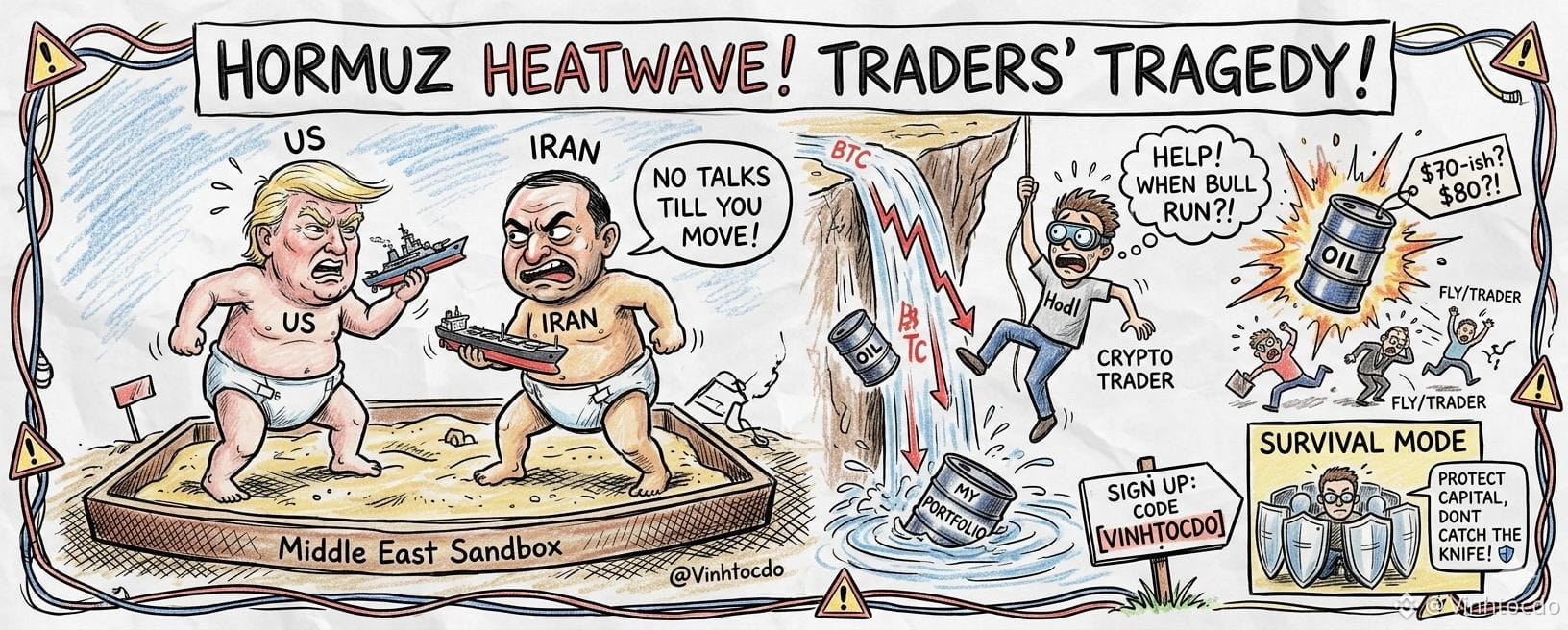
💣 Iran tuyên bố hủy đàm phán trừ khi Mỹ chịu rút quân!
Nói thiệt chứ tôi oải với mấy chính trị gia này lắm rồi, động tí là căng thẳng như hai đứa trẻ 5 tuổi nhà hàng xóm combat nhau vậy. Khổ cái là trâu bò húc nhau thì ruồi muỗi như anh em trader mình bay tài khoản, nhìn giá dầu nhảy múa mà tim đập thình thịch.
👉 Trader phải làm gì? Bật chế độ phòng thủ, quản lý vốn chặt chẽ chờ bão qua chứ đừng cố bắt dao rơi.
Đăng ký nhập mã VINHTOCDO để tăng giáp hộ thân. Đây không phải lời khuyên tài chính!
#BTC #MiddleEast #Hormuz #VINHTOCDO
$BZ
{future}(BZUSDT)
$CL
{future}(CLUSDT)
#iranrulesouttalksuntiluswithdraws
💣 Iran tuyên bố hủy đàm phán trừ khi Mỹ chịu rút quân!
Nói thiệt chứ tôi oải với mấy chính trị gia này lắm rồi, động tí là căng thẳng như hai đứa trẻ 5 tuổi nhà hàng xóm combat nhau vậy. Khổ cái là trâu bò húc nhau thì ruồi muỗi như anh em trader mình bay tài khoản, nhìn giá dầu nhảy múa mà tim đập thình thịch.
👉 Trader phải làm gì? Bật chế độ phòng thủ, quản lý vốn chặt chẽ chờ bão qua chứ đừng cố bắt dao rơi.
Đăng ký nhập mã VINHTOCDO để tăng giáp hộ thân. Đây không phải lời khuyên tài chính!
#BTC #MiddleEast #Hormuz #VINHTOCDO
$BZ
$CL
💣 Iran tuyên bố hủy đàm phán trừ khi Mỹ chịu rút quân!
Nói thiệt chứ tôi oải với mấy chính trị gia này lắm rồi, động tí là căng thẳng như hai đứa trẻ 5 tuổi nhà hàng xóm combat nhau vậy. Khổ cái là trâu bò húc nhau thì ruồi muỗi như anh em trader mình bay tài khoản, nhìn giá dầu nhảy múa mà tim đập thình thịch.
👉 Trader phải làm gì? Bật chế độ phòng thủ, quản lý vốn chặt chẽ chờ bão qua chứ đừng cố bắt dao rơi.
Đăng ký nhập mã VINHTOCDO để tăng giáp hộ thân. Đây không phải lời khuyên tài chính!
#BTC #MiddleEast #Hormuz #VINHTOCDO
$BZ
$CL
2
525

·
--
🚨 LATEST: 🇺🇸🇮🇷
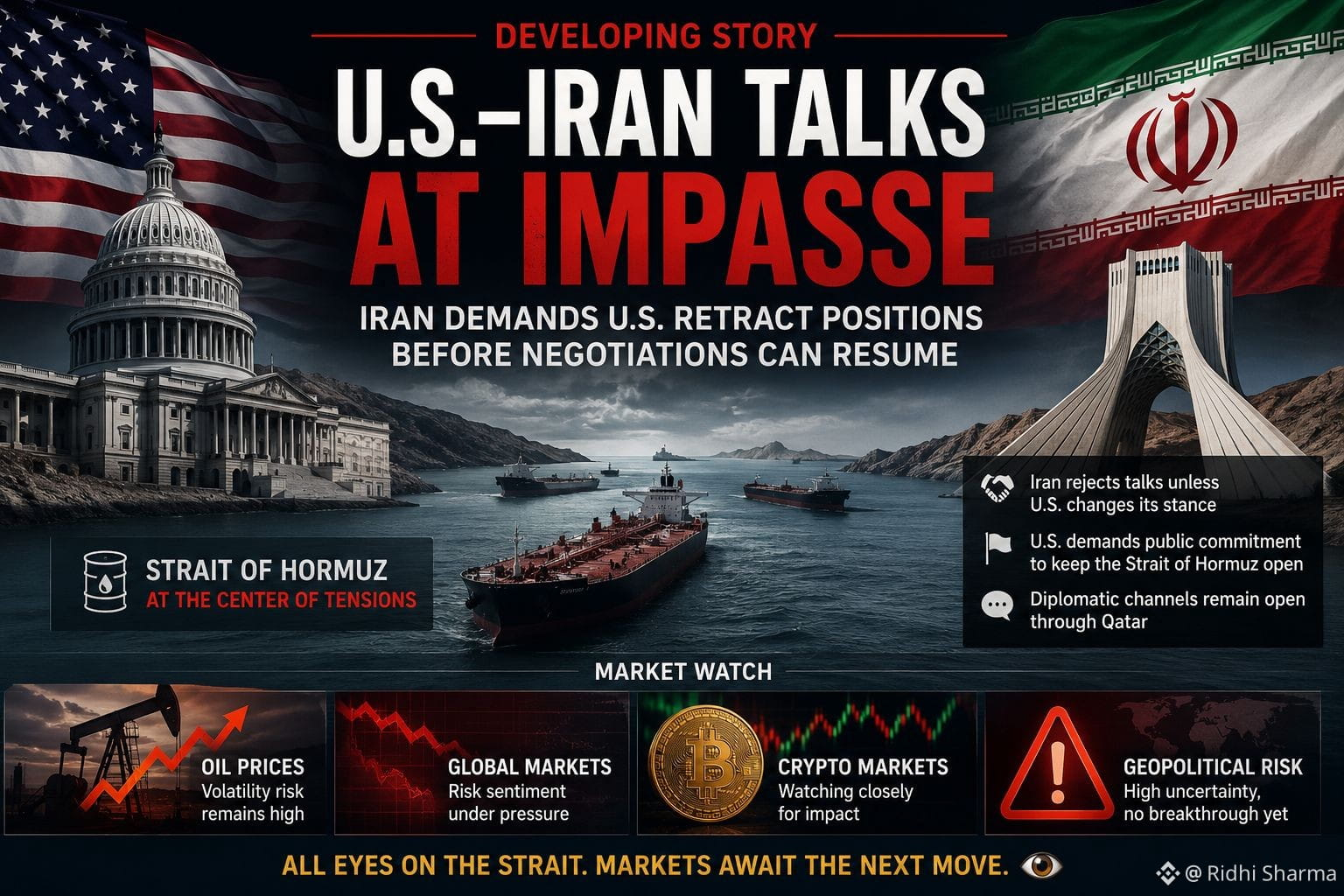
Iran says it will not resume negotiations until the United States retracts its current positions, according to Fars News.
The statement comes a day after the U.S. reportedly demanded that Iran publicly declare the Strait of Hormuz open as a precondition for further talks. Earlier this week, President Trump said the ceasefire was over, although diplomatic contacts between the two sides have reportedly continued through Qatar.
The latest developments suggest negotiations remain at an impasse, with markets closely watching for any breakthrough or further escalation that could impact oil prices, global risk sentiment, and crypto markets. 👀📉
#IranRulesOutTalksUntilUSWithdraws USRetailInvestorsBuyNet$13BInStocks
$LAB
{future}(LABUSDT)
$EVAA
{future}(EVAAUSDT)
$OWL
{alpha}(560x51e667e91b4b8cb8e6e0528757f248406bd34b57)
🚨 LATEST: 🇺🇸🇮🇷
Iran says it will not resume negotiations until the United States retracts its current positions, according to Fars News.
The statement comes a day after the U.S. reportedly demanded that Iran publicly declare the Strait of Hormuz open as a precondition for further talks. Earlier this week, President Trump said the ceasefire was over, although diplomatic contacts between the two sides have reportedly continued through Qatar.
The latest developments suggest negotiations remain at an impasse, with markets closely watching for any breakthrough or further escalation that could impact oil prices, global risk sentiment, and crypto markets. 👀📉
#IranRulesOutTalksUntilUSWithdraws USRetailInvestorsBuyNet$13BInStocks
$LAB
$EVAA
$OWL
Iran says it will not resume negotiations until the United States retracts its current positions, according to Fars News.
The statement comes a day after the U.S. reportedly demanded that Iran publicly declare the Strait of Hormuz open as a precondition for further talks. Earlier this week, President Trump said the ceasefire was over, although diplomatic contacts between the two sides have reportedly continued through Qatar.
The latest developments suggest negotiations remain at an impasse, with markets closely watching for any breakthrough or further escalation that could impact oil prices, global risk sentiment, and crypto markets. 👀📉
#IranRulesOutTalksUntilUSWithdraws USRetailInvestorsBuyNet$13BInStocks
$LAB
$EVAA
$OWL
1
584
·
--
Haussier
#iranrulesouttalksuntiluswithdraws
🚨
IRAN SETS TOUGH TERMS BEFORE ANY TALKS WITH WASHINGTON.
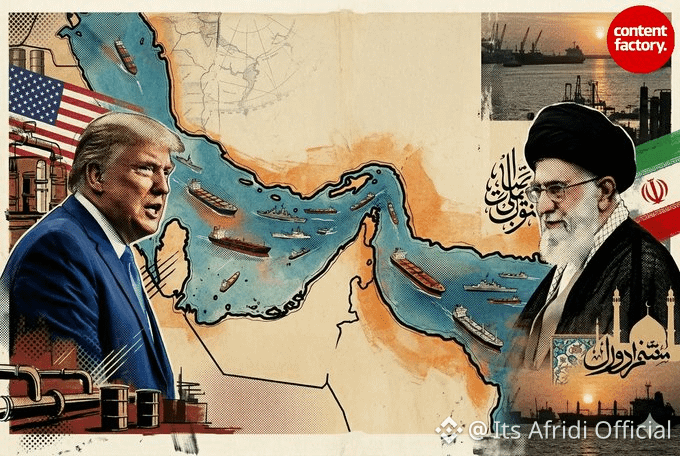
Iran says it will not enter new talks with the United States until Washington reverses its stance and carries out earlier understandings. An unnamed source told Fars that Tehran wants concrete steps first. These include forming a Lebanon working group, fixing transit problems in the Strait of Hormuz, and restoring normal Iranian oil exports.
This comes after months of conflict, a fragile ceasefire, and a 14‑point memorandum of understanding signed in mid‑June. The deal promised a halt to fighting, eased oil sanctions, and safer shipping routes. But Iran argues the US has not followed through. Tehran insists it will not return to the table until it sees real movement on these commitments.
The standoff highlights how hard it will be to turn the preliminary deal into a lasting settlement. Both sides agreed to a 60‑day window to negotiate a final agreement. That clock is ticking, and the region is watching closely.
$XRP
{future}(XRPUSDT)
$OG
{future}(OGUSDT)
$US
{alpha}(CT_7840xee962a61432231c2ede6946515beb02290cb516ad087bb06a731e922b2a5f57a::us::US)
#iranrulesouttalksuntiluswithdraws
🚨
IRAN SETS TOUGH TERMS BEFORE ANY TALKS WITH WASHINGTON.
Iran says it will not enter new talks with the United States until Washington reverses its stance and carries out earlier understandings. An unnamed source told Fars that Tehran wants concrete steps first. These include forming a Lebanon working group, fixing transit problems in the Strait of Hormuz, and restoring normal Iranian oil exports.
This comes after months of conflict, a fragile ceasefire, and a 14‑point memorandum of understanding signed in mid‑June. The deal promised a halt to fighting, eased oil sanctions, and safer shipping routes. But Iran argues the US has not followed through. Tehran insists it will not return to the table until it sees real movement on these commitments.
The standoff highlights how hard it will be to turn the preliminary deal into a lasting settlement. Both sides agreed to a 60‑day window to negotiate a final agreement. That clock is ticking, and the region is watching closely.
$XRP
$OG
$US
🚨
IRAN SETS TOUGH TERMS BEFORE ANY TALKS WITH WASHINGTON.
Iran says it will not enter new talks with the United States until Washington reverses its stance and carries out earlier understandings. An unnamed source told Fars that Tehran wants concrete steps first. These include forming a Lebanon working group, fixing transit problems in the Strait of Hormuz, and restoring normal Iranian oil exports.
This comes after months of conflict, a fragile ceasefire, and a 14‑point memorandum of understanding signed in mid‑June. The deal promised a halt to fighting, eased oil sanctions, and safer shipping routes. But Iran argues the US has not followed through. Tehran insists it will not return to the table until it sees real movement on these commitments.
The standoff highlights how hard it will be to turn the preliminary deal into a lasting settlement. Both sides agreed to a 60‑day window to negotiate a final agreement. That clock is ticking, and the region is watching closely.
$XRP
$OG
$US
1
354
·
--
#iranrulesouttalksuntiluswithdraws Here’s a concise, engaging Binance Square-style post:
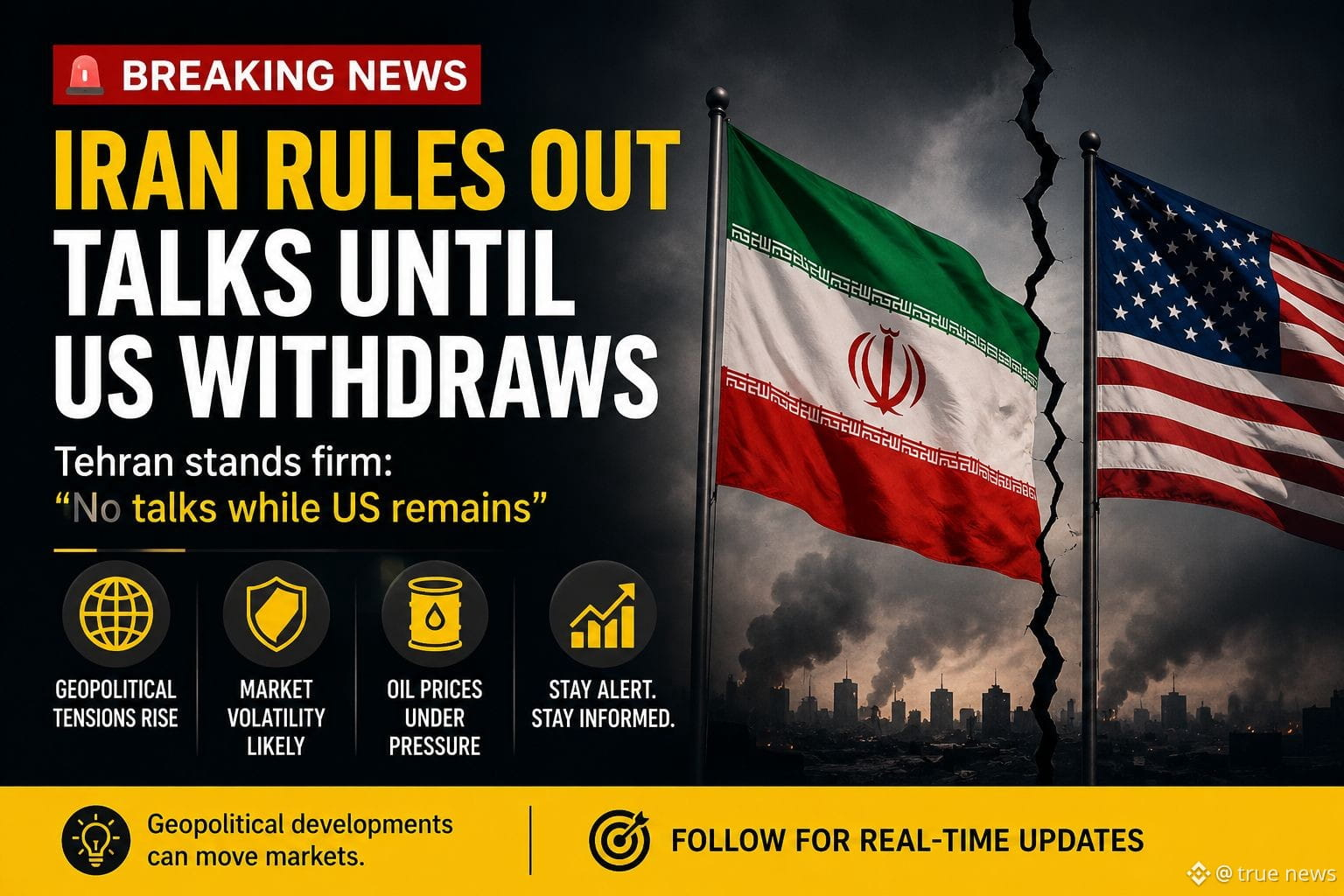
🌍 Geopolitical Tensions Remain Elevated
🇮🇷 Iran has reportedly stated that it will not resume talks until the U.S. withdraws, adding another layer of uncertainty to an already fragile geopolitical landscape.
📉 Rising geopolitical risks can increase volatility across:
• 🪙 Bitcoin ($BTC)
• 🟡 Gold
• 🛢️ Oil
• 📊 Global equity markets
👀 Traders should closely monitor diplomatic developments, as any breakthrough—or further escalation—could trigger sharp market reactions.
{spot}(ETHUSDT)
{future}(BTCUSDT)
{future}(XRPUSDT)
#Bitcoin #Crypto #Iran #USA #Geopolitics #Trading #BinanceSquare
#iranrulesouttalksuntiluswithdraws Here’s a concise, engaging Binance Square-style post:
🌍 Geopolitical Tensions Remain Elevated
🇮🇷 Iran has reportedly stated that it will not resume talks until the U.S. withdraws, adding another layer of uncertainty to an already fragile geopolitical landscape.
📉 Rising geopolitical risks can increase volatility across:
• 🪙 Bitcoin ($BTC)
• 🟡 Gold
• 🛢️ Oil
• 📊 Global equity markets
👀 Traders should closely monitor diplomatic developments, as any breakthrough—or further escalation—could trigger sharp market reactions.
#Bitcoin #Crypto #Iran #USA #Geopolitics #Trading #BinanceSquare
🌍 Geopolitical Tensions Remain Elevated
🇮🇷 Iran has reportedly stated that it will not resume talks until the U.S. withdraws, adding another layer of uncertainty to an already fragile geopolitical landscape.
📉 Rising geopolitical risks can increase volatility across:
• 🪙 Bitcoin ($BTC)
• 🟡 Gold
• 🛢️ Oil
• 📊 Global equity markets
👀 Traders should closely monitor diplomatic developments, as any breakthrough—or further escalation—could trigger sharp market reactions.
#Bitcoin #Crypto #Iran #USA #Geopolitics #Trading #BinanceSquare
7
2.4k
·
--
Baissier
#iranrulesouttalksuntiluswithdraws
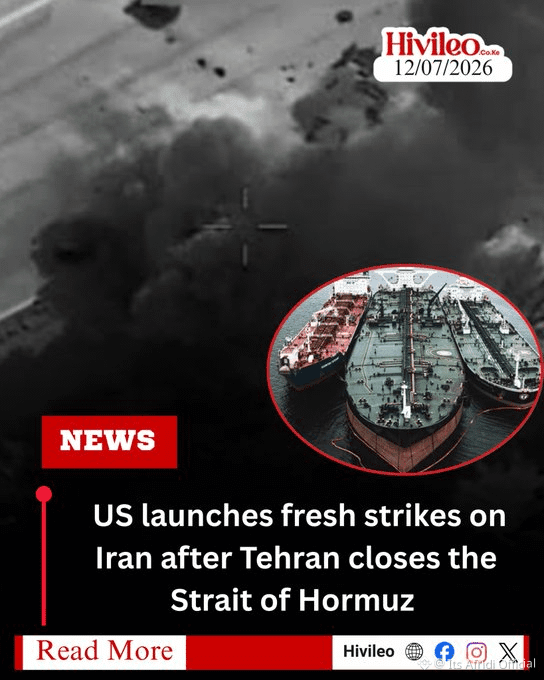
The United States has launched a fresh round of airstrikes on Iran after Tehran announced the closure of the strategic Strait of Hormuz "until
further notice," escalating tensions in the Middle East.
According to the
US Central Command, President Donald Trump authorized the latest strikes targeting Iran's military capabilities used to threaten commercial shipping, following an attack by Iranian forces on a Cyprus-flagged container ship.
$TRX
{future}(TRXUSDT)
$TAO
{future}(TAOUSDT)
$SOL
{future}(SOLUSDT)
#iranrulesouttalksuntiluswithdraws
The United States has launched a fresh round of airstrikes on Iran after Tehran announced the closure of the strategic Strait of Hormuz "until
further notice," escalating tensions in the Middle East.
According to the
US Central Command, President Donald Trump authorized the latest strikes targeting Iran's military capabilities used to threaten commercial shipping, following an attack by Iranian forces on a Cyprus-flagged container ship.
$TRX
$TAO
$SOL
The United States has launched a fresh round of airstrikes on Iran after Tehran announced the closure of the strategic Strait of Hormuz "until
further notice," escalating tensions in the Middle East.
According to the
US Central Command, President Donald Trump authorized the latest strikes targeting Iran's military capabilities used to threaten commercial shipping, following an attack by Iranian forces on a Cyprus-flagged container ship.
$TRX
$TAO
$SOL
1
138

·
--
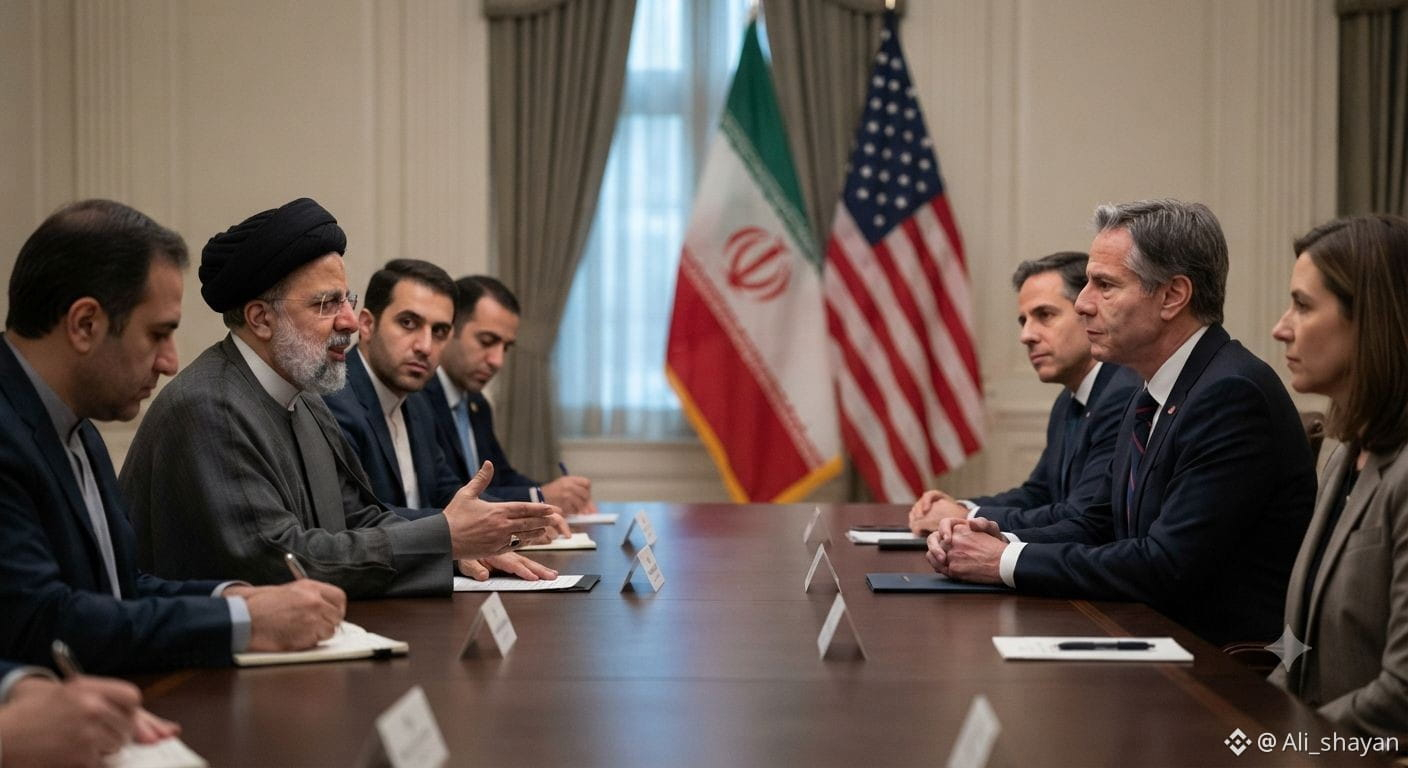
#iranrulesouttalksuntiluswithdraws Tensions between the U.S. and Iran are rising again. Iran’s officials officially stated today that they will not enter into any new negotiations with the United States until Washington changes its current position.
This follows a difficult week where the previously agreed-upon ceasefire was declared "over" by U.S. leadership. Iran has set clear demands for any potential future talks, including resolving navigation issues in the Strait of Hormuz and addressing their specific concerns regarding regional stability. For now, the path toward diplomacy remains blocked as both sides hold firm to their requirements.
CLICK BELOW TO TRADE
$BTC $ETH $XRP
{spot}(XRPUSDT)
{spot}(ETHUSDT)
{spot}(BTCUSDT)
#iranrulesouttalksuntiluswithdraws Tensions between the U.S. and Iran are rising again. Iran’s officials officially stated today that they will not enter into any new negotiations with the United States until Washington changes its current position.
This follows a difficult week where the previously agreed-upon ceasefire was declared "over" by U.S. leadership. Iran has set clear demands for any potential future talks, including resolving navigation issues in the Strait of Hormuz and addressing their specific concerns regarding regional stability. For now, the path toward diplomacy remains blocked as both sides hold firm to their requirements.
CLICK BELOW TO TRADE
$BTC $ETH $XRP
This follows a difficult week where the previously agreed-upon ceasefire was declared "over" by U.S. leadership. Iran has set clear demands for any potential future talks, including resolving navigation issues in the Strait of Hormuz and addressing their specific concerns regarding regional stability. For now, the path toward diplomacy remains blocked as both sides hold firm to their requirements.
CLICK BELOW TO TRADE
$BTC $ETH $XRP
3
1.7k
Connectez-vous pour découvrir plus de contenu
Rejoignez la communauté mondiale des adeptes de cryptomonnaies sur Binance Square
⚡️ Suviez les dernières informations importantes sur les cryptomonnaies.
💬 Jugé digne de confiance par la plus grande plateforme d’échange de cryptomonnaies au monde.
👍 Découvrez les connaissances que partagent les créateurs vérifiés.
Adresse e-mail/Nº de téléphone
Sujets d’actualité
1
#BinanceLaunchesBinanceIntelligence
39,249 vues
470 mentions
2
#EvernorthXRPTreasuryCompletesSPACMerger
32,517 vues
311 mentions
3
#ADAGains10%Above$0.27
31,495 vues
211 mentions
4
#ETHUp70%InQ3ButLiquidityFalls
226,266 vues
1,397 mentions
5
#EthStakingExitQueueHits2026High
83,793 vues
947 mentions
6
#FedOctoberHoldOdds82.3%
85,568 vues
922 mentions
7
#Nikkei225Jumps2.5%ToThreeMonthHigh
95,331 vues
1,222 mentions
8
#CircleMints$2.75BUSDCOnSolanaIn7Days
2,554 vues
53 mentions
9
#DriftHackVictimsBeginClaims
200,808 vues
1,880 mentions
10
#SolanaTokenizedStockVolumeTops$4.4BInSeptember
14,743 vues
136 mentions