

#fundingrates
fundingrates
437,625 vues
997 mentions
Populaire
Récents

·
--
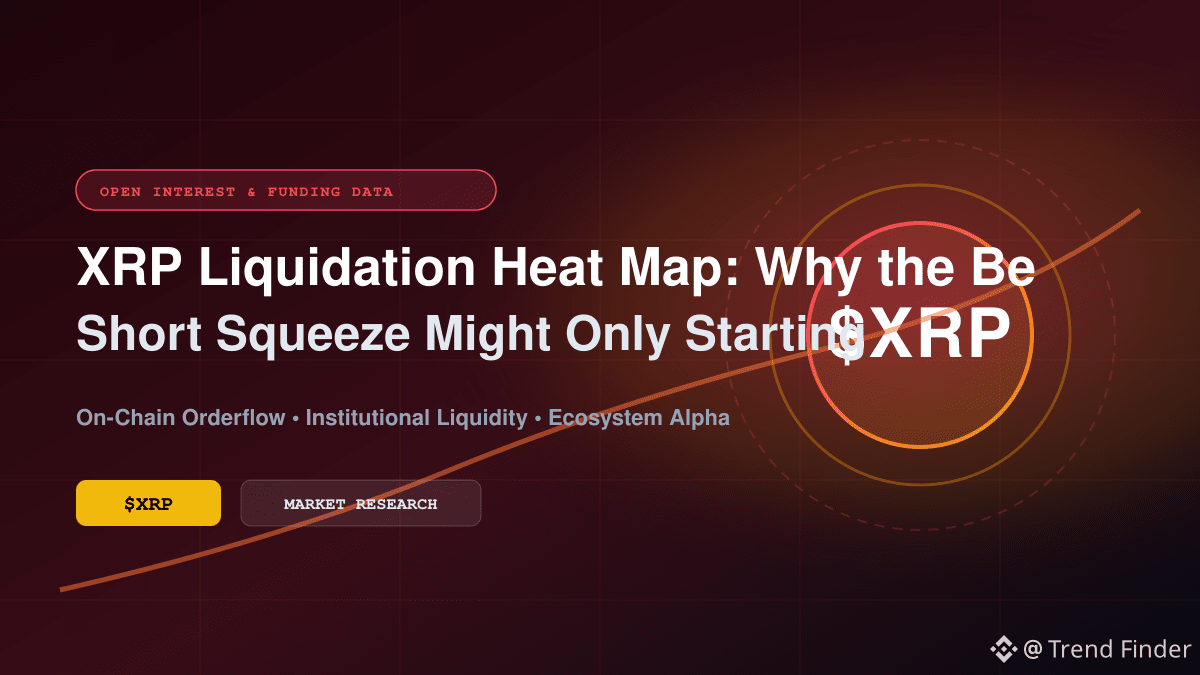
XRP Liquidation Heat Map: Why the Short Squeeze Might Only Be Starting
The current tape for $XRP is screaming derivatives dominance as we see a massive disconnect between spot stability and futures aggression. While the price hovers around the 1.52 mark, just north of our 1.485 reference, the aggregate Open Interest has ballooned to 2.92 billion USD. That 16.39 percent jump in just twenty four hours tells me that fresh speculative capital is flooding the system, not just recycled positions.
What stands out most is the sheer violence of the recent short squeeze. We just witnessed over 23.20 million USD in short liquidations, representing a staggering 658 percent surge compared to the long side. Bears tried to cap the move and got absolutely incinerated as price pushed through local resistance. Even with this volatility, funding rates on Binance and Bybit are staying lean at roughly positive 0.0100 percent. This is actually a healthy sign; it shows the market isnt overly exuberant or top-heavy yet, though the leverage ratio sitting at 0.197 is still historically high compared to the six-month average.
On the supply side, the October 1st unlock of 1 billion tokens was largely a non-event because Ripple stuck to its historical practice and re-escrowed the majority of it. Whales are holding steady at roughly 3.90 billion tokens after that massive accumulation phase in late September, suggesting the big money is waiting for a macro catalyst rather than offloading into this strength. The options market is even more lopsided, with a put/call ratio of 0.54 signaling that the institutional bias is firmly tilted toward the upside. Even the ETF-related derivatives show almost zero demand for downside protection right now.
With the leverage resetting slightly but Open Interest climbing back toward three billion, the board is set for another major move. Are you guys positioned for a continuation, or do you think the funding rates will eventually turn into a trap for late longs?
_
#OpenInterest #FundingRates
XRP Liquidation Heat Map: Why the Short Squeeze Might Only Be Starting
The current tape for $XRP is screaming derivatives dominance as we see a massive disconnect between spot stability and futures aggression. While the price hovers around the 1.52 mark, just north of our 1.485 reference, the aggregate Open Interest has ballooned to 2.92 billion USD. That 16.39 percent jump in just twenty four hours tells me that fresh speculative capital is flooding the system, not just recycled positions.
What stands out most is the sheer violence of the recent short squeeze. We just witnessed over 23.20 million USD in short liquidations, representing a staggering 658 percent surge compared to the long side. Bears tried to cap the move and got absolutely incinerated as price pushed through local resistance. Even with this volatility, funding rates on Binance and Bybit are staying lean at roughly positive 0.0100 percent. This is actually a healthy sign; it shows the market isnt overly exuberant or top-heavy yet, though the leverage ratio sitting at 0.197 is still historically high compared to the six-month average.
On the supply side, the October 1st unlock of 1 billion tokens was largely a non-event because Ripple stuck to its historical practice and re-escrowed the majority of it. Whales are holding steady at roughly 3.90 billion tokens after that massive accumulation phase in late September, suggesting the big money is waiting for a macro catalyst rather than offloading into this strength. The options market is even more lopsided, with a put/call ratio of 0.54 signaling that the institutional bias is firmly tilted toward the upside. Even the ETF-related derivatives show almost zero demand for downside protection right now.
With the leverage resetting slightly but Open Interest climbing back toward three billion, the board is set for another major move. Are you guys positioned for a continuation, or do you think the funding rates will eventually turn into a trap for late longs?
_
#OpenInterest #FundingRates
The current tape for $XRP is screaming derivatives dominance as we see a massive disconnect between spot stability and futures aggression. While the price hovers around the 1.52 mark, just north of our 1.485 reference, the aggregate Open Interest has ballooned to 2.92 billion USD. That 16.39 percent jump in just twenty four hours tells me that fresh speculative capital is flooding the system, not just recycled positions.
What stands out most is the sheer violence of the recent short squeeze. We just witnessed over 23.20 million USD in short liquidations, representing a staggering 658 percent surge compared to the long side. Bears tried to cap the move and got absolutely incinerated as price pushed through local resistance. Even with this volatility, funding rates on Binance and Bybit are staying lean at roughly positive 0.0100 percent. This is actually a healthy sign; it shows the market isnt overly exuberant or top-heavy yet, though the leverage ratio sitting at 0.197 is still historically high compared to the six-month average.
On the supply side, the October 1st unlock of 1 billion tokens was largely a non-event because Ripple stuck to its historical practice and re-escrowed the majority of it. Whales are holding steady at roughly 3.90 billion tokens after that massive accumulation phase in late September, suggesting the big money is waiting for a macro catalyst rather than offloading into this strength. The options market is even more lopsided, with a put/call ratio of 0.54 signaling that the institutional bias is firmly tilted toward the upside. Even the ETF-related derivatives show almost zero demand for downside protection right now.
With the leverage resetting slightly but Open Interest climbing back toward three billion, the board is set for another major move. Are you guys positioned for a continuation, or do you think the funding rates will eventually turn into a trap for late longs?
_
#OpenInterest #FundingRates
1
28

·
--
**Momentum Rotations vs Top Chasing: The Funding & OI Filter**
$PHA, $HUMA, and $QNT have drawn FOMO capital after sharp rallies—but perpetual funding rates reveal the chase quality. $PHA at $0.0743 shows modest +1.5% gains with thin volume (3M USDT), suggesting limited leverage buildup. Compare that to prior runners where funding spiked above 0.03% and open interest surged 40%+ in 4 hours—classic distribution signals.
Strategic rotation entries occur *before* funding stress: watch for rising OI on consolidation, not parabolic candles. Top-chasing happens when funding exceeds 0.05% and volume dries post-spike.
**Key level:** $PHA resistance at $0.078; reclaim with rising OI confirms continuation. Break below $0.070 invalidates the setup.
**Risk:** Size for the invalidation zone, not the dream target. Elevated funding = elevated risk of sharp mean reversion when longs flush.
#CryptoTrading #PHA #MomentumRotation #FundingRates
**Momentum Rotations vs Top Chasing: The Funding & OI Filter**
$PHA , $HUMA , and $QNT have drawn FOMO capital after sharp rallies—but perpetual funding rates reveal the chase quality. $PHA at $0.0743 shows modest +1.5% gains with thin volume (3M USDT), suggesting limited leverage buildup. Compare that to prior runners where funding spiked above 0.03% and open interest surged 40%+ in 4 hours—classic distribution signals.
Strategic rotation entries occur *before* funding stress: watch for rising OI on consolidation, not parabolic candles. Top-chasing happens when funding exceeds 0.05% and volume dries post-spike.
**Key level:** $PHA resistance at $0.078; reclaim with rising OI confirms continuation. Break below $0.070 invalidates the setup.
**Risk:** Size for the invalidation zone, not the dream target. Elevated funding = elevated risk of sharp mean reversion when longs flush.
#CryptoTrading #PHA #MomentumRotation #FundingRates
$PHA , $HUMA , and $QNT have drawn FOMO capital after sharp rallies—but perpetual funding rates reveal the chase quality. $PHA at $0.0743 shows modest +1.5% gains with thin volume (3M USDT), suggesting limited leverage buildup. Compare that to prior runners where funding spiked above 0.03% and open interest surged 40%+ in 4 hours—classic distribution signals.
Strategic rotation entries occur *before* funding stress: watch for rising OI on consolidation, not parabolic candles. Top-chasing happens when funding exceeds 0.05% and volume dries post-spike.
**Key level:** $PHA resistance at $0.078; reclaim with rising OI confirms continuation. Break below $0.070 invalidates the setup.
**Risk:** Size for the invalidation zone, not the dream target. Elevated funding = elevated risk of sharp mean reversion when longs flush.
#CryptoTrading #PHA #MomentumRotation #FundingRates
91
·
--
$BTC, $ETH and $SOL: after a reported $3B+ liquidation wipeout, the useful question is whether leverage has reset—not whether the latest candle is green.
Funding is the periodic payment between perpetual-futures traders: positive funding means longs are paying shorts; negative means shorts are paying longs. Current rates are positive at 0.0067% for BTC, 0.0053% for ETH and 0.0095% for SOL, while sentiment is still Greed at 74. That suggests long positioning may be rebuilding, but funding alone cannot show how crowded it is.
Pair it with open interest (OI), the value of outstanding futures contracts. A sharp OI drop during a price flush can signal positions were cleared; rising OI with positive funding afterward can mean leverage is returning. Treat that as context, not a signal to chase.
BTC is $84,766.65. Watch the $84,200–$85,000 zone: a hold with contained OI growth may favor stabilization; rejection with OI rebuilding raises squeeze risk. Keep size modest and define invalidation before entry.
#CryptoMarkets #FundingRates #BTCAnalysis #ETH #SOL
$BTC , $ETH and $SOL : after a reported $3B+ liquidation wipeout, the useful question is whether leverage has reset—not whether the latest candle is green.
Funding is the periodic payment between perpetual-futures traders: positive funding means longs are paying shorts; negative means shorts are paying longs. Current rates are positive at 0.0067% for BTC, 0.0053% for ETH and 0.0095% for SOL, while sentiment is still Greed at 74. That suggests long positioning may be rebuilding, but funding alone cannot show how crowded it is.
Pair it with open interest (OI), the value of outstanding futures contracts. A sharp OI drop during a price flush can signal positions were cleared; rising OI with positive funding afterward can mean leverage is returning. Treat that as context, not a signal to chase.
BTC is $84,766.65. Watch the $84,200–$85,000 zone: a hold with contained OI growth may favor stabilization; rejection with OI rebuilding raises squeeze risk. Keep size modest and define invalidation before entry.
#CryptoMarkets #FundingRates #BTCAnalysis #ETH #SOL
Funding is the periodic payment between perpetual-futures traders: positive funding means longs are paying shorts; negative means shorts are paying longs. Current rates are positive at 0.0067% for BTC, 0.0053% for ETH and 0.0095% for SOL, while sentiment is still Greed at 74. That suggests long positioning may be rebuilding, but funding alone cannot show how crowded it is.
Pair it with open interest (OI), the value of outstanding futures contracts. A sharp OI drop during a price flush can signal positions were cleared; rising OI with positive funding afterward can mean leverage is returning. Treat that as context, not a signal to chase.
BTC is $84,766.65. Watch the $84,200–$85,000 zone: a hold with contained OI growth may favor stabilization; rejection with OI rebuilding raises squeeze risk. Keep size modest and define invalidation before entry.
#CryptoMarkets #FundingRates #BTCAnalysis #ETH #SOL
54

📊 ارتفاع معدلات التمويل يُشير إلى اهتمام متزايد برافعة بيتكوين
تشير البيانات الأخيرة إلى ارتفاع في عقود الفائدة المفتوحة ومعدلات التمويل لعقود البيتكوين الآجلة الدائمة. هذا الارتفاع يعكس تجدد الطلب على المراكز الطويلة ذات الرافعة المالية في سوق البيتكوين، مما يشير إلى ثقة المستثمرين.
━━━━━━━━━━━━━━
📊 التأثير: 📈 مرتفع
🏷️ BITCOIN
#Bitcoin #FundingRates #MarketAnalysis #CryptoTrends #OpenInterest
📰 المصدر: coindesk.com
📊 ارتفاع معدلات التمويل يُشير إلى اهتمام متزايد برافعة بيتكوين
تشير البيانات الأخيرة إلى ارتفاع في عقود الفائدة المفتوحة ومعدلات التمويل لعقود البيتكوين الآجلة الدائمة. هذا الارتفاع يعكس تجدد الطلب على المراكز الطويلة ذات الرافعة المالية في سوق البيتكوين، مما يشير إلى ثقة المستثمرين.
━━━━━━━━━━━━━━
📊 التأثير: 📈 مرتفع
🏷️ BITCOIN
#Bitcoin #FundingRates #MarketAnalysis #CryptoTrends #OpenInterest
📰 المصدر: coindesk.com
تشير البيانات الأخيرة إلى ارتفاع في عقود الفائدة المفتوحة ومعدلات التمويل لعقود البيتكوين الآجلة الدائمة. هذا الارتفاع يعكس تجدد الطلب على المراكز الطويلة ذات الرافعة المالية في سوق البيتكوين، مما يشير إلى ثقة المستثمرين.
━━━━━━━━━━━━━━
📊 التأثير: 📈 مرتفع
🏷️ BITCOIN
#Bitcoin #FundingRates #MarketAnalysis #CryptoTrends #OpenInterest
📰 المصدر: coindesk.com
8

·
--
Price tells you what happened. Funding tells you what everyone is positioned for.
Perpetual futures funding is the market's standing bet: when funding is positive, longs pay shorts — the crowd is leaning one way and paying for the privilege. Extreme funding isn't a signal about the asset. It's a signal about the crowd.
The logic:
- Heavily positive funding = crowded longs = the trade is full. The marginal buyer is already here; the remaining fuel belongs to sellers.
- Heavily negative funding = crowded shorts = fuel for squeezes.
- Flat funding with a strong price is the healthiest configuration: spot-led demand without leverage paying the bill.
Crowded positioning doesn't predict direction — it predicts fragility. A crowded long market can keep rising, but it falls faster than anyone plans, because liquidation engines are mechanical sellers that never read charts.
Practical use:
1. Watch funding across venues — crowding shows up everywhere at once.
2. Compare funding to open interest: rising OI with rising price and rising funding means the trend is backed by new risk. Rising funding with flat OI means positions are rolling, not new conviction arriving.
3. Extremes fade. Averages follow.
Leverage is not a sentiment indicator. It is a countdown timer.
$BTC $ETH $SOL
#CryptoTrading #FundingRates #Perpetuals #RiskManagement #CryptoInsights
Price tells you what happened. Funding tells you what everyone is positioned for.
Perpetual futures funding is the market's standing bet: when funding is positive, longs pay shorts — the crowd is leaning one way and paying for the privilege. Extreme funding isn't a signal about the asset. It's a signal about the crowd.
The logic:
- Heavily positive funding = crowded longs = the trade is full. The marginal buyer is already here; the remaining fuel belongs to sellers.
- Heavily negative funding = crowded shorts = fuel for squeezes.
- Flat funding with a strong price is the healthiest configuration: spot-led demand without leverage paying the bill.
Crowded positioning doesn't predict direction — it predicts fragility. A crowded long market can keep rising, but it falls faster than anyone plans, because liquidation engines are mechanical sellers that never read charts.
Practical use:
1. Watch funding across venues — crowding shows up everywhere at once.
2. Compare funding to open interest: rising OI with rising price and rising funding means the trend is backed by new risk. Rising funding with flat OI means positions are rolling, not new conviction arriving.
3. Extremes fade. Averages follow.
Leverage is not a sentiment indicator. It is a countdown timer.
$BTC $ETH $SOL
#CryptoTrading #FundingRates #Perpetuals #RiskManagement #CryptoInsights
Perpetual futures funding is the market's standing bet: when funding is positive, longs pay shorts — the crowd is leaning one way and paying for the privilege. Extreme funding isn't a signal about the asset. It's a signal about the crowd.
The logic:
- Heavily positive funding = crowded longs = the trade is full. The marginal buyer is already here; the remaining fuel belongs to sellers.
- Heavily negative funding = crowded shorts = fuel for squeezes.
- Flat funding with a strong price is the healthiest configuration: spot-led demand without leverage paying the bill.
Crowded positioning doesn't predict direction — it predicts fragility. A crowded long market can keep rising, but it falls faster than anyone plans, because liquidation engines are mechanical sellers that never read charts.
Practical use:
1. Watch funding across venues — crowding shows up everywhere at once.
2. Compare funding to open interest: rising OI with rising price and rising funding means the trend is backed by new risk. Rising funding with flat OI means positions are rolling, not new conviction arriving.
3. Extremes fade. Averages follow.
Leverage is not a sentiment indicator. It is a countdown timer.
$BTC $ETH $SOL
#CryptoTrading #FundingRates #Perpetuals #RiskManagement #CryptoInsights
1
69

Bitcoin derivatives are experiencing their sharpest leverage reset in over a year. This massive deleveraging event suggests a significant shift in market sentiment and trader positioning.
#BitcoinLiquidations #FundingRates
Bitcoin derivatives are experiencing their sharpest leverage reset in over a year. This massive deleveraging event suggests a significant shift in market sentiment and trader positioning.
#BitcoinLiquidations #FundingRates
#BitcoinLiquidations #FundingRates
15
·
--
$SAGA and $SPCX: a Monitoring Tag or unlock headline can attract shorts, but crowded positioning—not the headline alone—creates squeeze risk.
SAGA is at $0.02633, down 8.35% over 24 hours, while broader sentiment remains at 74 (Greed). That contrast can encourage traders to press bearish bets. The key confirmation to watch is funding turning more negative as open interest rises: it would suggest new short exposure is building, making a sharp rebound more vulnerable to short covering. But falling open interest alongside the price decline would point more toward positions closing than a fresh short crowd.
For SAGA, $0.02633 is the reference level: reclaiming it while open interest expands would strengthen the squeeze-watch case; failure to hold keeps downside pressure in focus. No current funding or open-interest readings were provided for SAGA or SPCX, so this remains a conditional setup, not a confirmed squeeze signal.
Keep position size modest and define invalidation before entry; a squeeze can fail and extend lower.
#SAGA #SPCX #FundingRates #OpenInterest
$SAGA and $SPCX : a Monitoring Tag or unlock headline can attract shorts, but crowded positioning—not the headline alone—creates squeeze risk.
SAGA is at $0.02633, down 8.35% over 24 hours, while broader sentiment remains at 74 (Greed). That contrast can encourage traders to press bearish bets. The key confirmation to watch is funding turning more negative as open interest rises: it would suggest new short exposure is building, making a sharp rebound more vulnerable to short covering. But falling open interest alongside the price decline would point more toward positions closing than a fresh short crowd.
For SAGA, $0.02633 is the reference level: reclaiming it while open interest expands would strengthen the squeeze-watch case; failure to hold keeps downside pressure in focus. No current funding or open-interest readings were provided for SAGA or SPCX, so this remains a conditional setup, not a confirmed squeeze signal.
Keep position size modest and define invalidation before entry; a squeeze can fail and extend lower.
#SAGA #SPCX #FundingRates #OpenInterest
SAGA is at $0.02633, down 8.35% over 24 hours, while broader sentiment remains at 74 (Greed). That contrast can encourage traders to press bearish bets. The key confirmation to watch is funding turning more negative as open interest rises: it would suggest new short exposure is building, making a sharp rebound more vulnerable to short covering. But falling open interest alongside the price decline would point more toward positions closing than a fresh short crowd.
For SAGA, $0.02633 is the reference level: reclaiming it while open interest expands would strengthen the squeeze-watch case; failure to hold keeps downside pressure in focus. No current funding or open-interest readings were provided for SAGA or SPCX, so this remains a conditional setup, not a confirmed squeeze signal.
Keep position size modest and define invalidation before entry; a squeeze can fail and extend lower.
#SAGA #SPCX #FundingRates #OpenInterest
691

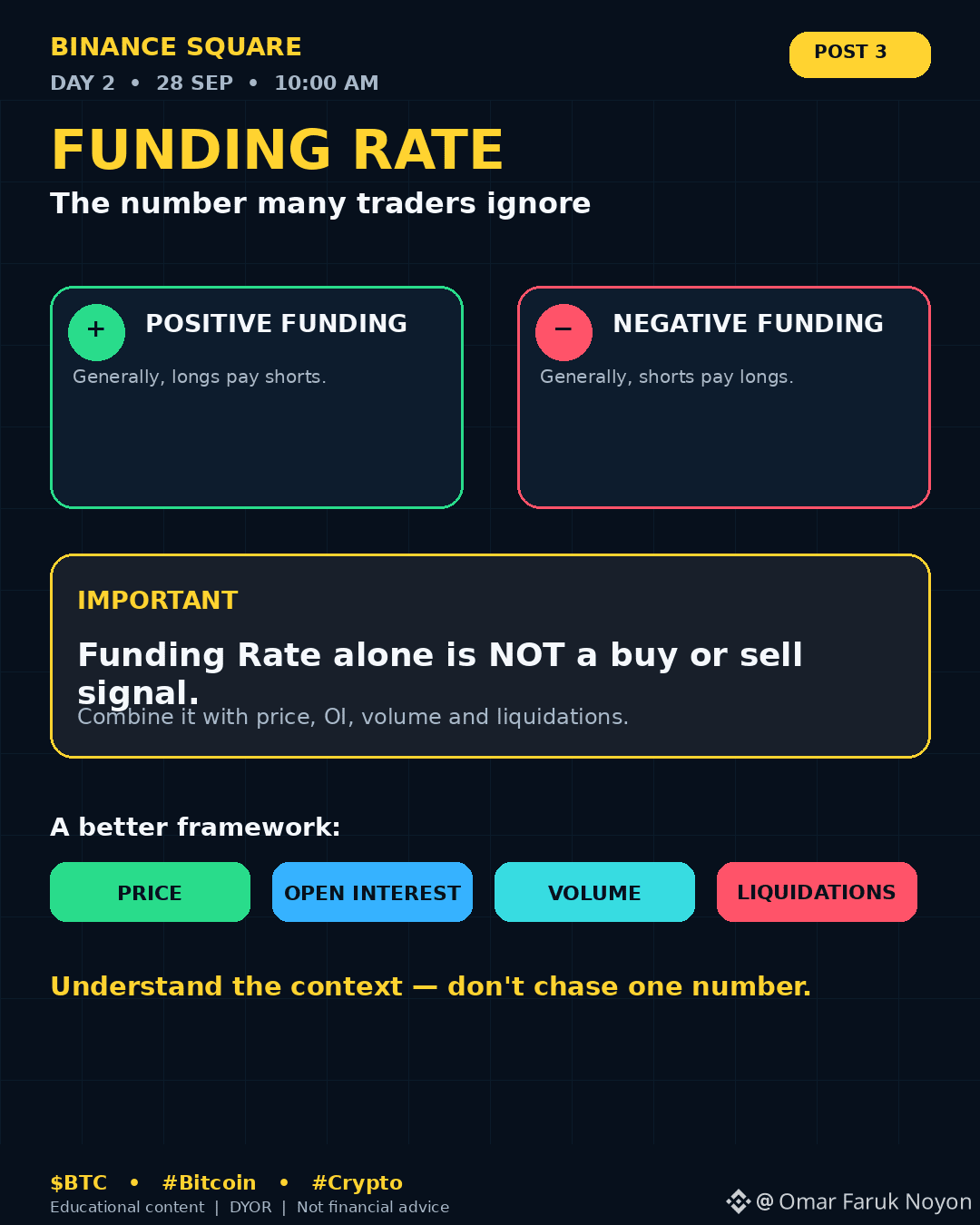
📊 FUNDING RATE: THE NUMBER MANY TRADERS IGNORE
On perpetual futures, Funding Rate represents periodic payments between long and short traders.
Generally:
🟢 Positive funding → Longs pay Shorts
🔴 Negative funding → Shorts pay Longs
But here's the important part:
Funding Rate alone is NOT a buy or sell signal.
Combine it with:
• BTC price
• Open Interest
• Volume
• Liquidations
One metric tells you a piece of the story.
The combination tells you more.
Educational content, not financial advice.
#FundingRates #Crypto_Jobs🎯
📊 FUNDING RATE: THE NUMBER MANY TRADERS IGNORE
On perpetual futures, Funding Rate represents periodic payments between long and short traders.
Generally:
🟢 Positive funding → Longs pay Shorts
🔴 Negative funding → Shorts pay Longs
But here's the important part:
Funding Rate alone is NOT a buy or sell signal.
Combine it with:
• BTC price
• Open Interest
• Volume
• Liquidations
One metric tells you a piece of the story.
The combination tells you more.
Educational content, not financial advice.
#FundingRates #Crypto_Jobs🎯
On perpetual futures, Funding Rate represents periodic payments between long and short traders.
Generally:
🟢 Positive funding → Longs pay Shorts
🔴 Negative funding → Shorts pay Longs
But here's the important part:
Funding Rate alone is NOT a buy or sell signal.
Combine it with:
• BTC price
• Open Interest
• Volume
• Liquidations
One metric tells you a piece of the story.
The combination tells you more.
Educational content, not financial advice.
#FundingRates #Crypto_Jobs🎯
84
·
--
Funding just flipped post-wipeout — $BTC at $84,478 sits at 0.0035%, $ETH at $2,705 holds 0.0100%, while $SOL at $121.12 prints -0.0003%. That divergence matters more than the green candles.
When funding resets to neutral or negative after a $3B+ cascade, it signals crowded longs are gone — often a contrarian tell. But positive ETH funding shows leverage rebuilding there, so upside conviction isn't universal. Sentiment at 70 (Greed) argues against blind dip-buying.
Key invalidation: BTC losing $84.2K on a closing basis would confirm the cascade wasn't a flush but a regime shift. That's your line.
Risk management: size positions off invalidation distance, not conviction — if the thesis breaks at $84.2K, the loss should be trivial, not catastrophic. Open interest rebuilding without funding confirmation is a trap, not a setup.
#BTC #ETH #SOL #FundingRates
Funding just flipped post-wipeout — $BTC at $84,478 sits at 0.0035%, $ETH at $2,705 holds 0.0100%, while $SOL at $121.12 prints -0.0003%. That divergence matters more than the green candles.
When funding resets to neutral or negative after a $3B+ cascade, it signals crowded longs are gone — often a contrarian tell. But positive ETH funding shows leverage rebuilding there, so upside conviction isn't universal. Sentiment at 70 (Greed) argues against blind dip-buying.
Key invalidation: BTC losing $84.2K on a closing basis would confirm the cascade wasn't a flush but a regime shift. That's your line.
Risk management: size positions off invalidation distance, not conviction — if the thesis breaks at $84.2K, the loss should be trivial, not catastrophic. Open interest rebuilding without funding confirmation is a trap, not a setup.
#BTC #ETH #SOL #FundingRates
When funding resets to neutral or negative after a $3B+ cascade, it signals crowded longs are gone — often a contrarian tell. But positive ETH funding shows leverage rebuilding there, so upside conviction isn't universal. Sentiment at 70 (Greed) argues against blind dip-buying.
Key invalidation: BTC losing $84.2K on a closing basis would confirm the cascade wasn't a flush but a regime shift. That's your line.
Risk management: size positions off invalidation distance, not conviction — if the thesis breaks at $84.2K, the loss should be trivial, not catastrophic. Open interest rebuilding without funding confirmation is a trap, not a setup.
#BTC #ETH #SOL #FundingRates
64


·
--
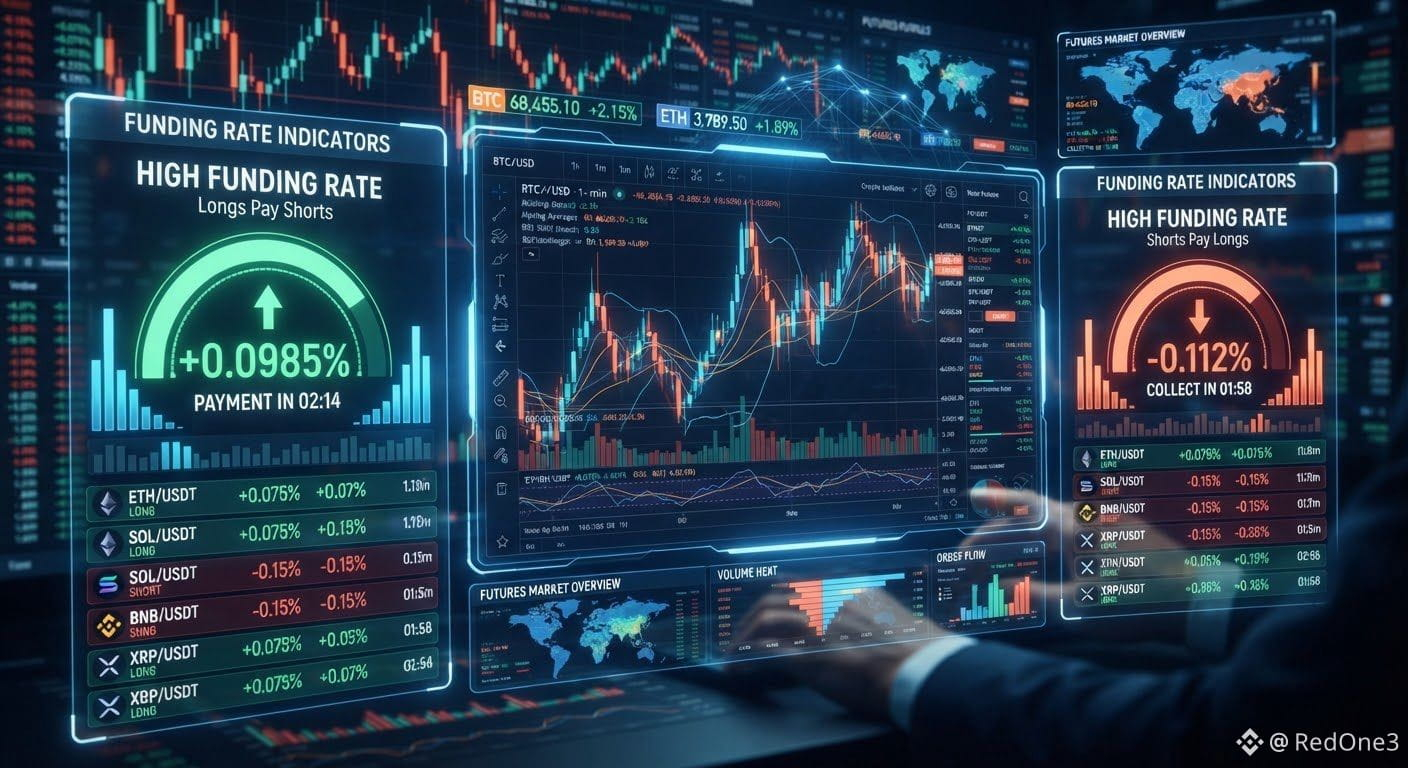
Finding high funding rates in crypto futures isn’t just about following the crowd it’s about matching the rates to your trading strategy! 💡
Here’s how to play both sides of the market:
• Extreme Positive Rates: When the market goes hyper-bullish and Longs pay Shorts, it opens up solid Cash & Carry arbitrage opportunities (Buy Spot + Short Futures) to lock in passive yield without directional price risk. 📈
• Deep Negative Rates: When sentiment gets overly pessimistic and Shorts pay Longs, contrarian traders can collect funding fees just by holding Long positions, setting up potential gains from a Short Squeeze. 📉
Always keep an eye on the Futures Heatmap and manage your leverage strictly! ⚡
How are you capitalizing on current funding rates? 🧠
#BinanceFutures #FundingRates #Derivatives .
Finding high funding rates in crypto futures isn’t just about following the crowd it’s about matching the rates to your trading strategy! 💡
Here’s how to play both sides of the market:
• Extreme Positive Rates: When the market goes hyper-bullish and Longs pay Shorts, it opens up solid Cash & Carry arbitrage opportunities (Buy Spot + Short Futures) to lock in passive yield without directional price risk. 📈
• Deep Negative Rates: When sentiment gets overly pessimistic and Shorts pay Longs, contrarian traders can collect funding fees just by holding Long positions, setting up potential gains from a Short Squeeze. 📉
Always keep an eye on the Futures Heatmap and manage your leverage strictly! ⚡
How are you capitalizing on current funding rates? 🧠
#BinanceFutures #FundingRates #Derivatives .
Here’s how to play both sides of the market:
• Extreme Positive Rates: When the market goes hyper-bullish and Longs pay Shorts, it opens up solid Cash & Carry arbitrage opportunities (Buy Spot + Short Futures) to lock in passive yield without directional price risk. 📈
• Deep Negative Rates: When sentiment gets overly pessimistic and Shorts pay Longs, contrarian traders can collect funding fees just by holding Long positions, setting up potential gains from a Short Squeeze. 📉
Always keep an eye on the Futures Heatmap and manage your leverage strictly! ⚡
How are you capitalizing on current funding rates? 🧠
#BinanceFutures #FundingRates #Derivatives .
170

·
--
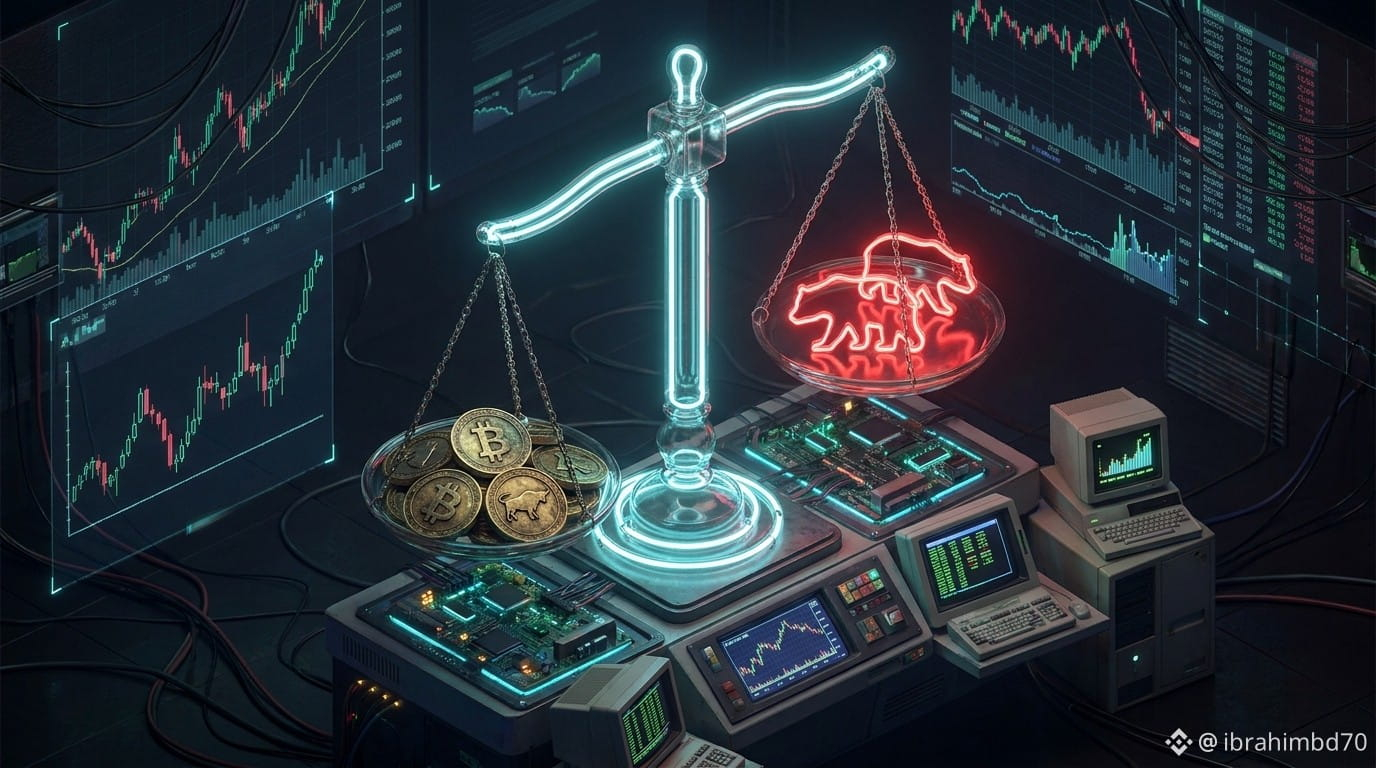
Understanding Funding Rates Perpetual funding rates act as a real-time sentiment gauge. When funding rates turn aggressively positive, long positions pay shorts, signaling an over-leveraged and euphoric market that is ripe for a long squeeze. Neutral or negative funding in an uptrend often signals steady, spot-driven accumulation. How often do you check funding rates before opening a trade? ⚖️ #CryptoTrading #FundingRates #Derivatives #BinanceSquare
Understanding Funding Rates Perpetual funding rates act as a real-time sentiment gauge. When funding rates turn aggressively positive, long positions pay shorts, signaling an over-leveraged and euphoric market that is ripe for a long squeeze. Neutral or negative funding in an uptrend often signals steady, spot-driven accumulation. How often do you check funding rates before opening a trade? ⚖️ #CryptoTrading #FundingRates #Derivatives #BinanceSquare
26

·
--
What is #FundingRates and why can it become dangerous?
If you trade perpetual futures this is one of the most important concepts to understand.
Funding Fee is a periodic payment exchanged between long and short traders. It helps keep the perpetual futures price close to the spot market.
The basic rule is simple:
Positive funding: Longs pay shorts.
Negative funding: Shorts pay longs.
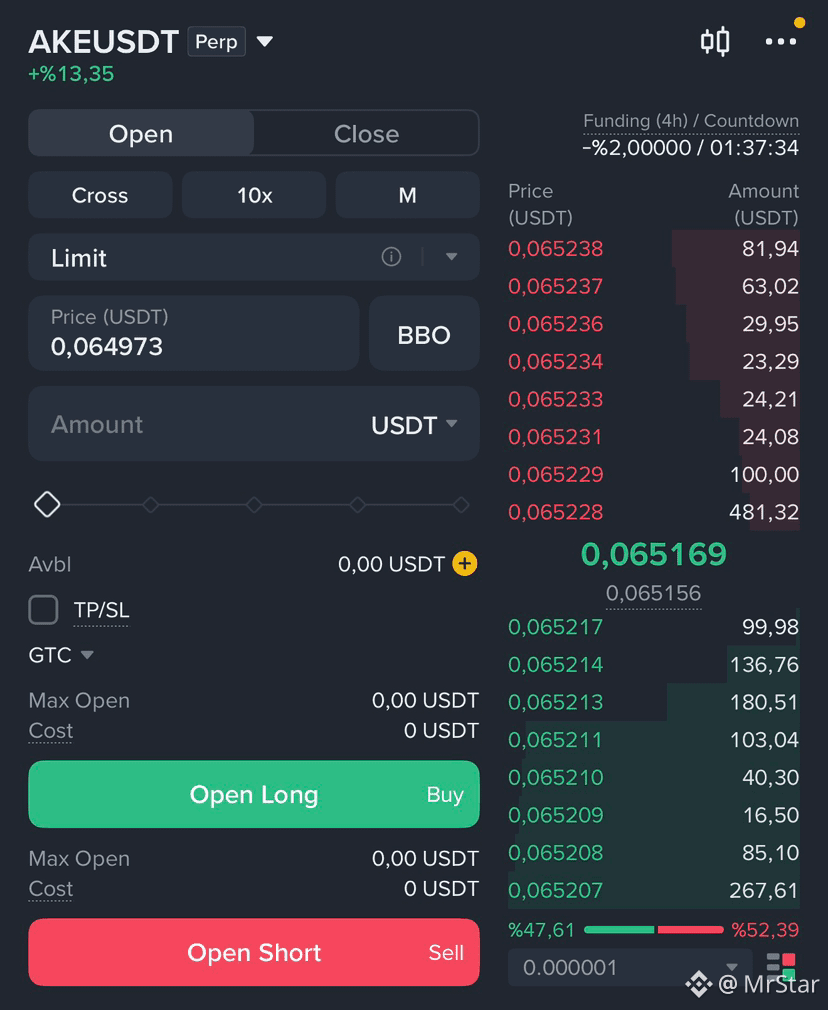
Now look at the current $AKE example.
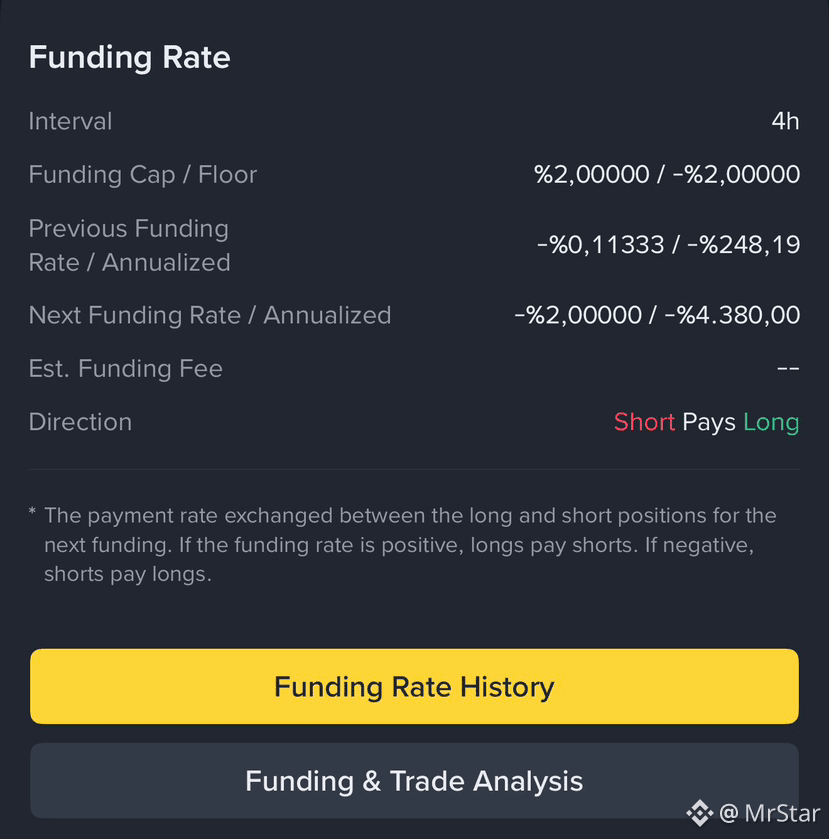
The next funding rate is -2.00% with a 4 hour interval.
That means traders holding short positions at the funding settlement time pay traders holding long positions.
A rate this extreme deserves attention.
#Binance also shows an annualized figure of around -4,380%. This does not mean the rate will stay at that level for an entire year. It simply shows how unusually expensive the current funding environment is.
Why does this matter?
Because funding is charged repeatedly while the position remains open across settlement periods.
A trader can correctly predict the direction of the market and still lose a significant amount through funding costs.
Leverage makes this even more important.
High leverage reduces your margin buffer while repeated funding payments can continue to reduce your available balance.
That is why every futures trader should check three things before entering a position:
Price
Leverage
Funding
In this $AKE example the market is up around 13.35% while the funding rate is at -2.00%.
This tells us that holding a short position is currently very expensive.
It does not tell us that price must keep rising.
It does not guarantee a short squeeze.
Funding should be treated as a risk indicator rather than a prediction tool.
The lesson is simple:
Never open a perpetual futures position without checking the funding rate first.
Sometimes your biggest cost is not being wrong about price.
It is staying in the position too long.
{future}(AKEUSDT)
What is #FundingRates and why can it become dangerous?
If you trade perpetual futures this is one of the most important concepts to understand.
Funding Fee is a periodic payment exchanged between long and short traders. It helps keep the perpetual futures price close to the spot market.
The basic rule is simple:
Positive funding: Longs pay shorts.
Negative funding: Shorts pay longs.
Now look at the current $AKE example.
The next funding rate is -2.00% with a 4 hour interval.
That means traders holding short positions at the funding settlement time pay traders holding long positions.
A rate this extreme deserves attention.
#Binance also shows an annualized figure of around -4,380%. This does not mean the rate will stay at that level for an entire year. It simply shows how unusually expensive the current funding environment is.
Why does this matter?
Because funding is charged repeatedly while the position remains open across settlement periods.
A trader can correctly predict the direction of the market and still lose a significant amount through funding costs.
Leverage makes this even more important.
High leverage reduces your margin buffer while repeated funding payments can continue to reduce your available balance.
That is why every futures trader should check three things before entering a position:
Price
Leverage
Funding
In this $AKE example the market is up around 13.35% while the funding rate is at -2.00%.
This tells us that holding a short position is currently very expensive.
It does not tell us that price must keep rising.
It does not guarantee a short squeeze.
Funding should be treated as a risk indicator rather than a prediction tool.
The lesson is simple:
Never open a perpetual futures position without checking the funding rate first.
Sometimes your biggest cost is not being wrong about price.
It is staying in the position too long.
If you trade perpetual futures this is one of the most important concepts to understand.
Funding Fee is a periodic payment exchanged between long and short traders. It helps keep the perpetual futures price close to the spot market.
The basic rule is simple:
Positive funding: Longs pay shorts.
Negative funding: Shorts pay longs.
Now look at the current $AKE example.
The next funding rate is -2.00% with a 4 hour interval.
That means traders holding short positions at the funding settlement time pay traders holding long positions.
A rate this extreme deserves attention.
#Binance also shows an annualized figure of around -4,380%. This does not mean the rate will stay at that level for an entire year. It simply shows how unusually expensive the current funding environment is.
Why does this matter?
Because funding is charged repeatedly while the position remains open across settlement periods.
A trader can correctly predict the direction of the market and still lose a significant amount through funding costs.
Leverage makes this even more important.
High leverage reduces your margin buffer while repeated funding payments can continue to reduce your available balance.
That is why every futures trader should check three things before entering a position:
Price
Leverage
Funding
In this $AKE example the market is up around 13.35% while the funding rate is at -2.00%.
This tells us that holding a short position is currently very expensive.
It does not tell us that price must keep rising.
It does not guarantee a short squeeze.
Funding should be treated as a risk indicator rather than a prediction tool.
The lesson is simple:
Never open a perpetual futures position without checking the funding rate first.
Sometimes your biggest cost is not being wrong about price.
It is staying in the position too long.

4
2
14
658

·
--
Funding can quietly turn a good futures trade into an expensive hold. ⚠️
Funding is a periodic payment between perpetual futures traders—not a Binance fee.
• Positive funding: longs pay shorts
• Negative funding: shorts pay longs
It exists to keep perpetual futures prices closer to spot.
Example: If you hold a long through a positive funding timestamp, you may pay funding even if price barely moves. Over multiple payments, that cost can reduce your PnL. 💸
The reverse applies to shorts during negative funding.
Before entering a futures trade:
• Check the funding rate
• Check the next funding time
• See whether your holding period crosses it
• Don’t enter solely because funding is high or low
Extreme funding can signal crowded positioning, but it is not an automatic reversal signal. Markets can stay crowded longer than expected. 🧠
Price direction and risk management matter—but funding is the carrying cost in the background.
Don’t just ask, “Where is price going?”
Ask, “What will it cost me to stay in this position?” 🎯
Do you check funding before opening a perpetual futures trade? 👇
#FundingRates #FuturesTrading #CryptoTrading #RiskManagement
Funding can quietly turn a good futures trade into an expensive hold. ⚠️
Funding is a periodic payment between perpetual futures traders—not a Binance fee.
• Positive funding: longs pay shorts
• Negative funding: shorts pay longs
It exists to keep perpetual futures prices closer to spot.
Example: If you hold a long through a positive funding timestamp, you may pay funding even if price barely moves. Over multiple payments, that cost can reduce your PnL. 💸
The reverse applies to shorts during negative funding.
Before entering a futures trade:
• Check the funding rate
• Check the next funding time
• See whether your holding period crosses it
• Don’t enter solely because funding is high or low
Extreme funding can signal crowded positioning, but it is not an automatic reversal signal. Markets can stay crowded longer than expected. 🧠
Price direction and risk management matter—but funding is the carrying cost in the background.
Don’t just ask, “Where is price going?”
Ask, “What will it cost me to stay in this position?” 🎯
Do you check funding before opening a perpetual futures trade? 👇
#FundingRates #FuturesTrading #CryptoTrading #RiskManagement
Funding is a periodic payment between perpetual futures traders—not a Binance fee.
• Positive funding: longs pay shorts
• Negative funding: shorts pay longs
It exists to keep perpetual futures prices closer to spot.
Example: If you hold a long through a positive funding timestamp, you may pay funding even if price barely moves. Over multiple payments, that cost can reduce your PnL. 💸
The reverse applies to shorts during negative funding.
Before entering a futures trade:
• Check the funding rate
• Check the next funding time
• See whether your holding period crosses it
• Don’t enter solely because funding is high or low
Extreme funding can signal crowded positioning, but it is not an automatic reversal signal. Markets can stay crowded longer than expected. 🧠
Price direction and risk management matter—but funding is the carrying cost in the background.
Don’t just ask, “Where is price going?”
Ask, “What will it cost me to stay in this position?” 🎯
Do you check funding before opening a perpetual futures trade? 👇
#FundingRates #FuturesTrading #CryptoTrading #RiskManagement

37

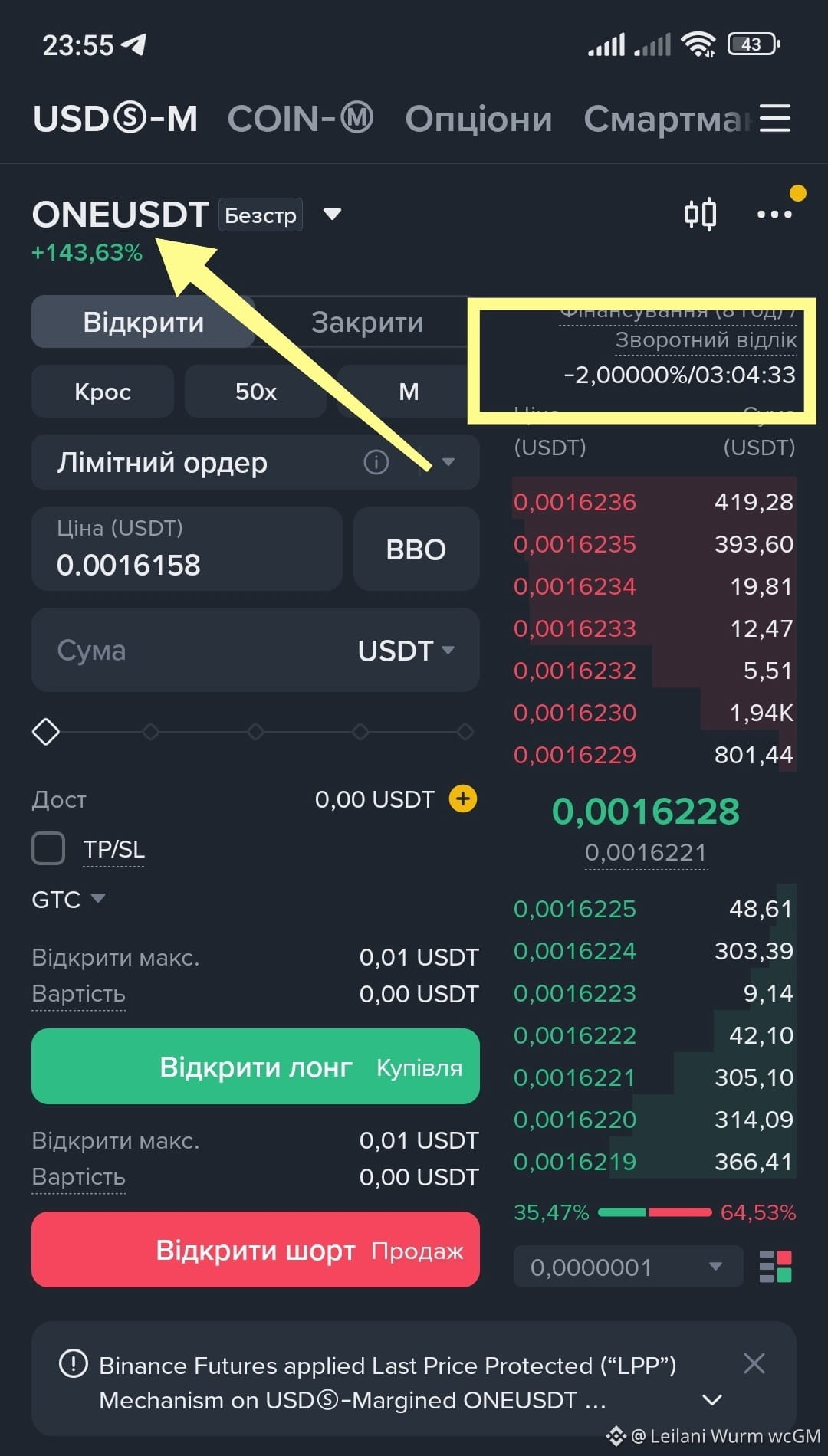
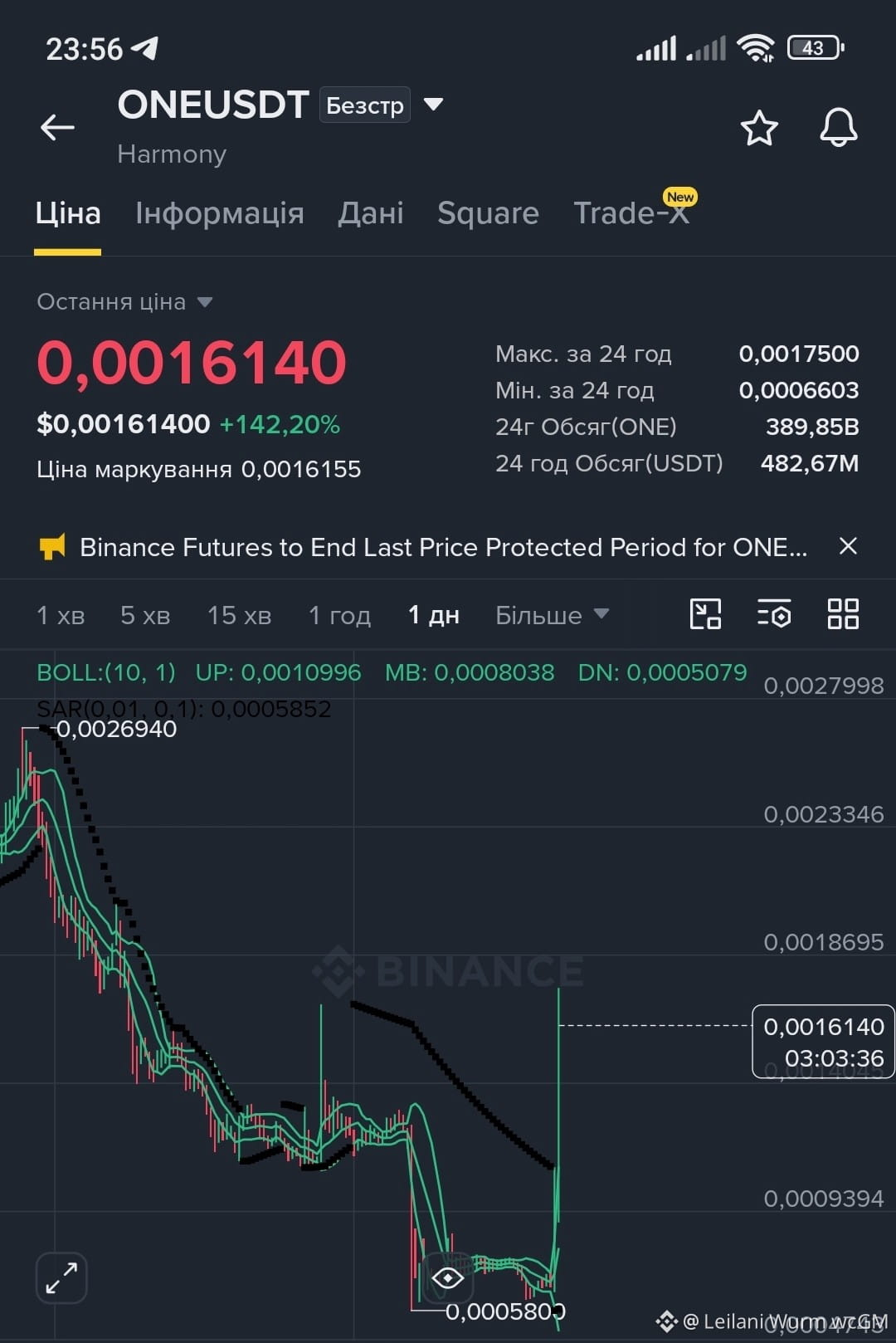
сьогоднішній агресивний ріст $ONE кожного мотивує <<шортанути>> але будьте обережні з кожною позицією:
-з Лонг позицією
-з шорт позицією
чому?? іноді перед переходом на погодинний Funding -2% для шортів він стає просто -2% на кожні 8 чи 4 години і тільки потім відбувається перехід на погодинний.
{future}(ONEUSDT)
надзвичайно висока ціна цього боковика може ще тягнутися довго, потім коли маркетмейкер захоче зрізати і Лонги і шорти- імпульсом щбере стопханьінг і піде різати інших, протилежних або стягуватиме з них просто -2% за перебуваня в позиції
двічі подумайте -
чи Вам потрібен цей ризик?*)
ін, а точніше завжди раще обійти ризик , щоб Вас не торкнувся #margincall
#Warning #danger #FundingRates
$ONE
будьте обережні з цим фруктом а аномальним ростом
#Write2Earn
сьогоднішній агресивний ріст $ONE кожного мотивує <<шортанути>> але будьте обережні з кожною позицією:
-з Лонг позицією
-з шорт позицією
чому?? іноді перед переходом на погодинний Funding -2% для шортів він стає просто -2% на кожні 8 чи 4 години і тільки потім відбувається перехід на погодинний.
надзвичайно висока ціна цього боковика може ще тягнутися довго, потім коли маркетмейкер захоче зрізати і Лонги і шорти- імпульсом щбере стопханьінг і піде різати інших, протилежних або стягуватиме з них просто -2% за перебуваня в позиції
двічі подумайте -
чи Вам потрібен цей ризик?*)
ін, а точніше завжди раще обійти ризик , щоб Вас не торкнувся #margincall
#Warning #danger #FundingRates
$ONE
будьте обережні з цим фруктом а аномальним ростом
#Write2Earn
-з Лонг позицією
-з шорт позицією
чому?? іноді перед переходом на погодинний Funding -2% для шортів він стає просто -2% на кожні 8 чи 4 години і тільки потім відбувається перехід на погодинний.
надзвичайно висока ціна цього боковика може ще тягнутися довго, потім коли маркетмейкер захоче зрізати і Лонги і шорти- імпульсом щбере стопханьінг і піде різати інших, протилежних або стягуватиме з них просто -2% за перебуваня в позиції
двічі подумайте -
чи Вам потрібен цей ризик?*)
ін, а точніше завжди раще обійти ризик , щоб Вас не торкнувся #margincall
#Warning #danger #FundingRates
$ONE
будьте обережні з цим фруктом а аномальним ростом
#Write2Earn
807

🚨 $BTC FUNDING RATES SURGE: LIQUIDITY SWEEP NEXT? ⚡
If rates keep climbing, leverage gets squeezed fast. 🦈 Smart money loves crowded longs: a sharp funding spike can become the trapdoor for a liquidity sweep before the next leg. ⚡
Watch for a quick flush, not a slow bleed. The bid needs to defend structure while shorts get hunted. 💡 My read: momentum is real, but froth is building. The cleanest setups often come after the crowd pays its dues. 📊 Are you fading the surge or waiting for the sweep to flip it bullish? 👇
⚠️ Not financial advice. Always manage your risk. 🛡️
🏷️ #BTC #FundingRates #LiquiditySweep #Crypto
🎯 🦈
🚨 $BTC FUNDING RATES SURGE: LIQUIDITY SWEEP NEXT? ⚡
If rates keep climbing, leverage gets squeezed fast. 🦈 Smart money loves crowded longs: a sharp funding spike can become the trapdoor for a liquidity sweep before the next leg. ⚡
Watch for a quick flush, not a slow bleed. The bid needs to defend structure while shorts get hunted. 💡 My read: momentum is real, but froth is building. The cleanest setups often come after the crowd pays its dues. 📊 Are you fading the surge or waiting for the sweep to flip it bullish? 👇
⚠️ Not financial advice. Always manage your risk. 🛡️
🏷️ #BTC #FundingRates #LiquiditySweep #Crypto
🎯 🦈
If rates keep climbing, leverage gets squeezed fast. 🦈 Smart money loves crowded longs: a sharp funding spike can become the trapdoor for a liquidity sweep before the next leg. ⚡
Watch for a quick flush, not a slow bleed. The bid needs to defend structure while shorts get hunted. 💡 My read: momentum is real, but froth is building. The cleanest setups often come after the crowd pays its dues. 📊 Are you fading the surge or waiting for the sweep to flip it bullish? 👇
⚠️ Not financial advice. Always manage your risk. 🛡️
🏷️ #BTC #FundingRates #LiquiditySweep #Crypto
🎯 🦈
47

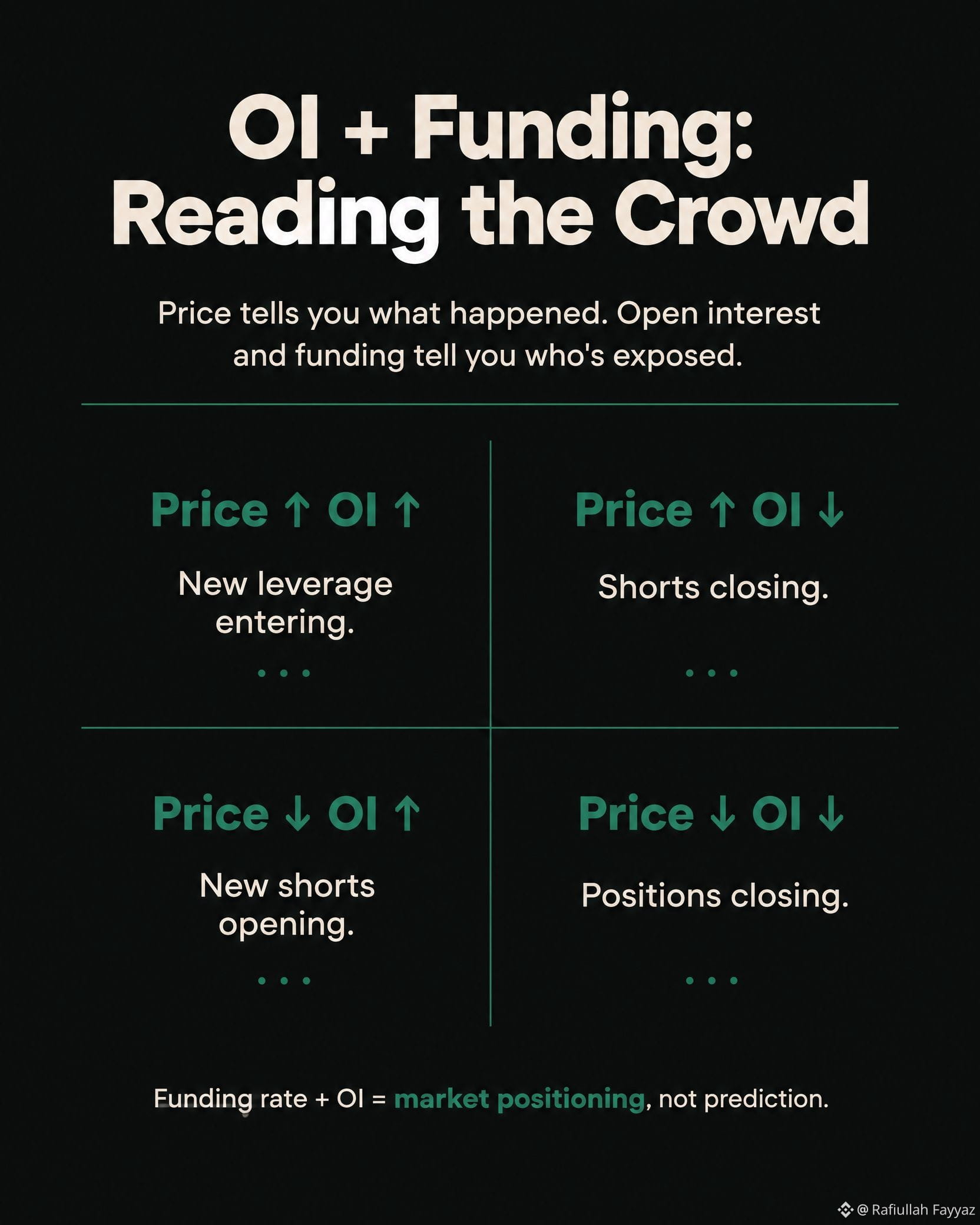
Open interest and funding rates are two numbers that tell you what's happening underneath the price.
Open interest is the total number of open futures contracts. When OI rises, new leverage is entering the market. When it falls, positions are closing.
Funding rate is the periodic payment between longs and shorts. Positive funding means longs are paying shorts — more people are betting on price going up. Negative funding means the opposite.
Here's the part that matters: these two numbers together tell you whether a price move is backed by real conviction or just leverage.
Price up + OI up = new money entering. The move has fuel.
Price up + OI down = shorts closing. The move might be running out of steam.
Price down + OI up = new shorts opening. Could set up a squeeze.
Price down + OI down = positions closing. Market cooling off.
A day like today with LSK — 11x move, $36 million in shorts liquidated — is what happens when OI and funding get too one-sided. The market hunts the crowded side.
Funding doesn't predict direction. It tells you which side is vulnerable.
#CryptoEducation #FundingRates #OpenInterest #BinanceSquareTalks
Open interest and funding rates are two numbers that tell you what's happening underneath the price.
Open interest is the total number of open futures contracts. When OI rises, new leverage is entering the market. When it falls, positions are closing.
Funding rate is the periodic payment between longs and shorts. Positive funding means longs are paying shorts — more people are betting on price going up. Negative funding means the opposite.
Here's the part that matters: these two numbers together tell you whether a price move is backed by real conviction or just leverage.
Price up + OI up = new money entering. The move has fuel.
Price up + OI down = shorts closing. The move might be running out of steam.
Price down + OI up = new shorts opening. Could set up a squeeze.
Price down + OI down = positions closing. Market cooling off.
A day like today with LSK — 11x move, $36 million in shorts liquidated — is what happens when OI and funding get too one-sided. The market hunts the crowded side.
Funding doesn't predict direction. It tells you which side is vulnerable.
#CryptoEducation #FundingRates #OpenInterest #BinanceSquareTalks
Open interest is the total number of open futures contracts. When OI rises, new leverage is entering the market. When it falls, positions are closing.
Funding rate is the periodic payment between longs and shorts. Positive funding means longs are paying shorts — more people are betting on price going up. Negative funding means the opposite.
Here's the part that matters: these two numbers together tell you whether a price move is backed by real conviction or just leverage.
Price up + OI up = new money entering. The move has fuel.
Price up + OI down = shorts closing. The move might be running out of steam.
Price down + OI up = new shorts opening. Could set up a squeeze.
Price down + OI down = positions closing. Market cooling off.
A day like today with LSK — 11x move, $36 million in shorts liquidated — is what happens when OI and funding get too one-sided. The market hunts the crowded side.
Funding doesn't predict direction. It tells you which side is vulnerable.
#CryptoEducation #FundingRates #OpenInterest #BinanceSquareTalks
144
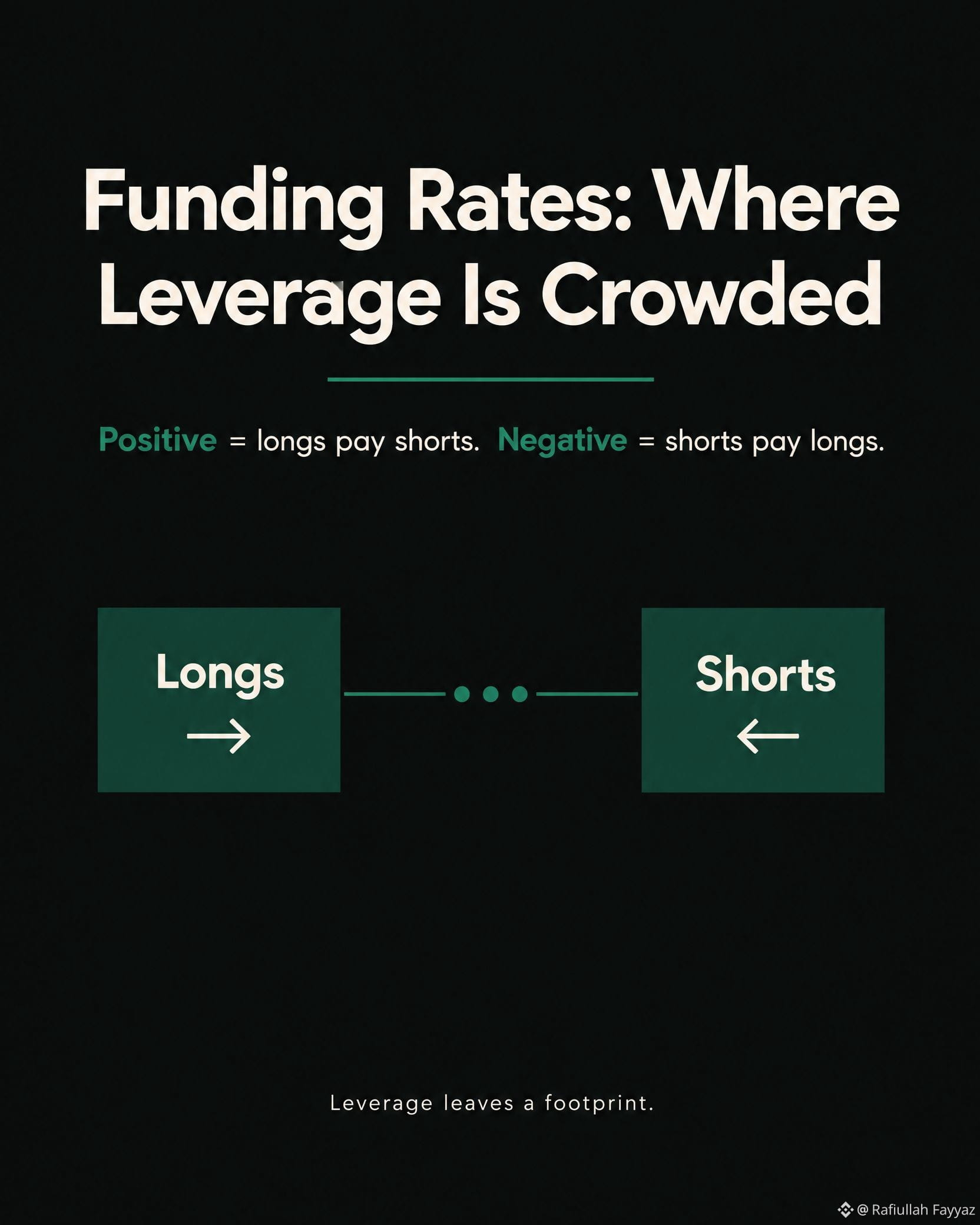
Funding rates are one of the most useful numbers in crypto that most people ignore.
Here's the basic idea: perpetual futures contracts never expire. So exchanges need a way to keep the contract price close to the actual spot price.
Funding rates do that. Every 8 hours (on Binance, for most contracts), longs and shorts exchange a small payment.
When the rate is positive, longs pay shorts. That happens when the contract trades above spot — meaning more people are long than short.
When the rate is negative, shorts pay longs. The contract trades below spot.
Why this matters: funding rates show you where leverage is crowded.
If funding is extremely positive, it means lots of traders are long. That can be a warning — crowded positioning often gets flushed out. If funding is deeply negative, shorts are crowded, and a short squeeze can follow.
You don't need to trade futures to watch funding rates. They're a window into how leveraged traders are positioned.
#CryptoEducation #FundingRates #Binance
Funding rates are one of the most useful numbers in crypto that most people ignore.
Here's the basic idea: perpetual futures contracts never expire. So exchanges need a way to keep the contract price close to the actual spot price.
Funding rates do that. Every 8 hours (on Binance, for most contracts), longs and shorts exchange a small payment.
When the rate is positive, longs pay shorts. That happens when the contract trades above spot — meaning more people are long than short.
When the rate is negative, shorts pay longs. The contract trades below spot.
Why this matters: funding rates show you where leverage is crowded.
If funding is extremely positive, it means lots of traders are long. That can be a warning — crowded positioning often gets flushed out. If funding is deeply negative, shorts are crowded, and a short squeeze can follow.
You don't need to trade futures to watch funding rates. They're a window into how leveraged traders are positioned.
#CryptoEducation #FundingRates #Binance
Here's the basic idea: perpetual futures contracts never expire. So exchanges need a way to keep the contract price close to the actual spot price.
Funding rates do that. Every 8 hours (on Binance, for most contracts), longs and shorts exchange a small payment.
When the rate is positive, longs pay shorts. That happens when the contract trades above spot — meaning more people are long than short.
When the rate is negative, shorts pay longs. The contract trades below spot.
Why this matters: funding rates show you where leverage is crowded.
If funding is extremely positive, it means lots of traders are long. That can be a warning — crowded positioning often gets flushed out. If funding is deeply negative, shorts are crowded, and a short squeeze can follow.
You don't need to trade futures to watch funding rates. They're a window into how leveraged traders are positioned.
#CryptoEducation #FundingRates #Binance
1
50

Wondering why everyone is talking about the 牛来 funding rate? Let’s break it down using the current 4-hour chart reading of +0.0159% per 8h.
First, the funding rate is NOT a fee Binance charges. It’s also not a prediction of where price goes next. It is the periodic payment made between long and short traders. Why? To keep the perpetual futures price tied to the actual spot market price.
Our current 4-hour reading is +0.0159% per 8h, which means the funding rate is positive. When it’s positive, long holders (buyers) are paying short holders (sellers). What this tells you is crowd positioning: right now, the crowd is overwhelmingly leaning long on 牛来. It shows you where the majority is positioned, not which way the market is going.
With 牛来 UP +78.55% over 24h to $0.15111, that massive crowd looking for more upside is paying a rate of +0.0159% every 8 hours just to hold their long position. That’s the real market cost of holding ground right now.
$牛来
{future}(牛来USDT)
#fundingrate #FundingRates #Write2Earn #CPIWatch
👉 Follow & learn — new signals daily
Wondering why everyone is talking about the 牛来 funding rate? Let’s break it down using the current 4-hour chart reading of +0.0159% per 8h.
First, the funding rate is NOT a fee Binance charges. It’s also not a prediction of where price goes next. It is the periodic payment made between long and short traders. Why? To keep the perpetual futures price tied to the actual spot market price.
Our current 4-hour reading is +0.0159% per 8h, which means the funding rate is positive. When it’s positive, long holders (buyers) are paying short holders (sellers). What this tells you is crowd positioning: right now, the crowd is overwhelmingly leaning long on 牛来. It shows you where the majority is positioned, not which way the market is going.
With 牛来 UP +78.55% over 24h to $0.15111, that massive crowd looking for more upside is paying a rate of +0.0159% every 8 hours just to hold their long position. That’s the real market cost of holding ground right now.
$牛来
#fundingrate #FundingRates #Write2Earn #CPIWatch
👉 Follow & learn — new signals daily
First, the funding rate is NOT a fee Binance charges. It’s also not a prediction of where price goes next. It is the periodic payment made between long and short traders. Why? To keep the perpetual futures price tied to the actual spot market price.
Our current 4-hour reading is +0.0159% per 8h, which means the funding rate is positive. When it’s positive, long holders (buyers) are paying short holders (sellers). What this tells you is crowd positioning: right now, the crowd is overwhelmingly leaning long on 牛来. It shows you where the majority is positioned, not which way the market is going.
With 牛来 UP +78.55% over 24h to $0.15111, that massive crowd looking for more upside is paying a rate of +0.0159% every 8 hours just to hold their long position. That’s the real market cost of holding ground right now.
$牛来
#fundingrate #FundingRates #Write2Earn #CPIWatch
👉 Follow & learn — new signals daily

304

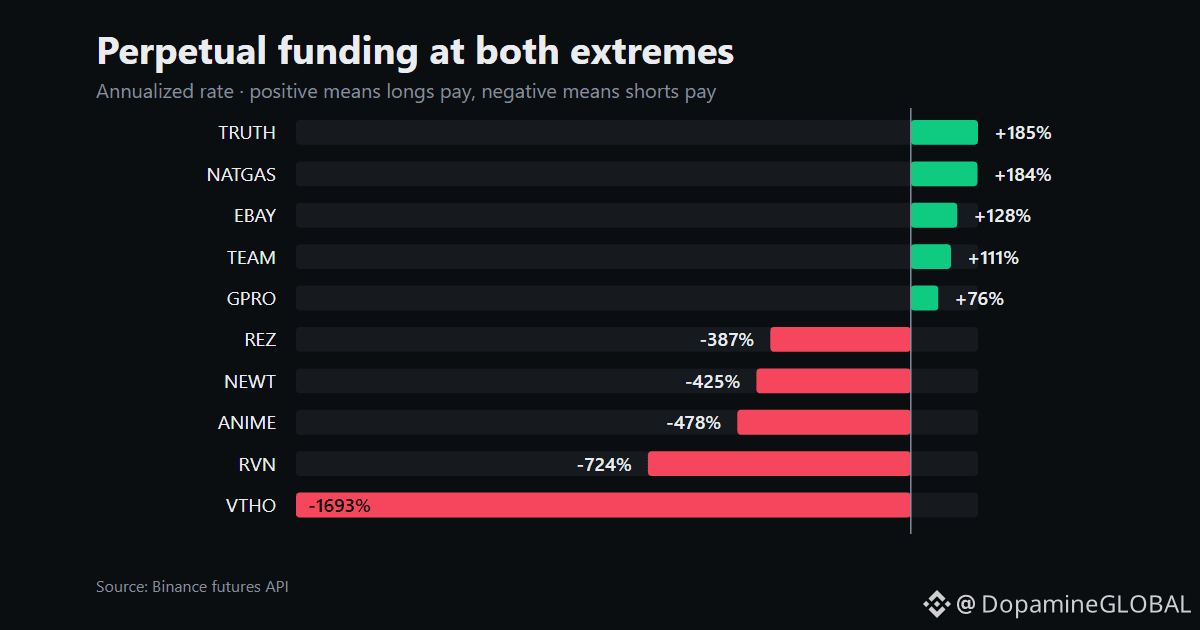
The odd trade on the board right now is $IOTX: price is up 44.7% in 24h, open interest has climbed 60% over 7d, and funding is still -112% annualized.
That combination says leverage is arriving into the move, but the perpetual market is charging shorts to stay positioned. The long/short ratio sits at 2.08, so more accounts are long, yet the funding print shows aggressive short demand is still strong enough to push the rate negative. This isn’t a clean “everyone is long” signal.
The funding chart can show where the payment pressure is concentrated, but it cannot tell us whether the rally is spot-led, driven by forced short covering, or built mostly from fresh leveraged positions. Open interest only counts outstanding contracts. It doesn’t identify who is hedging, who is directional, or whether the exposure is balanced in size.
If price keeps rising while funding remains deeply negative, shorts are paying to stay in the trade. If funding flips positive as OI stays elevated, the positioning risk changes fast.
Not financial advice. Do your own research.
#IOTX #FundingRates
The odd trade on the board right now is $IOTX : price is up 44.7% in 24h, open interest has climbed 60% over 7d, and funding is still -112% annualized.
That combination says leverage is arriving into the move, but the perpetual market is charging shorts to stay positioned. The long/short ratio sits at 2.08, so more accounts are long, yet the funding print shows aggressive short demand is still strong enough to push the rate negative. This isn’t a clean “everyone is long” signal.
The funding chart can show where the payment pressure is concentrated, but it cannot tell us whether the rally is spot-led, driven by forced short covering, or built mostly from fresh leveraged positions. Open interest only counts outstanding contracts. It doesn’t identify who is hedging, who is directional, or whether the exposure is balanced in size.
If price keeps rising while funding remains deeply negative, shorts are paying to stay in the trade. If funding flips positive as OI stays elevated, the positioning risk changes fast.
Not financial advice. Do your own research.
#IOTX #FundingRates
That combination says leverage is arriving into the move, but the perpetual market is charging shorts to stay positioned. The long/short ratio sits at 2.08, so more accounts are long, yet the funding print shows aggressive short demand is still strong enough to push the rate negative. This isn’t a clean “everyone is long” signal.
The funding chart can show where the payment pressure is concentrated, but it cannot tell us whether the rally is spot-led, driven by forced short covering, or built mostly from fresh leveraged positions. Open interest only counts outstanding contracts. It doesn’t identify who is hedging, who is directional, or whether the exposure is balanced in size.
If price keeps rising while funding remains deeply negative, shorts are paying to stay in the trade. If funding flips positive as OI stays elevated, the positioning risk changes fast.
Not financial advice. Do your own research.
#IOTX #FundingRates
592

Article
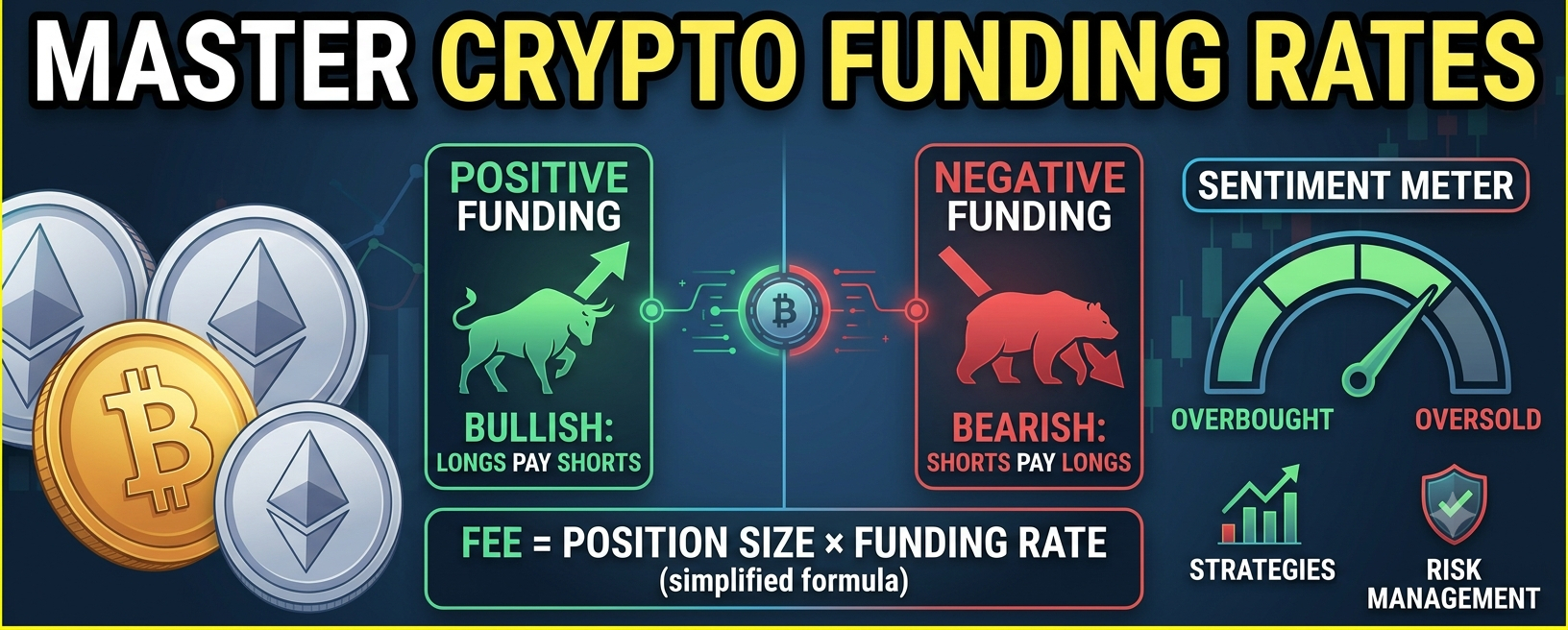
🚀What is Funding Rate in Crypto Trading? A Complete Professional Guide 📈1️⃣ Introduction (Basic Definition) 💡
📊 Funding Rate is a crucial mechanism in Crypto Perpetual Futures trading.
🔄 These are periodic payments exchanged directly between Long and Short traders.
⚡ Its main objective is to keep the Perpetual Futures price closely aligned with the Spot market price.
🎯 The exchange does not collect or keep this fee—it is transferred directly between traders.
📉 Trading without understanding the funding rate can lead to unexpected losses.
2️⃣ Spot vs. Futures Market Difference ⚖️
🛒 Spot Market: You buy or sell actual cryptocurrency for immediate delivery.
📜 Futures Market: You trade contracts based on price predictions without owning the underlying asset.
⏳ Standard Futures contracts have a fixed Expiry Date.
♾️ Perpetual Futures: These contracts have no expiration date; you can hold positions indefinitely.
🔗 Funding Rates are necessary to tether Perpetual Futures prices to Spot prices over time.
3️⃣ Primary Goals of Funding Rate 🎯
🔍 To balance the Spot Market Price (Mark Price) and Futures Price (Index Price).
⚖️ To disincentivize over-leveraged market positions.
🛑 To encourage arbitrage traders to step in and stabilize prices.
🛡️ To prevent artificial pumps, dumps, and extreme market manipulation.
4️⃣ Positive Funding Rate 🟩
📈 Occurs when Futures Price > Spot Price.
🚀 Indicates that the market is predominantly Bullish and dominated by Long positions.
💸 Rule: Long position holders pay fees to Short position holders.
💚 Displayed as a positive percentage (%) on trading interfaces.
⚠️ An excessively high positive rate suggests the market may be overbought.
5️⃣ Negative Funding Rate 🟥
📉 Occurs when Futures Price < Spot Price.
🐻 Indicates that the market is predominantly Bearish and dominated by Short positions.
💸 Rule: Short position holders pay fees to Long position holders.
❤️ Displayed as a negative percentage (-) on trading interfaces.
⚠️ An extremely negative rate suggests the market may be oversold.
6️⃣ Funding Fee Calculation Formula 🧮
🔢 Funding Fee = Position Nominal Value × Funding Rate
📍 Example: If your position size is $10,000:
📈 If Funding Rate = +0.01%
💰 Fee Payment = $10,000 × 0.0001 = $1 Paid
📉 If Funding Rate = -0.01%, you Receive $1 instead.
⚠️ Your leverage level directly scales the overall position size!
7️⃣ Funding Intervals ⏰
⏱️ Funding fees are typically charged or received every 8 hours.
🕒 Standard Schedule: 00:00 UTC, 08:00 UTC, and 16:00 UTC.
⚡ During periods of extreme volatility, some exchanges adjust intervals to every 1 hour.
🔔 Fees apply only to traders who hold open positions at the exact timestamp snapshot.
8️⃣ Market Sentiment Indicators 🧠
📊 Funding Rates serve as a key market sentiment gauge.
🔥 Very High Positive Rate: Indicates heavy long leverage—signals potential pullback or Long Squeeze.
❄️ Very High Negative Rate: Indicates heavy short leverage—signals potential rally or Short Squeeze.
🔍 Experienced traders analyze this data to identify contrarian trade setups.
9️⃣ Role in Long & Short Squeezes 💥
🚀 Short Squeeze: Extreme negative funding drives prices up, forcing shorters to buy back positions to avoid liquidation.
📉 Long Squeeze: Extreme positive funding drives prices down, causing long positions to panic sell and liquidate.
🔟 Trading Strategies Using Funding Rate 🧠
🎯 1. Cash and Carry Arbitrage: Buy spot assets while simultaneously shorting futures to collect risk-free funding fees.
🎯 2. Trend Reversal Signals: Reaching historical extremes often signals an impending price reversal.
🎯 3. Timing Scalps: Closing positions right before the 8-hour snapshot to avoid paying the funding fee.
11️⃣ Risk Management Best Practices 🛡️
❌ Avoid using high leverage when funding rates are extremely high.
📊 Long-term swing traders must account for funding costs, as high fees can eat into profits.
🔍 Track heatmap charts on platforms like Coinglass or exchange analytics dashboards.
💡 Add custom Funding Rate scripts to TradingView charts for real-time monitoring.
12️⃣ Summary & Conclusion 📝
✅ Funding Rates are a fundamental component of perpetual crypto futures trading.
🤝 They balance market incentives between buyers (Longs) and sellers (Shorts).
$VTHO $REZ $PHAROS
#FundingRates #educational_post #Write2Earn
🚀What is Funding Rate in Crypto Trading? A Complete Professional Guide 📈
1️⃣ Introduction (Basic Definition) 💡
📊 Funding Rate is a crucial mechanism in Crypto Perpetual Futures trading.
🔄 These are periodic payments exchanged directly between Long and Short traders.
⚡ Its main objective is to keep the Perpetual Futures price closely aligned with the Spot market price.
🎯 The exchange does not collect or keep this fee—it is transferred directly between traders.
📉 Trading without understanding the funding rate can lead to unexpected losses.
2️⃣ Spot vs. Futures Market Difference ⚖️
🛒 Spot Market: You buy or sell actual cryptocurrency for immediate delivery.
📜 Futures Market: You trade contracts based on price predictions without owning the underlying asset.
⏳ Standard Futures contracts have a fixed Expiry Date.
♾️ Perpetual Futures: These contracts have no expiration date; you can hold positions indefinitely.
🔗 Funding Rates are necessary to tether Perpetual Futures prices to Spot prices over time.
3️⃣ Primary Goals of Funding Rate 🎯
🔍 To balance the Spot Market Price (Mark Price) and Futures Price (Index Price).
⚖️ To disincentivize over-leveraged market positions.
🛑 To encourage arbitrage traders to step in and stabilize prices.
🛡️ To prevent artificial pumps, dumps, and extreme market manipulation.
4️⃣ Positive Funding Rate 🟩
📈 Occurs when Futures Price > Spot Price.
🚀 Indicates that the market is predominantly Bullish and dominated by Long positions.
💸 Rule: Long position holders pay fees to Short position holders.
💚 Displayed as a positive percentage (%) on trading interfaces.
⚠️ An excessively high positive rate suggests the market may be overbought.
5️⃣ Negative Funding Rate 🟥
📉 Occurs when Futures Price < Spot Price.
🐻 Indicates that the market is predominantly Bearish and dominated by Short positions.
💸 Rule: Short position holders pay fees to Long position holders.
❤️ Displayed as a negative percentage (-) on trading interfaces.
⚠️ An extremely negative rate suggests the market may be oversold.
6️⃣ Funding Fee Calculation Formula 🧮
🔢 Funding Fee = Position Nominal Value × Funding Rate
📍 Example: If your position size is $10,000:
📈 If Funding Rate = +0.01%
💰 Fee Payment = $10,000 × 0.0001 = $1 Paid
📉 If Funding Rate = -0.01%, you Receive $1 instead.
⚠️ Your leverage level directly scales the overall position size!
7️⃣ Funding Intervals ⏰
⏱️ Funding fees are typically charged or received every 8 hours.
🕒 Standard Schedule: 00:00 UTC, 08:00 UTC, and 16:00 UTC.
⚡ During periods of extreme volatility, some exchanges adjust intervals to every 1 hour.
🔔 Fees apply only to traders who hold open positions at the exact timestamp snapshot.
8️⃣ Market Sentiment Indicators 🧠
📊 Funding Rates serve as a key market sentiment gauge.
🔥 Very High Positive Rate: Indicates heavy long leverage—signals potential pullback or Long Squeeze.
❄️ Very High Negative Rate: Indicates heavy short leverage—signals potential rally or Short Squeeze.
🔍 Experienced traders analyze this data to identify contrarian trade setups.
9️⃣ Role in Long & Short Squeezes 💥
🚀 Short Squeeze: Extreme negative funding drives prices up, forcing shorters to buy back positions to avoid liquidation.
📉 Long Squeeze: Extreme positive funding drives prices down, causing long positions to panic sell and liquidate.
🔟 Trading Strategies Using Funding Rate 🧠
🎯 1. Cash and Carry Arbitrage: Buy spot assets while simultaneously shorting futures to collect risk-free funding fees.
🎯 2. Trend Reversal Signals: Reaching historical extremes often signals an impending price reversal.
🎯 3. Timing Scalps: Closing positions right before the 8-hour snapshot to avoid paying the funding fee.
11️⃣ Risk Management Best Practices 🛡️
❌ Avoid using high leverage when funding rates are extremely high.
📊 Long-term swing traders must account for funding costs, as high fees can eat into profits.
🔍 Track heatmap charts on platforms like Coinglass or exchange analytics dashboards.
💡 Add custom Funding Rate scripts to TradingView charts for real-time monitoring.
12️⃣ Summary & Conclusion 📝
✅ Funding Rates are a fundamental component of perpetual crypto futures trading.
🤝 They balance market incentives between buyers (Longs) and sellers (Shorts).
$VTHO $REZ $PHAROS
#FundingRates #educational_post #Write2Earn
📊 Funding Rate is a crucial mechanism in Crypto Perpetual Futures trading.
🔄 These are periodic payments exchanged directly between Long and Short traders.
⚡ Its main objective is to keep the Perpetual Futures price closely aligned with the Spot market price.
🎯 The exchange does not collect or keep this fee—it is transferred directly between traders.
📉 Trading without understanding the funding rate can lead to unexpected losses.
2️⃣ Spot vs. Futures Market Difference ⚖️
🛒 Spot Market: You buy or sell actual cryptocurrency for immediate delivery.
📜 Futures Market: You trade contracts based on price predictions without owning the underlying asset.
⏳ Standard Futures contracts have a fixed Expiry Date.
♾️ Perpetual Futures: These contracts have no expiration date; you can hold positions indefinitely.
🔗 Funding Rates are necessary to tether Perpetual Futures prices to Spot prices over time.
3️⃣ Primary Goals of Funding Rate 🎯
🔍 To balance the Spot Market Price (Mark Price) and Futures Price (Index Price).
⚖️ To disincentivize over-leveraged market positions.
🛑 To encourage arbitrage traders to step in and stabilize prices.
🛡️ To prevent artificial pumps, dumps, and extreme market manipulation.
4️⃣ Positive Funding Rate 🟩
📈 Occurs when Futures Price > Spot Price.
🚀 Indicates that the market is predominantly Bullish and dominated by Long positions.
💸 Rule: Long position holders pay fees to Short position holders.
💚 Displayed as a positive percentage (%) on trading interfaces.
⚠️ An excessively high positive rate suggests the market may be overbought.
5️⃣ Negative Funding Rate 🟥
📉 Occurs when Futures Price < Spot Price.
🐻 Indicates that the market is predominantly Bearish and dominated by Short positions.
💸 Rule: Short position holders pay fees to Long position holders.
❤️ Displayed as a negative percentage (-) on trading interfaces.
⚠️ An extremely negative rate suggests the market may be oversold.
6️⃣ Funding Fee Calculation Formula 🧮
🔢 Funding Fee = Position Nominal Value × Funding Rate
📍 Example: If your position size is $10,000:
📈 If Funding Rate = +0.01%
💰 Fee Payment = $10,000 × 0.0001 = $1 Paid
📉 If Funding Rate = -0.01%, you Receive $1 instead.
⚠️ Your leverage level directly scales the overall position size!
7️⃣ Funding Intervals ⏰
⏱️ Funding fees are typically charged or received every 8 hours.
🕒 Standard Schedule: 00:00 UTC, 08:00 UTC, and 16:00 UTC.
⚡ During periods of extreme volatility, some exchanges adjust intervals to every 1 hour.
🔔 Fees apply only to traders who hold open positions at the exact timestamp snapshot.
8️⃣ Market Sentiment Indicators 🧠
📊 Funding Rates serve as a key market sentiment gauge.
🔥 Very High Positive Rate: Indicates heavy long leverage—signals potential pullback or Long Squeeze.
❄️ Very High Negative Rate: Indicates heavy short leverage—signals potential rally or Short Squeeze.
🔍 Experienced traders analyze this data to identify contrarian trade setups.
9️⃣ Role in Long & Short Squeezes 💥
🚀 Short Squeeze: Extreme negative funding drives prices up, forcing shorters to buy back positions to avoid liquidation.
📉 Long Squeeze: Extreme positive funding drives prices down, causing long positions to panic sell and liquidate.
🔟 Trading Strategies Using Funding Rate 🧠
🎯 1. Cash and Carry Arbitrage: Buy spot assets while simultaneously shorting futures to collect risk-free funding fees.
🎯 2. Trend Reversal Signals: Reaching historical extremes often signals an impending price reversal.
🎯 3. Timing Scalps: Closing positions right before the 8-hour snapshot to avoid paying the funding fee.
11️⃣ Risk Management Best Practices 🛡️
❌ Avoid using high leverage when funding rates are extremely high.
📊 Long-term swing traders must account for funding costs, as high fees can eat into profits.
🔍 Track heatmap charts on platforms like Coinglass or exchange analytics dashboards.
💡 Add custom Funding Rate scripts to TradingView charts for real-time monitoring.
12️⃣ Summary & Conclusion 📝
✅ Funding Rates are a fundamental component of perpetual crypto futures trading.
🤝 They balance market incentives between buyers (Longs) and sellers (Shorts).
$VTHO $REZ $PHAROS
#FundingRates #educational_post #Write2Earn
216
Connectez-vous pour découvrir plus de contenu
Rejoignez la communauté mondiale des adeptes de cryptomonnaies sur Binance Square
⚡️ Suviez les dernières informations importantes sur les cryptomonnaies.
💬 Jugé digne de confiance par la plus grande plateforme d’échange de cryptomonnaies au monde.
👍 Découvrez les connaissances que partagent les créateurs vérifiés.
Adresse e-mail/Nº de téléphone
Sujets d’actualité
1
#ZcashETFPostsFirstWeeklyOutflow$93.6M
33,809 vues
98 mentions
2
#GreekPoliceBustCryptoScamRingArrest17
69,893 vues
672 mentions
3
#BitcoinRejectedAt$87K
119,027 vues
156 mentions
4
#FedOctoberRateHikeOddsFallTo17%
95,509 vues
956 mentions
5
#NvidiaHitsRecordHighUp2.4%
64,260 vues
700 mentions
6
#CanaryFilesAmendedS1ForPEPEETF
18,293 vues
493 mentions
7
#USRussiaUkraineTalksReportedlyIncludeLukoilOilDeal
28,824 vues
490 mentions
8
#BitcoinParesGainsAfterRallyTo$86.5K
46,929 vues
166 mentions
9
#CerebrasSinksNearly20%OnReportNvidiaToPowerOpenAI
114,066 vues
1,098 mentions
10
#SECProposesCryptoCustodyRules
154,067 vues
1,376 mentions