Binance Square

etf

594.1M vues
2.4M mentions
Munawar Ali crypto
--
🚨 UPDATE: BlackRock Files for $ASTER Staking ETF 🚨 BlackRock, one of the world’s largest asset managers, has filed for an $ASTER Staking ETF, potentially bridging institutional finance with crypto staking opportunities. This filing highlights growing interest from traditional finance in crypto assets and may provide more visibility and adoption for staking products. As always, do your own research (DYOR) before making any investment decisions. {spot}(ASTERUSDT) — 0.958 (+2.57%) $pippin {future}(PIPPINUSDT) #asterix #BlackRock #etf #staking #Institutiona l
🚨 UPDATE: BlackRock Files for $ASTER Staking ETF 🚨

BlackRock, one of the world’s largest asset managers, has filed for an $ASTER Staking ETF, potentially bridging institutional finance with crypto staking opportunities.

This filing highlights growing interest from traditional finance in crypto assets and may provide more visibility and adoption for staking products.

As always, do your own research (DYOR) before making any investment decisions.

— 0.958 (+2.57%)
$pippin

#asterix #BlackRock #etf #staking #Institutiona l
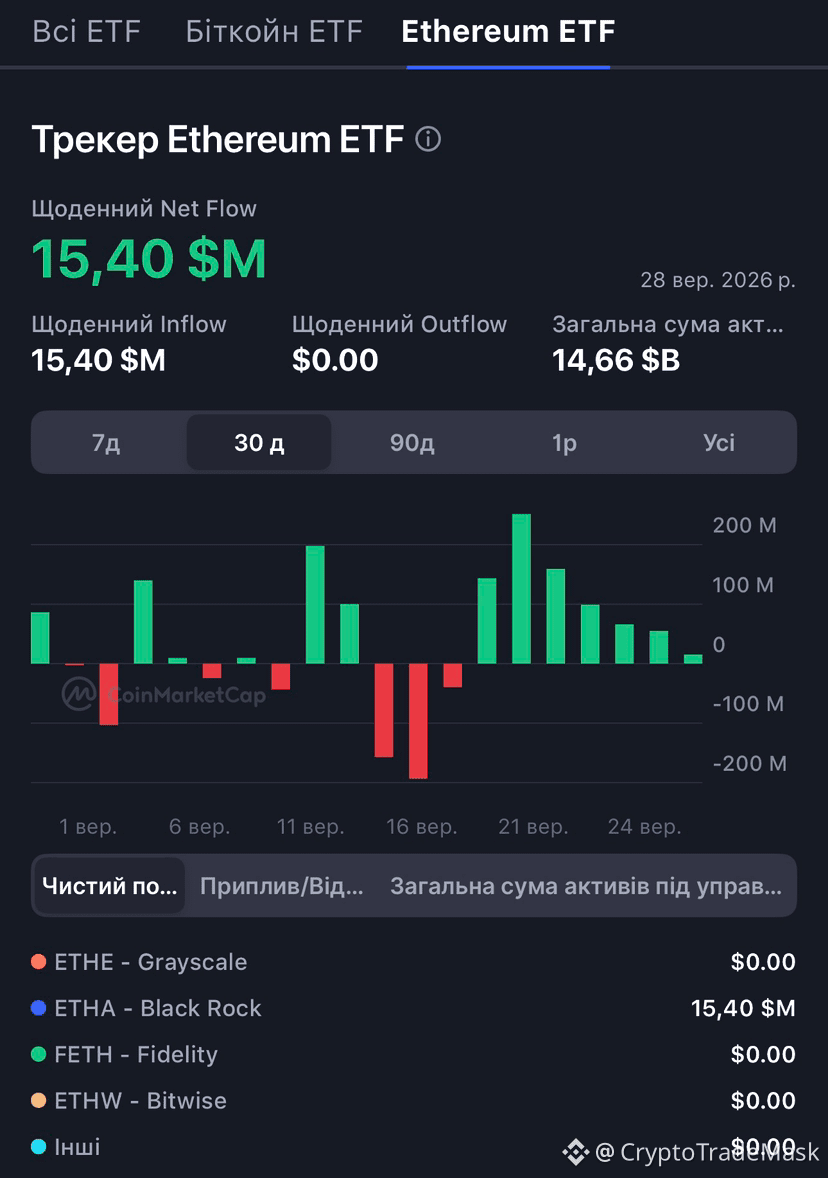
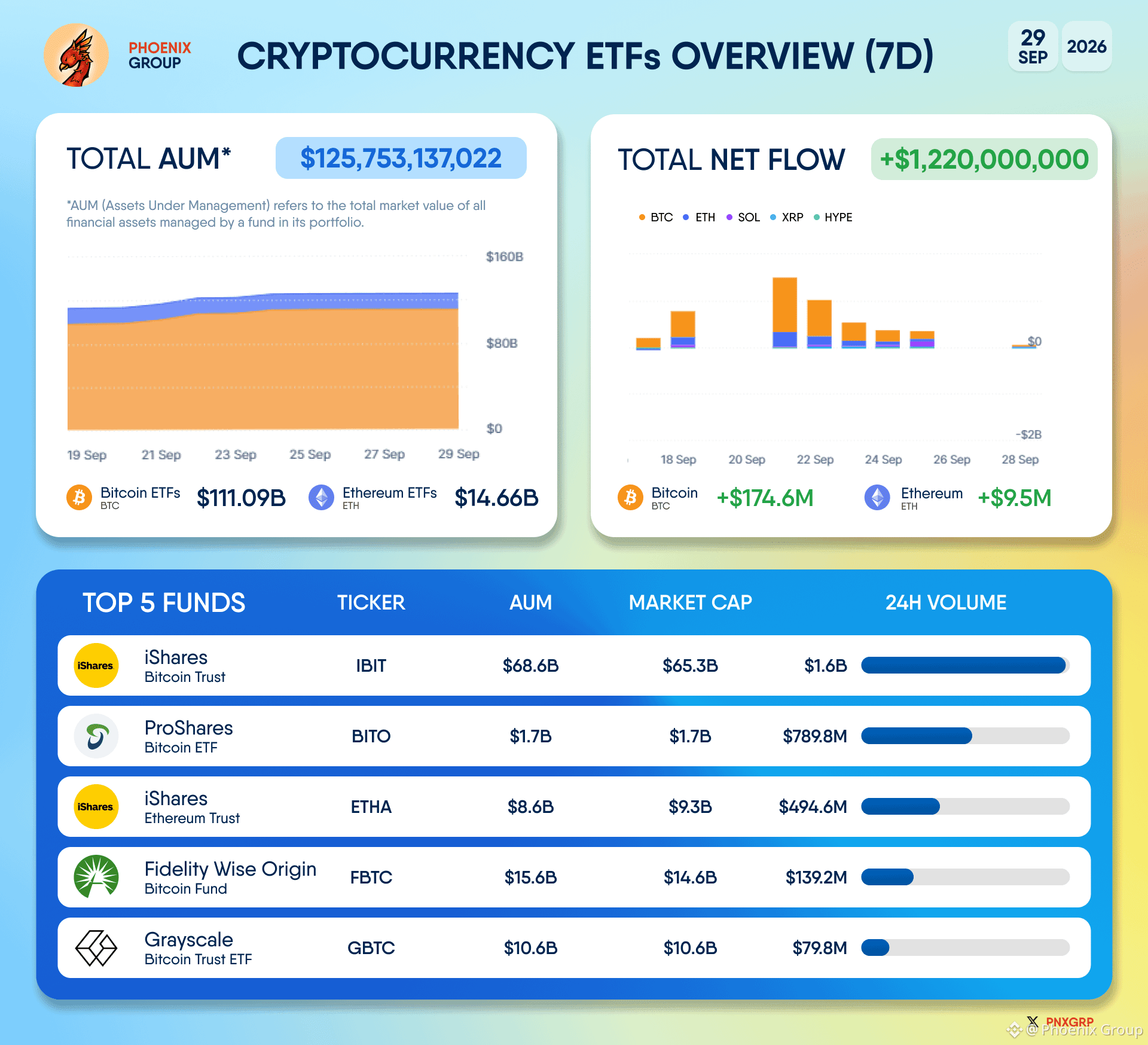
🇺🇸 ETF FLOWS: BTC, ETH, SOL and XRP spot ETFs saw net inflows on Dec. 9. BTC: $151.74M ETH: $177.64M SOL: $16.54M XRP: $8.73M #etf
🇺🇸 ETF FLOWS: BTC, ETH, SOL and XRP spot ETFs saw net inflows on Dec. 9.

BTC: $151.74M
ETH: $177.64M
SOL: $16.54M
XRP: $8.73M

#etf
🚀 Institutions Now Dominate Crypto – Retail Has Stepped Back (Polygon Executive) Crypto in 2025 has entered a new phase: institutional capital is now driving the market. According to Aishwary Gupta (Head of Payments & RWA at Polygon Labs), institutions currently make up around 95% of all crypto inflows, while retail activity has fallen to roughly 5–6%. Major firms like BlackRock, Apollo and Hamilton Lane are allocating 1–2% of portfolios to crypto, launching ETFs and testing tokenized investment products. Gupta said traditional finance is entering crypto not because sentiment changed, but because the infrastructure is finally ready — scalable chains, compliance rails and real-world use cases. He highlighted examples such as DeFi experiments with JPMorgan, Ondo tokenized treasuries and regulated staking with AMINA Bank — showing that public blockchains are capable of supporting institutional-grade operations. Retail activity declined after meme-coin losses and unrealistic expectations, but Gupta believes this is temporary and structured products will eventually bring them back. He also addressed decentralization concerns, saying institutional adoption won’t “centralize crypto” as long as systems remain open public blockchains — instead, it will legitimize and expand the ecosystem. Gupta says the new cycle is not hype-driven retail speculation, but long-term, yield-focused institutional participation, which should gradually lower volatility and push crypto toward being viewed as financial infrastructure rather than just an asset class. Going forward, he expects major growth in: • tokenized RWAs • institutional staking • compliance-ready yield products • interoperability across public chains The next phase, Gupta says, is traditional finance operating directly on chain, merging infrastructures rather than replacing them. #etf #ETH #nft $POL {spot}(POLUSDT) $ETH {spot}(ETHUSDT) $BTC {spot}(BTCUSDT)
🚀 Institutions Now Dominate Crypto – Retail Has Stepped Back (Polygon Executive)

Crypto in 2025 has entered a new phase: institutional capital is now driving the market. According to Aishwary Gupta (Head of Payments & RWA at Polygon Labs), institutions currently make up around 95% of all crypto inflows, while retail activity has fallen to roughly 5–6%.

Major firms like BlackRock, Apollo and Hamilton Lane are allocating 1–2% of portfolios to crypto, launching ETFs and testing tokenized investment products. Gupta said traditional finance is entering crypto not because sentiment changed, but because the infrastructure is finally ready — scalable chains, compliance rails and real-world use cases.

He highlighted examples such as DeFi experiments with JPMorgan, Ondo tokenized treasuries and regulated staking with AMINA Bank — showing that public blockchains are capable of supporting institutional-grade operations.

Retail activity declined after meme-coin losses and unrealistic expectations, but Gupta believes this is temporary and structured products will eventually bring them back.

He also addressed decentralization concerns, saying institutional adoption won’t “centralize crypto” as long as systems remain open public blockchains — instead, it will legitimize and expand the ecosystem.

Gupta says the new cycle is not hype-driven retail speculation, but long-term, yield-focused institutional participation, which should gradually lower volatility and push crypto toward being viewed as financial infrastructure rather than just an asset class.

Going forward, he expects major growth in: • tokenized RWAs
• institutional staking
• compliance-ready yield products
• interoperability across public chains

The next phase, Gupta says, is traditional finance operating directly on chain, merging infrastructures rather than replacing them.

#etf #ETH #nft
$POL
$ETH
$BTC
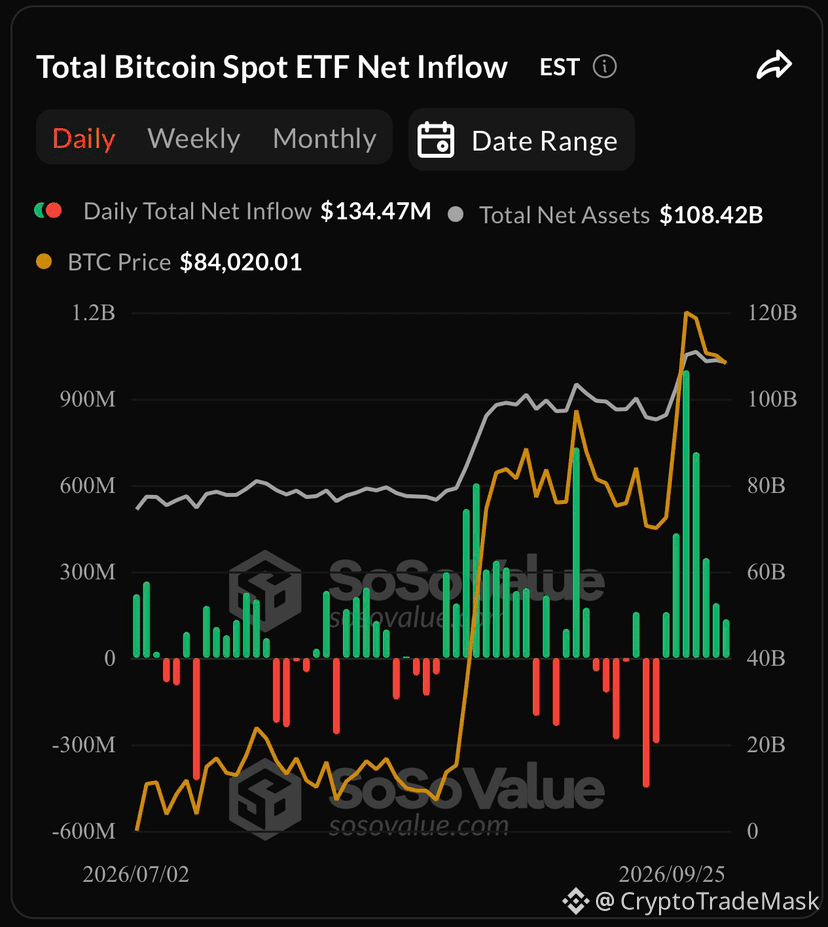
New Bitcoin ETF Proposal Aims at After-Hours Gains as Spot ETFs See Record Outflows Tidal Trust II has filed with the US SEC for a Bitcoin ETF targeting returns when US markets are closed. The move comes amid heavy outflows from spot BTC ETFs, which saw a record $3.48B leave in November, with BlackRock’s iShares Bitcoin ETF alone accounting for $2.34B. ETF Strategy Focuses on Overnight Performance The proposed ETFs, Nicholas Bitcoin and Treasuries AfterDark ETF and Nicholas Bitcoin Tail ETF, will gain BTC exposure through futures, options, and US-listed ETFs/ETPs rather than holding Bitcoin directly. Positions are taken during US overnight hours and closed shortly after market open. The fund may use a Cayman Islands subsidiary and holds US Treasuries and cash during daytime. Bloomberg analyst Eric Balchunas highlighted that a large portion of Bitcoin’s gains occurs after hours. The ETF aims to systematically capture that trend while managing risk during regular trading hours. Spot ETF Market Struggles Spot BTC ETFs have faced persistent selling pressure. November marked the worst month of the year for Bitcoin, with a 17.4% drop in price. Early December outflows continued at $87.77M but showed signs of stabilizing with $151.74M inflows on December 9. This filing reflects a growing focus on capturing after-hours Bitcoin performance as investors seek to mitigate volatility during traditional market hours. $BTC #BTCVSGOLD #BinanceBlockchainWeek #WriteToEarnUpgrade #etf

New Bitcoin ETF Proposal Aims at After-Hours Gains as Spot ETFs See Record Outflows

Tidal Trust II has filed with the US SEC for a Bitcoin ETF targeting returns when US markets are closed. The move comes amid heavy outflows from spot BTC ETFs, which saw a record $3.48B leave in November, with BlackRock’s iShares Bitcoin ETF alone accounting for $2.34B.
ETF Strategy Focuses on Overnight Performance
The proposed ETFs, Nicholas Bitcoin and Treasuries AfterDark ETF and Nicholas Bitcoin Tail ETF, will gain BTC exposure through futures, options, and US-listed ETFs/ETPs rather than holding Bitcoin directly. Positions are taken during US overnight hours and closed shortly after market open. The fund may use a Cayman Islands subsidiary and holds US Treasuries and cash during daytime.
Bloomberg analyst Eric Balchunas highlighted that a large portion of Bitcoin’s gains occurs after hours. The ETF aims to systematically capture that trend while managing risk during regular trading hours.
Spot ETF Market Struggles
Spot BTC ETFs have faced persistent selling pressure. November marked the worst month of the year for Bitcoin, with a 17.4% drop in price. Early December outflows continued at $87.77M but showed signs of stabilizing with $151.74M inflows on December 9.
This filing reflects a growing focus on capturing after-hours Bitcoin performance as investors seek to mitigate volatility during traditional market hours.
$BTC #BTCVSGOLD #BinanceBlockchainWeek #WriteToEarnUpgrade #etf
BlackRock’s Staked Ethereum ETF Filing Marks a Major Turning Point for Institutional Crypto AdoptionAs market attention remains focused on Bitcoin ETFs, a far more transformative development is emerging within the Ethereum ecosystem. BlackRock—the world’s largest asset manager with more than $11 trillion under management—has formally submitted an application to the U.S. Securities and Exchange Commission (SEC) for the iShares Staked Ethereum Trust. Unlike traditional spot ETFs, this product is designed to provide investors with exposure not only to ETH’s market performance but also to staking rewards, introducing a new category of yield-generating, regulated crypto investment vehicles. This filing represents one of the most consequential institutional moves in Ethereum’s history. Here is a detailed breakdown of what has changed, why this ETF matters, and how it could reshape the broader digital asset market. A New ETF, Not an Upgrade Rather than modify its existing iShares Ethereum Trust (ETHA), BlackRock opted to launch an entirely new vehicle. According to the S-1 registration: 70% to 90% of the Trust’s ETH will be staked, enabling the fund to generate on-chain income. Coinbase Custody will serve as the primary custodian, with Anchorage Digital acting as an additional institutional-grade custodian. Staking operations will be executed by professional node operators, ensuring operational security and regulatory compliance. This structure combines traditional ETF accessibility with the passive-income attributes of Ethereum’s Proof-of-Stake model. The Regulatory Shift That Made This Possible For years, under former SEC Chair Gary Gensler, staking was considered too close to unregistered securities activity, and ETF applicants were discouraged from referencing staking outright. That changed in April 2025, when Paul Atkins assumed leadership of the SEC. The new administration quickly signaled a more technologically informed stance. In May 2025, the SEC issued a pivotal clarification stating that “certain protocol-level activities” (specifically, staking) do not inherently constitute securities offerings. This regulatory interpretation opened the door for: Grayscale to introduce staking into its fund structures. VanEck to submit its own staking-enabled ETF application. BlackRock to formally pursue an income-bearing Ethereum ETF. BlackRock’s filing now serves as the most significant test case under the SEC’s updated policy framework. How BlackRock’s Approach Differs From Competitors BlackRock’s product is architected specifically for long-horizon institutional capital. Key differentiators include: 1. Quarterly Cash Distributions Staking rewards will be distributed in USD at least once per quarter, creating predictable cash flow. This appeals to pensions, insurance funds, and yield-oriented asset allocators. 2. Contrast With Grayscale’s Dual-Model Strategy Grayscale’s ETHE distributes staking income. Grayscale’s Ethereum Mini Trust reinvests rewards for compounding yield. BlackRock’s single-track dividend model positions the fund as a stable, income-generating instrument for conservative institutions. 3. Institutional-Grade Risk Mitigation BlackRock will not operate validator nodes directly. All validation will be delegated through custodians using vetted node operators, lowering operational and compliance risk. The expected yield range (3–5% annually) aligns with current network rewards. Market Impact: Why This ETF Matters 1. A Gateway for Institutional Capital If approved, the BlackRock Staked ETH ETF could unlock massive inflows from institutions that previously avoided staking due to custody, regulatory, or operational concerns. 2. Increased Pressure on the SEC The application forces regulators to demonstrate consistency under the new policy direction. A rejection could undermine the SEC’s own May guidance. 3. Potential ETH Supply Shock Staking hundreds of thousands of ETH through a regulated ETF could: decrease liquid supply, increase staking participation, and strengthen the network’s economic security. This dynamic is structurally bullish for ETH’s long-term valuation. 4. Formal Legitimization of Staking SEC approval would effectively validate staking as a compliant, yield-generating mechanism—solidifying Ethereum’s position within regulated finance. Will This Reshape Crypto in 2026? The introduction of staking-enabled ETFs may become a defining catalyst for the next cycle, especially within the altcoin market. By merging yield-bearing on-chain activity with traditional ETF wrappers, Wall Street is moving beyond passive exposure and into active participation in Ethereum’s economic layer. Whether this triggers a broader altcoin rally will depend on: SEC approval timelines, competitor filings, institutional appetite for on-chain yield, and macroeconomic conditions heading into 2026. Question for the Community Do you believe the SEC will approve BlackRock’s staking-enabled Ethereum ETF? And if it does, could this be the spark that ignites the next major altcoin cycle? #SEC #blackRock #etf $ETH

BlackRock’s Staked Ethereum ETF Filing Marks a Major Turning Point for Institutional Crypto Adoption

As market attention remains focused on Bitcoin ETFs, a far more transformative development is emerging within the Ethereum ecosystem. BlackRock—the world’s largest asset manager with more than $11 trillion under management—has formally submitted an application to the U.S. Securities and Exchange Commission (SEC) for the iShares Staked Ethereum Trust. Unlike traditional spot ETFs, this product is designed to provide investors with exposure not only to ETH’s market performance but also to staking rewards, introducing a new category of yield-generating, regulated crypto investment vehicles.

This filing represents one of the most consequential institutional moves in Ethereum’s history. Here is a detailed breakdown of what has changed, why this ETF matters, and how it could reshape the broader digital asset market.

A New ETF, Not an Upgrade

Rather than modify its existing iShares Ethereum Trust (ETHA), BlackRock opted to launch an entirely new vehicle. According to the S-1 registration:

70% to 90% of the Trust’s ETH will be staked, enabling the fund to generate on-chain income.

Coinbase Custody will serve as the primary custodian, with Anchorage Digital acting as an additional institutional-grade custodian.

Staking operations will be executed by professional node operators, ensuring operational security and regulatory compliance.

This structure combines traditional ETF accessibility with the passive-income attributes of Ethereum’s Proof-of-Stake model.

The Regulatory Shift That Made This Possible

For years, under former SEC Chair Gary Gensler, staking was considered too close to unregistered securities activity, and ETF applicants were discouraged from referencing staking outright.

That changed in April 2025, when Paul Atkins assumed leadership of the SEC. The new administration quickly signaled a more technologically informed stance.

In May 2025, the SEC issued a pivotal clarification stating that “certain protocol-level activities” (specifically, staking) do not inherently constitute securities offerings.

This regulatory interpretation opened the door for:

Grayscale to introduce staking into its fund structures.

VanEck to submit its own staking-enabled ETF application.

BlackRock to formally pursue an income-bearing Ethereum ETF.

BlackRock’s filing now serves as the most significant test case under the SEC’s updated policy framework.

How BlackRock’s Approach Differs From Competitors

BlackRock’s product is architected specifically for long-horizon institutional capital. Key differentiators include:

1. Quarterly Cash Distributions

Staking rewards will be distributed in USD at least once per quarter, creating predictable cash flow.

This appeals to pensions, insurance funds, and yield-oriented asset allocators.

2. Contrast With Grayscale’s Dual-Model Strategy

Grayscale’s ETHE distributes staking income.

Grayscale’s Ethereum Mini Trust reinvests rewards for compounding yield.

BlackRock’s single-track dividend model positions the fund as a stable, income-generating instrument for conservative institutions.

3. Institutional-Grade Risk Mitigation

BlackRock will not operate validator nodes directly. All validation will be delegated through custodians using vetted node operators, lowering operational and compliance risk.

The expected yield range (3–5% annually) aligns with current network rewards.

Market Impact: Why This ETF Matters

1. A Gateway for Institutional Capital

If approved, the BlackRock Staked ETH ETF could unlock massive inflows from institutions that previously avoided staking due to custody, regulatory, or operational concerns.

2. Increased Pressure on the SEC

The application forces regulators to demonstrate consistency under the new policy direction. A rejection could undermine the SEC’s own May guidance.

3. Potential ETH Supply Shock

Staking hundreds of thousands of ETH through a regulated ETF could:

decrease liquid supply,

increase staking participation,

and strengthen the network’s economic security.

This dynamic is structurally bullish for ETH’s long-term valuation.

4. Formal Legitimization of Staking

SEC approval would effectively validate staking as a compliant, yield-generating mechanism—solidifying Ethereum’s position within regulated finance.

Will This Reshape Crypto in 2026?

The introduction of staking-enabled ETFs may become a defining catalyst for the next cycle, especially within the altcoin market. By merging yield-bearing on-chain activity with traditional ETF wrappers, Wall Street is moving beyond passive exposure and into active participation in Ethereum’s economic layer.

Whether this triggers a broader altcoin rally will depend on:

SEC approval timelines,

competitor filings,

institutional appetite for on-chain yield,

and macroeconomic conditions heading into 2026.

Question for the Community

Do you believe the SEC will approve BlackRock’s staking-enabled Ethereum ETF?

And if it does, could this be the spark that ignites the next major altcoin cycle?

#SEC #blackRock #etf $ETH
--
Haussier
🔄 XRP on the move — What’s new Over the past few days, XRP has grabbed attention as institutional interest surges: spot-ETFs tied to XRP have seen heavy inflows, and the issuer Ripple recently transferred a large amount (~46 million XRP, worth over $101 million) to Binance — a move that underscored renewed liquidity and market activity. (CoinCentral) Simultaneously, XRP’s price has been volatile — trading around $2.05–$2.20, with analysts noting critical support near $2.05 and key resistance around $2.28. (CoinDesk) 📈 What could this mean 🚀 Institutional & ETF-driven demand increasing — Heavy inflows to XRP ETFs suggest growing confidence from large investors, and the Binance-bound transfer may have been tied to planned liquidity operations or upcoming market activity. (The Market Periodical) ⚠️ Price volatility remains high — With support zones tested and resistance levels close, the next few trading sessions could see sharp swings — either a bounce toward higher targets or a downside retest if selling pressure appears. (Binance) 🔎 On-chain metrics & long-term structure matter — Given the recent high on-chain activity and institutional accumulation, some analysts view current levels as a possible foundation for a rebound or consolidation ahead of a larger move. (The Market Periodical) 💭 Market sentiment & what to watch There’s cautious optimism — many in the market point to ETF inflows and growing institutional exposure as bullish signs. At the same time, some warn that large transfers to exchanges (like to Binance) could lead to increased supply if holders decide to sell. Key upcoming triggers to watch: ETF inflow/outflow data, on-chain transfer volumes, and whether XRP can break above or hold near resistance/support zones. #xrp #Ripple #CryptoNews #etf #Binance #InstitutionalMoney #CryptoShift #BlockchainTrends #EthereumGrowth #MarketSignal #CryptoParadigm #ETHvsBTC #CryptoVolatility #Altcoins $XRP {future}(XRPUSDT)
🔄 XRP on the move — What’s new

Over the past few days, XRP has grabbed attention as institutional interest surges: spot-ETFs tied to XRP have seen heavy inflows, and the issuer Ripple recently transferred a large amount (~46 million XRP, worth over $101 million) to Binance — a move that underscored renewed liquidity and market activity. (CoinCentral)

Simultaneously, XRP’s price has been volatile — trading around $2.05–$2.20, with analysts noting critical support near $2.05 and key resistance around $2.28. (CoinDesk)

📈 What could this mean

🚀 Institutional & ETF-driven demand increasing — Heavy inflows to XRP ETFs suggest growing confidence from large investors, and the Binance-bound transfer may have been tied to planned liquidity operations or upcoming market activity. (The Market Periodical)

⚠️ Price volatility remains high — With support zones tested and resistance levels close, the next few trading sessions could see sharp swings — either a bounce toward higher targets or a downside retest if selling pressure appears. (Binance)

🔎 On-chain metrics & long-term structure matter — Given the recent high on-chain activity and institutional accumulation, some analysts view current levels as a possible foundation for a rebound or consolidation ahead of a larger move. (The Market Periodical)

💭 Market sentiment & what to watch

There’s cautious optimism — many in the market point to ETF inflows and growing institutional exposure as bullish signs. At the same time, some warn that large transfers to exchanges (like to Binance) could lead to increased supply if holders decide to sell.

Key upcoming triggers to watch: ETF inflow/outflow data, on-chain transfer volumes, and whether XRP can break above or hold near resistance/support zones.

#xrp #Ripple #CryptoNews #etf #Binance #InstitutionalMoney #CryptoShift #BlockchainTrends #EthereumGrowth #MarketSignal #CryptoParadigm #ETHvsBTC #CryptoVolatility #Altcoins
$XRP
--
Haussier
🚀 ETF FLOWS ARE BACK: BTC, ETH, SOL & XRP SEE FRESH INFLOWS Spot ETF inflows returned strongly on Dec. 9 — signaling renewed institutional appetite across major assets. Here’s the breakdown: 💰 BTC: +$151.74M 💰 $ETH : +$177.64M 🔥 $SOL : +$16.54M 🔹 $XRP : +$8.73M This is exactly the kind of flow that kicks off momentum across the market. When institutions start buying — they rarely stop with one day. If this trend continues, we could be entering the next leg of the altcoin rotation. #etf #Ethereum #solana
🚀 ETF FLOWS ARE BACK: BTC, ETH, SOL & XRP SEE FRESH INFLOWS

Spot ETF inflows returned strongly on Dec. 9 — signaling renewed institutional appetite across major assets.

Here’s the breakdown:

💰 BTC: +$151.74M

💰 $ETH : +$177.64M

🔥 $SOL : +$16.54M

🔹 $XRP : +$8.73M

This is exactly the kind of flow that kicks off momentum across the market.

When institutions start buying — they rarely stop with one day.

If this trend continues, we could be entering the next leg of the altcoin rotation.

#etf #Ethereum #solana
2025 Marks a Turning Point as Institutions Take Command of the Crypto MarketIn 2025, the digital asset landscape underwent a profound transition. After years of hesitation, institutional investors—once cautious observers of the cryptocurrency sector—have now stepped decisively into the market. This shift, driven by improved infrastructure, clearer regulatory pathways, and a stronger focus on real-world financial integration, is redefining how capital flows into crypto. Aishwary Gupta, Global Head of Payments and Real-World Assets at Polygon Labs, spoke with BeInCrypto to outline the forces behind this transformation. His insights reveal why institutional inflows now dominate the market and how this evolution may shape the future of blockchain finance. Institutional Capital Now Represents the Majority of Crypto Inflows According to Gupta, institutions currently contribute an estimated 95 percent of all inflows into the crypto ecosystem. Retail participation—once the primary engine behind speculative market cycles—has diminished to approximately 5–6 percent. This shift indicates a maturing environment where structured finance, regulated products, and long-term strategies take precedence over hype-driven trading. Major investment firms such as BlackRock, Apollo, and Hamilton Lane have begun integrating digital assets into their portfolios, typically allocating between 1–2 percent and launching ETFs or on-chain tokenized products. These entrants are not motivated by trend-chasing; rather, they are responding to the robustness of today’s blockchain infrastructure. Gupta explains that the real catalyst has been the development of institutional-grade rails, particularly those enabled by Ethereum-compatible networks. Polygon’s collaborations with JPMorgan for a live DeFi trade under the Monetary Authority of Singapore, Ondo’s tokenized treasuries, and AMINA Bank’s regulated staking initiatives demonstrate that public blockchains can now meet regulatory and audit standards while supporting scalable, low-cost transactions. “Institutions no longer need experimental sandboxes,” Gupta noted. “They can interact directly with well-tested, public networks that satisfy compliance and operational requirements.” Why Institutions Are Entering: Yield, Diversification, and Efficiency Gupta identified two main drivers behind the institutional surge. The first is the hunt for yield and portfolio diversification. Tokenized treasuries, regulated staking products, and yield-bearing stable instruments offer familiar value propositions with the added benefits of digital settlement. The second is operational efficiency. Blockchain delivers measurable improvements in settlement speed, liquidity sharing, and asset programmability. This is pushing traditional financial institutions and fintech networks to pilot tokenized fund structures, explore on-chain transfers, and streamline asset servicing workflows. Retail Retreat Raises Concerns—But Gupta Sees a Path Back While institutions are gaining traction, the departure of many retail investors has raised questions about crypto’s identity. Gupta attributes the retail decline to losses from speculative meme coin cycles and unrealistic expectations during volatile market phases. However, he does not consider this exit permanent. He believes structured, regulated, and transparent financial products will restore confidence among retail participants over time. Does Institutional Dominance Threaten Decentralization? A recurring concern in the blockchain community is whether institutional dominance undermines crypto’s decentralized ethos. Gupta argues that this outcome is unlikely as long as public, open networks remain the foundational infrastructure. “Decentralization is threatened when networks close themselves off, not when new participants arrive,” he explained. He sees institutional participation not as centralization, but as a merging of infrastructures—where the same chains that host DeFi, NFTs, and gaming can also support ETFs, treasuries, and institutional staking. Will Compliance Slow Innovation? Gupta Says It May Strengthen It When asked whether increased compliance could inhibit creativity, Gupta acknowledged the tension but emphasized long-term benefits. The early “move fast and break things” mentality fueled innovation but also produced notable failures and regulatory backlash. Institutional involvement, he argues, encourages developers to embed compliance into innovation from the outset, resulting in more resilient and scalable solutions. The Road Ahead: A More Stable, Yield-Oriented Crypto Market Gupta believes the future of crypto will not be defined by Wall Street taking over, but rather by convergence. Institutional-grade capital is slower, more risk-managed, and less emotional. As this capital takes a leading role, market volatility is expected to decline, with financial infrastructure becoming the dominant narrative over speculative trading. He anticipates rapid growth in real-world asset tokenization, deeper integration of regulatory frameworks, and increased institutional staking activity. Interoperability will also become a critical priority as institutions scale their operations across multiple networks and rollups. Crypto, he concludes, is evolving from an alternative asset class into a core component of global financial infrastructure. #etf #ETH #NFT​ {future}(ETHUSDT) {alpha}(CT_195TFczxzPhnThNSqr5by8tvxsdCFRRz6cPNq)

2025 Marks a Turning Point as Institutions Take Command of the Crypto Market

In 2025, the digital asset landscape underwent a profound transition. After years of hesitation, institutional investors—once cautious observers of the cryptocurrency sector—have now stepped decisively into the market. This shift, driven by improved infrastructure, clearer regulatory pathways, and a stronger focus on real-world financial integration, is redefining how capital flows into crypto.

Aishwary Gupta, Global Head of Payments and Real-World Assets at Polygon Labs, spoke with BeInCrypto to outline the forces behind this transformation. His insights reveal why institutional inflows now dominate the market and how this evolution may shape the future of blockchain finance.

Institutional Capital Now Represents the Majority of Crypto Inflows

According to Gupta, institutions currently contribute an estimated 95 percent of all inflows into the crypto ecosystem. Retail participation—once the primary engine behind speculative market cycles—has diminished to approximately 5–6 percent. This shift indicates a maturing environment where structured finance, regulated products, and long-term strategies take precedence over hype-driven trading.

Major investment firms such as BlackRock, Apollo, and Hamilton Lane have begun integrating digital assets into their portfolios, typically allocating between 1–2 percent and launching ETFs or on-chain tokenized products. These entrants are not motivated by trend-chasing; rather, they are responding to the robustness of today’s blockchain infrastructure.

Gupta explains that the real catalyst has been the development of institutional-grade rails, particularly those enabled by Ethereum-compatible networks. Polygon’s collaborations with JPMorgan for a live DeFi trade under the Monetary Authority of Singapore, Ondo’s tokenized treasuries, and AMINA Bank’s regulated staking initiatives demonstrate that public blockchains can now meet regulatory and audit standards while supporting scalable, low-cost transactions.

“Institutions no longer need experimental sandboxes,” Gupta noted. “They can interact directly with well-tested, public networks that satisfy compliance and operational requirements.”

Why Institutions Are Entering: Yield, Diversification, and Efficiency

Gupta identified two main drivers behind the institutional surge.

The first is the hunt for yield and portfolio diversification. Tokenized treasuries, regulated staking products, and yield-bearing stable instruments offer familiar value propositions with the added benefits of digital settlement.

The second is operational efficiency. Blockchain delivers measurable improvements in settlement speed, liquidity sharing, and asset programmability. This is pushing traditional financial institutions and fintech networks to pilot tokenized fund structures, explore on-chain transfers, and streamline asset servicing workflows.

Retail Retreat Raises Concerns—But Gupta Sees a Path Back

While institutions are gaining traction, the departure of many retail investors has raised questions about crypto’s identity. Gupta attributes the retail decline to losses from speculative meme coin cycles and unrealistic expectations during volatile market phases.

However, he does not consider this exit permanent. He believes structured, regulated, and transparent financial products will restore confidence among retail participants over time.

Does Institutional Dominance Threaten Decentralization?

A recurring concern in the blockchain community is whether institutional dominance undermines crypto’s decentralized ethos. Gupta argues that this outcome is unlikely as long as public, open networks remain the foundational infrastructure.

“Decentralization is threatened when networks close themselves off, not when new participants arrive,” he explained. He sees institutional participation not as centralization, but as a merging of infrastructures—where the same chains that host DeFi, NFTs, and gaming can also support ETFs, treasuries, and institutional staking.

Will Compliance Slow Innovation? Gupta Says It May Strengthen It

When asked whether increased compliance could inhibit creativity, Gupta acknowledged the tension but emphasized long-term benefits. The early “move fast and break things” mentality fueled innovation but also produced notable failures and regulatory backlash. Institutional involvement, he argues, encourages developers to embed compliance into innovation from the outset, resulting in more resilient and scalable solutions.

The Road Ahead: A More Stable, Yield-Oriented Crypto Market

Gupta believes the future of crypto will not be defined by Wall Street taking over, but rather by convergence. Institutional-grade capital is slower, more risk-managed, and less emotional. As this capital takes a leading role, market volatility is expected to decline, with financial infrastructure becoming the dominant narrative over speculative trading.

He anticipates rapid growth in real-world asset tokenization, deeper integration of regulatory frameworks, and increased institutional staking activity. Interoperability will also become a critical priority as institutions scale their operations across multiple networks and rollups.

Crypto, he concludes, is evolving from an alternative asset class into a core component of global financial infrastructure.
#etf
#ETH
#NFT​

Invesco Submits Filing for Solana ETF Launch According to Foresight News, asset management giant Invesco has filed Form 8-A with the U.S. Securities and Exchange Commission (SEC) for its Invesco Galaxy Solana ETF. This filing is typically made just before a product is officially launched Following the submission of such documents trading usually begins the next day #etf #CPIWatch #BinanceAlphaAlert $SOL {spot}(SOLUSDT) $BTC {spot}(BTCUSDT) $XRP {spot}(XRPUSDT)
Invesco Submits Filing for
Solana ETF Launch
According to Foresight News, asset
management giant Invesco has filed Form 8-A
with the U.S. Securities and Exchange
Commission (SEC) for its Invesco Galaxy
Solana ETF. This filing is typically made just
before a product is officially launched
Following the submission of such documents
trading usually begins the next day
#etf #CPIWatch #BinanceAlphaAlert $SOL
$BTC
$XRP
--
Haussier
A
ZECUSDT
Fermée
G et P
+9,03USDT
Bitwise 10 Crypto Index ETF ($BITW) Begins Trading on NYSE Arca > BITW seeks to track an index of the 10 largest crypto assets, screened by the experts at Bitwise, weighted by market cap, and rebalanced monthly #etf $BTC $ETH $SOL
Bitwise 10 Crypto Index ETF ($BITW) Begins Trading on NYSE Arca
> BITW seeks to track an index of the 10 largest crypto assets, screened by the experts at Bitwise, weighted by market cap, and rebalanced monthly

#etf $BTC $ETH $SOL
Solana Bulls Struggle to Defend $130 as ETF Demand Faces Unlock-Driven Sell PressureSolana (SOL) is holding just above the key $130 support level, where bulls are trying to stabilize the price. While institutional inflows via spot ETFs and major technical upgrades continue to provide long-term optimism, recent token unlocks and weak price structure are fueling downward pressure. SOL is trading between $125 and $150, with critical support in the $125–$130 zone and first resistance at $140–$145. Since October 2024, the token has lost more than 40% from its highs near $200. ETF Inflows Remain Strong, But Sentiment Is Cautious Despite the price correction, Solana remains one of the most favored altcoins among institutional investors. In 2025 alone, spot ETFs tracking SOL have absorbed over $600 million in net inflows, while some Bitcoin and Ethereum products have seen outflows. These ETFs create structural demand that could help drive a short squeeze, if key technical levels are broken to the upside. Technical Outlook: Key Levels in Focus The chart shows a persistent downtrend since November, with repeated rejections near $180. Now, the price is hovering just above dense support at $125–$130, awaiting a catalyst. 🔹 Bullish case: If $125–$130 holds, a move toward $140–$145 is possible, with a breakout opening the door to $155. 🔹 Bearish case: A decisive close below $125 would confirm further downside toward $115–$120, continuing the downward momentum. Fundamentals Remain Strong Long-Term Despite short-term fragility, the Solana ecosystem continues to strengthen. Major infrastructure upgrades like Firedancer and Alpenglow are scheduled for 2025–2026. These are aimed at improving throughput, latency, and reliability — addressing historical outages and making the network ready for institutional use. At the same time, Solana is seeing growing adoption in real-world asset (RWA) tokenization, emphasizing its long-term potential. However, short-term sentiment remains cautious due to macroeconomic risks and ongoing token unlocks, which continue to weigh on the market. #solana , #sol , #Altcoin , #etf , #RWA Stay one step ahead – follow our profile and stay informed about everything important in the world of cryptocurrencies! Notice: ,,The information and views presented in this article are intended solely for educational purposes and should not be taken as investment advice in any situation. The content of these pages should not be regarded as financial, investment, or any other form of advice. We caution that investing in cryptocurrencies can be risky and may lead to financial losses.“

Solana Bulls Struggle to Defend $130 as ETF Demand Faces Unlock-Driven Sell Pressure

Solana (SOL) is holding just above the key $130 support level, where bulls are trying to stabilize the price. While institutional inflows via spot ETFs and major technical upgrades continue to provide long-term optimism, recent token unlocks and weak price structure are fueling downward pressure.
SOL is trading between $125 and $150, with critical support in the $125–$130 zone and first resistance at $140–$145. Since October 2024, the token has lost more than 40% from its highs near $200.

ETF Inflows Remain Strong, But Sentiment Is Cautious
Despite the price correction, Solana remains one of the most favored altcoins among institutional investors. In 2025 alone, spot ETFs tracking SOL have absorbed over $600 million in net inflows, while some Bitcoin and Ethereum products have seen outflows.
These ETFs create structural demand that could help drive a short squeeze, if key technical levels are broken to the upside.

Technical Outlook: Key Levels in Focus
The chart shows a persistent downtrend since November, with repeated rejections near $180. Now, the price is hovering just above dense support at $125–$130, awaiting a catalyst.
🔹 Bullish case: If $125–$130 holds, a move toward $140–$145 is possible, with a breakout opening the door to $155.
🔹 Bearish case: A decisive close below $125 would confirm further downside toward $115–$120, continuing the downward momentum.

Fundamentals Remain Strong Long-Term
Despite short-term fragility, the Solana ecosystem continues to strengthen. Major infrastructure upgrades like Firedancer and Alpenglow are scheduled for 2025–2026. These are aimed at improving throughput, latency, and reliability — addressing historical outages and making the network ready for institutional use.
At the same time, Solana is seeing growing adoption in real-world asset (RWA) tokenization, emphasizing its long-term potential. However, short-term sentiment remains cautious due to macroeconomic risks and ongoing token unlocks, which continue to weigh on the market.

#solana , #sol , #Altcoin , #etf , #RWA

Stay one step ahead – follow our profile and stay informed about everything important in the world of cryptocurrencies!
Notice:
,,The information and views presented in this article are intended solely for educational purposes and should not be taken as investment advice in any situation. The content of these pages should not be regarded as financial, investment, or any other form of advice. We caution that investing in cryptocurrencies can be risky and may lead to financial losses.“
XRP ETFs Soak Up Another $38M! The smart money isn't just watching $XRP—it's loading up. U.S. spot ETFs just bought another $38.04 million worth in a single day, bringing their total stash to nearly $923 MILLION. This isn't a one-off. It's part of a 15-day inflow streak totaling ~$900M, proving institutional demand is for real. With the $1B AUM milestone already crushed, giants like Canary and Grayscale are leading the charge. When traditional finance moves this decisively, it's a signal worth watching. Q: Do you think this massive ETF accumulation is the key catalyst that will finally launch XRP into its next major bull run? 🤔 #XRP’ #Ripple #etf #InstitutionalCrypto #CryptoNews $XRP
XRP ETFs Soak Up Another $38M!

The smart money isn't just watching $XRP —it's loading up. U.S. spot ETFs just bought another $38.04 million worth in a single day, bringing their total stash to nearly $923 MILLION.

This isn't a one-off. It's part of a 15-day inflow streak totaling ~$900M, proving institutional demand is for real. With the $1B AUM milestone already crushed, giants like Canary and Grayscale are leading the charge.

When traditional finance moves this decisively, it's a signal worth watching.

Q: Do you think this massive ETF accumulation is the key catalyst that will finally launch XRP into its next major bull run? 🤔

#XRP’ #Ripple #etf #InstitutionalCrypto #CryptoNews
$XRP
UPDATE: 🇺🇸 US Spot Crypto ETF Flows — Dec 8 📉 Bitcoin: -$60M 📈 Ethereum: +$35M 📈 XRP: +$38M 📈 Solana: +$1.18M Market rotation in action. Stay alert.$XRP {spot}(XRPUSDT) $SOL {spot}(SOLUSDT) $BTC {spot}(BTCUSDT) ⚡📊 #Crypto #etf #MarketUpdates"
UPDATE: 🇺🇸 US Spot Crypto ETF Flows — Dec 8

📉 Bitcoin: -$60M
📈 Ethereum: +$35M
📈 XRP: +$38M
📈 Solana: +$1.18M

Market rotation in action. Stay alert.$XRP
$SOL
$BTC
⚡📊
#Crypto #etf #MarketUpdates"
Breaking: Bitcoin Faces Weak Demand Amid Structural ChallengesAccording to recent analyses, Bitcoin (BTC) is under pressure not just from a drop in price but from broader structural headwinds that are sapping demand and liquidity in the market. Key factors behind the slump: Institutional interest is cooling: Spot‑Bitcoin ETFs have seen sustained outflows, rather than inflows, undermining what had been a major source of capital for BTC. Liquidity and macro pressures: Global monetary tightening, shifting central‑bank policies and rising interest rates are weighing on risk assets and crypto is no exception. Structural exhaustion: Analysts argue that demand is simply “tapped out” at current price levels many long‑term holders are realizing gains, creating a persistent supply overhang. For now, Bitcoin’s ability to recover hinges on fresh catalysts new institutional money, macroeconomic stability, or renewed investor confidence. Until then, the structural weaknesses may continue to keep demand muted. #BTC #etf

Breaking: Bitcoin Faces Weak Demand Amid Structural Challenges

According to recent analyses, Bitcoin (BTC) is under pressure not just from a drop in price but from broader structural headwinds that are sapping demand and liquidity in the market.
Key factors behind the slump:
Institutional interest is cooling: Spot‑Bitcoin ETFs have seen sustained outflows, rather than inflows, undermining what had been a major source of capital for BTC.
Liquidity and macro pressures: Global monetary tightening, shifting central‑bank policies and rising interest rates are weighing on risk assets and crypto is no exception.
Structural exhaustion: Analysts argue that demand is simply “tapped out” at current price levels many long‑term holders are realizing gains, creating a persistent supply overhang.
For now, Bitcoin’s ability to recover hinges on fresh catalysts new institutional money, macroeconomic stability, or renewed investor confidence. Until then, the structural weaknesses may continue to keep demand muted.
#BTC #etf
BlackRock DUMPING $BTC to COINBASE? 🤯 BlackRock just deposited a massive 2,100 BTC, worth roughly $200 million, onto Coinbase right before the US session. This comes after yesterday's net outflows of -$135 million for their Bitcoin ETF. The market is holding its breath, unsure of what this means for tonight's price action. $BTC has been in a steady decline since yesterday morning. This is not financial advice. #Bitcoin #Crypto #BlackRock #ETF #MarketAnalysis 🚀 {future}(BTCUSDT)
BlackRock DUMPING $BTC to COINBASE? 🤯

BlackRock just deposited a massive 2,100 BTC, worth roughly $200 million, onto Coinbase right before the US session. This comes after yesterday's net outflows of -$135 million for their Bitcoin ETF.

The market is holding its breath, unsure of what this means for tonight's price action. $BTC has been in a steady decline since yesterday morning.

This is not financial advice.
#Bitcoin #Crypto #BlackRock #ETF #MarketAnalysis 🚀
Connectez-vous pour découvrir d’autres contenus
Découvrez les dernières actus sur les cryptos
⚡️ Prenez part aux dernières discussions sur les cryptos
💬 Interagissez avec vos créateurs préféré(e)s
👍 Profitez du contenu qui vous intéresse
Adresse e-mail/Nº de téléphone