

Moon5labs
8k Publications

Moon5labs
Signaler
Bloquer l’utilisateur
The highest benchmark for web3 industry standards.

Creator of the Year

Level 1 Creator
3 Suivis
99.1K+ Abonnés
40.6K+ J’aime
2 Badges
Publications
Tous
Citations
PINNED
·
--

Article
Donald Trump Introduces His Own Coin, But It’s Not What You Expected!Former U.S. President Donald Trump is preparing to launch his own coin, which is set to take place on Wednesday. While some people speculated that it might be a cryptocurrency, Trump’s project is more of a traditional product than a digital asset.
New Coin to Support Presidential Campaign
Donald Trump, who is running for the presidency of the United States again, announced the launch of a new coin to raise funds for his election campaign. The project, titled "Silver Medallion First Edition President Trump," aims to distribute physical silver to Americans who support his political vision and want to see him back in office. Although many of his supporters expected Trump to release a cryptocurrency, this new coin is something entirely different.
Launch of Limited Edition Coin
Trump announced that the coin will be sold for $100 each through the website RealTrumpCoins.com. The coin will be made of 99.9% pure silver and will only be available in a limited edition. One side of the coin will feature Donald Trump’s likeness, while the other side will display the White House accompanied by the phrase "In God We Trust."
This coin is expected to be one of several activities that Trump undertakes to secure the necessary funding for his campaign ahead of the upcoming presidential elections in the U.S. The coin comes at a time when Trump is actively seeking new ways to bolster his campaign and ensure he has the resources he needs. He stated that this silver coin is the "ONLY OFFICIAL coin" he has designed and that was minted in the U.S. under his leadership.
Cryptocurrency Expectations Unfulfilled
In recent months, several meme coins featuring themes related to Donald Trump have appeared in the market, capitalizing on his popularity. However, Trump has distanced himself from these unofficial tokens and emphasized during the introduction of his silver coin that:
"I’ve seen a lot of coins using my beautiful face, but they’re not official. RealTrumpCoin.com is the only place to purchase the official Trump coin."
At first glance, Trump’s announcement of a new official coin might seem related to cryptocurrency, as many of his fans have been expecting him to introduce a digital asset. For instance, last week, 84% of bettors on the Polymarket platform believed that Trump would come out with his own cryptocurrency. This anticipation was fueled by the launch of the World Liberty Financial project, which was speculated to potentially include an official Trump cryptocurrency.
World Liberty Financial and the True Purpose of the Coin
The World Liberty Financial project does contain a token called WLFI, but this token lacks the key characteristics of a classic cryptocurrency as many had envisioned. Although WLFI has been presented as a type of digital asset, it is not the classic cryptocurrency that Trump fans hoped for. While speculation continues regarding whether Trump will eventually come up with his own cryptocurrency project, the silver coin remains his current official product and focuses more on traditional investment in precious metals.
Thus, Trump continues to favor physical, tangible assets rather than joining the wave of digital assets that currently dominate the financial world.
Trump's fondness for cryptocurrencies.
Donald Trump also commented on the Fatty token before the presidential campaign. #Fatty caught Trump's attention because one of the characters in the game mimics Donald Trump, and they are also counting on Don's participation in their new video clip. The first episode featured UFC Champion Jiří Procházka and world-famous beauty contest winners. Fatty.io is still in presale, and it is expected to be one of the best launches of this period.
Notice:
,,The information and views presented in this article are intended solely for educational purposes and should not be taken as investment advice in any situation. The content of these pages should not be regarded as financial, investment, or any other form of advice. We caution that investing in cryptocurrencies can be risky and may lead to financial losses.“
Donald Trump Introduces His Own Coin, But It’s Not What You Expected!
Former U.S. President Donald Trump is preparing to launch his own coin, which is set to take place on Wednesday. While some people speculated that it might be a cryptocurrency, Trump’s project is more of a traditional product than a digital asset.
New Coin to Support Presidential Campaign
Donald Trump, who is running for the presidency of the United States again, announced the launch of a new coin to raise funds for his election campaign. The project, titled "Silver Medallion First Edition President Trump," aims to distribute physical silver to Americans who support his political vision and want to see him back in office. Although many of his supporters expected Trump to release a cryptocurrency, this new coin is something entirely different.
Launch of Limited Edition Coin
Trump announced that the coin will be sold for $100 each through the website RealTrumpCoins.com. The coin will be made of 99.9% pure silver and will only be available in a limited edition. One side of the coin will feature Donald Trump’s likeness, while the other side will display the White House accompanied by the phrase "In God We Trust."
This coin is expected to be one of several activities that Trump undertakes to secure the necessary funding for his campaign ahead of the upcoming presidential elections in the U.S. The coin comes at a time when Trump is actively seeking new ways to bolster his campaign and ensure he has the resources he needs. He stated that this silver coin is the "ONLY OFFICIAL coin" he has designed and that was minted in the U.S. under his leadership.
Cryptocurrency Expectations Unfulfilled
In recent months, several meme coins featuring themes related to Donald Trump have appeared in the market, capitalizing on his popularity. However, Trump has distanced himself from these unofficial tokens and emphasized during the introduction of his silver coin that:
"I’ve seen a lot of coins using my beautiful face, but they’re not official. RealTrumpCoin.com is the only place to purchase the official Trump coin."
At first glance, Trump’s announcement of a new official coin might seem related to cryptocurrency, as many of his fans have been expecting him to introduce a digital asset. For instance, last week, 84% of bettors on the Polymarket platform believed that Trump would come out with his own cryptocurrency. This anticipation was fueled by the launch of the World Liberty Financial project, which was speculated to potentially include an official Trump cryptocurrency.
World Liberty Financial and the True Purpose of the Coin
The World Liberty Financial project does contain a token called WLFI, but this token lacks the key characteristics of a classic cryptocurrency as many had envisioned. Although WLFI has been presented as a type of digital asset, it is not the classic cryptocurrency that Trump fans hoped for. While speculation continues regarding whether Trump will eventually come up with his own cryptocurrency project, the silver coin remains his current official product and focuses more on traditional investment in precious metals.
Thus, Trump continues to favor physical, tangible assets rather than joining the wave of digital assets that currently dominate the financial world.
Trump's fondness for cryptocurrencies.
Donald Trump also commented on the Fatty token before the presidential campaign. #Fatty caught Trump's attention because one of the characters in the game mimics Donald Trump, and they are also counting on Don's participation in their new video clip. The first episode featured UFC Champion Jiří Procházka and world-famous beauty contest winners. Fatty.io is still in presale, and it is expected to be one of the best launches of this period.
Notice:
,,The information and views presented in this article are intended solely for educational purposes and should not be taken as investment advice in any situation. The content of these pages should not be regarded as financial, investment, or any other form of advice. We caution that investing in cryptocurrencies can be risky and may lead to financial losses.“
New Coin to Support Presidential Campaign
Donald Trump, who is running for the presidency of the United States again, announced the launch of a new coin to raise funds for his election campaign. The project, titled "Silver Medallion First Edition President Trump," aims to distribute physical silver to Americans who support his political vision and want to see him back in office. Although many of his supporters expected Trump to release a cryptocurrency, this new coin is something entirely different.
Launch of Limited Edition Coin
Trump announced that the coin will be sold for $100 each through the website RealTrumpCoins.com. The coin will be made of 99.9% pure silver and will only be available in a limited edition. One side of the coin will feature Donald Trump’s likeness, while the other side will display the White House accompanied by the phrase "In God We Trust."
This coin is expected to be one of several activities that Trump undertakes to secure the necessary funding for his campaign ahead of the upcoming presidential elections in the U.S. The coin comes at a time when Trump is actively seeking new ways to bolster his campaign and ensure he has the resources he needs. He stated that this silver coin is the "ONLY OFFICIAL coin" he has designed and that was minted in the U.S. under his leadership.
Cryptocurrency Expectations Unfulfilled
In recent months, several meme coins featuring themes related to Donald Trump have appeared in the market, capitalizing on his popularity. However, Trump has distanced himself from these unofficial tokens and emphasized during the introduction of his silver coin that:
"I’ve seen a lot of coins using my beautiful face, but they’re not official. RealTrumpCoin.com is the only place to purchase the official Trump coin."
At first glance, Trump’s announcement of a new official coin might seem related to cryptocurrency, as many of his fans have been expecting him to introduce a digital asset. For instance, last week, 84% of bettors on the Polymarket platform believed that Trump would come out with his own cryptocurrency. This anticipation was fueled by the launch of the World Liberty Financial project, which was speculated to potentially include an official Trump cryptocurrency.
World Liberty Financial and the True Purpose of the Coin
The World Liberty Financial project does contain a token called WLFI, but this token lacks the key characteristics of a classic cryptocurrency as many had envisioned. Although WLFI has been presented as a type of digital asset, it is not the classic cryptocurrency that Trump fans hoped for. While speculation continues regarding whether Trump will eventually come up with his own cryptocurrency project, the silver coin remains his current official product and focuses more on traditional investment in precious metals.
Thus, Trump continues to favor physical, tangible assets rather than joining the wave of digital assets that currently dominate the financial world.
Trump's fondness for cryptocurrencies.
Donald Trump also commented on the Fatty token before the presidential campaign. #Fatty caught Trump's attention because one of the characters in the game mimics Donald Trump, and they are also counting on Don's participation in their new video clip. The first episode featured UFC Champion Jiří Procházka and world-famous beauty contest winners. Fatty.io is still in presale, and it is expected to be one of the best launches of this period.
Notice:
,,The information and views presented in this article are intended solely for educational purposes and should not be taken as investment advice in any situation. The content of these pages should not be regarded as financial, investment, or any other form of advice. We caution that investing in cryptocurrencies can be risky and may lead to financial losses.“
12
10
78
31.1k
·
--

Article
CLARITY Act Enters a Critical Phase as the U.S. Senate Prepares a Unified Crypto BillThe United States could take one of its most significant steps toward comprehensive cryptocurrency regulation in the coming days. The U.S. Senate is finalizing a unified version of the CLARITY Act, combining separate proposals from two key committees into a single framework designed to govern the digital asset market.
If released as expected, the legislation could become the foundation of the first comprehensive law establishing a clear market structure for cryptocurrencies in the United States.
Two Senate committees join forces
Staff from the Senate Banking Committee and the Senate Agriculture Committee are working together to merge their previously separate legislative proposals.
The Banking Committee has focused primarily on the U.S. Securities and Exchange Commission (SEC) and its oversight of digital assets classified as securities. Meanwhile, the Agriculture Committee has concentrated on the authority of the Commodity Futures Trading Commission (CFTC) over digital commodities.
The new draft is expected to combine both approaches into a single legislative package. It also includes stronger consumer protection measures aimed at attracting broader bipartisan support, particularly from Democratic lawmakers. Winning support from both parties will be essential, as the bill will require at least 60 votes to advance through the Senate.
Several obstacles remain before a Senate vote
Despite the progress, lawmakers still face several major challenges before the legislation can reach the Senate floor.
One of the most contentious issues involves ethics rules for senior government officials. Some Democratic senators are pushing for stricter restrictions on financial ties between public officials and the cryptocurrency industry while serving in office. Without changes to those provisions, several Democrats have indicated they may oppose the bill.
Lawmakers are also continuing discussions around the Blockchain Regulatory Certainty Act, which would provide legal protections for blockchain developers. Under the proposal, software developers who do not take custody of customer assets would not automatically be treated as money transmitters subject to the same regulatory requirements as traditional financial institutions.
Democratic Senator Ron Wyden has publicly expressed support for this portion of the legislation, describing it as an important step toward protecting blockchain innovation in the United States.
Time is running short
Even if the Senate approves the legislation, the process will not be complete. The bill must still pass the House of Representatives, where Republican lawmakers continue to debate several aspects of cryptocurrency regulation.
The legislative calendar is also becoming increasingly tight. Congress has only a limited number of working days remaining before the August recess, leaving lawmakers with a narrow window to move the legislation forward.
The outcome is being closely watched by investors and major cryptocurrency companies, including Ripple and Coinbase, both of which have consistently supported clearer regulatory rules for digital assets. If the unified version of the CLARITY Act continues advancing through Congress, it could pave the way for one of the most significant regulatory reforms in the history of the U.S. cryptocurrency industry.
#crypto , #BTC , #bitcoin , #CFTC , #blockchain
Stay one step ahead – follow our profile and stay informed about everything important in the world of cryptocurrencies.
Disclaimer:
The information and opinions presented in this article are for informational and educational purposes only and should not be considered financial or investment advice. Nothing on this page constitutes a recommendation to buy or sell any assets. Cryptocurrency investments are inherently risky and may result in financial loss. Always do your own research before making any investment decisions.
CLARITY Act Enters a Critical Phase as the U.S. Senate Prepares a Unified Crypto Bill
The United States could take one of its most significant steps toward comprehensive cryptocurrency regulation in the coming days. The U.S. Senate is finalizing a unified version of the CLARITY Act, combining separate proposals from two key committees into a single framework designed to govern the digital asset market.
If released as expected, the legislation could become the foundation of the first comprehensive law establishing a clear market structure for cryptocurrencies in the United States.
Two Senate committees join forces
Staff from the Senate Banking Committee and the Senate Agriculture Committee are working together to merge their previously separate legislative proposals.
The Banking Committee has focused primarily on the U.S. Securities and Exchange Commission (SEC) and its oversight of digital assets classified as securities. Meanwhile, the Agriculture Committee has concentrated on the authority of the Commodity Futures Trading Commission (CFTC) over digital commodities.
The new draft is expected to combine both approaches into a single legislative package. It also includes stronger consumer protection measures aimed at attracting broader bipartisan support, particularly from Democratic lawmakers. Winning support from both parties will be essential, as the bill will require at least 60 votes to advance through the Senate.
Several obstacles remain before a Senate vote
Despite the progress, lawmakers still face several major challenges before the legislation can reach the Senate floor.
One of the most contentious issues involves ethics rules for senior government officials. Some Democratic senators are pushing for stricter restrictions on financial ties between public officials and the cryptocurrency industry while serving in office. Without changes to those provisions, several Democrats have indicated they may oppose the bill.
Lawmakers are also continuing discussions around the Blockchain Regulatory Certainty Act, which would provide legal protections for blockchain developers. Under the proposal, software developers who do not take custody of customer assets would not automatically be treated as money transmitters subject to the same regulatory requirements as traditional financial institutions.
Democratic Senator Ron Wyden has publicly expressed support for this portion of the legislation, describing it as an important step toward protecting blockchain innovation in the United States.
Time is running short
Even if the Senate approves the legislation, the process will not be complete. The bill must still pass the House of Representatives, where Republican lawmakers continue to debate several aspects of cryptocurrency regulation.
The legislative calendar is also becoming increasingly tight. Congress has only a limited number of working days remaining before the August recess, leaving lawmakers with a narrow window to move the legislation forward.
The outcome is being closely watched by investors and major cryptocurrency companies, including Ripple and Coinbase, both of which have consistently supported clearer regulatory rules for digital assets. If the unified version of the CLARITY Act continues advancing through Congress, it could pave the way for one of the most significant regulatory reforms in the history of the U.S. cryptocurrency industry.
#crypto , #BTC , #bitcoin , #CFTC , #blockchain
Stay one step ahead – follow our profile and stay informed about everything important in the world of cryptocurrencies.
Disclaimer:
The information and opinions presented in this article are for informational and educational purposes only and should not be considered financial or investment advice. Nothing on this page constitutes a recommendation to buy or sell any assets. Cryptocurrency investments are inherently risky and may result in financial loss. Always do your own research before making any investment decisions.
If released as expected, the legislation could become the foundation of the first comprehensive law establishing a clear market structure for cryptocurrencies in the United States.
Two Senate committees join forces
Staff from the Senate Banking Committee and the Senate Agriculture Committee are working together to merge their previously separate legislative proposals.
The Banking Committee has focused primarily on the U.S. Securities and Exchange Commission (SEC) and its oversight of digital assets classified as securities. Meanwhile, the Agriculture Committee has concentrated on the authority of the Commodity Futures Trading Commission (CFTC) over digital commodities.
The new draft is expected to combine both approaches into a single legislative package. It also includes stronger consumer protection measures aimed at attracting broader bipartisan support, particularly from Democratic lawmakers. Winning support from both parties will be essential, as the bill will require at least 60 votes to advance through the Senate.
Several obstacles remain before a Senate vote
Despite the progress, lawmakers still face several major challenges before the legislation can reach the Senate floor.
One of the most contentious issues involves ethics rules for senior government officials. Some Democratic senators are pushing for stricter restrictions on financial ties between public officials and the cryptocurrency industry while serving in office. Without changes to those provisions, several Democrats have indicated they may oppose the bill.
Lawmakers are also continuing discussions around the Blockchain Regulatory Certainty Act, which would provide legal protections for blockchain developers. Under the proposal, software developers who do not take custody of customer assets would not automatically be treated as money transmitters subject to the same regulatory requirements as traditional financial institutions.
Democratic Senator Ron Wyden has publicly expressed support for this portion of the legislation, describing it as an important step toward protecting blockchain innovation in the United States.
Time is running short
Even if the Senate approves the legislation, the process will not be complete. The bill must still pass the House of Representatives, where Republican lawmakers continue to debate several aspects of cryptocurrency regulation.
The legislative calendar is also becoming increasingly tight. Congress has only a limited number of working days remaining before the August recess, leaving lawmakers with a narrow window to move the legislation forward.
The outcome is being closely watched by investors and major cryptocurrency companies, including Ripple and Coinbase, both of which have consistently supported clearer regulatory rules for digital assets. If the unified version of the CLARITY Act continues advancing through Congress, it could pave the way for one of the most significant regulatory reforms in the history of the U.S. cryptocurrency industry.
#crypto , #BTC , #bitcoin , #CFTC , #blockchain
Stay one step ahead – follow our profile and stay informed about everything important in the world of cryptocurrencies.
Disclaimer:
The information and opinions presented in this article are for informational and educational purposes only and should not be considered financial or investment advice. Nothing on this page constitutes a recommendation to buy or sell any assets. Cryptocurrency investments are inherently risky and may result in financial loss. Always do your own research before making any investment decisions.
993
·
--

Article
Russia Tightens Crypto Rules as U.S. Advances the CLARITY ActWhile the United States is moving closer to passing the long-awaited CLARITY Act, designed to establish a clear regulatory framework for digital assets, Russia has postponed the implementation of its new anti-money laundering (AML) legislation for cryptocurrencies. The two developments highlight fundamentally different approaches to regulating the rapidly evolving crypto industry.
On one side is a strategy focused on regulatory clarity and innovation. On the other is a system built around significantly tighter government oversight of cryptocurrency transactions.
Russia delays AML law but prepares stricter crypto monitoring
Russian authorities have postponed the implementation of their new cryptocurrency anti-money laundering legislation from July 1 to September 1, 2026. Once enacted, the law will grant broad new powers to Rosfinmonitoring, Russia's federal financial intelligence agency, allowing it to closely monitor digital asset activity across the country.
The new framework will require identification of participants involved in most significant cryptocurrency transactions. Transfers above certain thresholds will require detailed information about both the sender and recipient, including wallet addresses, identification details, and other personal information. Larger transactions will be subject to even more comprehensive reporting requirements.
The legislation will also affect the banking sector. Russia's central bank is expected to receive expanded authority to regulate or restrict cryptocurrency-related activities while introducing stricter limits on the amount of digital assets banks may hold on their balance sheets.
Although the law's implementation has been delayed, the overall direction of Russian policy remains clear: the government intends to exercise significantly greater control over the country's cryptocurrency market.
CLARITY Act gains momentum in Washington
Meanwhile, the United States is moving in the opposite direction as momentum continues to build behind the CLARITY Act, legislation intended to establish a long-term regulatory framework for the American digital asset industry.
The proposed law aims to clearly define regulatory responsibilities, distinguish digital commodities from securities, and provide greater legal certainty for blockchain developers, crypto companies, and investors.
Senator Cynthia Lummis has described the legislation as one of the most important opportunities for the U.S. cryptocurrency industry this decade. Galaxy Digital CEO Mike Novogratz has expressed similar views, calling the CLARITY Act a pivotal moment for the future of digital assets.
The proposal has already received support from the Senate Banking Committee, while Treasury Secretary Scott Bessent and other lawmakers have urged Congress to accelerate the legislative process. Major crypto companies, including Ripple, have also publicly backed the bill, arguing that clear regulatory rules are essential for continued industry growth.
Two very different regulatory strategies
The contrast between the two countries is becoming increasingly apparent. Russia is focusing on tighter oversight of cryptocurrency transactions and expanding government control over the sector. The United States, meanwhile, is working toward creating a more predictable regulatory environment that could encourage blockchain innovation and attract greater institutional investment.
Many analysts believe regulatory certainty has become one of the most important factors shaping the future of digital assets. While one of the world's largest economies is strengthening state oversight of cryptocurrencies, the other is attempting to establish a legal framework that could accelerate the integration of digital assets into the traditional financial system.
#usa , #russia , #CryptoRegulation , #CLARITYAct , #DigitalAssets
Stay one step ahead – follow our profile and stay informed about everything important in the world of cryptocurrencies.
Disclaimer:
The information and opinions presented in this article are for informational and educational purposes only and should not be considered financial or investment advice. Nothing on this page constitutes a recommendation to buy or sell any assets. Cryptocurrency investments are inherently risky and may result in financial loss. Always do your own research before making any investment decisions.
Russia Tightens Crypto Rules as U.S. Advances the CLARITY Act
While the United States is moving closer to passing the long-awaited CLARITY Act, designed to establish a clear regulatory framework for digital assets, Russia has postponed the implementation of its new anti-money laundering (AML) legislation for cryptocurrencies. The two developments highlight fundamentally different approaches to regulating the rapidly evolving crypto industry.
On one side is a strategy focused on regulatory clarity and innovation. On the other is a system built around significantly tighter government oversight of cryptocurrency transactions.
Russia delays AML law but prepares stricter crypto monitoring
Russian authorities have postponed the implementation of their new cryptocurrency anti-money laundering legislation from July 1 to September 1, 2026. Once enacted, the law will grant broad new powers to Rosfinmonitoring, Russia's federal financial intelligence agency, allowing it to closely monitor digital asset activity across the country.
The new framework will require identification of participants involved in most significant cryptocurrency transactions. Transfers above certain thresholds will require detailed information about both the sender and recipient, including wallet addresses, identification details, and other personal information. Larger transactions will be subject to even more comprehensive reporting requirements.
The legislation will also affect the banking sector. Russia's central bank is expected to receive expanded authority to regulate or restrict cryptocurrency-related activities while introducing stricter limits on the amount of digital assets banks may hold on their balance sheets.
Although the law's implementation has been delayed, the overall direction of Russian policy remains clear: the government intends to exercise significantly greater control over the country's cryptocurrency market.
CLARITY Act gains momentum in Washington
Meanwhile, the United States is moving in the opposite direction as momentum continues to build behind the CLARITY Act, legislation intended to establish a long-term regulatory framework for the American digital asset industry.
The proposed law aims to clearly define regulatory responsibilities, distinguish digital commodities from securities, and provide greater legal certainty for blockchain developers, crypto companies, and investors.
Senator Cynthia Lummis has described the legislation as one of the most important opportunities for the U.S. cryptocurrency industry this decade. Galaxy Digital CEO Mike Novogratz has expressed similar views, calling the CLARITY Act a pivotal moment for the future of digital assets.
The proposal has already received support from the Senate Banking Committee, while Treasury Secretary Scott Bessent and other lawmakers have urged Congress to accelerate the legislative process. Major crypto companies, including Ripple, have also publicly backed the bill, arguing that clear regulatory rules are essential for continued industry growth.
Two very different regulatory strategies
The contrast between the two countries is becoming increasingly apparent. Russia is focusing on tighter oversight of cryptocurrency transactions and expanding government control over the sector. The United States, meanwhile, is working toward creating a more predictable regulatory environment that could encourage blockchain innovation and attract greater institutional investment.
Many analysts believe regulatory certainty has become one of the most important factors shaping the future of digital assets. While one of the world's largest economies is strengthening state oversight of cryptocurrencies, the other is attempting to establish a legal framework that could accelerate the integration of digital assets into the traditional financial system.
#usa , #russia , #CryptoRegulation , #CLARITYAct , #DigitalAssets
Stay one step ahead – follow our profile and stay informed about everything important in the world of cryptocurrencies.
Disclaimer:
The information and opinions presented in this article are for informational and educational purposes only and should not be considered financial or investment advice. Nothing on this page constitutes a recommendation to buy or sell any assets. Cryptocurrency investments are inherently risky and may result in financial loss. Always do your own research before making any investment decisions.
On one side is a strategy focused on regulatory clarity and innovation. On the other is a system built around significantly tighter government oversight of cryptocurrency transactions.
Russia delays AML law but prepares stricter crypto monitoring
Russian authorities have postponed the implementation of their new cryptocurrency anti-money laundering legislation from July 1 to September 1, 2026. Once enacted, the law will grant broad new powers to Rosfinmonitoring, Russia's federal financial intelligence agency, allowing it to closely monitor digital asset activity across the country.
The new framework will require identification of participants involved in most significant cryptocurrency transactions. Transfers above certain thresholds will require detailed information about both the sender and recipient, including wallet addresses, identification details, and other personal information. Larger transactions will be subject to even more comprehensive reporting requirements.
The legislation will also affect the banking sector. Russia's central bank is expected to receive expanded authority to regulate or restrict cryptocurrency-related activities while introducing stricter limits on the amount of digital assets banks may hold on their balance sheets.
Although the law's implementation has been delayed, the overall direction of Russian policy remains clear: the government intends to exercise significantly greater control over the country's cryptocurrency market.
CLARITY Act gains momentum in Washington
Meanwhile, the United States is moving in the opposite direction as momentum continues to build behind the CLARITY Act, legislation intended to establish a long-term regulatory framework for the American digital asset industry.
The proposed law aims to clearly define regulatory responsibilities, distinguish digital commodities from securities, and provide greater legal certainty for blockchain developers, crypto companies, and investors.
Senator Cynthia Lummis has described the legislation as one of the most important opportunities for the U.S. cryptocurrency industry this decade. Galaxy Digital CEO Mike Novogratz has expressed similar views, calling the CLARITY Act a pivotal moment for the future of digital assets.
The proposal has already received support from the Senate Banking Committee, while Treasury Secretary Scott Bessent and other lawmakers have urged Congress to accelerate the legislative process. Major crypto companies, including Ripple, have also publicly backed the bill, arguing that clear regulatory rules are essential for continued industry growth.
Two very different regulatory strategies
The contrast between the two countries is becoming increasingly apparent. Russia is focusing on tighter oversight of cryptocurrency transactions and expanding government control over the sector. The United States, meanwhile, is working toward creating a more predictable regulatory environment that could encourage blockchain innovation and attract greater institutional investment.
Many analysts believe regulatory certainty has become one of the most important factors shaping the future of digital assets. While one of the world's largest economies is strengthening state oversight of cryptocurrencies, the other is attempting to establish a legal framework that could accelerate the integration of digital assets into the traditional financial system.
#usa , #russia , #CryptoRegulation , #CLARITYAct , #DigitalAssets
Stay one step ahead – follow our profile and stay informed about everything important in the world of cryptocurrencies.
Disclaimer:
The information and opinions presented in this article are for informational and educational purposes only and should not be considered financial or investment advice. Nothing on this page constitutes a recommendation to buy or sell any assets. Cryptocurrency investments are inherently risky and may result in financial loss. Always do your own research before making any investment decisions.
1
663
·
--

Article
Metaplanet Unveils Ambitious Bitcoin Initiative Combining BTC, JPYC, and Tokenized BondsJapanese Bitcoin treasury company Metaplanet has announced a new initiative that could significantly expand the role of digital assets in traditional finance. The company has partnered with JPYC Inc. and Progmat to explore the development of a digital credit framework built around Bitcoin, the Japanese stablecoin JPYC, and tokenized securities.
The partnership aims to create a more efficient blockchain-based financing infrastructure for businesses while improving transparency and accessibility across the credit market.
Bitcoin at the core of a new digital credit framework
According to the announcement released on July 10, the project will combine several complementary technologies. Metaplanet will contribute its long-term Bitcoin treasury strategy, JPYC will provide stablecoin settlement infrastructure, and Progmat will supply the technology required to issue and manage tokenized securities.
Metaplanet Securities will also play a key role by structuring digital financial products and distributing them to investors.
Together, the companies plan to evaluate a broad range of blockchain-based credit instruments, including tokenized corporate bonds and other forms of digital financing. Their objective is to develop a credit market that is more transparent, efficient, and accessible for both issuers and investors.
According to Metaplanet, Japan's corporate bond market remains heavily dominated by large issuers, while smaller and fast-growing companies often face high administrative costs when raising capital. The company believes tokenized credit products could significantly reduce these barriers.
Project NOVA expands Bitcoin's role
The announcement also highlights the continued development of Project NOVA, under which Metaplanet is redefining the role of Bitcoin on its balance sheet.
Rather than treating Bitcoin as a passive treasury reserve, the company views BTC as productive collateral capable of supporting new financial products and strengthening their credit profile.
Under the proposed framework, Metaplanet and its securities division will develop Bitcoin-backed digital credit products. JPYC will handle stablecoin issuance, redemption, and bond payment settlements, while Progmat will provide the regulated infrastructure for issuing security tokens, managing ownership transfers, and maintaining investor records.
One of the project's primary goals is to enable 24/7/365 trading and settlement, including automated interest calculations and continuous payment processing through blockchain technology.
Metaplanet emphasized that no public issuance has been approved at this stage. The partners will first evaluate the product design, legal framework, technical feasibility, and proof-of-concept projects before announcing details regarding future issuances, expected yields, distribution methods, and launch timelines.
#metaplanet , #bitcoin , #BTC , #Stablecoins , #Web3
Stay one step ahead – follow our profile and stay informed about everything important in the world of cryptocurrencies.
Disclaimer:
The information and opinions presented in this article are for informational and educational purposes only and should not be considered financial or investment advice. Nothing on this page constitutes a recommendation to buy or sell any assets. Cryptocurrency investments are inherently risky and may result in financial loss. Always do your own research before making any investment decisions.
Metaplanet Unveils Ambitious Bitcoin Initiative Combining BTC, JPYC, and Tokenized Bonds
Japanese Bitcoin treasury company Metaplanet has announced a new initiative that could significantly expand the role of digital assets in traditional finance. The company has partnered with JPYC Inc. and Progmat to explore the development of a digital credit framework built around Bitcoin, the Japanese stablecoin JPYC, and tokenized securities.
The partnership aims to create a more efficient blockchain-based financing infrastructure for businesses while improving transparency and accessibility across the credit market.
Bitcoin at the core of a new digital credit framework
According to the announcement released on July 10, the project will combine several complementary technologies. Metaplanet will contribute its long-term Bitcoin treasury strategy, JPYC will provide stablecoin settlement infrastructure, and Progmat will supply the technology required to issue and manage tokenized securities.
Metaplanet Securities will also play a key role by structuring digital financial products and distributing them to investors.
Together, the companies plan to evaluate a broad range of blockchain-based credit instruments, including tokenized corporate bonds and other forms of digital financing. Their objective is to develop a credit market that is more transparent, efficient, and accessible for both issuers and investors.
According to Metaplanet, Japan's corporate bond market remains heavily dominated by large issuers, while smaller and fast-growing companies often face high administrative costs when raising capital. The company believes tokenized credit products could significantly reduce these barriers.
Project NOVA expands Bitcoin's role
The announcement also highlights the continued development of Project NOVA, under which Metaplanet is redefining the role of Bitcoin on its balance sheet.
Rather than treating Bitcoin as a passive treasury reserve, the company views BTC as productive collateral capable of supporting new financial products and strengthening their credit profile.
Under the proposed framework, Metaplanet and its securities division will develop Bitcoin-backed digital credit products. JPYC will handle stablecoin issuance, redemption, and bond payment settlements, while Progmat will provide the regulated infrastructure for issuing security tokens, managing ownership transfers, and maintaining investor records.
One of the project's primary goals is to enable 24/7/365 trading and settlement, including automated interest calculations and continuous payment processing through blockchain technology.
Metaplanet emphasized that no public issuance has been approved at this stage. The partners will first evaluate the product design, legal framework, technical feasibility, and proof-of-concept projects before announcing details regarding future issuances, expected yields, distribution methods, and launch timelines.
#metaplanet , #bitcoin , #BTC , #Stablecoins , #Web3
Stay one step ahead – follow our profile and stay informed about everything important in the world of cryptocurrencies.
Disclaimer:
The information and opinions presented in this article are for informational and educational purposes only and should not be considered financial or investment advice. Nothing on this page constitutes a recommendation to buy or sell any assets. Cryptocurrency investments are inherently risky and may result in financial loss. Always do your own research before making any investment decisions.
The partnership aims to create a more efficient blockchain-based financing infrastructure for businesses while improving transparency and accessibility across the credit market.
Bitcoin at the core of a new digital credit framework
According to the announcement released on July 10, the project will combine several complementary technologies. Metaplanet will contribute its long-term Bitcoin treasury strategy, JPYC will provide stablecoin settlement infrastructure, and Progmat will supply the technology required to issue and manage tokenized securities.
Metaplanet Securities will also play a key role by structuring digital financial products and distributing them to investors.
Together, the companies plan to evaluate a broad range of blockchain-based credit instruments, including tokenized corporate bonds and other forms of digital financing. Their objective is to develop a credit market that is more transparent, efficient, and accessible for both issuers and investors.
According to Metaplanet, Japan's corporate bond market remains heavily dominated by large issuers, while smaller and fast-growing companies often face high administrative costs when raising capital. The company believes tokenized credit products could significantly reduce these barriers.
Project NOVA expands Bitcoin's role
The announcement also highlights the continued development of Project NOVA, under which Metaplanet is redefining the role of Bitcoin on its balance sheet.
Rather than treating Bitcoin as a passive treasury reserve, the company views BTC as productive collateral capable of supporting new financial products and strengthening their credit profile.
Under the proposed framework, Metaplanet and its securities division will develop Bitcoin-backed digital credit products. JPYC will handle stablecoin issuance, redemption, and bond payment settlements, while Progmat will provide the regulated infrastructure for issuing security tokens, managing ownership transfers, and maintaining investor records.
One of the project's primary goals is to enable 24/7/365 trading and settlement, including automated interest calculations and continuous payment processing through blockchain technology.
Metaplanet emphasized that no public issuance has been approved at this stage. The partners will first evaluate the product design, legal framework, technical feasibility, and proof-of-concept projects before announcing details regarding future issuances, expected yields, distribution methods, and launch timelines.
#metaplanet , #bitcoin , #BTC , #Stablecoins , #Web3
Stay one step ahead – follow our profile and stay informed about everything important in the world of cryptocurrencies.
Disclaimer:
The information and opinions presented in this article are for informational and educational purposes only and should not be considered financial or investment advice. Nothing on this page constitutes a recommendation to buy or sell any assets. Cryptocurrency investments are inherently risky and may result in financial loss. Always do your own research before making any investment decisions.
326
·
--
Article
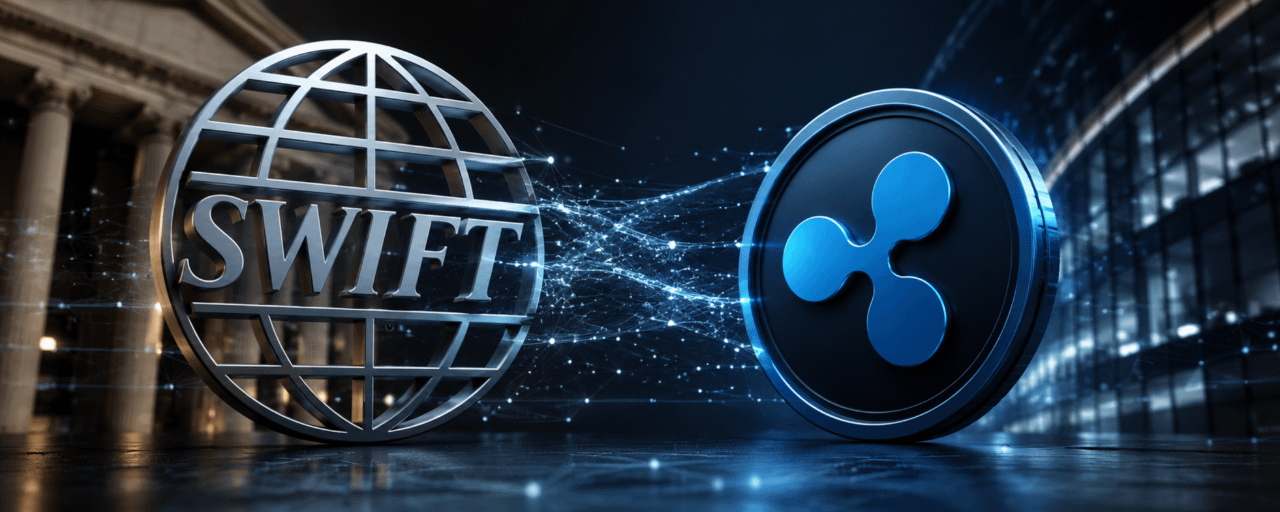
Former SWIFT Innovation Chief Rejects XRP Integration RumorsSpeculation surrounding a potential partnership between SWIFT and Ripple has once again gained momentum within the XRP community. This time, however, the claims were quickly challenged by someone who spent years helping shape the technology strategy of the world's largest financial messaging network. Former SWIFT Chief Innovation Officer Tom Zschach firmly rejected suggestions that SWIFT plans to integrate XRP or use the token as part of its payment infrastructure.
His comments came after a new wave of social media posts claimed that SWIFT had chosen to work with XRP instead of developing its own digital asset. However, no official announcement has been released to support those claims.
Former SWIFT executive dismisses the claims
Tom Zschach responded directly to posts suggesting that SWIFT was preparing to support XRP within its global payment network. According to him, the rumors are not backed by any official information.
He also questioned whether SWIFT currently uses XRP at all, emphasizing that there is no evidence the organization has adopted or plans to integrate the token into its infrastructure. His remarks challenged another round of speculation that spread rapidly across the crypto community.
This is not the first time Zschach has expressed skepticism about XRP. During his time at SWIFT, he repeatedly questioned whether banks would be willing to rely on a publicly traded and volatile cryptocurrency for settlement. He also argued that replacing SWIFT's long-established global infrastructure would be far more difficult than many Ripple supporters suggest.
SWIFT continues building its own blockchain infrastructure
Meanwhile, SWIFT is moving forward with its own blockchain-based infrastructure designed to connect traditional banking systems with tokenized financial assets.
The organization is developing a shared ledger platform that will enable tokenized commercial bank deposits and improve cross-border settlement efficiency. The first production version is expected to process real transactions during 2026.
Notably, SWIFT's official announcements do not identify XRP as a settlement asset. Instead, the project focuses on interoperability between regulated financial institutions, tokenized assets, and existing banking infrastructure rather than public cryptocurrencies.
Why do XRP rumors keep returning?
The latest speculation emerged after SWIFT announced a blockchain payments pilot involving 17 financial institutions. Some of those participating banks also maintain separate business relationships with Ripple or use services connected to the XRP Ledger.
However, that does not mean the SWIFT pilot itself relies on XRP. Large financial institutions frequently work with multiple payment providers and blockchain platforms simultaneously, and participation in one initiative does not automatically imply that every technology partner is involved.
Ripple itself has also evolved its strategy. Rather than positioning its technology as a direct replacement for SWIFT, the company has increasingly focused on working alongside traditional financial institutions through regulated payment solutions, digital asset custody services, and its RLUSD stablecoin.
For now, neither SWIFT's shared ledger initiative nor its latest blockchain pilot confirms any official XRP integration. Zschach's comments directly challenge the latest rumors, while SWIFT's public roadmap continues to emphasize interoperability and bank-issued digital assets rather than adoption of XRP.
#xrp , #Ripple , #crypto , #blockchain , #RLUSD
Stay one step ahead – follow our profile and stay informed about everything important in the world of cryptocurrencies.
Disclaimer:
The information and opinions presented in this article are for informational and educational purposes only and should not be considered financial or investment advice. Nothing on this page constitutes a recommendation to buy or sell any assets. Cryptocurrency investments are inherently risky and may result in financial loss. Always do your own research before making any investment decisions.
Former SWIFT Innovation Chief Rejects XRP Integration Rumors
Speculation surrounding a potential partnership between SWIFT and Ripple has once again gained momentum within the XRP community. This time, however, the claims were quickly challenged by someone who spent years helping shape the technology strategy of the world's largest financial messaging network. Former SWIFT Chief Innovation Officer Tom Zschach firmly rejected suggestions that SWIFT plans to integrate XRP or use the token as part of its payment infrastructure.
His comments came after a new wave of social media posts claimed that SWIFT had chosen to work with XRP instead of developing its own digital asset. However, no official announcement has been released to support those claims.
Former SWIFT executive dismisses the claims
Tom Zschach responded directly to posts suggesting that SWIFT was preparing to support XRP within its global payment network. According to him, the rumors are not backed by any official information.
He also questioned whether SWIFT currently uses XRP at all, emphasizing that there is no evidence the organization has adopted or plans to integrate the token into its infrastructure. His remarks challenged another round of speculation that spread rapidly across the crypto community.
This is not the first time Zschach has expressed skepticism about XRP. During his time at SWIFT, he repeatedly questioned whether banks would be willing to rely on a publicly traded and volatile cryptocurrency for settlement. He also argued that replacing SWIFT's long-established global infrastructure would be far more difficult than many Ripple supporters suggest.
SWIFT continues building its own blockchain infrastructure
Meanwhile, SWIFT is moving forward with its own blockchain-based infrastructure designed to connect traditional banking systems with tokenized financial assets.
The organization is developing a shared ledger platform that will enable tokenized commercial bank deposits and improve cross-border settlement efficiency. The first production version is expected to process real transactions during 2026.
Notably, SWIFT's official announcements do not identify XRP as a settlement asset. Instead, the project focuses on interoperability between regulated financial institutions, tokenized assets, and existing banking infrastructure rather than public cryptocurrencies.
Why do XRP rumors keep returning?
The latest speculation emerged after SWIFT announced a blockchain payments pilot involving 17 financial institutions. Some of those participating banks also maintain separate business relationships with Ripple or use services connected to the XRP Ledger.
However, that does not mean the SWIFT pilot itself relies on XRP. Large financial institutions frequently work with multiple payment providers and blockchain platforms simultaneously, and participation in one initiative does not automatically imply that every technology partner is involved.
Ripple itself has also evolved its strategy. Rather than positioning its technology as a direct replacement for SWIFT, the company has increasingly focused on working alongside traditional financial institutions through regulated payment solutions, digital asset custody services, and its RLUSD stablecoin.
For now, neither SWIFT's shared ledger initiative nor its latest blockchain pilot confirms any official XRP integration. Zschach's comments directly challenge the latest rumors, while SWIFT's public roadmap continues to emphasize interoperability and bank-issued digital assets rather than adoption of XRP.
#xrp , #Ripple , #crypto , #blockchain , #RLUSD
Stay one step ahead – follow our profile and stay informed about everything important in the world of cryptocurrencies.
Disclaimer:
The information and opinions presented in this article are for informational and educational purposes only and should not be considered financial or investment advice. Nothing on this page constitutes a recommendation to buy or sell any assets. Cryptocurrency investments are inherently risky and may result in financial loss. Always do your own research before making any investment decisions.
His comments came after a new wave of social media posts claimed that SWIFT had chosen to work with XRP instead of developing its own digital asset. However, no official announcement has been released to support those claims.
Former SWIFT executive dismisses the claims
Tom Zschach responded directly to posts suggesting that SWIFT was preparing to support XRP within its global payment network. According to him, the rumors are not backed by any official information.
He also questioned whether SWIFT currently uses XRP at all, emphasizing that there is no evidence the organization has adopted or plans to integrate the token into its infrastructure. His remarks challenged another round of speculation that spread rapidly across the crypto community.
This is not the first time Zschach has expressed skepticism about XRP. During his time at SWIFT, he repeatedly questioned whether banks would be willing to rely on a publicly traded and volatile cryptocurrency for settlement. He also argued that replacing SWIFT's long-established global infrastructure would be far more difficult than many Ripple supporters suggest.
SWIFT continues building its own blockchain infrastructure
Meanwhile, SWIFT is moving forward with its own blockchain-based infrastructure designed to connect traditional banking systems with tokenized financial assets.
The organization is developing a shared ledger platform that will enable tokenized commercial bank deposits and improve cross-border settlement efficiency. The first production version is expected to process real transactions during 2026.
Notably, SWIFT's official announcements do not identify XRP as a settlement asset. Instead, the project focuses on interoperability between regulated financial institutions, tokenized assets, and existing banking infrastructure rather than public cryptocurrencies.
Why do XRP rumors keep returning?
The latest speculation emerged after SWIFT announced a blockchain payments pilot involving 17 financial institutions. Some of those participating banks also maintain separate business relationships with Ripple or use services connected to the XRP Ledger.
However, that does not mean the SWIFT pilot itself relies on XRP. Large financial institutions frequently work with multiple payment providers and blockchain platforms simultaneously, and participation in one initiative does not automatically imply that every technology partner is involved.
Ripple itself has also evolved its strategy. Rather than positioning its technology as a direct replacement for SWIFT, the company has increasingly focused on working alongside traditional financial institutions through regulated payment solutions, digital asset custody services, and its RLUSD stablecoin.
For now, neither SWIFT's shared ledger initiative nor its latest blockchain pilot confirms any official XRP integration. Zschach's comments directly challenge the latest rumors, while SWIFT's public roadmap continues to emphasize interoperability and bank-issued digital assets rather than adoption of XRP.
#xrp , #Ripple , #crypto , #blockchain , #RLUSD
Stay one step ahead – follow our profile and stay informed about everything important in the world of cryptocurrencies.
Disclaimer:
The information and opinions presented in this article are for informational and educational purposes only and should not be considered financial or investment advice. Nothing on this page constitutes a recommendation to buy or sell any assets. Cryptocurrency investments are inherently risky and may result in financial loss. Always do your own research before making any investment decisions.
404
·
--

Article
Injective SDK Hack Exposed Wallet Keys and Seed Phrases, Security Researchers WarnThe developer ecosystem surrounding Injective has become the latest target of a serious software supply chain attack. Cybersecurity firm Socket discovered that a compromised version of the @injectivelabs/sdk-ts package contained malicious code capable of secretly transmitting wallet private keys and recovery seed phrases to servers controlled by attackers.
The incident highlights a growing trend in the crypto industry, where hackers are increasingly targeting developer tools instead of attacking blockchains or smart contracts directly.
Malicious update intercepted sensitive wallet data
According to Socket, version 1.20.21 of the @injectivelabs/sdk-ts package was compromised. The software development kit is widely used by developers and typically records tens of thousands of downloads each week.
Investigators found that attackers gained access to a developer's GitHub account before injecting malicious code into the package. Suspicious commits first appeared in early June and were later propagated across multiple additional packages within the Injective ecosystem.
The malware intercepted wallet generation functions, captured private keys and recovery seed phrases, encrypted the collected information, and transmitted it through fake telemetry requests to a server designed to resemble legitimate Injective infrastructure.
Security researchers warned that any private keys or mnemonic phrases processed by the compromised packages should be considered exposed. The risk was not limited to applications that directly installed the SDK, as projects relying on affected dependencies could also have been impacted.
Although the malicious version was removed shortly after it was discovered, experts cautioned that the broader campaign may not yet be fully contained.
Injective CEO Eric Chen stated that the affected npm packages were outdated and that the issue has since been resolved. He also emphasized that neither the Injective blockchain nor user funds on the network were directly compromised. Socket has not confirmed whether the attack ultimately resulted in stolen crypto assets.
Developers are becoming a primary target
The attack reflects a broader shift toward software supply chain compromises within the cryptocurrency industry. Rather than attempting to exploit blockchain protocols themselves, attackers are increasingly focusing on development tools, package repositories, and software libraries used to build wallets, exchanges, and decentralized applications.
In its latest threat report, the Security Alliance (SEAL) warned that cybercriminals are making greater use of platforms such as GitHub, npm, and even Google search results to distribute malicious software.
In several cases, compromised developer machines were reportedly used to inject malicious code directly into corporate GitHub repositories, allowing attackers to spread malware through trusted software distribution channels. Researchers have also observed a rise in sophisticated campaigns combining information stealers, remote access trojans (RATs), backdoors, and malware specifically targeting macOS systems.
The Injective incident is not an isolated case. Earlier this year, compromised Axios npm packages and the large-scale TrapDoor campaign targeted developers working in cryptocurrency, DeFi, artificial intelligence, and cybersecurity. GitHub also disclosed unauthorized access to several internal repositories after a company employee's device was compromised.
According to blockchain security firm CertiK, wallet compromises became the costliest category of crypto attacks during the first half of 2026. Across 33 separate incidents, attackers stole approximately $444 million in digital assets, underscoring that securing developer infrastructure has become one of the industry's most critical cybersecurity challenges.
#CryptoSecurity , #CyberSecurity , #blockchain , #defi , #CryptoNews
Stay one step ahead – follow our profile and stay informed about everything important in the world of cryptocurrencies.
Disclaimer:
The information and opinions presented in this article are for informational and educational purposes only and should not be considered financial or investment advice. Nothing on this page constitutes a recommendation to buy or sell any assets. Cryptocurrency investments are inherently risky and may result in financial loss. Always do your own research before making any investment decisions.
Injective SDK Hack Exposed Wallet Keys and Seed Phrases, Security Researchers Warn
The developer ecosystem surrounding Injective has become the latest target of a serious software supply chain attack. Cybersecurity firm Socket discovered that a compromised version of the @injectivelabs/sdk-ts package contained malicious code capable of secretly transmitting wallet private keys and recovery seed phrases to servers controlled by attackers.
The incident highlights a growing trend in the crypto industry, where hackers are increasingly targeting developer tools instead of attacking blockchains or smart contracts directly.
Malicious update intercepted sensitive wallet data
According to Socket, version 1.20.21 of the @injectivelabs/sdk-ts package was compromised. The software development kit is widely used by developers and typically records tens of thousands of downloads each week.
Investigators found that attackers gained access to a developer's GitHub account before injecting malicious code into the package. Suspicious commits first appeared in early June and were later propagated across multiple additional packages within the Injective ecosystem.
The malware intercepted wallet generation functions, captured private keys and recovery seed phrases, encrypted the collected information, and transmitted it through fake telemetry requests to a server designed to resemble legitimate Injective infrastructure.
Security researchers warned that any private keys or mnemonic phrases processed by the compromised packages should be considered exposed. The risk was not limited to applications that directly installed the SDK, as projects relying on affected dependencies could also have been impacted.
Although the malicious version was removed shortly after it was discovered, experts cautioned that the broader campaign may not yet be fully contained.
Injective CEO Eric Chen stated that the affected npm packages were outdated and that the issue has since been resolved. He also emphasized that neither the Injective blockchain nor user funds on the network were directly compromised. Socket has not confirmed whether the attack ultimately resulted in stolen crypto assets.
Developers are becoming a primary target
The attack reflects a broader shift toward software supply chain compromises within the cryptocurrency industry. Rather than attempting to exploit blockchain protocols themselves, attackers are increasingly focusing on development tools, package repositories, and software libraries used to build wallets, exchanges, and decentralized applications.
In its latest threat report, the Security Alliance (SEAL) warned that cybercriminals are making greater use of platforms such as GitHub, npm, and even Google search results to distribute malicious software.
In several cases, compromised developer machines were reportedly used to inject malicious code directly into corporate GitHub repositories, allowing attackers to spread malware through trusted software distribution channels. Researchers have also observed a rise in sophisticated campaigns combining information stealers, remote access trojans (RATs), backdoors, and malware specifically targeting macOS systems.
The Injective incident is not an isolated case. Earlier this year, compromised Axios npm packages and the large-scale TrapDoor campaign targeted developers working in cryptocurrency, DeFi, artificial intelligence, and cybersecurity. GitHub also disclosed unauthorized access to several internal repositories after a company employee's device was compromised.
According to blockchain security firm CertiK, wallet compromises became the costliest category of crypto attacks during the first half of 2026. Across 33 separate incidents, attackers stole approximately $444 million in digital assets, underscoring that securing developer infrastructure has become one of the industry's most critical cybersecurity challenges.
#CryptoSecurity , #CyberSecurity , #blockchain , #defi , #CryptoNews
Stay one step ahead – follow our profile and stay informed about everything important in the world of cryptocurrencies.
Disclaimer:
The information and opinions presented in this article are for informational and educational purposes only and should not be considered financial or investment advice. Nothing on this page constitutes a recommendation to buy or sell any assets. Cryptocurrency investments are inherently risky and may result in financial loss. Always do your own research before making any investment decisions.
The incident highlights a growing trend in the crypto industry, where hackers are increasingly targeting developer tools instead of attacking blockchains or smart contracts directly.
Malicious update intercepted sensitive wallet data
According to Socket, version 1.20.21 of the @injectivelabs/sdk-ts package was compromised. The software development kit is widely used by developers and typically records tens of thousands of downloads each week.
Investigators found that attackers gained access to a developer's GitHub account before injecting malicious code into the package. Suspicious commits first appeared in early June and were later propagated across multiple additional packages within the Injective ecosystem.
The malware intercepted wallet generation functions, captured private keys and recovery seed phrases, encrypted the collected information, and transmitted it through fake telemetry requests to a server designed to resemble legitimate Injective infrastructure.
Security researchers warned that any private keys or mnemonic phrases processed by the compromised packages should be considered exposed. The risk was not limited to applications that directly installed the SDK, as projects relying on affected dependencies could also have been impacted.
Although the malicious version was removed shortly after it was discovered, experts cautioned that the broader campaign may not yet be fully contained.
Injective CEO Eric Chen stated that the affected npm packages were outdated and that the issue has since been resolved. He also emphasized that neither the Injective blockchain nor user funds on the network were directly compromised. Socket has not confirmed whether the attack ultimately resulted in stolen crypto assets.
Developers are becoming a primary target
The attack reflects a broader shift toward software supply chain compromises within the cryptocurrency industry. Rather than attempting to exploit blockchain protocols themselves, attackers are increasingly focusing on development tools, package repositories, and software libraries used to build wallets, exchanges, and decentralized applications.
In its latest threat report, the Security Alliance (SEAL) warned that cybercriminals are making greater use of platforms such as GitHub, npm, and even Google search results to distribute malicious software.
In several cases, compromised developer machines were reportedly used to inject malicious code directly into corporate GitHub repositories, allowing attackers to spread malware through trusted software distribution channels. Researchers have also observed a rise in sophisticated campaigns combining information stealers, remote access trojans (RATs), backdoors, and malware specifically targeting macOS systems.
The Injective incident is not an isolated case. Earlier this year, compromised Axios npm packages and the large-scale TrapDoor campaign targeted developers working in cryptocurrency, DeFi, artificial intelligence, and cybersecurity. GitHub also disclosed unauthorized access to several internal repositories after a company employee's device was compromised.
According to blockchain security firm CertiK, wallet compromises became the costliest category of crypto attacks during the first half of 2026. Across 33 separate incidents, attackers stole approximately $444 million in digital assets, underscoring that securing developer infrastructure has become one of the industry's most critical cybersecurity challenges.
#CryptoSecurity , #CyberSecurity , #blockchain , #defi , #CryptoNews
Stay one step ahead – follow our profile and stay informed about everything important in the world of cryptocurrencies.
Disclaimer:
The information and opinions presented in this article are for informational and educational purposes only and should not be considered financial or investment advice. Nothing on this page constitutes a recommendation to buy or sell any assets. Cryptocurrency investments are inherently risky and may result in financial loss. Always do your own research before making any investment decisions.
403
·
--

Article
Crypto Traders Shift Toward TradFi as Tokenized Stocks Generate Record Trading VolumesCryptocurrency exchanges are no longer just a marketplace for Bitcoin and altcoins. Tokenized traditional stocks are attracting increasing attention from investors, with trading activity surging over the past few months. In June alone, perpetual futures tied to tokenized equities generated more than $54 billion in trading volume, highlighting a major shift in trader preferences.
Surprisingly, the strongest demand was not driven by technology giants such as Apple or Nvidia, but by SpaceX, whose tokenized shares dominated the market throughout the month.
Tokenized stocks are experiencing explosive growth
According to the latest data from CryptoQuant, cryptocurrency traders are increasingly allocating capital to tokenized versions of traditional equities. Crypto analyst Ali Martinez reported that perpetual futures linked to tokenized stocks recorded more than $54 billion in trading volume during June, marking one of the strongest expansions in the crypto derivatives market this year.
During the same period, weekly trading volume for equity derivatives on centralized crypto exchanges climbed to a record $11.6 billion.
The growth has been remarkable. Monthly trading volume increased from approximately $831 million in July 2025 to more than $34 billion by May 2026, significantly outpacing the growth of the on-chain real-world asset (RWA) market.
Binance dominates the market
Among crypto exchanges, Binance has emerged as the clear market leader.
In June alone, Binance processed approximately $53.8 billion in perpetual futures trading volume for tokenized stocks, accounting for nearly 80% of the global market. Bitget ranked second with around $9 billion, while Bybit and Gate held considerably smaller market shares.
Market data also show how rapidly trading activity has concentrated on Binance. The sector remained relatively small at the beginning of the year before experiencing explosive growth during the spring months.
SpaceX leads the surge
The biggest contributor to June's record trading volumes was SpaceX. According to CryptoQuant, tokenized SpaceX shares generated approximately $36 billion in trading volume during the month, representing nearly two-thirds of the entire tokenized equity perpetual futures market.
Beyond SpaceX, trading activity has also accelerated in several other well-known companies. Strategy (MSTR), Circle (CRCL), and Intel (INTC) have all seen steadily rising volumes, suggesting that crypto traders are increasingly using digital asset exchanges to speculate on traditional equities as well.
The growing popularity of tokenized stocks is largely driven by the advantages offered by cryptocurrency exchanges over traditional stock markets. These platforms operate 24 hours a day, seven days a week, provide access to higher leverage, and allow investors around the world to trade without the limitations of conventional market hours.
The rapid expansion of tokenized equities suggests that the line between cryptocurrency markets and traditional finance continues to blur. If current trends persist, tokenized stocks could become one of the fastest-growing segments of the digital asset industry.
#TradFi , #crypto , #blockchain , #Binance , #Web3
Stay one step ahead – follow our profile and stay informed about everything important in the world of cryptocurrencies.
Disclaimer:
The information and opinions presented in this article are for informational and educational purposes only and should not be considered financial or investment advice. Nothing on this page constitutes a recommendation to buy or sell any assets. Cryptocurrency investments are inherently risky and may result in financial loss. Always do your own research before making any investment decisions.
Crypto Traders Shift Toward TradFi as Tokenized Stocks Generate Record Trading Volumes
Cryptocurrency exchanges are no longer just a marketplace for Bitcoin and altcoins. Tokenized traditional stocks are attracting increasing attention from investors, with trading activity surging over the past few months. In June alone, perpetual futures tied to tokenized equities generated more than $54 billion in trading volume, highlighting a major shift in trader preferences.
Surprisingly, the strongest demand was not driven by technology giants such as Apple or Nvidia, but by SpaceX, whose tokenized shares dominated the market throughout the month.
Tokenized stocks are experiencing explosive growth
According to the latest data from CryptoQuant, cryptocurrency traders are increasingly allocating capital to tokenized versions of traditional equities. Crypto analyst Ali Martinez reported that perpetual futures linked to tokenized stocks recorded more than $54 billion in trading volume during June, marking one of the strongest expansions in the crypto derivatives market this year.
During the same period, weekly trading volume for equity derivatives on centralized crypto exchanges climbed to a record $11.6 billion.
The growth has been remarkable. Monthly trading volume increased from approximately $831 million in July 2025 to more than $34 billion by May 2026, significantly outpacing the growth of the on-chain real-world asset (RWA) market.
Binance dominates the market
Among crypto exchanges, Binance has emerged as the clear market leader.
In June alone, Binance processed approximately $53.8 billion in perpetual futures trading volume for tokenized stocks, accounting for nearly 80% of the global market. Bitget ranked second with around $9 billion, while Bybit and Gate held considerably smaller market shares.
Market data also show how rapidly trading activity has concentrated on Binance. The sector remained relatively small at the beginning of the year before experiencing explosive growth during the spring months.
SpaceX leads the surge
The biggest contributor to June's record trading volumes was SpaceX. According to CryptoQuant, tokenized SpaceX shares generated approximately $36 billion in trading volume during the month, representing nearly two-thirds of the entire tokenized equity perpetual futures market.
Beyond SpaceX, trading activity has also accelerated in several other well-known companies. Strategy (MSTR), Circle (CRCL), and Intel (INTC) have all seen steadily rising volumes, suggesting that crypto traders are increasingly using digital asset exchanges to speculate on traditional equities as well.
The growing popularity of tokenized stocks is largely driven by the advantages offered by cryptocurrency exchanges over traditional stock markets. These platforms operate 24 hours a day, seven days a week, provide access to higher leverage, and allow investors around the world to trade without the limitations of conventional market hours.
The rapid expansion of tokenized equities suggests that the line between cryptocurrency markets and traditional finance continues to blur. If current trends persist, tokenized stocks could become one of the fastest-growing segments of the digital asset industry.
#TradFi , #crypto , #blockchain , #Binance , #Web3
Stay one step ahead – follow our profile and stay informed about everything important in the world of cryptocurrencies.
Disclaimer:
The information and opinions presented in this article are for informational and educational purposes only and should not be considered financial or investment advice. Nothing on this page constitutes a recommendation to buy or sell any assets. Cryptocurrency investments are inherently risky and may result in financial loss. Always do your own research before making any investment decisions.
Surprisingly, the strongest demand was not driven by technology giants such as Apple or Nvidia, but by SpaceX, whose tokenized shares dominated the market throughout the month.
Tokenized stocks are experiencing explosive growth
According to the latest data from CryptoQuant, cryptocurrency traders are increasingly allocating capital to tokenized versions of traditional equities. Crypto analyst Ali Martinez reported that perpetual futures linked to tokenized stocks recorded more than $54 billion in trading volume during June, marking one of the strongest expansions in the crypto derivatives market this year.
During the same period, weekly trading volume for equity derivatives on centralized crypto exchanges climbed to a record $11.6 billion.
The growth has been remarkable. Monthly trading volume increased from approximately $831 million in July 2025 to more than $34 billion by May 2026, significantly outpacing the growth of the on-chain real-world asset (RWA) market.
Binance dominates the market
Among crypto exchanges, Binance has emerged as the clear market leader.
In June alone, Binance processed approximately $53.8 billion in perpetual futures trading volume for tokenized stocks, accounting for nearly 80% of the global market. Bitget ranked second with around $9 billion, while Bybit and Gate held considerably smaller market shares.
Market data also show how rapidly trading activity has concentrated on Binance. The sector remained relatively small at the beginning of the year before experiencing explosive growth during the spring months.
SpaceX leads the surge
The biggest contributor to June's record trading volumes was SpaceX. According to CryptoQuant, tokenized SpaceX shares generated approximately $36 billion in trading volume during the month, representing nearly two-thirds of the entire tokenized equity perpetual futures market.
Beyond SpaceX, trading activity has also accelerated in several other well-known companies. Strategy (MSTR), Circle (CRCL), and Intel (INTC) have all seen steadily rising volumes, suggesting that crypto traders are increasingly using digital asset exchanges to speculate on traditional equities as well.
The growing popularity of tokenized stocks is largely driven by the advantages offered by cryptocurrency exchanges over traditional stock markets. These platforms operate 24 hours a day, seven days a week, provide access to higher leverage, and allow investors around the world to trade without the limitations of conventional market hours.
The rapid expansion of tokenized equities suggests that the line between cryptocurrency markets and traditional finance continues to blur. If current trends persist, tokenized stocks could become one of the fastest-growing segments of the digital asset industry.
#TradFi , #crypto , #blockchain , #Binance , #Web3
Stay one step ahead – follow our profile and stay informed about everything important in the world of cryptocurrencies.
Disclaimer:
The information and opinions presented in this article are for informational and educational purposes only and should not be considered financial or investment advice. Nothing on this page constitutes a recommendation to buy or sell any assets. Cryptocurrency investments are inherently risky and may result in financial loss. Always do your own research before making any investment decisions.
1
1.5k
·
--

Article
Ethereum on the Verge of a Major Breakout? Analysts See a Strong Bullish SignalEthereum is preparing for one of its most significant network upgrades since the transition to Proof of Stake. Although the second-largest cryptocurrency continues to trade well below its all-time high and social media attention remains subdued, some analysts believe this combination could set the stage for a major price move.
According to them, Ethereum's underlying fundamentals remain strong, while investor behavior suggests that long-term buyers are gradually replacing short-term speculators.
Glamsterdam upgrade could significantly boost Ethereum's performance
Market analyst Wise Crypto noted that Ethereum's on-chain activity has remained remarkably stable despite social engagement falling to its lowest level in nearly a year. The network continues to process approximately 450,000 active addresses, indicating that real-world usage remains resilient.
Attention is now turning to the upcoming Glamsterdam upgrade, which is expected to become Ethereum's most important technical improvement since The Merge. The upgrade is anticipated to increase the network's gas limit, significantly reduce transaction fees, and improve overall throughput. If successful, Ethereum could process substantially more transactions per second than it does today.
According to Wise Crypto, the gap between weak public attention and strong on-chain activity often appears before major market moves. The analyst identified $1,754 as a critical technical level. A sustained move above that price could open the door toward $2,440, while losing support could expose Ethereum to a decline toward the $880 area.
Exchange data point to a shift in investor behavior
Additional signals are emerging from both the derivatives and spot markets. CryptoQuant analyst Amr Taha highlighted a sharp decline in Ethereum futures open interest on Binance, marking the largest drop since last August. The move may indicate that leveraged traders are reducing their positions.
At the same time, Ethereum spot trading volume on OKX has surged significantly. According to Taha, this combination suggests that speculative traders are exiting the market while long-term investors continue accumulating ETH through direct spot purchases.
Many analysts view this type of market structure as healthier than rallies driven primarily by leveraged derivatives, as it reflects genuine demand rather than speculative positioning.
Optimism grows despite strong resistance
Ethereum has tested the $1,800 resistance level several times in recent days but has yet to break through decisively. Nevertheless, several prominent figures in the crypto industry remain optimistic about the asset's long-term outlook.
Consensys co-founder Joseph Lubin recently stated that institutional interest in Ethereum continues to strengthen. He highlighted the network's more than decade-long operating history without major disruptions, along with increasing collaboration between the Ethereum Foundation and new organizations focused on expanding the ecosystem.
Crypto analyst Michaël van de Poppe also maintains a bullish outlook, arguing that Ethereum's weakest period is likely behind it. He pointed out that ETH recently experienced an unusually long streak of weak quarterly performances and believes the probability of another consecutive disappointing quarter is relatively low. Van de Poppe also identified the expected progress of the Clarity Act in the United States as a potential catalyst that could improve regulatory certainty for the broader digital asset industry and support Ethereum's long-term growth.
#ETH , #Ethereum , #crypto , #CryptoMarkets , #altcoins
Stay one step ahead – follow our profile and stay informed about everything important in the world of cryptocurrencies.
Disclaimer:
The information and opinions presented in this article are for informational and educational purposes only and should not be considered financial or investment advice. Nothing on this page constitutes a recommendation to buy or sell any assets. Cryptocurrency investments are inherently risky and may result in financial loss. Always do your own research before making any investment decisions.
Ethereum on the Verge of a Major Breakout? Analysts See a Strong Bullish Signal
Ethereum is preparing for one of its most significant network upgrades since the transition to Proof of Stake. Although the second-largest cryptocurrency continues to trade well below its all-time high and social media attention remains subdued, some analysts believe this combination could set the stage for a major price move.
According to them, Ethereum's underlying fundamentals remain strong, while investor behavior suggests that long-term buyers are gradually replacing short-term speculators.
Glamsterdam upgrade could significantly boost Ethereum's performance
Market analyst Wise Crypto noted that Ethereum's on-chain activity has remained remarkably stable despite social engagement falling to its lowest level in nearly a year. The network continues to process approximately 450,000 active addresses, indicating that real-world usage remains resilient.
Attention is now turning to the upcoming Glamsterdam upgrade, which is expected to become Ethereum's most important technical improvement since The Merge. The upgrade is anticipated to increase the network's gas limit, significantly reduce transaction fees, and improve overall throughput. If successful, Ethereum could process substantially more transactions per second than it does today.
According to Wise Crypto, the gap between weak public attention and strong on-chain activity often appears before major market moves. The analyst identified $1,754 as a critical technical level. A sustained move above that price could open the door toward $2,440, while losing support could expose Ethereum to a decline toward the $880 area.
Exchange data point to a shift in investor behavior
Additional signals are emerging from both the derivatives and spot markets. CryptoQuant analyst Amr Taha highlighted a sharp decline in Ethereum futures open interest on Binance, marking the largest drop since last August. The move may indicate that leveraged traders are reducing their positions.
At the same time, Ethereum spot trading volume on OKX has surged significantly. According to Taha, this combination suggests that speculative traders are exiting the market while long-term investors continue accumulating ETH through direct spot purchases.
Many analysts view this type of market structure as healthier than rallies driven primarily by leveraged derivatives, as it reflects genuine demand rather than speculative positioning.
Optimism grows despite strong resistance
Ethereum has tested the $1,800 resistance level several times in recent days but has yet to break through decisively. Nevertheless, several prominent figures in the crypto industry remain optimistic about the asset's long-term outlook.
Consensys co-founder Joseph Lubin recently stated that institutional interest in Ethereum continues to strengthen. He highlighted the network's more than decade-long operating history without major disruptions, along with increasing collaboration between the Ethereum Foundation and new organizations focused on expanding the ecosystem.
Crypto analyst Michaël van de Poppe also maintains a bullish outlook, arguing that Ethereum's weakest period is likely behind it. He pointed out that ETH recently experienced an unusually long streak of weak quarterly performances and believes the probability of another consecutive disappointing quarter is relatively low. Van de Poppe also identified the expected progress of the Clarity Act in the United States as a potential catalyst that could improve regulatory certainty for the broader digital asset industry and support Ethereum's long-term growth.
#ETH , #Ethereum , #crypto , #CryptoMarkets , #altcoins
Stay one step ahead – follow our profile and stay informed about everything important in the world of cryptocurrencies.
Disclaimer:
The information and opinions presented in this article are for informational and educational purposes only and should not be considered financial or investment advice. Nothing on this page constitutes a recommendation to buy or sell any assets. Cryptocurrency investments are inherently risky and may result in financial loss. Always do your own research before making any investment decisions.
According to them, Ethereum's underlying fundamentals remain strong, while investor behavior suggests that long-term buyers are gradually replacing short-term speculators.
Glamsterdam upgrade could significantly boost Ethereum's performance
Market analyst Wise Crypto noted that Ethereum's on-chain activity has remained remarkably stable despite social engagement falling to its lowest level in nearly a year. The network continues to process approximately 450,000 active addresses, indicating that real-world usage remains resilient.
Attention is now turning to the upcoming Glamsterdam upgrade, which is expected to become Ethereum's most important technical improvement since The Merge. The upgrade is anticipated to increase the network's gas limit, significantly reduce transaction fees, and improve overall throughput. If successful, Ethereum could process substantially more transactions per second than it does today.
According to Wise Crypto, the gap between weak public attention and strong on-chain activity often appears before major market moves. The analyst identified $1,754 as a critical technical level. A sustained move above that price could open the door toward $2,440, while losing support could expose Ethereum to a decline toward the $880 area.
Exchange data point to a shift in investor behavior
Additional signals are emerging from both the derivatives and spot markets. CryptoQuant analyst Amr Taha highlighted a sharp decline in Ethereum futures open interest on Binance, marking the largest drop since last August. The move may indicate that leveraged traders are reducing their positions.
At the same time, Ethereum spot trading volume on OKX has surged significantly. According to Taha, this combination suggests that speculative traders are exiting the market while long-term investors continue accumulating ETH through direct spot purchases.
Many analysts view this type of market structure as healthier than rallies driven primarily by leveraged derivatives, as it reflects genuine demand rather than speculative positioning.
Optimism grows despite strong resistance
Ethereum has tested the $1,800 resistance level several times in recent days but has yet to break through decisively. Nevertheless, several prominent figures in the crypto industry remain optimistic about the asset's long-term outlook.
Consensys co-founder Joseph Lubin recently stated that institutional interest in Ethereum continues to strengthen. He highlighted the network's more than decade-long operating history without major disruptions, along with increasing collaboration between the Ethereum Foundation and new organizations focused on expanding the ecosystem.
Crypto analyst Michaël van de Poppe also maintains a bullish outlook, arguing that Ethereum's weakest period is likely behind it. He pointed out that ETH recently experienced an unusually long streak of weak quarterly performances and believes the probability of another consecutive disappointing quarter is relatively low. Van de Poppe also identified the expected progress of the Clarity Act in the United States as a potential catalyst that could improve regulatory certainty for the broader digital asset industry and support Ethereum's long-term growth.
#ETH , #Ethereum , #crypto , #CryptoMarkets , #altcoins
Stay one step ahead – follow our profile and stay informed about everything important in the world of cryptocurrencies.
Disclaimer:
The information and opinions presented in this article are for informational and educational purposes only and should not be considered financial or investment advice. Nothing on this page constitutes a recommendation to buy or sell any assets. Cryptocurrency investments are inherently risky and may result in financial loss. Always do your own research before making any investment decisions.
135
·
--
Article
U.S. Risks Losing Its Edge in Crypto as CFTC Staffing Crisis Threatens Regulatory ProgressThe United States could lose its ability to shape the future of global cryptocurrency regulation. The problem is not a lack of proposed legislation, but an unexpected staffing crisis at the Commodity Futures Trading Commission (CFTC). While Congress continues debating the long-awaited Clarity Act, the agency expected to oversee digital commodity markets is currently operating with just a single commissioner.
According to lawmakers and industry advocates, the situation could allow other countries to take the lead in setting the rules for the rapidly expanding digital asset industry. Unless the issue is resolved soon, the U.S. risks falling behind in one of the world's fastest-growing financial sectors.
CFTC is operating with only one commissioner
The Clarity Act would place the regulation of spot trading in digital commodities under the authority of the CFTC. However, the agency currently has only one serving commissioner, Republican Michael Selig, despite being designed to operate with a five-member commission.
The staffing shortage has sparked a political dispute in Washington. Democrats have accused President Donald Trump's administration of failing to nominate commissioners to key independent regulatory agencies, including both the CFTC and the SEC. The White House rejected those claims, arguing that Senate Democrats have delayed or blocked confirmation of presidential nominees.
The administration also stated that it repeatedly asked Democratic leaders to recommend candidates for seats traditionally filled by members of their party but received no response.
The debate intensified following a recent U.S. Supreme Court ruling that expanded the president's authority to remove leaders of several independent federal agencies. According to the White House, the decision undermines many of the legal arguments raised by Democrats regarding the administration's appointment process.
The administration had previously withdrawn the nomination of Brian Quintenz to lead the CFTC before later nominating Michael Selig for the position. However, the agency's leadership remains far from fully staffed.
Lawmakers warn the U.S. could fall behind
Concerns extend beyond the commission's leadership. The CFTC is one of the smallest financial regulators in the United States, employing roughly 540 staff members, compared with approximately 4,200 employees at the Securities and Exchange Commission (SEC). The agency has also experienced a significant decline in staffing over recent years.
Several lawmakers question whether a single commissioner can effectively oversee a digital asset market that operates around the clock. Others argue that regulations adopted by a one-member commission could be more vulnerable to legal challenges than rules approved by a fully constituted five-member panel.
Senator Cynthia Lummis, one of Congress's strongest advocates for cryptocurrency legislation, warned that passing the Clarity Act may represent the country's last realistic opportunity to establish a comprehensive regulatory framework for digital assets before the end of the decade. Without congressional action, she argued, other jurisdictions will define the rules of the industry while the United States spends years trying to catch up.
Clarity Act still faces major hurdles
The Senate is expected to resume consideration of the legislation after returning on July 14, but several controversial provisions remain unresolved.
Among the key issues are legal protections for blockchain developers who do not directly control decentralized networks, proposed exemptions from certain money transmission requirements, and concerns that such exemptions could weaken anti-money laundering safeguards.
Another closely watched provision would allow platforms such as Coinbase to continue offering rewards tied to stablecoin holdings under certain conditions, even though the GENIUS Act prohibits stablecoin issuers from providing similar incentives directly.
Traditional financial institutions are also paying close attention to the legislation. Analysts at Standard Chartered estimate that the continued growth of stablecoins could divert approximately $1 trillion from traditional bank deposits by 2028. Those concerns remain one of the primary reasons why parts of the banking industry continue to oppose aspects of the proposed regulatory framework.
Although cryptocurrency markets have so far reacted calmly to the political uncertainty, the outcome of the Clarity Act debate could significantly influence the future of digital asset regulation in the United States. Investors will now be watching closely to see whether lawmakers can fully staff the CFTC and approve a regulatory framework capable of preserving America's leadership in the global cryptocurrency industry.
#CFTC , #CLARITYAct , #CryptoRegulation , #DigitalAssets , #blockchain
Stay one step ahead – follow our profile and stay informed about everything important in the world of cryptocurrencies.
Disclaimer:
The information and opinions presented in this article are for informational and educational purposes only and should not be considered financial or investment advice. Nothing on this page constitutes a recommendation to buy or sell any assets. Cryptocurrency investments are inherently risky and may result in financial loss. Always do your own research before making any investment decisions.
U.S. Risks Losing Its Edge in Crypto as CFTC Staffing Crisis Threatens Regulatory Progress
The United States could lose its ability to shape the future of global cryptocurrency regulation. The problem is not a lack of proposed legislation, but an unexpected staffing crisis at the Commodity Futures Trading Commission (CFTC). While Congress continues debating the long-awaited Clarity Act, the agency expected to oversee digital commodity markets is currently operating with just a single commissioner.
According to lawmakers and industry advocates, the situation could allow other countries to take the lead in setting the rules for the rapidly expanding digital asset industry. Unless the issue is resolved soon, the U.S. risks falling behind in one of the world's fastest-growing financial sectors.
CFTC is operating with only one commissioner
The Clarity Act would place the regulation of spot trading in digital commodities under the authority of the CFTC. However, the agency currently has only one serving commissioner, Republican Michael Selig, despite being designed to operate with a five-member commission.
The staffing shortage has sparked a political dispute in Washington. Democrats have accused President Donald Trump's administration of failing to nominate commissioners to key independent regulatory agencies, including both the CFTC and the SEC. The White House rejected those claims, arguing that Senate Democrats have delayed or blocked confirmation of presidential nominees.
The administration also stated that it repeatedly asked Democratic leaders to recommend candidates for seats traditionally filled by members of their party but received no response.
The debate intensified following a recent U.S. Supreme Court ruling that expanded the president's authority to remove leaders of several independent federal agencies. According to the White House, the decision undermines many of the legal arguments raised by Democrats regarding the administration's appointment process.
The administration had previously withdrawn the nomination of Brian Quintenz to lead the CFTC before later nominating Michael Selig for the position. However, the agency's leadership remains far from fully staffed.
Lawmakers warn the U.S. could fall behind
Concerns extend beyond the commission's leadership. The CFTC is one of the smallest financial regulators in the United States, employing roughly 540 staff members, compared with approximately 4,200 employees at the Securities and Exchange Commission (SEC). The agency has also experienced a significant decline in staffing over recent years.
Several lawmakers question whether a single commissioner can effectively oversee a digital asset market that operates around the clock. Others argue that regulations adopted by a one-member commission could be more vulnerable to legal challenges than rules approved by a fully constituted five-member panel.
Senator Cynthia Lummis, one of Congress's strongest advocates for cryptocurrency legislation, warned that passing the Clarity Act may represent the country's last realistic opportunity to establish a comprehensive regulatory framework for digital assets before the end of the decade. Without congressional action, she argued, other jurisdictions will define the rules of the industry while the United States spends years trying to catch up.
Clarity Act still faces major hurdles
The Senate is expected to resume consideration of the legislation after returning on July 14, but several controversial provisions remain unresolved.
Among the key issues are legal protections for blockchain developers who do not directly control decentralized networks, proposed exemptions from certain money transmission requirements, and concerns that such exemptions could weaken anti-money laundering safeguards.
Another closely watched provision would allow platforms such as Coinbase to continue offering rewards tied to stablecoin holdings under certain conditions, even though the GENIUS Act prohibits stablecoin issuers from providing similar incentives directly.
Traditional financial institutions are also paying close attention to the legislation. Analysts at Standard Chartered estimate that the continued growth of stablecoins could divert approximately $1 trillion from traditional bank deposits by 2028. Those concerns remain one of the primary reasons why parts of the banking industry continue to oppose aspects of the proposed regulatory framework.
Although cryptocurrency markets have so far reacted calmly to the political uncertainty, the outcome of the Clarity Act debate could significantly influence the future of digital asset regulation in the United States. Investors will now be watching closely to see whether lawmakers can fully staff the CFTC and approve a regulatory framework capable of preserving America's leadership in the global cryptocurrency industry.
#CFTC , #CLARITYAct , #CryptoRegulation , #DigitalAssets , #blockchain
Stay one step ahead – follow our profile and stay informed about everything important in the world of cryptocurrencies.
Disclaimer:
The information and opinions presented in this article are for informational and educational purposes only and should not be considered financial or investment advice. Nothing on this page constitutes a recommendation to buy or sell any assets. Cryptocurrency investments are inherently risky and may result in financial loss. Always do your own research before making any investment decisions.
According to lawmakers and industry advocates, the situation could allow other countries to take the lead in setting the rules for the rapidly expanding digital asset industry. Unless the issue is resolved soon, the U.S. risks falling behind in one of the world's fastest-growing financial sectors.
CFTC is operating with only one commissioner
The Clarity Act would place the regulation of spot trading in digital commodities under the authority of the CFTC. However, the agency currently has only one serving commissioner, Republican Michael Selig, despite being designed to operate with a five-member commission.
The staffing shortage has sparked a political dispute in Washington. Democrats have accused President Donald Trump's administration of failing to nominate commissioners to key independent regulatory agencies, including both the CFTC and the SEC. The White House rejected those claims, arguing that Senate Democrats have delayed or blocked confirmation of presidential nominees.
The administration also stated that it repeatedly asked Democratic leaders to recommend candidates for seats traditionally filled by members of their party but received no response.
The debate intensified following a recent U.S. Supreme Court ruling that expanded the president's authority to remove leaders of several independent federal agencies. According to the White House, the decision undermines many of the legal arguments raised by Democrats regarding the administration's appointment process.
The administration had previously withdrawn the nomination of Brian Quintenz to lead the CFTC before later nominating Michael Selig for the position. However, the agency's leadership remains far from fully staffed.
Lawmakers warn the U.S. could fall behind
Concerns extend beyond the commission's leadership. The CFTC is one of the smallest financial regulators in the United States, employing roughly 540 staff members, compared with approximately 4,200 employees at the Securities and Exchange Commission (SEC). The agency has also experienced a significant decline in staffing over recent years.
Several lawmakers question whether a single commissioner can effectively oversee a digital asset market that operates around the clock. Others argue that regulations adopted by a one-member commission could be more vulnerable to legal challenges than rules approved by a fully constituted five-member panel.
Senator Cynthia Lummis, one of Congress's strongest advocates for cryptocurrency legislation, warned that passing the Clarity Act may represent the country's last realistic opportunity to establish a comprehensive regulatory framework for digital assets before the end of the decade. Without congressional action, she argued, other jurisdictions will define the rules of the industry while the United States spends years trying to catch up.
Clarity Act still faces major hurdles
The Senate is expected to resume consideration of the legislation after returning on July 14, but several controversial provisions remain unresolved.
Among the key issues are legal protections for blockchain developers who do not directly control decentralized networks, proposed exemptions from certain money transmission requirements, and concerns that such exemptions could weaken anti-money laundering safeguards.
Another closely watched provision would allow platforms such as Coinbase to continue offering rewards tied to stablecoin holdings under certain conditions, even though the GENIUS Act prohibits stablecoin issuers from providing similar incentives directly.
Traditional financial institutions are also paying close attention to the legislation. Analysts at Standard Chartered estimate that the continued growth of stablecoins could divert approximately $1 trillion from traditional bank deposits by 2028. Those concerns remain one of the primary reasons why parts of the banking industry continue to oppose aspects of the proposed regulatory framework.
Although cryptocurrency markets have so far reacted calmly to the political uncertainty, the outcome of the Clarity Act debate could significantly influence the future of digital asset regulation in the United States. Investors will now be watching closely to see whether lawmakers can fully staff the CFTC and approve a regulatory framework capable of preserving America's leadership in the global cryptocurrency industry.
#CFTC , #CLARITYAct , #CryptoRegulation , #DigitalAssets , #blockchain
Stay one step ahead – follow our profile and stay informed about everything important in the world of cryptocurrencies.
Disclaimer:
The information and opinions presented in this article are for informational and educational purposes only and should not be considered financial or investment advice. Nothing on this page constitutes a recommendation to buy or sell any assets. Cryptocurrency investments are inherently risky and may result in financial loss. Always do your own research before making any investment decisions.
COINUS-3,11%
215
·
--

Article
$1.4 Billion in Bitcoin Options Expire Today. Will Crypto Markets See More Volatility?Today's scheduled expiration of Bitcoin and Ethereum options is drawing close attention from crypto traders. Although the total notional value of the contracts is approximately $1.6 billion, analysts believe the event is relatively small compared to larger monthly or quarterly expirations and is therefore unlikely to trigger a major move in the spot market. Even so, investors will be watching closely for any short-term increase in volatility.
The cryptocurrency market has experienced a turbulent week. After a strong start, sentiment weakened as geopolitical tensions in the Middle East intensified and investors reacted to the latest Federal Reserve developments. As a result, the total crypto market capitalization has declined by roughly $30 billion over the past several days.
Bitcoin options head toward expiration
Approximately 23,400 Bitcoin options contracts with a combined notional value of around $1.4 billion are set to expire today. Compared with larger monthly and quarterly expirations, this week's event is relatively modest, making a significant impact on Bitcoin's spot price less likely.
The put-to-call ratio currently stands at 0.97, indicating a nearly balanced market between bearish and bullish positions. Meanwhile, the maximum pain price is estimated at around $62,000, slightly below Bitcoin's current market price, meaning a portion of the outstanding contracts could expire worthless.
Market data also show that the largest concentration of open interest on Deribit remains at the $80,000 strike price, where outstanding positions exceed $1.1 billion. Another major cluster remains around $60,000, with approximately $1 billion in open interest. Across all exchanges, total Bitcoin options open interest currently stands at roughly $28.7 billion.
According to derivatives analytics firm Greeks Live, the options market has become more balanced in recent weeks. Risk is now distributed more evenly across expiration dates than it was earlier this summer. However, options pricing still reflects greater concern about downside risk than expectations for a strong upside breakout.
Bitcoin holds above $64,000
Alongside Bitcoin, roughly 141,000 Ethereum options contracts worth about $237 million are also set to expire today. Ethereum's put-to-call ratio stands at 1.2, suggesting a modest preference for bearish positioning. Combined, today's cryptocurrency options expirations represent approximately $1.6 billion in notional value.
Despite the options event, the spot market has remained relatively resilient. Bitcoin gained more than 2% during Friday's trading session, briefly climbing above $64,000. The next major technical resistance remains near $64,500, and a successful breakout above that level could pave the way toward the $66,000 zone.
Ethereum posted only modest gains and continues to trade below the important $1,800 resistance level. Among altcoins, Zcash, Stellar, and Canton outperformed much of the broader market after a generally weak week for digital assets.
#BTC , #bitcoin , #Ethereum , #cryptotrading , #CryptoMarket
Stay one step ahead – follow our profile and stay informed about everything important in the world of cryptocurrencies.
Disclaimer:
The information and opinions presented in this article are for informational and educational purposes only and should not be considered financial or investment advice. Nothing on this page constitutes a recommendation to buy or sell any assets. Cryptocurrency investments are inherently risky and may result in financial loss. Always do your own research before making any investment decisions.
$1.4 Billion in Bitcoin Options Expire Today. Will Crypto Markets See More Volatility?
Today's scheduled expiration of Bitcoin and Ethereum options is drawing close attention from crypto traders. Although the total notional value of the contracts is approximately $1.6 billion, analysts believe the event is relatively small compared to larger monthly or quarterly expirations and is therefore unlikely to trigger a major move in the spot market. Even so, investors will be watching closely for any short-term increase in volatility.
The cryptocurrency market has experienced a turbulent week. After a strong start, sentiment weakened as geopolitical tensions in the Middle East intensified and investors reacted to the latest Federal Reserve developments. As a result, the total crypto market capitalization has declined by roughly $30 billion over the past several days.
Bitcoin options head toward expiration
Approximately 23,400 Bitcoin options contracts with a combined notional value of around $1.4 billion are set to expire today. Compared with larger monthly and quarterly expirations, this week's event is relatively modest, making a significant impact on Bitcoin's spot price less likely.
The put-to-call ratio currently stands at 0.97, indicating a nearly balanced market between bearish and bullish positions. Meanwhile, the maximum pain price is estimated at around $62,000, slightly below Bitcoin's current market price, meaning a portion of the outstanding contracts could expire worthless.
Market data also show that the largest concentration of open interest on Deribit remains at the $80,000 strike price, where outstanding positions exceed $1.1 billion. Another major cluster remains around $60,000, with approximately $1 billion in open interest. Across all exchanges, total Bitcoin options open interest currently stands at roughly $28.7 billion.
According to derivatives analytics firm Greeks Live, the options market has become more balanced in recent weeks. Risk is now distributed more evenly across expiration dates than it was earlier this summer. However, options pricing still reflects greater concern about downside risk than expectations for a strong upside breakout.
Bitcoin holds above $64,000
Alongside Bitcoin, roughly 141,000 Ethereum options contracts worth about $237 million are also set to expire today. Ethereum's put-to-call ratio stands at 1.2, suggesting a modest preference for bearish positioning. Combined, today's cryptocurrency options expirations represent approximately $1.6 billion in notional value.
Despite the options event, the spot market has remained relatively resilient. Bitcoin gained more than 2% during Friday's trading session, briefly climbing above $64,000. The next major technical resistance remains near $64,500, and a successful breakout above that level could pave the way toward the $66,000 zone.
Ethereum posted only modest gains and continues to trade below the important $1,800 resistance level. Among altcoins, Zcash, Stellar, and Canton outperformed much of the broader market after a generally weak week for digital assets.
#BTC , #bitcoin , #Ethereum , #cryptotrading , #CryptoMarket
Stay one step ahead – follow our profile and stay informed about everything important in the world of cryptocurrencies.
Disclaimer:
The information and opinions presented in this article are for informational and educational purposes only and should not be considered financial or investment advice. Nothing on this page constitutes a recommendation to buy or sell any assets. Cryptocurrency investments are inherently risky and may result in financial loss. Always do your own research before making any investment decisions.
The cryptocurrency market has experienced a turbulent week. After a strong start, sentiment weakened as geopolitical tensions in the Middle East intensified and investors reacted to the latest Federal Reserve developments. As a result, the total crypto market capitalization has declined by roughly $30 billion over the past several days.
Bitcoin options head toward expiration
Approximately 23,400 Bitcoin options contracts with a combined notional value of around $1.4 billion are set to expire today. Compared with larger monthly and quarterly expirations, this week's event is relatively modest, making a significant impact on Bitcoin's spot price less likely.
The put-to-call ratio currently stands at 0.97, indicating a nearly balanced market between bearish and bullish positions. Meanwhile, the maximum pain price is estimated at around $62,000, slightly below Bitcoin's current market price, meaning a portion of the outstanding contracts could expire worthless.
Market data also show that the largest concentration of open interest on Deribit remains at the $80,000 strike price, where outstanding positions exceed $1.1 billion. Another major cluster remains around $60,000, with approximately $1 billion in open interest. Across all exchanges, total Bitcoin options open interest currently stands at roughly $28.7 billion.
According to derivatives analytics firm Greeks Live, the options market has become more balanced in recent weeks. Risk is now distributed more evenly across expiration dates than it was earlier this summer. However, options pricing still reflects greater concern about downside risk than expectations for a strong upside breakout.
Bitcoin holds above $64,000
Alongside Bitcoin, roughly 141,000 Ethereum options contracts worth about $237 million are also set to expire today. Ethereum's put-to-call ratio stands at 1.2, suggesting a modest preference for bearish positioning. Combined, today's cryptocurrency options expirations represent approximately $1.6 billion in notional value.
Despite the options event, the spot market has remained relatively resilient. Bitcoin gained more than 2% during Friday's trading session, briefly climbing above $64,000. The next major technical resistance remains near $64,500, and a successful breakout above that level could pave the way toward the $66,000 zone.
Ethereum posted only modest gains and continues to trade below the important $1,800 resistance level. Among altcoins, Zcash, Stellar, and Canton outperformed much of the broader market after a generally weak week for digital assets.
#BTC , #bitcoin , #Ethereum , #cryptotrading , #CryptoMarket
Stay one step ahead – follow our profile and stay informed about everything important in the world of cryptocurrencies.
Disclaimer:
The information and opinions presented in this article are for informational and educational purposes only and should not be considered financial or investment advice. Nothing on this page constitutes a recommendation to buy or sell any assets. Cryptocurrency investments are inherently risky and may result in financial loss. Always do your own research before making any investment decisions.
176
·
--

Article
Bitcoin, XRP, and Dogecoin Rally as Ongoing U.S.-Iran Talks Boost Market SentimentThe cryptocurrency market ended the week on a strong note, with Bitcoin (BTC), XRP, and Dogecoin (DOGE) posting solid gains after U.S. officials confirmed that technical negotiations with Iran will continue. Investors have increasingly priced in the possibility of easing geopolitical tensions in the Middle East, helping improve sentiment across global financial markets.
The renewed optimism comes despite ongoing military incidents in the region. Nevertheless, U.S. officials maintain that diplomatic efforts remain active and that both sides continue working toward a negotiated solution.
U.S. continues technical negotiations with Iran
According to a U.S. official, technical discussions between Washington and Tehran will continue in the coming days. The talks are focused on key issues including Iran's nuclear program, potential sanctions relief, a memorandum of understanding, and security in the Strait of Hormuz.
The announcement quickly influenced global markets. Oil prices moved lower, the yield on the 10-year U.S. Treasury hovered around 4.54%, and the U.S. dollar weakened. The improved risk appetite also lifted Asian equity markets and fueled a broader recovery across the cryptocurrency sector.
At the same time, geopolitical tensions remain elevated. Israel has reportedly shared new intelligence with the United States suggesting potential threats against President Donald Trump. The region also continues to experience military operations and exchanges involving Iran and several Gulf states.
The developments have also sparked political debate in Washington, with several Democratic lawmakers criticizing the Trump administration over the handling of the conflict and warning about the risk of further escalation.
Cryptocurrencies extend their recovery
The improving market outlook quickly translated into higher cryptocurrency prices. Bitcoin climbed above $64,000, gaining nearly 4% over the past 24 hours, with much of the advance occurring within just a few hours.
The bullish momentum is also reflected in derivatives markets. Open interest in Bitcoin futures increased by approximately 2.7% over four hours, surpassing $47 billion. Trading activity intensified across major exchanges, including CME, Binance, OKX, and Bybit, signaling renewed participation from both institutional and retail traders.
XRP also advanced, trading near $1.11 as investors responded positively to both the diplomatic developments between the United States and Iran and the broader improvement in crypto market sentiment.
Dogecoin joined the rally as well, rising more than 2% over several hours to trade around $0.074. Meanwhile, open interest in XRP and DOGE futures increased by roughly 1%, suggesting that traders remain optimistic about the potential for further upside across the cryptocurrency market.
#DOGE , #xrp , #BTC , #Altcoin , #bitcoin
Stay one step ahead – follow our profile and stay informed about everything important in the world of cryptocurrencies.
Disclaimer:
The information and opinions presented in this article are for informational and educational purposes only and should not be considered financial or investment advice. Nothing on this page constitutes a recommendation to buy or sell any assets. Cryptocurrency investments are inherently risky and may result in financial loss. Always do your own research before making any investment decisions.
Bitcoin, XRP, and Dogecoin Rally as Ongoing U.S.-Iran Talks Boost Market Sentiment
The cryptocurrency market ended the week on a strong note, with Bitcoin (BTC), XRP, and Dogecoin (DOGE) posting solid gains after U.S. officials confirmed that technical negotiations with Iran will continue. Investors have increasingly priced in the possibility of easing geopolitical tensions in the Middle East, helping improve sentiment across global financial markets.
The renewed optimism comes despite ongoing military incidents in the region. Nevertheless, U.S. officials maintain that diplomatic efforts remain active and that both sides continue working toward a negotiated solution.
U.S. continues technical negotiations with Iran
According to a U.S. official, technical discussions between Washington and Tehran will continue in the coming days. The talks are focused on key issues including Iran's nuclear program, potential sanctions relief, a memorandum of understanding, and security in the Strait of Hormuz.
The announcement quickly influenced global markets. Oil prices moved lower, the yield on the 10-year U.S. Treasury hovered around 4.54%, and the U.S. dollar weakened. The improved risk appetite also lifted Asian equity markets and fueled a broader recovery across the cryptocurrency sector.
At the same time, geopolitical tensions remain elevated. Israel has reportedly shared new intelligence with the United States suggesting potential threats against President Donald Trump. The region also continues to experience military operations and exchanges involving Iran and several Gulf states.
The developments have also sparked political debate in Washington, with several Democratic lawmakers criticizing the Trump administration over the handling of the conflict and warning about the risk of further escalation.
Cryptocurrencies extend their recovery
The improving market outlook quickly translated into higher cryptocurrency prices. Bitcoin climbed above $64,000, gaining nearly 4% over the past 24 hours, with much of the advance occurring within just a few hours.
The bullish momentum is also reflected in derivatives markets. Open interest in Bitcoin futures increased by approximately 2.7% over four hours, surpassing $47 billion. Trading activity intensified across major exchanges, including CME, Binance, OKX, and Bybit, signaling renewed participation from both institutional and retail traders.
XRP also advanced, trading near $1.11 as investors responded positively to both the diplomatic developments between the United States and Iran and the broader improvement in crypto market sentiment.
Dogecoin joined the rally as well, rising more than 2% over several hours to trade around $0.074. Meanwhile, open interest in XRP and DOGE futures increased by roughly 1%, suggesting that traders remain optimistic about the potential for further upside across the cryptocurrency market.
#DOGE , #xrp , #BTC , #Altcoin , #bitcoin
Stay one step ahead – follow our profile and stay informed about everything important in the world of cryptocurrencies.
Disclaimer:
The information and opinions presented in this article are for informational and educational purposes only and should not be considered financial or investment advice. Nothing on this page constitutes a recommendation to buy or sell any assets. Cryptocurrency investments are inherently risky and may result in financial loss. Always do your own research before making any investment decisions.
The renewed optimism comes despite ongoing military incidents in the region. Nevertheless, U.S. officials maintain that diplomatic efforts remain active and that both sides continue working toward a negotiated solution.
U.S. continues technical negotiations with Iran
According to a U.S. official, technical discussions between Washington and Tehran will continue in the coming days. The talks are focused on key issues including Iran's nuclear program, potential sanctions relief, a memorandum of understanding, and security in the Strait of Hormuz.
The announcement quickly influenced global markets. Oil prices moved lower, the yield on the 10-year U.S. Treasury hovered around 4.54%, and the U.S. dollar weakened. The improved risk appetite also lifted Asian equity markets and fueled a broader recovery across the cryptocurrency sector.
At the same time, geopolitical tensions remain elevated. Israel has reportedly shared new intelligence with the United States suggesting potential threats against President Donald Trump. The region also continues to experience military operations and exchanges involving Iran and several Gulf states.
The developments have also sparked political debate in Washington, with several Democratic lawmakers criticizing the Trump administration over the handling of the conflict and warning about the risk of further escalation.
Cryptocurrencies extend their recovery
The improving market outlook quickly translated into higher cryptocurrency prices. Bitcoin climbed above $64,000, gaining nearly 4% over the past 24 hours, with much of the advance occurring within just a few hours.
The bullish momentum is also reflected in derivatives markets. Open interest in Bitcoin futures increased by approximately 2.7% over four hours, surpassing $47 billion. Trading activity intensified across major exchanges, including CME, Binance, OKX, and Bybit, signaling renewed participation from both institutional and retail traders.
XRP also advanced, trading near $1.11 as investors responded positively to both the diplomatic developments between the United States and Iran and the broader improvement in crypto market sentiment.
Dogecoin joined the rally as well, rising more than 2% over several hours to trade around $0.074. Meanwhile, open interest in XRP and DOGE futures increased by roughly 1%, suggesting that traders remain optimistic about the potential for further upside across the cryptocurrency market.
#DOGE , #xrp , #BTC , #Altcoin , #bitcoin
Stay one step ahead – follow our profile and stay informed about everything important in the world of cryptocurrencies.
Disclaimer:
The information and opinions presented in this article are for informational and educational purposes only and should not be considered financial or investment advice. Nothing on this page constitutes a recommendation to buy or sell any assets. Cryptocurrency investments are inherently risky and may result in financial loss. Always do your own research before making any investment decisions.
344
·
--

Article
Cathie Wood Questions OUSD's Chances as ARK Says USDT and USDC Are Unlikely to Be DisplacedOpenUSD (OUSD), the new stablecoin backed by Ripple and a broad industry consortium, is unlikely to dethrone the market leaders anytime soon, according to ARK Invest founder Cathie Wood. Despite the involvement of some of the world's biggest financial and technology companies, Wood argues that liquidity, trust, and deep ecosystem integration matter far more than a high-profile list of partners.
ARK's latest research also suggests that many market participants may be overestimating the project's long-term potential.
ARK says network effects remain USDT and USDC's greatest advantage
Cathie Wood compared stablecoins to payment networks whose value increases as more users, exchanges, wallets, payment providers, and decentralized applications adopt them. According to her, USDT and USDC have already built powerful network effects through years of widespread use, making them extremely difficult to replace.
ARK Invest's Director of Digital Assets, Lorenzo Valente, echoed that view, stating that the likelihood of OUSD replacing the two dominant stablecoins is relatively low. In his analysis, he argued that durable network effects are created through deep liquidity, habitual usage, collateral acceptance, market depth, settlement flows, platform integrations, and user confidence—not simply by assembling a long list of corporate partners.
The OpenUSD project, led by Bridge co-founder Zach Abrams, unveiled the stablecoin last month and expects to launch it later this year. The initiative aims to accelerate adoption by eliminating minting and redemption fees, sharing most reserve revenue with ecosystem partners, and implementing independent governance.
More than 140 companies from the banking, payments, cryptocurrency, and technology sectors have joined the consortium, including Ripple, BlackRock, Visa, Stripe, Google, Coinbase, DBS, and OKX. However, several South Korean firms, including Samsung Electronics and Shinhan Financial Group, later stated that they have not signed any official agreement to participate in the project.
Liquidity and real-world adoption remain major hurdles
Valente also questioned whether OUSD's economic model would provide a meaningful advantage. He noted that the stablecoin is expected to comply with the GENIUS Act, meaning it would not be allowed to distribute yield directly to token holders. Instead, he described the approach as a reserve-based economic model that primarily benefits ecosystem partners rather than end users.
As an example, Valente pointed to Binance, which reportedly holds around $45 billion in USDT. Bybit holds roughly $4 billion, while OKX manages approximately $9 billion in USDT reserves. According to him, exchanges have little incentive to migrate to another stablecoin simply because it offers a more attractive reserve model if doing so could disrupt their existing trading ecosystem.
USDT is deeply embedded in the operations of the largest crypto exchanges, serving not only as a store of value but also as the primary trading pair, collateral asset, and settlement currency. That level of integration creates powerful network effects and significantly raises the barriers for competing stablecoins.
A similar view has previously been expressed by Circle CEO Jeremy Allaire, who argued that USDC's strength lies in its global liquidity, extensive developer integration, and regulatory compliance. He also questioned whether a model that returns most of its profits to ecosystem partners could be sustainable at scale, warning that it could ultimately leave critical infrastructure underfunded.
#USDT , #CathieWood , #USDC , #Ripple , #Stablecoins
Stay one step ahead – follow our profile and stay informed about everything important in the world of cryptocurrencies.
Disclaimer:
The information and opinions presented in this article are for informational and educational purposes only and should not be considered financial or investment advice. Nothing on this page constitutes a recommendation to buy or sell any assets. Cryptocurrency investments are inherently risky and may result in financial loss. Always do your own research before making any investment decisions.
Cathie Wood Questions OUSD's Chances as ARK Says USDT and USDC Are Unlikely to Be Displaced
OpenUSD (OUSD), the new stablecoin backed by Ripple and a broad industry consortium, is unlikely to dethrone the market leaders anytime soon, according to ARK Invest founder Cathie Wood. Despite the involvement of some of the world's biggest financial and technology companies, Wood argues that liquidity, trust, and deep ecosystem integration matter far more than a high-profile list of partners.
ARK's latest research also suggests that many market participants may be overestimating the project's long-term potential.
ARK says network effects remain USDT and USDC's greatest advantage
Cathie Wood compared stablecoins to payment networks whose value increases as more users, exchanges, wallets, payment providers, and decentralized applications adopt them. According to her, USDT and USDC have already built powerful network effects through years of widespread use, making them extremely difficult to replace.
ARK Invest's Director of Digital Assets, Lorenzo Valente, echoed that view, stating that the likelihood of OUSD replacing the two dominant stablecoins is relatively low. In his analysis, he argued that durable network effects are created through deep liquidity, habitual usage, collateral acceptance, market depth, settlement flows, platform integrations, and user confidence—not simply by assembling a long list of corporate partners.
The OpenUSD project, led by Bridge co-founder Zach Abrams, unveiled the stablecoin last month and expects to launch it later this year. The initiative aims to accelerate adoption by eliminating minting and redemption fees, sharing most reserve revenue with ecosystem partners, and implementing independent governance.
More than 140 companies from the banking, payments, cryptocurrency, and technology sectors have joined the consortium, including Ripple, BlackRock, Visa, Stripe, Google, Coinbase, DBS, and OKX. However, several South Korean firms, including Samsung Electronics and Shinhan Financial Group, later stated that they have not signed any official agreement to participate in the project.
Liquidity and real-world adoption remain major hurdles
Valente also questioned whether OUSD's economic model would provide a meaningful advantage. He noted that the stablecoin is expected to comply with the GENIUS Act, meaning it would not be allowed to distribute yield directly to token holders. Instead, he described the approach as a reserve-based economic model that primarily benefits ecosystem partners rather than end users.
As an example, Valente pointed to Binance, which reportedly holds around $45 billion in USDT. Bybit holds roughly $4 billion, while OKX manages approximately $9 billion in USDT reserves. According to him, exchanges have little incentive to migrate to another stablecoin simply because it offers a more attractive reserve model if doing so could disrupt their existing trading ecosystem.
USDT is deeply embedded in the operations of the largest crypto exchanges, serving not only as a store of value but also as the primary trading pair, collateral asset, and settlement currency. That level of integration creates powerful network effects and significantly raises the barriers for competing stablecoins.
A similar view has previously been expressed by Circle CEO Jeremy Allaire, who argued that USDC's strength lies in its global liquidity, extensive developer integration, and regulatory compliance. He also questioned whether a model that returns most of its profits to ecosystem partners could be sustainable at scale, warning that it could ultimately leave critical infrastructure underfunded.
#USDT , #CathieWood , #USDC , #Ripple , #Stablecoins
Stay one step ahead – follow our profile and stay informed about everything important in the world of cryptocurrencies.
Disclaimer:
The information and opinions presented in this article are for informational and educational purposes only and should not be considered financial or investment advice. Nothing on this page constitutes a recommendation to buy or sell any assets. Cryptocurrency investments are inherently risky and may result in financial loss. Always do your own research before making any investment decisions.
ARK's latest research also suggests that many market participants may be overestimating the project's long-term potential.
ARK says network effects remain USDT and USDC's greatest advantage
Cathie Wood compared stablecoins to payment networks whose value increases as more users, exchanges, wallets, payment providers, and decentralized applications adopt them. According to her, USDT and USDC have already built powerful network effects through years of widespread use, making them extremely difficult to replace.
ARK Invest's Director of Digital Assets, Lorenzo Valente, echoed that view, stating that the likelihood of OUSD replacing the two dominant stablecoins is relatively low. In his analysis, he argued that durable network effects are created through deep liquidity, habitual usage, collateral acceptance, market depth, settlement flows, platform integrations, and user confidence—not simply by assembling a long list of corporate partners.
The OpenUSD project, led by Bridge co-founder Zach Abrams, unveiled the stablecoin last month and expects to launch it later this year. The initiative aims to accelerate adoption by eliminating minting and redemption fees, sharing most reserve revenue with ecosystem partners, and implementing independent governance.
More than 140 companies from the banking, payments, cryptocurrency, and technology sectors have joined the consortium, including Ripple, BlackRock, Visa, Stripe, Google, Coinbase, DBS, and OKX. However, several South Korean firms, including Samsung Electronics and Shinhan Financial Group, later stated that they have not signed any official agreement to participate in the project.
Liquidity and real-world adoption remain major hurdles
Valente also questioned whether OUSD's economic model would provide a meaningful advantage. He noted that the stablecoin is expected to comply with the GENIUS Act, meaning it would not be allowed to distribute yield directly to token holders. Instead, he described the approach as a reserve-based economic model that primarily benefits ecosystem partners rather than end users.
As an example, Valente pointed to Binance, which reportedly holds around $45 billion in USDT. Bybit holds roughly $4 billion, while OKX manages approximately $9 billion in USDT reserves. According to him, exchanges have little incentive to migrate to another stablecoin simply because it offers a more attractive reserve model if doing so could disrupt their existing trading ecosystem.
USDT is deeply embedded in the operations of the largest crypto exchanges, serving not only as a store of value but also as the primary trading pair, collateral asset, and settlement currency. That level of integration creates powerful network effects and significantly raises the barriers for competing stablecoins.
A similar view has previously been expressed by Circle CEO Jeremy Allaire, who argued that USDC's strength lies in its global liquidity, extensive developer integration, and regulatory compliance. He also questioned whether a model that returns most of its profits to ecosystem partners could be sustainable at scale, warning that it could ultimately leave critical infrastructure underfunded.
#USDT , #CathieWood , #USDC , #Ripple , #Stablecoins
Stay one step ahead – follow our profile and stay informed about everything important in the world of cryptocurrencies.
Disclaimer:
The information and opinions presented in this article are for informational and educational purposes only and should not be considered financial or investment advice. Nothing on this page constitutes a recommendation to buy or sell any assets. Cryptocurrency investments are inherently risky and may result in financial loss. Always do your own research before making any investment decisions.
1
177
·
--

Article
CME Faces U.S. Regulatory Setback as CFTC Blocks Key Move While New Platform Moves AheadThe world's largest derivatives marketplace, CME Group, has once again found itself at odds with U.S. regulators. The U.S. Commodity Futures Trading Commission (CFTC) has temporarily halted the launch of CME's planned 24/7 crude oil futures trading, delaying one of the exchange's most significant product expansions.
The decision comes as CME is simultaneously preparing to introduce Treasury Link, a new platform designed to connect U.S. Treasury futures with the cash Treasury market. The combination of regulatory scrutiny and ambitious expansion plans is once again raising questions about the company's future strategy.
CFTC pauses launch of around-the-clock crude oil futures
The CFTC exercised its regulatory authority to temporarily block the listing of CME's new crude oil futures contracts. CME had chosen to self-certify the product while the regulator was still evaluating broader concerns surrounding continuous 24/7 derivatives trading.
At the same time, the agency opened a public comment period to assess whether round-the-clock futures trading aligns with existing market regulations and provides adequate safeguards for market participants.
CFTC Chairman Michael S. Selig said the commission is carefully evaluating whether continuously operating futures markets meet core regulatory standards. He also emphasized that different asset classes require different regulatory approaches and should not be treated identically.
According to the CFTC, exchanges should consult regulators before launching products that introduce significant structural changes to the market. The agency stated that CME's filing requires additional review due to potential legal and market risks.
The latest dispute marks another chapter in the increasingly complex relationship between CME Group and the CFTC. Outgoing CME CEO Terry Duffy has previously indicated that the exchange is considering legal action against the regulator over its handling of competing products.
Those concerns were fueled by the CFTC's approval of cryptocurrency futures products offered by Kalshi, which has also announced plans to expand its derivatives offerings beyond digital assets, pending regulatory approval.
Treasury Link remains a major focus
Despite the latest regulatory hurdle, CME continues to move forward with Treasury Link, a platform designed to integrate the U.S. Treasury futures market with the cash Treasury market.
The service is expected to allow traders to execute Treasury futures and corresponding cash-market spread trades through a single transaction, making trading and position management more efficient.
Treasury Link is scheduled to launch in the fourth quarter of 2026, subject to regulatory approval.
Market participants are now closely watching how CME responds to its latest regulatory challenge. While the CFTC's intervention could create short-term uncertainty, the successful rollout of new products could strengthen CME Group's long-term competitive position in the global derivatives market.
#cme , #CFTC , #markets , #trading , #Investing
Stay one step ahead – follow our profile and stay informed about everything important in the world of cryptocurrencies.
Disclaimer:
The information and opinions presented in this article are for informational and educational purposes only and should not be considered financial or investment advice. Nothing on this page constitutes a recommendation to buy or sell any assets. Cryptocurrency investments are inherently risky and may result in financial loss. Always do your own research before making any investment decisions.
CME Faces U.S. Regulatory Setback as CFTC Blocks Key Move While New Platform Moves Ahead
The world's largest derivatives marketplace, CME Group, has once again found itself at odds with U.S. regulators. The U.S. Commodity Futures Trading Commission (CFTC) has temporarily halted the launch of CME's planned 24/7 crude oil futures trading, delaying one of the exchange's most significant product expansions.
The decision comes as CME is simultaneously preparing to introduce Treasury Link, a new platform designed to connect U.S. Treasury futures with the cash Treasury market. The combination of regulatory scrutiny and ambitious expansion plans is once again raising questions about the company's future strategy.
CFTC pauses launch of around-the-clock crude oil futures
The CFTC exercised its regulatory authority to temporarily block the listing of CME's new crude oil futures contracts. CME had chosen to self-certify the product while the regulator was still evaluating broader concerns surrounding continuous 24/7 derivatives trading.
At the same time, the agency opened a public comment period to assess whether round-the-clock futures trading aligns with existing market regulations and provides adequate safeguards for market participants.
CFTC Chairman Michael S. Selig said the commission is carefully evaluating whether continuously operating futures markets meet core regulatory standards. He also emphasized that different asset classes require different regulatory approaches and should not be treated identically.
According to the CFTC, exchanges should consult regulators before launching products that introduce significant structural changes to the market. The agency stated that CME's filing requires additional review due to potential legal and market risks.
The latest dispute marks another chapter in the increasingly complex relationship between CME Group and the CFTC. Outgoing CME CEO Terry Duffy has previously indicated that the exchange is considering legal action against the regulator over its handling of competing products.
Those concerns were fueled by the CFTC's approval of cryptocurrency futures products offered by Kalshi, which has also announced plans to expand its derivatives offerings beyond digital assets, pending regulatory approval.
Treasury Link remains a major focus
Despite the latest regulatory hurdle, CME continues to move forward with Treasury Link, a platform designed to integrate the U.S. Treasury futures market with the cash Treasury market.
The service is expected to allow traders to execute Treasury futures and corresponding cash-market spread trades through a single transaction, making trading and position management more efficient.
Treasury Link is scheduled to launch in the fourth quarter of 2026, subject to regulatory approval.
Market participants are now closely watching how CME responds to its latest regulatory challenge. While the CFTC's intervention could create short-term uncertainty, the successful rollout of new products could strengthen CME Group's long-term competitive position in the global derivatives market.
#cme , #CFTC , #markets , #trading , #Investing
Stay one step ahead – follow our profile and stay informed about everything important in the world of cryptocurrencies.
Disclaimer:
The information and opinions presented in this article are for informational and educational purposes only and should not be considered financial or investment advice. Nothing on this page constitutes a recommendation to buy or sell any assets. Cryptocurrency investments are inherently risky and may result in financial loss. Always do your own research before making any investment decisions.
The decision comes as CME is simultaneously preparing to introduce Treasury Link, a new platform designed to connect U.S. Treasury futures with the cash Treasury market. The combination of regulatory scrutiny and ambitious expansion plans is once again raising questions about the company's future strategy.
CFTC pauses launch of around-the-clock crude oil futures
The CFTC exercised its regulatory authority to temporarily block the listing of CME's new crude oil futures contracts. CME had chosen to self-certify the product while the regulator was still evaluating broader concerns surrounding continuous 24/7 derivatives trading.
At the same time, the agency opened a public comment period to assess whether round-the-clock futures trading aligns with existing market regulations and provides adequate safeguards for market participants.
CFTC Chairman Michael S. Selig said the commission is carefully evaluating whether continuously operating futures markets meet core regulatory standards. He also emphasized that different asset classes require different regulatory approaches and should not be treated identically.
According to the CFTC, exchanges should consult regulators before launching products that introduce significant structural changes to the market. The agency stated that CME's filing requires additional review due to potential legal and market risks.
The latest dispute marks another chapter in the increasingly complex relationship between CME Group and the CFTC. Outgoing CME CEO Terry Duffy has previously indicated that the exchange is considering legal action against the regulator over its handling of competing products.
Those concerns were fueled by the CFTC's approval of cryptocurrency futures products offered by Kalshi, which has also announced plans to expand its derivatives offerings beyond digital assets, pending regulatory approval.
Treasury Link remains a major focus
Despite the latest regulatory hurdle, CME continues to move forward with Treasury Link, a platform designed to integrate the U.S. Treasury futures market with the cash Treasury market.
The service is expected to allow traders to execute Treasury futures and corresponding cash-market spread trades through a single transaction, making trading and position management more efficient.
Treasury Link is scheduled to launch in the fourth quarter of 2026, subject to regulatory approval.
Market participants are now closely watching how CME responds to its latest regulatory challenge. While the CFTC's intervention could create short-term uncertainty, the successful rollout of new products could strengthen CME Group's long-term competitive position in the global derivatives market.
#cme , #CFTC , #markets , #trading , #Investing
Stay one step ahead – follow our profile and stay informed about everything important in the world of cryptocurrencies.
Disclaimer:
The information and opinions presented in this article are for informational and educational purposes only and should not be considered financial or investment advice. Nothing on this page constitutes a recommendation to buy or sell any assets. Cryptocurrency investments are inherently risky and may result in financial loss. Always do your own research before making any investment decisions.
1
242
·
--

Article
Interpol Uncovers $123 Million Crypto Laundering Network Behind Romance ScamsInterpol has revealed details of one of the largest cryptocurrency money laundering cases uncovered in recent years. Investigators dismantled a network that allegedly moved more than $123 million in just ten months, with most of the funds originating from so-called "pig butchering" romance scams.
The case is part of Operation First Light 2026, a massive international law enforcement campaign spanning nearly 100 countries. It highlights how cryptocurrencies continue to be exploited by organized criminal groups to launder illicit proceeds while also demonstrating that blockchain analytics is becoming increasingly effective at tracing these complex financial networks.
More Than $123 Million Passed Through a Single Crypto Wallet
According to Interpol, investigators focused on a 20-year-old suspect whose cryptocurrency wallet allegedly processed more than $122.5 million connected to romance scams and fraudulent investment schemes over a ten-month period.
Authorities in Thailand arrested two individuals who were allegedly responsible for moving the stolen funds across multiple cryptocurrencies. Investigators said the suspects relied heavily on cross-chain swaps, transferring assets between different blockchains to make the money trail significantly harder to follow.
These techniques have become one of the most common methods used by organized cybercriminals to conceal the origin of digital assets.
Operation First Light Reached Nearly 100 Countries
The investigation formed part of Operation First Light 2026, which ran from mid-January through the end of April.
The coordinated international crackdown involved 97 countries and territories. During the operation, authorities:
Arrested 5,811 suspectsSeized approximately $293 million in illicit assetsIdentified more than 142,000 victimsBlocked 31,014 bank accountsReviewed more than 152,000 financial fraud cases
Interpol also utilized its I-GRIP rapid response mechanism, enabling investigators to freeze both traditional bank transfers and virtual asset transactions before funds could disappear.
Tomonobu Kaya, Director of Interpol's Financial Crime and Anti-Corruption Centre, warned that criminal organizations are increasingly relying on psychological manipulation rather than sophisticated hacking techniques to target victims.
Romance Scams Continue to Grow Rapidly
So-called pig butchering scams typically begin with seemingly harmless conversations on social media platforms or dating applications.
Fraudsters spend weeks—or even months—building trust with their victims before persuading them to invest in fraudulent cryptocurrency trading platforms or fake investment opportunities.
Once victims transfer funds onto the blockchain, criminals rapidly launder the money using stablecoins, decentralized exchanges, and cross-chain transactions to make tracing the assets far more difficult.
Security experts note that stablecoins, low-fee blockchain networks, and cross-chain infrastructure have become some of the preferred tools for organized cybercrime groups.
Southeast Asia Remains the Global Hotspot
United Nations investigators estimate that romance scams generated tens of billions of dollars between 2020 and 2024.
A significant portion of these operations is believed to originate from large criminal compounds located in Myanmar, Cambodia, and other parts of Southeast Asia, where trafficked individuals are often forced to participate in online fraud schemes.
Because of its geographic location, Thailand has become one of the key countries involved in combating these criminal organizations. According to available data, Thailand's Cyber Crime Investigation Bureau handles approximately 800 complaints every day, many involving cryptocurrency fraud or money laundering.
Criminals Are Increasingly Using Artificial Intelligence
Recent research from Chainalysis indicates that cryptocurrency scams are becoming increasingly sophisticated.
Criminal organizations now routinely leverage artificial intelligence, automated phishing campaigns, fake investment platforms, and complex wallet networks designed specifically for laundering stolen digital assets.
According to the firm's latest analysis, the average fraudulent cryptocurrency transaction more than tripled during 2025, reflecting a growing focus on larger victims and longer-running scam operations.
The scale of Operation First Light also demonstrates that financial crime is rapidly shifting into the digital world. While cryptocurrencies remain a favored tool for moving illicit funds, the transparency of blockchain technology is simultaneously providing investigators with increasingly powerful evidence, enabling law enforcement agencies worldwide to dismantle ever more sophisticated international fraud networks.
#crypto , #cybercrime , #Cryptoscam , #BTC , #CyberSecurity
Stay one step ahead – follow our profile and stay informed about everything important in the world of cryptocurrencies.
Disclaimer:
The information and opinions presented in this article are for informational and educational purposes only and should not be considered financial or investment advice. Nothing on this page constitutes a recommendation to buy or sell any assets. Cryptocurrency investments are inherently risky and may result in financial loss. Always do your own research before making any investment decisions.
Interpol Uncovers $123 Million Crypto Laundering Network Behind Romance Scams
Interpol has revealed details of one of the largest cryptocurrency money laundering cases uncovered in recent years. Investigators dismantled a network that allegedly moved more than $123 million in just ten months, with most of the funds originating from so-called "pig butchering" romance scams.
The case is part of Operation First Light 2026, a massive international law enforcement campaign spanning nearly 100 countries. It highlights how cryptocurrencies continue to be exploited by organized criminal groups to launder illicit proceeds while also demonstrating that blockchain analytics is becoming increasingly effective at tracing these complex financial networks.
More Than $123 Million Passed Through a Single Crypto Wallet
According to Interpol, investigators focused on a 20-year-old suspect whose cryptocurrency wallet allegedly processed more than $122.5 million connected to romance scams and fraudulent investment schemes over a ten-month period.
Authorities in Thailand arrested two individuals who were allegedly responsible for moving the stolen funds across multiple cryptocurrencies. Investigators said the suspects relied heavily on cross-chain swaps, transferring assets between different blockchains to make the money trail significantly harder to follow.
These techniques have become one of the most common methods used by organized cybercriminals to conceal the origin of digital assets.
Operation First Light Reached Nearly 100 Countries
The investigation formed part of Operation First Light 2026, which ran from mid-January through the end of April.
The coordinated international crackdown involved 97 countries and territories. During the operation, authorities:
Arrested 5,811 suspectsSeized approximately $293 million in illicit assetsIdentified more than 142,000 victimsBlocked 31,014 bank accountsReviewed more than 152,000 financial fraud cases
Interpol also utilized its I-GRIP rapid response mechanism, enabling investigators to freeze both traditional bank transfers and virtual asset transactions before funds could disappear.
Tomonobu Kaya, Director of Interpol's Financial Crime and Anti-Corruption Centre, warned that criminal organizations are increasingly relying on psychological manipulation rather than sophisticated hacking techniques to target victims.
Romance Scams Continue to Grow Rapidly
So-called pig butchering scams typically begin with seemingly harmless conversations on social media platforms or dating applications.
Fraudsters spend weeks—or even months—building trust with their victims before persuading them to invest in fraudulent cryptocurrency trading platforms or fake investment opportunities.
Once victims transfer funds onto the blockchain, criminals rapidly launder the money using stablecoins, decentralized exchanges, and cross-chain transactions to make tracing the assets far more difficult.
Security experts note that stablecoins, low-fee blockchain networks, and cross-chain infrastructure have become some of the preferred tools for organized cybercrime groups.
Southeast Asia Remains the Global Hotspot
United Nations investigators estimate that romance scams generated tens of billions of dollars between 2020 and 2024.
A significant portion of these operations is believed to originate from large criminal compounds located in Myanmar, Cambodia, and other parts of Southeast Asia, where trafficked individuals are often forced to participate in online fraud schemes.
Because of its geographic location, Thailand has become one of the key countries involved in combating these criminal organizations. According to available data, Thailand's Cyber Crime Investigation Bureau handles approximately 800 complaints every day, many involving cryptocurrency fraud or money laundering.
Criminals Are Increasingly Using Artificial Intelligence
Recent research from Chainalysis indicates that cryptocurrency scams are becoming increasingly sophisticated.
Criminal organizations now routinely leverage artificial intelligence, automated phishing campaigns, fake investment platforms, and complex wallet networks designed specifically for laundering stolen digital assets.
According to the firm's latest analysis, the average fraudulent cryptocurrency transaction more than tripled during 2025, reflecting a growing focus on larger victims and longer-running scam operations.
The scale of Operation First Light also demonstrates that financial crime is rapidly shifting into the digital world. While cryptocurrencies remain a favored tool for moving illicit funds, the transparency of blockchain technology is simultaneously providing investigators with increasingly powerful evidence, enabling law enforcement agencies worldwide to dismantle ever more sophisticated international fraud networks.
#crypto , #cybercrime , #Cryptoscam , #BTC , #CyberSecurity
Stay one step ahead – follow our profile and stay informed about everything important in the world of cryptocurrencies.
Disclaimer:
The information and opinions presented in this article are for informational and educational purposes only and should not be considered financial or investment advice. Nothing on this page constitutes a recommendation to buy or sell any assets. Cryptocurrency investments are inherently risky and may result in financial loss. Always do your own research before making any investment decisions.
The case is part of Operation First Light 2026, a massive international law enforcement campaign spanning nearly 100 countries. It highlights how cryptocurrencies continue to be exploited by organized criminal groups to launder illicit proceeds while also demonstrating that blockchain analytics is becoming increasingly effective at tracing these complex financial networks.
More Than $123 Million Passed Through a Single Crypto Wallet
According to Interpol, investigators focused on a 20-year-old suspect whose cryptocurrency wallet allegedly processed more than $122.5 million connected to romance scams and fraudulent investment schemes over a ten-month period.
Authorities in Thailand arrested two individuals who were allegedly responsible for moving the stolen funds across multiple cryptocurrencies. Investigators said the suspects relied heavily on cross-chain swaps, transferring assets between different blockchains to make the money trail significantly harder to follow.
These techniques have become one of the most common methods used by organized cybercriminals to conceal the origin of digital assets.
Operation First Light Reached Nearly 100 Countries
The investigation formed part of Operation First Light 2026, which ran from mid-January through the end of April.
The coordinated international crackdown involved 97 countries and territories. During the operation, authorities:
Arrested 5,811 suspectsSeized approximately $293 million in illicit assetsIdentified more than 142,000 victimsBlocked 31,014 bank accountsReviewed more than 152,000 financial fraud cases
Interpol also utilized its I-GRIP rapid response mechanism, enabling investigators to freeze both traditional bank transfers and virtual asset transactions before funds could disappear.
Tomonobu Kaya, Director of Interpol's Financial Crime and Anti-Corruption Centre, warned that criminal organizations are increasingly relying on psychological manipulation rather than sophisticated hacking techniques to target victims.
Romance Scams Continue to Grow Rapidly
So-called pig butchering scams typically begin with seemingly harmless conversations on social media platforms or dating applications.
Fraudsters spend weeks—or even months—building trust with their victims before persuading them to invest in fraudulent cryptocurrency trading platforms or fake investment opportunities.
Once victims transfer funds onto the blockchain, criminals rapidly launder the money using stablecoins, decentralized exchanges, and cross-chain transactions to make tracing the assets far more difficult.
Security experts note that stablecoins, low-fee blockchain networks, and cross-chain infrastructure have become some of the preferred tools for organized cybercrime groups.
Southeast Asia Remains the Global Hotspot
United Nations investigators estimate that romance scams generated tens of billions of dollars between 2020 and 2024.
A significant portion of these operations is believed to originate from large criminal compounds located in Myanmar, Cambodia, and other parts of Southeast Asia, where trafficked individuals are often forced to participate in online fraud schemes.
Because of its geographic location, Thailand has become one of the key countries involved in combating these criminal organizations. According to available data, Thailand's Cyber Crime Investigation Bureau handles approximately 800 complaints every day, many involving cryptocurrency fraud or money laundering.
Criminals Are Increasingly Using Artificial Intelligence
Recent research from Chainalysis indicates that cryptocurrency scams are becoming increasingly sophisticated.
Criminal organizations now routinely leverage artificial intelligence, automated phishing campaigns, fake investment platforms, and complex wallet networks designed specifically for laundering stolen digital assets.
According to the firm's latest analysis, the average fraudulent cryptocurrency transaction more than tripled during 2025, reflecting a growing focus on larger victims and longer-running scam operations.
The scale of Operation First Light also demonstrates that financial crime is rapidly shifting into the digital world. While cryptocurrencies remain a favored tool for moving illicit funds, the transparency of blockchain technology is simultaneously providing investigators with increasingly powerful evidence, enabling law enforcement agencies worldwide to dismantle ever more sophisticated international fraud networks.
#crypto , #cybercrime , #Cryptoscam , #BTC , #CyberSecurity
Stay one step ahead – follow our profile and stay informed about everything important in the world of cryptocurrencies.
Disclaimer:
The information and opinions presented in this article are for informational and educational purposes only and should not be considered financial or investment advice. Nothing on this page constitutes a recommendation to buy or sell any assets. Cryptocurrency investments are inherently risky and may result in financial loss. Always do your own research before making any investment decisions.
191
·
--

Article
Bitcoin Holds Firm, Gold Falls as U.S.-Iran Tensions EscalateTensions between the United States and Iran have escalated once again, yet the cryptocurrency market has remained surprisingly resilient. Bitcoin continues to trade above $62,000 despite the renewed military conflict, while oil prices keep climbing and gold has extended its decline for a fourth consecutive session.
Investors are increasingly shifting their attention away from the conflict itself and toward its potential impact on inflation and the Federal Reserve's future monetary policy.
Oil Extends Gains While Gold Weakens
Brent crude rose about 1% on Thursday to $78.80 per barrel, marking its third consecutive day of gains.
Markets continue to react to the latest U.S. military operations against Iran, as well as ongoing concerns that the Strait of Hormuz—a critical global oil shipping route—could face further disruptions or even temporary closure.
Gold, meanwhile, moved in the opposite direction. The precious metal fell for a fourth straight trading day, trading near $4,060 per ounce.
Government bonds also remained under pressure across Japan, Australia, and New Zealand, with yields on two-year sovereign debt climbing toward their highest levels of 2026 as investors increasingly priced in the possibility of higher interest rates.
Bitcoin Remains Surprisingly Resilient
Despite geopolitical uncertainty typically triggering sharp volatility across risk assets, Bitcoin has shown notable stability.
The world's largest cryptocurrency traded around $62,009, representing a 1.2% decline over the past 24 hours but still posting a 1.6% gain over the previous seven days.
Ethereum also remained relatively stable, trading near $1,730. Although it slipped 1.2% during the day, it was still up 5.7% on a weekly basis.
Solana underperformed, falling to approximately $77.25, leaving the token down around 1.7% over the past week.
Meanwhile, XRP declined 0.7% to roughly $1.09, while TRON gained approximately 4% over the week. Hyperliquid's HYPE token also maintained a weekly gain of around 5.9%, despite a modest daily pullback.
Markets Are Increasingly Focused on the Fed
The renewed geopolitical escalation has also revived concerns about inflation.
As a result, financial markets have adjusted expectations for future Federal Reserve policy. Money markets now increasingly expect that the next Fed rate hike could arrive as early as October, compared with previous expectations that pointed toward December.
Higher interest rates continue to weigh on gold, which generates no yield and therefore becomes less attractive as bond yields rise.
Bitcoin Is Reacting Differently This Time
Under normal market conditions, a combination of higher oil prices, rising bond yields, and a more hawkish Federal Reserve would typically create significant headwinds for Bitcoin.
This time, however, the market response has been noticeably different.
Earlier this year, a single headline related to developments in the Strait of Hormuz was enough to trigger Bitcoin price swings of several percentage points. Today's reactions have been considerably more muted.
According to market analysts, investors are gradually becoming less sensitive to geopolitical headlines and are increasingly treating the Middle East conflict as a macroeconomic issue rather than a crypto-specific risk.
Instead, Bitcoin's price appears to be tracking expectations for Federal Reserve policy and interest rates more closely than movements in the oil market.
Investor Sentiment Is Slowly Improving
Market sentiment is also showing modest signs of recovery.
The Crypto Fear & Greed Index has climbed to 27, marking its first meaningful improvement after spending roughly 40 consecutive days in extreme fear territory.
Even so, the market remains far from a fully bullish environment. The index has not risen above 50 since last November, suggesting that investors continue to remain cautious while waiting for stronger macroeconomic catalysts capable of confirming a more sustainable uptrend across the cryptocurrency market.
#BTC , #bitcoin , #Ethereum , #CryptoNews , #Fed
Stay one step ahead – follow our profile and stay informed about everything important in the world of cryptocurrencies.
Disclaimer:
The information and opinions presented in this article are for informational and educational purposes only and should not be considered financial or investment advice. Nothing on this page constitutes a recommendation to buy or sell any assets. Cryptocurrency investments are inherently risky and may result in financial loss. Always do your own research before making any investment decisions.
Bitcoin Holds Firm, Gold Falls as U.S.-Iran Tensions Escalate
Tensions between the United States and Iran have escalated once again, yet the cryptocurrency market has remained surprisingly resilient. Bitcoin continues to trade above $62,000 despite the renewed military conflict, while oil prices keep climbing and gold has extended its decline for a fourth consecutive session.
Investors are increasingly shifting their attention away from the conflict itself and toward its potential impact on inflation and the Federal Reserve's future monetary policy.
Oil Extends Gains While Gold Weakens
Brent crude rose about 1% on Thursday to $78.80 per barrel, marking its third consecutive day of gains.
Markets continue to react to the latest U.S. military operations against Iran, as well as ongoing concerns that the Strait of Hormuz—a critical global oil shipping route—could face further disruptions or even temporary closure.
Gold, meanwhile, moved in the opposite direction. The precious metal fell for a fourth straight trading day, trading near $4,060 per ounce.
Government bonds also remained under pressure across Japan, Australia, and New Zealand, with yields on two-year sovereign debt climbing toward their highest levels of 2026 as investors increasingly priced in the possibility of higher interest rates.
Bitcoin Remains Surprisingly Resilient
Despite geopolitical uncertainty typically triggering sharp volatility across risk assets, Bitcoin has shown notable stability.
The world's largest cryptocurrency traded around $62,009, representing a 1.2% decline over the past 24 hours but still posting a 1.6% gain over the previous seven days.
Ethereum also remained relatively stable, trading near $1,730. Although it slipped 1.2% during the day, it was still up 5.7% on a weekly basis.
Solana underperformed, falling to approximately $77.25, leaving the token down around 1.7% over the past week.
Meanwhile, XRP declined 0.7% to roughly $1.09, while TRON gained approximately 4% over the week. Hyperliquid's HYPE token also maintained a weekly gain of around 5.9%, despite a modest daily pullback.
Markets Are Increasingly Focused on the Fed
The renewed geopolitical escalation has also revived concerns about inflation.
As a result, financial markets have adjusted expectations for future Federal Reserve policy. Money markets now increasingly expect that the next Fed rate hike could arrive as early as October, compared with previous expectations that pointed toward December.
Higher interest rates continue to weigh on gold, which generates no yield and therefore becomes less attractive as bond yields rise.
Bitcoin Is Reacting Differently This Time
Under normal market conditions, a combination of higher oil prices, rising bond yields, and a more hawkish Federal Reserve would typically create significant headwinds for Bitcoin.
This time, however, the market response has been noticeably different.
Earlier this year, a single headline related to developments in the Strait of Hormuz was enough to trigger Bitcoin price swings of several percentage points. Today's reactions have been considerably more muted.
According to market analysts, investors are gradually becoming less sensitive to geopolitical headlines and are increasingly treating the Middle East conflict as a macroeconomic issue rather than a crypto-specific risk.
Instead, Bitcoin's price appears to be tracking expectations for Federal Reserve policy and interest rates more closely than movements in the oil market.
Investor Sentiment Is Slowly Improving
Market sentiment is also showing modest signs of recovery.
The Crypto Fear & Greed Index has climbed to 27, marking its first meaningful improvement after spending roughly 40 consecutive days in extreme fear territory.
Even so, the market remains far from a fully bullish environment. The index has not risen above 50 since last November, suggesting that investors continue to remain cautious while waiting for stronger macroeconomic catalysts capable of confirming a more sustainable uptrend across the cryptocurrency market.
#BTC , #bitcoin , #Ethereum , #CryptoNews , #Fed
Stay one step ahead – follow our profile and stay informed about everything important in the world of cryptocurrencies.
Disclaimer:
The information and opinions presented in this article are for informational and educational purposes only and should not be considered financial or investment advice. Nothing on this page constitutes a recommendation to buy or sell any assets. Cryptocurrency investments are inherently risky and may result in financial loss. Always do your own research before making any investment decisions.
Investors are increasingly shifting their attention away from the conflict itself and toward its potential impact on inflation and the Federal Reserve's future monetary policy.
Oil Extends Gains While Gold Weakens
Brent crude rose about 1% on Thursday to $78.80 per barrel, marking its third consecutive day of gains.
Markets continue to react to the latest U.S. military operations against Iran, as well as ongoing concerns that the Strait of Hormuz—a critical global oil shipping route—could face further disruptions or even temporary closure.
Gold, meanwhile, moved in the opposite direction. The precious metal fell for a fourth straight trading day, trading near $4,060 per ounce.
Government bonds also remained under pressure across Japan, Australia, and New Zealand, with yields on two-year sovereign debt climbing toward their highest levels of 2026 as investors increasingly priced in the possibility of higher interest rates.
Bitcoin Remains Surprisingly Resilient
Despite geopolitical uncertainty typically triggering sharp volatility across risk assets, Bitcoin has shown notable stability.
The world's largest cryptocurrency traded around $62,009, representing a 1.2% decline over the past 24 hours but still posting a 1.6% gain over the previous seven days.
Ethereum also remained relatively stable, trading near $1,730. Although it slipped 1.2% during the day, it was still up 5.7% on a weekly basis.
Solana underperformed, falling to approximately $77.25, leaving the token down around 1.7% over the past week.
Meanwhile, XRP declined 0.7% to roughly $1.09, while TRON gained approximately 4% over the week. Hyperliquid's HYPE token also maintained a weekly gain of around 5.9%, despite a modest daily pullback.
Markets Are Increasingly Focused on the Fed
The renewed geopolitical escalation has also revived concerns about inflation.
As a result, financial markets have adjusted expectations for future Federal Reserve policy. Money markets now increasingly expect that the next Fed rate hike could arrive as early as October, compared with previous expectations that pointed toward December.
Higher interest rates continue to weigh on gold, which generates no yield and therefore becomes less attractive as bond yields rise.
Bitcoin Is Reacting Differently This Time
Under normal market conditions, a combination of higher oil prices, rising bond yields, and a more hawkish Federal Reserve would typically create significant headwinds for Bitcoin.
This time, however, the market response has been noticeably different.
Earlier this year, a single headline related to developments in the Strait of Hormuz was enough to trigger Bitcoin price swings of several percentage points. Today's reactions have been considerably more muted.
According to market analysts, investors are gradually becoming less sensitive to geopolitical headlines and are increasingly treating the Middle East conflict as a macroeconomic issue rather than a crypto-specific risk.
Instead, Bitcoin's price appears to be tracking expectations for Federal Reserve policy and interest rates more closely than movements in the oil market.
Investor Sentiment Is Slowly Improving
Market sentiment is also showing modest signs of recovery.
The Crypto Fear & Greed Index has climbed to 27, marking its first meaningful improvement after spending roughly 40 consecutive days in extreme fear territory.
Even so, the market remains far from a fully bullish environment. The index has not risen above 50 since last November, suggesting that investors continue to remain cautious while waiting for stronger macroeconomic catalysts capable of confirming a more sustainable uptrend across the cryptocurrency market.
#BTC , #bitcoin , #Ethereum , #CryptoNews , #Fed
Stay one step ahead – follow our profile and stay informed about everything important in the world of cryptocurrencies.
Disclaimer:
The information and opinions presented in this article are for informational and educational purposes only and should not be considered financial or investment advice. Nothing on this page constitutes a recommendation to buy or sell any assets. Cryptocurrency investments are inherently risky and may result in financial loss. Always do your own research before making any investment decisions.
286
·
--

Article
CLARITY Act Enters a Critical Phase. Will the U.S. Finally Pass Its Landmark Crypto Bill in July?The United States could be just weeks away from passing one of the most significant cryptocurrency laws in its history. The CLARITY Act, designed to establish a clear federal regulatory framework for digital assets while defining the respective roles of the U.S. Securities and Exchange Commission (SEC) and the Commodity Futures Trading Commission (CFTC), has entered a decisive stage.
Although lawmakers missed their original July 4 target, Congress is preparing for another push. Time, however, is becoming a major obstacle, and any further delays could push the legislation into the fall—or even later.
July Could Shape the Future of U.S. Crypto Regulation
The CLARITY Act has already passed the House of Representatives and, in May 2026, was approved by the Senate Banking Committee by a 15-9 vote.
The next major hurdle is a vote before the full Senate, where the bill is expected to require support from at least 60 senators before advancing to President Donald Trump.
If negotiations remain on schedule, lawmakers are expected to follow this timeline:
July 13-17: The Senate returns from recess and begins procedural votes required before the final floor debate.July 20-24: The House and Senate work to reconcile differences between their respective versions of the legislation.Late July to early August: If both chambers approve the final version, the bill could reach President Donald Trump's desk for signature before Congress begins its summer recess.
According to policy analysts, missing this legislative window could significantly reduce the chances of passage this year, as the congressional calendar will soon become dominated by election-related priorities.
What Is Still Holding the Bill Back?
The biggest obstacle remains political disagreements over ethics provisions.
Democratic lawmakers, led by Senator Chris Van Hollen, are pushing for stricter rules that would prohibit government officials from personally profiting from cryptocurrency investments while serving in public office. Republicans have not yet agreed to the proposed language, and negotiations remain ongoing.
Another major point of contention is Section 604, better known as the Blockchain Regulatory Certainty Act (BRCA).
This provision would protect developers of decentralized software and other non-custodial service providers from being classified as money transmitters simply because they build blockchain infrastructure.
Supporters argue that developers who never take custody of customer assets should not be regulated like financial institutions.
Meanwhile, Senator Elizabeth Warren continues to oppose portions of the legislation, warning that certain provisions could create loopholes for money laundering, sanctions evasion, and other illicit financial activities.
CFTC Chairman: "We're Very Close"
Despite the remaining disagreements, several U.S. regulators remain optimistic.
Following the missed July 4 deadline, CFTC Chairman Michael Selig said Congress is closer than ever to finalizing comprehensive crypto legislation.
"We're very close. We have to get this done. It's absolutely essential that the United States finally has a unified federal framework for digital assets," Selig said during an interview with Fox Business.
Prediction Markets Turn More Cautious
Although optimism remains, prediction markets have become more cautious.
According to Polymarket, the probability that the CLARITY Act will become law during 2026 has fallen to approximately 49%, down noticeably from earlier expectations this year.
If ultimately approved, the legislation could fundamentally reshape the U.S. cryptocurrency industry by clearly dividing regulatory authority between the SEC and the CFTC, providing long-awaited regulatory certainty for blockchain companies, and establishing the country's first comprehensive federal framework for digital assets.
For that reason, many industry participants consider the CLARITY Act to be the most important cryptocurrency legislation currently moving through the U.S. Congress.
#CLARITYAct , #SEC , #CFTC , #CryptoRegulation , #CryptoNews
Stay one step ahead – follow our profile and stay informed about everything important in the world of cryptocurrencies.
Disclaimer:
The information and opinions presented in this article are for informational and educational purposes only and should not be considered financial or investment advice. Nothing on this page constitutes a recommendation to buy or sell any assets. Cryptocurrency investments are inherently risky and may result in financial loss. Always do your own research before making any investment decisions.
CLARITY Act Enters a Critical Phase. Will the U.S. Finally Pass Its Landmark Crypto Bill in July?
The United States could be just weeks away from passing one of the most significant cryptocurrency laws in its history. The CLARITY Act, designed to establish a clear federal regulatory framework for digital assets while defining the respective roles of the U.S. Securities and Exchange Commission (SEC) and the Commodity Futures Trading Commission (CFTC), has entered a decisive stage.
Although lawmakers missed their original July 4 target, Congress is preparing for another push. Time, however, is becoming a major obstacle, and any further delays could push the legislation into the fall—or even later.
July Could Shape the Future of U.S. Crypto Regulation
The CLARITY Act has already passed the House of Representatives and, in May 2026, was approved by the Senate Banking Committee by a 15-9 vote.
The next major hurdle is a vote before the full Senate, where the bill is expected to require support from at least 60 senators before advancing to President Donald Trump.
If negotiations remain on schedule, lawmakers are expected to follow this timeline:
July 13-17: The Senate returns from recess and begins procedural votes required before the final floor debate.July 20-24: The House and Senate work to reconcile differences between their respective versions of the legislation.Late July to early August: If both chambers approve the final version, the bill could reach President Donald Trump's desk for signature before Congress begins its summer recess.
According to policy analysts, missing this legislative window could significantly reduce the chances of passage this year, as the congressional calendar will soon become dominated by election-related priorities.
What Is Still Holding the Bill Back?
The biggest obstacle remains political disagreements over ethics provisions.
Democratic lawmakers, led by Senator Chris Van Hollen, are pushing for stricter rules that would prohibit government officials from personally profiting from cryptocurrency investments while serving in public office. Republicans have not yet agreed to the proposed language, and negotiations remain ongoing.
Another major point of contention is Section 604, better known as the Blockchain Regulatory Certainty Act (BRCA).
This provision would protect developers of decentralized software and other non-custodial service providers from being classified as money transmitters simply because they build blockchain infrastructure.
Supporters argue that developers who never take custody of customer assets should not be regulated like financial institutions.
Meanwhile, Senator Elizabeth Warren continues to oppose portions of the legislation, warning that certain provisions could create loopholes for money laundering, sanctions evasion, and other illicit financial activities.
CFTC Chairman: "We're Very Close"
Despite the remaining disagreements, several U.S. regulators remain optimistic.
Following the missed July 4 deadline, CFTC Chairman Michael Selig said Congress is closer than ever to finalizing comprehensive crypto legislation.
"We're very close. We have to get this done. It's absolutely essential that the United States finally has a unified federal framework for digital assets," Selig said during an interview with Fox Business.
Prediction Markets Turn More Cautious
Although optimism remains, prediction markets have become more cautious.
According to Polymarket, the probability that the CLARITY Act will become law during 2026 has fallen to approximately 49%, down noticeably from earlier expectations this year.
If ultimately approved, the legislation could fundamentally reshape the U.S. cryptocurrency industry by clearly dividing regulatory authority between the SEC and the CFTC, providing long-awaited regulatory certainty for blockchain companies, and establishing the country's first comprehensive federal framework for digital assets.
For that reason, many industry participants consider the CLARITY Act to be the most important cryptocurrency legislation currently moving through the U.S. Congress.
#CLARITYAct , #SEC , #CFTC , #CryptoRegulation , #CryptoNews
Stay one step ahead – follow our profile and stay informed about everything important in the world of cryptocurrencies.
Disclaimer:
The information and opinions presented in this article are for informational and educational purposes only and should not be considered financial or investment advice. Nothing on this page constitutes a recommendation to buy or sell any assets. Cryptocurrency investments are inherently risky and may result in financial loss. Always do your own research before making any investment decisions.
Although lawmakers missed their original July 4 target, Congress is preparing for another push. Time, however, is becoming a major obstacle, and any further delays could push the legislation into the fall—or even later.
July Could Shape the Future of U.S. Crypto Regulation
The CLARITY Act has already passed the House of Representatives and, in May 2026, was approved by the Senate Banking Committee by a 15-9 vote.
The next major hurdle is a vote before the full Senate, where the bill is expected to require support from at least 60 senators before advancing to President Donald Trump.
If negotiations remain on schedule, lawmakers are expected to follow this timeline:
July 13-17: The Senate returns from recess and begins procedural votes required before the final floor debate.July 20-24: The House and Senate work to reconcile differences between their respective versions of the legislation.Late July to early August: If both chambers approve the final version, the bill could reach President Donald Trump's desk for signature before Congress begins its summer recess.
According to policy analysts, missing this legislative window could significantly reduce the chances of passage this year, as the congressional calendar will soon become dominated by election-related priorities.
What Is Still Holding the Bill Back?
The biggest obstacle remains political disagreements over ethics provisions.
Democratic lawmakers, led by Senator Chris Van Hollen, are pushing for stricter rules that would prohibit government officials from personally profiting from cryptocurrency investments while serving in public office. Republicans have not yet agreed to the proposed language, and negotiations remain ongoing.
Another major point of contention is Section 604, better known as the Blockchain Regulatory Certainty Act (BRCA).
This provision would protect developers of decentralized software and other non-custodial service providers from being classified as money transmitters simply because they build blockchain infrastructure.
Supporters argue that developers who never take custody of customer assets should not be regulated like financial institutions.
Meanwhile, Senator Elizabeth Warren continues to oppose portions of the legislation, warning that certain provisions could create loopholes for money laundering, sanctions evasion, and other illicit financial activities.
CFTC Chairman: "We're Very Close"
Despite the remaining disagreements, several U.S. regulators remain optimistic.
Following the missed July 4 deadline, CFTC Chairman Michael Selig said Congress is closer than ever to finalizing comprehensive crypto legislation.
"We're very close. We have to get this done. It's absolutely essential that the United States finally has a unified federal framework for digital assets," Selig said during an interview with Fox Business.
Prediction Markets Turn More Cautious
Although optimism remains, prediction markets have become more cautious.
According to Polymarket, the probability that the CLARITY Act will become law during 2026 has fallen to approximately 49%, down noticeably from earlier expectations this year.
If ultimately approved, the legislation could fundamentally reshape the U.S. cryptocurrency industry by clearly dividing regulatory authority between the SEC and the CFTC, providing long-awaited regulatory certainty for blockchain companies, and establishing the country's first comprehensive federal framework for digital assets.
For that reason, many industry participants consider the CLARITY Act to be the most important cryptocurrency legislation currently moving through the U.S. Congress.
#CLARITYAct , #SEC , #CFTC , #CryptoRegulation , #CryptoNews
Stay one step ahead – follow our profile and stay informed about everything important in the world of cryptocurrencies.
Disclaimer:
The information and opinions presented in this article are for informational and educational purposes only and should not be considered financial or investment advice. Nothing on this page constitutes a recommendation to buy or sell any assets. Cryptocurrency investments are inherently risky and may result in financial loss. Always do your own research before making any investment decisions.
1
2
3.8k
·
--

Article
Bitcoin and XRP Rally After Trump Signals Possible Deal With IranThe cryptocurrency market rebounded after recent selling pressure, with Bitcoin (BTC) and XRP posting strong gains following comments from U.S. President Donald Trump, who said Iran had expressed interest in reopening negotiations and reaching a deal.
U.S. stock futures also turned positive as investors assessed the outcome of Washington's latest military operations in the Middle East.
Trump Says Iran Wants to Negotiate
Donald Trump stated that Iranian officials had contacted him to discuss a possible agreement.
According to the U.S. president, Iran "very much wants to make a deal." However, he also admitted that he remains uncertain whether Tehran would honor any future commitments.
"I don't know if they deserve a deal. I'm not sure they'll keep it. That's the problem," Trump said.
At the same time, reports indicate that the White House is preparing for the possibility that military operations against Iran could continue for several days—or even weeks—particularly because of tensions surrounding the Strait of Hormuz.
CENTCOM Confirms Large-Scale Military Strikes
The market recovery accelerated shortly after U.S. Central Command (CENTCOM) confirmed the completion of a new wave of military operations.
According to the official statement, U.S. forces struck nearly 90 Iranian military targets, including:
Air defense systemsCoastal surveillance installationsMissile and drone storage facilitiesNaval assetsLogistics infrastructure
The strikes followed earlier operations targeting Iran's military capabilities after attacks on commercial vessels in the Strait of Hormuz.
CENTCOM also stated that U.S. forces remain on high alert and are prepared to respond to any further escalation.
Iran Rejects Trump's Claims
While Trump insists that Tehran is seeking negotiations, Iranian officials have rejected his statements.
According to Iranian sources, the situation is the opposite, claiming that representatives of the Trump administration have repeatedly sought renewed diplomatic talks.
Meanwhile, tensions continued to escalate after retaliatory actions by Iran's Islamic Revolutionary Guard Corps (IRGC).
Reports indicate that IRGC forces targeted U.S. military infrastructure at Camp Arifjan in Kuwait, Ali Al-Salem Air Base, as well as the headquarters of the U.S. Fifth Fleet and Sheikh Isa Air Base in Bahrain using missiles and drones.
Bitcoin and XRP Move Higher
Despite ongoing geopolitical uncertainty, cryptocurrencies reacted positively.
Bitcoin rebounded from recent lows near $61,500, climbing back above $62,500 as investors embraced a "buy the dip" strategy.
XRP also recovered after falling from around $1.16, stabilizing near $1.09.
Beyond broader market sentiment, XRP also benefited from positive company-specific news, including Ripple's partnership with the Kansas Jayhawks, which includes the purchase of an XRP-branded jersey.
Investors Continue Watching the Fed and Key Technical Levels
Market participants are also closely monitoring the latest FOMC meeting minutes, which revealed that Federal Reserve officials continue to favor keeping interest rates unchanged for a longer period, although additional rate hikes remain a possibility.
Trading volumes in both Bitcoin and XRP remain below their longer-term averages, suggesting many investors are still waiting for stronger macroeconomic catalysts and clearer technical confirmation.
Bitcoin also entered July from a position of relative strength, consistent with its historically favorable seasonal performance.
Market sentiment has received additional support from Donald Trump's recent pro-crypto comments, including his statements that the United States is increasingly embracing cryptocurrencies and that the regulatory environment is gradually becoming more favorable.
Meanwhile, analysts at BIT believe Bitcoin's first significant resistance level currently sits near $65,955.
#BTC , #xrp , #TRUMP , #Ripple , #FOMC
Stay one step ahead – follow our profile and stay informed about everything important in the world of cryptocurrencies.
Disclaimer:
The information and opinions presented in this article are for informational and educational purposes only and should not be considered financial or investment advice. Nothing on this page constitutes a recommendation to buy or sell any assets. Cryptocurrency investments are inherently risky and may result in financial loss. Always do your own research before making any investment decisions.
Bitcoin and XRP Rally After Trump Signals Possible Deal With Iran
The cryptocurrency market rebounded after recent selling pressure, with Bitcoin (BTC) and XRP posting strong gains following comments from U.S. President Donald Trump, who said Iran had expressed interest in reopening negotiations and reaching a deal.
U.S. stock futures also turned positive as investors assessed the outcome of Washington's latest military operations in the Middle East.
Trump Says Iran Wants to Negotiate
Donald Trump stated that Iranian officials had contacted him to discuss a possible agreement.
According to the U.S. president, Iran "very much wants to make a deal." However, he also admitted that he remains uncertain whether Tehran would honor any future commitments.
"I don't know if they deserve a deal. I'm not sure they'll keep it. That's the problem," Trump said.
At the same time, reports indicate that the White House is preparing for the possibility that military operations against Iran could continue for several days—or even weeks—particularly because of tensions surrounding the Strait of Hormuz.
CENTCOM Confirms Large-Scale Military Strikes
The market recovery accelerated shortly after U.S. Central Command (CENTCOM) confirmed the completion of a new wave of military operations.
According to the official statement, U.S. forces struck nearly 90 Iranian military targets, including:
Air defense systemsCoastal surveillance installationsMissile and drone storage facilitiesNaval assetsLogistics infrastructure
The strikes followed earlier operations targeting Iran's military capabilities after attacks on commercial vessels in the Strait of Hormuz.
CENTCOM also stated that U.S. forces remain on high alert and are prepared to respond to any further escalation.
Iran Rejects Trump's Claims
While Trump insists that Tehran is seeking negotiations, Iranian officials have rejected his statements.
According to Iranian sources, the situation is the opposite, claiming that representatives of the Trump administration have repeatedly sought renewed diplomatic talks.
Meanwhile, tensions continued to escalate after retaliatory actions by Iran's Islamic Revolutionary Guard Corps (IRGC).
Reports indicate that IRGC forces targeted U.S. military infrastructure at Camp Arifjan in Kuwait, Ali Al-Salem Air Base, as well as the headquarters of the U.S. Fifth Fleet and Sheikh Isa Air Base in Bahrain using missiles and drones.
Bitcoin and XRP Move Higher
Despite ongoing geopolitical uncertainty, cryptocurrencies reacted positively.
Bitcoin rebounded from recent lows near $61,500, climbing back above $62,500 as investors embraced a "buy the dip" strategy.
XRP also recovered after falling from around $1.16, stabilizing near $1.09.
Beyond broader market sentiment, XRP also benefited from positive company-specific news, including Ripple's partnership with the Kansas Jayhawks, which includes the purchase of an XRP-branded jersey.
Investors Continue Watching the Fed and Key Technical Levels
Market participants are also closely monitoring the latest FOMC meeting minutes, which revealed that Federal Reserve officials continue to favor keeping interest rates unchanged for a longer period, although additional rate hikes remain a possibility.
Trading volumes in both Bitcoin and XRP remain below their longer-term averages, suggesting many investors are still waiting for stronger macroeconomic catalysts and clearer technical confirmation.
Bitcoin also entered July from a position of relative strength, consistent with its historically favorable seasonal performance.
Market sentiment has received additional support from Donald Trump's recent pro-crypto comments, including his statements that the United States is increasingly embracing cryptocurrencies and that the regulatory environment is gradually becoming more favorable.
Meanwhile, analysts at BIT believe Bitcoin's first significant resistance level currently sits near $65,955.
#BTC , #xrp , #TRUMP , #Ripple , #FOMC
Stay one step ahead – follow our profile and stay informed about everything important in the world of cryptocurrencies.
Disclaimer:
The information and opinions presented in this article are for informational and educational purposes only and should not be considered financial or investment advice. Nothing on this page constitutes a recommendation to buy or sell any assets. Cryptocurrency investments are inherently risky and may result in financial loss. Always do your own research before making any investment decisions.
U.S. stock futures also turned positive as investors assessed the outcome of Washington's latest military operations in the Middle East.
Trump Says Iran Wants to Negotiate
Donald Trump stated that Iranian officials had contacted him to discuss a possible agreement.
According to the U.S. president, Iran "very much wants to make a deal." However, he also admitted that he remains uncertain whether Tehran would honor any future commitments.
"I don't know if they deserve a deal. I'm not sure they'll keep it. That's the problem," Trump said.
At the same time, reports indicate that the White House is preparing for the possibility that military operations against Iran could continue for several days—or even weeks—particularly because of tensions surrounding the Strait of Hormuz.
CENTCOM Confirms Large-Scale Military Strikes
The market recovery accelerated shortly after U.S. Central Command (CENTCOM) confirmed the completion of a new wave of military operations.
According to the official statement, U.S. forces struck nearly 90 Iranian military targets, including:
Air defense systemsCoastal surveillance installationsMissile and drone storage facilitiesNaval assetsLogistics infrastructure
The strikes followed earlier operations targeting Iran's military capabilities after attacks on commercial vessels in the Strait of Hormuz.
CENTCOM also stated that U.S. forces remain on high alert and are prepared to respond to any further escalation.
Iran Rejects Trump's Claims
While Trump insists that Tehran is seeking negotiations, Iranian officials have rejected his statements.
According to Iranian sources, the situation is the opposite, claiming that representatives of the Trump administration have repeatedly sought renewed diplomatic talks.
Meanwhile, tensions continued to escalate after retaliatory actions by Iran's Islamic Revolutionary Guard Corps (IRGC).
Reports indicate that IRGC forces targeted U.S. military infrastructure at Camp Arifjan in Kuwait, Ali Al-Salem Air Base, as well as the headquarters of the U.S. Fifth Fleet and Sheikh Isa Air Base in Bahrain using missiles and drones.
Bitcoin and XRP Move Higher
Despite ongoing geopolitical uncertainty, cryptocurrencies reacted positively.
Bitcoin rebounded from recent lows near $61,500, climbing back above $62,500 as investors embraced a "buy the dip" strategy.
XRP also recovered after falling from around $1.16, stabilizing near $1.09.
Beyond broader market sentiment, XRP also benefited from positive company-specific news, including Ripple's partnership with the Kansas Jayhawks, which includes the purchase of an XRP-branded jersey.
Investors Continue Watching the Fed and Key Technical Levels
Market participants are also closely monitoring the latest FOMC meeting minutes, which revealed that Federal Reserve officials continue to favor keeping interest rates unchanged for a longer period, although additional rate hikes remain a possibility.
Trading volumes in both Bitcoin and XRP remain below their longer-term averages, suggesting many investors are still waiting for stronger macroeconomic catalysts and clearer technical confirmation.
Bitcoin also entered July from a position of relative strength, consistent with its historically favorable seasonal performance.
Market sentiment has received additional support from Donald Trump's recent pro-crypto comments, including his statements that the United States is increasingly embracing cryptocurrencies and that the regulatory environment is gradually becoming more favorable.
Meanwhile, analysts at BIT believe Bitcoin's first significant resistance level currently sits near $65,955.
#BTC , #xrp , #TRUMP , #Ripple , #FOMC
Stay one step ahead – follow our profile and stay informed about everything important in the world of cryptocurrencies.
Disclaimer:
The information and opinions presented in this article are for informational and educational purposes only and should not be considered financial or investment advice. Nothing on this page constitutes a recommendation to buy or sell any assets. Cryptocurrency investments are inherently risky and may result in financial loss. Always do your own research before making any investment decisions.
627
·
--
Partiellement vrai

Article
Shiba Inu Burns Record Tokens, Yet the Price Keeps FallingThe Shiba Inu (SHIB) community has significantly accelerated its token burn activity. In a single day, more than 110 million SHIB were permanently removed from circulation, marking the largest one-day burn in the past six months. Despite that, the memecoin continued to decline, losing nearly 5% over the past day.
The latest market action suggests that token burns alone are no longer enough to reverse the trend. Weakening demand and continued capital outflows from the broader memecoin sector remain the biggest obstacles.
Record Token Burn Was Expected to Support the Price
Token burning has long been one of the primary mechanisms crypto projects use to increase scarcity.
The concept is straightforward: tokens are permanently sent to inaccessible blockchain addresses, effectively removing them from circulation. If demand remains stable or increases while supply falls, prices can theoretically move higher.
That is precisely the strategy the Shiba Inu community has been pursuing.
According to blockchain data, more than 110 million SHIB were burned on July 8, marking the largest single-day burn in six months.
Over the past week, the community has permanently removed more than 152 million SHIB from circulation, highlighting a significant acceleration in burn activity.
The Price Continues to Slide
Despite the record-breaking burn, the expected market reaction has yet to materialize.
SHIB has fallen approximately 4.6% over the past 24 hours and is down more than 5% over the last seven days.
From a technical perspective, the market still shows little evidence of a meaningful trend reversal or renewed buying momentum.
The Circulating Supply Remains Massive
The explanation is relatively simple.
Although the Shiba Inu community has burned more than 410 trillion SHIB since the project's launch, approximately 585.6 trillion tokens are still circulating.
As a result, the recent burn represents only a tiny fraction of the overall supply and is not large enough to materially alter the market's supply-demand balance.
Without a meaningful increase in buying activity, the burn mechanism alone has only a limited impact on price performance.
The Entire Memecoin Sector Is Losing Momentum
Attention is therefore shifting away from token burns and toward broader market conditions.
If liquidity continues flowing out of the memecoin sector, even deflationary tokenomics may not be sufficient to trigger a sustained price rally.
For now, SHIB appears to be much more sensitive to overall market sentiment than to its own burn rate.
Burn Activity Continues to Accelerate
The recent record-breaking burn was not an isolated event.
According to Shibburn data, the community burned more than 152 million SHIB over the past week, representing a 55.77% increase in the weekly burn rate.
Most of that increase came from the single-day burn exceeding 110 million SHIB, the largest recorded in the past six months.
Even so, the surge in burn activity has failed to reverse the token's downward price trend.
Demand Remains the Key Driver
The current situation also reflects broader weakness across the memecoin market.
During the fourth quarter of 2024, memecoins accounted for more than 10% of the total altcoin market capitalization.
Today, that figure has fallen to approximately 3.7%, indicating that capital continues to leave the sector.
From a supply-and-demand perspective, the lack of fresh buying interest remains the primary factor limiting SHIB's recovery.
While token burns continue to gradually reduce the circulating supply, ongoing liquidity outflows from the memecoin market are more than offsetting that effect.
Until meaningful capital returns to the sector, Shiba Inu's price will likely remain driven primarily by renewed demand rather than by continued token burns alone.
#SHIB , #memecoin , #shibaInu , #shibburn , #CryptoNews
Stay one step ahead – follow our profile and stay informed about everything important in the world of cryptocurrencies.
Disclaimer:
The information and opinions presented in this article are for informational and educational purposes only and should not be considered financial or investment advice. Nothing on this page constitutes a recommendation to buy or sell any assets. Cryptocurrency investments are inherently risky and may result in financial loss. Always do your own research before making any investment decisions.
Shiba Inu Burns Record Tokens, Yet the Price Keeps Falling
The Shiba Inu (SHIB) community has significantly accelerated its token burn activity. In a single day, more than 110 million SHIB were permanently removed from circulation, marking the largest one-day burn in the past six months. Despite that, the memecoin continued to decline, losing nearly 5% over the past day.
The latest market action suggests that token burns alone are no longer enough to reverse the trend. Weakening demand and continued capital outflows from the broader memecoin sector remain the biggest obstacles.
Record Token Burn Was Expected to Support the Price
Token burning has long been one of the primary mechanisms crypto projects use to increase scarcity.
The concept is straightforward: tokens are permanently sent to inaccessible blockchain addresses, effectively removing them from circulation. If demand remains stable or increases while supply falls, prices can theoretically move higher.
That is precisely the strategy the Shiba Inu community has been pursuing.
According to blockchain data, more than 110 million SHIB were burned on July 8, marking the largest single-day burn in six months.
Over the past week, the community has permanently removed more than 152 million SHIB from circulation, highlighting a significant acceleration in burn activity.
The Price Continues to Slide
Despite the record-breaking burn, the expected market reaction has yet to materialize.
SHIB has fallen approximately 4.6% over the past 24 hours and is down more than 5% over the last seven days.
From a technical perspective, the market still shows little evidence of a meaningful trend reversal or renewed buying momentum.
The Circulating Supply Remains Massive
The explanation is relatively simple.
Although the Shiba Inu community has burned more than 410 trillion SHIB since the project's launch, approximately 585.6 trillion tokens are still circulating.
As a result, the recent burn represents only a tiny fraction of the overall supply and is not large enough to materially alter the market's supply-demand balance.
Without a meaningful increase in buying activity, the burn mechanism alone has only a limited impact on price performance.
The Entire Memecoin Sector Is Losing Momentum
Attention is therefore shifting away from token burns and toward broader market conditions.
If liquidity continues flowing out of the memecoin sector, even deflationary tokenomics may not be sufficient to trigger a sustained price rally.
For now, SHIB appears to be much more sensitive to overall market sentiment than to its own burn rate.
Burn Activity Continues to Accelerate
The recent record-breaking burn was not an isolated event.
According to Shibburn data, the community burned more than 152 million SHIB over the past week, representing a 55.77% increase in the weekly burn rate.
Most of that increase came from the single-day burn exceeding 110 million SHIB, the largest recorded in the past six months.
Even so, the surge in burn activity has failed to reverse the token's downward price trend.
Demand Remains the Key Driver
The current situation also reflects broader weakness across the memecoin market.
During the fourth quarter of 2024, memecoins accounted for more than 10% of the total altcoin market capitalization.
Today, that figure has fallen to approximately 3.7%, indicating that capital continues to leave the sector.
From a supply-and-demand perspective, the lack of fresh buying interest remains the primary factor limiting SHIB's recovery.
While token burns continue to gradually reduce the circulating supply, ongoing liquidity outflows from the memecoin market are more than offsetting that effect.
Until meaningful capital returns to the sector, Shiba Inu's price will likely remain driven primarily by renewed demand rather than by continued token burns alone.
#SHIB , #memecoin , #shibaInu , #shibburn , #CryptoNews
Stay one step ahead – follow our profile and stay informed about everything important in the world of cryptocurrencies.
Disclaimer:
The information and opinions presented in this article are for informational and educational purposes only and should not be considered financial or investment advice. Nothing on this page constitutes a recommendation to buy or sell any assets. Cryptocurrency investments are inherently risky and may result in financial loss. Always do your own research before making any investment decisions.
The latest market action suggests that token burns alone are no longer enough to reverse the trend. Weakening demand and continued capital outflows from the broader memecoin sector remain the biggest obstacles.
Record Token Burn Was Expected to Support the Price
Token burning has long been one of the primary mechanisms crypto projects use to increase scarcity.
The concept is straightforward: tokens are permanently sent to inaccessible blockchain addresses, effectively removing them from circulation. If demand remains stable or increases while supply falls, prices can theoretically move higher.
That is precisely the strategy the Shiba Inu community has been pursuing.
According to blockchain data, more than 110 million SHIB were burned on July 8, marking the largest single-day burn in six months.
Over the past week, the community has permanently removed more than 152 million SHIB from circulation, highlighting a significant acceleration in burn activity.
The Price Continues to Slide
Despite the record-breaking burn, the expected market reaction has yet to materialize.
SHIB has fallen approximately 4.6% over the past 24 hours and is down more than 5% over the last seven days.
From a technical perspective, the market still shows little evidence of a meaningful trend reversal or renewed buying momentum.
The Circulating Supply Remains Massive
The explanation is relatively simple.
Although the Shiba Inu community has burned more than 410 trillion SHIB since the project's launch, approximately 585.6 trillion tokens are still circulating.
As a result, the recent burn represents only a tiny fraction of the overall supply and is not large enough to materially alter the market's supply-demand balance.
Without a meaningful increase in buying activity, the burn mechanism alone has only a limited impact on price performance.
The Entire Memecoin Sector Is Losing Momentum
Attention is therefore shifting away from token burns and toward broader market conditions.
If liquidity continues flowing out of the memecoin sector, even deflationary tokenomics may not be sufficient to trigger a sustained price rally.
For now, SHIB appears to be much more sensitive to overall market sentiment than to its own burn rate.
Burn Activity Continues to Accelerate
The recent record-breaking burn was not an isolated event.
According to Shibburn data, the community burned more than 152 million SHIB over the past week, representing a 55.77% increase in the weekly burn rate.
Most of that increase came from the single-day burn exceeding 110 million SHIB, the largest recorded in the past six months.
Even so, the surge in burn activity has failed to reverse the token's downward price trend.
Demand Remains the Key Driver
The current situation also reflects broader weakness across the memecoin market.
During the fourth quarter of 2024, memecoins accounted for more than 10% of the total altcoin market capitalization.
Today, that figure has fallen to approximately 3.7%, indicating that capital continues to leave the sector.
From a supply-and-demand perspective, the lack of fresh buying interest remains the primary factor limiting SHIB's recovery.
While token burns continue to gradually reduce the circulating supply, ongoing liquidity outflows from the memecoin market are more than offsetting that effect.
Until meaningful capital returns to the sector, Shiba Inu's price will likely remain driven primarily by renewed demand rather than by continued token burns alone.
#SHIB , #memecoin , #shibaInu , #shibburn , #CryptoNews
Stay one step ahead – follow our profile and stay informed about everything important in the world of cryptocurrencies.
Disclaimer:
The information and opinions presented in this article are for informational and educational purposes only and should not be considered financial or investment advice. Nothing on this page constitutes a recommendation to buy or sell any assets. Cryptocurrency investments are inherently risky and may result in financial loss. Always do your own research before making any investment decisions.
237
·
--

Article
Trump-Linked Investments Lose Billions While the Trump Family Remains Deeply ProfitableCompanies and cryptocurrency projects associated with U.S. President Donald Trump have experienced a sharp decline in market value. While many retail investors have lost a significant portion of their investments, the Trump family has reportedly preserved billions in profits after selling portions of their holdings earlier.
The developments have once again sparked debate about the risks of investing in politically connected assets—and about who ultimately benefits the most from their popularity.
Trump-Related Projects Soared Before Suffering Major Losses
Between 2021 and 2025, a total of five major ventures connected to the Trump family either went public or were launched.
These include Trump Media & Technology Group, World Liberty Financial, the official Trump memecoin, the Melania Trump token, and the Bitcoin mining company American Bitcoin.
Each of these projects initially benefited from extraordinary investor enthusiasm before experiencing substantial price declines.
Trump Media Has Lost Nearly 90% of Its Value
One of the most notable examples is Trump Media & Technology Group, the company behind the Truth Social platform.
Following its announcement through a SPAC merger, the stock surged as both investors and Trump supporters rushed into the company.
Since reaching its all-time high, however, the stock has fallen approximately 89%, according to publicly available data, resulting in significant losses for many retail investors who bought during the period of peak optimism.
A similar pattern unfolded with American Bitcoin, whose shares have reportedly declined about 95% from their highest levels after entering the public market.
Trump-Linked Crypto Projects Also Came Under Pressure
Cryptocurrency ventures associated with the Trump family have experienced similar weakness.
World Liberty Financial tokens have declined significantly, while both the official Trump memecoin and the Melania Trump token have lost most of their value after the initial wave of speculative enthusiasm faded.
Like many other memecoins, the projects demonstrated that early hype does not necessarily translate into long-term market performance.
The Trump Family Is Still Estimated to Be Billions Ahead
The largest losses have been borne primarily by retail investors who viewed these projects not only as financial opportunities but also as expressions of political support.
Many invested substantial portions of their savings into Trump Media shares and various Trump-related cryptocurrency projects.
Following the sharp price declines, numerous investors publicly expressed frustration over the performance of their investments.
The Trump family, however, appears to be in a very different financial position. According to estimates published by Forbes, the family remains billions of dollars in profit after gradually monetizing portions of its holdings before much of the market decline occurred.
This contrast between investor performance and founder profits has increased scrutiny of both the ownership structure and fundraising models behind several Trump-linked ventures.
Politically Connected Assets Remain Highly Speculative
Following the 2024 presidential election, Trump-related cryptocurrency projects attracted enormous investor attention.
The launch of the official Trump memecoin triggered a wave of speculative buying, with many traders increasing their positions after the token's rapid initial price appreciation.
Some token holders also received access to exclusive events associated with ownership of the digital asset.
As the initial excitement faded, however, most of these projects experienced substantial declines. The Trump memecoin has surrendered most of its gains, while the Melania Trump token has fallen even further.
Meanwhile, World Liberty Financial has also come under pressure as investors reassess both its valuation and long-term growth prospects.
The latest market developments once again illustrate how quickly sentiment surrounding politically connected assets can change. While the initial wave of enthusiasm often fuels rapid price appreciation, the eventual cooling of investor interest can leave late buyers facing significant financial losses.
#TRUMP , #TruthSocial , #WLFI , #DonaldTrump , #bitcoin
Stay one step ahead – follow our profile and stay informed about everything important in the world of cryptocurrencies.
Disclaimer:
The information and opinions presented in this article are for informational and educational purposes only and should not be considered financial or investment advice. Nothing on this page constitutes a recommendation to buy or sell any assets. Cryptocurrency investments are inherently risky and may result in financial loss. Always do your own research before making any investment decisions.
Trump-Linked Investments Lose Billions While the Trump Family Remains Deeply Profitable
Companies and cryptocurrency projects associated with U.S. President Donald Trump have experienced a sharp decline in market value. While many retail investors have lost a significant portion of their investments, the Trump family has reportedly preserved billions in profits after selling portions of their holdings earlier.
The developments have once again sparked debate about the risks of investing in politically connected assets—and about who ultimately benefits the most from their popularity.
Trump-Related Projects Soared Before Suffering Major Losses
Between 2021 and 2025, a total of five major ventures connected to the Trump family either went public or were launched.
These include Trump Media & Technology Group, World Liberty Financial, the official Trump memecoin, the Melania Trump token, and the Bitcoin mining company American Bitcoin.
Each of these projects initially benefited from extraordinary investor enthusiasm before experiencing substantial price declines.
Trump Media Has Lost Nearly 90% of Its Value
One of the most notable examples is Trump Media & Technology Group, the company behind the Truth Social platform.
Following its announcement through a SPAC merger, the stock surged as both investors and Trump supporters rushed into the company.
Since reaching its all-time high, however, the stock has fallen approximately 89%, according to publicly available data, resulting in significant losses for many retail investors who bought during the period of peak optimism.
A similar pattern unfolded with American Bitcoin, whose shares have reportedly declined about 95% from their highest levels after entering the public market.
Trump-Linked Crypto Projects Also Came Under Pressure
Cryptocurrency ventures associated with the Trump family have experienced similar weakness.
World Liberty Financial tokens have declined significantly, while both the official Trump memecoin and the Melania Trump token have lost most of their value after the initial wave of speculative enthusiasm faded.
Like many other memecoins, the projects demonstrated that early hype does not necessarily translate into long-term market performance.
The Trump Family Is Still Estimated to Be Billions Ahead
The largest losses have been borne primarily by retail investors who viewed these projects not only as financial opportunities but also as expressions of political support.
Many invested substantial portions of their savings into Trump Media shares and various Trump-related cryptocurrency projects.
Following the sharp price declines, numerous investors publicly expressed frustration over the performance of their investments.
The Trump family, however, appears to be in a very different financial position. According to estimates published by Forbes, the family remains billions of dollars in profit after gradually monetizing portions of its holdings before much of the market decline occurred.
This contrast between investor performance and founder profits has increased scrutiny of both the ownership structure and fundraising models behind several Trump-linked ventures.
Politically Connected Assets Remain Highly Speculative
Following the 2024 presidential election, Trump-related cryptocurrency projects attracted enormous investor attention.
The launch of the official Trump memecoin triggered a wave of speculative buying, with many traders increasing their positions after the token's rapid initial price appreciation.
Some token holders also received access to exclusive events associated with ownership of the digital asset.
As the initial excitement faded, however, most of these projects experienced substantial declines. The Trump memecoin has surrendered most of its gains, while the Melania Trump token has fallen even further.
Meanwhile, World Liberty Financial has also come under pressure as investors reassess both its valuation and long-term growth prospects.
The latest market developments once again illustrate how quickly sentiment surrounding politically connected assets can change. While the initial wave of enthusiasm often fuels rapid price appreciation, the eventual cooling of investor interest can leave late buyers facing significant financial losses.
#TRUMP , #TruthSocial , #WLFI , #DonaldTrump , #bitcoin
Stay one step ahead – follow our profile and stay informed about everything important in the world of cryptocurrencies.
Disclaimer:
The information and opinions presented in this article are for informational and educational purposes only and should not be considered financial or investment advice. Nothing on this page constitutes a recommendation to buy or sell any assets. Cryptocurrency investments are inherently risky and may result in financial loss. Always do your own research before making any investment decisions.
The developments have once again sparked debate about the risks of investing in politically connected assets—and about who ultimately benefits the most from their popularity.
Trump-Related Projects Soared Before Suffering Major Losses
Between 2021 and 2025, a total of five major ventures connected to the Trump family either went public or were launched.
These include Trump Media & Technology Group, World Liberty Financial, the official Trump memecoin, the Melania Trump token, and the Bitcoin mining company American Bitcoin.
Each of these projects initially benefited from extraordinary investor enthusiasm before experiencing substantial price declines.
Trump Media Has Lost Nearly 90% of Its Value
One of the most notable examples is Trump Media & Technology Group, the company behind the Truth Social platform.
Following its announcement through a SPAC merger, the stock surged as both investors and Trump supporters rushed into the company.
Since reaching its all-time high, however, the stock has fallen approximately 89%, according to publicly available data, resulting in significant losses for many retail investors who bought during the period of peak optimism.
A similar pattern unfolded with American Bitcoin, whose shares have reportedly declined about 95% from their highest levels after entering the public market.
Trump-Linked Crypto Projects Also Came Under Pressure
Cryptocurrency ventures associated with the Trump family have experienced similar weakness.
World Liberty Financial tokens have declined significantly, while both the official Trump memecoin and the Melania Trump token have lost most of their value after the initial wave of speculative enthusiasm faded.
Like many other memecoins, the projects demonstrated that early hype does not necessarily translate into long-term market performance.
The Trump Family Is Still Estimated to Be Billions Ahead
The largest losses have been borne primarily by retail investors who viewed these projects not only as financial opportunities but also as expressions of political support.
Many invested substantial portions of their savings into Trump Media shares and various Trump-related cryptocurrency projects.
Following the sharp price declines, numerous investors publicly expressed frustration over the performance of their investments.
The Trump family, however, appears to be in a very different financial position. According to estimates published by Forbes, the family remains billions of dollars in profit after gradually monetizing portions of its holdings before much of the market decline occurred.
This contrast between investor performance and founder profits has increased scrutiny of both the ownership structure and fundraising models behind several Trump-linked ventures.
Politically Connected Assets Remain Highly Speculative
Following the 2024 presidential election, Trump-related cryptocurrency projects attracted enormous investor attention.
The launch of the official Trump memecoin triggered a wave of speculative buying, with many traders increasing their positions after the token's rapid initial price appreciation.
Some token holders also received access to exclusive events associated with ownership of the digital asset.
As the initial excitement faded, however, most of these projects experienced substantial declines. The Trump memecoin has surrendered most of its gains, while the Melania Trump token has fallen even further.
Meanwhile, World Liberty Financial has also come under pressure as investors reassess both its valuation and long-term growth prospects.
The latest market developments once again illustrate how quickly sentiment surrounding politically connected assets can change. While the initial wave of enthusiasm often fuels rapid price appreciation, the eventual cooling of investor interest can leave late buyers facing significant financial losses.
#TRUMP , #TruthSocial , #WLFI , #DonaldTrump , #bitcoin
Stay one step ahead – follow our profile and stay informed about everything important in the world of cryptocurrencies.
Disclaimer:
The information and opinions presented in this article are for informational and educational purposes only and should not be considered financial or investment advice. Nothing on this page constitutes a recommendation to buy or sell any assets. Cryptocurrency investments are inherently risky and may result in financial loss. Always do your own research before making any investment decisions.
272
·
--

Article
U.S. Spot Bitcoin ETFs See Nearly $85 Million in Outflows as Three-Day Inflow Streak EndsAfter several days of optimism, sentiment shifted. U.S. spot Bitcoin ETFs recorded $84.9 million in net outflows on July 8, ending a three-day streak of positive inflows. The latest figures suggest that institutional investors are becoming more cautious and adjusting their strategies in response to current market conditions.
However, the data do not necessarily point to a broad retreat from Bitcoin. Some funds continued to attract substantial new capital.
BlackRock, Fidelity, and Grayscale Lead the Outflows
According to data from Farside Investors, most of the outflows came from the largest Bitcoin ETF issuers.
BlackRock's iShares Bitcoin Trust (IBIT) posted net outflows of $59.1 million.
Meanwhile, Fidelity's Wise Origin Bitcoin Fund (FBTC) recorded net outflows totaling $14.9 million.
The largest single-day withdrawal came from the Grayscale Bitcoin Trust (GBTC), which saw investors pull $63.7 million.
Grayscale's Lower-Fee Fund Continues to Attract Investors
While GBTC continued to lose assets, Grayscale's newer product moved in the opposite direction.
The Grayscale Bitcoin Mini Trust attracted $52.8 million in net inflows during the same trading session.
Launched earlier this year with significantly lower management fees, the Mini Trust reflects a growing trend among investors who are maintaining Bitcoin exposure while shifting toward more cost-efficient investment products.
Macroeconomic Uncertainty Continues to Pressure the Market
Monday's outflows followed three consecutive days of net inflows that had suggested renewed institutional interest in Bitcoin.
However, market sentiment remains heavily influenced by broader macroeconomic conditions. Investors continue to monitor Federal Reserve policy, expectations for future interest rates, and ongoing regulatory uncertainty surrounding the cryptocurrency industry.
ETF flow data remain one of the most closely watched indicators of institutional demand. While single-day outflows are not unusual, an extended period of negative flows could signal weakening confidence among large investors.
Lower Fees Are Becoming a Key Competitive Advantage
The latest data also highlight increasing competition among Bitcoin ETF issuers.
The contrasting performance of Grayscale's two products suggests that management fees are becoming an increasingly important factor in investor decision-making.
The $52.8 million inflow into the Grayscale Bitcoin Mini Trust demonstrates that demand for Bitcoin ETFs remains strong, with investors increasingly favoring lower-cost alternatives.
One Trading Day Does Not Define the Trend
Although the $84.9 million in net outflows ended a short streak of positive inflows, it does not necessarily indicate the beginning of a long-term bearish trend.
Analysts believe investors should focus on broader trends rather than reacting to individual trading sessions.
Current data appear to reflect a more cautious institutional approach and continued capital rotation between ETF products rather than a significant decline in overall interest in Bitcoin.
Over the coming weeks, daily and weekly flows into U.S. spot Bitcoin ETFs will remain one of the most important indicators of institutional sentiment and the broader direction of the cryptocurrency market.
#bitcoin , #BTC , #etf , #CryptoNews , #CryptoETF
Stay one step ahead – follow our profile and stay informed about everything important in the world of cryptocurrencies.
Disclaimer:
The information and opinions presented in this article are for informational and educational purposes only and should not be considered financial or investment advice. Nothing on this page constitutes a recommendation to buy or sell any assets. Cryptocurrency investments are inherently risky and may result in financial loss. Always do your own research before making any investment decisions.
U.S. Spot Bitcoin ETFs See Nearly $85 Million in Outflows as Three-Day Inflow Streak Ends
After several days of optimism, sentiment shifted. U.S. spot Bitcoin ETFs recorded $84.9 million in net outflows on July 8, ending a three-day streak of positive inflows. The latest figures suggest that institutional investors are becoming more cautious and adjusting their strategies in response to current market conditions.
However, the data do not necessarily point to a broad retreat from Bitcoin. Some funds continued to attract substantial new capital.
BlackRock, Fidelity, and Grayscale Lead the Outflows
According to data from Farside Investors, most of the outflows came from the largest Bitcoin ETF issuers.
BlackRock's iShares Bitcoin Trust (IBIT) posted net outflows of $59.1 million.
Meanwhile, Fidelity's Wise Origin Bitcoin Fund (FBTC) recorded net outflows totaling $14.9 million.
The largest single-day withdrawal came from the Grayscale Bitcoin Trust (GBTC), which saw investors pull $63.7 million.
Grayscale's Lower-Fee Fund Continues to Attract Investors
While GBTC continued to lose assets, Grayscale's newer product moved in the opposite direction.
The Grayscale Bitcoin Mini Trust attracted $52.8 million in net inflows during the same trading session.
Launched earlier this year with significantly lower management fees, the Mini Trust reflects a growing trend among investors who are maintaining Bitcoin exposure while shifting toward more cost-efficient investment products.
Macroeconomic Uncertainty Continues to Pressure the Market
Monday's outflows followed three consecutive days of net inflows that had suggested renewed institutional interest in Bitcoin.
However, market sentiment remains heavily influenced by broader macroeconomic conditions. Investors continue to monitor Federal Reserve policy, expectations for future interest rates, and ongoing regulatory uncertainty surrounding the cryptocurrency industry.
ETF flow data remain one of the most closely watched indicators of institutional demand. While single-day outflows are not unusual, an extended period of negative flows could signal weakening confidence among large investors.
Lower Fees Are Becoming a Key Competitive Advantage
The latest data also highlight increasing competition among Bitcoin ETF issuers.
The contrasting performance of Grayscale's two products suggests that management fees are becoming an increasingly important factor in investor decision-making.
The $52.8 million inflow into the Grayscale Bitcoin Mini Trust demonstrates that demand for Bitcoin ETFs remains strong, with investors increasingly favoring lower-cost alternatives.
One Trading Day Does Not Define the Trend
Although the $84.9 million in net outflows ended a short streak of positive inflows, it does not necessarily indicate the beginning of a long-term bearish trend.
Analysts believe investors should focus on broader trends rather than reacting to individual trading sessions.
Current data appear to reflect a more cautious institutional approach and continued capital rotation between ETF products rather than a significant decline in overall interest in Bitcoin.
Over the coming weeks, daily and weekly flows into U.S. spot Bitcoin ETFs will remain one of the most important indicators of institutional sentiment and the broader direction of the cryptocurrency market.
#bitcoin , #BTC , #etf , #CryptoNews , #CryptoETF
Stay one step ahead – follow our profile and stay informed about everything important in the world of cryptocurrencies.
Disclaimer:
The information and opinions presented in this article are for informational and educational purposes only and should not be considered financial or investment advice. Nothing on this page constitutes a recommendation to buy or sell any assets. Cryptocurrency investments are inherently risky and may result in financial loss. Always do your own research before making any investment decisions.
However, the data do not necessarily point to a broad retreat from Bitcoin. Some funds continued to attract substantial new capital.
BlackRock, Fidelity, and Grayscale Lead the Outflows
According to data from Farside Investors, most of the outflows came from the largest Bitcoin ETF issuers.
BlackRock's iShares Bitcoin Trust (IBIT) posted net outflows of $59.1 million.
Meanwhile, Fidelity's Wise Origin Bitcoin Fund (FBTC) recorded net outflows totaling $14.9 million.
The largest single-day withdrawal came from the Grayscale Bitcoin Trust (GBTC), which saw investors pull $63.7 million.
Grayscale's Lower-Fee Fund Continues to Attract Investors
While GBTC continued to lose assets, Grayscale's newer product moved in the opposite direction.
The Grayscale Bitcoin Mini Trust attracted $52.8 million in net inflows during the same trading session.
Launched earlier this year with significantly lower management fees, the Mini Trust reflects a growing trend among investors who are maintaining Bitcoin exposure while shifting toward more cost-efficient investment products.
Macroeconomic Uncertainty Continues to Pressure the Market
Monday's outflows followed three consecutive days of net inflows that had suggested renewed institutional interest in Bitcoin.
However, market sentiment remains heavily influenced by broader macroeconomic conditions. Investors continue to monitor Federal Reserve policy, expectations for future interest rates, and ongoing regulatory uncertainty surrounding the cryptocurrency industry.
ETF flow data remain one of the most closely watched indicators of institutional demand. While single-day outflows are not unusual, an extended period of negative flows could signal weakening confidence among large investors.
Lower Fees Are Becoming a Key Competitive Advantage
The latest data also highlight increasing competition among Bitcoin ETF issuers.
The contrasting performance of Grayscale's two products suggests that management fees are becoming an increasingly important factor in investor decision-making.
The $52.8 million inflow into the Grayscale Bitcoin Mini Trust demonstrates that demand for Bitcoin ETFs remains strong, with investors increasingly favoring lower-cost alternatives.
One Trading Day Does Not Define the Trend
Although the $84.9 million in net outflows ended a short streak of positive inflows, it does not necessarily indicate the beginning of a long-term bearish trend.
Analysts believe investors should focus on broader trends rather than reacting to individual trading sessions.
Current data appear to reflect a more cautious institutional approach and continued capital rotation between ETF products rather than a significant decline in overall interest in Bitcoin.
Over the coming weeks, daily and weekly flows into U.S. spot Bitcoin ETFs will remain one of the most important indicators of institutional sentiment and the broader direction of the cryptocurrency market.
#bitcoin , #BTC , #etf , #CryptoNews , #CryptoETF
Stay one step ahead – follow our profile and stay informed about everything important in the world of cryptocurrencies.
Disclaimer:
The information and opinions presented in this article are for informational and educational purposes only and should not be considered financial or investment advice. Nothing on this page constitutes a recommendation to buy or sell any assets. Cryptocurrency investments are inherently risky and may result in financial loss. Always do your own research before making any investment decisions.
149
Connectez-vous pour découvrir plus de contenu
Rejoignez la communauté mondiale des adeptes de cryptomonnaies sur Binance Square
⚡️ Suviez les dernières informations importantes sur les cryptomonnaies.
💬 Jugé digne de confiance par la plus grande plateforme d’échange de cryptomonnaies au monde.
👍 Découvrez les connaissances que partagent les créateurs vérifiés.
Adresse e-mail/Nº de téléphone
Sujets d’actualité
SECHaltsCryptoETFReviewsAmidFundingLapse
26,705 vues
391 mentions
💥 CRYPTO ETF PAUSE: HERE'S WHAT TO WATCH
Don't panic. Don't assume ETF applications have been rejected.
Instead, watch these 4 things:
1️⃣ SEC funding situation
2️⃣ Pending ETF deadlines
3️⃣ Official SEC announcements
4️⃣ Market reaction in $BTC , $ETH and major altcoins
The current situation is a pause, not a permanent rejection.
#sechaltscryptoetfreviewsamidfundinglapse
CryptoMahibaloch
·0 mentions J’aime
·956 vues
ZcashETFPostsFirstWeeklyOutflow$93.6M
59,869 vues
183 mentions
GreekPoliceBustCryptoScamRingArrest17
190,858 vues
1,368 mentions