

#cryptosanctions
cryptosanctions
4,929 vues
66 mentions
Populaire
Récents

·
--
While most traders are focused on the S&P's historic run-up to new highs, a quiet storm is brewing in the crypto sector, with U.S. authorities quietly cornering Iranian operatives in a billion-dollar crypto heist.
THE SIGNAL:
The U.S. has seized approximately $1 billion in Iranian crypto as part of its "Operation Economic Fury" campaign to restrict Iran's access to overseas revenue, banking networks, and crypto infrastructure. #CryptoSanctions Watch #Iran #BinanceFUD
THE INTERPRETATION:
This development sends a strong message to the crypto market that no one is off limits, and crypto is now an integral part of global financial warfare. This could lead to a wave of fresh sanctions and an overall tightening of regulatory noose around crypto players with even the slightest hint of illicit activity.
THE WATCH LIST:
Monitor the decline in Bitcoin and altcoins associated with Middle Eastern and North African regions, particularly those with high Iranian trading activity and user bases. #BitcoinRegionalMap
As this crypto crackdown expands and crypto players scramble for compliance, will the market leaders be able to maintain their dominance or will new market makers fill the gap left by the fleeing illicit money?
While most traders are focused on the S&P's historic run-up to new highs, a quiet storm is brewing in the crypto sector, with U.S. authorities quietly cornering Iranian operatives in a billion-dollar crypto heist.
THE SIGNAL:
The U.S. has seized approximately $1 billion in Iranian crypto as part of its "Operation Economic Fury" campaign to restrict Iran's access to overseas revenue, banking networks, and crypto infrastructure. #CryptoSanctions Watch #Iran #BinanceFUD
THE INTERPRETATION:
This development sends a strong message to the crypto market that no one is off limits, and crypto is now an integral part of global financial warfare. This could lead to a wave of fresh sanctions and an overall tightening of regulatory noose around crypto players with even the slightest hint of illicit activity.
THE WATCH LIST:
Monitor the decline in Bitcoin and altcoins associated with Middle Eastern and North African regions, particularly those with high Iranian trading activity and user bases. #BitcoinRegionalMap
As this crypto crackdown expands and crypto players scramble for compliance, will the market leaders be able to maintain their dominance or will new market makers fill the gap left by the fleeing illicit money?
THE SIGNAL:
The U.S. has seized approximately $1 billion in Iranian crypto as part of its "Operation Economic Fury" campaign to restrict Iran's access to overseas revenue, banking networks, and crypto infrastructure. #CryptoSanctions Watch #Iran #BinanceFUD
THE INTERPRETATION:
This development sends a strong message to the crypto market that no one is off limits, and crypto is now an integral part of global financial warfare. This could lead to a wave of fresh sanctions and an overall tightening of regulatory noose around crypto players with even the slightest hint of illicit activity.
THE WATCH LIST:
Monitor the decline in Bitcoin and altcoins associated with Middle Eastern and North African regions, particularly those with high Iranian trading activity and user bases. #BitcoinRegionalMap
As this crypto crackdown expands and crypto players scramble for compliance, will the market leaders be able to maintain their dominance or will new market makers fill the gap left by the fleeing illicit money?
22
·
--
Article
US Expands Iran Sanctions to Crypto, Gold, Shipping and Tech$2.3B of crypto liquidated in 4 hours
In the last 24 hours, U.S. Treasury officials revealed that Ivan Obukhov processed over $100 million in crypto transactions for the IRGC-QF oil sales since 2023, a figure that dwarfs the $30 million in sanctions violations uncovered in the previous year. This sudden escalation signals a new era of enforcement that now covers not just traditional financial channels but also digital assets, precious metals, maritime logistics and high‑tech exports.
Why this matters now: The global crypto market is still highly exposed to state‑backed sanctions. With the U.S. tightening its net, the risk of asset seizure or blacklisting for entities tied to Iran’s regime has surged. On‑chain data shows that Iranian wallets have already been flagged for 1.8 % of all cross‑border transfers in the last month, and the average transaction size has jumped 27 % as traders scramble to move funds before potential freezes. This environment is reshaping liquidity flows, pushing traders toward more opaque jurisdictions and increasing volatility across major tokens.
Smart money is already reacting. Hedge funds that hold $BTC and $ETH are reallocating exposure to assets with lower geopolitical risk, while institutional players are tightening compliance protocols. #CryptoSanctions #USPolicy #Geopolitics
Forward signal: If the U.S. expands its reach to include gold and shipping, we expect a 15‑20 % pullback in $BTC as traders exit positions ahead of potential asset seizures. Watch for a break below the $30,000 support level within the next 48 hours. #BTC
Are you prepared to adjust your crypto exposure before the next wave of sanctions hits?
US Expands Iran Sanctions to Crypto, Gold, Shipping and Tech
$2.3B of crypto liquidated in 4 hours
In the last 24 hours, U.S. Treasury officials revealed that Ivan Obukhov processed over $100 million in crypto transactions for the IRGC-QF oil sales since 2023, a figure that dwarfs the $30 million in sanctions violations uncovered in the previous year. This sudden escalation signals a new era of enforcement that now covers not just traditional financial channels but also digital assets, precious metals, maritime logistics and high‑tech exports.
Why this matters now: The global crypto market is still highly exposed to state‑backed sanctions. With the U.S. tightening its net, the risk of asset seizure or blacklisting for entities tied to Iran’s regime has surged. On‑chain data shows that Iranian wallets have already been flagged for 1.8 % of all cross‑border transfers in the last month, and the average transaction size has jumped 27 % as traders scramble to move funds before potential freezes. This environment is reshaping liquidity flows, pushing traders toward more opaque jurisdictions and increasing volatility across major tokens.
Smart money is already reacting. Hedge funds that hold $BTC and $ETH are reallocating exposure to assets with lower geopolitical risk, while institutional players are tightening compliance protocols. #CryptoSanctions #USPolicy #Geopolitics
Forward signal: If the U.S. expands its reach to include gold and shipping, we expect a 15‑20 % pullback in $BTC as traders exit positions ahead of potential asset seizures. Watch for a break below the $30,000 support level within the next 48 hours. #BTC
Are you prepared to adjust your crypto exposure before the next wave of sanctions hits?
In the last 24 hours, U.S. Treasury officials revealed that Ivan Obukhov processed over $100 million in crypto transactions for the IRGC-QF oil sales since 2023, a figure that dwarfs the $30 million in sanctions violations uncovered in the previous year. This sudden escalation signals a new era of enforcement that now covers not just traditional financial channels but also digital assets, precious metals, maritime logistics and high‑tech exports.
Why this matters now: The global crypto market is still highly exposed to state‑backed sanctions. With the U.S. tightening its net, the risk of asset seizure or blacklisting for entities tied to Iran’s regime has surged. On‑chain data shows that Iranian wallets have already been flagged for 1.8 % of all cross‑border transfers in the last month, and the average transaction size has jumped 27 % as traders scramble to move funds before potential freezes. This environment is reshaping liquidity flows, pushing traders toward more opaque jurisdictions and increasing volatility across major tokens.
Smart money is already reacting. Hedge funds that hold $BTC and $ETH are reallocating exposure to assets with lower geopolitical risk, while institutional players are tightening compliance protocols. #CryptoSanctions #USPolicy #Geopolitics
Forward signal: If the U.S. expands its reach to include gold and shipping, we expect a 15‑20 % pullback in $BTC as traders exit positions ahead of potential asset seizures. Watch for a break below the $30,000 support level within the next 48 hours. #BTC
Are you prepared to adjust your crypto exposure before the next wave of sanctions hits?
30
·
--
$1.5B under fire: HTX denies UK sanctions allegations after Huobi Global S.A. accused of funnelling funds to Russia.
The ongoing drama surrounding HTX and its affiliate Huobi Global S.A has reached new heights as UK's Foreign Office accused the latter of facilitating a staggering $1.5 billion in transactions tied to Russia. This development has significant implications for HTX's reputation and liquidity in the global market, especially considering the stringent regulations and heightened scrutiny the industry is facing.
Smart money traders are likely to be closely watching HTX's price movements, considering the recent sanctions threats. With Huobi Global S.A's reputation on the line, it's crucial to monitor the market's response to this news and gauge whether HTX's price will follow suit with the broader market's fluctuations #BinanceSquareSentinel #MarketWatch #CryptoSanctions.
One key catalyst to watch out for is HTX's price reaction to its next major resistance level at $13.20. Will the price drop or will HTX manage to shake off these allegations?
$1.5B under fire: HTX denies UK sanctions allegations after Huobi Global S.A. accused of funnelling funds to Russia.
The ongoing drama surrounding HTX and its affiliate Huobi Global S.A has reached new heights as UK's Foreign Office accused the latter of facilitating a staggering $1.5 billion in transactions tied to Russia. This development has significant implications for HTX's reputation and liquidity in the global market, especially considering the stringent regulations and heightened scrutiny the industry is facing.
Smart money traders are likely to be closely watching HTX's price movements, considering the recent sanctions threats. With Huobi Global S.A's reputation on the line, it's crucial to monitor the market's response to this news and gauge whether HTX's price will follow suit with the broader market's fluctuations #BinanceSquareSentinel #MarketWatch #CryptoSanctions.
One key catalyst to watch out for is HTX's price reaction to its next major resistance level at $13.20. Will the price drop or will HTX manage to shake off these allegations?
The ongoing drama surrounding HTX and its affiliate Huobi Global S.A has reached new heights as UK's Foreign Office accused the latter of facilitating a staggering $1.5 billion in transactions tied to Russia. This development has significant implications for HTX's reputation and liquidity in the global market, especially considering the stringent regulations and heightened scrutiny the industry is facing.
Smart money traders are likely to be closely watching HTX's price movements, considering the recent sanctions threats. With Huobi Global S.A's reputation on the line, it's crucial to monitor the market's response to this news and gauge whether HTX's price will follow suit with the broader market's fluctuations #BinanceSquareSentinel #MarketWatch #CryptoSanctions.
One key catalyst to watch out for is HTX's price reaction to its next major resistance level at $13.20. Will the price drop or will HTX manage to shake off these allegations?
17

⚠️ العقوبات الأمريكية تطال بورصة نوبيتكس الإيرانية وتشعل التوترات!
صعدت الولايات المتحدة الضغط على إيران بفرض عقوبات على بورصة نوبيتكس للعملات المشفرة، متهمة إياها بدعم الحرس الثوري. تأتي هذه الخطوة وسط تصاعد للتوترات الجيوسياسية والعسكرية، مما يعكس سعي واشنطن لتجفيف مصادر تمويل طهران عبر الأصول الرقمية.
━━━━━━━━━━━━━━
📊 التأثير: 🔥 مرتفع جداً
🏷️ REGULATION
#CryptoSanctions #Iran #US #Nobitex #Geopolitics
🔗 المصدر: https://cryptobriefing.com/us-strikes-tabriz-iran-crypto-sanctions-nobitex/
⚠️ العقوبات الأمريكية تطال بورصة نوبيتكس الإيرانية وتشعل التوترات!
صعدت الولايات المتحدة الضغط على إيران بفرض عقوبات على بورصة نوبيتكس للعملات المشفرة، متهمة إياها بدعم الحرس الثوري. تأتي هذه الخطوة وسط تصاعد للتوترات الجيوسياسية والعسكرية، مما يعكس سعي واشنطن لتجفيف مصادر تمويل طهران عبر الأصول الرقمية.
━━━━━━━━━━━━━━
📊 التأثير: 🔥 مرتفع جداً
🏷️ REGULATION
#CryptoSanctions #Iran #US #Nobitex #Geopolitics
🔗 المصدر: https://cryptobriefing.com/us-strikes-tabriz-iran-crypto-sanctions-nobitex/
صعدت الولايات المتحدة الضغط على إيران بفرض عقوبات على بورصة نوبيتكس للعملات المشفرة، متهمة إياها بدعم الحرس الثوري. تأتي هذه الخطوة وسط تصاعد للتوترات الجيوسياسية والعسكرية، مما يعكس سعي واشنطن لتجفيف مصادر تمويل طهران عبر الأصول الرقمية.
━━━━━━━━━━━━━━
📊 التأثير: 🔥 مرتفع جداً
🏷️ REGULATION
#CryptoSanctions #Iran #US #Nobitex #Geopolitics
🔗 المصدر: https://cryptobriefing.com/us-strikes-tabriz-iran-crypto-sanctions-nobitex/
17
·
--
Do you ever wonder how some cryptocurrency platforms fly under the radar, enabling illicit finance activities without a hitch? The recent US Treasury sanctions on Iranian crypto exchanges, specifically Nobitex, have finally shed some light on the murky world of crypto and money laundering.
#CryptoSanctions #MoneyLaunderingInDepth
The Office of Foreign Assets Control (OFAC) accused these exchanges of being involved in terrorist financing activities across Iran's crypto ecosystem. This move signals a significant escalation in global efforts to regulate cryptocurrency transactions and prevent their misuse.
The real-world example is Nobitex, one of these sanctioned exchanges, which allowed Iranian-based users to buy and sell cryptocurrencies while evading US regulations. This highlights the complexities of navigating international cryptocurrency laws.
So, what can you do to stay ahead in this rapidly evolving crypto landscape? Make sure to keep your crypto transactions transparent, compliant, and secure to avoid unintended consequences.
Think you're taking the right precautions with your crypto transactions?
Do you ever wonder how some cryptocurrency platforms fly under the radar, enabling illicit finance activities without a hitch? The recent US Treasury sanctions on Iranian crypto exchanges, specifically Nobitex, have finally shed some light on the murky world of crypto and money laundering.
#CryptoSanctions #MoneyLaunderingInDepth
The Office of Foreign Assets Control (OFAC) accused these exchanges of being involved in terrorist financing activities across Iran's crypto ecosystem. This move signals a significant escalation in global efforts to regulate cryptocurrency transactions and prevent their misuse.
The real-world example is Nobitex, one of these sanctioned exchanges, which allowed Iranian-based users to buy and sell cryptocurrencies while evading US regulations. This highlights the complexities of navigating international cryptocurrency laws.
So, what can you do to stay ahead in this rapidly evolving crypto landscape? Make sure to keep your crypto transactions transparent, compliant, and secure to avoid unintended consequences.
Think you're taking the right precautions with your crypto transactions?
#CryptoSanctions #MoneyLaunderingInDepth
The Office of Foreign Assets Control (OFAC) accused these exchanges of being involved in terrorist financing activities across Iran's crypto ecosystem. This move signals a significant escalation in global efforts to regulate cryptocurrency transactions and prevent their misuse.
The real-world example is Nobitex, one of these sanctioned exchanges, which allowed Iranian-based users to buy and sell cryptocurrencies while evading US regulations. This highlights the complexities of navigating international cryptocurrency laws.
So, what can you do to stay ahead in this rapidly evolving crypto landscape? Make sure to keep your crypto transactions transparent, compliant, and secure to avoid unintended consequences.
Think you're taking the right precautions with your crypto transactions?
10
·
--
EU sanctions alert: HTX is getting blocked, no crypto parties in Russia starting Aug 23rd. When the EU puts its crypto list together, its like the crypto equivalent of going viral – bad news for the sanctioned platforms.
HTX is joining EXMO, Rapira and some other crypto platforms as part of the EU's anti-Russia sanctions. It just got its access to the EU's crypto market revoked. No transactions will be allowed starting Aug 23rd. #CryptoSanctions #RegulationGames #CryptoNews
So, you better grab your funds quickly, Russia-based crypto traders. The party is over for HTX – and it's a harsh crypto reality check. What's the next big change that'll send shockwaves across the blockchain? What other crypto players think will be the next ones on this list?
EU sanctions alert: HTX is getting blocked, no crypto parties in Russia starting Aug 23rd. When the EU puts its crypto list together, its like the crypto equivalent of going viral – bad news for the sanctioned platforms.
HTX is joining EXMO, Rapira and some other crypto platforms as part of the EU's anti-Russia sanctions. It just got its access to the EU's crypto market revoked. No transactions will be allowed starting Aug 23rd. #CryptoSanctions #RegulationGames #CryptoNews
So, you better grab your funds quickly, Russia-based crypto traders. The party is over for HTX – and it's a harsh crypto reality check. What's the next big change that'll send shockwaves across the blockchain? What other crypto players think will be the next ones on this list?
HTX is joining EXMO, Rapira and some other crypto platforms as part of the EU's anti-Russia sanctions. It just got its access to the EU's crypto market revoked. No transactions will be allowed starting Aug 23rd. #CryptoSanctions #RegulationGames #CryptoNews
So, you better grab your funds quickly, Russia-based crypto traders. The party is over for HTX – and it's a harsh crypto reality check. What's the next big change that'll send shockwaves across the blockchain? What other crypto players think will be the next ones on this list?
7

·
--
Treasury Sanctions Iran's Largest Crypto Exchange Nobitex 🚨
The US Treasury Department has imposed sanctions on Iran's largest cryptocurrency exchange, Nobitex, in a move aimed at curbing the country's ability to use digital assets to evade economic sanctions. This decision is expected to have a significant impact on the global crypto market, particularly in the Middle East. The sanctions will restrict Nobitex's access to the US financial system and limit its ability to conduct transactions with US-based companies. As a result, investors are likely to become more cautious, leading to increased market volatility. The move is also expected to affect the overall adoption of cryptocurrencies in the region.
#CryptoSanctions #IranCrypto #FinancialRegulations #BTC
Treasury Sanctions Iran's Largest Crypto Exchange Nobitex 🚨
The US Treasury Department has imposed sanctions on Iran's largest cryptocurrency exchange, Nobitex, in a move aimed at curbing the country's ability to use digital assets to evade economic sanctions. This decision is expected to have a significant impact on the global crypto market, particularly in the Middle East. The sanctions will restrict Nobitex's access to the US financial system and limit its ability to conduct transactions with US-based companies. As a result, investors are likely to become more cautious, leading to increased market volatility. The move is also expected to affect the overall adoption of cryptocurrencies in the region.
#CryptoSanctions #IranCrypto #FinancialRegulations #BTC
The US Treasury Department has imposed sanctions on Iran's largest cryptocurrency exchange, Nobitex, in a move aimed at curbing the country's ability to use digital assets to evade economic sanctions. This decision is expected to have a significant impact on the global crypto market, particularly in the Middle East. The sanctions will restrict Nobitex's access to the US financial system and limit its ability to conduct transactions with US-based companies. As a result, investors are likely to become more cautious, leading to increased market volatility. The move is also expected to affect the overall adoption of cryptocurrencies in the region.
#CryptoSanctions #IranCrypto #FinancialRegulations #BTC
39

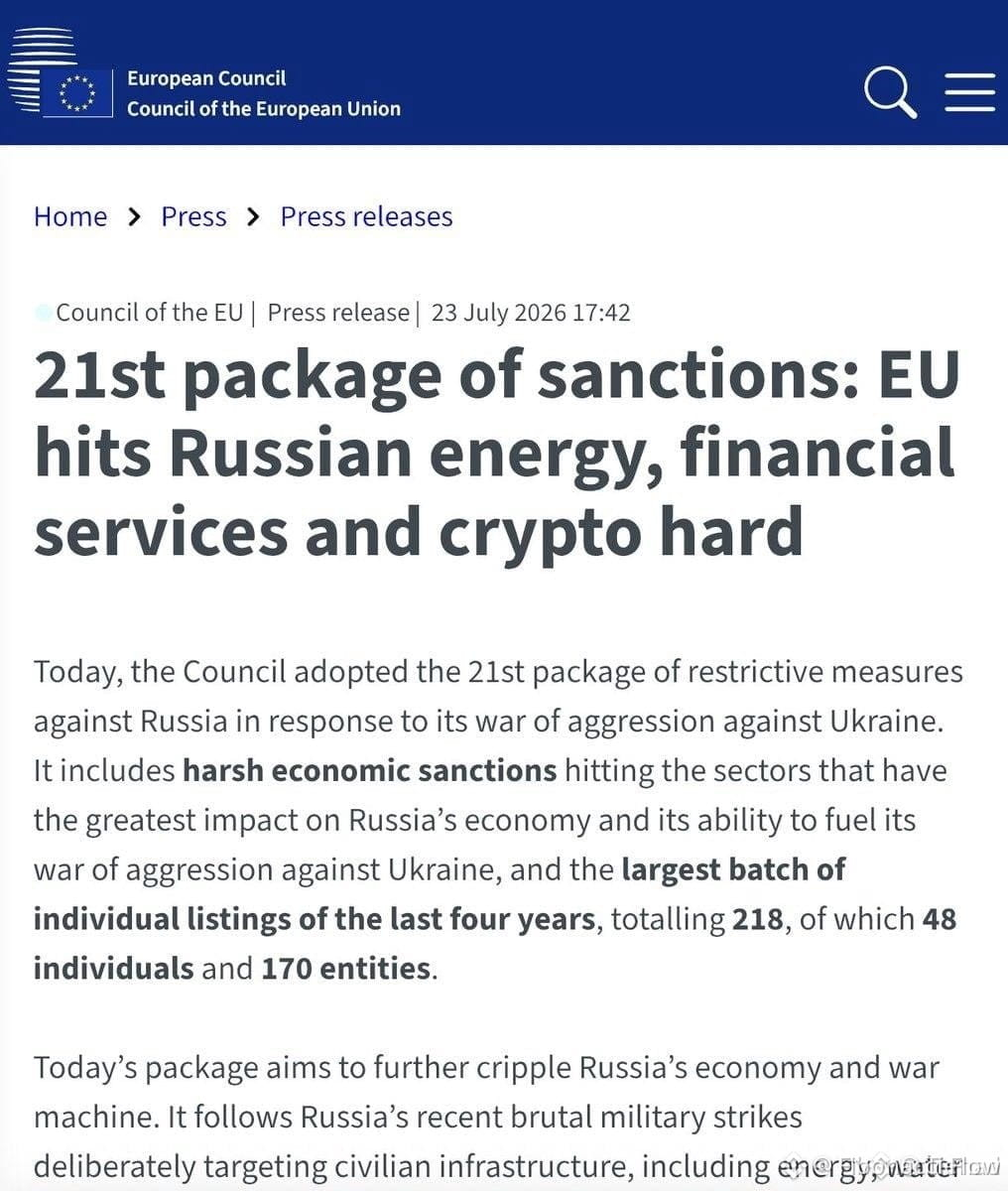
🚨 $RE $RIF $ESPORTS : EU DROPS THE HAMMER – CRYPTO SANCTIONS ESCALATE 💥
📌 The EU just banned transactions with crypto providers in third countries tied to Russia and froze assets of 94 Russian banks. 📉 14 platforms now blacklisted for helping evade sanctions. This isn’t just a regulatory swipe – it’s a liquidity siphon for any exchange touching Russian flows.
💡 Short-term, the market feels the chill as offshore corridors compress. But history shows such pressure crumbles into compliant infrastructure booms. 🦈 Smart money will stalk the reaction – expect heavy selling into bids before a structurally stronger market emerges. The real move comes after the fear flush.
💬 Which of these tokens ($RE , $RIF , $ESPORTS ) do you think is most exposed to regulatory ripple effects? 👇
⚠️ Not financial advice. Always manage your risk. 🛡️
🏷️ #RE #RIF #ESPORTS #CryptoSanctions #Regulation
🛡️ 💡
🚨 $RE $RIF $ESPORTS : EU DROPS THE HAMMER – CRYPTO SANCTIONS ESCALATE 💥
📌 The EU just banned transactions with crypto providers in third countries tied to Russia and froze assets of 94 Russian banks. 📉 14 platforms now blacklisted for helping evade sanctions. This isn’t just a regulatory swipe – it’s a liquidity siphon for any exchange touching Russian flows.
💡 Short-term, the market feels the chill as offshore corridors compress. But history shows such pressure crumbles into compliant infrastructure booms. 🦈 Smart money will stalk the reaction – expect heavy selling into bids before a structurally stronger market emerges. The real move comes after the fear flush.
💬 Which of these tokens ($RE , $RIF , $ESPORTS ) do you think is most exposed to regulatory ripple effects? 👇
⚠️ Not financial advice. Always manage your risk. 🛡️
🏷️ #RE #RIF #ESPORTS #CryptoSanctions #Regulation
🛡️ 💡
📌 The EU just banned transactions with crypto providers in third countries tied to Russia and froze assets of 94 Russian banks. 📉 14 platforms now blacklisted for helping evade sanctions. This isn’t just a regulatory swipe – it’s a liquidity siphon for any exchange touching Russian flows.
💡 Short-term, the market feels the chill as offshore corridors compress. But history shows such pressure crumbles into compliant infrastructure booms. 🦈 Smart money will stalk the reaction – expect heavy selling into bids before a structurally stronger market emerges. The real move comes after the fear flush.
💬 Which of these tokens ($RE , $RIF , $ESPORTS ) do you think is most exposed to regulatory ripple effects? 👇
⚠️ Not financial advice. Always manage your risk. 🛡️
🏷️ #RE #RIF #ESPORTS #CryptoSanctions #Regulation
🛡️ 💡

192

·
--
$USDT AND CRYPTO SANCTIONS HIT $130M MORE FROM IRAN 🔥
Over $130M in digital assets tied to Iran’s central bank just got frozen by the US Treasury. This is part of “Economic Fury” — same campaign that previously saw Tether help freeze $344M in USDT.
Since early 2026, Washington has locked down nearly $1B in crypto linked to Iranian entities. That’s a massive signal that regulatory heat isn’t cooling — it’s targeting stablecoins and exchange-level wallets.
How do you position for tighter stablecoin oversight in 2026?
Not financial advice. Always manage your risk.
#USDT #CryptoSanctions #Stablecoins #Regulation #Tether
⚡
$USDT AND CRYPTO SANCTIONS HIT $130M MORE FROM IRAN 🔥
Over $130M in digital assets tied to Iran’s central bank just got frozen by the US Treasury. This is part of “Economic Fury” — same campaign that previously saw Tether help freeze $344M in USDT.
Since early 2026, Washington has locked down nearly $1B in crypto linked to Iranian entities. That’s a massive signal that regulatory heat isn’t cooling — it’s targeting stablecoins and exchange-level wallets.
How do you position for tighter stablecoin oversight in 2026?
Not financial advice. Always manage your risk.
#USDT #CryptoSanctions #Stablecoins #Regulation #Tether
⚡
Over $130M in digital assets tied to Iran’s central bank just got frozen by the US Treasury. This is part of “Economic Fury” — same campaign that previously saw Tether help freeze $344M in USDT.
Since early 2026, Washington has locked down nearly $1B in crypto linked to Iranian entities. That’s a massive signal that regulatory heat isn’t cooling — it’s targeting stablecoins and exchange-level wallets.
How do you position for tighter stablecoin oversight in 2026?
Not financial advice. Always manage your risk.
#USDT #CryptoSanctions #Stablecoins #Regulation #Tether
⚡
38

·
--
Article
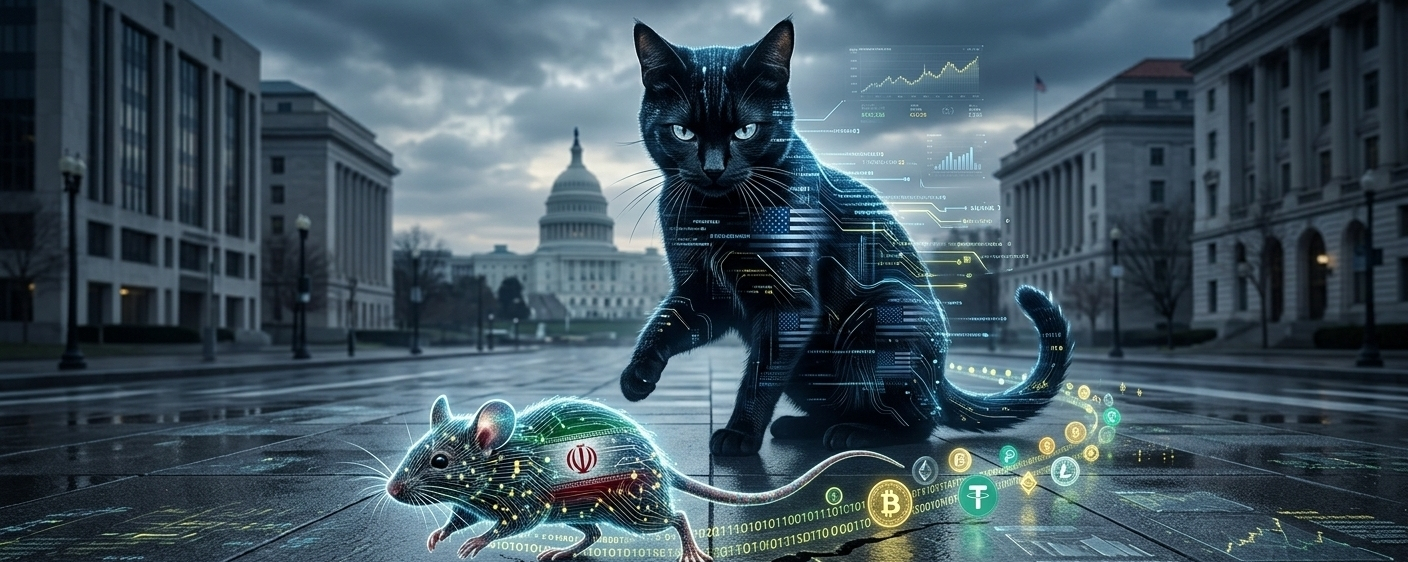
The US and Iran are Locked in a $344M Crypto StandoffWhen the US Treasury moves to freeze $344 million in USDT in a single enforcement action, it’s clear that the "cat-and-mouse" game between Washington and Tehran has moved from physical borders to the blockchain. This is no longer just a war of words; it’s a high-stakes battle over liquidity and the very survival of national financial lifelines.
Market Analysis:
The USDT Freeze: Tether recently froze roughly $344M following direct requests from the US Treasury to disrupt Iranian financial networks. This marks a major escalation in using stablecoins as a tool for international sanctions enforcement.The Hormuz Chessboard: Iran’s recent decision to "fully reopen" the Strait of Hormuz—the world’s most critical oil transit route—has been met with praise from US leadership, but the tension remains at a "dangerous phase".Economic Pressure: Tensions have shifted toward strategic leverage involving ports, oil shipments, and maritime routes, which are now being used as tactical pawns in broader diplomatic negotiations.The Gold Signal: Regional allies like Turkey are reportedly dumping gold (nearly 60 tonnes) to secure USD for energy imports, signaling a tightening of global liquidity due to these geopolitical pressures.
The real $ALPHA in this situation is the Perception Shift. While the US tries to turn crypto into an extension of the fiat sanctions system, the "mouse" (Iran and other sanctioned entities) is forced to innovate further into decentralized and less traceable rails. This "financial super app" era is effectively a laboratory for how nations will settle debts when traditional banking is cut off.
In the world of geopolitics, fiat is a weapon of control, but blockchain is increasingly becoming the ultimate shield for those who know how to navigate it.
With the US Treasury proving it can freeze hundreds of millions in stablecoins at will, does this undermine the "censorship-resistant" promise of crypto, or is this just the price of institutional adoption
#FedRatesUnchanged #CryptoSanctions #HormuzStrait #Tether #USvsIran
$BTC
{spot}(BTCUSDT)
The US and Iran are Locked in a $344M Crypto Standoff
When the US Treasury moves to freeze $344 million in USDT in a single enforcement action, it’s clear that the "cat-and-mouse" game between Washington and Tehran has moved from physical borders to the blockchain. This is no longer just a war of words; it’s a high-stakes battle over liquidity and the very survival of national financial lifelines.
Market Analysis:
The USDT Freeze: Tether recently froze roughly $344M following direct requests from the US Treasury to disrupt Iranian financial networks. This marks a major escalation in using stablecoins as a tool for international sanctions enforcement.The Hormuz Chessboard: Iran’s recent decision to "fully reopen" the Strait of Hormuz—the world’s most critical oil transit route—has been met with praise from US leadership, but the tension remains at a "dangerous phase".Economic Pressure: Tensions have shifted toward strategic leverage involving ports, oil shipments, and maritime routes, which are now being used as tactical pawns in broader diplomatic negotiations.The Gold Signal: Regional allies like Turkey are reportedly dumping gold (nearly 60 tonnes) to secure USD for energy imports, signaling a tightening of global liquidity due to these geopolitical pressures.
The real $ALPHA in this situation is the Perception Shift. While the US tries to turn crypto into an extension of the fiat sanctions system, the "mouse" (Iran and other sanctioned entities) is forced to innovate further into decentralized and less traceable rails. This "financial super app" era is effectively a laboratory for how nations will settle debts when traditional banking is cut off.
In the world of geopolitics, fiat is a weapon of control, but blockchain is increasingly becoming the ultimate shield for those who know how to navigate it.
With the US Treasury proving it can freeze hundreds of millions in stablecoins at will, does this undermine the "censorship-resistant" promise of crypto, or is this just the price of institutional adoption
#FedRatesUnchanged #CryptoSanctions #HormuzStrait #Tether #USvsIran
$BTC
Market Analysis:
The USDT Freeze: Tether recently froze roughly $344M following direct requests from the US Treasury to disrupt Iranian financial networks. This marks a major escalation in using stablecoins as a tool for international sanctions enforcement.The Hormuz Chessboard: Iran’s recent decision to "fully reopen" the Strait of Hormuz—the world’s most critical oil transit route—has been met with praise from US leadership, but the tension remains at a "dangerous phase".Economic Pressure: Tensions have shifted toward strategic leverage involving ports, oil shipments, and maritime routes, which are now being used as tactical pawns in broader diplomatic negotiations.The Gold Signal: Regional allies like Turkey are reportedly dumping gold (nearly 60 tonnes) to secure USD for energy imports, signaling a tightening of global liquidity due to these geopolitical pressures.
The real $ALPHA in this situation is the Perception Shift. While the US tries to turn crypto into an extension of the fiat sanctions system, the "mouse" (Iran and other sanctioned entities) is forced to innovate further into decentralized and less traceable rails. This "financial super app" era is effectively a laboratory for how nations will settle debts when traditional banking is cut off.
In the world of geopolitics, fiat is a weapon of control, but blockchain is increasingly becoming the ultimate shield for those who know how to navigate it.
With the US Treasury proving it can freeze hundreds of millions in stablecoins at will, does this undermine the "censorship-resistant" promise of crypto, or is this just the price of institutional adoption
#FedRatesUnchanged #CryptoSanctions #HormuzStrait #Tether #USvsIran
$BTC
103
⚓️ مضيق هرمز: مطالب إيرانية بعملات مشفرة تثير قلق الاتحاد الأوروبي ودول الخليج!
يواجه الاتحاد الأوروبي ودول الخليج ضغوطًا متزايدة لإبقاء مضيق هرمز مفتوحًا، في ظل مطالبة إيران بتحصيل رسوم العبور بالبيتكوين (BTC) و USDT. هذا التطور يعيد تشكيل مشهد العقوبات الدولية ويثير تساؤلات حول استخدام العملات المشفرة للتحايل عليها.
━━━━━━━━━━━━━━
📊 التأثير: 🔥 مرتفع جداً
🏷️ REGULATION
#Iran #StraitOfHormuz #CryptoSanctions #Bitcoin #USDT
🔗 المصدر: https://cryptobriefing.com/eu-gulf-states-iran-strait-hormuz-crypto/
⚓️ مضيق هرمز: مطالب إيرانية بعملات مشفرة تثير قلق الاتحاد الأوروبي ودول الخليج!
يواجه الاتحاد الأوروبي ودول الخليج ضغوطًا متزايدة لإبقاء مضيق هرمز مفتوحًا، في ظل مطالبة إيران بتحصيل رسوم العبور بالبيتكوين (BTC) و USDT. هذا التطور يعيد تشكيل مشهد العقوبات الدولية ويثير تساؤلات حول استخدام العملات المشفرة للتحايل عليها.
━━━━━━━━━━━━━━
📊 التأثير: 🔥 مرتفع جداً
🏷️ REGULATION
#Iran #StraitOfHormuz #CryptoSanctions #Bitcoin #USDT
🔗 المصدر: https://cryptobriefing.com/eu-gulf-states-iran-strait-hormuz-crypto/
يواجه الاتحاد الأوروبي ودول الخليج ضغوطًا متزايدة لإبقاء مضيق هرمز مفتوحًا، في ظل مطالبة إيران بتحصيل رسوم العبور بالبيتكوين (BTC) و USDT. هذا التطور يعيد تشكيل مشهد العقوبات الدولية ويثير تساؤلات حول استخدام العملات المشفرة للتحايل عليها.
━━━━━━━━━━━━━━
📊 التأثير: 🔥 مرتفع جداً
🏷️ REGULATION
#Iran #StraitOfHormuz #CryptoSanctions #Bitcoin #USDT
🔗 المصدر: https://cryptobriefing.com/eu-gulf-states-iran-strait-hormuz-crypto/
26

·
--
U.S. Sanctions on Stablecoins Intensify Panic and Reshape Digital TrustU.S. Sanctions on Stablecoins Intensify Panic and Reshape Digital Trust
As geopolitical tensions escalate, the United States has tightened its enforcement of crypto‑related sanctions, with stablecoin issuers now increasingly caught in the crossfire. Recent OFAC actions targeting crypto wallets and Iran‑linked exchanges highlight Washington’s determination to disrupt digital financial channels allegedly used to bypass economic restrictions.
Enforcement reports show that U.S. regulators have already penalized multiple platforms for facilitating transactions tied to Iranian users or entities, emphasizing that sanctions laws apply even to non‑custodial wallet services and decentralized interfaces.
Against this backdrop, pressure has mounted on major stablecoin issuers such as Tether, whose centralized control structure enables the U.S. to demand wallet freezes and transaction blacklists with increasing frequency.
$SOL
{future}(SOLUSDT)
This wave of sanctions triggered a rapid psychological shock across the crypto ecosystem. Users holding USDT — particularly in regions sensitive to international oversight — began rushing to redeem their tokens or migrate funds into alternative assets. Some shifted quickly into Bitcoin or other permissionless cryptocurrencies, while others opted to withdraw entirely into cold wallets to avoid the risk of sudden freezes. The fear that a government could unilaterally halt the movement of a stablecoin instantly shattered the long‑held assumption that digital dollars were frictionless and censorship‑resistant.
$PAXG
{future}(PAXGUSDT)
In this climate of uncertainty, decentralized stablecoins have unexpectedly regained momentum. Projects built on algorithmic or over‑collateralized models are attracting renewed attention from users who no longer trust centralized issuers to maintain neutral operations under political pressure.
$SUI
{future}(SUIUSDT)
While these decentralized alternatives come with their own risks, the current moment has revived an important debate: should digital money behave like a banknote that no one can freeze — or like a regulated financial instrument subject to geopolitical bargaining?
For everyday users, the experience has been disorienting. One day USDT feels as safe as cash; the next, headlines about blacklisted wallets leave people wondering whether their savings could be trapped with a single government order. And as one anxious trader put it, “When even stablecoins aren’t stable, it’s time to double‑check your exit plan.” 😅💸#CryptoSanctions , #IranCryptoActivity , #RegulatoryCrackdown , #OFACActions , #IllicitFinance
U.S. Sanctions on Stablecoins Intensify Panic and Reshape Digital Trust
U.S. Sanctions on Stablecoins Intensify Panic and Reshape Digital Trust
As geopolitical tensions escalate, the United States has tightened its enforcement of crypto‑related sanctions, with stablecoin issuers now increasingly caught in the crossfire. Recent OFAC actions targeting crypto wallets and Iran‑linked exchanges highlight Washington’s determination to disrupt digital financial channels allegedly used to bypass economic restrictions.
Enforcement reports show that U.S. regulators have already penalized multiple platforms for facilitating transactions tied to Iranian users or entities, emphasizing that sanctions laws apply even to non‑custodial wallet services and decentralized interfaces.
Against this backdrop, pressure has mounted on major stablecoin issuers such as Tether, whose centralized control structure enables the U.S. to demand wallet freezes and transaction blacklists with increasing frequency.
$SOL
This wave of sanctions triggered a rapid psychological shock across the crypto ecosystem. Users holding USDT — particularly in regions sensitive to international oversight — began rushing to redeem their tokens or migrate funds into alternative assets. Some shifted quickly into Bitcoin or other permissionless cryptocurrencies, while others opted to withdraw entirely into cold wallets to avoid the risk of sudden freezes. The fear that a government could unilaterally halt the movement of a stablecoin instantly shattered the long‑held assumption that digital dollars were frictionless and censorship‑resistant.
$PAXG
In this climate of uncertainty, decentralized stablecoins have unexpectedly regained momentum. Projects built on algorithmic or over‑collateralized models are attracting renewed attention from users who no longer trust centralized issuers to maintain neutral operations under political pressure.
$SUI
While these decentralized alternatives come with their own risks, the current moment has revived an important debate: should digital money behave like a banknote that no one can freeze — or like a regulated financial instrument subject to geopolitical bargaining?
For everyday users, the experience has been disorienting. One day USDT feels as safe as cash; the next, headlines about blacklisted wallets leave people wondering whether their savings could be trapped with a single government order. And as one anxious trader put it, “When even stablecoins aren’t stable, it’s time to double‑check your exit plan.” 😅💸#CryptoSanctions , #IranCryptoActivity , #RegulatoryCrackdown , #OFACActions , #IllicitFinance
As geopolitical tensions escalate, the United States has tightened its enforcement of crypto‑related sanctions, with stablecoin issuers now increasingly caught in the crossfire. Recent OFAC actions targeting crypto wallets and Iran‑linked exchanges highlight Washington’s determination to disrupt digital financial channels allegedly used to bypass economic restrictions.
Enforcement reports show that U.S. regulators have already penalized multiple platforms for facilitating transactions tied to Iranian users or entities, emphasizing that sanctions laws apply even to non‑custodial wallet services and decentralized interfaces.
Against this backdrop, pressure has mounted on major stablecoin issuers such as Tether, whose centralized control structure enables the U.S. to demand wallet freezes and transaction blacklists with increasing frequency.
$SOL
This wave of sanctions triggered a rapid psychological shock across the crypto ecosystem. Users holding USDT — particularly in regions sensitive to international oversight — began rushing to redeem their tokens or migrate funds into alternative assets. Some shifted quickly into Bitcoin or other permissionless cryptocurrencies, while others opted to withdraw entirely into cold wallets to avoid the risk of sudden freezes. The fear that a government could unilaterally halt the movement of a stablecoin instantly shattered the long‑held assumption that digital dollars were frictionless and censorship‑resistant.
$PAXG
In this climate of uncertainty, decentralized stablecoins have unexpectedly regained momentum. Projects built on algorithmic or over‑collateralized models are attracting renewed attention from users who no longer trust centralized issuers to maintain neutral operations under political pressure.
$SUI
While these decentralized alternatives come with their own risks, the current moment has revived an important debate: should digital money behave like a banknote that no one can freeze — or like a regulated financial instrument subject to geopolitical bargaining?
For everyday users, the experience has been disorienting. One day USDT feels as safe as cash; the next, headlines about blacklisted wallets leave people wondering whether their savings could be trapped with a single government order. And as one anxious trader put it, “When even stablecoins aren’t stable, it’s time to double‑check your exit plan.” 😅💸#CryptoSanctions , #IranCryptoActivity , #RegulatoryCrackdown , #OFACActions , #IllicitFinance
148
·
--
Inflation Resurgence Fuels Uncertainty and Sparks Bitcoin WhiplashInflation Resurgence Fuels Uncertainty and Sparks Bitcoin Whiplash
As global supply chains and energy markets face renewed strain, inflation has returned as a major concern for households and policymakers alike.
Despite earlier optimism that price pressures would continue easing, economists now warn that elevated energy and transport costs are undermining central banks’ progress in stabilizing prices. According to recent analyses, global inflation remains stubbornly high, driven by lingering supply disruptions, resurgent commodity prices, and uneven disinflation across regions. Meanwhile, international monitoring groups highlight that essential goods — especially food, fuel, and housing — continue to exert upward pressure on living costs, worsening inequality in many parts of the world.
$SOL
{future}(SOLUSDT)
Financial markets have reacted sharply to this shifting landscape. Bitcoin, which had been drifting lower as investors anticipated looser monetary policy, experienced a sudden sell‑off when inflation fears re‑emerged. Higher prices increase the likelihood that central banks will pause rate cuts — or even resume tightening — making speculative assets less attractive in the short term. Yet in a surprising twist familiar to long‑time observers, Bitcoin quickly rebounded as investors sought alternatives to eroding fiat currencies. Its decentralized nature and capped supply allow it to function as a perceived inflation hedge, particularly during periods of uncertainty.
$SUI
{future}(SUIUSDT)
However, this rebound comes with an important caveat. Bitcoin’s extreme volatility means it still struggles to serve as a universal safe‑haven asset. While gold and government bonds typically benefit from flight‑to‑safety flows, Bitcoin’s price tends to swing dramatically under the same conditions. For average savers and risk‑averse investors, these fluctuations can be unnerving. It may act as a store of value for some — especially those familiar with digital markets — but it remains far from being a fully reliable shield against inflation for the global majority.
$PAXG
{future}(PAXGUSDT)
In the end, the renewed inflation wave offers a clear message: both traditional finance and digital alternatives carry their own sets of vulnerabilities. And as one trader joked while watching Bitcoin whipsaw yet again, “Inflation goes up, Bitcoin goes down… then up… then down… I need a seatbelt.” 😅📉📈
#CryptoSanctions , #IranCryptoActivity , #RegulatoryCrackdown , #OFACActions , #IllicitFinance
Inflation Resurgence Fuels Uncertainty and Sparks Bitcoin Whiplash
Inflation Resurgence Fuels Uncertainty and Sparks Bitcoin Whiplash
As global supply chains and energy markets face renewed strain, inflation has returned as a major concern for households and policymakers alike.
Despite earlier optimism that price pressures would continue easing, economists now warn that elevated energy and transport costs are undermining central banks’ progress in stabilizing prices. According to recent analyses, global inflation remains stubbornly high, driven by lingering supply disruptions, resurgent commodity prices, and uneven disinflation across regions. Meanwhile, international monitoring groups highlight that essential goods — especially food, fuel, and housing — continue to exert upward pressure on living costs, worsening inequality in many parts of the world.
$SOL
Financial markets have reacted sharply to this shifting landscape. Bitcoin, which had been drifting lower as investors anticipated looser monetary policy, experienced a sudden sell‑off when inflation fears re‑emerged. Higher prices increase the likelihood that central banks will pause rate cuts — or even resume tightening — making speculative assets less attractive in the short term. Yet in a surprising twist familiar to long‑time observers, Bitcoin quickly rebounded as investors sought alternatives to eroding fiat currencies. Its decentralized nature and capped supply allow it to function as a perceived inflation hedge, particularly during periods of uncertainty.
$SUI
However, this rebound comes with an important caveat. Bitcoin’s extreme volatility means it still struggles to serve as a universal safe‑haven asset. While gold and government bonds typically benefit from flight‑to‑safety flows, Bitcoin’s price tends to swing dramatically under the same conditions. For average savers and risk‑averse investors, these fluctuations can be unnerving. It may act as a store of value for some — especially those familiar with digital markets — but it remains far from being a fully reliable shield against inflation for the global majority.
$PAXG
In the end, the renewed inflation wave offers a clear message: both traditional finance and digital alternatives carry their own sets of vulnerabilities. And as one trader joked while watching Bitcoin whipsaw yet again, “Inflation goes up, Bitcoin goes down… then up… then down… I need a seatbelt.” 😅📉📈
#CryptoSanctions , #IranCryptoActivity , #RegulatoryCrackdown , #OFACActions , #IllicitFinance
As global supply chains and energy markets face renewed strain, inflation has returned as a major concern for households and policymakers alike.
Despite earlier optimism that price pressures would continue easing, economists now warn that elevated energy and transport costs are undermining central banks’ progress in stabilizing prices. According to recent analyses, global inflation remains stubbornly high, driven by lingering supply disruptions, resurgent commodity prices, and uneven disinflation across regions. Meanwhile, international monitoring groups highlight that essential goods — especially food, fuel, and housing — continue to exert upward pressure on living costs, worsening inequality in many parts of the world.
$SOL
Financial markets have reacted sharply to this shifting landscape. Bitcoin, which had been drifting lower as investors anticipated looser monetary policy, experienced a sudden sell‑off when inflation fears re‑emerged. Higher prices increase the likelihood that central banks will pause rate cuts — or even resume tightening — making speculative assets less attractive in the short term. Yet in a surprising twist familiar to long‑time observers, Bitcoin quickly rebounded as investors sought alternatives to eroding fiat currencies. Its decentralized nature and capped supply allow it to function as a perceived inflation hedge, particularly during periods of uncertainty.
$SUI
However, this rebound comes with an important caveat. Bitcoin’s extreme volatility means it still struggles to serve as a universal safe‑haven asset. While gold and government bonds typically benefit from flight‑to‑safety flows, Bitcoin’s price tends to swing dramatically under the same conditions. For average savers and risk‑averse investors, these fluctuations can be unnerving. It may act as a store of value for some — especially those familiar with digital markets — but it remains far from being a fully reliable shield against inflation for the global majority.
$PAXG
In the end, the renewed inflation wave offers a clear message: both traditional finance and digital alternatives carry their own sets of vulnerabilities. And as one trader joked while watching Bitcoin whipsaw yet again, “Inflation goes up, Bitcoin goes down… then up… then down… I need a seatbelt.” 😅📉📈
#CryptoSanctions , #IranCryptoActivity , #RegulatoryCrackdown , #OFACActions , #IllicitFinance
194
·
--
Violent Market Selloff Exposes Fragility of Tech and Crypto AssetsViolent Market Selloff Exposes Fragility of Tech and Crypto Assets
The early days of the conflict sent shockwaves through global financial markets, triggering one of the sharpest bouts of risk‑off sentiment in recent years. In the United States, major equity benchmarks fell rapidly as investors digested reports of military escalation.
The Nasdaq Composite—heavily weighted toward technology giants—plunged as much as 2.6% intraday, reflecting widespread fear that heightened geopolitical tensions could disrupt global supply chains and stall corporate earnings growth. The S&P 500 also lost ground as institutional investors scrambled to unwind risky positions, repositioning themselves into cash, gold, and Treasuries.
Because of the increasingly tight correlation between Bitcoin and tech equities, the cryptocurrency market was immediately pulled into the downturn. Analysts note that Bitcoin reacted almost in lockstep with the Nasdaq, suffering rapid drawdowns as leveraged traders rushed to close positions.
$SOL
{future}(SOLUSDT)
In moments of extreme volatility, automated liquidations accelerate price declines; this time was no different. Reports show cascading margin calls across centralized exchanges, wiping out billions in market capitalization within hours as over‑leveraged positions were forcibly closed.
$SUI
{future}(SUIUSDT)
The sudden selloff left traders grappling with a familiar but painful reality: while Bitcoin is often marketed as “digital gold,” its short‑term behavior frequently mirrors that of high‑beta tech stocks. Instead of acting as a hedge, it becomes entangled in broader market panic—especially when global uncertainty spikes. For everyday investors, the experience was both sobering and chaotic. One moment, markets were stable; the next, liquidation notifications flooded phones like a digital avalanche 📉💥.
$PAXG
{future}(PAXGUSDT)
Yet, as history shows, panic-driven corrections can also reset valuations and pave the way for recovery. But in the heat of the moment, with red charts flashing across two interconnected markets, the message was unmistakable: no asset class is immune when fear takes over.#CryptoSanctions , #IranCryptoActivity , #RegulatoryCrackdown , #OFACActions , #IllicitFinance
Violent Market Selloff Exposes Fragility of Tech and Crypto Assets
Violent Market Selloff Exposes Fragility of Tech and Crypto Assets
The early days of the conflict sent shockwaves through global financial markets, triggering one of the sharpest bouts of risk‑off sentiment in recent years. In the United States, major equity benchmarks fell rapidly as investors digested reports of military escalation.
The Nasdaq Composite—heavily weighted toward technology giants—plunged as much as 2.6% intraday, reflecting widespread fear that heightened geopolitical tensions could disrupt global supply chains and stall corporate earnings growth. The S&P 500 also lost ground as institutional investors scrambled to unwind risky positions, repositioning themselves into cash, gold, and Treasuries.
Because of the increasingly tight correlation between Bitcoin and tech equities, the cryptocurrency market was immediately pulled into the downturn. Analysts note that Bitcoin reacted almost in lockstep with the Nasdaq, suffering rapid drawdowns as leveraged traders rushed to close positions.
$SOL
In moments of extreme volatility, automated liquidations accelerate price declines; this time was no different. Reports show cascading margin calls across centralized exchanges, wiping out billions in market capitalization within hours as over‑leveraged positions were forcibly closed.
$SUI
The sudden selloff left traders grappling with a familiar but painful reality: while Bitcoin is often marketed as “digital gold,” its short‑term behavior frequently mirrors that of high‑beta tech stocks. Instead of acting as a hedge, it becomes entangled in broader market panic—especially when global uncertainty spikes. For everyday investors, the experience was both sobering and chaotic. One moment, markets were stable; the next, liquidation notifications flooded phones like a digital avalanche 📉💥.
$PAXG
Yet, as history shows, panic-driven corrections can also reset valuations and pave the way for recovery. But in the heat of the moment, with red charts flashing across two interconnected markets, the message was unmistakable: no asset class is immune when fear takes over.#CryptoSanctions , #IranCryptoActivity , #RegulatoryCrackdown , #OFACActions , #IllicitFinance
The early days of the conflict sent shockwaves through global financial markets, triggering one of the sharpest bouts of risk‑off sentiment in recent years. In the United States, major equity benchmarks fell rapidly as investors digested reports of military escalation.
The Nasdaq Composite—heavily weighted toward technology giants—plunged as much as 2.6% intraday, reflecting widespread fear that heightened geopolitical tensions could disrupt global supply chains and stall corporate earnings growth. The S&P 500 also lost ground as institutional investors scrambled to unwind risky positions, repositioning themselves into cash, gold, and Treasuries.
Because of the increasingly tight correlation between Bitcoin and tech equities, the cryptocurrency market was immediately pulled into the downturn. Analysts note that Bitcoin reacted almost in lockstep with the Nasdaq, suffering rapid drawdowns as leveraged traders rushed to close positions.
$SOL
In moments of extreme volatility, automated liquidations accelerate price declines; this time was no different. Reports show cascading margin calls across centralized exchanges, wiping out billions in market capitalization within hours as over‑leveraged positions were forcibly closed.
$SUI
The sudden selloff left traders grappling with a familiar but painful reality: while Bitcoin is often marketed as “digital gold,” its short‑term behavior frequently mirrors that of high‑beta tech stocks. Instead of acting as a hedge, it becomes entangled in broader market panic—especially when global uncertainty spikes. For everyday investors, the experience was both sobering and chaotic. One moment, markets were stable; the next, liquidation notifications flooded phones like a digital avalanche 📉💥.
$PAXG
Yet, as history shows, panic-driven corrections can also reset valuations and pave the way for recovery. But in the heat of the moment, with red charts flashing across two interconnected markets, the message was unmistakable: no asset class is immune when fear takes over.#CryptoSanctions , #IranCryptoActivity , #RegulatoryCrackdown , #OFACActions , #IllicitFinance
1
160

🚨 Latest Crypto News Update
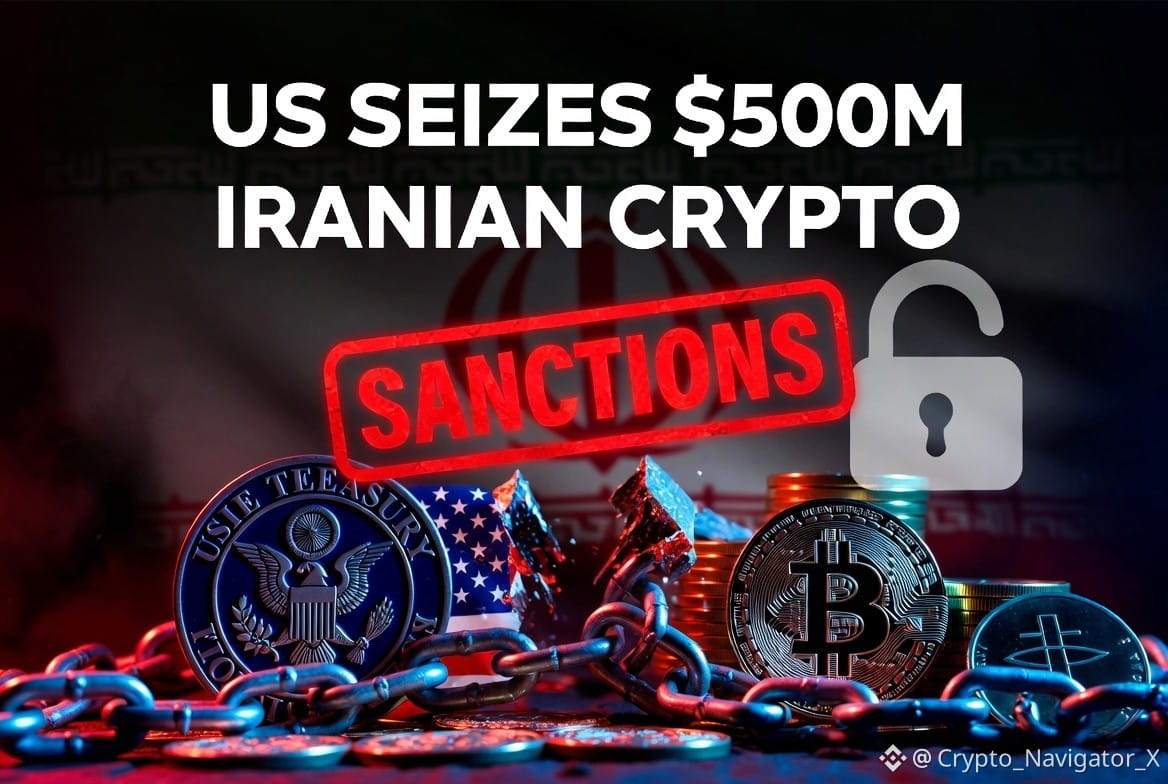
US seizes nearly $500 Million in Iranian Crypto Assets
The US Treasury has frozen approximately $500M worth of cryptocurrency linked to Iran as part of "Operation Economic Fury". This is one of the largest crypto sanctions actions to date, targeting networks allegedly used to evade US sanctions.
Key Highlights:
• US Treasury Secretary Scott Bessent confirmed the action
• Focus on freezing Tether and other digital assets
• Iran has been actively using crypto to bypass traditional banking restrictions
Geopolitical tensions between US & Iran continue, with ongoing ceasefire talks and Strait of Hormuz issues still in play. Such events often increase volatility in the broader crypto market.
Bitcoin currently trading around $78,000 – $79,000 range.
What’s your take?
Will this push more countries toward crypto for sanctions resistance? Or will it increase regulatory pressure globally?
Drop your thoughts below 👇
$BTC $ETH $BNB
#CryptoNews #Bitcoin #USIran #CryptoSanctions #BinanceSquare
🚨 Latest Crypto News Update
US seizes nearly $500 Million in Iranian Crypto Assets
The US Treasury has frozen approximately $500M worth of cryptocurrency linked to Iran as part of "Operation Economic Fury". This is one of the largest crypto sanctions actions to date, targeting networks allegedly used to evade US sanctions.
Key Highlights:
• US Treasury Secretary Scott Bessent confirmed the action
• Focus on freezing Tether and other digital assets
• Iran has been actively using crypto to bypass traditional banking restrictions
Geopolitical tensions between US & Iran continue, with ongoing ceasefire talks and Strait of Hormuz issues still in play. Such events often increase volatility in the broader crypto market.
Bitcoin currently trading around $78,000 – $79,000 range.
What’s your take?
Will this push more countries toward crypto for sanctions resistance? Or will it increase regulatory pressure globally?
Drop your thoughts below 👇
$BTC $ETH $BNB
#CryptoNews #Bitcoin #USIran #CryptoSanctions #BinanceSquare
US seizes nearly $500 Million in Iranian Crypto Assets
The US Treasury has frozen approximately $500M worth of cryptocurrency linked to Iran as part of "Operation Economic Fury". This is one of the largest crypto sanctions actions to date, targeting networks allegedly used to evade US sanctions.
Key Highlights:
• US Treasury Secretary Scott Bessent confirmed the action
• Focus on freezing Tether and other digital assets
• Iran has been actively using crypto to bypass traditional banking restrictions
Geopolitical tensions between US & Iran continue, with ongoing ceasefire talks and Strait of Hormuz issues still in play. Such events often increase volatility in the broader crypto market.
Bitcoin currently trading around $78,000 – $79,000 range.
What’s your take?
Will this push more countries toward crypto for sanctions resistance? Or will it increase regulatory pressure globally?
Drop your thoughts below 👇
$BTC $ETH $BNB
#CryptoNews #Bitcoin #USIran #CryptoSanctions #BinanceSquare
11
81

Article
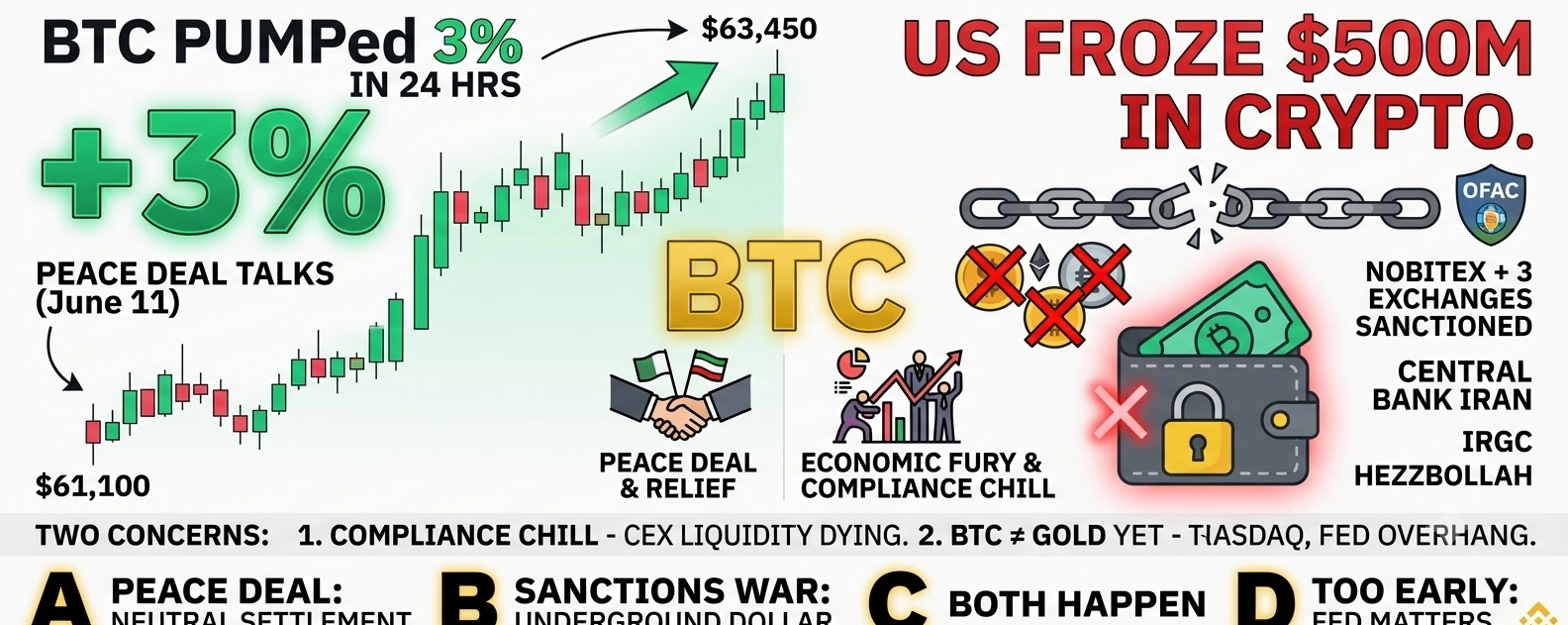
US vs Iran Deal: Bitcoin Jumps 3% But $500M Crypto Freeze Shows The Real War ⚡*🚨 BTC pumped 3% in 24 hours. Then US froze $500M in crypto. Read that again.
President Trump canceled planned strikes on Iran June 11 and said a peace deal memo could be signed this weekend in Europe. Markets read it as "war premium gone". Bitcoin jumped from $61,100 to $63,450. ETH, BNB, SOL all followed.
The narrative was simple: Less war = less risk = crypto pumps. Bitcoin even touched $72,000 in April when Iran reportedly charged Hormuz tolls in BTC. Safe haven story writes itself.
But while traders celebrated the bounce, the US Treasury was writing a different story. June 2, OFAC sanctioned Nobitex + 3 other Iranian exchanges and 4 nationals. Late April, Treasury froze $344M in USDT tied to Central Bank of Iran, IRGC, and Hezbollah wallets. Total Iran crypto assets frozen: ∼$1 billion. Tether itself blacklisted the addresses.
This is the real war. Not missiles. Wallets.
War creates the demand for crypto. Sanctions create the demand for Bitcoin. Iran’s crypto ecosystem hit $7.8B in 2025 because SWIFT was closed. Nobitex became the only exit ramp. BTC mining turned subsidized electricity into hard currency exports.
But now peace creates the supply problem. If the 60-day MOU signs and Hormuz reopens, Iran gets partial banking access back. Why risk crypto when normal rails return? Treasury knows this. That’s why “Economic Fury” shifted from banks to crypto.
Two real concerns decide if BTC keeps this bid. First, compliance chill. OFAC targeting exchanges means CEX liquidity for Iranian flows is dying. No on/off ramp = no volume. Even if demand stays, the pipes are closing. Binance delisting risk is real. Second, BTC isn’t gold yet. When conflict peaked, gold demand spiked but Bitcoin participation dropped 9%. BTC still trades like Nasdaq with higher beta. Institutions pulled $4.4B from Bitcoin ETFs in 13 straight sessions - worst streak since spot ETFs launched. Fed meeting June 16-17 is the bigger overhang.
Trump ended the shooting war for now. But the Treasury started the financial war. Bitcoin pumped on de-escalation, but the $500M freeze proves sanctions are just moving from oil tankers to wallet addresses.
So the question isn’t if BTC likes peace. The question is: What wins long term?
👇 Your take:
A) Peace deal = BTC becomes neutral settlement layer
B) Sanctions war = Crypto becomes underground dollar only
C) Both happen - BTC pumps, then cracks down
D) Too early, Fed matters more than Iran
Drop A/B/C/D + “BTC” if you’re tracking this.
#Bitcoin #USIran #CryptoSanctions #BinanceSquare #BTC
US vs Iran Deal: Bitcoin Jumps 3% But $500M Crypto Freeze Shows The Real War ⚡*
🚨 BTC pumped 3% in 24 hours. Then US froze $500M in crypto. Read that again.
President Trump canceled planned strikes on Iran June 11 and said a peace deal memo could be signed this weekend in Europe. Markets read it as "war premium gone". Bitcoin jumped from $61,100 to $63,450. ETH, BNB, SOL all followed.
The narrative was simple: Less war = less risk = crypto pumps. Bitcoin even touched $72,000 in April when Iran reportedly charged Hormuz tolls in BTC. Safe haven story writes itself.
But while traders celebrated the bounce, the US Treasury was writing a different story. June 2, OFAC sanctioned Nobitex + 3 other Iranian exchanges and 4 nationals. Late April, Treasury froze $344M in USDT tied to Central Bank of Iran, IRGC, and Hezbollah wallets. Total Iran crypto assets frozen: ∼$1 billion. Tether itself blacklisted the addresses.
This is the real war. Not missiles. Wallets.
War creates the demand for crypto. Sanctions create the demand for Bitcoin. Iran’s crypto ecosystem hit $7.8B in 2025 because SWIFT was closed. Nobitex became the only exit ramp. BTC mining turned subsidized electricity into hard currency exports.
But now peace creates the supply problem. If the 60-day MOU signs and Hormuz reopens, Iran gets partial banking access back. Why risk crypto when normal rails return? Treasury knows this. That’s why “Economic Fury” shifted from banks to crypto.
Two real concerns decide if BTC keeps this bid. First, compliance chill. OFAC targeting exchanges means CEX liquidity for Iranian flows is dying. No on/off ramp = no volume. Even if demand stays, the pipes are closing. Binance delisting risk is real. Second, BTC isn’t gold yet. When conflict peaked, gold demand spiked but Bitcoin participation dropped 9%. BTC still trades like Nasdaq with higher beta. Institutions pulled $4.4B from Bitcoin ETFs in 13 straight sessions - worst streak since spot ETFs launched. Fed meeting June 16-17 is the bigger overhang.
Trump ended the shooting war for now. But the Treasury started the financial war. Bitcoin pumped on de-escalation, but the $500M freeze proves sanctions are just moving from oil tankers to wallet addresses.
So the question isn’t if BTC likes peace. The question is: What wins long term?
👇 Your take:
A) Peace deal = BTC becomes neutral settlement layer
B) Sanctions war = Crypto becomes underground dollar only
C) Both happen - BTC pumps, then cracks down
D) Too early, Fed matters more than Iran
Drop A/B/C/D + “BTC” if you’re tracking this.
#Bitcoin #USIran #CryptoSanctions #BinanceSquare #BTC
President Trump canceled planned strikes on Iran June 11 and said a peace deal memo could be signed this weekend in Europe. Markets read it as "war premium gone". Bitcoin jumped from $61,100 to $63,450. ETH, BNB, SOL all followed.
The narrative was simple: Less war = less risk = crypto pumps. Bitcoin even touched $72,000 in April when Iran reportedly charged Hormuz tolls in BTC. Safe haven story writes itself.
But while traders celebrated the bounce, the US Treasury was writing a different story. June 2, OFAC sanctioned Nobitex + 3 other Iranian exchanges and 4 nationals. Late April, Treasury froze $344M in USDT tied to Central Bank of Iran, IRGC, and Hezbollah wallets. Total Iran crypto assets frozen: ∼$1 billion. Tether itself blacklisted the addresses.
This is the real war. Not missiles. Wallets.
War creates the demand for crypto. Sanctions create the demand for Bitcoin. Iran’s crypto ecosystem hit $7.8B in 2025 because SWIFT was closed. Nobitex became the only exit ramp. BTC mining turned subsidized electricity into hard currency exports.
But now peace creates the supply problem. If the 60-day MOU signs and Hormuz reopens, Iran gets partial banking access back. Why risk crypto when normal rails return? Treasury knows this. That’s why “Economic Fury” shifted from banks to crypto.
Two real concerns decide if BTC keeps this bid. First, compliance chill. OFAC targeting exchanges means CEX liquidity for Iranian flows is dying. No on/off ramp = no volume. Even if demand stays, the pipes are closing. Binance delisting risk is real. Second, BTC isn’t gold yet. When conflict peaked, gold demand spiked but Bitcoin participation dropped 9%. BTC still trades like Nasdaq with higher beta. Institutions pulled $4.4B from Bitcoin ETFs in 13 straight sessions - worst streak since spot ETFs launched. Fed meeting June 16-17 is the bigger overhang.
Trump ended the shooting war for now. But the Treasury started the financial war. Bitcoin pumped on de-escalation, but the $500M freeze proves sanctions are just moving from oil tankers to wallet addresses.
So the question isn’t if BTC likes peace. The question is: What wins long term?
👇 Your take:
A) Peace deal = BTC becomes neutral settlement layer
B) Sanctions war = Crypto becomes underground dollar only
C) Both happen - BTC pumps, then cracks down
D) Too early, Fed matters more than Iran
Drop A/B/C/D + “BTC” if you’re tracking this.
#Bitcoin #USIran #CryptoSanctions #BinanceSquare #BTC
2
4
221

🇪🇺 $RIF & $BANK CAUGHT IN EU SANCTIONS CROSSFIRE – LIQUIDITY SWEEP INCOMING? 💥🦈
📌 The EU just dropped a new sanctions hammer on Russia, explicitly targeting crypto firms. $RIF and $BANK are the tickers flashing red on my screen right now. This isn't just political noise – it's order flow shifting underneath the surface. 🌊 Smart money is already repositioning, and these altcoins are sitting right in the kill zone.
📊 When geopolitical catalysts hit, liquidity sweeps become the name of the game. Expect a sharp reaction below recent support – but seasoned traders know this is exactly where accumulation zones can form. 🔍 Watch volume expansion and how bids hold at structural levels before taking a side.
💬 Are you waiting for the initial flush to catch the bounce, or stepping aside until the dust settles? 👇
⚠️ Not financial advice. Always manage your risk. 🛡️
🏷️ #RIF #BANK #CryptoSanctions #EU #Geopolitics
🦈 🔍
🇪🇺 $RIF & $BANK CAUGHT IN EU SANCTIONS CROSSFIRE – LIQUIDITY SWEEP INCOMING? 💥🦈
📌 The EU just dropped a new sanctions hammer on Russia, explicitly targeting crypto firms. $RIF and $BANK are the tickers flashing red on my screen right now. This isn't just political noise – it's order flow shifting underneath the surface. 🌊 Smart money is already repositioning, and these altcoins are sitting right in the kill zone.
📊 When geopolitical catalysts hit, liquidity sweeps become the name of the game. Expect a sharp reaction below recent support – but seasoned traders know this is exactly where accumulation zones can form. 🔍 Watch volume expansion and how bids hold at structural levels before taking a side.
💬 Are you waiting for the initial flush to catch the bounce, or stepping aside until the dust settles? 👇
⚠️ Not financial advice. Always manage your risk. 🛡️
🏷️ #RIF #BANK #CryptoSanctions #EU #Geopolitics
🦈 🔍
📌 The EU just dropped a new sanctions hammer on Russia, explicitly targeting crypto firms. $RIF and $BANK are the tickers flashing red on my screen right now. This isn't just political noise – it's order flow shifting underneath the surface. 🌊 Smart money is already repositioning, and these altcoins are sitting right in the kill zone.
📊 When geopolitical catalysts hit, liquidity sweeps become the name of the game. Expect a sharp reaction below recent support – but seasoned traders know this is exactly where accumulation zones can form. 🔍 Watch volume expansion and how bids hold at structural levels before taking a side.
💬 Are you waiting for the initial flush to catch the bounce, or stepping aside until the dust settles? 👇
⚠️ Not financial advice. Always manage your risk. 🛡️
🏷️ #RIF #BANK #CryptoSanctions #EU #Geopolitics
🦈 🔍
194

·
--
Baissier
#ofacfreezesirancentralbankcryptowallets
Big enforcement move – OFAC just froze Iran Central Bank-linked crypto wallets. This ramps up the pressure in geopolitics and shows how seriously regulators are watching digital assets on the global stage. Short-term FUD possible, but it also highlights crypto's role in the bigger picture.
How will this affect market sentiment and BTC flows? Volatility incoming or buying chance?
If you're tracking these stories, smash LIKE, drop your take in the comments – bullish long-term or watch closely? Let's break it down together!
Trust these updates from me to stay informed without the noise. Follow for more real alpha, and let's build our community stronger every day. Join me on Binance Square for deeper discussions, wins, and growing followers who vibe the same!
What's your view? Drop 🔥 or ⚠️ below! 💎🙌 #OFAC #iran #CryptoSanctions #MarketImpact
#ofacfreezesirancentralbankcryptowallets
Big enforcement move – OFAC just froze Iran Central Bank-linked crypto wallets. This ramps up the pressure in geopolitics and shows how seriously regulators are watching digital assets on the global stage. Short-term FUD possible, but it also highlights crypto's role in the bigger picture.
How will this affect market sentiment and BTC flows? Volatility incoming or buying chance?
If you're tracking these stories, smash LIKE, drop your take in the comments – bullish long-term or watch closely? Let's break it down together!
Trust these updates from me to stay informed without the noise. Follow for more real alpha, and let's build our community stronger every day. Join me on Binance Square for deeper discussions, wins, and growing followers who vibe the same!
What's your view? Drop 🔥 or ⚠️ below! 💎🙌 #OFAC #iran #CryptoSanctions #MarketImpact
Big enforcement move – OFAC just froze Iran Central Bank-linked crypto wallets. This ramps up the pressure in geopolitics and shows how seriously regulators are watching digital assets on the global stage. Short-term FUD possible, but it also highlights crypto's role in the bigger picture.
How will this affect market sentiment and BTC flows? Volatility incoming or buying chance?
If you're tracking these stories, smash LIKE, drop your take in the comments – bullish long-term or watch closely? Let's break it down together!
Trust these updates from me to stay informed without the noise. Follow for more real alpha, and let's build our community stronger every day. Join me on Binance Square for deeper discussions, wins, and growing followers who vibe the same!
What's your view? Drop 🔥 or ⚠️ below! 💎🙌 #OFAC #iran #CryptoSanctions #MarketImpact
1
2
1.7k

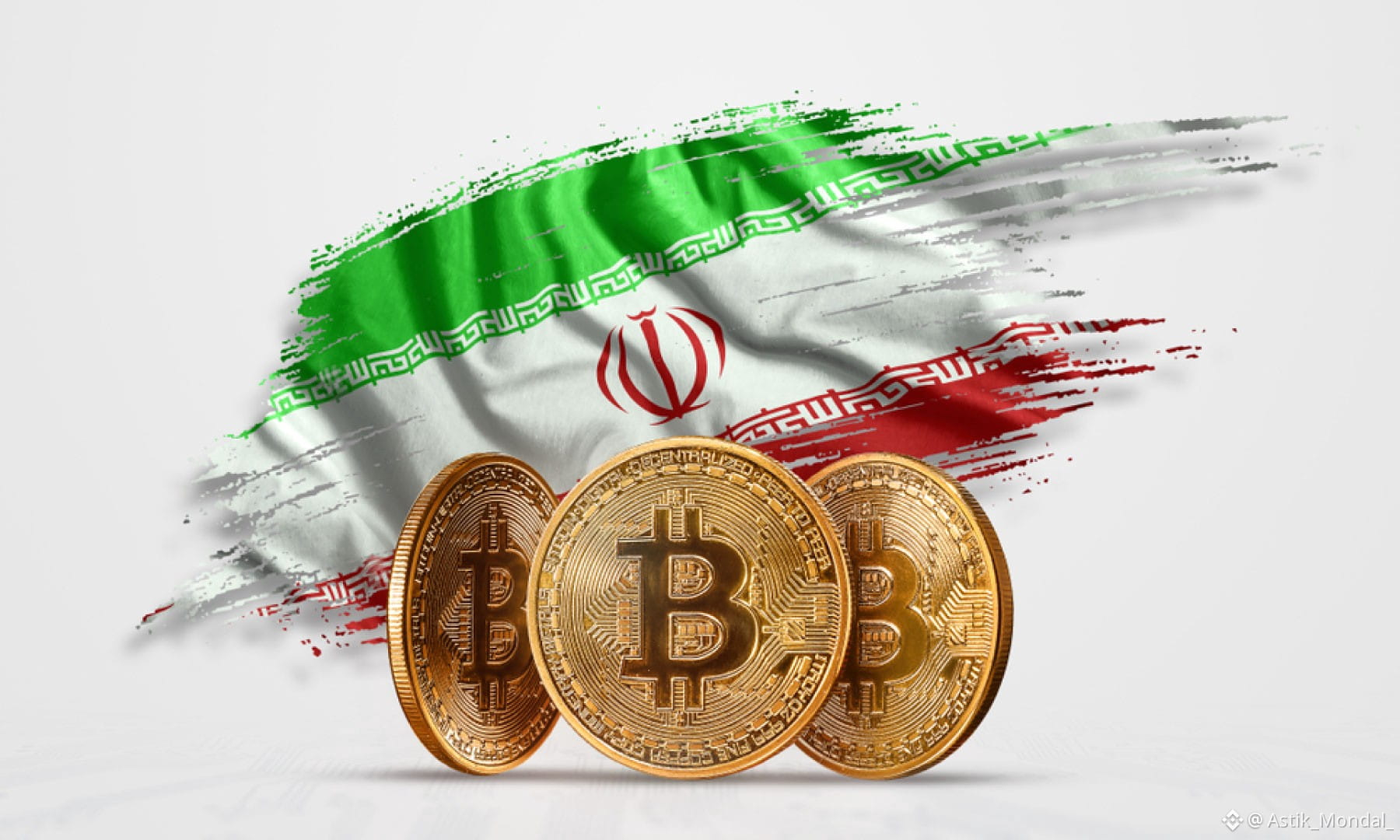
US just seized nearly $500 million in Iranian crypto.
The regime thought digital assets would let them dodge sanctions forever.
They were wrong.
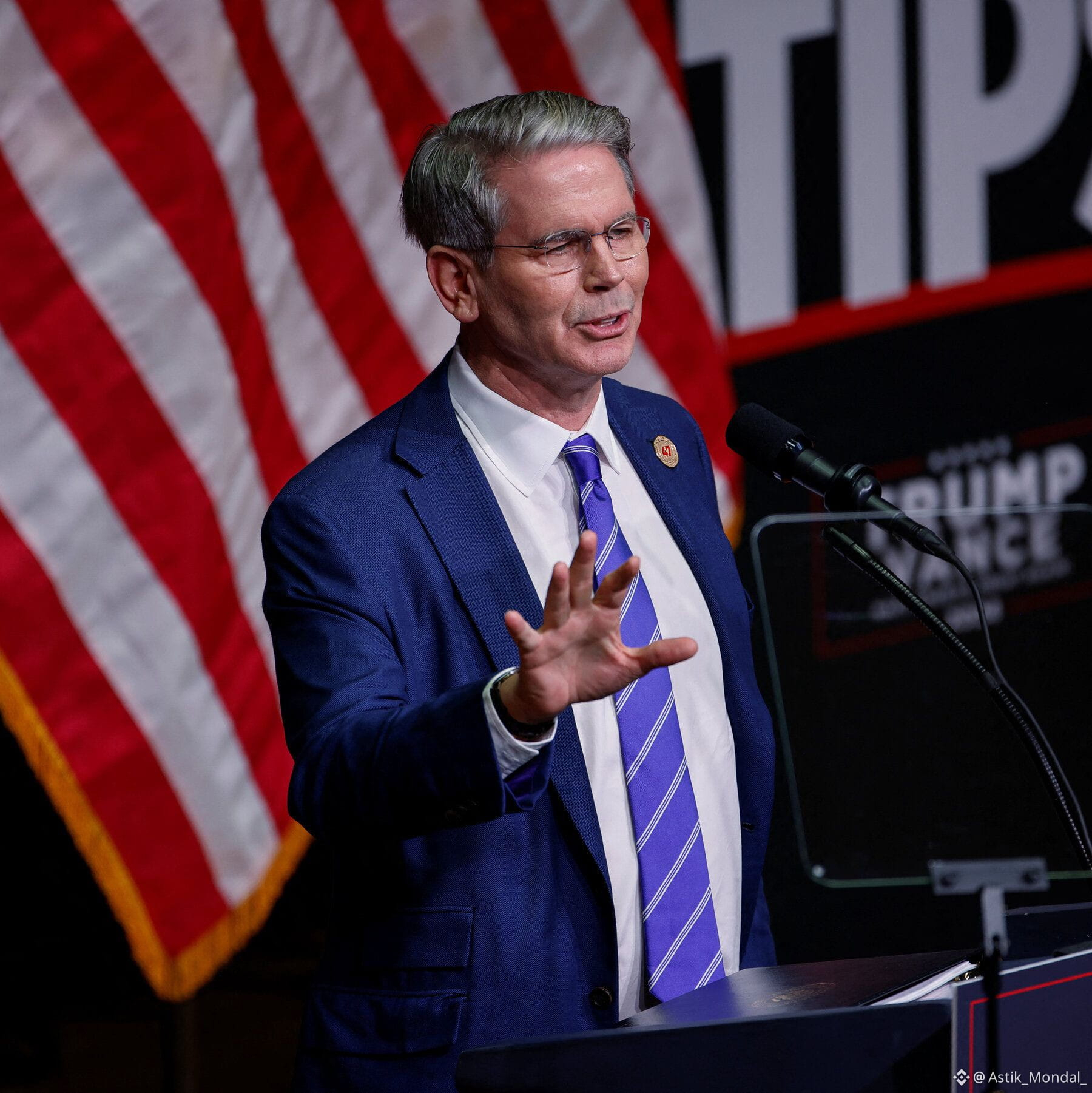
Treasury Secretary Scott Bessent just dropped the hammer: under Operation Economic Fury, the US grabbed roughly $350M in one sweep plus another $100M recently. Half a billion dollars clawed straight out of Iran's shadow financial network.
This isn't theater. It's precision economic warfare.
Iran's elites funneled money through crypto to keep their regime alive while the people suffered. Washington traced the wallets, froze the stablecoins, and took what mattered. Bank accounts are dropping next.
The old playbook of offshore banks and hawala networks is dying. Crypto was supposed to be the great equalizer for sanctioned states. Instead it became the most trackable honeypot in history.
Every on-chain move leaves a permanent receipt. Every mixer has limits. Every exchange eventually bends to the strongest jurisdiction.
This strike exposes the illusion: no asset class escapes power when that power decides to enforce.
While Tehran spirals deeper into crisis, the message to every adversary is crystal clear. Your "untraceable" workaround just became US Treasury property, held in the name of the Iranian people they claim to serve.
The age of easy evasion is over. Financial sovereignty now has a very real enforcer.
America isn't just playing the game. It's rewriting the rules in real time.
#IranCryptoSeizure #EconomicWarfare #OperationEconomicFury #CryptoSanctions #MaximumPressure
US just seized nearly $500 million in Iranian crypto.
The regime thought digital assets would let them dodge sanctions forever.
They were wrong.
Treasury Secretary Scott Bessent just dropped the hammer: under Operation Economic Fury, the US grabbed roughly $350M in one sweep plus another $100M recently. Half a billion dollars clawed straight out of Iran's shadow financial network.
This isn't theater. It's precision economic warfare.
Iran's elites funneled money through crypto to keep their regime alive while the people suffered. Washington traced the wallets, froze the stablecoins, and took what mattered. Bank accounts are dropping next.
The old playbook of offshore banks and hawala networks is dying. Crypto was supposed to be the great equalizer for sanctioned states. Instead it became the most trackable honeypot in history.
Every on-chain move leaves a permanent receipt. Every mixer has limits. Every exchange eventually bends to the strongest jurisdiction.
This strike exposes the illusion: no asset class escapes power when that power decides to enforce.
While Tehran spirals deeper into crisis, the message to every adversary is crystal clear. Your "untraceable" workaround just became US Treasury property, held in the name of the Iranian people they claim to serve.
The age of easy evasion is over. Financial sovereignty now has a very real enforcer.
America isn't just playing the game. It's rewriting the rules in real time.
#IranCryptoSeizure #EconomicWarfare #OperationEconomicFury #CryptoSanctions #MaximumPressure
The regime thought digital assets would let them dodge sanctions forever.
They were wrong.
Treasury Secretary Scott Bessent just dropped the hammer: under Operation Economic Fury, the US grabbed roughly $350M in one sweep plus another $100M recently. Half a billion dollars clawed straight out of Iran's shadow financial network.
This isn't theater. It's precision economic warfare.
Iran's elites funneled money through crypto to keep their regime alive while the people suffered. Washington traced the wallets, froze the stablecoins, and took what mattered. Bank accounts are dropping next.
The old playbook of offshore banks and hawala networks is dying. Crypto was supposed to be the great equalizer for sanctioned states. Instead it became the most trackable honeypot in history.
Every on-chain move leaves a permanent receipt. Every mixer has limits. Every exchange eventually bends to the strongest jurisdiction.
This strike exposes the illusion: no asset class escapes power when that power decides to enforce.
While Tehran spirals deeper into crisis, the message to every adversary is crystal clear. Your "untraceable" workaround just became US Treasury property, held in the name of the Iranian people they claim to serve.
The age of easy evasion is over. Financial sovereignty now has a very real enforcer.
America isn't just playing the game. It's rewriting the rules in real time.
#IranCryptoSeizure #EconomicWarfare #OperationEconomicFury #CryptoSanctions #MaximumPressure
68
·
--
Digital Refugees Turn to Crypto Amid Sanctions and Growing ConfusionDigital Refugees Turn to Crypto Amid Sanctions and Growing Confusion
As conflicts intensify across the Middle East, a new form of displacement has emerged: the rise of digital refugees. Families living in war‑torn areas are increasingly turning to cryptocurrencies as a last‑resort vehicle for safeguarding their savings before fleeing their homes.
$PAXG
{future}(PAXGUSDT)
With banks failing, borders tightening, and traditional remittance routes disrupted, digital assets offer a portable and censorship‑resistant way to preserve wealth during uncertain journeys. For many civilians, converting their remaining resources into crypto becomes an act of survival — a financial lifeline when physical mobility is suddenly constrained by conflict.
However, this coping mechanism has collided head‑on with tightening U.S. sanctions. The U.S.
$SUI
{future}(SUIUSDT)
Treasury and OFAC have intensified their scrutiny of cryptocurrency activity linked to Iran, pursuing enforcement actions against wallet providers and exchanges accused of enabling sanctioned users. In early 2026, U.S. authorities began investigating whether crypto platforms were used to help Iranian officials and state‑affiliated actors move money abroad or procure restricted goods, highlighting billions of dollars in Iran‑related crypto flows over recent years.
$SOL
{future}(SOLUSDT)
As a result, numerous wallet addresses have been flagged or blacklisted, significantly reducing liquidity for individuals whose funds happen to pass through restricted networks — even if they are ordinary civilians caught in the geopolitical crossfire. [dlapiper.com], [iranintl.com]
This has created an unexpected divide within the global crypto ecosystem: so‑called “clean Bitcoin,” which circulates freely on compliant exchanges, and “tainted Bitcoin,” which originates from or interacts with sanctioned regions. For average users who lack technical expertise, the distinction is confusing and anxiety‑inducing. Many discover only at the moment of transfer that their coins cannot be moved, sold, or converted — effectively trapping their emergency funds. In humanitarian terms, the situation underscores the moral complexity of digital finance: while crypto offers refuge from collapsing economies, geopolitics can still reach into digital wallets. And somewhere among the chaos, everyday users are left wondering, “Is my Bitcoin even usable?” — a question that shouldn’t have to be asked in the middle of a crisis 😞💻.
#CryptoSanctions , #IranCryptoActivity , #RegulatoryCrackdown , #OFACActions , #IllicitFinance
Digital Refugees Turn to Crypto Amid Sanctions and Growing Confusion
Digital Refugees Turn to Crypto Amid Sanctions and Growing Confusion
As conflicts intensify across the Middle East, a new form of displacement has emerged: the rise of digital refugees. Families living in war‑torn areas are increasingly turning to cryptocurrencies as a last‑resort vehicle for safeguarding their savings before fleeing their homes.
$PAXG
With banks failing, borders tightening, and traditional remittance routes disrupted, digital assets offer a portable and censorship‑resistant way to preserve wealth during uncertain journeys. For many civilians, converting their remaining resources into crypto becomes an act of survival — a financial lifeline when physical mobility is suddenly constrained by conflict.
However, this coping mechanism has collided head‑on with tightening U.S. sanctions. The U.S.
$SUI
Treasury and OFAC have intensified their scrutiny of cryptocurrency activity linked to Iran, pursuing enforcement actions against wallet providers and exchanges accused of enabling sanctioned users. In early 2026, U.S. authorities began investigating whether crypto platforms were used to help Iranian officials and state‑affiliated actors move money abroad or procure restricted goods, highlighting billions of dollars in Iran‑related crypto flows over recent years.
$SOL
As a result, numerous wallet addresses have been flagged or blacklisted, significantly reducing liquidity for individuals whose funds happen to pass through restricted networks — even if they are ordinary civilians caught in the geopolitical crossfire. [dlapiper.com], [iranintl.com]
This has created an unexpected divide within the global crypto ecosystem: so‑called “clean Bitcoin,” which circulates freely on compliant exchanges, and “tainted Bitcoin,” which originates from or interacts with sanctioned regions. For average users who lack technical expertise, the distinction is confusing and anxiety‑inducing. Many discover only at the moment of transfer that their coins cannot be moved, sold, or converted — effectively trapping their emergency funds. In humanitarian terms, the situation underscores the moral complexity of digital finance: while crypto offers refuge from collapsing economies, geopolitics can still reach into digital wallets. And somewhere among the chaos, everyday users are left wondering, “Is my Bitcoin even usable?” — a question that shouldn’t have to be asked in the middle of a crisis 😞💻.
#CryptoSanctions , #IranCryptoActivity , #RegulatoryCrackdown , #OFACActions , #IllicitFinance
As conflicts intensify across the Middle East, a new form of displacement has emerged: the rise of digital refugees. Families living in war‑torn areas are increasingly turning to cryptocurrencies as a last‑resort vehicle for safeguarding their savings before fleeing their homes.
$PAXG
With banks failing, borders tightening, and traditional remittance routes disrupted, digital assets offer a portable and censorship‑resistant way to preserve wealth during uncertain journeys. For many civilians, converting their remaining resources into crypto becomes an act of survival — a financial lifeline when physical mobility is suddenly constrained by conflict.
However, this coping mechanism has collided head‑on with tightening U.S. sanctions. The U.S.
$SUI
Treasury and OFAC have intensified their scrutiny of cryptocurrency activity linked to Iran, pursuing enforcement actions against wallet providers and exchanges accused of enabling sanctioned users. In early 2026, U.S. authorities began investigating whether crypto platforms were used to help Iranian officials and state‑affiliated actors move money abroad or procure restricted goods, highlighting billions of dollars in Iran‑related crypto flows over recent years.
$SOL
As a result, numerous wallet addresses have been flagged or blacklisted, significantly reducing liquidity for individuals whose funds happen to pass through restricted networks — even if they are ordinary civilians caught in the geopolitical crossfire. [dlapiper.com], [iranintl.com]
This has created an unexpected divide within the global crypto ecosystem: so‑called “clean Bitcoin,” which circulates freely on compliant exchanges, and “tainted Bitcoin,” which originates from or interacts with sanctioned regions. For average users who lack technical expertise, the distinction is confusing and anxiety‑inducing. Many discover only at the moment of transfer that their coins cannot be moved, sold, or converted — effectively trapping their emergency funds. In humanitarian terms, the situation underscores the moral complexity of digital finance: while crypto offers refuge from collapsing economies, geopolitics can still reach into digital wallets. And somewhere among the chaos, everyday users are left wondering, “Is my Bitcoin even usable?” — a question that shouldn’t have to be asked in the middle of a crisis 😞💻.
#CryptoSanctions , #IranCryptoActivity , #RegulatoryCrackdown , #OFACActions , #IllicitFinance
194
Connectez-vous pour découvrir plus de contenu
Rejoignez la communauté mondiale des adeptes de cryptomonnaies sur Binance Square
⚡️ Suviez les dernières informations importantes sur les cryptomonnaies.
💬 Jugé digne de confiance par la plus grande plateforme d’échange de cryptomonnaies au monde.
👍 Découvrez les connaissances que partagent les créateurs vérifiés.
Adresse e-mail/Nº de téléphone
Sujets d’actualité
1
#EtherGains70.9%InQ3
176,981 vues
1,187 mentions
2
#TreasuryLetsStatesFileStablecoinCertificationsEarly
11,616 vues
93 mentions
3
#US10YearYieldNears5.3%
160,399 vues
1,161 mentions
4
#DollarIndexHitsHighestSinceMay2025
47,185 vues
631 mentions
5
#USWeeklyJoblessClaimsFallTo197000
38,501 vues
510 mentions
6
#BitcoinETFsTake$6.34BillionInQ3
10,513 vues
77 mentions
7
#KoreaProposesTokenizingStocksAndBonds
75,932 vues
830 mentions
8
#MetaMaskExitsLidoValidatorsAfterSecurityIncident
175,484 vues
1,560 mentions
9
#MicronBeatsEarningsLiftsGuidance
89,248 vues
1,125 mentions
10
#CFTCSubmitsTwoEventContractRulesToWhiteHouse
61,495 vues
834 mentions