

#apro
apro
5.5M vues
98,408 mentions
Populaire
Récents

·
--
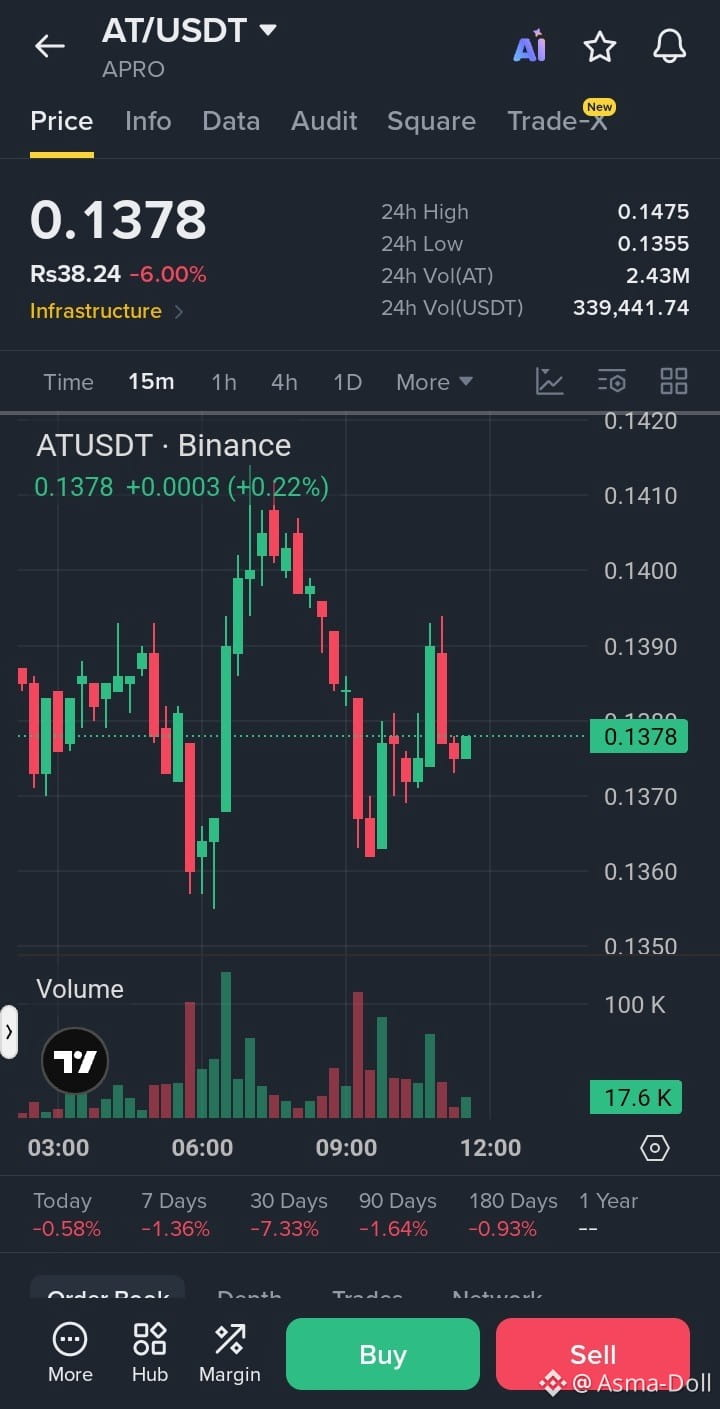
$AT /USDT (APRO) — SHORT 📉
Entry: 0.1375 – 0.1390
Stop Loss: 0.1430
TP1: 0.1355
TP2: 0.1320
TP3: 0.1280
Trade here $AT
{future}(ATUSDT)
Analysis:
Price is down ~6% and trading close to the 24h low 0.1355.
Weak recovery around 0.138 suggests sellers remain active.
Break below 0.1355 can trigger further downside.
Confirmation: 15m candle close below 0.1355 with rising volume.
If price reclaims 0.1430, invalidate the short setup.
#APRO #ATUSDT #Short #Binance #CryptoTrading
$AT /USDT (APRO) — SHORT 📉
Entry: 0.1375 – 0.1390
Stop Loss: 0.1430
TP1: 0.1355
TP2: 0.1320
TP3: 0.1280
Trade here $AT
Analysis:
Price is down ~6% and trading close to the 24h low 0.1355.
Weak recovery around 0.138 suggests sellers remain active.
Break below 0.1355 can trigger further downside.
Confirmation: 15m candle close below 0.1355 with rising volume.
If price reclaims 0.1430, invalidate the short setup.
#APRO #ATUSDT #Short #Binance #CryptoTrading
Entry: 0.1375 – 0.1390
Stop Loss: 0.1430
TP1: 0.1355
TP2: 0.1320
TP3: 0.1280
Trade here $AT
Analysis:
Price is down ~6% and trading close to the 24h low 0.1355.
Weak recovery around 0.138 suggests sellers remain active.
Break below 0.1355 can trigger further downside.
Confirmation: 15m candle close below 0.1355 with rising volume.
If price reclaims 0.1430, invalidate the short setup.
#APRO #ATUSDT #Short #Binance #CryptoTrading
176

·
--
I've been digging into APRO and it's one of those projects that doesn't get much attention compared to the big AI or meme narratives.
A few things that caught my eye:
🔸️ Low visibility compared to many projects with similar ambitions.
🔸️ Focus on infrastructure rather than hype. Not the kind of thing that trends every day, but sometimes that's where opportunities appear.
🔸️ Market still seems undecided. Some traders see potential, others don't care yet. That's usually more interesting to me than assets everyone already agrees on.
Now, let's be real:
⚠️ APRO isn't guaranteed to moon.
⚠️ It could underperform.
⚠️ Crypto is full of projects that looked promising and went nowhere.
But that's exactly why I'm watching it. The risk/reward profile feels more interesting than chasing tokens that already pumped 500%.
What I usually do with coins like this:
✔️ Read the docs.
✔️Check tokenomics.
✔️Watch volume and liquidity.
✔️ Open a small position first and let the market prove me right (or wrong).
Not financial advice, of course. Just sharing a project that's currently on my watchlist and its has kinda strong protection against this downtrend we all see
Have you looked into APRO yet? Bullish, bearish, or staying away?
$AT #APRO
{spot}(ATUSDT)
I've been digging into APRO and it's one of those projects that doesn't get much attention compared to the big AI or meme narratives.
A few things that caught my eye:
🔸️ Low visibility compared to many projects with similar ambitions.
🔸️ Focus on infrastructure rather than hype. Not the kind of thing that trends every day, but sometimes that's where opportunities appear.
🔸️ Market still seems undecided. Some traders see potential, others don't care yet. That's usually more interesting to me than assets everyone already agrees on.
Now, let's be real:
⚠️ APRO isn't guaranteed to moon.
⚠️ It could underperform.
⚠️ Crypto is full of projects that looked promising and went nowhere.
But that's exactly why I'm watching it. The risk/reward profile feels more interesting than chasing tokens that already pumped 500%.
What I usually do with coins like this:
✔️ Read the docs.
✔️Check tokenomics.
✔️Watch volume and liquidity.
✔️ Open a small position first and let the market prove me right (or wrong).
Not financial advice, of course. Just sharing a project that's currently on my watchlist and its has kinda strong protection against this downtrend we all see
Have you looked into APRO yet? Bullish, bearish, or staying away?
$AT #APRO
A few things that caught my eye:
🔸️ Low visibility compared to many projects with similar ambitions.
🔸️ Focus on infrastructure rather than hype. Not the kind of thing that trends every day, but sometimes that's where opportunities appear.
🔸️ Market still seems undecided. Some traders see potential, others don't care yet. That's usually more interesting to me than assets everyone already agrees on.
Now, let's be real:
⚠️ APRO isn't guaranteed to moon.
⚠️ It could underperform.
⚠️ Crypto is full of projects that looked promising and went nowhere.
But that's exactly why I'm watching it. The risk/reward profile feels more interesting than chasing tokens that already pumped 500%.
What I usually do with coins like this:
✔️ Read the docs.
✔️Check tokenomics.
✔️Watch volume and liquidity.
✔️ Open a small position first and let the market prove me right (or wrong).
Not financial advice, of course. Just sharing a project that's currently on my watchlist and its has kinda strong protection against this downtrend we all see
Have you looked into APRO yet? Bullish, bearish, or staying away?
$AT #APRO
182

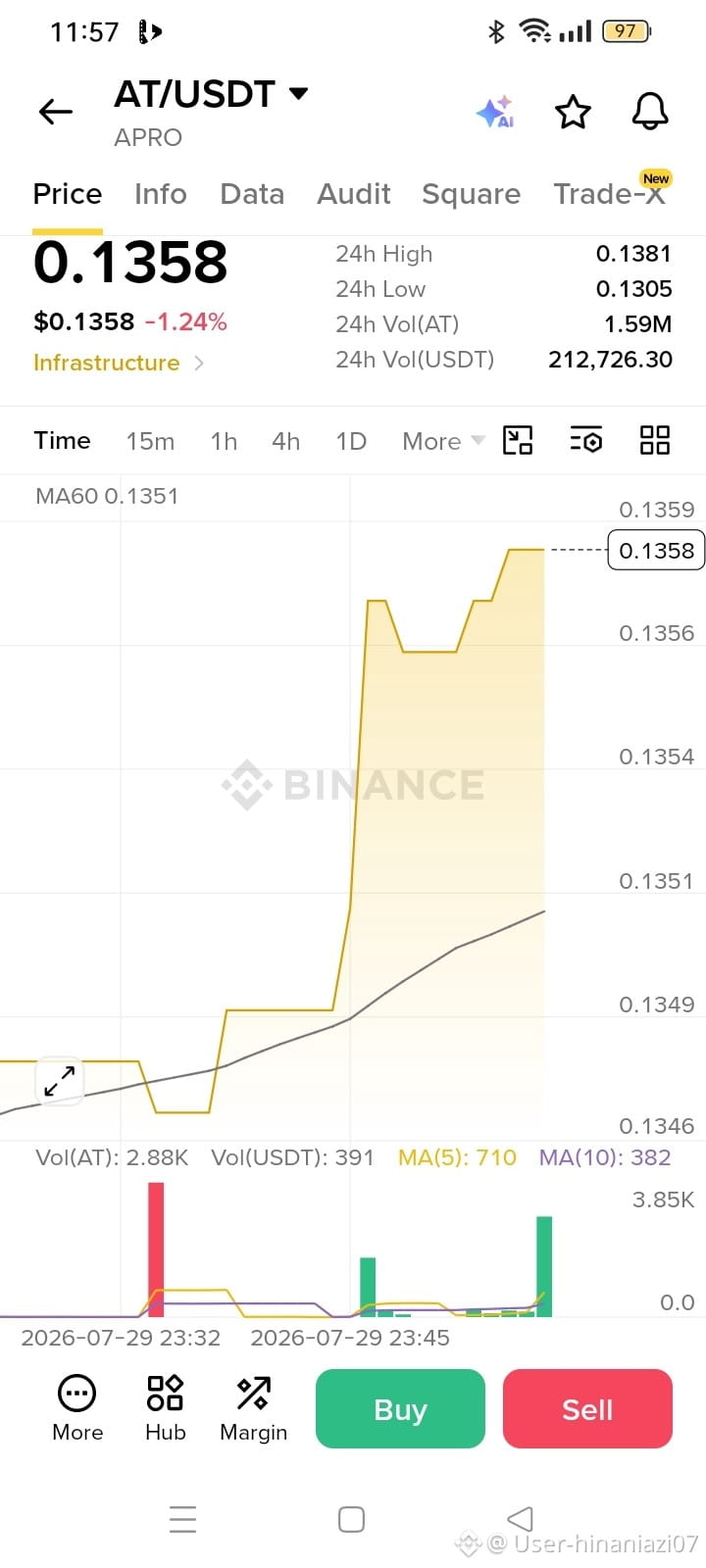
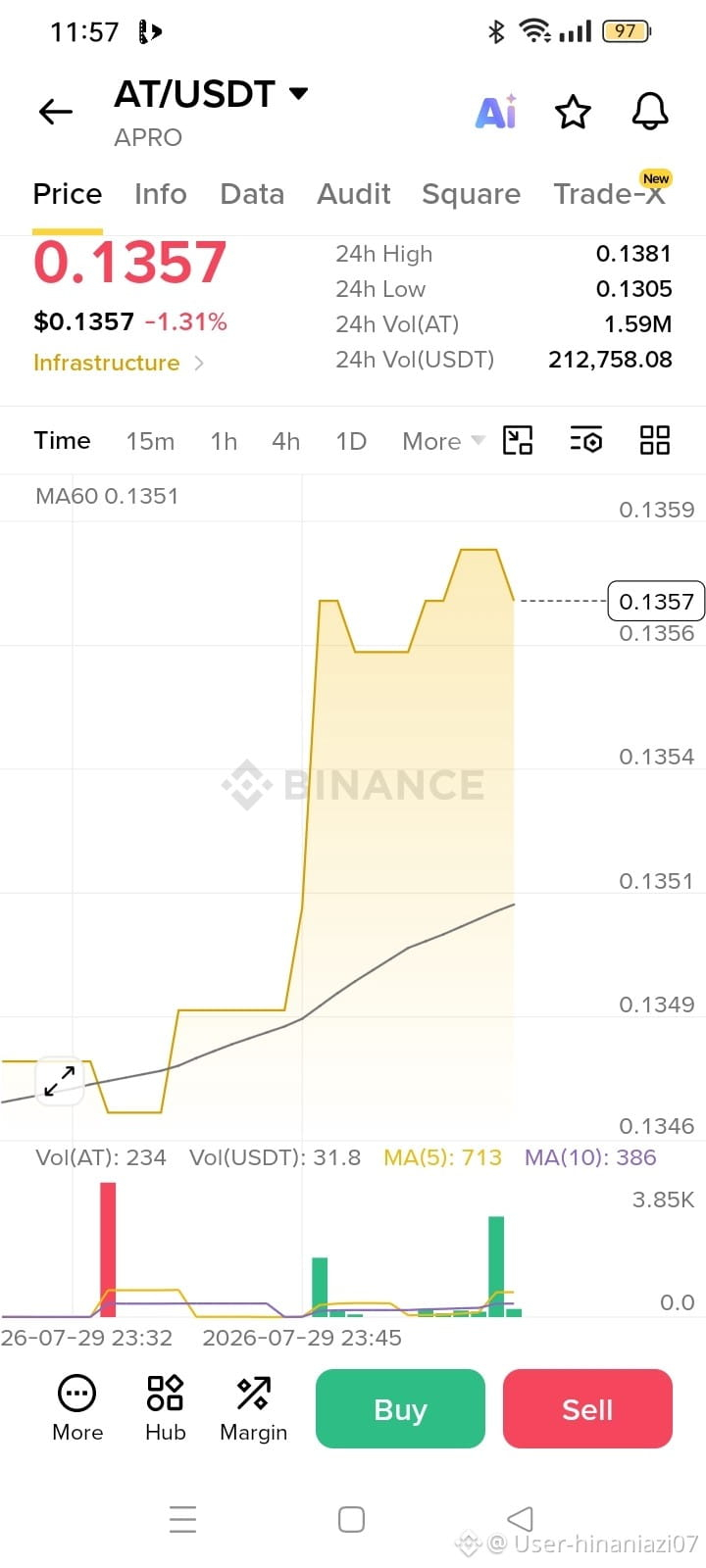
🚀 Just explored the APRO documentation and it's clear the team is focused on building a developer-friendly ecosystem.
Well-structured docs, a straightforward onboarding experience, and the resources developers need to start building with confidence. Great documentation is one of the strongest indicators of a project's long-term potential.
If you're building in Web3, it's worth checking out and following the project's progress.
#APRO #Web3 #blockchain #DeFi: #Developers #Crypto #BuildInPublic
🚀 Just explored the APRO documentation and it's clear the team is focused on building a developer-friendly ecosystem.
Well-structured docs, a straightforward onboarding experience, and the resources developers need to start building with confidence. Great documentation is one of the strongest indicators of a project's long-term potential.
If you're building in Web3, it's worth checking out and following the project's progress.
#APRO #Web3 #blockchain #DeFi: #Developers #Crypto #BuildInPublic
Well-structured docs, a straightforward onboarding experience, and the resources developers need to start building with confidence. Great documentation is one of the strongest indicators of a project's long-term potential.
If you're building in Web3, it's worth checking out and following the project's progress.
#APRO #Web3 #blockchain #DeFi: #Developers #Crypto #BuildInPublic
103

·
--
Haussier
🔥 **AT/USDT (APRO) BULLISH CONSOLIDATION BREAKOUT SIGNAL** 🚀
The single correct signal for **AT/USDT** based on price structure and high liquidity consolidation is **BULLISH** 🐂🟢. **APRO (AT)** is holding a strong bullish trend structure above key support levels ($0.1305), printing a steady **+1.79%** gain with robust 24-hour liquidity over **1.13M+ USDT**. As an infrastructure/AI oracle project, it is building heavy momentum for a push toward new local highs! 📈
$AT
{future}(ATUSDT)
💥 **Signal Type:** **STRONG BULLISH** 🐂🟢
📍 **Current Price:** $0.13650000
📊 **24h High:** $0.13670000
📉 **24h Low:** $0.13050000
💰 **24h Volume (USDT):** $1,138,171.48
⚡ **24h Volume (AT):** 8.45M+ AT
🏷️ **Category:** Infrastructure / Oracle Network
---
### 📊 Technical Setup & Key Drivers
1. **Steady Higher Lows:** Price defended the critical demand zone at **$0.1305** and is pushing right against daily resistance at **$0.1367**.
2. **Impending Breakout:** The current market price ($0.1365) is trading near the 24h peak ($0.1367). A clean 1-hour/4-hour candle close above **$0.1367** will trigger immediate buying momentum toward higher expansion levels.
3. **Solid Volume Support:** 8.45 Million+ AT tokens traded shows consistent institutional accumulation without sell pressure spikes.
---
### 🎯 Trade Parameters
* **Best Entry Zone:** $0.13400000 – $0.13650000
* **Target 1 (TP1):** $0.13670000 *(Breakout Level / Local High)* 🎯
* **Target 2 (TP2):** $0.14200000 🎯
* **Target 3 (TP3):** $0.15000000 🚀
* **Stop Loss (SL):** $0.12950000 *(Below 24h Low Support)* 🛑
---
### 💡 Strategy & Risk Management
Maintain a moderate leverage setup (3x to 5x for futures) and keep risk management strict. Set your Stop Loss firmly at **$0.12950000**. Once price clears Target 1 ($0.1367), trail your Stop Loss into profit to secure risk-free gains! 📈✨
---
#ATENCIÓN #APRO #cryptosignals
🔥 **AT/USDT (APRO) BULLISH CONSOLIDATION BREAKOUT SIGNAL** 🚀
The single correct signal for **AT/USDT** based on price structure and high liquidity consolidation is **BULLISH** 🐂🟢. **APRO (AT)** is holding a strong bullish trend structure above key support levels ($0.1305), printing a steady **+1.79%** gain with robust 24-hour liquidity over **1.13M+ USDT**. As an infrastructure/AI oracle project, it is building heavy momentum for a push toward new local highs! 📈
$AT
💥 **Signal Type:** **STRONG BULLISH** 🐂🟢
📍 **Current Price:** $0.13650000
📊 **24h High:** $0.13670000
📉 **24h Low:** $0.13050000
💰 **24h Volume (USDT):** $1,138,171.48
⚡ **24h Volume (AT):** 8.45M+ AT
🏷️ **Category:** Infrastructure / Oracle Network
---
### 📊 Technical Setup & Key Drivers
1. **Steady Higher Lows:** Price defended the critical demand zone at **$0.1305** and is pushing right against daily resistance at **$0.1367**.
2. **Impending Breakout:** The current market price ($0.1365) is trading near the 24h peak ($0.1367). A clean 1-hour/4-hour candle close above **$0.1367** will trigger immediate buying momentum toward higher expansion levels.
3. **Solid Volume Support:** 8.45 Million+ AT tokens traded shows consistent institutional accumulation without sell pressure spikes.
---
### 🎯 Trade Parameters
* **Best Entry Zone:** $0.13400000 – $0.13650000
* **Target 1 (TP1):** $0.13670000 *(Breakout Level / Local High)* 🎯
* **Target 2 (TP2):** $0.14200000 🎯
* **Target 3 (TP3):** $0.15000000 🚀
* **Stop Loss (SL):** $0.12950000 *(Below 24h Low Support)* 🛑
---
### 💡 Strategy & Risk Management
Maintain a moderate leverage setup (3x to 5x for futures) and keep risk management strict. Set your Stop Loss firmly at **$0.12950000**. Once price clears Target 1 ($0.1367), trail your Stop Loss into profit to secure risk-free gains! 📈✨
---
#ATENCIÓN #APRO #cryptosignals
The single correct signal for **AT/USDT** based on price structure and high liquidity consolidation is **BULLISH** 🐂🟢. **APRO (AT)** is holding a strong bullish trend structure above key support levels ($0.1305), printing a steady **+1.79%** gain with robust 24-hour liquidity over **1.13M+ USDT**. As an infrastructure/AI oracle project, it is building heavy momentum for a push toward new local highs! 📈
$AT
💥 **Signal Type:** **STRONG BULLISH** 🐂🟢
📍 **Current Price:** $0.13650000
📊 **24h High:** $0.13670000
📉 **24h Low:** $0.13050000
💰 **24h Volume (USDT):** $1,138,171.48
⚡ **24h Volume (AT):** 8.45M+ AT
🏷️ **Category:** Infrastructure / Oracle Network
---
### 📊 Technical Setup & Key Drivers
1. **Steady Higher Lows:** Price defended the critical demand zone at **$0.1305** and is pushing right against daily resistance at **$0.1367**.
2. **Impending Breakout:** The current market price ($0.1365) is trading near the 24h peak ($0.1367). A clean 1-hour/4-hour candle close above **$0.1367** will trigger immediate buying momentum toward higher expansion levels.
3. **Solid Volume Support:** 8.45 Million+ AT tokens traded shows consistent institutional accumulation without sell pressure spikes.
---
### 🎯 Trade Parameters
* **Best Entry Zone:** $0.13400000 – $0.13650000
* **Target 1 (TP1):** $0.13670000 *(Breakout Level / Local High)* 🎯
* **Target 2 (TP2):** $0.14200000 🎯
* **Target 3 (TP3):** $0.15000000 🚀
* **Stop Loss (SL):** $0.12950000 *(Below 24h Low Support)* 🛑
---
### 💡 Strategy & Risk Management
Maintain a moderate leverage setup (3x to 5x for futures) and keep risk management strict. Set your Stop Loss firmly at **$0.12950000**. Once price clears Target 1 ($0.1367), trail your Stop Loss into profit to secure risk-free gains! 📈✨
---
#ATENCIÓN #APRO #cryptosignals
1
137

#APRO
🔍 $AT Price Outlook: Real Focus on Profit or Macroeconomic Pressure?
Short-Term Volatility or Foundation for Future Growth? We analyze the key factors that will determine the $AT price movement in the near future.
1️⃣ 🚀 Adoption and Integrations: The Foundation is Growing
Reality: The protocol is already running on over 40 blockchains. An important marker is the launch of a key integration with Arbitrum and a steady weekly increase in AI oracle calls.
Price Impact: DeFi, RWA and prediction markets are creating real demand for the network. If the economic model effectively links this activity to the token (via staking or fees), we will see strong structural demand. However, the fight for market share with giants like Chainlink still leaves this factor moderately speculative.
2️⃣ 📊 Exchange Liquidity: A Double-edged Sword
Pros: The airdrop and listing on Binance, as well as the appearance on Bitrue and Tapbit, provided the token with strong visibility and initial capital inflows.
Cons: The recent removal of the AT/BNB trading pair on Binance may slightly reduce accessibility for some of the audience and provoke local volatility. Risks for short-term traders are increasing.
3️⃣ 📉 Market sentiment: Altcoins under pressure
Macro picture: The crypto market is currently in the “Fear” zone, with Bitcoin dominance remaining high (over 58%).
What this means: Oracles are high-beta assets. As long as capital is focused on BTC and the AltSeason index is stagnating at 46, APRO will find it difficult to go against the tide. The price will remain dependent on the overall risk appetite of investors.
⚠️ Summary for holders
APRO's medium-term success directly depends on the project's ability to convert cool technical integrations (such as with Arbitrum) into real utility and demand for the token. While the macroeconomic background is stormy, the investor's main weapon is patience and monitoring the ecosystem.
{future}(ATUSDT)
#APRO
🔍 $AT Price Outlook: Real Focus on Profit or Macroeconomic Pressure?
Short-Term Volatility or Foundation for Future Growth? We analyze the key factors that will determine the $AT price movement in the near future.
1️⃣ 🚀 Adoption and Integrations: The Foundation is Growing
Reality: The protocol is already running on over 40 blockchains. An important marker is the launch of a key integration with Arbitrum and a steady weekly increase in AI oracle calls.
Price Impact: DeFi, RWA and prediction markets are creating real demand for the network. If the economic model effectively links this activity to the token (via staking or fees), we will see strong structural demand. However, the fight for market share with giants like Chainlink still leaves this factor moderately speculative.
2️⃣ 📊 Exchange Liquidity: A Double-edged Sword
Pros: The airdrop and listing on Binance, as well as the appearance on Bitrue and Tapbit, provided the token with strong visibility and initial capital inflows.
Cons: The recent removal of the AT/BNB trading pair on Binance may slightly reduce accessibility for some of the audience and provoke local volatility. Risks for short-term traders are increasing.
3️⃣ 📉 Market sentiment: Altcoins under pressure
Macro picture: The crypto market is currently in the “Fear” zone, with Bitcoin dominance remaining high (over 58%).
What this means: Oracles are high-beta assets. As long as capital is focused on BTC and the AltSeason index is stagnating at 46, APRO will find it difficult to go against the tide. The price will remain dependent on the overall risk appetite of investors.
⚠️ Summary for holders
APRO's medium-term success directly depends on the project's ability to convert cool technical integrations (such as with Arbitrum) into real utility and demand for the token. While the macroeconomic background is stormy, the investor's main weapon is patience and monitoring the ecosystem.
🔍 $AT Price Outlook: Real Focus on Profit or Macroeconomic Pressure?
Short-Term Volatility or Foundation for Future Growth? We analyze the key factors that will determine the $AT price movement in the near future.
1️⃣ 🚀 Adoption and Integrations: The Foundation is Growing
Reality: The protocol is already running on over 40 blockchains. An important marker is the launch of a key integration with Arbitrum and a steady weekly increase in AI oracle calls.
Price Impact: DeFi, RWA and prediction markets are creating real demand for the network. If the economic model effectively links this activity to the token (via staking or fees), we will see strong structural demand. However, the fight for market share with giants like Chainlink still leaves this factor moderately speculative.
2️⃣ 📊 Exchange Liquidity: A Double-edged Sword
Pros: The airdrop and listing on Binance, as well as the appearance on Bitrue and Tapbit, provided the token with strong visibility and initial capital inflows.
Cons: The recent removal of the AT/BNB trading pair on Binance may slightly reduce accessibility for some of the audience and provoke local volatility. Risks for short-term traders are increasing.
3️⃣ 📉 Market sentiment: Altcoins under pressure
Macro picture: The crypto market is currently in the “Fear” zone, with Bitcoin dominance remaining high (over 58%).
What this means: Oracles are high-beta assets. As long as capital is focused on BTC and the AltSeason index is stagnating at 46, APRO will find it difficult to go against the tide. The price will remain dependent on the overall risk appetite of investors.
⚠️ Summary for holders
APRO's medium-term success directly depends on the project's ability to convert cool technical integrations (such as with Arbitrum) into real utility and demand for the token. While the macroeconomic background is stormy, the investor's main weapon is patience and monitoring the ecosystem.
1
138

·
--
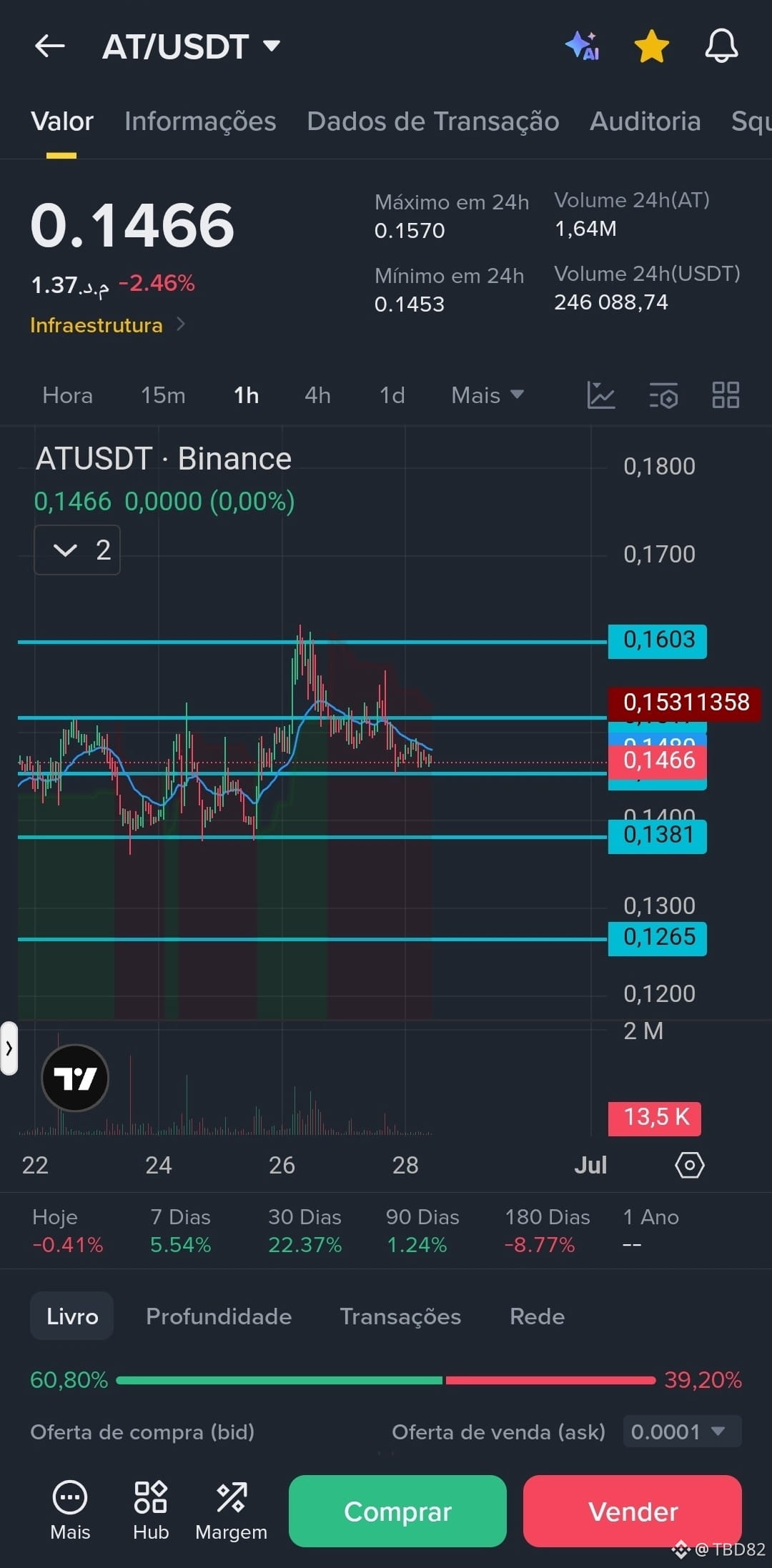
🚨 URGENTE: AT/USDT VAI ROMPER OU DESABAR? ENTENDA O MOVIMENTO AGORA! 🚨
O token AT (APRO) está consolidado em US$ 0,1466 (-2,46%), mas o relógio está correndo! ⏳ Se você está posicionado ou pensando em entrar, preste muita atenção nestes fatores técnicos cruciais nas próximas horas:
📈 O LADO BULLISH (ALTA):
As integrações estratégicas com a BNB Chain e ListaDAO aumentaram drasticamente a utilidade dos oráculos para RWAs e DeFi. A comunidade está antecipando uma ruptura! O forte suporte na região de US$ 0,1381 a US$ 0,1400 tem segurado o preço firmemente.
📉 O RISCO BEARISH (BAIXA):
O momentum de curto prazo desacelerou. O MACD no gráfico de 1H mostra histogramas negativos e o preço recuou ligeiramente. Além disso, a liquidez diária está reduzida (Volume de 1,64M), o que significa que qualquer baleia pode mover o mercado repentinamente. Se perder o suporte de US$ 0,1381, o próximo alvo é US$ 0,1265. Mas se o RSI indicar sobrevenda e o volume entrar, buscaremos a resistência de US$ 0,1603 rápido!
🎯 ESTRATÉGIA LUCRATIVA: Não opere no escuro! Aguarde a confirmação do volume antes de abrir sua posição.
👉 Quer lucrar alto com análises exclusivas antes de todo mundo? Clique em SEGUIR o meu perfil agora mesmo para não perder os próximos sinais e atualizações explosivas do mercado! 🚀
#BinanceSquare #CryptoAnalise #APRO #trading #Altcoins $BTC $SPCXB $AT
{spot}(ATUSDT)
🚨 URGENTE: AT/USDT VAI ROMPER OU DESABAR? ENTENDA O MOVIMENTO AGORA! 🚨
O token AT (APRO) está consolidado em US$ 0,1466 (-2,46%), mas o relógio está correndo! ⏳ Se você está posicionado ou pensando em entrar, preste muita atenção nestes fatores técnicos cruciais nas próximas horas:
📈 O LADO BULLISH (ALTA):
As integrações estratégicas com a BNB Chain e ListaDAO aumentaram drasticamente a utilidade dos oráculos para RWAs e DeFi. A comunidade está antecipando uma ruptura! O forte suporte na região de US$ 0,1381 a US$ 0,1400 tem segurado o preço firmemente.
📉 O RISCO BEARISH (BAIXA):
O momentum de curto prazo desacelerou. O MACD no gráfico de 1H mostra histogramas negativos e o preço recuou ligeiramente. Além disso, a liquidez diária está reduzida (Volume de 1,64M), o que significa que qualquer baleia pode mover o mercado repentinamente. Se perder o suporte de US$ 0,1381, o próximo alvo é US$ 0,1265. Mas se o RSI indicar sobrevenda e o volume entrar, buscaremos a resistência de US$ 0,1603 rápido!
🎯 ESTRATÉGIA LUCRATIVA: Não opere no escuro! Aguarde a confirmação do volume antes de abrir sua posição.
👉 Quer lucrar alto com análises exclusivas antes de todo mundo? Clique em SEGUIR o meu perfil agora mesmo para não perder os próximos sinais e atualizações explosivas do mercado! 🚀
#BinanceSquare #CryptoAnalise #APRO #trading #Altcoins $BTC $SPCXB $AT
O token AT (APRO) está consolidado em US$ 0,1466 (-2,46%), mas o relógio está correndo! ⏳ Se você está posicionado ou pensando em entrar, preste muita atenção nestes fatores técnicos cruciais nas próximas horas:
📈 O LADO BULLISH (ALTA):
As integrações estratégicas com a BNB Chain e ListaDAO aumentaram drasticamente a utilidade dos oráculos para RWAs e DeFi. A comunidade está antecipando uma ruptura! O forte suporte na região de US$ 0,1381 a US$ 0,1400 tem segurado o preço firmemente.
📉 O RISCO BEARISH (BAIXA):
O momentum de curto prazo desacelerou. O MACD no gráfico de 1H mostra histogramas negativos e o preço recuou ligeiramente. Além disso, a liquidez diária está reduzida (Volume de 1,64M), o que significa que qualquer baleia pode mover o mercado repentinamente. Se perder o suporte de US$ 0,1381, o próximo alvo é US$ 0,1265. Mas se o RSI indicar sobrevenda e o volume entrar, buscaremos a resistência de US$ 0,1603 rápido!
🎯 ESTRATÉGIA LUCRATIVA: Não opere no escuro! Aguarde a confirmação do volume antes de abrir sua posição.
👉 Quer lucrar alto com análises exclusivas antes de todo mundo? Clique em SEGUIR o meu perfil agora mesmo para não perder os próximos sinais e atualizações explosivas do mercado! 🚀
#BinanceSquare #CryptoAnalise #APRO #trading #Altcoins $BTC $SPCXB $AT
217



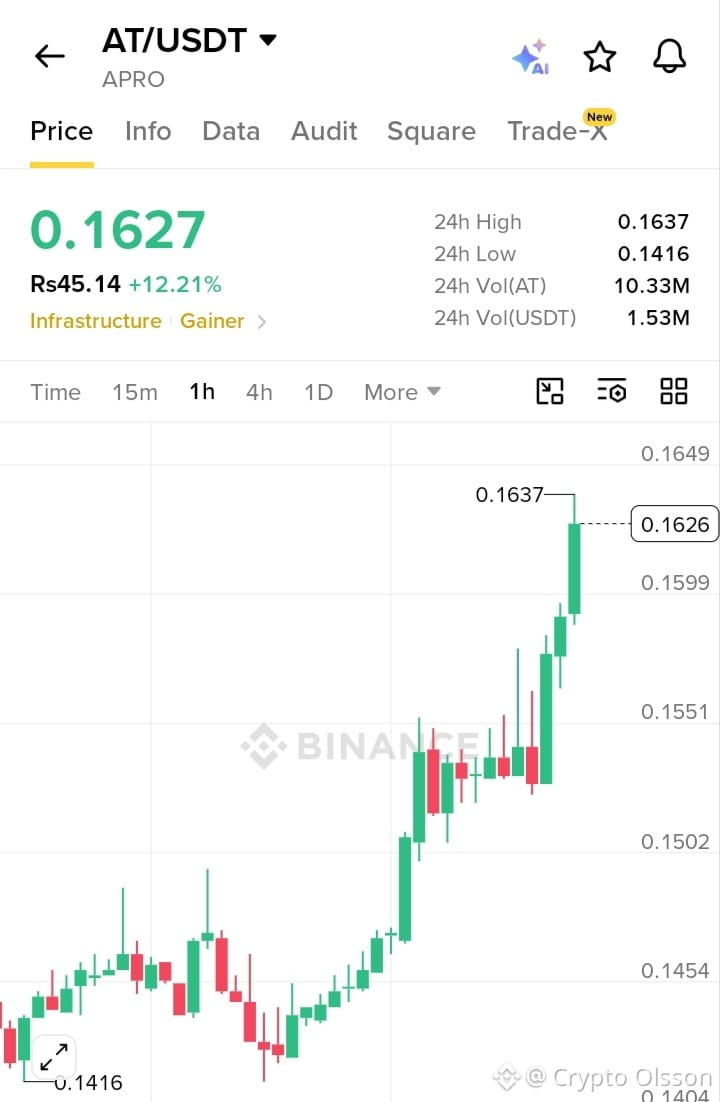
$APRO JUST LANDED A MAJOR ORACLE DEAL THAT FEW ARE TALKING ABOUT 🚀
APRO's MORE program just added Lista DAO, bringing price feeds for six new Binance bStocks pairs — MSFTB, METAB, LITEB, PLTRB, QQQB, SKHYB — alongside existing assets like NVDAB and TSLAB. This isn't a tiny update; it's APRO positioning as the go-to oracle for tokenized stocks on BNB Chain. With bStocks volume growing, the demand for reliable price data is non-negotiable.
The team says they now offer the most comprehensive coverage in the bStocks space. That's a narrative that tends to attract volume when the market catches on. Are you watching the $APRO chart for a volume spike?
Not financial advice. Always manage your risk.
#APRO #Oracle #BNBChain #DeFi #bStocks
🔥
$APRO JUST LANDED A MAJOR ORACLE DEAL THAT FEW ARE TALKING ABOUT 🚀
APRO's MORE program just added Lista DAO, bringing price feeds for six new Binance bStocks pairs — MSFTB, METAB, LITEB, PLTRB, QQQB, SKHYB — alongside existing assets like NVDAB and TSLAB. This isn't a tiny update; it's APRO positioning as the go-to oracle for tokenized stocks on BNB Chain. With bStocks volume growing, the demand for reliable price data is non-negotiable.
The team says they now offer the most comprehensive coverage in the bStocks space. That's a narrative that tends to attract volume when the market catches on. Are you watching the $APRO chart for a volume spike?
Not financial advice. Always manage your risk.
#APRO #Oracle #BNBChain #DeFi #bStocks
🔥
APRO's MORE program just added Lista DAO, bringing price feeds for six new Binance bStocks pairs — MSFTB, METAB, LITEB, PLTRB, QQQB, SKHYB — alongside existing assets like NVDAB and TSLAB. This isn't a tiny update; it's APRO positioning as the go-to oracle for tokenized stocks on BNB Chain. With bStocks volume growing, the demand for reliable price data is non-negotiable.
The team says they now offer the most comprehensive coverage in the bStocks space. That's a narrative that tends to attract volume when the market catches on. Are you watching the $APRO chart for a volume spike?
Not financial advice. Always manage your risk.
#APRO #Oracle #BNBChain #DeFi #bStocks
🔥
85

·
--
$APRO POWERS LISTA DAO'S BSTORKS INTEGRATION — ECOSYSTEM EXPANDING 🚀
APRO is now providing price feed services for six new bStock trading pairs on Lista DAO through the MORE program. This adds MSFTB, METAB, LITEB, PLTRB, QQQB, and SKHYB to the existing coverage.
The multi-oracle structure eliminates single-point-of-failure risk while stabilizing pricing across tokenized equities. With bStocks growing rapidly on BNB Chain, APRO's role as the primary oracle provider gives it structural demand that isn't priced in yet.
Does this move strengthen $APRO 's position as the go-to oracle for BNB Chain synthetic assets?
Not financial advice. Always manage your risk.
#APRO #LISTA #Oracle #bStocks #BNBChain
🔥
$APRO POWERS LISTA DAO'S BSTORKS INTEGRATION — ECOSYSTEM EXPANDING 🚀
APRO is now providing price feed services for six new bStock trading pairs on Lista DAO through the MORE program. This adds MSFTB, METAB, LITEB, PLTRB, QQQB, and SKHYB to the existing coverage.
The multi-oracle structure eliminates single-point-of-failure risk while stabilizing pricing across tokenized equities. With bStocks growing rapidly on BNB Chain, APRO's role as the primary oracle provider gives it structural demand that isn't priced in yet.
Does this move strengthen $APRO 's position as the go-to oracle for BNB Chain synthetic assets?
Not financial advice. Always manage your risk.
#APRO #LISTA #Oracle #bStocks #BNBChain
🔥
APRO is now providing price feed services for six new bStock trading pairs on Lista DAO through the MORE program. This adds MSFTB, METAB, LITEB, PLTRB, QQQB, and SKHYB to the existing coverage.
The multi-oracle structure eliminates single-point-of-failure risk while stabilizing pricing across tokenized equities. With bStocks growing rapidly on BNB Chain, APRO's role as the primary oracle provider gives it structural demand that isn't priced in yet.
Does this move strengthen $APRO 's position as the go-to oracle for BNB Chain synthetic assets?
Not financial advice. Always manage your risk.
#APRO #LISTA #Oracle #bStocks #BNBChain
🔥
100



·
--
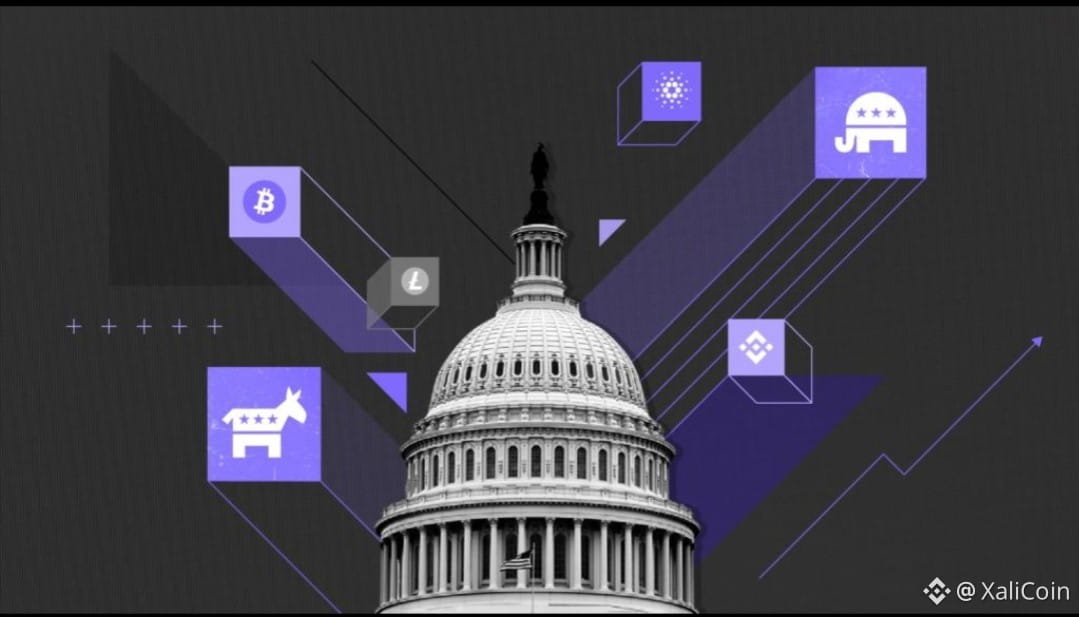
#USPARITYCryptoTaxBill
Digital Asset Protection, Accountability, Regulation, Innovation, Taxation & Yields (PARITY) Act
BACKGROUND
Bill ini resmi diperkenalkan pada 19 Mei 2026 oleh grup bipartisan dari House Ways and Means Committee — Rep. Steven Horsford (D-Nev.), Suzan DelBene (D-Wash.), Max Miller (R-Ohio), dan Mike Carey (R-Ohio).
Ini bukan muncul tiba-tiba — PARITY Act pertama kali dirilis sebagai discussion draft bulan Desember 2025, lalu dirilis ulang Maret 2026 untuk review lanjutan.
$AT @APRO-Oracle #APRO
{spot}(ATUSDT)
#USPARITYCryptoTaxBill
Digital Asset Protection, Accountability, Regulation, Innovation, Taxation & Yields (PARITY) Act
BACKGROUND
Bill ini resmi diperkenalkan pada 19 Mei 2026 oleh grup bipartisan dari House Ways and Means Committee — Rep. Steven Horsford (D-Nev.), Suzan DelBene (D-Wash.), Max Miller (R-Ohio), dan Mike Carey (R-Ohio).
Ini bukan muncul tiba-tiba — PARITY Act pertama kali dirilis sebagai discussion draft bulan Desember 2025, lalu dirilis ulang Maret 2026 untuk review lanjutan.
$AT @APRO Oracle #APRO
Digital Asset Protection, Accountability, Regulation, Innovation, Taxation & Yields (PARITY) Act
BACKGROUND
Bill ini resmi diperkenalkan pada 19 Mei 2026 oleh grup bipartisan dari House Ways and Means Committee — Rep. Steven Horsford (D-Nev.), Suzan DelBene (D-Wash.), Max Miller (R-Ohio), dan Mike Carey (R-Ohio).
Ini bukan muncul tiba-tiba — PARITY Act pertama kali dirilis sebagai discussion draft bulan Desember 2025, lalu dirilis ulang Maret 2026 untuk review lanjutan.
$AT @APRO Oracle #APRO
1
1
318


·
--
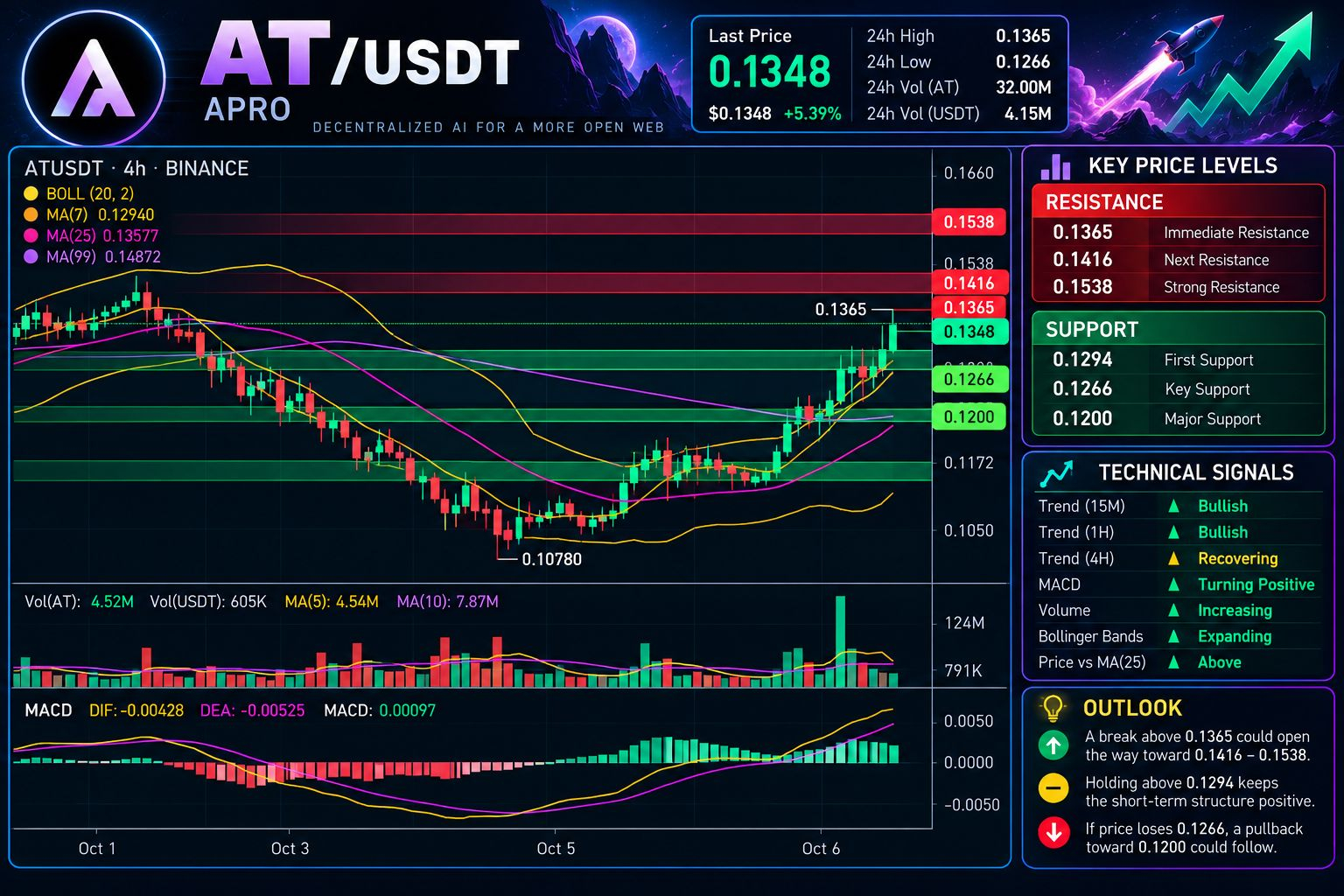
AT has reached an area where the next move depends more on confirmation than momentum.
🟢 Support: 0.1294 → 0.1266
🔴 Resistance: 0.1365 → 0.1416
If buyers can reclaim 0.1365 with volume and hold it as support, the structure can open room toward 0.1416, with 0.1538 as the next major level.
But losing 0.1266 would weaken the current setup and bring the lower support zone back into focus.
My approach: I’d rather wait for confirmation above resistance than chase the first breakout candle.
$ESP
{future}(ESPUSDT)
$ESPORTS
{future}(ESPORTSUSDT)
$AT
{future}(ATUSDT)
#APRO
AT has reached an area where the next move depends more on confirmation than momentum.
🟢 Support: 0.1294 → 0.1266
🔴 Resistance: 0.1365 → 0.1416
If buyers can reclaim 0.1365 with volume and hold it as support, the structure can open room toward 0.1416, with 0.1538 as the next major level.
But losing 0.1266 would weaken the current setup and bring the lower support zone back into focus.
My approach: I’d rather wait for confirmation above resistance than chase the first breakout candle.
$ESP
$ESPORTS
$AT
#APRO
🟢 Support: 0.1294 → 0.1266
🔴 Resistance: 0.1365 → 0.1416
If buyers can reclaim 0.1365 with volume and hold it as support, the structure can open room toward 0.1416, with 0.1538 as the next major level.
But losing 0.1266 would weaken the current setup and bring the lower support zone back into focus.
My approach: I’d rather wait for confirmation above resistance than chase the first breakout candle.
$ESP
$ESPORTS
$AT
#APRO
2
1k

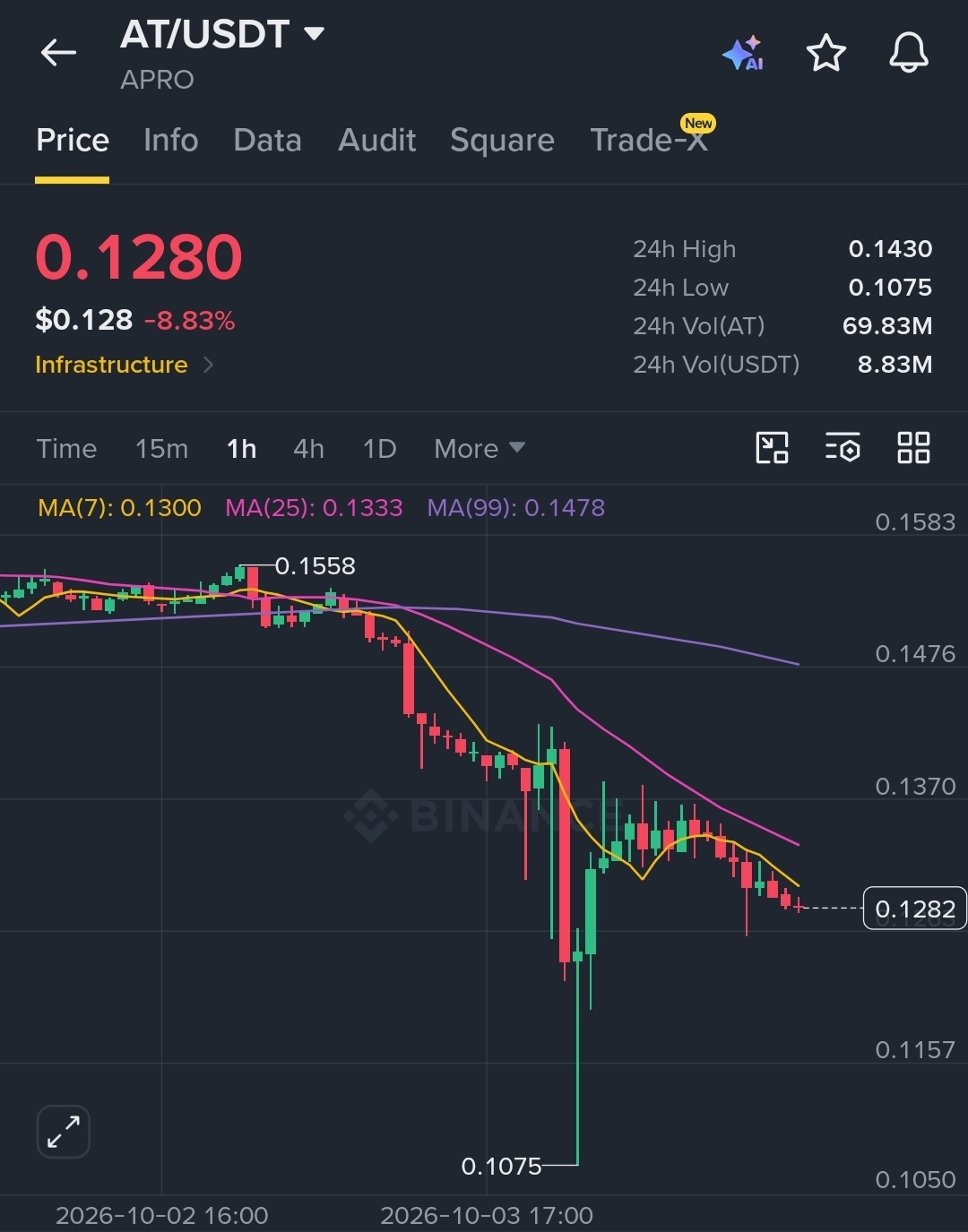
🔮 $AT /USDT — 🔴 SHORT · Conf 85%
━━━━━━━━━━━━━━
📍 Entry: 0.1276 – 0.1284
🛑 SL: 0.1405
🎯 TP1: 0.1216
✅ TP2: 0.1165
🏆 TP3: 0.1088
━━━━━━━━━━━━━━
🔎 Price is under the MA7, MA25 and MA99 (0.1300 / 0.1333 / 0.1478), and the bounce off the 0.1075 wick failed at the MA25.
🧠 $AT : APRO is a decentralized oracle network feeding off-chain data to smart contracts on 40+ chains, with AI-assisted data processing — it competes against entrenched oracles like Chainlink.
💬 Can an AI-enhanced oracle take share from Chainlink, or does incumbency decide this market?
#AT #APRO #Decentralization #AI #Offchain
{future}(ATUSDT)
🔮 $AT /USDT — 🔴 SHORT · Conf 85%
━━━━━━━━━━━━━━
📍 Entry: 0.1276 – 0.1284
🛑 SL: 0.1405
🎯 TP1: 0.1216
✅ TP2: 0.1165
🏆 TP3: 0.1088
━━━━━━━━━━━━━━
🔎 Price is under the MA7, MA25 and MA99 (0.1300 / 0.1333 / 0.1478), and the bounce off the 0.1075 wick failed at the MA25.
🧠 $AT : APRO is a decentralized oracle network feeding off-chain data to smart contracts on 40+ chains, with AI-assisted data processing — it competes against entrenched oracles like Chainlink.
💬 Can an AI-enhanced oracle take share from Chainlink, or does incumbency decide this market?
#AT #APRO #Decentralization #AI #Offchain
━━━━━━━━━━━━━━
📍 Entry: 0.1276 – 0.1284
🛑 SL: 0.1405
🎯 TP1: 0.1216
✅ TP2: 0.1165
🏆 TP3: 0.1088
━━━━━━━━━━━━━━
🔎 Price is under the MA7, MA25 and MA99 (0.1300 / 0.1333 / 0.1478), and the bounce off the 0.1075 wick failed at the MA25.
🧠 $AT : APRO is a decentralized oracle network feeding off-chain data to smart contracts on 40+ chains, with AI-assisted data processing — it competes against entrenched oracles like Chainlink.
💬 Can an AI-enhanced oracle take share from Chainlink, or does incumbency decide this market?
#AT #APRO #Decentralization #AI #Offchain

1
276

🔥 #APRO /USDT — Short Market Read
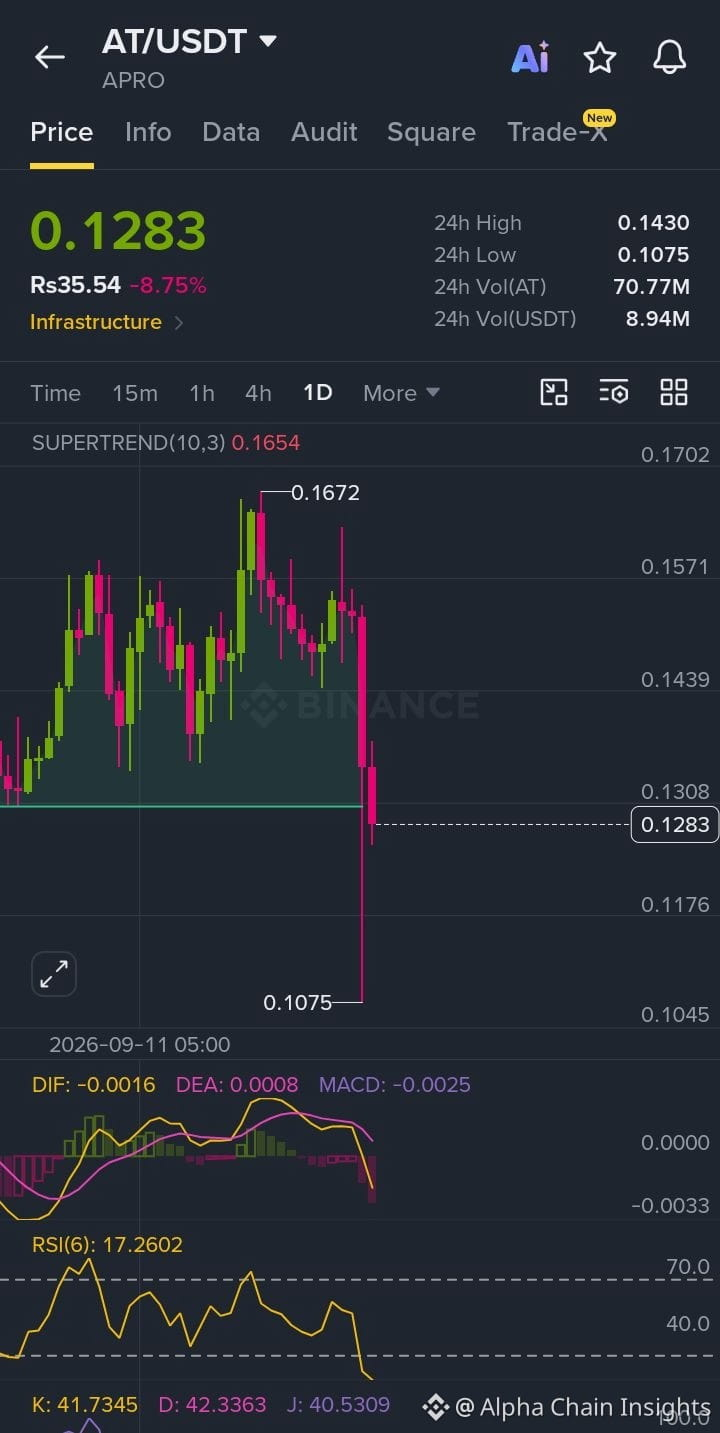
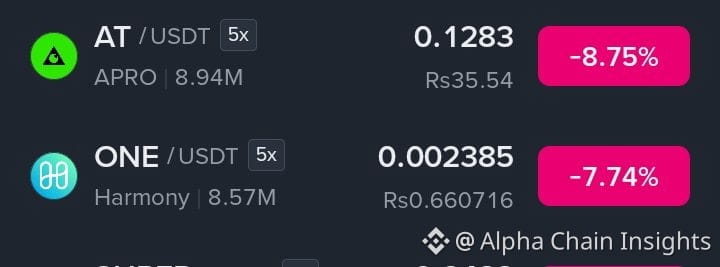
📉 Price: 0.1283, down 8.75%
⚠️ Strong bearish pressure is visible from the sharp decline.
👀 Buyers need to regain momentum to stabilize the price.
📌 No clear support/resistance levels are visible in the screenshot.
💡 Bias: Bearish until price shows a clear recovery.
#APRO #Crypto #Binance #altcoins
🔥 #APRO /USDT — Short Market Read
📉 Price: 0.1283, down 8.75%
⚠️ Strong bearish pressure is visible from the sharp decline.
👀 Buyers need to regain momentum to stabilize the price.
📌 No clear support/resistance levels are visible in the screenshot.
💡 Bias: Bearish until price shows a clear recovery.
#APRO #Crypto #Binance #altcoins
📉 Price: 0.1283, down 8.75%
⚠️ Strong bearish pressure is visible from the sharp decline.
👀 Buyers need to regain momentum to stabilize the price.
📌 No clear support/resistance levels are visible in the screenshot.
💡 Bias: Bearish until price shows a clear recovery.
#APRO #Crypto #Binance #altcoins
423

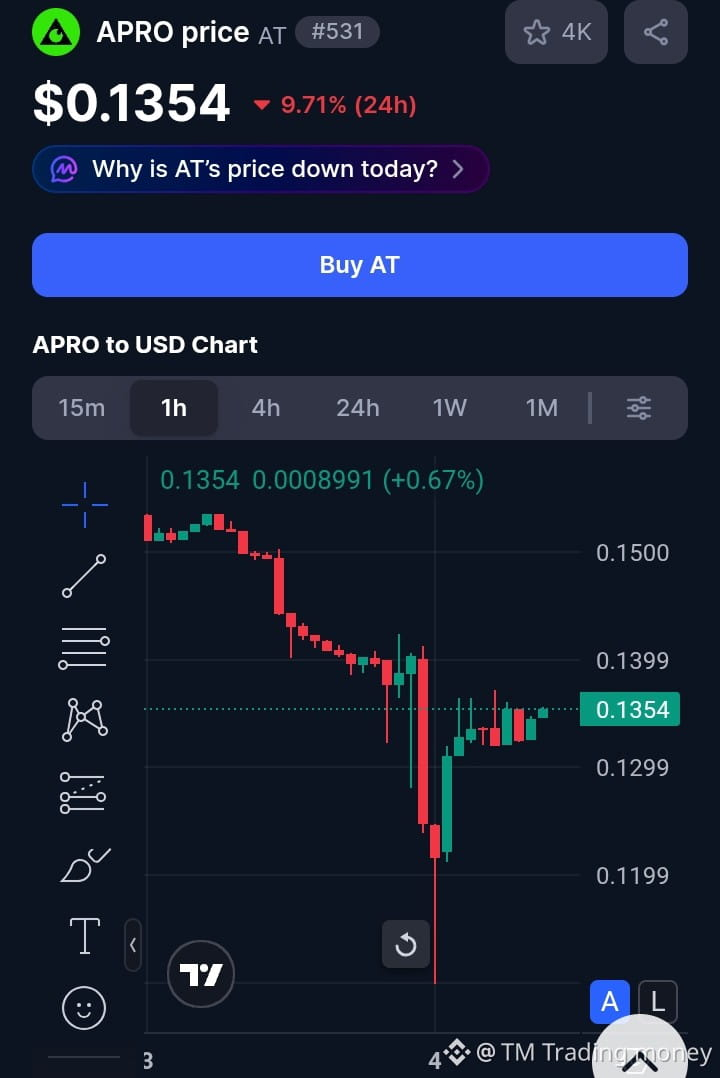
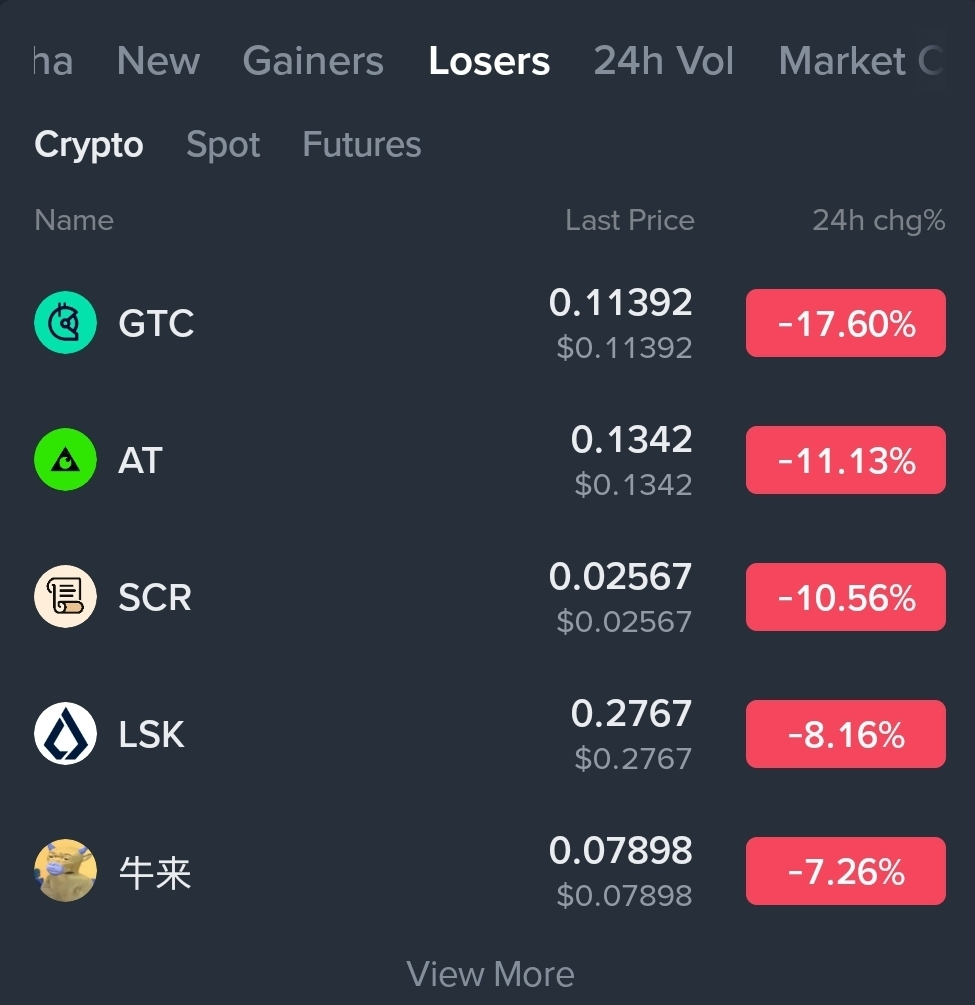
Top Losers for 3rd Oct, 2026
💵 $GTC — Gitcoin’s governance token, powering community funding and decentralized decision-making around public-goods development.
🦄 $AT — APRO’s native token, powering a decentralized oracle protocol that provides reliable real-world and on-chain data to blockchain applications.
🔻 $SCR — Scroll’s native token, used for governance and ecosystem participation on the Ethereum Layer-2 network.
#GTC #Gitcoin #AT #APRO #SCR
{future}(GTCUSDT)
{future}(ATUSDT)
{future}(SCRUSDT)
Top Losers for 3rd Oct, 2026
💵 $GTC — Gitcoin’s governance token, powering community funding and decentralized decision-making around public-goods development.
🦄 $AT — APRO’s native token, powering a decentralized oracle protocol that provides reliable real-world and on-chain data to blockchain applications.
🔻 $SCR — Scroll’s native token, used for governance and ecosystem participation on the Ethereum Layer-2 network.
#GTC #Gitcoin #AT #APRO #SCR
💵 $GTC — Gitcoin’s governance token, powering community funding and decentralized decision-making around public-goods development.
🦄 $AT — APRO’s native token, powering a decentralized oracle protocol that provides reliable real-world and on-chain data to blockchain applications.
🔻 $SCR — Scroll’s native token, used for governance and ecosystem participation on the Ethereum Layer-2 network.
#GTC #Gitcoin #AT #APRO #SCR
1
399

Détention de 3.1 USDT en $AT
$AT - APRO is getting interesting
$AT is sitting around $0.14, but the interesting part isn’t the price alone.
APRO is an oracle project, and AT is the native token used around the ecosystem.
Right now, I’m watching the volume + price reaction closely.
A move back toward the recent $0.15 area could make the chart interesting, but losing the recent low would tell a very different story. 👀
Would you take a position in $AT here, or wait for confirmation?
🟢 Buy
🟡 Wait
🔴 Skip
#AT #APRO #Crypto #Altcoins #BinanceSquare
$AT - APRO is getting interesting
$AT is sitting around $0.14, but the interesting part isn’t the price alone.
APRO is an oracle project, and AT is the native token used around the ecosystem.
Right now, I’m watching the volume + price reaction closely.
A move back toward the recent $0.15 area could make the chart interesting, but losing the recent low would tell a very different story. 👀
Would you take a position in $AT here, or wait for confirmation?
🟢 Buy
🟡 Wait
🔴 Skip
#AT #APRO #Crypto #Altcoins #BinanceSquare
$AT is sitting around $0.14, but the interesting part isn’t the price alone.
APRO is an oracle project, and AT is the native token used around the ecosystem.
Right now, I’m watching the volume + price reaction closely.
A move back toward the recent $0.15 area could make the chart interesting, but losing the recent low would tell a very different story. 👀
Would you take a position in $AT here, or wait for confirmation?
🟢 Buy
🟡 Wait
🔴 Skip
#AT #APRO #Crypto #Altcoins #BinanceSquare
就爱玩山寨币:
傻x 最垃圾的币 还去捧它
1
783

·
--
Haussier
بسم الله الرحمن الرحيم
السلام عليكم ورحمة الله وبركاته
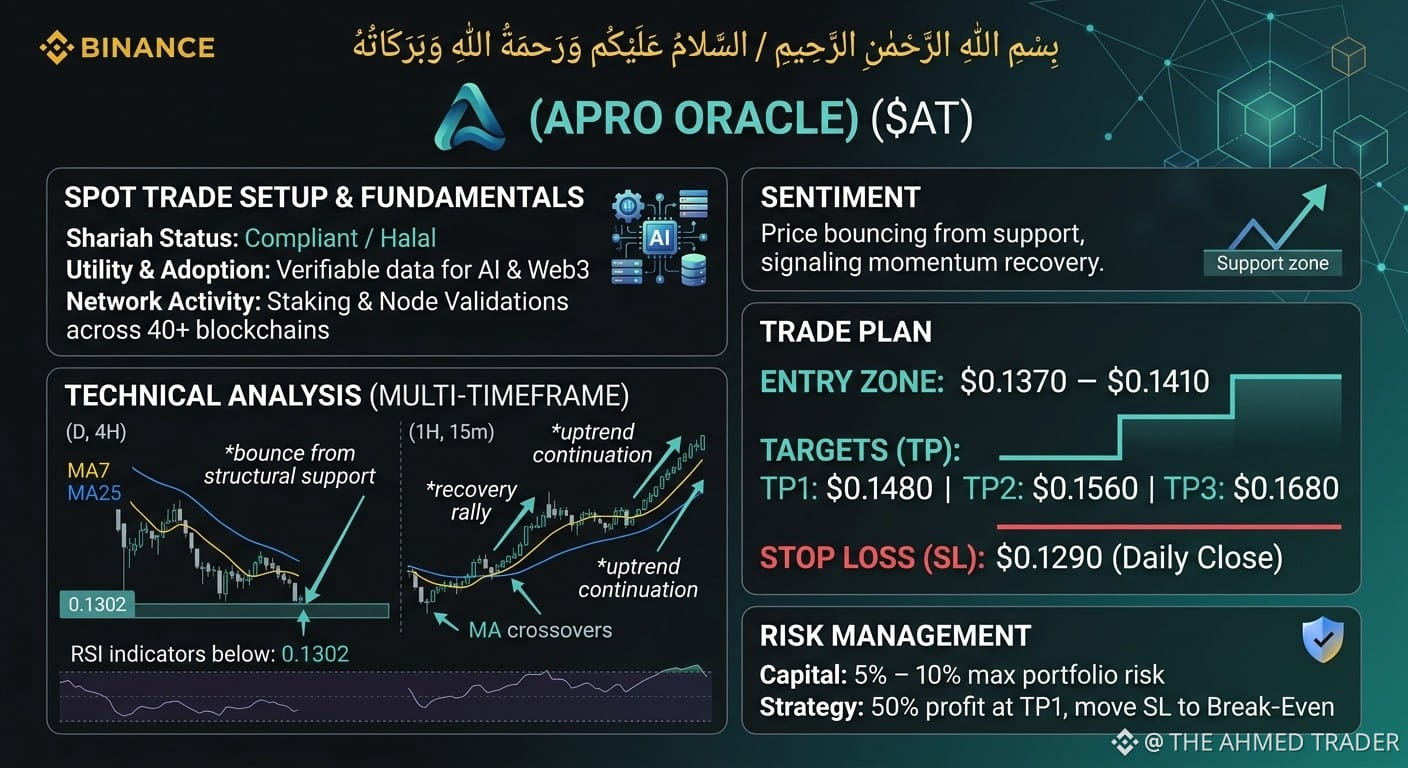
📊 $AT APRO ORACLE) SPOT TRADE SETUP
Shariah Status: Compliant / Halal (AI-Driven Decentralized Oracle Protocol for Bitcoin & Web3 Data Feeds)
Utility & Adoption: Supplies verifiable price feeds and off-chain data to AI agents, BTCFi, and multi-chain smart contracts.
Network & Activity: Staking and node validations secure real-time data delivery across 40+ blockchains.
Sentiment: Price bouncing from strong $0.1302–$0.1355 support zone, signaling momentum recovery.
📈 MULTI-TIMEFRAME TECHNICALS
1D Frame: $0.1404 | Base consolidation above structural low ($0.0948); holding below MA7 ($0.1475) & MA25 ($0.1432); RSI 47.81.
4H Frame: $0.1404 | Rebounding off swing bottom ($0.1302); MA7 ($0.1394) crossing near MA25 ($0.1461); RSI 43.84.
1H Frame: $0.1404 | Recovery rally from $0.1345 low; MA7 ($0.1392) crossing above MA25 ($0.1398); RSI 46.35.
15m Frame: $0.1404 | Micro uptrend continuation from $0.1355 bottom; MA7 ($0.1403) riding above MA25 ($0.1391); RSI 55.25.
🎯 SPOT TRADE SETUP
📍 Entry Zone: $0.1370 – $0.1410
🎯 TP1: $0.1480 | TP2: $0.1560 | TP3: $0.1680
⛔ Stop Loss (SL): $0.1290 (Daily Close)
💡 RISK MANAGEMENT
Capital: 5% – 10% portfolio risk maximum.
Strategy: Take 50% profit at TP1 and move SL to Break-Even for a risk-free trade.
{spot}(ATUSDT)
#AT #APRO #CryptoAnalysis #TradingSetup #BinanceSquare
بسم الله الرحمن الرحيم
السلام عليكم ورحمة الله وبركاته
📊 $AT APRO ORACLE) SPOT TRADE SETUP
Shariah Status: Compliant / Halal (AI-Driven Decentralized Oracle Protocol for Bitcoin & Web3 Data Feeds)
Utility & Adoption: Supplies verifiable price feeds and off-chain data to AI agents, BTCFi, and multi-chain smart contracts.
Network & Activity: Staking and node validations secure real-time data delivery across 40+ blockchains.
Sentiment: Price bouncing from strong $0.1302–$0.1355 support zone, signaling momentum recovery.
📈 MULTI-TIMEFRAME TECHNICALS
1D Frame: $0.1404 | Base consolidation above structural low ($0.0948); holding below MA7 ($0.1475) & MA25 ($0.1432); RSI 47.81.
4H Frame: $0.1404 | Rebounding off swing bottom ($0.1302); MA7 ($0.1394) crossing near MA25 ($0.1461); RSI 43.84.
1H Frame: $0.1404 | Recovery rally from $0.1345 low; MA7 ($0.1392) crossing above MA25 ($0.1398); RSI 46.35.
15m Frame: $0.1404 | Micro uptrend continuation from $0.1355 bottom; MA7 ($0.1403) riding above MA25 ($0.1391); RSI 55.25.
🎯 SPOT TRADE SETUP
📍 Entry Zone: $0.1370 – $0.1410
🎯 TP1: $0.1480 | TP2: $0.1560 | TP3: $0.1680
⛔ Stop Loss (SL): $0.1290 (Daily Close)
💡 RISK MANAGEMENT
Capital: 5% – 10% portfolio risk maximum.
Strategy: Take 50% profit at TP1 and move SL to Break-Even for a risk-free trade.
#AT #APRO #CryptoAnalysis #TradingSetup #BinanceSquare
السلام عليكم ورحمة الله وبركاته
📊 $AT APRO ORACLE) SPOT TRADE SETUP
Shariah Status: Compliant / Halal (AI-Driven Decentralized Oracle Protocol for Bitcoin & Web3 Data Feeds)
Utility & Adoption: Supplies verifiable price feeds and off-chain data to AI agents, BTCFi, and multi-chain smart contracts.
Network & Activity: Staking and node validations secure real-time data delivery across 40+ blockchains.
Sentiment: Price bouncing from strong $0.1302–$0.1355 support zone, signaling momentum recovery.
📈 MULTI-TIMEFRAME TECHNICALS
1D Frame: $0.1404 | Base consolidation above structural low ($0.0948); holding below MA7 ($0.1475) & MA25 ($0.1432); RSI 47.81.
4H Frame: $0.1404 | Rebounding off swing bottom ($0.1302); MA7 ($0.1394) crossing near MA25 ($0.1461); RSI 43.84.
1H Frame: $0.1404 | Recovery rally from $0.1345 low; MA7 ($0.1392) crossing above MA25 ($0.1398); RSI 46.35.
15m Frame: $0.1404 | Micro uptrend continuation from $0.1355 bottom; MA7 ($0.1403) riding above MA25 ($0.1391); RSI 55.25.
🎯 SPOT TRADE SETUP
📍 Entry Zone: $0.1370 – $0.1410
🎯 TP1: $0.1480 | TP2: $0.1560 | TP3: $0.1680
⛔ Stop Loss (SL): $0.1290 (Daily Close)
💡 RISK MANAGEMENT
Capital: 5% – 10% portfolio risk maximum.
Strategy: Take 50% profit at TP1 and move SL to Break-Even for a risk-free trade.
#AT #APRO #CryptoAnalysis #TradingSetup #BinanceSquare
102
Connectez-vous pour découvrir plus de contenu
Rejoignez la communauté mondiale des adeptes de cryptomonnaies sur Binance Square
⚡️ Suviez les dernières informations importantes sur les cryptomonnaies.
💬 Jugé digne de confiance par la plus grande plateforme d’échange de cryptomonnaies au monde.
👍 Découvrez les connaissances que partagent les créateurs vérifiés.
Adresse e-mail/Nº de téléphone
Sujets d’actualité
1
#FedMinutesFocusOnOctoberPause
143,503 vues
1,234 mentions
2
#BinanceLaunchesBinanceIntelligence
1.1M vues
6,435 mentions
3
#EvernorthDelaysNasdaqDebutToOct12
11,039 vues
277 mentions
4
#RobinhoodAdds$25MInBitcoinToBalanceSheet
2,901 vues
65 mentions
5
#SP500AndNasdaqHitRecordHighs
18,862 vues
458 mentions
6
#USMortgageRatesRiseTo7.49%
22,265 vues
371 mentions
7
#BTCFallsBelow$84K
119,971 vues
233 mentions
8
#DubaiVARAIssuesReserveAssetAuditCircular
44,519 vues
940 mentions
9
#SECApproves3XBitcoinETF
41,930 vues
765 mentions
10
#WinklevossFilesSpotZcashETFApplication
50,015 vues
866 mentions