
ZEN ARLO
11.5k Posts

ZEN ARLO
 Square Verified+
Report
Block User
Code by day, charts by night. Sleep? Rarely. I try not to FOMO. LFG 🥂
38 Following
34.9K+ Followers
57.6K+ Liked
Posts
All
Quotes
Live
·
--

Article
BINANCE BLOCKCHAIN WEEK 2026: HOW CRYPTO, AI AND TOKENIZATION ARE RESHAPING THE FUTURE OF GLOBAL FINWhat interests me most about Binance Blockchain Week 2026 is how different the conversation around crypto has become. A few years ago, almost everyone was talking about Bitcoin prices, altcoin rallies and the next bull market. Today, some of the biggest financial institutions are discussing how blockchain could become part of everyday finance.
On November 28–29, Bangkok, Thailand, will host Binance Blockchain Week 2026 at the Queen Sirikit National Convention Center. This year's theme, “Evolve,” reflects how far the industry has come and how much work still needs to be done.
With organizations such as BlackRock, Nasdaq, Visa, Mastercard, Franklin Templeton and Tether expected to participate, I'm curious to see how traditional financial institutions approach the next stage of blockchain adoption.
These companies already serve millions of people through existing financial systems. Their growing interest in blockchain suggests that digital assets are becoming increasingly relevant beyond the crypto community.
The first day will focus on the evolution of capital. Binance Co-CEO Richard Teng is expected to discuss bringing digital finance to another three billion people.
That's an ambitious goal, especially when many people around the world still struggle to access basic financial services.
Government representatives from Kazakhstan, Bhutan, Ghana and Thailand are also expected to participate. I'm particularly interested in hearing how different countries approach digital assets, considering that regulatory uncertainty remains a major challenge for the industry.
Another discussion I'll be following closely is real-world asset tokenization.
The idea of accessing stocks, government bonds and other traditional assets through blockchain is becoming increasingly relevant. Companies like BlackRock and Ondo Finance are already exploring this opportunity.
Imagine being able to access certain financial assets outside conventional market hours, with fewer intermediaries and more efficient settlement processes.
Of course, there are still challenges. Investors need proper legal protection, sufficient liquidity and confidence that their digital assets represent genuine ownership.
Stablecoins are equally important. Most crypto traders know them as a convenient way to protect their capital during volatile market conditions, but their usefulness goes far beyond trading.
For someone sending money to family members in another country, reducing transaction costs and waiting times could make a meaningful difference.
With Visa, Tether and Celo expected to contribute to these discussions, I'm interested in seeing how traditional payment networks and blockchain infrastructure could work together.
The second day will explore another subject that has attracted considerable attention recently: artificial intelligence.
Binance Co-CEO Yi He is expected to discuss the company's broader financial ambitions, while other industry participants will examine how emerging technologies could reshape financial services.
AI could help people process financial information, automate payments and manage risks more efficiently. Blockchain could support these activities through transparent records and programmable transactions.
Projects and companies including Pyth Network, RedStone, Babylon, BNB Chain, Google Cloud and Alibaba Cloud are expected to bring different perspectives to these conversations.
Personally, I would rather see practical demonstrations than ambitious promises. Combining two popular technologies sounds exciting, but the results need to offer something genuinely useful.
I also appreciate that Binance Blockchain Week is expected to explore humanitarian applications of blockchain, with UNICEF participating in discussions around digital infrastructure and aid distribution.
It's refreshing to see conversations that aren't entirely focused on making money. If blockchain can improve transparency and help financial assistance reach vulnerable communities more efficiently, that would represent meaningful progress.
The Blockchain 100 Awards, scheduled for November 29, will also recognize creators contributing to cryptocurrency awareness and financial education.
As someone who follows crypto content regularly, I believe creators have an important responsibility. Sharing accurate information, explaining complicated developments and encouraging meaningful discussions can help newcomers understand this industry without becoming distracted by unrealistic expectations.
Through the #EvolveAtBinanceBlockchainWeek campaign, the wider community can also share its expectations, opinions and observations throughout the event.
What I really want from this year's conference is a clearer understanding of where crypto is heading.
We've experienced enough speculative excitement, temporary trends and ambitious promises. What matters now is whether blockchain can deliver reliable products that ordinary people actually need.
I want to see stablecoins making international payments easier, tokenization opening new financial opportunities and artificial intelligence helping people make more informed decisions.
Binance Blockchain Week won't solve every problem facing the industry in two days. However, bringing developers, policymakers, financial institutions and everyday crypto users together could help move these conversations forward.
For me, the biggest sign of crypto's evolution won't necessarily be Bitcoin reaching another all-time high.
It will be the moment when people start using blockchain because it makes their lives easier, rather than because they expect a token's price to increase.
That's the kind of evolution I'm looking forward to seeing at Binance Blockchain Week 2026.
#EvolveAtBinanceBlockchainWeek
BINANCE BLOCKCHAIN WEEK 2026: HOW CRYPTO, AI AND TOKENIZATION ARE RESHAPING THE FUTURE OF GLOBAL FIN
What interests me most about Binance Blockchain Week 2026 is how different the conversation around crypto has become. A few years ago, almost everyone was talking about Bitcoin prices, altcoin rallies and the next bull market. Today, some of the biggest financial institutions are discussing how blockchain could become part of everyday finance.
On November 28–29, Bangkok, Thailand, will host Binance Blockchain Week 2026 at the Queen Sirikit National Convention Center. This year's theme, “Evolve,” reflects how far the industry has come and how much work still needs to be done.
With organizations such as BlackRock, Nasdaq, Visa, Mastercard, Franklin Templeton and Tether expected to participate, I'm curious to see how traditional financial institutions approach the next stage of blockchain adoption.
These companies already serve millions of people through existing financial systems. Their growing interest in blockchain suggests that digital assets are becoming increasingly relevant beyond the crypto community.
The first day will focus on the evolution of capital. Binance Co-CEO Richard Teng is expected to discuss bringing digital finance to another three billion people.
That's an ambitious goal, especially when many people around the world still struggle to access basic financial services.
Government representatives from Kazakhstan, Bhutan, Ghana and Thailand are also expected to participate. I'm particularly interested in hearing how different countries approach digital assets, considering that regulatory uncertainty remains a major challenge for the industry.
Another discussion I'll be following closely is real-world asset tokenization.
The idea of accessing stocks, government bonds and other traditional assets through blockchain is becoming increasingly relevant. Companies like BlackRock and Ondo Finance are already exploring this opportunity.
Imagine being able to access certain financial assets outside conventional market hours, with fewer intermediaries and more efficient settlement processes.
Of course, there are still challenges. Investors need proper legal protection, sufficient liquidity and confidence that their digital assets represent genuine ownership.
Stablecoins are equally important. Most crypto traders know them as a convenient way to protect their capital during volatile market conditions, but their usefulness goes far beyond trading.
For someone sending money to family members in another country, reducing transaction costs and waiting times could make a meaningful difference.
With Visa, Tether and Celo expected to contribute to these discussions, I'm interested in seeing how traditional payment networks and blockchain infrastructure could work together.
The second day will explore another subject that has attracted considerable attention recently: artificial intelligence.
Binance Co-CEO Yi He is expected to discuss the company's broader financial ambitions, while other industry participants will examine how emerging technologies could reshape financial services.
AI could help people process financial information, automate payments and manage risks more efficiently. Blockchain could support these activities through transparent records and programmable transactions.
Projects and companies including Pyth Network, RedStone, Babylon, BNB Chain, Google Cloud and Alibaba Cloud are expected to bring different perspectives to these conversations.
Personally, I would rather see practical demonstrations than ambitious promises. Combining two popular technologies sounds exciting, but the results need to offer something genuinely useful.
I also appreciate that Binance Blockchain Week is expected to explore humanitarian applications of blockchain, with UNICEF participating in discussions around digital infrastructure and aid distribution.
It's refreshing to see conversations that aren't entirely focused on making money. If blockchain can improve transparency and help financial assistance reach vulnerable communities more efficiently, that would represent meaningful progress.
The Blockchain 100 Awards, scheduled for November 29, will also recognize creators contributing to cryptocurrency awareness and financial education.
As someone who follows crypto content regularly, I believe creators have an important responsibility. Sharing accurate information, explaining complicated developments and encouraging meaningful discussions can help newcomers understand this industry without becoming distracted by unrealistic expectations.
Through the #EvolveAtBinanceBlockchainWeek campaign, the wider community can also share its expectations, opinions and observations throughout the event.
What I really want from this year's conference is a clearer understanding of where crypto is heading.
We've experienced enough speculative excitement, temporary trends and ambitious promises. What matters now is whether blockchain can deliver reliable products that ordinary people actually need.
I want to see stablecoins making international payments easier, tokenization opening new financial opportunities and artificial intelligence helping people make more informed decisions.
Binance Blockchain Week won't solve every problem facing the industry in two days. However, bringing developers, policymakers, financial institutions and everyday crypto users together could help move these conversations forward.
For me, the biggest sign of crypto's evolution won't necessarily be Bitcoin reaching another all-time high.
It will be the moment when people start using blockchain because it makes their lives easier, rather than because they expect a token's price to increase.
That's the kind of evolution I'm looking forward to seeing at Binance Blockchain Week 2026.
#EvolveAtBinanceBlockchainWeek
1
120
·
--
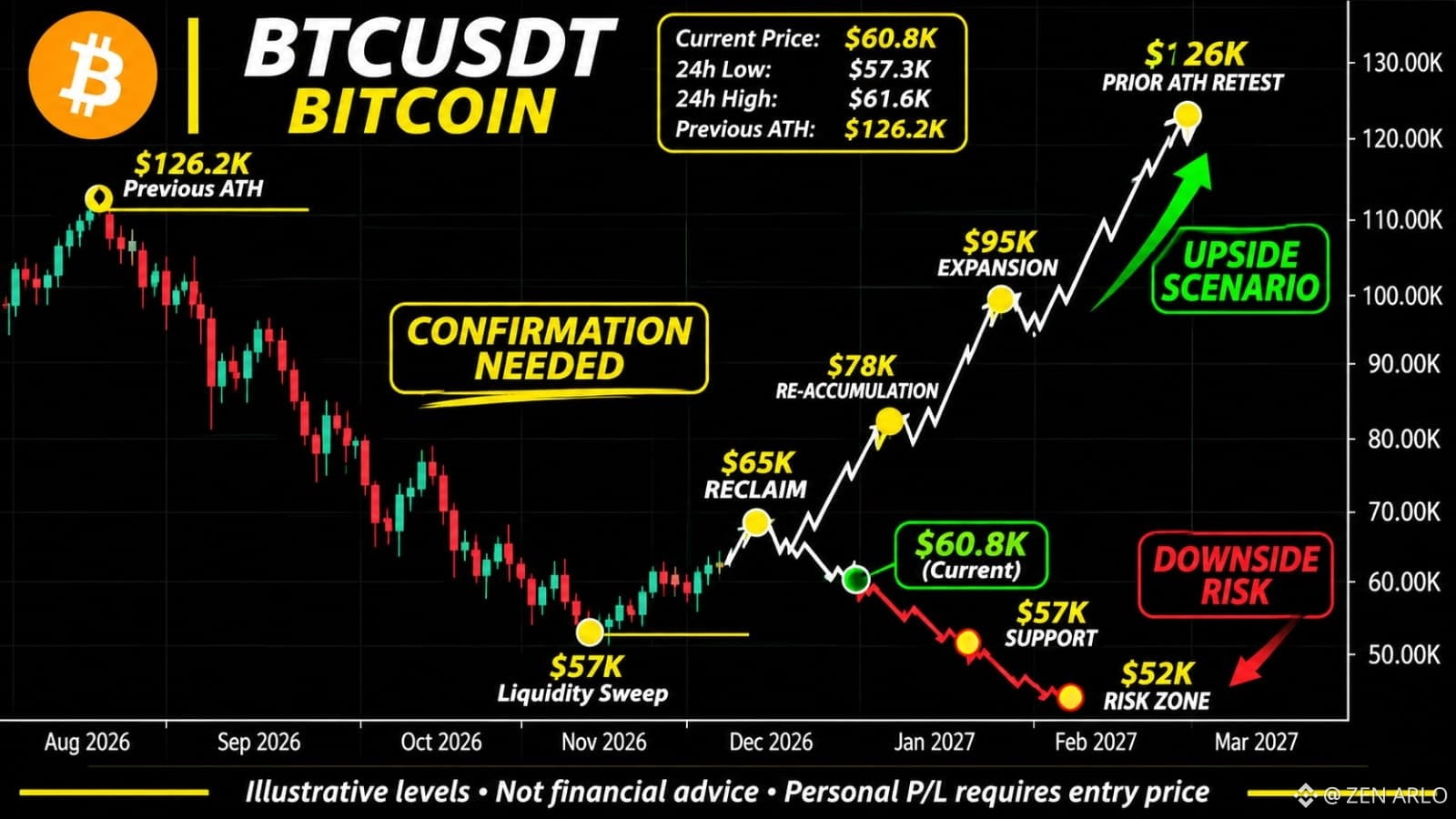
BITCOIN AT A CRITICAL TURNING POINT — $126K OR $52K?
$BTC is hovering around $60,800 after dropping nearly 52% from its previous all-time high of $126,200.
The chart shows a 24-hour low of $57,300 and a high of $61,600, with recovery momentum still awaiting confirmation.
Reclaiming $65K could open a recovery path toward $78K, followed by expansion toward $95K and a potential $126K retest in 2027.
However, losing $57K support could expose Bitcoin to another painful decline toward $52K.
The next major move could define Bitcoin's 2027 market direction.
These are speculative chart projections, not guaranteed outcomes.
2
3
229
·
--

Article
WILL THANKSGIVING SPARK A MASSIVE MARKET RELIEF RALLY OR SET THE STAGE FOR ANOTHER BRUTAL SELL-OFF?Thanksgiving is arriving at a time when financial markets could really use some good news. After several uncomfortable trading sessions, investors are hoping the holiday brings a break from the selling pressure. Technology stocks have been struggling, cryptocurrencies remain under pressure, and uncertainty surrounding interest rates continues to influence market sentiment.
But can Thanksgiving actually bring buyers back, or will another temporary recovery end with even more selling?
Monday's strong rebound showed that buyers haven't completely disappeared. Unfortunately, Tuesday's weakness in technology stocks reminded everyone how fragile market confidence remains. Investors are still uncomfortable with expensive AI valuations, elevated borrowing costs and the uncertain economic outlook.
What makes Thanksgiving week interesting is the change in trading behavior. Many institutional investors reduce their activity before the holiday, while some traders close existing positions to avoid unnecessary exposure. This can ease selling pressure and create room for a short-term recovery.
Historically, Thanksgiving has often been a favorable period for US equities. However, I wouldn't rely entirely on historical patterns, especially considering the challenges markets are currently facing.
US stock exchanges will remain closed on November 26, followed by a shortened trading session on Friday. Lower trading volumes could make price movements more unpredictable. Even a relatively small amount of buying or selling could produce a surprisingly large reaction.
Another major factor is inflation. Investors are looking for evidence that price pressures are cooling and that the Federal Reserve may have less reason to maintain restrictive monetary conditions.
A softer inflation reading could bring buyers back into technology stocks, cryptocurrencies and other risk assets. However, stronger inflation could quickly reverse that optimism and increase concerns about further monetary tightening.
Bitcoin is particularly interesting heading into Thanksgiving. The $60,000 psychological region discussed in recent market analysis remains an important reference point. After experiencing considerable selling pressure, Bitcoin could benefit from improving sentiment across traditional financial markets.
What I want to see, however, is genuine spot buying rather than a rally fueled entirely by short liquidations. There is a meaningful difference between investors accumulating Bitcoin and leveraged traders being forced out of their positions.
Unlike Wall Street, cryptocurrency markets don't close for Thanksgiving. Bitcoin, Ethereum, XRP and Solana will continue trading while traditional exchanges remain closed. This could create unexpected volatility, particularly if liquidity becomes thinner.
The technology sector also deserves close attention. Nvidia and other major AI companies have become important indicators of broader market confidence. Investors are increasingly questioning whether massive investments in artificial intelligence can deliver enough revenue and profitability to justify expensive valuations.
If technology stocks stabilize, confidence could gradually return across the Nasdaq and the wider financial market. But another wave of AI-related selling could make a Thanksgiving recovery difficult to sustain.
Something else worth watching is Black Friday. Consumer spending during Thanksgiving, Black Friday and Cyber Monday could reveal how American households are responding to current economic conditions.
Strong retail sales would suggest consumers remain financially resilient despite higher borrowing costs. That could improve expectations for corporate earnings and encourage investors to reconsider their defensive positions.
Weak spending would tell a different story, potentially increasing concerns about slowing economic growth.
For me, the most important part of this Thanksgiving week isn't how aggressively markets recover. It's whether they can hold those gains.
We've seen plenty of sharp recoveries during difficult market conditions. Prices jump, traders become optimistic, and social media suddenly starts talking about the next bull market. Then normal selling pressure returns, leaving late buyers trapped.
A genuine recovery should show improving trading volume, broader participation across different sectors and consistent demand. Without those signs, a Thanksgiving rally could remain nothing more than a temporary reaction to oversold conditions.
If inflation cools, Treasury yields decline and buyers return, markets could experience a welcome recovery heading into December. Bitcoin and major altcoins could also benefit from that improvement in risk appetite.
However, if inflation remains stubborn, the dollar strengthens and institutional selling continues, the holiday recovery could disappear just as quickly as it arrived.
I'm cautiously optimistic about a Thanksgiving relief rally, but I'm not ready to call it the beginning of a new bullish trend. The market still has several problems that a holiday cannot solve.
The most revealing moment may actually come after Thanksgiving, when institutional investors return and normal trading activity resumes.
If markets continue climbing under normal liquidity conditions, that would be a much stronger indication that confidence is returning.
Thanksgiving might give investors something to celebrate, but December will reveal whether the recovery has genuine strength behind it.
For now, patience matters more than excitement. A few green candles can change sentiment, but sustained buying is what changes a market trend.
These are conditional market expectations, not guaranteed predictions. Market figures have not been independently reverified for this rewrite.
#WillMarketsStageAThanksgivingReliefRally?
WILL THANKSGIVING SPARK A MASSIVE MARKET RELIEF RALLY OR SET THE STAGE FOR ANOTHER BRUTAL SELL-OFF?
Thanksgiving is arriving at a time when financial markets could really use some good news. After several uncomfortable trading sessions, investors are hoping the holiday brings a break from the selling pressure. Technology stocks have been struggling, cryptocurrencies remain under pressure, and uncertainty surrounding interest rates continues to influence market sentiment.
But can Thanksgiving actually bring buyers back, or will another temporary recovery end with even more selling?
Monday's strong rebound showed that buyers haven't completely disappeared. Unfortunately, Tuesday's weakness in technology stocks reminded everyone how fragile market confidence remains. Investors are still uncomfortable with expensive AI valuations, elevated borrowing costs and the uncertain economic outlook.
What makes Thanksgiving week interesting is the change in trading behavior. Many institutional investors reduce their activity before the holiday, while some traders close existing positions to avoid unnecessary exposure. This can ease selling pressure and create room for a short-term recovery.
Historically, Thanksgiving has often been a favorable period for US equities. However, I wouldn't rely entirely on historical patterns, especially considering the challenges markets are currently facing.
US stock exchanges will remain closed on November 26, followed by a shortened trading session on Friday. Lower trading volumes could make price movements more unpredictable. Even a relatively small amount of buying or selling could produce a surprisingly large reaction.
Another major factor is inflation. Investors are looking for evidence that price pressures are cooling and that the Federal Reserve may have less reason to maintain restrictive monetary conditions.
A softer inflation reading could bring buyers back into technology stocks, cryptocurrencies and other risk assets. However, stronger inflation could quickly reverse that optimism and increase concerns about further monetary tightening.
Bitcoin is particularly interesting heading into Thanksgiving. The $60,000 psychological region discussed in recent market analysis remains an important reference point. After experiencing considerable selling pressure, Bitcoin could benefit from improving sentiment across traditional financial markets.
What I want to see, however, is genuine spot buying rather than a rally fueled entirely by short liquidations. There is a meaningful difference between investors accumulating Bitcoin and leveraged traders being forced out of their positions.
Unlike Wall Street, cryptocurrency markets don't close for Thanksgiving. Bitcoin, Ethereum, XRP and Solana will continue trading while traditional exchanges remain closed. This could create unexpected volatility, particularly if liquidity becomes thinner.
The technology sector also deserves close attention. Nvidia and other major AI companies have become important indicators of broader market confidence. Investors are increasingly questioning whether massive investments in artificial intelligence can deliver enough revenue and profitability to justify expensive valuations.
If technology stocks stabilize, confidence could gradually return across the Nasdaq and the wider financial market. But another wave of AI-related selling could make a Thanksgiving recovery difficult to sustain.
Something else worth watching is Black Friday. Consumer spending during Thanksgiving, Black Friday and Cyber Monday could reveal how American households are responding to current economic conditions.
Strong retail sales would suggest consumers remain financially resilient despite higher borrowing costs. That could improve expectations for corporate earnings and encourage investors to reconsider their defensive positions.
Weak spending would tell a different story, potentially increasing concerns about slowing economic growth.
For me, the most important part of this Thanksgiving week isn't how aggressively markets recover. It's whether they can hold those gains.
We've seen plenty of sharp recoveries during difficult market conditions. Prices jump, traders become optimistic, and social media suddenly starts talking about the next bull market. Then normal selling pressure returns, leaving late buyers trapped.
A genuine recovery should show improving trading volume, broader participation across different sectors and consistent demand. Without those signs, a Thanksgiving rally could remain nothing more than a temporary reaction to oversold conditions.
If inflation cools, Treasury yields decline and buyers return, markets could experience a welcome recovery heading into December. Bitcoin and major altcoins could also benefit from that improvement in risk appetite.
However, if inflation remains stubborn, the dollar strengthens and institutional selling continues, the holiday recovery could disappear just as quickly as it arrived.
I'm cautiously optimistic about a Thanksgiving relief rally, but I'm not ready to call it the beginning of a new bullish trend. The market still has several problems that a holiday cannot solve.
The most revealing moment may actually come after Thanksgiving, when institutional investors return and normal trading activity resumes.
If markets continue climbing under normal liquidity conditions, that would be a much stronger indication that confidence is returning.
Thanksgiving might give investors something to celebrate, but December will reveal whether the recovery has genuine strength behind it.
For now, patience matters more than excitement. A few green candles can change sentiment, but sustained buying is what changes a market trend.
These are conditional market expectations, not guaranteed predictions. Market figures have not been independently reverified for this rewrite.
#WillMarketsStageAThanksgivingReliefRally?
21
23
786
·
--
Article
NVIDIA REINSTATES JENSEN HUANG AS CEO: A HISTORIC COMEBACK THAT RESHAPES WALL STREET AND THE AI WORLFor eleven days, NVIDIA had to imagine a future without Jensen Huang. For a company that has spent more than three decades growing under the same founder, that was never going to be an easy transition.
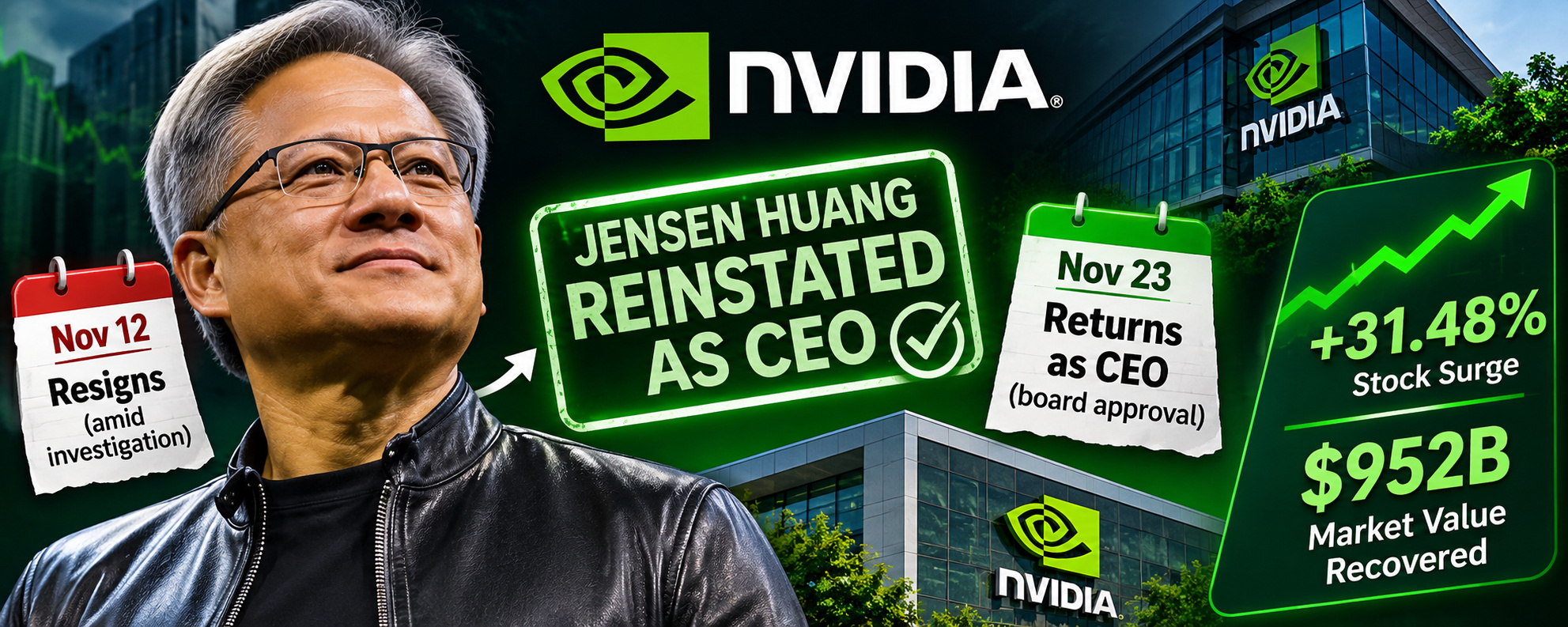
On November 23, 2026, NVIDIA officially reinstated Huang as its CEO, president and member of the board of directors. His return ended a period of uncertainty that had shaken investor confidence across the technology industry.
The story began on November 12, when Huang resigned following reports concerning his personal relationships and potential national security concerns. Allegations involving possible foreign intelligence connections attracted significant attention from government officials. However, these allegations remain under investigation and should not be treated as established facts.
NVIDIA appointed Chief Financial Officer Colette Kress as interim CEO, while Harvey C. Jones became chairman of the board. The company also began searching for a permanent replacement.
Finding someone capable of replacing Huang was always going to be difficult. He wasn't simply running NVIDIA. He had spent decades developing the vision that eventually positioned the company at the center of the global artificial intelligence industry.
Interestingly, NVIDIA's board initially rejected the possibility of his return on November 17. Just days later, the directors unanimously approved his reinstatement following further discussions with Huang and consultations with senior US government officials.
The board concluded, based on government input, that his return did not present a national security risk.
Colette Kress returned to her responsibilities as CFO, while Harvey Jones retained his position as chairman.
President Donald Trump also played a significant role in the situation. He publicly supported Huang's return and acknowledged communicating with individuals involved in the decision.
Elon Musk expressed his support as well, while a public petition demanding Huang's reinstatement attracted thousands of signatures.
What makes this situation particularly interesting is that NVIDIA's leadership has become a matter of national economic importance. Its advanced computing technology supports AI development, research institutions, major technology companies and critical infrastructure.
The market's reaction was even more remarkable.
On November 23, NVIDIA shares reportedly surged 31.48%, closing at $165.05 and recovering approximately $952 billion in market capitalization. The company's valuation climbed back toward $4 trillion.
Think about that for a moment.
NVIDIA didn't introduce a revolutionary new processor that day. Its manufacturing capabilities hadn't suddenly improved, and its underlying technology remained largely unchanged.
The biggest change was the return of its founder.
Investors were placing enormous value on Huang's experience, relationships and ability to guide NVIDIA through an increasingly competitive artificial intelligence market.
I've always found NVIDIA's journey fascinating because Huang recognized the potential of accelerated computing long before artificial intelligence became the investment opportunity it is today.
His decisions helped transform a business primarily associated with gaming graphics into a company whose technology is used throughout the global AI industry.
But the recent events have also exposed a weakness that shareholders cannot ignore. When a company's valuation reacts so dramatically to the departure and return of one person, it raises serious questions about leadership succession.
Even the strongest technology companies need a structure capable of operating effectively without their founders.
Another important detail is that Huang's reinstatement does not mean the controversy has ended.
NVIDIA is continuing its independent investigation while introducing additional security and compliance measures. The company is establishing a dedicated national security and export control committee, bringing in external specialists and searching for a new Chief Compliance Officer.
Huang has also committed to cooperating with the ongoing investigation.
These developments matter because NVIDIA operates in an industry where commercial opportunities and government policies frequently overlap. Export restrictions, international competition and national security regulations can directly influence its business.
Political criticism surrounding the reinstatement has already emerged. Several US lawmakers have questioned the circumstances behind the board's sudden reversal and called for greater transparency.
Huang is reportedly expected to face congressional questioning on December 3, where national security concerns and semiconductor export policies could receive considerable attention.
For investors, this means the leadership crisis may have ended, but regulatory uncertainty remains.
Personally, what stands out to me is how quickly NVIDIA's situation changed. A founder who appeared to have permanently lost his position returned within eleven days, receiving overwhelming support from shareholders and prominent industry figures.
It demonstrates the extraordinary influence Huang has built throughout his career.
However, recovering market value is one thing. Rebuilding institutional trust is another.
Huang must now balance NVIDIA's technological ambitions with stronger corporate oversight, regulatory compliance and shareholder expectations.
The artificial intelligence industry isn't slowing down. Competition is increasing, governments are paying closer attention to advanced computing technologies, and NVIDIA faces enormous expectations.
His return provides continuity at a critical moment, but the company's long-term success will ultimately depend on execution, innovation and accountability.
Wall Street has already celebrated Jensen Huang's comeback. Now comes the harder part: proving that bringing him back was the right decision.
#NVIDIAReinstatesJensenHuangasCEO
NVIDIA REINSTATES JENSEN HUANG AS CEO: A HISTORIC COMEBACK THAT RESHAPES WALL STREET AND THE AI WORL
For eleven days, NVIDIA had to imagine a future without Jensen Huang. For a company that has spent more than three decades growing under the same founder, that was never going to be an easy transition.
On November 23, 2026, NVIDIA officially reinstated Huang as its CEO, president and member of the board of directors. His return ended a period of uncertainty that had shaken investor confidence across the technology industry.
The story began on November 12, when Huang resigned following reports concerning his personal relationships and potential national security concerns. Allegations involving possible foreign intelligence connections attracted significant attention from government officials. However, these allegations remain under investigation and should not be treated as established facts.
NVIDIA appointed Chief Financial Officer Colette Kress as interim CEO, while Harvey C. Jones became chairman of the board. The company also began searching for a permanent replacement.
Finding someone capable of replacing Huang was always going to be difficult. He wasn't simply running NVIDIA. He had spent decades developing the vision that eventually positioned the company at the center of the global artificial intelligence industry.
Interestingly, NVIDIA's board initially rejected the possibility of his return on November 17. Just days later, the directors unanimously approved his reinstatement following further discussions with Huang and consultations with senior US government officials.
The board concluded, based on government input, that his return did not present a national security risk.
Colette Kress returned to her responsibilities as CFO, while Harvey Jones retained his position as chairman.
President Donald Trump also played a significant role in the situation. He publicly supported Huang's return and acknowledged communicating with individuals involved in the decision.
Elon Musk expressed his support as well, while a public petition demanding Huang's reinstatement attracted thousands of signatures.
What makes this situation particularly interesting is that NVIDIA's leadership has become a matter of national economic importance. Its advanced computing technology supports AI development, research institutions, major technology companies and critical infrastructure.
The market's reaction was even more remarkable.
On November 23, NVIDIA shares reportedly surged 31.48%, closing at $165.05 and recovering approximately $952 billion in market capitalization. The company's valuation climbed back toward $4 trillion.
Think about that for a moment.
NVIDIA didn't introduce a revolutionary new processor that day. Its manufacturing capabilities hadn't suddenly improved, and its underlying technology remained largely unchanged.
The biggest change was the return of its founder.
Investors were placing enormous value on Huang's experience, relationships and ability to guide NVIDIA through an increasingly competitive artificial intelligence market.
I've always found NVIDIA's journey fascinating because Huang recognized the potential of accelerated computing long before artificial intelligence became the investment opportunity it is today.
His decisions helped transform a business primarily associated with gaming graphics into a company whose technology is used throughout the global AI industry.
But the recent events have also exposed a weakness that shareholders cannot ignore. When a company's valuation reacts so dramatically to the departure and return of one person, it raises serious questions about leadership succession.
Even the strongest technology companies need a structure capable of operating effectively without their founders.
Another important detail is that Huang's reinstatement does not mean the controversy has ended.
NVIDIA is continuing its independent investigation while introducing additional security and compliance measures. The company is establishing a dedicated national security and export control committee, bringing in external specialists and searching for a new Chief Compliance Officer.
Huang has also committed to cooperating with the ongoing investigation.
These developments matter because NVIDIA operates in an industry where commercial opportunities and government policies frequently overlap. Export restrictions, international competition and national security regulations can directly influence its business.
Political criticism surrounding the reinstatement has already emerged. Several US lawmakers have questioned the circumstances behind the board's sudden reversal and called for greater transparency.
Huang is reportedly expected to face congressional questioning on December 3, where national security concerns and semiconductor export policies could receive considerable attention.
For investors, this means the leadership crisis may have ended, but regulatory uncertainty remains.
Personally, what stands out to me is how quickly NVIDIA's situation changed. A founder who appeared to have permanently lost his position returned within eleven days, receiving overwhelming support from shareholders and prominent industry figures.
It demonstrates the extraordinary influence Huang has built throughout his career.
However, recovering market value is one thing. Rebuilding institutional trust is another.
Huang must now balance NVIDIA's technological ambitions with stronger corporate oversight, regulatory compliance and shareholder expectations.
The artificial intelligence industry isn't slowing down. Competition is increasing, governments are paying closer attention to advanced computing technologies, and NVIDIA faces enormous expectations.
His return provides continuity at a critical moment, but the company's long-term success will ultimately depend on execution, innovation and accountability.
Wall Street has already celebrated Jensen Huang's comeback. Now comes the harder part: proving that bringing him back was the right decision.
#NVIDIAReinstatesJensenHuangasCEO
4
7
511
·
--
Bullish
Zora: Every Trade Deserves a Story
Your Take. Your Trade. Your Creativity.
Markets move fast, but every trader sees something different.
$ZORA gives users a creative way to share their trading perspectives beyond simple text updates.
Add images to highlight key moments.
Use GIFs to express market reactions.
Include videos to explain your thoughts and observations.
Whether you're sharing a bullish outlook, discussing market uncertainty, or reacting to a sudden price movement, your personal take adds context.
For everyday users, this means more engaging content, clearer explanations, and opportunities to discover different market perspectives.
The focus goes beyond buying and selling. It's about sharing ideas, expressing creativity, and starting meaningful conversations.
Explore the experience in the Zora app today.
Only information not financial advice
#Zora #Crypto #Trading

73
40
5.2k
·
--
Article
BITCOIN 2027 WHAT IF THE BIGGEST BULL RUN BEGINS WHEN EVERYONE HAS GIVEN UP?Bitcoin has a strange habit of surprising people when they become too comfortable with one market direction.
When prices are climbing, everyone talks about new all-time highs. When the market crashes, those same conversations quickly turn into predictions of an even bigger collapse.
And right now, Bitcoin is sitting in the middle of that uncertainty.
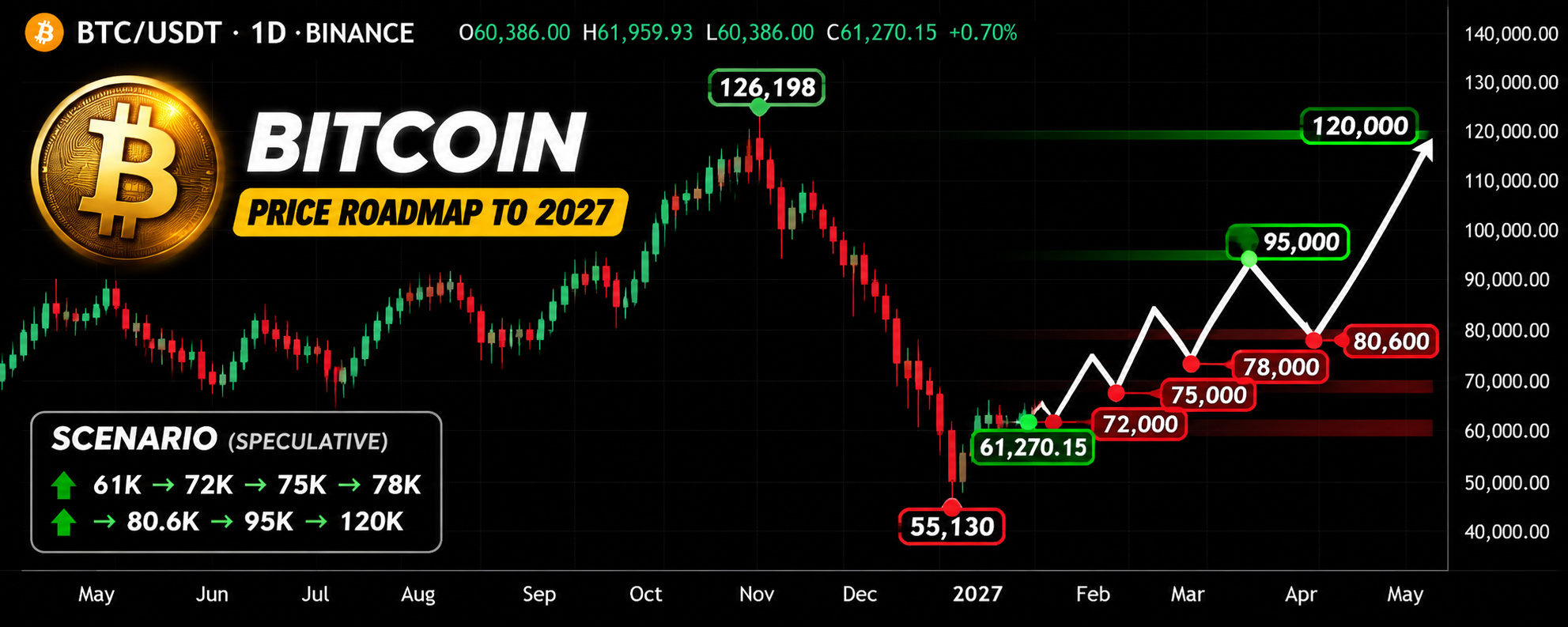
After reaching approximately $126,000 in October 2025, Bitcoin suffered a major correction. Billions of dollars in market value disappeared, leveraged traders faced heavy pressure, and confidence across the crypto market weakened.
But here's what I find interesting.
What if 2027 turns out to be the year Bitcoin recovers while most investors are still waiting for another crash?
I'm not saying a massive rally is guaranteed. The market hasn't provided enough confirmation for that.
However, several developments deserve attention before anyone writes off Bitcoin's next potential bull run.
BITCOIN IS DOWN, BUT THE BIGGER STORY ISN'T OVER
Bitcoin has been trading around the $60,000–$62,000 region in recent market data, far below its October 2025 peak.
That's a painful decline for investors who bought near the top.
But price alone doesn't tell us whether a market is preparing for recovery or another collapse.
We need to understand where the money is going.
Bitcoin's market now includes major institutional investors, spot ETFs, corporate holders, long-term investors, and highly active derivatives traders.
These participants don't always share the same expectations.
Some reduce exposure when volatility increases. Others wait for lower prices before building positions.
That difference creates an important question.
Are current sellers leaving the market permanently, or is Bitcoin gradually moving into the hands of investors willing to hold through another cycle?
The answer could help shape 2027.
INSTITUTIONAL MONEY COULD DECIDE BITCOIN'S NEXT DIRECTION
One major difference between today's Bitcoin market and previous cycles is the influence of spot Bitcoin ETFs.
These investment products have made Bitcoin accessible to a much wider group of traditional investors.
But institutional participation isn't automatically bullish.
When ETF investors withdraw capital, that selling pressure can weigh heavily on the market.
Recent figures illustrate the challenge.
US spot Bitcoin ETFs recorded approximately $669 million in net outflows on November 20, 2026, according to ETF flow data reported by TFTC.
That's not a small amount.
It tells us institutional demand has been under pressure, even though cumulative ETF inflows since their launch remain substantial.
Now imagine the opposite situation.
What happens if those outflows begin slowing, institutional confidence improves, and consistent buying returns during 2027?
Bitcoin could find an important new source of demand.
But until the flows actually improve, treating institutional money as guaranteed fuel for another rally would be a mistake.
BITCOIN WHALES ARE MAKING MOVES WORTH WATCHING
There's another part of this market that deserves attention.
Large Bitcoin holders.
Glassnode's November 2026 research identified accumulation among certain large-wallet groups despite weak broader market conditions.
That doesn't mean every whale is buying.
It also doesn't mean Bitcoin has already reached its bottom.
Still, I pay attention when accumulation appears during periods of widespread uncertainty.
Here's why.
If large holders continue absorbing available supply while selling pressure gradually weakens, the market could eventually become more responsive to fresh buying demand.
That process doesn't happen overnight.
Bitcoin could spend weeks or months moving sideways before any meaningful breakout develops.
And sometimes, that's exactly what traders overlook.
They're waiting for a dramatic green candle while the more important changes are happening quietly beneath the surface.
THE LIQUIDITY TRAP THAT COULD CATCH BOTH BULLS AND BEARS
One thing Bitcoin traders should never underestimate is liquidity.
Markets don't always move in the direction that looks most obvious.
When traders crowd into leveraged long positions, a sharp drop can trigger liquidations and accelerate selling.
When traders become aggressively bearish, an unexpected rally can force short sellers to close positions, pushing prices even higher.
We've seen this behavior repeatedly across crypto markets.
Heading toward 2027, the key question is whether Bitcoin can move beyond temporary liquidation-driven rallies and attract genuine spot buying.
A sudden 10% bounce might look impressive.
But if the rally has weak spot volume and excessive leverage, it could disappear just as quickly.
The next sustainable bull run needs real demand, not just traders getting liquidated.
That's why I would rather see Bitcoin build a stronger foundation than rush into another unstable rally.
THE BITCOIN PRICE LEVELS THAT MATTER MOST
Several price regions could become important as traders prepare for 2027.
The first is $55,000–$60,000.
This area overlaps with recent market weakness and deserves close attention as a potential support region.
If Bitcoin continues defending this zone and begins forming higher lows, it could suggest that buyers are becoming more confident.
But if the market loses this region decisively, the downside risk increases.
The next important area is $65,000.
A sustained recovery above this level would be an early indication of improving momentum.
Beyond that, the $75,000–$76,000 region could become a more serious test for buyers.
If Bitcoin eventually reclaims these levels with stronger trading volume, the possibility of a broader recovery becomes more convincing.
However, none of these levels should be treated as guaranteed turning points.
Price confirmation matters.
BITCOIN 2027 PRICE PREDICTION: THREE POSSIBLE ROADMAPS
I don't believe anyone can predict Bitcoin's exact price twelve months in advance.
But we can prepare for different outcomes.
BULLISH SCENARIO: BITCOIN RETURNS STRONGER
$60K → $75K → $90K → $110K → $140K
This speculative roadmap assumes institutional demand recovers, global liquidity improves, and Bitcoin successfully breaks through major resistance levels.
A move toward $140,000 would establish a new all-time high.
It's an ambitious possibility, not a guaranteed destination.
NEUTRAL SCENARIO: THE MARKET MAKES EVERYONE WAIT
$60K → $55K → $70K → $85K
Bitcoin could spend much of 2027 consolidating, with repeated rallies and corrections.
That might sound boring compared with predictions of explosive gains.
But long consolidation periods can help markets absorb selling pressure and rebuild investor confidence.
BEARISH SCENARIO: ONE MORE PAINFUL CORRECTION
$60K → $55K → $48K → $40K
If ETF outflows persist, global financial conditions tighten, and Bitcoin loses important support levels, another major decline remains possible.
These roadmaps are hypothetical scenarios. They are not verified liquidation levels or guaranteed future prices.
WHY 2027 COULD BREAK BITCOIN'S TRADITIONAL FOUR-YEAR CYCLE
For years, traders have studied Bitcoin's four-year cycle.
The halving reduces the rate at which new Bitcoin enters circulation, and previous cycles have often featured major rallies followed by painful corrections.
The most recent halving occurred in April 2024.
The next is expected in 2028.
Based on historical patterns, some traders believe 2027 could remain a difficult period before the next halving-driven expansion.
But here's the problem with relying too heavily on history.
Bitcoin's market structure has changed.
Institutional investment products, corporate Bitcoin holdings, derivatives markets, and global monetary conditions now play increasingly important roles.
The next bull run doesn't necessarily have to follow the exact timing of previous cycles.
Could Bitcoin begin recovering before the 2028 halving?
Absolutely possible.
Could the bear market continue longer than expected?
That's possible too.
The four-year cycle is useful context, not a promise.
FOUR DEVELOPMENTS THAT COULD CHANGE EVERYTHING IN 2027
If I were watching Bitcoin for the next major opportunity, I would focus on four things.
First, ETF flows. A sustained return of institutional inflows would suggest improving demand.
Second, whale accumulation. Continued buying by large holders, particularly alongside reduced selling pressure, could strengthen the recovery argument.
Third, global liquidity. More favorable financial conditions could encourage investors to increase exposure to risk assets, including Bitcoin.
Fourth, spot trading volume. A rally supported by consistent spot buying would be more convincing than one driven mainly by leveraged speculation.
These developments won't necessarily happen together.
But if several begin improving at the same time, Bitcoin's market structure could look considerably stronger.
THE BIGGEST MISTAKE BITCOIN TRADERS COULD MAKE RIGHT NOW
I see two dangerous attitudes in markets like this.
The first is believing every bounce means a new bull run has started.
The second is becoming so convinced that Bitcoin will crash that every sign of recovery gets ignored.
Both can lead to poor decisions.
A better approach is to stay flexible.
Watch whether Bitcoin holds support. Study whether buying volume improves. Follow institutional flows. Pay attention to how the market reacts around major resistance levels.
And don't confuse a personal prediction with actual confirmation.
The market doesn't care how confident anyone sounds.
It responds to supply, demand, liquidity, and changing expectations.
FINAL VERDICT: BITCOIN 2027 COULD SURPRISE THE ENTIRE MARKET
I think 2027 deserves much more attention than it's getting.
Not because Bitcoin is guaranteed to reach $140,000.
Not because every correction creates a buying opportunity.
And certainly not because the four-year cycle promises another rally.
The opportunity lies in understanding how market conditions might change before the broader crowd recognizes that change.
If Bitcoin stabilizes, institutional demand returns, and accumulation continues, 2027 could become an important recovery year.
If those developments fail to materialize, traders should be prepared for further downside.
Either way, the next major Bitcoin move will likely reward those who pay attention to evidence rather than headlines.
My biggest question isn't whether Bitcoin can eventually reach another all-time high. It's whether the next recovery begins while most traders are still convinced the worst is ahead.
That's what makes this market worth watching.
NOW I WANT YOUR PREDICTION.
Will Bitcoin reclaim $100,000 in 2027?
Could BTC surprise everyone with a move toward $140,000?
Or do you believe another crash is coming first?
Share your target in the comments. I want to see where the market stands.
Follow my account and turn on notifications for upcoming Bitcoin analysis, important market developments, and major price-level updates.
Market observations reference information available through November 23, 2026. Future price targets are speculative and not financial advice.
$BTC
#BTC
BITCOIN 2027 WHAT IF THE BIGGEST BULL RUN BEGINS WHEN EVERYONE HAS GIVEN UP?
Bitcoin has a strange habit of surprising people when they become too comfortable with one market direction.
When prices are climbing, everyone talks about new all-time highs. When the market crashes, those same conversations quickly turn into predictions of an even bigger collapse.
And right now, Bitcoin is sitting in the middle of that uncertainty.
After reaching approximately $126,000 in October 2025, Bitcoin suffered a major correction. Billions of dollars in market value disappeared, leveraged traders faced heavy pressure, and confidence across the crypto market weakened.
But here's what I find interesting.
What if 2027 turns out to be the year Bitcoin recovers while most investors are still waiting for another crash?
I'm not saying a massive rally is guaranteed. The market hasn't provided enough confirmation for that.
However, several developments deserve attention before anyone writes off Bitcoin's next potential bull run.
BITCOIN IS DOWN, BUT THE BIGGER STORY ISN'T OVER
Bitcoin has been trading around the $60,000–$62,000 region in recent market data, far below its October 2025 peak.
That's a painful decline for investors who bought near the top.
But price alone doesn't tell us whether a market is preparing for recovery or another collapse.
We need to understand where the money is going.
Bitcoin's market now includes major institutional investors, spot ETFs, corporate holders, long-term investors, and highly active derivatives traders.
These participants don't always share the same expectations.
Some reduce exposure when volatility increases. Others wait for lower prices before building positions.
That difference creates an important question.
Are current sellers leaving the market permanently, or is Bitcoin gradually moving into the hands of investors willing to hold through another cycle?
The answer could help shape 2027.
INSTITUTIONAL MONEY COULD DECIDE BITCOIN'S NEXT DIRECTION
One major difference between today's Bitcoin market and previous cycles is the influence of spot Bitcoin ETFs.
These investment products have made Bitcoin accessible to a much wider group of traditional investors.
But institutional participation isn't automatically bullish.
When ETF investors withdraw capital, that selling pressure can weigh heavily on the market.
Recent figures illustrate the challenge.
US spot Bitcoin ETFs recorded approximately $669 million in net outflows on November 20, 2026, according to ETF flow data reported by TFTC.
That's not a small amount.
It tells us institutional demand has been under pressure, even though cumulative ETF inflows since their launch remain substantial.
Now imagine the opposite situation.
What happens if those outflows begin slowing, institutional confidence improves, and consistent buying returns during 2027?
Bitcoin could find an important new source of demand.
But until the flows actually improve, treating institutional money as guaranteed fuel for another rally would be a mistake.
BITCOIN WHALES ARE MAKING MOVES WORTH WATCHING
There's another part of this market that deserves attention.
Large Bitcoin holders.
Glassnode's November 2026 research identified accumulation among certain large-wallet groups despite weak broader market conditions.
That doesn't mean every whale is buying.
It also doesn't mean Bitcoin has already reached its bottom.
Still, I pay attention when accumulation appears during periods of widespread uncertainty.
Here's why.
If large holders continue absorbing available supply while selling pressure gradually weakens, the market could eventually become more responsive to fresh buying demand.
That process doesn't happen overnight.
Bitcoin could spend weeks or months moving sideways before any meaningful breakout develops.
And sometimes, that's exactly what traders overlook.
They're waiting for a dramatic green candle while the more important changes are happening quietly beneath the surface.
THE LIQUIDITY TRAP THAT COULD CATCH BOTH BULLS AND BEARS
One thing Bitcoin traders should never underestimate is liquidity.
Markets don't always move in the direction that looks most obvious.
When traders crowd into leveraged long positions, a sharp drop can trigger liquidations and accelerate selling.
When traders become aggressively bearish, an unexpected rally can force short sellers to close positions, pushing prices even higher.
We've seen this behavior repeatedly across crypto markets.
Heading toward 2027, the key question is whether Bitcoin can move beyond temporary liquidation-driven rallies and attract genuine spot buying.
A sudden 10% bounce might look impressive.
But if the rally has weak spot volume and excessive leverage, it could disappear just as quickly.
The next sustainable bull run needs real demand, not just traders getting liquidated.
That's why I would rather see Bitcoin build a stronger foundation than rush into another unstable rally.
THE BITCOIN PRICE LEVELS THAT MATTER MOST
Several price regions could become important as traders prepare for 2027.
The first is $55,000–$60,000.
This area overlaps with recent market weakness and deserves close attention as a potential support region.
If Bitcoin continues defending this zone and begins forming higher lows, it could suggest that buyers are becoming more confident.
But if the market loses this region decisively, the downside risk increases.
The next important area is $65,000.
A sustained recovery above this level would be an early indication of improving momentum.
Beyond that, the $75,000–$76,000 region could become a more serious test for buyers.
If Bitcoin eventually reclaims these levels with stronger trading volume, the possibility of a broader recovery becomes more convincing.
However, none of these levels should be treated as guaranteed turning points.
Price confirmation matters.
BITCOIN 2027 PRICE PREDICTION: THREE POSSIBLE ROADMAPS
I don't believe anyone can predict Bitcoin's exact price twelve months in advance.
But we can prepare for different outcomes.
BULLISH SCENARIO: BITCOIN RETURNS STRONGER
$60K → $75K → $90K → $110K → $140K
This speculative roadmap assumes institutional demand recovers, global liquidity improves, and Bitcoin successfully breaks through major resistance levels.
A move toward $140,000 would establish a new all-time high.
It's an ambitious possibility, not a guaranteed destination.
NEUTRAL SCENARIO: THE MARKET MAKES EVERYONE WAIT
$60K → $55K → $70K → $85K
Bitcoin could spend much of 2027 consolidating, with repeated rallies and corrections.
That might sound boring compared with predictions of explosive gains.
But long consolidation periods can help markets absorb selling pressure and rebuild investor confidence.
BEARISH SCENARIO: ONE MORE PAINFUL CORRECTION
$60K → $55K → $48K → $40K
If ETF outflows persist, global financial conditions tighten, and Bitcoin loses important support levels, another major decline remains possible.
These roadmaps are hypothetical scenarios. They are not verified liquidation levels or guaranteed future prices.
WHY 2027 COULD BREAK BITCOIN'S TRADITIONAL FOUR-YEAR CYCLE
For years, traders have studied Bitcoin's four-year cycle.
The halving reduces the rate at which new Bitcoin enters circulation, and previous cycles have often featured major rallies followed by painful corrections.
The most recent halving occurred in April 2024.
The next is expected in 2028.
Based on historical patterns, some traders believe 2027 could remain a difficult period before the next halving-driven expansion.
But here's the problem with relying too heavily on history.
Bitcoin's market structure has changed.
Institutional investment products, corporate Bitcoin holdings, derivatives markets, and global monetary conditions now play increasingly important roles.
The next bull run doesn't necessarily have to follow the exact timing of previous cycles.
Could Bitcoin begin recovering before the 2028 halving?
Absolutely possible.
Could the bear market continue longer than expected?
That's possible too.
The four-year cycle is useful context, not a promise.
FOUR DEVELOPMENTS THAT COULD CHANGE EVERYTHING IN 2027
If I were watching Bitcoin for the next major opportunity, I would focus on four things.
First, ETF flows. A sustained return of institutional inflows would suggest improving demand.
Second, whale accumulation. Continued buying by large holders, particularly alongside reduced selling pressure, could strengthen the recovery argument.
Third, global liquidity. More favorable financial conditions could encourage investors to increase exposure to risk assets, including Bitcoin.
Fourth, spot trading volume. A rally supported by consistent spot buying would be more convincing than one driven mainly by leveraged speculation.
These developments won't necessarily happen together.
But if several begin improving at the same time, Bitcoin's market structure could look considerably stronger.
THE BIGGEST MISTAKE BITCOIN TRADERS COULD MAKE RIGHT NOW
I see two dangerous attitudes in markets like this.
The first is believing every bounce means a new bull run has started.
The second is becoming so convinced that Bitcoin will crash that every sign of recovery gets ignored.
Both can lead to poor decisions.
A better approach is to stay flexible.
Watch whether Bitcoin holds support. Study whether buying volume improves. Follow institutional flows. Pay attention to how the market reacts around major resistance levels.
And don't confuse a personal prediction with actual confirmation.
The market doesn't care how confident anyone sounds.
It responds to supply, demand, liquidity, and changing expectations.
FINAL VERDICT: BITCOIN 2027 COULD SURPRISE THE ENTIRE MARKET
I think 2027 deserves much more attention than it's getting.
Not because Bitcoin is guaranteed to reach $140,000.
Not because every correction creates a buying opportunity.
And certainly not because the four-year cycle promises another rally.
The opportunity lies in understanding how market conditions might change before the broader crowd recognizes that change.
If Bitcoin stabilizes, institutional demand returns, and accumulation continues, 2027 could become an important recovery year.
If those developments fail to materialize, traders should be prepared for further downside.
Either way, the next major Bitcoin move will likely reward those who pay attention to evidence rather than headlines.
My biggest question isn't whether Bitcoin can eventually reach another all-time high. It's whether the next recovery begins while most traders are still convinced the worst is ahead.
That's what makes this market worth watching.
NOW I WANT YOUR PREDICTION.
Will Bitcoin reclaim $100,000 in 2027?
Could BTC surprise everyone with a move toward $140,000?
Or do you believe another crash is coming first?
Share your target in the comments. I want to see where the market stands.
Follow my account and turn on notifications for upcoming Bitcoin analysis, important market developments, and major price-level updates.
Market observations reference information available through November 23, 2026. Future price targets are speculative and not financial advice.
$BTC
#BTC
5
9
268
·
--
Bullish
Verified
$AEVO Unlocks More Efficiency for Trading Capital!
Idle collateral creates missed opportunities for active traders.
Aevo introduces aeUSD, allowing collateral to earn yield while backing open positions.
Traders can keep their capital productive without constantly moving funds.
Projects like $DRIFT , $PERP , and $KWENTA highlight competition across derivatives trading.
Aevo takes a different approach through yield-bearing collateral.
Better capital efficiency gives traders more flexibility across market conditions.
Only information not financial advice
#AevoFinance #aeUSD #DerivativesTrading

62
32
5.9k
·
--

Article
Bitcoin Rebounds Above $60K as Whales Buy the Dip — Is a Bigger Recovery Coming?Bitcoin is back around $60,000 after a difficult stretch that pushed its price toward $55,000. What caught my attention wasn't just the recovery itself, but what some of the largest Bitcoin holders were doing while the market was falling.
When prices drop this quickly, most of the conversation revolves around liquidations, fear, and how much further Bitcoin could fall. But behind those headlines, large amounts of BTC were moving off exchanges, suggesting that some investors were looking at the decline very differently.
One of the biggest reported movements involved Abraxas Capital, which was linked to withdrawals of approximately 17,597 BTC worth around $1.04 billion. The estimated average acquisition price associated with those transactions was close to $59,206.
That's a substantial amount of Bitcoin changing hands or moving into custody during a period when confidence was clearly under pressure.
I wouldn't automatically call every exchange withdrawal a new purchase. Bitcoin can move between wallets for several reasons, including custody arrangements. Still, seeing transactions of this size during a sharp correction is worth paying attention to.
There was also activity involving stablecoins. Blockchain trackers reported approximately $65 million moving to exchanges from wallets associated with a major Bitcoin whale, while another suspected address transferred roughly $270 million.
Those deposits raised expectations that large investors might be preparing to buy. Whether all that capital actually went into Bitcoin is another question, but the movements added to the growing interest in whale behavior during the selloff.
The market itself had just gone through a painful liquidation cycle.
Around $1.8 billion in leveraged cryptocurrency positions were reportedly wiped out over 24 hours, including approximately $1.3 billion in bullish positions.
That helps explain why Bitcoin's decline became so aggressive. As prices fell, traders using leverage were forced out of their positions, creating additional selling pressure.
Once much of that pressure had passed, Bitcoin started recovering. From a low near $55,130, BTC climbed toward $60,300, a rebound of more than 9%.
It's an impressive move, but I think it's important to understand what actually supports a recovery like this.
A market can bounce because sellers have exhausted themselves. It can also recover because new buyers are entering with enough capital to absorb available supply. Those two situations may look similar on a price chart, but they can lead to very different outcomes.
That's why the whale activity matters.
Bitcoin has a fixed maximum supply of 21 million coins, and the amount readily available for trading can change as holders move assets into long-term storage. When large investors accumulate and hold BTC, it can reduce the supply available for immediate sale.
Of course, lower exchange balances alone don't guarantee higher prices. Demand still has to remain strong enough to support the market.
Another detail I found interesting was the position of short-term Bitcoin whales.
On-chain analysis suggested that these holders were carrying nearly $8 billion in unrealized losses following the correction. Many had acquired Bitcoin within the previous 155 days and were now watching the market trade below their purchase prices.
Yet the available data didn't indicate that every major holder was rushing to sell.
Some investors appeared willing to sit through the volatility, while other large wallets were actively moving funds.
That doesn't prove Bitcoin has reached a bottom, but it does show why looking only at the price can miss part of the story.
Institutional demand remains a concern, though.
U.S. spot Bitcoin ETFs recorded roughly $1.1 billion in reported weekly net outflows during the period surrounding the decline. Those withdrawals suggest that institutional investors weren't all responding to lower prices by increasing their exposure.
For Bitcoin, that creates a mixed picture.
On one side, there are reports of substantial whale withdrawals and possible accumulation. On the other, institutional fund flows and broader demand indicators have shown weakness.
Both deserve attention.
Looking at Bitcoin's price structure, $60,000 is the immediate area I want to see buyers defend.
It's a major psychological level, and the market's ability to stay above it could influence short-term sentiment.
If BTC can build support around $60,000 and continue attracting spot demand, the $62,000–$63,000 region becomes an interesting area to watch.
But if Bitcoin struggles to maintain its recovery, the recent $55,000–$56,000 low area could come back into focus.
These aren't guaranteed turning points. They're simply useful reference levels for understanding whether buyers are gaining strength or the market remains vulnerable.
There's also a bigger reason to be cautious about calling this a complete reversal.
Bitcoin doesn't trade in isolation. Changes in global liquidity, interest-rate expectations, and investor appetite for risk can all influence its price. Weakness in technology stocks and other risk-sensitive markets has added pressure during this correction.
Even when whales are buying, those broader conditions can limit how far a recovery develops.
What I find encouraging is that Bitcoin continues to attract attention from large holders despite the volatility. A sharp decline hasn't eliminated interest in the asset, and some investors appear willing to position themselves while prices remain under pressure.
At the same time, I don't think a single rebound should erase the warning signs from the recent selloff.
The liquidation figures were substantial, institutional flows have been uneven, and Bitcoin still needs to demonstrate that buyers can maintain control beyond the initial recovery.
For me, the most important question isn't whether Bitcoin can briefly trade above $60,000. We've already seen that happen.
It's whether demand can remain strong after the excitement surrounding the rebound begins to fade.
If large holders continue accumulating, exchange selling pressure eases, and institutional demand improves, Bitcoin could have a stronger foundation for its next recovery phase.
If those conditions don't develop, the market could remain volatile despite the recent whale activity.
Bitcoin's latest rebound has shown that buyers haven't disappeared. Some major investors may even be using the correction to increase their exposure.
But the real confirmation will come from what happens next, not simply from the size of the transactions reported during the decline.
I'm watching whether Bitcoin can turn this recovery into sustained buying strength. That's far more meaningful than one sharp move above $60,000.
Market observations based on reported developments through November 22, 2026. For information only, not financial advice.
$BTC
#BTCReboundsAbove$60KAmidWhaleDipBuying
Bitcoin Rebounds Above $60K as Whales Buy the Dip — Is a Bigger Recovery Coming?
Bitcoin is back around $60,000 after a difficult stretch that pushed its price toward $55,000. What caught my attention wasn't just the recovery itself, but what some of the largest Bitcoin holders were doing while the market was falling.
When prices drop this quickly, most of the conversation revolves around liquidations, fear, and how much further Bitcoin could fall. But behind those headlines, large amounts of BTC were moving off exchanges, suggesting that some investors were looking at the decline very differently.
One of the biggest reported movements involved Abraxas Capital, which was linked to withdrawals of approximately 17,597 BTC worth around $1.04 billion. The estimated average acquisition price associated with those transactions was close to $59,206.
That's a substantial amount of Bitcoin changing hands or moving into custody during a period when confidence was clearly under pressure.
I wouldn't automatically call every exchange withdrawal a new purchase. Bitcoin can move between wallets for several reasons, including custody arrangements. Still, seeing transactions of this size during a sharp correction is worth paying attention to.
There was also activity involving stablecoins. Blockchain trackers reported approximately $65 million moving to exchanges from wallets associated with a major Bitcoin whale, while another suspected address transferred roughly $270 million.
Those deposits raised expectations that large investors might be preparing to buy. Whether all that capital actually went into Bitcoin is another question, but the movements added to the growing interest in whale behavior during the selloff.
The market itself had just gone through a painful liquidation cycle.
Around $1.8 billion in leveraged cryptocurrency positions were reportedly wiped out over 24 hours, including approximately $1.3 billion in bullish positions.
That helps explain why Bitcoin's decline became so aggressive. As prices fell, traders using leverage were forced out of their positions, creating additional selling pressure.
Once much of that pressure had passed, Bitcoin started recovering. From a low near $55,130, BTC climbed toward $60,300, a rebound of more than 9%.
It's an impressive move, but I think it's important to understand what actually supports a recovery like this.
A market can bounce because sellers have exhausted themselves. It can also recover because new buyers are entering with enough capital to absorb available supply. Those two situations may look similar on a price chart, but they can lead to very different outcomes.
That's why the whale activity matters.
Bitcoin has a fixed maximum supply of 21 million coins, and the amount readily available for trading can change as holders move assets into long-term storage. When large investors accumulate and hold BTC, it can reduce the supply available for immediate sale.
Of course, lower exchange balances alone don't guarantee higher prices. Demand still has to remain strong enough to support the market.
Another detail I found interesting was the position of short-term Bitcoin whales.
On-chain analysis suggested that these holders were carrying nearly $8 billion in unrealized losses following the correction. Many had acquired Bitcoin within the previous 155 days and were now watching the market trade below their purchase prices.
Yet the available data didn't indicate that every major holder was rushing to sell.
Some investors appeared willing to sit through the volatility, while other large wallets were actively moving funds.
That doesn't prove Bitcoin has reached a bottom, but it does show why looking only at the price can miss part of the story.
Institutional demand remains a concern, though.
U.S. spot Bitcoin ETFs recorded roughly $1.1 billion in reported weekly net outflows during the period surrounding the decline. Those withdrawals suggest that institutional investors weren't all responding to lower prices by increasing their exposure.
For Bitcoin, that creates a mixed picture.
On one side, there are reports of substantial whale withdrawals and possible accumulation. On the other, institutional fund flows and broader demand indicators have shown weakness.
Both deserve attention.
Looking at Bitcoin's price structure, $60,000 is the immediate area I want to see buyers defend.
It's a major psychological level, and the market's ability to stay above it could influence short-term sentiment.
If BTC can build support around $60,000 and continue attracting spot demand, the $62,000–$63,000 region becomes an interesting area to watch.
But if Bitcoin struggles to maintain its recovery, the recent $55,000–$56,000 low area could come back into focus.
These aren't guaranteed turning points. They're simply useful reference levels for understanding whether buyers are gaining strength or the market remains vulnerable.
There's also a bigger reason to be cautious about calling this a complete reversal.
Bitcoin doesn't trade in isolation. Changes in global liquidity, interest-rate expectations, and investor appetite for risk can all influence its price. Weakness in technology stocks and other risk-sensitive markets has added pressure during this correction.
Even when whales are buying, those broader conditions can limit how far a recovery develops.
What I find encouraging is that Bitcoin continues to attract attention from large holders despite the volatility. A sharp decline hasn't eliminated interest in the asset, and some investors appear willing to position themselves while prices remain under pressure.
At the same time, I don't think a single rebound should erase the warning signs from the recent selloff.
The liquidation figures were substantial, institutional flows have been uneven, and Bitcoin still needs to demonstrate that buyers can maintain control beyond the initial recovery.
For me, the most important question isn't whether Bitcoin can briefly trade above $60,000. We've already seen that happen.
It's whether demand can remain strong after the excitement surrounding the rebound begins to fade.
If large holders continue accumulating, exchange selling pressure eases, and institutional demand improves, Bitcoin could have a stronger foundation for its next recovery phase.
If those conditions don't develop, the market could remain volatile despite the recent whale activity.
Bitcoin's latest rebound has shown that buyers haven't disappeared. Some major investors may even be using the correction to increase their exposure.
But the real confirmation will come from what happens next, not simply from the size of the transactions reported during the decline.
I'm watching whether Bitcoin can turn this recovery into sustained buying strength. That's far more meaningful than one sharp move above $60,000.
Market observations based on reported developments through November 22, 2026. For information only, not financial advice.
$BTC
#BTCReboundsAbove$60KAmidWhaleDipBuying
8
14
737
·
--
Bullish
$PYTH reshaping financial data infrastructure with direct, institutional-grade pricing.
Instead of relying on intermediaries, Pyth Network sources market data directly from financial institutions.
710+ businesses, $3.25T+ cumulative volume secured, and 60% of onchain perpetuals market coverage.
125+ institutional publishers deliver 3,000+ price feeds across 114+ blockchains.
Pyth Pro offers 2,200+ instruments through one integration, with sub-100ms latency and 99.99% uptime guarantees.
Pyth Terminal enables live price comparisons and publisher transparency.
Pyth Data Marketplace distributes institutional data, while Pyth Indices supports 24/7 pricing.
Pyth Pro for AI Agents brings market intelligence into autonomous finance.
Pyth Pro crossed $6M ARR, with subscription growth reaching 109% QoQ, according to Pyth's briefing.
Alongside $LINK , $ONDO and $HYPE, Pyth highlights the growing importance of financial infrastructure.
For everyday users, better data means clearer pricing and more transparent financial applications.
Reliable market data is becoming the foundation of internet-native finance.
Only information not financial advice
#PYTH #DeFi #MarketData

92
48
5.3k
·
--
Bullish
Verified
Privacy should not mean hiding everything, and transparency should not mean exposing everything.
Midnight is building a standalone Layer 1 where users can prove facts without revealing personal information.
Its dual-ledger design protects sensitive details, while $NIGHT generates $DUST to power transactions.
$ZEC , $ZAMA and $ADA serve different purposes. Midnight focuses on programmable privacy with selective disclosure.
Google Cloud, MoneyGram and Worldpay are among its enterprise validators.
Monument Bank plans to tokenize up to £250M in customer deposits, highlighting real-world institutional interest.
For everyday users, the bigger opportunity is accessing digital services without sacrificing personal privacy.
The next evolution of blockchain could be defined by what users no longer need to reveal.
Only information not financial advice
#Midnight #NIGHT #BlockchainPrivacy

NIGHT+3.02%
GOOGUS-1.40%
58
32
5.9k
·
--
Bullish
Verified
Space and Time is tackling a major problem in Web3: making data trustworthy without relying on blind trust.
Its Proof of SQL technology uses zero-knowledge proofs to verify database queries, opening new possibilities for DeFi, gaming, and AI applications.
Backed by Microsoft's venture arm M12, the project is focused on infrastructure developers can actually use.
$SXT powers the network's economic and security model.
The real test now is adoption. If developers start building on this technology at scale, Space and Time could become an important part of Web3 infrastructure.
#sxt $SXT @SpaceandTimeDB
Space and Time is tackling a major problem in Web3: making data trustworthy without relying on blind trust.
Its Proof of SQL technology uses zero-knowledge proofs to verify database queries, opening new possibilities for DeFi, gaming, and AI applications.
Backed by Microsoft's venture arm M12, the project is focused on infrastructure developers can actually use.
$SXT powers the network's economic and security model.
The real test now is adoption. If developers start building on this technology at scale, Space and Time could become an important part of Web3 infrastructure.
#sxt $SXT @SpaceandTime

30
26
2k
·
--
Bearish
🚨 GOLD & SILVER ARE COLLAPSING!
$470 BILLION WIPED OUT IN JUST 60 MINUTES!
Gold and silver are facing a massive sell-off, with a reported $470,000,000,000 erased from their combined market value in just one hour.
Selling pressure is hitting precious metals hard as market volatility explodes.
THIS IS ABSOLUTE MARKET CHAOS!
$XAU $XAG
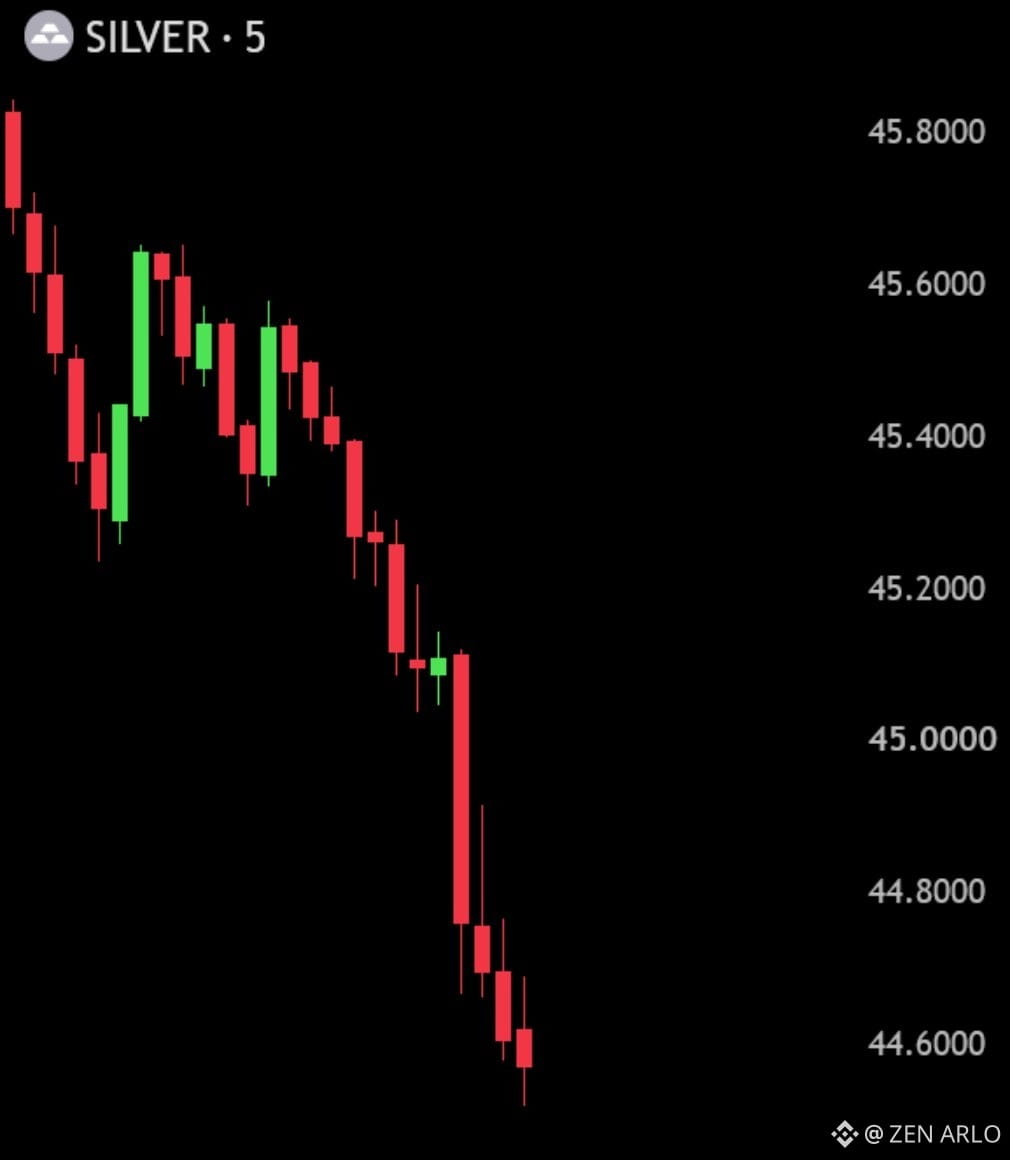
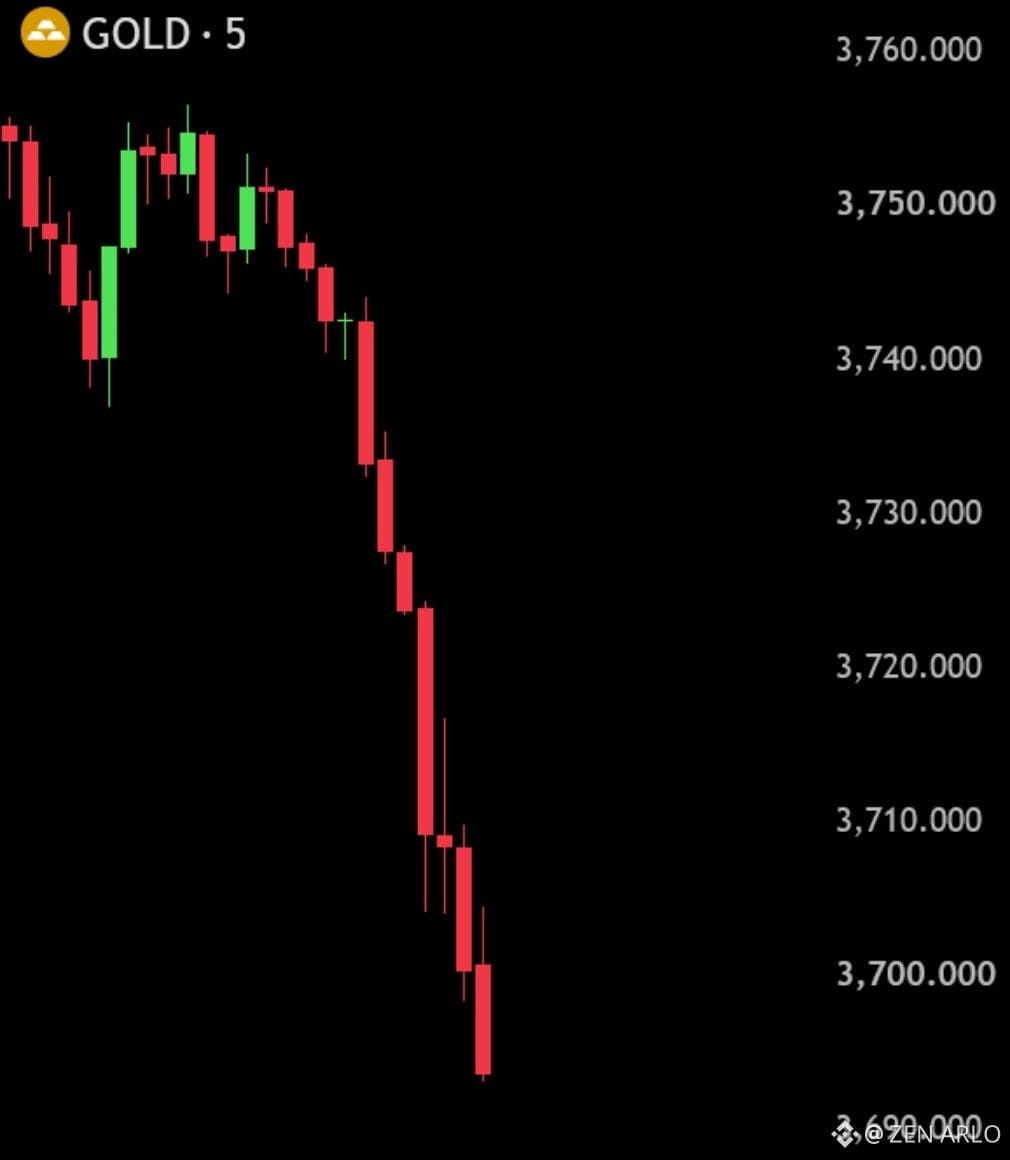
5
7
446
·
--
Bullish
Verified
Your opinion can now become part of your trade!
Zora Takes is bringing a fresh creative experience to trading.
Your opinions, bold ideas, and hot takes can now become trades.
Add images, GIFs, or videos to any trade and express your perspective in your own style.
No longer just about making a move. It's also about sharing the thinking behind it.
Available now in the Zora app on Web, iOS, and Android.
For everyday users, this means more freedom to express ideas and make each trade personal.
With $ZORA in the spotlight, this new product adds another interesting dimension to the Zora ecosystem.
Your trade shows your position.
Your take tells the story behind it.
Only information not financial advice
#Zora #ZoraTakes #Crypto

40
27
6.7k
·
--
Bearish
BREAKING: WALL STREET IS BLEEDING!
A reported $700 BILLION wiped from the U.S. stock market within minutes of the opening bell!
AI stocks are getting hammered as the tech selloff continues, sending shockwaves across Wall Street.
Billions disappearing in minutes. The AI trade is under serious pressure.
BRUTAL SELLING!
A reported $700 BILLION wiped from the U.S. stock market within minutes of the opening bell!
AI stocks are getting hammered as the tech selloff continues, sending shockwaves across Wall Street.
Billions disappearing in minutes. The AI trade is under serious pressure.
BRUTAL SELLING!
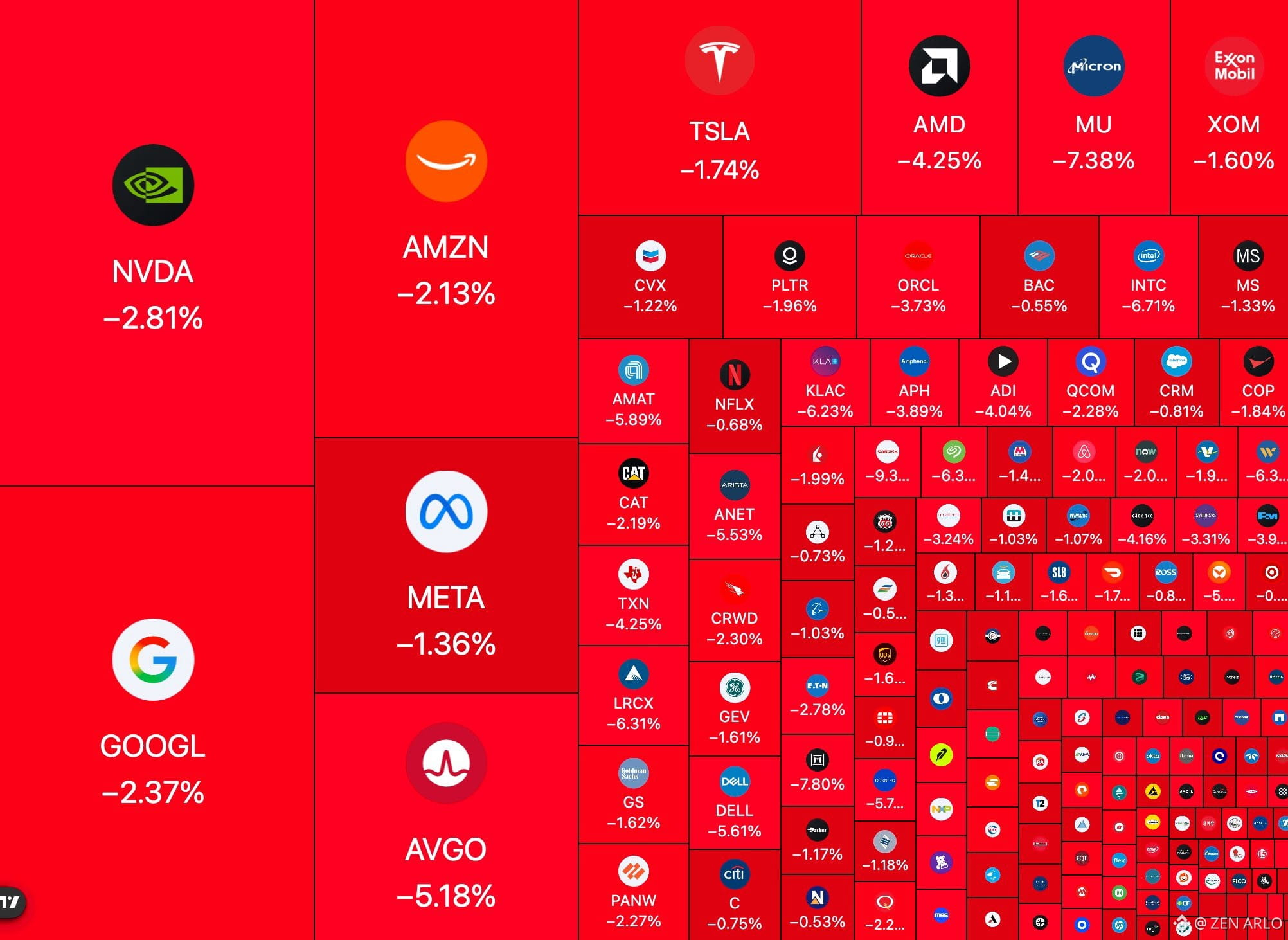
5
6
330
·
--
Bullish
Verified
Aevo is changing how traders put their collateral to work!
Most traders focus on entries, exits, and funding fees.
But capital efficiency matters just as much.
Aevo approaches this differently with aeUSD, a yield-bearing stablecoin used as trading collateral.
Instead of leaving margin idle, traders can earn yield while supporting open positions.
aeUSD uses a sDAI/Spark wrapper and carries the same collateral factor as USDC.
$AEVO brings a distinct approach to collateral efficiency in a derivatives sector that also includes $SNX , $KWENTA, and $DRIFT .
One balance can support trading activity while generating yield.
Yield carries risks, but efficient collateral management matters for active traders.
Only information not financial advice
#AEVO #DeFi #CryptoTrading

44
24
5k
·
--
Bearish
🚨 BREAKING: CRYPTO MARKET IN FREEFALL!
Nearly $2 BILLION liquidated in just 24 hours!
Bitcoin crashes below $63,000.
Ethereum plunges below $1,750.
Leveraged longs are getting wiped out as panic selling spreads across the market.
BILLIONS IN POSITIONS DESTROYED. IS ANOTHER CRASH COMING?
$BTC $ETH
🚨 BREAKING: CRYPTO MARKET IN FREEFALL!
Nearly $2 BILLION liquidated in just 24 hours!
Bitcoin crashes below $63,000.
Ethereum plunges below $1,750.
Leveraged longs are getting wiped out as panic selling spreads across the market.
BILLIONS IN POSITIONS DESTROYED. IS ANOTHER CRASH COMING?
$BTC $ETH
Nearly $2 BILLION liquidated in just 24 hours!
Bitcoin crashes below $63,000.
Ethereum plunges below $1,750.
Leveraged longs are getting wiped out as panic selling spreads across the market.
BILLIONS IN POSITIONS DESTROYED. IS ANOTHER CRASH COMING?
$BTC $ETH
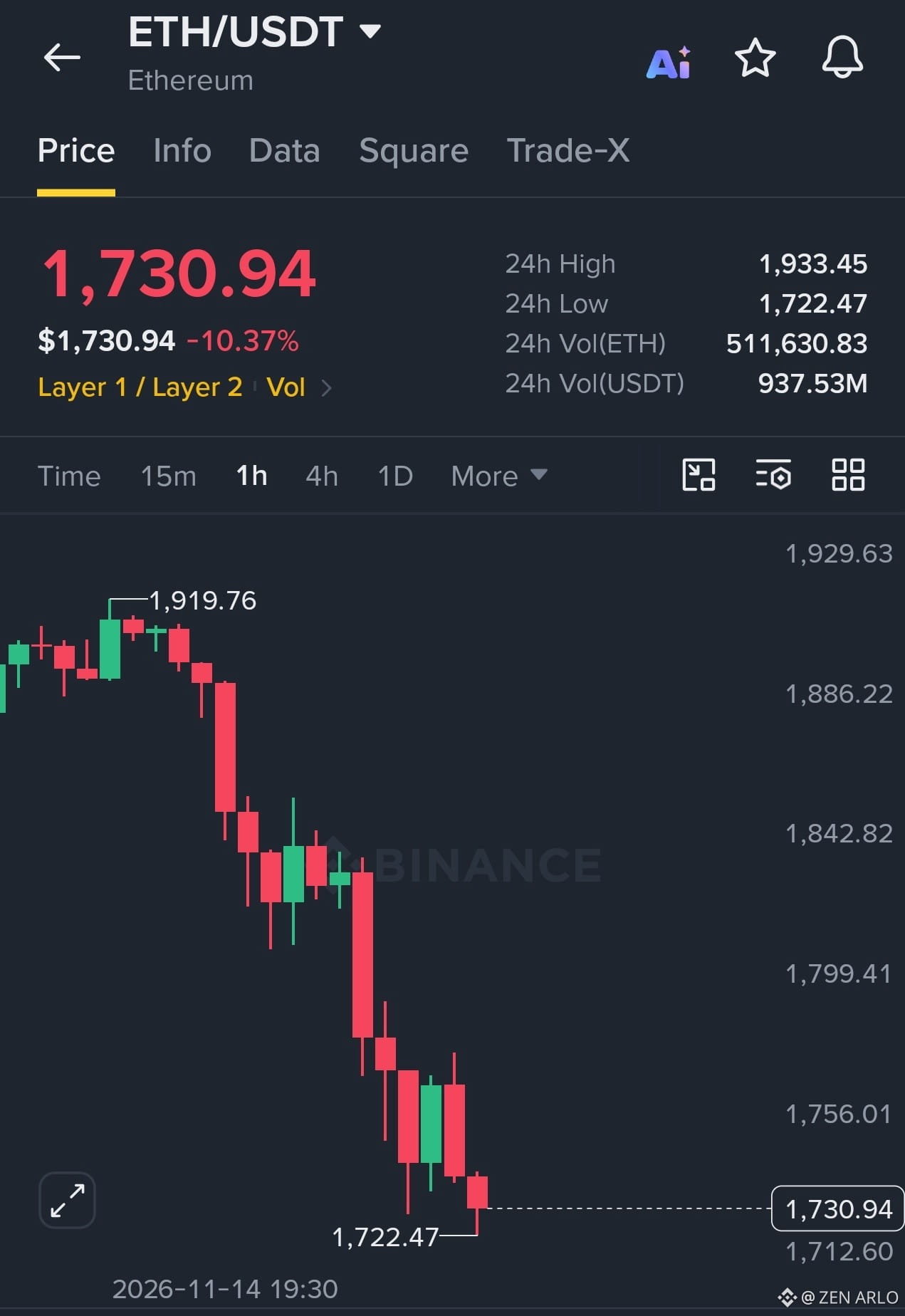
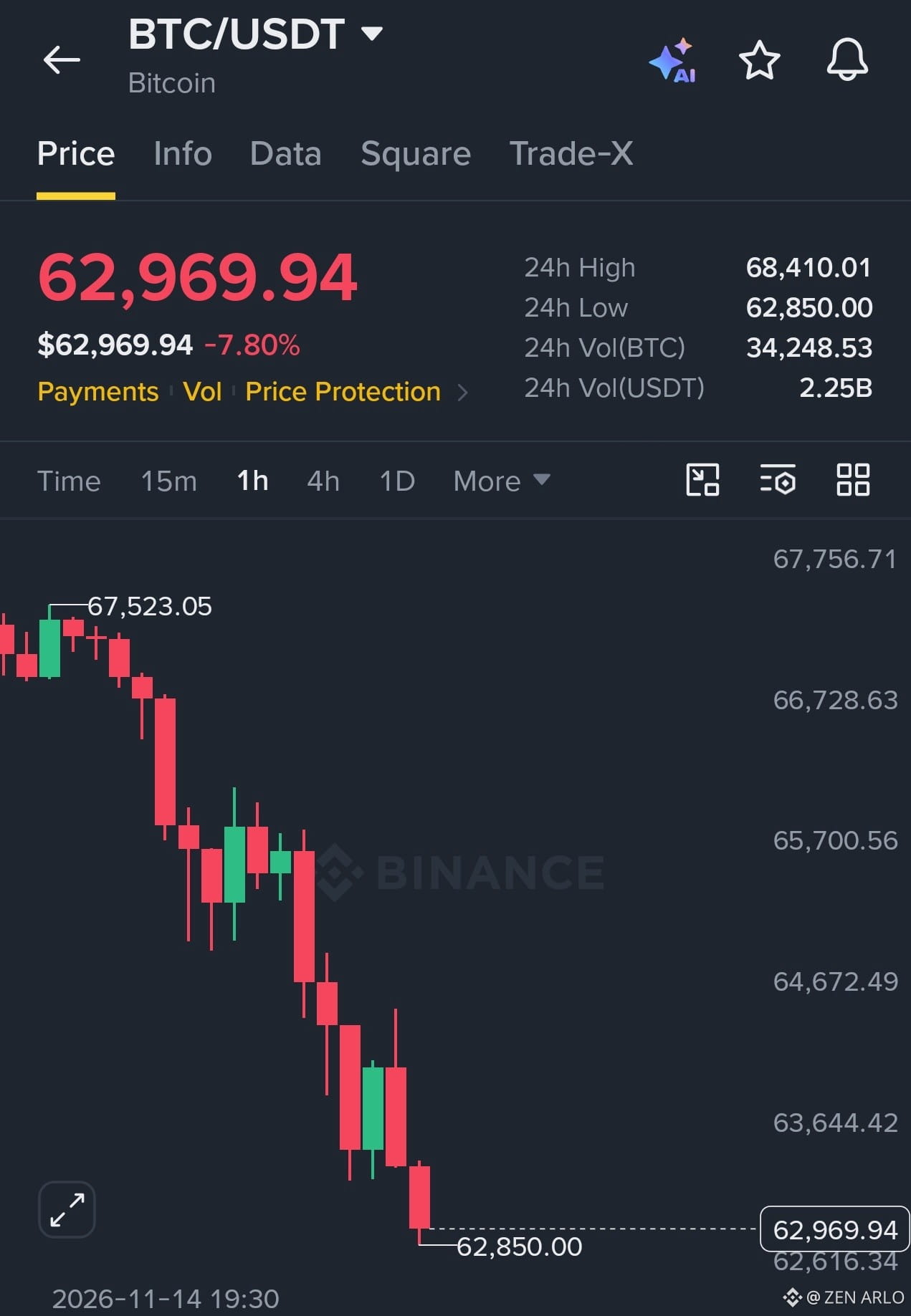
5
6
263
·
--
Bullish
Partly True
$PYTH Is Reshaping Financial Market Data!
Most market data goes downstream. Pyth Network goes upstream, sourcing prices directly from institutions.
710+ businesses use Pyth, securing $3.25T+ in cumulative volume.
125+ institutional publishers deliver 3,000+ price feeds across 114+ blockchains.
Pyth supports 60% of the onchain perpetuals market.
Pyth Pro offers 2,200+ instruments through one integration with sub-100ms latency.
Pyth Pro surpassed $6M ARR, with subscription revenue growing 109% QoQ.
Pyth Terminal provides live pricing, benchmarks and publisher transparency.
Pyth Data Marketplace, Indices and AI Agents expand institutional data access and 24/7 finance.
For $LINK , $ONDO, $HYPE and $UMA communities, reliable market data is becoming increasingly important.
As digital finance expands, trusted market data is becoming essential infrastructure for the next generation of financial markets.
Only information not financial advice
#PYTH #DeFi #RWA
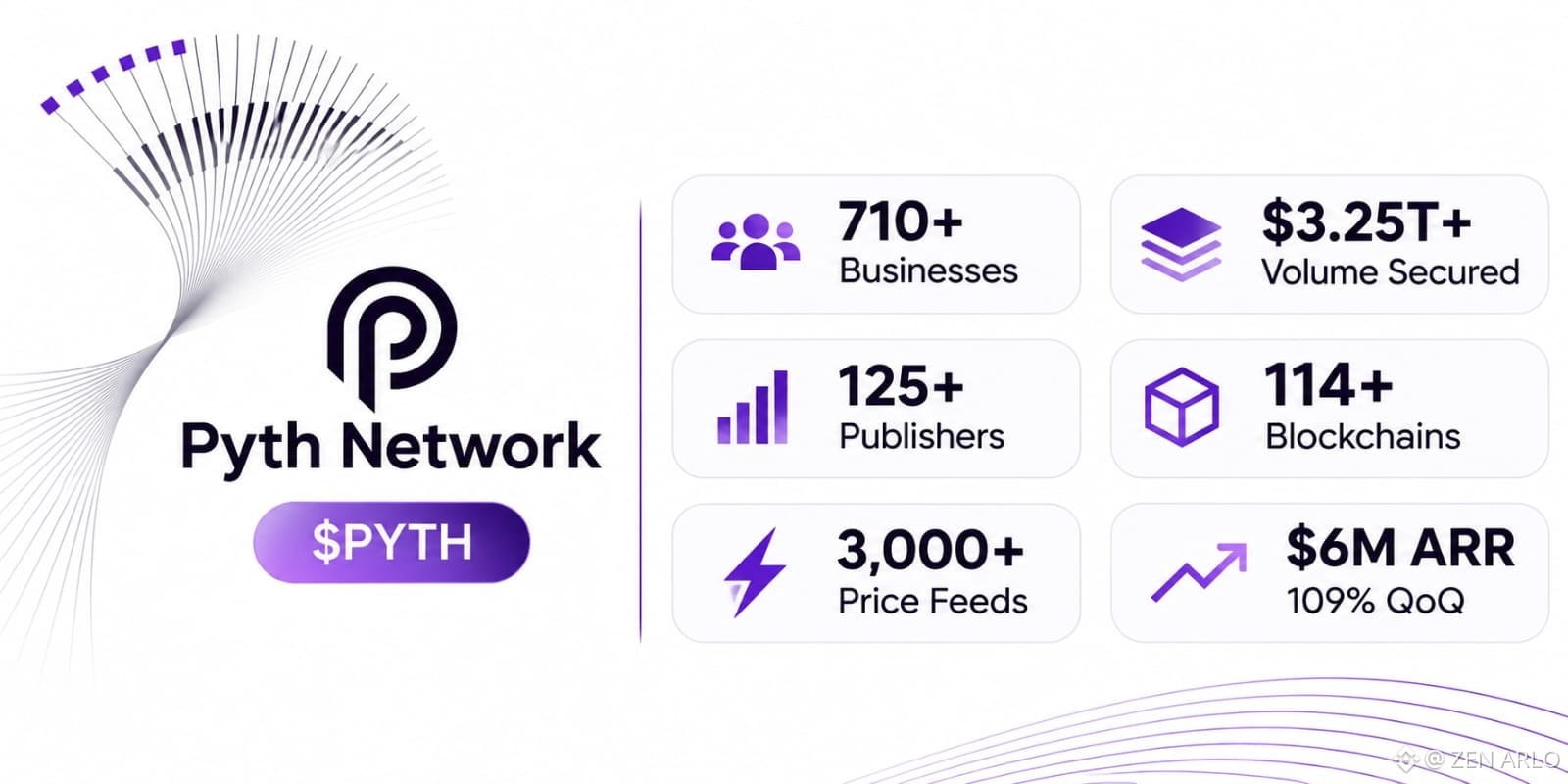
42
31
6.9k
·
--
Bearish
🚨 BITCOIN BLOODBATH! $BTC CRASHES $12,500 IN JUST 9 DAYS!
Bitcoin has plunged to $67,500, a 3-month low!
💥 $1.45 BILLION in long positions reportedly liquidated today!
Nine days of brutal selling. Billions wiped out. Bulls getting crushed.
⚠️ Is this the final capitulation before a massive rebound, or is another crash coming?
$BTC $ETH
Bitcoin has plunged to $67,500, a 3-month low!
💥 $1.45 BILLION in long positions reportedly liquidated today!
Nine days of brutal selling. Billions wiped out. Bulls getting crushed.
⚠️ Is this the final capitulation before a massive rebound, or is another crash coming?
$BTC $ETH
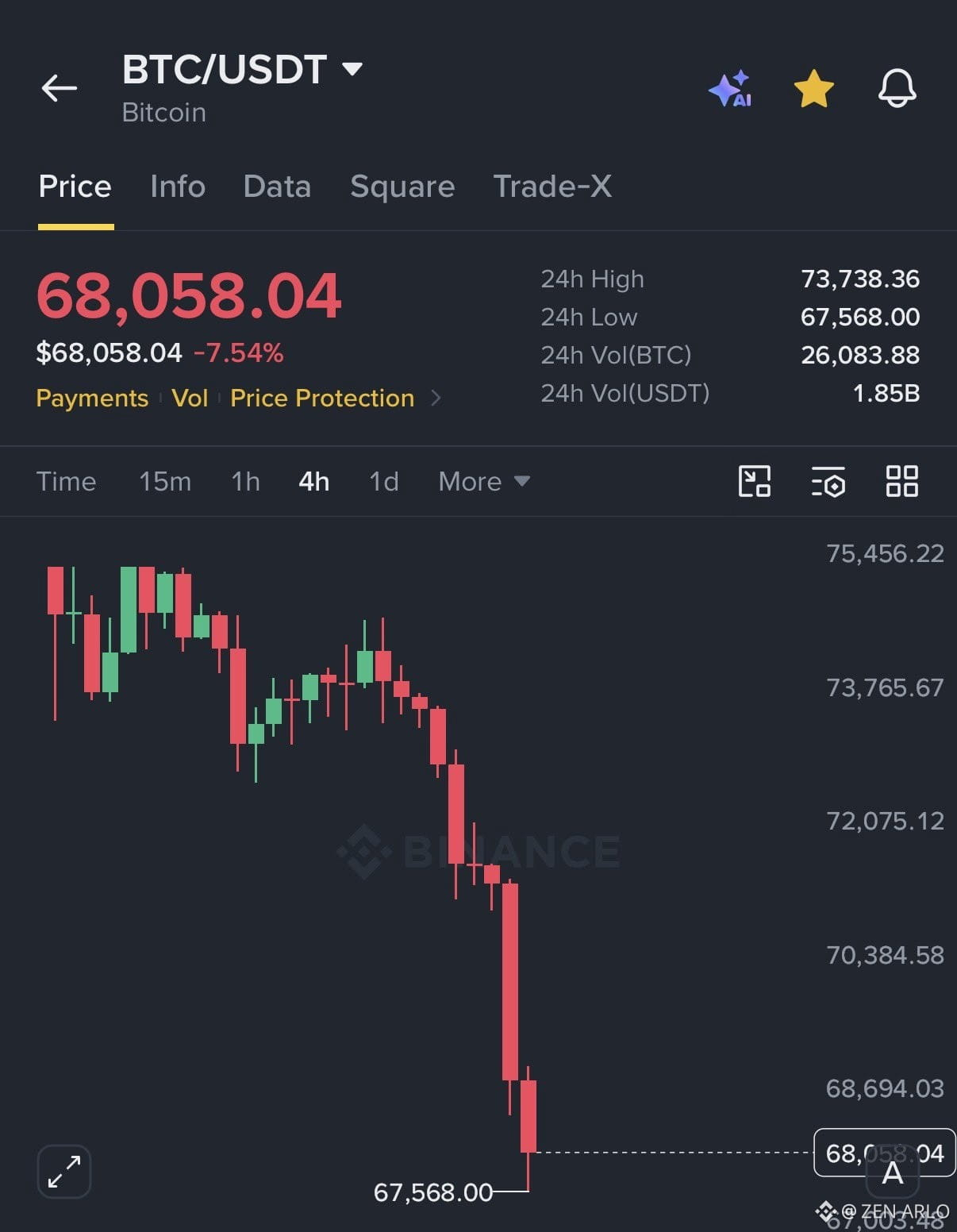
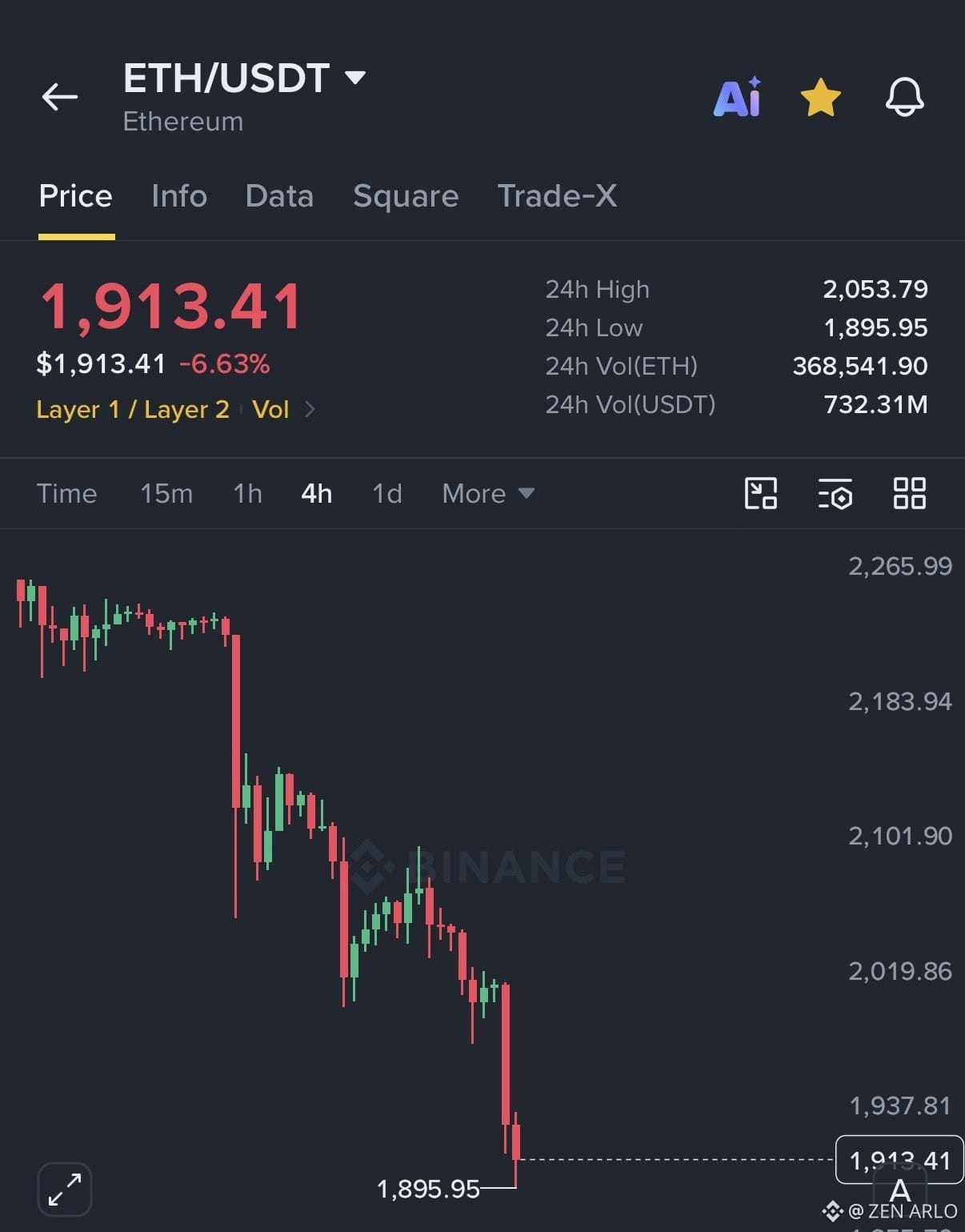
7
8
231
·
--
Bullish
🚨 MASSIVE RALLY IN JAPAN! 🇯🇵
🔥 A staggering ¥35.325 TRILLION ($225 BILLION) reportedly added to Japanese stock market value today!
Japan's Nikkei 225 surged over 2.5%, with tech and banking stocks leading the charge.
BULLS ARE TAKING CONTROL! Global markets are heating up!
🚨 MASSIVE RALLY IN JAPAN! 🇯🇵
🔥 A staggering ¥35.325 TRILLION ($225 BILLION) reportedly added to Japanese stock market value today!
Japan's Nikkei 225 surged over 2.5%, with tech and banking stocks leading the charge.
BULLS ARE TAKING CONTROL! Global markets are heating up!
🔥 A staggering ¥35.325 TRILLION ($225 BILLION) reportedly added to Japanese stock market value today!
Japan's Nikkei 225 surged over 2.5%, with tech and banking stocks leading the charge.
BULLS ARE TAKING CONTROL! Global markets are heating up!
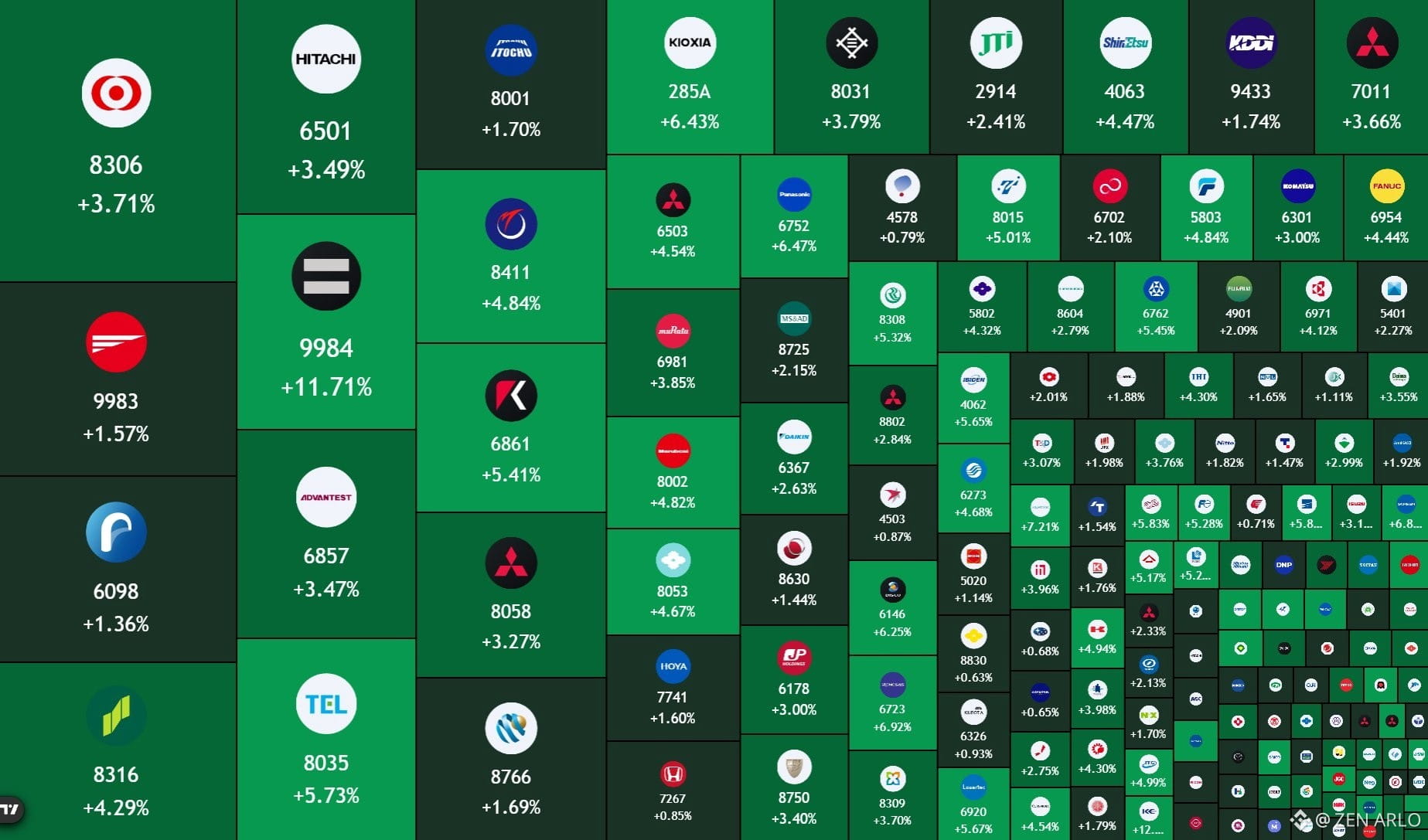
EWJETF+1.59%
9
13
437
·
--
Bearish
INSANE CRASH! $TRUMP DOWN 98.56%!
$TRUMP has reportedly crashed to a new all-time low of $1.13, wiping out nearly its entire value from the peak!
A $10,000 investment in January 2025 would now be worth just $144.
That's a staggering $9,856 LOSS!
$TRUMP holders are facing a brutal collapse!
INSANE CRASH! $TRUMP DOWN 98.56%!
$TRUMP has reportedly crashed to a new all-time low of $1.13, wiping out nearly its entire value from the peak!
A $10,000 investment in January 2025 would now be worth just $144.
That's a staggering $9,856 LOSS!
$TRUMP holders are facing a brutal collapse!
$TRUMP has reportedly crashed to a new all-time low of $1.13, wiping out nearly its entire value from the peak!
A $10,000 investment in January 2025 would now be worth just $144.
That's a staggering $9,856 LOSS!
$TRUMP holders are facing a brutal collapse!
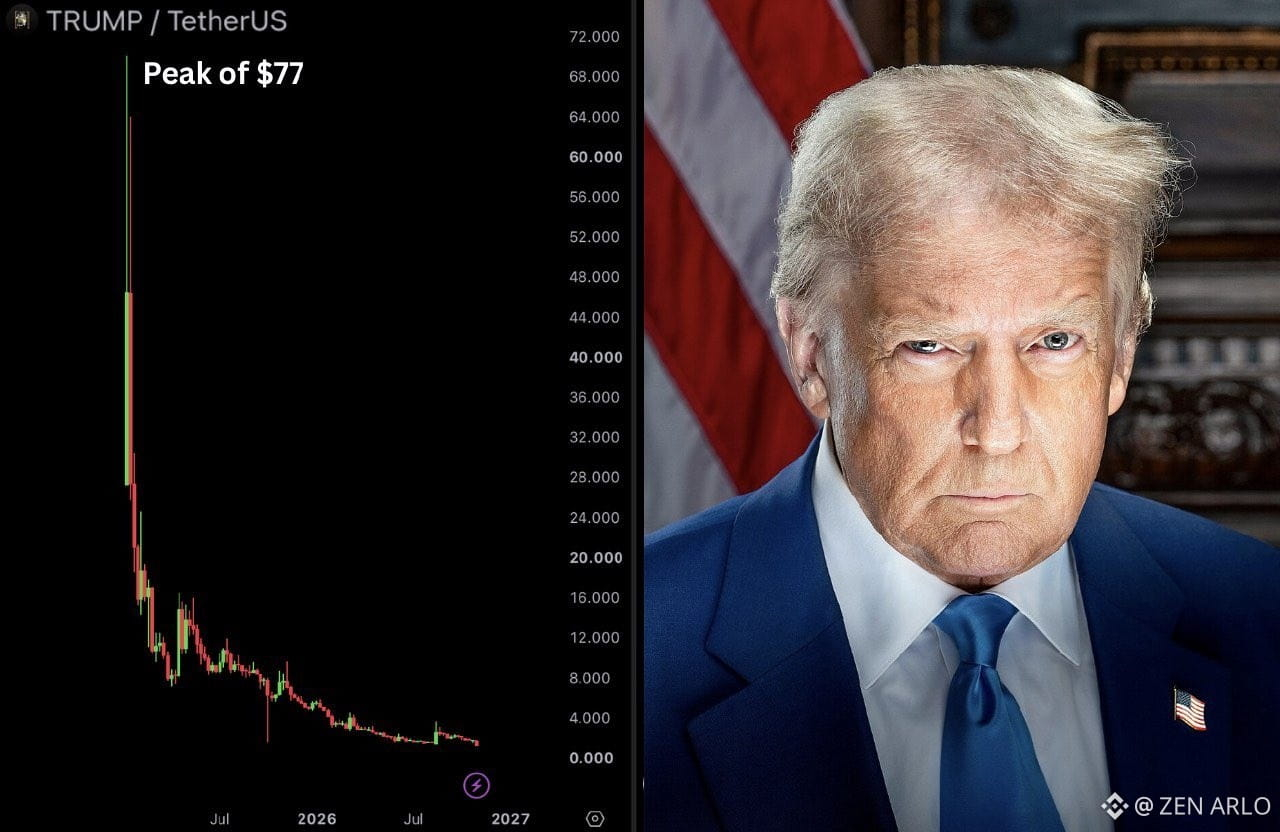
8
10
200
Log in to explore more content
Join global crypto users on Binance Square
⚡️ Get latest and useful information about crypto.
💬 Trusted by the world’s largest crypto exchange.
👍 Discover real insights from verified creators.
Email / Phone number
Trending Topics
CanMarketsReboundAfterThanksgiving?
18,788 views
464 Discussing
Rate-Hike Bets Linger as US Markets Head Into Thanksgiving Closure
Binance News
·1 Likes
·1.4k views
CouldSpaceX’sOrbitalDataCentersBoostAIChipDemand?
11,915 views
297 Discussing
EvolveAtBinanceBlockchainWeek
661,349 views
7,152 Discussing