
亿哥的坚持HYPE
2.9k Posts

亿哥的坚持HYPE
Report
Block User
专注HYPE,坚持致胜。
Frequent Trader
5.6 Years
127 Following
1.1K+ Followers
1.8K+ Liked
Posts
All
Quotes
Videos
·
--
$HYPE Burn Summary
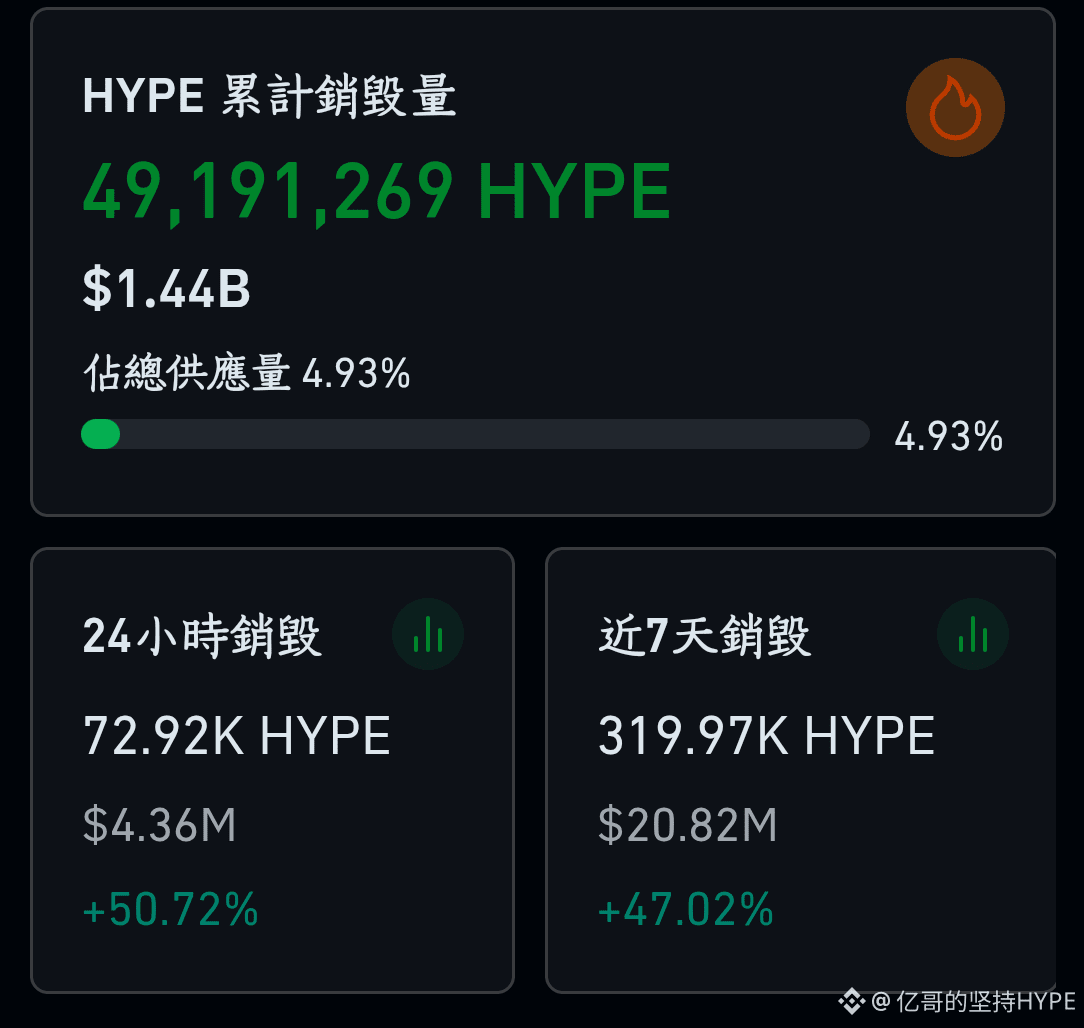
As of 2026-11-21, Hyperliquid has burned a cumulative 49.19M HYPE (approximately $1.43B), equivalent to about 4.93% of the initial supply of 1 billion tokens.
Over the past 24 hours, 72.91K$HYPE were burned (approximately $4.36M). Over the past 7 days, about 319.97K HYPE (approximately $20.81M) were burned. Based on the average burn rate over the past 30 days, the current annualized burn rate is approximately 1.34%.
$HYPE burns primarily come from the Assistance Fund’s mechanism for buying back and burning tokens using protocol fees. In addition, HyperEVM gas fees are also used directly to burn HYPE.
220
·
--
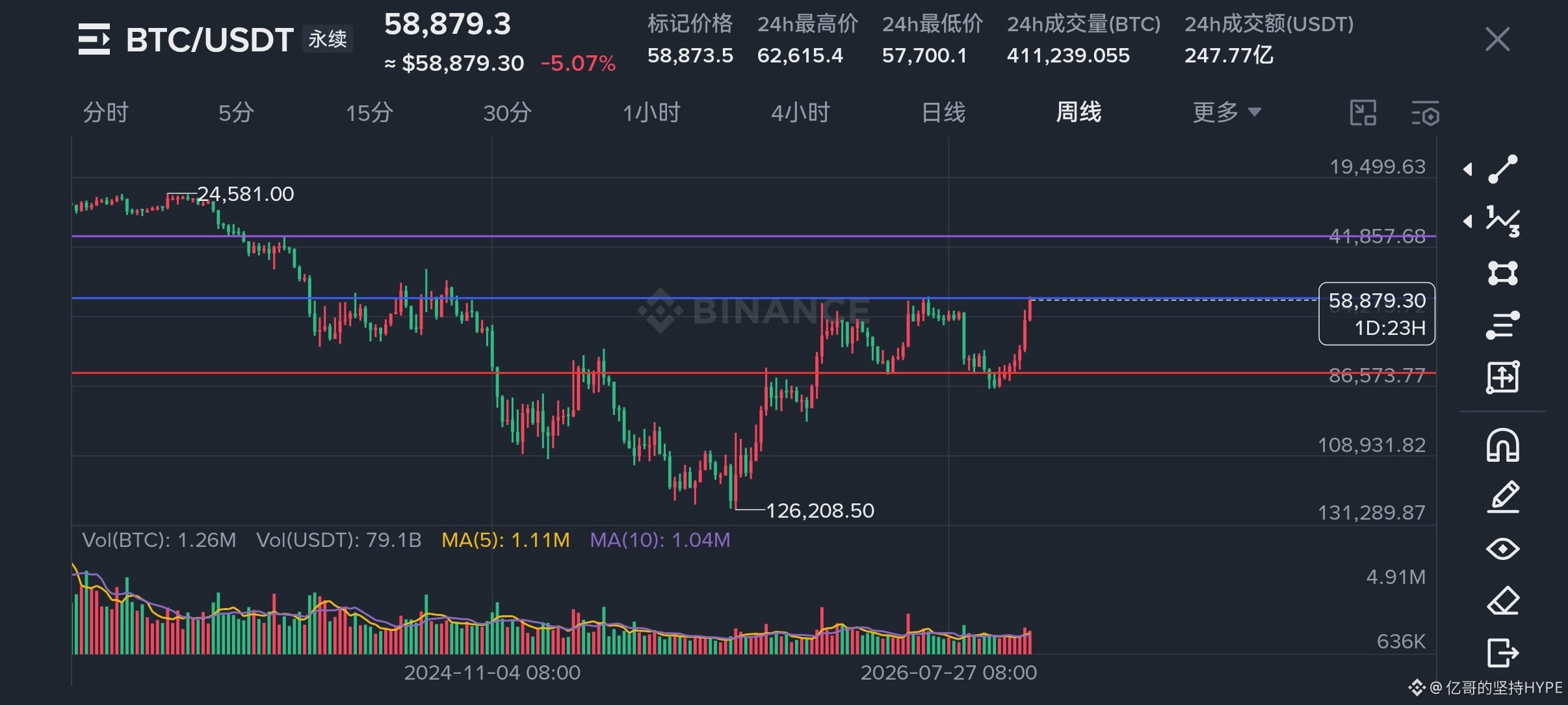
My Bitcoin is breaking through—why is yours crashing?
Look at time from another angle. Reverse it and you’ll find that your $BTC is breaking through too…
{future}(BTCUSDT)
My Bitcoin is breaking through—why is yours crashing?
Look at time from another angle. Reverse it and you’ll find that your $BTC is breaking through too…
Look at time from another angle. Reverse it and you’ll find that your $BTC is breaking through too…
324
·
--
$HYPE Burn Summary
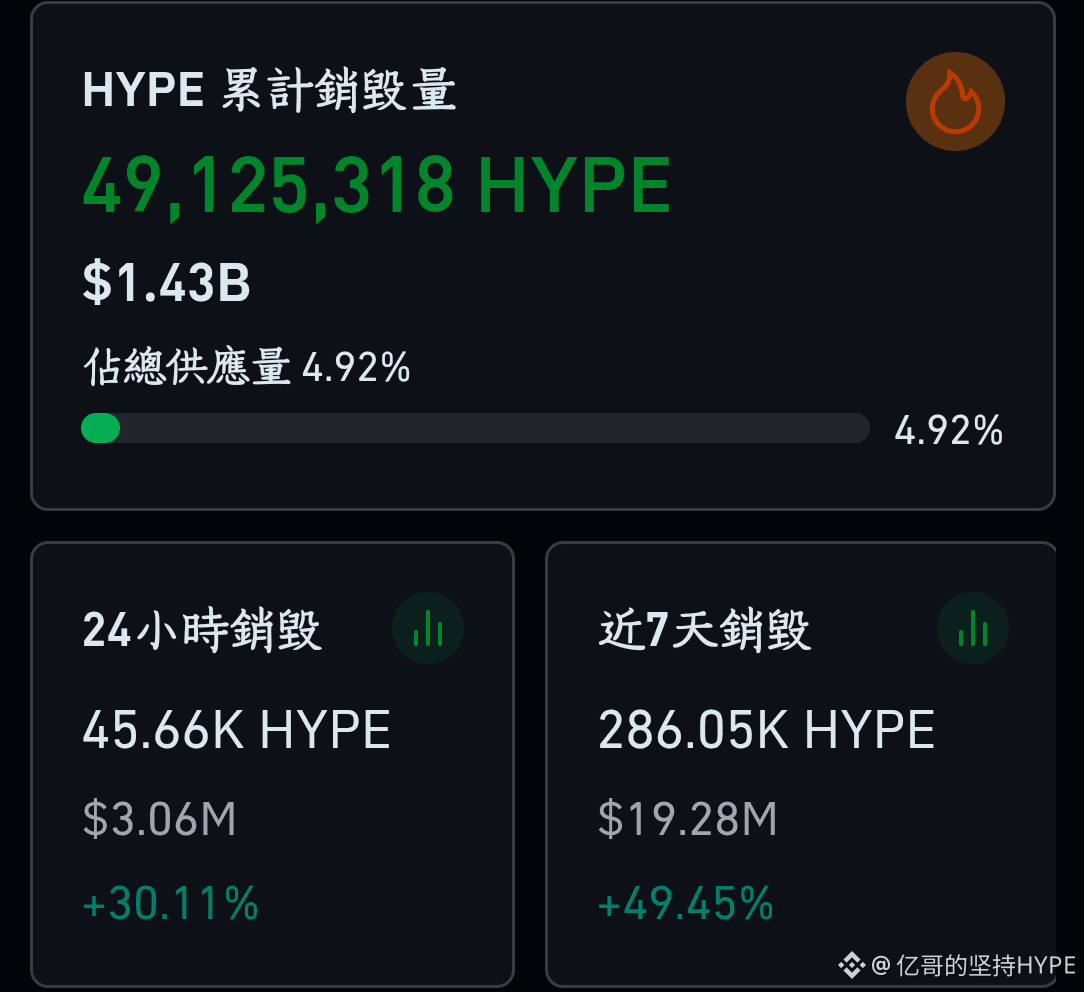
As of 2026-11-20, Hyperliquid has burned a total of 49.12M HYPE (approximately $1.43B), about 4.92% of the initial supply of 1 billion tokens.
Over the past 24 hours, 45.66K HYPE (approximately $3.06M) was burned. Over the past 7 days, approximately 286.05K $HYPE (approximately $19.27M) was burned. Based on the average burn rate over the past 30 days, the current annualized burn rate is approximately 1.29%.
Burns of $HYPE mainly come from the Assistance Fund’s buyback-and-burn mechanism, which uses protocol fees. In addition, HyperEVM gas fees are also used directly to burn HYPE.
158
·
--
$HYPE Burn Summary
{spot}(HYPEUSDT)
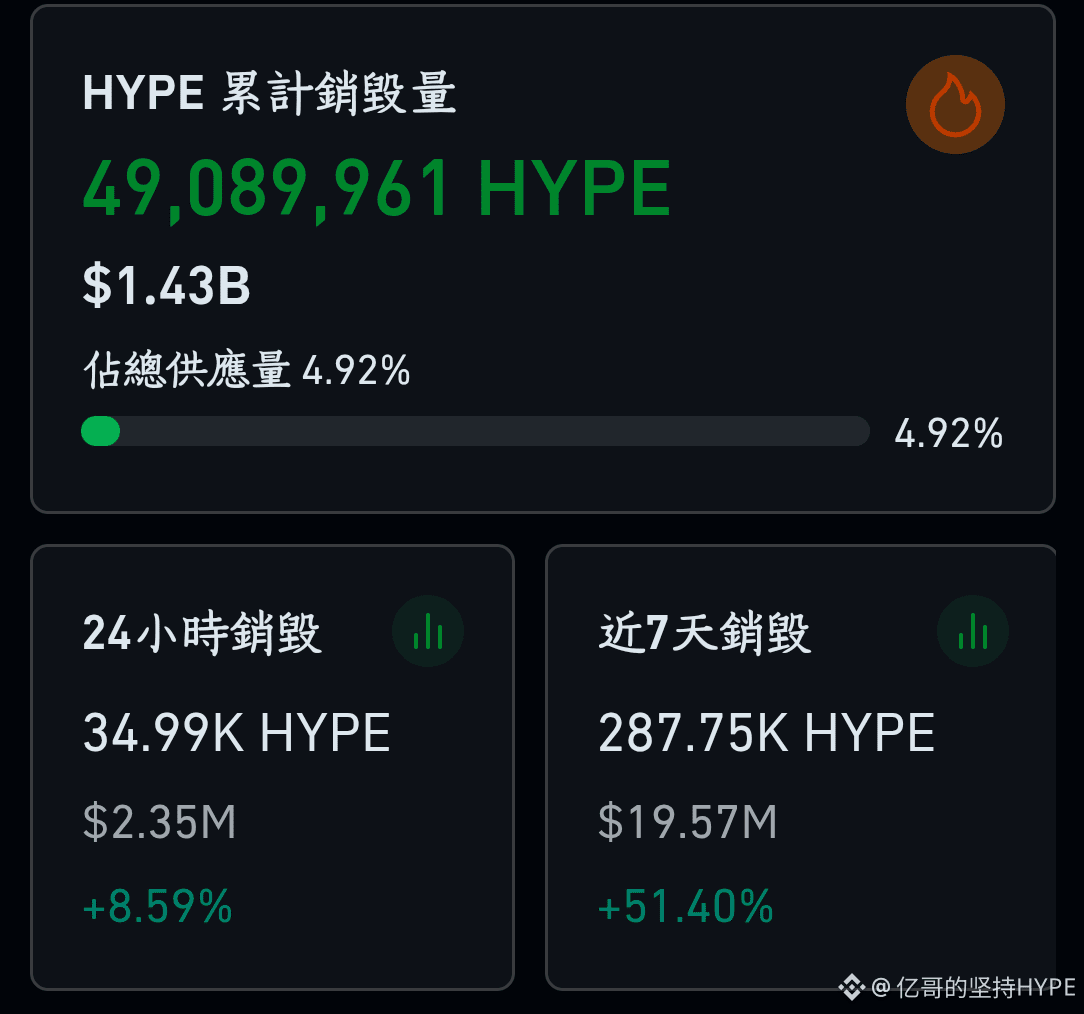
As of 2026-11-19, Hyperliquid has burned a cumulative 49.08M HYPE (approximately $1.42B), about 4.92% of the initial supply of 1 billion tokens.
Over the past 24 hours, 34.99K HYPE (approximately $2.34M) was burned, while the total burned over the past 7 days was approximately 287.74K HYPE (approximately $19.57M). Based on the average burn rate over the past 30 days, the current annualized burn rate is approximately 1.26%.
HYPE burns primarily come from the Assistance Fund’s buyback-and-burn mechanism, which uses protocol fees. In addition, HyperEVM gas fees are also used directly to burn HYPE.
$HYPE Burn Summary
As of 2026-11-19, Hyperliquid has burned a cumulative 49.08M HYPE (approximately $1.42B), about 4.92% of the initial supply of 1 billion tokens.
Over the past 24 hours, 34.99K HYPE (approximately $2.34M) was burned, while the total burned over the past 7 days was approximately 287.74K HYPE (approximately $19.57M). Based on the average burn rate over the past 30 days, the current annualized burn rate is approximately 1.26%.
HYPE burns primarily come from the Assistance Fund’s buyback-and-burn mechanism, which uses protocol fees. In addition, HyperEVM gas fees are also used directly to burn HYPE.
1
188
·
--
$HYPE Burn Data Summary
{spot}(HYPEUSDT)
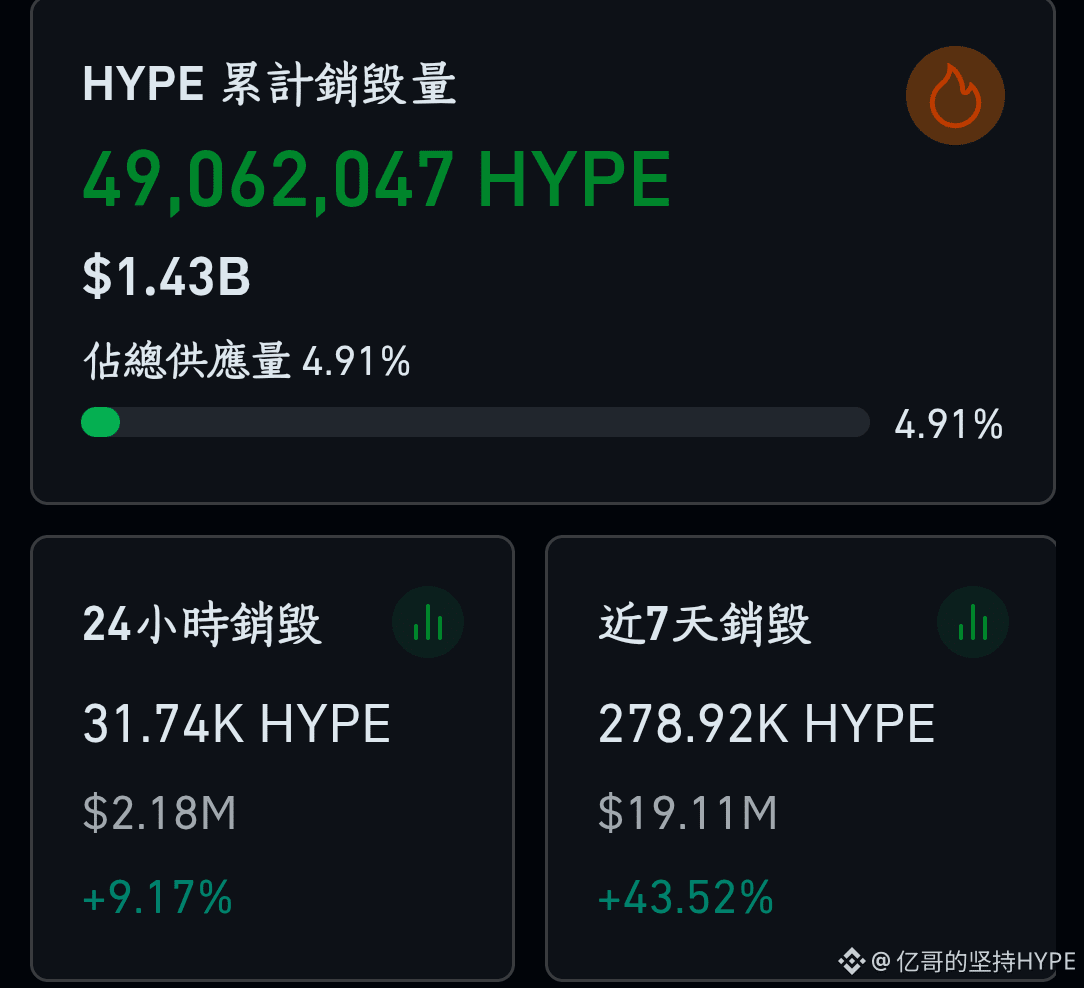
As of 2026-11-18, Hyperliquid has burned a total of 49.06M HYPE (approximately $1.42B), equivalent to about 4.91% of the initial supply of 1 billion tokens.
Over the past 24 hours, 31.74K HYPE (approximately $2.17M) was burned, and about 278.92K HYPE (approximately $19.10M) was burned over the past 7 days. Based on the average burn rate over the past 30 days, the current annualized burn rate is approximately 1.26%.
The burns associated with $HYPE mainly come from the Assistance Fund’s buyback-and-burn mechanism funded by protocol fees. In addition, HyperEVM gas fees are also used directly to burn HYPE.
$HYPE Burn Data Summary
As of 2026-11-18, Hyperliquid has burned a total of 49.06M HYPE (approximately $1.42B), equivalent to about 4.91% of the initial supply of 1 billion tokens.
Over the past 24 hours, 31.74K HYPE (approximately $2.17M) was burned, and about 278.92K HYPE (approximately $19.10M) was burned over the past 7 days. Based on the average burn rate over the past 30 days, the current annualized burn rate is approximately 1.26%.
The burns associated with $HYPE mainly come from the Assistance Fund’s buyback-and-burn mechanism funded by protocol fees. In addition, HyperEVM gas fees are also used directly to burn HYPE.
275
·
--
$HYPE Burn Data Summary
{future}(HYPEUSDT)
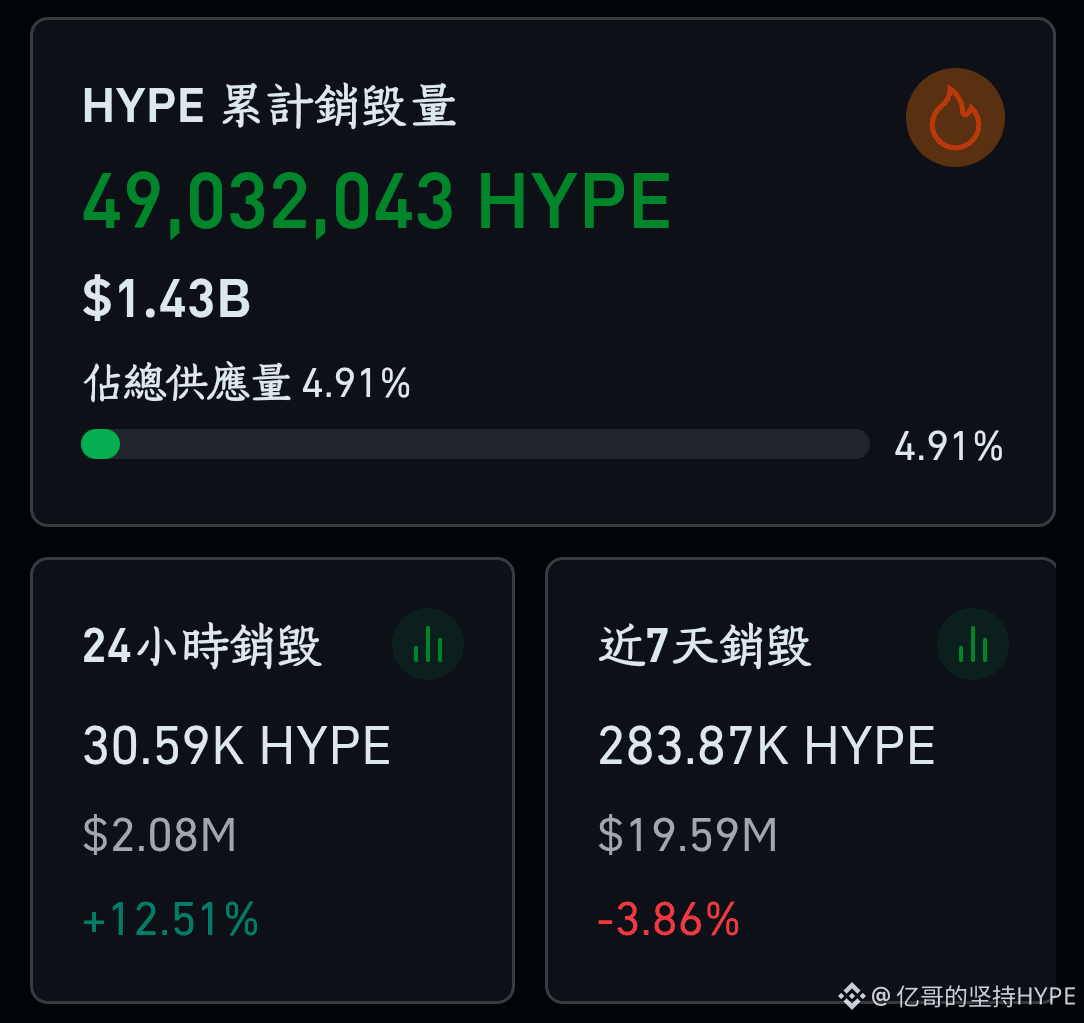
As of 2026-11-17, Hyperliquid has burned a cumulative 49.03M HYPE (approximately $1.42B), representing about 4.91% of the initial supply of 1 billion tokens.
Over the past 24 hours, 30.59K $HYPE was burned (approximately $2.07M). Over the past 7 days, about 283.87K HYPE was burned (approximately $19.58M). Based on the average burn rate over the past 30 days, the current annualized burn rate is approximately 1.25%.
$HYPE is primarily burned through the Assistance Fund’s buyback-and-burn mechanism, which uses protocol fees. In addition, HyperEVM gas fees are also used directly to burn HYPE.
$HYPE Burn Data Summary
As of 2026-11-17, Hyperliquid has burned a cumulative 49.03M HYPE (approximately $1.42B), representing about 4.91% of the initial supply of 1 billion tokens.
Over the past 24 hours, 30.59K $HYPE was burned (approximately $2.07M). Over the past 7 days, about 283.87K HYPE was burned (approximately $19.58M). Based on the average burn rate over the past 30 days, the current annualized burn rate is approximately 1.25%.
$HYPE is primarily burned through the Assistance Fund’s buyback-and-burn mechanism, which uses protocol fees. In addition, HyperEVM gas fees are also used directly to burn HYPE.
165
·
--
$HYPE Burn Summary
{spot}(HYPEUSDT)
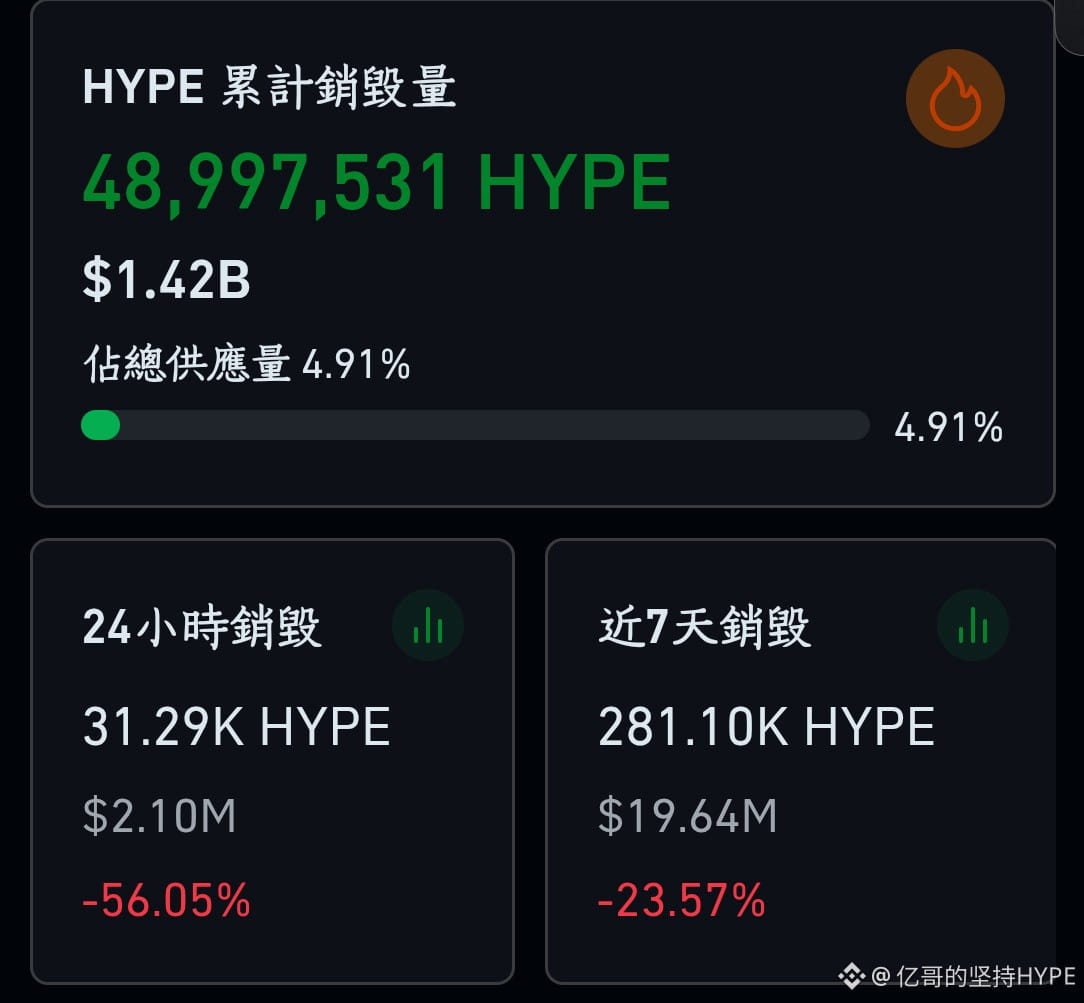
As of 2026-11-16, Hyperliquid has burned a total of 48.99M HYPE (approximately $1.42B), equivalent to about 4.91% of the initial supply of 1 billion tokens.
A total of 31.29K HYPE (approximately $2.09M) was burned in the past 24 hours, and about 281.09K HYPE (approximately $19.63M) was burned over the past 7 days. Based on the average burn rate over the past 30 days, the current annualized burn rate is approximately 1.22%.
$HYPE burns primarily come from the Assistance Fund’s buyback-and-burn mechanism, which is funded by protocol fees. In addition, HyperEVM gas fees are also used to burn HYPE directly.
$HYPE Burn Summary
As of 2026-11-16, Hyperliquid has burned a total of 48.99M HYPE (approximately $1.42B), equivalent to about 4.91% of the initial supply of 1 billion tokens.
A total of 31.29K HYPE (approximately $2.09M) was burned in the past 24 hours, and about 281.09K HYPE (approximately $19.63M) was burned over the past 7 days. Based on the average burn rate over the past 30 days, the current annualized burn rate is approximately 1.22%.
$HYPE burns primarily come from the Assistance Fund’s buyback-and-burn mechanism, which is funded by protocol fees. In addition, HyperEVM gas fees are also used to burn HYPE directly.
184
·
--
$HYPE HYPE Burn Summary
{spot}(HYPEUSDT)
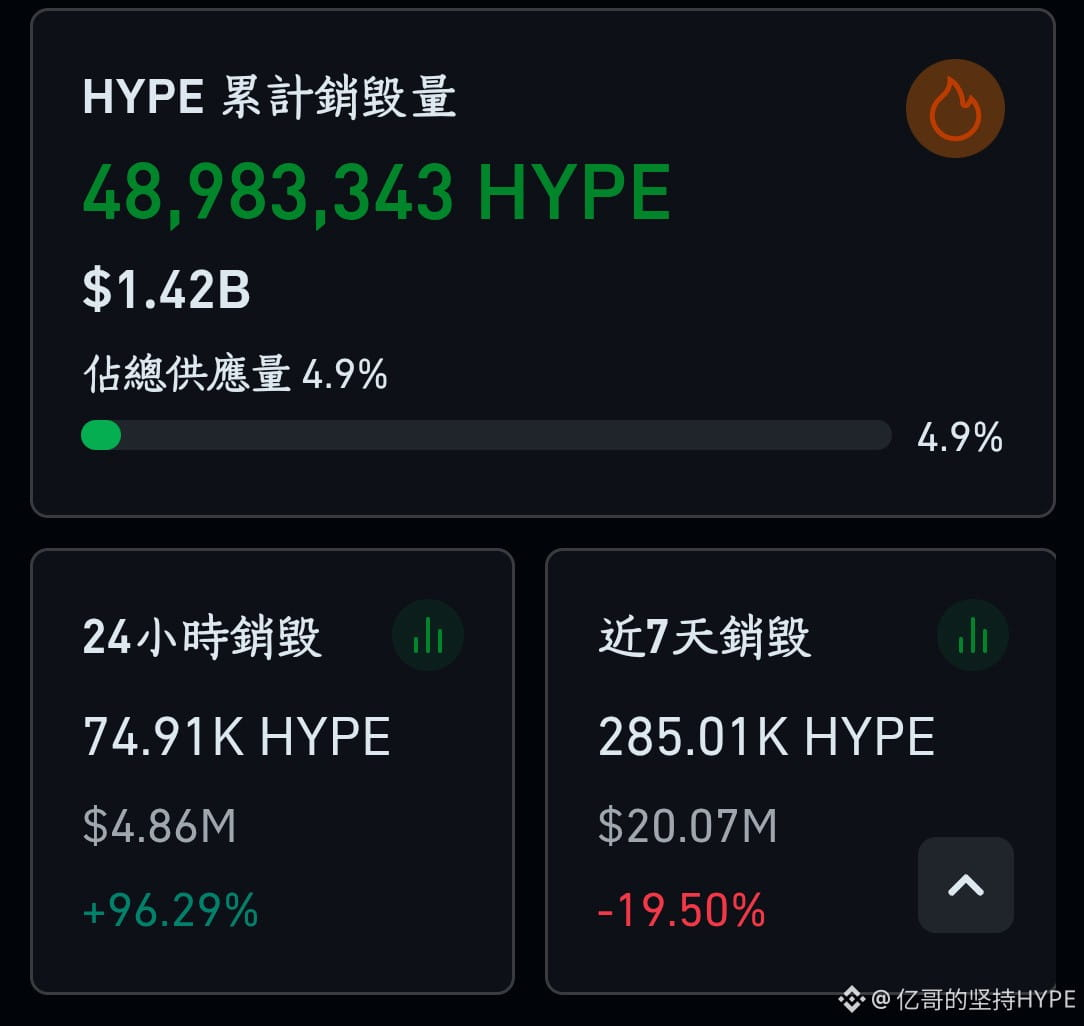
As of 2026-11-15, Hyperliquid has burned a total of 48.98M HYPE (approximately $1.42B), or about 4.9% of the initial 1 billion token supply.
A total of 74.91K HYPE (approximately $4.85M) was burned over the past 24 hours, and about 285.01K HYPE (approximately $20.07M) over the past 7 days. Based on the average burn rate over the past 30 days, the current annualized burn rate is approximately 1.22%.
HYPE burns primarily come from the Assistance Fund’s buyback-and-burn mechanism, which is funded by protocol fees. In addition, HyperEVM gas fees are also used to burn HYPE directly.
$HYPE HYPE Burn Summary
As of 2026-11-15, Hyperliquid has burned a total of 48.98M HYPE (approximately $1.42B), or about 4.9% of the initial 1 billion token supply.
A total of 74.91K HYPE (approximately $4.85M) was burned over the past 24 hours, and about 285.01K HYPE (approximately $20.07M) over the past 7 days. Based on the average burn rate over the past 30 days, the current annualized burn rate is approximately 1.22%.
HYPE burns primarily come from the Assistance Fund’s buyback-and-burn mechanism, which is funded by protocol fees. In addition, HyperEVM gas fees are also used to burn HYPE directly.
204
·
--
$HYPE Burn Data Summary
{spot}(HYPEUSDT)
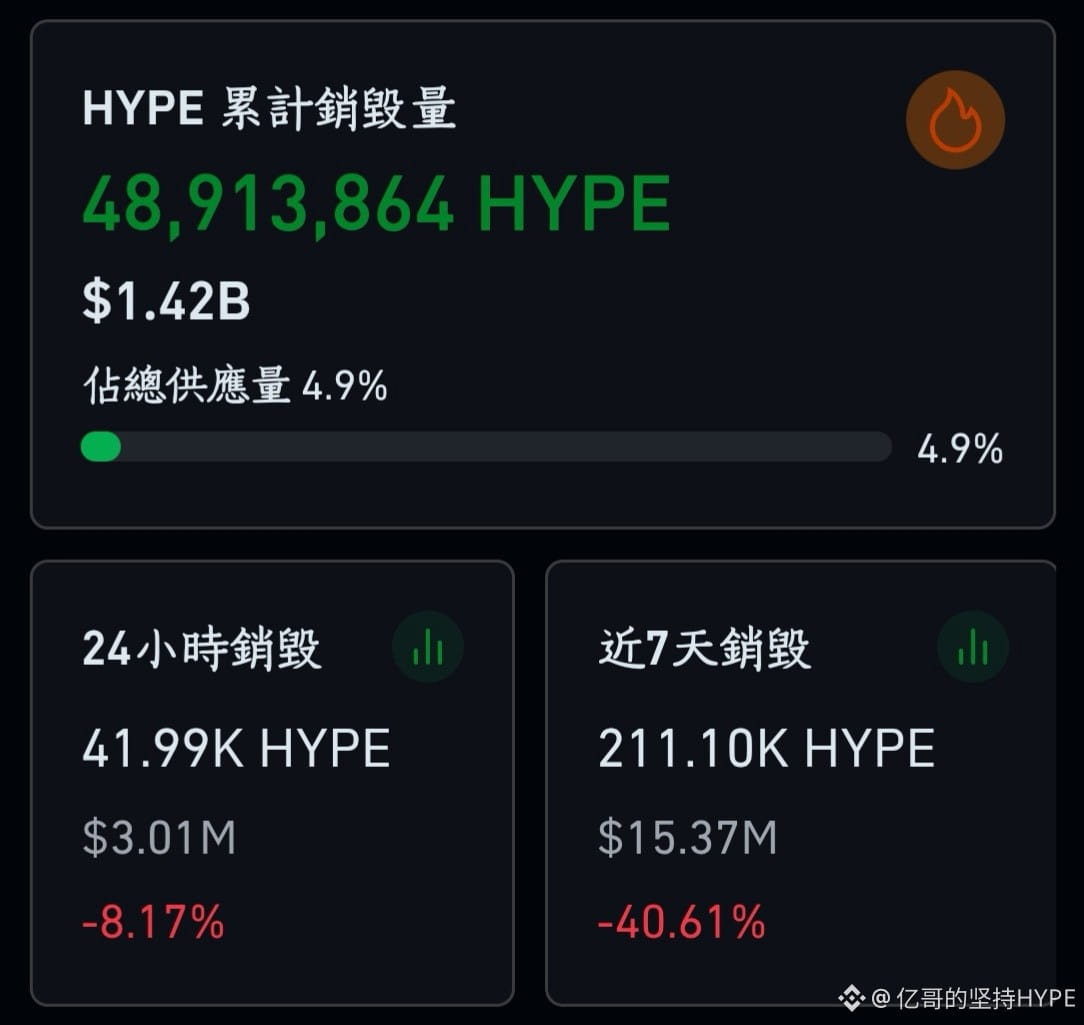
As of 2026-11-14, Hyperliquid has burned a cumulative 48.91M HYPE (approximately $1.41B), equivalent to about 4.9% of the initial supply of 1 billion tokens.
Over the past 24 hours, 41.98K HYPE (approximately $3.01M) was burned. Over the past 7 days, approximately 211.09K HYPE (approximately $15.36M) was burned. Based on the average burn rate over the past 30 days, the current annualized burn rate is approximately 1.15%.
$HYPE The burn is primarily driven by the Assistance Fund’s buyback-and-burn mechanism, which uses protocol fees. In addition, HyperEVM gas fees are also used directly to burn HYPE.
$HYPE Burn Data Summary
As of 2026-11-14, Hyperliquid has burned a cumulative 48.91M HYPE (approximately $1.41B), equivalent to about 4.9% of the initial supply of 1 billion tokens.
Over the past 24 hours, 41.98K HYPE (approximately $3.01M) was burned. Over the past 7 days, approximately 211.09K HYPE (approximately $15.36M) was burned. Based on the average burn rate over the past 30 days, the current annualized burn rate is approximately 1.15%.
$HYPE The burn is primarily driven by the Assistance Fund’s buyback-and-burn mechanism, which uses protocol fees. In addition, HyperEVM gas fees are also used directly to burn HYPE.
187
·
--
Partly True
$HYPE Burn Data Summary
{spot}(HYPEUSDT)
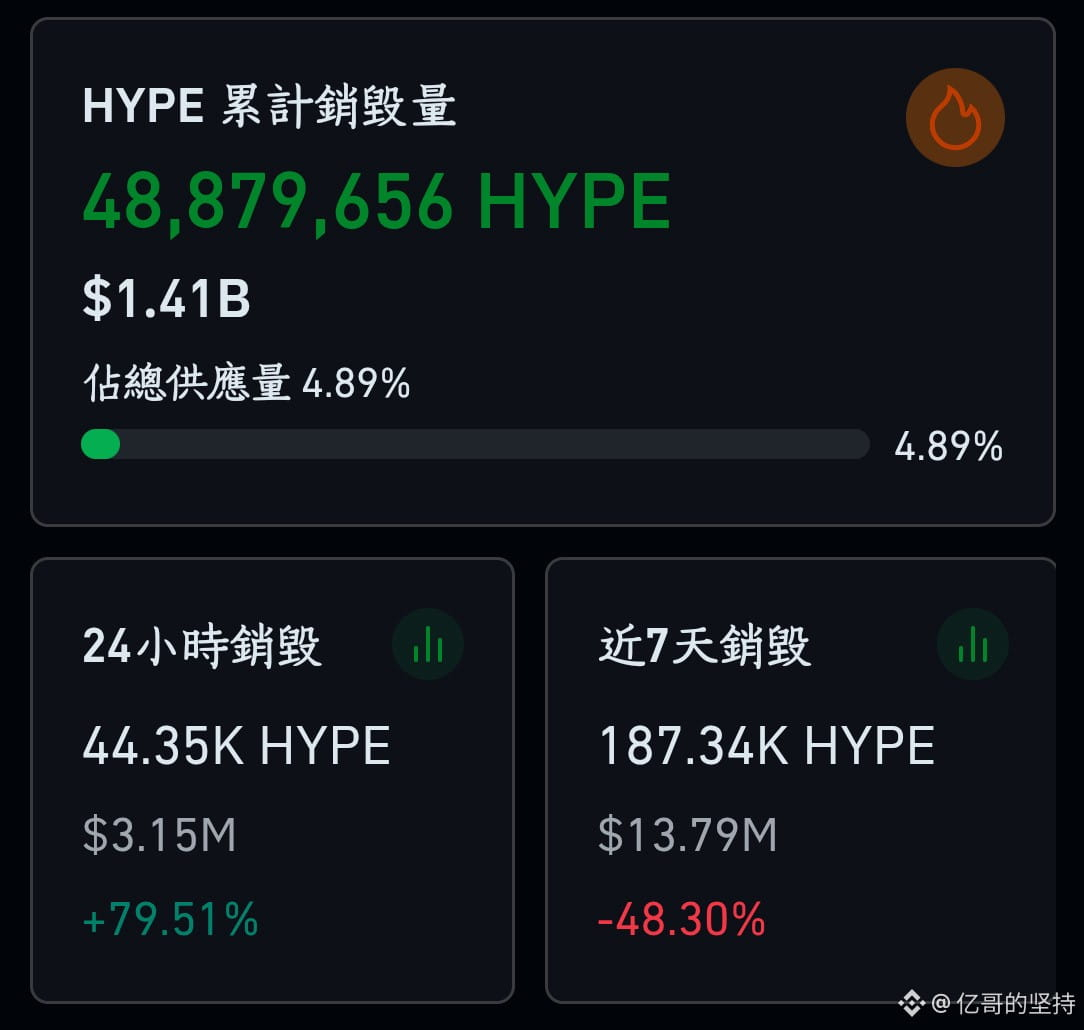
As of 2026-11-13, Hyperliquid has cumulatively burned 48.87M HYPE (approximately $1.41B), about 4.89% of the initial supply of 1 billion tokens.
A total of 44.34K HYPE (approximately $3.15M) was burned in the past 24 hours, and approximately 187.34K HYPE (approximately $13.79M) was burned over the past 7 days. Based on the average burn rate over the past 30 days, the current annualized burn rate is approximately 1.15%.
HYPE burns primarily come from the Assistance Fund’s protocol-fee-based buyback and burn mechanism. In addition, HyperEVM gas fees are also used directly to burn $HYPE .
$HYPE Burn Data Summary
As of 2026-11-13, Hyperliquid has cumulatively burned 48.87M HYPE (approximately $1.41B), about 4.89% of the initial supply of 1 billion tokens.
A total of 44.34K HYPE (approximately $3.15M) was burned in the past 24 hours, and approximately 187.34K HYPE (approximately $13.79M) was burned over the past 7 days. Based on the average burn rate over the past 30 days, the current annualized burn rate is approximately 1.15%.
HYPE burns primarily come from the Assistance Fund’s protocol-fee-based buyback and burn mechanism. In addition, HyperEVM gas fees are also used directly to burn $HYPE .
1.2k
·
--
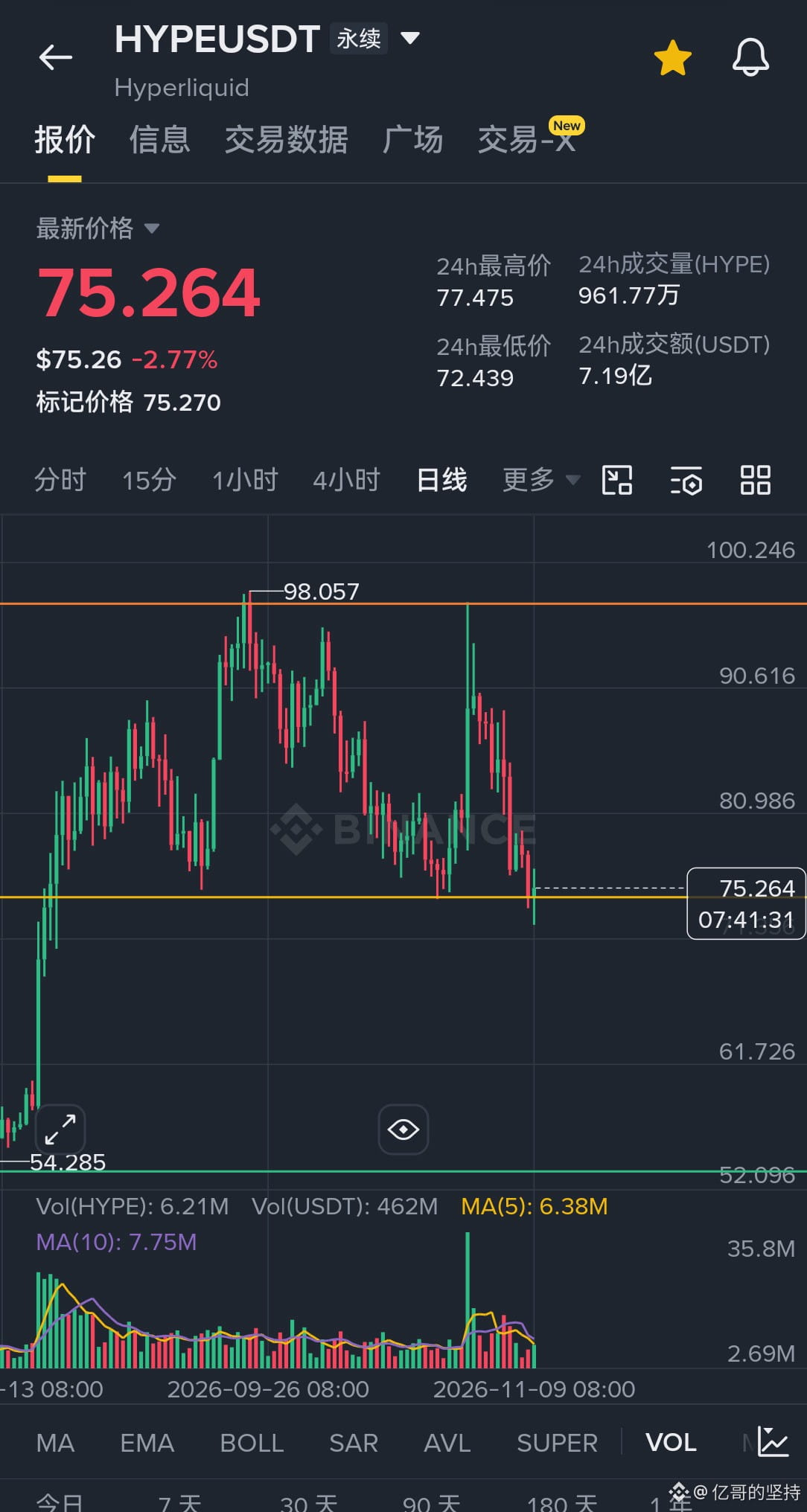
Trading requires patience. For example, wait until tomorrow to see whether the daily candlestick for $HYPE can hold above the yellow line. If it does, switch to the 15-minute or even 5-minute timeframe to look for an entry point to go long.
Trading requires patience. For example, wait until tomorrow to see whether the daily candlestick for $HYPE can hold above the yellow line. If it does, switch to the 15-minute or even 5-minute timeframe to look for an entry point to go long.
381
·
--
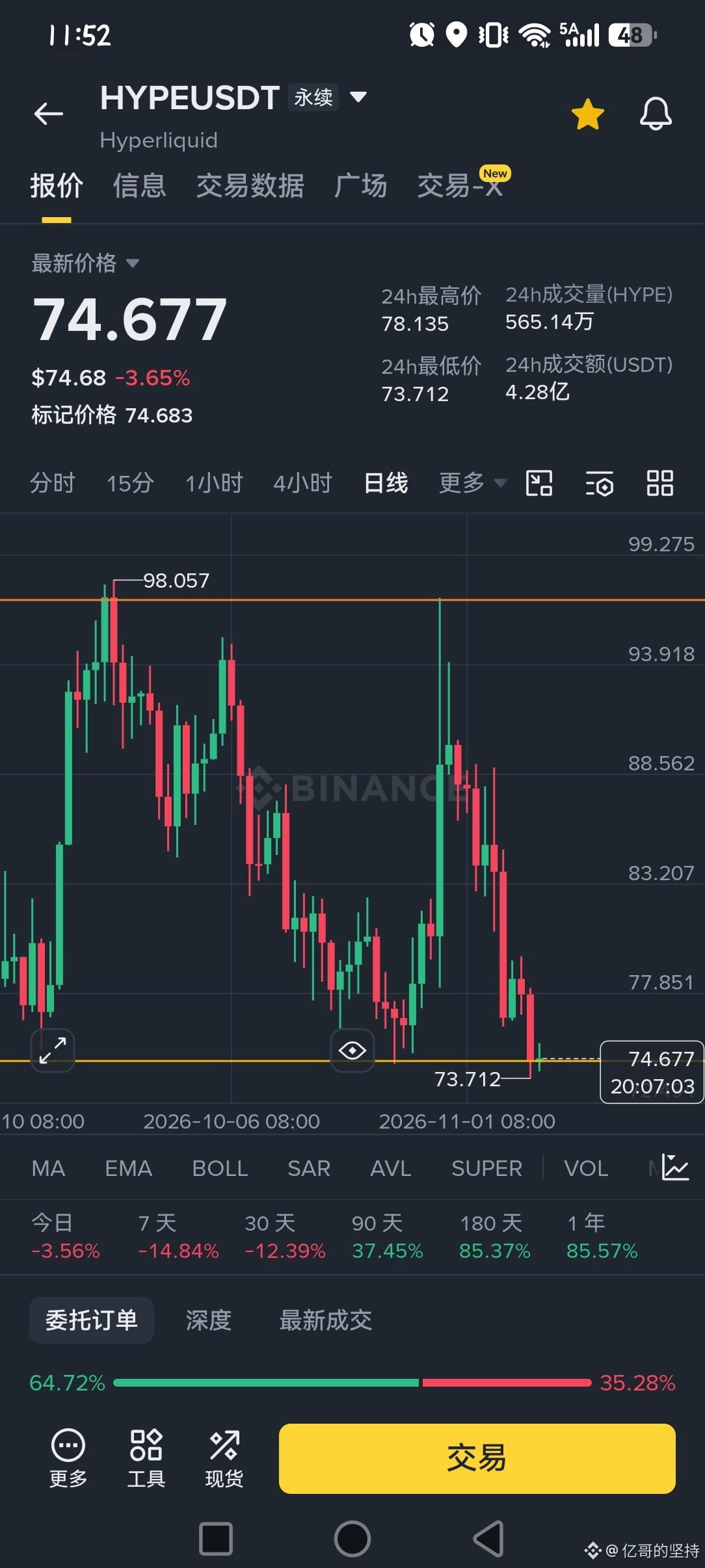
$HYPE can open a long position on the daily timeframe. In two months, it should rebound to around 94.
{spot}(HYPEUSDT)
$HYPE can open a long position on the daily timeframe. In two months, it should rebound to around 94.
270
·
--
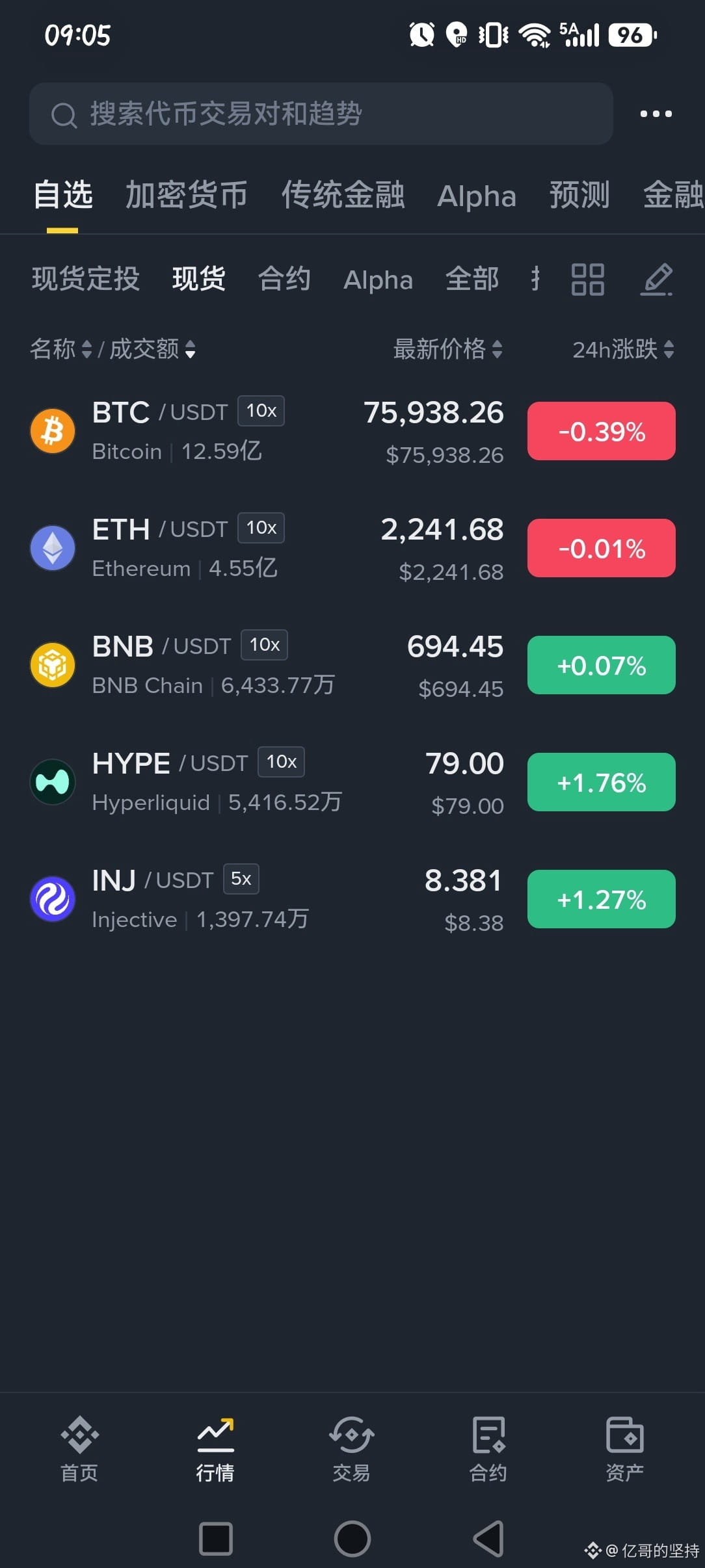
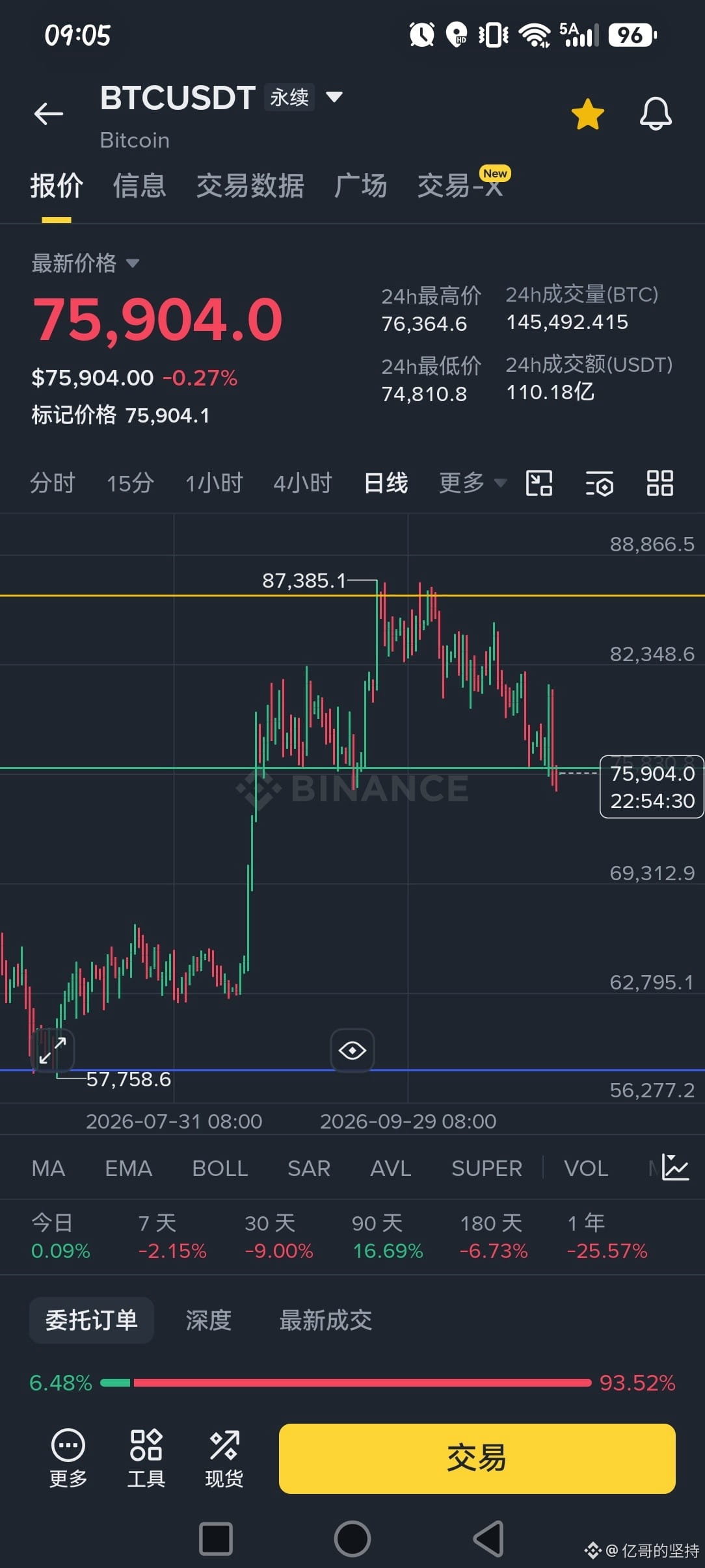
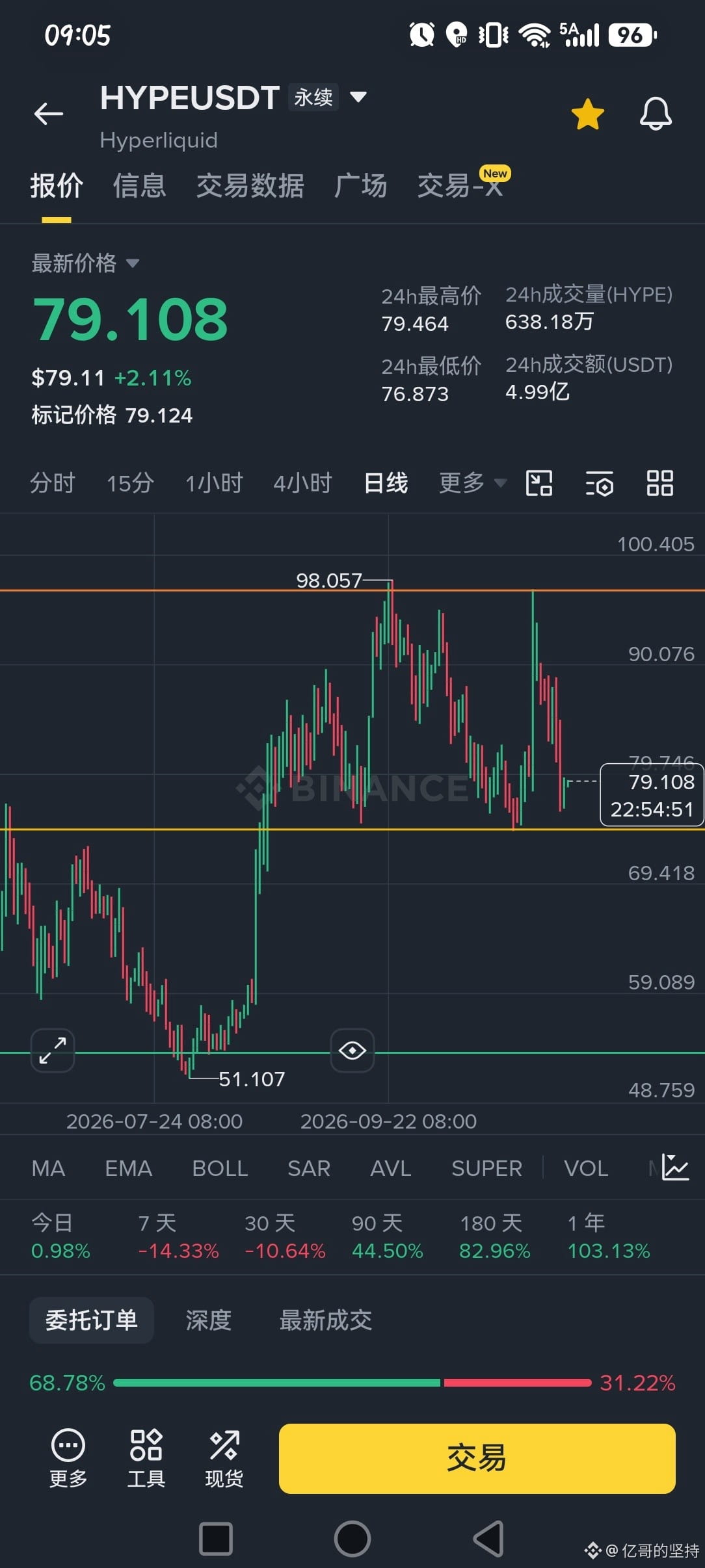
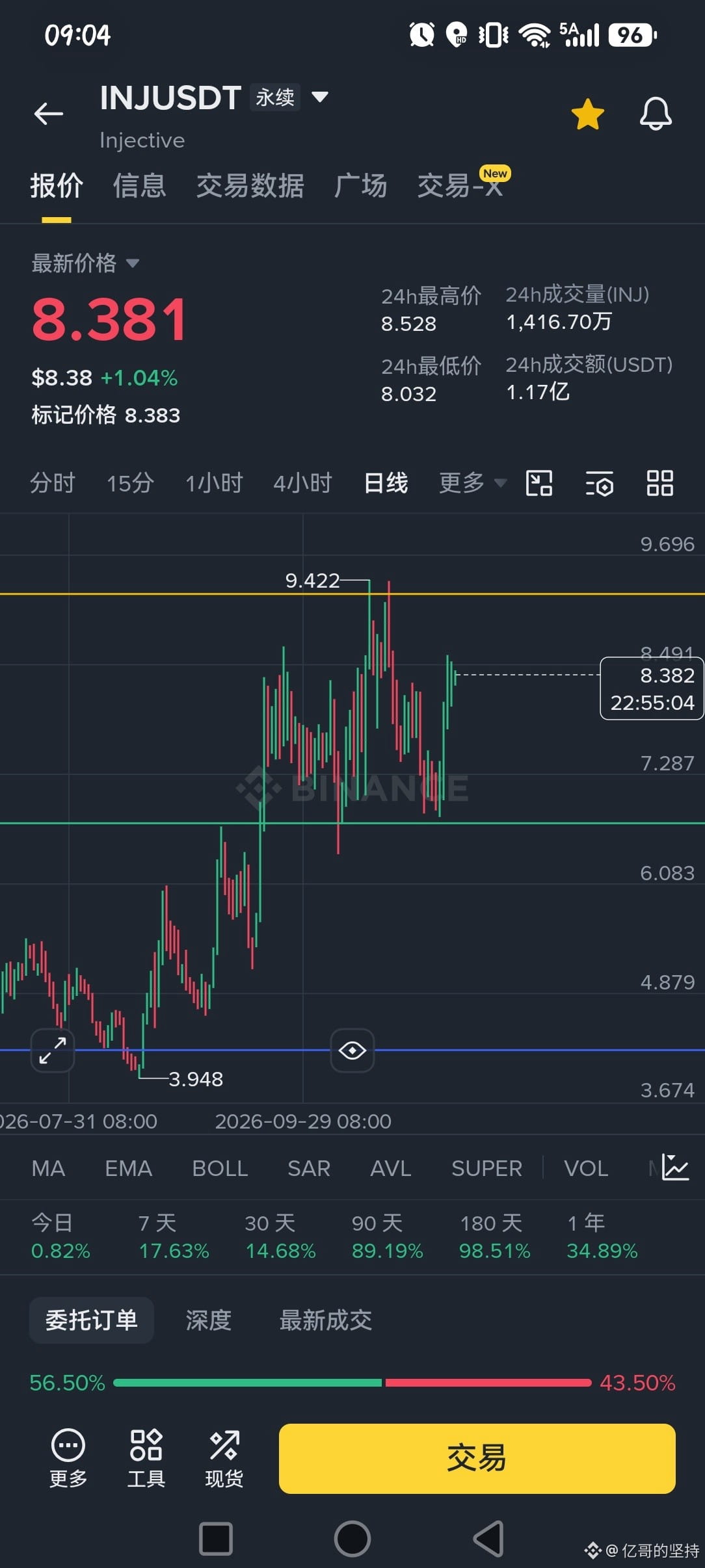
$HYPE $BNB $INJ
The most reliable way is to invest regularly
The fastest way is to wait
$HYPE $BNB $INJ
The most reliable way is to invest regularly
The fastest way is to wait
The most reliable way is to invest regularly
The fastest way is to wait
1
358
·
--
Where is the limit of handsome Jeff Yan, $HYPE ?
{spot}(HYPEUSDT)
Where is the limit of handsome Jeff Yan, $HYPE ?

195
·
--
Entering the Song Dynasty armed is absolutely exhilarating! Every frame feels like a movie, and the dialogue, strategies, and cinematography are all top-notch. The battle scenes are especially impressive from a first-person perspective—absolutely breathtaking. And the enemies aren’t portrayed as idiots; everyone feels fully fleshed out. I can hardly believe this was made by AI!
$HYPE
{future}(HYPEUSDT)
$INJ
{spot}(INJUSDT)
$BNB
{spot}(BNBUSDT)
Entering the Song Dynasty armed is absolutely exhilarating! Every frame feels like a movie, and the dialogue, strategies, and cinematography are all top-notch. The battle scenes are especially impressive from a first-person perspective—absolutely breathtaking. And the enemies aren’t portrayed as idiots; everyone feels fully fleshed out. I can hardly believe this was made by AI!
$HYPE
$INJ
$BNB
$HYPE
$INJ
$BNB

110
·
--
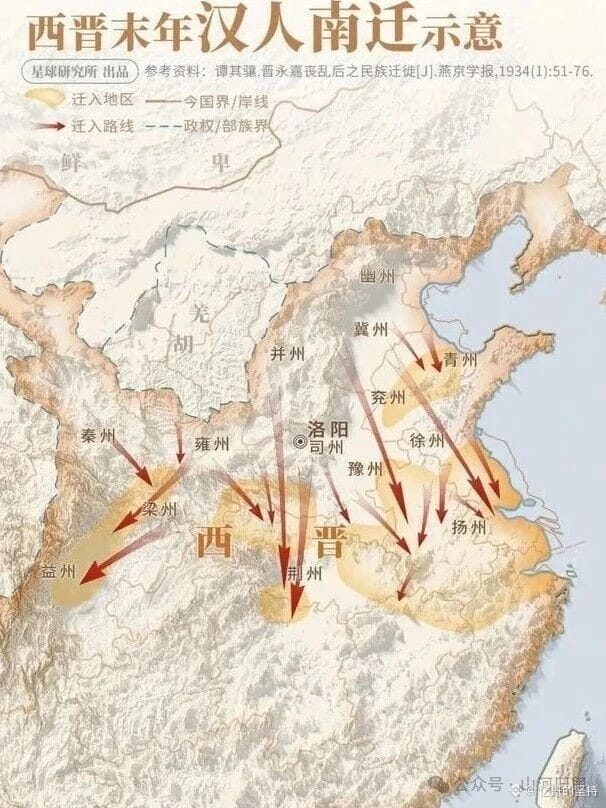
The Largest Mass Migration in History — The Yongjia Migration South
The crypto world’s peerless duo: $HYPE $BNB
The Yongjia Migration South took place at the end of the Western Jin dynasty, with its main phase spanning 307–311 CE. It was the first large-scale southward migration of people from the Central Plains in ancient Chinese history, and is also known as the Migration of the Gentry South.
The migration was triggered by prolonged internal turmoil in the Western Jin. The Rebellion of the Eight Princes had exhausted the state, and northern nomadic peoples seized the opportunity to move south. In 311 CE, Xiongnu forces captured Luoyang, took Emperor Huai of Jin prisoner, and massacred officials and civilians. This event became known as the Disaster of Yongjia. The Central Plains were plunged into war, leaving ordinary people and the aristocracy with no choice but to flee south.
During the migration, Sima Rui, Prince of Langya, moved his command to Jianye in advance (later renamed Jiankang). Northern aristocratic clans and ordinary people traveled in groups, organized by clan, crossing the Yangtze southward in waves along the Huai and Han rivers. Large numbers of prominent families, artisans, and literati streamed into the Jiangnan region. The Book of Jin records that six or seven out of every ten people from the Central Plains fled the turmoil by crossing east of the Yangtze. In 317, with the support of the southward-migrating aristocracy, Sima Rui established the Eastern Jin dynasty and made Jiankang its capital.
This southward migration profoundly altered the course of Chinese history. It brought the Central Plains’ farming techniques, institutions, and literary traditions to Jiangnan, spurring development in the south and narrowing the economic gap between north and south. It also laid the foundations for the Eastern Jin’s aristocratic politics, while the north entered the era of division known as the Sixteen Kingdoms of the Five Barbarians. Chinese civilization continued in Jiangnan, and the migration foreshadowed the later shift of China’s economic center southward.
200
·
--
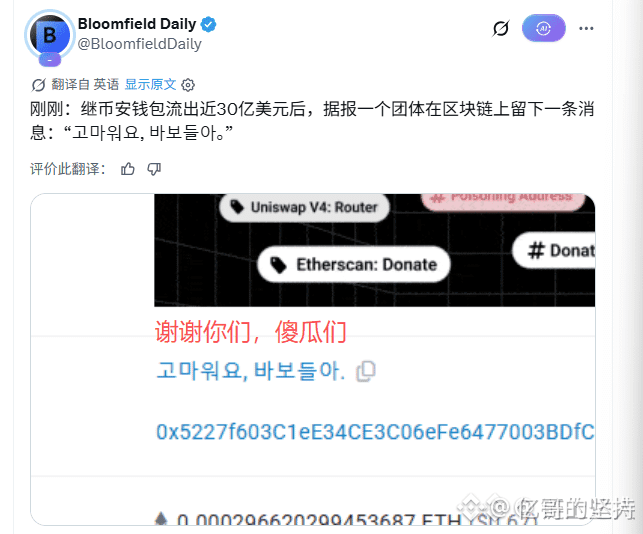
That’s downright rubbing salt in the wound! Being robbed is bad enough, but what’s infuriating is being mocked by the thieves: “Thanks, you fools!”
$BNB A technical pullback—I’m happy to keep being a fool and buy the dip!
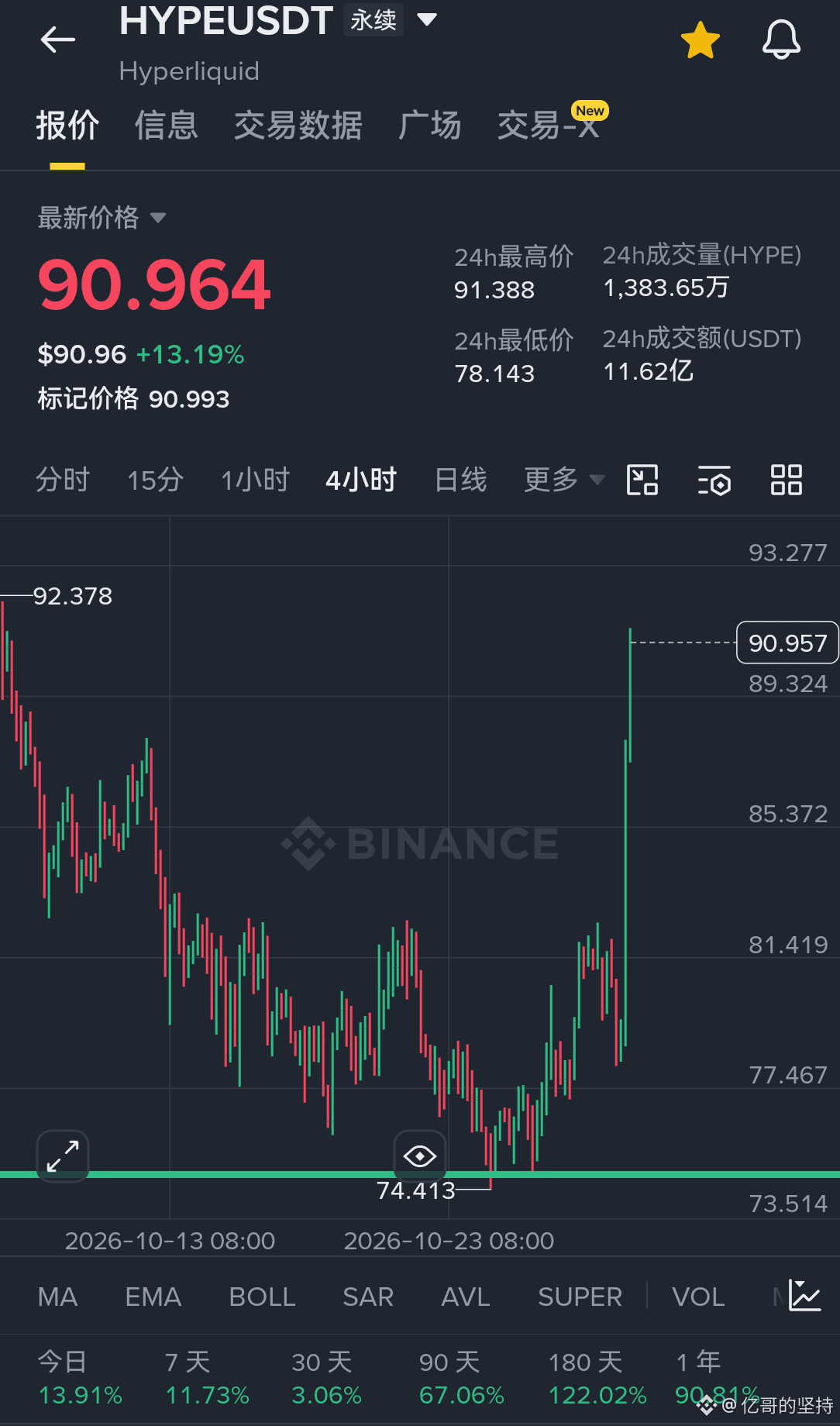
$HYPE As they say, the strong keep getting stronger. Walk your own path and leave others with nowhere to go! Still bullish!
$BNB A technical pullback—I’m happy to keep being a fool and buy the dip!
$HYPE As they say, the strong keep getting stronger. Walk your own path and leave others with nowhere to go! Still bullish!
35
10
65.4k
·
--
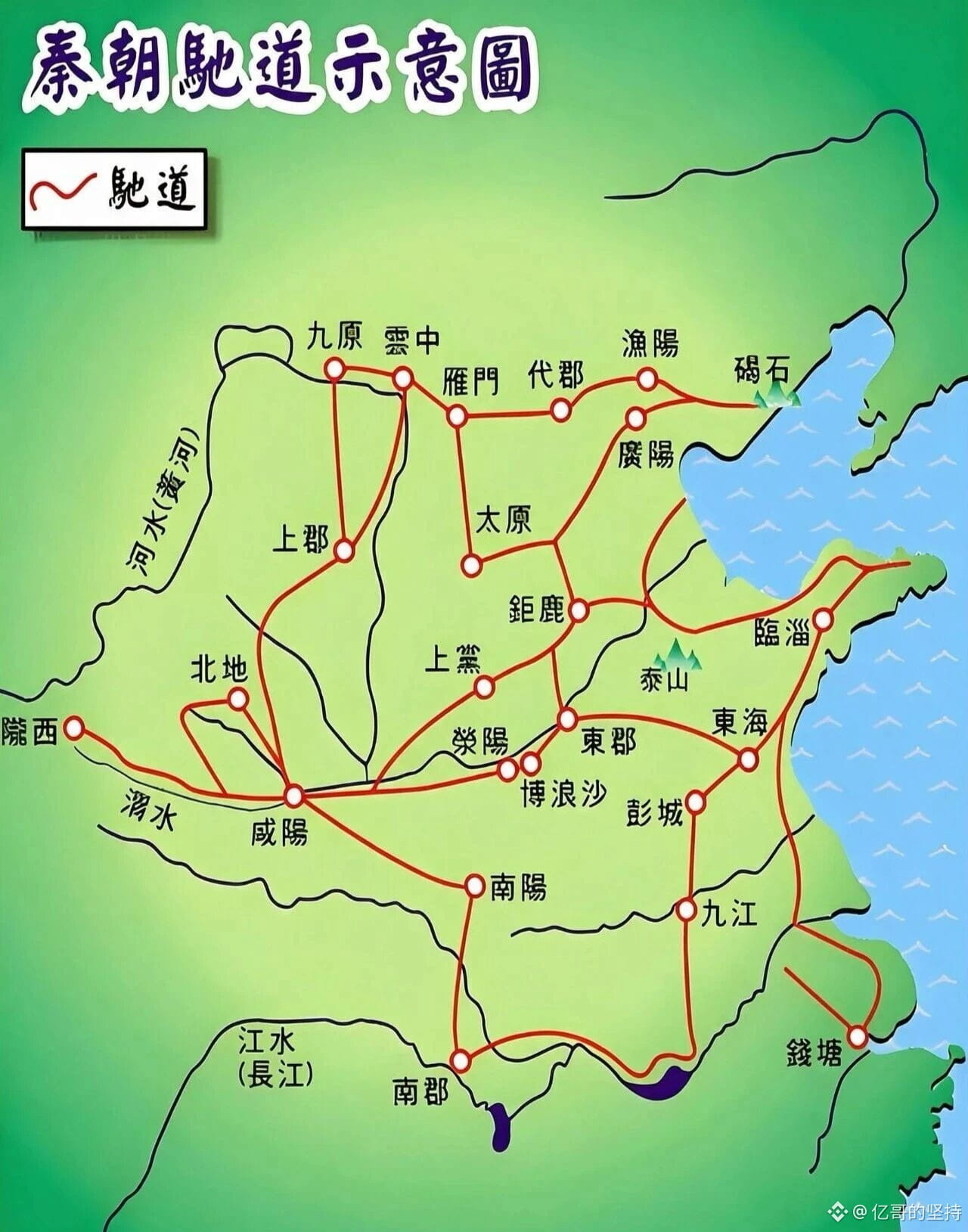
Did you know? After unifying China, the Qin also had “highways”—the imperial roads.$HYPE $BNB $INJ
The Qin imperial roads were a network of major state highways built after the Qin unification. Radiating outward from Xianyang, they formed a nationwide transport network. The main routes included the Eastern Road, which ran east through Hangu Pass to the lands of Qi and Yan; a southeastern route through Wu Pass to the Wu, Chu, and Jianghan regions; a western route connecting to Longyou; the Shangjun Road leading north to northern Shaanxi; and the Qin Straight Road, which ran directly to Jiuyuan.
The roads were wide and built of rammed earth, with rows of trees planted along both sides. They were constructed to strict standards and reserved for the passage of chariots and horses. Their main purposes were to relay government orders, deploy troops, facilitate imperial tours, and strengthen central control over the regions.
The imperial roads overcame barriers between regions, encouraged the movement of goods and the exchange of cultures, and laid the foundations for the ancient postal-road system. They vividly demonstrated the Qin dynasty’s formidable capacity for organization and mobilization, and had a profound influence on road building in later generations.
90
·
--
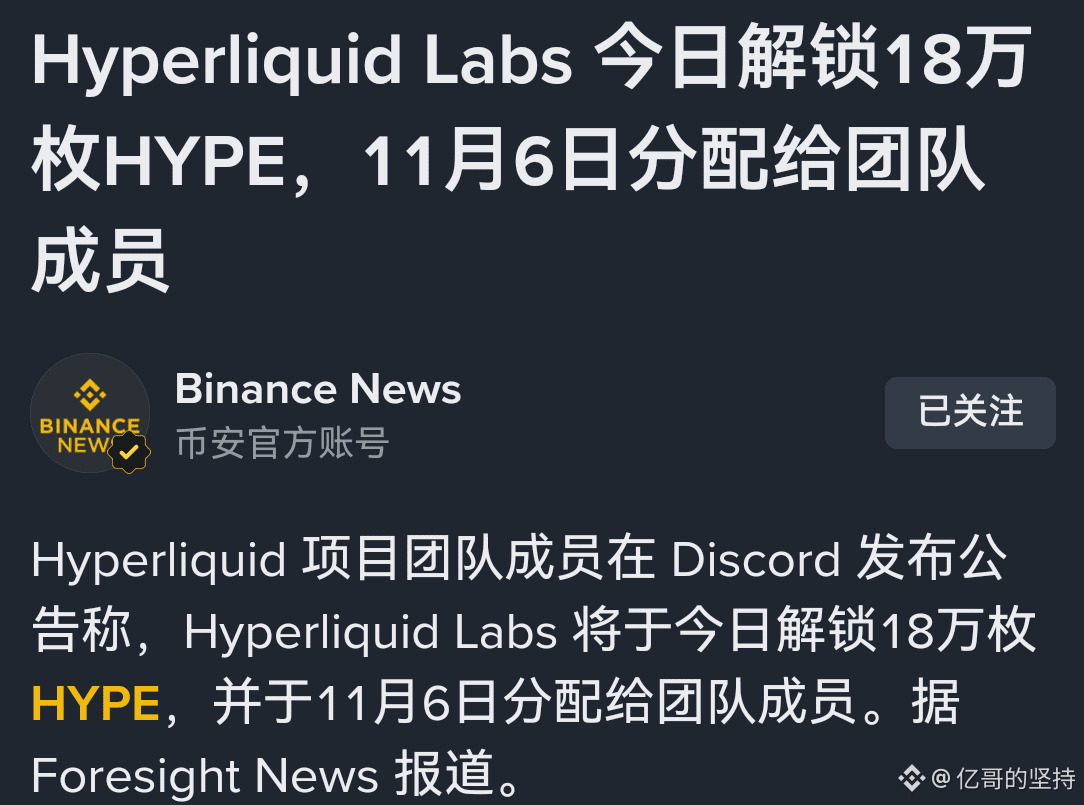
$HYPE 18 × 10,000 coins, at 80 bucks apiece, would be worth a whopping $14,400,000. That’s enough to make anyone drool…
$HYPE 18 × 10,000 coins, at 80 bucks apiece, would be worth a whopping $14,400,000. That’s enough to make anyone drool…
236
Log in to explore more content
Join global crypto users on Binance Square
⚡️ Get latest and useful information about crypto.
💬 Trusted by the world’s largest crypto exchange.
👍 Discover real insights from verified creators.
Email / Phone number
Trending Topics
WillMarketsStageAThanksgivingReliefRally?
32,422 views
600 Discussing
Was $55K the bottom for $BTC ? Honestly... i don't think so 😅
Bitcoin has recovered above $61K after crashing to $55,130... and now everyone is talking about a possible Thanksgiving relief rally.
But buddies... look at the bigger picture.
Bitcoin is still down nearly 30% from $87K, $ETH is struggling around $1,727 after touching $1,538 and $ZEC is barely recovering near $784 after that brutal selloff.
A few green candles won't suddenly fix all this damage 🥲
Now... could we see a Thanksgiving rally? Definitely possible 😁
Especially if buyers keep defending $60K and BTC manages to push back toward $64K-$65K.
But a relief rally and a real market reversal are TWO different things.
I still think another dip below $55K is possible if this recovery loses strength.
That's why i am not chasing this bounce... just accumulating slowly, keeping USDT ready for lower entries.
If we get a proper recovery, good. If we get another dump, i wanna have cash ready 💪🏻
What do you think... Thanksgiving rally or another trap before the next dump? 👀
#WillMarketsStageAThanksgivingReliefRally?
ParvezMayar
·10 Likes
·4.4k views
WillOctCorePCEShiftFedHikeExpectations?
492 views
43 Discussing
BessentSoftensStanceOnHuang’sNvidiaReturn
21,543 views
417 Discussing