
LaoYao_crypto
718 Posts

LaoYao_crypto
Report
Block User
币圈心学践行者|知行合一,摆脱FOMO与焦虑,在周期中稳健生存与增值
Frequent Trader
2.7 Years
24 Following
462 Followers
772 Liked
Posts
All
Quotes
Videos
Live
🚨 Midterm elections are a medium- to long-term headwind for crypto markets:
——Global crypto regulatory policies are likely to tighten.
But more important than short-term prices are the structural issues facing crypto markets.
The impact of the Binance incident ( $BNB ) has already gone beyond the risks of a single trading platform.
Chinese-speaking communities have considerable influence in crypto trading and communities, but the core influence of global regulation, institutional capital, and traditional financial infrastructure remains concentrated largely in the United States and on Wall Street.
Kim Yo Jong's positive response to the related incident has further heightened concerns about the security of crypto assets, regulation, and trust mechanisms.
A deeper issue lies beneath this:
Is there a structural mismatch emerging between crypto markets' trading influence, control over capital, and power to set prices in global finance?
In the future, competition in crypto markets may no longer be just competition between exchanges, but competition between regulatory systems, financial infrastructure, institutional capital, and market trust.
🚨 Midterm elections are a medium- to long-term headwind for crypto markets:
——Global crypto regulatory policies are likely to tighten.
But more important than short-term prices are the structural issues facing crypto markets.
The impact of the Binance incident ( $BNB ) has already gone beyond the risks of a single trading platform.
Chinese-speaking communities have considerable influence in crypto trading and communities, but the core influence of global regulation, institutional capital, and traditional financial infrastructure remains concentrated largely in the United States and on Wall Street.
Kim Yo Jong's positive response to the related incident has further heightened concerns about the security of crypto assets, regulation, and trust mechanisms.
A deeper issue lies beneath this:
Is there a structural mismatch emerging between crypto markets' trading influence, control over capital, and power to set prices in global finance?
In the future, competition in crypto markets may no longer be just competition between exchanges, but competition between regulatory systems, financial infrastructure, institutional capital, and market trust.
——Global crypto regulatory policies are likely to tighten.
But more important than short-term prices are the structural issues facing crypto markets.
The impact of the Binance incident ( $BNB ) has already gone beyond the risks of a single trading platform.
Chinese-speaking communities have considerable influence in crypto trading and communities, but the core influence of global regulation, institutional capital, and traditional financial infrastructure remains concentrated largely in the United States and on Wall Street.
Kim Yo Jong's positive response to the related incident has further heightened concerns about the security of crypto assets, regulation, and trust mechanisms.
A deeper issue lies beneath this:
Is there a structural mismatch emerging between crypto markets' trading influence, control over capital, and power to set prices in global finance?
In the future, competition in crypto markets may no longer be just competition between exchanges, but competition between regulatory systems, financial infrastructure, institutional capital, and market trust.


LaoYao_crypto
·
--
November 4: Midterm results are in, Democrats stage a comeback—AI and crypto markets enter an era of policy repricing
Over the past 24 hours, global financial markets have continued to diverge structurally, with overall risk appetite under pressure:
U.S. AI tech stocks rebounded, while Asian markets weakened;
U.S. Treasury yields rose across the curve, the dollar strengthened slightly, crude oil fell as concerns over U.S.-Iran tensions eased, and crypto markets remained under pressure.
With the U.S. midterm election results largely settled and Democrats securing key seats in Congress, the AI trade narrative is beginning to shift from “financing-cost stories” to “regulatory and policy stories.”
Expectations for progress on crypto-friendly legislation have cooled, while rising U.S. Treasury yields are adding fresh policy and funding pressures to global risk assets.
U.S. AI tech stocks rebounded, while Asian markets weakened;
U.S. Treasury yields rose across the curve, the dollar strengthened slightly, crude oil fell as concerns over U.S.-Iran tensions eased, and crypto markets remained under pressure.
With the U.S. midterm election results largely settled and Democrats securing key seats in Congress, the AI trade narrative is beginning to shift from “financing-cost stories” to “regulatory and policy stories.”
Expectations for progress on crypto-friendly legislation have cooled, while rising U.S. Treasury yields are adding fresh policy and funding pressures to global risk assets.
75

Article
November 4: Midterm results are in, Democrats stage a comeback—AI and crypto markets enter an era of policy repricingOver the past 24 hours, global financial markets have continued to diverge structurally, with overall risk appetite under pressure:
U.S. AI tech stocks rebounded, while Asian markets weakened;
U.S. Treasury yields rose across the curve, the dollar strengthened slightly, crude oil fell as concerns over U.S.-Iran tensions eased, and crypto markets remained under pressure.
With the U.S. midterm election results largely settled and Democrats securing key seats in Congress, the AI trade narrative is beginning to shift from “financing-cost stories” to “regulatory and policy stories.”
Expectations for progress on crypto-friendly legislation have cooled, while rising U.S. Treasury yields are adding fresh policy and funding pressures to global risk assets.
November 4: Midterm results are in, Democrats stage a comeback—AI and crypto markets enter an era of policy repricing
Over the past 24 hours, global financial markets have continued to diverge structurally, with overall risk appetite under pressure:
U.S. AI tech stocks rebounded, while Asian markets weakened;
U.S. Treasury yields rose across the curve, the dollar strengthened slightly, crude oil fell as concerns over U.S.-Iran tensions eased, and crypto markets remained under pressure.
With the U.S. midterm election results largely settled and Democrats securing key seats in Congress, the AI trade narrative is beginning to shift from “financing-cost stories” to “regulatory and policy stories.”
Expectations for progress on crypto-friendly legislation have cooled, while rising U.S. Treasury yields are adding fresh policy and funding pressures to global risk assets.
U.S. AI tech stocks rebounded, while Asian markets weakened;
U.S. Treasury yields rose across the curve, the dollar strengthened slightly, crude oil fell as concerns over U.S.-Iran tensions eased, and crypto markets remained under pressure.
With the U.S. midterm election results largely settled and Democrats securing key seats in Congress, the AI trade narrative is beginning to shift from “financing-cost stories” to “regulatory and policy stories.”
Expectations for progress on crypto-friendly legislation have cooled, while rising U.S. Treasury yields are adding fresh policy and funding pressures to global risk assets.
1
471
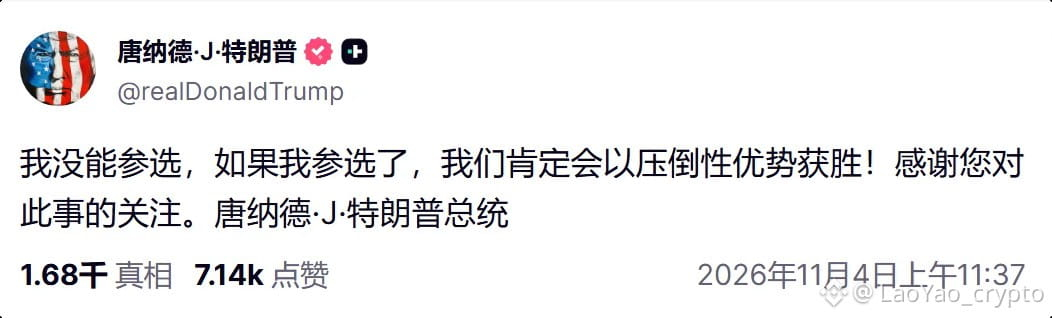
🚨 The U.S. midterm election results are all but settled! Democrats have flipped both chambers
Several major media outlets have projected/announced that Democrats have won control of both chambers.
Trump’s latest post also essentially confirms the midterm election defeat.
🚨 The U.S. midterm election results are all but settled! Democrats have flipped both chambers
Several major media outlets have projected/announced that Democrats have won control of both chambers.
Trump’s latest post also essentially confirms the midterm election defeat.
Several major media outlets have projected/announced that Democrats have won control of both chambers.
Trump’s latest post also essentially confirms the midterm election defeat.
LaoYao_crypto
·
--
November 3: Oil Plunges; On Midterm Election Night, Capital Is Repricing “Trust”
Over the past 24 hours, global financial markets have shown clear divergence.
Geopolitically, positive developments emerged in the U.S.-Iran standoff in the Middle East, and oil prices posted their largest single-day drop in three months.
Voting in the U.S. midterm elections officially begins today, with control of Congress and the direction of policy over the next two years in the global capital markets’ spotlight.
The crypto market was affected by the combined impact of the fallout from Binance’s security incident, a pullback in U.S. tech stocks, and declining risk appetite ahead of the election, with major assets continuing to fluctuate.
On the surface, this is a divergence between oil prices, tech stocks, and crypto assets;
At a deeper level, it reflects a repricing of geopolitical risks, policy expectations, and the financial credit system.
Geopolitically, positive developments emerged in the U.S.-Iran standoff in the Middle East, and oil prices posted their largest single-day drop in three months.
Voting in the U.S. midterm elections officially begins today, with control of Congress and the direction of policy over the next two years in the global capital markets’ spotlight.
The crypto market was affected by the combined impact of the fallout from Binance’s security incident, a pullback in U.S. tech stocks, and declining risk appetite ahead of the election, with major assets continuing to fluctuate.
On the surface, this is a divergence between oil prices, tech stocks, and crypto assets;
At a deeper level, it reflects a repricing of geopolitical risks, policy expectations, and the financial credit system.
127
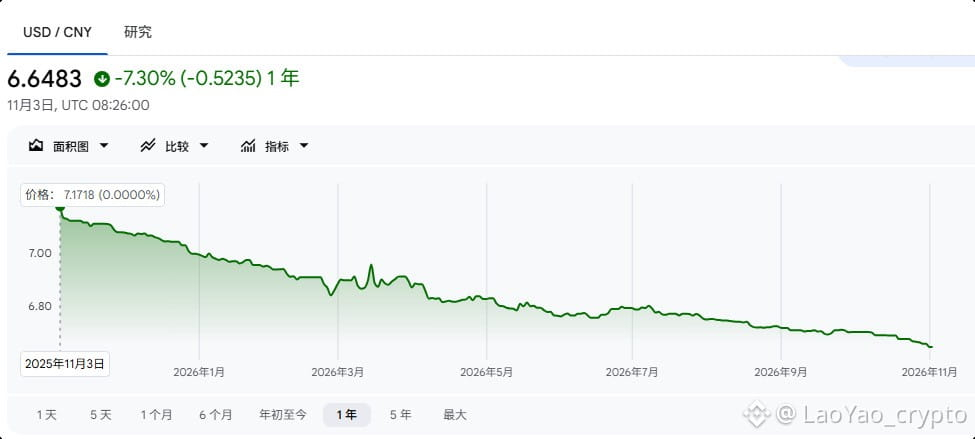
💸 Why has the renminbi continued to appreciate?
U.S. Dollar Index: 101.72
Offshore renminbi: 6.6472
The U.S. dollar weakened slightly, while other currencies diverged;
the renminbi remained strong, though the midpoint was adjusted slightly lower;
So far this year, the renminbi has appreciated nearly 5% against the U.S. dollar. A Goldman Sachs report even suggests it could reach 5.5 in the future.
So, why is the renminbi appreciating?
In my view, the renminbi’s appreciation is not simply due to strong exports, as Goldman Sachs has suggested.
Beyond exports as a contributing factor, China itself also wants a stronger renminbi;
renminbi appreciation helps reduce the cost of China’s foreign debt;
for a long time, the renminbi has been closely pegged to the U.S. dollar;
since Trump took office, he has repeatedly pressured the Federal Reserve to cut interest rates, which has helped drive the renminbi’s appreciation to some extent.
The interest rate gap between the renminbi and the U.S. dollar is enormous. In theory, China cutting interest rates should cause the renminbi to depreciate;
but China imposes capital controls, and the renminbi is not freely convertible, so the amount that can truly be freely exchanged is very limited.
So China’s ongoing domestic interest rate cuts
help reduce the cost of government bonds, corporate bonds, and local government financing vehicle debt, for which there are no reliable figures.
So, will the renminbi continue to appreciate?
In the short term, the key factor is China’s foreign trade data; over the medium to long term, it is the Federal Reserve’s interest rate policy;
the global trend toward protectionism is now very difficult to reverse,
and China’s export growth is inevitably unsustainable.
If the Federal Reserve starts raising interest rates, as the market expects,
then the renminbi’s room for appreciation will be very limited.
#币圈心学 #人民币
💸 Why has the renminbi continued to appreciate?
U.S. Dollar Index: 101.72
Offshore renminbi: 6.6472
The U.S. dollar weakened slightly, while other currencies diverged;
the renminbi remained strong, though the midpoint was adjusted slightly lower;
So far this year, the renminbi has appreciated nearly 5% against the U.S. dollar. A Goldman Sachs report even suggests it could reach 5.5 in the future.
So, why is the renminbi appreciating?
In my view, the renminbi’s appreciation is not simply due to strong exports, as Goldman Sachs has suggested.
Beyond exports as a contributing factor, China itself also wants a stronger renminbi;
renminbi appreciation helps reduce the cost of China’s foreign debt;
for a long time, the renminbi has been closely pegged to the U.S. dollar;
since Trump took office, he has repeatedly pressured the Federal Reserve to cut interest rates, which has helped drive the renminbi’s appreciation to some extent.
The interest rate gap between the renminbi and the U.S. dollar is enormous. In theory, China cutting interest rates should cause the renminbi to depreciate;
but China imposes capital controls, and the renminbi is not freely convertible, so the amount that can truly be freely exchanged is very limited.
So China’s ongoing domestic interest rate cuts
help reduce the cost of government bonds, corporate bonds, and local government financing vehicle debt, for which there are no reliable figures.
So, will the renminbi continue to appreciate?
In the short term, the key factor is China’s foreign trade data; over the medium to long term, it is the Federal Reserve’s interest rate policy;
the global trend toward protectionism is now very difficult to reverse,
and China’s export growth is inevitably unsustainable.
If the Federal Reserve starts raising interest rates, as the market expects,
then the renminbi’s room for appreciation will be very limited.
#币圈心学 #人民币
U.S. Dollar Index: 101.72
Offshore renminbi: 6.6472
The U.S. dollar weakened slightly, while other currencies diverged;
the renminbi remained strong, though the midpoint was adjusted slightly lower;
So far this year, the renminbi has appreciated nearly 5% against the U.S. dollar. A Goldman Sachs report even suggests it could reach 5.5 in the future.
So, why is the renminbi appreciating?
In my view, the renminbi’s appreciation is not simply due to strong exports, as Goldman Sachs has suggested.
Beyond exports as a contributing factor, China itself also wants a stronger renminbi;
renminbi appreciation helps reduce the cost of China’s foreign debt;
for a long time, the renminbi has been closely pegged to the U.S. dollar;
since Trump took office, he has repeatedly pressured the Federal Reserve to cut interest rates, which has helped drive the renminbi’s appreciation to some extent.
The interest rate gap between the renminbi and the U.S. dollar is enormous. In theory, China cutting interest rates should cause the renminbi to depreciate;
but China imposes capital controls, and the renminbi is not freely convertible, so the amount that can truly be freely exchanged is very limited.
So China’s ongoing domestic interest rate cuts
help reduce the cost of government bonds, corporate bonds, and local government financing vehicle debt, for which there are no reliable figures.
So, will the renminbi continue to appreciate?
In the short term, the key factor is China’s foreign trade data; over the medium to long term, it is the Federal Reserve’s interest rate policy;
the global trend toward protectionism is now very difficult to reverse,
and China’s export growth is inevitably unsustainable.
If the Federal Reserve starts raising interest rates, as the market expects,
then the renminbi’s room for appreciation will be very limited.
#币圈心学 #人民币
LaoYao_crypto
·
--
November 3: Oil Plunges; On Midterm Election Night, Capital Is Repricing “Trust”
Over the past 24 hours, global financial markets have shown clear divergence.
Geopolitically, positive developments emerged in the U.S.-Iran standoff in the Middle East, and oil prices posted their largest single-day drop in three months.
Voting in the U.S. midterm elections officially begins today, with control of Congress and the direction of policy over the next two years in the global capital markets’ spotlight.
The crypto market was affected by the combined impact of the fallout from Binance’s security incident, a pullback in U.S. tech stocks, and declining risk appetite ahead of the election, with major assets continuing to fluctuate.
On the surface, this is a divergence between oil prices, tech stocks, and crypto assets;
At a deeper level, it reflects a repricing of geopolitical risks, policy expectations, and the financial credit system.
Geopolitically, positive developments emerged in the U.S.-Iran standoff in the Middle East, and oil prices posted their largest single-day drop in three months.
Voting in the U.S. midterm elections officially begins today, with control of Congress and the direction of policy over the next two years in the global capital markets’ spotlight.
The crypto market was affected by the combined impact of the fallout from Binance’s security incident, a pullback in U.S. tech stocks, and declining risk appetite ahead of the election, with major assets continuing to fluctuate.
On the surface, this is a divergence between oil prices, tech stocks, and crypto assets;
At a deeper level, it reflects a repricing of geopolitical risks, policy expectations, and the financial credit system.
USDETF-2.57%
101

Article
November 3: Oil Plunges; On Midterm Election Night, Capital Is Repricing “Trust”Over the past 24 hours, global financial markets have shown clear divergence.
Geopolitically, positive developments emerged in the U.S.-Iran standoff in the Middle East, and oil prices posted their largest single-day drop in three months.
Voting in the U.S. midterm elections officially begins today, with control of Congress and the direction of policy over the next two years in the global capital markets’ spotlight.
The crypto market was affected by the combined impact of the fallout from Binance’s security incident, a pullback in U.S. tech stocks, and declining risk appetite ahead of the election, with major assets continuing to fluctuate.
On the surface, this is a divergence between oil prices, tech stocks, and crypto assets;
At a deeper level, it reflects a repricing of geopolitical risks, policy expectations, and the financial credit system.
November 3: Oil Plunges; On Midterm Election Night, Capital Is Repricing “Trust”
Over the past 24 hours, global financial markets have shown clear divergence.
Geopolitically, positive developments emerged in the U.S.-Iran standoff in the Middle East, and oil prices posted their largest single-day drop in three months.
Voting in the U.S. midterm elections officially begins today, with control of Congress and the direction of policy over the next two years in the global capital markets’ spotlight.
The crypto market was affected by the combined impact of the fallout from Binance’s security incident, a pullback in U.S. tech stocks, and declining risk appetite ahead of the election, with major assets continuing to fluctuate.
On the surface, this is a divergence between oil prices, tech stocks, and crypto assets;
At a deeper level, it reflects a repricing of geopolitical risks, policy expectations, and the financial credit system.
Geopolitically, positive developments emerged in the U.S.-Iran standoff in the Middle East, and oil prices posted their largest single-day drop in three months.
Voting in the U.S. midterm elections officially begins today, with control of Congress and the direction of policy over the next two years in the global capital markets’ spotlight.
The crypto market was affected by the combined impact of the fallout from Binance’s security incident, a pullback in U.S. tech stocks, and declining risk appetite ahead of the election, with major assets continuing to fluctuate.
On the surface, this is a divergence between oil prices, tech stocks, and crypto assets;
At a deeper level, it reflects a repricing of geopolitical risks, policy expectations, and the financial credit system.
2
525

Article
November 2: U.S. Midterms Rattle Global Capital Markets as Crypto Enters a Period of Rebuilding TrustA new week brings two key variables to global capital markets: the U.S. midterm elections and the October nonfarm payrolls report.
If the nonfarm payrolls report determines market expectations for the Fed’s December policy path, the U.S. midterm elections could influence fiscal policy, the tariff system, industrial policy, and the global geopolitical landscape over the next two years.
This week, three key themes converge: the political cycle, monetary policy, and technology capital:
Political developments: The U.S. midterm elections are entering their final stretch, and the battle for control of Congress could reshape policy expectations for the next two years.
Monetary policy: U.S. October nonfarm payrolls and ISM manufacturing and services data will shape market views on labor market resilience, inflationary pressures, and the Fed’s December policy decision.
November 2: U.S. Midterms Rattle Global Capital Markets as Crypto Enters a Period of Rebuilding Trust
A new week brings two key variables to global capital markets: the U.S. midterm elections and the October nonfarm payrolls report.
If the nonfarm payrolls report determines market expectations for the Fed’s December policy path, the U.S. midterm elections could influence fiscal policy, the tariff system, industrial policy, and the global geopolitical landscape over the next two years.
This week, three key themes converge: the political cycle, monetary policy, and technology capital:
Political developments: The U.S. midterm elections are entering their final stretch, and the battle for control of Congress could reshape policy expectations for the next two years.
Monetary policy: U.S. October nonfarm payrolls and ISM manufacturing and services data will shape market views on labor market resilience, inflationary pressures, and the Fed’s December policy decision.
If the nonfarm payrolls report determines market expectations for the Fed’s December policy path, the U.S. midterm elections could influence fiscal policy, the tariff system, industrial policy, and the global geopolitical landscape over the next two years.
This week, three key themes converge: the political cycle, monetary policy, and technology capital:
Political developments: The U.S. midterm elections are entering their final stretch, and the battle for control of Congress could reshape policy expectations for the next two years.
Monetary policy: U.S. October nonfarm payrolls and ISM manufacturing and services data will shape market views on labor market resilience, inflationary pressures, and the Fed’s December policy decision.
1
285

Article
Weekly Financial Report | Geopolitics, Interest Rates and a Crypto Trust Crisis: Global Capital Faces a Triple Stress TestThis week (10.26–10.31), global capital markets underwent a cross-asset repricing. Geopolitical tensions pushed up inflation expectations, while interest-rate pricing hit risk assets hard:
Geopolitical risks in the Middle East continued to intensify, giving crude oil a fresh supply-risk premium. Gold retreated after surging, while silver faced more severe deleveraging. U.S. tech stocks came under pressure as returns on AI capital spending began to be questioned. Japanese markets were weighed down by expectations of monetary policy normalization, while Hong Kong stocks relied more heavily on support from domestic policy expectations.
Meanwhile, the crypto market was rocked by a security incident at an exchange, putting both market confidence and liquidity under pressure.
Weekly Financial Report | Geopolitics, Interest Rates and a Crypto Trust Crisis: Global Capital Faces a Triple Stress Test
This week (10.26–10.31), global capital markets underwent a cross-asset repricing. Geopolitical tensions pushed up inflation expectations, while interest-rate pricing hit risk assets hard:
Geopolitical risks in the Middle East continued to intensify, giving crude oil a fresh supply-risk premium. Gold retreated after surging, while silver faced more severe deleveraging. U.S. tech stocks came under pressure as returns on AI capital spending began to be questioned. Japanese markets were weighed down by expectations of monetary policy normalization, while Hong Kong stocks relied more heavily on support from domestic policy expectations.
Meanwhile, the crypto market was rocked by a security incident at an exchange, putting both market confidence and liquidity under pressure.
Geopolitical risks in the Middle East continued to intensify, giving crude oil a fresh supply-risk premium. Gold retreated after surging, while silver faced more severe deleveraging. U.S. tech stocks came under pressure as returns on AI capital spending began to be questioned. Japanese markets were weighed down by expectations of monetary policy normalization, while Hong Kong stocks relied more heavily on support from domestic policy expectations.
Meanwhile, the crypto market was rocked by a security incident at an exchange, putting both market confidence and liquidity under pressure.
1
850

Article
October 31: The AI bubble faces a stress test as a Binance black swan rattles crypto markets—global investors shift to repricing riskOver the past 24 hours, global financial markets have undergone a typical pullback in risk appetite.
AI tech stocks and semiconductor shares saw a concentrated pullback, with the Nasdaq posting its biggest one-day drop since June and Intel suffering a historic plunge;
Meanwhile, the Binance security incident further shook confidence in the crypto market.
Risks in traditional financial markets and crypto markets are unwinding in tandem, prompting global investors to reassess AI investment returns, the cost of capital, and the foundations of trust in digital assets.
Global markets are facing three sources of pressure: cooling AI trades, rising geopolitical risks, and a crisis of confidence in crypto markets.
October 31: The AI bubble faces a stress test as a Binance black swan rattles crypto markets—global investors shift to repricing risk
Over the past 24 hours, global financial markets have undergone a typical pullback in risk appetite.
AI tech stocks and semiconductor shares saw a concentrated pullback, with the Nasdaq posting its biggest one-day drop since June and Intel suffering a historic plunge;
Meanwhile, the Binance security incident further shook confidence in the crypto market.
Risks in traditional financial markets and crypto markets are unwinding in tandem, prompting global investors to reassess AI investment returns, the cost of capital, and the foundations of trust in digital assets.
Global markets are facing three sources of pressure: cooling AI trades, rising geopolitical risks, and a crisis of confidence in crypto markets.
AI tech stocks and semiconductor shares saw a concentrated pullback, with the Nasdaq posting its biggest one-day drop since June and Intel suffering a historic plunge;
Meanwhile, the Binance security incident further shook confidence in the crypto market.
Risks in traditional financial markets and crypto markets are unwinding in tandem, prompting global investors to reassess AI investment returns, the cost of capital, and the foundations of trust in digital assets.
Global markets are facing three sources of pressure: cooling AI trades, rising geopolitical risks, and a crisis of confidence in crypto markets.
448

Article
October 30: Middle East military risks intensify, returns on AI investment face scrutiny, and Binance black swan event shocks global crypto marketsOver the past 24 hours, global capital markets have shown a clear divergence.
On one side, earnings reports from tech giants such as Alphabet prompted markets to reassess the returns on AI investment, weighing on tech stocks. The AI trade shifted from expanding capital expenditure to delivering profits;
On the other, U.S. Treasury yields retreated after surging, providing some support for risk assets.
Meanwhile, geopolitical risks in the Middle East continue to sway energy markets. Crude oil remains elevated, while precious metals have edged lower.
The crypto market, meanwhile, was hit by a major black swan event this year: a security incident at Binance shook confidence, sending BTC, ETH, and BNB sharply lower in tandem and significantly dampening risk appetite.
October 30: Middle East military risks intensify, returns on AI investment face scrutiny, and Binance black swan event shocks global crypto markets
Over the past 24 hours, global capital markets have shown a clear divergence.
On one side, earnings reports from tech giants such as Alphabet prompted markets to reassess the returns on AI investment, weighing on tech stocks. The AI trade shifted from expanding capital expenditure to delivering profits;
On the other, U.S. Treasury yields retreated after surging, providing some support for risk assets.
Meanwhile, geopolitical risks in the Middle East continue to sway energy markets. Crude oil remains elevated, while precious metals have edged lower.
The crypto market, meanwhile, was hit by a major black swan event this year: a security incident at Binance shook confidence, sending BTC, ETH, and BNB sharply lower in tandem and significantly dampening risk appetite.
On one side, earnings reports from tech giants such as Alphabet prompted markets to reassess the returns on AI investment, weighing on tech stocks. The AI trade shifted from expanding capital expenditure to delivering profits;
On the other, U.S. Treasury yields retreated after surging, providing some support for risk assets.
Meanwhile, geopolitical risks in the Middle East continue to sway energy markets. Crude oil remains elevated, while precious metals have edged lower.
The crypto market, meanwhile, was hit by a major black swan event this year: a security incident at Binance shook confidence, sending BTC, ETH, and BNB sharply lower in tandem and significantly dampening risk appetite.
814

Article
October 29: The Fed Holds Steady—How Are Geopolitical Risks and AI Returns Reshaping Global Asset Pricing?Over the past 24 hours, global capital markets have focused on three key themes: expectations for Fed policy, geopolitical risks in the Middle East, and the return on investment in AI capital spending.
The Federal Reserve voted 10–2 to hold the federal funds rate steady at 3.75%–4.00%. Cook and Hammack dissented, advocating a 25-basis-point rate hike.
Fed Chair Kevin Warsh declined to provide clear forward guidance on interest rates, emphasizing that he would not commit in advance to a future policy path unless a crisis emerged.
Meanwhile, Alphabet's results fell short of expectations, dampening optimism in the AI sector;
October 29: The Fed Holds Steady—How Are Geopolitical Risks and AI Returns Reshaping Global Asset Pricing?
Over the past 24 hours, global capital markets have focused on three key themes: expectations for Fed policy, geopolitical risks in the Middle East, and the return on investment in AI capital spending.
The Federal Reserve voted 10–2 to hold the federal funds rate steady at 3.75%–4.00%. Cook and Hammack dissented, advocating a 25-basis-point rate hike.
Fed Chair Kevin Warsh declined to provide clear forward guidance on interest rates, emphasizing that he would not commit in advance to a future policy path unless a crisis emerged.
Meanwhile, Alphabet's results fell short of expectations, dampening optimism in the AI sector;
The Federal Reserve voted 10–2 to hold the federal funds rate steady at 3.75%–4.00%. Cook and Hammack dissented, advocating a 25-basis-point rate hike.
Fed Chair Kevin Warsh declined to provide clear forward guidance on interest rates, emphasizing that he would not commit in advance to a future policy path unless a crisis emerged.
Meanwhile, Alphabet's results fell short of expectations, dampening optimism in the AI sector;
604

Article
X Has a New Leader—Can He Make Up for Its Commercialization Shortcomings?On October 28, X named a new leader after the position had been vacant for months: Peter Sellis. The platform announced his appointment as head of product. In the announcement, he voiced his support for SpaceX’s mission,
It is worth noting that Sellis was the direct supervisor of former X head of product Nikita Bier, and his résumé is far more extensive and varied than Bier’s.
In his first post as he took the helm, he struck a Musk-like note and went viral with a quip:
I am a huge believer in SpaceX’s mission to extend human consciousness to the stars, so it’s time to make shitposting multiplanetary.
X Has a New Leader—Can He Make Up for Its Commercialization Shortcomings?
On October 28, X named a new leader after the position had been vacant for months: Peter Sellis. The platform announced his appointment as head of product. In the announcement, he voiced his support for SpaceX’s mission,
It is worth noting that Sellis was the direct supervisor of former X head of product Nikita Bier, and his résumé is far more extensive and varied than Bier’s.
In his first post as he took the helm, he struck a Musk-like note and went viral with a quip:
I am a huge believer in SpaceX’s mission to extend human consciousness to the stars, so it’s time to make shitposting multiplanetary.
It is worth noting that Sellis was the direct supervisor of former X head of product Nikita Bier, and his résumé is far more extensive and varied than Bier’s.
In his first post as he took the helm, he struck a Musk-like note and went viral with a quip:
I am a huge believer in SpaceX’s mission to extend human consciousness to the stars, so it’s time to make shitposting multiplanetary.
86

Article
October 28: Falling Oil Prices, an AI Rebound and Elevated Treasury Yields—Global Asset Pricing Enters a Critical WindowOver the past 24 hours, global capital markets have shown a set of signals worth watching:
- AI-related tech stocks rebounded,
- international oil prices fell,
- Gold edged higher,
- but US Treasury yields remained elevated,
- and the US dollar stayed firm.
On the surface, risk assets staged a recovery;
but in terms of funding costs and macro pricing dynamics, the market has yet to truly shake off its caution.
With the Fed’s rate decision approaching, expectations that policymakers will leave rates unchanged are dominant.
Meanwhile, marginal shifts in the Middle East situation are affecting the energy risk premium, while earnings reports from major tech companies will test whether AI investment can translate into actual profits.
October 28: Falling Oil Prices, an AI Rebound and Elevated Treasury Yields—Global Asset Pricing Enters a Critical Window
Over the past 24 hours, global capital markets have shown a set of signals worth watching:
- AI-related tech stocks rebounded,
- international oil prices fell,
- Gold edged higher,
- but US Treasury yields remained elevated,
- and the US dollar stayed firm.
On the surface, risk assets staged a recovery;
but in terms of funding costs and macro pricing dynamics, the market has yet to truly shake off its caution.
With the Fed’s rate decision approaching, expectations that policymakers will leave rates unchanged are dominant.
Meanwhile, marginal shifts in the Middle East situation are affecting the energy risk premium, while earnings reports from major tech companies will test whether AI investment can translate into actual profits.
- AI-related tech stocks rebounded,
- international oil prices fell,
- Gold edged higher,
- but US Treasury yields remained elevated,
- and the US dollar stayed firm.
On the surface, risk assets staged a recovery;
but in terms of funding costs and macro pricing dynamics, the market has yet to truly shake off its caution.
With the Fed’s rate decision approaching, expectations that policymakers will leave rates unchanged are dominant.
Meanwhile, marginal shifts in the Middle East situation are affecting the energy risk premium, while earnings reports from major tech companies will test whether AI investment can translate into actual profits.
488
🚨BNB ecosystem debuts on the US stock market, bringing traditional finance and Web3 closer together
On October 26, Nasdaq-listed BNB Standard Corporation (ticker: $BNC
{future}(BNCUSDT)
) held an opening bell ceremony in New York, attended by Binance founder Changpeng Zhao and members of the company’s team.
The company was formed through a name change and restructuring of its predecessor. It positions itself as the world’s first digital asset treasury and capital management company focused on the BNB ecosystem. The bell-ringing ceremony celebrated its rebranding and the appointment of a new management team.
At the event, CZ discussed asset tokenization, saying its core significance is to “export US capital markets and connect them to the blockchain.”
BNC’s listing also shows that the channels connecting traditional capital markets with crypto-native assets are expanding rapidly.
🚨BNB ecosystem debuts on the US stock market, bringing traditional finance and Web3 closer together
On October 26, Nasdaq-listed BNB Standard Corporation (ticker: $BNC
) held an opening bell ceremony in New York, attended by Binance founder Changpeng Zhao and members of the company’s team.
The company was formed through a name change and restructuring of its predecessor. It positions itself as the world’s first digital asset treasury and capital management company focused on the BNB ecosystem. The bell-ringing ceremony celebrated its rebranding and the appointment of a new management team.
At the event, CZ discussed asset tokenization, saying its core significance is to “export US capital markets and connect them to the blockchain.”
BNC’s listing also shows that the channels connecting traditional capital markets with crypto-native assets are expanding rapidly.
On October 26, Nasdaq-listed BNB Standard Corporation (ticker: $BNC
) held an opening bell ceremony in New York, attended by Binance founder Changpeng Zhao and members of the company’s team.
The company was formed through a name change and restructuring of its predecessor. It positions itself as the world’s first digital asset treasury and capital management company focused on the BNB ecosystem. The bell-ringing ceremony celebrated its rebranding and the appointment of a new management team.
At the event, CZ discussed asset tokenization, saying its core significance is to “export US capital markets and connect them to the blockchain.”
BNC’s listing also shows that the channels connecting traditional capital markets with crypto-native assets are expanding rapidly.
LaoYao_crypto
·
--
October 27: Brazil’s Black Swan Shocks Emerging Markets as AI Commercialization Gathers Pace—Global Assets Await a Super Central Bank Week
Over the past 24 hours, global capital markets have been shaped by two parallel narratives:
On one hand, expectations for the commercialization of AI are building, with tech stocks driving a recovery in risk appetite;
On the other, political risks in Brazil are rattling emerging markets. Volatility in stocks and currencies is a reminder that global capital has not truly escaped uncertainty.
This week, the Federal Reserve, European Central Bank, and Bank of Japan will announce their interest rate decisions in succession, while U.S. tech giants enter a packed earnings season.
Monetary policy, the realization of AI-related earnings, and geopolitical risks are converging. Markets are at a stage where risk appetite is beginning to recover at the margin, capital allocation remains cautious, and key assets await repricing.
On one hand, expectations for the commercialization of AI are building, with tech stocks driving a recovery in risk appetite;
On the other, political risks in Brazil are rattling emerging markets. Volatility in stocks and currencies is a reminder that global capital has not truly escaped uncertainty.
This week, the Federal Reserve, European Central Bank, and Bank of Japan will announce their interest rate decisions in succession, while U.S. tech giants enter a packed earnings season.
Monetary policy, the realization of AI-related earnings, and geopolitical risks are converging. Markets are at a stage where risk appetite is beginning to recover at the margin, capital allocation remains cautious, and key assets await repricing.

265

Article
October 27: Brazil’s Black Swan Shocks Emerging Markets as AI Commercialization Gathers Pace—Global Assets Await a Super Central Bank WeekOver the past 24 hours, global capital markets have been shaped by two parallel narratives:
On one hand, expectations for the commercialization of AI are building, with tech stocks driving a recovery in risk appetite;
On the other, political risks in Brazil are rattling emerging markets. Volatility in stocks and currencies is a reminder that global capital has not truly escaped uncertainty.
This week, the Federal Reserve, European Central Bank, and Bank of Japan will announce their interest rate decisions in succession, while U.S. tech giants enter a packed earnings season.
Monetary policy, the realization of AI-related earnings, and geopolitical risks are converging. Markets are at a stage where risk appetite is beginning to recover at the margin, capital allocation remains cautious, and key assets await repricing.
October 27: Brazil’s Black Swan Shocks Emerging Markets as AI Commercialization Gathers Pace—Global Assets Await a Super Central Bank Week
Over the past 24 hours, global capital markets have been shaped by two parallel narratives:
On one hand, expectations for the commercialization of AI are building, with tech stocks driving a recovery in risk appetite;
On the other, political risks in Brazil are rattling emerging markets. Volatility in stocks and currencies is a reminder that global capital has not truly escaped uncertainty.
This week, the Federal Reserve, European Central Bank, and Bank of Japan will announce their interest rate decisions in succession, while U.S. tech giants enter a packed earnings season.
Monetary policy, the realization of AI-related earnings, and geopolitical risks are converging. Markets are at a stage where risk appetite is beginning to recover at the margin, capital allocation remains cautious, and key assets await repricing.
On one hand, expectations for the commercialization of AI are building, with tech stocks driving a recovery in risk appetite;
On the other, political risks in Brazil are rattling emerging markets. Volatility in stocks and currencies is a reminder that global capital has not truly escaped uncertainty.
This week, the Federal Reserve, European Central Bank, and Bank of Japan will announce their interest rate decisions in succession, while U.S. tech giants enter a packed earnings season.
Monetary policy, the realization of AI-related earnings, and geopolitical risks are converging. Markets are at a stage where risk appetite is beginning to recover at the margin, capital allocation remains cautious, and key assets await repricing.
1
503

Article
October 26: Midterm Elections, a Super Central Bank Week, and AI Earnings Week — Global Capital Is RepricingA new week brings multiple key variables to global capital markets:
- the U.S. midterm elections enter their final countdown,
- the Federal Reserve and other major central banks announce a flurry of policy decisions,
- U.S. economic and inflation data are about to be released,
- while tech giants’ earnings will test the returns on AI capital spending.
Meanwhile, the U.S.-Iran standoff continues to sway energy markets, as trade policy and electoral politics become increasingly intertwined.
This week’s market focus: the interplay between interest rates, energy prices, returns on AI investment, and liquidity.
With the cost of capital remaining high and investment in AI infrastructure continuing to expand, markets will reassess the quality of growth, how quickly profits are materializing, and the valuation levels risk assets can sustain.
October 26: Midterm Elections, a Super Central Bank Week, and AI Earnings Week — Global Capital Is Repricing
A new week brings multiple key variables to global capital markets:
- the U.S. midterm elections enter their final countdown,
- the Federal Reserve and other major central banks announce a flurry of policy decisions,
- U.S. economic and inflation data are about to be released,
- while tech giants’ earnings will test the returns on AI capital spending.
Meanwhile, the U.S.-Iran standoff continues to sway energy markets, as trade policy and electoral politics become increasingly intertwined.
This week’s market focus: the interplay between interest rates, energy prices, returns on AI investment, and liquidity.
With the cost of capital remaining high and investment in AI infrastructure continuing to expand, markets will reassess the quality of growth, how quickly profits are materializing, and the valuation levels risk assets can sustain.
- the U.S. midterm elections enter their final countdown,
- the Federal Reserve and other major central banks announce a flurry of policy decisions,
- U.S. economic and inflation data are about to be released,
- while tech giants’ earnings will test the returns on AI capital spending.
Meanwhile, the U.S.-Iran standoff continues to sway energy markets, as trade policy and electoral politics become increasingly intertwined.
This week’s market focus: the interplay between interest rates, energy prices, returns on AI investment, and liquidity.
With the cost of capital remaining high and investment in AI infrastructure continuing to expand, markets will reassess the quality of growth, how quickly profits are materializing, and the valuation levels risk assets can sustain.
475

Article
October 25: Oil Price Shock, AI Pullback, and the Safe-Haven Appeal of U.S. Treasuries—Three Forces Shaping Global Markets This WeekOver the past week, global capital markets have revolved around three main themes: escalating geopolitical risks in the Middle East, a pullback in AI and tech stocks from elevated levels, and renewed inflation concerns ahead of the Federal Reserve’s policy meeting.
Developments in the Middle East heightened risks to energy supplies, driving a sharp rise in crude oil prices;
AI and tech stocks came under pressure, while Asia-Pacific markets also retreated;
Gold and silver came under significant selling pressure, while U.S. Treasury yields broadly declined, reflecting a renewed reassessment of the balance between inflation concerns and safe-haven demand.
On the surface, this is a mix of geopolitical conflict, a correction in tech stocks, and rising commodity prices;
At a deeper level, global capital is reassessing the relationship between energy supply, the inflation outlook, monetary policy, and asset valuations.
October 25: Oil Price Shock, AI Pullback, and the Safe-Haven Appeal of U.S. Treasuries—Three Forces Shaping Global Markets This Week
Over the past week, global capital markets have revolved around three main themes: escalating geopolitical risks in the Middle East, a pullback in AI and tech stocks from elevated levels, and renewed inflation concerns ahead of the Federal Reserve’s policy meeting.
Developments in the Middle East heightened risks to energy supplies, driving a sharp rise in crude oil prices;
AI and tech stocks came under pressure, while Asia-Pacific markets also retreated;
Gold and silver came under significant selling pressure, while U.S. Treasury yields broadly declined, reflecting a renewed reassessment of the balance between inflation concerns and safe-haven demand.
On the surface, this is a mix of geopolitical conflict, a correction in tech stocks, and rising commodity prices;
At a deeper level, global capital is reassessing the relationship between energy supply, the inflation outlook, monetary policy, and asset valuations.
Developments in the Middle East heightened risks to energy supplies, driving a sharp rise in crude oil prices;
AI and tech stocks came under pressure, while Asia-Pacific markets also retreated;
Gold and silver came under significant selling pressure, while U.S. Treasury yields broadly declined, reflecting a renewed reassessment of the balance between inflation concerns and safe-haven demand.
On the surface, this is a mix of geopolitical conflict, a correction in tech stocks, and rising commodity prices;
At a deeper level, global capital is reassessing the relationship between energy supply, the inflation outlook, monetary policy, and asset valuations.
548
🚨 Macroeconomic pressures intensify as capital concentrates in Bitcoin
Over the past 24 hours, macroeconomic pressures—including weakness in U.S. equities, surging oil prices, and U.S. Treasury yields nearing 5%—have heightened risk aversion in the crypto market. Overall, the market has seen a weak, volatile pullback, with bulls facing heavy liquidations.
Total crypto market capitalization: approximately $2.67 trillion, down about 1.1%; 24-hour trading volume was $57.5 billion, down 14.7% from the previous 24 hours, indicating a cooling in trading activity;
$BTC : $80K–$81K, down about 1.35% over 24 hours. Spot ETFs saw slight net outflows, while BTC dominance edged up to 60.25%, indicating capital is concentrating in Bitcoin;
$ETH : around $2,377, down about 1.19% over 24 hours, underperforming BTC.
Structurally, rising Bitcoin dominance suggests that as risk appetite contracts, capital is becoming relatively more concentrated in Bitcoin;
Ethereum has performed slightly worse, with the ETH/BTC exchange rate edging down, while altcoins are more vulnerable to the impact of tightening liquidity.
The decline in trading volume also suggests that market participants are scaling back trading activity as they wait for fresh macroeconomic signals.
The key tension in the crypto market right now is between inflationary pressures driven by geopolitical risks and market expectations for future liquidity.
If oil prices remain elevated and long-term U.S. Treasury yields continue to rise, risk assets may face greater valuation pressure;
conversely, if geopolitical risks ease and energy prices fall, concerns about monetary policy may also subside.
In the short term, the crypto market remains in a defensive, macro-driven consolidation phase:
$BTC is relatively resilient, but the broader market still lacks a clear catalyst for fresh liquidity.
🚨 Macroeconomic pressures intensify as capital concentrates in Bitcoin
Over the past 24 hours, macroeconomic pressures—including weakness in U.S. equities, surging oil prices, and U.S. Treasury yields nearing 5%—have heightened risk aversion in the crypto market. Overall, the market has seen a weak, volatile pullback, with bulls facing heavy liquidations.
Total crypto market capitalization: approximately $2.67 trillion, down about 1.1%; 24-hour trading volume was $57.5 billion, down 14.7% from the previous 24 hours, indicating a cooling in trading activity;
$BTC : $80K–$81K, down about 1.35% over 24 hours. Spot ETFs saw slight net outflows, while BTC dominance edged up to 60.25%, indicating capital is concentrating in Bitcoin;
$ETH : around $2,377, down about 1.19% over 24 hours, underperforming BTC.
Structurally, rising Bitcoin dominance suggests that as risk appetite contracts, capital is becoming relatively more concentrated in Bitcoin;
Ethereum has performed slightly worse, with the ETH/BTC exchange rate edging down, while altcoins are more vulnerable to the impact of tightening liquidity.
The decline in trading volume also suggests that market participants are scaling back trading activity as they wait for fresh macroeconomic signals.
The key tension in the crypto market right now is between inflationary pressures driven by geopolitical risks and market expectations for future liquidity.
If oil prices remain elevated and long-term U.S. Treasury yields continue to rise, risk assets may face greater valuation pressure;
conversely, if geopolitical risks ease and energy prices fall, concerns about monetary policy may also subside.
In the short term, the crypto market remains in a defensive, macro-driven consolidation phase:
$BTC is relatively resilient, but the broader market still lacks a clear catalyst for fresh liquidity.
Over the past 24 hours, macroeconomic pressures—including weakness in U.S. equities, surging oil prices, and U.S. Treasury yields nearing 5%—have heightened risk aversion in the crypto market. Overall, the market has seen a weak, volatile pullback, with bulls facing heavy liquidations.
Total crypto market capitalization: approximately $2.67 trillion, down about 1.1%; 24-hour trading volume was $57.5 billion, down 14.7% from the previous 24 hours, indicating a cooling in trading activity;
$BTC : $80K–$81K, down about 1.35% over 24 hours. Spot ETFs saw slight net outflows, while BTC dominance edged up to 60.25%, indicating capital is concentrating in Bitcoin;
$ETH : around $2,377, down about 1.19% over 24 hours, underperforming BTC.
Structurally, rising Bitcoin dominance suggests that as risk appetite contracts, capital is becoming relatively more concentrated in Bitcoin;
Ethereum has performed slightly worse, with the ETH/BTC exchange rate edging down, while altcoins are more vulnerable to the impact of tightening liquidity.
The decline in trading volume also suggests that market participants are scaling back trading activity as they wait for fresh macroeconomic signals.
The key tension in the crypto market right now is between inflationary pressures driven by geopolitical risks and market expectations for future liquidity.
If oil prices remain elevated and long-term U.S. Treasury yields continue to rise, risk assets may face greater valuation pressure;
conversely, if geopolitical risks ease and energy prices fall, concerns about monetary policy may also subside.
In the short term, the crypto market remains in a defensive, macro-driven consolidation phase:
$BTC is relatively resilient, but the broader market still lacks a clear catalyst for fresh liquidity.
LaoYao_crypto
·
--
October 24: Middle East Risks Send Oil Prices Soaring, Triggering a Global Asset Repricing — US Treasuries, Equities, and Crypto Under Pressure
Over the past 24 hours, the risk of military conflict in the Middle East has risen again. Reports that the US military may take action against Iran over the weekend, coupled with an oil tanker hitting a mine in the Strait of Hormuz and Houthi attacks on Saudi facilities, have driven international oil prices sharply higher, sending global financial markets into a new round of risk repricing.
The market’s central concern is shifting from the geopolitical conflict itself to the cascading effects of higher energy prices on inflation, interest rates, and the cost of capital.
🛢️ Energy: Brent crude has topped $116, while WTI has risen above $103, as the geopolitical risk premium climbs rapidly.
The market’s central concern is shifting from the geopolitical conflict itself to the cascading effects of higher energy prices on inflation, interest rates, and the cost of capital.
🛢️ Energy: Brent crude has topped $116, while WTI has risen above $103, as the geopolitical risk premium climbs rapidly.

61

Article
October 24: Middle East Risks Send Oil Prices Soaring, Triggering a Global Asset Repricing — US Treasuries, Equities, and Crypto Under PressureOver the past 24 hours, the risk of military conflict in the Middle East has risen again. Reports that the US military may take action against Iran over the weekend, coupled with an oil tanker hitting a mine in the Strait of Hormuz and Houthi attacks on Saudi facilities, have driven international oil prices sharply higher, sending global financial markets into a new round of risk repricing.
The market’s central concern is shifting from the geopolitical conflict itself to the cascading effects of higher energy prices on inflation, interest rates, and the cost of capital.
🛢️ Energy: Brent crude has topped $116, while WTI has risen above $103, as the geopolitical risk premium climbs rapidly.
October 24: Middle East Risks Send Oil Prices Soaring, Triggering a Global Asset Repricing — US Treasuries, Equities, and Crypto Under Pressure
Over the past 24 hours, the risk of military conflict in the Middle East has risen again. Reports that the US military may take action against Iran over the weekend, coupled with an oil tanker hitting a mine in the Strait of Hormuz and Houthi attacks on Saudi facilities, have driven international oil prices sharply higher, sending global financial markets into a new round of risk repricing.
The market’s central concern is shifting from the geopolitical conflict itself to the cascading effects of higher energy prices on inflation, interest rates, and the cost of capital.
🛢️ Energy: Brent crude has topped $116, while WTI has risen above $103, as the geopolitical risk premium climbs rapidly.
The market’s central concern is shifting from the geopolitical conflict itself to the cascading effects of higher energy prices on inflation, interest rates, and the cost of capital.
🛢️ Energy: Brent crude has topped $116, while WTI has risen above $103, as the geopolitical risk premium climbs rapidly.
1
428
🚨 AI investment returns become the focus of valuation reassessments
Nasdaq: -2.60%
S&P 500: -1.21%
Dow Jones: +0.02%
U.S. stocks showed a clear divergence, with the Nasdaq leading the declines. High-beta tech sectors such as semiconductors and memory came under considerable pressure.
Earnings reports and capital expenditure expectations related to Meta ( $METAB ) and Tesla( $SPCXB ) have once again prompted debate over returns on AI investment.
Investors are shifting their focus from “Are companies willing to keep investing in AI?” to “When will these massive investments translate into revenue, profits, and free cash flow?”
The long-term growth story for the AI industry remains intact, but the market may be becoming less tolerant of its valuations.
When capital expenditure grows faster than cash flow is realized, the market recalculates the discounted value of future profits.
A pullback in tech stocks does not necessarily mean the AI industry’s trend has reversed, but it may signal even greater valuation divergence within the AI supply chain.
#币圈心学
🚨 AI investment returns become the focus of valuation reassessments
Nasdaq: -2.60%
S&P 500: -1.21%
Dow Jones: +0.02%
U.S. stocks showed a clear divergence, with the Nasdaq leading the declines. High-beta tech sectors such as semiconductors and memory came under considerable pressure.
Earnings reports and capital expenditure expectations related to Meta ( $METAB ) and Tesla( $SPCXB ) have once again prompted debate over returns on AI investment.
Investors are shifting their focus from “Are companies willing to keep investing in AI?” to “When will these massive investments translate into revenue, profits, and free cash flow?”
The long-term growth story for the AI industry remains intact, but the market may be becoming less tolerant of its valuations.
When capital expenditure grows faster than cash flow is realized, the market recalculates the discounted value of future profits.
A pullback in tech stocks does not necessarily mean the AI industry’s trend has reversed, but it may signal even greater valuation divergence within the AI supply chain.
#币圈心学
Nasdaq: -2.60%
S&P 500: -1.21%
Dow Jones: +0.02%
U.S. stocks showed a clear divergence, with the Nasdaq leading the declines. High-beta tech sectors such as semiconductors and memory came under considerable pressure.
Earnings reports and capital expenditure expectations related to Meta ( $METAB ) and Tesla( $SPCXB ) have once again prompted debate over returns on AI investment.
Investors are shifting their focus from “Are companies willing to keep investing in AI?” to “When will these massive investments translate into revenue, profits, and free cash flow?”
The long-term growth story for the AI industry remains intact, but the market may be becoming less tolerant of its valuations.
When capital expenditure grows faster than cash flow is realized, the market recalculates the discounted value of future profits.
A pullback in tech stocks does not necessarily mean the AI industry’s trend has reversed, but it may signal even greater valuation divergence within the AI supply chain.
#币圈心学
LaoYao_crypto
·
--
October 23: Nasdaq plunges, oil prices surge—global capital faces a stress test
Over the past 24 hours, global financial markets have diverged sharply:
U.S. tech stocks saw a steep pullback, Treasury yields fell rapidly, international oil prices surged against the trend, gold and silver came under pressure, and Japanese stocks extended their losses.
Markets are weighing two distinct narratives:
On one hand, capital expenditures by tech giants such as Meta and Tesla, along with returns on AI investments, have sparked renewed valuation concerns;
on the other, escalating tensions in the Middle East have pushed crude oil’s risk premium higher.
Uncertainty over returns on AI investments and energy shocks driven by geopolitics are jointly reshaping the risk pricing of global assets.
U.S. tech stocks saw a steep pullback, Treasury yields fell rapidly, international oil prices surged against the trend, gold and silver came under pressure, and Japanese stocks extended their losses.
Markets are weighing two distinct narratives:
On one hand, capital expenditures by tech giants such as Meta and Tesla, along with returns on AI investments, have sparked renewed valuation concerns;
on the other, escalating tensions in the Middle East have pushed crude oil’s risk premium higher.
Uncertainty over returns on AI investments and energy shocks driven by geopolitics are jointly reshaping the risk pricing of global assets.

103

Article
October 23: Nasdaq plunges, oil prices surge—global capital faces a stress testOver the past 24 hours, global financial markets have diverged sharply:
U.S. tech stocks saw a steep pullback, Treasury yields fell rapidly, international oil prices surged against the trend, gold and silver came under pressure, and Japanese stocks extended their losses.
Markets are weighing two distinct narratives:
On one hand, capital expenditures by tech giants such as Meta and Tesla, along with returns on AI investments, have sparked renewed valuation concerns;
on the other, escalating tensions in the Middle East have pushed crude oil’s risk premium higher.
Uncertainty over returns on AI investments and energy shocks driven by geopolitics are jointly reshaping the risk pricing of global assets.
October 23: Nasdaq plunges, oil prices surge—global capital faces a stress test
Over the past 24 hours, global financial markets have diverged sharply:
U.S. tech stocks saw a steep pullback, Treasury yields fell rapidly, international oil prices surged against the trend, gold and silver came under pressure, and Japanese stocks extended their losses.
Markets are weighing two distinct narratives:
On one hand, capital expenditures by tech giants such as Meta and Tesla, along with returns on AI investments, have sparked renewed valuation concerns;
on the other, escalating tensions in the Middle East have pushed crude oil’s risk premium higher.
Uncertainty over returns on AI investments and energy shocks driven by geopolitics are jointly reshaping the risk pricing of global assets.
U.S. tech stocks saw a steep pullback, Treasury yields fell rapidly, international oil prices surged against the trend, gold and silver came under pressure, and Japanese stocks extended their losses.
Markets are weighing two distinct narratives:
On one hand, capital expenditures by tech giants such as Meta and Tesla, along with returns on AI investments, have sparked renewed valuation concerns;
on the other, escalating tensions in the Middle East have pushed crude oil’s risk premium higher.
Uncertainty over returns on AI investments and energy shocks driven by geopolitics are jointly reshaping the risk pricing of global assets.
1
1
784
Log in to explore more content
Join global crypto users on Binance Square
⚡️ Get latest and useful information about crypto.
💬 Trusted by the world’s largest crypto exchange.
👍 Discover real insights from verified creators.
Email / Phone number
Trending Topics
USMidterms-WhatAreMarketsExpecting?
149,620 views
1,085 Discussing
Democratic Congressional Sweep Shakes Trump Trades in AI Stocks and Crypto
Binance News
·16 Likes
·6k views
USOctoberNFP-AreRateCutsStillPossible
282,219 views
2,165 Discussing
CircleQ3Revenue865M
2,186 views
104 Discussing