

Wilber Delarme -BITCOINERS
4.4k Posts

Wilber Delarme -BITCOINERS
Report
Block User
TECHNICAL ANALYSIS AND ONCHAIN ANALYSIS . X: @DelarmeWilber
Occasional Trader
3.5 Years
84 Following
17.5K+ Followers
13.6K+ Liked
Posts
All
Quotes
Videos
Live
╔═══════════════╗
🌟STAR PREMIUM VIP🌟
╚══════════════llllll$ETH
{future}(ETHUSDT)
/USDT
📈 TYPE: SHORT 🔴
⚡ LEVERAGE: Cross 20X 50X
🎯 ENTRY: 1780 - 1830
💎 TAKE PROFITS:
➤ 🎯TP1: 1730
➤ 🎯TP2: 1680
➤ 🎯TP3: 1630
➤ 🎯TP4: 1580
🛑 STOP LOSS: 1880
• 💼 Only 2–3% Capital Per Entry
• 🔐 Trail Stop After TP2 for Safety
╔═══════════════╗
🌟STAR PREMIUM VIP🌟
╚══════════════llllll$ETH
/USDT
📈 TYPE: SHORT 🔴
⚡ LEVERAGE: Cross 20X 50X
🎯 ENTRY: 1780 - 1830
💎 TAKE PROFITS:
➤ 🎯TP1: 1730
➤ 🎯TP2: 1680
➤ 🎯TP3: 1630
➤ 🎯TP4: 1580
🛑 STOP LOSS: 1880
• 💼 Only 2–3% Capital Per Entry
• 🔐 Trail Stop After TP2 for Safety
🌟STAR PREMIUM VIP🌟
╚══════════════llllll$ETH
/USDT
📈 TYPE: SHORT 🔴
⚡ LEVERAGE: Cross 20X 50X
🎯 ENTRY: 1780 - 1830
💎 TAKE PROFITS:
➤ 🎯TP1: 1730
➤ 🎯TP2: 1680
➤ 🎯TP3: 1630
➤ 🎯TP4: 1580
🛑 STOP LOSS: 1880
• 💼 Only 2–3% Capital Per Entry
• 🔐 Trail Stop After TP2 for Safety
1
246
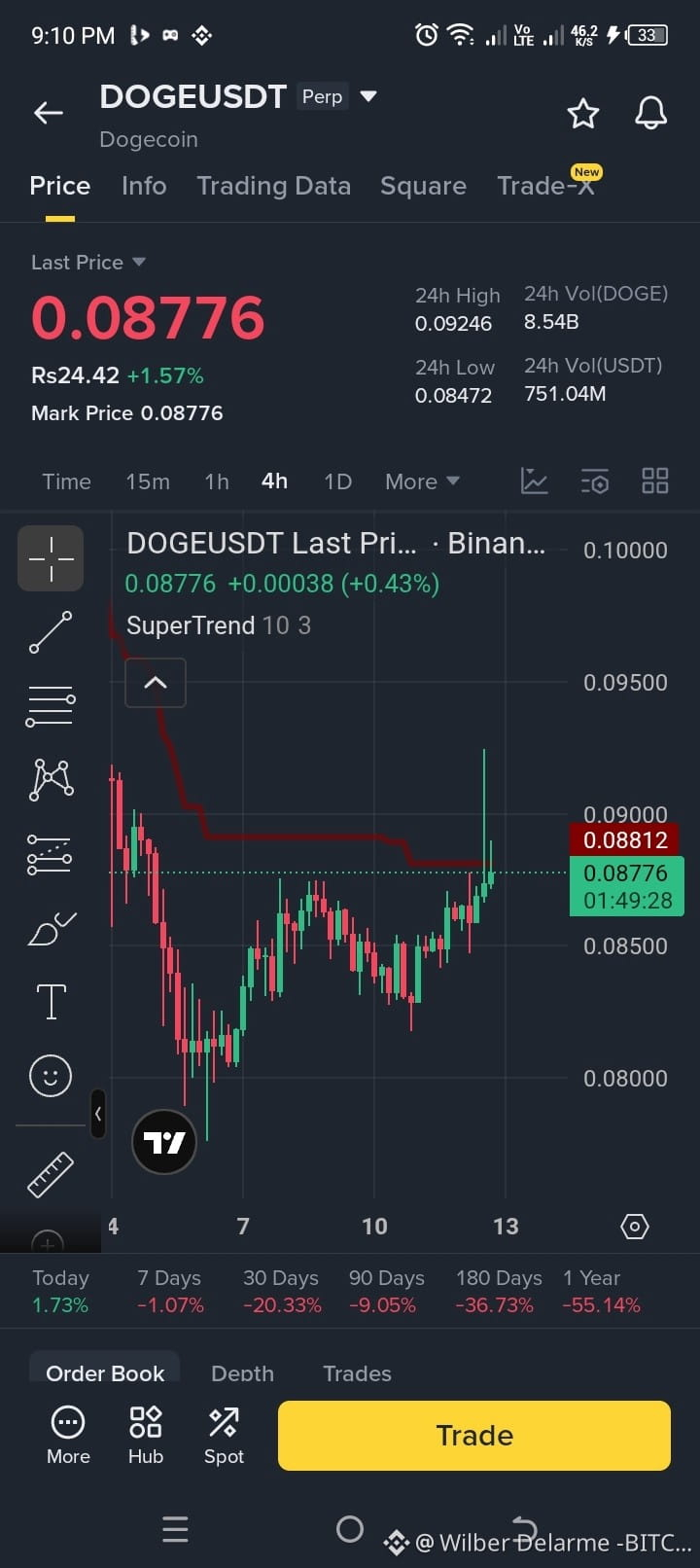
$DOGE
LONG 🟢
⚡ LEVERAGE: Cross 20X 50X
🎯 ENTRY: 0.086 - 0.084
💎 TAKE PROFITS:
➤ 🎯TP1: 0.088
➤ 🎯TP2: 0.090
➤ 🎯TP3: 0.092
➤ 🎯TP4: 0.094
{future}(DOGEUSDT)
🛑 STOP LOSS: 4H candle closed below 0.082
• 💼 Only 2–3% Capital Per Entry
• 🔐 Trail Stop After TP2 for Safety$ESPORTS
{future}(ESPORTSUSDT)
$DOGE
LONG 🟢
⚡ LEVERAGE: Cross 20X 50X
🎯 ENTRY: 0.086 - 0.084
💎 TAKE PROFITS:
➤ 🎯TP1: 0.088
➤ 🎯TP2: 0.090
➤ 🎯TP3: 0.092
➤ 🎯TP4: 0.094
🛑 STOP LOSS: 4H candle closed below 0.082
• 💼 Only 2–3% Capital Per Entry
• 🔐 Trail Stop After TP2 for Safety$ESPORTS
LONG 🟢
⚡ LEVERAGE: Cross 20X 50X
🎯 ENTRY: 0.086 - 0.084
💎 TAKE PROFITS:
➤ 🎯TP1: 0.088
➤ 🎯TP2: 0.090
➤ 🎯TP3: 0.092
➤ 🎯TP4: 0.094
🛑 STOP LOSS: 4H candle closed below 0.082
• 💼 Only 2–3% Capital Per Entry
• 🔐 Trail Stop After TP2 for Safety$ESPORTS
427
$HYPE
SHORT 🔴
⚡ LEVERAGE: Cross 20X 50X
🎯 ENTRY: 64.10 - 65.30
💎 TAKE PROFITS
➤ 🎯TP1: 63.00
➤ 🎯TP2: 62.00
➤ 🎯TP3: 60.00
➤ 🎯TP4: 59.00
{future}(HYPEUSDT)
🛑 STOP LOSS: 4H candle closed below 67.00
💼 Only 2–3% Capital Per Entry
🔐 Trail Stop After TP2 for Safety$ESPORTS
{future}(ESPORTSUSDT)
$HYPE
SHORT 🔴
⚡ LEVERAGE: Cross 20X 50X
🎯 ENTRY: 64.10 - 65.30
💎 TAKE PROFITS
➤ 🎯TP1: 63.00
➤ 🎯TP2: 62.00
➤ 🎯TP3: 60.00
➤ 🎯TP4: 59.00
🛑 STOP LOSS: 4H candle closed below 67.00
💼 Only 2–3% Capital Per Entry
🔐 Trail Stop After TP2 for Safety$ESPORTS
SHORT 🔴
⚡ LEVERAGE: Cross 20X 50X
🎯 ENTRY: 64.10 - 65.30
💎 TAKE PROFITS
➤ 🎯TP1: 63.00
➤ 🎯TP2: 62.00
➤ 🎯TP3: 60.00
➤ 🎯TP4: 59.00
🛑 STOP LOSS: 4H candle closed below 67.00
💼 Only 2–3% Capital Per Entry
🔐 Trail Stop After TP2 for Safety$ESPORTS
298
$AIGENSYN /USDT looks interesting here.
Price is pressing the daily high around 0.02882 after a strong move.
If bulls break and hold that level, 0.029+ could come fast.
If it gets rejected, I’d watch 0.0280 first, then 0.0263 as the key pullback zone.
Not chasing here — either give me the breakout or the retest.
$AIO $SKYAI
#AIGENSYN
$AIGENSYN /USDT looks interesting here.
Price is pressing the daily high around 0.02882 after a strong move.
If bulls break and hold that level, 0.029+ could come fast.
If it gets rejected, I’d watch 0.0280 first, then 0.0263 as the key pullback zone.
Not chasing here — either give me the breakout or the retest.
$AIO $SKYAI
#AIGENSYN
Price is pressing the daily high around 0.02882 after a strong move.
If bulls break and hold that level, 0.029+ could come fast.
If it gets rejected, I’d watch 0.0280 first, then 0.0263 as the key pullback zone.
Not chasing here — either give me the breakout or the retest.
$AIO $SKYAI
#AIGENSYN
1
197
$AIGENSYN USDT is waking up.
Price is pushing near 0.0284, with buyers clearly active. If bulls break and hold above that level, the next leg could come fast.
Key support sits around 0.0275 — as long as that holds, momentum stays interesting. Lose it, and a pullback becomes more likely.
$VELVET
{future}(VELVETUSDT)
$AIGENSYN
Resistance: 0.0284
Support: 0.0275
$AIGENSYN USDT is waking up.
Price is pushing near 0.0284, with buyers clearly active. If bulls break and hold above that level, the next leg could come fast.
Key support sits around 0.0275 — as long as that holds, momentum stays interesting. Lose it, and a pullback becomes more likely.
$VELVET
$AIGENSYN
Resistance: 0.0284
Support: 0.0275
Price is pushing near 0.0284, with buyers clearly active. If bulls break and hold above that level, the next leg could come fast.
Key support sits around 0.0275 — as long as that holds, momentum stays interesting. Lose it, and a pullback becomes more likely.
$VELVET
$AIGENSYN
Resistance: 0.0284
Support: 0.0275
1
381
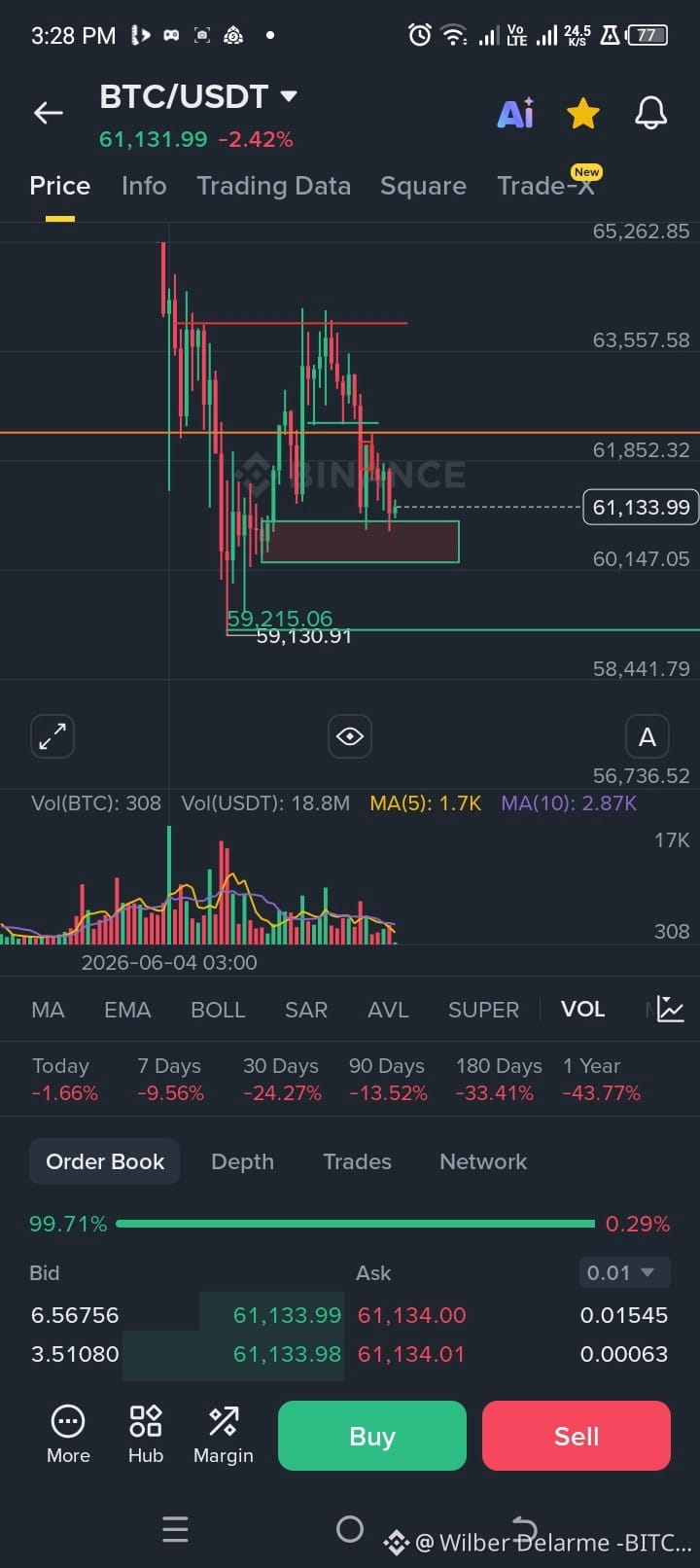
BTC is at a really interesting level right now.
But it can go to 55k 54k level
Price is sitting near support while resistance is still overhead, so this feels like one of those moments where the next move could come fast.
$60.8K is the key support I’m watching.
$62.8K–$63K is the area bulls need to take back.
For now, it looks like Bitcoin is just loading up for a bigger move.
Break up or break down — which way are you leaning? 🔥
{spot}(BTCUSDT)
$STG
{spot}(STGUSDT)
$HMSTR
{spot}(HMSTRUSDT)
#BTC #bitcoin
BTC is at a really interesting level right now.
But it can go to 55k 54k level
Price is sitting near support while resistance is still overhead, so this feels like one of those moments where the next move could come fast.
$60.8K is the key support I’m watching.
$62.8K–$63K is the area bulls need to take back.
For now, it looks like Bitcoin is just loading up for a bigger move.
Break up or break down — which way are you leaning? 🔥
$STG
$HMSTR
#BTC #bitcoin
But it can go to 55k 54k level
Price is sitting near support while resistance is still overhead, so this feels like one of those moments where the next move could come fast.
$60.8K is the key support I’m watching.
$62.8K–$63K is the area bulls need to take back.
For now, it looks like Bitcoin is just loading up for a bigger move.
Break up or break down — which way are you leaning? 🔥
$STG
$HMSTR
#BTC #bitcoin
2
386
Privacy coins rose 4.5% on Monday,
Zcash (ZEC) up about 7% and Monero
(XMR) up close to 7.6%,
while Dash (DASH) gained 1.6% even as the sector remains down 12% on the month.
Zcash, Monero, Dash and Decred.
The report says
money is net short about $9.6 million on Zcash and $1 million on Monero,
while Zcash exchange inflows hit $42.5 million over seven days.
{spot}(ZECUSDT)
{future}(XMRUSDT)
{spot}(DASHUSDT)
Privacy coins rose 4.5% on Monday,
Zcash (ZEC) up about 7% and Monero
(XMR) up close to 7.6%,
while Dash (DASH) gained 1.6% even as the sector remains down 12% on the month.
Zcash, Monero, Dash and Decred.
The report says
money is net short about $9.6 million on Zcash and $1 million on Monero,
while Zcash exchange inflows hit $42.5 million over seven days.
Zcash (ZEC) up about 7% and Monero
(XMR) up close to 7.6%,
while Dash (DASH) gained 1.6% even as the sector remains down 12% on the month.
Zcash, Monero, Dash and Decred.
The report says
money is net short about $9.6 million on Zcash and $1 million on Monero,
while Zcash exchange inflows hit $42.5 million over seven days.
120
🎙️ Major coins are consolidating; pinpoint your direction to dodge risks.
End
03 h 08 m 09 s
9.1k
19
20
U.S. CPI Preview: Why Today’s Inflation Print Matters for Bitcoin
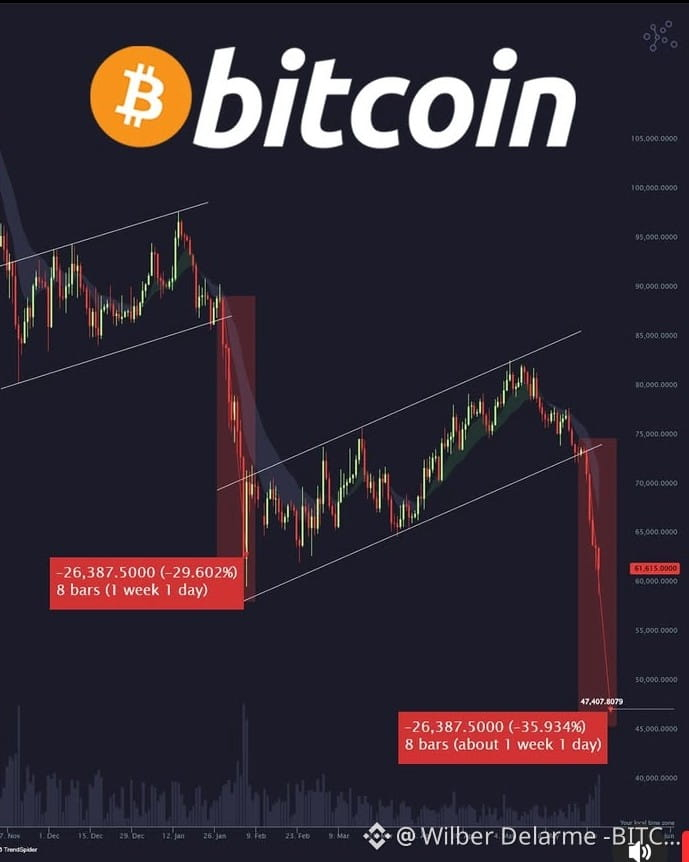
Today’s U.S. CPI release is likely to be the key macro catalyst for Bitcoin and broader risk assets. The market is watching whether inflation comes in below expectations, in line, or above expectations, because that will shape rate-cut expectations, Treasury yields, and dollar strength — all of which directly influence BTC price action.
Current nowcast models suggest headline CPI may print near 0.1% month-over-month, with core CPI around 0.23% month-over-month. In practical terms, a softer-than-expected number would likely support risk appetite, while a hotter print could pressure crypto in the short term.
{spot}(BTCUSDT)
{spot}(ETHUSDT)
BTC scenario map for today:
Soft CPI: BTC could push into the $65,000–$68,000 range as traders price in a more dovish macro outlook.
In-line CPI: BTC may remain range-bound between $62,000 and $65,000, with volatility fading after the initial reaction.
Hot CPI: BTC could retest $60,000–$61,000, with a deeper liquidity sweep possible if risk sentiment deteriorates quickly.
Recent market analysis also highlights nearby upside resistance around $64,821 and $68,289, while the $60,000 area remains an important support zone for short-term traders. $XRP
{spot}(XRPUSDT)
U.S. CPI Preview: Why Today’s Inflation Print Matters for Bitcoin
Today’s U.S. CPI release is likely to be the key macro catalyst for Bitcoin and broader risk assets. The market is watching whether inflation comes in below expectations, in line, or above expectations, because that will shape rate-cut expectations, Treasury yields, and dollar strength — all of which directly influence BTC price action.
Current nowcast models suggest headline CPI may print near 0.1% month-over-month, with core CPI around 0.23% month-over-month. In practical terms, a softer-than-expected number would likely support risk appetite, while a hotter print could pressure crypto in the short term.
BTC scenario map for today:
Soft CPI: BTC could push into the $65,000–$68,000 range as traders price in a more dovish macro outlook.
In-line CPI: BTC may remain range-bound between $62,000 and $65,000, with volatility fading after the initial reaction.
Hot CPI: BTC could retest $60,000–$61,000, with a deeper liquidity sweep possible if risk sentiment deteriorates quickly.
Recent market analysis also highlights nearby upside resistance around $64,821 and $68,289, while the $60,000 area remains an important support zone for short-term traders. $XRP
Today’s U.S. CPI release is likely to be the key macro catalyst for Bitcoin and broader risk assets. The market is watching whether inflation comes in below expectations, in line, or above expectations, because that will shape rate-cut expectations, Treasury yields, and dollar strength — all of which directly influence BTC price action.
Current nowcast models suggest headline CPI may print near 0.1% month-over-month, with core CPI around 0.23% month-over-month. In practical terms, a softer-than-expected number would likely support risk appetite, while a hotter print could pressure crypto in the short term.
BTC scenario map for today:
Soft CPI: BTC could push into the $65,000–$68,000 range as traders price in a more dovish macro outlook.
In-line CPI: BTC may remain range-bound between $62,000 and $65,000, with volatility fading after the initial reaction.
Hot CPI: BTC could retest $60,000–$61,000, with a deeper liquidity sweep possible if risk sentiment deteriorates quickly.
Recent market analysis also highlights nearby upside resistance around $64,821 and $68,289, while the $60,000 area remains an important support zone for short-term traders. $XRP
248
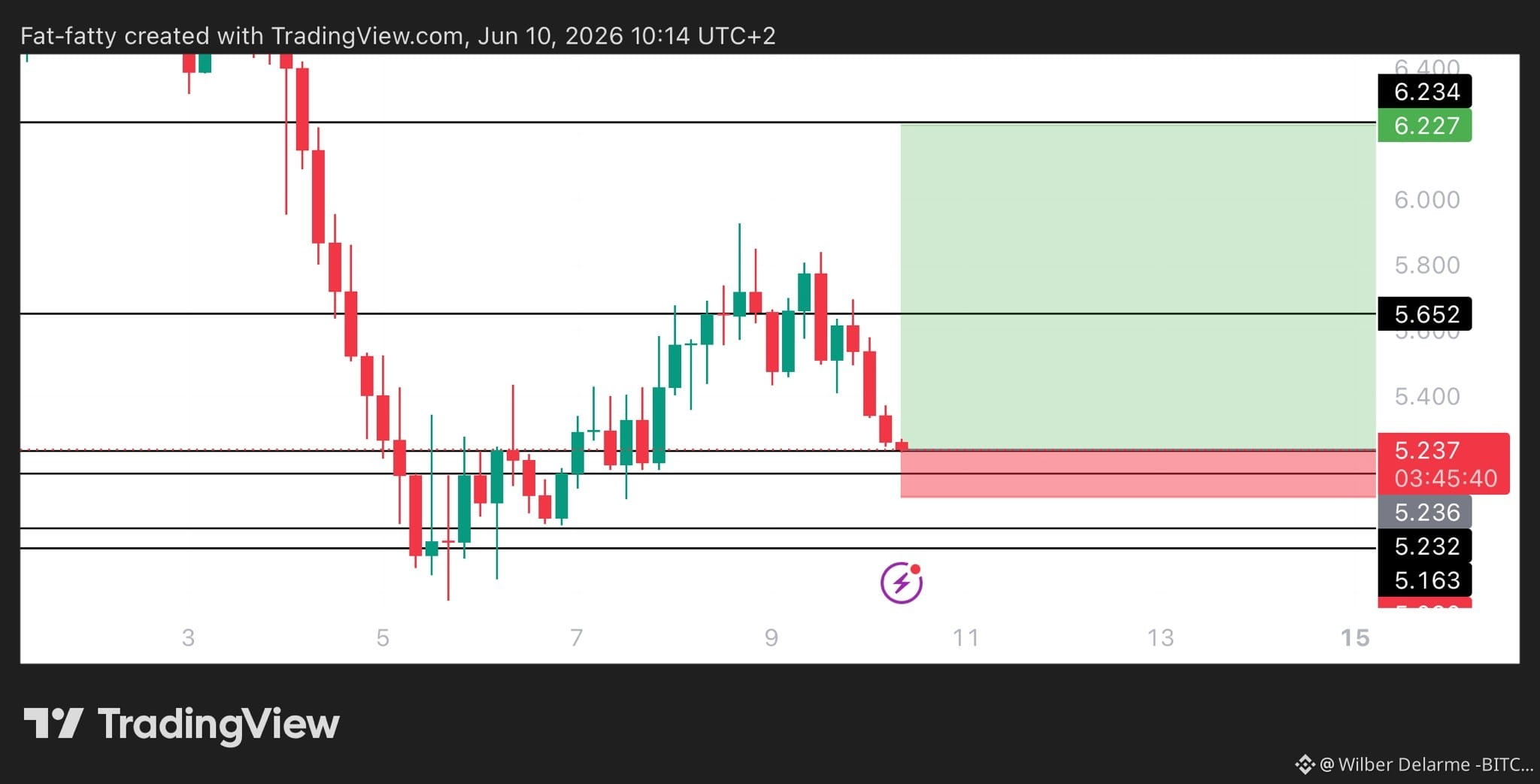
*$INJ LONG TRADE*
ENTRY: 5.232
TARGET: 6.2
STOPLOSS: 5.065
{future}(INJUSDT)
$STG
{future}(STGUSDT)
$STRAX
{spot}(STRAXUSDT)
*$INJ LONG TRADE*
ENTRY: 5.232
TARGET: 6.2
STOPLOSS: 5.065
$STG
$STRAX
ENTRY: 5.232
TARGET: 6.2
STOPLOSS: 5.065
$STG
$STRAX
1
177
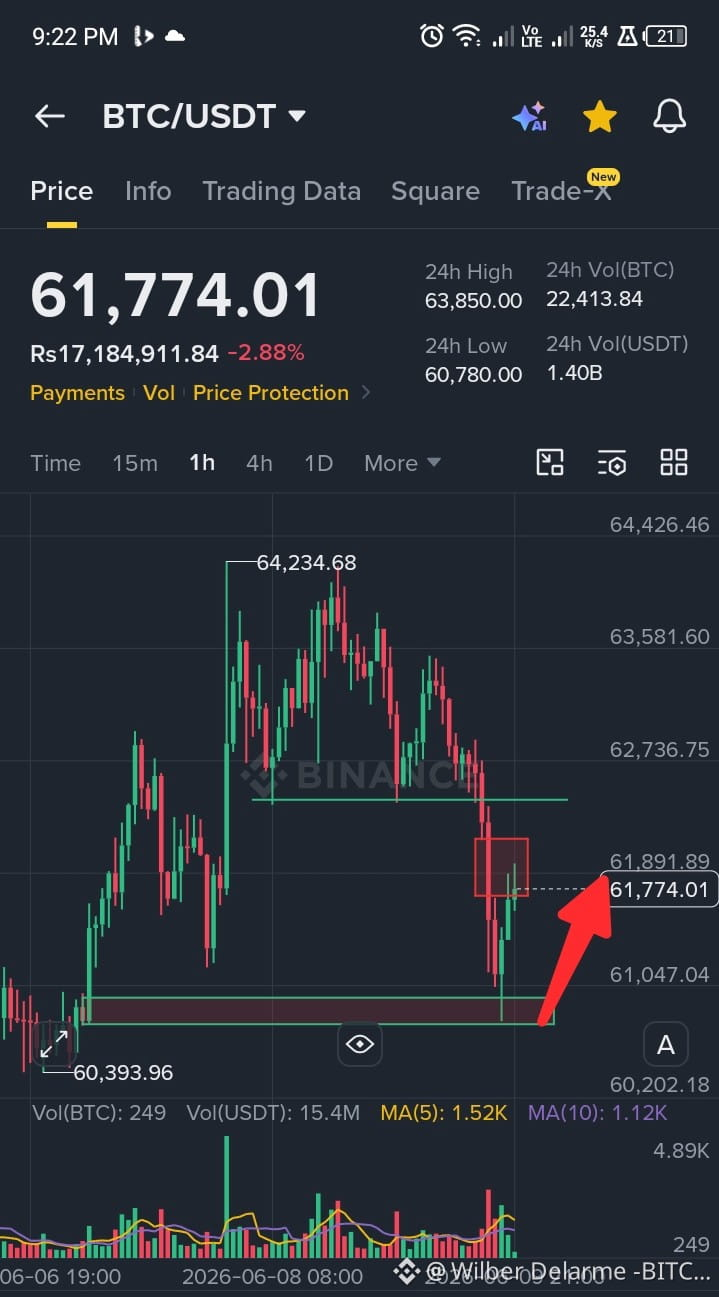
$BTC just printed a $63.8K → $60.8K range in 24H and it’s sitting near $61.8K.
This is liquidity weather:
quick wicks, fast reversals, no mercy.
{spot}(BTCUSDT)
I’m watching $63.8K (break = momentum) vs $60.8K $IO
{spot}(IOUSDT)
$BTC just printed a $63.8K → $60.8K range in 24H and it’s sitting near $61.8K.
This is liquidity weather:
quick wicks, fast reversals, no mercy.
I’m watching $63.8K (break = momentum) vs $60.8K $IO
This is liquidity weather:
quick wicks, fast reversals, no mercy.
I’m watching $63.8K (break = momentum) vs $60.8K $IO
215
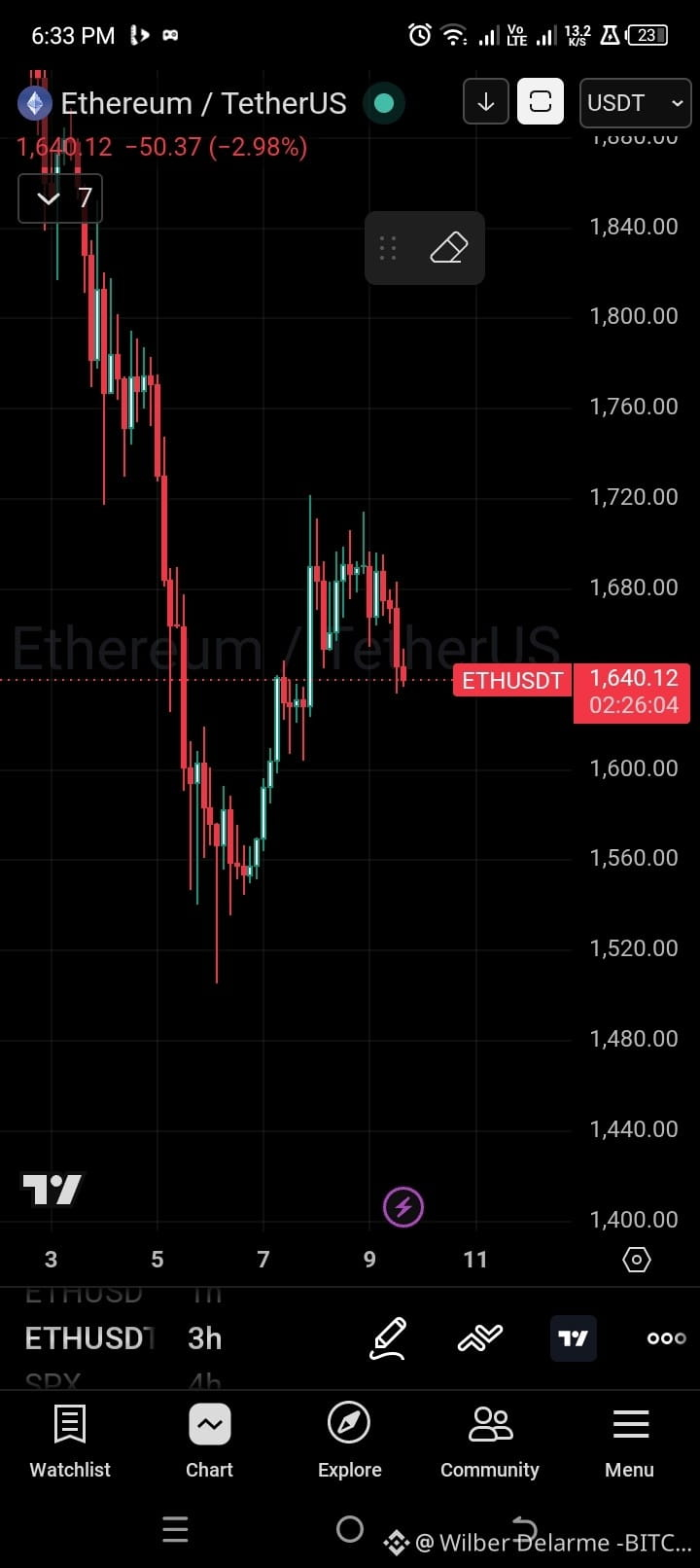
$ETH
╔═══════════════╗
🌟STAR PREMIUM VIP🌟
╚═══════════════╝
🚀 PAIR: #ETH/USDT
📈 TYPE: LONG 🟢
⚡ LEVERAGE: Cross 20X 50X
🎯 ENTRY: 1640 - 1614
💎 TAKE PROFITS:
➤ 🎯TP1: 1665
➤ 🎯TP2: 1700
➤ 🎯TP3: 1730
➤ 🎯TP4: 1760
🛑 STOP LOSS: 4H candle closed below 1590
• 💼 Only 2–3% Capital Per Entry
• 🔐 Trail Stop After TP2 for Safety$IO
{spot}(IOUSDT)
$SAHARA
{future}(SAHARAUSDT)
$ETH
╔═══════════════╗
🌟STAR PREMIUM VIP🌟
╚═══════════════╝
🚀 PAIR: #ETH/USDT
📈 TYPE: LONG 🟢
⚡ LEVERAGE: Cross 20X 50X
🎯 ENTRY: 1640 - 1614
💎 TAKE PROFITS:
➤ 🎯TP1: 1665
➤ 🎯TP2: 1700
➤ 🎯TP3: 1730
➤ 🎯TP4: 1760
🛑 STOP LOSS: 4H candle closed below 1590
• 💼 Only 2–3% Capital Per Entry
• 🔐 Trail Stop After TP2 for Safety$IO
$SAHARA
╔═══════════════╗
🌟STAR PREMIUM VIP🌟
╚═══════════════╝
🚀 PAIR: #ETH/USDT
📈 TYPE: LONG 🟢
⚡ LEVERAGE: Cross 20X 50X
🎯 ENTRY: 1640 - 1614
💎 TAKE PROFITS:
➤ 🎯TP1: 1665
➤ 🎯TP2: 1700
➤ 🎯TP3: 1730
➤ 🎯TP4: 1760
🛑 STOP LOSS: 4H candle closed below 1590
• 💼 Only 2–3% Capital Per Entry
• 🔐 Trail Stop After TP2 for Safety$IO
$SAHARA
283
$ETH The Ethereum Foundation just warned that slop.computer has not launched an official X account.
Any account claiming to be the project right now is fake. The warning is direct. Impersonation scams are active.
For anyone tracking the on-chain podcast space or following new Ethereum ecosystem projects, the rule is simple.
Trust only the verified channels. If there is no official confirmation, there is no official account. A warning from an EF lead is as official as it gets.
Do not click links from unverified accounts. Do not connect your wallet to a site you found through a social media post. The project may be real, but the impersonators are already live. Stay safe. Verify first.
$BEAT
{future}(BEATUSDT)
#Ethereum
{future}(ETHUSDT)
{spot}(ETHUSDT)
$ETH The Ethereum Foundation just warned that slop.computer has not launched an official X account.
Any account claiming to be the project right now is fake. The warning is direct. Impersonation scams are active.
For anyone tracking the on-chain podcast space or following new Ethereum ecosystem projects, the rule is simple.
Trust only the verified channels. If there is no official confirmation, there is no official account. A warning from an EF lead is as official as it gets.
Do not click links from unverified accounts. Do not connect your wallet to a site you found through a social media post. The project may be real, but the impersonators are already live. Stay safe. Verify first.
$BEAT
#Ethereum
Any account claiming to be the project right now is fake. The warning is direct. Impersonation scams are active.
For anyone tracking the on-chain podcast space or following new Ethereum ecosystem projects, the rule is simple.
Trust only the verified channels. If there is no official confirmation, there is no official account. A warning from an EF lead is as official as it gets.
Do not click links from unverified accounts. Do not connect your wallet to a site you found through a social media post. The project may be real, but the impersonators are already live. Stay safe. Verify first.
$BEAT
#Ethereum
1
327
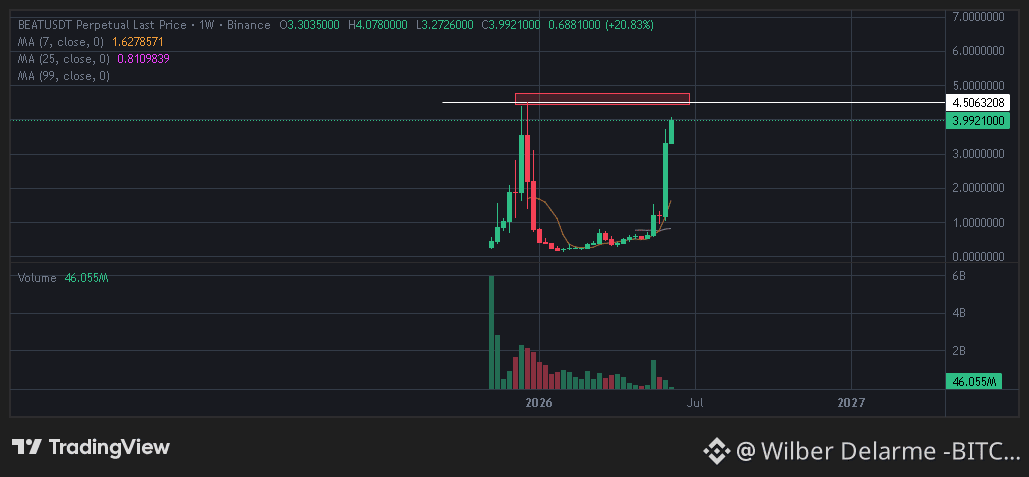
BEAT is heading to 4.5
The range from the session low of $1.92 to the high of $4.07 is over 100%.
Visible bids are only a few hundred tokens deep. Asks are similarly thin. The book is not built for size.
Slippage will be severe in both directions. Funding is modest, so there is no carry cost driving positioning. This is pure momentum trading.
Support is $3.70, then $3.40. Resistance is the 24-hour high at $4.07. A break above opens $4.30. A breakdown below $3.70 signals the momentum has stalled.
This is a scalp-only environment. Longs with tight stops on pullbacks toward $3.80. Shorts only on a confirmed rejection at $4.07. Do not size large.
{future}(BSBUSDT)
{future}(BEATUSDT)
#BEAT
BEAT is heading to 4.5
The range from the session low of $1.92 to the high of $4.07 is over 100%.
Visible bids are only a few hundred tokens deep. Asks are similarly thin. The book is not built for size.
Slippage will be severe in both directions. Funding is modest, so there is no carry cost driving positioning. This is pure momentum trading.
Support is $3.70, then $3.40. Resistance is the 24-hour high at $4.07. A break above opens $4.30. A breakdown below $3.70 signals the momentum has stalled.
This is a scalp-only environment. Longs with tight stops on pullbacks toward $3.80. Shorts only on a confirmed rejection at $4.07. Do not size large.
#BEAT
The range from the session low of $1.92 to the high of $4.07 is over 100%.
Visible bids are only a few hundred tokens deep. Asks are similarly thin. The book is not built for size.
Slippage will be severe in both directions. Funding is modest, so there is no carry cost driving positioning. This is pure momentum trading.
Support is $3.70, then $3.40. Resistance is the 24-hour high at $4.07. A break above opens $4.30. A breakdown below $3.70 signals the momentum has stalled.
This is a scalp-only environment. Longs with tight stops on pullbacks toward $3.80. Shorts only on a confirmed rejection at $4.07. Do not size large.
#BEAT
3
460
🎙️ BTC Bull and Bear Showdown, Live Analysis! Stay on Trend, Trade Smart.
End
06 h 00 m 00 s
4.8k
10
24
🔥TRADE SIGNAL 🔥 Futures
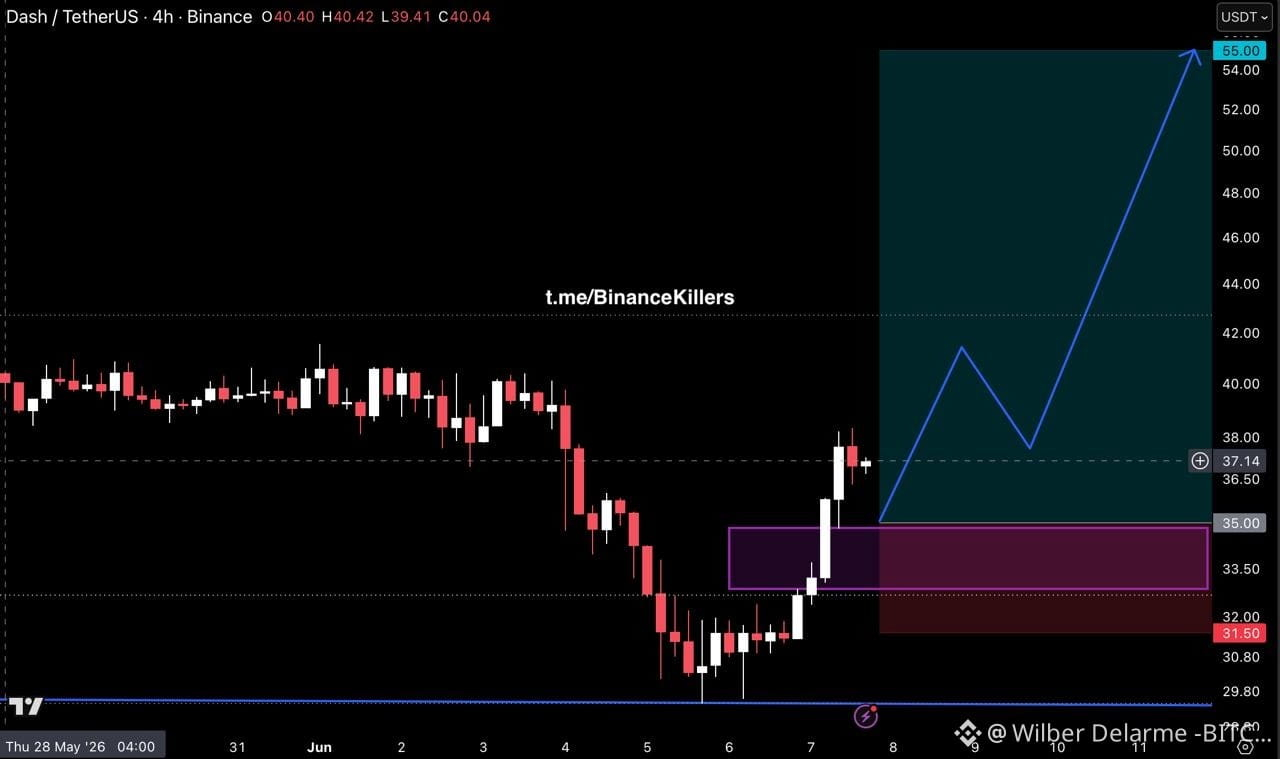
COIN: $DASH /USDT (2-5x)
Direction: LONG
ENTRY: 34.80 - 35.00
TARGETS: 36.75 - 38.50 - 40.50 - 42.50 - 45.00 - 48.00 - 51.00 - 55.00
STOP LOSS: 31.50
8H FVG already confirmed with a strong impulsive reaction.
$SIREN
{future}(SIRENUSDT)
$LAB
{future}(LABUSDT)
Follow us @WilberInsights
🔥TRADE SIGNAL 🔥 Futures
COIN: $DASH /USDT (2-5x)
Direction: LONG
ENTRY: 34.80 - 35.00
TARGETS: 36.75 - 38.50 - 40.50 - 42.50 - 45.00 - 48.00 - 51.00 - 55.00
STOP LOSS: 31.50
8H FVG already confirmed with a strong impulsive reaction.
$SIREN
$LAB
Follow us @Wilber Delarme -BITCOINERS
COIN: $DASH /USDT (2-5x)
Direction: LONG
ENTRY: 34.80 - 35.00
TARGETS: 36.75 - 38.50 - 40.50 - 42.50 - 45.00 - 48.00 - 51.00 - 55.00
STOP LOSS: 31.50
8H FVG already confirmed with a strong impulsive reaction.
$SIREN
$LAB
Follow us @Wilber Delarme -BITCOINERS
107
$BTW
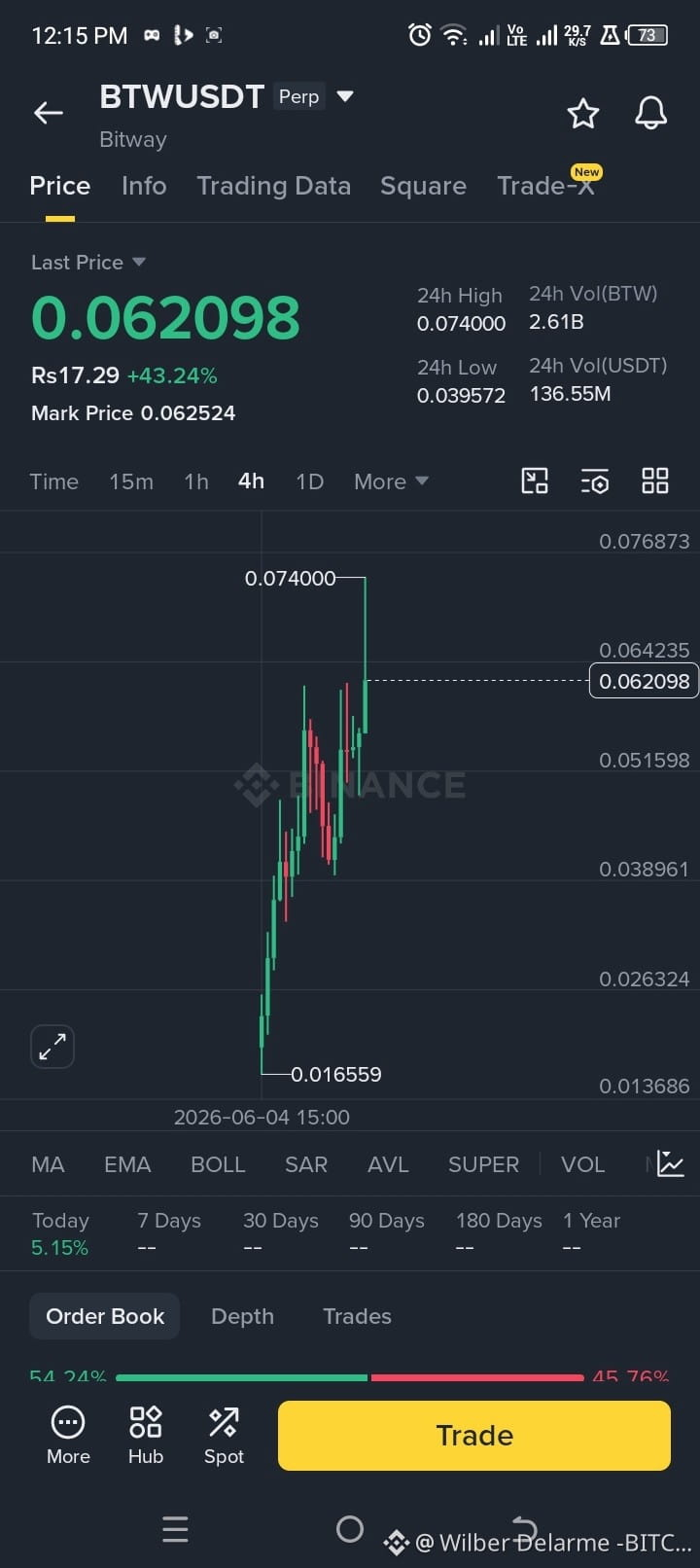
Sell orders dominate at 73% against 27% buy orders.
That is not a neutral market. That is distribution in progress.
The bid side is thin. Sellers are loading into strength. When a coin rallies this fast and the book flips this heavily against it, the pause is rarely consolidation. It is usually a prelude to the next leg down.
Support sits at $0.063, then $0.057. Resistance is the $0.070–$0.071 zone and the 24-hour high at $0.074. A bounce toward $0.0705–$0.0715 that stalls is the short setup. Stop above $0.073 on a 15-minute close. First target $0.063, second $0.057. A breakdown below $0.063 with volume opens the path to the $0.050 area. A long only makes sense on a confirmed hold of $0.063 with a volume spike and a tight stop below $0.062. That is a scalp, not a swing.
{future}(BTWUSDT)
{future}(LABUSDT)
{future}(FIDAUSDT)
$LAB $FIDA
#BTW #ShortSetup
#BTW
$BTW
Sell orders dominate at 73% against 27% buy orders.
That is not a neutral market. That is distribution in progress.
The bid side is thin. Sellers are loading into strength. When a coin rallies this fast and the book flips this heavily against it, the pause is rarely consolidation. It is usually a prelude to the next leg down.
Support sits at $0.063, then $0.057. Resistance is the $0.070–$0.071 zone and the 24-hour high at $0.074. A bounce toward $0.0705–$0.0715 that stalls is the short setup. Stop above $0.073 on a 15-minute close. First target $0.063, second $0.057. A breakdown below $0.063 with volume opens the path to the $0.050 area. A long only makes sense on a confirmed hold of $0.063 with a volume spike and a tight stop below $0.062. That is a scalp, not a swing.
$LAB $FIDA
#BTW #ShortSetup
#BTW
Sell orders dominate at 73% against 27% buy orders.
That is not a neutral market. That is distribution in progress.
The bid side is thin. Sellers are loading into strength. When a coin rallies this fast and the book flips this heavily against it, the pause is rarely consolidation. It is usually a prelude to the next leg down.
Support sits at $0.063, then $0.057. Resistance is the $0.070–$0.071 zone and the 24-hour high at $0.074. A bounce toward $0.0705–$0.0715 that stalls is the short setup. Stop above $0.073 on a 15-minute close. First target $0.063, second $0.057. A breakdown below $0.063 with volume opens the path to the $0.050 area. A long only makes sense on a confirmed hold of $0.063 with a volume spike and a tight stop below $0.062. That is a scalp, not a swing.
$LAB $FIDA
#BTW #ShortSetup
#BTW
546
Partly True
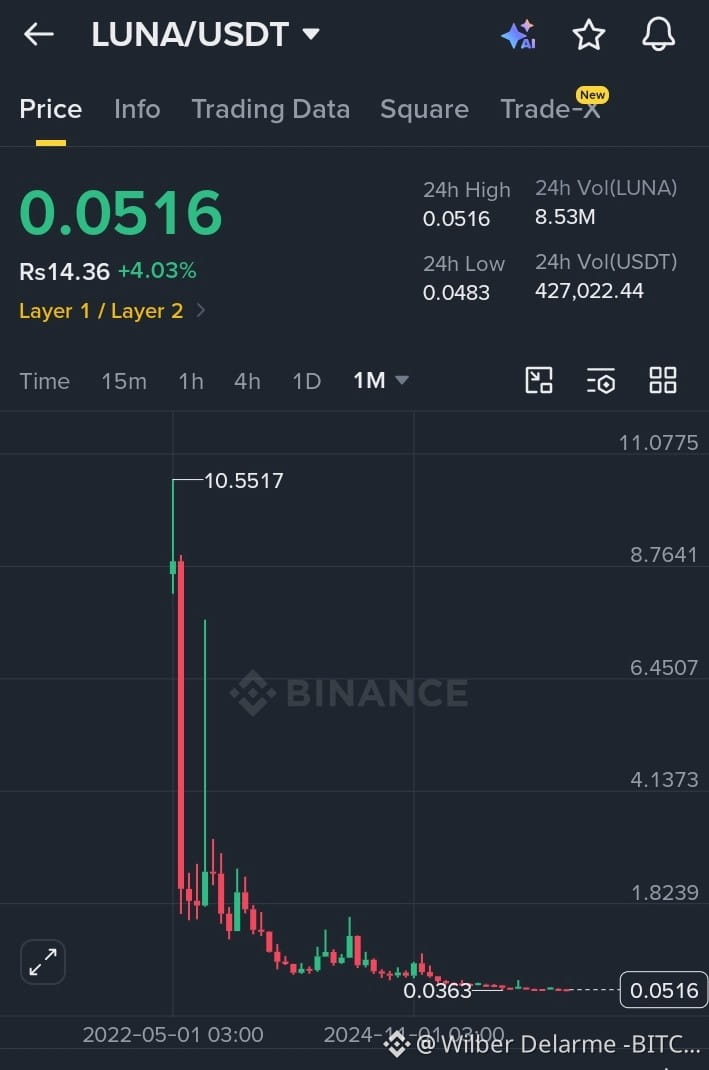
$LUNC ,$LUNA The Terra ecosystem split in two, and 2026 is the year their paths finally diverge.
MY team and I have been busy in the trenches researching the above scenario . This is what we got .
If you guys remember the post on stablecoins .You will understand this ..
Both tokens carry the same history, but they are building entirely different futures.
LUNC is the community's chain. No venture funding. No institutional backing. Just a grassroots rebuild. Every transaction burns supply. Staking secures the network.
Governance votes drive the roadmap. The LandRush protocol tokenizes real land parcels into NFTs.
The upcoming Market Module 2.0 aims to create a real economic loop between LUNC and USTC without the failed algorithmic minting.
$USTC itself is being repurposed for staking and RWA transactions.
This chain is no longer about a stablecoin. It is about utility built from the ashes.
LUNA 2.0 chose the opposite path. A clean slate. Institutional-grade RWA tokenization is the entire thesis.
It wants to be the Layer 1 that major financial players use to bring bonds, commodities, and real estate on-chain. The vision is ambitious.
The challenge is adoption. Early reports showed a quiet dApp ecosystem, but the infrastructure is being built. This chain is betting that a compliant, forward-looking foundation can attract the capital that the original chain lost.
Both are betting on Real-World Assets. LUNC from the ground up.
LUNA from the top down. One is a speculative revival story.
The other is an institutional bet. The market will decide which narrative carries more weight.
Which Terra holds more utility in your view — LUNC or LUNA? Drop your thoughts below.
{spot}(LUNAUSDT)
{spot}(LUNCUSDT)
{spot}(USTCUSDT)
#LUNC #LUNA #RWA #TerraClassic
$LUNC ,$LUNA The Terra ecosystem split in two, and 2026 is the year their paths finally diverge.
MY team and I have been busy in the trenches researching the above scenario . This is what we got .
If you guys remember the post on stablecoins .You will understand this ..
Both tokens carry the same history, but they are building entirely different futures.
LUNC is the community's chain. No venture funding. No institutional backing. Just a grassroots rebuild. Every transaction burns supply. Staking secures the network.
Governance votes drive the roadmap. The LandRush protocol tokenizes real land parcels into NFTs.
The upcoming Market Module 2.0 aims to create a real economic loop between LUNC and USTC without the failed algorithmic minting.
$USTC itself is being repurposed for staking and RWA transactions.
This chain is no longer about a stablecoin. It is about utility built from the ashes.
LUNA 2.0 chose the opposite path. A clean slate. Institutional-grade RWA tokenization is the entire thesis.
It wants to be the Layer 1 that major financial players use to bring bonds, commodities, and real estate on-chain. The vision is ambitious.
The challenge is adoption. Early reports showed a quiet dApp ecosystem, but the infrastructure is being built. This chain is betting that a compliant, forward-looking foundation can attract the capital that the original chain lost.
Both are betting on Real-World Assets. LUNC from the ground up.
LUNA from the top down. One is a speculative revival story.
The other is an institutional bet. The market will decide which narrative carries more weight.
Which Terra holds more utility in your view — LUNC or LUNA? Drop your thoughts below.
#LUNC #LUNA #RWA #TerraClassic
MY team and I have been busy in the trenches researching the above scenario . This is what we got .
If you guys remember the post on stablecoins .You will understand this ..
Both tokens carry the same history, but they are building entirely different futures.
LUNC is the community's chain. No venture funding. No institutional backing. Just a grassroots rebuild. Every transaction burns supply. Staking secures the network.
Governance votes drive the roadmap. The LandRush protocol tokenizes real land parcels into NFTs.
The upcoming Market Module 2.0 aims to create a real economic loop between LUNC and USTC without the failed algorithmic minting.
$USTC itself is being repurposed for staking and RWA transactions.
This chain is no longer about a stablecoin. It is about utility built from the ashes.
LUNA 2.0 chose the opposite path. A clean slate. Institutional-grade RWA tokenization is the entire thesis.
It wants to be the Layer 1 that major financial players use to bring bonds, commodities, and real estate on-chain. The vision is ambitious.
The challenge is adoption. Early reports showed a quiet dApp ecosystem, but the infrastructure is being built. This chain is betting that a compliant, forward-looking foundation can attract the capital that the original chain lost.
Both are betting on Real-World Assets. LUNC from the ground up.
LUNA from the top down. One is a speculative revival story.
The other is an institutional bet. The market will decide which narrative carries more weight.
Which Terra holds more utility in your view — LUNC or LUNA? Drop your thoughts below.
#LUNC #LUNA #RWA #TerraClassic
2
23
2.8k
🔥The US economy just added 172,000 jobs in May, more than double the forecast of 85,000.🔥
The strongest labor market surprise of the year just hit the tape, and the market reaction was immediate. Treasury yields surged, the dollar strengthened, equities fell, and Bitcoin slipped below $62,000.
The macro tailwind that supported Bitcoin through the first quarter has now fully reversed. A 25 basis point rate hike is priced by December. The narrative of a patient Fed waiting to cut has been replaced by a Fed that may need to tighten again. For an asset that thrives on liquidity and low opportunity costs, that is a direct headwind.
Bitcoin is now trading near $61,900, down from $83,000 in early May. The February low of $60,000 is the immediate support. This level has been defended twice this year, but each test has come with weaker macro backing. The jobs report provides the fundamental justification for a break. A clean move below $60,000 opens the path toward $45,000, a level that Monarq Asset Management's CIO flagged earlier this week under the four-year cycle framework.
The short setup remains the path of least resistance.
Bounces toward $62,800–$63,200 that stall are entries with a stop above $64,000. The first target is a retest of $60,000. A breakdown below $60,000 with volume opens the $58,000 target, then $45,000. The long side requires patience.
A daily close back above $64,500 would be the first sign of strength, but that is not the current setup. The market is heavy. The trend is down. The macro is not providing relief.
The bounce will come when the sellers are exhausted, not when the news improves. Wait for the levels. Trade the reaction. Do not front-run the break of $60,000. That level is the line in the sand.
$XAU
{future}(XAUUSDT)
$ALLO
{future}(ALLOUSDT)
$BTC
{spot}(BTCUSDT)
#BTC #JobsReport #Fed
🔥The US economy just added 172,000 jobs in May, more than double the forecast of 85,000.🔥
The strongest labor market surprise of the year just hit the tape, and the market reaction was immediate. Treasury yields surged, the dollar strengthened, equities fell, and Bitcoin slipped below $62,000.
The macro tailwind that supported Bitcoin through the first quarter has now fully reversed. A 25 basis point rate hike is priced by December. The narrative of a patient Fed waiting to cut has been replaced by a Fed that may need to tighten again. For an asset that thrives on liquidity and low opportunity costs, that is a direct headwind.
Bitcoin is now trading near $61,900, down from $83,000 in early May. The February low of $60,000 is the immediate support. This level has been defended twice this year, but each test has come with weaker macro backing. The jobs report provides the fundamental justification for a break. A clean move below $60,000 opens the path toward $45,000, a level that Monarq Asset Management's CIO flagged earlier this week under the four-year cycle framework.
The short setup remains the path of least resistance.
Bounces toward $62,800–$63,200 that stall are entries with a stop above $64,000. The first target is a retest of $60,000. A breakdown below $60,000 with volume opens the $58,000 target, then $45,000. The long side requires patience.
A daily close back above $64,500 would be the first sign of strength, but that is not the current setup. The market is heavy. The trend is down. The macro is not providing relief.
The bounce will come when the sellers are exhausted, not when the news improves. Wait for the levels. Trade the reaction. Do not front-run the break of $60,000. That level is the line in the sand.
$XAU
$ALLO
$BTC
#BTC #JobsReport #Fed
The strongest labor market surprise of the year just hit the tape, and the market reaction was immediate. Treasury yields surged, the dollar strengthened, equities fell, and Bitcoin slipped below $62,000.
The macro tailwind that supported Bitcoin through the first quarter has now fully reversed. A 25 basis point rate hike is priced by December. The narrative of a patient Fed waiting to cut has been replaced by a Fed that may need to tighten again. For an asset that thrives on liquidity and low opportunity costs, that is a direct headwind.
Bitcoin is now trading near $61,900, down from $83,000 in early May. The February low of $60,000 is the immediate support. This level has been defended twice this year, but each test has come with weaker macro backing. The jobs report provides the fundamental justification for a break. A clean move below $60,000 opens the path toward $45,000, a level that Monarq Asset Management's CIO flagged earlier this week under the four-year cycle framework.
The short setup remains the path of least resistance.
Bounces toward $62,800–$63,200 that stall are entries with a stop above $64,000. The first target is a retest of $60,000. A breakdown below $60,000 with volume opens the $58,000 target, then $45,000. The long side requires patience.
A daily close back above $64,500 would be the first sign of strength, but that is not the current setup. The market is heavy. The trend is down. The macro is not providing relief.
The bounce will come when the sellers are exhausted, not when the news improves. Wait for the levels. Trade the reaction. Do not front-run the break of $60,000. That level is the line in the sand.
$XAU
$ALLO
$BTC
#BTC #JobsReport #Fed

3
243
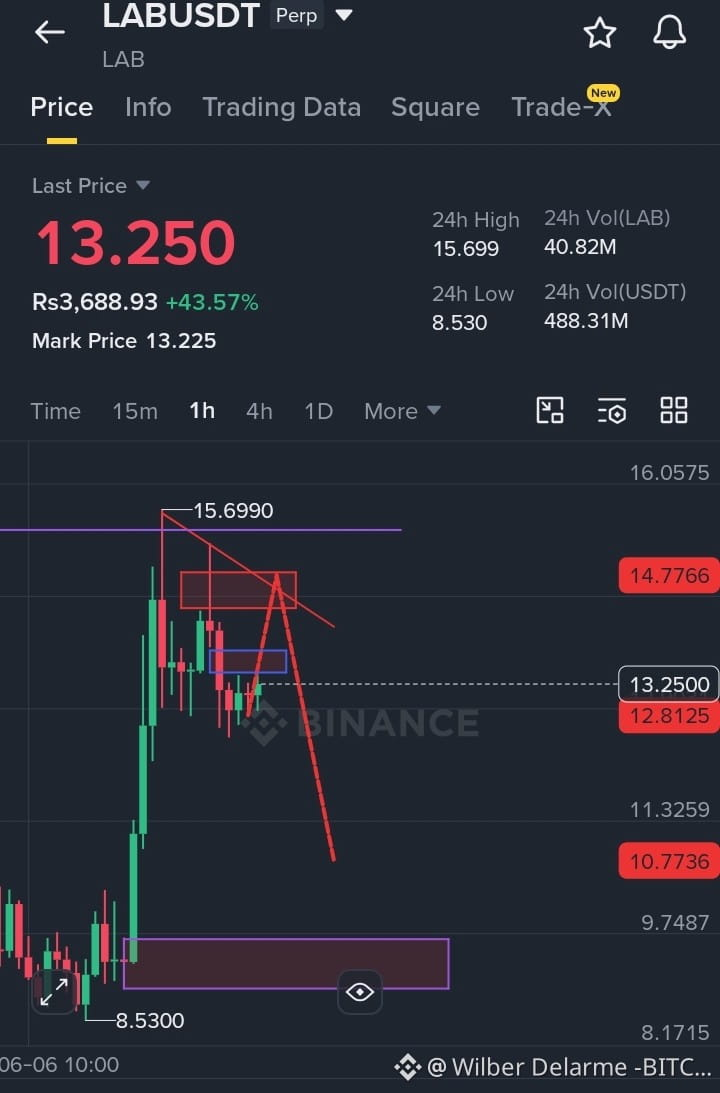
$LAB
A short from $14.00–$14.20 with a stop on
a 15-minute close above $ offers a
defined risk against the extreme. First
target $12.50, second $11.80. A long only
becomes interesting on a pullback to the
$11.30–$11.80 zone that holds with a clear bid.
{future}(LABUSDT)
{future}(FIDAUSDT)
$FIDA
#LAB
$LAB
A short from $14.00–$14.20 with a stop on
a 15-minute close above $ offers a
defined risk against the extreme. First
target $12.50, second $11.80. A long only
becomes interesting on a pullback to the
$11.30–$11.80 zone that holds with a clear bid.
$FIDA
#LAB
A short from $14.00–$14.20 with a stop on
a 15-minute close above $ offers a
defined risk against the extreme. First
target $12.50, second $11.80. A long only
becomes interesting on a pullback to the
$11.30–$11.80 zone that holds with a clear bid.
$FIDA
#LAB
2
391
Log in to explore more content
Join global crypto users on Binance Square
⚡️ Get latest and useful information about crypto.
💬 Trusted by the world’s largest crypto exchange.
👍 Discover real insights from verified creators.
Email / Phone number
Trending Topics
UKFCAWinsCourtOrderToRecover851400Pounds
6,264 views
441 Discussing
🚨 CRYPTO REGULATION JUST ENTERED A NEW PHASE: THEY’RE NOT ONLY WRITING RULES — THEY’RE TAKING MONEY BACK.
The UK’s FCA has secured another court-backed asset recovery, reinforcing a broader enforcement push against unauthorized financial and crypto-related activity.
And look at what’s happening simultaneously:
🇬🇧 FCA → enforcement + asset recovery
🇺🇸 SEC → clearer rules for functional crypto assets
🇺🇸 Fed → formal stablecoin supervision under the GENIUS Act
That combination matters.
Regulators are no longer debating whether crypto belongs inside the financial system.
They’re increasingly deciding who gets access, what rules they follow, and what happens when those rules are broken.
The next crypto cycle may not be “regulation vs innovation.”
It may be regulated crypto vs everyone who can’t meet the standard. 👀
$COIN $CRCL $BTC
#ukfcawinscourtordertorecover851400pounds #ChainlinkLaunchesCCIP2WithEnterpriseVerification #GoldFallsTo$4144 #QNTFallsOver40%FromMorningHigh #USDTAdds845900HoldersInPast7Days
KimHotbae
·2 Likes
·3.7k views
ChainlinkLaunchesCCIP2WithEnterpriseVerification
19,134 views
693 Discussing
GoldFallsTo$4144
8,073 views
116 Discussing