
WAIL SAMI
12.7k Posts

WAIL SAMI
Open Trade
High-Frequency Trader
10 Months
3.9K+ Following
806 Followers
558 Liked
Posts
Portfolio
All
Quotes
Videos
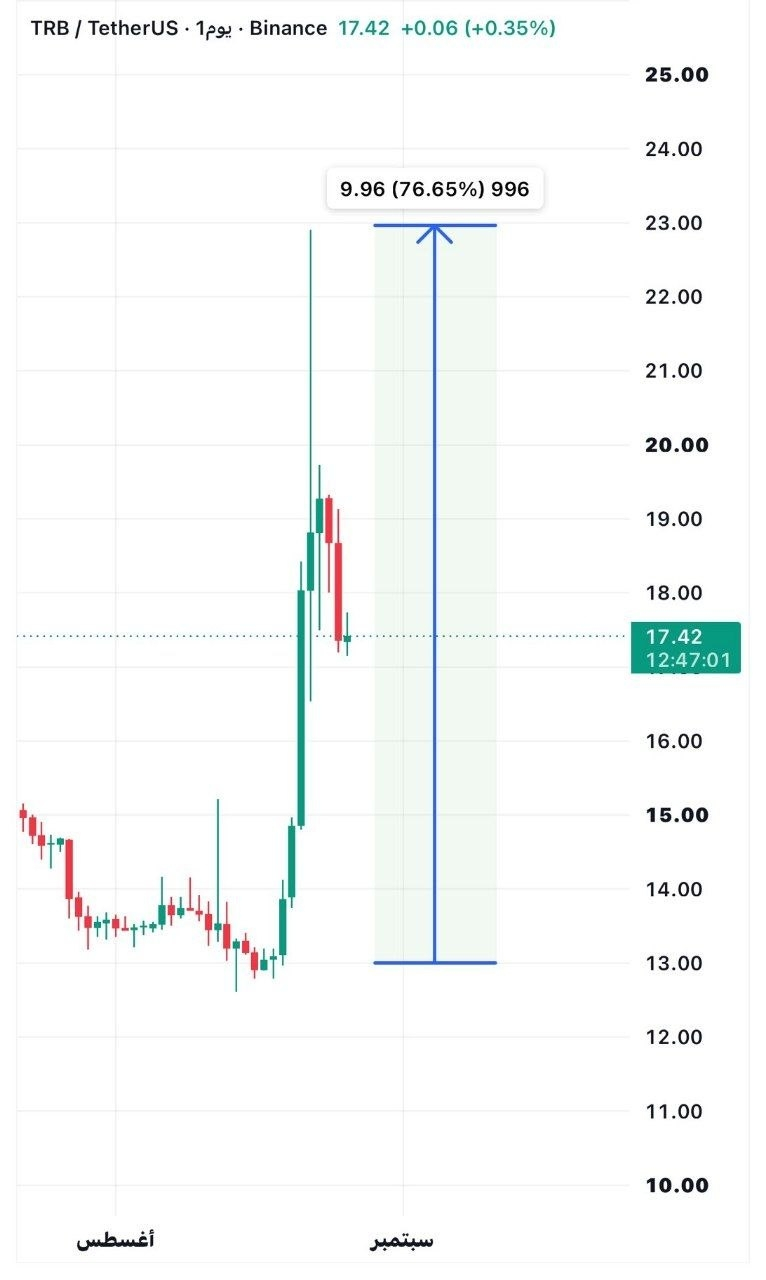
🔥 TRB | +76% So far
TRB was notified to enter at $13.50, and today—thanks to Allah Almighty—so far it has achieved +76% profit. 📈😎
No talk after the move...
The entry is published, the price is published, and the result is in front of you. ✅
Congratulations to everyone who entered and was patient with us. ❤️
As for what you are seeing now from the results...
It’s just warming up for what’s coming. 🔥⏳
Praise be to Allah for success, first and last.$TRB
#TRB #BTC
TRB was notified to enter at $13.50, and today—thanks to Allah Almighty—so far it has achieved +76% profit. 📈😎
No talk after the move...
The entry is published, the price is published, and the result is in front of you. ✅
Congratulations to everyone who entered and was patient with us. ❤️
As for what you are seeing now from the results...
It’s just warming up for what’s coming. 🔥⏳
Praise be to Allah for success, first and last.$TRB
#TRB #BTC
🚨 BITCOIN | The Most Important Update
Bitcoin is currently in a natural correction after the last upward wave, and so far I don’t see any reason to be afraid.
🔑 The key for me: 77,000$
As long as Bitcoin holds 77K, my positive outlook remains, and my targets are:
🎯 83,000$
🎯 87,500$
🎯 92,500$
🔥 Reclaiming 83K and holding above it will be an important sign of strength and could give the market a new push.
Summary:
77K is the defense zone…
83K is the gate of strength…
92.5K is the biggest target in this scenario. 😎🔥
We are not afraid of the correction… we’re only afraid of breaking the scenario.
God knows best.#BITCOIN #BTC $BITCOIN
Bitcoin is currently in a natural correction after the last upward wave, and so far I don’t see any reason to be afraid.
🔑 The key for me: 77,000$
As long as Bitcoin holds 77K, my positive outlook remains, and my targets are:
🎯 83,000$
🎯 87,500$
🎯 92,500$
🔥 Reclaiming 83K and holding above it will be an important sign of strength and could give the market a new push.
Summary:
77K is the defense zone…
83K is the gate of strength…
92.5K is the biggest target in this scenario. 😎🔥
We are not afraid of the correction… we’re only afraid of breaking the scenario.
God knows best.#BITCOIN #BTC $BITCOIN
🚨🔥 TRB | SPOT ENTRY
🟢 Buy TRB from the market
💰 ENTRY: 17.30$
🎯 TARGET: 45$
Our goal is far and clear… so patience is the key to the trade. ⏳🔥
We don’t chase candles or rush results…
we enter with a plan, wait, and let the market speak. 😎
⚠️ Capital management is necessary, and the target is based on my personal vision—not a guarantee of profit.$TRB
$ENA
#TRB
🟢 Buy TRB from the market
💰 ENTRY: 17.30$
🎯 TARGET: 45$
Our goal is far and clear… so patience is the key to the trade. ⏳🔥
We don’t chase candles or rush results…
we enter with a plan, wait, and let the market speak. 😎
⚠️ Capital management is necessary, and the target is based on my personal vision—not a guarantee of profit.$TRB
$ENA
#TRB
#dusk $DUSK @Dusk
Dusk (الغسق) is a Layer 1 built for regulated capital markets, combining programmable privacy with compliance. DuskEVM is moving toward opening an EVM-compatible application layer, enabling partners, institutions, and developers to access the ecosystem through Solidity and the familiar EVM tools. Through Hedger, Dusk supports confidential EVM workflows via symmetric encryption (homomorphic encryption) and zero-knowledge proofs, so data can remain private while still being verifiable when needed.
At the application level, Dusk Trade is viewed as a neobroker for tokenized financial assets, aiming to bring MMFs, ETFs, bonds, and RWAs to Dusk in order to achieve real ownership, instant settlement, and composability with DeFi. Dusk is also integrating with Chainlink and authorized entities within the European Union; notably, NPEX—an organized and AFM-licensed platform as an MTF trading venue, Broker, and ECSP—has a plan to raise more than €300 million in assets to the chain via Dusk.
What caught my attention is that Dusk doesn’t just talk about tokenization. This infrastructure is also moving toward native issuance, where larger portions of the bond/paper lifecycle can be run directly on-chain once the institution fully meets the legal requirements. And privacy is set to #SaylorHintsStrategyBitcoinBuy #BTC $BTC $USDT
Dusk (الغسق) is a Layer 1 built for regulated capital markets, combining programmable privacy with compliance. DuskEVM is moving toward opening an EVM-compatible application layer, enabling partners, institutions, and developers to access the ecosystem through Solidity and the familiar EVM tools. Through Hedger, Dusk supports confidential EVM workflows via symmetric encryption (homomorphic encryption) and zero-knowledge proofs, so data can remain private while still being verifiable when needed.
At the application level, Dusk Trade is viewed as a neobroker for tokenized financial assets, aiming to bring MMFs, ETFs, bonds, and RWAs to Dusk in order to achieve real ownership, instant settlement, and composability with DeFi. Dusk is also integrating with Chainlink and authorized entities within the European Union; notably, NPEX—an organized and AFM-licensed platform as an MTF trading venue, Broker, and ECSP—has a plan to raise more than €300 million in assets to the chain via Dusk.
What caught my attention is that Dusk doesn’t just talk about tokenization. This infrastructure is also moving toward native issuance, where larger portions of the bond/paper lifecycle can be run directly on-chain once the institution fully meets the legal requirements. And privacy is set to #SaylorHintsStrategyBitcoinBuy #BTC $BTC $USDT
#dusk $DUSK @Dusk
DuskDS — the foundational layer of Dusk’s blockchain financing series
Previously, I saw Layer 1 as merely a foundation layer to validate transactions and enable smart contract execution. But when I got to know DuskDS, I realized this approach isn’t enough if a blockchain is to serve a regulated financial market.
DuskDS is Dusk’s foundational layer, and Layer 1 is built for regulated financial markets—where the blockchain doesn’t just need speed and settlement capabilities, but must also address the privacy and compliance challenge. This layer also serves as the basis for Dusk’s direction toward introducing tokenized real-world assets (RWA) and regulated securities on-chain.
What caught my attention most is how Dusk brings together elements that seem contradictory. Privacy when it’s needed, transparency when it’s useful, and selective disclosure when an authorized party needs to verify. This means sensitive financial data doesn’t necessarily have to be fully revealed to the market, but at the same time the blockchain doesn’t become a closed system.
At this foundational layer, Dusk is moving toward deterministic settlement—having payments and transaction completion follow a specific, defined pattern, rather than relying on complex intermediary procedures. For the financial sector, this is a pivotal point, because the value of the blockchain isn’t only in recording #LNGTankersStayOutOfHormuz #BTC $BTC
$USDC
.
DuskDS — the foundational layer of Dusk’s blockchain financing series
Previously, I saw Layer 1 as merely a foundation layer to validate transactions and enable smart contract execution. But when I got to know DuskDS, I realized this approach isn’t enough if a blockchain is to serve a regulated financial market.
DuskDS is Dusk’s foundational layer, and Layer 1 is built for regulated financial markets—where the blockchain doesn’t just need speed and settlement capabilities, but must also address the privacy and compliance challenge. This layer also serves as the basis for Dusk’s direction toward introducing tokenized real-world assets (RWA) and regulated securities on-chain.
What caught my attention most is how Dusk brings together elements that seem contradictory. Privacy when it’s needed, transparency when it’s useful, and selective disclosure when an authorized party needs to verify. This means sensitive financial data doesn’t necessarily have to be fully revealed to the market, but at the same time the blockchain doesn’t become a closed system.
At this foundational layer, Dusk is moving toward deterministic settlement—having payments and transaction completion follow a specific, defined pattern, rather than relying on complex intermediary procedures. For the financial sector, this is a pivotal point, because the value of the blockchain isn’t only in recording #LNGTankersStayOutOfHormuz #BTC $BTC
$USDC
.
The price of Bitcoin today, 28/08/2026, is around 79.685 US dollars, up by about 1.16% compared to yesterday’s session. During the day, the BTC coin trades within a range of approximately 78.749–81.280 US dollars.
BTC still holds close to the 80,000 US dollar level after just recording today’s high above 81,000 dollars. The 80,000–81,500 US dollar area is currently one of the most prominent zones being referenced in the short term.#BTC $BTC
BTC still holds close to the 80,000 US dollar level after just recording today’s high above 81,000 dollars. The 80,000–81,500 US dollar area is currently one of the most prominent zones being referenced in the short term.#BTC $BTC
Achieve HEMI TVL of $1.2 billion, and expand the Bitcoin-EVM ecosystem
HEMI’s total value locked (TVL) is approximately $1.2 billion, with more than 70 partners from protocols. The project also raised $30 million from YZi Labs, continuing to drive the trend of connecting the Bitcoin ecosystem with the EVM ecosystem.
The pressure from unlocking tokens
Along with ecosystem growth, HEMI faces supply-side pressure, with an estimated unlocking of around 337 million tokens on 29/8, equivalent to 2.26% of the total supply.
Technically, HEMI’s RSI indicator fell from 87 to 66 after a period of strong gains. Although it is still above the equilibrium level of 50, the decline in RSI suggests that bullish momentum has cooled, and the market may face the risk of a short-term correction.#HEMI #BTC $HEMI
$BTC
HEMI’s total value locked (TVL) is approximately $1.2 billion, with more than 70 partners from protocols. The project also raised $30 million from YZi Labs, continuing to drive the trend of connecting the Bitcoin ecosystem with the EVM ecosystem.
The pressure from unlocking tokens
Along with ecosystem growth, HEMI faces supply-side pressure, with an estimated unlocking of around 337 million tokens on 29/8, equivalent to 2.26% of the total supply.
Technically, HEMI’s RSI indicator fell from 87 to 66 after a period of strong gains. Although it is still above the equilibrium level of 50, the decline in RSI suggests that bullish momentum has cooled, and the market may face the risk of a short-term correction.#HEMI #BTC $HEMI
$BTC
$SKR +476% within one month | Breakout or reversal?
$SKR
It saw a massive recovery after dropping nearly 90% on a higher timeframe (HTF) from the January 21 high to the low on August 3 following capitulation.
Since then, prices have surged by about 476% in just one month, and they are now testing the critical top resistance at $0.043.
The main battle here:
A rejection at $0.043 could trigger a corrective move of 30–70%, taking profits for overextended buyers.
But a strong close on the HTF above $0.043, backed by strong/high liquidity/volume, could confirm a real breakout and open the door to price discovery.
Strong demand on the HTF is still present near $0.0095–0.0075.
After this strong expansion, chasing $SKR here offers a poor return-to-risk (R:R). My preferred setup is simple: breakout + strong volume + a successful retest.
Until this confirmation arrives, the risk of rejection remains high....
#SKR #CryptoTrading #Altcoins #CryptoAnalysis #BinanceSquare
$SKR
It saw a massive recovery after dropping nearly 90% on a higher timeframe (HTF) from the January 21 high to the low on August 3 following capitulation.
Since then, prices have surged by about 476% in just one month, and they are now testing the critical top resistance at $0.043.
The main battle here:
A rejection at $0.043 could trigger a corrective move of 30–70%, taking profits for overextended buyers.
But a strong close on the HTF above $0.043, backed by strong/high liquidity/volume, could confirm a real breakout and open the door to price discovery.
Strong demand on the HTF is still present near $0.0095–0.0075.
After this strong expansion, chasing $SKR here offers a poor return-to-risk (R:R). My preferred setup is simple: breakout + strong volume + a successful retest.
Until this confirmation arrives, the risk of rejection remains high....
#SKR #CryptoTrading #Altcoins #CryptoAnalysis #BinanceSquare
30D trade $BTC 39.6 USDT
Last month was a successful experience.
So many consecutive wins. Honestly, it’s one of those months that reminds you why you stay in this game.
Most of the trades I made were shared publicly. And I know many of you turned a profit from them. That point matters to me.
People who didn’t win—or even who lost—usually it wasn’t because of setup. It was because of psychology.
Weak hands. Bad timing. Impatience. Lack of discipline.
Most traders are obsessed with learning strategies. New ways. New indicators. New "secrets".
Very few want to learn risk management. And fewer still want to learn discipline.
That is the real difference. It always has been.
This path isn’t easy. It messes with your head. And it tests your patience.
But it’s worth walking if you’re serious.
Thank you to everyone who follows, trusts, and walks beside me.
I’m still here.
And I’ll keep sharing the journey.#LNGTankersStayOutOfHormuz #ChinaPropertyStocksJumpOnNewMortgageRules #BTC #USDT $USDT $BTC
So many consecutive wins. Honestly, it’s one of those months that reminds you why you stay in this game.
Most of the trades I made were shared publicly. And I know many of you turned a profit from them. That point matters to me.
People who didn’t win—or even who lost—usually it wasn’t because of setup. It was because of psychology.
Weak hands. Bad timing. Impatience. Lack of discipline.
Most traders are obsessed with learning strategies. New ways. New indicators. New "secrets".
Very few want to learn risk management. And fewer still want to learn discipline.
That is the real difference. It always has been.
This path isn’t easy. It messes with your head. And it tests your patience.
But it’s worth walking if you’re serious.
Thank you to everyone who follows, trusts, and walks beside me.
I’m still here.
And I’ll keep sharing the journey.#LNGTankersStayOutOfHormuz #ChinaPropertyStocksJumpOnNewMortgageRules #BTC #USDT $USDT $BTC
I didn’t take advantage of more than $10,000 from the profit trade while watching this breakdown. I have a big Short position with big profits, and I really want to exit my Short positions.
I also want to reduce other positions, but in that sudden moment my hands started to shake, and I watched the market collapse, but I didn’t dare to cancel the exit order because I don’t understand what price I should set. In my mind I remember October 11, but the only thing I know is that whenever a collapse like this happens, the market will drop again for a correction (Retrace)—not to a new low, but to a price close to a similar one even if it’s in a bullish market.
I don’t know why I didn’t reduce it#USDT $USDT
I also want to reduce other positions, but in that sudden moment my hands started to shake, and I watched the market collapse, but I didn’t dare to cancel the exit order because I don’t understand what price I should set. In my mind I remember October 11, but the only thing I know is that whenever a collapse like this happens, the market will drop again for a correction (Retrace)—not to a new low, but to a price close to a similar one even if it’s in a bullish market.
I don’t know why I didn’t reduce it#USDT $USDT
Discover BTC insights for 2026-08-30 18:00 UTC
Long article:
1. The price of Bitcoin rose to exceed $79,000, supported by strong inflows into exchange-traded funds and increased corporate holdings, despite the appearance of profit-taking risks.
Key factors
1. - **Institutional flows (high)**: Bitcoin saw strong institutional demand. Inflows into exchange-traded funds over the past week totaled $1.92 billion, pushing total net assets to over $147 billion despite a recent net daily outflow.
- **Corporate accumulation (high)**: Companies such as MicroStrategy, Capital BE, and MetaPlanet are increasing their treasury holdings, indicating renewed corporate interest in buying.
- **Technical momentum (medium)**: The price rose above $79,000 on strong trading volume, supported by bullish crossovers in the MACD indicator and rising RSI levels, signaling strong upward momentum.
Risk assessment
1. - **Profit-taking risks (high)**: Short-term position holders are nearing a peak in profitability, increasing the likelihood of selling pressure and price consolidation near the $80,000 level.
- **Regulatory actions (medium)**: Afghanistan’s ban on cryptocurrency trading highlights ongoing global regulatory risks that could negatively affect market sentiment.
- **Overbought conditions (medium)**: Levels of the indicator $BTC
#BTC
Long article:
1. The price of Bitcoin rose to exceed $79,000, supported by strong inflows into exchange-traded funds and increased corporate holdings, despite the appearance of profit-taking risks.
Key factors
1. - **Institutional flows (high)**: Bitcoin saw strong institutional demand. Inflows into exchange-traded funds over the past week totaled $1.92 billion, pushing total net assets to over $147 billion despite a recent net daily outflow.
- **Corporate accumulation (high)**: Companies such as MicroStrategy, Capital BE, and MetaPlanet are increasing their treasury holdings, indicating renewed corporate interest in buying.
- **Technical momentum (medium)**: The price rose above $79,000 on strong trading volume, supported by bullish crossovers in the MACD indicator and rising RSI levels, signaling strong upward momentum.
Risk assessment
1. - **Profit-taking risks (high)**: Short-term position holders are nearing a peak in profitability, increasing the likelihood of selling pressure and price consolidation near the $80,000 level.
- **Regulatory actions (medium)**: Afghanistan’s ban on cryptocurrency trading highlights ongoing global regulatory risks that could negatively affect market sentiment.
- **Overbought conditions (medium)**: Levels of the indicator $BTC
#BTC
Currently, BTCUSDT is trading at $78,858.00 on 2026-08-30, compared to the 24-hour opening at $77,696.47, representing an approximately +1.49% daily change. During the same period, it reached a high of $78,966.76 and a low of $77,687.38. This suggests that the current trend still leans bullish in the very short term, but within a relatively tight range near the session’s peak—not a broad breakout yet.
What determines the trend’s continuation?
Staying near the daily top: Keeping the price close to $78.97K indicates that buyers are still maintaining momentum rather than quickly taking profits.
Price behavior around today’s open: As long as it moves above approximately $77.70K, the market is still trading above a positive reference point for this day.
Expansion of movement later: Since the difference between the daily low and daily high isn’t very wide compared to stronger BTC swings, the market needs range expansion and more liquidity for this short-term rise to turn into a stronger trend.
What confirms the positive reading?
Continued trading above the daily open.
Re-testing the area near the top while maintaining it.
Expansion of the move instead of contraction near the top.
And what weakens it?
Clear rejection near today’s high followed by sustained pullback.
Breaking back down below the daily opening range.
Turning the current rise into only a short bounce inside a sideways range.
$BTC
#BTC
What determines the trend’s continuation?
Staying near the daily top: Keeping the price close to $78.97K indicates that buyers are still maintaining momentum rather than quickly taking profits.
Price behavior around today’s open: As long as it moves above approximately $77.70K, the market is still trading above a positive reference point for this day.
Expansion of movement later: Since the difference between the daily low and daily high isn’t very wide compared to stronger BTC swings, the market needs range expansion and more liquidity for this short-term rise to turn into a stronger trend.
What confirms the positive reading?
Continued trading above the daily open.
Re-testing the area near the top while maintaining it.
Expansion of the move instead of contraction near the top.
And what weakens it?
Clear rejection near today’s high followed by sustained pullback.
Breaking back down below the daily opening range.
Turning the current rise into only a short bounce inside a sideways range.
$BTC
#BTC
It’s an honor to be among the Blockchain 100 group — now in the top 5 tiers of traders!
I’m truly grateful to everyone who supported me, voted for me, and stood by me safely throughout this journey. Ranking among the top 5 traders of Blockchain 100 by Binance is a huge achievement — and it wouldn’t have been possible without this amazing community.
Your trust and engagement push me every day to share better insights, stronger analysis, and real value. The journey continues — this is only the beginning. Thank you, my family.#GoldFalls3.24%ThisWeek #BTC #مجموع #Binance $BTC $ETH
I’m truly grateful to everyone who supported me, voted for me, and stood by me safely throughout this journey. Ranking among the top 5 traders of Blockchain 100 by Binance is a huge achievement — and it wouldn’t have been possible without this amazing community.
Your trust and engagement push me every day to share better insights, stronger analysis, and real value. The journey continues — this is only the beginning. Thank you, my family.#GoldFalls3.24%ThisWeek #BTC #مجموع #Binance $BTC $ETH
🇺🇸 The United States may be about to fully enter the world of Bitcoin.
Reports suggest that Trump may take a new executive action aimed at expanding U.S. strategic holdings $BTC
.
Think about what that means:
If the world’s largest economy actively accumulates Bitcoin, it will send a very different signal to governments, institutions, and markets.
America isn’t waiting for a Bitcoin race.
Maybe it’s trying to win. 👀
Will other countries have to respond?
#Bitcoin #BTC
$USDC
Reports suggest that Trump may take a new executive action aimed at expanding U.S. strategic holdings $BTC
.
Think about what that means:
If the world’s largest economy actively accumulates Bitcoin, it will send a very different signal to governments, institutions, and markets.
America isn’t waiting for a Bitcoin race.
Maybe it’s trying to win. 👀
Will other countries have to respond?
#Bitcoin #BTC
$USDC
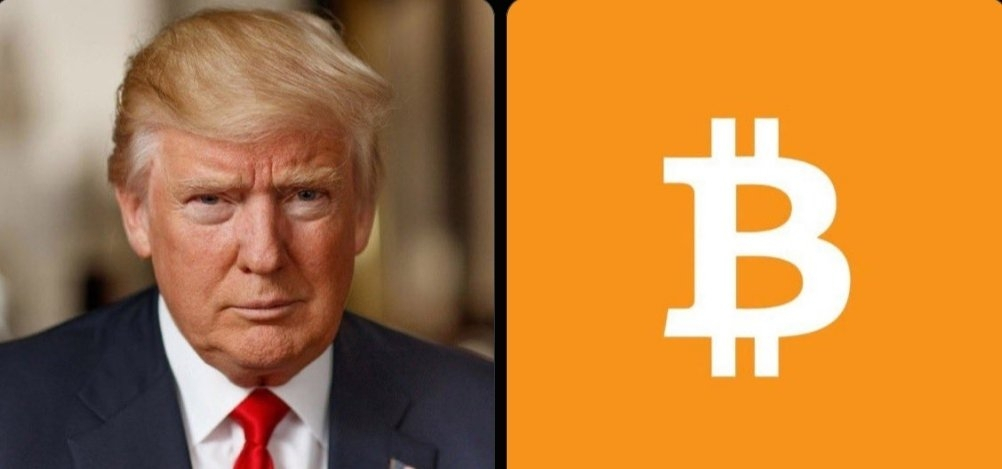
🇺🇸 The United States may be about to fully enter the Bitcoin space.
Reports suggest that Trump could take new executive action aimed at expanding America’s strategic holdings $BTC .
Consider what that means:
If the world’s largest economy actively accumulates Bitcoin, it will send a very different signal to governments, institutions, and markets.
America isn’t waiting for a Bitcoin race to begin.
Maybe it’s trying to win. 👀
Will other countries be forced to respond?
#Bitcoin #BTC
$BTC
$USDC
Reports suggest that Trump could take new executive action aimed at expanding America’s strategic holdings $BTC .
Consider what that means:
If the world’s largest economy actively accumulates Bitcoin, it will send a very different signal to governments, institutions, and markets.
America isn’t waiting for a Bitcoin race to begin.
Maybe it’s trying to win. 👀
Will other countries be forced to respond?
#Bitcoin #BTC
$BTC
$USDC
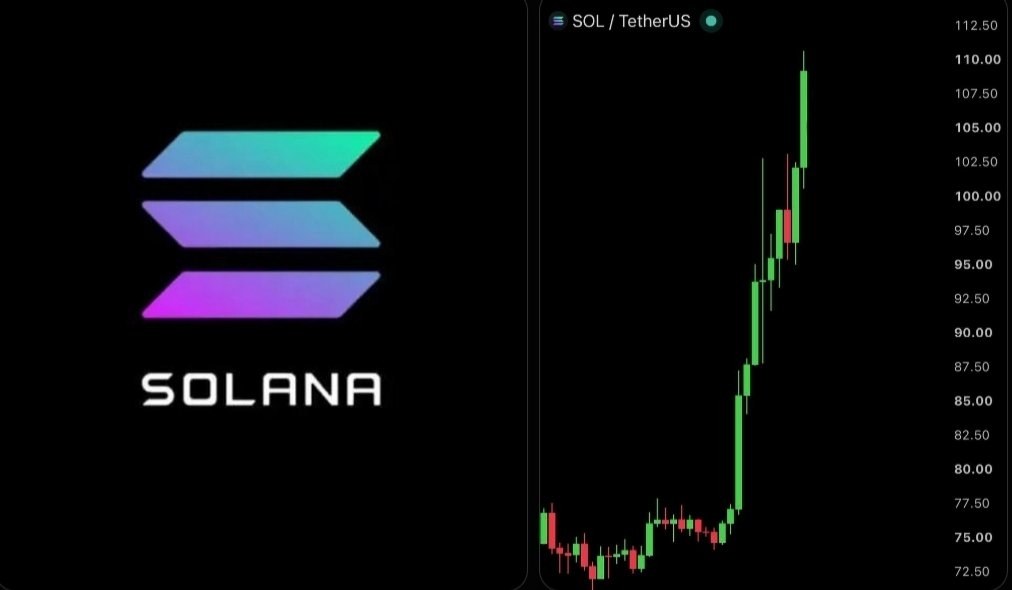
153 million dollars in Sol
Solana exchange-traded funds recorded their largest weekly inflow since October 2025.
Institutional demand is accelerating—at a time when the broader market remains volatile.
The big question:
Is this the start of a much larger institutional shift toward $SOL
#SOL ? 👀
Solana exchange-traded funds recorded their largest weekly inflow since October 2025.
Institutional demand is accelerating—at a time when the broader market remains volatile.
The big question:
Is this the start of a much larger institutional shift toward $SOL
#SOL ? 👀
I have created Michael Saylor’s strategy with a $1.6 billion cash fund that can be used to buy more Bitcoin.
This gives Strategy more firepower to continue adding more to its holdings $BTC .
#BTC #أستراتيجية
This gives Strategy more firepower to continue adding more to its holdings $BTC .
#BTC #أستراتيجية
⚡ Delve into Visa in the stablecoin space.
Visa and Dunamu, the company behind South Korea’s Upbit platform, are exploring stablecoin payments, cross-border transfers, and AI-supported commerce.
This is bigger than just one partnership.
Visa is marketing stablecoins as part of the next generation of global payment infrastructure.
Have stablecoins become the virtual channels for global payments? 👀#BTC #ارباح_رقمية $BTC
$USDC
Visa and Dunamu, the company behind South Korea’s Upbit platform, are exploring stablecoin payments, cross-border transfers, and AI-supported commerce.
This is bigger than just one partnership.
Visa is marketing stablecoins as part of the next generation of global payment infrastructure.
Have stablecoins become the virtual channels for global payments? 👀#BTC #ارباح_رقمية $BTC
$USDC
What is the reason?
Log in to explore more content