
Tomas Pforr
Starting off smol, leveraging AI, follow me for experiments
Open Trade
Occasional Trader
1.5 Years
2.3K+ Following
500 Followers
110 Liked
Posts
Portfolio
All
Quotes

MT - Research Notes
·
--
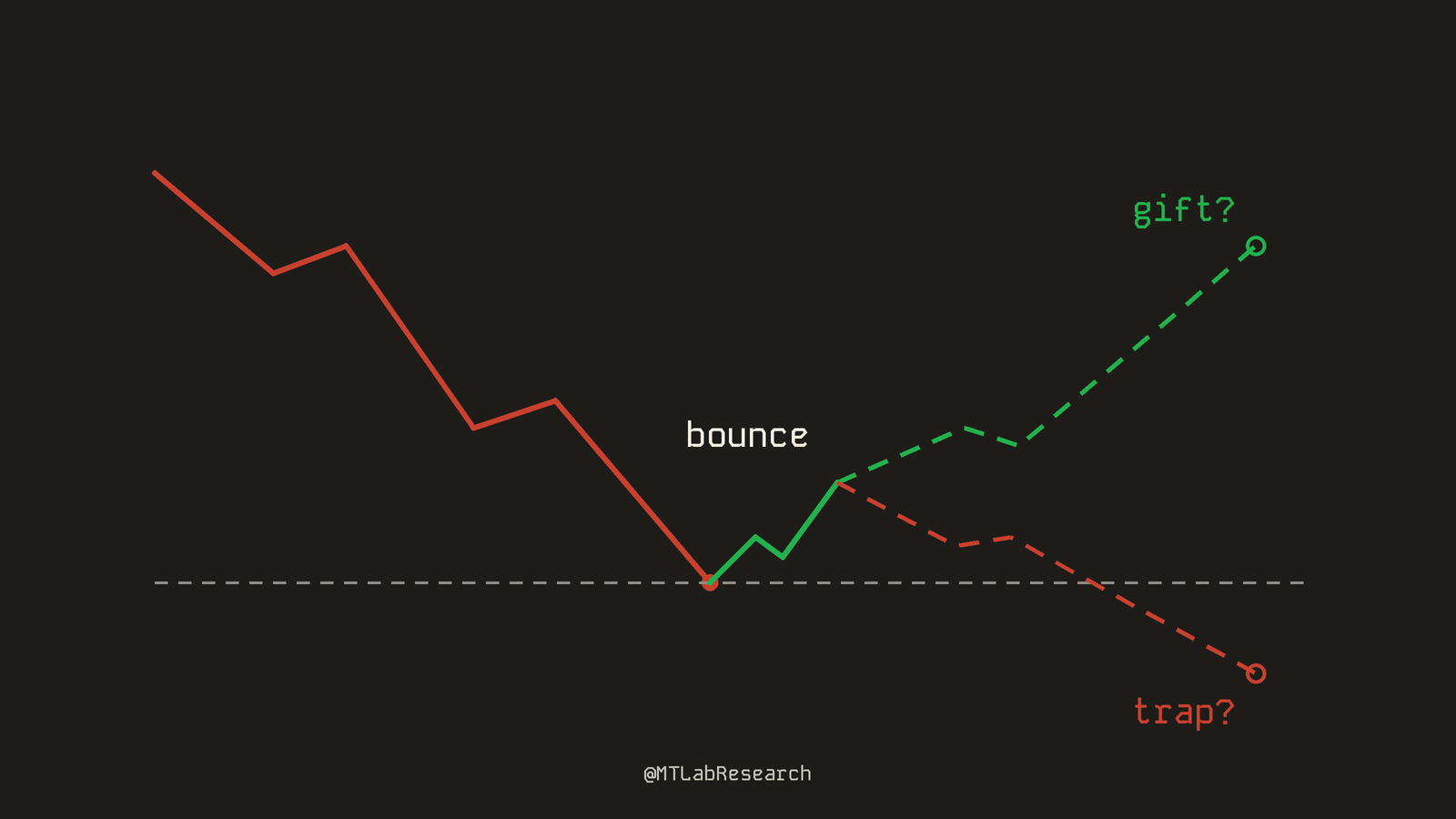
BullishUS stocks lost 8.6% in a week. Is the Thanksgiving rally a gift or a trap?
A bounce and a bottom are not the same thing. BofA Thanksgiving week is up only about 60% of the time, +0.28% on average. Barely better than a coin flip.
Quick catch-up. The S&P 500 (the 500 biggest US companies) fell 8.6% last week, its worst since April 2025, with seven red days in a row. The Nasdaq, packed with tech and AI names, fell 10%.
Futures were up about 2% at 06:37 UTC Monday, and "Thanksgiving rally" talk is picking up.
By my math, a 2% bounce lifts the S&P 500 just above the 10% line that defines a correction. Headlines will say "out of correction".
But the index would still sit about 10% under its Oct 6 record, and only about a fifth of last week's loss would be refilled.
So if you are asking when to buy, the question is not "is it Thanksgiving?" It is "what has to be true?"
Here are some scenarios, if you want to prepare:
- If Wednesday's core PCE (the Fed's favorite inflation gauge, 13:30 UTC, expected near 3.2%) comes in cooler, the bounce gets room. A hotter print lands on a market already pricing a Fed hike in December.
- If chip stocks stop making new lows. Nvidia led the rout.
- If it holds when full volume returns after the holiday. This week has only 3.5 trading days, and thin trading exaggerates moves both ways.
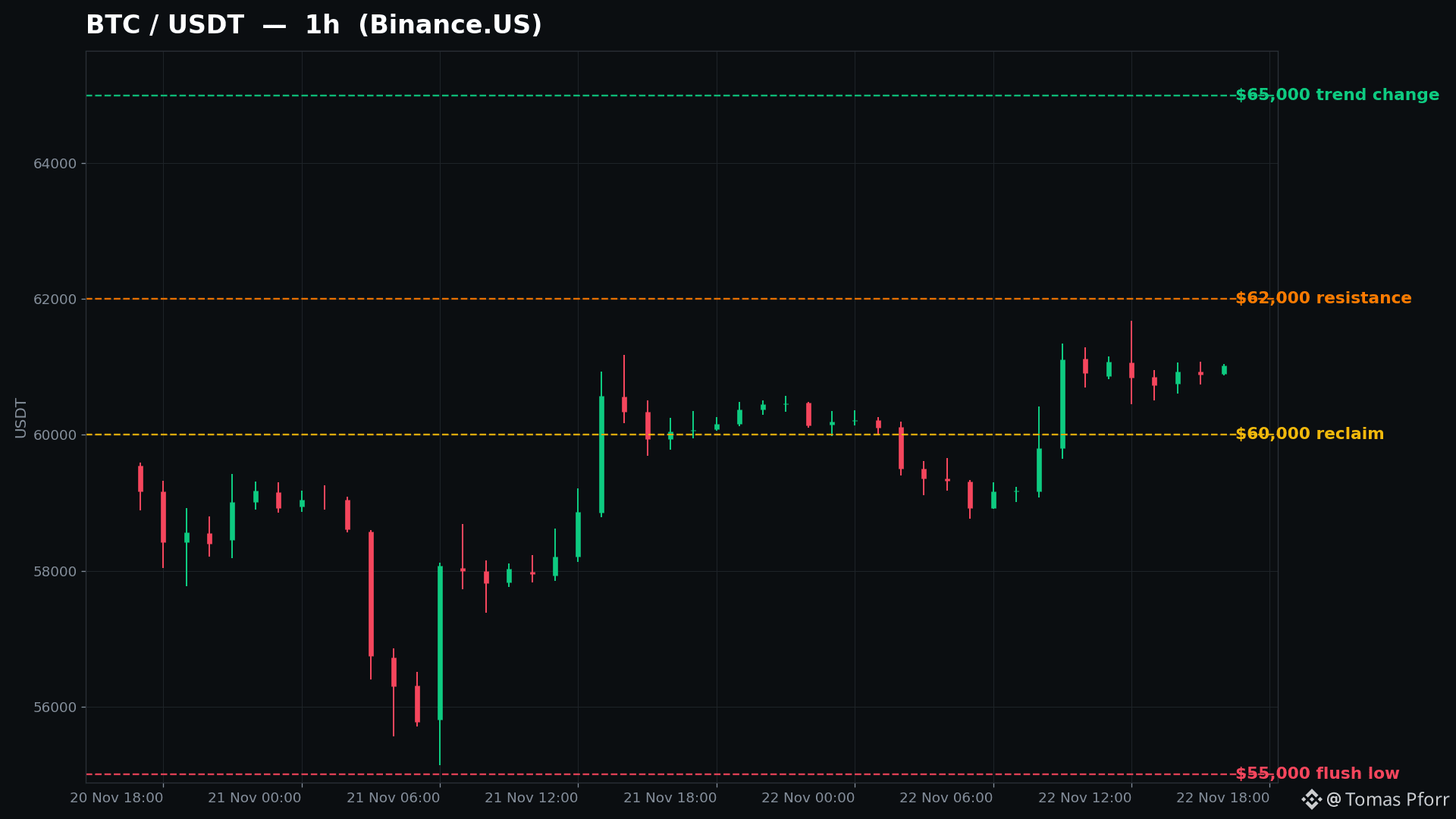
Crypto gets no holiday. Last week even gold fell, and BTC touched about $55,100 over the weekend (about 56% under its all-time high) in the same sell-off. It has since bounced to roughly $61,000. Nowhere to hide.
Gift hunter or trap spotter? Which side do you pick? $BTC
Experience, not financial advice.
#willmarketsstageathanksgivingreliefrally?


Wendy 🇻🇳
·
--
Aster Uses 99% of Its Fees to Buy ASTER. But There's Something Investors Should Check.
Aster has one of the more aggressive token buyback models among perpetual DEXs.
Since June 17, 2026, the platform has directed 99% of its daily fees toward purchasing ASTER on the market.
That's a serious commitment.
And after looking through the updated tokenomics, I think the interesting part is how those purchases actually work.
The ASTER bought with trading fees goes to veASTER stakers as additional rewards.
Meanwhile, Aster burns an equal amount of tokens from its reserves, starting with the team allocation.
So the buyback and the burn are separate transactions.
That's an important distinction.
Someone reading that Aster has bought back millions of tokens might assume every purchased ASTER is immediately destroyed. Under the current model, the purchased tokens are distributed to stakers, while matching tokens are removed from the reserve.
The result is a combination of staking incentives and supply reduction.
According to Aster's November 17 update, cumulative burns across its programs had reached approximately 216.18 million ASTER.
The upgraded model alone accounted for roughly 38.4 million of those tokens since June.
I find the mechanism interesting, especially because it creates a connection between platform fees and ASTER demand.
But there's a catch.
Aster earns fees from trading activity. And trading activity can change dramatically depending on market conditions.
During active periods, more traders opening and closing positions can generate substantial fees.
When markets get quieter, that revenue can shrink.
If fees fall, the amount available for ASTER buybacks falls too.
That's why I wouldn't value ASTER using trading volume alone.
I'd rather see how much actual fee revenue the platform generates across different market conditions, particularly when reward campaigns are less influential.
There's another piece worth watching: token supply.
ASTER launched with an initial maximum allocation of 8 billion tokens, and a large portion was reserved for community incentives.
Aster has since changed its distribution model.
The Ecosystem & Community allocation moved away from its original monthly linear release schedule to staking-based emissions.
The project also extended the team allocation cliff to September 17, 2027, according to its updated documentation.
That gives the market more time before the scheduled team vesting begins.
Still, delayed supply doesn't disappear. Investors need to understand what happens when future distributions eventually arrive.
And I wouldn't overlook competition.
Hyperliquid, centralized exchanges, and other perpetual DEXs are competing for the same traders.
Aster needs users who continue trading because they prefer the product, not simply because an incentive program offers attractive rewards.
That distinction becomes especially important when comparing headline trading volume with sustainable fee income.
For me, the most useful numbers to follow are actual fees, verified buybacks, circulating supply changes, and the amount of ASTER held in long-term staking.
The 99% buyback commitment is interesting.
What will matter more is how much revenue Aster can consistently generate to support it.
#ASTER #AsterDEX @Aster DEX $ASTER



Binance News
·
--
AI TRENDS | Elon Musk Says AI Compute Buildout Faces Funding Pressure, Cash Shortages May Be Severe Next Year
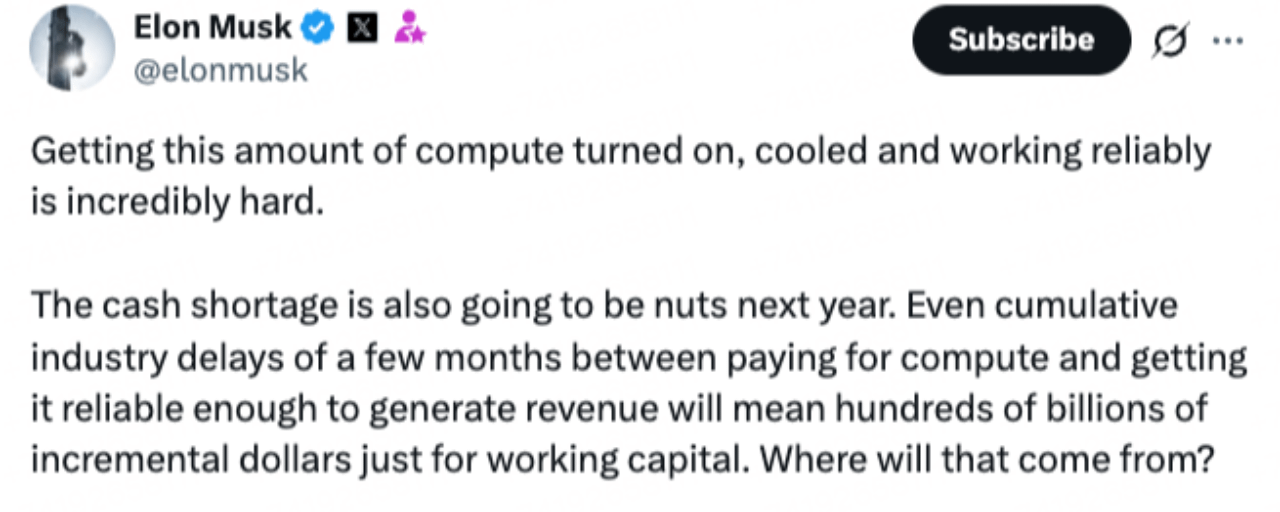
Elon Musk said building out AI computing capacity faces significant funding pressure, with industry cash shortages potentially severe next year. According to Odaily, Musk said bringing large-scale computing capacity online, cooling it and keeping it stable and reliable is extremely difficult. He said that even if companies wait months after paying for computing capacity before it becomes stable enough to generate revenue, the delay would require an additional several hundred billion dollars in working capital alone, and he asked where that money would come from.
Former Google engineer François Chollet had said the market either believes AI infrastructure construction is over and demand for computing capacity has peaked, or should see the current period as a rare buying opportunity. He also said spot GPU prices continue to rise, computing capacity is difficult to secure, and HBM and DRAM capacity is effectively fully booked.
Former Google engineer François Chollet had said the market either believes AI infrastructure construction is over and demand for computing capacity has peaked, or should see the current period as a rare buying opportunity. He also said spot GPU prices continue to rise, computing capacity is difficult to secure, and HBM and DRAM capacity is effectively fully booked.

Idrees Official
·
--
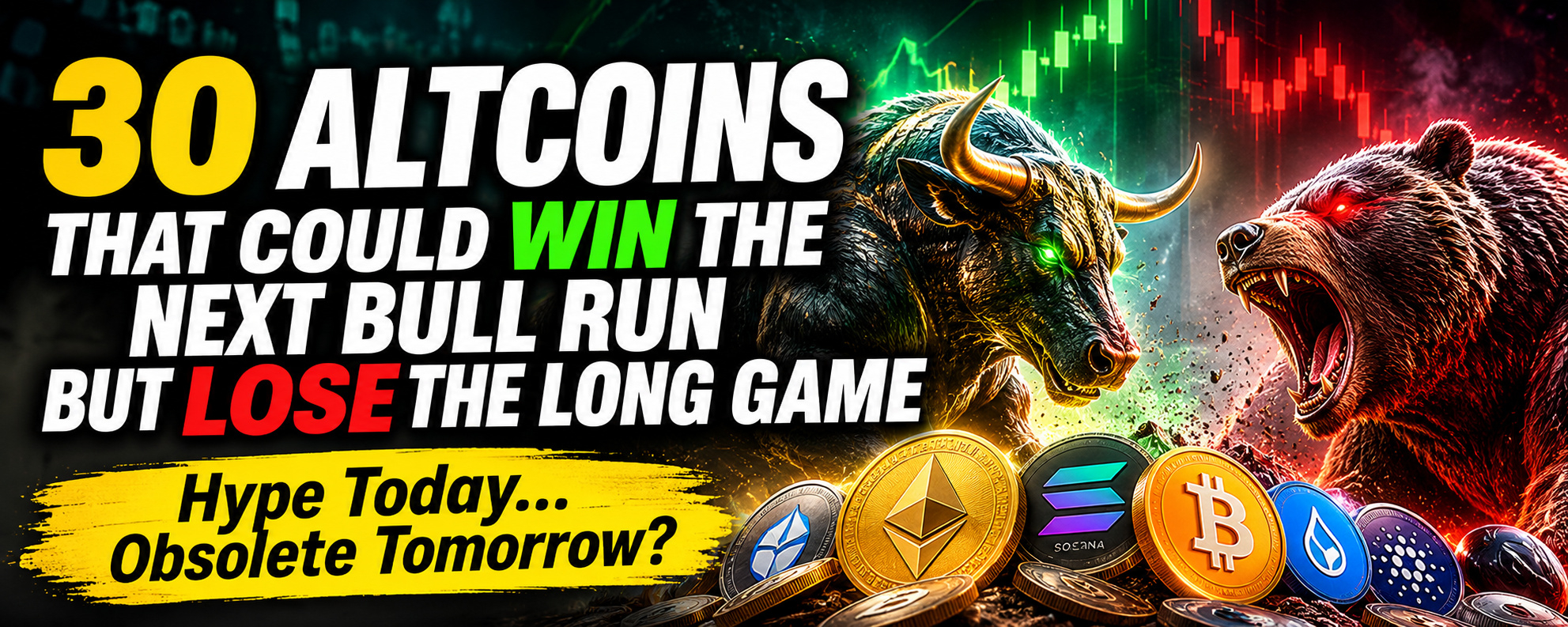
30 ALTCOINS THAT COULD WIN THE NEXT BULL RUN BUT LOSE THE LONG GAME
A 500% rally doesn't make an altcoin a long-term winner.
⠀
Some tokens can deliver explosive returns during a bull market.
⠀
And still lose most of those gains when the cycle ends.
⠀
Because PRICE PERFORMANCE and LONG-TERM VALUE are two different things.
⠀
Hype can attract capital.
Incentives can attract users.
Speculation can create massive trading volume.
⠀
But what happens when the easy money disappears?
⠀
Here are 30 altcoins facing one critical question:
⠀
Can they turn short-term momentum into lasting economic value?
⠀
LAYER 1 — HYPE VS. SUSTAINABLE ADOPTION
$SUI — Can rapid ecosystem growth translate into lasting user retention?
$APT — Can adoption remain strong after incentives decline?
$SEI — Can trading-focused infrastructure maintain demand beyond market hype?
$AVAX — Can blockchain adoption create sustainable token demand?
$NEAR — Can its infrastructure attract users beyond narrative-driven cycles?
⠀
LAYER 2 — NETWORK GROWTH VS. TOKEN VALUE
$ARB — Can ecosystem success translate into long-term value for ARB?
$OP — Can Superchain expansion strengthen OP's economic role?
$STRK — Can network adoption offset competition and token supply growth?
$ZK — Can scaling technology create sustainable demand for its token?
$POL — Can ecosystem activity support lasting token economics?
⠀
DEFI — TRADING VOLUME VS. REAL VALUE
$HYPE — Can derivatives activity remain strong through a prolonged bear market?
$JUP — Can trading growth create durable economic value for JUP?
$PENDLE — Can yield trading sustain demand when speculative activity declines?
$ENA — Can its economic model remain resilient during market stress?
$MORPHO — Can lending growth translate into sustainable token value capture?
⠀
AI — NARRATIVE VS. REAL CUSTOMERS
$TAO — Can decentralized AI demand support its token valuation over time?
$RENDER — Can genuine GPU demand sustain network economics?
$FET — Can AI agent adoption translate into measurable token utility?
$VIRTUAL — Can its AI ecosystem retain users after the hype fades?
$AKT — Can decentralized computing compete for paying customers?
⠀
MEMECOINS — COMMUNITY VS. CAPITAL ROTATION
$DOGE — Can cultural relevance sustain demand across multiple cycles?
$PEPE — Can community momentum survive prolonged market weakness?
$WIF — Can speculative interest return after liquidity moves elsewhere?
$BONK — Can ecosystem integration support demand beyond speculation?
$PENGU — Can brand expansion create lasting token demand?
⠀
GAMING & METAVERSE — REWARDS VS. RETENTION
$AXS — Can its gaming ecosystem retain players without excessive rewards?
$SAND — Can virtual world adoption survive beyond speculative cycles?
$MANA — Can metaverse activity translate into lasting user engagement?
$GALA — Can gaming products create sustainable economic demand?
$IMX — Can gaming infrastructure attract successful games and active players?
⠀
BUT HERE'S WHAT MOST INVESTORS FORGET:
⠀
A token can outperform Bitcoin during a bull run and still become a poor long-term investment.
⠀
A project can attract millions of transactions without retaining meaningful users.
⠀
A protocol can generate substantial fees without delivering proportional value to its token.
⠀
And a powerful community can drive prices higher without creating sustainable demand.
⠀
The biggest winners of a bull market are not automatically the strongest projects for the next decade.
⠀
Some will build lasting businesses.
⠀
Others may depend on liquidity, incentives, and speculative attention that disappear when market conditions change.
⠀
The real test comes after the excitement fades.
⠀
Do users stay?
Does revenue remain?
Can the project defend its market share?
Does the token capture economic value?
⠀
These 30 altcoins represent different risk profiles. This is not a prediction that all 30 will rally or subsequently decline.
⠀
Save this list and revisit it after the next market cycle.
⠀
Which FIVE altcoins could rally the hardest but struggle to hold their gains?
⠀
And which project do you believe can win both the bull run AND the long game?
⠀
Some tokens can deliver explosive returns during a bull market.
⠀
And still lose most of those gains when the cycle ends.
⠀
Because PRICE PERFORMANCE and LONG-TERM VALUE are two different things.
⠀
Hype can attract capital.
Incentives can attract users.
Speculation can create massive trading volume.
⠀
But what happens when the easy money disappears?
⠀
Here are 30 altcoins facing one critical question:
⠀
Can they turn short-term momentum into lasting economic value?
⠀
LAYER 1 — HYPE VS. SUSTAINABLE ADOPTION
$SUI — Can rapid ecosystem growth translate into lasting user retention?
$APT — Can adoption remain strong after incentives decline?
$SEI — Can trading-focused infrastructure maintain demand beyond market hype?
$AVAX — Can blockchain adoption create sustainable token demand?
$NEAR — Can its infrastructure attract users beyond narrative-driven cycles?
⠀
LAYER 2 — NETWORK GROWTH VS. TOKEN VALUE
$ARB — Can ecosystem success translate into long-term value for ARB?
$OP — Can Superchain expansion strengthen OP's economic role?
$STRK — Can network adoption offset competition and token supply growth?
$ZK — Can scaling technology create sustainable demand for its token?
$POL — Can ecosystem activity support lasting token economics?
⠀
DEFI — TRADING VOLUME VS. REAL VALUE
$HYPE — Can derivatives activity remain strong through a prolonged bear market?
$JUP — Can trading growth create durable economic value for JUP?
$PENDLE — Can yield trading sustain demand when speculative activity declines?
$ENA — Can its economic model remain resilient during market stress?
$MORPHO — Can lending growth translate into sustainable token value capture?
⠀
AI — NARRATIVE VS. REAL CUSTOMERS
$TAO — Can decentralized AI demand support its token valuation over time?
$RENDER — Can genuine GPU demand sustain network economics?
$FET — Can AI agent adoption translate into measurable token utility?
$VIRTUAL — Can its AI ecosystem retain users after the hype fades?
$AKT — Can decentralized computing compete for paying customers?
⠀
MEMECOINS — COMMUNITY VS. CAPITAL ROTATION
$DOGE — Can cultural relevance sustain demand across multiple cycles?
$PEPE — Can community momentum survive prolonged market weakness?
$WIF — Can speculative interest return after liquidity moves elsewhere?
$BONK — Can ecosystem integration support demand beyond speculation?
$PENGU — Can brand expansion create lasting token demand?
⠀
GAMING & METAVERSE — REWARDS VS. RETENTION
$AXS — Can its gaming ecosystem retain players without excessive rewards?
$SAND — Can virtual world adoption survive beyond speculative cycles?
$MANA — Can metaverse activity translate into lasting user engagement?
$GALA — Can gaming products create sustainable economic demand?
$IMX — Can gaming infrastructure attract successful games and active players?
⠀
BUT HERE'S WHAT MOST INVESTORS FORGET:
⠀
A token can outperform Bitcoin during a bull run and still become a poor long-term investment.
⠀
A project can attract millions of transactions without retaining meaningful users.
⠀
A protocol can generate substantial fees without delivering proportional value to its token.
⠀
And a powerful community can drive prices higher without creating sustainable demand.
⠀
The biggest winners of a bull market are not automatically the strongest projects for the next decade.
⠀
Some will build lasting businesses.
⠀
Others may depend on liquidity, incentives, and speculative attention that disappear when market conditions change.
⠀
The real test comes after the excitement fades.
⠀
Do users stay?
Does revenue remain?
Can the project defend its market share?
Does the token capture economic value?
⠀
These 30 altcoins represent different risk profiles. This is not a prediction that all 30 will rally or subsequently decline.
⠀
Save this list and revisit it after the next market cycle.
⠀
Which FIVE altcoins could rally the hardest but struggle to hold their gains?
⠀
And which project do you believe can win both the bull run AND the long game?

Kato Crypto
·
--
🇷🇺 RUSSIA OPENS THE DOOR TO REGULATED CRYPTO TRADING
Russia just took a major step toward legal crypto markets. The Bank of Russia's ordinance allowing organised crypto trading on licensed exchanges took effect on November 22, opening a legal path for venues to run crypto markets for the first time.
What actually changes:
🔹 Moscow Exchange, Russia's largest exchange, plans pilot trading from December 1, starting with BTC, ETH and USDT
🔹 Ordinary Russians can already buy Bitcoin, Ethereum and USDT through intermediaries, capped at 300,000 rubles (about $3,700) per year
🔹 Crypto still cannot be used as everyday money inside Russia
The honest catch: no venue is actually trading yet. Every exchange still needs the central bank to approve its trading rules first, and most players say industrial-scale services will not arrive until next year. The December 1 pilot is the real date to watch.
Still, this matters. One of the world's largest economies is building regulated crypto rails instead of banning them, and the framework is designed to pull Russian crypto activity off offshore platforms and onto supervised domestic venues.
Is regulated access in Russia a net positive for global crypto, or mostly symbolic while the cap stays tiny? Drop your take below 👇
📌 Sharing personal opinions only, not financial advice or a recommendation to buy/sell. Crypto is highly risky; DYOR and you are solely responsible. No coin promotion.
#Russia #Crypto #Bitcoin #Binance
MT - Research Notes
·
--
BearishCalifornia just said "criminal" about Nvidia. What does that actually mean?
Short answer: it is early. On Nov 19, California's attorney general sent Nvidia an investigative subpoena, a legal demand for documents and answers. A day later he said, per Bloomberg, the probe covers possible violations of state criminal law. He also said it is preliminary and no conclusions have been reached.
What is being checked?
- did advanced chips or confidential information reach China?
- did Nvidia or its former CEO Jensen Huang mislead investors or the public about it?
Charges, if any, depend on the facts, when people knew, and what they intended. If wrongdoing is proven, reported remedies include a court order to stop and paying back the money. I found no Nvidia response in the reports.
Why a crypto reader should care? Markets don't wait for the facts. When Huang resigned on Nov 12, BTC slipped below $72,000, AI tokens like NEAR, Bittensor and Render fell 7% to 12%, and about $720 million of positions were liquidated in 24 hours, mostly bets on higher prices (Coinglass). That was a headline, not a verdict.
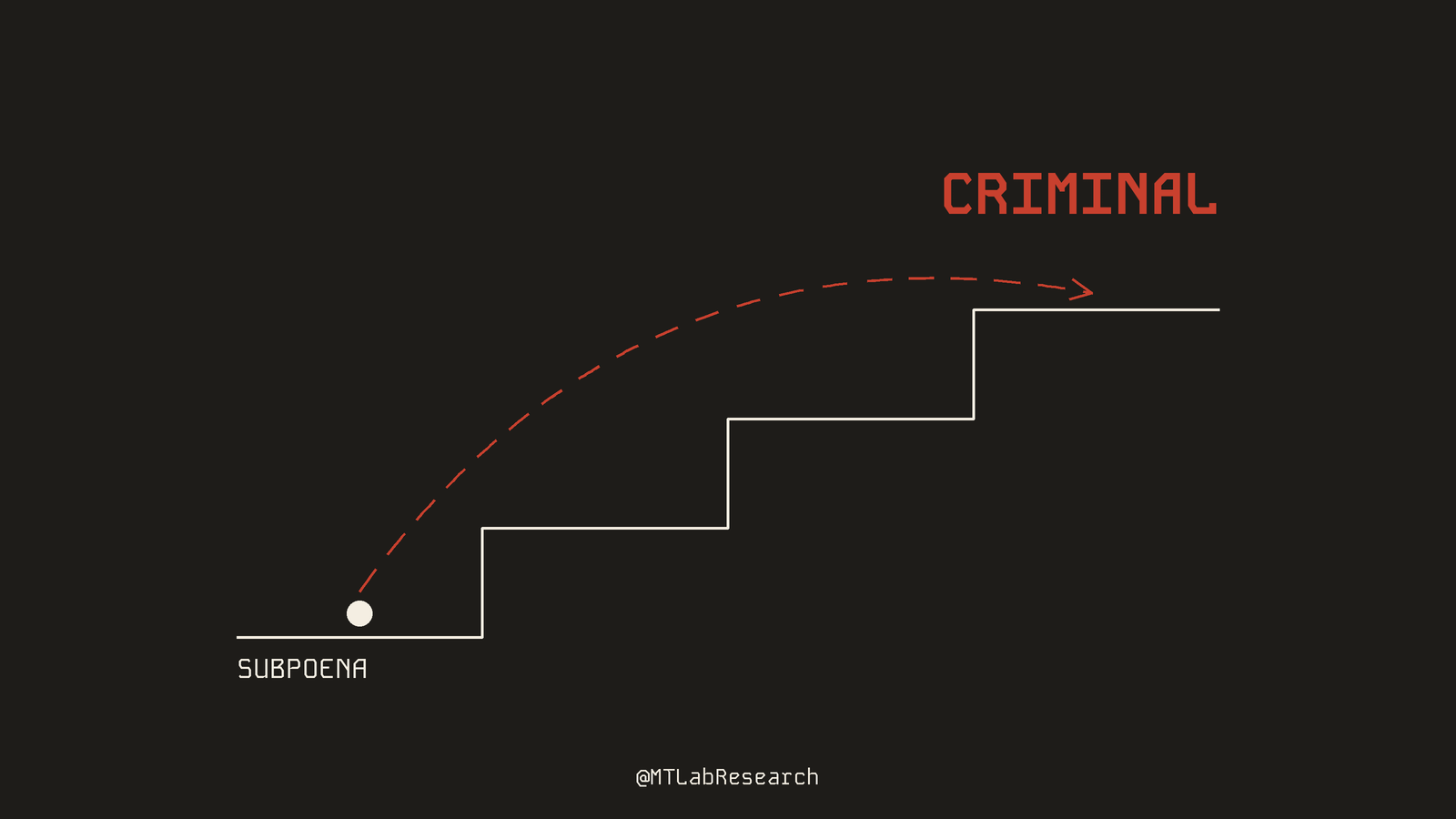
A probe usually climbs in steps (in my experience):
- subpoena and documents (we are here)
- findings
- a lawsuit or charges
- an outcome
Each step needs new facts. Trade the word instead of the step and you are trading a story.
- Read the stage, not the adjective.
- Borrowed money turns a headline into a liquidation. What must be true for your position to survive a 10% day?
- AI tokens have often moved with Nvidia news. Check what yours really depends on.
Which scares you faster, subpoena, probe or charge?
Experience, not financial advice.
#CaliforniaNvidiaProbeExaminesPotentialCriminalViolations

MT - Research Notes
·
--
BearishAfter every Binance user was repaid after hack, BNB still fell more than on the day it lost $6.3B.
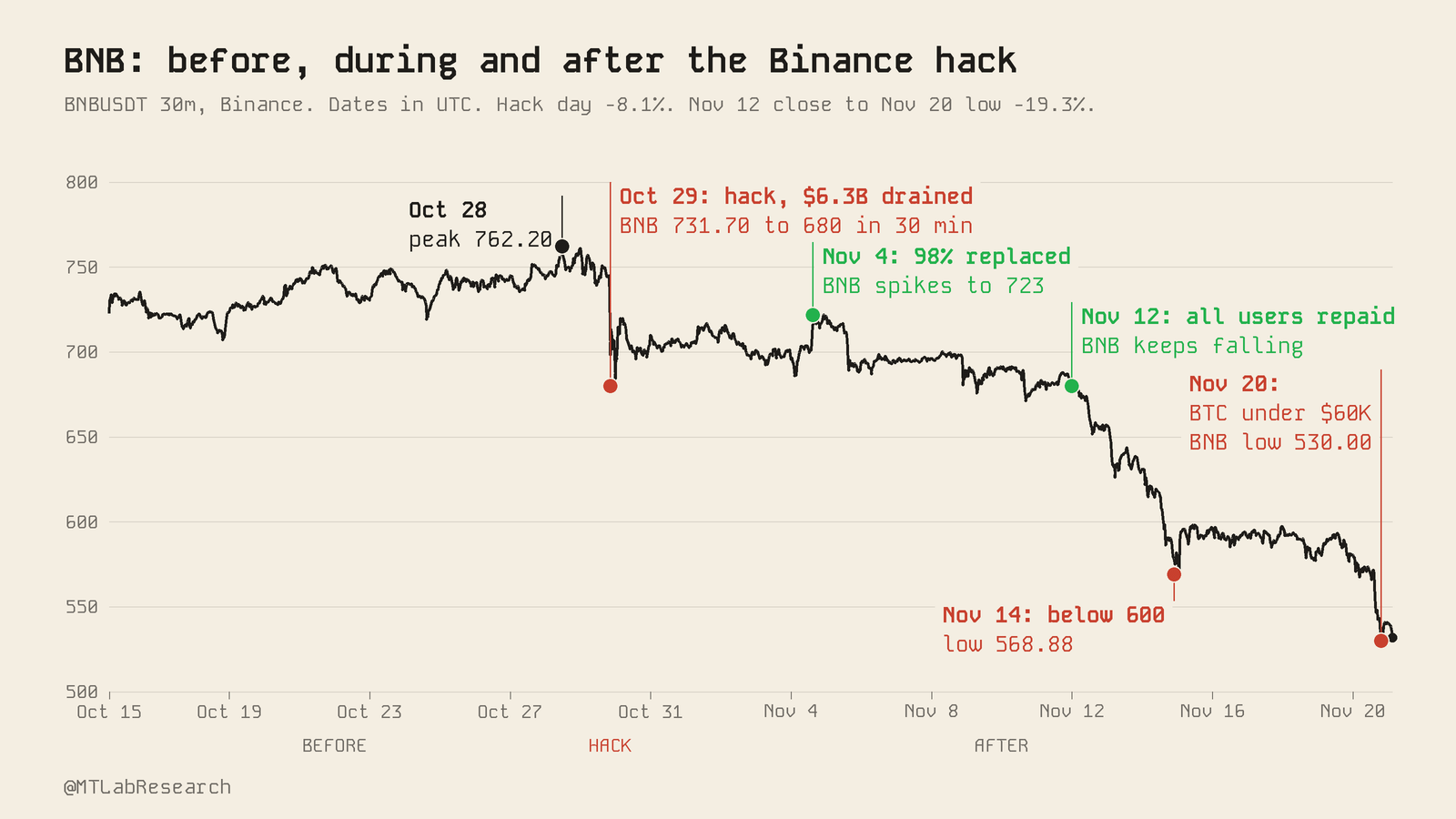
BNB broke below 540 USDT on Nov 20 (UTC), down about 8% in 24 hours. The hack day cost 8%. The slide since the repayment is bigger, and it came from somewhere else.
> Oct 28: BNB tops at 762.20 after climbing from about 715 in two weeks.
> Oct 29: At 20:05 UTC attackers start draining Binance hot wallets on ten blockchains. About $6.3B leaves in roughly 20 minutes. BNB drops from 731.70 to 680 in one 30-minute candle, on 15x its usual volume, and closes the day down 8%.
> Oct 30 to Nov 1: Binance says it will cover every loss. The FBI names North Korea's TraderTraitor group. Withdrawals reopen in phases from Nov 1. BNB holds between about 681 and 723 until Nov 4.
> Nov 4: Binance says 98% is replaced. BNB spikes to 723, then closes 4% lower the next day.
> Nov 12: Binance says every affected customer is made whole, with more than $6.34B of its own funds. BNB keeps falling. Hotter US inflation, bets on a December Fed rate hike, ETF outflows and leveraged selling hit the whole market. BNB loses 600 on Nov 14.
> Nov 20: Bitcoin drops under $60,000 for the first time since July as an AI stock sell-off spreads into crypto. BNB loses 540 and touches 530.00 at 19:30 UTC.
Everyone had their own stories:
- Binance: calm users first, repay everyone, chase the money in court.
- Hack-day sellers: the loss size was unknown, so selling first felt safer.
- November sellers: reacting to rates, ETF flows and margin calls, not to Binance.
Three things this chart showed:
1. A shock is priced in minutes. The hack printed in one candle, and good news moved price for hours, not weeks.
2. Fixing the cause does not fix the chart. Binance was whole by Nov 12, the market was not.
3. BNB is one company's token, yet it trades with the whole market. Check Bitcoin and ETF flows before blaming a headline.
Which scared you more, the hack or the market? $BNB
Experience, not financial advice.
#BNBDropsBelow540USDTWith8.46%DailyDecline
Log in to explore more content