
TN_Crypto
464 Posts

TN_Crypto
9.9K+ Following
10.2K+ Followers
2.0K+ Liked
Posts
All
Quotes
$ASTER — Aster is expanding into RWA: a strategic move or spreading itself too thin?
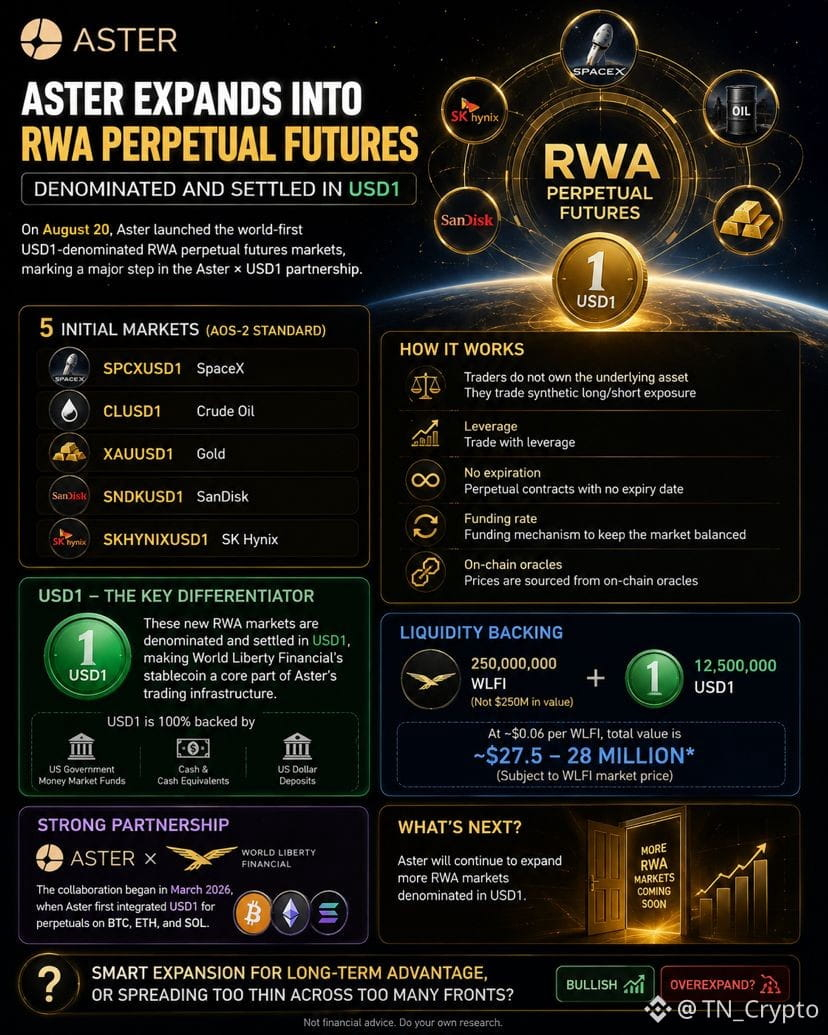
On August 20, Aster launched a group of RWA perpetual futures markets denominated in USD1, which Aster describes as a first-of-its-kind move for USD1.
The first five markets under the AOS-2 standard:
→ SPCXUSD1 — SpaceX
→ CLUSD1 — Crude Oil
→ XAUUSD1 — Gold
→ SNDKUSD1 — SanDisk
→ SKHYNIXUSD1 — SK Hynix
The mechanism is similar to crypto perps:
→ Traders do not own the underlying asset
→ They trade long/short exposure with leverage
→ No expiration date
→ Funding rates help keep the market balanced
→ Reference prices are provided through oracles
But the most interesting part isn’t Aster bringing RWA into perps there are already competitors in this space.
The real differentiator is USD1.
These new RWA markets are denominated and settled in USD1, turning World Liberty Financial’s stablecoin into a direct part of Aster’s trading infrastructure.
This also builds on the Aster × USD1 relationship that began in March 2026, when Aster started supporting USD1 within its perpetual futures system, including BTC, ETH, and SOL.
On the liquidity side, the partnership announced:
250 million WLFI + 12.5 million USD1
One important clarification: 250 million refers to the number of WLFI tokens, not $250 million in value. At around $0.06 per WLFI, the combined value would be roughly $27.5–28 million, and that figure changes with WLFI’s market price.
Aster has also said it plans to expand with more RWA markets denominated in USD1.
So this isn’t simply about adding a few new products.
If executed well, Aster could be building an ecosystem where:
Crypto → RWA → Commodities → Stablecoin settlement
are all connected through the same perpetual trading infrastructure.
But the big question remains:
Is this a smart expansion that could give $ASTER a long-term edge, or is Aster spreading itself across too many fronts at once?
What do you think bullish expansion or overexpansion?
On August 20, Aster launched a group of RWA perpetual futures markets denominated in USD1, which Aster describes as a first-of-its-kind move for USD1.
The first five markets under the AOS-2 standard:
→ SPCXUSD1 — SpaceX
→ CLUSD1 — Crude Oil
→ XAUUSD1 — Gold
→ SNDKUSD1 — SanDisk
→ SKHYNIXUSD1 — SK Hynix
The mechanism is similar to crypto perps:
→ Traders do not own the underlying asset
→ They trade long/short exposure with leverage
→ No expiration date
→ Funding rates help keep the market balanced
→ Reference prices are provided through oracles
But the most interesting part isn’t Aster bringing RWA into perps there are already competitors in this space.
The real differentiator is USD1.
These new RWA markets are denominated and settled in USD1, turning World Liberty Financial’s stablecoin into a direct part of Aster’s trading infrastructure.
This also builds on the Aster × USD1 relationship that began in March 2026, when Aster started supporting USD1 within its perpetual futures system, including BTC, ETH, and SOL.
On the liquidity side, the partnership announced:
250 million WLFI + 12.5 million USD1
One important clarification: 250 million refers to the number of WLFI tokens, not $250 million in value. At around $0.06 per WLFI, the combined value would be roughly $27.5–28 million, and that figure changes with WLFI’s market price.
Aster has also said it plans to expand with more RWA markets denominated in USD1.
So this isn’t simply about adding a few new products.
If executed well, Aster could be building an ecosystem where:
Crypto → RWA → Commodities → Stablecoin settlement
are all connected through the same perpetual trading infrastructure.
But the big question remains:
Is this a smart expansion that could give $ASTER a long-term edge, or is Aster spreading itself across too many fronts at once?
What do you think bullish expansion or overexpansion?
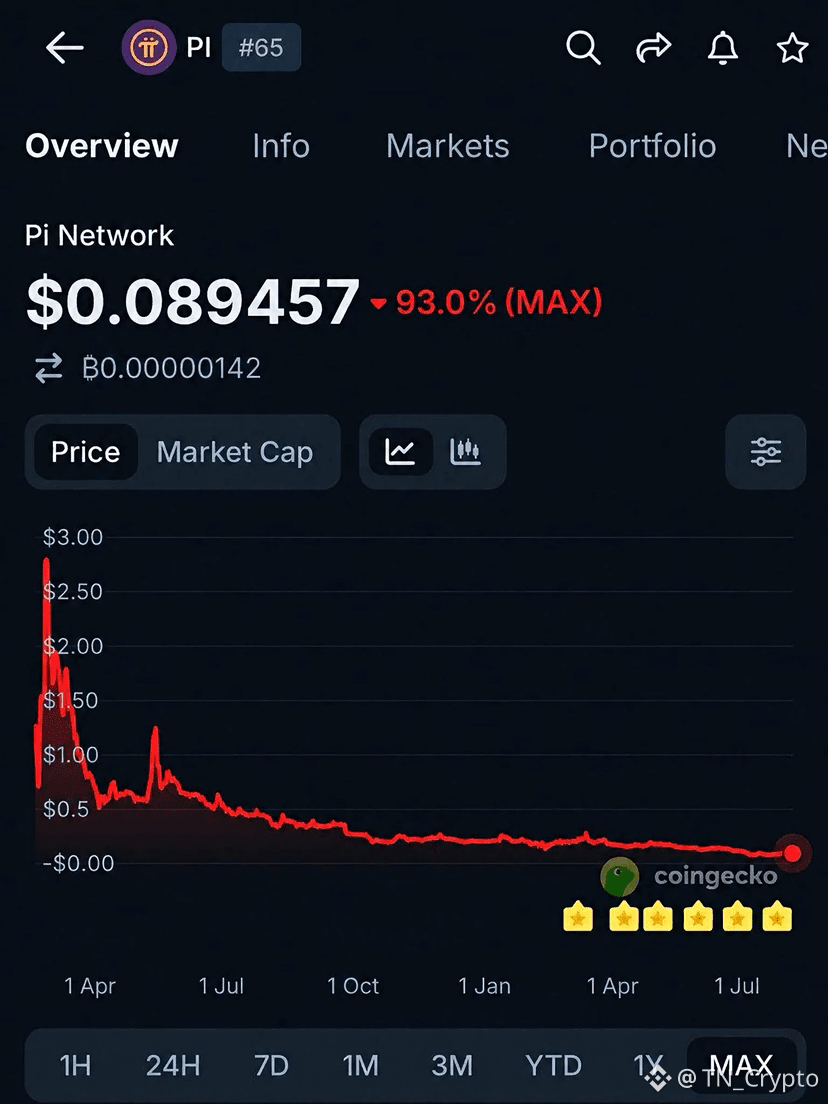
🚨 $PI has lost around 97% of its value from its ATH, 535 days after reaching its peak.
If you had invested $1,000 in $PI at its ATH, your investment would now be worth only around $30.
A drop this brutal raises one big question:
👉 Buy more and catch the bottom?
👉 Keep HOLDing and wait for a recovery?
👉 Or accept the loss and sell?
If it were you, what would you choose? 👀
If you had invested $1,000 in $PI at its ATH, your investment would now be worth only around $30.
A drop this brutal raises one big question:
👉 Buy more and catch the bottom?
👉 Keep HOLDing and wait for a recovery?
👉 Or accept the loss and sell?
If it were you, what would you choose? 👀
Verified
🔴 TRUMP “SPIED” BY THE SEC IN A MEMECOIN INVESTIGATION INVOLVING DONALD TRUMP?
Two U.S. Senators, Elizabeth Warren and Richard Blumenthal, have just sent a letter requesting that the SEC review the $TRUMP memecoin project, alleging signs of market manipulation and that it benefits an internal group.
According to the letter, nearly 1 million investors are believed to have suffered losses of more than $3.81 billion. Meanwhile, parties associated with the project are said to have collected about $636 million, and some investors who joined very early reportedly cashed out around $109 million in just 2 days.
The point of contention is that companies linked to the Trump Organization and Fight Fight Fight hold about 80% of the total supply of $TRUMP, while also benefiting from the token’s transaction fees.
The two senators believe this model may show signs of a “soft rug pull”—not a single, clean exit, but rather extracting value from the project over time while still maintaining expectations to keep new money flowing in. Currently, the price of $TRUMP is down nearly 98% from its peak.
However, the SEC has not yet confirmed whether it has opened an official investigation. In addition, TRM Labs has said that $TRUMP does not meet the indicators of a rug pull in the traditional sense.
An interesting detail: the current SEC Chair is Paul Atkins—who was nominated for the role by Donald Trump.
Two U.S. Senators, Elizabeth Warren and Richard Blumenthal, have just sent a letter requesting that the SEC review the $TRUMP memecoin project, alleging signs of market manipulation and that it benefits an internal group.
According to the letter, nearly 1 million investors are believed to have suffered losses of more than $3.81 billion. Meanwhile, parties associated with the project are said to have collected about $636 million, and some investors who joined very early reportedly cashed out around $109 million in just 2 days.
The point of contention is that companies linked to the Trump Organization and Fight Fight Fight hold about 80% of the total supply of $TRUMP, while also benefiting from the token’s transaction fees.
The two senators believe this model may show signs of a “soft rug pull”—not a single, clean exit, but rather extracting value from the project over time while still maintaining expectations to keep new money flowing in. Currently, the price of $TRUMP is down nearly 98% from its peak.
However, the SEC has not yet confirmed whether it has opened an official investigation. In addition, TRM Labs has said that $TRUMP does not meet the indicators of a rug pull in the traditional sense.
An interesting detail: the current SEC Chair is Paul Atkins—who was nominated for the role by Donald Trump.
Long before quantum computing became a mainstream topic, Satoshi Nakamoto had already considered its potential impact on Bitcoin.
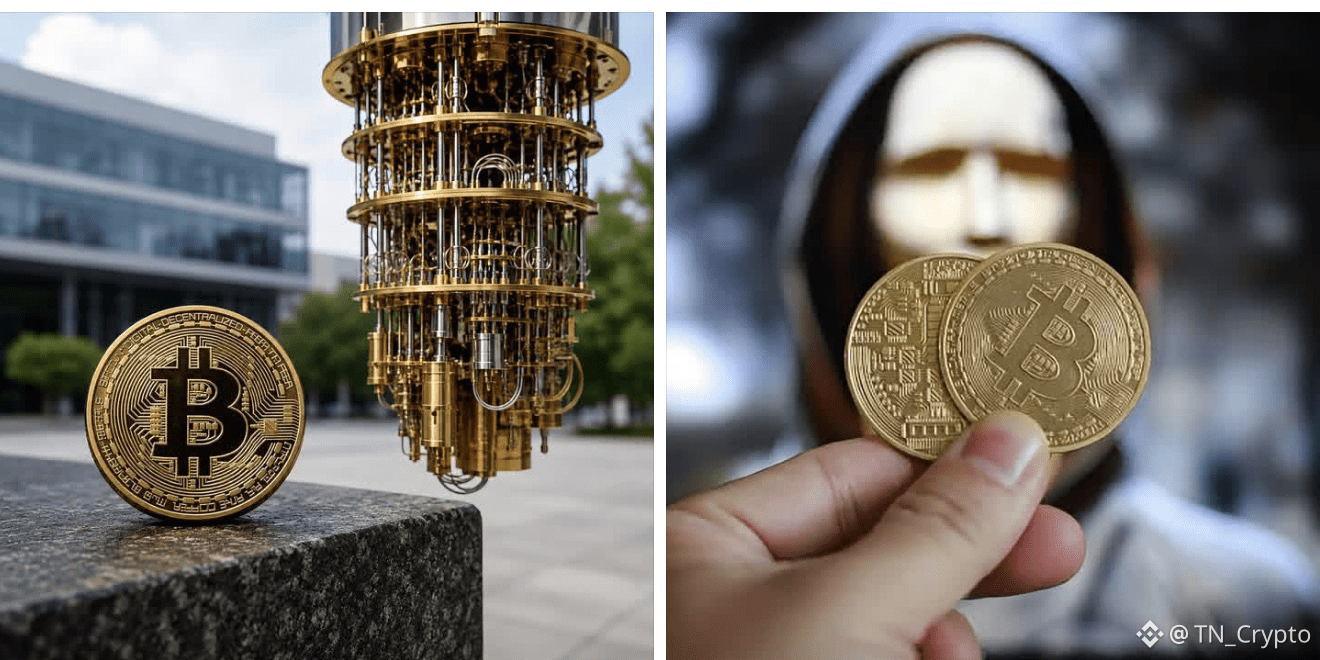
More than 16 years ago, he acknowledged that quantum computers might eventually challenge Bitcoin’s cryptographic security. But he also believed that such a scenario could be addressed through protocol upgrades rather than signaling the end of Bitcoin.
If that day ever arrives, the network could adopt quantum-resistant cryptography, while users would only need to update their software and transfer their Bitcoin to newly secured addresses.
To date, there is no evidence that quantum computers can break Bitcoin’s security in practice. Meanwhile, researchers and blockchain projects are actively developing post-quantum cryptographic solutions in preparation for the future.
Bitcoin’s strength has never been about standing still it’s about evolving alongside technological progress.
More than 16 years ago, he acknowledged that quantum computers might eventually challenge Bitcoin’s cryptographic security. But he also believed that such a scenario could be addressed through protocol upgrades rather than signaling the end of Bitcoin.
If that day ever arrives, the network could adopt quantum-resistant cryptography, while users would only need to update their software and transfer their Bitcoin to newly secured addresses.
To date, there is no evidence that quantum computers can break Bitcoin’s security in practice. Meanwhile, researchers and blockchain projects are actively developing post-quantum cryptographic solutions in preparation for the future.
Bitcoin’s strength has never been about standing still it’s about evolving alongside technological progress.
World Liberty Financial has proposed a new unlock structure for around 62.28 billion WLFI tokens, signaling a stronger focus on transparency and tighter supply control.
Around 45 billion WLFI allocated to the team, advisors, and partners would remain locked for the first 2 years, then gradually unlock over the following 3 years. Notably, up to 10% of this allocation could be permanently burned, equal to roughly 4.5 billion WLFI, helping reduce circulating supply and strengthen scarcity.
Meanwhile, more than 17 billion WLFI held by early supporters would also be locked for 2 years, then distributed gradually over the next 2 years. Any tokens not participating in the new proposal could remain locked for an even longer period.
If approved, this could become one of the strictest vesting structures in crypto today, designed to reduce sell pressure, avoid major supply shocks, and provide a more stable long-term foundation for WLFI.
Around 45 billion WLFI allocated to the team, advisors, and partners would remain locked for the first 2 years, then gradually unlock over the following 3 years. Notably, up to 10% of this allocation could be permanently burned, equal to roughly 4.5 billion WLFI, helping reduce circulating supply and strengthen scarcity.
Meanwhile, more than 17 billion WLFI held by early supporters would also be locked for 2 years, then distributed gradually over the next 2 years. Any tokens not participating in the new proposal could remain locked for an even longer period.
If approved, this could become one of the strictest vesting structures in crypto today, designed to reduce sell pressure, avoid major supply shocks, and provide a more stable long-term foundation for WLFI.
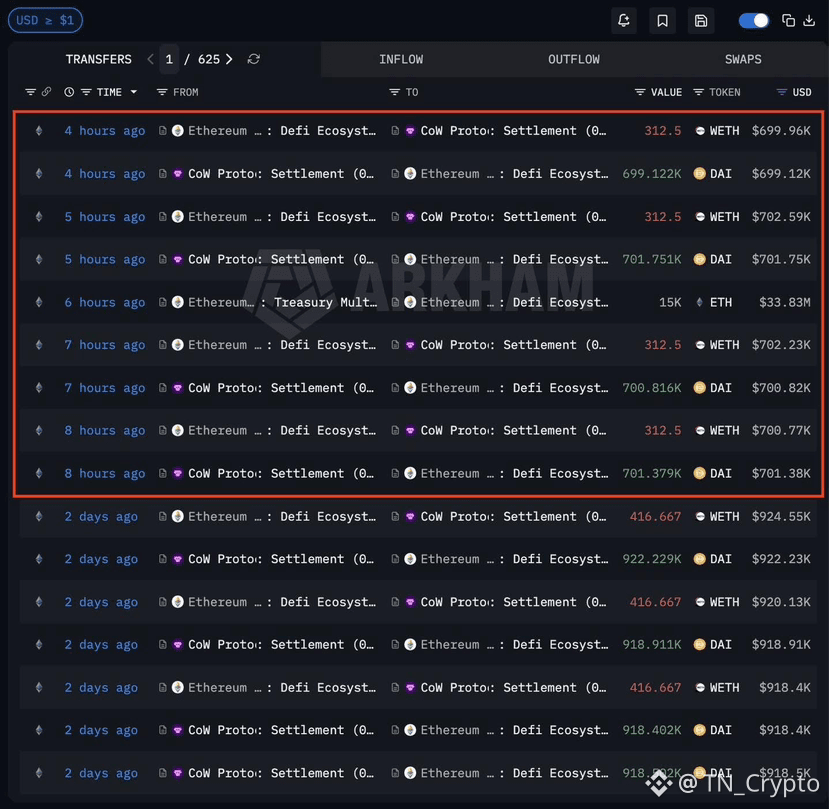
🩸 The Ethereum Foundation has sold another 1,250 ETH, worth around $2.8 million.
And once again, the reason remains the same: “selling to fund development.”
But for the community, every ETH sale from the Foundation raises one big question:
If the people who understand Ethereum the most keep selling, where is the long-term conviction?
Building is necessary.
Funding is necessary.
But selling into weak market sentiment and calling it “development” makes it hard for the community to stay optimistic.
Ethereum does not lack technology.
Ethereum is lacking confidence.
And once again, the reason remains the same: “selling to fund development.”
But for the community, every ETH sale from the Foundation raises one big question:
If the people who understand Ethereum the most keep selling, where is the long-term conviction?
Building is necessary.
Funding is necessary.
But selling into weak market sentiment and calling it “development” makes it hard for the community to stay optimistic.
Ethereum does not lack technology.
Ethereum is lacking confidence.
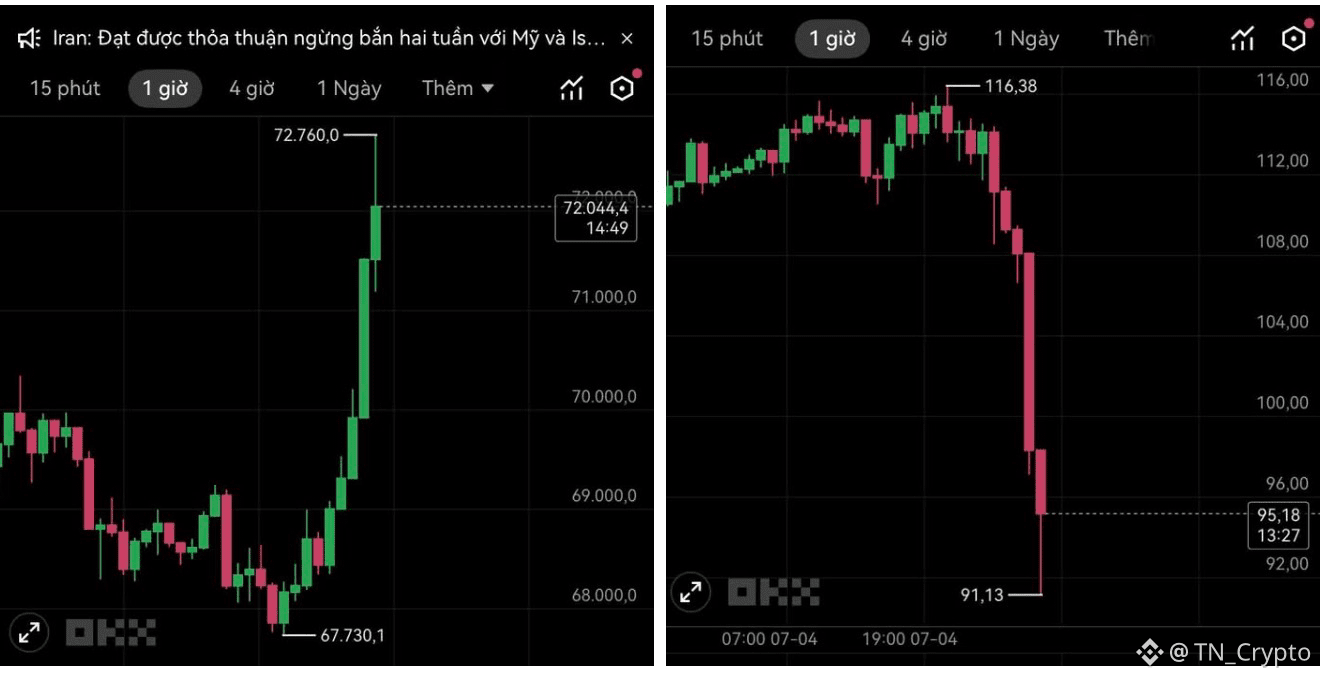
🔥 HOT: Bitcoin surges to $72,000, while oil prices plummet to $95 immediately after Trump announces a two-week ceasefire.
The market reacted very quickly.
• Bitcoin surges as risk-on sentiment returns
• Oil falls sharply as concerns about supply disruptions temporarily ease
• Investors are shifting capital away from defensive assets to crypto and riskier assets
If the ceasefire is maintained, this could be a major catalyst for a stronger crypto market recovery in the short term.
The market reacted very quickly.
• Bitcoin surges as risk-on sentiment returns
• Oil falls sharply as concerns about supply disruptions temporarily ease
• Investors are shifting capital away from defensive assets to crypto and riskier assets
If the ceasefire is maintained, this could be a major catalyst for a stronger crypto market recovery in the short term.
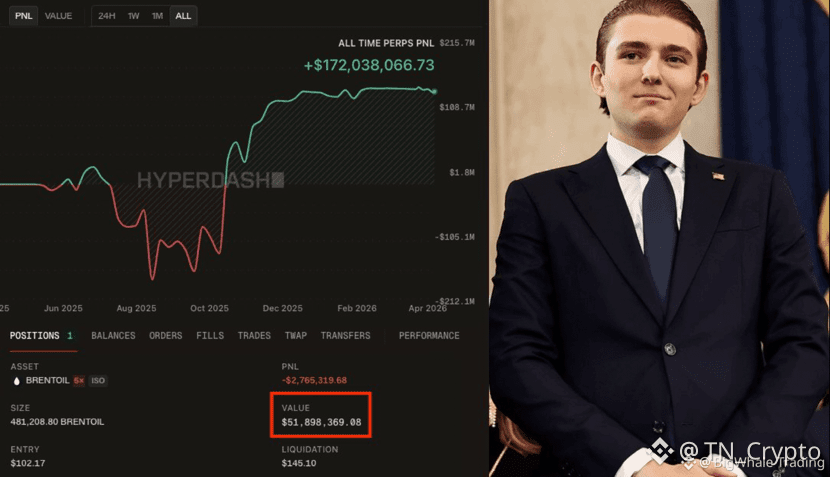
Trump-linked insider trader with a perfect 16/16 win rate has just opened a massive $51.9M short on Brent Oil.
This is the same trader who has generated over $172M in realized profit so far.
Current position details:
• Brent Oil short
• 5x leverage
• Position size above $481M
• Liquidation price: $145.10
What makes this even more interesting is the timing.
The trade was opened just before Trump’s emergency announcement later today.
That raises the big question:
Is he expecting a ceasefire or some kind of de-escalation that would send oil prices sharply lower?
Or does he know something bigger is coming?
Either way, when someone with a flawless record and over $172M in gains makes a move this large, the market pays attention.
Oil, Bitcoin, and Gold could all see major volatility once Trump speaks.
This could end up being one of the biggest trades of the week.
This is the same trader who has generated over $172M in realized profit so far.
Current position details:
• Brent Oil short
• 5x leverage
• Position size above $481M
• Liquidation price: $145.10
What makes this even more interesting is the timing.
The trade was opened just before Trump’s emergency announcement later today.
That raises the big question:
Is he expecting a ceasefire or some kind of de-escalation that would send oil prices sharply lower?
Or does he know something bigger is coming?
Either way, when someone with a flawless record and over $172M in gains makes a move this large, the market pays attention.
Oil, Bitcoin, and Gold could all see major volatility once Trump speaks.
This could end up being one of the biggest trades of the week.
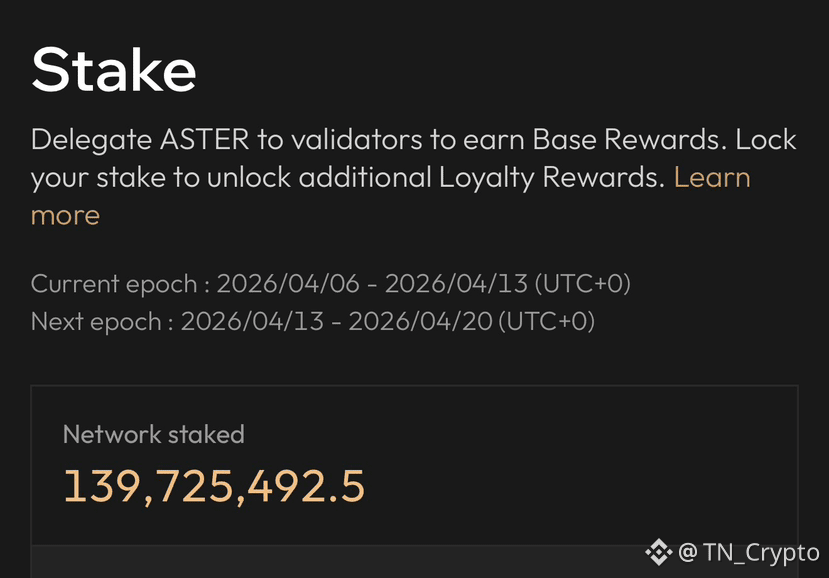
Over 139.7M ASTER has now been staked across the network. @Aster_DEX
Confidence is growing week by week. As more ASTER gets staked, the circulating supply continues to tighten.
139,725,492.5 ASTER staked and counting.
Trade LiKe A Ninja 🥷
Confidence is growing week by week. As more ASTER gets staked, the circulating supply continues to tighten.
139,725,492.5 ASTER staked and counting.
Trade LiKe A Ninja 🥷
🚨 Drift Protocol — the second-largest derivatives exchange on Solana — suffered a major exploit on April 1.
The team confirmed “unusual activity” at 18:10 UTC, then later stated the protocol was “experiencing an active attack” and paused all deposits and withdrawals.
Initial estimates suggest the attacker drained around $270.6 million in less than an hour — nearly half of Drift’s pre-incident TVL of over $540 million.
Stolen assets reportedly included:
• USDC, USDT
• JLP (~$155.6 million)
• Staked SOL
• WBTC
• And several other assets
After the exploit, the attacker allegedly swapped funds into USDC, bridged assets to Ethereum through Wormhole, bought ETH, and moved part of the funds through Hyperliquid.
Drift is now working with security firms, bridges, and exchanges to trace and freeze the stolen funds.
This is currently the largest hack in Solana DeFi history.
DRIFT token price dropped sharply following the announcement. Users are advised not to deposit funds into the protocol and to follow official updates from the team.
The team confirmed “unusual activity” at 18:10 UTC, then later stated the protocol was “experiencing an active attack” and paused all deposits and withdrawals.
Initial estimates suggest the attacker drained around $270.6 million in less than an hour — nearly half of Drift’s pre-incident TVL of over $540 million.
Stolen assets reportedly included:
• USDC, USDT
• JLP (~$155.6 million)
• Staked SOL
• WBTC
• And several other assets
After the exploit, the attacker allegedly swapped funds into USDC, bridged assets to Ethereum through Wormhole, bought ETH, and moved part of the funds through Hyperliquid.
Drift is now working with security firms, bridges, and exchanges to trace and freeze the stolen funds.
This is currently the largest hack in Solana DeFi history.
DRIFT token price dropped sharply following the announcement. Users are advised not to deposit funds into the protocol and to follow official updates from the team.
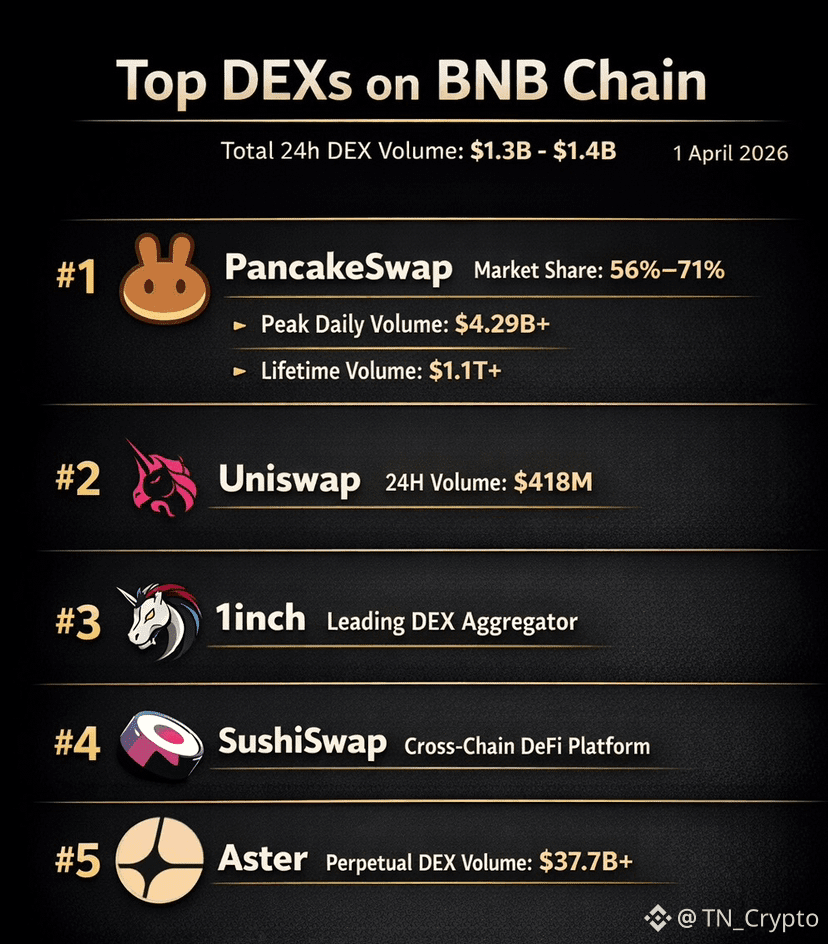
BNB Chain continues to dominate DEX activity in 2026.
Top DEXs on BNB Chain today:
1. PancakeSwap
56%–71% market share
$4.29B+ peak daily volume
$1.1T+ lifetime volume
2. Uniswap
$418M 24H volume
3. 1inch
Leading DEX aggregator on BNB Chain
4. SushiSwap
Strong cross-chain DeFi presence
5. Aster
$37.7B+ perpetual DEX volume
BNB Chain is no longer dependent on one protocol.
It now has a complete trading ecosystem across spot, perp, aggregation, and cross-chain liquidity.
@cz_binance @BNBCHAIN
$BNB $ASTER
Top DEXs on BNB Chain today:
1. PancakeSwap
56%–71% market share
$4.29B+ peak daily volume
$1.1T+ lifetime volume
2. Uniswap
$418M 24H volume
3. 1inch
Leading DEX aggregator on BNB Chain
4. SushiSwap
Strong cross-chain DeFi presence
5. Aster
$37.7B+ perpetual DEX volume
BNB Chain is no longer dependent on one protocol.
It now has a complete trading ecosystem across spot, perp, aggregation, and cross-chain liquidity.
@cz_binance @BNBCHAIN
$BNB $ASTER
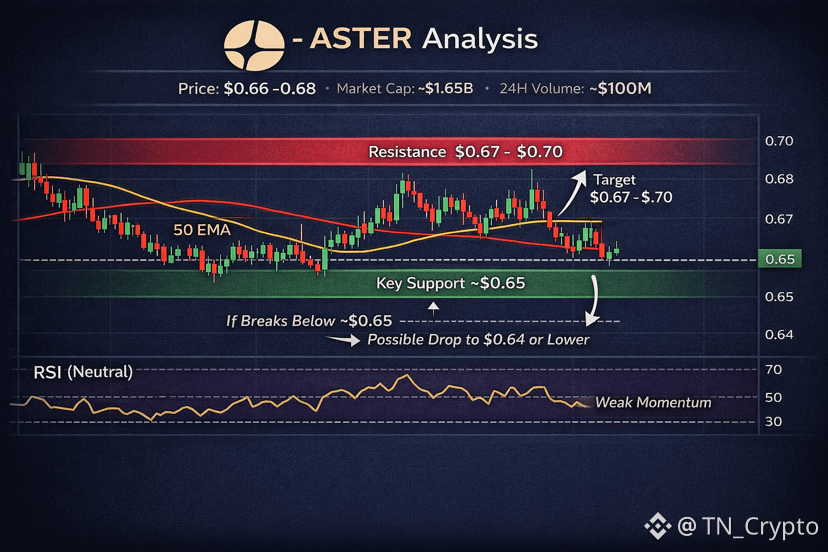
$ASTER is still holding up relatively well around the $0.66–0.68 range despite the broader market not being particularly strong.
24H volume remains close to $100M, with market cap around $1.6B+, showing that capital has not left ASTER yet.
The key support zone right now is around $0.65. If ASTER can hold this level, it could soon move back to test the $0.67–0.70 range.
On the other hand, if it loses $0.65, there is a good chance of another shakeout toward lower levels before any recovery.
RSI is currently neutral, while short-term moving averages still look slightly bearish, so ASTER will likely continue to move sideways and accumulate before a clear breakout happens.
Overall, ASTER is not particularly strong yet, but it also has not shown signs of breaking its trend. If the broader market recovers, the $0.70+ range could definitely come back in the short term.
24H volume remains close to $100M, with market cap around $1.6B+, showing that capital has not left ASTER yet.
The key support zone right now is around $0.65. If ASTER can hold this level, it could soon move back to test the $0.67–0.70 range.
On the other hand, if it loses $0.65, there is a good chance of another shakeout toward lower levels before any recovery.
RSI is currently neutral, while short-term moving averages still look slightly bearish, so ASTER will likely continue to move sideways and accumulate before a clear breakout happens.
Overall, ASTER is not particularly strong yet, but it also has not shown signs of breaking its trend. If the broader market recovers, the $0.70+ range could definitely come back in the short term.
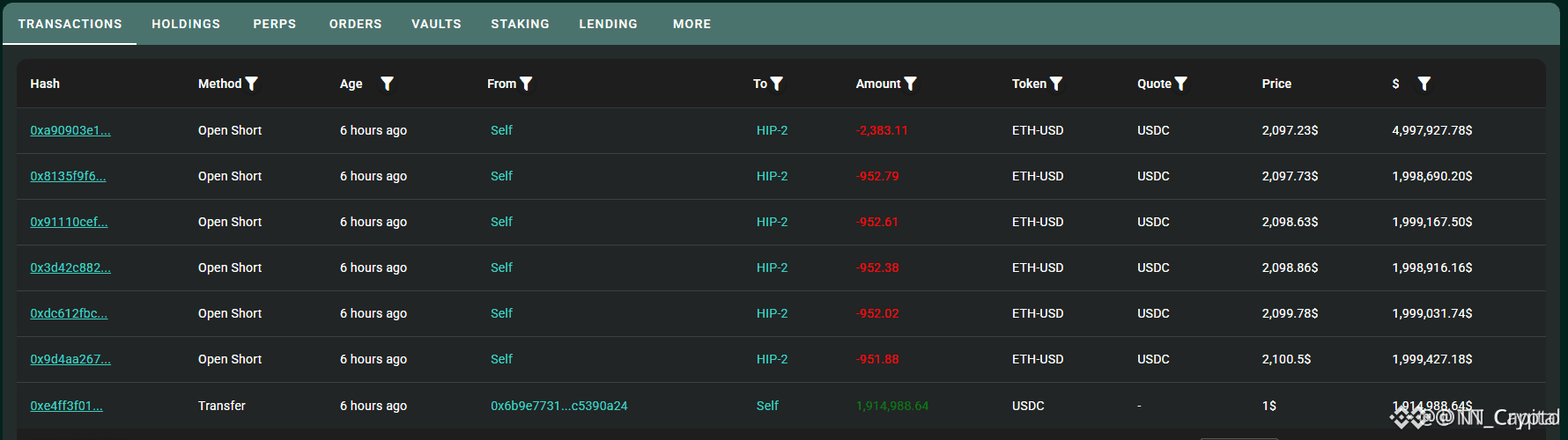
A newly created wallet, just 6 hours old, deposited around $1.9M USDC into Hyperliquid and immediately opened a nearly $15M ETH short position.
The position uses 20x leverage, with a total short size of 7,144.78 ETH.
• Average entry: $2,098.47
• Liquidation price: $2,319.12
A completely fresh wallet, large size, and an extremely aggressive entry.
Could this be a major hedge, or is someone making a big bet that ETH is about to correct?
The position uses 20x leverage, with a total short size of 7,144.78 ETH.
• Average entry: $2,098.47
• Liquidation price: $2,319.12
A completely fresh wallet, large size, and an extremely aggressive entry.
Could this be a major hedge, or is someone making a big bet that ETH is about to correct?
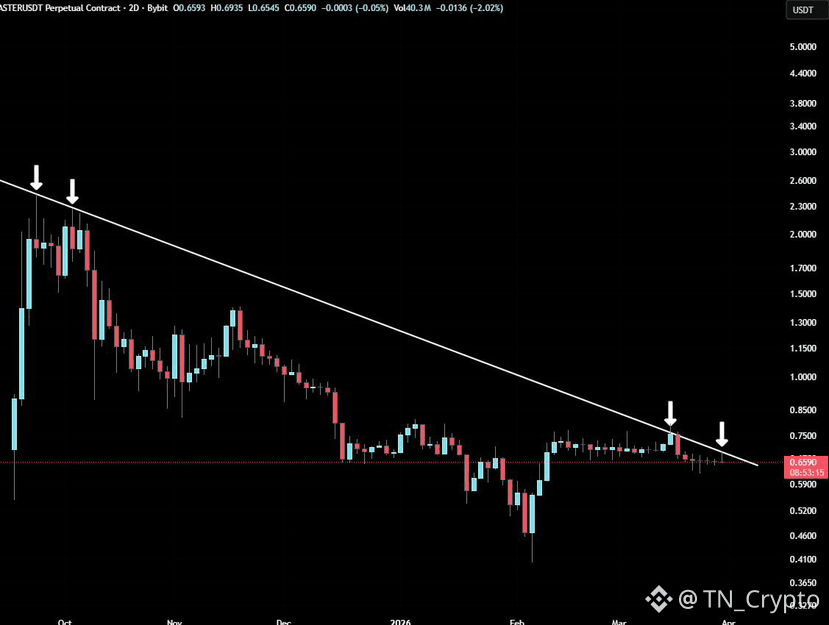
This is the key level $ASTER bulls need to break.
Price has been rejected from this downtrend multiple times since launch.
A confirmed breakout above it could be the first real signal that momentum is finally shifting. 🎯
Price has been rejected from this downtrend multiple times since launch.
A confirmed breakout above it could be the first real signal that momentum is finally shifting. 🎯
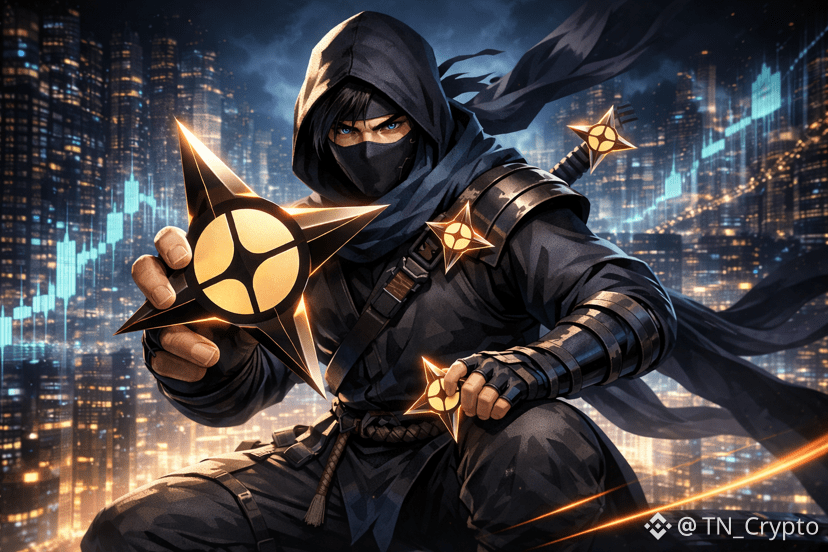
Aster is starting to build a much clearer story instead of being seen as just another short-term speculative token.
Here’s why I think Aster is worth watching and investing in:
- Tokenomics are shifting in a positive direction. Monthly unlocks have been reduced significantly, helping lower sell pressure.
- Staking is becoming the core of the ecosystem, creating stronger incentives for long-term holding instead of short-term trading.
- Buybacks have moved to Aster Chain and are now happening daily with full on-chain transparency.
- The ecosystem is expanding with more narratives: DEX, staking, its own chain, and user incentives.
- If the team continues building at this pace while reducing circulating supply, ASTER could become one of the better-structured tokens in the market over the coming months.
The market usually rewards projects that combine ecosystem growth with optimized tokenomics.
$ASTER is starting to have both.
Here’s why I think Aster is worth watching and investing in:
- Tokenomics are shifting in a positive direction. Monthly unlocks have been reduced significantly, helping lower sell pressure.
- Staking is becoming the core of the ecosystem, creating stronger incentives for long-term holding instead of short-term trading.
- Buybacks have moved to Aster Chain and are now happening daily with full on-chain transparency.
- The ecosystem is expanding with more narratives: DEX, staking, its own chain, and user incentives.
- If the team continues building at this pace while reducing circulating supply, ASTER could become one of the better-structured tokens in the market over the coming months.
The market usually rewards projects that combine ecosystem growth with optimized tokenomics.
$ASTER is starting to have both.
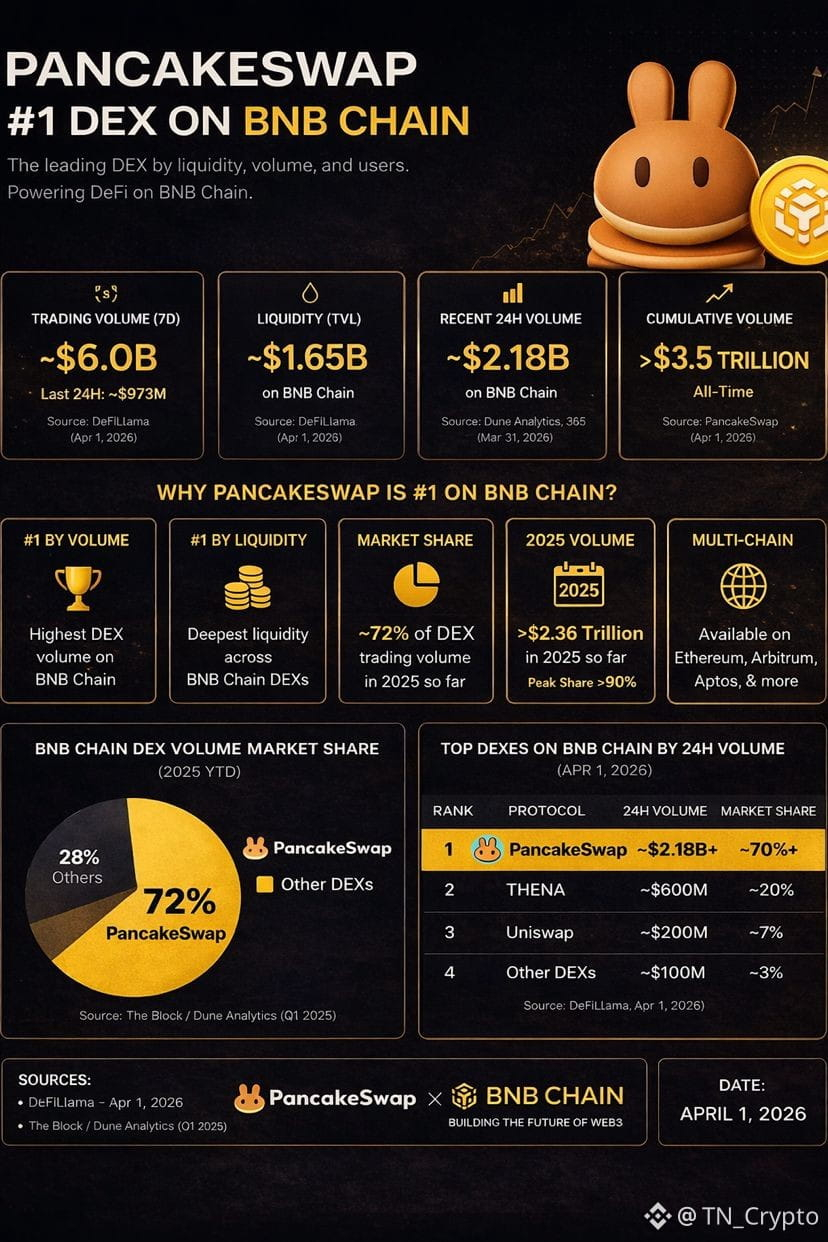
PancakeSwap continues to dominate BNB Chain. @cz_binance @heyibinance
~$6B in 7-day trading volume.
~$1.65B in liquidity.
~$2.18B in recent 24H volume.
72% of all BNB Chain DEX trading volume in 2025.
$3.5T in cumulative volume.
Fast execution. Deep liquidity. Real users.
@PancakeSwap is not just the biggest DEX on BNB Chain anymore.
It has become one of the strongest products across all of crypto.
BNB Chain keeps winning.
~$6B in 7-day trading volume.
~$1.65B in liquidity.
~$2.18B in recent 24H volume.
72% of all BNB Chain DEX trading volume in 2025.
$3.5T in cumulative volume.
Fast execution. Deep liquidity. Real users.
@PancakeSwap is not just the biggest DEX on BNB Chain anymore.
It has become one of the strongest products across all of crypto.
BNB Chain keeps winning.
Trade Like A Ninja 🥷 @Aster_DEX
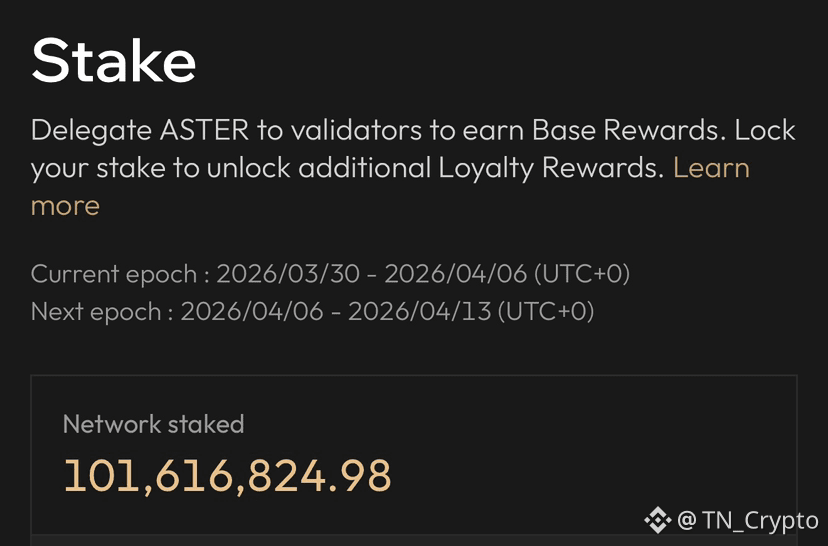
More than 101.6M $ASTER is now staked across the network.
Staking is no longer just about earning base rewards.
Locking your stake unlocks extra loyalty rewards, while helping secure the network and strengthen long-term alignment.
The staking era for Aster is just getting started
#ASTER #AsterChain
More than 101.6M $ASTER is now staked across the network.
Staking is no longer just about earning base rewards.
Locking your stake unlocks extra loyalty rewards, while helping secure the network and strengthen long-term alignment.
The staking era for Aster is just getting started
#ASTER #AsterChain
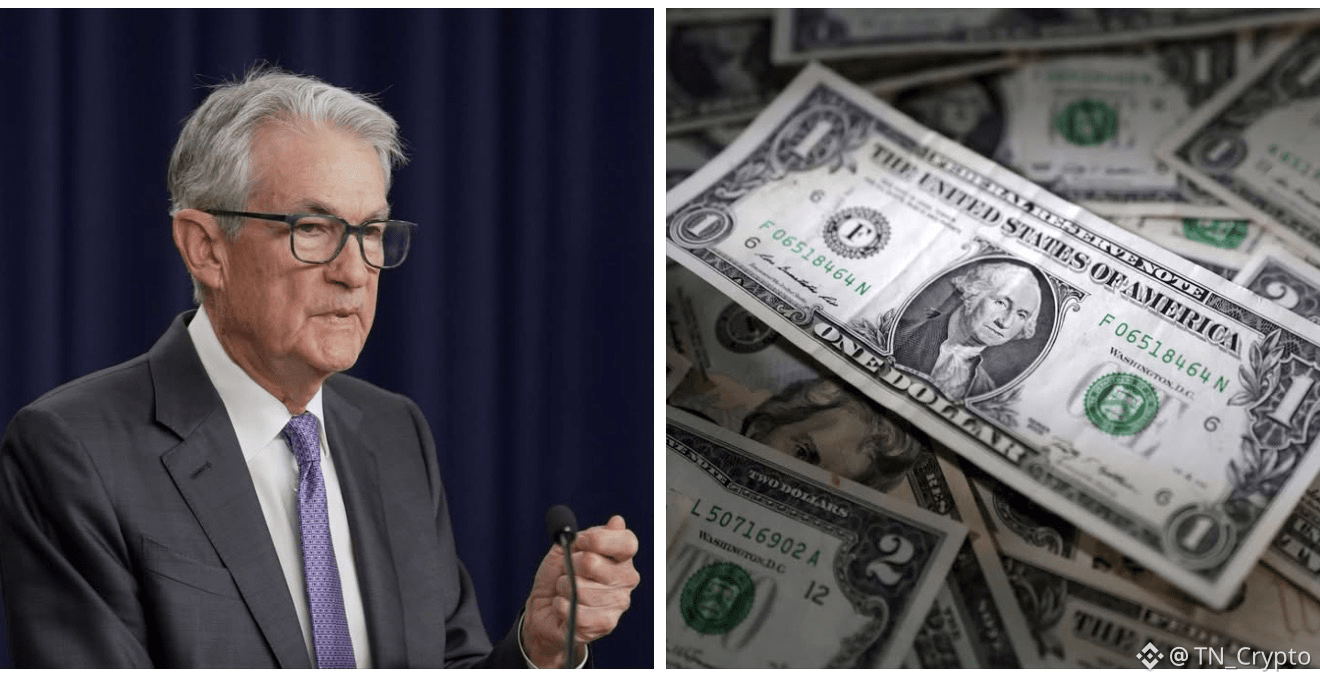
Federal Reserve Chair Jerome Powell reiterated that the Fed’s top priority remains bringing inflation back down to its 2% target.
As the US economy faces pressure from slower growth, rising energy prices, and persistent inflation risks, the Fed is maintaining a cautious stance. Powell said the central bank is closely monitoring both downside risks to growth and ongoing price pressures.
He also noted that the large-scale asset purchase programs used in the past helped support the economy during difficult periods while keeping borrowing costs lower. According to Powell, there is still no clear evidence that the size of the Fed’s balance sheet poses a major risk, nor is there direct proof that bond-buying programs were the main cause of inflation.
The message from the Fed is becoming increasingly clear: controlling inflation remains the priority, but not at the cost of sacrificing economic growth and stability entirely.
As the US economy faces pressure from slower growth, rising energy prices, and persistent inflation risks, the Fed is maintaining a cautious stance. Powell said the central bank is closely monitoring both downside risks to growth and ongoing price pressures.
He also noted that the large-scale asset purchase programs used in the past helped support the economy during difficult periods while keeping borrowing costs lower. According to Powell, there is still no clear evidence that the size of the Fed’s balance sheet poses a major risk, nor is there direct proof that bond-buying programs were the main cause of inflation.
The message from the Fed is becoming increasingly clear: controlling inflation remains the priority, but not at the cost of sacrificing economic growth and stability entirely.
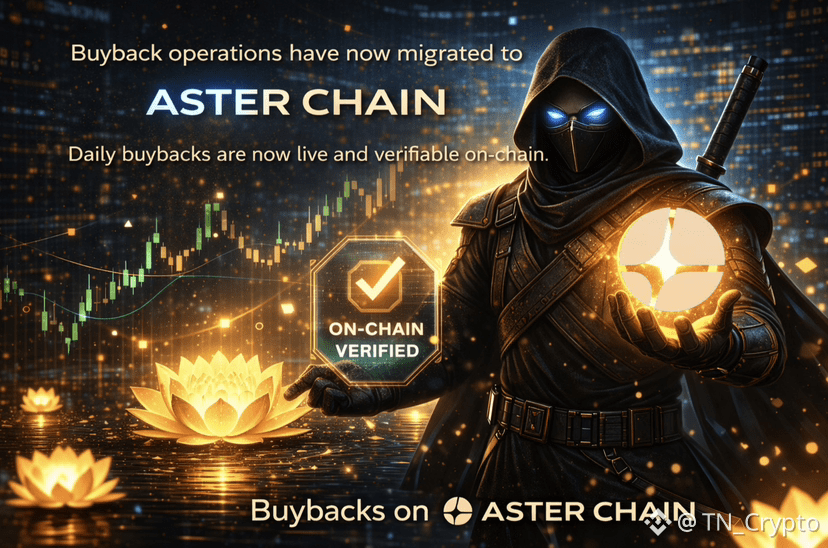
Buyback operations have now migrated to Aster Chain.
Daily buybacks are now live, transparent, and fully verifiable on-chain.
A stronger system, better visibility, and real activity happening every day.
This is only the beginning for Aster Chain.
$ASTER #AsterChain
Daily buybacks are now live, transparent, and fully verifiable on-chain.
A stronger system, better visibility, and real activity happening every day.
This is only the beginning for Aster Chain.
$ASTER #AsterChain
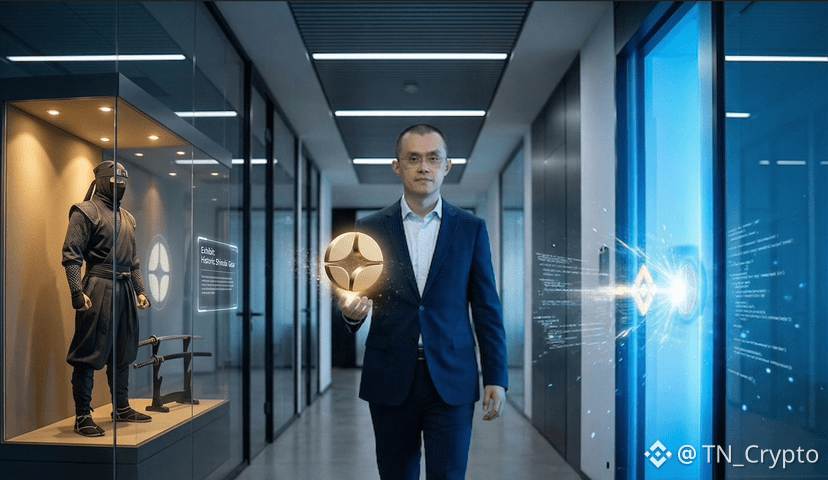
$ASTER has officially ended Stage 6 “Convergence”.
Around 64M ASTER was distributed during the final trading reward phase, and from now on incentives will shift from trading volume to staking.
More than 89.3M ASTER is already staked.
At the same time, Aster launched Stardust Points, expanded USD1 perp incentives, and continues adding new perpetual pairs.
The focus is now clear: staking, ecosystem growth, and long-term retention.
@Aster_DEX @cz_binance
Trade Like A Ninja 🥷
Around 64M ASTER was distributed during the final trading reward phase, and from now on incentives will shift from trading volume to staking.
More than 89.3M ASTER is already staked.
At the same time, Aster launched Stardust Points, expanded USD1 perp incentives, and continues adding new perpetual pairs.
The focus is now clear: staking, ecosystem growth, and long-term retention.
@Aster_DEX @cz_binance
Trade Like A Ninja 🥷
Log in to explore more content